





![Alternative Trench Crusade Miniatures? Trench Missionaries Review | Wargames Atlantic [7 Days Early Access]](https://images.beastsofwar.com/2026/03/unboxing-wargames-atlantic-trench-missionaries-coverimage-225-127.jpg)

Doctor Who and the Replacement Miniatures




Perilous Tales
We played a couple of games of Perilous Tales with the Doctor Who miniatures, and I must say we have a great time with it. The game is very simple. It’s cooperative so players team up against a predetermined villain and his minions. Player characters are either leaders or teammates; in a two player game, each player gets one of each. Characters have three stats — wounds, skill, and action points — with leaders going a bit higher than teammates. All leaders have the same stats, as do all teammates, which further simplifies things. The only customization is that each leader gets two special traits (chosen from a list in the rule book), and each teammate gets one.
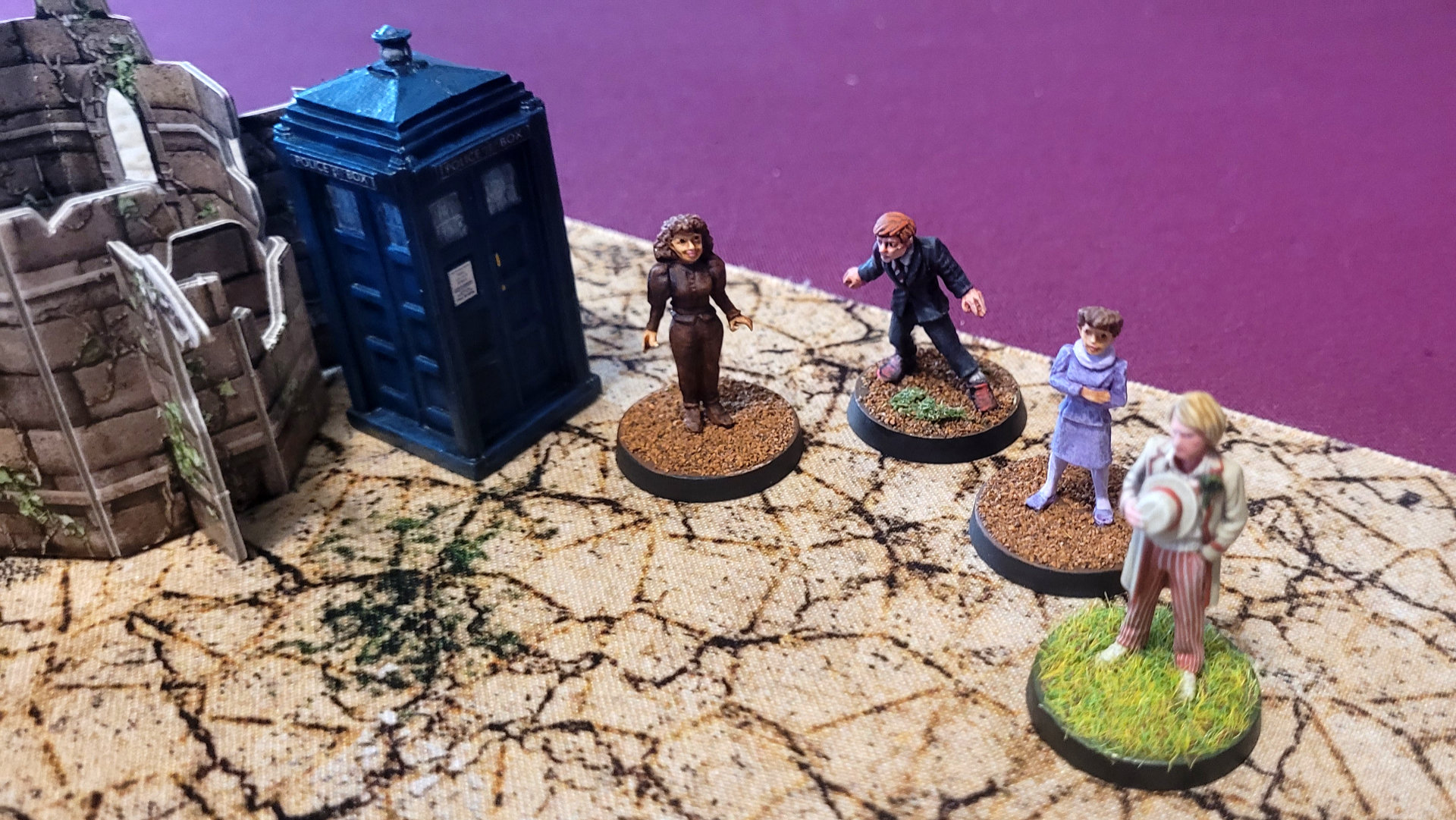 The 1980s TARDIS team, ready for some tabletop action.
The villain is chosen from a set of ten different options. Each villain has three or four minions that will appear at various points in the game, with each having a set behavior pattern (either aggressive, lurker, or pack hunter) that determines how they interact with the player characters. It takes a bit of getting used to but once you get the patterns down it feels a lot more interesting than the usual “they attack the closest enemy” rules.
The game starts with the players drawing three objectives from a deck of 14 (regular playing cards can be cross-referenced with the rule book if you don’t want to print anything out). This gives the players their goals and win conditions for the game, usually some variation on “move to the objective and pass a dice test.” Then, 8 counters numbered 1-8, randomized and placed face down at various points on the playing surface. When a player character model moves within 6 inches of one of these tokens, it is revealed. Tokens 1 through 5 are replaced by the villain or one of his minions, while 6 through 8 are perils, random events drawn from a deck of cards.
At the end of each turn, the players make a roll that will move the unrevealed tokens closer to the action, and also add to the threat level. The game ends when the threat reaches 10, giving the game a built-in countdown and motivating the players to cultivate a sense of urgency.
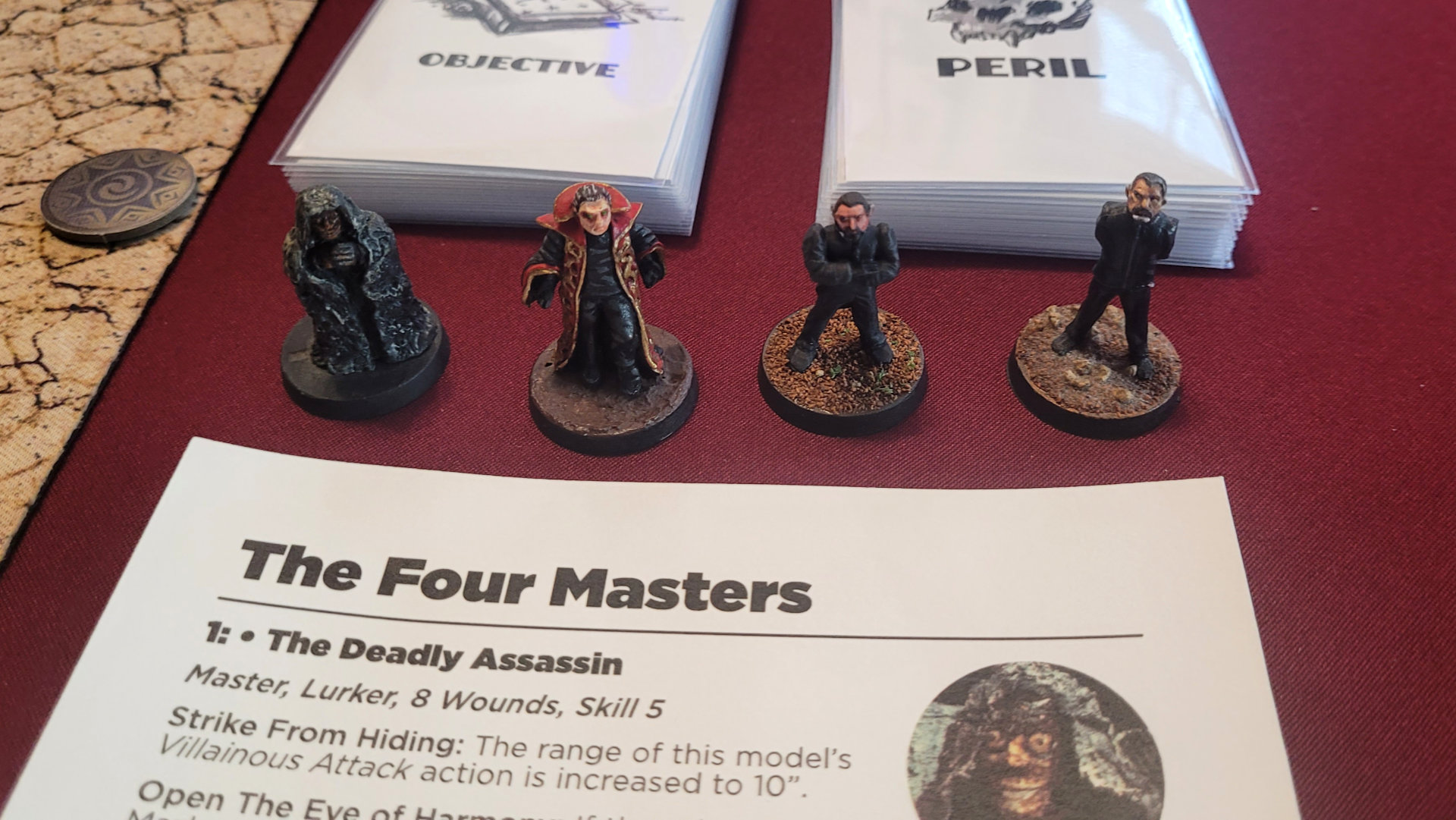 Why should the Doctor get to have all the team-up-with-yourself fun?
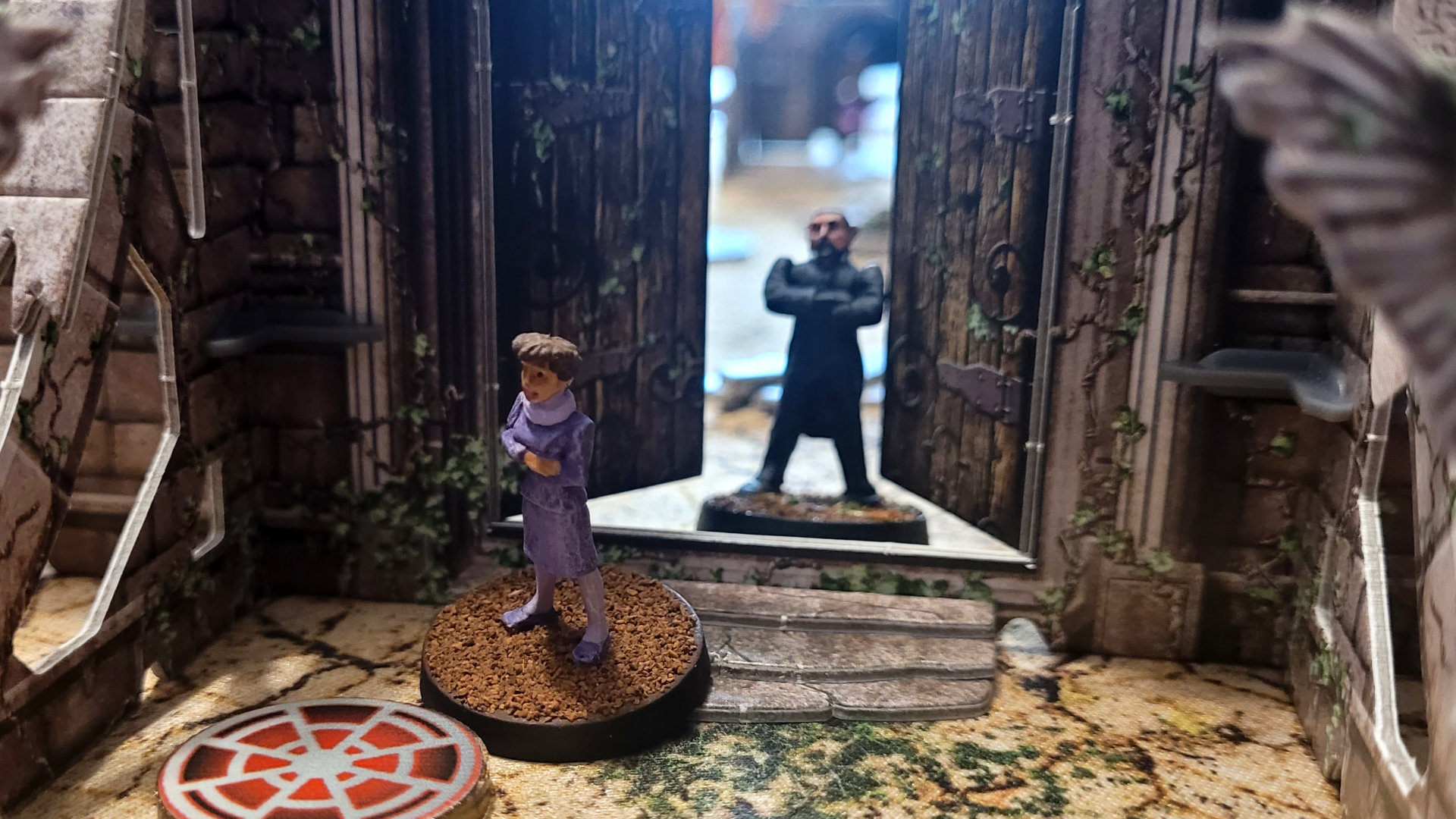 The '80s Master menaces Tegan from behind a very on-brand cardboard door...
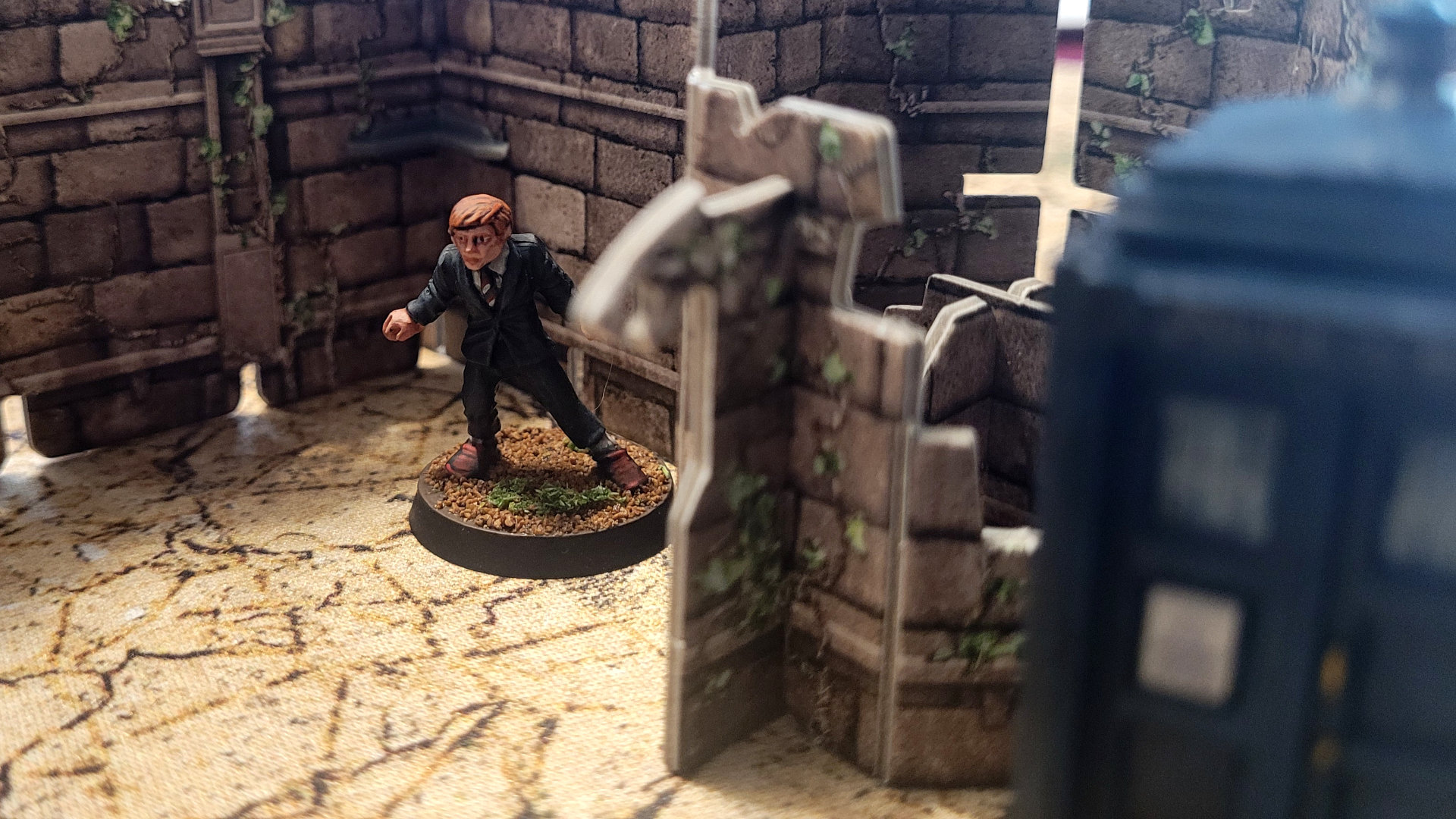 Turlough spend most of the game skulking in the shadows, which was also on-brand.
The game is designed with pulp horror in mind, but I didn’t have any trouble reskinning it to fit classic Doctor Who, renaming the villains and some of the character traits to make them more Who-flavored. For our first game, we played against a villain set based on the Whateleys, the family of backwoods sorcerers from H. P. Lovecraft’s “The Dunwich Horror,” but we changed them into the four different incarnations of the Master in a variation on the old multi-Doctor anniversary stories.
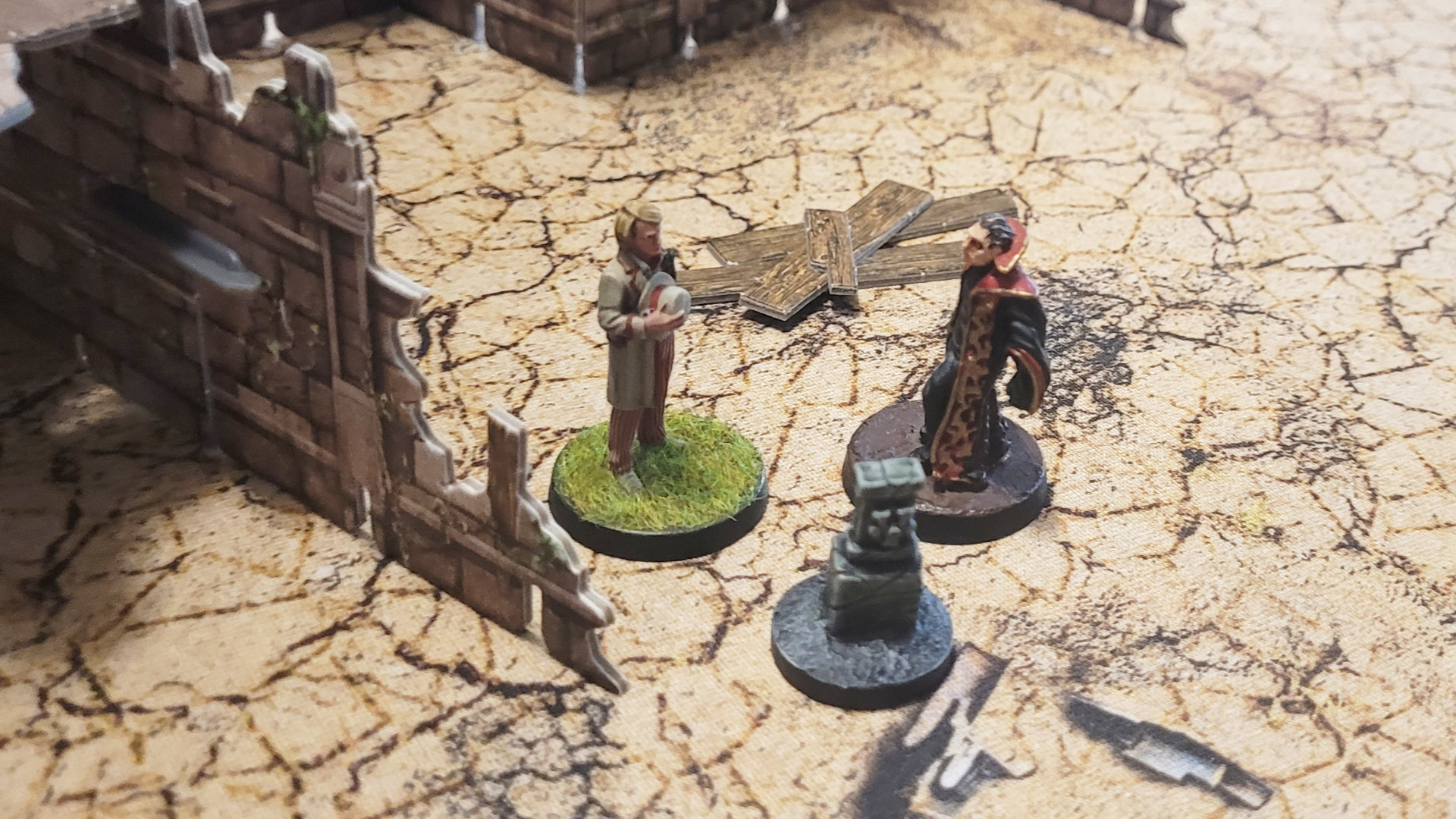 Peter Davison vs Eric Roberts -- not something I ever thought I would see.
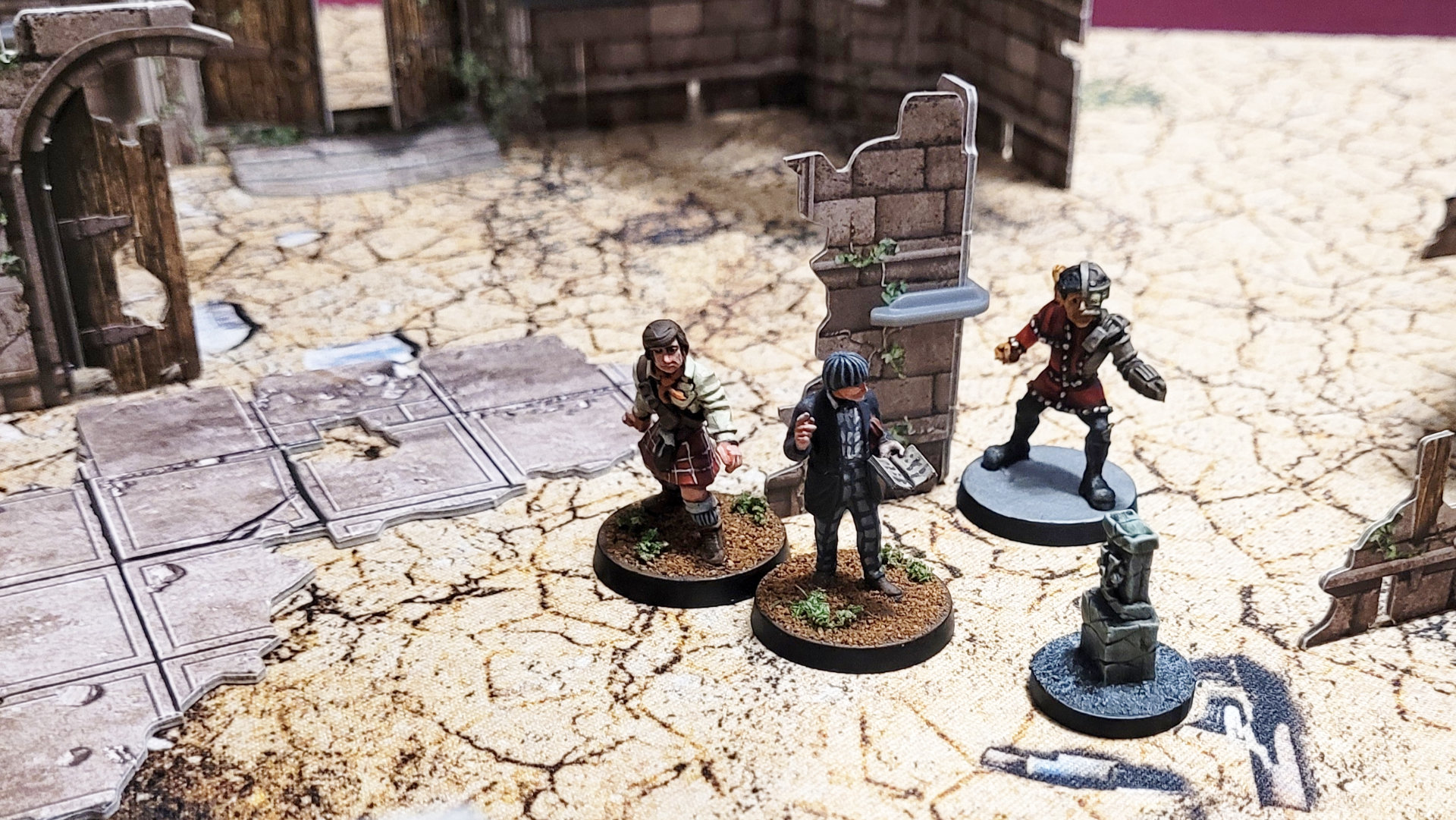 I think we can come up with an excuse for using just about any Doctor Who model in this game.
We didn’t do so well against the Four Masters, so for our second game we took it down a notch and played against The Ghast, a ghost-filled encounter — we replaced the ghosts with illusions of the Doctor’s friends and foes, cleverly allowing us to use whatever Doctor Who models we have on hand as the opposing characters.
It was great fun to get some of these Doctor Who models, many of which I’ve had for close t0 30 years, onto the tabletop in a game that actually feels like an episode of the show. Perilous Tales really distills this type of small-model-count game down to its bare essence, and makes me wonder a bit as to why other games need to be so complicated.
We will definitely be playing more Perilous Tales — the game comes with 10 villains and I’ve come up with reskins for 8 of them. However, I just scored a set of Harlequin’s old UNIT Troops, so once I get them painted we’re going to use 7TV to play out a classic Jon Pertwee episode or two. Stay tuned…


![StarCraft Tabletop Miniatures Game Pre-Orders Live Now [Updated]](https://images.beastsofwar.com/2026/03/starcraft-tmg-news-cover-600-338.jpg)
![Mounted US Cavalry On Kickstarter For Dead Man’s Hand! [Updated]](https://images.beastsofwar.com/2026/03/us-cavalry-main-600-338.jpg)
![Play WW2 Commando Operations With Butcher & Bolt [Updated]](https://images.beastsofwar.com/2026/03/relaunch-600-338.jpg)