






![1918 Spring Offensive Wargame | Full Rules Overview with John & Gerry (WW1 Tabletop Game) [7 Days Early Access]](https://images.beastsofwar.com/2026/03/unboxing-warfulcrum-games-1918-spring-offensive-review-coverimage1-225-127.jpeg)

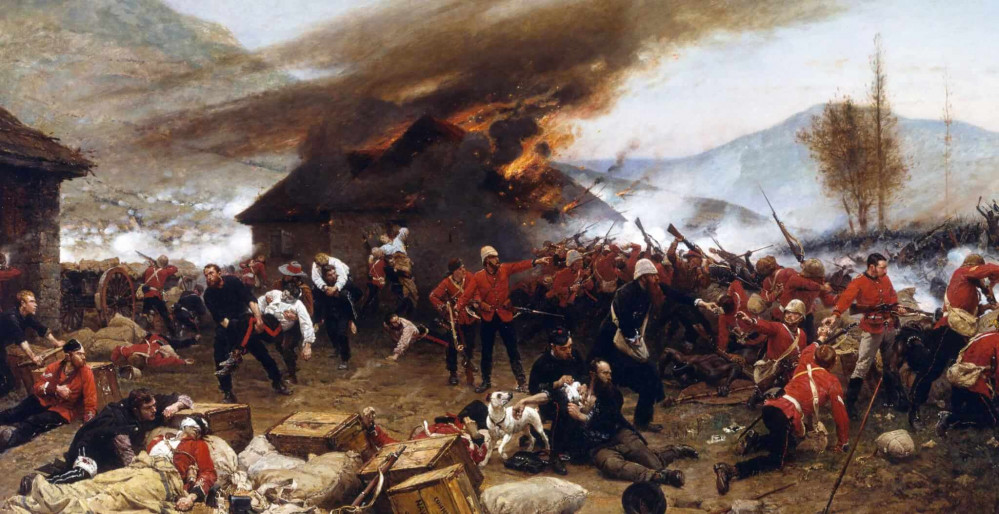
UNITS OF THE ZULU WAR 1879




Recommendations: 1005
About the Project
A look at some of the varied units that took part in the Zulu War of 1879. When we think of this war we think or red coats but there were many units involved that are often over looked. In this this project I will take a look at some of these less familiar forces that took part in the conflict.
Related Game: Black Powder
Related Genre: Historical
This Project is Completed
Naval Brigade
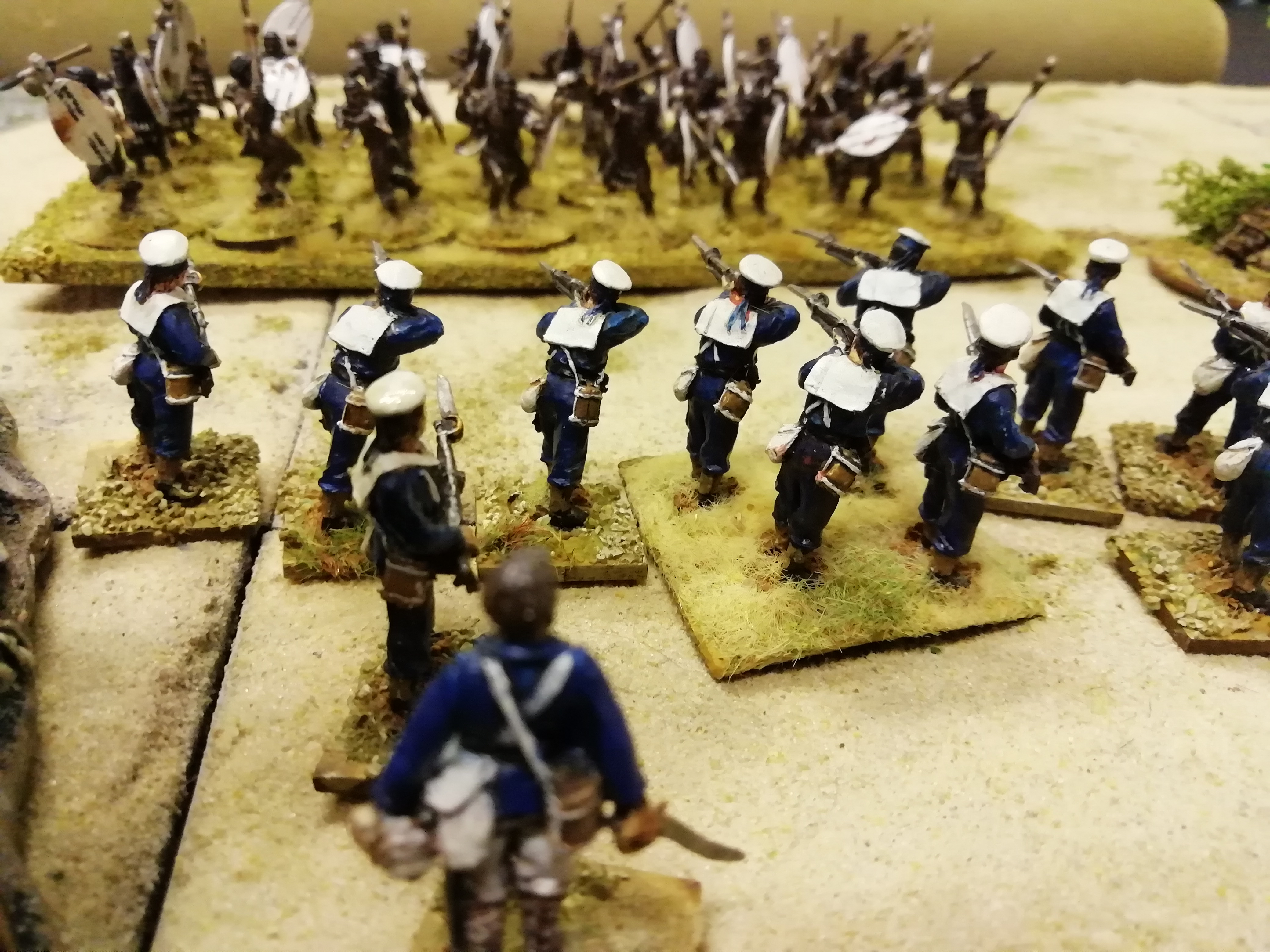
A number of different Royal Navy ships supplied men to the conflict in Zulu Land after being diverted to supply reinforcements to garrisons along the boarder. Landing parties add a bit of character to a British force and their colour schemes varied from ship to ship.
HMS Active- Blue with white trousers and caps.
HMS Tenedos- Blue tops and trousers and blue covered caps
HMS Boadeiceas- All white
HMS Shah- wore blue but had straw hats with the ships name on it’s band.
All had Martini Henry rifles but the more vicious looking cutlass bayonet. Their ammunition pouches were black.
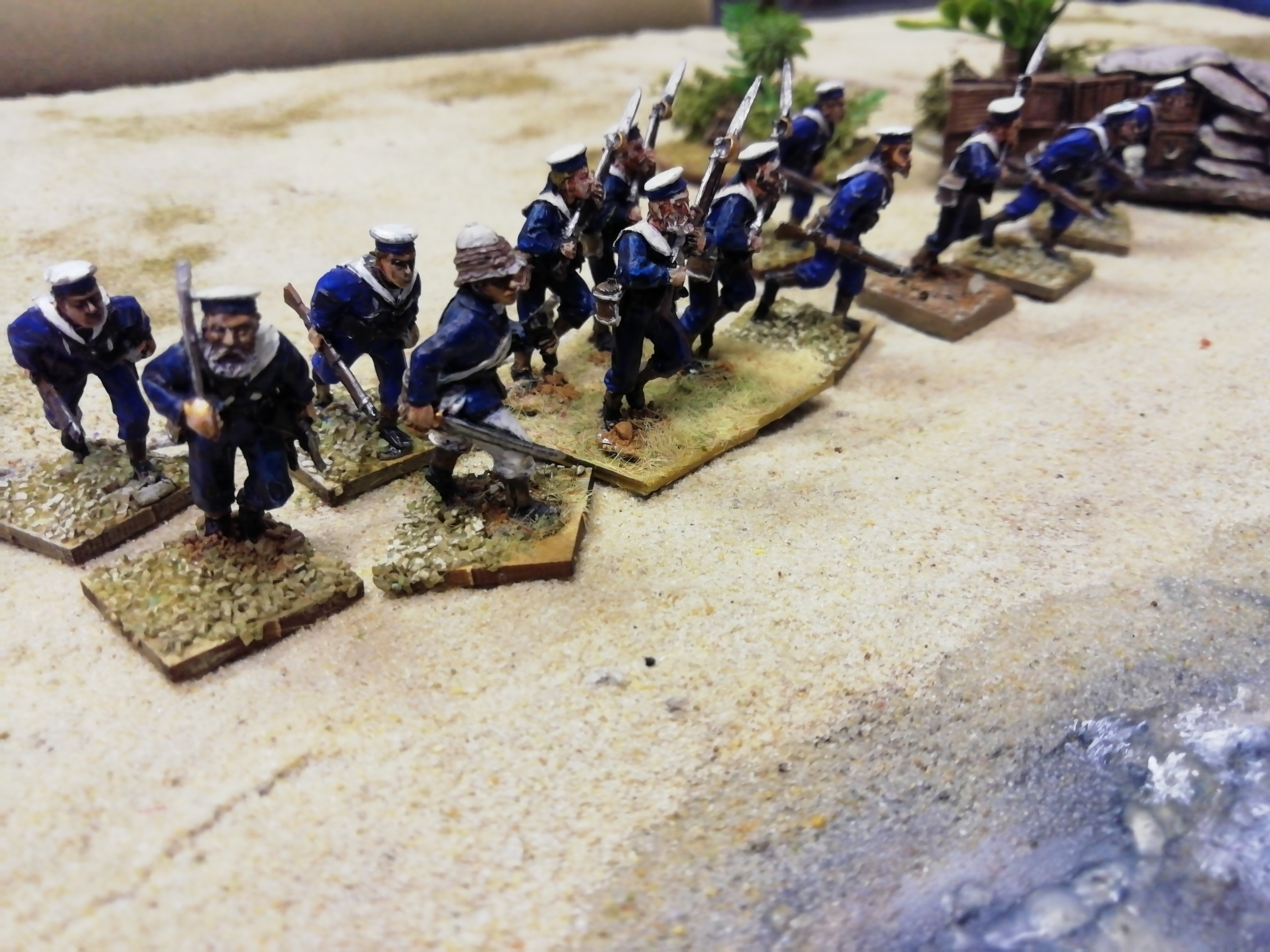
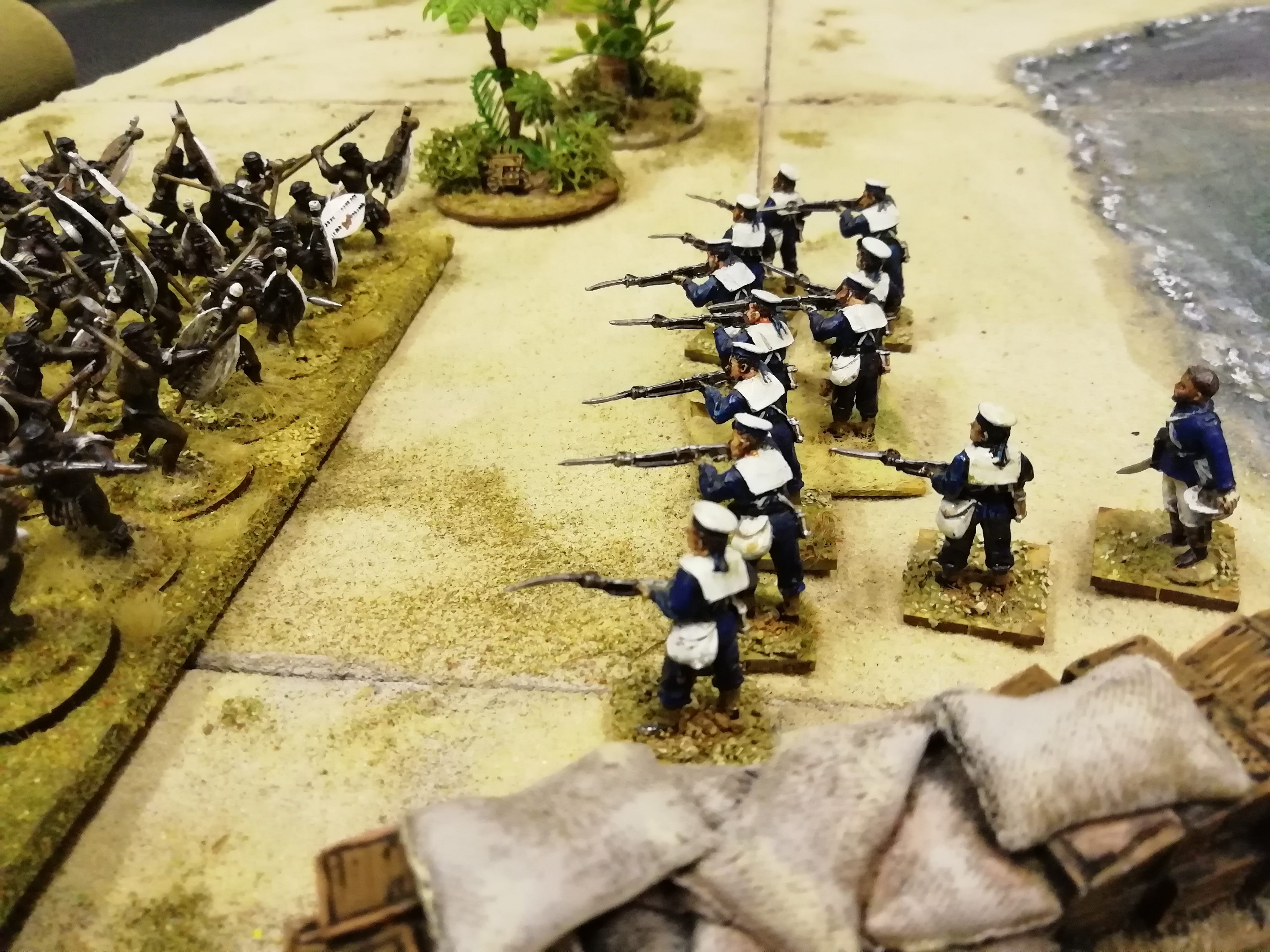
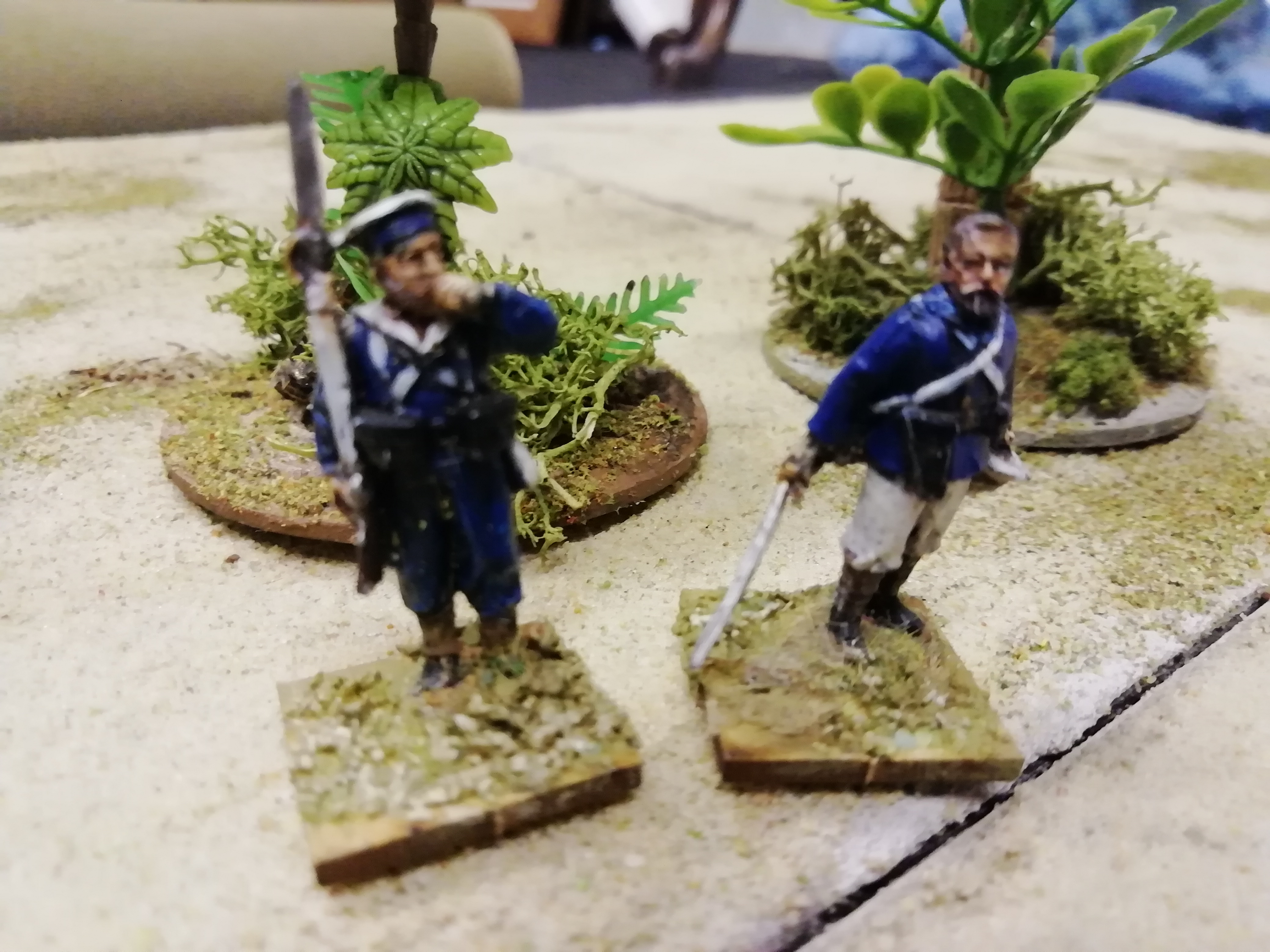
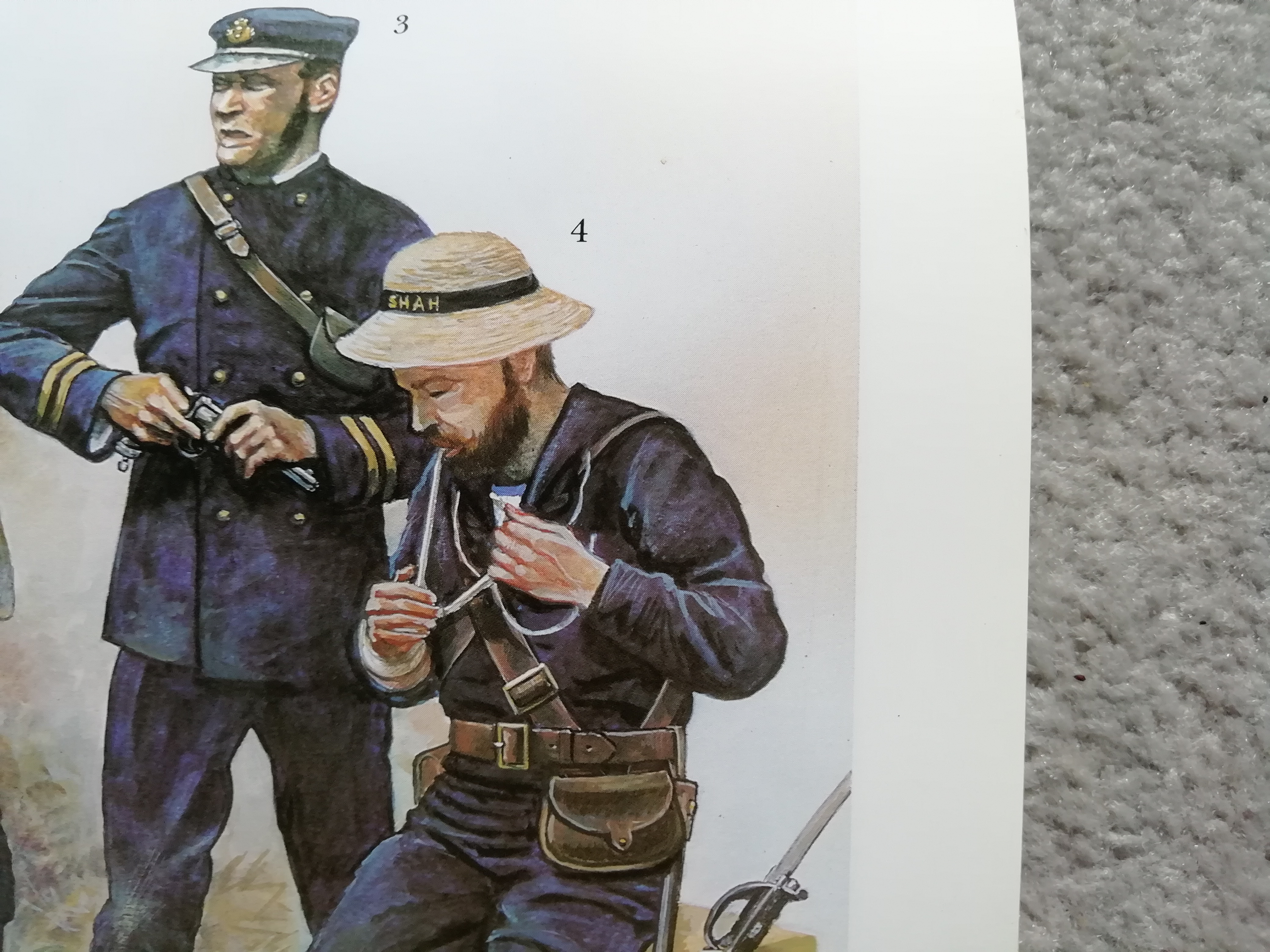
 HMS Tenedos Naval Brigade
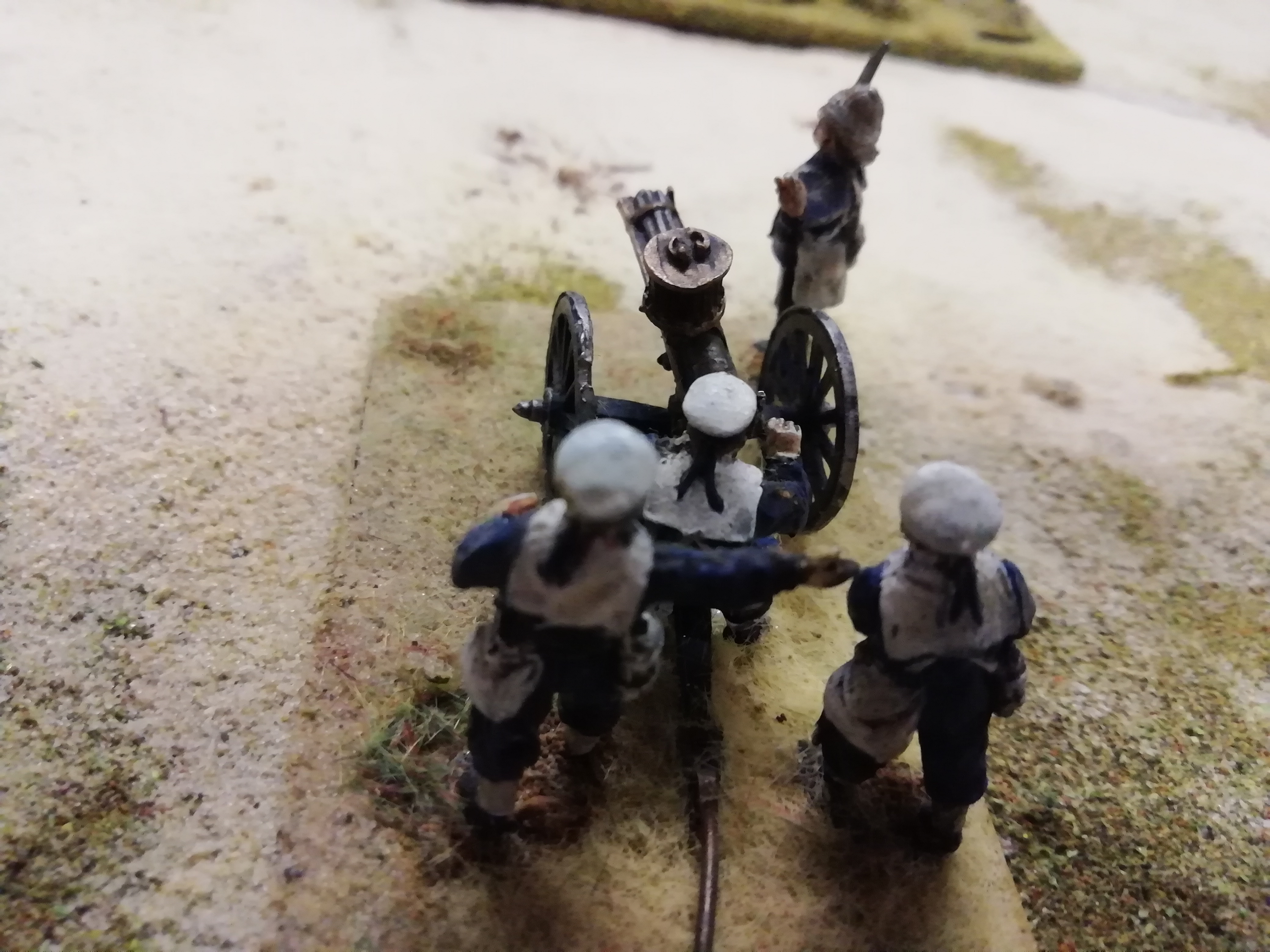
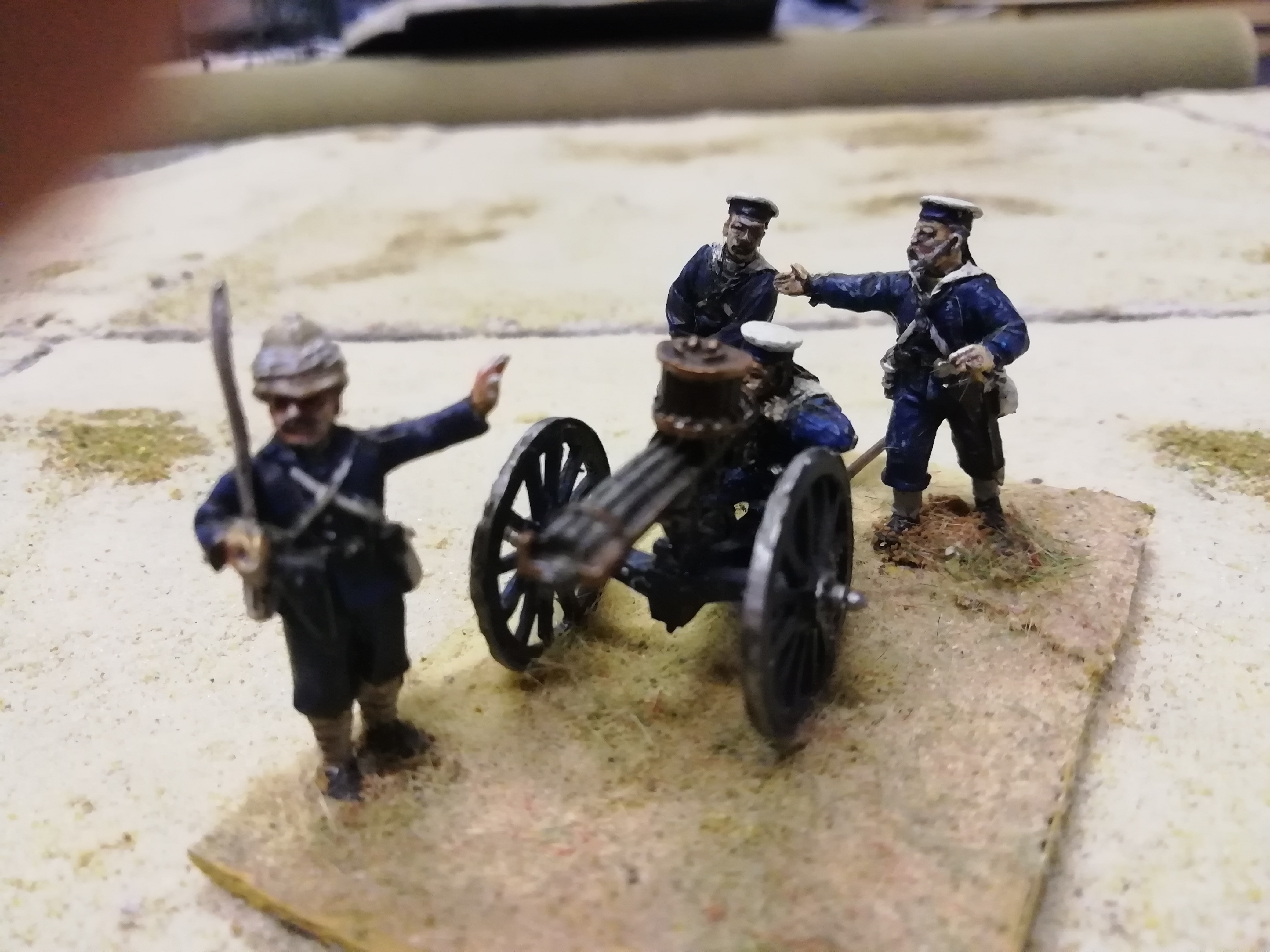
Naval Brigade Gatling Gun Crew
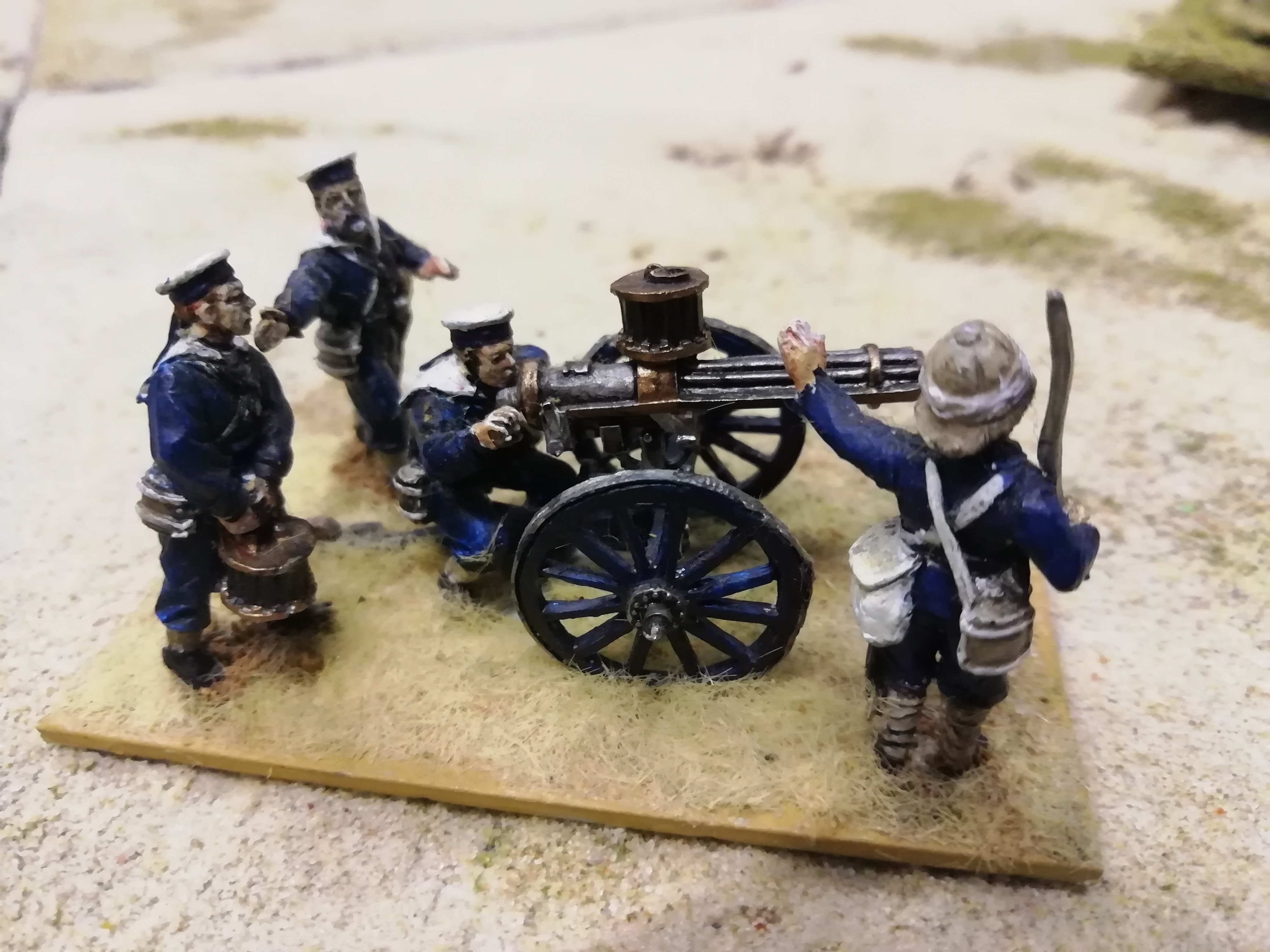
When the navy came ashore they brought with them their own artillery including Gatling guns. They were mounted on gun carriages that were smaller than their royal artillery equivalents. They were used at the battle of Nyezane that took place on the same day as Isandlwana but with completely different results. When used as part of a fortified position Gatlings could keep the Zulus at bay. At Gingindlovu only one Zulu reached the British position and he was a 10 year old boy. The crew of HMS Boadicea adopted him as a mascot back on their ship.


Royal Artillery
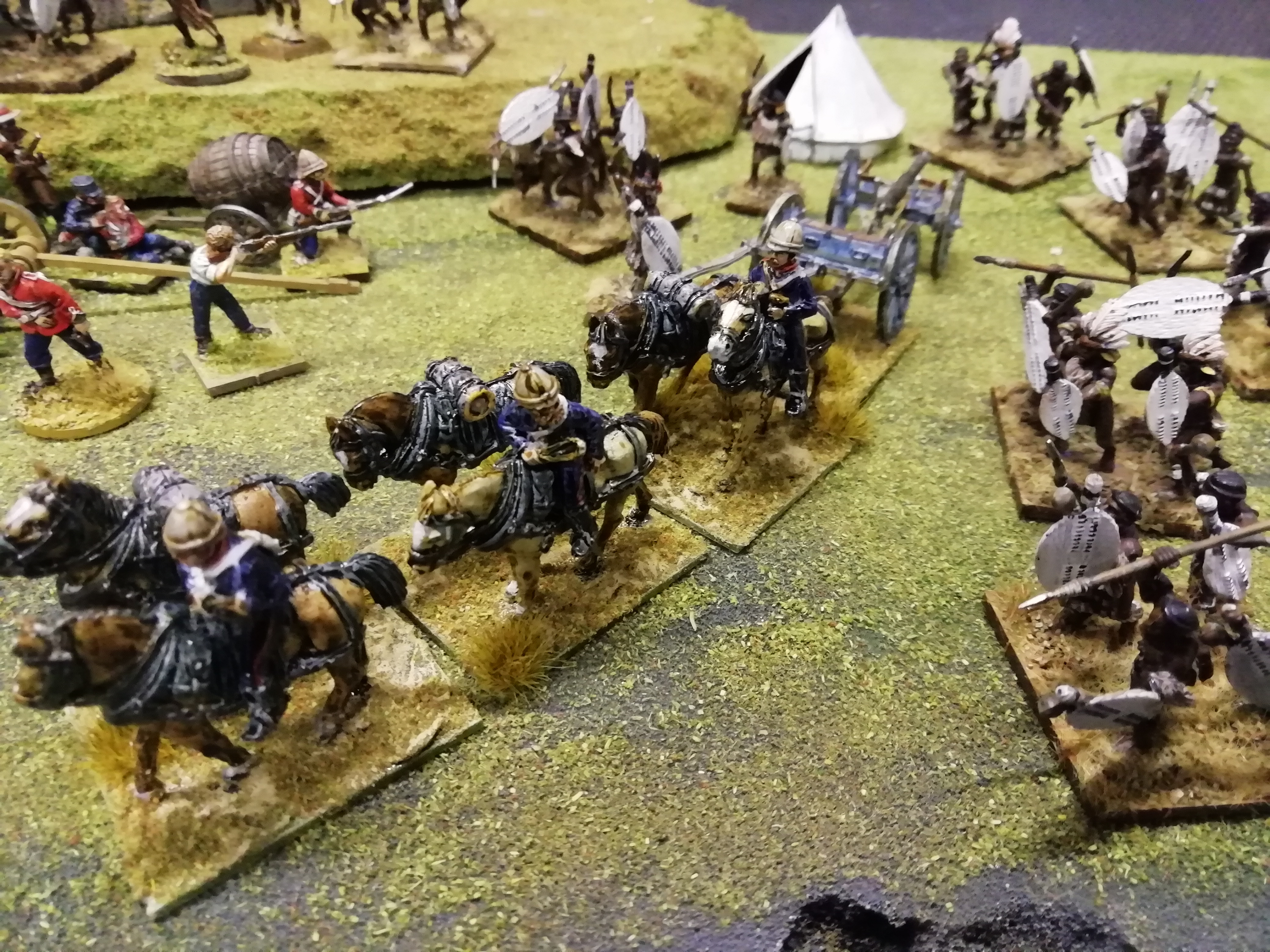
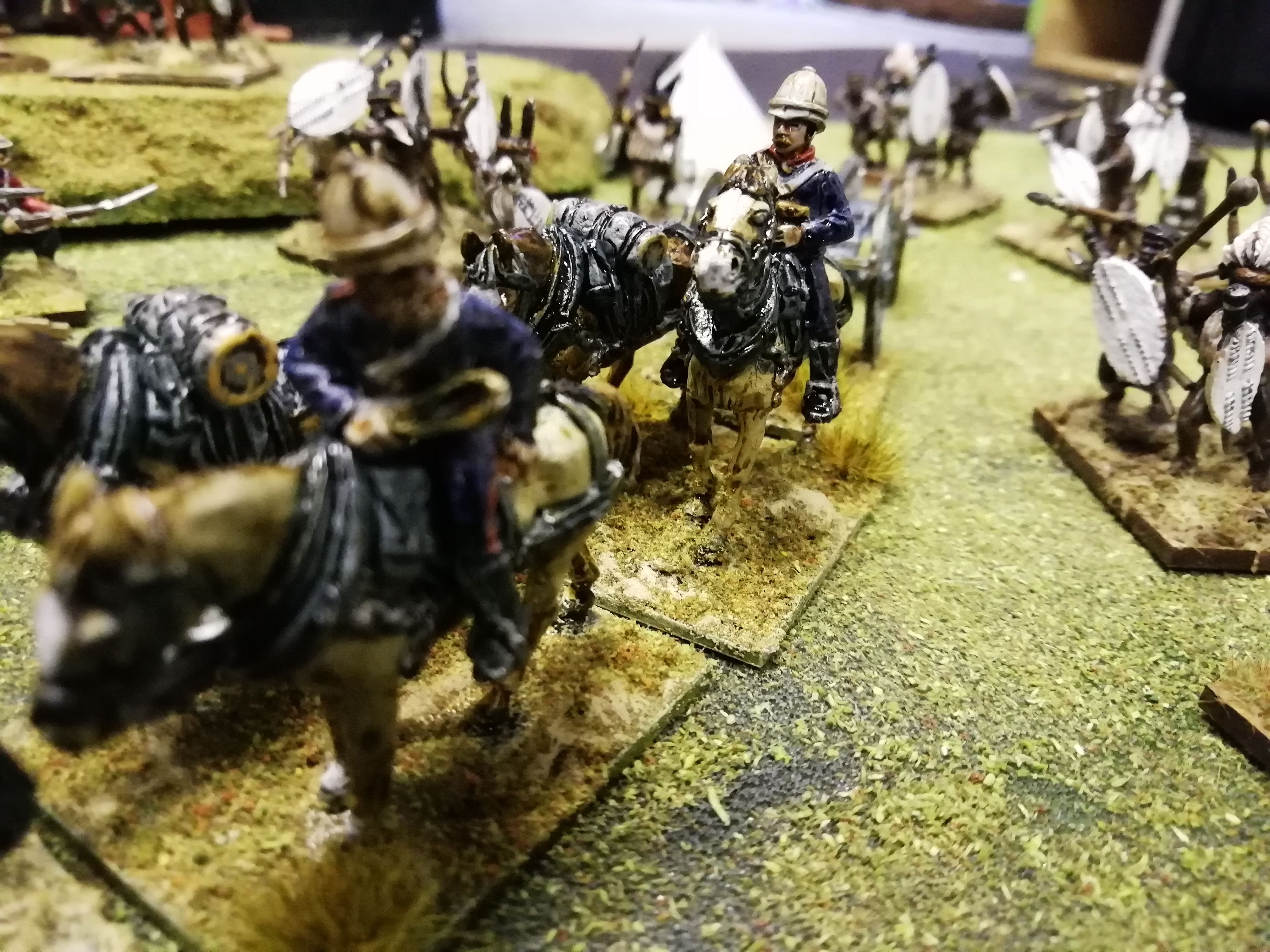
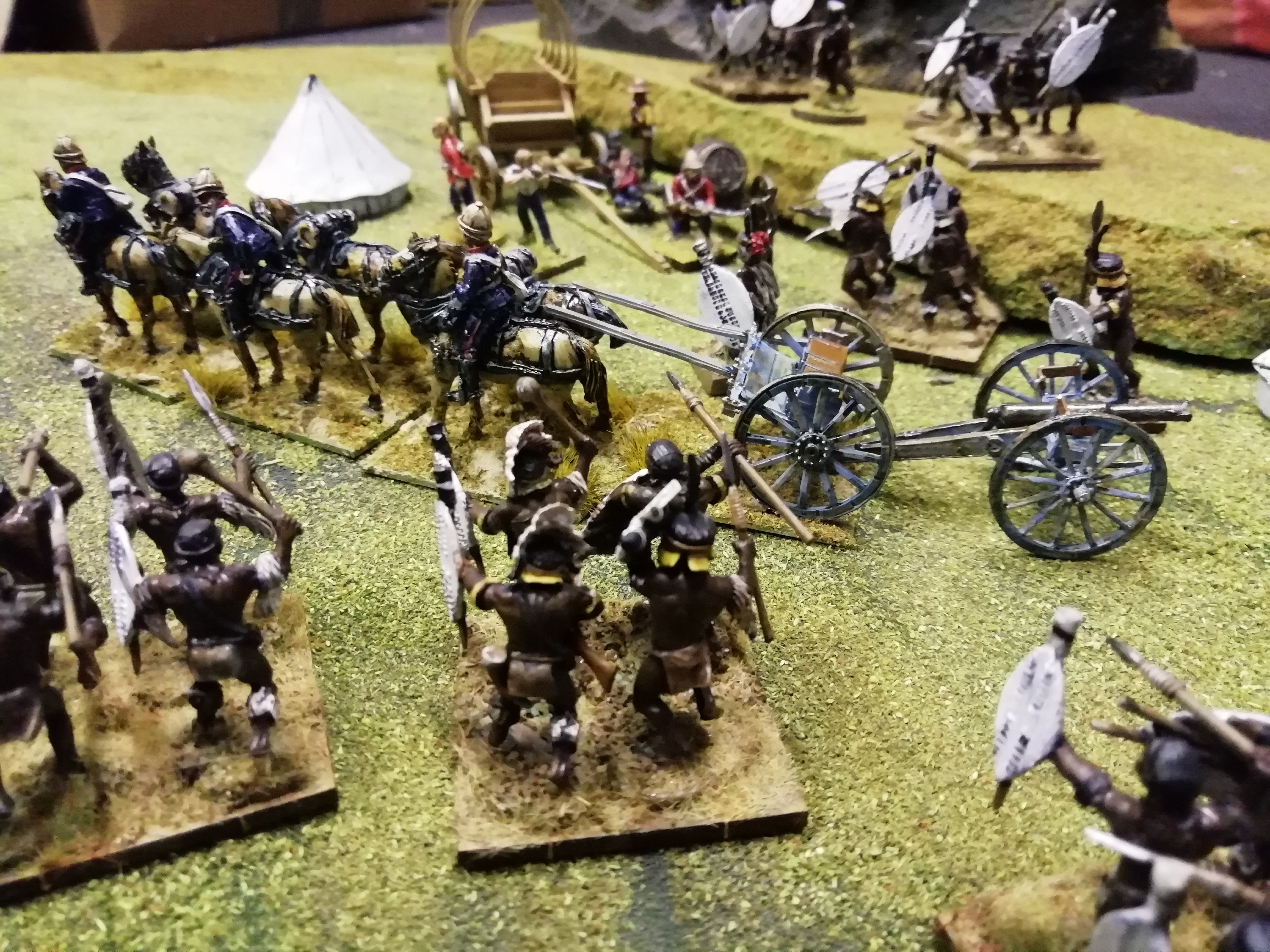
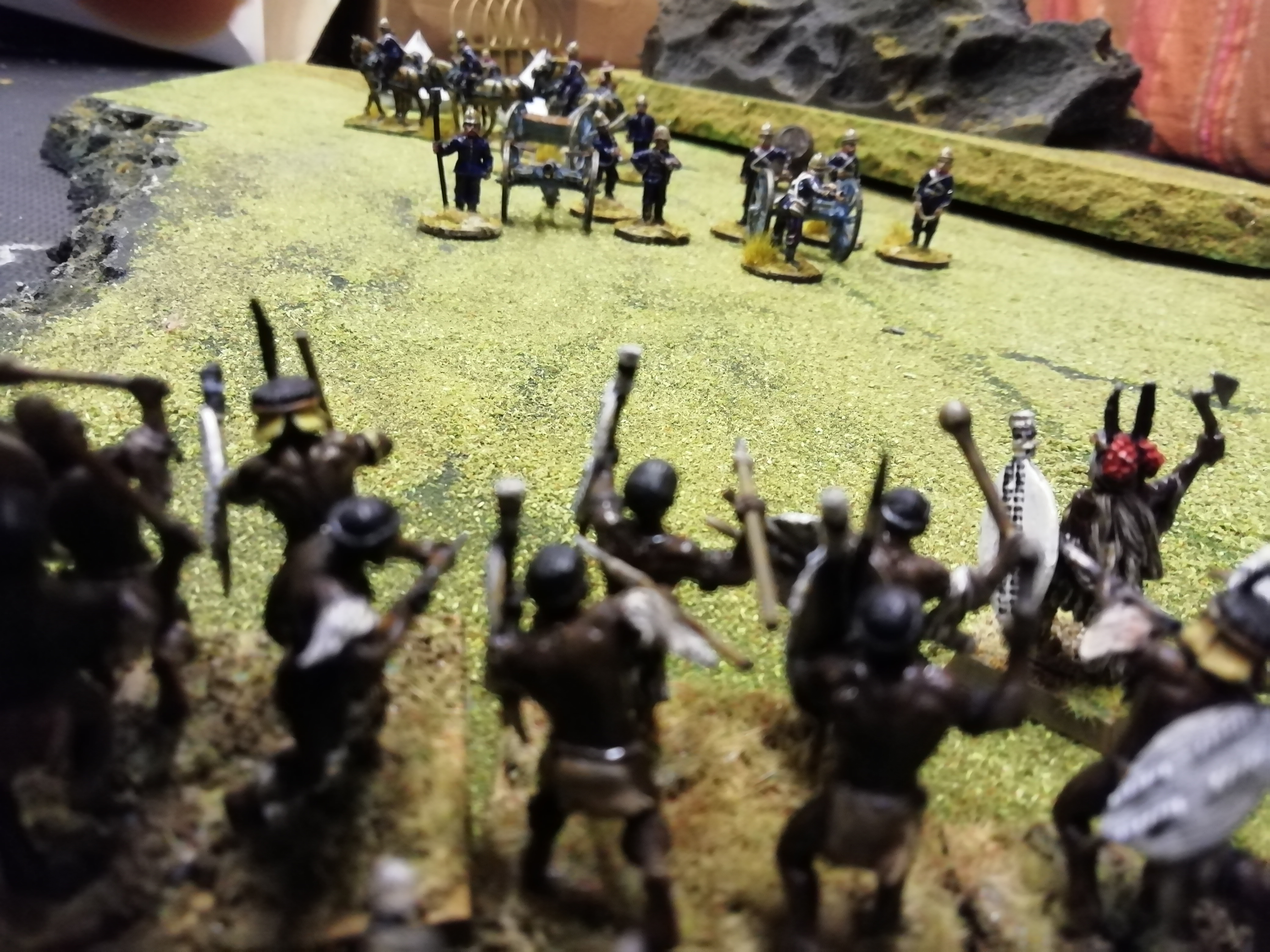
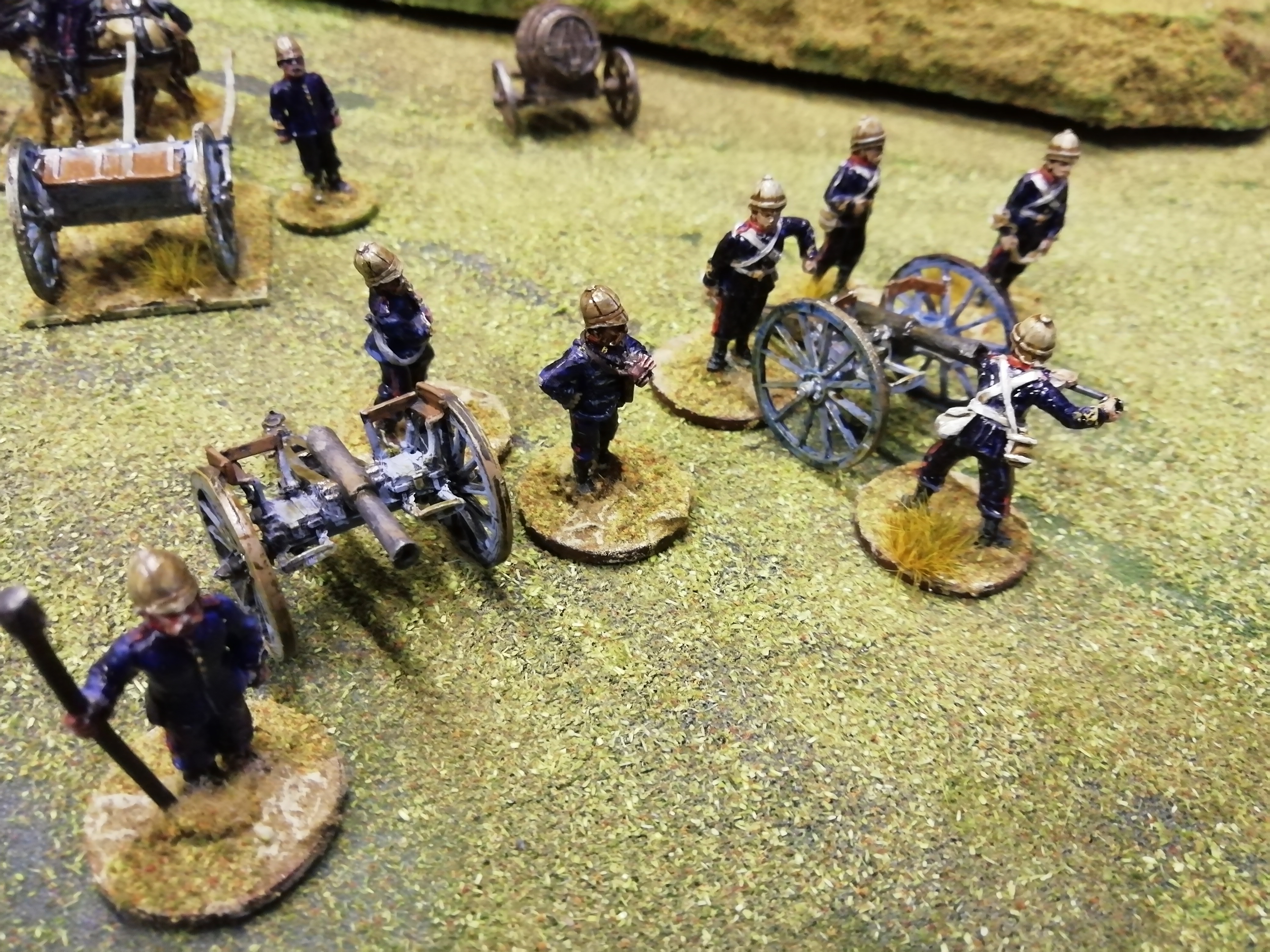
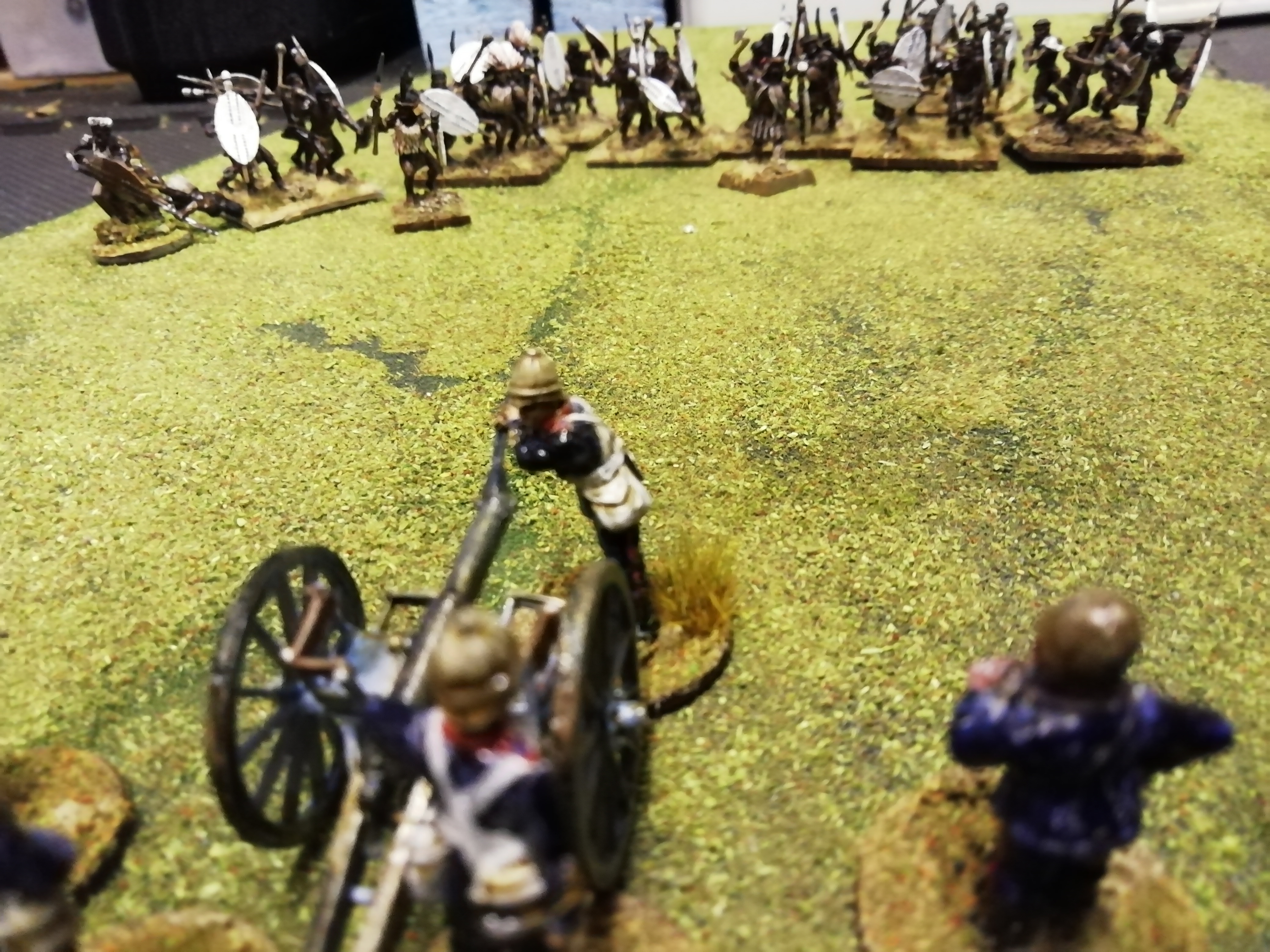
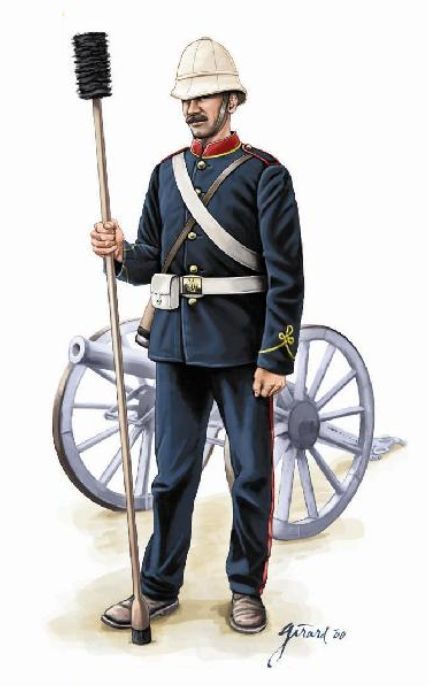
During the Zulu war the British deployed 7 and 9 pounder cannons. The army had experimented with breech loaders but the guns used were still all muzzle loaders. The gun carriages had gotten smaller at this time so they could be moved around rocky landscapes such as Afghanistan but they bounced around too much on the African plains so larger carriages were used no mater the size of the gun. At Isandlwhana the Zulus noticed how the gun crews stepped back from their guns when about to fire so learned when to duck. The guns continued to fire up until the last minute before limbering up to evacuate. One man was speared in the back as the carriages pulled away and both would be captured during the mad dash to flee. The guns would later be found at Ulundi after the war where the Zulus had tried and failed to figure out how to work them. Artillery crews wore blue coats with red collars with white belts. One thing I noticed painting the minis is that the crew on the horses had shin protectors on their right leg so they wouldn’t rub against the horse on their right.
The Umbonambi (Evil Seers)
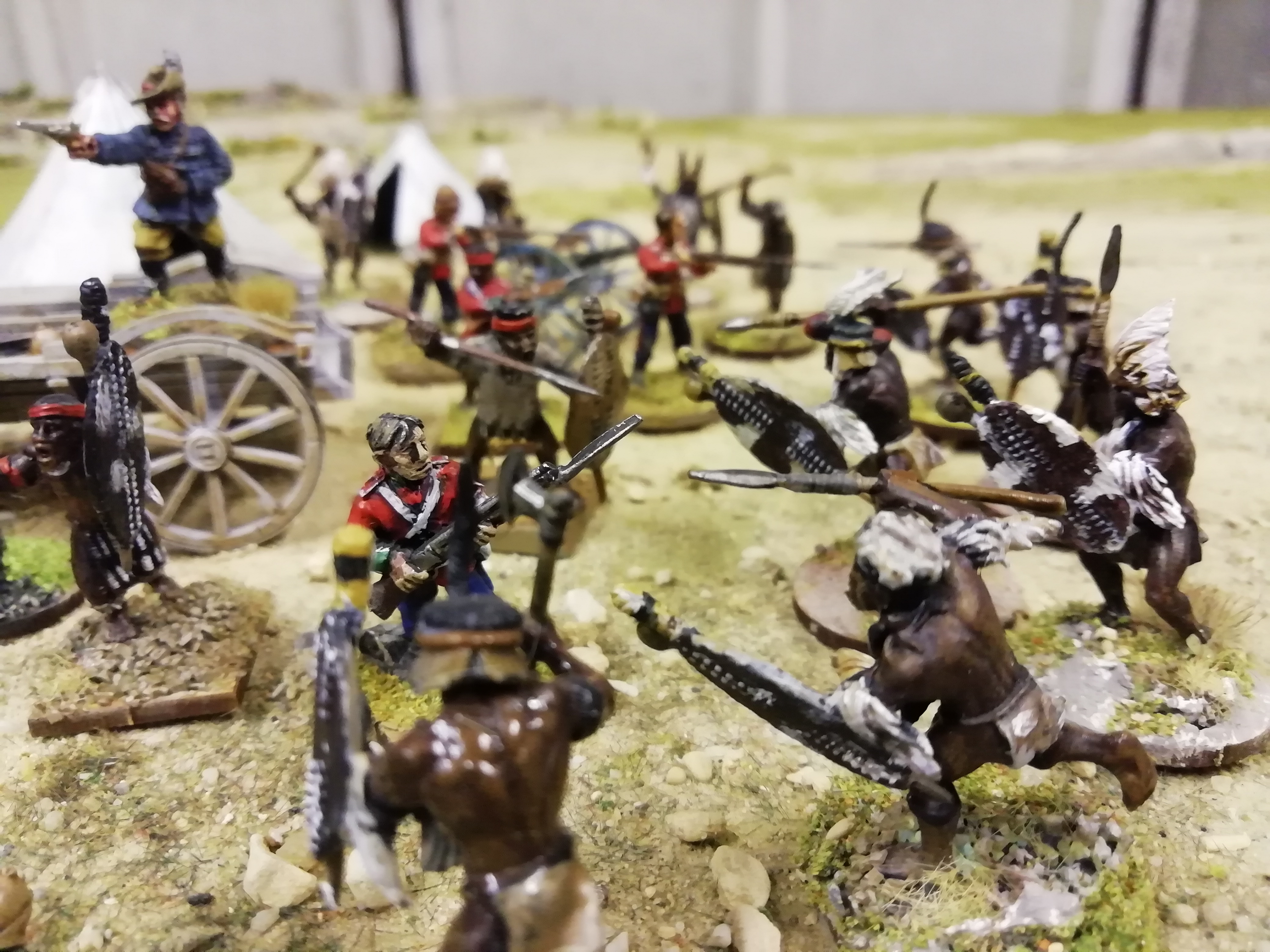
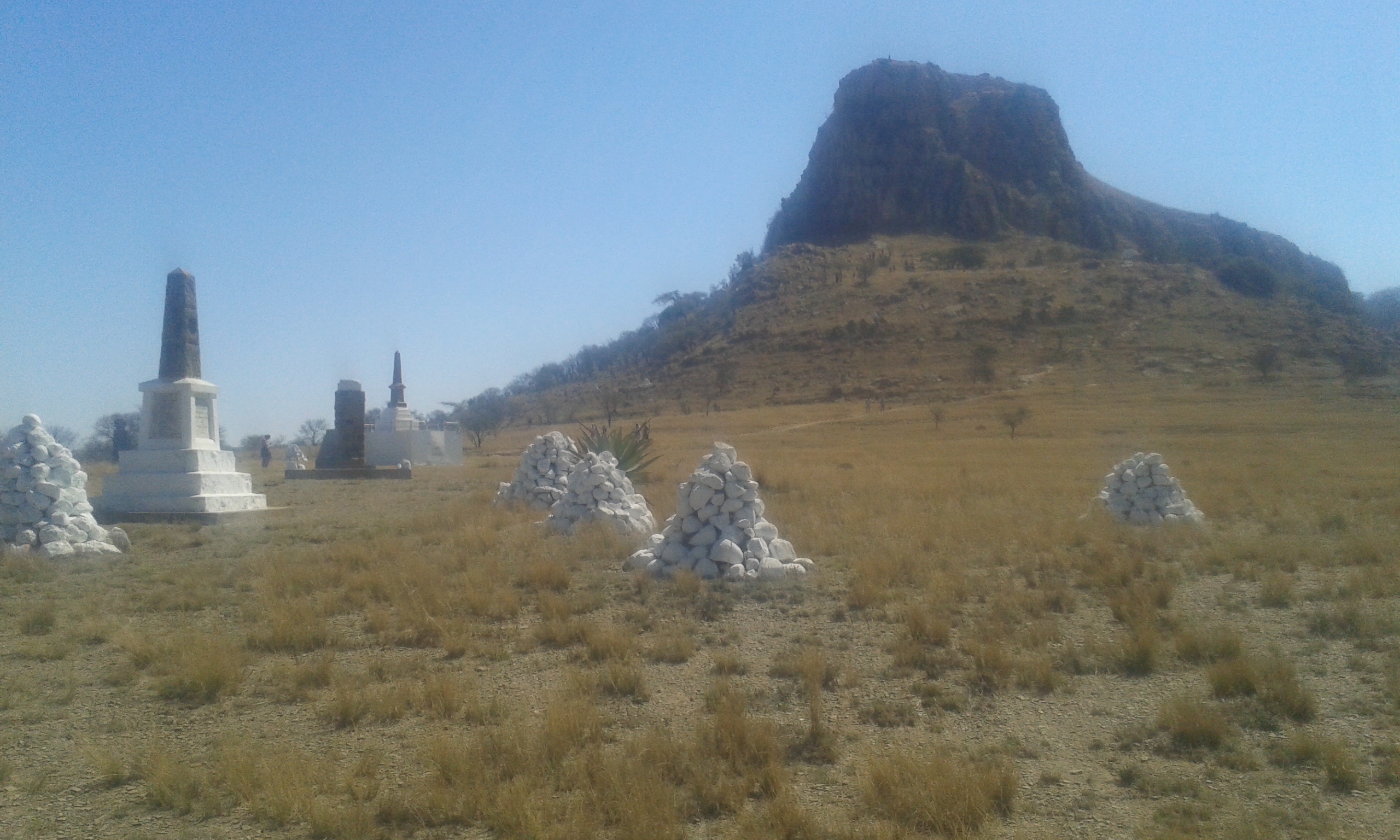 My first look at a Zulu unit the Umbonambi or Evil Seers in English. This regiment saw action at Isandlwana fielding between 1500 and 2000 warriors. They also took part in later battles of the war. At Isandlwana they assaulted Durnfords position in the donga before he retreated into the camp and they followed him all the way. When I visited the battlefield my Zulu guide told me that Chelmsford heard that the camp was in danger so had an officer take his field glass to a high poit and see what was going on. He reported seeing cattle being driven into the camp. According to my guide what he actually saw was this regiment placing their shields over their shoulders in respect which they do at the end of the zulu film. They had just wiped out Durnford and because they respected him so much they performed this maneuver which from a few miles away made them look like cattle. I hope that story is true.
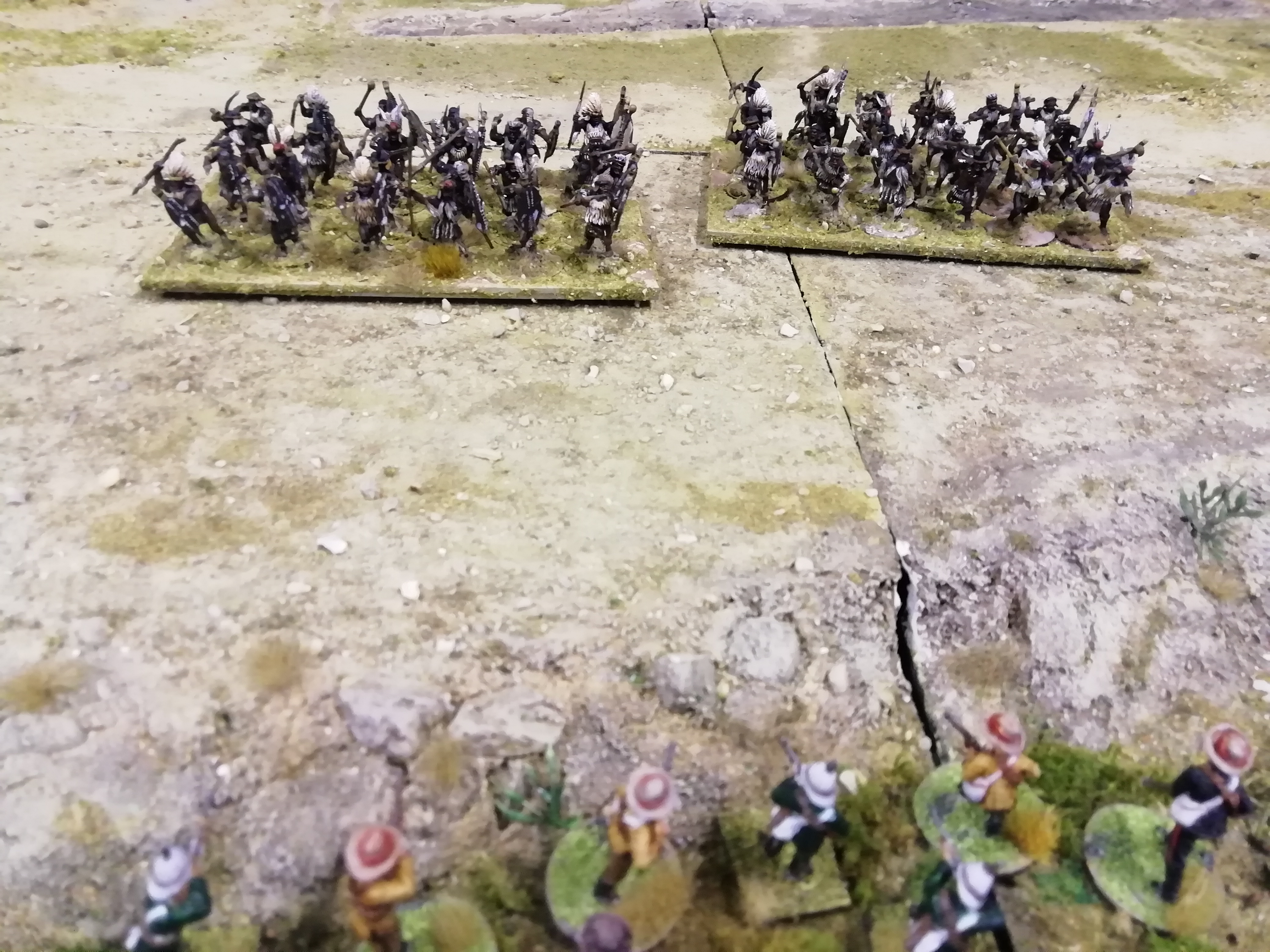 Durnfords men fire on the Umbonambi from the donga
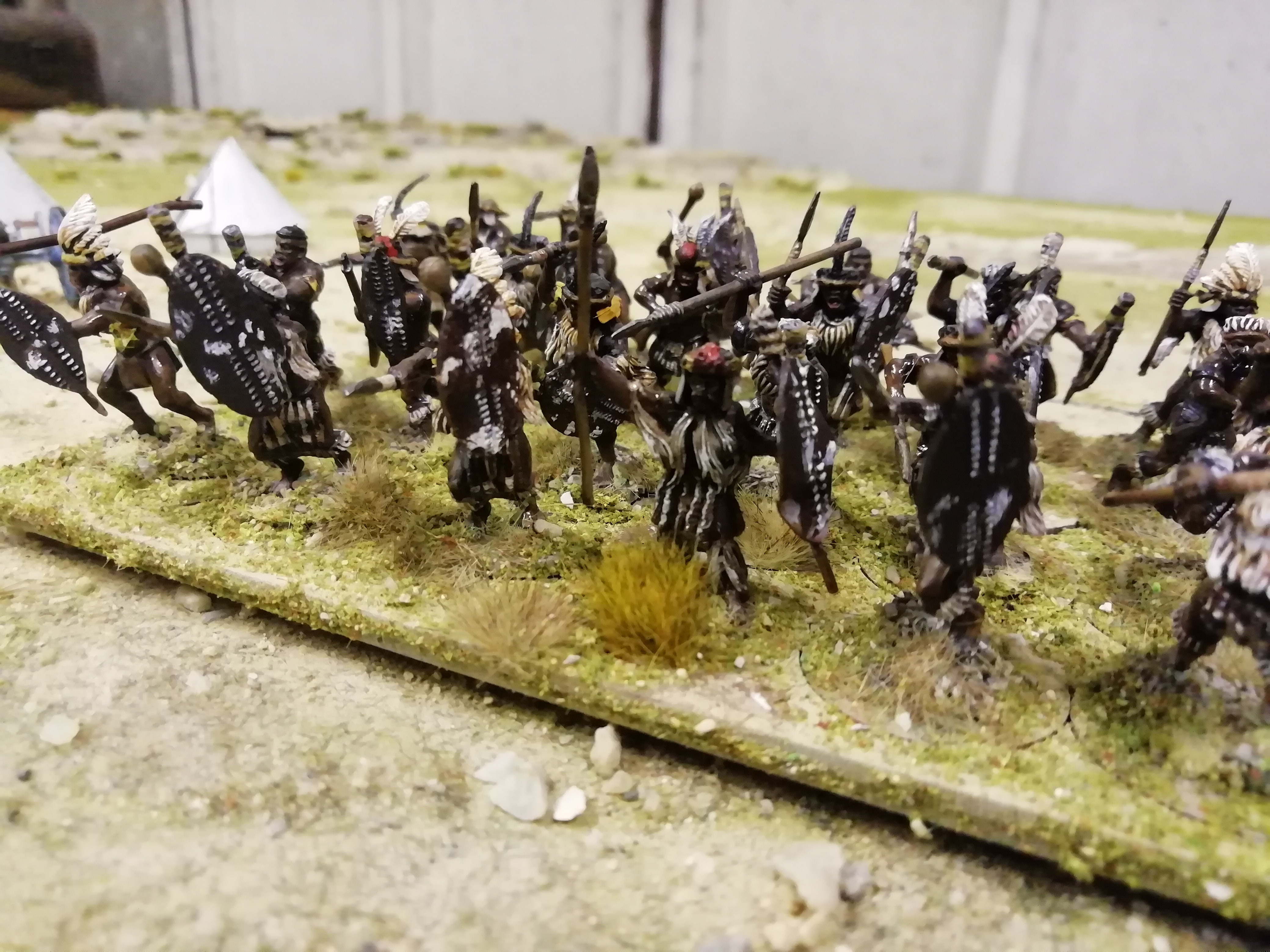 The Evil Seers were an unmarried regiment so were doing the Zuku equivalent of national service.They carried red shields which is really a brown colour with white spots. Shields were property of the state and when a regiment was formed the unit would obtain skins from cattle that were as close to colour as they could. The rest of their outfit the warrior made himself and if he did a bad job would be ridiculed by his comrades.
  This warrior carries the smaller shield called a umbhumbhluzo which was 39" x19" he has a long crane feather tied to his otter skin head dress.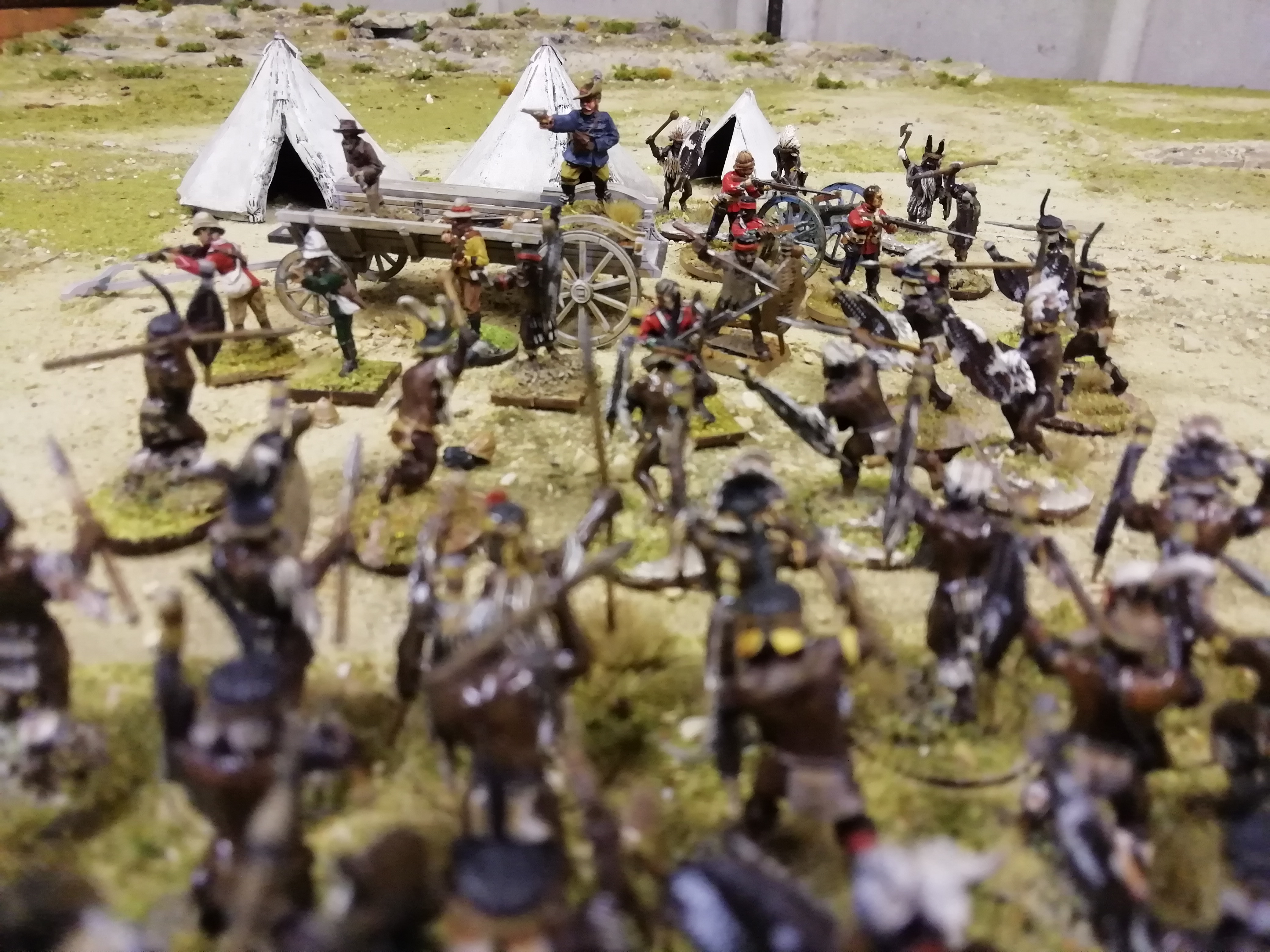

The Unokenke
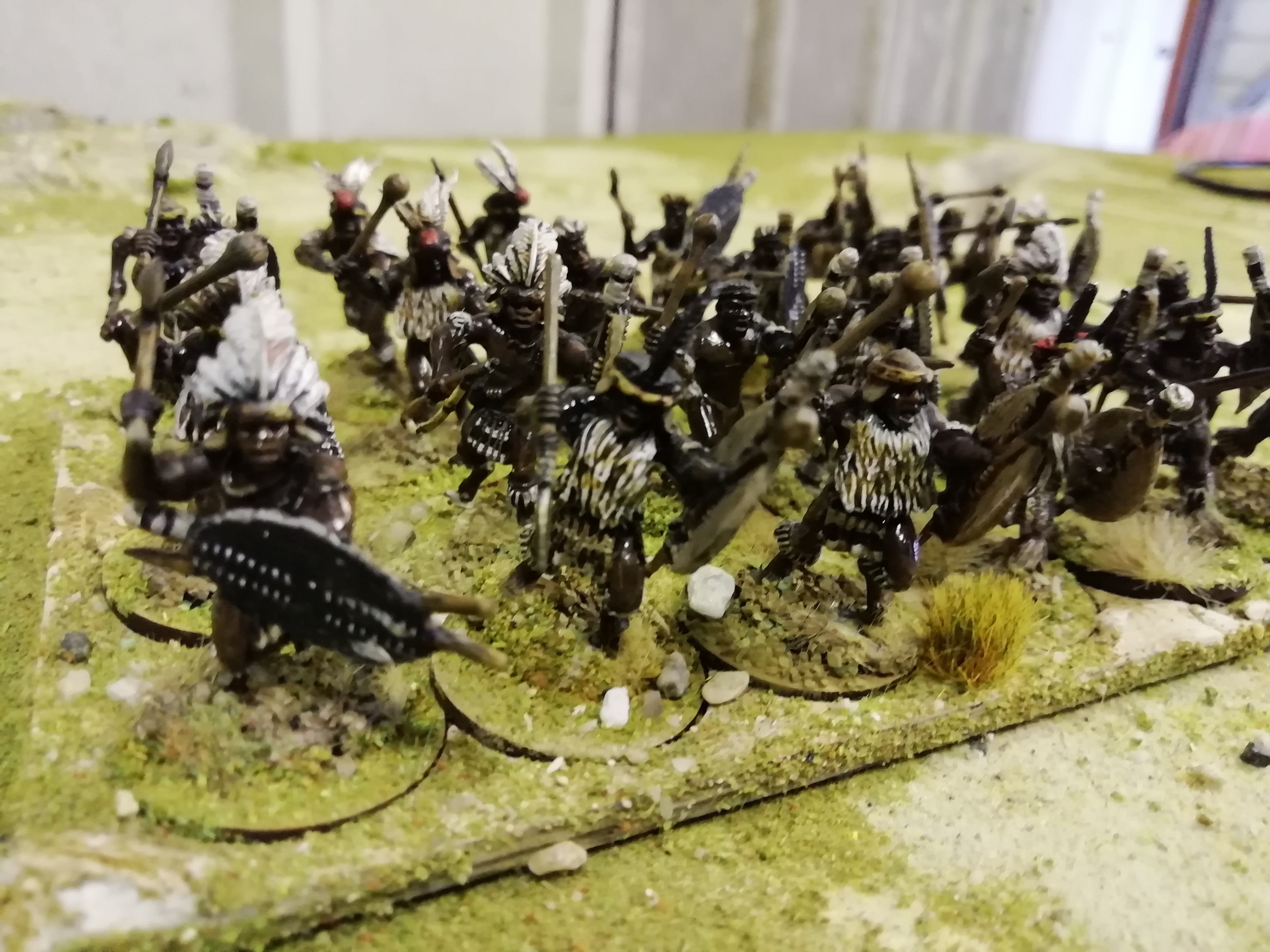
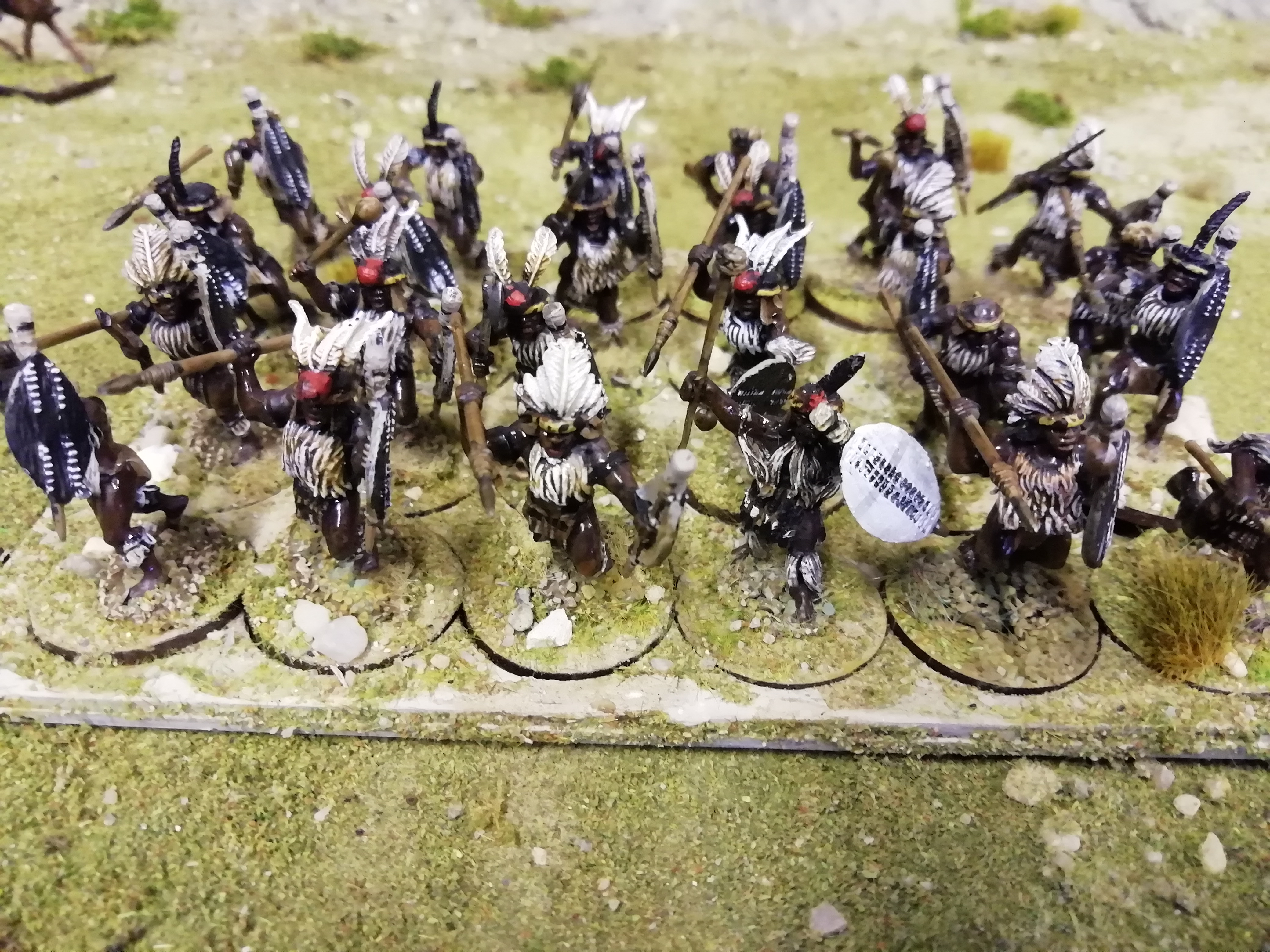
Around 2000 members of this regiment were present at Isanlwana. This was an unmarried regiment with black shields some had white spots but not all. All regiments were organised from age from about the kingdom rather than regions to prevent local chiefs getting his local regiment involved in any traitorous take overs.
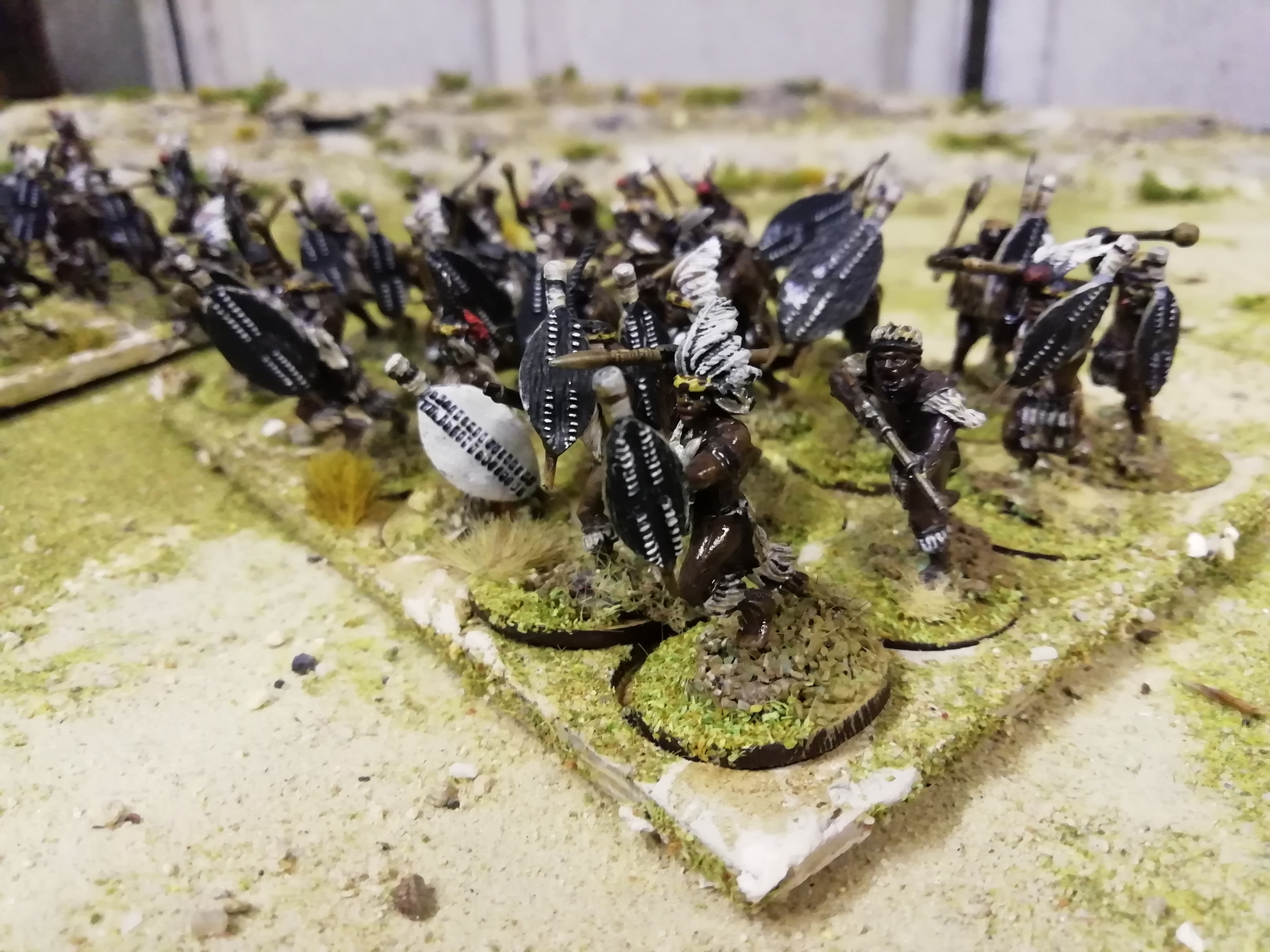
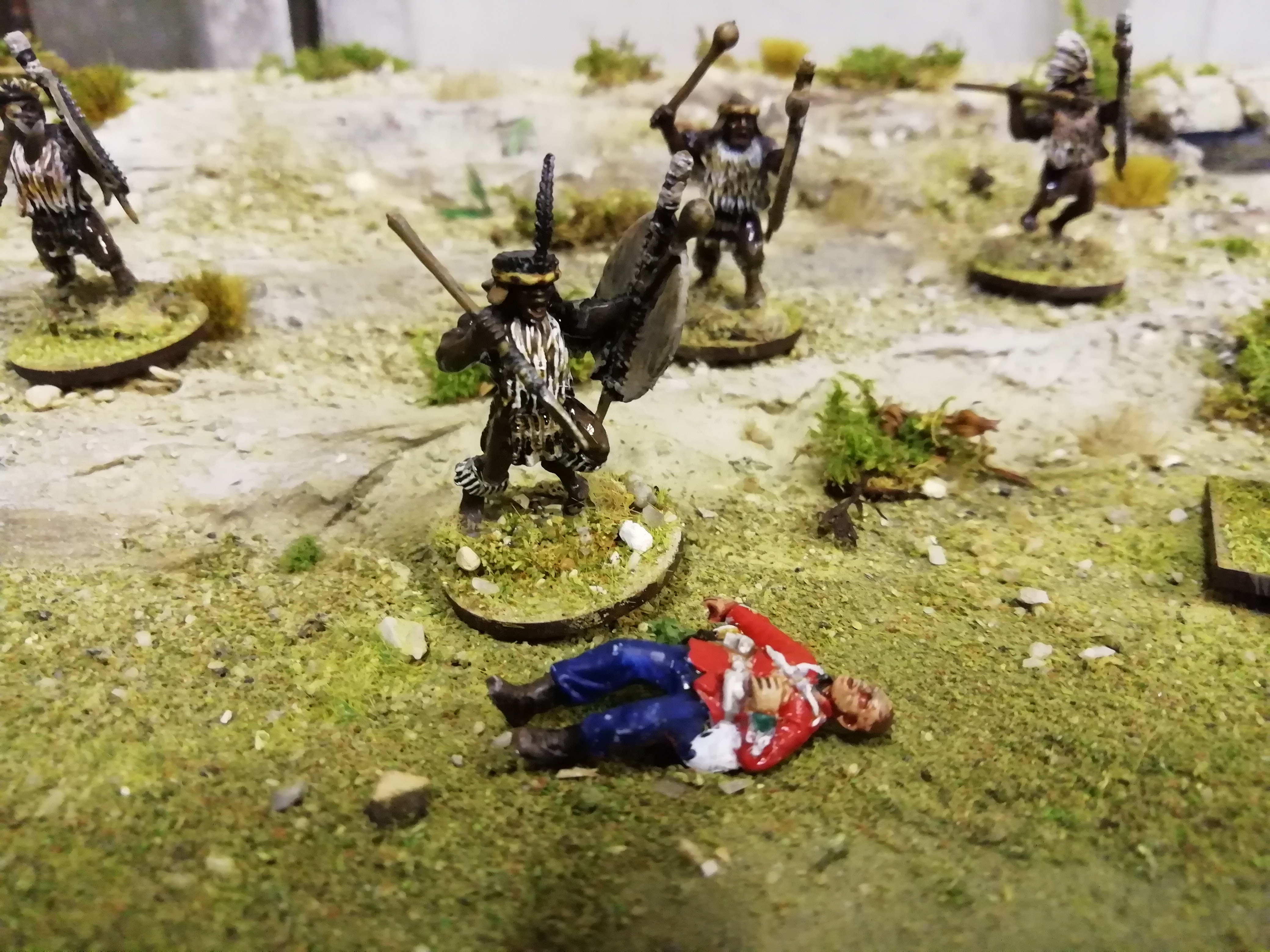
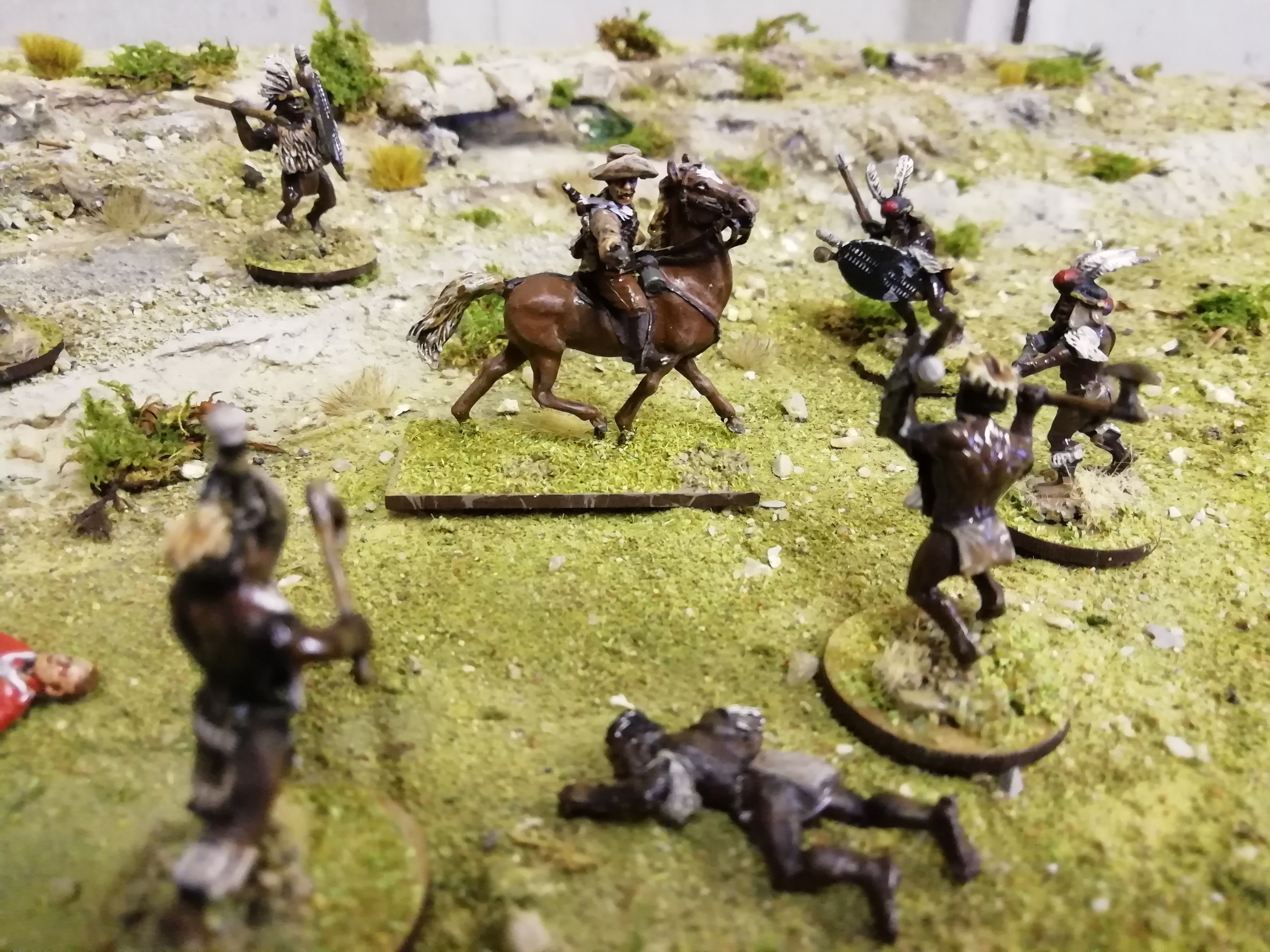
As fugitives fled Isanlwana Lt. Erskine of the NNC described seeing the Unokenke regiment chasing down fugitives. Erskine himself escaped when someone gave him a horse despite being stabbed in the leg. One Zulu shot at him but missed. “Who the hell do you think your firing at?” He shouted in Zulu at his attacker and ride on leaving the shooter rather astonished staring at him.
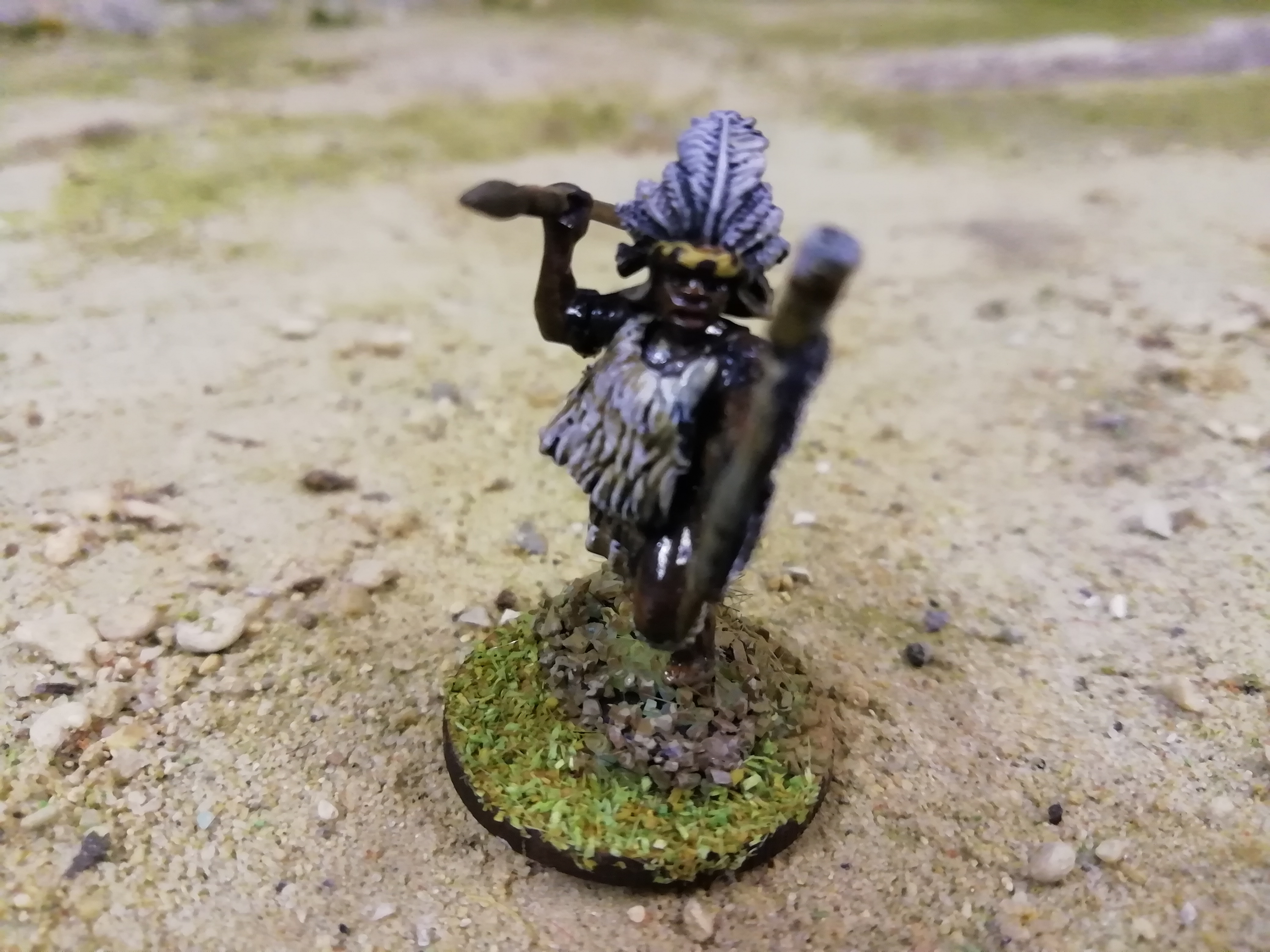 This young warrior has an ostrich feather headdress with leopard skin band. He carries the larger ishlangu shield.
UmCijo
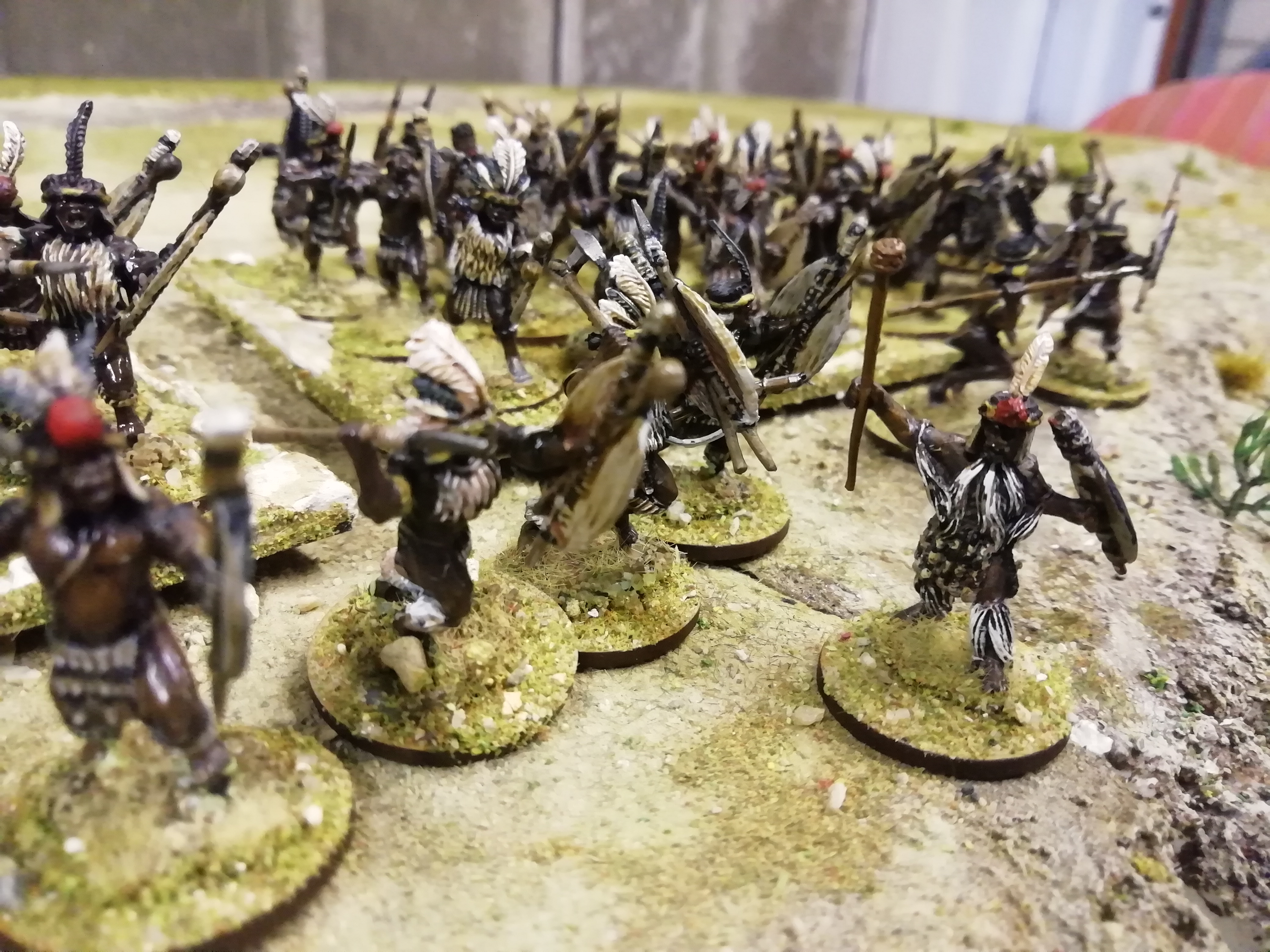 This young regiment saw action in most of the major battles of the war. At Isandlwana they were the first regiment to spring up when discovered by accident by British scouts. They took heavy casualties in the centre of the Zulu formation until an unduna rallied them before being shot down.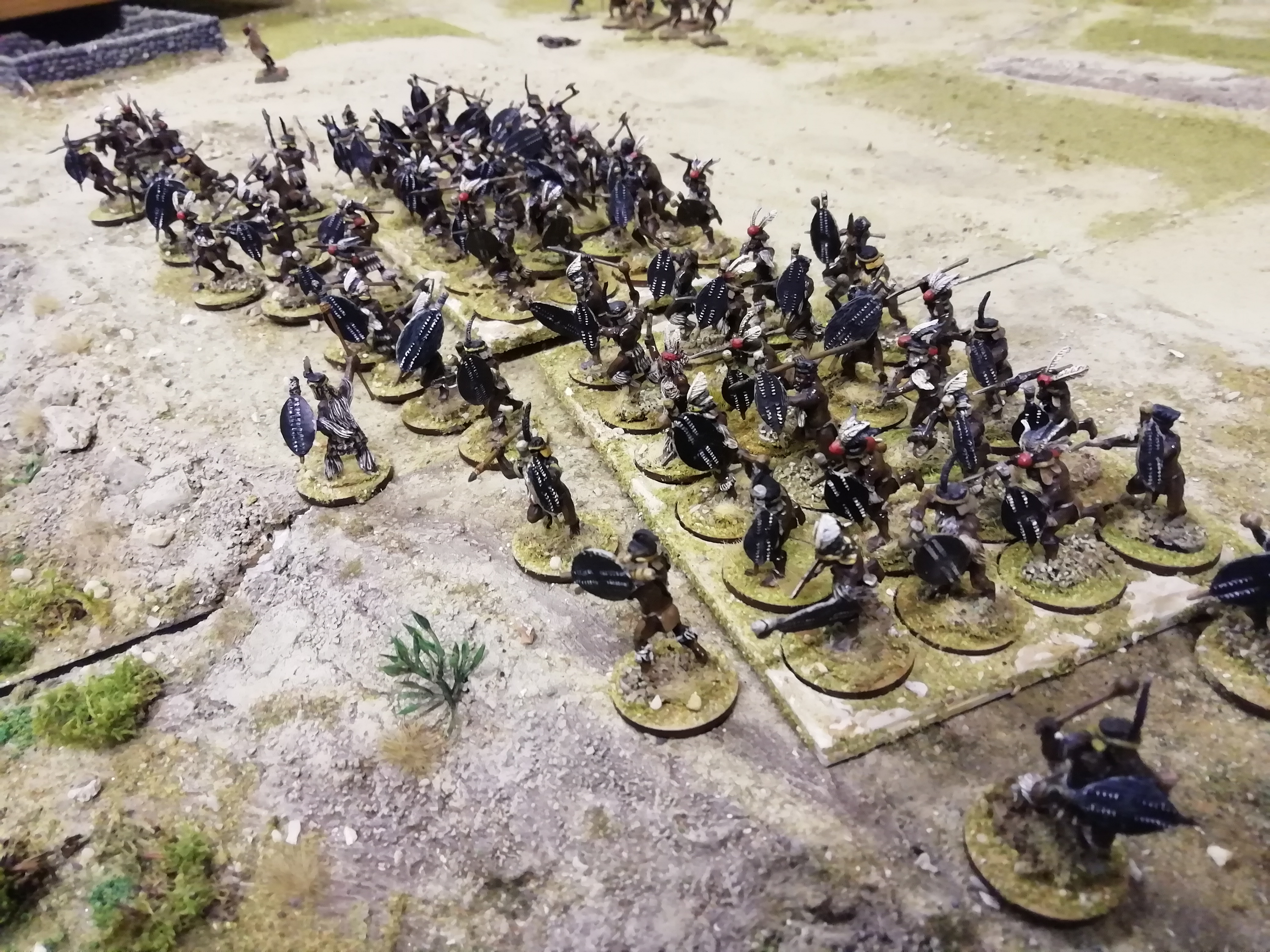
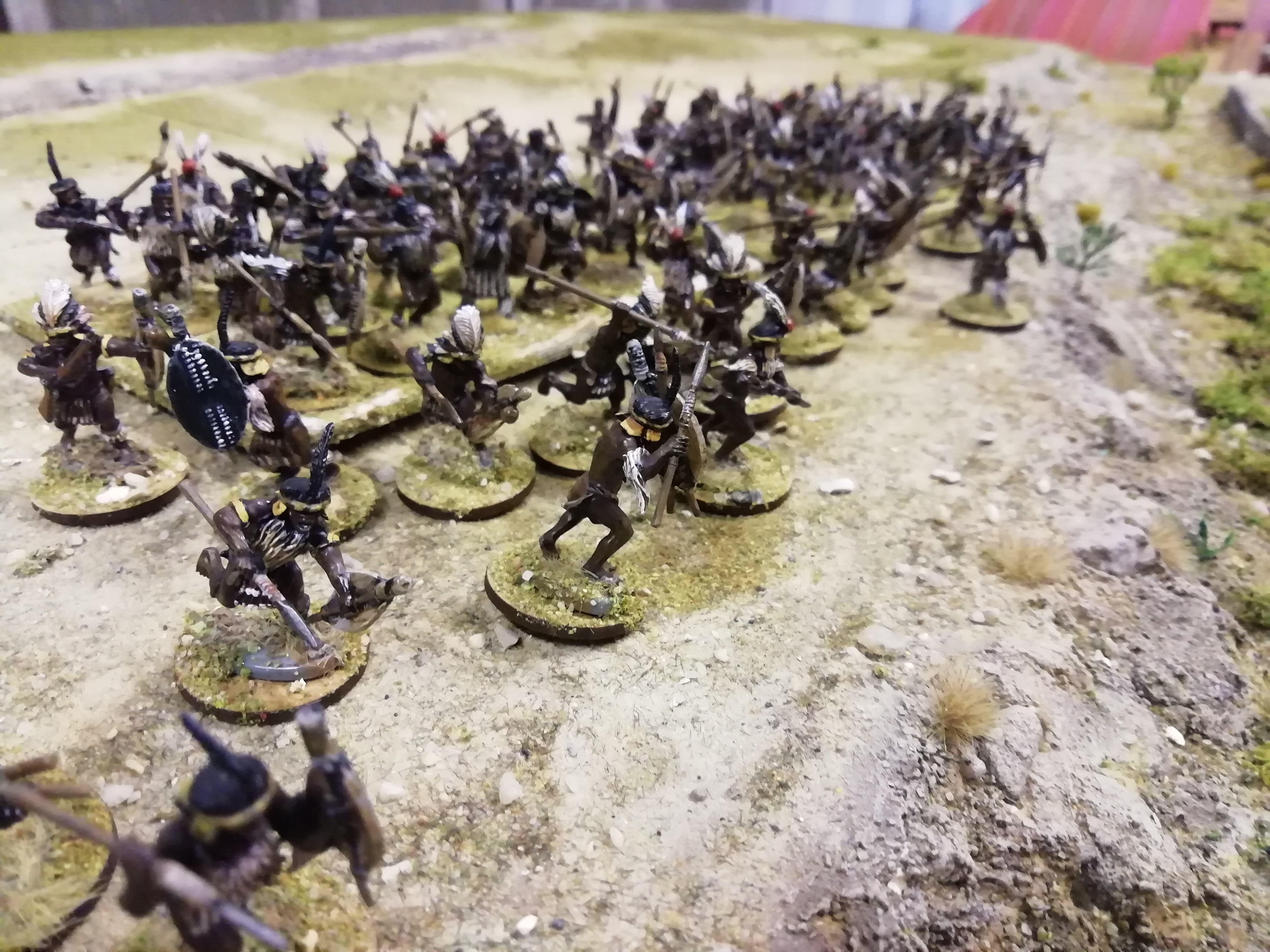
- At the battle of Hlobane they chased British mounted units down the mountain. One mounted Induna by the name of Sitshitshili killed seven men. He shot at an eighth who he beckoned to surrender and as the man raised his hat in acknowledgment was shot by another Zulu. Sitshitshili then stabbed the Brit before the other Zulu could claim to he kill. He would later help bury the British dead
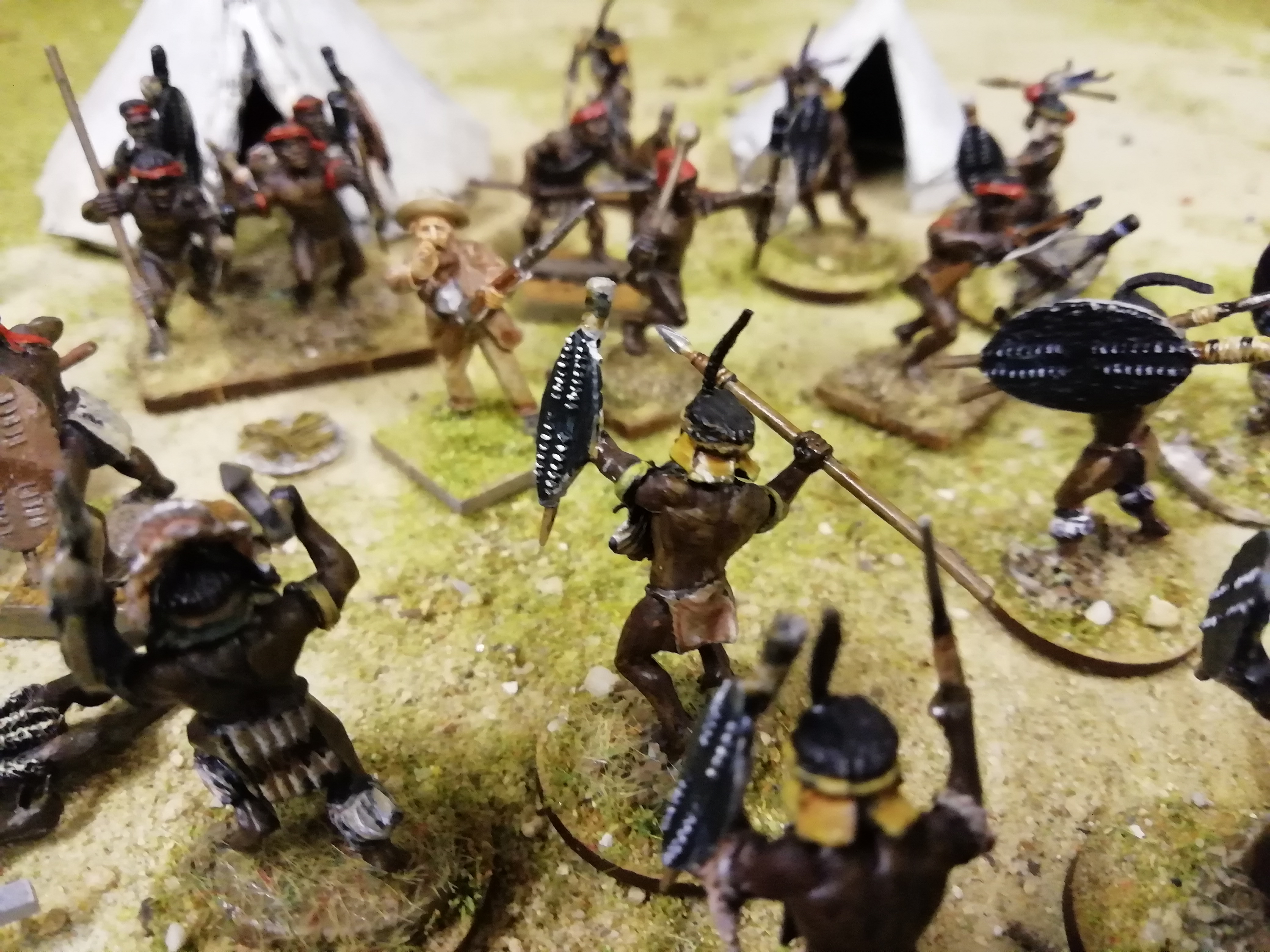
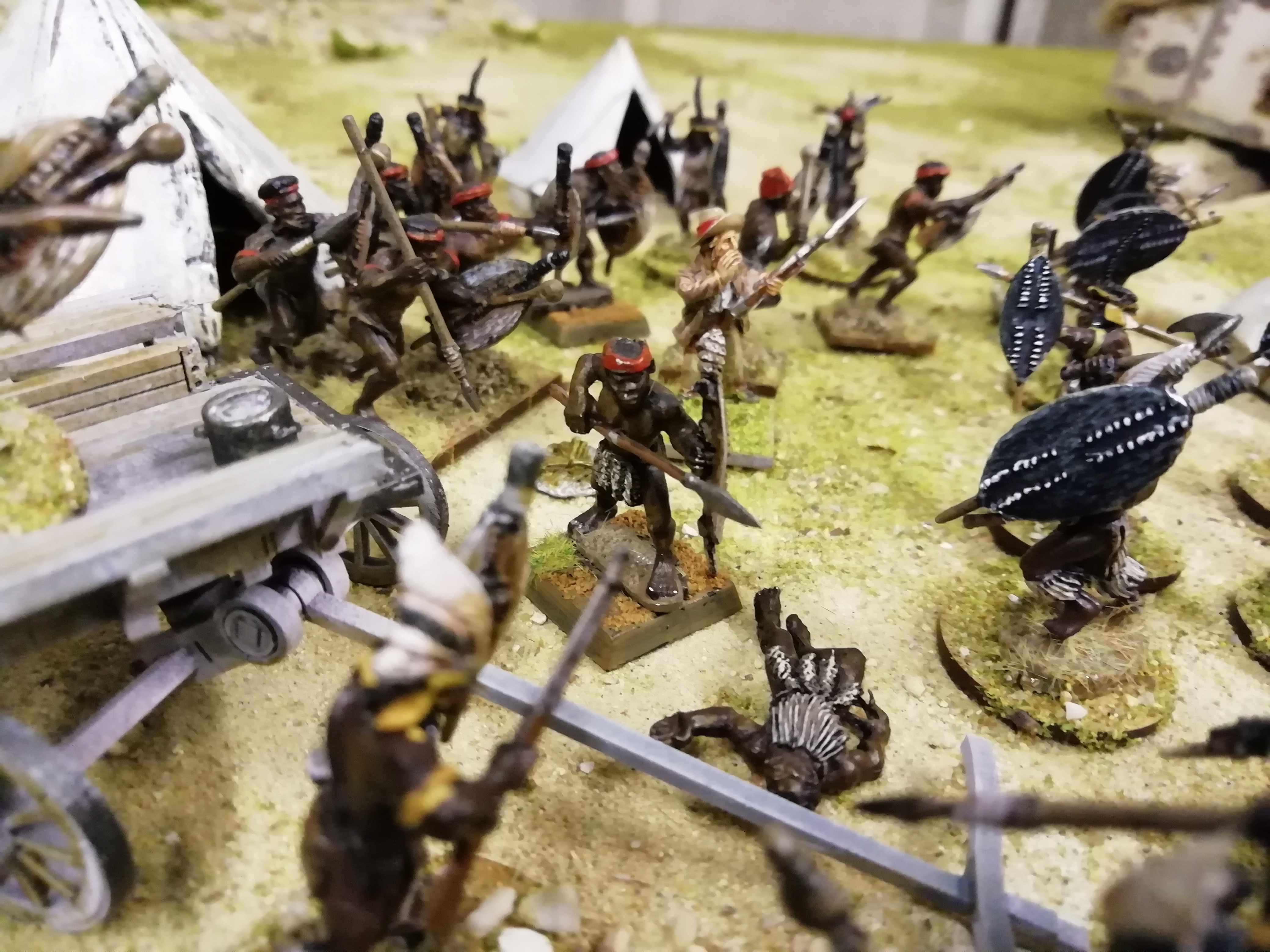
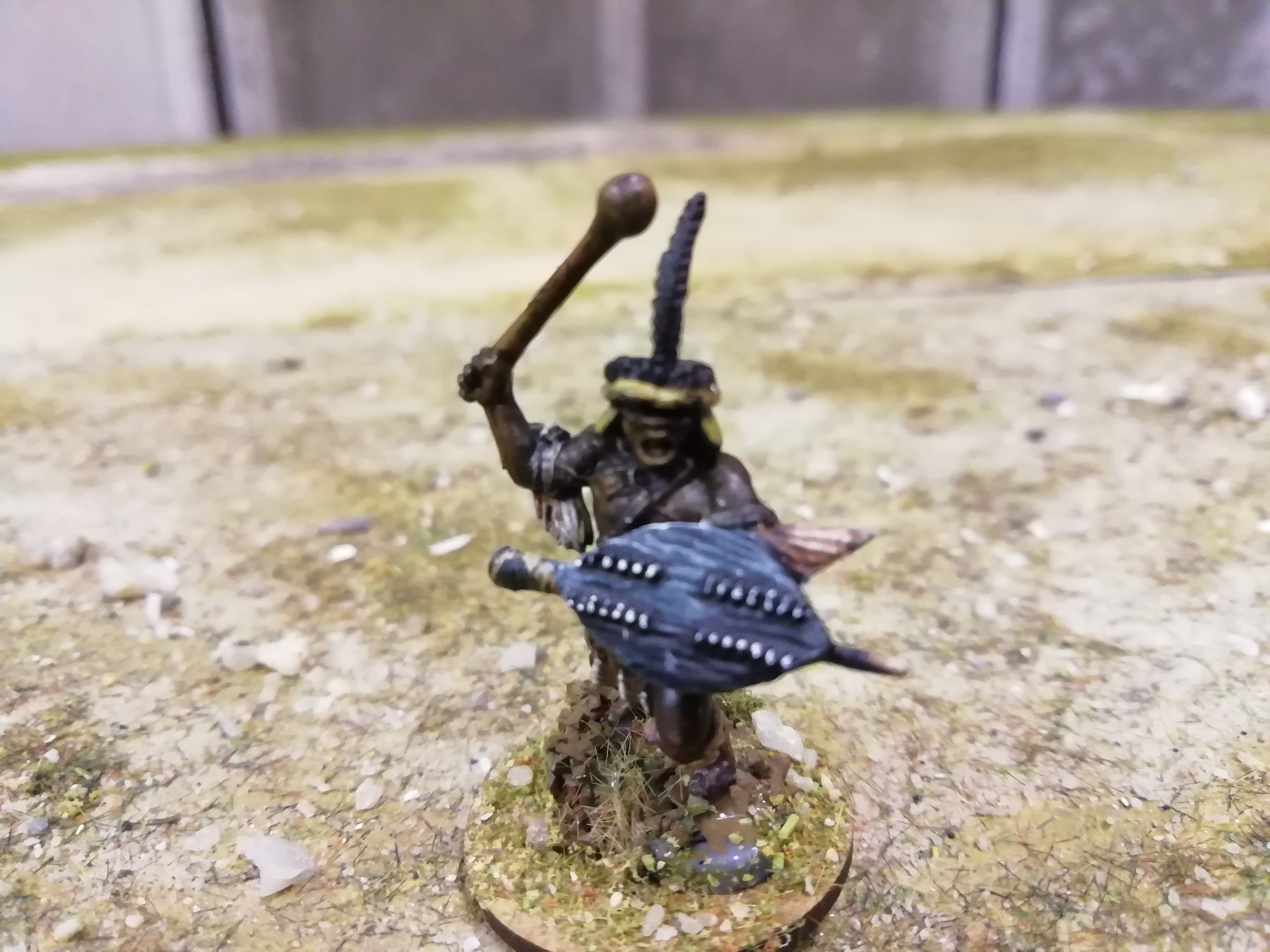 UmCijo warrior with pure black shield and knobkerrie club. Above the regiment take in the Natal Native Contingent at Isandlwana
uThulwana
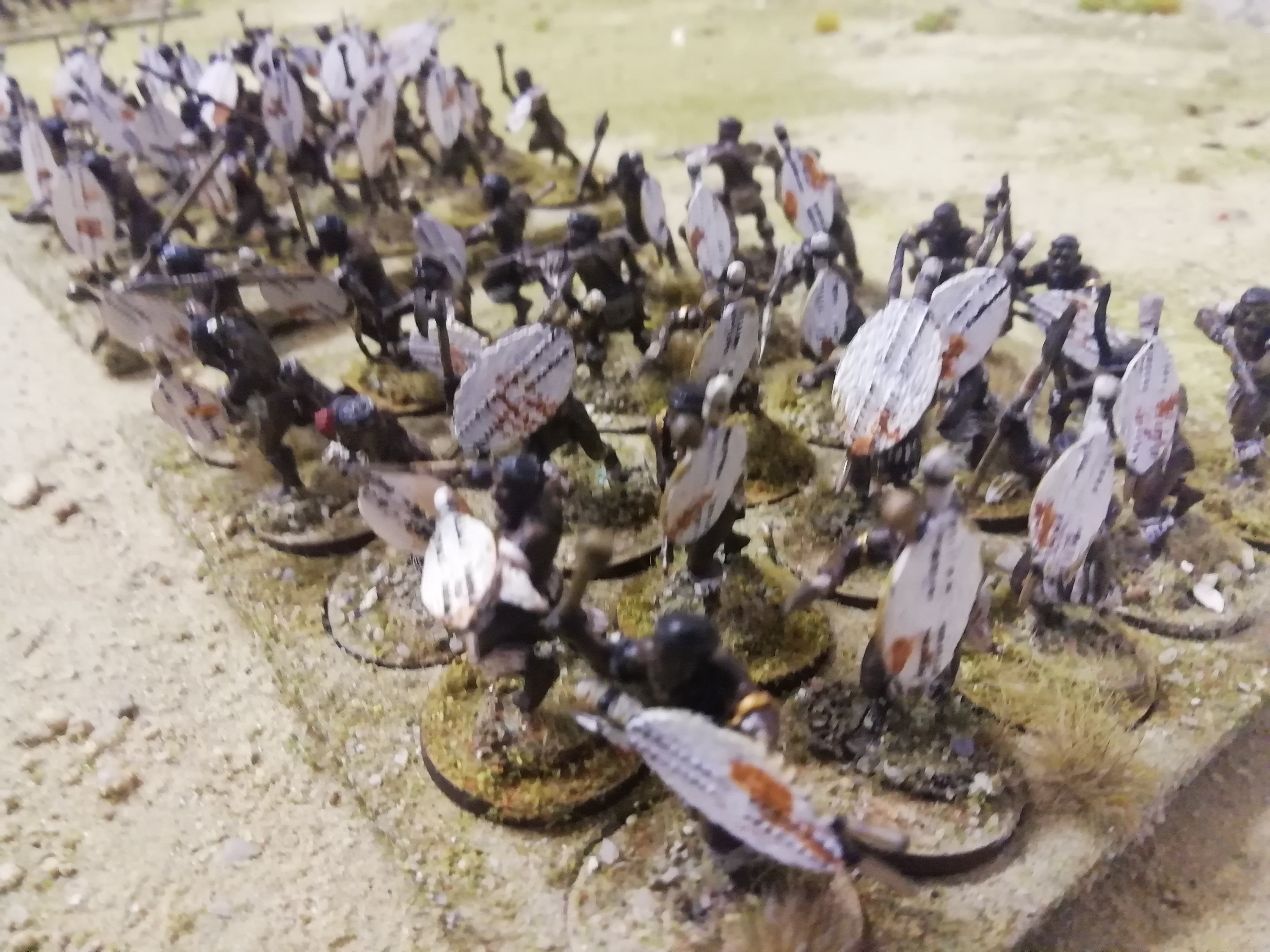 This was a senior regiment based at the Zulu capital of Ulundi. They were a married unit of men in their mid forties. The king himself had served in this regiment and many if it's warriors had seen battle in the past twenty years. Once a regiment married they became a reserve force. They acted in this capacity at Isandlwana as part of the Undi corps.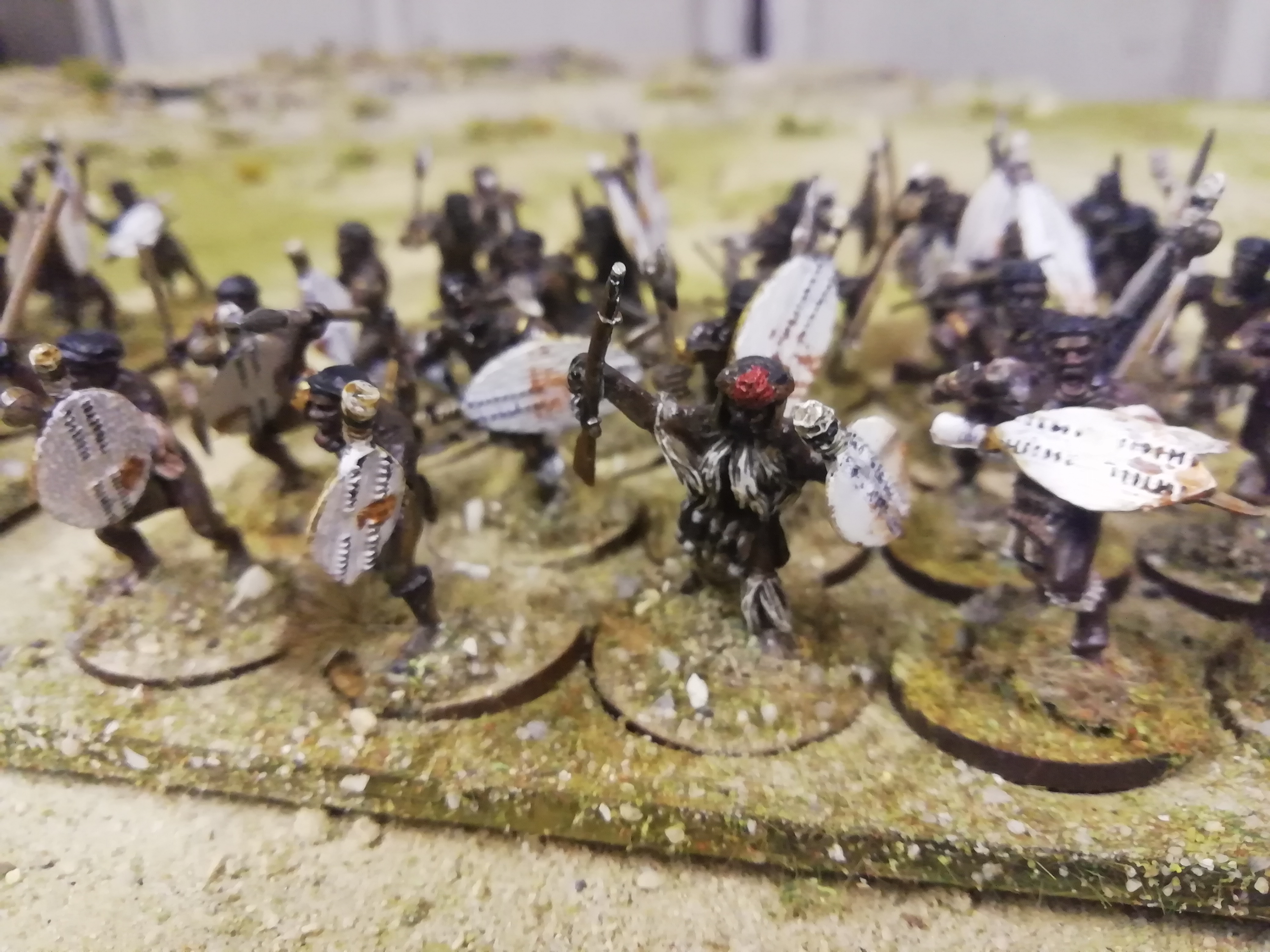
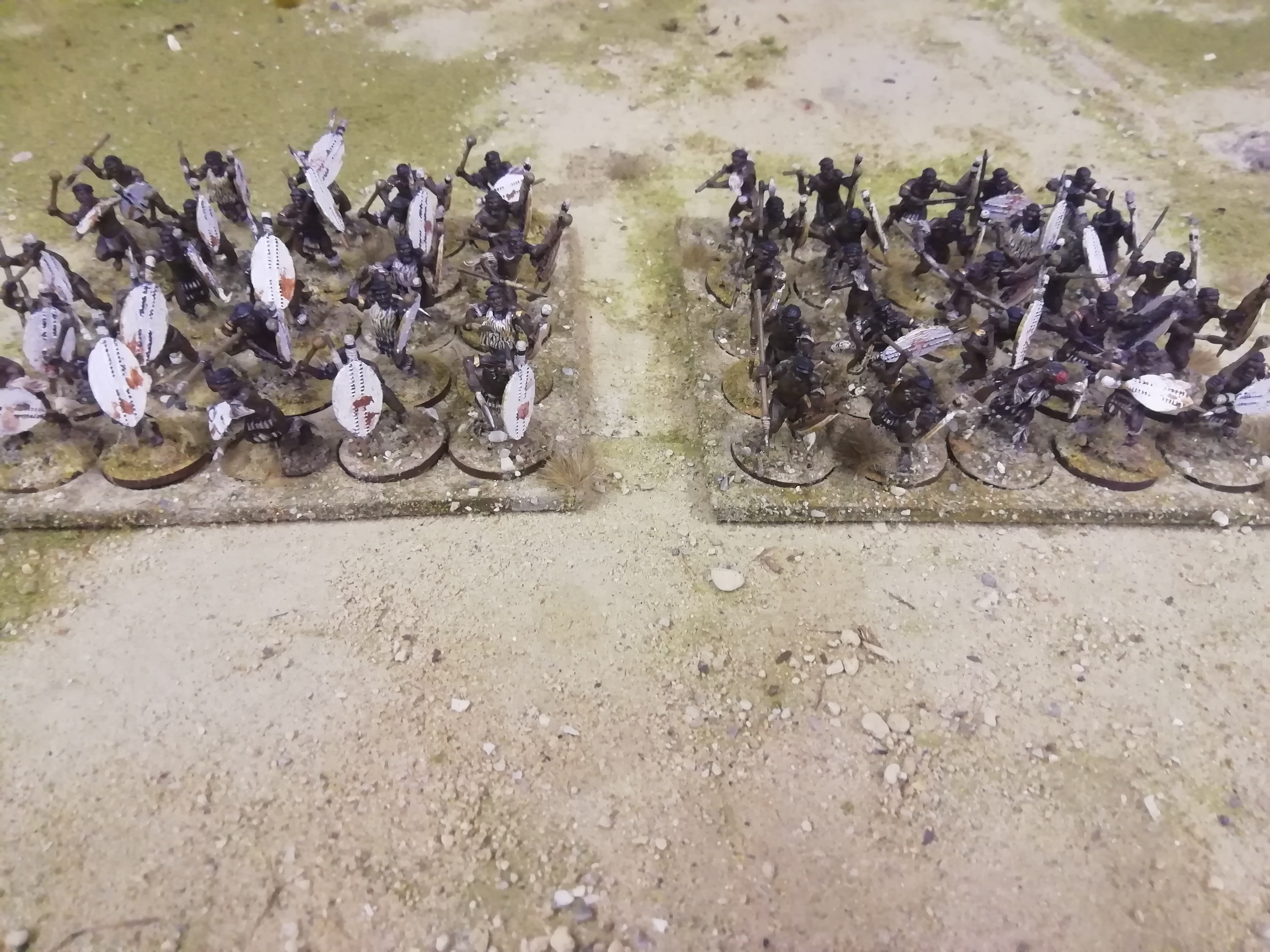
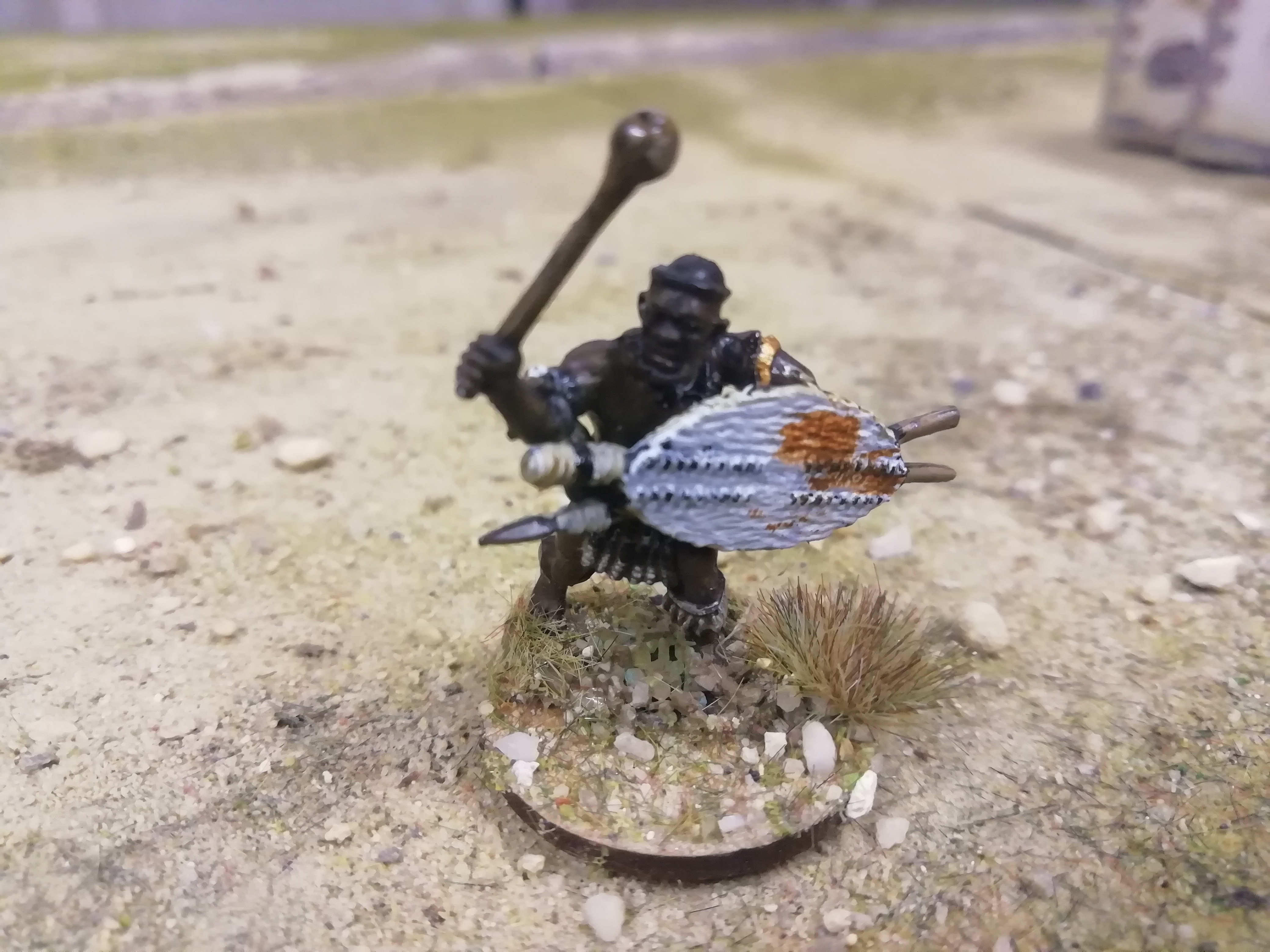 This warrior has left his ceramonial feathers at home for a more practical otter skin ring on his head denoting his married status. He carries a white shield showing he is from a senior white assembly regiment.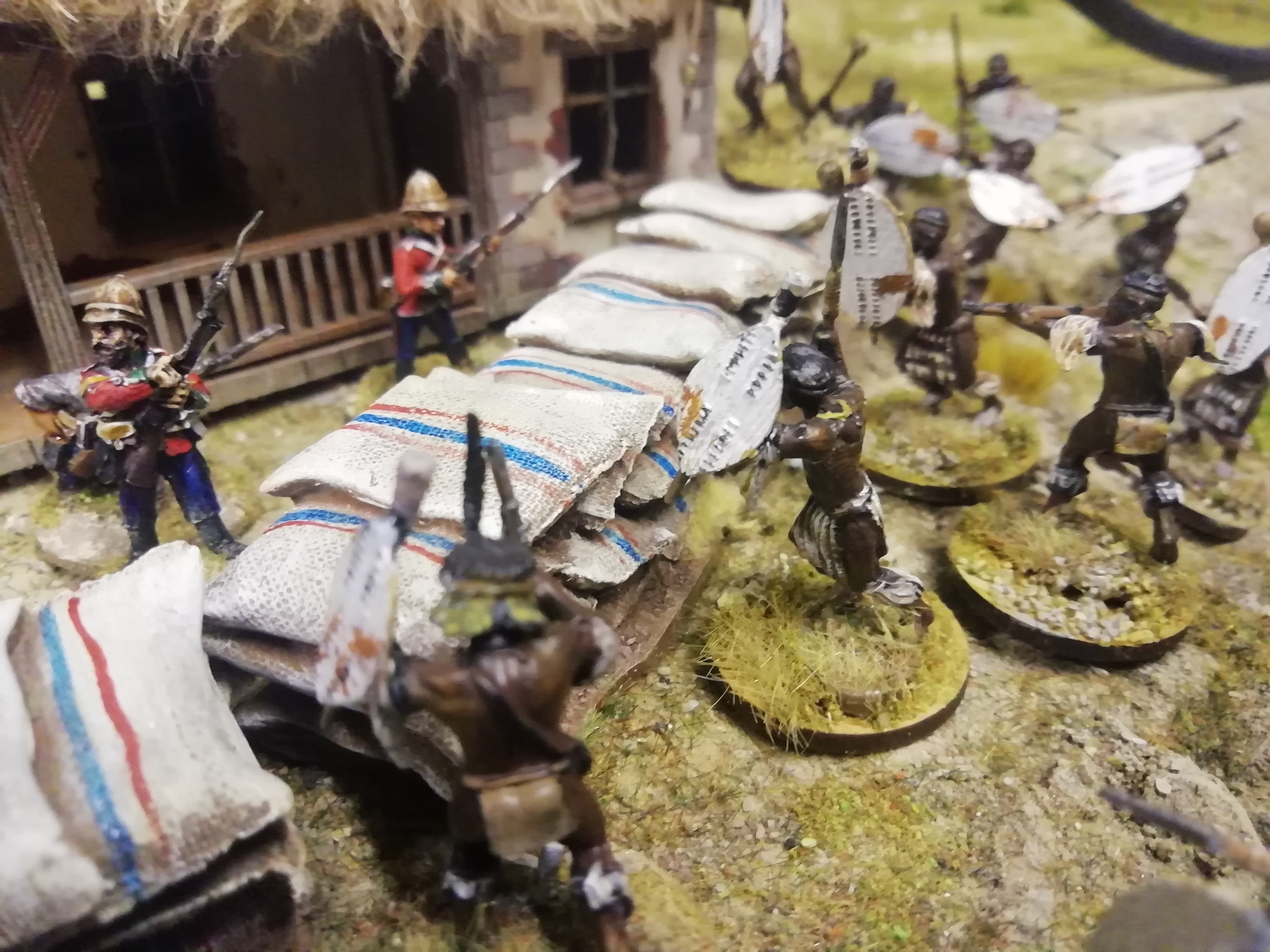

The regiment contained many high ranking Zulus including the kings half brother who was trying to defect to the British. At Isandlwana their commander was rather impetuous and broke away from the reserve to attack the camp before moving on to Rorkes Drift. They would continue to fight on though out the war up until Ulundi
uDhloko
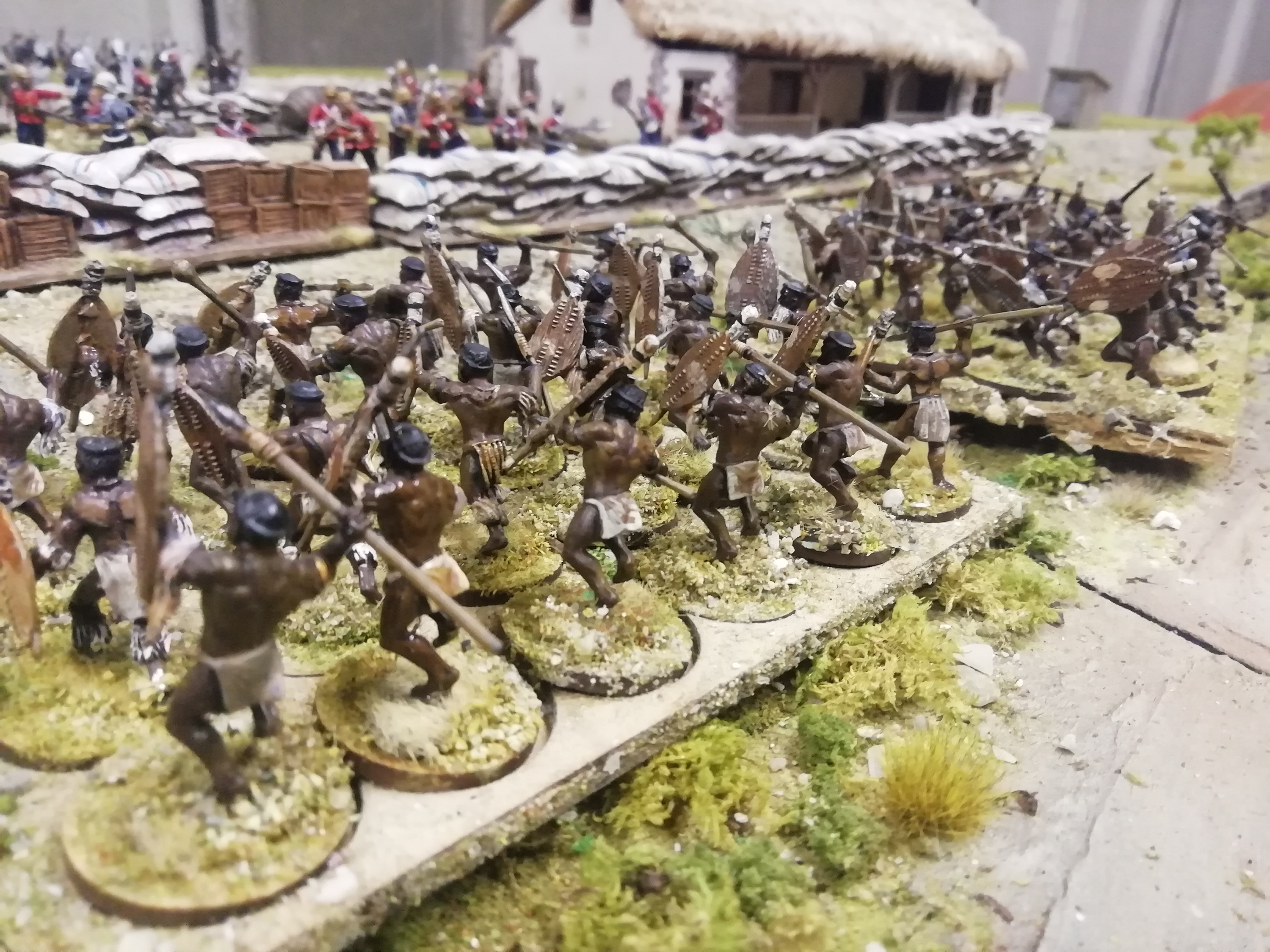
The uDhloko regiment was a married unit of men around 41 years if age. They carried what were called red shields which were a brownish shade. 5000 joined the main army waiting near isandlwana to attack the British. They were part of the reserve force sitting in a valley further back so when the fighting started remained in the rear. Most if them circled around the British camp to cut off any retreat. Feeling they had missed out on the battle 2000 of them headed towards Rorkes Drift making up half of the attacking force. They spent most of the battle assaulting the barricades from the gardens they used as cover and broke into the hospital. The regiment got it’s title from the name of a snake.
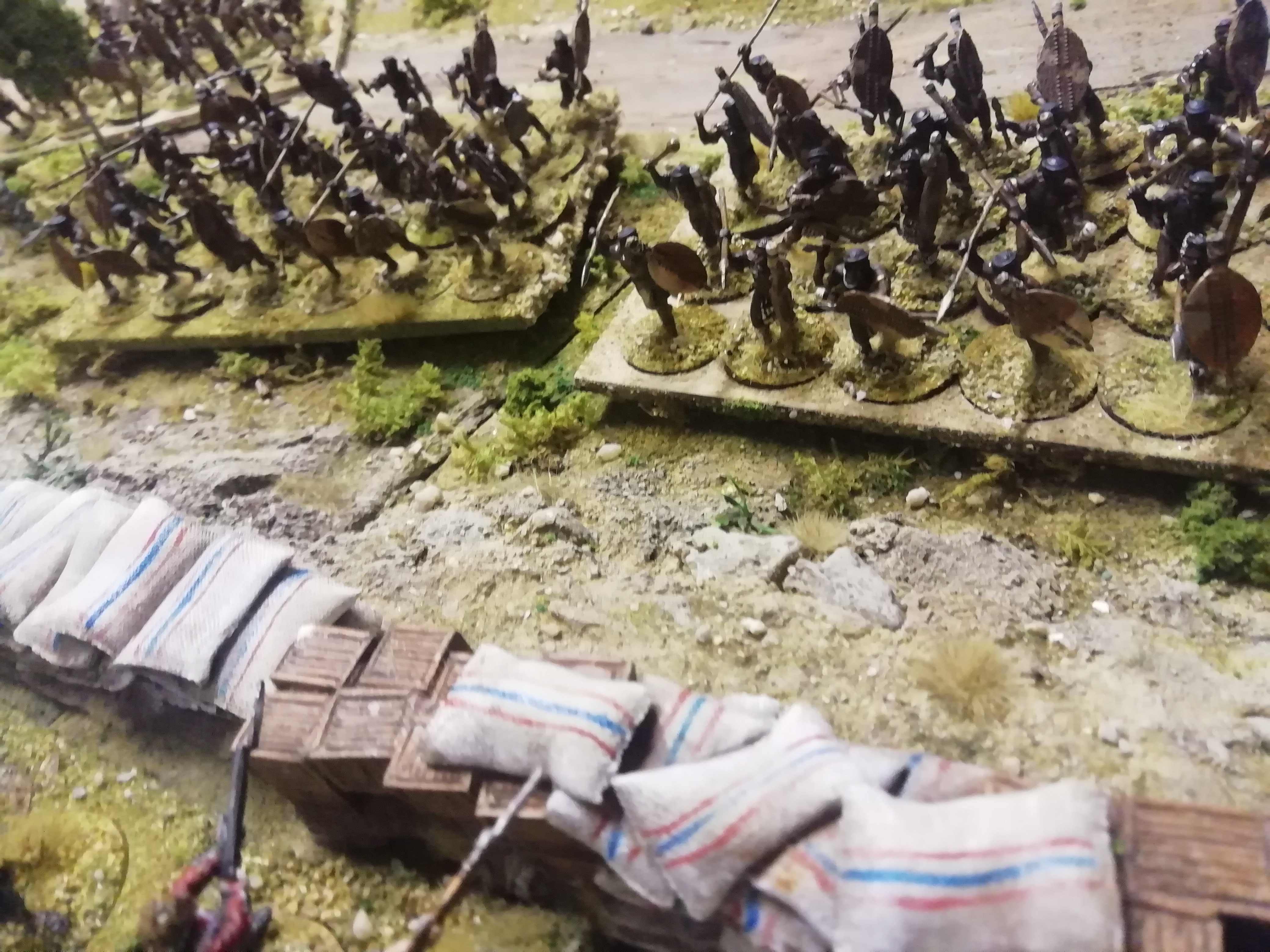
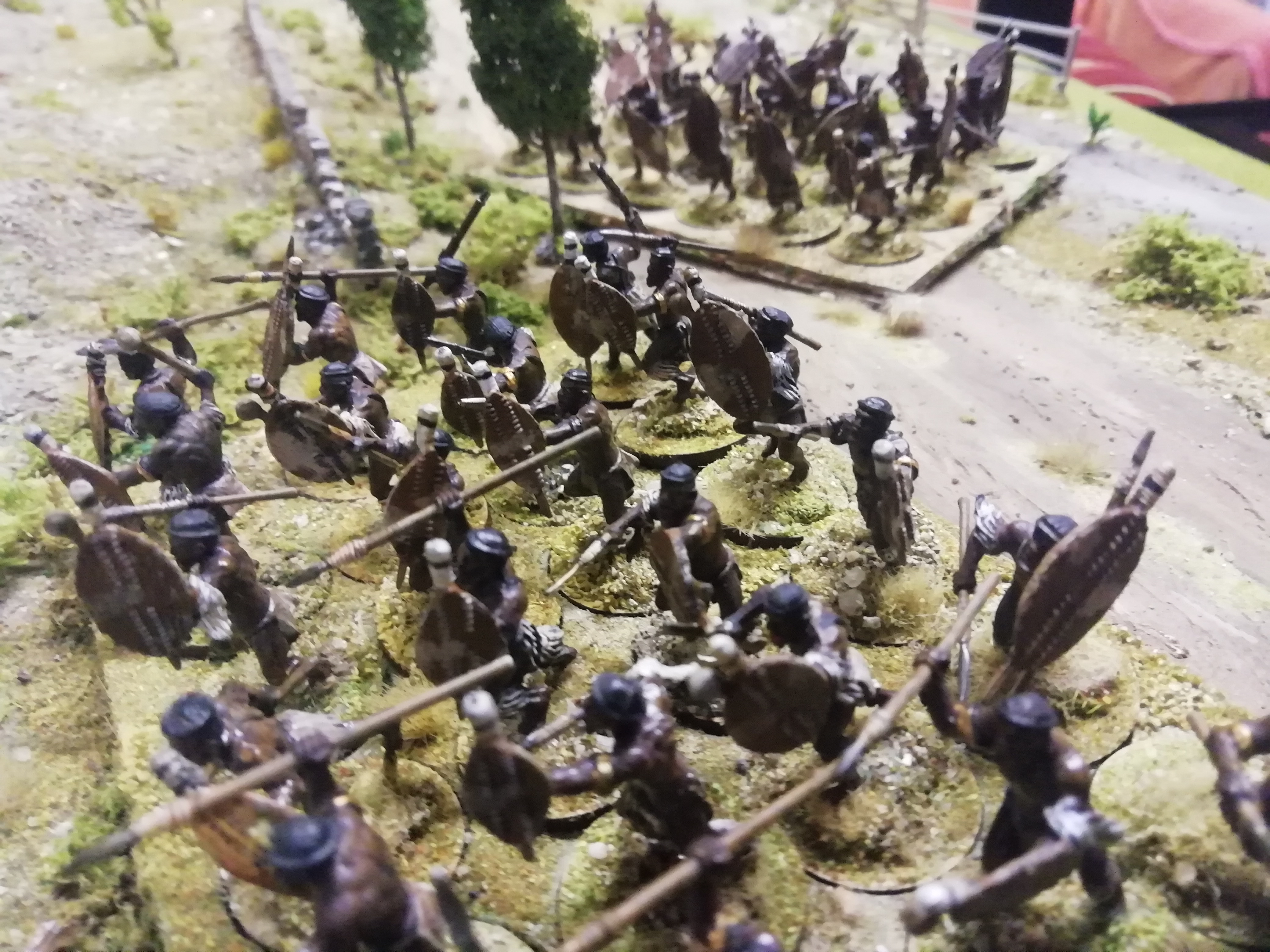

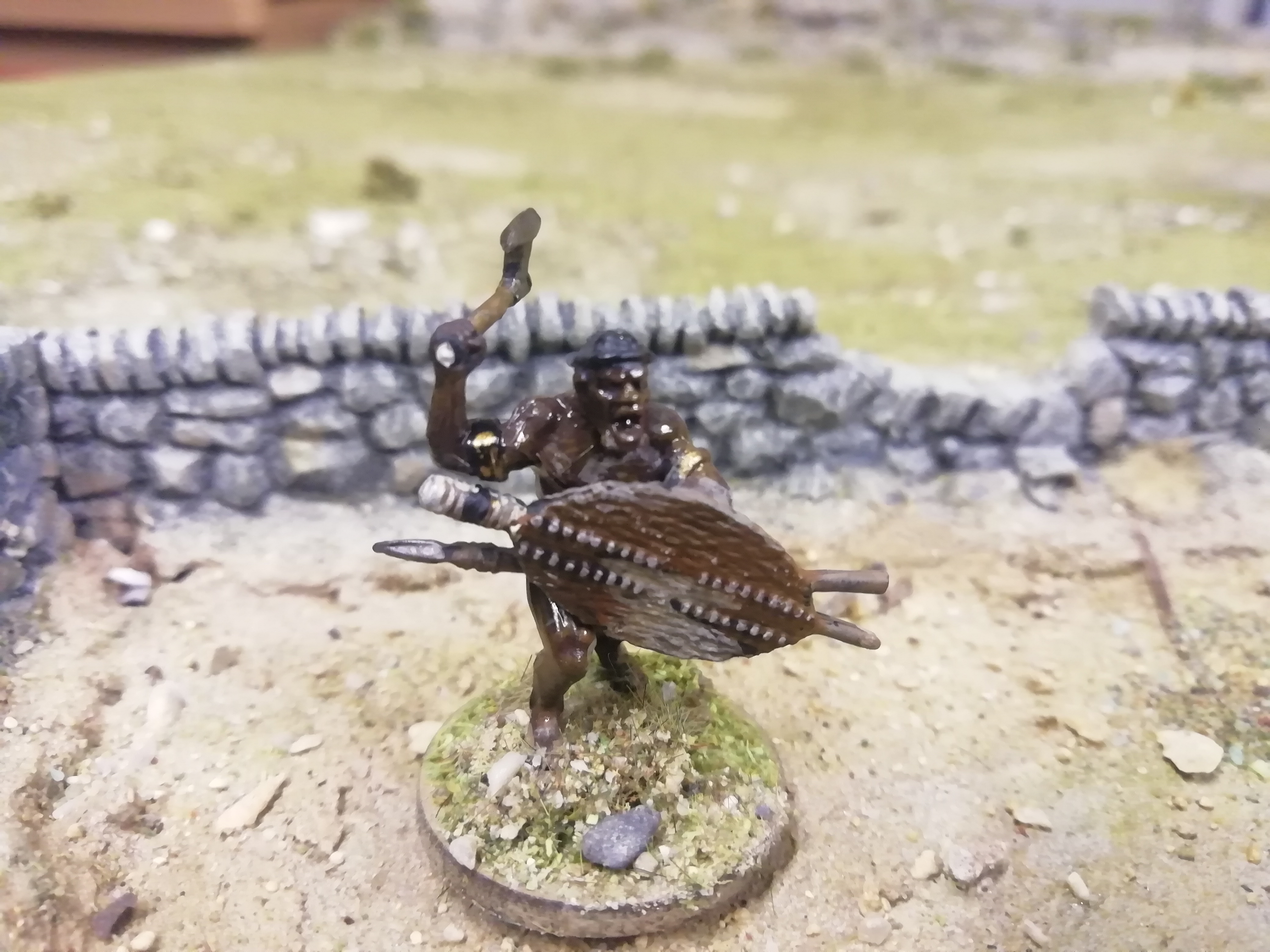 Most married units left their ceremonial plumes at home. This warrior has the more unusual axe

![StarCraft Tabletop Miniatures Game Pre-Orders Live Now [Updated]](https://images.beastsofwar.com/2026/03/starcraft-tmg-news-cover-600-338.jpg)
![Mounted US Cavalry On Kickstarter For Dead Man’s Hand! [Updated]](https://images.beastsofwar.com/2026/03/us-cavalry-main-600-338.jpg)