







![NO Weekender Or Cult Of Games XLBS This Weekend [Updated]](https://images.beastsofwar.com/2026/03/No_Weekender_and_XLBS_this_Weekend-225-127.jpg)






Spocktober




Recommendations: 193
About the Project
Spending the month getting caught up on Trek related gaming and hobby projects.
Related Genre: Science Fiction
This Project is Completed
Wording about Words...
Sometimes its a lazy sunday in Spocktober, and you really should be writing an actual linguistics paper, but…. thats just not gonna happen today.

Sociolinguistic Control in Rihannsu.
“Jolan Tru,” a common Romulan greeting, and translates loosely to “peace be with you.” However, I think this translation is incorrect. I believe that its is probably closer to “live in harmony”
When interpreting the term “Jolan” as “harmony“—in the context of an authoritarian society—its sociolinguistic implications deepen. Here, “Jolan” can be understood as a form of social control, where “harmony” is enforced conformity rather than natural peace.
This interpretation mirrors the real-world Scandinavian social construct of Jantelagen, which discourages individual exceptionalism in favor of collective uniformity.
Linguistic Conformity in Authoritarian Regimes
In many real-world authoritarian systems, language serves as a critical mechanism for reinforcing social hierarchies and control. For instance, in totalitarian states like North Korea, language is crafted to emphasize loyalty to the state and collective conformity. The pervasive use of honorifics in everyday speech and government propaganda reinforces a hierarchy where individual identity is subordinate to the collective. Similarly, during the Cultural Revolution in China, Maoist slogans permeated daily language, dictating not just how people communicated but how they thought about their role within society (Zhou, 2000).
By this logic, “Jolan Tru” functions in Romulan culture as a greeting that subtly reminds the speaker and the listener of their duty to maintain the collective harmony enforced by the state. In this way, the phrase is less about personal connection and more about reaffirming societal norms and obligations.
Jantelagen: Suppressing Individualism for Collective Harmony
The comparison to Jantelagen, the Scandinavian social code emphasizing humility, equality, and discouragement of individual achievement, provides a real-world model for how “Jolan” might function sociolinguistically. Jantelagen tells people “you are not better than anyone else,” creating a system where those who stand out are often subtly ostracized for violating the norm of collective equality (Sandemose, 1933).
However, while Jantelagen is generally applied within democratic and egalitarian societies, Romulan culture takes this to an extreme—turning the concept of enforced harmony into a political tool for maintaining a rigidly hierarchical and militaristic society. In this context, “Jolan” reflects an obligation to suppress personal desires and ambitions, ensuring that individuals remain aligned with the state’s interests.
Language as Ideological Control: Newspeak and Romulan Parallels
Drawing a parallel with George Orwell’s concept of “Newspeak” from 1984, “Jolan Tru” can also be seen as part of a broader linguistic structure that reflects and reinforces the ideology of the Romulan state. Newspeak was designed to limit the range of thought, controlling how individuals conceptualize the world by restricting language. While “Jolan Tru” doesn’t reduce language as drastically, it operates similarly by embedding within daily speech a constant reminder of the state’s power and the individual’s subordinate role within the collective. The seemingly simple greeting becomes a vehicle for ideological reinforcement.
The Role of Politeness in Power Dynamics
Politeness strategies in language often reflect the power structures within a society. Sociolinguist Penelope Brown and anthropologist Stephen Levinson (1987) describe how politeness in language can reinforce social hierarchies. In Romulan culture, where secrecy, discipline, and power are central values, a phrase like “Jolan Tru” may serve as a highly formalized greeting that also communicates subtextual power dynamics.
The use of such a phrase in daily interactions reinforces the idea that harmony, in the Romulan sense, is not a natural state but something imposed and maintained through rigid social expectations. Every time someone says “Jolan Tru,” they are, in essence, acknowledging the presence of an unseen, authoritarian force that demands unity and loyalty to the collective.
Conclusion: Language, Power, and Control in Romulan Society
The phrase “Jolan Tru” goes beyond its surface-level meaning of “peace be with you” when interpreted through the lens of enforced harmony. If we consider “Jolan” to mean harmony in the sense of strict social conformity, the phrase becomes a subtle reinforcement of Romulan values—loyalty to the state, suppression of individualism, and adherence to the collective order. This interpretation is consistent with real-world examples of how language functions in totalitarian and conformist societies, where linguistic expressions often carry deeper ideological meanings.
In Romulan society, where power and secrecy dominate, language serves as both a reflection and a tool of social control. “Jolan Tru” is not merely a polite greeting but a reminder of the rigid social contract that binds every Romulan to the collective good, reinforcing the state’s authority through everyday speech.
Sources:
- Brown, P., & Levinson, S. (1987). Politeness: Some Universals in Language Usage. Cambridge University Press.
- Orwell, G. (1949). 1984. Secker & Warburg.
- Sandemose, A. (1933). A Fugitive Crosses His Tracks. Knopf.
- Zhou, M. (2000). Language Policy and Language Practice in China: Minority and Majority Languages in Education. Kluwer Academic Publishers.

Bits and Pieces

Got just a few bits and pieces done this week.
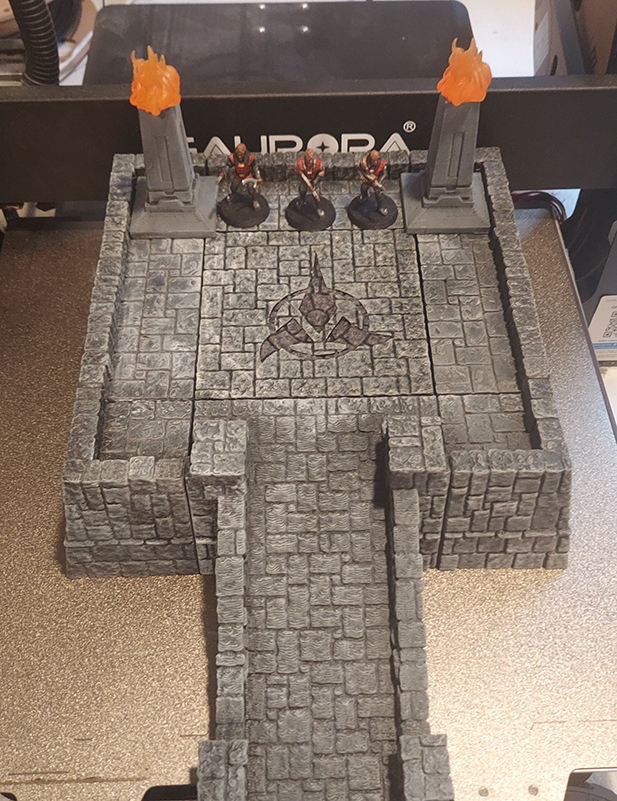
modeled, printed and painted new Klingon central block for my stone platforms to use on my Klingon Colony board
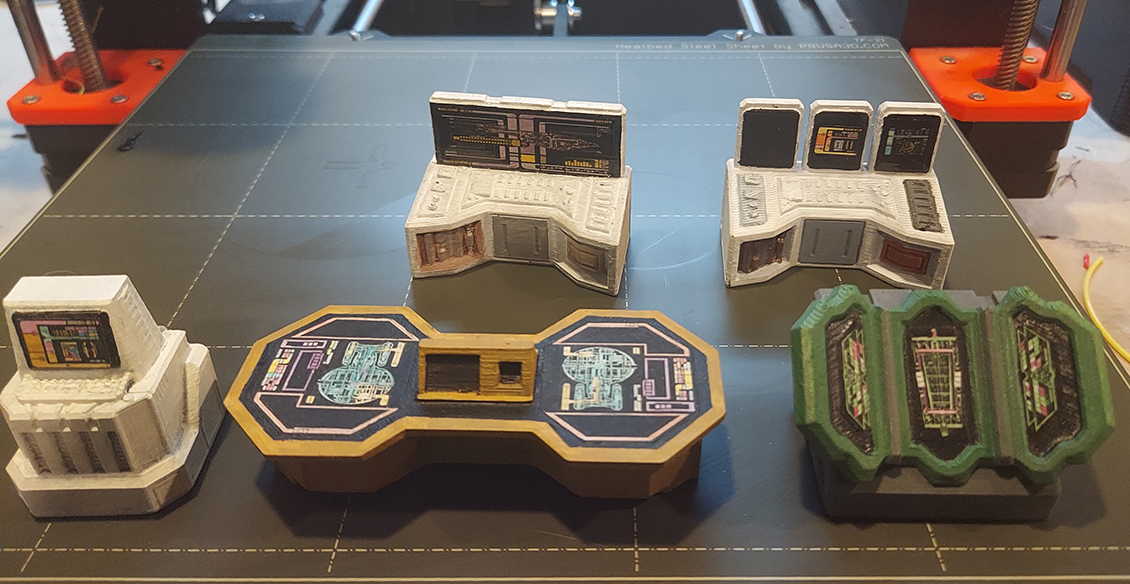
touched up a few consoles for scatter terrain.
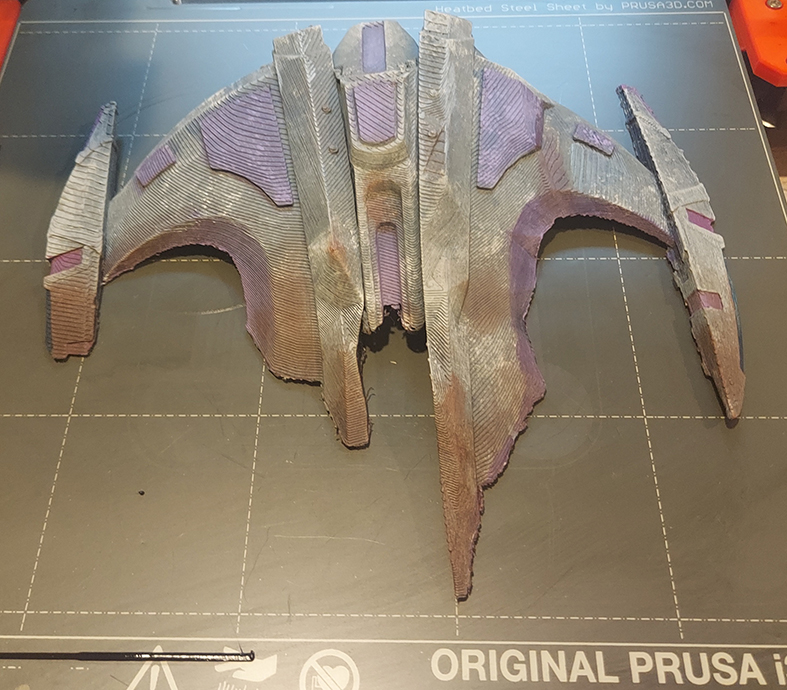
Modeled and printed a crashed Jem’Hadar fighter last week, but finally slapped some paint on it this week. The picture makes the layer lines look way worse than they are in real life. I mean they’re obviously there, its a filament print, they just arent as bad as the image makes them look.

Closing out the Month

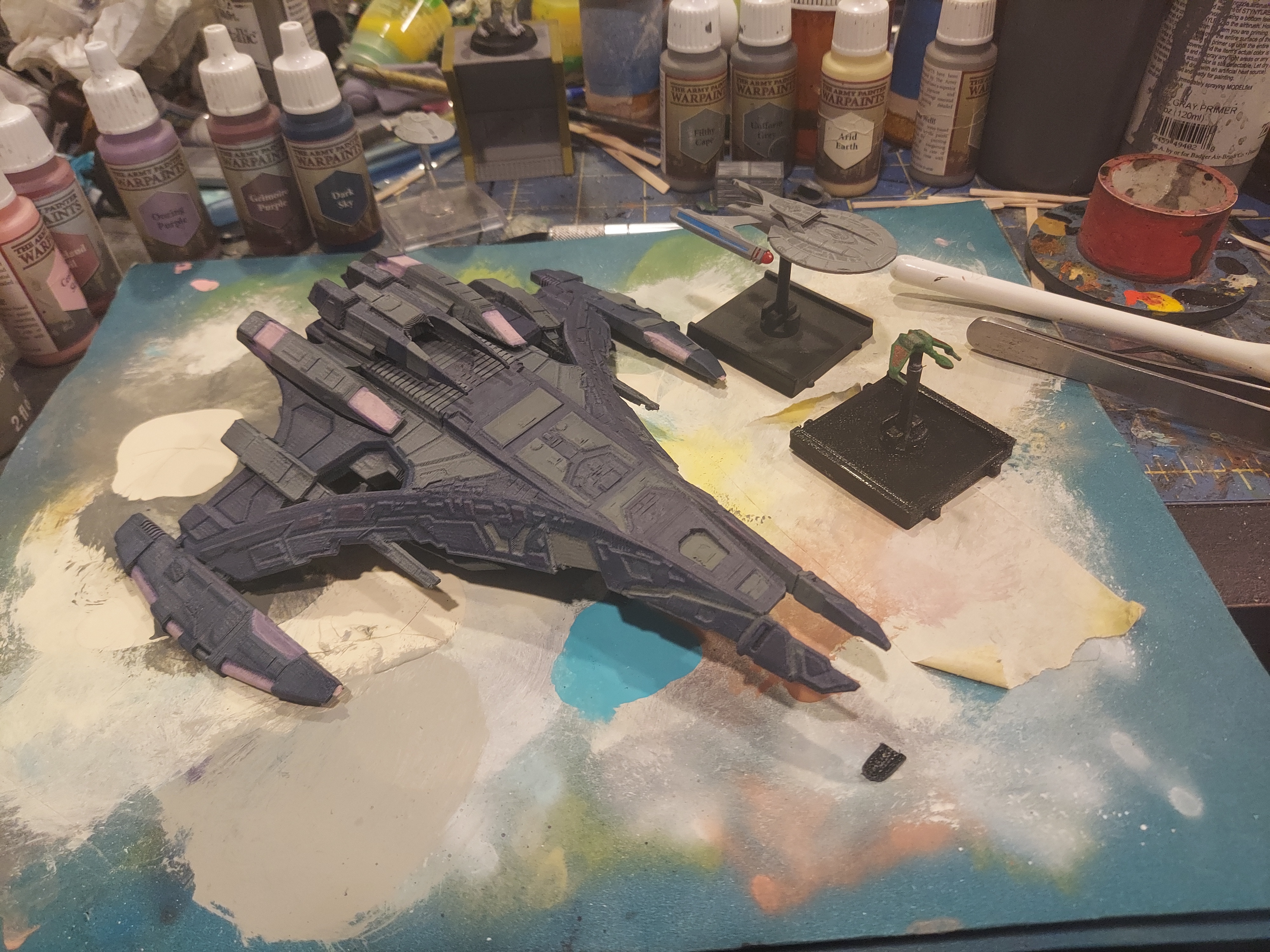
Well the last two weeks of Spocktober went in a blur as work kicked my butt, and I lost time and momentum. I did manage to get started on the 1:7000 scale Dominion Fleet, but not nearly as much done as I had hoped overall.
Ya win some, ya lose some.







![StarCraft Tabletop Miniatures Game Pre-Orders Live Now [Updated]](https://images.beastsofwar.com/2026/03/starcraft-tmg-news-cover-600-338.jpg)