







![NO Weekender Or Cult Of Games XLBS This Weekend [Updated]](https://images.beastsofwar.com/2026/03/No_Weekender_and_XLBS_this_Weekend-225-127.jpg)




Fields of Grey – The Grim Dark World of 40k, Autism & Playing Through the Storm



Recommendations: 28
About the Project
Fields of Grey is a mental health–focused tabletop project built around playing, not perfecting. As an autistic hobbyist navigating stress, hyperfocus, and executive dysfunction, I often stall at the painting stage — which means I don’t play, and then feel guilty for not “doing the hobby properly.”
Related Game: Warhammer 40,000
Related Company: Games Workshop
Related Genre: Science Fiction
Related Contest: Spring Clean Hobby Challenge 2026
This Project is Active
The Last Strike of Captain Aurelios
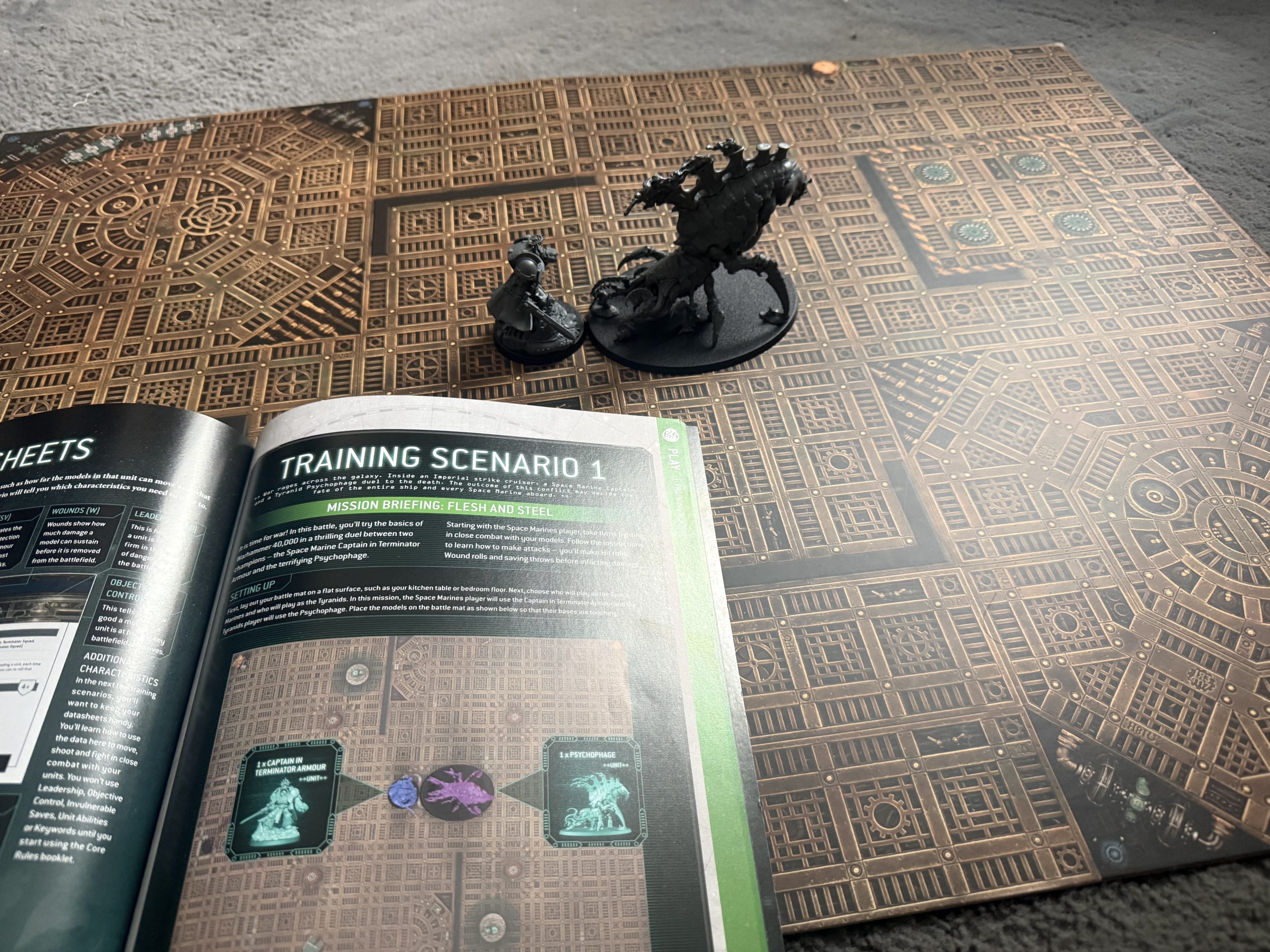
(AI has been used to help me write part of this post)
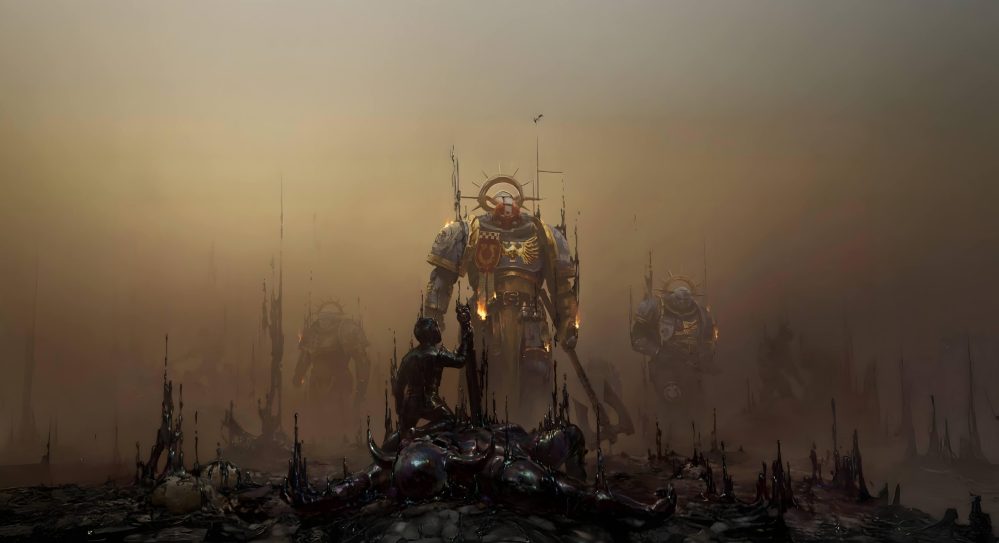
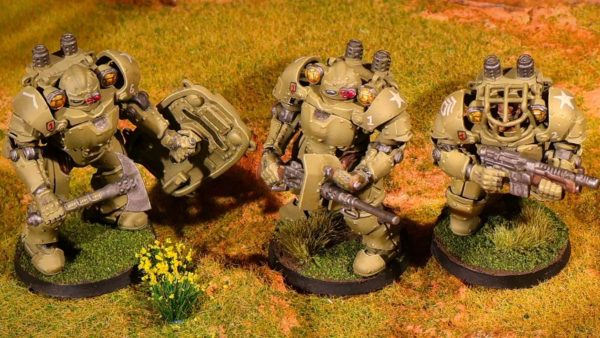
The engagement began at close quarters amidst the shattered ruins of Karthax Ridge. Captain Aurelios advanced alone, encased in Tactical Dreadnought armour, his relic blade ignited with a pale, ancient energy.
The Psychophage emerged from the dust cloud—vast, chitinous, its many limbs clawing through debris with unnatural speed. The Captain did not hesitate.
Aurelios closed the distance and delivered a decisive downward blow. The relic blade bit deep into the creature’s upper carapace, cracking its armour and spilling dark ichor. The strike staggered the beast, momentarily halting its advance.
The Psychophage responded with violent force. Its talons lashed out, striking the Captain’s torso. Even Terminator armour buckled under the impact. Aurelios was driven back several paces, armour systems registering critical damage.
Regaining footing, the Captain pressed forward. With a controlled, two-handed swing, he drove the relic blade into the creature’s thoracic mass. The wound was severe—deep enough to disrupt its internal structure. The Psychophage recoiled, shrieking, its movements becoming erratic.
The damage triggered a frenzied state. The organism surged forward with heightened aggression. Ignoring its own injuries, it overwhelmed the Captain with sheer mass and speed.
Multiple strikes impacted Aurelios in rapid succession. One talon penetrated a weakened joint in his armour, breaching vital systems. Despite catastrophic injury, the Captain maintained grip on his blade, attempting a final strike.
He did not complete it.
The Psychophage drove him into the ground, delivering the killing blow.
I played through the first training mission from the ultimate starter set. To actually sit and play even in at the most basic of level of game, was actually enjoyable. Doing so lay down on the floor takes me back to my teens and using the army book that came with 4th edition Warhammer Fantasy to cut out armies in paper, and fighting with them on my parents living room floor! So that is the first step along my journey – good to get up and running, good to get started, and good to see rules, and attempt to understand them.
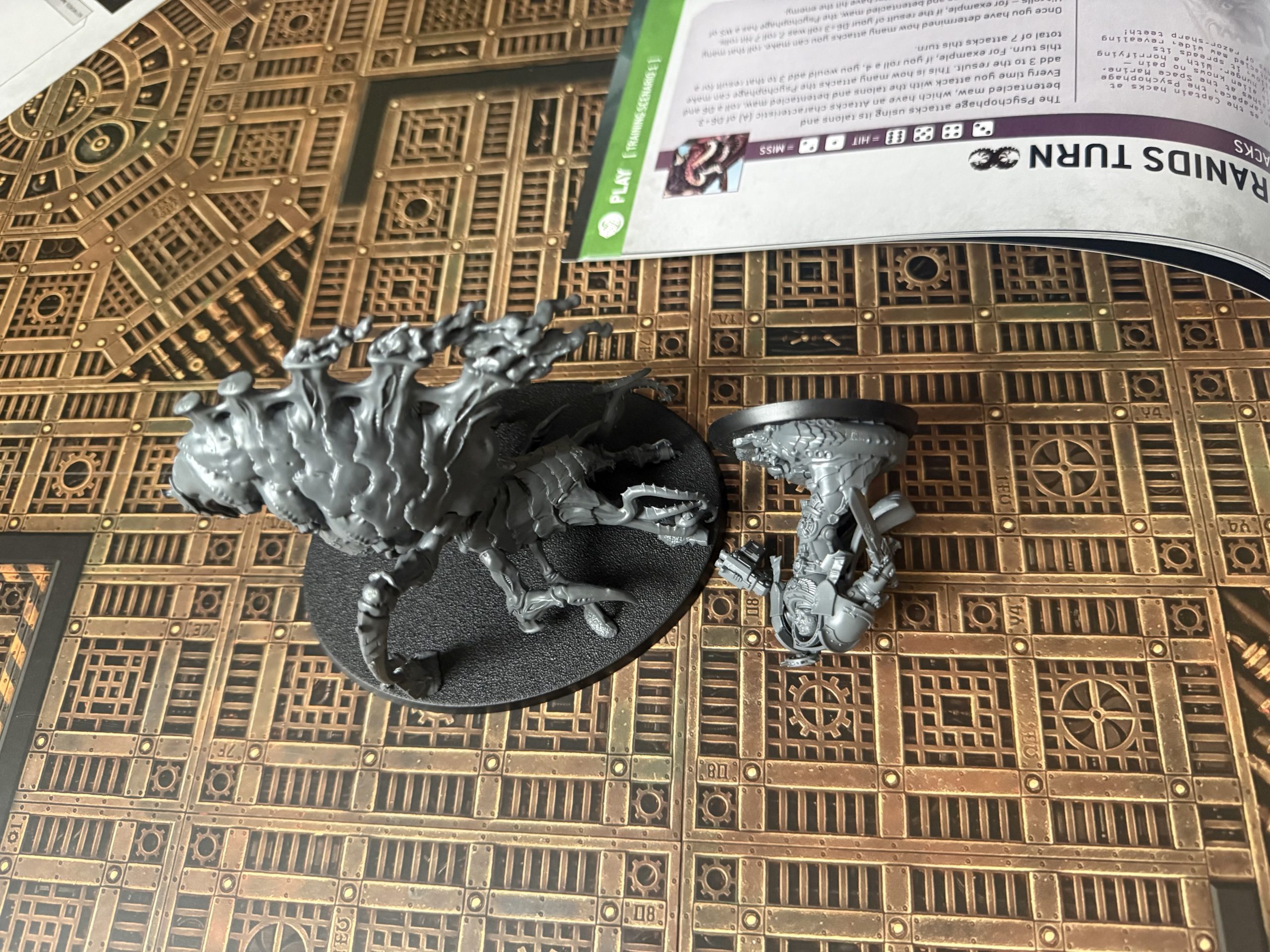
Pivoting to 40k - for the Spring Clean Challenge
(disclaimer – AI has been used to help me write this)
There’s always a moment in a hobby project where you have to make a call: stick with the original plan, or pivot to what actually gets you playing.
For me, that moment has arrived.
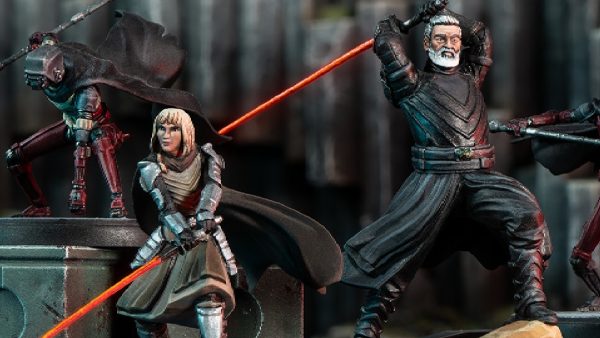
I’ve really enjoyed the idea of building something around Star Wars: Legion. It’s a fantastic system, great models, and an incredible setting to explore. But the reality is simple—right now, it isn’t the fastest route to getting games on the table.
And that’s what this project is all about.
Fields of Grey exists to remove the barriers between having an army and actually playing with it. So I’m making a shift.
The biggest reason is practical: I already have more to work with.
I’ve got models built.
I’ve got armies started.
I’ve got options ready to go.
With Legion, I’d be starting from a colder position—more building, more prep, more time before anything meaningful hits the table. With 40K, I’m already halfway there.
And that matters.
Because the longer a project stays in the “preparation phase,” the more likely it is to stall.
This ties directly into the core philosophy of Fields of Grey:
If it’s built, it’s playable.
Warhammer 40,000 gives me the quickest way to prove that.
I don’t need to wait until everything is painted.
I don’t need a “perfect” army list.
I don’t need to finish anything before I begin.
I can take what I already have—grey plastic, half-finished units, mixed forces—and start playing immediately.
That’s the whole point.
Another major factor is scale.
40K gives me:
- multiple factions already in progress
- flexibility in matchups
- room for narrative campaigns
- and endless ways to expand over time
This means I’m not locked into a single pathway. I can experiment, run different games, and build momentum quickly.
And momentum is everything in a project like this.
At its core, this pivot is about one thing:
getting games played as quickly as possible.
Not next month.
Not after everything is painted.
Now.
Because once games start happening:
- stories start forming
- armies start evolving
- and the project actually becomes real
That’s where the energy comes from.
So this is the new direction:
Fields of Grey: Crusade of the Unpainted will now be focused on Warhammer 40,000.
You’ll see:
- unpainted armies taking the field
- battle reports from real games
- campaigns built from whatever is available
- and a focus on playing first, refining late
Because at the end of the day, this isn’t about having the best-looking army.
It’s about having an army that fights.
A long time ago in a galaxy far far away
(disclaimer – AI has been used to help me write this)
I’m starting this project because I need to.
Not for content.
Not for perfection.
But for my mental health.
I’m autistic. That comes with strengths — hyperfocus, deep research dives, world-building obsessions — but it also comes with things I don’t talk about enough: stress spirals, executive dysfunction, and the constant jumping from one idea to the next without quite landing any of them.
In this hobby, that’s usually meant one thing:
I don’t paint enough.
And because I don’t paint enough, I don’t play.
And because I don’t play, I feel like I’m failing at the hobby I love.
So I’m changing the rules.
The Problem: Perfection Paralysis
I struggle to sit and paint for long stretches. My focus fractures. My brain tells me it has to be done properly or not at all. So projects stall. Boxes stack. Guilt builds.
And when stress is already high — work, life, just existing — the hobby that should help becomes another pressure point.
That’s not sustainable.
The Decision: Play Anyway
This project is about letting go of the idea that everything needs to be painted to be “valid.”
I’m going to play.
Grey plastic.
Bare bases.
Half-built terrain.
And that’s fine.
If playing helps regulate stress, gives me structured focus, and creates a space where my brain can breathe — then that matters more than edge highlights.
The Project: Star Wars: Legion
I’ve got:
-
The Galactic Empire starter forces
-
The Rebel Alliance starter forces
-
The Outer Rim terrain set
And I’ve just subscribed to Disney+ — which means I’m committing to a full Star Wars rewatch alongside the campaign.
This will be:
-
Narrative-driven games
-
Slow force growth
-
Casual missions
-
Film and series rewatch reflections
-
Zero painting pressure
Empire vs Rebels. Order vs Hope. Structure vs Chaos.
There’s something fitting in that.
Hyperfocus as a Tool, Not an Enemy
One thing autism gives me is the ability to dive deep.
So instead of fighting that — I’m going to use it.
-
Rewatch the films.
-
Read the lore.
-
Build small narrative arcs.
-
Play solo games at home when social gaming feels overwhelming.
-
Let the table be my reset button.
I struggle socially. I struggle with consistency. I struggle with finishing things.
But I can set up a table and play a game.
And that’s enough.
What This Isn’t
This isn’t a painting showcase.
It isn’t a competitive meta analysis.
It isn’t a “perfect hobby journey.”
It’s someone trying to use the hobby to stay steady during a rough mental health patch.
What This Is
-
A permission slip to play unpainted.
-
A reminder that grey plastic is still a game.
-
A way to reclaim enjoyment.
-
A slow, steady narrative campaign set in the Star Wars galaxy.
-
A mental health project disguised as toy soldiers.
If you’ve ever:
-
Felt paralysed by unfinished projects
-
Struggled with executive function
-
Avoided playing because your army wasn’t “ready”
-
Jumped from one faction to another and felt guilty
Come along.
The armies are grey.
The terrain is dusty.
The Force is strong.
And we’re playing anyway.




![StarCraft Tabletop Miniatures Game Pre-Orders Live Now [Updated]](https://images.beastsofwar.com/2026/03/starcraft-tmg-news-cover-600-338.jpg)