





![10mm Medieval Miniatures! Azincourt English Army Review | Wargames Atlantic [7 Days Early Access]](https://images.beastsofwar.com/2026/03/unboxing-wargames-atlantic-azincourt-english-army-coverimage-225-127.jpg)


LordofUzkulak’s fanfics




Recommendations: 1
About the Project
On the Weekender Warren mentioned people using Projects to publish writings, so I thought I’d start one to share my old fanfics with you guys.
Related Genre: Fantasy
This Project is Active
[WHFB] Bread and Circuses pt2: The First Game
Bardek lounged back in his seat watching as a group of slaves hurried out to clear away the ashen remains from the centre of the arena, undoubtably collected for use as components is some sorcerous ritual or another or even bartered away to the human savages that eek end out a living in the northern wastes as talismans or charms. He took a sip of his tankard and pulled a face, finding it empty. Yelling curses he called over a slave to refill it. As the wretch did so, he studied her, and his lips curled with disgust. The human, a descendant of slaves taken from Cathay long ago was thin and ragged; her shoulders were hunched and she dared not lift her head for fear of the lash. Even so, he caught a glimpse of her eyes, empty dead things, less alert than even tamed herd beasts. Bardek was offended by how easily she was bent to the will of her dwarfen masters; no Dawi Zharr would tolerate such abasements; even their faithless kin from the Worlds Edge Mountains would not submit so.
Snatching the amphora she bore from her hands, he waved her away and turned back to the arena waiting for the first match to begin. Presently, the iron portcullis to the east ground open and a large troll was herded out by a gaggle of hobgoblins. The foul creature stood five time the height of a dwarf and it’s hide was covered in brownish green scales. What was most peculiar however was that it appeared to be a mutant; proportionally it seemed squatter hand most trolls, being broad of shoulder and hip and it’s head was subsumed by its body; beady eyes atop, crowned by long curved horns, and an immense tusk-filled mouth that took up most of its torso; in contrast it limbs were long and gangly, ending in oversized hands and feet. Overall it put him in mind of a Pink Horror; undoubtably it had been birthed by some amusement of the trickster god.
“I wonder if you cut it down it’ll spring back up split in two an’ turn blue?” jested Nâzkuk, spotting the resemblance too.
“I hope not,” spat Dor’rek, “I worked in Cousin Valzek’s Helforge a century back. He tried binding horrors an’ they got loose. Took us five years to shift the buggers. An’ I’m still not convinced me got them all.” The friends laughed at the whitebeard’s outlandish tale.
“What ‘ave they go’ ta fight it? Tha’s wha’ I wanna know,” spat Krovnar, scratching at the iron nails hammered into his forehead that gave him his Ironbrow moniker (and accounted for his crude speech patterns thought Bardek). “Mah money’s onna Ogre.”
“Maybe it’s another troll,” grinned Nâzkuk, “But one in the shape of another daemon.”
“Why not just get an actual daemon?” spat Dor’rek “Would save on clean up afterwards.”
Bardek stayed silent, watching as the western portcullis rose, but was distracted as the crowd erupted in cheers and laughter. One of the hobgoblins had gotten too close and had been plucked up by the troll. The abomination swung the greenskin about, dashing it’s brains on the ground before tossing it into its mouth and biting down with a sickening crunch that reached Bardek halfway up the arena seating. The other hobgoblins scattered and scurried back into the dark tunnel they’d dragged the troll from. The troll looked around, misshapen eyes blinking as it surveyed the area it was in, sniffing the air and grunting and growling in frustration.
Bardek looked over at the opposing entrance, wondering where its opponent was. Cautiously, a squat shape edged from the shadows, taking everything it saw in with the stoic gaze that could only belong to a dwarf. All around there were gasps and confused mutterings, which swiftly turned into laughs and jeers as the realised what it was. The dwarf worn nought but rough-spun britches and heavy iron manacles around his wrists and ankles. His beard was short, a mere few inches long, but from the way he stalked, sticking to the edge of the arena it was clear he was no beardling; even from this distance, Bardek could see the beard was filthy and stained red with blood. Curiously, his head was bare save for a strip running from front to back which was also blood-stained and from the rawness of the scalp and the many nicks and cuts Bardek surmised that the dwarf had shaved his own head with whatever sharp objects he’d been able to get his hands on.
“A Trollslayer?” ruminated Dor’rek mournfully, “Suppose that’s apt.”
Bardek nodded. He’d never seen a Trollslayer before, but he had heard tell of them in hearth side stories as a zharrling and camp fire tales as a warrior grown. Truth be told, he was disappointed by what he saw, how could this sorry specimen be one of that forsaken brotherhood? As he stared at the self inflicted wounds he realised this wasn’t a true slayer. He guessed that it was a regular dwarf, taken as the spoils of war after some recent raid of the westlands; one of the few similarities the Dawi Zharr shared with their honour less kin was an inability to self terminate, to both races being captured by such a hated foe and subjugated by them was a great shame, an almost unerasable blot on their honour; even those dams abducted to serve as concubines for the wealthy Dawi Zharr had to be chained up or regularly drugged to keep them under control long enough for the deed to be done and at the birth of any ensuing progeny. Driven mad by his captivity the dwarf had clearly sworn an oath to his vile gods and taken the mantle upon himself, making up for the lack of the proper rituals by conducting them himself. He was no true slayer, but that would not disused him from trying to expunge his lost honour by following that path in hope that Grimnir would forgive him and bestow upon him the reward of the slayer.
The troll caught his scent and turned in his direction. Letting out a deafening roar it lollopped towards him, the chains still bound to its arms flailing around. The dwarf dropped to a low crouch, waiting for the right moment. The troll swiftly closed on him despite its ungainly stride, and still the slayer waited. The troll roared again and lashed out a few yards away from him, confident that its stretched limbs could reach, but at the last moment the slayer took a single step back and the blow missed by a hair, or rather hit by a hair, for it clipped a single strand from his beard (not that Bardek or his friends could see that detail from where they sat). But more unexpectantly the chains on that arm lashed out, wrapping around the pillar the dwarf had been lurking near, jerking that arm to a stop. That was why the blow had been short, and the troll had been too stupid to see it coming.
The dwarf darted in, inside the creature’s reach, swinging his axe and biting deep into the troll’s flank. The troll howled with pain and frustration as the dwarf rolled aside. It twisted trying to keep the dwarf in view and swung its free arm trying to grasp him, but he’d already skipped back out of reach. Roaring again it tried to run after him and fell flat on its face, tripped up by the chains tying it to the pillar. The dwarf saw his chance and rushed in, putting his full strength into an over arm swing aimed at the back of its skull hoping that it would be a death blow or at least lasting, unlike the first wounds inflicted which had already knit together. The axe bit deep and wedged in its skull, leaving the dwarf straining to dislodge it.
Spluttering in the dirt, the troll reached up, plucking the dwarf and tossing him halfway across the arena. Laughter echoed all across the amphitheatre at such a humiliating sight. As he bounced and skidded across the ground the troll twisted and turned, clambering to its feet, pulling on the chains trying to break them. Roaring in frustration it hawked and gagged, vomiting over the chains with acidic bile, gave them one more tug, severing the links an turned to face the dwarf who by this point had skidded to a halt, sprang to his feet and was sprinting back across the arena, axe raised high. Dimly the troll studied the chains hanging from it’s other hand and a moronic grin spread across its face. While the dwarf was still a dozen yards away, it lashed out, striking him in the face with the chains, spinning him around and knocking him to the ground.
The troll bounded forwards, pouncing on its opponent in one leap, but as it’s clawed feet touched the ground the dwarf rolled aside between its legs and in one swift motion brought the axe up that made every male in the stands wince and cross their legs in sympathy. The troll howled in pain, falling flat on its face once more and yanking the axe from the dwarf’s grasp. The dwarf backed off, glancing from side to side for a new weapon, not wanting to risk darting back in to retrieve his axe and getting thrown across the arena again.
As the troll finally clambered to its feet, the slayer gave up on finding a weapon and ran over to the pillar he’d used to trick the troll and leapt up, grabbing the hanging chains, using them to scale halfway up the pillar. The troll bounded towards him and he quickly shimmied to the top, but was unable to climb up onto the top due to it being occupied by a large bowl shaped iron braiser. Unperturbed, the dwarf waited, craning his neck to watch the troll who swiftly reached the pillar. The troll swept its claws at him, but he was out of reach. Howling in rage, the troll wrapped its arms around the pillar and tried to shake it, but the fine dwarfen craftsmanship held firm.
The dwarf laughed manically and reached up with one hand, grasping the braiser and pulling hard, toppling it over and spilling the flaming coals all over the troll. Or rather, tipping them into the gaping maw of the troll, and causing the braiser itself to hit the troll square in the face. Hastily, the dwarf clambered up on top of the pillar and, taking a deep breath, leapt off, bouncing off the head of the troll and landing with a roll on the arena floor. Panting he, backed off watching the troll writhing in agony and stumbled on something. He glanced down, then stooped to pick up one of the chain links, twisted by the troll vomit, wincing as his hand closed around the still acid coated scrap. Dazed, the troll rounded on him, stumbling forwards, skin blistering and half blind. With all his might, the slayer hurled the link, piercing the troll in its good eye, fully blinding it.
The troll moaned, clawing at the fragment, ruining its face even more. The dwarf used this distraction, running past it and over to the braiser, righting it.
“Over ‘ere ugly,” he shouted, taking advantage of the fact that denied sight that the troll would be forced to rely on it’s other senses, mainly hearing. The troll immediately turned round to face him and bounded towards him as he took hold of the baiser and braced himself, waiting for the right moment. The troll closed, mouth gaping and as it was about to reach the slayer, he heaved the spiked braiser into its mouth. Instinctively the troll bit down, driving the spiked tips of the braiser up through the roof of its mouth and into its brain, the damage done by the flaming coals not long before preventing any chance of regeneration. The troll gave a whimper and keeled over, dead.
The dwarf backed away slightly, waiting to see if it was really dead, and when it didn’t move, sighed, exasperated. As he began glancing around wondering what was going to happen to him next, hatches in the arena floor were flung open and a hush fell over the crowd. Twelve armoured wardens brandishing fireglaives marched out from the openings, fanning out around the dwarf who crouched low, preparing to fight them. All eyes turned to the box as the presiding priest stepped up to the rail and suddenly the silence was broken as everyone called out at once, some to spare the dwarf, and others calling for his death. The priest stroked his beard thoughtfully, taking in the cacophony. Casually he raised a hand, calling for silence.
“Twelve talents of bronze says he let’s him live,” whispered Nâzkuk.
“I’ll take that bet,” smiled Bardek, not taking his eyes off the priest. The priest stretched out an arm, palm flat and horizontal. He took a breath and closed his fingers, turning his hand so the thumb pointed up. As one, the wardens lowered their fireglaives and gripped the the firing mechanisms. Jets of fire spurted out before the slayer could react, roasting him. Howling he ran forwards defiantly, but only managed three steps before he keeled over. The wardens kept up their attack for a whole minute, before shouldering their weapons and turning on their heels, marching back to the hatches.
Bardek smirked and held out a hand for his payment.
“I’ll give it to ya latter,” grumbled his cousin, pouting.
“Slave,” roared Bardek, “More ale for me and my friends, Nâzkuk’s paying all night!” Nâzkuk grumbled but didn’t countermand the order, there were plenty of games left to bid on; by the end of the Father’s Quarter he could easily earn that bet back and then some.
[WHFB] Bread and Circuses pt1: The Father’s Quarter Begins
Bardek Cinderbeard stroked his beard, looking out from the parapet that encircled the twelfth level of Mingol Zharr-Naggrund. All around him Dawi Zharr packed the raised walkway behind the parapet awaiting the arrival of the procession that marked the first day of the Father’s Quarter. First thing this morning the procession had set off from the gatehouse in the Hoofcleft, the ring of shattered stone that marked the city limits, and it was only now, in late afternoon that it neared Mingol Zharr-Naggrund, the Black Tower of the Chaos Dwarfs. Many Outliers, the name the inhabitants of Zharr-Naggrund gave to those of their dark kin who lived in the fortresses and settlements outside the capital, erroneously thought only the sixty tiered ziggurat was the city, but that properly was called Mingol Zharr-Naggrund, whereas Zharr-Naggrundalso encompassed the valley in which it sat; only a complete bumpkin would call the former the latter. It made Bardek shudder to think such hicks would soon pass through the streets of his beloved city in such great numbers.
That being said, he did take pride in the spectacle that was about to take place, and felt honoured that he had been chosen to be among those of his clan that were to represent them in the generously named ‘Welcoming Committee’. Bardek was but the second son of a third cousin four times removed of the Overlord of a lesser branch of the Cinderbeard clan and thus had not expected to be chosen for such an honour. Instead he’d expected that he’d have had to spend the first fortnight of Father’s Quarter overseeing one of the pump houses in the Hoofcleft that fed the lava moat around the city.
The procession neared, marching across the Dark Causeway towards the city. The Dark Causeway, so named for the purple-veined black marble it was carved from, was a vast viaduct that stretched sixty miles from the Gateway to Mingol Zharr-Naggrund and was held aloft by colossal statues carved into likeness of long dead Dawi-Zharr. Though he would dare not speak such thoughts out loud, he thought the statues, bearing the Causeway aloft atop their high hats looked comical rather than the intended regal. A short parapet lined each side of the Causeway, and every four yards was a plinth on which stood statues. Or at least they looked like statues. In truth they were sorcerers that had fallen afoul of Hashut’s curse, doomed to stony forms for all eternity. Sometimes a sorcerer was taken down from his plinth and was borne aloft by sanctified Acolytes to be carried into battle as a holy relic, a stark reminder of the price of failure and attracting the Dark Father’s ire, but for important ceremonies all were returned and reinstalled on their plinths, and Bardek had heard rumours that those that had been lost were replaced by transmogrifying some poor wretch via dark rituals that not even the blackest hearted would dare speak of in more than passing and in hushed, frightened tones.
“I’m bored, when are they going to get here,” said a high pitched voice near Barek’s right leg, and seconds later he felt a tugging on his robe at the knee. Bardek looked down ready to cuff the brat, peeved that his best robe might now be creased, but stopped himself when he saw who it was. The boy, who could be no older than ten, eleven at most, only had a few inches growth of beard, but it already showed the characteristic black and copper streaks that gave the Cinderbeard clan it’s name, and due to his age was hatless. Normally that would be justification for giving him a hiding, but the white robe and heavy silver medallion hanging from his neck stayed Barek’s hand; the Zharrling before him was none other than the Zarrik of Clan Cinderbeard, the firstborn son of Overlord Grukrum, head of the main Cinderbeard clan.
Bardek dropped to his knee, bowing and holding a hand to his head in supplication. Allegedly the salute was supposed to be a sign of respect, but Bardek suspected it had the more practical purpose of keeping one’s hat from toppling over.
“They’ll be here soon,” he smiled at the child, “Look, already they approach.” The child stood on tiptoes to look over the parapet but was clearly too short. “With you permission m’lord,” he said offering his arm, knowing that to touch a Zarrik without permission was to sign your own death warrant. The boy looked up at him and nodded his consent. Bardek scooped up the Zharrling and hefted him onto his shoulder. In the distance the procession drew closer and soon the dark smudge on the causeway resolved itself into distinct units and then into distinct figures. The Zarrik grinned enjoying the spectacle.
At the front of the procession the Sorcerer-Prophet Nar’dûk Bronzefist was borne aloft a mighty palanquin carried by twelve ogres. Nar’dûk was high in Lord Astragoth’s graces, and as such it fell to him to represent Zharr-Naggrund in the order of march. Behind him marched the chosen warriors of the Plains of Zharr who swore direct fealty to Astragoth. Behind these were those clans that swore fealty to the other major Prophets and clans or who had managed to carve out a niche of independence for themselves, and behind them were regiments from the Outliers. Being a humble dwarf, Bardek did not know most of the banners borne by the procession and could not put names to many of the lords that lead them; to him the procession was a riot of colour – reds and black, purples and bronze, bone and gold, and many more besides – but nonetheless reinforced his view of the Dawi Zharr’s superiority. Among those few he could identify were warriors of Clan Bloodbeard, whom he only knew due his mother’s great-grandmother being of the clan, the Red Host of Nir-Kezhar, with whom he had once sailed on a slaving run in his youth, and warriors from Uzkulak which he had passed through on the return trip. There were a handful more he could recognise, but their names escaped him at present. Bringing up the rear in the place of lowest honour was a compliment from the Legion of Azgorh, the dread legion of dishonour that all feared that fate would drive them to and that all hoped to avoid.
Bardek, the Zarrik and the other gathered representatives of Zharr-Naggrund watched as the procession approached them. As the Causeway neared the twelfth level, it split in two arching around like the horns of a bull to meet the level either side of the Southern Stair, one of the four great stairways that ascended directly from Mingol Zharr-Naggrund’s base to the Great Temple of Hashut at the tower’s peak. Bardek grinned at the sight, and along with the Zarrik and the other assembled dwarfs cheered as the procession split and marched along the horns of the Causeway, rejoining and ascending the Stair. When they had passed bared set the child down, who ran off to find his parents, and leant on the parapet heavily.
“I need a drink,” he breathed, drawing a flask from his robe and taking a swig.
#######################
“This is definitely a perk of being from a lesser branch of the clan,” grinned Nâzkuk Embertooth, Bardek’s favourite cousin, so named for the black iron and brazen brass set of dentures he wore.
“Aye,” chuckled Bardek, leaning back in his seat “The Nobs can have their pious rituals up in the tower; I’ll take this worship any day.” He nodded, indicating the great amphitheatre they were sitting in. His cousin and friends laughed raucously at the jest.
“I jus’ wish they’d get this part over with an’ cut right to tha’ bloodle’ing,” grunted Krovnar Steelbrow.
“I like this part,” grumbled the white bearded Dor’rek Chromedome.
“Hush,” sighed Bardek “It begins.”
They turned their attention to the area where one hundred and forty-four slaves of all kinds of races were chained up in the shape a large Hashut rune. A hush fell over the crowd as the presiding priest stepped up to the edge of his box overlooking the area floor and raised his hands for silence. He waited for complete quiet until not even a breath could be heard.
“We are gathered here on the third day of the Father’s Quarter to praise the Dark Father,” intoned the priest who wore a mask fashioned into the likeness of Astragoth. So finely was it crafted that as the priest spoke it moved as if it were a living face. “We give unto Him this sacrifice. In the Dark Times when He came to us we were beset by daemons and foul spirits. We cried out to the Ancestor Gods to deliver us from the evils of Chaos, but we were forsaken. To each of the Three Great Ancestors, the twelve leaders cried out and each time were met with silence; twice more to all Three together they cried out, and silence met them; in despair they cried out a final time, cursing the Ancestor Gods, swearing fealty to whomever could deliver us from destruction and grant us the chance for Vengeance. It was then that He came to us. Glorious Hashut gathered the Twelve unto His bosom, declaring that they were to be His Twelve Sons and that their sons and daughters would also be His children.
“It is on this day, at the dawn of a new Father’s Quarter that we give thanks and praise Him loudest. In honour of the memory of His coming we give up these voices. As in those Dark Times seven score and four voices cried out, so now seven score and four voices shall cry out. But it is not in anger, fear and lust for vengeance they shall cry out, for it is not us who shall cry out. Nay, it shall be the Lesser Races who shall cry out, glorying Hashut and His children and that which His boon has allowed us to build. Look now to His Temple far atop His Tower, for the time is now!” As one all the Dawi Zharr seated in the stadium turned their gazes westward and upwards to the peak of Mingol Zharr-Naggrund.
Far at the top, comprising the highest tier of the ziggurat was The Temple of Hashut. There were many temples dedicated to the Dark Father scattered all over the empire of the Chaos Dwarfs; many either within the capital city, but this was The Temple, and perched atop it was a colossal bronze statue of the Great Bull. At this moment, framed by its curved horns was the sun, shedding light into the centre of the arena where the slaves stood chained, straining at their bonds. To the south and east, if one of the dwarfs had looked that way hung Maanslieb, faint in the afternoon sky. But it was not Maanslieb that was important, rather its sinister twin, Morrslieb. Normally the evil moon would wander the sky on a whim, as fickle as Tzeentch, but even its capricious natured bowed to the will of a god on such sacred days. Even now it hastened across the sky. In silence, they watched as it glided north and west, heading towards the sun. Morrslieb slowed its journey, creeping across the face of the sun, and as one the dwarfs held their breath.
Barek spared a glance at the slaves. They were chained to one another and to iron stakes that kept them in place. They were of all sapient races and all intermingled in what he presumed was some sort of order, but he himself could not fathom the pattern. All races had multiple representatives. All races, but one. Of dwarfs there was but one member and he stood at the apex of the ‘V’ part of Hashut’s rune, his back turned on the temple, symbolically representing his unworthiness to gaze upon the temple, further reinforced by his nakedness save for an iron helm over his head welded to his flesh. Barek knew not his name but he did know his story.
The sacrifice was a disgraced daemonsmith who had been responsible for the deepest shafts in a mine out somewhere in the Plain of Zharr. He had shown a disregard for the slaves under his purview, leaving them to their own devices provided they kept up their quota and sent food down via the chain carriages, not even bothering to properly police the slaves with dwarven overseers, merely sending hobgoblins down when they slacked, not caring or even noticing if they came back. Such disregard far beyond the contempt all Dawi Zharr had been his undoing, for when an inspection team had descended into the mines to see why production had ceased entirely and had been beset on all sides. Only a single survivor had escaped the deep shafts, bring dire news to the despot who ran the mines. The shafts under the watch of the nameless daemonsmith had fallen to the undead, hundreds of slaves raised as zombies, and even skeletons. The garrison of the mine and several fortresses and workshops nearby had been roused and descended en mass to cleanse the shafts, and in the deepest level they found a vampire lurking in a forgotten cavern in the depths of the mine. Many good dwarfs had fallen that day, and the cost of the daemonsmith’s negligence was great. Even the death of the vampire had not stopped the undead horde, forcing the shafts to be sealed and the mine to be abandoned. As punishment the daemonsmith had been stripped of all titles, his family banished to the Legion of Azgorh and he himself taken into the darkest chambers within the darkest depths of Mingol Zharr-Nagrund so the proper penance so could be observed. Now he stood as sacrifice to pay the final one.
Barek watched as Morrslieb eclipsed the sun, casting a sickly glow over the arena floor. As the foul moon fully eclipsed the sun, all one hundred and forty four slave spontaneously combusted, erupting in green flames. On cue the silence was broken, one hundred and forty [i]three[/i] voices screaming in pain. The sole dissenter was the fallen daemonsmith who strained at his chains. As all the other slaves fell to their knees, he stood tall and proud. Taking a deep breath, even as his flesh melted from his bones, he threw his head back and gave the mightiest cry of all the slaves.
“HASHUUUUUUUT!!!!!!!”
And with that his charred bones collapsed, crumbling to dust. The crowd roared and whooped giving up their own cries and praises to the Dark Father, and thus, in the eye of the dwarfen plebs, the Father’s Quarter had truly began.
[WHFB] Entering Zharr-Nagrund
“Get a move on ya laggards,” bellowed Hârzrazh Coalheart, hobbling up the stairs of the gatehouse to the battlements “I’ll not have those curs from the Outliers showing us up.” The despot wheezed stony breaths as he ascended the black stairs. The air inside the gatehouse was cool and comfortable, the temperature maintained by wards enscribed by the hands of apprentice daemonsmiths as part of their training and when he stepped across the threshold it felt like being hit in the face with a furnace; outside the heat was searing and the air carried a hit of ash no matter where you were. Coalheart smiled with pride seeing his warriors ranking up swiftly and neatly, their crimson scaled armour neatly polished and their hats sitting perfectly straight on their heads.
The dwarfs under his command comprised the garrison of the western tower of the Naggrund Gate, a might brass door standing betwixt two basalt ziggurats at the southern end of the fortress-city of Zharr-Naggrund. To the south, west and east stretched the Plains of Zharr, a vast desolate expanse dotted with towers, forts and ziggurats from which the lesser clans oversaw the toiling of innumerable slaves. To the north sat the city of Zharr-Naggrund, a hundred and twenty mile wide bowl at the centre of which stood Mingol Zharr-Naggrund, the immense tower that was the capitol and chief temple of the Dawi Zharr empire, less fortress than mountain in stature. Mingol Zharr-Naggrund was a colossal ziggurat carved from a single piece of obsidian sixty miles wide and sixty levels tall, each level one twelfth a mile in height and one mile wider than the level above. Some said that there were sixty more levels below ground, each growing as you descended at the same rate the above ground levels shrank, though Coalheart knew none that had gone beyond the twelfth (though each level being so vast it could contain multiple sub levels it was hard to judge how many levels you had actually descended). There was even a semi-heretical tale that deep within the bowls of Mingol Zharr-Naggrund dwelt Hashut himself, biding his time, sustained by the blood shed by slaves across the Plain of Zharr, waiting for the day spoken of in the Twelve Books of Prophecy bequeathed by Hashut to the Twelve Sons when the Dawi Zharr had pledged themselves to the Dark Father’s service in the Dark Times many millennia ago, though Coalheart placed no stock in it.
The top most level of Mingol Zharr-Naggrund was the Temple of Hashut, a mighty edifice of iron and bronze capped with a large, hollow brass bull which reared up above a fire pit that was consecrated each day by a gross of slaves, and never allowed to go out. To reach the temple there was one option; to ascend the most arduous road in the city by climbing one of the four steep staircases that rose from the ground to the top level in a single unbroken line and one of the trials required to become a priest in the Cult of Hashut was to climb by this route without faltering, rest or nourishment. There were other roads that went as far as the second highest level; the easiest was a broad road, wide enough for ten wagons to drive abreast, that wound in a spiral around the tower ascending in a series of ramps, one per level. Each level below the highest was mostly hollow, riddled with passages, halls and buildings worked into the stone of the ziggurat itself, but none of these levels above ground were restricted to the interior of the ziggurat; built on the ‘roof’ of each level were more buildings, towers, workshops and even smaller ziggurats, many serving as the family holdings of the city’s numerous clans, and some were set aside to house envoys from the Ogre tribes of the Mountains of Mourn or the human barbarians of the northern Wastes in an attempt to cow them at the sight of the might of the Dawi Zharr.
From the base of Mingol Zharr-Naggrund to the edge of the bowl which marked the city limits was a broad plain covered in a scattering of ziggurats, the private residences of the Sorcerer-Prophets which allowed them a semblance of privacy away from the main tower so that they could engage in study bereft of the stresses of Mingol Zharr-Naggrund. Fed by an ash fall every twelve years, this plain was fertile and had long been cultivated into gardens and plantations tended by the most trusted slaves of each estate. It was from here the best quality crops were harvested and sold in Mingol Zharr-Naggrund as delicacies. It was also here the River Ruin ran, entering the plain from the northernmost point, meandering to the base of Mingol Zharr-Naggrund where it was swallowed by an iron gate set in the side of the ground level and spewed out by another on the other side of the ziggurat’s base, whence forth it swung to the east and left the plain. The lands east of the river were the poorest soil wise and invariably the estates there belonged to those clans lowest in standing. As such a millennia or so ago, the ruling council had bought up most of the estates and set about transforming it into something more useful. New schools had been built to train beardlings in the art of war and some private academies had been founded entering on the arts rather than warfare in an attempt to revive the swiftly diminishing culture among the Dawi Zharr.
The grandest achievement of this was the Phlâzian Amphitheatre, built by Vezpâzan Plâzia, a mighty general of the time. The Amphitheatre was a vast, twelve-tiered, inverted ziggurat dug into the ground and tiled with black marble. So large was it that it could easily seat half the dwarves in Zharr-Naggrund, and many private boxes lined the arena. A sophisticated system of trapdoors were hidden under the area floor allowing slaves to be brought up from the pits below, or for sections to be raised or lowered transforming the lay of the land. There were even powerful pumps that enabled the arena to swiftly be filled and emptied with water so naval battles could be simulated.
At the furthest extremes of the Eastern plain, in its north-eastern corner was a, relatively, small temple complex. Though the Dawi Zharr as a race as a whole were dedicated to Hashut, they were not so foolish as to ignore the other Chaos gods and it was here that they were acknowledged. The complex consisted of eight squat ziggurats tended by those few dwarfs that pledged their service to the other gods; these extremists were regarded as renegades and were only permitted to leave the complex to march to war and on special occasions at special dispensation from the ruling council of Zharr-Naggrund. Each temple was possessed of its own quirk which reflected the god it was dedicated to; the six tiers of Slaanesh’s was wreathed in incense, its halls carved to resonated and magnify the sounds of the debaurcheries held within; Nurgle’s was carved from wood, rotten with age and each of its seven levels slick with mould and fungii; the eight brass levels of Khorne’s were slick with blood, its sides carved into leering skulls; Tzeentch’s was blown from a single piece of glass, multi spectral fires flickering within and a different coloured gem encrusting each of its nine levels; Malal’s, built from white and black blocks of marble, was constantly being rebuilt, only to tear itself down on the heads of its adherents; Necoho’s stood silent and empty, each person to cross the threshold struck down by a single bolt of lightning; Zuvassin’s was incomplete, each brick set slightly askew; finally there was the temple of the Horned Rat, who had no adherents among the Dawi Zharr, instead it was used as a breeding centre for skaven slaves, many of whom were not destined for the slave fields, nor the mines or workshops, but rather the dinner table as basic fare for the other slaves.
At the edge of the plain that was counted as part of the city and before the Plains of Zharr were the city walls. Despite their name they were not true walls. Rather the ‘wall’ consisted of broken ground, huge shards of rock and tumbled monolith spearing the sky away from the city out into the Plains of Zharr. Legend had it when the ancestors of the Dawi Zharr had first pledged themselves to the Dark Father he had stamped his hoof on the earth and had declared that there was where they we’re find their new home. The force of the stomp had shattered the ground in what was now the Plains of Zharr and the hoof print had formed a natural bulwark within which Mingol Zharr-Naggrund had been raised. The cyclopean shards ringed the tower and the fertile plain around it, but it was not a perfect ring, and actual walls, many yards high had been built to plug the gap. Every twelve miles stood a tower, fort or ziggurat to watch over the walls, and halfway between each the Dawi Zharr had erected statues so large they dwarfed even the mighty K’daai Destroyers. Each statue was in the shape of Taurii, Lammasu or a daemon and each constant vomited lava drawn up from the depths of the earth into channels carved into the Plain of Zharr which fed a moat, a mile wide which encircled the city walls. The moat could only be crossed in three places, a half mile wide bridge which lead to the only gatehouse in the walls, or by one of the two aqueducts that allowed the River Ruin to pass through the city.
Coalheart raised a farglass to his eye, an ingenious device created by Fûggîth, a Daemonsmith of his clan. The farglass appeared to be a simple monocle, but by twisting the rim, which consisted of a two dozen rings, gently the wearer could bring into focus object far away without the need for bulkier equipment as was the norm. Peering through it, he brought into focus the forces arrayed on the other side of the bridge. Today began the Father’s Quarter, a holy period of twelve weeks that only occurred every seven score and four years and to celebrate there was to be a procession. In camps outside the city waited delegations from all the holds of the Dark Lands and even a few from outposts beyond. Coalheart watched as they drew up in the correct order as had been decided by a committee of Sorcerer-Prophets twenty-four years ago. Coalheart could see the reds and blacks of the Plainsland holds, the gold and bone of Uzkulak, the tower shields bearing an iron gate as a device of the garrison of the Gates of Zharr, the ornate hats and jewelled rings of the Tower of Gorgoth and even, at the rearmost and most shameful position in the procession, the faceless masks of the Infernal Guard of the Black Fortress.
Coalheart turned to the sundial next to him, waiting for the appointed hour. An eternity seemed to crawl by until finally it was time. Coal heart raised a gloved hand and a dozen musicians raised bronze horns to their lips. With a swift motion he dropped his hand and the trumpets blew deeply, the blaring of their horns resonating over the Plains of Zharr, striving to outdo the horns of the Eastern gate tower. In answer, the procession blew their own horns and beat their drums in co-ordination. As the answer died down the gatehouse garrisons trumpeted again. Fifty-nine times the exchange happened, each time growing in strength until on the sixtieth the greatest trumpet sounded. From high atop Mingol Zharr-Naggrund the great bronze bull bellowed, a rolling thunder that could be heard all across the Plains of Zharr. At that signal, the gates ground open and the procession set forth.
[WHFB] Bloodshed on the Bridge
“Where are they?” grumbled Gahzrak, peering out over the parapet. “The reports from the watchtower said they’d be here an hour ago.”
“Manlings are always unreliable,” shrugged Hrazzan, hawking a gob of phlegm through crooked teeth “And the Wastelanders more than most. They’ve probably had to stop to fight an honour duel ’cause one of ’em stole another’s favourite skull.” Gahzrak barked with laughter at his friend’s jest and gestured to a nearby slave to bring over a skein of wine so he could wash the mountain dust from his mouth.
“Still, it’s not like them to dawdle when they could have a scrap against someone else.”
“Hush,” Harazzan raised a hand, “Listen.”
“Two miles?”
“And a half at least,” nodded Hrazzan. “Best sound the alarm.” Raising a rune encrusted bronze horn to his lips, he gave a single, long blow, which echoed over the valley. Resting the horn against the crenellations he began to casually reset the game board, smirking “Should give us time for another game, your turn to be trolls I believe.”
“Doesn’t matter,” grumbled Gahzrak, draining the last of the wine, “You’ll beat me again somehow. I swear to Hashut you cheat somehow.”
[]=== []=== []===
The sun was setting as the first of the marauders rode into the valley, horned and scaled hounds bounding ahead of them. Spotting the walls of the fortress, they pulled up short of the broad stone bridge which spanned the chasm outside its gates. Hollering in their uncouth tongues, the riders spread out, galloping in circles around the plain on their side of the bridge as if to mark out their own personal territories. Horn blasts, drum beats and savage chanting echoed up the valley from whence the riders came and shortly afterwards the infantry marched from its mouth in ragged ranks.
First came the northern tribesmen clad in pelts and armour scraps, savage tattoos etched on their bare skin and rings or iron, gold and bone piercing their naked flesh. The stoutest marched at the front of their rabblous units, bearing aloft ragged skull topped banners embroidered with foul runes and symbols. Behind them in ordered ranks came the warriors – those favoured by the gods and bearing their marks. While the marauders broke ranks, dashing forward whooping towards where their mounted kinsmen had claimed camp spaces, the warriors maintained discipline, striding in step to the centre of the plain and planting their banners in unison, the personal standard of their lord, Hroathgnaw Crowborn, flying high above the rest.
Last came the supply train, wagons piled high with looted weapons and pillaged food, drawn by hulking beasts or pitiful wretches mutated by the northern wastes. Towering over the carts were four hulking shapes, dark fusions of hell-forged steel and daemons. While the carts trundled down into the camp, the four hellcannons, goaded by their dwarfen handlers, lumbered to take up positions on the slopes of the hills that formed the valley mouth.
On the fortress walls on the other side of the bridge stood the disciplined ranks of the Dawi Zharr, waiting and watching. As darkness descended and the barbarian hoard at their gates fell to drinking and feasting, the stoic dwarfen warriors held their places, still as the stones of the mountains. Through the depths of night they stood watch, keen eyesight surveying the northmen’s camp for signs of movement, but all they saw were the debauched revelries of the servants of the Dark Gods.
[]=== []=== []===
As dawn broke the next day, there were stirrings in the camp and a lone rider road forth from the centre of the camp, the bows of some northern tree lashed to the top of his lamp in sign of parley. The massive warrior cantered over the stone bridge, lance held aloft and he drew up short of the gate, a bow shot and a half from the walls. He waited patiently as the great iron bound doors groaned open and an emissary, escorted by thirty steel-clad warriors marched out to meet him. From their position on the walls, Hrazzan and Gahzrak couldn’t hear what was being said but they could guess – undoubtably the Crowborn had come to barter for weapons and armour; impressed by the hellcannons following him, he surely wanted more. From the gestures being made it looked as if the barbarian horde wished to buy passage through the fortress and down into the Dark Lands; a request the two Chaos Dwarfs knew would be denied.
The gestures grew more animated, and it was clear the messenger was loosing patience. With a growl he took the lance in two hands and broke it over his knee, signalling an end to the discourse. Tossing the shattered shaft aside, he yanked on the reigns, wheeling around and galloping back to the bridge. With a shrug, the dwarfen emissary turned and signalled the warriors on the walls to prepare for battle. With a chuckle, Hrazzan raised his horn to his lips and gave three sharp blasts which were answered by three matching blasts from the fortress nestling on the cliff face behind the wall.
The fortress, nominally and outpost of Uzkulak but in actuality, due to the extent of the delving of the Dawi Zharr, the outskirts of the Place of the Skull, was a four tiered ziggurat half buried in the cliff at the rear of a cwm overlooking a chasm in the mountains to the north of the Zorn Uzkul. Across the mouth of the cwm spanned a great wall, bookended by two ominous towers. The gate, iron shod and ten times the height of a dwarf sat in the centre of the wall and lead into the cwm. However, this was not the true way into the fortress, for the ziggurat was built high up on the rear cliff with no door or gateway opening to the valley floor. Instead a warren of tunnels nestled beneath the surface, leading to platforms lining the sides of the cwm and to secret doors hidden outside the wall on the narrow plain between the mountainside and the chasam. Secret doors were hidden in the main walls’s gateway too, on either side of the gate, cunningly disguised as the walls of the arch, so that if the gates were breached, units of blunderbusses could spring as from the wall itself and ambush the invaders as they passed under the wall.
As the rider crossed back over the bridge, wide enough for a hundred men to walk abreast, secret signals were given and dwarfen warriors marched from the tunnels where they had lain in wait, appearing to the encamped barbarian horde to be marching through the gate from a courtyard betwixt wall and fortress. Seeing the stunted warriors deploying and their own emissary returning in disgrace, lords and chieftains sprang to their feet, rousing their men. The sun ascended higher as the rabble began to form, different tribes jostling for the honour of being the first to cross the bridge and it was past mid morning before the advance was sounded.
Beating axes, swords and hammers against their shields rhythmically the horde began to march. Shoulder to shoulder the crossed the bridge in a tightly packed mass, banners snapping in the wind. At the front once more were the marauders, the warriors and knights holding the centre, letting their disposable allies be the ones to rush forwards and taste the blades of the Dawi Zharr.
Hrazzan and Gahzrak watched idly as the barbarians crossed, waiting for the right moment.
“Now?” asked Hrazzan, sucking his teeth, trying to dislodge a stuck bit of meat, as the first marauders reached the halfway point of the bridge, slavering hounds bounding ahead.
“Wait for it,” grumbled Gahzrak, raising a meaty fist. When the front rank was only a quarter span from fully crossing, he dropped his hand. “Now.” With a grin, Hrazzan grabbed a speaking tube built into the parapet and blew his horn into it.
A heartbeat passed and hen there was a mighty crack. Sections of the bridge, large enough to hold a hundred men fell away on mighty hinges, pitching the marauders standing on them into the chasm below. Screams of horror and bellows of rage went up as hundreds fell to their deaths. Such was the strength of the flow of bodies that those standing near the new holes were forced over the edge to join their recently fallen comrades. Confusion went up as the forward momentum was broken as men pushed against each other to escape the death pits.
Without warning, the human cries were joined by heart stopping, inhuman screams as the deathshriekers positioned on the cwm’s platforms opened up. Rockets leapt up high into the air, sailing over the chasm to burst over the hordes yet to cross. Daemonically infused explosives corkscrewed down, slamming into the tightly packed mass on the opposing plain sowing more terror and confusion in their ranks. Panicked and seeking to escape the death from above, the remaining marauders threw themselves forwards, trying to force their way onto the bridge, while the mutants and more cowardly of the barbarians scattered, rushing back towards the valley they’d marched down the afternoon before, hoping to outrange the rocket batteries.
Seeing this, Hrazzan and Gahzrak bellowed with laughter, knowing what was about to happen. Without warning, the dwarfen handlers of the hellcannons leapt to their feet and snatching up heavy hammers and axes, cut loose the chains binding the daemon engines. Howling with joy, the hellcannons leapt forwards bearing down on the fleeing mutants and forcing them back to the killing zone.
As the press increased, those crossing the bridge soldiered on, more tumbling into the chasm through the gaps. As they did so, flames bloomed in the iron statues lining the low walls of the bridge and jets of flame were vomited from their mouths as hidden magma cannons activated as the next stage of the fortresses defences come into play. Black smoke gusted up from the bridge with a great charnel stench which billowed in the breeze, obscuring the plain where the hellcannons wreaked havoc. In the centre of the bridge, surrounded by the death fires, the knights wrestled with their horses who bucked and stomped, spooked by the screams and heat.
Sitting tall in the saddle, the Crowborn tugged on his reigns, causing his daemon steed to rear in anger. Bellowing instructions, the barbarian lord thrust his bloodthirsty axe forwards towards the ordered dwarfen ranks waiting on their side of the bridge. Digging his spurs in he forced his horse into a gallop, trampling the milling mass of marauders that blocked his path. Gaining control of their own horses, the knights followed after him swiftly, cutting down any marauder who got in their way. Clearing the crushing mass of confusion, the charge picked up speed, hooves striking sparks on the flagstones of the bridge. Seeing the fast approaching cavalry, the blunderbussers hefted their weapons and took aim. As the knights cleared the bridge a sharp crack split the air as a wall of lead streaked into the charging horsemen who disappeared in a red mist.
A breath of stillness fell over the dwarfen fire lines as the shots echoed down the chasm. A stillness broken by a bloody snort and the clatter of armour. With heathen obscenities on his lips, the Crowborn plunged from the mist and crashed into the heavily armoured dwarfen lines. In good order, the blunderbussers fell back from his fury, and forward stepped Zahxan Bullslayer, the fortress’s overlord, accompanied by the silent ranks of his obsidian-clad Immortal Guard. Spying his foe, the Crowborn screamed a challenge, tossing aside his shield. Zahxan gave a silent nod and strode forward, his bodyguards spreading out to encircle the duel.
Spitting hate filled words, the Crowborn took his axe in a double handed grip, sweeping it in a low arc aimed at his opponent’s chest. Zahxan raised his shield casually, deflecting the blow with a sneer of disdain on his lips. Furious, the Crowborn reigned down more blows, hammering away at the iron barrier betwixt him and his stunted foe. Biding his time, Zhaxan stood resolute, shrugging of the attacks as if they were no more than insect stings.
Suddenly, without warning, he lashed out with his maul, striking the Crowborn’s left leg, shattering the knee. The barbarian howled in pain and redoubled his efforts, but his new limp threw him off balance and his once precise, if savage, attacks began to miss, clipping Zahxan’s shield rim rather than pounding its brazen boss. Again Zahxan bided his time, and again when he was ready it was a single bludgeon he delivered, this time to the right knee. Cursing to his gods, the Crowborn staggered on broken legs, his attacks now wild and un aimed. Snorting derisively, Zahxan stepped forwards and delivered a third blow. All men and dwarfs in eyeshot winced in collected reflexive sympathy at the sickening crunch as maul collided with armoured groin and the Crowborn sank to his shattered knees. Not missing a beat, Zahxan dropped his shield, stepping to the left and took his weapon in both hands, twisting it as it swung in an underarm arc up into the Chaos Lord’s neck, launching his head high into the air.
With the death of their master, the will of the horde finally broke, and they turned and fled back over the bridge. As they did so, yet another layer of the fortress’s defences was revealed. Of the statues on the bridge five had not gouted flames, and under the plinths of these had clustered many marauders. But as the barbarians had began to rout, these statues burst into flames and fell upon their flanks. Roaring with red hot fury, the K’daai Fireborn plunged into the tide of flesh, lashing out wildly, scorching their prey with their fiery forms, the flagstones of the bridge blistering and cracking in the heat.
As the daemonkin pursued the survivors, the pyre clouds parted revealing the far plain. From hidden doors flooded hordes of hobgoblins, sweeping down from the mountains to meet the fleeing men. Armed with whips, nets and chains, the cackling greenskins fell upon the broken force, capturing those they could and driving the remainder back towards the bridge and into the waiting arms of the advancing chaos dwarfs. Zahxan and his Immortals held the centre and to either side of them marched fireglaive armed warriors and on the flanks were eager young beardlings, most not even a century old.
Exhausted, the last few hundred marauders threw down their weapons and fell to their knees, crying for mercy. Chuckling evilly, the beardlings rushed forwards, dragging down the barbarians and binding them tightly with heavy chains.
Up on the wall, the gathered dwarfs began to disperse, the entertainment done for the day. Resting against the parapet, Hrazzan sighed and grabbed a wineskin. Nodding the the carpet of corpses coating the bridge he chuckled “Looks like meat’s on the menu tonight.”
“Aye,” nodded Gahzrak “Was getting sick of year-old hobgoblin; much prefer mutton to chicken.” Hrazzan roared at his friend’s jest and passed him the skin.
“Thank Hashut we have plenty of drink and a warm brazier up here – I pity the poor gits who have to clear that mess up down there.”
“I’ll drink to that,” laughed Gahzrak, tossing back the wine and settling in for the remainder of their watch.
[40k] You Can’t Escape Destiny
Heru-Ur stirred. A thin stream of dust cascaded from the cracked ceiling down onto his hull. With the grinding of gears, the dreadnought’s head lifted, his gaze shifting from the mosaic patterning the camber floor to the crystal widows set between the pillars lining the walls. The hum of his power plant changed pitch as he commanded it to switch from idling to battle mode. Cautiously, he stood up from the marble throne purpose built so that those battle-brothers entombed within one of the Legion’s dreadnoughts could continue to take part in the debates and discussions mooted by their able bodied brothers. With slow ponderous steps, Her-Ur approached the windows and looked out.
In the streets below he saw platoons from the Spireguard rushing to and fro, setting up defensive positions and preparing for battle. Curious, Heru-Ur opened a link to the local vox network and froze in horror. The unthinkable had happened. The tranquillity of Tizca had been shattered. Someone was attacking.
Turning his back on the windows, he stomped off to join the fray. By the time he’d reached the stairs leading down, he’d gathered from the vox that it was none other than the Space Wolves who were attacking! The news took him aback – had those barbarians finally broken their leashes and gone rogue? Such a thing was nigh unthinkable, but then again the Wolves did not have the restraint inherent in true Astartes like the Thousand Sons. As he descended the stairs, the picture grew grimmer. The Wolves were pressing hard and the Spireguard were crumbling under the ferocity of the attack. By the time Heru-Ur had reached the foot of the stairs, the Wolves were nearly upon his position.
Heru-Ur strode up behind the Spireguard line, and those who turned at the sound of his approached let out a cheer, taking heart from his presence. A tense few seconds passed as they waited for the Wolves to close. For a moment, it was almost peaceful, reflected Heru-Ur, admiring the way smoke drifted across the street. The serenity, however, was spoiled by clamour of the Wolves’ advance. Suddenly, without warning, the Wolves burst through the smokescreen and hell, as the old saying went, broke loose.
As the Spireguard squatted behind their barricades and aimed their lasguns, Heru-Ur hefted his multi-melta and took aim. Lasbolts splashes ineffectually against the power armour of the Wolves and inside his sarcophagus Heru-Ur frowned. How could the Spireguard be expected to hold back the tide when their weapons were ineffectual and those of the enemy tore through their ranks like a reaper through wheat? No longer holding back, Heru-Ur opened fire. The melta beams flashed into existence, the brilliance of their light momentarily burning after images onto the exposed retinas of any who looked at them. The Wolves howled in anger and pain as the melta beams decimated their ranks.
Not letting up, the dreadnought continued to fire at the Wolves as he charged forwards. Clearing the barricade in a single step, he rushed into the enemy ranks and swung his khopesh – a giant blade in the form of those wielded by his battle-brothers, but oversized so it could fit his enormous hands. The power sword clove through armour with the same ease that the melta beams had and the Wolves drew back. A few fool hardy one rushed at him from the left, his gun side, but unperturbed, Heru-Ur swatted them aside with the secondary khopesh bolted under his melt arm.
Distracted by the charge, the Wolves had left themselves exposed to the Spireguard who opened fire with everything they had, heavy weapons tearing through the Space Marines without a care, and the sheer number of lasbolts being enough to overcome their armour. Howling in anger, the Wolves pulled back, and elated by his success, Heru-Ur followed them, driving them back through the smoke.
Abruptly, the smoke cleared and Heru-Ur found himself on one of the promenades looking down onto a plaza. The destruction before him would have made him weep if he’d still been able. A vile bestial roar broke him from his reverie and he turned to see a slate grey dreadnought stomping towards him. It was one of the newer models – bulky and blocky whereas Heru-Ur’s body was sleek and rounded – but no less deadly. Heru-Ur raised his multi-melta and fired once. The blast struck true but seemed to have no effect. The hull of the dreadnought was festooned with rune carved bones and wolf hide fetishes, and as Heru-Ur watched the melta beam dissipate he noticed some of the bones crumble to bust and a glow in the runes dim.
“Hypocrites,” rumbled Heru-Ur – the Wolves were always accusing the Thousand Sons of sorcery and witchcraft, and yet here they were employing warpcraft of their own. The dreadnought charged towards him and he brought his khopesh up into a defensive stance. The enemy dreadnought swung a fist and Heru-Ur twisted aside, narrowly dodging the blow. Dancing backwards, he continued to dodge blows while striking out with his own weapon whenever he spotted an opening. The enemy dreadnought was nimble, more nimble than anyone would expect such an ungainly looking device to be, and as such Heru-Ur was unable to land anything approaching a direct hit. Fortunately he was not aiming for a killing blow. Instead, each strike slowly whittled away at the talismans festooning the dreadnoughts chassis; snipping binding ropes and slashing pelts.
As he backpedalled, Heru-Ur became aware of the edge of the promenade growing ever near. Switching from a defensive stance to an offensive one, he lunged forwards with his Khopesh, but with lupine speed his foe caught it in a claw like fist. Lightning crackled as the two energy sheathed weapons met. Metal groaned as the two war machines strove against each other, their strength evenly balanced. Opening himself to the Great Ocean, Heru-Ur drew on the powers of the warp and channelled them into his force sword. With a deafening thunderclap, the blade erupted with arcane energies. The sword went flying from Heru-Ur’s hand and the arm of his foe twisted into a mangled lump of metal. The Wolf roared in anger, speakers embedded into its shoulders twisting the pre-recorded animal cries into something vile and vicious.
Crouching low, the dreadnought grappled with Heru-Ur and forced him back. With a grunt, it tipped him up and toppled him over, demolishing the ornate balustrade and knocking him off the promenade. As he fell, Heru-Ur let out a bark of laughter. His mind went back, remembering his youth. He remember the time when, as an initiate of the Legion he went into the temple of the Corvidae cult where he’d studied for a short time in an attempt to further his understanding and insight into his abilities. He had been ill-suited to the scholastic domain of the Corvidae, just as he’d been told by his masters, but stubbornly he’d insisted on spending at least some time in study there. In all the long hours he had cloistered himself in the temple he’d had but one vision – a foretelling of his own death. The vision was one of fire; an inferno consuming his body. Yet here he was falling.
Heru-Ur struck the ground with enough force to crack the marble flagstones and buckle the plating on his left shin, but miraculously was otherwise undamaged. Groaning, he clambered to his feet and looked up. Above him the enemy dreadnought crouched on the edge, the speakers bellowing out howls of triumph. Infuriated, Heru-Ur aimed his melta and opened fire. At this distance the beams dissipated before they reached his foe, but it was close enough that it still got buffeted by waves of superheated air. With a growl of surprise, the dreadnought lost its footing and toppled over the edge. Heru-Ur dove aside as it fell and narrowly avoided being crushed beneath its bulk.
The two dreadnoughts picked themselves up and began to circle each other. As they did so, Heru-Ur became aware of Space Wolves gathering around them, however none made a move to attack and assist their brother. Instead they began to woop and howl, and beat their armour with their fists. Encouraged by their cheering, the Space Wolf dreadnought lunged at Heru-Ur, beating at him with its power fist and the mangled remains of its power claw. Frantically, Heru-Ur backed away, deflecting blows with his own arms. A flagstone gave way underfoot and Heru-Ur fell to his knees, raising his combat arm to ward of the pummelling blows of his opponent.
A plan formed in his head and he mentally disengaged the safeties on his melta. Swinging the weapon round, he pointed it at the dreadnoughts feet and opened fire. Blast after blast pummelled into the flagstones turning them molten. Knocked off balance, the Space Wolf dreadnought ceased its onslaught momentarily. A moment was all Heru-Ur needed.
Lightning fast, he snatched up the secondary blade stowed beneath his melta and plunged it into the sarcophagus of his opponent, and not a moment too soon he reflected as the barrel of the melta erupted under the stress and heat of overuse.
The Space Wolf dreadnought staggered back, wrenching the blade from his grasp, its howls of rage diminishing to sad, pathetic whimpers. With a final whimper, the dreadnought toppled over, lifeless. Around them the chanting and drumming died down in shock.
Heru-Ur staggered to his feet and glanced about. Professional warriors, it didn’t take the Wolves long to overcome their shock and thus he had no chance to rest. Bolter shells pinged off his hull as he centred himself and opened his mind to the aether. Lurching to life, Heru-Ur’s hand shot out, azure fire springing to his finger tips. He hurled the fireball into his audience, the impact sending a whole squad flying.
“For Prospero!” cried Heru-Ur and charged, his bulk smashing aside marines like rag dolls. As he fought, he drew more on his powers, arcane energies springing to life to obliterate those around him. On he charged, forging his way through the crowd, not caring where the charge took him.
The Wolves drew back and Heru-Ur began to laugh in triumph. The laughter soon died on his lips.
A tall figure in gilded armour strode through the Wolvish ranks, his high helm towering over his allies. Doubt entered Heru-Ur’s mind for the first time that day. What were Custodes doing here? Moreover, why were they fighting alongside the Wolves instead of against them?
The Custodian marched right up to Heru-Ur and levelled his spear. Heru-Ur brought his melta to bare, then cursed himself for his lapse in judgment – the weapon was useless for anything other than bludgeoning now. Grunting in frustration, he took a step towards the Custodian. The Custodian sidestepped and leapt forwards, faster than Heru-Ur had anticipated. The spear was a blur of silver and gold, striking Heru-Ur thrice before he could react. Every counter he made was too slow, every riposte met thin air. Dents and cracks began to form in his hull, the Custodian exploiting every weakness and stress inflicted in Heru-Ur’s duel with the dreadnought.
Frustrated, Heru-Ur channelled his powers and stomped down with one foot. The shockwave scattered Wolves, but the Custodian agilely leapt into the air moments before he could be caught. Heru-Ur lashed out with more eldritch blasts and for the first time the Custodian was on the back foot. Ceasing the psychic barrage, Heru-Ur bounded forwards and managed to grasp the Custodian’s spear. With a mighty tug, he yanked it from his foe’s grasp and tossed it aside. Unnoticed, the weapon span end over end, the force of the throw taking it over a nearby marble railing where it fell down to a lower level, skewering a Wolf Lord in the head as he lead an assault on a group of beleaguered Spireguard.
Unperturbed, the Custodian snatched up a sword from a fallen Wolf and attacked once more. In retaliation, Heru-Ur began to draw on his powers once more, but paused. Long dead synapses were beginning to reawaken, and he could feel sensations seeping into his flesh body. Concerned he turned his thoughts inwards, inspecting himself. What he detected horrified him.
Cocooned in life support wires and amniotic fluids, his organic body was secured safely in the sarcophagus of his dreadnought body, or at least, that was the theory. There was one thing the defence systems could not protect against – the body itself. Triggered by the surge of aetheric energy he’d been drawn on, the Flesh Change was now ravaging Heru-Ur’s carcass. Flesh ran like candle wax; bone splintered and grew into spikes; skin hardened, cracking into carapace and scales. Horrified by what was happening, Heru-Ur stood immobile, his attacker’s blade striking his hull unopposed. Realising what he had to do, Heru-Ur lurched into action.
Taking the Custodian unawares, Heru-Ur grappled his gilded foe and held him tight to his chest. Charging into the audience of Wolves who had gathered, he threw himself down on top of the Custodian, pinning him under his bulk.
As they lay there in the dust, the Custodian began to laugh. It was a wet, bloody laugh where his lungs, torn by Heru-Ur’s unexpected attack began to fill with fluid. “Fool,” laughed the Custodian haughtily, “You will not slay me here. I know my fate. It is my destiny to die in fire. The Emperor himself prophesised to me that I would fall in an inferno, taking down a mighty foe. How could such a perfect being as he be wrong?”
Heru-Ur did not reply. Subconsciously, he was aware of the Wolves circling him. Inside his sarcophagus, what remained of his mouth twisted into a parody of a smile. His limbs whined as they powered down and his power plant hummed with energy as he diverted everything into a feedback loop. Turning his attention back to the Custodian, Heru-Ur whispered a single phrase as power left his vox systems.
“None of us can escape our Destiny.”
With that, the power plant overloaded. For an instant a miniature sun flared into existence on the surface of Prospero, immolating those nearby; the shear heat roasting those Wolves slightly further away in their armour and turning dust, ash and stone for several yards around to glass. A psychic shockwave thrust out from the blast, penetrating minds and overloading voxes for near a half mile around. The shockwave carried but one word. A single word. No physical damage did it bare; no impact on the material world did it wreak, save that caused by those cowed by the mental shout. A single word. Heru-Ur’s final word.
“DESTINY!”
[40k] Warrior’s Mercy
Sotar ground his teeth as the medic applied a medi-patch to his wound – a glancing hit from a bolter shell had torn through his flak vest, leaving a bloody hole in his side. Around them, the rest of the squad crouched in the ruins, taking cover in the rubble while returning fire on their attackers. Pain washed over his as the patch sealed and released a chemical cocktail into his bloodstream designed to dull the pain while keeping him on his feet. Pressing a hand to his side, Sotar limped over to the makeshift barricade which lay across the street and peered over it. Dust and smoke billowed across the once beautiful avenue, obscuring his view, but he could still see the lumbering shadows of the attackers looming in the clouds.
“Fall back!” ordered Sotar, turning from the scene. Obediently his squad began to retreat, some laying covering fire as the rest ran to the nearest cover where they in turn lay down covering fire so the remainder could catch up. They’d reached the end of the street and were about to turn the corner when suddenly one of the rearguard called out “Incoming!”
Sotar glanced back and growled in anger as he saw the missile dart out of the smoke. Instinctively he began to leap out of the way, but his wound slowed him down and the edge of the blast caught him, sending him somersaulting into a nearby building. Ears ringing, Sotar groaned as he tried to pick himself up, but a sharp pain in his gut sapped his strength, and instead he slumped against the nearby wall. Screwing up his eyes he gathered his strength and then glanced down. Piercing his armour was a large shard of crystal, probably from the tower that had once stood behind the building he was now in.
Glancing around, he recognised it as Athelene’s, a cafe he had frequented once upon a time. Now it lay in ruins, its marble was smeared with dirt and soot, its tables and chairs smashed to kindling.
Harsh laughter broke him from his reverie, a deep bestial growl that made his heart flutter. Looking to his left, he saw an immense shape crouching in the corner. It wore slate grey armour draped in furs.
“Mercy!” cried the Spireguard, raising his hands in submission. The beast laughed again, and Sotar noticed that his first impression had been misguided. The Space Wolf did not crouch – instead he too was slumped against the wall, and one side of his armour was scorched, while the furs were matted with blood and his unruly hair and beard smouldered.
“Why should I give you mercy?” slavered the Wolf, “You who consort with Wytches? You’re nothing but a traitor!”
Sotar gulped, tasting a hint of metal. “I am a warrior sir, and you will respect that!”
“Pah!” spat the Wolf. “What do you know of war coward?”
Sotar’s face flushed with anger. “I have fought on many battlefields,” he replied, “I have won many honours.” He tapped a bronze plate bolted to his flak brigandine; it was engraved with a stylised image of a man slaying an ork. “I was at Praadus V,” he informed the Wolf, “I fought for a year and a day to purge that world of the greenskin.”
“Heh,” sneered the Wolf, “If the Rout had been there it would have taken no more than a month, and that only if we’d been sleeping for most of it.”
Sotar’s eyes narrowed at the arrogance. He tapped another honour plate. “Even you barbarians acknowledge the difficulty in driving the Krurn from the Goldburnt Stars,” he replied. The wolf merely gave a bow of his head in admission, so Sotar continued. “I was there when we boarded their flagship,” he said; this drew an interested growl from the Wolf. “I lead the charge as my company took the lower landing decks.”
“And that is what you are proud of?” laughed the Wolf, “Killing a few mewling deckhands? A child could slay those pitiful worms.”
“Fool,” snapped Sotar in anger, “Do you know nothing? The lower landing decks were where their leaders hoped to flee from in secret if the battle turned against them. An entire squad of Executioners defended it.” At this the Wolf pricked up his ears. Sotar unclasped his left vambrace and tugged off his glove. “I lost my arm in hand to hand with the squad’s Hangman.” He raised the arm showing the gilded bionic that had been under his glove. “I still remember the fight blow for blow. I remember the stench as my sword slid between the chittinous plates on its belly and its lifeblood washed out.” Sotar’s hand fell to his side and he raised his khopesh. The sword had been snapped halfway along then blade where the Xenos monstrosity had stamped on it, and halfway down from the break to the hilt the blade was blackened and twisted where the Xenos’ blood had soaked it. Ever since Sotar had born it as a trophy, letting it hang proudly at his hip opposite the gilded replacement that he had afterwards used as his combat weapon.
Frustrated, he tossed the blade aside and glared at the Wolf. Growling, the beast clambered to his feet, left arm hanging limply and left leg dragging. The Astartes limped over to the Spireguard and looked down at him. Sotar glared up defiantly, while the Wolf looked down, staring him in the eye. After a few seconds the Wolf looked away.
“You speak truly I deem,” he chuckled, a hand resting on the butt of his bolt pistol. “Yes you are a warrior. I will grant you mercy.”
Sotar sighed in relief. He looked back up at the Wolf and paused.
“You said you’d give me mercy,” he protested as the Wolf levelled the pistol.
“I did, and I will,” replied the Wolf, cocking the weapon, “The Warrior’s Mercy.”
A single shot rang out, lost in the tumult of the battle around them. Without a second glance, the Wolf limped away, searching for hew prey.
[40k] Death Through Duty
Holtz looked down at his pocket-chrono, an antique brass device passed down through his family for over two centuries. He flipped open the lid and took a moment to marvel at the ingenuity of the device; surely it was a marvel that something so complex could be contained within such a small casing?
“Half an hour more lads,” he called out to his squad, “Then we can go back topside and Varren’s mob can take over.” His men acknowledged stoically taking neither cheer in the concept of being relieved soon, nor dismay that their shift had yet to finish. Holtz slipped the chrono back into his pocket and stepped up to inspect a buttress that his squad had just installed in the shaft. Nearby, the Hades breaching pod began to slow, drawing the Watchmaster’s attention. The Hades drew to a halt and began to power down, shutting off completely rather than going into idle.
Frowning, Holtz went over to the control panel at the rear of the machine and checked the status display. Muttering a catechism of activation, he began the start up sequence, and then turned to his squad.
“Private,” he said, beckoning over one of his men, “Return to the forward command post and tell Lieutenant Jarl that we’ve reached Combat Range. We’re proceeding with caution and awaiting the order to attack. The rest of you,” he ordered, turning to the remainder of the squad, “Gear up. In lieu of the circumstances, Varren’s boys should be relieving us early, but I don’t want to take any chances. From now on we’re treating the situation as if we were already in battle.” Saluting him to show their comprehension, they set about donning their carapace armour and combat webbing that had been stowed on a flatbed cart.
“Masks on,” commanded Holtz when they were all kitted up. The Hades had now trundled on several yards and Holtz was about to instruct his squad to lay another buttress when without warning the tunnel floor gave way and the breaching pod collapsed into a hole. Snatching up his shotgun, the Watchmaster ran over to the hole and looked down. Below, the Hades was bucking and lurching as its tracks tried to grind down the spoil beneath it and right itself. Holtz swore and turned to his squad.
“Contact!” he cried and immediately they all snapped to attention, bringing their weapons to bear. “Jurg, get back up to the command post and apprise them of the situation. Inform them that we’re heading into the enemy tunnel to do a reccy and that we require reinforcements ASAP.” As if to punctuate his point, a burst of autogun fire lanced out of the hole, peppering the tunnel roof. Holtz stepped back from the hole and drew out a grenade. “Masks on!” he ordered and Jurg sped away to deliver the message. Not waiting for his men to reply, because he knew that all of them would comply without hesitation, Holtz primed the grenade and lobbed it down into the enemy tunnel. Quickly, he fastened his own gas mask and counted down mentally as two of his other men lobbed their own gas grenades at the foe.
The soft hiss of the grenades shedding its contents was muffled by the mask and his helmet, but the screams of the enemy as they choked on the poisoned gas was unmistakable. He gave it ten more seconds for the gas to take effect before signalling the attack. Holtz leaped down into the hole, the gas cloud screening him from view and thumps around him told him that his squad were doing likewise. Raising his shotgun, the Watchman advanced forwards cautiously. A large shape loomed in front of him and a step later it resolved into the blocky form of the Hades which during the opening of the combat had had time to right itself and had began to head down the tunnel towards the enemy. Over the roar of the drills he could discern the sound of bullets pinging off the front. He winced, praying to the God-Emperor and the Omnisiah that the blades wouldn’t be damaged – there’d be Warp to pay if they were.
Crouching behind the pod, he activated the status screen, and selected a manual override, giving him control of the melta-cutters hidden in the nose of the machine. The targeting screen flickered to life, displaying a grainy image obscured by the gas filling the tunnel. A shadow loomed in the fog and Holtz hit the firing rune. Bright white light lanced out, filling the enclosed space like a starburst and screams told him that the blast had vaporized several of the assailants. His squad mates took up position on either flank of the Hades and advanced in time with it.
The gas had begun to dissipate and it became clear that the enemy had retreated further up the tunnel. When they’d advanced hundred yards beyond where the two tunnels met, Holtz called for a halt and switched the Hades over into idle mode. They waited patiently, but no more enemies came. Presently they were joined by a second team of Engineers and a half squad of Grenadiers who were accompanied by Cele, the regiment’s newest Commissar.
“Status report?” asked Cele, fixing Holtz with his steely gaze.
“All quiet sir,” replied Holtz, signalling for Jurg, who had returned with the Commissar and other squads, to take over his place at the Hades’ control panel. “The enemy retreated swiftly after our initial assault and there have been no further signs from them. My estimate would be that they were just worker rabble and not line troops.”
Cele nodded. “Sergeant Varren,” he ordered. Holtz cringed slightly at the misuse of rank designation, but remained silent – the Commissar was young and there was plenty of time for him to learn the intricacies of Krieg hierarchy. “You and your squad take point. Holtz, designate five men to remain here and guard the Hades, then take up the rear. Sergeant Gruber, you and your Grenadiers, are with me.”
Disciplined and orderly, the guardsmen moved out, advancing cautiously up the passage. The tunnel cut straight, not winding once, only deviating as much as could be accounted for by human error, and it was completely deserted, discarded mining equipment and the odd over turned cart or mound of spoil the only indications of recent activity. The advance continued unimpeded. After a while, Cele fell back to converse with Holtz.
“Assessment Sergeant?” he asked.
“Sir?” replied Holtz.
“What do you make of our uninterrupted progress?”
“I don’t like it sir,” sighed Holtz, shaking his head, “I suppose that this could have been an abandoned project and the men we encountered were a rouge or forgotten team, but that’s just too good to be true.”
“Agreed,” nodded the Commissar, “Still, why would we be allowed to advance this far unchallenged.”
Holtz shrugged. “I don’t know how the mind of a heretic works sir. Who knows why they do anything?”
Cele smiled and nodded. “Still, what is your recommended course of action?”
Holtz mulled over the question for a few seconds then replied, “I say we continue to advance. If we turn back now, we’ll have achieved nothing. If we continue, then we may be able to get behind the enemy lines and take out something vital.”
“My thoughts exactly,” agreed Cele.
“Sir!” came a cry from up ahead.
“What now?” muttered Cele advancing to see what was going on and beckoning Holtz to follow him. Up ahead, the vanguard had paused and some of the troopers were looking up. A vertical shaft was thrust up through the roof, its other end concealed in shadows. Holtz drew a data slate from his pocket and punched in some data.
“I estimate that we’re under the enemy’s forward command post,” he said, reviewing the slate.
“What possible use could they have for a shaft in their basement?” asked Cele bemused.
“Sir,” grunted Varren, “This may explain.” He shone his luminator further up the tunnel revealing partially laid rail tracks.
Cele stared at them in confusion. “Excuse my inexperience,” he said, “But what exactly is the relevance of them installing public transportation?”
“Transporting explosives,” replied Holtz, “The tunnel leads towards our forward command post. If they’d reached it, they could have used the rails to easily transport enough explosives to demolish it.”
“Then you think that this shaft leads to their main armoury?” asked Cele, looking up into the darkness.
“Aye,” nodded Gruber. “If we can get up there and plant charges, we could throw them into disarray.”
“Then that’s what we’re going to do,” stated Cele.
“Sir?” questioned Varren.
“It’s too good an opportunity to pass up,” explained Cele, “Besides, it’s too risky leaving the tunnel open and collapsing it is no guarantee that we’ll have stopped them. We’d have to divert extra troops to make sure the tunnel is secure and we can’t afford to draw them off the front lines.”
“Then how do you propose we get up there?” asked Gruber.
“The same way the miners did,” suggested Holtz, pointing to a rust ring ladder set into the wall in one corner of the shaft.
“Surely that’ll be suicide?” sneered Varren. “The workers will have fled up there and there’ll be security teams waiting in ambush. We’d get cut down as soon as we reached the top.”
“Not necessarily,” replied Holtz thoughtfully. “We could use gas grenades. If the first one up the ladder takes a bunch in a satchel, he can pause before the top of the ladder and prime them then toss the satchel over the lip. The grenades should scatter and conceal us as we go over.”
“Worth a shot,” smiled Cele, “Looks like you’ve just volunteered to be the first man Sergeant Holtz.”
“Sir,” saluted Holtz grimly.
A few minutes later, balanced precariously on the top of the rusty ladder, Holtz began to wonder if his plan had been a mistake. The ladder felt like it could barely take his weight and it was awkward to hold onto and prime the grenades at the same time. Gritting his teeth, he somehow managed to do it and paused for a second to gather himself. There was a soft hiss as the first grenade activated and with a prayer to the God-Emperor, he swung the bag up and over the lip of the shaft, arcing it so that the grenades would scatter.
From up above came the shouts of several people as the defence teams that were waiting in ambush were surprised by the sudden appearance of the grenades. As gas began to billow down into the shaft, Holtz could hear the distinct sound of weapons fire as the Chaos scum unloaded into the fog in the vein hope of taking down the invaders they expected to follow the grenades. From the screams it sounded like this would work in the guardsmen’s favour.
Presently the cacophony of battle died down, and Holtz decided he couldn’t stall any longer. Taking a deep breath, he clambered up the last rungs and up onto the deck of the room above. All around him, wreathed in settling gas lay the corpses of the warriors charged with defending the shaft. Miraculously, they were dead to a man. As he waited for the rest of the strike team to climb up, he surveyed the chamber he’d found himself in.
The walls were bare rockcrete and the floor was covered in heavy metal sheeting. Over the shaft hung the half built skeletal form of a winch, and set into one wall was a set of heavy iron blast doors. When everyone had climbed the shaft, they advanced on the blast doors cautiously.
“Any idea how to open them?” asked Cele.
“Melta bomb?” shrugged Varren.
“Nay,” replied Gruber, shaking his head, “Those blast doors are probably designed to contain warhead detonations. A melta bomb won’t even chip the paintwork.”
“Then wha-” began Cele but paused. As they approached the blast doors they noticed that the doors had begun to grin open.
“Throne-on-Terra!” swore the Commissar. “Quick, find cover!”
“What cover?” asked Holtz, hefting his shotgun and preparing to meet whatever came through the doors. All around, the troops did likewise. A collective sigh was let out when the doors ground open to reveal no one waiting to come through.
“Techno-sorcery,” snarled Gruber, “The doors must be automated.” Disconcerted, they advanced on. Beyond the doors lay the munitions storehouse. Firelight bathed the chamber through acrid smoke; machinery and ammo racks casting hellish shadows on the walls. Slaves scurried around under the watchful eye of whip-wielding enforcers and heretical tech-priests ran hither and thither blessing and re-blessing the machinery. The clamour and din of the daily workings of the storehouse covered the grinding of the door opening, and the men of Krieg did not hesitate to take advantage of this.
The Grenadiers rushed forwards and took up position behind an abandoned cart that was planned for transferring explosives to the shaft room they’d just left, while the Engineers split into fire teams and spread out onto the flanks. Holtz’s team scurried over to the right and took up position behind a stack of crates daubed in vile runes that the guardsmen dared not look at for too long. A door in the far wall opened and a line of carts clattered down it; while a loaded set abruptly shot off, up to the artillery berths or to resupply the trenches. Holtz watched patiently, looking for any weaknesses to exploit.
He watched as a large shell was winched up and swung out towards the carts. Halfway across the room, some of the chains gave, and the shell jerked downwards, the few remaining chains preventing it from falling to the ground. All around the chamber, the heretics came to a standstill, holding their breaths and staring up at the precariously balanced explosive. Without waiting, and without thought for his own safety, Cele broke cover and snapped off a few shots from his boltpistol. The remaining chains snapped, torn apart by the exploding bolts, and the shell fell.
Slaves screamed, scurrying for cover, and tech-priests wailed out of fear for the damage that could be wrought on the equipment around the room if the shell detonated. Following the Commissar’s lead, the Grenadiers popped out of cover and unleashed a hail of las-bolts into the heretics, forcing them away from the Imperials’ positions. The shell struck the side of one of the carts and rebounded into the floor, but didn’t detonate.
Holtz cursed the impetuosity of the young Commissar – surely he had thrown their advantage away by acting so rashly? Holtz stood up, and came face to face with one of the fleeing tech-priests and without hesitating, whipping up his shotgun, rammed it into the confused once-man’s face and pulled the trigger. Metal scraps and brain matter spewed out and the heretic’s body crumpled into a heap. Holtz’s men leapt up, their own weapons at the ready.
The Grenadiers continued to pour fire into the panicking heretics, and stray bolts frequently struck the loads that they’d been carrying, some discarded, some still clutched in mutated hands, claws and other appendages. Gouts of flame erupted as these explosives were detonated, driving the slaves into further hysteria. Only the enforcers showed any signs of calm, hurrying to the nearest piece of cover and trying to regroup, taking the odd pot-shot with their miscellaneous sidearms, but they were no match for the methodical and experienced attacks of the Grenadiers.
Holtz and his Engineers advanced, their shotguns reaping the frantic heretics like wheat before a thresher and containing them in the fire lanes of the Grenadiers.
More munitions began to explode, and now the detonations of some were tossing the others across the room into the stacks that had so far escaped the growing conflagration and setting them off too. Screeching and weeping the remaining heretics rushed the carts, the first ones there calling out the litany of activation and setting them in motion, forcing the slower and more distant ones to run to keep up and try to board while the carts were still in motion. Predictably, many slipped and fell, getting crushed under wheel.
“Throne!” snarled Cele, switching his target to the escaping carts, “We can’t let them escape.” Spying his chance, one of the last remaining enforcers leapt from cover, his stub pistol barking as he emptied the clip into the Commissar. Cele cried in pain, a lucky shot penetrating his carapace armour in the right shoulder and dropping him to the floor. The Grenadiers scythed down the enforcer with one volley in retaliation for his actions, but a large explosion behind them drew their attention away from rescuing their downed comrade.
Seeing this, Holtz cursed under his breath and rushed forwards, his squad at his heels. The explosions were growing more intense now, and a blizzard of shrapnel and debris whipped around the chamber in the scorching air. Reaching Cele, Holtz crouched down beside him and reached down to check his pulse. He was pale and his breathing was heavy, but he still lived, and had yet to surrender to unconsciousness.
“Holtz,” he gasped, blood flecking his lips, “You must follow that cart – this could be our only chance to strike into the enemy’s HQ.” Holtz remained silent, dragging the Commissar into cover; the Engineer’s forming up around him. A titanic explosion ripped through the storehouse, causing a large chunk of the roof to cave in, crushing three of the Grenadiers, including Gruber. Grimly, Holtz took stock of the situation.
Of the twenty one men who had entered the chamber only seven remained, one of which was severely wounded; of Varren and his men, there was no sign. All around the chamber was coming down and only two routes of escape presented themselves to the Imperials – back into the shaft room, or up the tunnel and further into the enemy base. Knowing that the Commissar was right, Holtz sighed.
“With me,” he instructed the remaining Grenadiers and Engineers. “You, carry the Commissar.”
“Sir?” questioned one of the Engineers, “What do you intend to do?”
“We’re advancing,” stated Holtz firmly.
“But that’s suicide!” protested the Engineer, “This whole place is coming down – if we don’t fall back to the tunnel, we’re done for!”
“Coward,” spat Holtz, “We are of the Death Korps of Krieg! We live only to serve the God-Emperor. We live for nought but Death in Duty!” With that, Holtz spun on his heel and marched towards the tunnel. Spurred on by his rhetoric, less than stunning though it was, they all followed.
“Duty in Death!” cried Holtz, as the tunnel swallowed him up, “Death through Duty!”
“Duty in Death!” echoed the Men of Krieg as they two were swallowed, “Death through Duty!”
[LotR] The Three Istari
The two horsemen sat atop the hill waiting. Above them a soft wind blew wisps of cloud towards the east, revealing the stars shining bright in the heavens. They watched as a lone rider made his way up the gentle slope towards them, his white mantle glowing silver in the grey moonlight.
“Hail Curumo,” said one as he approached, “Wherefore have you come seeking our council?”
“It is not to seek but to give I have come,” replied the rider, raising his black staff in greeting. “I bare ill news from the mountains.” The two horsemen, both blue-clad turned and gazed across the plain behind the white rider at the distant mountains.
“Then the Children of Aulë are no more in these lands?” asked the second horseman.
“Nay, Pallando” answered Curumo, “They still live, though few walk the true path. Greed has ever been their weakness and I deem that it has become their undoing. The Ironfists and the Stiffbeards quarrel amongst themselves, paying no heed to anything else, not even I, the messenger and greatest servant of the Father of their Fathers. Graver still, the Dark Lord has bought the allegiance of the Blacklocks, and though the Stonefoots do not serve Him directly, neither do they openly oppose Him. The glisten of gold blinds them, and willingly do they forge and mine for any who pay them what they deem a just price.”
“The Men of these realms are no better,” scowled the first “All across these lands, darkness holds sway.”
“Peace Alatar, my friend,” soothed Pallando, “All is not lost. There are still open minds if we but look hard enough.”
“Aye,” replied Alatar, “But they are few and far between. Guidance is needed to set them on the right path.”
“But is that not why we were sent here?” smiled Curumo in his silk-soft voice. “Is not our mission to shepherd the Free Peoples? To rally them in defiance of Sauron.”
Alatar shook his head. “These people need more than wise words and platitudes. They need leadership, and that is against our mandate.”
“We are only forbidden from matching Sauron might for might,” countered the white wizard, “But if the guidance these people need is leadership, is it not our prerogative, nay, our duty to offer it? I talk not of seizing crowns and claiming oaths, but of teaching these poor fools the wisdom granted to us. Can we be held accountable if they abuse our trust and use our gifts to free themselves from their shackles?”
“You speak of dangerous things Curumo,” sneered Alatar. “One would almost think you sought the Dark Lord’s throne for yourself.”
“I did not speak of me but of us,” snapped Curumo, then regaining his composure persisted. “My duties lie back west – I can do little good here, and what secrets and knowledge remains free of Sauron is hoarded in the libraries of Gondor, Lothlorien and Rivendell. Besides, my energies will be better spent in the defence of the west than in the emancipation of the east; you two are accomplished lore masters and this task, while difficult is not beyond you, but of our brethren in the west…Aiwendil is a fool; ere I departed for these lands he was becoming enamoured of the wilderness of Eriador and Rhovanion and it will not be long before he gives mind only to their preservation. As for the esteemed Olórin…I fear his compassion will be his undoing. He will seek to nurture and coddle; he will spare the rod and spoil the child to use a mannish idiom.”
The three riders fell silent pondering this. Presently, Curumo spoke.
“The night draws to a close; I must be off ere the sun rises. Think about what I have said, my council seldom goes amiss.”
“Farewell friend,” replied Pallando, “You have given us much to think about. By the Grace of the Valar, may your journey be swift and without event.” He bowed his head in respect. Alatar remind silent and looked Curumo in the eye. The white wizard raised his staff in farewell, and with a click of his tongue sped off. The Blue Wizards watched him go, remaining seated on their horses atop the hill until he had dwindled to a speck of dust racing across the plain. In the east, the sky burned as the sun crept up over the mountains.
Shortly, Pallando turned to his friend and opened his mouth to speak, but thought better of it when he saw Alatar’s stern gaze. The wizard huddled in his cloak as he waited for Alatar’s mood to lighten. Though they were days away from any substantial settlement, they were not far from one of the great roads built in the old days that ran towards Mordor, and it would not do to be caught by a force of men traversing it. He shuddered at the thought of entering that land and glanced about; it was unlikely that any army of sufficient size to capture them could sneak up unnoticed, but who knew the extent of Sauron’s power? Not to mention the Dark Lord had other servants he could call upon.
A howl echoed across the land, and Pallando twisted in his saddle to see where it had come from. A wolf-like creature lopped up the slope towards them and he smiled as he recognised it as one of the wolfhounds bequeathed to him by Oromë. Alatar still did not move, so deep in thought was he. Pallando sighed.
“I must go now. Will you be alright my friend?” he asked.
Alatar’s horse snorted as he kicked its flanks and it began to trot off. Pallando sighed again – Curumo’s words had thrust deeply into Alatar’s mind and there would be no reaching him until he had thought it through. Pallando pulled on the reigns of his horse and followed the hound as it padded off northwards. He gave one last glance back, worried about his friend, then turned back with a shake of his head. Alatar did not look back; instead his horse trotted off south. Curumo had a point – men were weak; they needed an iron rod not kindness to save them. Plans formed in his mind as he rode. The East was all but lost; it was in the West that Hope lay, but perhaps there were other ways. Why attempt the impossible task of freeing the East wholesale from the iron heel of Sauron, when the more manageable task of distraction could be undertaken? If the Free Peoples of the West could unite, they’d have little hope against Sauron’s full might, but if some of that might could be bled away, then victory might just be possible. Sometimes to control the board you had to sacrifice your pieces, and perhaps that is what was needed? A smile crossed his face for the first time in years. He knew now what he had to do…

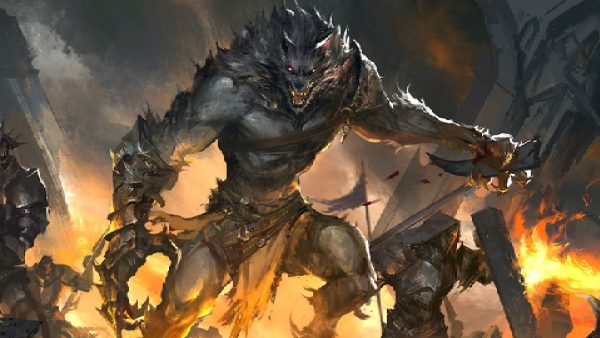
![Play WW2 Commando Operations With Butcher & Bolt [Updated]](https://images.beastsofwar.com/2026/03/relaunch-600-338.jpg)