










The Desert War: Gaming WW2 in North Africa Part One – Overview and Origins
August 17, 2015 by crew


In the study of military history, certain battlefields can acquire a mythic, almost romantic allure. Even amidst the horrors of World War II, there’s one campaign that somehow seems “clean,” isolated, and almost chivalrous. This, of course, is the Desert War, fought in Africa and the Middle East from June 1940 to May 1943.

Getting Started In The Desert
In this article series, we’ll be taking a “wargaming look” at the Desert War and what sets it apart from the usual World War II games many of us enjoy. What made the Desert War different? How can games be adapted to play in this theatre? What kind of terrain do we find, what tactics were used, and what did the armies look like?
To help facilitate the discussion, we’re running a series of 15mm miniature games using an adaptation of PSC’s “Battlegroup” (still the best WW2 miniatures game I’ve played). Using a mix of information presented in the game’s “Blitzkrieg,” “Barbarossa,” “Kursk,” and even “Fall of the Reich” sourcebooks (along with a plenty of “Oriskany-style” historical research), we were able to cobble together a Desert War miniatures dataset that ran very well.
So why play a wargame set in this campaign? For starters, there’s actually a core of truth to the romance connected to this theatre. There were no SS units deployed here, and there were very few civilians to get caught in the crossfire. Diaries and records show that there was a certain degree of “fair play” shown between the armies, perhaps because both sides faced a third enemy...the desert itself.
The Desert War also provides new challenges for players perhaps growing weary of French bocage or Russian steppe. The terrain here is obviously very different and offers a whole new outlook and backdrop for tactical wargaming. The old tricks won’t work here, while new tactics become available. These include “hull down shielding” for tanks and some of the first “special forces” operations. The SAS was born in these deserts, after all.
The Desert War was also incredibly diverse. About 75% of the Axis troops are Italians, not Germans. The “British” forces are often nothing of the sort, usually Indians (including troops from modern-day Pakistan, Bangladesh, and Nepal), South Africans, Free Poles, Greeks, New Zealanders, and Australians. There were even detachments of Zionist Palestinians and an anti-aircraft unit from Hong Kong.
Of course the Americans joined the conflict in November, 1942 with the Operation “Torch” landings in Morocco and Algeria. Free French and Vichy French figured prominently, sometimes even fighting each other (e.g., Syria in 1942). African colonial units were drawn from armies as far-flung as Madagascar. For anyone who’s interested in expanding the diversity of their armies, this is a good place to start.
Furthermore, at least from 1940 to the beginning of 1942, most of the battles in the Desert War were actually quite small, at least when compared to other fronts. This smaller context can give your games bigger comparative impact to the overall picture. Many are the historical moments when you could accurately field the ENTIRE armoured strength of Rommel’s Afrika Korps on a single table of Battlegroup or Flames of War.
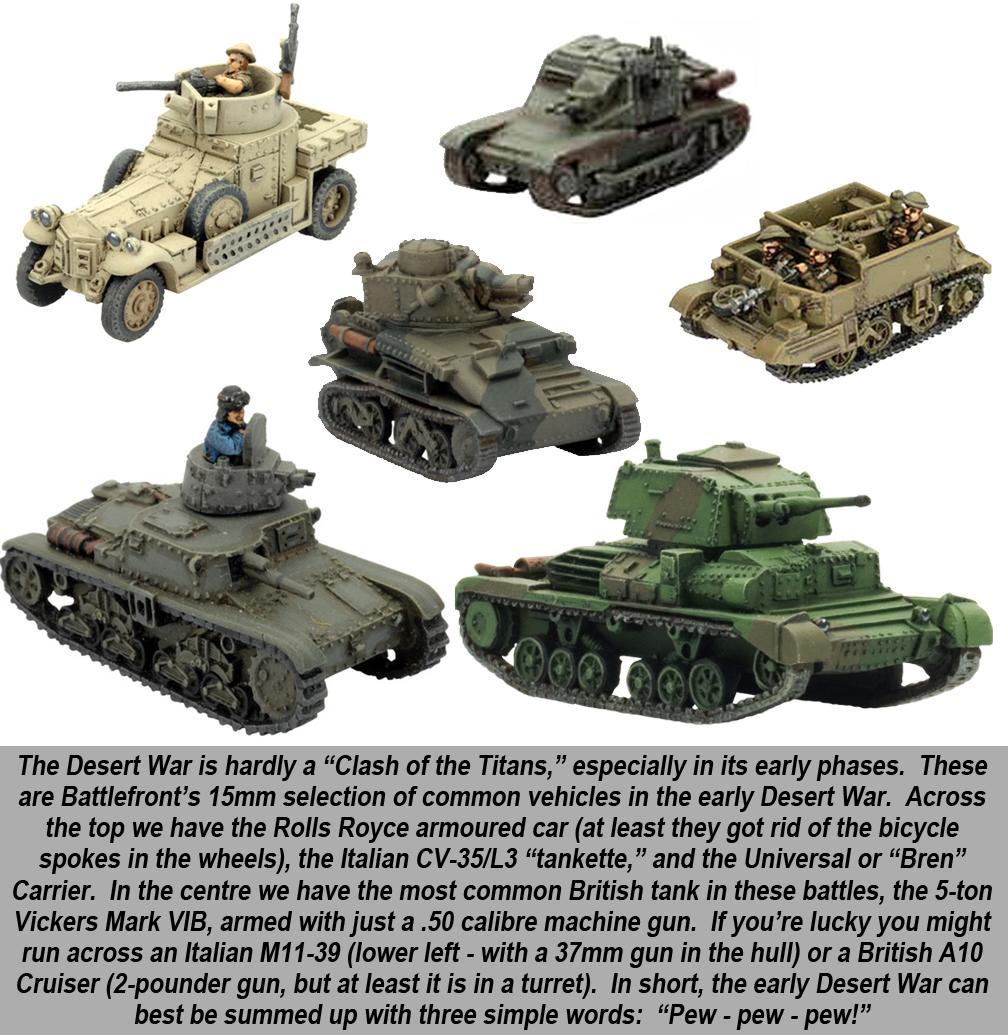
And lastly, players who brave the desert are challenged to win with a lot less than on other fronts. These were armies often held together with baling wire and duct tape. Forget Panthers or Fireflies. A Matilda II with a 2-pounder or a Panzer III with a 50mm gun is mighty, and when the basic Sherman first appeared in late August of 1942, it was practically (and briefly) god-like.
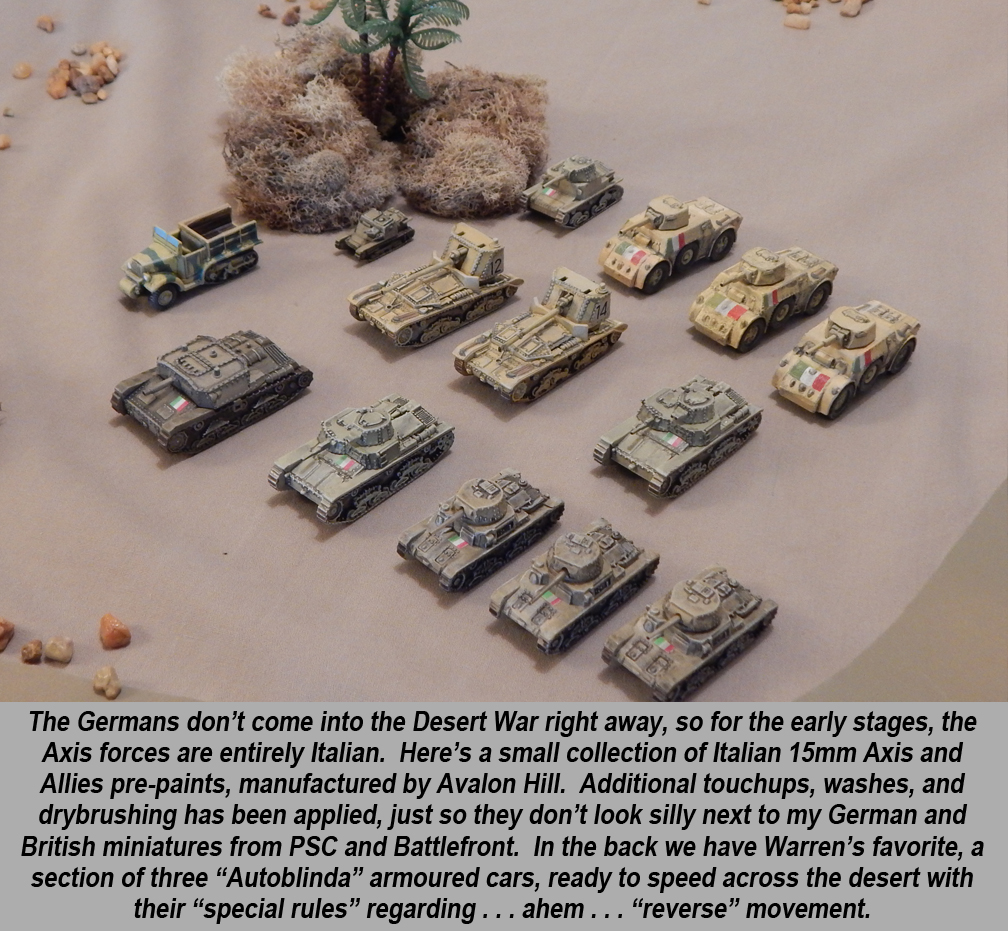
The War Begins
The Desert War started almost by accident. Basically, when Germany was overrunning Western Europe in May 1940, Mussolini thought the time was right to strike the weakened Allies for some quick, easy territorial gains. While the Italian invasion of southern France met with disaster (six French divisions smashed an Italian Army five times its size), the Italians were also striking at British possessions overseas.
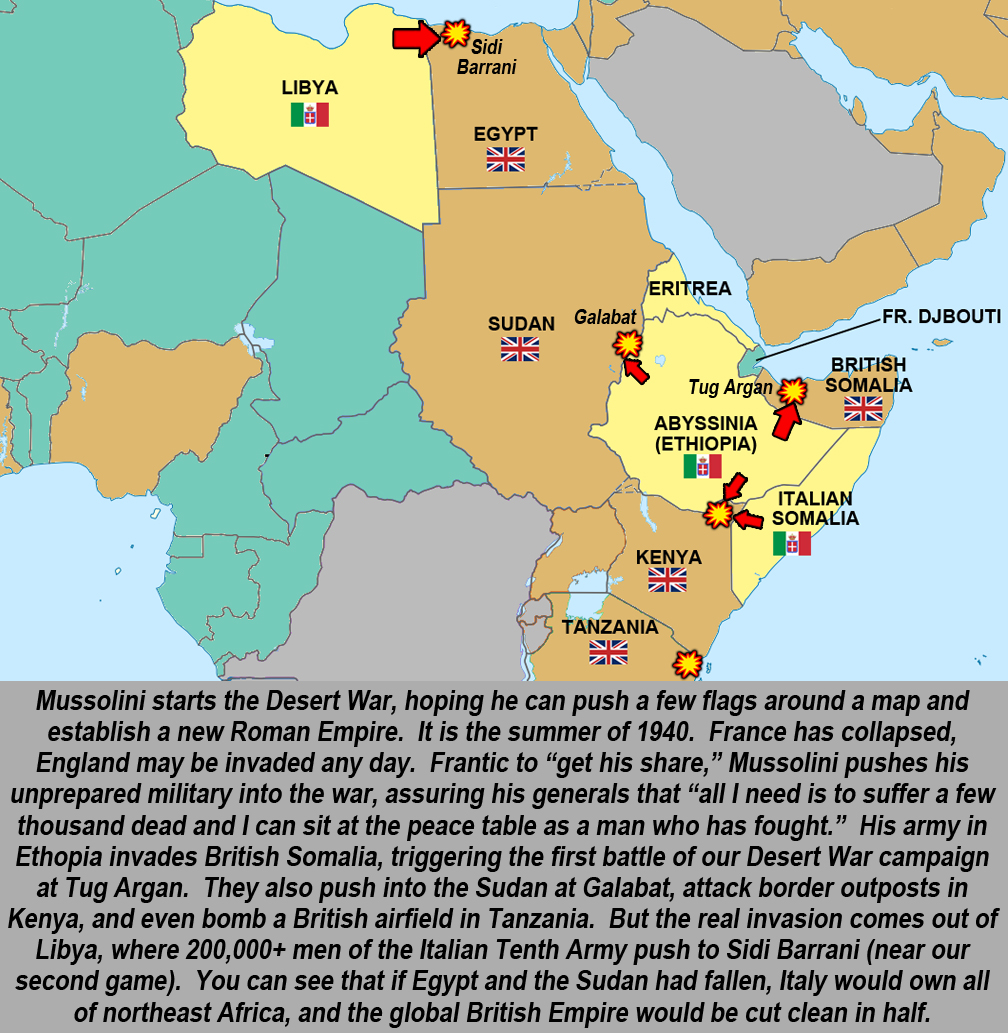
The Italians actually enjoyed some success here. First, their army in Ethiopia invaded the British colony in Somalia in August 1940 (when the Battle of Britain was just reaching its greatest pitch). Sheer weight of numbers delivered an Italian victory here, and the British were forced to evacuate “Dunkirk style” to Aden.
First Strike
This invasion of British Somalia was the backdrop for our first Battlegroup game. Hopelessly outnumbered, the British fell back to the Assai Hills, where the high ground would hopefully give British an advantage. Also, this position blocked the road to Berbera, the main port from which the British were planning their retreat.
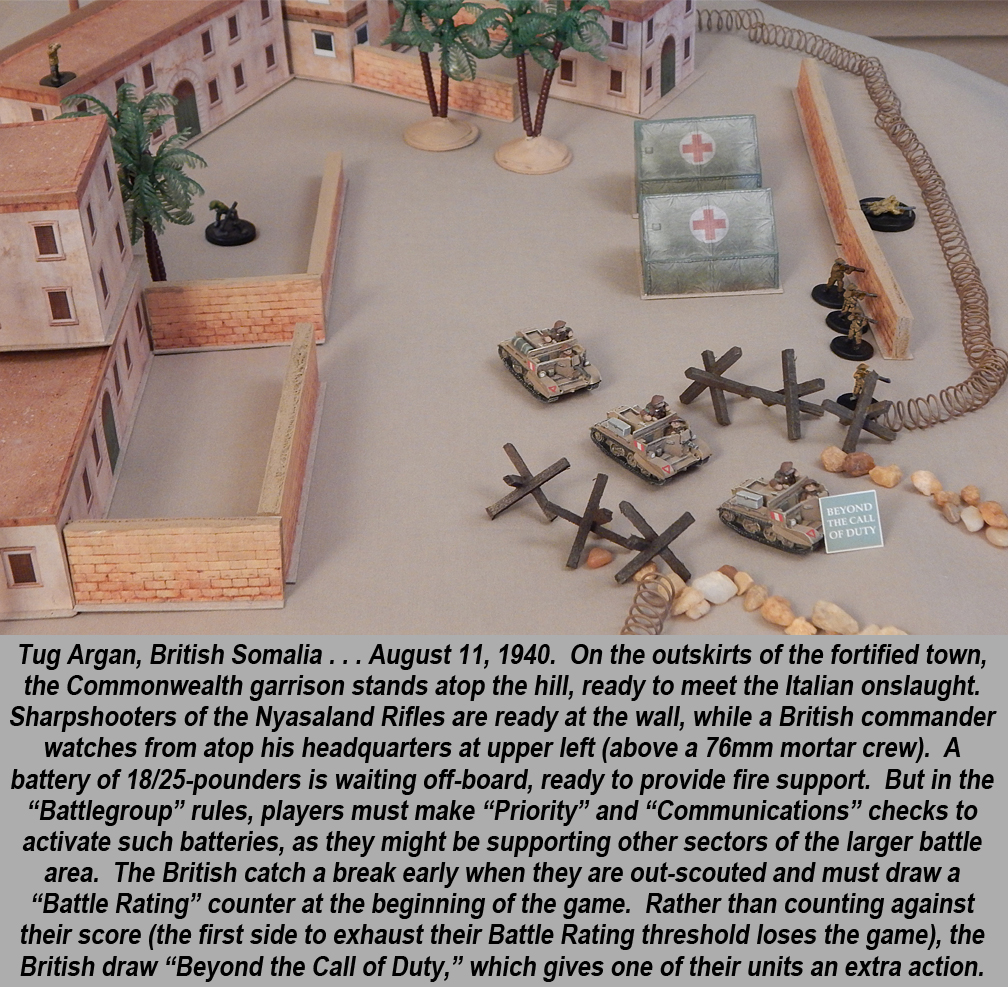
The “British” force was made up primarily of the King’s African Rifles (“Nyasaland” Battalions from modern day Malawi), backed up by a Pakistani battalion of the 15th Punjab Rifles, supported by East African Light Artillery (18/25 pounders). The attacking Italians had the 7th Colonial Brigade (very solid East African “askari” troops), a handful of wretched M11/39 tanks and L3/CV35 “tankettes”, and a battery of “75/18 modello 34” light howitzers.
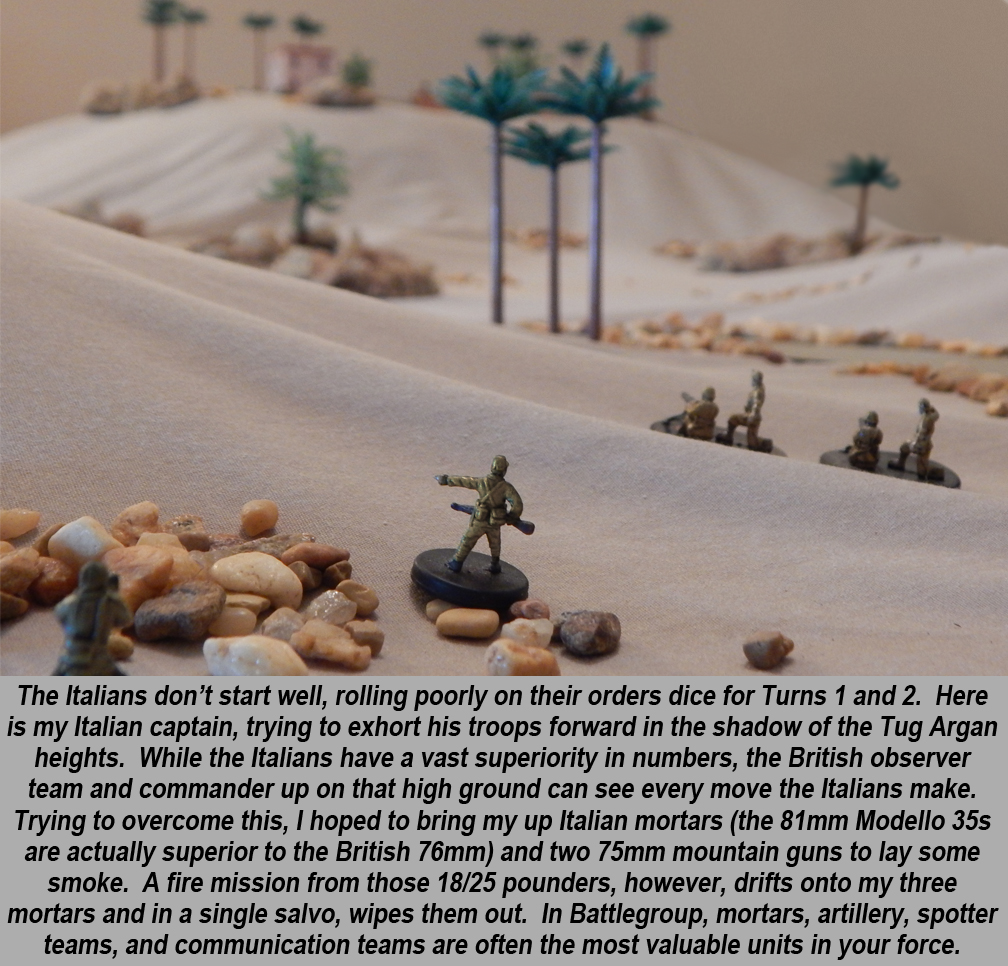
In this game, the Italians had a significant edge in both numbers and antitank capability. Clearly the British would have to make the most of their high ground, off-board artillery, and long-range rifle fire in order to pull off a win. The Italians, meanwhile, had to push up the British-held high ground and establish a foothold in Tug Argan.
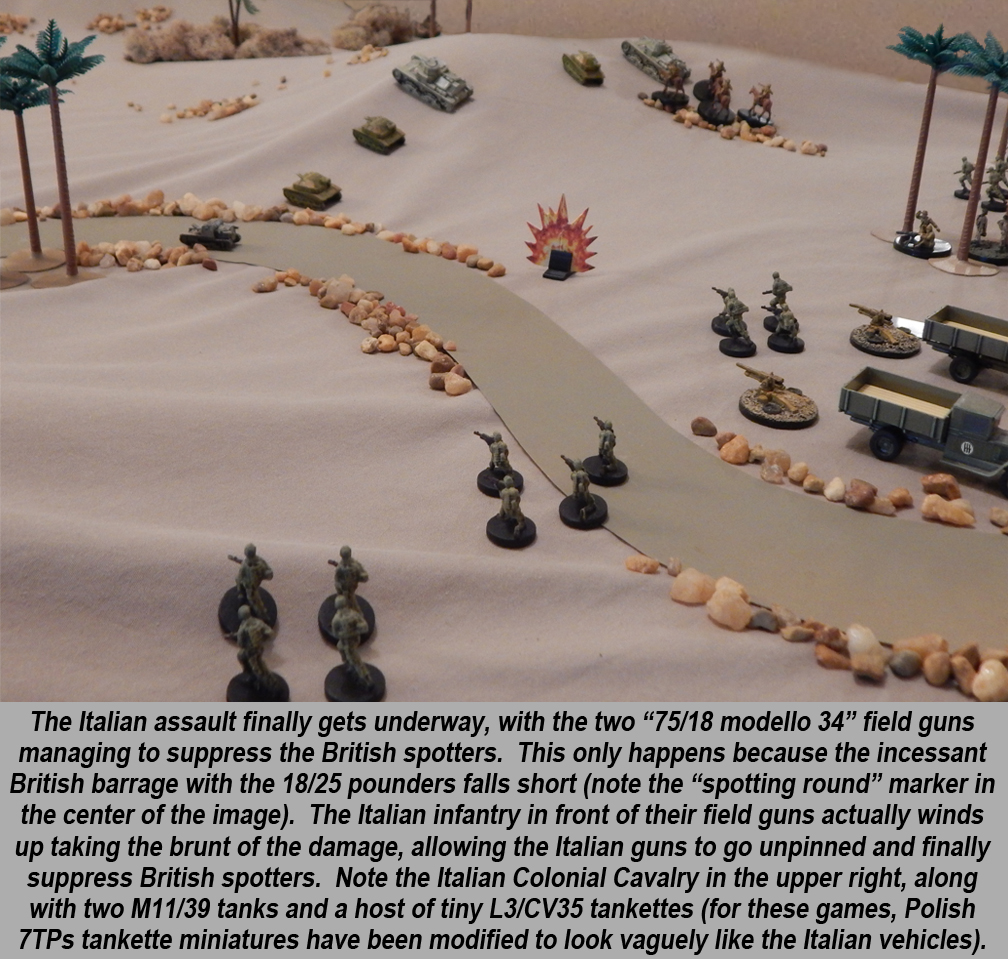
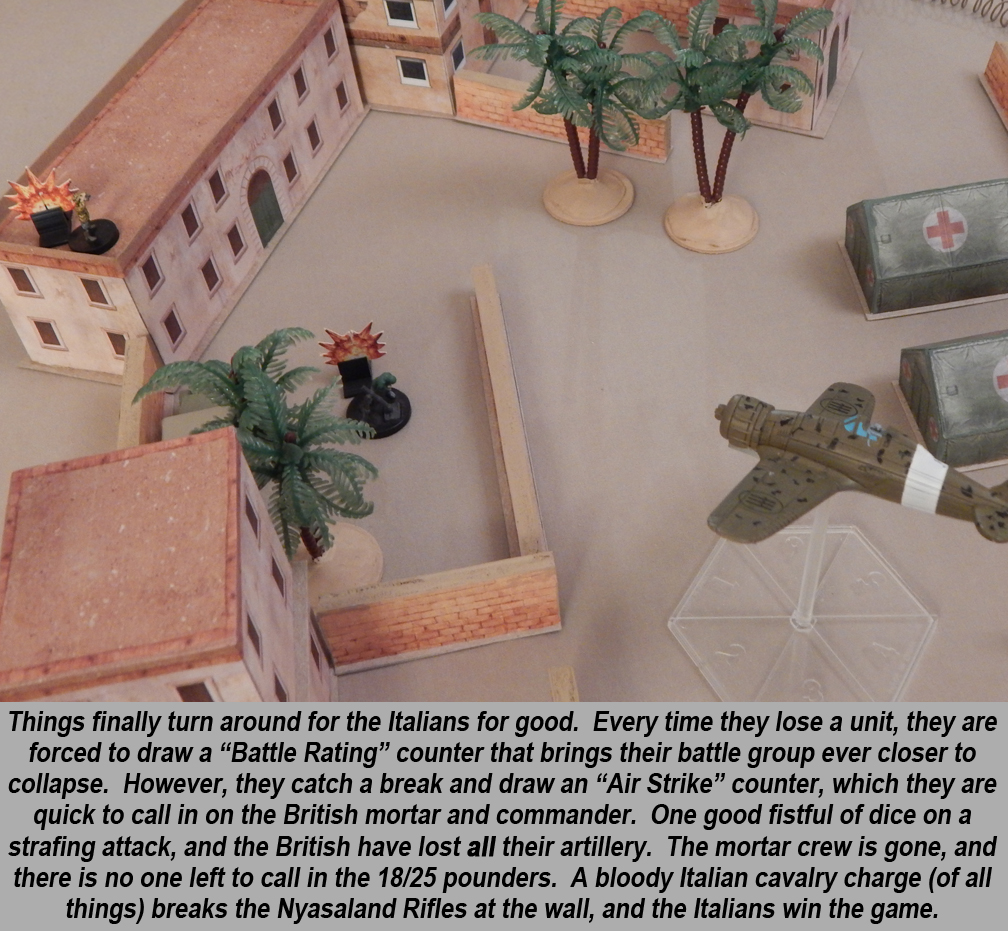
To make the dangerous approach, the Italians threw their main armour/cavalry push behind some dunes that would provide at least some cover. British rifle fire was incredibly accurate, though, the Punjab and Nyasaland sharpshooters taking a grim toll. This was especially true when the Italians’ East African cavalry made the final rush at the Nyasaland riflemen holding the Tug Argan wall, the scene felt ripped right out of a desert adventure movie.
An Axis Push
Next we come to Egypt and Libya, the “main theatre” people remember from the Desert War. Again, the battles start off very small, with “armoured vehicles” that are almost laughable. These were engagements determined by infantry, towed artillery, and above all, supply. In many photos, the terrain looks flat and featureless, but don’t be fooled. Even the most subtle dune can provide complete concealment or at least a hull-down advantage.

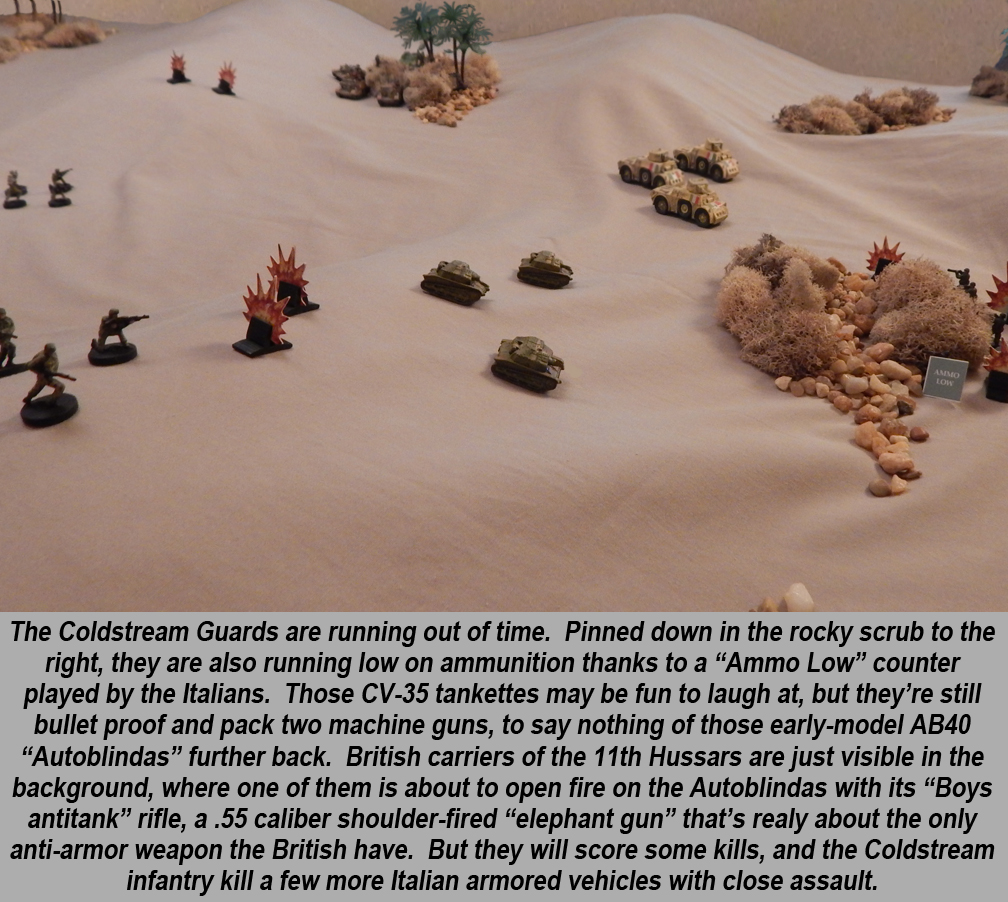
Alam el Dab (discussed in the caption above) was one of the few “mobile” battles of the Italian invasion, since most of their Tenth Army was “leg” infantry. Yet even most of their “tanks” were armed only with machine guns. For actual cannon, the Italians had only a handful of M11/39 tanks, armed with a 37mm gun (in the hull, no less).
British antitank capability at Alam el Dab was even shakier, with just “Boys Antitank Rifles” mounted in some universal carriers and 1920s-era Rolls Royce armoured cars. This was a .55 calibre infantry rifle (think of the large sniper rifles carried today) that could shoot through very thin armour plate. Fortunately for the 11th Hussars, “very thin” was all the Italians had.
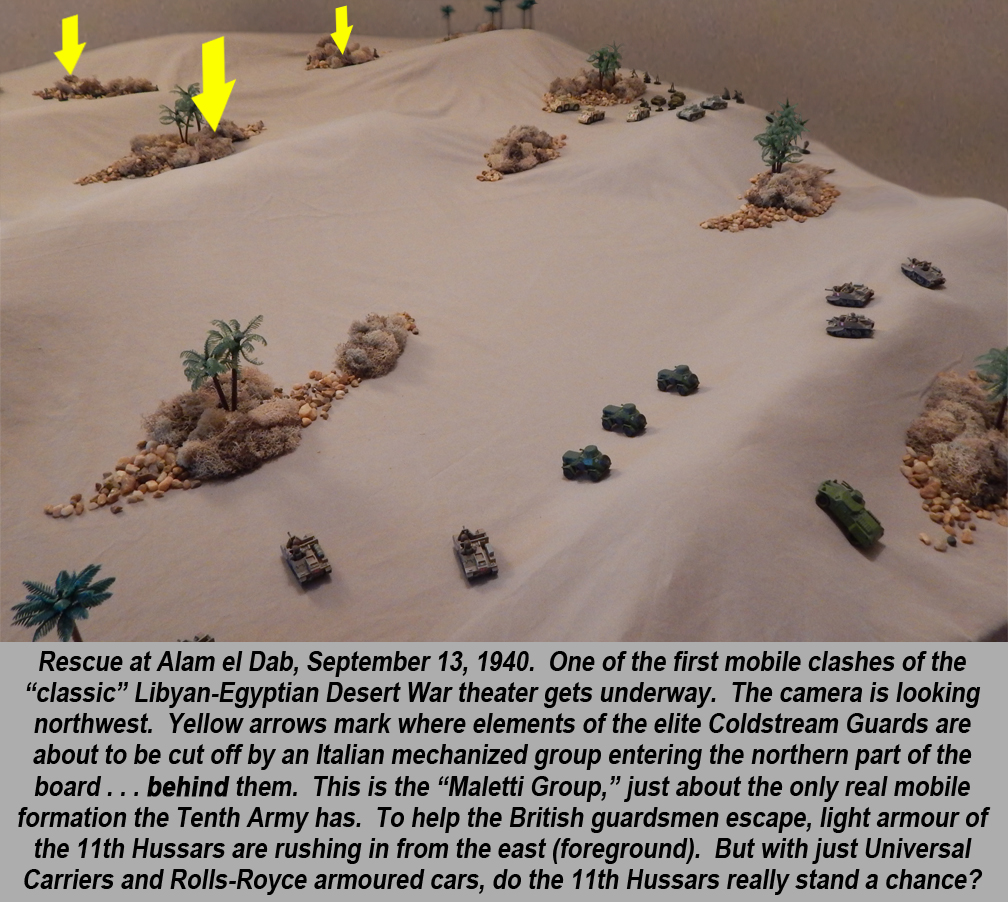
Once again, the Italians put up a very good showing in our game. The mobile “Maletti Group” (backed up by Libyan colonial infantry) cut off most of the Coldstream Guards and subjected them to withering MG fire. The vengeful 11th Hussars, however, mauled the Italians (especially their Libyan infantry) so badly that they managed to pull out a British win, by ONE POINT.
Of course our “Desert War” campaign has barely started, all we’ve done here is set up the chessboard and moved the first Italian pawns. Upcoming articles will cover the “British Blitzkrieg” that was Operation Compass, crushing the Italians so badly that the Germans finally had to send help. That help would come in the form of Erwin Rommel, commanding a handful of threadbare, incomplete panzer units that history would soon immortalize simply as the “Afrika Korps.”
If you would like to write an article for Beasts of War then please contact me at [email protected] for more information!
"To help facilitate the discussion, we’re running a series of 15mm miniature games using an adaptation of PSC’s “Battlegroup” (still the best WW2 miniatures game I’ve played)..."
Supported by (Turn Off)

Supported by (Turn Off)
"In many photos, the terrain looks flat and featureless, but don’t be fooled. Even the most subtle dune can provide complete concealment or at least a hull-down advantage..."
Supported by (Turn Off)


Oriskany you Devil! How did you know that I’d just bought a DAK Panzergren Company with some LRDG and SAS jeeps?! 😀
Excellent read! Looking forward to Rommel entering the fray!
Rommel enters with Operation “Sonnenblum” (Sunflower), February-April 1941 . . . Part II of our series. Next week, stay tuned!
“Sonnenblume”… the “E” at the End is important 😉
But great work so far. Looking forward for more 🙂
That’s what I get for posting these at work. Always in a rush. 🙂
Thanks!
I am jealous of your LRDG jeeps. 🙂 I take it these are the Chevrolet 30cwt? (What the hell does that mean, anyway, “cwt?” Is that like “hundred-weight,” as in these are ton-and-a-half jeeps / trucks?)
Part IV of this series will feature some LRDG action, late summer of ’42.
…long or short hundredweight?
They are, combined with the regular Willys Jeeps. I got the Sting of the Scorpion and Who Dares Wins boxed sets from a local store where they were gathering dust (and had a nice -50% tag).
I bought them to store for a later time, but this article series will probably undermine that plan! 😀
Not sure if cwt is the right measurement, I can lift a box with eight of those with one hand… *cough* 😉
@neves1789 – “I bought them to store for a later time, but this article series will probably undermine that plan!”
I’ve been waiting for an excuse to play LRDG for years. Don’t make my mistake and let it wait! Life’s too short! I even tried it with Panzer / Desert Leader, even though it is totally the wrong scale. I’ve always wanted to run some LRDG fights in Valor and Victory or maybe Combat Commander now that my friend has the Mediterranean expansion for it.
Of course, now I’ll run in it “Frankenstein Battlegroup.” 😀 Which will be doubly difficult since I don’t have your Chevy trucks. I have some others I can modify close enough, however, and some Willy’s Jeeps.
A nice read indeed @oriskany
So… you are trying to show here that Italian army could actually fight? 😉
The Italian Army is a difficult question, @yavasa. The short answer is YES, they definitely could fight and under certain circumstances, did very well. I’ve actually been wrestling a little with how to address this in the article series within the constraints of how much space I have and which battles I could cover. So thanks for asking, it gives me a chance to get this out. 🙂
It can’t be denied that the Italian Army was fighting under some crushing disadvantages in World War II that ensured that the Italian soldier would almost always be fighting “uphill.”
1) Italy was not planning on going to war in 1940, 41, or even 42. They were far from ready and the generals knew it. Mussolini thought they couldn’t wait, though, Germany was overrunning Western Europe and if Italy was to get anything out of this war, they would have to strike now.
2) Mussolini comes off as a bit of a buffoon in casual historical circles, but that’s not really fair. He knew his army wasn’t ready for a pitched war, he honestly didn’t think he would get into one picking on the bones of the “dying” French and British empires. Given what the situation looked like in June, 1940, one can almost forgive him for making that mistake.
3) Portions of the Italian officer corps at the time were terribly corrupt. Many key commanders were in place because they knew or were related to someone.
4) Italian equipment was nowhere near the standard of even British vehicles and weapons of 40 and 41 . . . and THAT gives you an idea of how poor a lot of it was. For example, Many Italian tanks weren’t cast, weren’t welded, weren’t even riveted, they were BOLTED together. Even if a shell didn’t penetrate, the bolt heads would break off and kill the crew inside.
5) Poor equipment (down to the canteens) and poor leadership shows the soldier unmistakably that the politicians who sent him into combat don’t really care if he lives or dies. This, and a series of defeats, made morale in the Italian army generally (and understandably) poor.
6) All that said, when Italian divisions were given a clear mission, that they could actually accomplish given their equipment and supplies, they could do very well. The 132nd “Ariete” Armoured Division almost never gets credit for just how much it helped the Germans of the Afrika Korps (despite its poor tanks). Any army, no matter how “panzer-fied,” relies on a bedrock of infantry, and Italian infantry divisions (75% of Axis manpower in Africa) provided that and made the dashing panzer advances possible. In defense, Italian troops could be as stubborn and tough to crack as the 9th Australian or 2nd New Zealand.
7) If anyone needs an example, I encourage a look at the Battle of Keren in 1941, during the British counter-invasion of Italian East Africa. At a small canyon near the town of Keren in modern Eritrea, the Italian 65th Savoy Regiment repeatedly mauled British and Commonwealth attempts to take the pass. For TWO MONTHS they held that pass, and were only uprooted after very heavy bombardments and assault by Matilda II tanks.
Okay, that was the long version. The short version again . . . YES the Italian Army could fight.
Last thing you mentioned was very well shown in the fact that Rommel used the Itallian Bersaglierie in nearly every crucial defensive position. They stood their man.
In the 20th century the equipment was getting more and more important. Poor equipment -> bad results.
@oriskany I hope you know that I was just teasing with the question 😉 I am really glad that you have organized and put here the main reasons for why Italy did so poorly during the war despite the fact that they actually had some brave soldiers on their side. It was not the XIXth century when one could say that Italy had an army for the Austrians to win with someone.
As you have pointed out in the article, difficult conditions, lack of supply and the fact that the Italian army was supposed to make the offensive on foot made the campaign a disaster for them. Same in France or Greece, terrain, bad equipment, leadership etc.
However let us quote general von Mallenthin to back your “long version” argumentation (it’s my translation so take it easy ;-)) “I do not have sympathy for people who backbite and laugh at Italian soldiers without taking into consideration the conditions and equipment they are using. Italian armour is below modern standards. The tanks were too light and very faulty and their parts were not fit for a modern war and often malfunctioned during long marches. During the African campaign, Italian soldiers gave proof of courage and valour. Especially the ones originating from cavalry units”.
Let us for example take a look at the lack of motorized units issue. Large numbers of Italian infantry were useless during the campaign because without proper transport they became static units. Static war was not a way to go in the desert, flexibility was and that was something Italian soldiers lacked.
Quite often the issue of propaganda is also taken into consideration. After severe defeats Italian soldiers often became disillusioned about the nature of war that they are fighting like one of the soldiers in Africa who wrote in a letter that it is not an African war but an European one fought against Europeans using European equipment. Not a war against Ethiopians.
I think we could go on like this for a few next days if would want to. 😉
And yes, Italians could fight.
No worries at all, @yavasa . I totally meant what I said about getting the chance to expound on some of these topics. Too often I have to leave things out of the article and as I hit the delete button, I think to myself: “Man, I hope someone asks about that or brings up this point in the comments” 🙂
Von Mellenthin gives the Italian SOLDIER high marks in “Panzer Battles” (I think he was Rommel’s operations staff officer for part of the campaign) – even if he (and many others) gives the Italian ARMY poor marks. The organization, leadership, logistics, equipment, etc . . .
Hans von Luck also fought in the desert and defends the Italians in “Panzer Commander.”
The Italians IN THE DESERT start to come alive a little once Rommel shows up and starts to win some battles. Rommel absolutely NEEDED these units (a lot more about this in Article II), and once they participated in a few winning battles, their morale improved. As discussed, leadership was a big issue with the Italian Army, but with better leadership they naturally started doing better.
The Italians NOT in the desert (i.e., the “Commando Supremo” staff back in Rome) did not get along with Rommel very well. They resented Italian units being “usurped” under German command, and saw how Rommel often ignored orders from his boss, Field Marshal Albert Kesselring. This often put the Axis in North Africa in a very bad position and got a lot of Italian soldiers killed. Rommel then abandoned them during the retreat from El Alamein when he only had enough fuel to evacuate German forces and equipment.
So, like a lot of things, the performance of the Italian divisions in North Africa and their relationship with Rommel / Kesselring / OKW is a complex topic.
Great discussion! 🙂
Agreed @oriskany
I am not going to get deeper into the issue of German command’s bad opinion about Italians. Waiting for part two. 🙂
Yes, a great discussion so far.
A good start guys
Excellent read, this will be an awesome series. So tempted to get some minies for the african theatre.
Thanks, @noyjatat and @guillotine . I’m happy to say the map tables get better in the rest of the series. 😀
Great read as always @oriskany I look forward to the next phase mate.
It is funny you posting this, I have was only talking to the wife on Saturday about starting a raiding force for North Africa.
I started North Africa in 10/12mm a few months ago. I’d really like to use Battlegroup but, as you stated, I’d need 2-3 books to get the stats I need until the actual NA book is released next year. So I’m still searching for a rules set. Your figs look good!
Thanks, @chaingun – glad you like it and the second article is already written. Here comes Rommel! Still a while before Montgomery comes in, and the Americans come in almost at the very end.
Indeed, @schogun , putting together the stats was “half the fun,” as they say. I used Barbarossa for the early German equipment (obviously), Kursk for some of the British equipment (Lend Lease Matildas, Valentines, etc) – and then the mid-war German stuff like the later PzKpfw III “Specials,” etc. Fall of the Reich was useful for Shermans, Churchills, Wolverines that fought at El Guettar, so on and so on. I was a little lean on Italians, but by the time I had the other “three quarters” of the data set blocked in, I was able to fill these in without too much trouble.
Add in a few “special” rules like hull-down shielding, “en porte” antitank gun tactics, and some terrain rules for the desert (some taken from Avalon Hill’s “Arab-Israeli Wars,” Brian Train’s “Desert Leader” supplement for “Panzer Leader,” and some from Battlefront’s desert terrain packs for Flames of War) and hopefully we’re all set!
Great start to a very interesting series.
“3) Portions of the Italian officer corps at the time were terribly corrupt. Many key commanders were in place because they knew or were related to someone.”
So this is where my company developed its hiring strategy.
“So this is where my company developed its hiring strategy.”
A little of that everywhere, I suppose. Blue collar, white collar, or “green” collar . . . wartime or peace time, and no matter the century . . . people are people. 😐
I always feel a bit sorry for Italians. If WW2 had started in 35 or 36 they would have had the greatest tank force in Europe apart from the French. What a difference a few years can make
The same could also be said for the Soviets. If the war had started before their officer corps was purged and Germany had rebuilt the “panzerwaffe” (or at least . . . progressed as far as they did with rebuilding the panzerwaffe) 🙂
I like how the Italians mark their tanks with their national colors. Why don’t American tanks have giant flags on them?
@rfernandz2001 – Actually that might be a SLIGHT goof in my miniatures. 🙂 Some of them are Axis & Allies 15mm prepaints, and I just did the others so they all matched on the table. Italian tank markings within a platoon were actually more “standardized,” as referenced below:
Neat! Thanks. You must be passionate about historical wargaming to go in to the extra effort to respond to so many comments with more detailed information.
Question: When you game do you require historical accuracy? Could you bring yourself to play Japanese vs Germans, for example?
Do I “require” historical accuracy? Hmm . . .
1) In game mechanics and scenario design, yes . . . as much as possible. For instance, I don’t use “army lists,” terrain generator tables, “generic” victory conditions, or even most “scenarios” designed by game manufacturers. I use what was there (or in the case of miniature gaming, a small SLICE of what was there), with historical terrain, historical victory conditions, special rules, etc.
2) In miniatures, no. Many are the times that a certain size dice, proxy vehicle, or even a cigarette lighter has taken the place of what was “supposed” to be there historically. I’m certainly not the guy “counting rivets” and saying “well, that miniature is the Mk 3A whatever, which, contrary to popular belief, wasn’t released at battalion strength in this theater until blah buh-blah . . . And it should be a beige-green, not olive-green . . . and the StG-IIIG should have five schurtzen plates instead of four . . .” **
** You Flames of War players know what I’m walking about here. 🙂
Don’t get me wrong, the RULES for these vehicles will be spot-on. But as far as the actual model? Whatever. So long as both players know what it is. I mean, in this article I have Polish 7TP tankettes substituting for Italian CV-35s.
I guess now is a good time to reveal that I come from a background of heavy hex-and-counter games, very deep into historical and tactical realism . . . no miniatures whatsoever. 🙂
3) I do like alternative history sometimes. We play things that could have happened but didn’t. We recently put plenty of British and Americans and Germans up against Soviets in our “World War 2.5” series. Closer to home, we also sometimes play Panzer Leader in an “alternate universe” of our own design where part of World War II takes place here in the continental US. “Desert War,” baby, but in Arizona and New Mexico! Rommel’s on a field trip to Las Vegas, baby!
It all depends on the tone of the project / campaign. Once that tone has been established and agreed upon, I tend to stick to it very very closely UNTIL the next project. 😀
You should start this as a thread. I’d like to hear what people will try out.
The alternative history bit, WW2 in America, “Red Dawn” meets “Saving Private Ryan?” That would be a good idea for a thread. I don’t have any miniatures for it, though, strictly a hex-and-counter thing.
The thing with alternative history is that most historical gamers find it fun as a one-off thing. Non-historical gamers, too, before they go back to Pulp or Sci-Fi. Long story short, it’s “between” genres and with MOST groups it’s not worth a big investment in work of $$$.
WW 2.5 worked because we were able to use pre-existing miniatures.
Still, that WOULD be a fun thread. 😀
I love this period for games of FOW and have a large Italian force for this in 15mm and have just started to put together a Bolt Action Italian force in 28mm for this theatre.
Really looking forward to reading the rest of this series!
I’m thrilled to see this series. I am building up Perry DAK and Desert Rats for bolt action right now. Excellent timing! I’m focusing on the very end of the Africa campaigns since that’s where most of the plastic kits seem to fit best. I’m especially interested in learning more about the allies equipment and vehicles as I’ve been struggling a bit with figuring out what fits the time period.
Thanks, @stert and @koraski . 🙂 Glad you like it so far. I’m happy to say the tables DO get better, and the equipment range and variety of engagements expands quite a bit.
Seems like there is a lot of Bolt Action interest for this theater. You guys must be having an even harder time building tables than I am at 15mm, given the scales of BA. Are you sticking mostly with infantry?
The last part of the Desert War, Koraski, takes place most in Tunisia. Allied equipment includes, well . . . quite a bit. Are you talking tanks? The UK has the usual bren / universal carriers, tons of early model Shermans (no Fireflies, Jumbos, or Easy Eights), a FEW early-model Churchills (no Cromwells), and I think they’re starting to finally phase out the A15 Crusader Mark II (2-pounder) and III (6-pounder). I’m pretty sure the British are still using M3 Stuart/Honey Light Tank and the M3 Grant medium (although their version is a little different than the Americans’ version, the M3 Lee, I think?)
The Americans, well . . . Shermans, of course. Still using the older M3 Stuart, and a few of the TD battalions have the M10 Wolverine. Most American “tank destroyer” battalions, though, have the M3 GMC, which is a 37mm gun bolted on the back of an M3 halftrack. Yeah, THAT’S a tank destroyer, early American style. Hey, everyone has to start somewhere.
So far I have 6 squads of DAK infantry plus some special teams, 4 warlord plastic half tracks, 3 panzer III’s (stubby barrel version), a panzer IV and STuG III both with “mid war” version guns, and a Tiger I. I also have a couple of Panthers and a Puma to add in for balancing late war opponents if need be. I’ll call those my late war Italalian theatre forces.
For allies I have enough Perry desert rats to match my DAK infantry plus one Universal carrier and 4 M3 half tracks (I thought they were appropriate for the 8th but Bolt Action doesn’t list halftracks in the theatre selection list). I also have 4 “M4 Shermans” (warlords plastic ones) which I don’t know if they are the correct model for Brits in Tunisia but close enough.
I don’t have room to field it all at once but I figure I have a lot of options to choose from and since there is not much BA community here I may have to supply troops to any opponents I want to play.
My problem (besides painting it all) stems from not being sure which options and variants to build on the vehicles and how to fit an all (or 90% at least) plastic army into the historical theatre selections. I’ve tried to stick to mid war variants and configurations but “mid war” is kind of broad and I’m not sure how well I’ve done.
@koraski ~
It sounds like you’re doing pretty well building “historically plausible” Bolt Action forces for North Africa. The equipment you mention:
Pz III “stubby barrel” version – Sounds like these could be PzKpfw-IIID (shorter 37mm) or G (medium-length L42 50mm), both of which were huge participants in the Desert War. The DAK was usually on the bottom of the supply priority lists (especially once Barbarossa kicked off in Russia), so the didn’t usually get the Pz IV. This forced the DAK to make do with the Pz III as best as they could. The best was the Pz IIIL or J, called the “Special” by the British, with the longer L60 50mm.
Longer barrels mean higher muzzle velocity, so even the same sized-shell can shoot further and penetrate more armor. This is why, for example, the 75mm in the “vanilla” Sherman is pretty crap while the 75mm in the Panther exceeds even the 88 in the original Tiger I (Then again, the LONGER 88 in the KING Tiger blows them both away).
If you’re talking about the REALLY stubby gun in the Mark III (the L24 75mm, in the PzKpfw IIIN) . . . I’m not 100% sure they served in Africa. This was a very rare variant and might be in your Italian campaign forces, I honestly don’t know without looking it up.
The armored cars you mention (Puma) would also be Italian Campaign. The DAK used the SdKfz-222 and 231/8, along with some Panhards captured from France, I believe.
StG-IIIs – there were VERY rare in North Africa, and never the classic “G” variations with the schurtzen and long 75mm L48 gun Warren likes. There were a handful of the shorter-barreled C and D models, along with some “in theater” field modifications like the sIG-33 (15.0 cm howitzer bolted to the back of a . . . Oh God, I think it was a Czech PzKpfw-38(t).
I honestly don’t know when the M3 halftrack started to be used by British forces. I would have agreed with you and thought the M3 would work fine for Eight Army forces as well (say from El Alamein onwards). But Bolt Action doesn’t include it? You know, they may be right.
You should be okay on Shermans. The British started using them from Aug-Sept 42 onwards. So long as you don’t have the Firefly or the Easy Eight I’m sure you’re good. Yes, the Firefly’s 17-pounder was tried out in the very last weeks of North Africa, but these were NOT in tanks. You should also be cool to use mid-model Churchill III, IV, and V (6-pounder gun, no HOWITZER in the hull . . . thankfully these were not used after the Dieppe disaster of Aug 42). 3-5 Churchills were tried out at El Alamein and after that they did VERY well in Tunisia.
You reminded me I had a 222 stashed away somewhere. Dug it out and built it. I also just discovered thanks to Warlords Panzer III in Bolt Action article that I built mine with howitzers instead of AT guns! Fortunately I didn’t glue the barrels. Hope the paint doesn’t get messed up when I swap guns.
@koraski – Good call re: switching out the PzKpfw-III howitzer for the AT gun. Now that I’m at home instead of work, and have my books handy, I can verify what I feared about the Mark-III “N” with the 75mm L24 howitzer. Yes, 663 of these were built and 27 more converted, but only between June and August of 1943 . . . in other words WAAAY too late for Desert War.
They were deployed primarily (and oddly) mostly with the “schwere panzerabteilung” Tiger battalions, to provide HE support for the Tiger’s antitank 88s. Thus, these were almost entirely deployed in Army Groups Center and South in Russia (first in Kursk, I think).
So I don’t think they be historically useful even in Italy.
In the end, though, it depends on how intense you choose to get with history and gaming. 😀
I know we’re not there yet, but while I remember, I highly recommend “The Rommel Papers”. Rommel kept a Diary and regularly wrote to his wife. It is a true Gem of a book.
http://www.bookdepository.com/Rommel-Papers-Liddell-Hart/9780306801570
Well written and researched as always – after North Africa, my interest in the war start to wain off a little – Early war and NA seem to be where it is still up in the air and no big cats, Jumbos or other heavies to take into account
Thanks @bazleebub and @rasmus . 😀
I’ve never read the Rommel Papers, but in Stackpole Publishing’s “Life and Death of the Afrika Korps” they mention Rommel writing to his wife almost every day. If I remember correctly, some of these letters are actually quite depressing, especially once Rommel realizes he’s NOT going to win this war and he starts getting health problems.
I agree, rasmus, in early war and North Africa, the games often just seem more interesting. The ranges are so short, especially for antitank weapons, that there remains more room for maneuver and fun tactics. In 44 or 45, you stick your head over the hedgerow and someone takes it off with an 88 or 17-pounder from across the board. Operationally speaking, battles like Cobra, Goodwood, Lorraine, and Bulge often come down to mass artillery barrages, naval barrages, or air strikes. Of course, this makes gems like Market Garden all the more interesting (gasp! The Germans actually won)?
The other exception is the Eastern Front. Somehow the sheer scale and “darkness” of that war lend it a dreadful fascination all the way to the end.
Given unlimited time and resources – Market Garden would be one to do in Bolt Action – like some of the North African. I will resist for now, have a move coming up so I should really not start anything new.
But once we get settled …. it may be time to do something new and this might be it …
We’ll be waiting for you, @rasmus ! Between battles we’ll be at the “Desert Campaign Kasbah,” first cantina on the left! 😀
Thank you James as always’
very readable, well researched, intelligent paced and more than worth the time taken to read it a couple of times to take it in.
Waiting for next weeks mate.
Found myself engrossed by this great read looking forward to the next articles!!
Thanks, @chrisg and @dafthelmet85 . I’m always glad to hear people like these articles . . . especially since I’m often half-afraid I’m laying this history on too thick. The next article is already submitted (Compass and Sonnenblume) and we’re playing the games for Article III tomorrow (Crusader / Gazala)!
excelent mate! I cant wait to hear more!
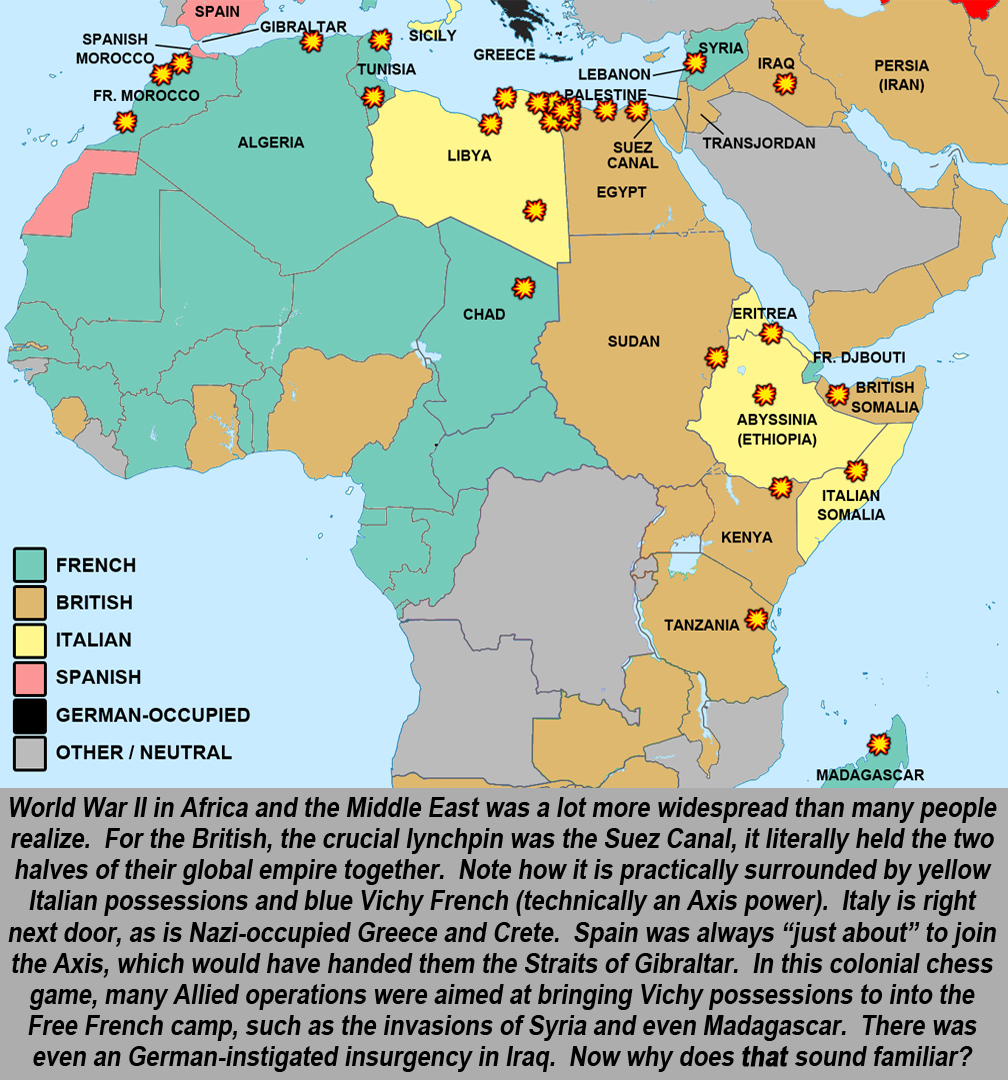
Great article, i didn’t realise that the fighting extended so far down in to Africa or that the British forces were had so colonial troops. I look forward to reading the rest of this series.
Great job
Thanks @radegast6 and @hairybrains . 🙂
Yes, fighting in Africa raged all over, BUT . . . those “explosion” battle markers I have in Tanzania and Chad, etc . . . are sometimes single small engagements or even one bombing raid. Iraq is an insurrection (not really a “battle”). The big majority of the fighting took place along the northern coastal strip of western Egypt and eastern Libya.
The fighting in Somalia, Ethiopia, and Eritrea, however, was sustained and sometimes very heavy, at least up until the middle of 41 or so.
Also in 1942, there was Operation “Ironclad” – the invasion of Madagascar. I won’t really have room to go into it in the articles (also, is Madagascar a “desert?”) but it’s an interesting read because not many people know about it.
In early 1942, Japan was running roughshod over the Pacific. The UK lost 92,000 troops at Singapore (the largest single surrender of troops in their history, I think), and the Japanese invaded Burma and even India (areas now part of Bangladesh). The Japanese Navy, meanwhile, had sortied two of their fleet carriers out into the Indian Ocean (Zuikaku and Shokaku, I believe) and bombed British possessions as far west as Ceylon (modern Sri Lanka).
Anyway, there was a panic that that the Japanese could somehow “link up” with Axis possessions across the Indian Ocean, and that includes Madagascar, where the French colonial garrison was *somewhat* loyal to the Vichy Regime. To make sure, the British decided to mount an invasion.
It was pretty hard fought. As we’ll see in Torch later, “Vichy” French forces were largely content to live and let live in their colonies (they weren’t exactly rabid pro-Germans, after all) UNTIL the British (later the Americans) landed and stirred up trouble. Then it became less a question of Axis and Allies politics, and more of a “get your tanks off my lawn!” issue.
Ironclad is also fun because it’s one of only two times you get to use the “Tetrarch” air-transportable tank. The other time was at Pegasus Bridge (Normandy), believe it or not, where they glider-inserted some of of these things to help hold the bridge initially taken in the famous midnight raid.
If you’d asked @oriskany you could have had a glimpse at the draft for Battlegroup Tobruk… 😉
Due next April if we get it finished in time!
Awesome, @piers . I honestly didn’t know you guys were working on one (you may have told me and I forgot – I’m not as sharp as I used to be). It’ll be interesting to see how close my guesses on some of these things come out in the “official” Tobruk book. 🙂
I’m imagining some special rules for things like Hull Down, En Portee antitank guns? I can imagine a few special counters to through into the dreaded battle rating counter mix. 🙁
Oh look, my Crusaders overheated AGAIN?!
What do you mean my M3 Lee/Grant can’t use hull-down, it’s only thirty feet tall! (that’s an exaggeration, everyone).
Penalties to Observe – Hiding in the heat shimmer? Bonuses to Observe when enemy is moving, LOOK AT THAT DUST CLOUD!
In all seriousness, the infantry rules for all these different contingents for colonial troops might also be interesting. The Maori Battalion of New Zealanders were pretty ferocious. SAS, LRDG, and German “Brandenburger 200” units would also make nice additions.
….(sniff, sniff)
Excellent article. Super stuff.
This is the first time I’ve ever heard of a battle/front ever being referred to as “clean,” isolated, and almost chivalrous. However, once I read your explanation, it really made sense. It was almost a “safe” front having all the fighting happening in the middle of nowhere. Have read a lot recently about D-Day and Eastern Front, this article series seems like it will be a refreshing breath of dry, hot, sandy air.
Keep up the good work!!
Thanks, @testsheepnz and @gladesrunner . The descriptions of “isolated and chivalrous” are kind of the myth, rather than the reality . . . however, there IS a core of truth (as with almost any myth). Examples:
Several accounts of the Desert War describe recon patrols going out from either the German or Commonwealth side, and as sometimes happens, they get captured. The army that captured the enemy patrol would often try to find a way to let the other side know (without violating military security, of course). “Hey, we have your guys. Lt Smith, Sgt Jones, Corporal Brown, and Privates A, B, and C. Hell no, we’re not giving them back. Just so you know they’re not dying of thirst or exposure out in the desert somewhere. We may be enemies but that’s no reason to be a XXXX.”
German ace pilot Johannes Steinhoff once described German pilots dropping messages over British airfields (yes, braving flak fire as they did so), letting then know that downed comrades had been recovered, or (I’m not 100% sure on this last part) – letting them know where downed pilots where so they could be rescued.
Long story short, the Axis and Allies were fighting each other, but they were also both fighting the desert. No one wanted to be left as a pile of bleached bones out there.
ALL THIS SAID, when the orders went out and the shooting started, the Desert War was just as ferocious as any other. That’s where the “myth” abruptly ends, and the reality sinks back in.
Great read! I play DAK in Bolt Action, always wanted to try Italians next 🙂
I am surprised you haven’t managed to mention Desert War by SPI or like the rest of us your still trying to recover from it 30 years later?
Thanks, @meffi !
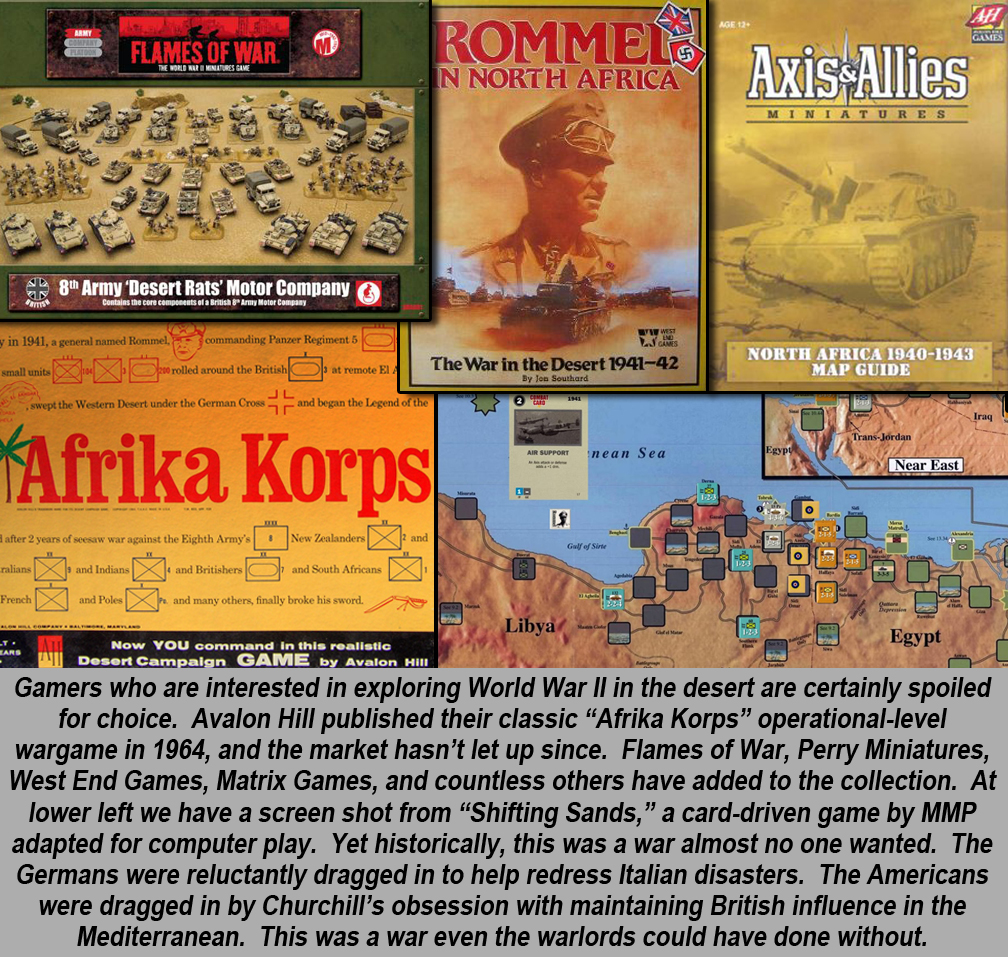
Actually, @torros – I must admit I never actually tried SPI Desert War. Operationally, I stuck with Avalon Hill’s “Afrika Korps.” A little simplistic, and it didn’t include the Torch landings . . . but it did a great job at phased introduction of the divisional and regimental-scale battlegroups as they were historically introduced.
Tactically, I ran a fourteen-month project in 2012-13 that included 48 games of a Panzer Leader / Arab-Israeli Wars blend (basically, taking the terrain rules and rules corrections from Arab-Israeli Wars and retrofitting them back into Panzer Leader, to run WW2 battles in the desert).
So was SPI Desert War operational? Tactical?
The best way to describe is like Atlantic Wall but more complicated. It was operational. It’s years since I had a go but I remember having to give the Italians more water when working out supplies as they had to make pasta
I used to have these custom-made d6s for Panzer Leader, one for each nationality. The German one was gray with the “balkenkruez” on the “1,” the British one was tan and had the roundel, the American one was olive green with the white star, etc.
Anyway, I was showing these to my girlfriend’s mom. “Look, I even have an Italian one.”
“What does that dice have on the ‘1’? A bottle of wine?”
🙁
Great article. I have always preferred early war in the desert. I used to play an old TSR board game called Sirocco, Desert Raiders Battle Game. Playing this and watching shows like The Desert Rats really kick started my interest in the desert war. The other thing that draws me to this theater is that it really is the first big test of armored warfare. These machines are still new and unproven(relatively speaking). The environment is one of the harshest on earth. The logistics are a nightmare for both sides. At steak is the Suez canal. At the same time it was more than just a canal. At that time England was the world leader not the USA. Had the Axis powers taken and been able to hold the Suez it would have sent a very strong political message to the rest of the world. Not only would the English Empire be effectively cut in half. The Eastern Med would be dominated by the Axis. What of Greece, Malta and Crete? What of Indian and Australian shipping to England, the added delays and cost of going around Africa. Not to mention U-boats now having access to the red sea and beyond? Even more important is the geopolitical questions that it could have raised. would the neutral nations remain neutral? Than their is the minor Allied powers such as the South and Central American nations who had the man power to equip whole divisions of US supplied equipment. So while many see it as a back water of the war and want to move on to 44 and the big exciting equipment. I see it as one of the most exciting and potentially history making areas of the war. Anywhere else the Axis would gain a city or some territory here they had the potential to destroy an empire. If England was knocked out of the war D-day, Italy, hell the Murmansk run would have been nigh impossible. Even if the loss of the Suez didn’t take England out of the war it would have significantly changed it. I say this as the US and Canada would have had to change their shipping priorities to assist the English greater. Granted this is all just my opinion but this is why I think that the war in the North African Desert is so interesting and important. It is also a great excuse to play with miniatures 🙂
Couldn’t agree more, @tibour . In general, early war gaming is where it is at for a whole list of reasons. The Germans can actually win some battles, the Allies don’t start every battle with a tsunami-like artillery barrage or complete mastery of the skies. The antitank weapons aren’t very long-ranged, allowing greater ease (an importance) of actual maneuver and tactics (instead of dice-crunching with 88s, 17-pounders, and American 90mms). And yeah, the outcome of the war was actually in question.
I also agree about the importance of the Desert War. Note I say “Desert War,” and not the Mediterranean theater in general. The distinction I make here is the subsequent invasions of Sicily and Italy . . . and their rather thin geo-strategic contribution to the overall Allied war effort. You have to be careful saying that because there are veterans of these campaigns (very hard-fought and bloody campaigns), or people who’s fathers or grandfathers fought and possibly died in these campaigns . . .
On the subject of the Desert War, though . . . yes. As others have said on this thread, the chance for the Americans to get “blooded” and acclimated to how European land warfare was being waged, a chance to get France “back on our side,” a chance for the Anglo-Franco-American alliance to actually get tempered a little in combat . . .
Not to mention giving the British something to hold on to between 1940 and 1943 besides just bombing Germany and fighting U-boats. Churchill was able to point to the desert and say “We’re still in this war, damn it!” That’s no small thing when Churchill was trying so hard to get the Americans into the war and Stalin was screaming bloody murder (rightfully so) about a “Second Front.”
Oh, and I’ve always wanted to compliment you on your icon (USMC, 1989-93). Semper Fi!
This is a great line “As others have said on this thread, the chance for the Americans to get “blooded” and acclimated to how European land warfare was being waged”. I say this as most people don’t even know about the US interventions or Banana wars that were going on through out twenties and thirties. Most were flare ups of earlier actions but they were fairly constant. Their were also reason we had so many armed forced in the far east as well. While many were currently garrison forces they were active combat forces in the recent past, relatively speaking. These are things that are glossed over in History classes.
Oh-rahh USMC ret 83-97
Awesome, @tibour , we were in at the same time. 🙂
Yeah, the US Army was pretty lean on actual battlefield experience when they first went into Africa on November 8, 1942. There was a small cadre of experienced officers and NCOs (having served in the Banana Wars, as you say), but these were definitely the minority. After Pearl Harbor, the US military exploded in size from a small, peacetime, Depression-Era army to a massive force of volunteers and draftees. To command all these new units, NCOs and officers had to be promoted VERY quickly and this is where we get the idea of “theater” rank or “brevet” rank (men who were majors on this side of the water, but major-GENERALS on the other side of the water).
Then this largely green army lands in Morocco an actually has trouble overcoming some parts of Vichy French resistance. THEN they see their first real battle against not only “veteran” troops, but battlegroups of 10th and 21st Panzer Divisions.
21st Panzer was originally 5th Light Division, and these guys were the very first troops Rommel put into action when he arrived in North Africa in Feb 41. They’d been with him since the very beginning.
10th Panzer had been in the war since Poland and had recently been pulled out of the Russian bloodbath.
To say these two units were “veteran” is an understatement. Needless to say, this is a big part of the reason we see American disasters like Kesserine and Sidi Bou Zid.
The Benghazi supplements they have released for Command Decision are excellent
Did you mention the Italian 90mm AT gun. It was a bit of a beast
@torros – In the sixth photo, where all the Italian miniatures are depicted, there are two Semovente 90/53s. which I am definitely looking forward to using in Part III. These were armed with the 90 mm (3.5 in) Cannone da 90/53 to which I beliueve you are referring. Definitely a terrifying weapon, except the self- propelled tank destroyer version carries only something like 6 rounds. That’s one turn on fire in Battlegroup, which means I will need to pay for an ammo truck AND use “rearm” actions to keep them in combat. Also, their crews are completely exposed.
Still, basically an Italian version of an “88” . . . I hope to kill at least one Matilda or Grant with these babies. 🙂
Your now trademark blend of history and gaming shines out once more. Very refreshing to see you started with Abyssinia/Somalia and the attempted breaking of the “British Corridor” as far too many historians who treat this topic start with the crossing of the Egyptian frontier. I am looking forward to the @oriskany touch on the rest of the articles.
At the time most Europeans over romanticize “The Desert” and the press of the nations involved were looking for their WW2 “Lawrence”. The 3 generals you mention are the first generation of generals to give access to the press and work the press. By the time we come down to the 2 Gulf wars press access is an expected given and the generals are very proficient at working the press. But it starts here.
The Italians get a stereotypical bad reputation from those overused propaganda news reels showing want looks like the entire Italian nation walking down the road to surrender. The poor Italian soldier had everything going against him as mentioned above and on top of that he had an officer class above him that treated the soldiers more like convicts or a separate lower class. The officers made sure all the best rations went to them leaving a rather bland low calorie diet for the soldier. While the allied rations may not have tasted the best they at least had the calories. This is often overlooked but considering the environment, important. The average Italian was not sold on this new Rome idea but they were anti-communist. Look at the much higher performance of the Italian forces in Russia up to Stalingrad.
They certainly did not have the tools for the job. It was noted that when their tankettes were hit at a certain angle by an HE shell they had a habit of shedding many of their armour plates. My great uncle who served with the Austalian 6th division after clearing a slit-trench had 2 Italian grenades lobbed into it. Both failed to go off. He said this happened a lot with Italian kit.
What I like about this early period is the armies involved are policing armies of nations only just crawling out of the depression. As the storm clouds gathered money was poured back into the budgets to re-arm but most of this was spent for the main theatre and not on the armies for policing the empire. So this was to start with war on a budget for by armies that were supposed to keep the natives in check. These policing armies had officers that were trained for mobile warfare of the 1917/18 variety to make war against spears and muskets. They had just as much in common with the colonial armies of the 1890s as the did with armies of the 1920s. Yet this campaign will become the boot camp for the retaking of Western Europe.
Thanks, @jamesevans140 !
You know, I have to give credit to Brian Train, a wargame designer (who later took work at the DoD I believe) who came out with his own variant of Panzer Leader (along with collaborator Pat Storto, who later started his own Panzer Leader website). It was called “Desert Leader,” using Arab-Israeli War rules to play Panzer Leader in the desert campaigns of World War 2.
Anyway, his very first scenario was Galabat, Sudan . . . i.e., not just sticking to the classic Libya-Egypt “classic” desert war theater. He also had scenarios for Free French vs. Vichy French in Syria, and when my group ran through our own “Desert Leader” series, we took his cue and ran games in Somalia, Eritrea, southern Libya, Morocco, Ethiopia, and even Madagascar.
Sadly, we won’t have room to do a lot of these in this series. Maybe we’ll start an associated thread in the forums.
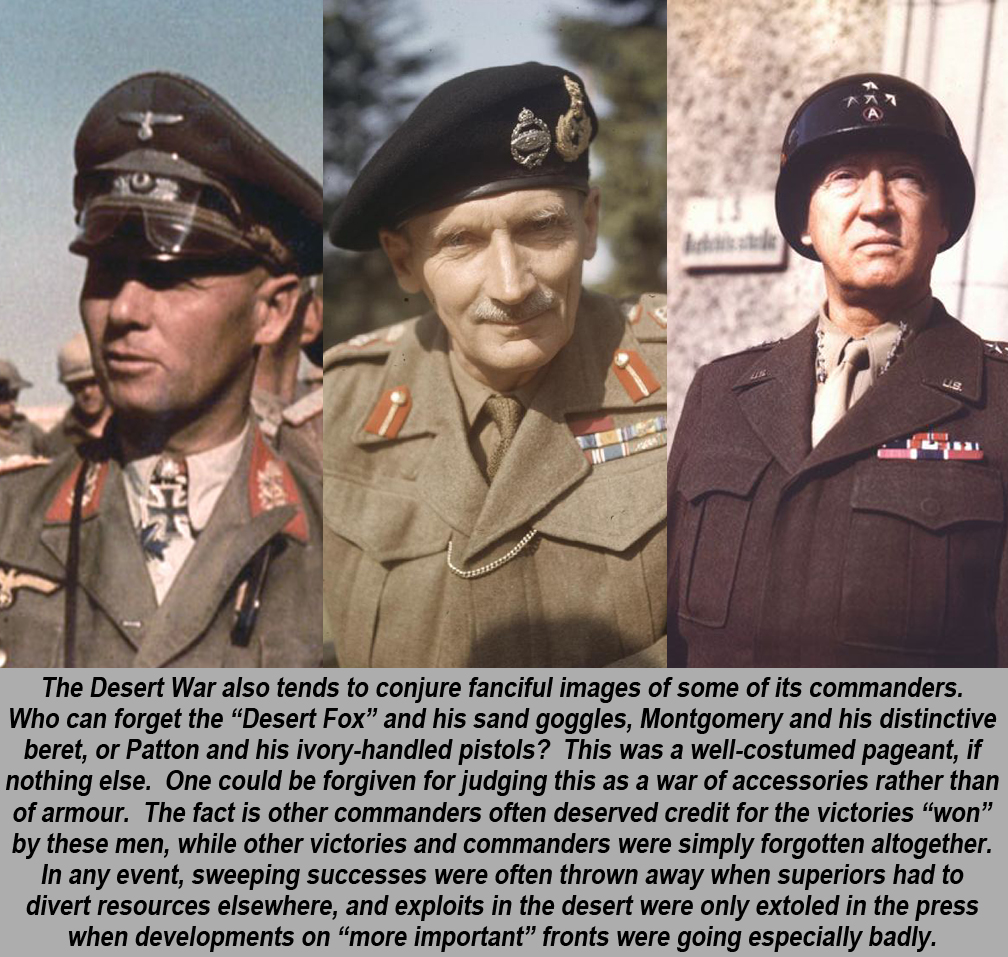
The three generals pictured at the beginning are literally there for “brand recognition.” They’re the ones everyone knows and associates with the Desert War. Reality check: There will be five parts to this series. Rommel doesn’t come in until halfway through Part II. Monty doesn’t come in until halfway through Part IV. Patton comes in the in the last few paragraphs of Part V. One of the things I hope to bring up in these discussions are the twenty other generals who fought most of this war. And this isn’t me deliberately not including the “famous” guys. This is when they cane in chronologically. These famous three DID NOT fight most of this war. Okay, Rommel was there for most of it, but certainly not all.
I think it was American Heritage magazine that ran an article about 4-5 years ago . . . asking a panel of GERMAN historians who their “top five” German generals of World War 2 are. Out of ten historians, each making five selections, not ONCE did Rommel come up. Not once.
The Italians DID lose incredible numbers of prisoners at virtually all stages of the Desert War, although you’re right . . . their reputation isn’t entirely warranted.
The Australian 6th Division? That fought at Bardia during Operation Compass? Look for a little material on that in Part II. 😀
I also have to agree with what you’re saying about the colonial policing nature of these armies, at least in the early stages. And even that was sometimes a stretch. The Italians actually FAILED in their first attempt to invade Ethiopia in 1895 and when they succeeded in 1935-36, it was only with the use of chemical weapons.
I’d be very interested to know who which generals the German historians did highlight.
Let me rephrase that… I’d be very interested in reading an article by you explaining who these generals are, what they did and why there were picked rather than the more famous (in the UK / US) Rommel!
Von Manstein was almost certainly one,maybe Kleist,Rundstedt,Model then Kesselring,Guderian and Dietrich maybe
It’s been forever since I read the article, but here are my picks (most of these were in the article). This is a hasty list off the top of my head, and in no particular order:
Heinz Guderian (Theory and Doctrine) – “invented” and **IMPLEMENTED** blitzkrieg.
Hermann Balck (Tactical Commander) – original commander of the Grossdeutschland motorized infantry regiment, this guy did ridiculous work on the Eastern Front. Started off as a colonel commanding a regiment, wound up commanding an Army Group. If you’re looking for a tactical badass, this is your man. Almost unheard of in the West since almost his whole career was in Russia. He beats out Rommel because you couldn’t get away (in Russia) with the stunts Rommel used to pull in France and Africa. Balck never overextended himself, which Rommel did constantly.
“Smiling” Albert Kesselring (Operations, especially air-ground) – before the war he was a general in the army, then switched to become a general in the air force. As such, he had a singular understanding of air-land coordination between air and ground units. He also pretty much shut down the Allied drive in Italy.
Gerd von Rundstedt (Sheer Experience) – the grand old man of the Wehrmacht. They had to bring him out of retirement for the invasion of Poland. After that, he was in and out of retirement more often than Michael Jordan.
Walther Model (Crisis Management) – leaving his politics aside (fervent pro-Nazi), he was Hitler’s “fireman” and was transferred from sector to sector, expertly resolving crisis after crisis.
Ewald von Kleist (Armored Ops) – Admittedly, this one was NOT on my list until @torros mentioned him. Commanded Panzergruppe ONE. Commanded the FIRST Panzerarmee. Even Guderian commanded Panzergruppe TWO and the SECOND Panzerarmee.
Gotthard Heinrici (Defensive Expert) – Widely regarded as the German Army’s best man on defense, which scored him few points with Hitler or his inner circle. A big reason the Soviets didn’t wind up with ALL of Germany.
Erich von Manstein (Everything) Enough said. 🙂
HONORABLE MENTIONS:
Knobelsdorff, especially commanding XLVIII Panzer Corps.
Hermann “Papa” Hoth
Gunther v. Kluge
Fedor v. Bock (AG Center, Barbarossa)
Paul Hausser – II SS Panzer Corps at Kursk / Prokhorovka and later 7th Army. Only Waffen SS general even CLOSE to my list (or doesn’t turn the stomach, if you know what I mean).
Again, probably incomplete and open to debate. 😀
Very open to debate… 😉
Adding Hasso von Manteuffel as an “honorable mention.” 😀 If for no other reason than some of his battles as CG of “Grossdeutschland” Division and slapping Patton around a little in Alsace-Lorraine. Although I’m sure I’ll catch some grief on that one. 🙂 NOT for his “famous” role in the Ardennes 44, although he did do better than Sepp Dietrich and basically “stole” the leading role in the offensive from 6th Panzer Army
Thanks @torros and @oriskany – only just getting back to this now. Very interesting!
Yeah, @angelicdespot , “Top Five” lists like this can inspire debate and discussion endlessly. One of those topics you just post and watch the comment count go through the roof. 😀
I love your articles James as I always know we are not just going to get the article itself but a whole heap of interesting extra content in the following thread of comments.
its good to see the whole of Africa being mentioned don’t really know much about the other battles so a bit of learning is always a good thing. Good start to the new articles @oriskany
Thanks, @huscarle and @zorg .
Yes, I tend to ramble a bit in the comments. Seriously, though, there’s only so much you can cram into the articles. So when someone asks a question or brings something up, I give a full response.
The readers always have great input to add as well, and I always learn something from the comments. I still remember how I learned that WASN’T actually Peiper in that Battle of the Bulge photo, how Polish AOK units were still active after May 1945 in WW 2.5 (and thus probably would have helped the Western Allies as partisans), and let’s not even get started on what everyone brought to the table for the WWDDC series. 😀
I wish I could include even more “peripheral” battles and material, Zorg . But like I’ve said, I’ll have to leave a lot out. The more I think of it, the more I want to start a side thread in the forums for some of these other photos, games, scenarios, and discussions.
i don’t see why not a extra thread worked on your other articles?
Thanks for the heads up on “cwt,” @zorg, and yes, @unclejimmy , there is a difference between “long” and “short.” hundredweight. Apparently “short” cwt is 100 pounds, “long” hundred weight is 8 stone (112 pounds).
Either way, we can assume the famous LRDG Chevrolet trucks were about 3,000+ pounds. 🙂
Yes for sure from time to time we all have to remember we all have other lives outside of our hobby. 🙂
Lemme get one or two more articles published and then we’ll start the thread. I’m mildly embarrassed at the gaming table photos in this article, but Article II and III are definitely an improvement. I can put some more of these photos on the thread and we can kick these topics around some more. 😀
The new tables look great, but now theres sand all over my dining room! 🙁
Spoiler alert, @gladesrunner ! Just kidding. In all seriousness, though, it’s kind of pain in the ass gaming on actual sand. It looks great, but there’s a lot of sweeping going on. 🙂
me working on my SAS @ tm got to just love them perry-miniatures
https://www.perry-miniatures.com/product_info.php?cPath=23_74_75&products_id=3222&osCsid=fkebifqg8rsg261671j10v4k73
I got like 9 of them to paint up 🙁
and a few LRDG Chevy CWT30 from
http://035f399.netsolhost.com/companyB_models_UK.html
going to put a few of them nice Mounted 37mm Gun and shield on them 🙂
2-pounder en portee! I love it. I used some of those just today at a recreation of some Gazala battles. Of course, mine don’t look nearly as great at these. It’s literally an artillery piece (base and all) dropped backwards on the back of a truck bed. Oh well, gotta work with what you have!
I love the LRDG. I can’t wait to see what yours look like when you get them finished, @kender2001 .
the M3 honey was one of the first US tanks delivered to reinforce British forces & they loved them because they were reliable unlike the tanks they had @oriskany
Absolutely, @zorg . I actually just used some of them just yesterday in a Crusader battle. 😀
I’m afraid I don’t have much to add to the discussion other than I really enjoyed reading this article. Looking forward to the next one!
Thanks very much, @seldon9 ! 🙂
Good article mate! We play bolt action set in the desert. I thought we’d get a bit bored and progress to late-war europe but it hasn’t happened yet. Looking forward to pt2.
Thanks, @innes ! 😀 Do you have trouble with 28mm terrain? Or do your scenarios take place in “tighter” spaces like towns, crossroads, and oases?
Great article, and this time I’m in at the beginning!
One of the first war films I watched was ‘Ice Cold in Alex’. I don’t remember much of the detail now, but it certainly did conjur up a grim picture of the Desert War.
I’d love to know more about the fighting in Madagascar too. Perhaps the subject of an article some time?
Maybe a forum thread, @angelicdespot ? Only because I have none of the miniatures for it. I’ve run in Panzer Leader (hex and counters), though. 😀 It’s a neat little campaign, nothing like Normandy, of course, but definitely off the beaten path when it comes to WW2 gaming.
If it’s just a forum thread @oriskany, I’ll be happy with what I can get! While I appreciate that you generally need good photos to make a good article, it’s mainly the history (and the maps) that I’m interested in.
I’ll look forward to it!
Thanks, @angelicdespot . I think I have some hex-and-counter materials / maps / screenshots we ran for “Operation Ironclad” before. I’ll definitely see to posting them in the near future. Meanwhile, just to get started . . .
Operation Ironclad, the invasion of Vichy Madagascar, May 5 – November 6, 1942

Tetrarch air-transportable. Ironclad was one of only two times they were ever used.
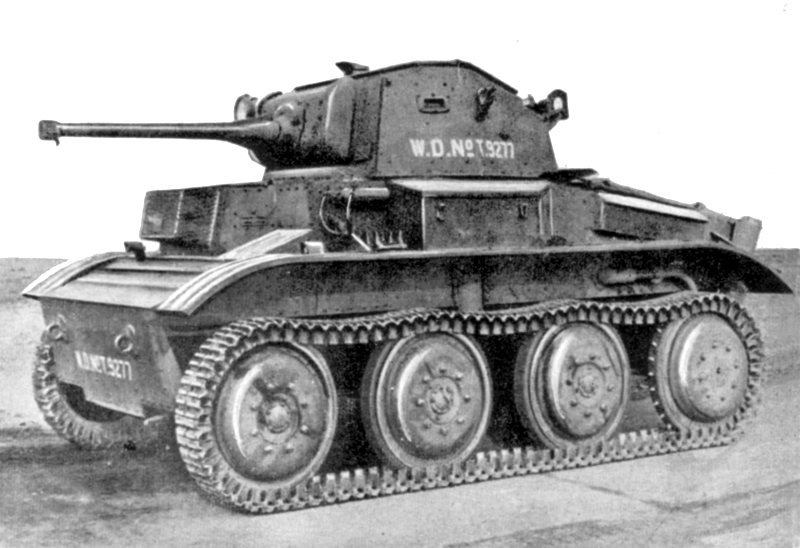
Much more to come, gimme a week or two at most.
Looks good. I’ve always liked the look of the Tetrach since seeing it sold with (I think) paratroopers for Overlord. And I do like maps! I’m actually studying Madagascar at the moment at work, although a different part of the island.
Yep, when I said “one of only two times . . .” the other time was at Pegasus Bridge. 🙂
Fantastic article yet again James – and i’d expect nothing less! 🙂
Thanks, @lateo ! One of these days we’ll have to do a “Worldwide Desert Challenge” 🙂
That’s correct about the 6th and that’s my interest in O’Connor as a leader. They went on to fight in Palistine.
Patton, Rommel and Montgomery stand apart from the other generals only because they knew how to use the press better than the rest. I am not surprised that Rommel was in nobody’s top 5. He was Hitler’s golden boy, he knew that and made sure that everyone in OKW knew it and managed put all the generals off side. His arrogance was a real fault in his personality with his peers but he was almost fatherly to non-officers.
The Italians from what I have read only did really well in Russia but not so well in any other engagements after WW1 except where they used chemical weapons. It seems that unless the hearts of the average soldier was behind their leader’s plans they just did not perform. Using similar kit in Russia they performed quite well. Many Italians were firm anti-communist and so their hearts were perhaps behind the Russian invasion. As part of the enforcement of Stalingrad they were smashed and never really recovered after that. They lacked tanks and AT guns.
That’s my attraction to the early Western Desert campaign as it is such a cobbled together affair in material and thinking.
I’m not sure the Italians did well in Russia. In 41 they had to send in two Romanian divisions to get them out of trouble…
@jamesevans140 – Richard O’Connor was the “man,” in my opinion, truly one of the unsung heroes of the Desert War. True, he was taking on unprepared Italians, but he was taking on **160,000+** unprepared Italians (with only about 30,000 men of his own). I swear if he hadn’t been hit with those two misfortunes in the spring of 1941 (you probably know what these are, one was Greece, the other we’re saving for Article II) 🙂 . . . he’d may have gone on to win the Desert War practically before it started and no one would have heard of Rommel or Montgomery today. Rest assured the topic is well-visited in Article II.
I had heard / read that the bulk of the 6th Australian Division was chewed up up the defensive battles of Greece and Crete. Was your great uncle captured in these battles? You mention Palestine? I assume these later actions were carried out by men who were successfully evacuated from Greece and Crete?
This was the big tragedy of Churchill’s meddling in early ’41, he took O’Connor’s 6th Australian to go to Greece and 4th Indian Division to go to East Africa. This left only the 7th Armoured, which wasn’t fit for combat after running across half of Africa in Operation Compass. This allowed the Italians time to recover, Rommel to arrive, and launch his first big strike through Cyrenaica in March-April of 41.
The 6th Australian were indeed some badasses. My brother and I have played the assault on Bardia several times in Panzer/Desert Leader, it’s never easy because the city is such a natural fortress and Italian infantry could be pretty solid on defense. If even part of the 6th Australian had been left in Libya instead of trucked off to Greece, it’s hard to imagine Rommel’s initial Cyrenaican offensive enjoying any of the success it did.
Rommel is utterly over rated as an army commander.
He was a great leader at division and below but his style was utterly unsuited to army command.
The book written by his CoS in the DAK is quite illuminating in its insight of his personality and the constant problem of finding where Rommel was when needed to make decisions. He acted like a divisional leader, and a ‘pusher’ at that, and while great to lead and advance or offensive, not what you want when managing an army…
We are in complete agreement, @piers . Rommel’s staff never gets enough credit. He’d be leading his forces from the front, TOO FAR to the front for a corps, panzergruppe, or panzerarmee commander . . . and other sectors of his command would be calling back to HQ with reports and looking for orders. Of course Rommel wouldn’t be there. So it fell on guys like Nehring and Cruewell and von Thoma and even staff officers like von Mellenthin and his peers (sometimes as low as Major or Lt. Colonel) to make corps-level decisions on the spot.
Meanwhile, the guy who was SUPPOSED to be making corps-level decisions was at the front, making decisions typically left to Majors and Lt. Colonels.
Don’t get me wrong, almost any general is only as good as his staff, but Rommel pushed the envelope on this maxim. 🙂
Interestingly after this was posted, Lock n Load publishing have released their new game Rommel at Gazala, and PSC have announced A9,A10 cruiser tanks to be released soon
Damn, I really could have used those early Cruiser models in the Compass, Brevity, and Skorpion games. 🙂
I really enjoyed the article thanks
Thanks, @hengest . 🙂 Glad you liked it!
Absolutely brilliant, @oriskany . Great read and backdrop… and scenarios of course!
Thanks! Tan bed sheet and all, eh? Oh well, you gotta start somewhere, eh? 😀