







![NO Weekender Or Cult Of Games XLBS This Weekend [Updated]](https://images.beastsofwar.com/2026/03/No_Weekender_and_XLBS_this_Weekend-225-127.jpg)



Painting Wargaming Collections Part Five: Motivation
January 3, 2018 by crew


Big Projects – Staying Motivated
Dave Taylor continues his article series on building and painting your armies, explaining his thoughts on the process from beginning to end
Over the decades that I’ve been involved in the hobby, I’ve always derived the most joy from working on and, eventually, completing a big project. Most often that’s been an army, occasionally it has been a huge model (like my Warlord Titan) or a terrain project.

See The Painting Wargaming Collections Article Series By Dave
I’ve spent a lot of time talking with other hobbyists about their big projects too, and I’m always interested in hearing about the kinds of things that inspire them, help them get organized, and keep them motivated through the “dark times” that can befall any lengthy project.
In this series of articles on “big projects,” I hope to provide little nuggets of wisdom, gathered during my journeys.
mo·ti·va·tion [mōdəˈvāSH(ə)n/] – noun
- The reason or reasons one has for acting or behaving in a particular way - Synonyms: motivating force, incentive, stimulus, inducement, incitement
- The general desire or willingness of someone to do something - Synonyms: enthusiasm, drive, ambition, initiative, determination
Being excited about a new army is, let’s face it, pretty easy. Writing several different lists and doing a bit of “math-hammering” at lunchtime is also not too taxing. Even the act of buying the models for your brand new and shiny force isn’t tough and comes with that built-in joy of acquisition. It’s when the plastic, resin, and/or metal minis hit the painting table that we are faced with the cold, hard reality of it all. We have quite a bit of work ahead of us. There’s assembly, priming, and painting, as well as basing and the chore of storing these minis in between painting sessions. So many things to think about and actually get done!

Staying motivated is the key to completing your project. Looking back to the definition of the word “motivation” is important, as it will show you the things you need to understand about yourself. What drives you, makes you enthusiastic, stimulates you, and/or is your primary incentive? If you know these things about yourself and your journey through this wonderful hobby, you’ll be able to stay positive and put aside distractions (to get this article written, I had to spend the morning at a local coffee shop to avoid the distractions of my painting table).
I recently quizzed a bunch of wargamers to see if I could find some patterns in the devices they use to stay on task and motivated. Here are the primary groupings I noticed:
Creating A Comfortable Environment
For many people who paint large armies, or lots of models at once in a production line style, painting becomes a very automatic action. By that I mean that when you are painting black boots on 100 Astra Militarum conscripts, you don’t have to think about it, you just have to do it. To keep their brains distracted by something else, these hobbyists generally have their favourite music or podcasts playing in the background, or their favourite movies and TV shows on a nearby screen. (This can be very helpful because you can look up from your painting and let your eyes refocus on something distant every fifteen to twenty minutes or so, scientifically proven to help your eyes).
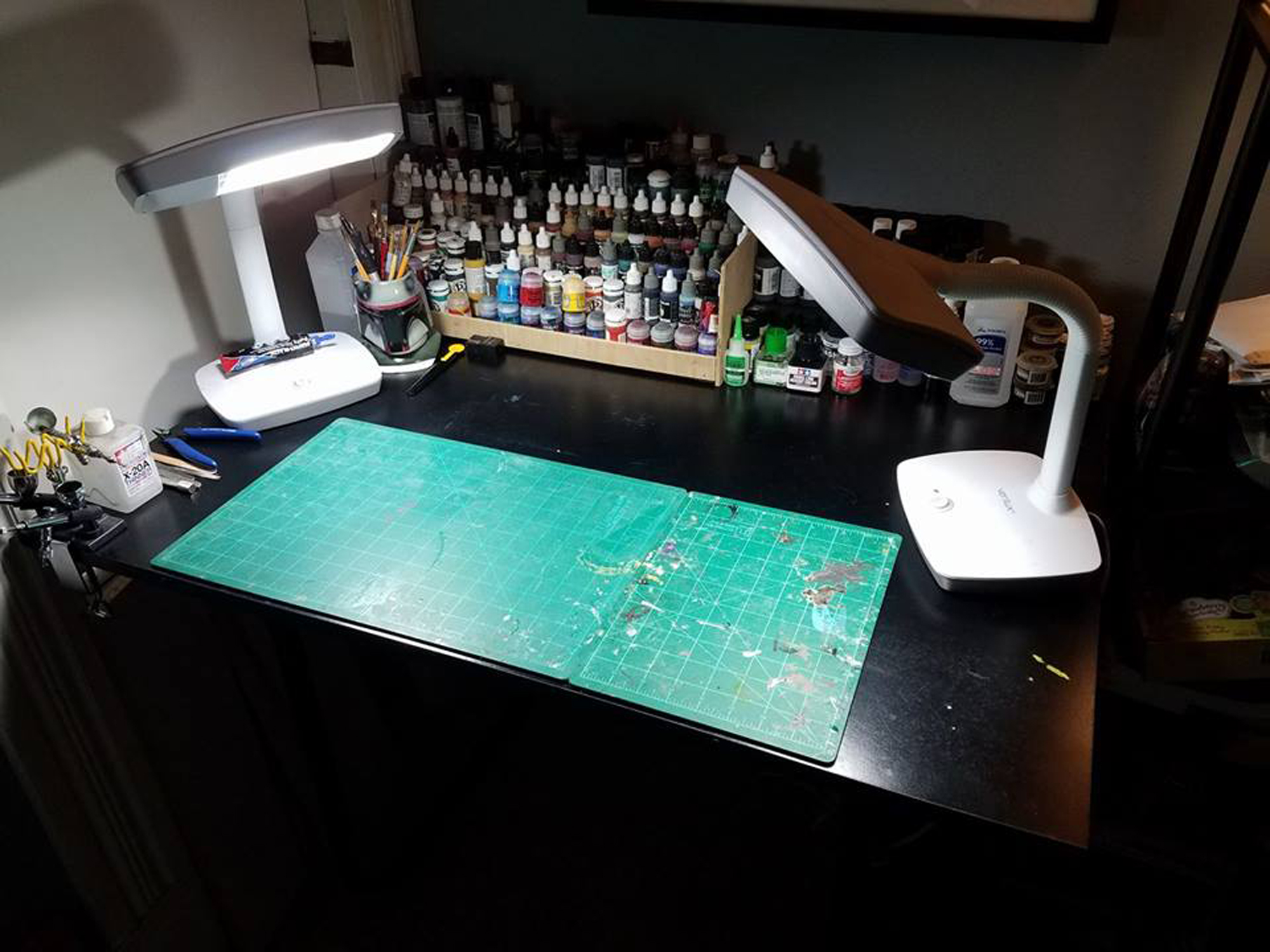
A lot of people noted that they give their painting areas a thorough clean-up before every major project so that they are ready to go and know where everything is. A few also mentioned having a relaxing adult beverage of their choice on the painting table. For some, this was about creating a comfortable and relaxed environment, and for the rest, it was as a reward for completing particularly gruelling tasks (did I mention the black boots?) but more about that later.
Guilt, Shame & Deadlines
I’m not going to call it an outright “fear of failure” because I don’t think that’s it, but quite a few respondents to my questions certainly didn’t like disappointing folks. If you are good with deadlines and don’t like letting people down, it seems the best way to motivate yourself is to publicly announce your plans.
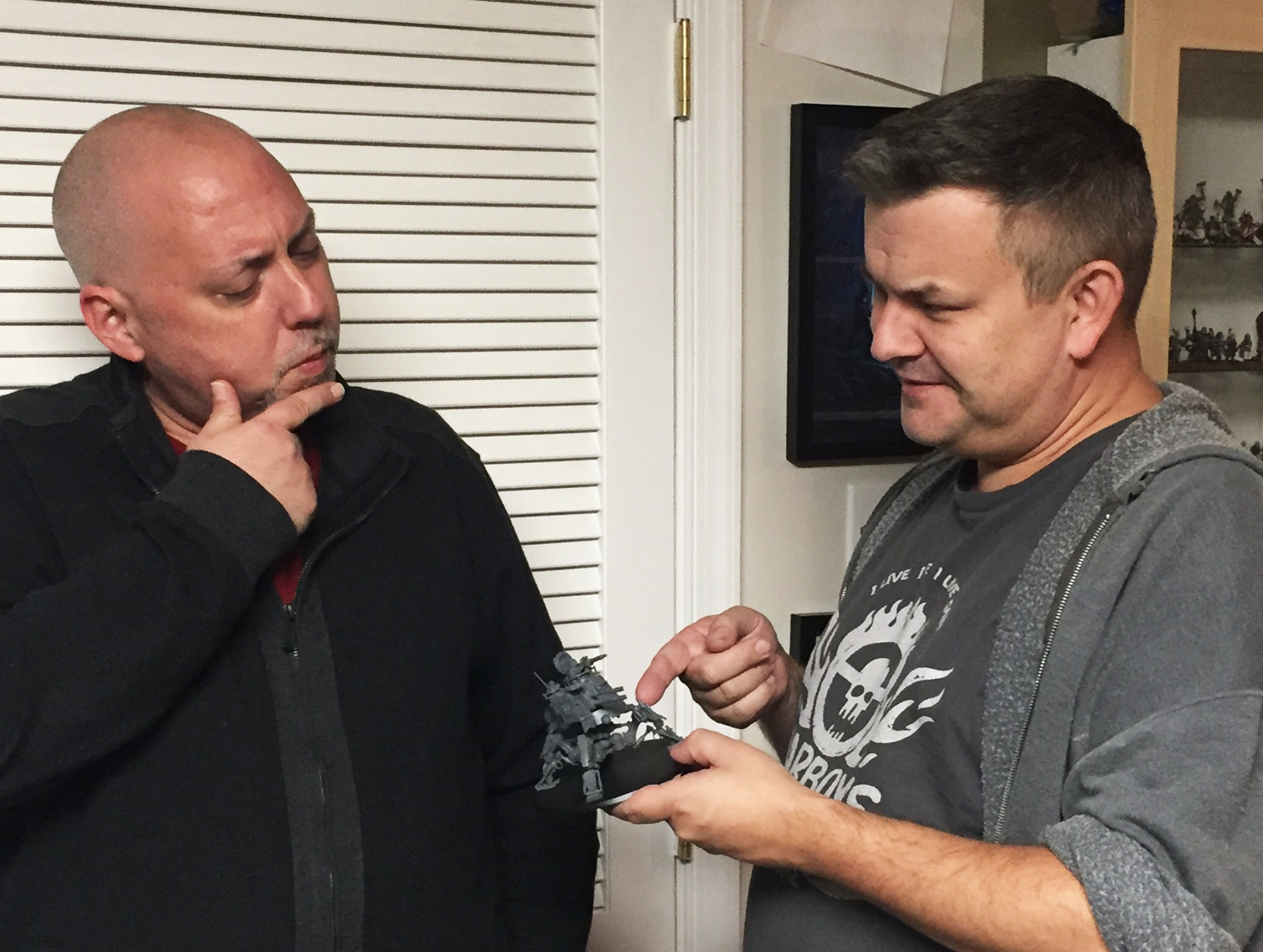
Letting people know that you are committed to finishing your project (or a certain part of it) by a particular date can have a great effect on your drive to complete that project. To be honest, this is one of my primary drivers. I have developed a reputation for it over the years, and it certainly helps when I take on commission painting jobs. However, if you aren’t really into the guilt and shame that can come from not hitting the deadline, you’ll need to be careful trying out this motivation tool.
Rewards!
This category was an interesting one. I’ve noticed hobbyists using this method for a long time, most commonly using a character or centrepiece model as the reward for grinding through what many feels is the drudgery of painting a unit of ten, twenty or thirty models.
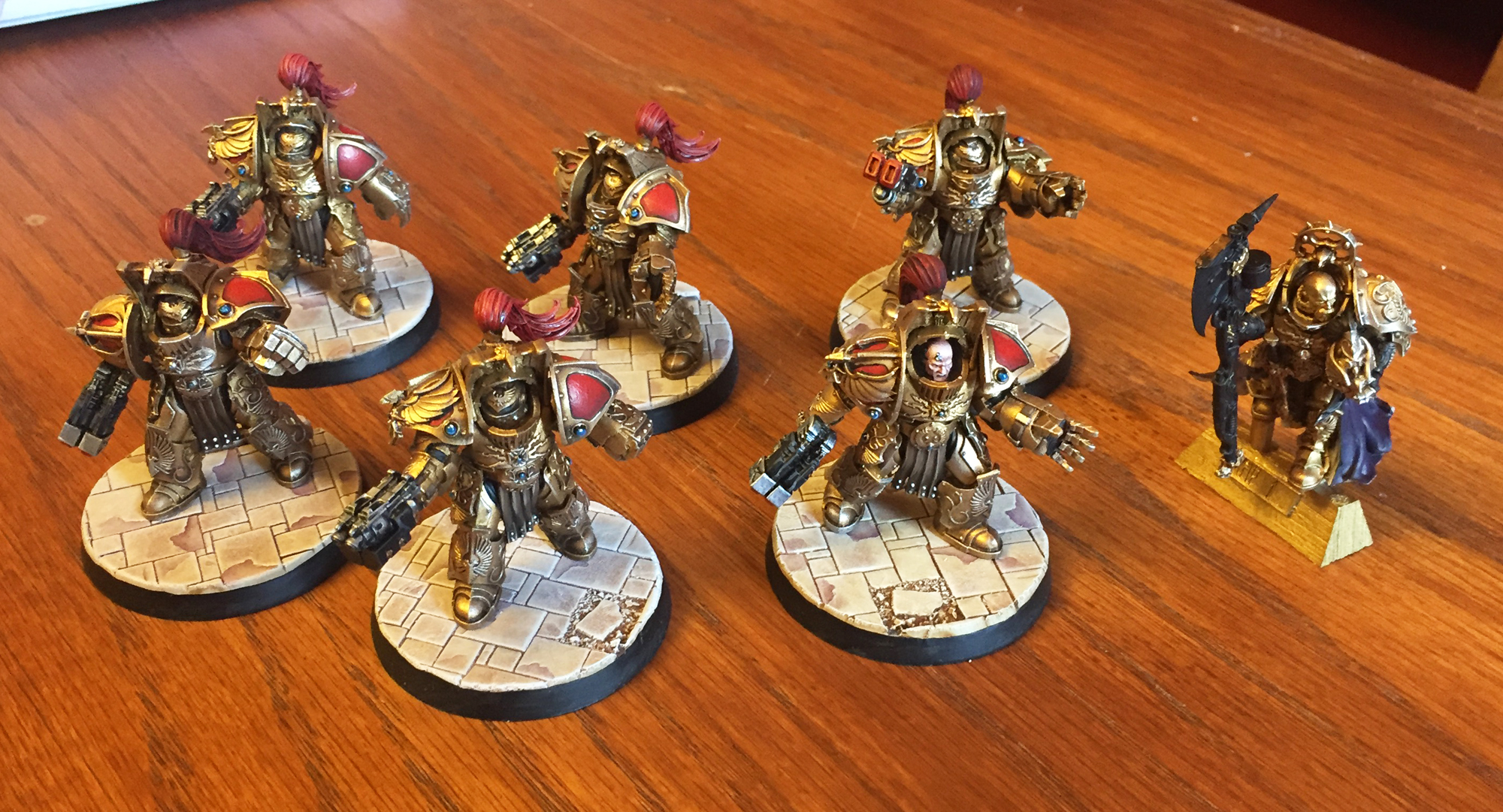
The idea is that you split your painting schedule into two elements: those you really enjoy painting, and those that you don’t. Once you know which is which and you have things plotted out, you can feel a great sense of accomplishment by finishing up a unit (typically) and reward yourself by relaxing with a nice tank or commander model. Some people, as I mentioned earlier, relax by sitting back with a good quality scotch instead.
Encouragement & Education From Peers
While I use variations of the previous methods all the time, my favourite motivating force comes from the encouragement of my peers. Back in the grim, dark days before the Internet - and our ready access to thousands of different ways to connect with complete strangers – it could be tough to find those who could teach us more about our painting in a positive way.

Thankfully, we don’t have to go through that anymore. It’s very easy for us to post photos of our work and ask for feedback. If we’ve asked in the right places (like the BOW forums), we’ll typically receive some great ideas and encouragement. Over time, we’ll develop a great core of trusted confidantes and mentors, and it is to them we’ll turn first when we start to struggle and feel that motivation slipping. If you are lucky, this group are local, and you can engage in regular “paint nights” together, feedback is immediate and encouragement abounds.
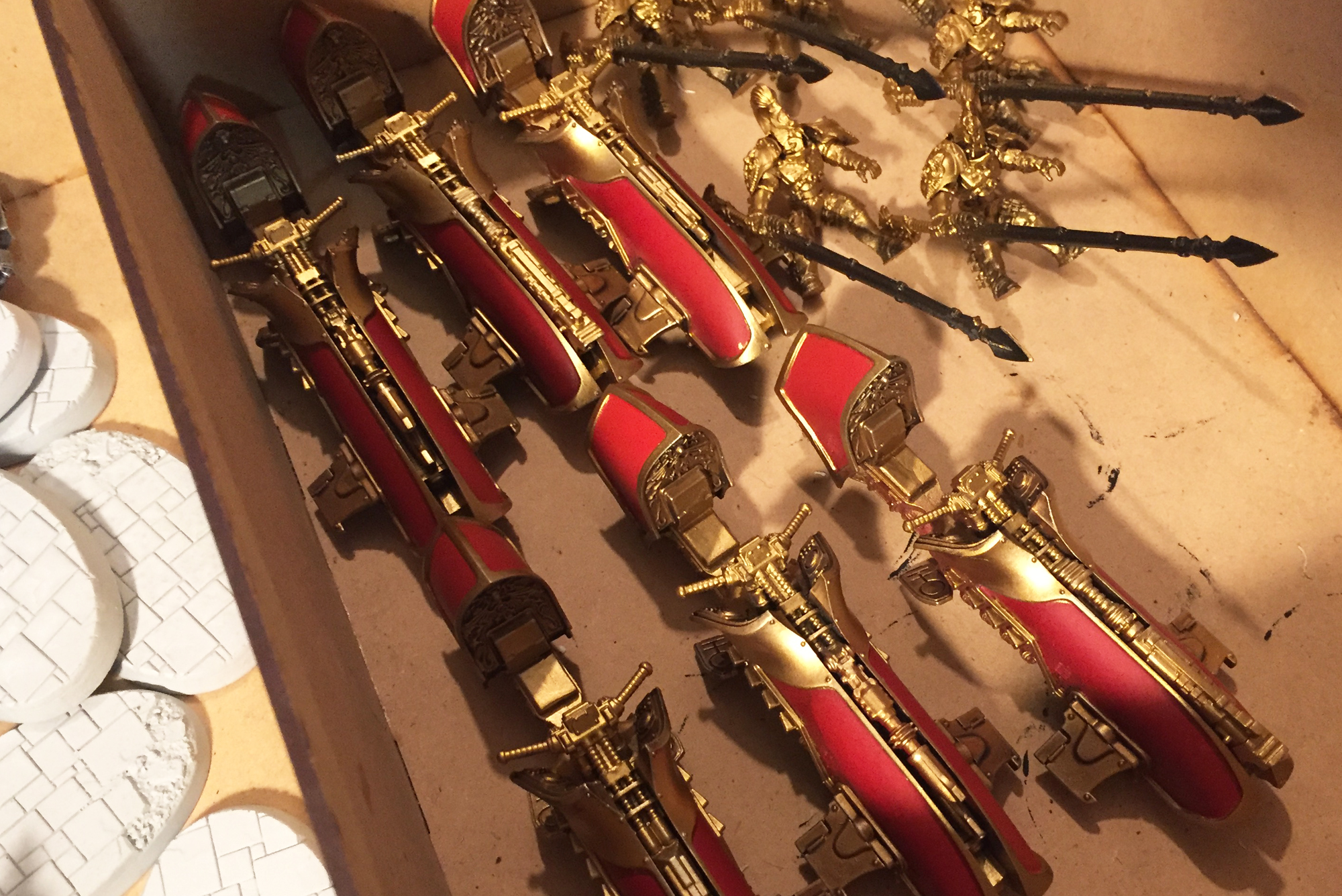
However, these folks perhaps don’t live nearby. I that case you can turn to tools like Skype and Google Hangouts to connect with other enthusiastic hobbyists all over the world. Groups like The Hobby Hangout on Facebook mean that you can almost always jump in on a conversation about modelling and painting from anywhere in the world.
There you have it. These appear to be the most common methods that people use to stay motivated and keep their big projects rolling along, setting themselves up for success.
What other methods do you use to keep you on track to complete a big project?
"For many people who paint large armies, or lots of models at once in a production line style, painting becomes a very automatic action..."
Supported by (Turn Off)

Supported by (Turn Off)
"Some people, as I mentioned earlier, relax by sitting back with a good quality scotch instead..."
Supported by (Turn Off)



Breaking the project up into bite size chunks that show my progress on the shelf.
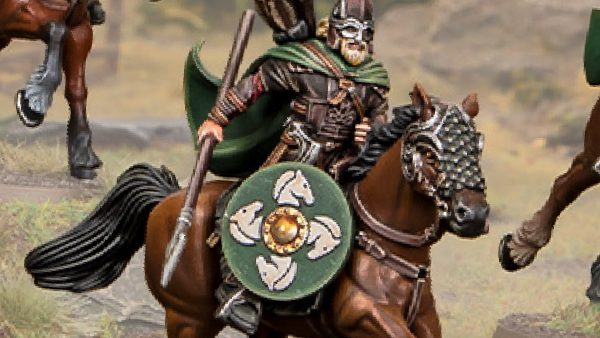
So for War of the Ring, which fields large quantities of LOTR figures I focus on one company at time 8 figures. If the formation has 5 companies in it I might get two companies done and then move onto a different formation’s companies to keep me from getting bored. Example I had two formation of 40 Uruk Hai warriors each and one formation of 72 orcs, one formation of 24 uruk Scouts and four trolls etc… doing a couple companies out of one formation before switching helped me stay fresh.
I am going to try to work up an excel spreadsheet like you showed us previously Dave for my current Rohan project. Although I’m not the best with excel. Think that will help too!
I like games that have manageable and obvious “chunks” of troops, like War of The Ring. Working on 8 at a time is a great number for any of those infantry models.
In these days (last 3 months) my motivation has dropped…. below 0, i have 8 cultist from silver tower going on for… 2 months at least…. something i could do in a week with ease….
Hopefully you’ve moved on to painting something else. Put the cultists aside for the moment. Come back to them once you have rebuilt your motivation for the project.
Sorry to say it but… no; haven’t painted anything else…. and i can’t stop myself from buying more stuff!
I’m not a fan of painting, but I enjoy looking at painted models in my cabinet and in my games. If I want to use my shiny new model I have to get it painted otherwise I tell myself I can’t use it. To the extent I’ve been up late the night before a game getting a squad or unit painted up lol. Also, I tend to not worry about how others paint their miniatures, I paint to my own standard that I’m happy with and that’s it, far too many people seem put off by others amazing paintjob’s.
Being happy with your own painting is very important. I know I’d like to get better and paint like a few of my friends do, but I am not ready to give up the large number of painted models I’d have to sacrifice for that.
I’ll be the first to admit, I struggle to get things finished and tend to wander from project to project. This used to worry me, until recently I made a conscious effort to not be stressed about it.
My typical approach these days is to get a force assembled, based and primed as a whole, so that I can play games with it, then add it to the five other projects I have on the go and switch between them as the mood takes me. Of course the key here (and something I need to work on) is to stop buying new things once I have several projects already on the go 😀
Absolutely concur, I’m almost virtually the same with projects. In the end its about having fun and not stressing about finishing it.
Agreed, and I think those things are what a lot of people should address when thinking about their expectations for a project.
Great series @davetaylor
Appreciate you sharing your insights, I am going to implement (tweak) a few of my processes based on your wisdom. My greatest issue to completion of hobby projects is available free time, so I need to optimise that time I do have to be more productive.
Cheers, UM40
@davetaylor just getting caught up on this article series, and it’s great stuff – thanks for putting it together. I’m presently between large projects so will aim to use some of the approaches and techniques you have suggested before settling in to my next task.
A couple of things which have been touched on in the series and a few other points which I thought I might mention for the benefit of anyone reading:
– Use the forums! Seriously, we are really fortunate to have an open, friendly and collegial community here. If you have a project you are working on, consider starting a hobby log page, or jump onto the WAYPN thread and post your progress. I have personally found setting micro-goals in the Hobby Weekender threads as a really good way to keep projects turning over. Similarly, if you are keen to try out a new technique, or would like help with something, there are community members who are only too willing to share their wisdom.
– Work out what tasks can be done outside of dedicated hobby time to maximise your actual hobby time. I have a friend who can sit in front of the TV with a stack of sprues, clippers, a file and glue and by the end of the DVD he is watching he will have parts for dozens of models all cut, cleaned and assembled. By doing this after work during the week, his valuable hobby time on weekends can be more efficiently applied to painting.
– Knowing your weaknesses and work to minimise the impact they will have on your efficiency. I really struggle with basing minis once they have been painted up. I just can’t seem to get motivated to do it. So knowing this I have recently run a test with a small warband where I started with building up the bases, and then affixed the mini and primed from there. Results looked much better on the finished model and I was happier to complete the basing as it was less work at the end of the project – consequently I will adopt this approach moving forward. Similarly, I struggle with realistic skin tones. So while I am working on improving my skills in this area, for the time being I will tend to avoid big projects which require large amounts of skin tones to be painted.
– Setting a realistic standard for the painting of your army. If you are keen to get something down on the tabletop quickly then don’t feel guilty about starting with three or 4 colours or using the army painter method. You can always go back and touch up later. Just because you can paint to a higher standard doesn’t mean it is always necessary. Also, if you are painting an army quickly, don’t feel that you shouldn’t be allowed to spend a little extra time with centerpiece models, commanders or elite units. If you are planning this then budget some extra time in to your schedule. And always front-load your schedule if working to a deadline 😉
– Slow-growing an army. If you aren’t putting together a large army for a tournament with a fixed timeframe, try just putting together the smallest legal army you can field (ie maybe a couple of regular units of troops and a single commander) and then slowly increase the points limit at which you are playing games by adding in another unit here or there.
– Terrain. If you are getting in on a new gaming system, new faction or new genre don’t forget that time spent building/assembling/painting new terrain to game on or over might also need to factor into your hobby time equation…
Sorry, that was a bit of a rant… Just my .02…