








![NO Weekender Or Cult Of Games XLBS This Weekend [Updated]](https://images.beastsofwar.com/2026/03/No_Weekender_and_XLBS_this_Weekend-225-127.jpg)





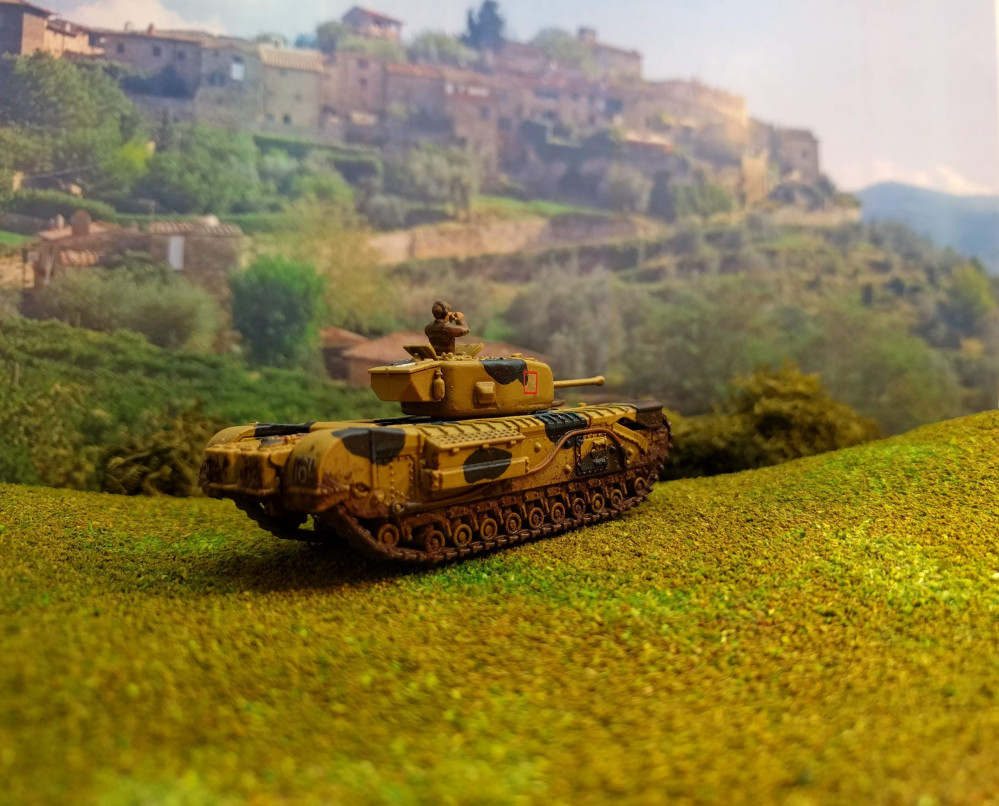
75th Anniversary of Battle of Monte Cassino and Northern Italy (Terrain Build)




Recommendations: 440
About the Project
Firstly, I’m aware that the 75th Anniversary for the first Battle of Monte Cassino is 12th January 2019 however, this project is about preparing for some of the games that I’m thinking about running. I’m a slow painter, so I need plenty of time to prepare! In this project, I will look at building the terrain that I will need for the battles. I have another project looking at the forces that I need to build and paint to better re-create those involved.
Related Game: Flames of War: The World War II Miniatures Game
Related Genre: Historical
This Project is Active
Trenches - Finished
I’ve now completed the trenches!
Following the base paint step, I gave the wood and sandbags a brush on dip layer to give some shade and to protect the paint. Once dry, I gave the whole thing a dry brush of wych flesh.
I gently brushed some black pigment powder into the craters to create a burnt, blast effect and then started flocking. I’ve used three separate flocks and clump foliage for the bases. Once this was applied, I sprayed the whole thing with watered down PVA to seal it in and then brushed on a matt varnish to the wood and sand bags to remove any shine form the glue. All done!
 One of the trench line with a crater
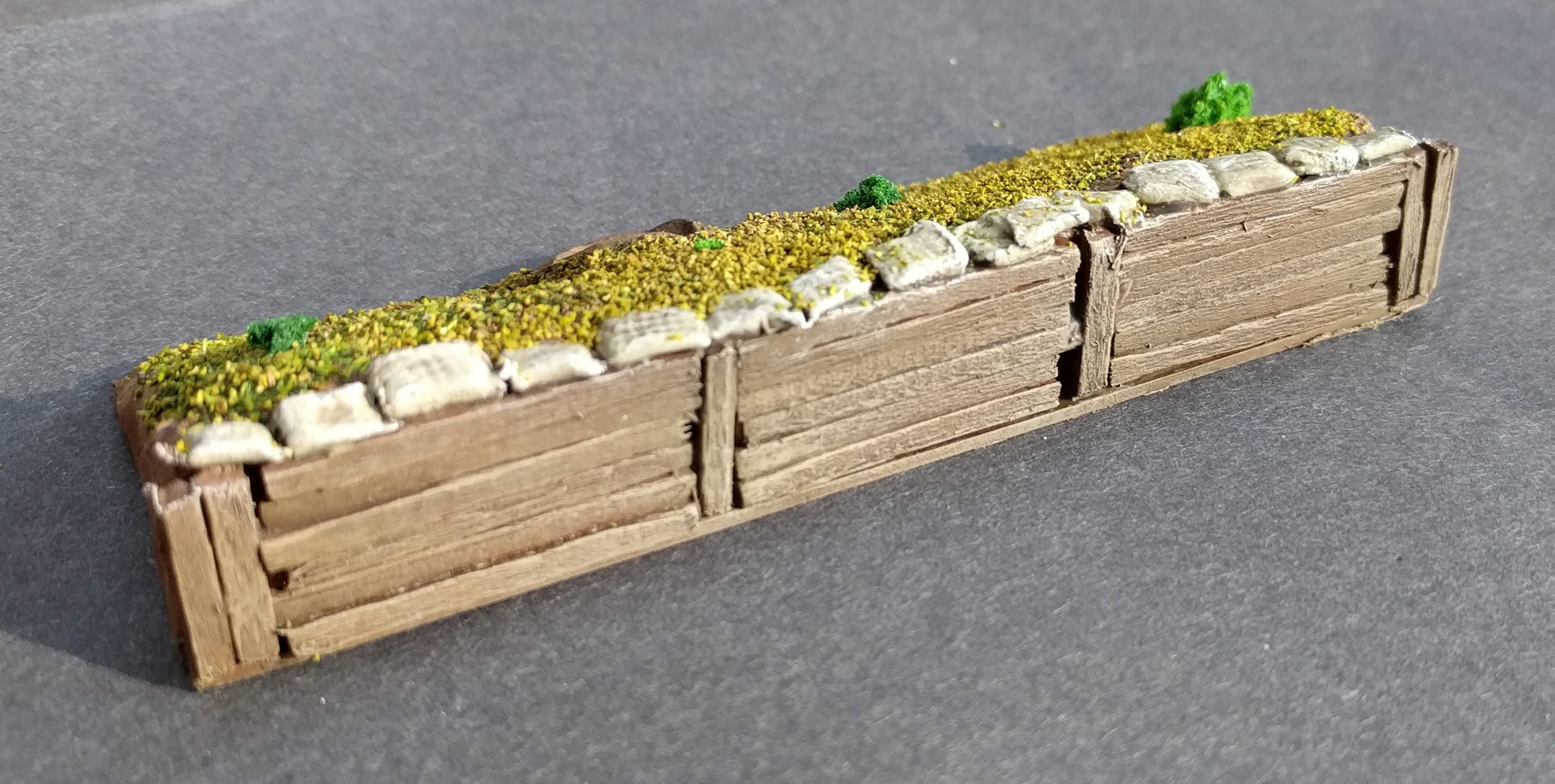 The reverse side with the wooden retaining walls
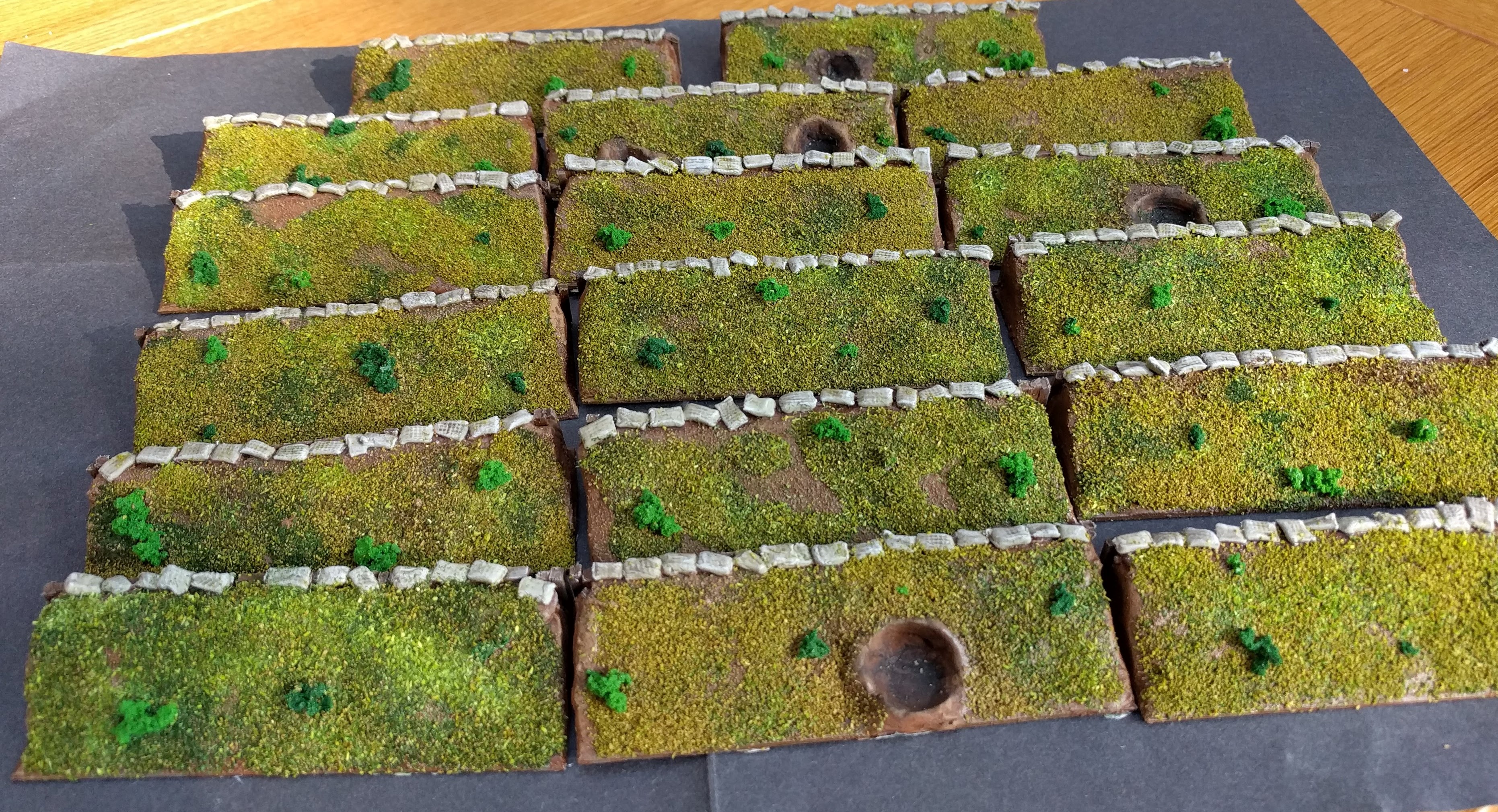 All of the completed pieces - 17 in total or 68" in game terms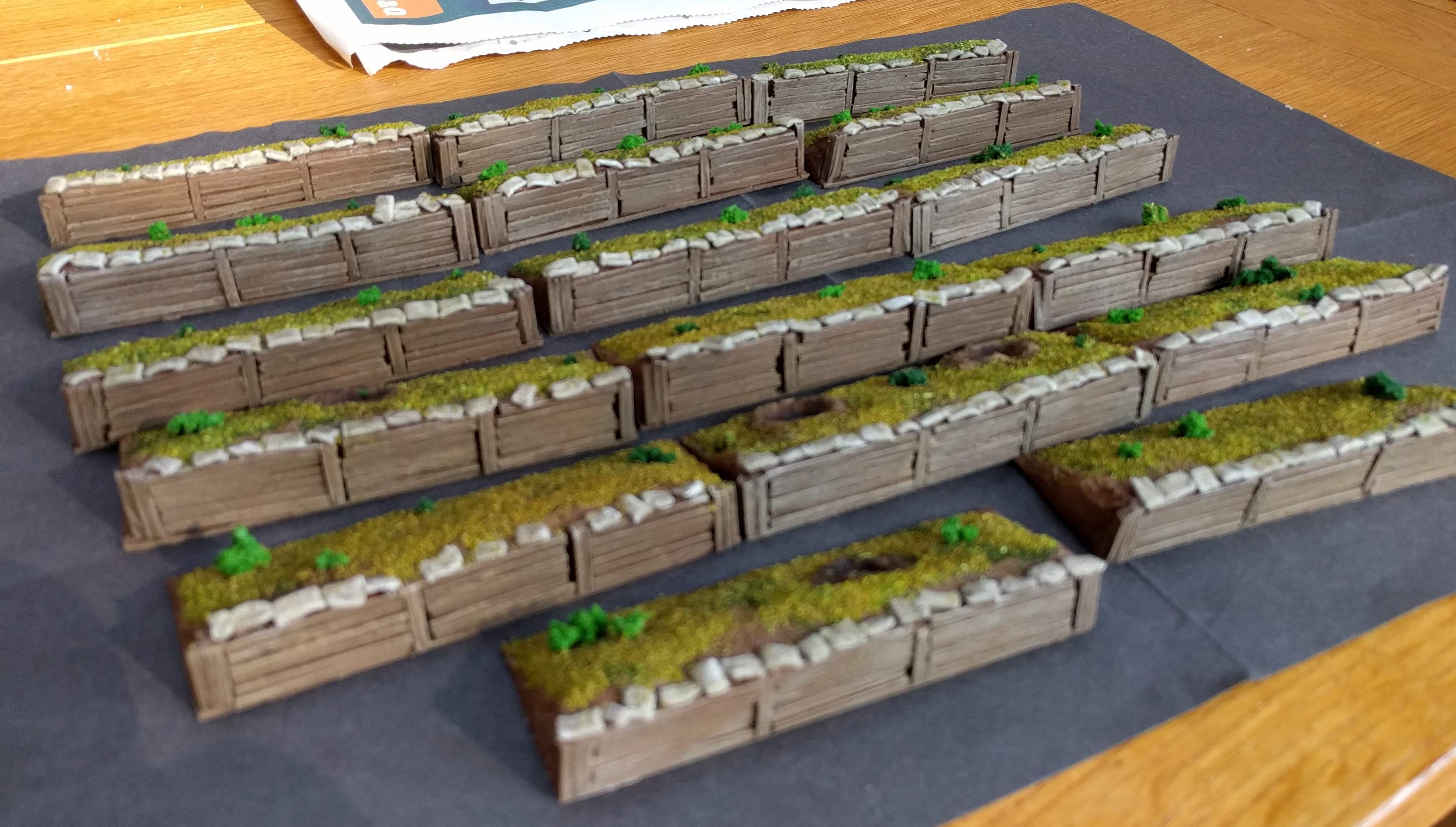
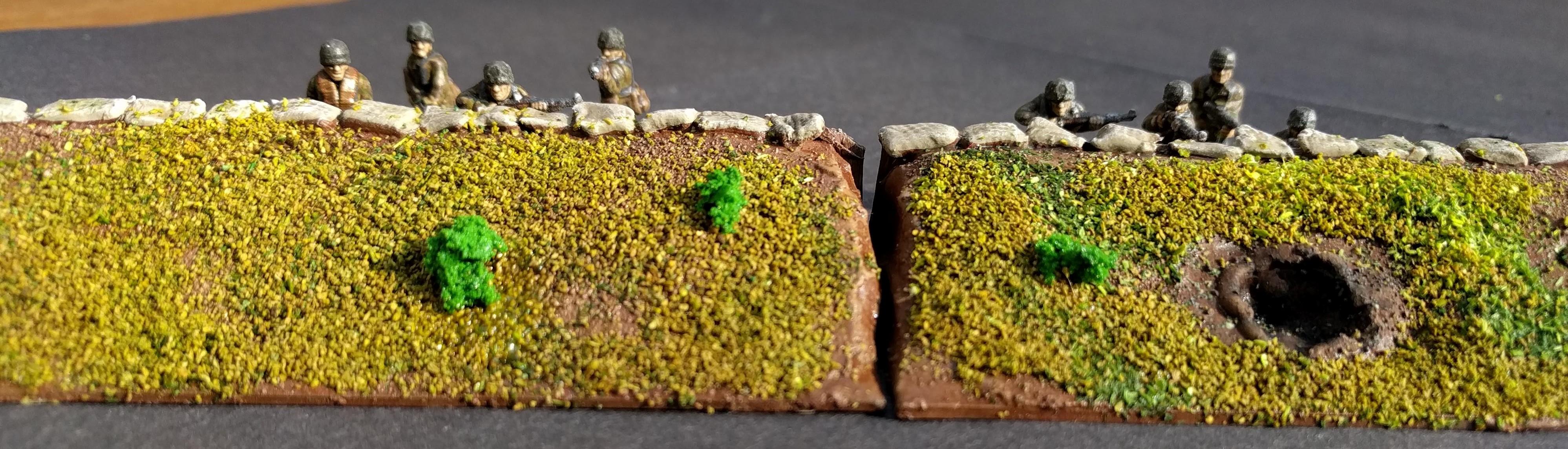 And for scale, with some German defenders
Trenches - First paint
Now time to get some paint down on the trenches. Given the mix of materials, I’ve decided to apply a grey primer first to everything. Once dry, I opted for a watered down dark brown. I’ve applied this to the whole model, including sand bags and wooden retaining wall.
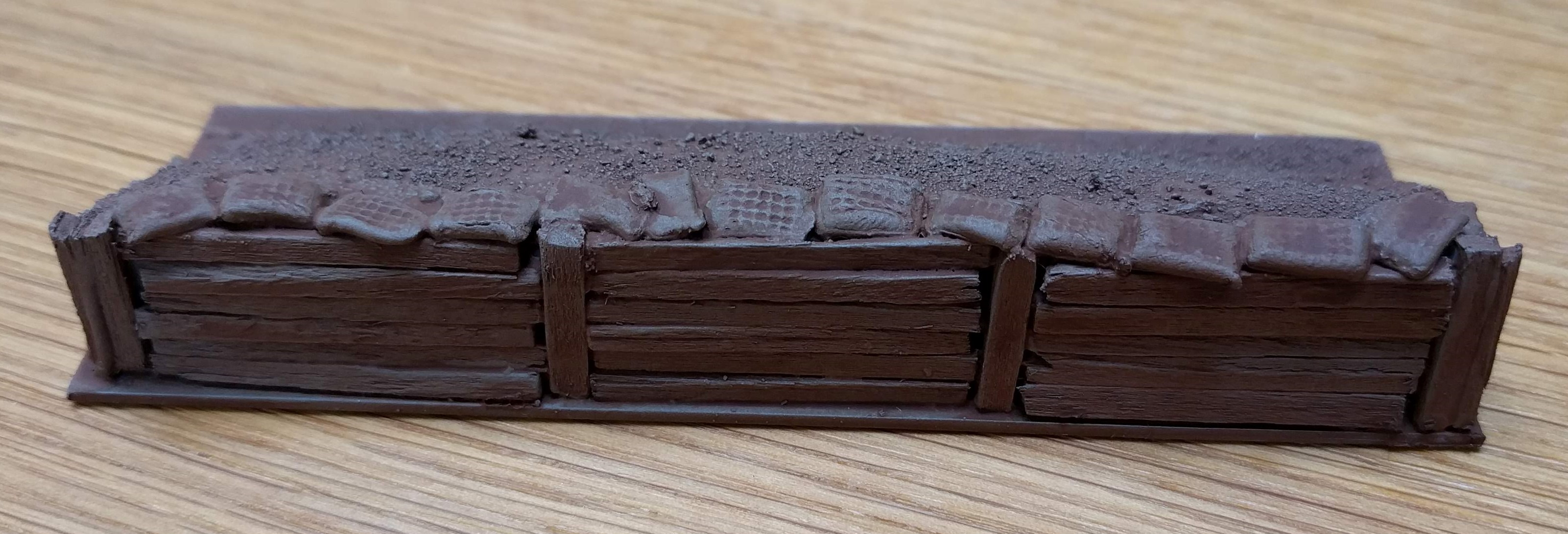 The grey primer is still just a little visible, which I quite like for this banking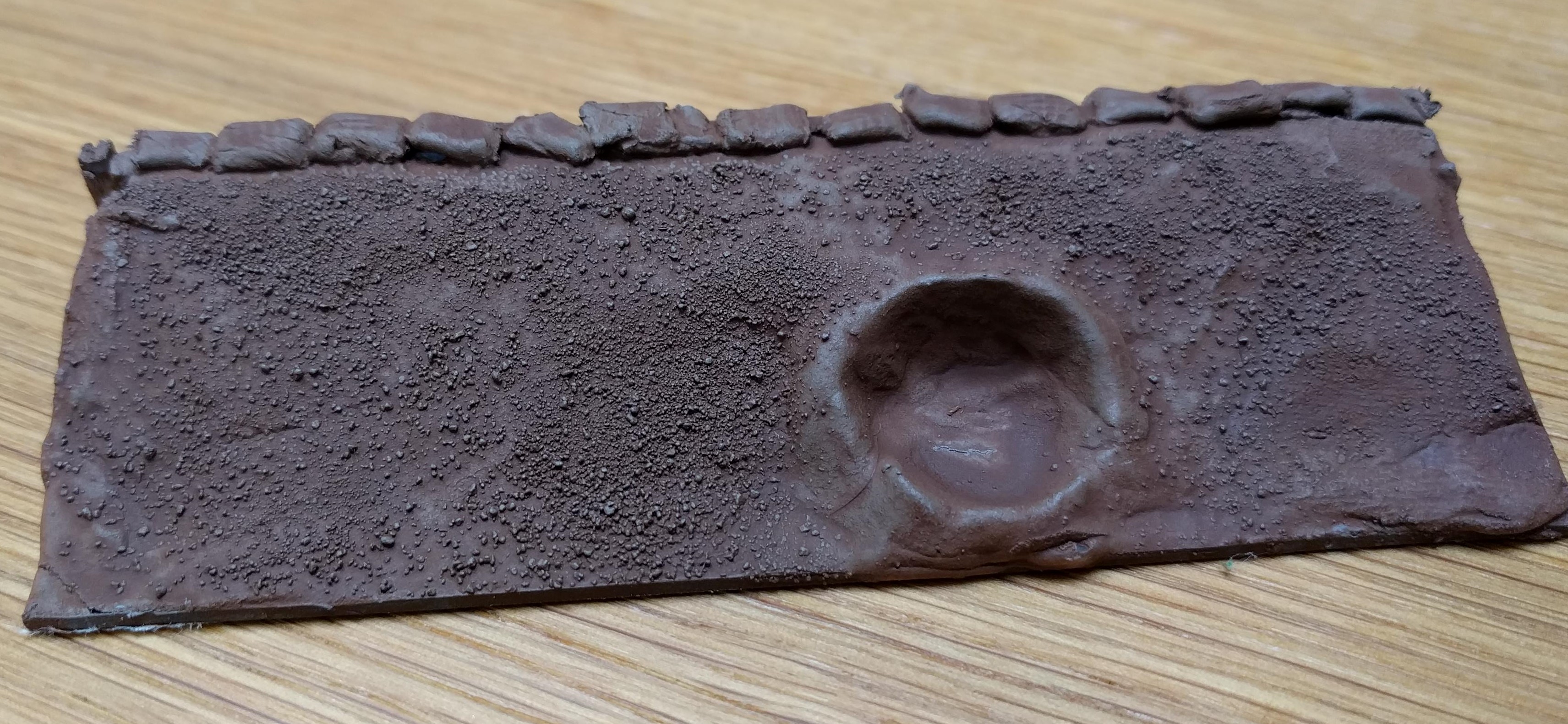
It took a couple of coats to get a good cover of the brown. Next I applied a dry brush of stone grey. I wanted to just pick out the highest parts of the banking. I also found that this colour worked well on the wood as well.
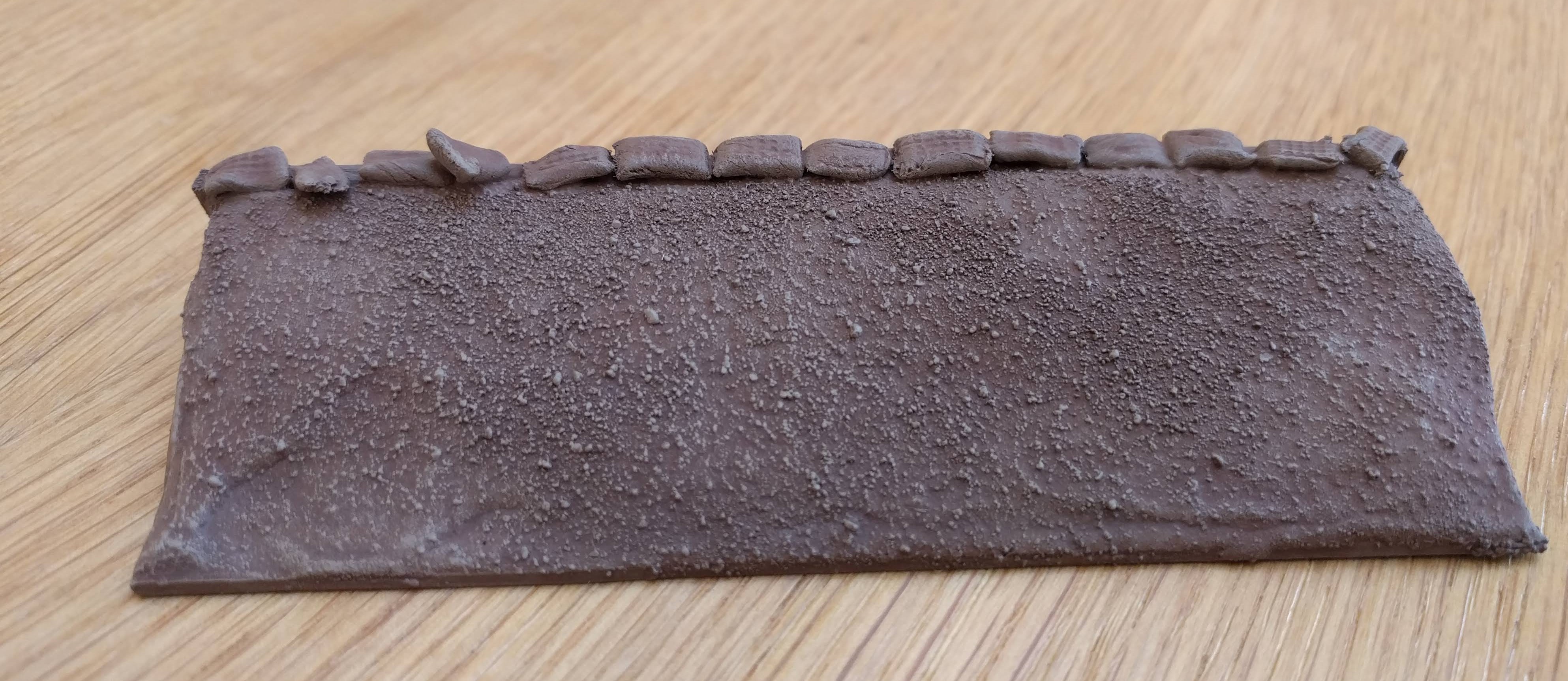 Just a light dry brush
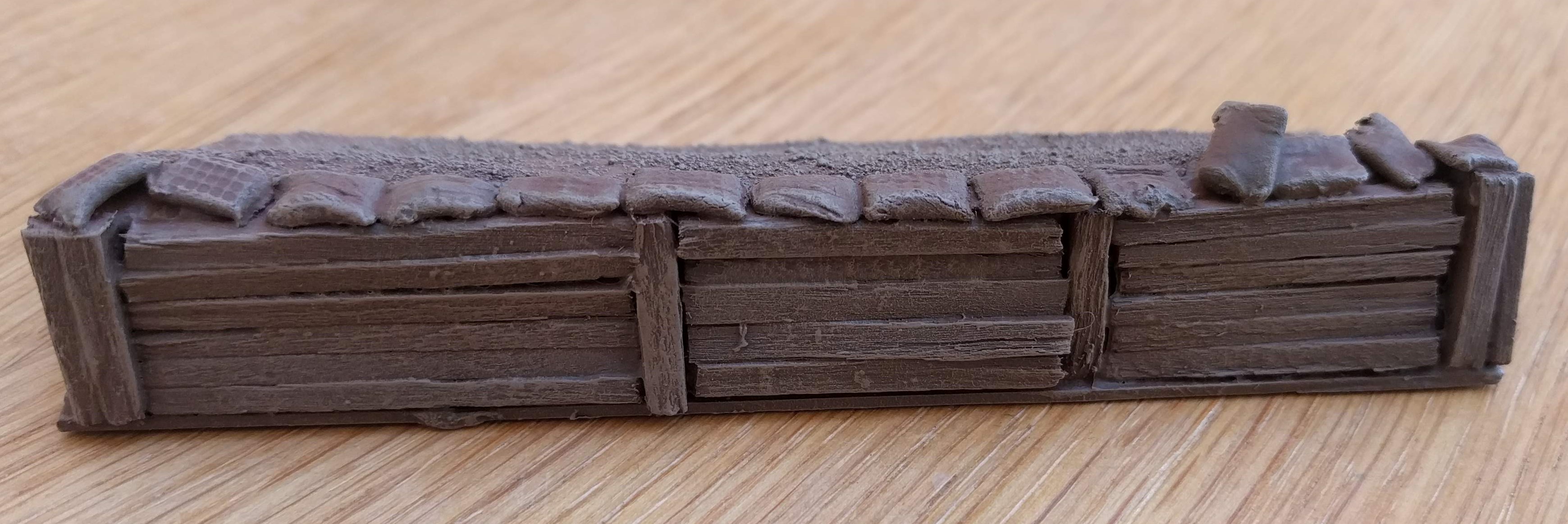 I've given the wood a slightly heavier dry brush
I really want the sandbags to stand out, so I’ve decided to paint them a colour lighter than they probably would have been – perhaps the Italian sun has bleached them? Stone grey was to hand and seemed suitable
I’ve also noticed that the lighting between the photo below and those above is different. It is the same, honest!
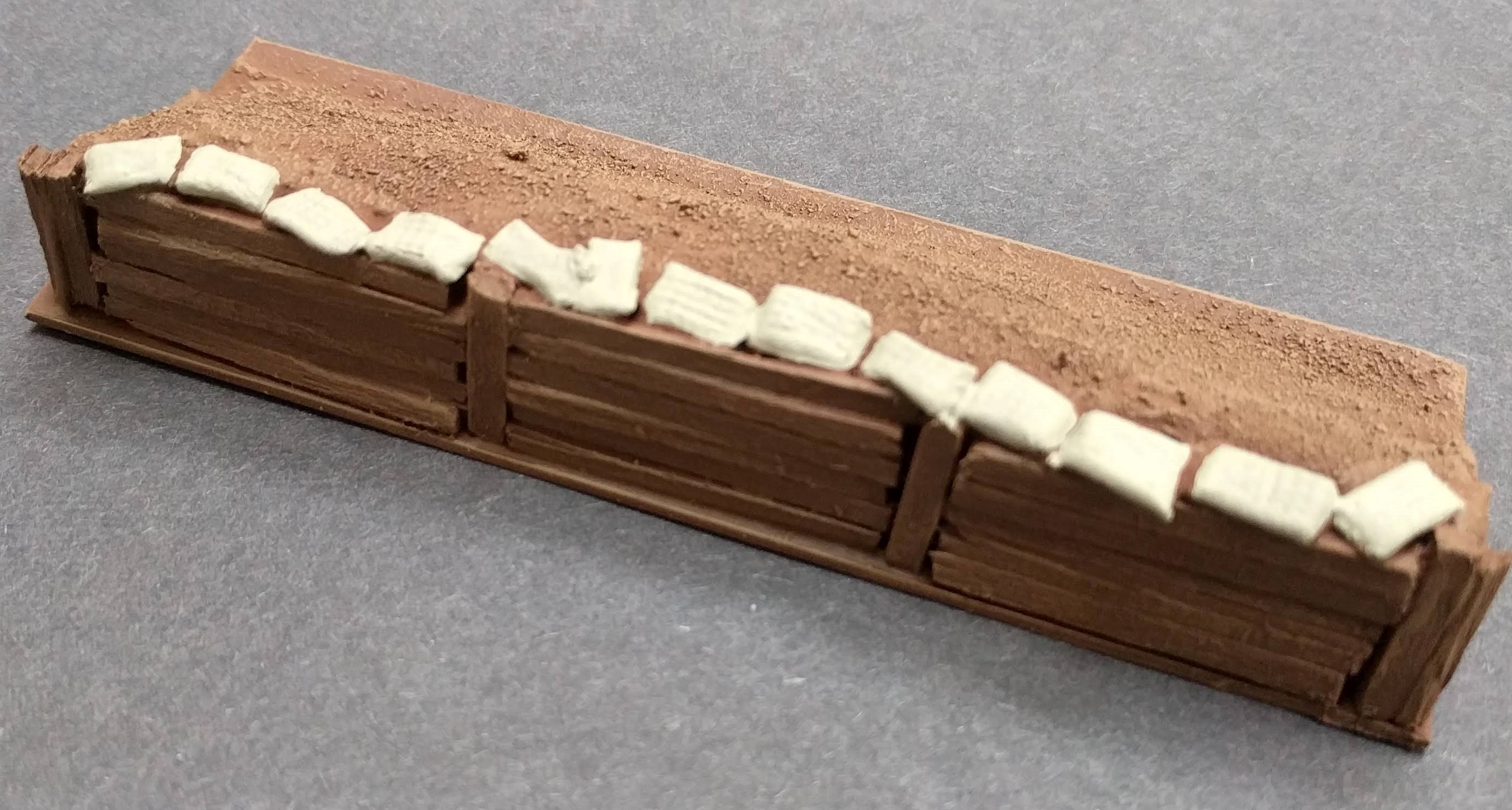 Sandbags now painted up
I won’t take the earth any further than this. I plan to flock a lot of it, so most of it will be covered.
I need to apply a wash to the sandbags and wooden retaining wall which will probably be a brushed on dip. This will hopefully have the added effect of securing them to the model and protecting them.
Trenches - Sandbagging
I thought I would add some more detail and contrast to the trenches by lining the top of the wooden retaining walls with sandbags. This was somewhat inspired by the Bolt Action boot camp and I’ve used a similar method.
Having done a tiny bit of research, roughly a sandbag in 15mm scale should be around 4mm wide and about 6 to 8mm long. This is obviously quite small and tricky to get right but if I can get close, I think it will be good enough.
I’m going to use Das modelling clay and roll out long sausages to about a diameter of 2mm. I then gently squash these between two kitchen chopping boards. This has the benefit of adding some texture to the sandbags as well!
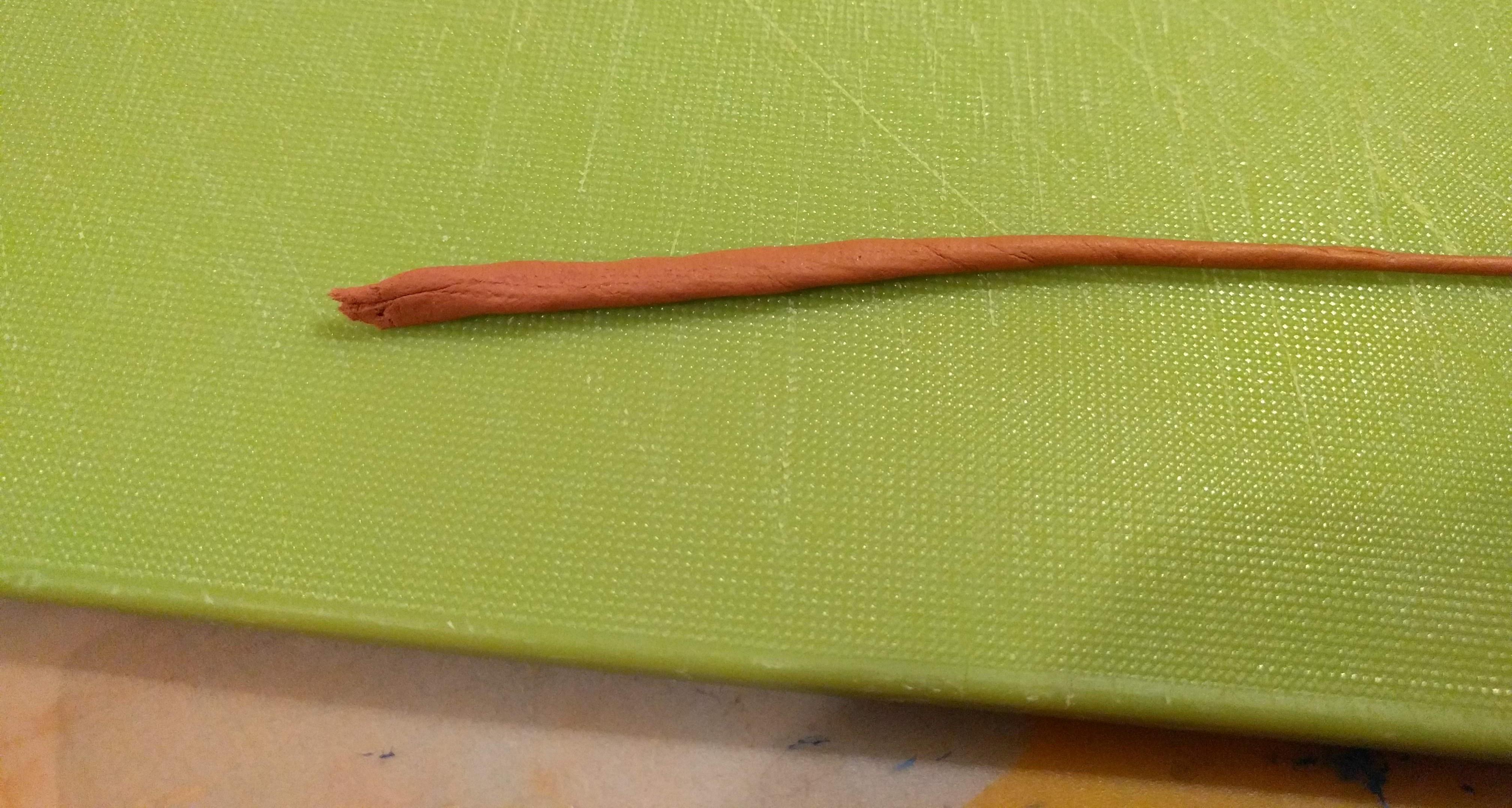 Rolling the clay sausage on the chopping board
Once squashed, using a ruler and a sharp modelling knife, I’ve cut the sausage into 6mm lengths. I’ve then left these to dry.
I tried creating some variation by stacking a few sandbags or arranging them together in different ways while still wet. If I’m honest though, this was very fiddly and I lost patience quite quickly!
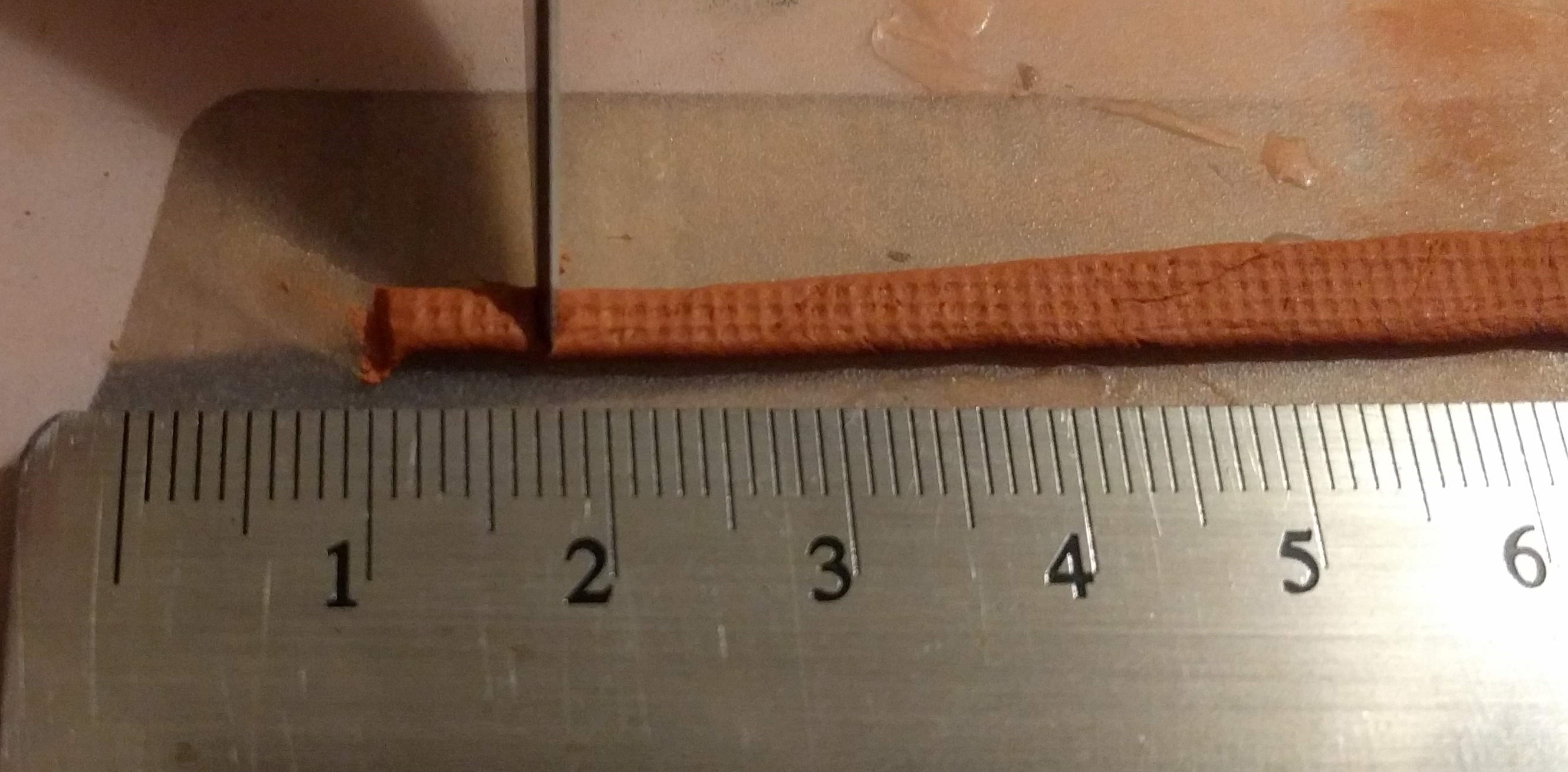 Chopping the sand bags up
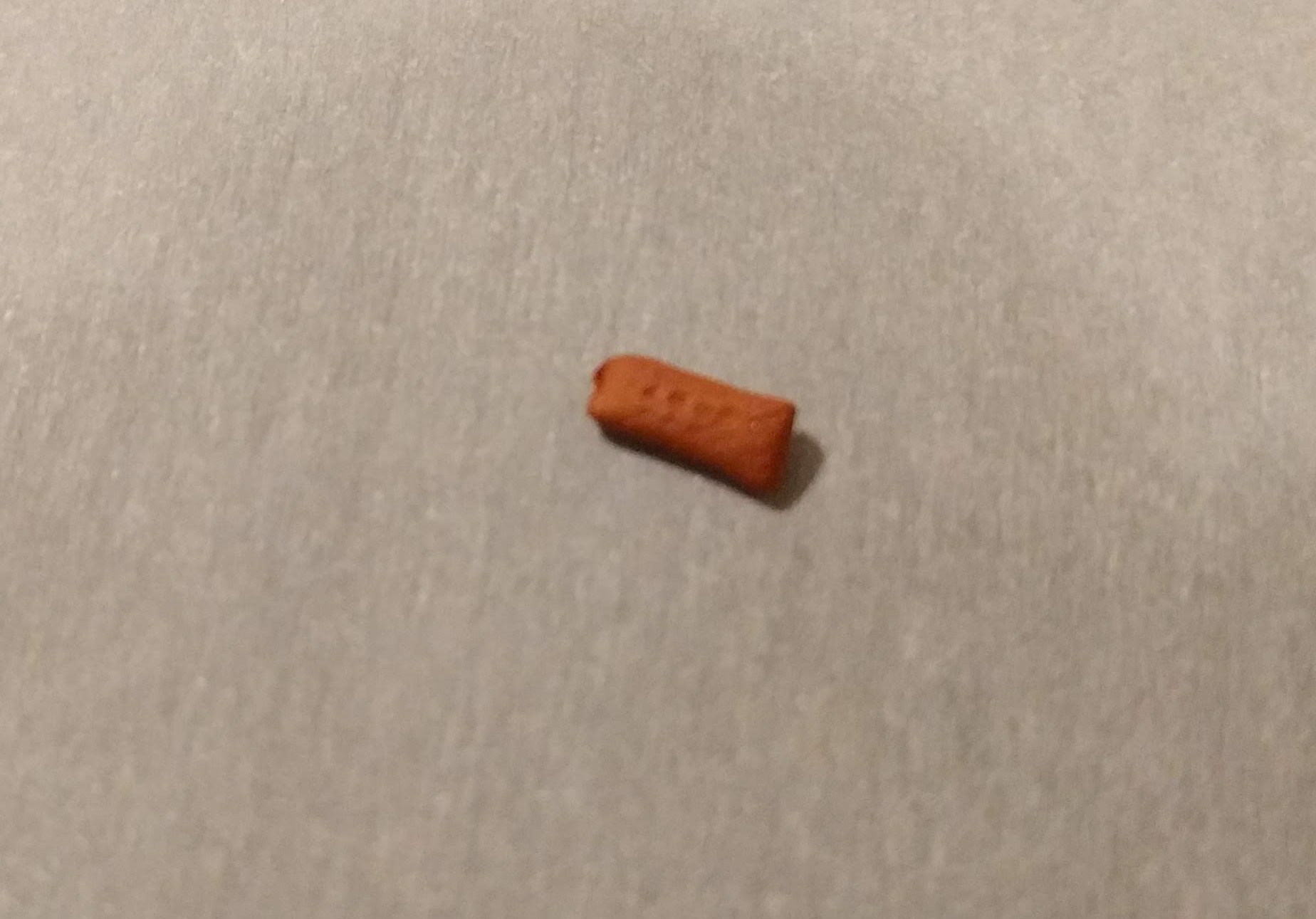 A completed sandbag, ready for drying - note the texture from the chopping board
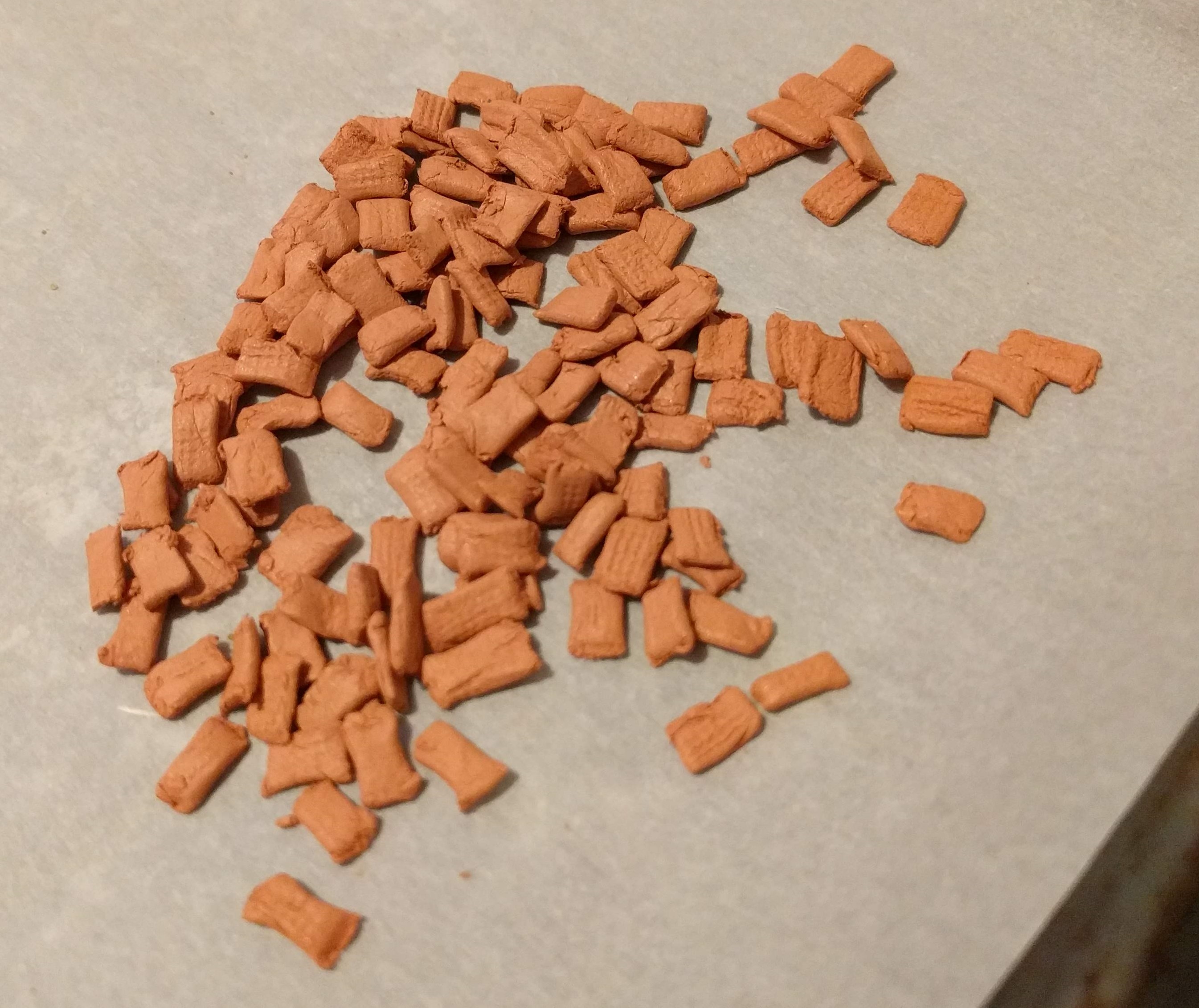 Once dry, they are ready for attaching to the trenches
Left overnight to dry, I attached the sandbags along the top of the trenches using a lot of super glue. Once this was all dry, I then sprayed the whole piece with watered down PVA. This was partly to give the sand bags some more adhesion but also to fix down the sand that I had applied to the Polyfilla in the previous entry on this project. Once dry, this will be ready for priming and painting.
 With the sand bags attached
Trenches - Retaining Walls
Now that the polyfilla is dry, I want to build a more realistic ‘inside’ of the trench. I’m assuming that the earth needs some sort of retaining wall and that the easiest solution would be wooden planks.
To start with, I’ve sanded the vertical face of the trench as flat as possible. I only applied a thin polyfilla layer here just to cover any cracks/holes and to provide a solid surface for the glue to adhere to.
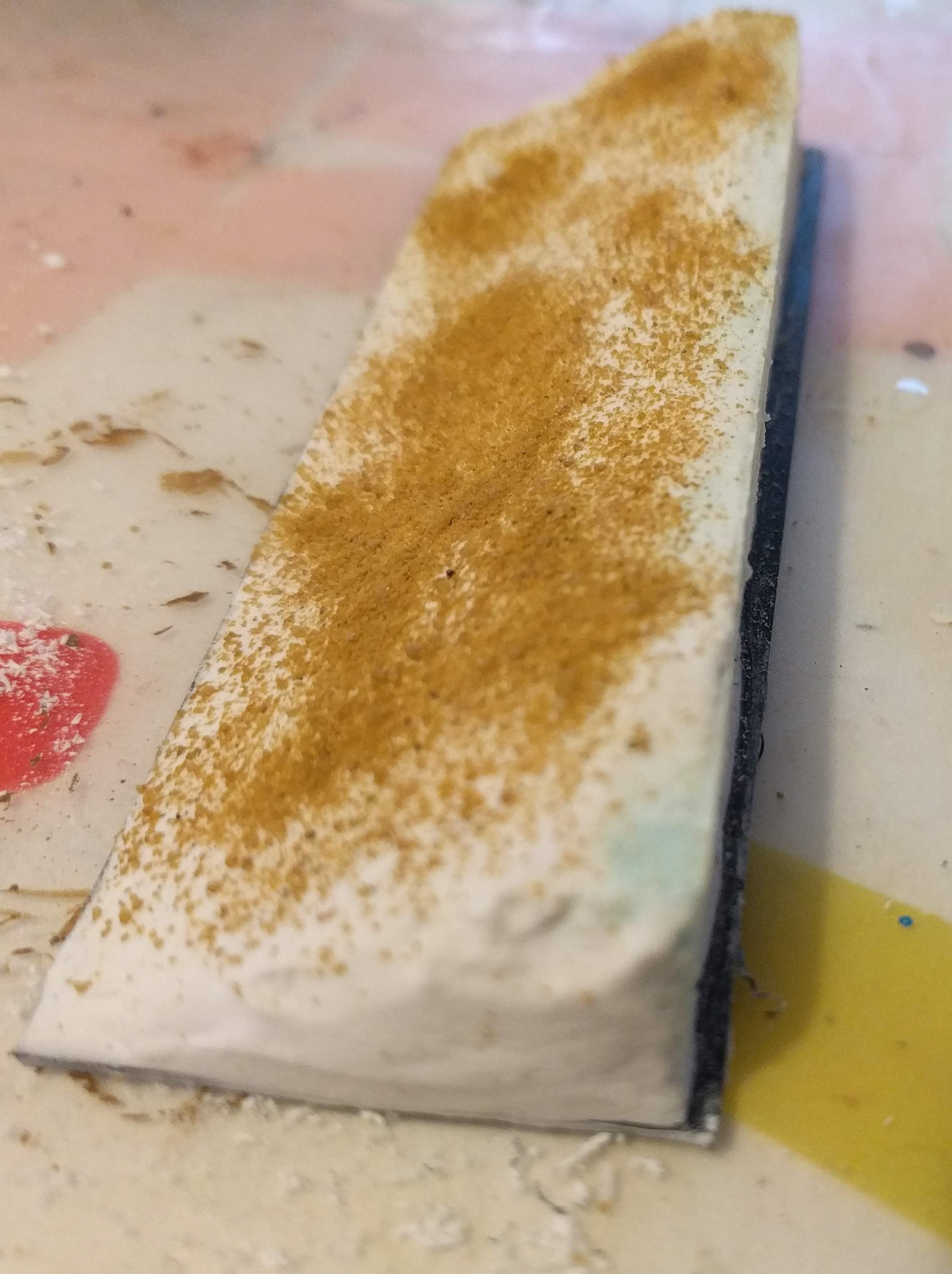 Example of the sanded, flat surface
 Matchsticks seem the obvious option for creating a simple, cheap but effective wooden retaining wall. I’ve started by cutting the uprights. These are the height of the trench and I’ve placed one upright roughly every inch along. I’ve glued these down with super glue to ensure a good fix.


As the uprights aren’t religiously 1″ apart, I need to cut the cross beams to size for each section. I found doing this first the best option. I’ve then filled the gaps where the cross beams will go with plenty of PVA.

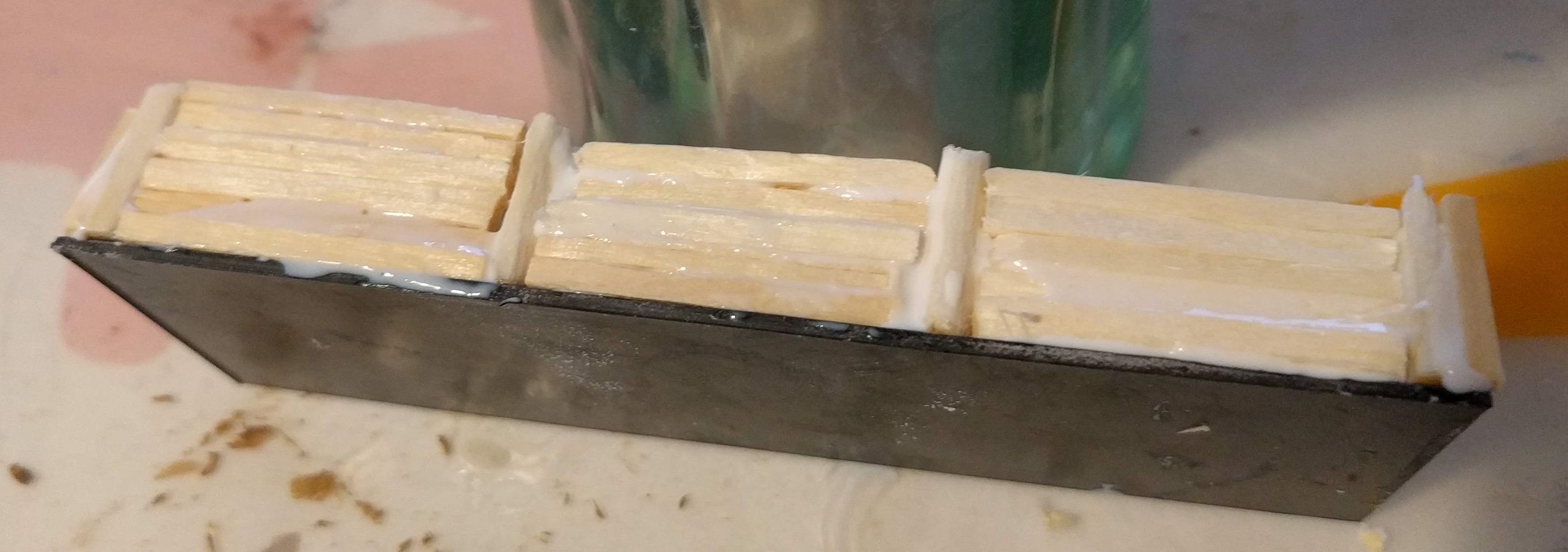 All the wood glued in place
It took a while to complete all of the trench sections but I think it will look worthwhile once all painted up. I think I will take it a step further and add some sandbags along the top. This will add to the overall look as well as hide the join between the matchsticks and the rest of the trench banking.
 Some of the completed trench sections (I'll clip the longer uprights off later)
Trenches - Applying the basing material
Managed to get some more hobby time over the weekend so worked some more on the trenches. I’ve now applied the basing material and did so using polyfilla.
I’ve started by applying a liberal amount over the sloped area of foam to create a bank. From there, I’ve used my trusty index finger with water to smooth down the polyfilla and then sprinkled sand over the top for texture.
I’ve tried to keep the ends of the trenches square so that they will butt up next to each other neatly when on the table.
 Liberal polyfilla
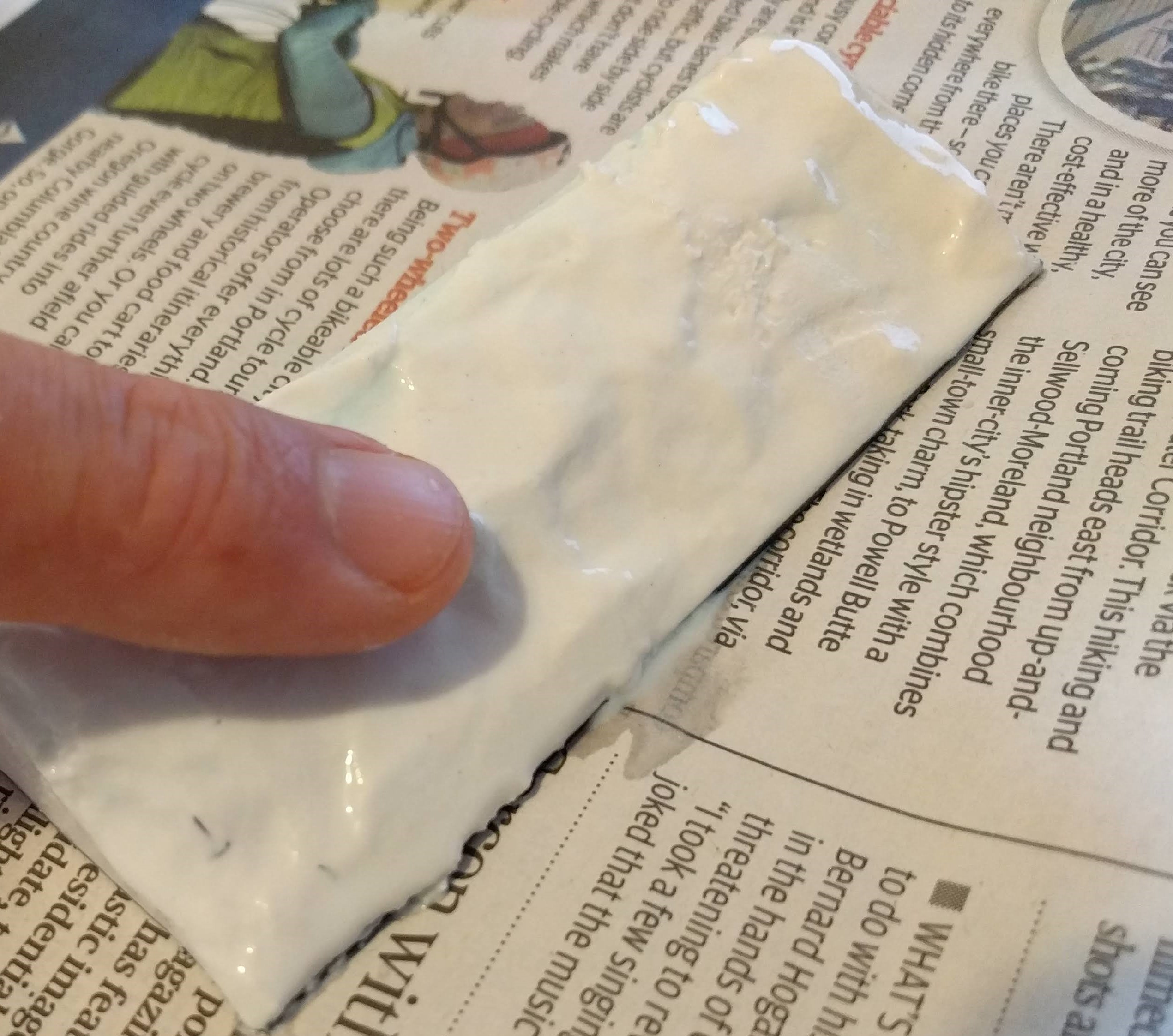 My trusty finger at work
 Sanded and with squared off ends (or as square as you can make wet polyfilla)
To make the craters, I applied a small amount of poyfilla into the hole that was cut in the foam during the last stage – just enough to cover the foam.
Taking small amounts of filla, I rolled these into sausages using my hand. I found that rolling them out on newspaper helps remove the moisture from them and keeps them together.
Arrange the sausage around the hole (oo-er) and using your trusty finger wet with water, soften the sausage into a crater edge shape. Once done, I’ve sanded except in the crater as I’ve assumed that whatever created the crater probably blew most of the debris out.
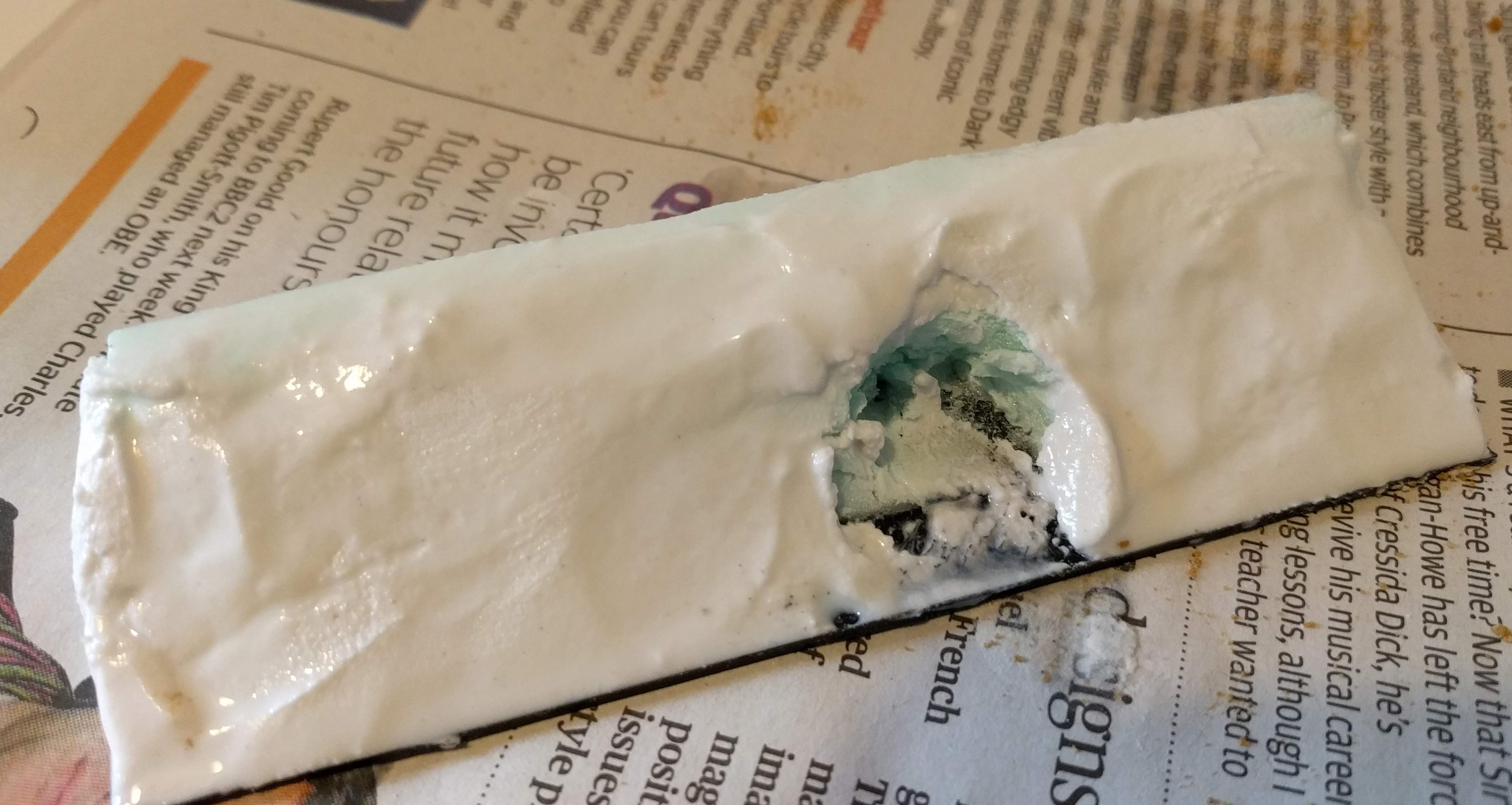 Everything covered except the crater
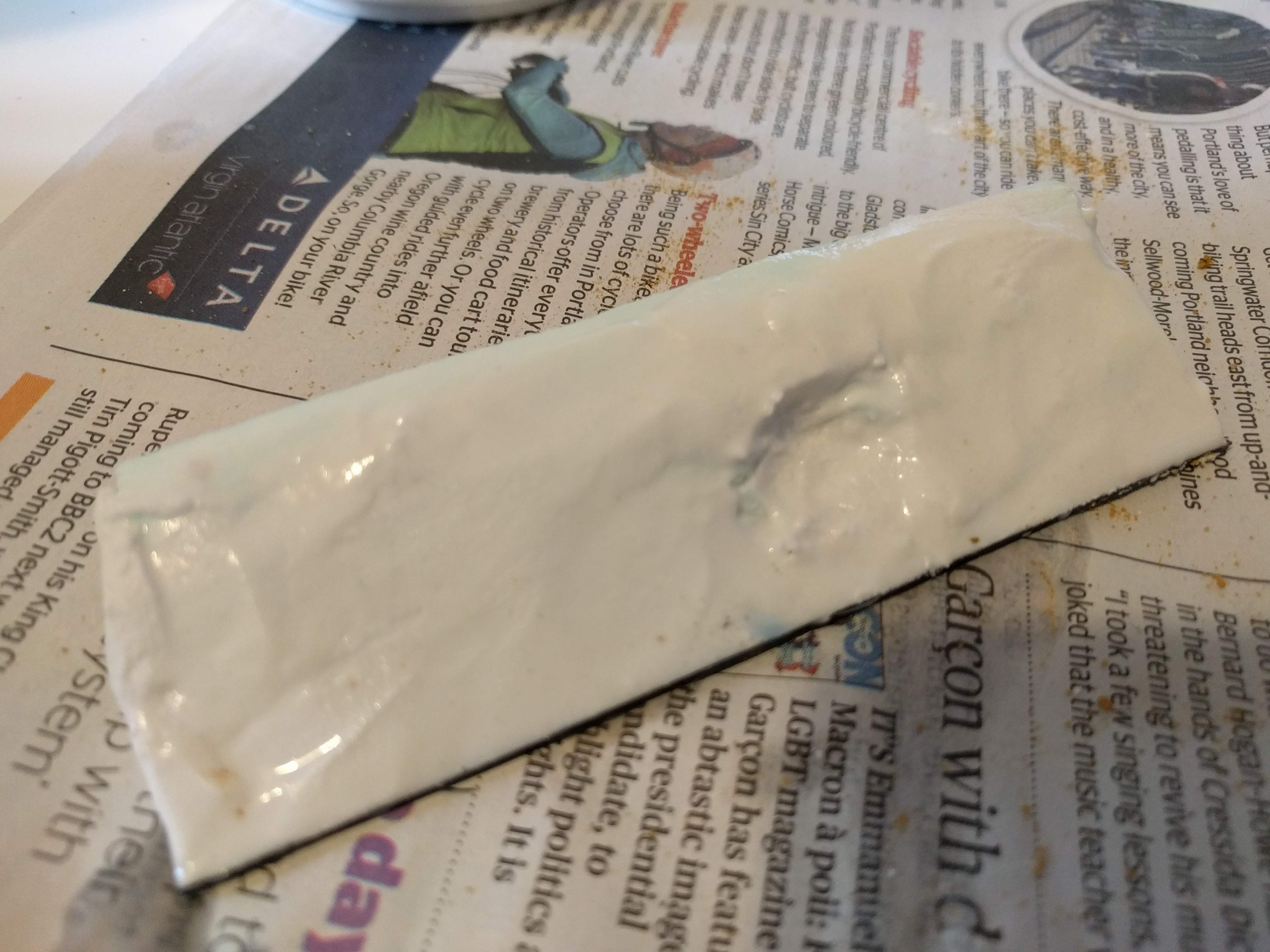 Crater lightly filled with filla
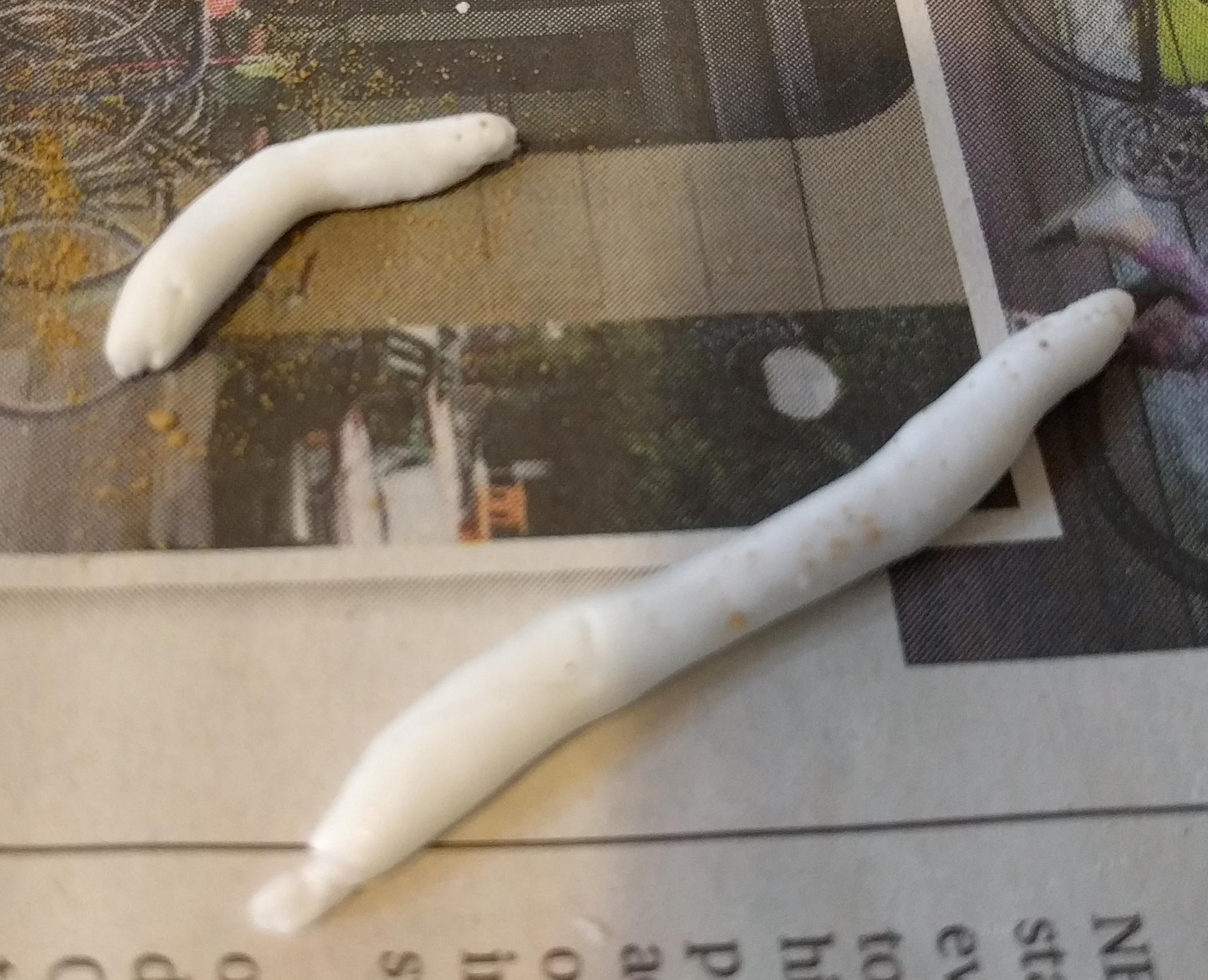 Making sausages
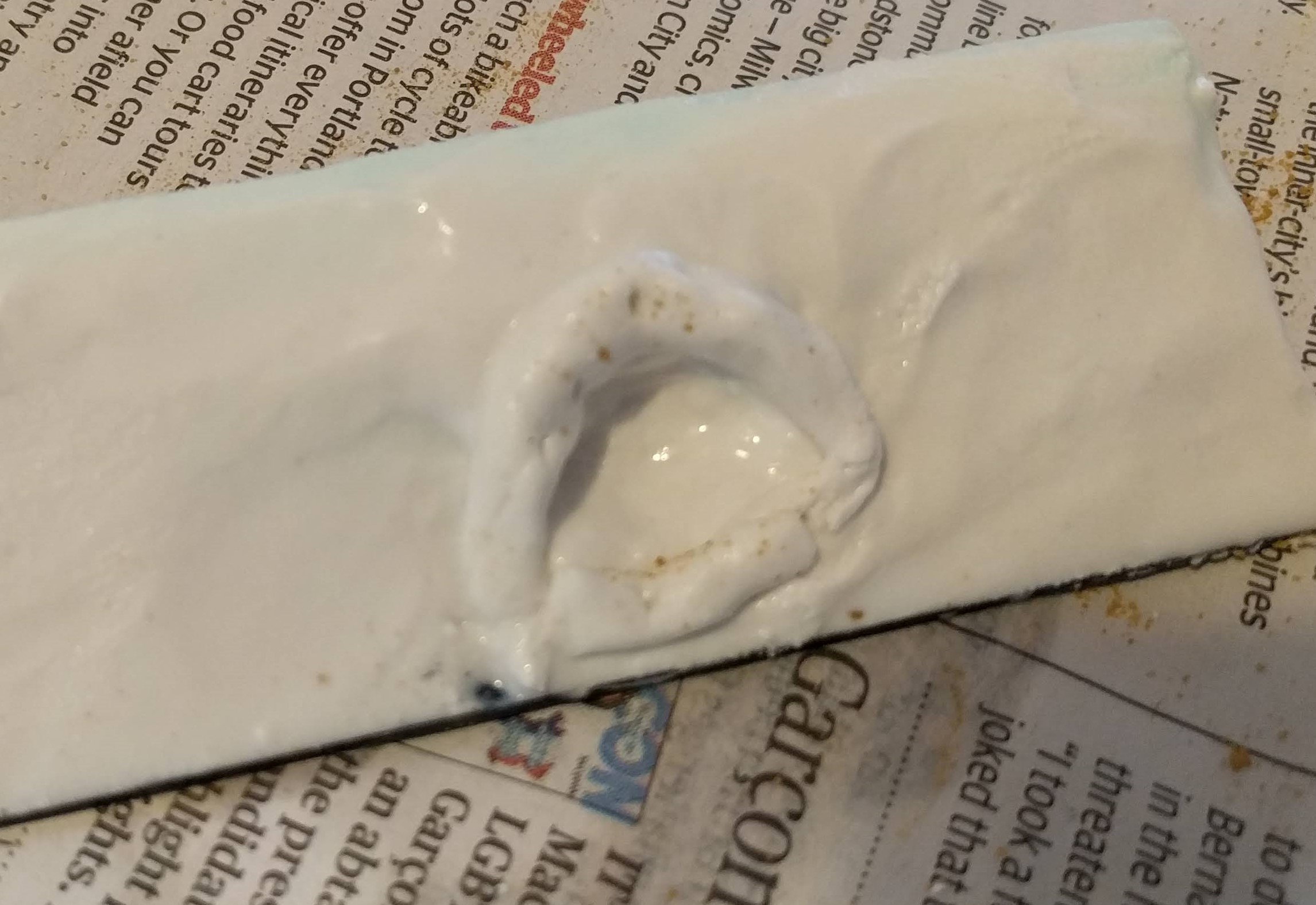 Sausage applied to hole (oo-er)
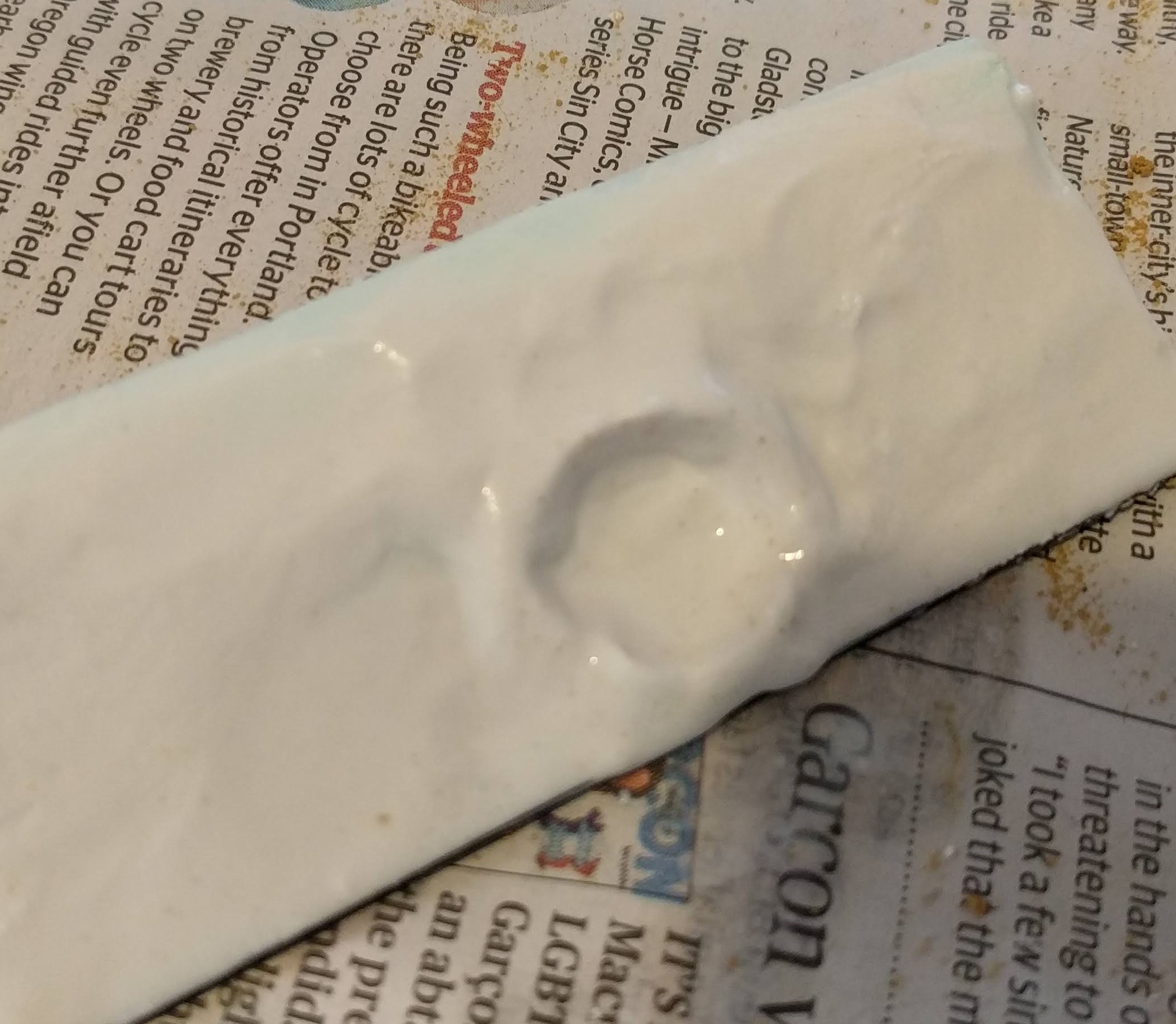 Smoothed down into a more 'natural' shape
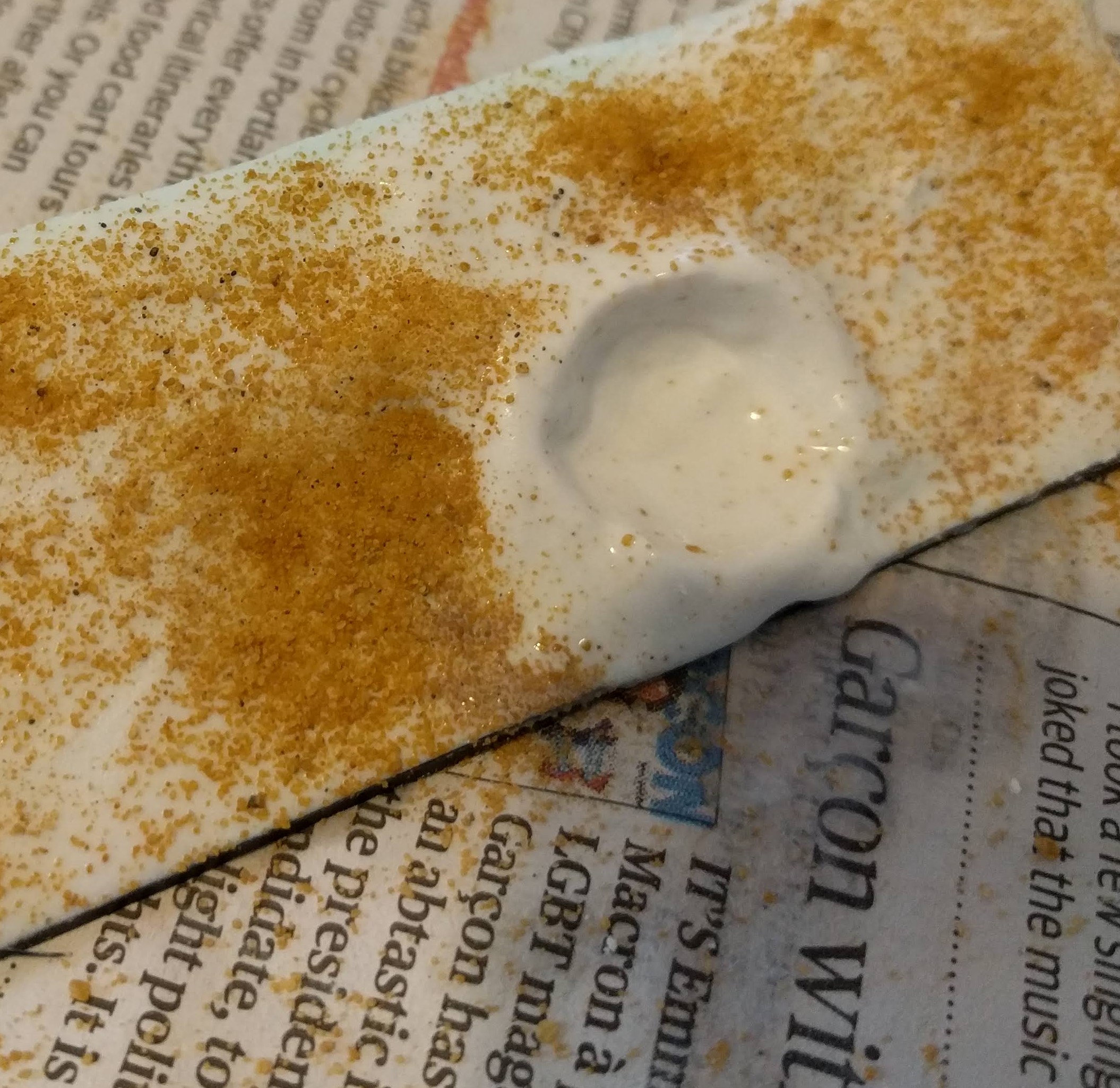 All sanded up and ready to dry
I’ve applied a very thin layer of polyfilla to the back of the trench. This I sanded down once it was dry to create a vertical and smooth surface. I plan to add wooden supports to this to create the ‘behind the trench’ look.
Trenches - Building the sub-structure
The German defenders in Italy were very well dug in and had created a series of defensive lines across the country. Because of this, I’m going to need some trenches to represent the dug in nature of the defenders. Unlike the BoW crew with their Bolt Action desert trench table, I can’t glue foam to a wooden base. My trenches will be placed on the table as ‘terrain’.
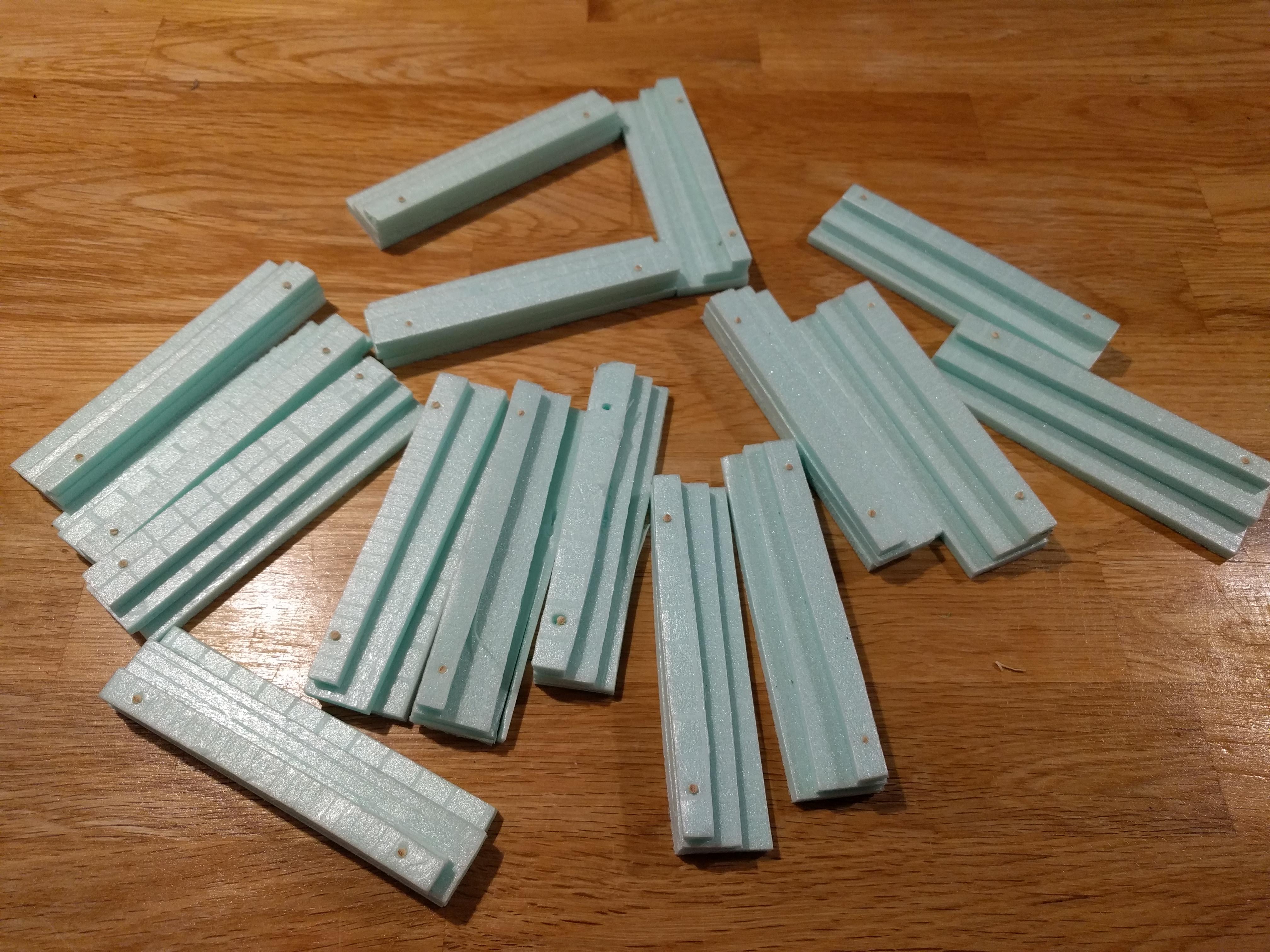
I’ve started with 3mm foam underfloor heating insulation. I’ve used this to craft hills and other objects as it is very easy to work with. I’m going to build the trenches in 4″ strips and have cut three 4″ lengths of foam, each of narrower width. I’ve then proceeded to glue these together using PVA and held in place with a cocktail stick. I’ve made sure that each strip starts flush with one long edge – this will make the inside of the trench wall.
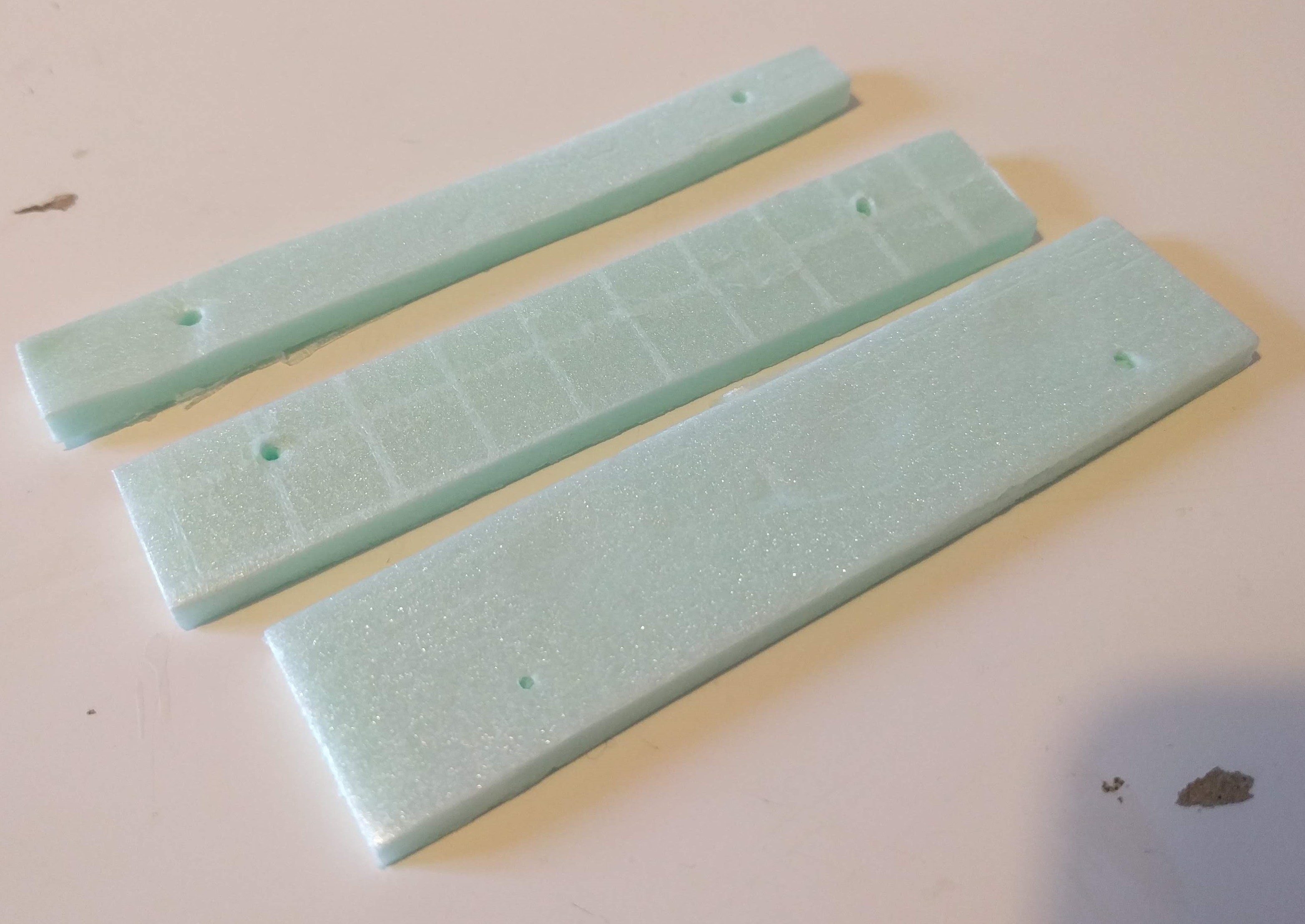
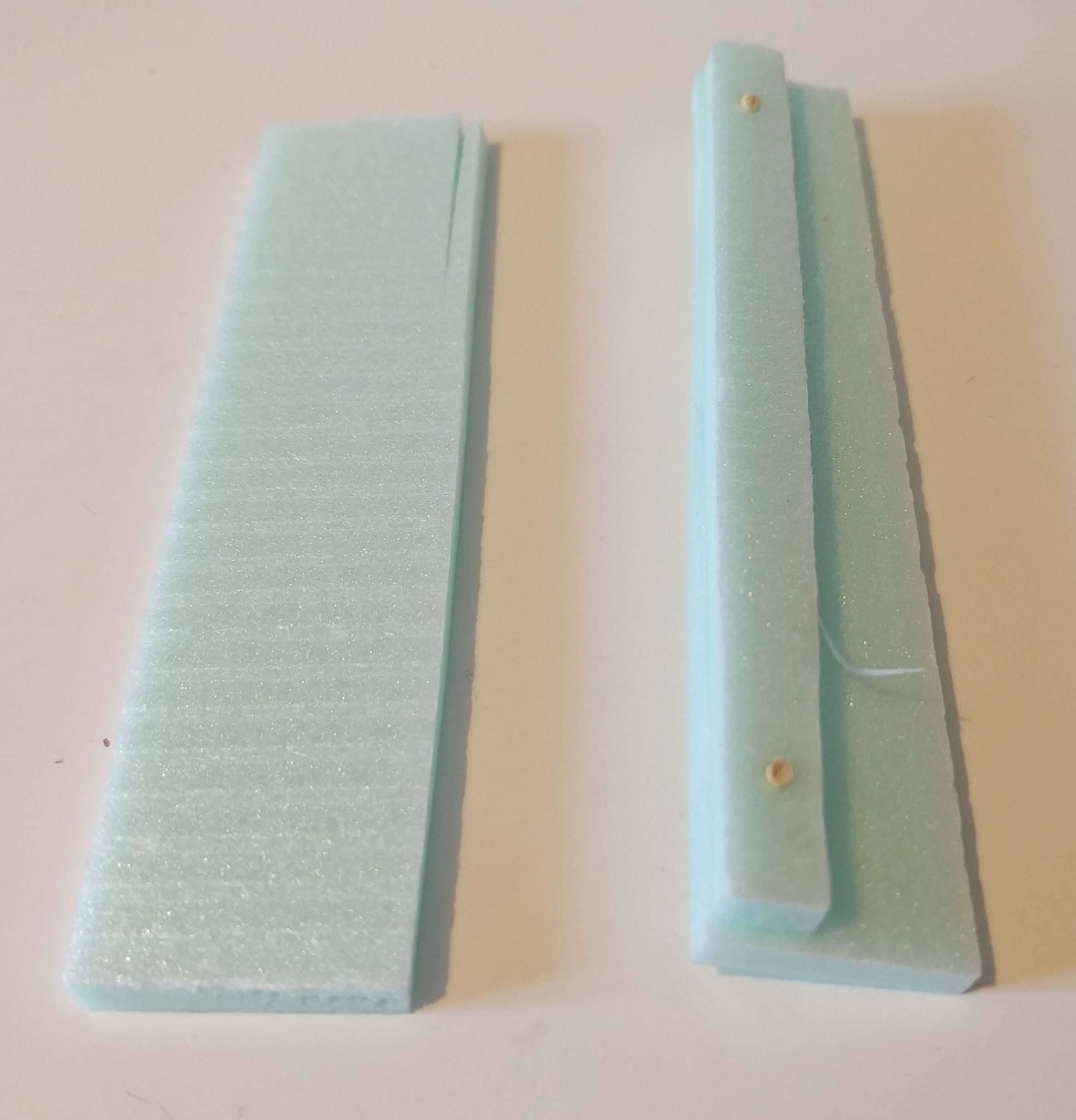
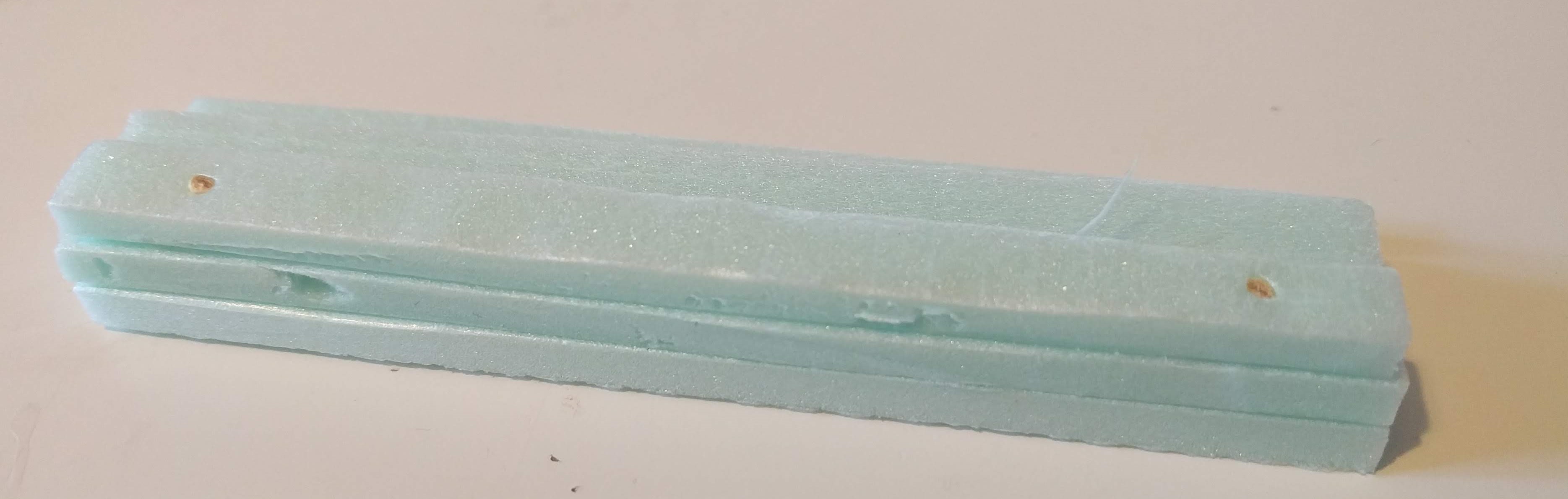
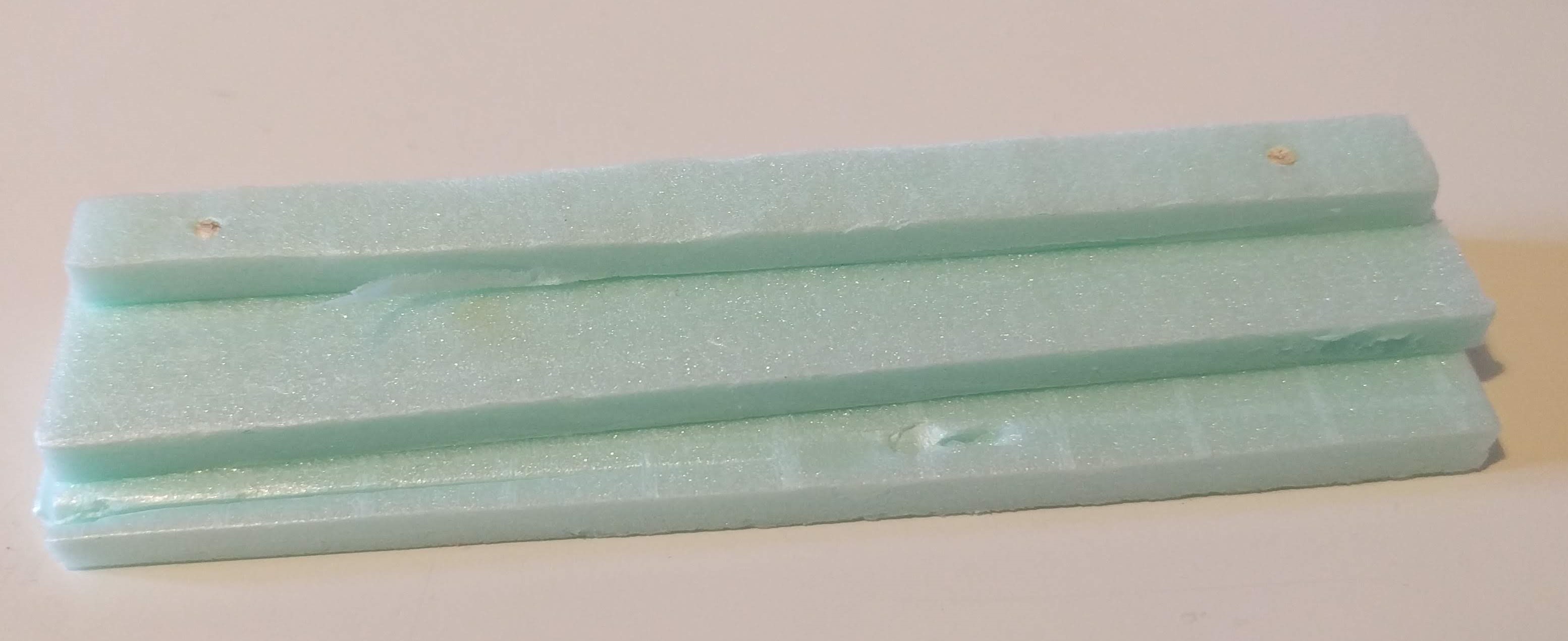
I’m going to need a fair amount of this, so I made quite a few.
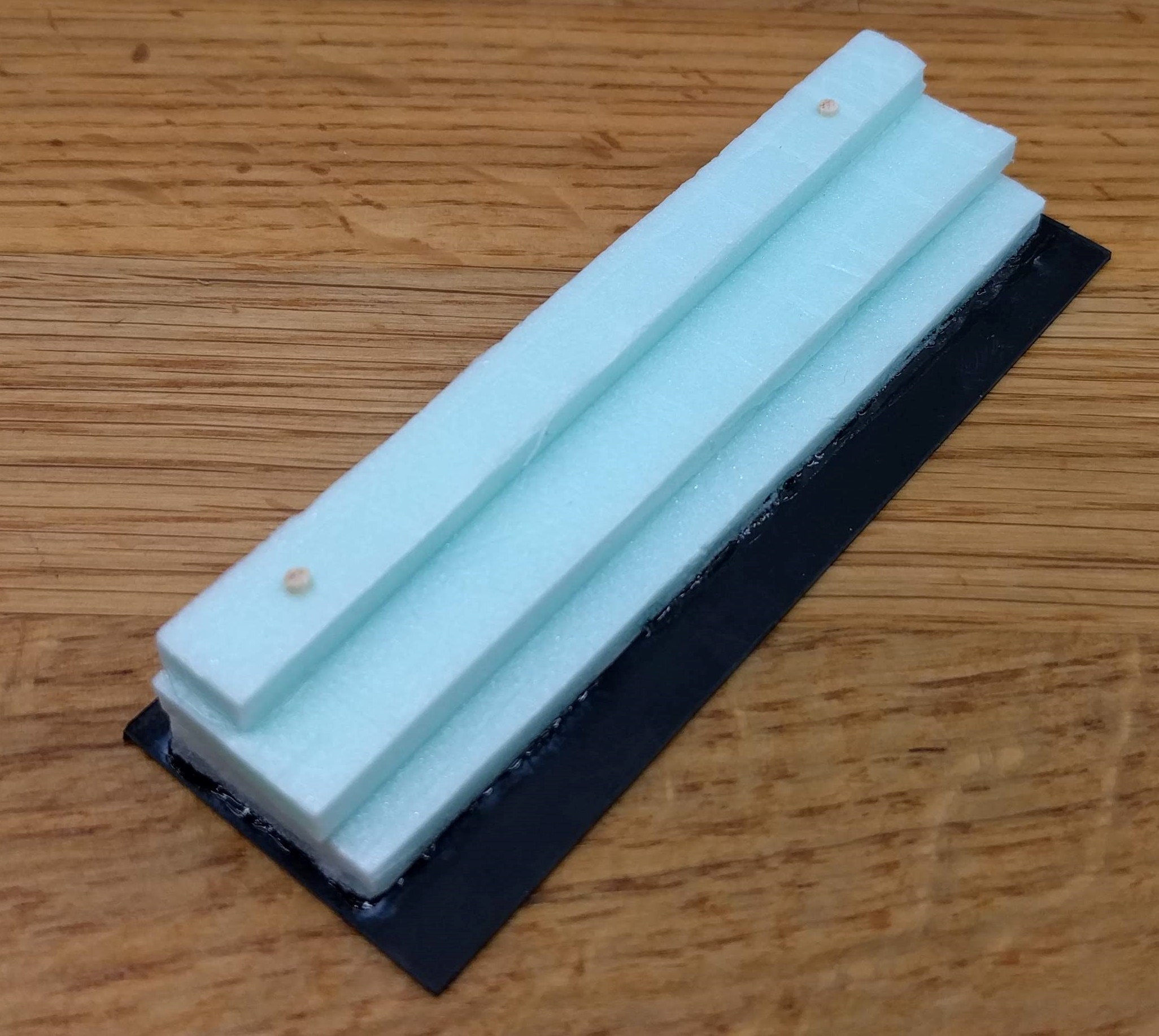
Once the PVA has dried, I mounted each piece of foam onto a plasticard base. I’ve made sure that the plasticard is slightly wider and longer than the foam base. This will give the basing material something to stick to.
The strips of foam create a stepped effect which won’t be ideal for the polyfilla cover so I then went across them with a sharp knife to lessen the stepping.
Finally (in the last picture below) I have scored the plasticard to give the polyfilla something to stick to.
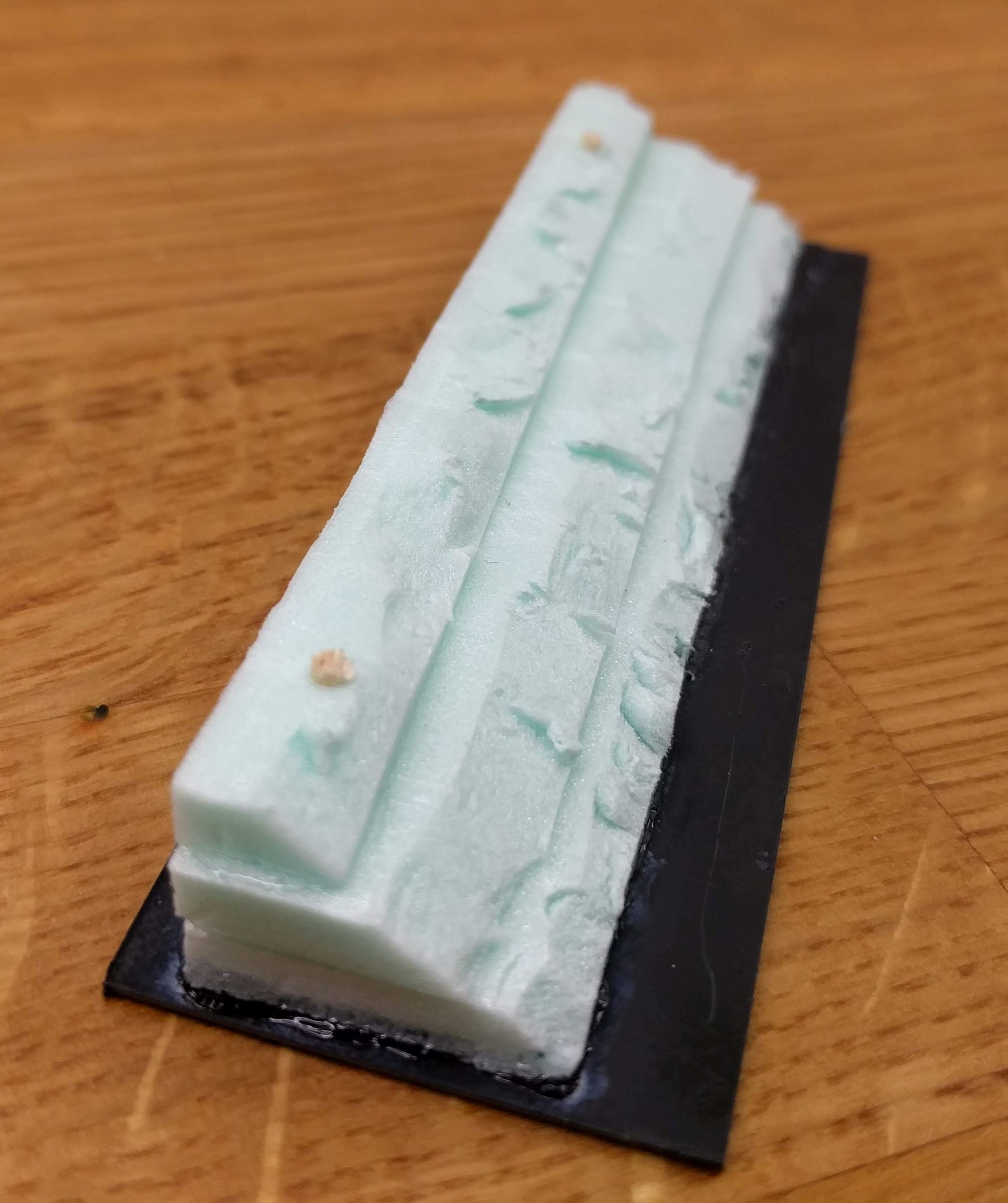
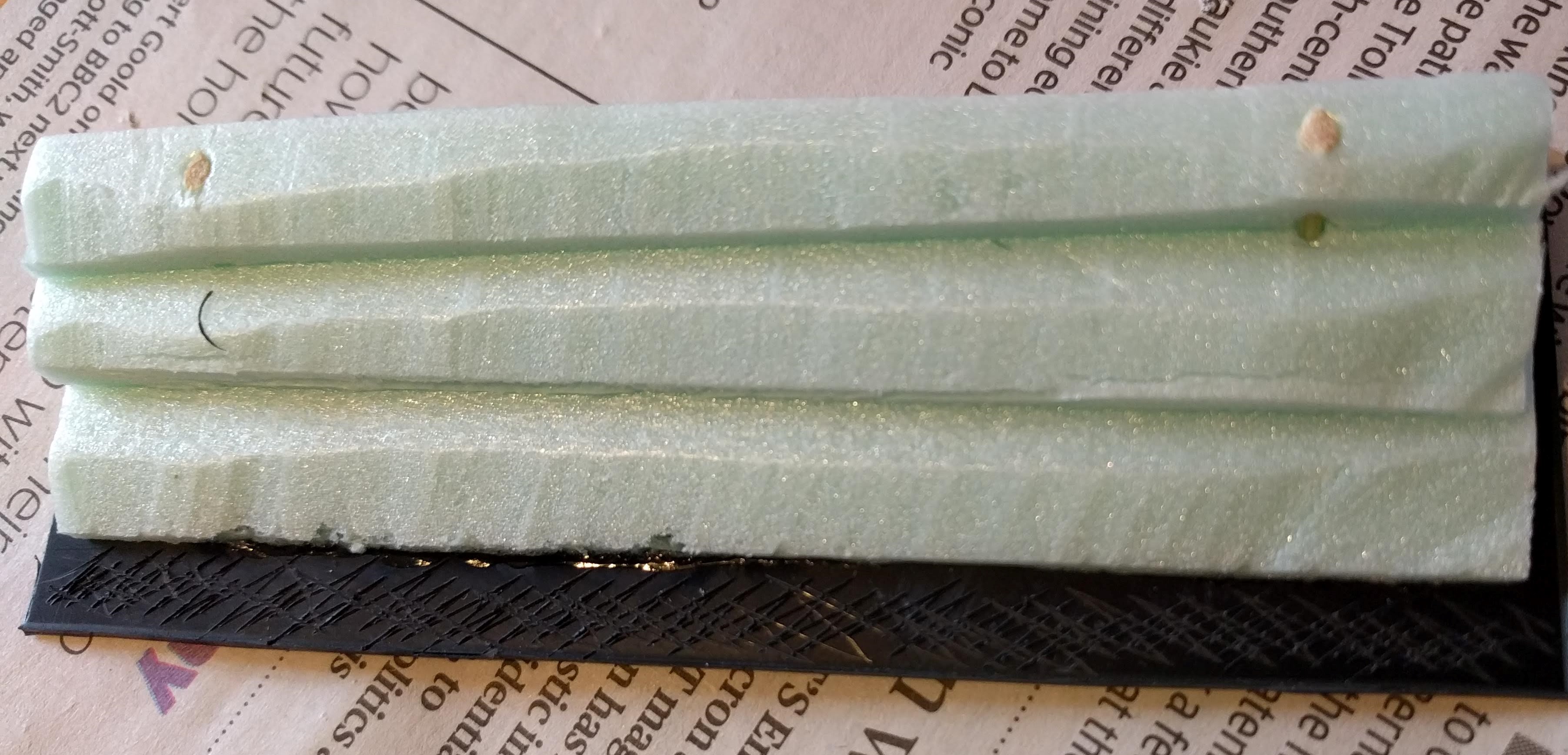
I also want to break up the uniform look so will create some craters in the front of the trench line. To do this, I’ve started by cutting out circular areas of the foam.
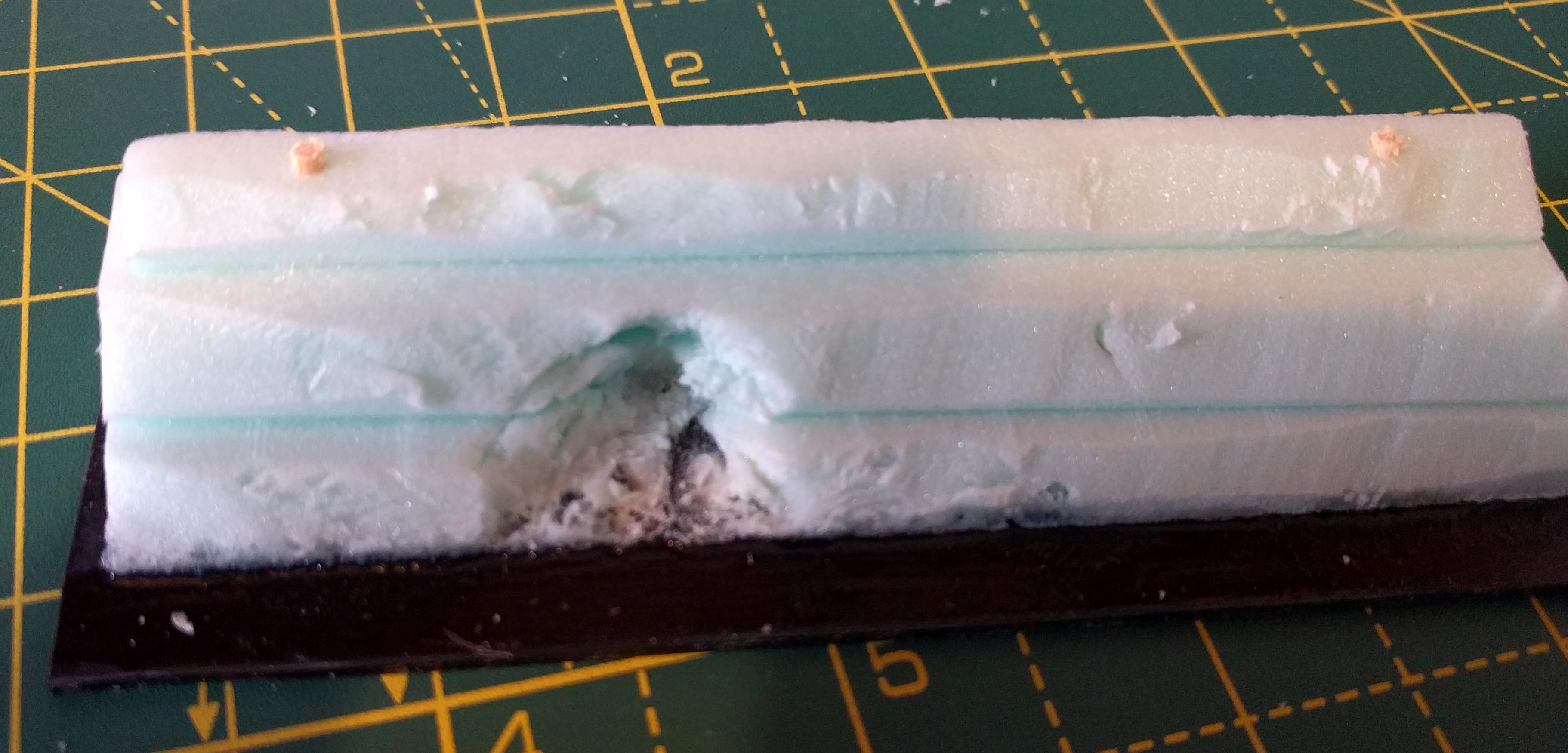 The start of a crater
The next job will be to apply the polyfilla top. This will provide some weight, definition and hold the whole thing together.
Defensive Obstacles - Finishing them off
Time for an update.
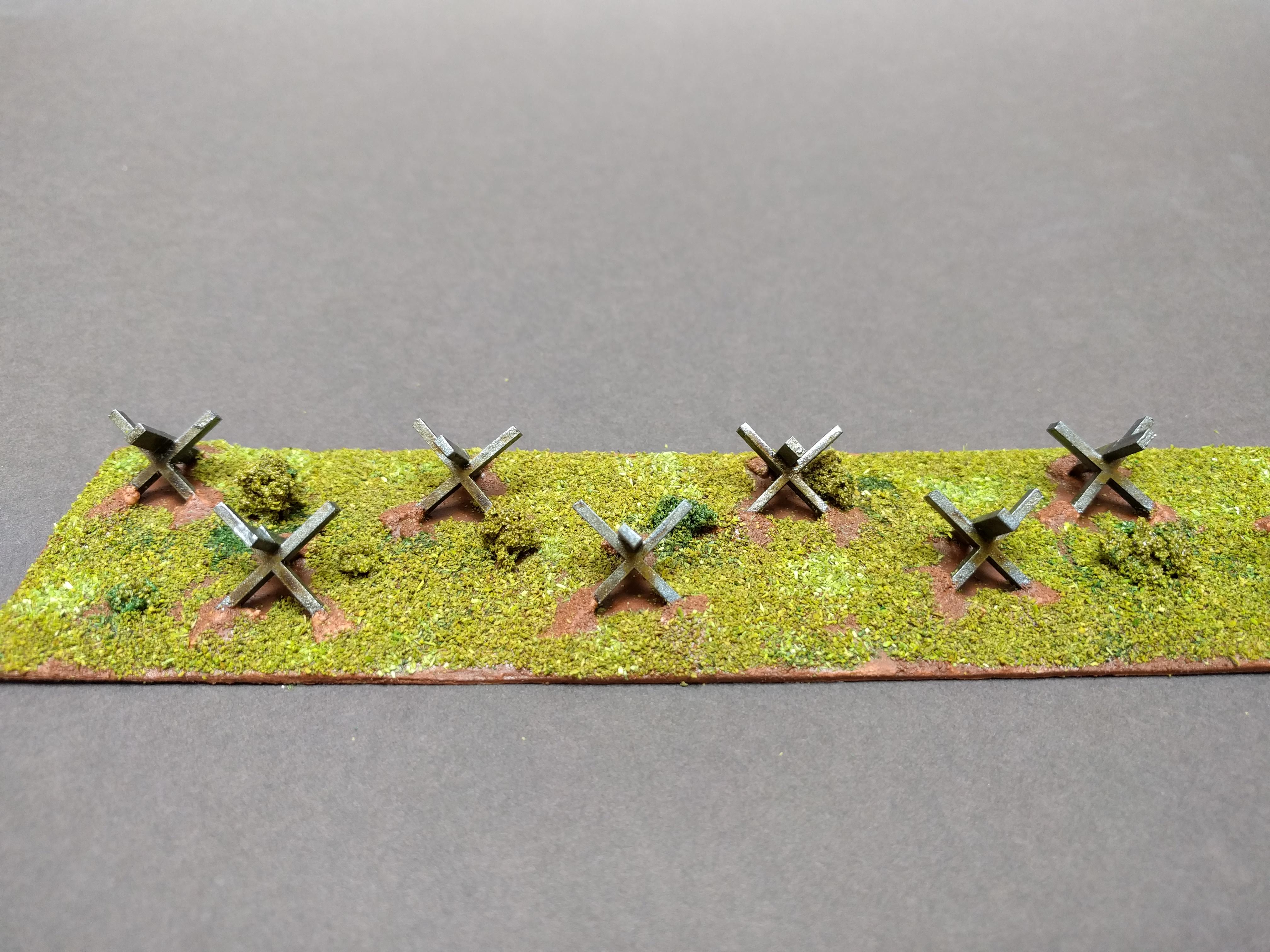
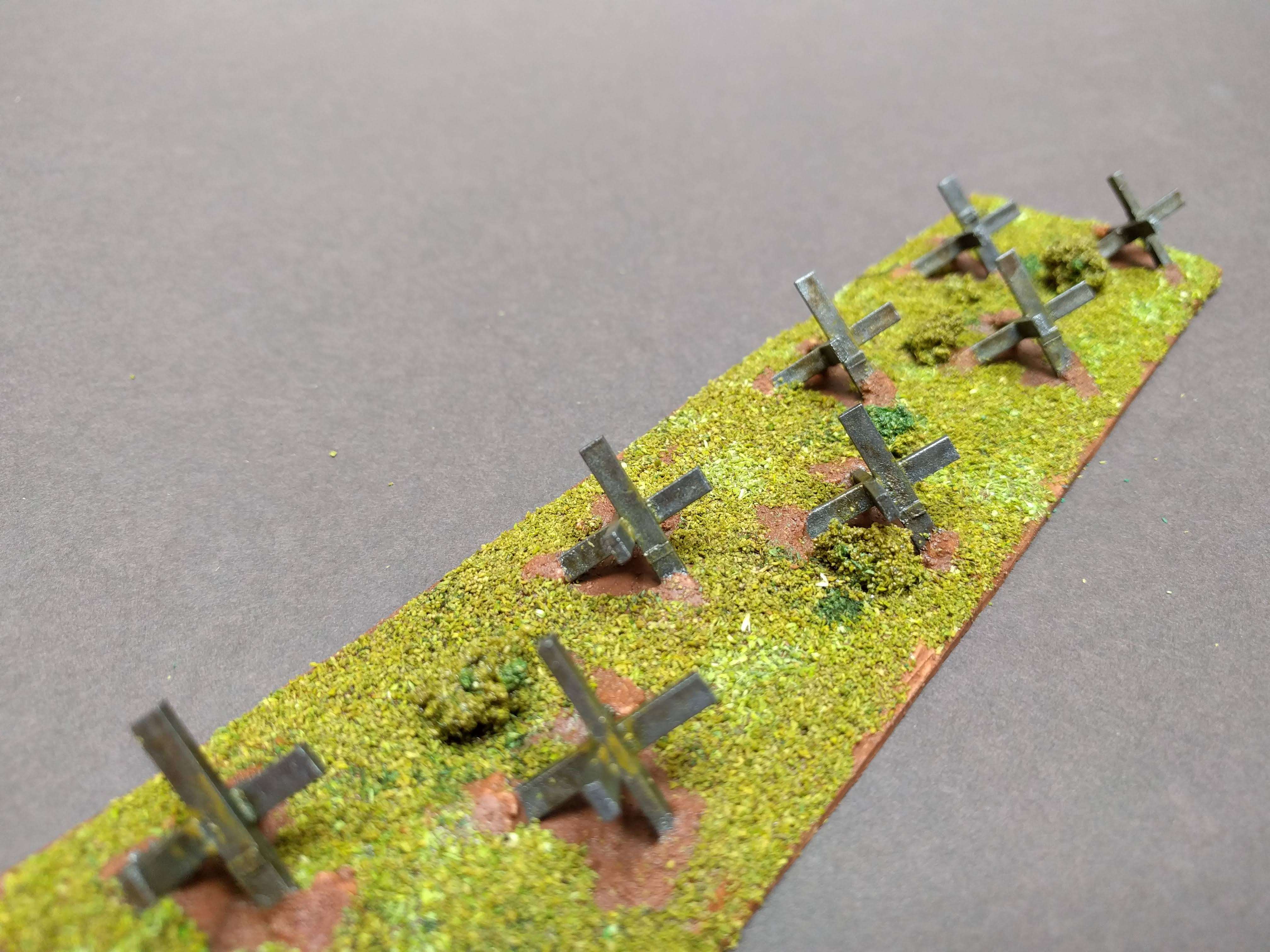
Once the paint from the previous step had dried I flocked up the bases. I mixed up a 50:50 water to PVA mix and painted this onto the bases where I wanted the flock to stick. I then applied three separate flocks, a brown, light and a dark green. This was then left to dry.
Once the flock had dried, I soaked some clump foliage in pva/water and stuck this to the base to represent bushes. Once this was all dry, I have sprayed the whole base with a 4:1 water to PVA mix to seal everything down.
For the minefields, I’ve just flocked the base and left it as is. This is after all just area terrain and I think that fenced areas and signs will impede the models should the choose to enter the minefield.
I’ve left patches of the barbed wire and tank trap ground bare to make it look as if the defences are newly laid.
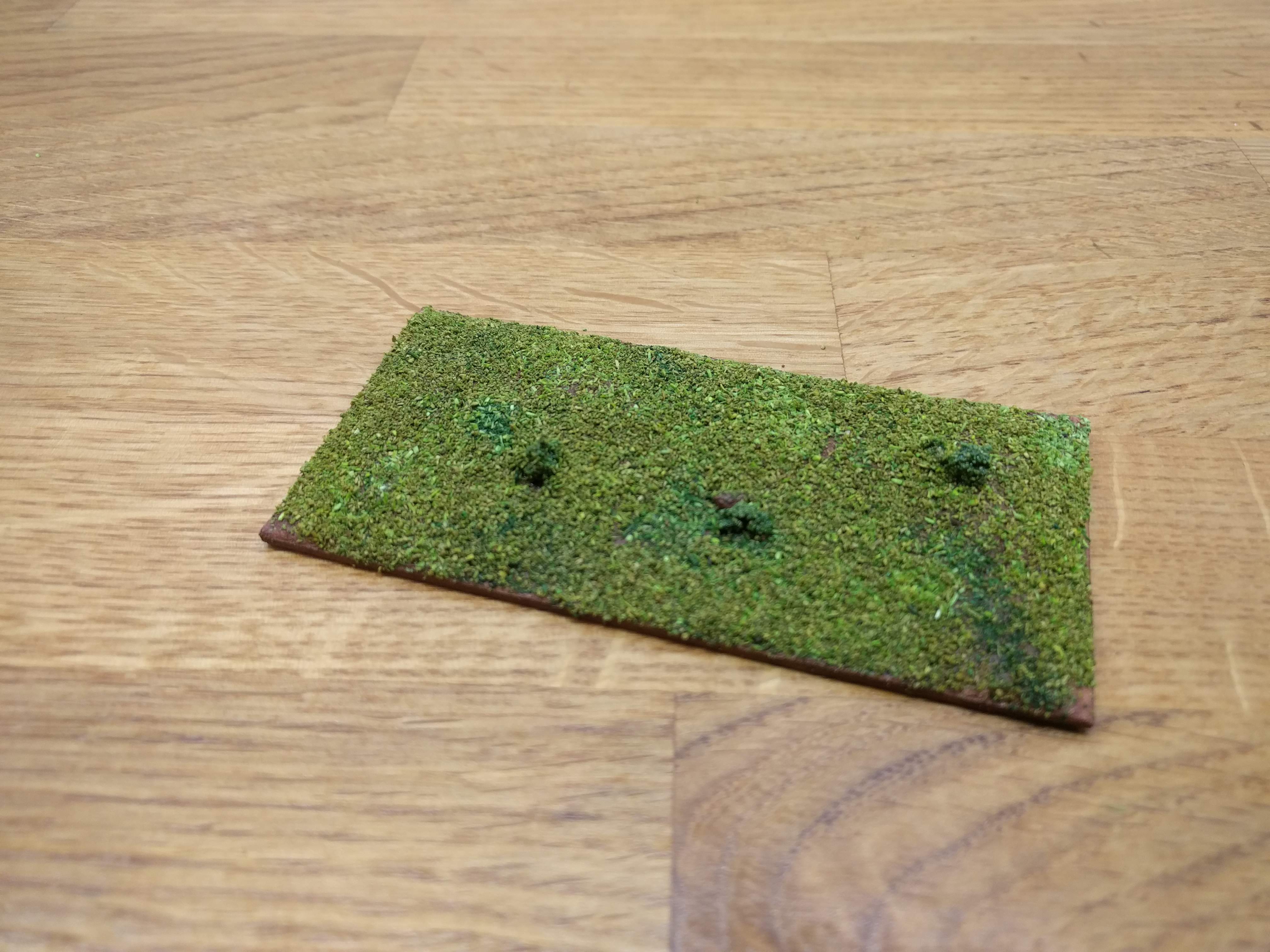 A not very interesting or exciting minefield (but it will blow you up if you enter it)
 Tank Traps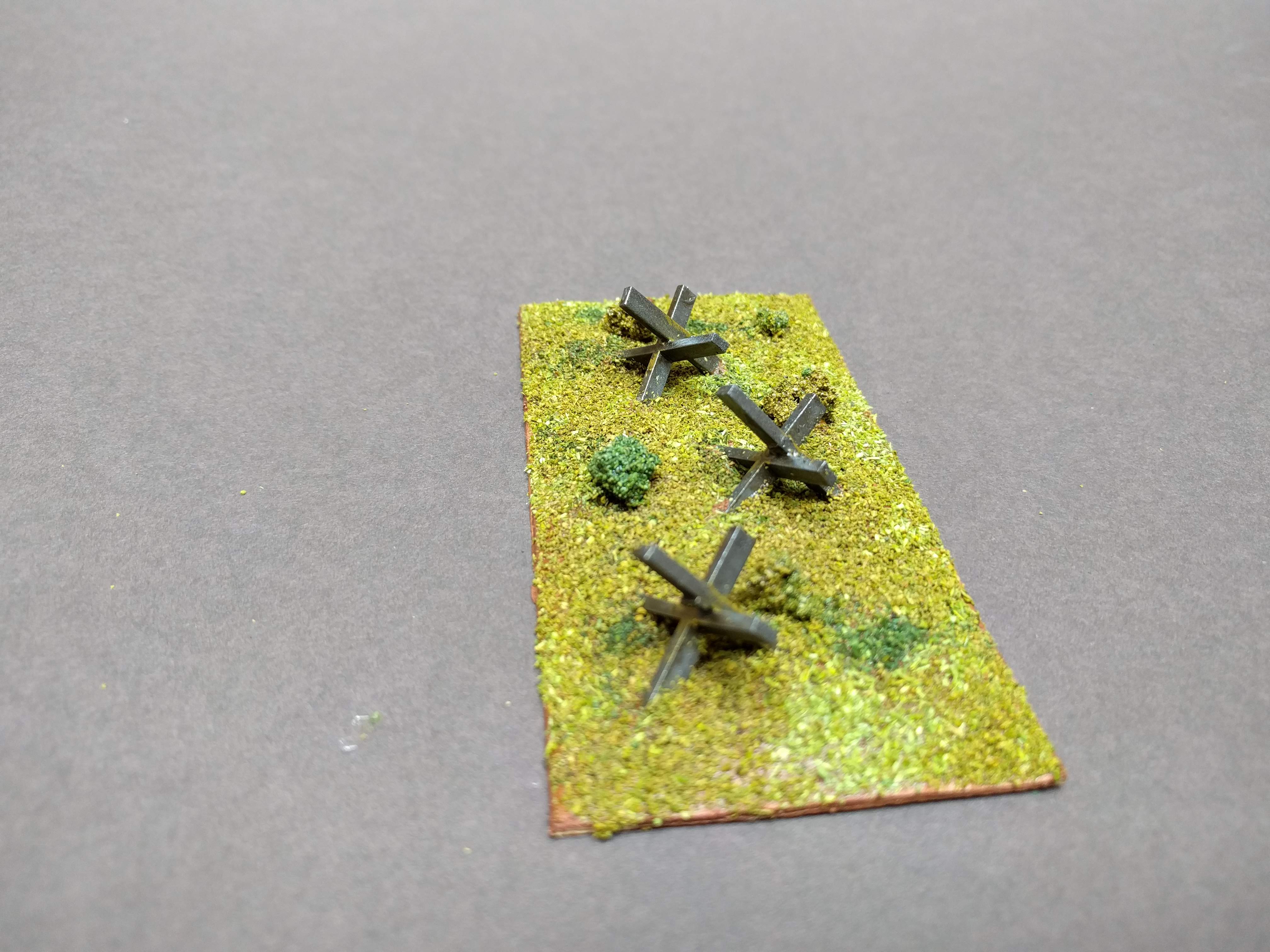
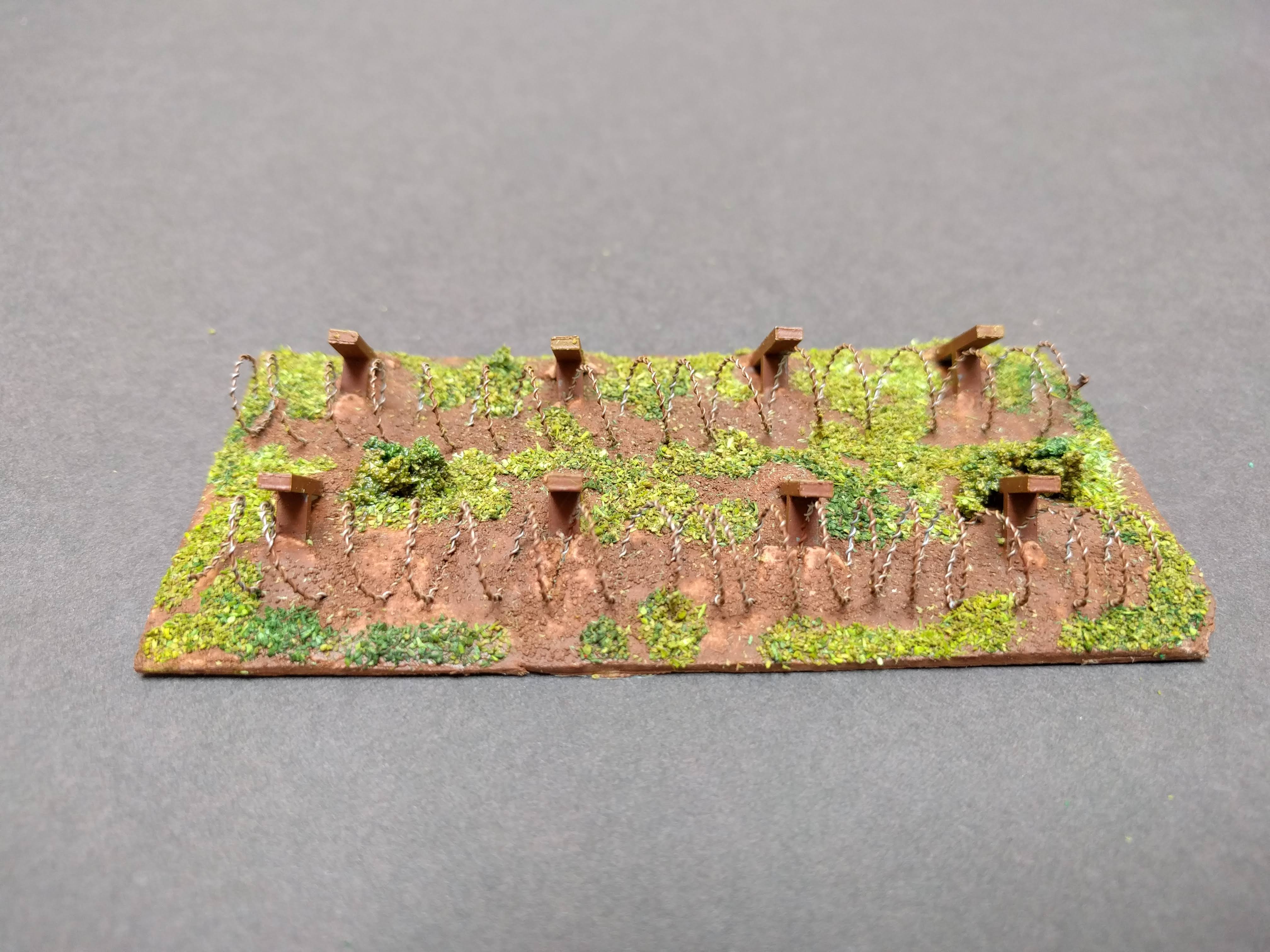 Barbed wire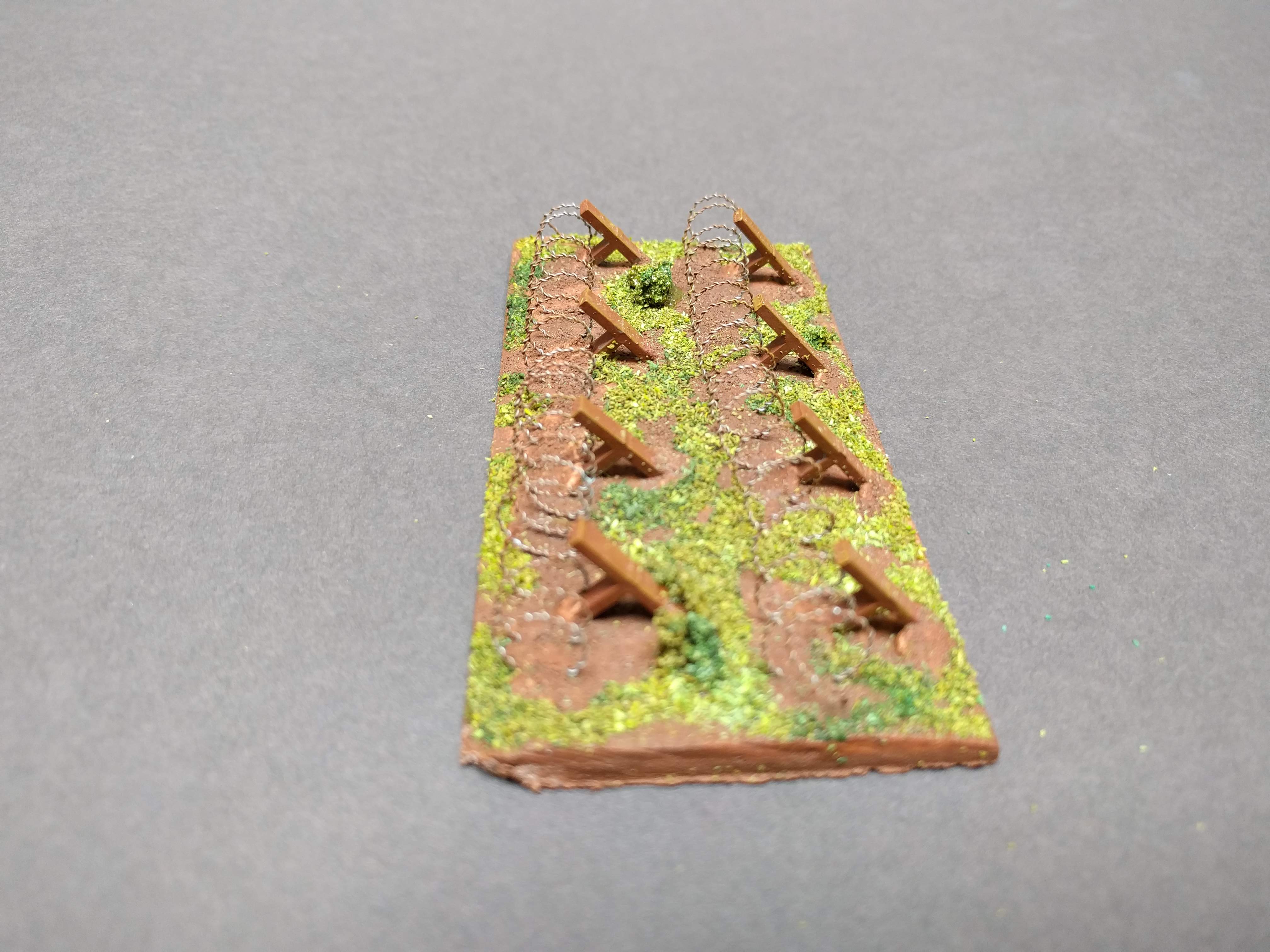
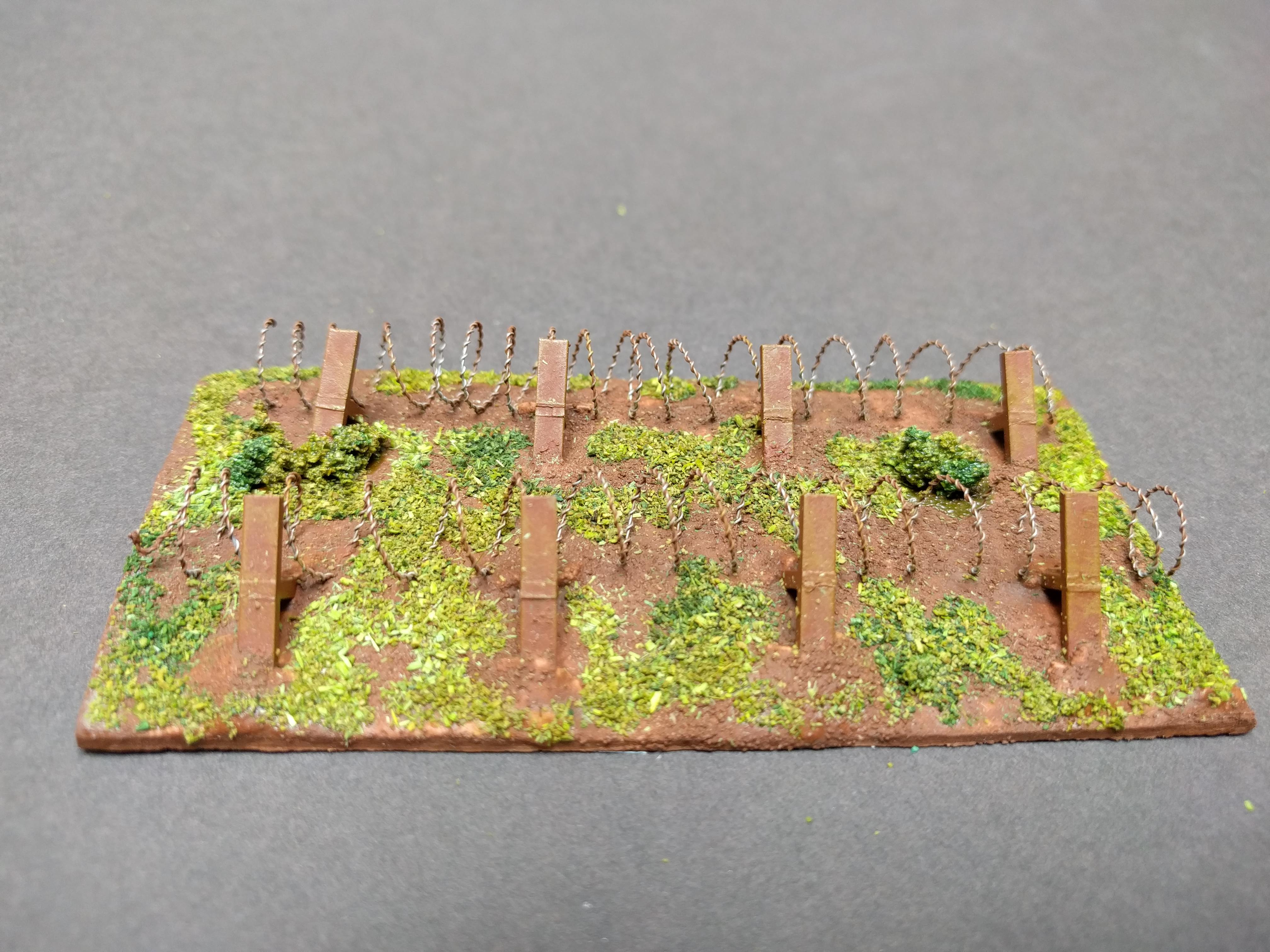
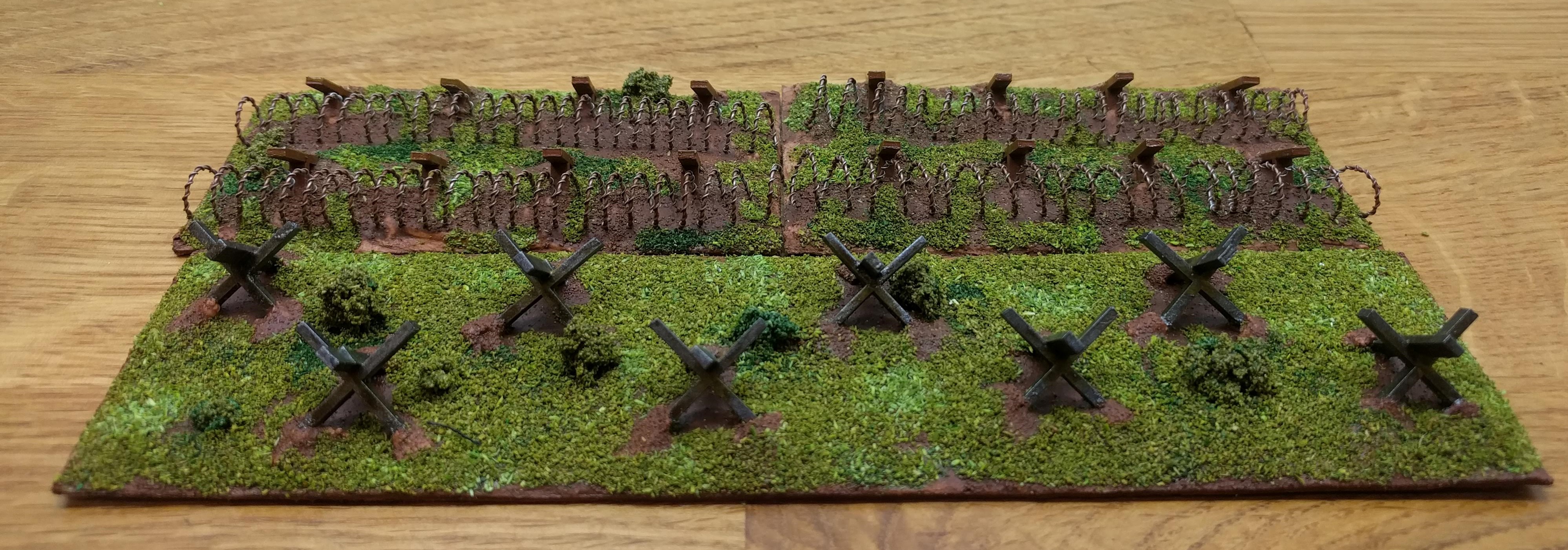 The combined defences
Defensive Obstacles - Getting the colour down
It’s been busy recently in the Redvers’ household but I’ve had some time to advance this project. The filla took 24 hours to dry properly and securely hold the tank traps and barbed wire in place. For the ground, I took my cheap, dark brown paint and mixed in some PVA glue, mainly to hold the sand in place. I applied this liberally over the filla.
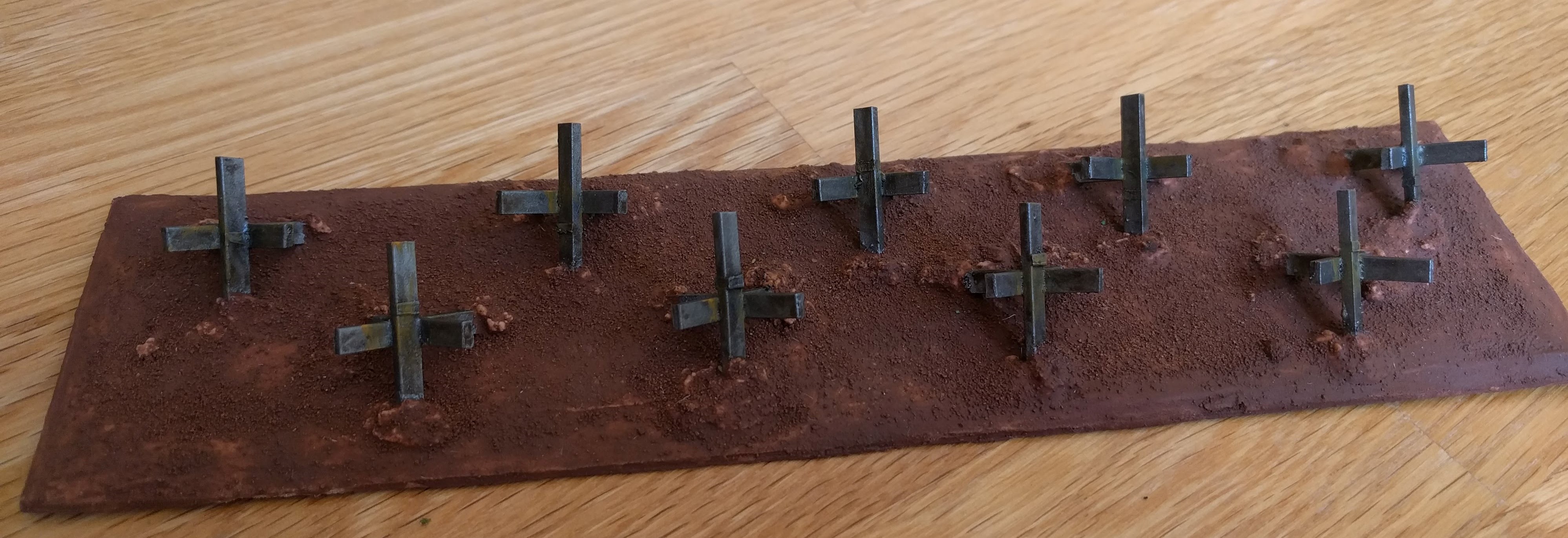
Once the first coat was dry, I mixed up a darker brown wash and applied this, allowing it to run and pool. I also applied the wash to the tank traps to give them a dirty look and also to the barbed wire to dull down the shine and provide a ‘rusty’ look.
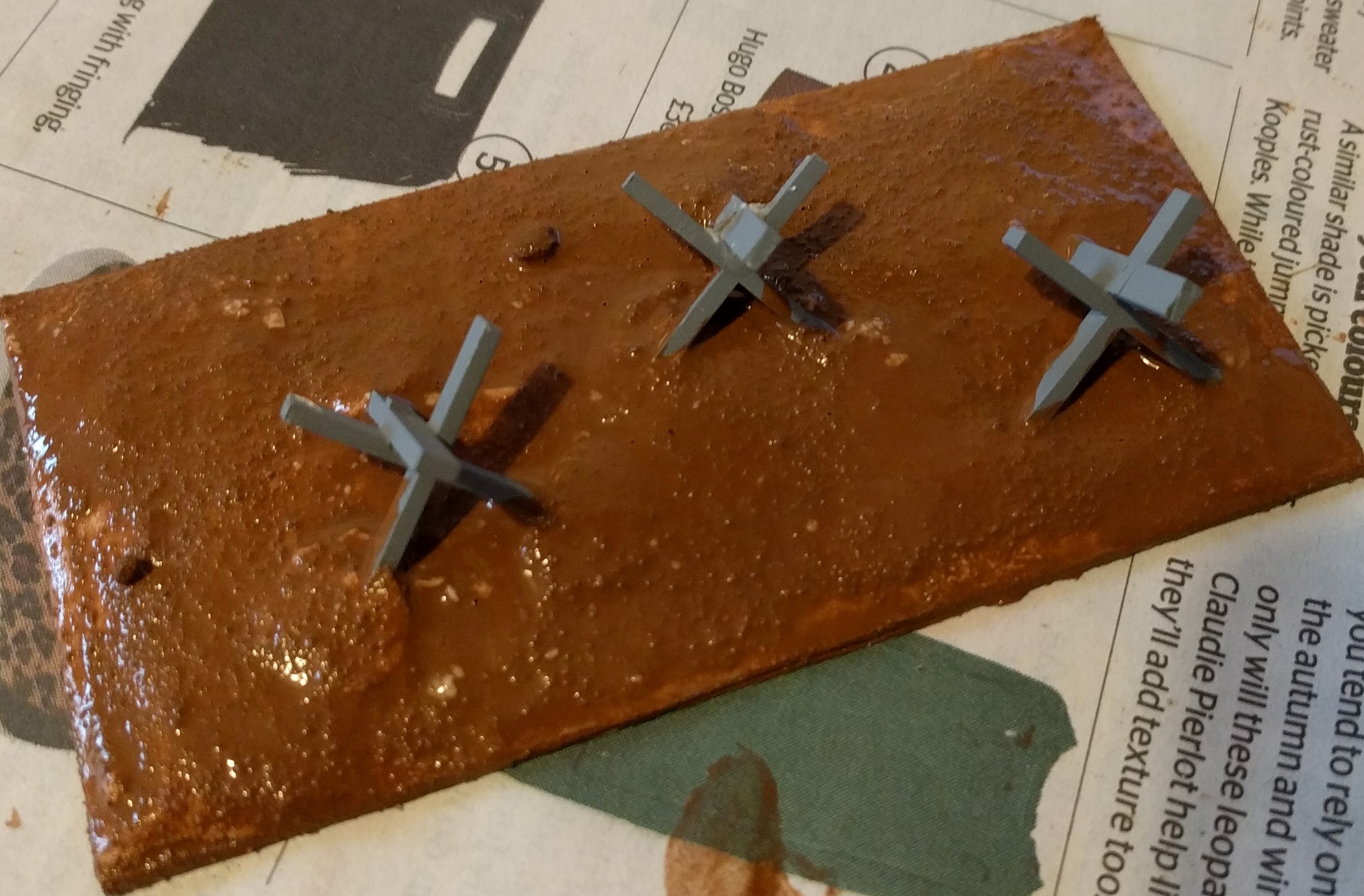 Tank traps with the wash going down - I've deliberately used a lot of wash here
 Barbed wire with the wash applied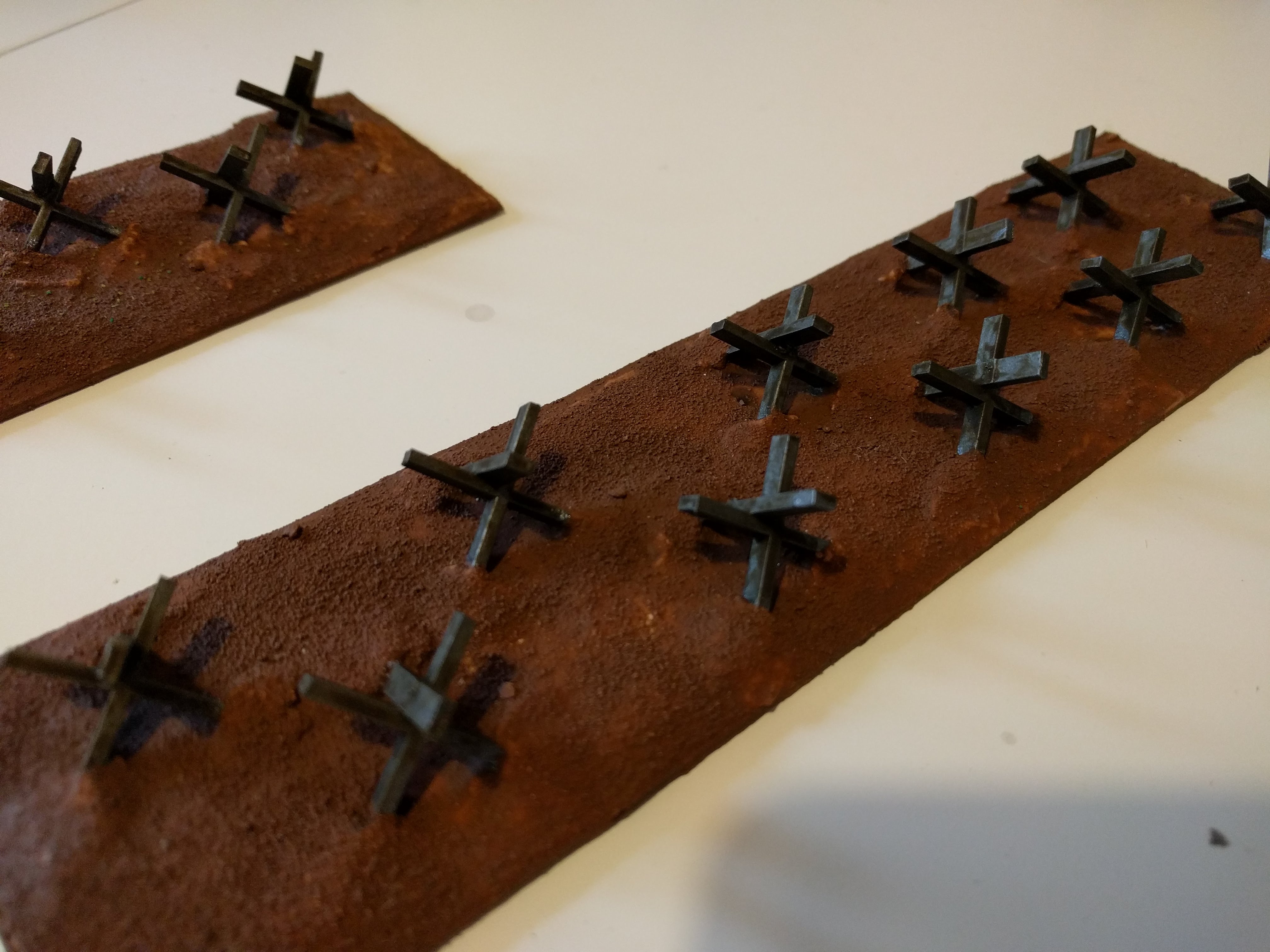


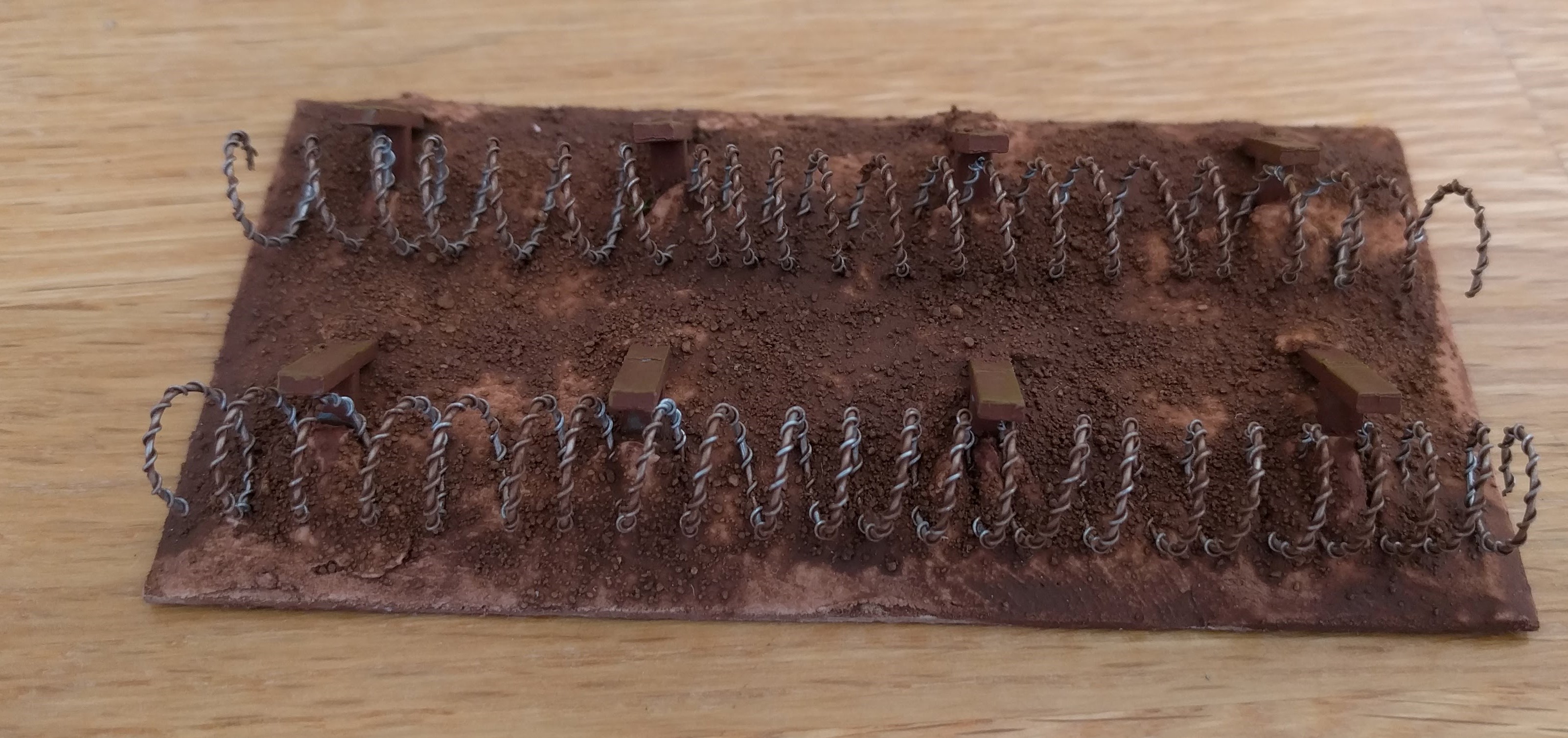 Barbed wire fully dried
The above pictures also show the results once dry. You’ll note the lighter areas where the filla is still somewhat visible. I’m ok with this as these raised areas would naturally be lighter so I’m going to leave these as is.
Next step is to flock these up and they should be finished.