







A Foray into Napoleonic Wargaming



Recommendations: 1710
About the Project
Documenting my progress on collecting and painting 15/18mm Napoleonic miniatures. This started with challenging myself to try my hand at painting miniatures at a smaller scale, and to look at a historic setting rather than fantasy or Sci-fi. I went for Napoleonics as I have an interest in the history of the period, there are some great ranges of minis, and there's a certain appeal in having painted blocks of Napoleonic troops. I'm not building a collection for any particular game system, or following an order of battle, this is very much about enjoying the painting. I tend to have limited hobby time and I'm also a slow painter, so this is a very slow burn project.
Related Genre: Historical
This Project is Active
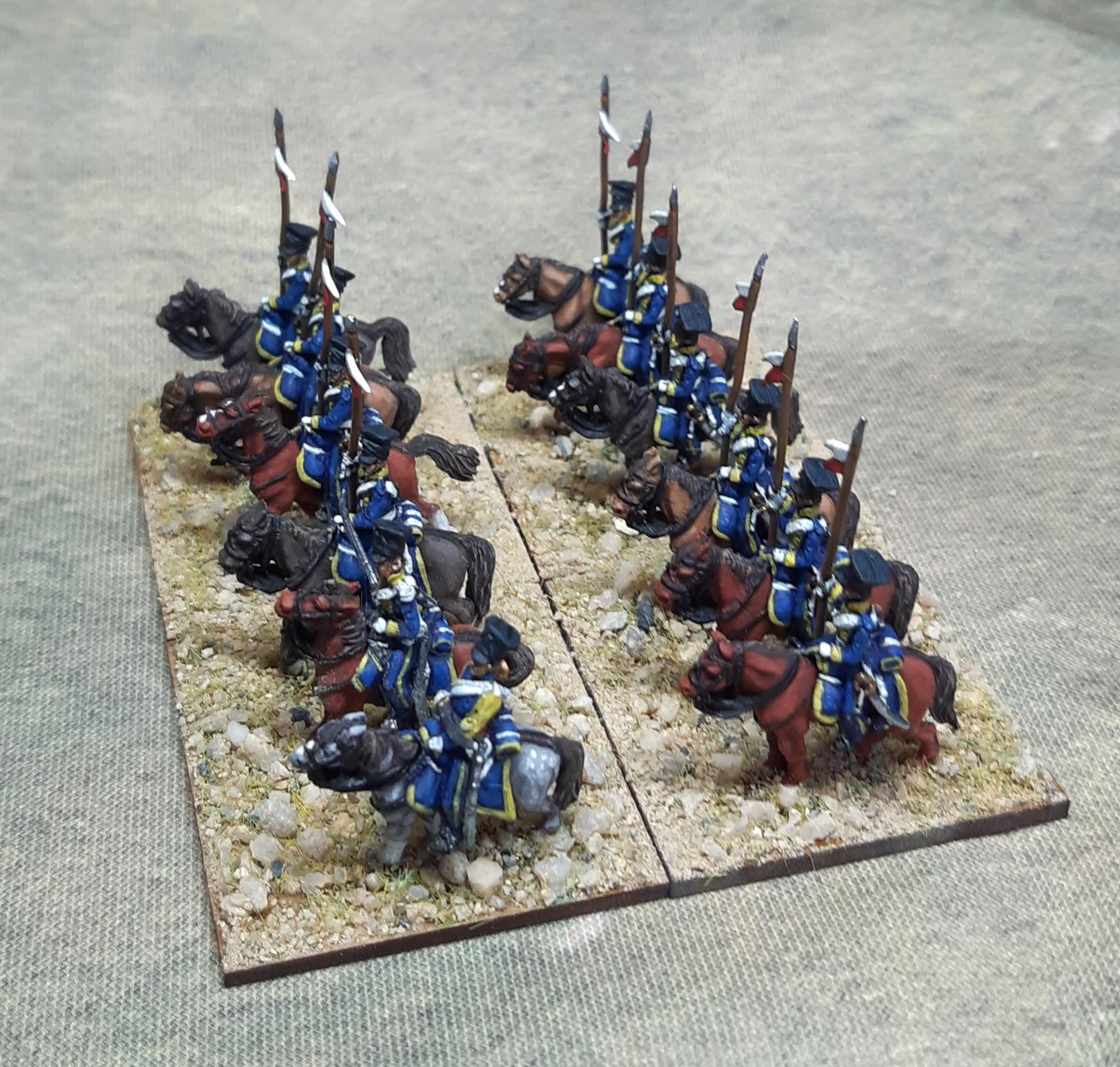
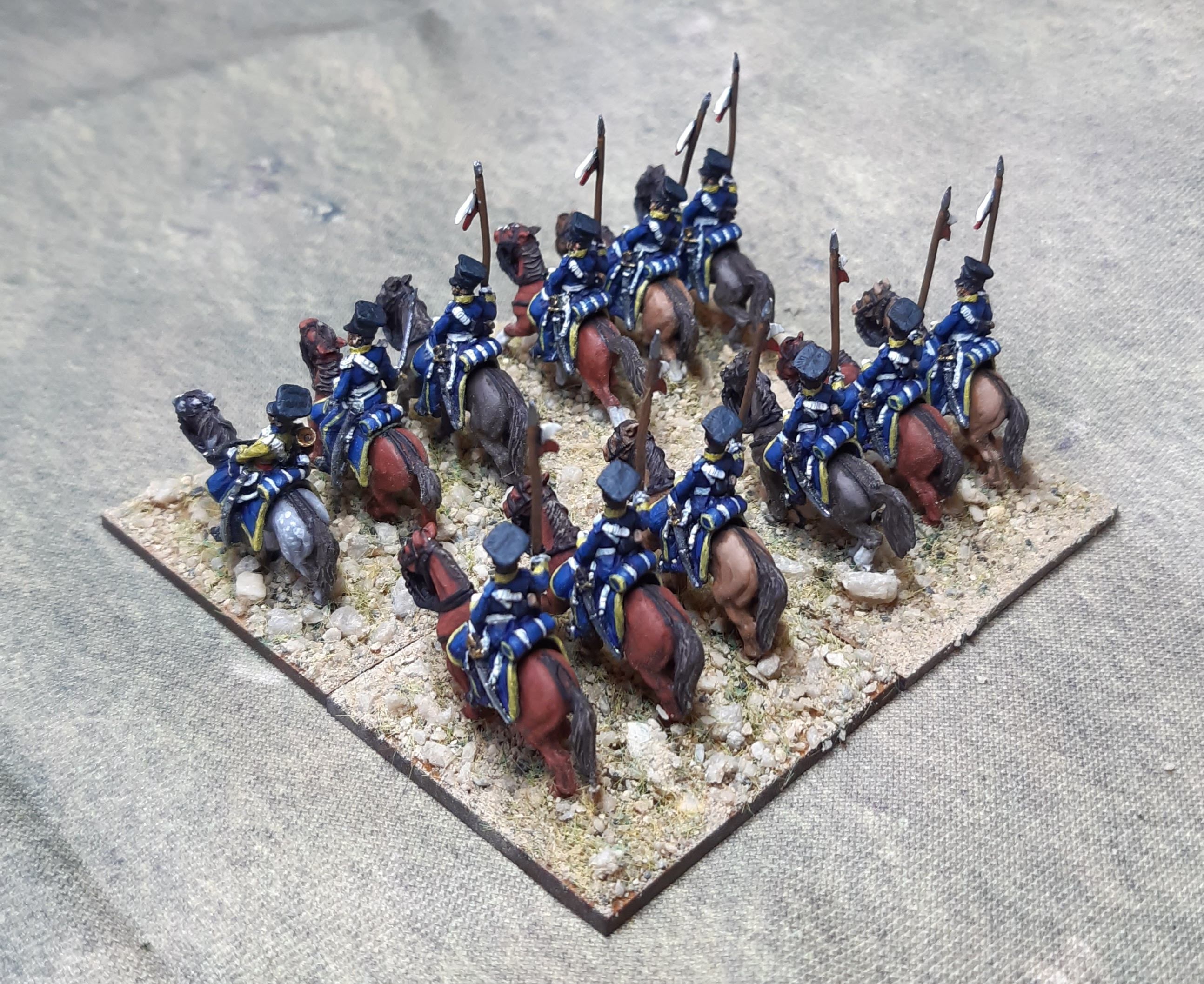
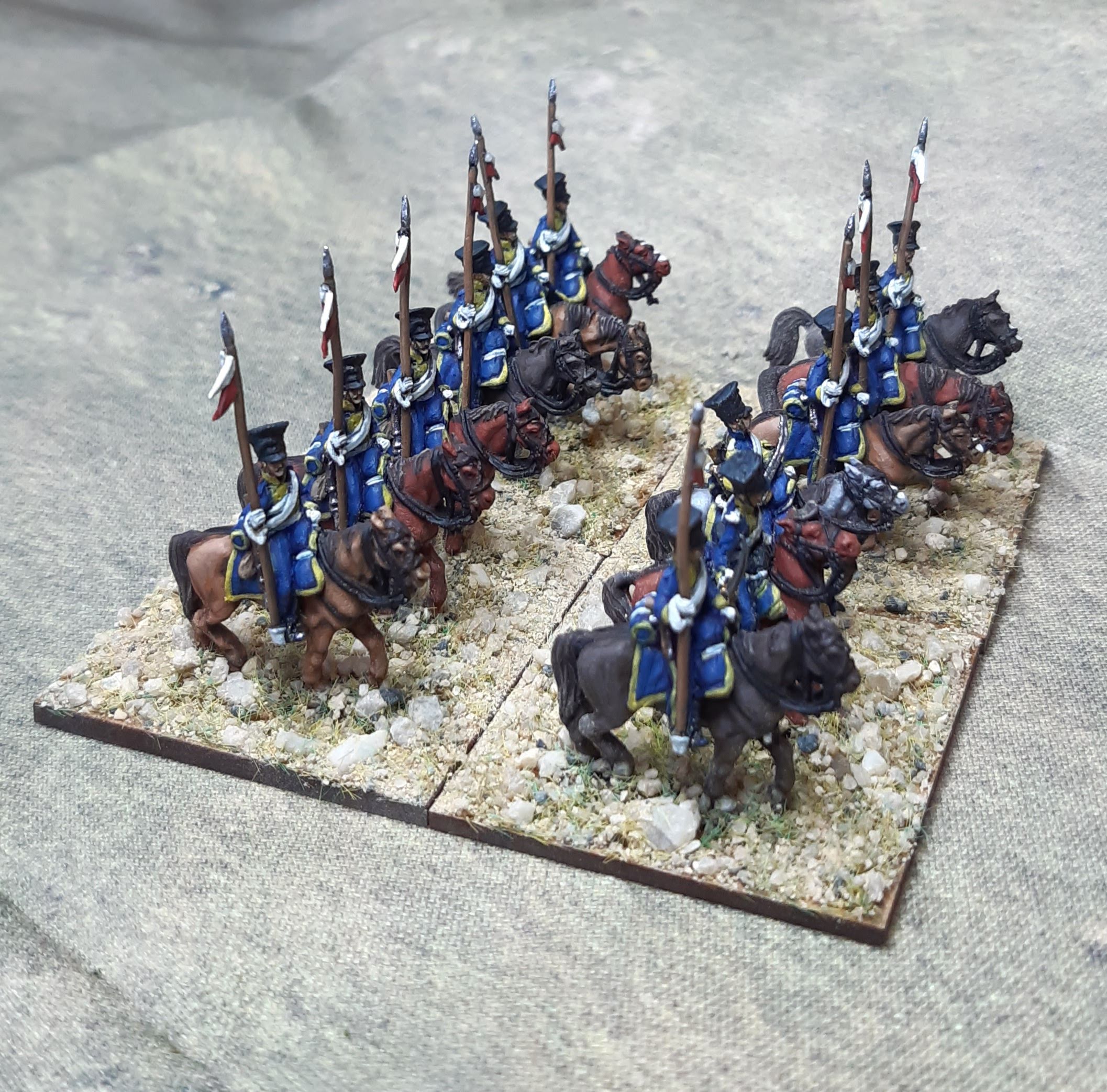
1st Vistula Lancers
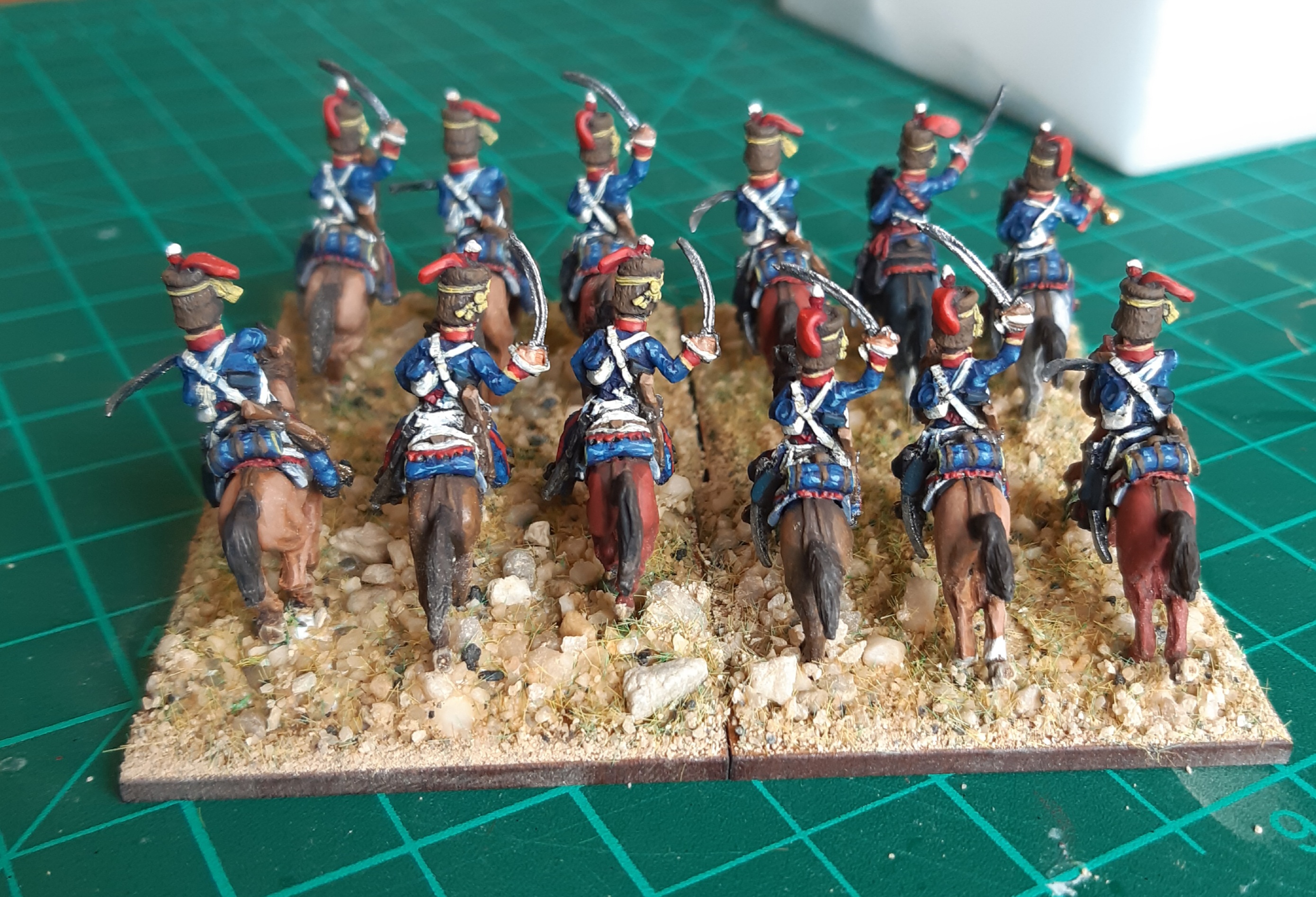
During the Napoleonic wars, there were a number of different nationalities that fought alongside the French, some willing, others bound by treaty. Amongst the different satrapies, client kingdoms, allies and foreign regiments that fought under French colours, the Poles formed a substantial component of the Grand Armee. With Poland wholly partitioned between Prussia, Russia and Austria in 1793, Napoleon positioned himself as the only man capable of restoring Polish sovereignty. In 1807 the Duchy of Warsaw was formed after the Treaty of Tilsit, creating a Polish client state of the French Empire. A lot of Polish soldiers in French service were reformed under the army of the Duchy, but there still remained some Poles that served under French colours. The Vistula Legion was one of these, formed in 1808 after re-organisation of the Polish-Italian Legions. The Vistula Legion was comprised of both infantry and cavalry regiments, but during its formation second staff section as added, allowing the cavalry and infantry to operate independently. Indeed, despite both the Vistula infantry and cavalry being deployed to the Peninsula, they never served together on the same battlefield throughout their service.
The cavalry component of the Vistula Legion was comprised of two lancer regiments. They spent four years fighting in the Spanish Peninsula, and by and large, were extremely successful in the majority of their confrontations against the Spanish, British and Portuguese. Their most famous engagement was the at Albuera in 1811, were the 1st Vistula Lancers formed part of Soult army as they clashed with a Spanish and Anglo-Portuguese force lead by Beresford. Supported by the 6th Hussars, the Vistula lancers initially spearheaded a feint against the allies around the village of Albuera, before galloping across the front of French army to join the real French attack on the allied lines, a sweep around Beresford’s right flank. As the allies shifted to meet the advancing French columns, Colborne’s Brigade were exposed with an unsupported flank, which the Vistula lancers ruthlessly exploited. Helped by an initial misidentification as Spanish cavalry, the lancers were able to ride over three British battalions (1/3rd, 2nd/66th and 2/48th) caught out of square formation, inflicting huge casualties and capturing 4 or 5 colours, and 5 cannon from a supporting KGL artillery battery. The 31st regiment were able to form square and thus save themselves. Although Albuera was an eventual French defeat, it was one of the bloodiest battles of the Peninsula campaign.
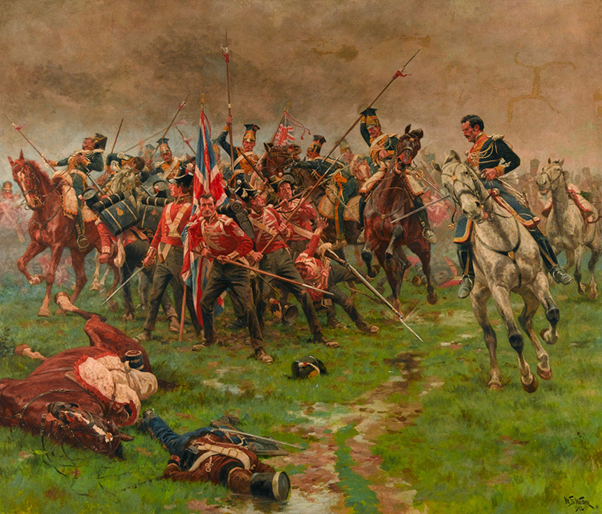 The 3rd Regiment of Foot defend their colours against the Vistula Lancers at Albeura. Painting by William Barnes Wollen
After Albuera, Napoleon made a decision to transform six of his dragon regiments into light horse lancers, no doubt in part due to the success of the Vistula Lancers. As part of that decree, Napoleon also transformed the 1st and 2nd Vistula Lancers to regular troops of the French army, becoming the 7th and 8th Light Horse Lancer Regiments. The 1st/7th Lancers left the Peninsula in 1812 to participate in the ill-fated invasion of Russia.
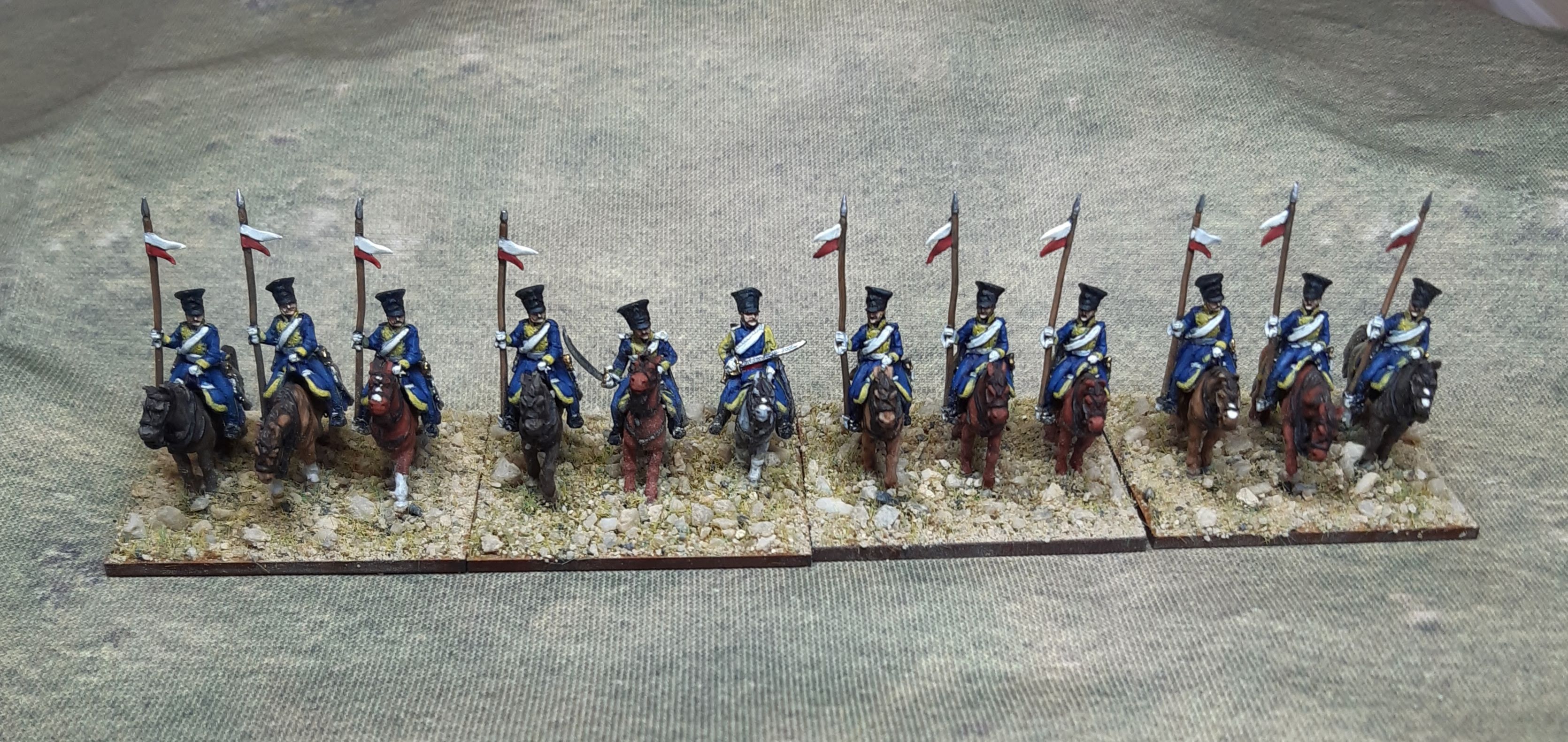
The models are all from AB Miniatures. They are modelled with covers on their czapka, so there’s no yellow colour on the top. They also have plain saddlecloths as opposed to white sheepskins with yellow dog’s teeth patterning. I found about a 50/50 mix between sources having the lance pennons red over white vs white over red, and one picture had both at the same time.
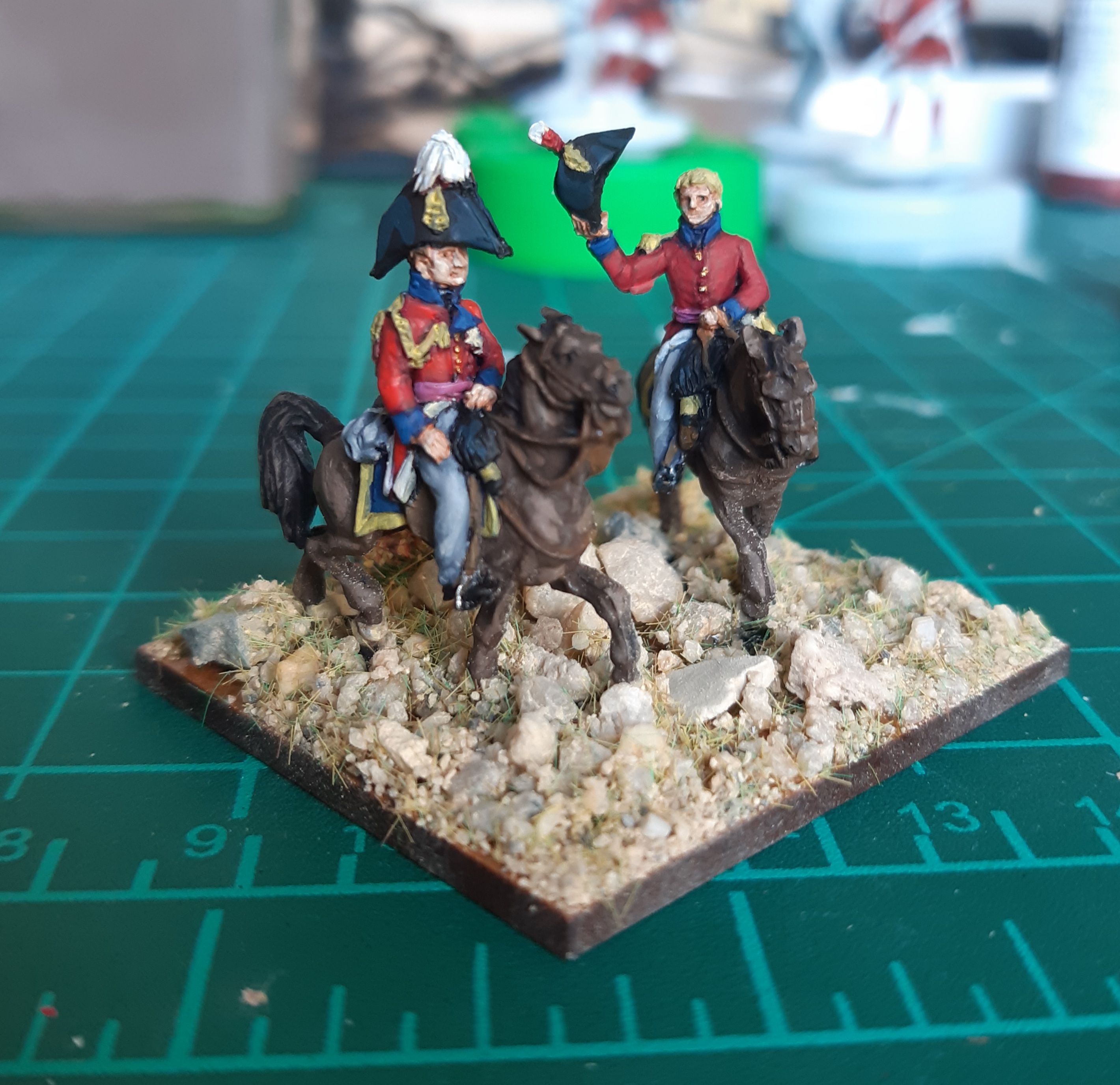
British Officers
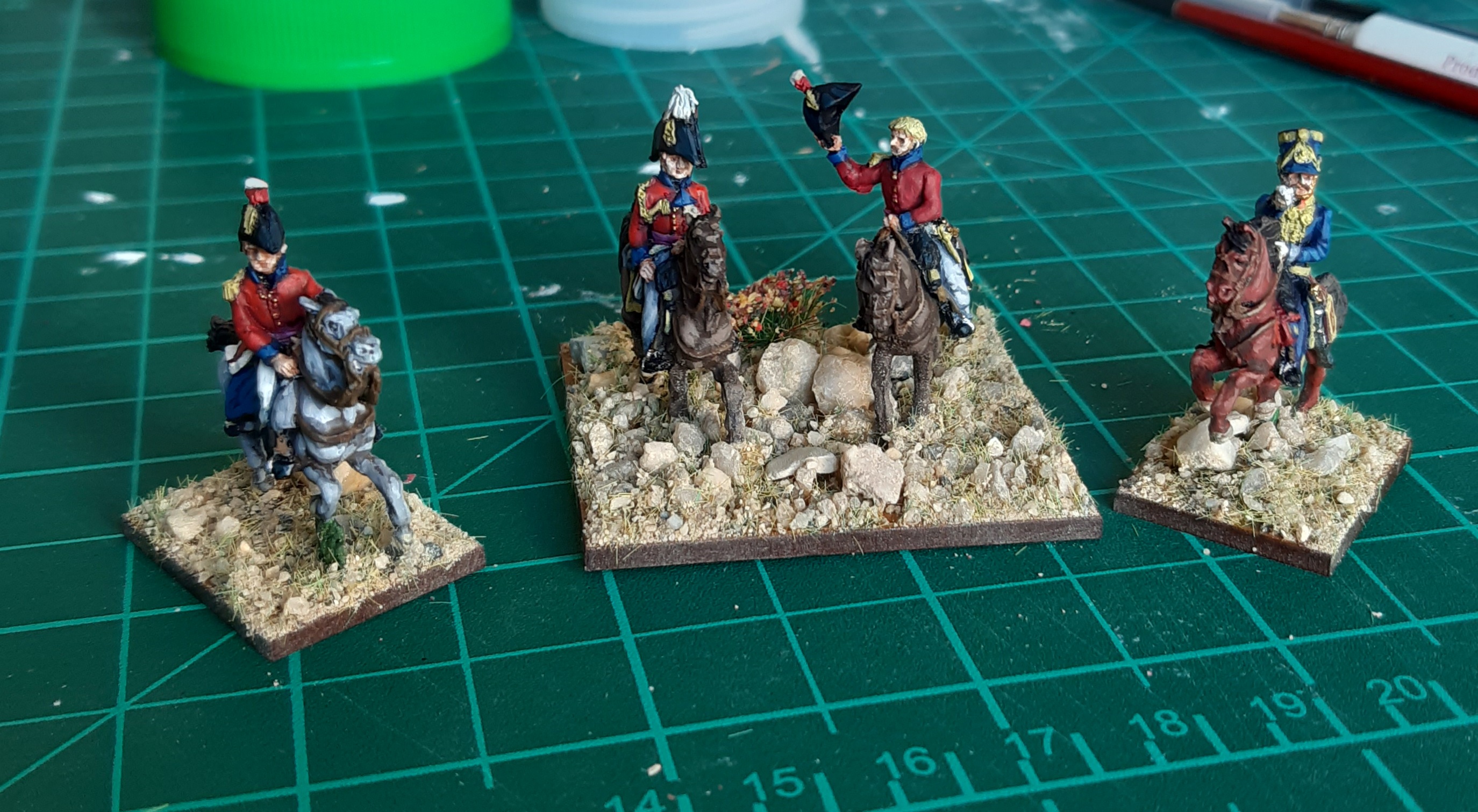
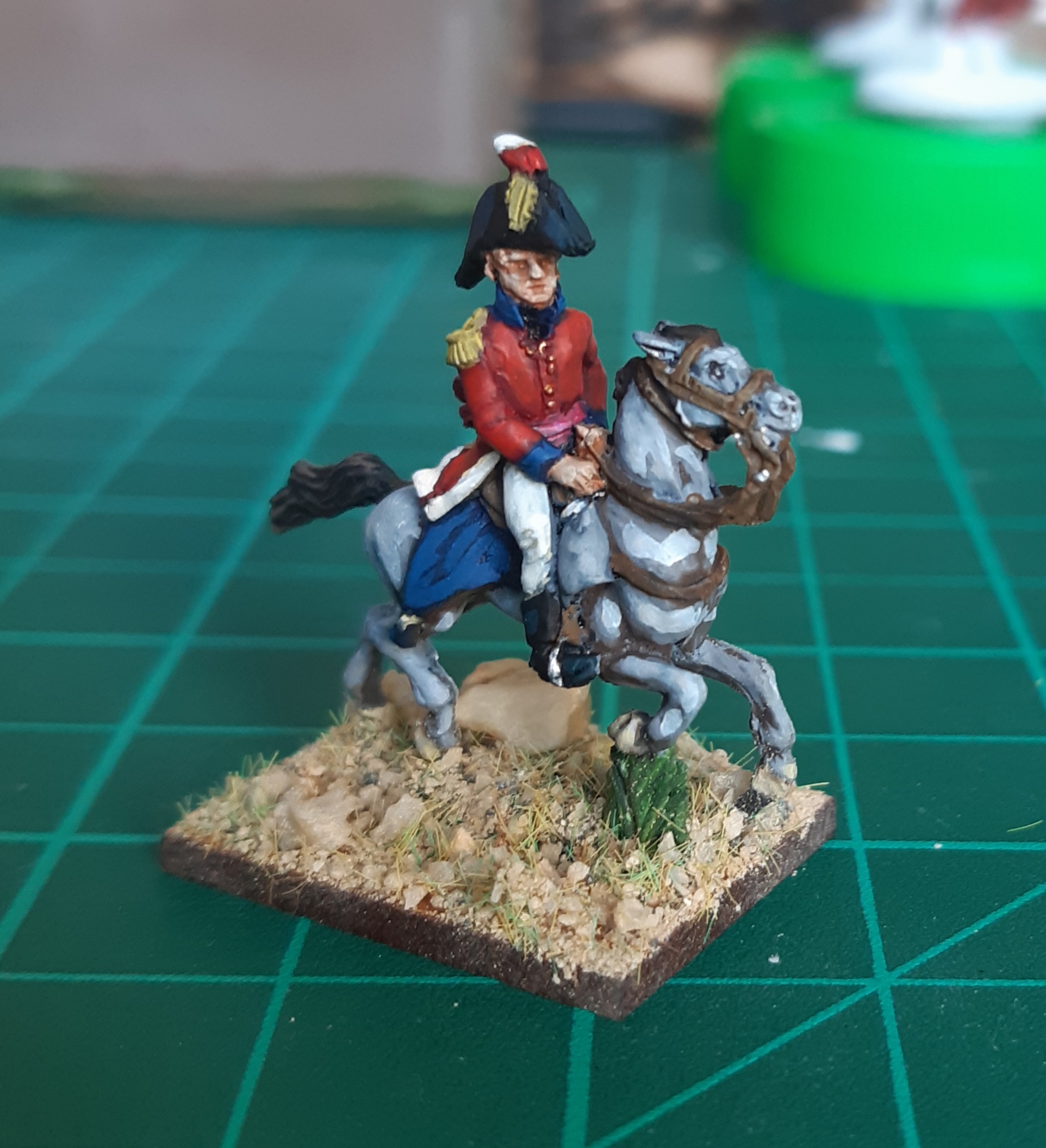
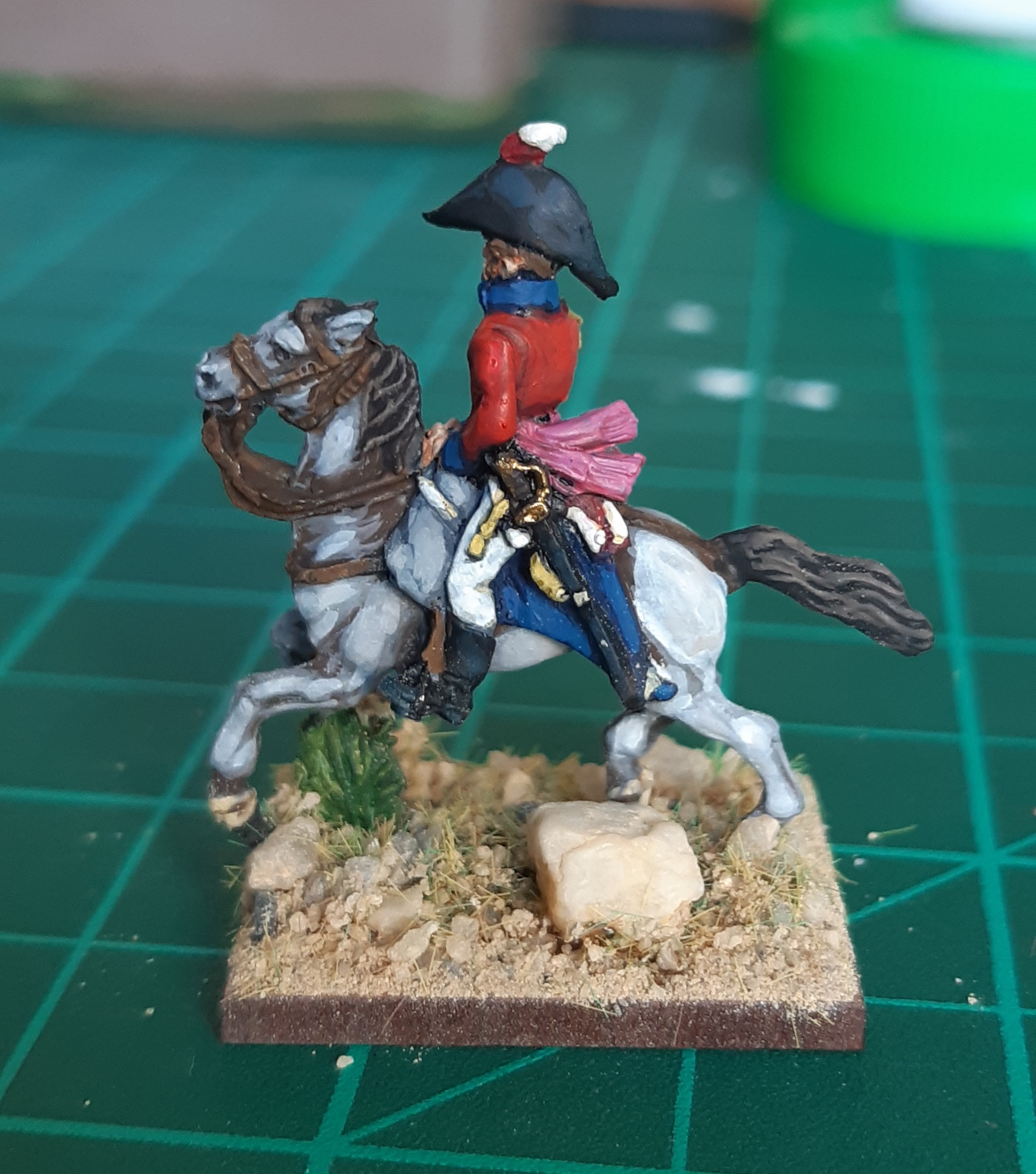
A pair of British Officers and ADCs by AB Miniatures. These are from a set designed for Waterloo, with two of the figures being Hill and Uxbridge.
Rowland ‘Daddy’ Hill served throughout the Peninsula Campaign, acting as a brigade commander during Moore’s ill fated campaign from 1808-9, and then as a divisional commander under Wellington from 1809, finally being entrusted with independent corps commands from 1811 to the end of the Peninsula War in 1814. The nickname of ‘Daddy’ Hill came from the fact he endeavoured to look after his men, and was in turn beloved by them.
Henry William Paget, the 1st Marquess of Anglesey, later the Earl of Uxbridge from 1812, had a far shorter Peninsula service record. He also served in Moore’s campaign, and as the commander of the British cavalry showed his leadership skills with victories over the French at Sahagun and Benavente in 1808, and demonstrated skillful handling of the British cavalry during the retreat to Corunna in 1809. He never returned to the Peninsula, as he eloped with Wellington’s sister in law, naturally making it impossible to serve alongside him. Stapleton-Cotton took his place as the cavalry commander in the Peninsula, and indeed Uxbridge only served at Waterloo due to the insistence of the Prince Regent.

2/45eme Regiment de Ligne
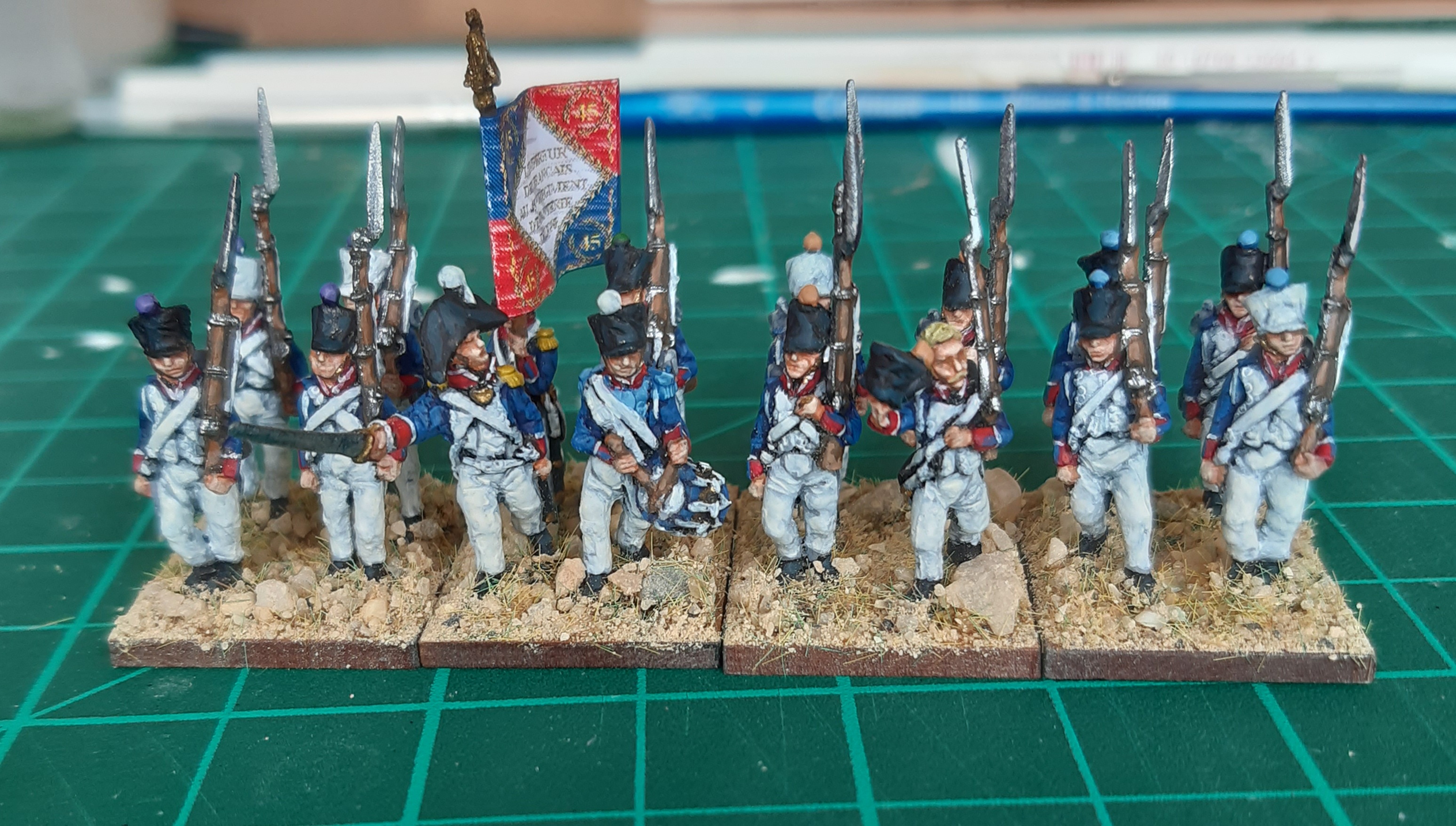
Another batch of Fusiliers and a command group have been finished, which means the second battalion of the 45eme is ready to join the first.
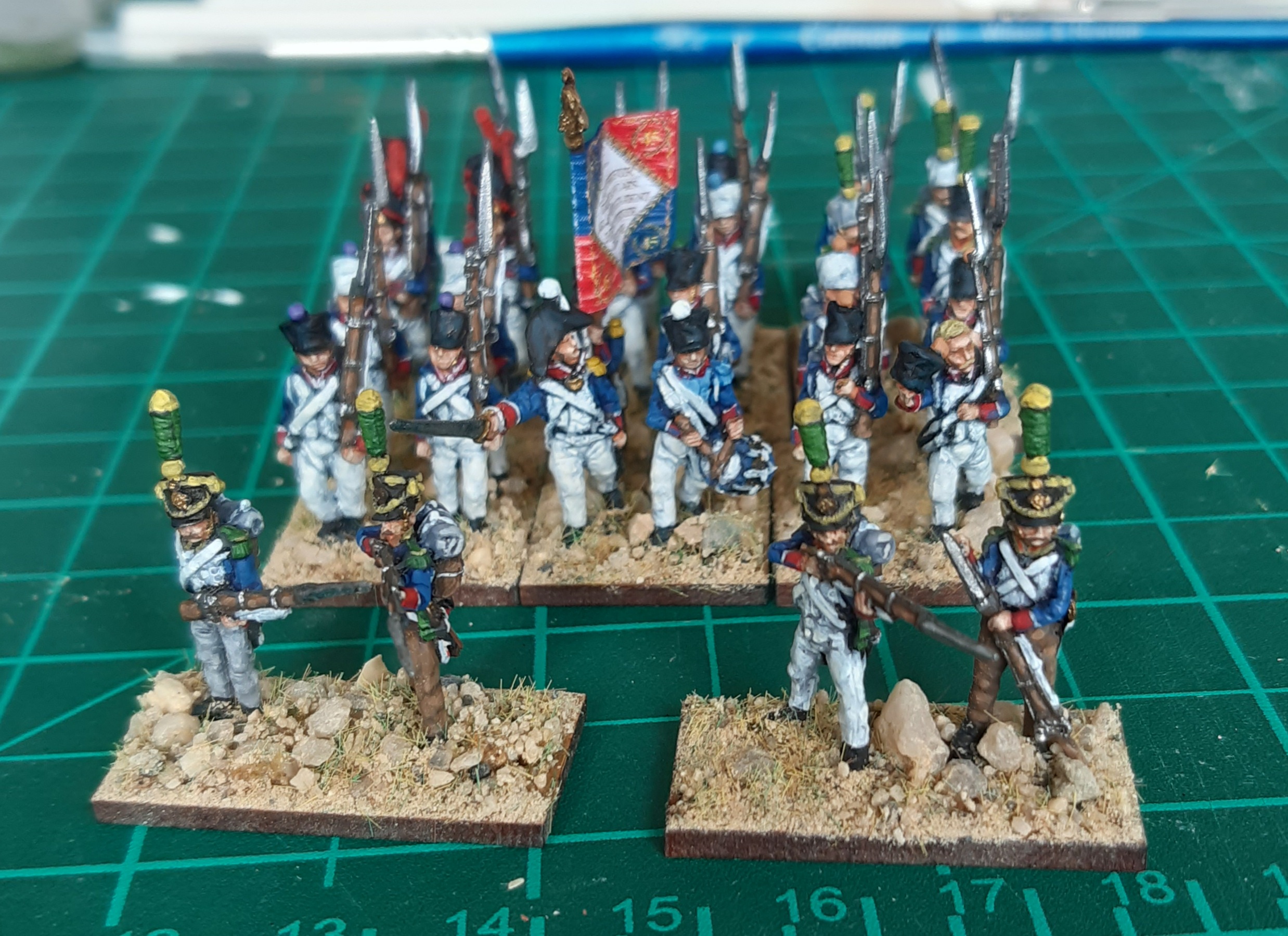
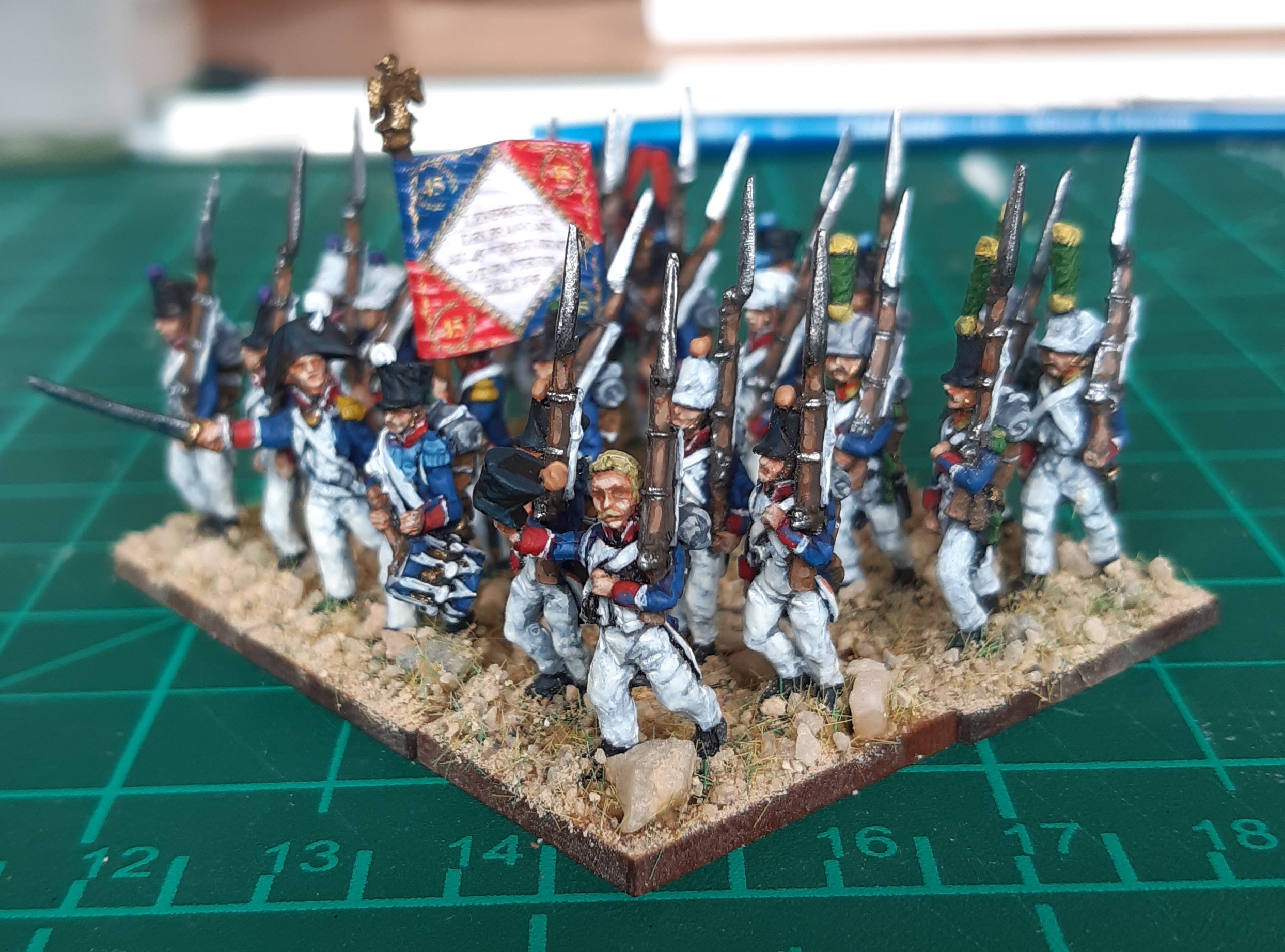
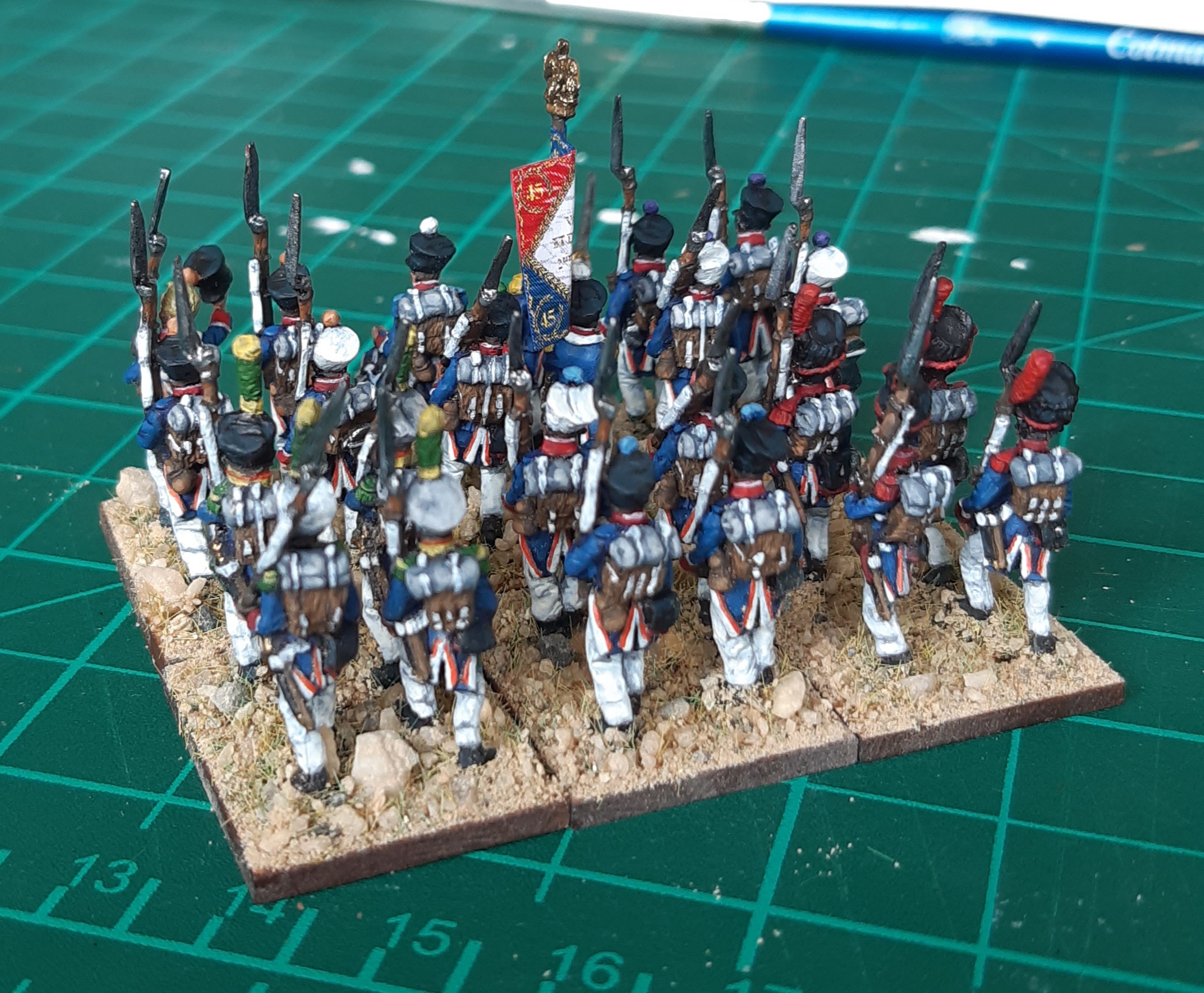

The second battalion was deployed alongside the 1/45eme for the majority of the Peninsula War, but it 1813 it was redirected to Germany after the disaster experienced by the Grand Armee in Russia. In Germany the 45th was charged with securing lines of communication, garrisoning strongholds and surveying the coasts.
All the models here are again by Xan, and the flag by Maverick Models. I particularly like the enthusiastic chap raising up his shako.
 A quick thank you for the Golden Button. Hearing positive comments and seeing recommendations are really appreciated and help keep motivation high.
A small note on some of the details seen in the last two posts for anyone new to Napoleonics. After 1808, Napoleon reorganised the structure of the Grand Armee. From that point onwards, each battalion was formed of six companies, and totaled 840 men (although battalions were rarely at full strength due to casualties and recruitment issues). For Line Infantry, two companies were the elites, the Grenadiers and the Voltigeurs. Also called flank companies, these formed at the right and left ends of the battalion respectively when formed in line.
The other four companies were composed of Fusiliers, with each company identified by a different coloured pom pom. 1st company had dark green, 2nd company sky blue, 3rd company orange, and 4th company violet. With the way I base my battalions, 1st company is usually represented by the command stand.
Some sources state that the 2nd battalions often unofficially had a white dot at the centre of the pom pom. I decided not to add that detail here, but might on another battalion later.
The drummer here has sky blue details. This was something specific to the 45eme that I picked out from browsing through images from a re-enactment group. Most French line infantry regiments had drummers dressed as per the fusiliers, but with orange, green or tricolour coloured piping. In 1810 drummer uniforms changed to a green jacket with white facing and red piping. This didn’t see full adoption until 1812.
1/45e Regiment de Ligne
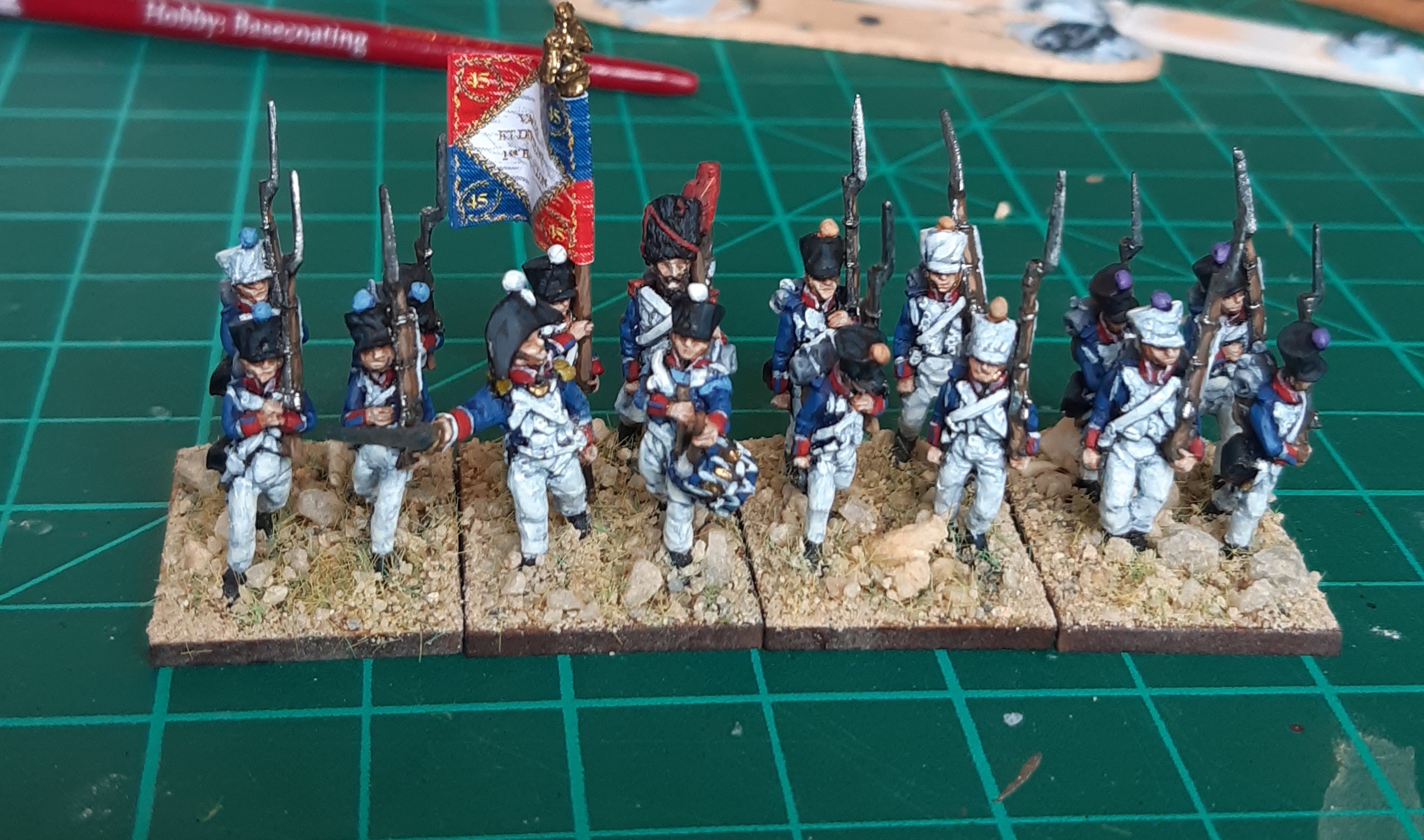
Fusiliers and command group finished, which when added to the previously painted grenadiers and voltigeurs, completes my first French line infantry battalion.
This is the first battalion of the 45eme Regiment, with the second battalion to follow in due course.
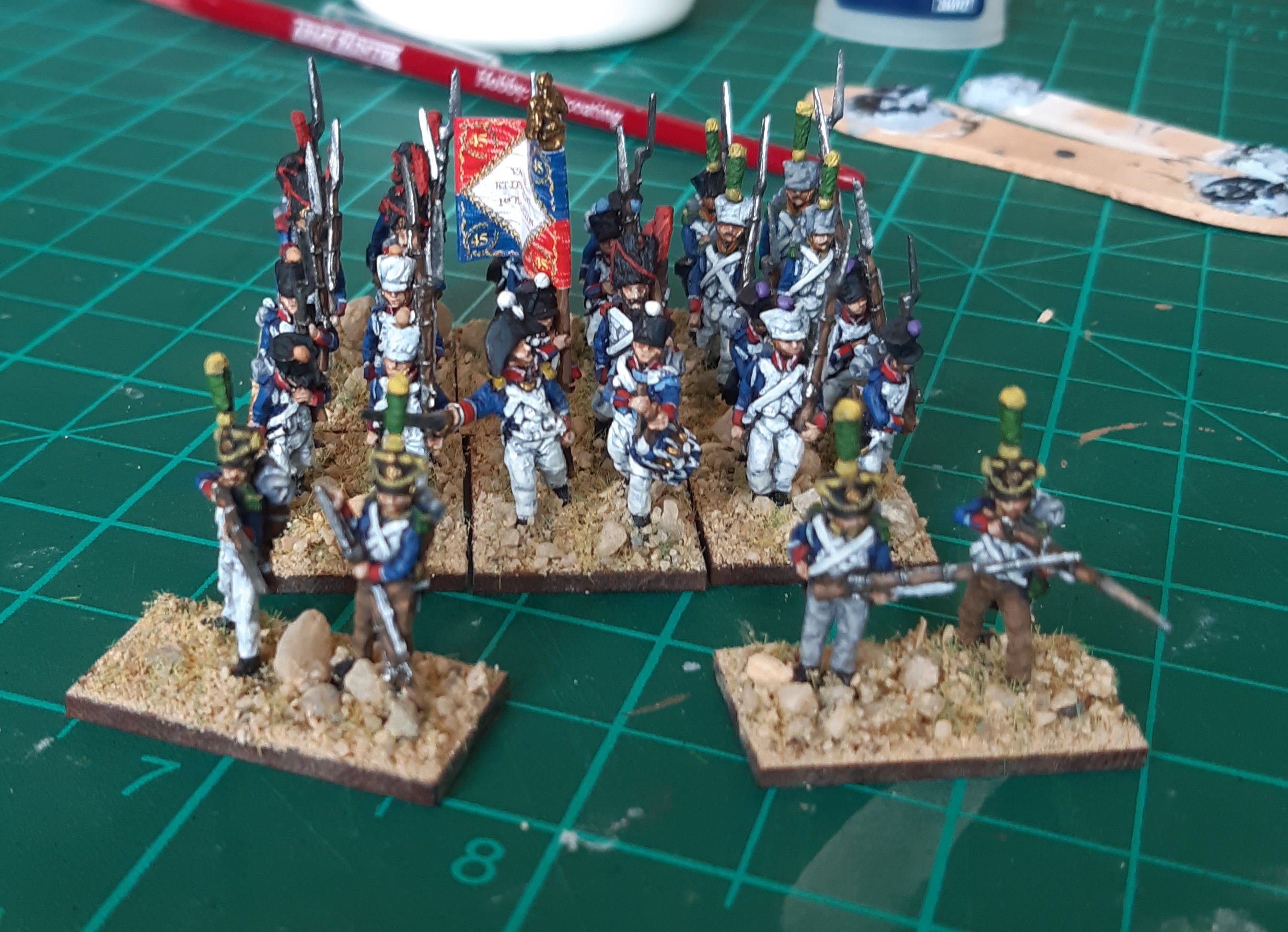
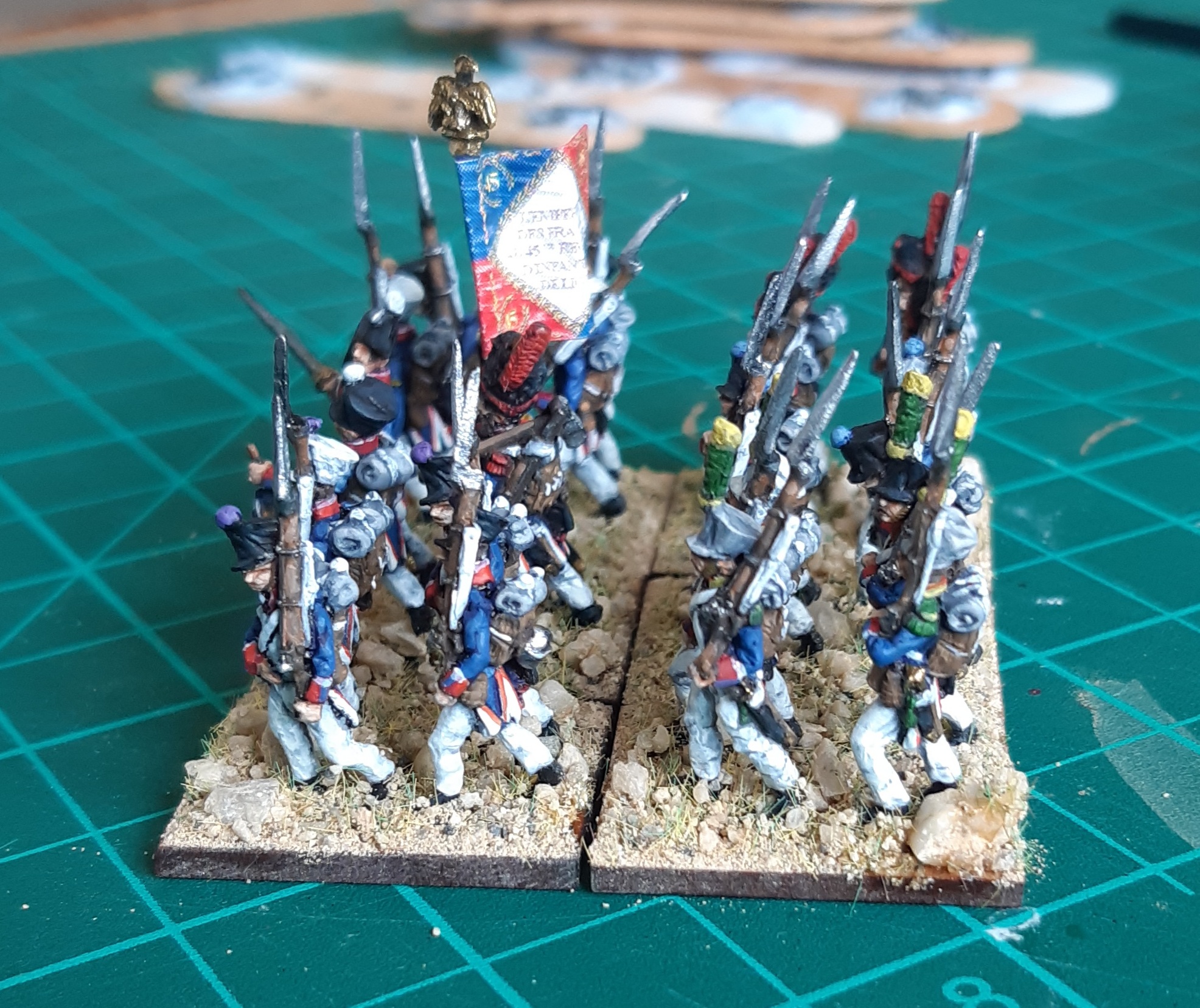

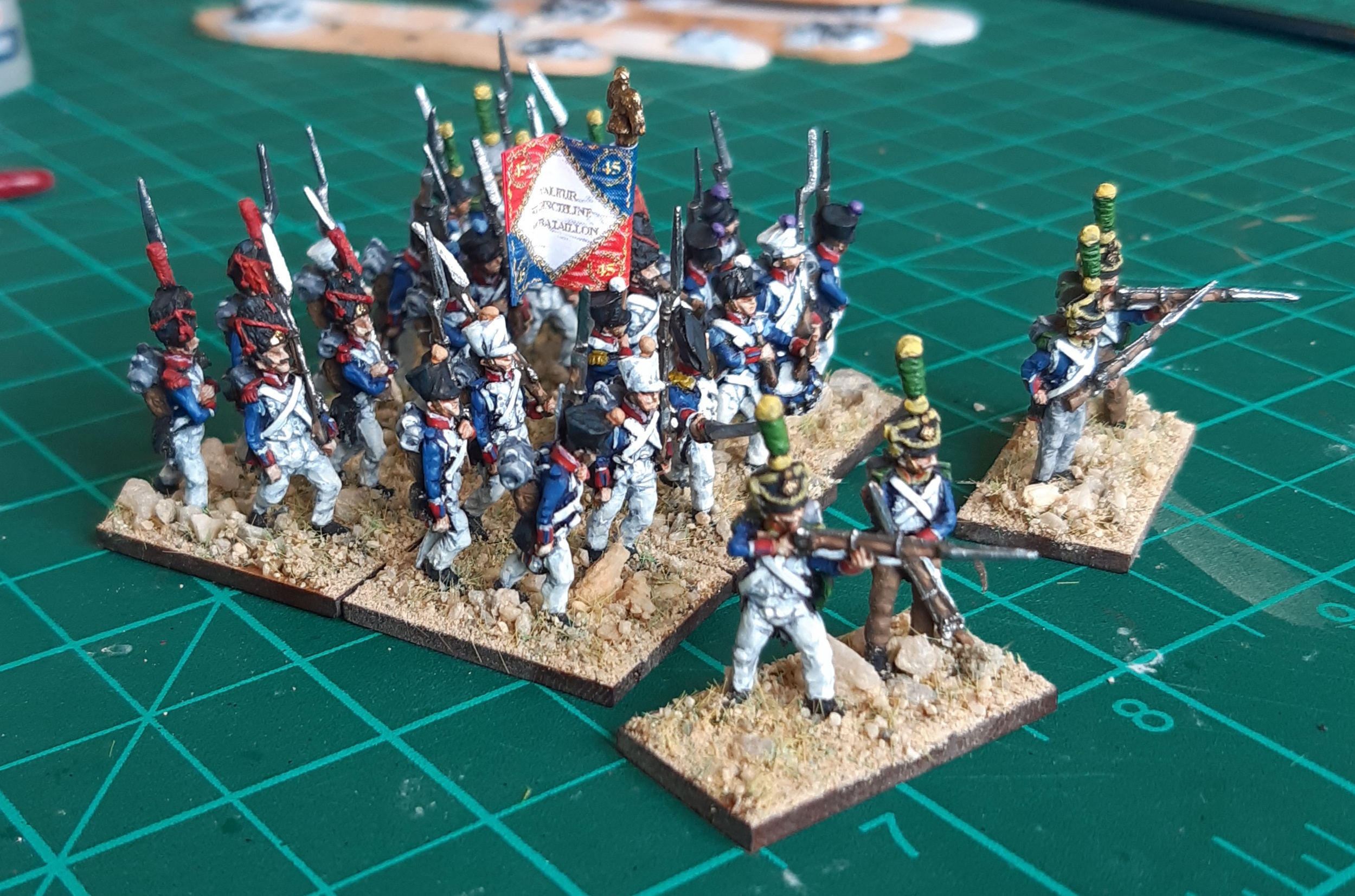
The 45e Regiment were an ever present part of the Grande Armee, having served from Valmy in 1792 up to Waterloo in 1815, and fought in numerous battles all across Europe. They were ordered to Spain in 1808, with the 1st battalion participating in many battles against the British and Spanish, including Talevera, Vittoria and Toulouse. At the latter they held a redoubt against fierce opposition, and only had 100 combat capable men left when they retired from the field.
All models are by Xan. The flag is from Maverick-Models.com, which has a huge range of flags for Napoleonic and other eras. They will adjust flag sizes on request too, which is extremely handy.
Voltigeurs
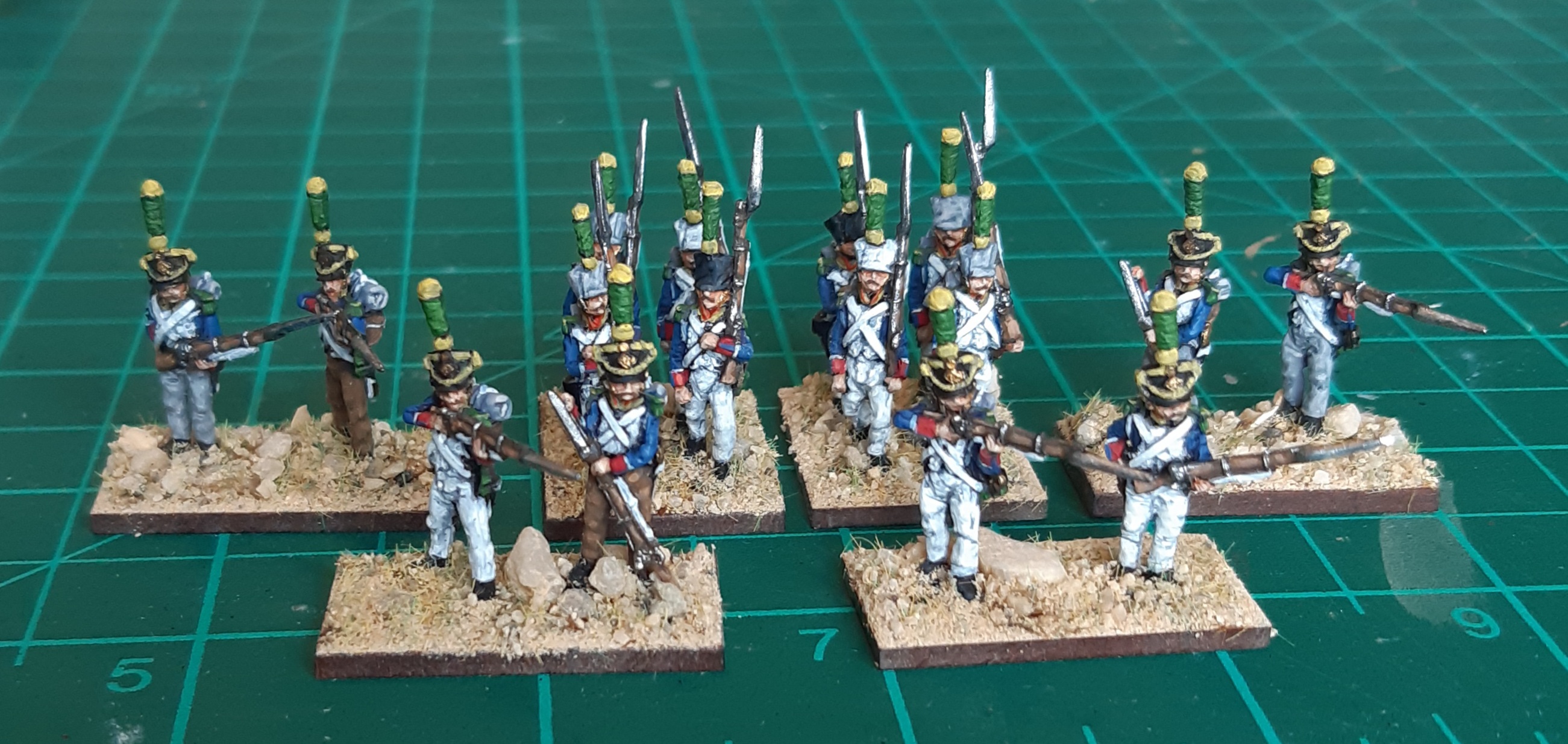
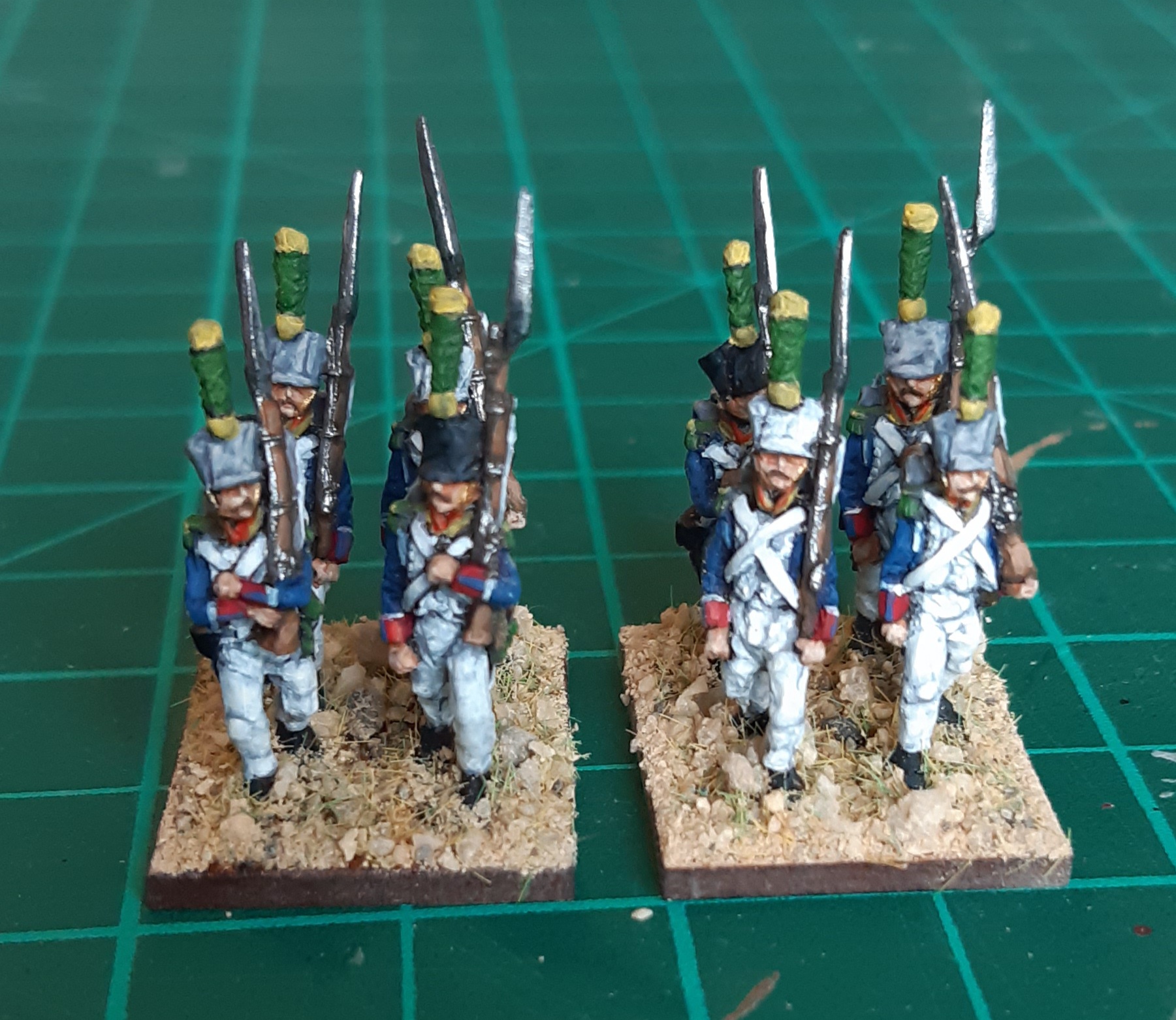
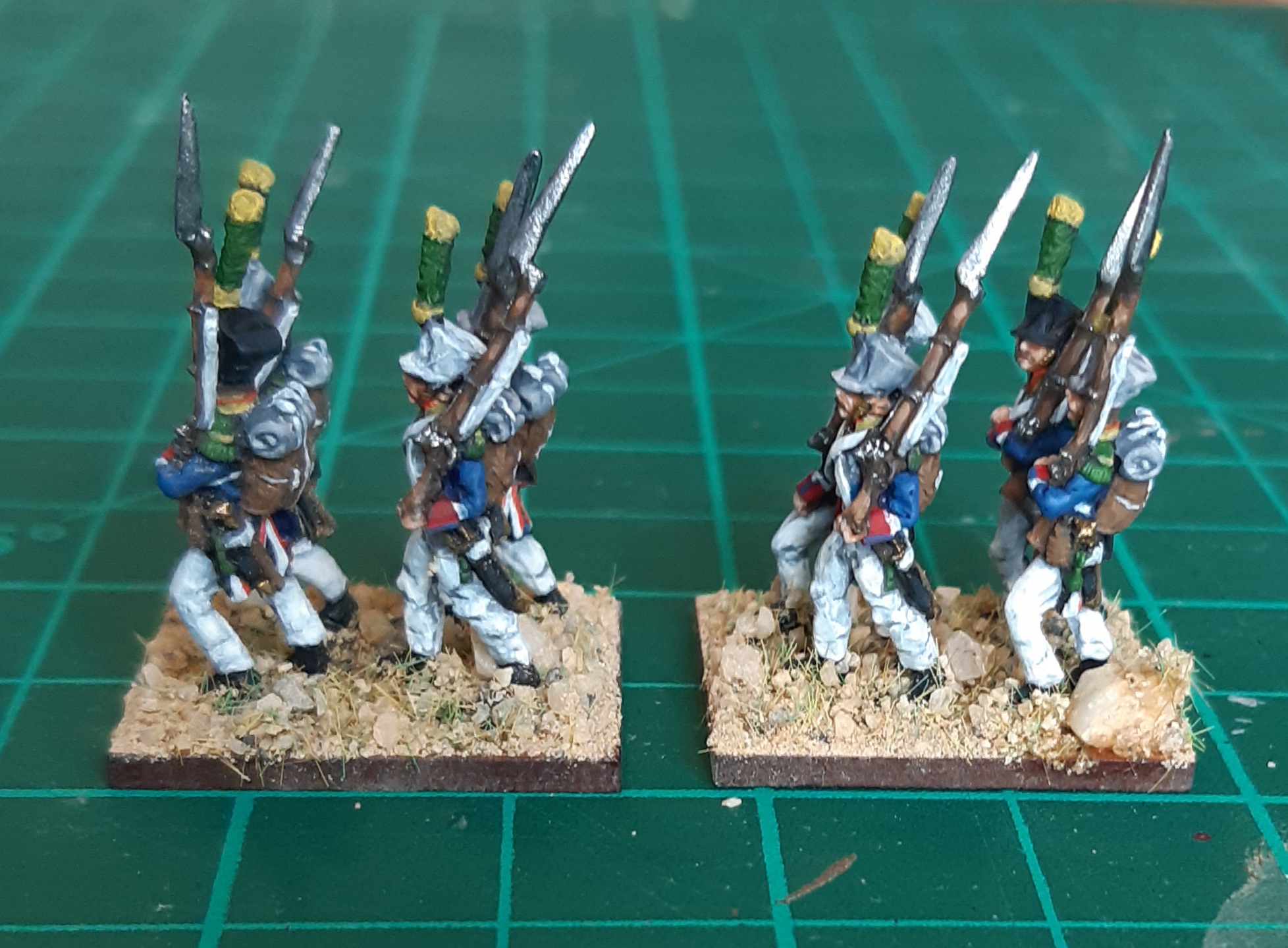
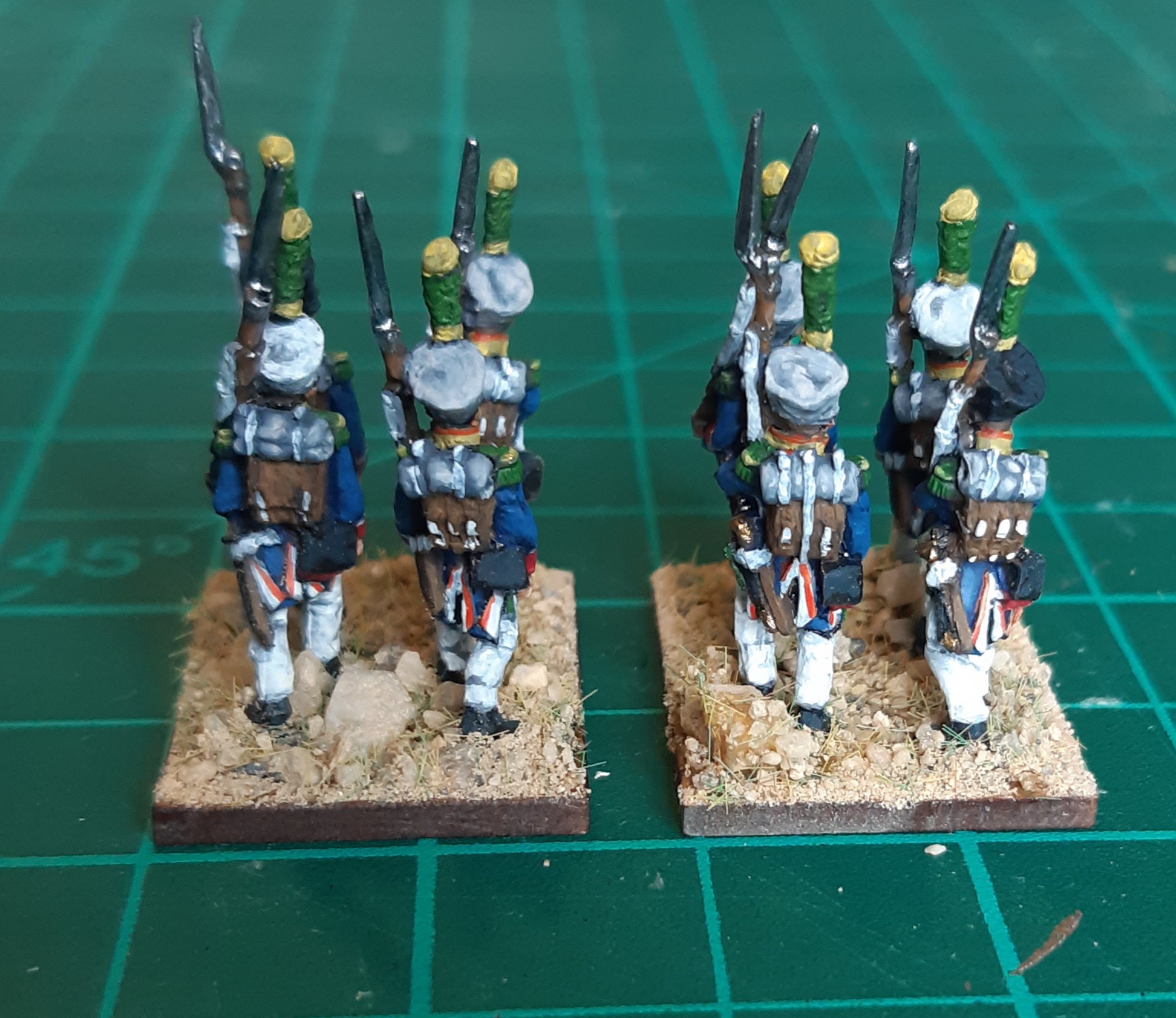
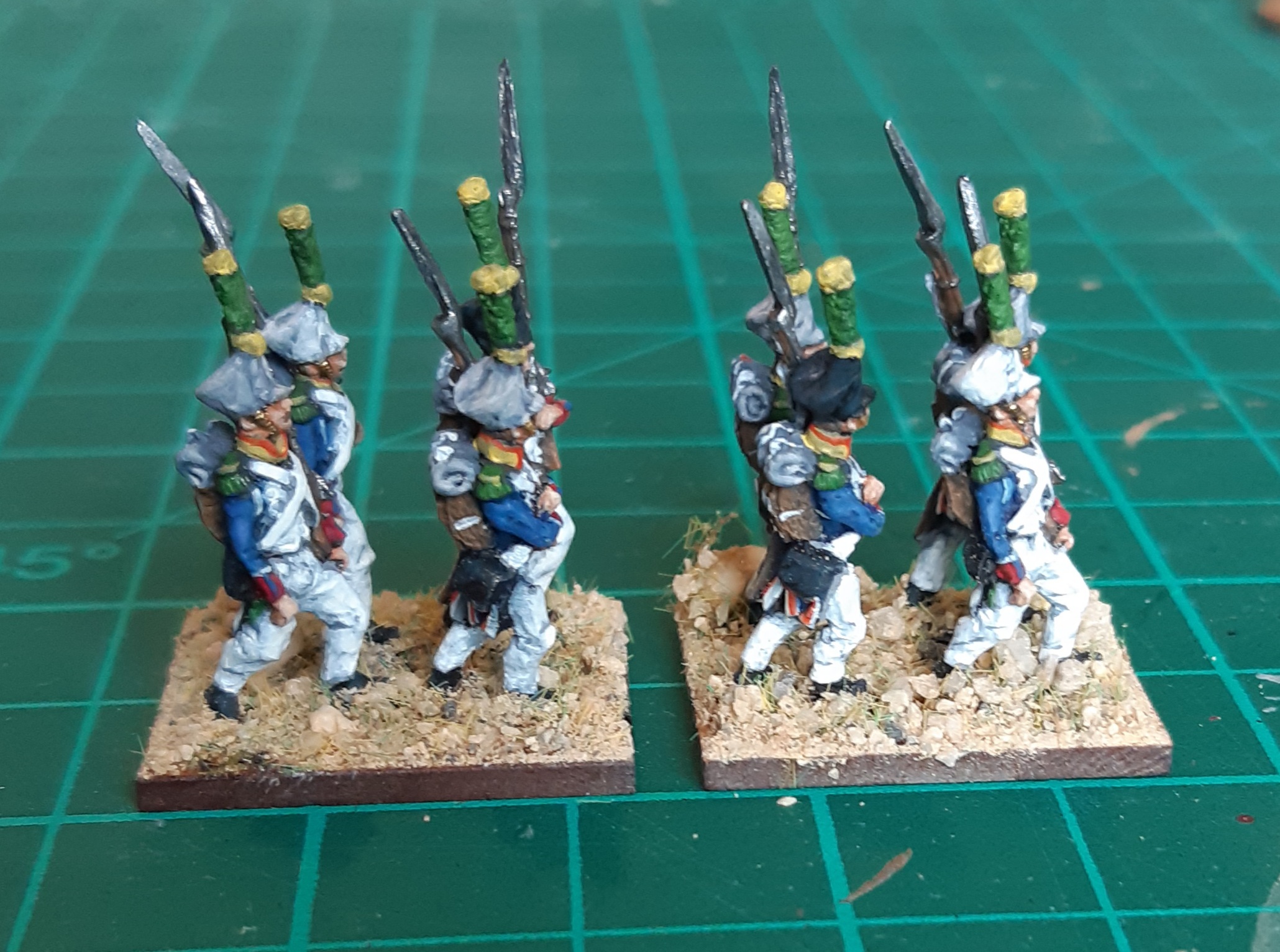
A small swarm of French Voltigeurs, represented the skirmish bases and formed companies for two line infantry battalions.
There’s a fair bit of variation between regiments in the distinctive yellow and/or green colours of the Voltigeurs. This lot are going to be the 45eme Regiment d’Infanterie de Ligne, who I believed had yellow bands around their shako tops plus yellow and green plumes. I could be entirely wrong, but I like the end result.
All the models are by Xan.
Vive l'Empereur!
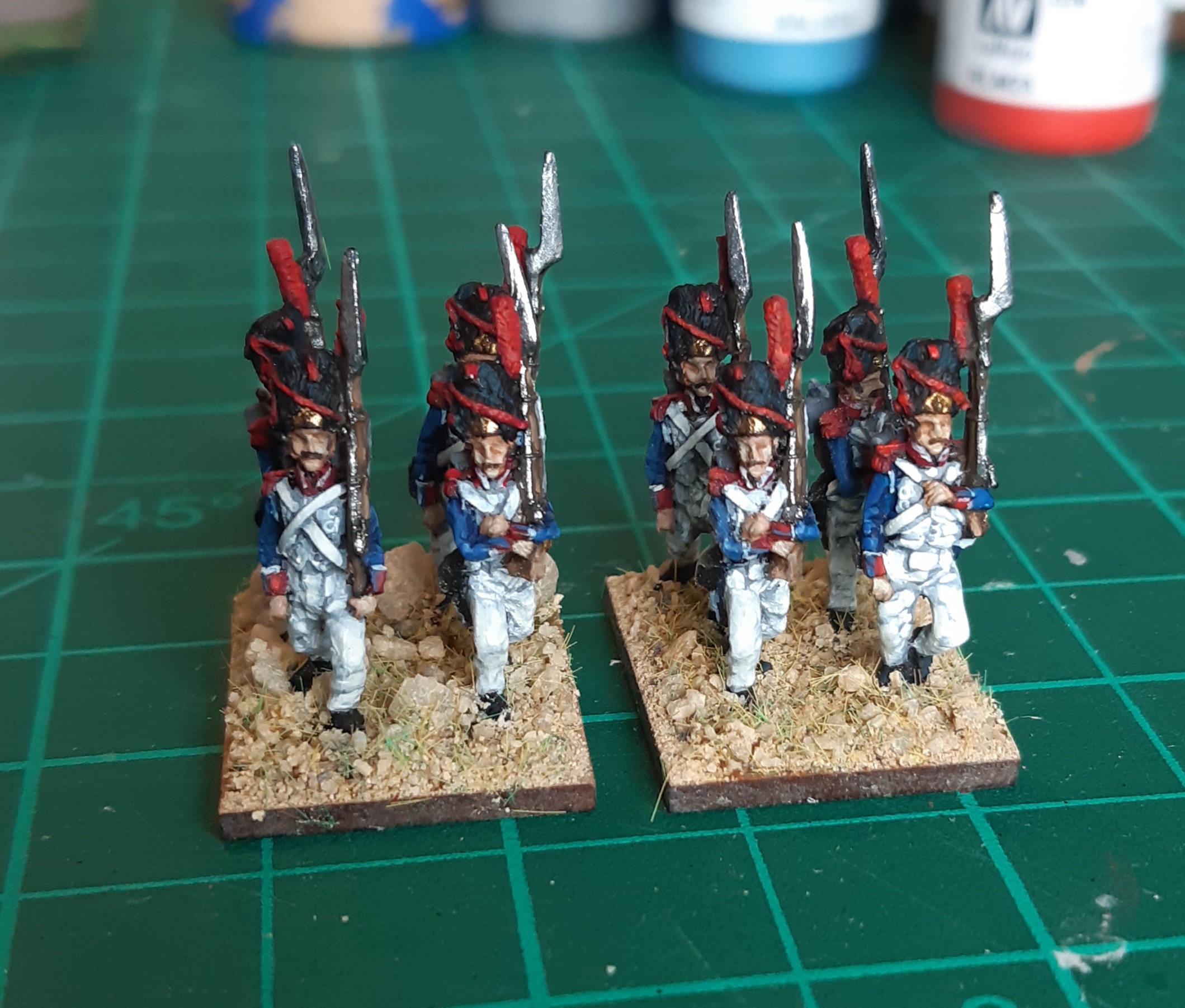
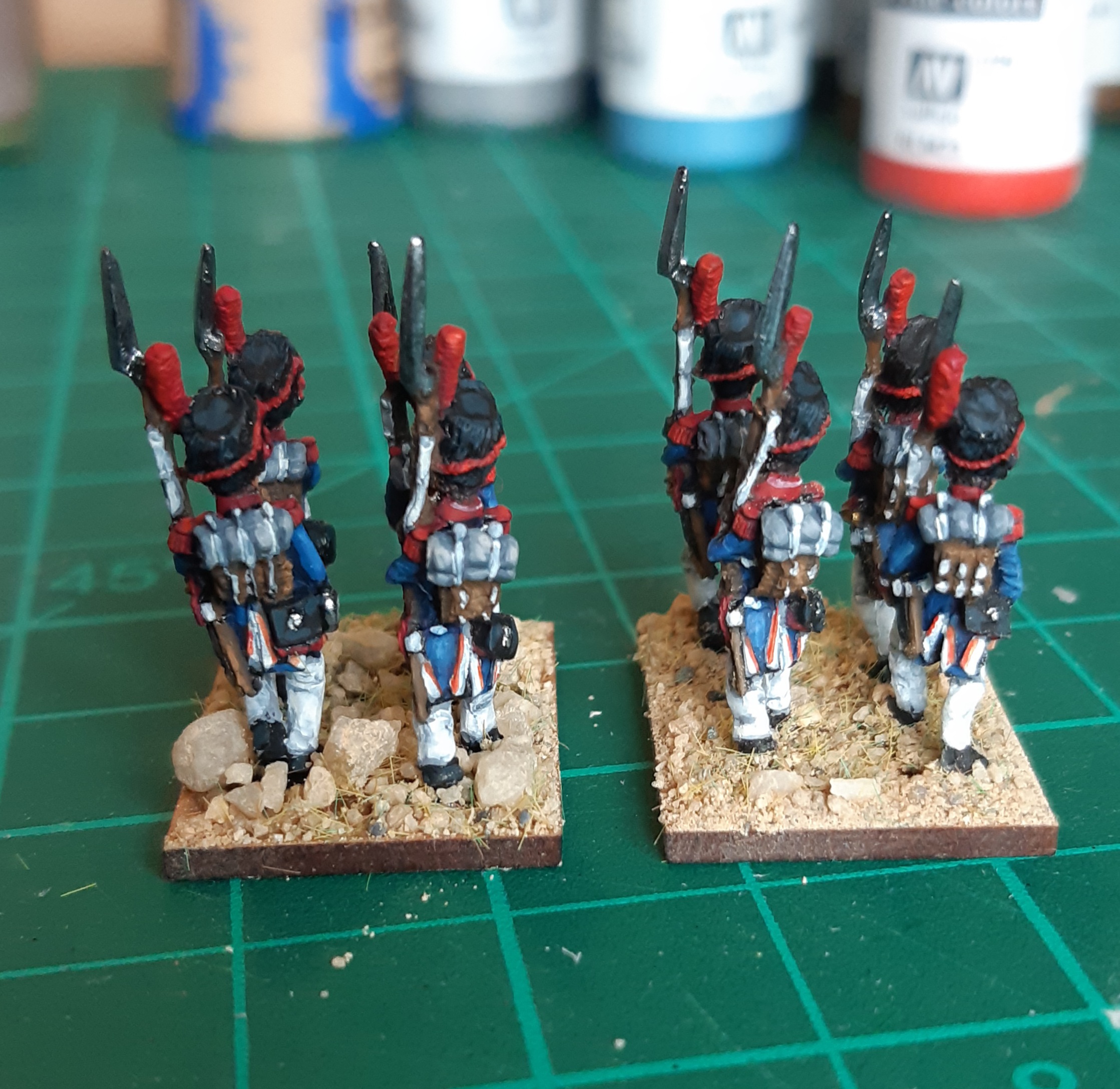
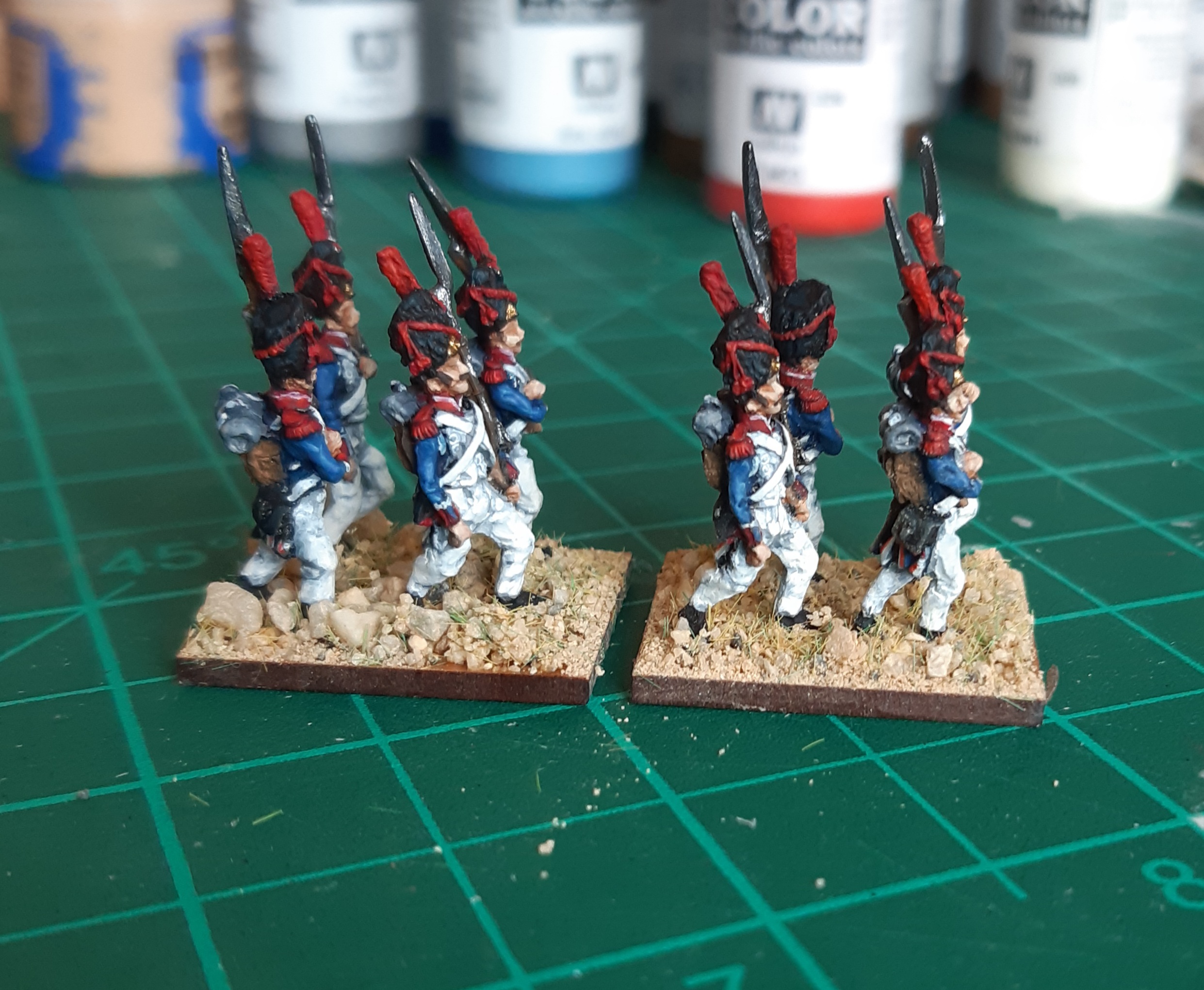
After a little pause over April whilst I concentrated on some other projects, I made a start on my French infantry. I decided to lump two line infantry battalions together, and split out the different troop types into batches. This was done with a view to helping me learn the differences in the details and colours that distinguish grenadiers from voltigeurs and fusiliers.
Grenadiers were first up, with a swarm of Voltigeurs next on the paint desk.

KGL 1st Hussars
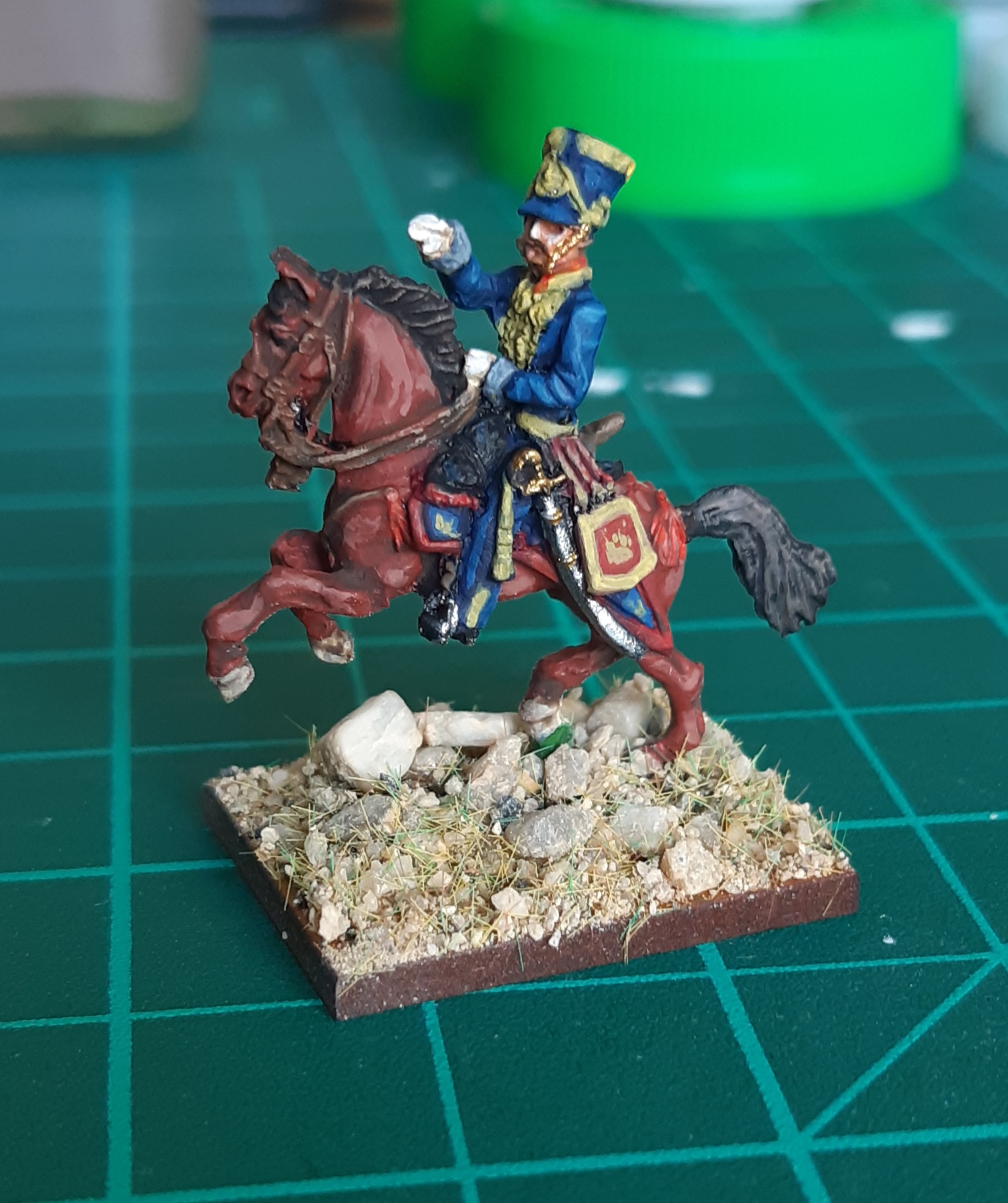
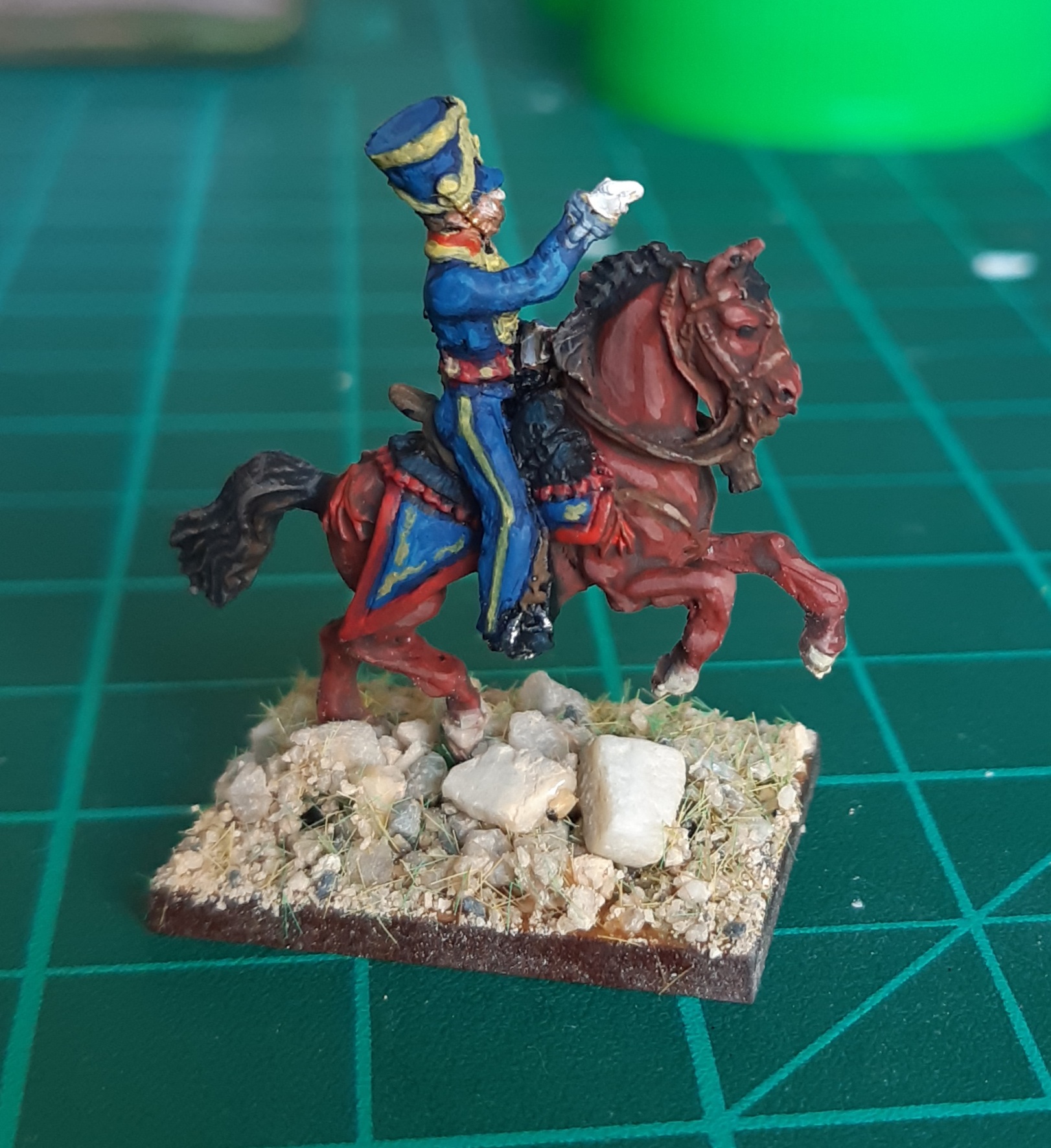
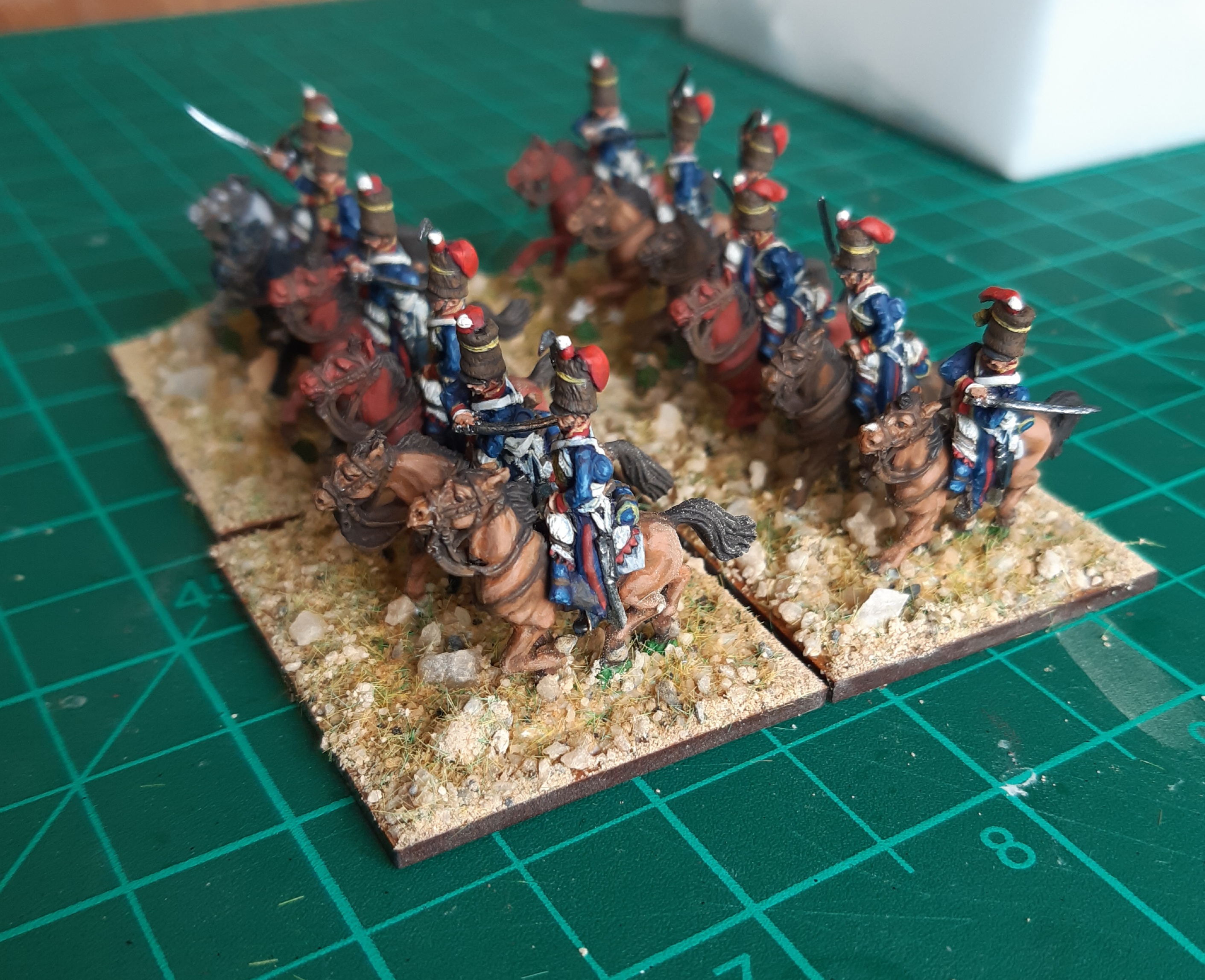
Since the King’s German Legion (KGL) represented around 20% of Wellington’s fighting strength, it would be remiss not to include some in my collection. In particular, I wanted some of the KGL light cavalry. Light cavalry were responsible for all of the reconnaissance and outpost duties. The KGL hussars performed outstandingly during the Peninsula campaign, and compared so favourably to the British cavalry, that, when they served together, nearly all of these duties were imposed on the former.
The 1st hussars in particular were well known for their quality in terms of both their effectiveness when undertaking picket work, as well as being a reliable and formidable opponent on the field of battle.
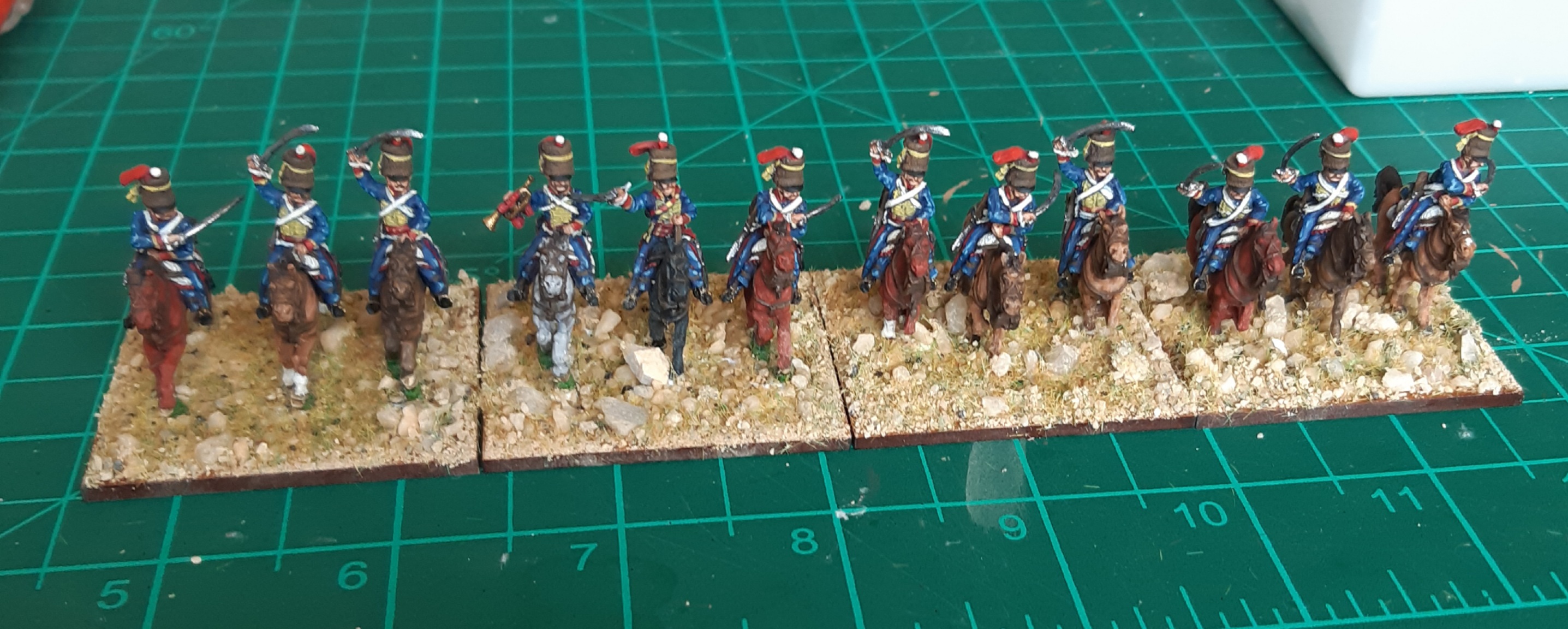
According to English custom, the hussars had no colours. I found different information regarding trouser colours, with some sources stating they should be white, whilst others showing blue with red stripes. I went with the latter as being a bit more interesting to paint.
The models are all by AB Miniatures.

92nd Regiment of Foot - Gordon Highlanders
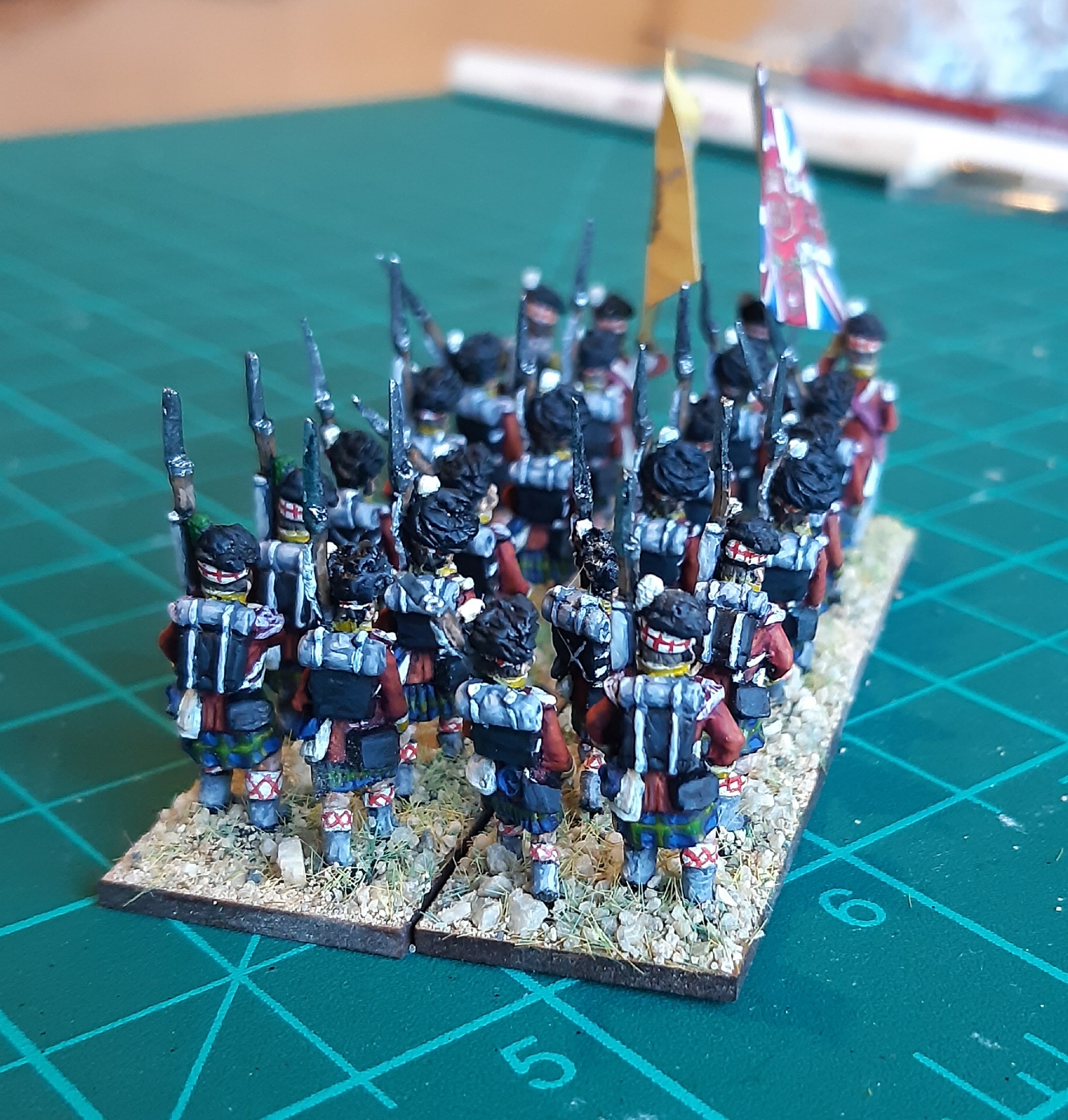
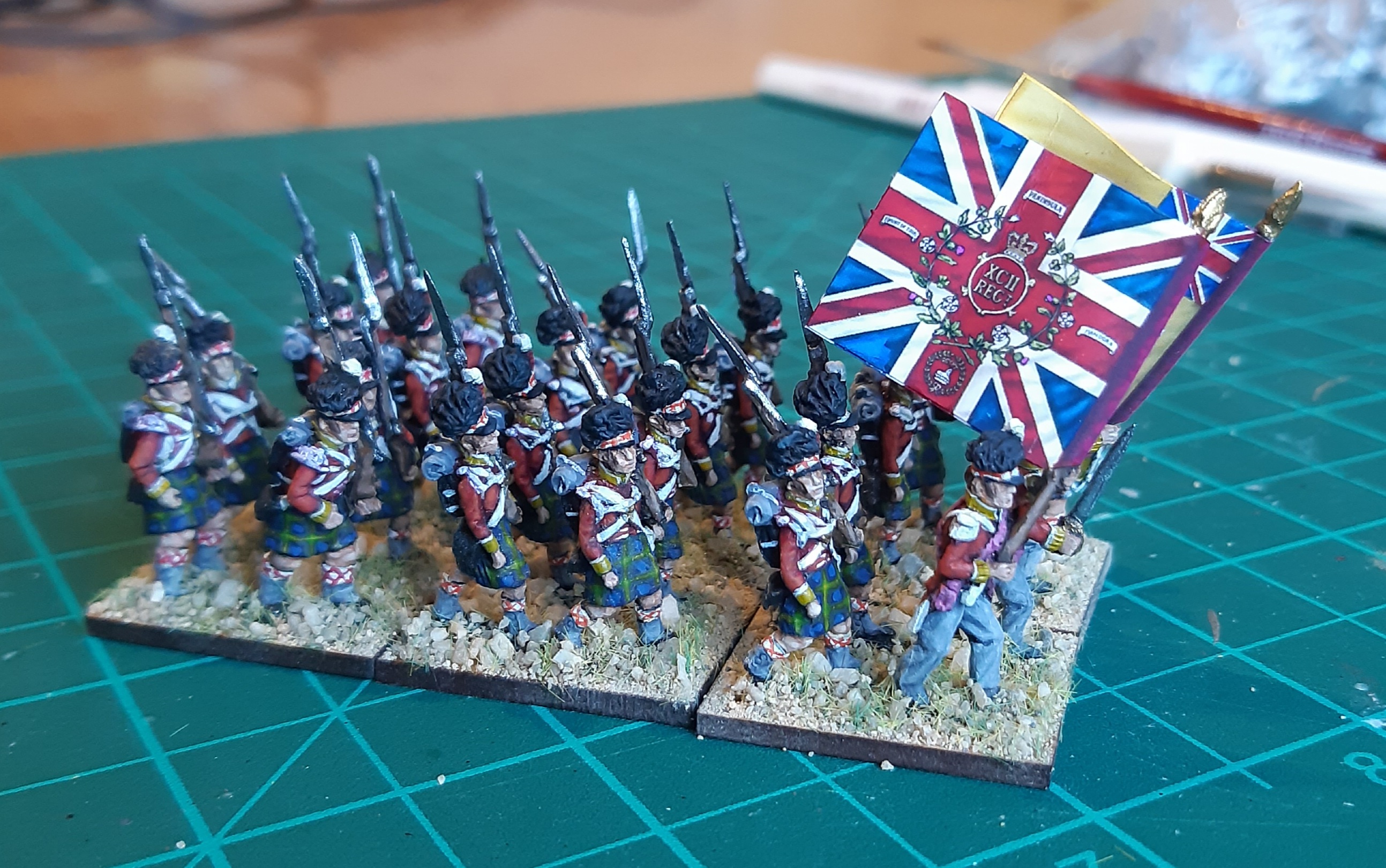
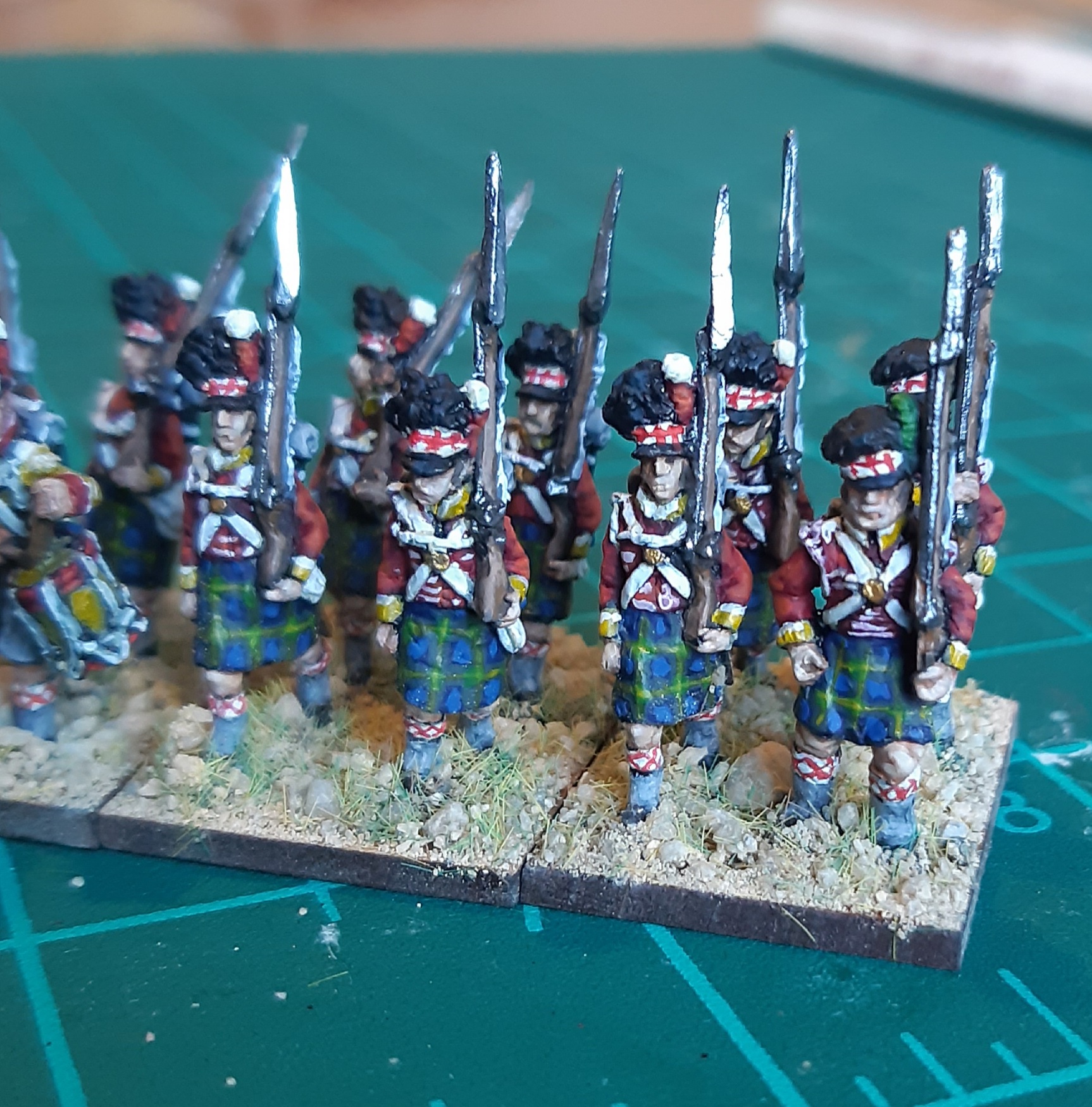
The Gordon Highlanders were originally raised in 1794 by the Duke of Gordon, and were known as the 100th Regiment of Foot. Many of the original recruits were drawn from the Gordon estates. The early recruitment campaign was assisted by the Duke’s wife, who was said to have offered a kiss as an incentive to join her husband’s Regiment.
Renumbered the 92nd regiment in 1798, the Gordon Highlanders saw extensive action during the Revolutionary and Napoleonic wars – from the Netherlands, Egypt, Denmark and the Peninsular War through to the Battle of Waterloo in June 1815.
There’s a painting called The Gordons and Greys to the Front by Stanley Barkley, which captures an event at Waterloo, where some soldiers from the Highlanders clung to the stirrups of the passing Scots Greys so that they could reach the French troops as the cavalry passed by the regiment to chase down the scattering French. I think this incident seems to encapsulate the fearsome fighting spirit of the Gordon’s very well.
The regiment’s cap badge and motto come from the crest of the Dukes of Gordon, being a stag head surrounded by ivy. The motto ‘Bydand’ is a Scots word meaning ‘Steadfast’
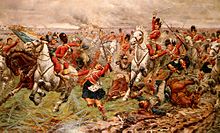 The Gordon's and Greys to the Front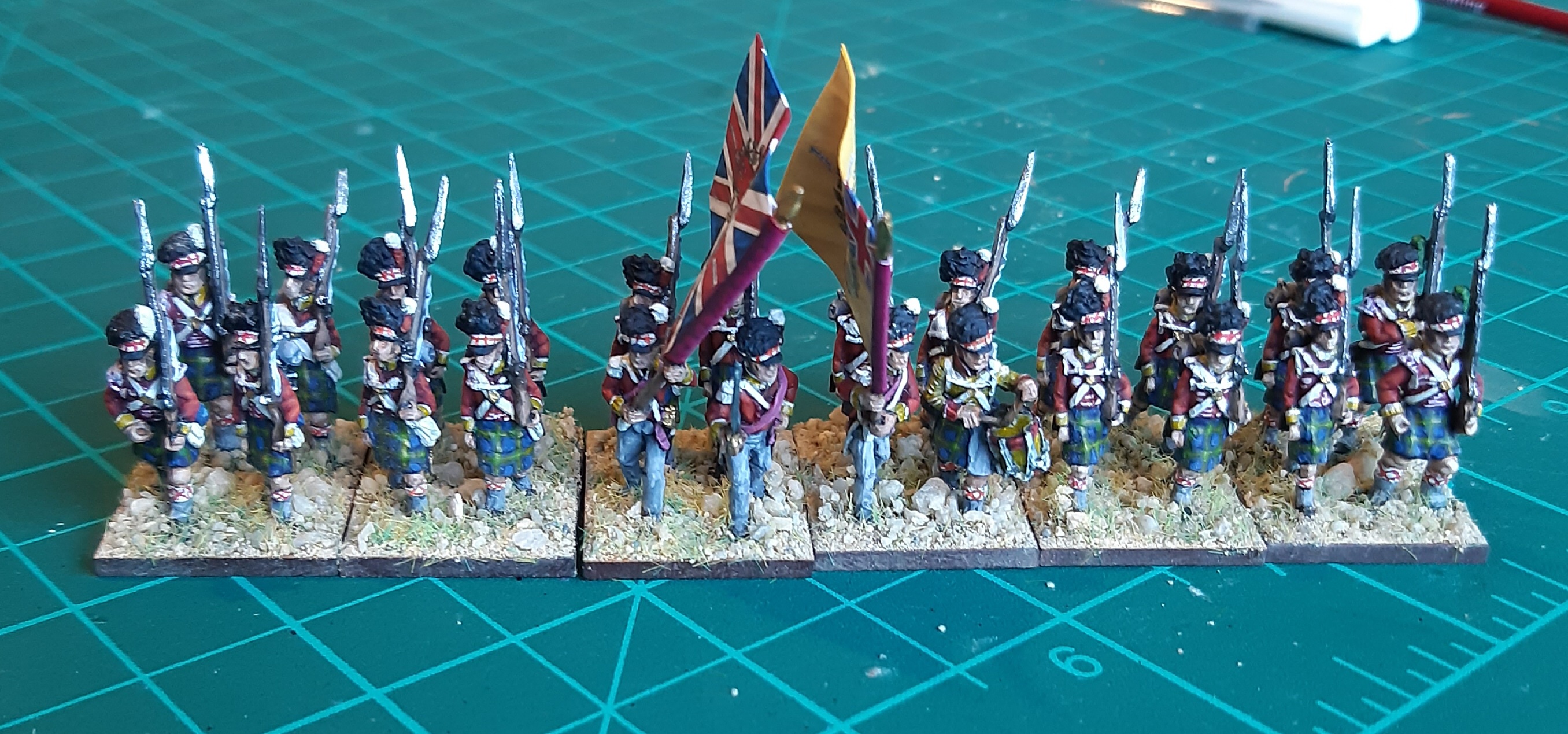
The models are a mix, with the flank companies and command group by Campaign Game Miniatures, and the centre company by Xan. The colours are from GMB Flags.
Finishing the Gordon’s means I’m also done with tartan for a while. Next up will be some more cavalry.