





A Foray into Napoleonic Wargaming




Recommendations: 1710
About the Project
Documenting my progress on collecting and painting 15/18mm Napoleonic miniatures. This started with challenging myself to try my hand at painting miniatures at a smaller scale, and to look at a historic setting rather than fantasy or Sci-fi. I went for Napoleonics as I have an interest in the history of the period, there are some great ranges of minis, and there's a certain appeal in having painted blocks of Napoleonic troops. I'm not building a collection for any particular game system, or following an order of battle, this is very much about enjoying the painting. I tend to have limited hobby time and I'm also a slow painter, so this is a very slow burn project.
Related Genre: Historical
This Project is Active
First Infantry Brigade Completed
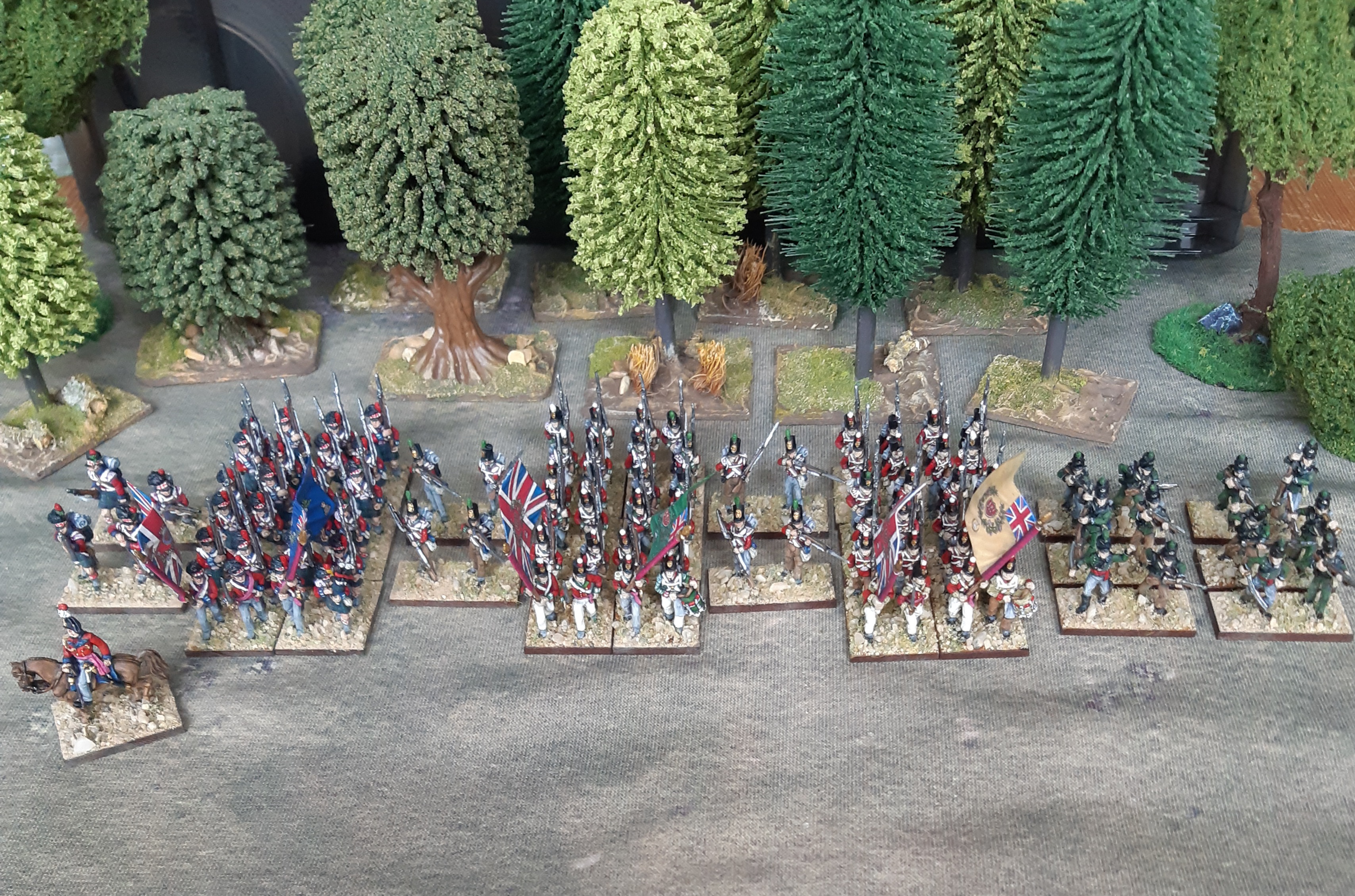 Battalions of the 42nd, 24th and 61st regiments, plus some supporting riflemen from the 95th.
The Black Watch is my third finished infantry battalion, which is enough to form my first infantry brigade.
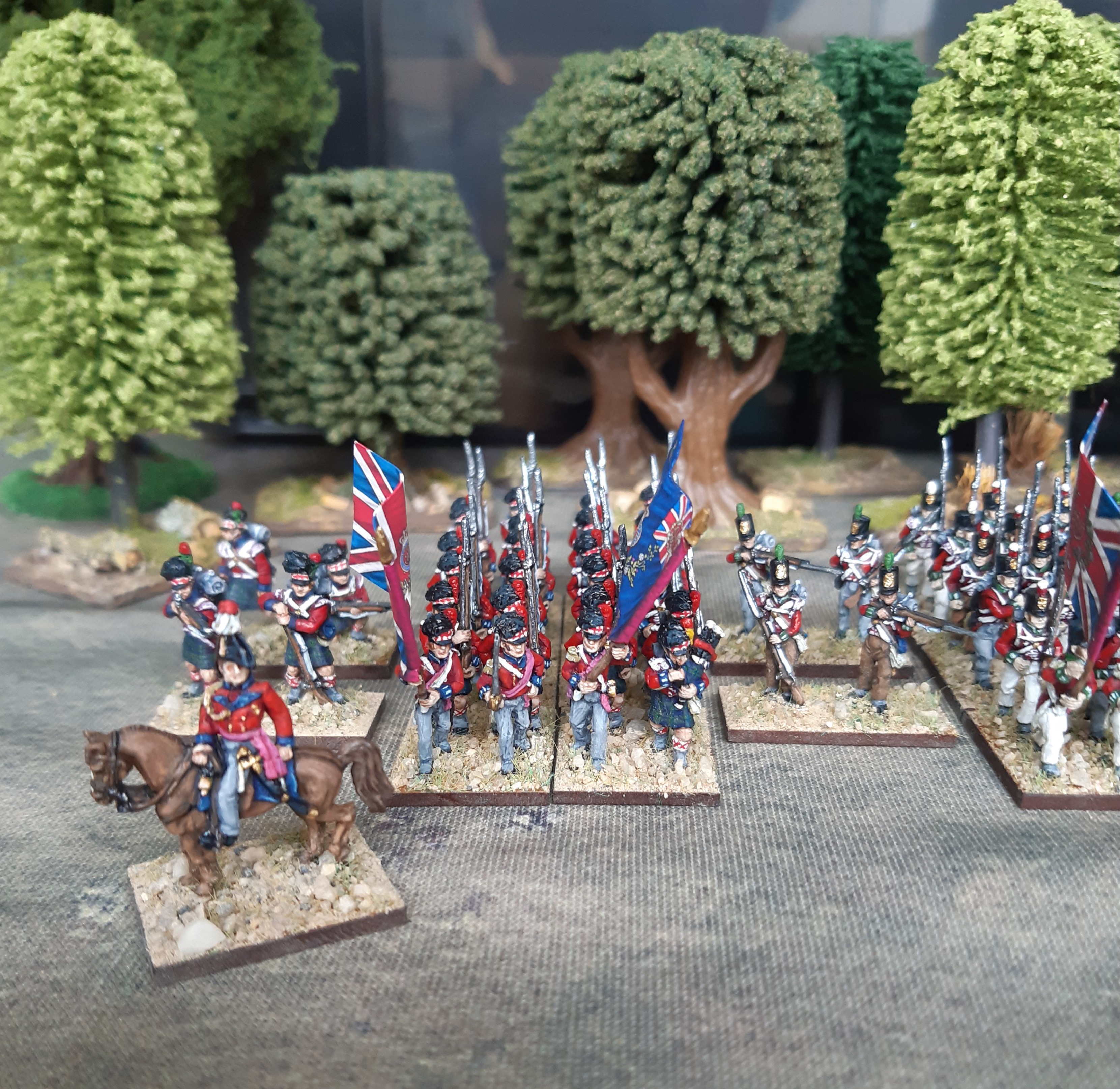
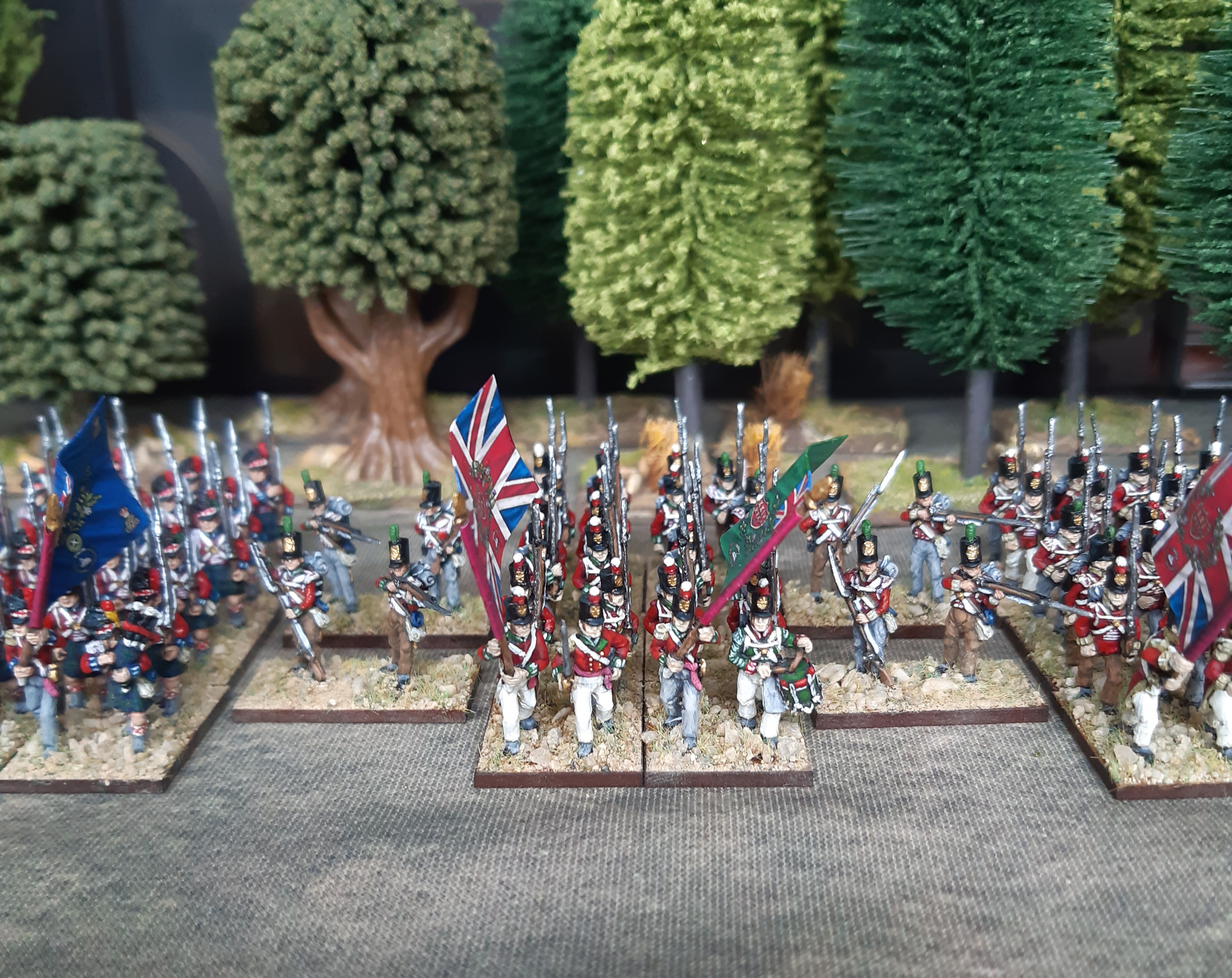
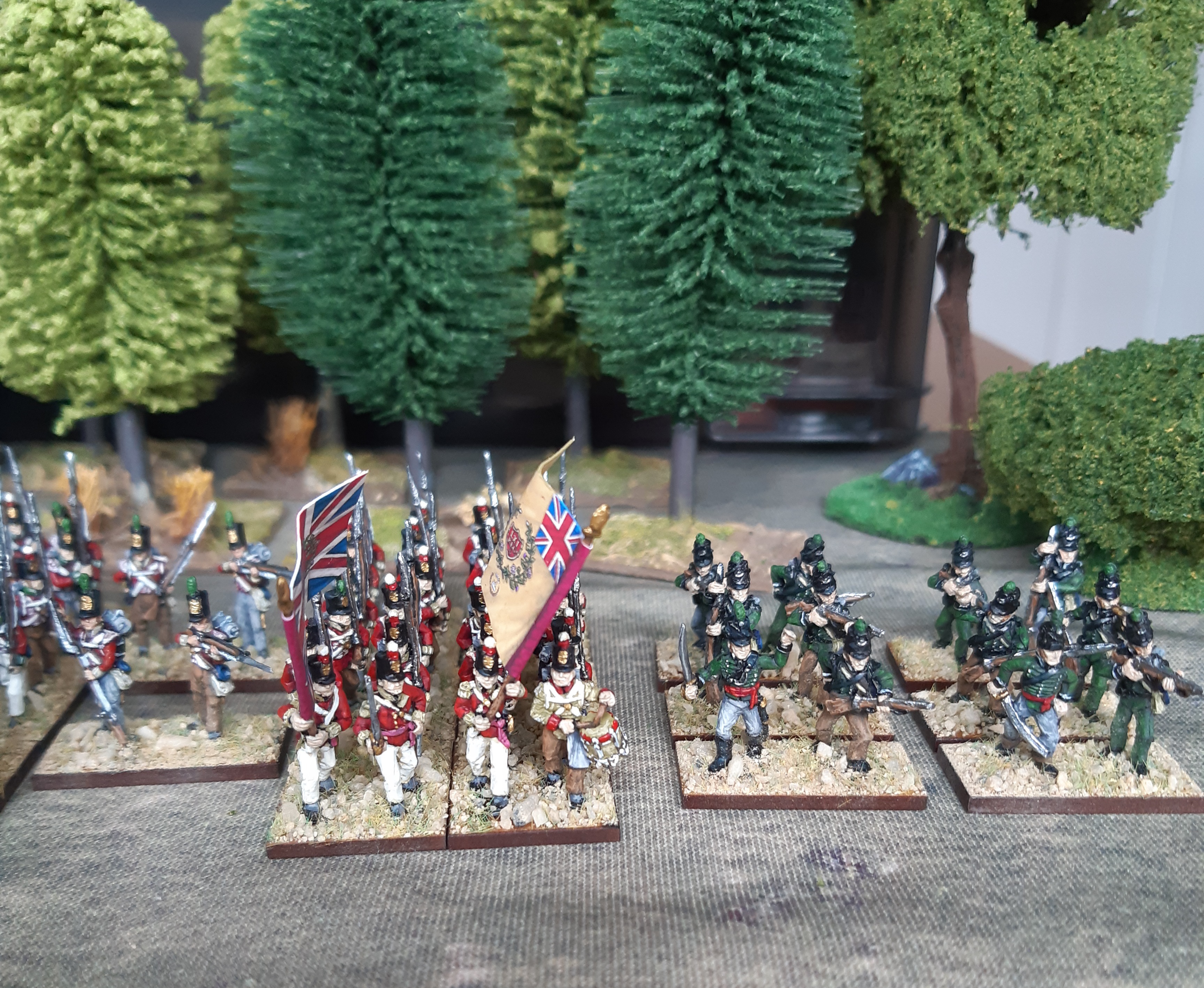
Having got one brigade completed, I’ve been planning what next to add to my Peninsula British collection. There’s two packages in the post bringing the next wave of miniatures.
The first is enough infantry for a second brigade, including a few more highlanders so I can paint the Gordon Highlanders, another line battalion and a light battalion. The second batch is some cavalry, namely a battalion of both hussars and light dragoons.
The final element to a rounded force is some artillery, and there’s already some Royal Horse Artillery awaiting assembly on my painting desk.
42nd Royal Highland Regiment - The Black Watch
When deciding to put together a collection of Peninsula British, I definitely wanted to include the 42nd (Royal Highland) Regiment, more commonly known as the Black Watch. The regiment was awarded ten battle honours during the six years that it serviced in the Peninsula, with either the first or second battalion present at the majority of the most significant battles against the French.
The title of ‘the Black Watch’ can be traced back to the foundation of the regiment. In the aftermath of the first Jacobite Rebellion in 1715, militia companies were raised from loyalist Highland clans for policing and peacekeeping duties. These companies were commonly known in Gaelic as ‘Am Freiceadan Dubh’, or ‘The Black Watch’, due to the dark coloured government-issue tartan, and their role to “watch” the highlands. In 1739 King George II requested that four such companies should be raised and formed into a single line regiment. The Black Watch became the regiment’s official name in 1881.
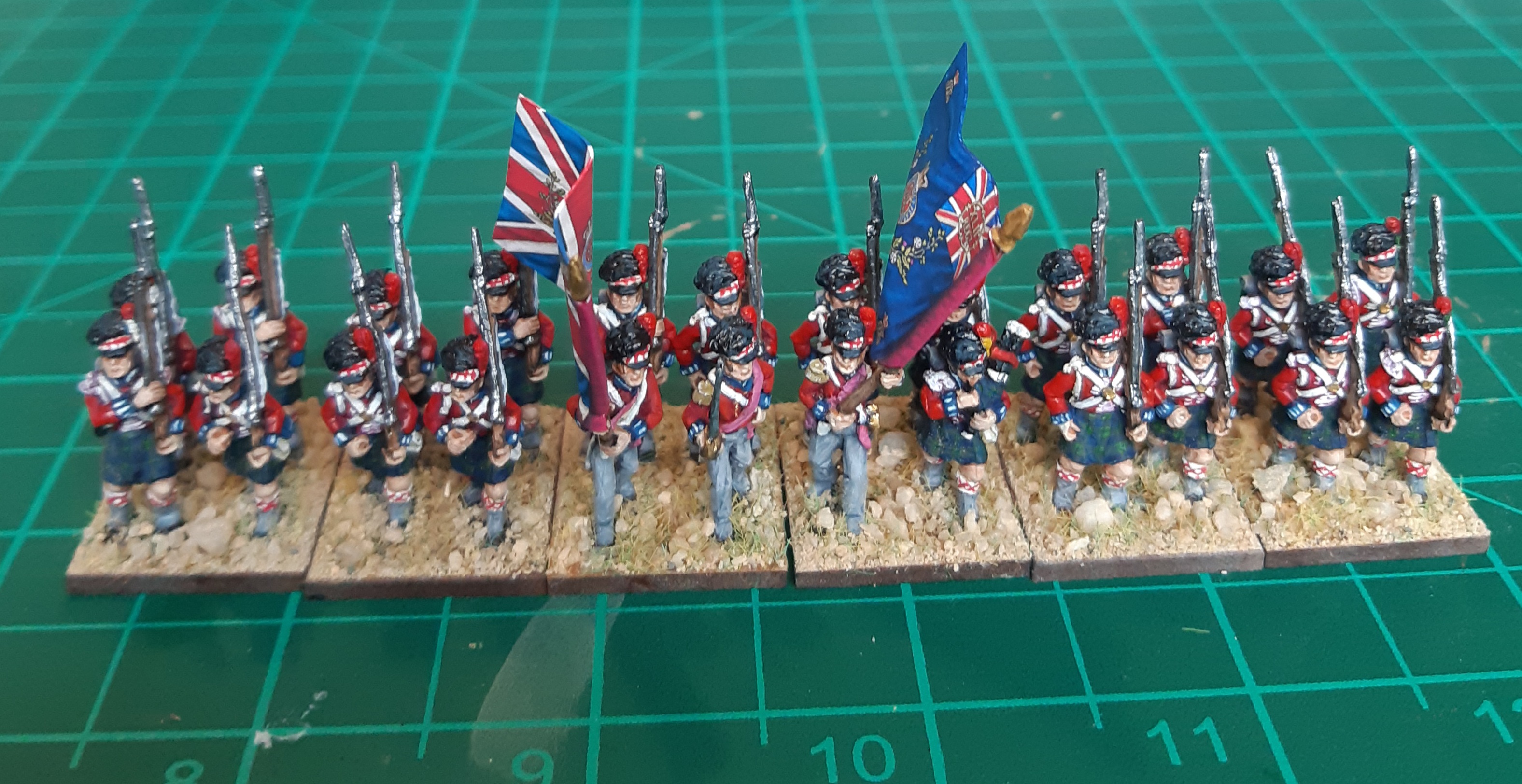
The Black Watch had a different system of coloured company plumes to other British line infantry regiments. Centre companies had all red plumes, the light company had red over green, whilst the grenadiers wore red over white. The drummers wore another different coloured plume, being red over yellow. There’s no drummer in my battalion, but I thought I’d paint the piper that way regardless of historical accuracy, as it looks quite distinct.
All the figures are from CGM, flags are from GMB Flags. When it came to adding the flags, I found them to be too long for the poles. First time I’ve hit that snag, but I got around it by snipping the corners to fit around the hands and pole tops, leaving the main part of the flag unaltered. Not ideal, but I think it works okay.
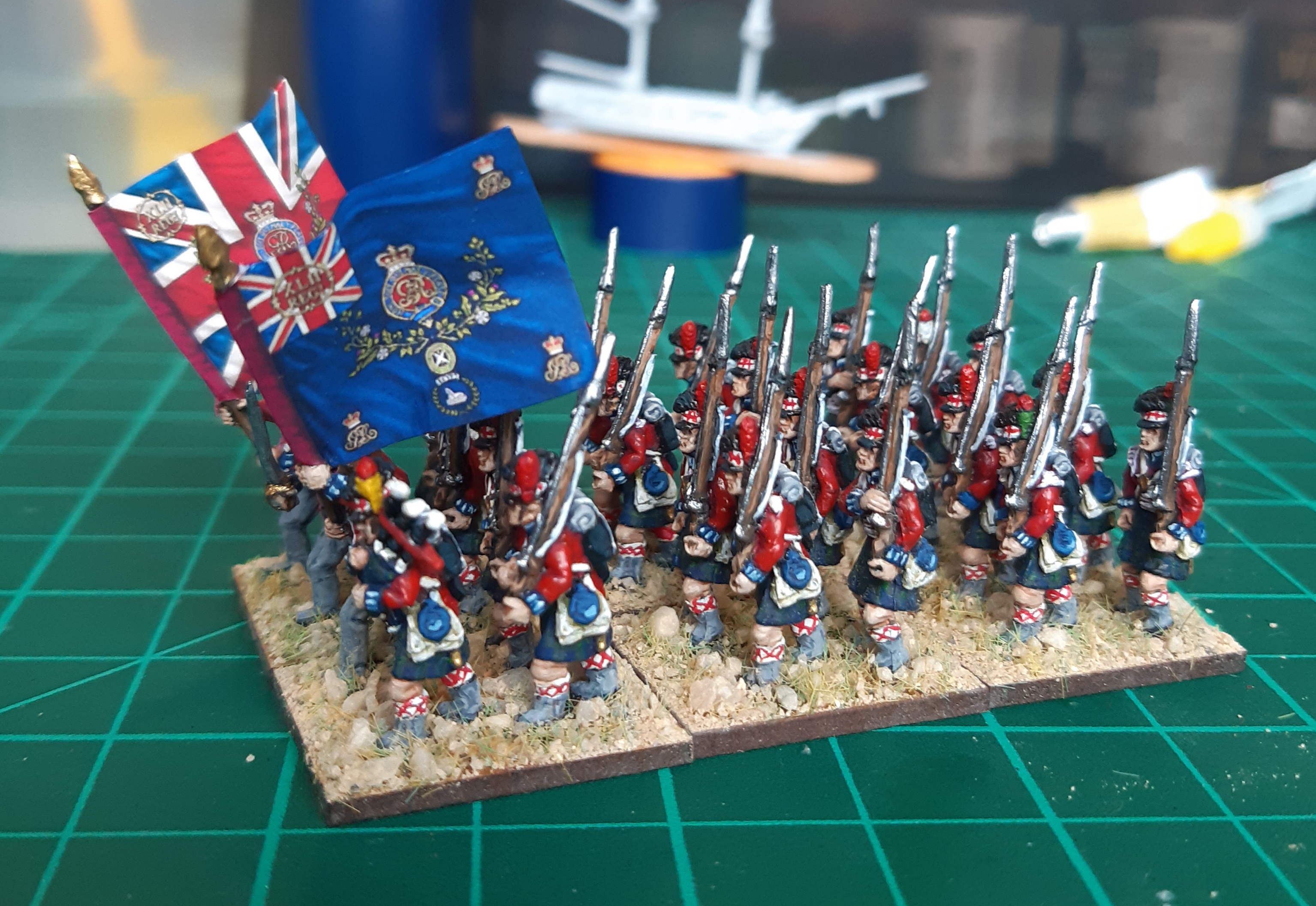
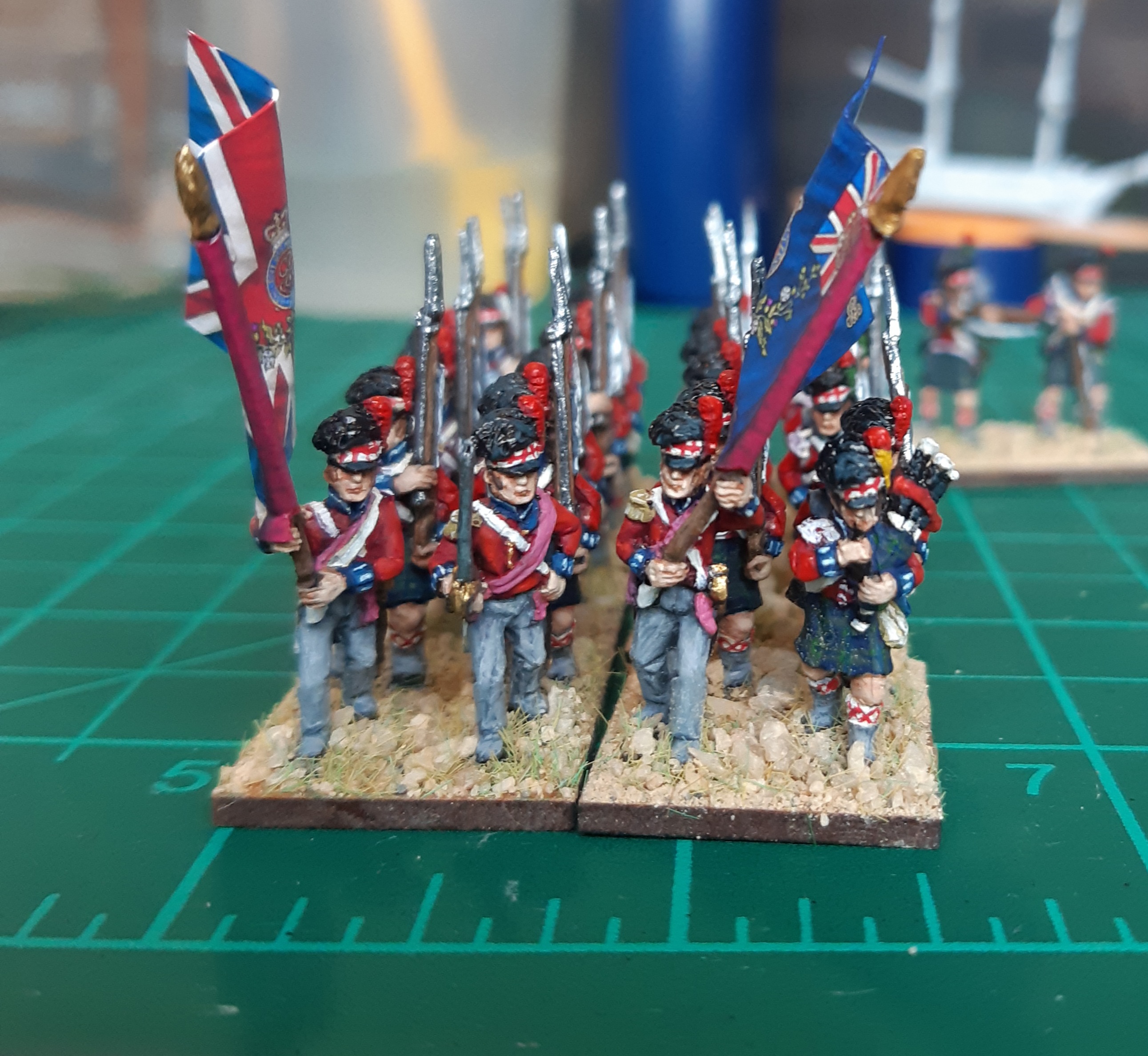
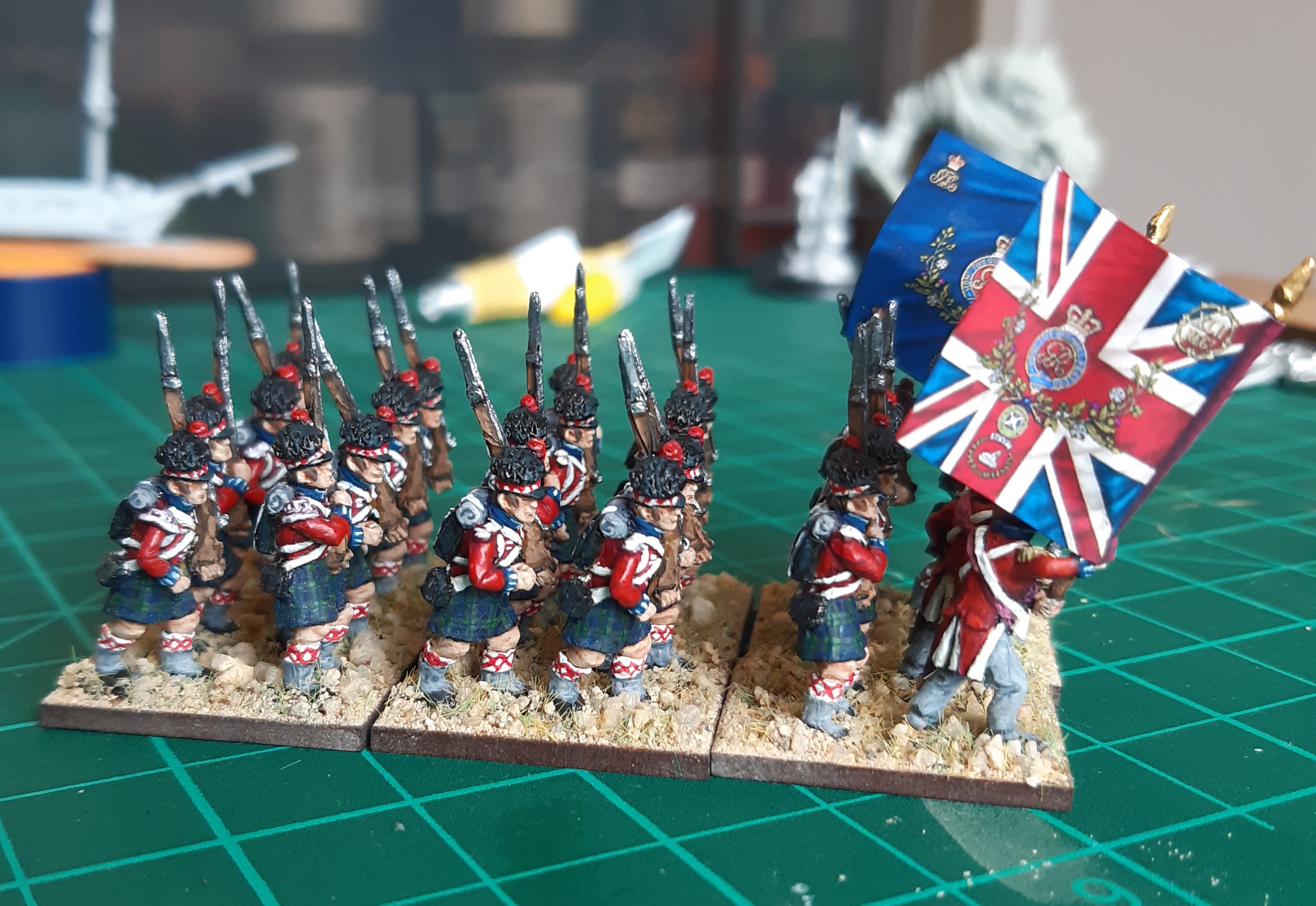
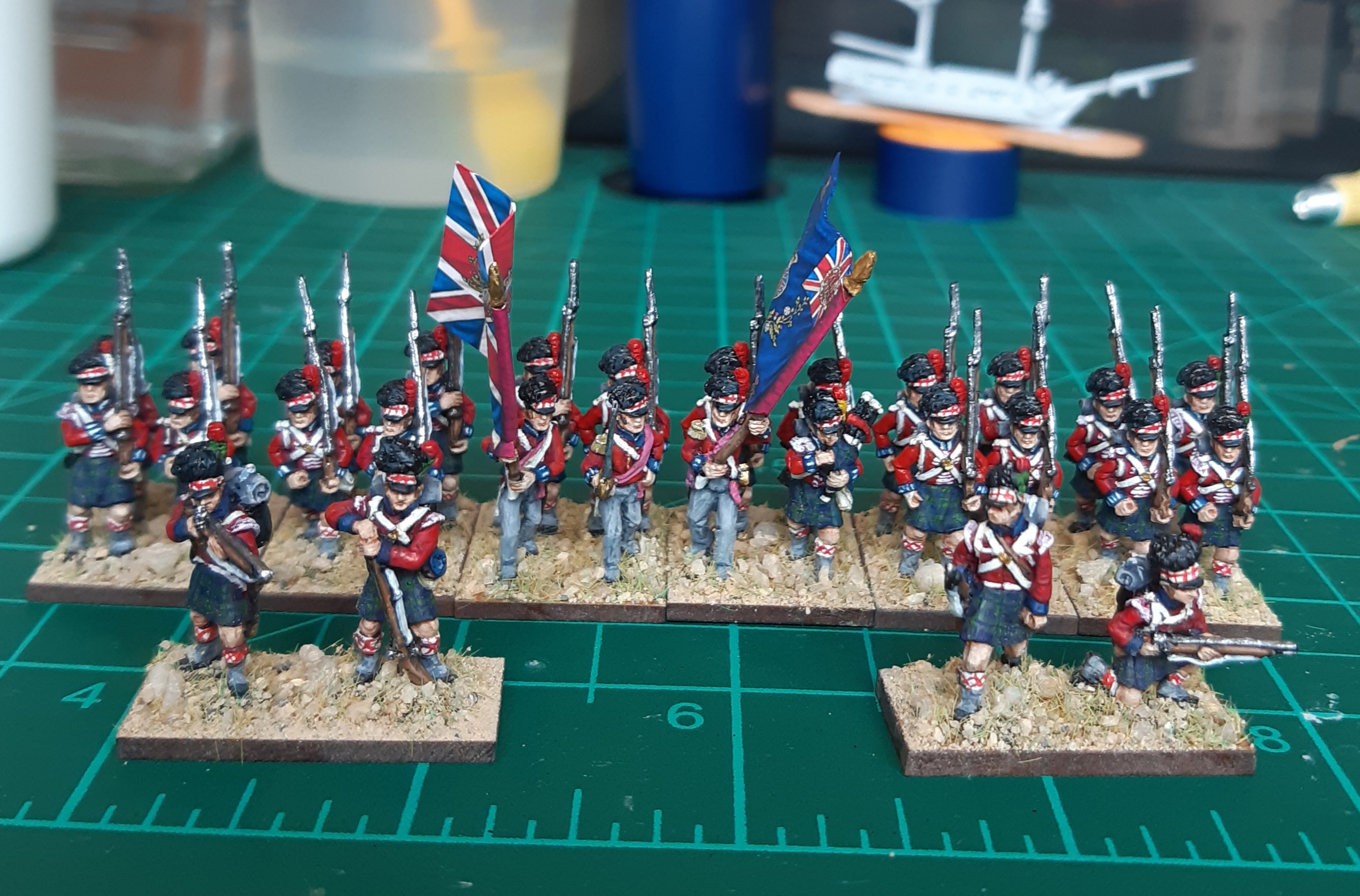 Battalion plus previously completed skirmisher bases.
Officer and skirmishers
Rather than cracking on with more Highlanders, I decided to get the skirmishers for the two completed infantry battalions painted up. I also thought it was time to sort out a proper officer to keep the rabble in line.
The skirmishing flank company are by Xan, and the officer is AB. First time I’ve tried some of the Xan miniatures, and they’ve got a nice degree of detail in the sculpts without going too overboard for the size of the figures.
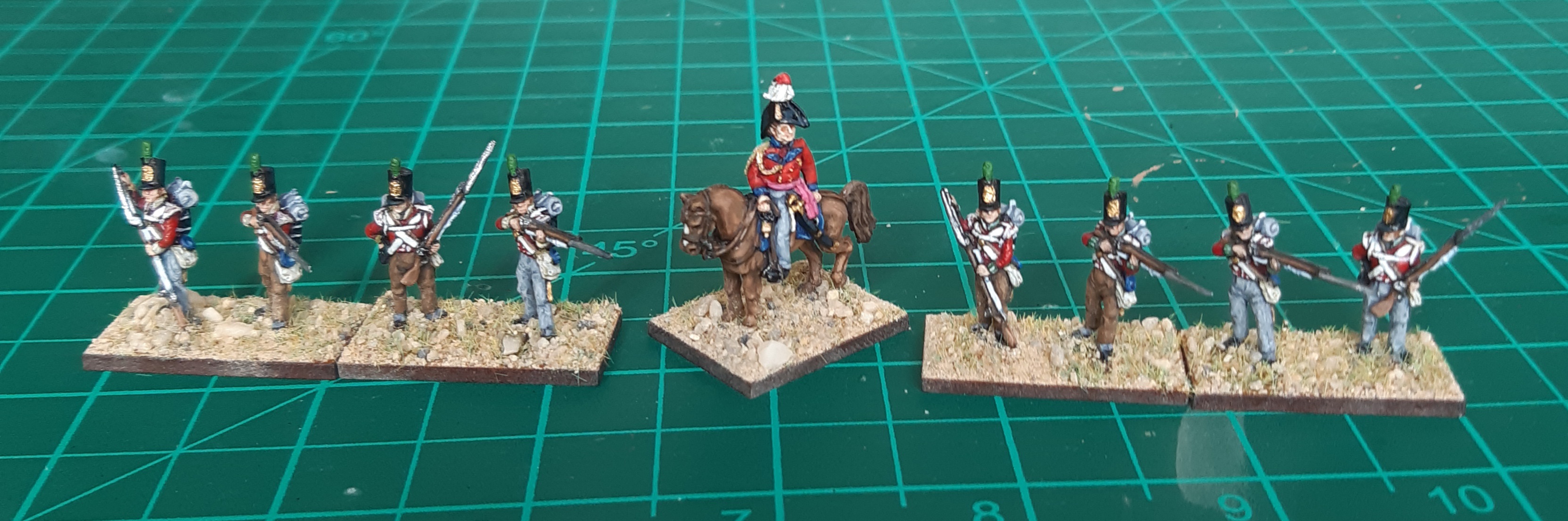
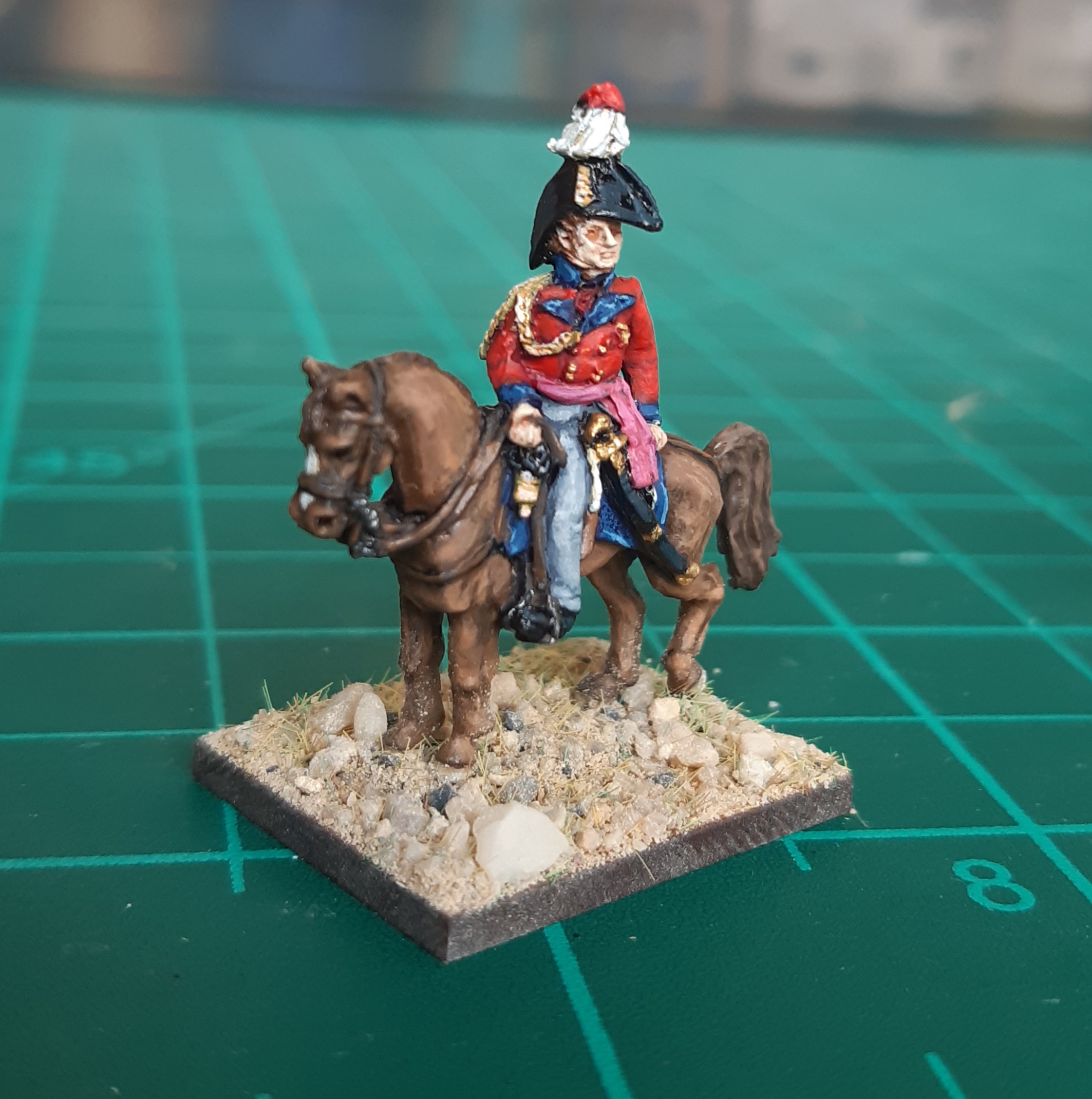
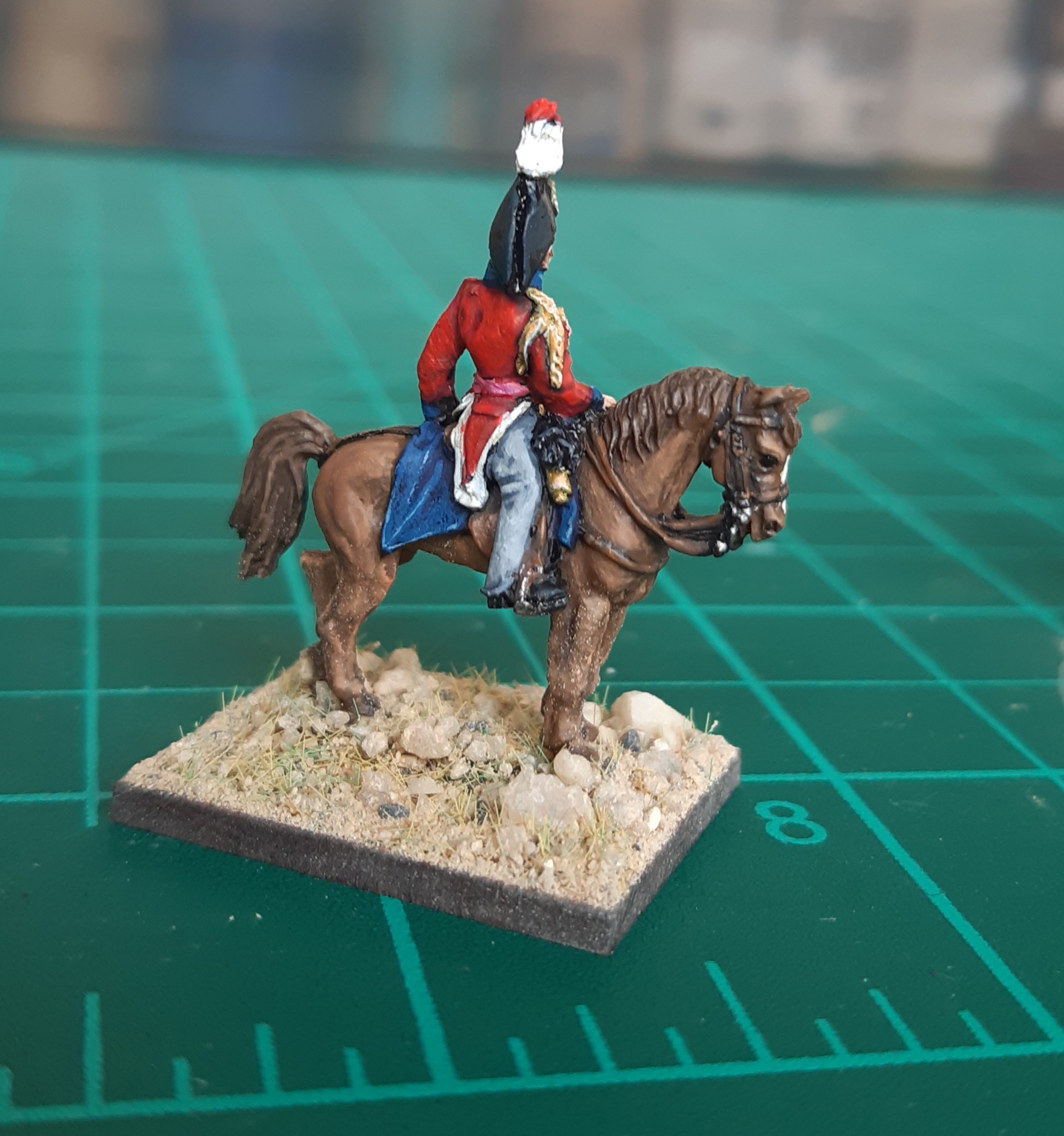
Had a bit of a nightmare when painting the last highlights on the horse, but I think I managed to rescue it and the end result doesn’t look too bad.
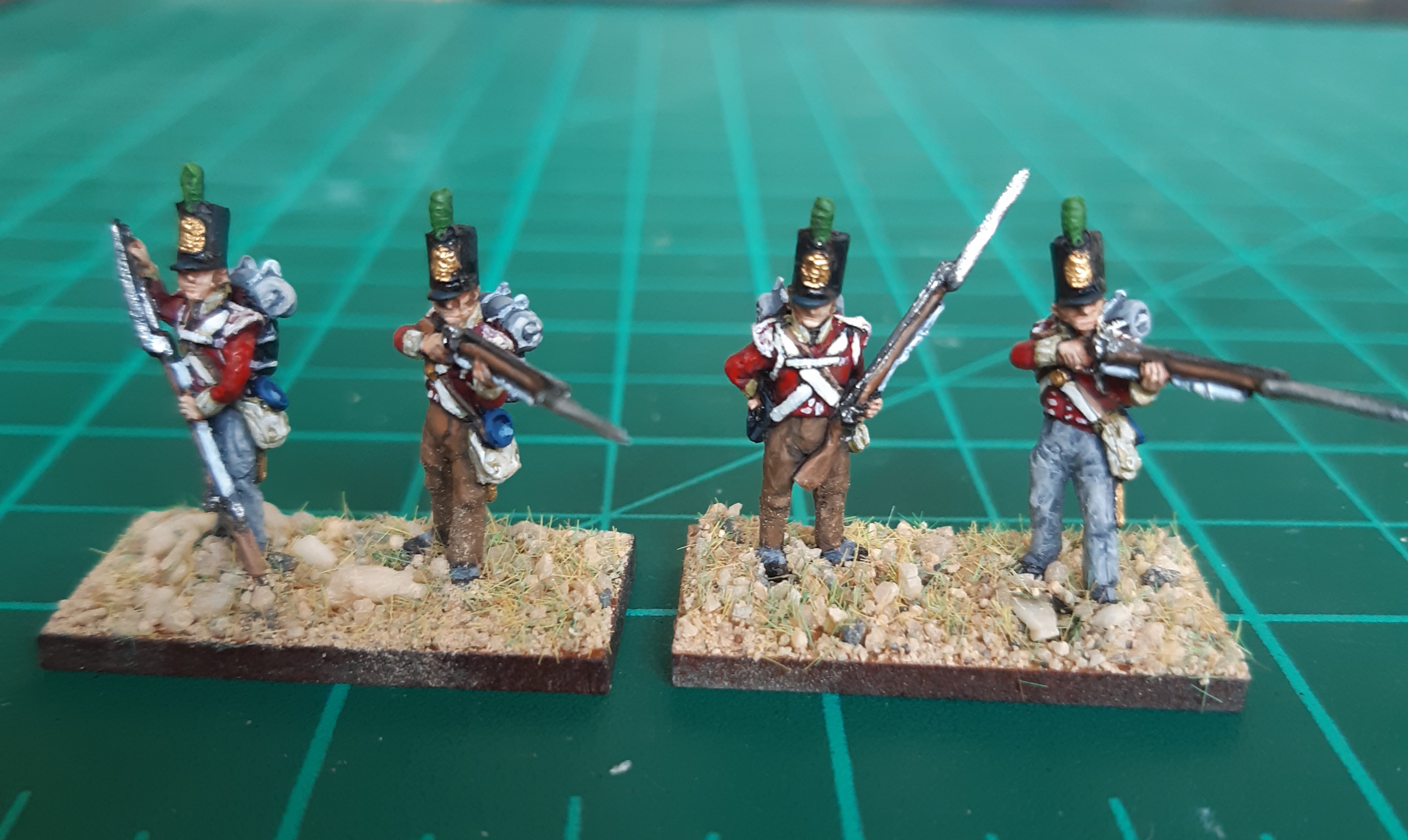
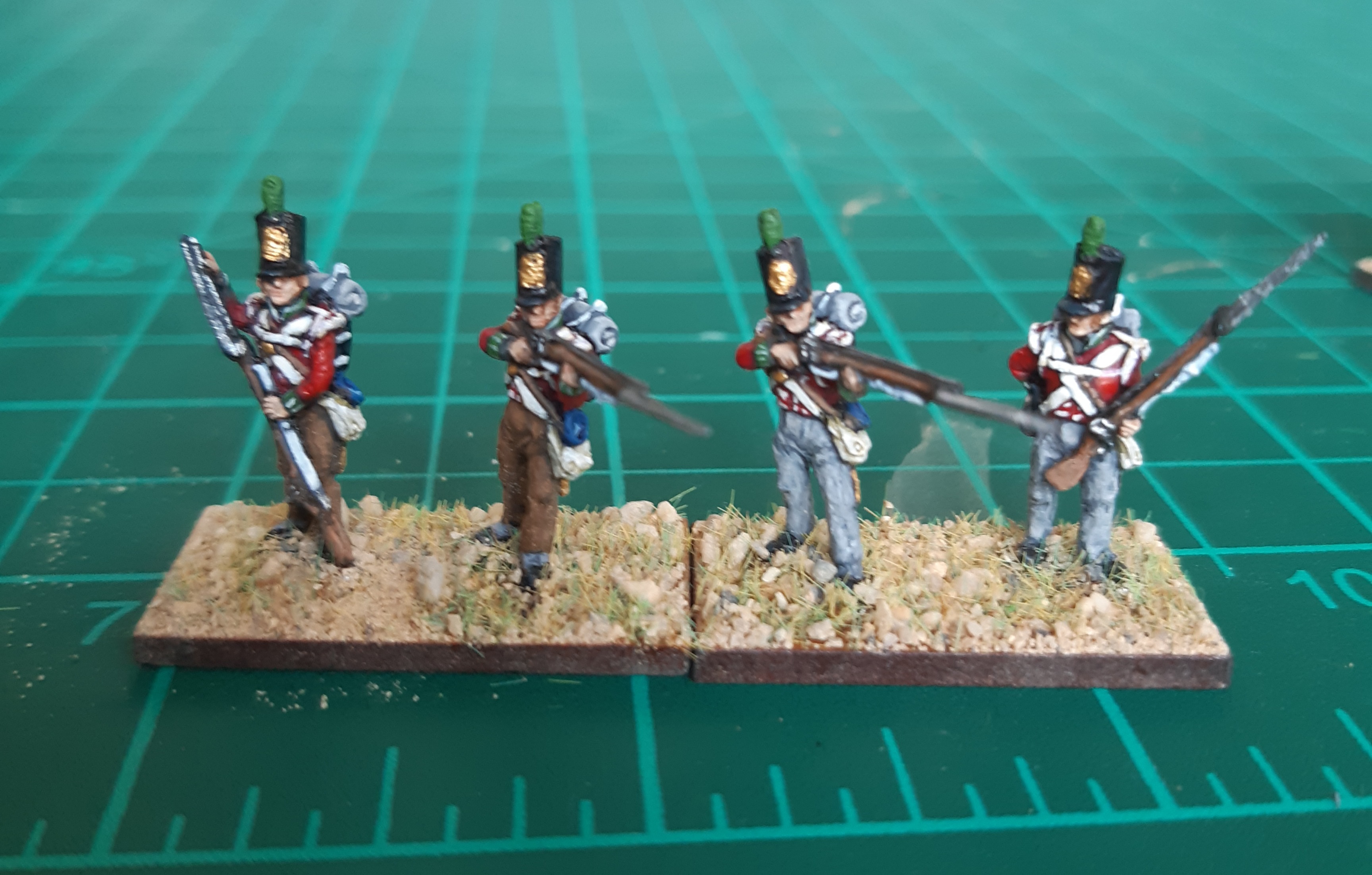
No excuse to put off more Highlanders now though, so next up will be a battalion of the Black Watch.
Skirmishing Highlanders
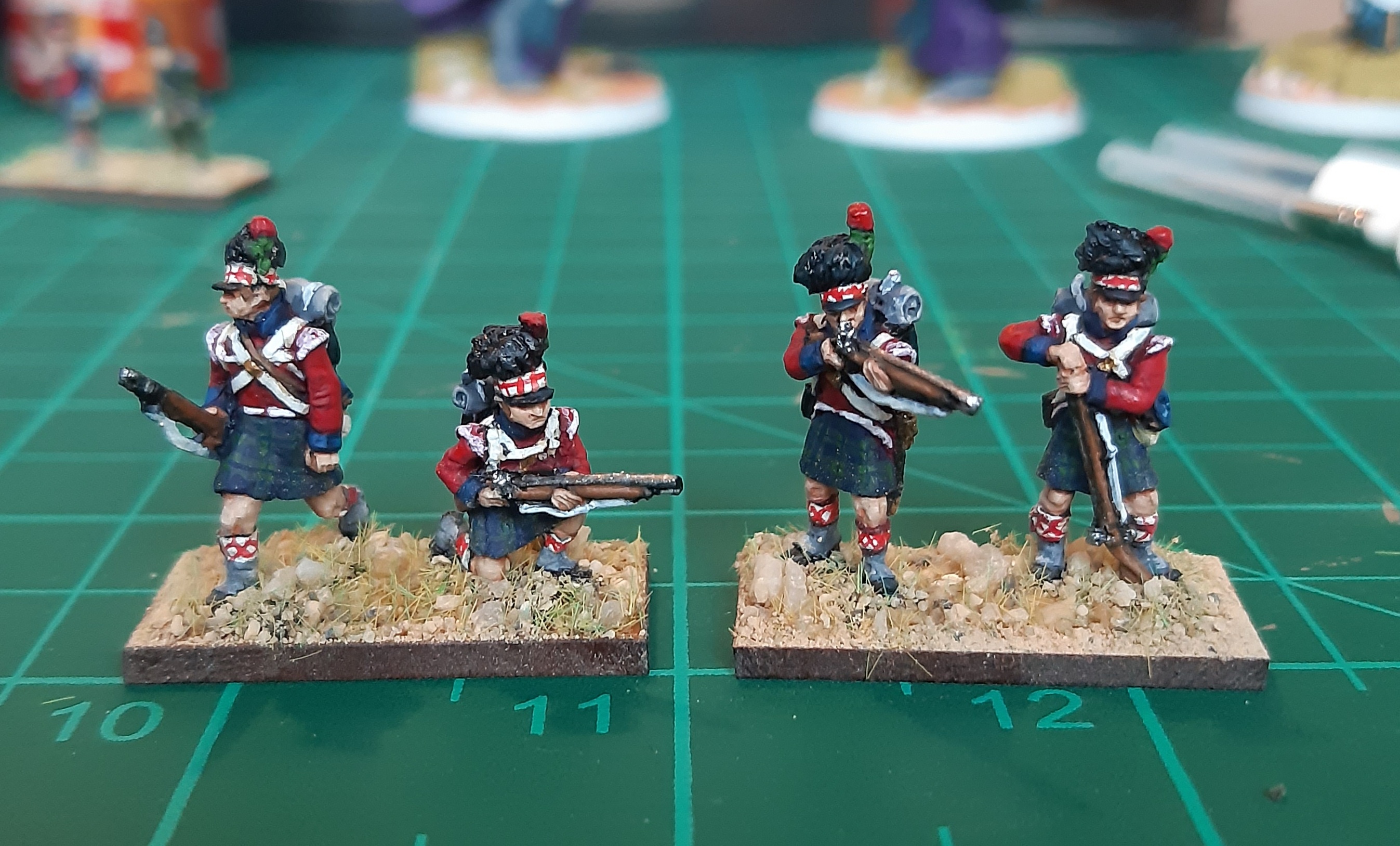
Four bases of skirmishing Highlander flank companies completed, two in the colours of the Black Watch, and two Gordon Highlanders.
Step-by-step images are below to compliment a previous post that sketched out my planned approach.
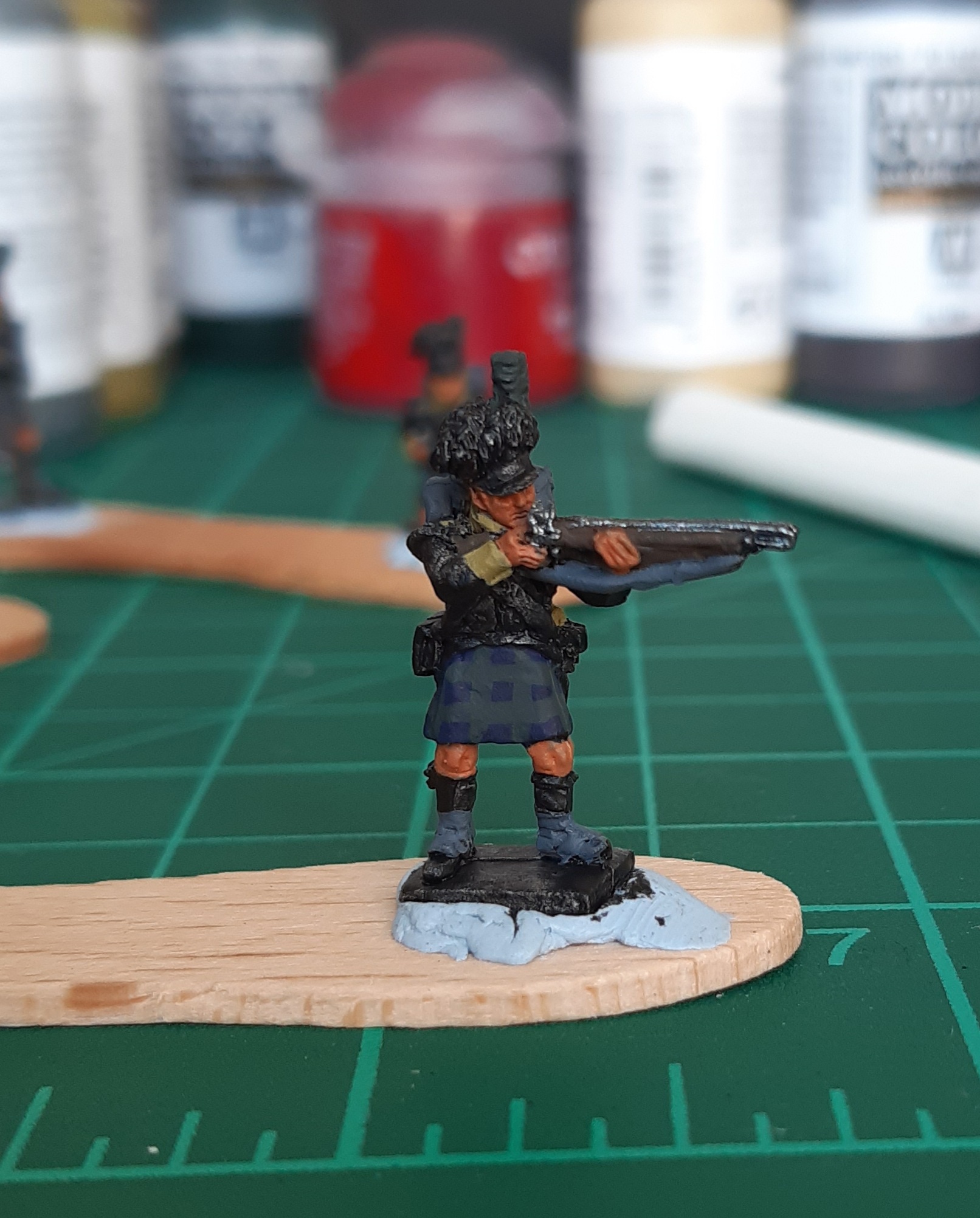 Start with a dark blue, and then add a dark green grid. First tip - start with the horizontal lines. Make the first one parallel to the edge of the kilt. Making the lines the width of the brush makes consistency easier.
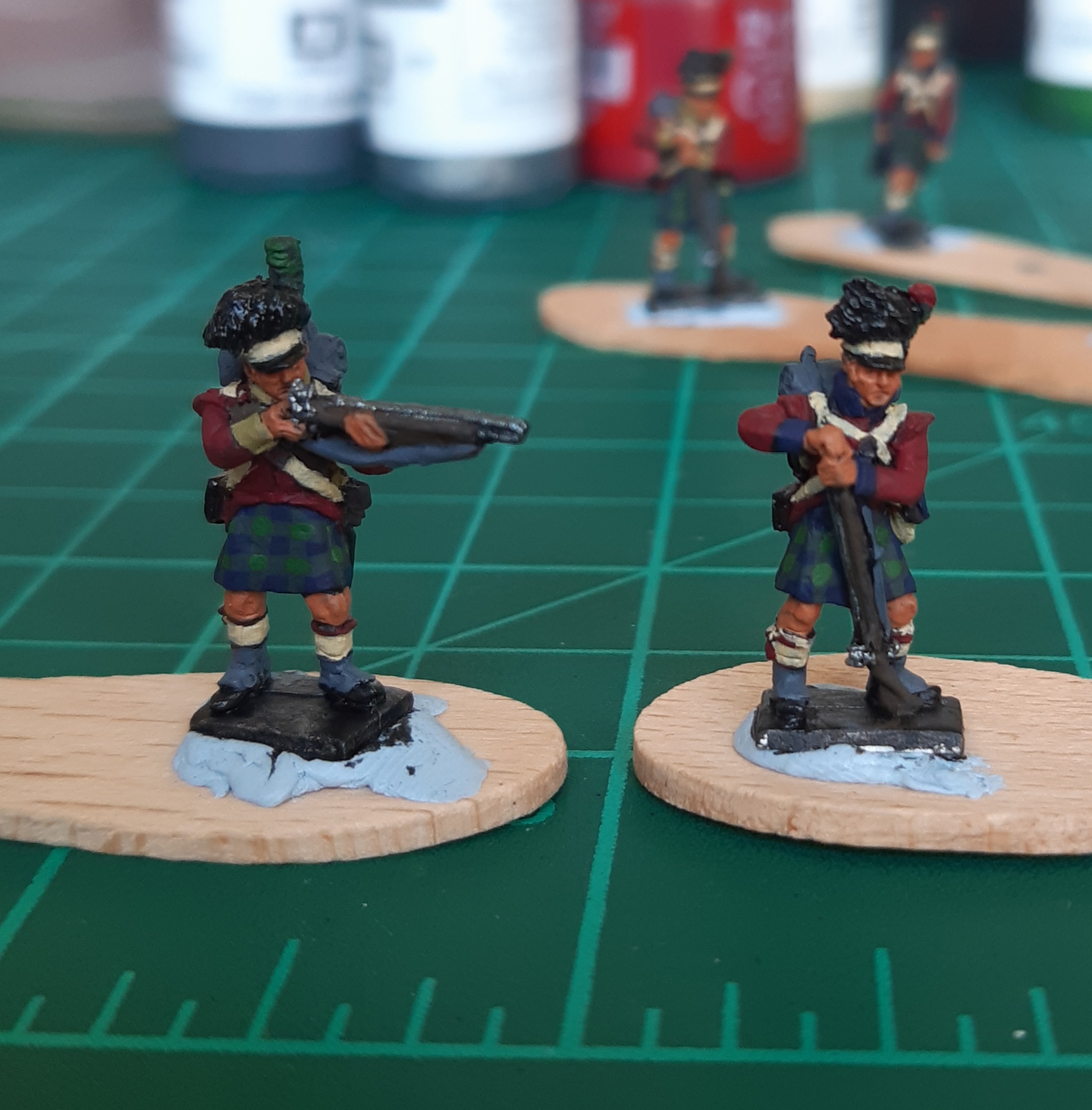 Add a lighter green square where the lines cross. Both tartan patterns follow the same process up to this stage.
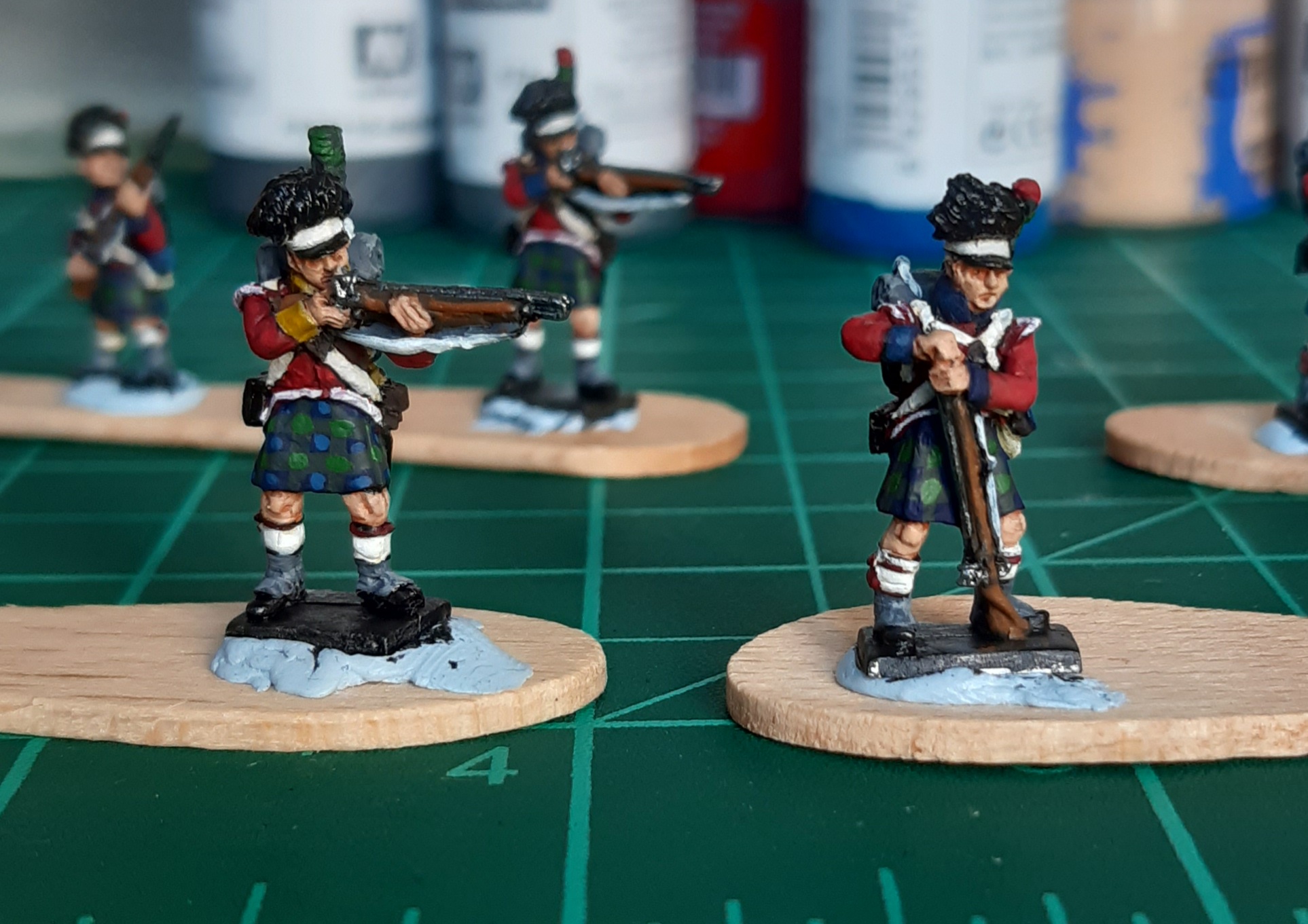 The Gordon Highlanders (L) get lighter blue squares added. I omitted this step for the Black Watch (R) to keep the pattern darker
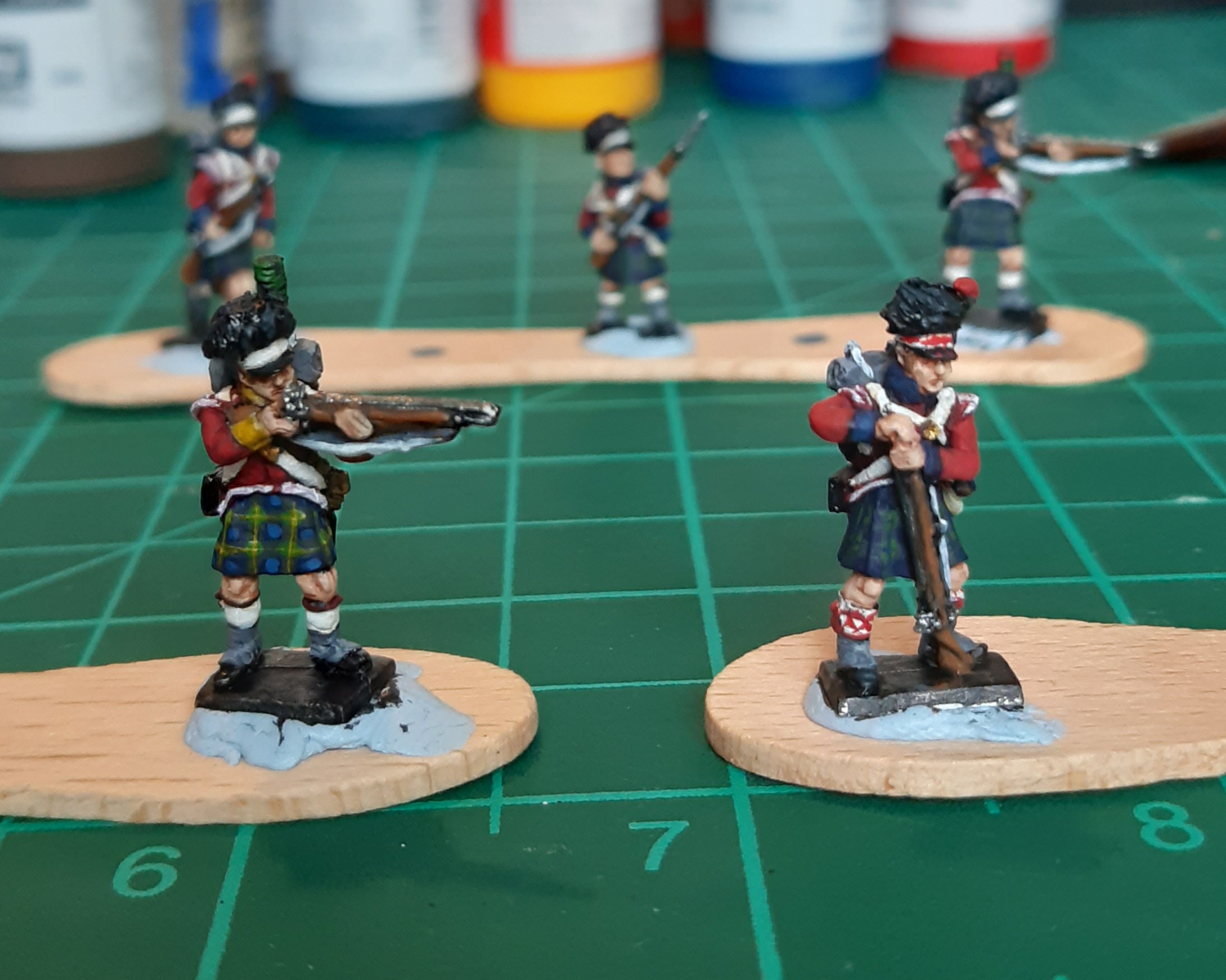 The tricky bit - adding a thin line over the green grid. Yellow for the Gordons (L), dark blue for the Black Watch (R).
Whilst it might be possible to go further with more detail on the kilts, I think this is a sensible end point for models of this scale.
The tartan was most awkward on the kneeling figure, which makes me glad that the 40 odd Highlanders I have to still paint are all in a marching pose, with a nice broad flat surface for the pattern.
Painting the patterns on the hat and sock bands was actually more challenging than the kilts.
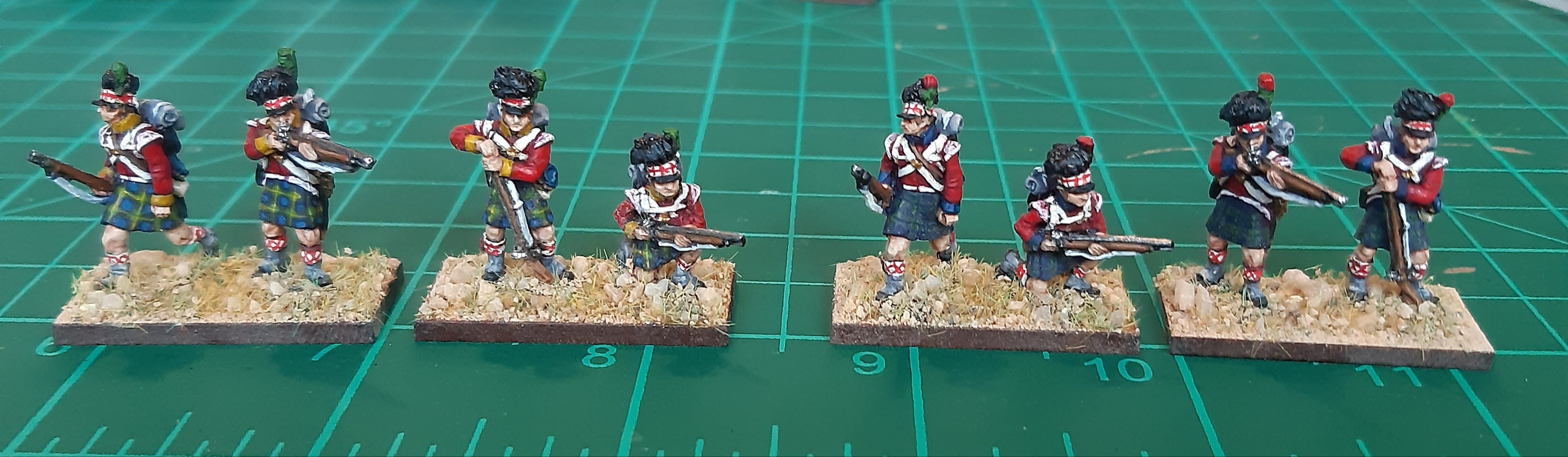 Final result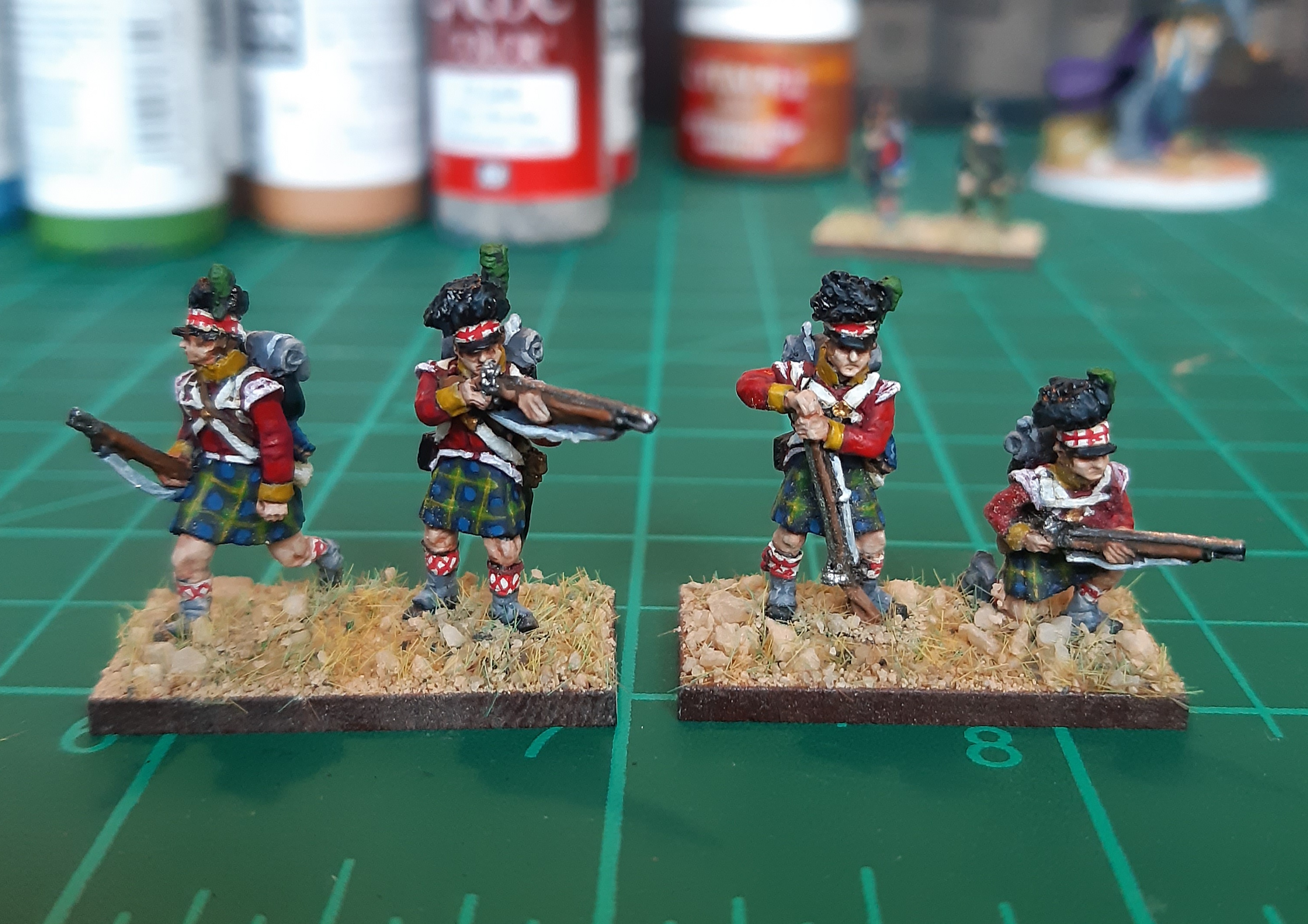

The Essex gnome
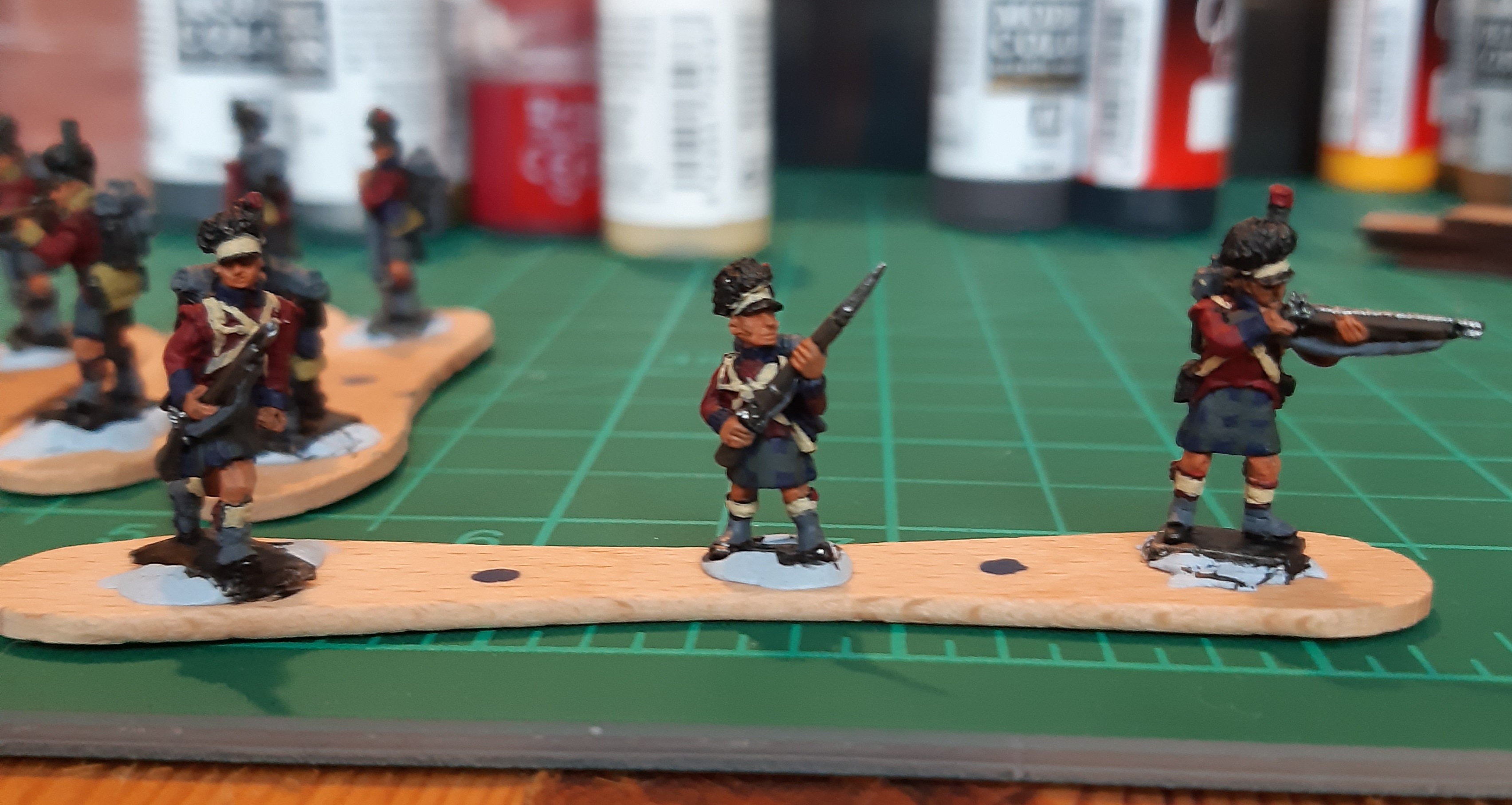 Highlanders from AB are a WIP. I had a single Essex highlander from a sample pack that I decided to add to the batch as well. He looks like a gnome next to the two burly AB highlanders.
24th Regiment of Foot
With another dozen line infantry finished, my second British foot regiment has been completed, this time sporting the colours of the 24th, the 2nd Warwickshire Regiment of Foot.
Figures are from Campaign Game Miniatures, flags from GMB.
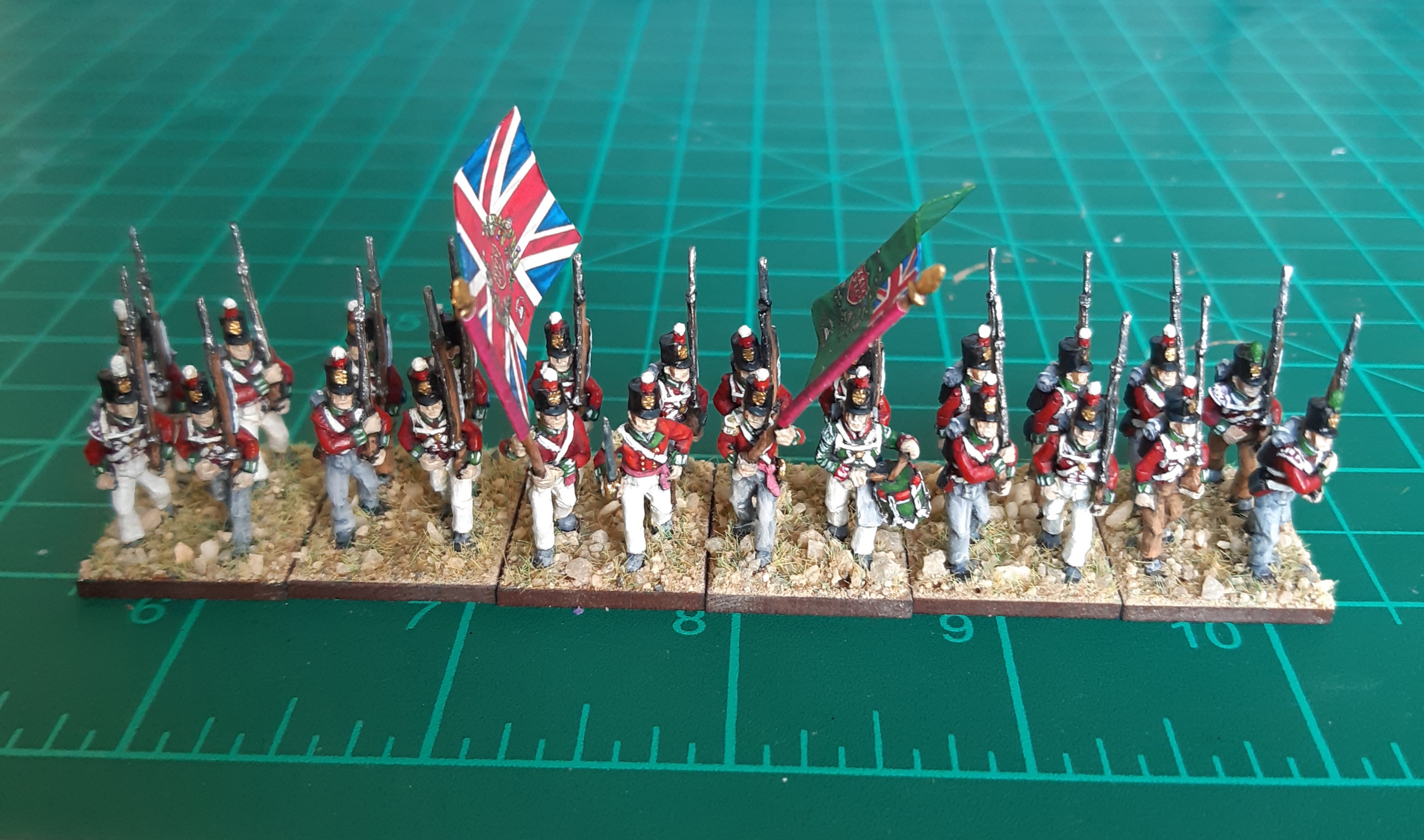
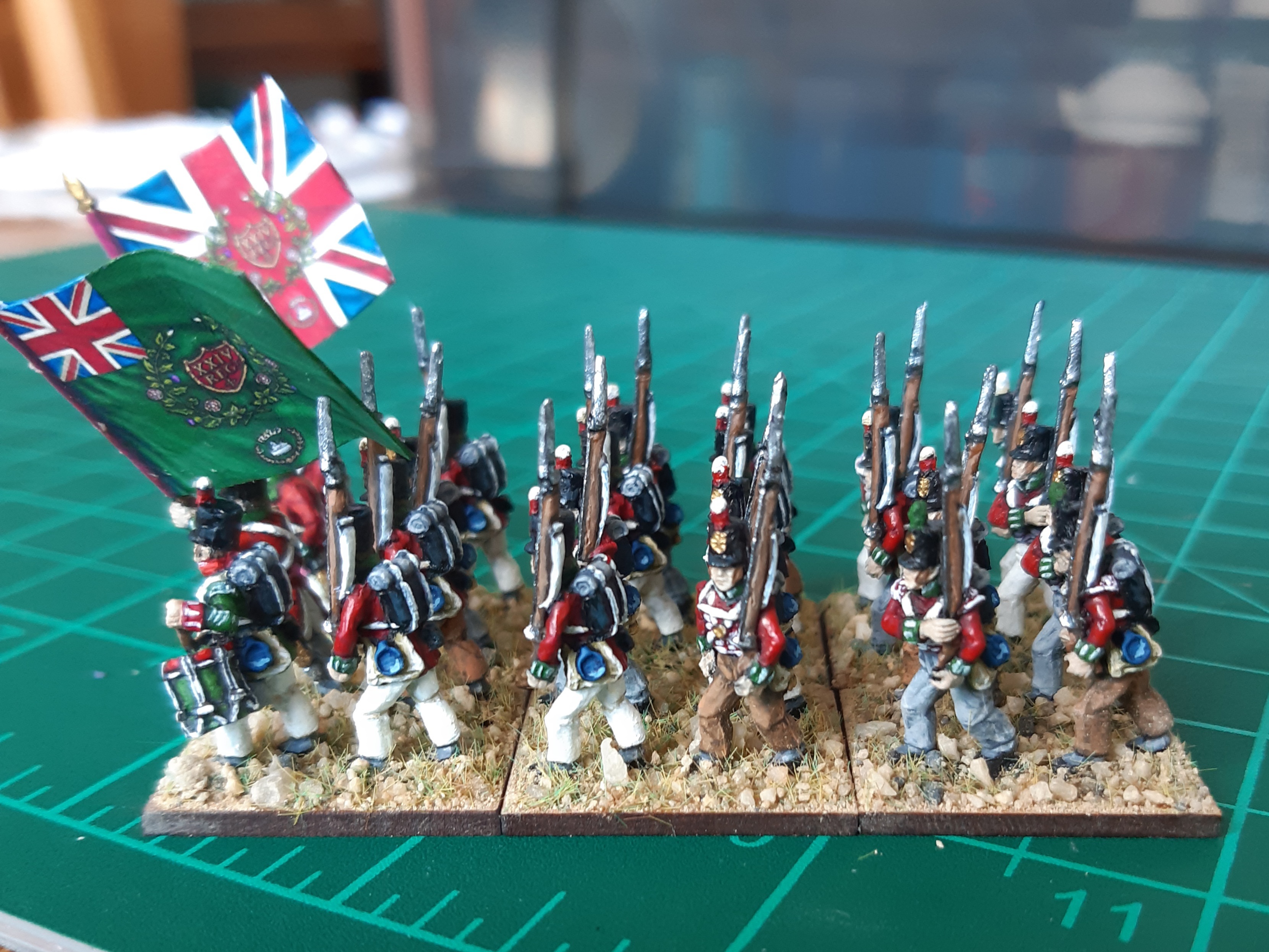
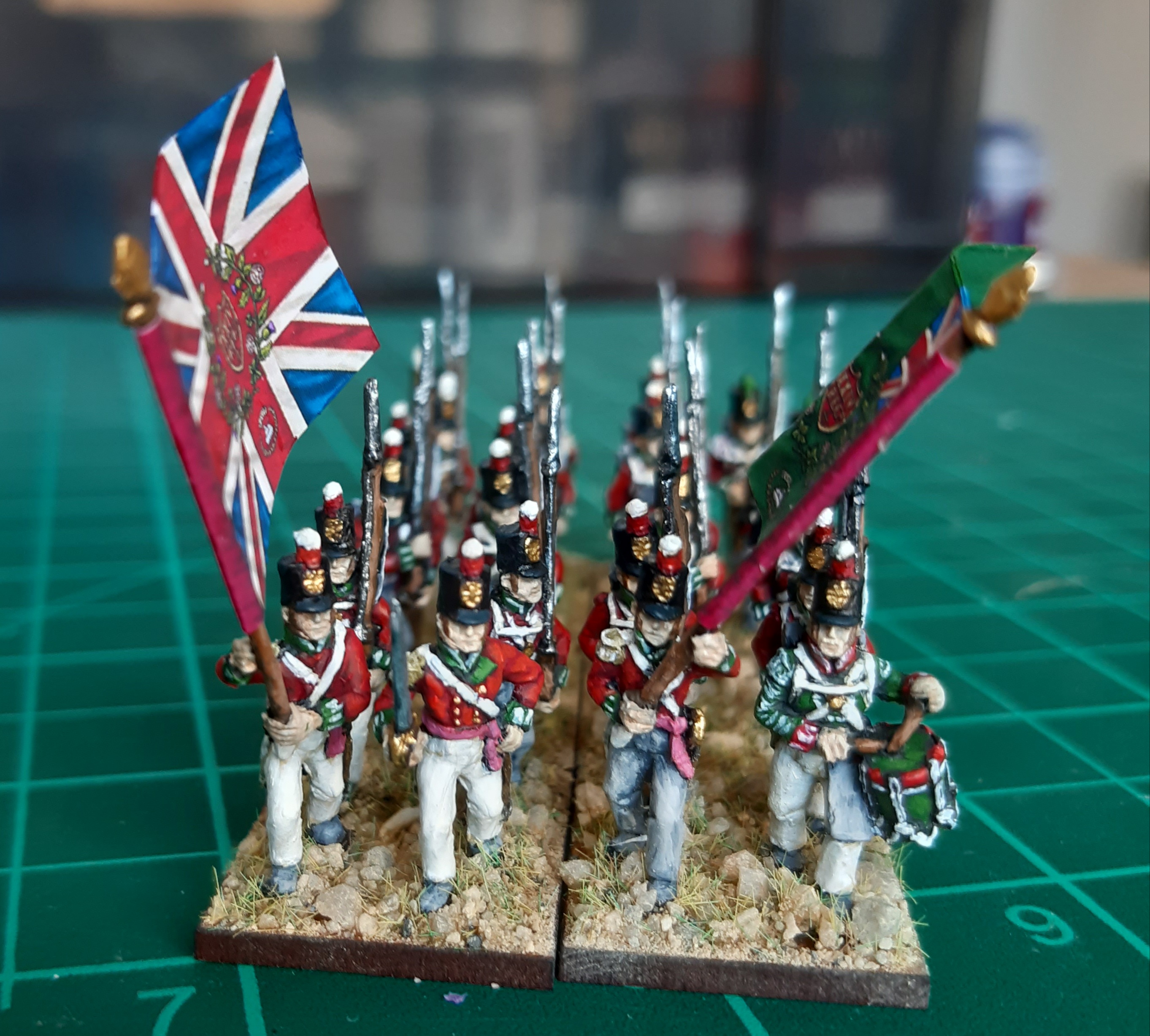
Well, I say completed, but I want to add a pair of bases to represent skirmishing flank companies, which I also need to add to the first regiment. But first I want to have a crack at some Highlanders.
I’m going to start with Highlander skirmisher bases. I’ve got some AB miniatures for these that I am really looking forward to painting. The plan is to paint four as Black Watch, and four as Gordon Highlanders, which will let me have a play at both tartan patterns I intend to have.
A matter of scale
A quick post prompted by seeing AB Miniatures getting featured as Indie of the month in a recent Weekender. They do a fantastic Napoleonic range, and are great quality models.
One thing to consider is that they rank up a little larger than other 18mm ranges. I’ve got some Highlanders from a few different ranges, and thought it would be interesting to share how they compare size wise. As ranges have a limited number of variants for each pose, mixing between them is a great way to add some extra variety into your units. However it can backfire if the size of the ranges are too different.
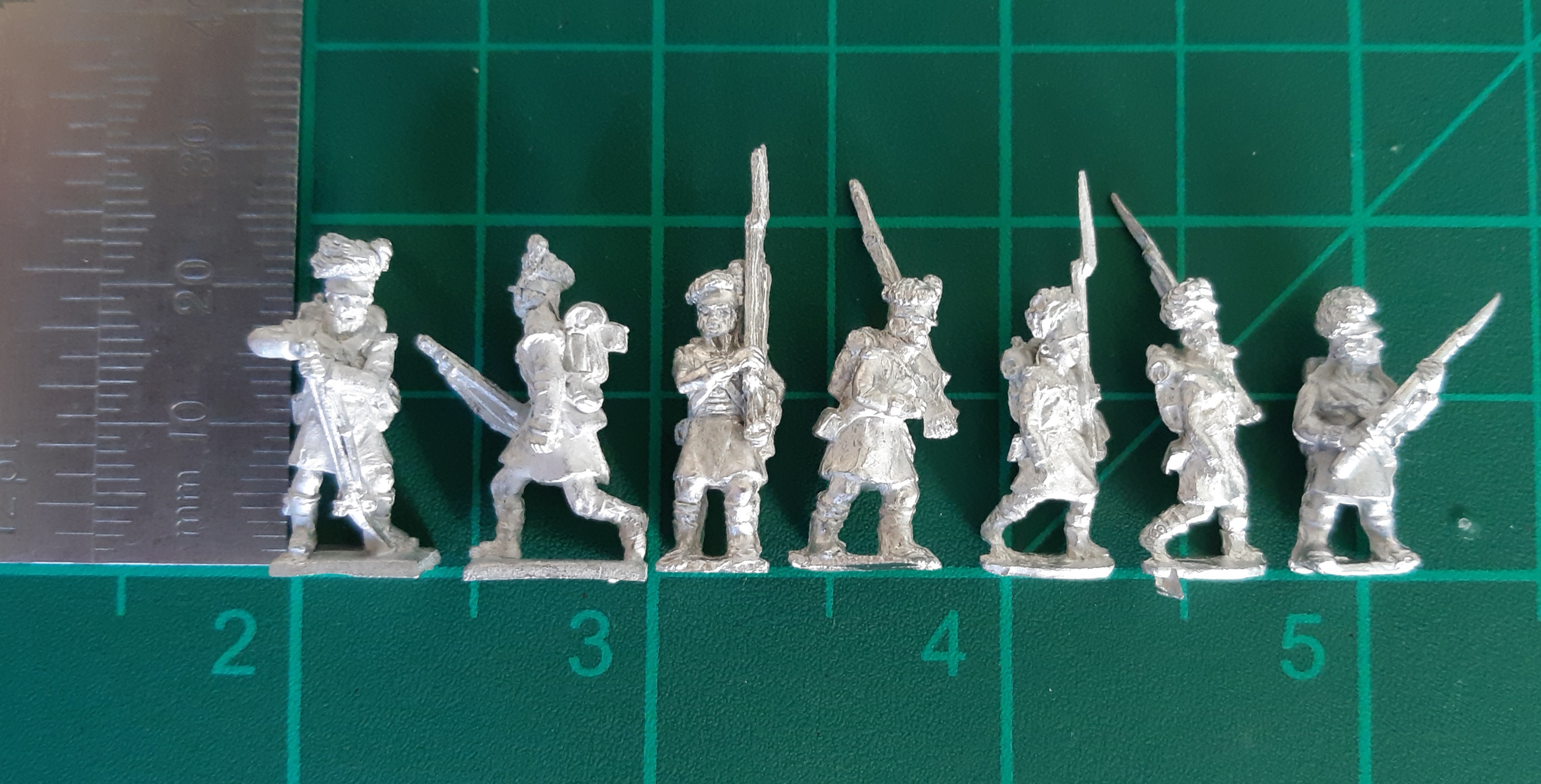 L to R - 1,2 AB; 3,4 CMG; 5,6 Xan; 7 Essex
All the figures above are straight out of the packet. The first pair are AB, and compared to the others they are noticeably bigger. Nicely detailed and proportioned though, and I’m looking forward to painting these up.
The second pair are from Campaign Game Miniatures (CMG), whilst the third pair are by Xan. The CMG models are slightly bulkier and taller, but you can probably mix the Xan and CMG within a unit without the end result looking too out of place. Differences in things like the size of the bayonets and pack rolls might be a little jarring if you are very particular.
The outlier is from Essex. AB, CMG and Xan are sold as 18mm, whilst Essex is 15mm. I prefer the proportions of the other models, but the Essex minis do paint up quite well. (Essex also sell sample packs of their different ranges, which is great to get a flavour of what they are like).
Planning tartan
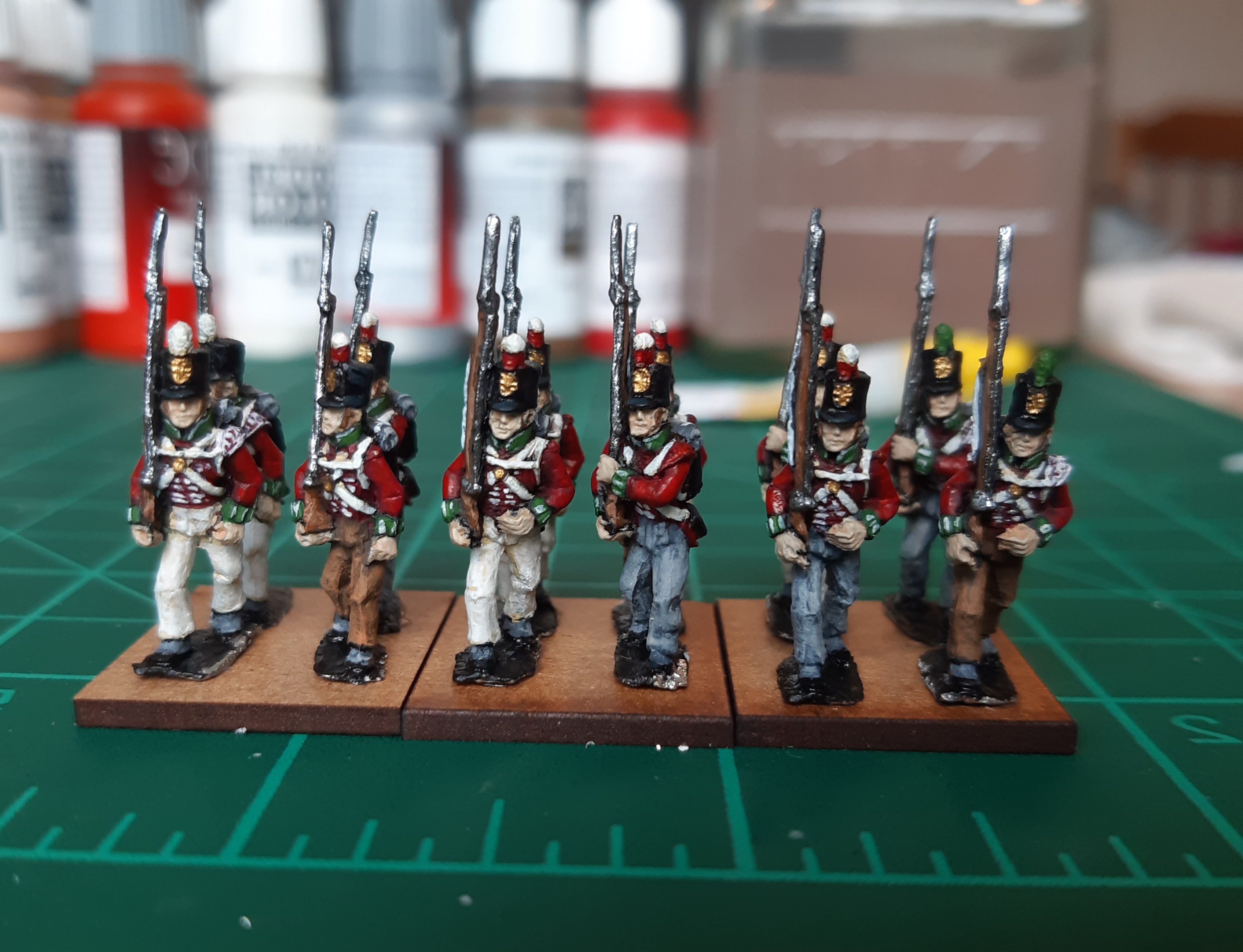
Progress on regular line infantry has been good, with a dozen of the lads ready for basing. I’m aiming to get the other half of the regiment painted for the end of the month.
I’ve also been planning how to approach painting tartan for the highlanders, as I’ll be tackling them once I’ve finished the line regiment. I’m going to have two highland regiments, The Black Watch (42nd regiment) and the Gordon Highlanders (92nd regiment). Before attempting the kilts on the models, I painted a quick trial on paper (also to act as a memory aid). Basically I want to achieve a relatively good approximation of the tartan that isn’t too time consuming or fiddly that works at 15mm scale.
 These are the patterns I'm aiming to represent - Black Watch on the left, Gordon Highlanders on the right
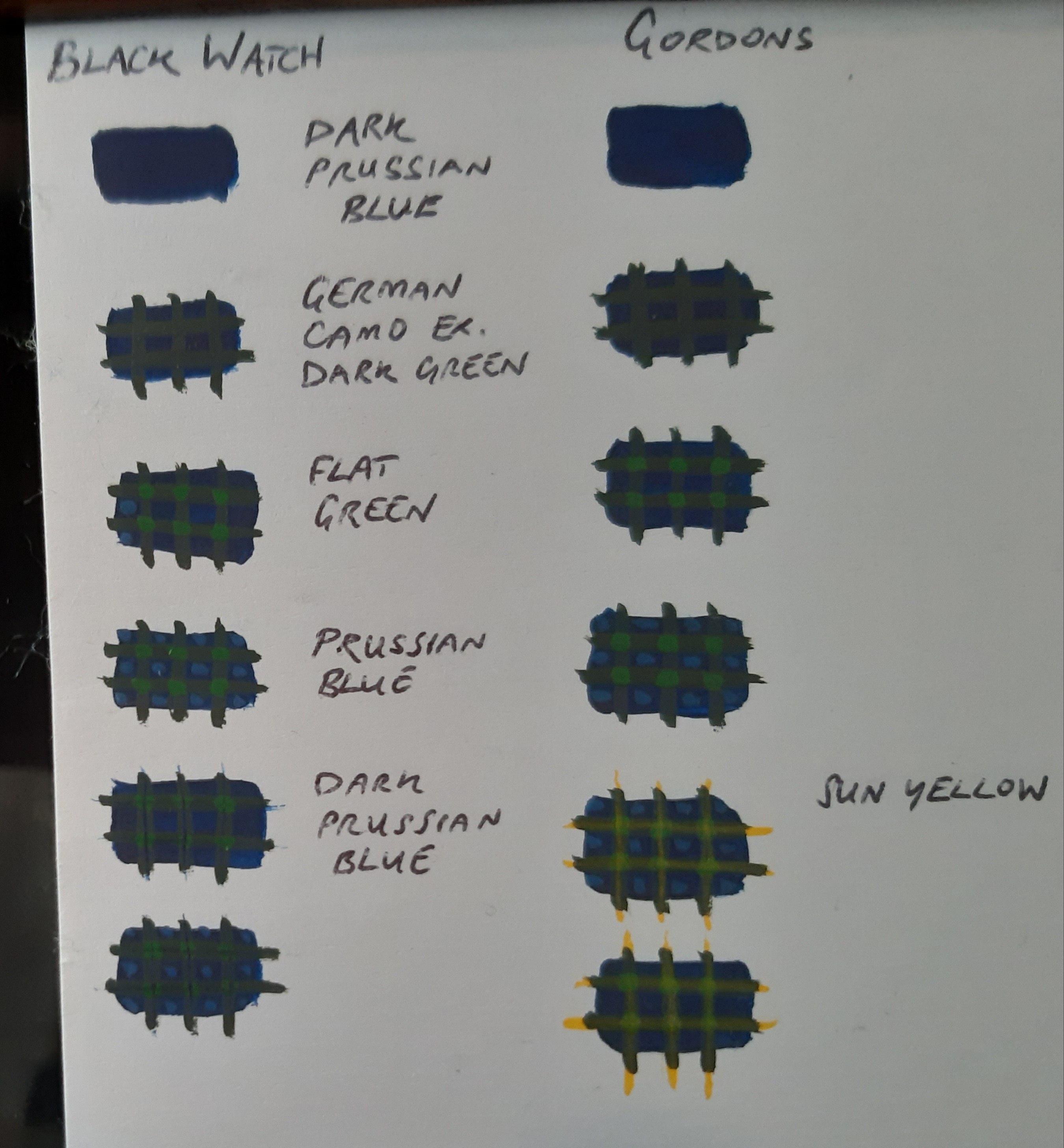 Here's my step by step process for each pattern (all Vallejo paints) (a slightly terrible image I'm afraid)
For the Black Watch I think I’m going to omit the lighter Prussian Blue squares, and retain them for the Gordon Highlanders.
A summary of my intended paint schemes:
- Both patterns start the same way, with a base of Dark Prussian Blue.
- Next a grid of German Camo Extra Dark Green. Two horizontal lines will be appropriate for the scale of the models.
- At the intersection of the dark green lines, paint a square (more likely a blob) of Flat Green.
- At this point the patterns diverge. For the Black Watch a thin line of Dark Prussian Blue is painted over the green grid.
- A square (blob) of Prussian Blue is added between the green grid for the Gordons.
- A thin line of Sun Yellow is painted over the green grid.
Hopefully it will look good on the models.