














Getting roads to just ruddy lay flat




Recommendations: 552
About the Project
I'd really like to have roads for my war games that actually sit on the contours of the board. It's just more immersive. This project looks at my mistakes in getting to a solution that's cheap and simple
Related Genre: Historical
This Project is Completed
What's the problem?
Some years ago, I made some roads for my war gaming. My first effort was sand paper glued to floor tiles and ‘painted’ up. My second effort was Polyfilla applied to floor tiles and then ‘painted’. As you can see from the photos below, both efforts look pretty shoddy.
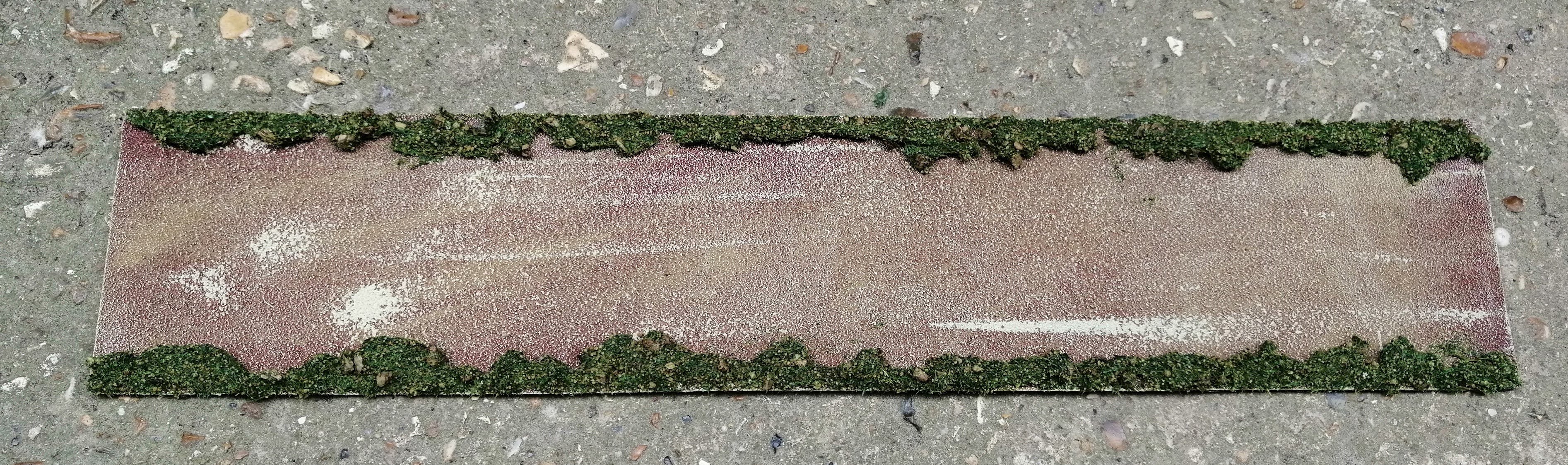
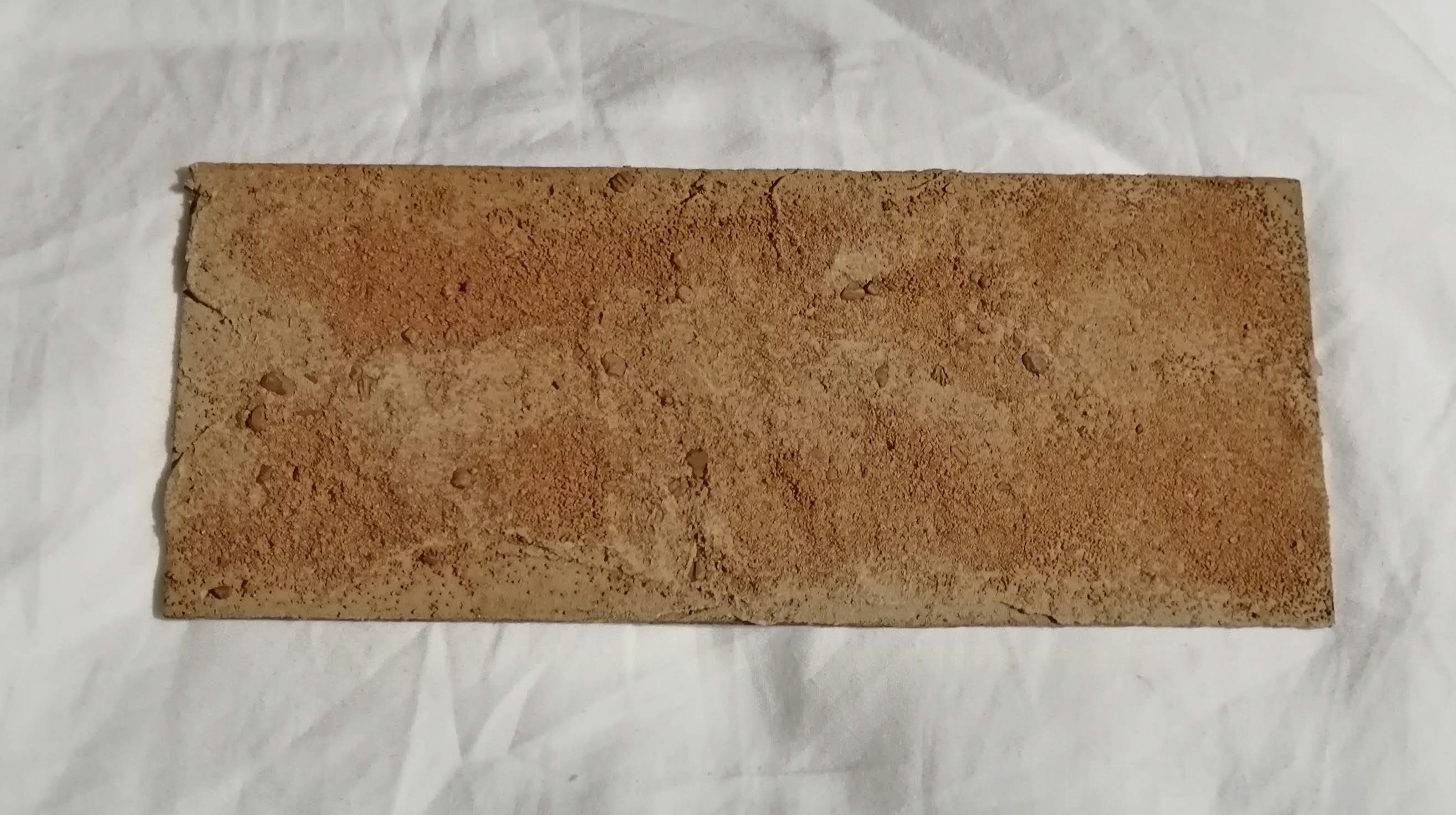
What’s more, time has not treated these well. The sandpaper is starting to come away from the floor tile and both types of road are warping, some badly.
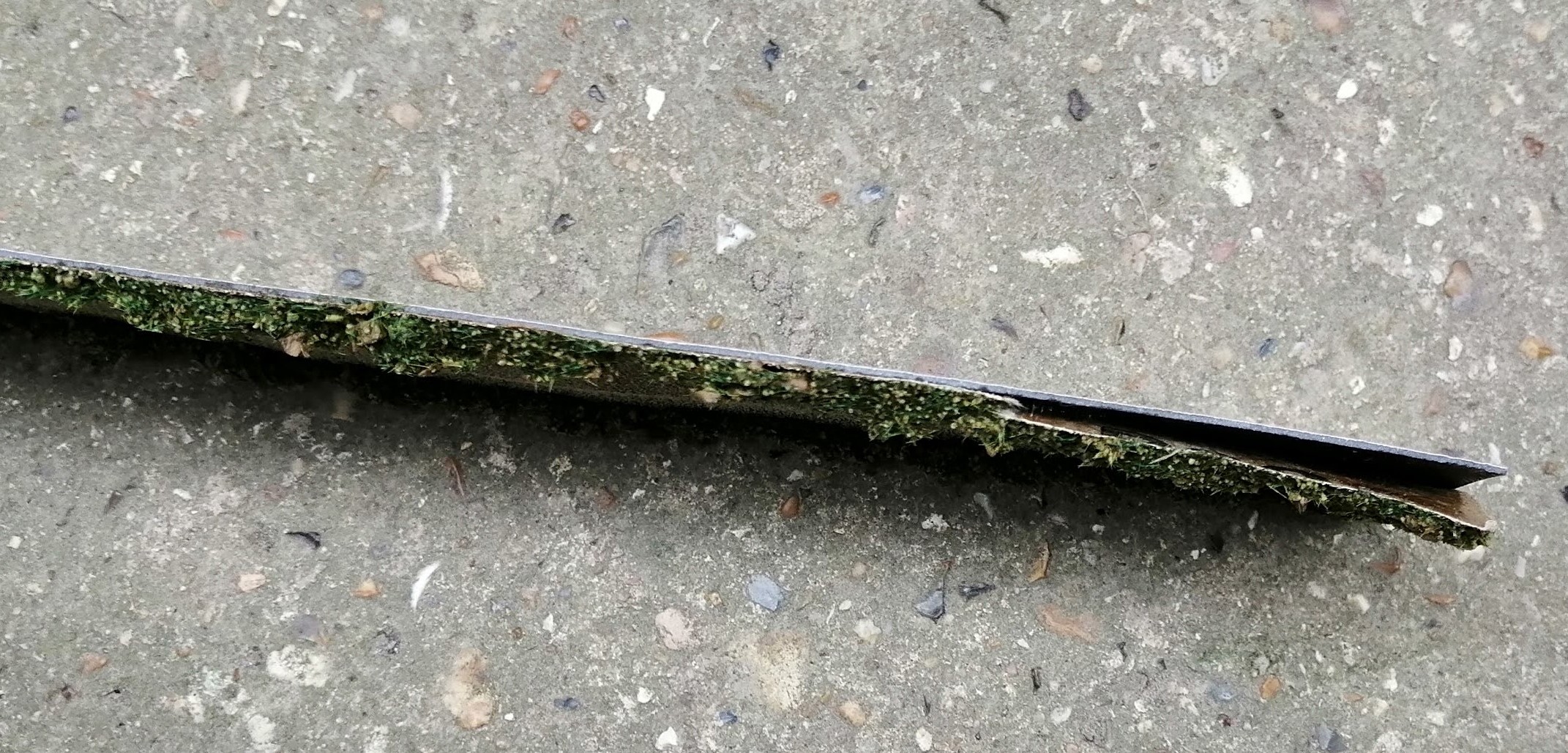
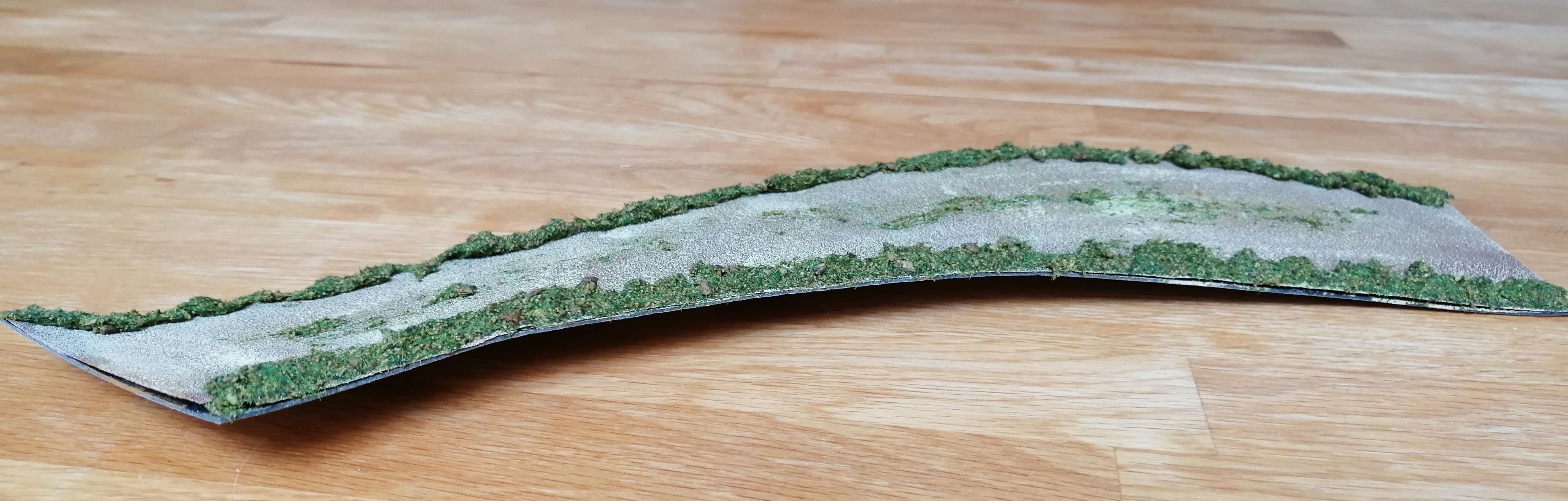
So it’s time to do something about it and replace my old roads.
It's all about immersion
I realised a little while ago that I enjoyed my games more when the gaming table looked more realistic. Immersion made the whole experience just more enjoyable. My first step was creating a teddy bear fur gaming mat. This made a huge difference from the green sheet of canvas I was previously using.
I also made some hills that I quickly discovered looked more realistic when placed under the teddy bear fur gaming mat.
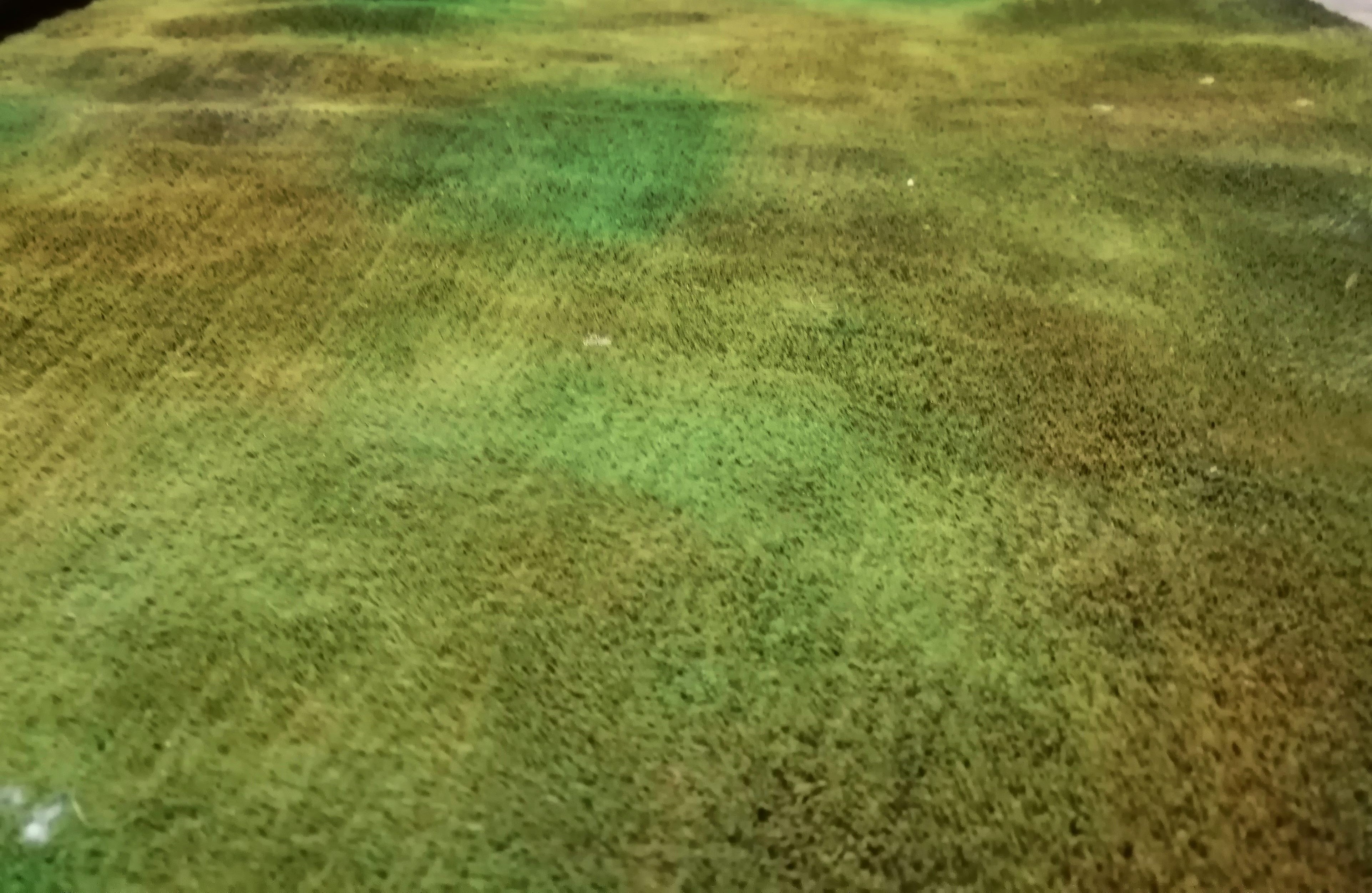
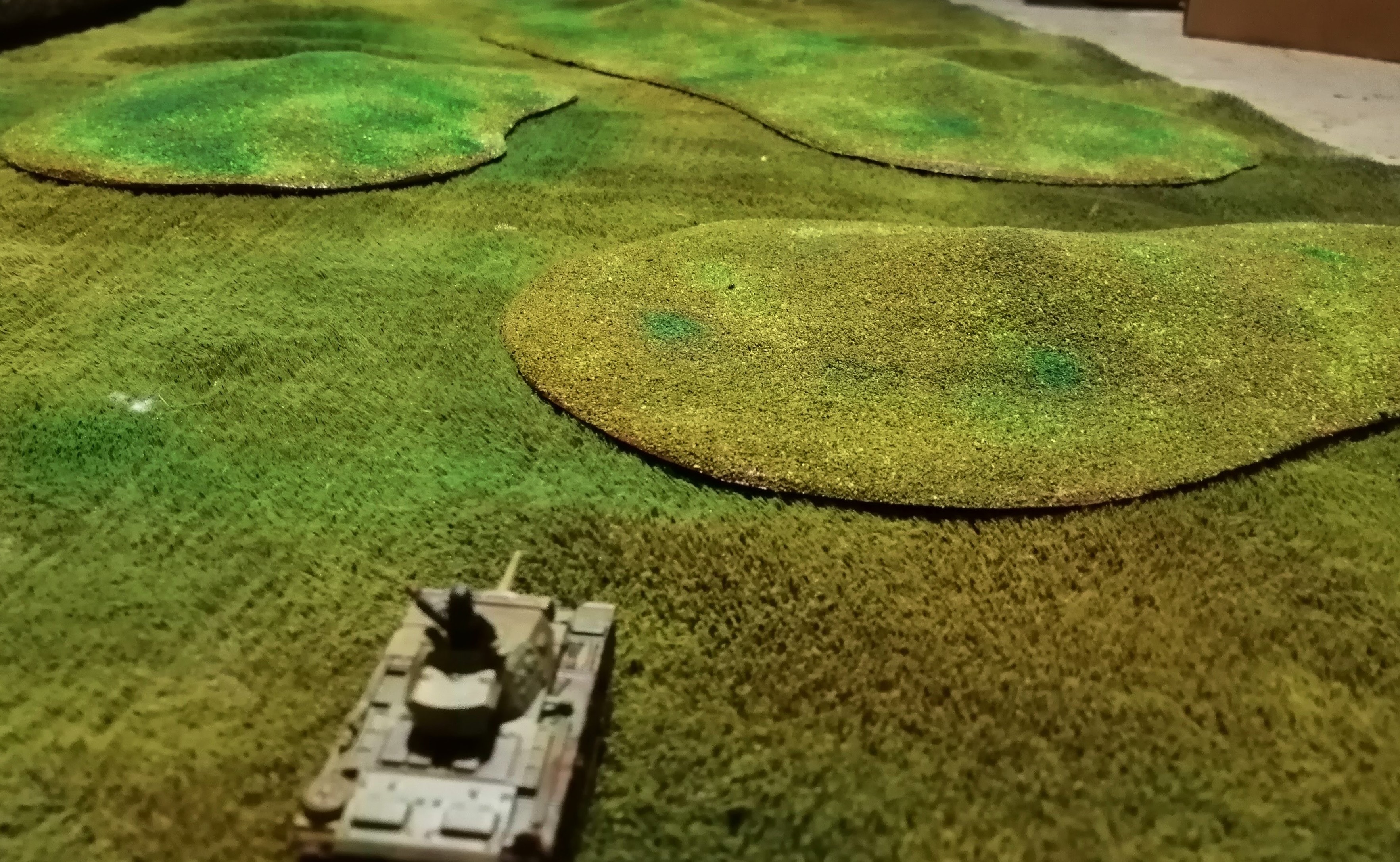
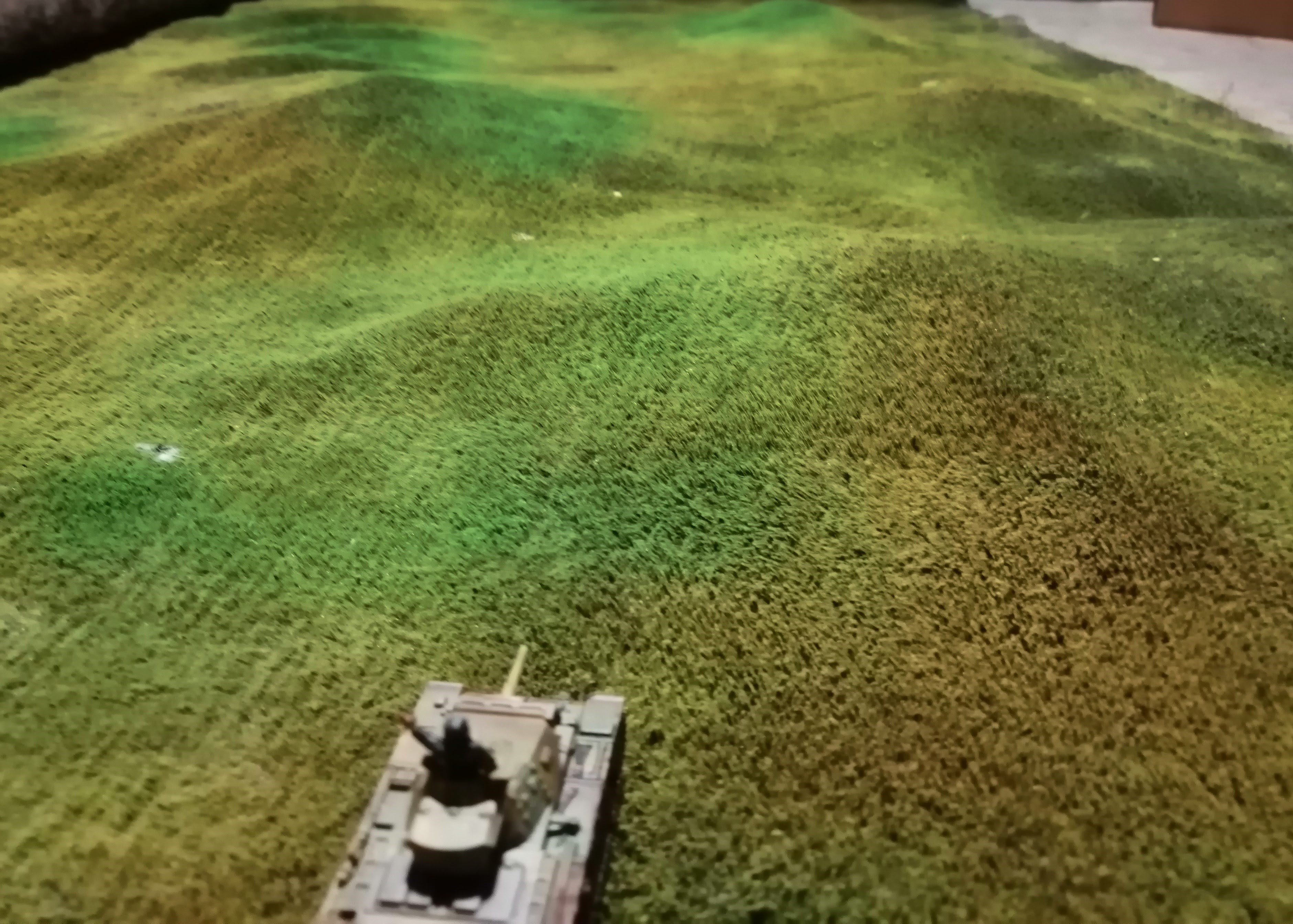
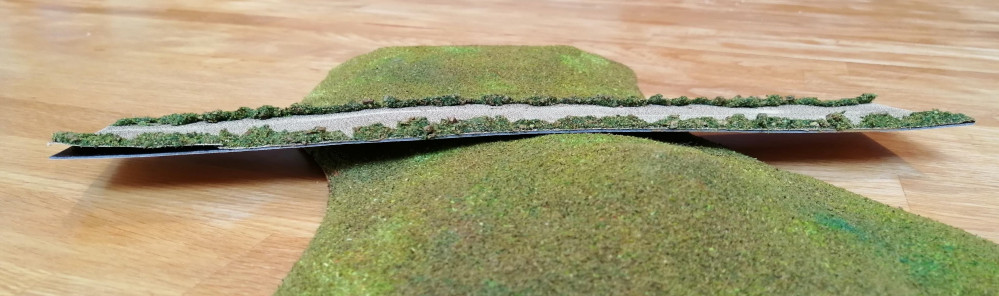
In addition to my old roads being old and crap, they’re also rigid. So when you put them on this gently rolling countryside, it just ruins the immersion.

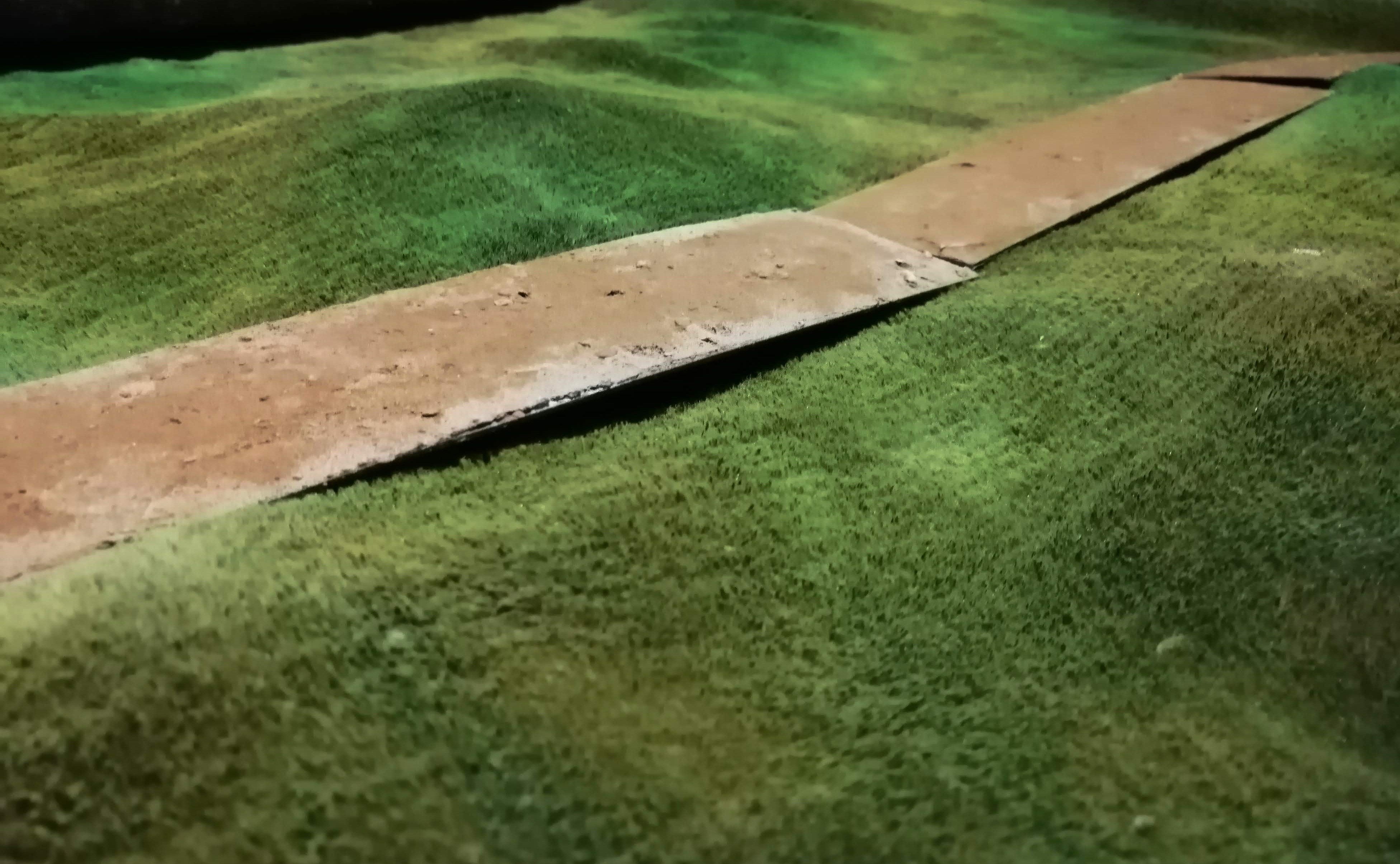
Roads should conform to the contours of the countryside, not do this:
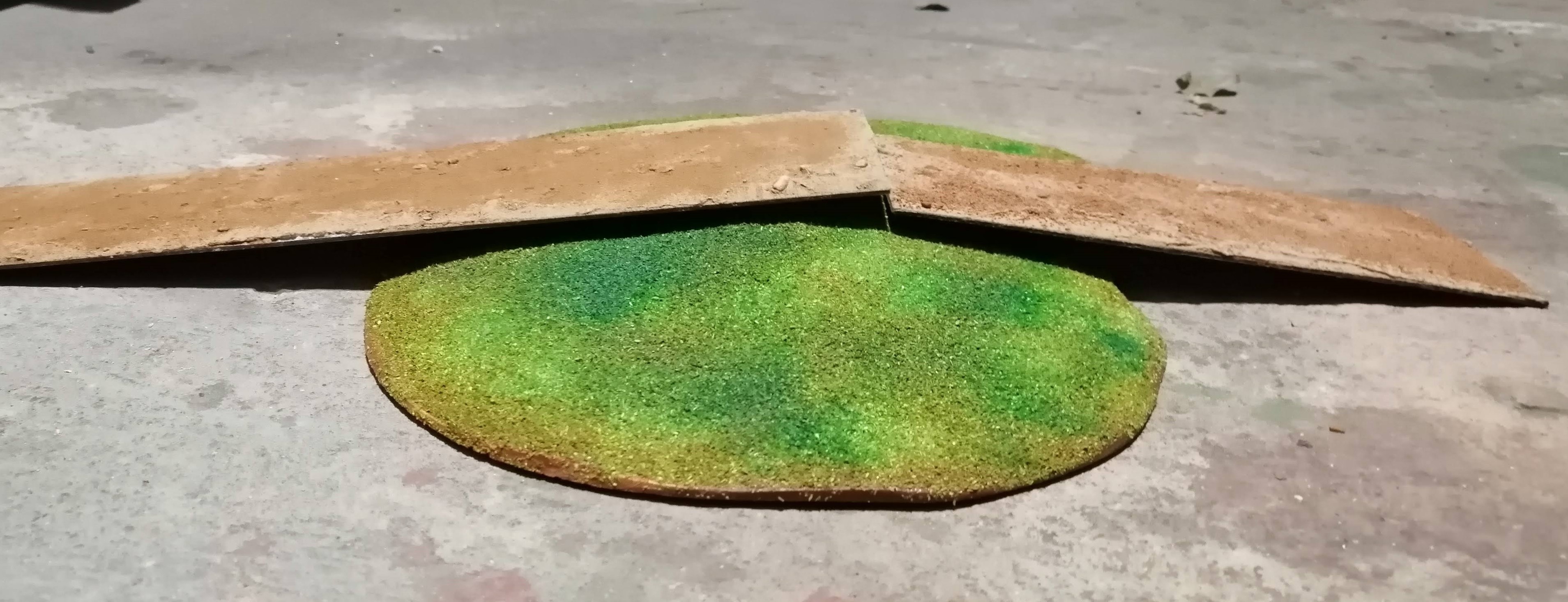
So I’m going to aim to make flexible roads that will sit onto hills and look more natural. I’m also going to try and do this cheaply and with minimum effort.
So I’ll use this project to illustrate what I got wrong and right.
Materials and other options
I’m aware that there are retailers out there selling flexible roads. Some of these look pretty good but they’re not cheap. And I generally find that I need a reasonable selection of curves, straights, junctions and so forth to allow for different table layouts. And as this project is a terrain build, I’m not going to buy anything.
Latex would appear an obvious option as this is flexible and durable. You do however need to cast this and that requires molds to be made. That strikes me as a right pain and I’ve never cast anything in my life. I don’t thing a road complex is really the place to start my casting journey. It’s probably not a cheap option either.
Having recently been forced to do some decorating, I am aware of decorators caulk (or alternatively silicon rubber) that you can get from all good diy stores. It’s also cheap as chips and the acrylic based version can be painted over very easily. So I think the below will come in handy:
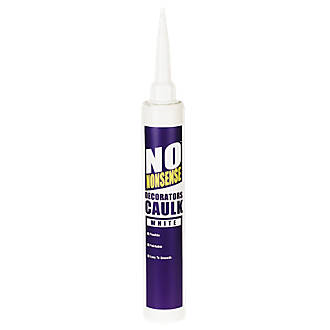 Some caulk, yesterday
Otherwise, as my gaming mat is made from teddy bear fur, this seems a good place to start to see if I can use this to create some roads.
Attempt 1
In hindsight, I’m not entirely sure what I was thinking when I tried this approach. So spoiler alert, this was a complete failure.
Looking at my teddy bear fur gaming mat and seeing its flexible properties, my first thought was to use the off cuts from the mat to make the roads. After all, painted up correctly, it would blend better into the mat and improve the immersion.
Here’s a sample of the fur before I got started with it:
 The skin of a teddy bear
Clearly painting the fur to look like a road would look awful. I somehow thought though that applying a decorator’s caulk mix would look a whole lot better.
To make the mix, I squeezed some caulk into a tub with some brown acrylic paint. In my mind, I was aiming for a dirt road.
On the plus side, the caulk mixed very well. I applied it to the fur using a tongue depressor and sprinkled some sand over the top to try to create some texture. I left it to dry.
Here’s the results:
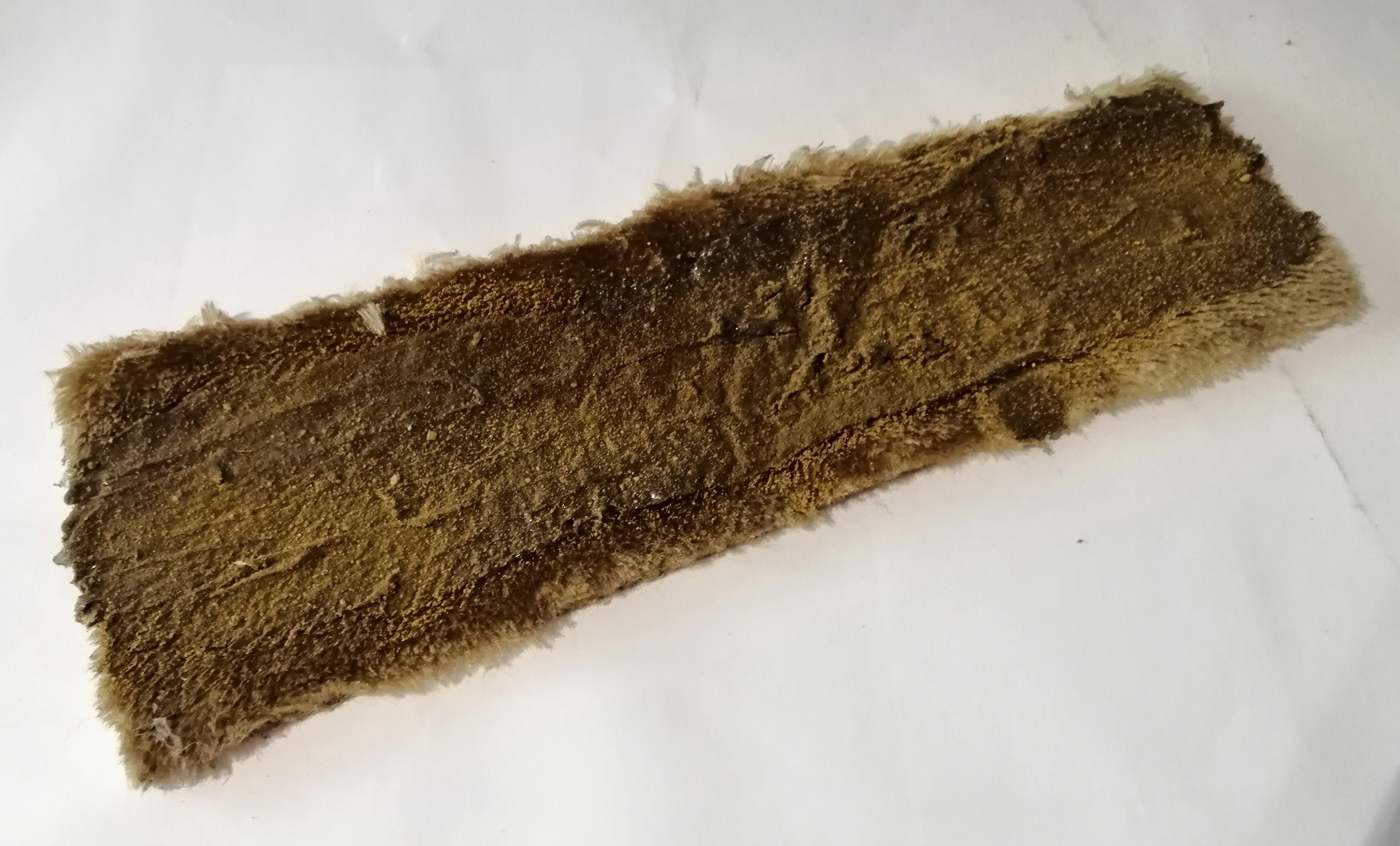 A mess
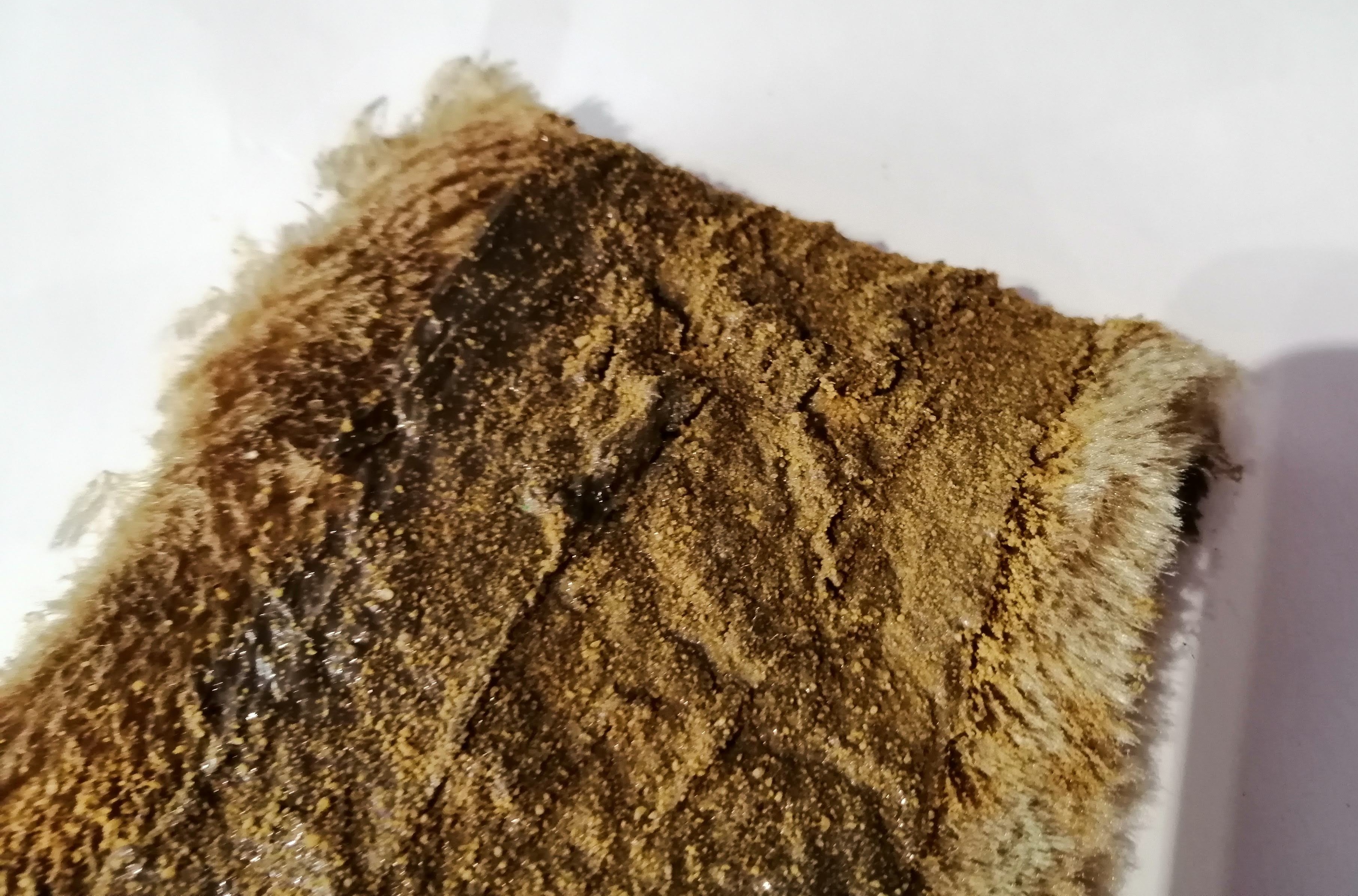 A close up of a mess
As you can see, it looks nothing like a dirt road. The caulk got matted into the long fur, clumped and didn’t sit flat. The sand just looks like sand sprinkled on the top.
In hindsight, this result was all very predictable. So we’ll chalk this one down to experience and talk no more about it.
Attempt 2
Taking a look at my first disastrous attempt, I felt that the main problem was that the hair on the dead teddy bear skin was too long. I remedied this by taking my hair clippers to the fur and removing as much of it as I could down to the material. If I leave fur on either side of the where the road will be, I can then colour this green and it will help things blend in.
I once again went with the caulk and brown paint mix but this time added some sand into this mix rather than sprinkling it on top.
Here was the result:
 The caulk mix after it had dried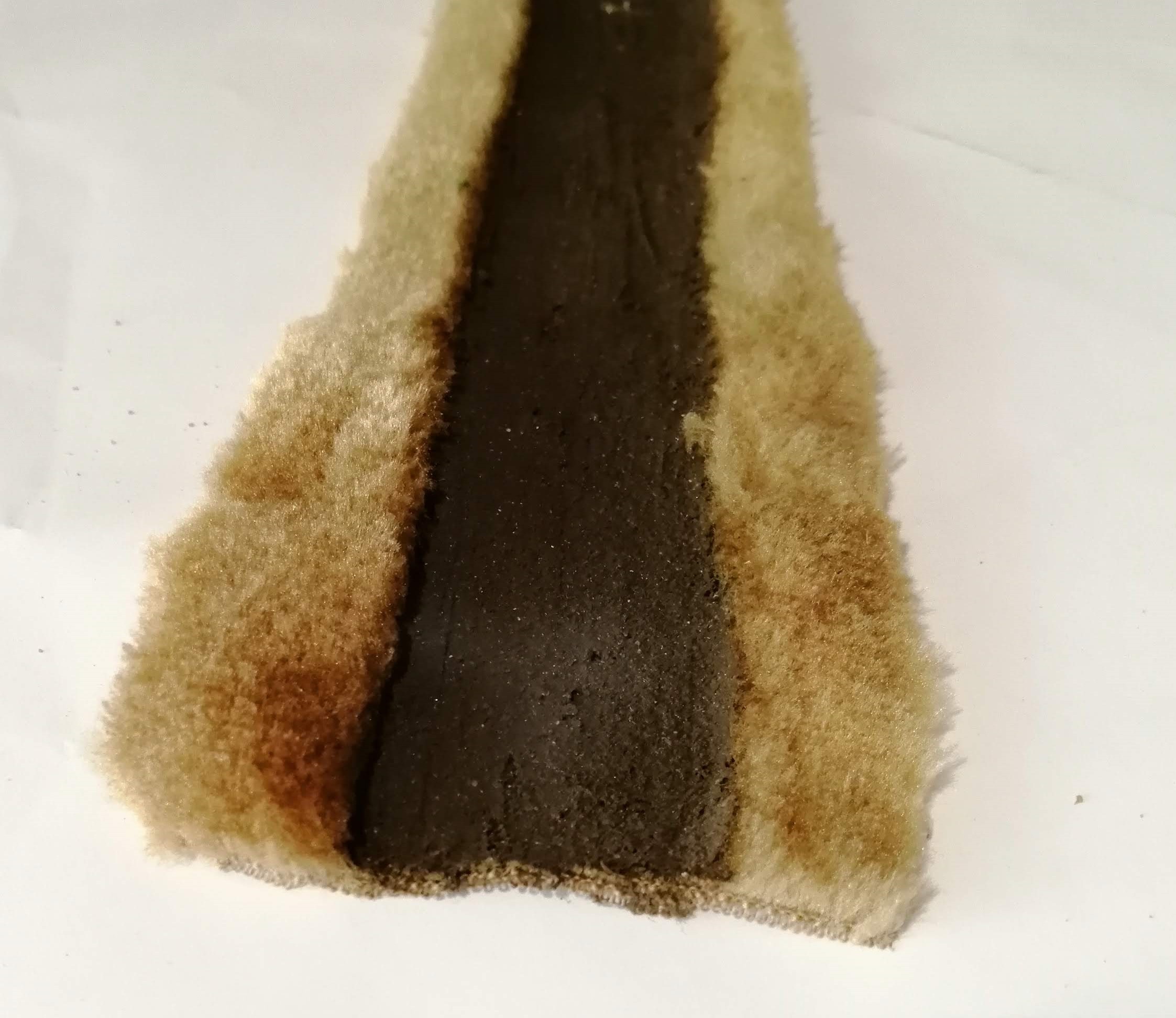
Now this looked promising. The fur on either side of the road is a little long, but this can be easily fixed with a little trim with the clippers. It’s also flexible, which is the main priority. Finally, it looks reasonably realistic as a dirt road, especially as an experiment – with more finesse in the application, a wash and a dry brush, it could look really good.
This, it seems, was the solution to my problem.
And then I spotted this:
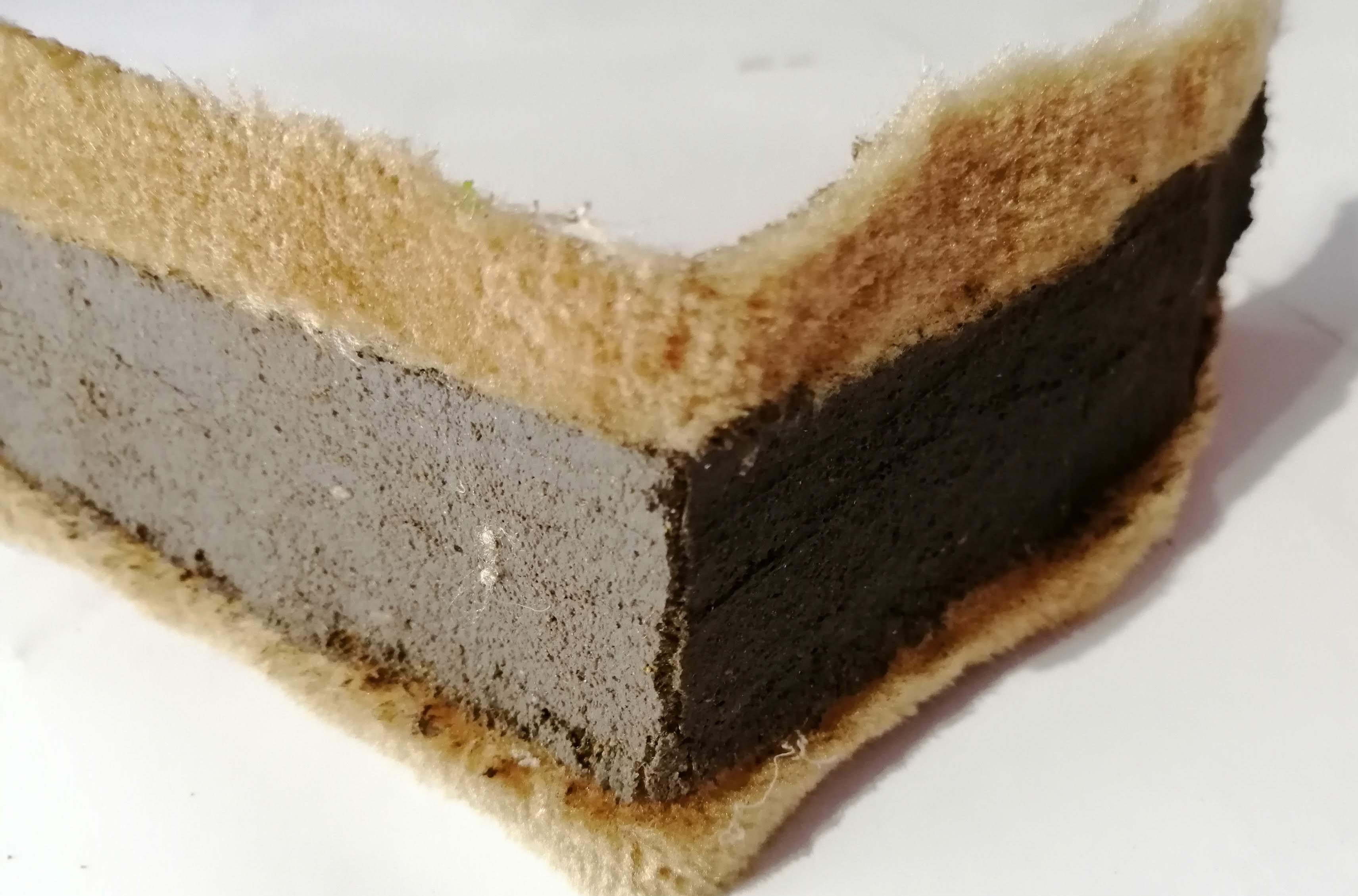
Going along the road in closer detail exposed some more cracks, albeit not as bad as the one above.
On inspection, it would seem that the little bit of fur that the clippers could not remove coupled with the very loose weave of the material used as the fur backing meant that the caulk didn’t really adhere fully to the material. It sits a little on top so doesn’t dry and flex with the material.
This is a show stopper but at least the fur down either side of the road looks good.
Attempt 3
I decided to try a closer weave material as the backing for the caulk mix in the hope that this would give something more for the caulk to fix to. I have some canvas lying around which meets these requirements.
Before applying any caulk, I liked the look of the fur border in the previous effort so I wanted to see if I could attach some fur to the canvas to create the effect. My thinking being that once the caulk road was in place, I could attach a border and it would blend in to the mat better (once the fur was painted).
I used some fabric glue with the following results:
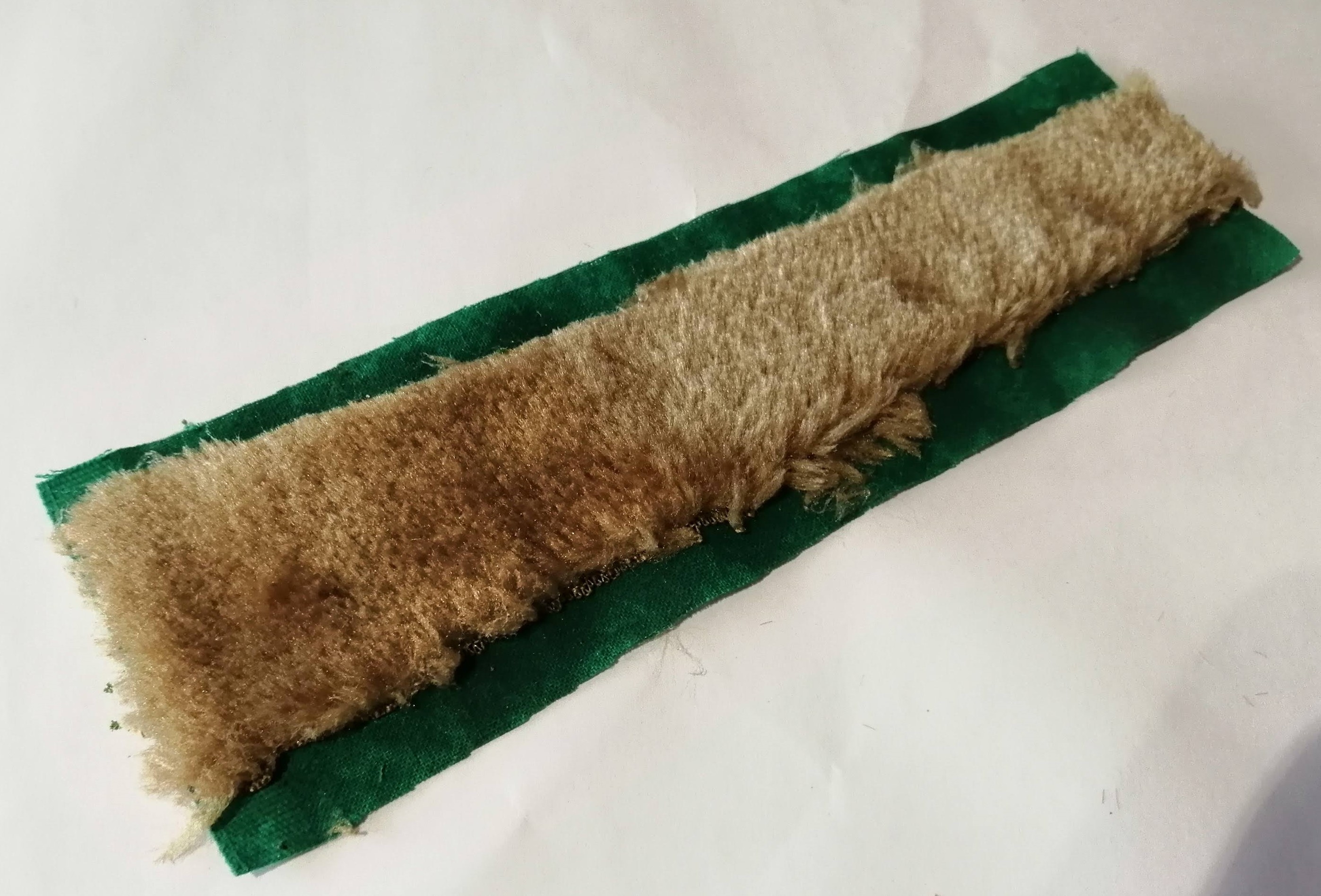 Fur glued to canvas
This looked promising. The fur adhered well and this looked a possible option. It would even be possible to paint the fur before gluing it to the canvas.
Onto the caulk mix for the road. I used the same mix again (caulk, brown paint but less sand) and thinly applied this up the middle of the canvas strip. This layer was less than 1mm thick and just enough to block out the canvas.
I left this to dry and this was the result
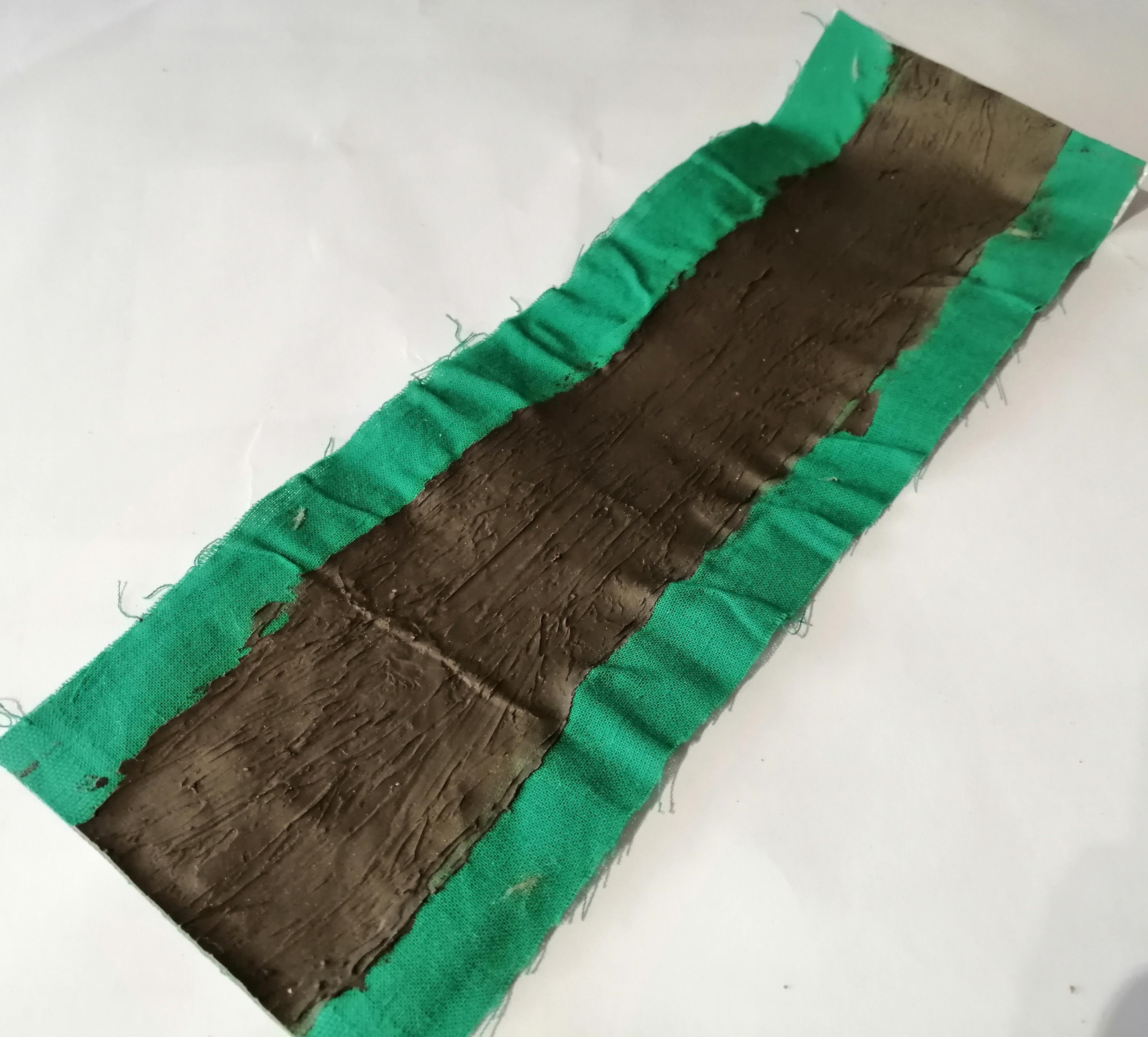 Curling, but not the icy stone throwing version
As you can see from the picture, the caulk has dried and caused the canvas to curl up as the canvas does not have enough thickness to stop it. It’s also a little wrinkled.
I tried again, this time putting gaffer tape on one side of the canvas to provide some more ‘strength’
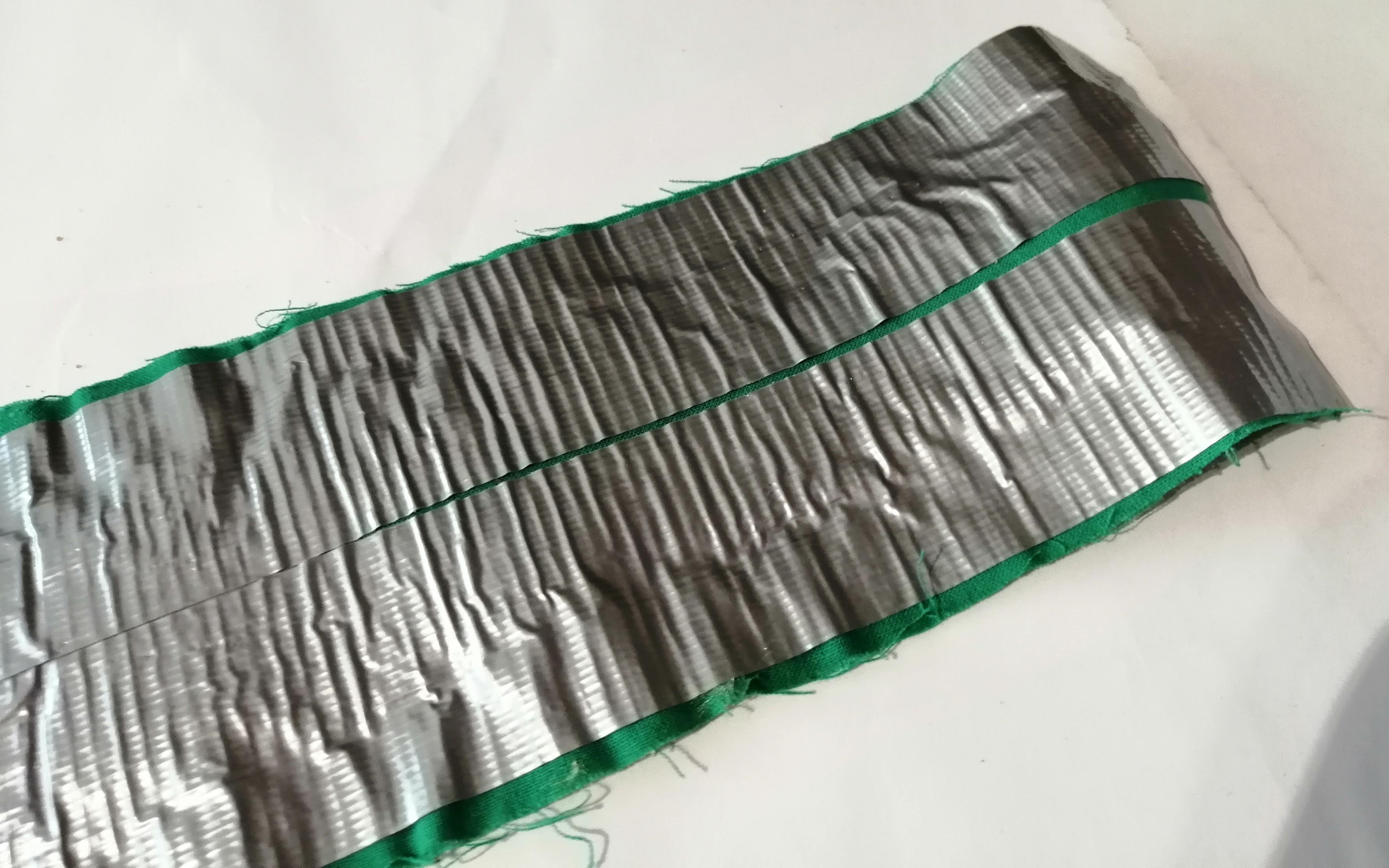
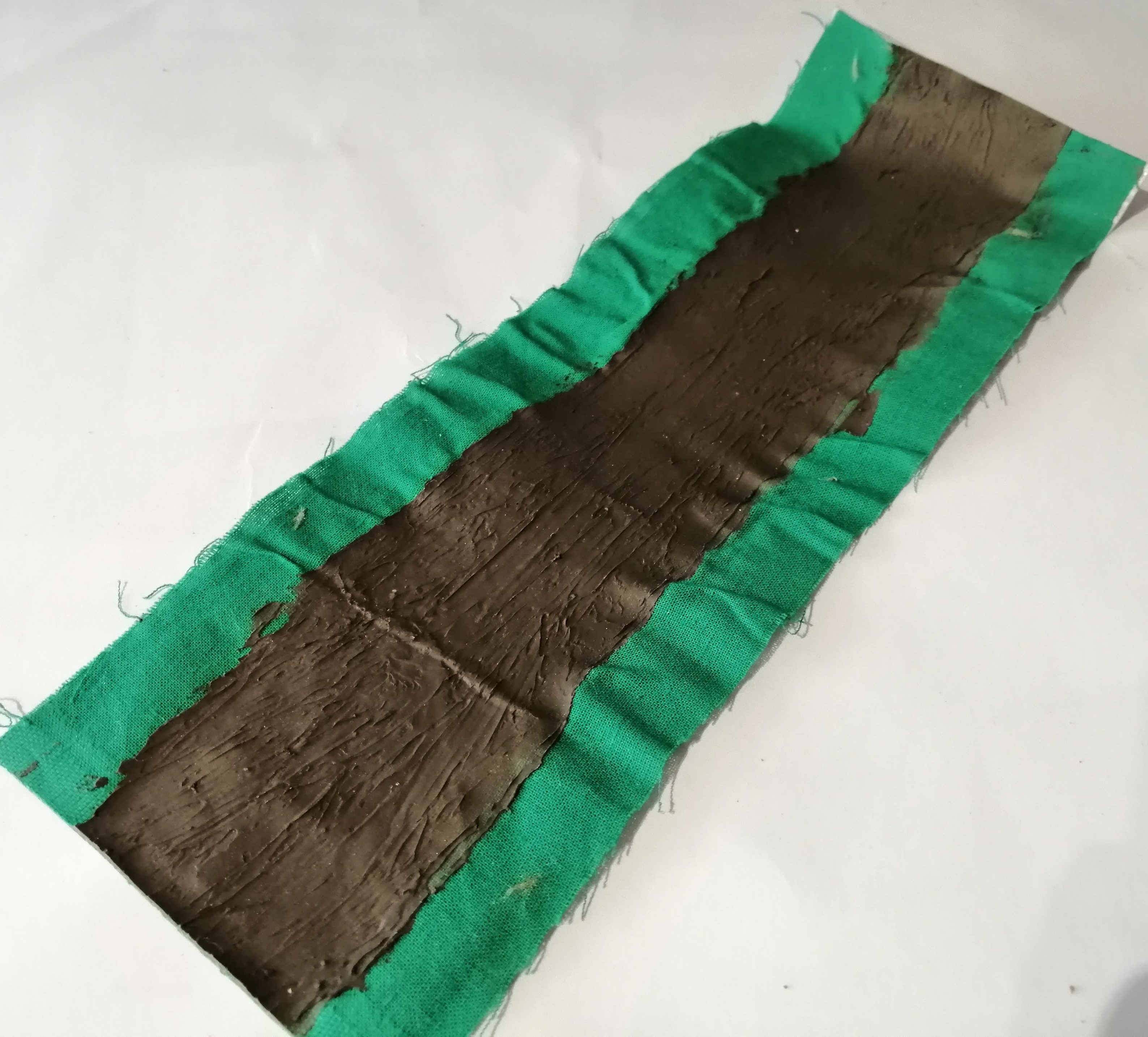
You can see below the problems with the two approaches,
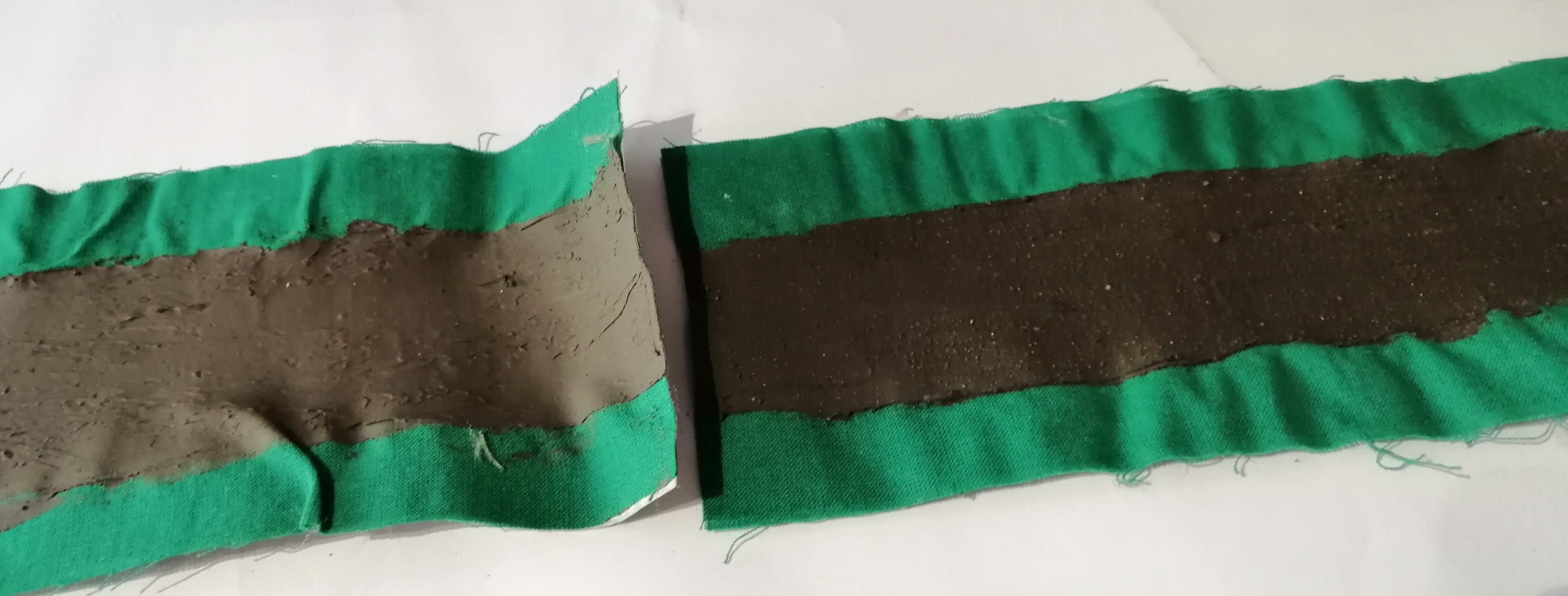 Wrinkly and curley
So this didn’t work. I’m thinking that perhaps caulk is not the way to go. Or perhaps I need a better backing that is not subject to the problems of canvas or teddy bear fur.
Attempt 4
I’m rethinking the use of material (or cloth) for the base of the flexible road. It’s a little too unpredictable in how it accepts other material. Looking for an alternative, I’m aware that it is possible to cast your own roads using latex. This got me wondering whether you could buy latex sheets, so I tried a google search. Turns out you can:
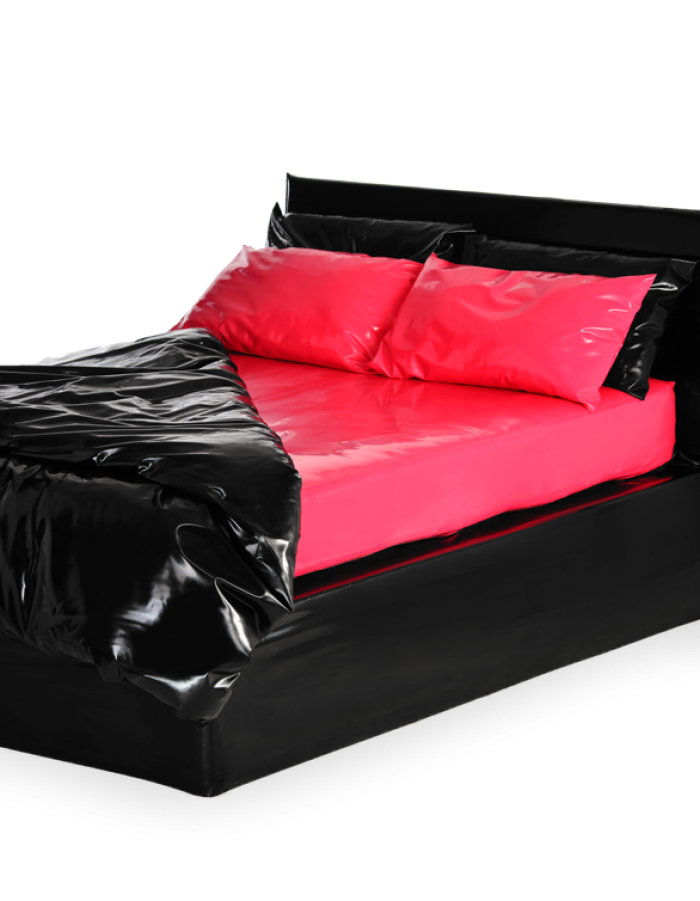 Hmmmm....
In hindsight, I should have seen that coming. But, I then spotted it was possible to purchase rubber sheets, used for insulating and dry lining and such. This struck me as a viable option, so after a quick search around ebay, I found that an A4 sheet could be had for a few quid, so I ordered one as a test
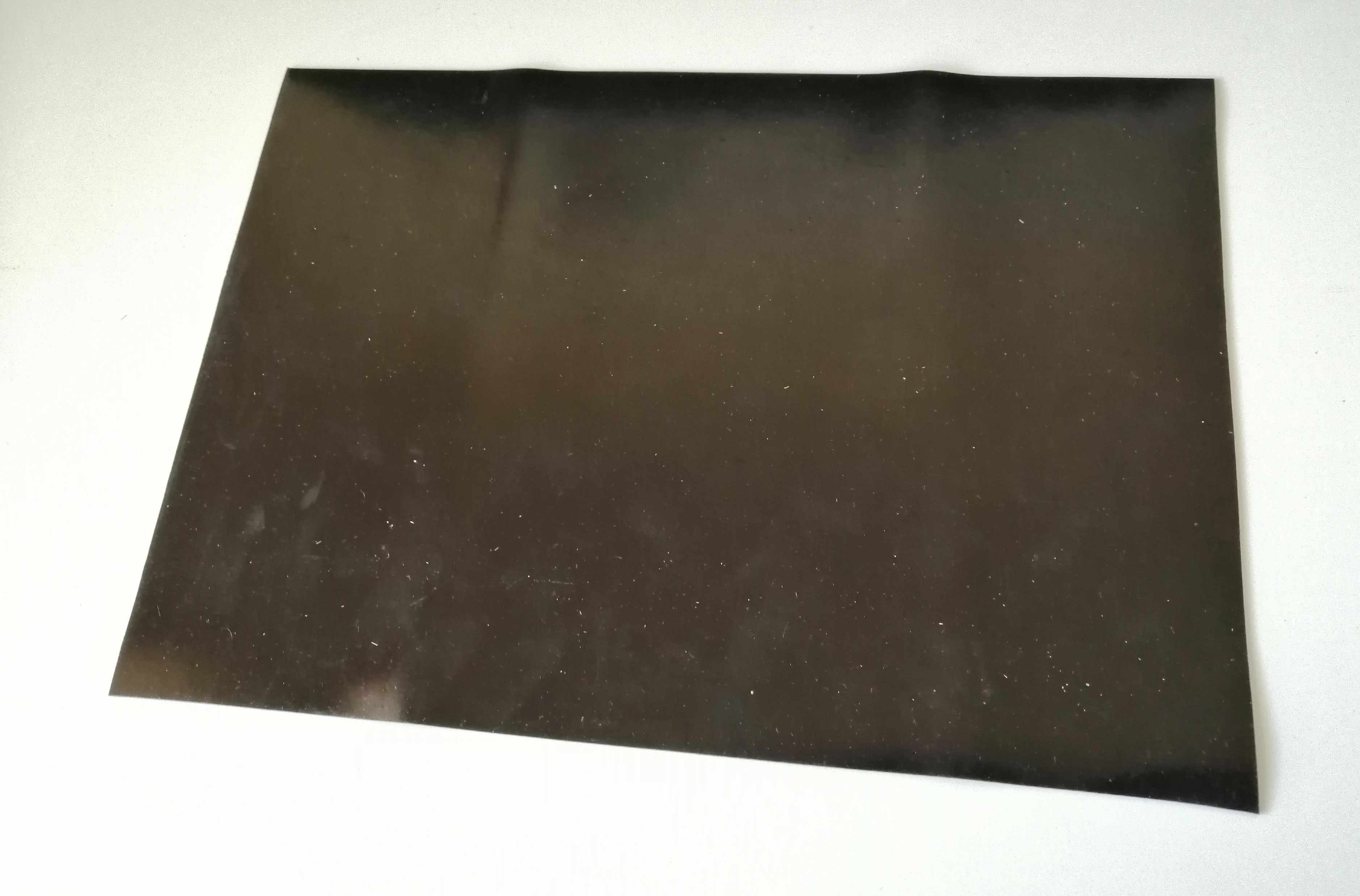 An A4 sheet of 1mm thick rubber
I opted for a 1mm thick sheet but you can go thinner. Thicker options I felt might begin restricting the flexibility a little.
Rubber can be a little ‘sticky’ or at least have a high degree of friction, so it needed a wipe down with a wet cloth to remove anything stuck to it. From there, I cut a strip as the basis of a road.

So far, the properties of this rubber strip look very promising.
Moving on to create the road surface, I’m going to try two approaches. I’ll persevere with the caulk mix but I’ll also try using textured wallpaper to see if this is a shortcut.
I’ve got the following wallpaper types to try out:
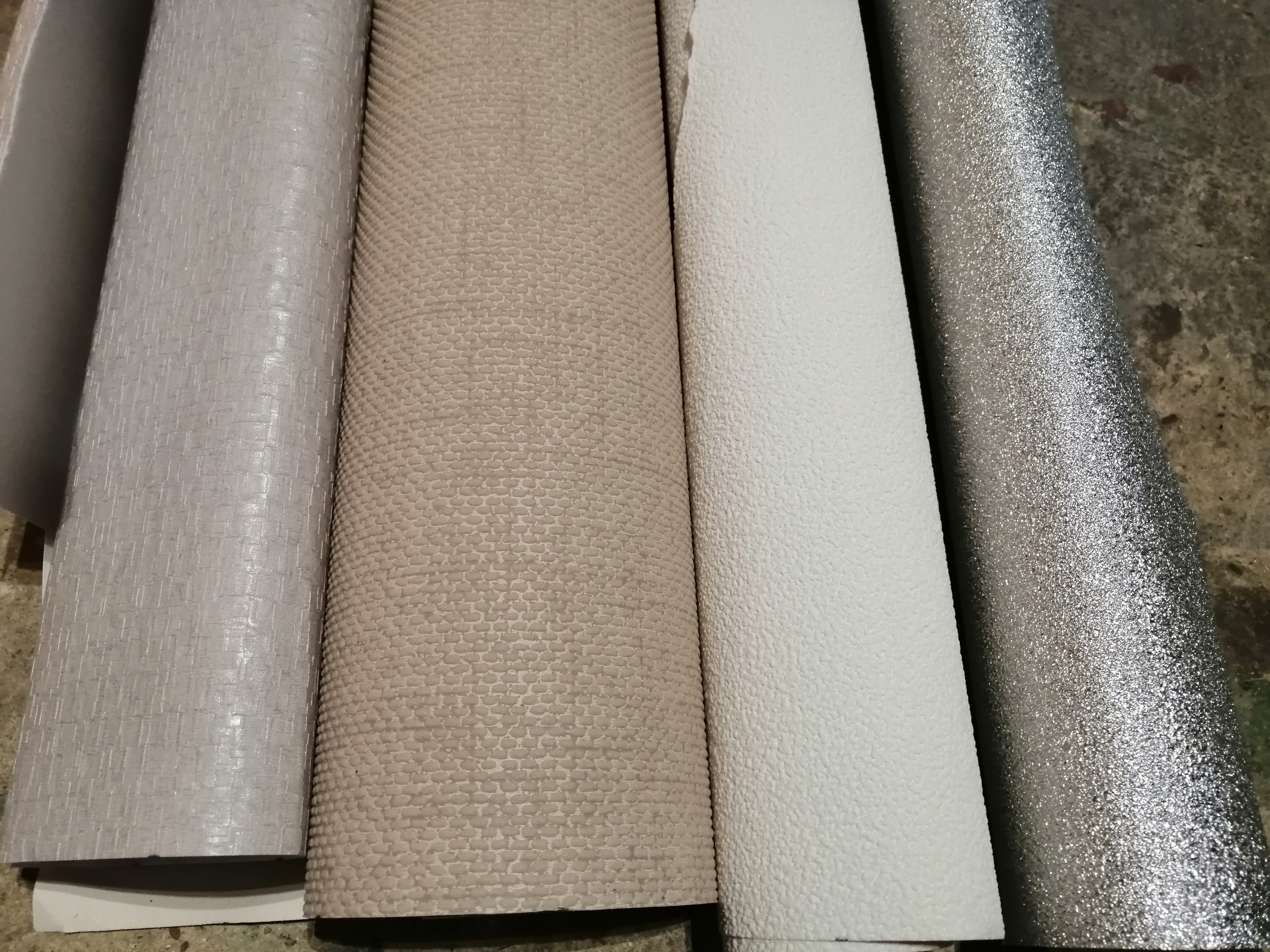 Some textured wallpaper
And here’s some smaller samples of the above wallpaper sprayed with primer.

I’m looking to create roads for FoW, so all of the textures are a little too big for the 1:100 scale but I like the bottom left for concrete and dirt roads whereas you could just about get away with the top right as cobbled. Bottom right could make a good town square.
I’ll start with trying to make a dirt and cobbled road.
Attempt 4 (continued)
So this is how I’ve tackled the rubber with wallpaper version.
I’ve cut a rubber strip that’s 9cm by 30cm (roughly) and then taken some wallpaper that’s slightly larger than this. I’ve opted for two versions, the less textured silver paper that you see in the picture below and the paper that looks a little like cobble stones.
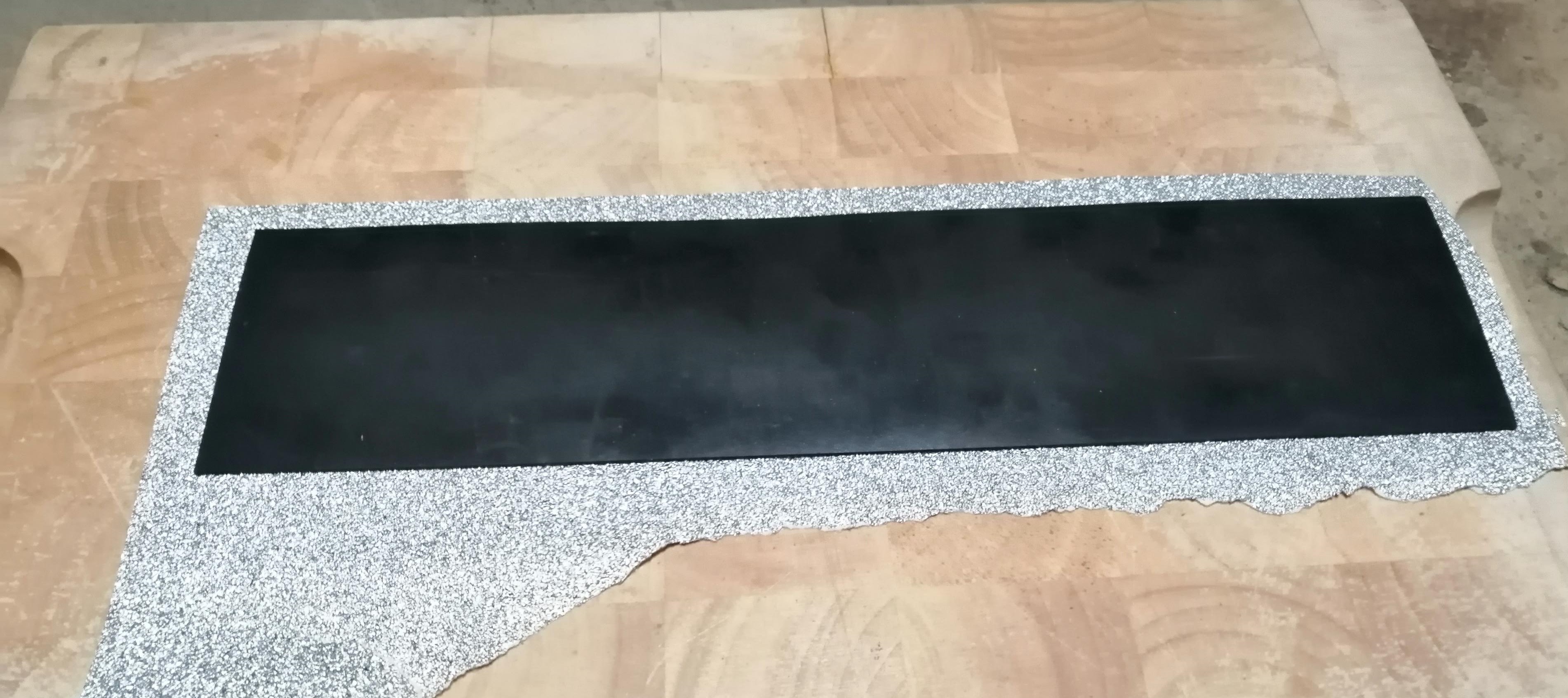
To attach the wallpaper to the rubber, I’m going to use carpet tile adhesive. I guess you could use any spray glue but I happen to have this in the garage. And it’s called Macho….
I’ve given the rubber a generous coat of the spray glue, laid the wallpaper over this and then put both under a flat, heavy object to make sure it dries flat. I also put some grease proof paper underneath to stop it sticking to the garage floor.
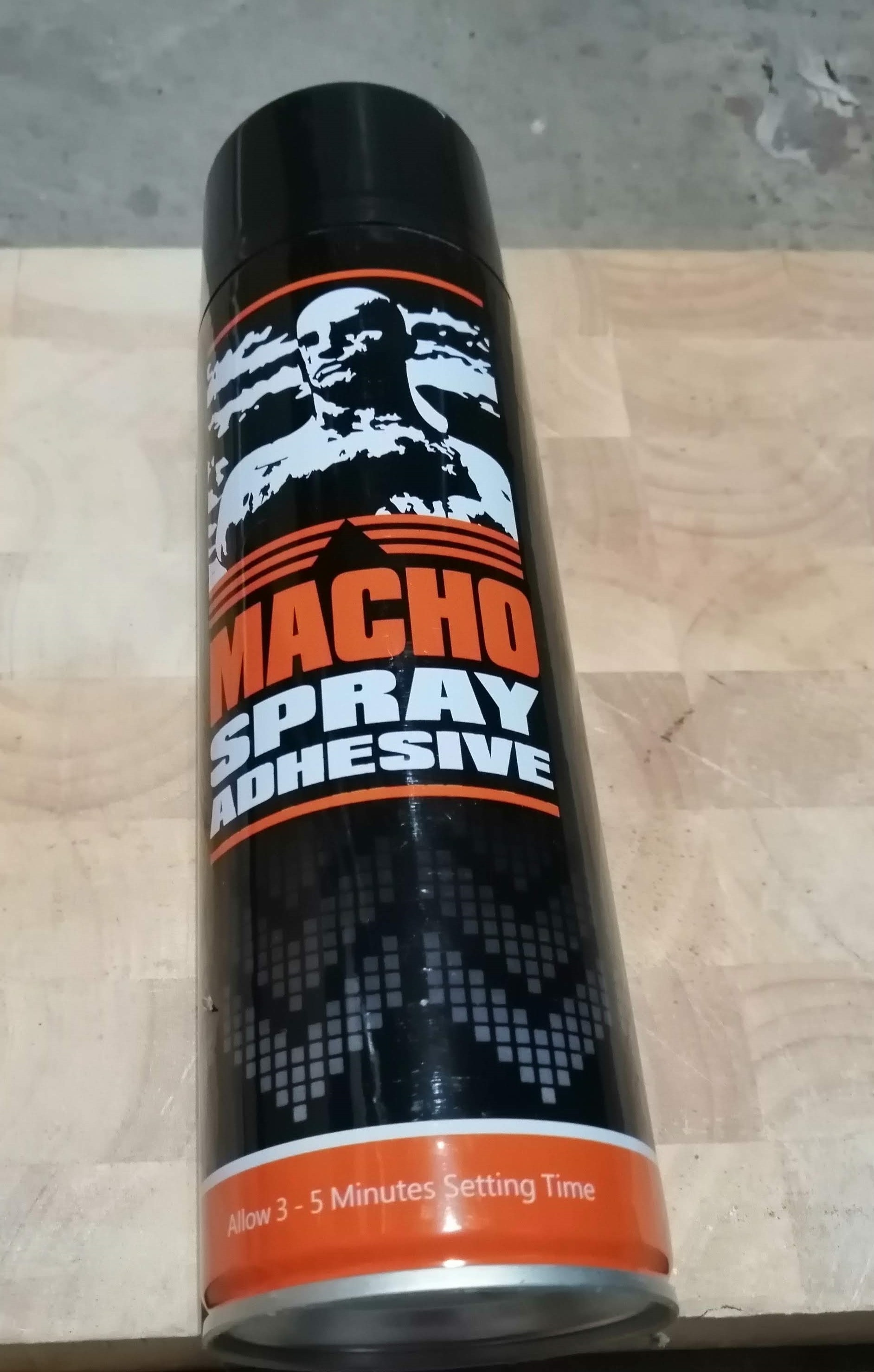
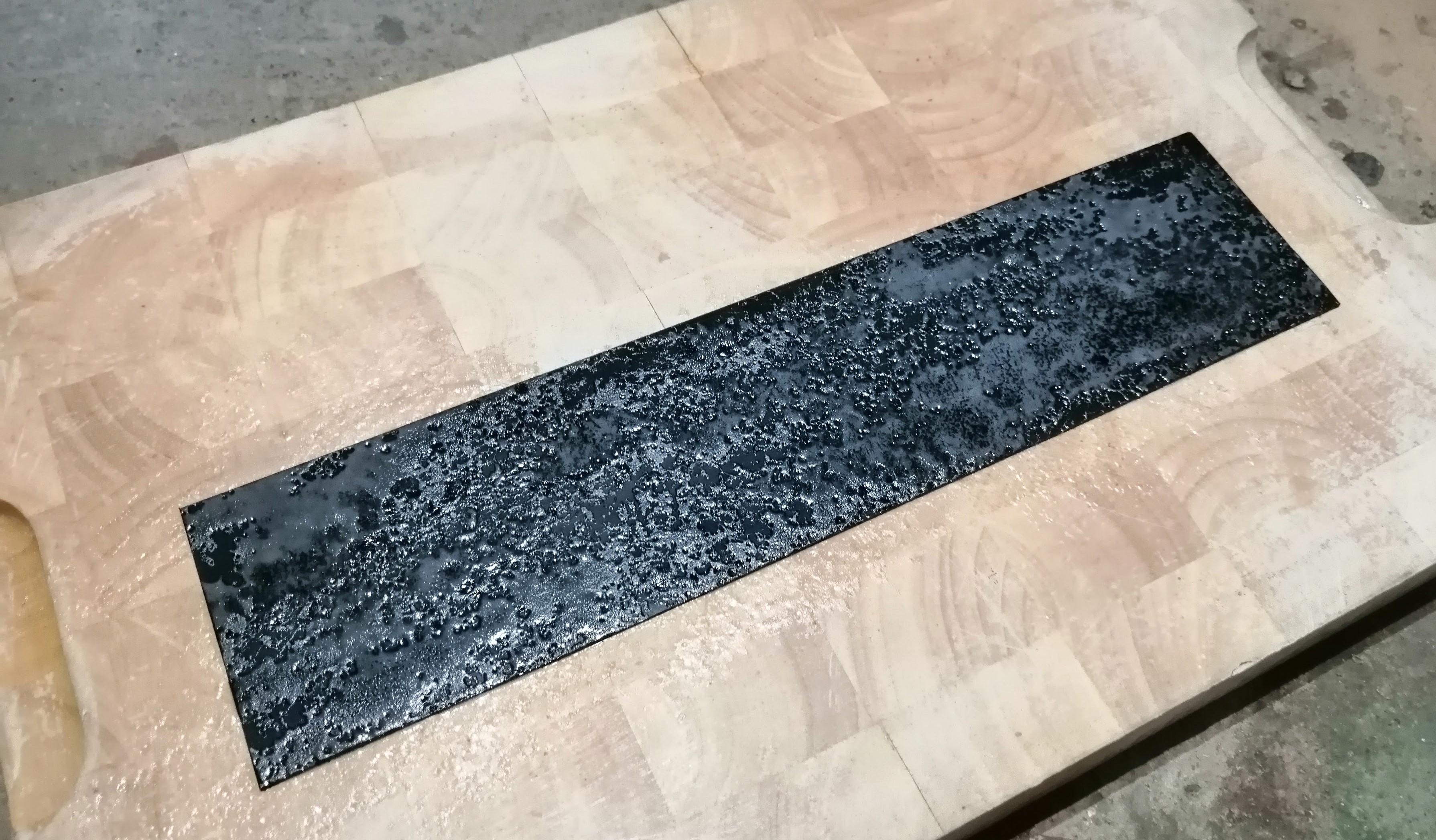
The glue says it dries in 5 minutes. I think that’s a lie so I left it overnight.
Once dry, I’ve trimmed the excess wallpaper off. Here are the two variations of wallpaper

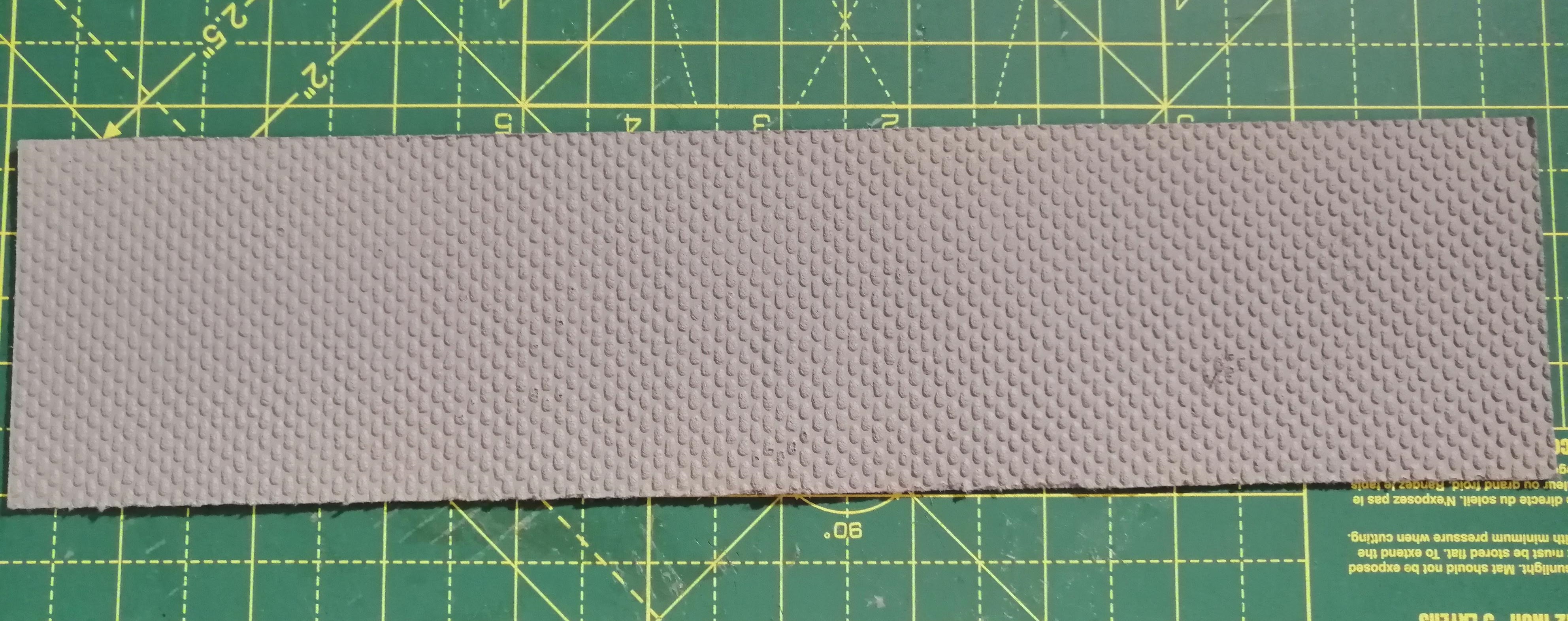
I’ve then been able to give both variations a spray with a gray Halford’s primer, which they took well. The silver paper needed a quick second coat to completely eliminate the shine.
Both options are very flexible and are so far exhibiting no signs of warping. You can see how flexible in the picture below.
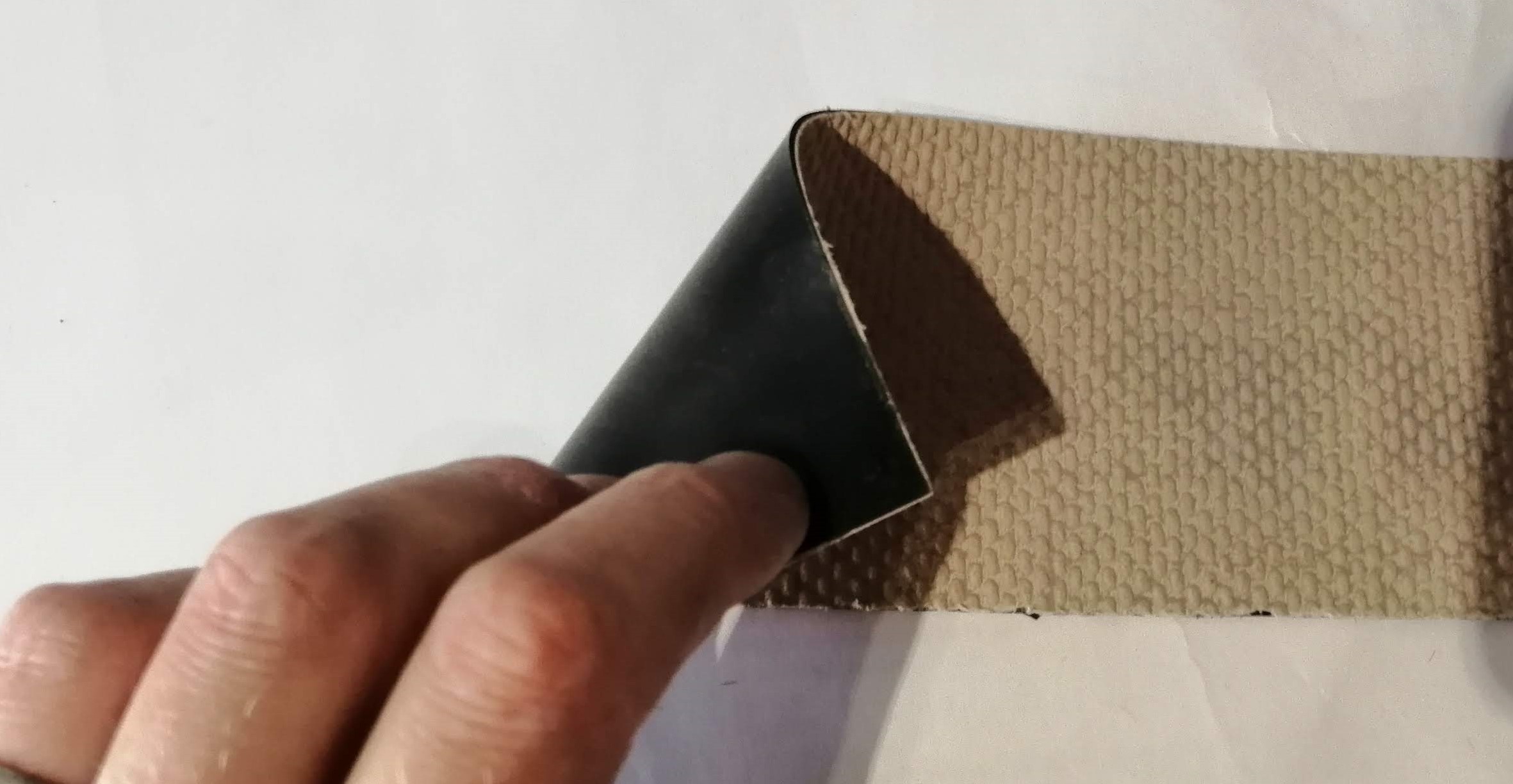 Bend it, shape it, anyway you want it
This is looking very promising. These could now just be painted up and used but I may see if I can add to them.
I’ve also been working on a caulk option as well and will update with that once it is dry.
So far, attempt 4 is looking good!