







Husaria – Building a Polish army for the 1620s



Recommendations: 2003
About the Project
This project describes my efforts to build a 1620s Polish and Lithuanian Commonwealth army, including the famous Polish ‘Winged’ Hussars. I will cover the historical research, choosing the miniatures, build and painting the miniatures, and finally hopefully playing with the army. (N.B. Since starting this project I have added a couple of further projects to the system. One contains opponents for the Poles, the Swedish army. I had been adding entries about these here but it was a perhaps bit confusing. See here for the Swedish project: https://www.beastsofwar.com/project/1798825/ . I also started a project for the set up a of demo game planned for Salute 50, using the Poles and Swedes, here: https://www.beastsofwar.com/project/1798842/ .)
Related Game: Pike & Shotte
Related Company: Warlord Games
Related Genre: Historical
This Project is Active
Haiduks and Housing
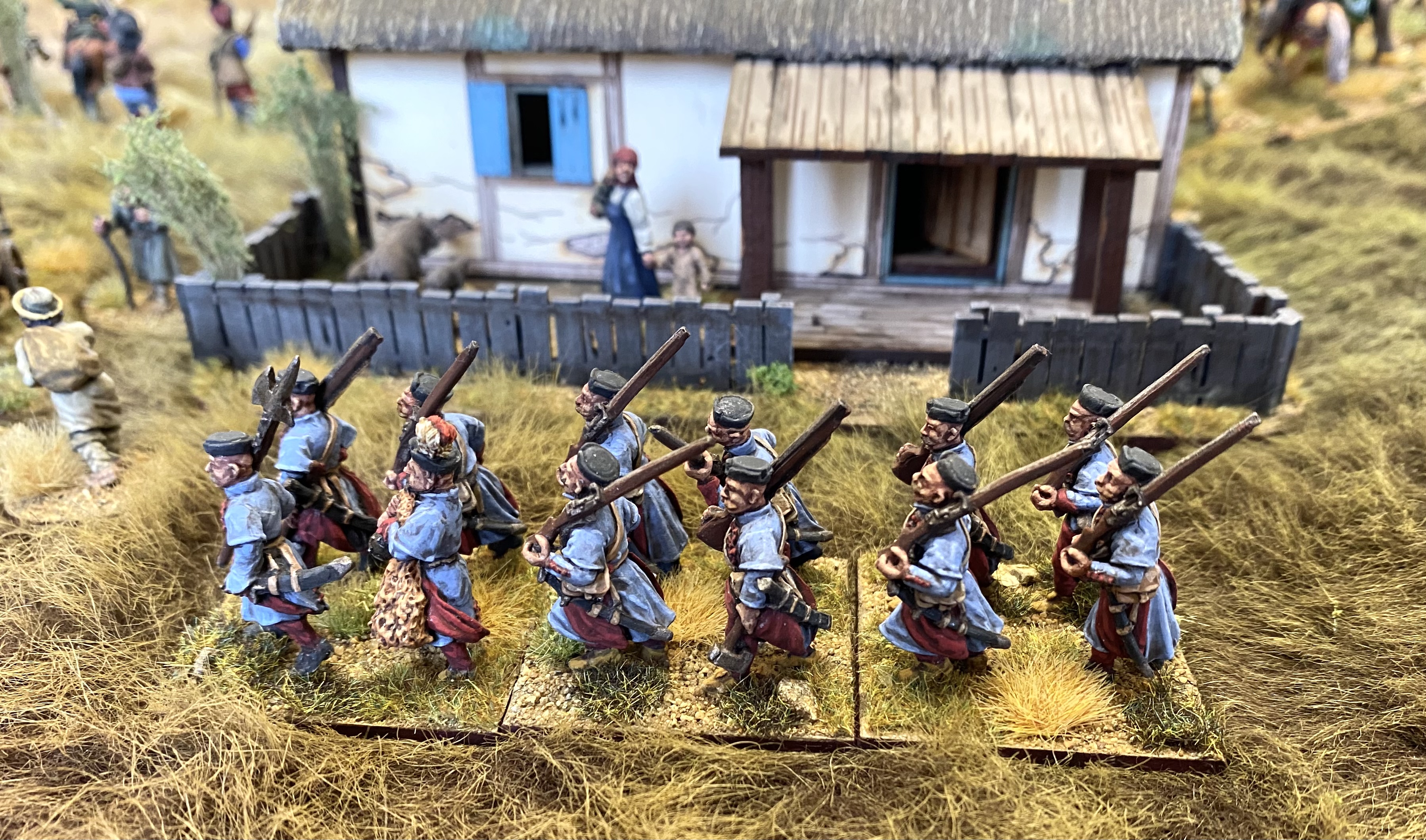 28mm Polish Haiduks from The Assualt Group (TAG) and Foundry.
Slow progress over the last few months, but I have completed another unit of Haiduks, and I’ve also built a MDF cottage (from 4Ground) for use in my Polish v. Swedes games set in Prussia.
This is my third unit of Haiduks, and I have returned to the ‘classic blue plus red lining’ colour scheme for this unit. The figures remain a mixture of The Assault Group (TAG) and Foundry. This units uses marching poses from both manufacturers.
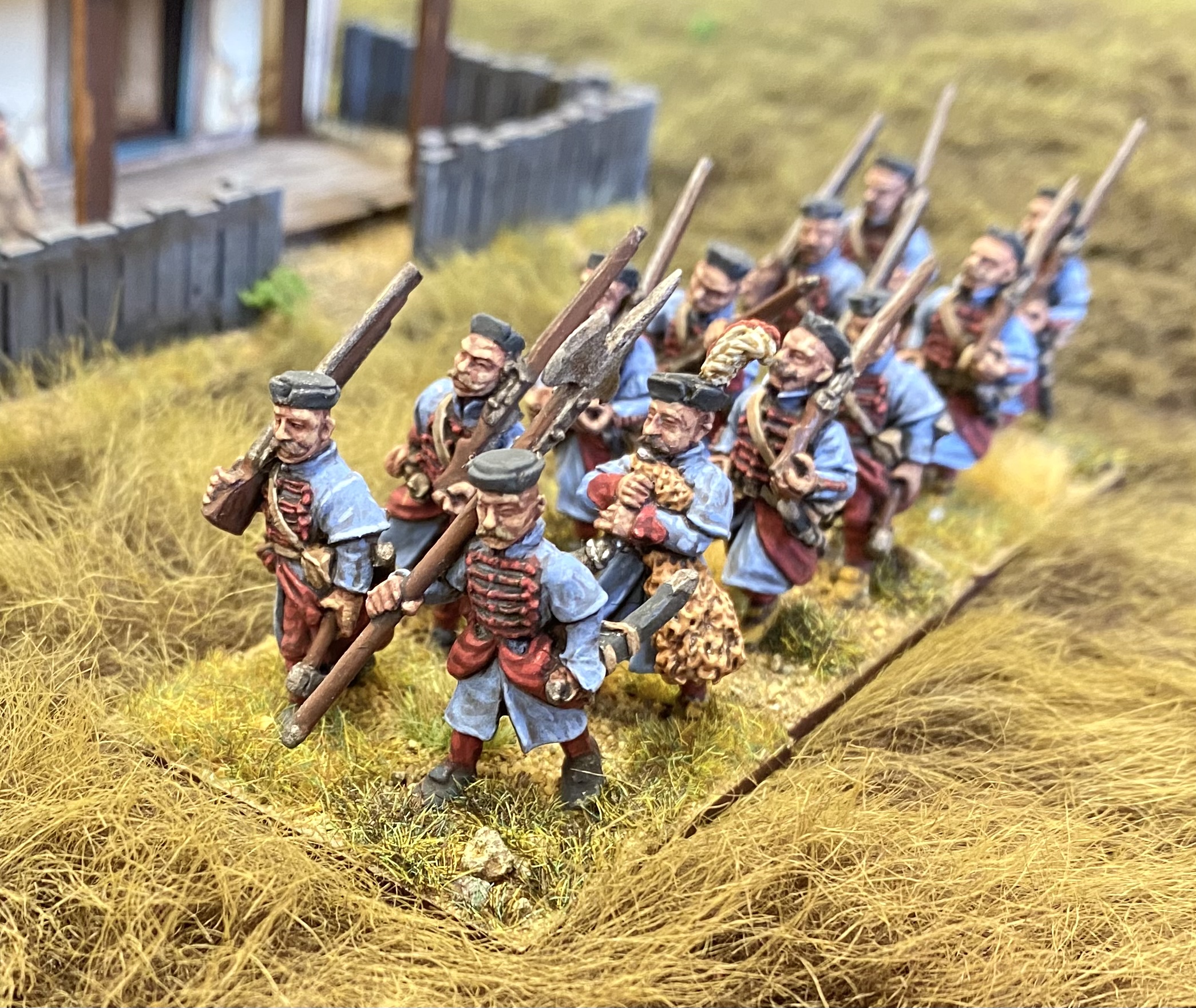
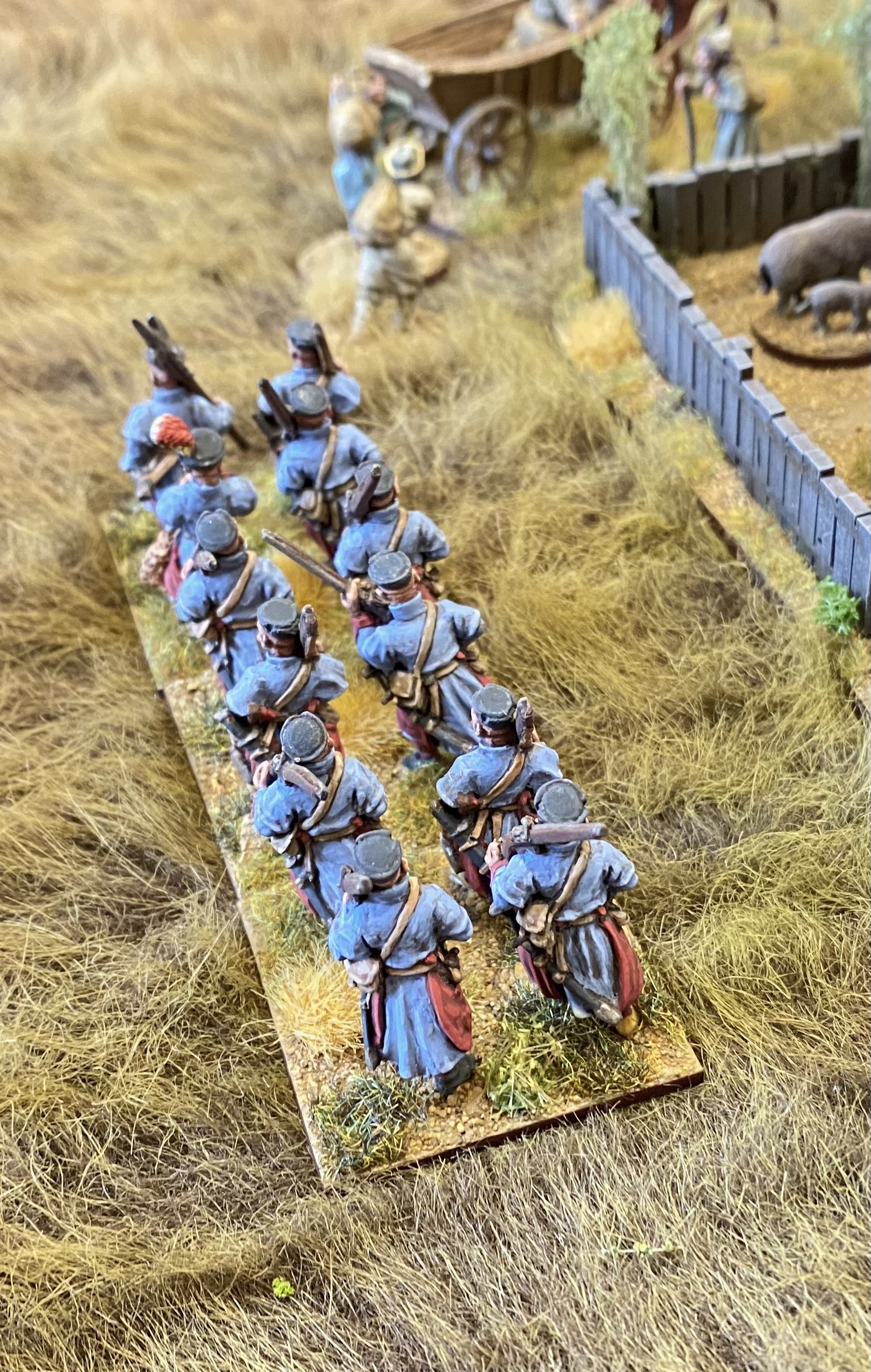
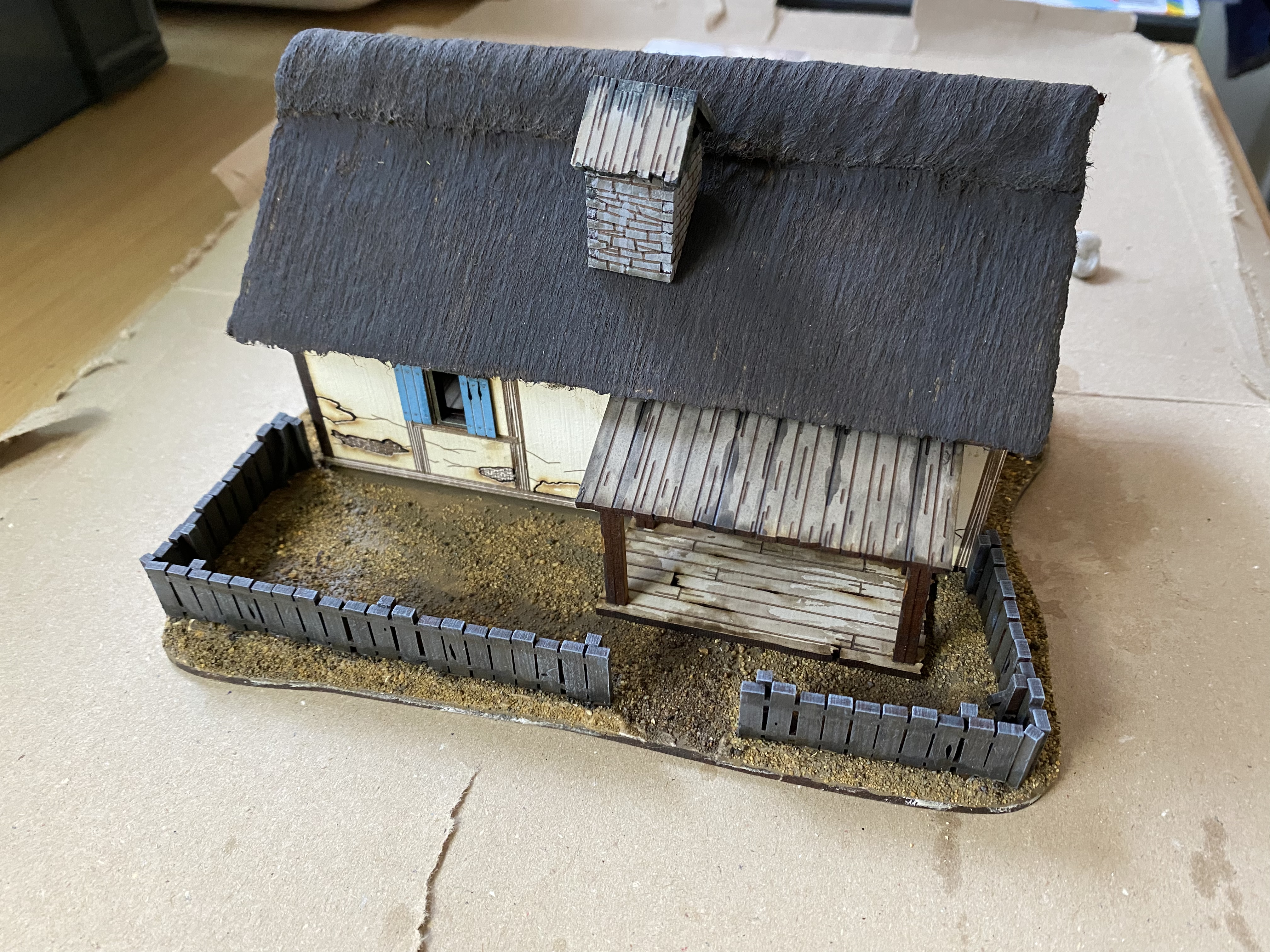
When I was thinking of taking a few pictures of this latest unit of Haiduks I thought that it would be nice to have a rural looking house. I have had this 4Ground MDF building in my stash for some time, and while intended for WW2 Eastern Front games, I thought it would also suit me for the 17th century.
It is a very detailed kit as you’d expect from (the now sadly defunct) 4Ground, and was easy to build despite the detail. One of the things that drew me to this model was the teddy-bear fur thatched roof, with the fur provided. Once the material was stuck on to the roof, I brushed in a lot of PVA to the fur, and then painted it. (I followed the Gerry-Can article on thatching.)
I have left the cottage pretty much as it comes out of the box for the remainder of the kit, just splashing about some weathering. I built a base for the building using a Warbases 3mm scenery base, and the fencing was also supplied by 4Ground (from Things From The Basement).
Next on the list for the Poles is more Winged Hussars (you just never seem to have enough!?).

Stakes, and all of the trimmings
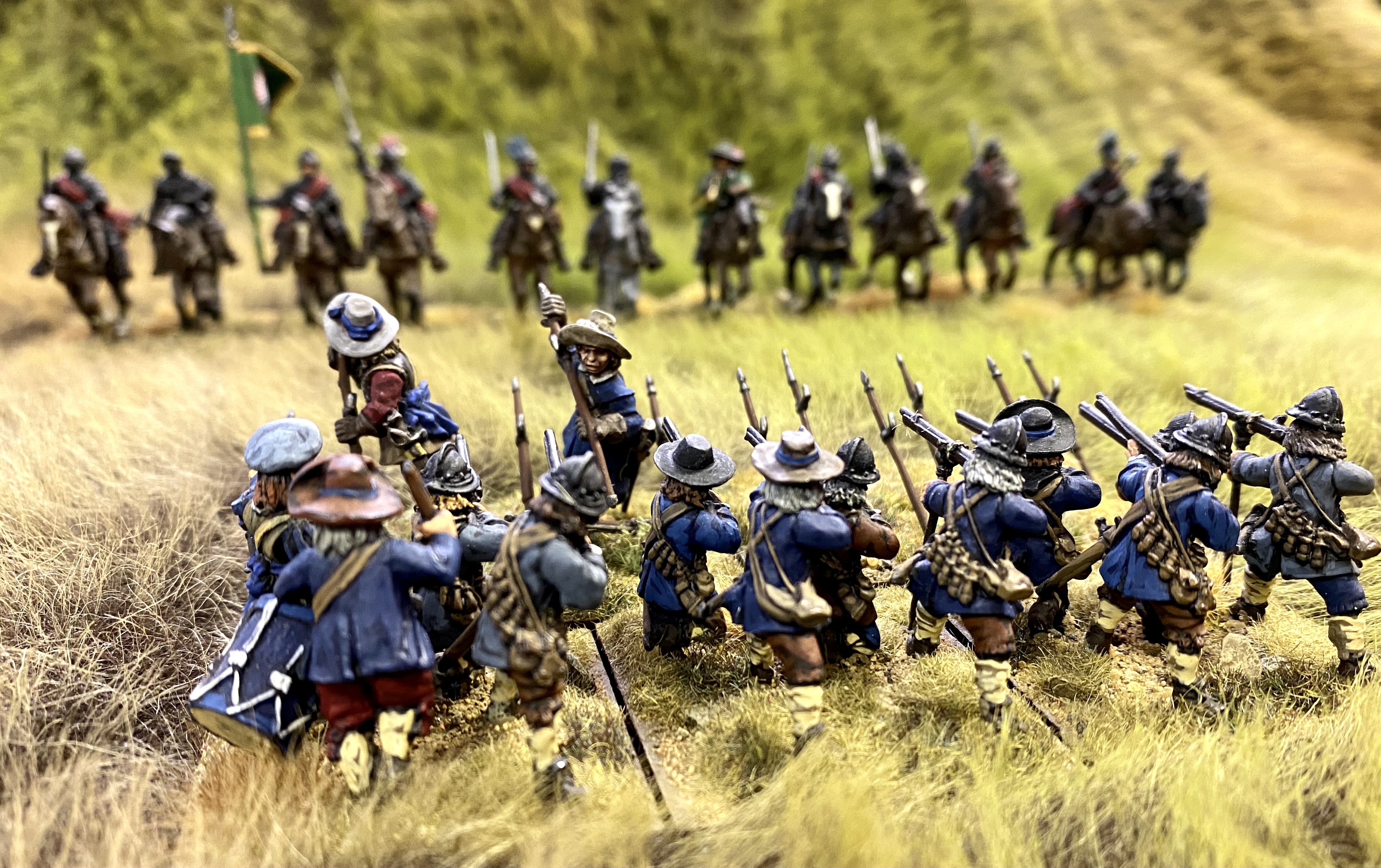 “Hurry up Sven; those horsemen are closer than you think!”. Warlord, Foundry and Perry 28mm musketeers preparing to give fire, while Bloody Miniatures are setting up the Swinefeathers.
In this entry I liven up some bases of stakes, or Swinefeathers, that I made in my last post with some simple vignettes to add to my 17th century Swedish army.
In the previous project entry I described how I used the Warlord Games’ Swinefeathers to create bases of temporary defences for my Swedish musketeers. These looked fine but were perhaps just a little bit bland. Over recent months I’ve been inspired by seeing some great vignettes on different social media and so I’d thought I’d have a go at something similar for my Swinefeather bases.
I started by thinking about what sort of vignettes would make sense on a base of Swinefeathers. These vignettes would be used in games like the other Swinefeather bases and so they needed to fit on the same 60 mm x 40 mm bases. I came up with broadly two categories. The first was to show musketeers in the process of a deploying the swine feathers, and the second was to show the Swinefeathers after being damaged during the battle.
I searched through my “pile of opportunity“ for likely candidate figures and other bits of battlefield detritus to sprinkle about. I came up with the following four sets of figures.
1. I’m a big fan of the Bloody Miniatures range (https://www.bloodyminiatures.co.uk) and I have a nice stash from the recent releases. I selected a couple of figures that suggested themselves for a base showing men setting up Swinefeathers. One figure was originally thrusting a pole alarm, but with a little bit of conversion, I felt that I had made him look as if he was driving a Swinefeather into the ground. There was also a figure who I thought would make a fine sergeant of Musketeers who would be helping out, setting up a Swinefeather. As well as the two figures I found some suitable pieces of equipment to add to the base; a musket, rest, powder bottle, halberd, and a club to be used to bang in the stakes. With the figures ready, and all the pieces of equipment to hand, I experimented with different positions so I could fit everything on the 60 mm x 40 mm base. This experimentation also showed where I could add Swinefeathers, already set-up, to the base.
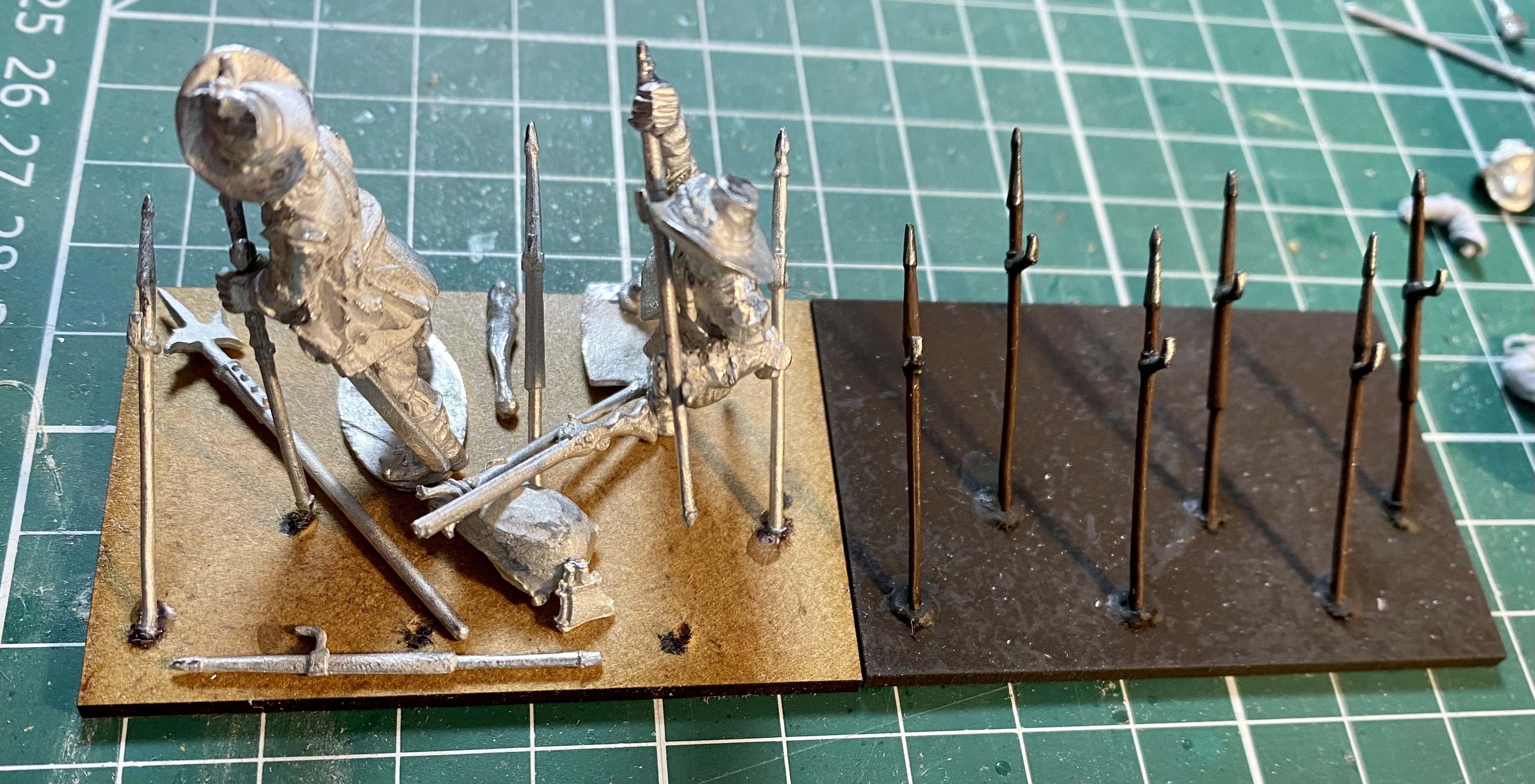
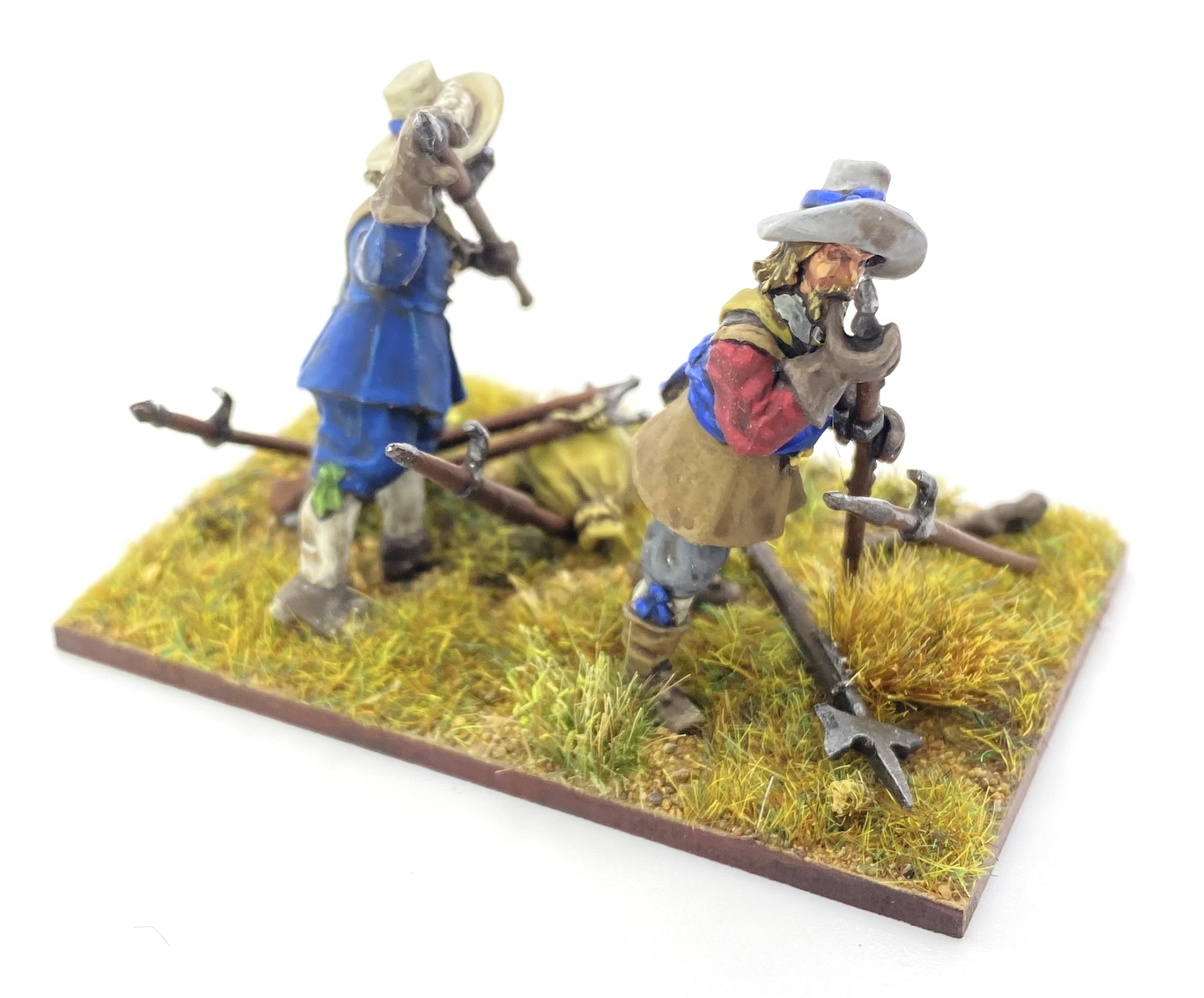
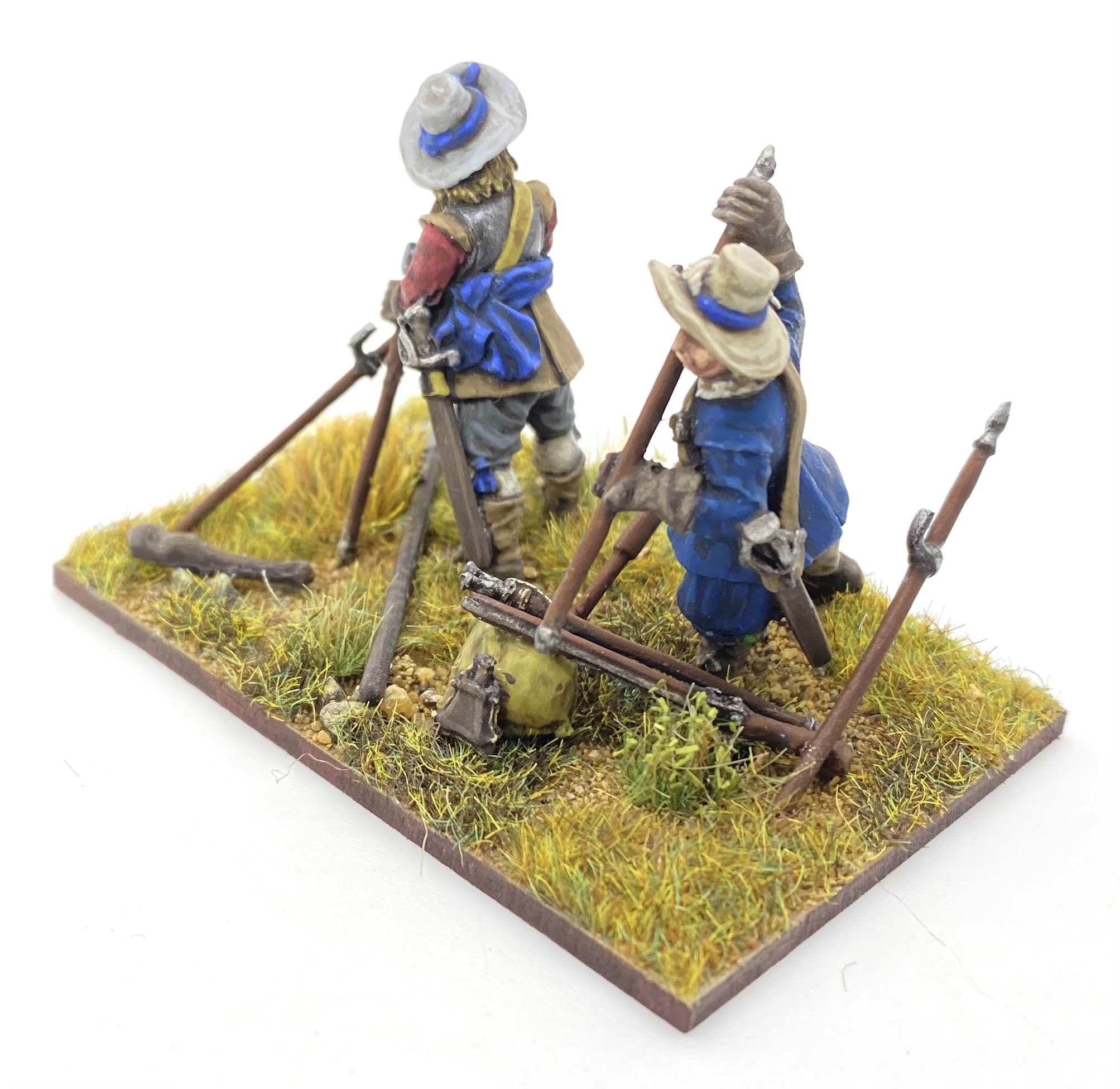
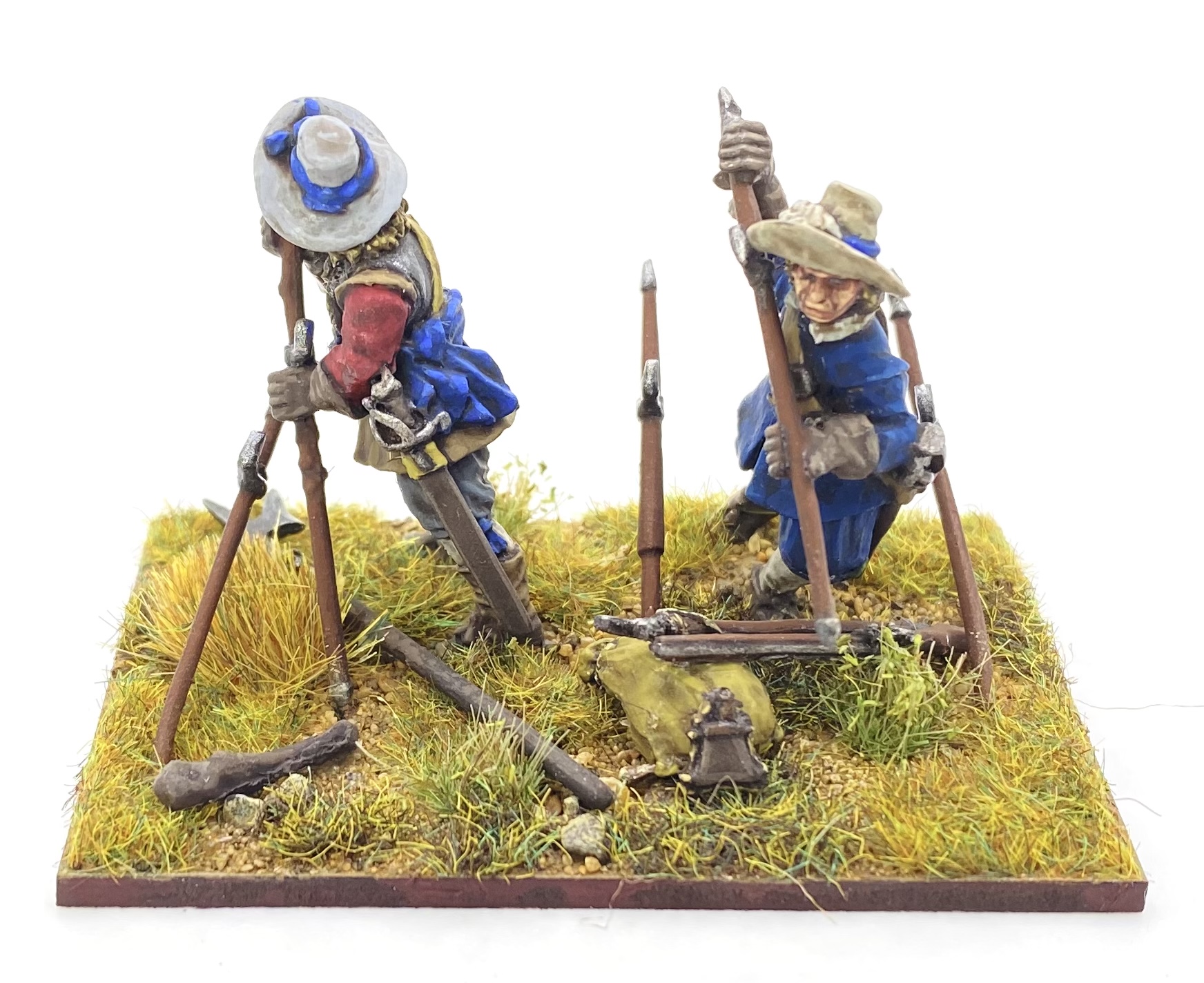
2. Next, I had some Avanpost musketeer figures that were in the process of loading their muskets, but with a small bit of conversion to remove the muskets, I could make them look like they were planting swine feathers into the ground. As with the previous base, I added some pieces of equipment around the two figures to give the impression of a working party.

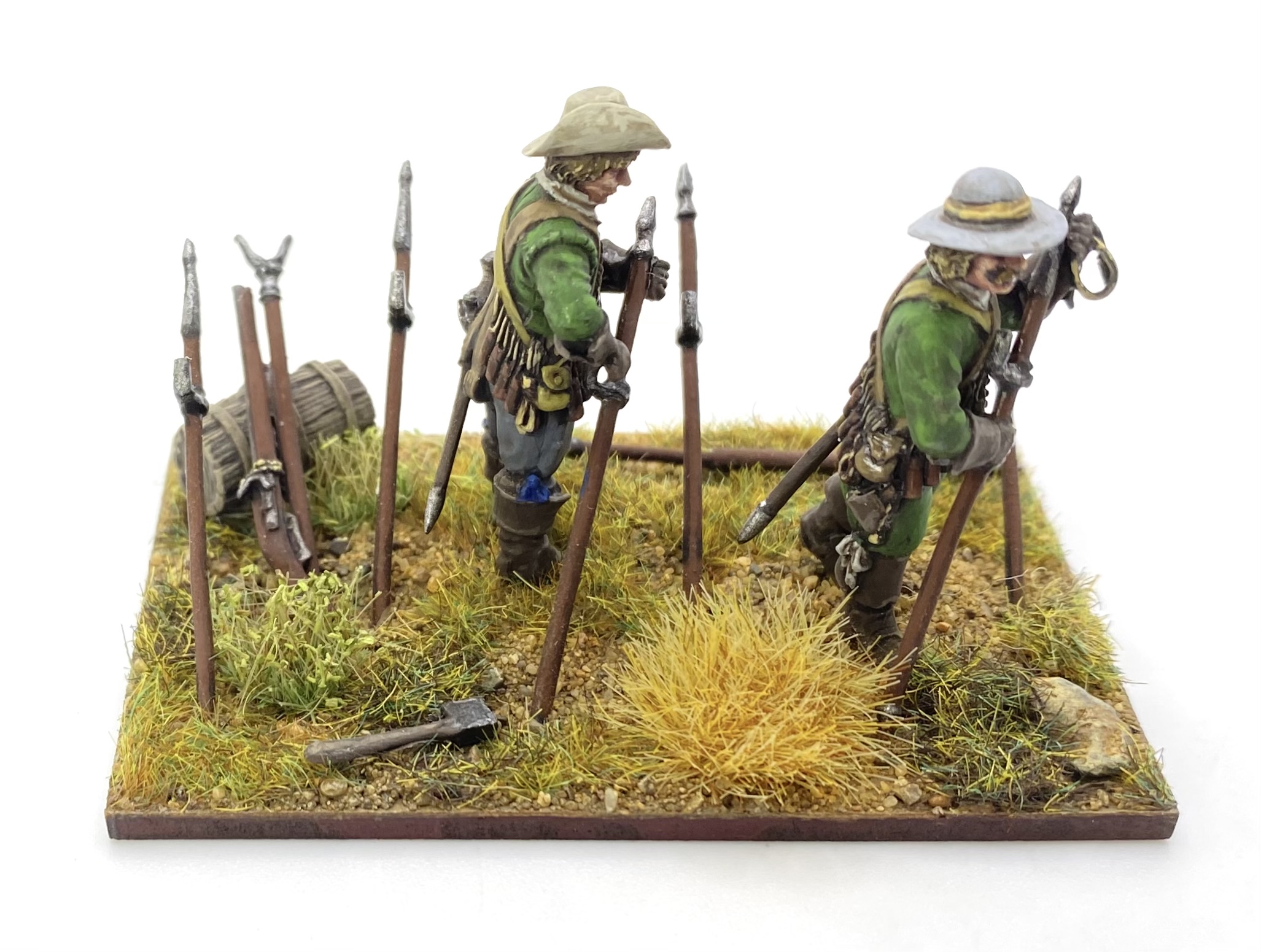
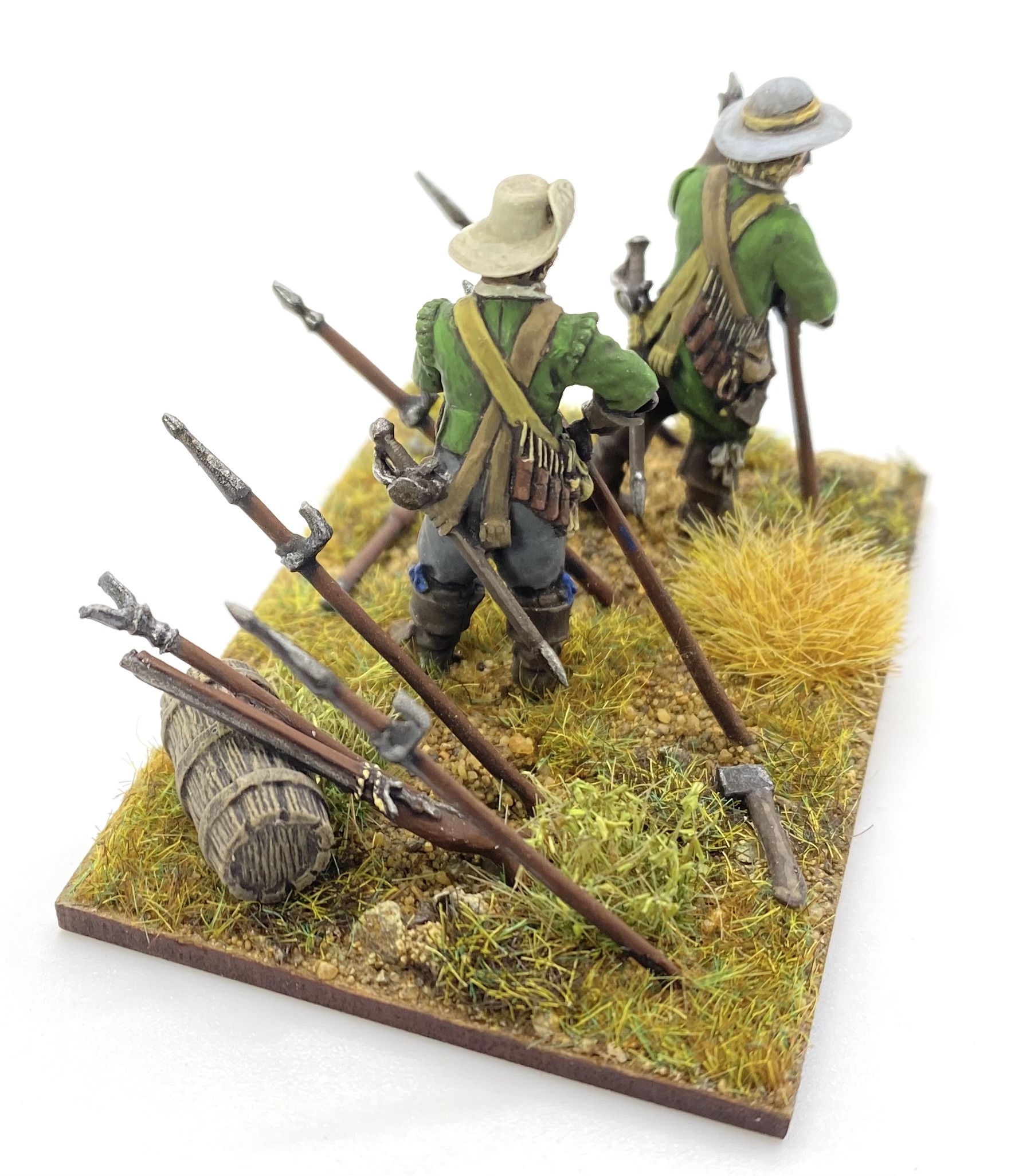
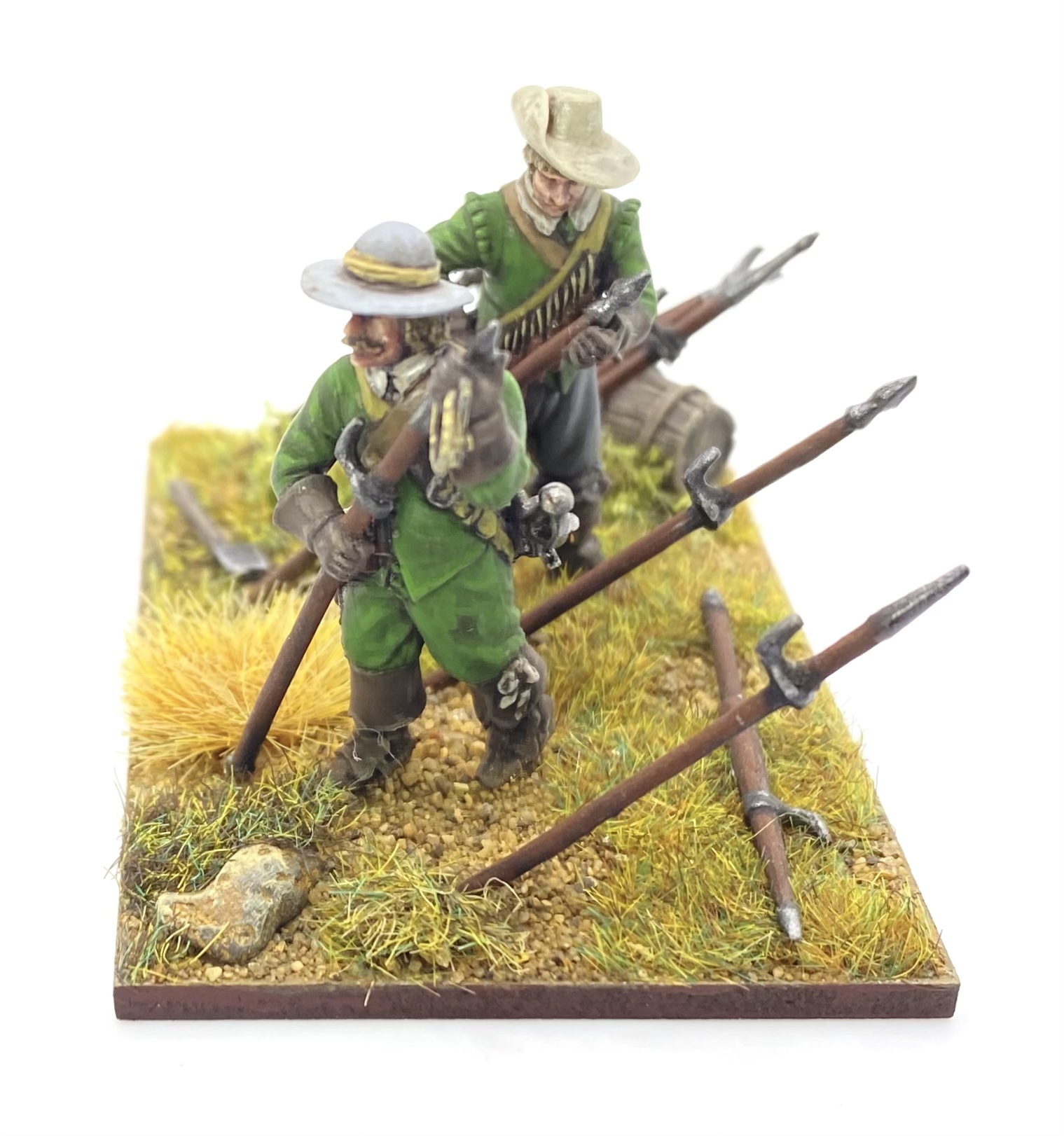
3. For the bases showing battle damaged Swinefeathers I was at first just going to model a base with couple of the stakes broken. Then I wondered about adding some wounded figures to the base as well. On finding a downed horse (also from Avanpost) in my ‘pile’ I thought this would be ideal to add to a base of Swinefeathers. The horse fitted neatly on to one of the 60mm x 40mm bases and I could add damaged and regular Swinefeathers around it.
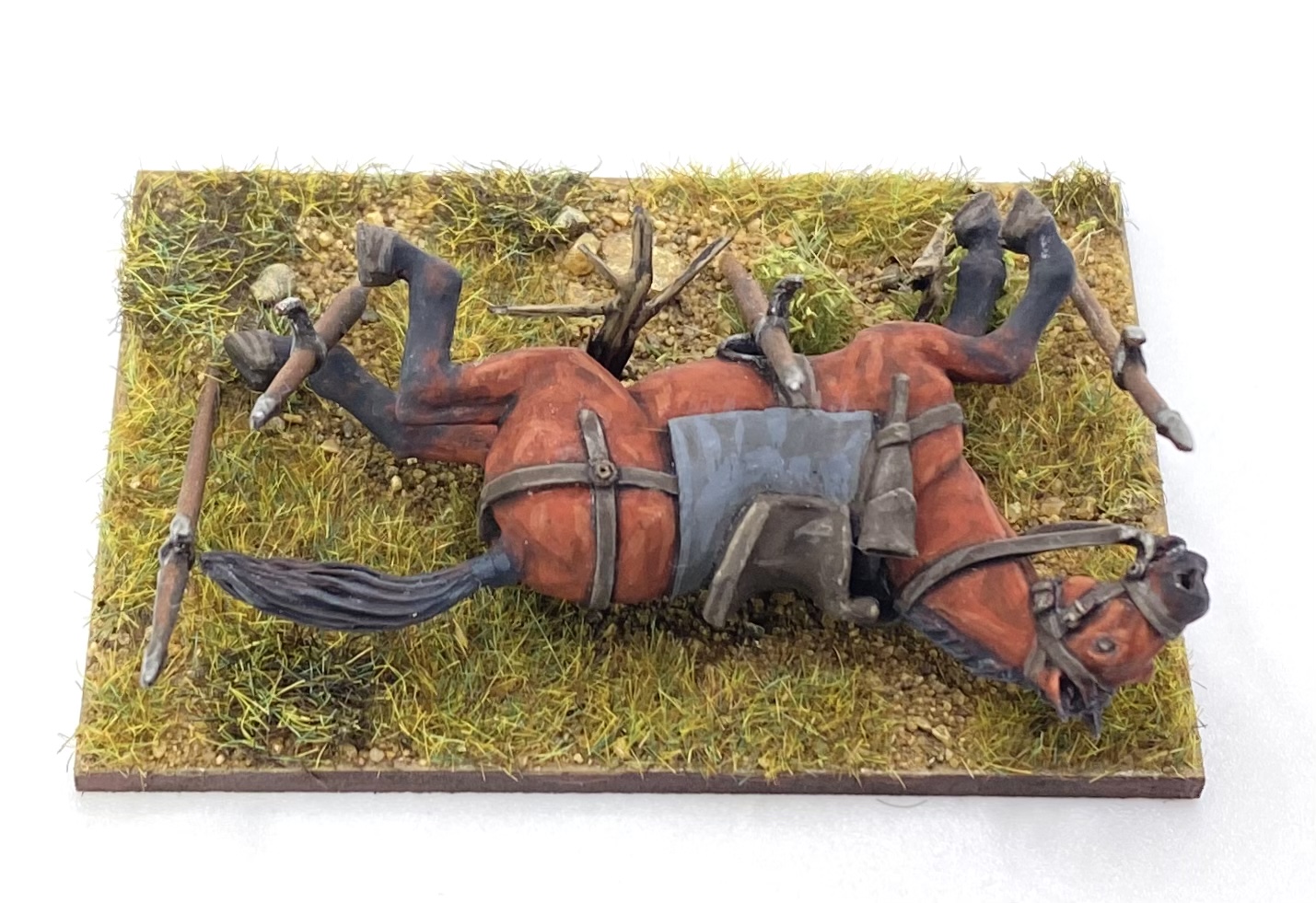
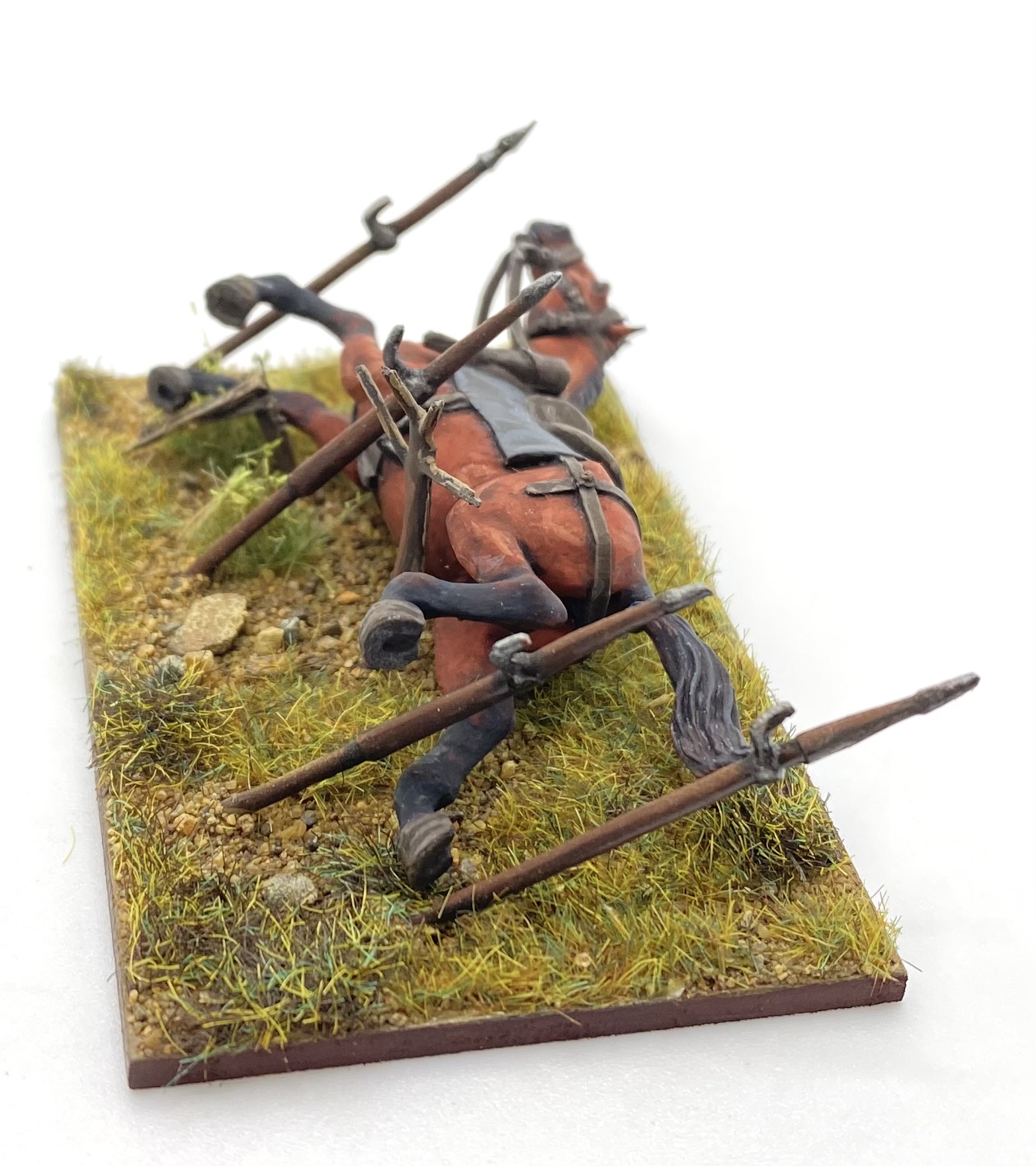
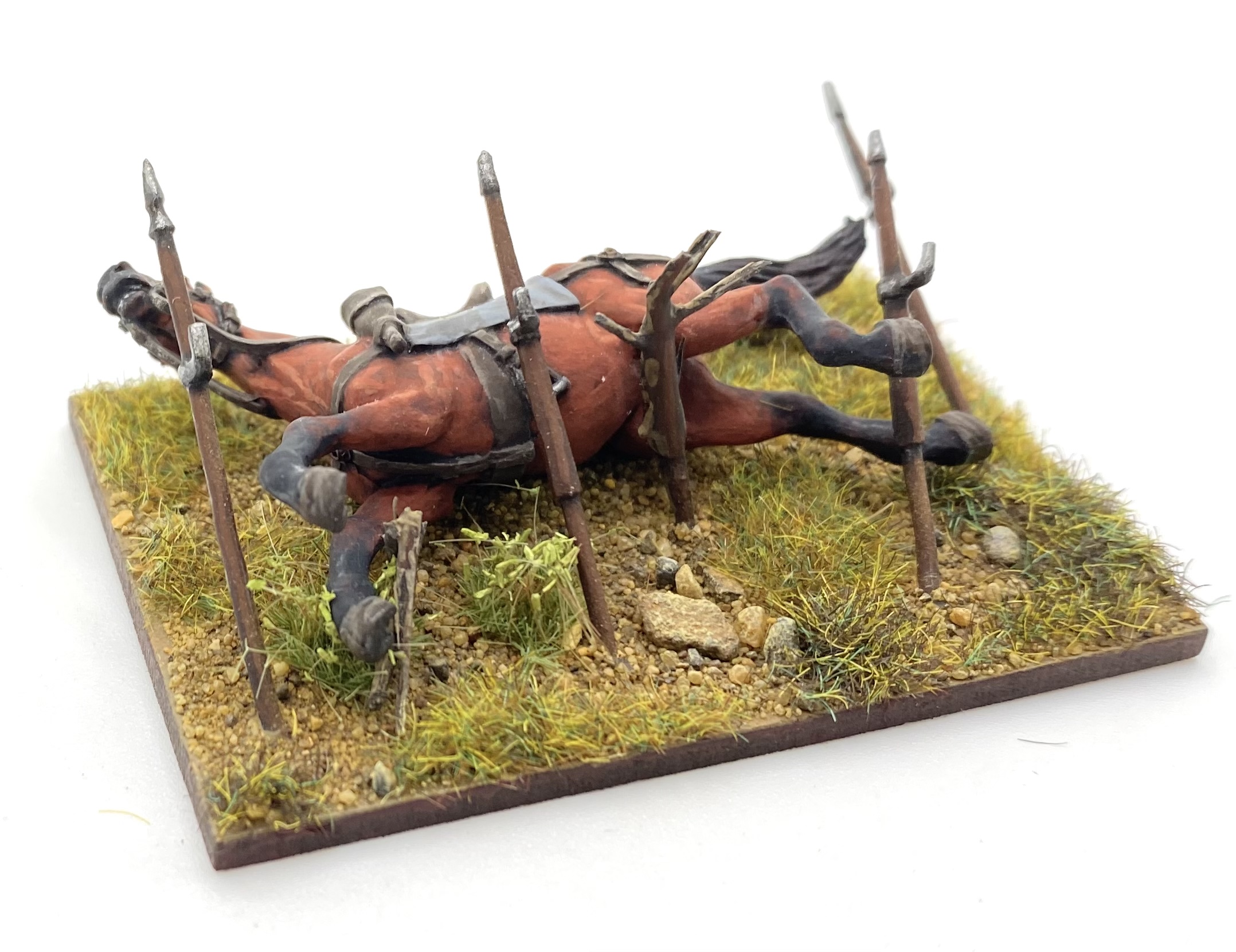
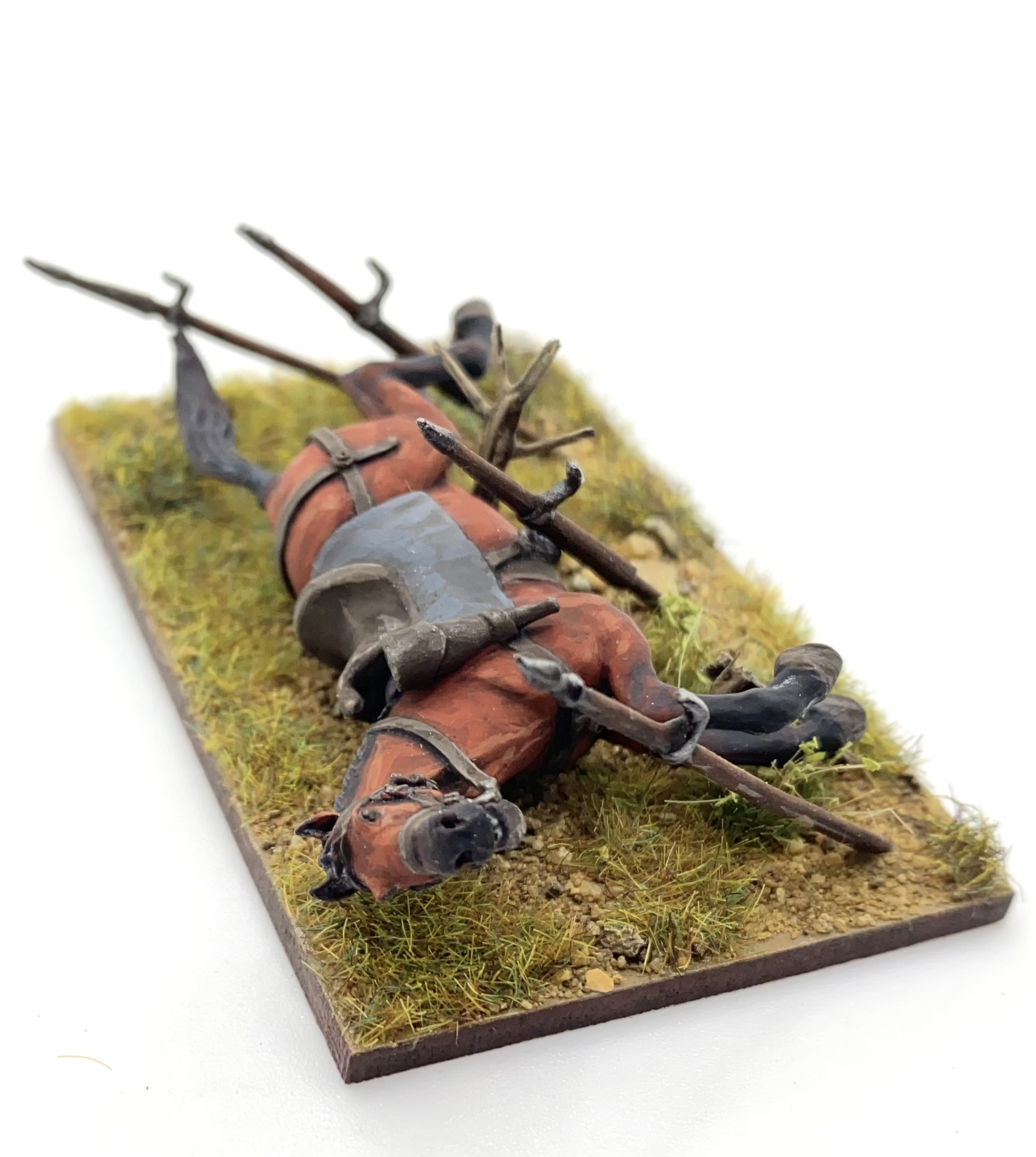
4. Finally, and in a similar way to the previous base, a Warlord wounded musketeer could be added to a base with some damaged swinefeathers. I imagined cannon shot blasting through the stakes just before Imperial musketeers tried to assault the Swedes behind the stakes.
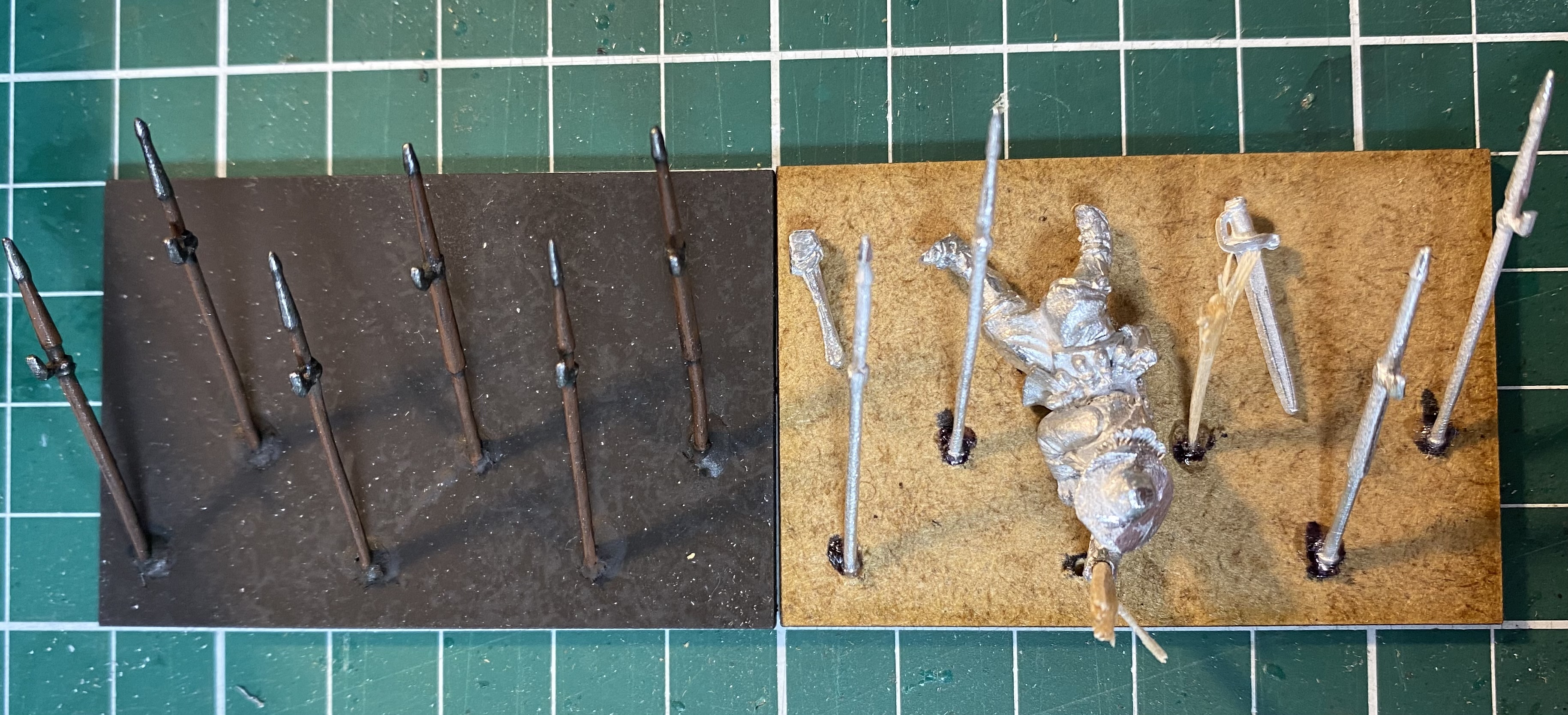
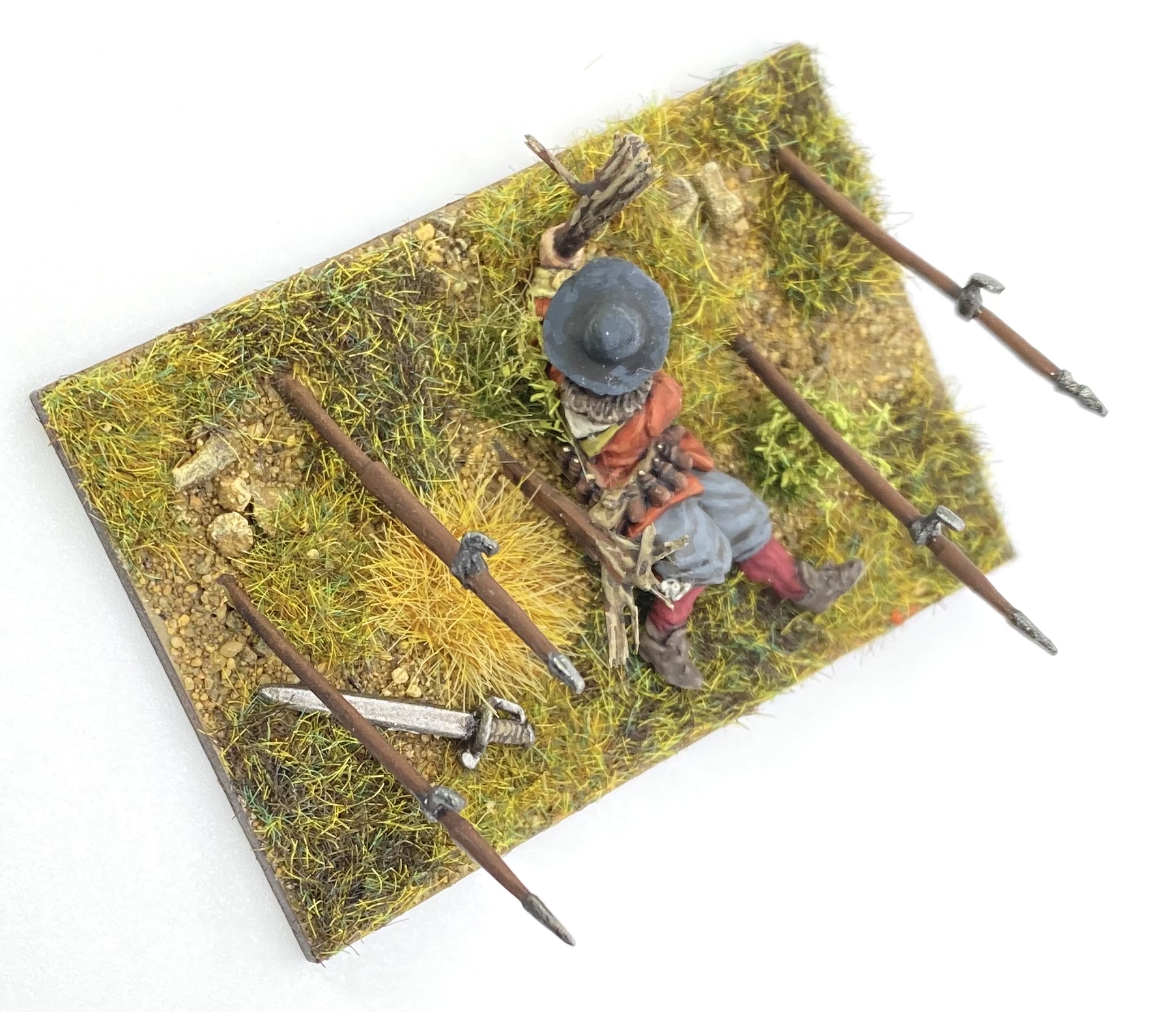
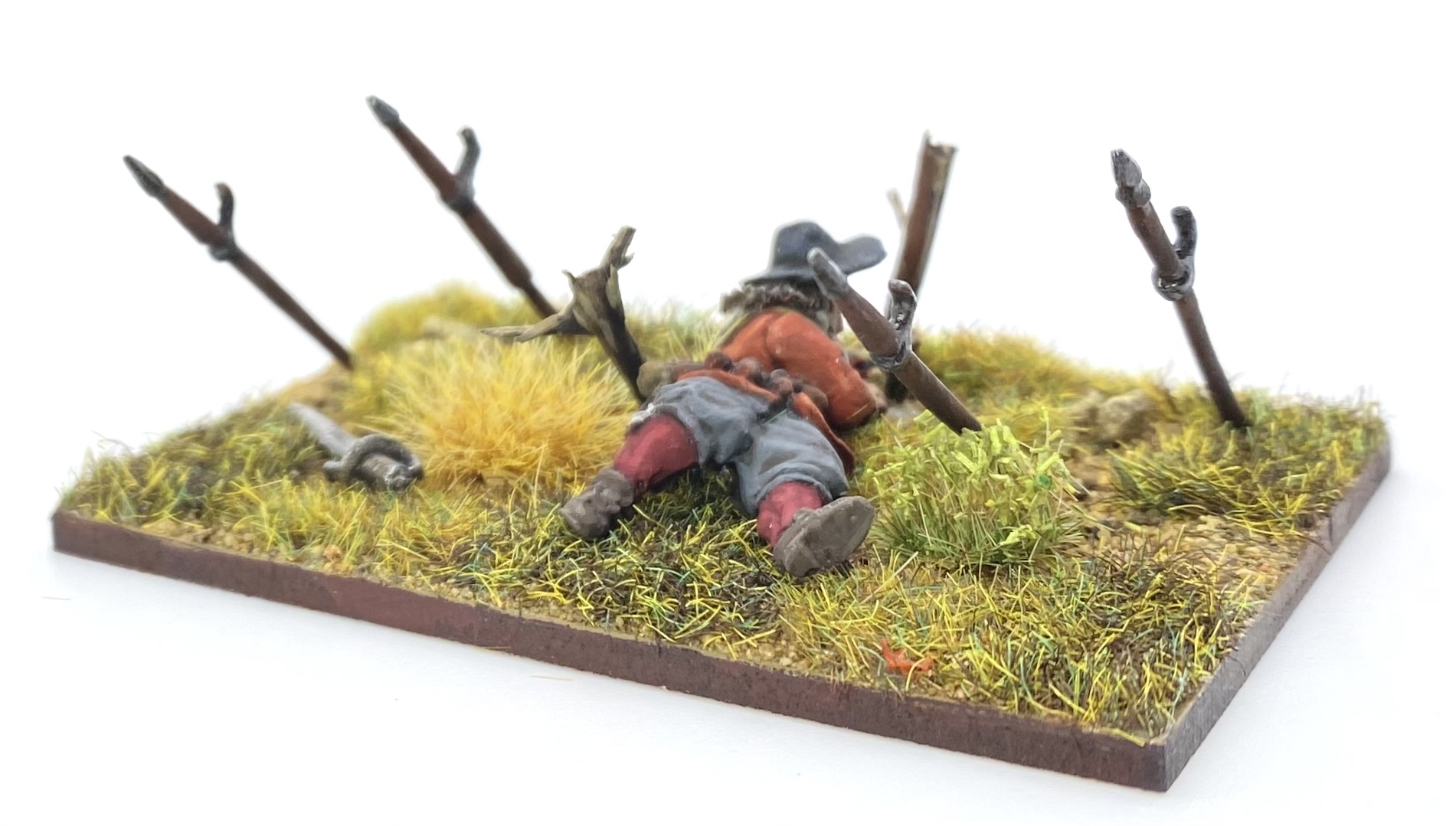
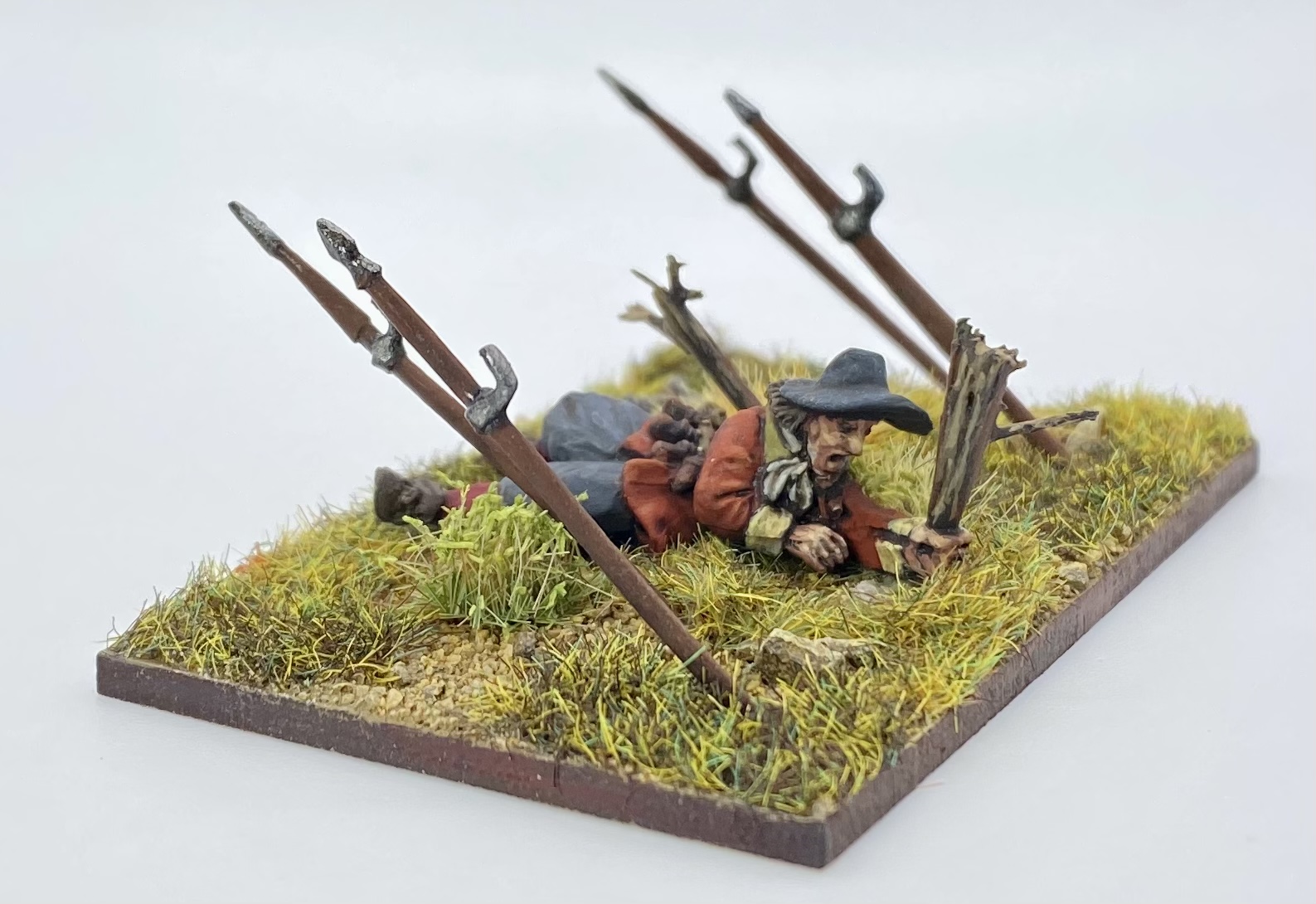
I had fun painting up the few figures and pieces of equipment for the vignette bases. A nice palette cleanser between regular units of figures!
If Swedes And Pigs Could Fly
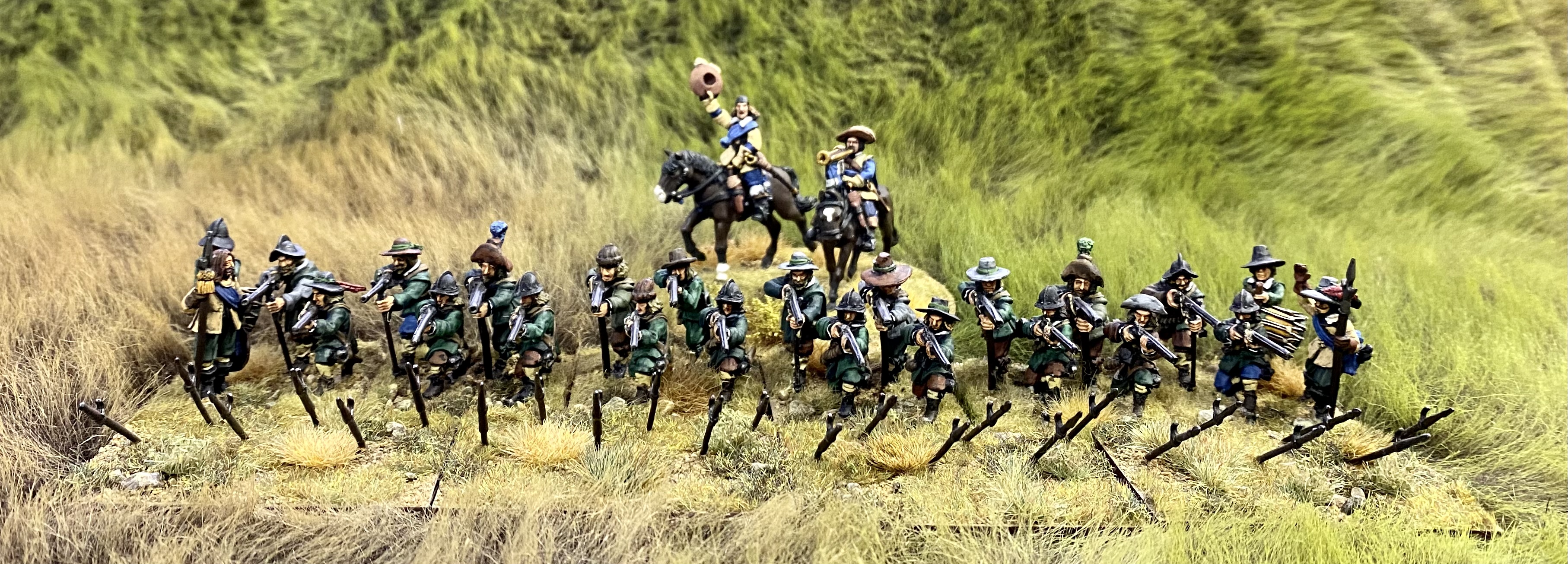 28mm Swedish musketeers protected by Swinefeathers from Warlord. Figures from Warlord, Foundry, Perry & TAG.
“By the one end it is made fast in the ground in such a manner that the other may lay out so it may meet the breast of a horse where by a body of musketeers is defended as with a palisade against the rude charge of a squadron of horse…” from James Turner’s 1683 book ‘Pallas Armata, Military Essayes of the Ancient Grecian, Roman and Modern Art of War’.
Background
Swinefeathers, or Swedish Feathers, were portable stakes used by shot armed foot in the 17th century to create temporary defences against mounted troops. The idea of missile armed foot troops using some form of defences against charging cavalry was not a new idea in the 17th century. I’m sure that many of you will immediately think of Henry V’s army at Agincourt with the English and Welsh bowmen using stakes to help defend themselves against the French mounted knights.
By the 17th century musket armed infantry were of course still vulnerable to enemy cavalry. Although their pike armed colleagues where intended to be one form of defence against cavalry, the idea of these pre-prepared stakes was re-introduced during Prince Maurice’s military reforms at the turn of the 16th and17th century. Each stake was made of a stout, thick pole, between 4 and 6 feet long, with a metal point at one end to aid planting it in to the ground, and a metal spear-point at the other with which to fend off the enemy. It may have got the name ‘Swinefeather’ because of it’s similarity to a boar-spear; a very stout spear used in the hunting of wild boar.
The Swedes, who were fighting the fearsome cavalry of the Polish-Lithuanian Commonwealth in the early 1600s, needed ways to defend their musketeers. They appear to have been early adopters of Swinefeathers, and Gustav Adolf ordered enough Swinefeathers to equip 8 regiments of infantry in the early 1620s. It was probably because of this adoption that Swinefeathers also became know as ‘Swedish Feathers’.
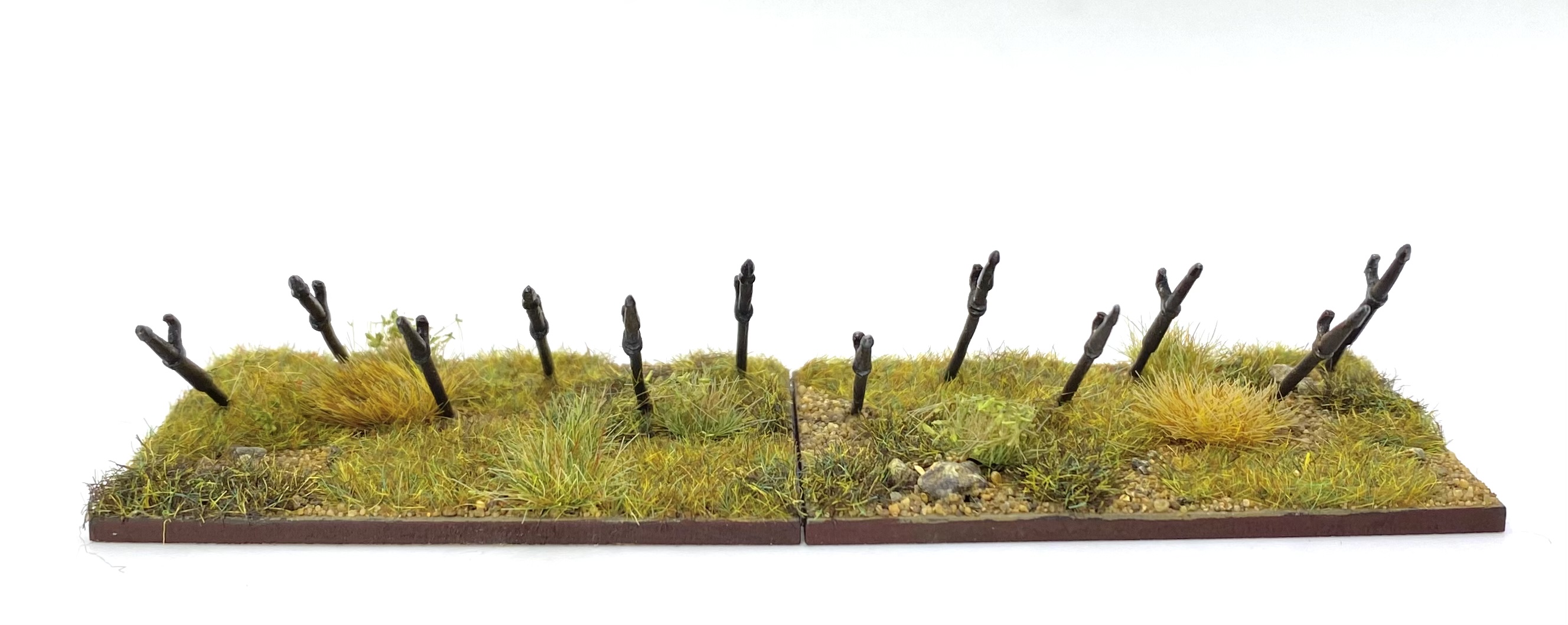
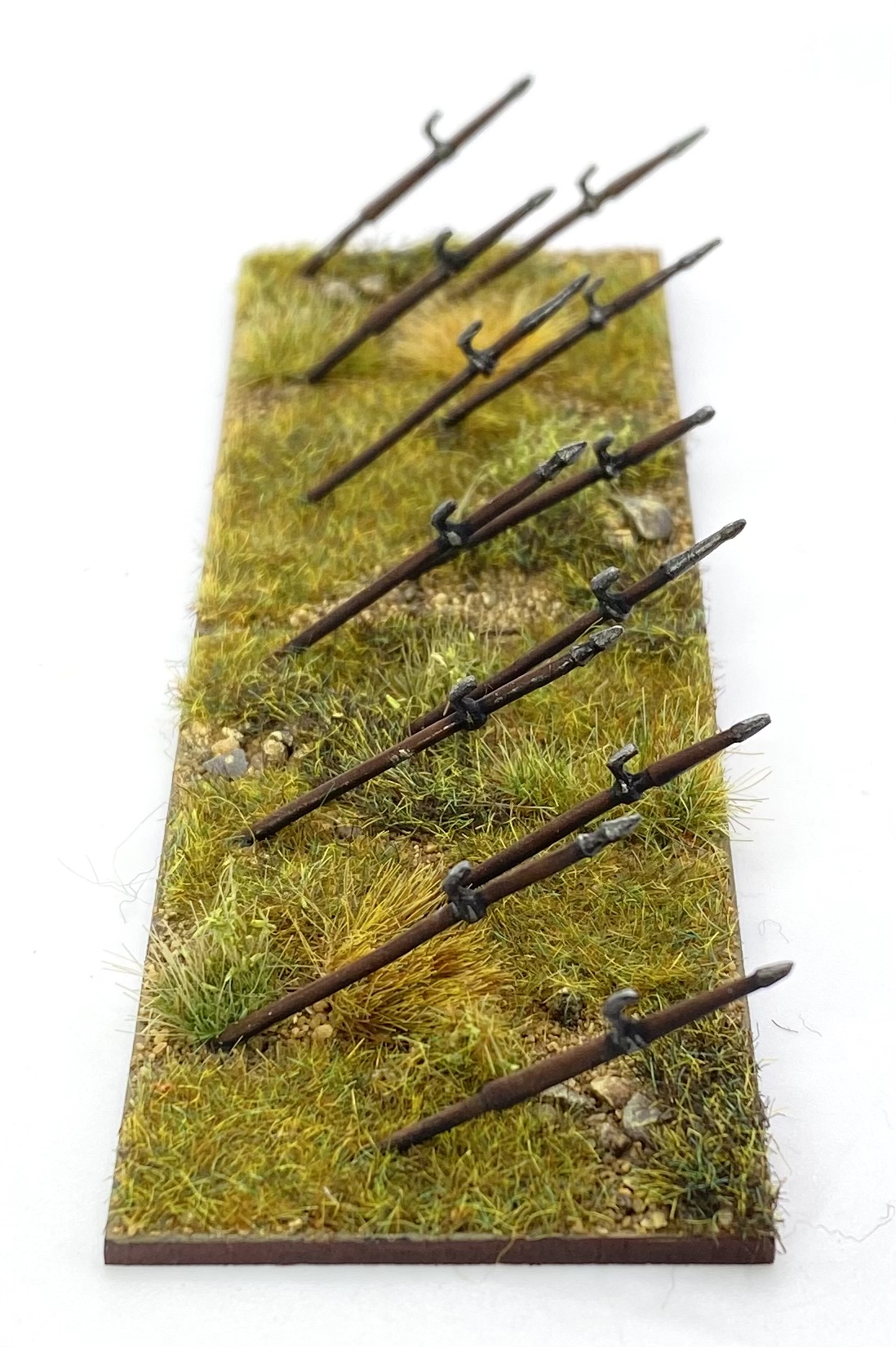
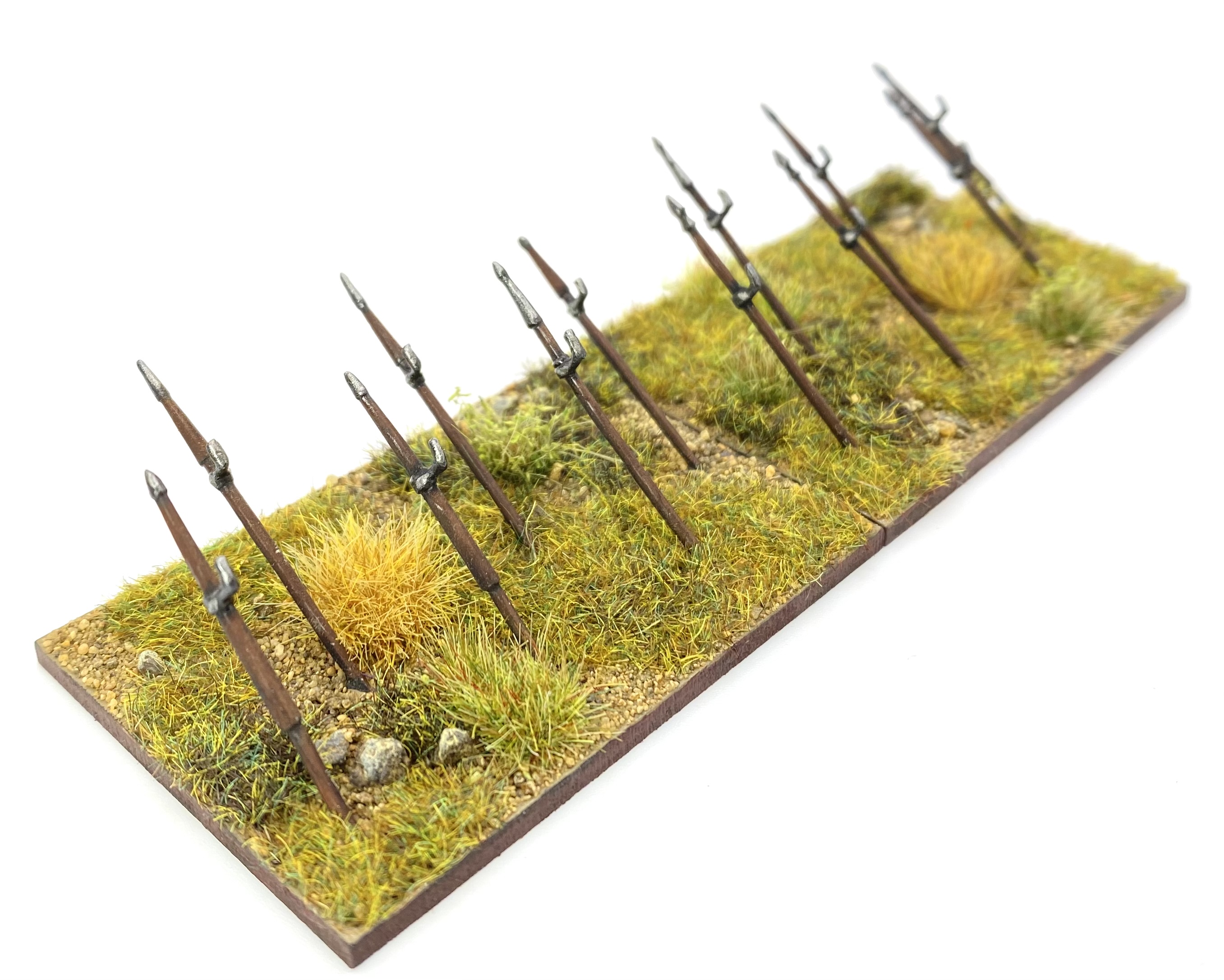
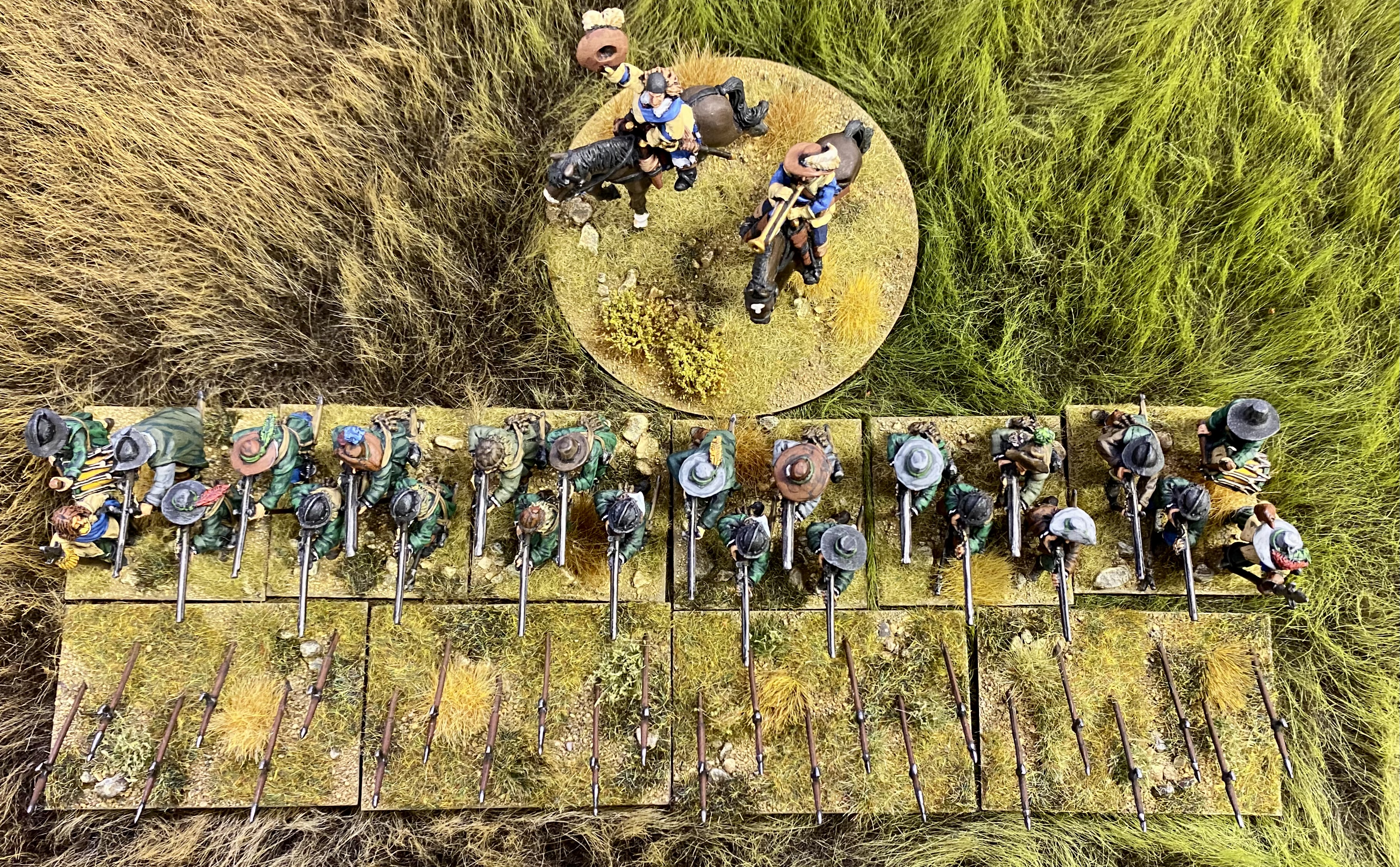 Swinefeathers, based separately to the musketeers, on 60mm x 40mm bases.
Technical Details
Although Swedish/Swine Feathers are mentioned in a number of military treaties of the time we know frustrating little about the details of their construction and use. From the descriptions of them in the treatises, and from some tantalising 1/6 scale contemporary models that have survived, we have some idea of how they may have looked. One interesting feature is the possibility that in some form the stakes incorportated a feature that allowed them to be used in the dual role as either a musket rest, or as a stake. While this makes sense in reducing the number of things a musketeer was expected to carry, it does rather limit functionality as while placed in the ground as a stake, it couldn’t be used as a rest to allow the musketeer to continue firing, and vice versa.
Use In Action
There use in actual engagements is quite difficult to come across. Charles Singleton has written a very interesting piece (https://www.academia.edu/22167284/Of_Swedish_Feathers) that describes their use in the British Civil Wars. The Kadrinazi blog, by Michal Paradwoski, also has some excellent references for the use of Swinefeathers (https://kadrinazi.blogspot.com/2010/06/swinia-kon-i-kozio.html )
[NOTE – The Kadrinazi blog is in Polish. I have to use the Translate function in the Chrome browser to read this, but it is worth it!].
It was following reading about their use at the battle of Mewe / Gniew in 1626 between The Swedes and Poles that I started to think about how I might represent them on the miniature battlefield. In this battle Gustav Adolf needed to operate his musketeers without their protective pikemen because of difficult ground. To provide the musketeers with some defence, it appears that this was an occasion when the Swedes issued their musketeers with Swinefeathers. Although there are no details of their use or impact in the battle, it is interesting to note (from the Kadrinazi blog) that an Engineer in the Polish army, Wendelin Schildknecht, who served in this war against the Swedes writes about the use of Swinefeathers. He comments on the effectiveness of the Swinefeathers against the Polish cavalry and goes on to say that he was surprised the Swinefeathers were only used for a couple of years by the Swedes. He’s not sure why their use stopped, other than perhaps the inconvenience of expecting the musketeers to carry the extra encumbrance.
Modelling Feathers
I suppose the easiest solution would have been to grab some wooden cocktail sticks and to have used these to represent Swedish Feathers. However, I remembered that Warlord Games have some rather lovely looking Swedish Feathers available in their 28mm Pike & Shotte range ( https://store.warlordgames.com/products/swine-feather-musket-rests?variant=31468976078928). These look to be based on the 1/6 scale surviving models, and include the ‘musket rest’ feature. Even though I’m not convinced that they were used in a dual role, these white metal models were too nice not to use! An order to Warlord HQ was swiftly followed by the delivery of a good supply of Swedish Feathers.
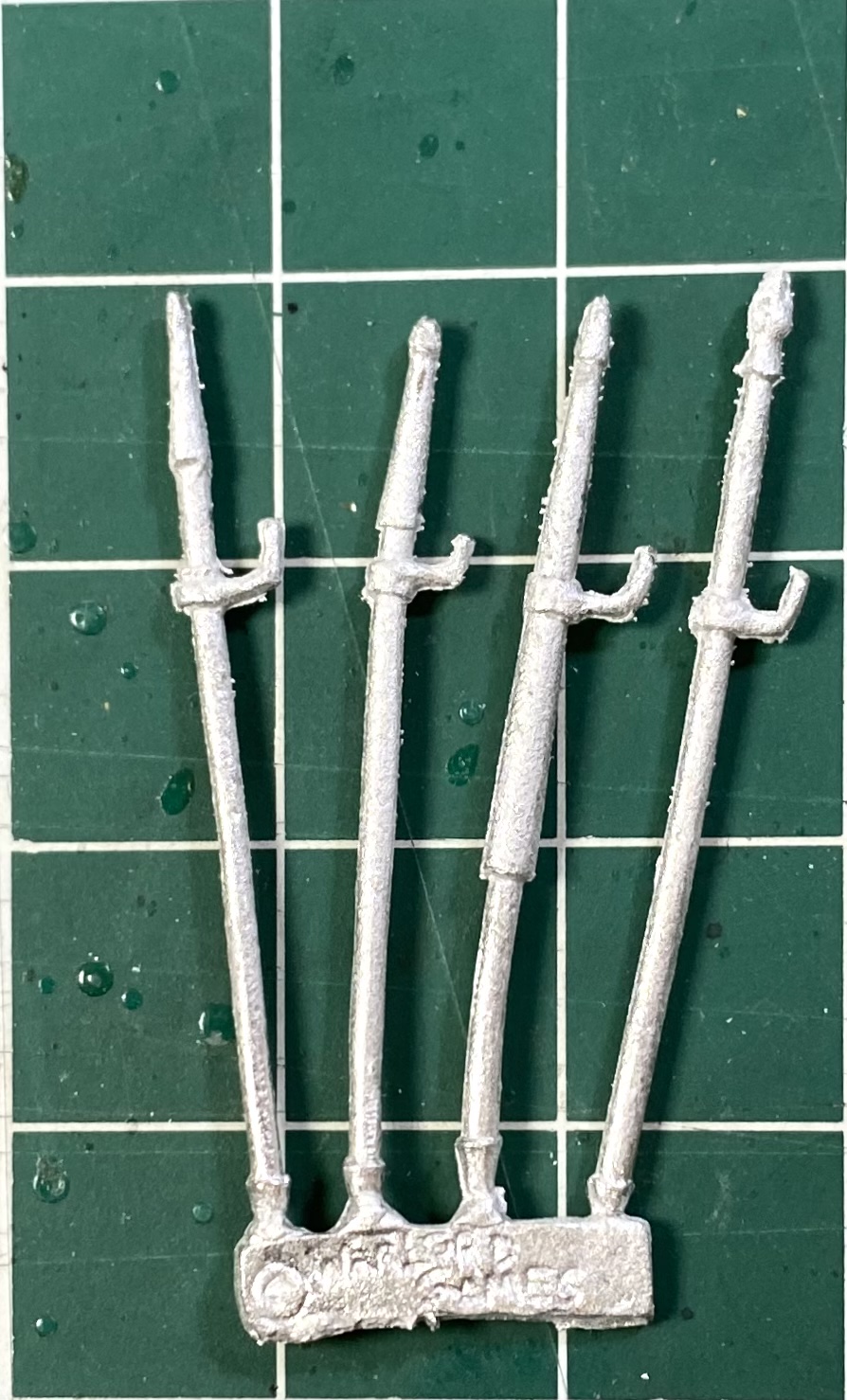
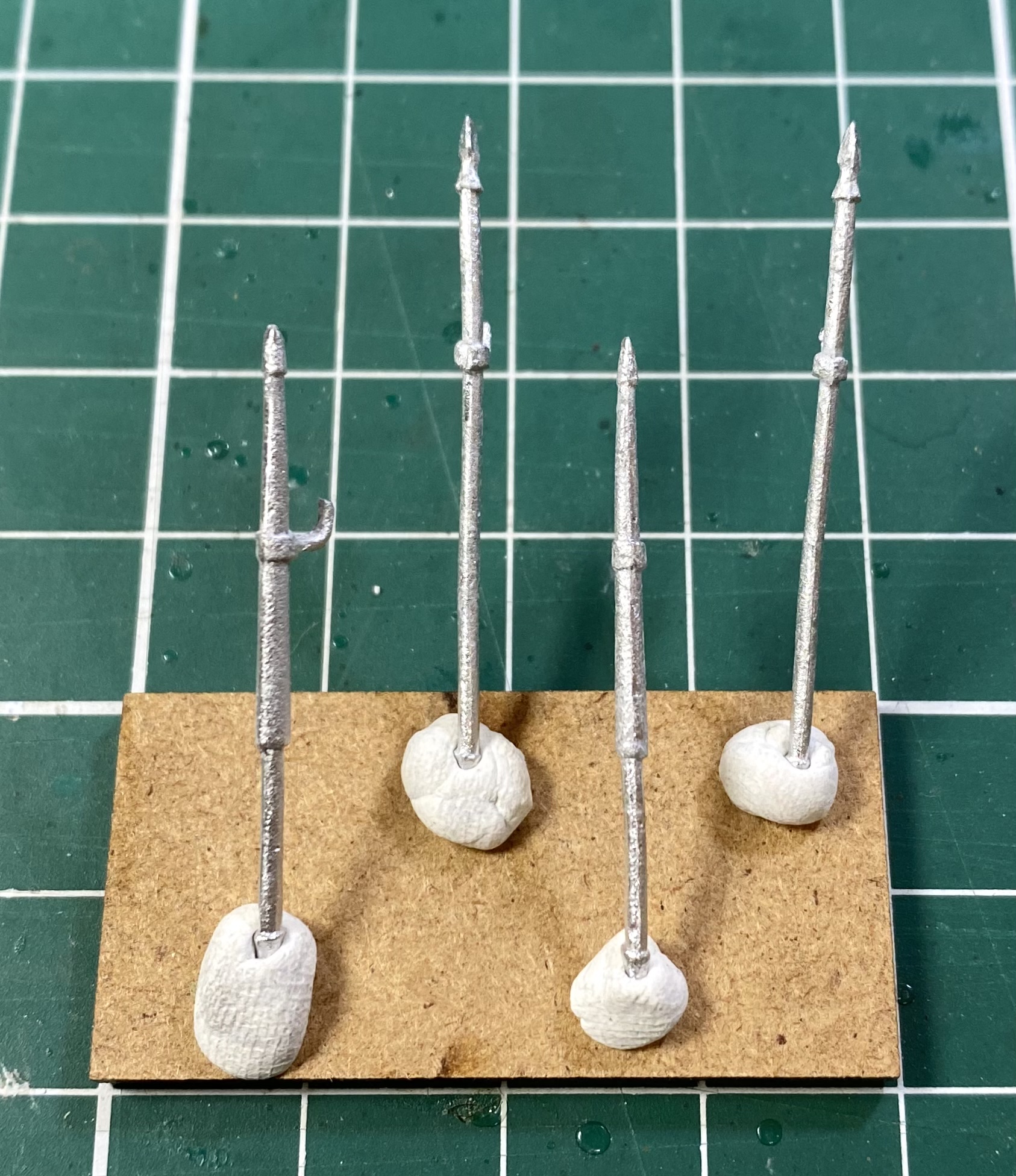
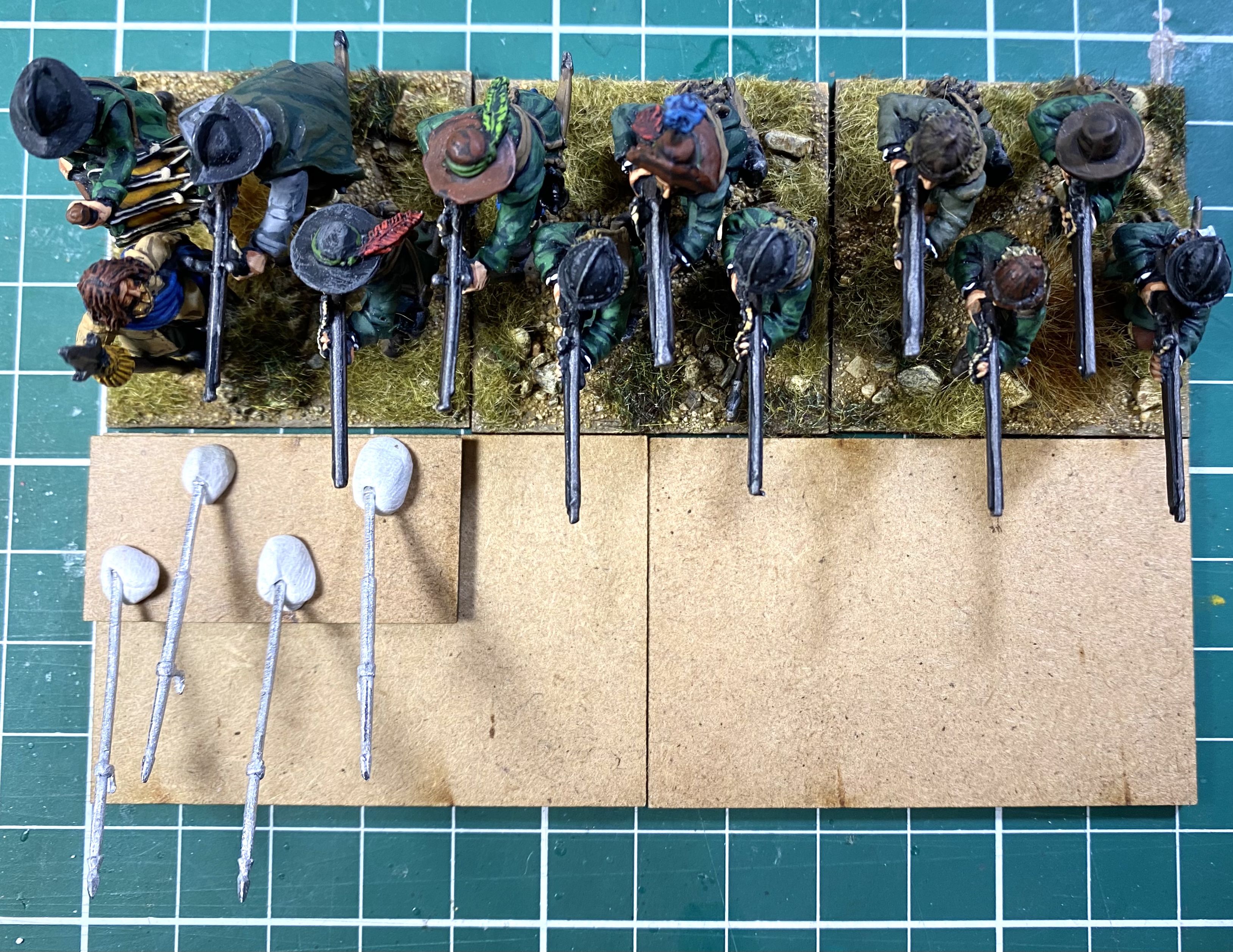
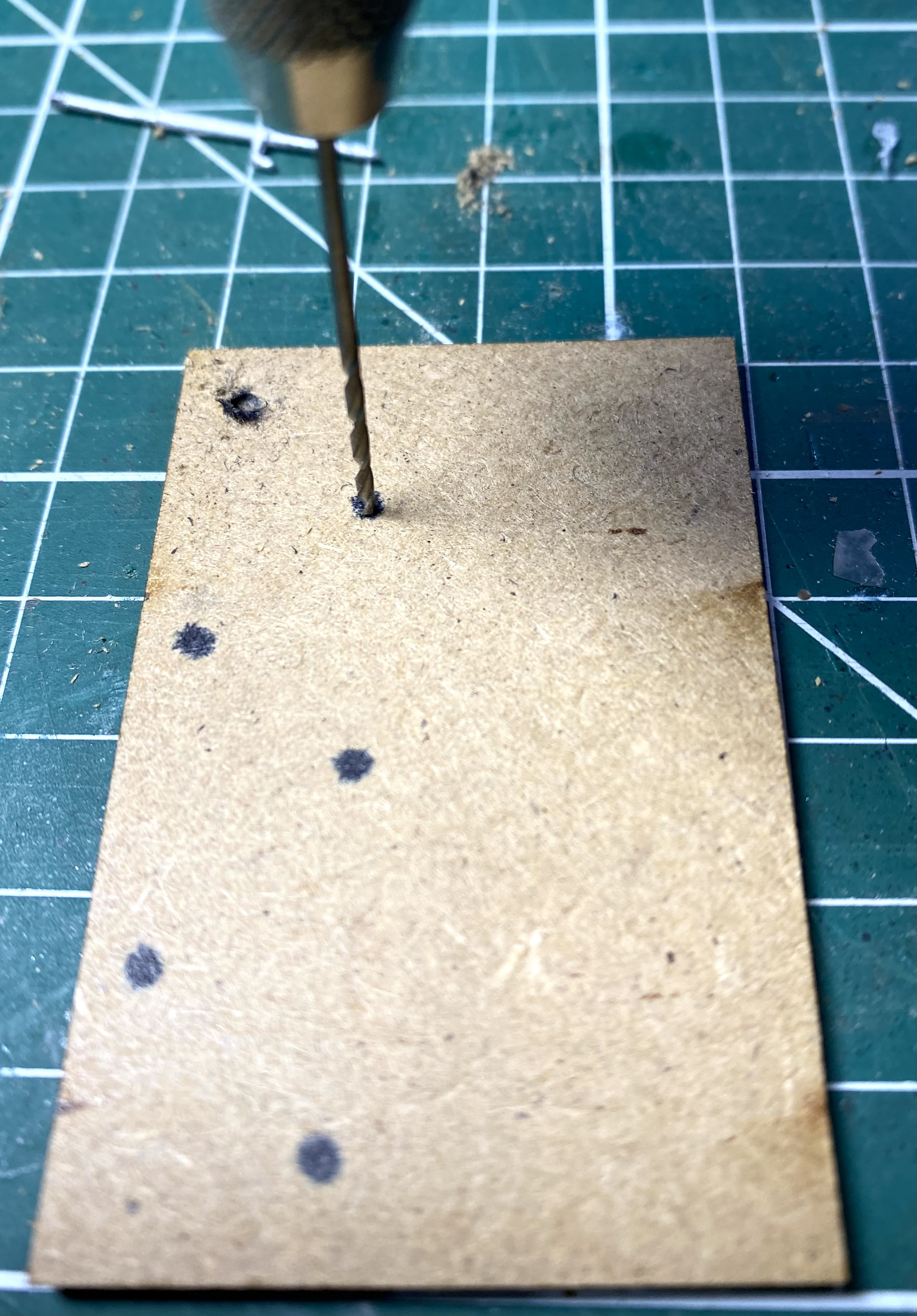

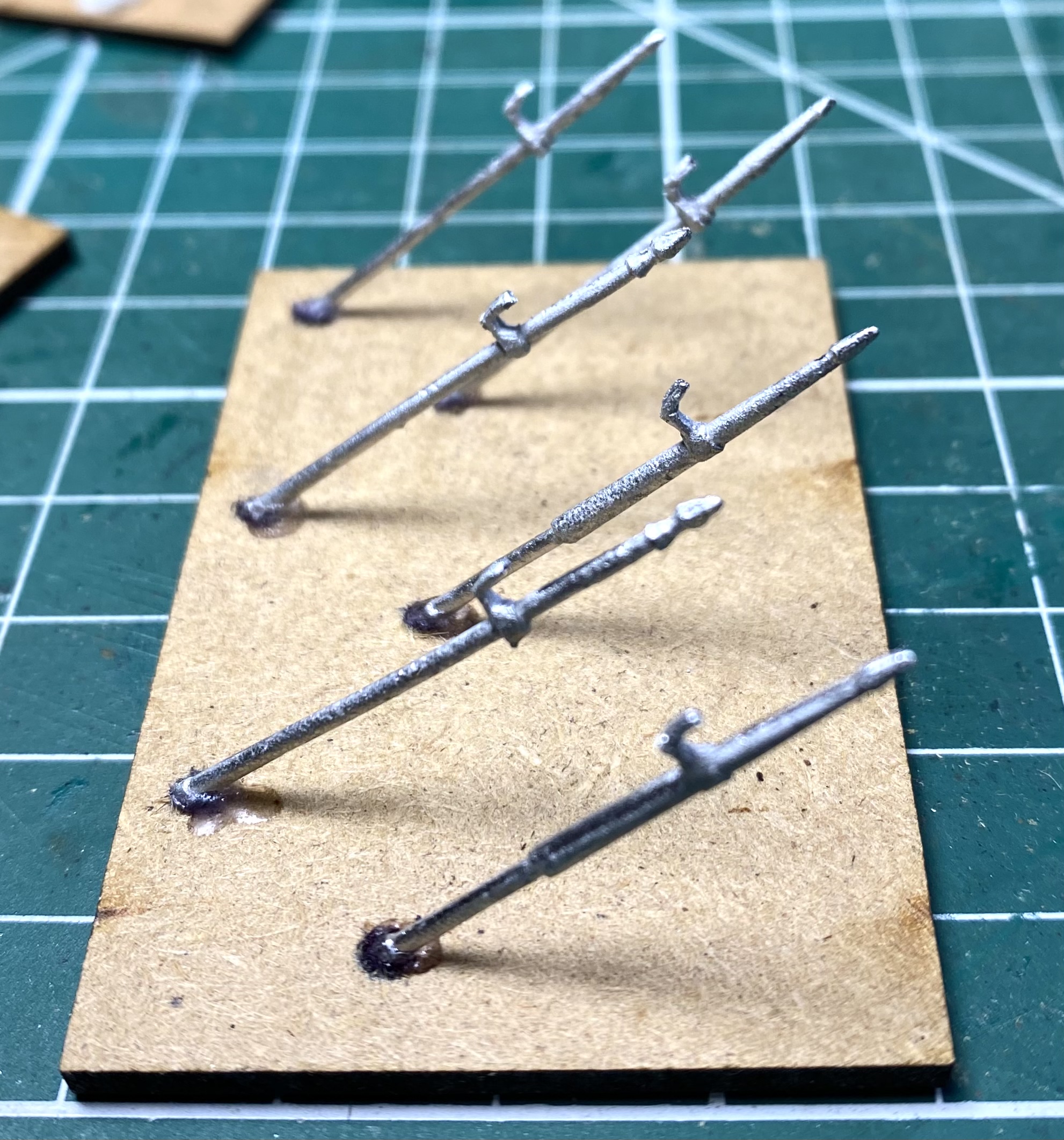
To make a hole on the base for a Swinefeather I used a pin vice with a 0.5mm drill bit. The stakes need to be at an angle, but I found it impossible to drill at an angle in to the MDF, and so I started a perpendicular hole first, and then drilled at an angle once the hole was started. Each small hole in the MDF base was then enlarged slightly with a round needle file, and each feather was glued in place with super glue and spray activator.
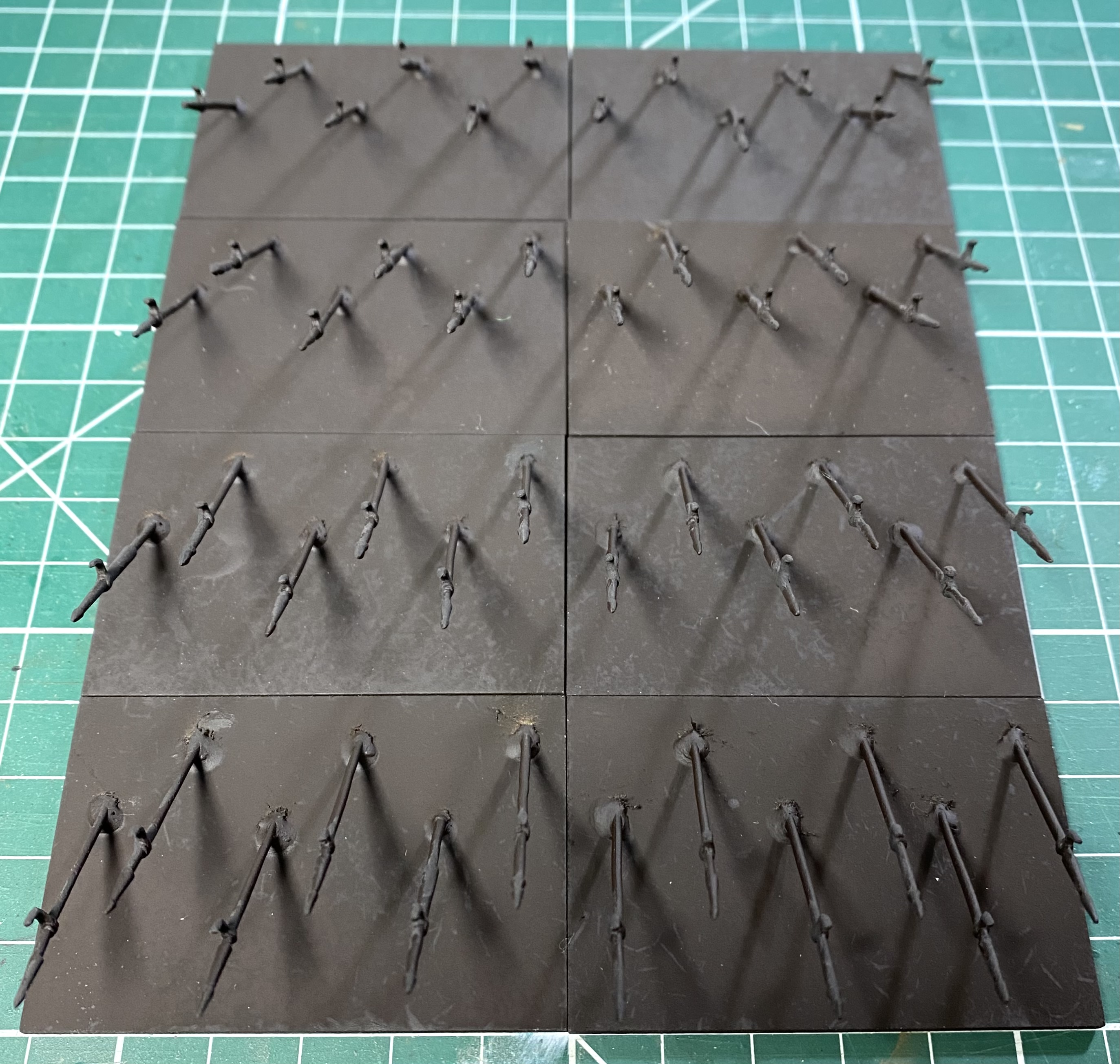
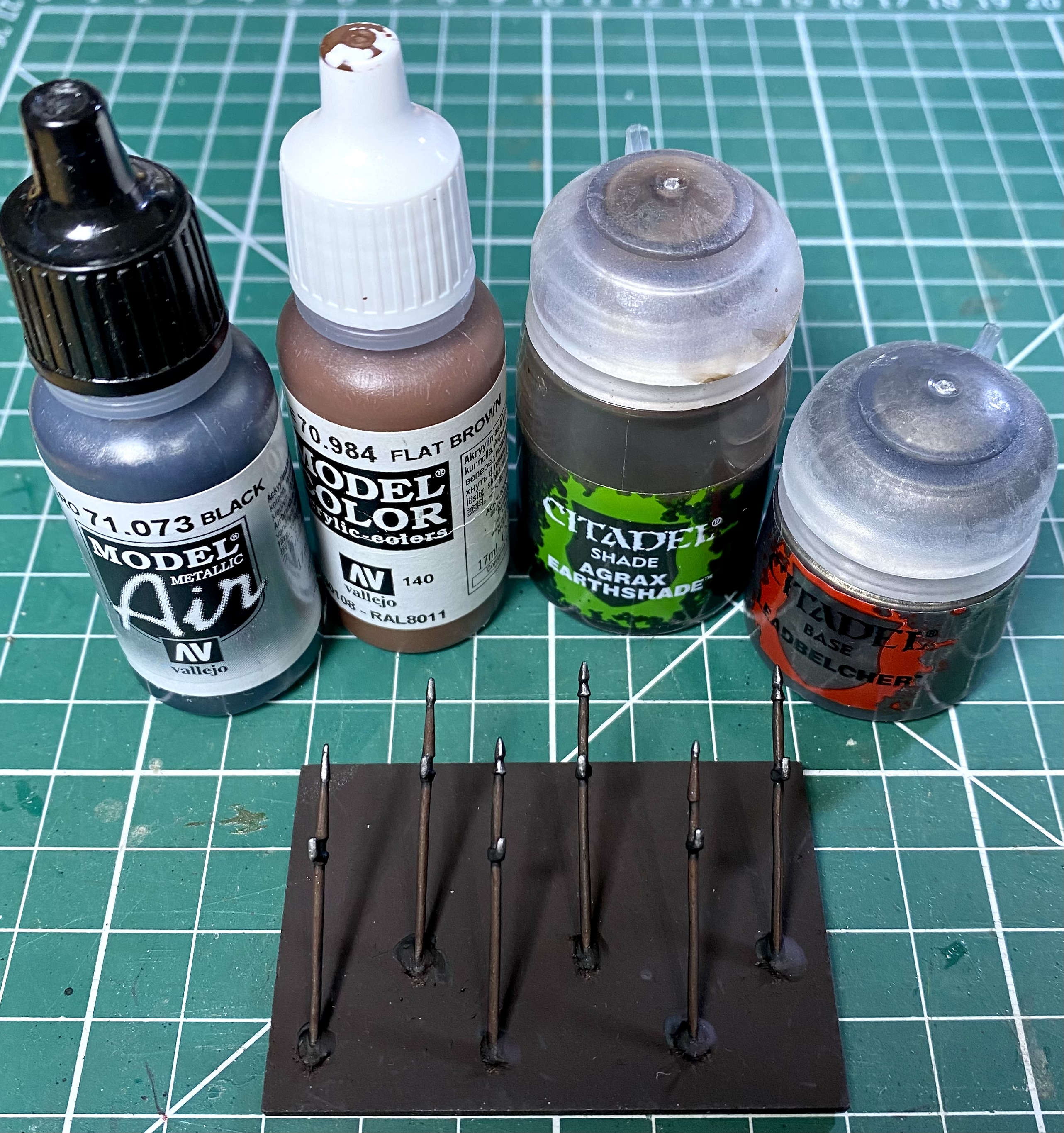
I primed the based Swinefeathers with Halfords rattle-can Camouflage Dark Brown (I don’t often use spray, but it was a nice day outside and I thought any risk to the simple stakes was minimal). This gave a nice prime and dark base coat. I paint the pikes for my Swedish army black, based on the protective paint that is believed to have been used on them (see Lion from the North, Volume 1 by Michael Fredholm Von Essen). It would seem logical for the Feathers to be treated in the same way, but I was worried that they might not show up very well on the table if their were black or dark grey. I therefore opted for a reddy-brown colour for the wood, and dark-metal for the metal parts.
Once my regular basing was added I then had sets of Swinfeathers to deploy with my Swedish units of shot. In the next post I will look at their use under the Pike & Shotte rules, and also how I decided to try and ‘jazz up’ some bases.
More Polish-Lithuanian cossack cavalry
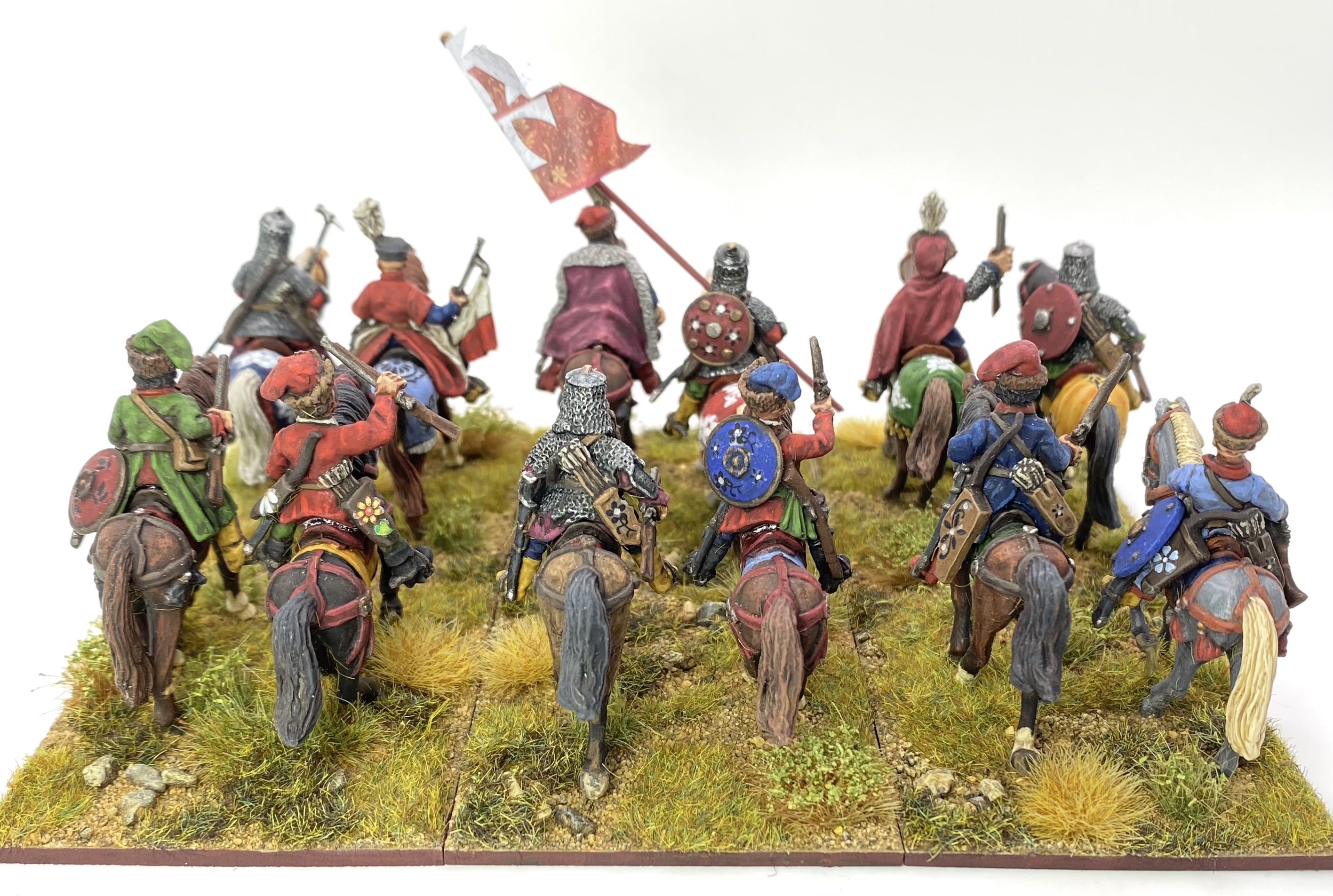
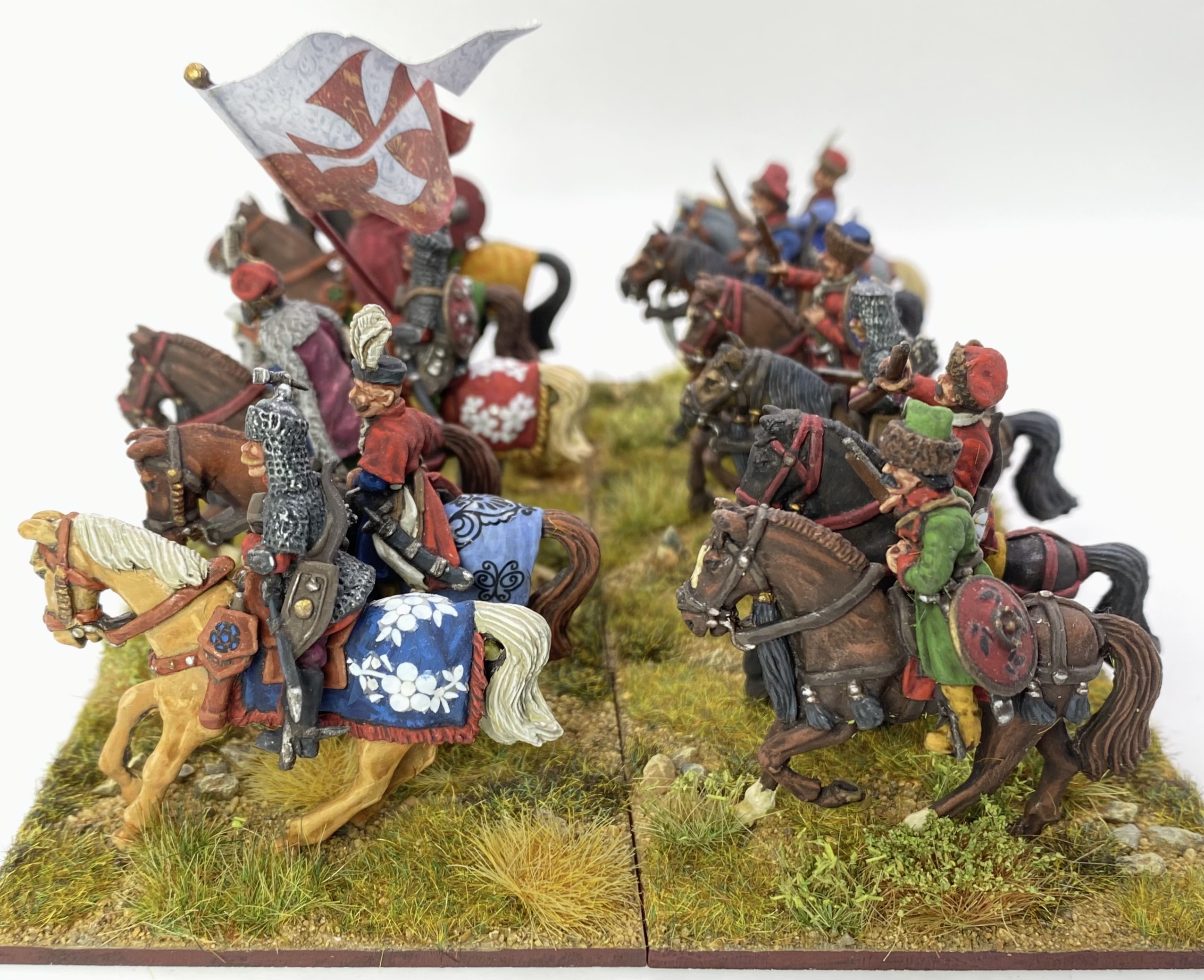
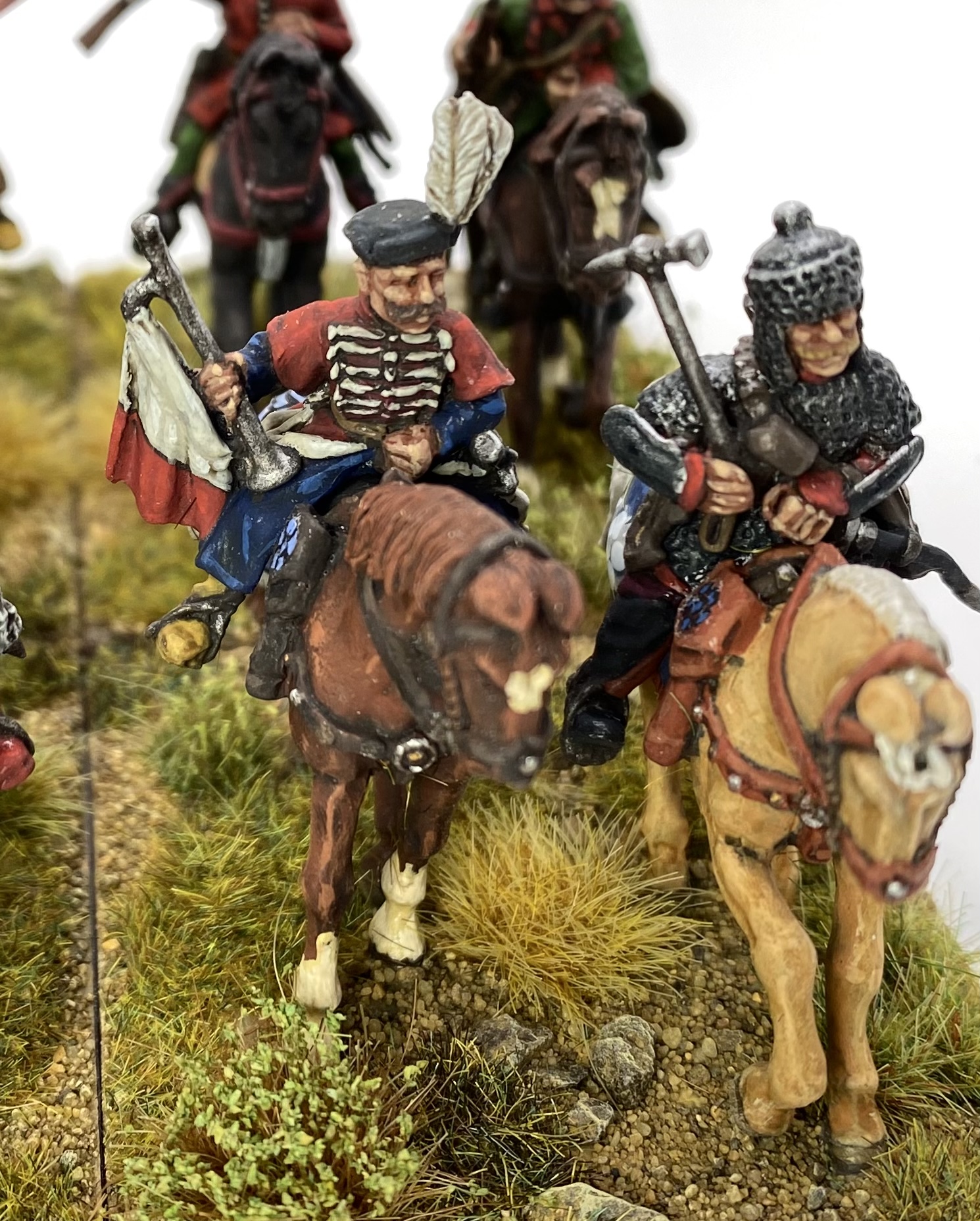
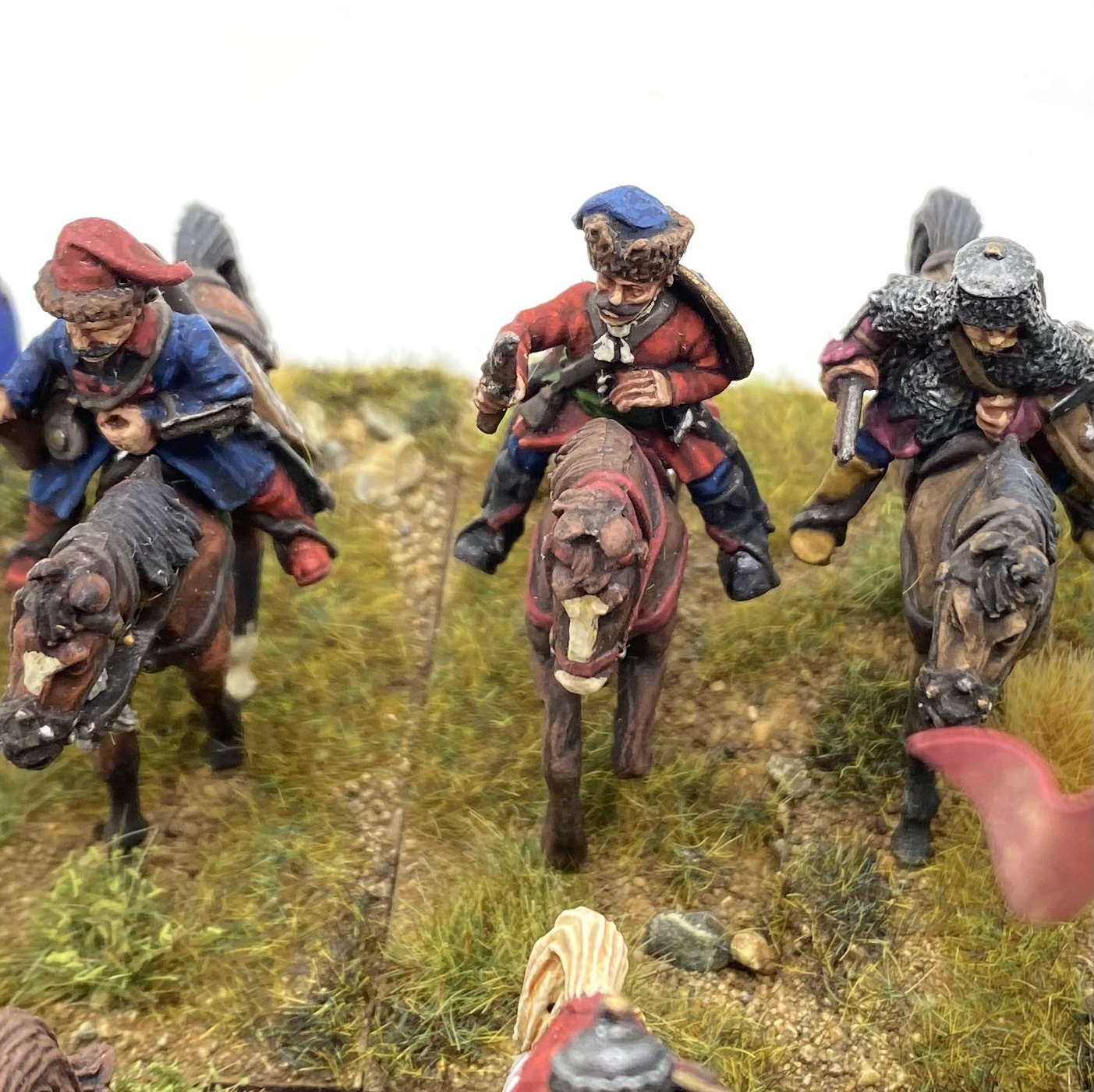
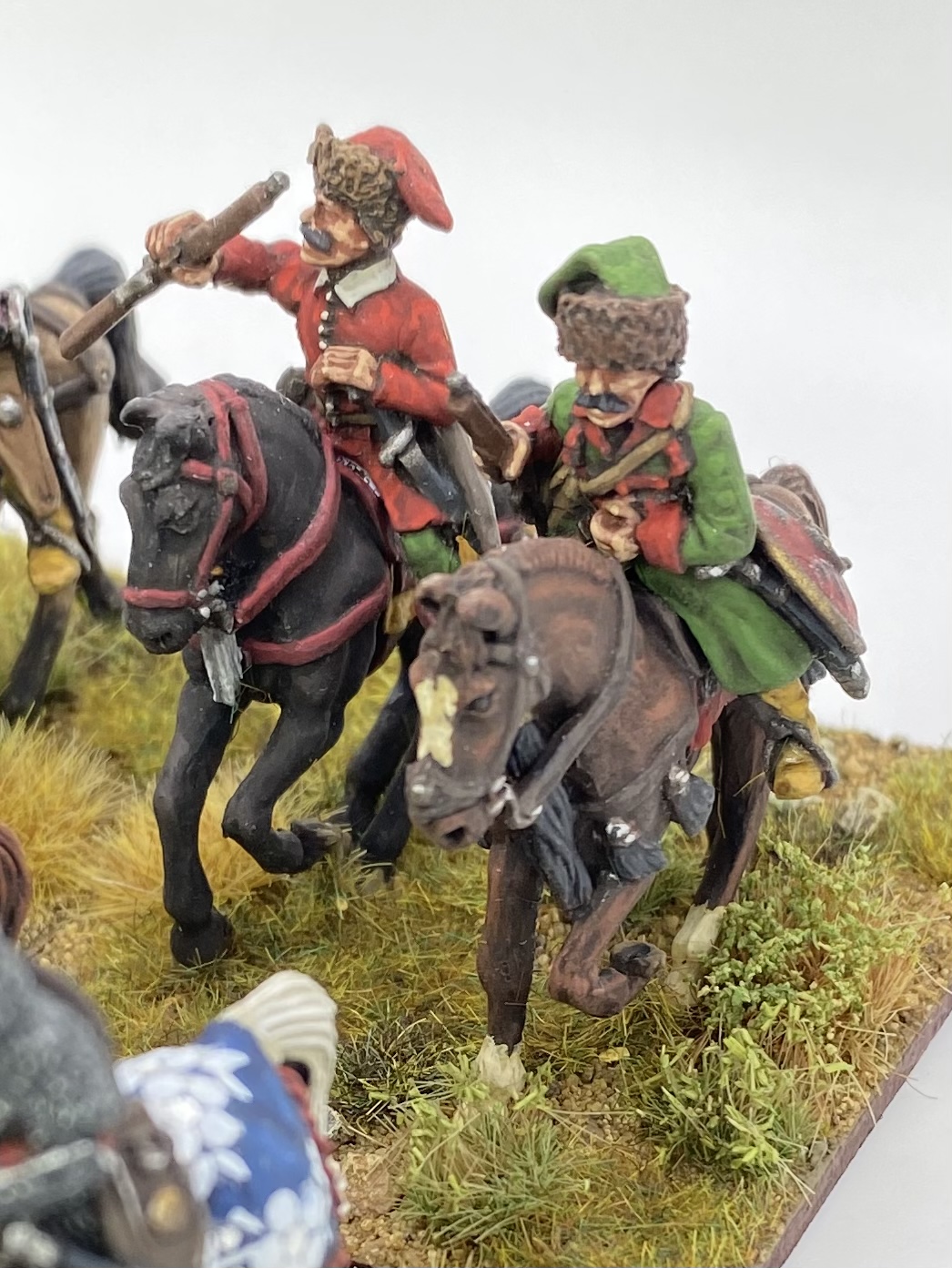
This entry sees a new unit of cossack cavalry joining my Polish-Lithuanian Commonwealth army.
 28mm figures from TAG, Foundry and Warlord.
“Gustavus then prizes one cossack banner that having had been assaulted and circled completely by the 4 Swedish cornets, yet despite having been in a tight corner, with such a valour in their midst was explaining itself with cold steel …” A comment on the Swedish King’s view following the Battle of Honingfelde/Trzciano 1629.
These 28mm figures are from a mixture of manufacturers. The riders are from TAG, Warlord and Foundry, with the horses all coming from TAG. The figures have had some minor conversions, to add carbines, and other equipment, mostly from TAG with some bits from the Warlord plastic cavalry set.
In a previous post, where I covered the previous unit of cossacks that I completed, I gave a description of this type of cavalry, along with the figures, conversions and the nail art stickers used in constructing them.
I have now used these cossack cavalry in a few games. Here are the factors that I have been using for games using Warlord’s ‘Pike & Shotte’ rules.

For those not familiar with ‘Pike & Shotte’ these factors translate as follows (all comparisons are with the typical ‘harquebusier’ cavalry of the period, that makes up the majority of Swedish cavalry in the tabletop battles I have fought):
As Light Cavalry they move slightly faster. They are also able go in to a ‘skirmish’ or open order formation that makes them a more difficult target for shooting, and allows them to evade from formed troops.
- They are slightly less hard hitting, and slightly more vulnerable, in melee. (I may look to vary this in future and have some units more comparable with the Swedish harquebusiers.)
- The ‘Marauder’ special rules means there is a no negative modifier for the distance from the general when orders are issued. This allows them to operate in a more dispersed manner, that seems appropriate for these light troops.
This combination of factors has seen the cossacks being most successful when either supporting the heavier Hussars, or operating on the flanks of the enemy formations. They have been less successful when expected to take on frontally the Swedish cavalry.
I’d be interested to hear about how other think the cossack cavalry should perform on the tabletop.
In the next entry I will be looking at some temporary defences supposedly used by the Swedish troops in the 1626-9 campaign against the Poles.
Until next time!
Andy @ The Friends of General Haig.

A second Button of Gold!

Supper chuffed to have a second Golden Button for Husaria! Thank you.
I understand this means that I only need another 48 until I can cash them all in for a meal at Pizza Hut with one of the OTT crew; who to pick?! ?
The Peasants Are Not Revolting
In this project post I add some inhabitants for a typical 17th century Polish village that may appear on my miniature battlefields.
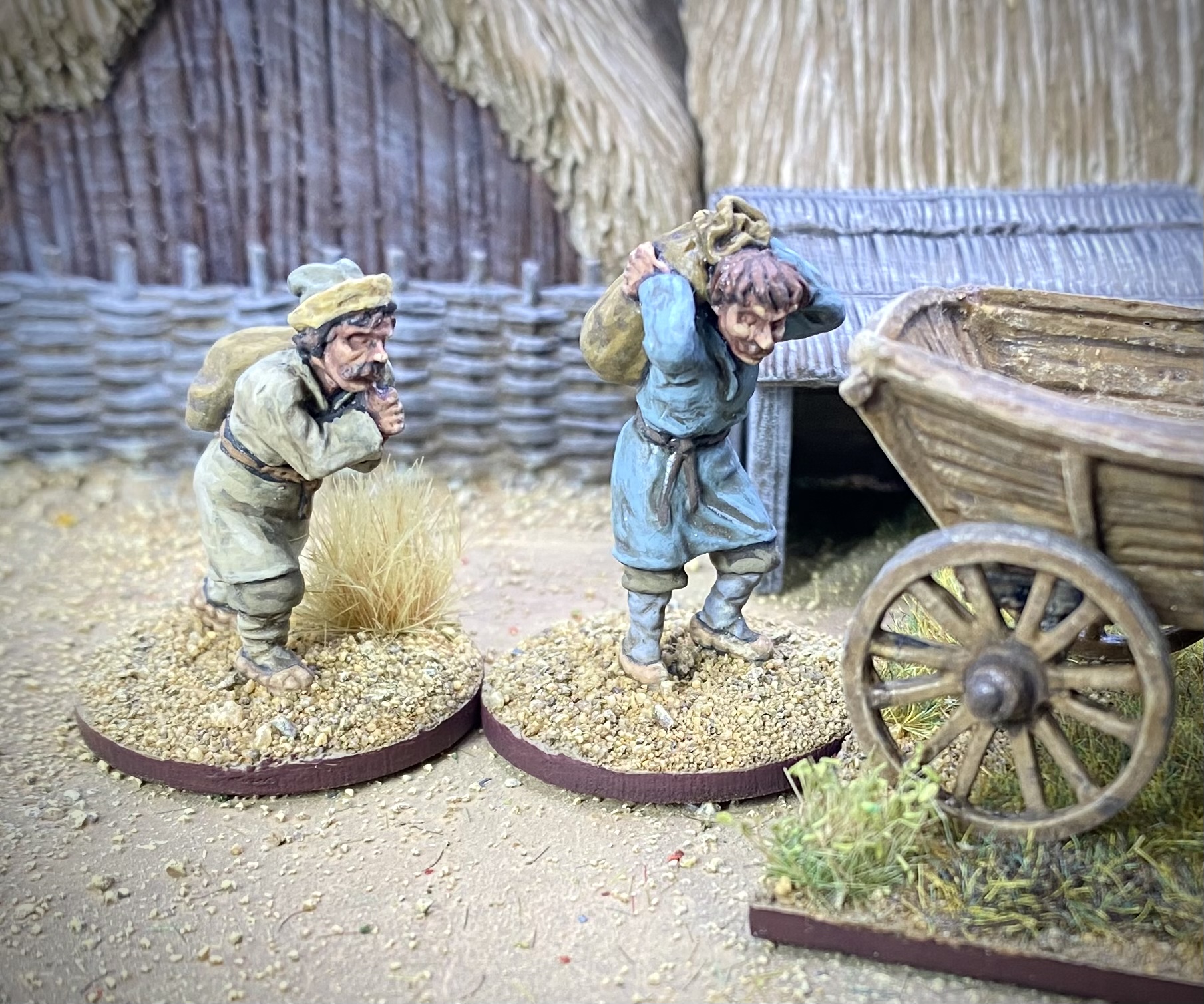
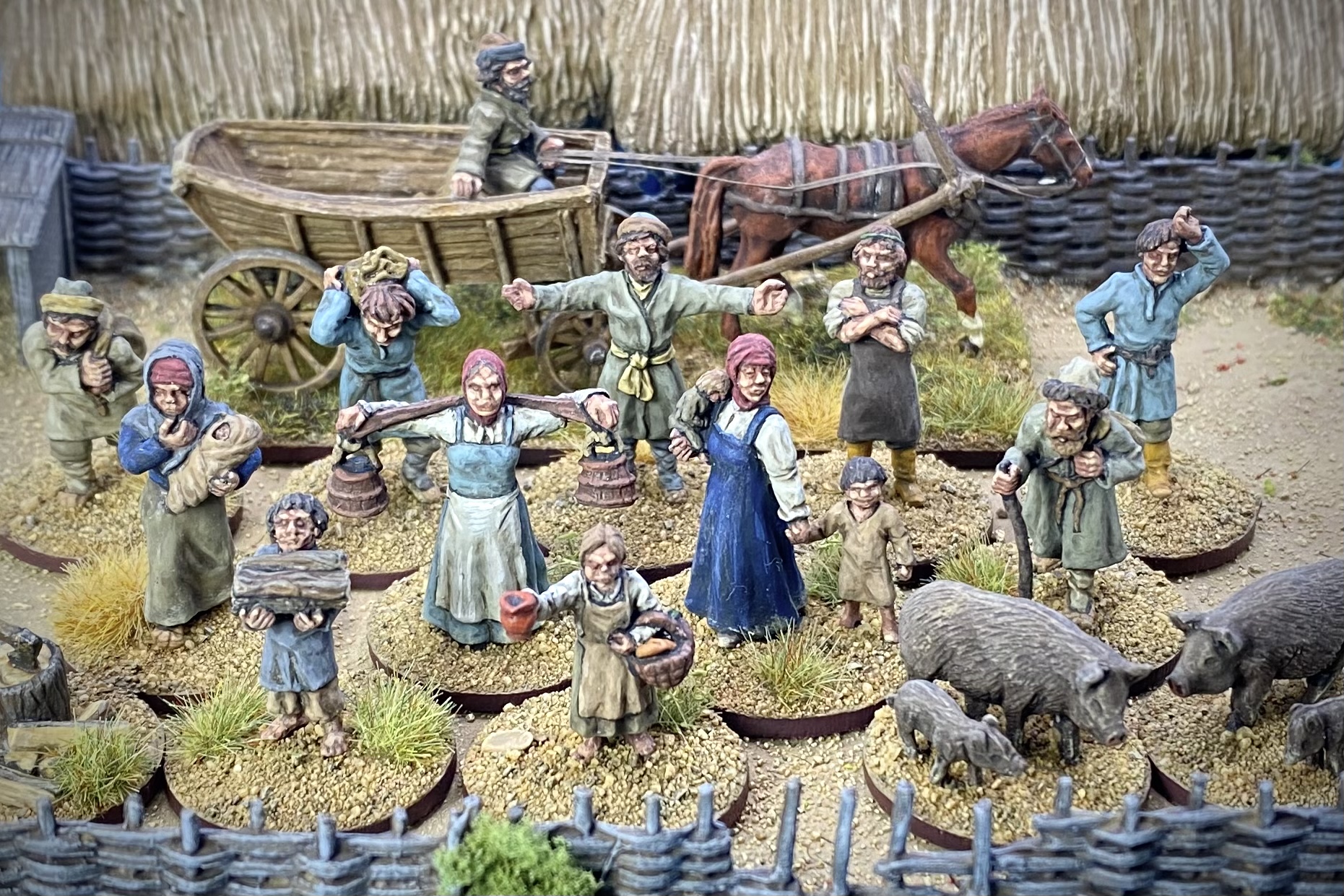 28mm civilians for adventures in 17th Century Poland
 As well as churning through units for the 17th century Polish and Swedish armies that I’m trying to recreate, I am in parallel thinking about the miniature battlefields that they will inhabit. I think that some form of human habitation on the miniature battlefield does a lot to set the context of time and place for the overall scene. As well as any buildings, adding some civilian inhabitants then helps to add further ‘colour’.
There is quite a good selection of 17th century civilians available for Western European theatres. For example Warlord Games do a great selection of 17th century civilians, as well as armed ‘clubmen’. Many other ranges have at least one or two figures available and, with civilian dress giving a bit more historical leeway than uniforms, it is also possible to add in civilian figures from some late 16th century, late 17th century, and even early 18th century ranges, with perhaps just a few tiny conversion. It is even possible to plunder some manufacturers’ ‘fantasy’ ranges; a tip that I picked from the Too Fat Lardies – thanks Rich and Sidney!).
Although parts of Prussian Poland were quite ‘German’ in this period, especially in the larger towns, I wanted some of my civilians to give a more East European feel. We’re not so lucky at the moment when it comes to Eastern Europe civilians in the catalogues of 28mm manufacturers. I was therefore very happy to come across this small set of Eastern European civilians produced by an independent sculptor, Leon, advertised on The Lead Adventure Forum.
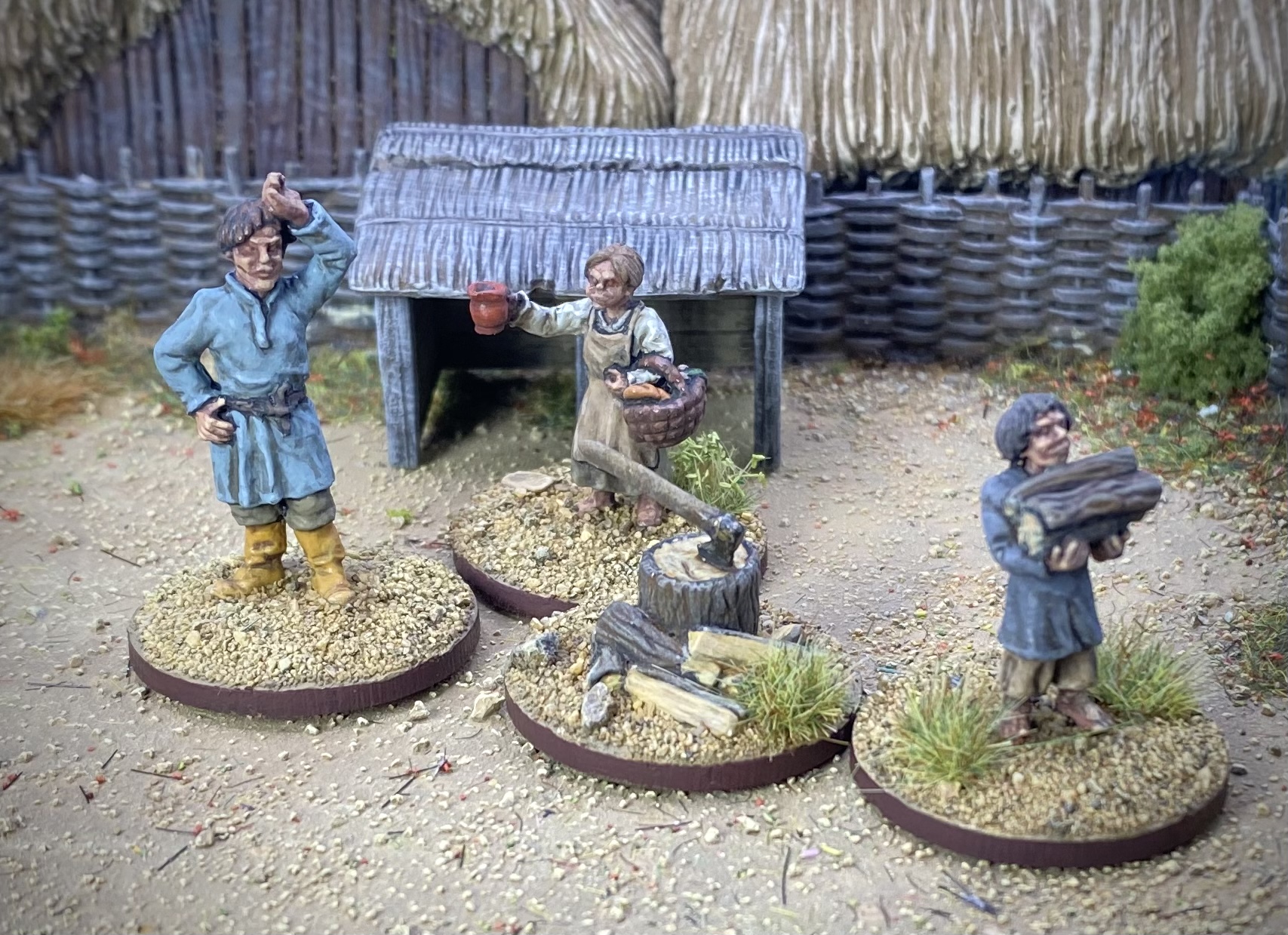
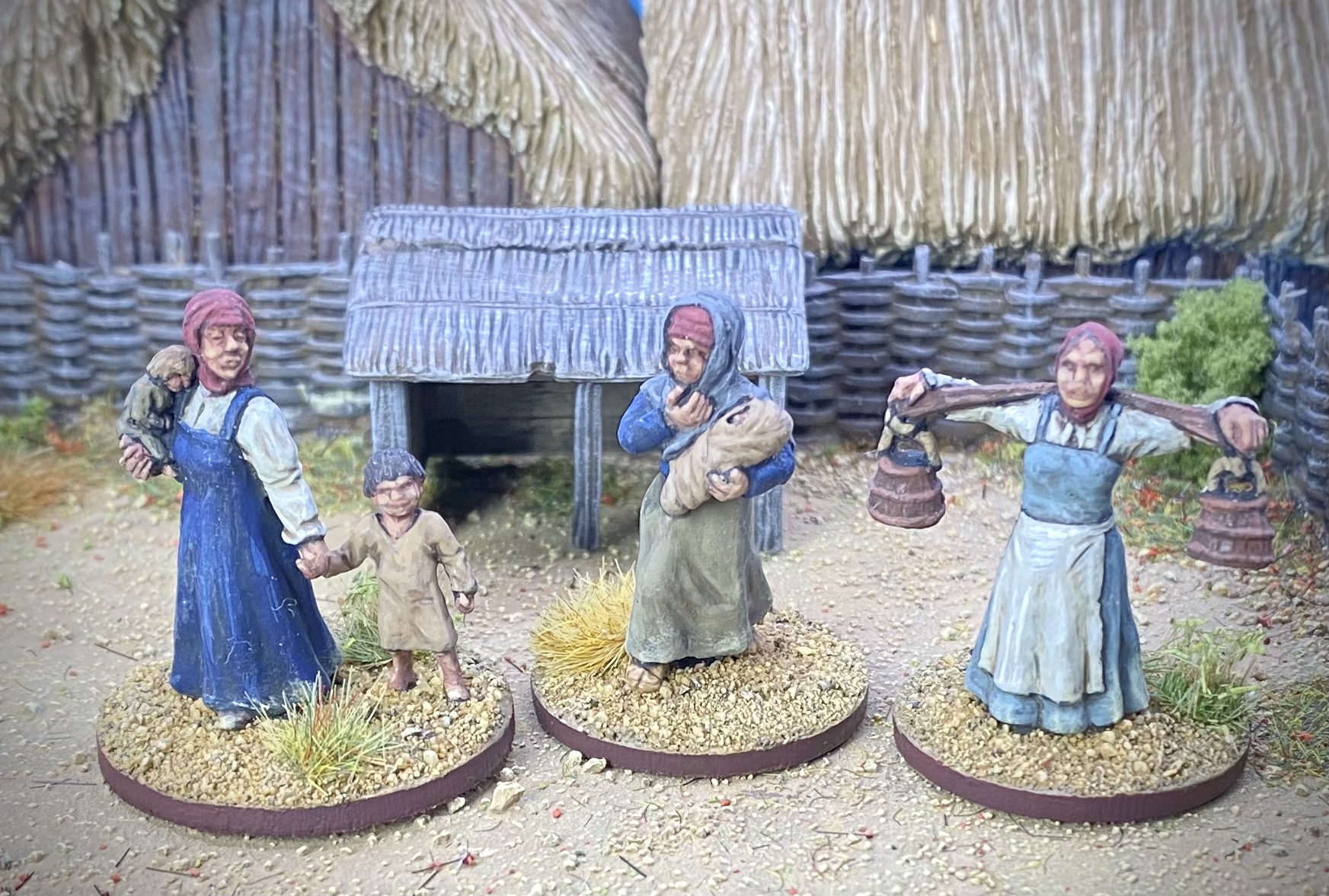
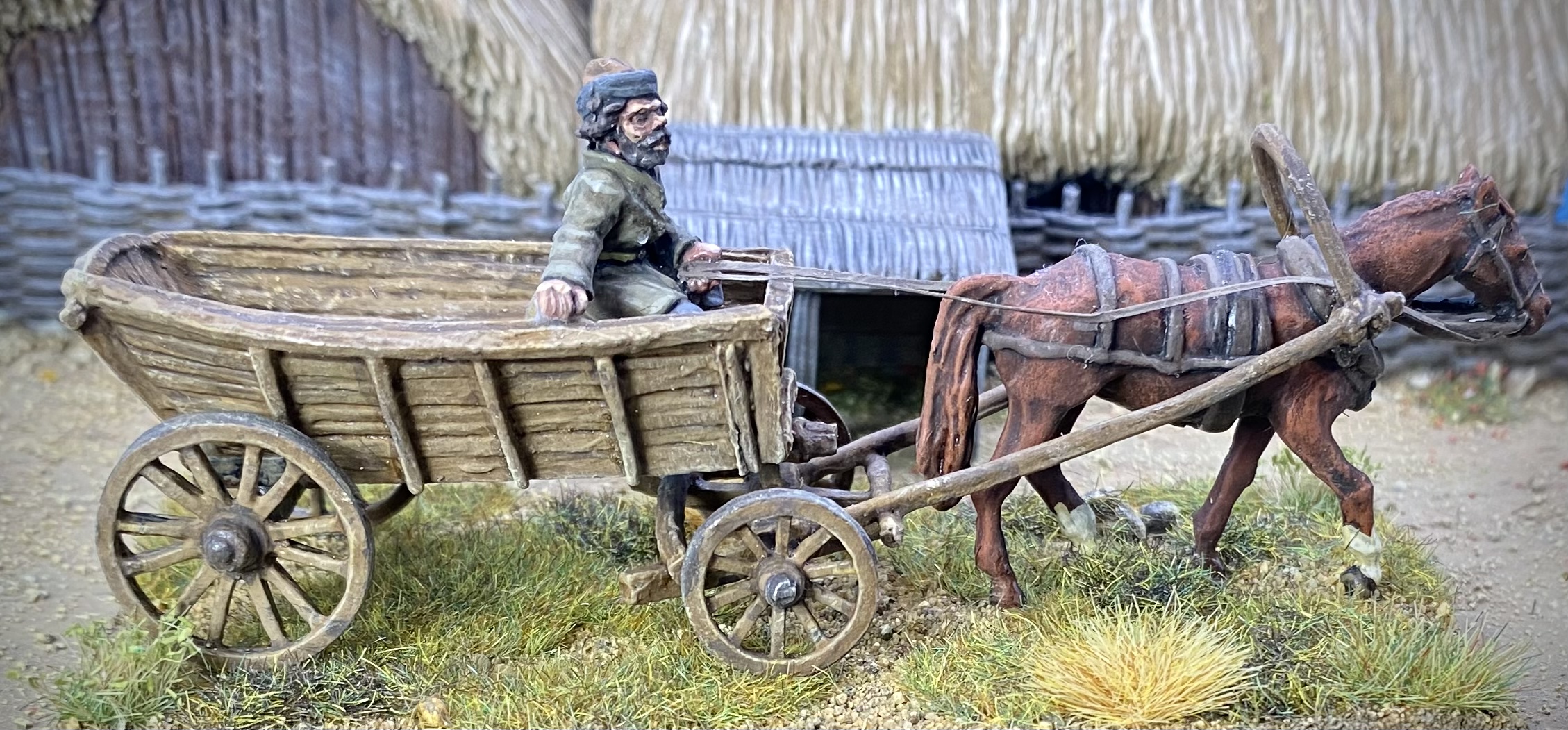
The set includes women, men and children going about everyday tasks, a cart with horse and driver, and some pigs with piglets. I thought that these figures would fit in really well to a rural farm or hamlet in the 17th century Polish Lithuanian Commonwealth.
I painted the figures mostly in suitably drab colours to represent typical peasants living in the rural Polish-Lithuanian Commonwealth. The women folk got slightly ‘nicer’ colours, and red head scarves. I based most of the figures on MDF round bases (from Warbases) sized to match the UK 2 pence piece. (Lockdowns etc. have seriously depleted by collection of 2ps!). Warbases do these bases with handy round holes, perfect for tiny magnets, so the resulting figures will sit safely in a Really Useful Box with an A4 magnetic sheet in the bottom.
I kept the basing of the figures mainly muddy earth, with the odd tuft, on the basis that they will usually be shown around the buildings and roads on the miniature battlefield.
This set of figures made an interesting change from the martial units of figures I’m normally working on. I’m sure they will look great as the inhabitants of any hamlets in my miniature 17th century Polish-Lithuanian Commonwealth.
The cart is a metal model which went together fairly easily with superglue. The cart has lots of detail on it so it was very easy to paint with washes and dry brushing.
Next up on the painting table I’m back to more regular fayre with some Polish cavalry.
[Note. At the time of publishing, April 2022, this range of civilian figures may not be available due to them coming from the Russian Federation. ]

Commander Mikołaj Abrahamowicz
This project entry covers the third command stand for my Polish-Lithuanian Commonwealth force from the 1620s; this commander representing Mikołaj Abrahamowicz (or Abramowicz ).
Abrahamowicz was one the Polish-Lithuanian ruling noble class, who’s family came from Smolensk in the Grand Duchy of Lithuania. He was unusual in being a Protestant and yet well connected and influential in Royal circles in this predominantly Roman Catholic country.
By the later 1620s he was already a veteran military leader of some years experience. He had been in charge of the Commonwealth’s artillery and was also associated with leading the ‘Foreign Infantry’ in the Army.
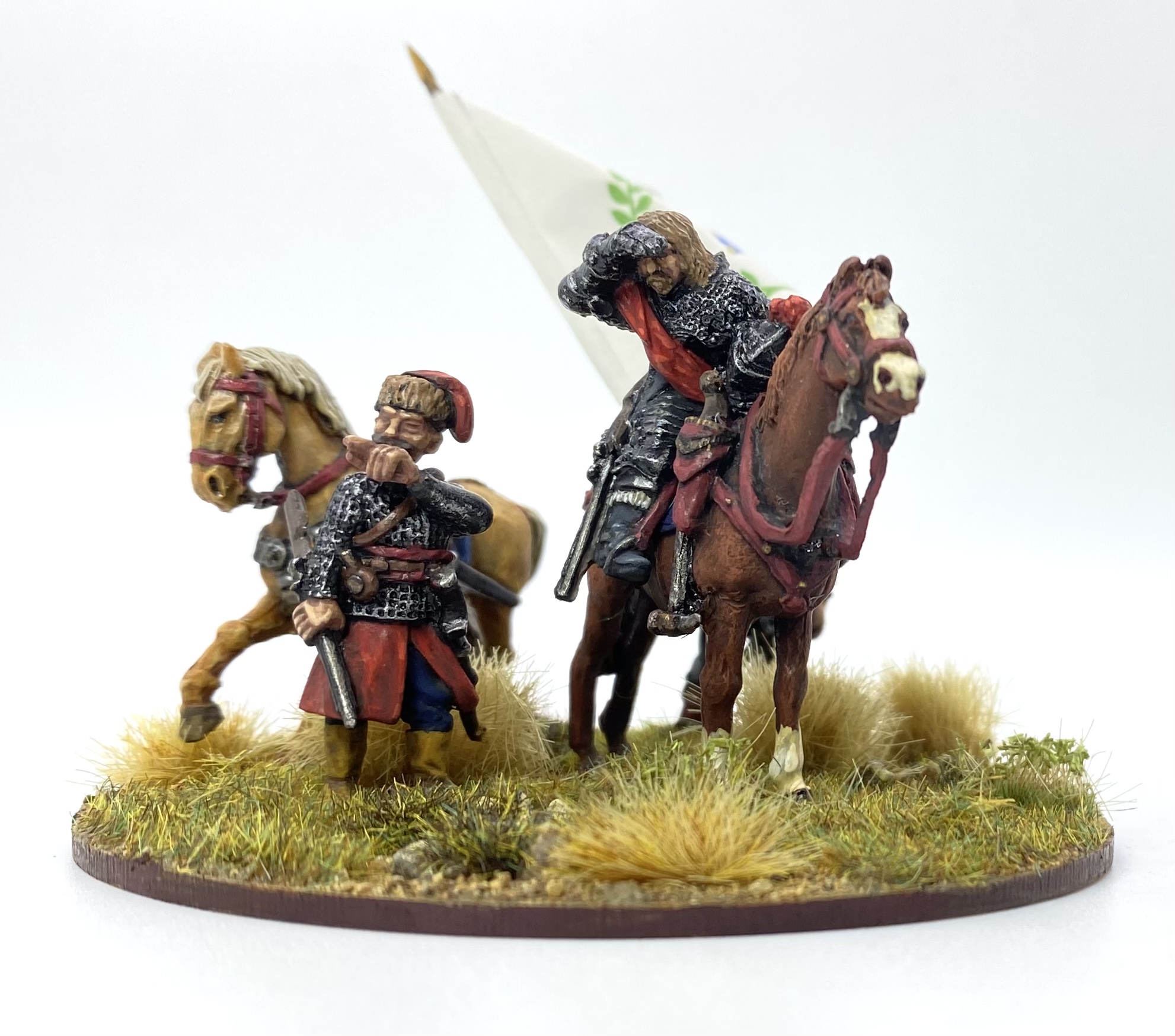 Mikołaj Abrahamowicz with entourage; 28mm figures from Warlord, TAG, Foundry and 1898 Miniatures.
He is often listed as one of the commanders at The Battle of Dirschau / Tzcew in 1627, and so he seemed an interesting candidate as my third command base. With his Protestant background and close association with the western style, Foreign Infantry, I thought it would be interesting to have Abrahamowicz represented with a figure in western style dress and equipment. I picked Warlord Games’ ‘Sir Arthur Haselrig’ figure from my ‘pile of opportunity’, to use as the man himself. This figure, sculpted wearing cuirassier armour, looks every bit the part of a well armoured general of the 1620s or 30s. He looks as if he is shielding his eyes from the bright sunlight, and staring in to the distance to study some detail of the battle. This pose looked like it would go well with a TAG dismounted Polish cavalryman that I had, who was posed pointing out some important detail. The two figures together had a nice narrative to their poses, and would also provide both a western and a Polish touch to the base.
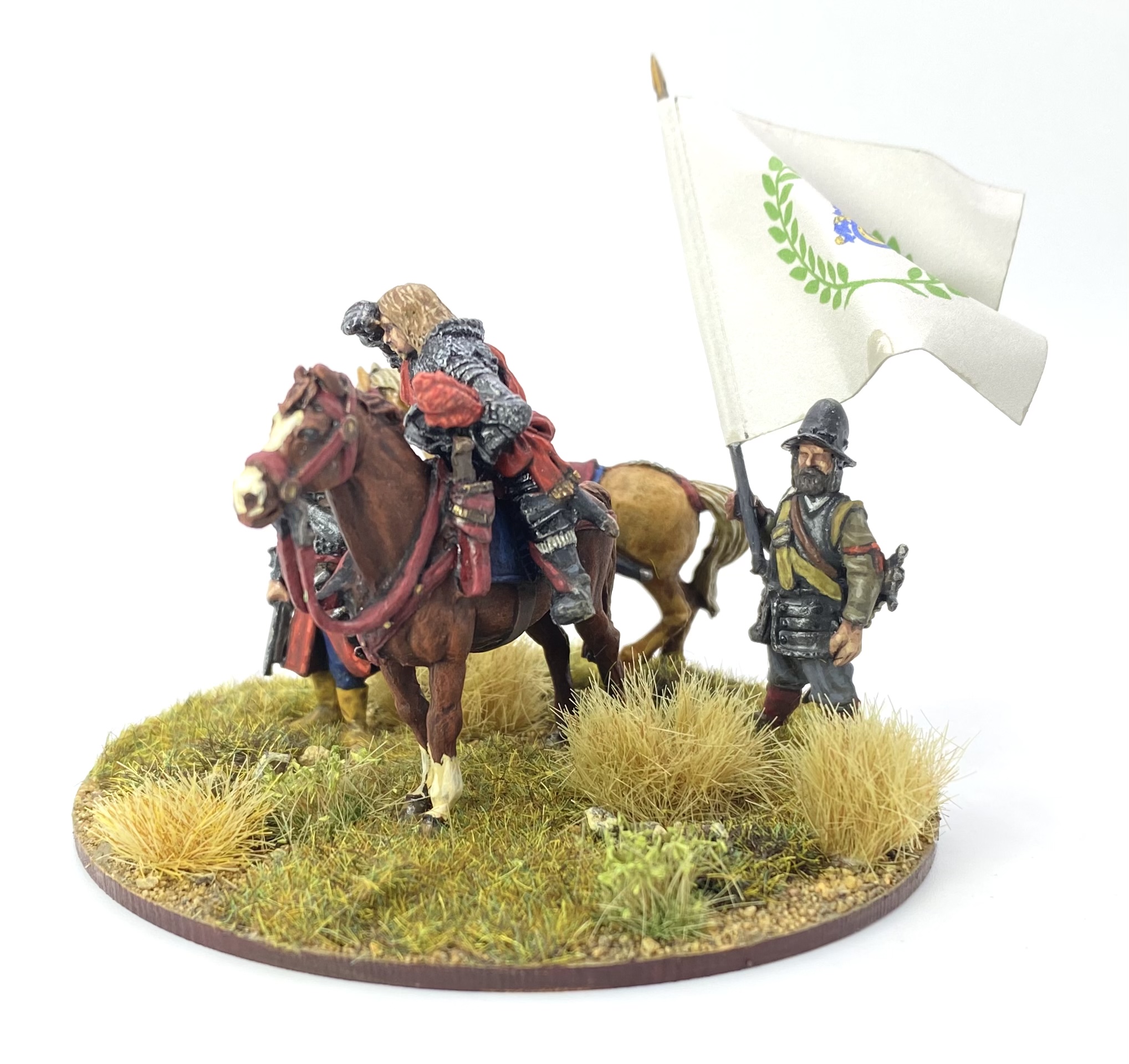
To finish off the base I used a spare Foundry horse to be the dismounted Polish cavalryman’s mount. I also added an 1898 TYW pikemen as an ensign to carry a personal standard for Abrahamowicz. The standard is conjectural and another ‘nod’ to Abrahamowicz’s western influence. The device on the flag is Abrahamowicz’s family crest, the white background representing a colonel’s colour, matching Abrahamowicz’s rank.
The figures were all really nice to paint; and it was great being able to lavish a bit of extra time on a command base like this one. Although the figures are all metal there was very little work required to get them ready for painting. The one bit of ‘fiddling about’ was the reigns on the Warlord horse. The reigns are cast as a single piece under the horse’s head. I could have probably left this, but ended up drilling this single piece of metal to form the two separate reigns.
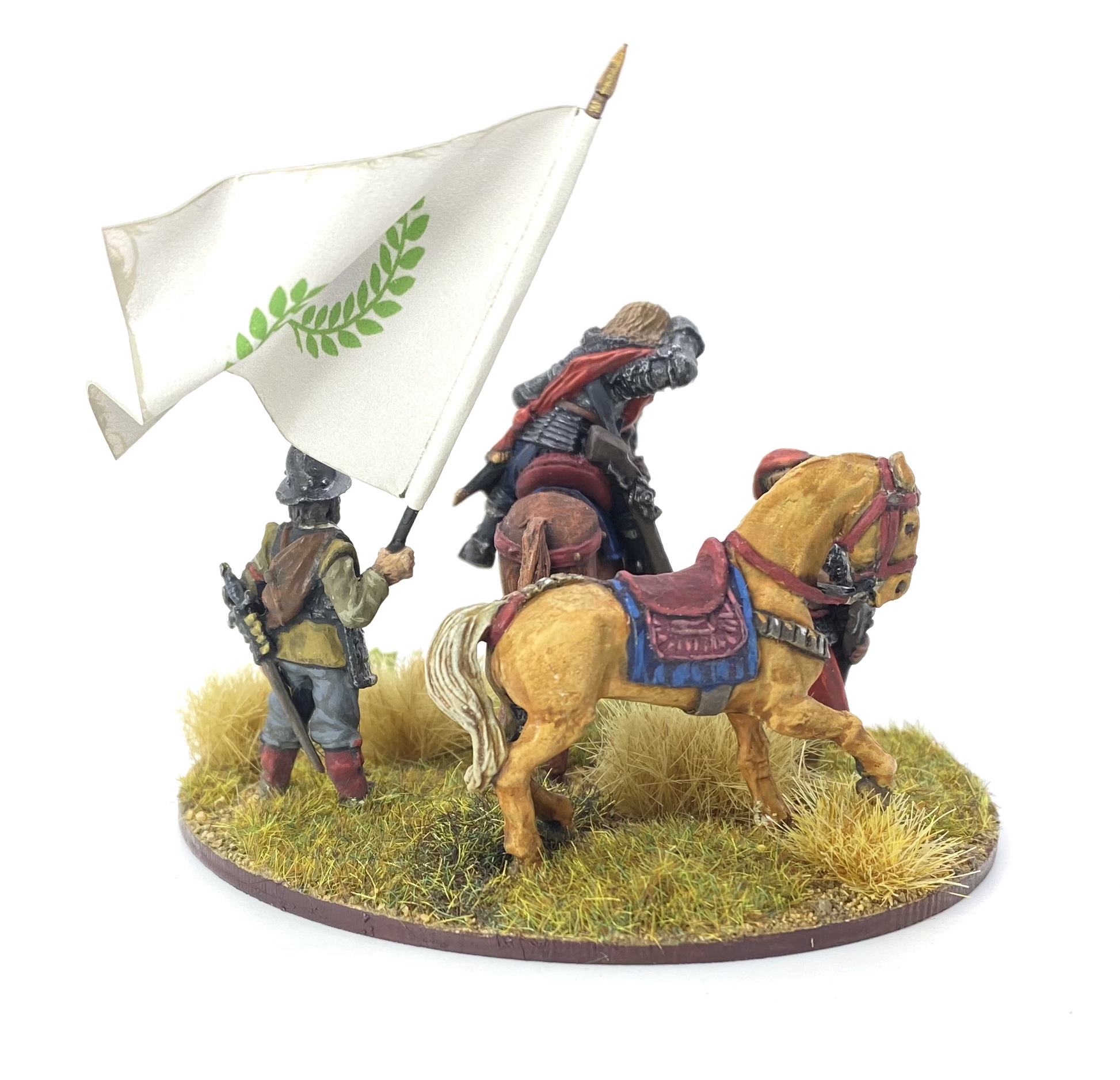
The resulting base makes a distinct commander for my Polish-Lithuanian forces, and I look forward to getting him on to the miniature field of battle soon.
Note. The idea for Abrahamowicz’s style of dress, and his coat of arms, result from an email conversation with Michal Paradowski of the Kadrinazi blog, and author of two wonderful Helion books on the Polish armies from this period. Thanks to Michal for the great thoughts and ideas, and any mistakes in the resulting base are purely my own!
 Here is a jpg of the flag I created if anyone would like to reuse it.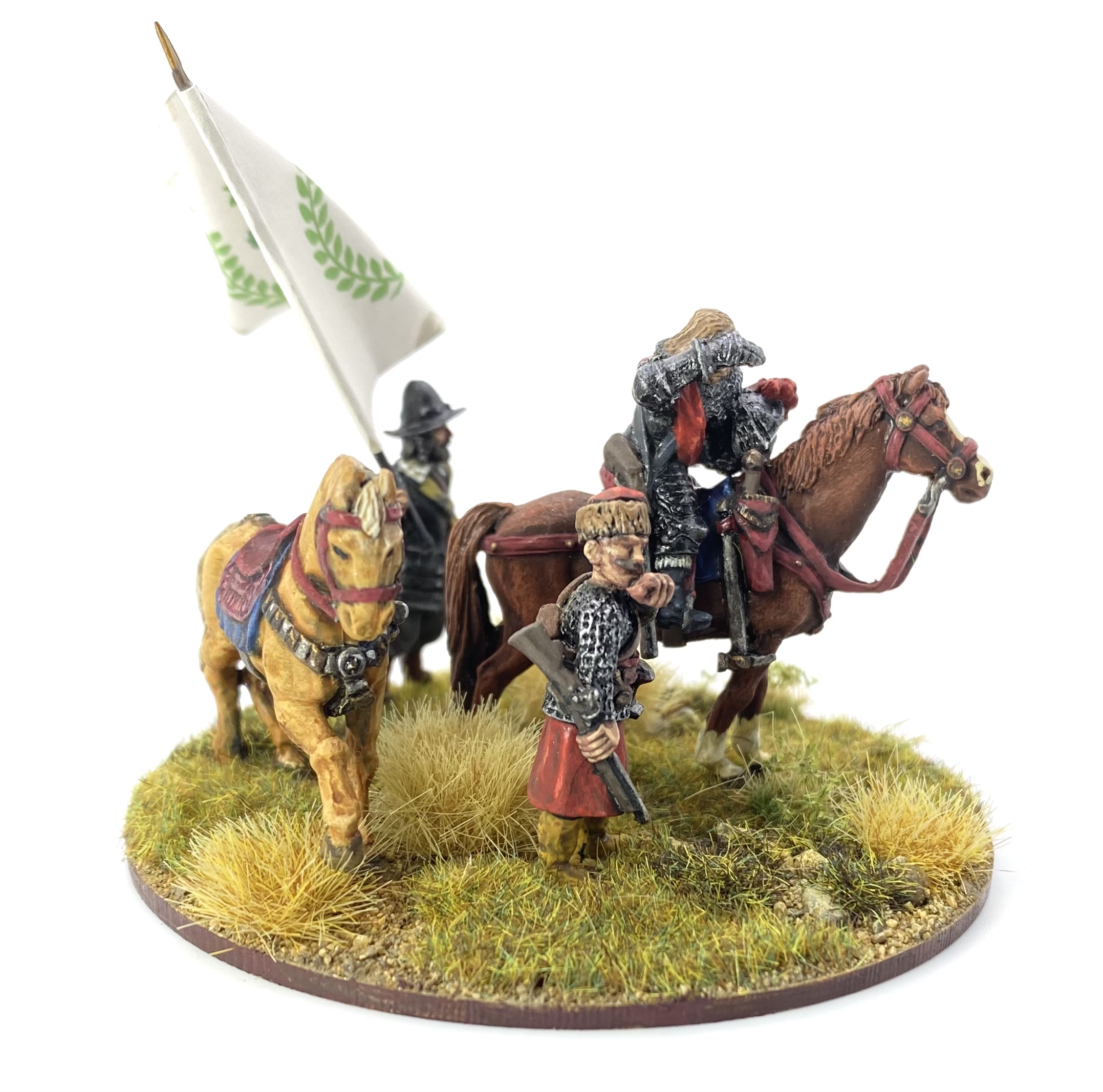
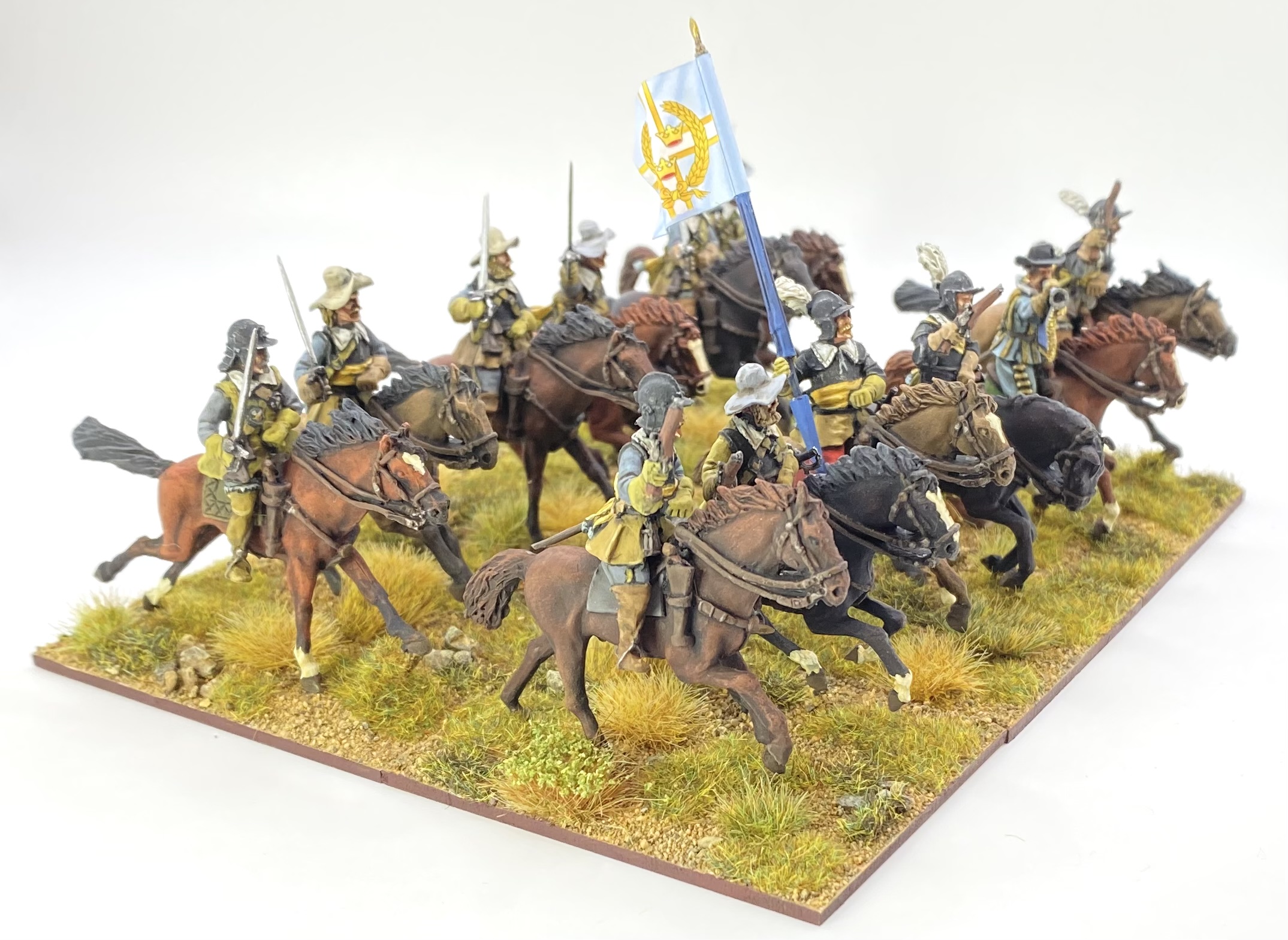
Thirty Years War cavalry from 1898 Miniatures
In this project post I look at the latest Thirty Years War (TYW) release from 1898 Miniatures; the Cavalry.
The post is broadly split in to three parts: a description of the figures, how I found preparing and painting them, and finally the first unit that I have built using the figures. (Eagle eyed observers will notice that this unit is actually part of the enemy army for my Poles, but I’m looking on the project as Poles, and their enemies, rather than just the Poles. ?)
The Figures.
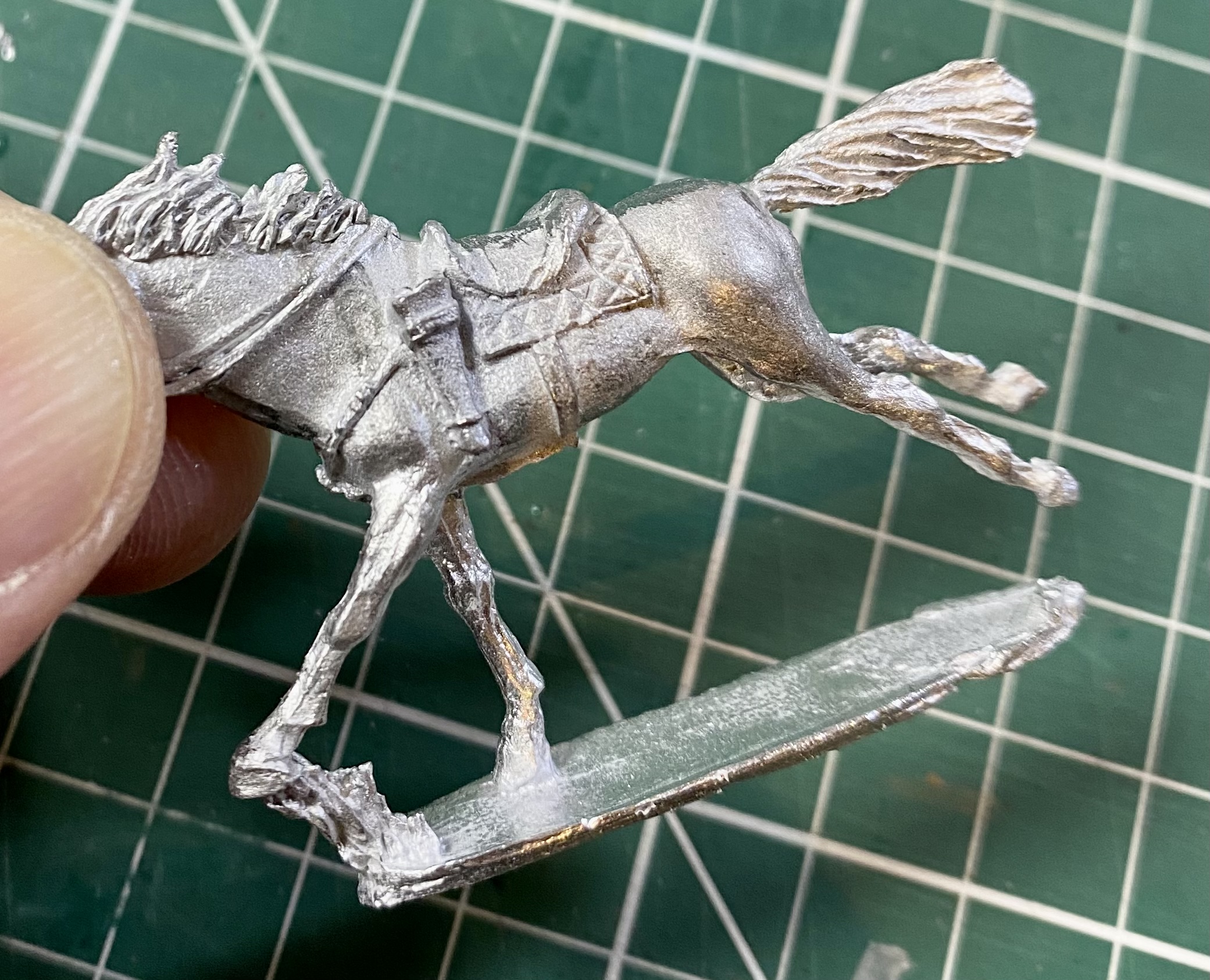
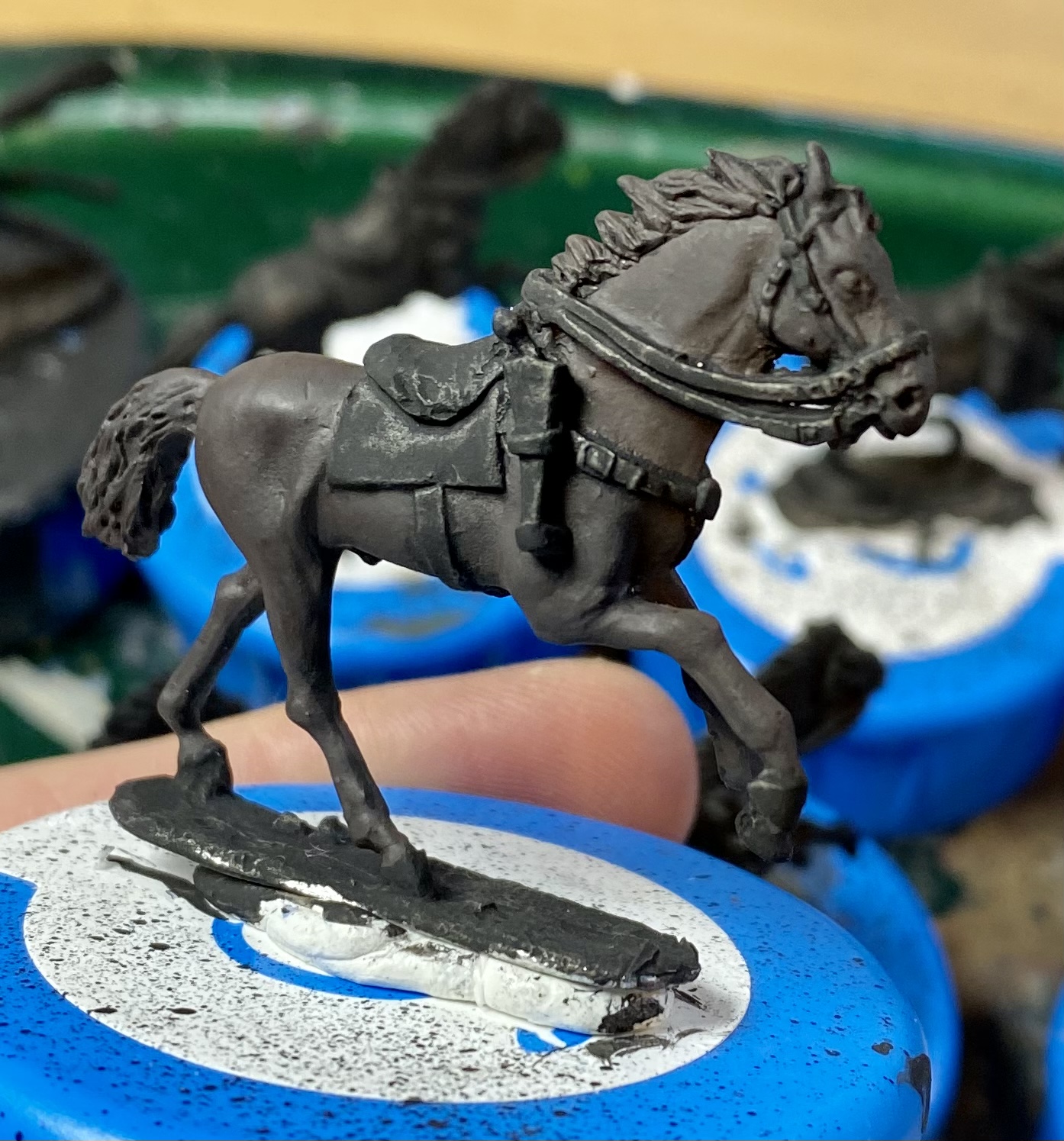
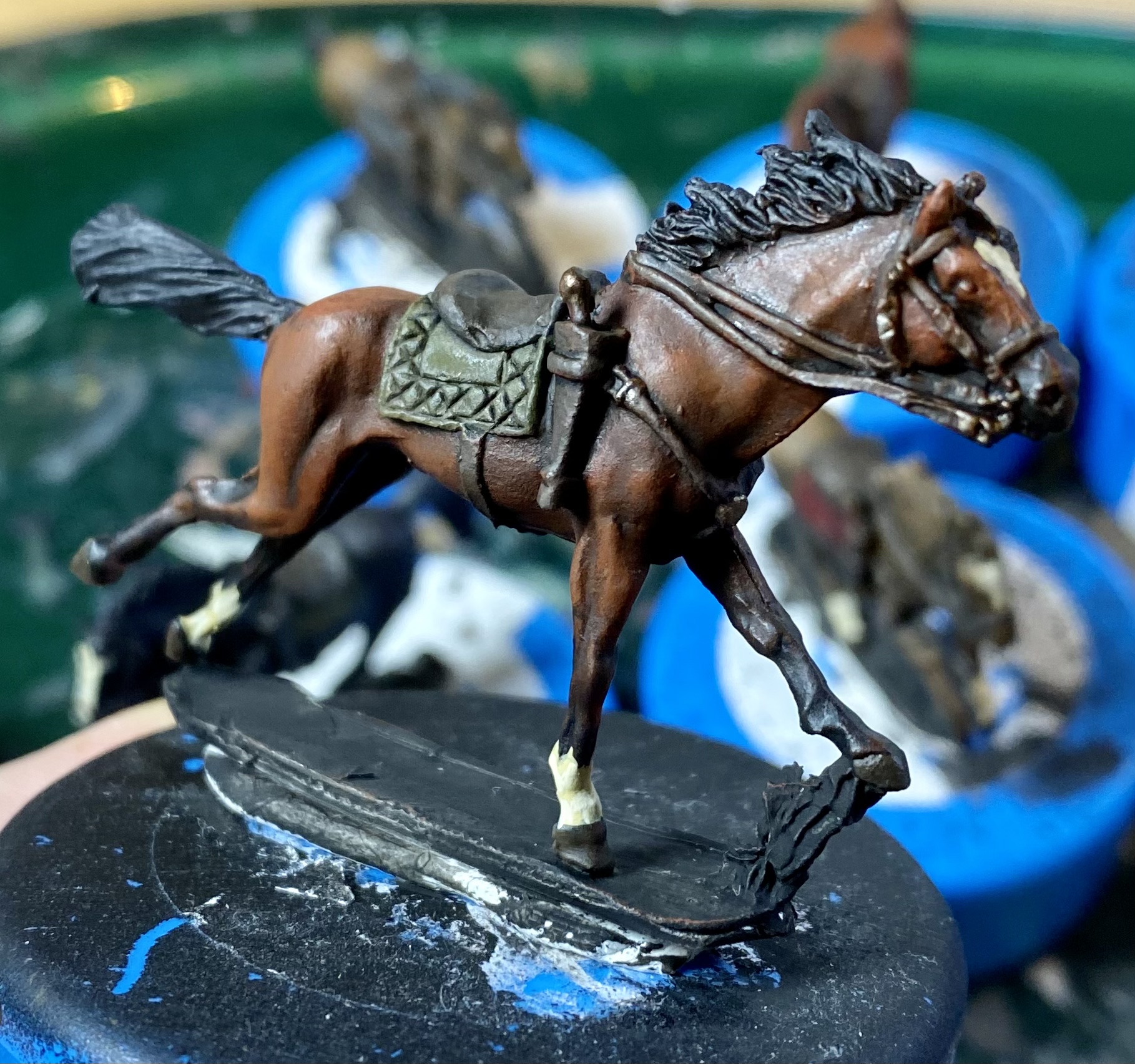
1898 released these cavalry at the end of 2021, adding to their existing range of infantry and generals for the period. There are nine packs in this release that include armoured and un-armoured riders, wearing helmets or broad brimmed, soft hats, holding pistols or swords, as well as a command pack. Each pack contains three different rider figures which means that you have a lot of variety available. There are three different horse sculpts across the rank and file packs, and the horses in the packs with pistol armed riders have one pistol missing from the saddle holsters which is a really nice touch.
 Thirty Years Wars Cavalry from 1898 Miniatures - 28mm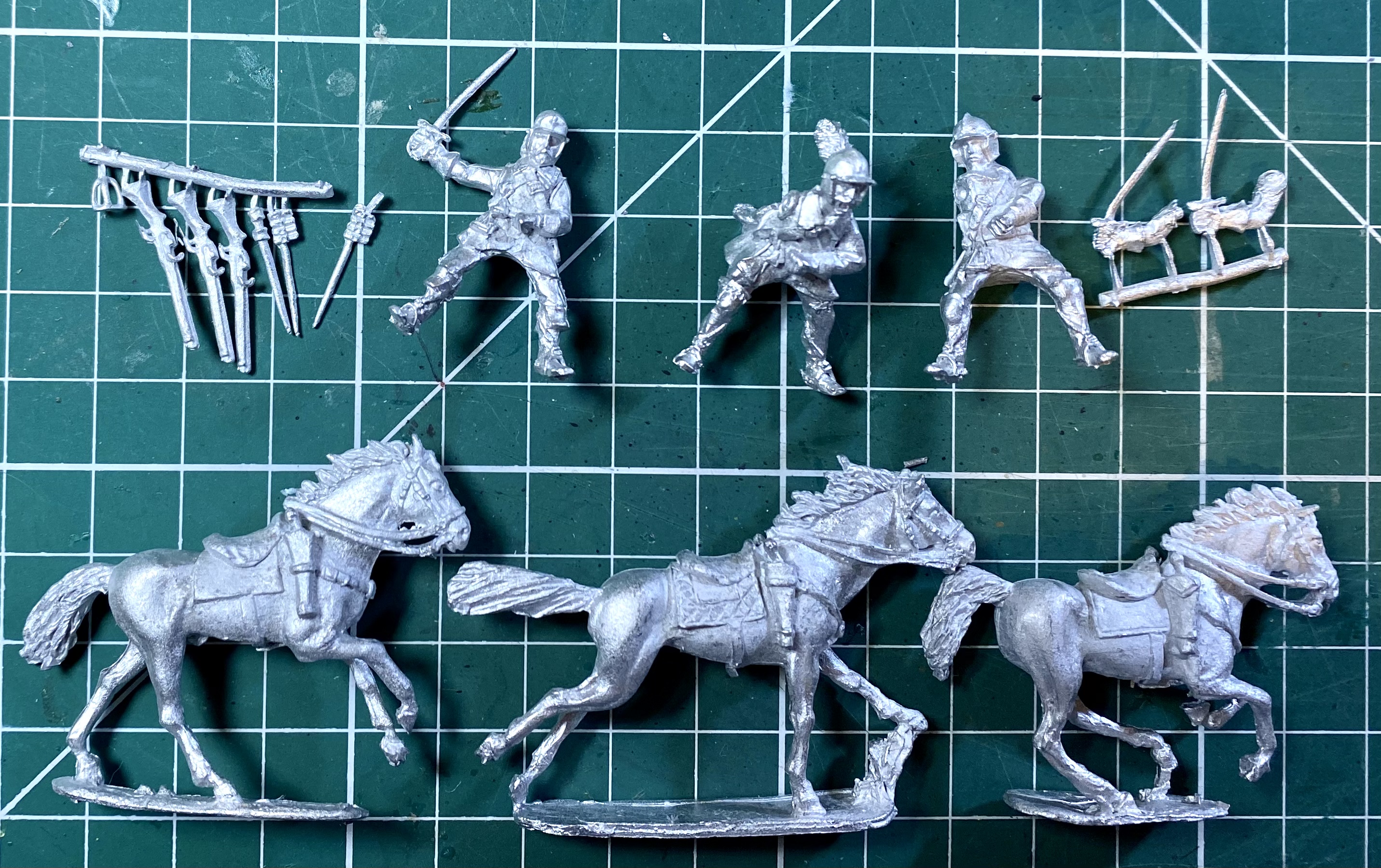
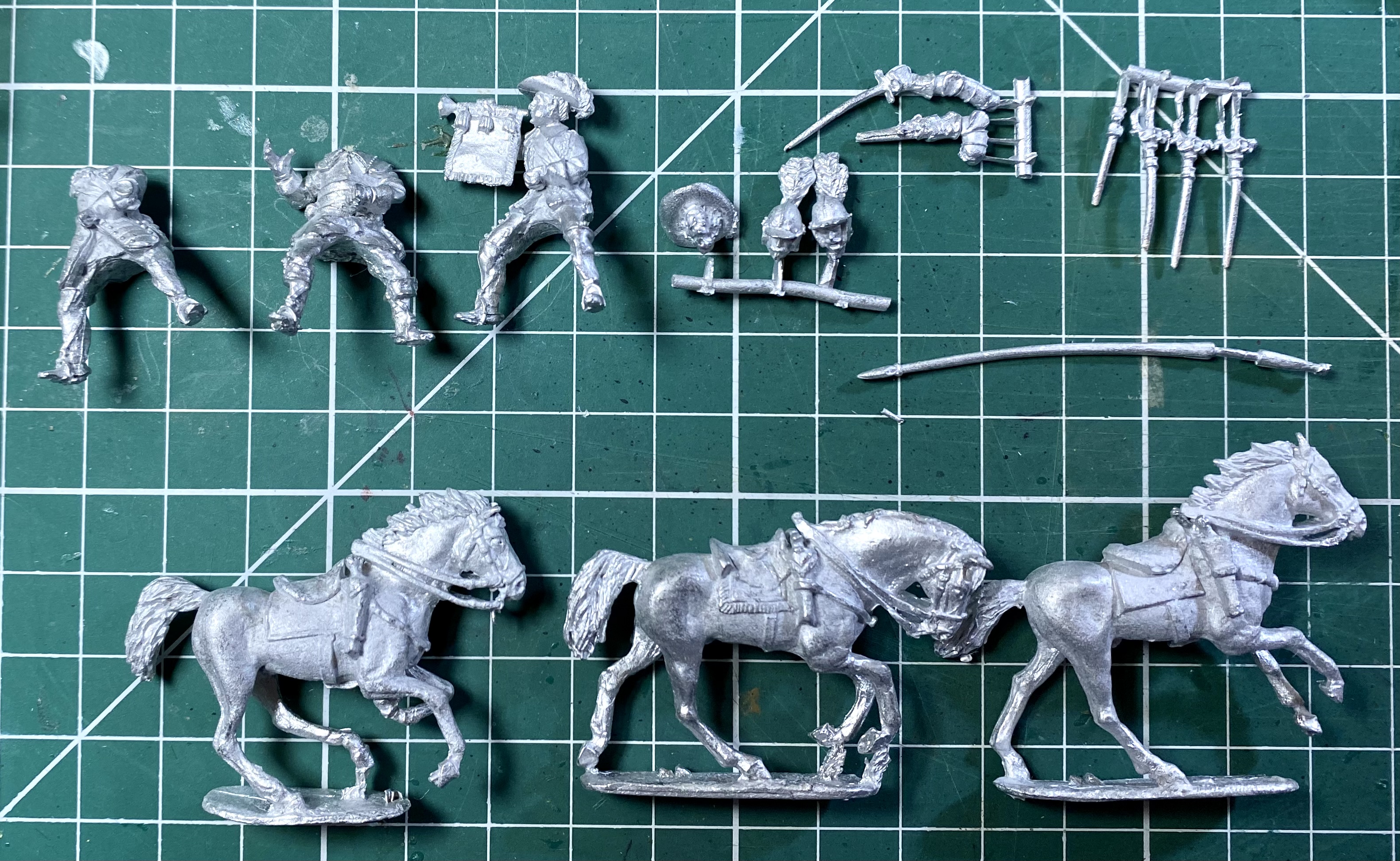
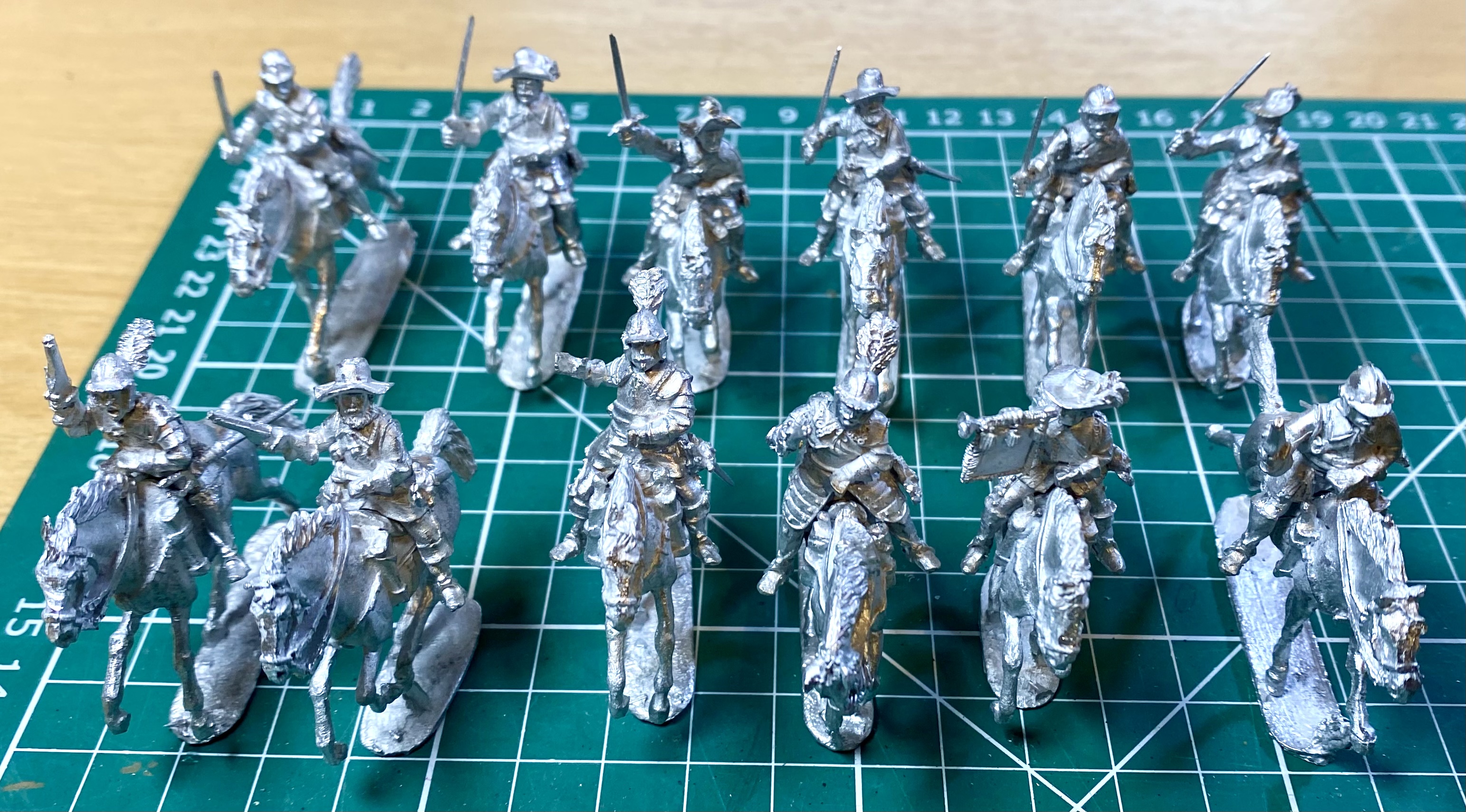
The command pack contains an officer, a trumpeter and a cornet / standard bearer. There are head options for the officer and cornet, and arm options for the officer as well.
Each pack includes separate scabbards and carbines to be glued on to the figures. For figures holding their sword the scabbards are empty, and for figures holding a pistol the scabbards have the sword sheathed. Another nice touch.
The riders fit on to the horses very easily with the saddle sculpted on to the horse rather than the rider. The horses themselves are well proportioned with the bridle and other tack nicely detailed on the models. The horses are in active poses either cantering or galloping. In addition to the riders’ animation, this will give a great impression of attacking cavalry.
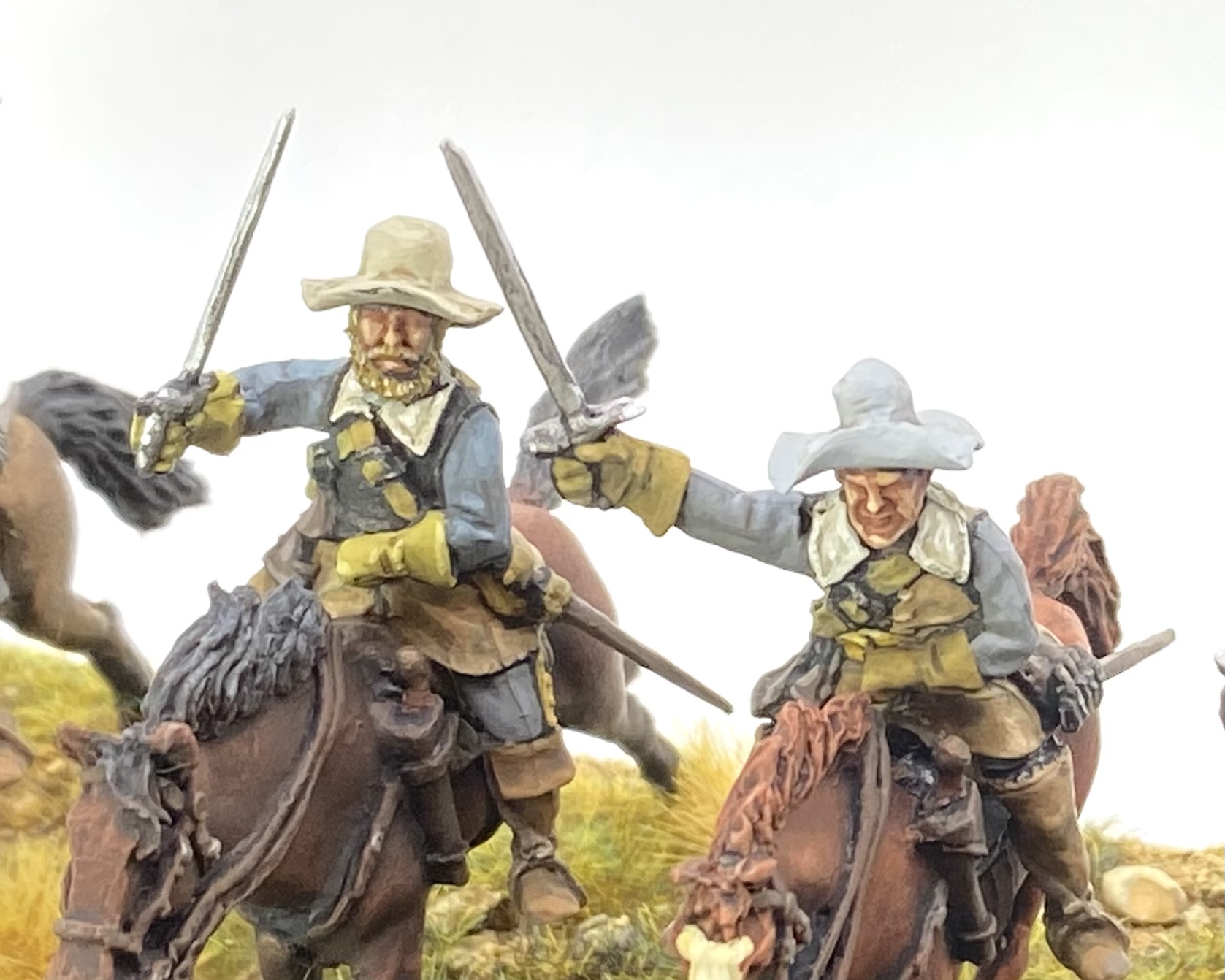
The resulting figures represent the classic early to mid 17th century harquebusier type cavalry. The rider’s armour is mainly limited to back and breast plates, with the occasional figure having some arm protection as well. Helmets are either of the burgonet or single-barred Dutch pot variety although the helmeted packs include a tiny three-barred face plate that you could add to one of the figures to turn the helmet into a three-barred English pot.
They are modelled wearing a buff-coat although this could sleeved or sleeveless depending on how you paint them. You could of course paint them as wearing riding coats and not buff coats if you choose. Many, but not all, have a scarf/sash, so necessary in a period when cavalrymen of this type looked very similar in all armies.
Figures wear leather gauntlets and have their swords suspended either from a cross belt or waist belt. All of the figures have a cross belt on their right to which you attach the carbines. The figures have powder flasks hanging from this cross belt as well.
The figures retain the sculpting style of the infantry. Nicely sculpted, with lots of detail, and every figure has bags of character. I think they really look the part of figures for this period, and with the variety of different rider figures available, you can make a very varied looking mounted force.
Building and Painting
The figures come with minimal chipping and filing required. There are some tiny burrs from the casting process, and minor mould lines to be filed. The metal is the softer style of white metal rather than the stiffer more brittle style of some manufacturers. Some of the horses have only two contact points with the base and so are at risk of bending at the ankles if roughly handled. I haven’t had any accidents with horses actually breaking off the base, which I think is thanks to the more forgiving, bendy metal. Where riders’ right arms were not positioned quite to my liking I was able to gently bend the arms in to slightly different poses.
With at the very least a separate scabbard required to be added to every figure, there is some assembly required. The scabbards can be a little fiddly and so super glue with a spay can activator is definitely your friend at this point. Some figures have a separate right arm that helps add further variety to units and these glue on quite easily.
Once primed the figures are a joy to paint. The detail is perhaps not as prominent as say a Bircorne or Bloody Miniature figure, but I didn’t have any trouble using my normal methods including washing and dry brushing.
My First Unit
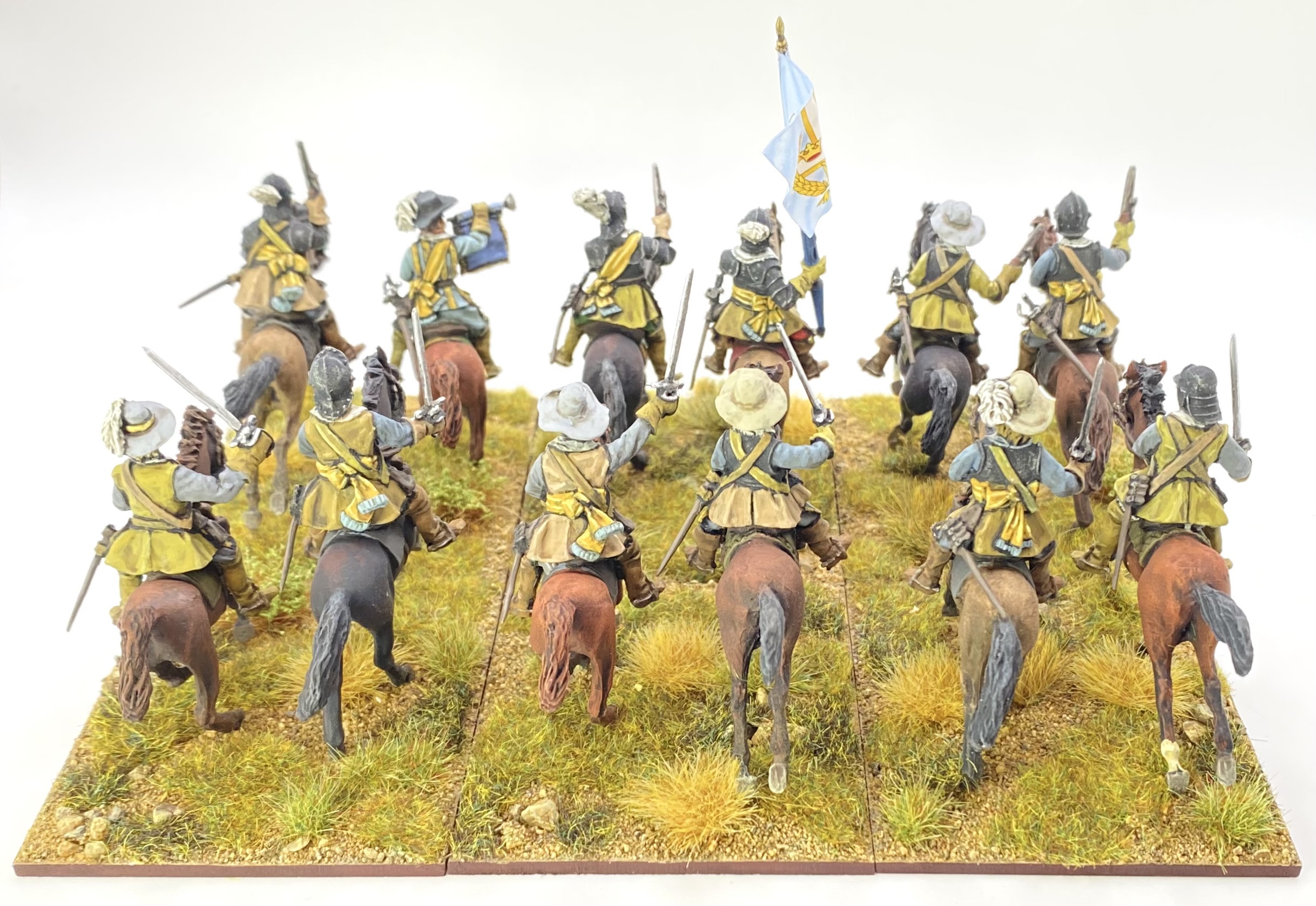
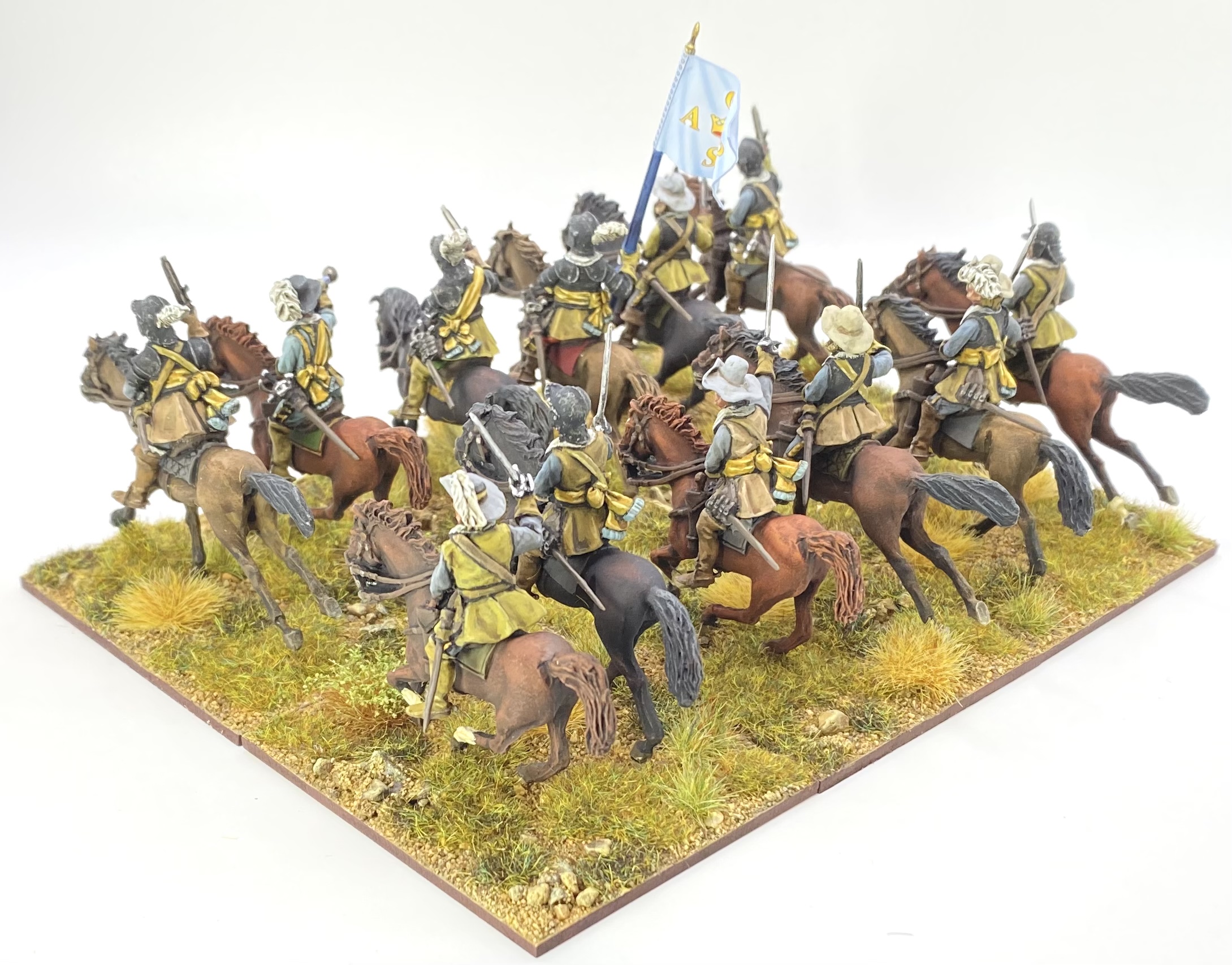
With the style of the figures being quite animated and, to me aggressive looking, I thought they would work really well as Gustav Adolph’s Swedish Cavalry. From the late 1620s the Swedish cavalry were adopting a doctrine of being more aggressive and saving firepower to use in close quarter fighting. Gustav Adolph issued orders that the first rank of cavalry should attack with pistols, that were to be fired just before impact, and the second and subsequent ranks were to attack with swords drawn.
With the variety of pistol and sword armed figures available, I decided to have a front rank with pistols and a rear rank with swords. Swedish cavalry were often short of armour and so I had the front rank all armoured, and the rear rank mostly unarmoured.
As part of reducing his horseman’s reliance on firepower, Gustav Adolph also took carbines away from his cavalry units. This would mean I didn’t get to use the nice separate carbines provided for the figures, and also means that the right hand cross belts on the figures are unnecessary. However I can live with this slight oddity that I suspect the majority of people will never notice!
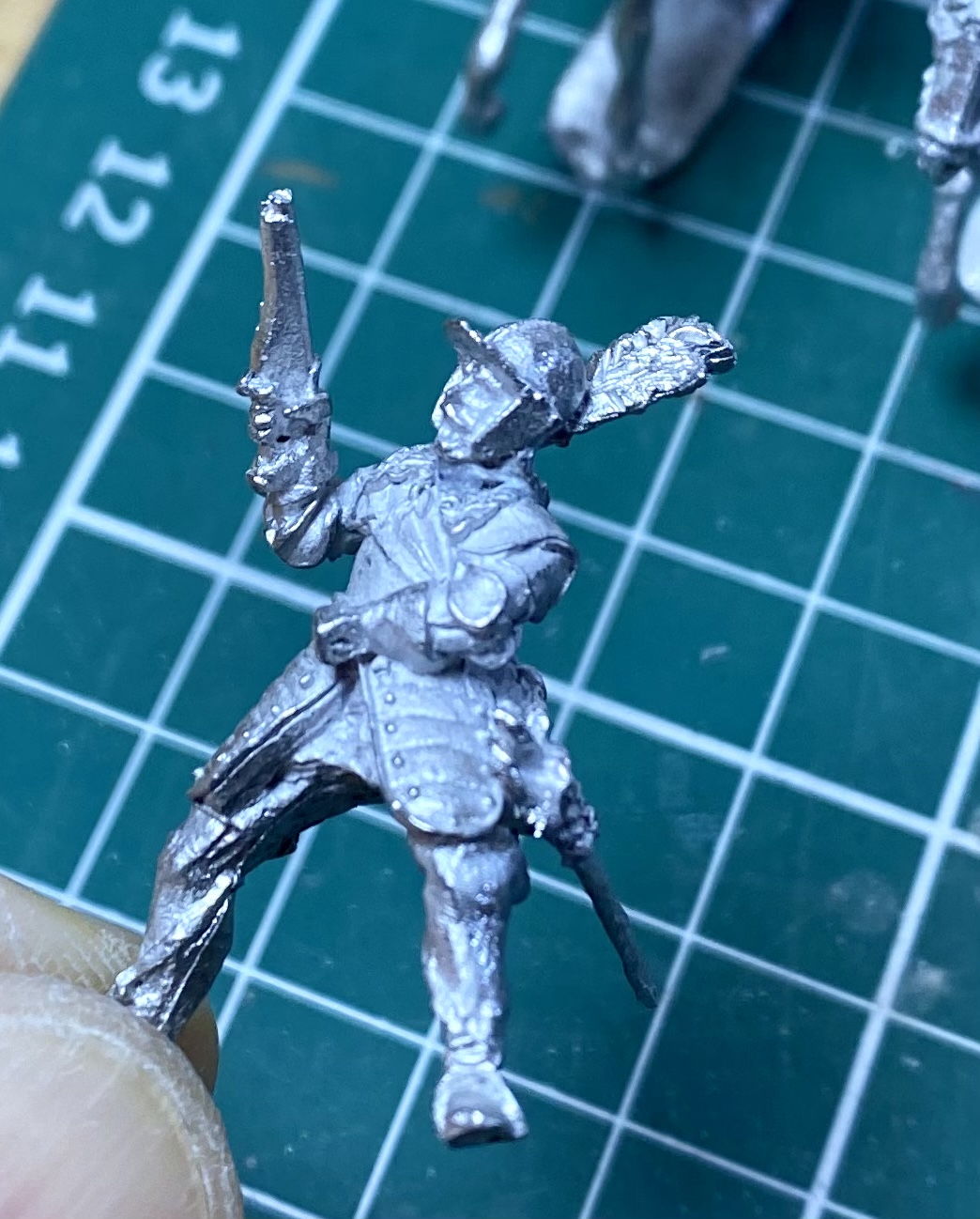


The cornet / standard bearer is provided with a white metal ‘fluted lance’ to carry a flag. I can never get on with white metal pole arms as I find them difficult to keep straight. I therefore replaced this with a Warlord plastic fluted lance. (There is one on every Warlord cavalry plastic sprue and so I have lots of spares!)
I painted the horsemen mostly in sleeveless buff coats and gave them varieties of grey for coats and breeches. Sashes / scarves were painted yellow. There doesn’t seem to be a clear sash colour for the Swedes at this time and so the choice was as much aesthetic as historical. Armour was painted black, and broad brimmed hats were mainly lighter greys that seem to have been favoured by the Swedes.
The unit was finished with a cornet / flag from Mikhail Betski at MB Creation, a supplier I’ve only recently come across, who provides some really nice flags for this period. I used the colour of the flag to influence the colours for the trumpeter’s clothing as unit’s musicians were often expensively dressed by the unit’s officer as part of the military fashion of the time.
In conclusion, I think the new 1898 TYW cavalry figures are a great addition to their range, and a great resource for all those collecting 28mm armies in this period. All of the 1898 figures have a particular style, but will still work well with other manufacturers. I’m really pleased with the unit I’ve built with them and I will be adding a few more in due course.