














It takes a village to….


Recommendations: 445
About the Project
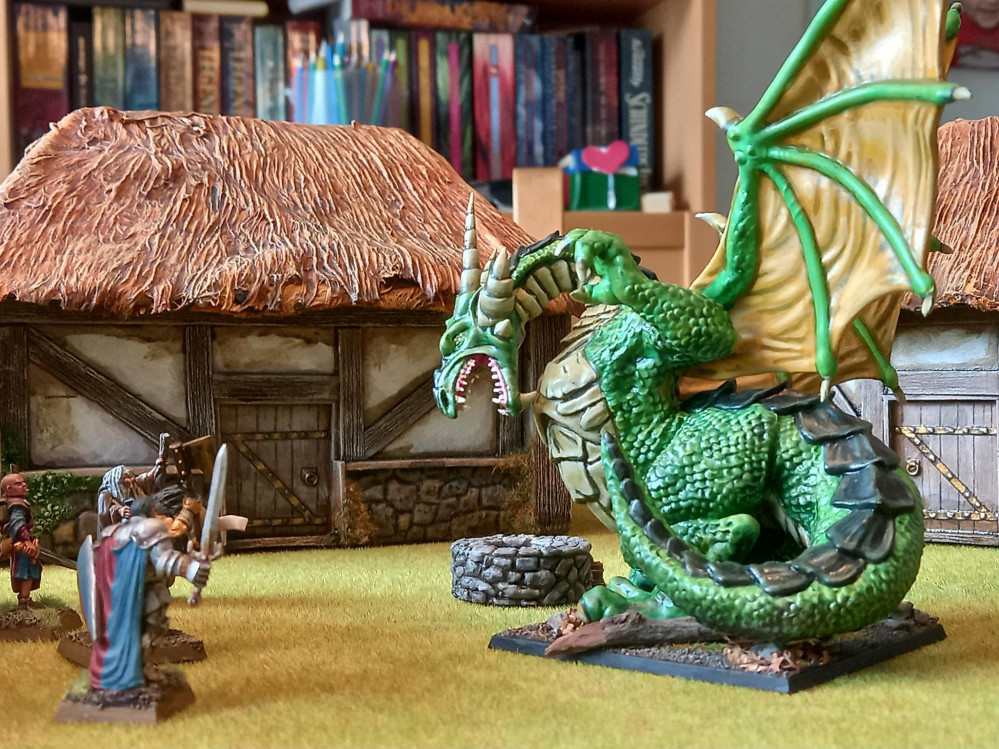
...raise a village. No, that doesn't sound right. The goal is to make a set of fantasy village houses. Later more buildings will be added as no project is ever finished but for now: simple houses. The rules: -It's fantasy and I want them to look nice. They might end up a bit on the fancy side for a peasants abode, but that's okay. - Playable, inside and out, Preferably multiple exits and not to big so models can run around. - Detailed. I want these to kinda like they're lived in, so the will be furnished and some more detail, but they're not doll-houses.
Related Game: Lasting Tales
Related Company: Blacklist Games
Related Genre: Fantasy
This Project is Active
Raising the walls
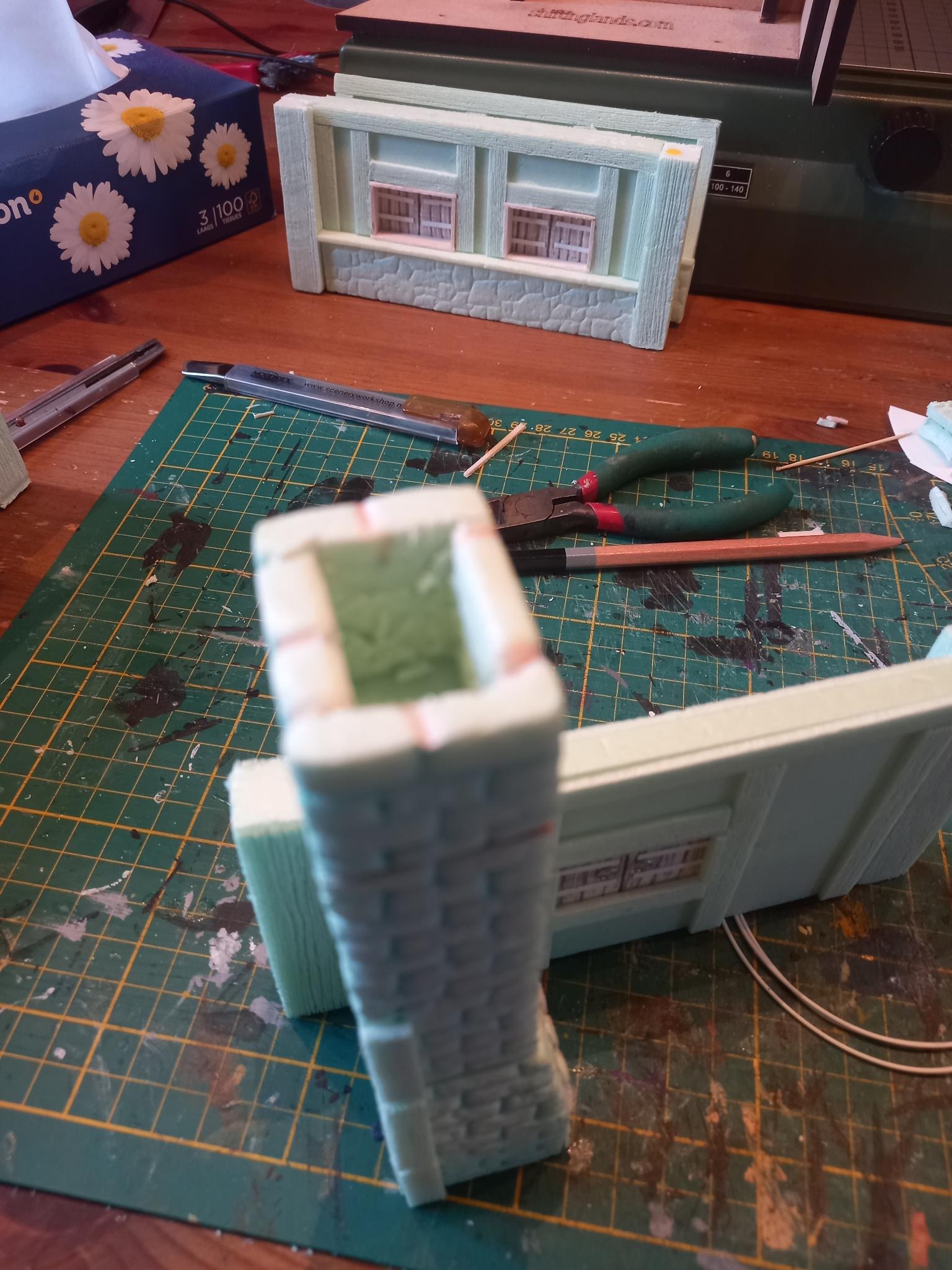
I used the proccon to cut a piece of every chimney, trying and failing to get only in the grooves between layers of stone. I’ll be needing to tidy thay up.
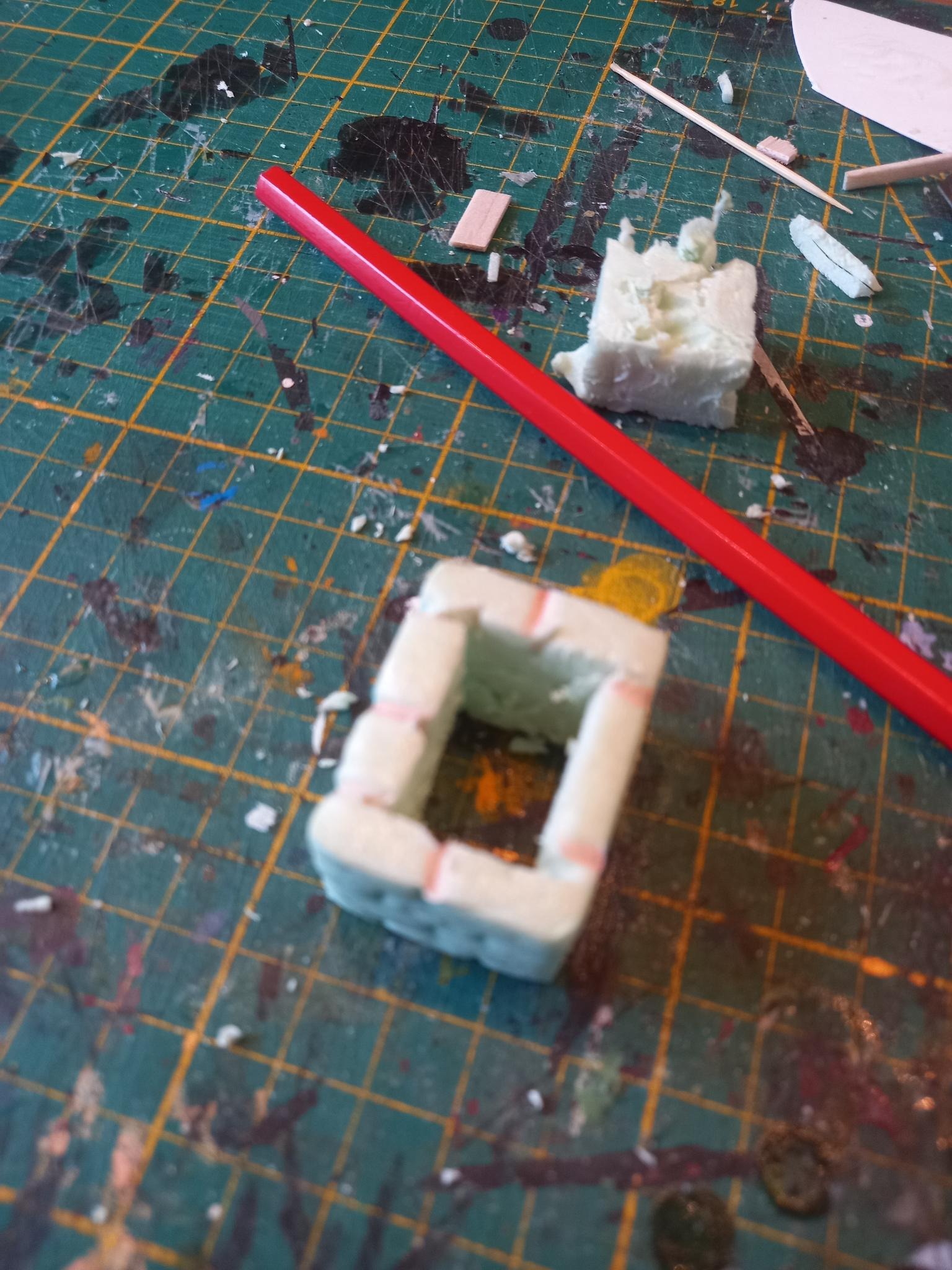
Using a sharp blade I cut a square into each piece. It doesn’t need to go all the way down, just create the ilussion. It’s going to be painted pitch black on the inside anyway. After finishing the stonework on top, I glued the pieces back on.
I made sure that a nice seam remained, so it appears the cut is just where 2 layers of stone meet.
Using a piece of rod and some superglue I then created the hinges.
Kinda tedious, but really the detail I want on these pieces. Simpley a matter of using a cocktail stick to guide them into place.
Now a fun part and something I’ve been looking forward to. Sticking them all together.
Give each piece a look over to see if you don’t have anything you can’t work on if stuck together.
I discovered I really needed to cut about 1-2 mm of the supporting woodwork, to make room for the floor. There are 2 ways to do this. You can either stick the building on a piece of flooring, this raising the profile of the model, or “insert” the floor into the building. I want to do the latter, since the former will require me to create a foundation for the model to stand on. This would be better suited for a more expensive house. The alternative is sticking some greenery around it, but this would limit the model to a particular surrounding. I want this to be a lively village, during a grand festival, an abandond village haunted by ghost in winter and anything in between.
Using some pins I keep the pieces together while they dry, making sure to stick them where the holes don’t leave to obvious a scar. I’m planning to remove them in a few hours. If you leave them to dry fully, you run the risk of PVA sticking to the pin, ripping a piece of foam out when you remove them .
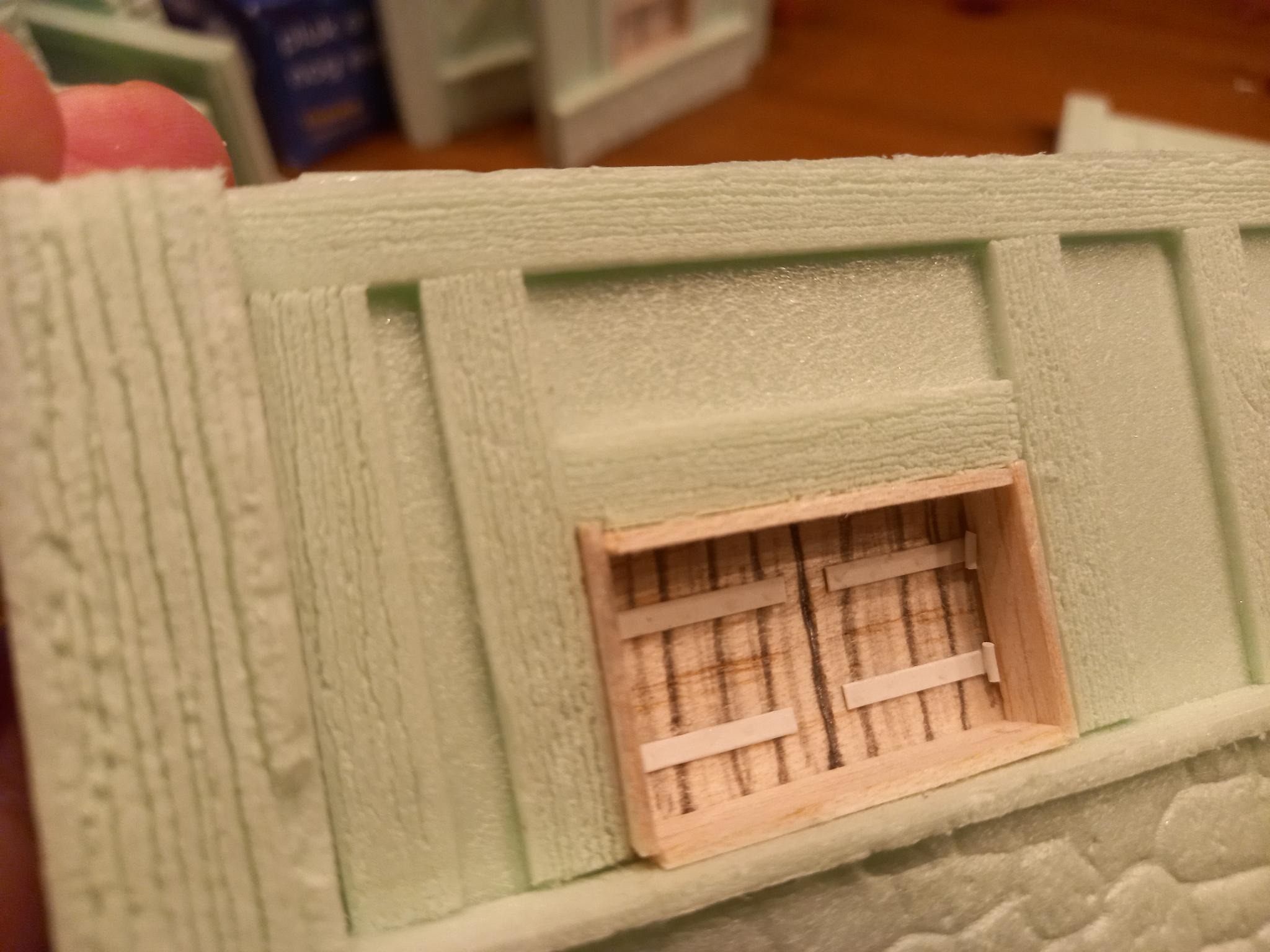
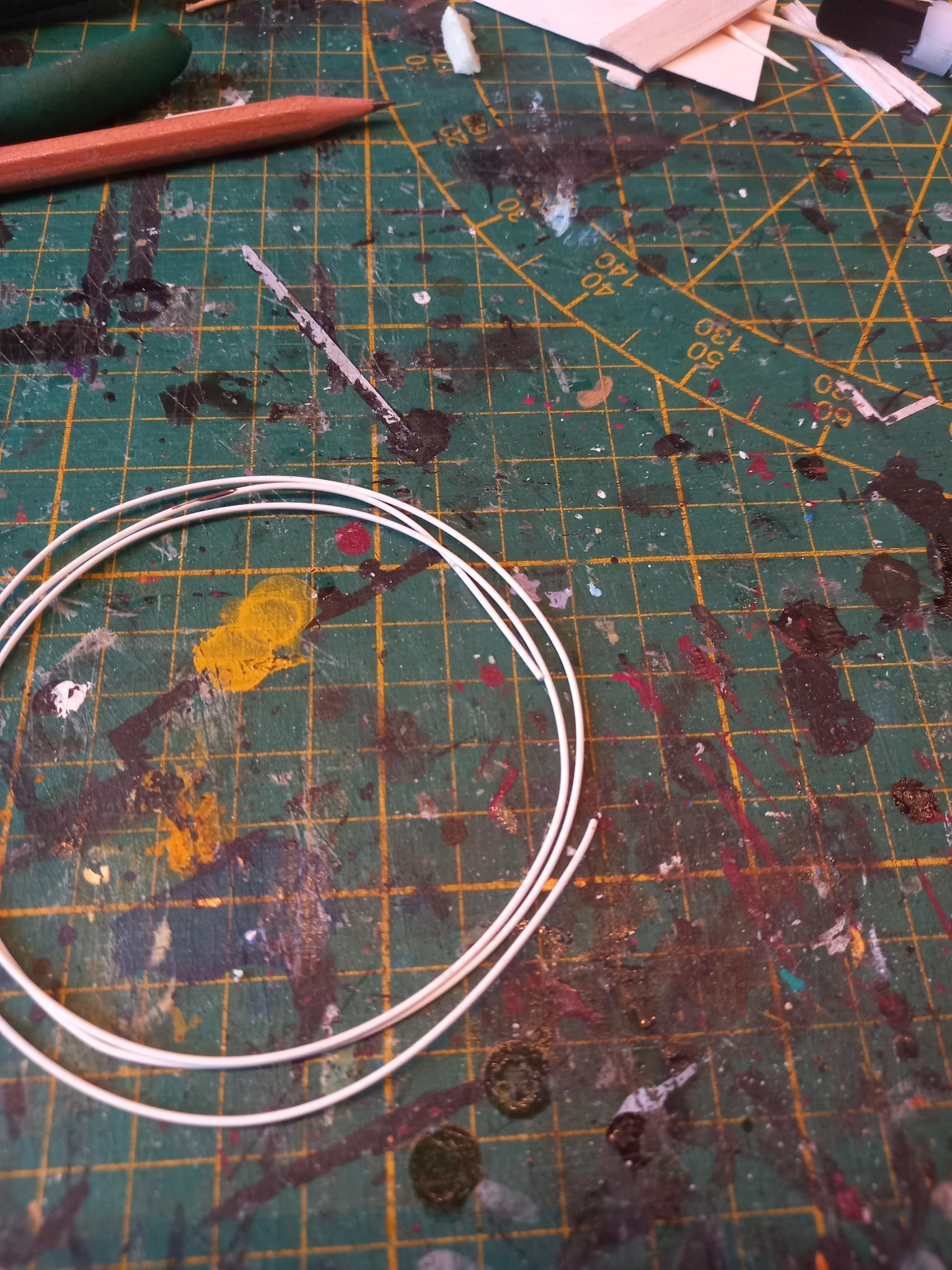
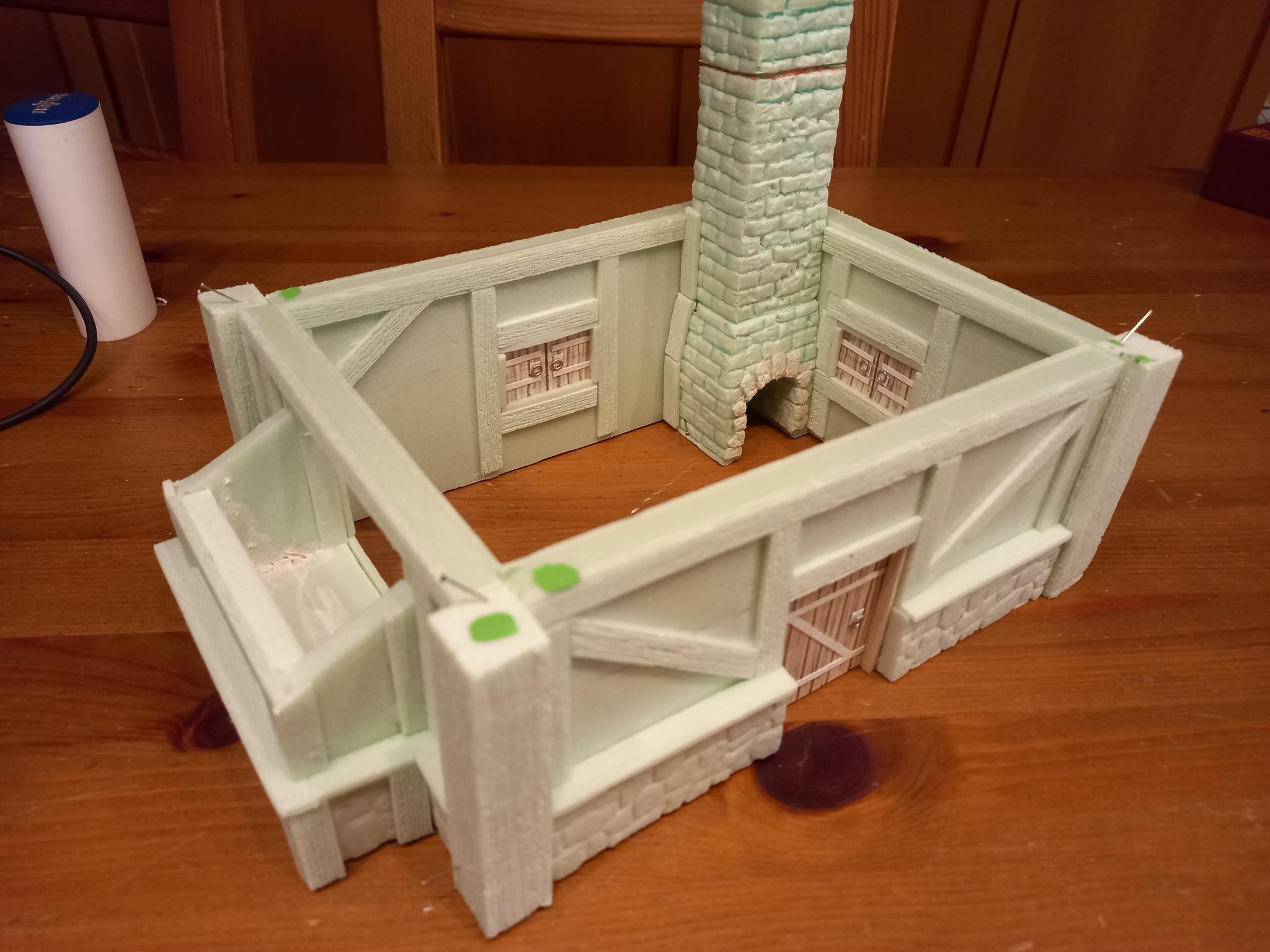

Doors and windows
Now, to close up the doors and window-shutters
I made window frames, which I could stick them against. This will create the illusion of slightly small windows, as a small part will be covered by the frame and window-sill, allow very precise placement and prevent any creaks between the house and the shutters/doors.
The shutters and doors themselves where made from balsa, for several reasons. These will be the thinnest, thus moste fragile, parts of the build and balsa is slightly more durable.
More importantly: I’m going to work with superglue a bt here and that reacts with the XPS foam, melting it. Probably not eating up the build, but it’ll destor detail.
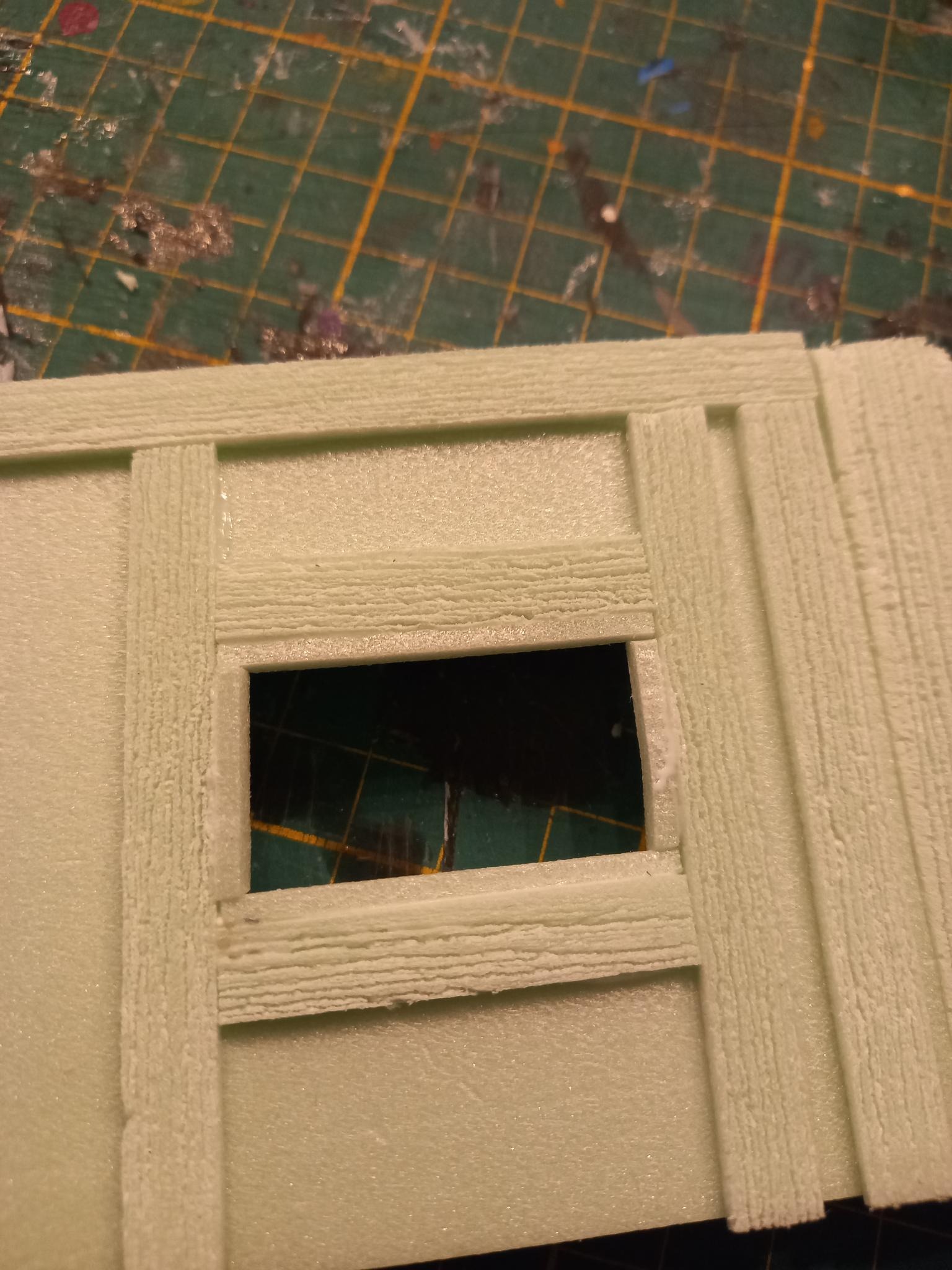

After cutting the required pieces, I started on the detailing.
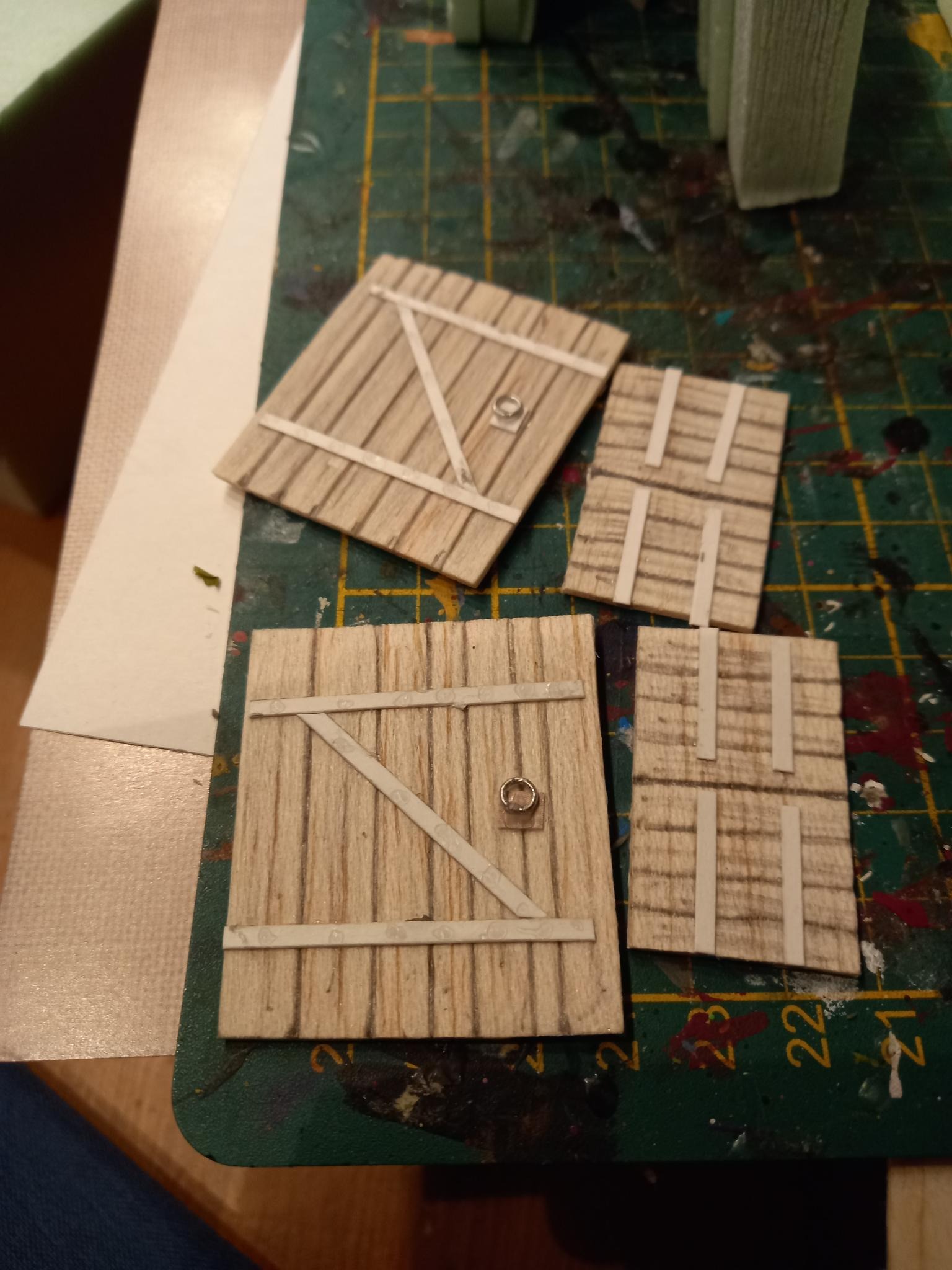
Using a pencil I drew some wooden boards. Using quick movemenst with the point I then made some more shallow markings to represent the wood grain.
Learning point: make sure to work with the natural grain of the balsa, as I didn’t do this with the windows. It’s not a huge problem, but it’s easier to work with.
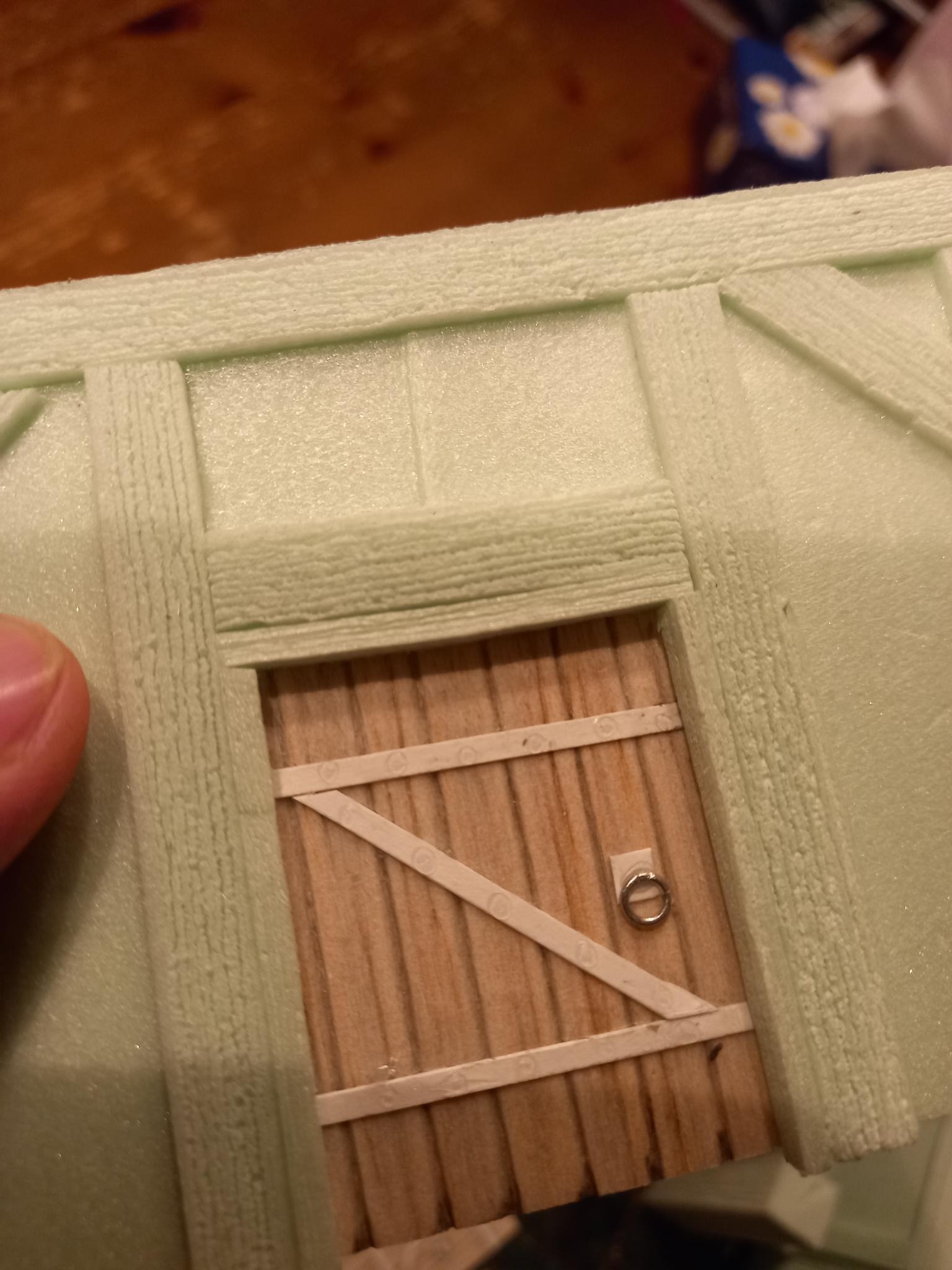
Using PVA and ceral-card (equivalent) I stuck small strips to simulate some iron workings to keep the door together and look like hinges (a detail will be added at a later time).
I then dotted some superglue on the “board” so it appears like there some nails (not overly visible on the pictures, but I’m hoping it’ll show up better when I start painting).
A small piece of card and a little metal loop (a donation from my wife’s hobby-box. These are used to make necklaces with beads. I mooched a little more from her collection, but this’ll show up later).
I then started putting the pieces into place. Next steps are creating the frame on the other side and closing a few gaps.
home is where the hearth is
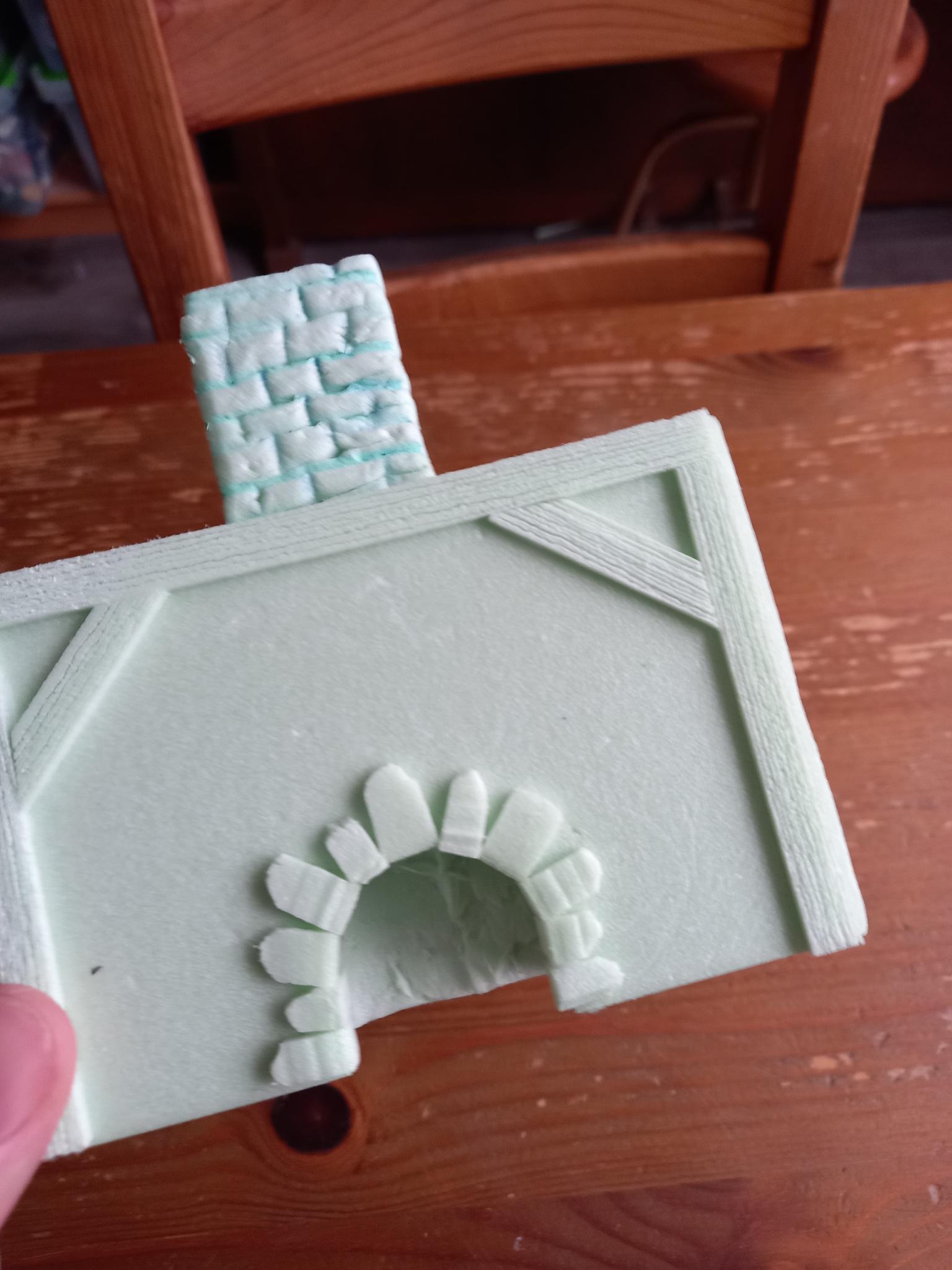
To finish the hearths I made some cap-stones, but they needed to go around the corner. I cut slightly in an off-cut and turned off the proxxon, turned the piece 90 degrees and cut again. The resulting corner is cut into pieces and rounded a bit with some scissors. I then stuck them into place and let the glue dry.
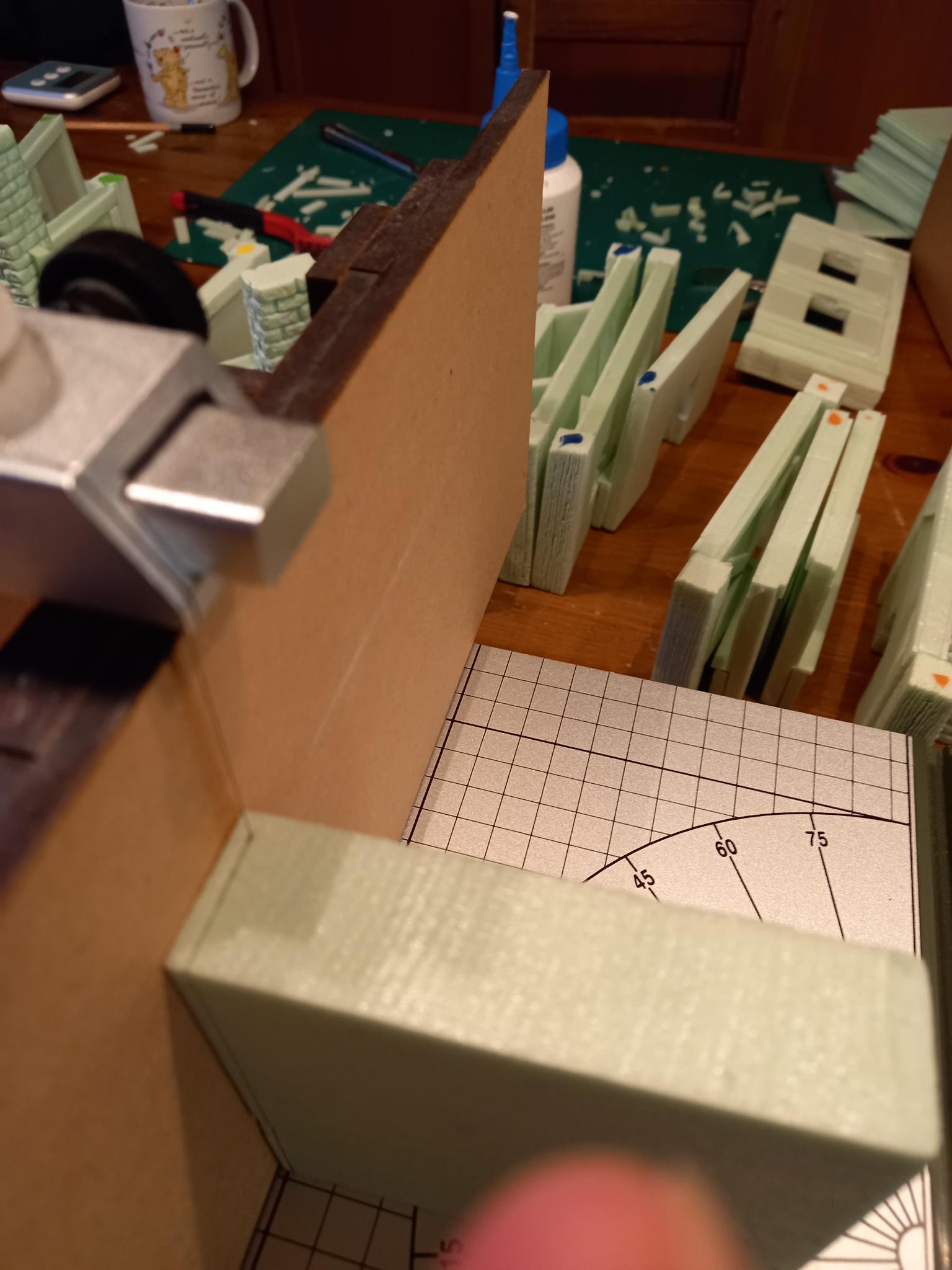
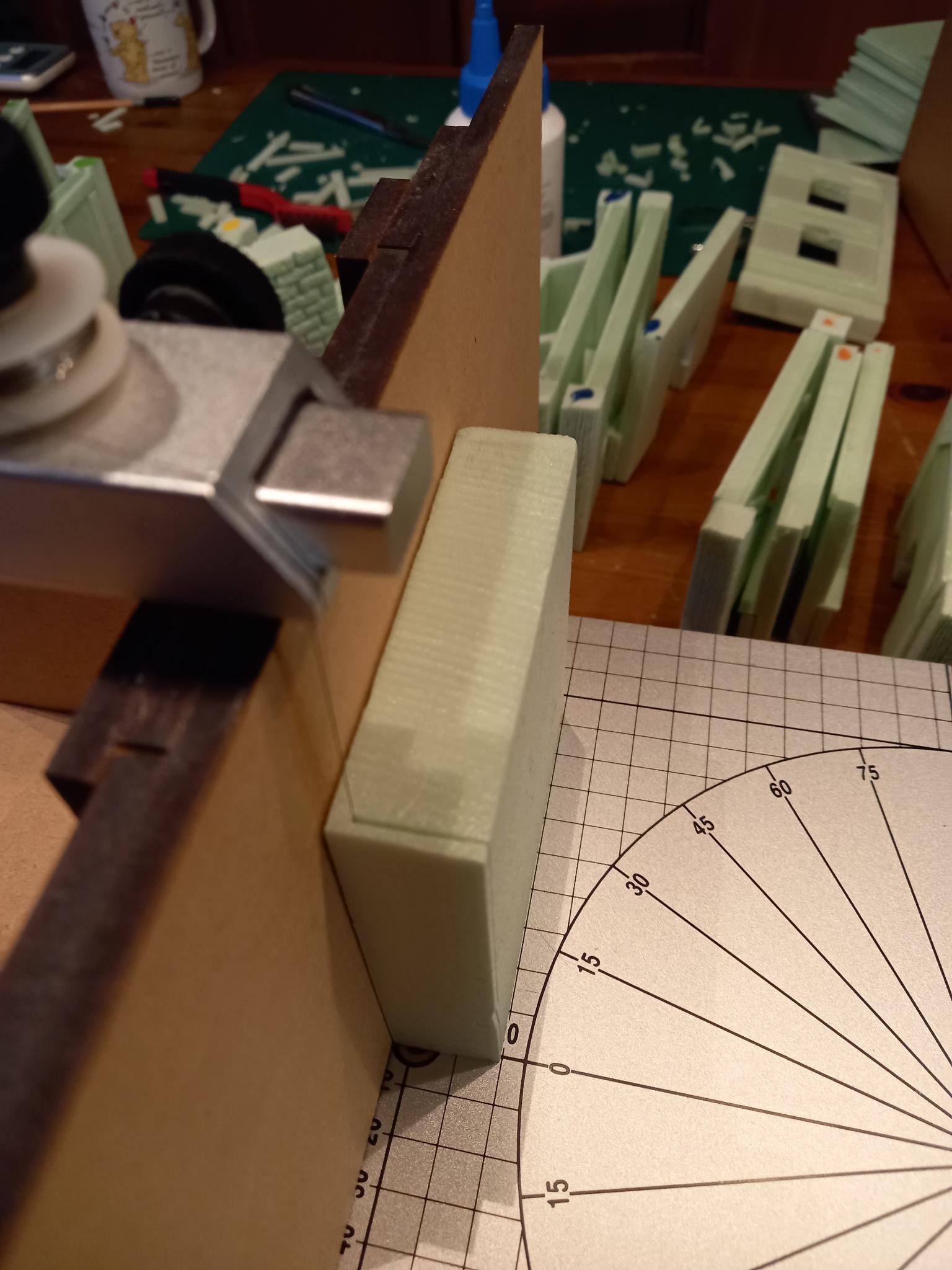
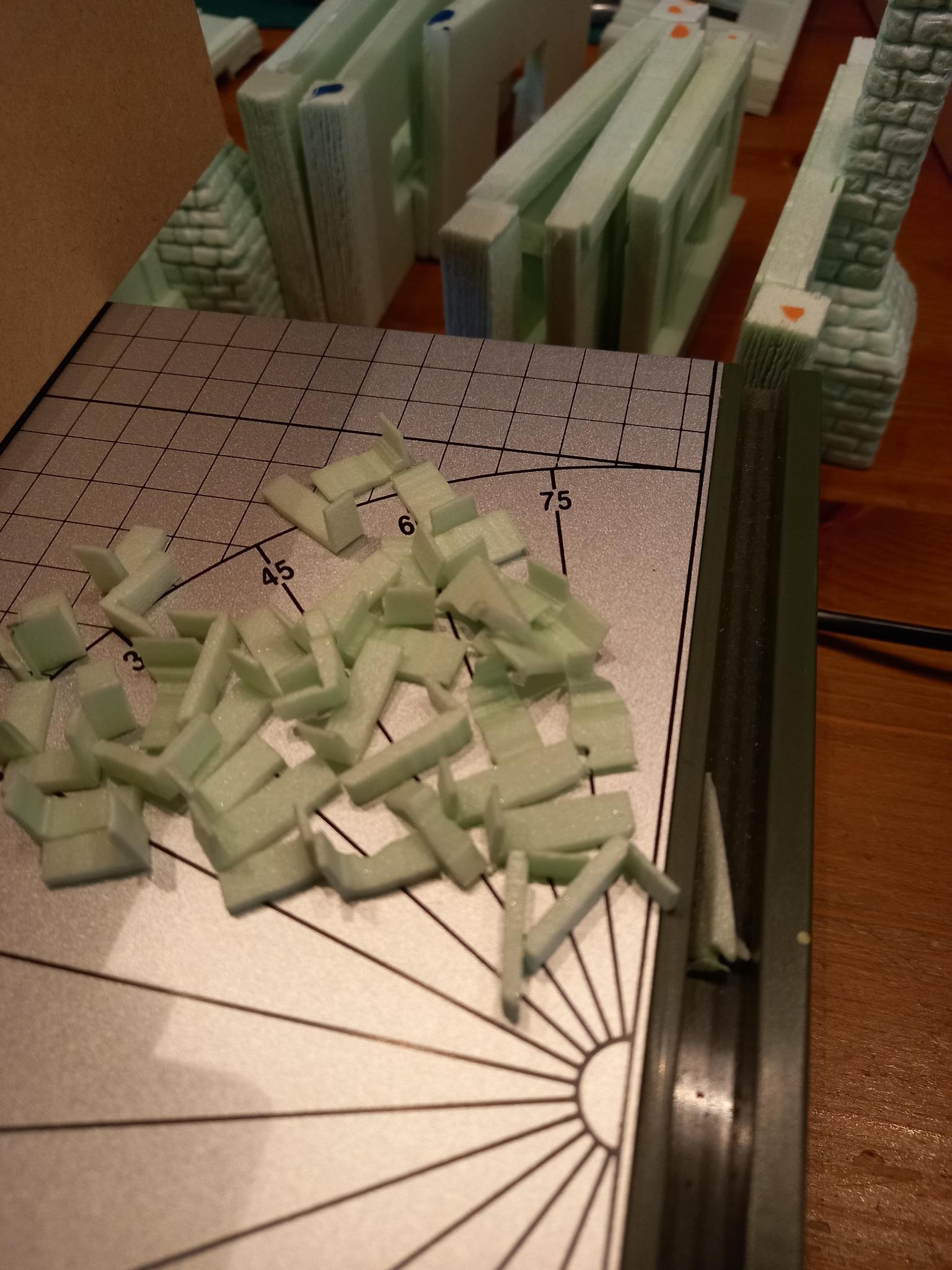
With the pieces glued solid into place I uses a pencil to round out the stones a bit.
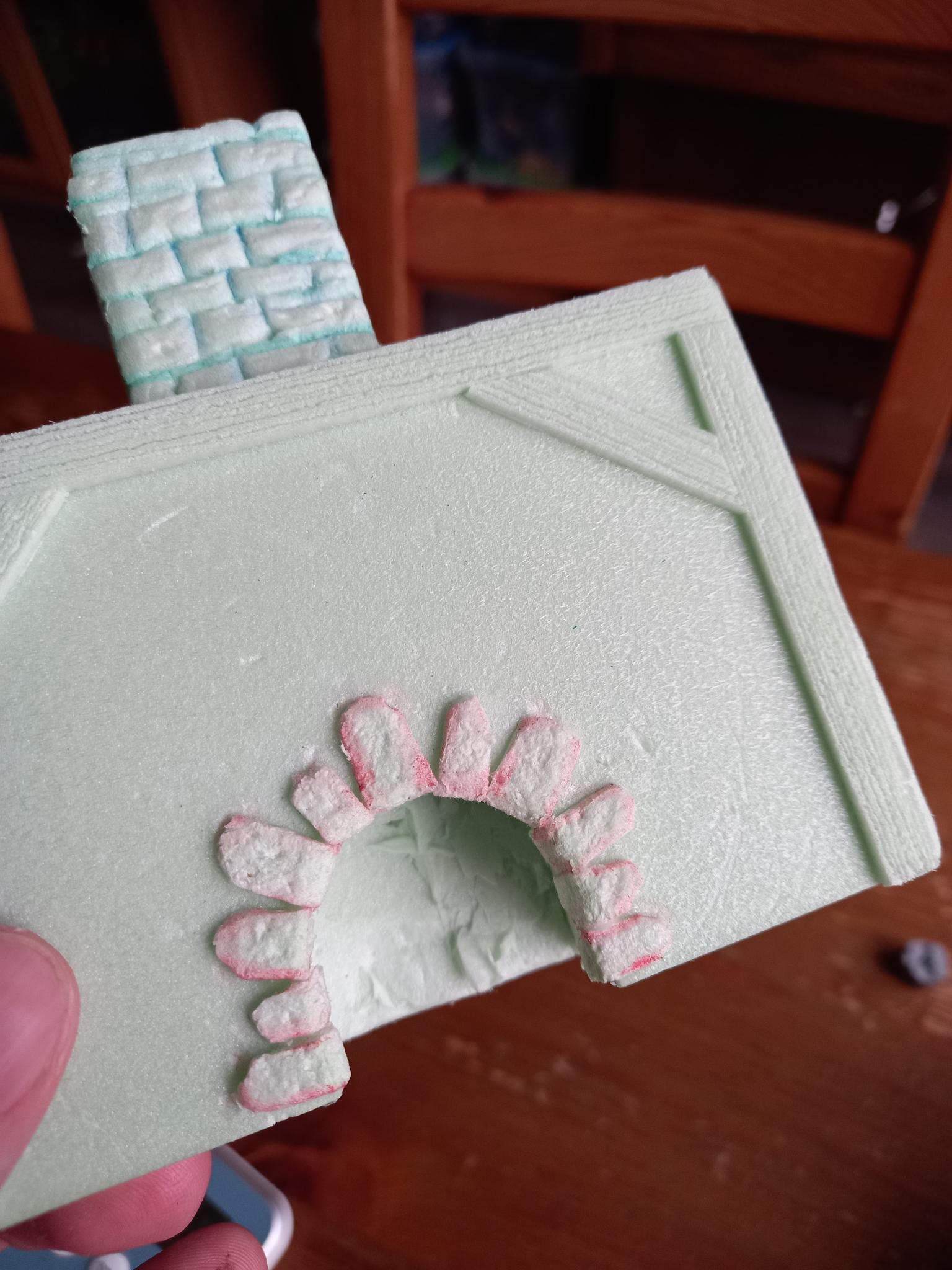
Now the had a bit more solidity to them I roughed the up a bit.
Since this needed some precision, as I want the wall to be relatively smooth, I used one of my special tools. I’d like to claim this is my own invention, but I somehow feel I saw this on youtube at some point?
It’s an old paintbrush. I added a dollup of Greenstuff on both end. One was made into a small ball and the other into a tapered end. I then drenched this into superglue and some coarse sand. I can smudge, poke and roll this with some good precision anywhere I want to create some texture.

Building on the walls
Starting after coffee on a lazy sunday afternoon, I decided to work on the chimney’s.
I cut several blocks to fit in the pieces of wall where I didn’t put any stone work.
One of the chimney’s will be internal.
I put my hotwire at a slant and cut the left and right side of the block. Then, using these as a guide, I knew where I should put my guide on the proxon to make the slanted sides join up. This is one of the first times I used the proxxon for something more than straith lines and I haven’t touched the surface yet.
I also cut some rectangles to fit on top op these. I made them to long on purpose. I want to took how high a roof looks good on these buildings.
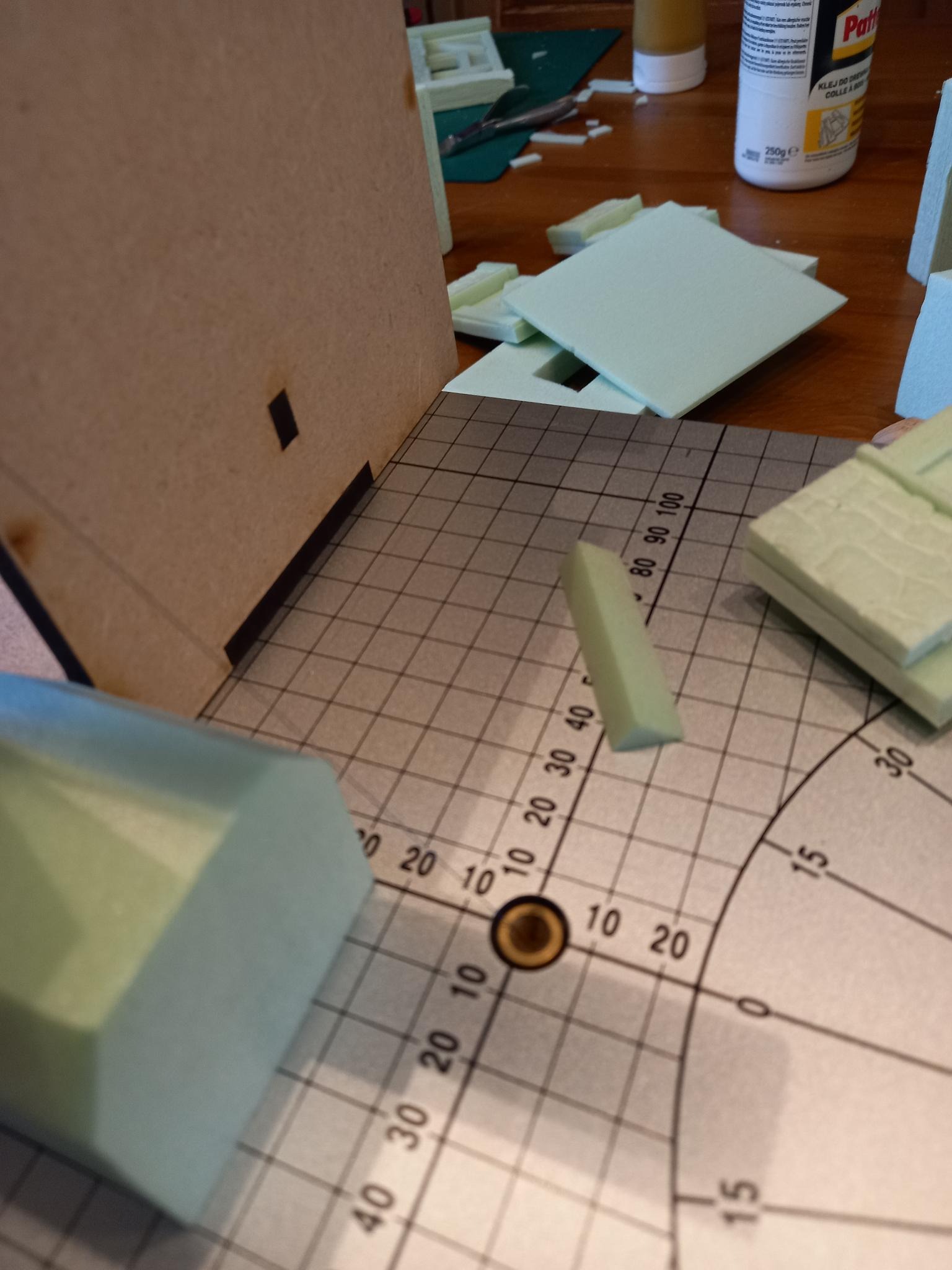
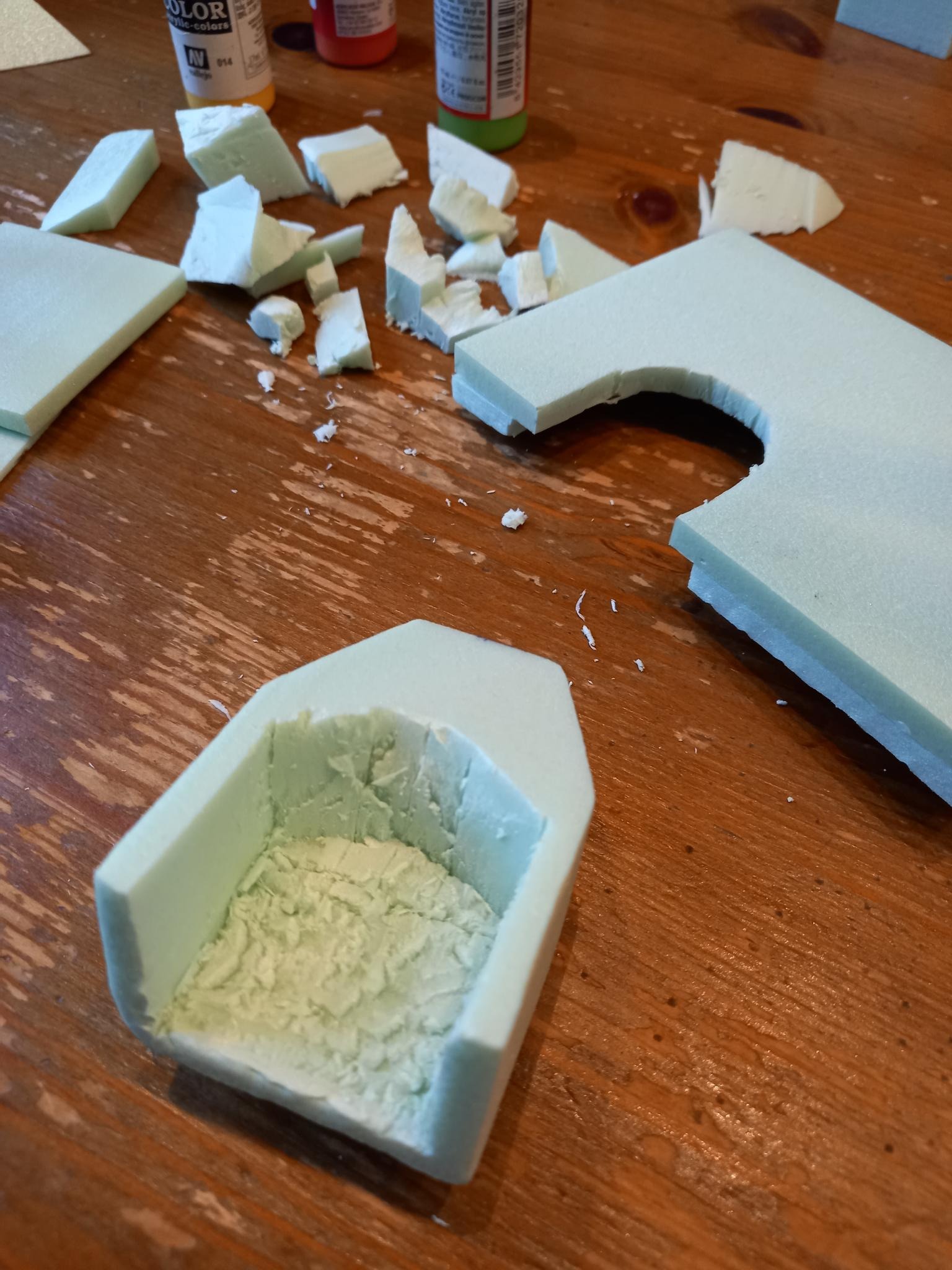
I hollowed the chimney out with a knife. Not the smoothest job, but I figured this might be just as well. I might decide later to use some filler to smooth it out. It needs to look rough.
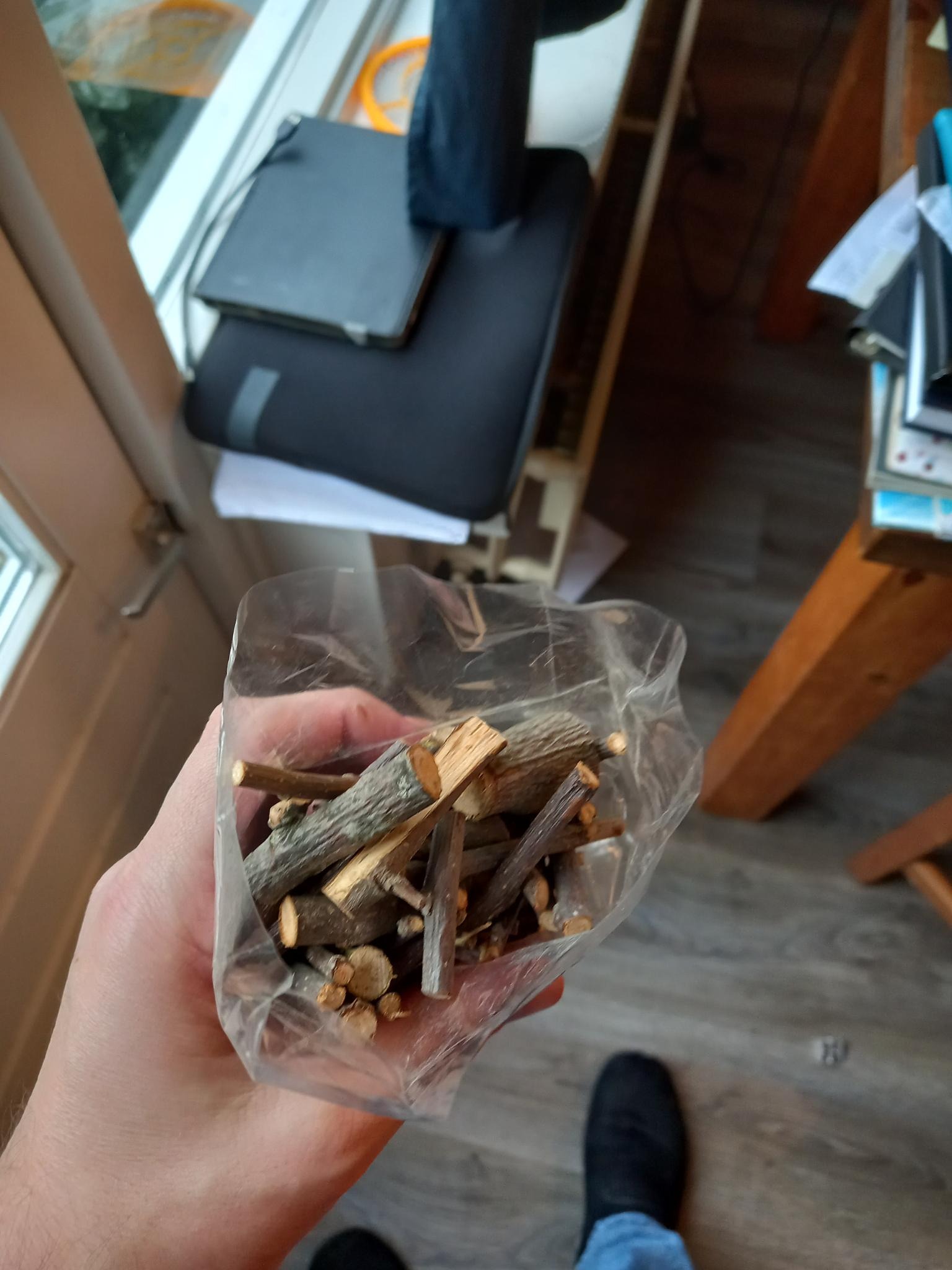
I also started on the firewood. I had these small pieces lying about. They’re actually for our guinea pigs to nibble on, but the arrogant little buggers thinks this is beneath them, I guess.
Normally I wood put this in the oven to dry and kill germs, but since it’s for pets, I assume it’s pretty clean and dry. I did soak it in a solution of water, alcohol and pva. Just to kill of the last stuuf that might eat the wood and seal it. This will get a couple of days to dry.
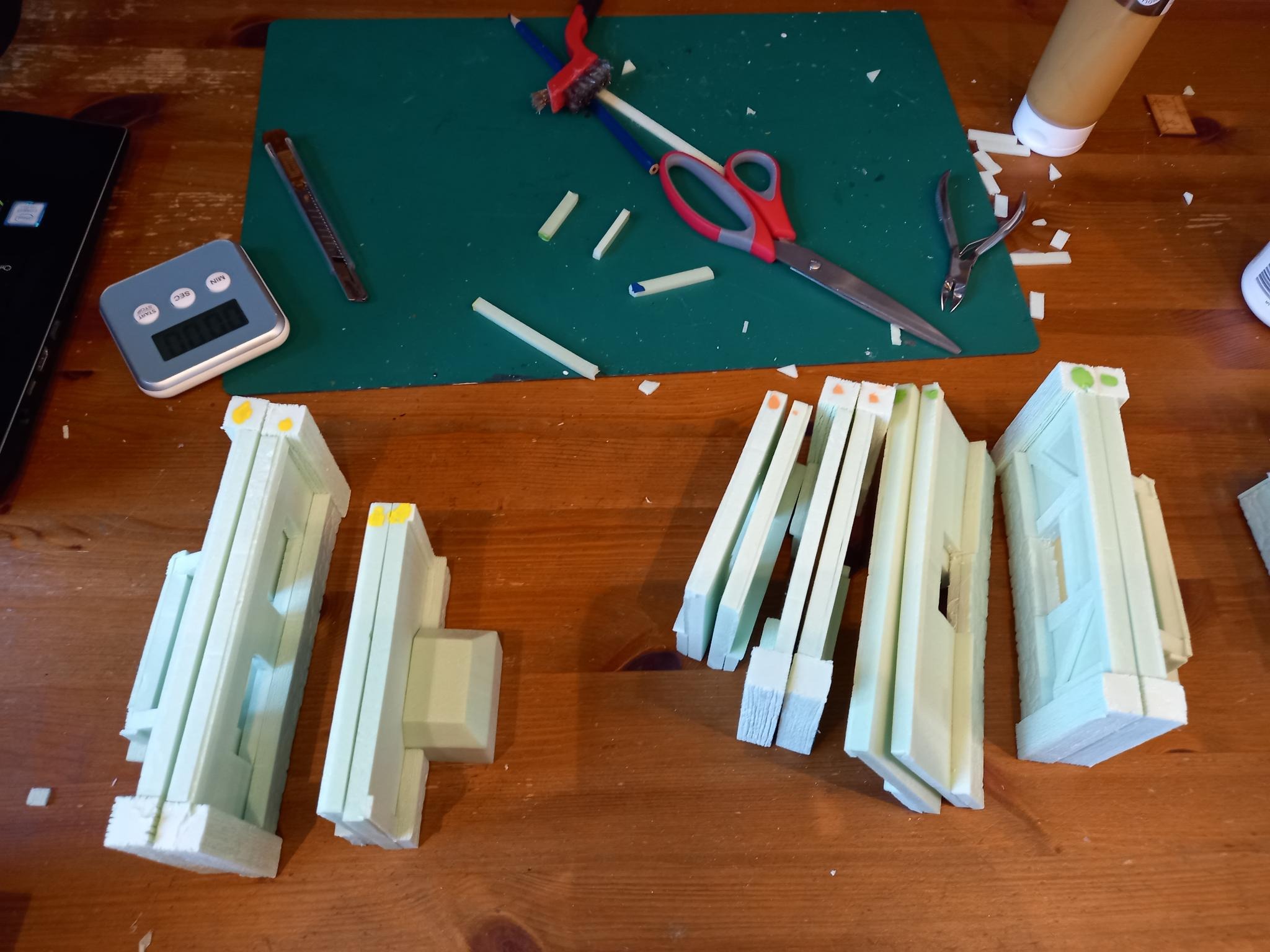
I managed to confuse which wall went where, resulting in huts that will be slightly different sizes, as I started cutting windows, chimney-holes and windows and this needed to add up. To prevent further confusion I decided to colour-code them.
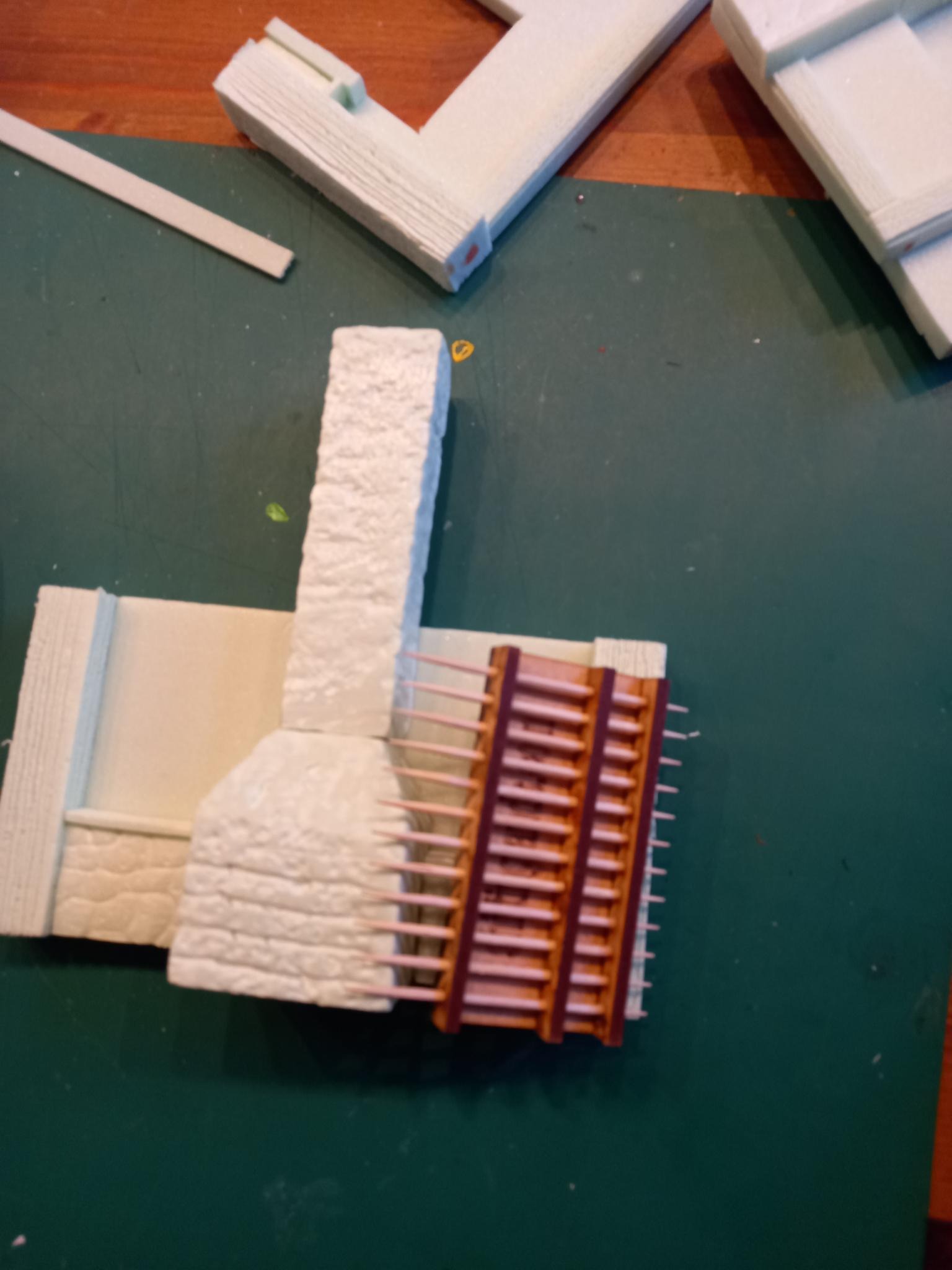
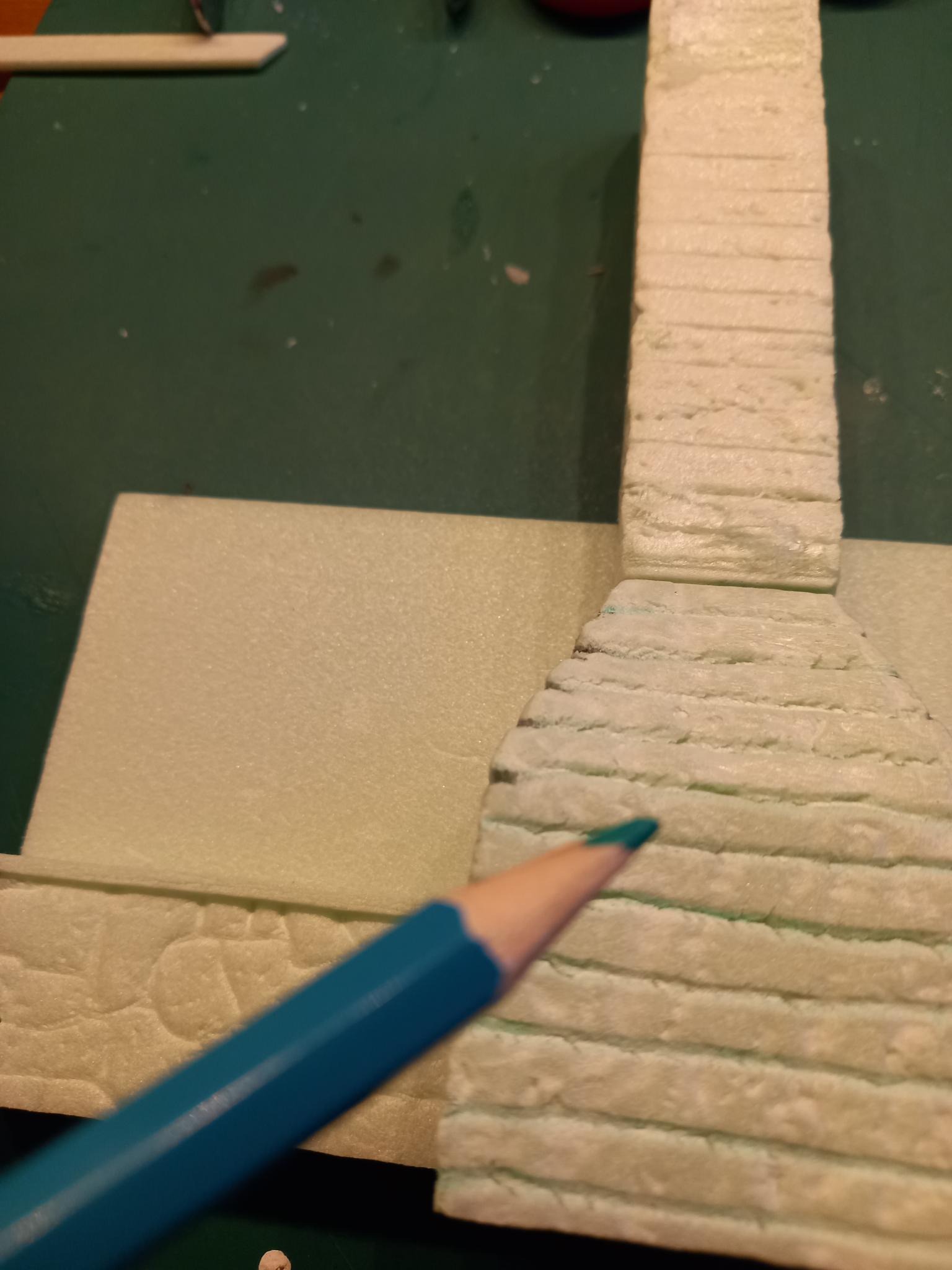
Using a small tool from shifting lands I marked the brickwork.
Than the tedious job of drawing them in. I had already roughed up the sides with my rolling pin. Using a dull colour pencil I draw in the brick work. Since I want these grooves big and rough I use this type of pencil. A hard and sharp pencil tends to rip the material if you go in to deep. That’s best to draw liitle details you want to cut.
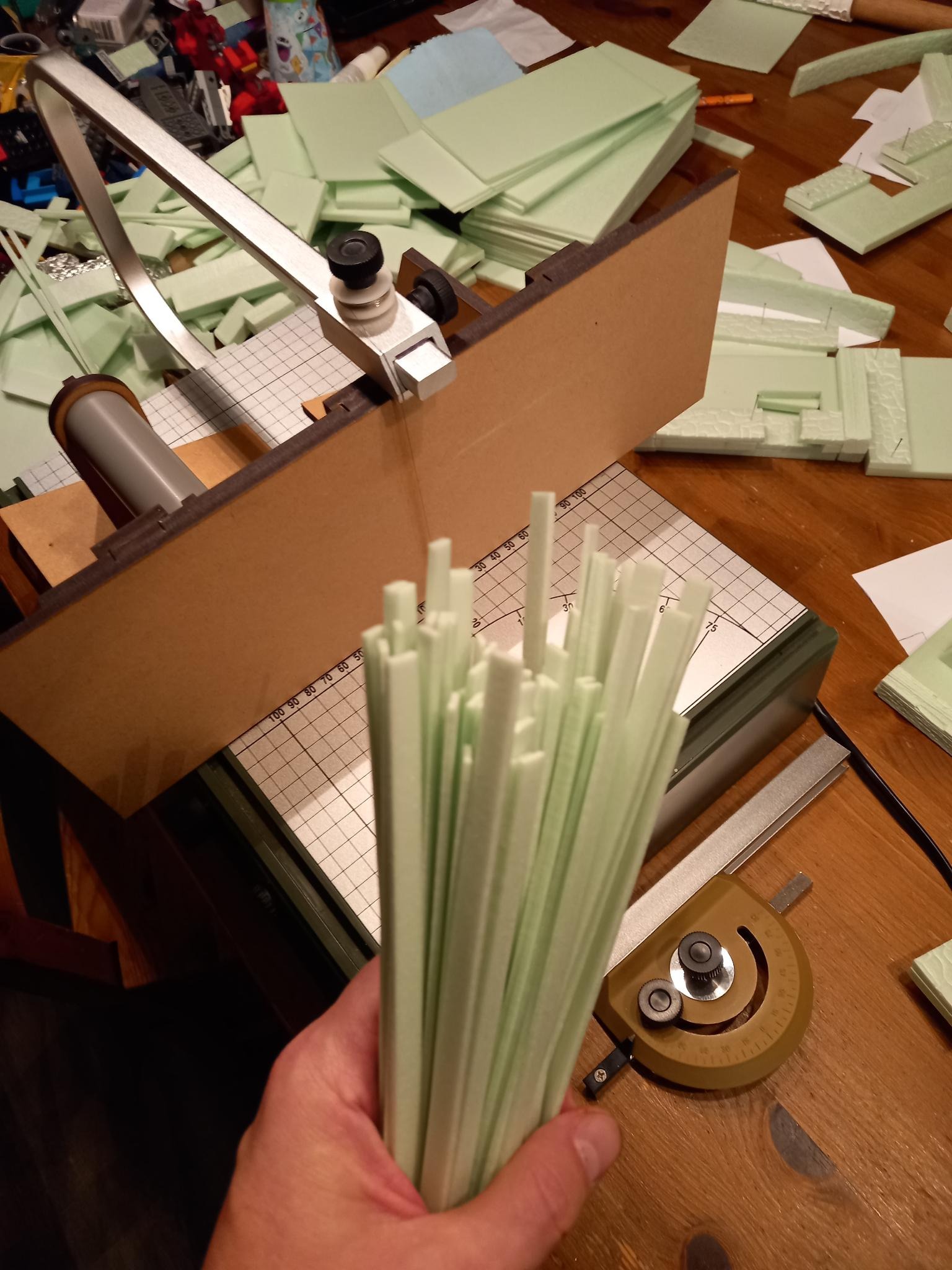
Oh, yeah. Remember I said I cut so many small strips?
I needed way more of those.
Laying down the groundwork
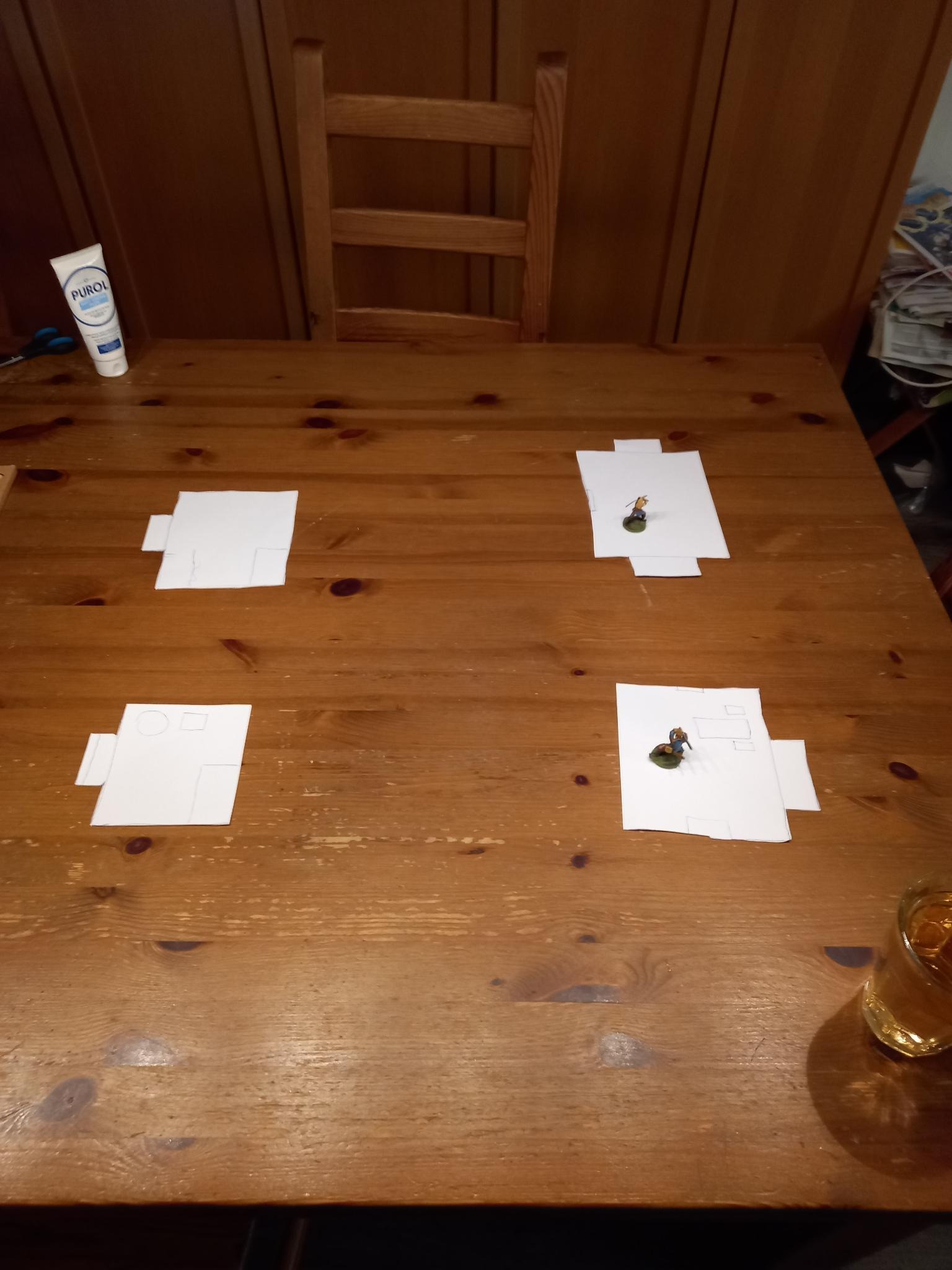
I’m planning this mostly for Lasting Tales, but it will certainly be used for more fanatsy games, like rangers of shadowdeep. Lasting tales will be played on a 3by3 board, so I set up that space on my dining table and created some mock-ups.
They needed to be big enough to look like the beginings of a village, be able to contain some small furniture and models and look consistant but not the same. It’s the same people that build and maintain them, but they don’t exacty have blue-prints.
After making the cutouts I got some spare XPS-foam and my Proxxon. I made the bulk of the walls and woodwork from some leftovers. This is about 1-2 euro’s worth of materials. XPS can be very cost-effective once you made the investment in a good hotwire cutter and some accesoires.
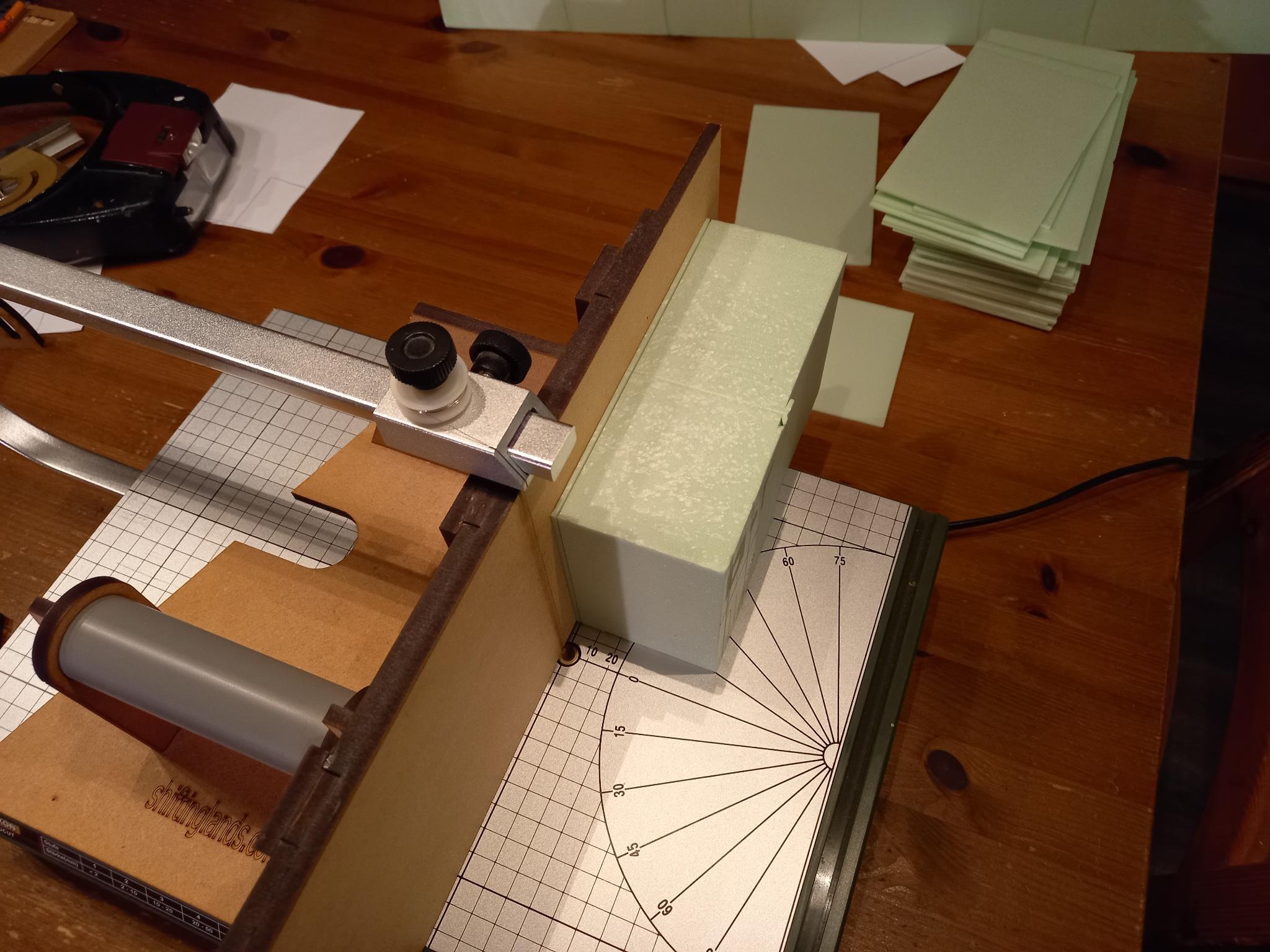

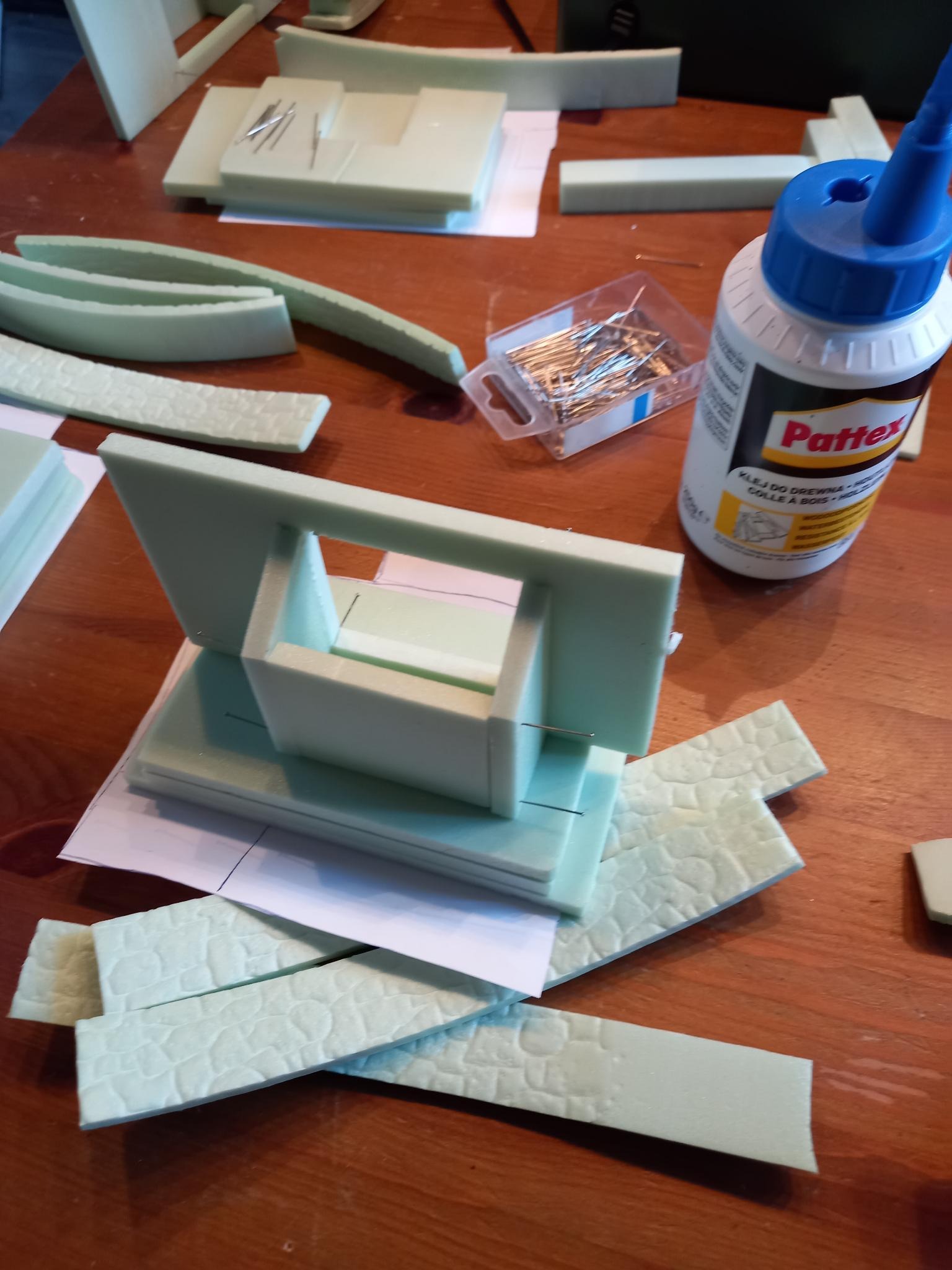
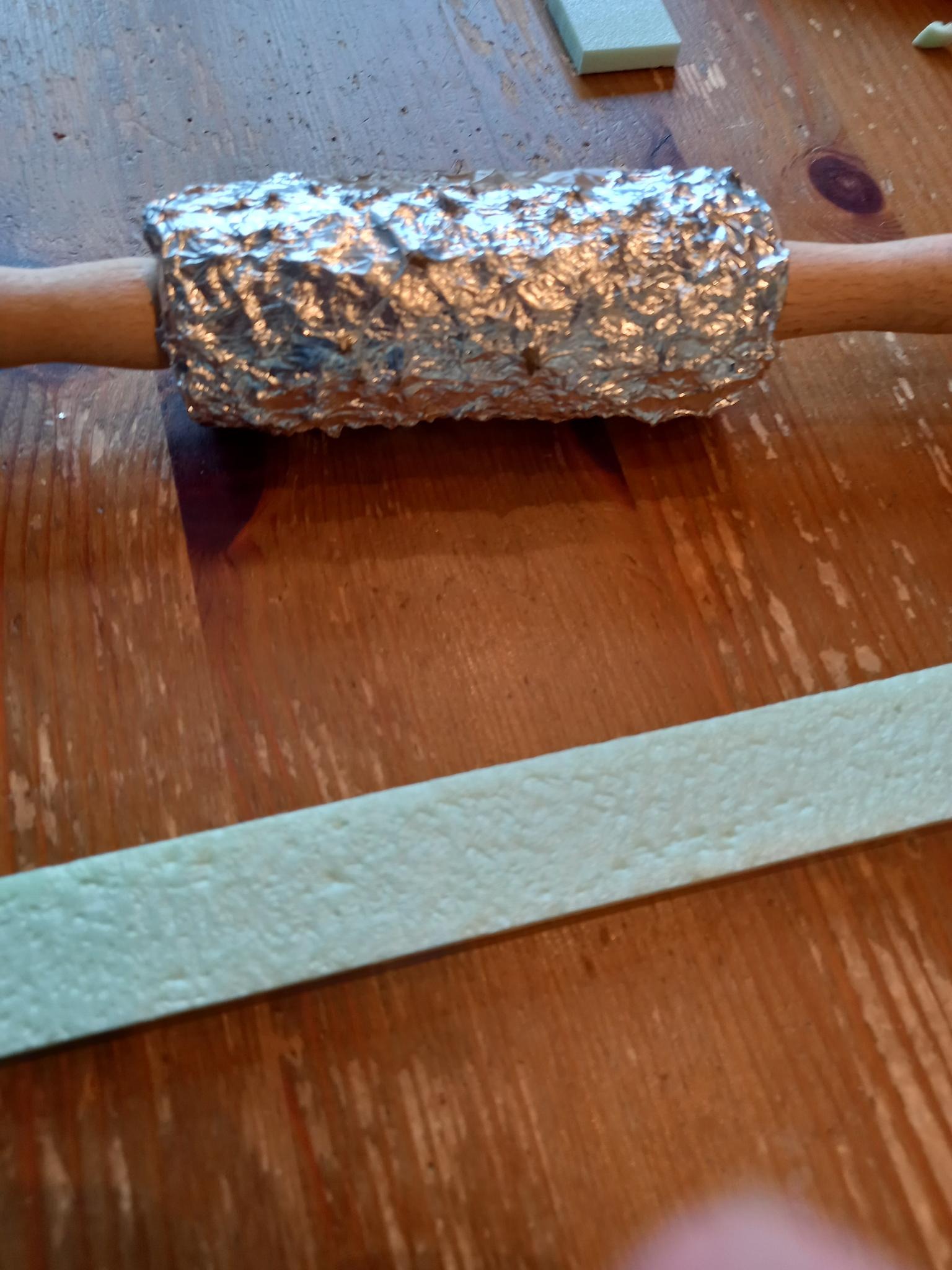
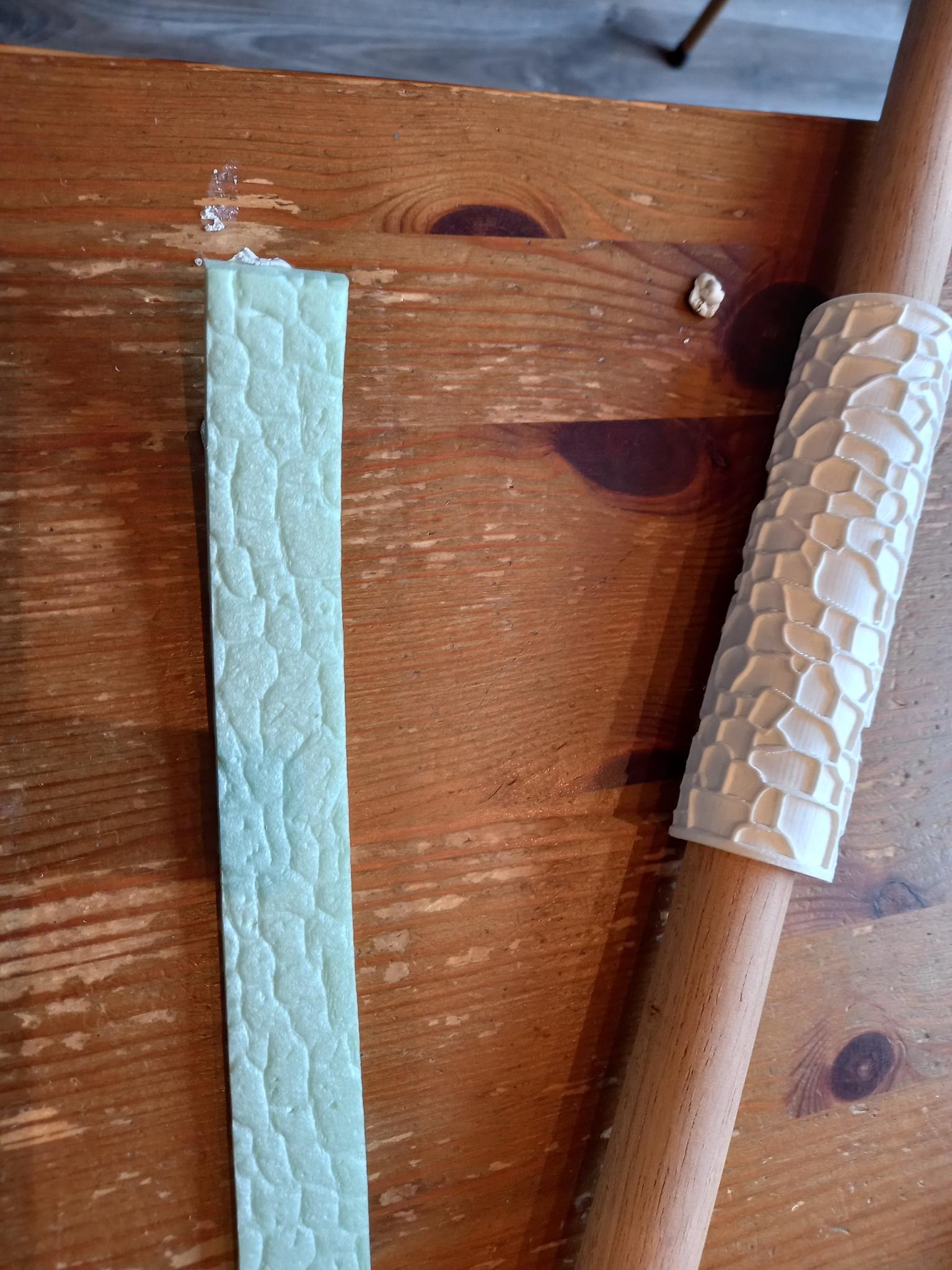
Then some stonework.. I made more strips then I needed and got my texture roller. Before I use the one I bought from shifting land I like to add some rough texture to the foam. If you do this afterwards, you’ll push away the lovely stone-pattern you want. Lazyness is the mother of invention. I often see people dabb the material with some tinfoil, but I made my own tool. I got a small wooden rolling pin and smother it in cheap super glue. Then I rolled it throuhh some small gravel and sand. This is to course for stuff like this (better suited for natural rock formations), but I make it a bit less coarse by rolling some tinfoil over this for a job like this. Rolling this over the material is far more relaxing.
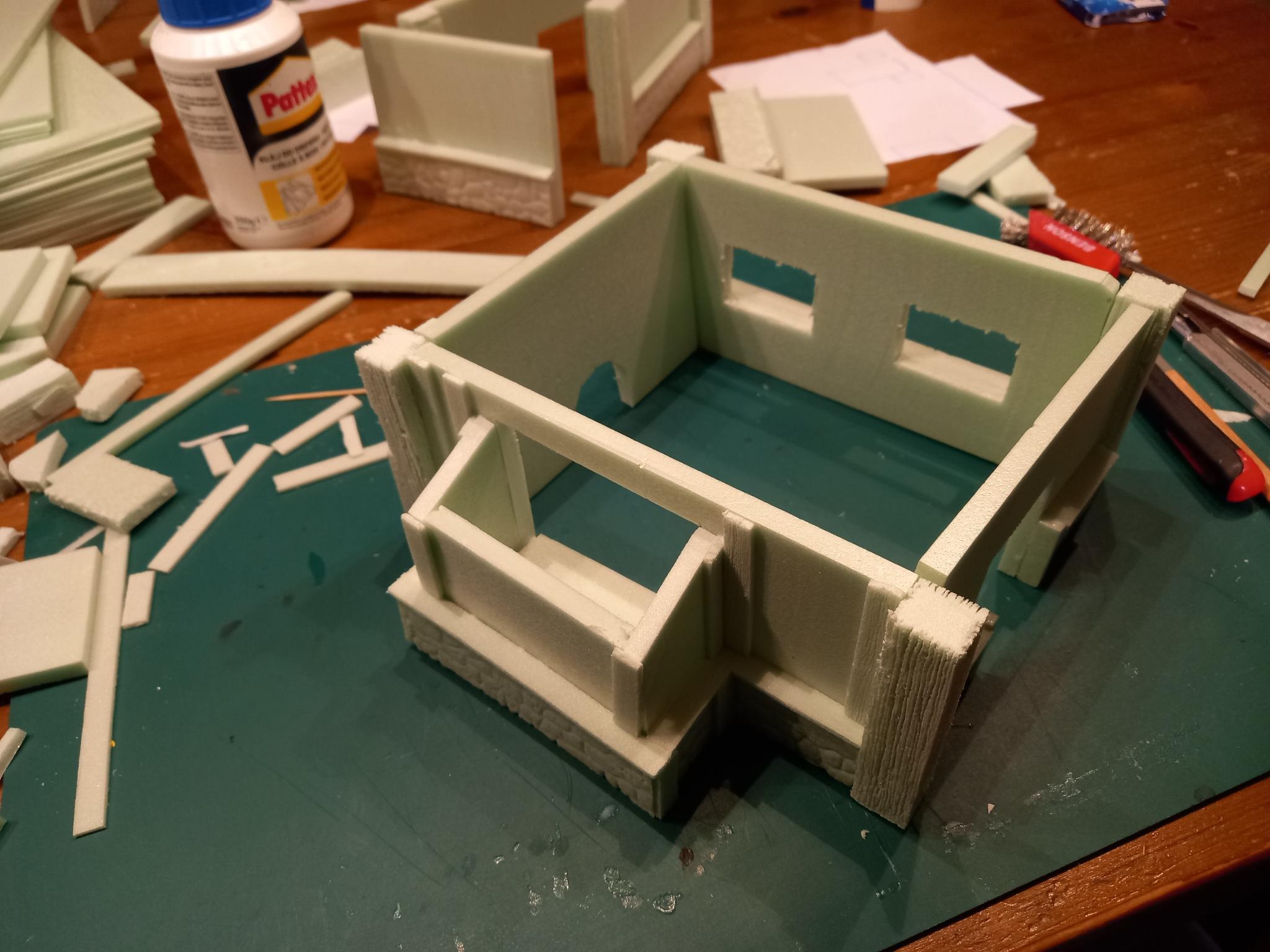
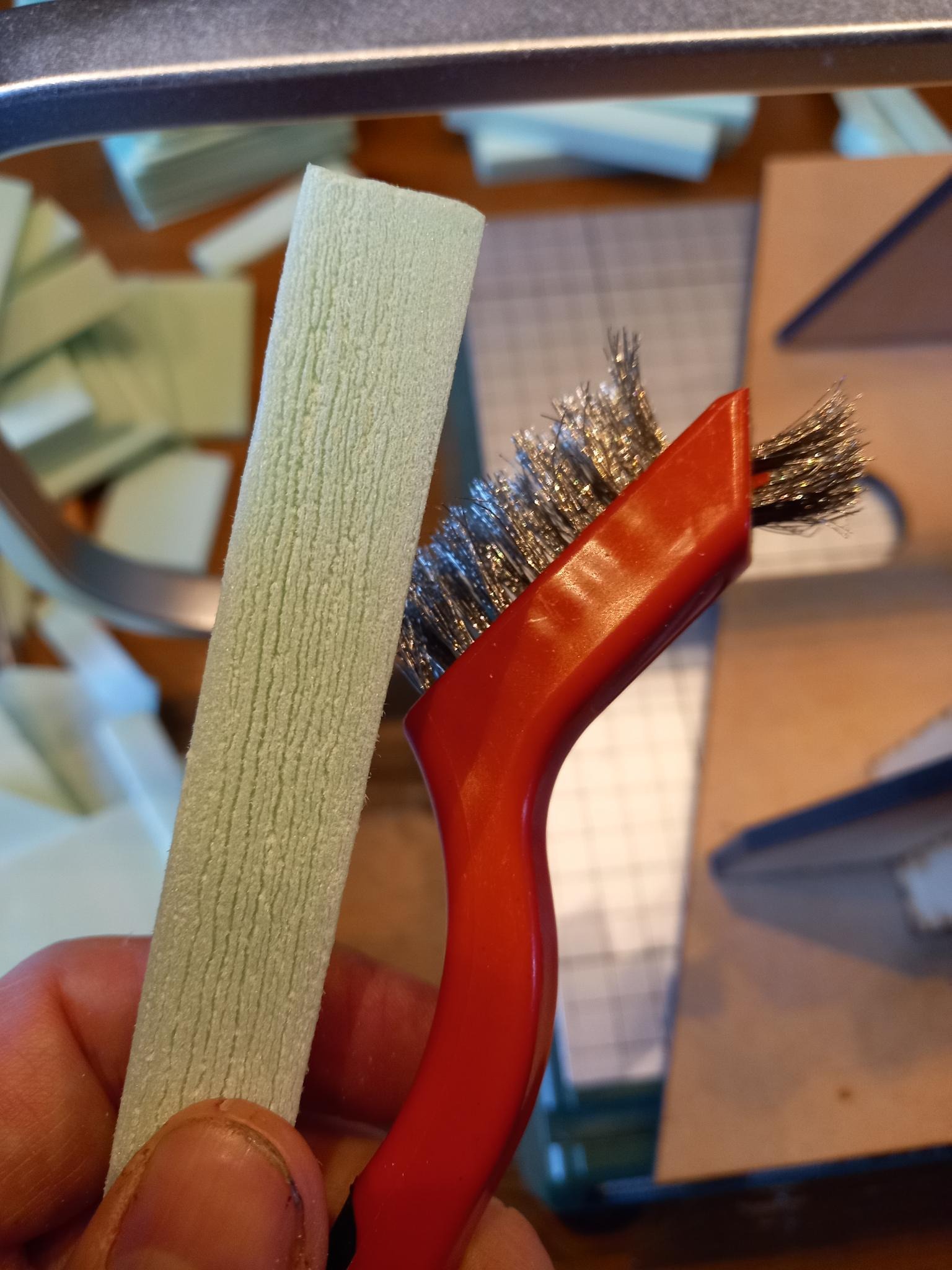
I continued on making the big wooden beams I wanted on the corners. This remains one of the easiest way to hide the corners and I happen to like the look in this situation. I created the woodstructure with a small stealbrush.
Time to stick some walls together. Now it’s starting to get fun.
Once every wall was drying (hold the together with some pins and be sure they’re flat. I had to re-glue some parts. Not to bad, but annoying.)
In the meantime I made a loooooooot of small strips to use as boards. I’m gonna use these to have some nice relief on the facings of the houses.
And that’s it for now. Need to place a lot of strips along the walls and cut out the windows and chimney’s