







![1918 Spring Offensive Wargame | Full Rules Overview with John & Gerry (WW1 Tabletop Game) [7 Days Early Access]](https://images.beastsofwar.com/2026/03/unboxing-warfulcrum-games-1918-spring-offensive-review-coverimage1-225-127.jpeg)
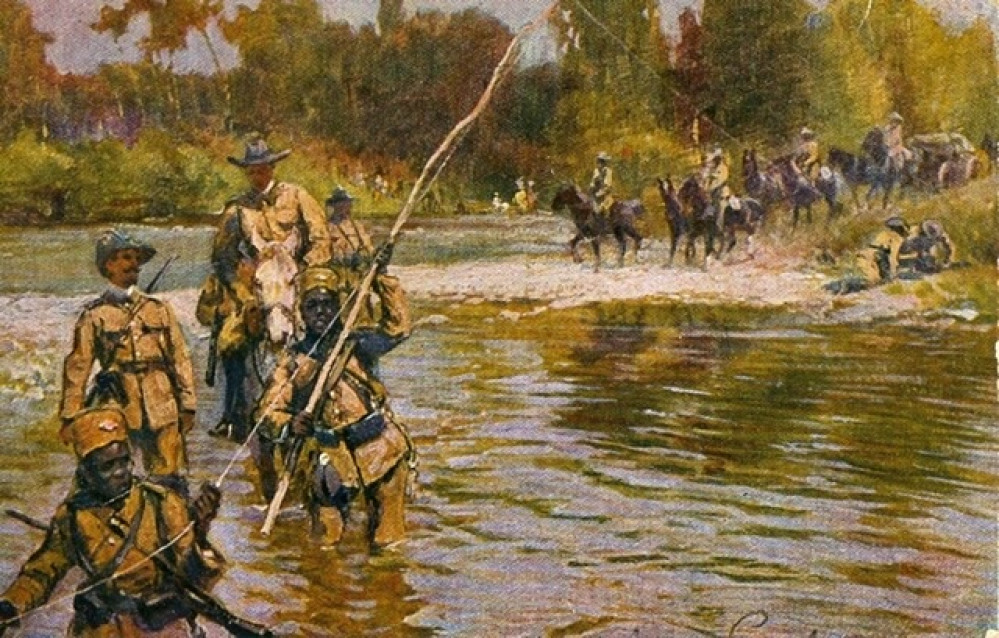
German East Africa




Recommendations: 473
About the Project
Let’s get obscure! Here I explore gaming in one of the lesser well known theaters of WW1.
Related Game: Blood & Valor
Related Company: Firelock Games
Related Genre: Historical
This Project is Active
Battle Report Pt 1 - Setup and opening moves
Nathan B Ortega and I played a 200 point game of Blood & Valor Firelock Games US vs German East African. The scenario was The Cure, basically a re-skinned version of the Demolition mission. Instead of destroying an objective, you were interrogating scientists for the formula to make quinine, the anti-malaria drug.
I took 3 large Askari squads, a single Schutztruppe squad with an LMG, a small Naval Landing party also with an LMG and one MG team and a sniper. My commander was a Hauptmann (Captain equivalent).
The Americans took 2 MG teams, one small regular squad with grenades and three large squads with LMGs and a Major for the command squad.
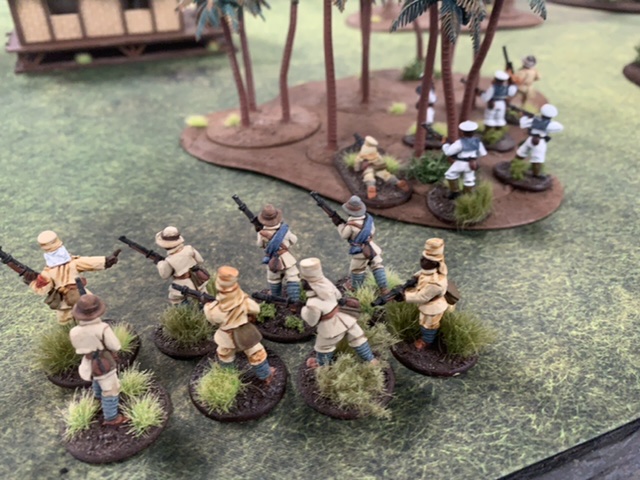 The German left flank uses the palm trees and the building as cover to maneuver closer to one of the objectives.
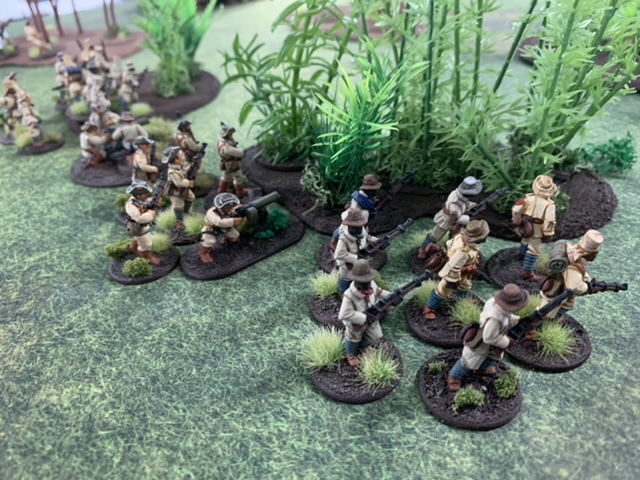 The German right flank uses the jungle as cover to approach another objective. The commander and HMG team are in the center ready to lend support on either flank.
 How did these Doughboys wind up in Africa? Who knows but the Kaiser had it coming!
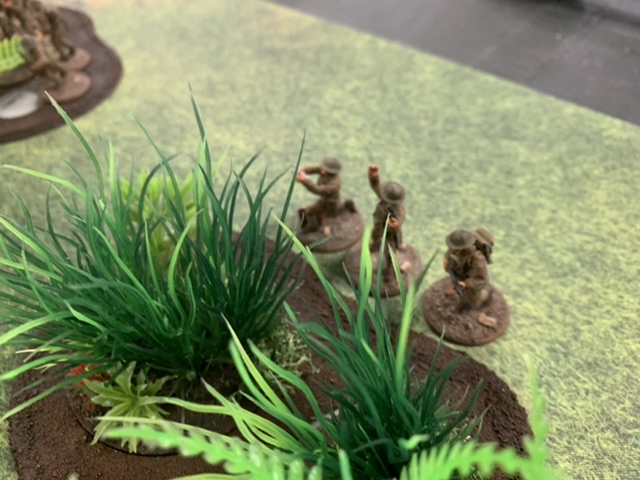 The American commander also sets up in the center
 The Americans strongly reinforced the right flank with both HMG teams and two squads.
Buildings Pt 4
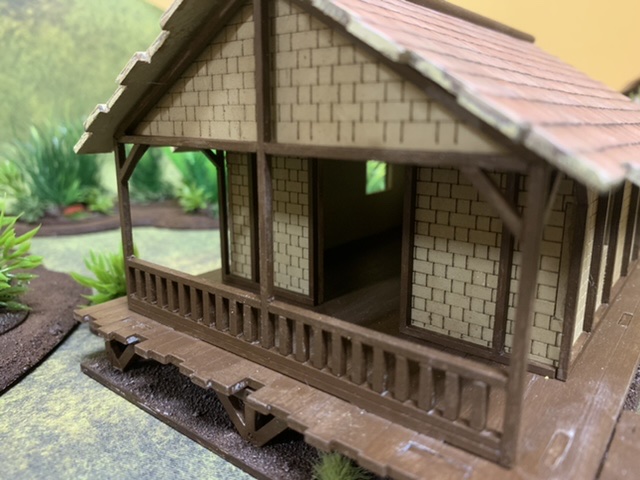
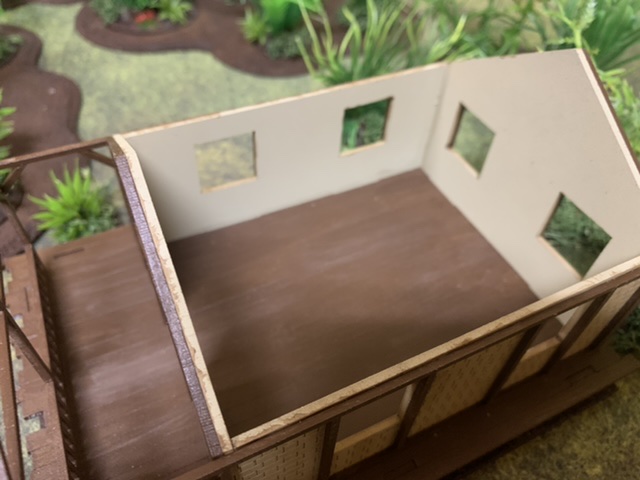
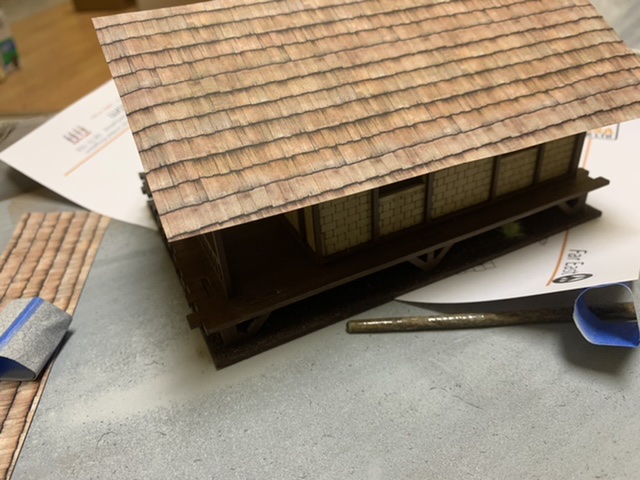 I didn’t particularly like the roof as painted. But while taking a look at the Sarissa website I found downloadable roof PDFs to print out. I made them oversized and them glued them down with PVA glue.
 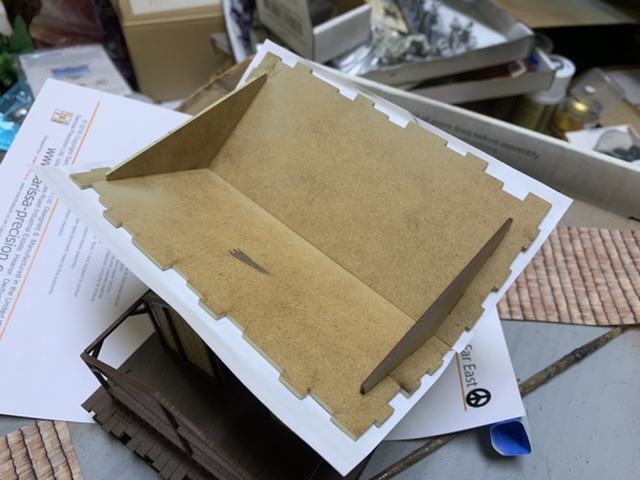 I used a small pair of scissors to trim down the paper then used a metal file to get it flush to the roof.
 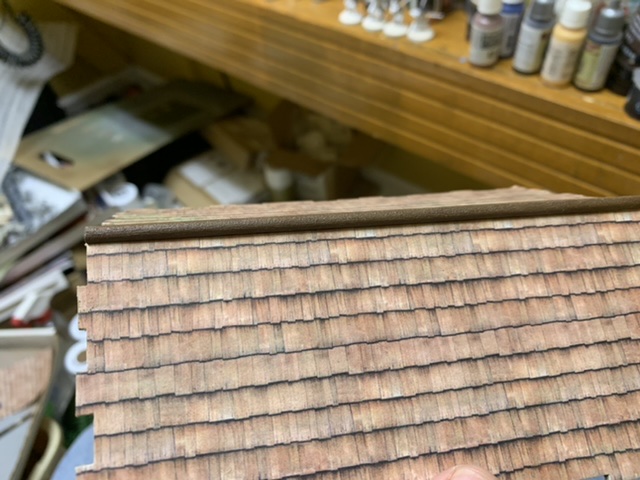 I used a wooden dowel cut to size and then painted it to match the framing. I then glued it to the rooftop to cover up the join lines of the paper and to form the roof peak.
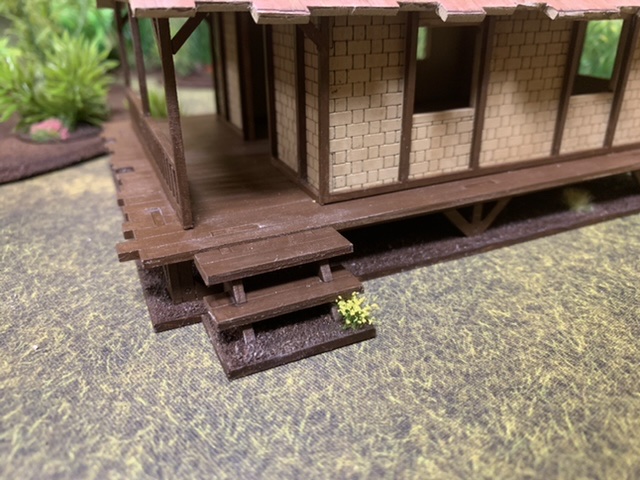
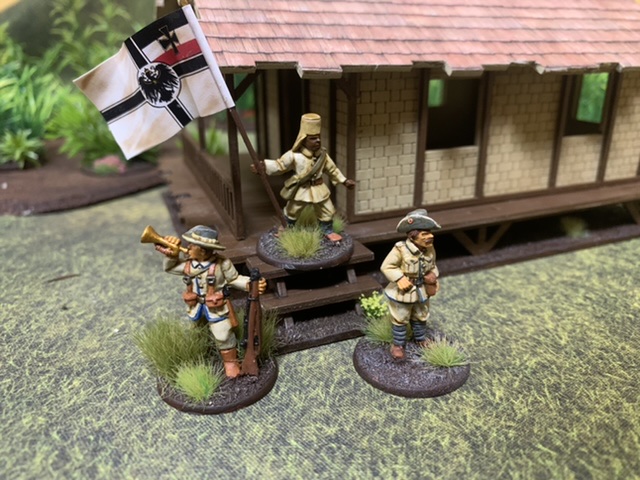
 And here’s a few shots of everything together.
Buildings Pt 3
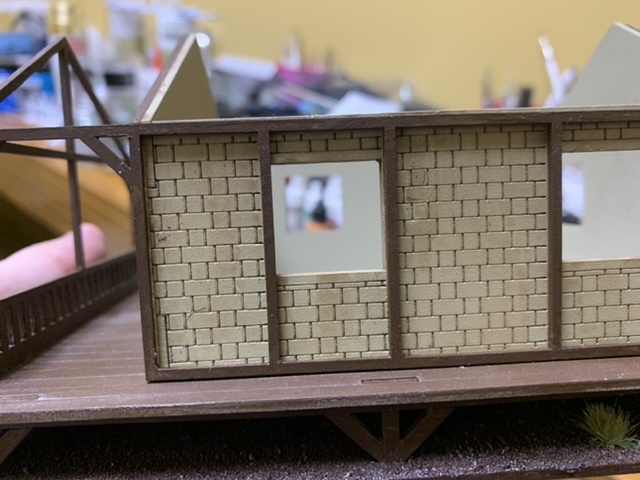 I decided the walls looked a little too pristine so I gave them a wash with Army Painter Soft Tone.
 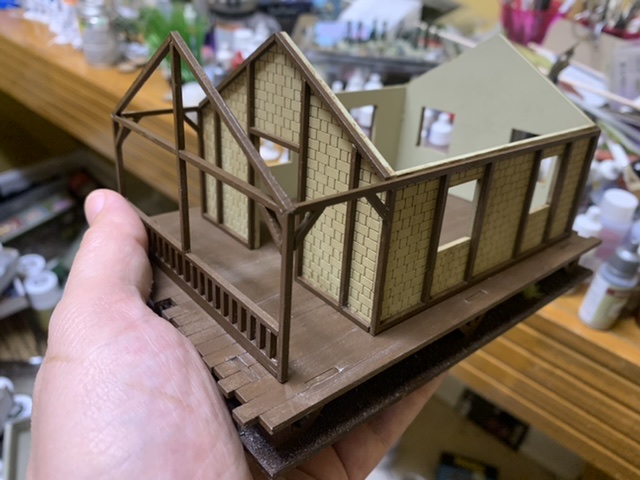 Glued the framing in place starting with the front porch rail and around the building.
  The steps are a separate assembly so I’ll finish entirely before gluing in place. Here it still needs some drybrush of the base and the steps. Probably add some flower tufts as well.
 Buildings Pt 2
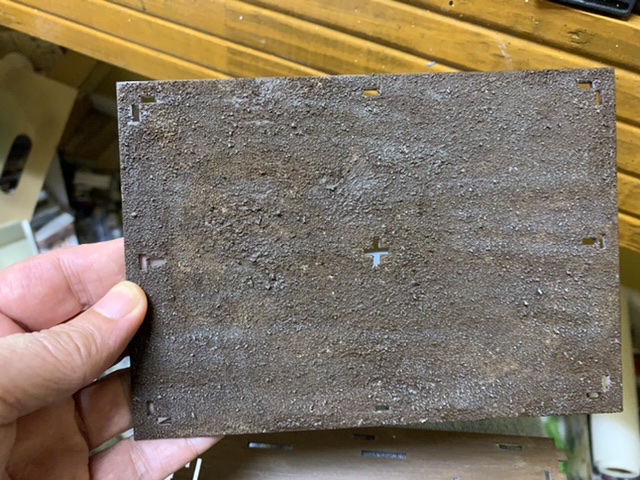 I did a second coat of Burnt Umber then once dry, I did a light drybrush of Skleton Bone.
 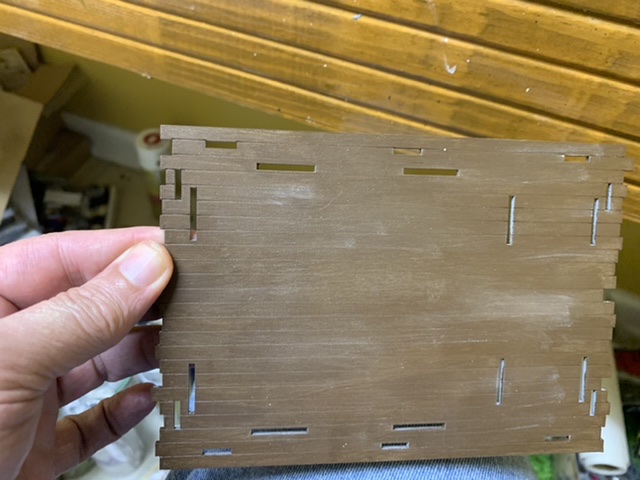 I painted the floor with Oak Brown then did a drybrush of Leather Brown and then a lighter drybrush of Skeleton Bone.
 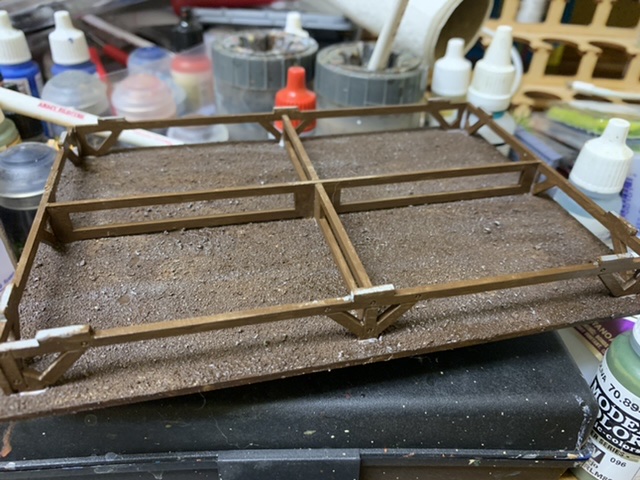 I glued the support pieces onto the base and realized at this point the tabs would show through the floor slots so I had to quickly paint up the gray tabs the same color as the floor. In this case, Oak Brown.
 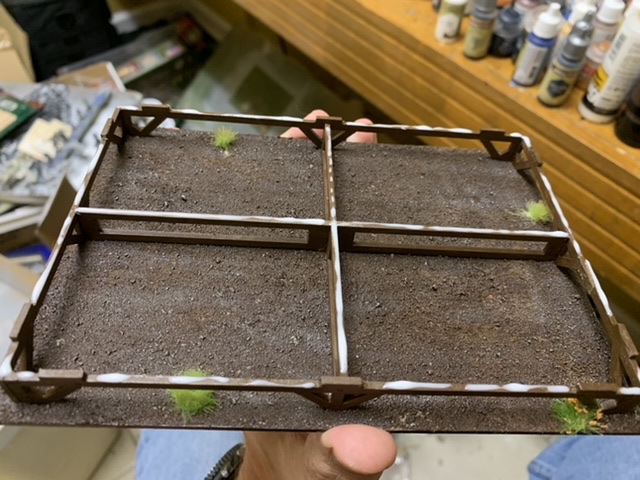 I glued a few tufts near the edges of the bases and then laid some glue on the supports in preparation for the floor.
 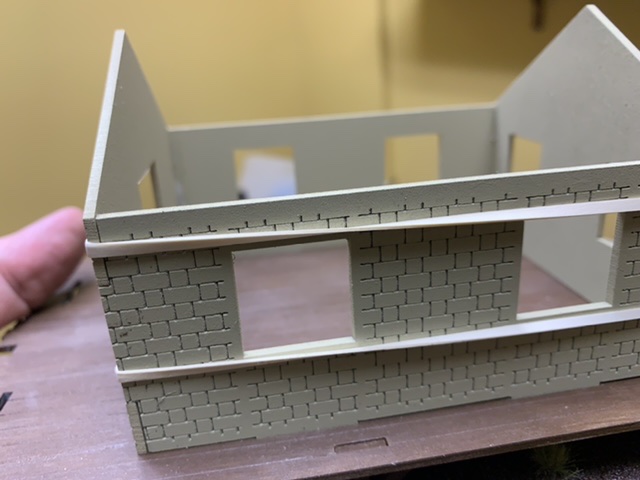 With the floor now in place I started on the house walls. I used the rubber bands to hold the walls tight while the glue dried.
 Building some buildings
I picked up an MDF kit from Sarissa Precision from their Far East range. Looks like it should be suitable as a generic jungle dwelling. I’m honestly not sure exactly how to go about this but we’ll see what happens.
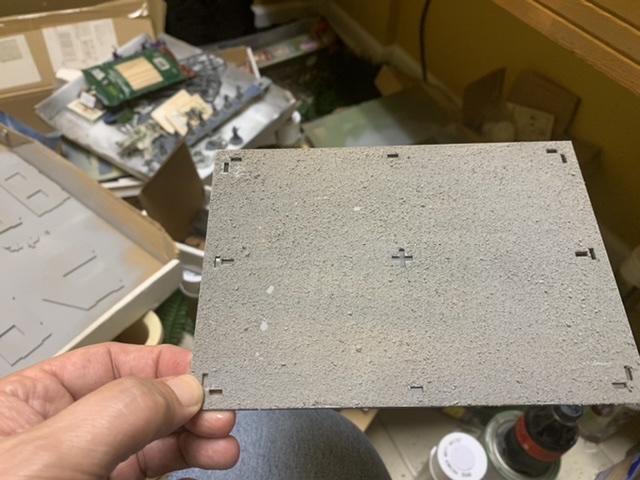 This is the base that the rest of the building gets built up from. I covered it in PVA and sand. Once dry, I used some grey primer on it.
 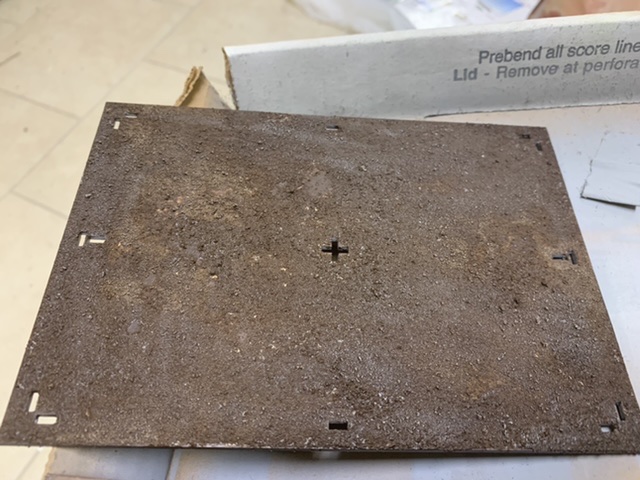 Painting the base prior to assembly. Burnt umber acrylic just like the miniature bases. Light drybrush of Skeleton Bone. Virtually all of this will be covered by the building itself.
 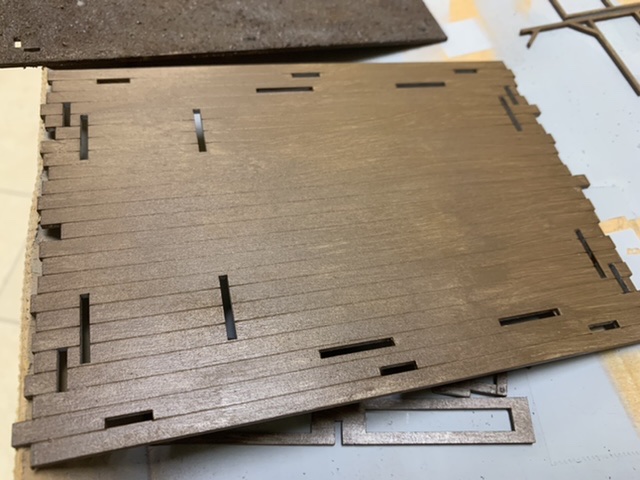 First coat of Army Painter Oak Brown. Probably do another coat.
 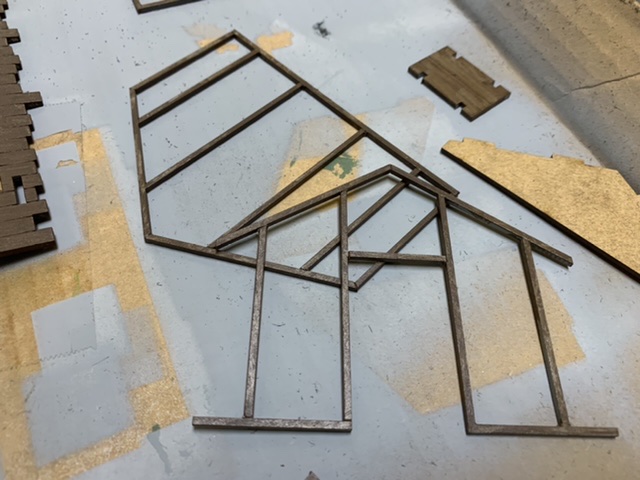 Frames also painted Oak Brown.
 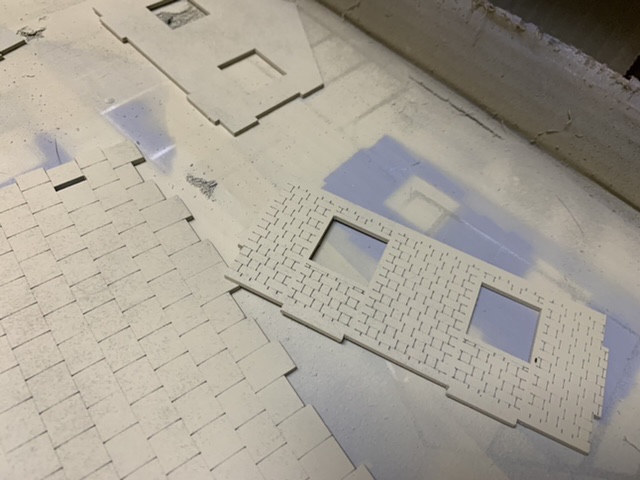 Walls and roof painted Skeleton Bone.
 Painting
The paint schemes are relatively straight forward. For the Schutztruppe and Askari I primed them with Army Painter Skeleton Bone. The cloth folds were carefully washed with GW Seraphim Sepia. Leather gear was Army Painter Leather Brown washed in GW Seraphim Sepia. Rifle stocks and canteens were Vallejo Mahogany Brown also washed in Seraphim Sepia. Rifle barrels and canteen caps were painted black. Bread bags were Vallejo Canvas again washed in GW Seraphim Sepia.
Schutztruppe hats and leggings were Army Painter Uniform Gray and washed in Seraphim Sepia. The hats were edged in white and the cockcades were white and red. The outer ring should be black but that detail is so small I just washed them with Seraphim Sepia.
The Askari leggings were also Uniform Gray but washed in Army Painter Blue Tone. The blue trim of the Schutztruppe was Vallejo Prussian Blue.
Buttons and buckles were Army Painter Plate Mail washed in GW Nuln Oil. Caucasian flesh was Vallejo Dark Flesh washed in GW Reikland Flesh Shade. The Askari flesh was either GW Mournfang Brown and washed in Seraphim Sepia or Mournfang Brown then layered with Skragg Brown washed with Seraphim Sepia.
The sailors were primed white and then painted white again. Shading was difficult but ultimately I wound up using GW Apothecary White in the folds and then highlighting back to white. Collars and rank insignia were Vallejo Medium Blue. Leggings were Vallejo Canvas. All other equipment was painted the same.
Naval officers uniforms were similar to the Schutztruppe minus the blue trim and keeping the helmets white.


It’s a jungle out there
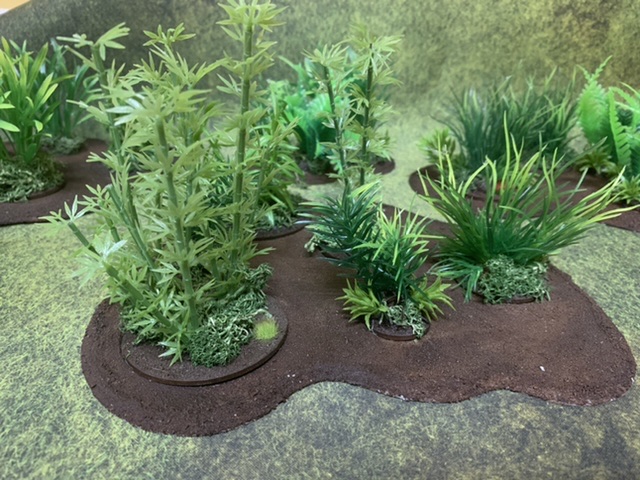
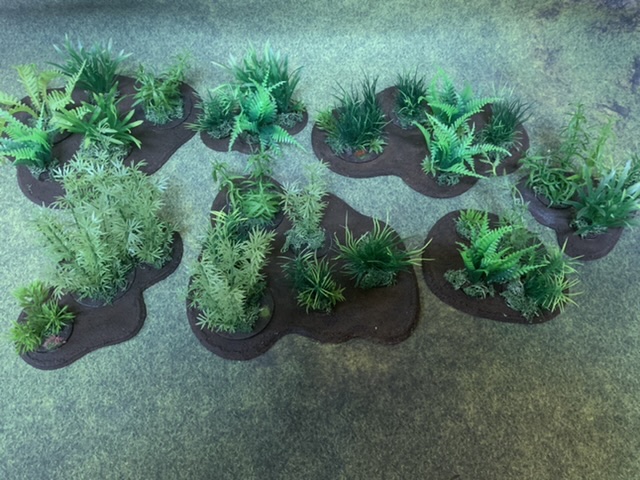
I wanted most of my terrain to be jungle. Relatively quick and simple, here’s how I did it.
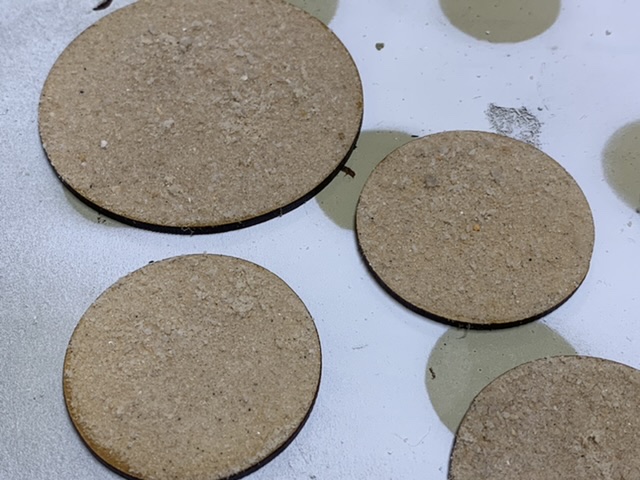 I used Sarissa MDF bases, covered them with PVA glue and then sand.
 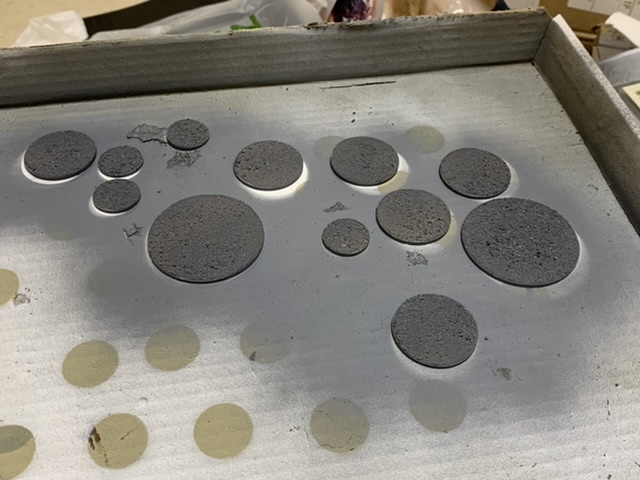 Once the PVA dried, I primed them. Any dark color will work but I had gray, so that’s what I used.
 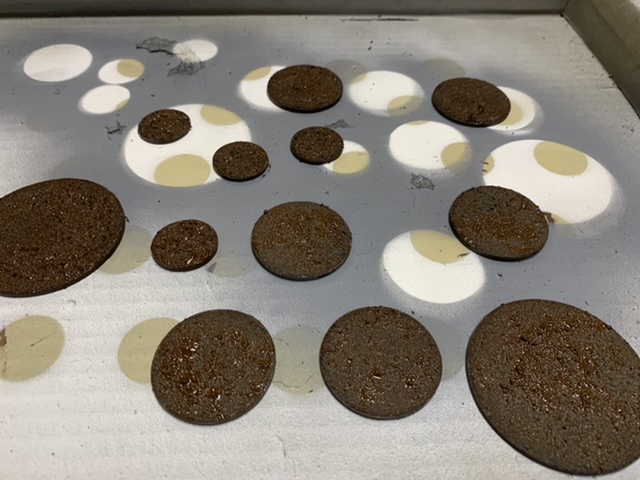 I then painted them using artist acrylic Burnt Umber. I did two light coats.
 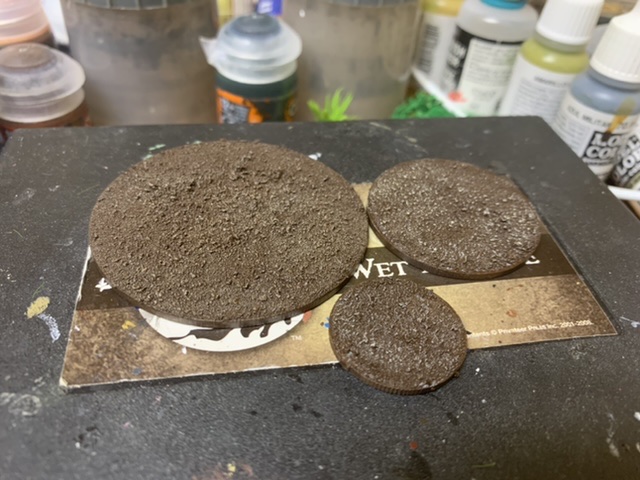 I then gave them a quick drybrush with Army Painter Skeleton Bone.
 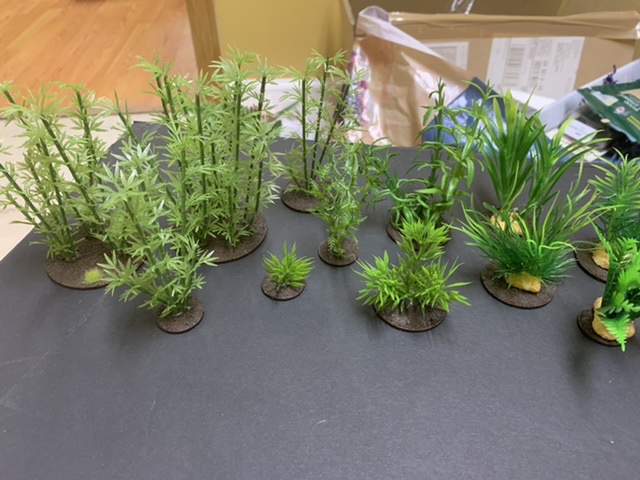 I then used a hot glue gun to glue down the various aquarium plants, cheap plastic bamboo and hobby craft plastic floral arrangements I could find.
 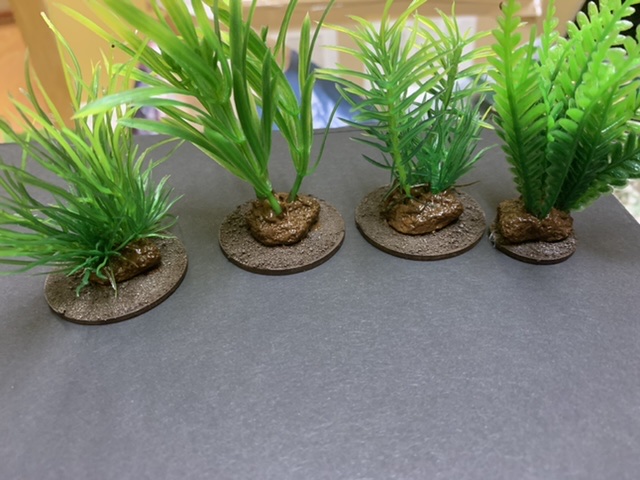 The bright stone bases on these plastic plants got painted over in Burnt Umber as well.
 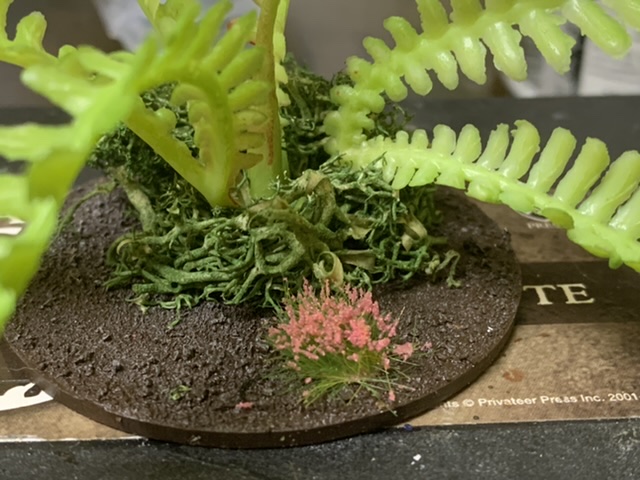 I used PVA glue to add some lichen to conceal the attachment points and an occasional flower tuft to add some color.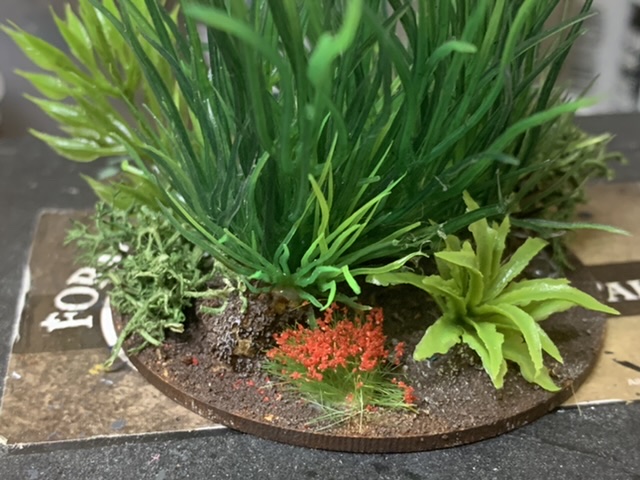
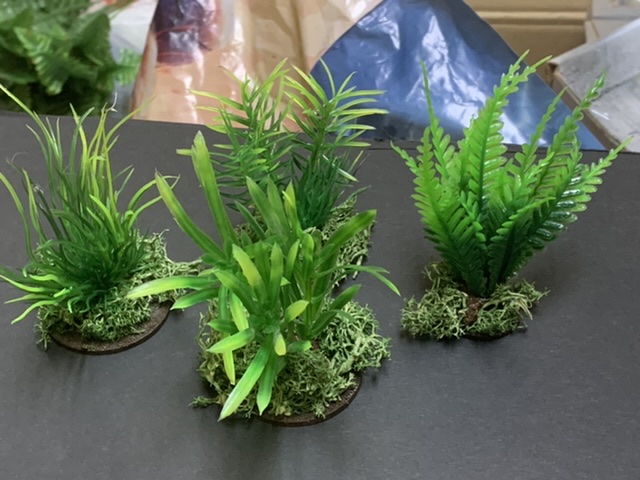
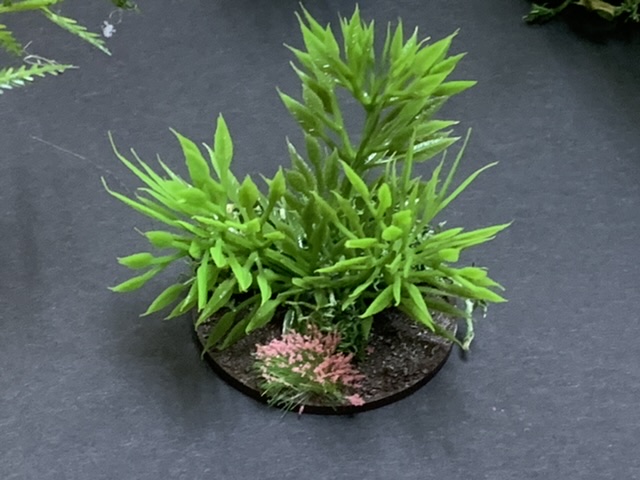
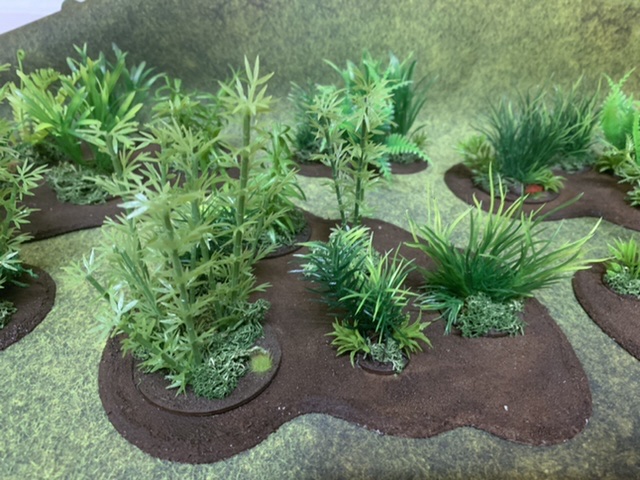 I need to do a little sanding to make the finished bases to fit back into their slots but pretty much done.
 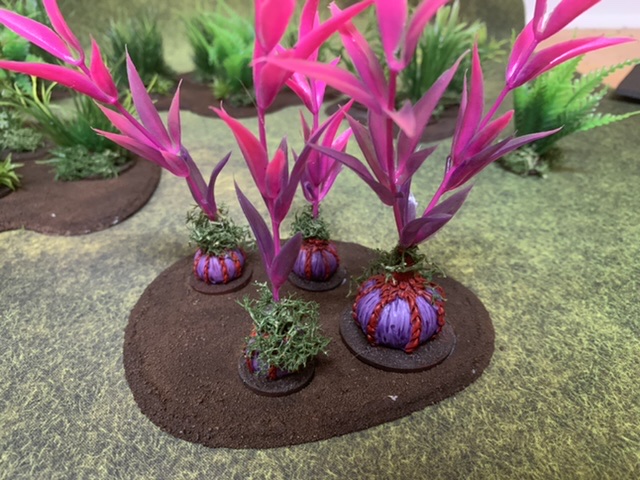 Not really part of this project but aquarium plants make great sci fi terrain.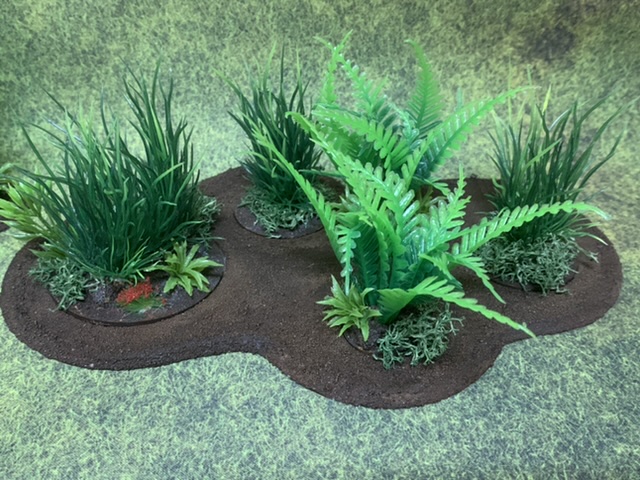
Zeppelin L-59
Designated LZ-104 by Zeppelin and L-59 by the German navy, this airship had one of weirdest missions of WW1.
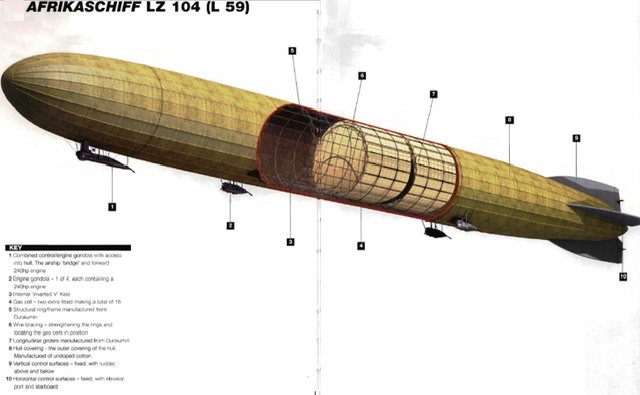
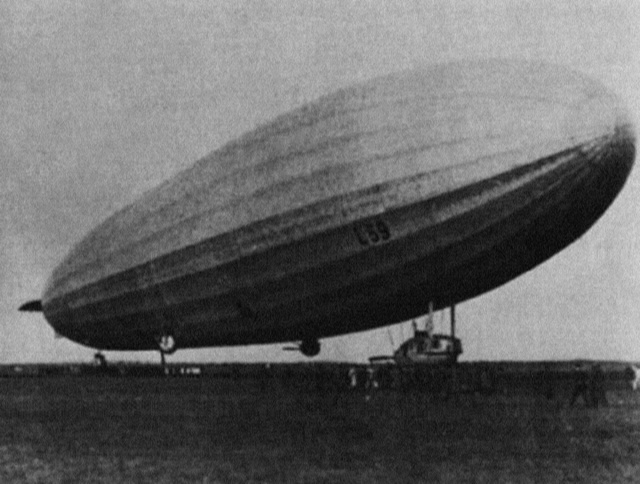
Dubbed Das Afrikaschiff, it’s mission, dubbed the China Show, was to fly 4500 miles, one way, and deliver food, ammunition, machine guns and medical supplies. It apparently also carried a supply of Iron Crosses. The crew was then supposed to join Lettow-Vorbeck’s forces. The airship itself was to be cannibalized. The cloth exterior wasn’t doped (essentially varnished) so it could be reused as tents. The gas bags were to be cut up and used as bandages and the airframe repurposed as a radio tower.
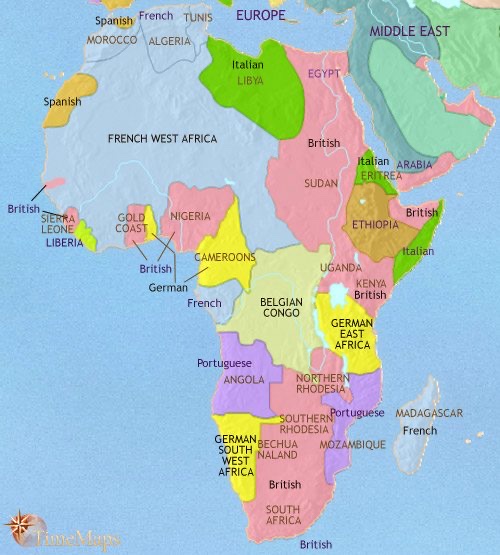 Africa circa 1914
The story of L-59 is an epic story unto itself. But essentially, the airship left Bulgaria, traveled over Crete then down through British held Sudan and got over half way to East Africa without being detected by the British Royal Flying Corps even though they knew her mission and destination.
After getting more than halfway to East Africa, the airship was recalled. The crew was in favor of continuing the mission but the captain was insistent. It reportedly took two hours to convince the crew to turn around. By the time they returned to Bulgaria, they’re been in continuous flight for over 95 hours. This was a world record that wasn’t broken by any aircraft until 1957 when a US Navy blimp upped the record to 264 hours. Fixed wing aircraft wouldn’t break L-59’s record until 2015.
The message to recall the airship is shrouded in mystery. The recall message was originally claimed to have been issued by the British as a deception operation but this version has largely been debunked. Another version is that Lettow-Vorbeck issued the recall because he wasn’t able to hold the landing site and had to retreat to more mountainous terrain where the airship couldn’t land. However even this story has issues as his army was two days away from the last radio station still in operation and it was damaged and unable to transmit messages, but could still receive them. This story requires more research.
While a 28mm scale airship would be epic, it would also be in excess of 10 feet long. I have however found a 3D printed version in a more reasonable size of about 1 foot long.
I’m working on scenarios but don’t have firm plans yet. Maybe something like securing the LZ or unloading the airship in a certain amount of time.





![StarCraft Tabletop Miniatures Game Pre-Orders Live Now [Updated]](https://images.beastsofwar.com/2026/03/starcraft-tmg-news-cover-600-338.jpg)