









2mm Strength & Honour



Recommendations: 305
About the Project
The new Strength and Honour rules for ancient army level battles have me intrigued. I've played and enjoyed Blucher and this seems to offer the same level of command and control so we can feel like we are making grand tactical decisions like Caesar, Vercingetorix or Boudica. I haven't used my resin printer yet and this seems the idea time to learn how.
Related Game: Strength & Honour
Related Company: Too Fat Lardies
Related Genre: Historical
This Project is Active
Roman reinforcements
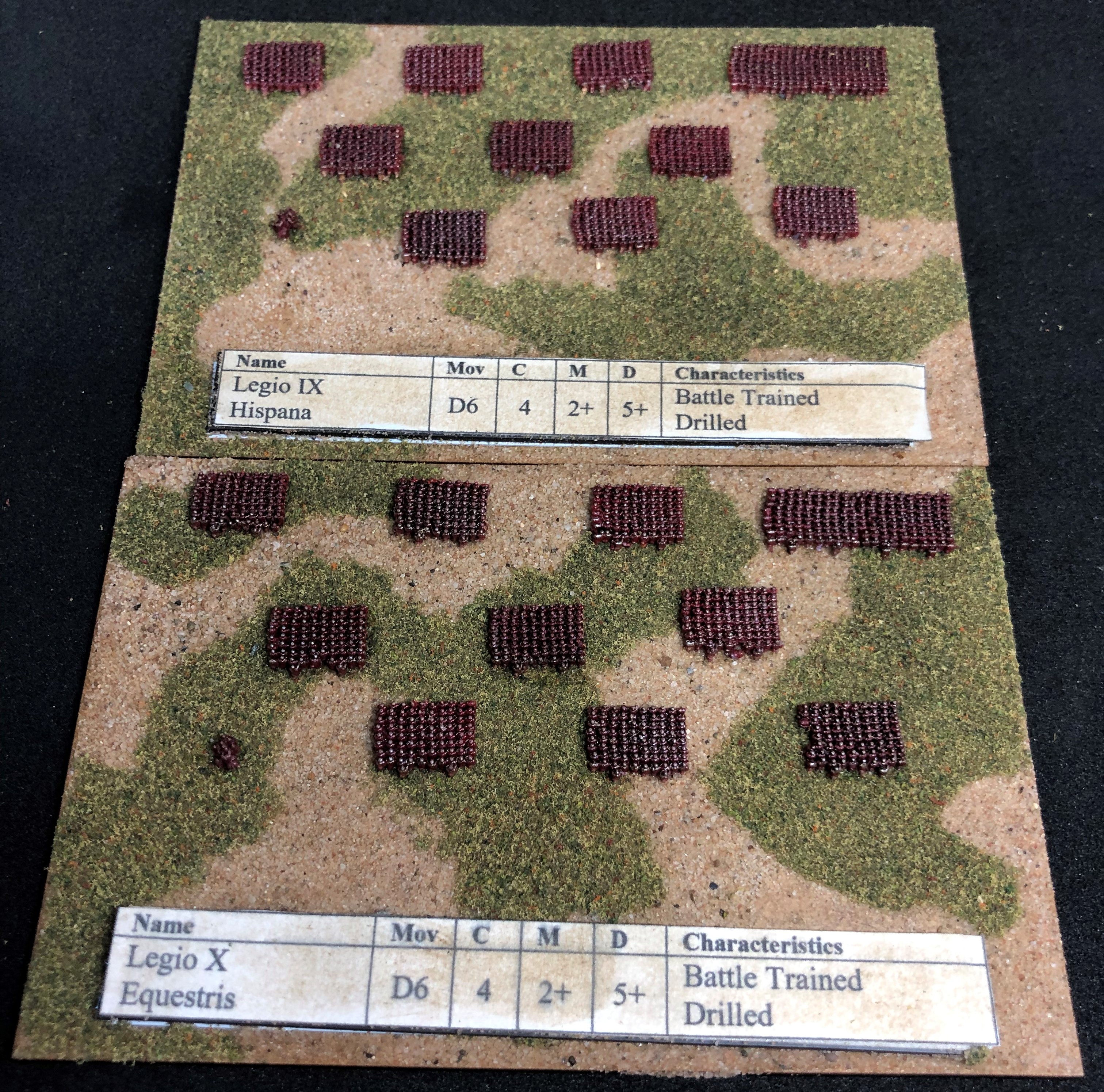
Two more Roman Legions. These are Caesar’s crack veterans the IX Hispana and X Equestris.
Firstly the Ninth – the legion that disappeared from the historical records some time in the late first century CE. Paining followed the previous method outlined.
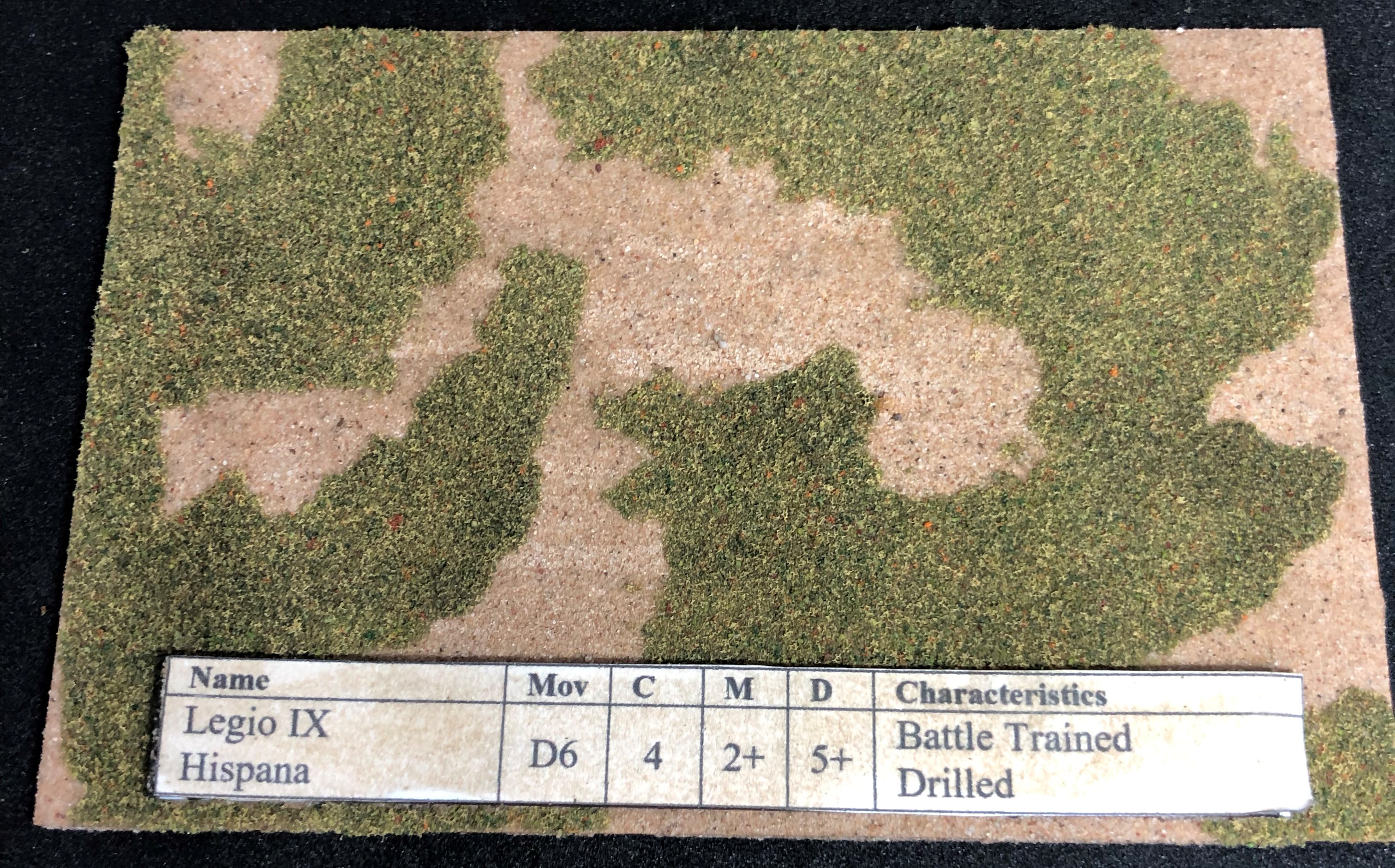
Only joking 😀
Here are the two new legions ready for the tabletop:
Road to Vosges - Numidian skirmishers
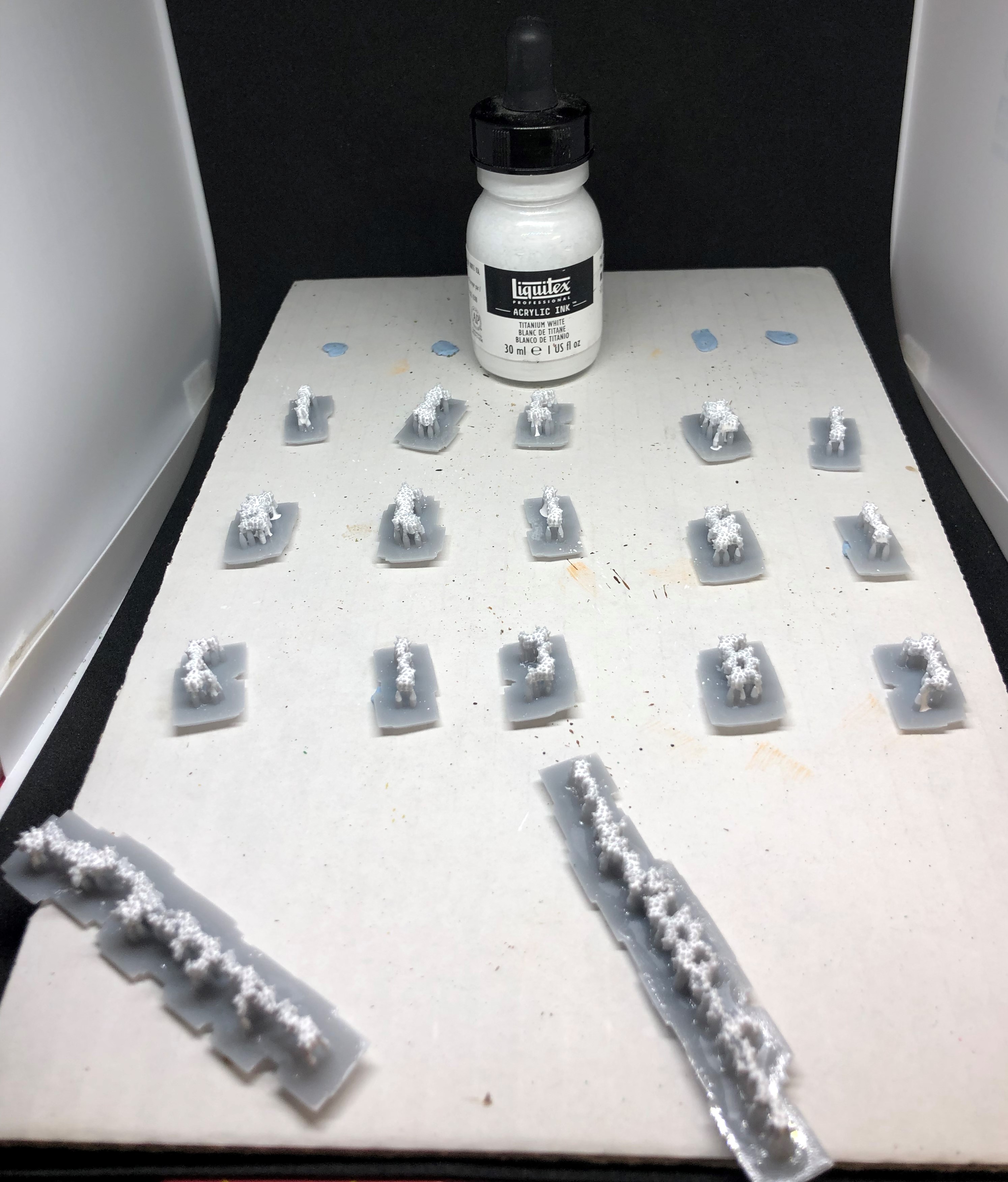
Vosges is the next scenario, Caesar versus the invading German hordes in Gaul. For that the Romans need four more legions and some Numidian skirmishers. To that end here are the Numidians. Firstly undercoat in white. Slop it all over, you want to cover the entire model:
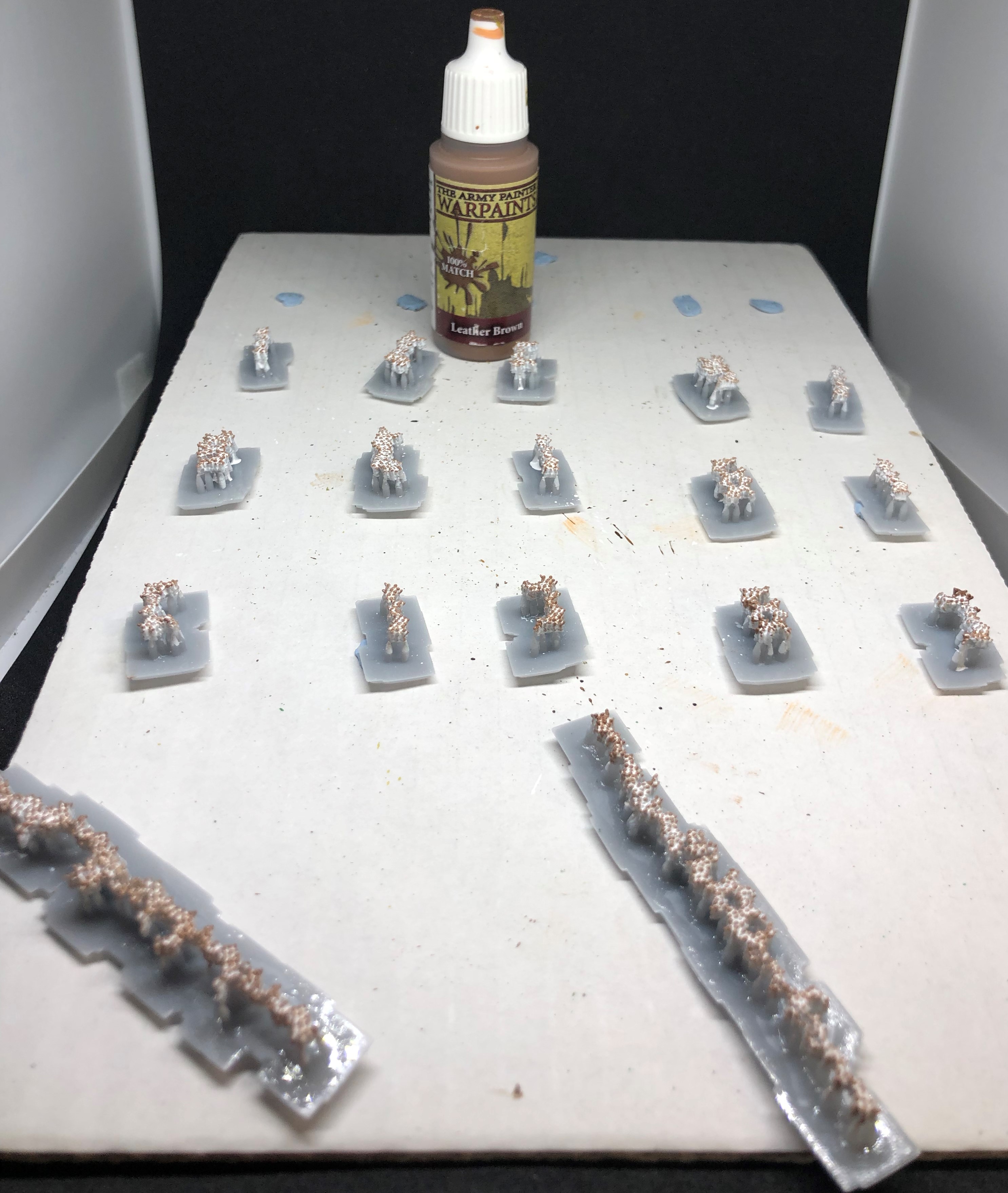
Next it is the skintone. Heavily drybrushed over the top half of each block.
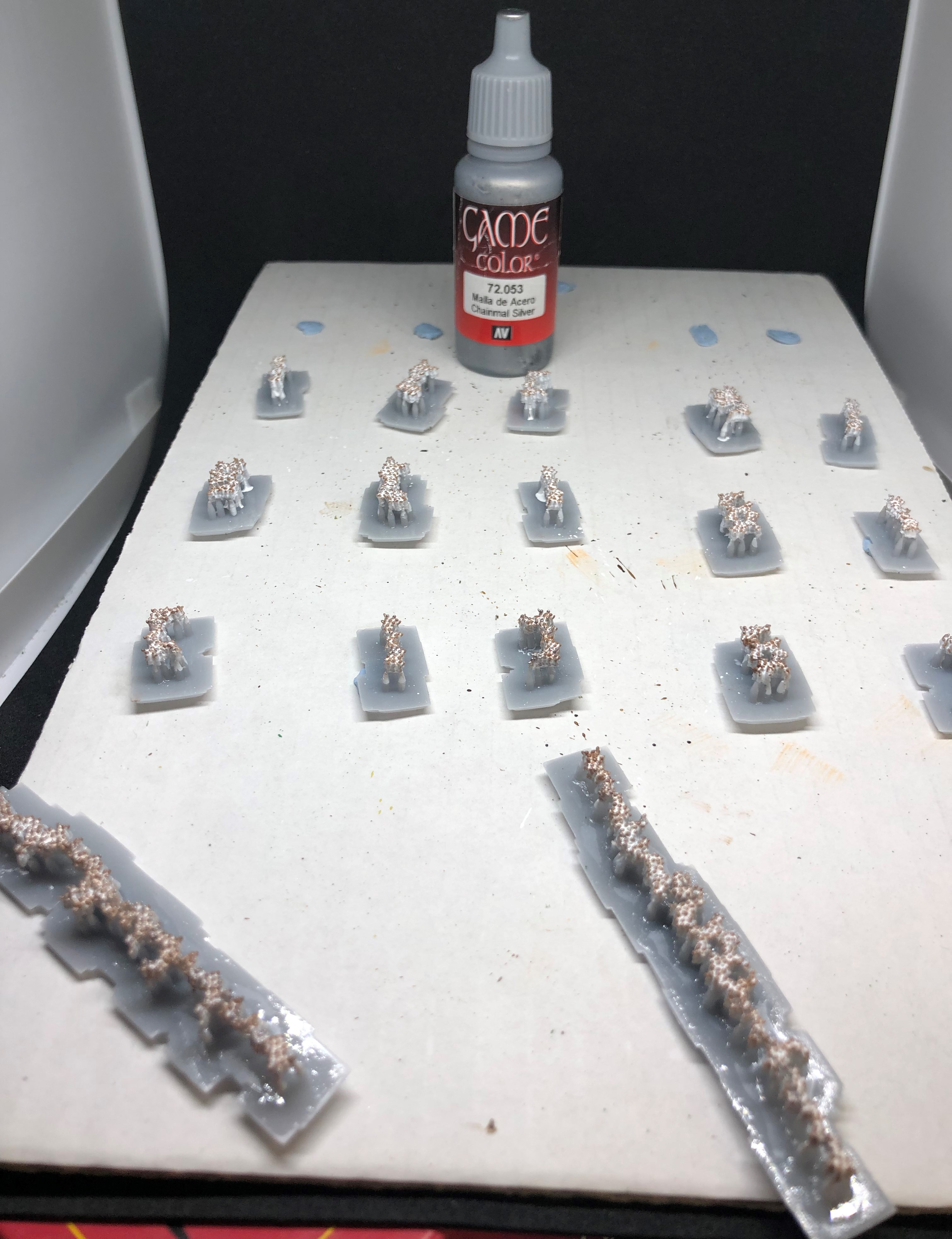
Then we do the weapons and any minor bits of armour they may have scrounged. Light drybrush of the chainmail colour in patches, here and there on the blocks.
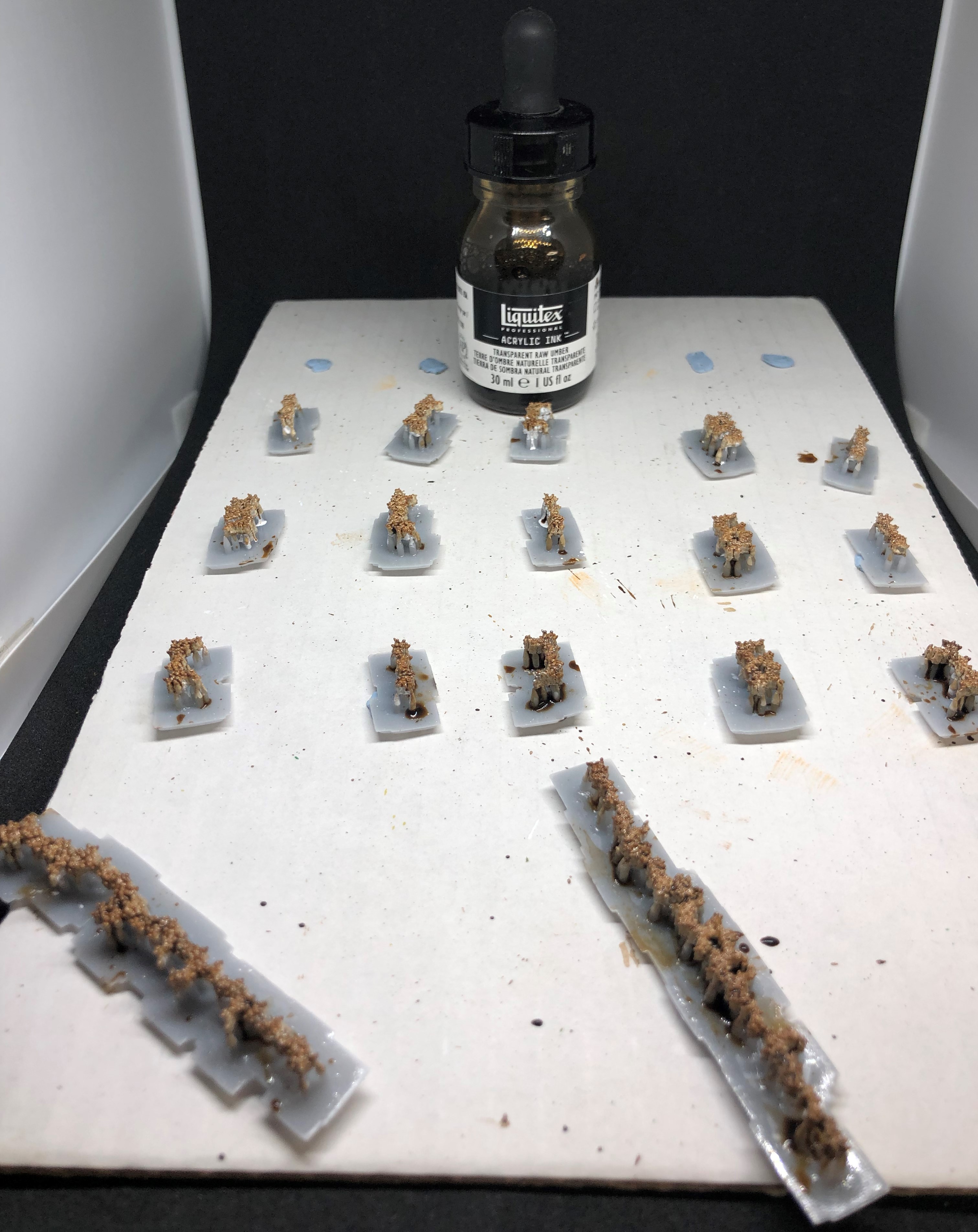
Finally the raw unber for shading. This has been applied in a more patchy fashion than usual in order that some of the white will still show through so the clothing looks a bit like a mix of white and more basic unbleached cotton.
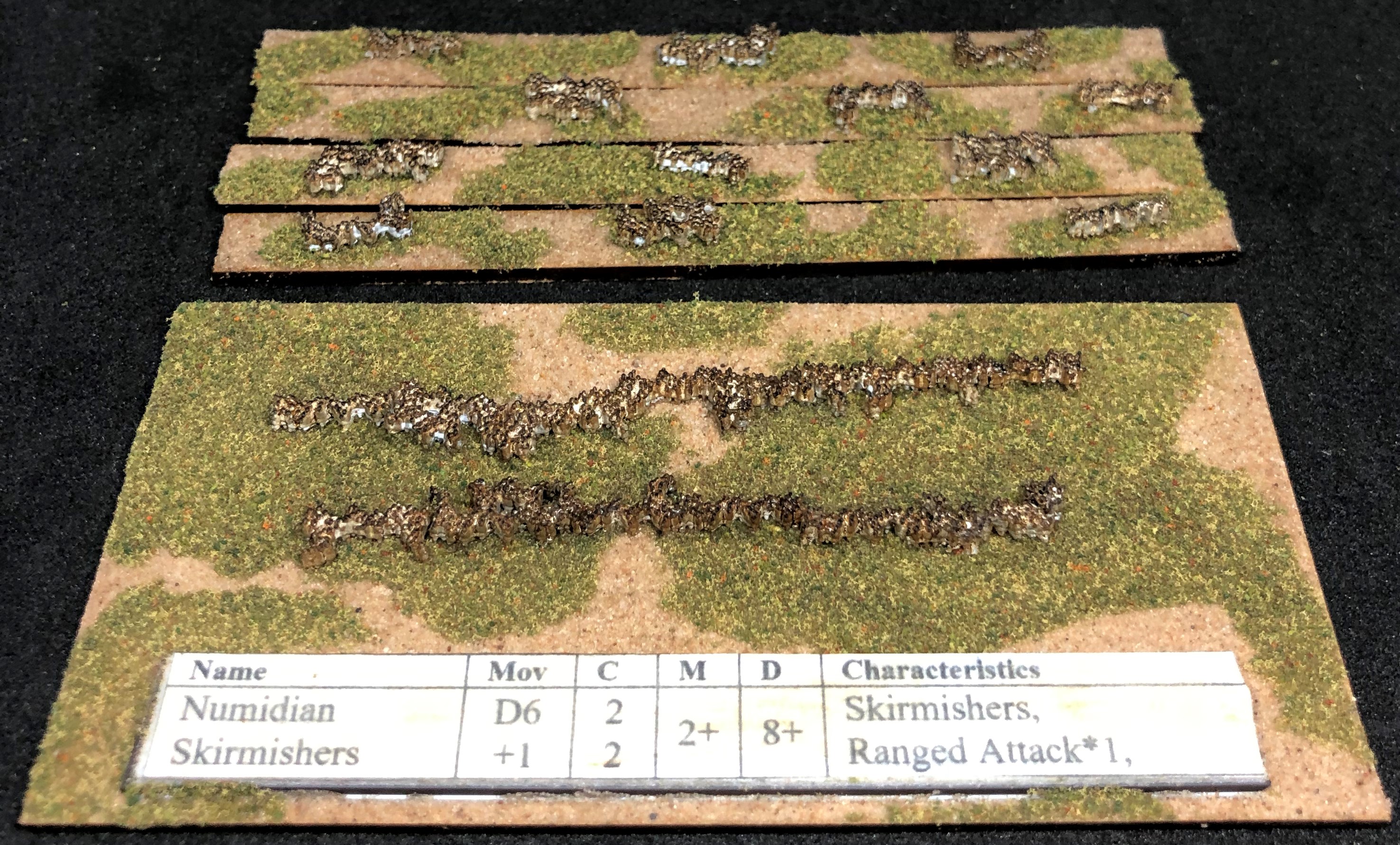
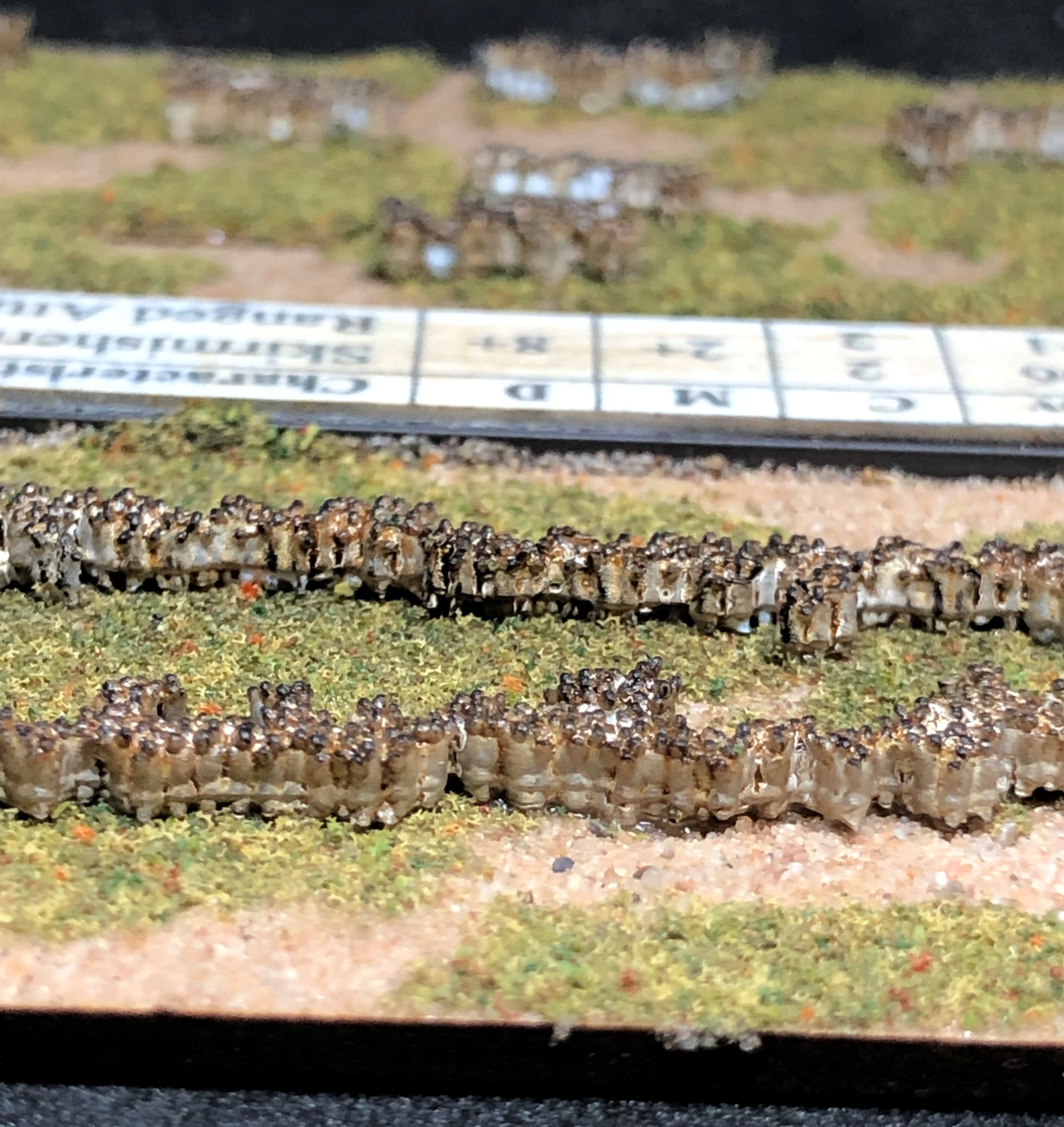
Finally a very light drybrush of black was applied to the very tops for the hair. and here we go, a single base which can aslo be converted into 4 skirmish support bases.
Battle Report - Watling Street
We got our first games in today. For the first test game I played the Britons and my brother in law had the Romans. The scenario was Watling Street.
Setup:
The Roman governor of Britainnia Paulinus gathered all available forces to oppose Boudica and her tribal alliance that had defeated the Roman garrisons and towns in the South East. They met on Watling Street (now under the A5), many think at Mancetter. Paulinus found a narrow elevated position flanked by dense woodland on both sides. Boudica drew her huge force up backed by the wagon laagers of her armies camp followers.
In our version I decided to set out the warbands with the skirmishing chariots and infantry in between. This allowed me to attach the skirmishers to the warbands which conveys combat bonus.
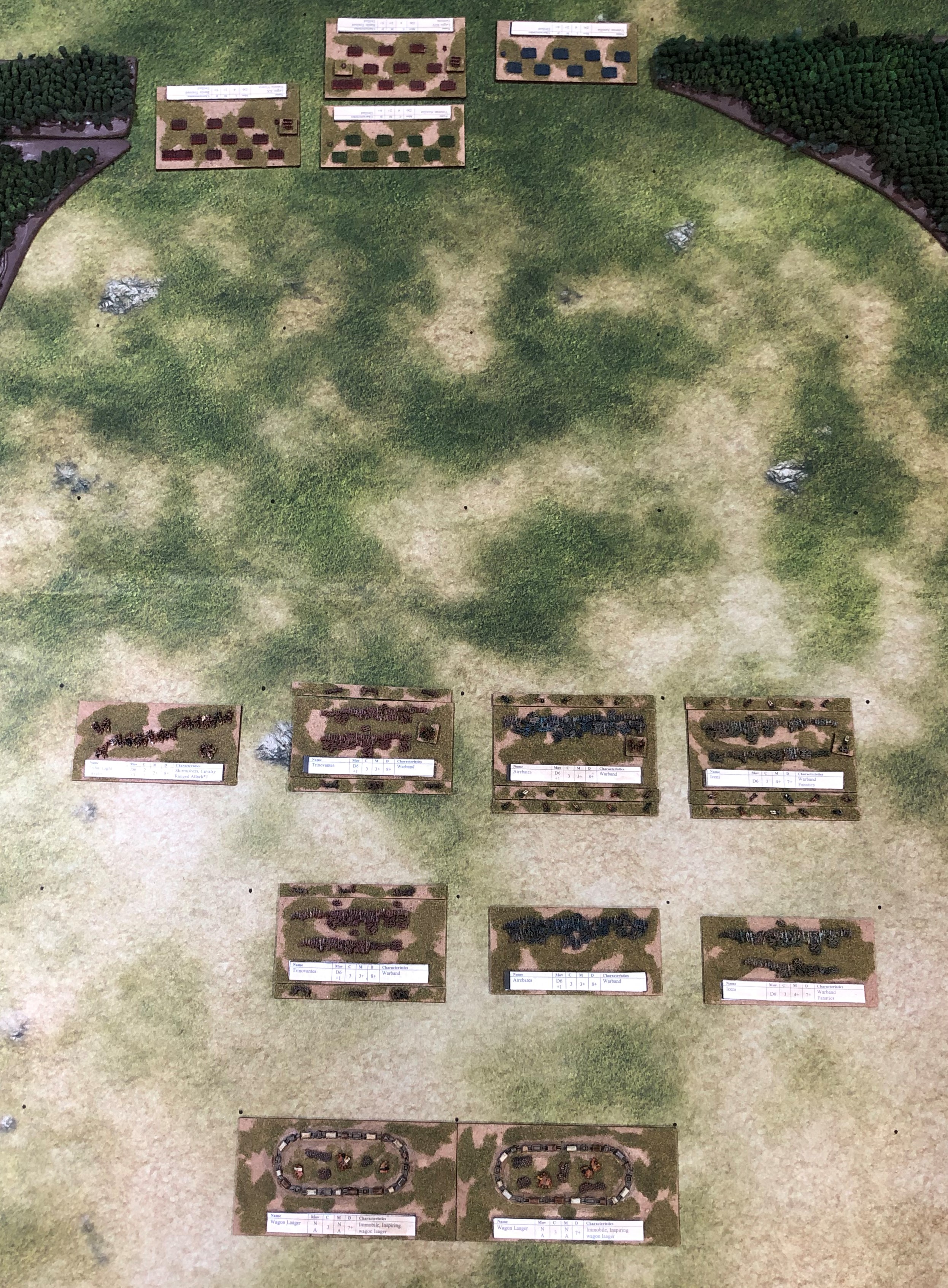
The three blocks of warband close up and can be activated in pairs when there is a supporting base in position. The light cavalry on the left advanced to the woods. The Romans open up into a line of three with the legions on their right and centre and the auxiliary troops on the left.
The warbands advance with the Trinovanti (in red) going up against the legion in the centre and the Atrebates (blue) got mauled by the the auxiliaries with the lead element routed and the rear pushed back. The Iceni (in green) are a bit isolated on the right with no opposition to their front.
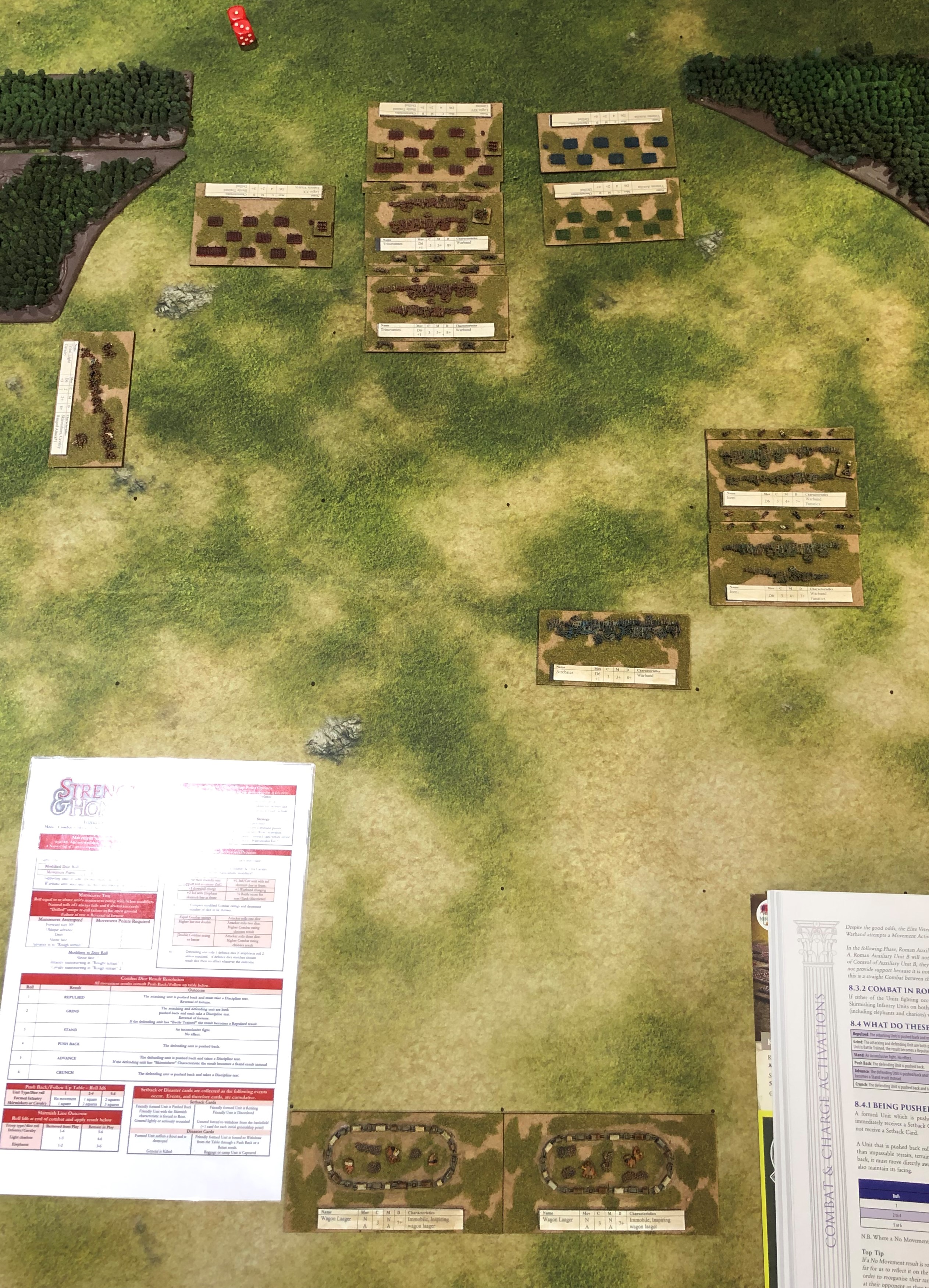
The auxiliaries advanced down the hill and one turned into the flank of the Iceni. The Trinovanti and legionaries exchange blows but can’t find a decisive result. On the Roman right the legion is worried about advancing and allowing the Light Cavalry to hit them in the flank so stay still. Paulinus calls Homunculus Est! where the cards that the Britons have taken for the various push backs and routs are revealed and counted. If the army break point is reached the Britons are defeated. Boudica uses a Generalship point to cancel this action in the vain hope that something better might happen in the next combats.
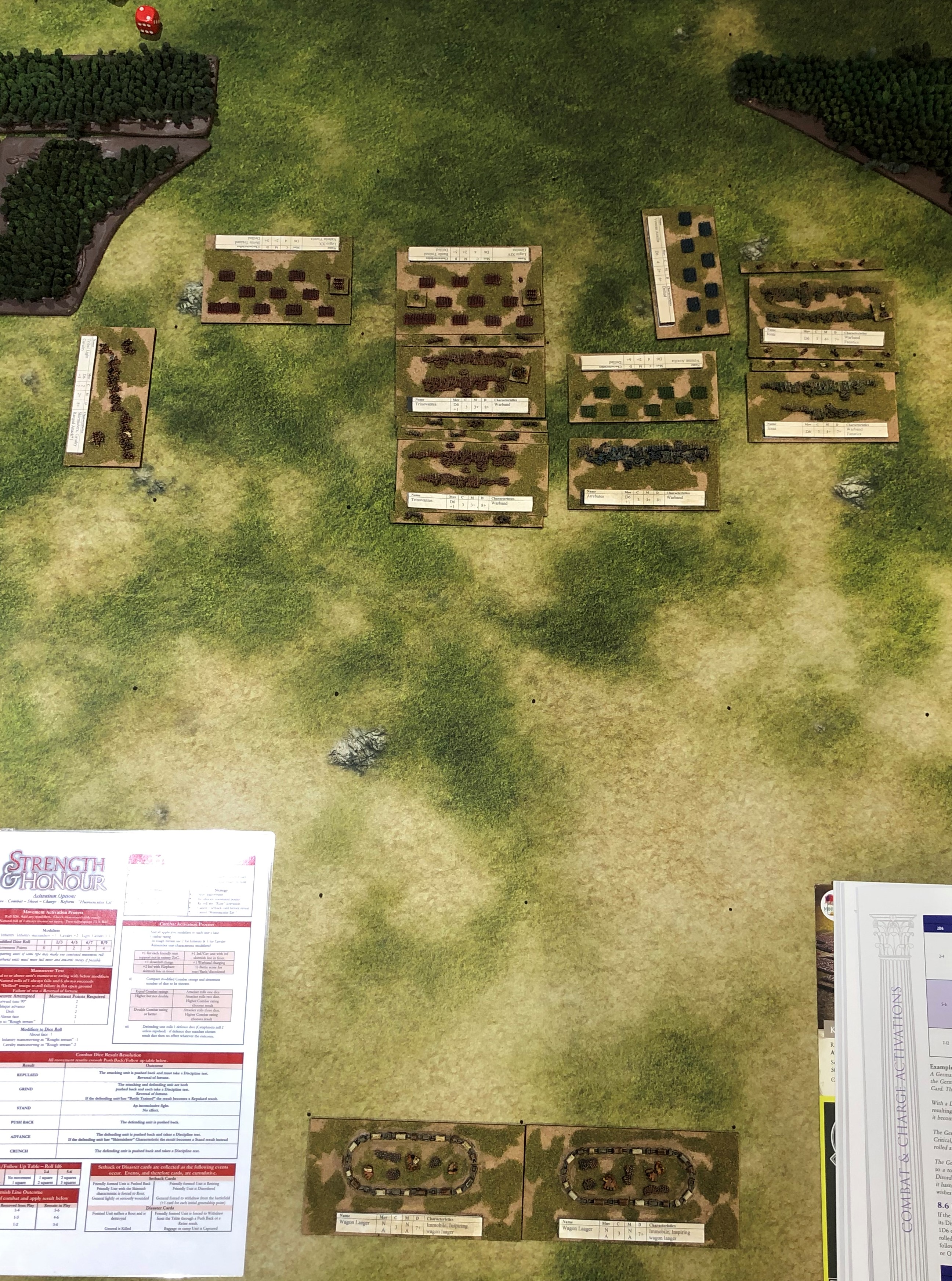
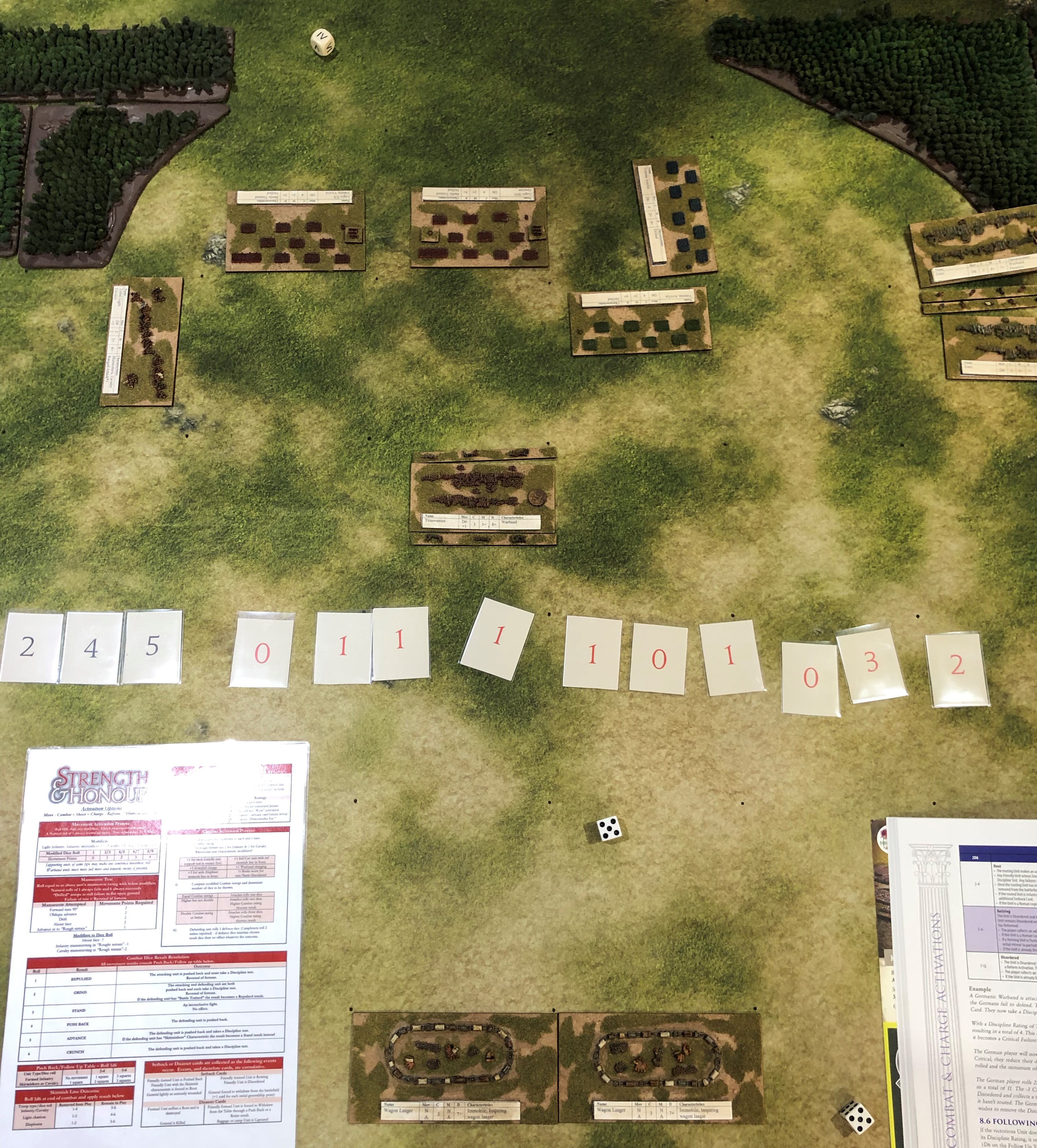
The auxiliaries defeat both the Atrebates who rout and the Iceni who are pushed away into the woods on the Roman right. The legion finally vanquish the Trinovanti, routing the first warband with the other being pushed back. The Romans call Homunculus Est! again and the Britons have to reveal their Setback and Disaster cards. A total of 21 sees them pass their army break point of 18 and lose the battle.
Second game:
We reversed command and played again. The Romans won again in a much tighter encounter. This time the Britons held all of their skirmishers as full units and they tied up the Romans quite badly. Although a legion lost a combat exchange and was disordered the auxiliaries came to their rescue and the Romans pushed the Britons back down the hill onto the wagon laager, and despite having a hand of cards that would probably have ended up losing the game, they got a decisive Homunculus Est! call in and won again.
Thoughts:
The basics of the game are pretty easy and although we forgot a bunch of stuff in game one we still had a good time. Things got easier in game two, especially after we reviewed the playthrough videos on Lard TV. We struggled to get on top of exactly what happens after combat and the finer detail of movements into contact but the videos helped.
Overall the game experience is excellent. You do feel like you are commanding a big army and the mechanics make most decisions important and the order you do things in can really affect the outcomes. Yes the Romans won both times but it was really close the second time and could very easily have been the other way round. The rules feel balanced but the armies play in a nicely asymetric way with different problems to solve for the two commanders.
Celts finished. Ready to play.
The Iceni (mostly green) and Trinovanti (mostly red) are done too:
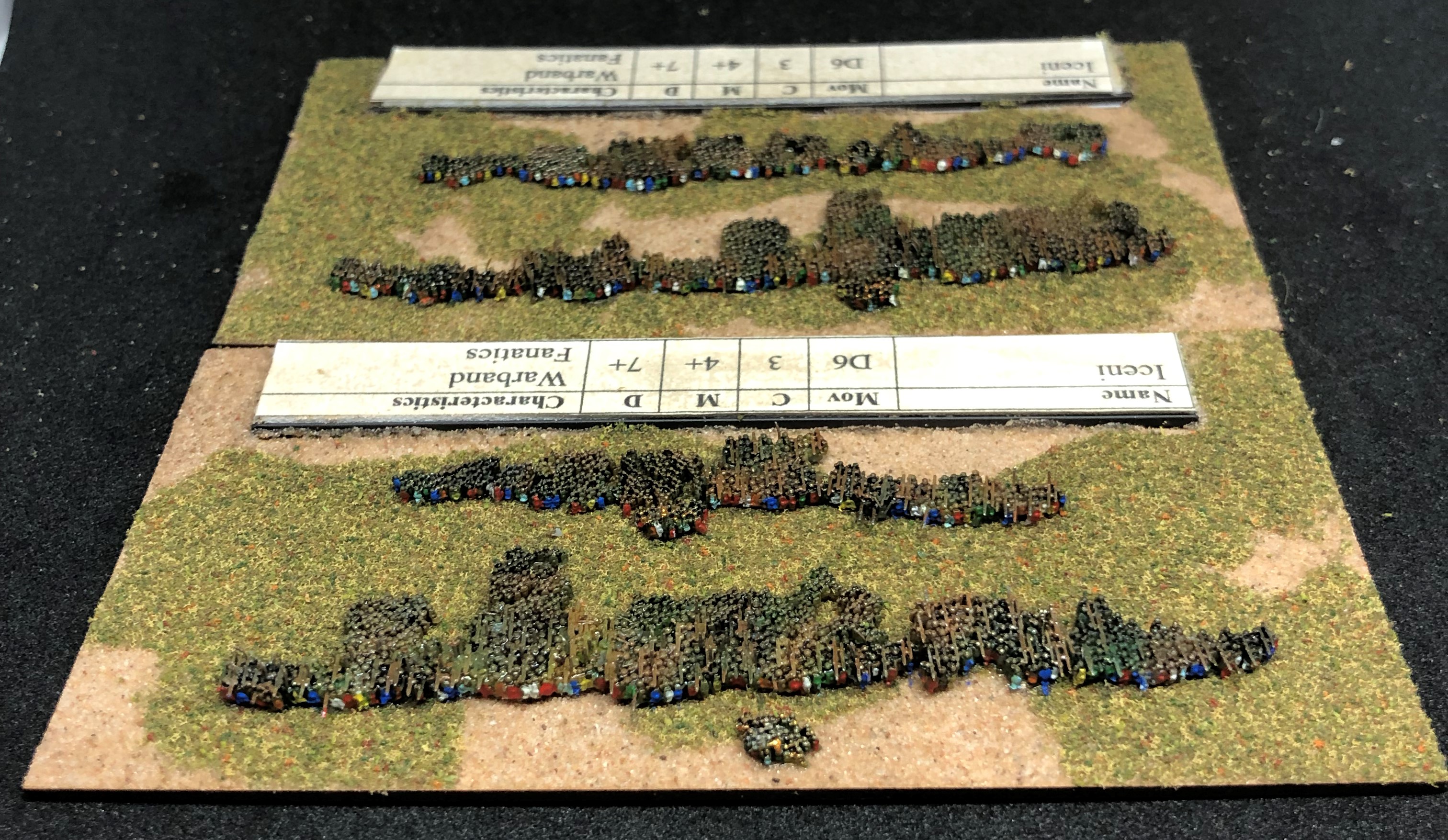
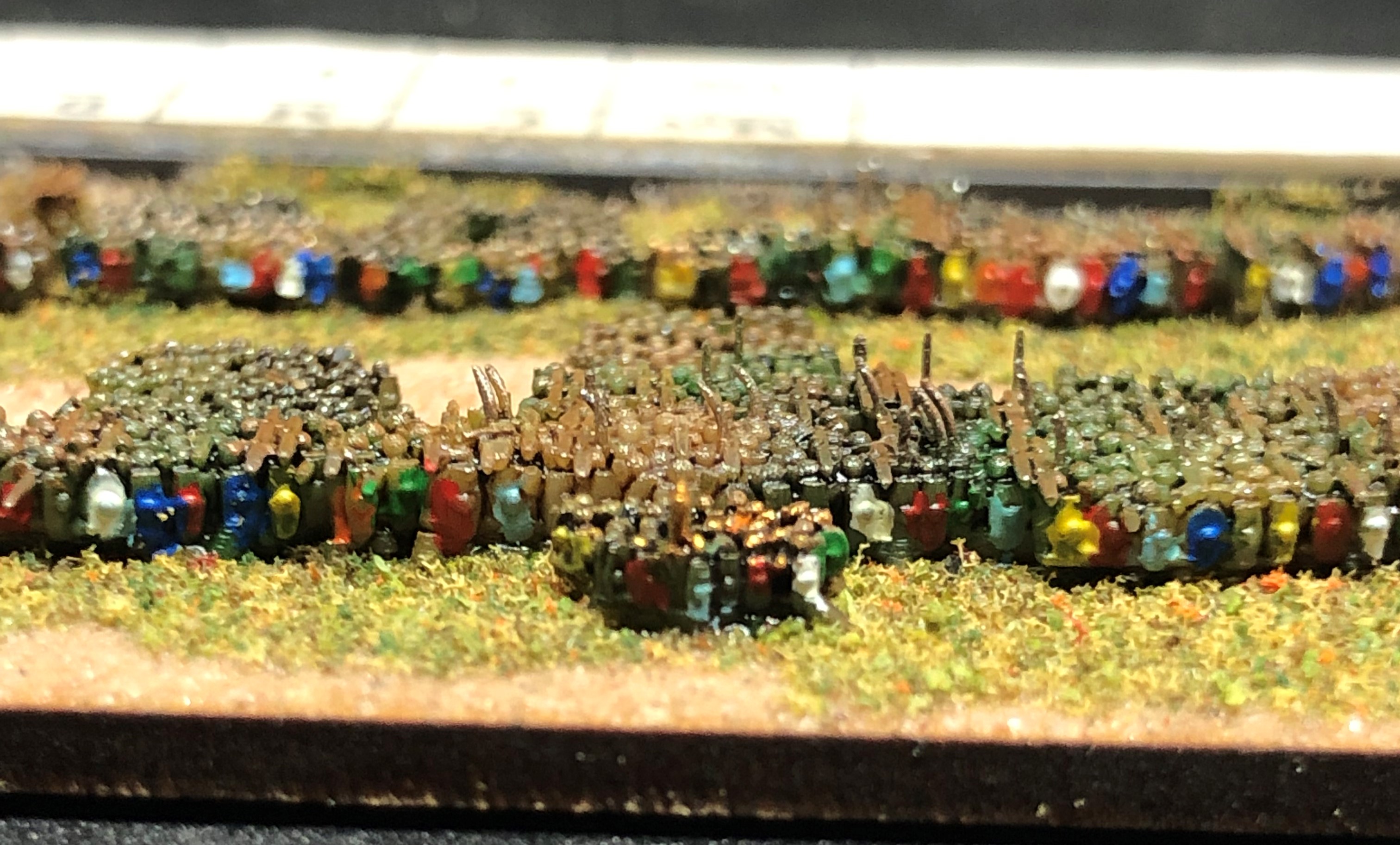

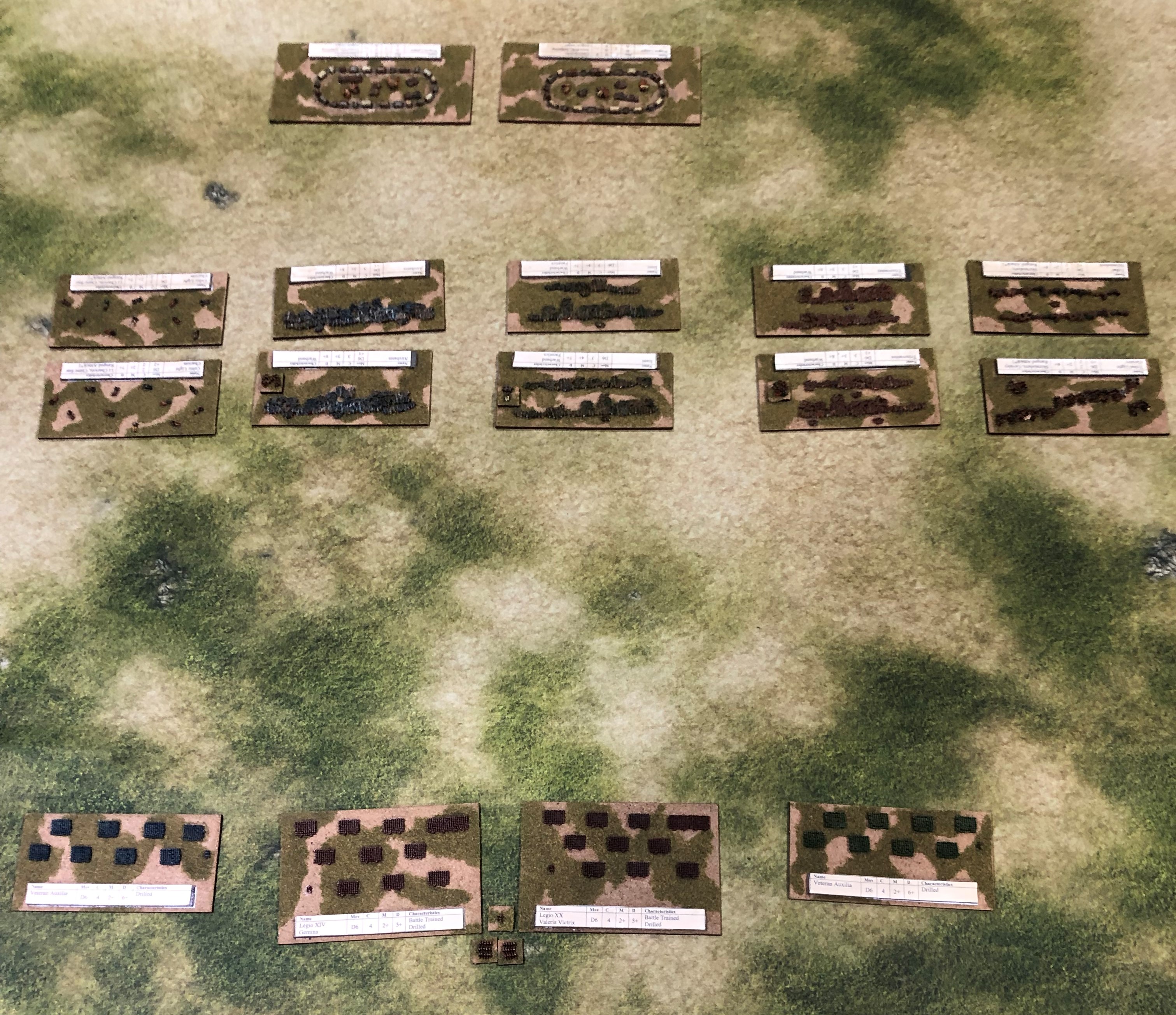
Both sides ready to face off. First game is tomorrow.
Celtic warbands - painting guide
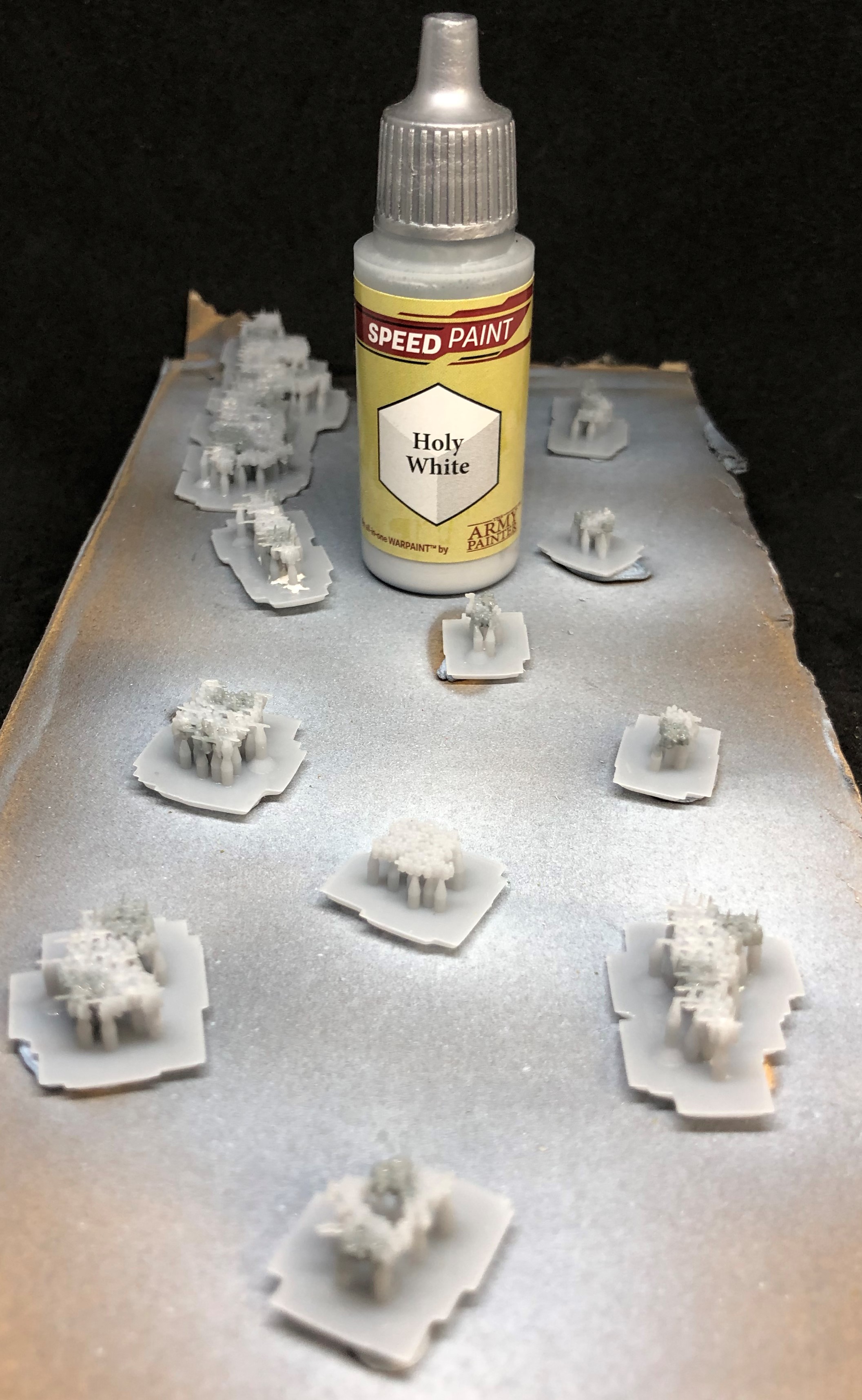
Painting the warbands is a similar process to the Romans but with a broader range of colours. First we take a series of similar colours and paint them in blobs on the miniatures. This is one set which will make up one warband base 60mm x 120mm. These will be Atrebates who I’ve decided to do mostly blue. They will also be put onto their bases in a single mass to emulate the closer fighting style of their continental brethren.
First the clothing colours:

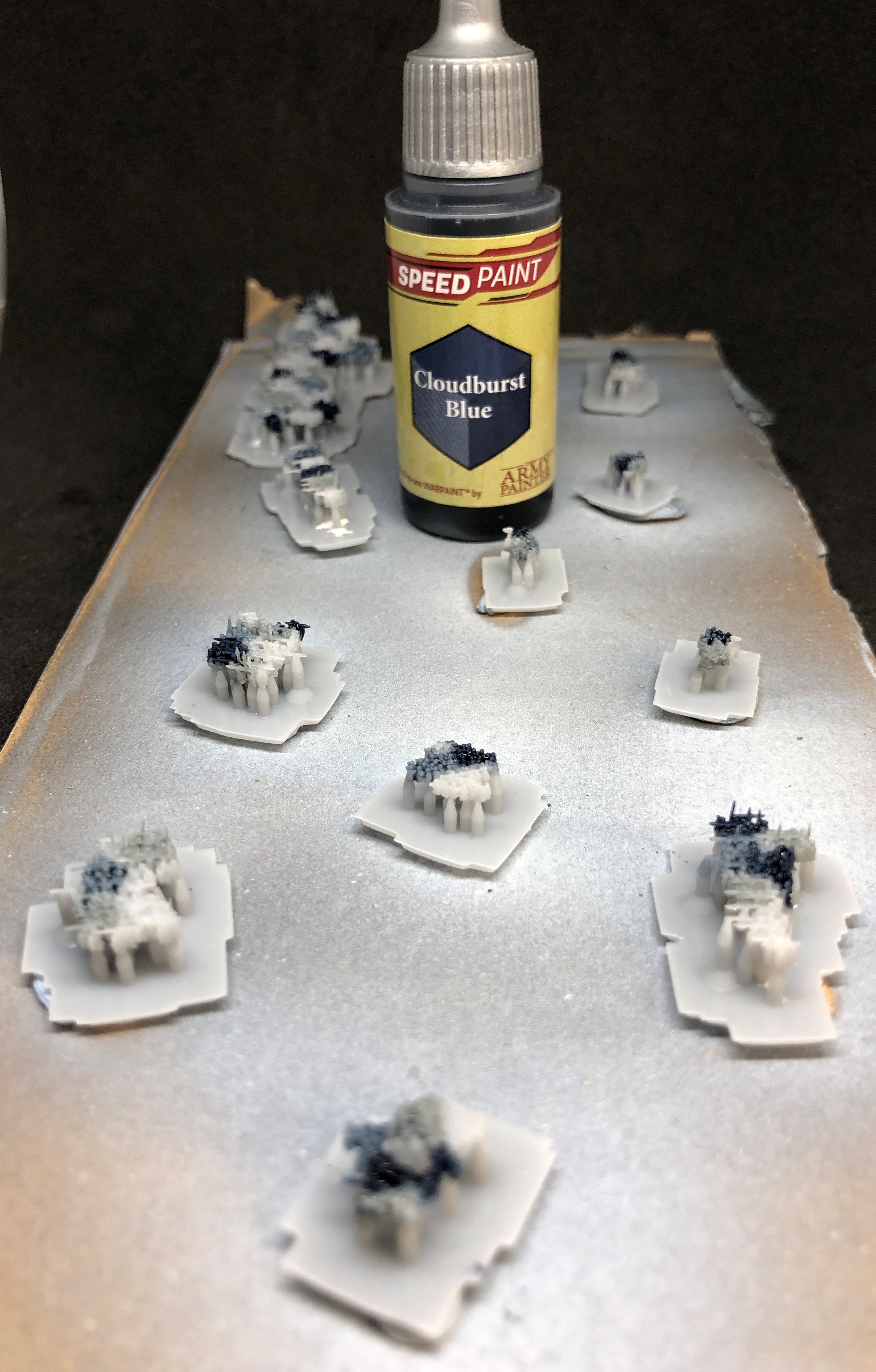
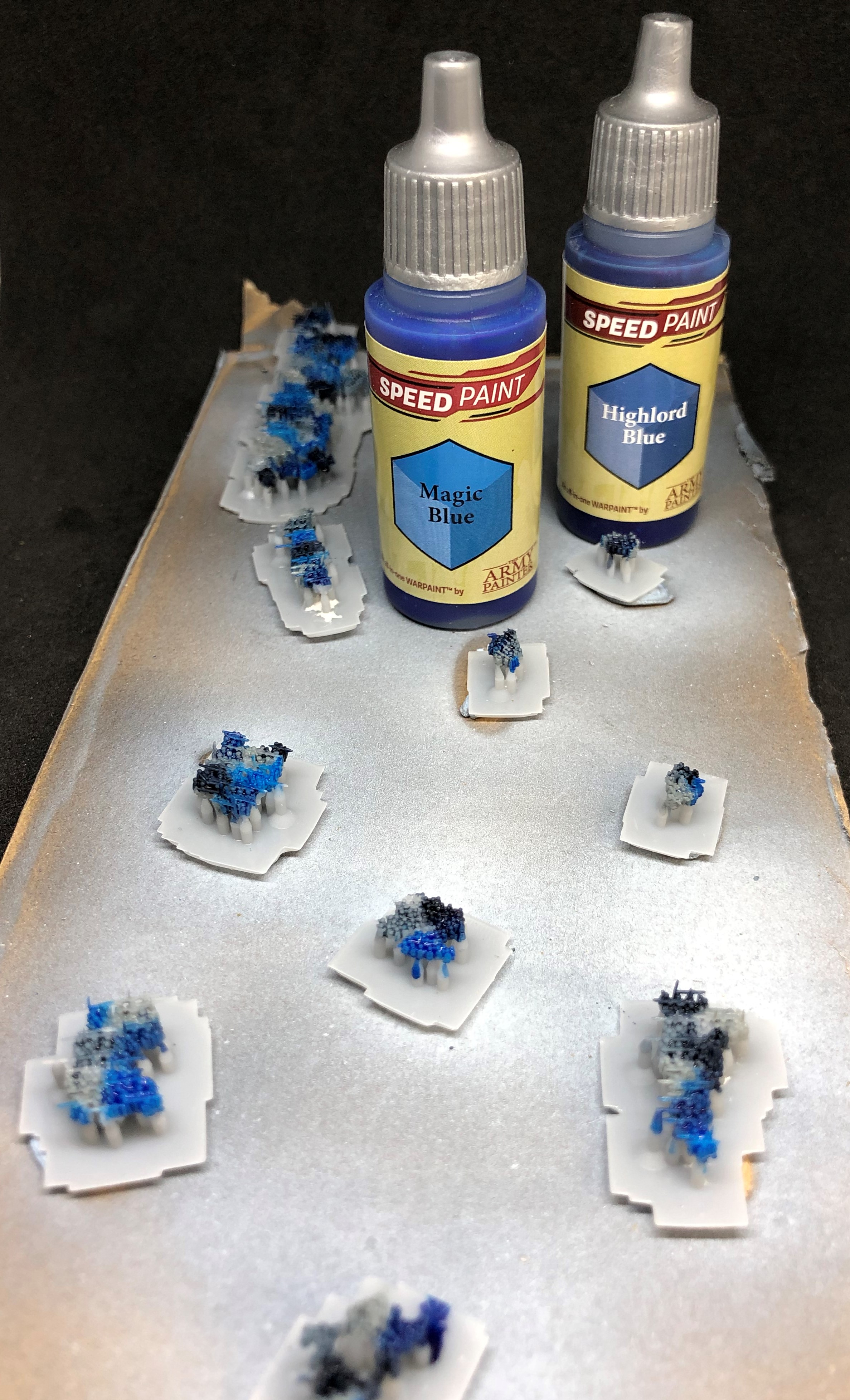
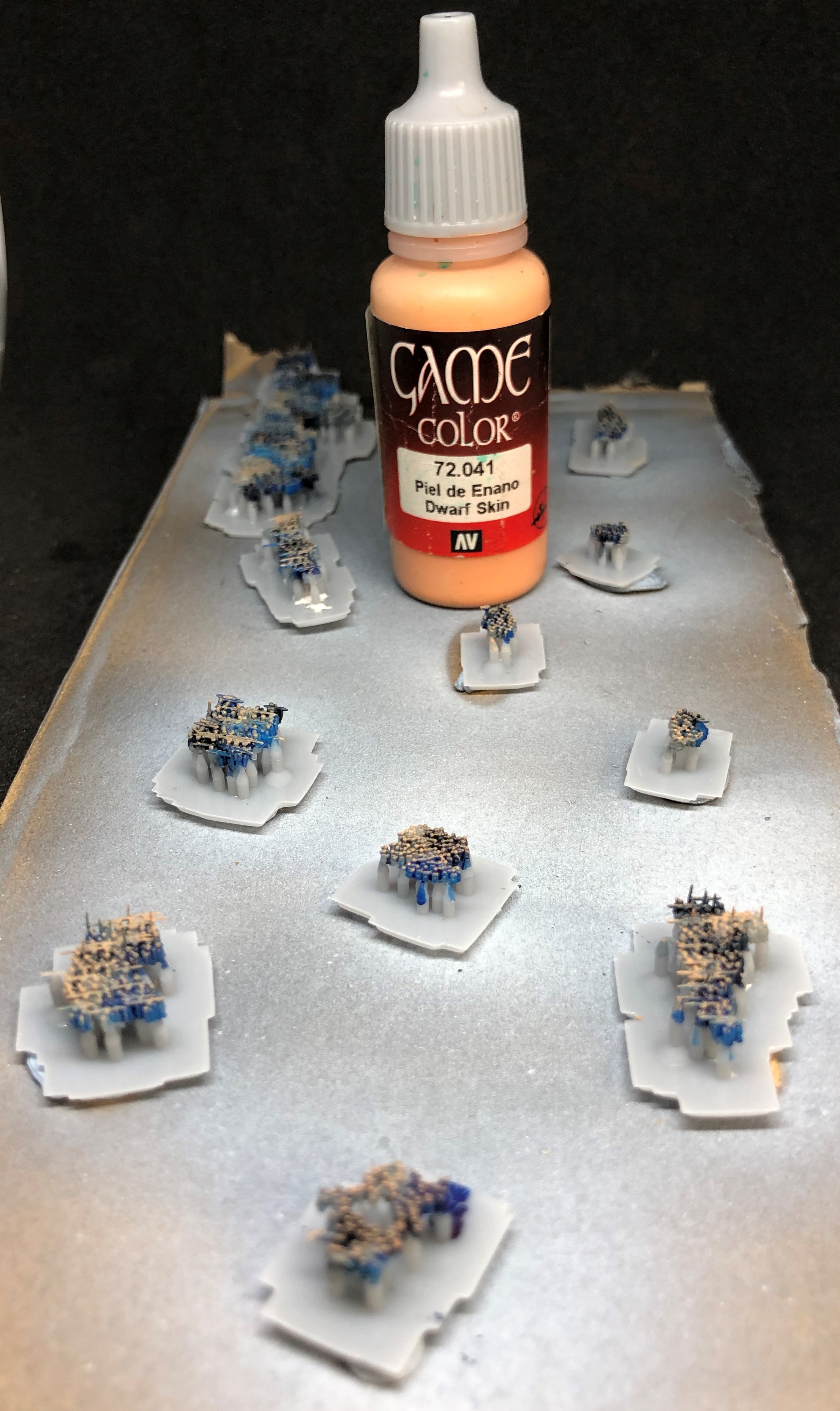
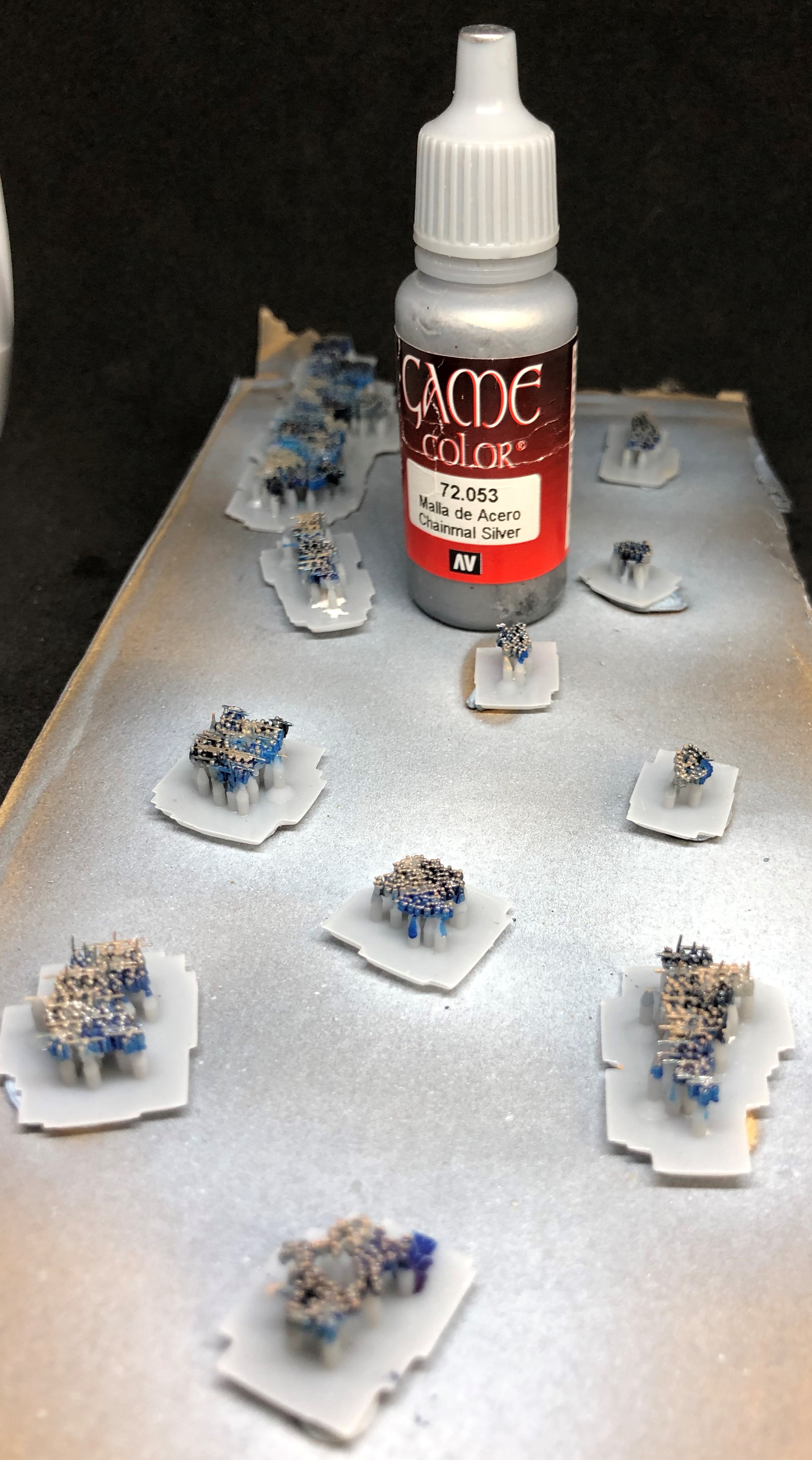
Then the flesh and armour drybrushes. The flesh tone was a much heavier coat than for the Romans and the iron colour was a bit patchier to show not all warriors have helmets or armour.
Next is the spears. Using a narrow pointed brush and with parallel stripes the levelled spears are painted. Then the ones that stick up vertically are covered with a side to side motion.
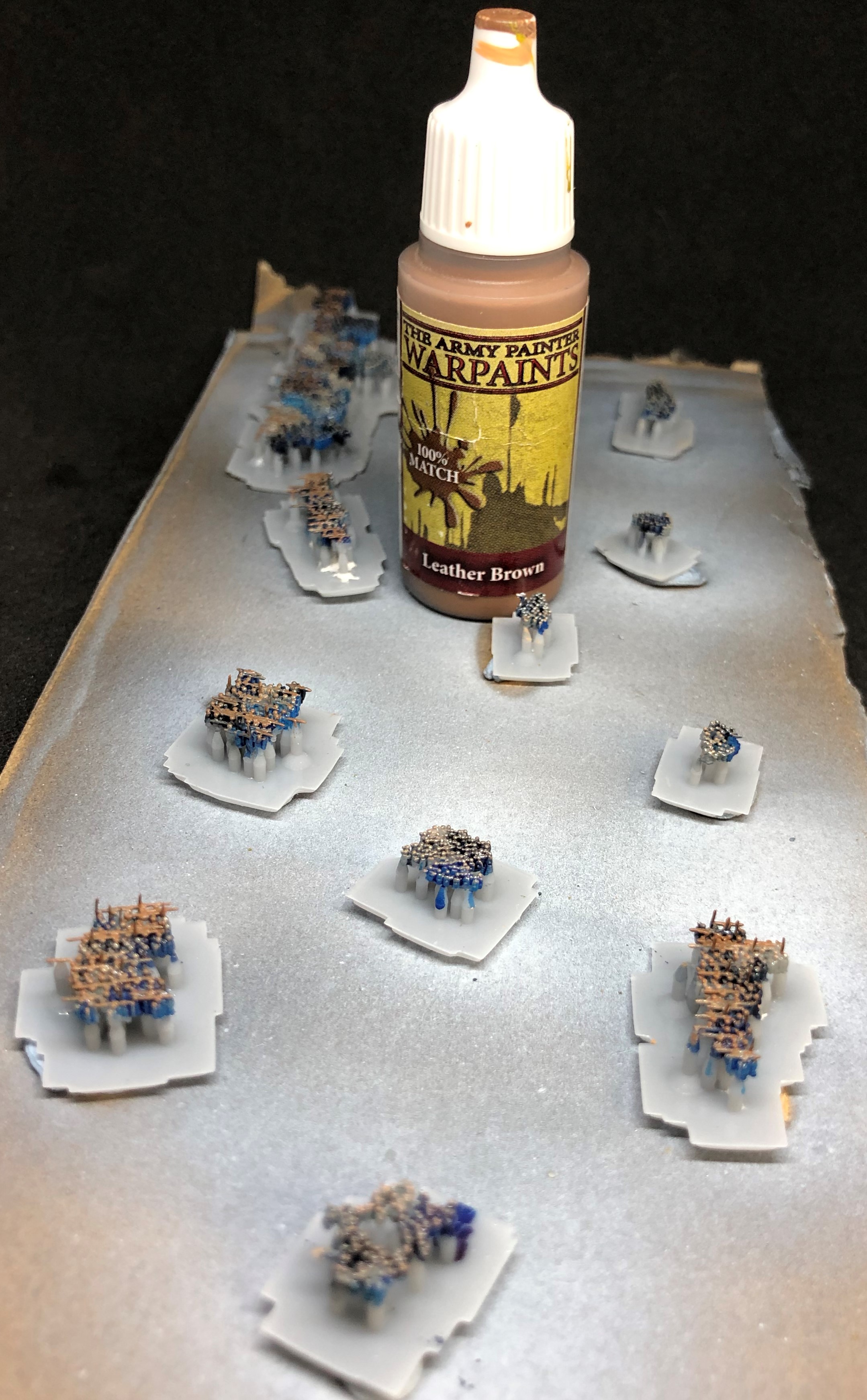
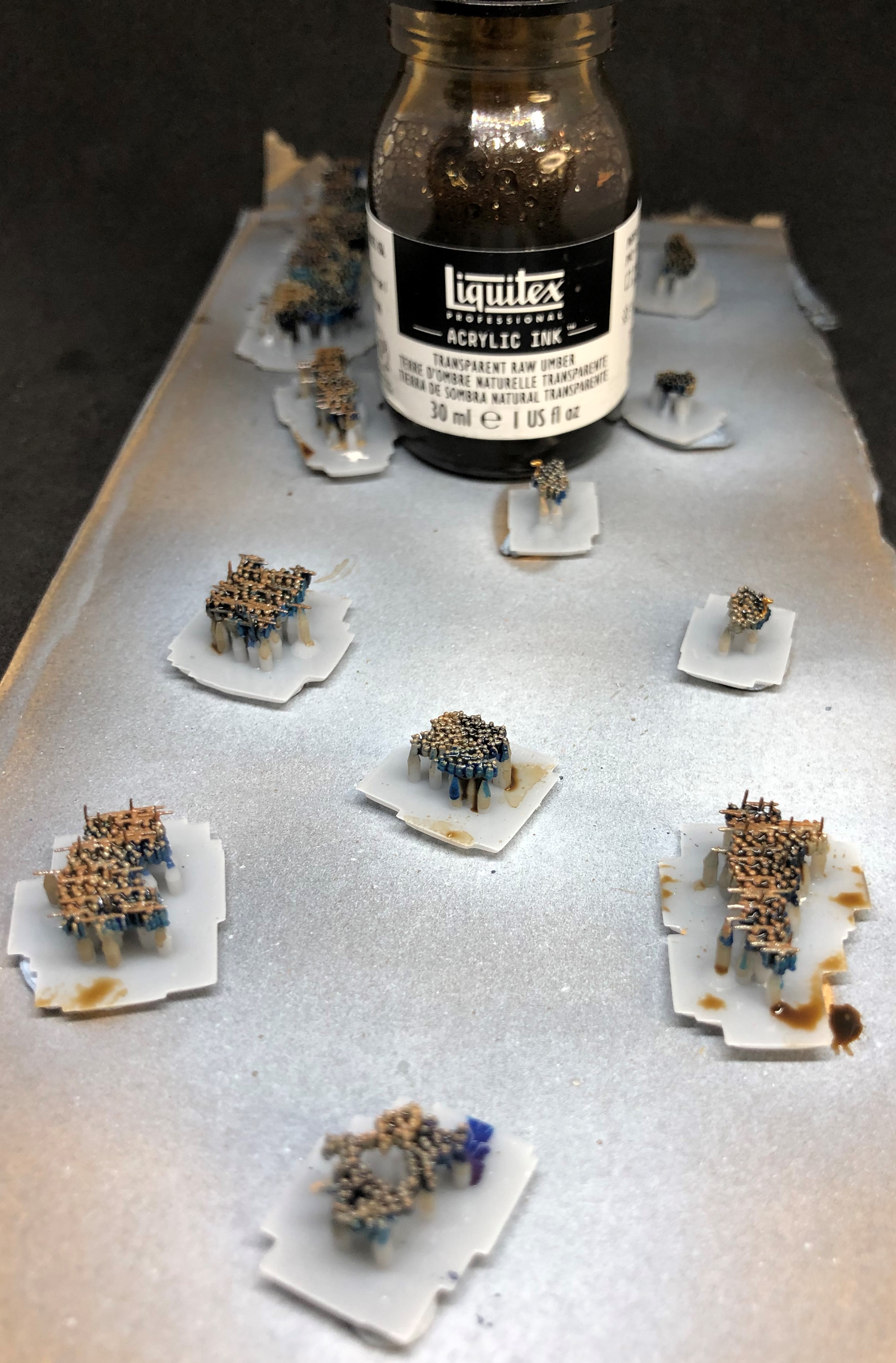
The spear tips are drybrushed again with chainmail silver and a touch of gold picks out the carnyx and a couple of helmets in the command groups. Then everything is washed with raw umber and left to dry.
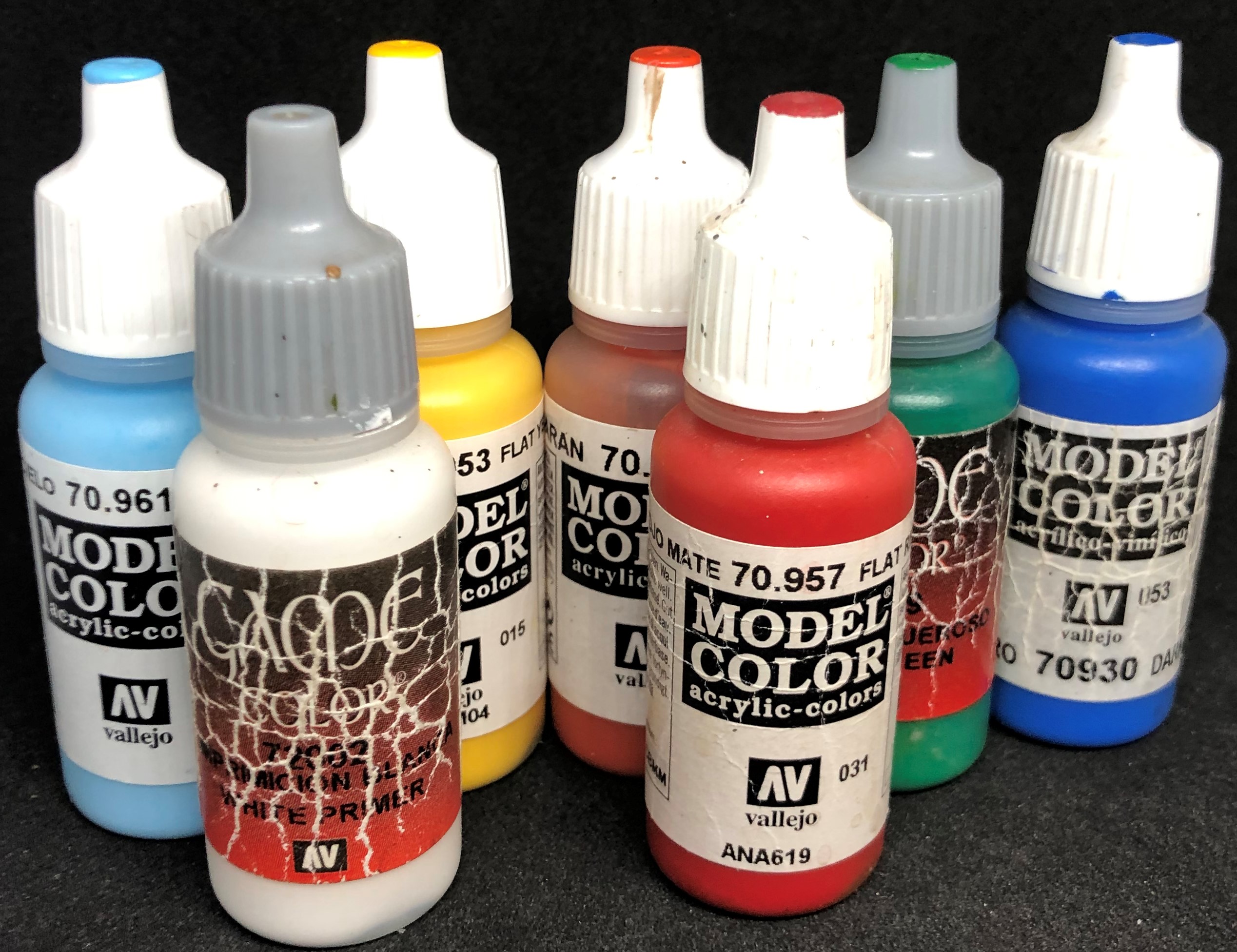
Finally a selection of bright colours are selected and dots applied along the shields at the front of the formation. These are built up one colour at a time until most have a nice bright shield.
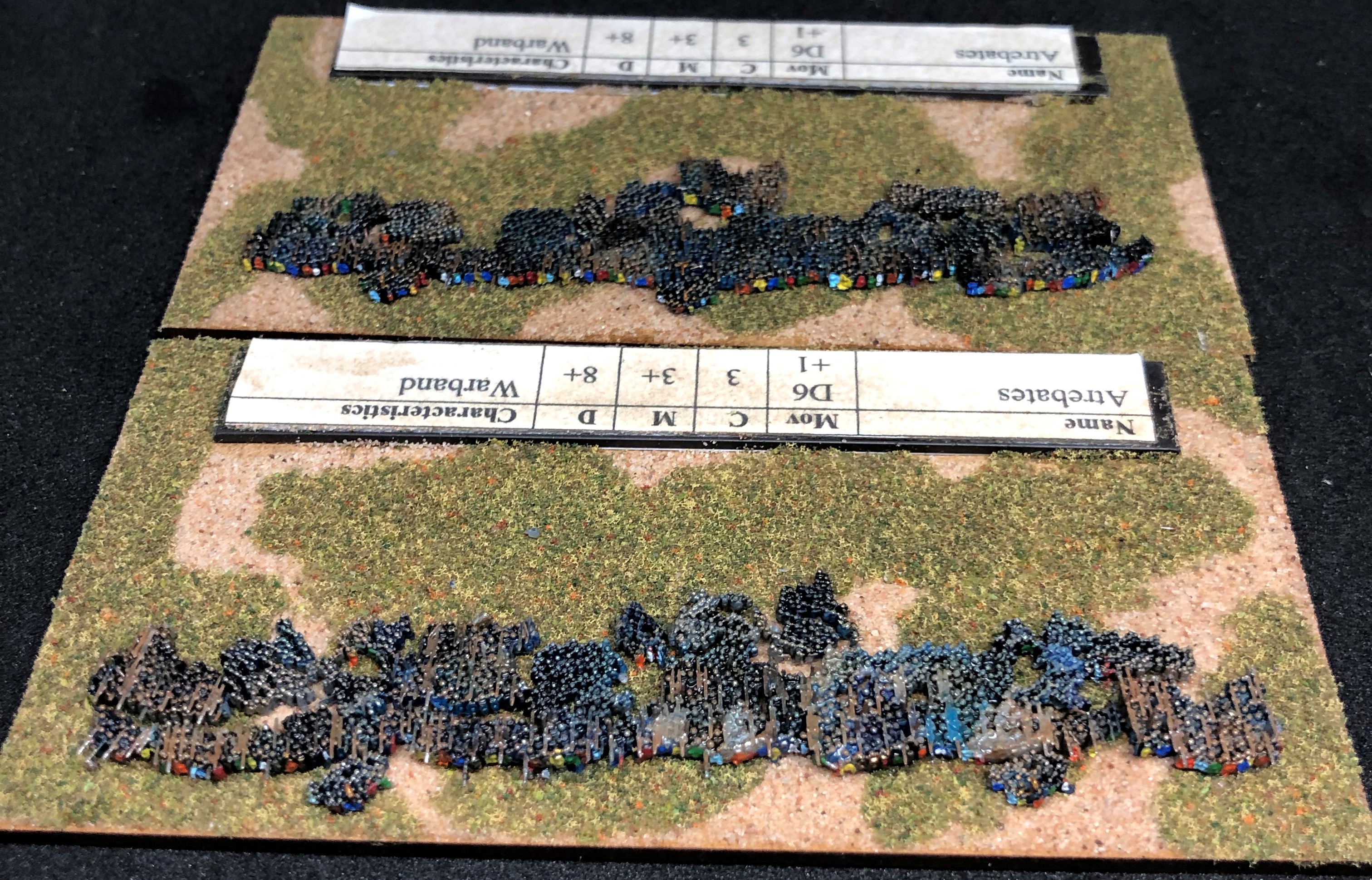
They are finished. Two Atrebates warband bases ready for Watling Street.
Wagon Laagers (and horse scale)
The rules use camps that are active units in the game. For the Watling Street scenario I’m using wagon laagers to represent the camp followers who accompanied Boudica’s army. They were drawn up in a tight mass that lined the Roman road behind the army and created an almost impassable barrier. When the battle turned against the Britons, this trapped their warriors between the advancing Romans and escape leading to mass slaughter. The scenario suggests having one base but I’ve opted for two to provide a longer physical barrier to any retreating Britons.
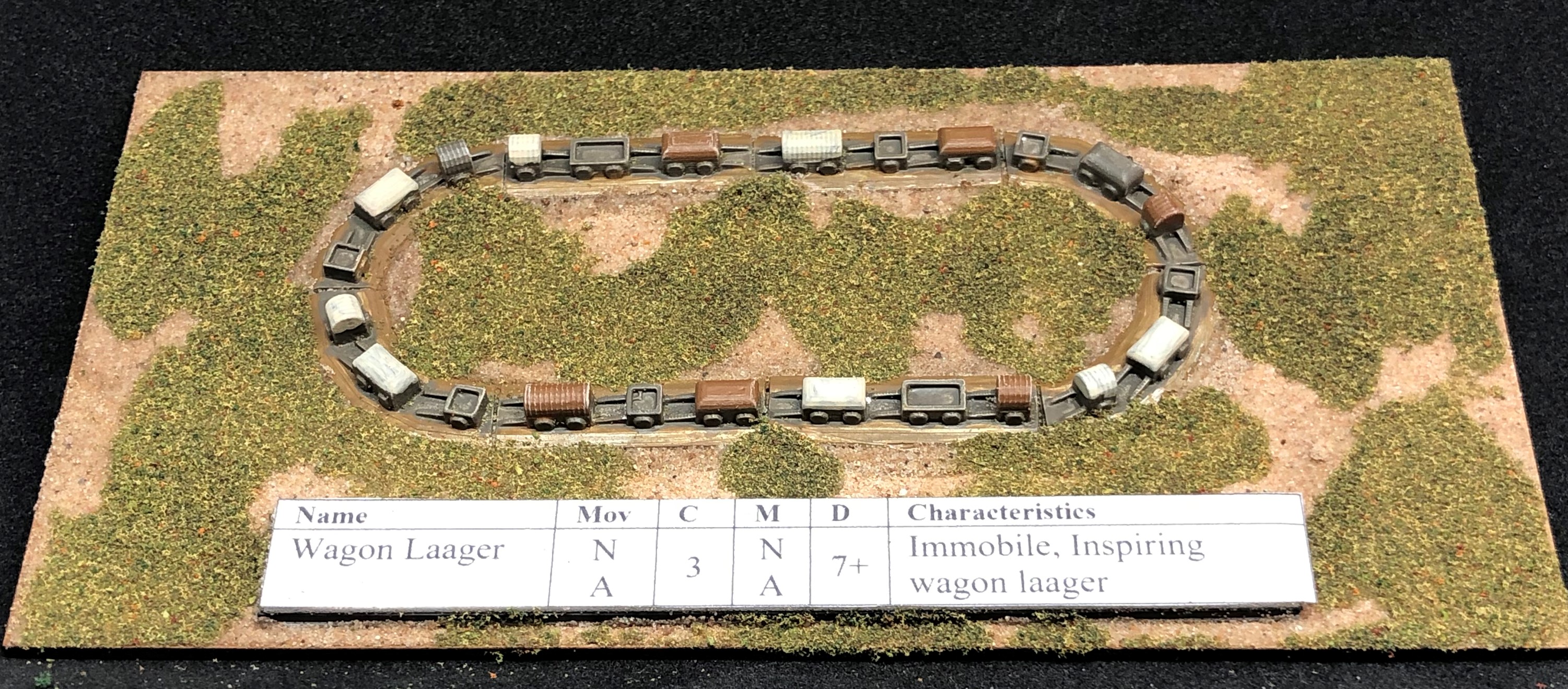
Started off sticking the wagon bases onto a flocked 50mm x 150mm base. These were undercoated in Vallejo Concrete. Then the canopies were painted either leather or canvas (white). Miniatures are metal from Antonine via Warbases. One pack provides enough wagons, horses and camp followers for a single base like this.
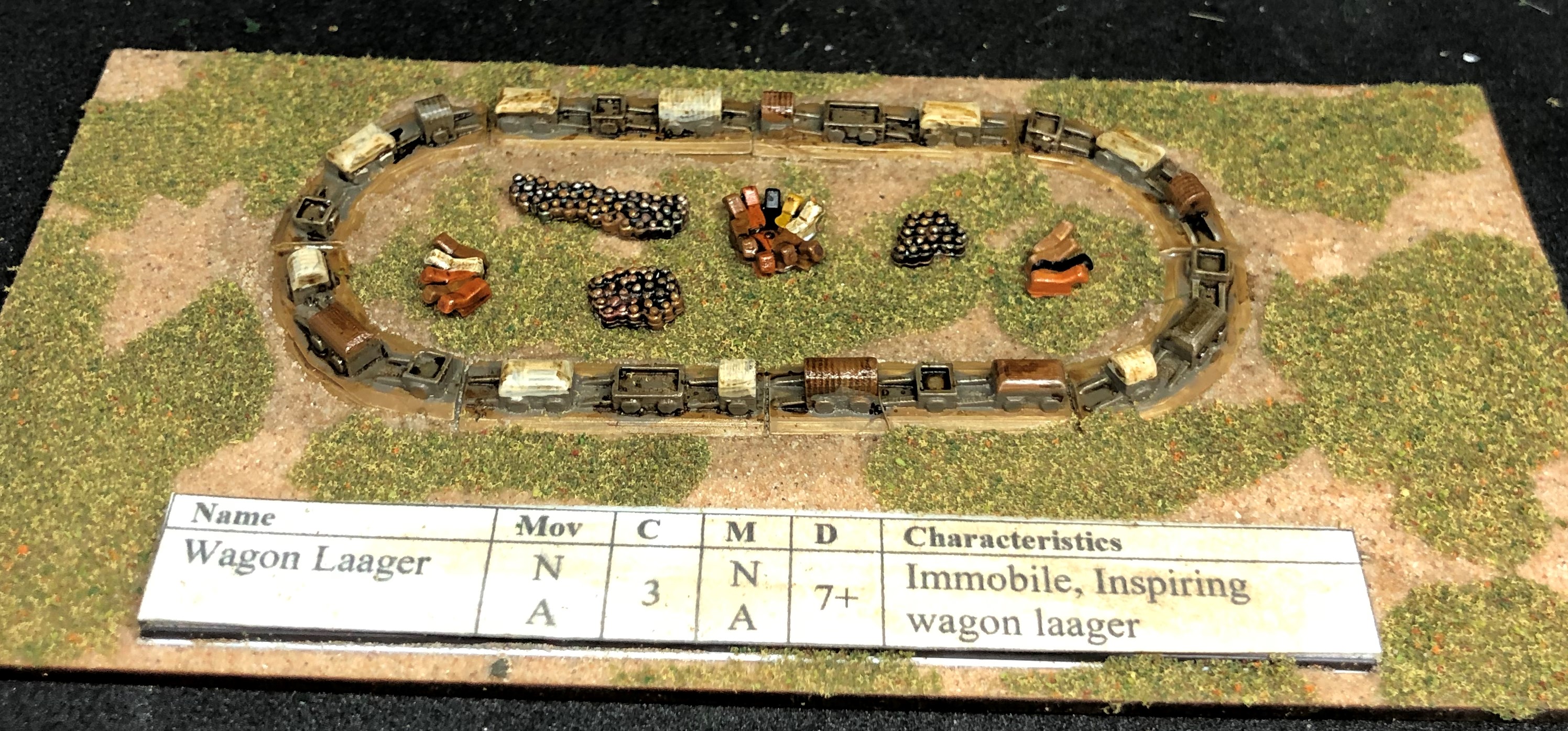
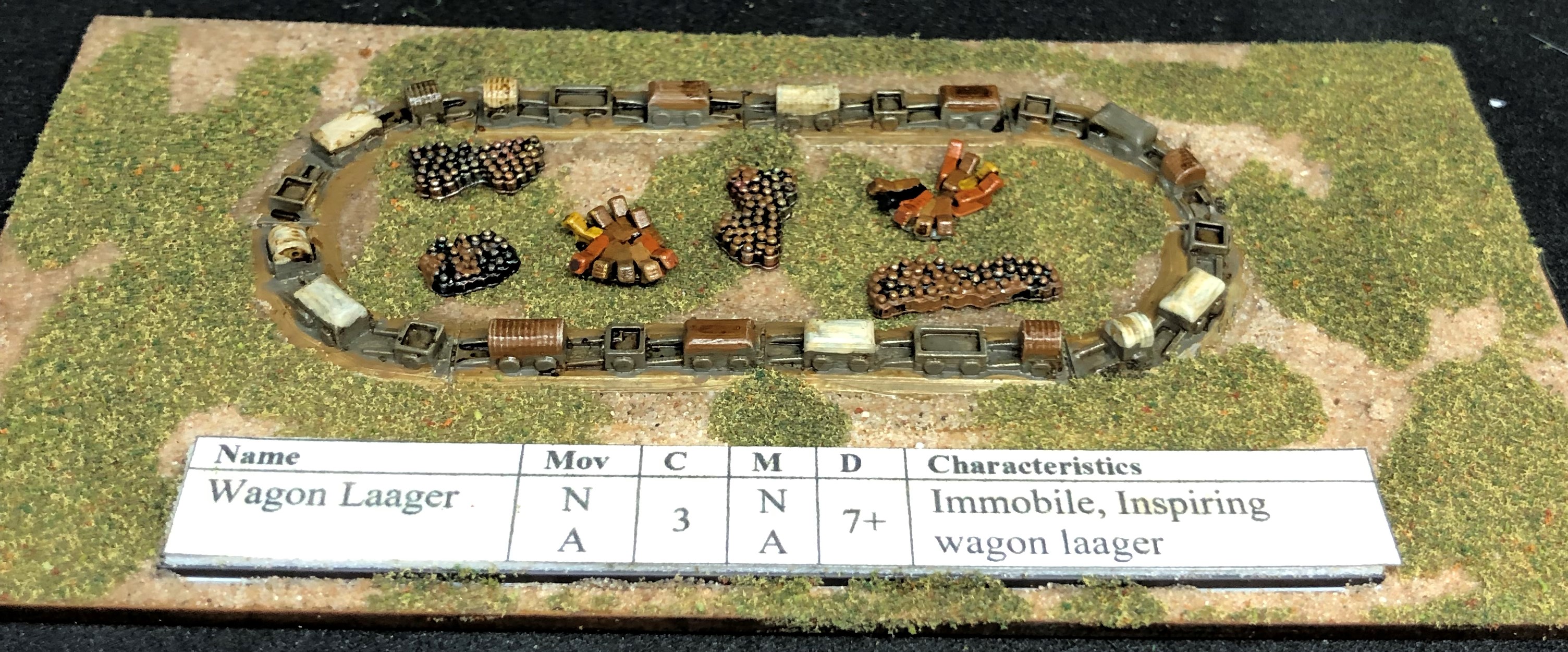
The horses and camp follower bases were painted separately and then stuck down and everything was given a raw umber ink wash.
The horses from these Antonine sets are HUGE. They are more than double the volume of the 3D printed horses being both taller but also much wider. They are at least 3mm scale and maybe a bit bigger and aren’t particularly naturalistic proportionally. That said they only need to give the suggestion of horses from the gaming distance and they manage that perfectly well.
It does show that it won’t be possible the mix the 3D prints and the Antonine on a single base, or possibly even in adjacent bases in an army. I’m happy with the Antonine camp sets but will stick to 3D prints for the armies.
Chariots! And a word on painting tiny horses
Celtic chariots are done. The Project Wargaming files have 4 variants and when colours of the horses are mixed about we get good variety.
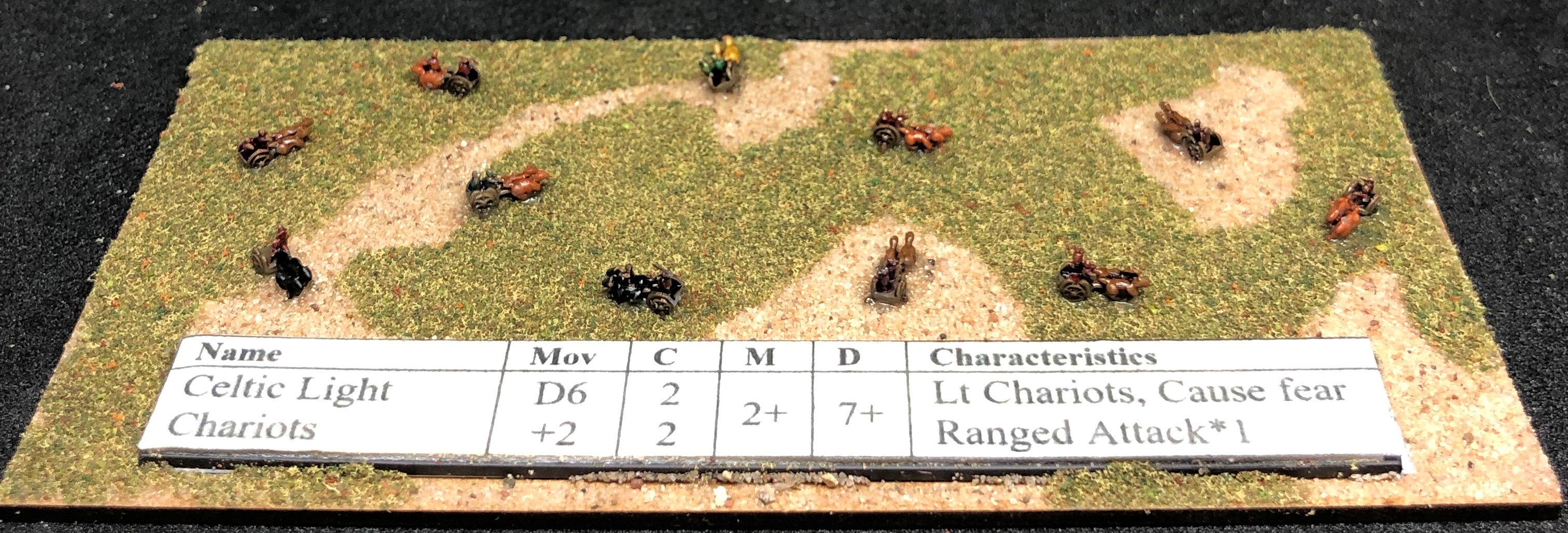
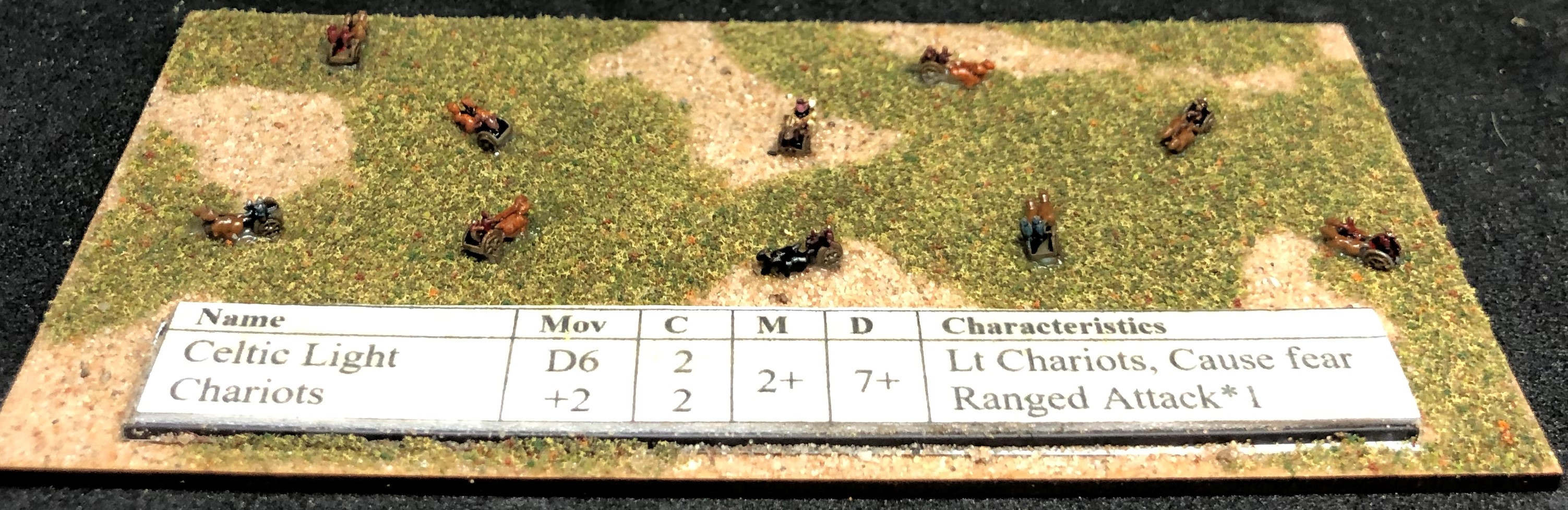
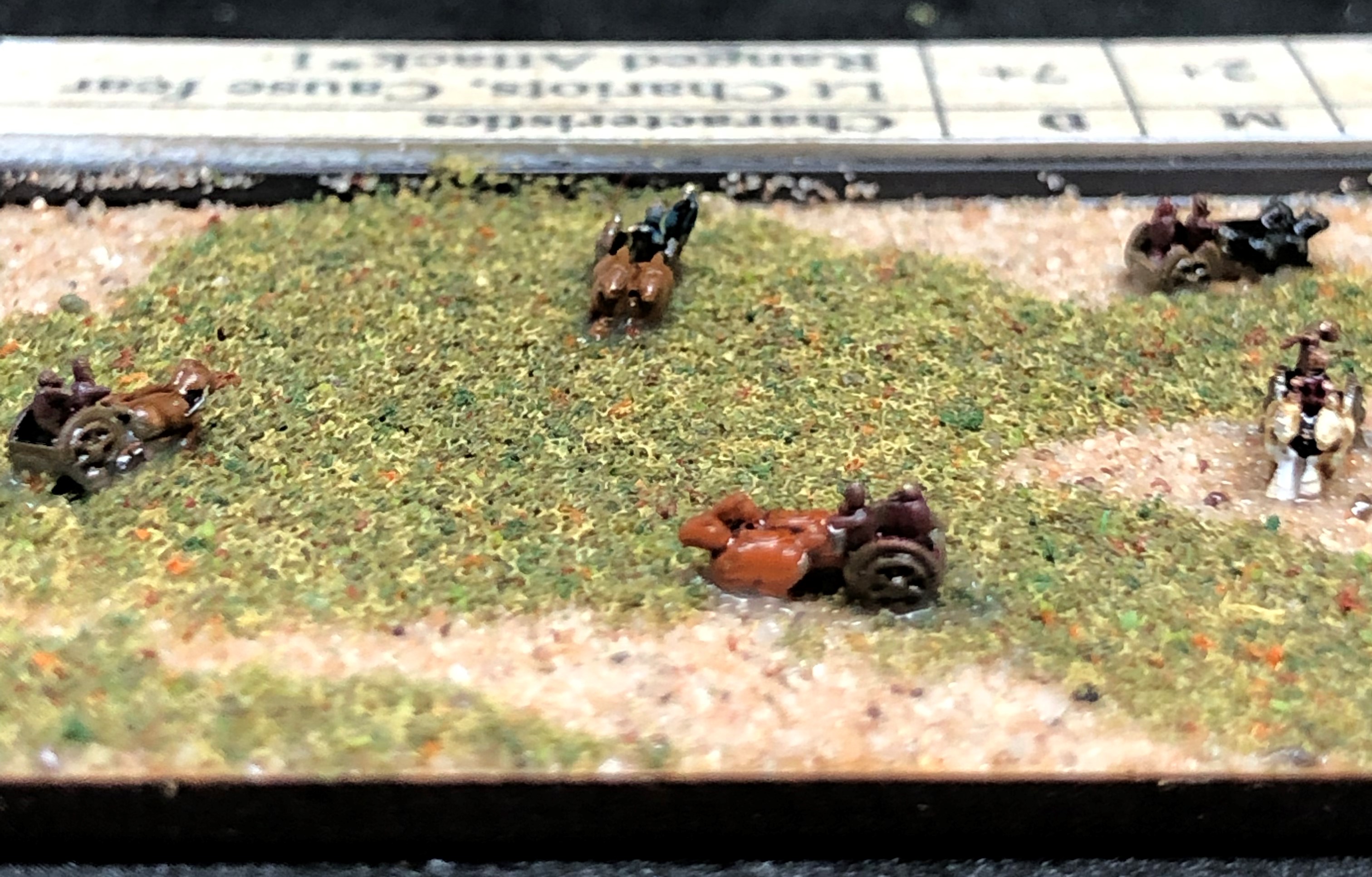
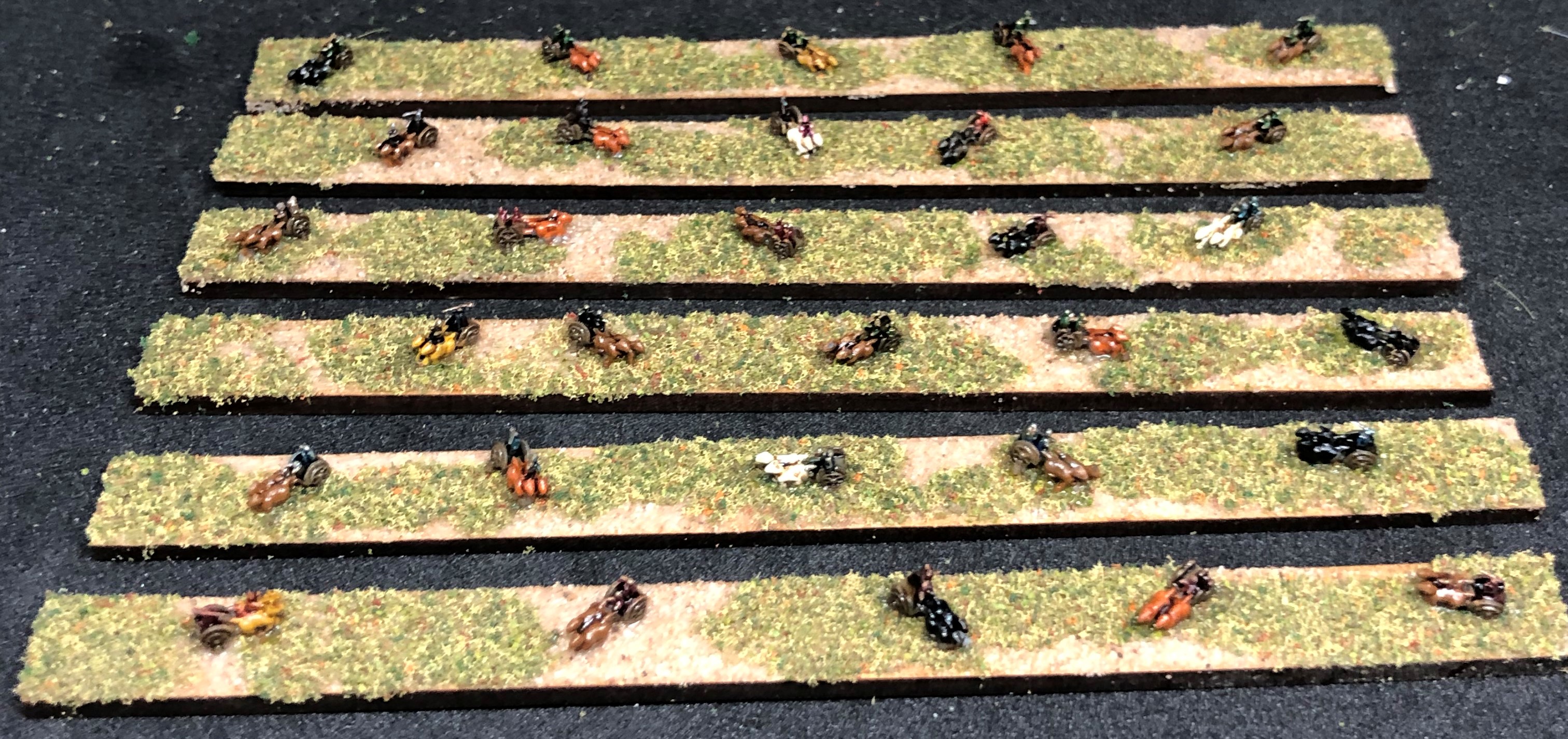
Two Celtic light chariot bases. Just like the light cavalry these can be broken down at deployment into skirmish lines that attach to other units. Light chariot units split onto three bases, hence the six 15mm x 75mm bases from Warbases.
I find horses pretty straightforward to paint under normal circumstances and in 2mm they need a bit of care to make sure they look okay.
Here are the basic colours:
 Horse colours grey, dun, chestnut, bay, black.
People seem to struggle getting the right colours on horses. Horse colours are a combination of the skin tone and the colours of the hair in their coat. There are complex ones with different hair colours mixed together in the came coat. We aren’t bothered about any of that though. We need the most prominently visible colours and the most common are:
Grey (from nearly white to a fairly dark grey colour)
Dun (a dull yellow or khaki coulour)
Chestnut (a orange red to reddish brown, mane and tail a lighter colour than the coat)
Bay (same coat colour as chestnut but with black points i.e.mane, tail, ears, lower legs)
Black (solid black coat)
These are the predominant colours and although many specific breeds have a general colour type you’ll see all of these colours in most breeds, especially chestnut which is a recessive gene and the most common colour. Almost all horses have some white on them, usually on their face and leg/s.
Coloured horses (mixed colours, usually in patches) also known as paint horses for you Americans, are also remarkably common, especially in cross-breeds.
In 2mm we can stick with single colours and don’t have to worry about different coloured points, manes and tails. Chestnuts and bays are the most common and then probably dun (a more common colour in ancient horses as this most common in the foundation breedstock). Grey and black were rarer so used more sparingly. The charioteers reportedly used paired horses, probably very close in colour so they were all painted as matched pairs. Ther light cav were done with blobs of different colours next to each other. Here is what they look like after the horse colours go on:
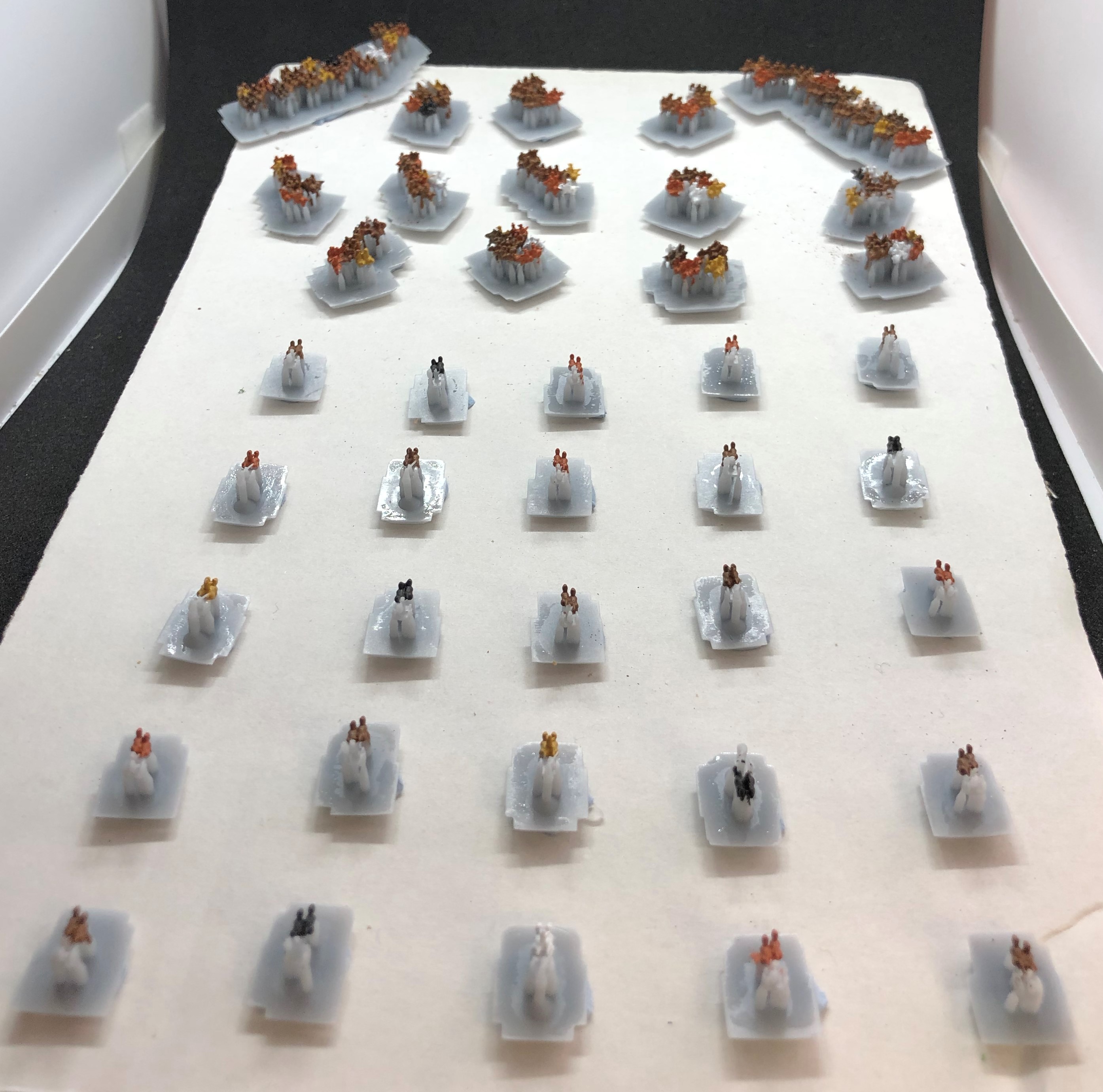
Chariots were painted in Vallejo concrete which looks ace after the raw umber wash. For the riders and chariot crews a range of different colours were blobbed on, in different patches to the horse colours. Here’s what was used:

Once dry everything got the raw unber ink wash described in the Roman painting guides. Fin.
Commanders, Cavalry and a Camp
Finished off a few sets of bases. First the commanders, who are accompanied by two small cavalry reserves who are additional options in all of the army lists and the Roman ones are needed in the Watling Street scenario.
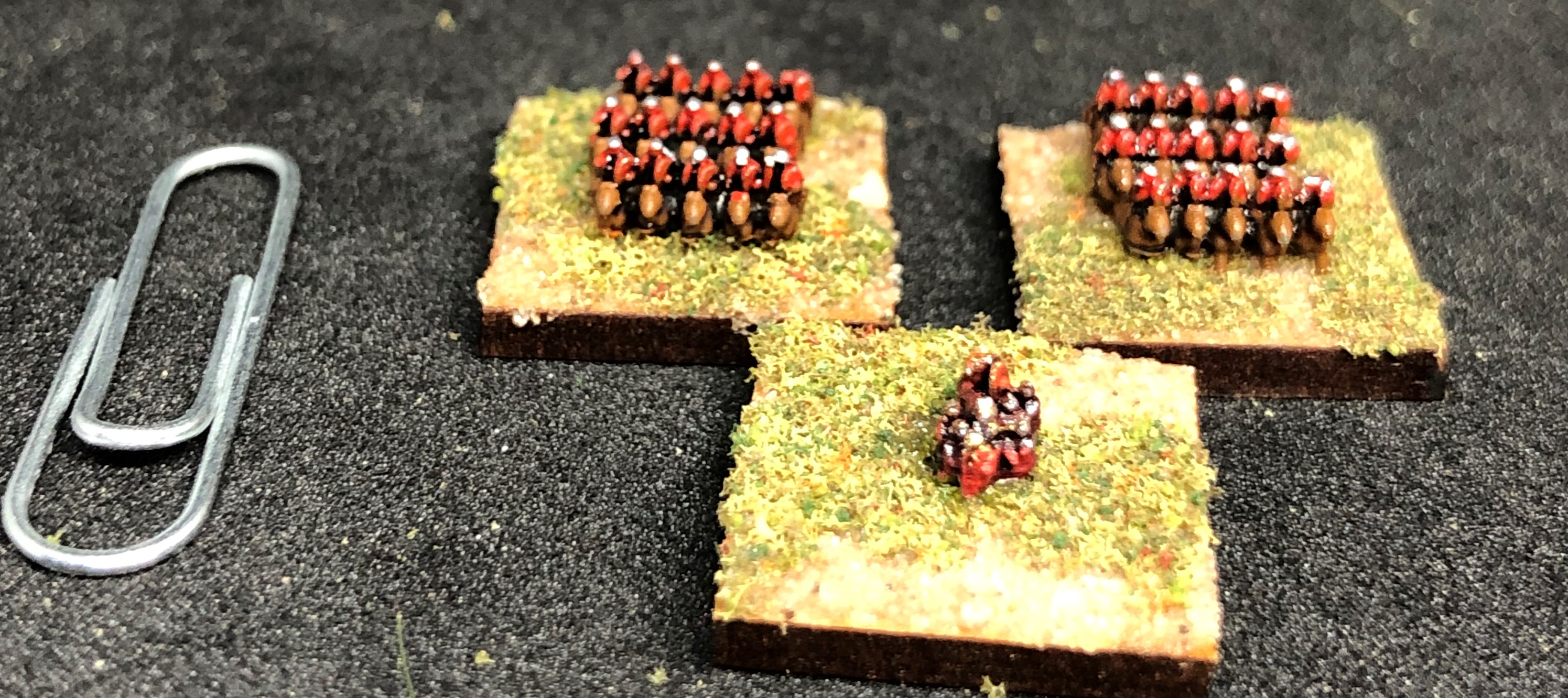
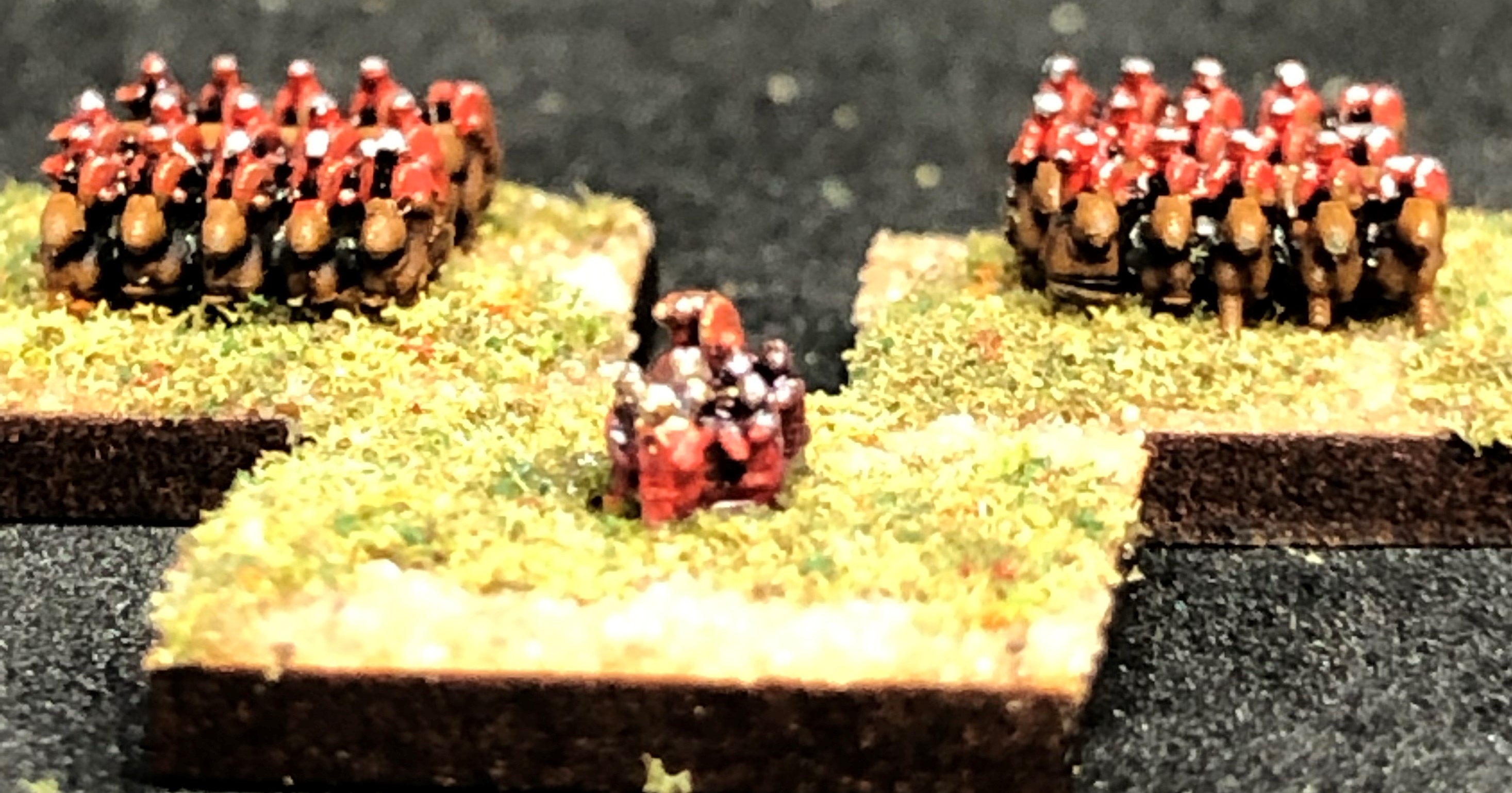
Looking at that close up I think the general’s head has come off. Oh well, Can’t see that detail in play so no problem. Next the Celtic leader and small cavalry reserves.
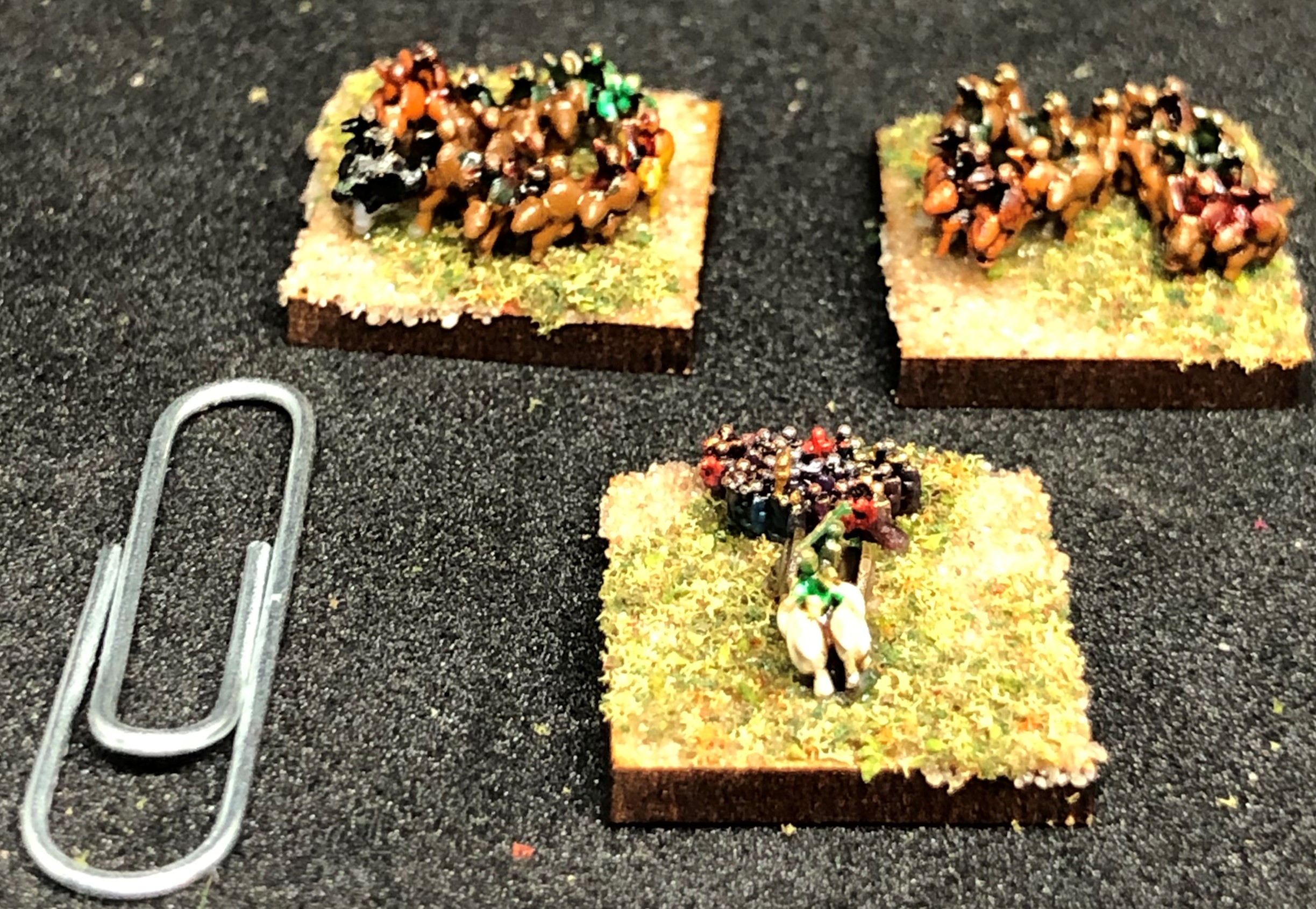
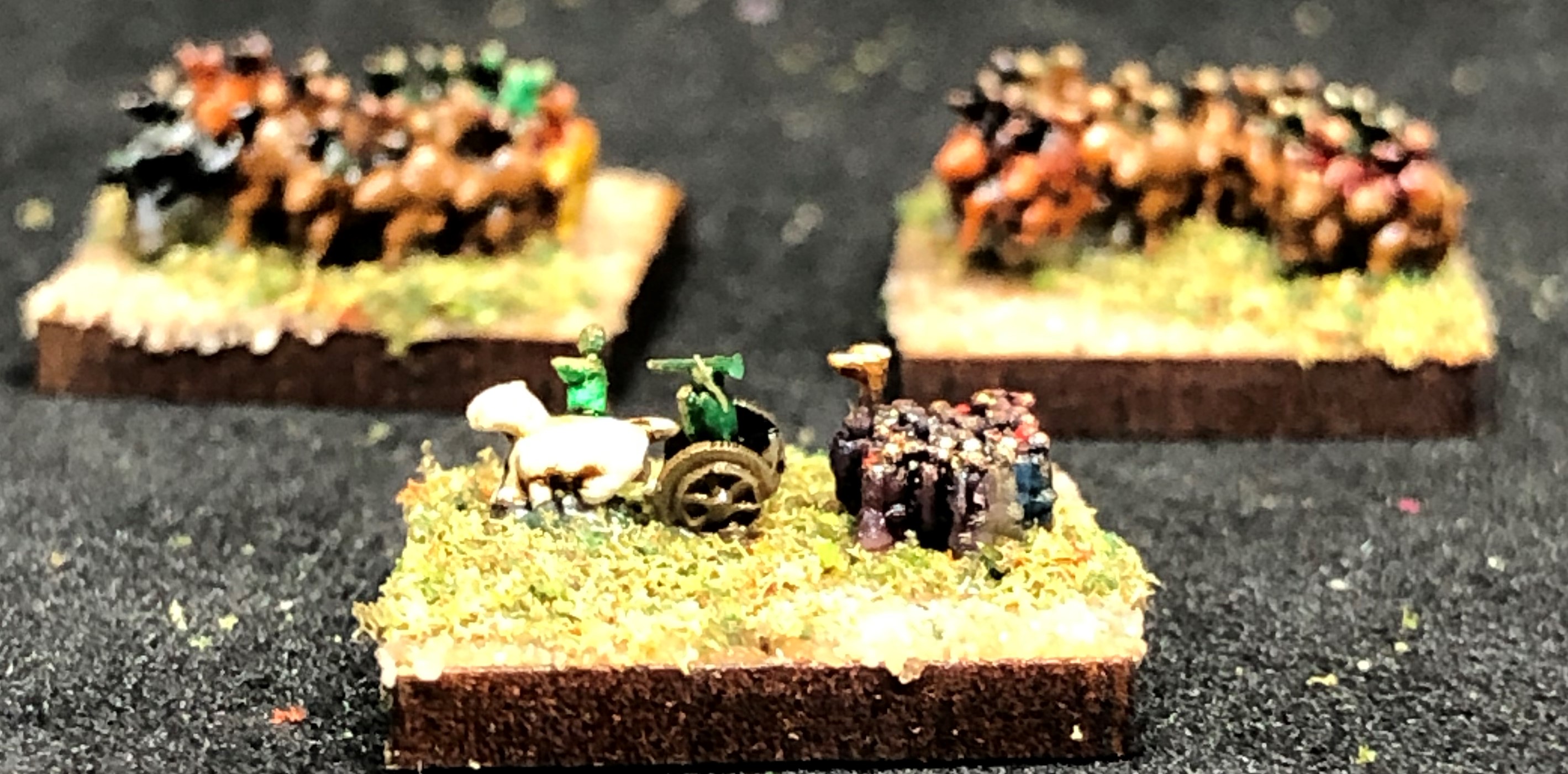
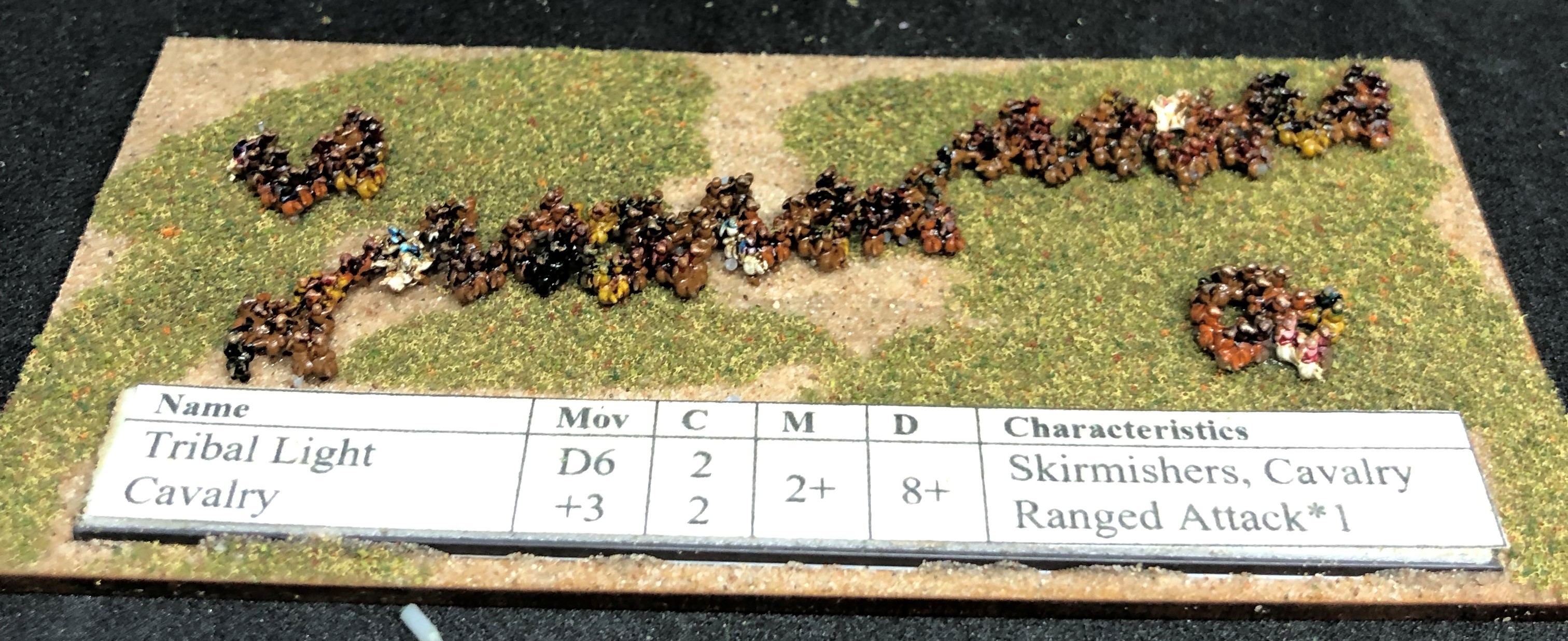
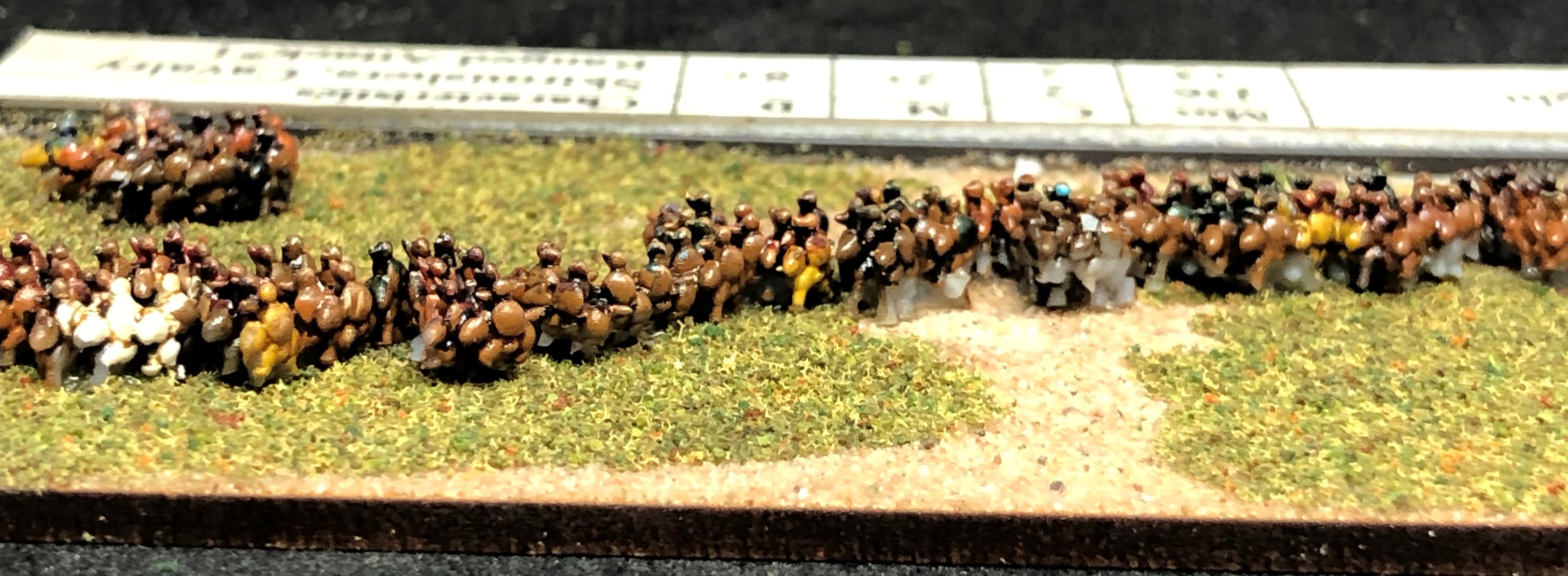
Tribal cavalry are done. One base and then the four skirmish bases they break down into if deploying as skirmishers attached to other units in the force.

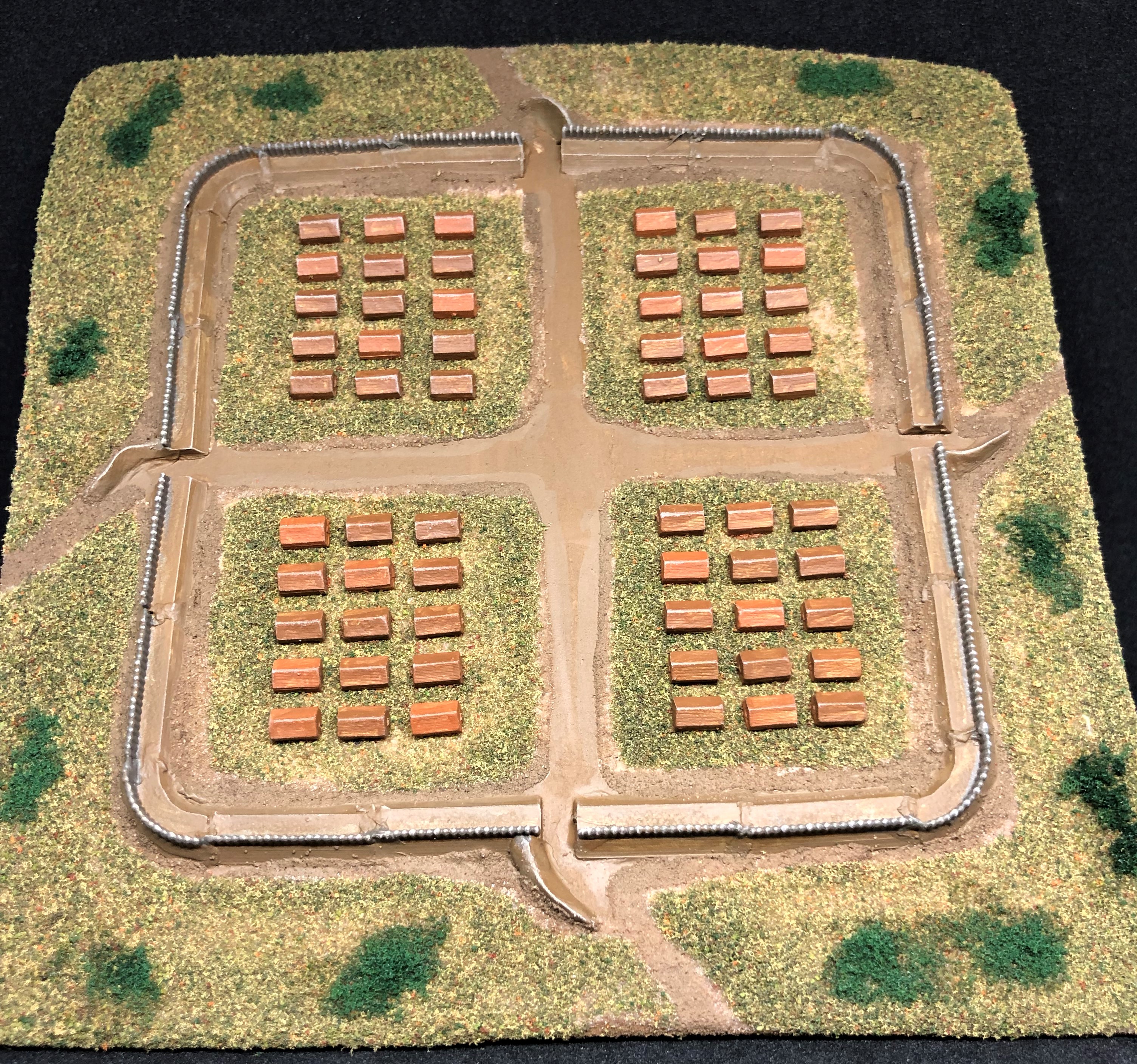
Roman marching camp. These are metal castings from Antonine Miniatures by Warbases. I added the gateway ramparts in greenstuff. This is two packs combined and placed on my own 150mm square base in 3mm mdf. According to my research Roman tents were made of goatskin, didn’t know that but happy to paint in a range of leather tones accordingly.