














Lake Town in need of Spring Cleaning!




Recommendations: 850
About the Project
Resurrecting an old project in which I started building a full tables-worth of Lake Town for Middle-Earth Strategy Battle Game. This project will make use of official GW kits, MDF kits and complete scratch-builds to bring Lake Town to life. Along the way, I hope to share some good Tutorials of how to make these pieces, and my Skills in painting.
Related Game: Middle-Earth Strategy Battle Game
Related Company: Games Workshop
Related Genre: Fantasy
Related Contest: Spring Clean Hobby Challenge 2023
This Project is Active
The Master of Lake Town’s House
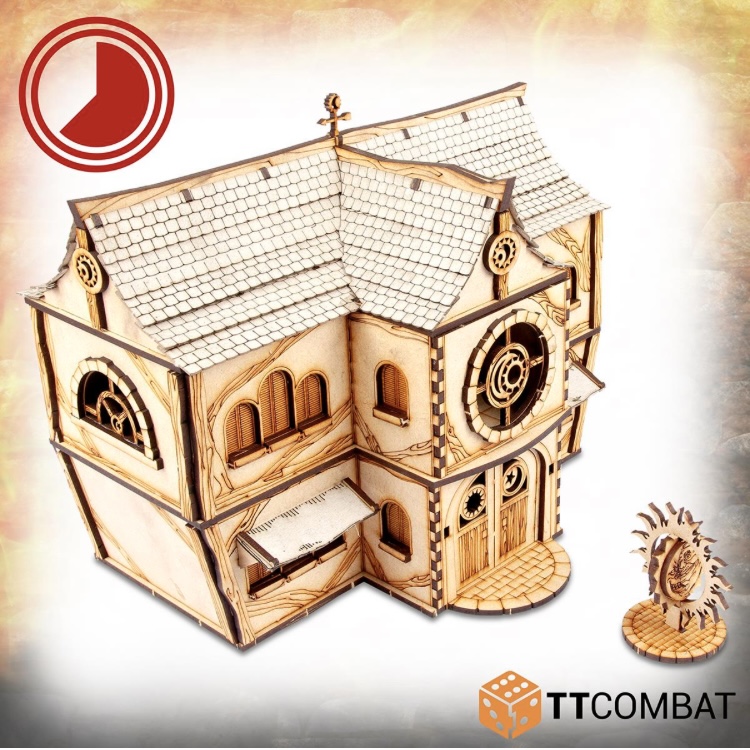
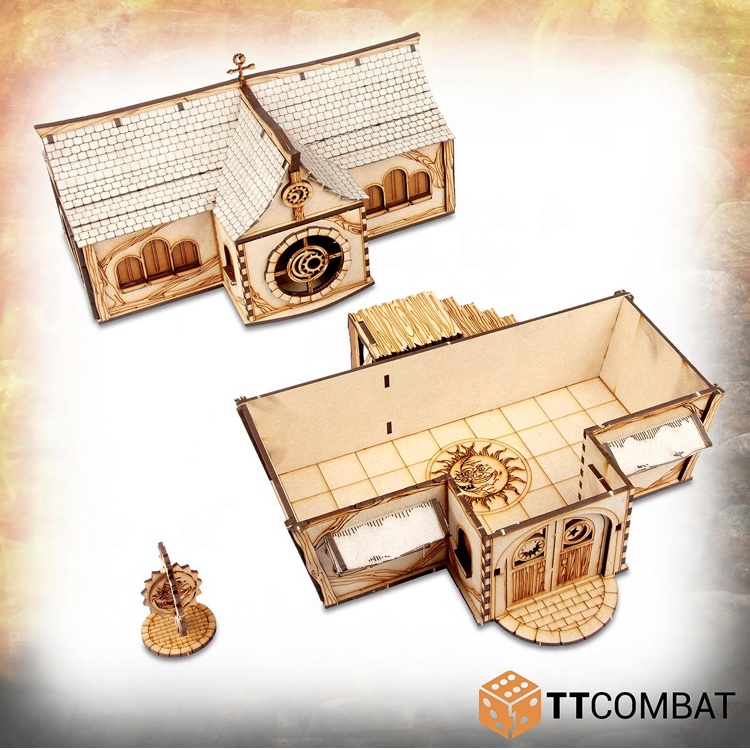
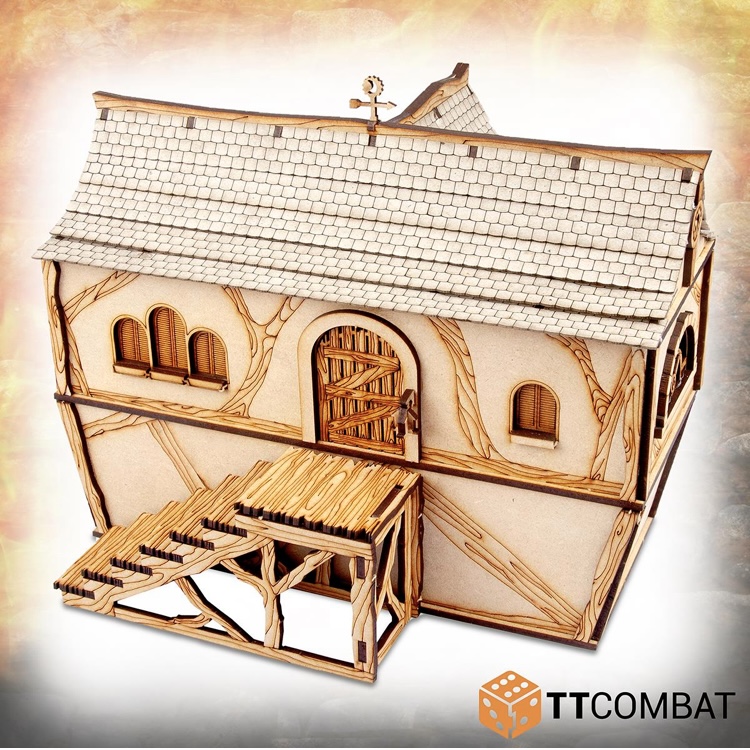
I picked up this kit Fancy Hat’s Town House from TTCombat as I thought it’d be a really good building to represent the Master of Lake Town’s House. It doesn’t look anything like the movie version of course, but it looks suitably large and impressive alongside the other buildings.
it’s a really lovely kit and goes together really well. I’ve kept all three levels detachable so I can detail the inside using Mantic Terrain Crate bits.
Tiling time
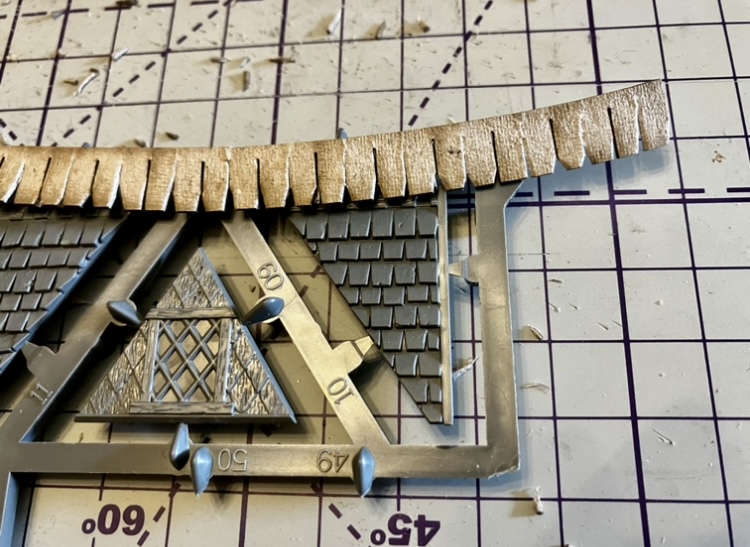
One of the things I think will really tie all the buildings together is consistency in the roofing finish. The GW kits use very small shingle tiles, all in a single side. The shingles themselves are tiny – 0.5cm in width and less than 1cm long. I haven’t been able to find any manufacturers making tiles that small, which is understandable. So I’m making my own.
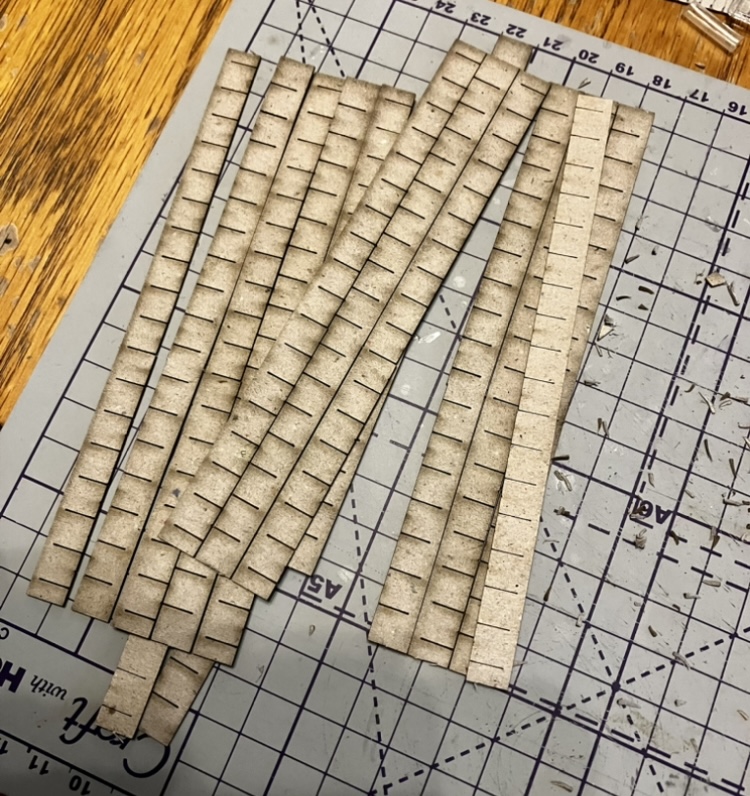
These are from Sarissa Precision, and are about 1cm wide.
Using my small scissors, I’ve snipped each tile up the middle.
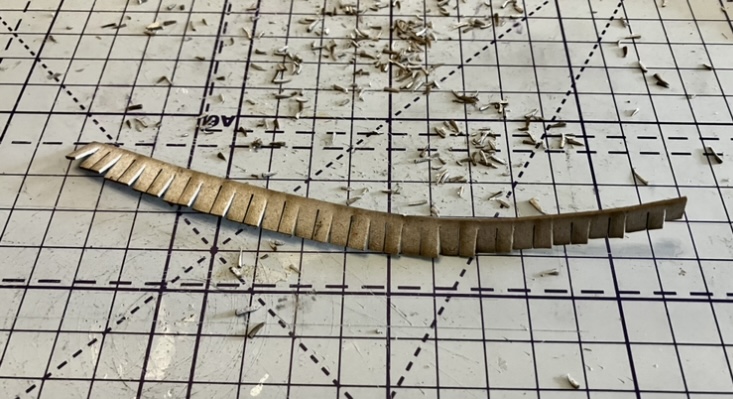
Then, going back along the row – trimmed, snipped, tapered and cut broken tiles to give them a closer finish to the GW kit.
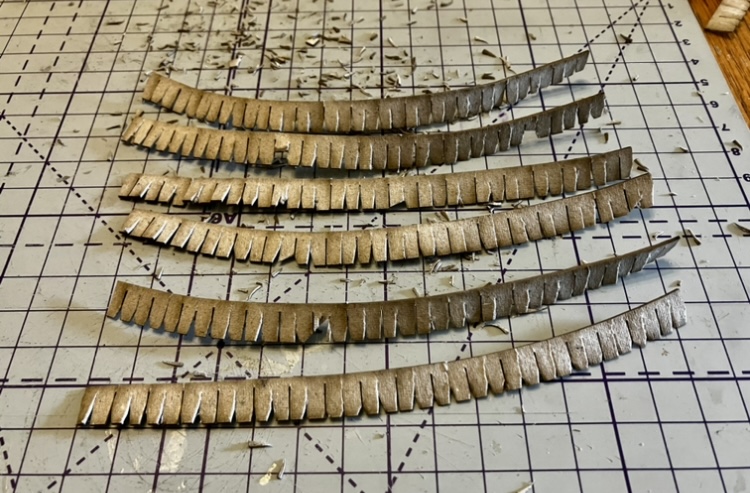
It’s time consuming, but pretty mindless activity, so I can churn out a whole bunch in a sitting.
I’m pleased with how close they look to the GW kit version, and think that they will add coherence and consistency across the different builds. I’d be really interested in your thoughts on this approach.
Some more detailing, making progress.
Spent some time thinking about other ways to detail, add visual interest and tie the scratch builds to the kits.
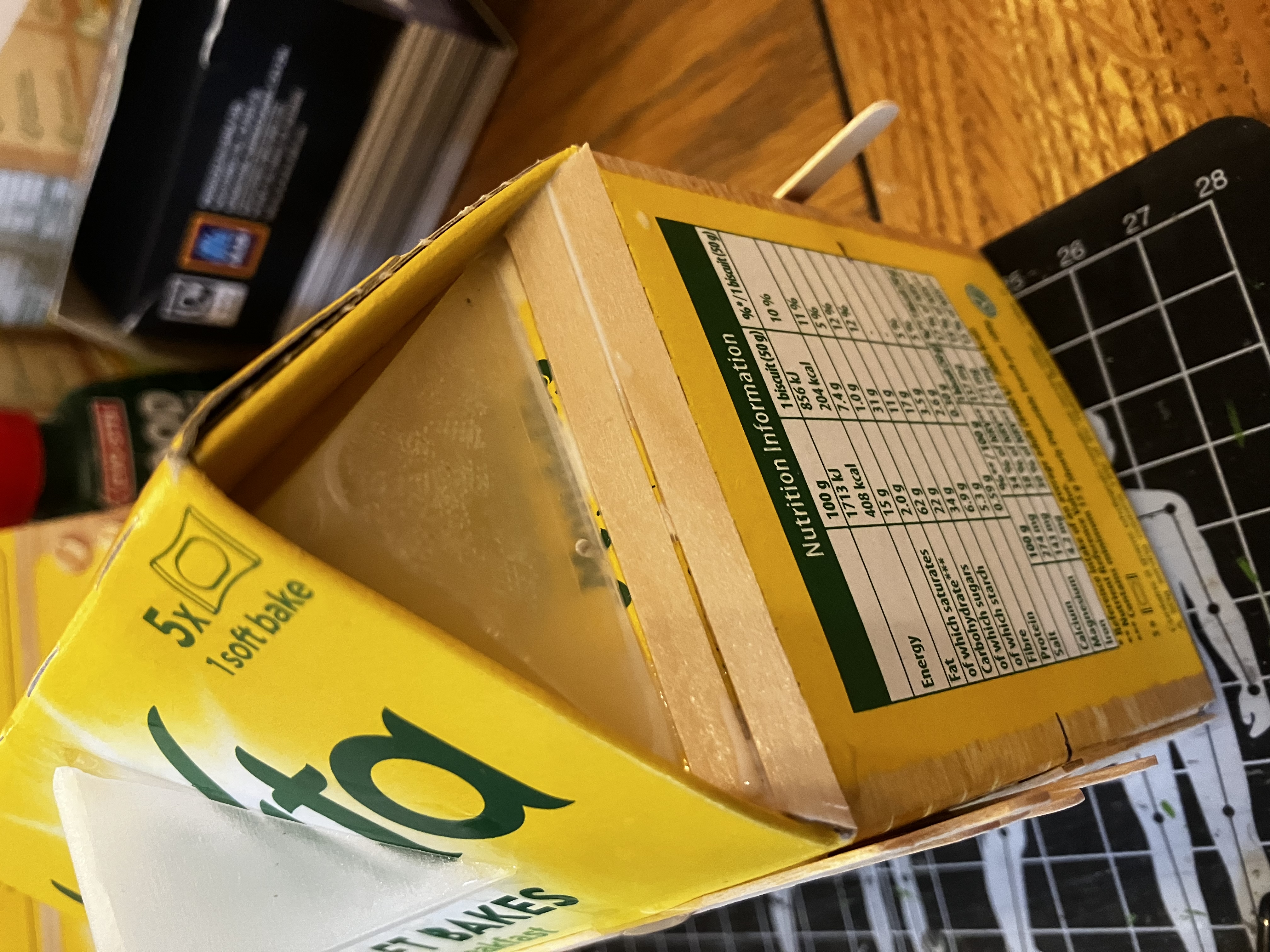
One challenge I faced was that that the pitched roofs also fold in under the eaves, making an unusual over hang at each end. I could just flatten them with cardboard triangles (and may do that on some) but for this one I thought I’d stretch myself a little. Cutting one of those shelf corners at the right angle, it fits really neatly as a gable-end dormer. Not anything I’ve seen in real life, but looks kinda right for a fantasy world.
You can see here that I’ve also glued one to the roof as a dormer. Once tiled and detailed, it’ll fit right in.
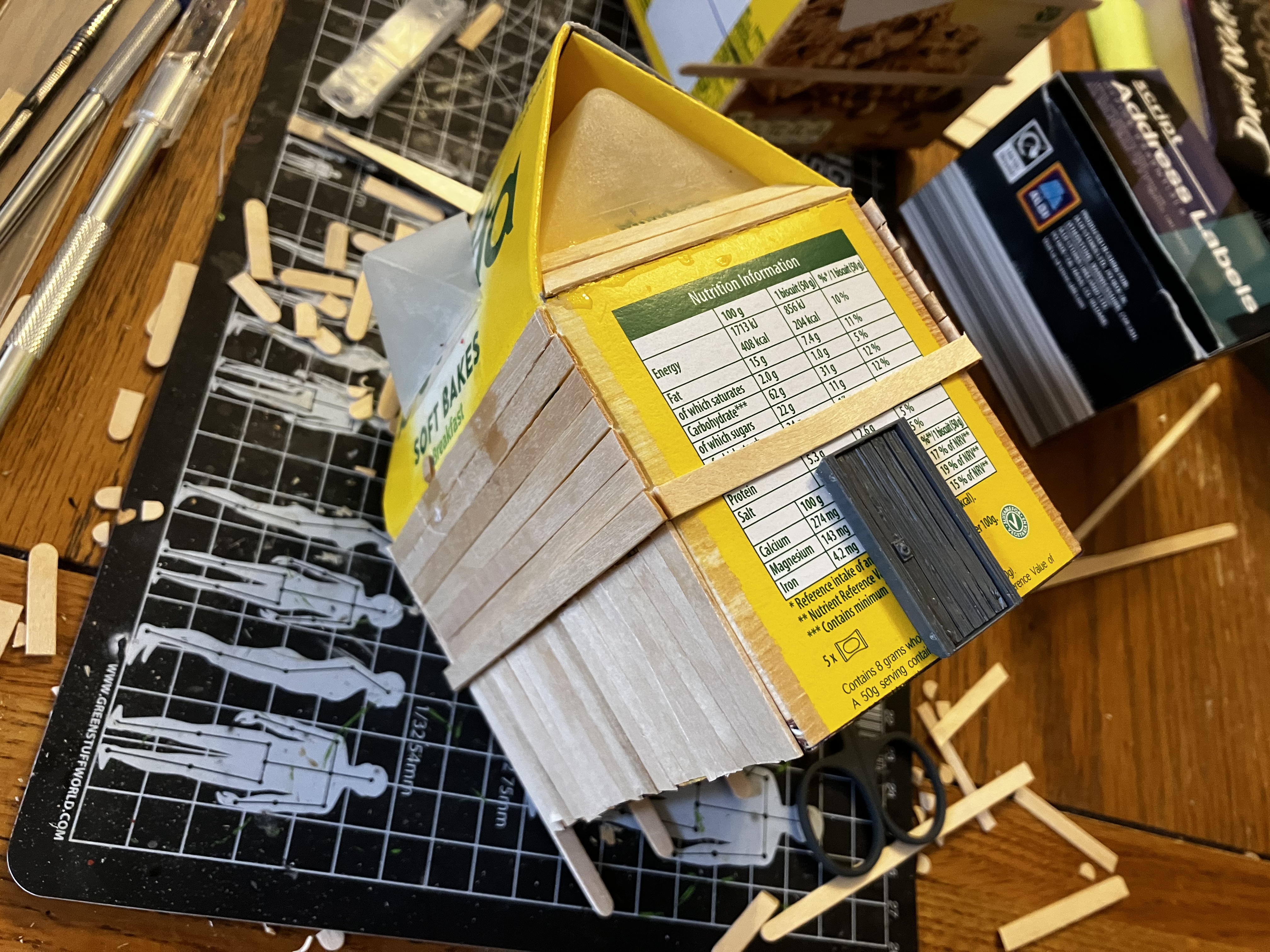
I also glued on a door from the GW kit. I’ll be using these on the scratch-builds to further tie them aesthetically to the other kits. Along with the generous supply of other details on those sprues, I’m hoping they’ll look contiguous.
You might notice that the door sits rather proud of the walls there. Once I add support beams either side and a very small tiled porch, I’m hoping it’ll blend right in.
The tablescape so far…
Thought it would be fun to put together a view of everything I’ve got so far. You can see the mixture of plastic kits, MDF buildings and starting scratch builds that I’m aiming to tie together as cohesive whole. Laying everything out on the table has reassured me that I’ll have enough buildings (5 GW houses still to add there!), but the walkways, bridges and market places will be the key to creating a great modular set of terrain.
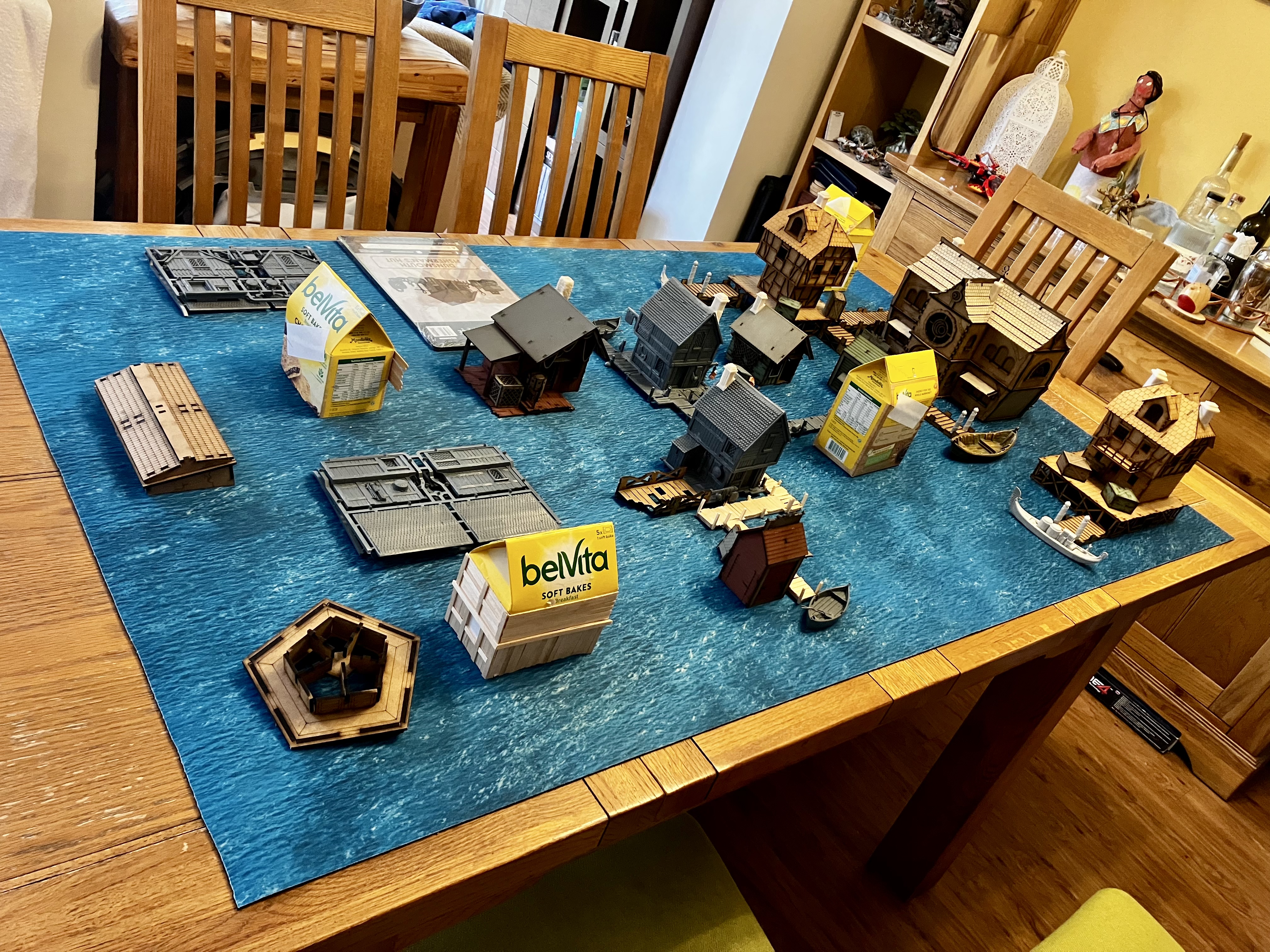
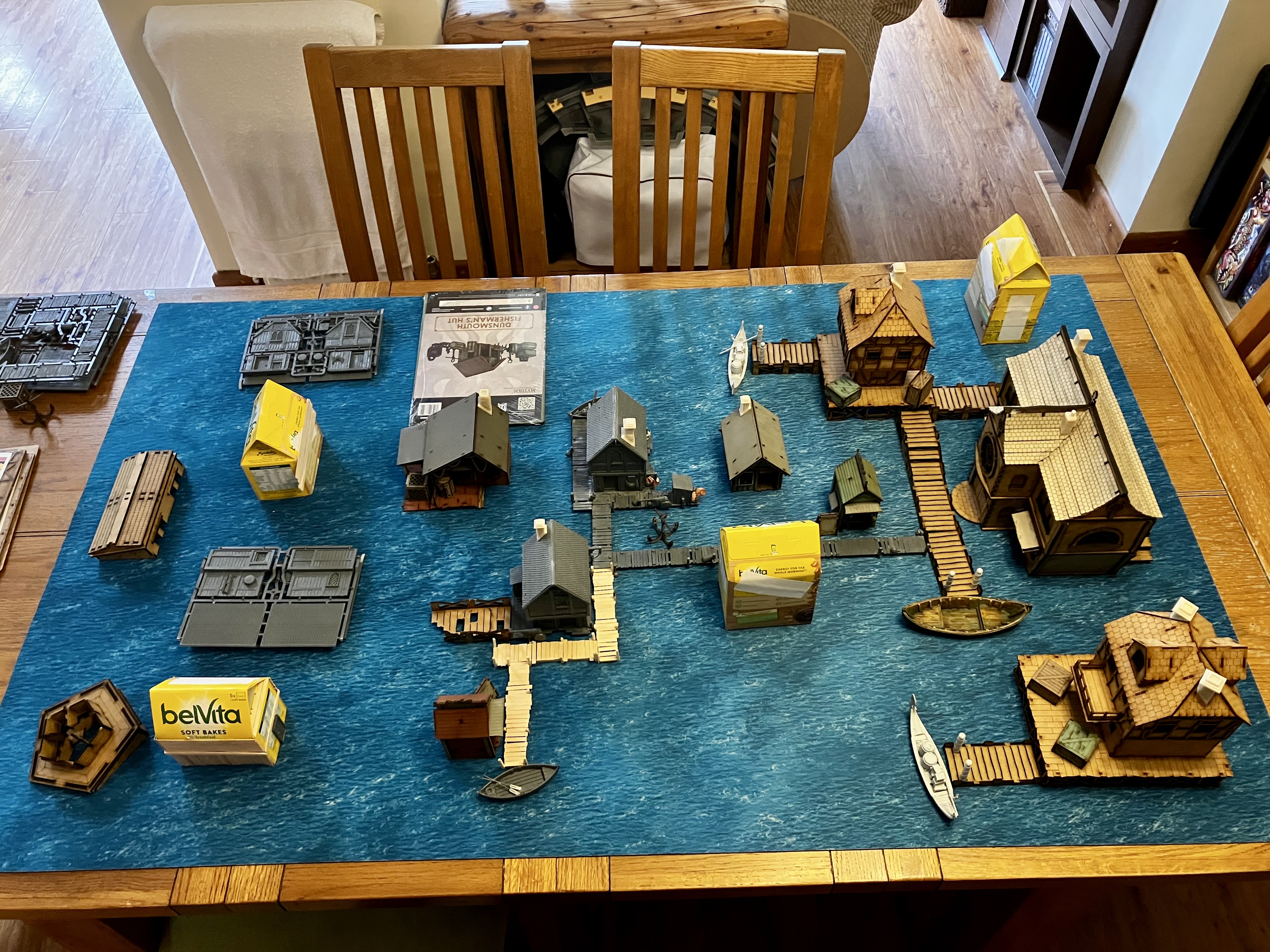
I’ll talk about and share close ups of the MDF kits I’m using in future updates.
Detailing out
With the base planking glued down, it’s time to start going in and layering up some details. Here, I’ve started adding some support beams, thicker beam to differentiate the floors, and room for a window. All of this is done using coffee stirrers (which can easily be cut with scissors). It’s the kind of job that can be done in front of the TV and still feel like you’re achieving something.
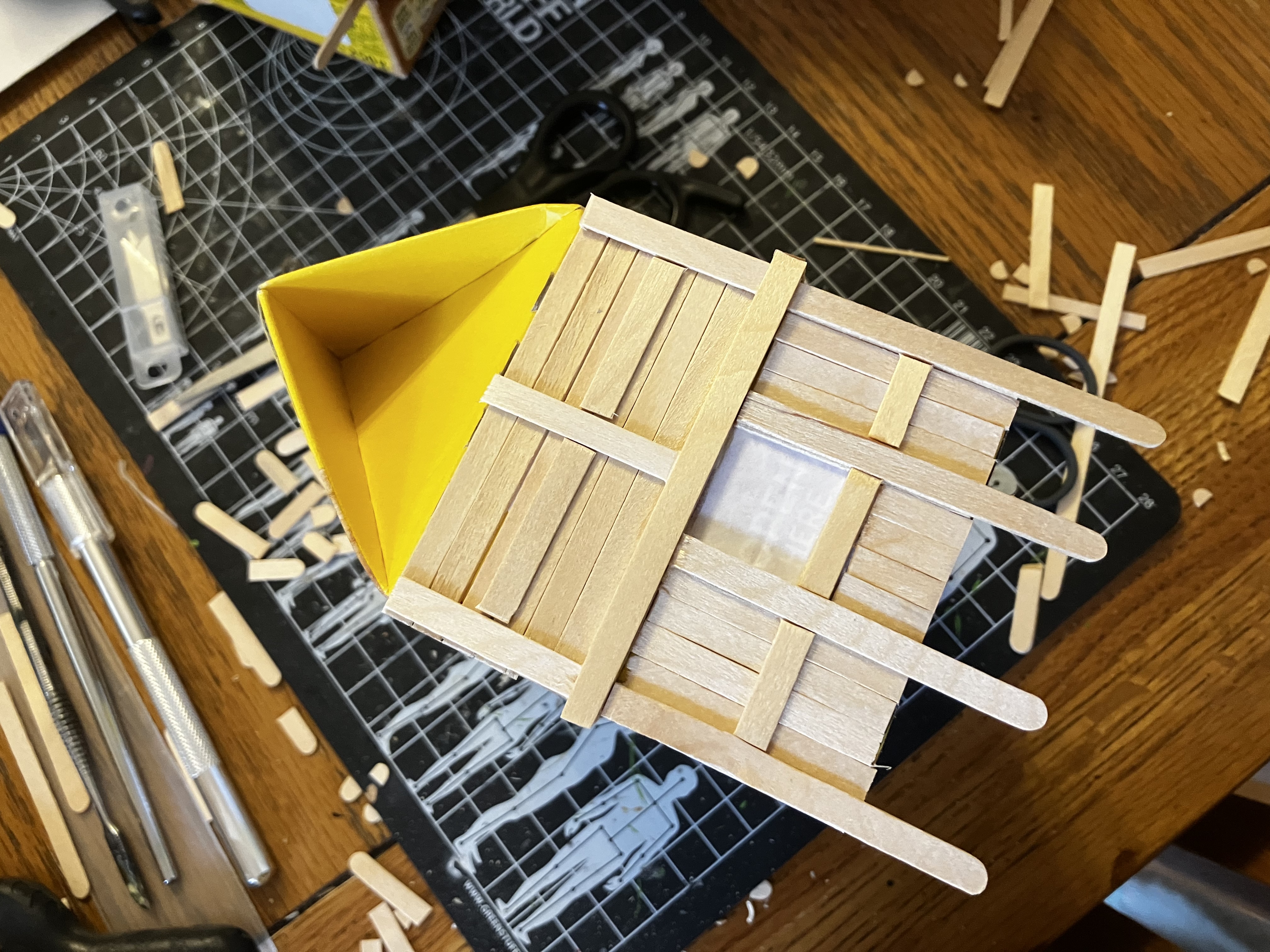 Beams going in to place.
Useful items for scratch building
As I mentioned in my last post, I’m using easy materials to help build out this Lake Town board. Cheap items and found items are my friends here. And if I can glue with PVA wood glue, that’s even better (I have an allergy to superglue).
Some materials:
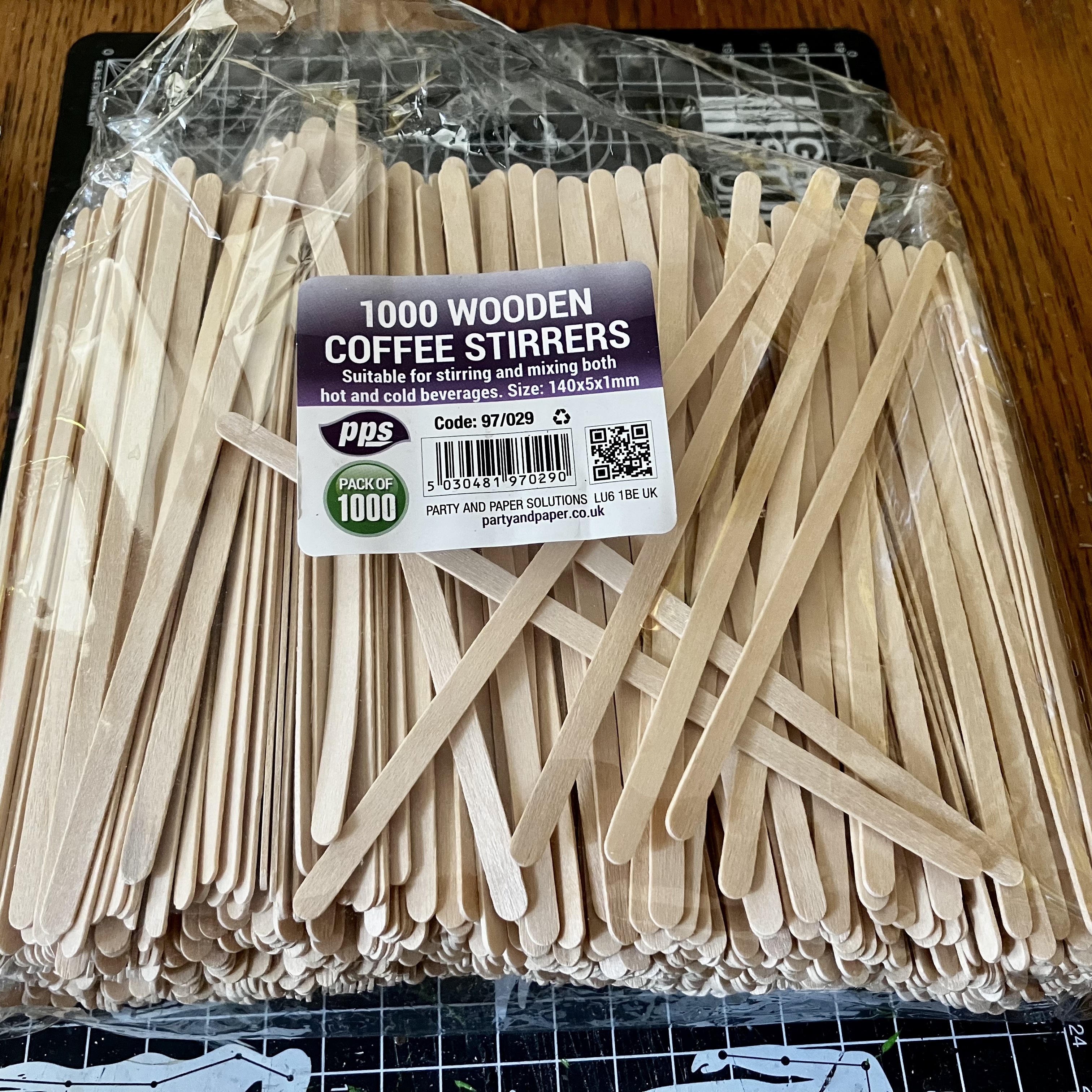 Coffee stirrers. These are planks, decking, support beams - a big cheap bag ordered online.
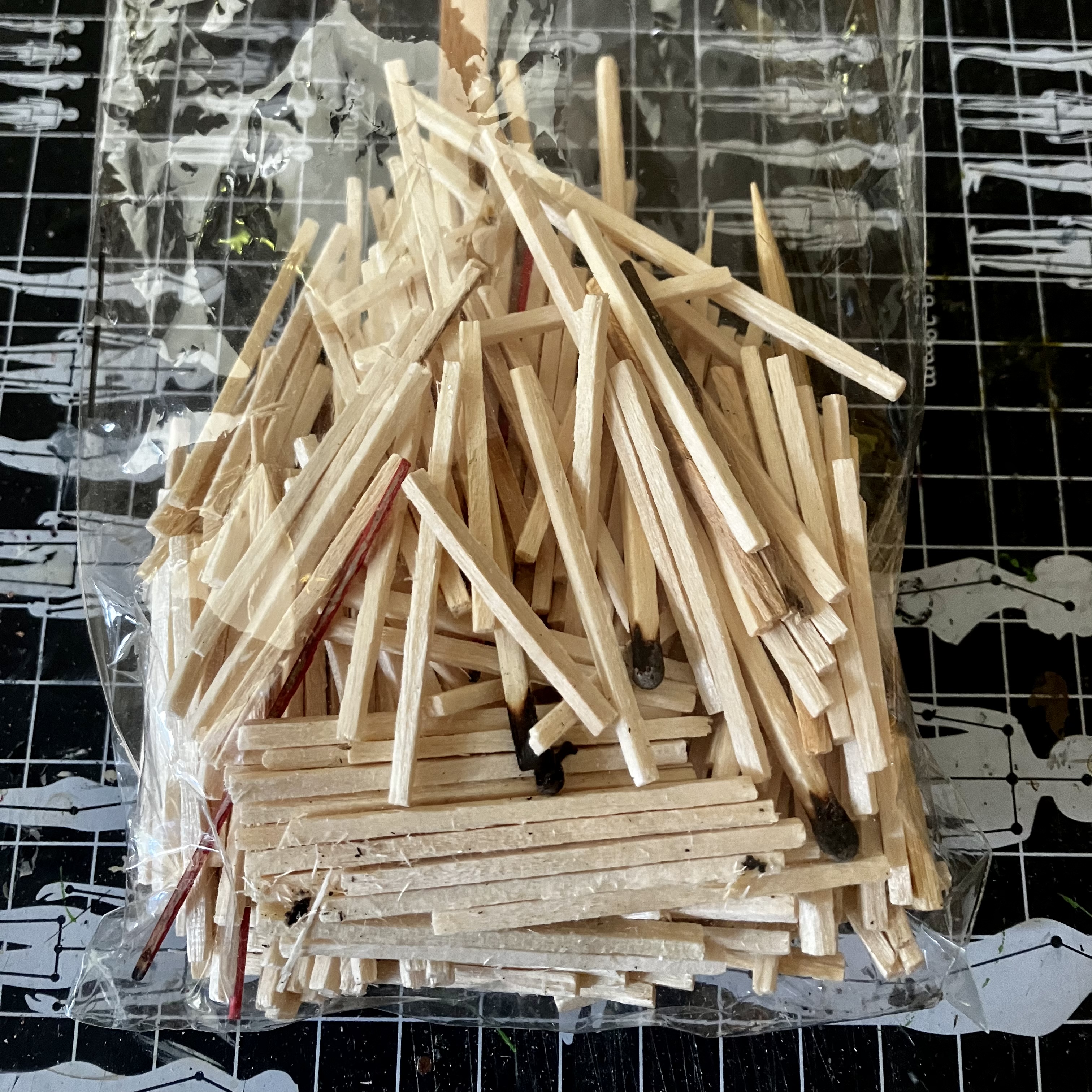 Matches. Great for adding details like window frames, but also for small pillars and jetty piers.
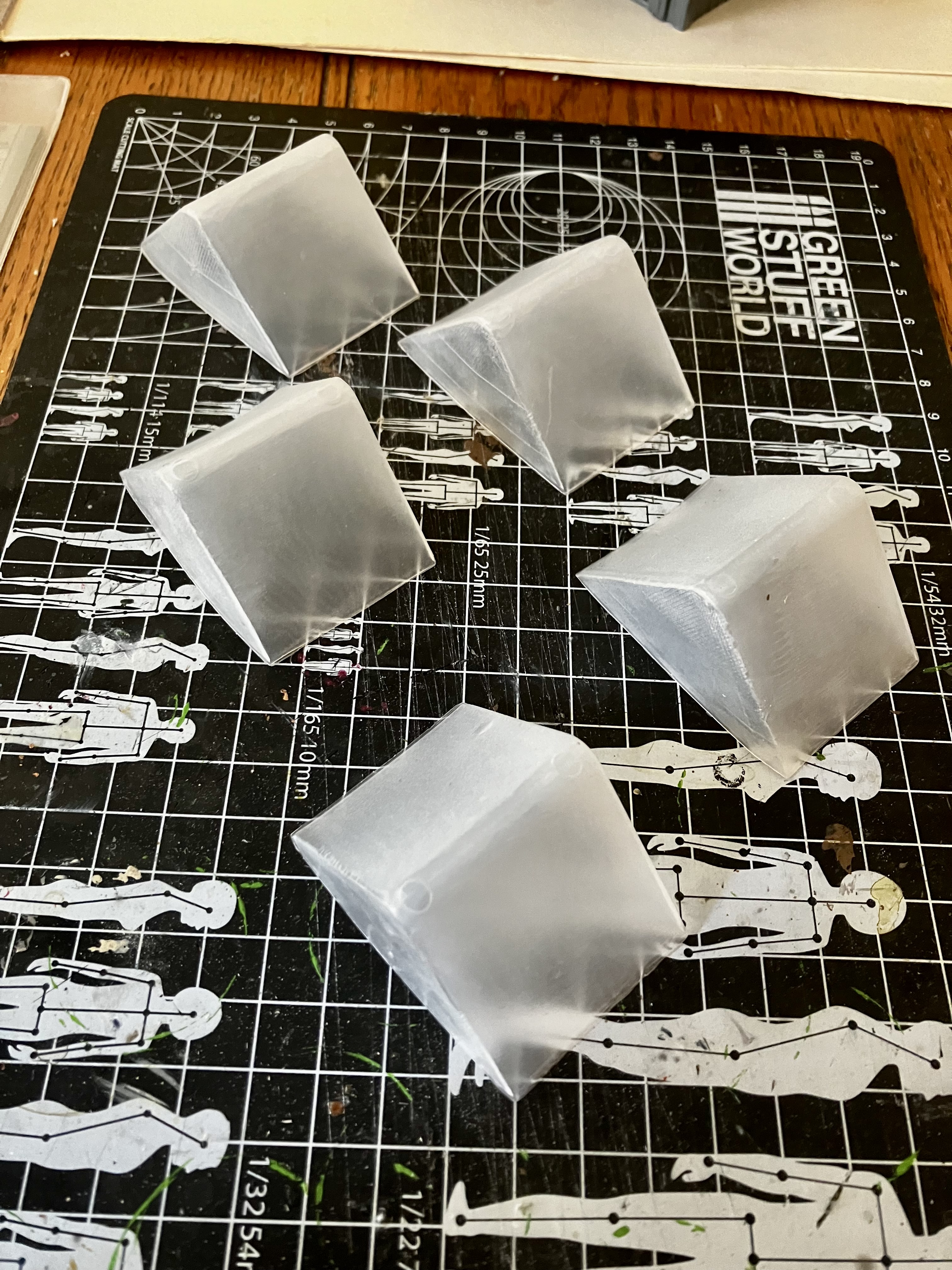 These were corner protectors from putting up floating shelves. Cut on an angle and detailed, they will make perfect dormers for roof spaces.
That’s a few examples of easy to find or re-purposable items for scratch-building. There’ll be more as this project develops, so hopefully you’ll follow along as I discover what works well – and what doesn’t!
Tools of the trade
I’m using lots of easy materials for this project, so I can keep the tools quite simple. Here’s the essentials.
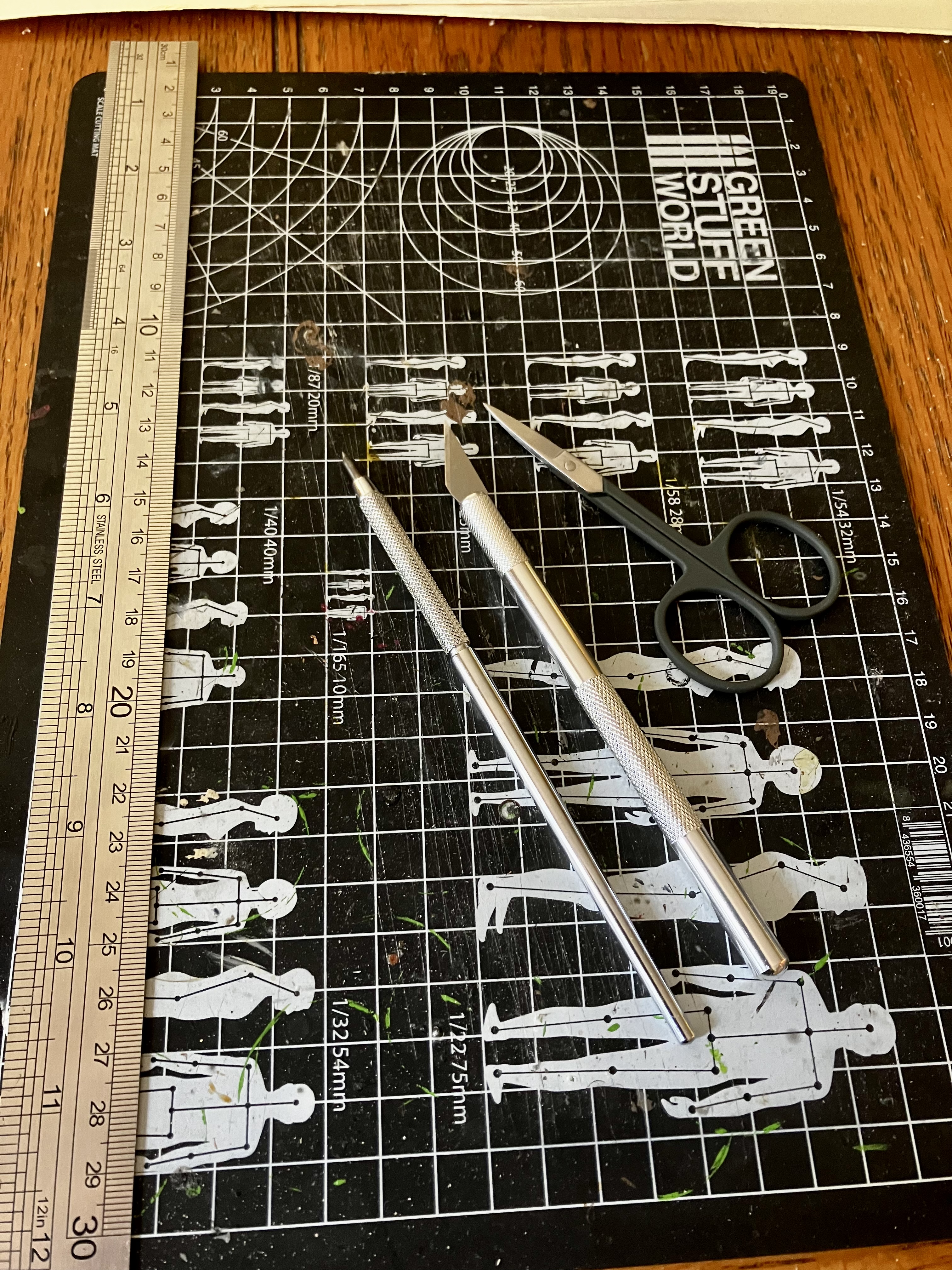
- Cutting mat. This one’s seen better days – but essential for making accurate cuts and protecting your table
- Steel rule. A good straight edge when cutting, and handy for measuring
- Craft knife. Sharp blades that can be replaced. This one has different blades including chisel tip that can be slotted in.
- Scribing tool. Basically a sharp spike. Great for adding texture into materials and making half-cuts when folding card.
- Small scissors. These are nail scissors I use exclusively for crafts. The tiny size helps when cutting small details.
In addition to this, PVA Woodglue – neat and in a dilute mix, and superglue are also essential.
Starting some scratch builds
I carefully measured the height between floors on the Lake Town houses – 1.5 inches. Then I measured a Belvita box – 4.5 inches from base to start of the “roof”. Great! That means I can make a mixture of two-storey houses and taller three storey houses to increase the variety.
Here, I’ve marked off 1.5 inches and cut a box down, then marked another 1.5 inches so I can start glueing wooden coffee stirrers to demarcate the different styles of wooden planking I want. The plastic kits have upright planking on the ground floor and horizontal planking on the upper floor.
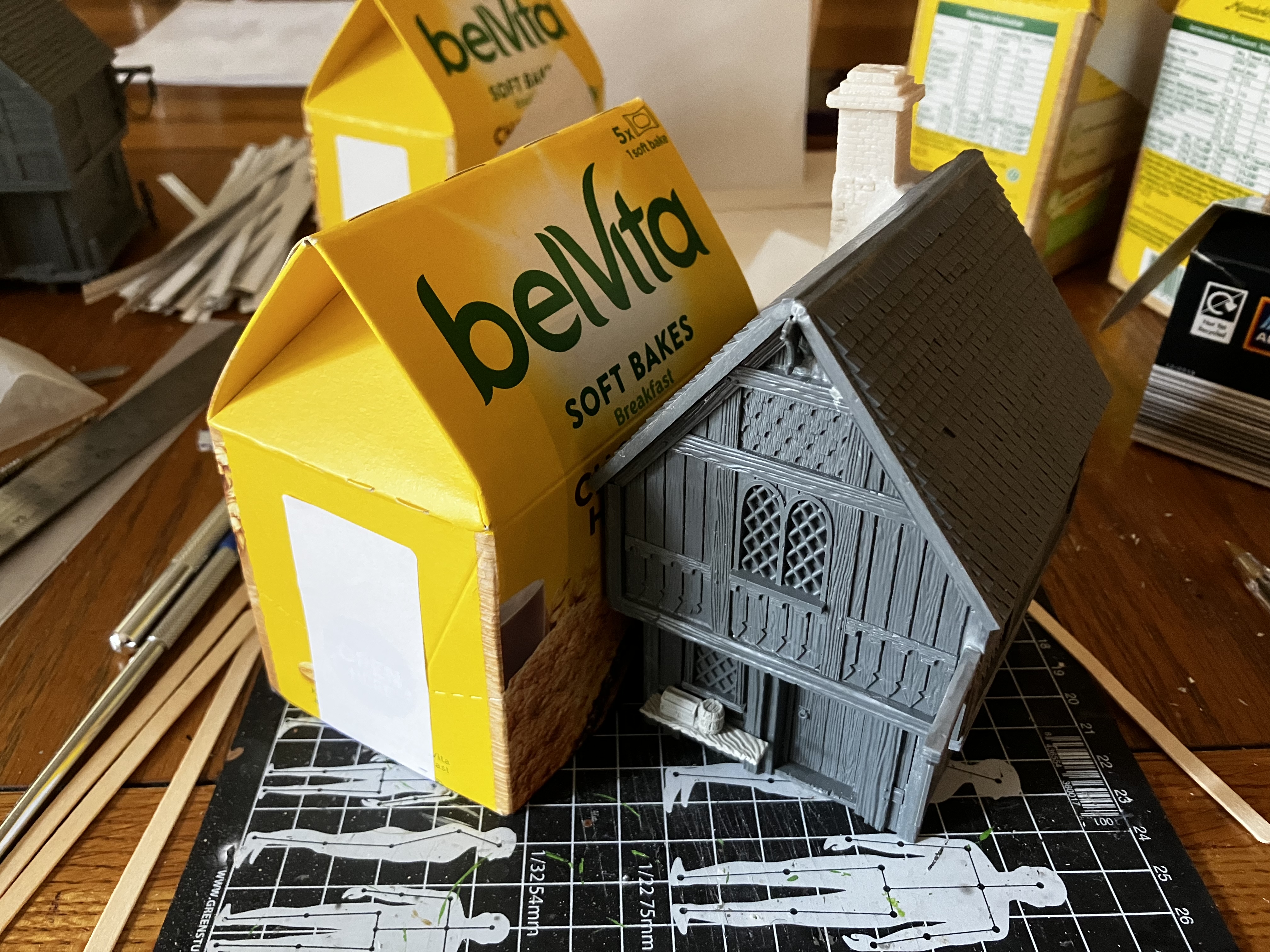 A cut down box, really good height match
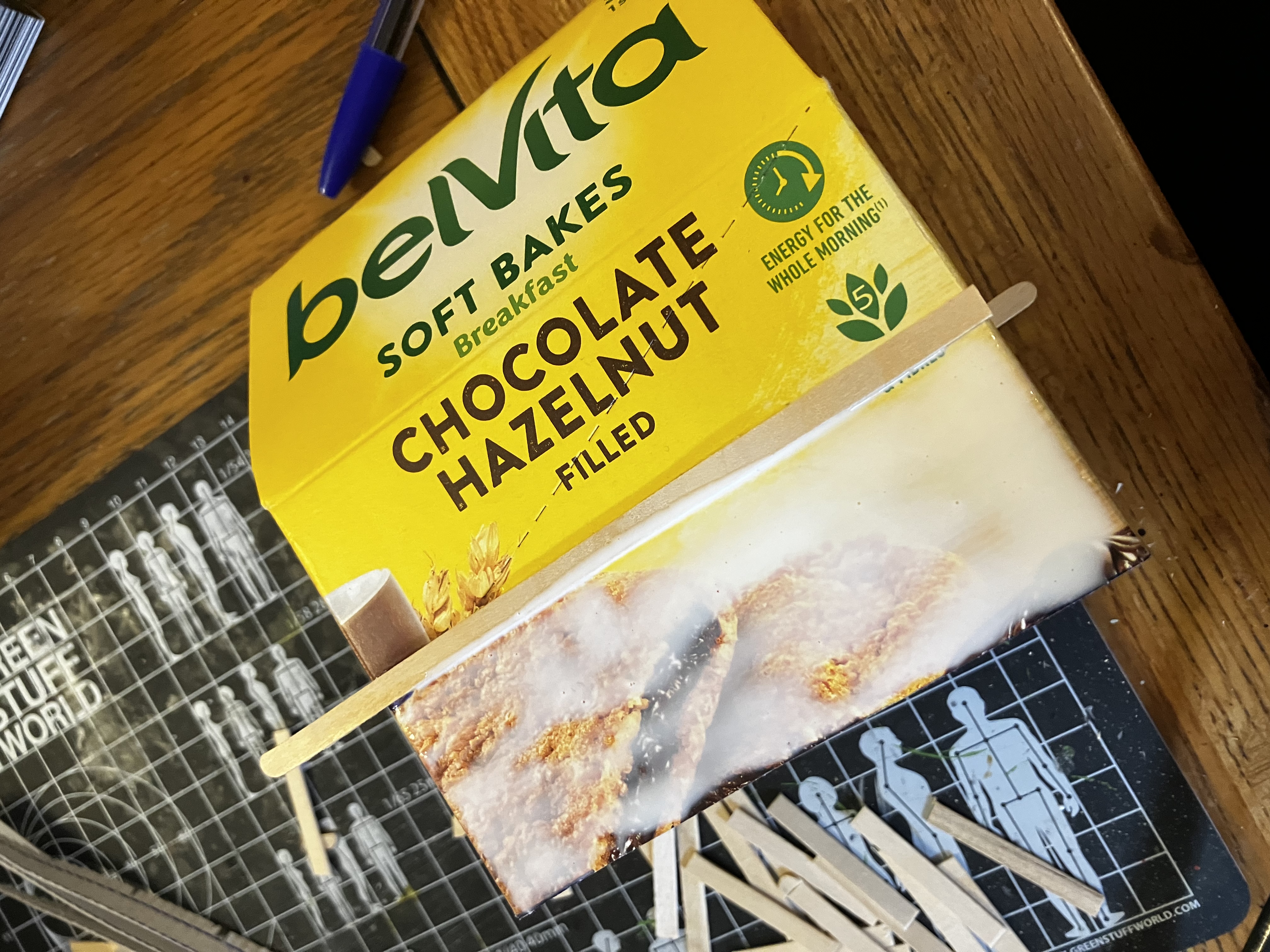 Gluing down guide stirrers.
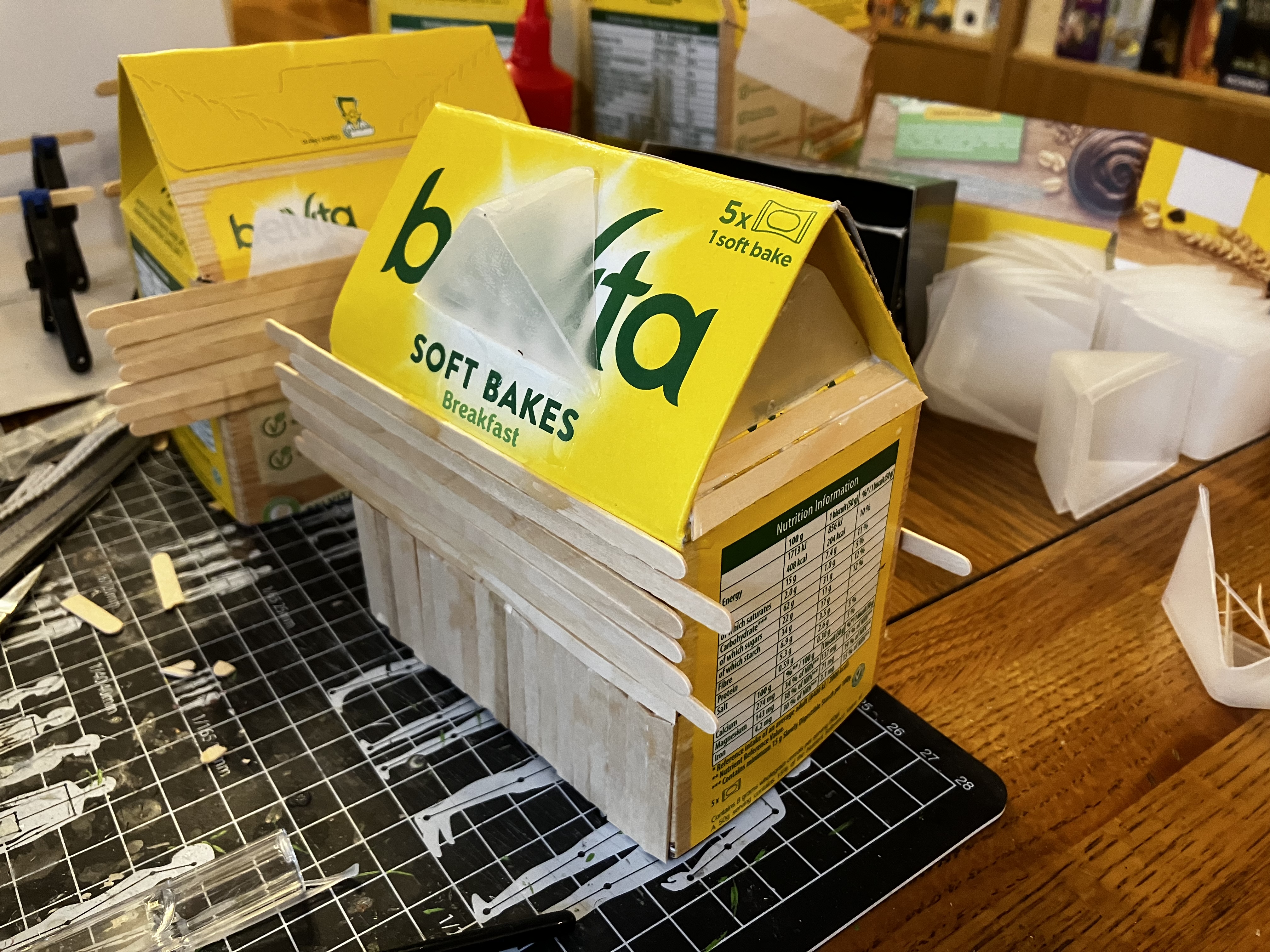 Vertical and horizontal planking on one side