






![NO Weekender Or Cult Of Games XLBS This Weekend [Updated]](https://images.beastsofwar.com/2026/03/No_Weekender_and_XLBS_this_Weekend-225-127.jpg)




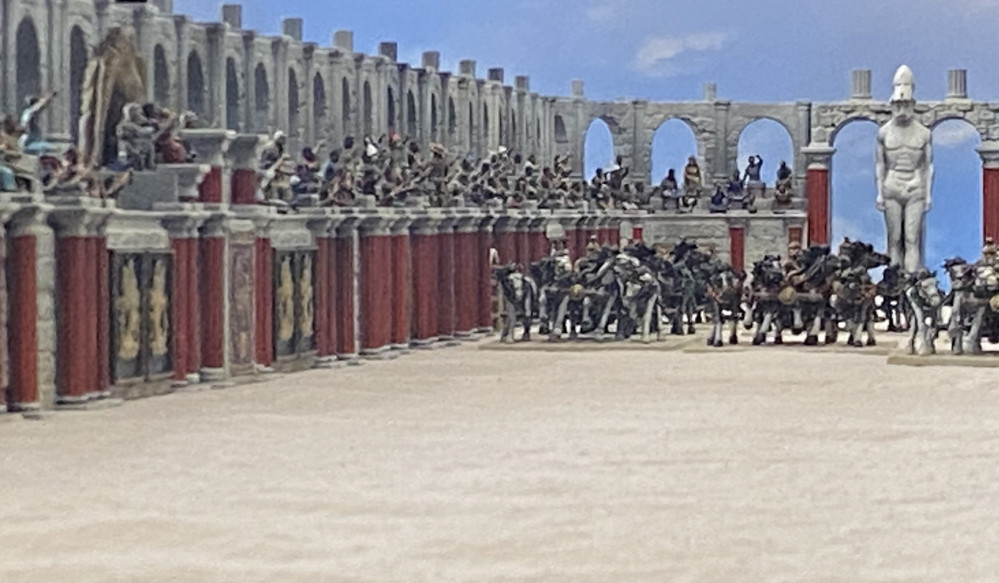
Circus Maximus



Recommendations: 843
About the Project
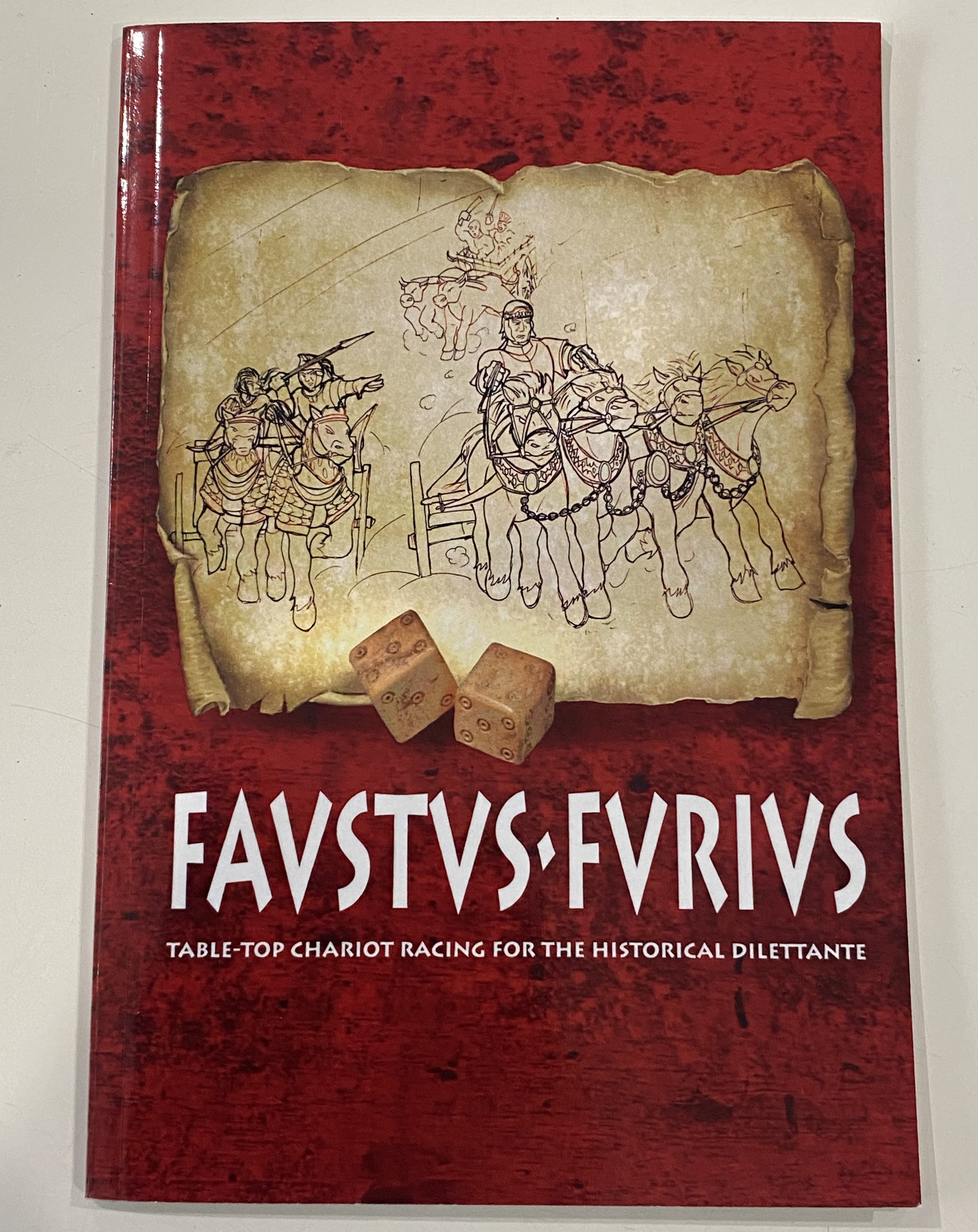
Faustus Furius is a fast and furious, tongue in cheek table-top game based very loosely around the chariot races of the ancient world and adaptable to any racing situation.
Related Genre: Historical
This Project is Active
In the red corner...
Once established in Rome, chariot racing became highly factionalised with charioteers racing for one of four coloured teams: the Reds, Blues, Greens and Whites.
A four-chariot race was called a certamina singularum, an eight-chariot race was called a certamina binarum, and a twelve-chariot race was called a certamina ternarum. Each faction was represented in each race with either one, two or three teams.
Chariots were four-horse vehicles with a single driver.
I think I will stick to a maximum of eight chariots, or at least to start with as I plan to build both chariots and wrecked chariots for each model.
With the first chariot printed, it was time to get some paint down. Being very conscious of the fact that this is potentially a huge build I want to limit my time spent painting the models.
Running some quick numbers, using my previous Colosseum build as a guide I think I will probably need around 400 or so figures just to represent the crowd. I plan to make the crowd a little more spread out for this and also plan to add a few more varieties of models. I will need to modify some of the supporters to show which of the four coloured teams they support.
First up was a three-stage undercoat ranging from black through grey to finally a white zenithal spray.
For the most part, I used a combination of contrast paints and washes with a very light dry brush. The metal parts were picked out in a very dark metallic paint. To help differentiate the teams within one coloured faction I plan to use different coloured horses. For example, a red chariot with white horses, a red chariot with black horses etc. To add a little more variety, I will also use different charioteers where I can, although that is less of a necessity.
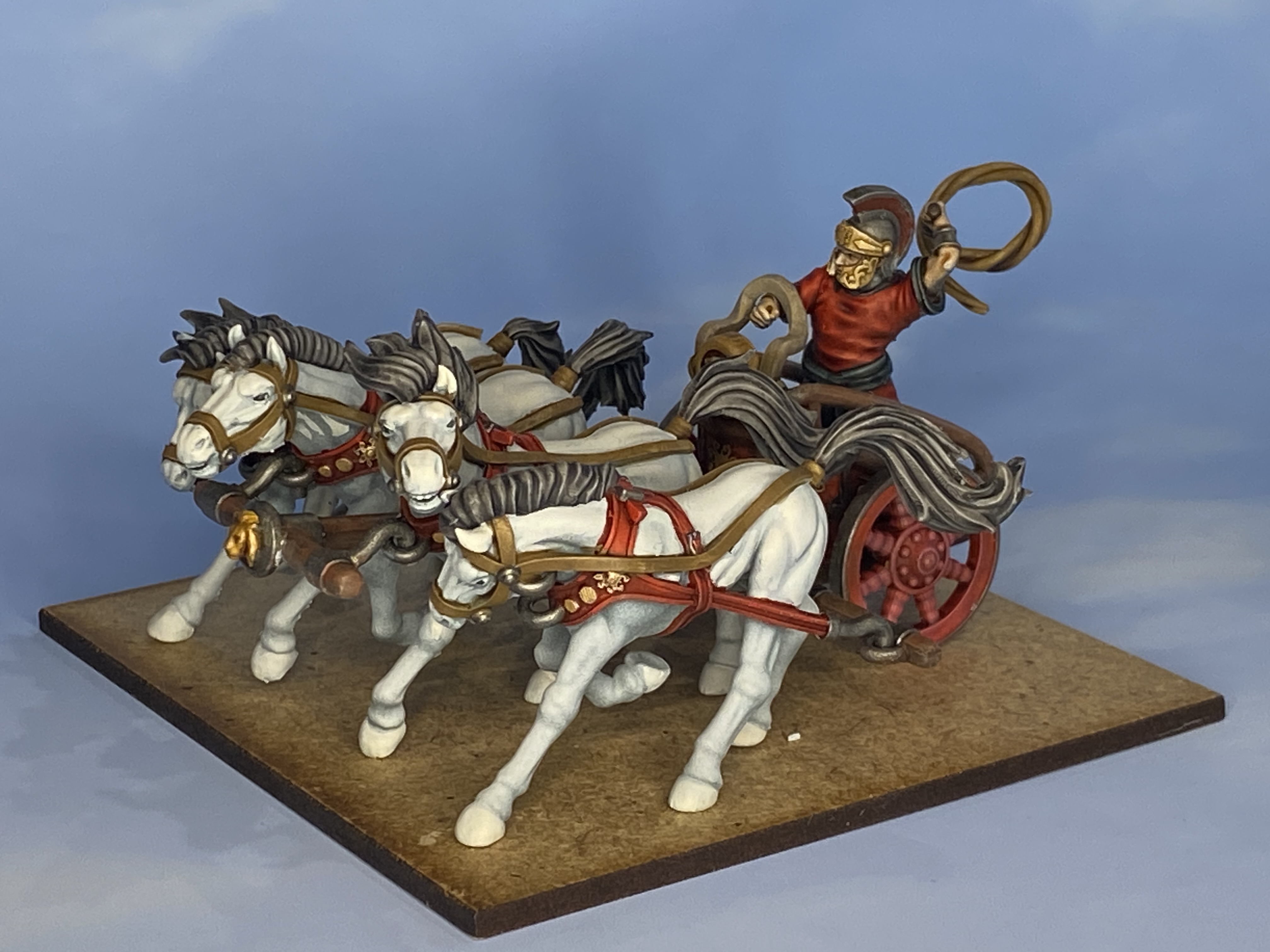
I have gone with 10cm x 10cm laser-cut wooden bases. I will keep that as a standard size for all the chariots and their crashed alternatives.
I have plans to do some unruly supporters that can be used for inevitable ‘Pitch Invasions’ which during the actual game become rather irritating obstacles that need to be navigated around.
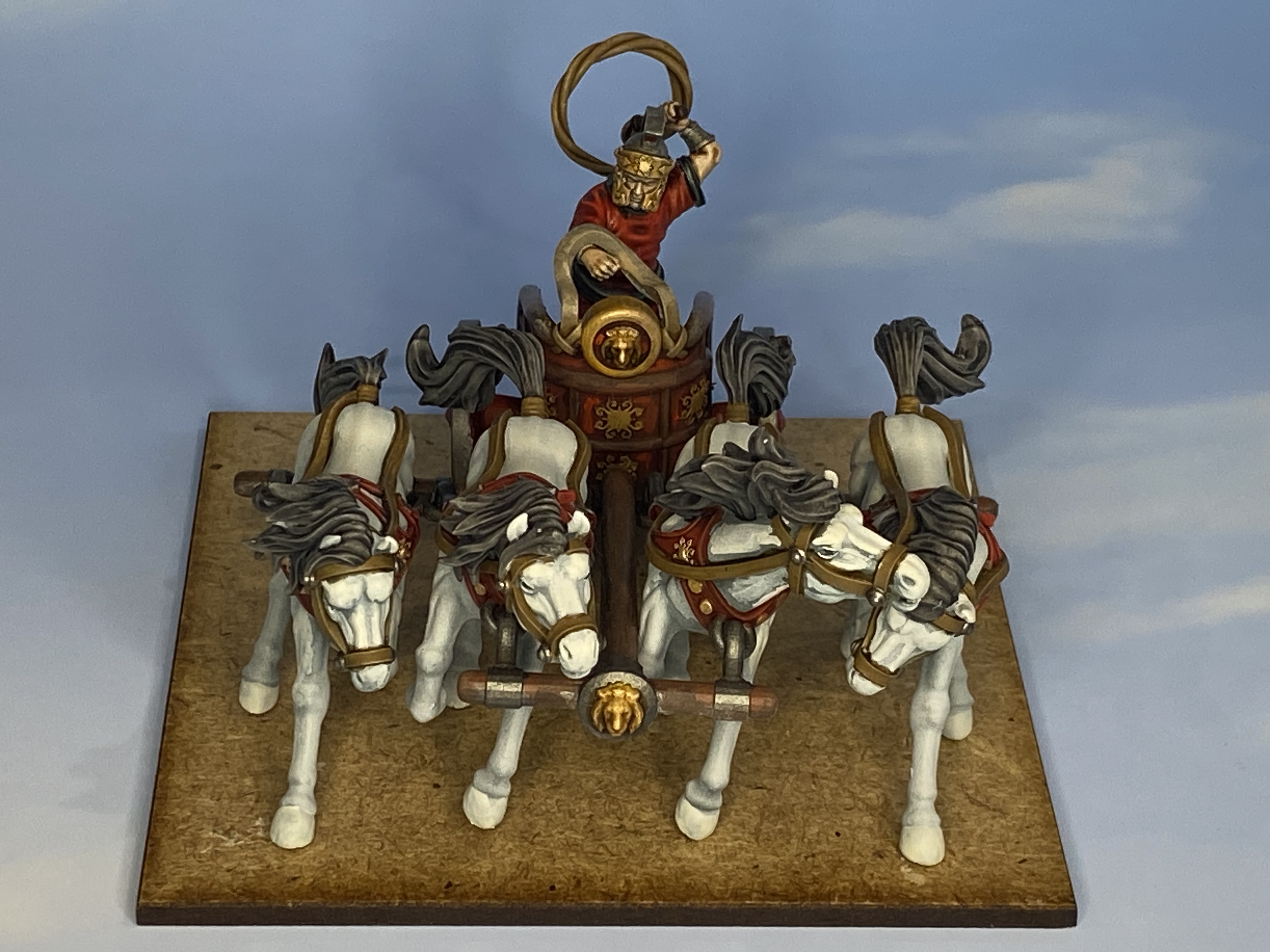
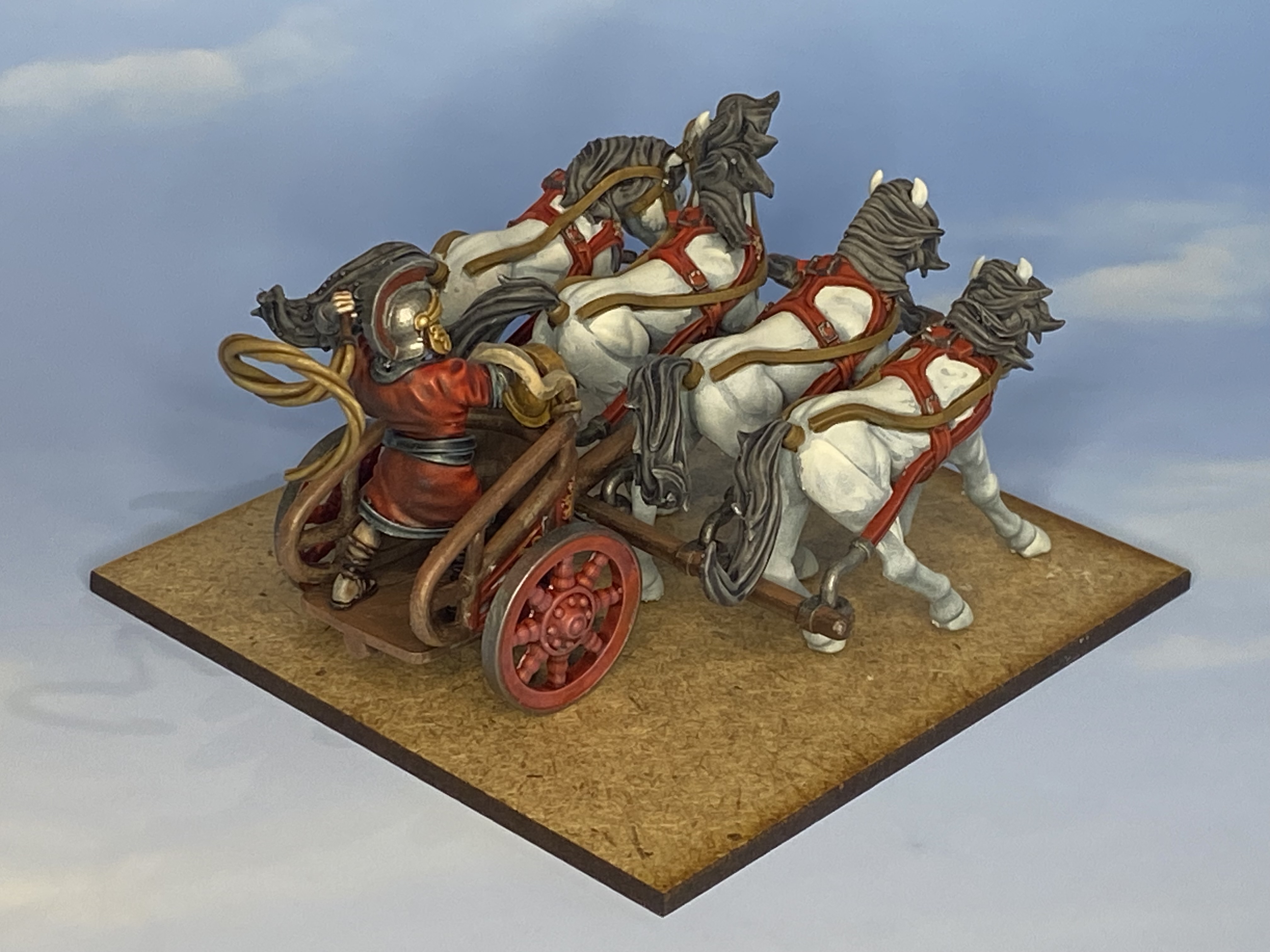
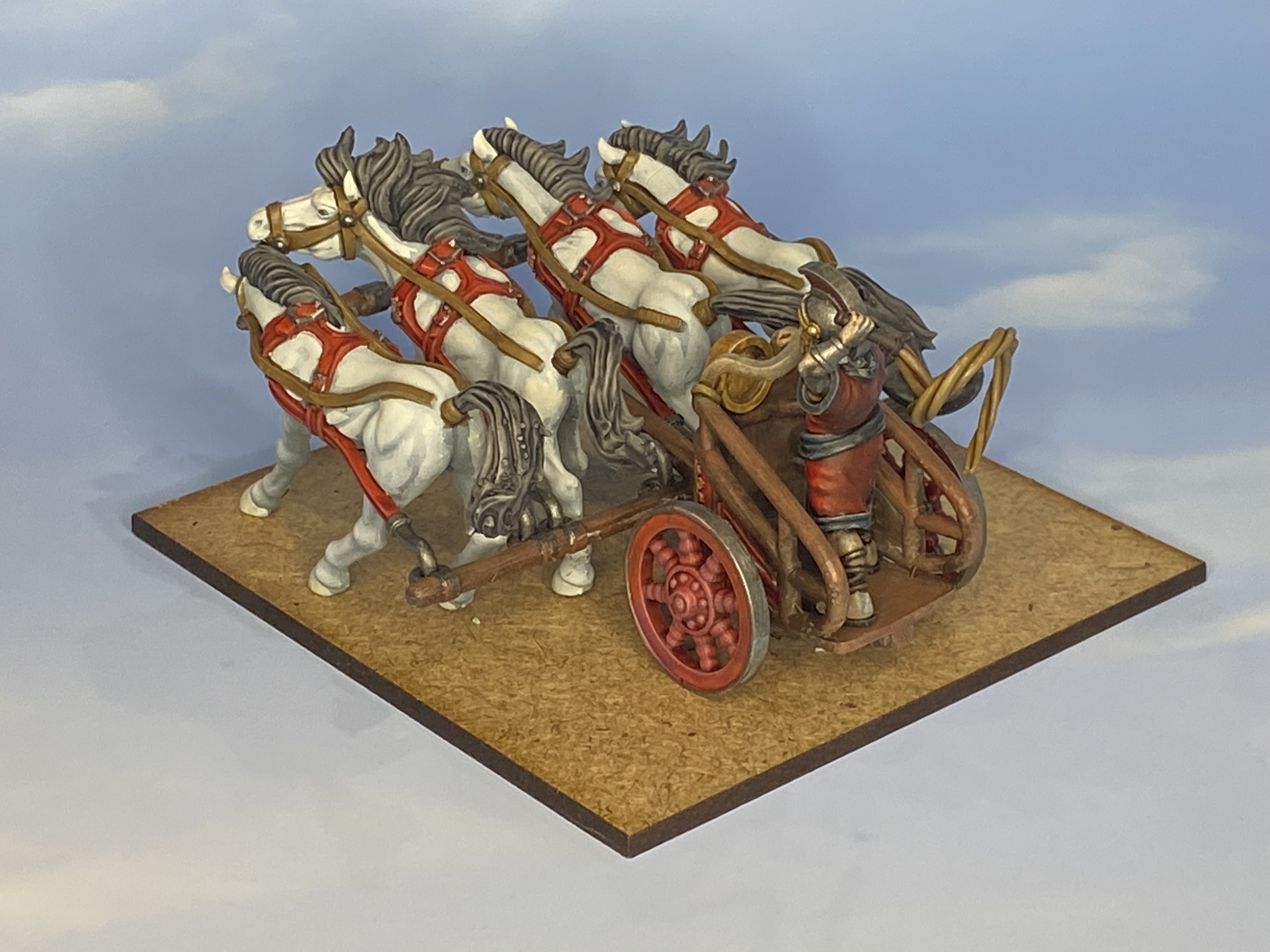
How Big !
There is nothing wrong with this game with 6mm or 15mm chariots, especially if you want to play it on a kitchen table or something similar.
However, I just feel like the chariot races would have been an epic spectacle. The roaring crowds, the thunder of hooves, the cracking of whips, and I’m just not feeling that with these smaller scales.
I want this to have more of a WOW factor. I also want this to feel more like Roman chariot racing, think Ben-Hur and you’ll know where I’m going with this.
With this in mind, I am inbigulating everything.
Here we have a regular Gripping Beast 28mm Dark-Age figure next to One of my oversized Charioteers. This is how big we are going.
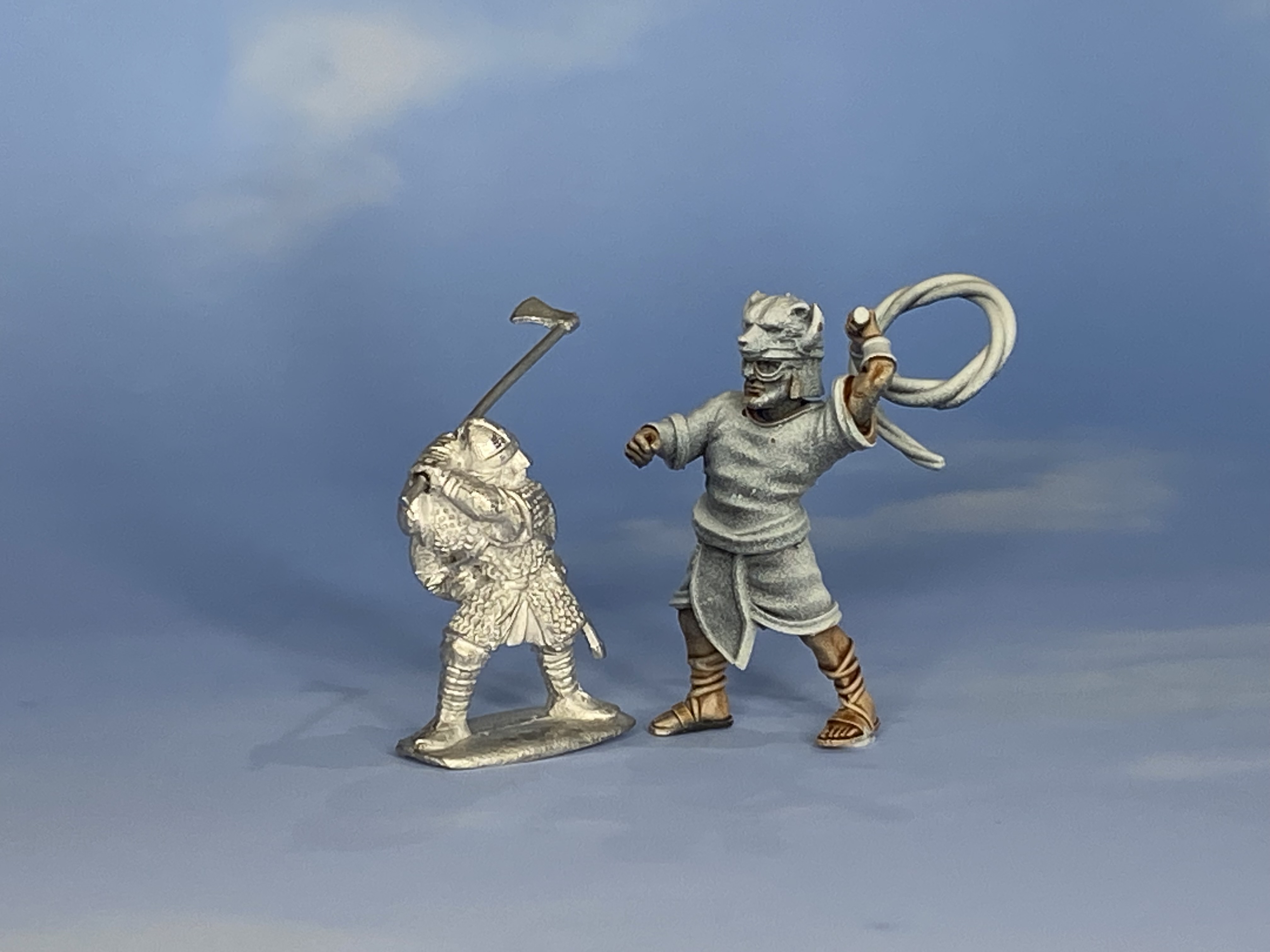
Humble beginings
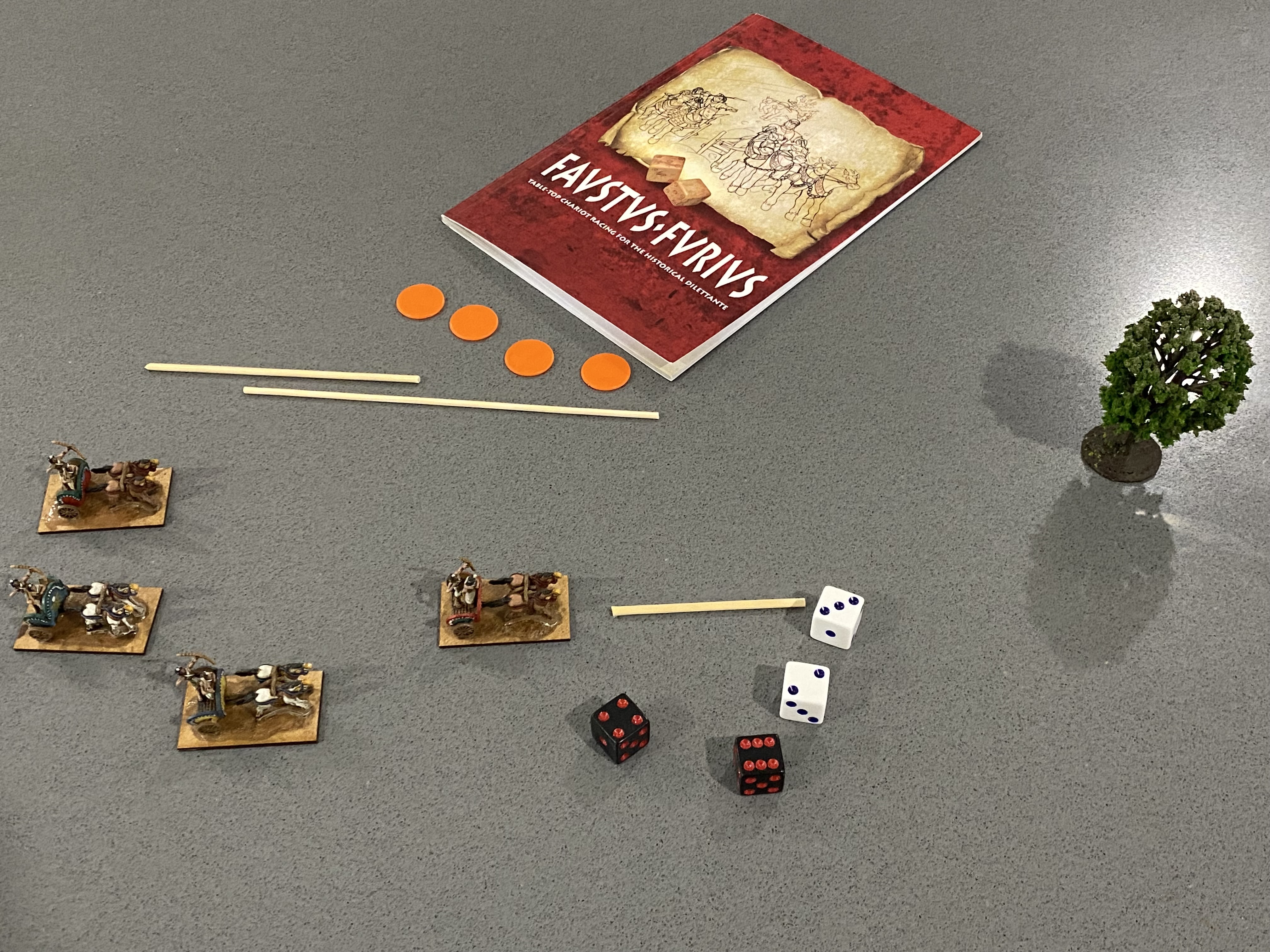
And there you have it. A fully finished project!
Of course, I’m kidding.
Although this really is all you need to play this game, I am pretty sure I can completely overdo it to some ludicrous scale way above what it needs to be.
Faustus Furius
Faustus Furius, the fast and furious tongue in cheek table-top racing game based very loosely around the chariot races of the ancient world and adaptable to any racing situation. Or so it says on the back of the book.
Designed for 2-8 participants, it allows players to pit chariots from any culture or period against one another in a no-holds-barred race to fame and glory.
Well doesn’t that just sound like a simple fun game?
Could be just the ticket for casual games that anyone can join in at short notice. Perfect for a club open day perhaps?
So, flicking through the book, let’s see what we need to play.
- A few Chariots. (4-8 should be sufficient)
- A counter for each chariot to act as a crash marker.
- Four D6. 2 of one colour and 2 of another.
- Three fixed length measuring sticks.
- 6mm Models need 50mm, 80mm and 120mm sticks.
- 10-20mm Models need 75mm, 120mm and 180mm sticks
- Larger scale models need 100mm, 160mm and 240mm sticks.
- A flat surface.
- 6mm Models minimum track size 60cm x 30cm
- 10-20mm Models minimum track size 90cm x 45cm
- Larger scale models minimum track size 120cm x 60cm
- A marker to act as a turning point. A flag, rock counter etc will be sufficient.
The track. At the most basic, ancient racetracks included a starting line and a turning point. The earliest written account of a chariot race occurs in Homers Iliad where the charioteers at the funeral games of Patroklos had to complete a single lap of a course that ran from the starting line and back around the stump of a dead tree.
Well that all seems very doable.