










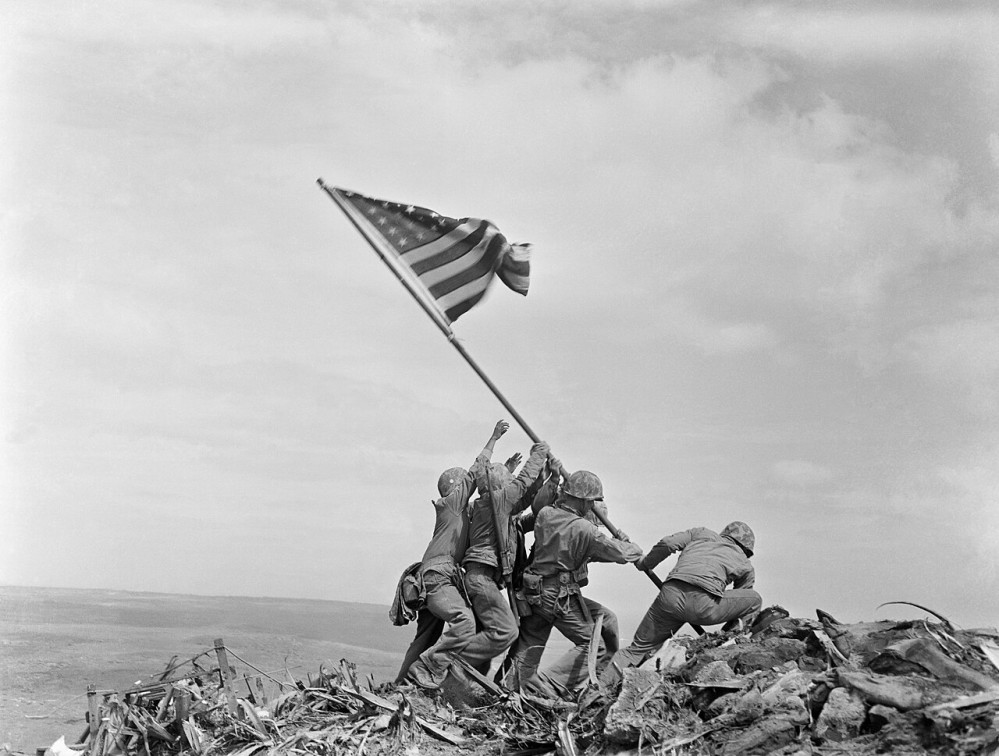
Visiting Iwo Jima




Recommendations:
About the Project
A recent weekender asked if visiting a historical battlefield could give you insights for gaming or history. I think it can. This isn’t a full fledged project but rather some references for anyone interested in Iwo Jima.
Related Genre: Historical
This Project is Completed
Way back in the mists of time
I was an officer in the US Air Force stationed at Yokota AB, Japan during the 90s. Yokota was an airlift hub and amongst other units stationed there was a C-130 wing, specifically the 374th Airlift Wing. They used to run regular missions out to Iwo Jima and I took the opportunity to hitch a ride and do a little sightseeing.
Enroute
 On the flight out we passed Mt Fuji. Of no real relevance to this project , I just thought it was a neat photo.
  The flight deck of the C-130. Pilot on the left, co-pilot on the right, flight engineer in the center. Off screen to the right is the navigator’s station. The loadmaster is usually in the back but there’s a bunk behind and above the flight engineer where he can also hangout.
  First glimpse of Iwo Jima
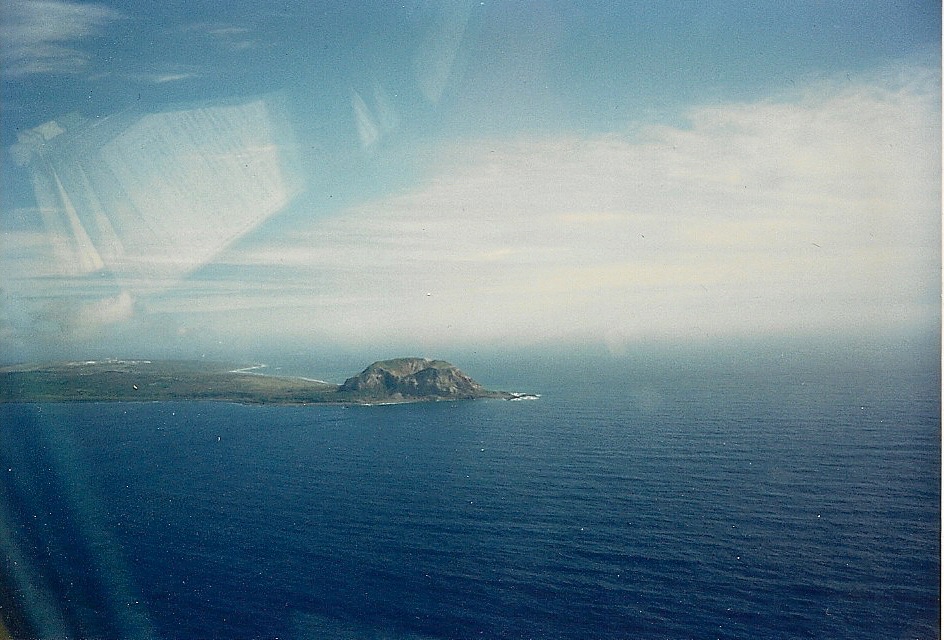 Almost the entire island in one shot. The prominent elevation is Mt Suribachi.
 A few numbers
Iwo Jima is approximately 21 square kilometers (8 square miles) in area.
Mt Suribachi is approximately 169 meters (554 feet) tall.
Over 110,000 US personnel were involved in the battle for Iwo Jima. Approximately 72,000 Marines landed. The island was defended by 21,000 Japanese soldiers.
Over 6800 Americans died. Over 20,000 Japanese were killed.
The main battle lasted 36 days. Anti guerilla operations lasted several months longer. The final Japanese soldiers surrendered four years later.
Monuments
During the time I visited Iwo Jima the US Coast Guard operated some navigation aids and the airfield. Since then all US forces have left and the airfield is now run by the Japanese Self Defense Force (JSDF). It is currently not possible to visit the site as a tourist . However JSDF apparently organizes a yearly visitation and memorial ceremony though how exactly that works, I don’t know.
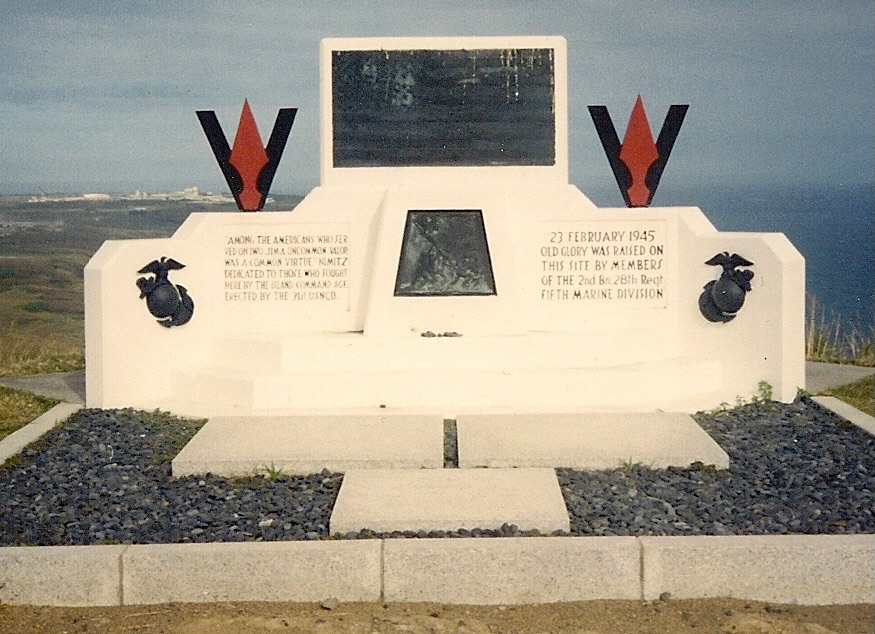 One of the Marine Corps memorials. This one is on top of Mt Suribachi. This one specifically is the site of the flag raising. Behind the memorial you can see the airfield.
  Another monument facing roughly west. Behind the memorial a couple of hundred yards from the shore is a protruding sand bar.
 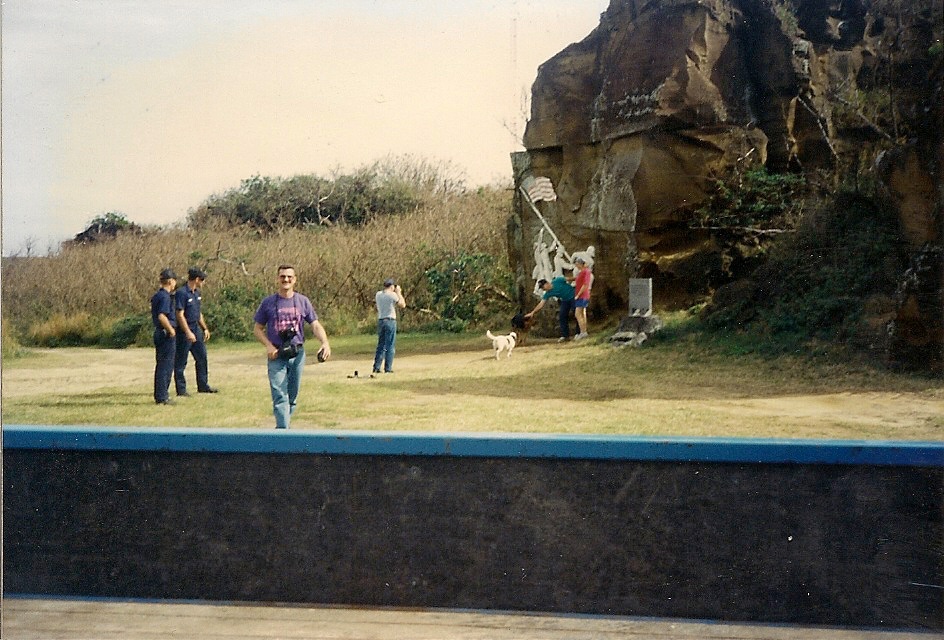 A few off duty military personnel viewing the memorials. There are no native inhabitants and there haven’t been any since WW2.
 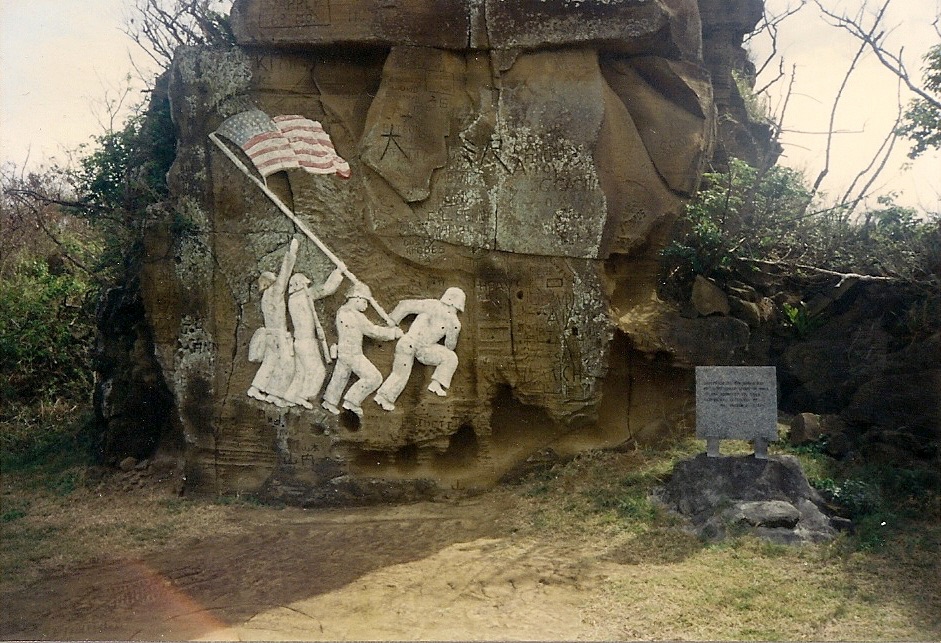 A more detailed view of the memorial carved into the rock.
 Green today
The coastguardsman driving us around the island said that after the battle there was no vegetation. All the vegetation on the island was deliberately imported years after the war.
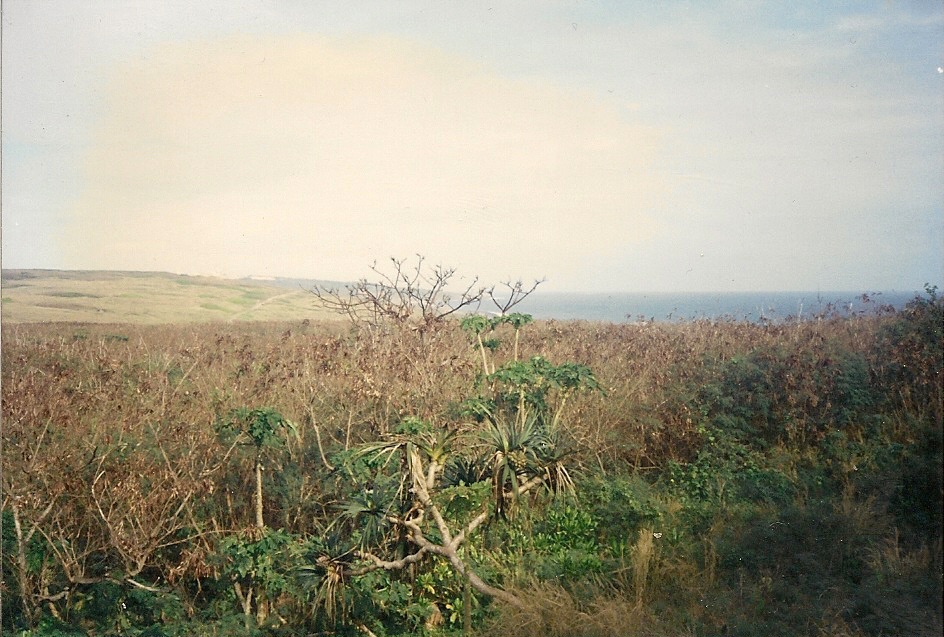 Very typical vegetation; scrub brush, grass and short trees. I don’t think I saw anything over 10 feet tall.
  The beach and sandbar offshore are made of black sand. This is because Iwo Jima is a volcanic island.
 Relics of War
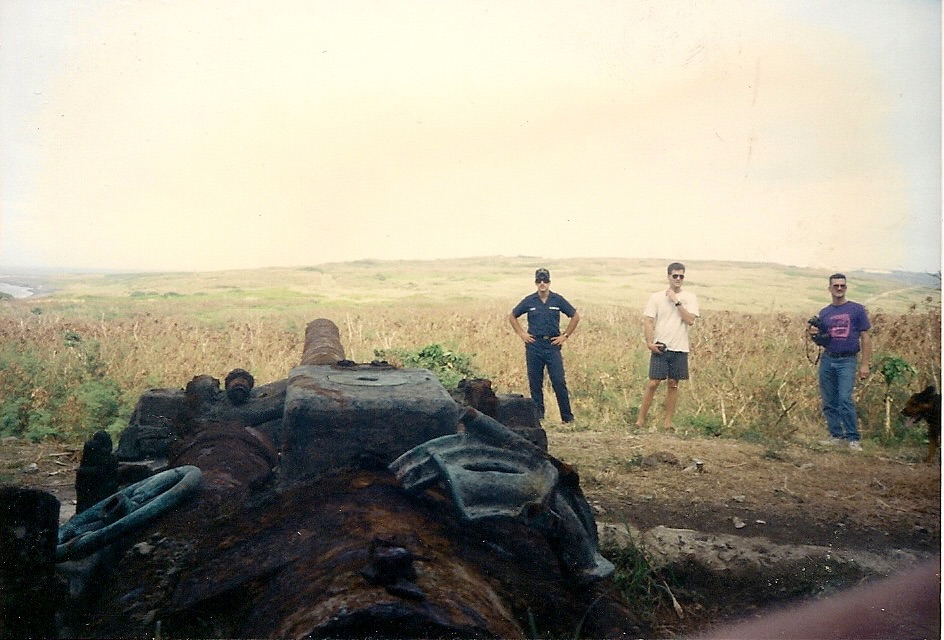 This and the next photo are of the same gun. The sandbar in the previous photo will be off to the left of this photo. The coastguardsman in the center was our tour guide. Behind him beyond the low hill in the center of the island is the airfield.
 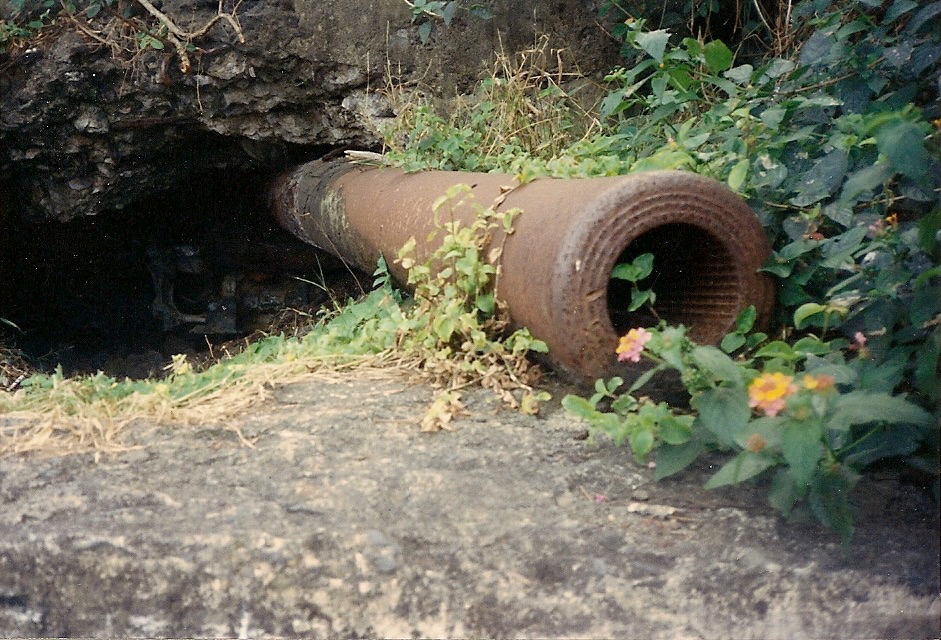 Maybe a 75mm? Not sure of the exact caliber but well capable of hitting all the landing beaches on the western side of the island.
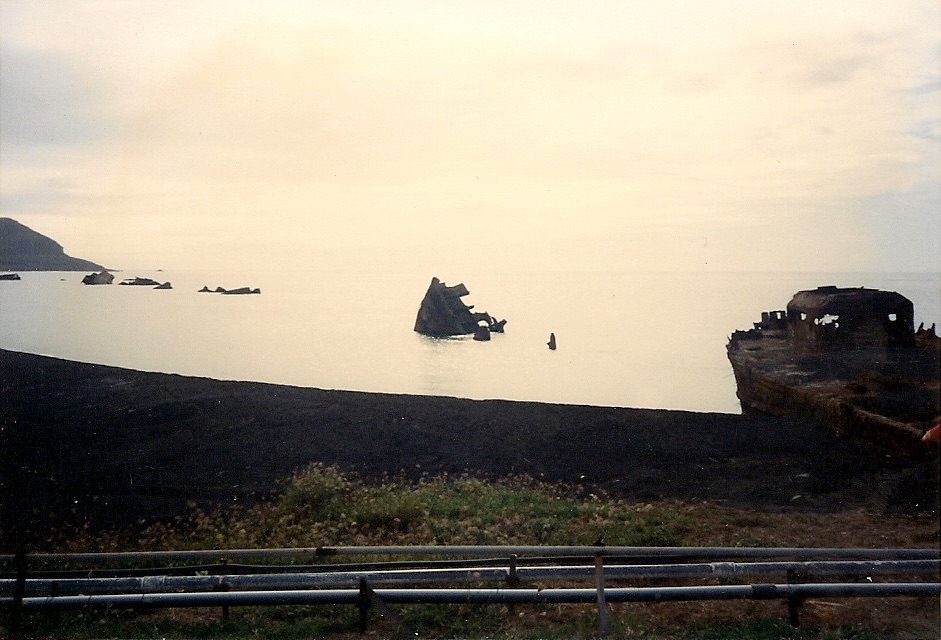 Broken up landing craft. Mt Suribachi in the background.
 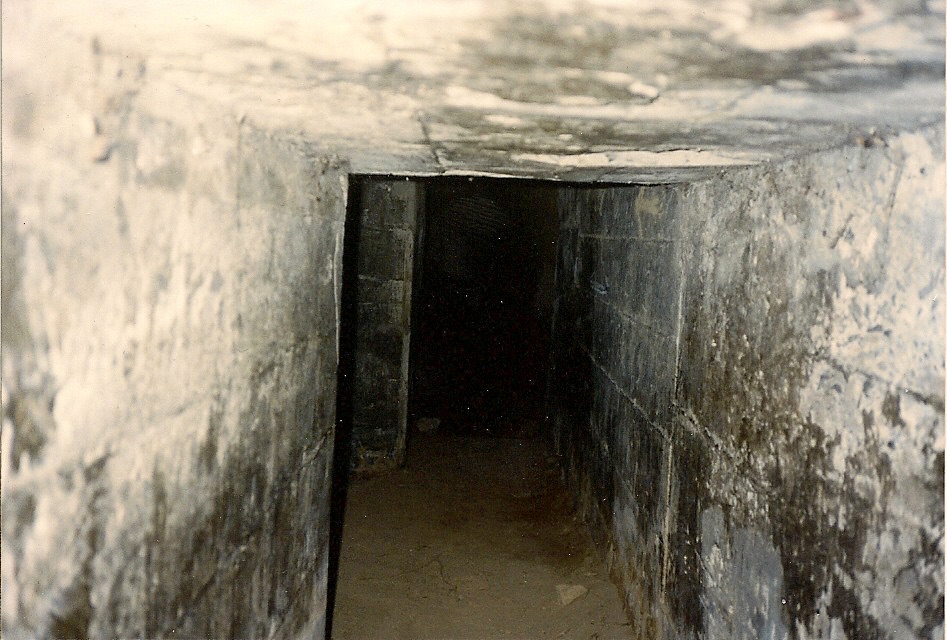 Concrete tunnel built by the Japanese defenders. I’m 6 feet 1 inch tall (1.85 meters) and was doubled over at the waist while inside taking this photo. My head and back were touching the roof. As Iwo Jima is still an active volcano, the temperature in here was 120°F (48° C). Imagine being a Japanese soldier and living in these tunnels for weeks at a time.
 Mt Suribachi
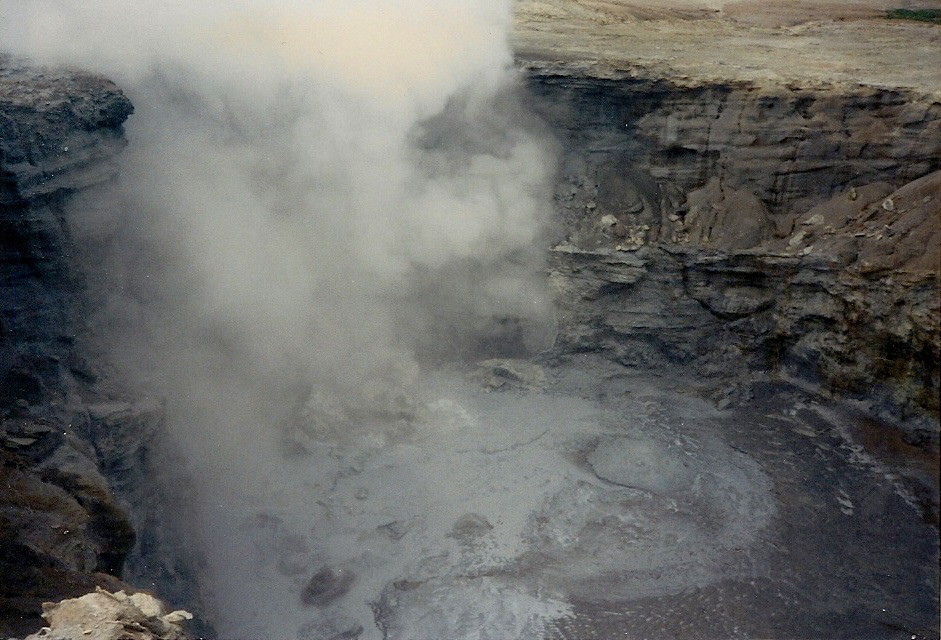 Steaming hot mud pool. A lot of excess equipment was tossed in after the battle.
 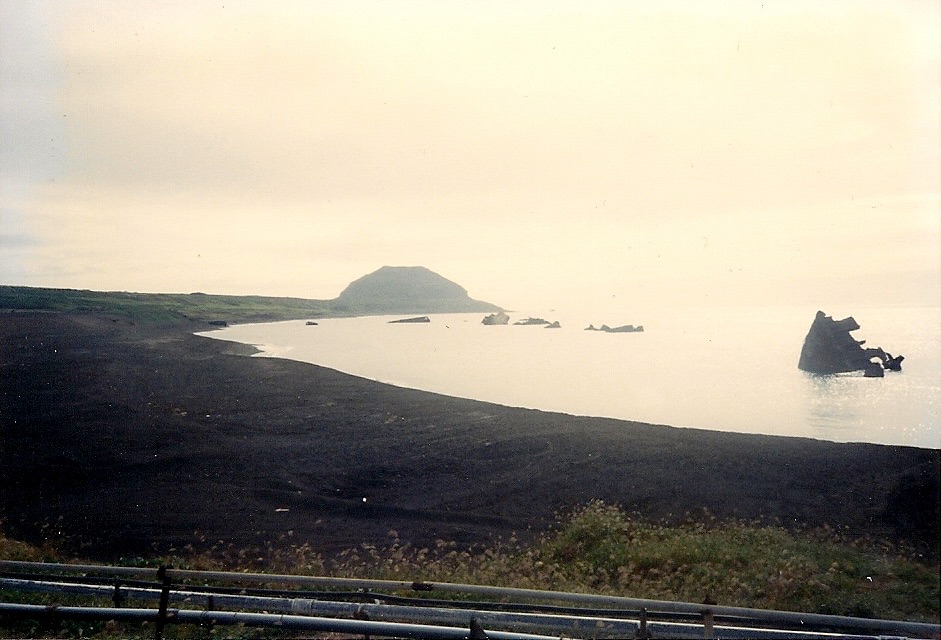 Mt Suribachi viewed from the beach at the north end of the island.
 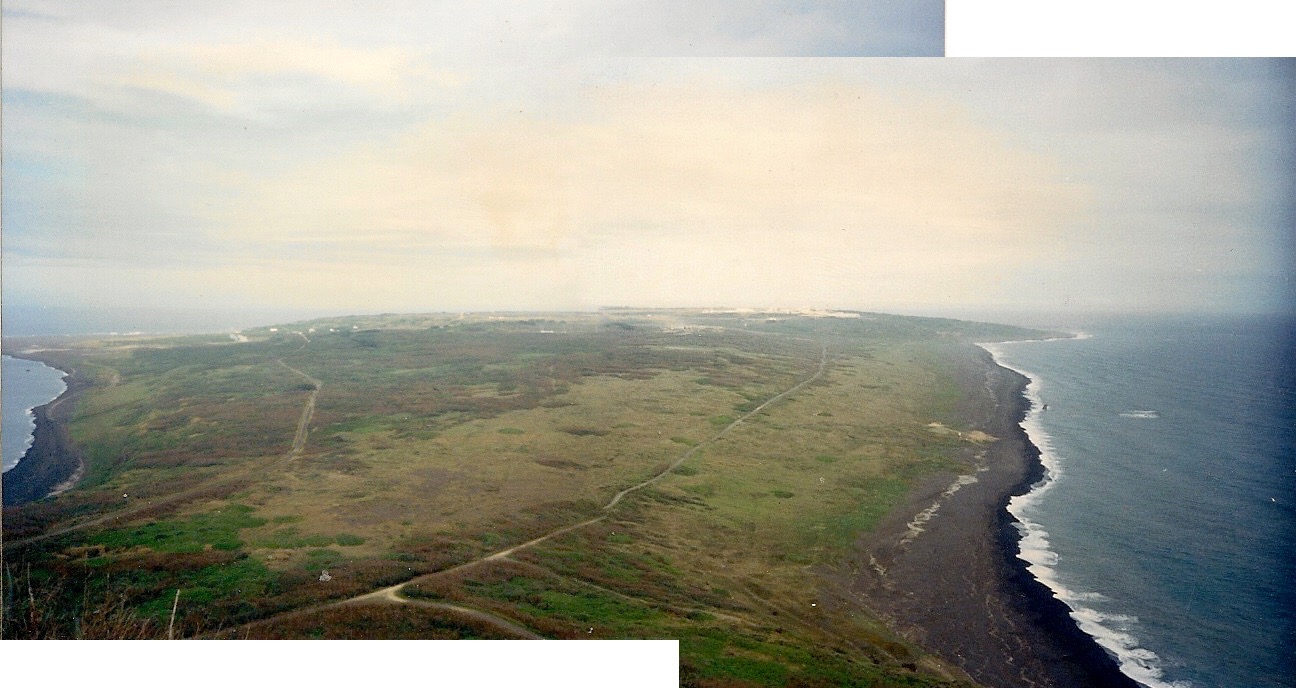 A view from the top of Mt Suribachi. Two old school film camera photos stitched together.
 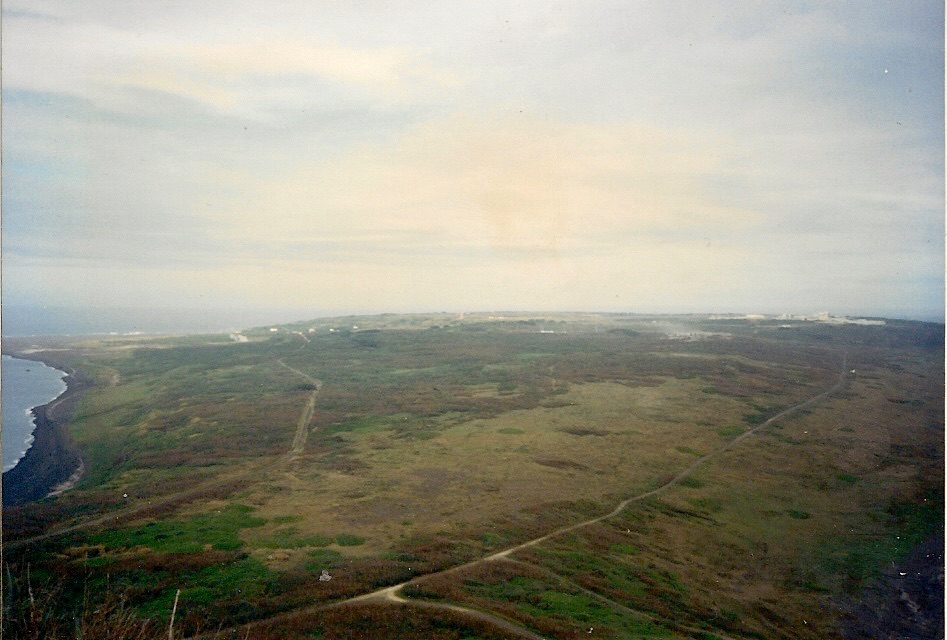 This and the next photo are the unedited original photos.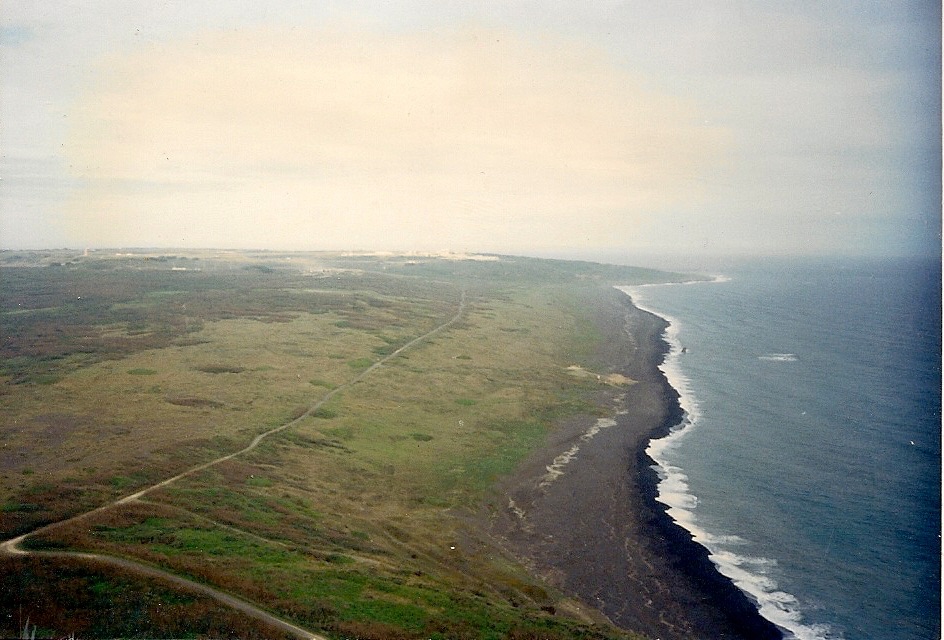
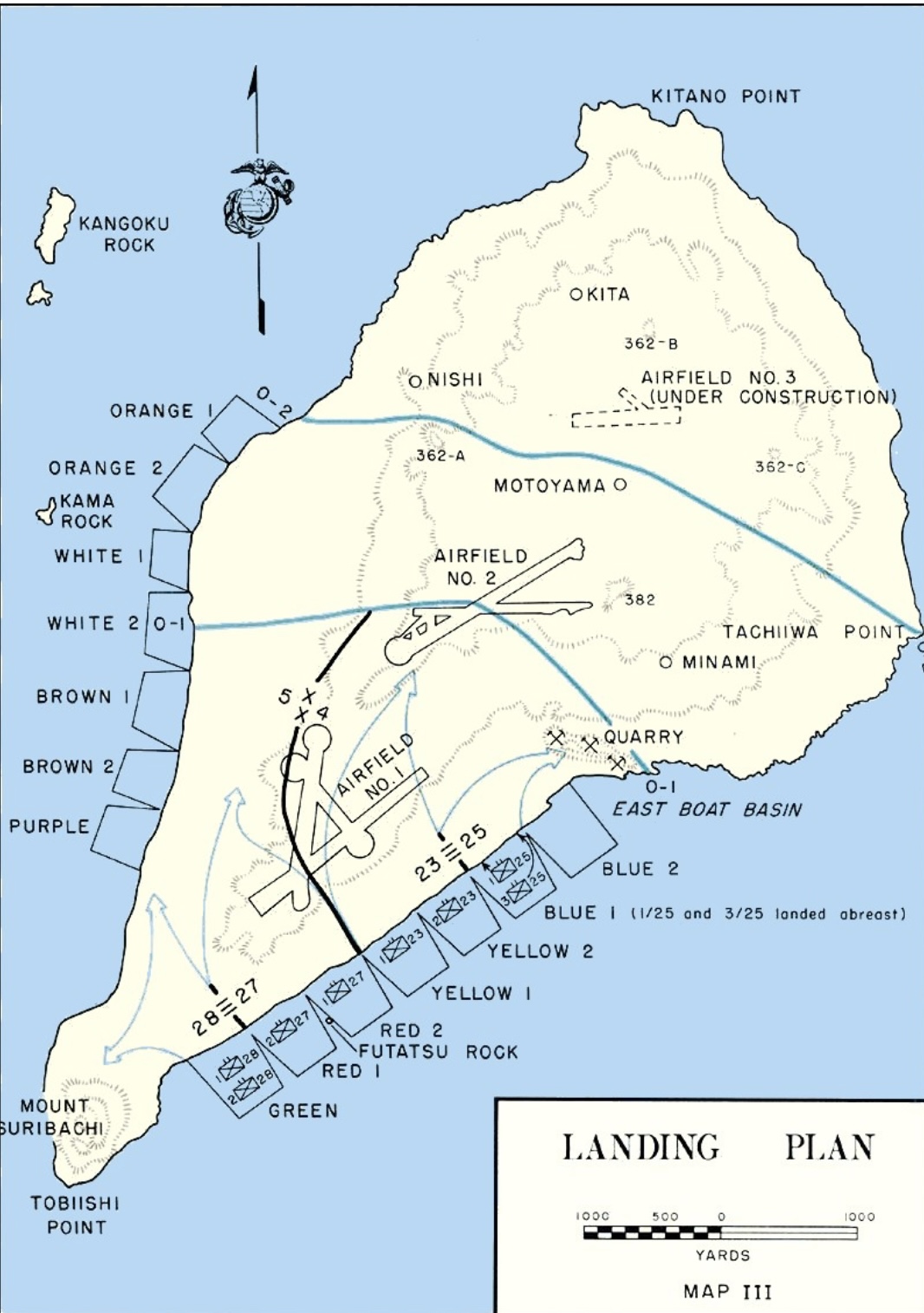 Map showing the landing sites. The western landing sites are on the left in the photos. The eastern sites on the right hand beaches.
 Some final thoughts
I’ve read the history books. I’ve imagined what it would’ve been like. But nothing prepares for actually seeing the battlefield first hand.
Its tiny. You can walk from one end to the other in about an hour and a half to two hours.
Now imagine 72,000 men walking that while under fire by 21,000 men. For five weeks.
Except for Mt Suribachi, it’s s just barely above sea level. From the beach I got the impression it was only about 20 feet (6 meters) above sea level. Officially it’s 106 meters (348 feet) but it doesn’t look it.
Then there’s Mt Suribachi itself. It just dominates the landscape and impacts everything else. It’s simply not possible to move on the island without being observed from Mt Suribachi.
Mt Suribachi was captured early in the battle. The flag raising took place four days after the initial landing but the main fighting lasted another 32 days. Most of the fighting was against heavily built up defensive positions connected via concrete tunnels
Visiting Iwo Jima was a once in a lifetime experience. I came away with a better understanding of the battle and a greater appreciation of the hardships faced by the combatants on both sides.