






![NO Weekender Or Cult Of Games XLBS This Weekend [Updated]](https://images.beastsofwar.com/2026/03/No_Weekender_and_XLBS_this_Weekend-225-127.jpg)




W1815 – Waterloo war gaming at its finest?



Recommendations: 189
About the Project
W1815 is the best waterloo game ever.
Let’s get that out of the way.
and the title of this project speaks merely of the game, not of my presentation of it!
It plays somewhat historically.
It is easy to pick up.
It teaches waterloos’s various areas of combats, timings and issues without getting bogged down.
You can play it in 15 minutes (30 for new players)
And best of all, being that it’s just a card playing board, a few unit cards, some small wooden blocks and two die, it’s small enough to carry in a bag as a backup.
About that last one.
For some reason a few years ago I decided I needed to change that and make it a singularly impractical piece of kit.
This is that project.
Related Genre: Historical
This Project is Active
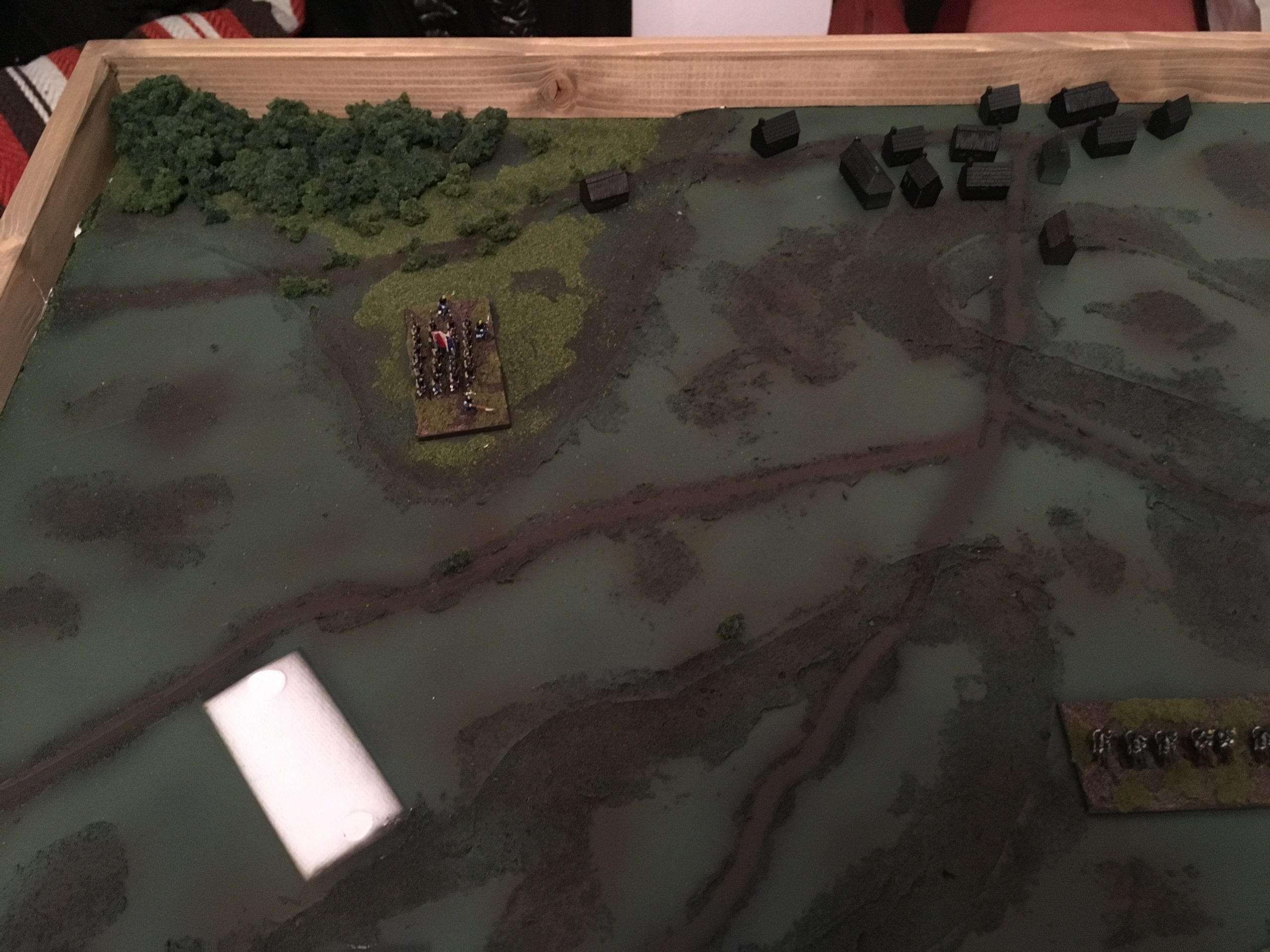
Grass and bushes….. so. Many. Bushes…..
The process of adding flocks took a long time. Layering in different colours and tones to get a good mix but also leaving areas of mid to match the bases is used for the French army already painted.
Woodland scenics sponge flocks were used throughout, utilising every green I could find mixed in together.
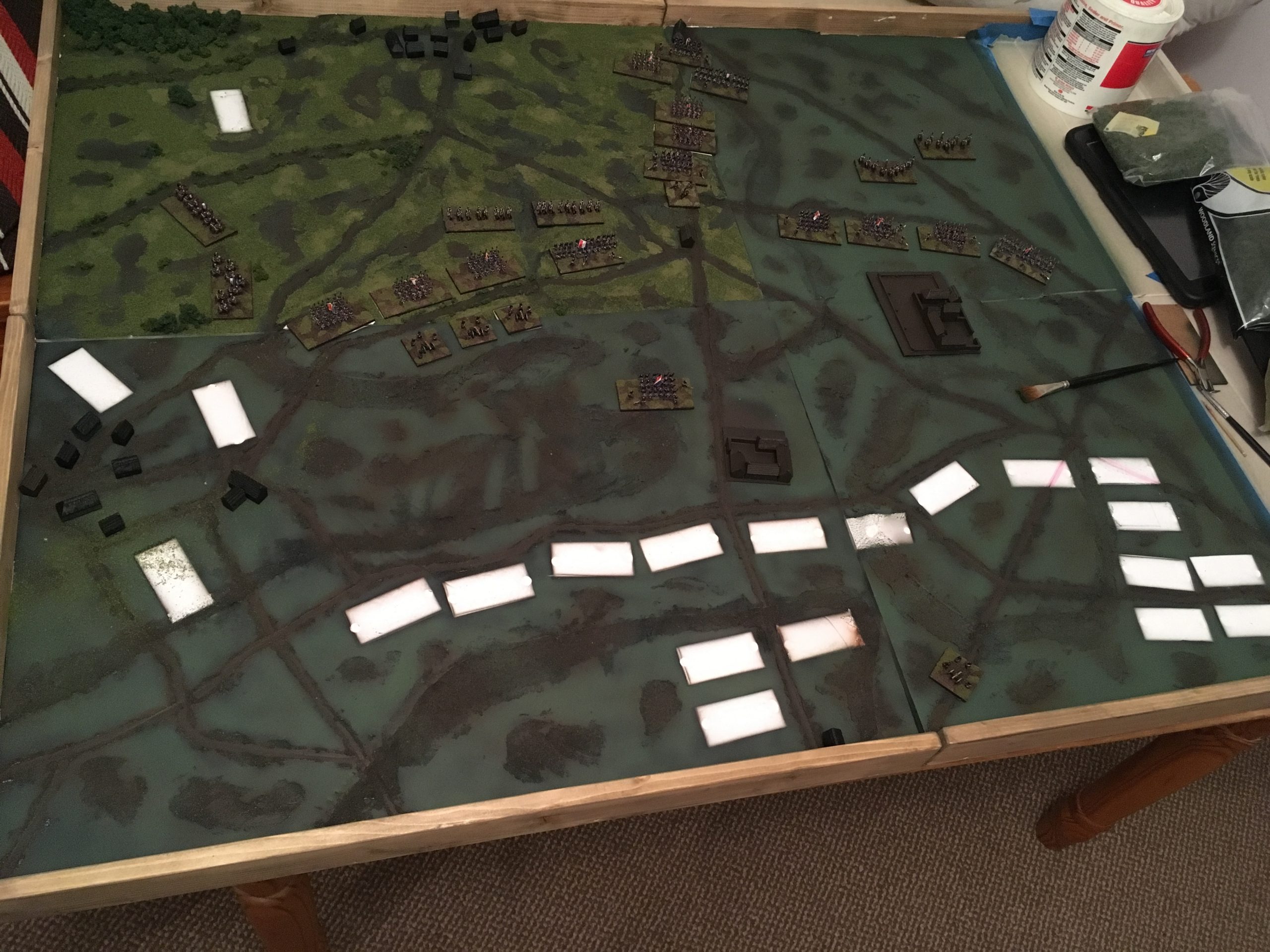
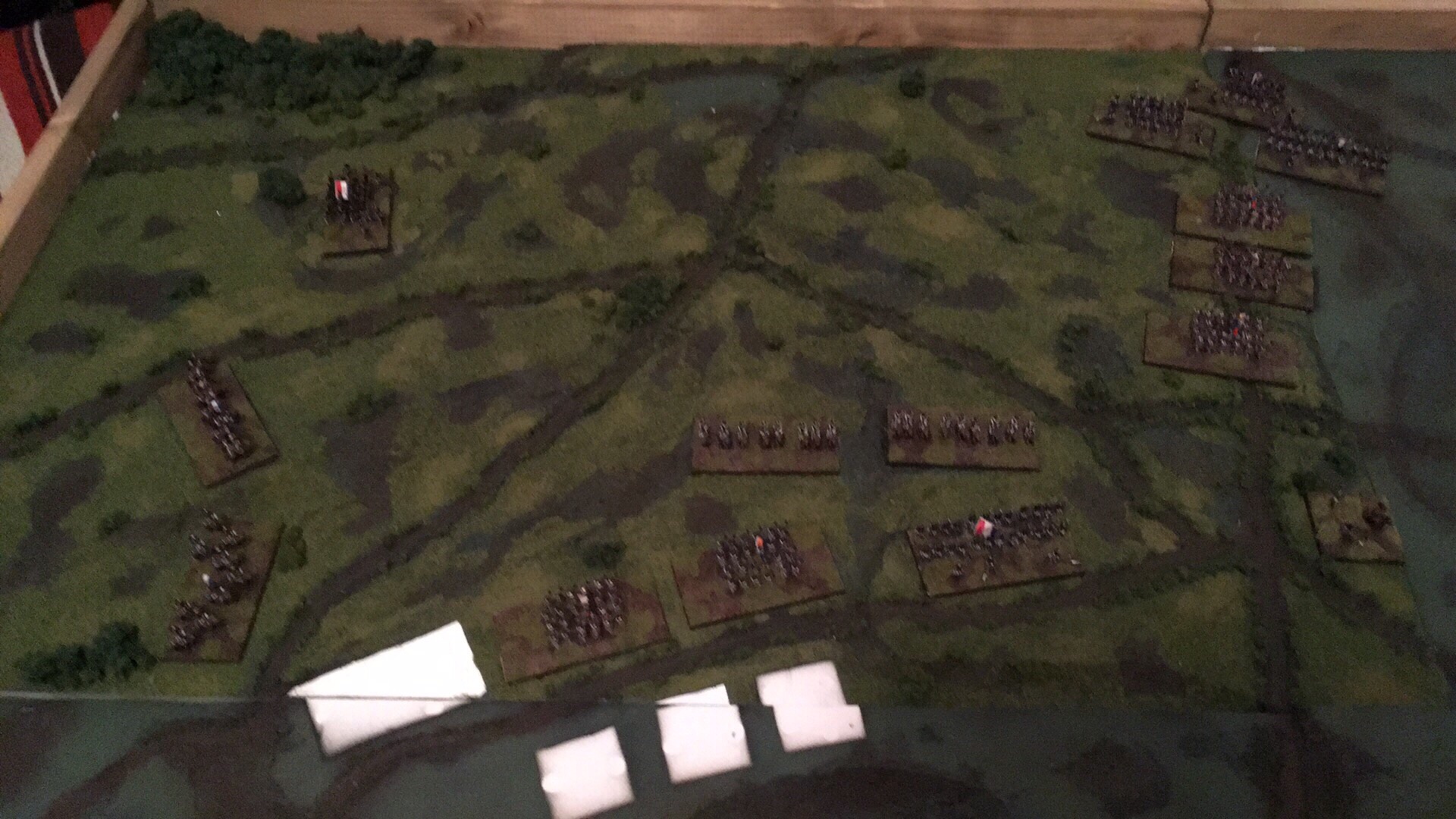

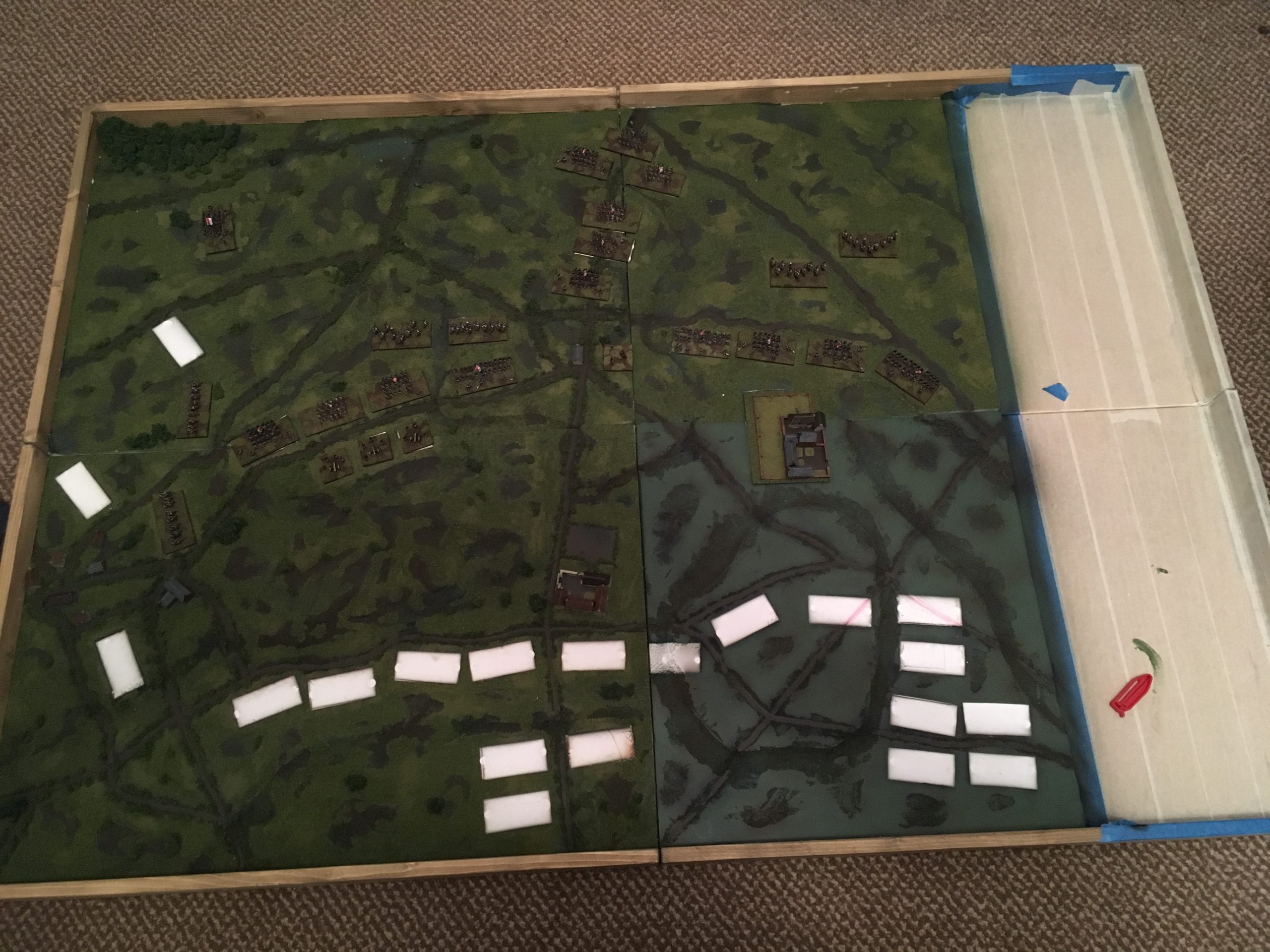
At every stage I kept going back and standing the models on to check I liked the look and try to inspire me to press on – although I’ve made a _lot_ of models, I’d never tried anything quite like this before so was suffering a lot of doubt throughout!

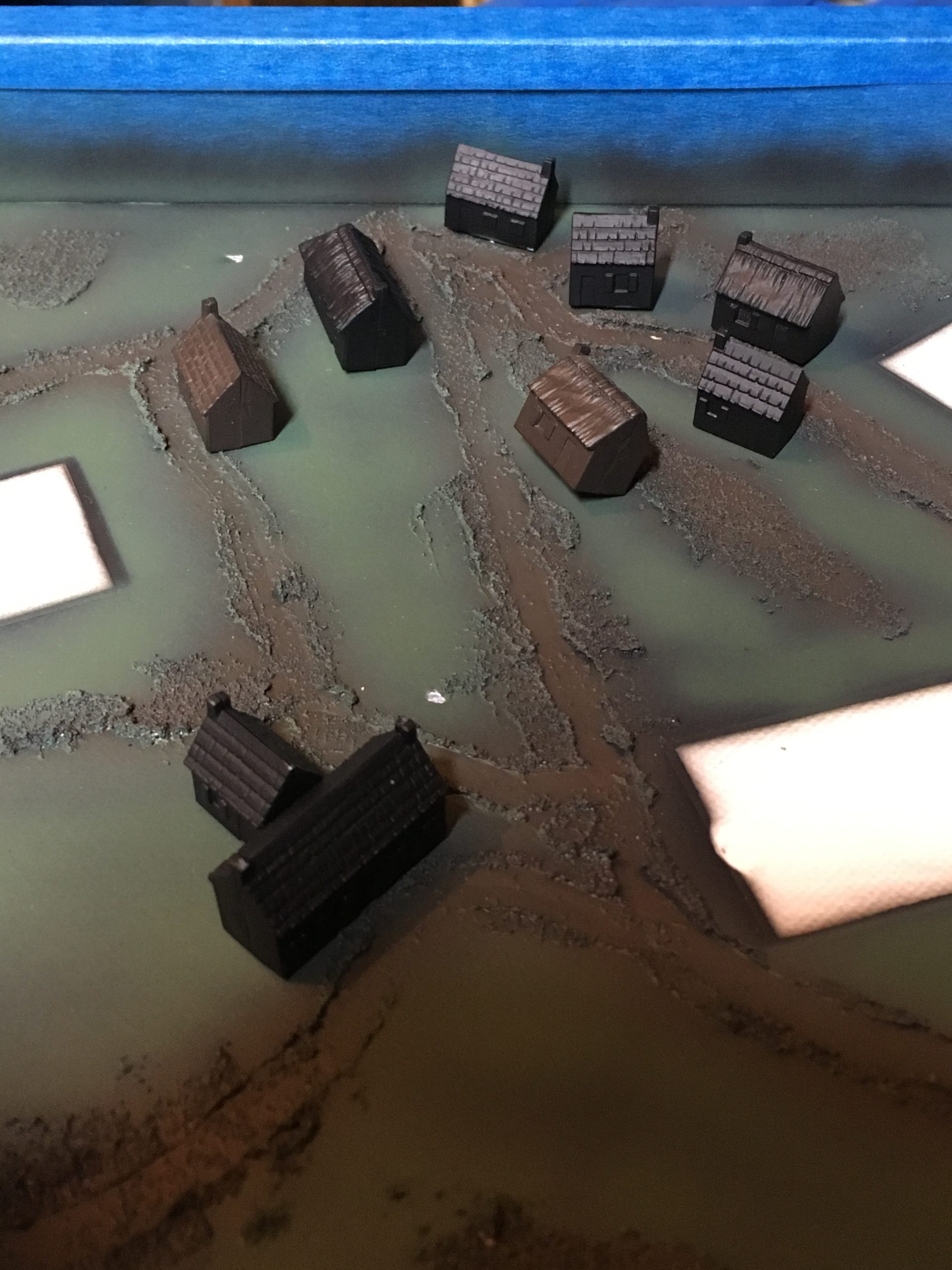
Building the buildings
We’re still playing catch up here, covering the ground of a couple of months back in 2019-20 when it stalled and only got back to it with the ‘25 spring clean so give me a moment here…..
Buildings for the project were not going to be to scale, but representative.
the Perry’s travel battle provided the basis for these as they were fast and varied enough to give different feels in different areas.
I also made two little lift-off pieces based on these – one for Le Haye Sainte and one for Hougoumont. They cross the boundaries of the boards and were worth doing a (very little) more for. I’ll get separate pics of them for another update once the “history” is covered….
Adding life….
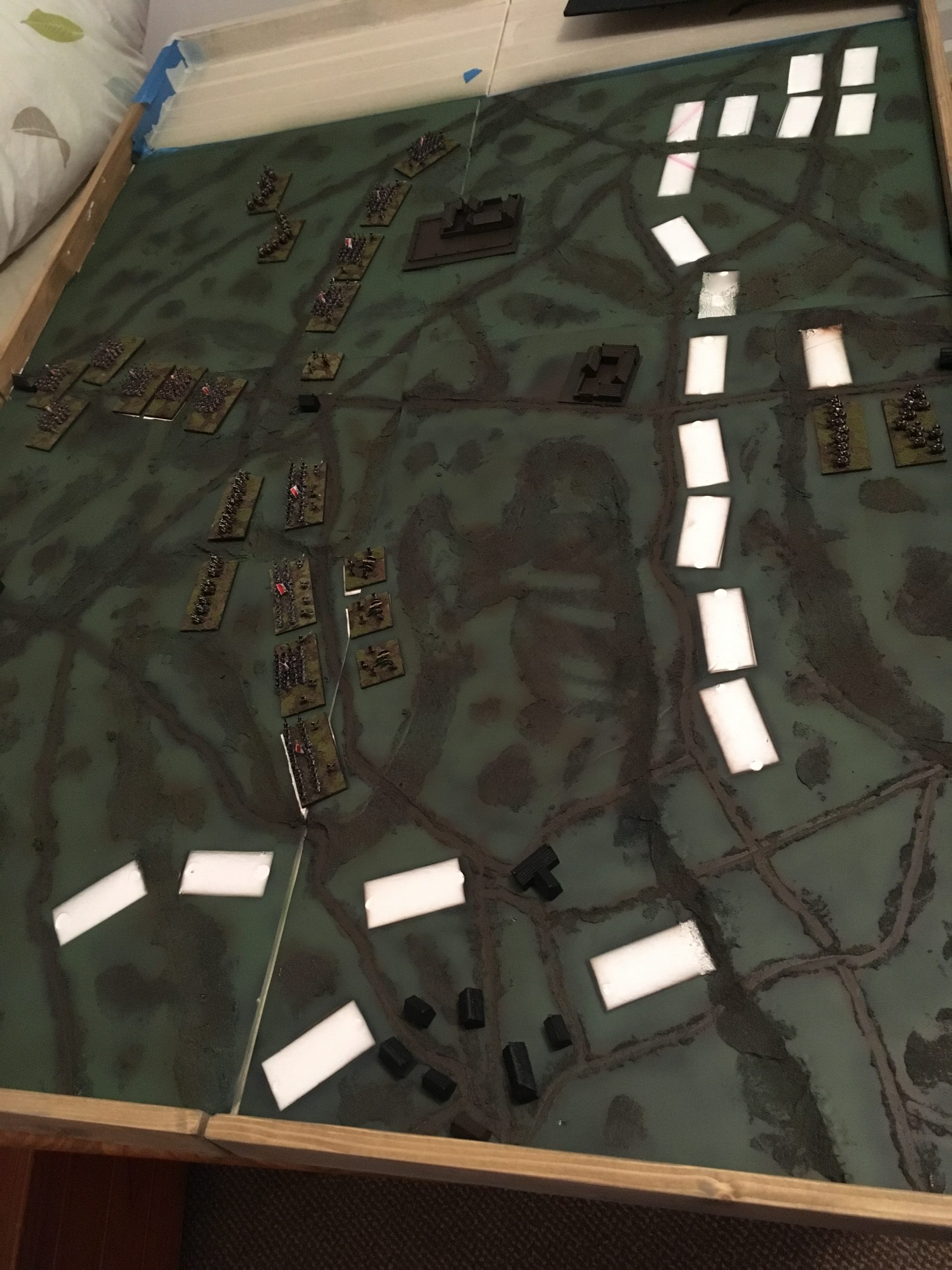
Once all the board sections were glued in place and textured, I spent an age applying masking tape to protect the wood. I also, for ease, tacked down empty bases in each in its location to make sure I could clearly see them throughout – less for this stage and more to ensure I did t accidentally flock one of them later!
You can see one corner where I’d already started a test – flocking, eager to visualise the next stages as I go…
But now the board doesn’t fit….
But of course, in increasing the size of the counters to full on stands of figures, the board is looking rather too small.
I could print a larger one on paper, or even good card, but that’s not where this is going.
I wanted to make a full scenic representation of the Waterloo battlefield to play this game across.
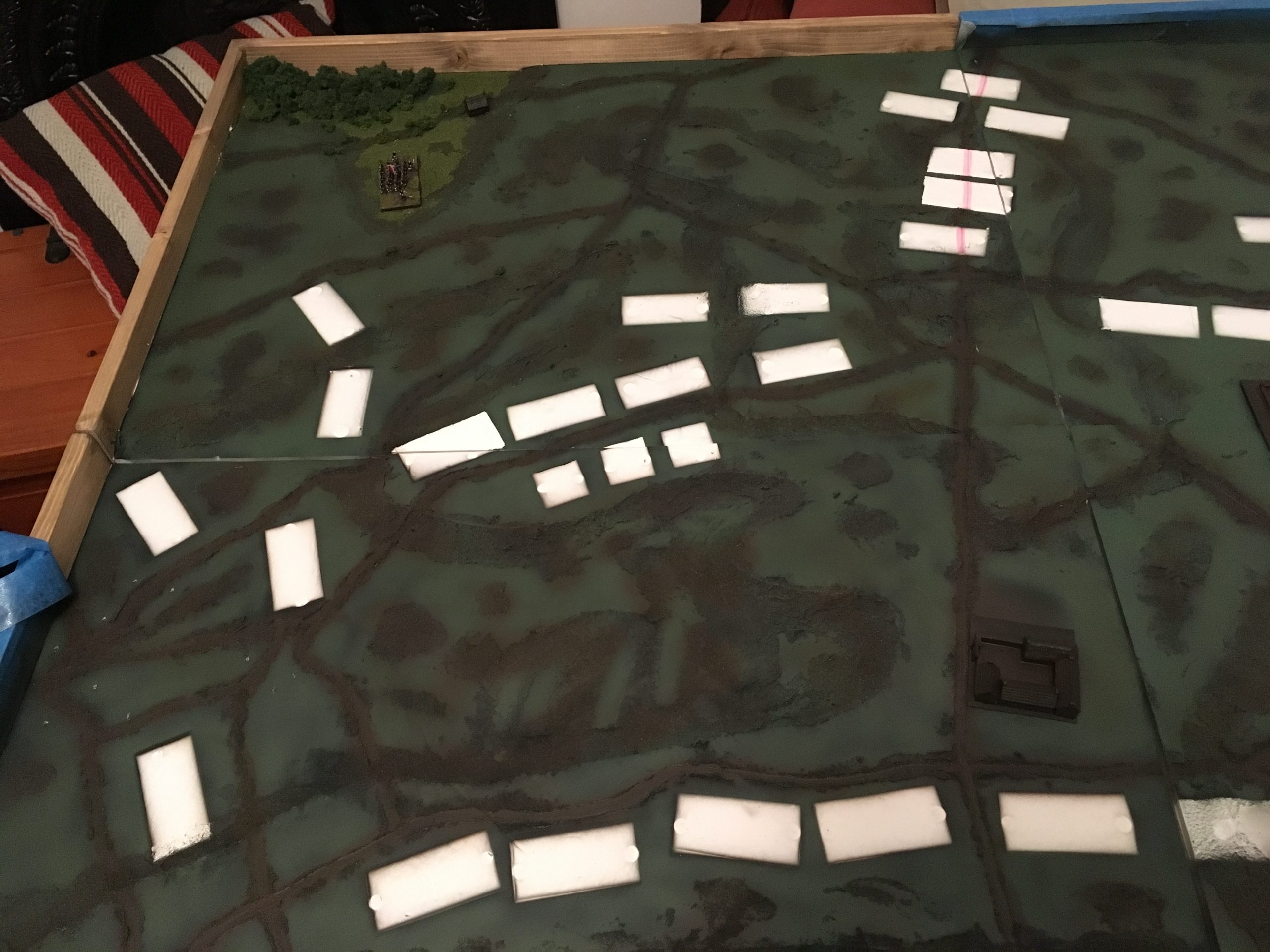
Starting with printing off a large map showing the contours on the area, I traced each line onto a piece of foam board and stacked them up, giving me the general shape of the hills and dells of the area.
roads are marked on in (very subtle…) pink highlighter at this stage to make sure I didn’t cut along them!
Since my foam board sheets were too small, it had to be constructed in a number of sections which in itself led to the next idea – not making one single board on a flat plane, but a multi-part board in the form of a box that would expand out.
photo is from a couple more stages down the line as I got carried away for maybe a day and a half without thinking to record it at all!

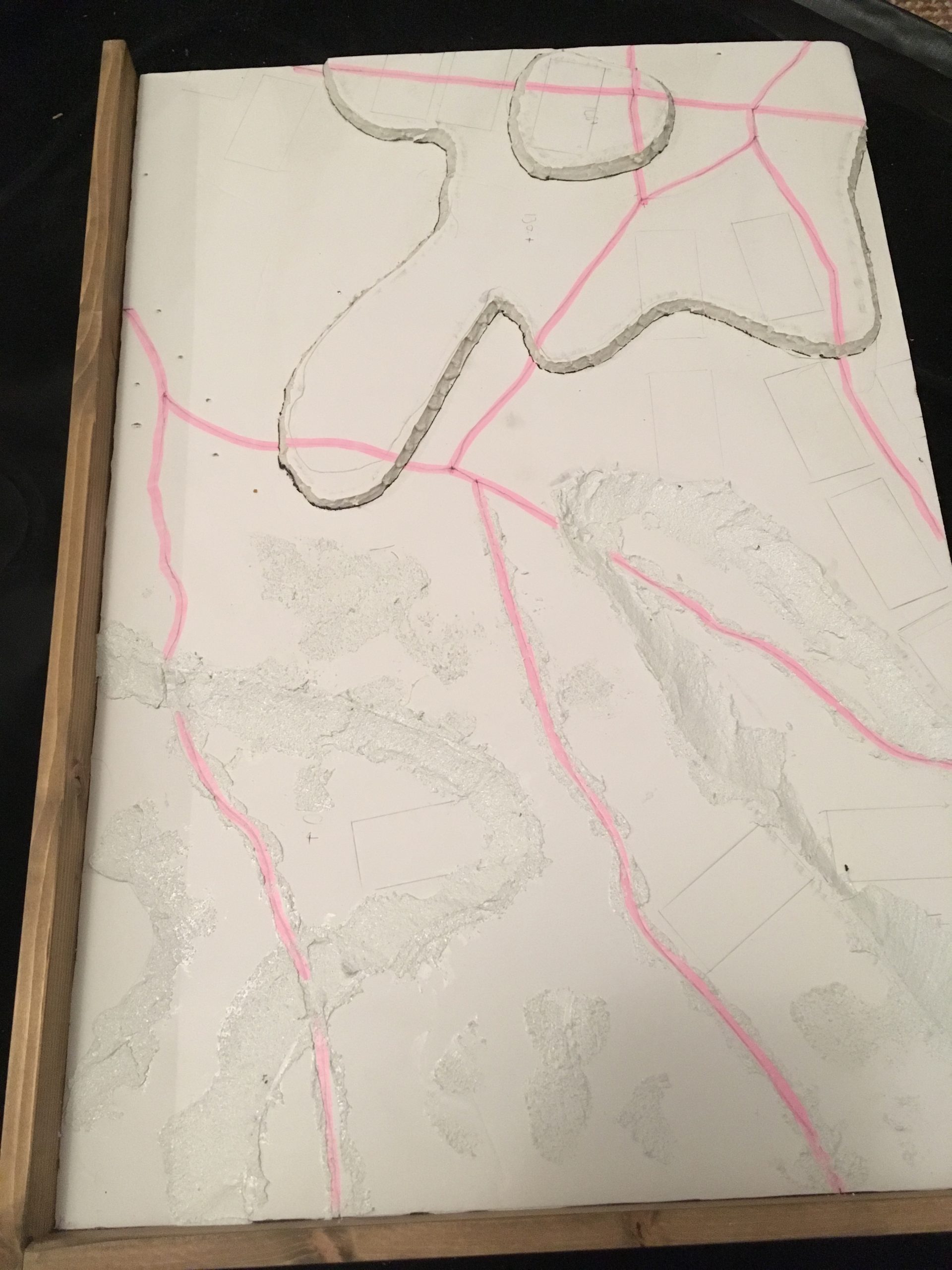
Second image is a fast forward once again. I marked out the exact positions of each of the units on the board, adjusting positions slightly where contours meant stands would no longer sit cleanly.
Using Vallejo scenics to modulate the transitions and add patches of texture to the large open areas of the board, being careful to leave the areas for the models clean and also defining the routes of the roads by giving them mounds along their edges (not entirely historically accurate but useful definition at this scale. )
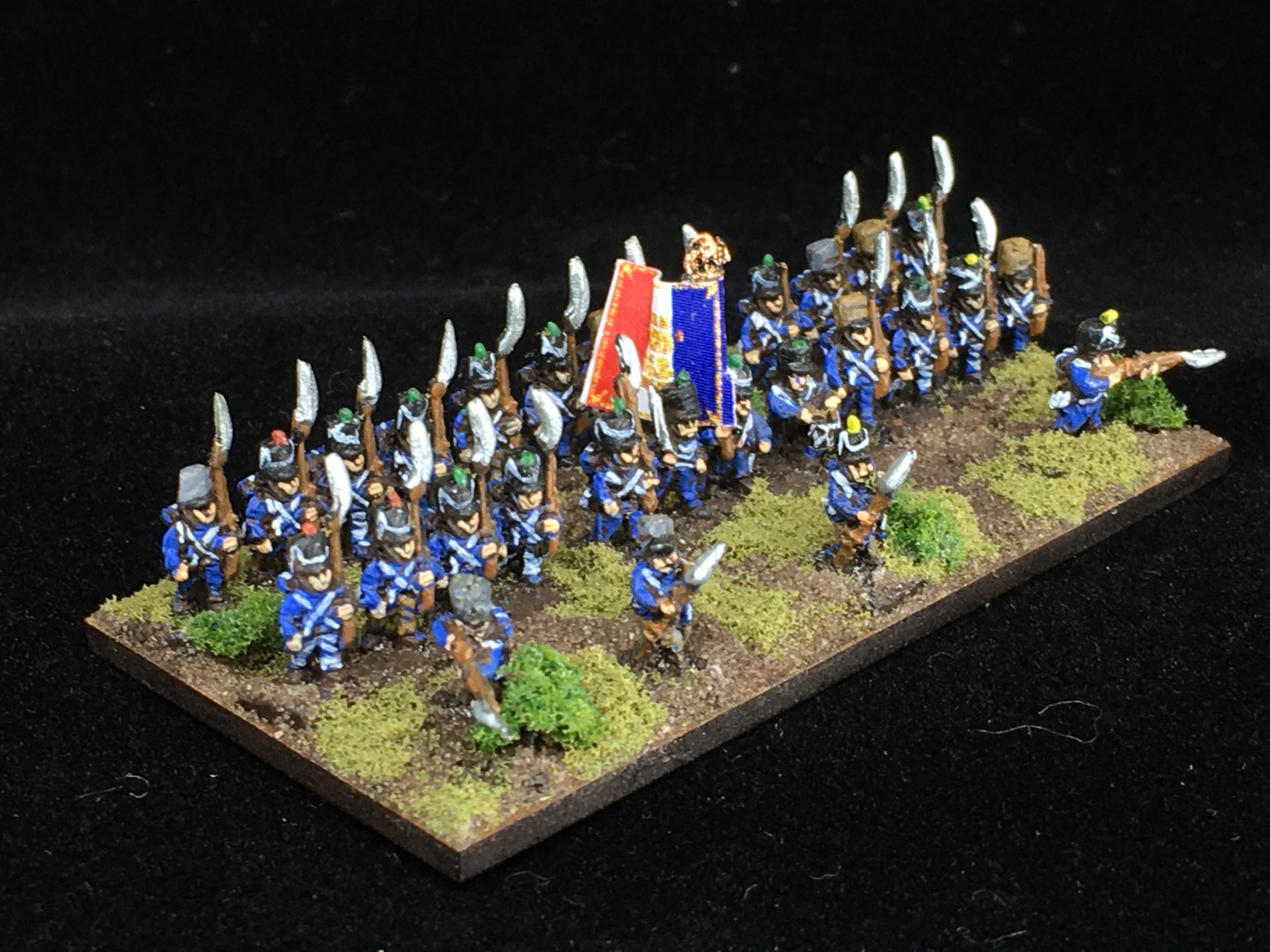
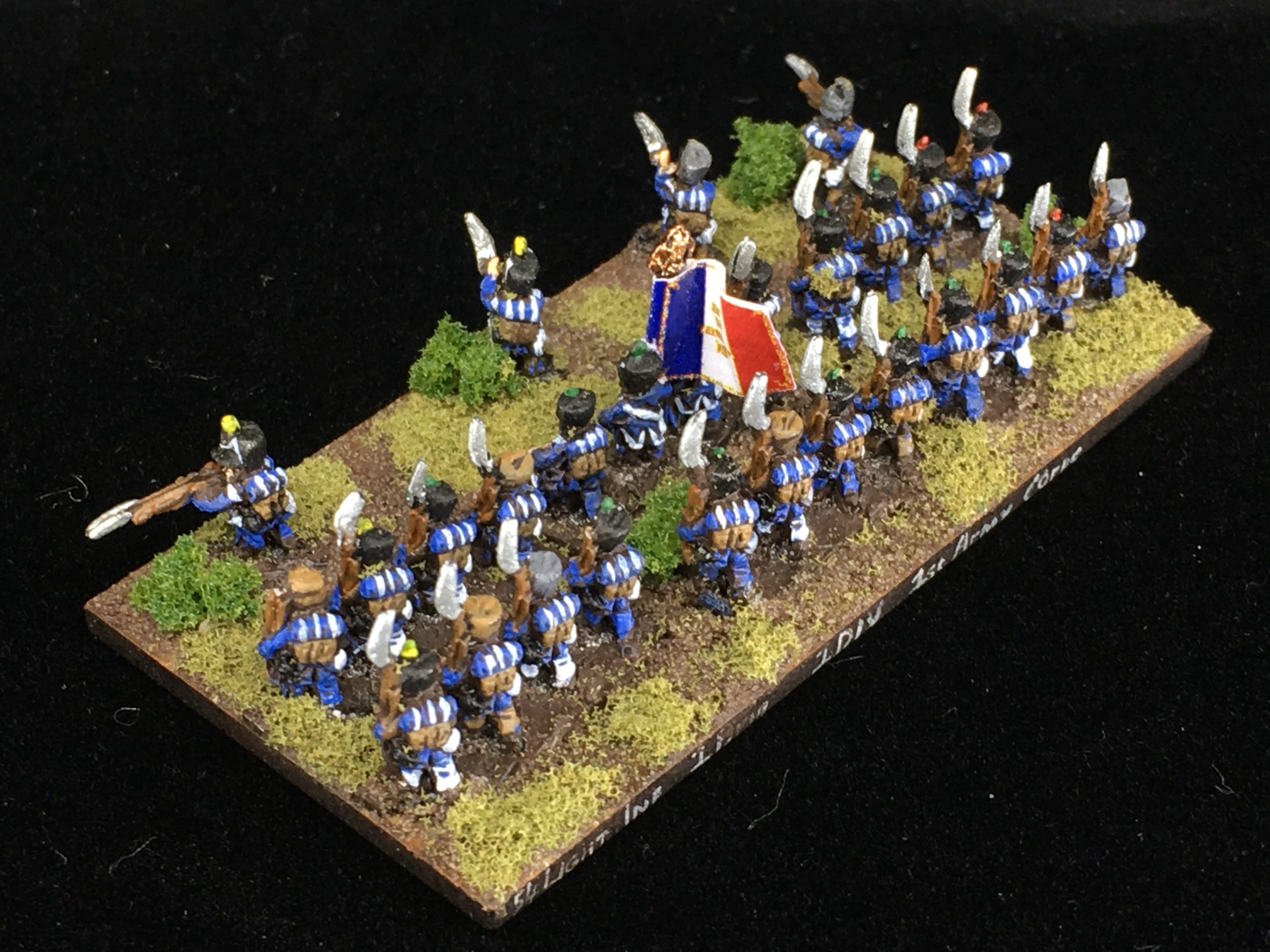
More infantry pics
Because the project system only let me upload one…..
figures are Baccus and the flags are paper from Baccus also.
this was the test base for the project – all others followed suit, but many lack the shrubs!
What it’s missing is minis…..
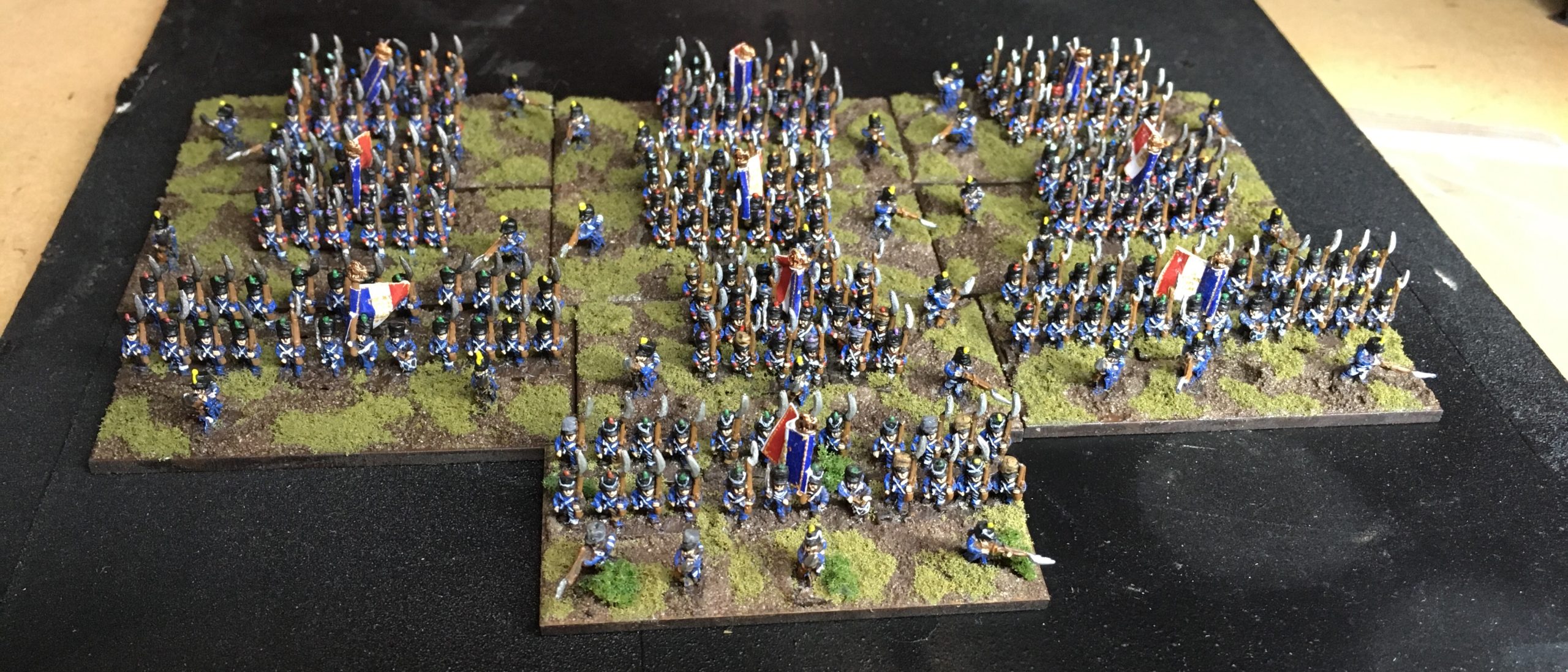
So when this all started, I was already working on a 6mm napoleonic army from Baccus. A couple of friends had / were doing Brits so I took up the French.
I started with 6mm nappies 35 years ago but dropped them maybe 30 years back and have never really returned. These Baccus figures are leaps and bounds better than my old ranks of Irregular Minis!
The original game
W1815 is a very simple, but remarkably clever little game by U&P games which deserves to be in every napoleonic (historical) gamers collection.
It’s played on an a3 cardboard board, with red blocks for British and allies and blue blocks for French, with black blocks representing the looming threat of the prussians.
Units have set positions, and the cards tell you what a unit can attack, what happens when they’re attacked, and whether they can mount (upgraded) counter-attacks against specific enemy actions.
Players take it in turn to activate a card / unit and dice are rolled to determine effectiveness of the action. This will give an outcome in casualties (blocks removed and placed on casualty tracker) and effects on army morale, which is tracked on a scale at the side of the board. Every casualty taken results in an army morale roll, which gets harder as more casualties are taken, entire corps are lost and time marches forwards.
Because of the limited actions of each unit it forces actions to be somewhat historically accurate. The counter attacks encourage players to respond as the forces did on the day, although you may not achieve the same outcomes.
Key areas, such as Hougoumont and Le Haye Sainte change hands and effect areas of the field, and all the while time marches on and the Prussians advance
It’s ace.
But I am a miniatures guy and I saw an opportunity….. a silly one…. But I couldn’t resist….. and some of you can probably see where this is going…..
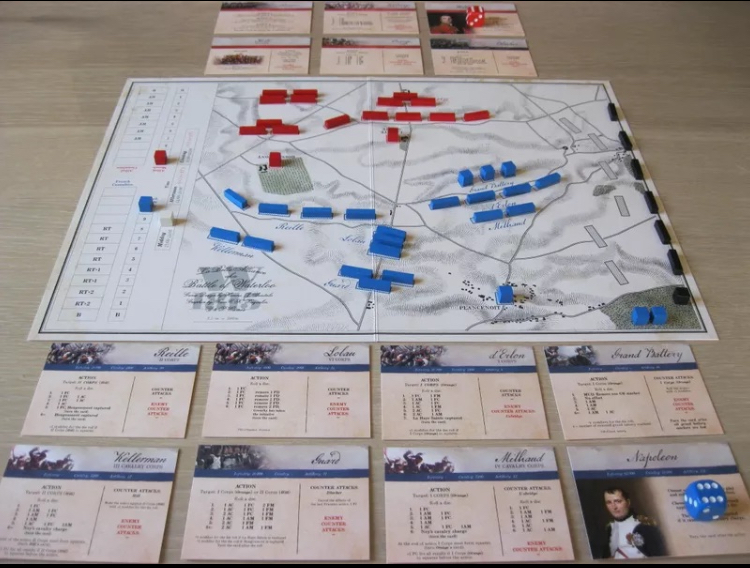 The game - pic used without permission from BGG

![StarCraft Tabletop Miniatures Game Pre-Orders Live Now [Updated]](https://images.beastsofwar.com/2026/03/starcraft-tmg-news-cover-600-338.jpg)