










![Pure Sci-Fi Nostalgia! War Rocket Review | Hydra Miniatures [7 Days Early Access]](https://images.beastsofwar.com/2026/02/unboxing-hydra-miniatures-war-rocket-coverimage-225-127.jpg)


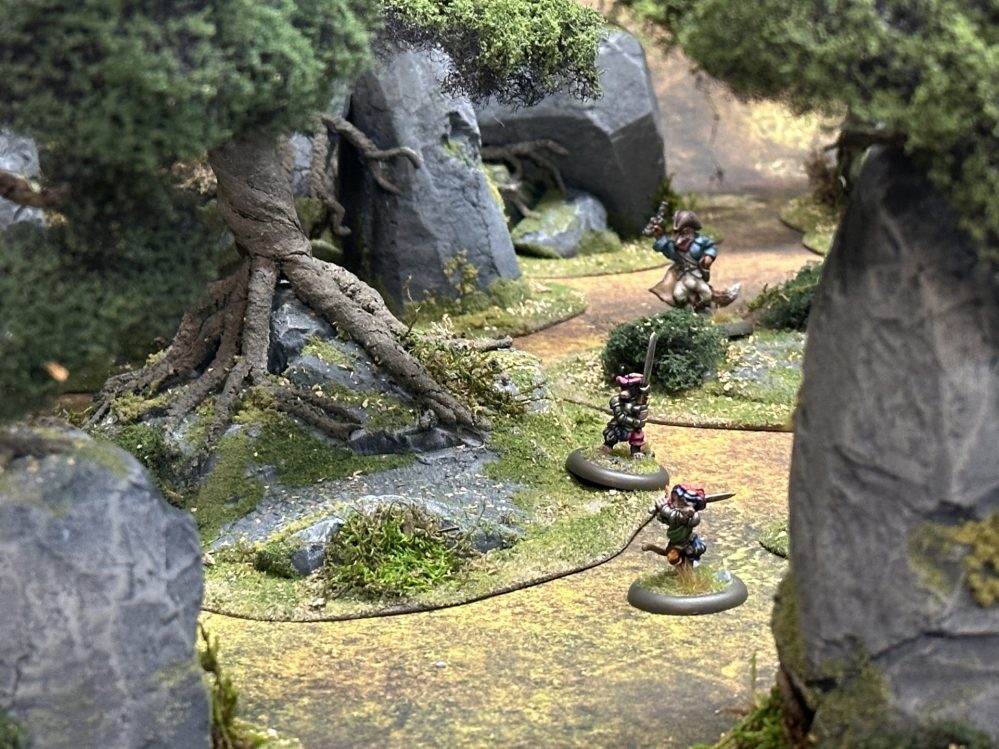
Creepy Forest – TerrainFest 2025 entry



Recommendations: 161
About the Project
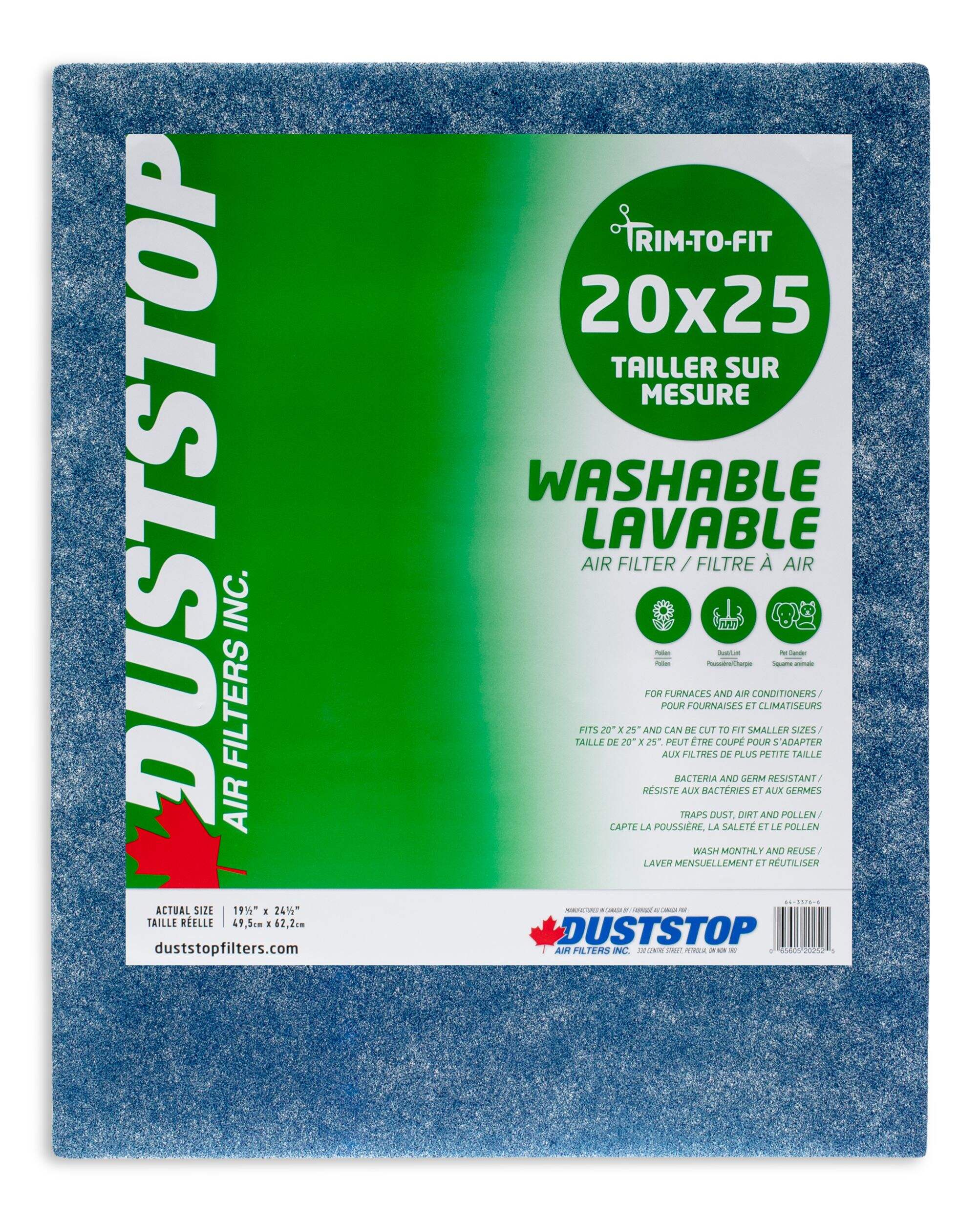
The goal is to build a creepy forest to use for fantasy games like Burrows & Badgers and Middle Earth Strategy Battle Game and The Silver Bayonet. My inspiration is Alan Lee's illustrations of Mirkwood in the Hobbit. To build the tree armatures, I'm using pipe-cleaners. I found the idea here: https://www.youtube.com/watch?v=OuoHw0CL9l4. Essentially, I've twisted pipe-cleaners together into trees, then melted the fuzz with a heat gun. I've then painted/coated the trees with a mix of tile grout, paint and glue. The base foliage for the flocking will be made from pieces of a cheap, furnace filter that's been teased apart. The stones are made of carved xps foam. The bases for the tree/stone pieces are hardboard aka mdf.
Related Game: Burrows & Badgers
Related Genre: Fantasy
This Project is Active
Solving the conundrum of tree foliage
It’s been a challenge to find a method of attaching foliage on terrain trees in a way that is durable.
I used to glue clump foliage directly onto armatures, but that is not very robust. With handling and going in and out of storage bins, it tends to shed the foliage. Another option is to glue natural materials like coconut fiber or sea-foam to armatures as a foliage base, and then glue flocking to that. But natural materials eventually dry out and become brittle. Another solution for a foliage base that is used in the UK and Europe is rubberized horse hair, which is an incredibly strong material that was used for stuffing furniture. But rubberized horse hair is very difficult and expensive to purchase in North America.
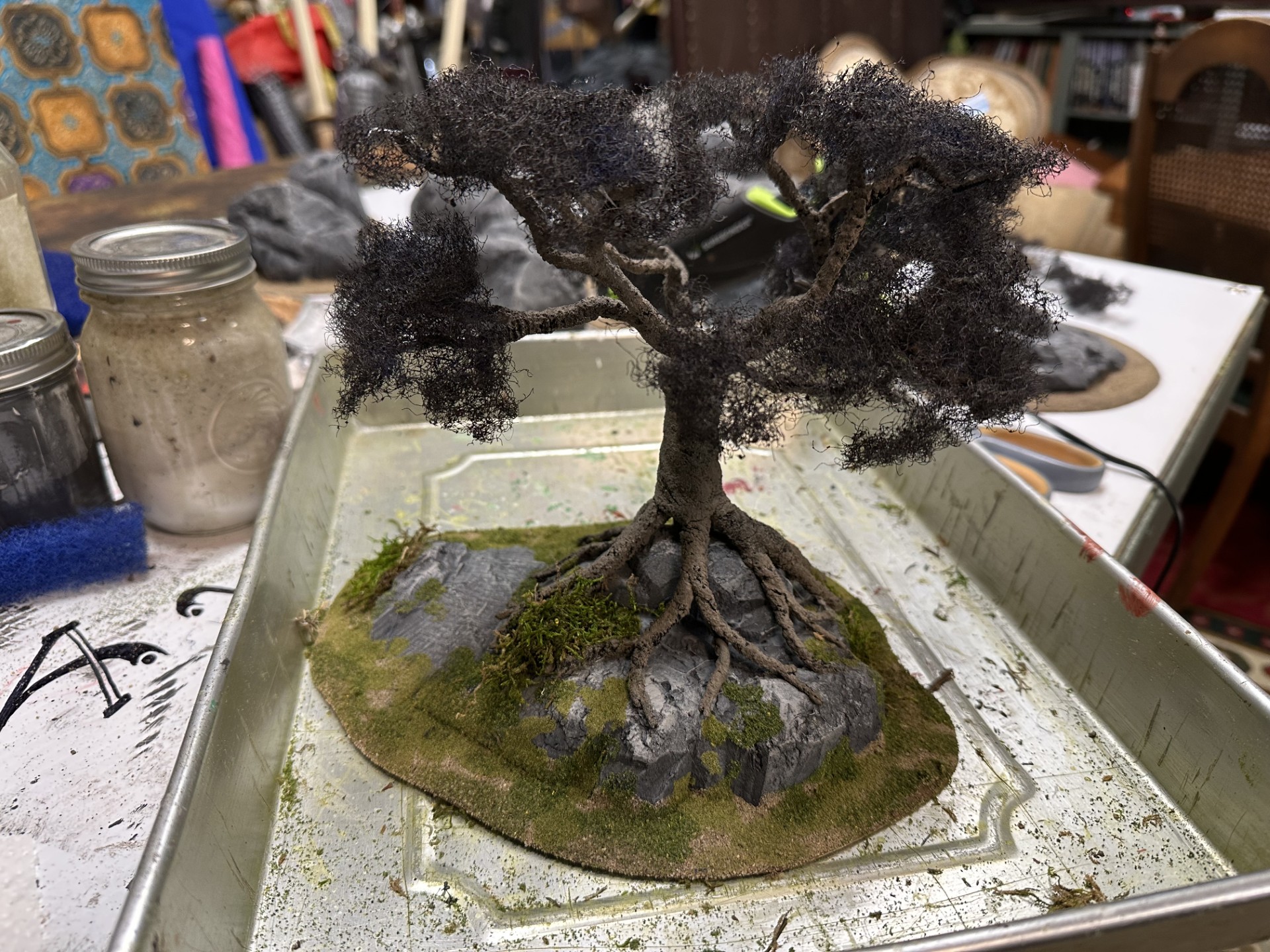
So I cast about for a suitable solution and found it in cheap furnace filters made from polyester fiber. You can cut these filters into pieces and tease them apart to make an excellent foliage base for trees and bushes. This material is usually blue, though. So, after teasing it apart, I spray painted it brown (see image). Then I hot-glued the pieces to the tree armatures.
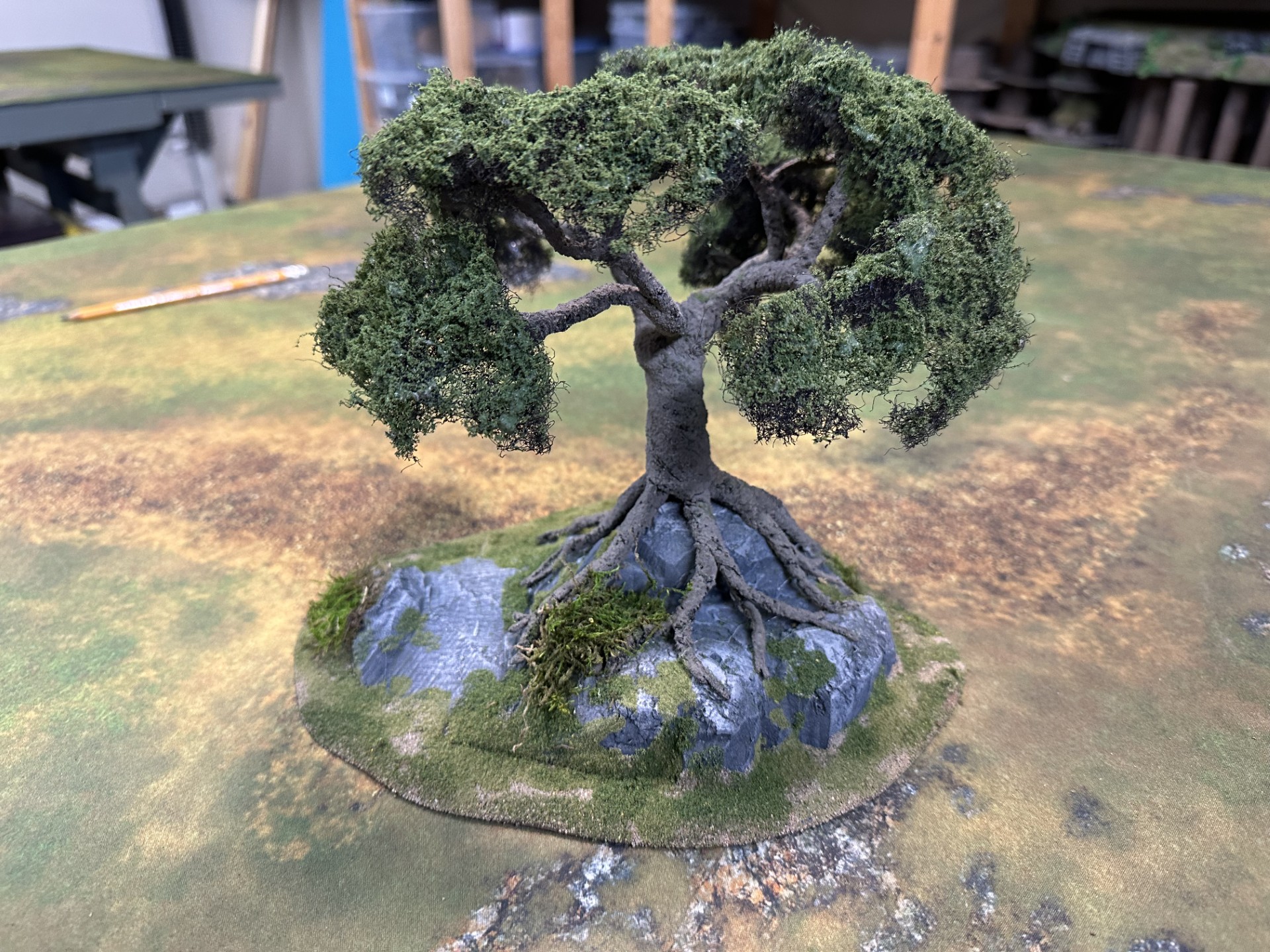
I then “painted” 50/50 watered down PVA onto the foliage base and sprinkled on Woodland Scenics Fine Turf flock. I did several trees in dark green and several in medium green to give some variation in color.
I also used this method to add some bushes to the bases.
Finally, I sprayed the foliage, like the bases, with very watered down matte finish Modge Podge to fix the flocking in place. The result is incredibly robust. The trees are very hardy going in and out of storage and don’t shed.

Flocking the bases
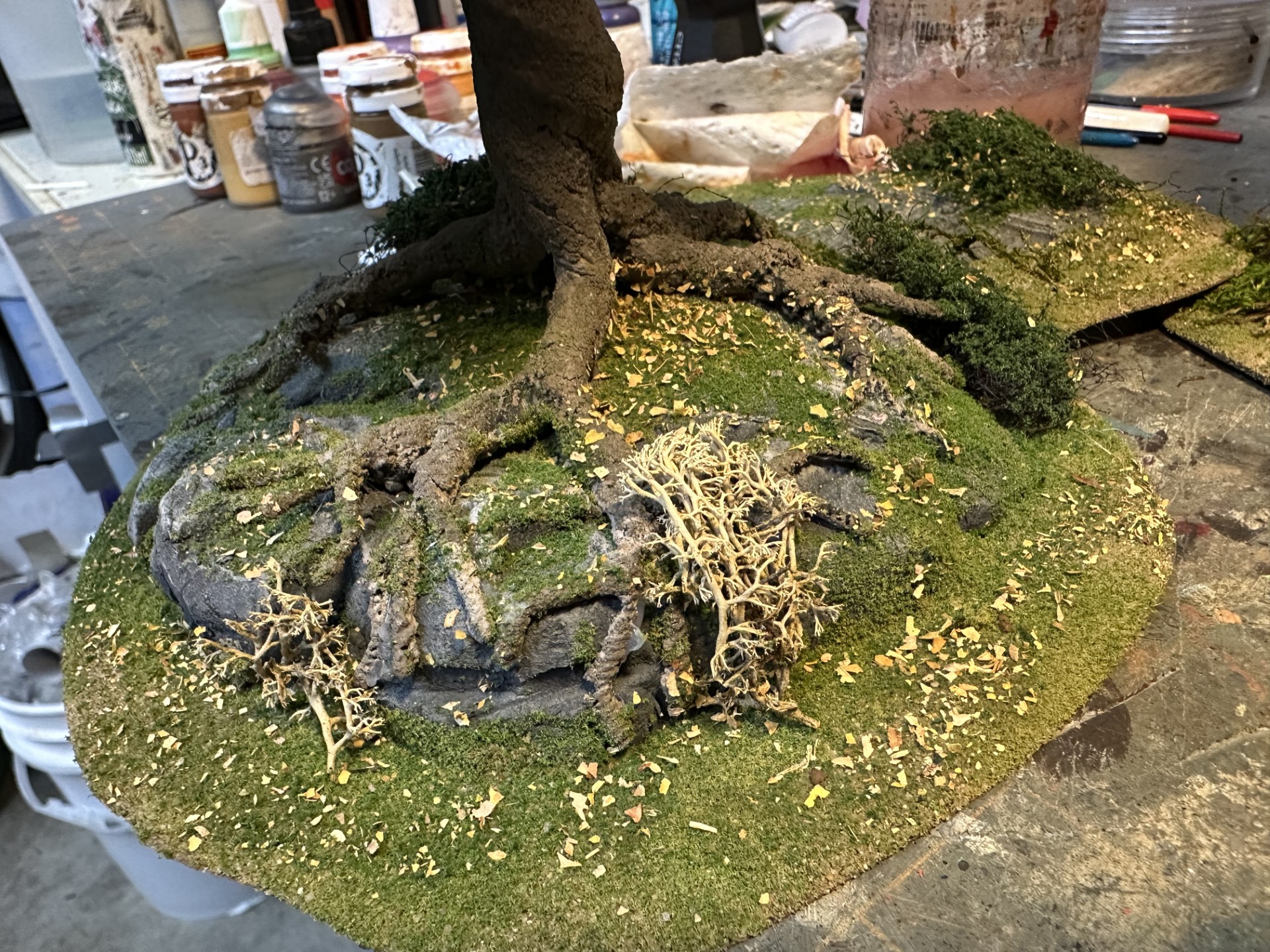
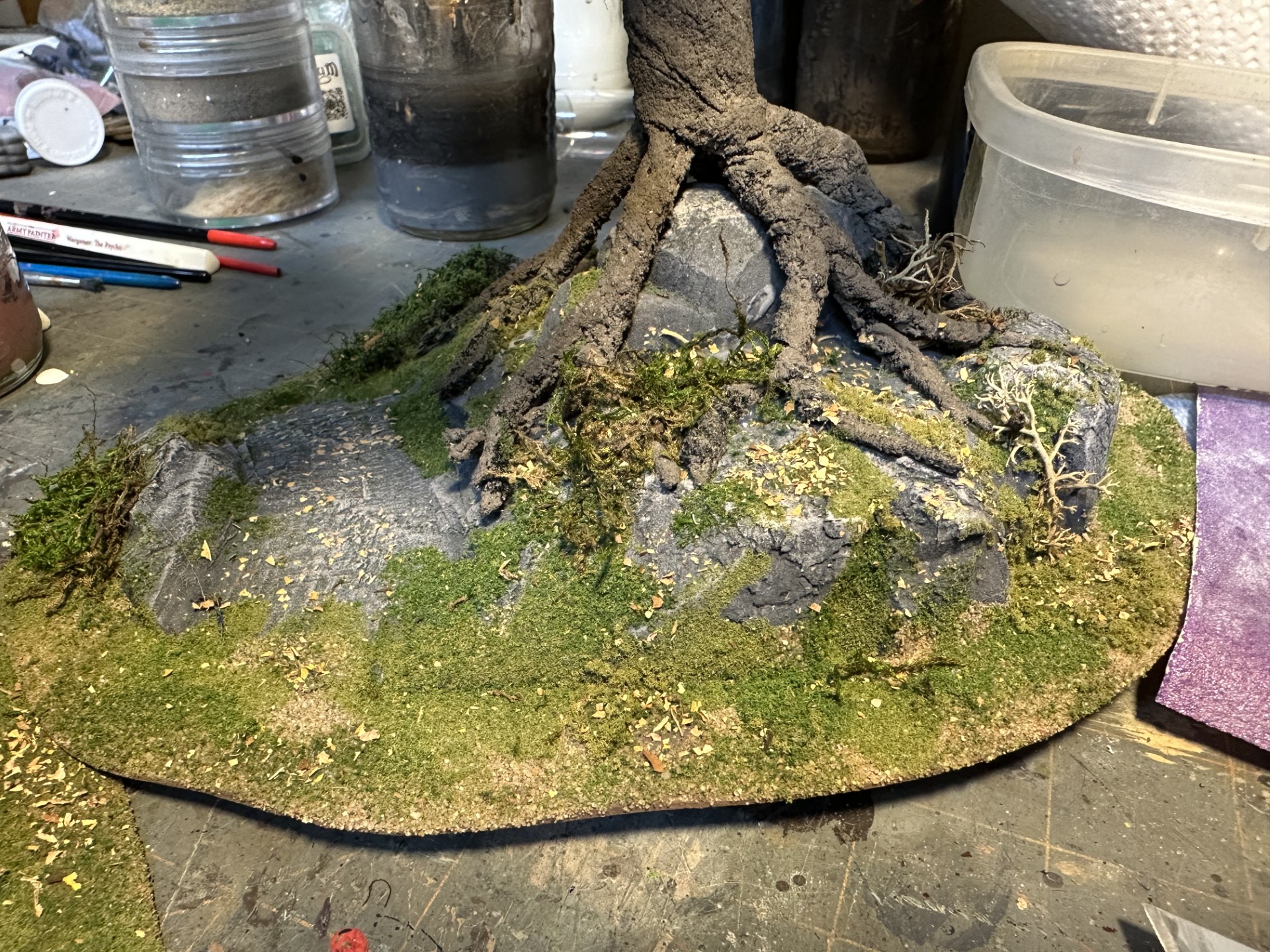
The next step was to add flocking/foliage to the bases.
Using watered down PVA as the adhesive, I added a few different colors of Woodland Scenics flocking. Then I added bits of moss and lichen I bought from the craft section of a local dollar store. I also added crushed autumn leaves. After this was done, I sprayed the whole thing with very watered down matte finish Modge Podge.
The rocks and armatures come together
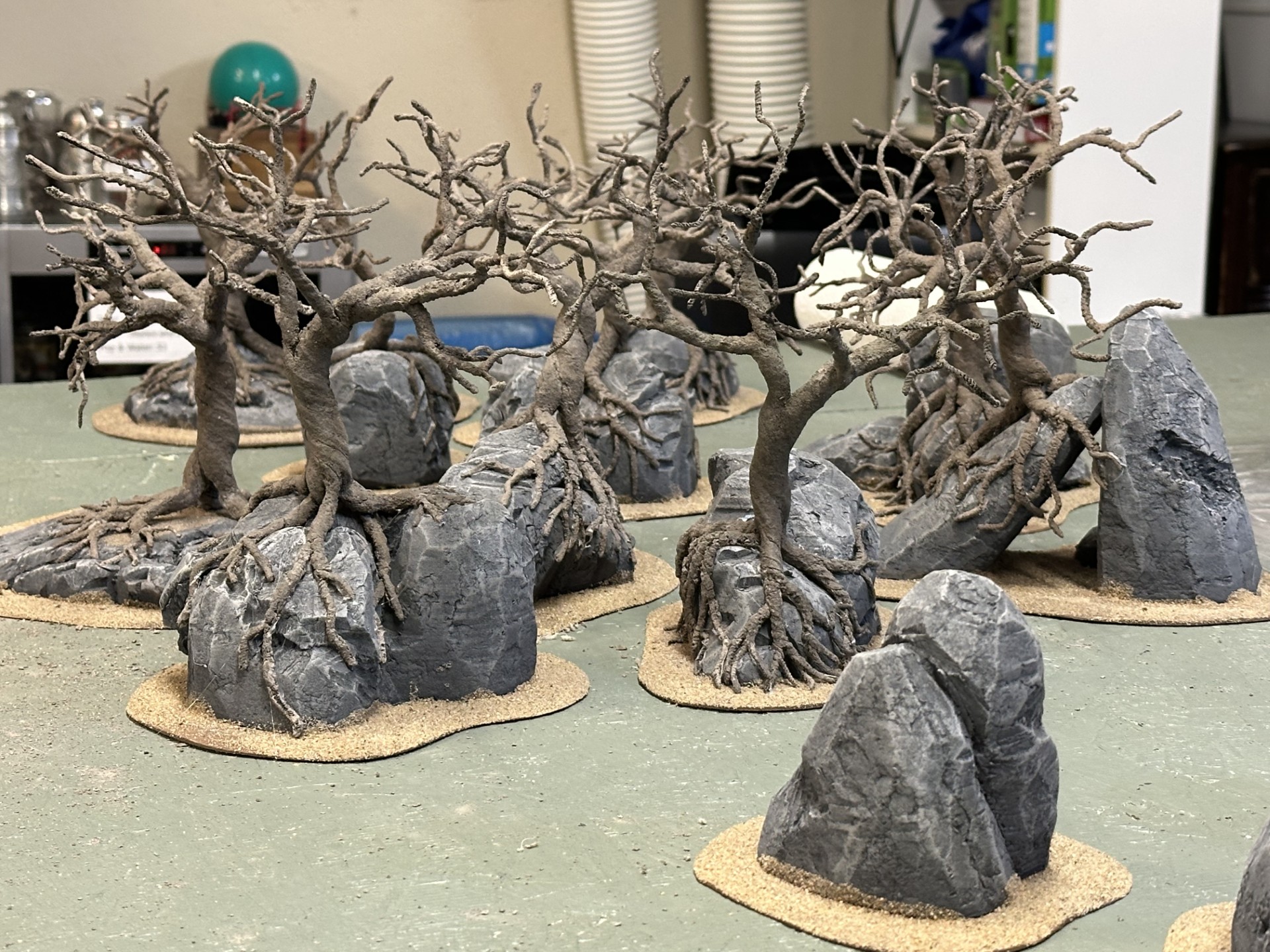
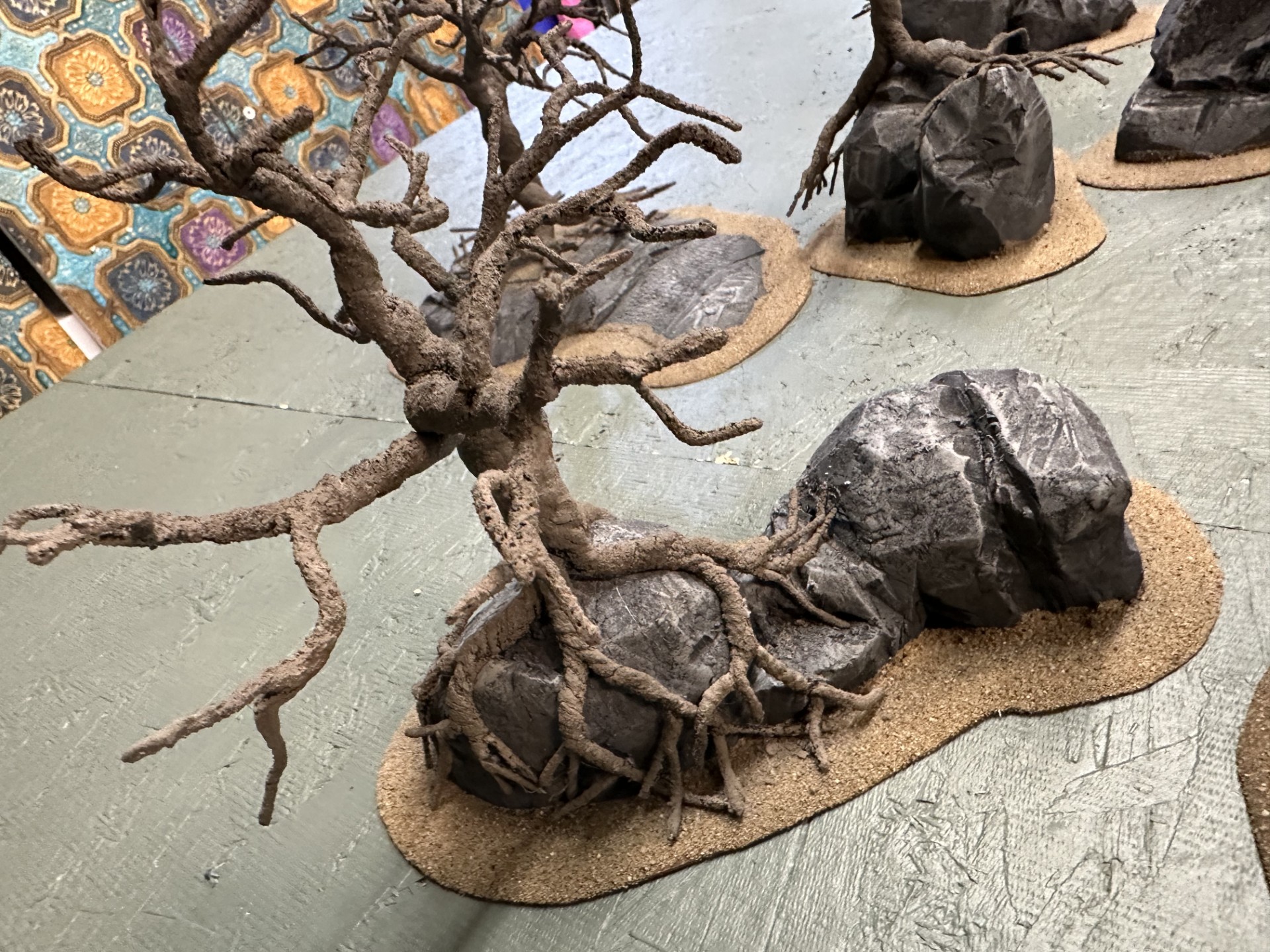
Then I hot-glued the rocks to the mdf bases and gave them a base-coat of dark gray acrylic, followed by a dry-brush of lighter grays to bring out the texture. I then added sand to the bases over watered-down PVA glue. Finally, I hot-glued the trees onto the rocks, emphasizing the twisty root system.
Building the armatures and carving rocks
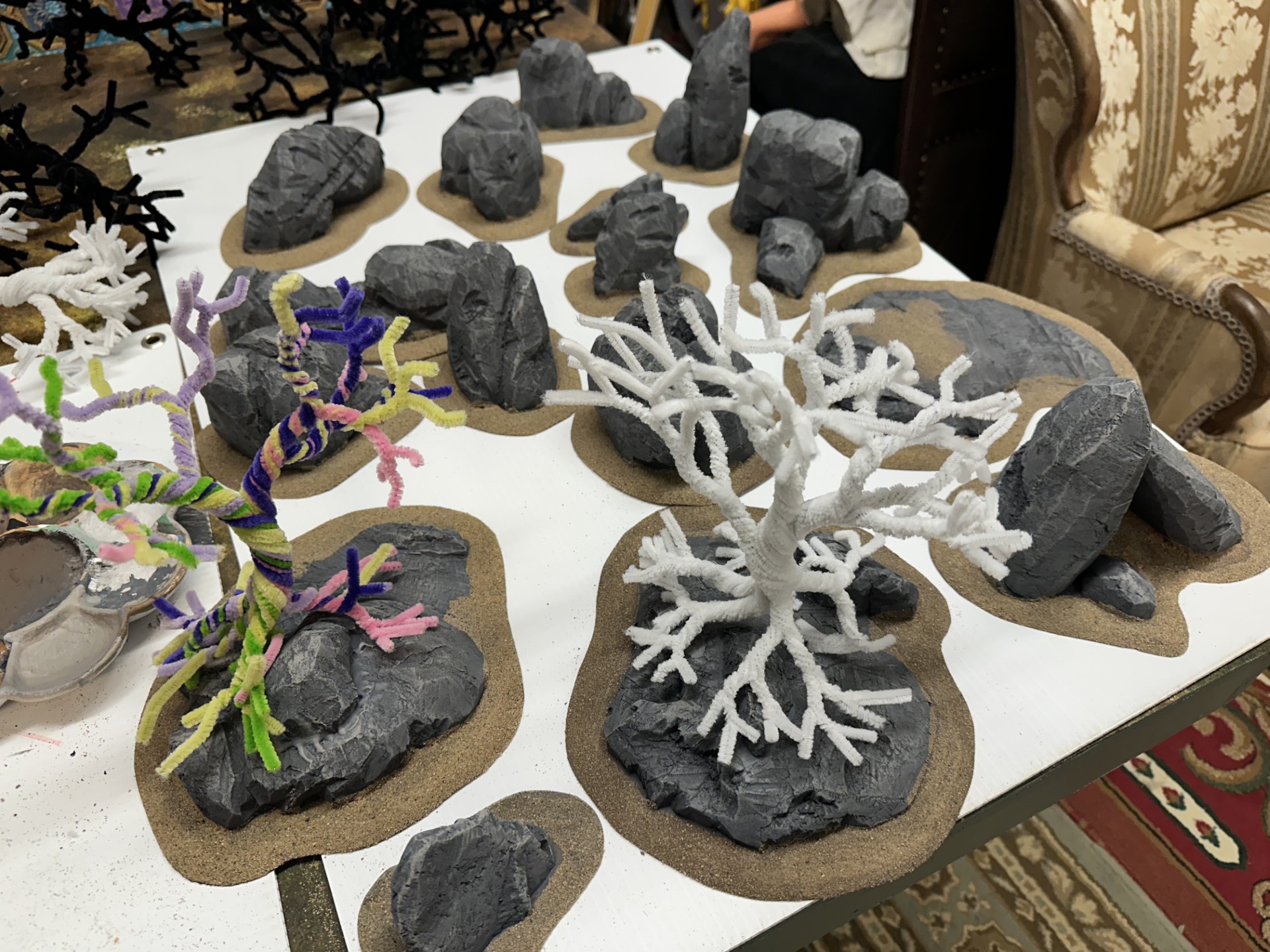
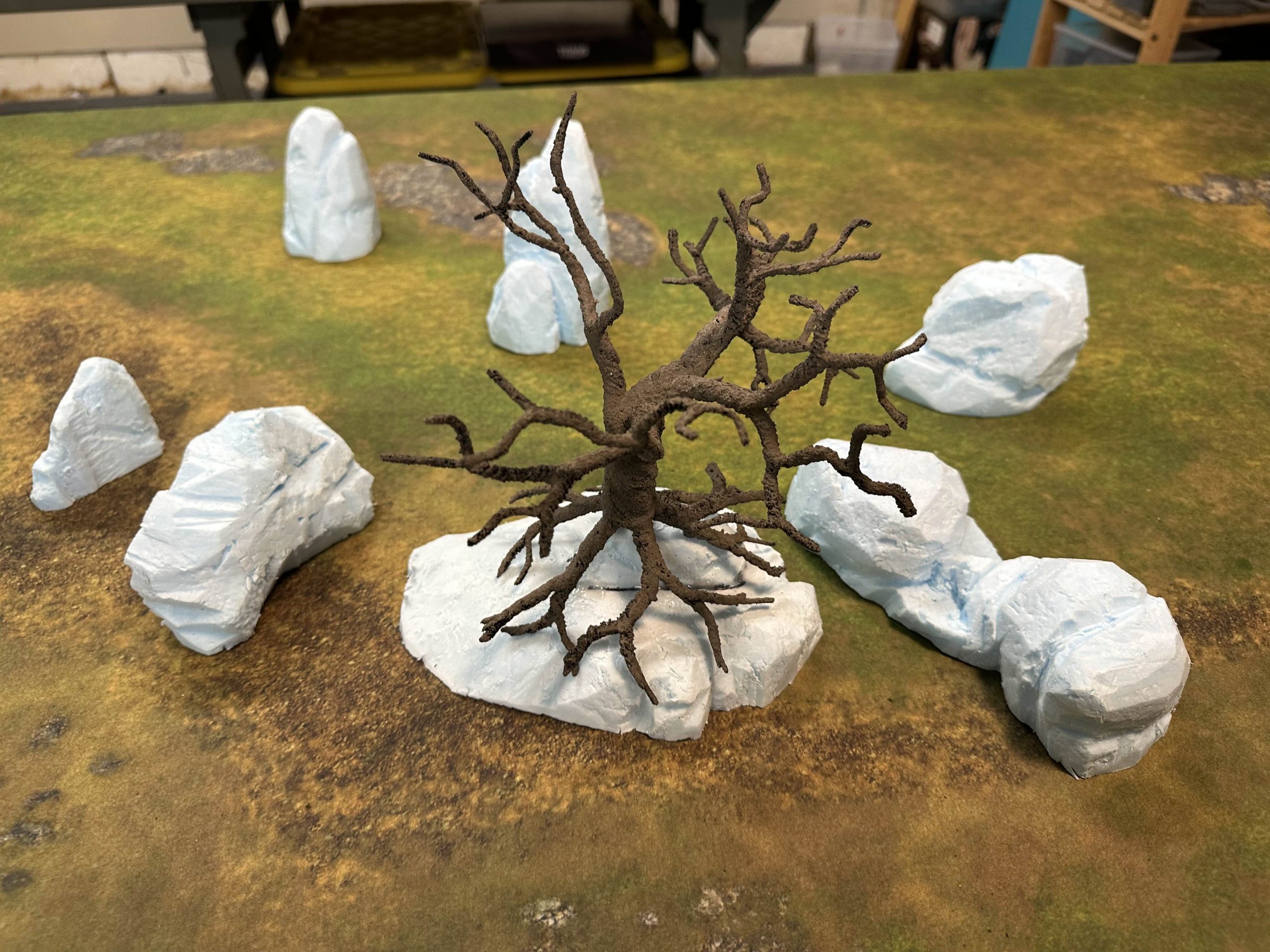
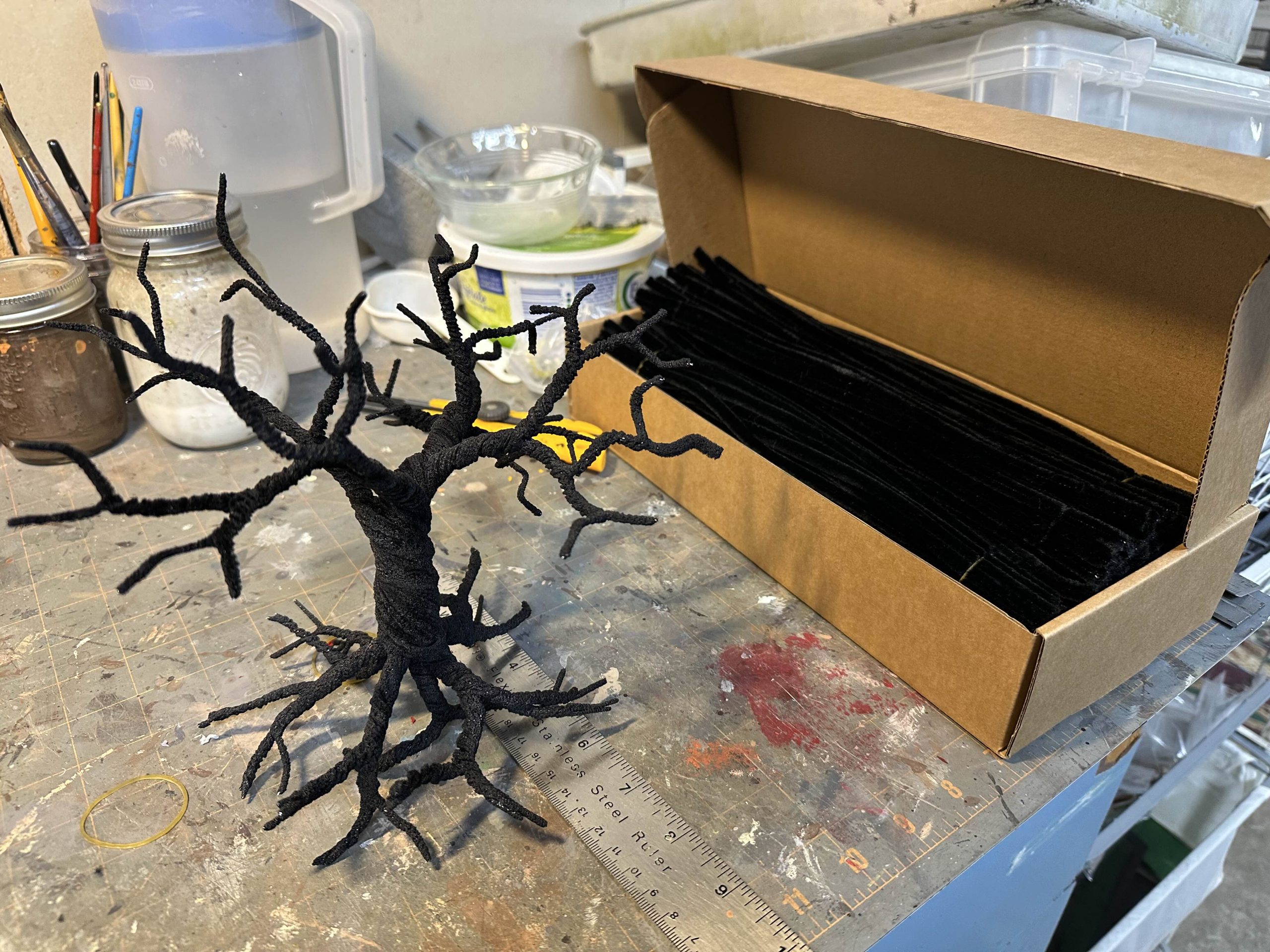
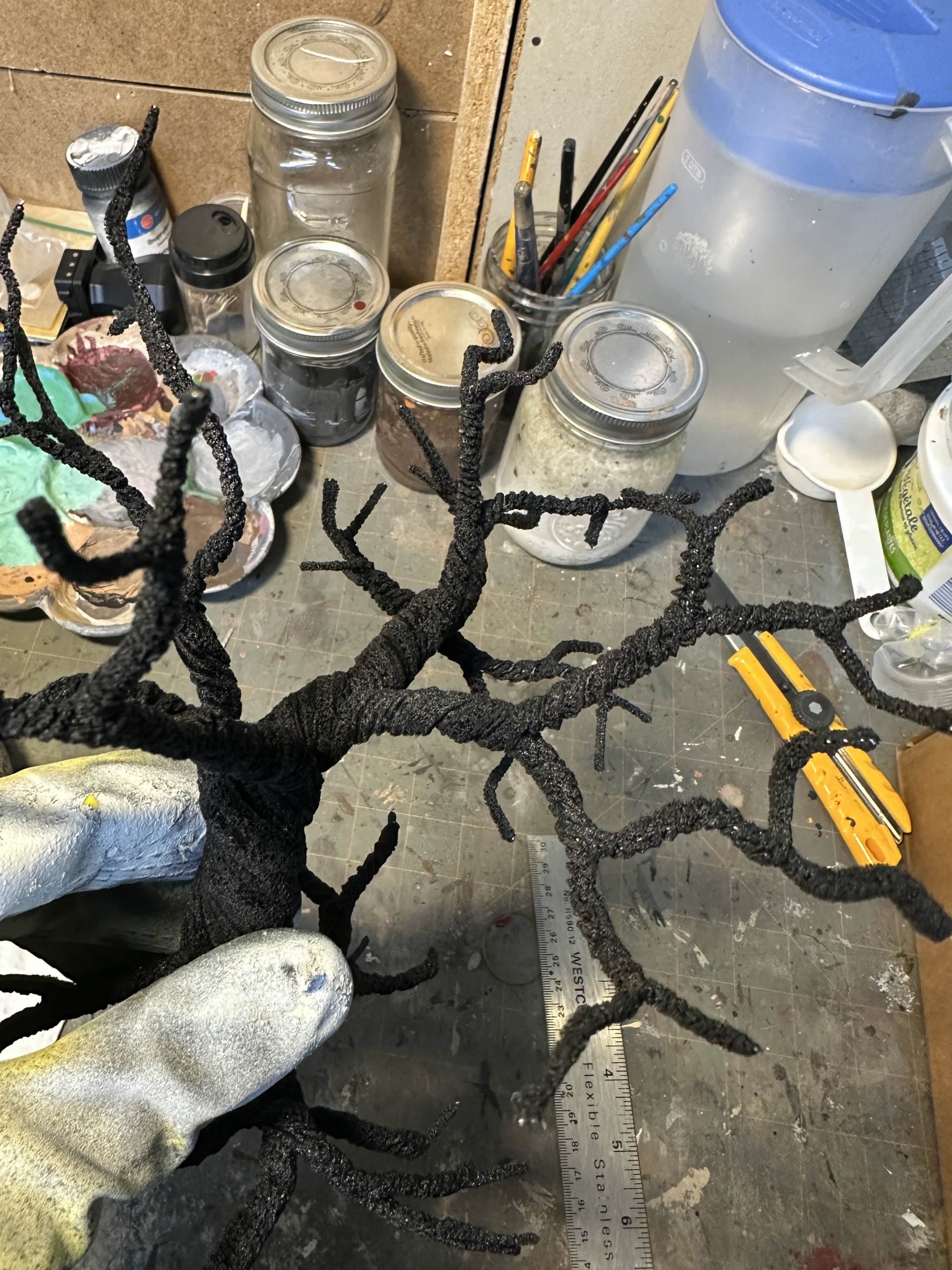
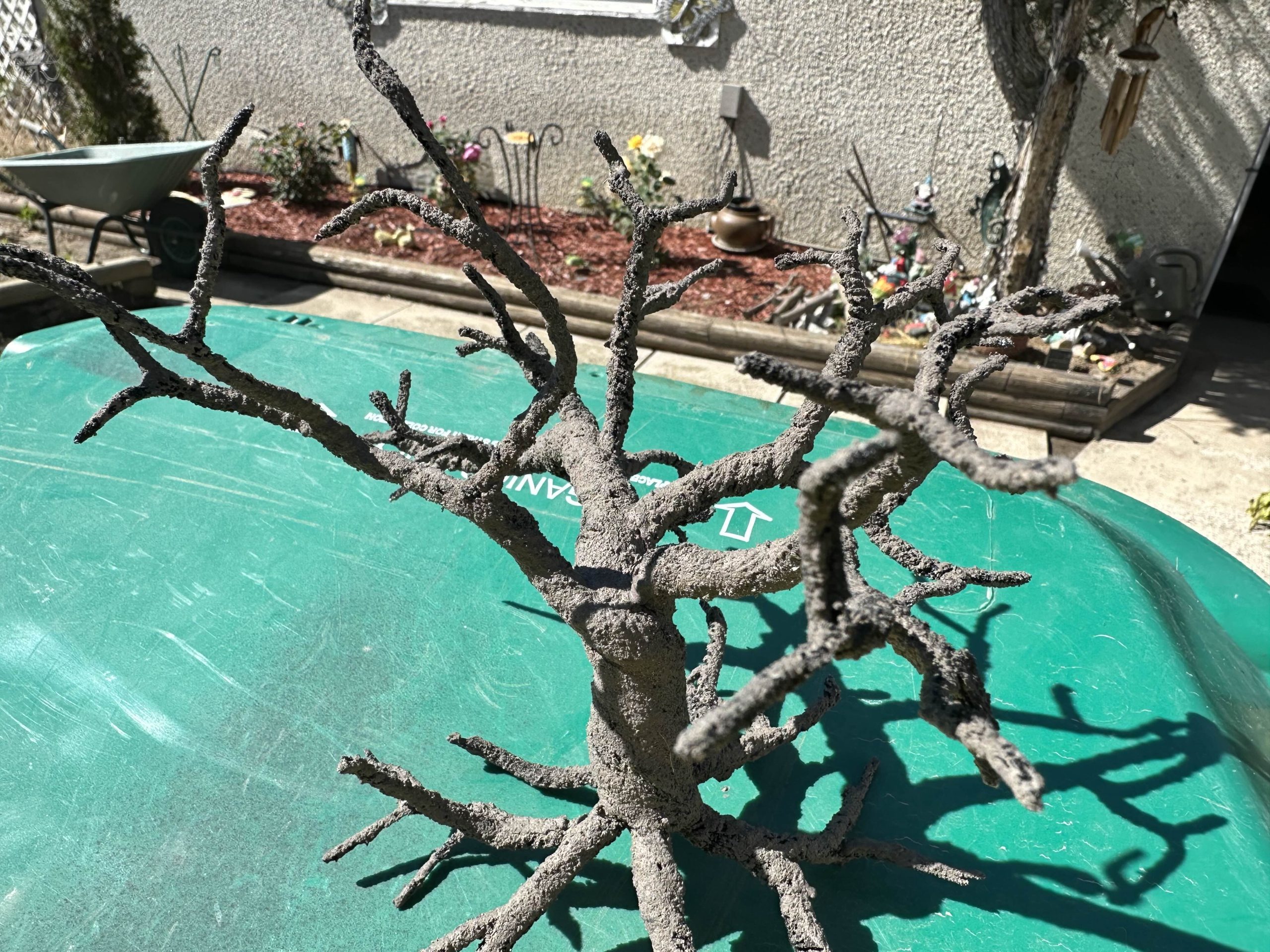
Building terrain is always a balance between look, playability, modularity, durability and cost.
The pipe-cleaners were dirt cheap. The XPS foam was free cast-offs from a construction site. The MDF bases, cut out with a jigsaw, were left-overs from another project.
The pipe-cleaners were twisted together into tree shapes. I then melted the fuzz of the pipe-cleaners with a heat gun, and covered them with a mix of tile grout, paint and PVA glue. The resulting armatures were flexible and tough. They’re going to do well being used and stored repeatedly.
Having carved the xps into fanciful rock shapes, I textured them by pressing a a piece of broken concrete into the surfaces. Then I glued them to bases made from 1/8″ mdf board cut to shape with a jigsaw.










![Zenit Miniatures’ Samurai Warlords Now Live On Kickstarter [Updated]](https://images.beastsofwar.com/2026/02/samurai-warlords-launch-main-600-338.jpg)