









![1918 Spring Offensive Wargame | Full Rules Overview with John & Gerry (WW1 Tabletop Game) [7 Days Early Access]](https://images.beastsofwar.com/2026/03/unboxing-warfulcrum-games-1918-spring-offensive-review-coverimage1-225-127.jpeg)


300: Rise of an Empire – Official Trailer 2
December 4, 2013 by lloyd


Looks like 300: Rise of an Empire is shaping up to be a wild ride. The comic style really makes the ancient conflict in Greece look both brutal and sexy! I can't wait to see this.
December 4, 2013 by lloyd
Looks like 300: Rise of an Empire is shaping up to be a wild ride. The comic style really makes the ancient conflict in Greece look both brutal and sexy! I can't wait to see this.
Supported by (Turn Off)



4
More Details Drop For Atomic Mass’ Marvel: Crisis Protocol Alliances

2
More Beowulf Teasers For Ragnarok Miniatures’ Next Kickstarter
1
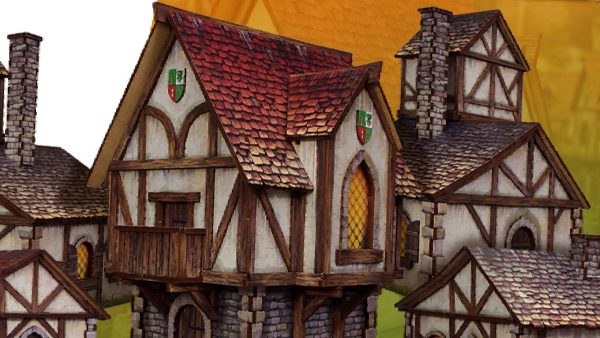
Build A Fantasy Hamlet With Micro Art’s New Collection
1
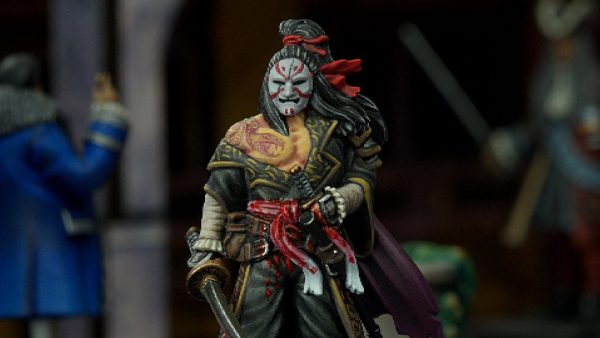
Senshi, The Undying Ronin Joins TTCombat’s Carnevale

0
Smooth & Rifled! New Blackpowder Wargaming Rules Available

7
Commissar Yarrick Returns To Warhammer 40,000 + More!
0
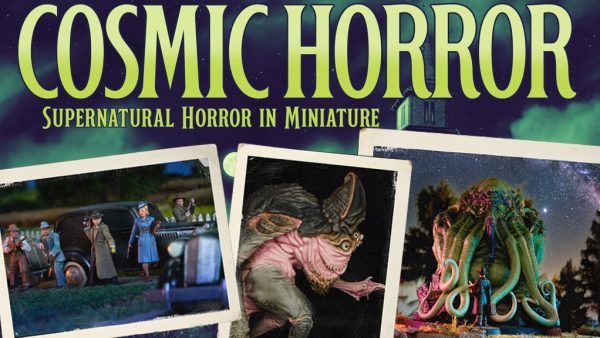
Face Down Cosmic Horrors With Spectre Miniatures’ New Game!

1
Mantic Games’ DreadBall All Stars Lands A Strike On Kickstarter
4
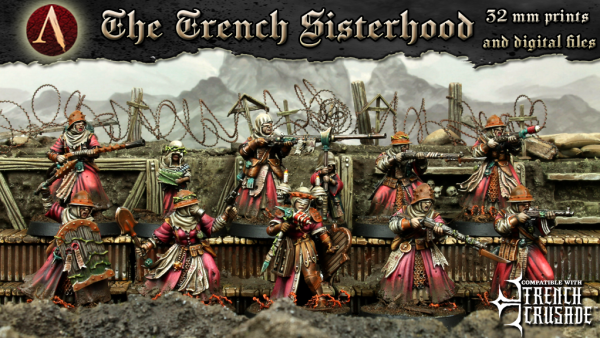
Axia Launching Grimdark Trench Sisterhood On Kickstarter Soon
0
Imperial Banner Reinforcements Come To Eldfall Chronicles
![StarCraft Tabletop Miniatures Game Pre-Orders Live Now [Updated]](https://images.beastsofwar.com/2026/03/starcraft-tmg-news-cover-600-338.jpg)
15
StarCraft Tabletop Miniatures Game Pre-Orders Live Now [Updated]

5
Battle Pigs Charge Into RelicBlade! New Plastic Box Set & Rules Update

1
Nakano Takeko Prize Model Revealed For Malifaux 4th Edition

15
Legendary Stone Trolls Plastic Regiment By Avatars of War!

4
Post-Apocalyptic Coast Guard Rescue Boat Released by Khurasan Miniatures

7
Dinosaur Vs Dinosaur Combat! Carnivore By Buer Games
7
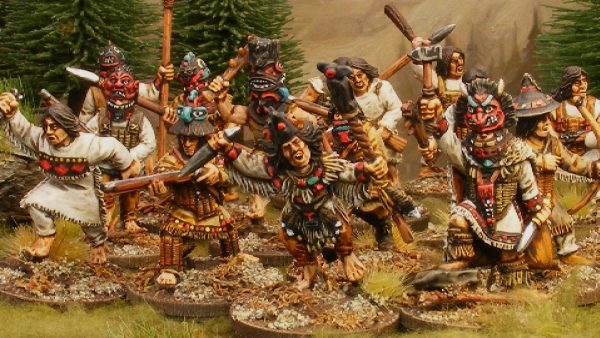
Eureka Miniatures Release New Tlingit Warriors For Tribal Battles
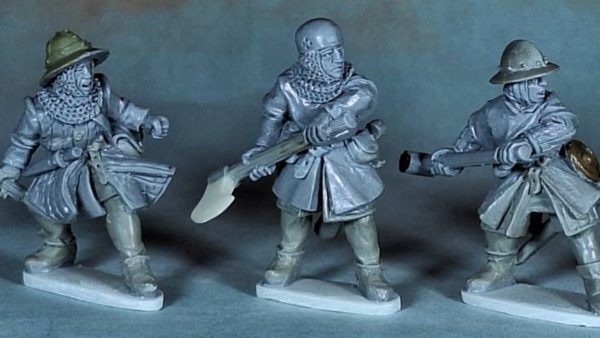
2
Antediluvian’s Wars Of The Bruce’s Medieval Range Expands

4
Modiphius Release New Wave Of Mass Effect Miniatures
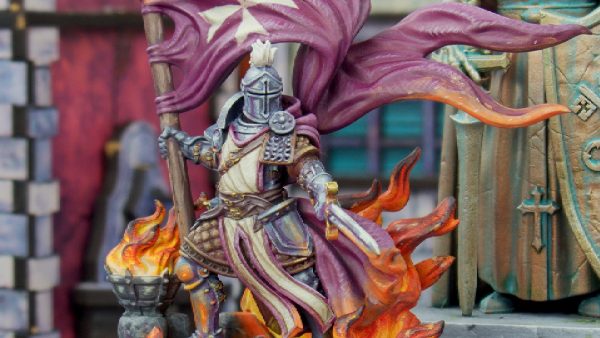
0
TTCombat Release Extreme Miniatures For Wargame, Carnevale

2
Rogue Hobbies Release Lil’ Rascals For Rascaltown Range
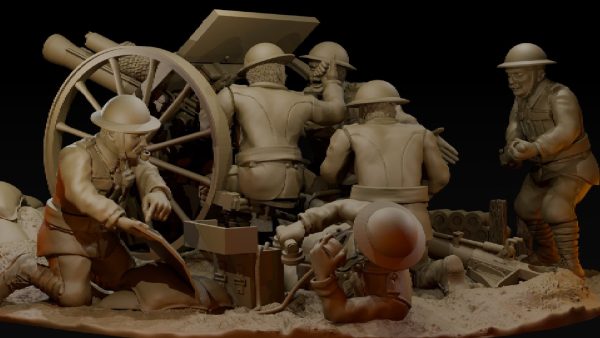
3
Field Guns & World War I Trenches Available For Warfulcrum’s 1918
5
Black Site Studios Release New Dark Sci-Fi Skirmish Game, Kosmika

5
New Warhammer 40,000 Combat Patrols & Heavy Battalions
7
Footsore Miniatures & Games Working On New Cry Havoc!
3
Bring New Crimson Hussars To Trench Crusade With Bullet Basilica
4
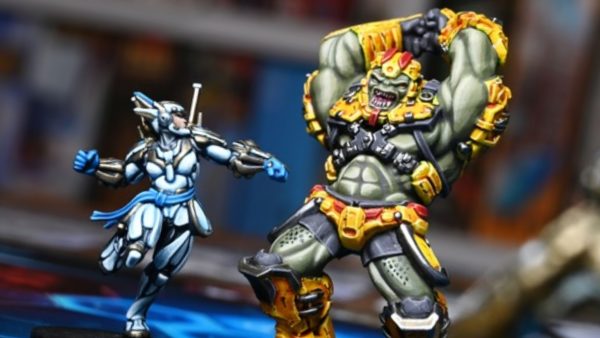
More DreadBall All Stars Teams Previewed By Mantic Games
9
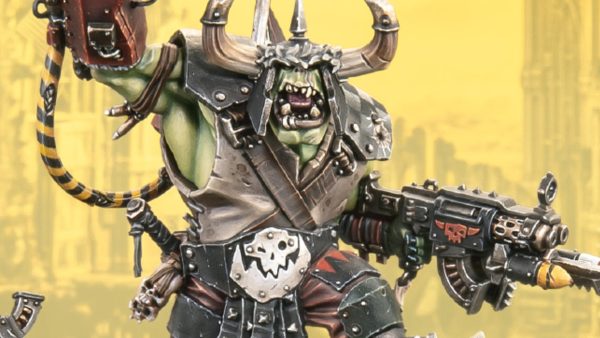
New Multi-Part Ork Warboss Previewed For Warhammer 40,000
![Mounted US Cavalry On Kickstarter For Dead Man’s Hand! [Updated]](https://images.beastsofwar.com/2026/03/us-cavalry-main-600-338.jpg)
2
Mounted US Cavalry On Kickstarter For Dead Man’s Hand! [Updated]

5
Warp’s Patreon Plays Host To The March Of The Mushrooms


That gave me goosebumps.
Is there only a movie or does the graphic novel also exists?
It looks as awesome as the first one!
300, one and two : how a bunch of barbarian slavers (the greeks) resisted a much bigger, richer, more open and more cultured empire (the persians) because of weather and terrain more than their own bravery, and how literary people idealized it so that Frank Miller and Hollywood could ignore the historians and milk some sort of fascistic fable of blood and gore out of it.
Lovely.
And I’m not even getting into the incredibly freakish sexual overtones (homoeroticism, sadomasochism and non-consensual sex, to name but a few) in the works of Frank Miller. Oh boy.
So you’ll be watching it then 🙂 lol
Everything about these comments of yours makes me happy. I’m so glad I’m not the only one who left the theatre thinking, “WTF was that garbage?” 300 was a truly terribly movie. Not only was it completely removed from the actual history of the event, but the actual history of the event was MORE exciting and interesting than the adolescent and blatantly statist power fantasy of Frank Miller’s vastly overrated imagination. This was a story that didn’t need a comic book to make a good movie out of it (regardless of how you feel about the Greeks, it’s interesting history).
And don’t give any nonsense about how “revolutionary” the cinematography was. All style and no substance still equals no substance.
Yeah Hollywood, stop ignoring me!
I have no issue separating history from entertainment. I can put my day job to one side and enjoy something on its own merits. That said, the trailer makes me a little uncomfortable, even more so than the first film did. The Greeks are generally lauded in the western tradition because we like to think of them as us. In 300 Spartans, the Greeks were NATO, with the Spartans as the US, and the Athenians as the British, whilst the Persians were the commies. Looking back at it with the perspective of being fifty years removed, it’s very obvious and somewhat laughable. The portrayal of the Persians as the decadent orient, as they are here, has much more sinister undertones. It taps into longstanding stereotypes the west has of the Middle East as an inferior other, prone to subservience and slavishness. This belief has underpinned the partitioning of the region after WW2, our support of dictatorial regimes, and the opinion that the Middle East is not capable of democracy (when in fact the truth is that we don’t like what their democracy looks like).
I can’t imagine Lloyd expected the comments to take this turn when he posted it, for which I put all the blame on Romain and none on me lol. By all means watch and enjoy the film (assuming it’s any good), but bear in mind that what you’re watching bears little relation to history. Not that it is not “historically accurate”, that is neither here nor there for a film like this, but that it’s representations of Greeks and Persians as the good guys and bad guys has no basis in fact, and be aware of the serious real world implications that these stereotypes have caused.
I see a lot of parallels between 300 and the “historic” movies of Hong Kong cinema. Once Upon a Time in China is a great example (the original title being Wong Fei Hung 99 because it was the 99th movie using that character) of how Asian cinema (and opera) frequently uses historic events or characters in completely fictionalized fables, almost always to prove some kind of point (propaganda). Some times these movies are fun and well executed (Hero being a good example), sometimes they’re truly awful (300).
They always have a hidden agenda though. Hero’s agenda was pretty blatantly pro-communist (in the contemporary Chinese sense of the term) self-sacrifice for the good of the many. Once Upon a Time in China was pretty clearly about defending “traditional” Chinese culture in the face of foreign incursion (ironically enough, with a hint of anti-communist furor, though it had the same leading man as Hero). 300 is a militaristic power fantasy that attempts to justify Miller’s own paralyzing fear of any- and everything not white and male. The movie is a recasting of his original pro-military misogynist homophobic comic book rant as an anti-Islamic (casting the Persians in the role as the nondescript “easterners”) pro-PATRIOT Act, pro-police state propaganda piece. I hated every single minute of it.
It’s not just that 300 had no relation to history. It had a pretty blatant agenda that people really should find repulsive. And it was a bad movie to boot. The pacing was all over the place, the acting was sub-par and the dialogue—with the exception of those bits taken straight out of Herodotus—read like it was written by a 12-year-old trying very hard to sound manly. The combat sequences were over-choreographed as well. I’m tired of watching fight scenes that look as though they were rehearsed. So many action movies make that mistake though, it’s easy to overlook.
The original 300 has been described as a neo-fascist text, and not without justification. Wilfully mischaracterising a territorial and dynastic conflict as a Huntington-esque ‘clash of civilisations’ between the notional precursor of modern liberal democractic societies and some (often almost literally) demonised ‘other’ in the Persian Empire speaks volumes about the rather ham-handed, far Right political subtext of the work that goes beyound mere artistic license leading to historical inaccuracy.
The battle of Thermopylae was not only a comparatively insignificant event set against the much more militarily telling naval battle at Artemisium (which this new film seems to be a bastardised version of), but far more importantly it was in no way, shape, or form representative of some battle for eternal values of freedom on the Greek side set against tyranny on the Persian side.
As Romain has pointed out upthread, Ancient Greece, like many Classical era cultures, was a loose collection of slaver societies. The Persian Empire was by far the more cosmoplitan of the two. What democracy (admittedly a greek word) that was practiced in the Greek cultures of the era was only to be found amongst a tiny fraction of the population, and bore scant resemblance to the still far from perfect systems we would recognise today. Hardly a portrait of a bastion of fundamental freedoms, still less universal values of human rights.
Hollywood (and Frank Miller) butchering history in the name of entertainment is hardly anything new, but I have found few examples quite as nauseatingly and openly bombastic in its cultural supremacism as 300. The sequel seems to be shaping up to be pretty much more of the same.
I like big, dumb action movies in moderation, but in the same way as I didn’t feel comfortable watching Ender’s Game (or reading the book) because of the grotesque homophobia and misogyny expressed repeatedly by its author, it is doubtful that I will watch this movie either, given that it seems to be carrying much of the same toxic baggage as its predecessor.
Hear hear. And thank you ! I couldn’t have said it better myself.
I don’t know about that – I think your two comments earlier on this thread got to the point rather nicely. These movies are all about a revisionist history that tries to caste some at times (at least to contemprary eyes) pretty nasty cultures as champions of freedom purely because that is where the modern Western intellectual tradition springs from in part. It is a projection of an already deeply flawed modern narrative – Western nations, lead by the US, as champions of human rights and generally truth, justice and the (somewhat neo-imperialist) American/Eurocentric Way – back in time. Without the usual tropes of modern nation states to fall back on with their pre-packaged Hollywood good guy/bad guy credentials already established, they need someone to act as stand in for the national level ‘cultue of heroes’, and they tried to hammer the very round peg of Ancient Greece into that squarest of holes.
And as you point out in your second pst, the sexual, gender identity, and gender poltics elements of the story are some of the nastiest aspects of all. Leaving aside the almost comedically stereorypical homoeroticism of the Spartans (CGI enhanced abs and all) inexplicably leaving their bronze armour at home and conspiring to fight half naked for most of the film, it was the character of Xerxes that really made for uncomfortable viewing. Deliberately unsympathetically written and portrayed as being gender ambiguous, and then in a revolting display of bigotry this very ambiguity being employed as a means of telegraphing his villainous character to the audience, the whole character amounts to little more than a particularly nasty cocktail of homophobic and transphobic tropes rolled into one that trades on the cis-sexual community’s widespread fear of trans* people, and indeed anyone who doesn’t perform their societally mandated gender role in a fashion deemed acceptable to the dominant social narrative.
And then there are the grossly unsubtle digs at the BDSM community and the ugly rape imagery undertones you mentioned. All in all, it is unpleasant stuff that promotes attitudes and stereotypes that hurt a lot of innocent people on many intersectional axes of social oppression, and your post expressed that while using only a fraction of my profligate verbiage.
Sadly this isn’t revisionist history, this is the traditional way of viewing of the conflict. Thermpopylae has often been seen as the defining moment in which the Greeks stood up for freedom against tyranny and paved the way for western civilisation, and for a very long time, the stereotype of Persia was as an effeminate, decadent, and backward empire. Fortunately, the field has made a lot of progress in the last few decades, to which my PhD is attempting to make its own humble contribution.
I see your point – it is only revisionist when compared to a very contemporary understanding of the significance of the battle of Thermopylae, and as you say conforms quite closely to may of the earlier, highly nationalistic and rather racist interpretations of the battle as a turning point in history where supposedly ‘reason and democracy’ triumphed over ‘superstition and barbarism’.
I hope your PhD is going well. It certainly is a fascinating era of history to study.
Thanks for the compliment ! You analysis is excellent…
I was also referring to the author’s whole boy of work. Frank Miller is a deeply troubled man, if we are to take his work as an expression of his psyche.
I’m not even mentioning Sin City, but what he did with the justice league is horrible (Wonder Woman as a heinous frustrated lesbian, intent on murdering men, until Superman hits her in the face, at which point they kiss… and so on).
Everything I’ve read or watched with his name on it has made me uneasy and/or nauseated (except the Sin City movie, because it’s hardly a moral tale, but even that is a bit harsh), and no amount of semi-naked male has changed that.
I knew that Miller is very problematic as an artist – apparently, Alan Moore of Watchmen and V for Vendetta fame isn’t much of a fan either for much the same reasons to do with Miller’s prediliction for misogyny and homophobia – but I do not follow comics very much, and I had no idea that Miller had created anything in that field as gratuitously nasty as the Justice League plotline you mentioned; an example of the stereotypical and monstrously prejudiced ‘angry, man-hating lesbian’ trope ‘converted’ (detestable term) through the use of force? I have no words for how offensive that is.
While I also didn’t find the Sin City movie to be as bad as I was frankly expecting, it was far from lacking in problematic elements, and it is perhaps the least toxic example of his work.
For you, no amount of semi-naked, chisel-jawed, athletic blokes will paper over Miller’s bigotry, and for me, even a lasso-wielding, leather-clad Jessica Alba doesn’t begin to help.
‘Sexiness’ (in all its glorious variety) in such media has never been the problem in and of itself – it is the baggage of attitudes, stereotypes, and harmful behaviours promoted as virtues that go with it that does the damage.
I’ll agree with everything above besides the “The battle of Thermopylae was not only a comparatively insignificant event set against the much more militarily telling naval battle at Artemisium” part.
Both were equally important imo and showed the military genius of the Greeks.
… and were comparatively insignificant to the Persians, even as they were touted (by greek authors and greek propaganda, the only thing we had and/or believed for a long time, before historians knew how to investigate things better) as huge and superb victories of genius over barbarism.
In fact the greeks were simply on their home turf, and pretty lucky because of weather. They also were considered just one of many smaller countries to conquer by the Persians, and the numbers probably weren’t as we were told by the greeks.
300 Part II: They all die again?
Seriously, I didn’t much like the original, I think I’ll give this one a pass.
I can enjoy a dumb action movie when it’s just a dumb action movie. It’s the none-too-subtle political subtexts that turns me off.
That said, pretty much all the ancient empires were slave-economies with basically non-existent notions of inalienable human rights.
“That said, pretty much all the ancient empires were slave-economies”
I agree with this, and there is a very good unpublished recent study demonstrating it, but the more common belief in the field has been that it was the Greeks who were the first to rely on a slave economy.
And the guys who built the pyramids all got fair wages?
Can you elaborate how the Greeks relied more on slave economy than say Egyptians or Babylonians?
I’m not an expert on the subject by any means, but I do know the entire Greek working class were not slaves, e.g. rowers (contrary to popular misbelief) were free men.
I couldn’t elaborate to the extent that would do it justice. Essentially, the study of the ancient economy was dominated in the post-war period by the Primitivist school, with Moses Finley particularly prominent. In terms of slavery in the ancient world, this school was a proponent of the theory that the ancient Near East lacked a sufficiently developed concept of freedom and a sufficiently developed economy for them to be slave economies. The Greeks developed both of these things and consequently were able to build a slave economy, and the Romans developed this even further. A society can have slaves without a slave economy, and a society can be a slave economy despite slaves comprising only a minority of the workforce.
In any case, Persian workers were treated much better than the Helots in Sparta…
The power and the gory
The original 300 is what it is, and its comic book graphic style gave it that ‘simplified, fictional’ take of history feel; a legend retold rather than historical truth.
The graphic style in the trailer for the new film doesn’t give me the same feel, this just comes across as “Spartacus sleeps with Game of Thrones resulting in CGI hordes”.
Hey – maybe GW can get a license… start with a skirmish game (300) and work up to Apocalypse Ancient Greek style 😉
Oh, I see we are wearing blue cloaks now….
300 was an incredibly dumb movie with some very nice visuals.
When I watched it a second time I noticed how boring the story actually is. I was just waiting for more nice looking action scenes.
I don’t expect much from this. Might be worth a watch because of the visuals.
Mine’s a red cloak, obviously.
Meet the Spartans, now that was a movie.
Honey I Shrunk the Spartans was better
Honestly, I just have trouble getting my head around a sequel to 300. Much like the Matrix, wasn’t it told in a bit of a final way? I mean the end of the movie even narrates that the Greeks won.
That being said, I have some agreements and disagreements with whats being said on the comments and that’s all normal, but yikes, some of the things made me decide to post a response, I will try to keep it contained as much as possible.
First off, I don’t really care much about Frank Miller. I wasn’t impressed with Sin City (I hate disjointed story movies, just not my cup of tea). And I could care less about most of his other works including 300 outside of the broad art style that was used for the graphic novel.
That being said, I think people are making way, way too much of a fuss over this and its predecessor movie. First, just remember 300 was written to make it look like a Spartan was recounting a tale of a battle in the hopes of convincing the spartan government to send their army in aid of Greece. It seems here in the second movie we have something similar judging from the dialog in the trailer.
Now, people are grinding this movie down because of its historical and social, and racial inaccuracies, and its trends towards stereotypes and political connotations. That’s all well and good, but might I just toss in a reason why 300 and maybe perhaps this movie are actually more accurate then we say they are.
If history is indeed written by the victorious, then doesn’t it stand to reason that the legends and myths we have stem from that proverb? A spartan using a story of blood, tears and sacrifice to convince his fellow men to take up arms, is no different then when Caesar wrote his “findings” on the Gaelic peoples in order to help curry political favor for his war in Gaul, as well as other great or small nations using political and social drama to whip up support for the undertaking of warfare, conquest or self defense.
In truth, these movies are portraying exactly what happens in times of war and racial or social conflict. The demonizing of one to build the strength of another. On top of that the movie portrayed what I feel at least are some of the main issues, regardless of what we would like to accept or ignore, that our current societies face in terms of racial, sexual and gender specific battles.
People are so caught up on what it means to be politically and socially correct when dealing with matters of Homophobia, sexism and such, the word tolerance has lost all its meaning, having been replaced by the much more hideous idea of “acceptance”. I think what Zack Snyder has tried to push in these movies (as we all know, the man makes a movie the way HE wants it, as his track record shows) is a sense of truth to how people and societies actually act in these situations.
Stereotypes, sexual gratuity and gore aside, which in all honesty are Hollywood’s tools for building shocking or horrifically unnerving entertainment, all this movie does is paint the picture of the actual social and political atmosphere of real world countries and civilizations as they attempt to tear one another down. And the for good measure mixes in a metric crap tone of CGI fight scenes and ridiculous myth to keep the better part of movie goers entertained. Which, at its heart, like it or not is what film cinema is about. The entertainment of the audience. Many of the comments (including my own) on this page I think belong in a ethics or history classroom not a post about a fictional movie that people with half a brain would know not to use as a guide book to morals, history and fact.
There is no such thing as political correctness. There is only the regard of one human being for another.
I distrust tolerance, which as part of its alternative meaning is, “the capacity to endure continued subjection to something “. This is not inspiring.
Acceptance of the other rather than persecution is far preferable.
AFAIK the Persians were far more accepting of other cultures than the Greeks who deemed non Hellenics as “barbarians” and inferior.
What you are suggesting is that the myth of “freedom” and the sacrifice of warriors should purely be for entertainment, with no reference to politics and ethics. Yet ironically 300 cannot be seen independently from a right wing hawkish reaction to 9/11
THIS IS AMERICA! and FREEDOOOM!! any one?
And Hollywood has plenty of form with regard to doing this as well – as an example, anyone who thinks that the movie Braveheart* is really about the struggle between the Scottish nobles and Edward the first, as opposed to a very obvious attempt to invoke nationalistic concepts pf ‘truth, justice and the American Way’ in another historical setting, is not really paying very much attention.
Though, even without that, Mel Gibson’s abominable attempt at a Scottish accent would still be an affront to history, the cinematic arts, and the basic dignity of humanity in any case… 😉
————————————————————————————–
* Itself an annoyingly inaccurate title, since it was an accolade postumously applied to Robert the Bruce when the Jocobite forces carried what was literally believed to be his ‘brave heart’ – as in the preserved organ itself – in a casket before the army in order to inspire the troops. It had nothing to do with the historical William Wallace.
Gosh, if you would swing my way, I’d be a happy man indeed ! 🙂
“AFAIK the Persians were far more accepting of other cultures than the Greeks who deemed non Hellenics as “barbarians” and inferior.”
A significantly greater survives for the Greeks than the Persians, which makes comparison difficult. The Greek evidence shows a variety of attitudes towards non-Greeks, much as there are a variety of attitudes to other nations in modern Britain. It’s very difficult to know what Persian attitudes were. There is enough evidence to know that the Persian imperial strategy involved presenting the king as a benefactor to a given people, and empire governed with a very light touch, out of necessity given its vast size. It’s a great leap from there to say the Persians were more tolerant of others than the Greeks. The Behistun inscription, which was erected in Persia rather than one of its conquered peoples, makes much of Persian subjugation of foreign peoples. Then there was the significant amount of cultural assimilation which occured following the conquest of the Persian Empire by Alexander. Though there was more Hellenisation than Medisation (I think I just made up a word lol), this was in large part because the Successor kingdoms were much smaller and more localised.
Oh, absolutely ! And there’s a lot to say about Xenophon… The greeks gave birth to Socrates, but they also killed him.
I think the greek culture we inherited is mostly due to Rome… It’s not even the greek’s fault if their idealized culture and words and works survived in a few celts and latin barbarians trying to vicariously re-live the glory days of philosophy, or summon the ghost of old democracy… even though the greeks were WAY less democratic than even modern China.
If Rome had lost a few more wars here and there, we’d be a lot more persian than all that.
Oh I do agree with you Chib, the ultra right wing connotations are there for the whole bloody world to see. I’m not saying the movie is making light entertainment of the these things, its the other things “aside” from what is blatantly political or such. The blood, the hyped up fight scenes, these are the factors to drawn an audience.
As for Tolerance, my own personal view is simply that yes, I do have to tolerate others, because as your definition states, I have to endure being constantly told to accept people and their choices regardless of my own thoughts or desires. Acceptance is no replacement for the ability to disagree and remain firm in that disagreement, yet take no action against it for respect of another.
Obviously Greeks had more to offer than any other (as we all know only too well), seems very reasonable how the could have seen others at the time like “barbarians”.
As for America and freedom, I can’t reply there I’m afraid 🙂
I’m not sure I follow. What do you mean by having more to offer?
I have no idea what you just said. I understand every word separately, but I really couldn’t discern the guiding thought.
<> meaning they had evolved concepts like astronomy, mathematics (algebra, geometry), architecture, biology, etc etc (list is very long) where others had not.
I’m saying that comparing themselves to other cultures would have been beneath them at the time. Thus, just like the Spanish conquistadors called the Aztecs “savages”, so did the Greeks call the others “barbarians”.
Just so I won’t be misinterpreted, I believe all cultures, no matter how evolved or not, always have something to offer mankind. I was only replying to the comment above to why they called them barbarians. Peace 🙂
This isn’t true. It was believed to be the case in the west for a long time, but it isn’t anymore. This was because the Romans valued Greek culture and preserved it, the post-Roman kingdoms in Europe valued Roman culture and preserved it, which meant modern Europe inherited a Graeco-Roman heritage and until comparatively recently believed that the Greeks were the first civilisation. Archaeological discoveries in the Middle East from the 19th century onwards started to undermine this. The architectural achievements are pretty obvious and they also demonstrate the mathematical achievements. Where we’re fortunate to have discovered documents rather than just material remains we discover that the Neo-Babylonians were far more advanced in astronomy than the Greeks. What were once considered the unique literary achievement of the Greeks in the form of Hesiod and Homer are now widely seen as part of a wider literary tradition in the Near East which pre-dates and influenced both authors (assuming you can use the word in relation to Homer). It’s not a coincidence that Greek philosophy emerges not in Greece, but in Turkey, where the Eastern Greeks were in contact with the Near Eastern civilsations. Herodotus ascribes many of the cultural advancements of the Greeks to the Egyptians. Not only were the not more culturally advanced that the great Near Eastern civilisations, if either were to look down upon the other as savages, it would be the Near East to the Greeks.
That last sentence could have done with a proof read lol. Let me re-write it.
“Not only were the Greeks not more culturally advanced than the great Near Eastern civilisations, if one were to look down upon the other as savages, it would be the Near East to the Greeks.”
@freerider, it’s not because we’ve got the words attached to the concepts you mention from teh greek language that the greek culture invented them, or was especially good at that… In fact, the Persians were very, VERY good at astronomy, far better than the greeks, what with the babylonian heritage. They gave us the word “Magus”, the wise-man who looks at stars on his tower (his babylonian ziggurat, in fact), but that was mistrusted by the christians as paganism, so “mages” aren’t as positively connoted culturally as “astronomers”, but that’s what they were. And that’s just one example… I could easily have mentioned that Aristotles thought that most insects had four legs (so much for the careful study of biology)… or that the Babylonians and the Egyptians were building magnificent and huge monuments of geometry (pyramids, karnak and obelisks, anyone ?) long before the Greeks… or that algebra comes from medieval the arab world…
So… Nope. The Greeks calling others savages is neither here nor there. Look it up next time, please.
AFAIK, the word “barbarian” comes from what the Greeks heard non greek languages, ie ba ba ba
To me, it has nothing to do with any real cultural superiority, but a rather childish form of bigotry. Pretty much in the way the west has derided other cultures in modern times.
Much as with defining slave economies, this is a difficult topic to do justice in a comment. You’re right about the origin of the word, but not about its use, especially in the period following the Persian Wars where it becomes a synonym for Persian. If you read a Greek document from the Classical period which refers to barbarians, it almost certainly means Persian. Especially in Athens, Persians become characterised in terms that were previously used for women, slaves, and metics. Greek male identity is then defined in direct opposition to the barbarian (read: Persian) identity. What we’re left with is the characterisation of the barbarian (again, Persian) as weak, effeminate, and subservient, whilst the Greek is strong, manly, and loves freedom. For a long time these stereotypes were accepted as an accurate characterisation of Persia, though thankfully not anymore. I find myself unintentionally coming back to the use of these stereotypes in 300.
Outside of Athens we face the similar problem of lack of evidence that we have with Persia. We don’t find the same pejorative characterisation of the barbarian in Herodotus, who was famously called a philobarbaros” by a miffed Plutarch. Herodotus is concerned with all non-Greek cultures that he’s aware of, though he still uses barbarian to mean Persian. Although he purports to present an account of their cultures, what he really does is use them to define what it is to be Greek. Book 2 and book 4 in particular use the Egyptians and Scythians to define the Greeks as the centre of the world.
So annoying having an expert on hand to correct us all the time 😛
Thanks for your insights Ben, much appreciated!
Redben, you are amazing. I couldn’t have said it better myself ! 🙂
I think you’re confused as to what History really is, and about why one should/shouldn’t be apologetic of certain practices, even though they were/are in use.
I’m not reviling the film because of its gratuitousness, or because it’s “inaccurate”. If you got that from what I or anyone else said here, then you misread.
If you do condone the spread of horrible behavioral tropes and stereotypes as positive things in movies, well… it’s your problem. And it IS a problem. I have nothing against action movies and a little blood and gore when it’s all in good fun (we play wargames, for Pete’s sake), but this goes way beyond that. I’m sure you can see it.
Exactly – even fictional works of art do not exist in a social vacuum. The attitudes and values they promote can and do impact upon the social interactions in day to day life. No one here is advocating censorship or anything so draconian – we are simply acknowledging that movies like 300 can be problematic, especially when they purport to deal with historical events and then go out of their way to demonise some of the participants based upon their culture or origin, and doubly so when they then pair that with exaggerated examples of currently existing toxic social attitudes towards such things as sexuality and sexual politics that cause a lot of harm every day, but are presented as reasonable or even virtuous within the fictionalised context.
Oh yes. It’s not about censorship… It’s just that it’s a shame that we live in a society where a publisher seriously considered publishing the 300 comic book “as is” with such a scenario. Let alone consider it a cult classic, and making two movies with it. The same goes for the rest of Frank Miller’s questionable work…
Yet, Miller is here, and I can’t help but thinking that he’s nicked the seat of another better author, both in Hollywood and in the comic book industry.
“The entertainment of the audience. Many of the comments (including my own) on this page I think belong in a ethics or history classroom not a post about a fictional movie that people with half a brain would know not to use as a guide book to morals, history and fact.”
Let’s say we got a CGI-filled, Indiana Jones style pulp movie, set in Africa the early 20th century, filled with black Africans presented as sub-human lesser beings (as they were thought to be at the time) then this would be okay as we half-a-brain modern sophisticates know not to use it as a guidebook to morals, history, and fact? Or would we recognise the dangerous stereotypes it would be peddling, stereotypes that have caused real harm to many people, and condemn the film for presenting the stereotype? I’d like to think the half-a-brainers would use that intellect to speak out. That the stereotype of the decadent orient is not as front as centre as it was a few decades ago, does not make it presentation any less dangerous.
What I dislike about the movie is the white washing of the spartans it does.
Demonisation of the enemy, while distasteful, can be rationalized as point of view. But the spartans wouldn’t have played themselves down.
The spartan manhood rite was not killing a wolf. It was killing a slave.
If the movie had been about two evil empires clashing, I would been much more ok with it.
Wibble.
Gentlemen, you all make valid points, however may I submit this is a movie made for the entertainment for the ultimate goal to make money. I do not think it was ever promoted to be historically correct. Because if it was no one would go see it. It was geared towards people between 17-40 years old. Take it for what it was a popcorn movie.
It’s historically accuracy is not the issue. That’s been repeatedly pointed out.
It was a terrible movie even when taken on its own terms. Mindless fun doesn’t have to be stupid. 300 was.
And while we’re on the subject, why oh WHY does “hollywood fun” rhyme with “stupid” ?
I’ve heard a lot of people saying that the plot of the first Matrix movie was “complicated” and “convoluted”. Excuse me ? Are we two year olds, all of a sudden ?
It’s bad. The illness is advanced. Of course, there’s TV… Save a few shows like QI and such, there’s nothing brilliant anywhere. What I’d like to see instead of reality TV and other horrors, at the same hours, is clever people… you know, not even geniuses, but people and shows that inspire you, instead of people to laugh at. People who are different, people who have something more than us, that make us want to understand stuff about the world, about ourselves… Something a little more engaging than a few bimbos getting drunk !
QI is the prime example of what happens when you engage people and don’t take them for fools : they start watching you rather than the rest.
But the rest… This modern way of directing and showing mediocrity, ignorance and malice to the point of absurdity… this exhausts me. I feel sad and tired just looking at it. Life is just too damn short for it.
And of course, people are going to tell me “oh, but you don’t necessarily want to think about things all the time, you don’t want a headache and heavy philosophy when you get home after work…”
I’ve watched my share of B-movies and mindless entertainment, but this is different. Why, all of a sudden, is “clever” not good ? Let’s not confuse seeing something clever and brilliant, and “getting a headache for thinking too much” (as if there was such a thing as “thinking too much”).
It’s not a dichotomy between those who say “it’s a harmless, mindless pastime” and the rest of us. It’s not an “either-or” situation with “mindless crap” on one side and “headache” on the other. Some people would like you to think that, but it’s not.
One cannot put everyone who cogitates in a box labeled “headache”… and, I might add, it’s a very slippery slope.
Films like 300 boast millions of viewers worldwide. That’s what it’s made for. I congratulate them for the success of their business venture. I’m just saying that if there were cleverer movies made with the same kind of budget and care for the visuals, they’d get more people in cinemas. And they actually do : see Avengers Assemble, for example.
Why do people misread the posts here ? Too long ?
There are times in my life where I’ve had influence beyond my wishes…. I was consulted in early pre-production for the Mel Gibson movie, “The Patriot” It seems that they took my bits of advice on some historical issues and ran them in a completely different direction….. Naturally, the movie was an affront to AWI history and made the British and Loyalist soldiers war criminals of the worst type…. being versed in the southern campaigns…. I was befuddled by the timeline of the movie…… It took a complete unhitching of my studies to follow the plot-line…
I found an early film called “The 300 Spartans”, which basically took the classic Thermopylae story and melded it with the familiar WWII “Buddy” theme…. if you keep this in mind, you realize you’re watching a WWII flick with spears and magic helmets….. 🙂
I’ve not made my mind up one way or the other whether to see this film (I rarely go out to watch films these days)…. the points to the negative for this picture, have little relevance to me, I don’t have a specialized degree in Ancient History, though I have read a few Osprey Books on the subject to help me build some DBA armies… I’m familiar with the classic tale, plus that that I’ve read in the Larry Gonick Cartoon Universe. I don’t know much about Frank Miller, except that everyone here, seems to hate him….. I haven’t read comic books since the eighties….. actually, I guess I hate all comic book artists…..;)
Always with the Negative Waves Moriarity…… Always with the Negative Waves…….
I don’t hate Frank Miller. Time and his own descent into self-parody hasn’t been kind to his earlier work, but at the time, and I’m old enough to be at the time for most of it, his output from the late-70’s to the early-90’s was very good and he can legitimately claim to have moved the medium forwards. From the mid-90’s onwards he starts producing some truly terrible comics and becomes a very cranky old man. Check out some of the op-eds on his website.
300 Spartans is a cold war movie rather than a WW2 movie, and an obviously pro-American/anti-communist movie.
300 Spartans is more aimed at the middle-east, as well. Shameful.
That is my reading of it, as a post Cold War film.
Is it too obvious that the bad guys that threaten democracy are Persian?
In 300 Spartans? You can’t change the combatants when dramatising Thermopylae but you can allegorise them. Whilst it may inherently take on oriental stereotypes, they’re pretty blatantly meant to represent communism. The film was made not long before the Cuban Missile Crisis and it’s steeped cold war propaganda.
Ironically, Miller’s 300 was released in 1998, before the “War on Terror” began, so the film version took on overtones that Miller didn’t intend. He was making a broader point about his ideas on freedom. He’s a child of the Cold War and watching 300 Spartans had a profound influence on him.
My bad Ben
Senior moment + sleep problems = stupidity
Was thinking of 300 as you probably guessed already herp derp
Not familiar with the comic book version, but in the wake of the 1st Gulf War feelings were still pretty hostile to the region iirc.
Coalition air forces continued bombing Iraq “to enforce a no fly zone” as well as an embargo policy against Iraq.
Islam had already replaced communism as “the other” in global politics, but I take your point.
Very well spoken on many peoples ends, elromanozo especially, you do have a good way with thinking things out sir. (I especially enjoyed your matrix comment.)
Just this, leave us not all forget I wasnt really speaking pointedly about historical accuracy or such. Just simply that the movie portrays in its self, a view of how societies act when they come into conflict with one another I think is realistic. That’s all.
The other side of this whole posting is for others to speak on and have every right to their views. I have my own thoughts on Hollywood and social issues we face in every day life and how movies and entertainment can sway or misguide those, I dont wish to fill this page with them all. XD
Thanks…
But once again, historical accuracy is NOT the problem here.
Damn, got us some left wing sissies on here haven’t we 😛 i think we understand you wont be going to see this movie. Well done.
That should be cissies
I ain’t nobody’s sister, bro 😉
I aint your bro, cuz :p
You mean….
Bob’s my uncle? O_o
So who is my father?…
I am your Father’s brother’s nephew’s cousin’s uncle’s former roommate.
Oddly enough that was the original line in Star Wars, but for some reason it got changed in a rewrite.
I think Darth Vader being his papa was just easier for Luke to handle psychologically
Just a film people….. just a film…… a work of fiction LOOSELY based on history, in the same way Gladiator was loosely based on history, not a biography.
If people wish to go and see it and enjoy it, good for them, if others choose to question its historical accuracies, or underlying subtexts, fair enough, but don’t overthink it. Remember it’s just a film and not the next manifesto of “insert political party/country name here”. 😀
Once again, the historical accuracy of the film is not the issue. Nor is it subtext as Miller doesn’t deal in subtext, in fact he does the opposite and brings it out as much as he can. He’s an admitted expressionist. He has been open about what he was trying to achieve with 300 and the meaning he ascribed to the Battle of Thermopylae. In executing his story he tapped into a number of longstanding and dangerous stereotypes. Stereotypes that have done real harm to many people. If Miller was tapping into outdated stereotypes of black Africans then we wouldn’t even be having this discussion, nobody would have published his book let alone made this film or be defending it on the basis that it’s “just a film”. That the stereotypes he is tapping into aren’t as high profile does not make them any less dangerous.
Yet here we are on a website dedicated to a hobby that glorifies war in a fictional manner – is that any more/less dangerous? Certain sectors of society could (and do if a recent BBC News article’s comments are to be believed) view that as a dangerous pastime. You could argue that 40k teaches people to be xenophobic, or question someone’s beliefs collecting a Nazi WW2 army.
The issue is not the information itself, but how you interpret and what you choose to do with that information, and that can only come from education. My comment of “just a film” was not meant as a flippant remark, it’s how you choose to interpret the information (re)presented in the film.
I have seen very insidious comments in the off-topic forums on gaming sites with a strong 40K following.
Now I wouldn’t suggest that everyone playing 40K is a mindless bigot, but they do seem to gravitate towards the game.
There is no such thing as “just a film”.
No director is unaware of what he is saying in a film (the masculine is relevant here)
In gaming the content may not be so intentional, but that does not mean it does not exist. It just means one is not willing to engage in any kind of self reflexivity or analysis.
That’s not the same thing. You’re talking there about how outsiders views the actions of insiders regardless of whether those actions are or have been harmful (and I’m pretty much everyone here would think they aren’t). This is about how the film picks up on and perpetuates stereotypes which have been very harmful.
There are a lot of replies on these comments which seem as if the point is being missed. That’s not intended as a criticism. The stereotypes aren’t ones which are in the public consciousness to a great degree so it’s fair enough that many people won’t be all that aware of what’s going on in the film. If there are people who are genuinely interested in investigating further, and I’m sure there aren’t, the obvious place to start is Edward Said’s “Orientalism”. The book isn’t without flaws, but it’s the best starting point.
You’re right…
That said, there’s a lot of things in 40k that are extremely nauseating. And I’m not talking about the miniatures.