














I have three books for review this month, all covering different topics of World War 2 from the rescue of the British Army at Dunkirk, Hitler’s anti-tank weapons through to the offensive action by allies in Papua New Guinea.
Dunkirk Evacuation- Operation Dynamo
Author: John Graham & Alexander Nicoll
Publisher: Frontline Books

Dunkirk was not only a major defeat for the British but also a great victory. The British army had been surrounded, the French army had collapsed, and the British were on the verge of the biggest defeat being inflicted on them.
With the battle for France lost, the British government made preparations for the largest rescue mission in history to lift thousands of soldiers off the beaches of Dunkirk. So, a dramatic and chaotic retreat was turned into a great victory by rescuing a large proportion of the British Expeditionary Force from France. This was achieved using a flotilla of Naval and privately owned ships and boats.
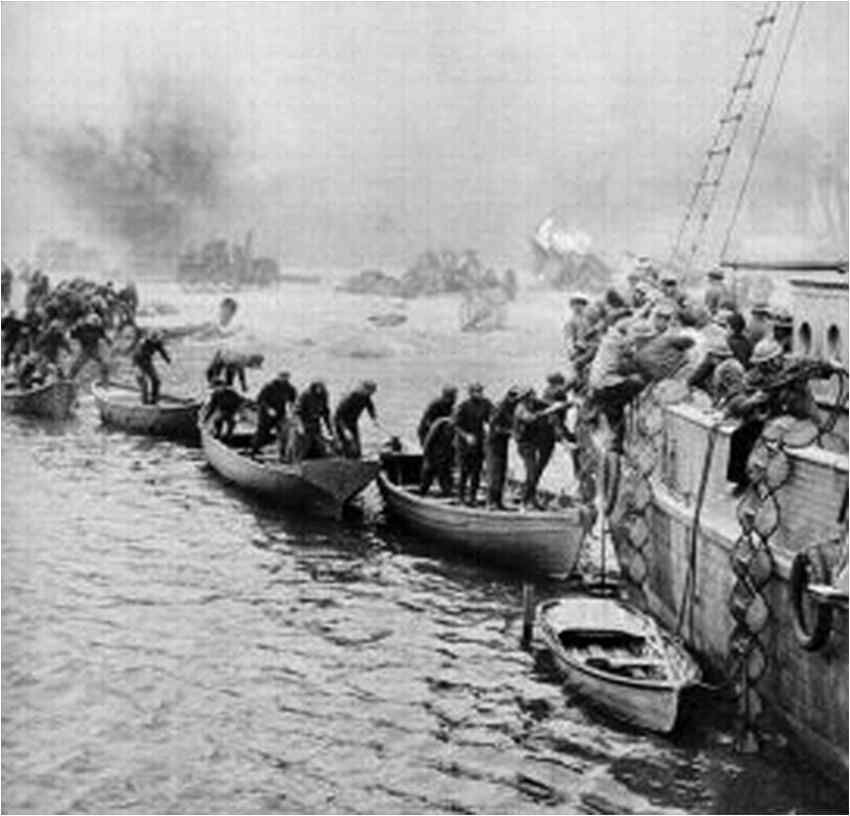
This book features images taken during the 9 days it took to achieve the impossible to visually describe a vivid account of the dramatic scenes that were witnessed on the beaches. It has become the greatest wartime evacuation of British soldiers in history.
As usual with this series of books it includes never before seen photograph. Throughout the alongside the photographs of Dunkirk is nicely written information describing the operation in detail. Each chapter is a single day of the operation, consisting of detailed information of the day’s events alongside dramatic images.
This is a great visual resource of the operation, one that most people are aware of, but may not know the details. I would definitely recommend this for war gamers who are considering re-enacting this particular event from WW2. It’s also a useful resource anyone considering building a diorama based on the events of Dunkirk.
McArthur’s Papua New Guinea Offensive 1942-1943
Author: Jon Diamond
Publisher: Pen & Sword

The Japanese seizure of Rabaul on New Britain in January 1942 directly threatened Northern Australia and, as a result, General Douglas MacArthur took command of the Southwest Pacific Area. In July 1942, the Japanese attacked south across the Owen Stanley mountain range.

Thanks to the hasty deployment of Australian militiamen and veteran Imperial Force troops the Japanese were halted at Ioribaiwa Ridge just 27 miles from Port Moresby.
MacArthur’s priority was to regain Northeast New Guinea and New Britain. The capture of airfields at Buna and reoccupation of Gona and Sanananda Point were prerequisites. The Allied offensive opened on 16 November 1942 with Australian infantrymen and light tanks alongside the US 32nd Infantry Division.
Overcoming the Japanese and the inhospitable terrain in tropical conditions proved the toughest of challenges. It remains an achievement of the highest order that the campaign ended successfully on 22 January 1943. This account with its clear text and superb imagery is a worthy tribute to those who fought and, all too often, died there.
This was one of those offensives from WW2 that I didn’t know much about, in fact I’m not that knowledgeable regarding the Pacific War compared to the war in North Africa and Europe. So I was quite infused to read this book, as I’m becoming far more interested in this theatre of war than the European theatre.
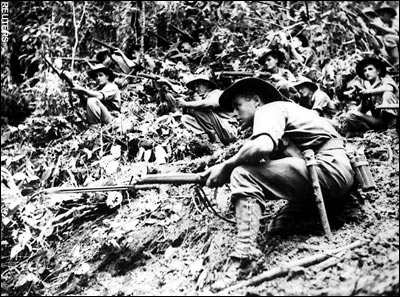
The book as usual consists of unseen photographs from the campaign, coupled with descriptive text. This was a great intro read to campaign but if you want a more indepth read then you’ll need to discover more books on the subject. What is great about this book and the series on the whole are the images, they make great visual reference material and the more I read about the Pacific campaign I’m tempted to build a British/Australian force for Bolt Action. Which is why in this issue there is a review for a Chindit unit from Warlord. It didn’t take long for me to start that force, and this book was one of the reasons.
I would recommend this for anyone wanting to war game this particular campaign or the Pacific as a whole and make use of the images within as reference material. I have been really impressed with this series of books, they have been great for referencing topics and I would say a very useful tool for war gamers.
Hitler’s Anti-Tank Weapons 1939-1945
Author: Hans Seidler
Publisher: Pen & Sword

Hitler’s Wehrmacht and SS units will be remembered for their aggressive Blitzkrieg’ tactics. But, as the war progressed, the Germans, recognizing the offensive capability of armored warfare, developed an impressive range of anti-tank warfare weaponry and munitions.
Using many rare unpublished images this Images of War book covers the full Nazi anti-armor capability from the 3.7cm Pak 35, 5cm Pak 38 and 7.5cm Pak 40 to the versatile 8.8cm Flak feared by the Allies. Also featured are the half-tracks and converted Panzers that pulled or mounted these weapons and carried forward observers and reconnaissance elements.

Later hand-held anti-tank weapons came into service and were effective and economic against Allied armor. The Panzer faust, with its shaped charge warhead, became the first disposable anti-tank weapon in history.
This comprehensive book shows this formidable range of weapons in action from Poland in 1939, through North Africa and the Eastern Front to the final collapse in 1945.
I really like this book as a visual reference especially when building and painting anti-tank units for my WW2 German armies in 15mm and 28mm. The book gave me several ideas regarding basing the anti-tank weapons, as I’m building a late wat army in 28mm I decided to base them in an urban environment. So, the photographs in the book helped with formulating ideas of what I wanted to achieve.

As usual with these books they are a great reference for both war gamers and model kit makers, especially for anyone thinking about building a diorama. I liked the images provided visual reference to how the German crews made use of foliage and items from the local environment o disguise the anti-tank weapons. I was also particularly interested in the images of German soldiers making use of captured weapons as well as this gave me some ideas for using British equipment within my German army.

I would highly recommend this book to anyone who is building a German army or is considering building one. I found it to be a very useful resource and I suspect other war gamers and modelers will do as well.