










Bolt Action Germans, Allies and Chinese Armies



Recommendations: 248
About the Project
I'm building three armies for Bolt Action. The Germans will be a combination of Europe and Western Desert theatre's of operation. The allies will be mixture of British and US troops which will be used for Late WW2 both European and Pacific, as well as the Korean Conflict. The Chinese will be late war Nationalists and Communist forces. The Communists will double up as a Korean War army, like wise the Allies will as well. Long term I plan to game in WW2, Chinese Civil War and the Korean Conflict. This project blog will include my efforts at building and painting the armies, as well as my research into the period and book reviews.
Related Game: Bolt Action
Related Genre: Historical
Related Contest: Bolt Action: Western Desert Boot Camp
This Project is Active
Hong Kong during WW2
The Japanese occupation of Hong Kong began on the 25th December 1941. It occurred after 18 days of intense fighting, the occupation lasted for 3 years and 8 months until Japan surrendered.
In January 1942, former members of the Hong Kong police, along with Indians and Chinese were recruited into a new reformed police force called the Kempeitai and were issued new uniforms to mark this occasion.
They routinely carried out executions at Kings Park, Kowloon, they practiced Be-headings, shooting practice, and bayonet drills on local Chinese. The Japanese organised the police force into five divisions, East Hong Kong, West Hong Kong, New Territories, Kowloon and the water police.
Life was hard for the locals under Japanese occupation, food was scarce and rationed. Many of the public hospitals were taken over and converted into military medical facilities. Those that were still run as public hospitals were inadequately resourced.
Hong Kong and Kowloon Independent Brigade
Two months after the battle for Hong Kong, the Hong Kong and Kowloon Independent brigade was formed on February 3rd 1942. It was organised by the Communist Party of China, who were in an uneasy alliance with the ruling KMT party in mainland China.
Later the brigade became the local branch of the East River Column, which comprised of guerillas from the Guangdong region. Most of the Hong Kong recruits were young Hakha villagers from the New Territories.
By 1943 the brigade was 5000 strong, their familiarity with the local terrain allowed them to rescue an estimated 800 people which included Chinese intellectuals and allied soldiers. They also provided valuable intelligence to the British Army Aid Group, who were an active British Intelligence unit operating in Mainland China.
One of the actions carried out by the brigade was the bombing of a railway bridge on Argyle street. They also assassinated collaborators which damaged Japanese intelligence gathering.
Unfortunately after the war they received very little recognition from both the UK and China. The UK government ignored their contribution because they were originally formed by the Chinese communist party, whilst Mao accused them of localisms. It wasn’t until the 1980’s that both countries started to acknowledge the contribution these brave partisans/soldiers achieved in the fight against the Japanese.
British Army Aid Group
BAAG (British Army Aid Group) was a military intelligence group who operated in mainland China during WW2. In the British Army order of battle it was classified as MI9. A unit who were responsible for assisting prisoners of war to escape from Japanese prison camps.
The unit was formed by Sir Lindsey Ride, who had been commander of the Hong Kong voluntary Defence Corps Field Ambulance. He was captured by the Japanese but escaped from Sham Shui Po POW camp and fled to China. Once in China he set up BAAG with three trusted officers.
During the war the group repeatedly sent agents in to Southern China and Hong Kong on intelligence gathering missions. They also facilitated many POW escapes from Hong Kong. Many of these POW’s rejoined the war effort, 128 men were re-trained for operations with the Chindits in Burma.
Many of the BAAG were later recruited into leading roles in post-war Hong Kong civil administration. Lindsey Ride returned to Hong Kong and in 1949 became the University Vice Chancellor.
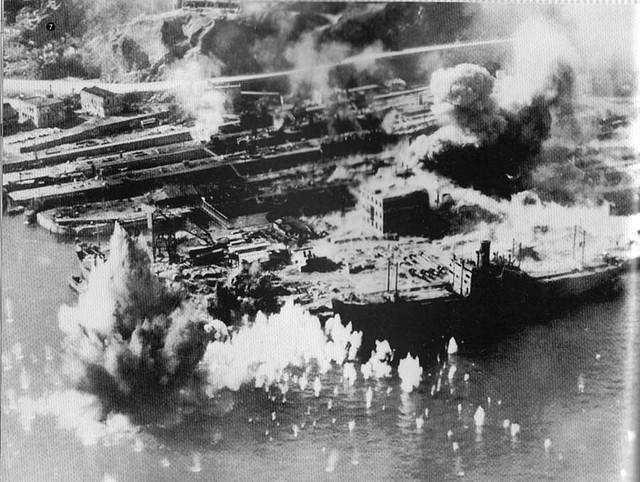 Japanese attack on Hong Kong
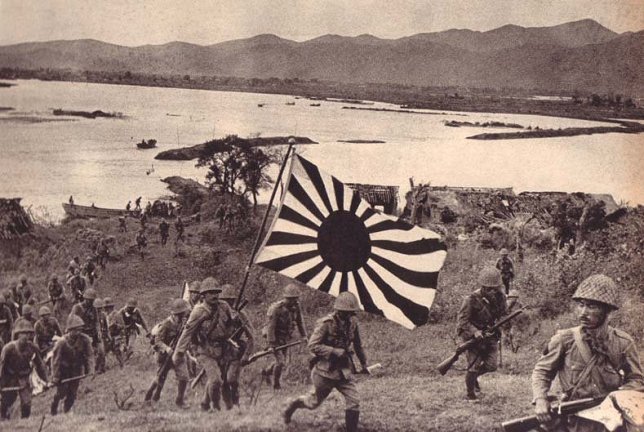 Japanese Infantry
 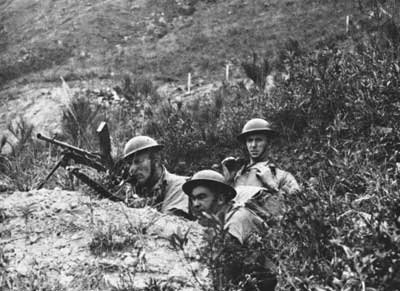 British troops in Hong Kong
Chinese Civil War
In 1947, after the US left the truce talks in China fighting broke out in the North of the country between the two main political factions, the Nationalists under Chiang Kai Shek and the Communists under Chairman Mao.
A large communist force established itself in the Tapieh mountains to the North West of Wuhan. The communists had prepared to fight a guerilla campaign. Yet the battles that occurred during the civil war often involved thousands on both sides.
The end of the 2nd World War in China had brought the rivalry between the two political parties back into the open. Whilst fighting the Japanese, both sides kept a difficult truce while at the same time carefully holding back resources in the event hostilities continued once the Japanese had been beaten. The Allies had sponsored the Nationalists during the fight with Japan, whilst the Soviets had backed the Communists with military resources. After the war the Allies tried to broker a settlement between the two factions, even stationing several divisions in China to try and stabilise the situation but with a large Soviet presence in Manchuria supporting the Communists it placed a large strain on the whole issue.
There were repeated attempts to establish a power sharing council, but the Nationalists constantly objected and unwilling to share or concede any control to the communists. In 1947 the Americans became disgusted with the whole situation blaming both sides equally and left the talks highly critical of both sides. The country slowly descended into to a bitter civil war.
By October 1949 the bitter hard fought civil war came to an end, with the Communists in control of the country. The decisive battle came when the Communists attacked south from Shantang and captured Suchow, a major victory which led to several Nationalist armies being destroyed or surrounded. Further fighting in the south ended in January 1949 which saw the destruction of seven Nationalist armies and the loss of 550,000 men either killed, wounded or captured.
The result of the Huai Hai campaign was to destroy any chance of the Nationalists preventing the Communists takeover of China north of the Yangtze River. The Nationalists retreated to Tiawan where Chiang Kai Shek too control of the country and ruled as a dictator. Likewise Mao became a dictator in mainland China.
There were several flash points leading up to the Americans leaving China that involved the US military in minor skirmishes with the Communist forces. These could have easily blown out into a wider conflict with the US supporting the Nationalist against the Communists forces under Mao.
Operation Beleaguer
Operation Beleaguer was a US military operation in North Eastern China between 1945-49. The main objective was to repatriate over 600,000 Japanese and Koreans still in China after WW2., along with protecting Americans and US owned property.
During these 4 years the US military engaged in several small battles and Skirmishes with Communist forces. All of which had the potential to become flashpoints that could have escalated into a wider conflict.
The first skirmish between US military personnel and Communist forces occurred on the October 6th 1945 along the Tientsin-Peking road which was barely a week after the US marines involved arrived in China. The day before a recon patrol found 36 unguarded road blocks, which made the road unpassable. A detail of engineers along with a rifle platoon were sent to clear the road. Whilst carrying out the detail they came under attack from 40-50 Communist soldiers. After a fire fight the US soldiers were forced to retreat with 3 wounded individuals. The next day another group of engineers were sent to clear the road, this time escorted by a larger force of infantrymen and tanks. Though this time they didn’t come under any hostilities from Communists.
The Kuyeh Incident
One of the more notable skirmishes between American and Communist forces became known as the Kuyeh Incident. On November 14, a train carrying General Dewitt Peck, 7th Marines, and an inspection party consisting of Marines were fired on near the village of Kuyeh, while it was traveling from Tangshan to Chinwangtao. For over three hours the Marines exchanged fire with the Communists, who were positioned around the village, about 500 yards north of the railroad tracks. Chinese fire from the village was so intense at one point the Americans called in air support. However, because the Marine aircraft could not clearly identify enemy targets, and because there was a risk of harming innocent civilians, permission to open fire was not given. Therefore, the aircraft flew over the Communists, but they did not actually fire on them. Later that day, a company from the 7th Marines was sent to reinforce the ambushed train. Men of the company found that the resistance had “melted away,” so General Peck’s train proceeded into Kuyeh after nightfall. There were no casualties among the Marines. Chinese casualties, if any, are unknown.
On the next day, Peck’s train was ambushed again in the same area as before. This time, the Chinese had torn up about 400 yards or the railroad tracks, and the workers sent to fix them had been killed or wounded by land mines. Since it was expected that repair work on the railroad would take at least two days, Peck returned to Tangshan and boarded an observation plane, in order to fly to Chinwangtao. The Kuyeh incident demonstrated the need for a strong Nationalist offensive action to clear the railroad line, and to arrange this, General Peck was authorized to deal directly with Lieutenant General Tu Li-ming, who was the commanding general in the Northeast China Command. Li-ming agreed to drive back the Communists and avoid Marine positions while doing so, in order to keep American forces out of the conflict. The Marines, in turn, would help release Nationalist troops for the operation by assuming responsibility for guarding all rail bridges over 100 meters long between Tangku and Chinwangtao, a distance of approximately 135 miles. Even before taking on these new responsibilities, the 7th Marines was short on manpower. As a result, 1st Battalion, 29th Marines, 6th Division, was transferred from Tsingtao to Hopeh and placed under the 7th Marines’ operational control.
Peitaiho and Anping
Another serious incident occurred in July 1946. On July 7, the Communist Party of China issued a statement regarding their displeasure with the United States’ policy toward China, and shortly thereafter, Communists troops launched two minor attacks against American forces. The first skirmish occurred on July 13, when the Communists ambushed and then captured seven Marines who were guarding a bridge about fifteen miles from Peitaiho.
After some negotiation, the Marines were released unharmed on July 24, but in return the Communists asked for an apology from the United States government for invading what they called a “liberated area.” However, the United States responded with a “strong protest” instead.
Five days later, on July 29, 1946, a routine motor patrol (made up from B Battery, 11th Marines and a mortar squad from the 5th Marine regiment) – consisting of one lieutenant and forty enlisted men – was escorting six supply trucks from Tientsin to Peking when it was ambushed near the village of Anping by a strong force of uniformed Communists, who were armed with automatic weapons , and hand grenades, the ensuing battle lasted four hours.
A relief column with air support from Tientsin attempted to trap and destroy the Communists, but it failed to arrive in time. Three Marines, Lt. Douglas Cowin, Cpl Gilbert Tate, and PFC Larry Punch were killed and twelve others were wounded during what was, up to that point, the most serious clash between American and Chinese forces. One other Marine, PFC John Lopez, later died of wounds received in the battle, and two more were injured when they crashed their jeep while returning to Tientsin for aid.
According to Shaw, “the deliberate Communist ambush was additional proof that the chances for peace in China were non-existent. Without regard to their truce agreements, both sides initiated hostilities wherever the military situation seemed to favour them, and ‘each side took the stand with General Marshall that the other was provoking the fighting and could not be trusted to go through with an agreement.”
These had the potential to expand the conflict and drag the US and its allies into a conflict in China, the Soviets were supporting the Chinese Communists. Had the US sided with the Nationalists its probable that the Soviets would have also been dragged into the ensuing conflict. An escalation in Asia was possible, and it did eventually occur but not in China. It occurred on the Korean peninsula on June 25th 1950. It was the first conflict that did go hot, with Communists forces fighting against an Allied force. We’ll be taking a look at the Korean War in closer detail in the next issue of Irregular.
As this was at the end of the second World War, those involved were equipped with military armaments from this period. The Nationalists had been supplied by the US and British on a lend lease scheme in the later stages of the conflict with the Japanese. Where as the Communists were supported and supplied by the Soviets with military resources. This an ideal conflict along with the Korean war for Bolt Action and WW2 players to take the Cold War hot for a US Vs Soviets conflict.
There is also the chance to bring in new developments with military hardware. For instance the British military had developed the Centurion tank, starting in 1943 and manufacture started in 1945. It first saw combat in the Korean War, but had a conflict started in Asia post war, this would have been much sooner. The US M26 Pershing would have seen more action than it had done during WW2, or the M48 and M47 would have seen action.
The next part if this series covering the Cold War will include a look at the Korean War along with some of the developments in military research. I’ll also be looking at some of the miniatures available to play the Korean Conflict.
 Chiang Kai Shek and Chairman Mao
 Sherman Tank
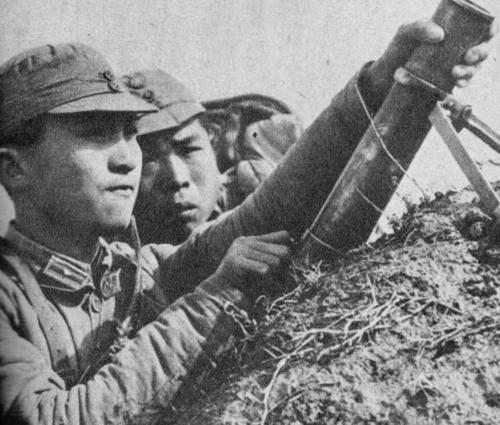 Motor
Motor Chinese Nationalist Sherman
 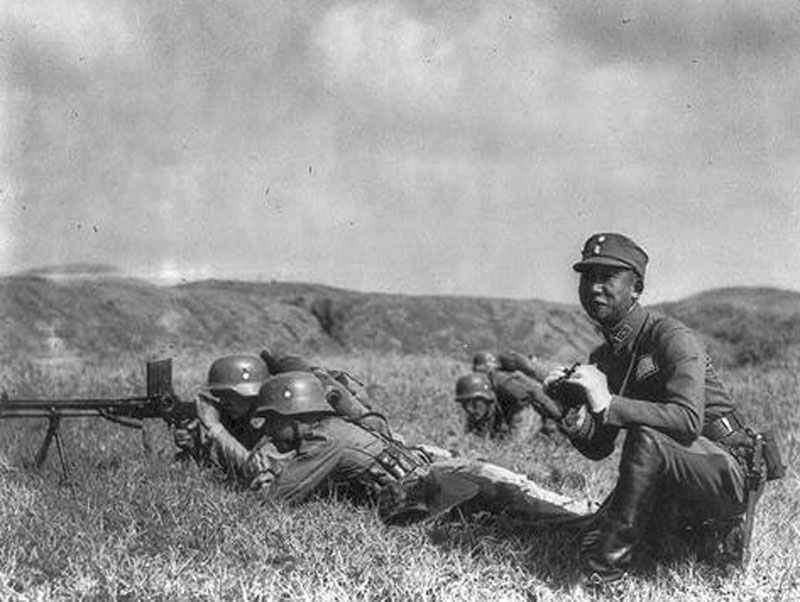 Chinese Nationalist Infantry
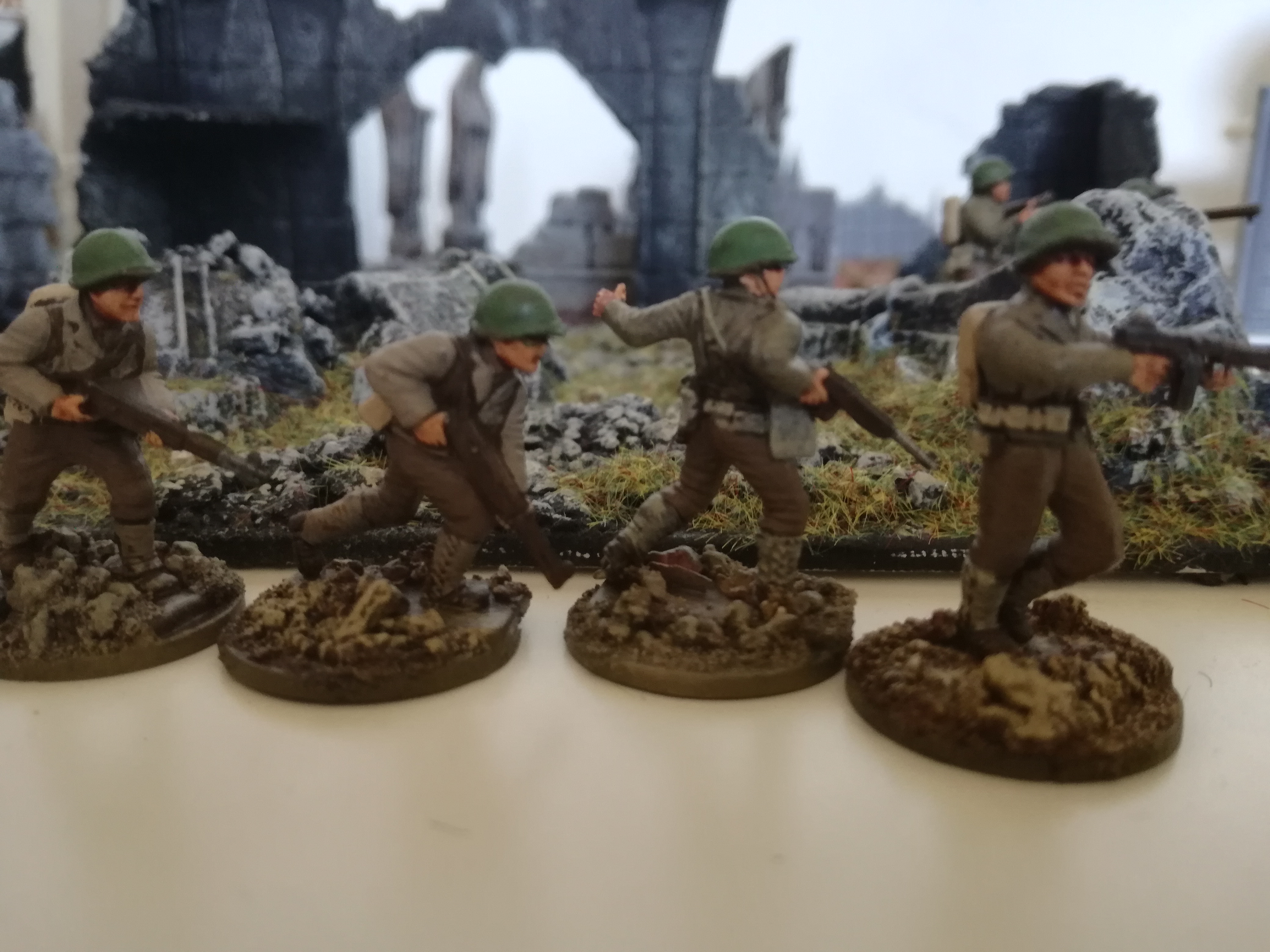
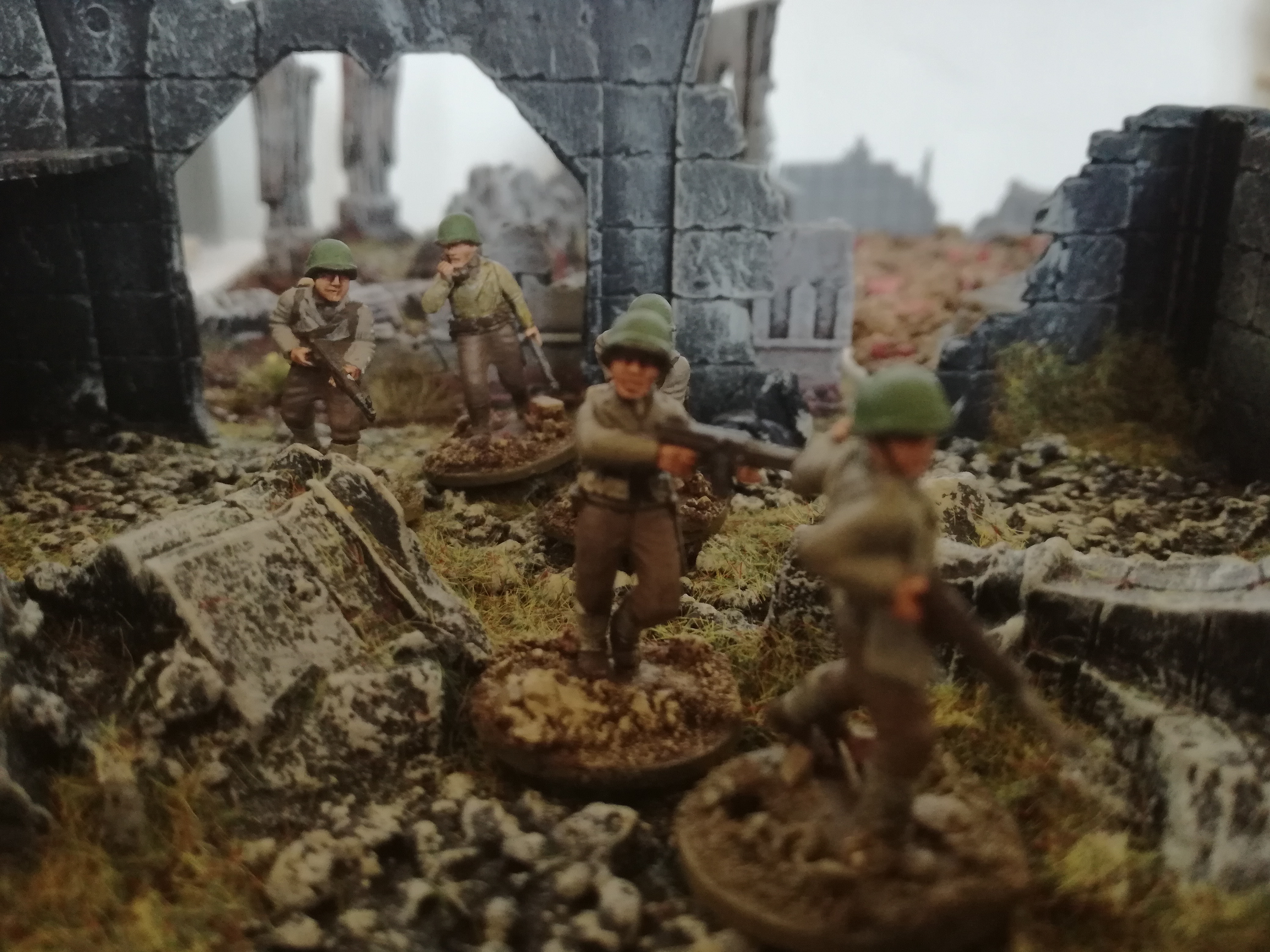
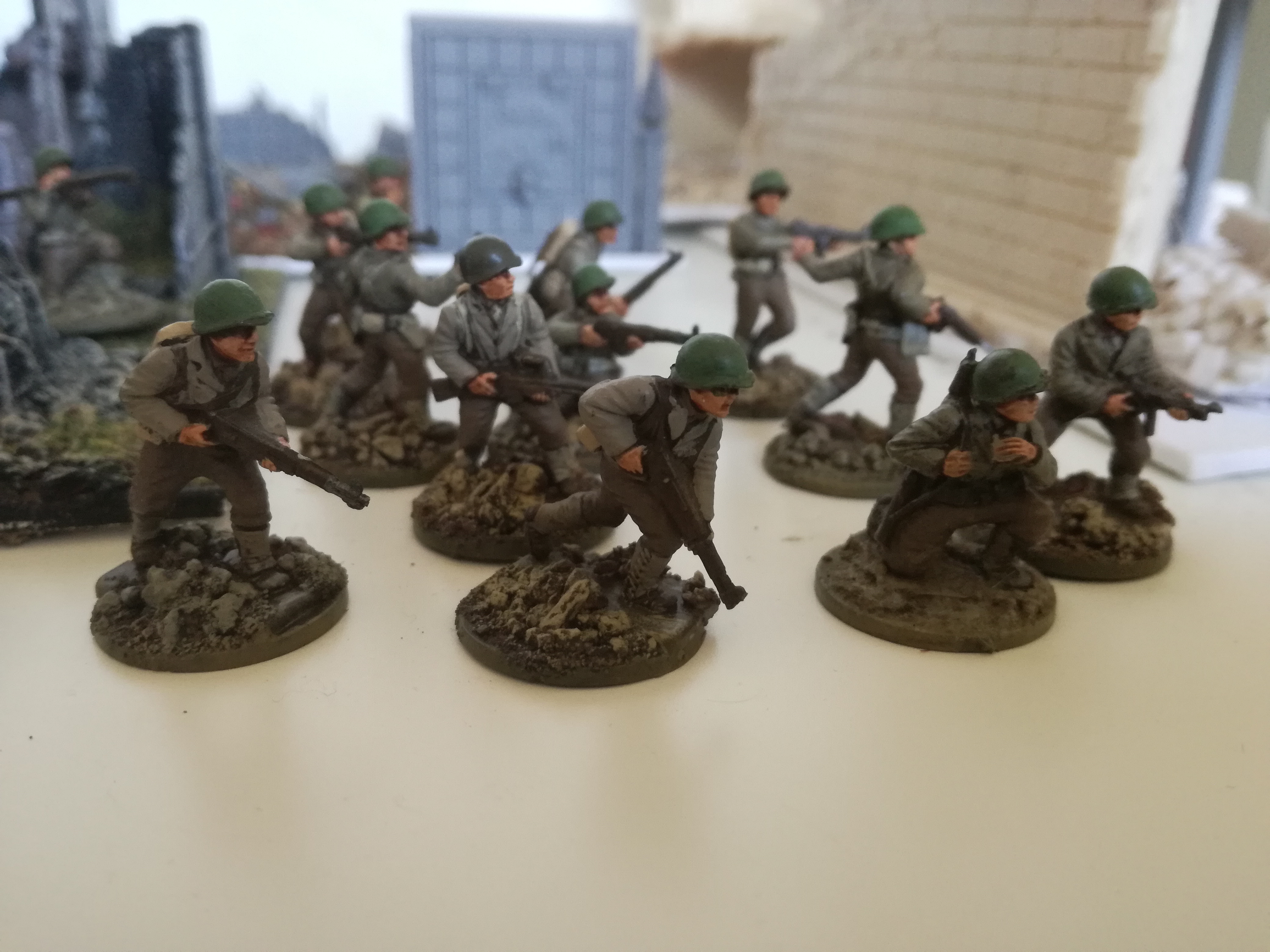
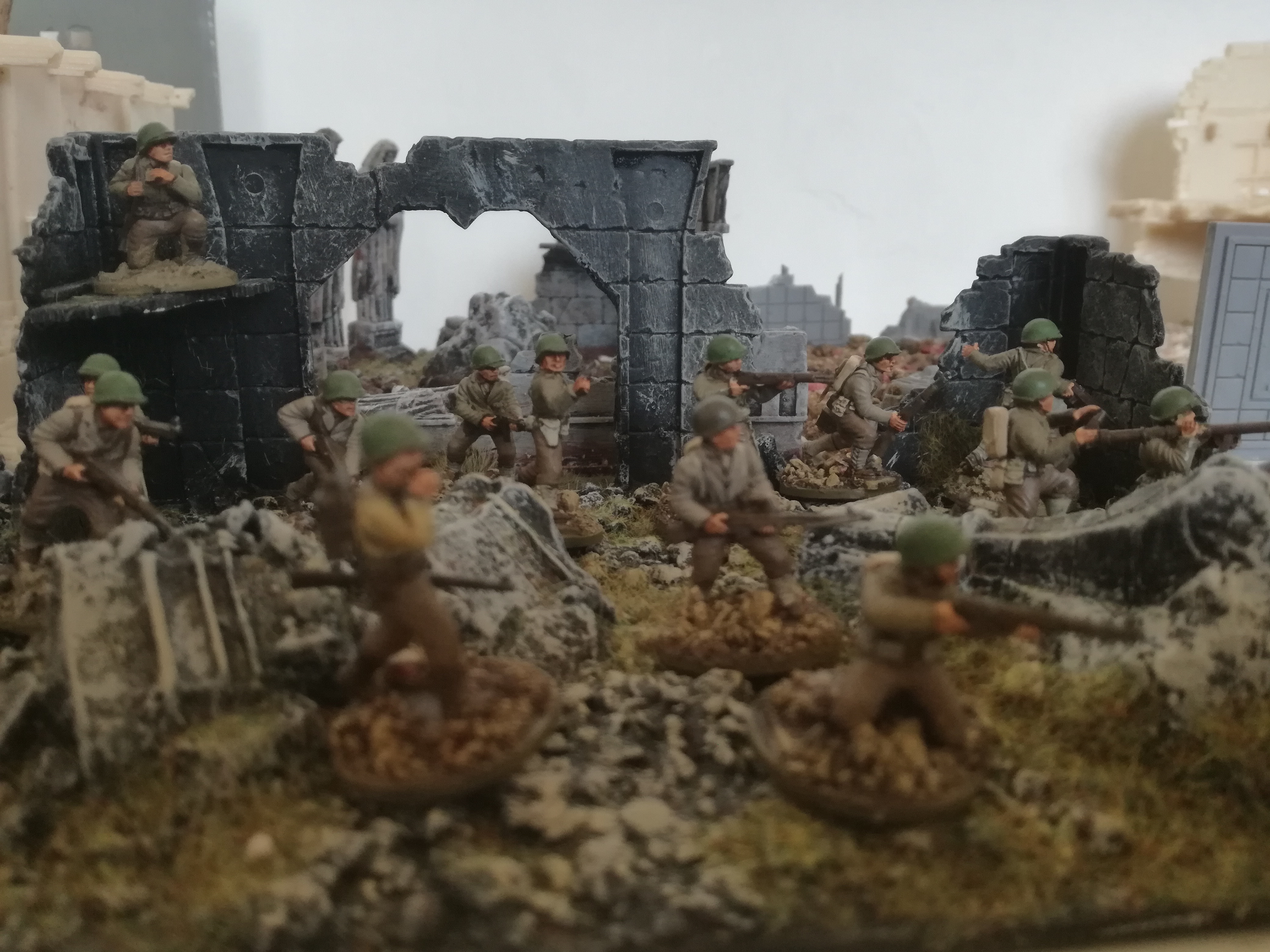
Some finished US infantry (20mm)
These are some US infantry in 1/72 or 20mm scale from Valiant Miniatures. They’re basically 20mm heroic scale in hard plastic. They’re quite nice to paint, mainly because of the fact they’re in hard plastic which means the weapons aren’t bendy which is an issue of many plastic miniatures in this scale.

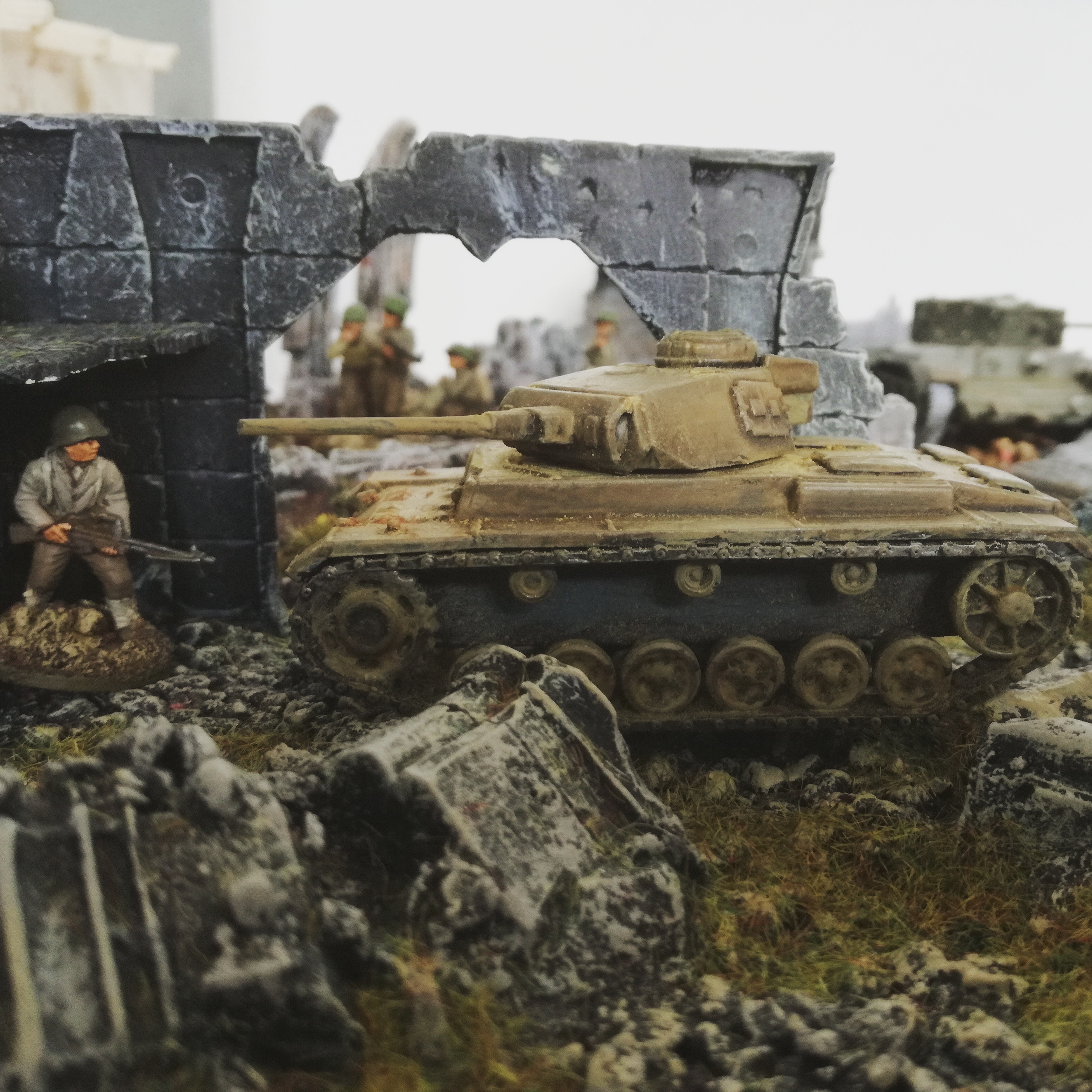
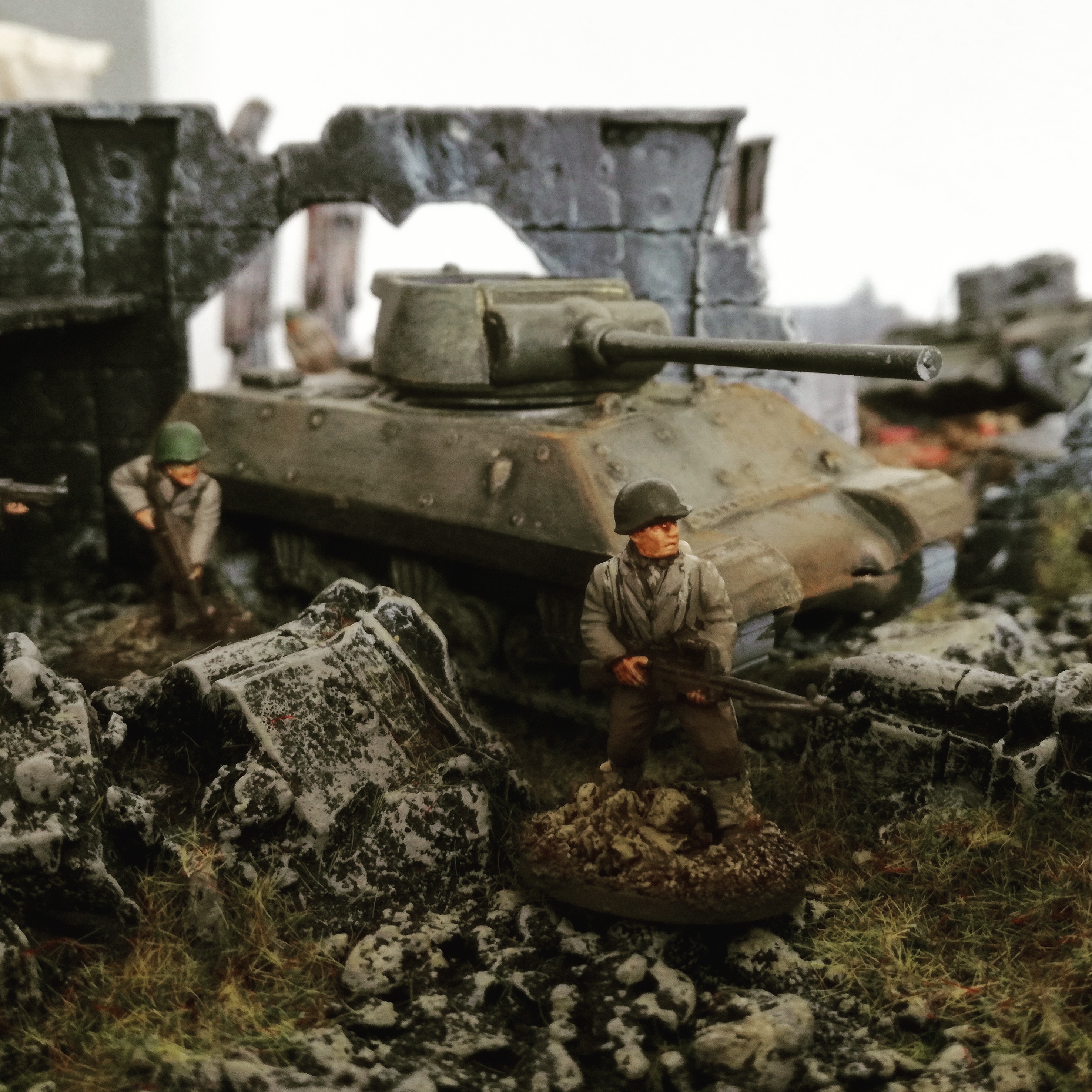
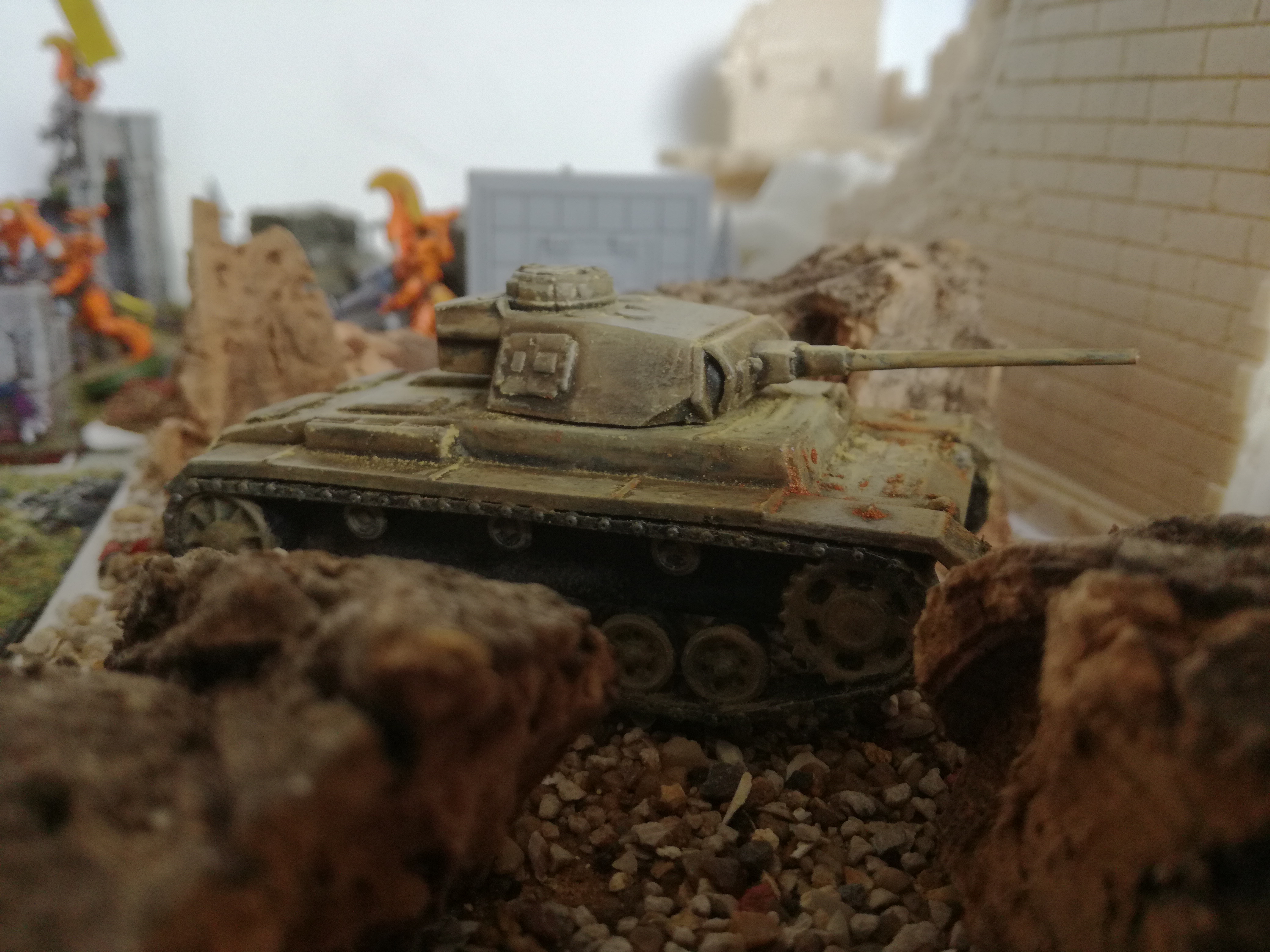
20mm finished armour
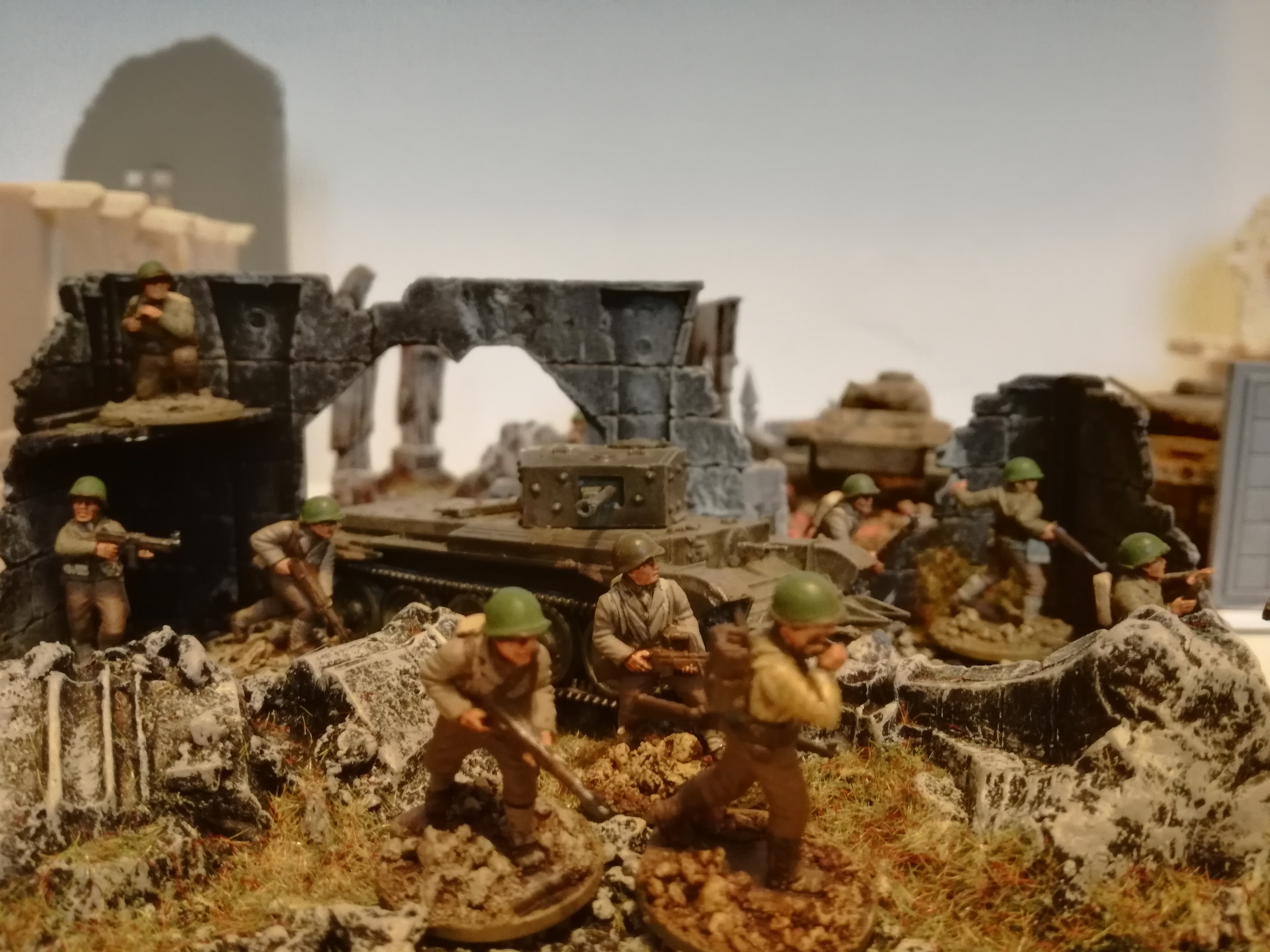
I managed to get some tanks in 20mm painted over the weekend. Below are the results.

Chinese WW2 references
The first entry will be a list of websites I’m using for my research into the Chinese army.
The first is a good starting point, it provides a over view of the Sino-Japanese conflict.
https://en.m.wikipedia.org/wiki/Second_Sino-Japanese_War
This website provides information on everything from battles, to important individuals and statistics.
https://m.ww2db.com/country/china
This website provides some great info on the conflict, as well as background info.
http://factsanddetails.com/asian/ca67/sub426/entry-5340.html
This website takes a look at some of the weapons used by the Chinese forces.
https://ww2-weapons.com/chinese-nationalist-army/
Some of the aircraft used by the Chinese in the war against Japan.
https://www.militaryfactory.com/aircraft/ww2-chinese-military-aircraft.asp
This last website cover armour that would have seen service in the Sino Japanese war, along with the Civil war in China.
http://www.tanks-encyclopedia.com/ww2/china/chinese-tanks-1925-1950/
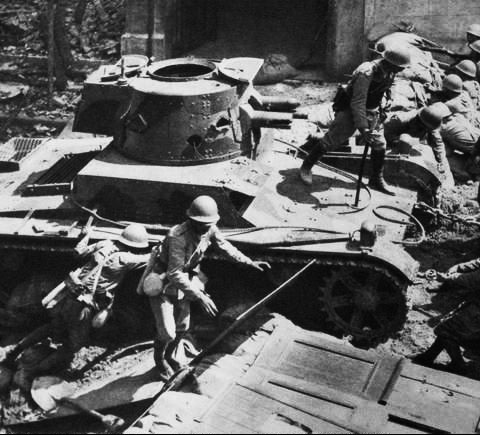 Vickers Mark E Type B
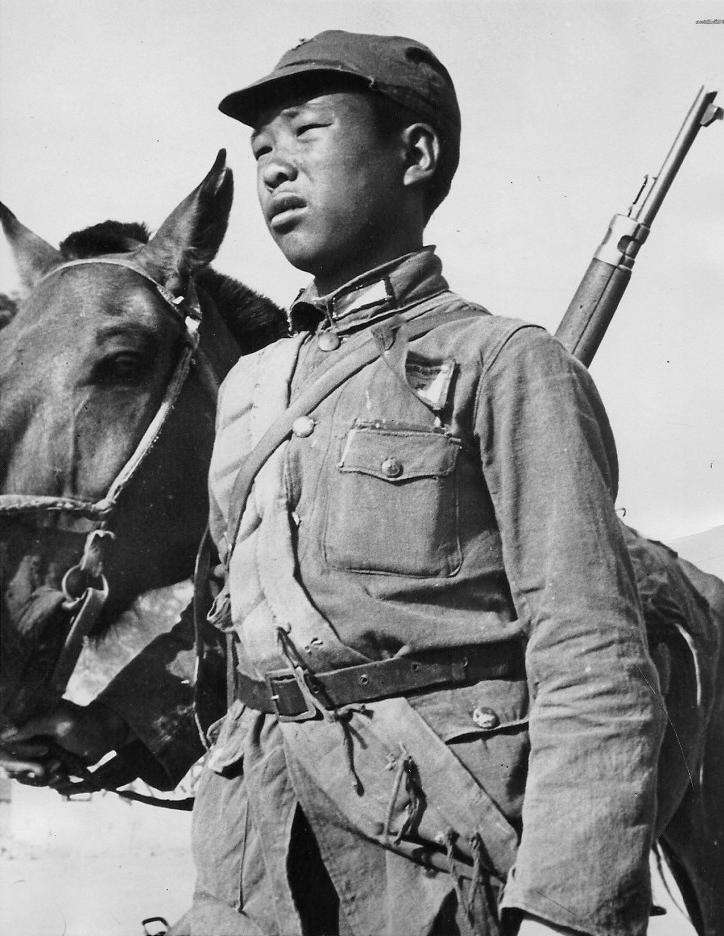 Communist soldier
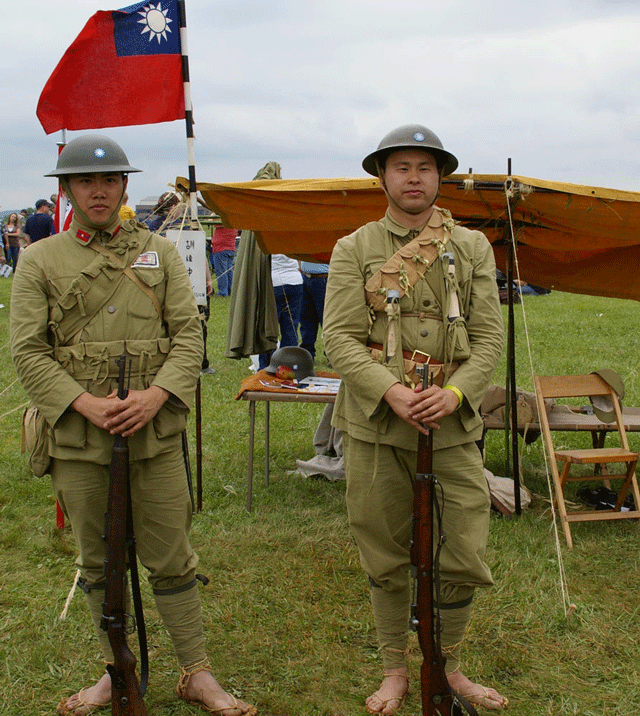 Chinese Nationalists army re enactors
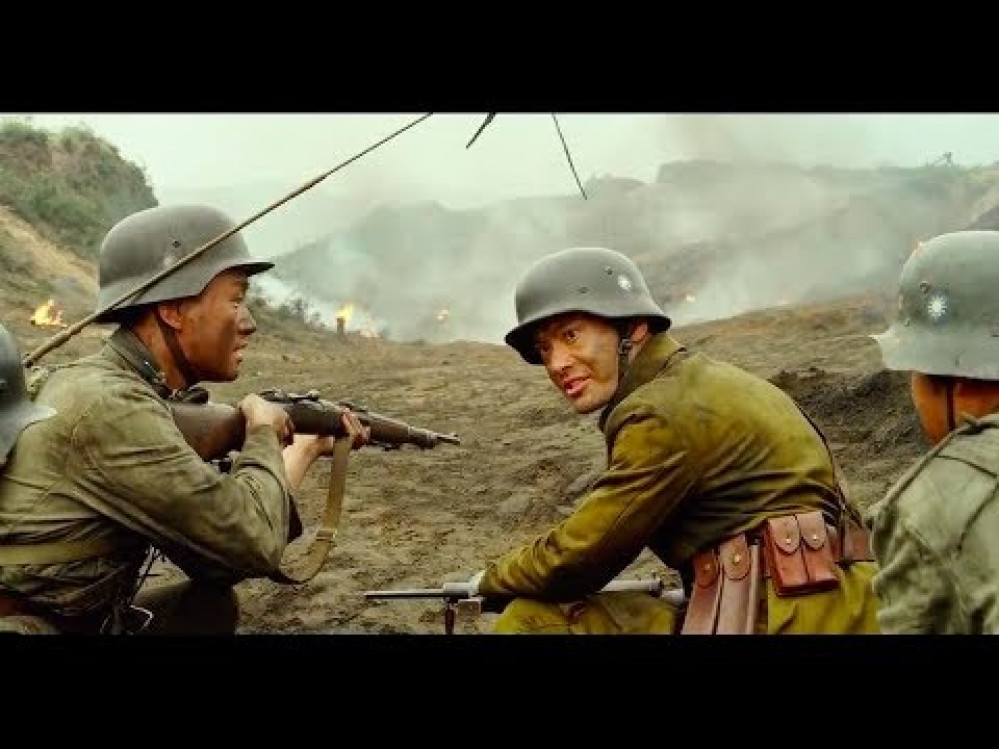
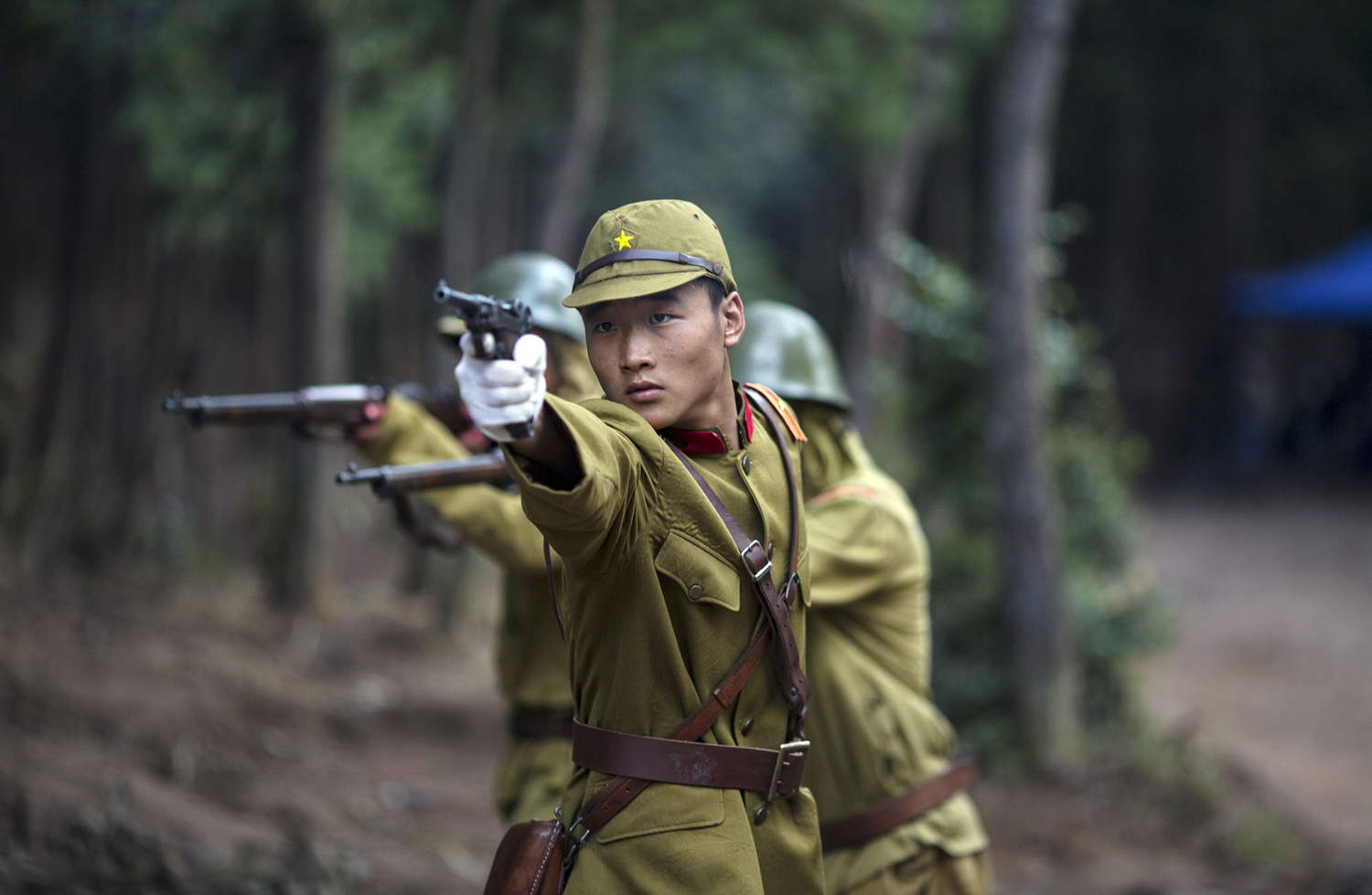 Chinese army (scene from TV series)
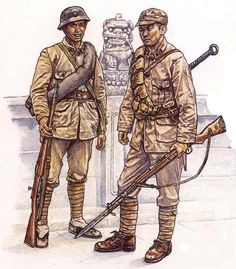 Early war Chinese Nationalists
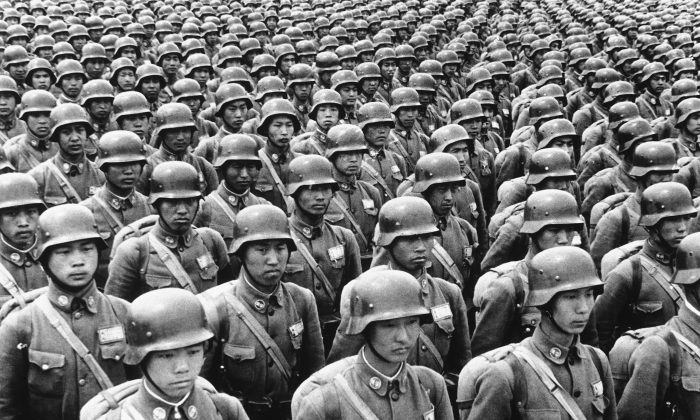 Chinese army