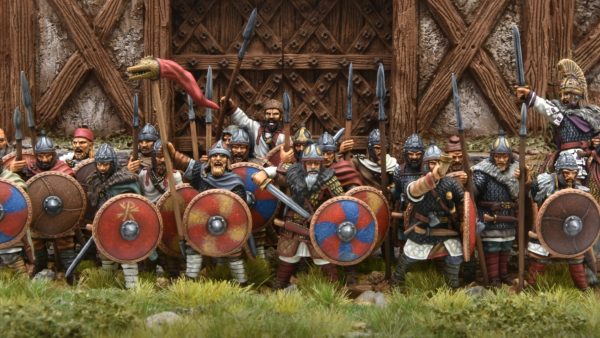










A Year and 7 Months! A 1/172 ancients project.



Recommendations: 58
About the Project
This was a project for Hail Caesar that lasted a year and seven months, specifically for the Britannia supplement. I painted nearly everyday for about an hour come sunshine or rain until it was finished. The miniatures are a selection of 1/72 plastics from several companies.
Related Genre: Historical
This Project is Completed
More Tomorrow
That is all I can post for today, as I am limited a bit in time. Tomorrow I will post the Celts and bring this to a conclusion.
If you have any questions, please leave them in the comments and I will answer them tomorrow afternoon before I post the rest of the stuff.
Best regards,
NR
The Fanatics
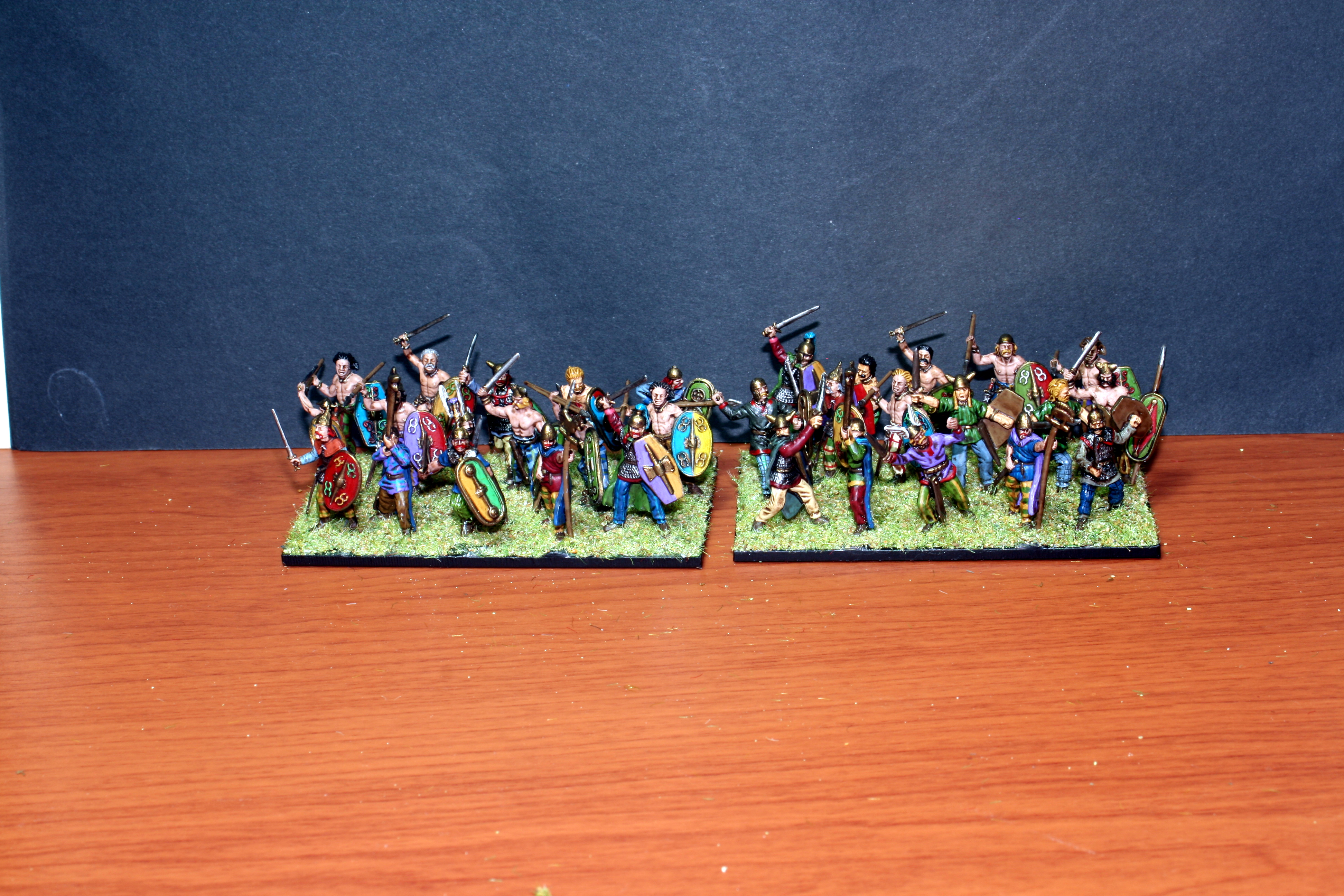
The first units I painted up for the Celts were the fanatics. Unfortunately there are no dedicated sets for fanatics on the market. Therefore I went through all the sets I had and chose the most naked figures for these units. In fact, only the Italeri box had several of the same model completely naked.
To further distinguish these models from the rest of the warbands, I decorated them heavily with warpaint. I think they call it wode, but I am not sure.
Unlike the Romans, these units contain 16 figures on a 8cm x 5cm base, in order to represent their warband style of combat. The Roman legionnaires and auxiliaries were 12 figures on a 8cm x 4cm base.
Finally the figures are a mix of Italeri, Caesar and Revell miniatures. I also added some Italeri ancient German warriors into the mix to help distinguish them
 The Fanatics
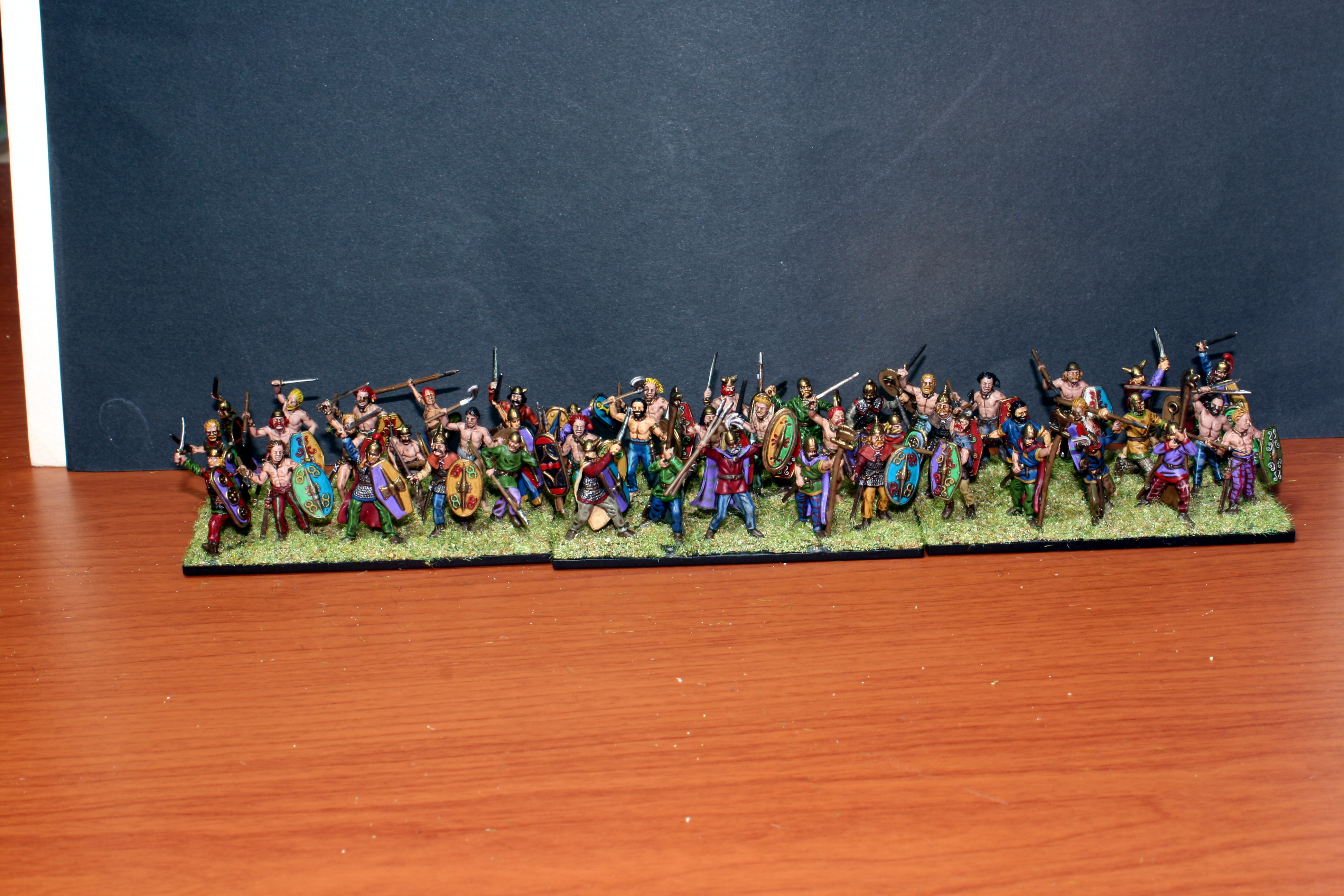
The Warbands
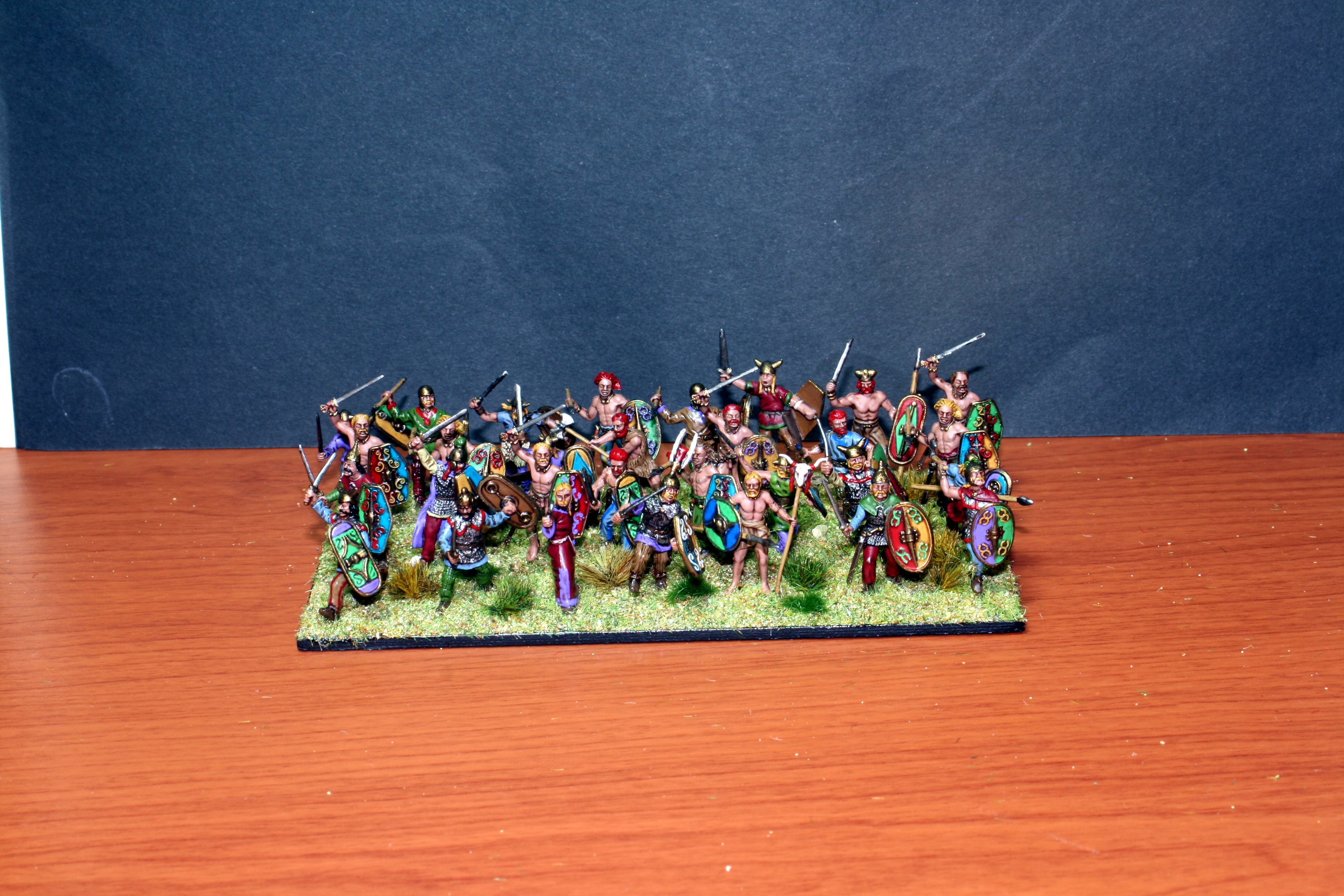
The vast bulk of any ancient Celtic army are the warbands. The ‘Hail Caesar’ game is no exception.
Altogether I have ten units, more than enough to play every scenario in the Britannia campaign book. I made a few more simply because I had so many extra miniatures. Each box comes with 30 to 50 figures, so you are bound to have a surplus.
The base size and number of figures per base are the same as the fanatics, minus the warpaint. The figures are also taken from the same brands.
I would like to point out that I chose these three brands because they were and still are the best quality available for anyone wanting to pursue ancients in 1/72 scale

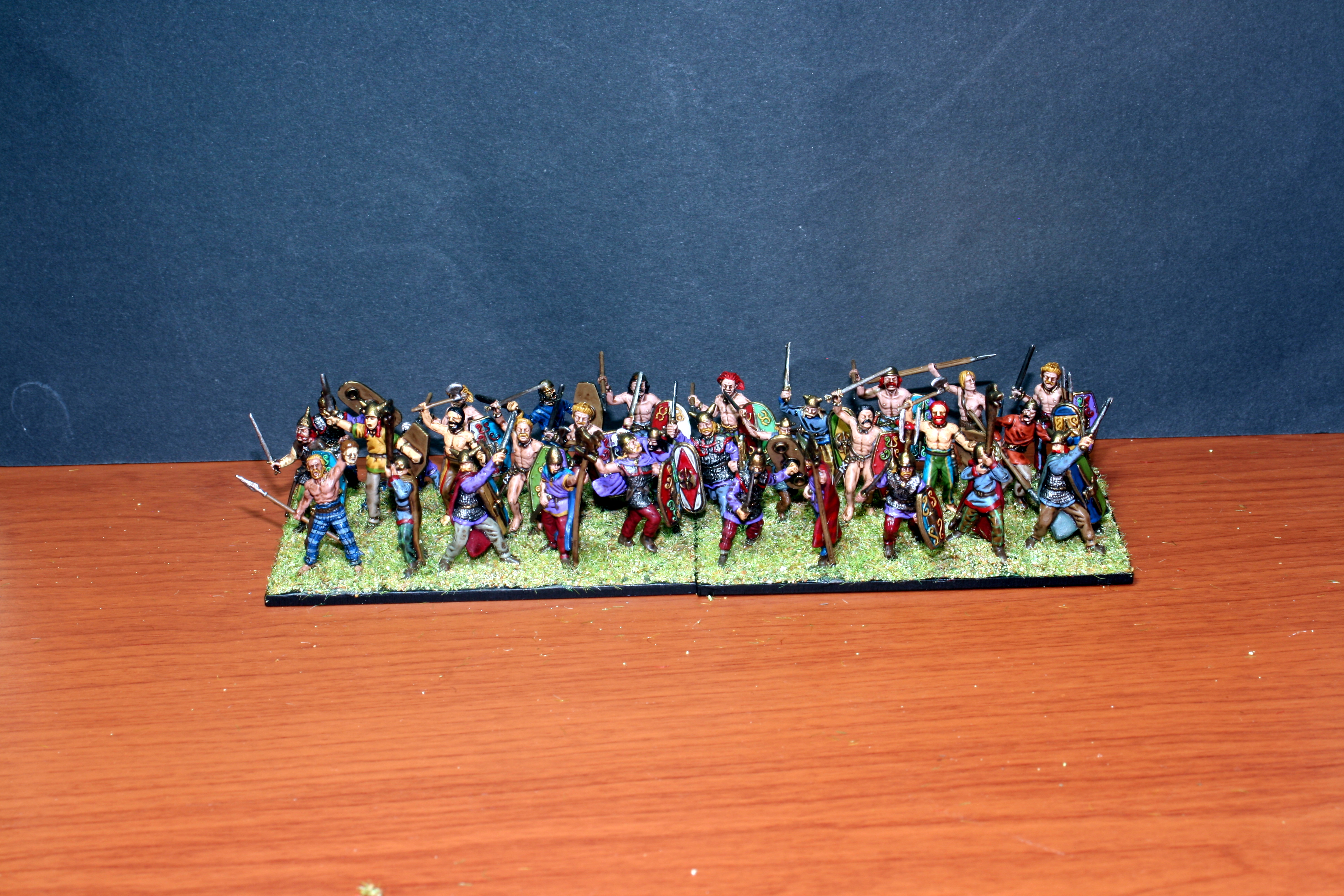
Large Warbands
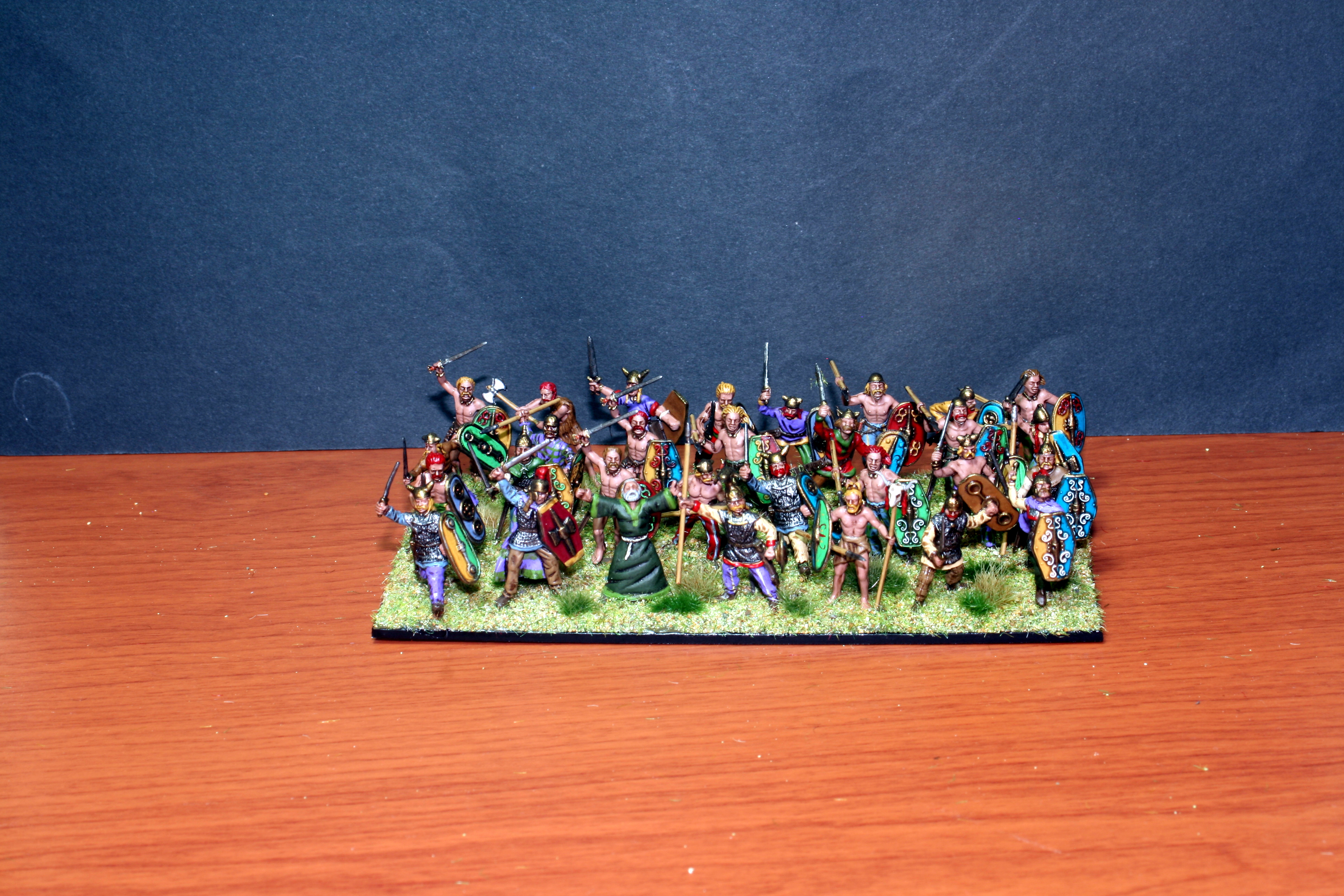
Large warbands are the same as standard sized warbands but simply larger! The campaign book allows a maximum of two, so I painted two up.
I do not follow the base sizes for small and large units as laid out in the ‘Hail Caesar’ rules. I use my own conventions. The large bases are 12cm x 6cm and small bases are 5cm x 4cm. As long as both sides keep to these conventions there should not be any problem. ‘Hail Caesar’ is very flexible in this regard.
The Celt Cavalry
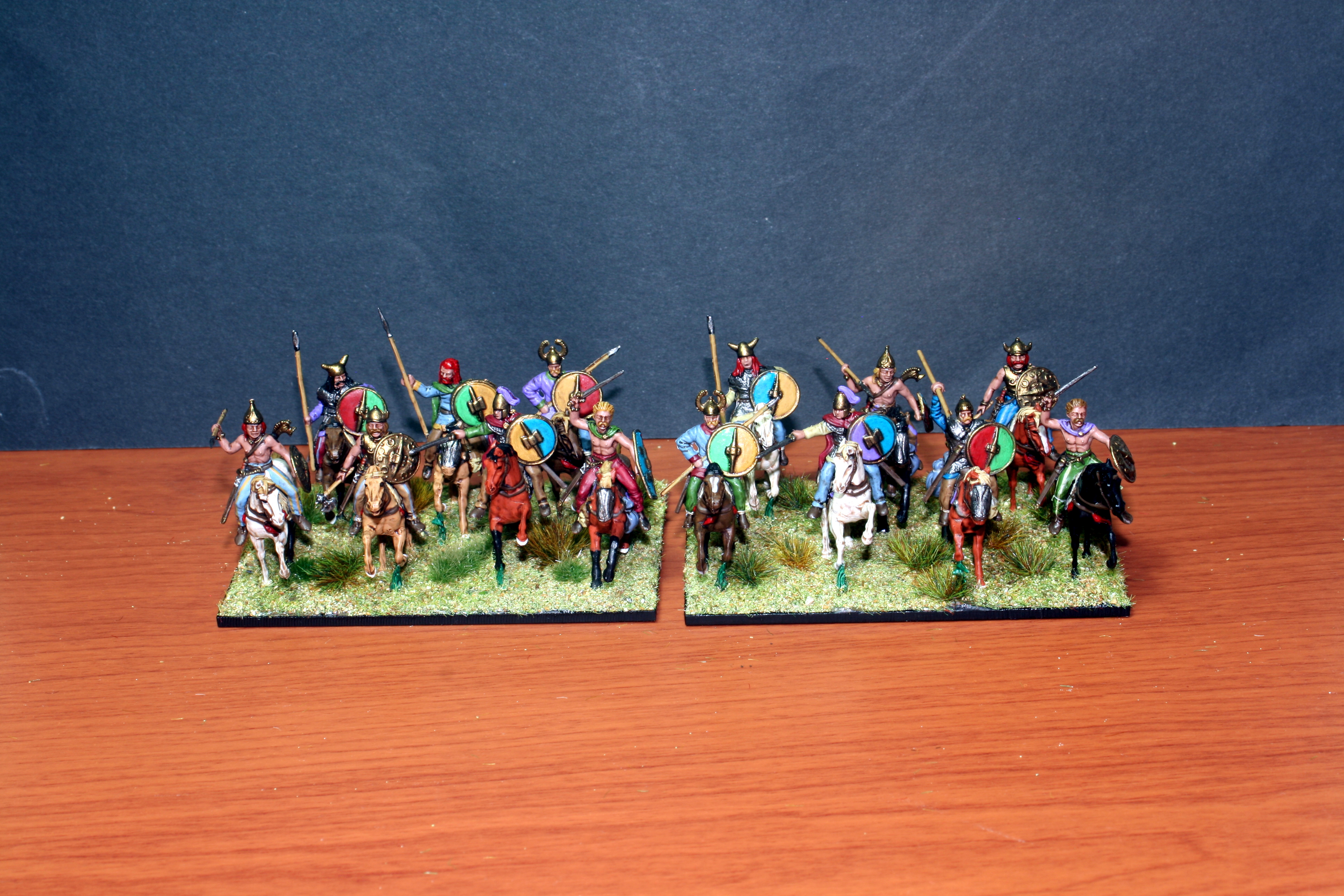
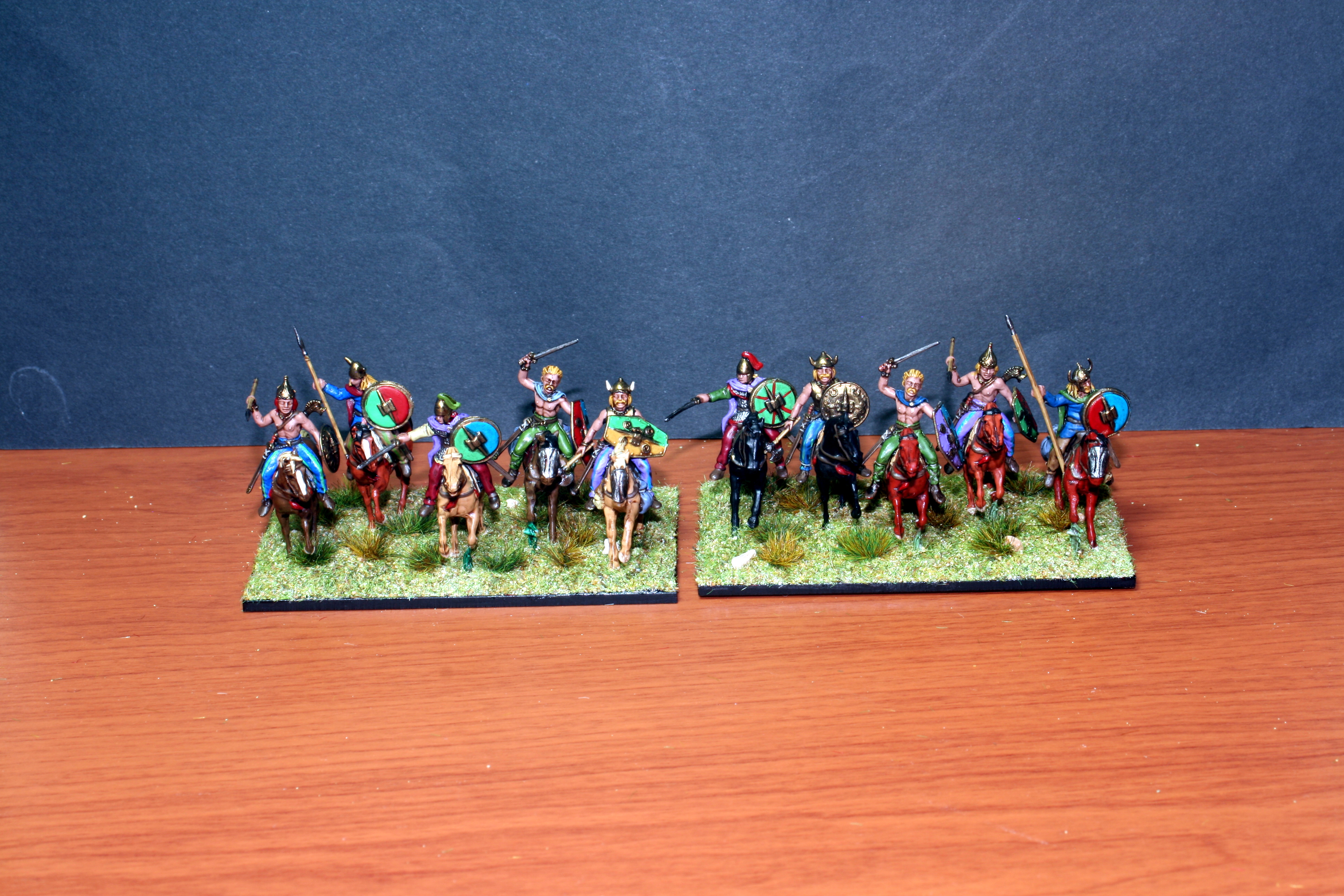
The ancient Britons did not have access to as many cavalry units as the Celts on the mainland, especially during Caesar’s wars in Gaul. Nonetheless, the units I could use I painted up.
The campaign book allows me to field a total of 2 medium cavalry units, 4 light cavalry units and 4 small cavalry units. The major difference between these unit types are mostly the amount of figures per unit and naturally their role on the battlefield.
To represent this, I placed 7 figures on medium cavalry units, 5 figures on light cavalry units and 3 figures on small cavalry units.
The figures are exclusively from Italeri and HaT, with several head swaps for a bid of variation.
 Medium Cavalry unit
 Light Cavalry unit
 Light Cavalry unit
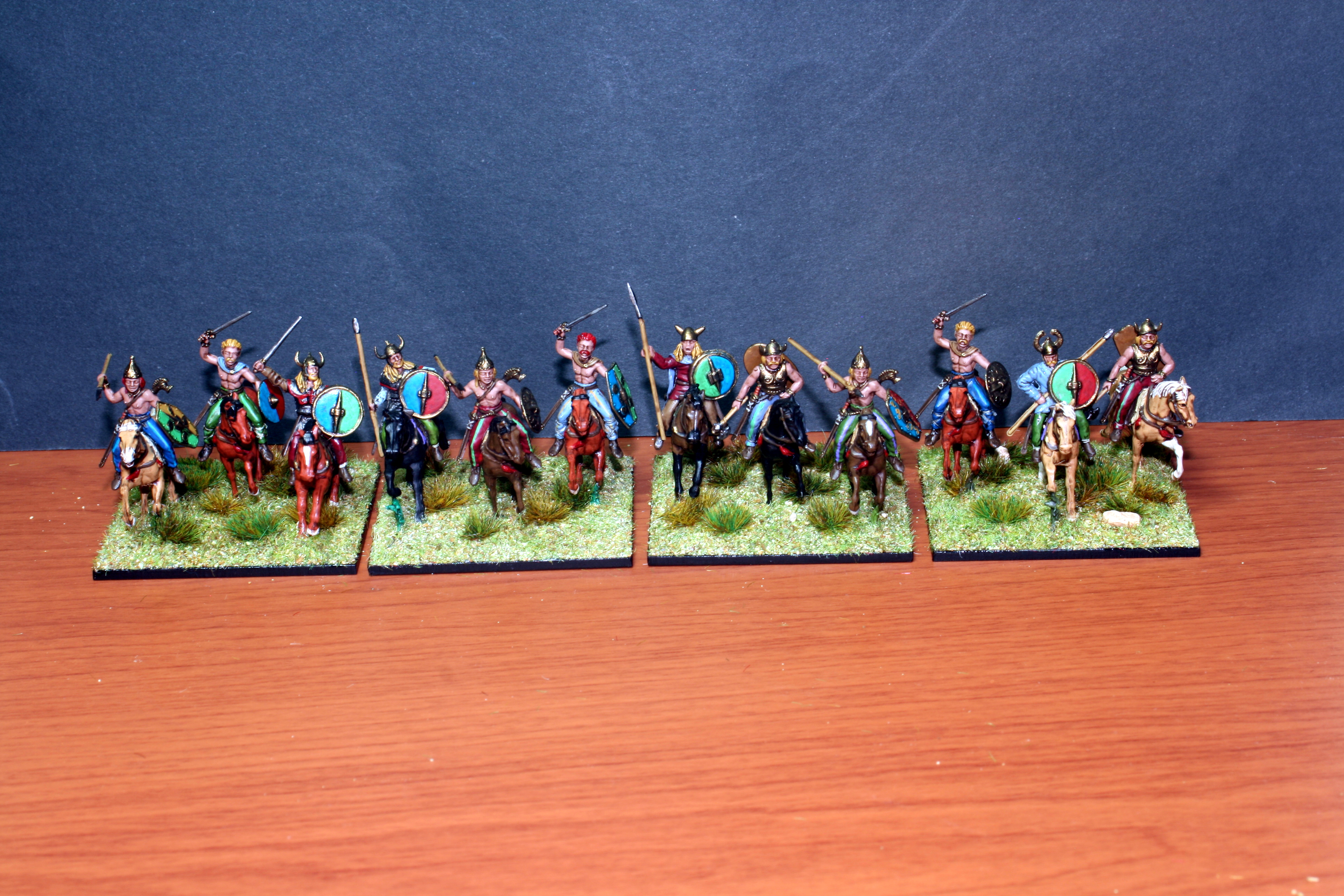 Small Cavalry unit
The Chariots
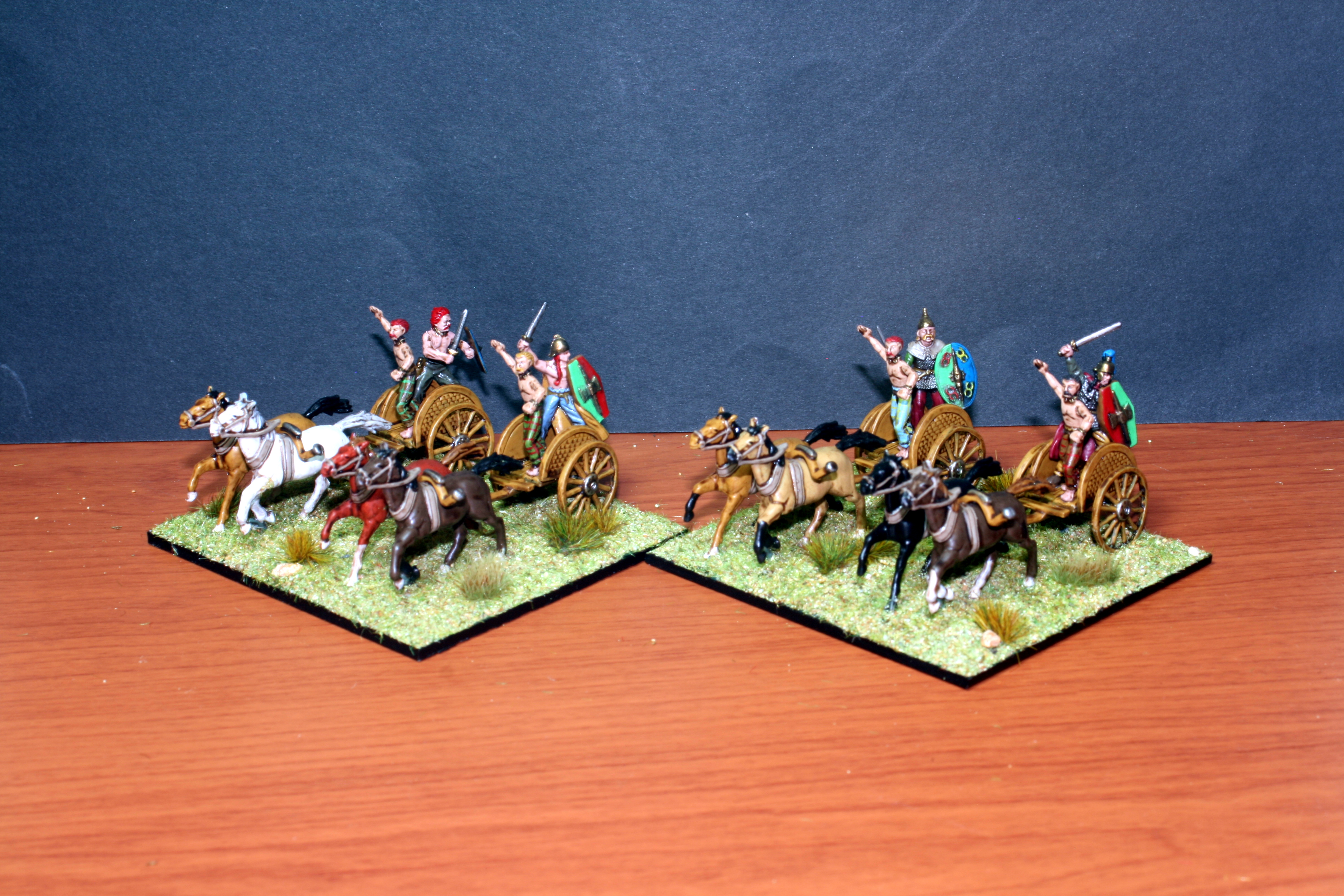
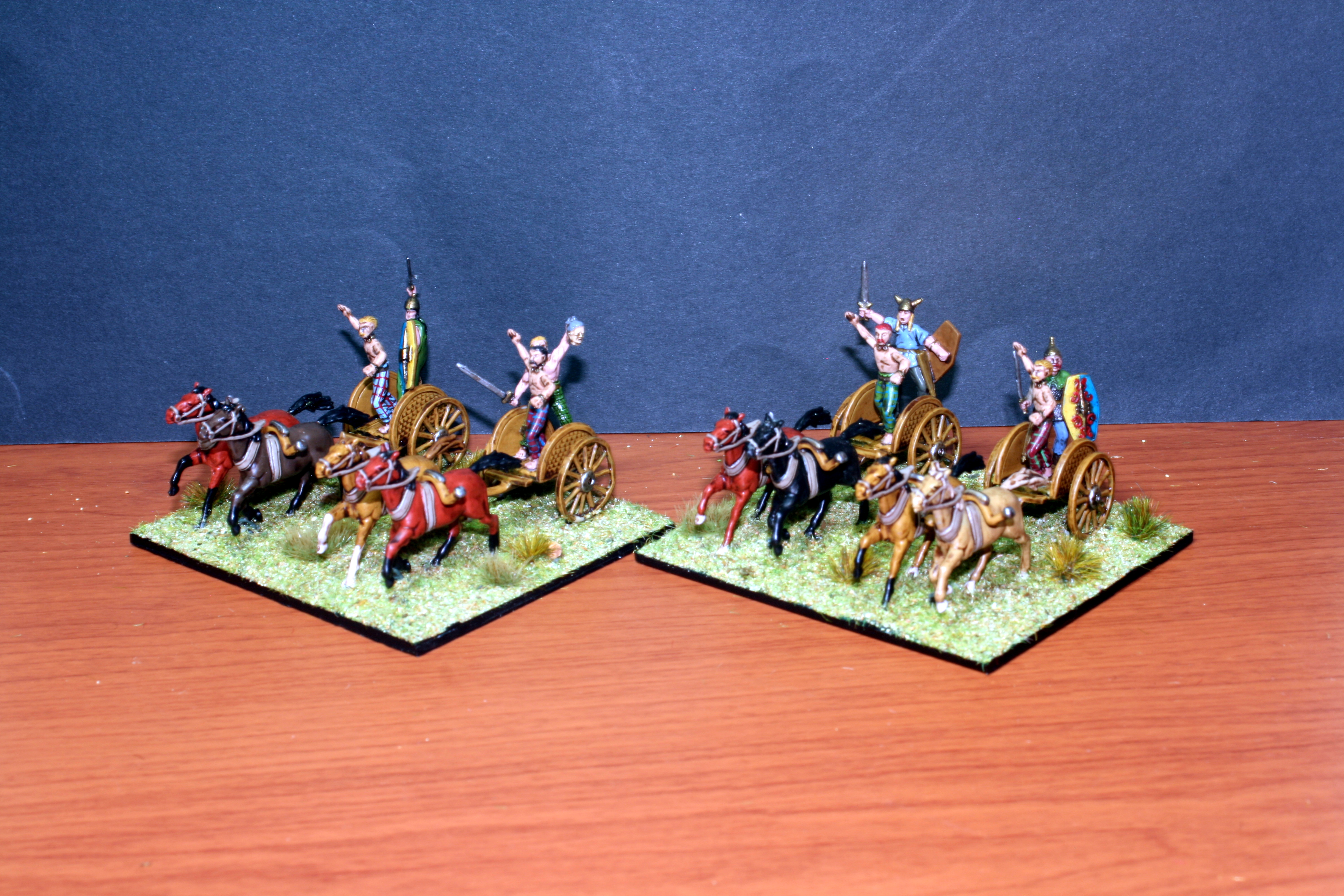
No Celtic army can be complete without chariots. At least that is how I see it! Unfortunately the only celtic chariots on the market were those from HaT, which are not bad, but the plastic used is very soft and fiddly.
The figures are also all the same, but to be fair this is something that one will see throughout the 1/72 ranges. To be honest, all it took was a quick figure swap, but I had to leave the same driver on each chariot.
The chariots were small enough to put two on each base, and since the campaign allows for 4 units I needed 8 chariots. Fortunately enough, each box comes with 3 chariots each. The ninth I used for Boudicca.
The Celtic Skirmishers
The skirmishers are basically identical to warriors, the sole difference is their basing, which is prescribed for ‘Hail Caesar’ and of course their role on the field of battle. They are also the same as Roman skirmishers.
Another difference is the amount the Celts can have – significantly more.
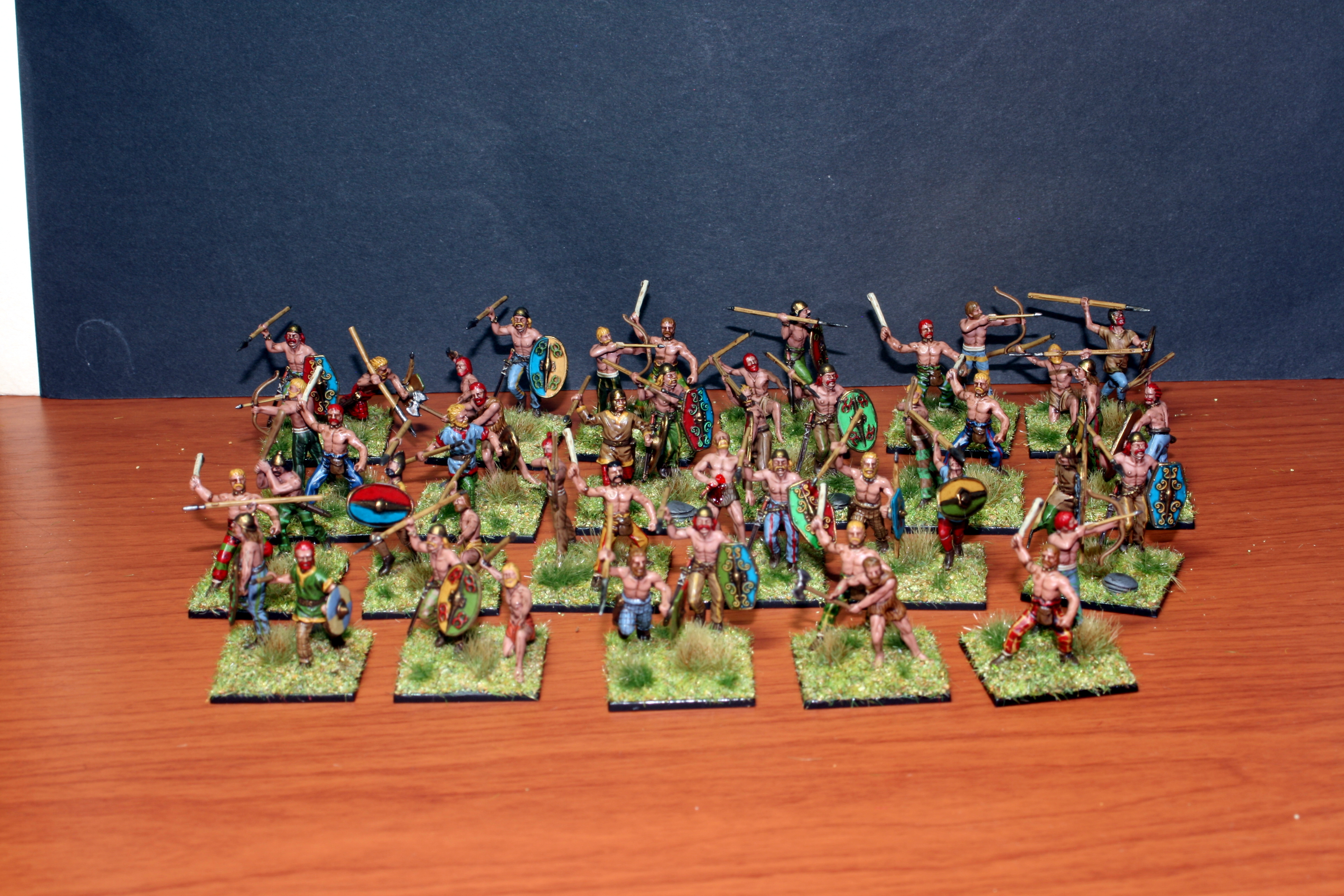
The Celtic Characters
Once again, the painting of these characters, along with the Roman ones was the best part of this project. Unlike the vast bulk of the army, I took the time to add a highlight and a lowlight to these models in order to help them stand out.
With these celtic characters, I also did some converting, especially with the Boudicca model.
The first batch of celtic generals were painted out-of-the-box, without any conversion work whatsoever.
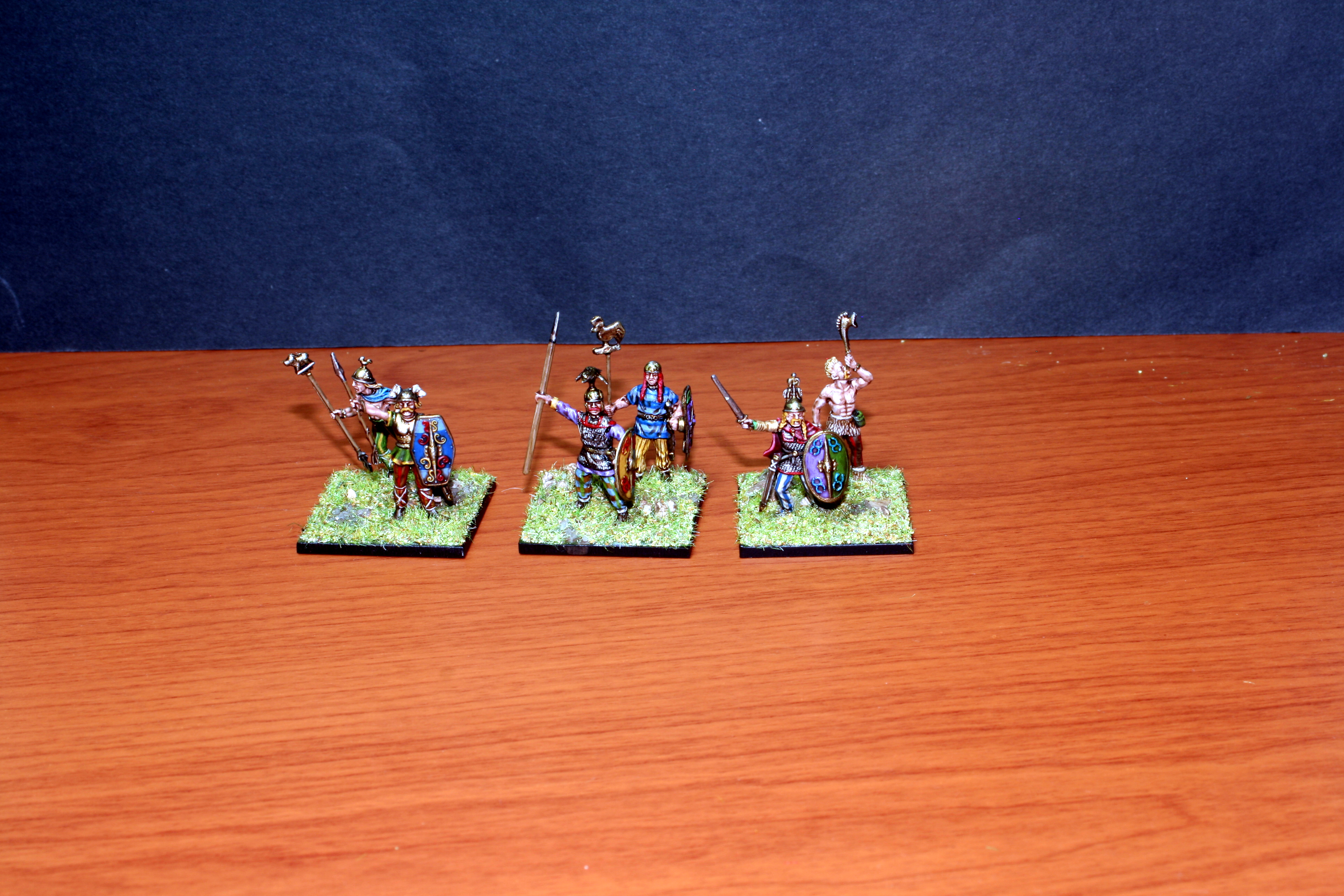 The Celtic Generals
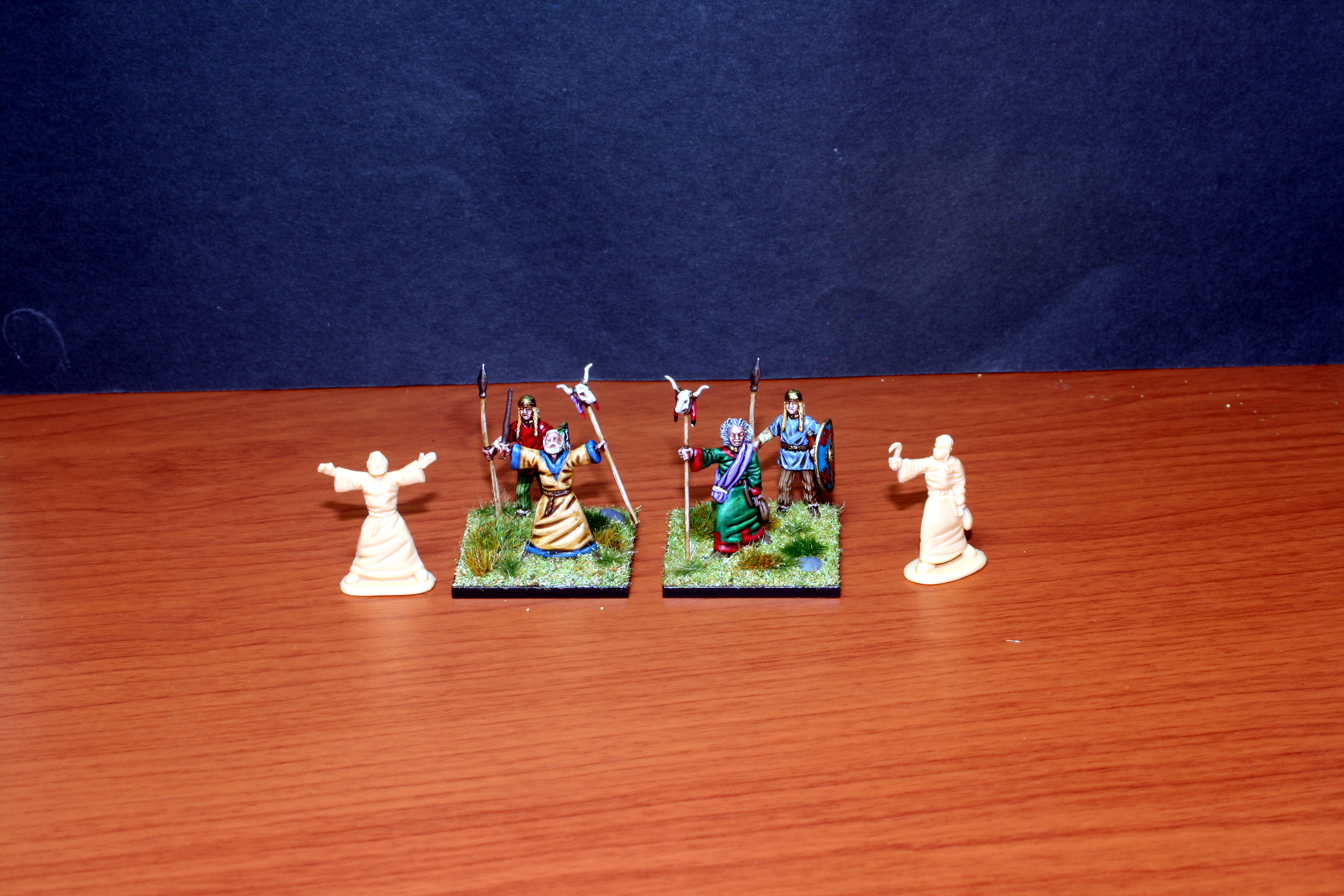
The second batch of characters I worked on were the druids. I took some time to convert these miniatures from the basic models. I did this to make them more prominent, and because I used the basic models in the large warband units below.
The models were converted by cutting parts from other miniatures as well as basic sculpting work with duro putty.
These are HaT models. No other range has druids! I find this very strange.
 The Druids
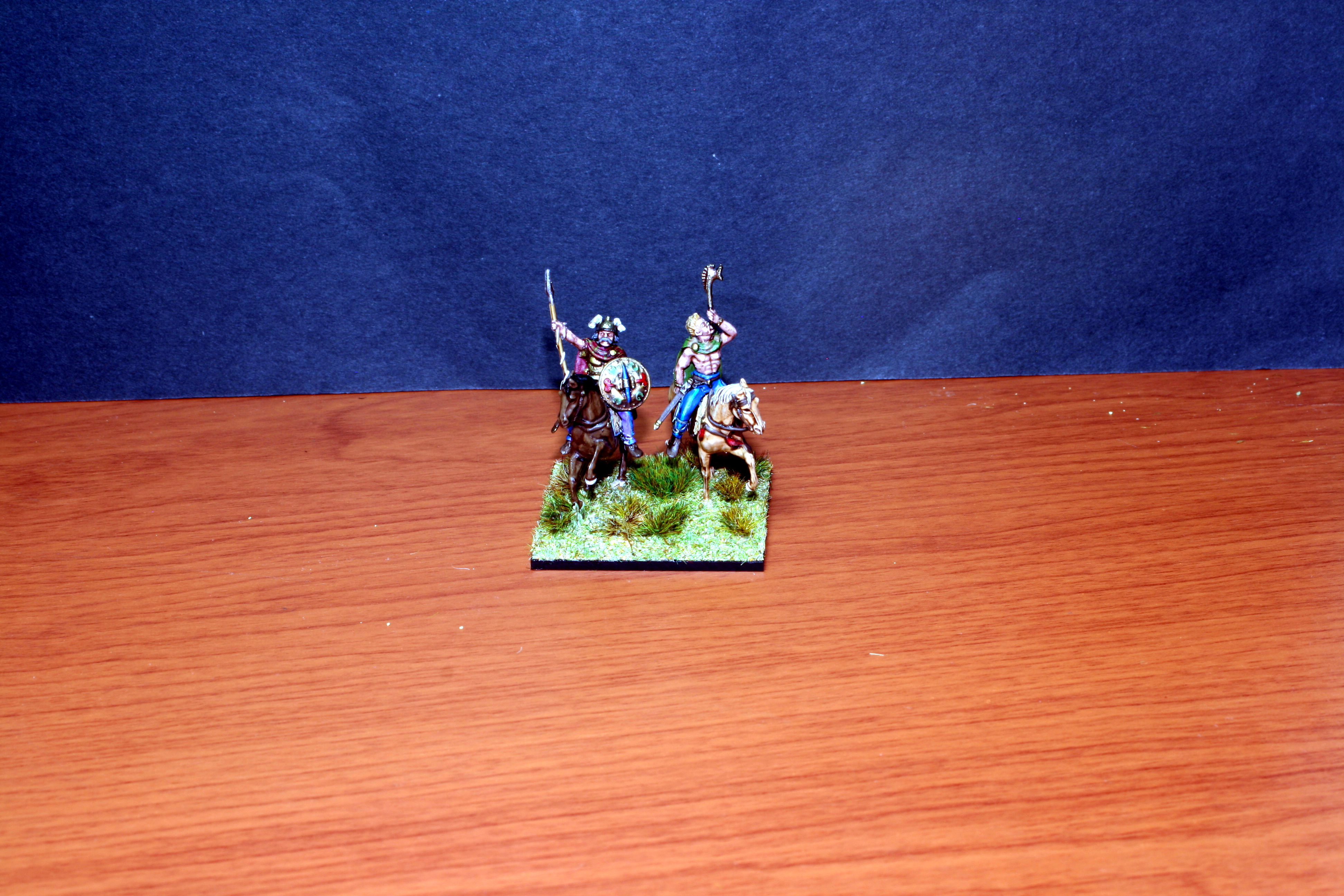
Since I have a substantial celtic cavalry wing with this campaign, I wanted one of my generals to be mounted. This does not make any difference in game terms, but it is visually more compelling.
Both the figures in the photo below are conversions. They are basically four figures cut at the waist, switched and glued on. I also added cloaks to the models to differentiate them from their infantry counterparts.
 Mounted General
The last general, but certainly not the least is Boudicca, Queen of the Iceni. She is one of several named characters, but the only one that really needs a dedicated miniature.
The problem I had was that all the Celtic box sets I owned had no women in them. I did find a female model in the Italeri Ancient German box set. The model is in the photo below.
I began converting this figure with putty and from parts from other models. I sculpted it from the body out, with the helmet, shield and hair the last parts to be added.
I also had to convert the rider. The rider was originally standing, and this detracted from the Boudicca model. Putting him in a sitting position was a fiddlier prospect than Boudicca herself, but I managed in the end.
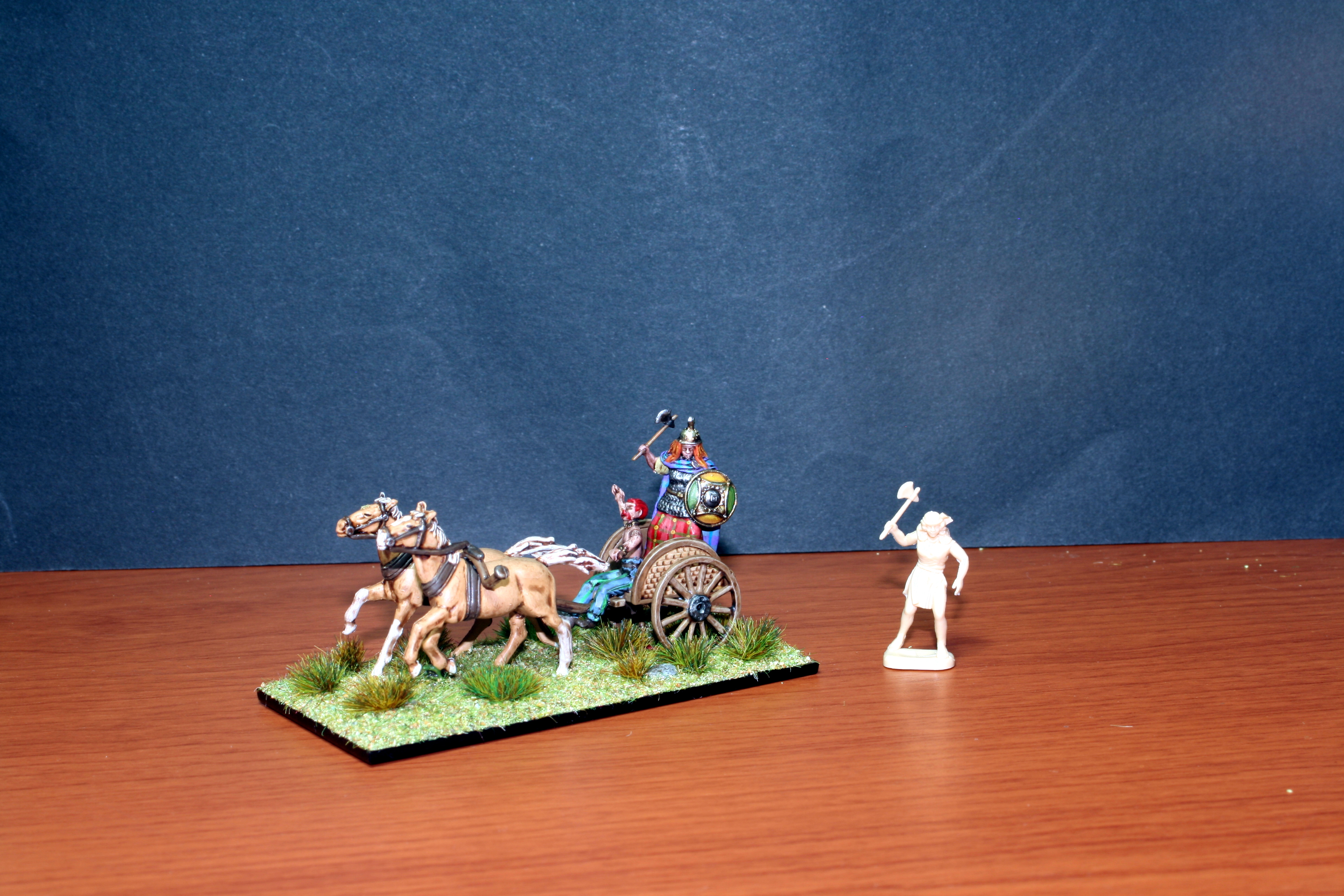 Boudicca, Queen of the Iceni
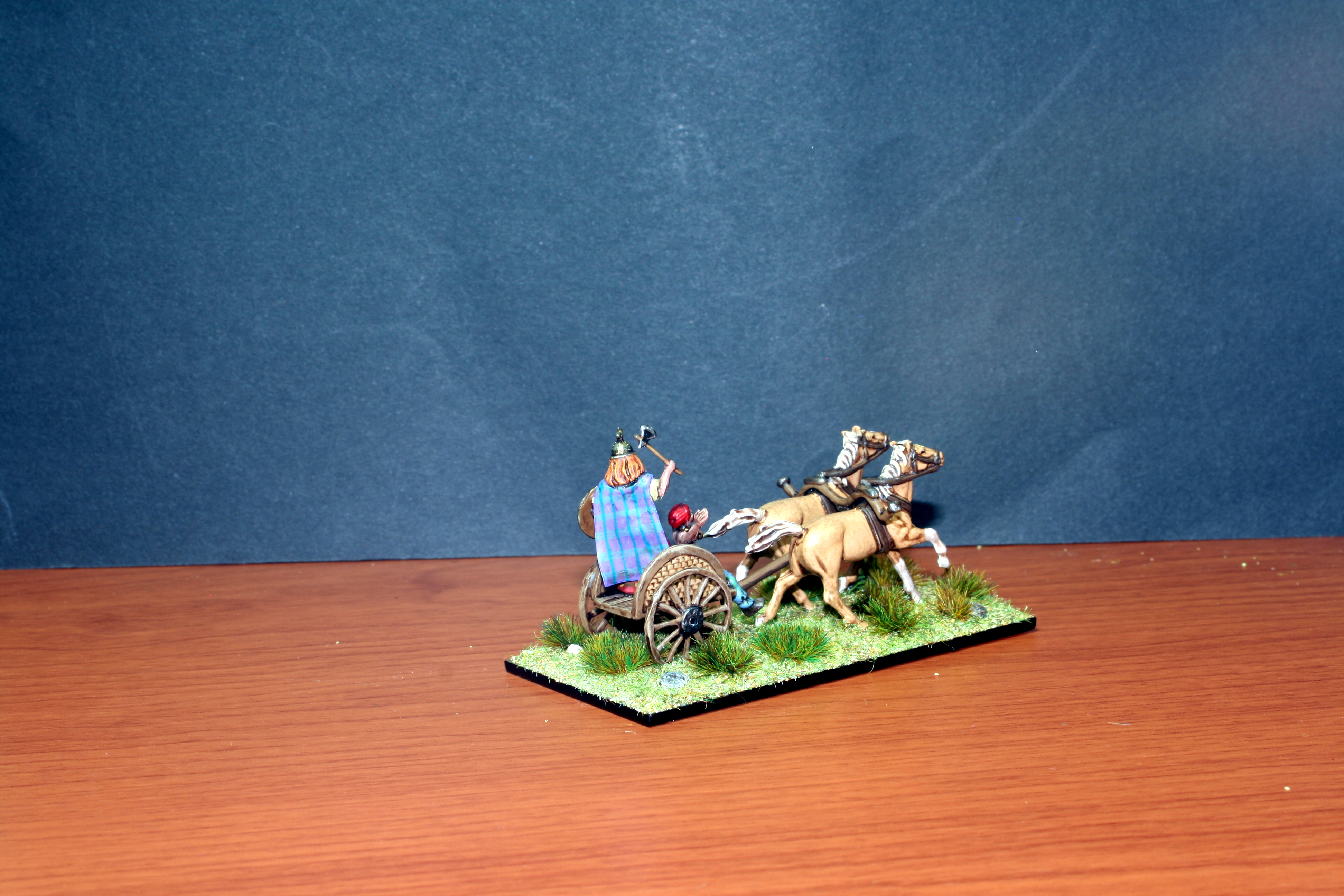 A Lloyd shot