





![Pure Sci-Fi Nostalgia! War Rocket Review | Hydra Miniatures [7 Days Early Access]](https://images.beastsofwar.com/2026/02/unboxing-hydra-miniatures-war-rocket-coverimage-225-127.jpg)


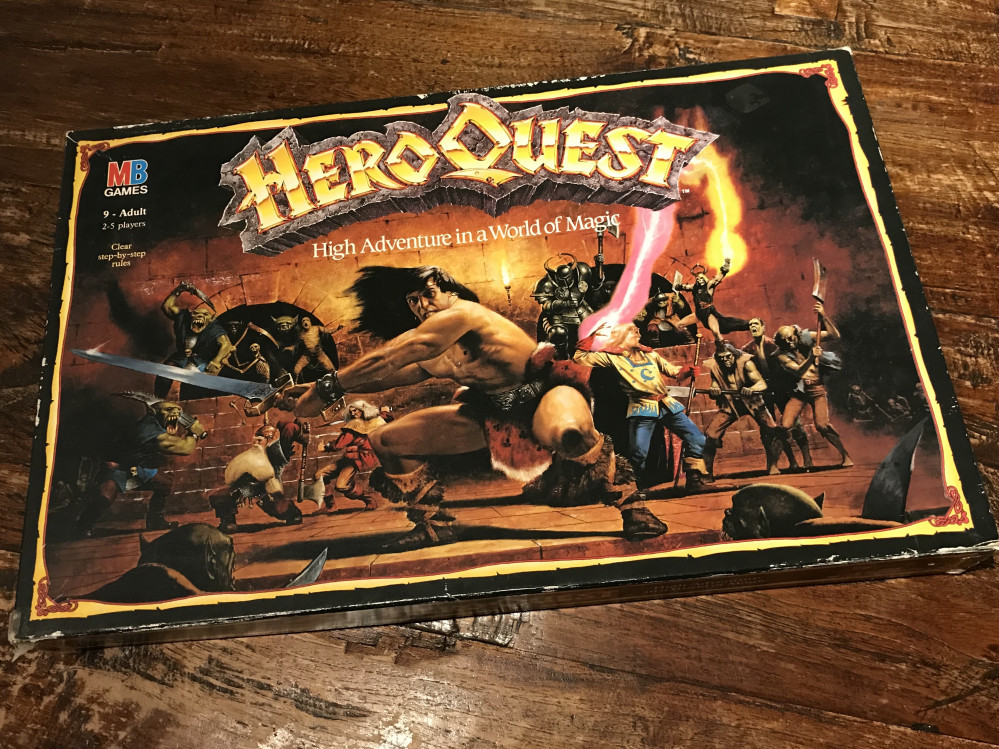
HeroQuest Lockdown Revisited


Recommendations: 340
About the Project
Like many gamers of my generation, HeroQuest by GW and MB games was the first miniatures game I owned. Sadly my own copy has long since been lost to time but as the nation began to move into lockdown, I bit the bullet and picked up a copy from a seller on eBay.
Related Game: HeroQuest
Related Company: Games Workshop
Related Genre: Fantasy
Related Contest: Dungeonalia 2023
This Project is Active
Soft Tone and Matt Varnish
Now the monsters were painted it was time to keep them safe from little fingers with a coat of Army Painter Quickshade. I use this mainly as a varnish to protect the paint but it is also a great way of adding additional shading to the miniature. I only ever use Soft Tone (Mid and Dark tone are also available), as I tend to use lots of washes in my painting already. Although the instructions on the tin tell you to “dip” your miniature before leaving it to dry, I was advised to apply the Quickshade with a brush for greater control and a thinner coat. I’ve always done it that way and had been happy with the results.

All of the monsters were given a coat of Soft Tone and left to dry for 24 hours. This meant no HeroQuest for a whole evening! The boys were very disappointed with me for not factoring this into the gaming schedule.
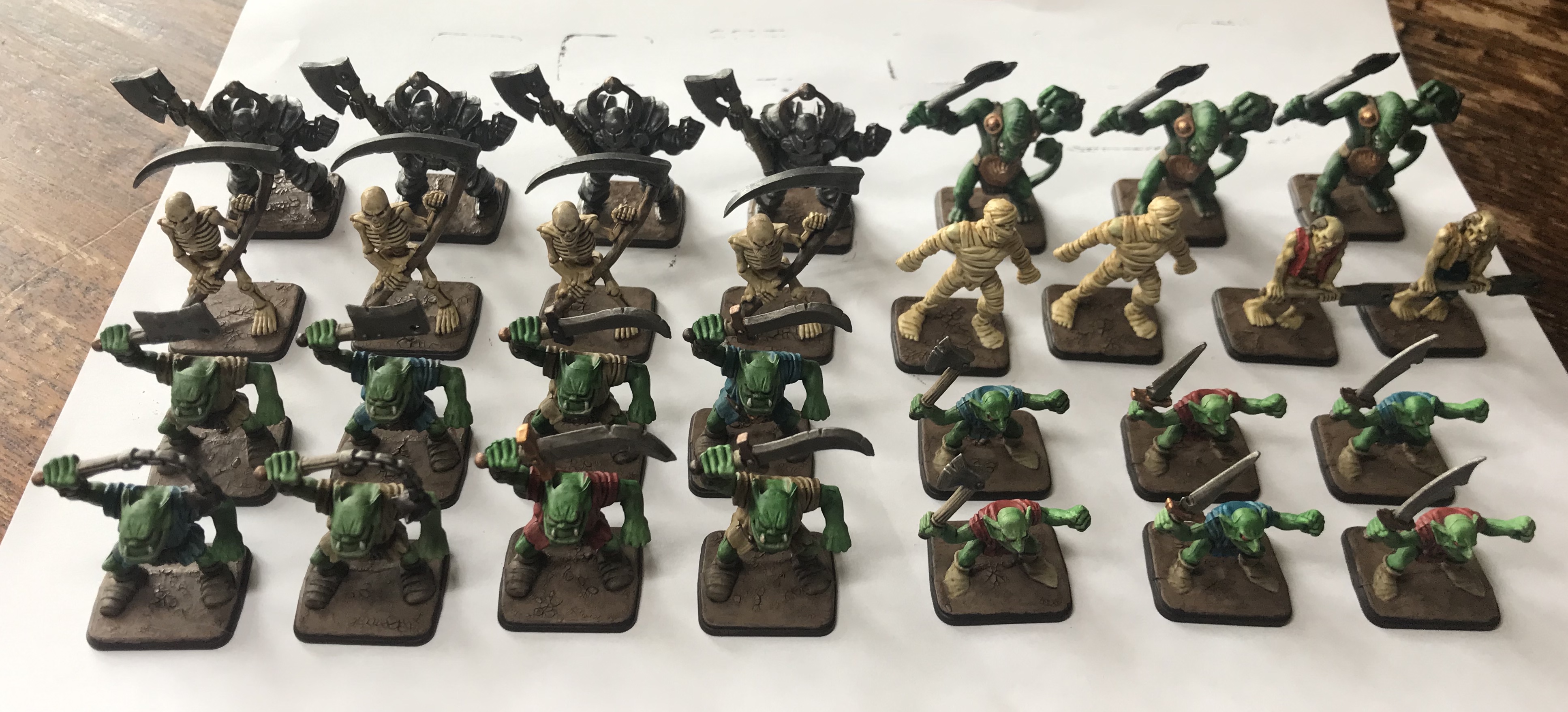
Once the soft tone had dried I gave everything a coat of Vallejo Matt Varnish. This takes away the nasty shine as well as offering another layer of protection.
With the bulk of the set completed, I could turn my attention to the individual models.
Painting the Green skins
I had put them off for as long as I could but it was time to tackle the Orks. I knew they would take longer than the other monsters, not least due to their number but also the amount of clothing and additional detail.
I had already experimented with using the contrast paint: Warp Lighting on the flesh of the Goblins and Fimir. After some initial doubts, I had been happy with the results.
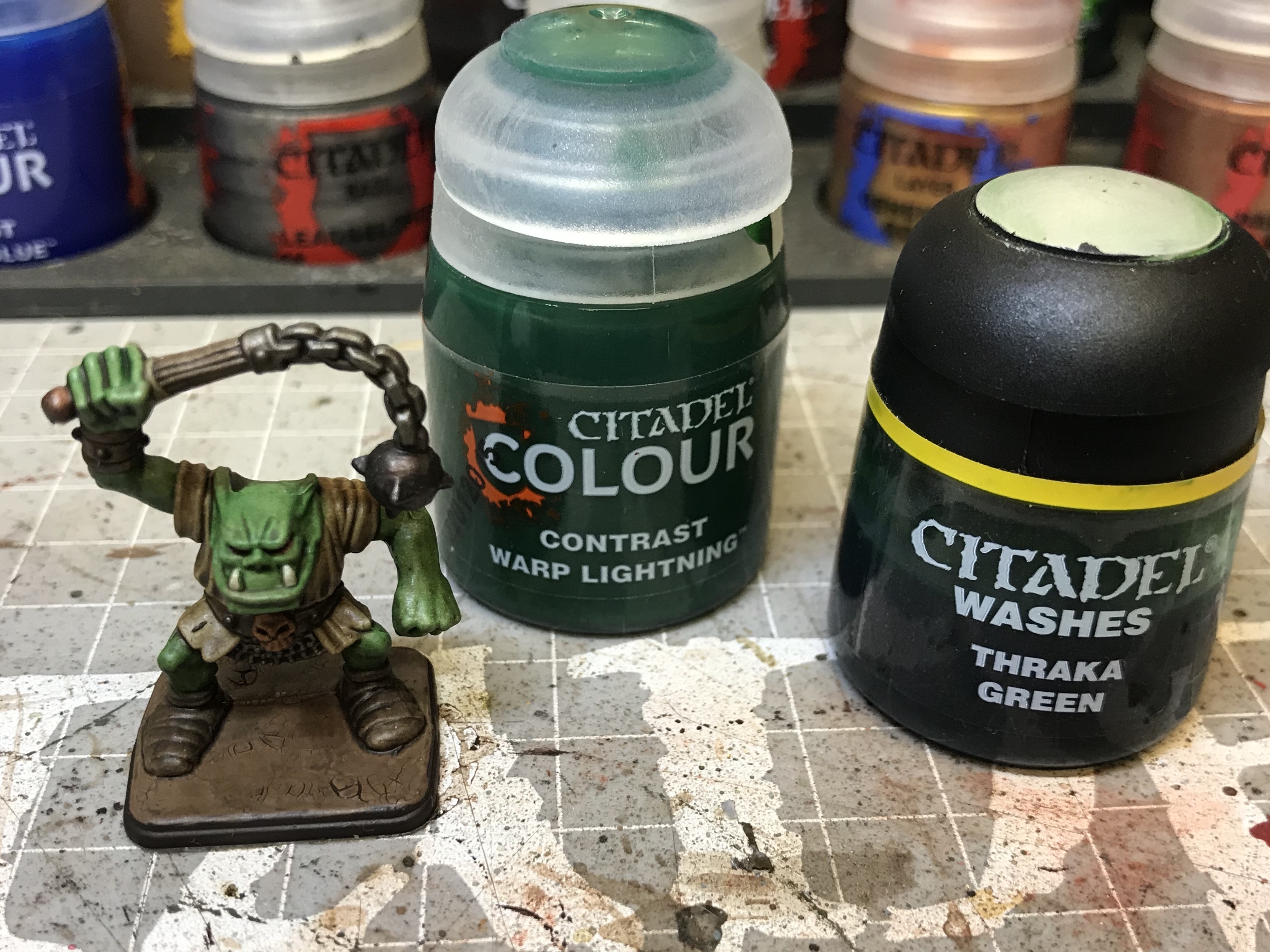 Recipe for Ork flesh
 Working directly over the kahki primer I used the Contrast paint, Warp Lightning followed by a Thraka Green wash to create the Orks skin tone. (The Fimir I had done previously had been given a Drakenhof Nightshade wash to make them a darker, bluish green while the Goblins were just Warp Lightning, making them lighter than both the Fimir and Orks).
 Tan Jackets
To create some colour variation between the duplicate models I did the first four with tan jackets. This was achieved by using Skeleton Hoard Contrast directly over the kahki primer.
 Blue Jackets
 The next three were given blue jackets painted in Talassar Blue. (Three of the Goblins had previously been done in this colour).
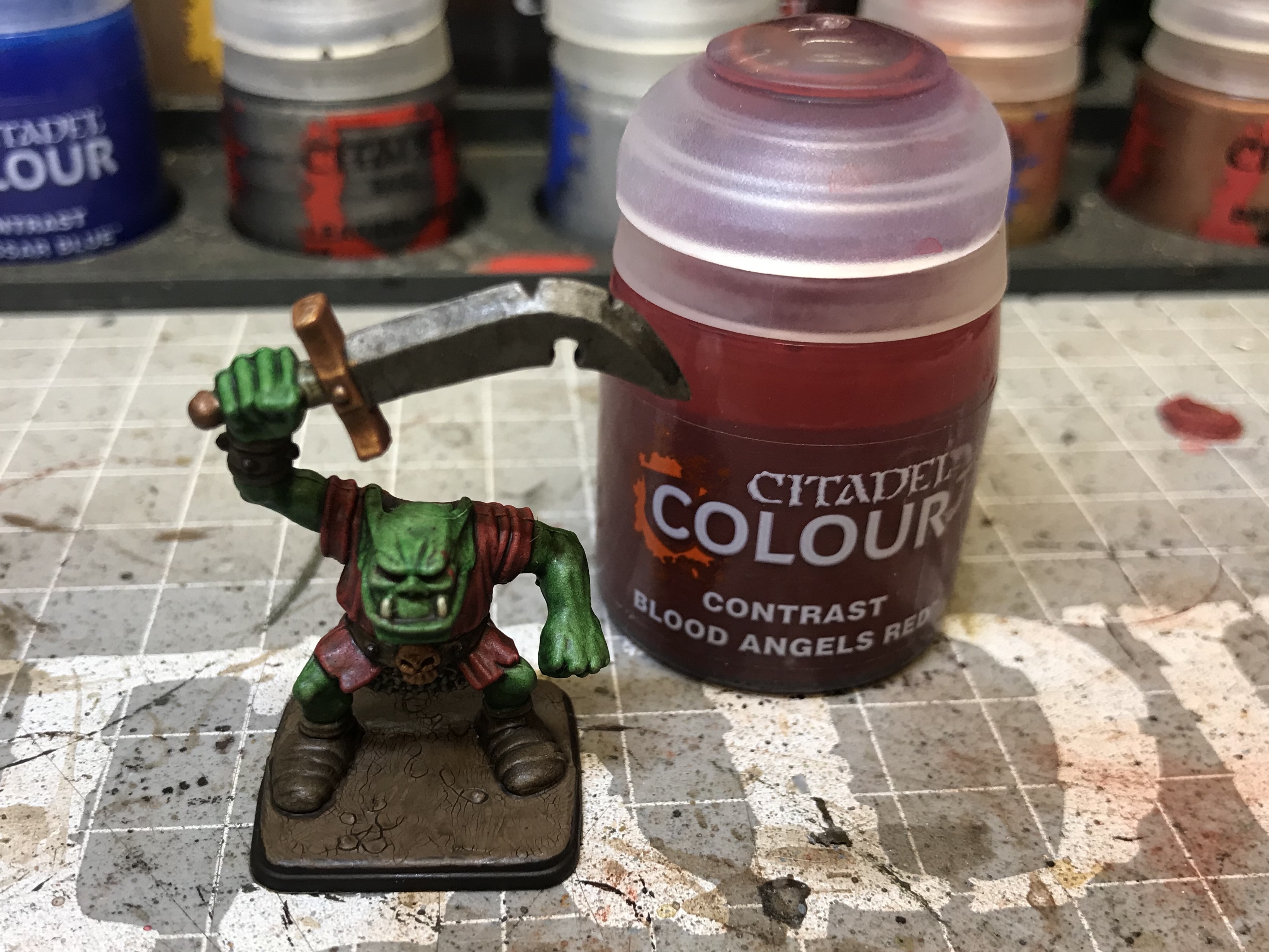 Red Jacket - Boss Ork
 The final Ork is the one with the larger sword. As he acts as an Ork ‘Boss’ for some of the Quests, I wanted him to be easily distinguishable from his lesser cousins. He was given a Contrast Blood Angels Red jacket. (This was also the colour used on three of the Goblins).
 Day 6 & 7: Orks
I used the contrast paint Wyldwood on the boots and belts. The chain mail and weapons were done in Lead Belcher and I used a combination of Gehenna’s Gold, Balthazar Gold and Warplock Bronze on hilts and buckles. The blades of the weapons and the chainmail were washed with Nuln oil. All of the clothing and metallic elements were then given a wash of Agrax Earthshade.
The Orks were worked on over two nights, making them by far the slowest monster type to complete. However as I had managed to get a day ahead earlier in the week I still managed to hit my seven day target!
Undead and Chaos Warriors
The skeletons were very simple to colour. Having already primed them Wraithbone I used Skeleton Hoard contrast paint, followed by a light Wraithbone dry brush. I finished up with an Agrax wash to age the highlights and further deepen the shadows. In a similar vein I used a Nuln oil wash on the Chaos Warriors, followed by a Drakenhof Nightshade wash. This combination gives a nice burnished look to the plate armour. Once the washes were fully dried a Lead Belcher dry brush brought back some shine to the edges. These two groups of monsters were really quick to paint and I had them both finished by the end of my third painting session.
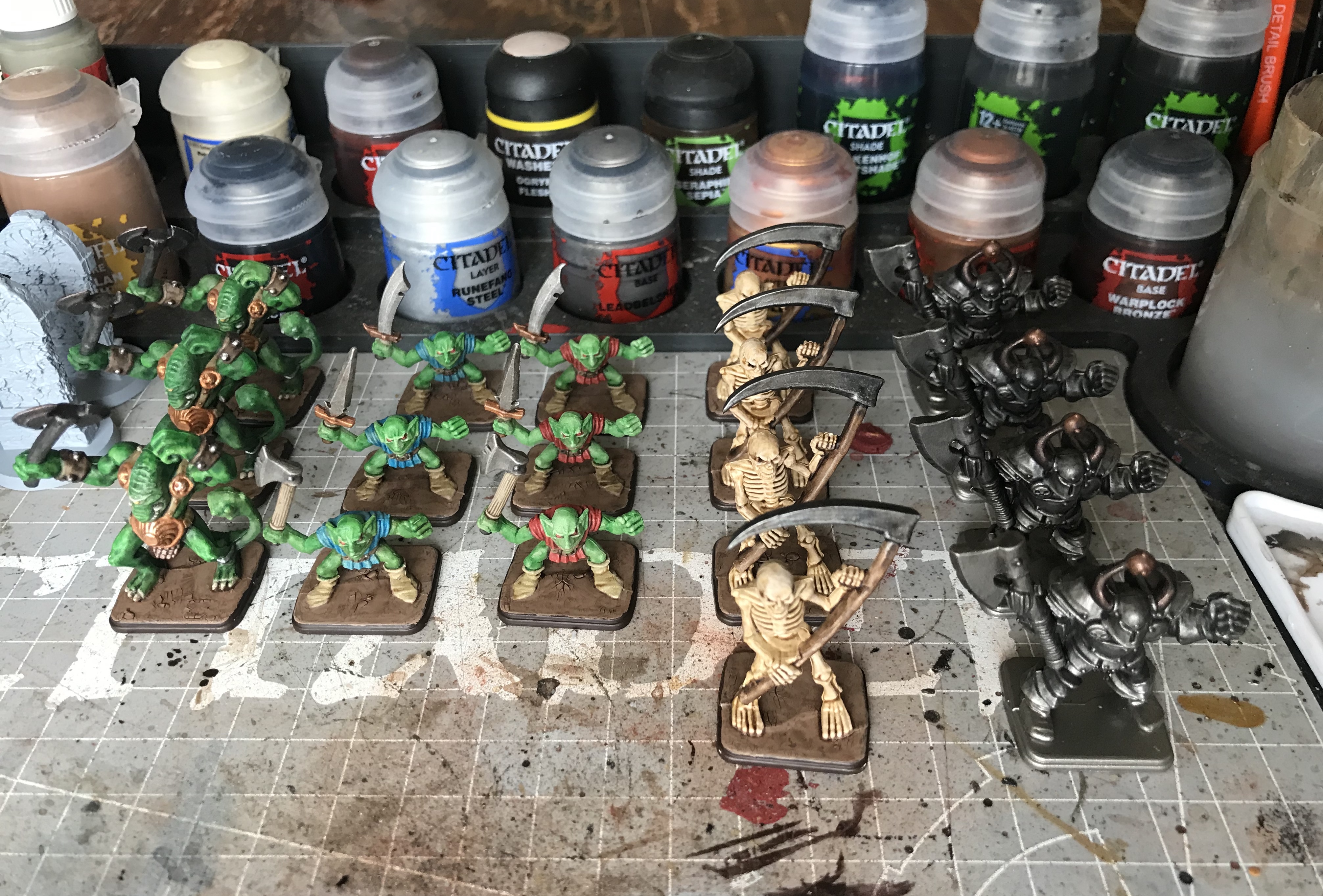 Day 3: Skeletons and Chaos Warriors
I had managed to get a full day ahead of schedule and now had the two smallest groups of monsters to work on. There are only two Mummies and two Zombies in the set. I used Rotting Flesh on what little skin could be seen on the Mummies. I then gave the whole model a coat of Skeleton Hoard. I reapplied Rotting Flesh to the raised areas of skin and was happy to leave it at that. As the mummies has been so quick to complete I made a start on the Zombies. Their skin was also done with Rotting Flesh and I used contrast paints on their ragged shirts and trousers.
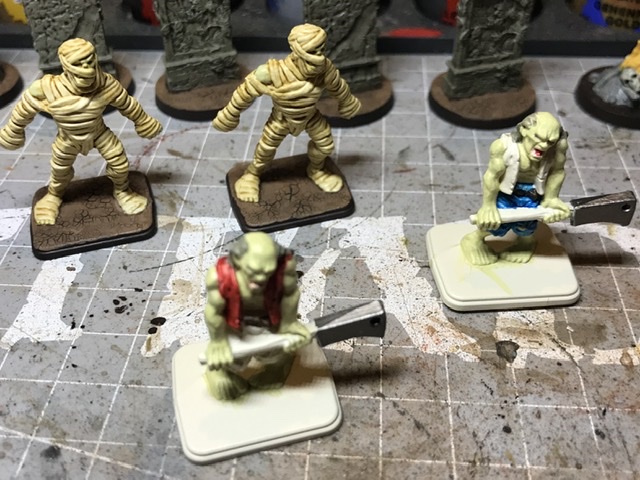 Day 4: Mummies
 I finished the Zombies the following evening and gave myself a break. I still wasn’t ready to face the biggest challenge, painting the Orks.
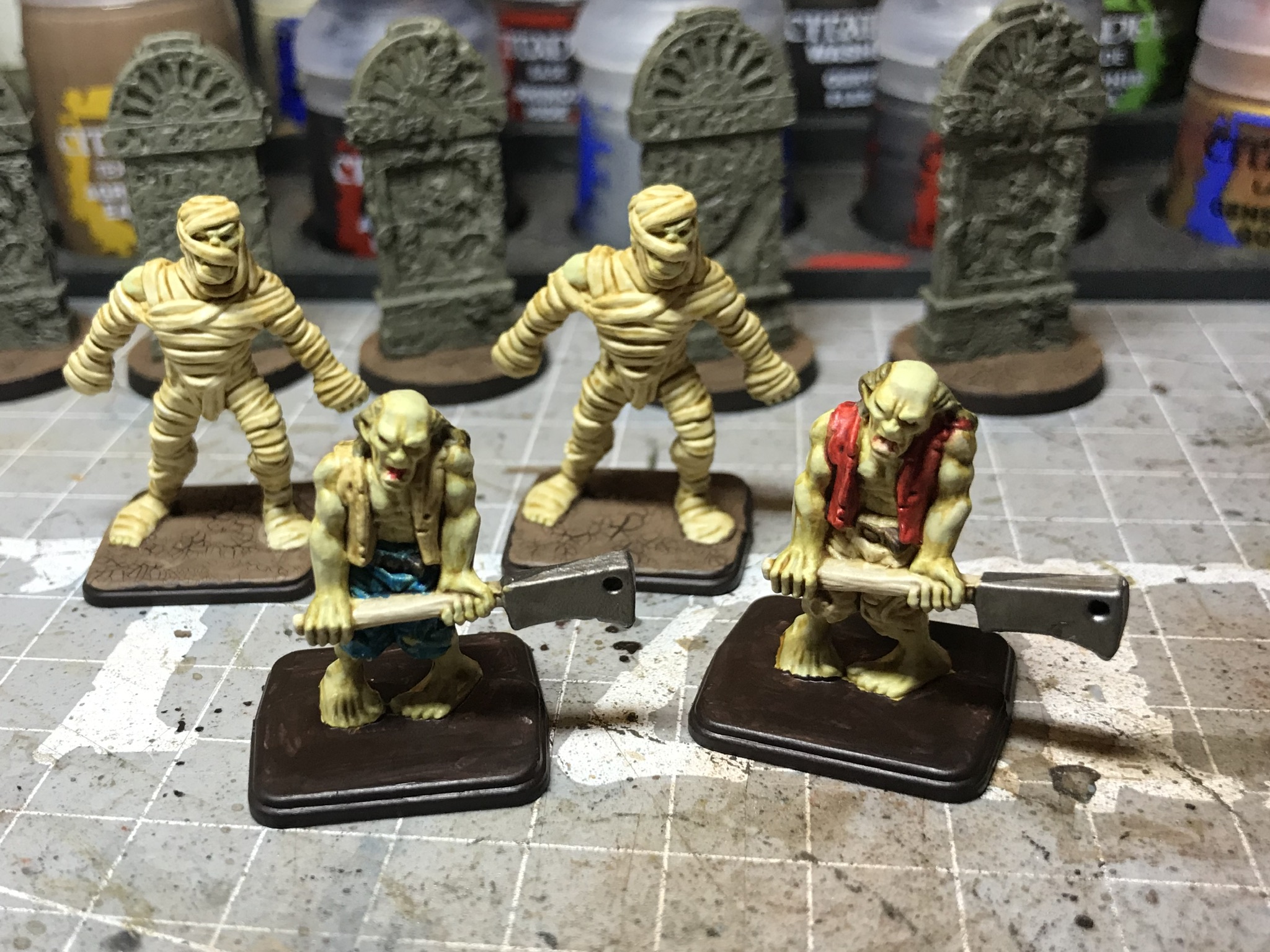 Day 5: Zombies
Seven Days to Paint a Horde!
There are 35 miniatures in the standard Hero Quest game so I was undertaking a pretty big project. I knew that if I didn’t tackle it in one hit I would likely get distracted by something else and string it out for years to come. I decided the best approach would be to get the biggest jobs done first so that things would get easier and more enjoyable as I went on.
For me this meant starting with the monsters, who for the most part consist of multiples of the same sculpt. I would work through the hoard before taking a little more time over the individual heroes.
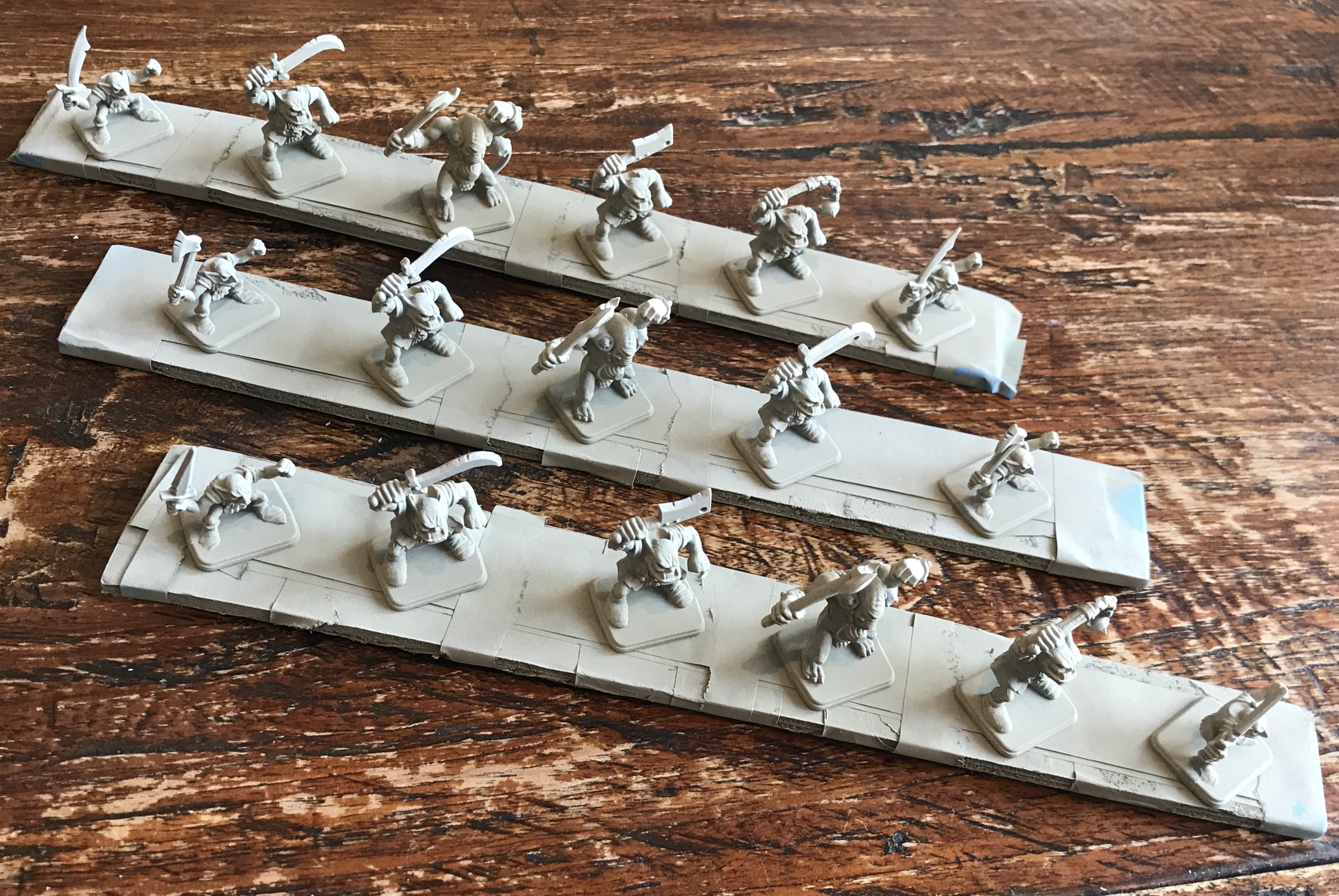 Green monsters
Setting the Gargoyle and Chaos Sorcerer model aside with the heroes, I began by priming the monsters. The Orks, Fimir and Goblins (known collectively as the Green Monsters), were sprayed with a Kahki primer from Halfords. The ‘White’ monsters (Skeletons, Zombies and Mummies), were sprayed with GW Wraithbone. The Chaos Warriors were sprayed with Lead Belcher.
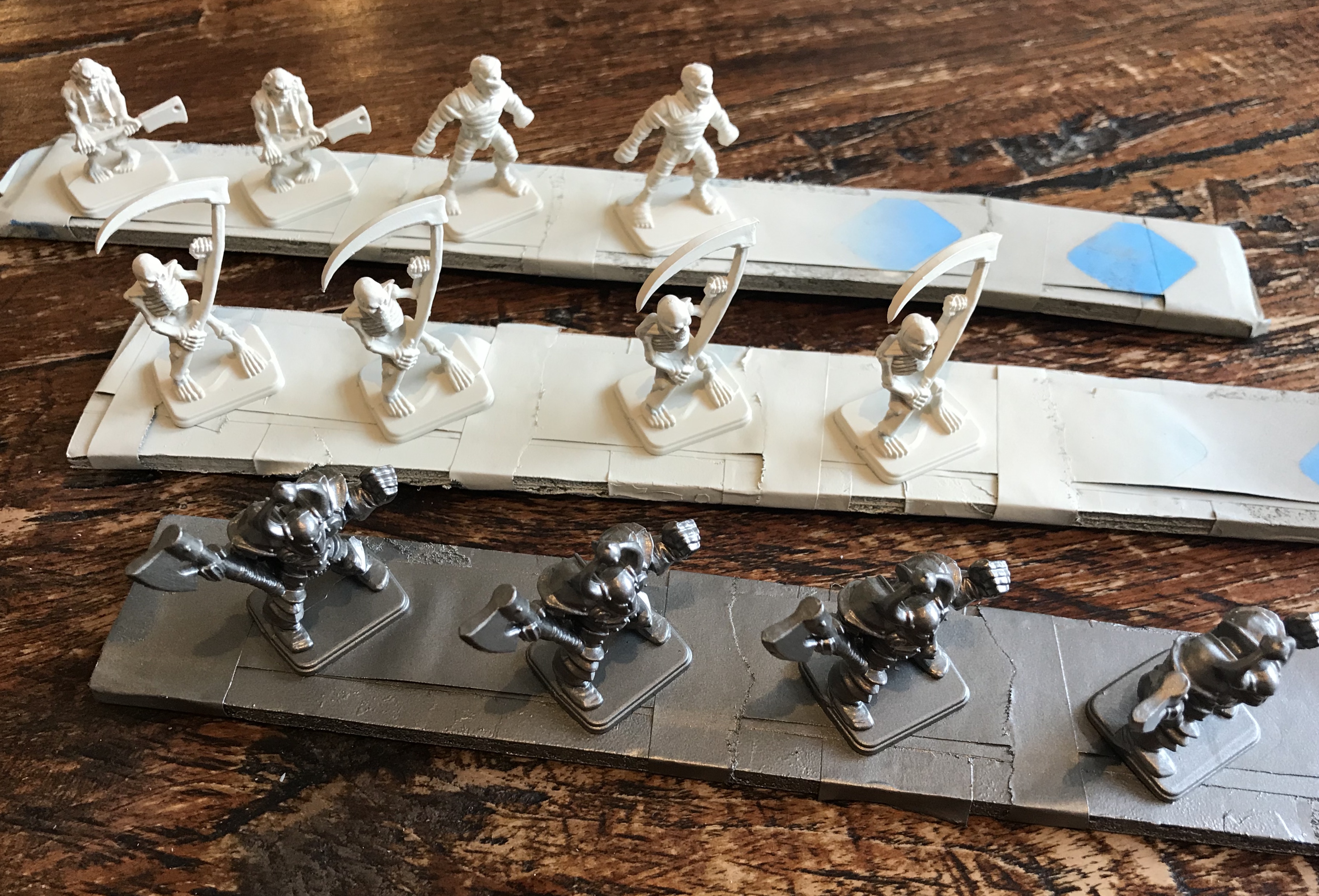 White and Grey Monsters
I wanted to get the set painted as quickly as I could so I set myself the slightly ambitious task of painting one monster type each evening! I had planned to begin with the Orks as they were the biggest group, eight in total. It made sense to get them behind me but at the last minute I chickened out and went with the Six Goblins instead!
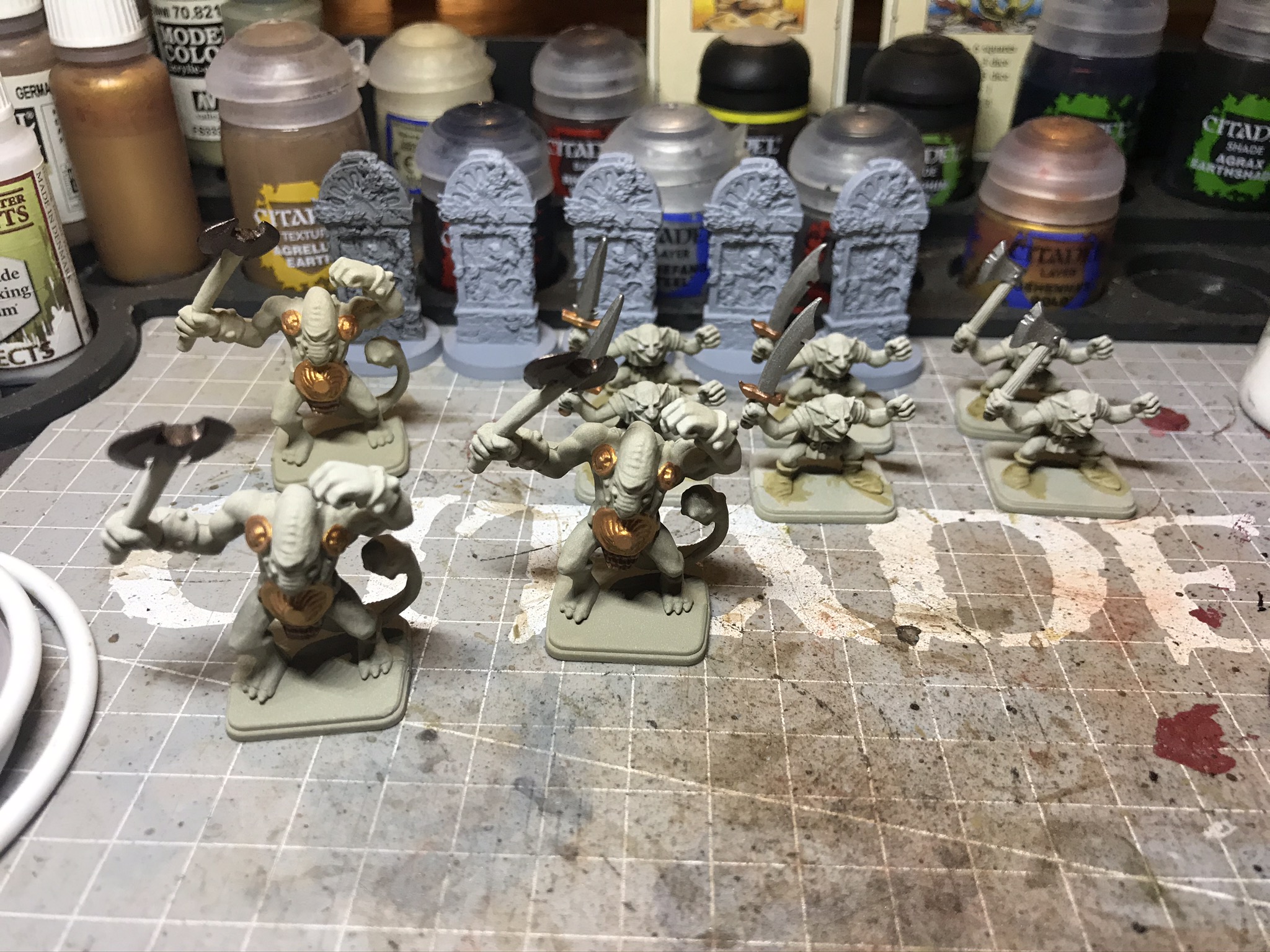 Day 1: Start Goblins and Fimir
In some way I think my guilt must have played on my mind as once I was under way I found myself adding the three Fimir to the painting table. Rather than finishing one of the monster groups that night, as planned, I split my time over two.
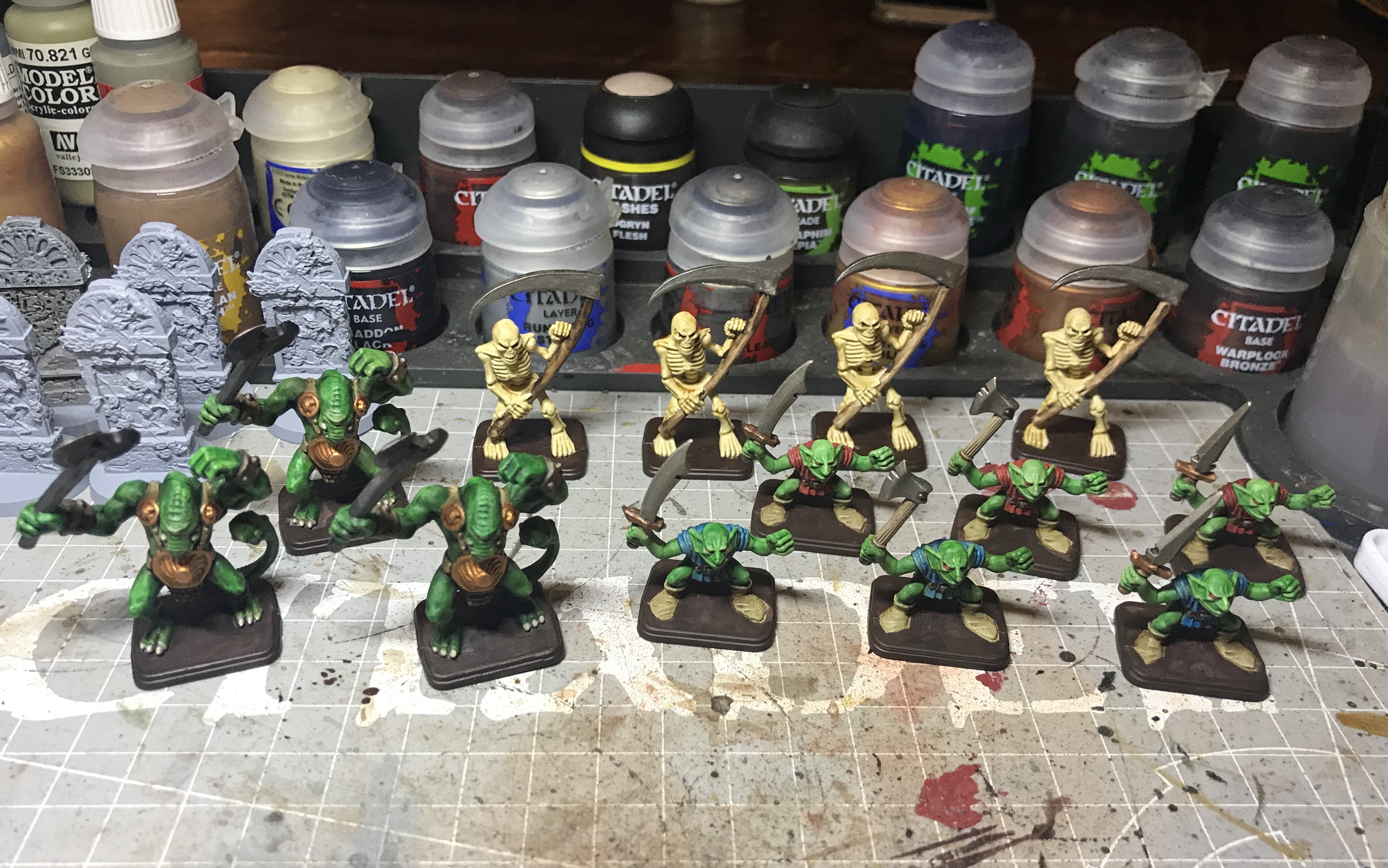 Day 2: Finish Goblins & Fimir
On my second night of painting I finished up the Goblins and Fimir and made a start on the Skeletons. I was actually getting ahead of schedule!
Replacement Parts
Having done some research prior to buying a copy of the game, I knew that a lot of digital files for HeroQuest components existed online. So many files were available in fact that I had to do a fair amount of searching to find the exact components I needed. Some bright spark out there had the mind and capacity to scan each and every miniature from the set! I found the missing monsters (as well as variations on the originals with new weapons, bases etc). These would be printed on my resin printer.
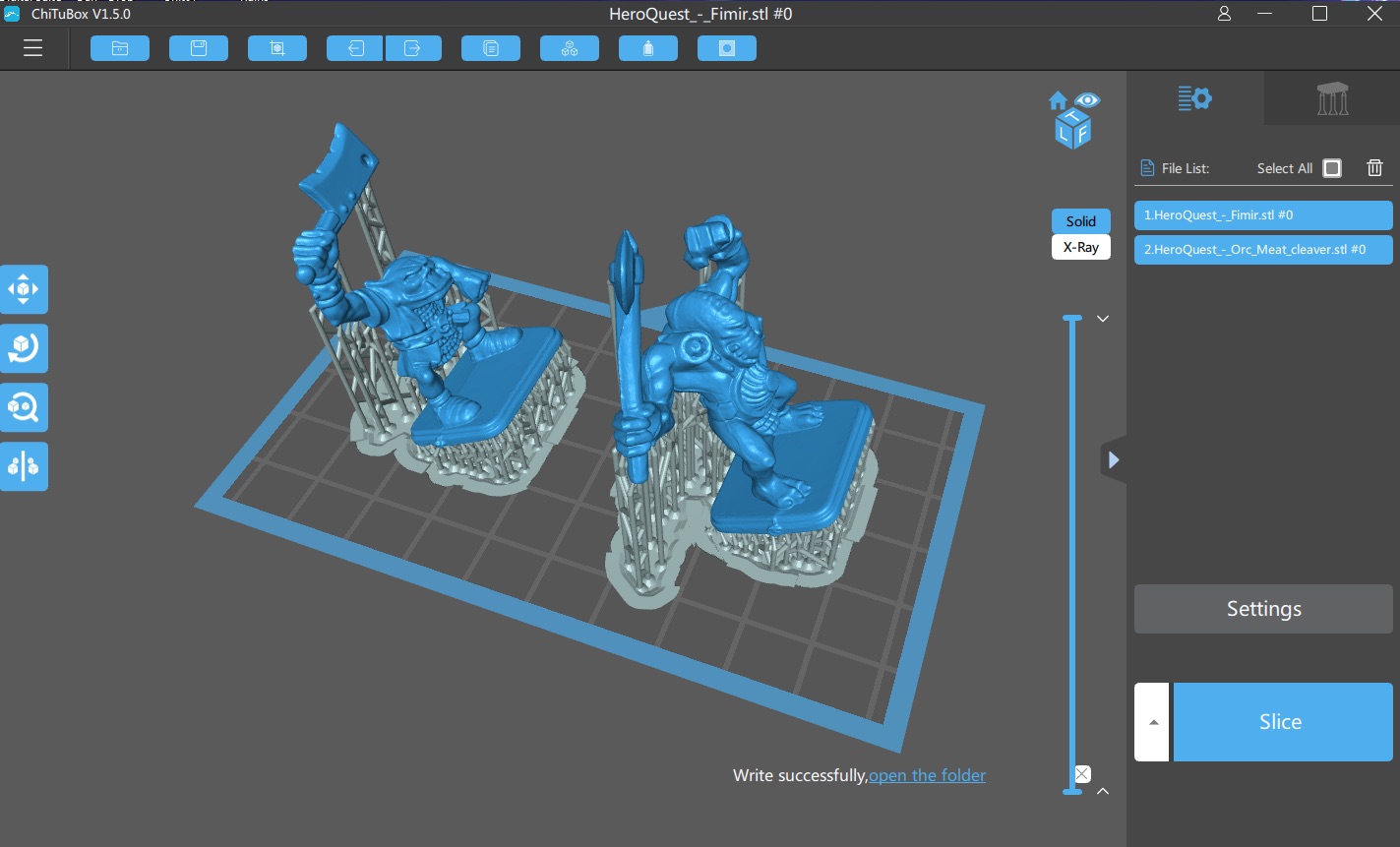

The above images show the digital models positioned on my print bread (along with supports), ready for printing. I had noticed that my wizard was missing the top of his staff and so I decided to print a replacement for him while I was printing the missing monsters.
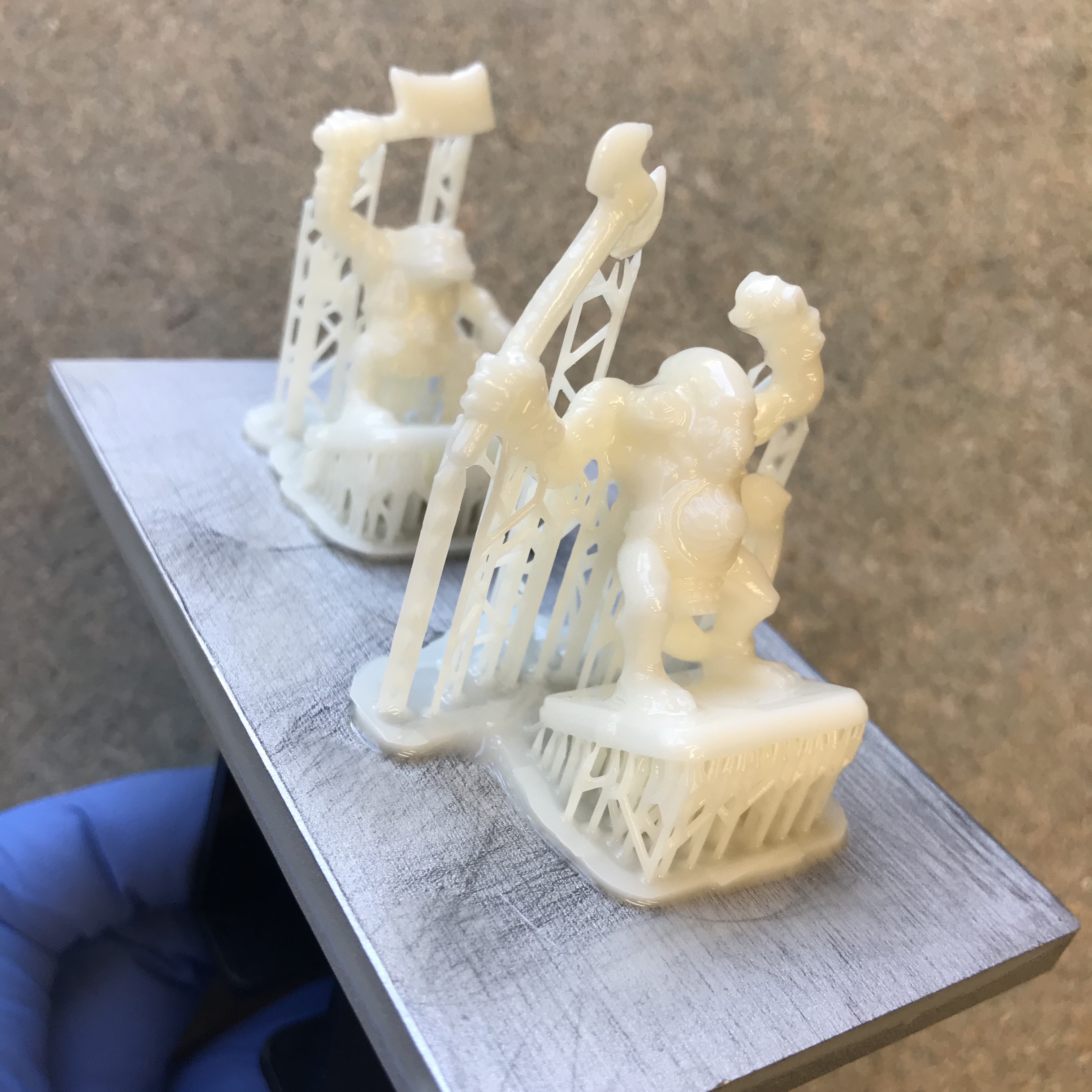
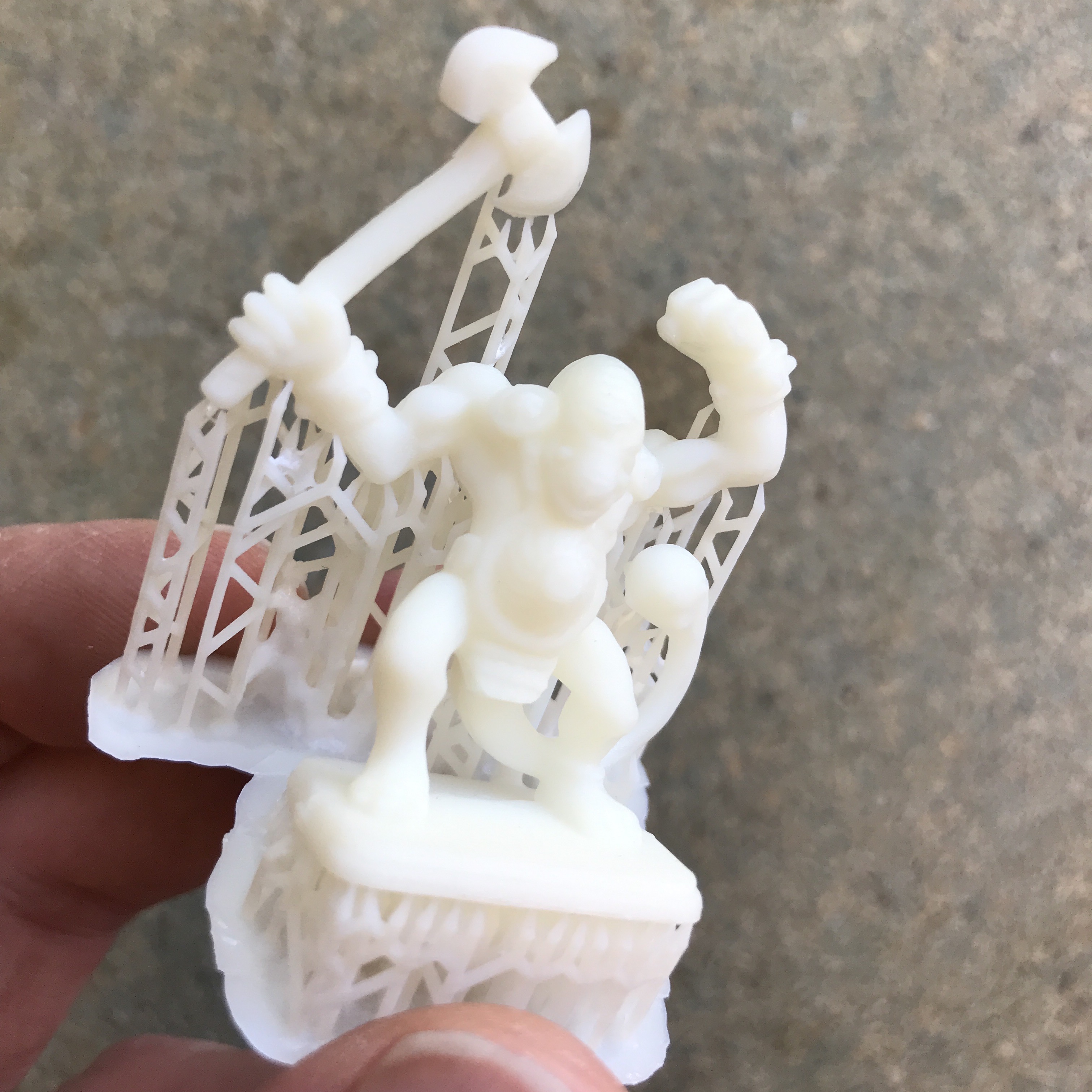
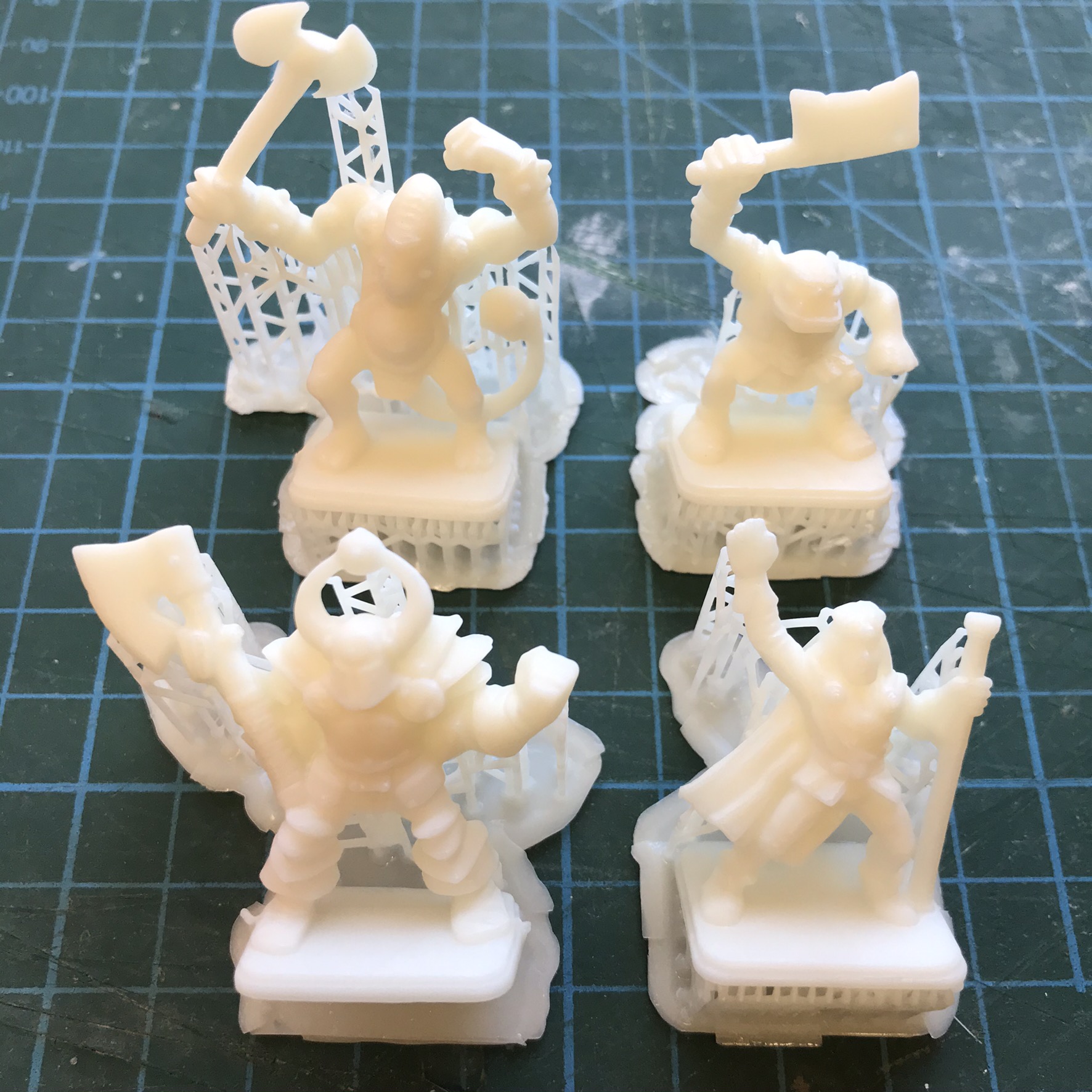
The above photos show the replacement models, fresh from the printer and after curing.
A Dungeon Crawl down Memory Lane
The main reason I wanted a copy of this classic game was to play it with my children. As mentioned in the title, the deciding factor to get it now was the lockdown being enforced due to Covid 19. At the time of writing I am seven weeks into a period of being locked down at home and this game has been a real focus of the time I’ve spent with my kids. At 6 & 8 years old, they are a little under the “ages 9 to adult” guideline on the side of the box. However they have embraced this game in a way I would never have imagined. We have played the quest book cover to cover and most of the scenarios have now been played at least twice!
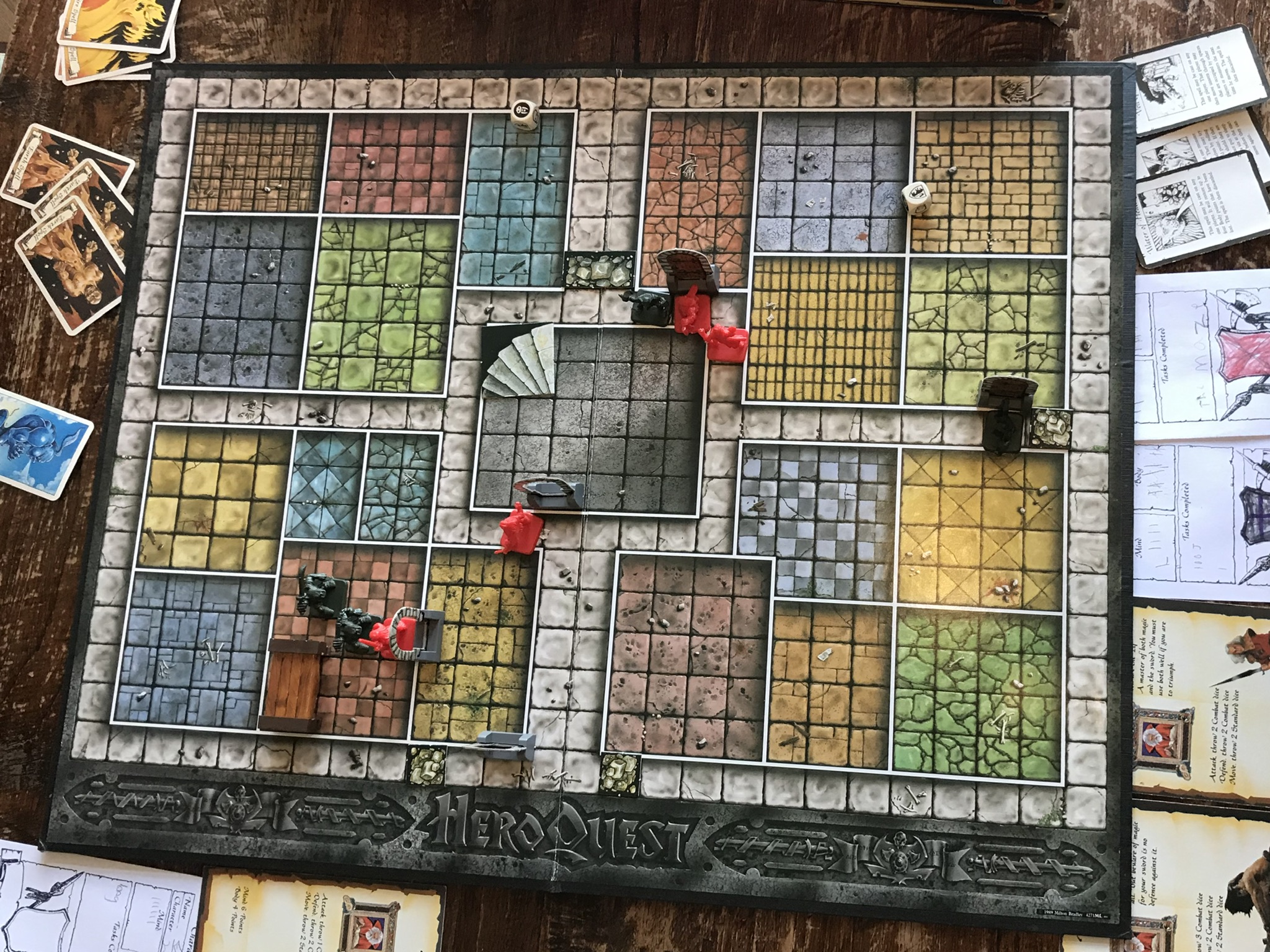

It was this enthusiasm for the game that lead me to utter those fateful words: “Shall I paint it?…”
What’s in the box?
I had been searching eBay on and off for a decent copy of HeroQuest for a few months. This had begun after a colleague had come in on a Monday morning, telling me he had found his old copy in his parents loft. In that time I had seen full sets sell for in excess of £75 and wasn’t really prepared to spend that kind of money on a whim. However as lockdown was announced I started thinking about things I could do with my kids and decided to take another look for this classic game. I put a bid on a set that was listed as incomplete. From the images and description, it didn’t seem to be missing much so I decided to take a gamble.
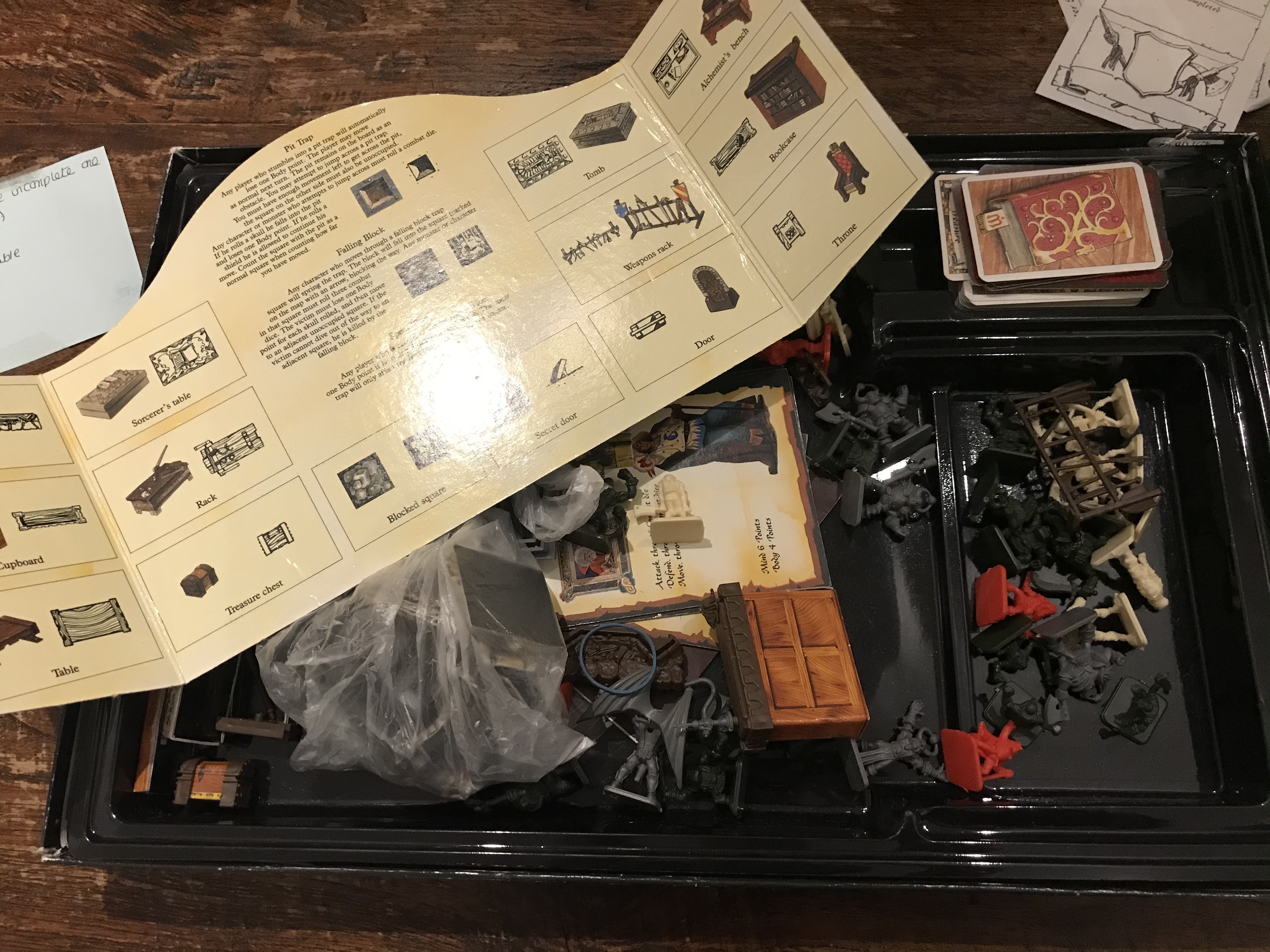
To my surprise I won the auction for less than my maximum bid. When it arrived a few days later, I was pleasantly surprised to find that the set was in really good condition. The only models that were missing were an Ork, a Fimir and a Chaos Warrior… The Gargoyle was also missing it’s head!
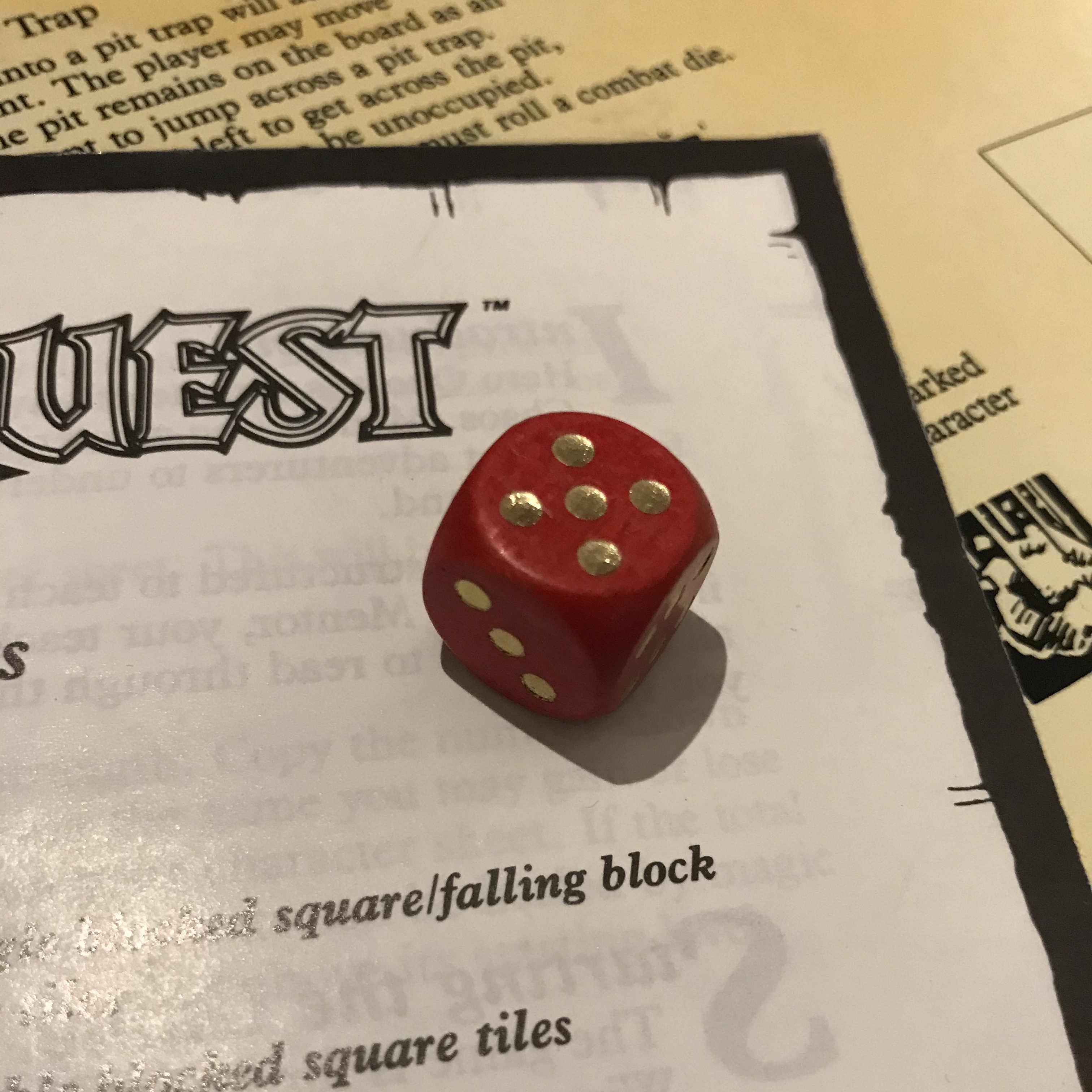
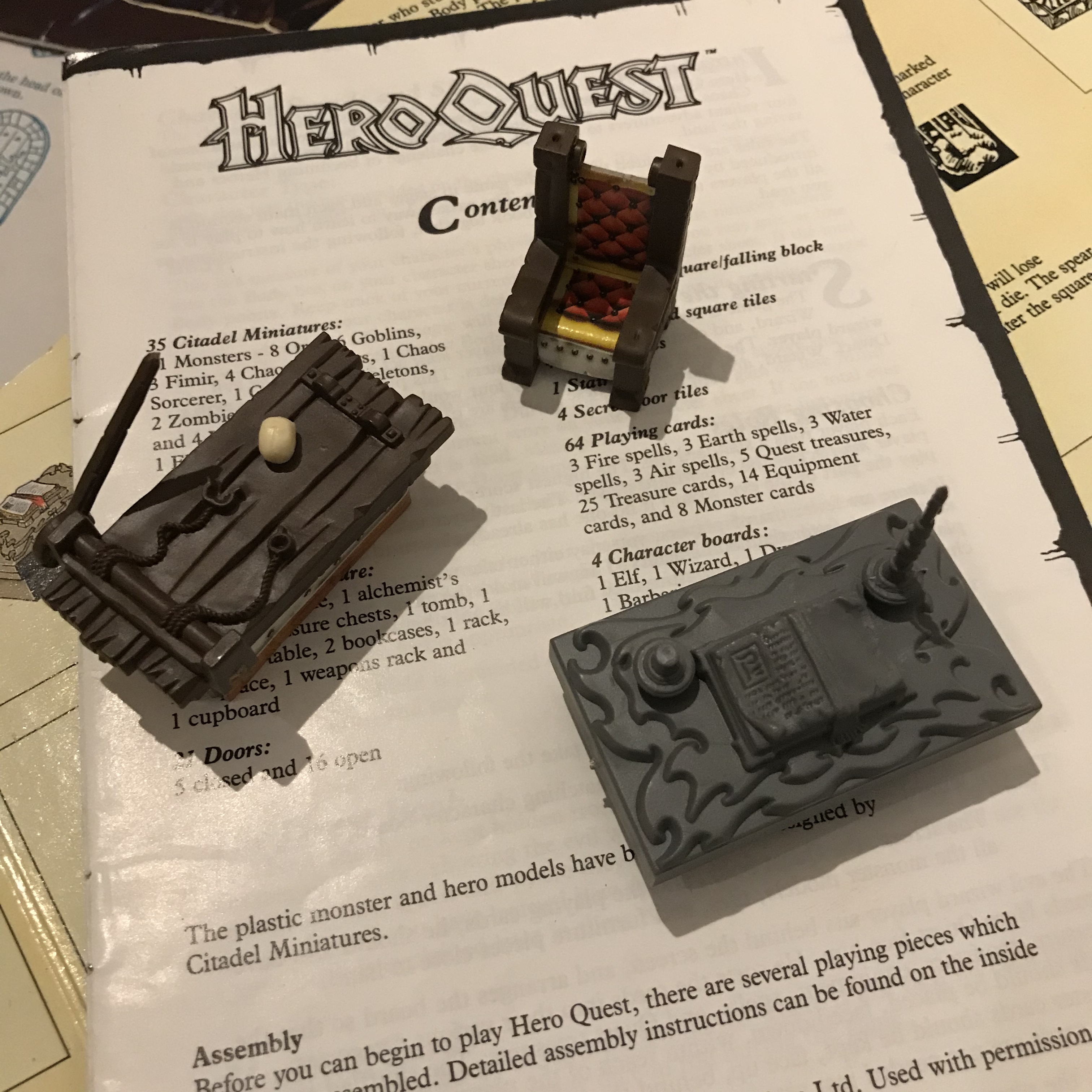
The furniture was all there, although a couple of components were damaged or missing. This only amounted to one of the levers of the rack, a broken candlestick and missing base from the alter and some damage to the throne.
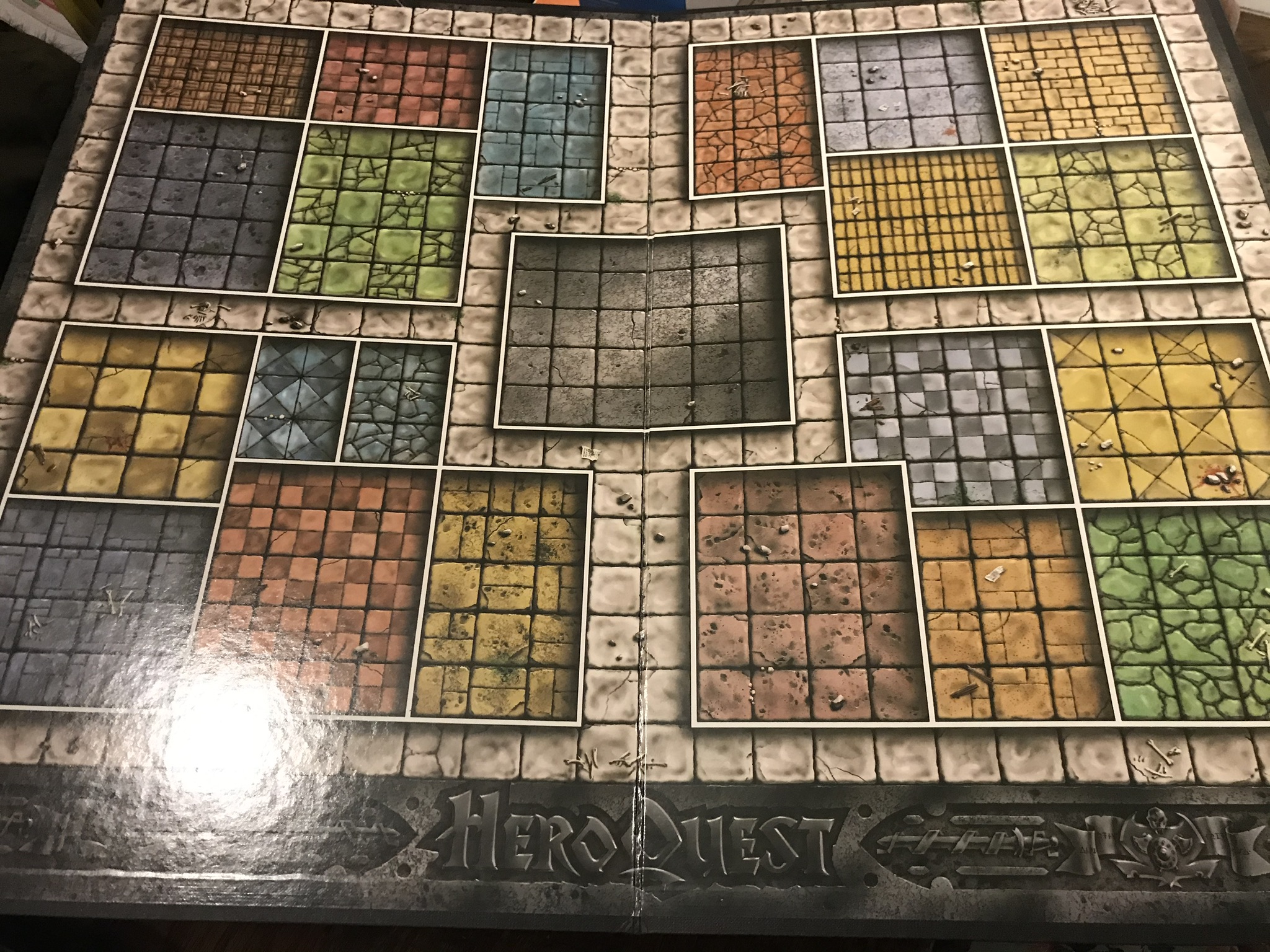
The set was also missing one of the movement dice and a few of the cardboard tokens. Most importantly, all of the cards were there and the board was in excellent condition.



![Zenit Miniatures’ Samurai Warlords Now Live On Kickstarter [Updated]](https://images.beastsofwar.com/2026/02/samurai-warlords-launch-main-600-338.jpg)