








![Pure Sci-Fi Nostalgia! War Rocket Review | Hydra Miniatures [7 Days Early Access]](https://images.beastsofwar.com/2026/02/unboxing-hydra-miniatures-war-rocket-coverimage-225-127.jpg)



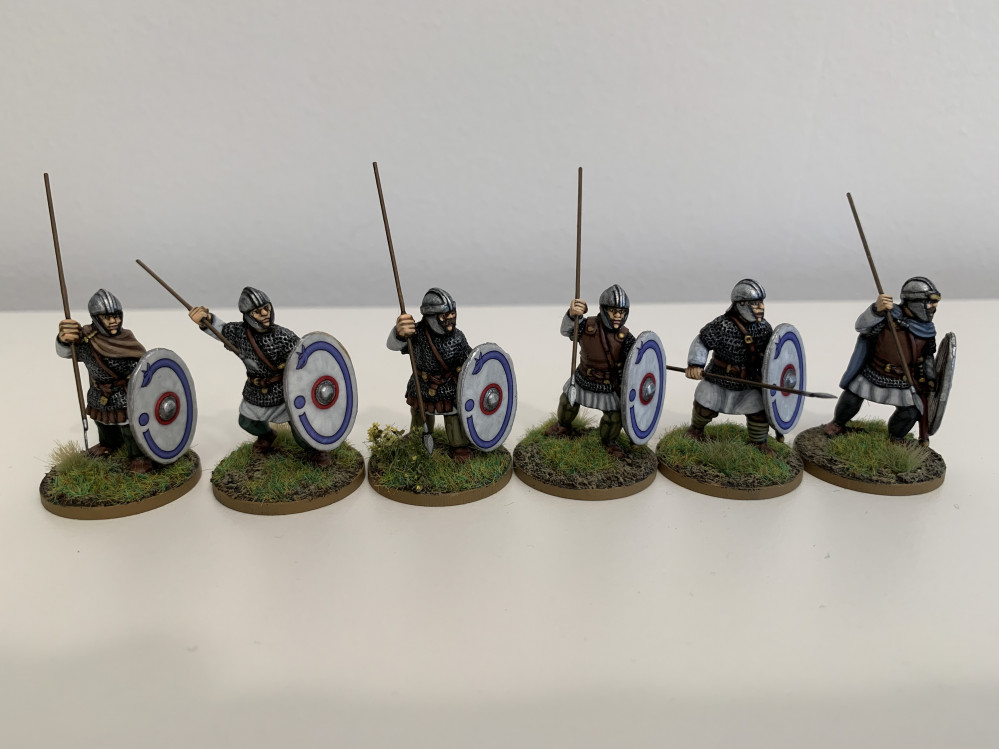
Romano-British for Dux Britanniarum




Recommendations: 1546
About the Project
This was a project started during lockdown to build a Romano-British war band for Dux Britanniarum by Too Fat Lardies. It's stalled of late, so my hope is that by documenting progress on this project I'll be incentivised to finish it.
Related Company: Too Fat Lardies
Related Genre: Historical
This Project is Active
Hearthguard
I finished the two groups of elite Hearthguard this week.
 Hearthguard group one
 Lloyd shot
Each group consists of three Footsore and three Gripping Beast. The Footsore are a combination of their Early Saxon Thanes and Heavy Infantry command group, whilst the Gripping Beast are the Gedriht from their Early Saxon range. The shields were done with LBMS transfers. If you know the figures you’ll be able to tell the difference, but the two ranges are a good size match and gel well when grouped together.
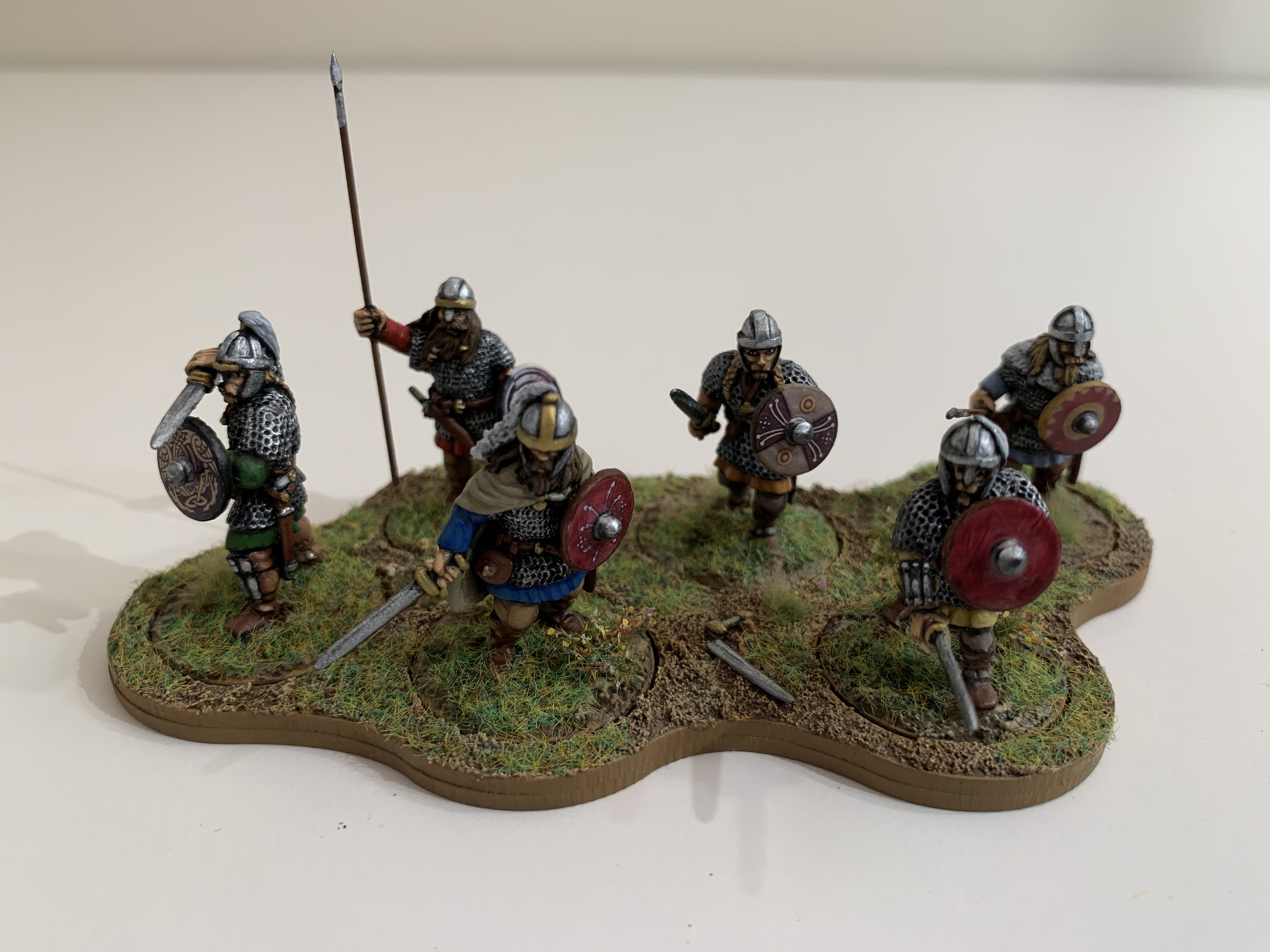 Hearthguard group two
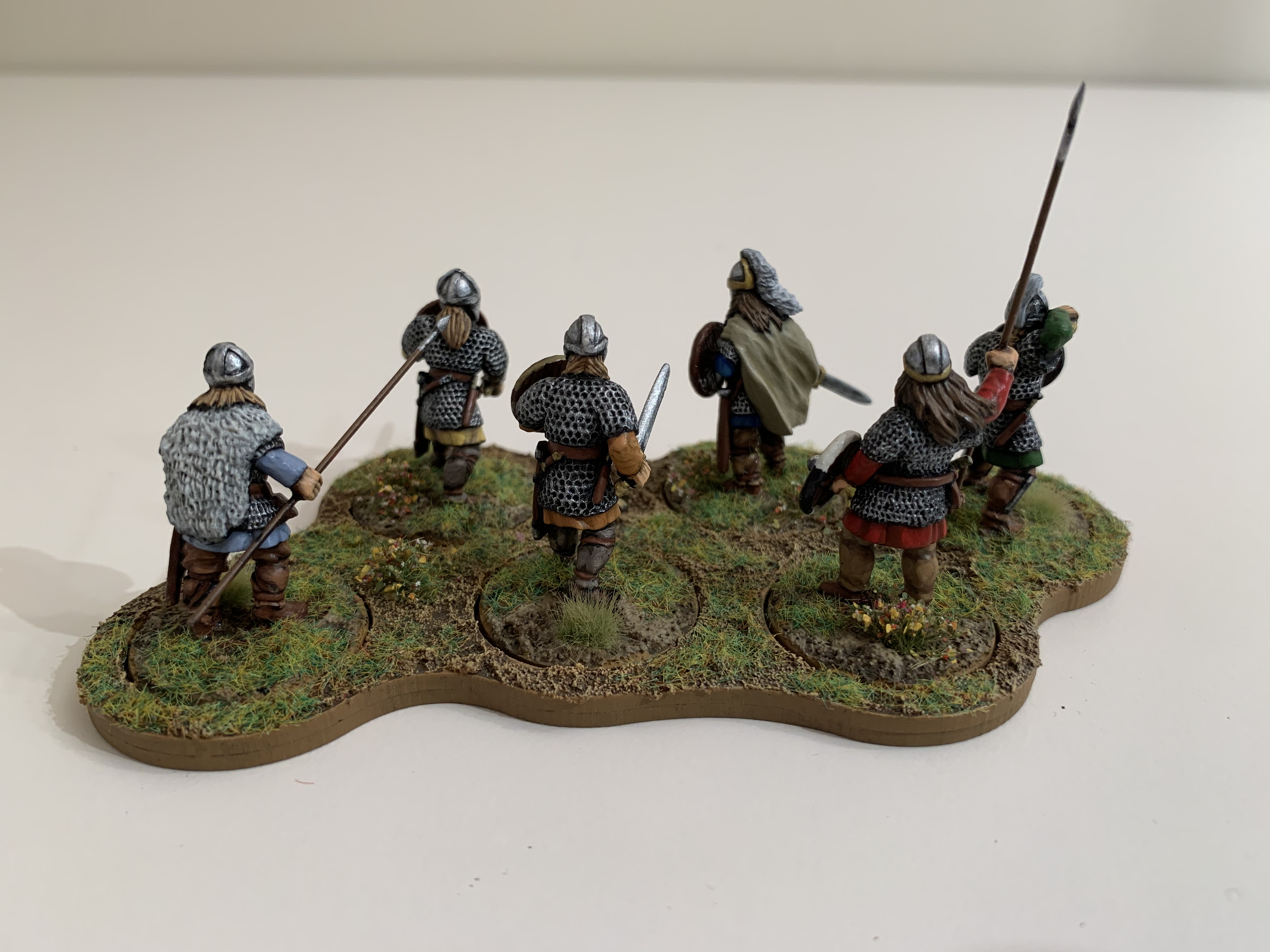 Lloyd shot
All of the Gripping Beast models came with empty scabbards, implying that they should be holding their swords. They are all open handed figures but come with a variety of white metal swords and axes. It seemed odd to give a figure an axe if he had an empty scabbard, so I did try to see if I could fill a scabbard but chopping off the hilt of the sword and gluing it into place, but the fit was impossible to get. Instead I embedded the now broken sword into the sabot base as a weapon shattered in combat!
I particularly enjoyed painting the figure in the wolfskin cloak. This was done with a mix of VMC Olive Drab and VMC Ivory, steadily lightening the mix with Ivory before a final highlight of White.
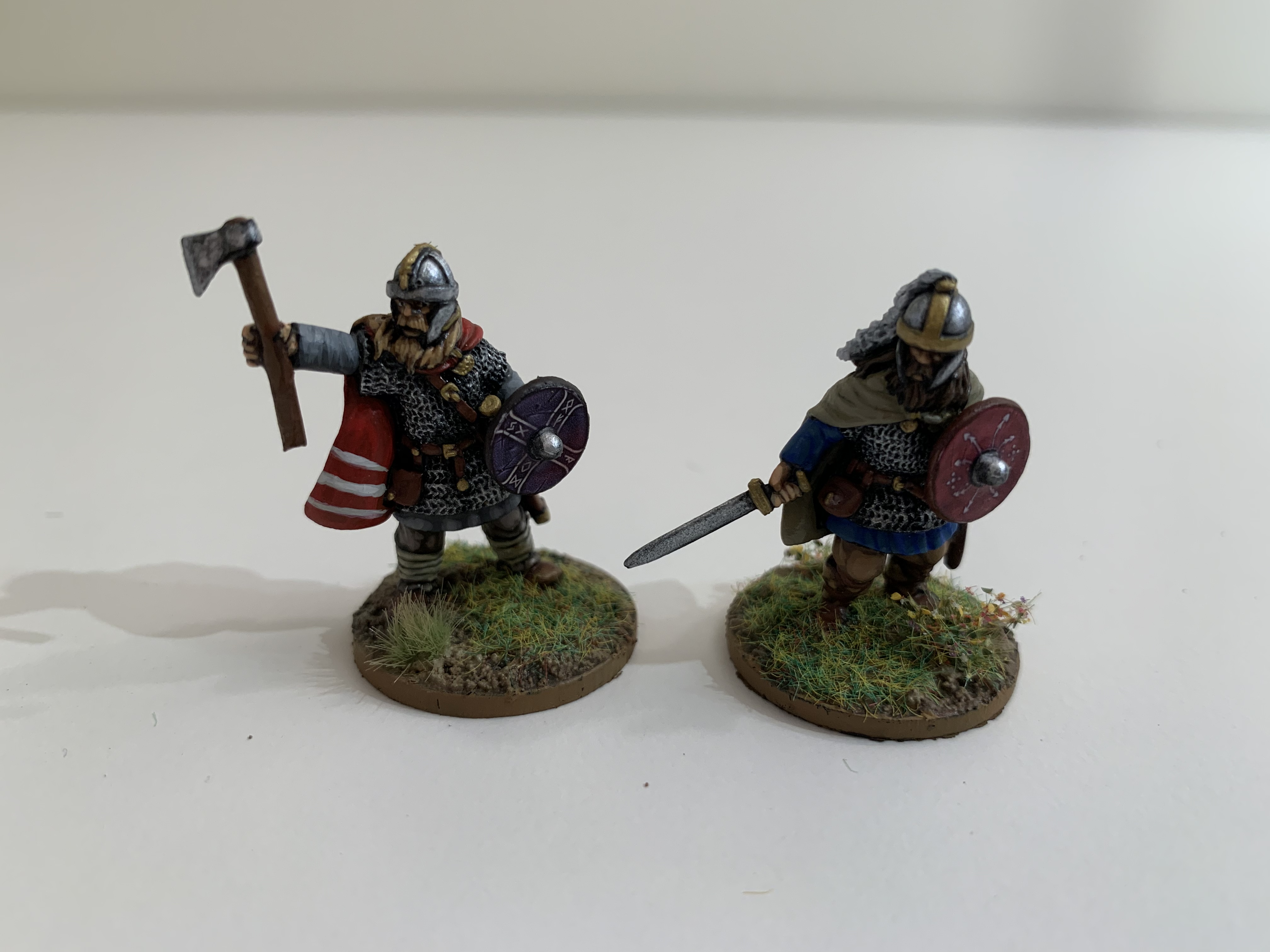
These two were particularly striking figures. The one on the left is the standard bearer that comes with Footsore’s Early Saxon Chieftain. But I’ve given him a Gripping Beast axe to make him stand out. The one on the right I just like because of the pose. I think of these two as the leaders of the two groups, even though that has no impact on the game. But they will probably be always the last to fall!
Next up are the two Nobles, the Champion and the Lord.
Slowly making progress
I finished the third group of Saxon warriors and the group of four archers this weekend. Slowly making progress with the two groups of elite hearthguard next on the painting table.
 Saxon warriors. Four Gripping Beast figures and two Footsore.
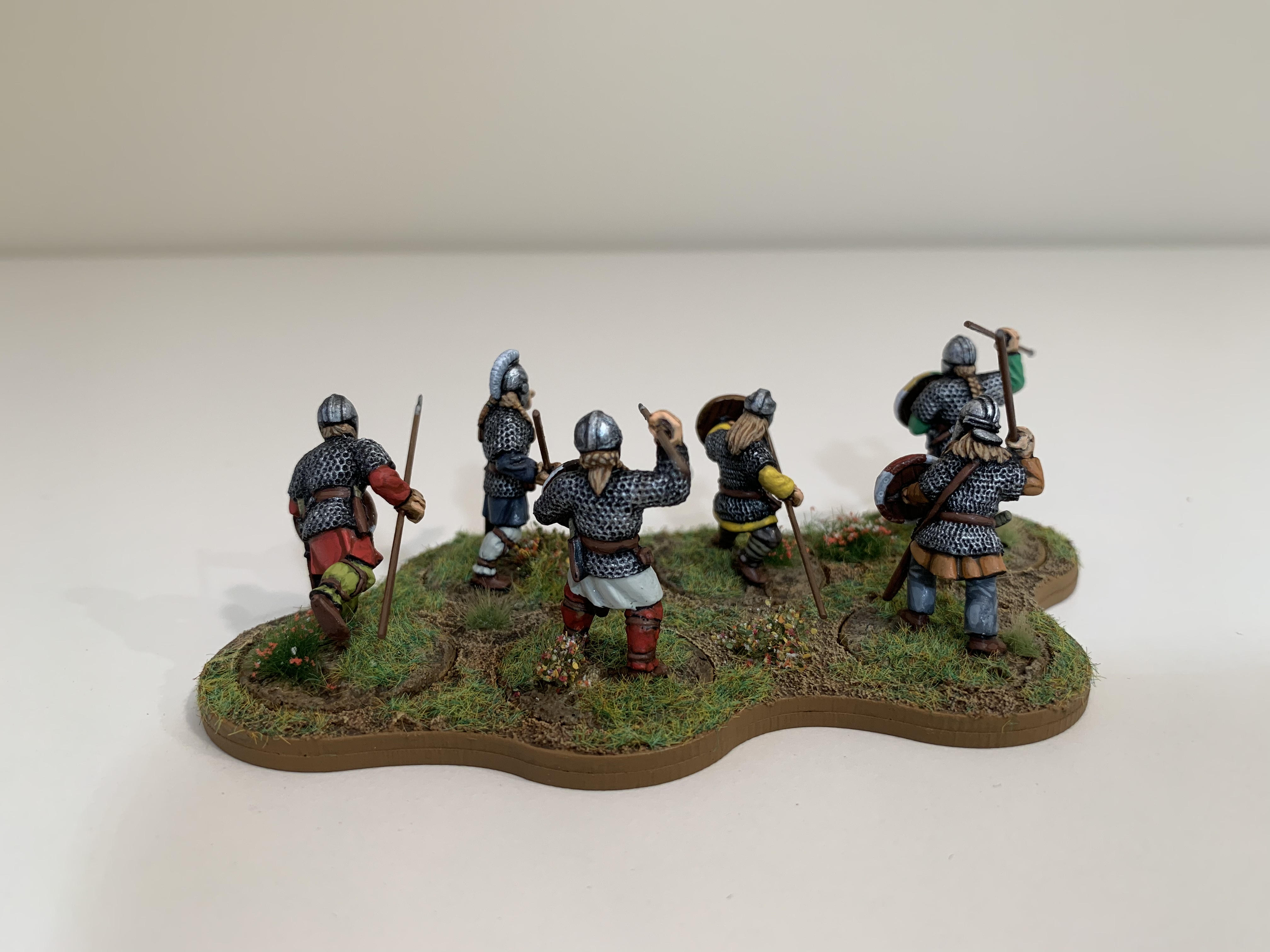 Lloyd shot. Decided all of these would be blondes. Gripping Beast boys seem to like to braid their hair, whilst Footsore boys like to let it blow free in the breeze!
 Archers. All Footsore figures.
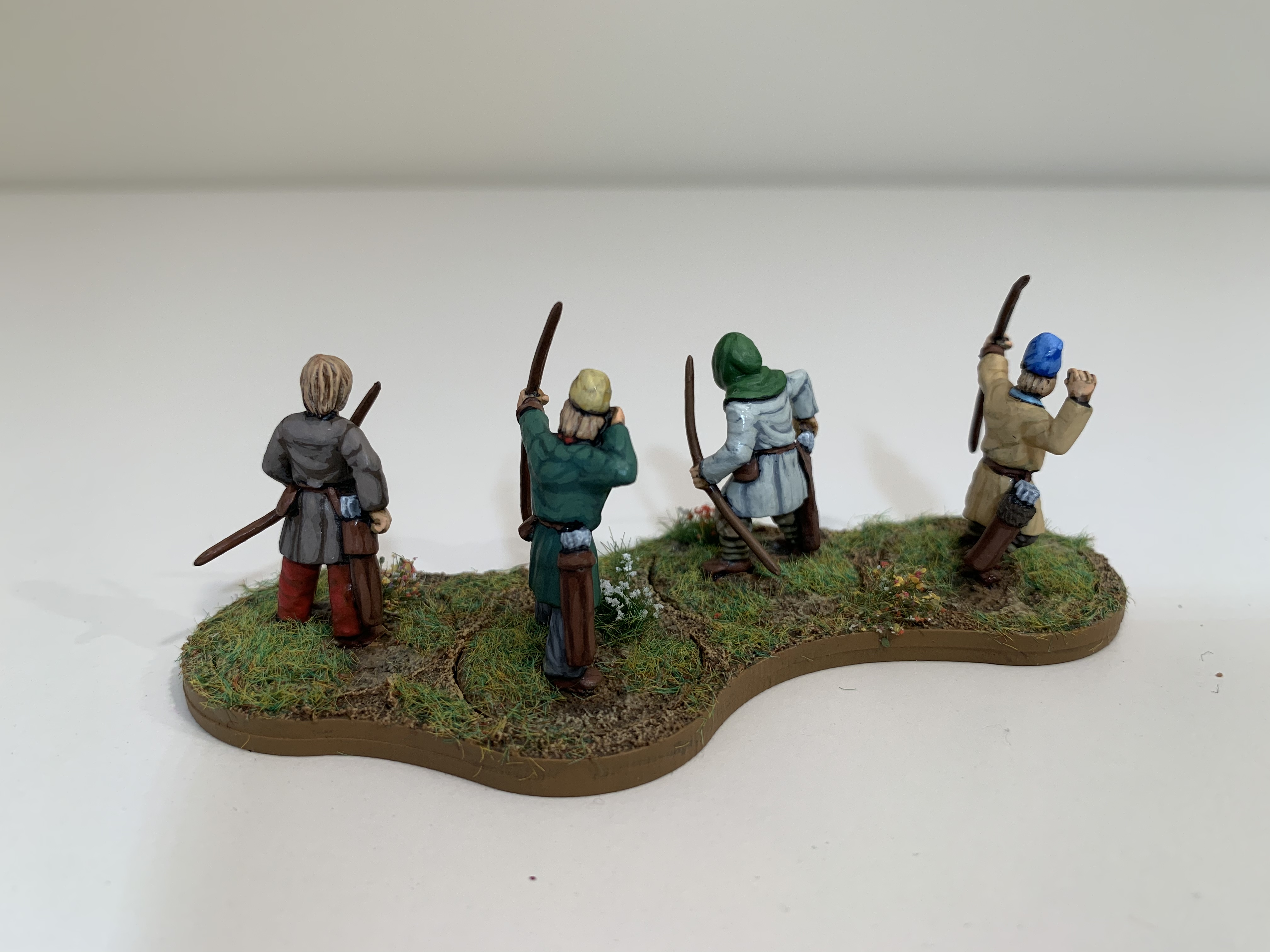 Lloyd shot. I was sent the late Saxon archers in error and I think you can tell. They look more early medieval rather than late Antiquity. I may swap them out for the real deal at some point.
Saxon warriors - Groups 1 and 2
“…a fire heaped up by the impious easterners spread from sea to sea. It devastated town and country round about, and, once it was alight, it did not die down until it had burned almost the whole of the island and was licking the western ocean with its red and savage tongue…”
Gildas, De Excidio
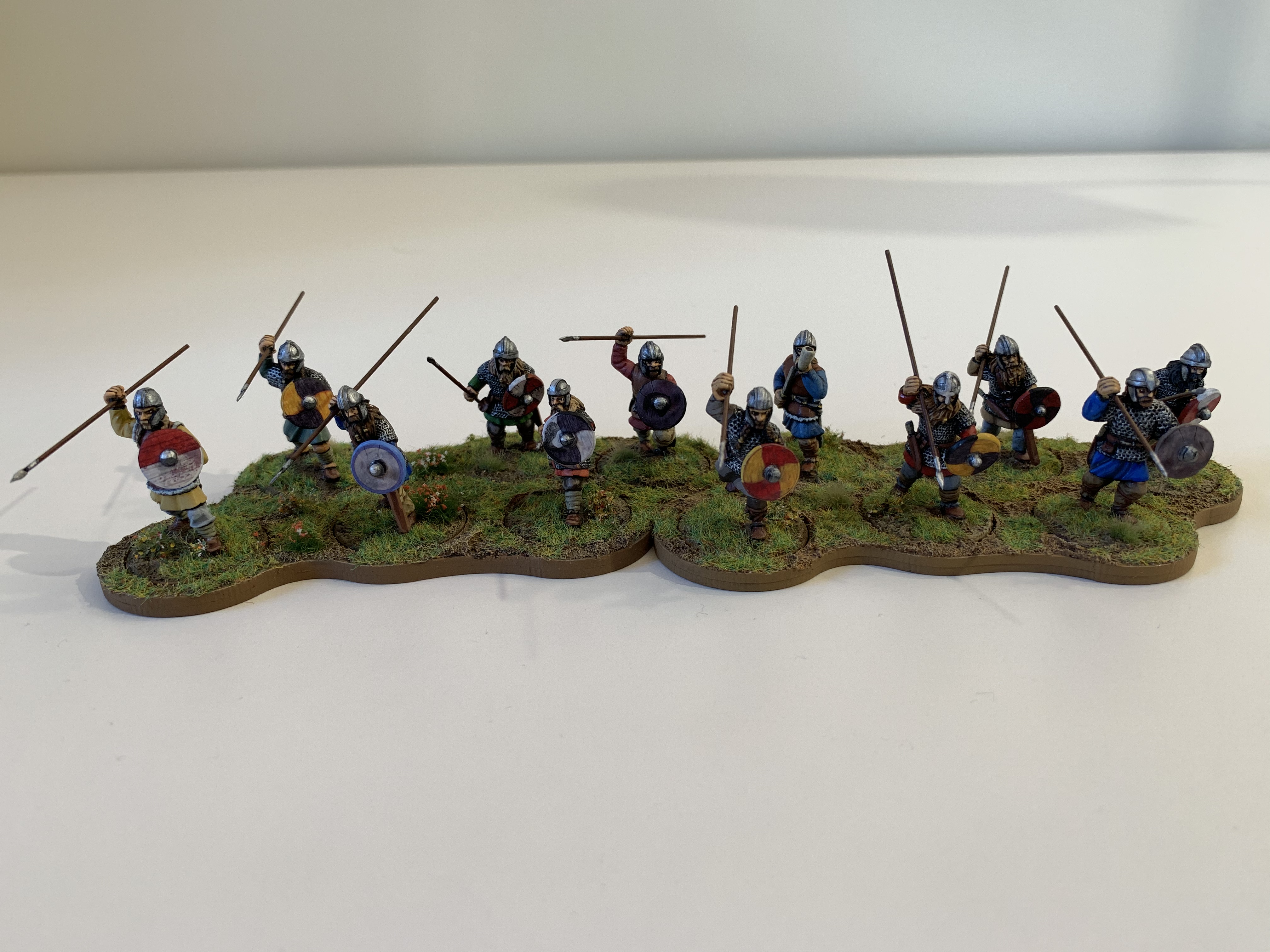 Saxon warriors. In two of them I managed to get paint either on or behind the shield transfer, but I think it passes nicely as battlefield muck!
With a suitable introduction from Gildas, here are my first two groups of Saxon warriors. I was a bit hesitant in starting these, spending too much time agonising over colour choices and how I would ensure that they didn’t look too uniform. In the end, the solution came when I decided that it was more important to get started.
As most of each figure is covered in mail, I did that first, drybrushing with VMC Gunmetal Grey followed by a drybrush of VMC Silver. Once that was done, I did the faces.
Next came the tunics and it was here that I decided to stop worrying about colour combinations and mixes and see it more as an opportunity to try something new. So I resorted to the very simple expedient of grabbing any colour I hadn’t used before and putting it down as the base coat. I then mixed it with varying amounts of either White or Iraqi Sand to fade and mute the colour in the first and second highlight.
It helped that I had recently read in a book on the Vikings that their clothes were very brightly coloured and not the dull browns and blacks of popular depiction. I took that as carte blanche to choose whatever colour I pleased and go with it for these Saxons who would have come from a similar culture. The LBMS shield transfers were also brightly coloured which helped validate my decision. In the end it was very liberating and I was able to bash these out relatively quickly. I think I’ll take a similar approach with anything prior to the late Seventeenth Century in future.
 Lloyd shot
Ominous signs
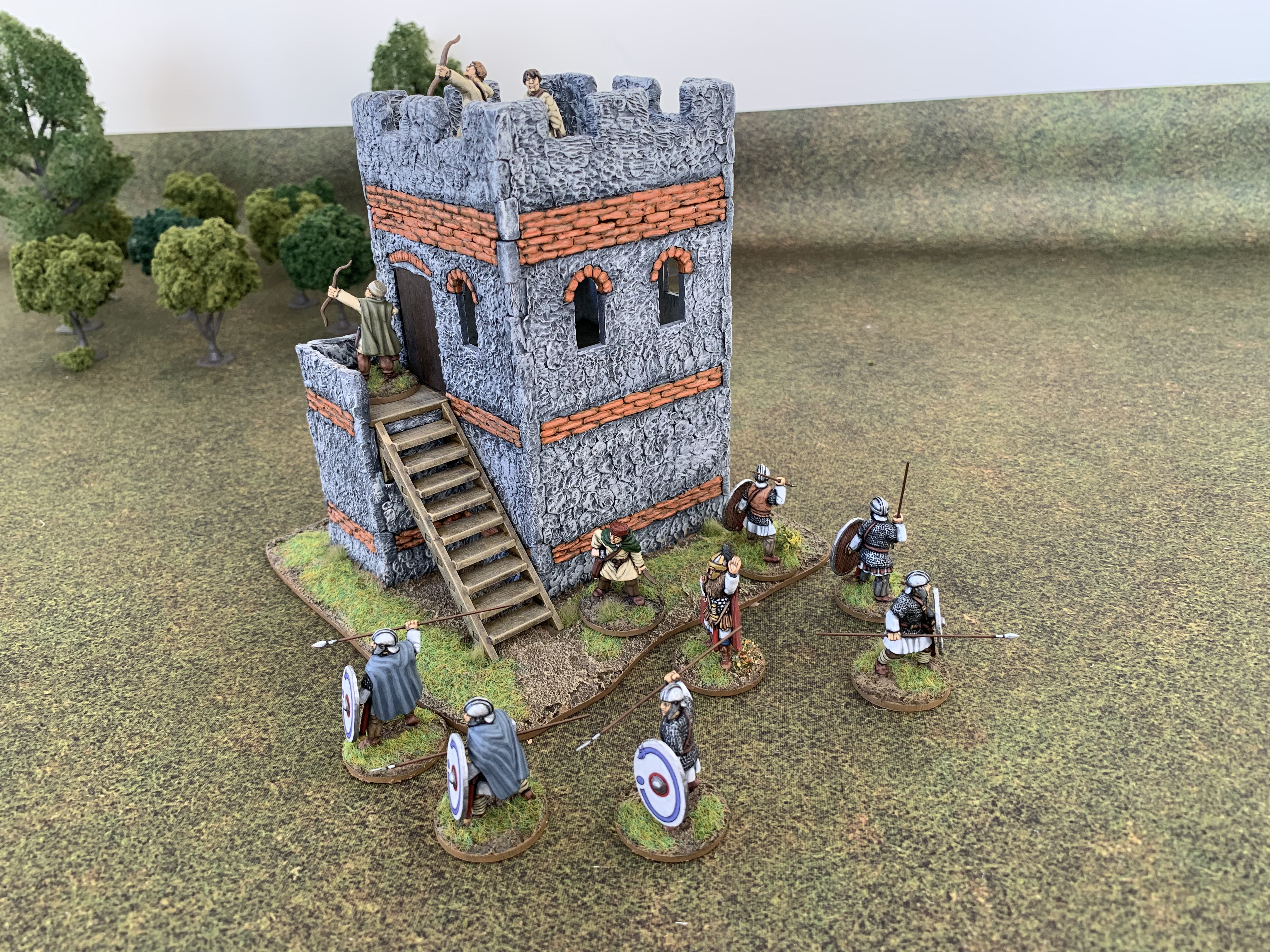 Garcianus and his men occupy a watchtower
  But who lurks at the edge of the forest? (Must get those trees based.)
Watchtower completed!

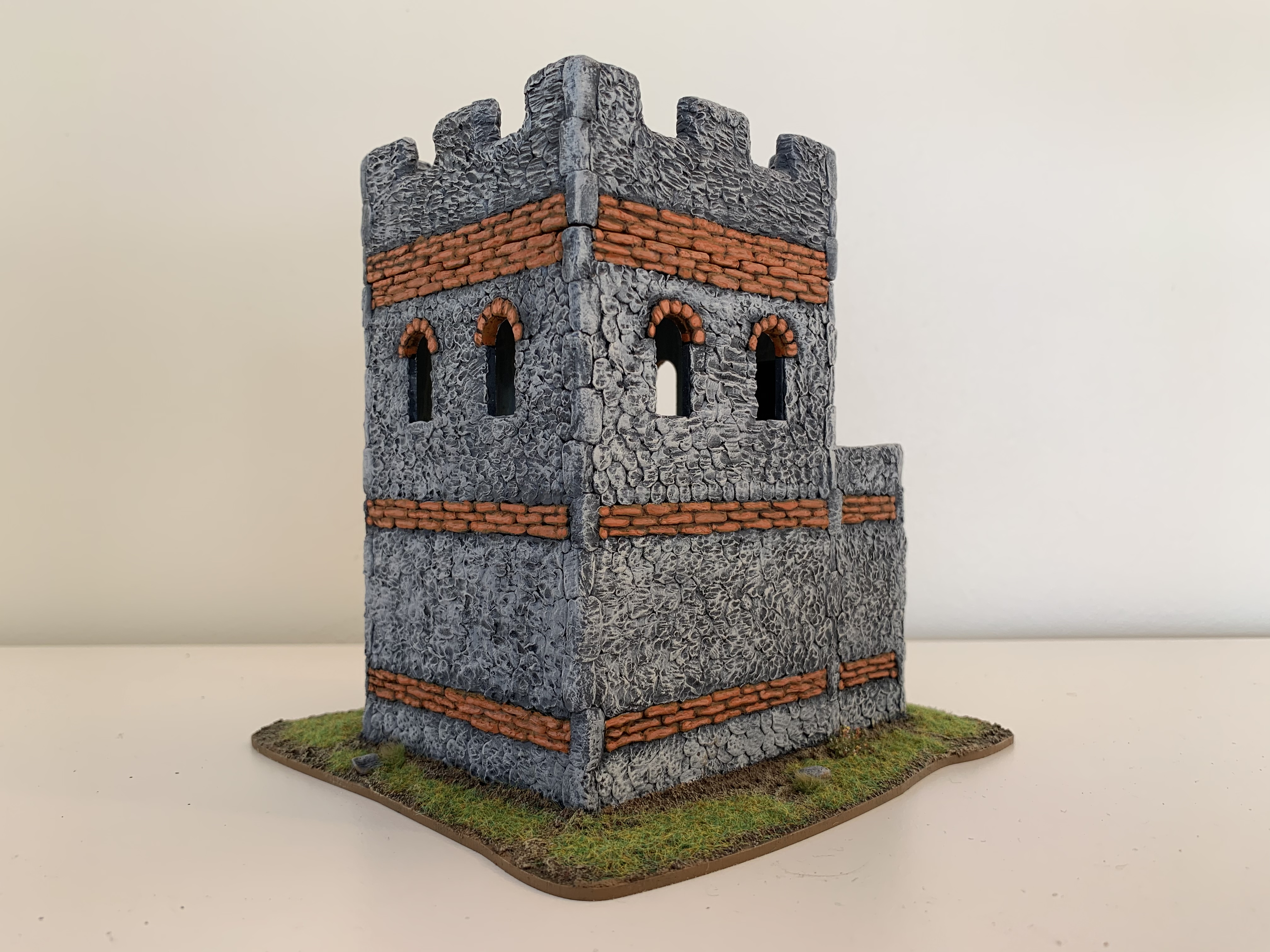
So the watchtower is finally complete after what turned out to be a far more significant undertaking than I had anticipated. I’m glad I stuck with it though, if only to show that completely enveloping an MDF model in green stuff is possible, if not particularly practical.
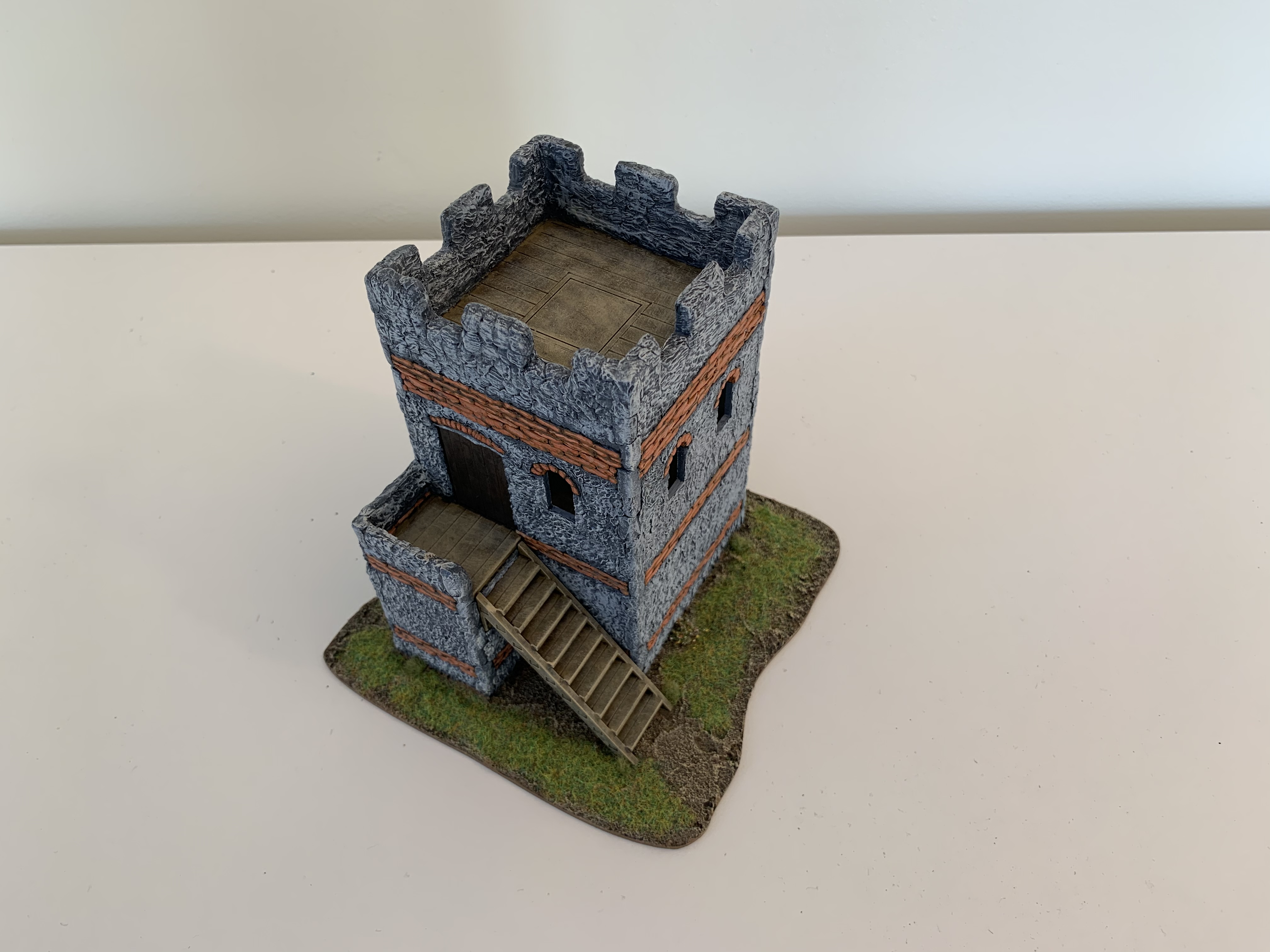
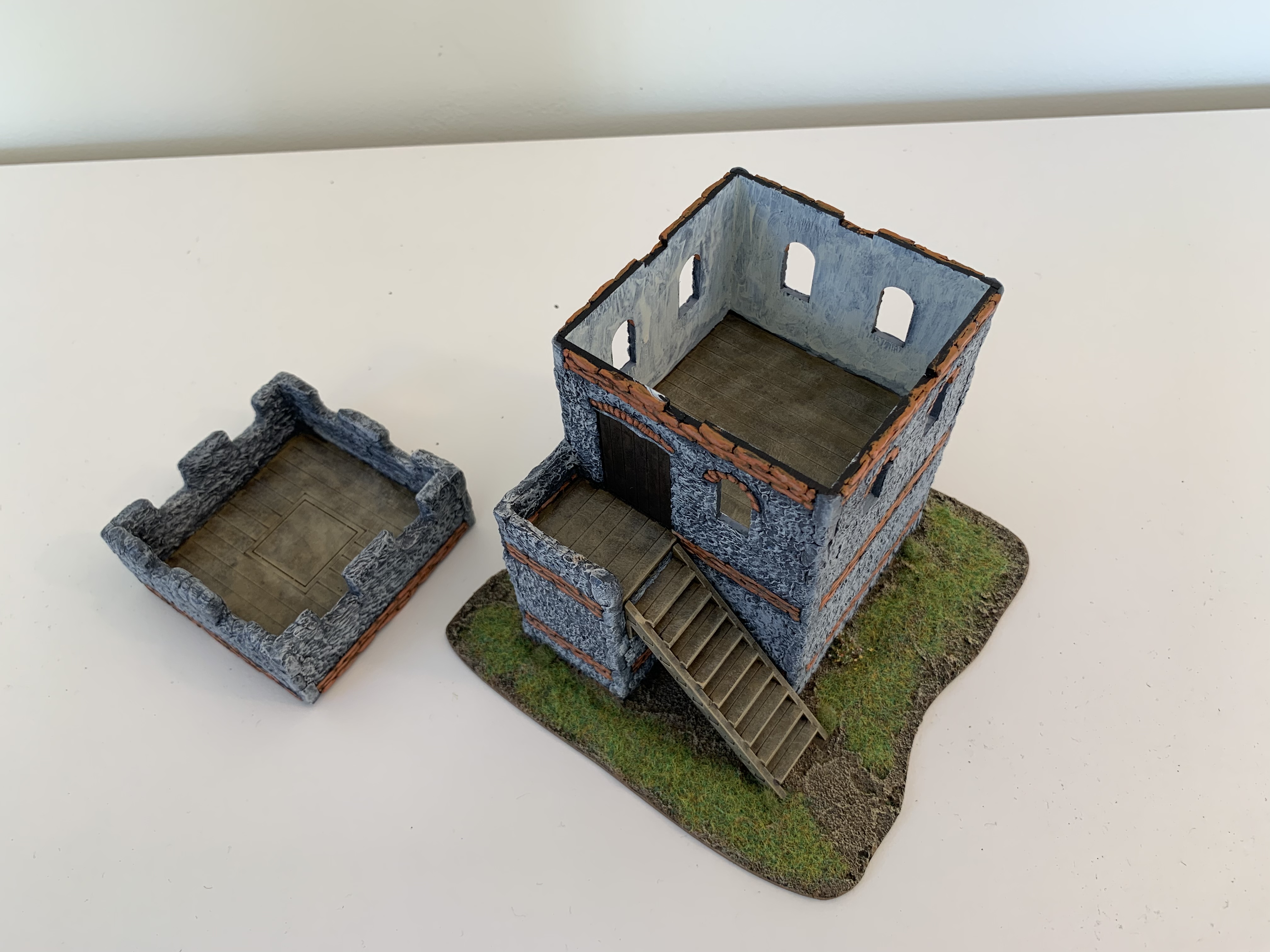
The final painting steps were the wooden platform and stairs. I adapted the sound advice on the Gerry Can on New Wood, using a base coat of Khaki Grey (VMC 70.880) washed with a mix of water and Army Painter Dark stone. Once dry, this was drybrushed with Iraqi Sans (VMC 70.819). The door was Burnt Umber washed with the same Dark Tone and water mix. The stairs were painted first and then glued into place in the contact points I’d left free if basing texture and green stuff.
Finally, I painted the basing texture with my usual mix of Beige Brown and Yellow Ochre, followed by a wash of Chocolate Brown with 10% Black. This was the. Drybrushed with the Beige Brown and Yellow Ochre mix followed by a second drybrush of Buff. Finally, tufts, flowers, flock and some small rocks made of leftover green stuff were glued on to complete the model.
Brickwork painted
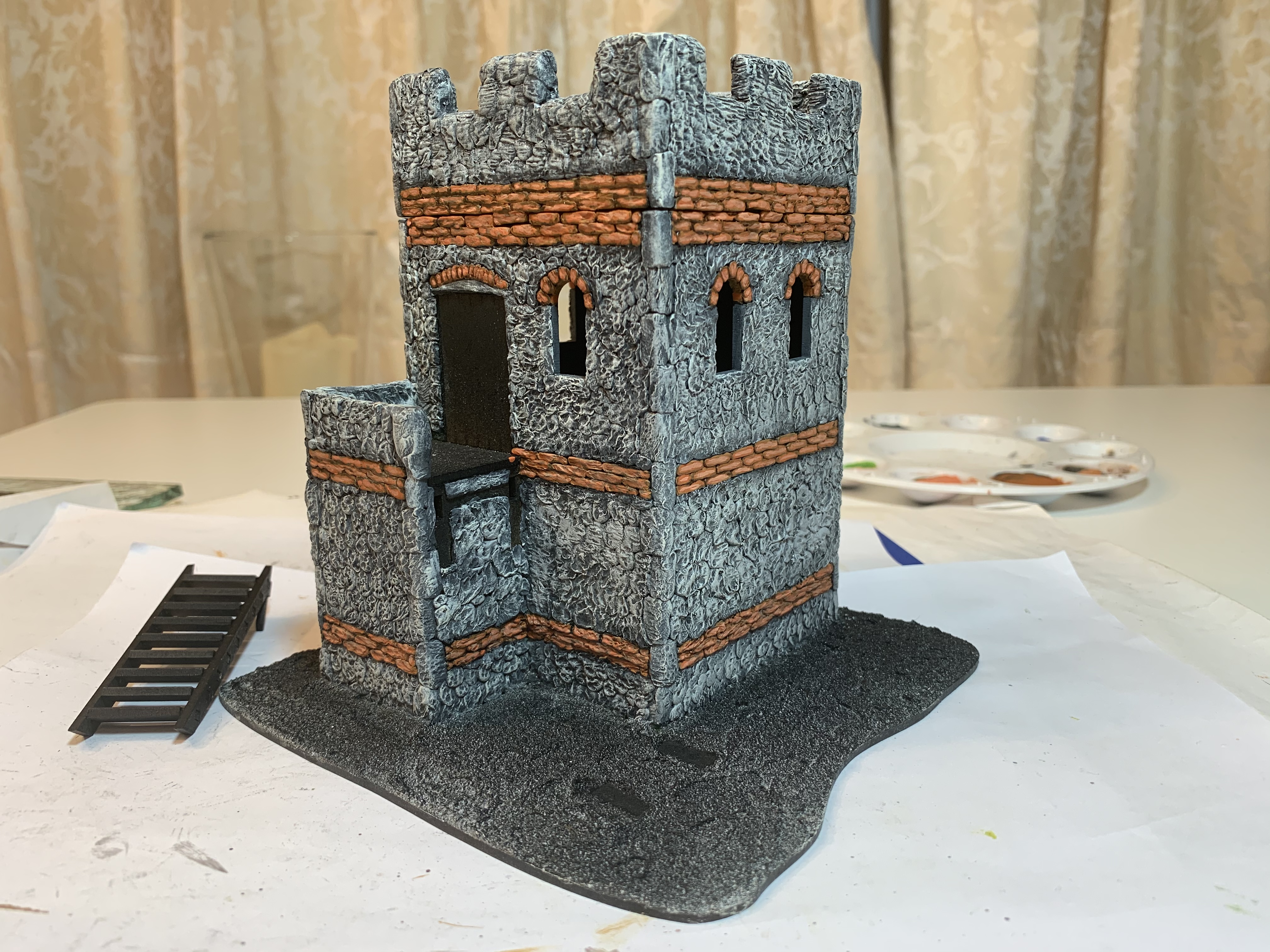
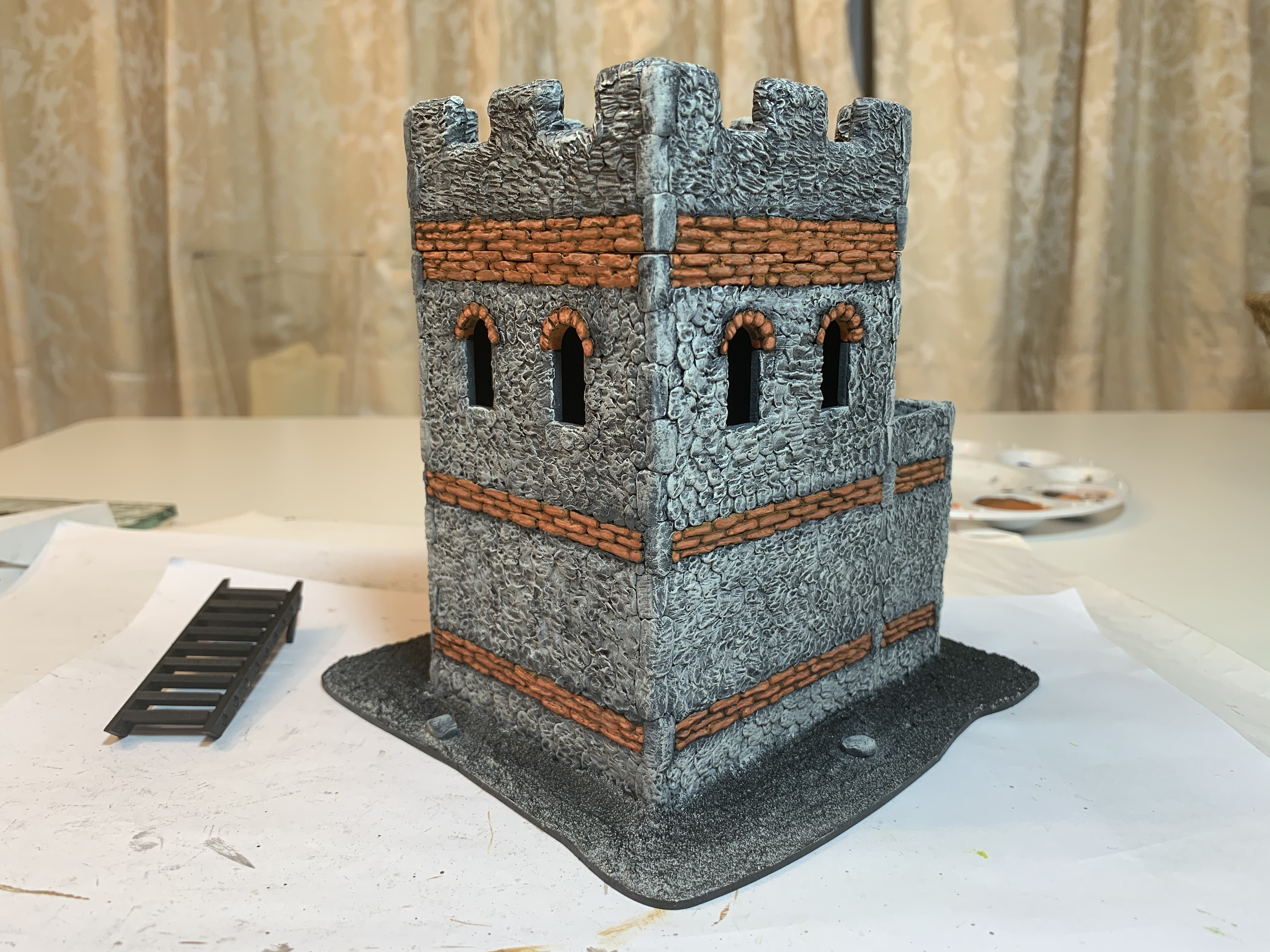
I’ve been a bit lax in keeping this project updated over the last month, so apologies for the lack of new posts. However, I have been working away at it, so you should see some more over the next few days.
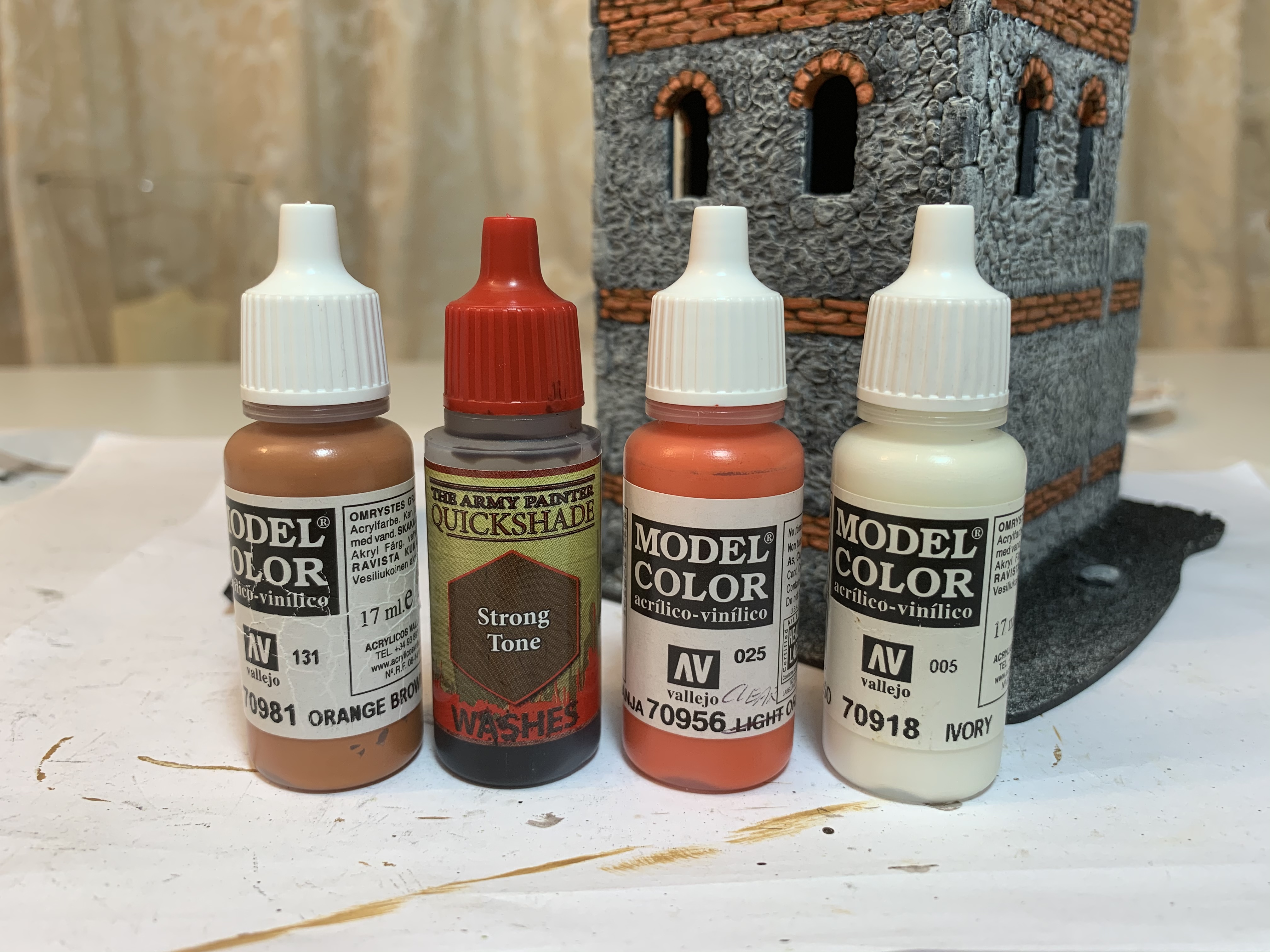
First up is how I did the brickwork on the watchtower. I did a base coat of VMC Orange Brown (70.981) which was then washed with Army Painter Strong Tone. This gives a very dark look which didn’t match the quite bright orange that can be seen in the photos from Dover. So I took a risk and highlighted with Light Orange (VMC 70.956 my bottle is old so I think this is called Clear Orange today) mixed with Ivory (VMC 70.918). I created a 75:25 mix first and then did a second highlight of 50:50. I was a bit nervous about this as the Light Orange is very bright, but the Ivory tones it down. The ratios are very approximate and I suggest experimenting until you get a mix that works for you.
I was still concerned once I’d finished this step that the brickwork was still too bright. However, I don’t think it’s too much of a spoiler alert if I say that I’ve now completed the model and am quite happy with how it’s turned out. I’ll cover that in a future post shortly.
Brickwork research

The kids had a day trip to Dover Castle earlier this week as a last hurrah before the end of the Easter holidays.
They very kindly took some research photographs of the tower of the church of St Mary in Castro. Which are shown here.
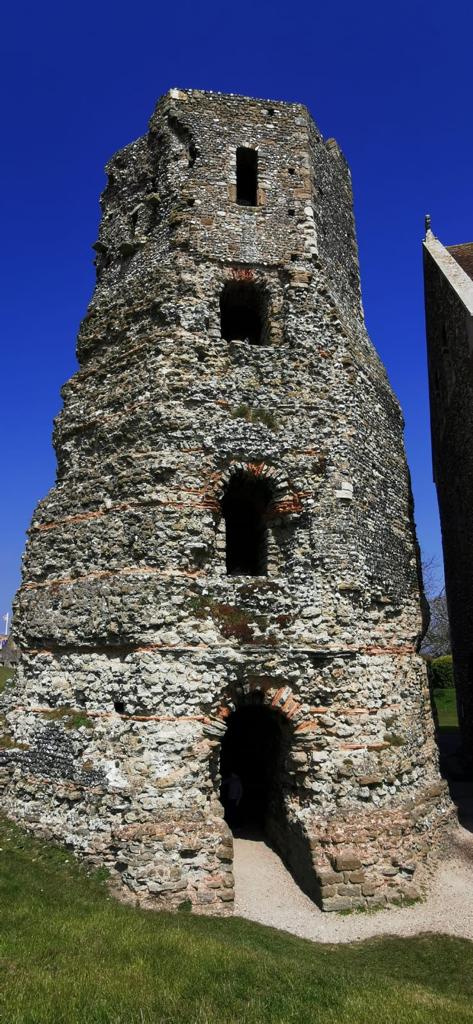
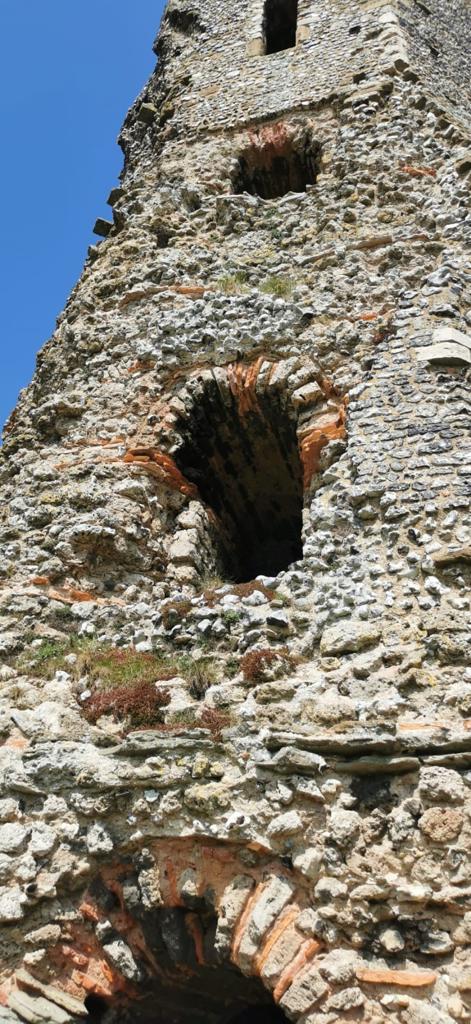
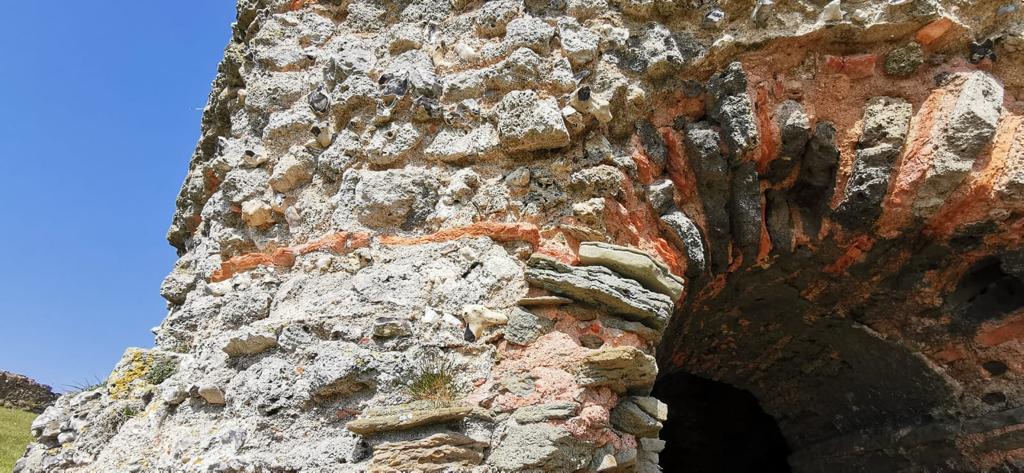
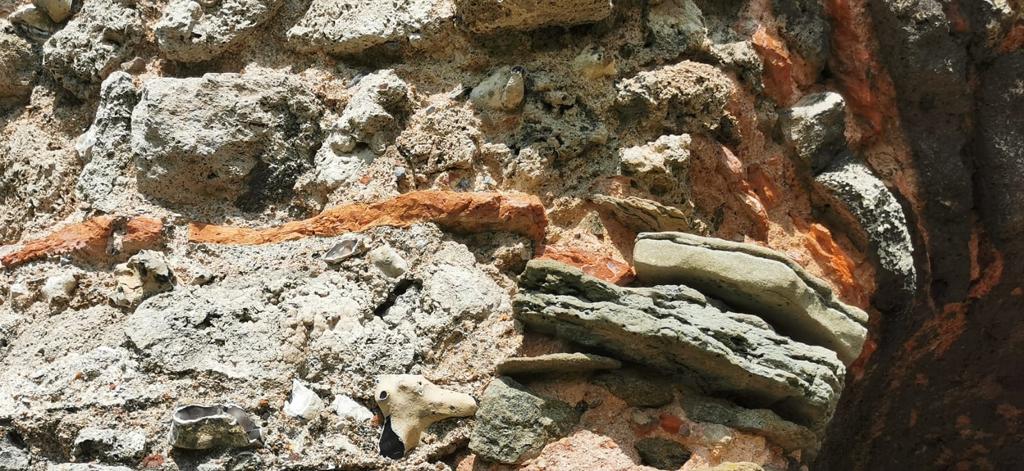
For those who might not be aware, St Mary in Castro is a church located within the curtain wall of Dover Castle, hence the name “in Castro”. The church itself is very old, being built around AD 1000 in the late Saxon period, possibly on the site of an even older Saxon church dating from around AD 600.
However, for our purposes, the point to note is that the church adopted as its bell tower the remains of a Roman lighthouse or Pharos built around AD 130. This structure is still four stories tall and may even have reached as high as eight stories when first constructed. It was one of two built by the Romans to guide ships into Dover harbour which was then known as Dubris. If you look at the pictures, the characteristically thin orange bricks of the Romans are clearly visible. This is the colour I need to try and replicate on my watchtower.
Watchtower stonework
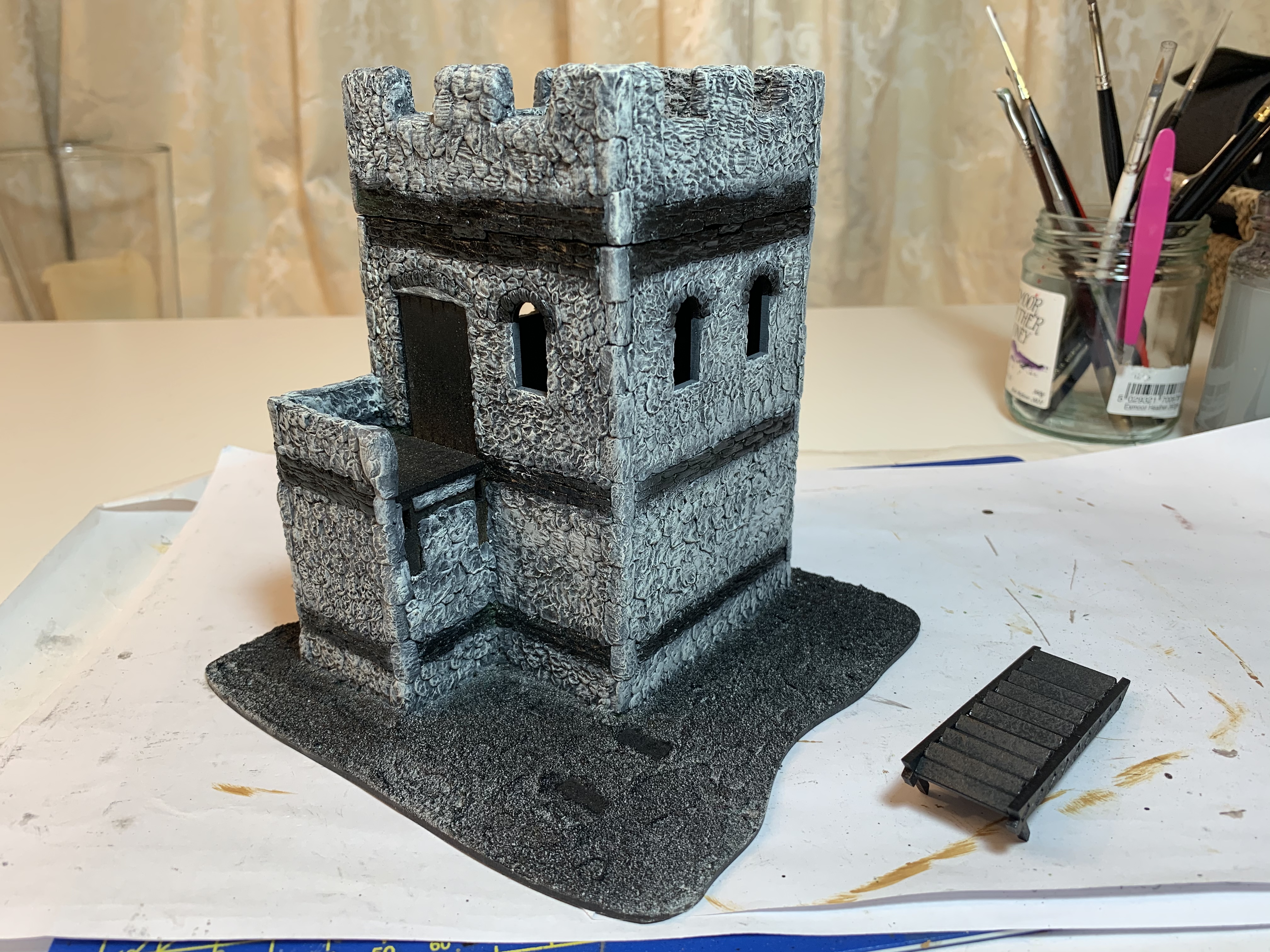 Stonework painted
I managed to paint the stonework this week. A very easy process starting with an undercoat of black primer.
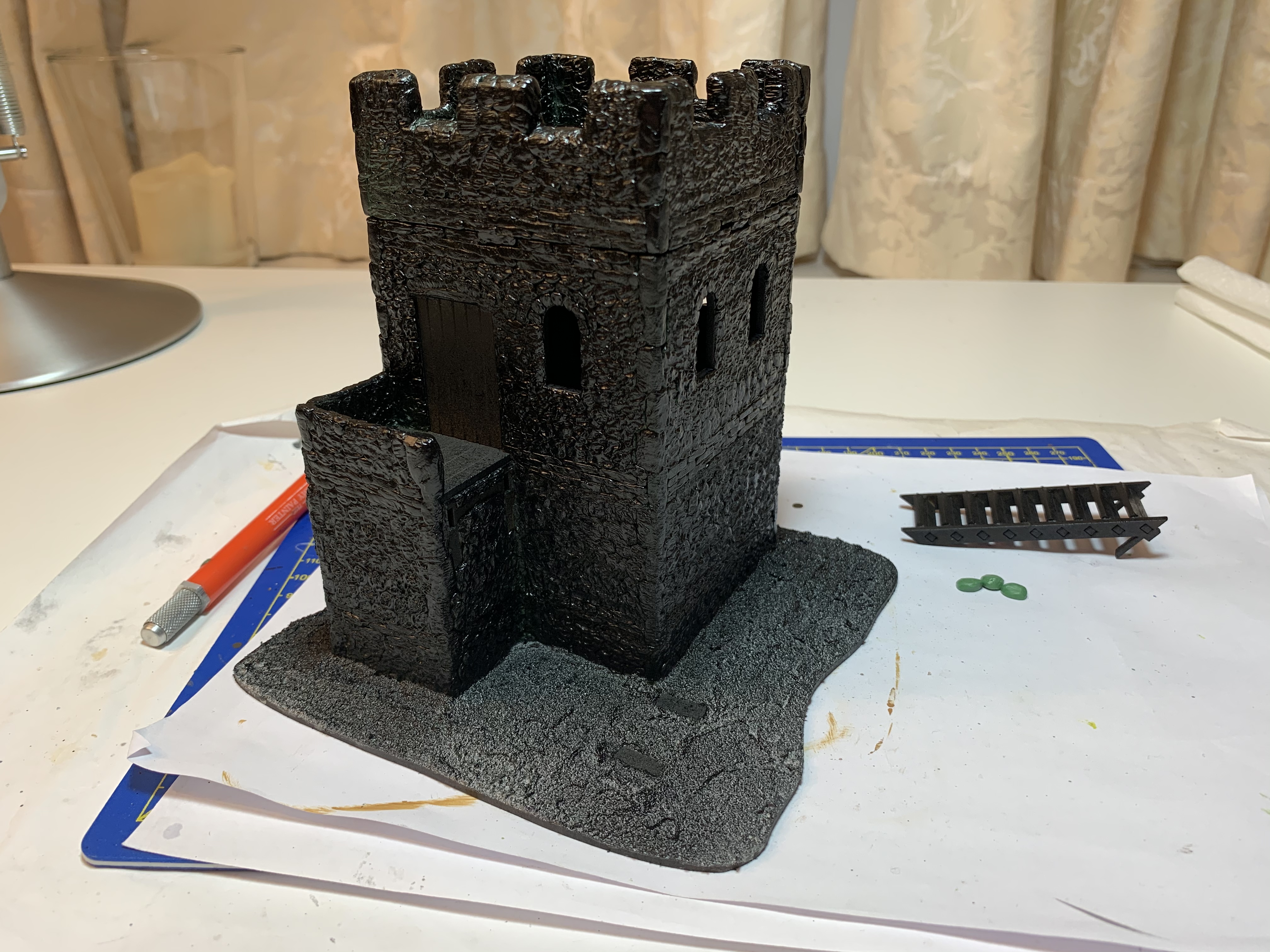 Watchtower primed
It was then a case of putting on a base coat of London Grey and then progressively dry brushing with lighter grey tones.
I also added a wash of Army Painter Dark Tone after the first drybrush of Neutral Grey.
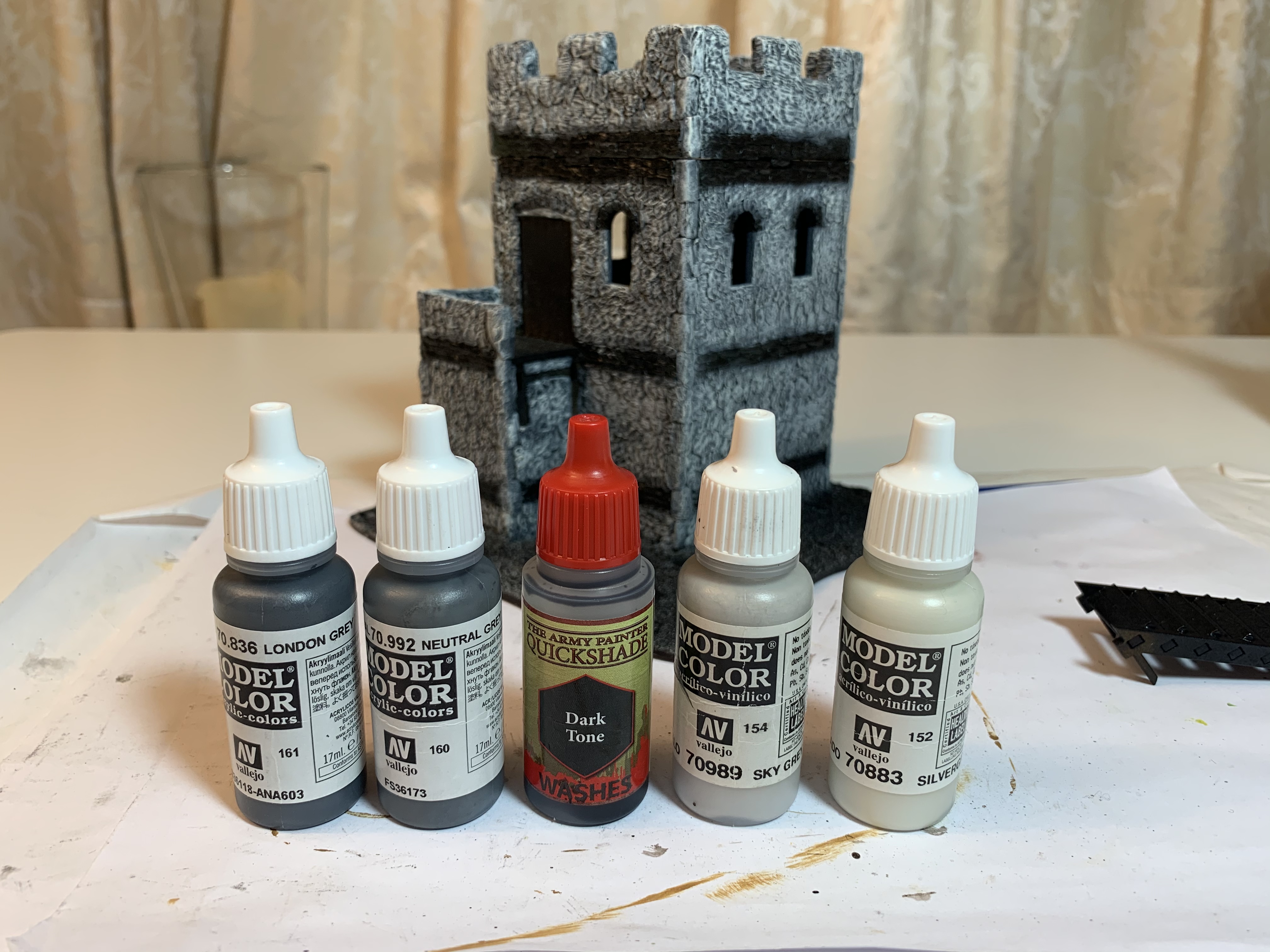 The paints used in order from left to right
These are the paints I used. In hindsight, I wouldn’t bother with the Neutral Grey dry brush as it didn’t add much and would be mainly covered up by the Sky Grey and Silvergrey anyway.
Next up is the brickwork where I need to do some experimenting with different colour combinations.




![Zenit Miniatures’ Samurai Warlords Now Live On Kickstarter [Updated]](https://images.beastsofwar.com/2026/02/samurai-warlords-launch-main-600-338.jpg)