









SAGA: Ages of Ages



Recommendations: 446
About the Project
As each "Age of ..." book comes out I get excited, make lists and put minis together to play. My imagination and wallet go much faster than my paintbrush but here is a record of how I've been getting on keeping up with Saga.
Related Game: SAGA
Related Company: Studio Tomahawk
Related Genre: Historical
This Project is Active
Psiloi - Levy Javelinmen
Some Levy are very handy in the game and Javelins continue to be a very effective weapon given that you get a round of shooting for no fatigue if you use them correctly in a turn.
Models are mostly the Zigurat Mercenaries by Lucid Eye – sculpted by Steve Saleh. There are a few Victrix plastics and one Foundry with a Victrix headswap to fill out the ranks.
Painting started with a zenithed undercoat and then Warrior Skin Speedpaint with some highlights of Vallejo Game Color Tan. For their Colour scheme I’m inspired by the orange with blue highlights used by the Syracuse Orange College Football team. Obvious I know but I can procrastinate terribly when trying to pick a scheme so this seemed like it might save some time deciding. I’m using Speedpaints Fire Giant Orange and Bright Red for light and dark orange colours then some complementary options of Ancient Honey (yellow), Poppy Red and Tidal Wave (blue).
Basing follows the same schme as the Spartans.
Mamertines - A different take on the Graeculi
Historical Notes
The Mamertines caused the fall of Carthage. A big claim perhaps but their role was pivotal in instigating the first of the Punic Wars, conflicts which ultimately led to the destruction of Carthage.
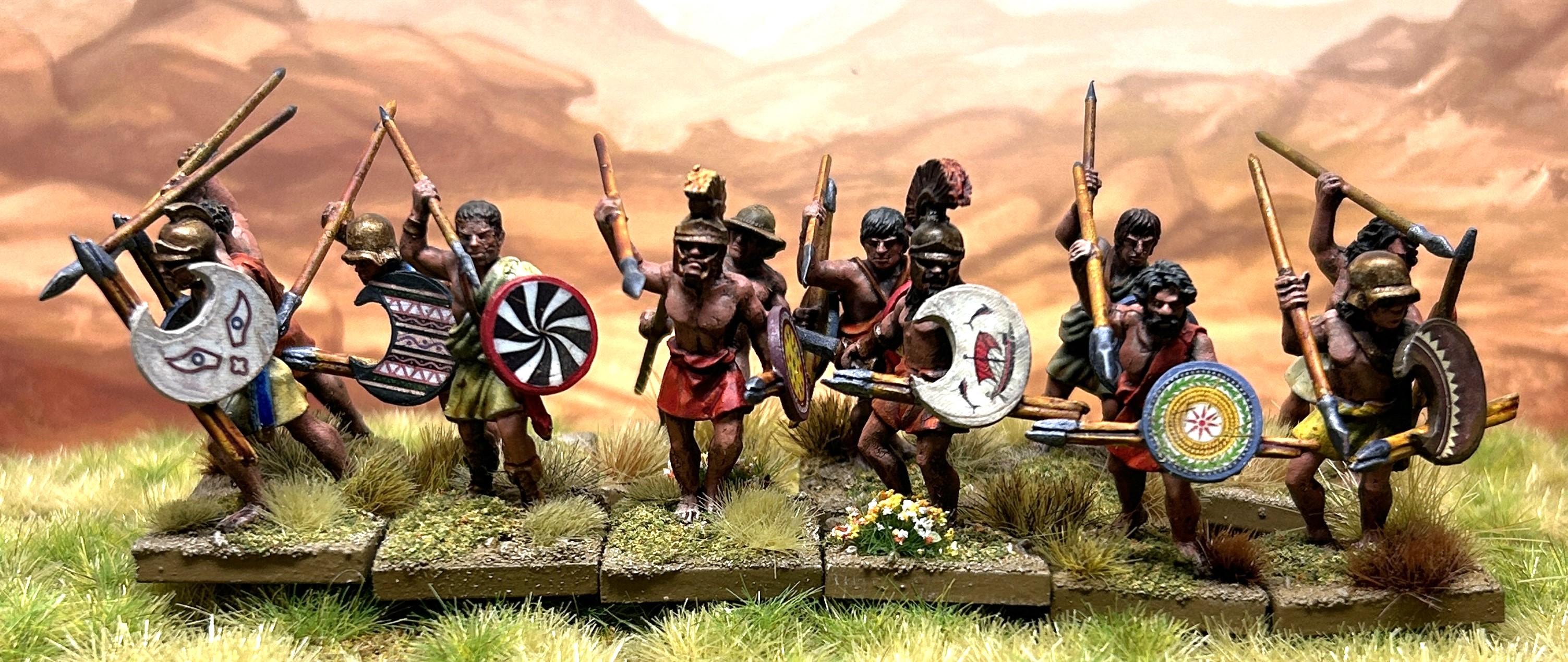
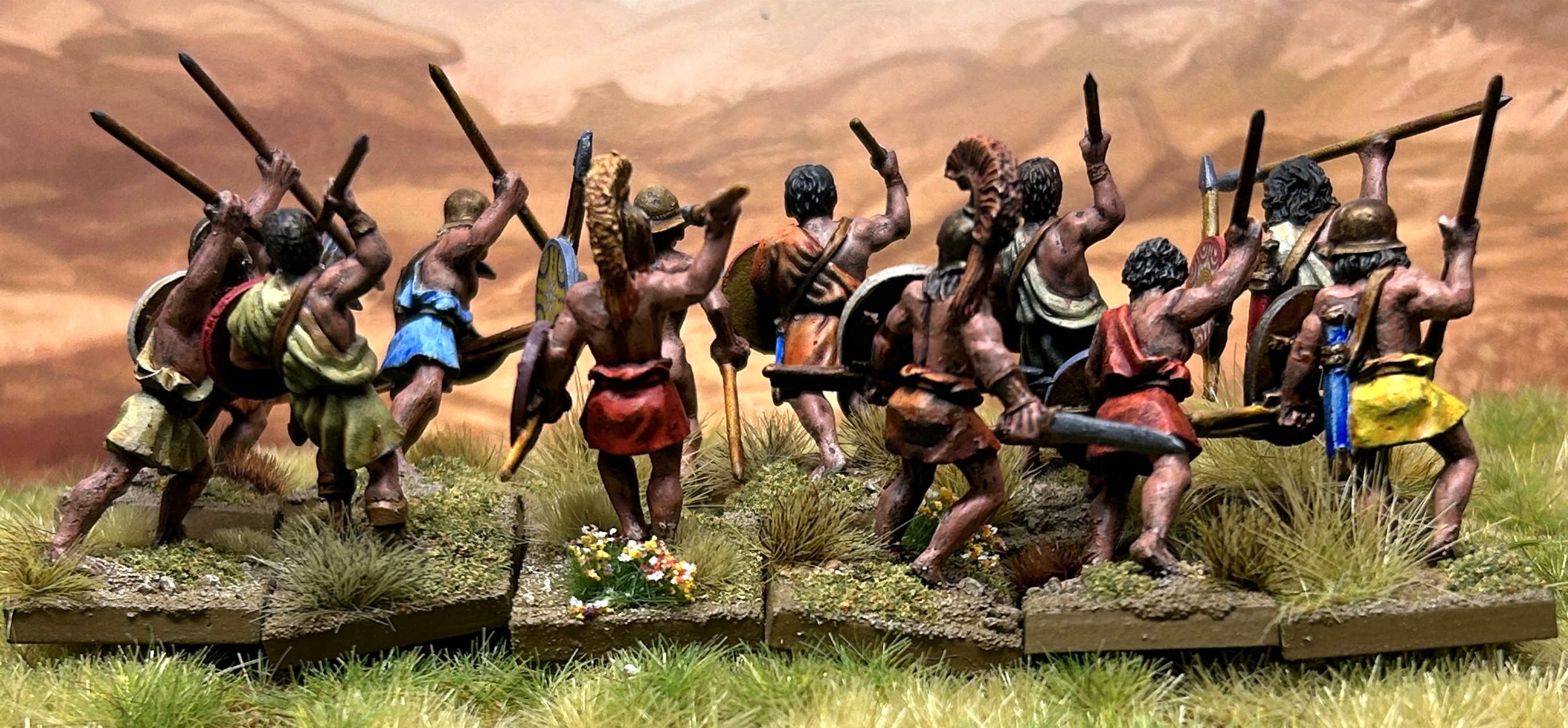
The Mamertines were Campanian mercenaries hired by Agathocles, Tyrant of Syracuse to help fight the 7th Sicilian War which pitted the Greek colony cities of Western Sicily against the expanding empire of Carthage in the east. Their name derives from Mamers, the Oscan name for the war god the Romans called Mars. The war ended in 307BCE in Carthaginian victory and the strategic city of Messina was ceded to Carthage. After the war the Syracusans attempted to expel the Mamertines from Sicily but rather than leave, in 288BCE, they seized the city of Messina. From this base they became troublesome brigands, eventually coming to the attention of Syracuse again. Meanwhile the Syracusans had once again began fighting the Carthaginians in Sicily, under pressure they eventually invited Pyrrhus to help. The Mamertines allied with Carthage to try to prevent his landing – the city of Messina controls one side of the shortest crossing from Italy. He landed in Sicily, campaigned successfully and drove the Carthaginians back. The Syracusans put Messina under siege after their Carthaginian allies were defeated. The Mamertines this time appealed for help from Rome, a fellow enemy of Pyrrhus. Their appearance in Sicily eventually brought them into conflict with Carthage.
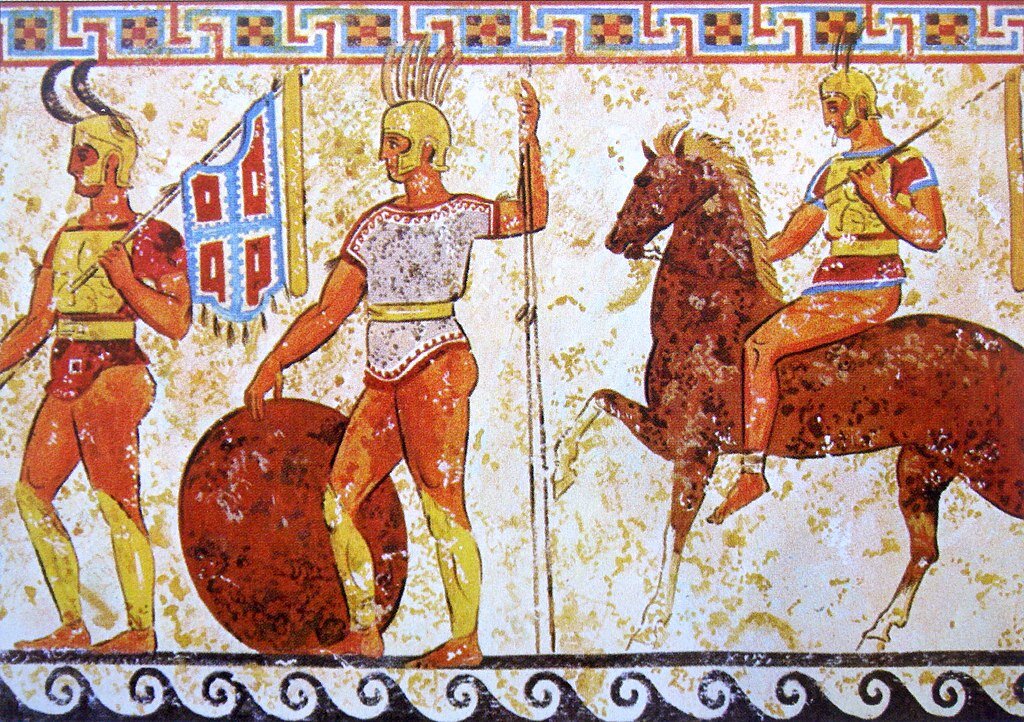 Oscan Warriors - Samnites
Research
There isn’t a great deal to go on here. Their cousins the Samnites have left some tomb frescos that provide a good impression of their warriors but there is little from Campania other than painted pottery and this often shows warriors kitted out in hoplite panoply.
An interesting side note is the style of chiton (tunic) that the Oscans favoured. The Greek style is usually mid thigh, sometimes worn off one shoulder. The Oscan version is incredibly short and barely covers either genitals or buttocks. They are also gathered above the point of the hips, under the broad metal belt that was an important signifier of manhood in Oscan society. This style is shown here:
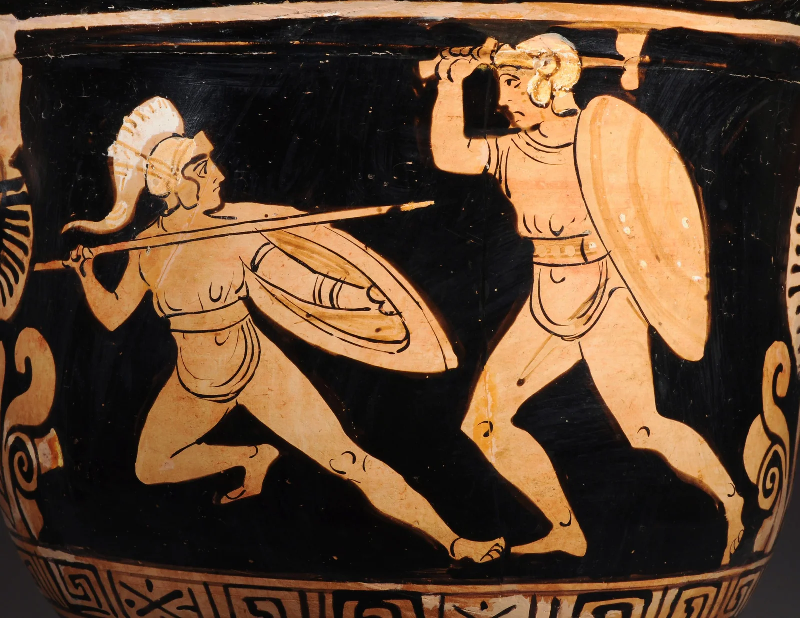 Campanian hoplites
Miniatures
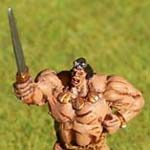
Disappointingly there aren’t any 28mm ranges that accurately reflect Oscan warriors. The common error is to give them the Greek/Roman fashion of chiton – straight across at the bottom at mid-thigh length. This is easy to understand given the lack of readily available sources but a little research would reveal the error. The Oscan range for Crusader, Victrix Samnites and Aventine Samnites all suffer from this problem. There aren’t any suitable options. All I could find were the Samnite Characters for Clash of Spears which at least allude to the correct style. There are some accurate ones that Agema had sculpted before selling the historicals to Footsore. They have never appeared but I’ve messaged him to find out where they went. Pictures were hard to find (October 2021 in Agema’s Facebook):
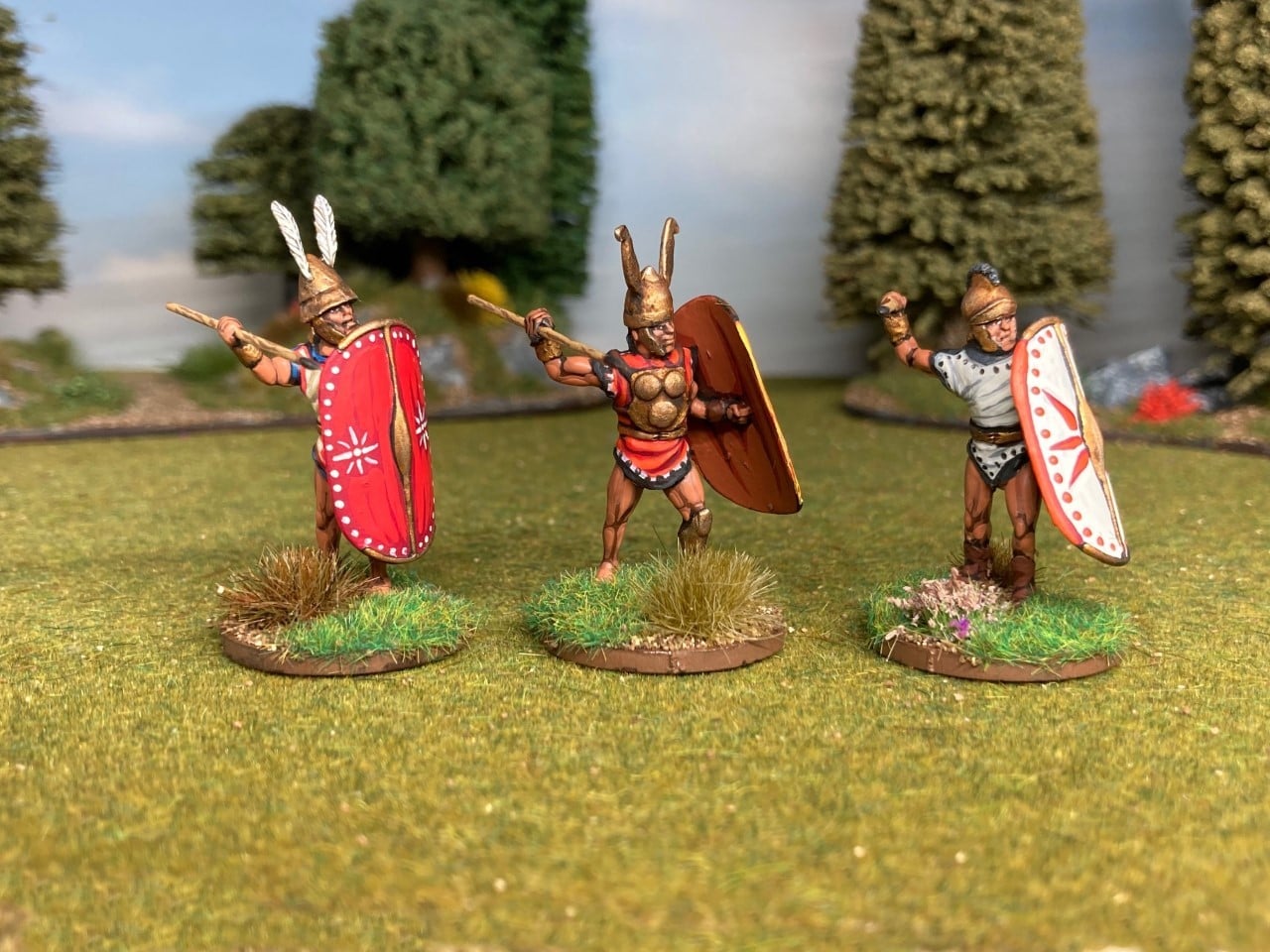 Accurate dress
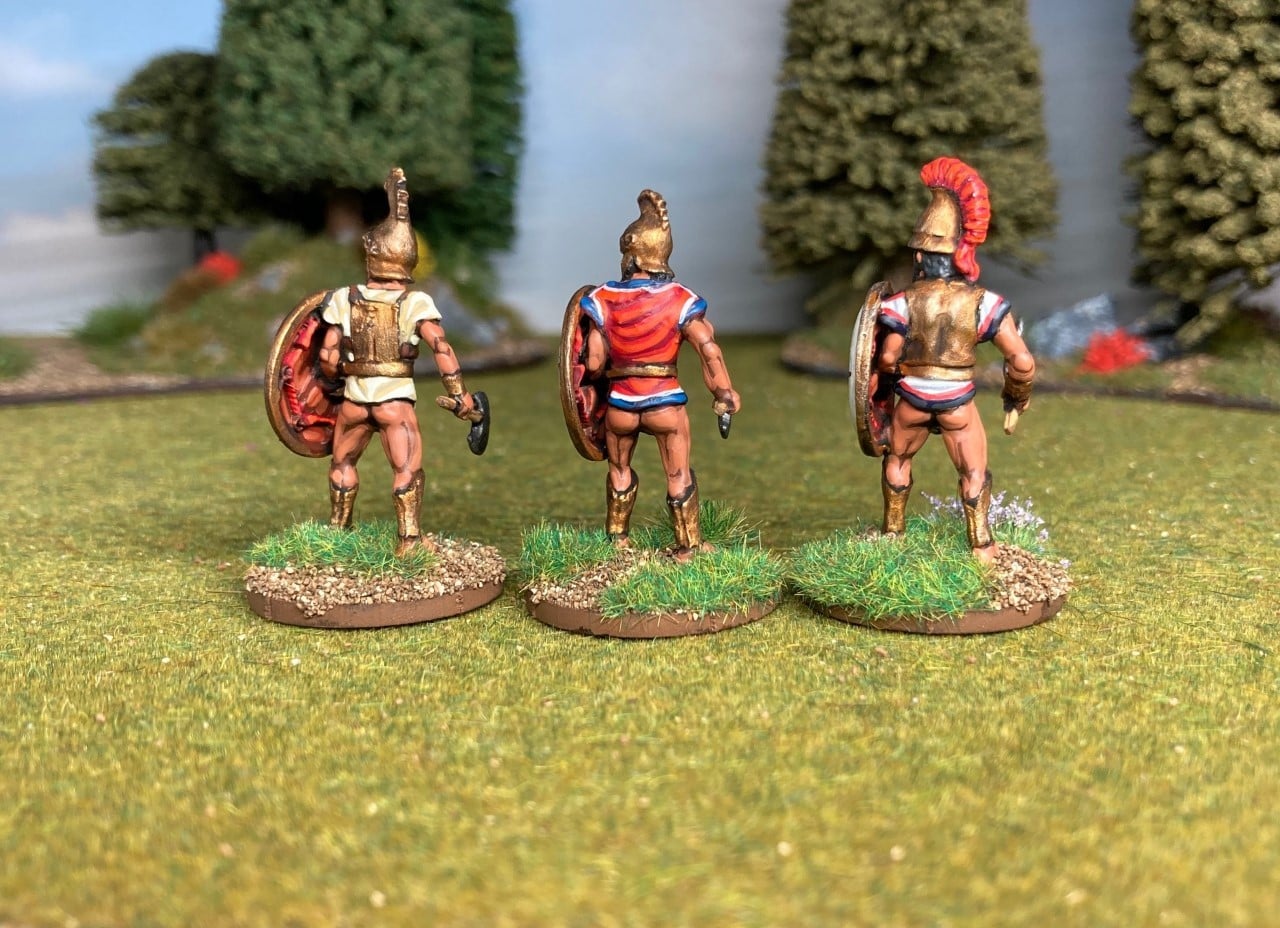 Cheeky, but still historical.
List build
The Syracusans are covered by the Graeculi list in Age of Hannibal. There is no list specifically for Mamertines, there is one for Italiotes but this is javelin focussed and probably best suited to hill tribes like the Samnites. On the plains of Campania the preference seems to have been for heavier infantry with hoplite gear. Assuming a few local adaptations over the years for our Mamertines we will work with the Syracusan Graeculi list. I’m basing it around a core of Mamertine hoplites with Campanian cavalry representing the most successful mercenaries. I reasoned that they would have the pick of mercenary bands entering Sicily as they were based in the nearest port to Italy. The list therefore includes both Greek hoplites and Samnite warriors from the mercenary lists. Finally I’ve got some psiloi, representing either local levy or some ne’er-do-wells attracted to the Mamertines in the hopes of easy loot. The Greek hoplites are expensive so for my standard force of 6 points there are two options:
Core list:
Mamertine (Syracusan) Warlord Mounted, Tyrant – 0pts, 1 dice
2x 4 Mamertine Campanian hoplite Hearthguards in a unit of 8, Phalanx – 2pts, 1 dice
8 Samnite Mercenary Warriors – 1pt, 1 dice
12 Levy javelinmen – 1pt 1 dice
Then, either;
8 Mamertine mounted Warriors – 1pt, 1 dice
8 Mamertine warriors on foot – 1pt, 1 dice
or;
8 Greek Mercenary hoplites (8 Hearthguards, phalanx) – 2 pts, 1 dice
So there is a maxed out mercenaries force with 50% of the points coming from mercs but with only 5 Saga dice. The other version has the benefits of a cavalry unit and an extra Saga dice for a total of 6.
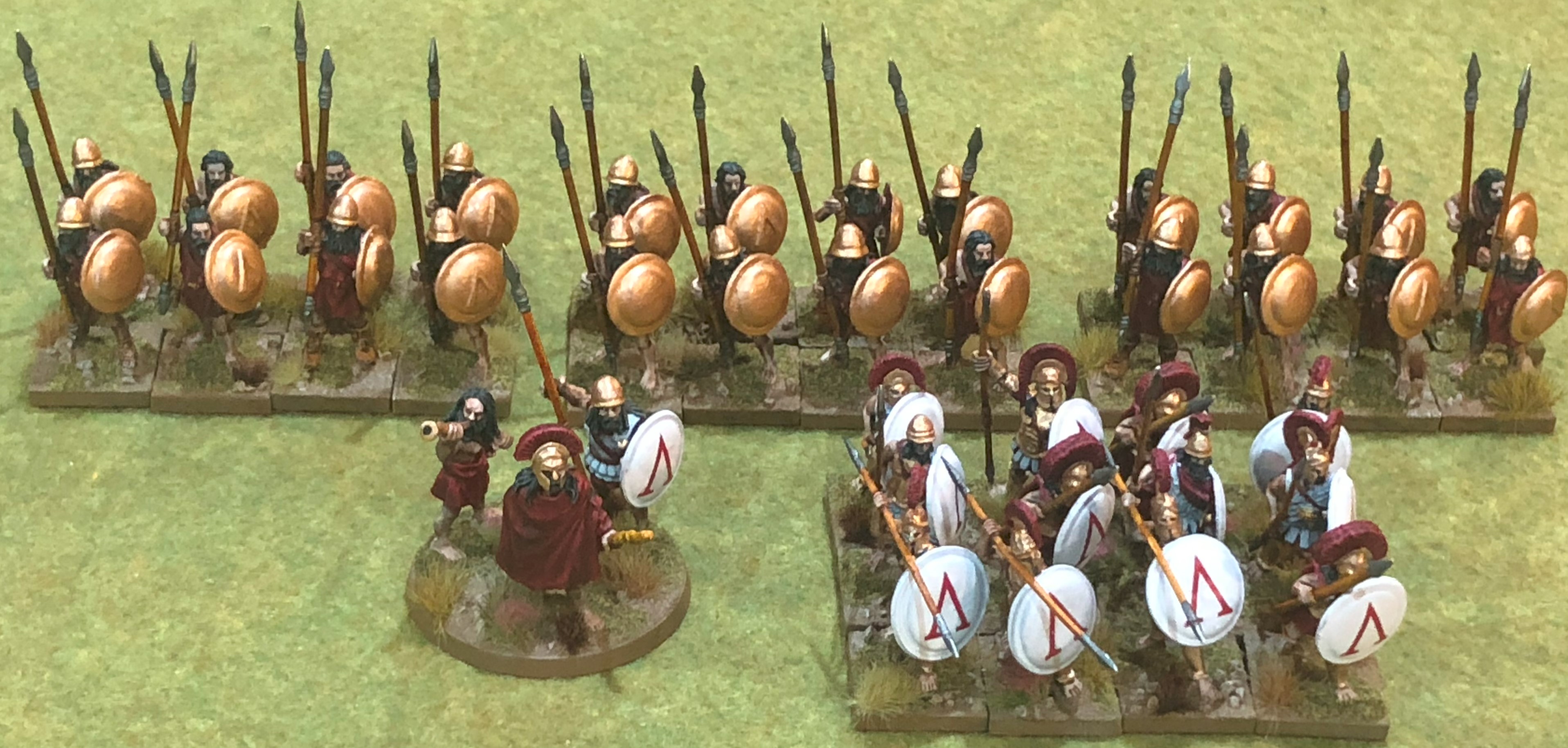
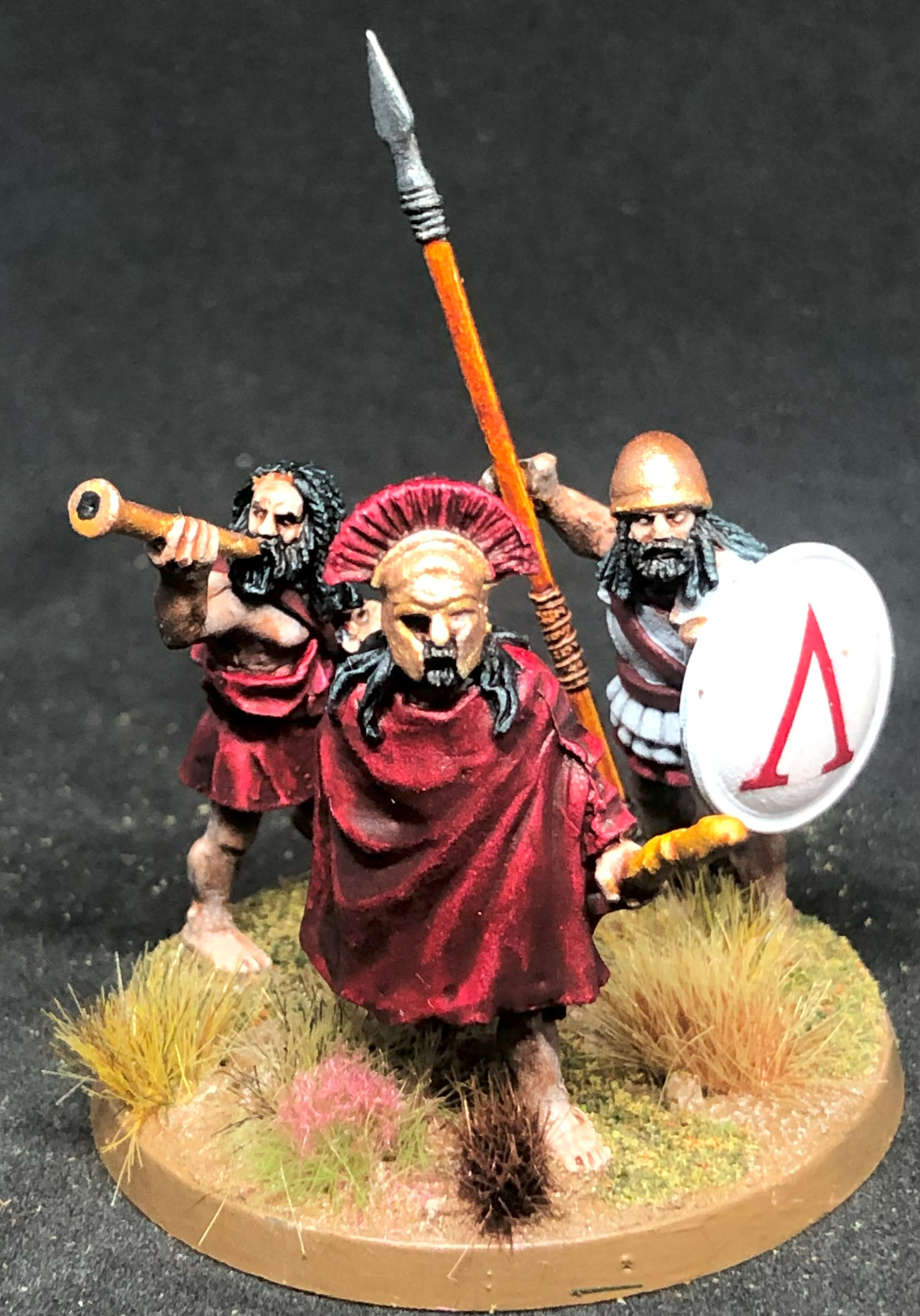
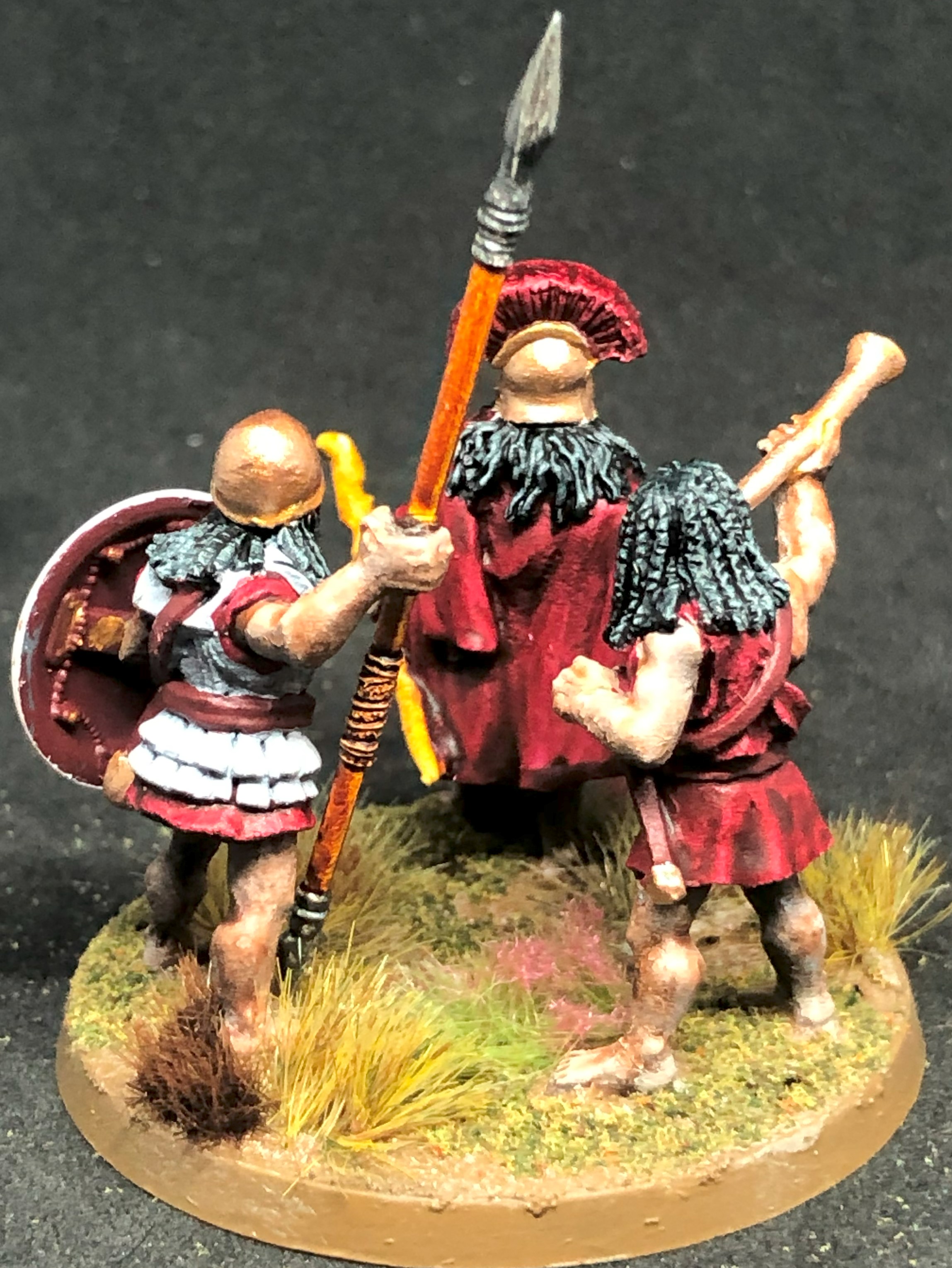
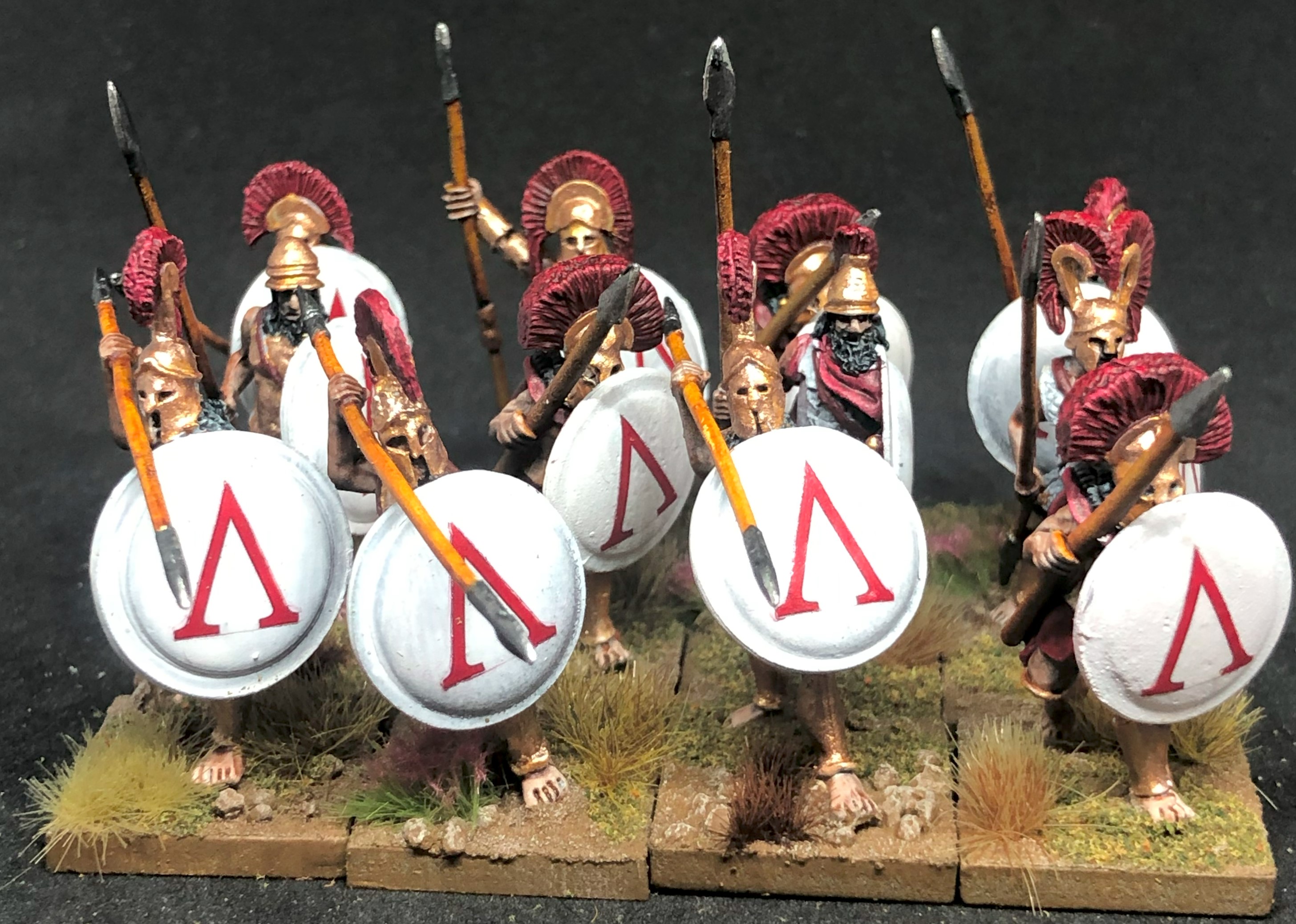
Spartans finished and for sale
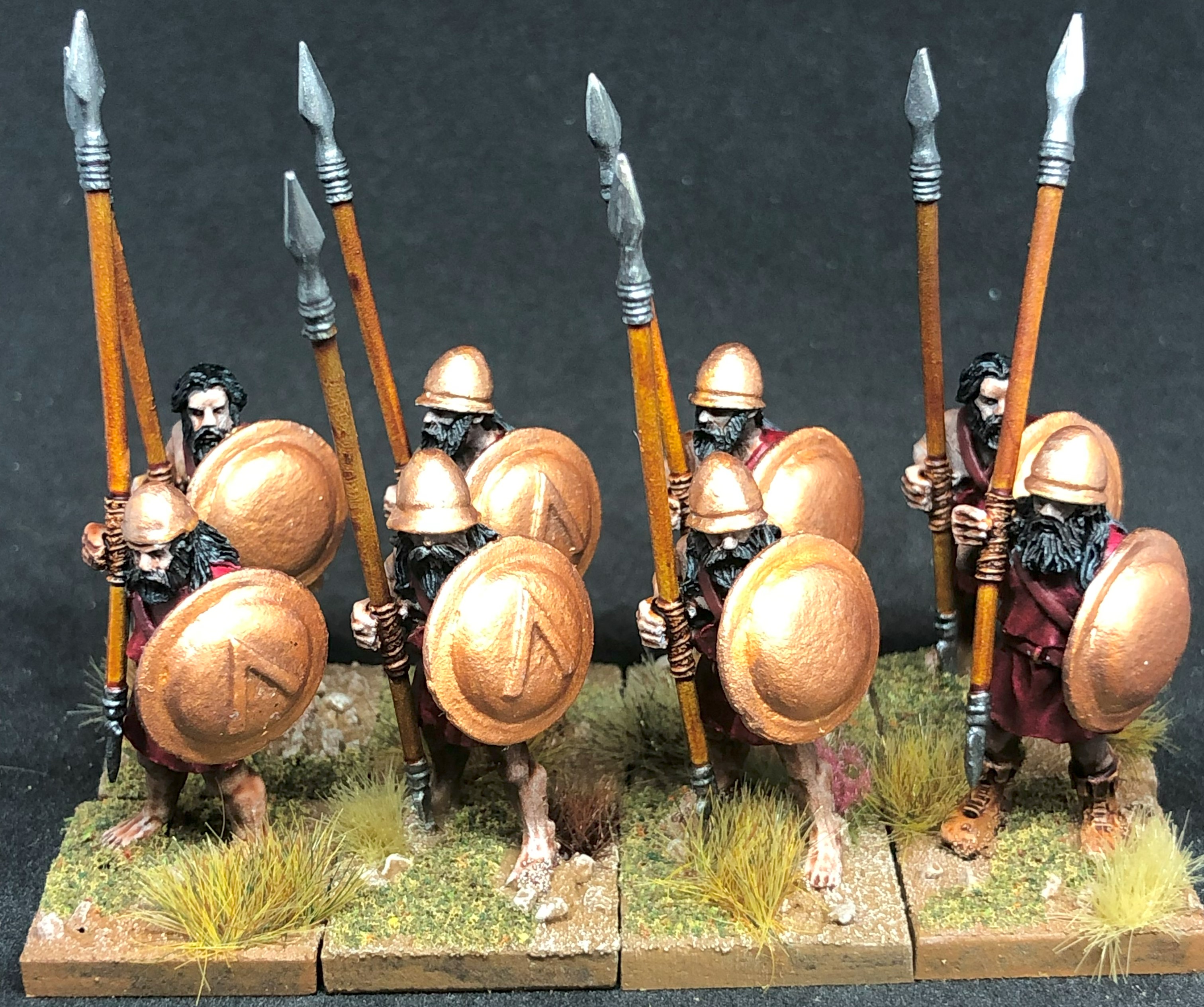
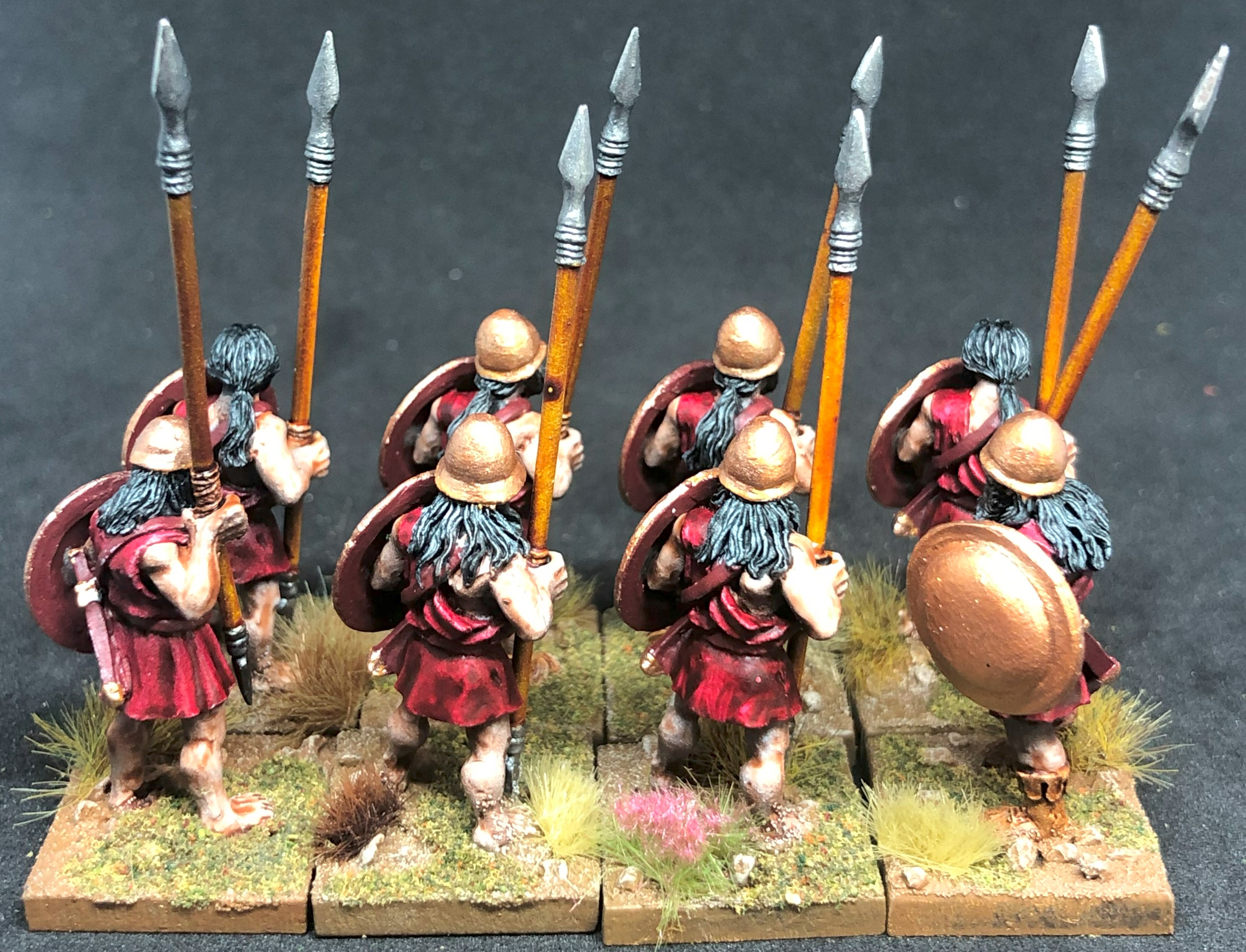
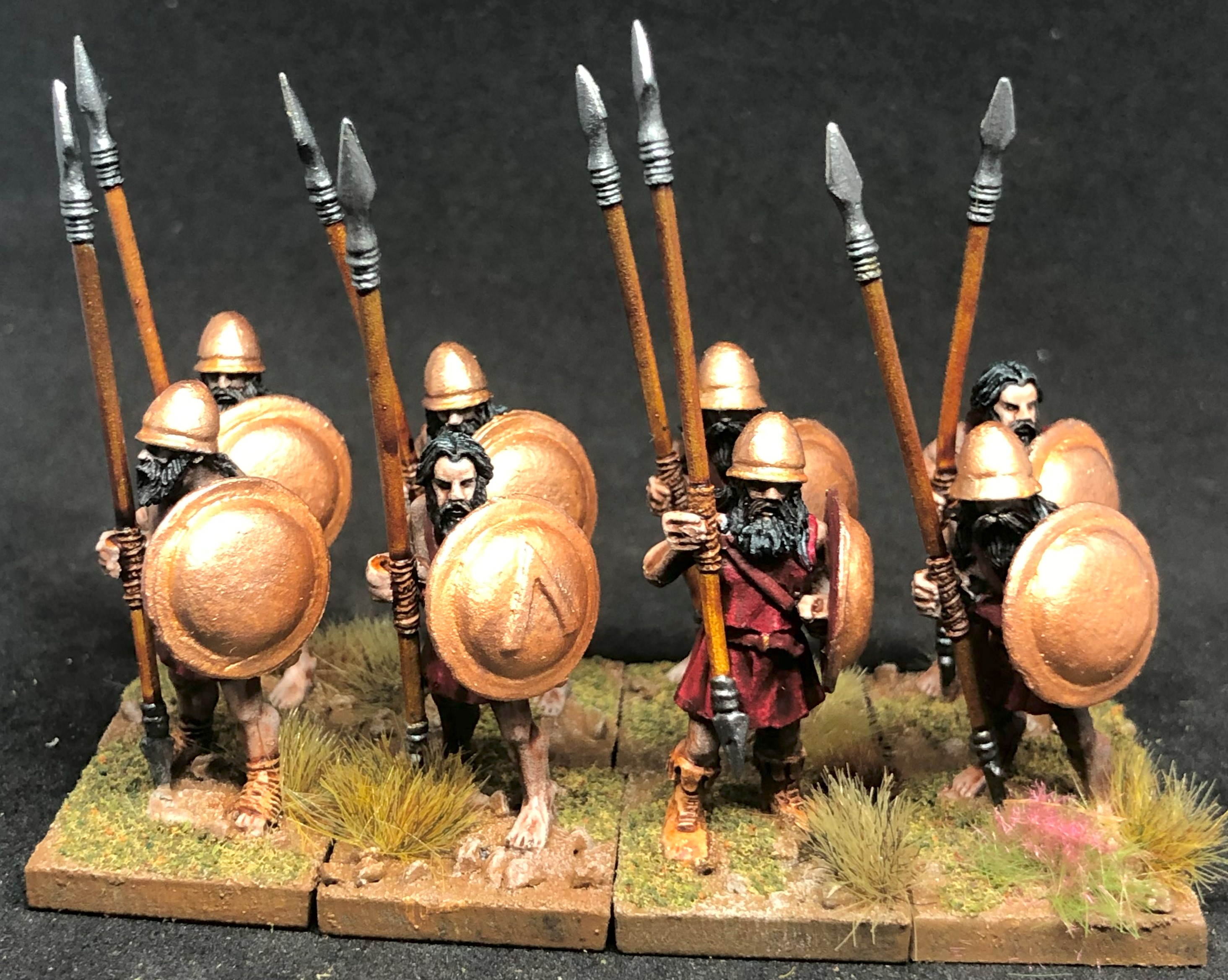
Finished so here they are. Stuck them on eBay so you have a chance to own them if you are quick (finish this weekend).

Speedpainting Spartans part 3
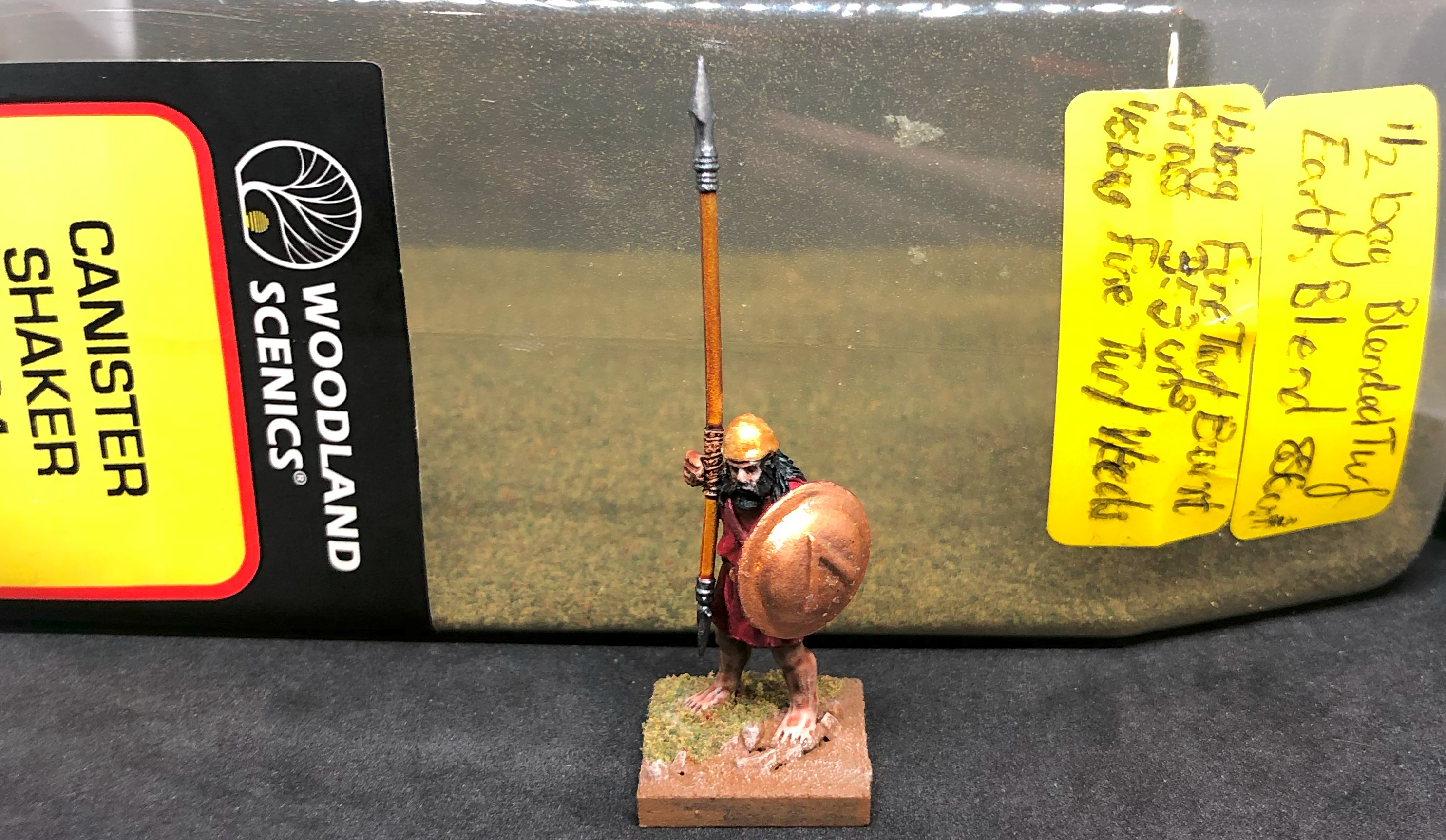
On to basing. Eagle-eyed viewers will have spotted that I started this before the final paint step. Mixed Woodland Scenics fine turf scatter to form a patch of grass on between a third and half of the base. My Mediterranean basing scheme wants the base to look quite dry and therefore I leave a ptach of sand/stones with just the earth colours on in the final finish.
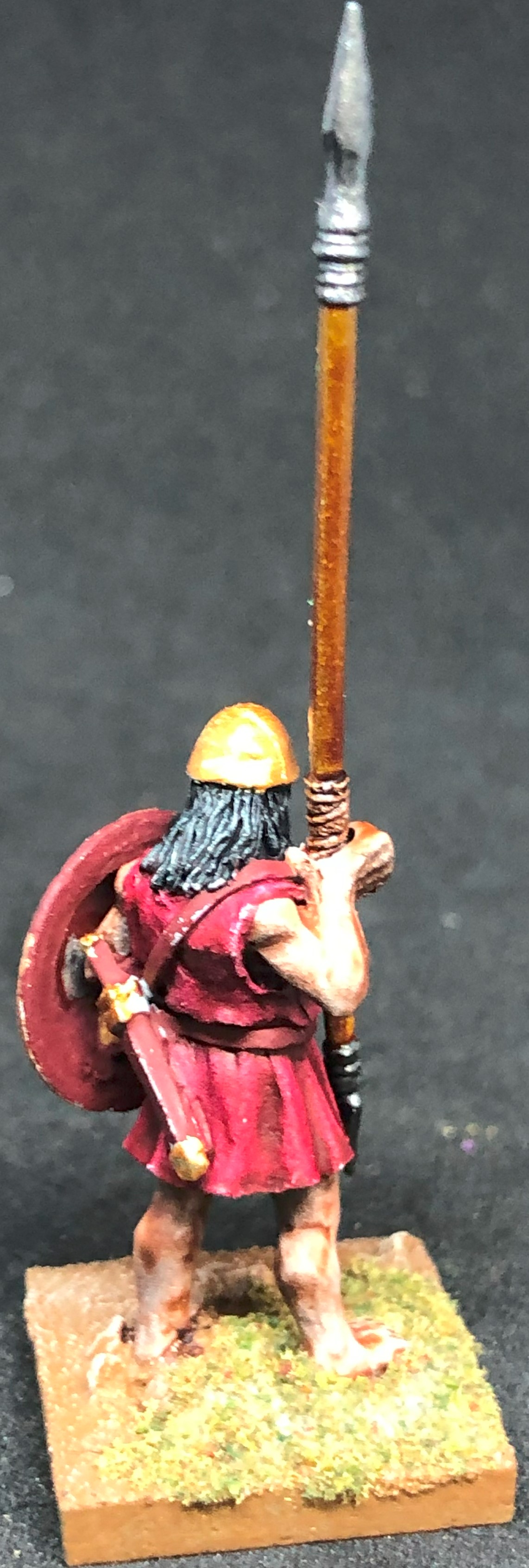
Then some static grass tufts. Mixed lengths and colours. This scheme is based around Gamers Grass Dry Steppe set. I do put mixed sets together myself but it is easier to use one of these commercial mixtures. A couple of tufts on each base genrally, two different colours. Sometimes only 1 especially if it is large or quite long, sometimes 3 if they are quite small.
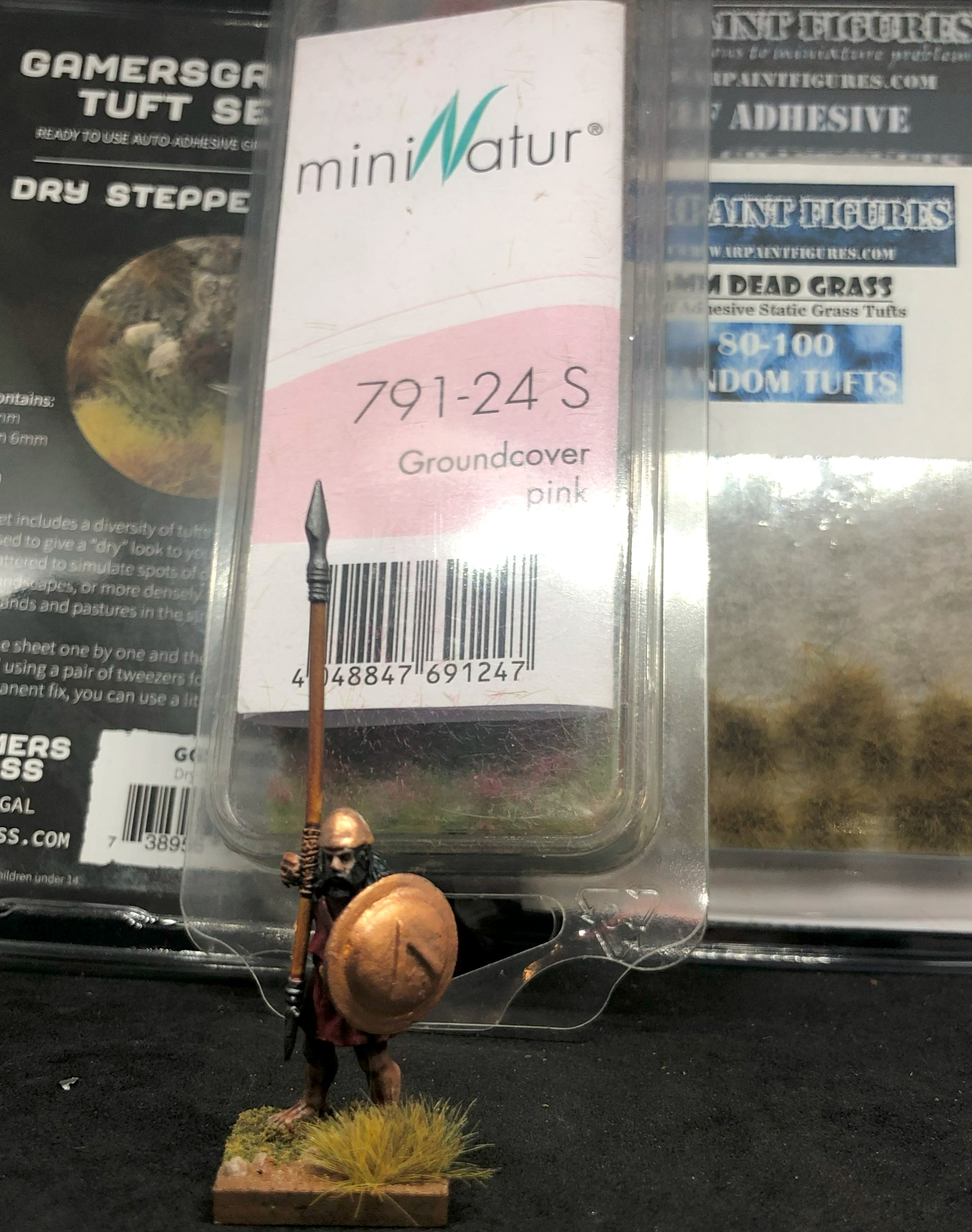
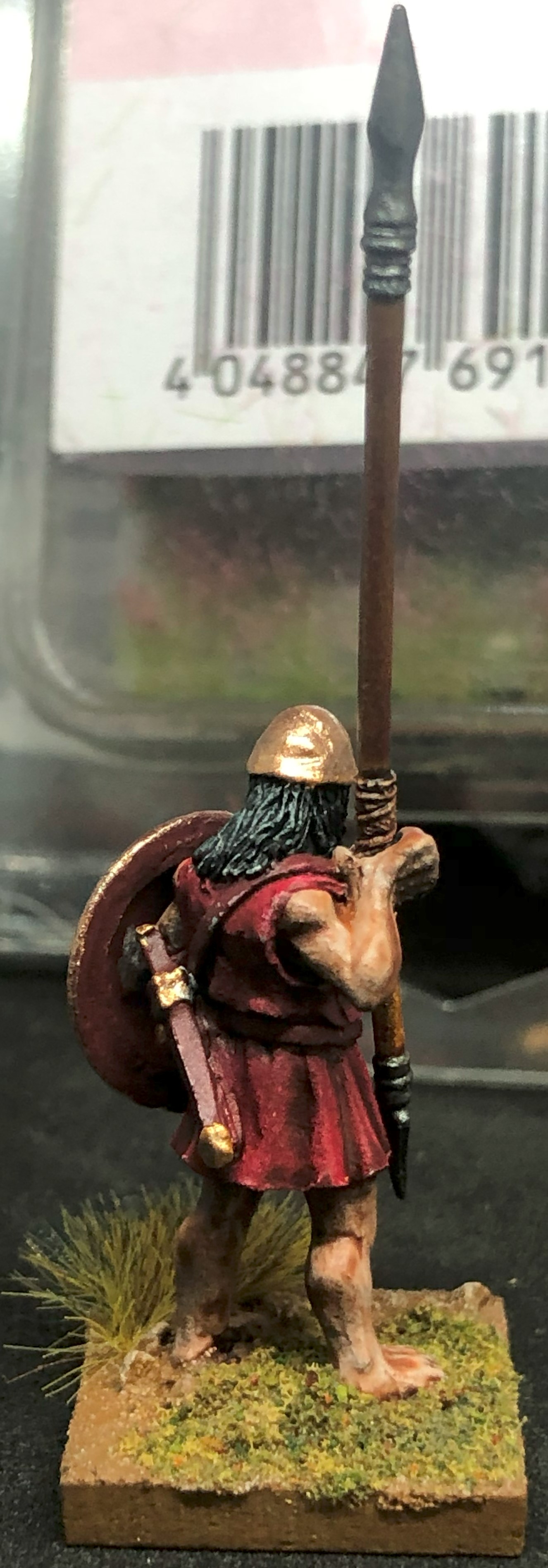
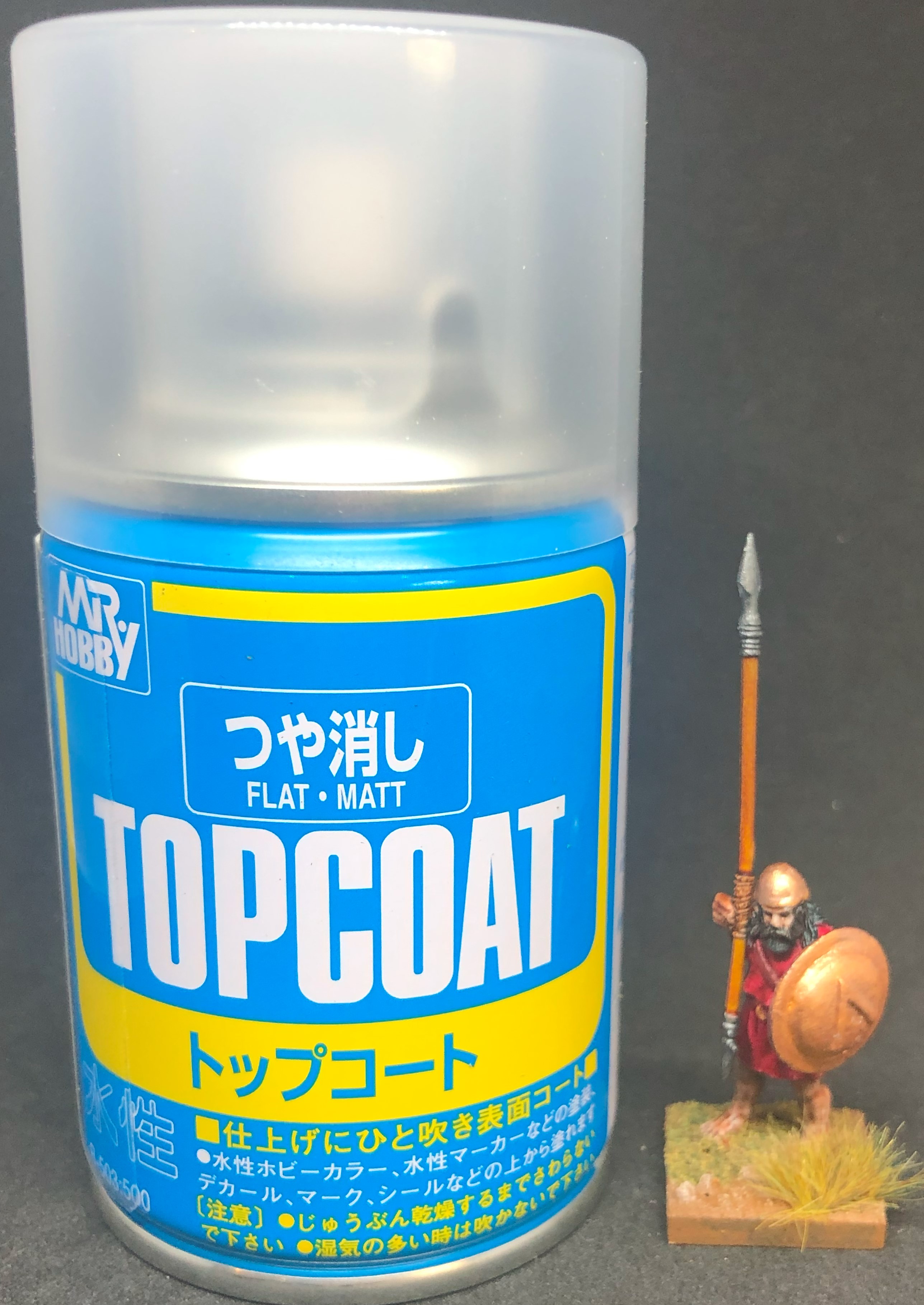
A coat of matt varnish. I have an airbrush but prefer rattle cans for speed and consistency and because varnish gums up my airbrush every time (I do use fine needles). As Testors isn’t around anymore this is the current favourite Mr Hobby Flat Matt TopCoat. Pretty good even over high gloss when I’ve dipped them – no dip for these though as I didn’t want to dull the colours which are spot on to what I wanted.
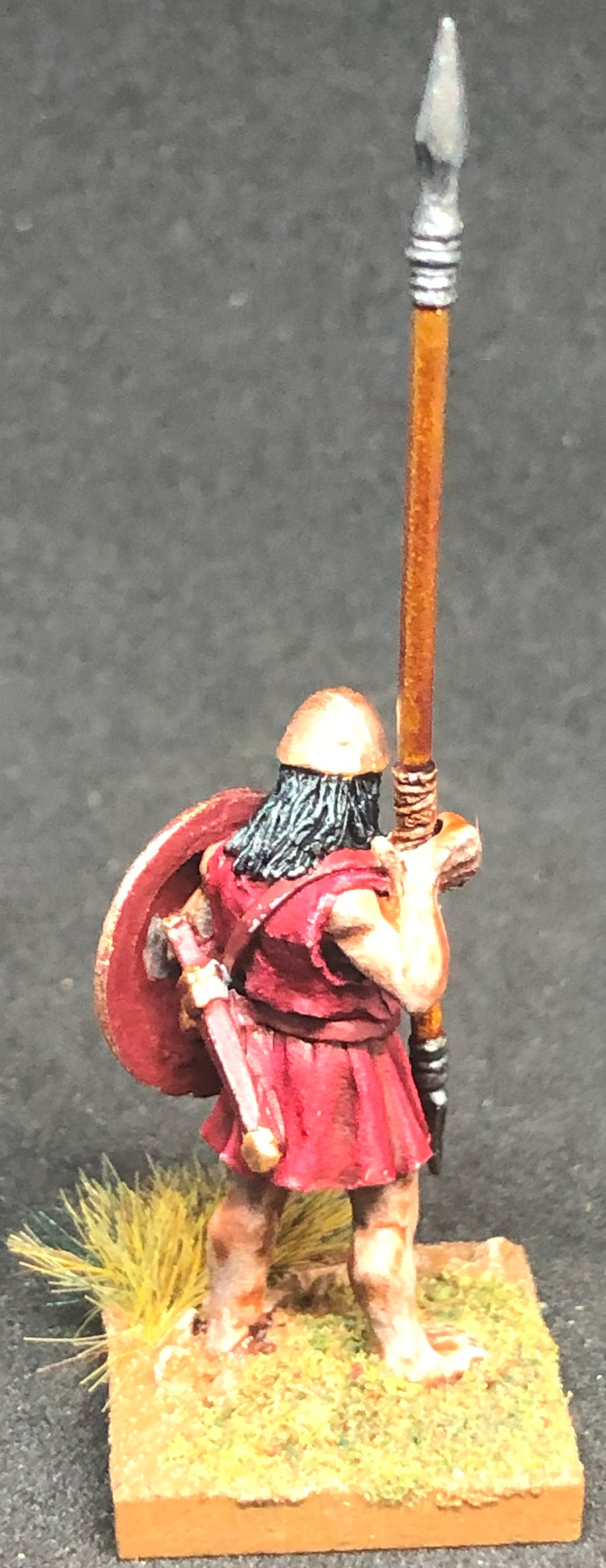
Final finishing touch is some shine back onto the pointy bit. These Vallejo Metal Colors are intended for the airbrush but work beautifully as bright highlights applied with a brush. Just the blade gets picked out.
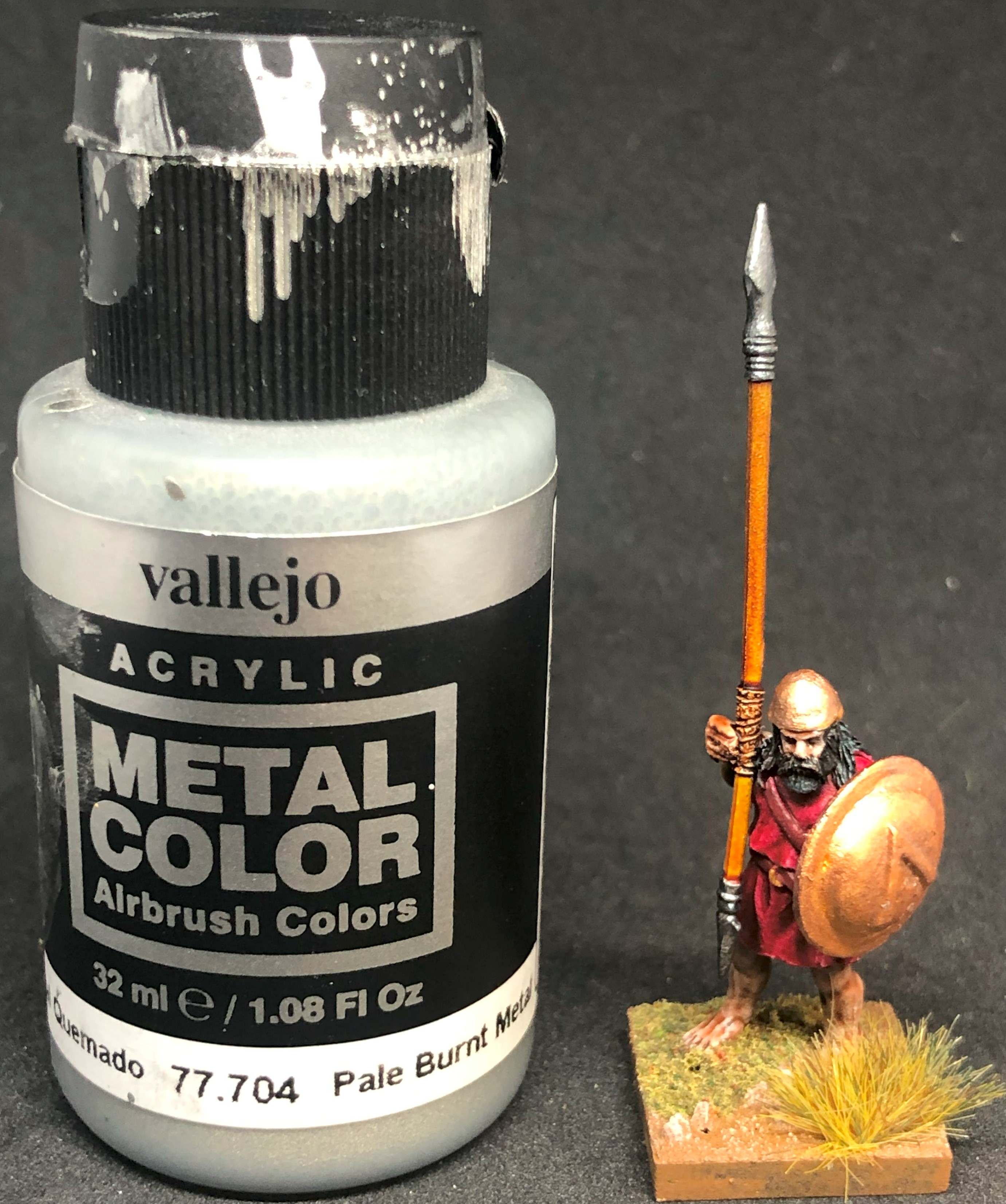
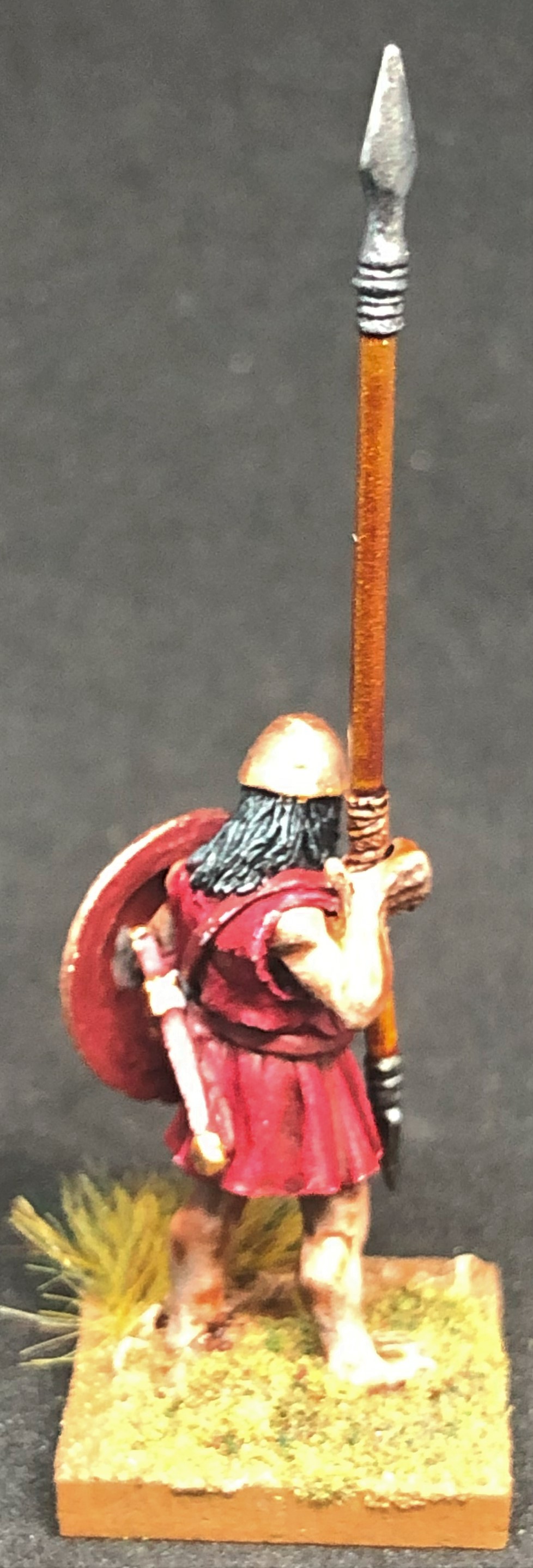
So there we go all done. He can join his mates in an 8 Warrior 1 point unit.

Speedpainting Spartans part 2
Now on to metalics. There will be good speedpaint options soon but I’m stuck with a two part standard acrylic approach for now. Spear head and butt spike first in Vallejo Gunmetal (not pictured). Thn the skull cap which a few painters render in either leather or linen colours but I want in bronze. For a nice bright bronze I go with a mid tone gold with a more coppery highlight. Glorious gold to start then – doesn’t matter if this is a bit patchy – any patches with the white showing through will provide a bit more interest and light variance in the final effect.


Did the basic earth colour on the base next.
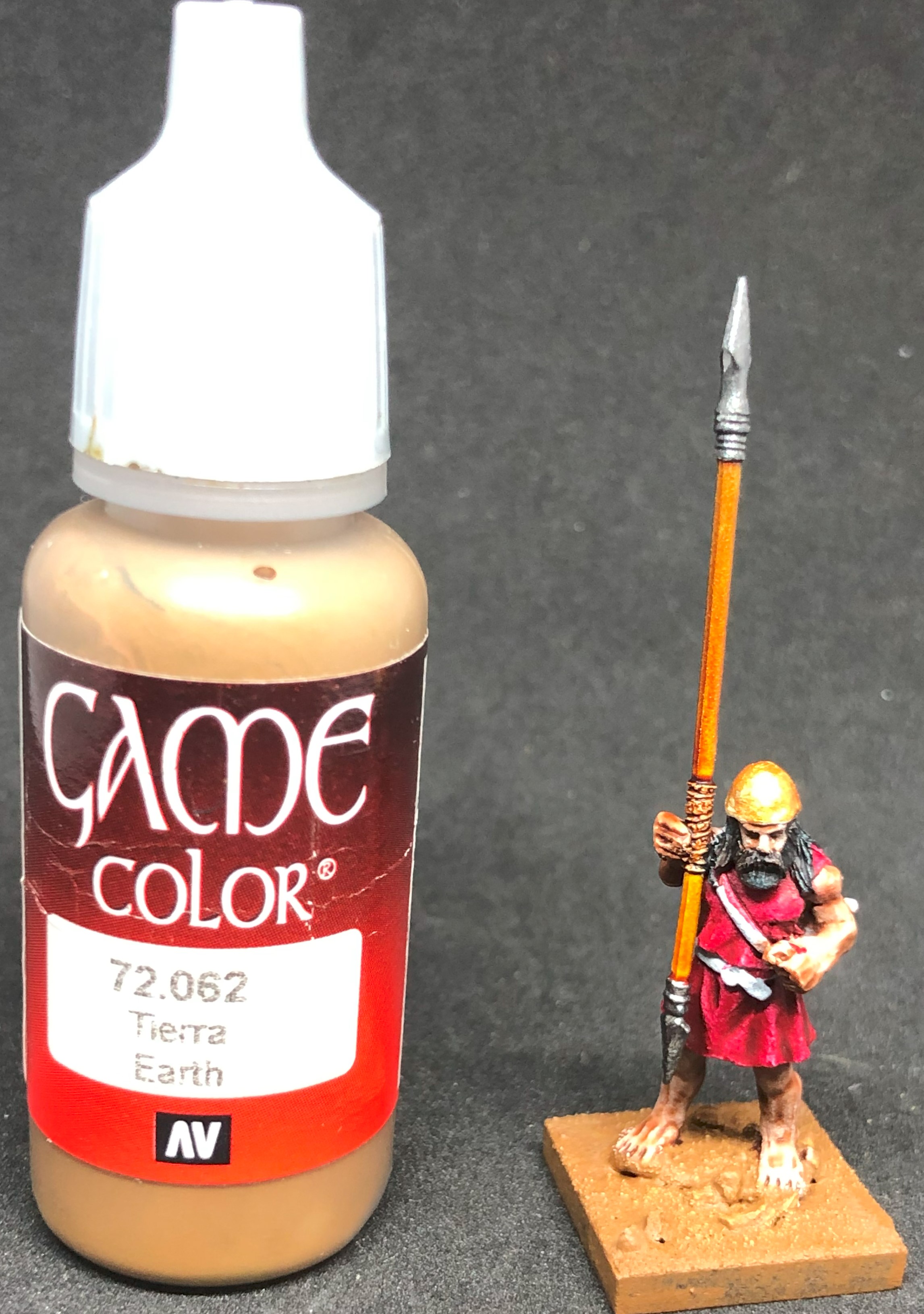
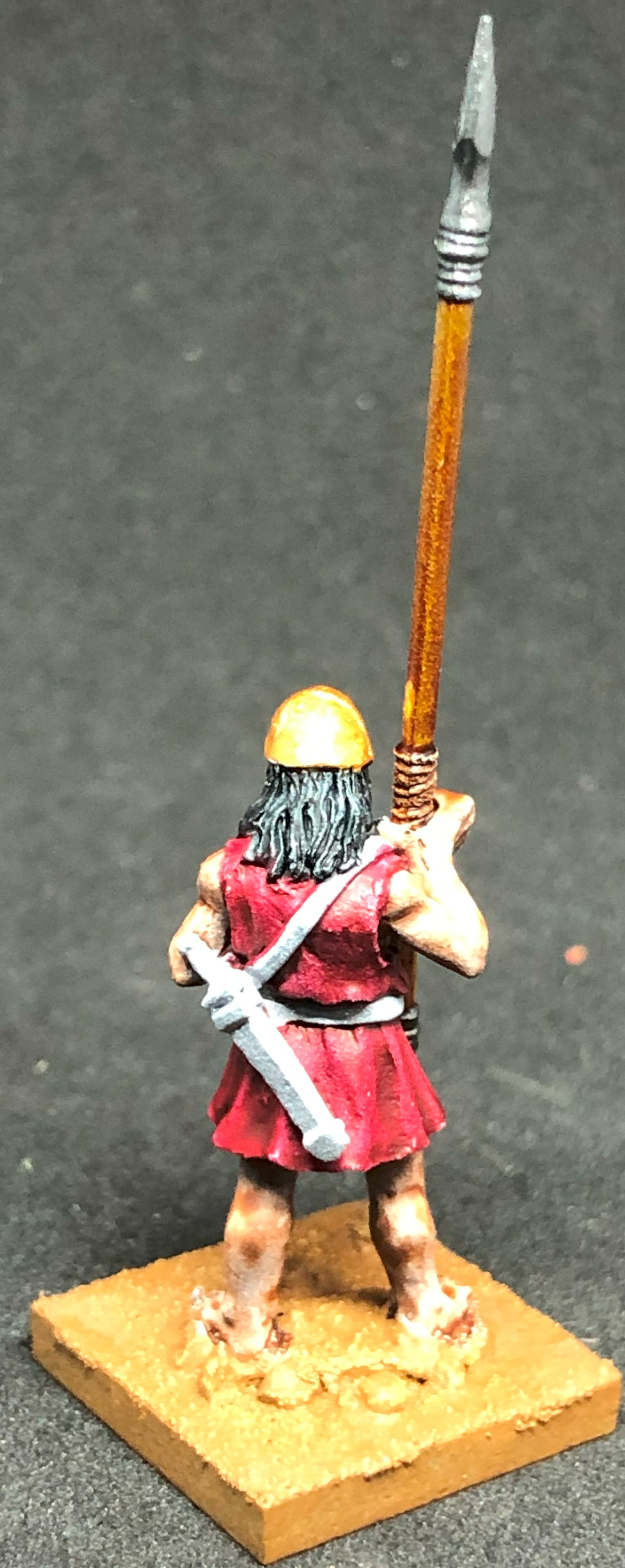
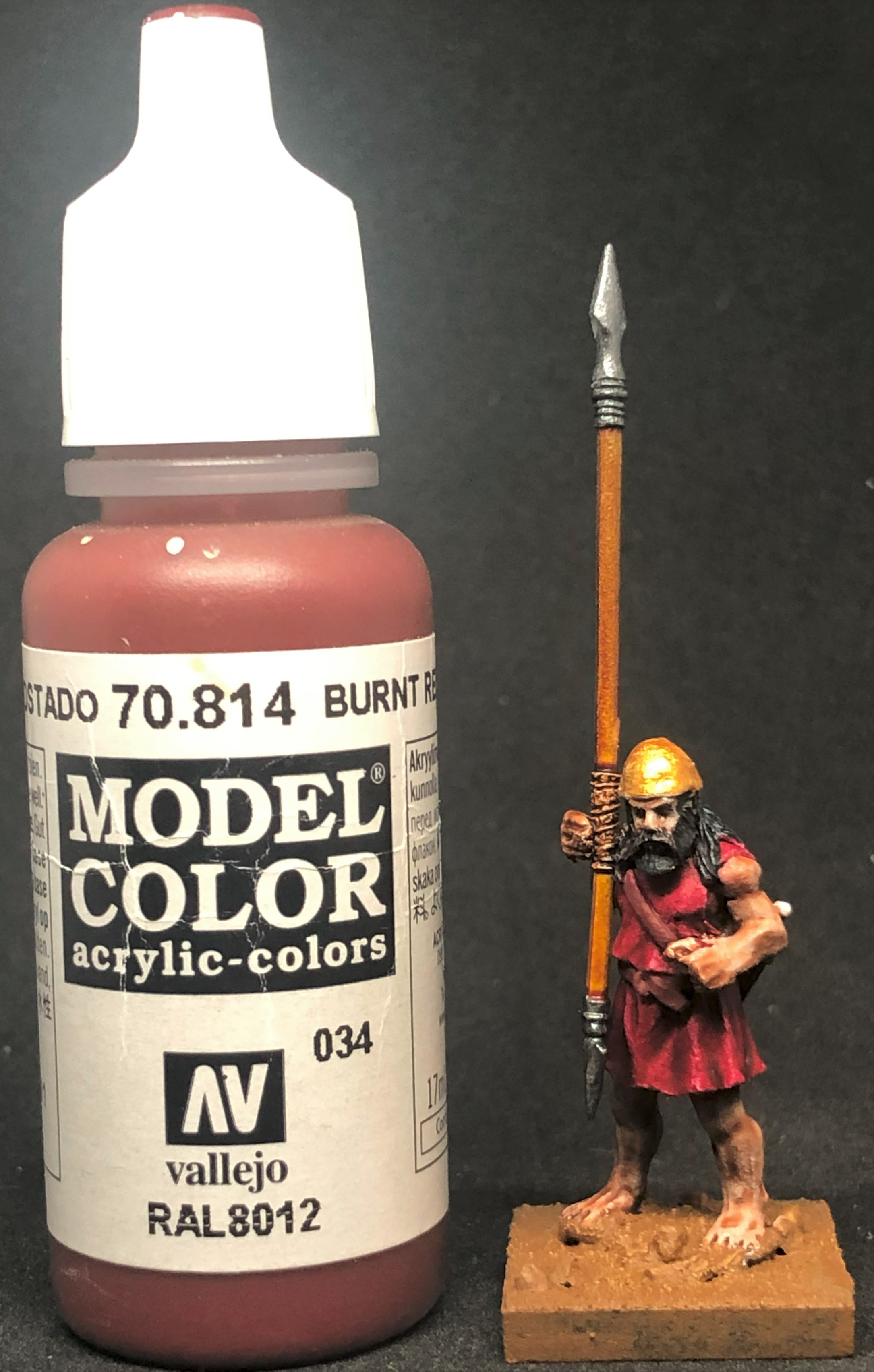
Leatherwork next and rather than a basic leather shade I’m preferring this redder colour that I think looks good with ancients, Vallejo Burnt Red.
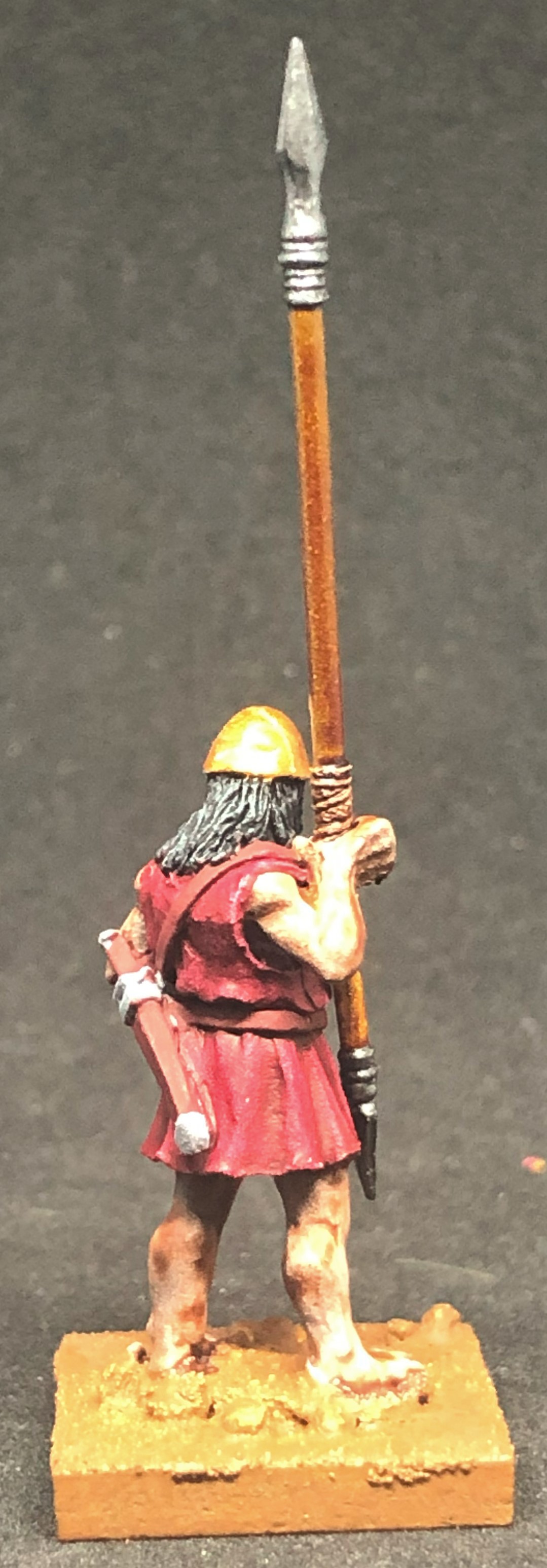
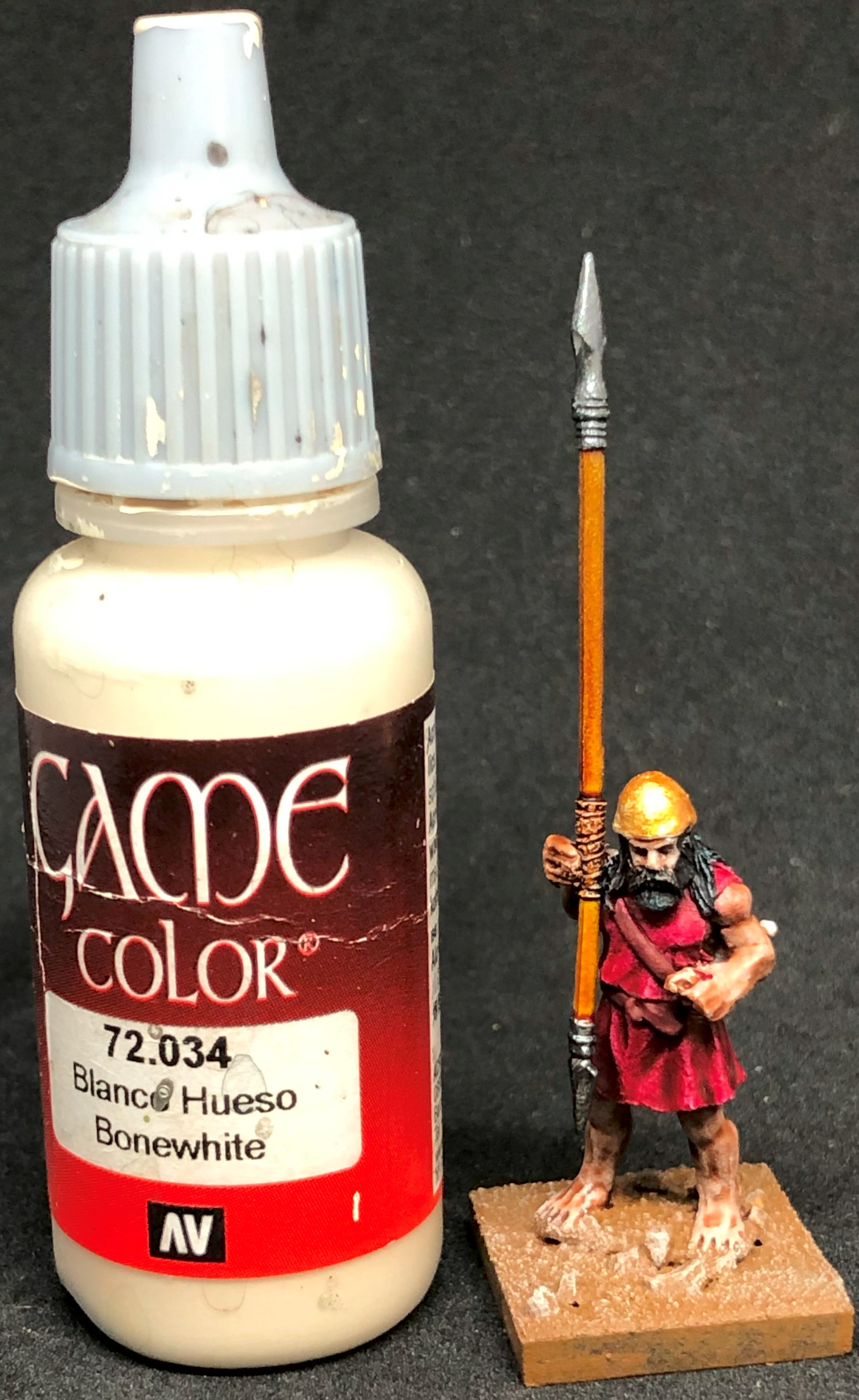
Bonewhite drybrush highlight on the base.
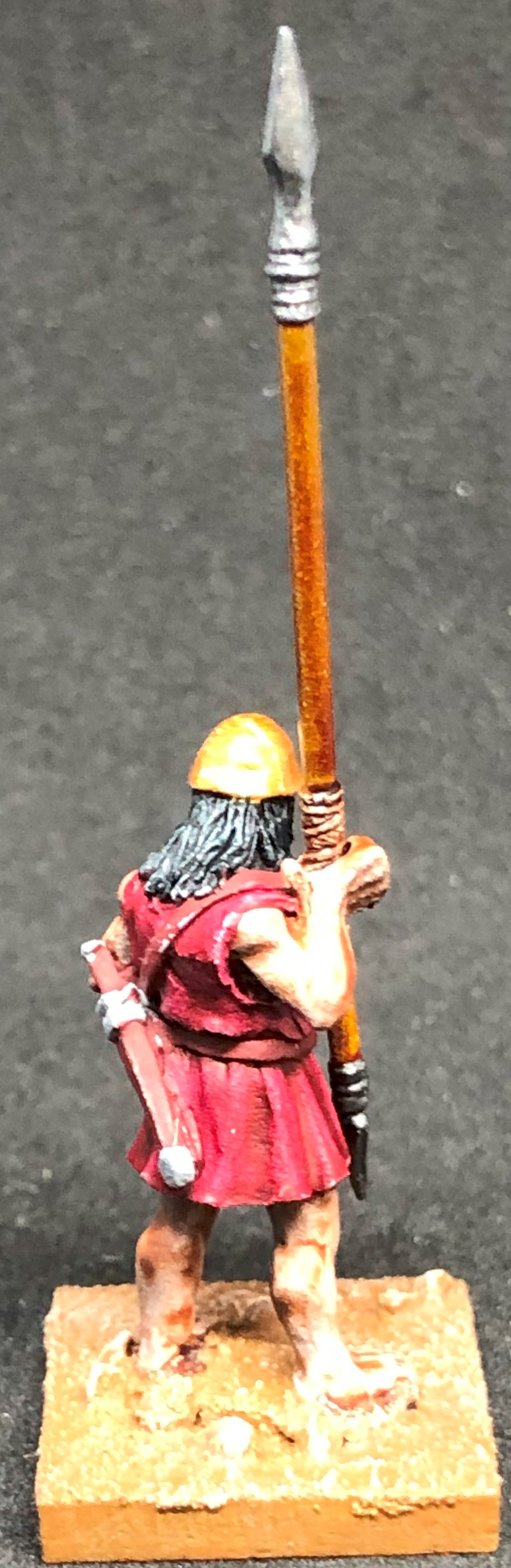
Back to the metal ics again for smaller details on the figure and the basic colours on the shield, gold front (over a white base coat) and red leather interior (over bare metal). Once painted we attach the shield. Scrape off paint on the forearm to ensure there is a metal to metal join which is a better quality of hold for the superglue.
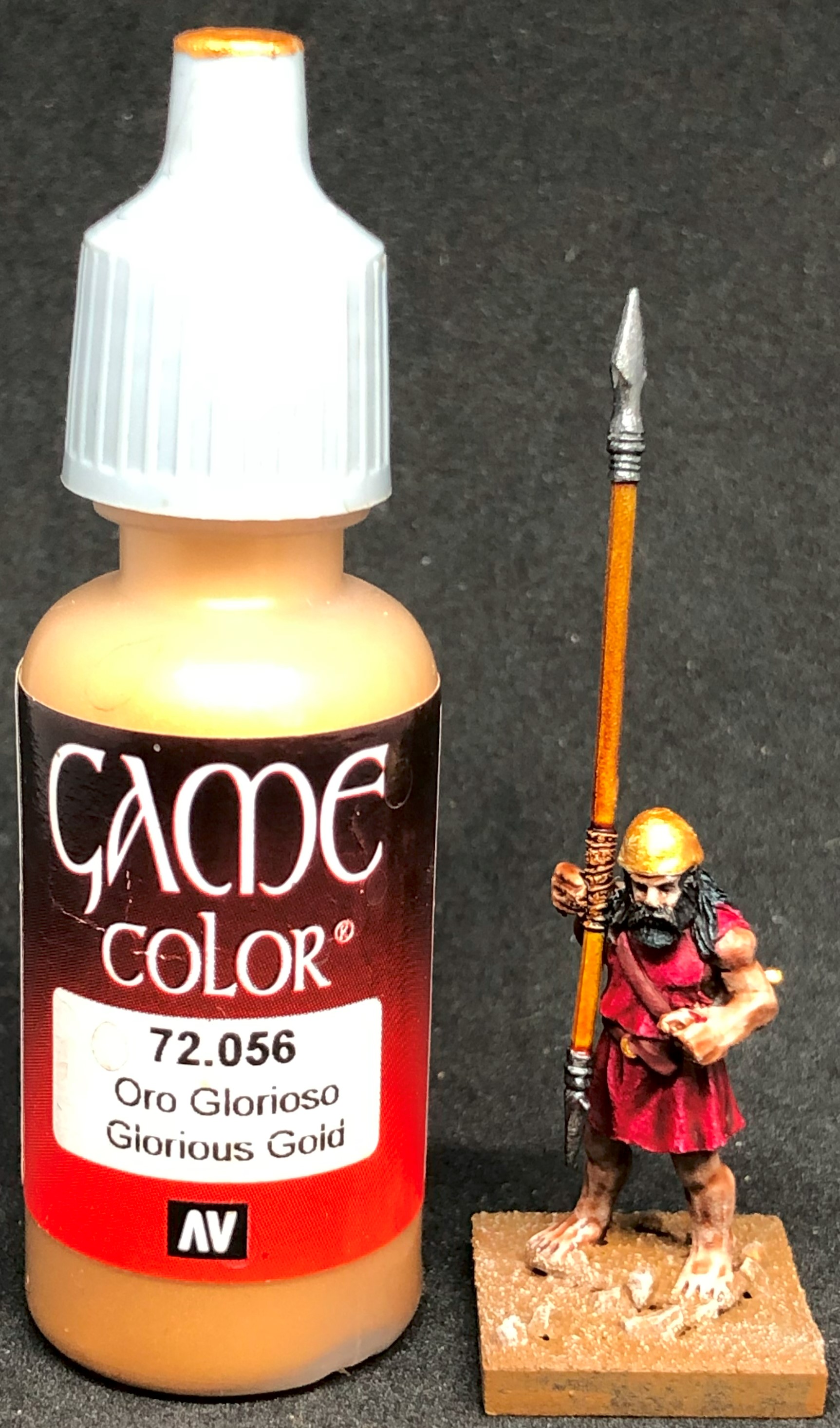

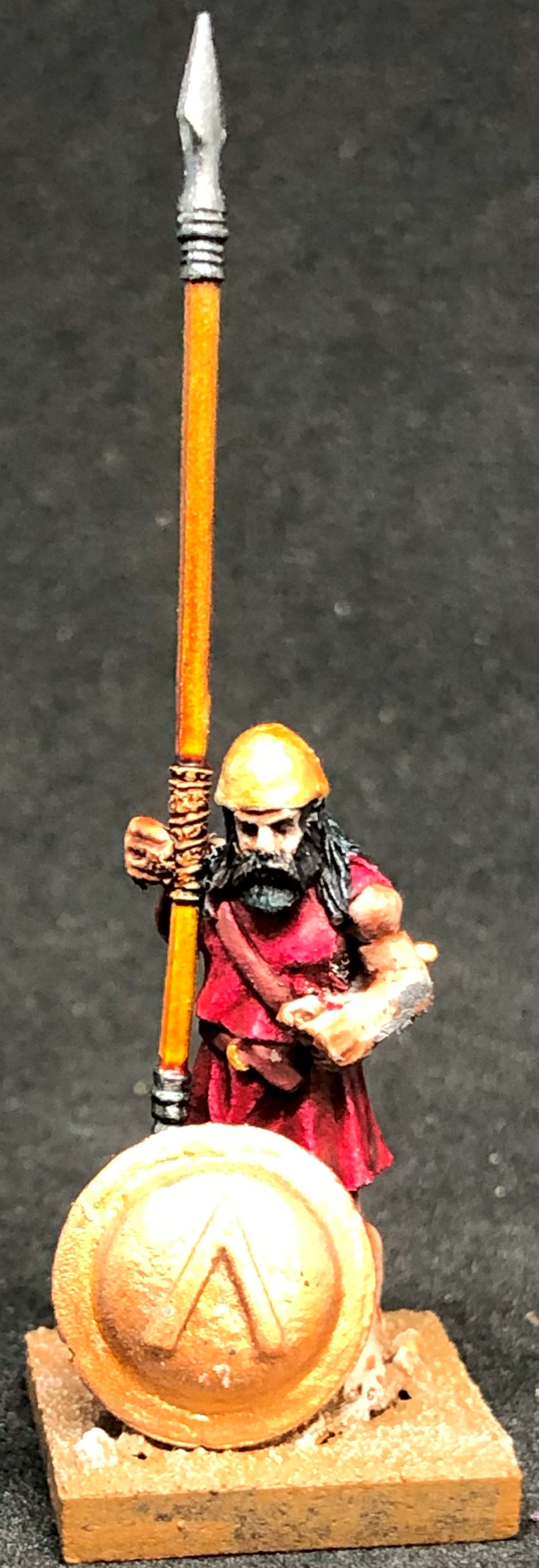
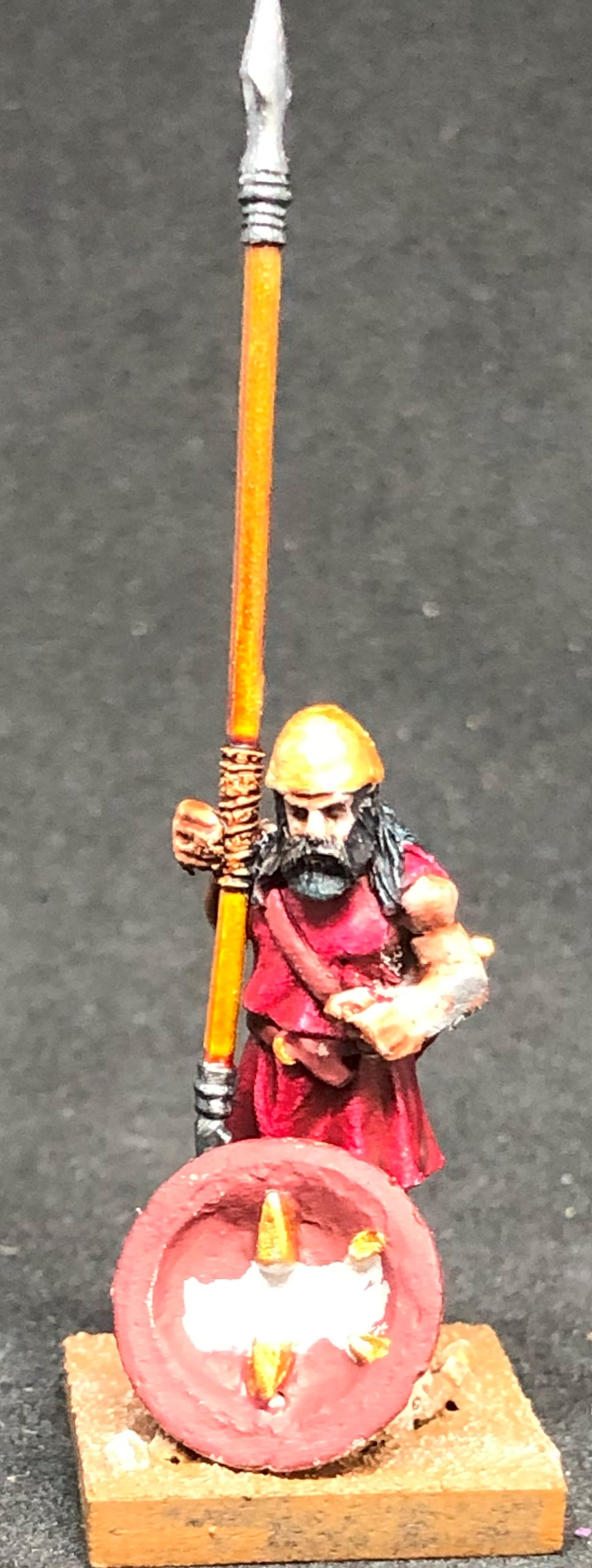
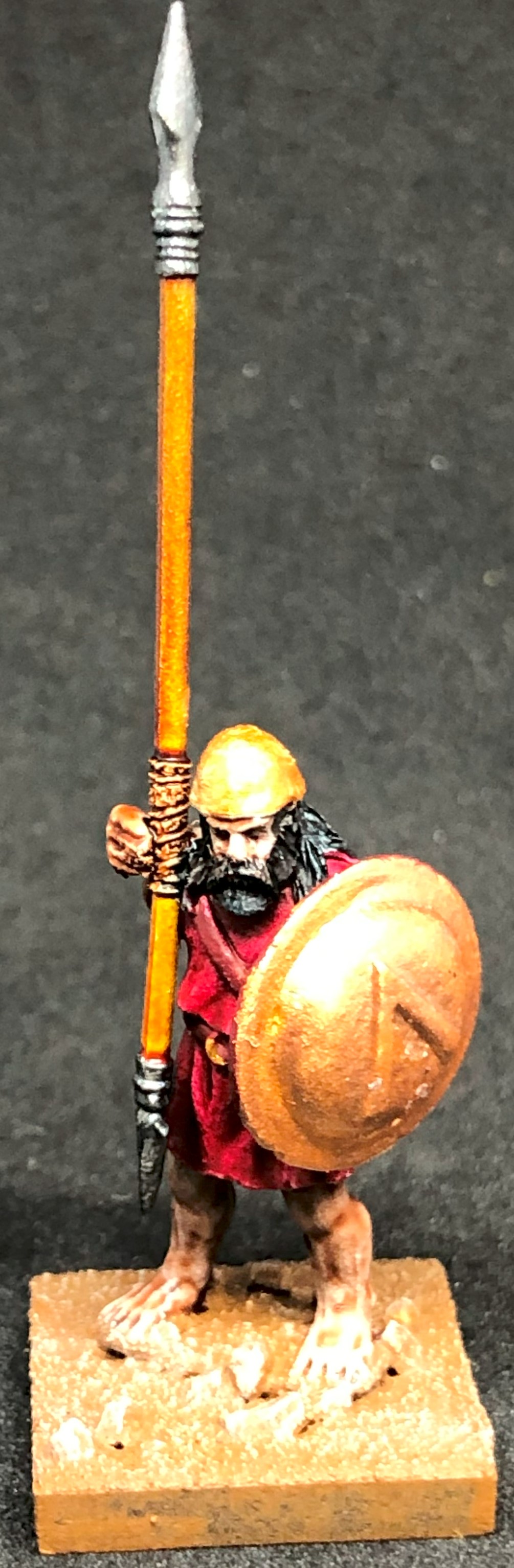
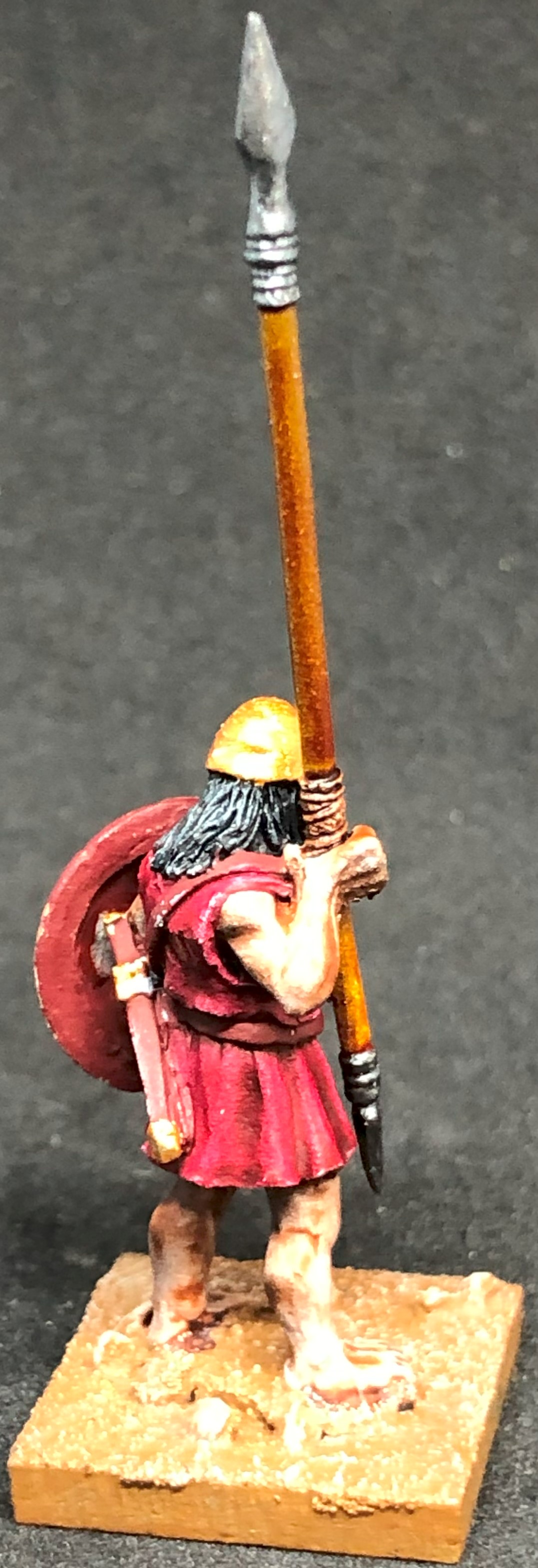
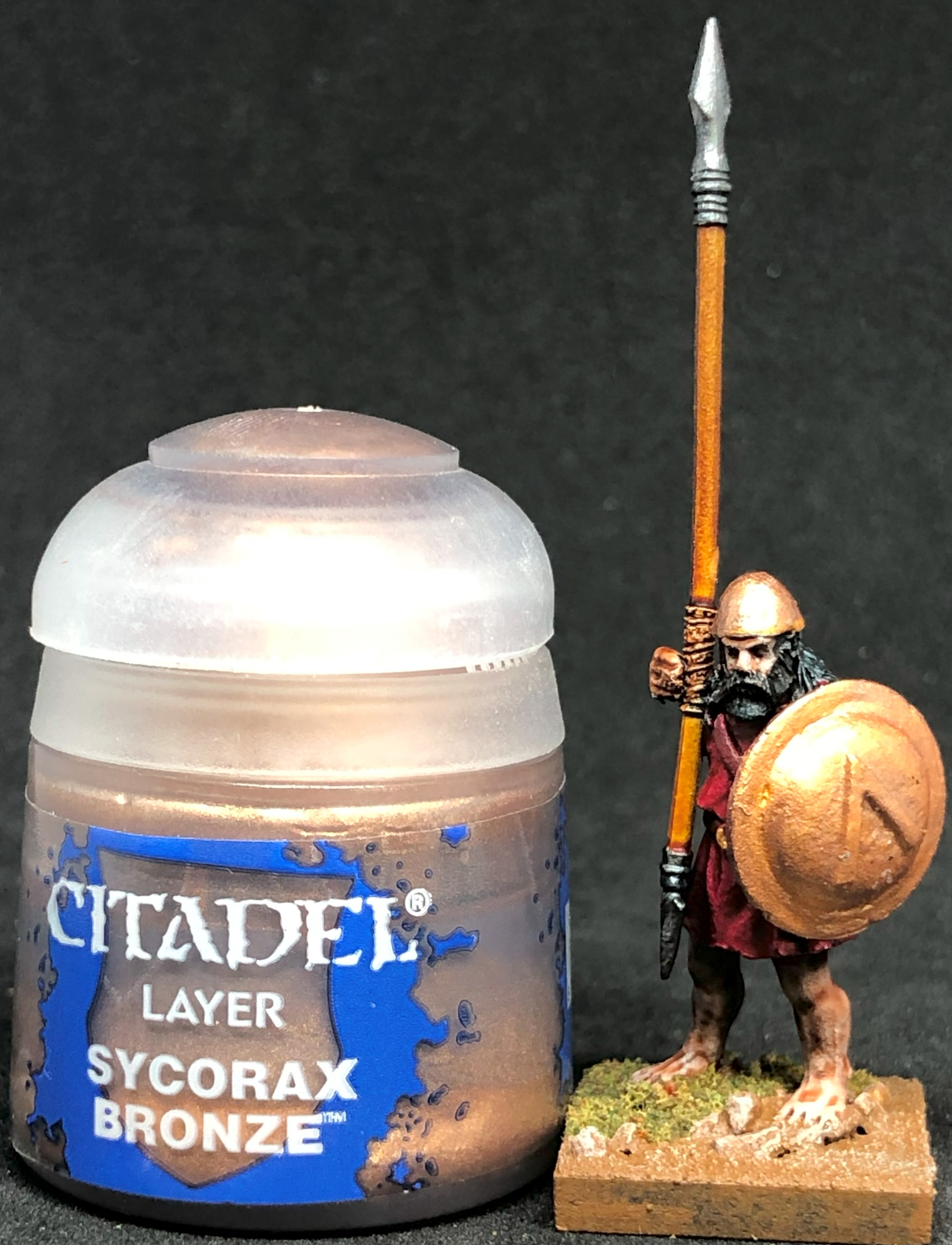
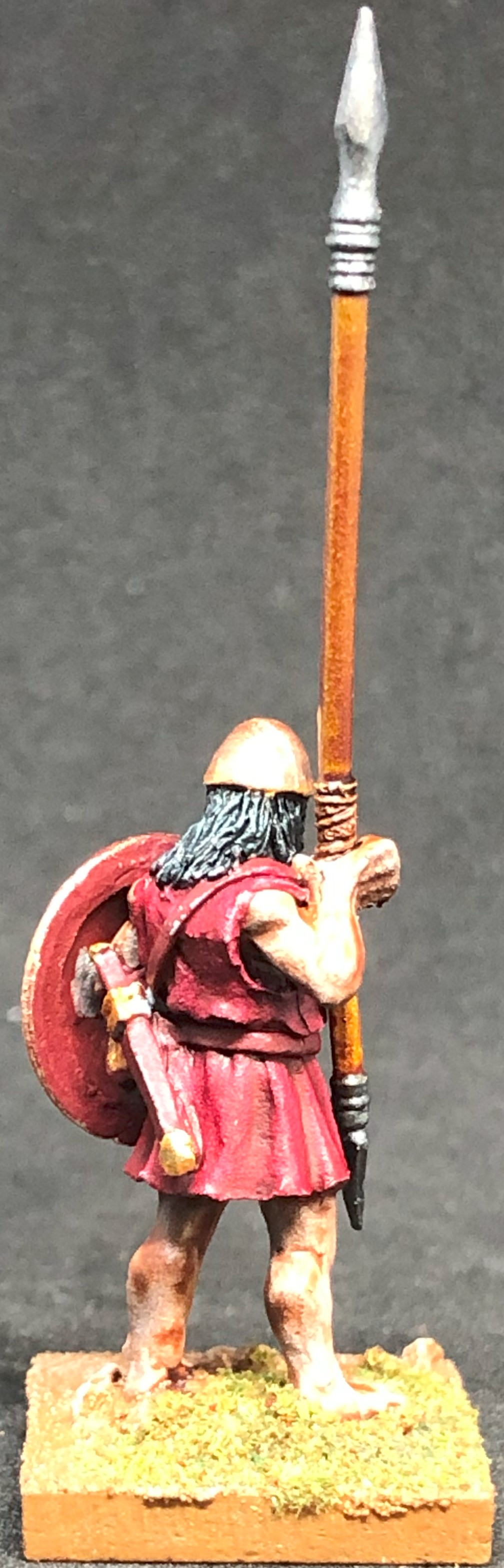
Now the bronze highlight on all the gold bits to give us a nice bright bronze colour. Sycorax Bronze from Citadel is not great for coverage either but the two rather thin colours overlayed give a final metal effect with depth and complexity.
Speedpainting Spartans part 1
I recorded the stages used to paint a Spartan unarmoured warrior from Wargames Foundry. I suppose this is a bit of an homage to Kevin Dallimore’s painting guides, he did a nice armoured Spartan step by step which is still on the Foundry website. Clearly I’m going a bit quicker than the three shade process here. We start off by cleaning off the minimal flash and then arm our Spartan with a cast spear. The best looking dory is made by Aventine Miniatures (Cast weapons AW03) and as they cast in pewter it isn’t bendy like a white metal one would be. They are a little thick but are absolutely perfect in the somewhat exagerated hands of the Foundry sculpts. Zenithal highlight applied with an airbrush. I use Badger’s Stynylrez range as they cover brilliantly with a single thin coat and seem to shrink into all of the detail when they dry. White zenith from 70 degrees over an all over grey undercoat.
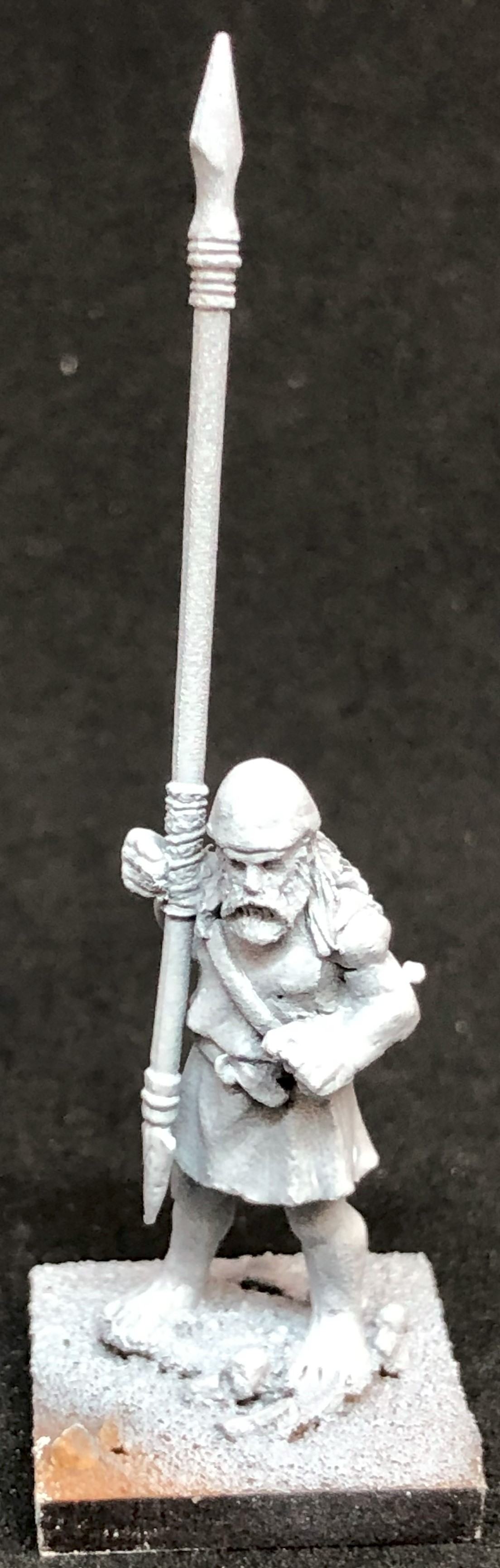
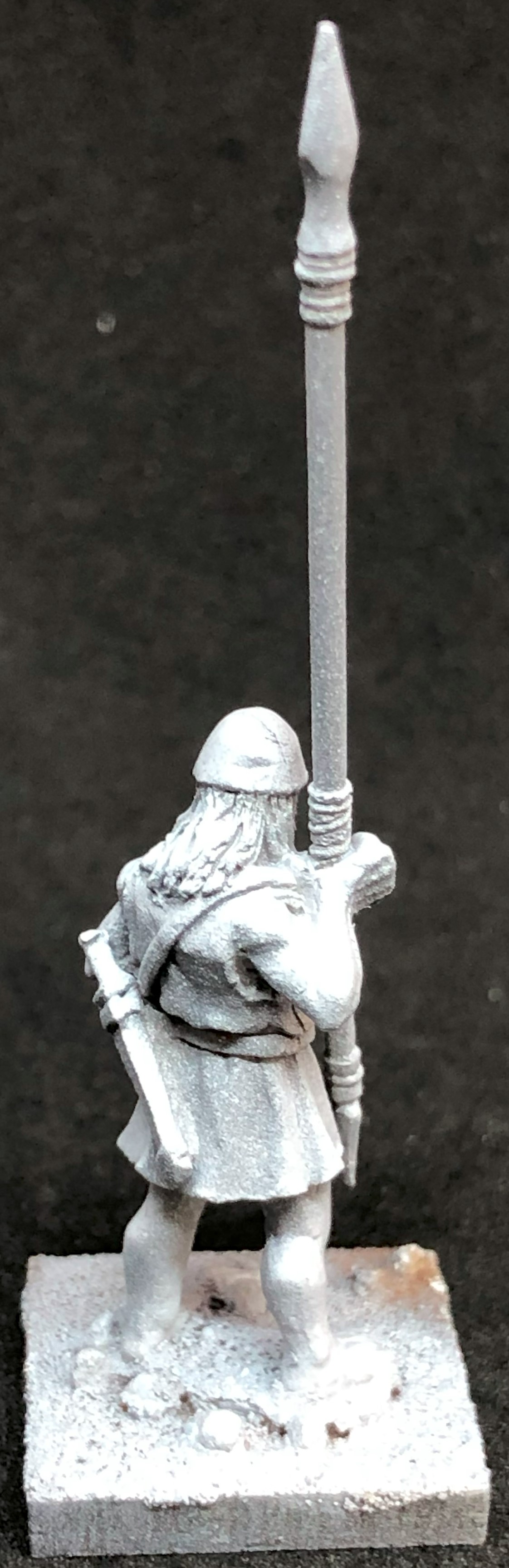
Now onto the speedpainting. Much as I dislike Contrasts for this technique I prefer the slightly more tanned look of Guilliman Flesh compared to the brighter AP Crusader Flesh.
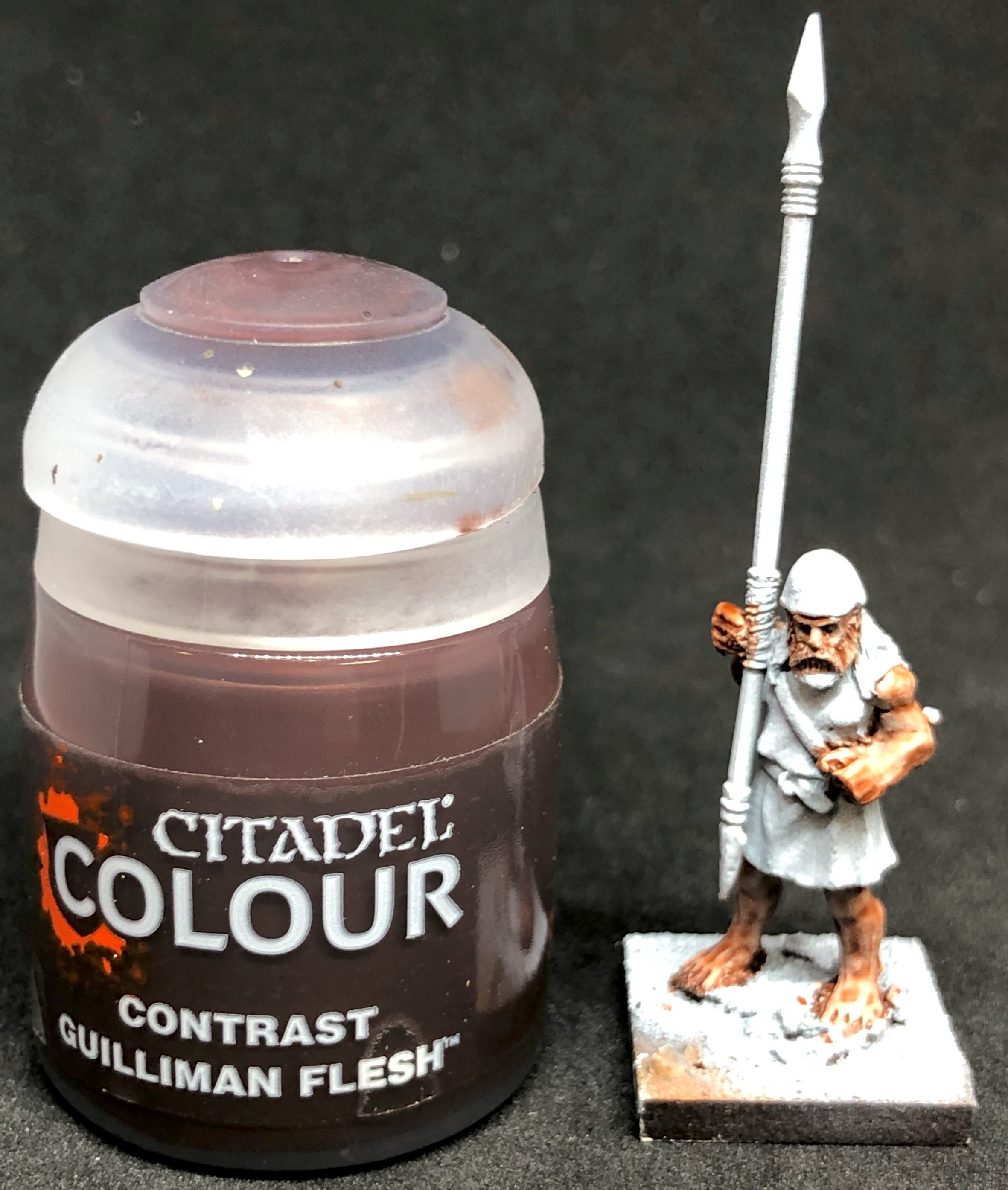
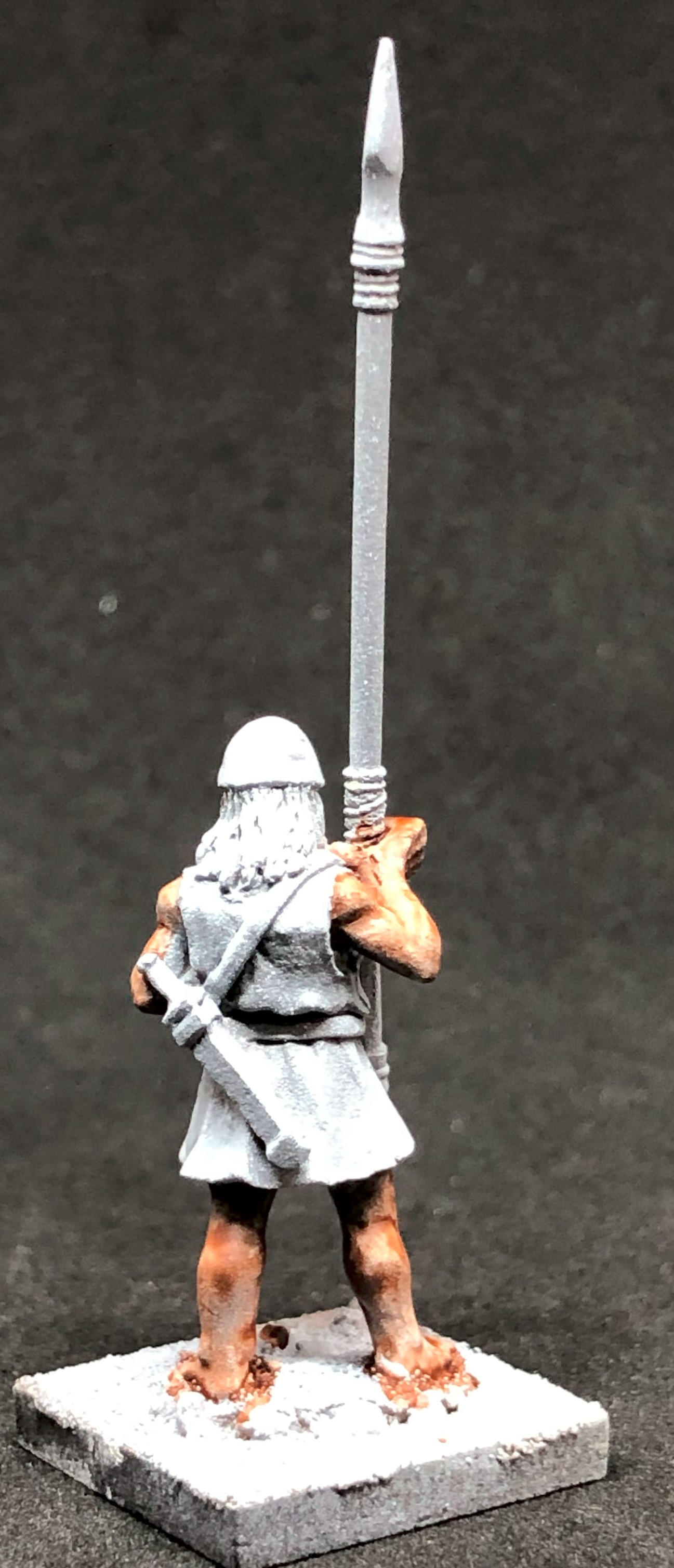
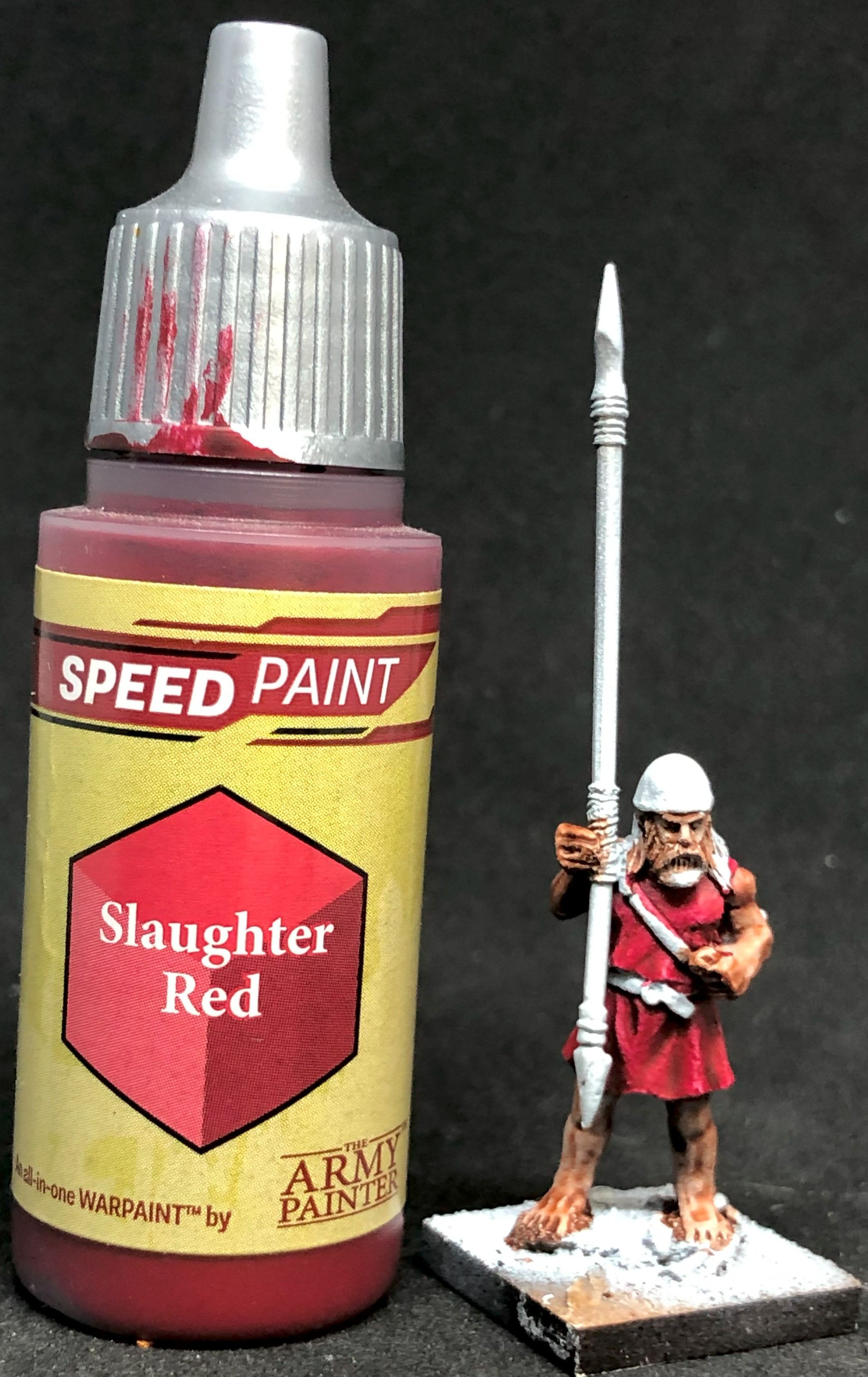
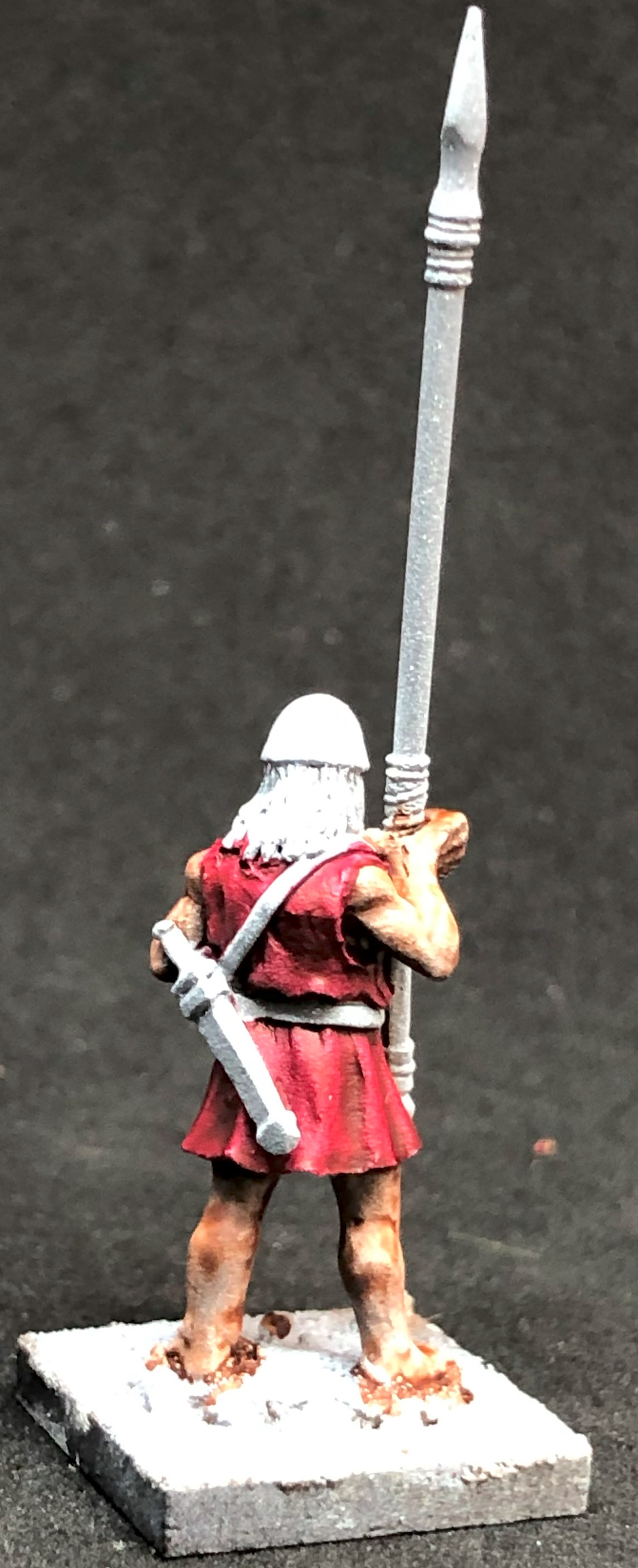
Red next. This is where speedpaints really come into their own. I’d have to spend ages trying to get this sort of finish with regular layers of acrylics.
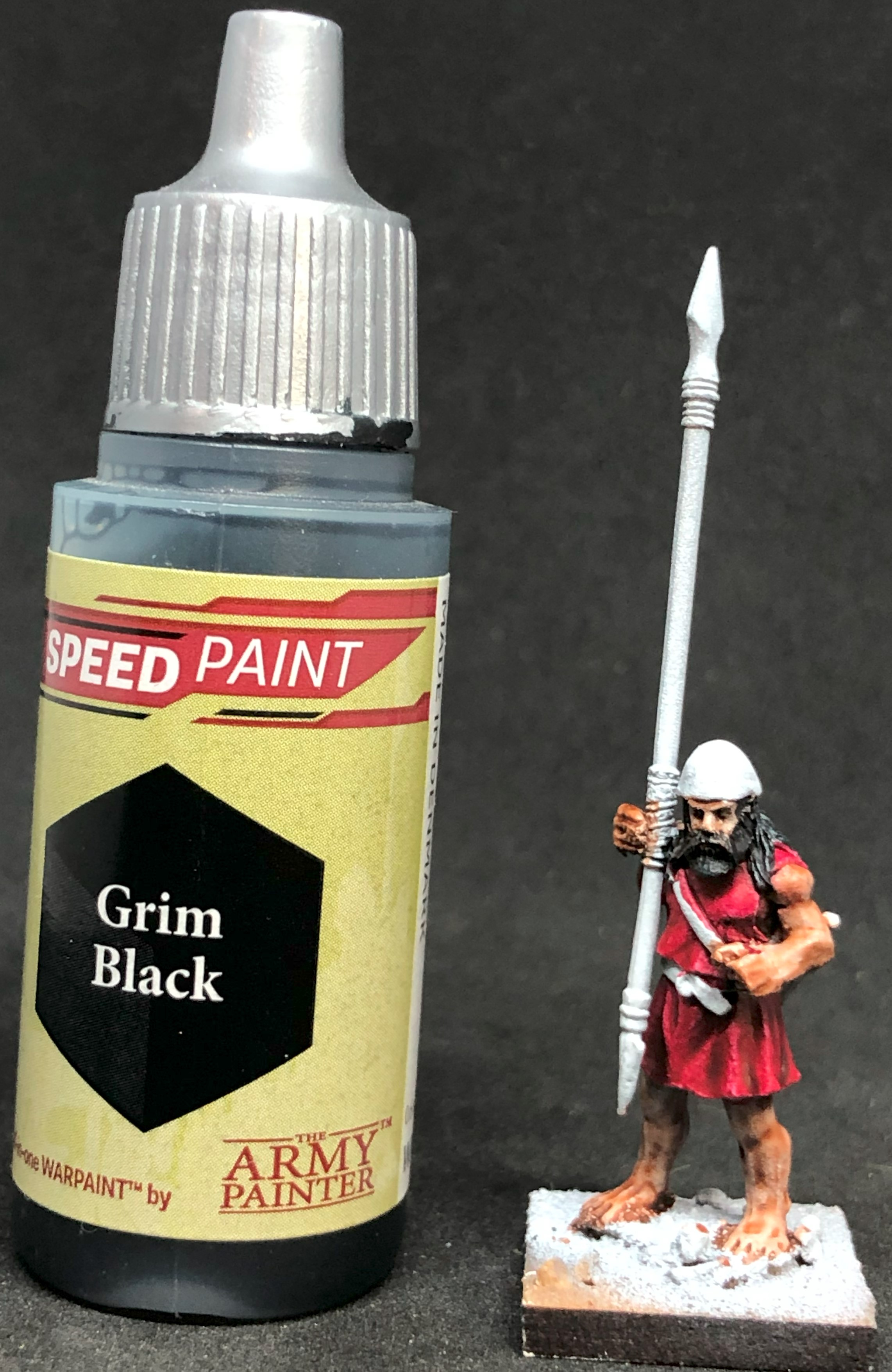
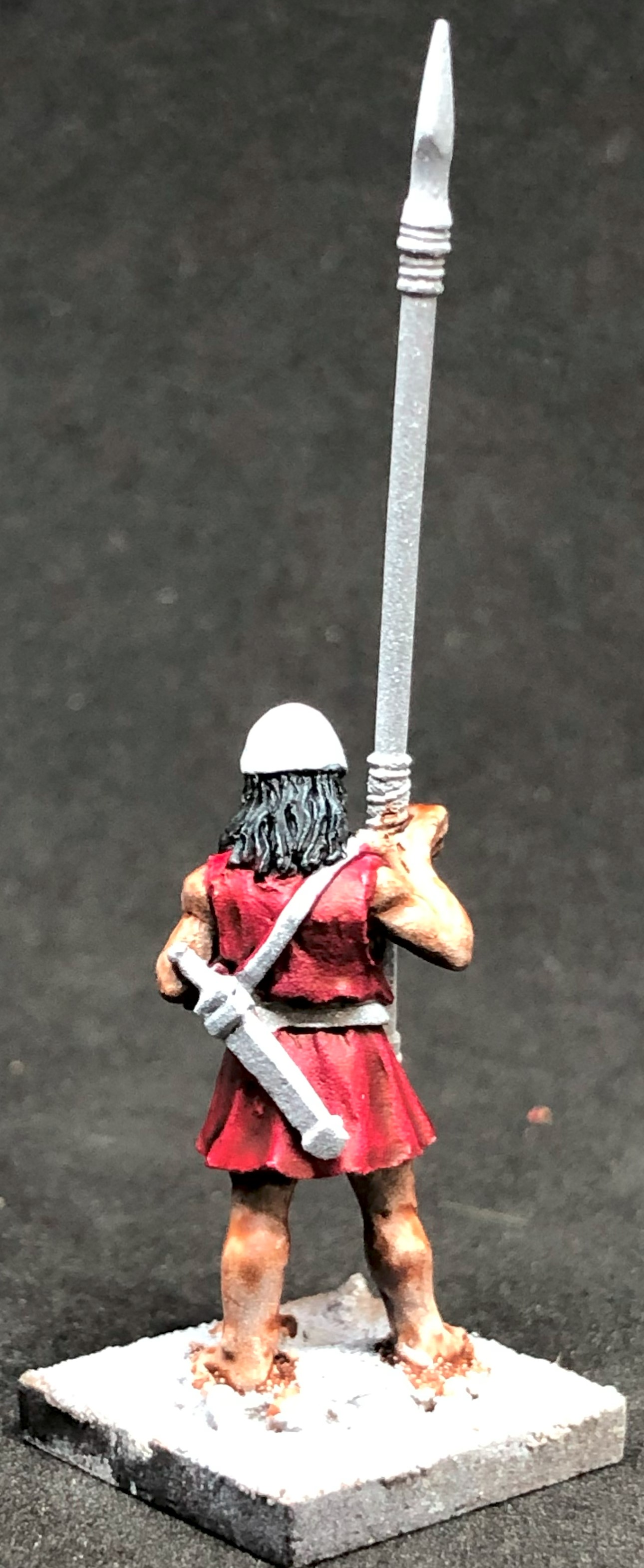
Hair next, black of course.
Now on to the spear. Leather wrap first.
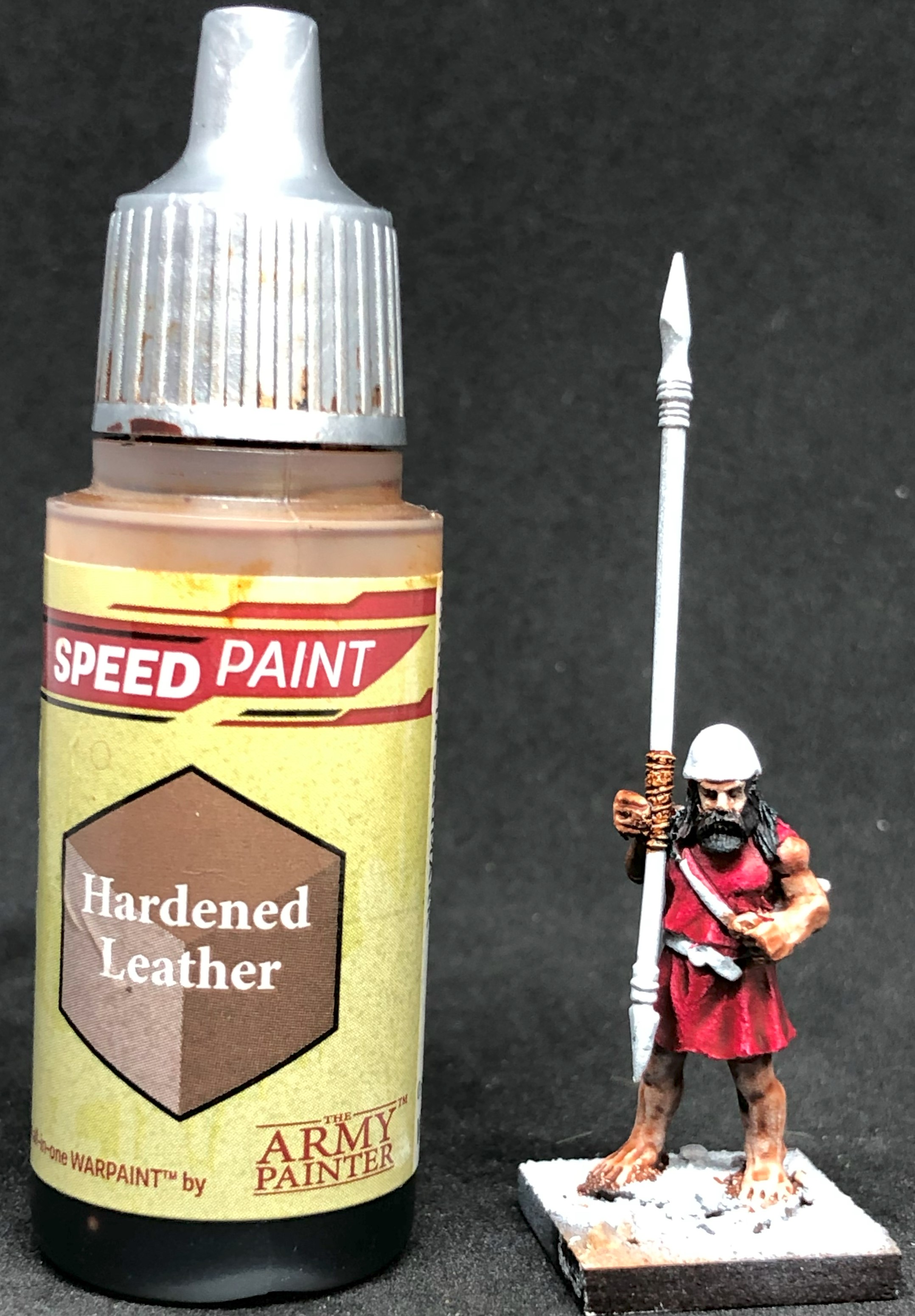
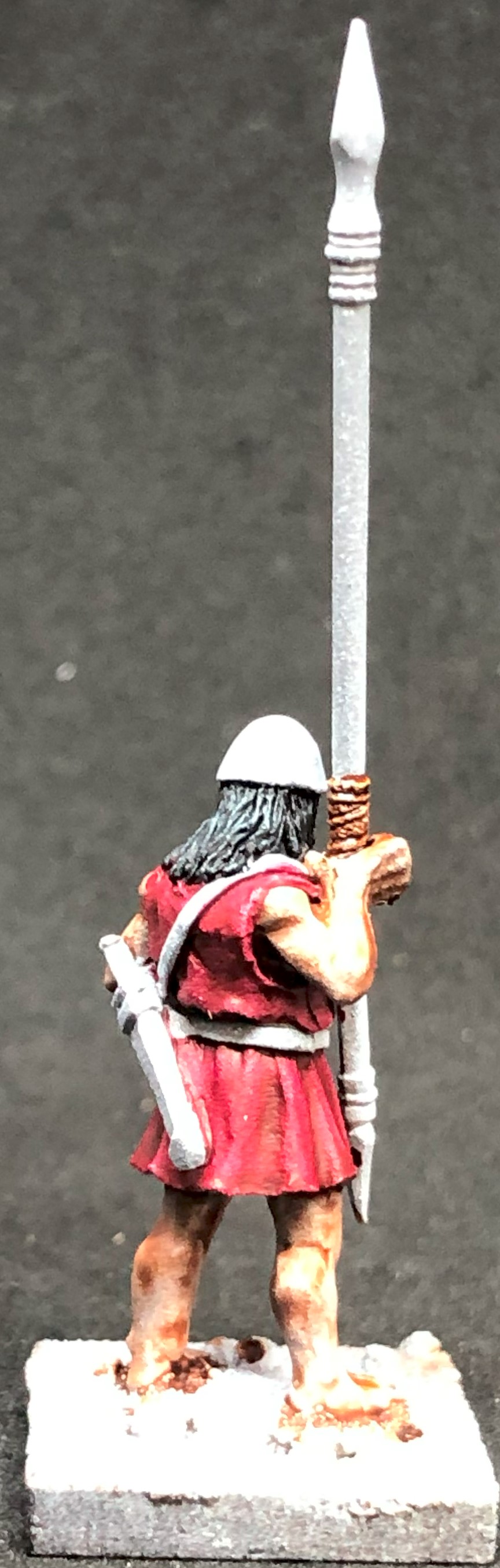
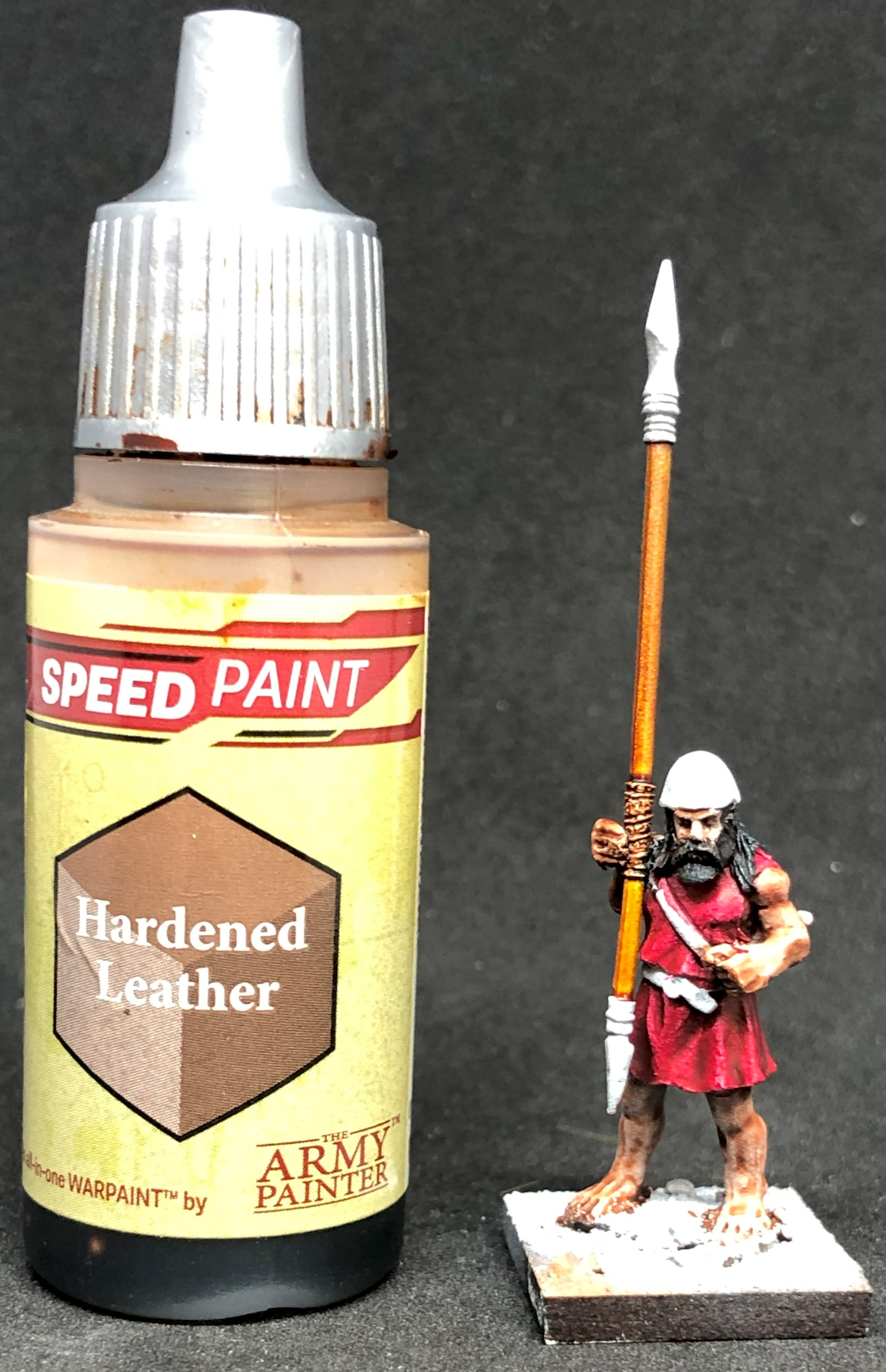
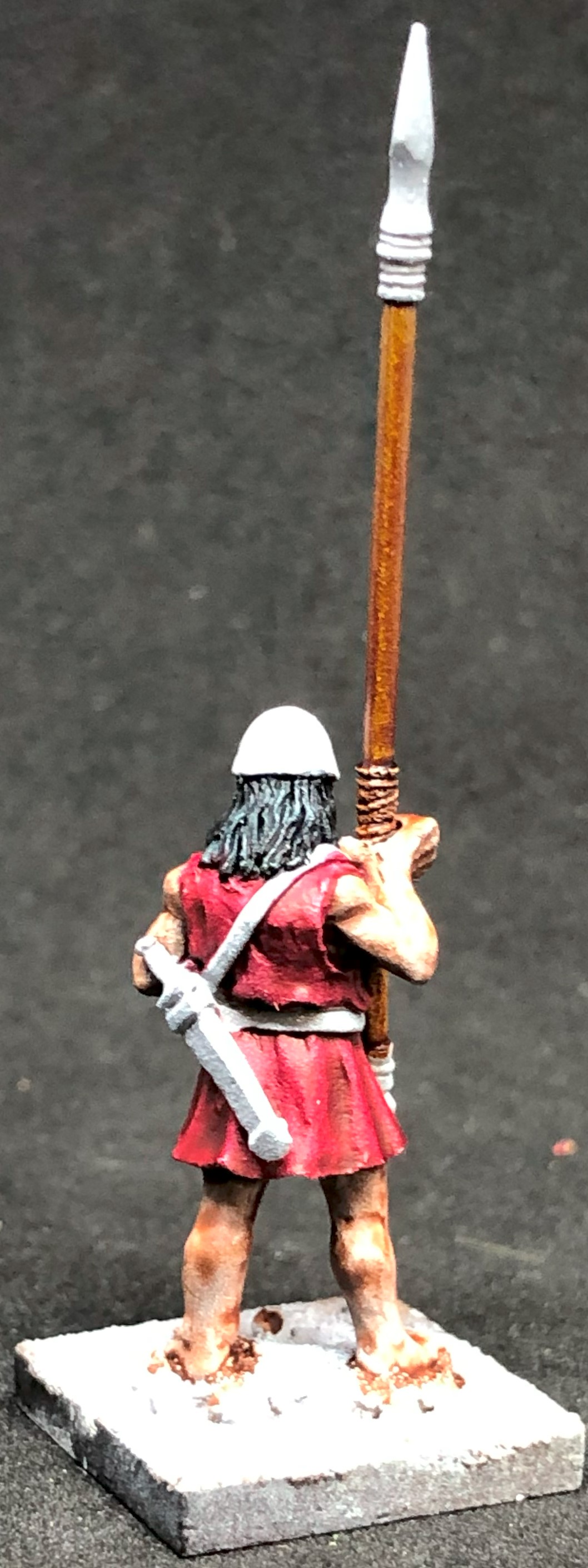
And then the shaft. Despite the picture this colour was Sand Golem. It provides a lovely light wood tone that is a good match to Vallejo Model Air Wood if there is any patching needed.
Getting a game in
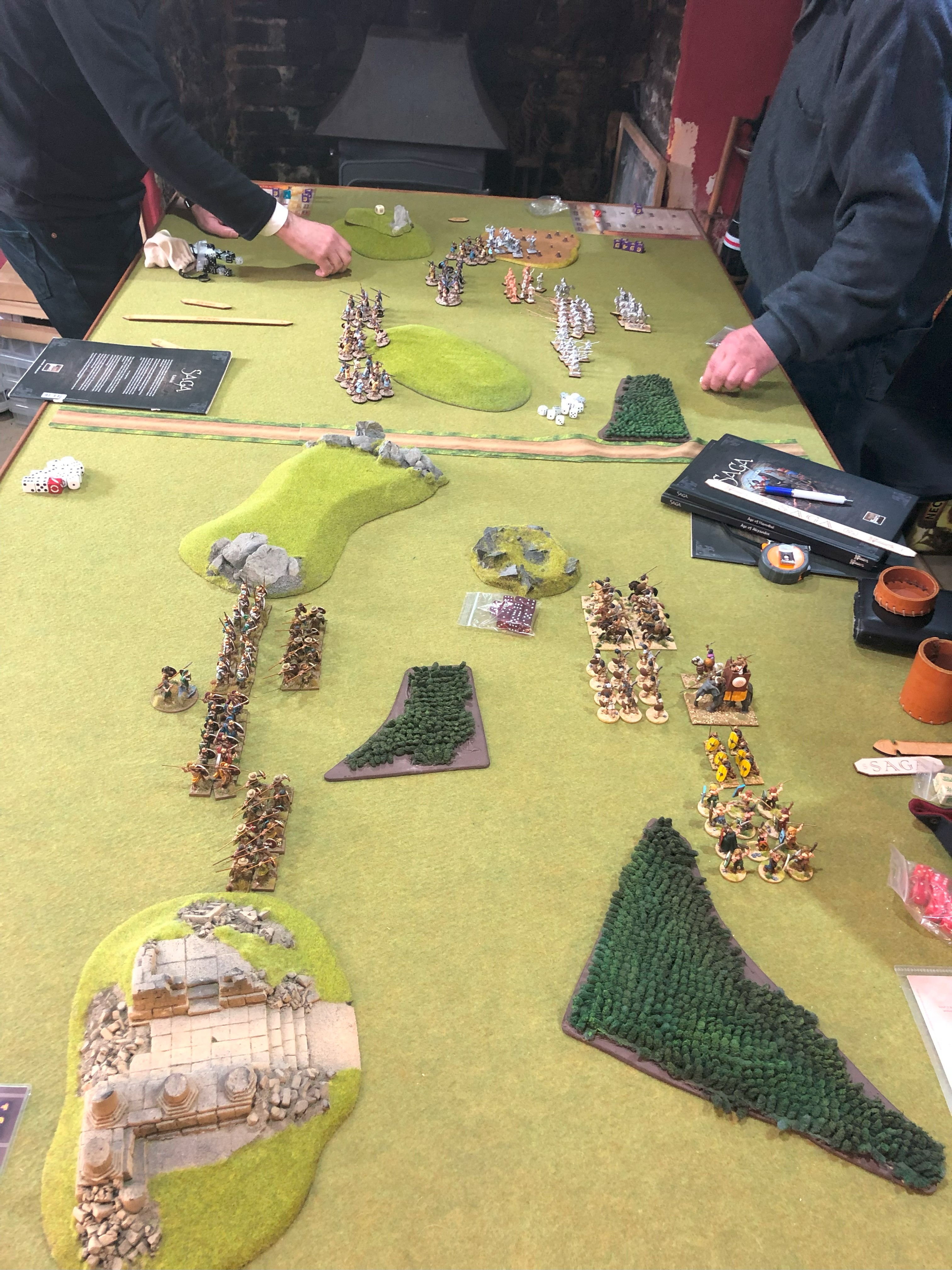
Over the Easter hols. we got together for some friendly games. Nearest to the camera you can see Carthaginians (right) versus Theban City States (left). At the top of the table are Successor Greeek with pike phalanx (unpainted, right) versus Successor Greek with javelin warriors and standard hoplite phalanx (left). As you can see we weren’t using standard size terrain. A good time was had by all. With two games played, winners played each other in the second game. The scores were Carthage 2:0, Successors with Pikes 1:1, Thebans 1:1 and Successors with hoplites 0:2.
6pts of Thebans completed and some thoughts on playing them
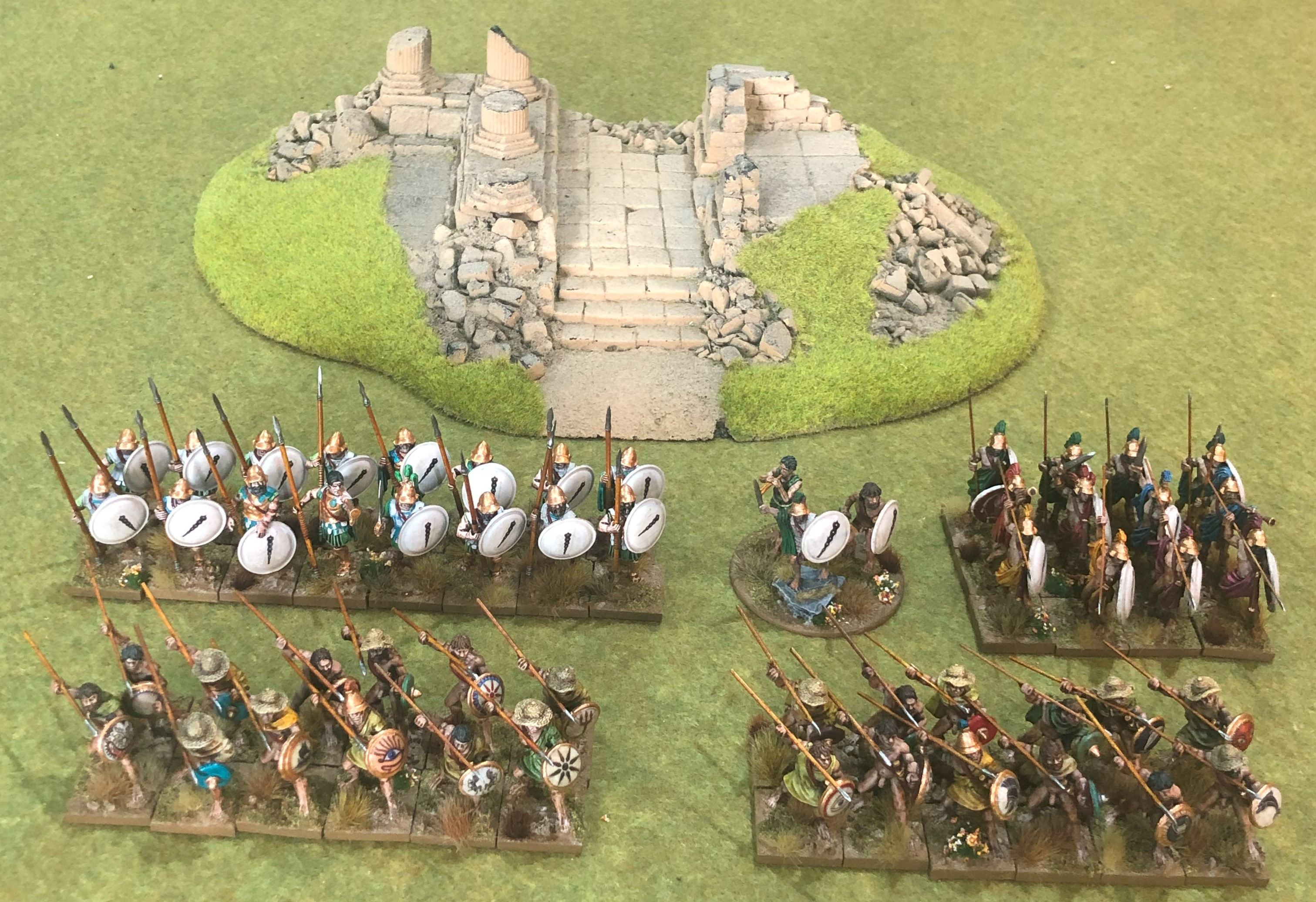
I’ve had four games with the Thebans now, three games against Successors and one versus Carthaginians. They, like most Saga armies, take a bit of getting used to as far as getting the most from the Battle Board goes. So far I’ve learned to keep the javelin levy in front of the two main phalanx blocks which screens them from missle fire and early speculative attacks before you get into position to charge. The phalanx needn’t form Line of Battle too early – just keep them together and use their regular move of M to get into position. Once Line of Battle is formed your Battle Board comes alive and they are pretty impressive in attack. The Sacred Band have a max-ed out starting dice pool of 16 until they take 5 casualties and with Resilience (1) this can take a while. The Oblique Phalanx isn’t a shrinking violet either and opponents struggle to manage to fight them, even closing ranks doesn’t help much and Battle Board defence is needed to hold out against them. If an opponent can hold out they are a bit vulnerable once the battle board abilities are used so opponents need to sacrifce a cheap unit or two and then pile in with their best units or keep running away and shooting. I’m not winning often but I am causing problems for opponents who really don’t like having to face such a scary line of battle.