








German East Africa



Recommendations: 473
About the Project
Let’s get obscure! Here I explore gaming in one of the lesser well known theaters of WW1.
Related Game: Blood & Valor
Related Company: Firelock Games
Related Genre: Historical
This Project is Active
Choosing the miniatures
As there is currently no official Blood and Valor range for the German East Africa force, I had to pick and choose from a couple of different ranges. The three I looked most closely at were Askari Miniatures, Brigade Games and Pulp Figures, all in 28mm.
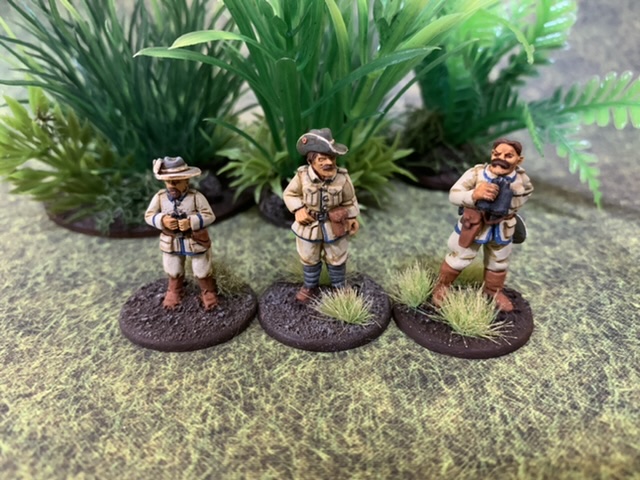 Left to right, Askari Miniatures, Brigade Games and Pulp Figures. All are in 28mm.
 Blood and Valor uses a fairly straight forward unit organization. There’s a HQ consisting of an officer with a pistol and two riflemen. The rifle squads are the core of the force and the three rifle squads are Schutztruppe, Askari and Sailors. Schutztruppe and Salior squads can have a single light machine gun attached. You can add heavy machine gun teams consisting of three men or single snipers and a specialist close combat squad. That’s it. Nothing super difficult to find. Except …
No one makes a light machine gun for German East Africa Now, some people will say they weren’t used and it’s true, the Germans had none at the start of the war. But more on this later.
All three ranges can give you the Schutztruppe HQ and heavy machine gun teams. However Pulp Figures has no Askari or German sailors. They do have Seebattalion but those are specialist Marine equivalents and there was no large formation present in East Africa. Now, I do fudge things a bit and include a few individuals, but no formations. The Pulp Figures Schutztruppe all wear high leather boots which were worn but were not that common.
Brigade Games can cover all the core units and has several uniform variations so you can have some variety. One of the best things they have is a Schutztruppe MG team, an Askari MG team and a Naval MG team. You could buy all three and mix and match your teams. All figures are in the low cut boots and putees common to the period.
Askari Miniatures has all of the above plus light field guns, cavalry and camels! Cavalry wasn’t present in large numbers in East Africa but Southwest Africa had a large cavalry force and some troops mounted on imported camels. There were a small number of mounted troops in East Africa but not a lot and mostly only played a mounted infantry role in the early part of the campaign.
The big difference between the ranges is the scale. All three advertise themselves as 28mm. And they are.
But it depends on how you measure them.
Brigade Games and Pulp Figures measure 28mm from foot to eye. Askari miniatures measures 25mm foot to eye. If you measure to top of head, then you get 28mm. You could make an argument that the difference is minimal and just reflects normal human variations but everything is scaled to the figure so weapons, canteens, bread bags, etc look smaller compared to figures from the other two ranges.
Ulitmately I limited myself to Brigade Games and Pulp Figures
Naval Landing Party
When the light cruiser SMS Koningsberg was scuttled her crew joined the Schutztruppe as both artillery men using the big guns removed from the cruiser as well as infantry.
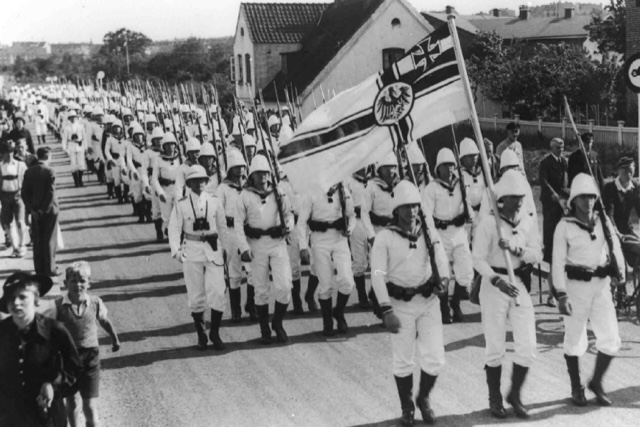 A pre-war photo showing the tropical uniform of the Imperial German Navy.
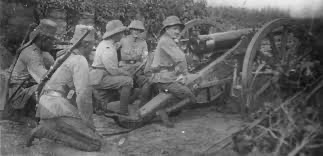
 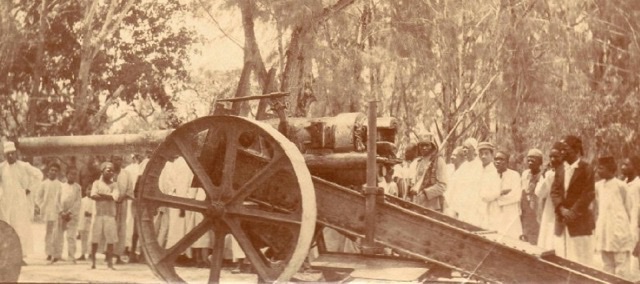 One of Koningsberg’s guns put on an improvised gun carriage. Her ten guns represented the only heavy artillery the Schutztruppe had. Each gun was eventually captured or destroyed.
  One of Koningsberg’s guns on the move.
 Askari
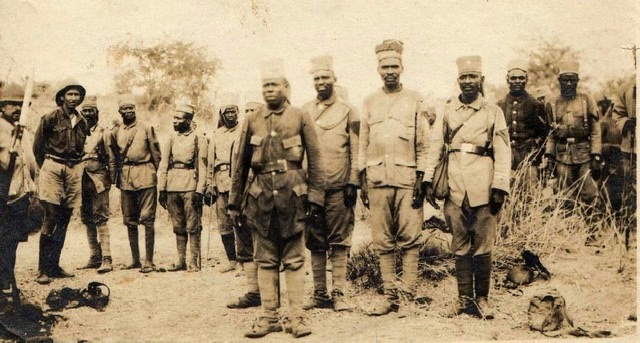
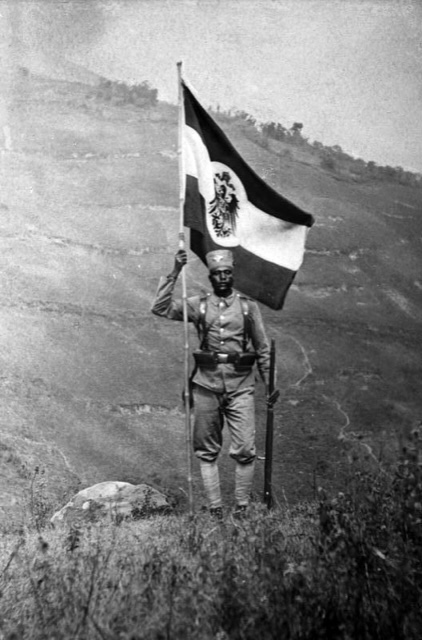
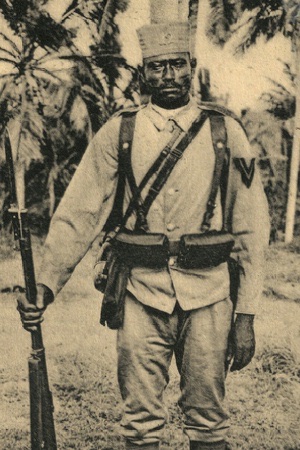 Wearing a similar khaki uniform the Askari headdress was the main difference in appearance. The hat had a built in neck flap.
 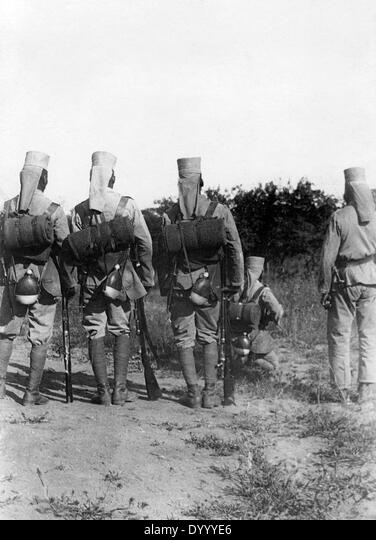 Here the neck flap is easier to see as is the marching kit.
Schutztruppe
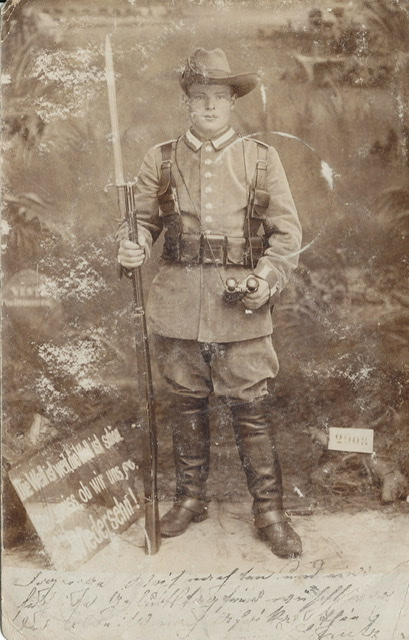 A pre-war image of a German Schutztruppe in the “home” uniform. This grey uniform was mostly only worn in Germany, for portraits or formal events.
 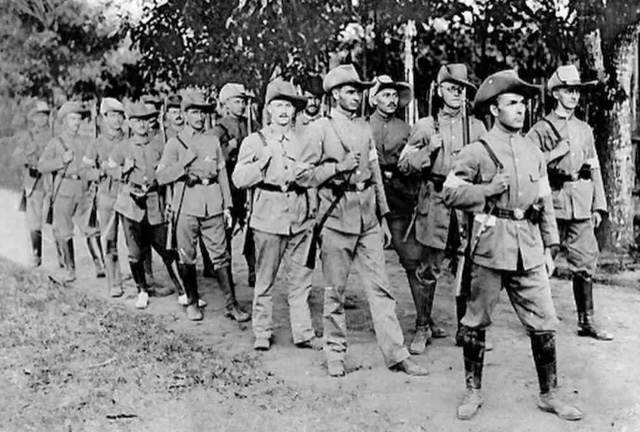 Here is the more practical khaki field uniform. This photo is of Schutztruppe of the German Southwest African colony. The uniforms were the same but the trim on the hat was in different colors to denote which colony the wearer was assigned to. White trim was the assigned color for East Africa. Blue for Southwest Africa.
  A more typical and realistic look of soldiers on campaign. With no supplies from Germany uniforms became increasingly less uniform.
  German officers at the end of the war upon their surrender. Note that none have complete uniforms and some appear to be wearing captured British uniforms or possibly civilian clothes.
 The Schutztruppe
Each German colony had its own Schutztruppe and while independent from each other, their activities were coordinated by the Schutztruppe staff officers assigned to the German general staff. However, in practice, each colony was largely on it’s own once the war started.
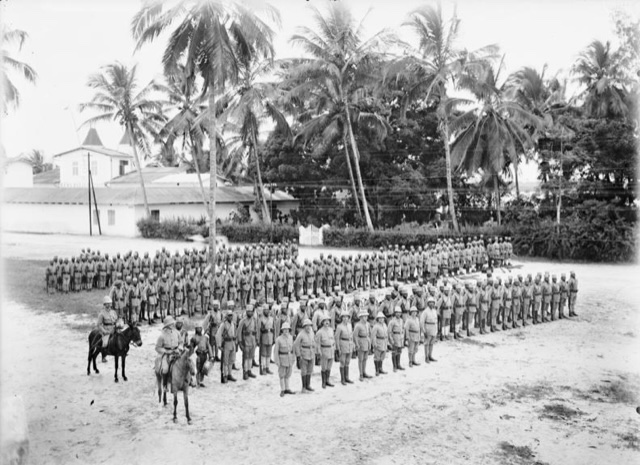
The East African force started with 14 Feldkompanien of roughly 160 to 200 men under arms. An additional 250 man contingent of unarmed porters was assigned to each company. As the war progressed, this was expanded to a total of 30 companies plus another 8 Schutzenkompagnies (rifle companies) made up of white settlers, hunting and rifle clubs, plantation managers or trading company employees.
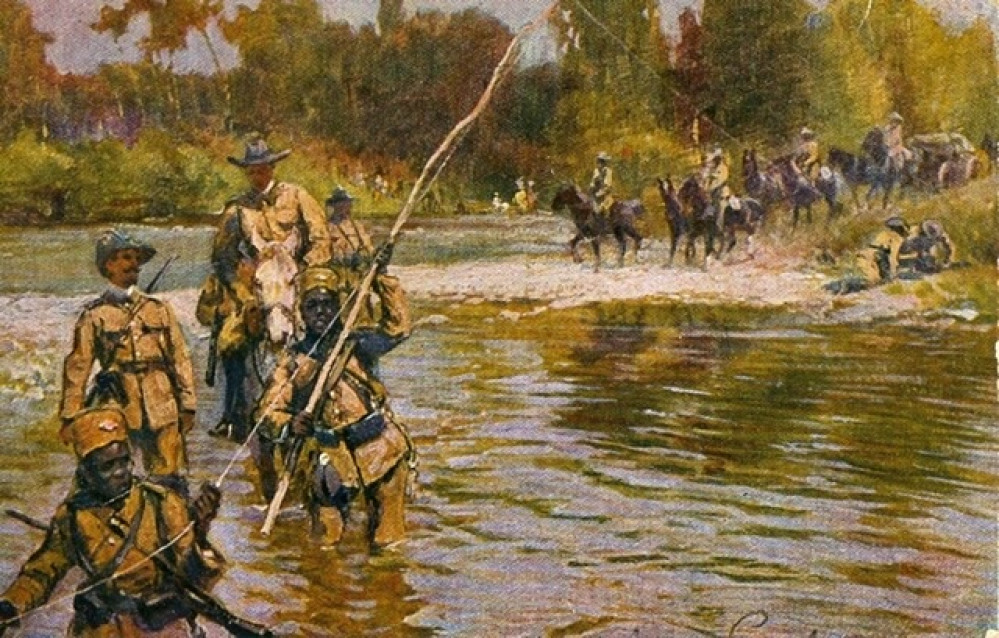
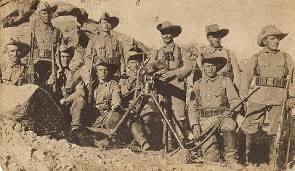
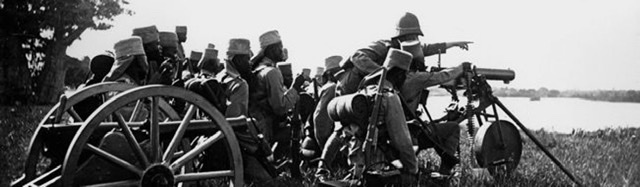
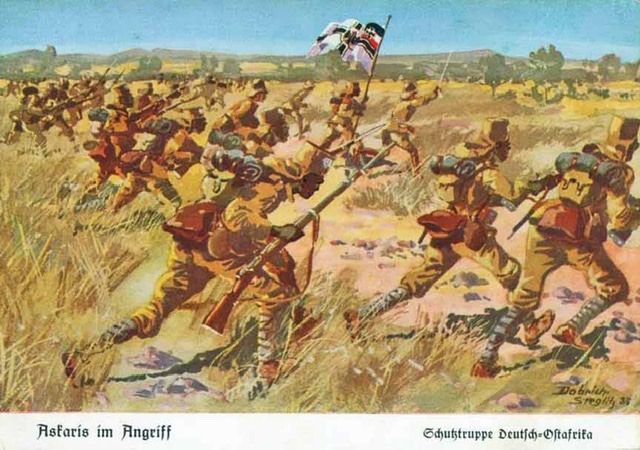
The prewar units were mixed race units of roughly one European soldier to eight African soldiers known as Askari, an Arabic word meaning soldier. Each company also had machine gun teams attached. There was a limited amount of light artillery available. While German soldiers had a version of the 1898 Mauser, the Askari were mostly armed with 1871 Mausers, a single shot rifle firing a black powder cartridge that created huge plumes of smoke.
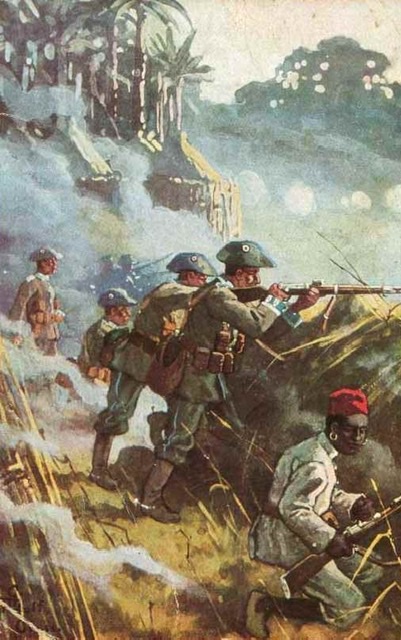
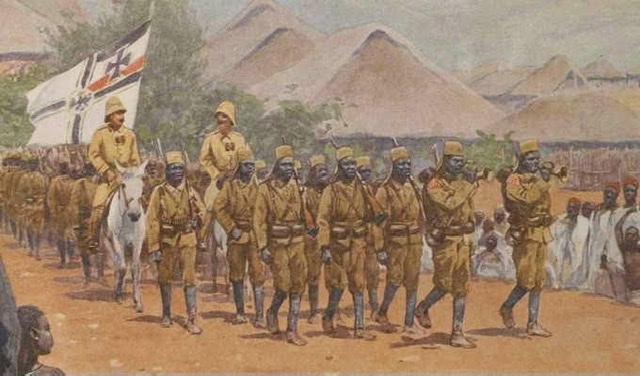
How it got started
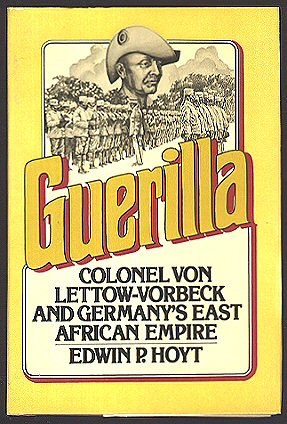 I first read this book back in the 80s. This fascinating account of the East African campaign served as the spark for this project.
 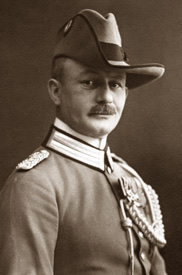 Lieutenant Colonel Paul von Lettow-Vorbek as he appeared circa 1914.
 Lettow-Vorbeck was the commander of the German East Africa Schutztruppe (translates roughly as “protection force”) from 1914 to 1918. Even though the entirety of German East Africa was occupied by the Allied powers, and being outnumbered by a factor of 21 to 1, he remained undefeated throughout the war and carried out the only successful incursion onto British territory of the war. He surrendered after the armistice because he didn’t know the war was over and had to have news of the armistice to be confirmed by the British. His success in tying down some 300,000 allied troops is largely due to his use of guerrilla warfare. He is sometimes referred to as the first guerrilla but at the time was called The Lion of Africa.
The Great War YouTube channel is an absolutely fascinating and monumental work covering the First World War in one week segments, for the entire four years of the war. There are also specials on various personalities, weapons and tours of historic locations. Even just casually interested viewer’s will find themselves watching just more and more videos. Well worth checking out.
 When I first got a demo game of Blood and Plunder, I liked the mechanics but don’t really care for pirate themed games. But I did see it’s potential for other eras. So when Blood and Valor came out, I was very excited to see it covered the East African campaign as well.