









![1918 Spring Offensive Wargame | Full Rules Overview with John & Gerry (WW1 Tabletop Game) [7 Days Early Access]](https://images.beastsofwar.com/2026/03/unboxing-warfulcrum-games-1918-spring-offensive-review-coverimage1-225-127.jpeg)

Dipping my toes into Napoleonics



Recommendations: 355
About the Project
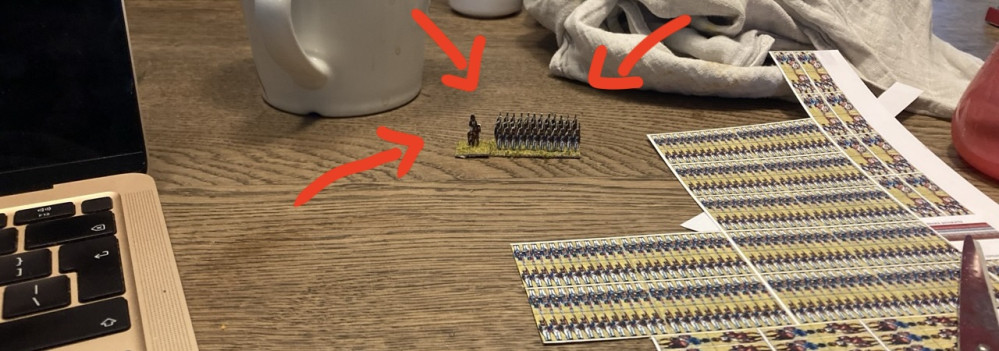
So, I've had this itch for Napoleonics for a few years now. I think you guys are to blame for this. And Tolstoy. Him too. All the ingredients were there and now Ridley Scott has put the pan into the flames, meaning that I should probably start cooking something up.
Related Genre: Historical
This Project is Completed
The cannon are [sic]!
Reading into Napoleonics I’ve learned that ‘cannon’ as a plural is a thing and that using it makes you just better than the others, har har har <sips tea with pinky in the air>. So, there is the joke in the title. With that out of the way, I would like to cycle back to a handy comment all the way back to my first entry in this project.
![The cannon are [sic]!](https://images.beastsofwar.com/2024/04/63291766-tip.jpeg)
Back then I still optimistically replied that I wanted to try to build the 3D paper ones, where you have to fold the cut out gun barrel around a pin. The longer I thought on it, the more I came to the realisation that using a actual tiny cannon model might indeed be preferable.
Rather than riding out this wave of reason, I jumped on top of the shark and tried surfing onto the wave of 3D printing. Oh, not the still somewhat reasonable wave of resin printing. Oh noooo <waves hand and spills tea from cup>. The wave of FDM printing with a 0.2 nozzle.
So, I sat down, and looked up a chunky design on Thingiverse of which I felt that it could handle the scaling down to 10mm wargaming.
The scaling down went okay…? The spokes of the wheels disappeared at this size, so I made some new wheels myself in TinkerCad. Also, I had to fill up the cannon barrel to avoid a hole appearing in it. Lo and behold!
![The cannon are [sic]!](https://images.beastsofwar.com/2024/04/16004900-cannon-design.jpg)
![The cannon are [sic]!](https://images.beastsofwar.com/2024/04/48289506-tiny-cannon-parts.jpeg)
![The cannon are [sic]!](https://images.beastsofwar.com/2024/04/47130289-tiny-cannon-assembled.jpeg)
To assemble it, I slightly widened the holes in the wheels, so they connected snugly to the gun carriage. I also found that the rounded bottom side of the gun carriage came out a bit ugly, so I straightened that out in TinkerCad as well. This gave me a design that I felt could be repeated!
![The cannon are [sic]!](https://images.beastsofwar.com/2024/04/75817868-tiny-cannon-four.jpeg)
![The cannon are [sic]!](https://images.beastsofwar.com/2024/04/62993298-tiny-cannon-vs-tank.jpeg)
Limbers
Looking at the paper cut out model of the canon I noticed that Peter also supplied you with limbers. Now, I didn’t immediately find any (free) limbers designs that either scaled down well or matched my cannon, so I thought: maybe I can design one myself! I have to apologise to any specialists in the field. I just looked at these two pictures I found with DuckDuckGo and let myself get inspired to create something.
![The cannon are [sic]!](https://images.beastsofwar.com/2024/04/77248897-research1.jpg)
![The cannon are [sic]!](https://images.beastsofwar.com/2024/04/76718812-research2.jpeg)
![The cannon are [sic]!](https://images.beastsofwar.com/2024/04/85087725-limbers-design.jpg)
As you can see I just reused the wheels I’d created earlier. Once printed out, I found myself with the smallest lawn mower, which just happens to be perfect for mowing flock!
![The cannon are [sic]!](https://images.beastsofwar.com/2024/04/88253438-tiny-limbers-assembled.jpeg)
![The cannon are [sic]!](https://images.beastsofwar.com/2024/04/21140877-limbers-and-cannon.jpeg)
Together with the cannons, I found it worked well. The cannon (!) and the limbers did not fit very well on the base size suggested in Napoleonic Wargaming by Neil Thomas, which is 40mm x 40mm. I wasn’t going to give up my limbers though and just decided to increase the base size to 30mm x 60mm.
I’m quite happy with the end result and decided to bring my two bases of cannon out into the sun for a photoshoot. Coming soon to theaters near you: Honey, I shrunk the artillery devision!
![The cannon are [sic]!](https://images.beastsofwar.com/2024/04/99903599-cannon-done-1.jpeg)
![The cannon are [sic]!](https://images.beastsofwar.com/2024/04/65261318-cannon-done-2.jpeg)
![The cannon are [sic]!](https://images.beastsofwar.com/2024/04/66035317-cannon-done-3.jpeg)
![The cannon are [sic]!](https://images.beastsofwar.com/2024/04/38055287-cannon-done-4.jpeg)
Some paper terrain
To be honest, I’m in a bit of a hobby rut at the moment. I’m not pleased with anything that I’ve tried to paint recently and I feel that I’ve only gotten worse at it over the last years. The paper hobby has been a lovely way for me to engage with the hobby in a positive way: it is really cool to see how quick you can build something!
Having finished the armies themselves, I felt that I could not be motivated to build any of the paper terrain that I had also bought. Turned out that I’m capable of surprising myself as I’ve done exactly that.
I haven’t taken pictures of all the steps, but I can tell you that it came with its own challenges. The trees were like the paper soldiers I’ve been making until now, the only difference being that they did not need attaching to a base, but are slotted together.The buildings on the other hand needed some folding and gluing on a tiny scale, leading to some curses and me finding myself stuck to the couch.
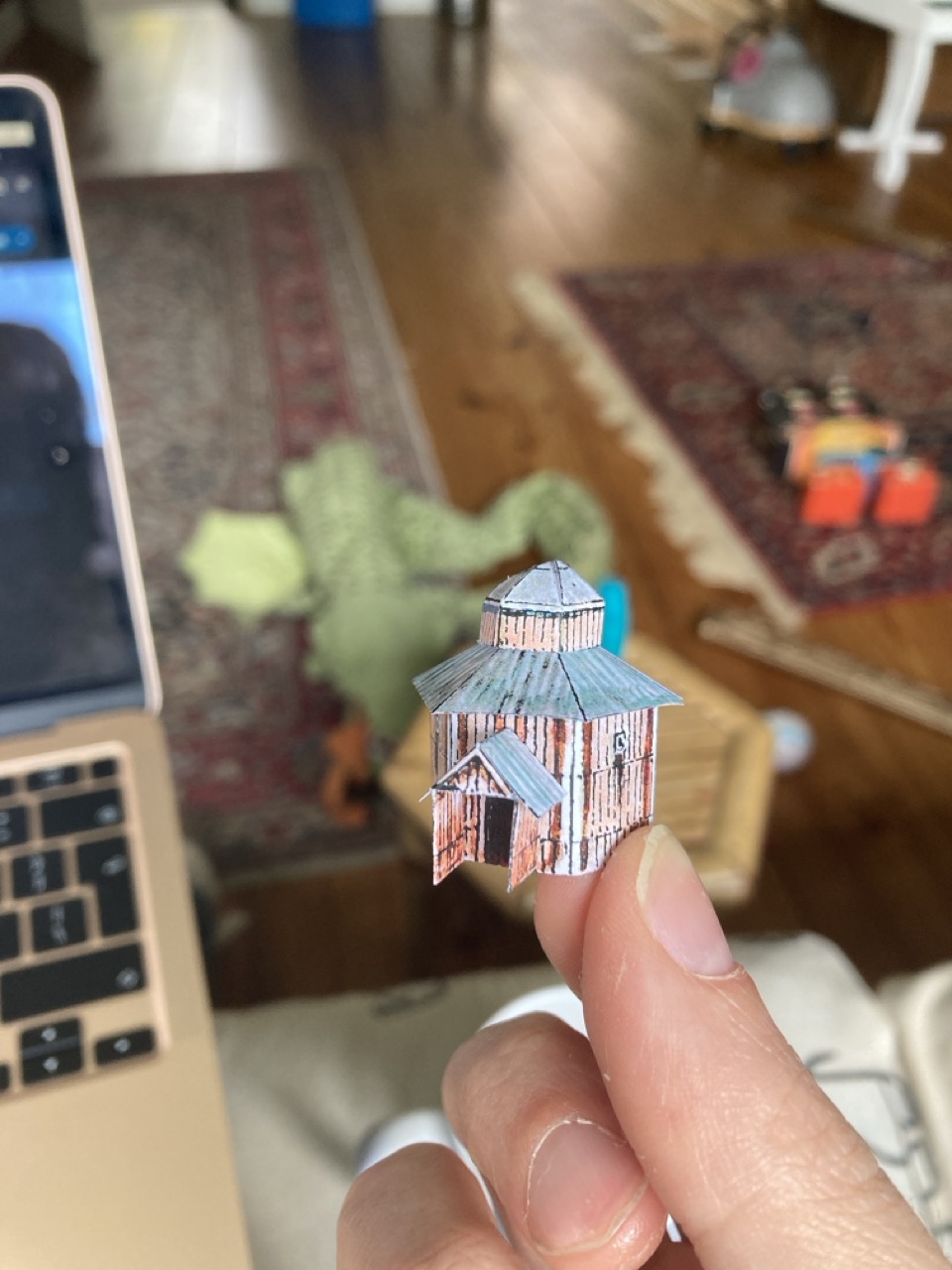
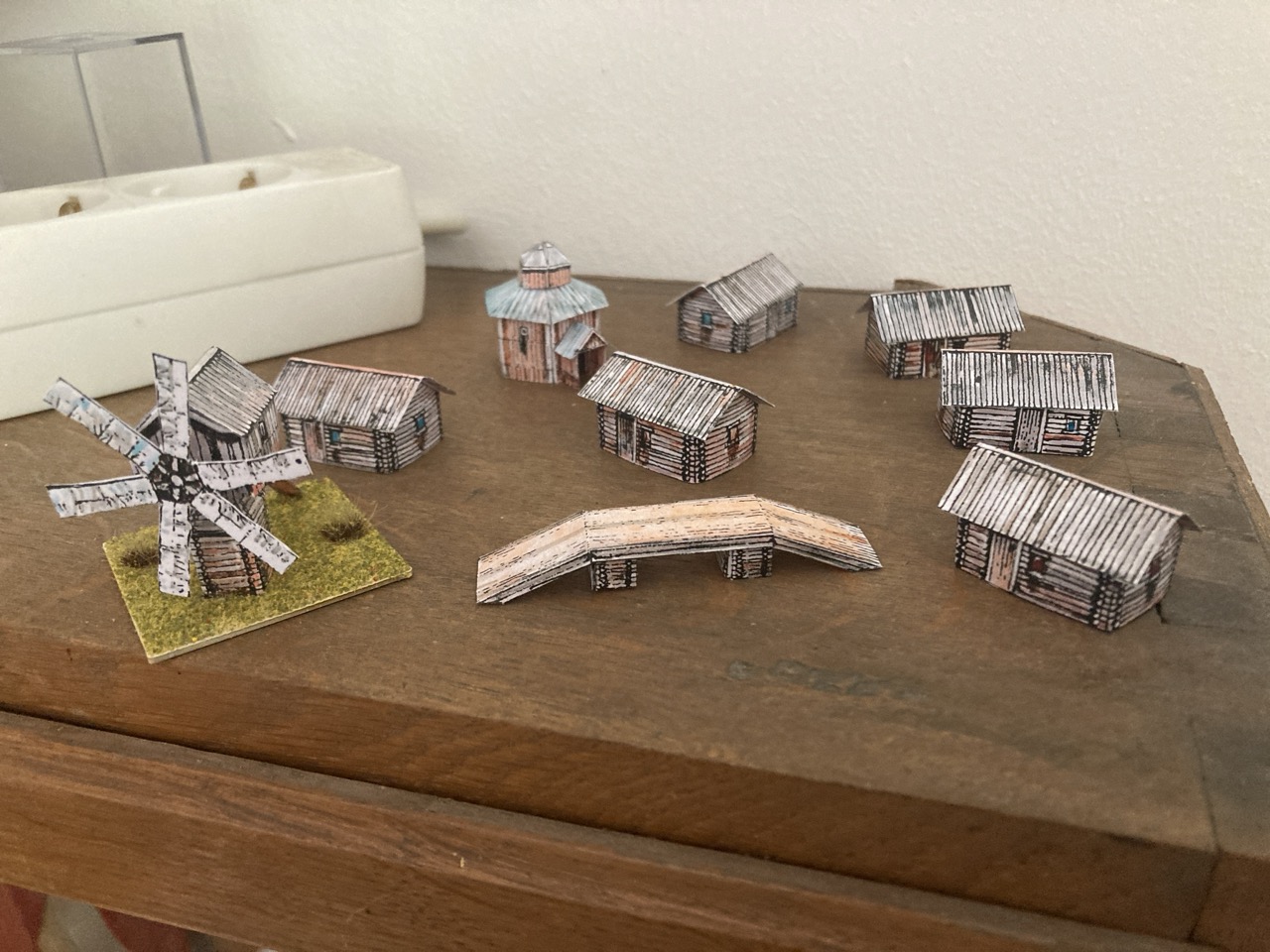
Note that the bridge has no river yet to accompany it, but I have cut out the roads. The simplest way to make them would have been to just cut them out and be done with it. I expect, however, that the separate segments would then start moving around when moving troops along it. I therefore decided to add some heft by gluing the roads to cardboard and cutting that out with about half a centimeter margin on each side, which I then flocked.
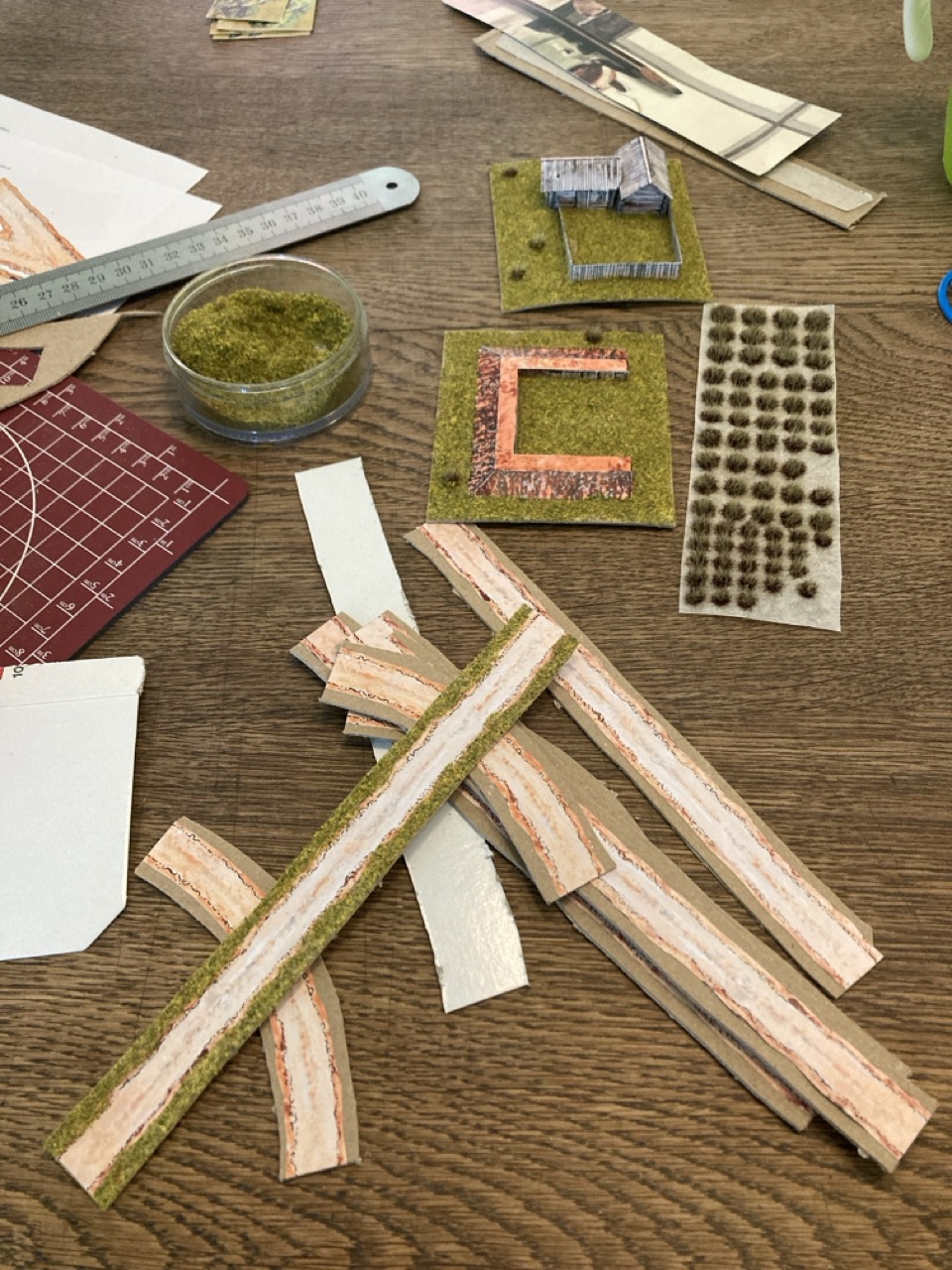
Below is a photo of almost all of it togerther. I notice that I forgot to include the redan in this picture. You can see it in the above photo of the roads being made, however.
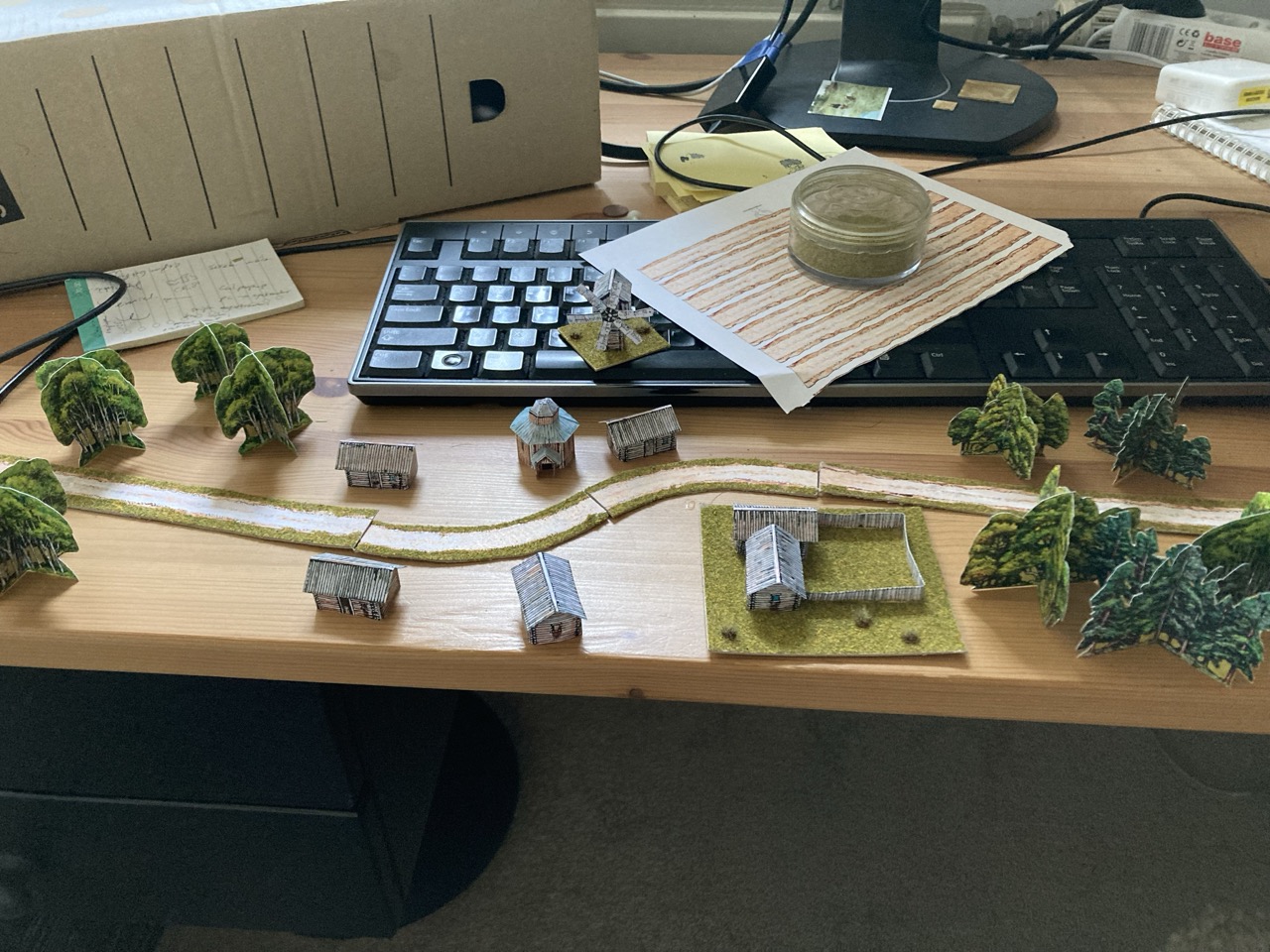 Picturesque Russian countryside on my desk
Battle report: The Battle of Derevushka, round 1
With the assembly of the armies and terrain done I thought I’d give the wargaming rules laid out in Napoleonic Wargaming a go. I’ve set up a small gaming table next to my home desk (not dangerous at all…) and the idea is to do a game against myself during any breaks from work or parenting. This may take some time, but that is fine by me. As the battle progresses I strive to give you updates in the form a battle report. Luckily I had an afternoon to myself yesterday, which meant I could really take my time setting up and slowly getting used to the rules.
Because of the constraints of the project system I will strive to do a round in each update.
In a previous post I gave you my intended army lists. Here they are again, so you won’t have to scroll to and fro. Note that I haven’t given them any fancy names as the regiments normally have. I might do that for future battles though 🙂
French Army
- 2 Line infantry (1st and 2nd regiment)
- 1 Satellite infantry (Duchy of Warsaw)
- 1 Voltigeurs (= skirmish unit)
- 1 Imperial guard
- 1 Cuirassiers (heavy cavalry)
- 1 Chasseurs à cheval (medium cavalry)
- 1 Artillery
Russian army
- 3 Line infantry (1st, 2nd and 3rd regiment)
- 1 Guard infantry
- 1 Cuirassiers (heavy cavalry)
- 2 Cossacks (tribal/irregular cavalry)
- 1 Artillery
The Battle of Derevushka
In the early days of the French invasion of Russia a small battle took place that has been all but forgotton: the Battle of Derevushka. As Napoleon’s forces rapidly marched across the vast plains of Russia, they met only sparing resistance. It is not known whether the Russians were to slow in their retreat or whether an eager officer decided that he would single-handedly show that the French troops could only break against the wall of Russian stubborness. The forces met outside the hamlet of Derevushka, however, and both sides were led by inexperienced officers (me and me).
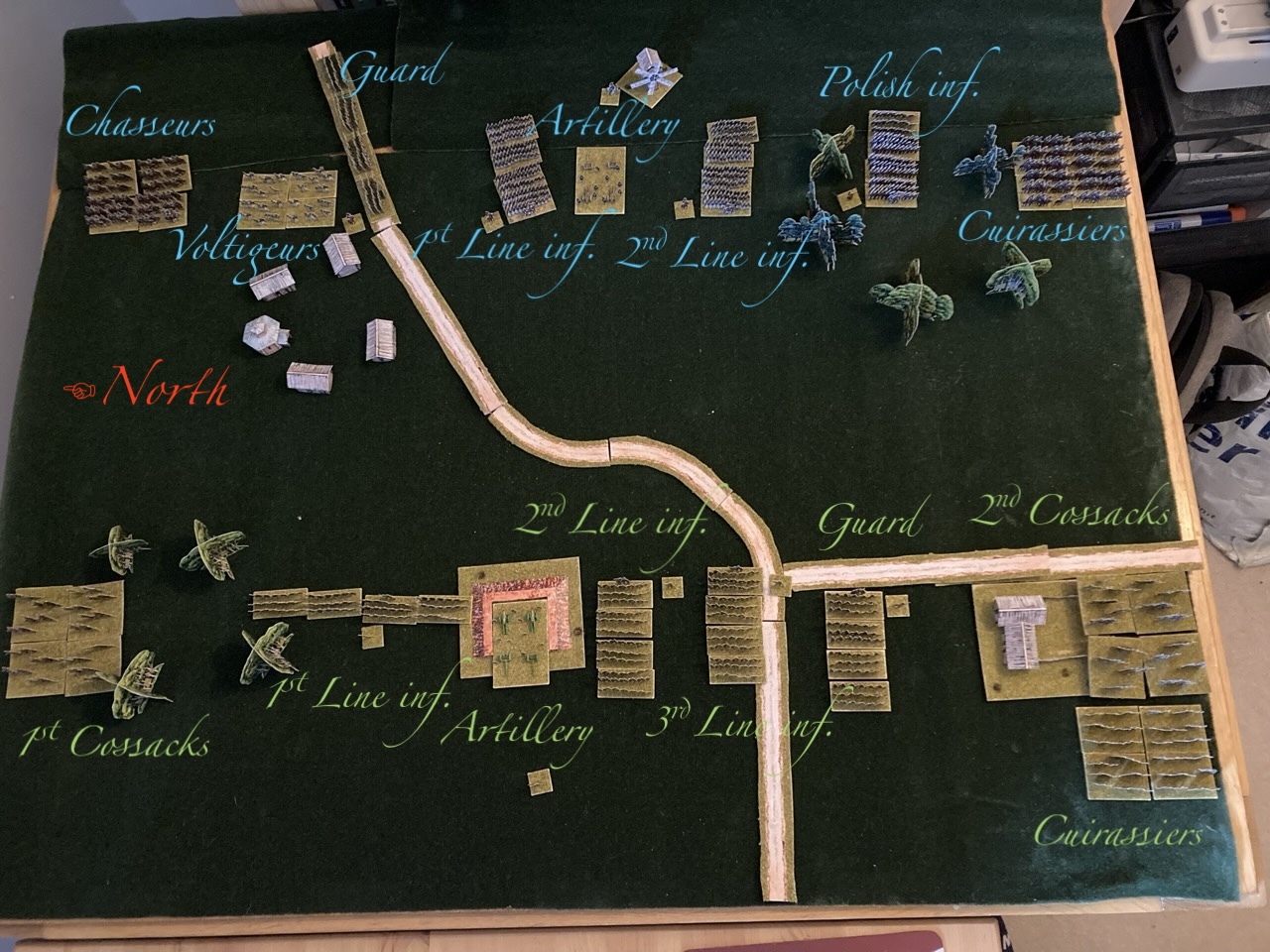
[I’ll give you a brief description of the battlefield as it is outlined above. On the Northern side you have the hamlet Derevushka, which found itself the site of this battle unfortunately. Slightly to its North-West and to the South there are small wooded areas. These (and the hamlet) can only be entered by infantry. The roads can only be used effectively by infantry in column of route, which allows them to move at a higher pace. Other than that there is a farm in the South-Western corner, which can also be occupied by infantry alone. The redan on the Russian side is purely cosmetic in this battle. I put it there because I had it and I liked it.]
The French advance, the Russians answer
︎As was expected, the French side took the initiative and advanced quickly with its line infantry. Only the Polish satellite infantry was instructed to hold their ground, so they deployed into line across the border of the woods. The French voltigeurs rushed towards Derevushka itself and entrenched themselves there. On the flanks, the French cavalry shot forward to leave the nimble Russian cossacks no room to maneuvre. The chasseurs à cheval on the North peppered their opponents with ineffective carbine fire, which only slightly wounded the tribesmen. The French artillery that had conquered Europe, roared across the battlefied and fired round shot into the Russian 2nd line infantry regiment, wounding several, but unable to stop their lumbering advance.
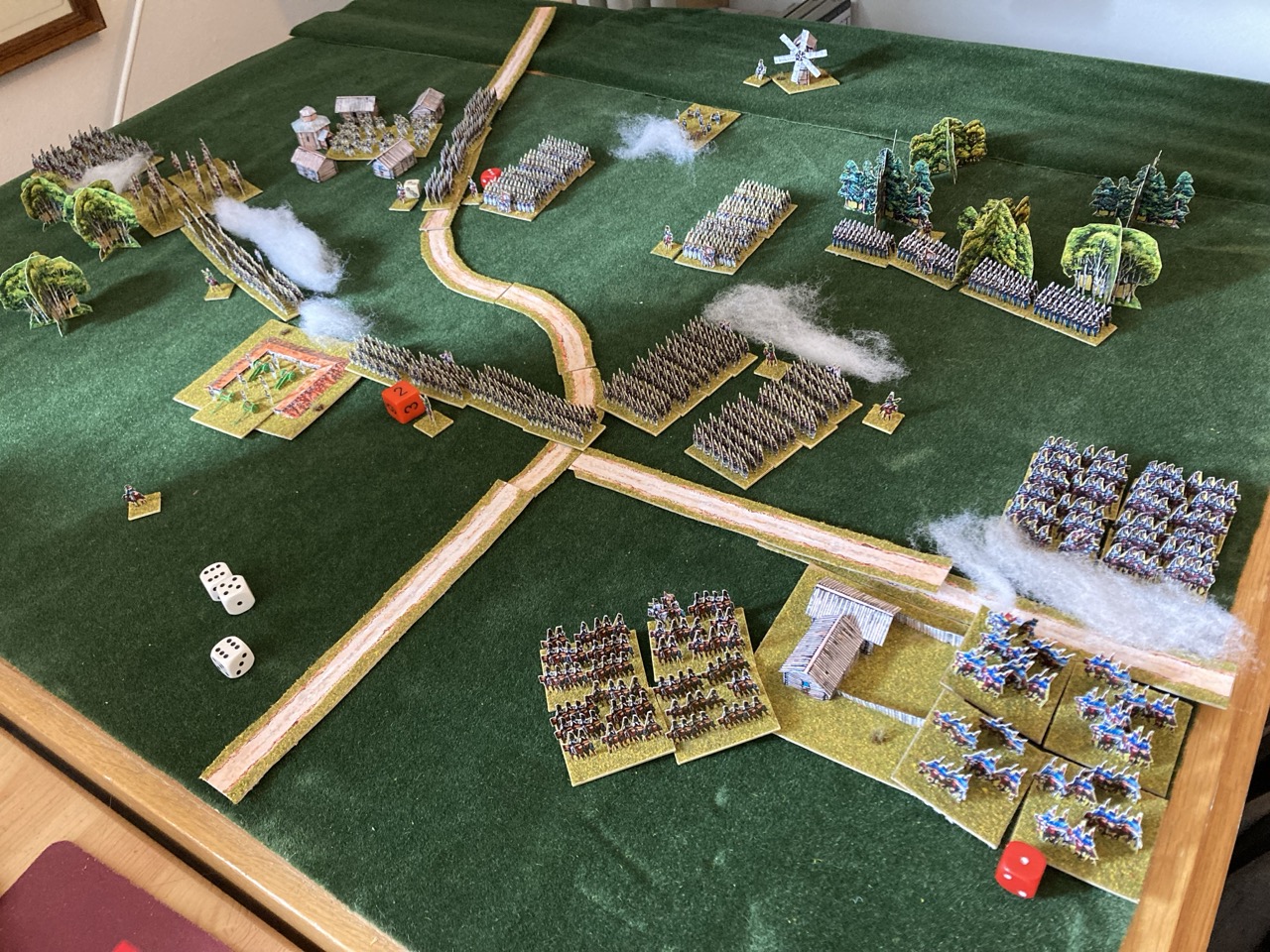 Russian fire meets the charging French
The Russians responded by deploying the 2nd Line infantry regiment, that had just been hit by artillery fire, to line formation. This way they hoped to create an effective way to whittle down the advance of the French infantry in the centre. On the South flank, two units of line infantry, including the Guard, advanced towards the Polish line in attack columns. The Russian 1st Line infantry regiment opened fire, but was only able to wound some of the French Imperial Guard advancing along the road. The grapeshot fired by the Russian artillery at the French attack column in front of it was slightly more effective, but failed to stem their approach.
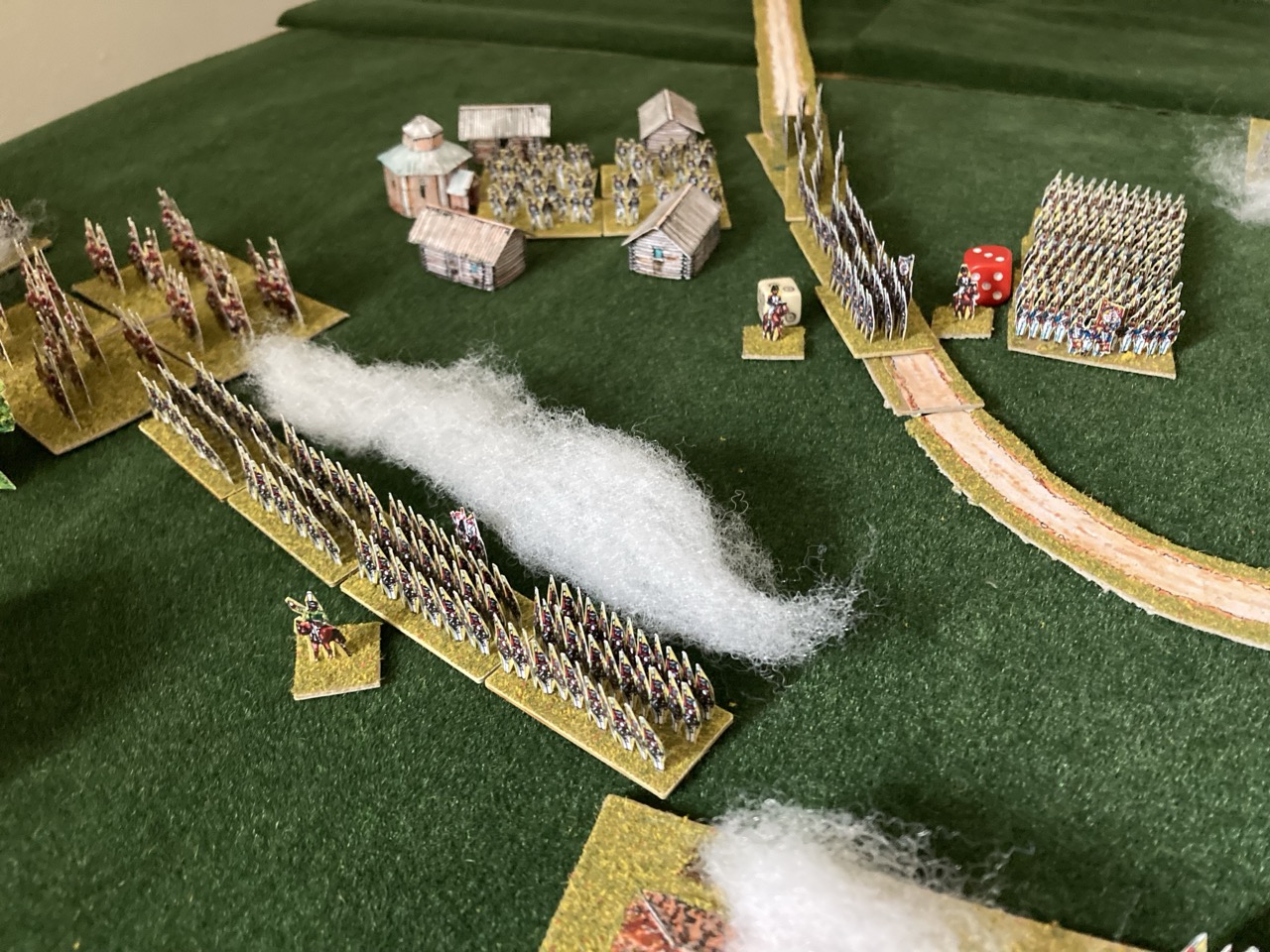
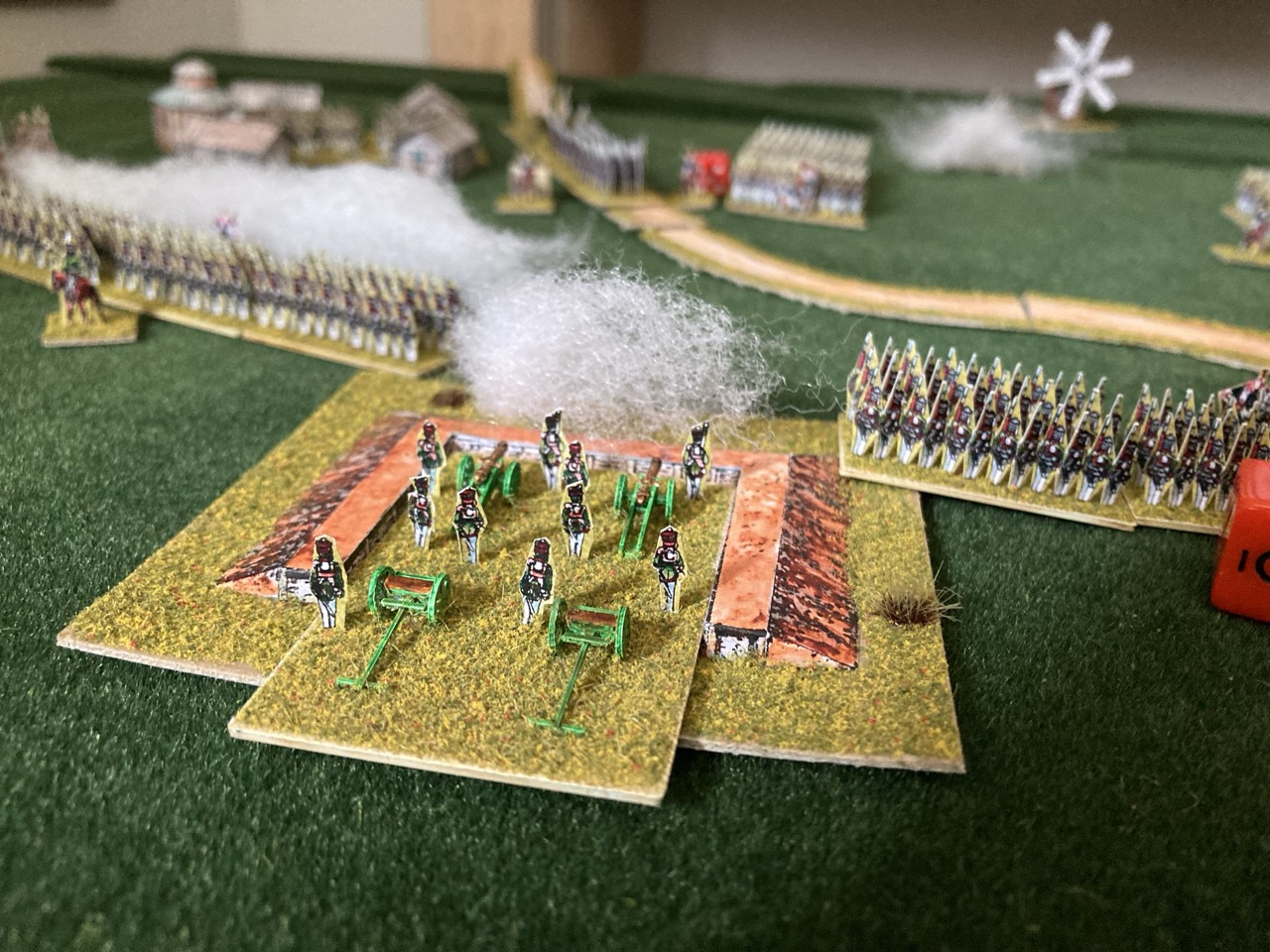
The cossacks, having been caught off guard by the enemy cavalry, hastily fired a volley of their own, but didn’t managed to hit anything. On the South flank the Russian cuirassiers now had to maneuver around the cossack rabble, very much to the chagrin of their officer.
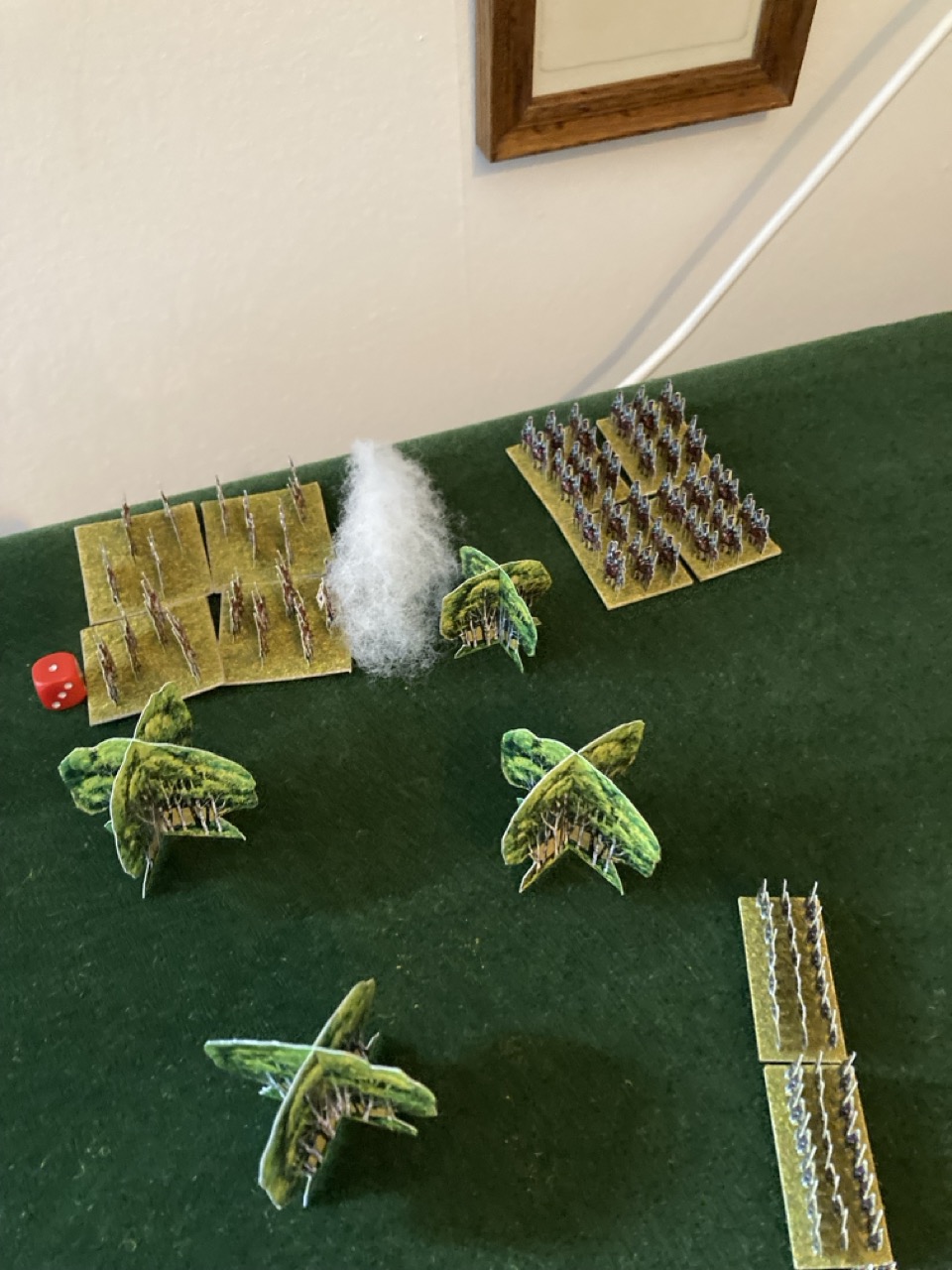 Cossacks and Chasseurs à cheval trade carbine fire
Battle report: The Battle of Derevushka, round 2
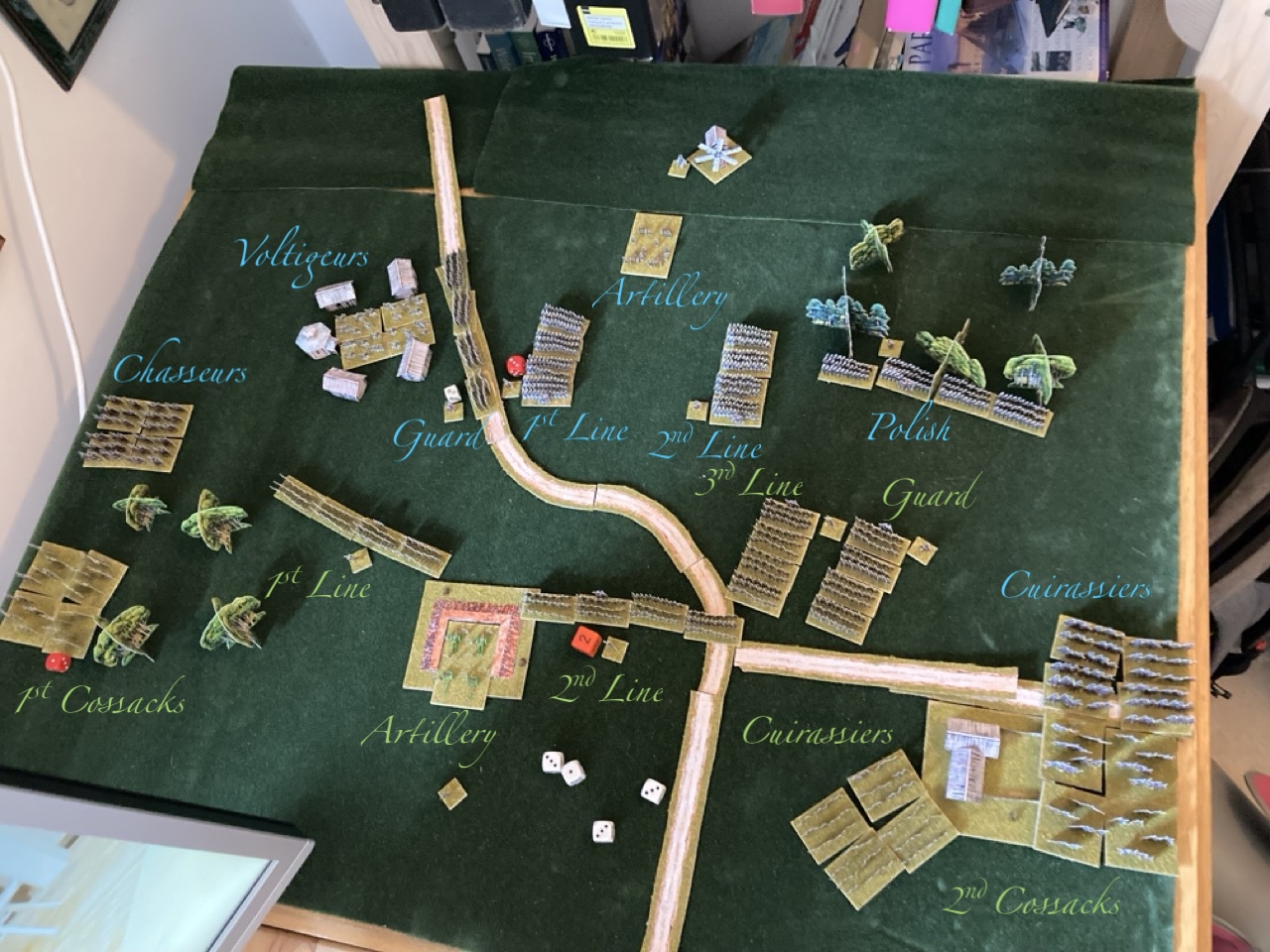 Overview at the start of round 2
The French army pressed onwards into the hail of Russian fire and deployed their Guard infantry, who had been marching in column of route along the road, to an attack column. Thus they hoped to reinforce the 1st Line infantry regiment, who had been taking a dangerous amount of cannon fire. The 2nd Line Infantry deployed to line, hoping to pepper the approaching Russian attack columns with enough fire to discourage them in their steady advance. They let loose a volley with support from the Polish sattelite regiment, but barely hit the Russian 3rd Line infantry regiment and Guard regiment, who kept advancing, while loosing an ineffective volley of their own.
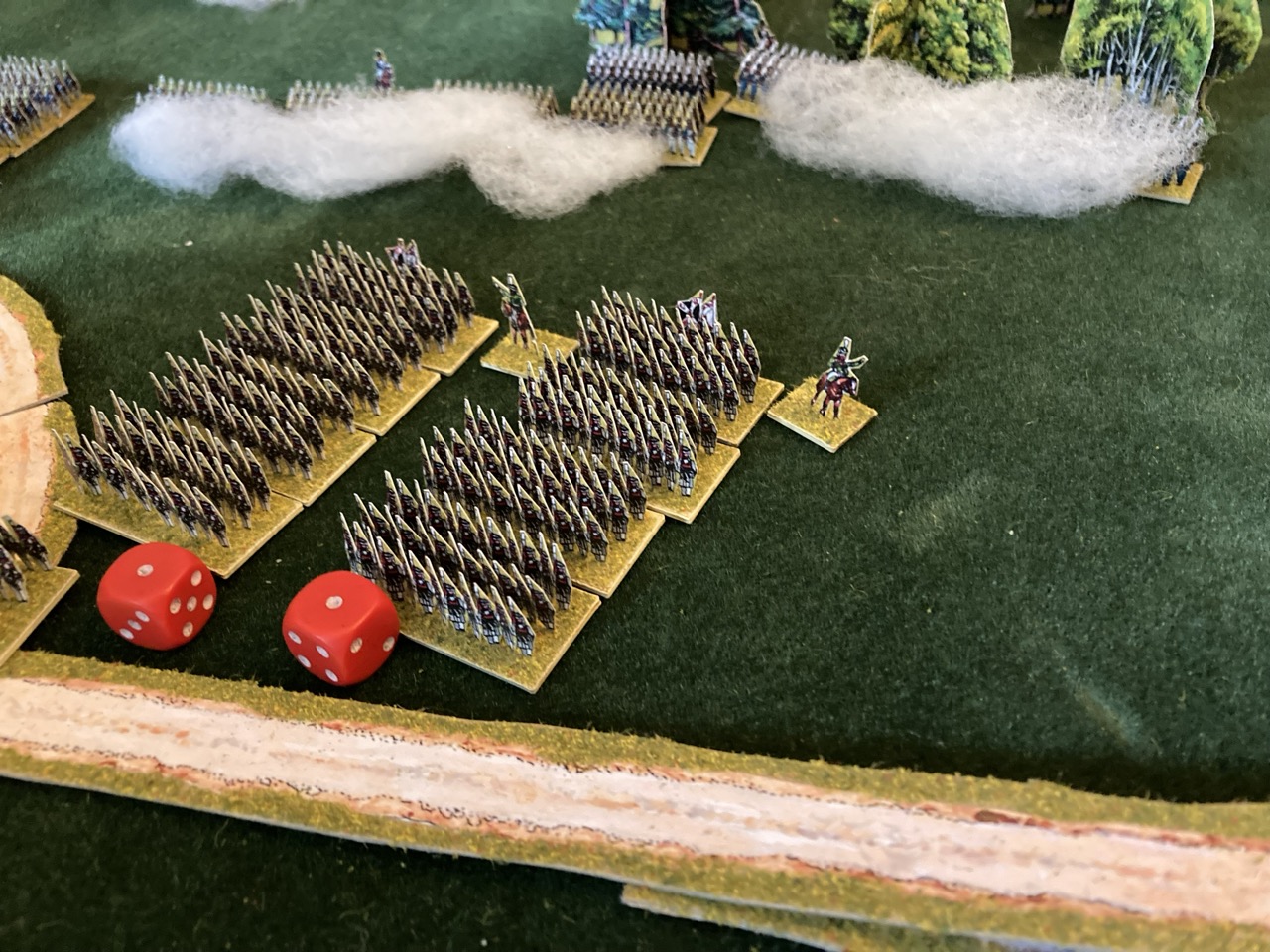
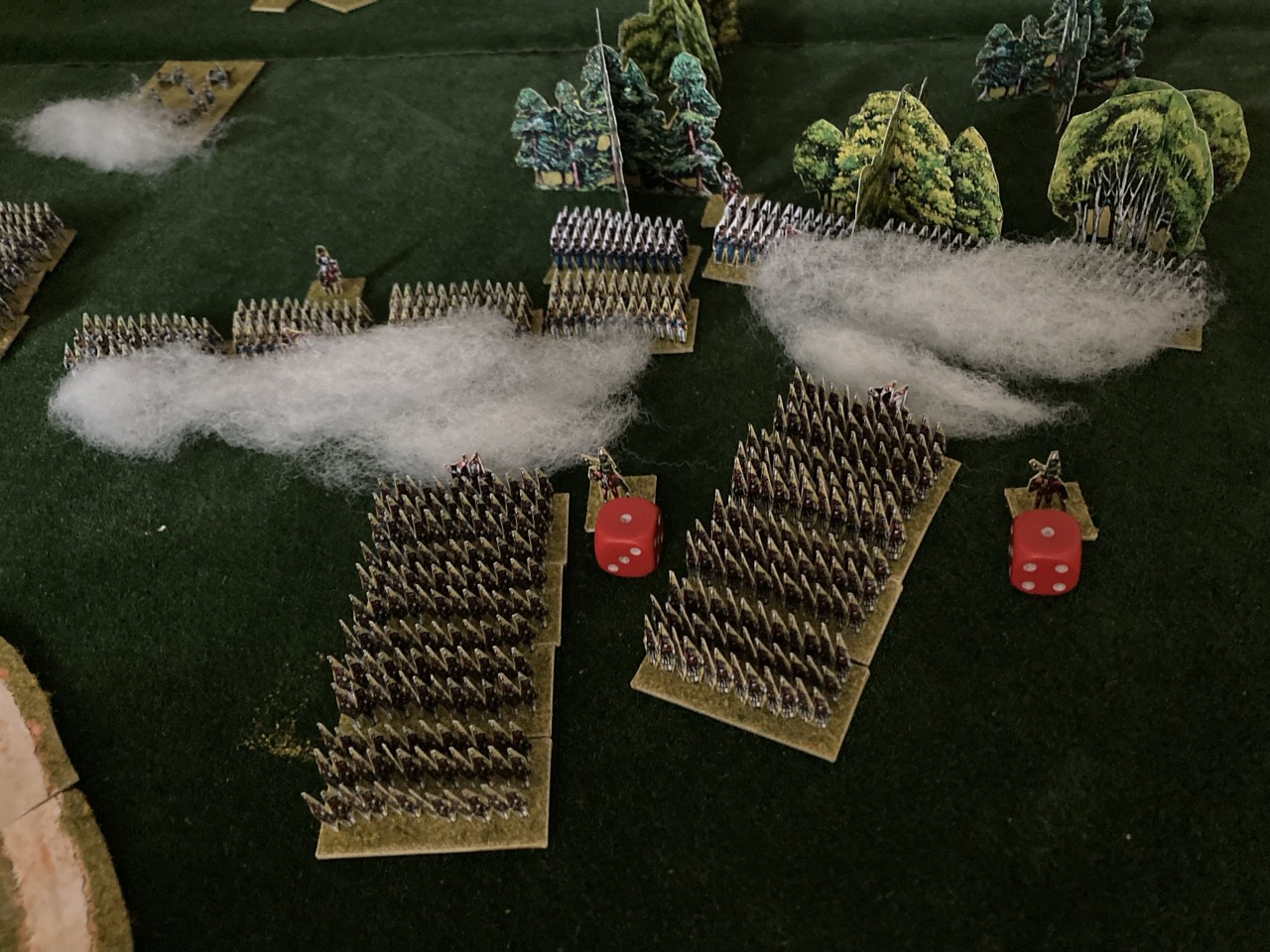
On the flanks the French cavalry again charged the opposing cossacks. The cuirassiers, while being able to drive the Russians back, found that their warhorses could not keep up with the nimble cossack steppe horses. The chasseurs à cheval on the other hand managed to cut down some of the cossacks as they pursued them.
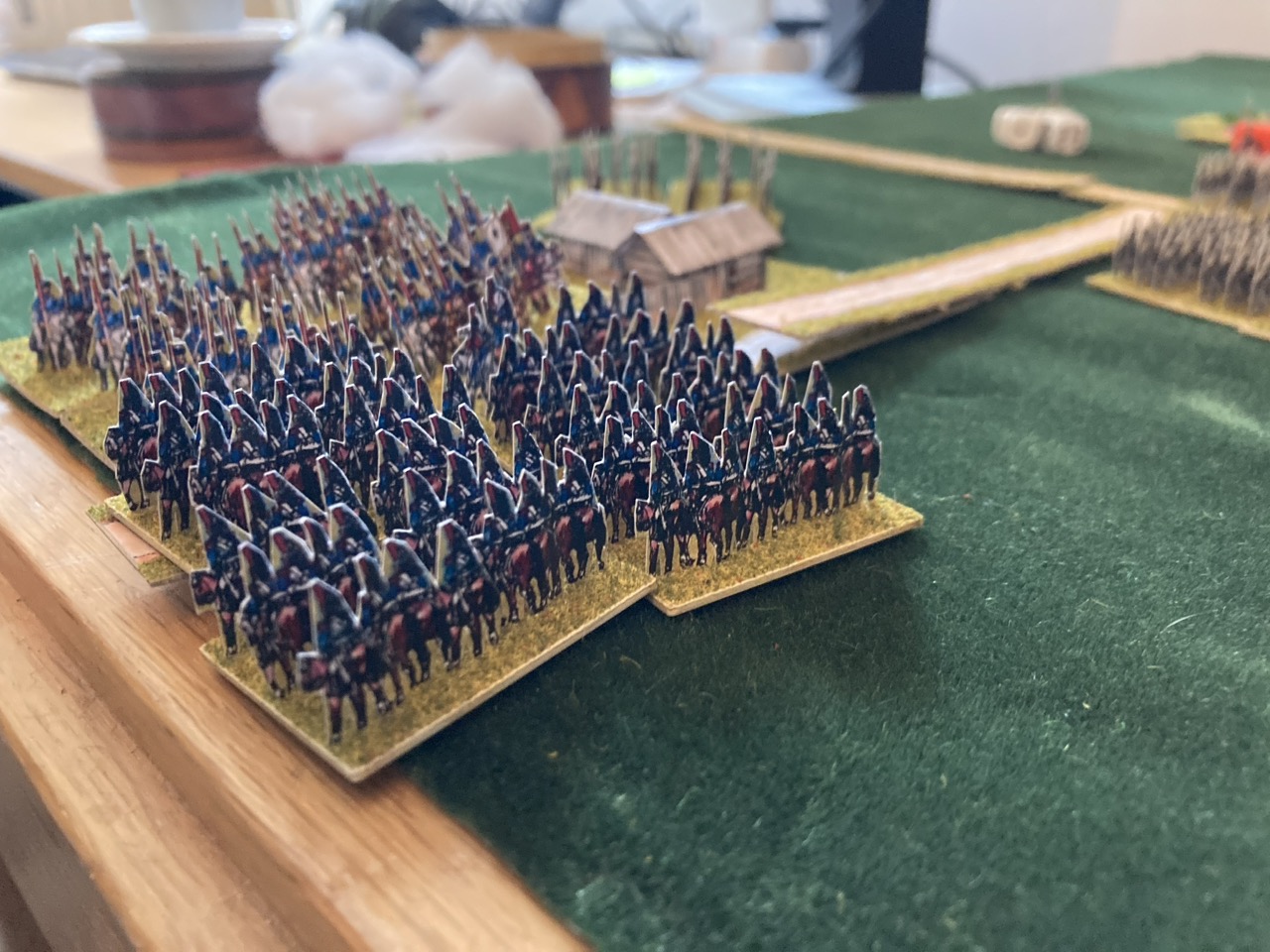
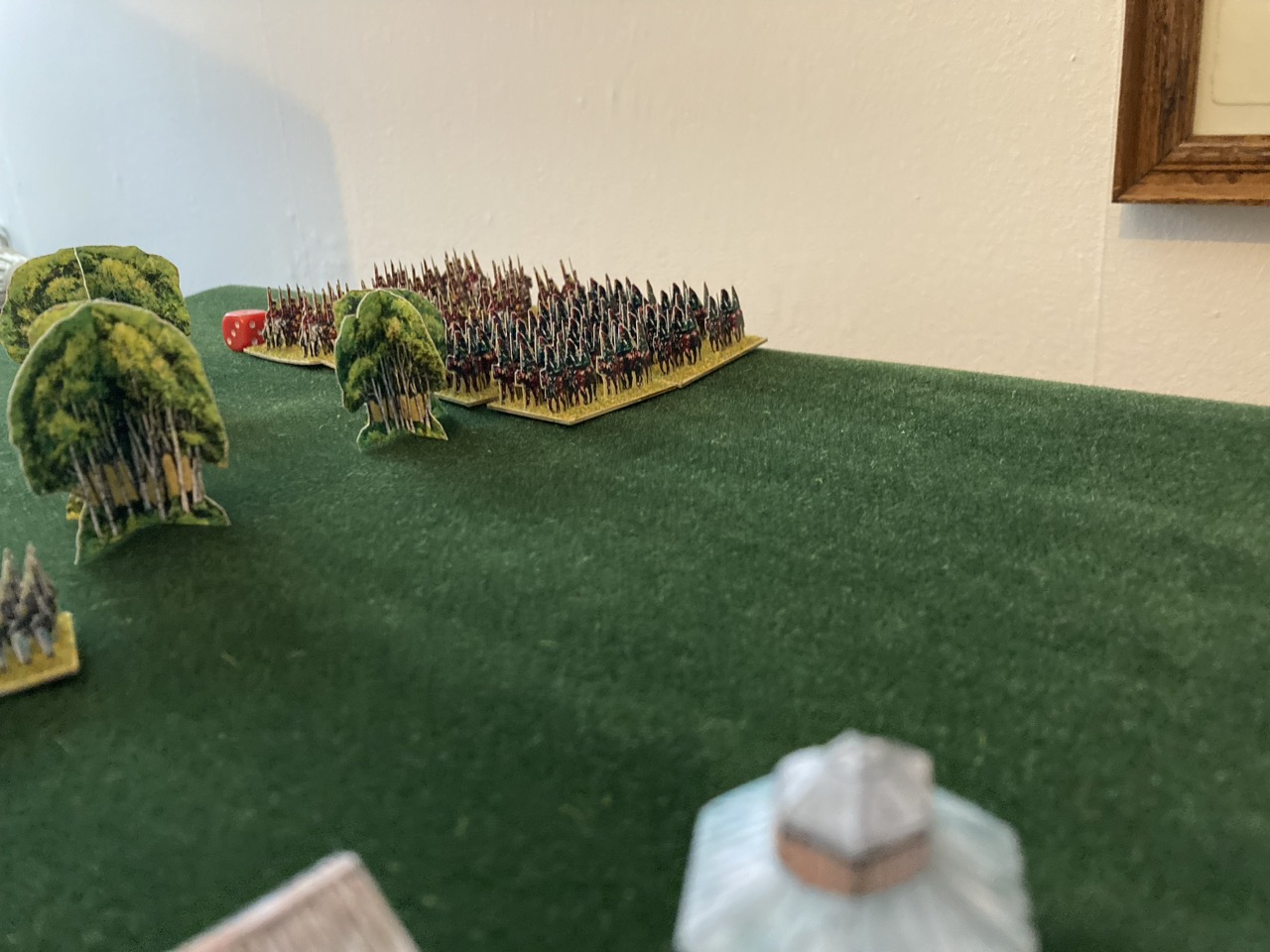
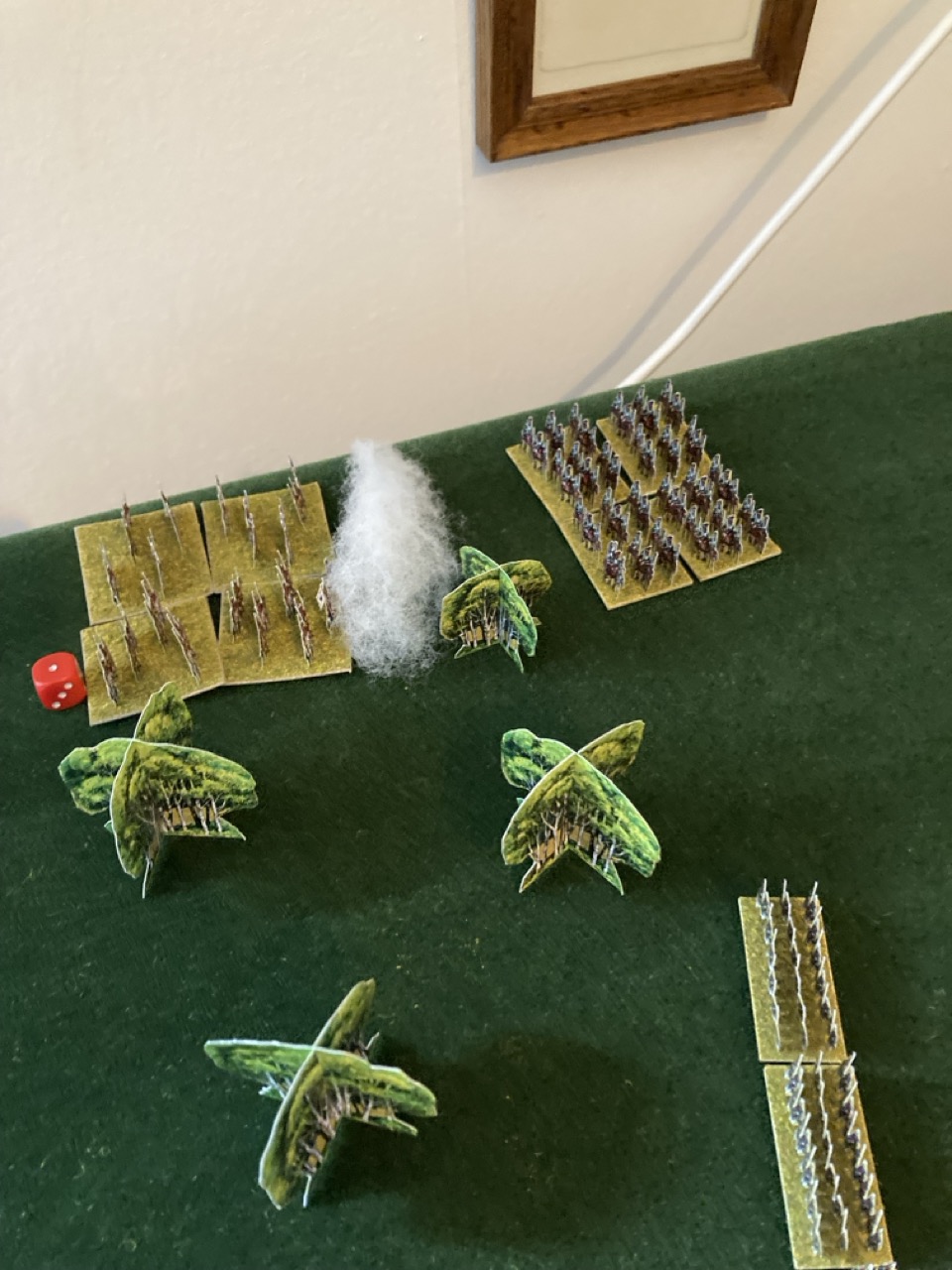
The 2nd Cossack regiment briefly fled in panic before reforming at a distance and took another literal shot at the French cuirassiers, with several bullets bouncing off the Frenchmen’s armour, leading to no casualties. Although the 1st Cossack regiment had taken more cusualties than their comrades at the South flank, they managed to keep their head cool and also went back to keep the French Chasseurs occupied with their carbines.
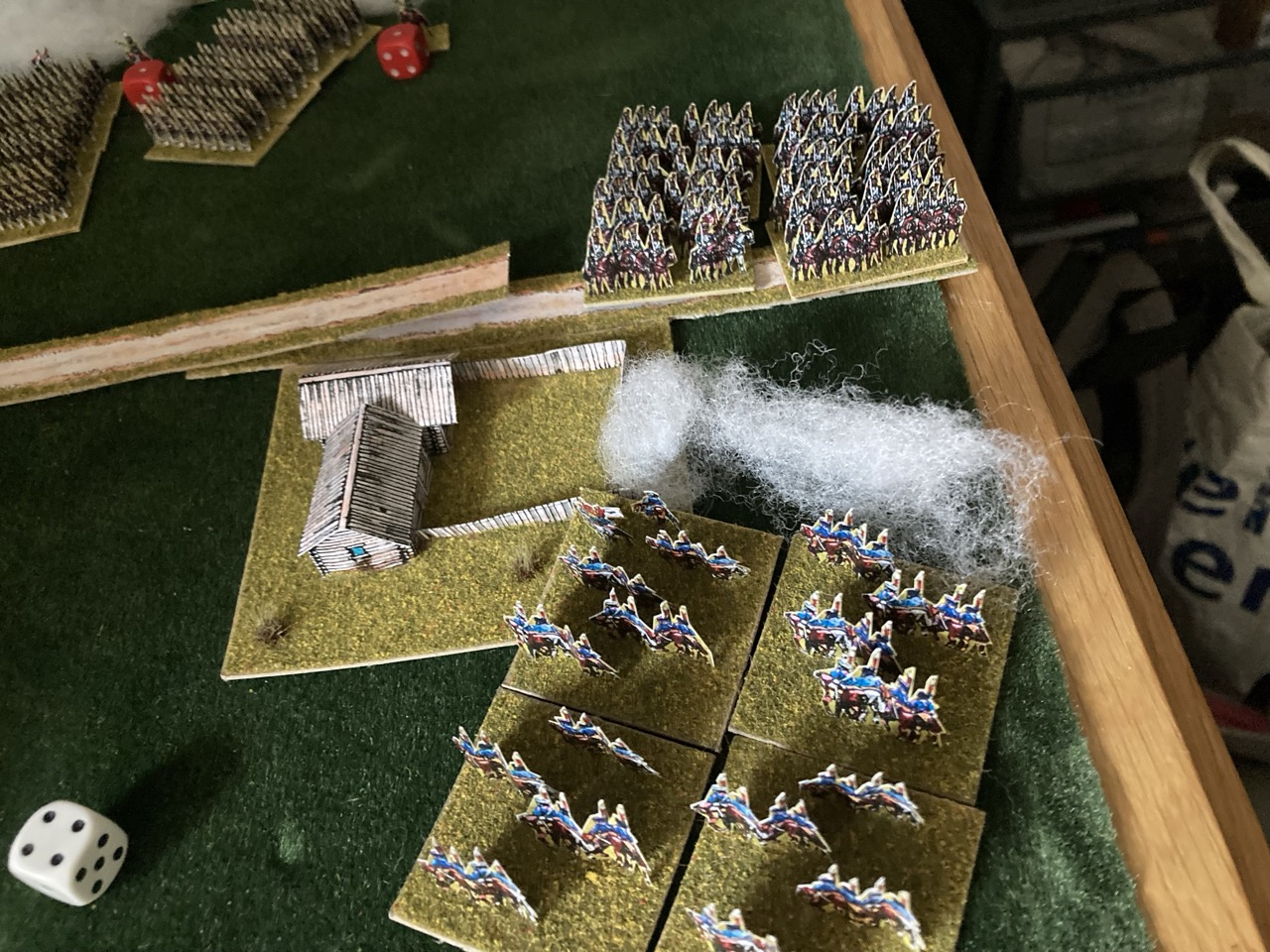
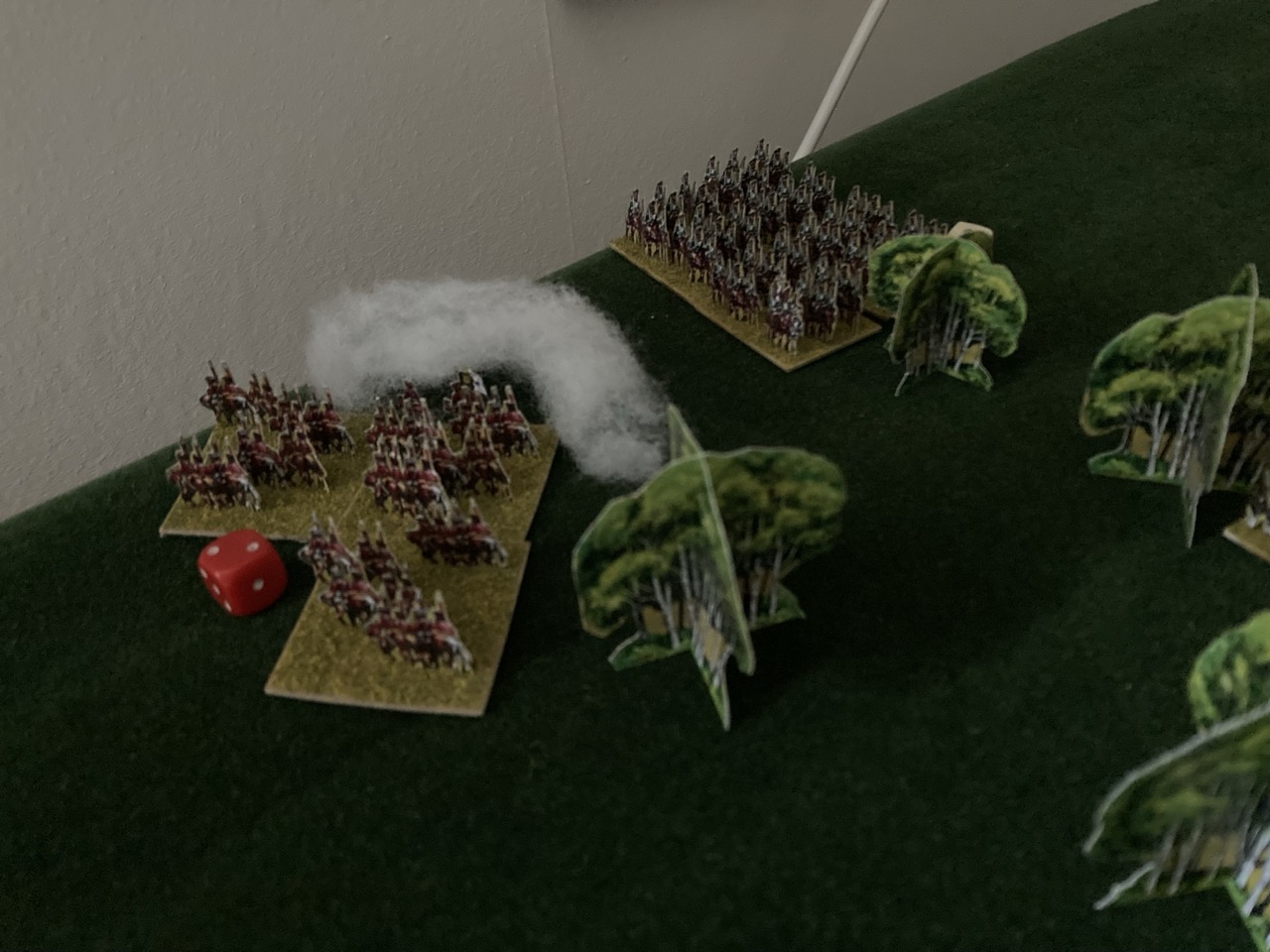
Things were heating up in the centre, as the French 1st Line infantry regiment and artillery fired on the 2nd Line regiment opposite them, managing to wound the Russians only slightly. The Russians retorted with a furious barrage from their own cannon, supported by musket fire from the 2nd Line regiment. This caused enough casualties on the unfortunate French 1st Line regiment, that they were driven back before reforming again. The Russian 1st Line regiment fired true into the French Grenadiers, who had been taking their time reforming. Although they took quite a pounding, the Old Guard managed to stand firm, true to their reputation for tenacity.
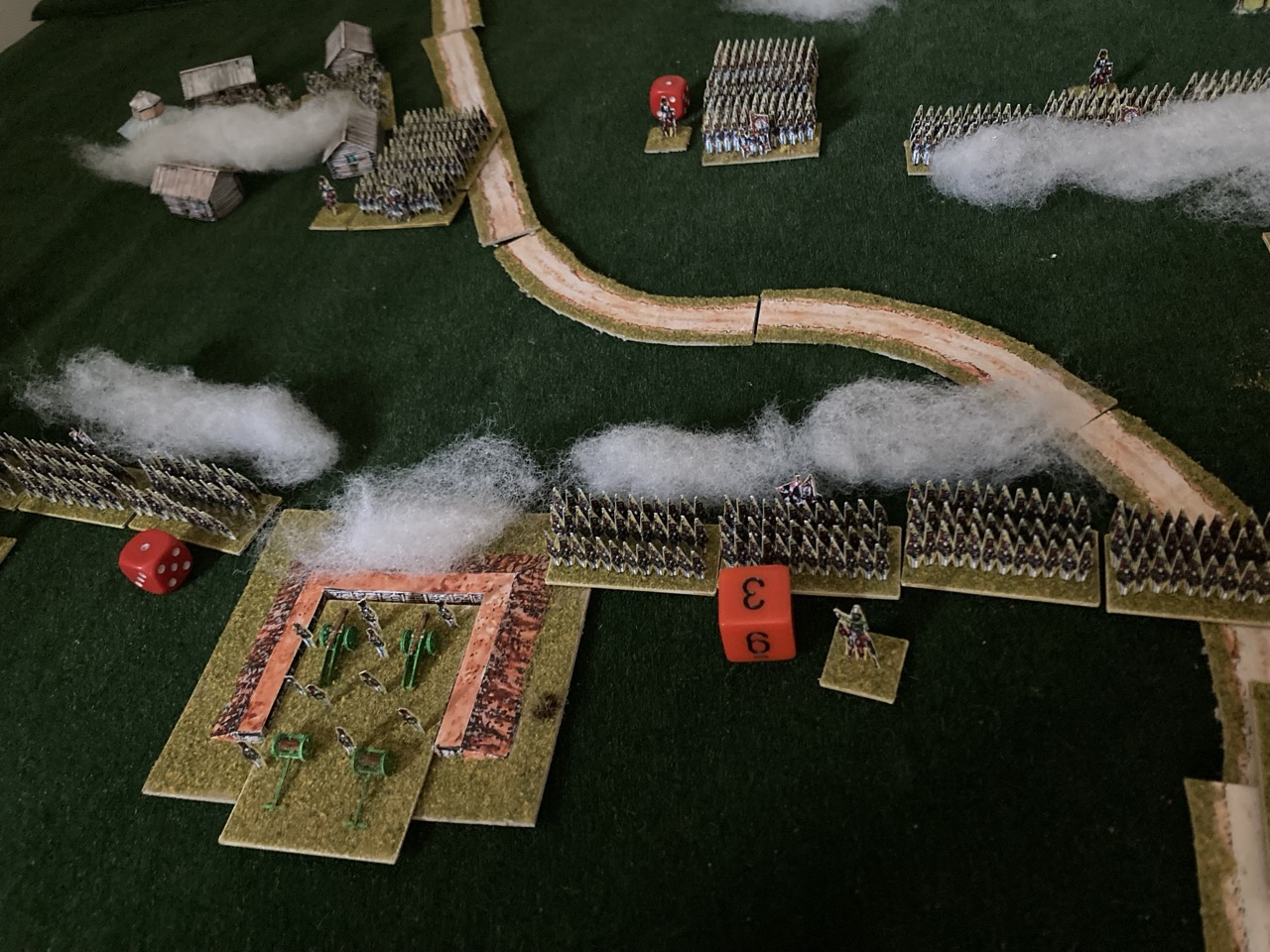 Russian fire halts the French advance at the centre
Thus ended the second round of the Battle of Derevushka.
Some thoughts on the ruleset
Having played two rounds now, I thought I’d make some remarks on the ruleset.
First of all, there are very specific rules as for who may charge whom. For example, artillery may only be charged if it has no nearby friendly close order infantry or horde units. Line infantry may not charge cavalry (except tribal apparently) and other close order infantry units and hordes may only be charged if the attacker has more bases remaining than the defender. This latter rule is meant to simulate that close quarters combat is terrifying, unless you feel that you can win it. This means that you have to weaken the enemy through musket and cannon fire before you can crash your attack columns into them.
Thus you see that the French Northern centre is now vulnerable to a Russian charge, although luckily for them the Russian infantry is pre-occupied more to the South.
I also hadn’t really considered how bad heavy cavalry would be at attacking cossacks (tribal cavalry). The latter cannot charge anyone and can only fire ineffective close-range carbine fire. Unit types have varying attack dice for close combat, however, depending on their opponents. In case of cuirassiers (heavy cavalry) vs tribal, the former only get 1 die per base, making it difficult to wound the nimble Russian rabble!
I have no idea how standard these rules are in terms of Napoleonic wargaming, but I really liked them. Those are my thoughts for now. I might do another section like this in a future post.
OTTer pup helps out
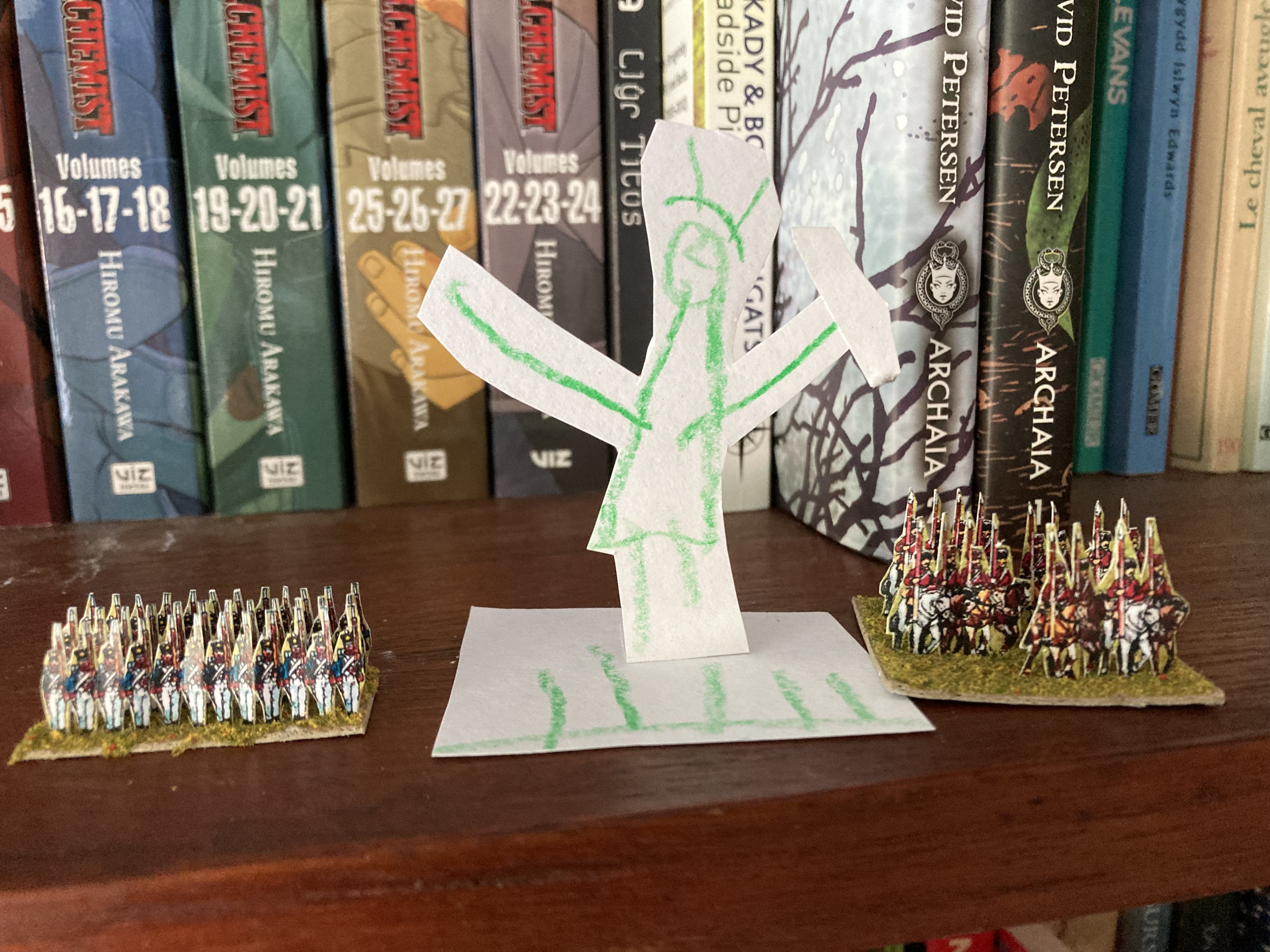
My eldest (4 years old) apparently felt inspired by my paper shenanigans and decided that his father needed some help.
“Here dad, this will finally help you win a battle.”
Battle report: The Battle of Derevushka, round 3
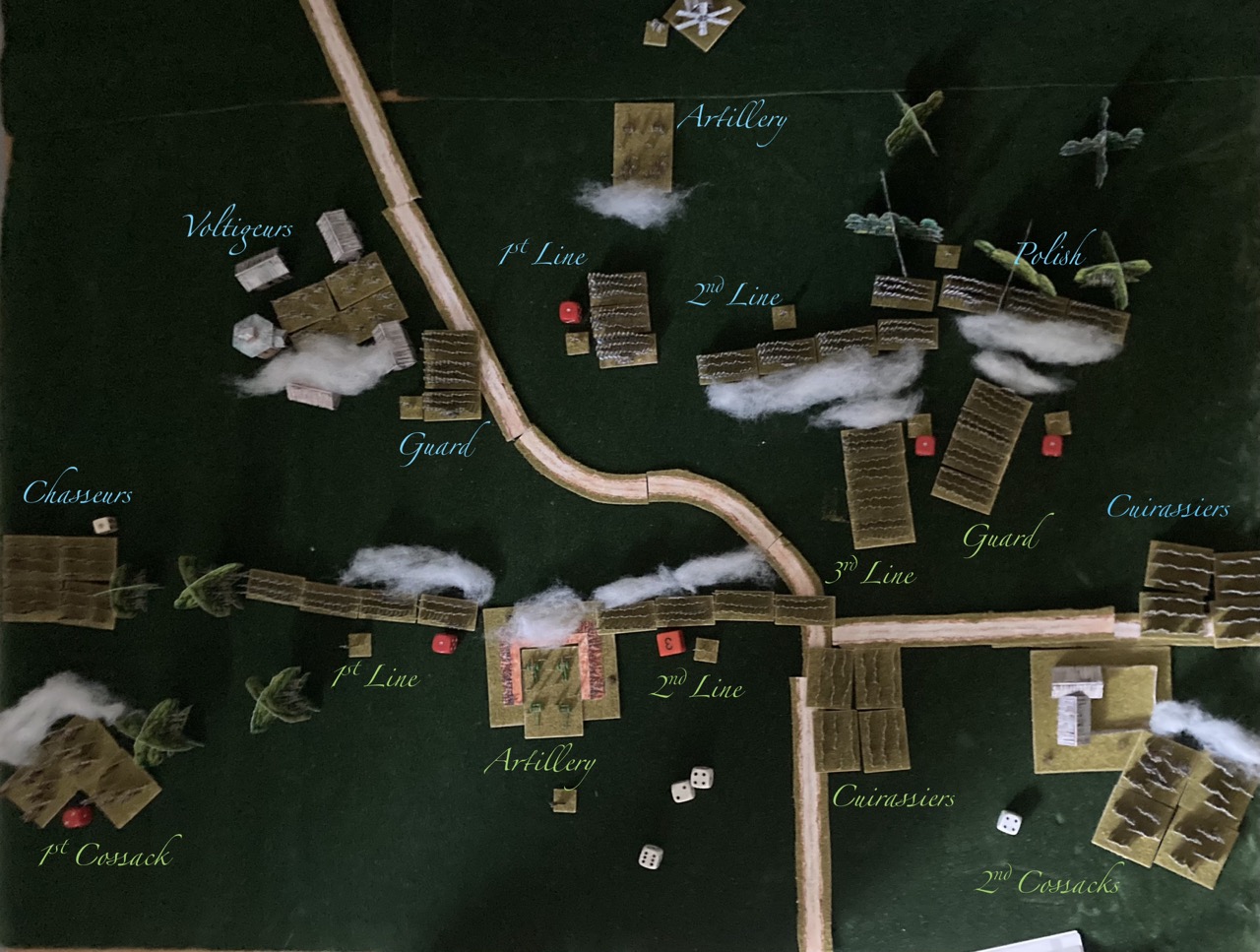 Overview at the start of round 3
The voltigeurs abandoned the relative safety of Derevushka to take position North of the Russian line and fired a well-aimed volley at the opposing 1st Line infantry. This allowed the bloodied Guard to move into the hamlet for a more stable position, while the French 1st Line infantry held its ground.

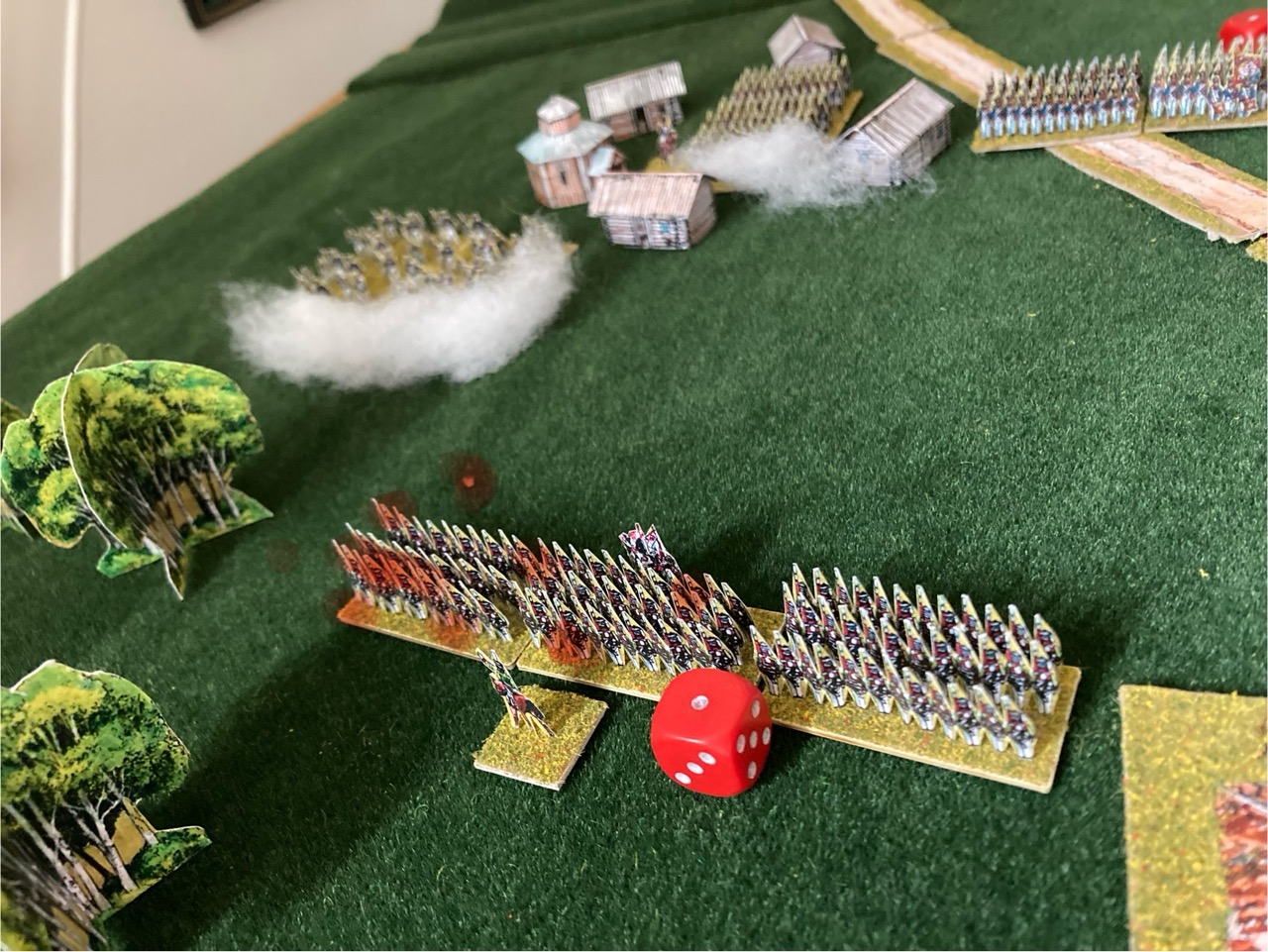
The French 2nd Line and Polish Line infantry to the South fired a volley into the approaching Russian attack columns, bloodying them, while French artillery cut through the Russian 2nd with a well-aimed shot, sending body parts flying. True to their reputation the obdurate Russians stoiccally stood their ground, however.
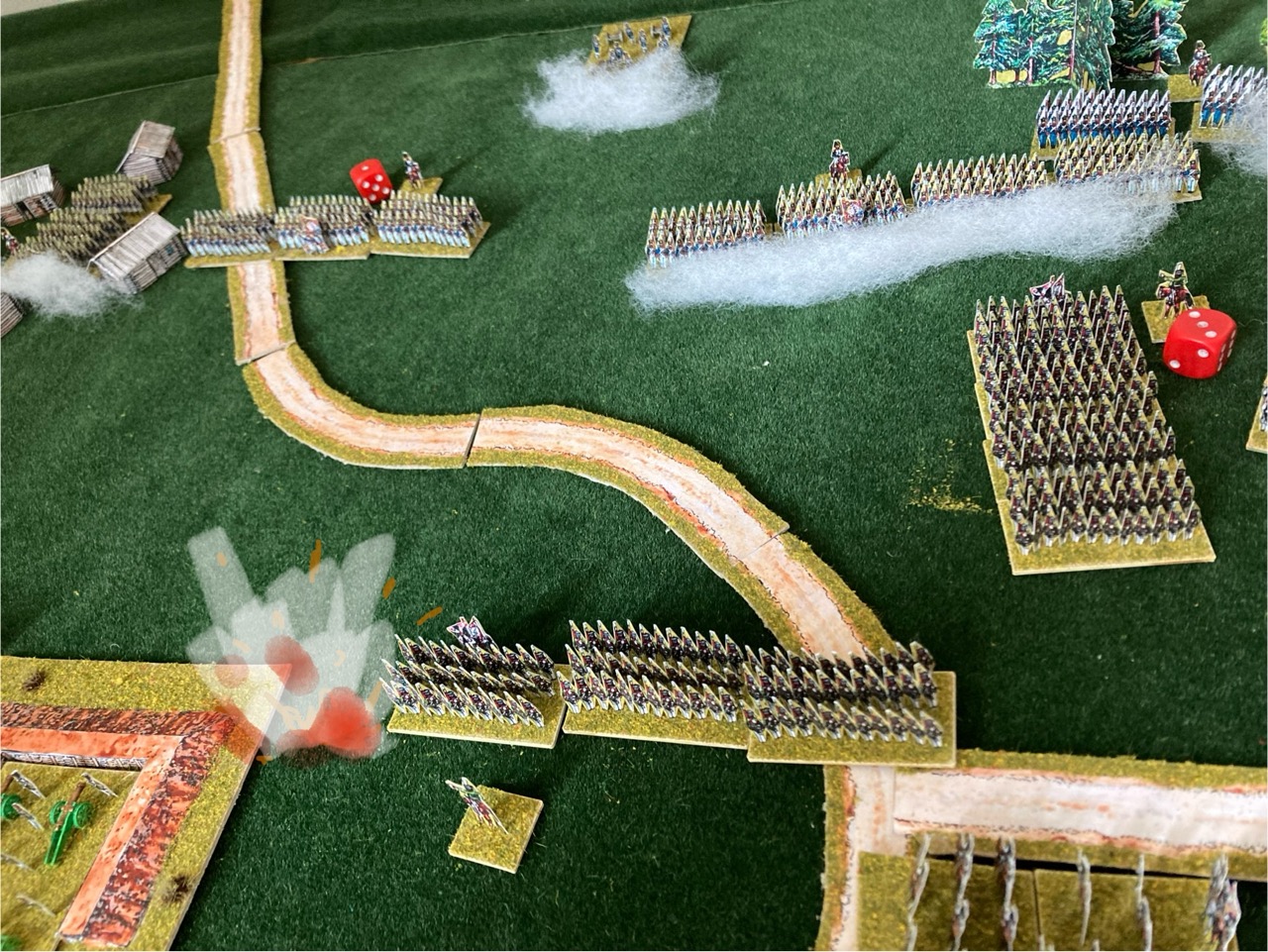

Russian return fire was less effective and failed to cause significant wounds among the French. Even the imposing barrage from the artillery was not enough to seriously wound the French 2nd. Whereas the Russian columns had been advancing steadily, they have now been halted, continuous fire from the French line keeping them from charging in with their bayonets.
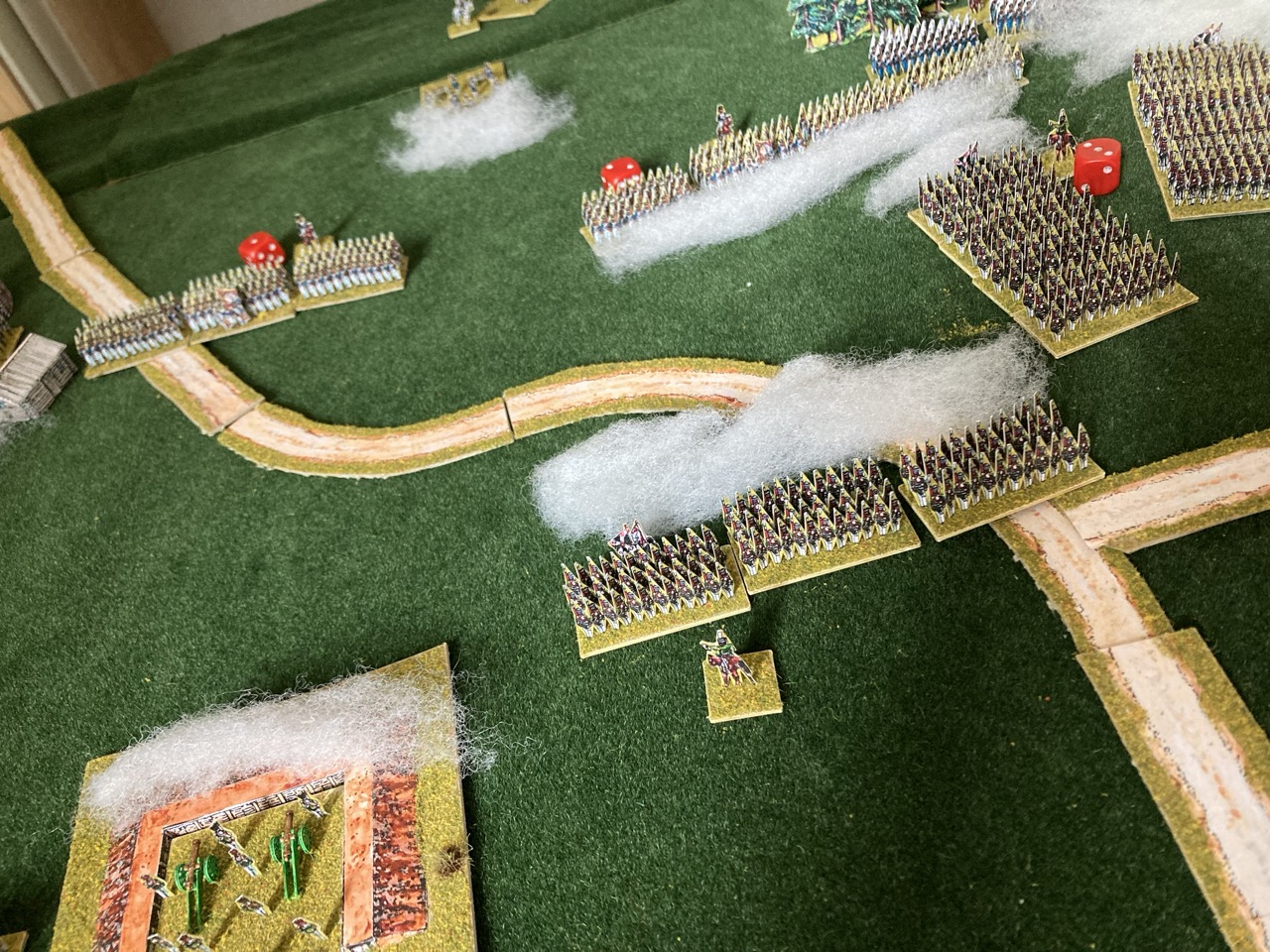
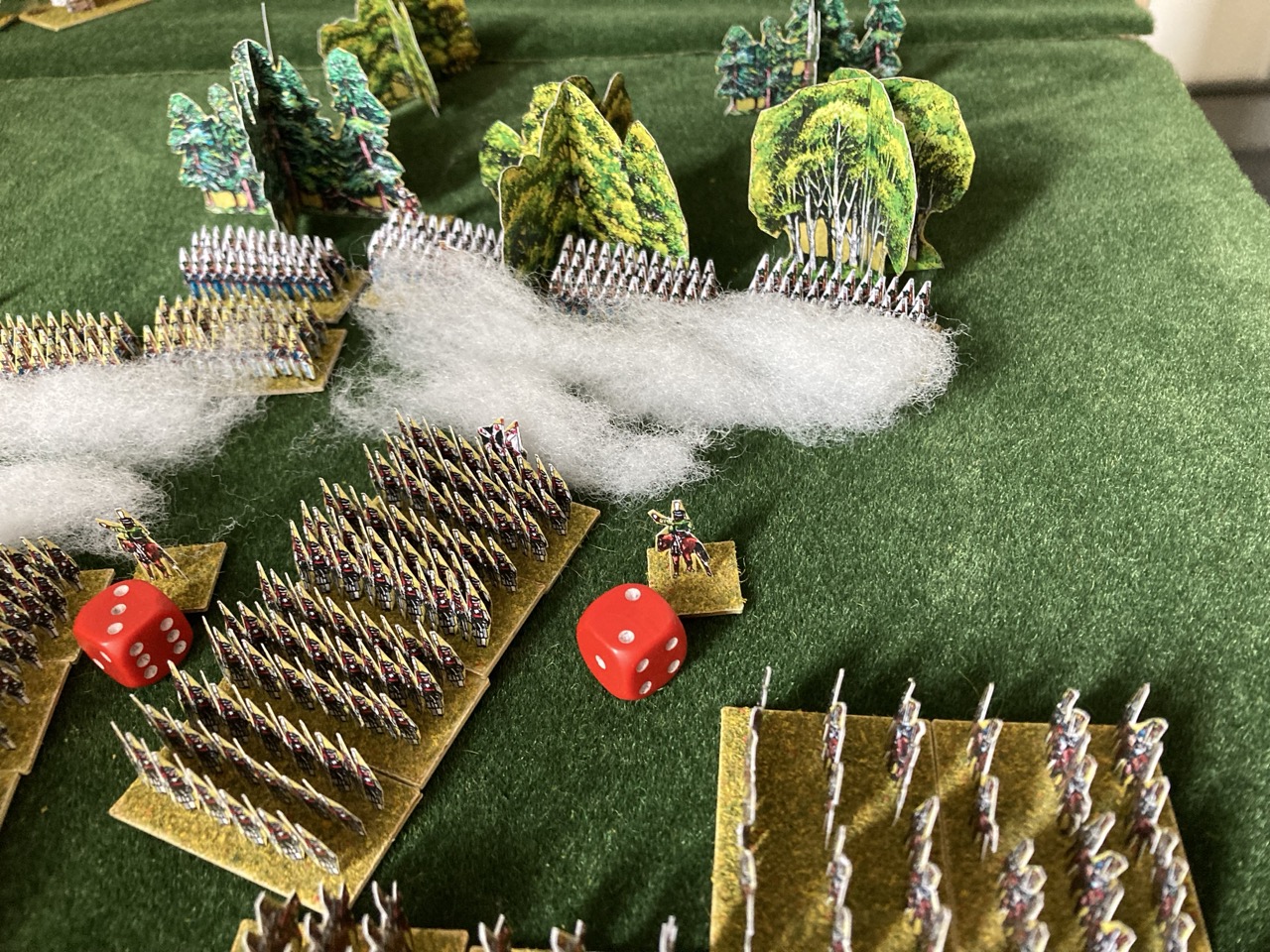
On the flanks the French chasseurs gave the opposing cossacks a bloody nose and thus continued to slowly grind them down. The cossacks fired frantically at them, failing to hit anything, but still managed to regroup after each successive French charge. On the Southern flank the Russian cuirassiers, supported by the cossacks, launched a coordinated attack against their French counterparts. While the cossacks strafed them with carbine fire, the cuirassiers frontally crashed into each other. A melee ensued, where the Russians were able to press the initiative and hew enough enemies down to force a retreat. The French veteran cavalry was able to regroup, however, and now endanger the flanks of the Russian attack columns!
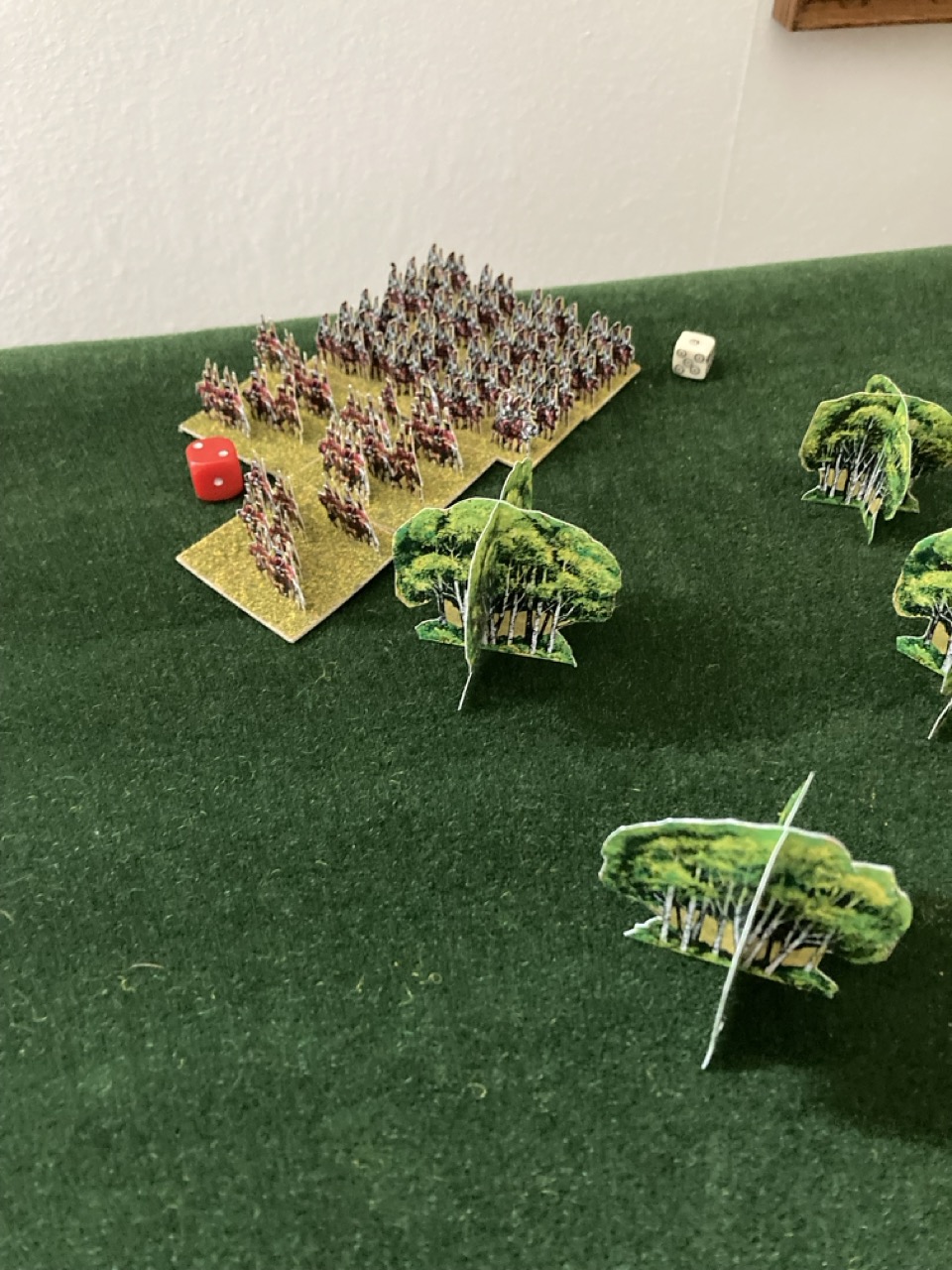

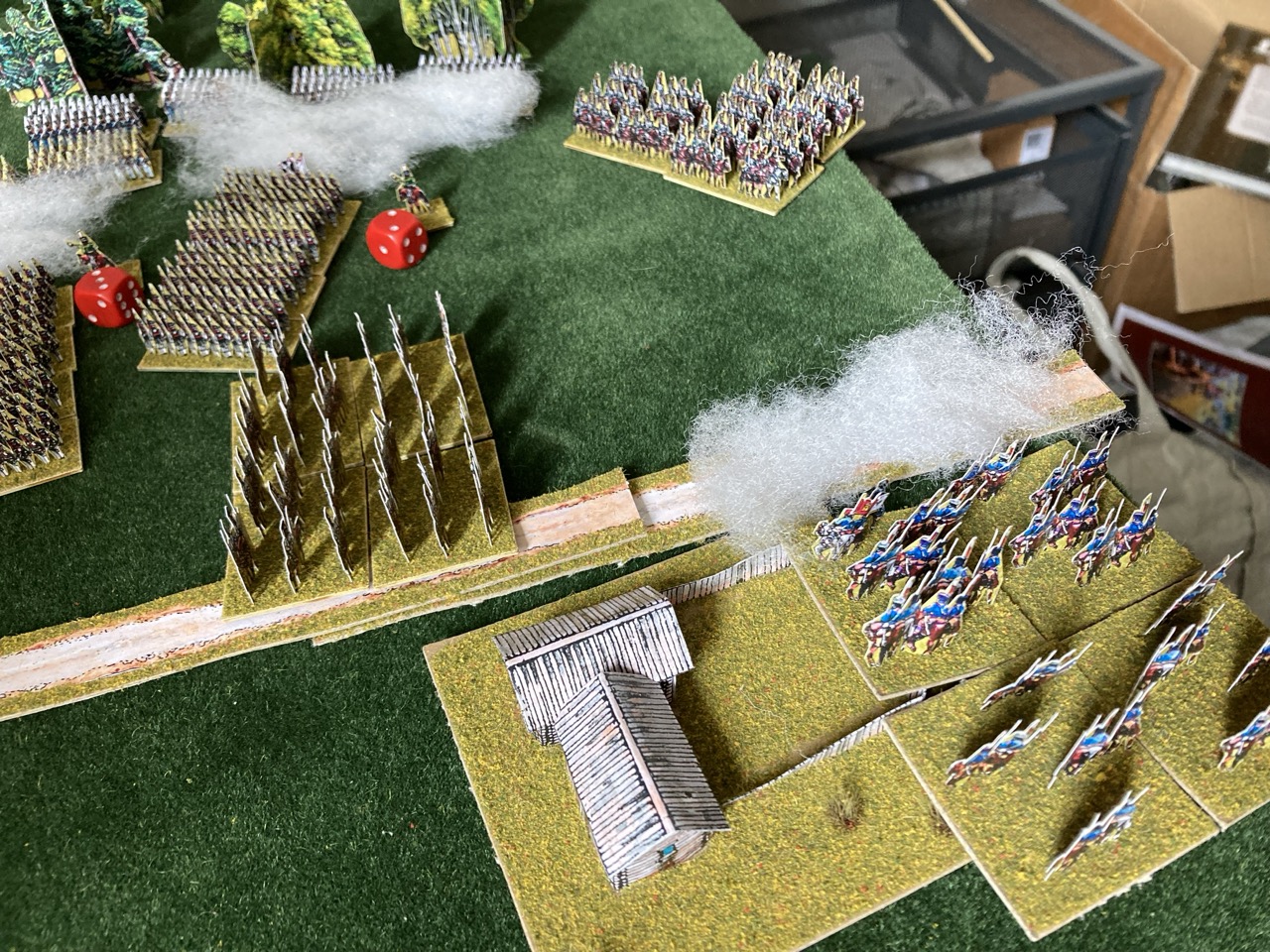
Thoughts
The rules as a whole are short and sweet, but would have benefited from some more explanation or examples. This is true, for example, for the rules on retreating. It is written that if a unit loses combat, it immediately retreats backwards in a straight light. If they run into another unit, friend or foe, the retreating unit is lost. The rules say nothing about board edge, however. Whereas the table I’m playing on falls within the recommended table size, I find it a bit too small, which means that retreating cavalry would often have left the board edge. Would this also destroy them? Until now I’ve allowed units to maneuver while retreating, but this has now meant that the French cuirassiers have gained a very advantageous position. What do you think?
Lessons in tactics
Russian columns advance….and then wait? This is more of a tactical observation that one on the rules, except that it has to do with the rule that line infantry can only charge other line infantry if the defenders have fewer bases. With the Southern part of the Russian line in attack columns, there hasn’t been enough firepower from the Russian side (or too many misses) to bloody the French enough to allow a charge. So were the Russians unlucky? Maybe. I feel that I should have deployed at least one to line and then reformed when the time came. The trouble with the Russians, however, is that they have the rule “sluggish infantry”, which means that they need to commit a whole turn to changing formation. Food for thought!
 Overview of the end of round 3
Battle report: The Battle of Derevushka, round 4
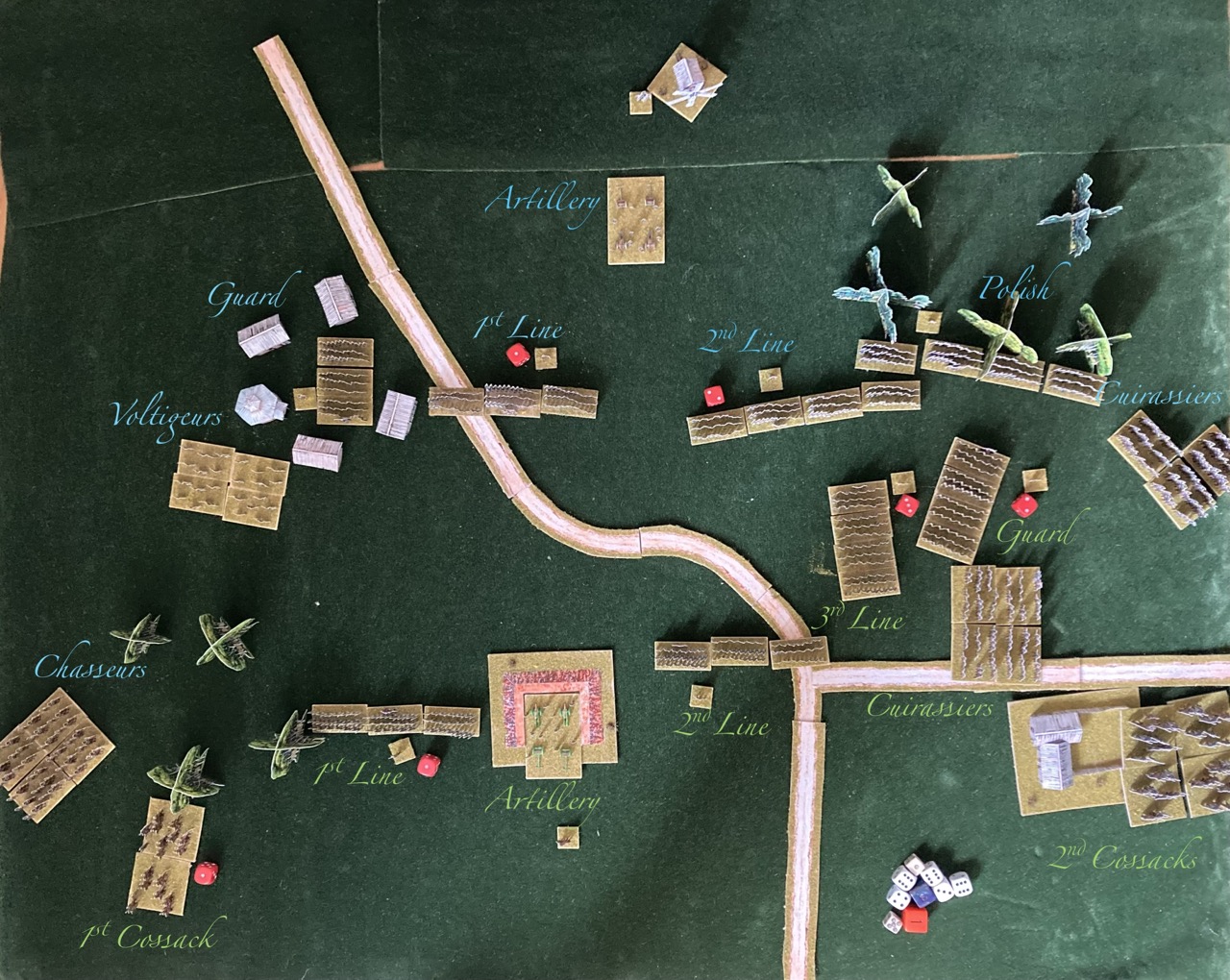 Overview at the start of round 4
On the Northern flank the chasseurs were finally able to pin down the 1st Cossacks and cut them down. Those that remained scattered to the wind, leaving the Russian rear vulnerable.
This was part of a larger French advance on the Russian line in the North. The Grenadiers and 1st Line moved forward under the covering fire of the voltigeurs and the artillery. Whereas the former only managed to slightly wound the Russians, the French cannon cut a bloody swath through the unfortune Russian 1st. Nevertheless the Russian line infantry did not break!


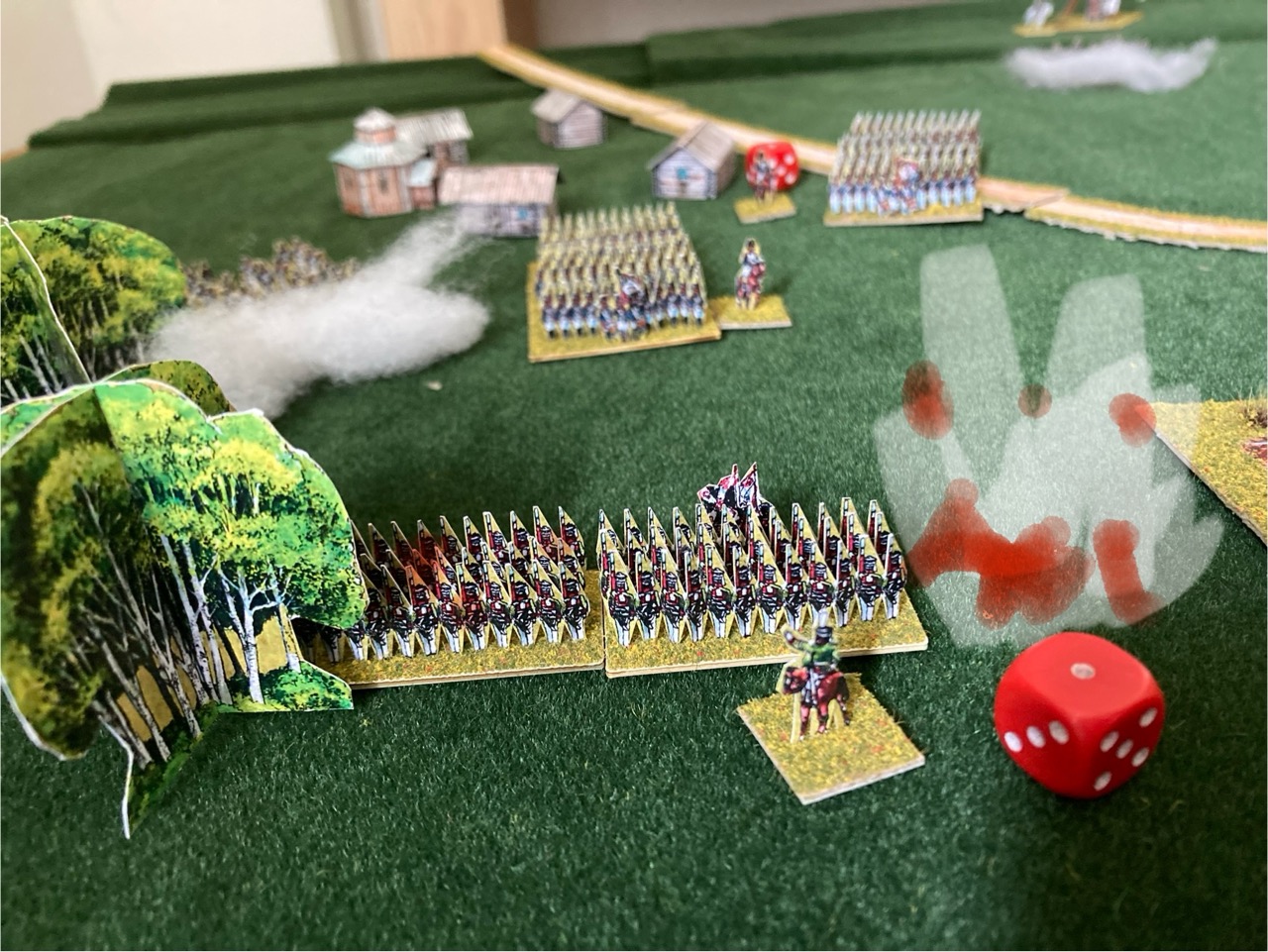
The Southern front saw the French 2nd and Polish line infantry fire a well-aimed volley into the halting Russian attack columns. This was supported by a furious charge from the French cuirassiers into the flank of the unfortunate Russian Guard. Even the most elite of the Russian line infantry could not hold and was mercilessly cut down, after which the remainder fled.


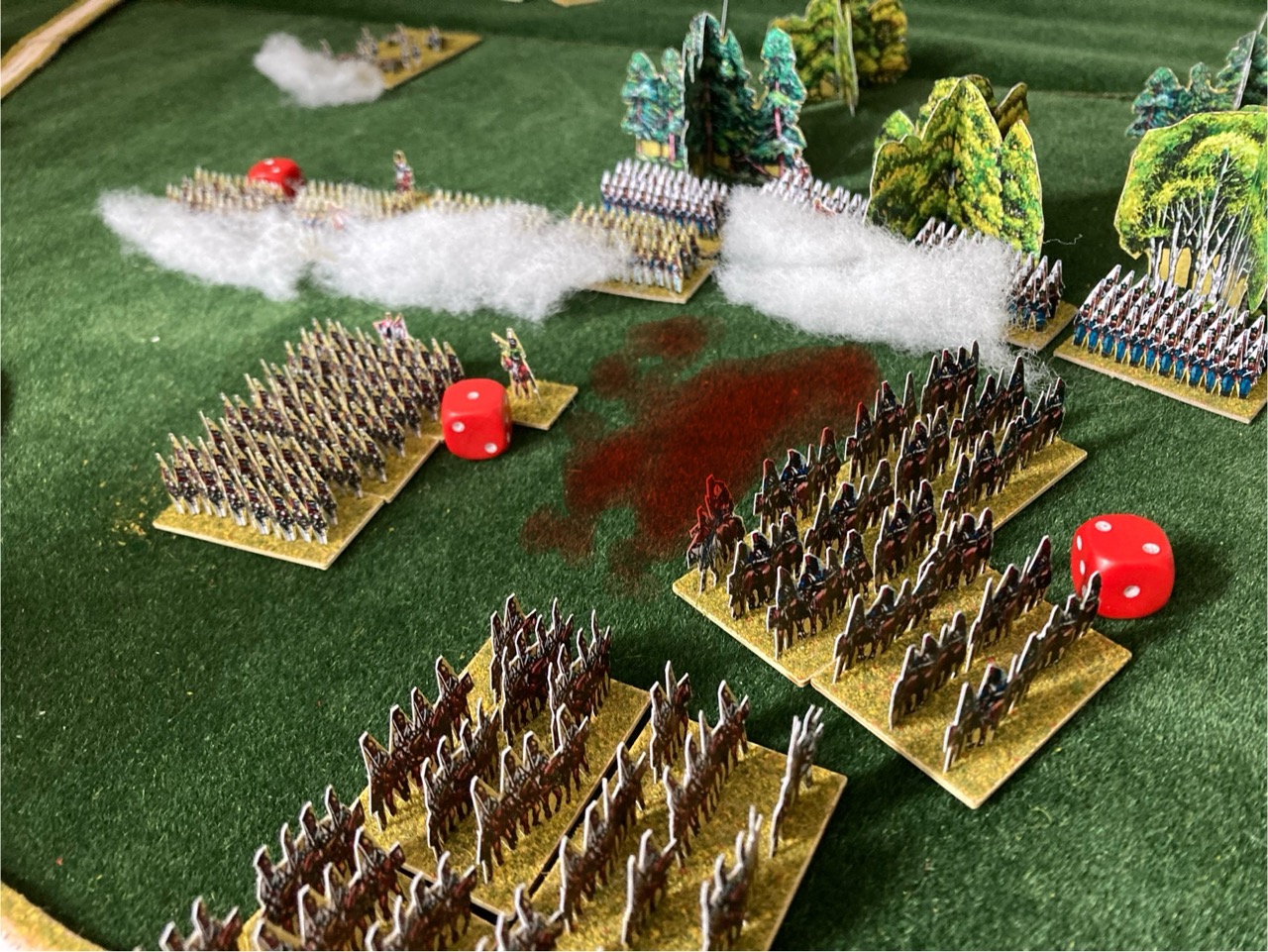
The French had certainly dealt the Russians a bloody blow, which made them eager to return the favour.
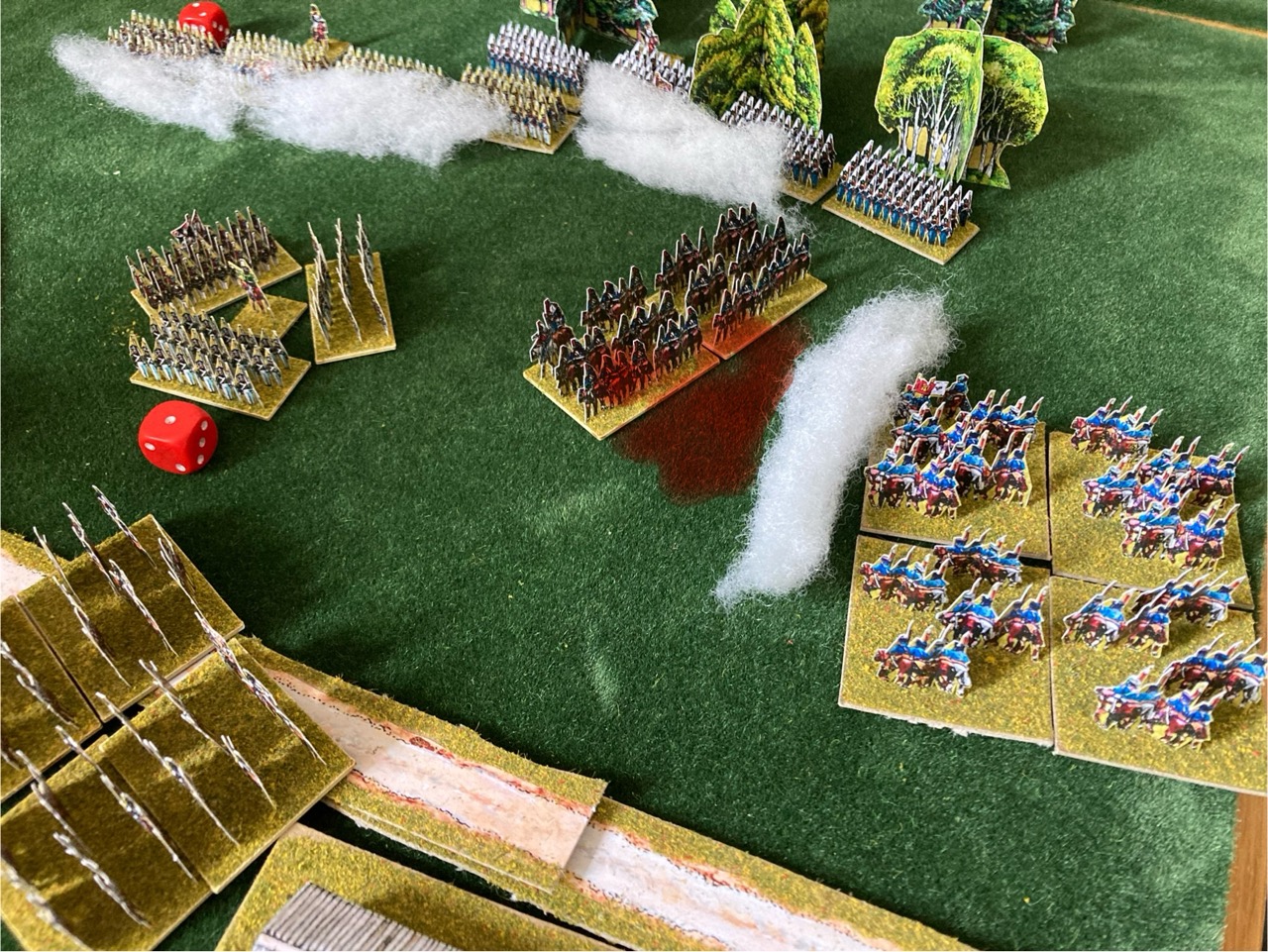
On the Southern front, the Russian 2nd Line infantry quickly took up square formation to guard against the cuirassiers that had just obliterated the Guard. The Russian cuirassiers found themselves outmanoeuvred and weren’t able to take any action, which meant they had to spend the turn to reposition themselves.
The 2nd Cossacks showed their worth, however, firing a carbine volley into the backs of the cuirassiers, not only wounding them, but causing some of the French elite cavalry to flee in panic! Meanwhile the Russian 2nd Line infantry continued firing into the French 2nd, not only severely wounding them, but also causing some of them to flee.
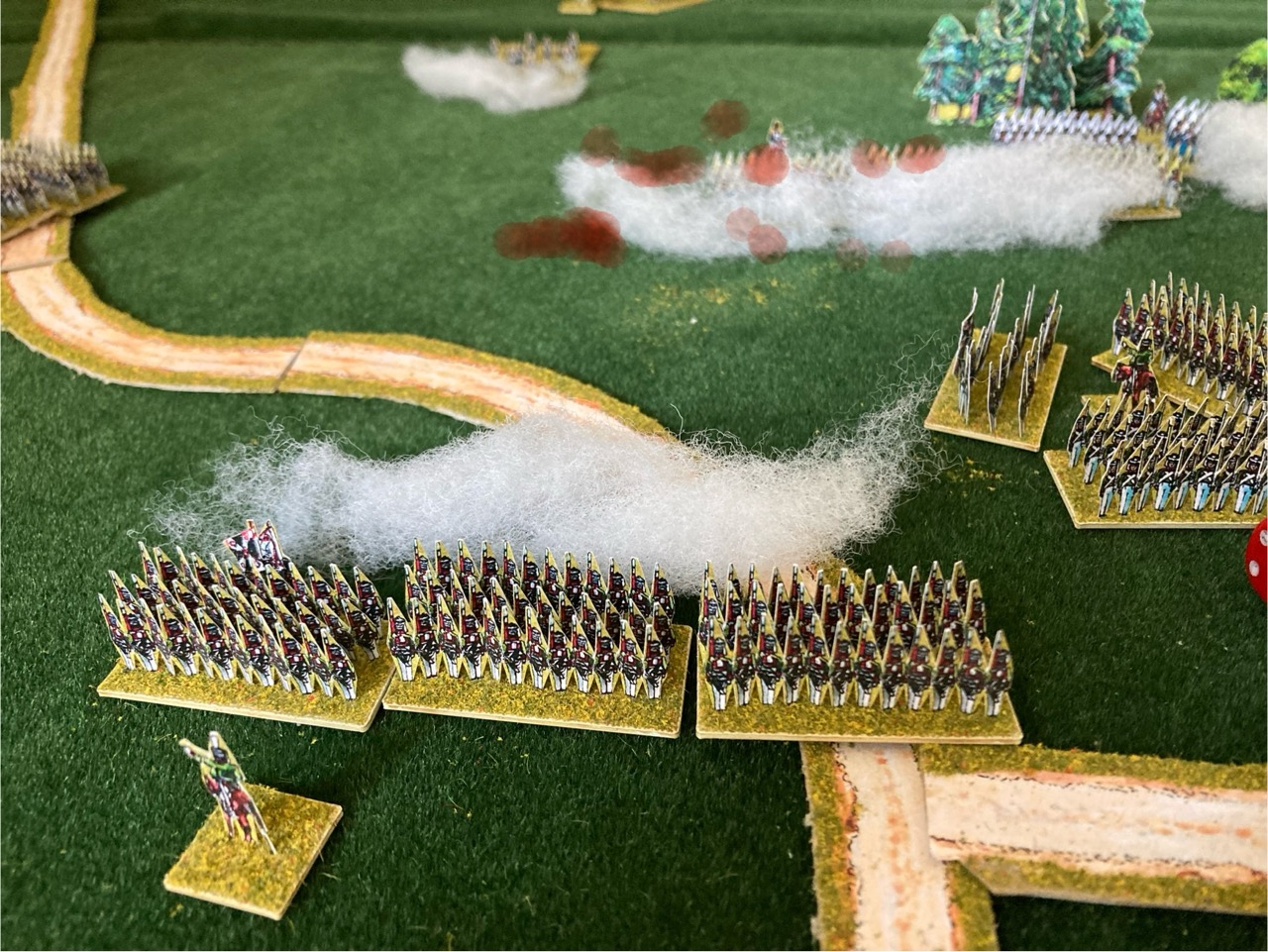
The Russian Northern front seemed in an even more precarious position. The 1st Line, having lost half their men, opted to seek cover in the woods. While exposing their flank to the French grenadiers, they set their money on the cover provided by the trees, which might shield them not only from fire, but also from cavalry charges.
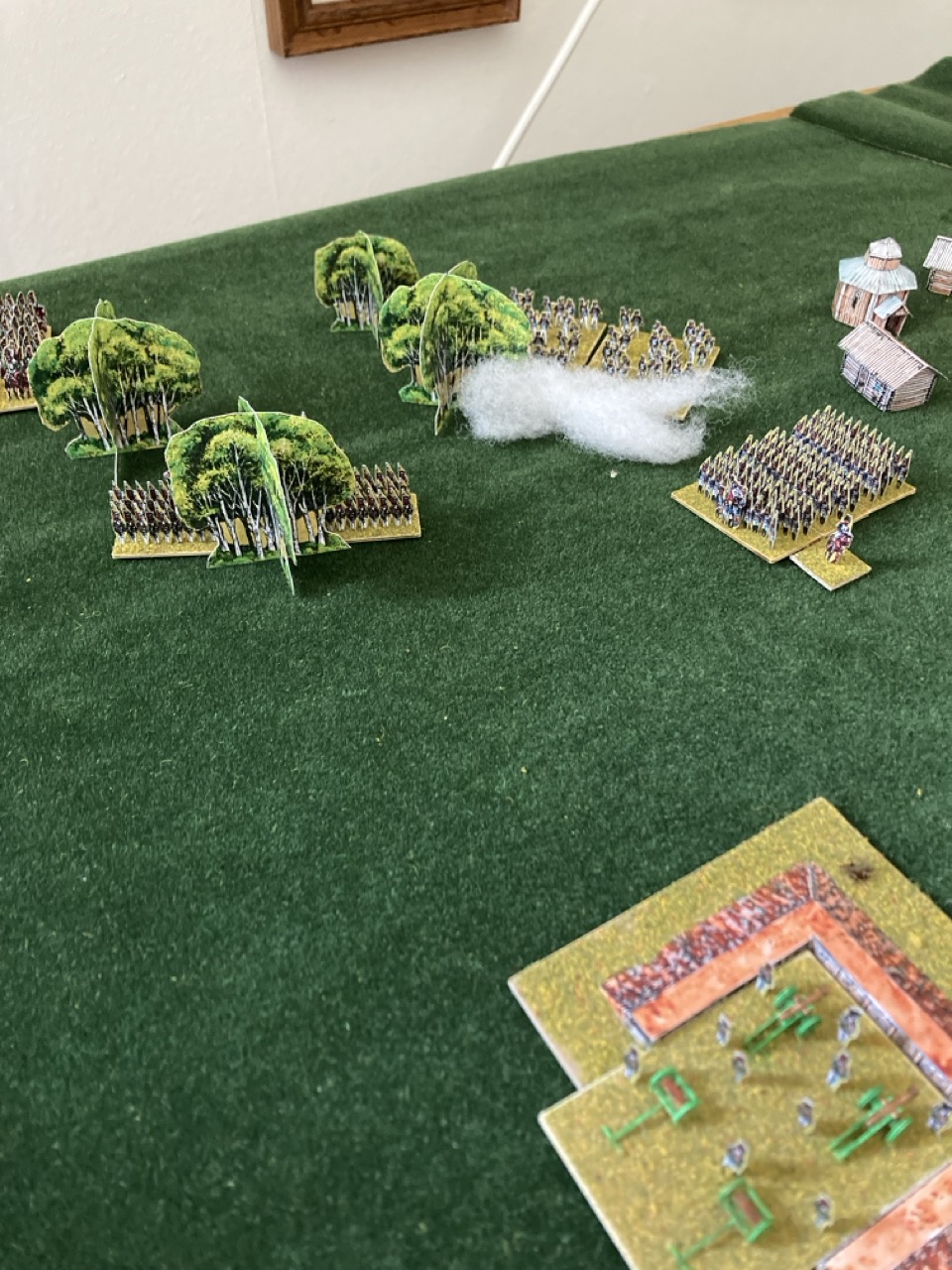
Their retreat was covered by the ever effective Russian artillery firing canister into the French 1s line. After the smoke cleared, only a quarter of them remained, the rest shot to ribbons or fled in panic.
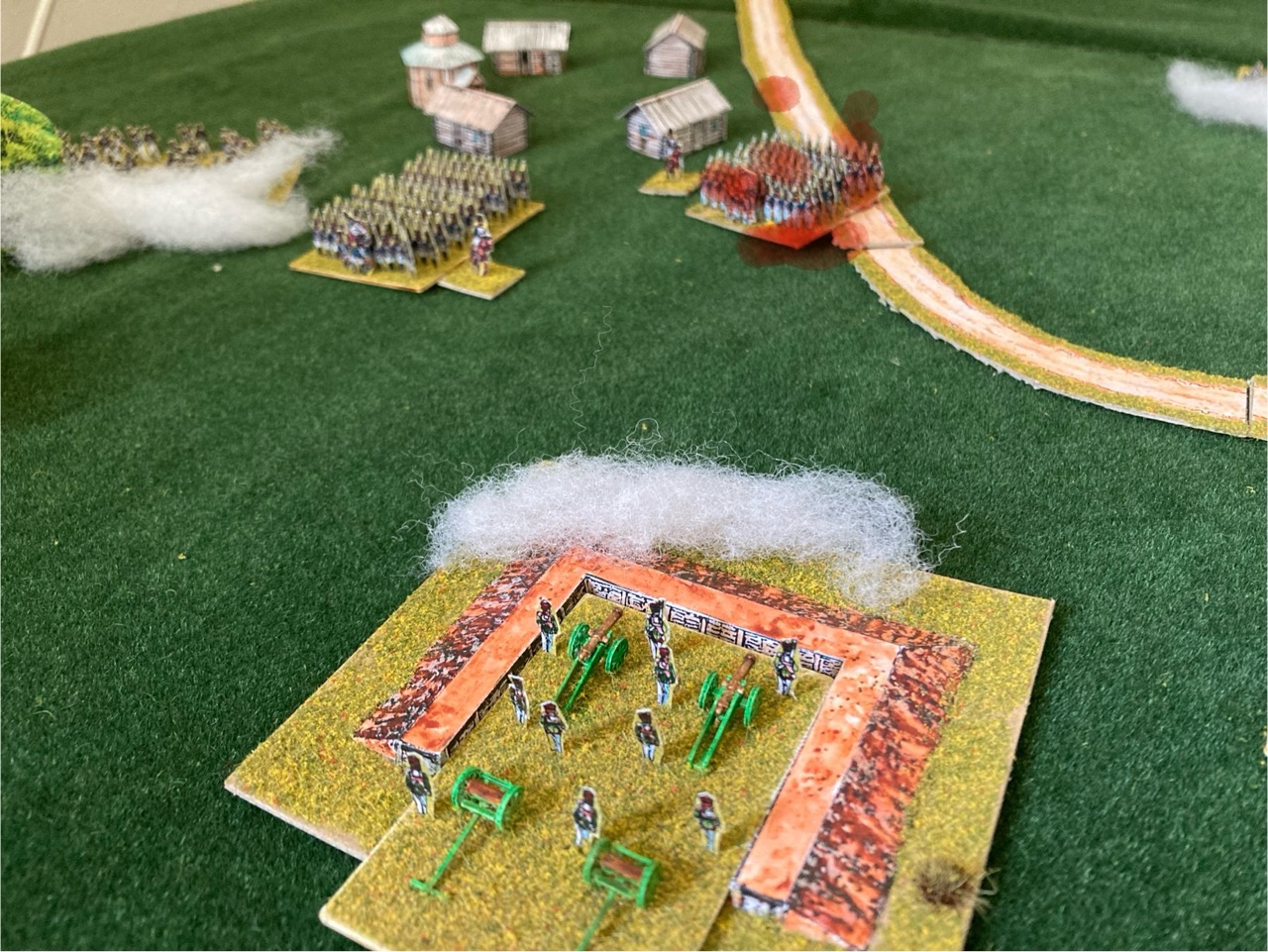
Thoughts
This was a bloody round for both sides! The French obliterated two Russian units. The rest of the Russian line held, however. In part thanks to the Stubborn infantry rule, but also because they rolled well on moral.
Russian return fire was almost if not just as deadly, and whereas Russian line infantry only test for moral after the loss of the first unit, the French do not have such an advantage. This meant that after the French 2nd line infantry had suffered one base of casualties, they lost another due to their failed moral test. To make things worse, the French also failed moral for their cuirassiers and the 1st line infantry.
Looking after the wounded
Who would have thought! Paper miniatures aren’t as sturdy as plastic or metal ones. Once every two rounds I find that part of a line gets loose somewhere and I need to reglue it. Still, it is more sturdy than I’d thought originally.
One final thing
I noticed that the previous post’s first image was in fact a photo taken towards the end of that. I did find another photo, which I added in its stead, although it is of lesser quality.
Battle report: The Battle of Derevushka, round 5
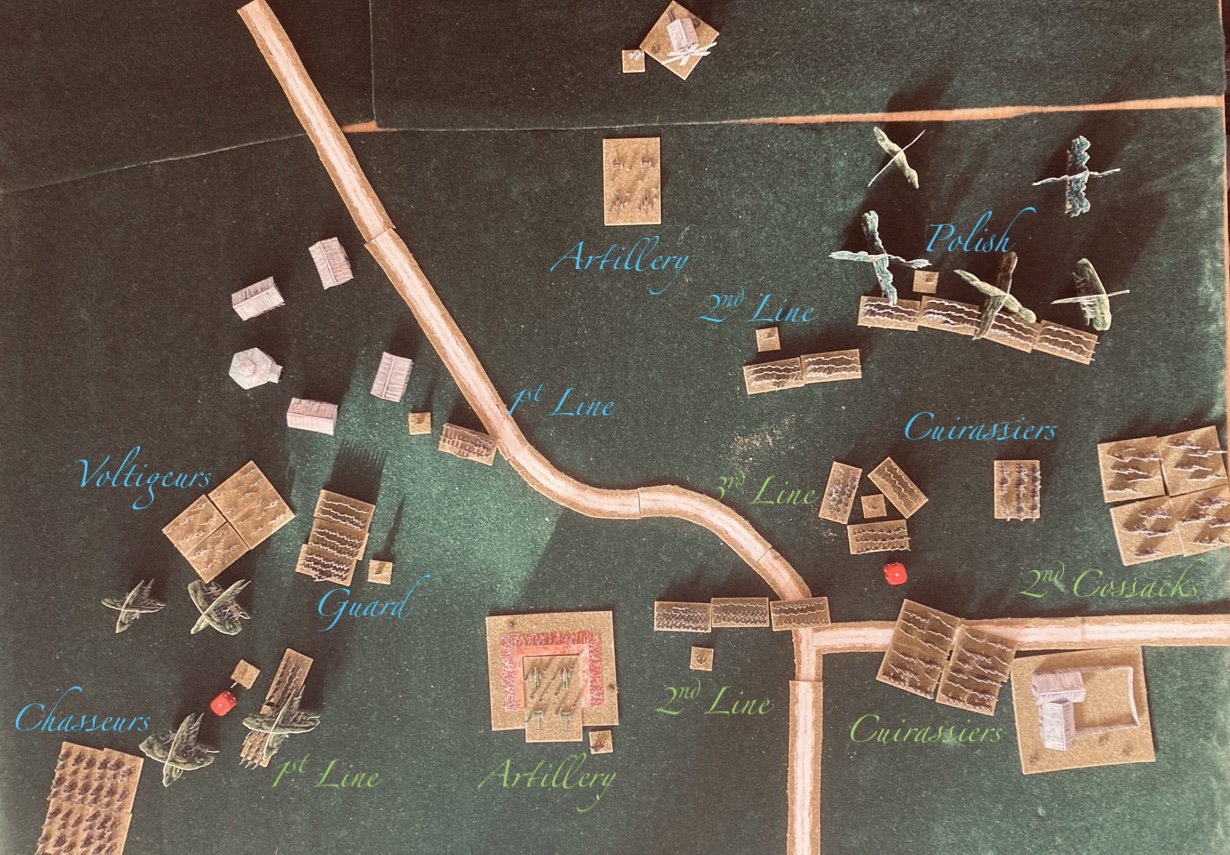 Overview at the start of round 5
With a thunderous Vive l’Empereur the French grenadiers charged into the Russian 1st Line infantry, who were trying to regroup in the woods. They surprised the unfortunate Russians and hit them in their flank, while getting support fire from the voltigeurs, who followed them into the woods. The French elite infantry allowed none of their opponents to leave the forest alive…
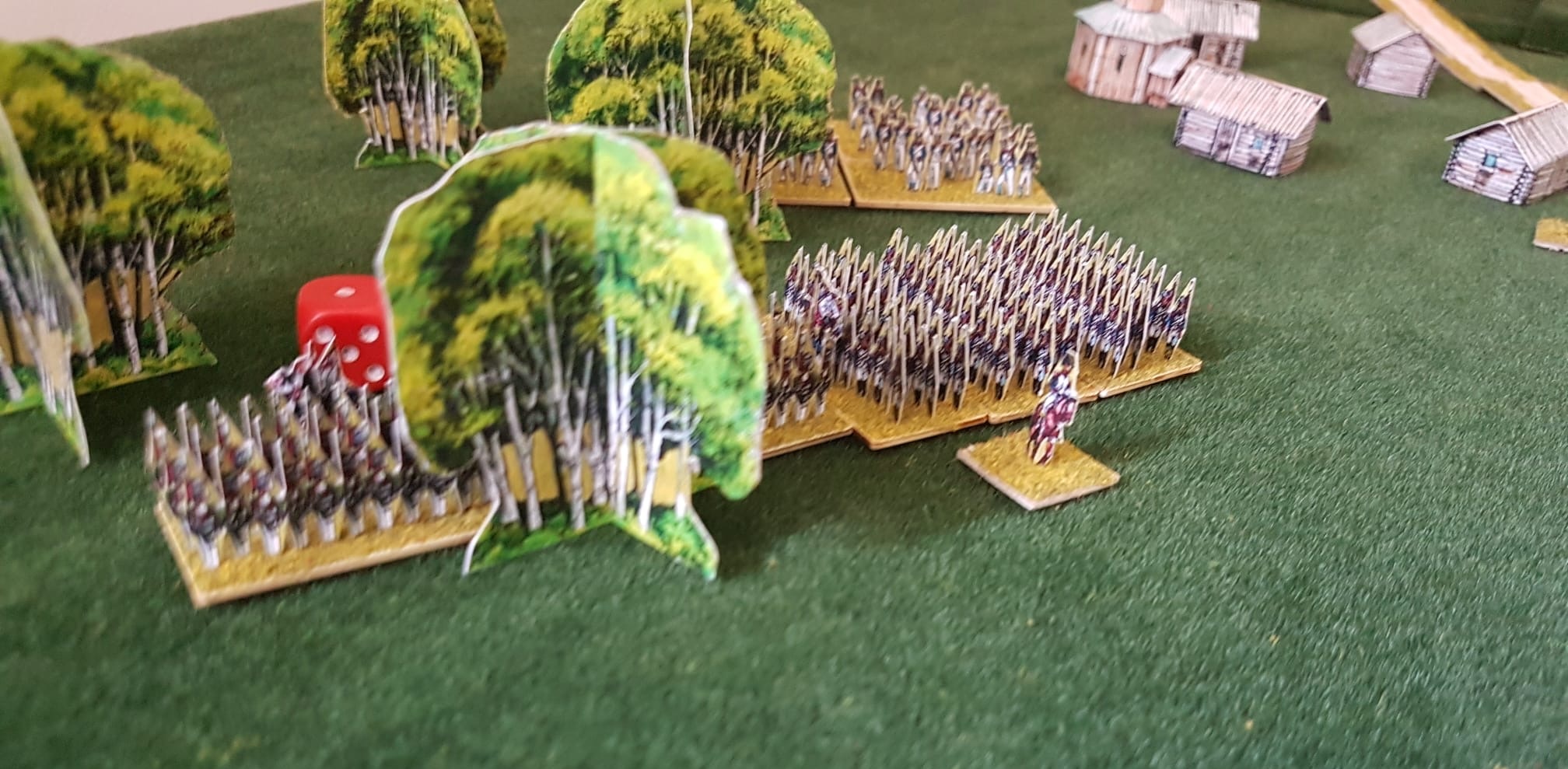
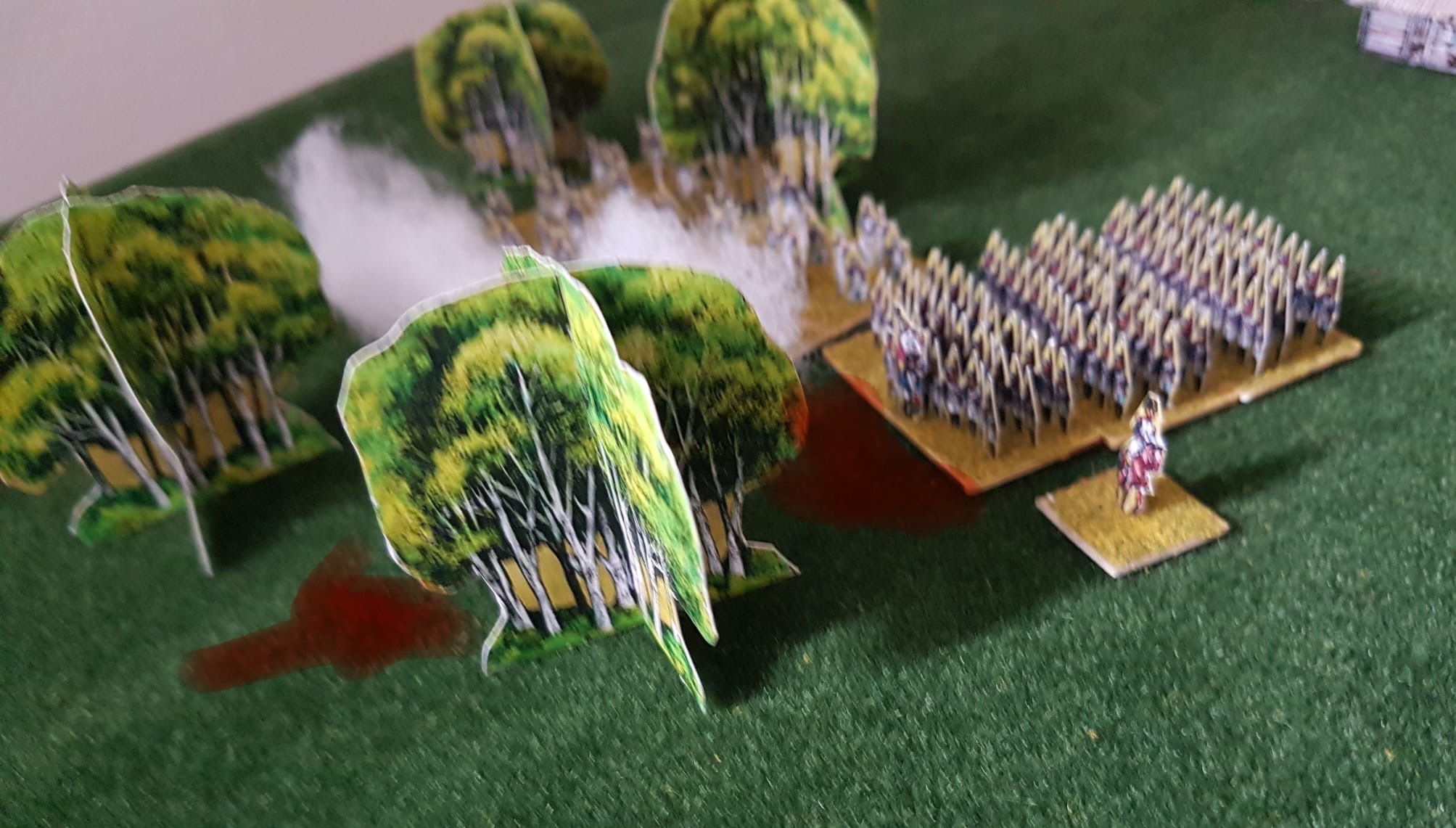
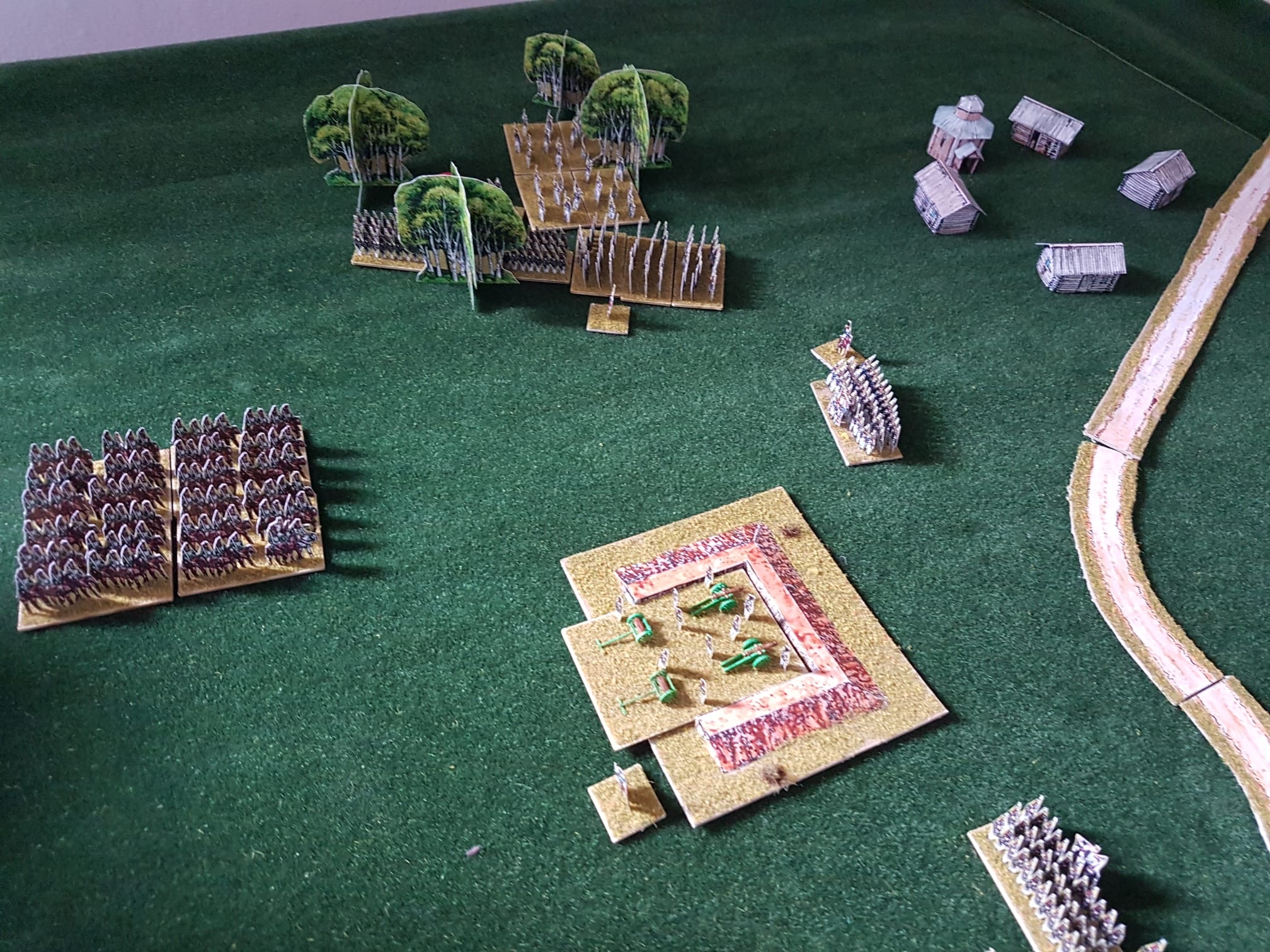 Meanwhile the chasseurs moved behind enemy lines, endangering the Russian rear.
The French cuirassiers found themselves surrounded and decided to do a final charge against the Russian square before them. The French 2nd Line infantry attempted to give them some supporting fire, but they were too reduced in numbers to do any real damage. The Russian square did what it was trained to do and mercilessly cut down the last of the French cuirassiers. The Polish line infantry, seeing the Russian cuirassiers line up, hastily moved into the woods, where the cavalry could not reach them.
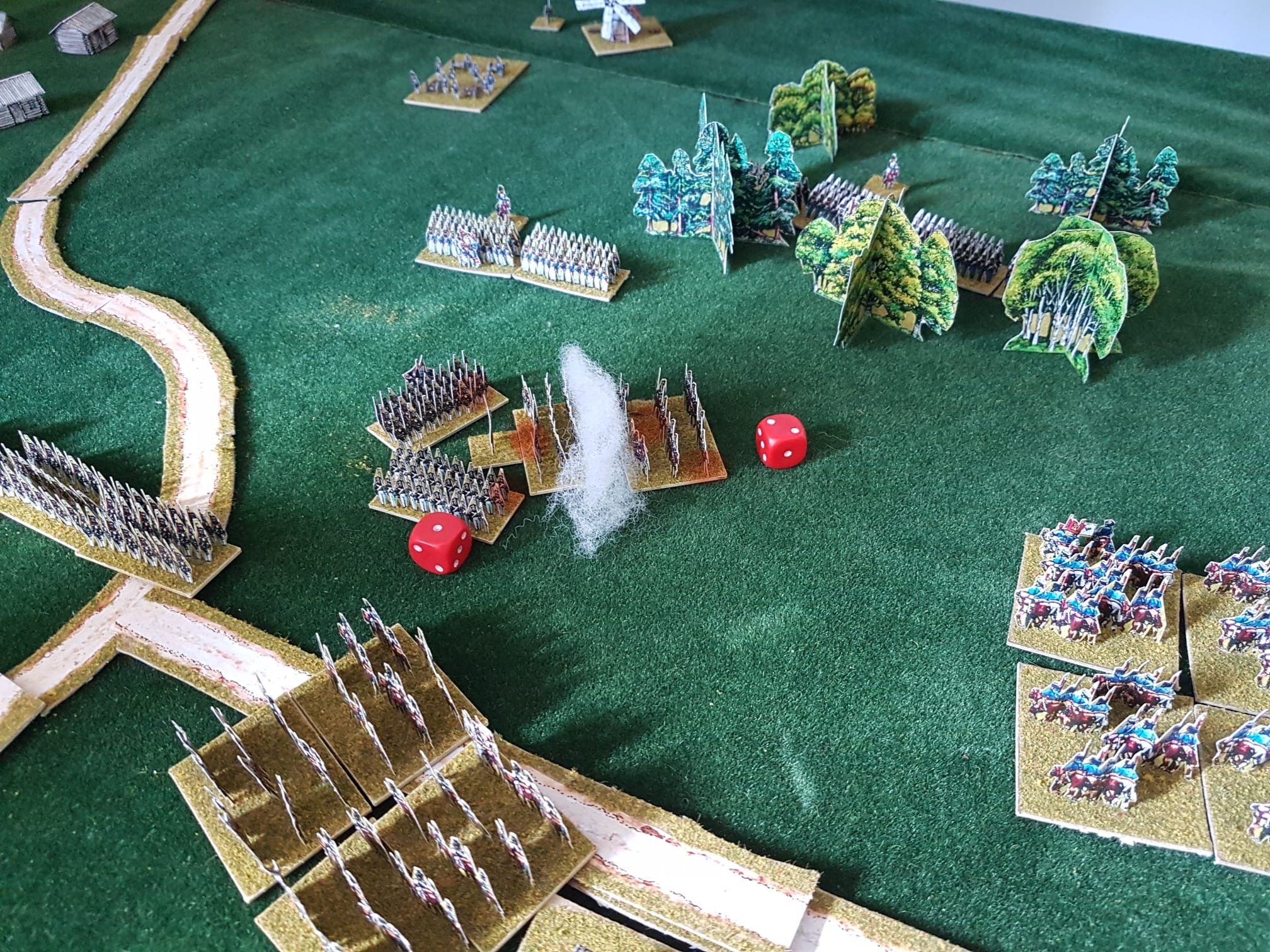
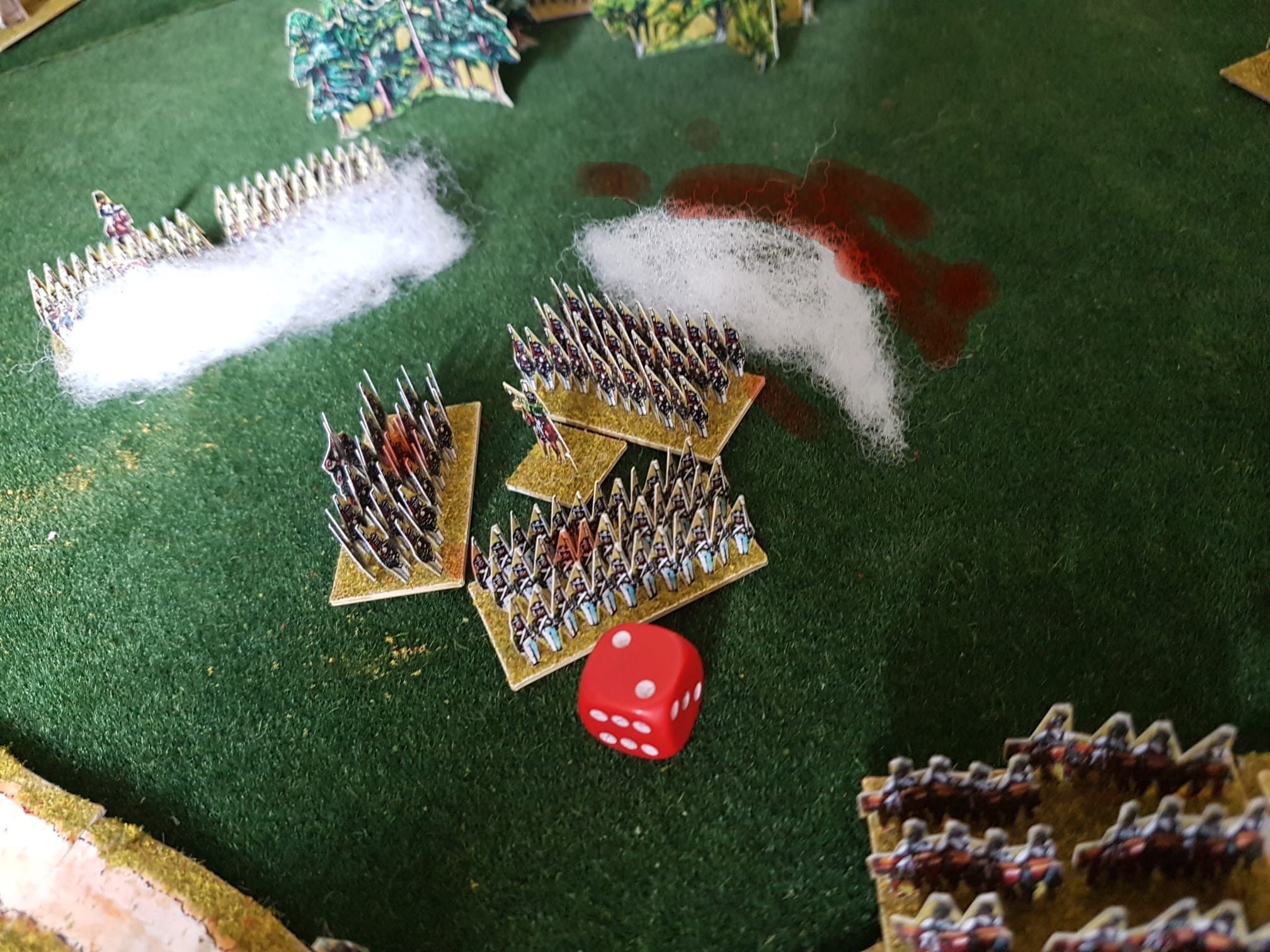
With the Russian left having fallen, the Russians re-alligned their artillery to guard their new flank. Their cuirassiers moved behind the lines to counter the threat posed by the opposing chasseurs.
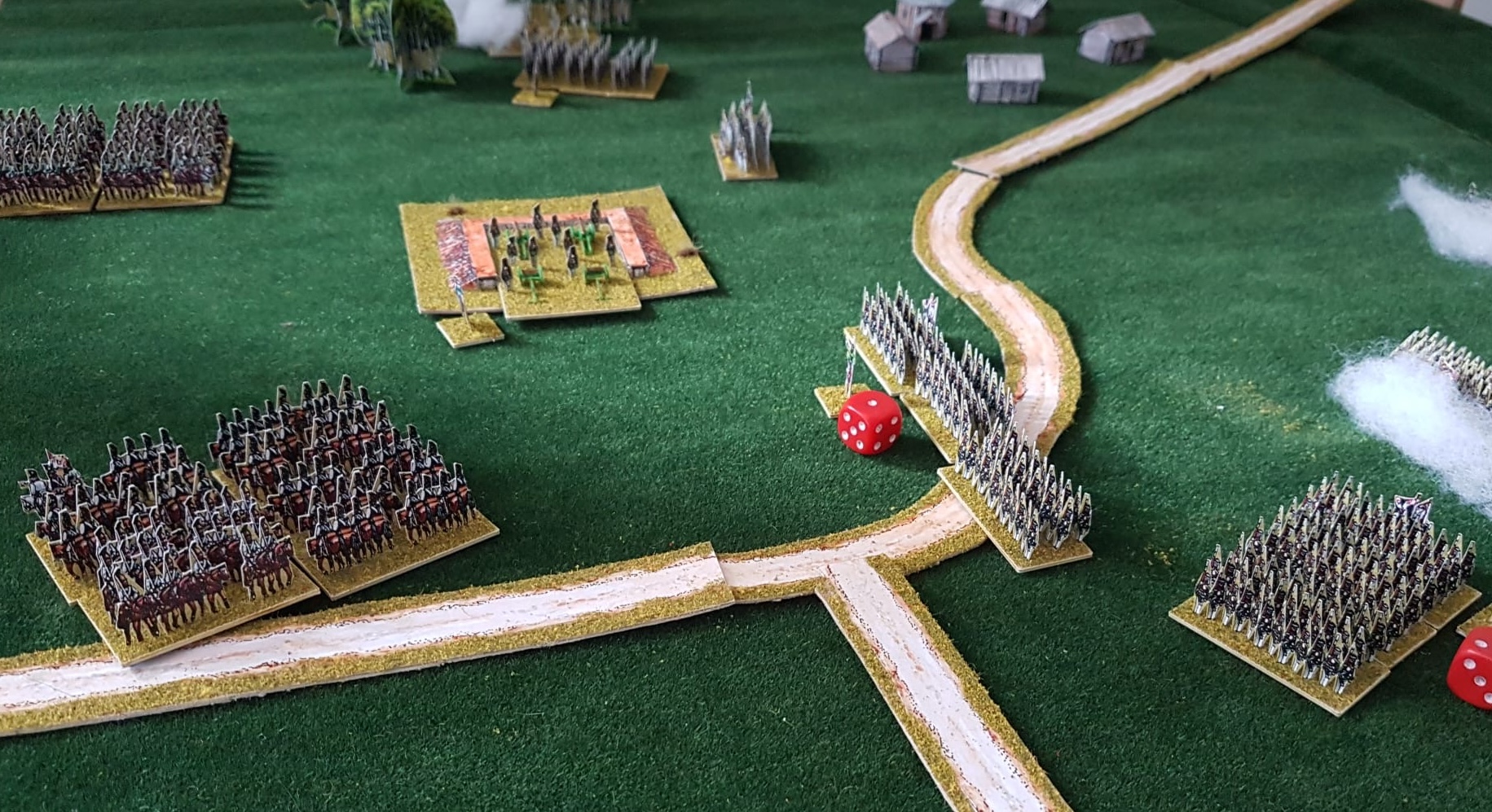
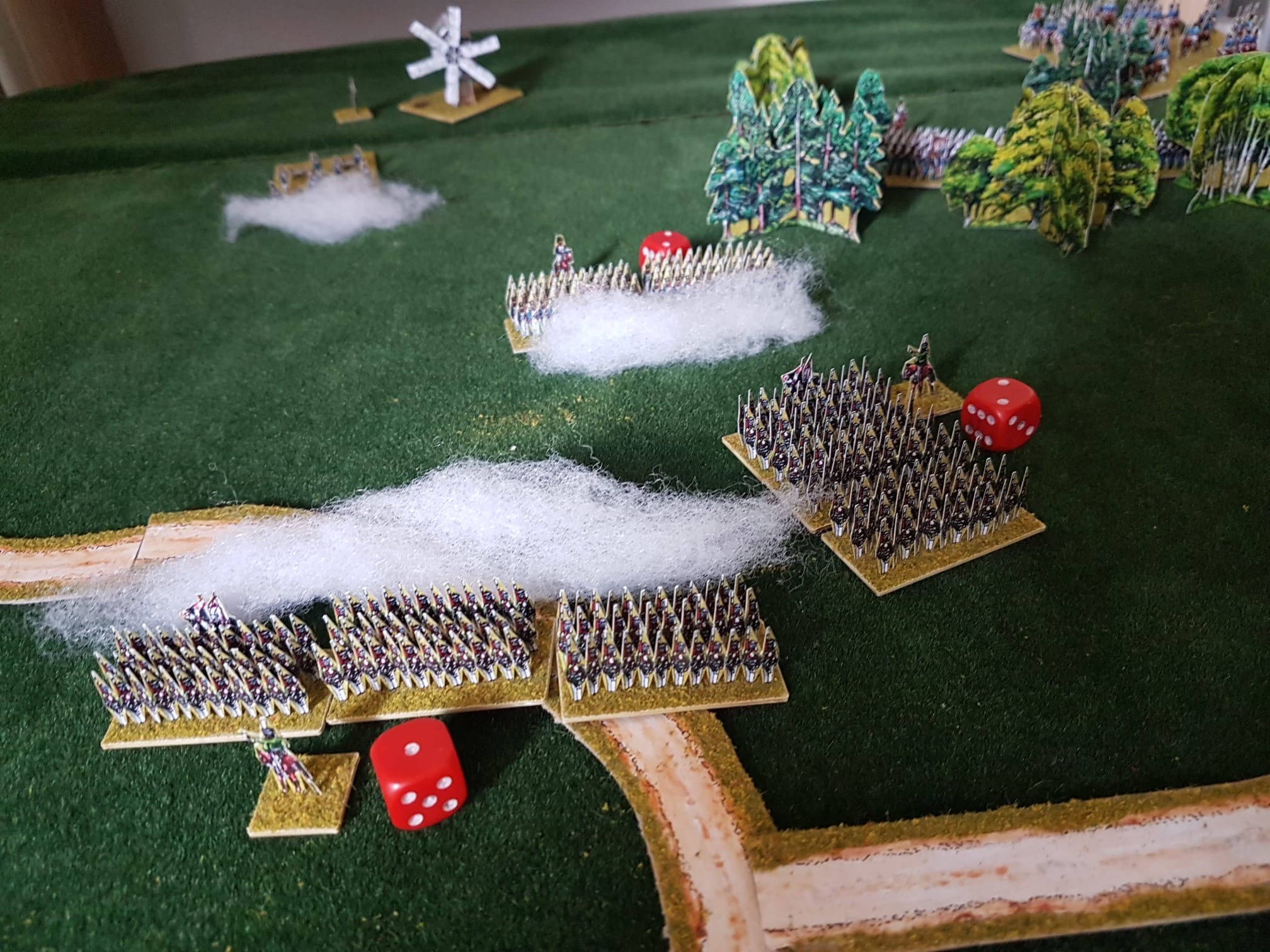 While the 3rd Line infantry changed to attack column, the 2nd Line advanced and fired a volley, trying to put pressure on the French.
Thoughts
- Wow, charging cavalry into a square formation is truly a bad idea! The defender gets to shoot with all bases AND gets a save, which is a 2+ at 3 to 4 bases remaining!
- Then I was wondering whether you are allowed to shoot into close combat, since the rules mention nothing explicitly concerning this. I’ve mostly done so, since I interpret any shooting as happening just before or after a charge. Also, close combat always ends with one side moving away, so I tend to imagine that somewhere around the close combat fighting a volley is fired into the enemy. Interestingly, the rules do specifically allow shooting before or after a move (even though the shooting phase comes after the movement fase, so I’m not sure how that is supposed to go exactly). So there are clues, but no hard facts.




![StarCraft Tabletop Miniatures Game Pre-Orders Live Now [Updated]](https://images.beastsofwar.com/2026/03/starcraft-tmg-news-cover-600-338.jpg)