







![NO Weekender Or Cult Of Games XLBS This Weekend [Updated]](https://images.beastsofwar.com/2026/03/No_Weekender_and_XLBS_this_Weekend-225-127.jpg)


Skin Tone Tutorials – Demonic Red Part Two
May 28, 2015 by elromanozo


For some website features, you will need a FREE account and for some others, you will need to join the Cult of Games.
Or if you have already joined the Cult of Games Log in now
What difference will having a FREE account make?
Setting up a Free account with OnTableTop unlocks a load of additional features and content (see below). You can then get involved with our Tabletop Gaming community, we are very helpful and keen to hear what you have to say. So Join Us Now!
Free Account Includes
- Creating your own project blogs.
- Rating and reviewing games using our innovative system.
- Commenting and ability to upvote.
- Posting in the forums.
- Unlocking of Achivments and collectin hobby xp
- Ability to add places like clubs and stores to our gaming database.
- Follow games, recommend games, use wishlist and mark what games you own.
- You will be able to add friends to your account.
What's the Cult of Games?
Once you have made a free account you can support the community by joing the Cult of Games. Joining the Cult allows you to use even more parts of the site and access to extra content. Check out some of the extra features below.
Cult of Games Membership Includes
- Reduced ads, for a better browsing experience (feature can be turned on or off in your profile).
- Access to The Cult of Games XLBS Sunday Show.
- Extra hobby videos about painting, terrain building etc.
- Exclusive interviews with the best game designers etc.
- Behind the scenes studio VLogs.
- Access to our live stream archives.
- Early access to our event tickets.
- Access to the CoG Greenroom.
- Access to the CoG Chamber of Commerce.
- Access the CoG Bazarr Trading Forum.
- Create and Edit Records for Games, Companies and Professionals.
Supported by (Turn Off)

Supported by (Turn Off)
Supported by (Turn Off)


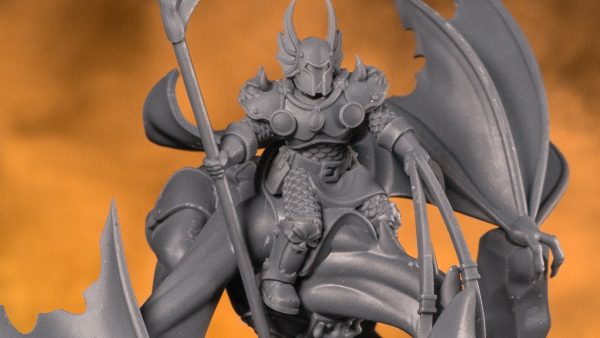
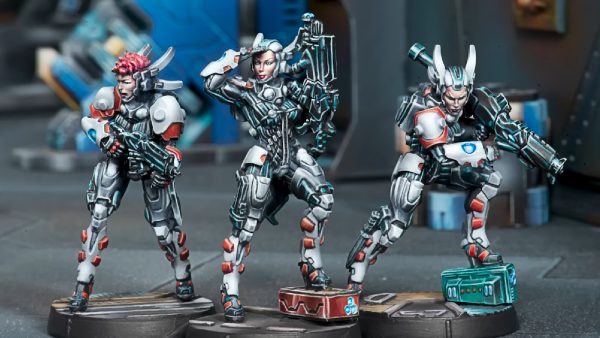
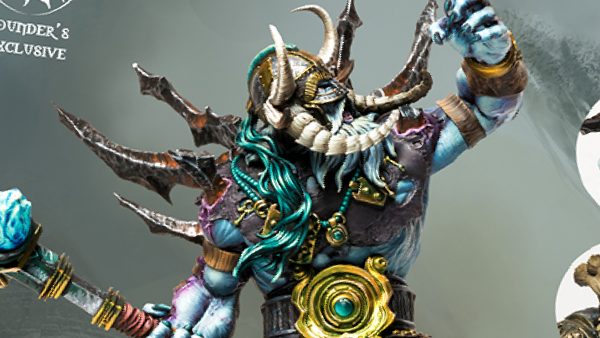
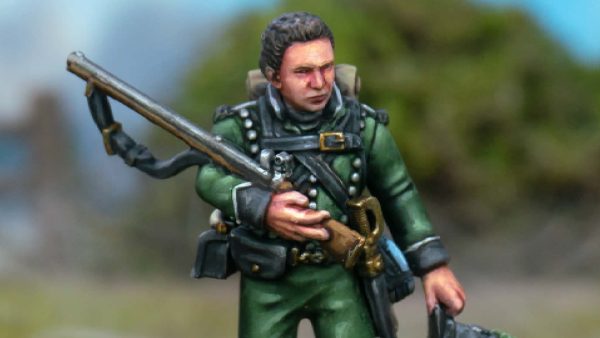
The green shadow really did make a huge impact as soon as it touched the mini.
I really enoyed the colour theory tutorials and still pop them on in the background from time to time while I paint. They are informative and relaxing.
Lovely work as usual Romain.
Thank you very much indeed ! 🙂
Very nice, that green really pops
nice, love the way you use paint like a ink do you ever get tidelines when you do this? I don’t remember you saying anything.
Thanks !
“Tidelines” are a phenomenon misunderstood by most people. It’s the result of a drop of watered paint that dries on its own on a surface : the pigments are subjected to the water’s surface tension, and tend to assemble on the very edge of each drop, forming a spot that’s coloured on the edge and paler in the center. This is, needless to say, the exact opposite of what painters want when they deposit a drop of paint.
One must never let paint do that. To that effect, some things are most important :
1) If a drop forms on your miniature, that’s because there’s too much paint (or paint + water mix) on your brush. Your brush bristles shouldn’t even be tinted by the amount of dilute paint you use, or very barely. There shouldn’t be a drop on the end of your brush, and there never ever should be paint (or mix) further than a third or halfway through the tuft of your brush… Under NO circumstance should the paint reach the ferrule.
2) One paints with an oblique brush. The brush is slightly sideways to the surface to paint, and one pushes the paint slightly where you need most pigments to be (see the movement I’m doing when I stroke the miniature). It takes practice, and no squeamishness about touching the miniature with more than the point of the brush… You’ll know.
3) When painting or tinting a whoel surface (like a whole muscle, for washing or basecoating), it’s usually less of a hassle to use more paint on your brush… thus, try to paint each surface with one single stroke (each independent muscle on this red guy’s body, for example, if you recall the beginning of this tutorial.
4) Having a drop of medium in your mix helps, because then paint doesn’t dry as quickly, and you can “blend” it with yoru brush directly on the miniature. It also blends in with the last coat, if it hasn’t dried quite yet. It’s a specific technique, and not especially easier than successive glazes, but it’s legit… medium also helps beginners with the “successive glaze” technique, but I find that if you put too much medium, the paint takes ages to dry… and with the amount of coats I have to do on a miniature for each gradient, it just slows me down. It really depends on the circumstances.
If the worst happens and you end up with a spot (and we all do, even the best of us, from time to time), it’s very hard to blend it back with the rest of the miniature… you’re usually better off re-basecoating this spot through successive coats with a good base colour (or something matching) and working again on top of it.
great stuff, I will try to use this technique on my Oznat model from Infinity. Thanks for all the tips I really appreciate them! By the way I love your D20 tattoo. 😉
Thanks for your viewership ! I was thinking of the Morat and Oznat when I filmed this tutorial.
And thanks, so few people notice the d20 !
that is brilliant advice putting paint medium on the list of things to get. as you say practise makes perfect Roman.
Medium can help… but with the caveat “use with caution, less is more”. Train yourself to paint with less of it, or none at all : you’ll see why the first time you try to paint over a miniature whose creases are not yet dry after half an hour or more !
Experience and practice will dictate with how much medium you’re comfortable with, and how much you need to achieve the effects you want. Different painters want different things !