






![NO Weekender Or Cult Of Games XLBS This Weekend [Updated]](https://images.beastsofwar.com/2026/03/No_Weekender_and_XLBS_this_Weekend-225-127.jpg)




Roll for Insight: Wargaming & Accessibility
January 25, 2019 by ludicryan


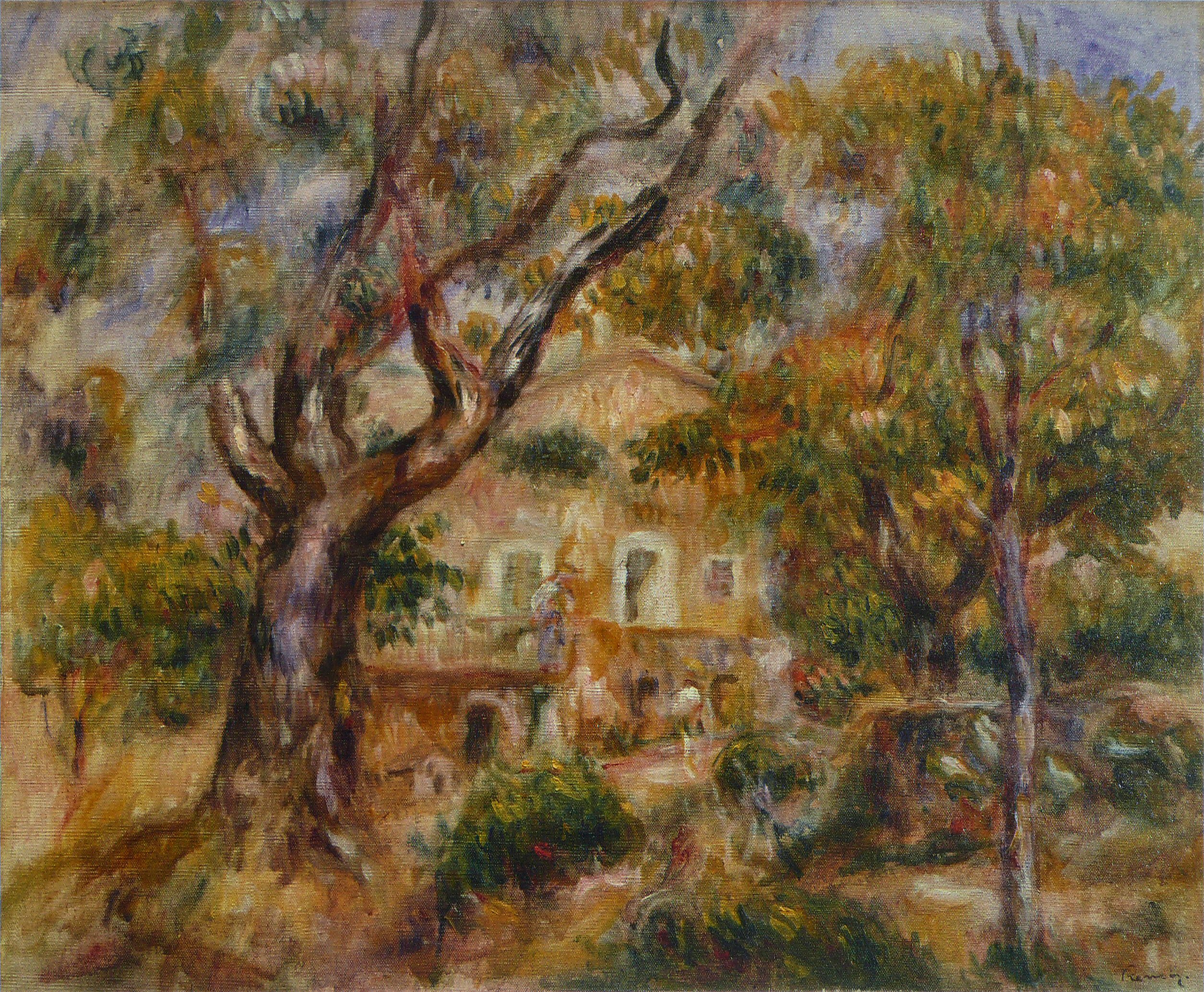
La Ferme des Collettes - 1908 - 1914
Between 1908 and 1914, Pierre-Auguste Renoir painted Les Ferme des Collettes. After moving to the estate of Les Collettes at Cagnes in the south of France, Renoir took inspiration from the beautiful sunshine of Nice to paint his estate. The colours blend into one another suggesting the movement of the olive and orange trees. Renoir didn’t just capture the natural beauty of landscapes but brought the liveliness of a crowd to the canvas in Dance at Le Moulin de la Galette and Luncheon of the Boating Party. What is most remarkable about him as one of the leaders of the Impressionist art movement though, is that for the last 20 years of his life he suffered from rheumatoid arthritis. It’s a condition which can affect the hands causing pain and swelling - it can make careful brush strokes difficult to achieve.
Impressionism was an art movement that took contemporary scenes of everyday life or the countryside and created a sense of the passage of time within the canvas: the shifting of the light, colours blending together. This style would hint at the passage of time in a scene. It is tragic that one of its most formative members would then suffer at the hand of time with a debilitating condition such as rheumatoid arthritis.
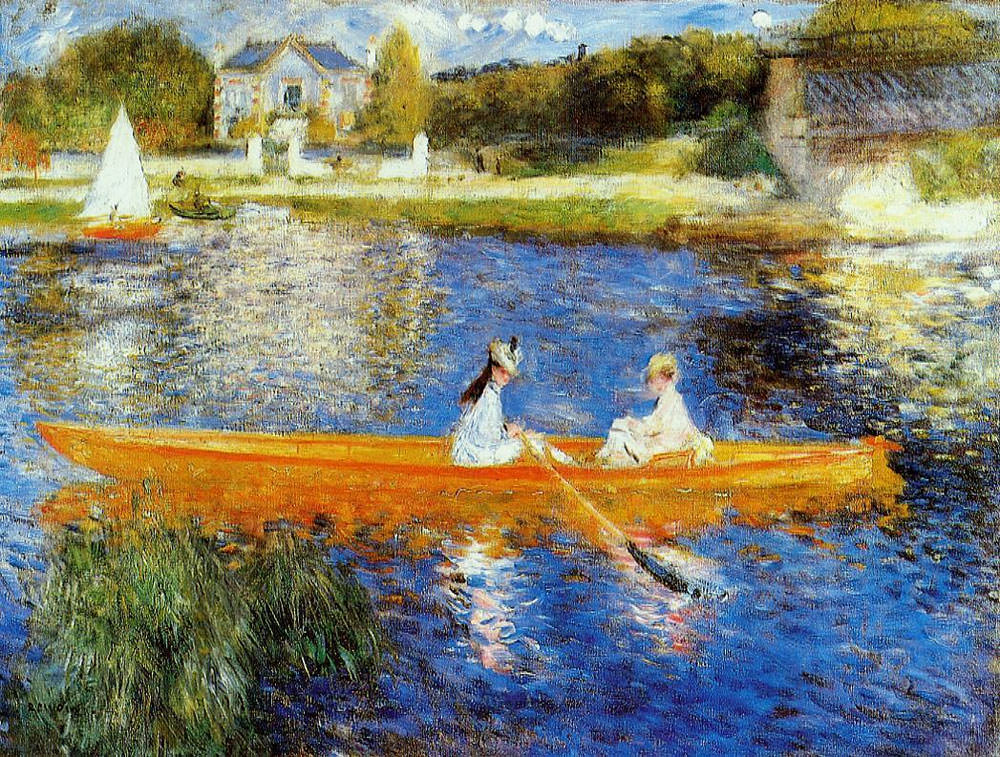
The Skiff - 1875
Time will affect us all in many ways and we may be visited by conditions such as rheumatoid arthritis which will rob from us our fine motor skills. Conditions such as a stroke or multiple sclerosis can leave us with tremors, making it hard to paint or assemble miniatures. However, it’s not just time that heralds these conditions. Some are born with conditions like cerebral palsy which can act as a barrier to the wargaming hobby. And military veterans may have suffered a range of injuries which makes it harder to engage in this hobby.
Tools
It’s important to use the platform we have to make things equitable for those less fortunate whether they were born with debilitating conditions, or were struck with an injury, or even felt the test of time. By making wargaming a more accessible hobby we can encourage those who have been previously left out and look after those who are afraid they can no longer participate.
As an able-bodied person, I must acknowledge the incredible fortune I have to navigate and participate in a variety of pursuits uninhibited. But I must also admit my own ignorance in what is necessary for those with a disability in this hobby. Are the standard paint brushes sold in art shops and in specialist wargaming retailers comfortable for those with fine motor control issues? Are the triangular shaped brushes from Army Painter better designed for those who might struggle to hold regular brushes? Though painting handles might give more stability for the models, is it easy for someone with fine motor control issues to get their models in and out of the holder?
Disability can arise in so many different ways. And when disability isn’t accounted for by those who provide the tools to engage in the hobby, then barriers can be unintentionally created.
We can be encouraged, however, by the work being done in tabletop games and videogames. Meeple Like Us is a website run by accessibility researchers Michael Heron, Pauline Belford and Hayley Reid. They analyse board games according to how difficult it may be for different categories of impairment to play these games. In a recent academic article they outline the list of categories they look at from visual and socioeconomic impairments to physical and communicative impairments. Their website helps to build a discussion around accessible design that can include more and more people. Their reviews and accessibility ‘teardowns’ aren’t just informative but achieve a conversational and easy to read format.
There is an incredibly interesting quote from Michael at a panel at UK Games Expo this past year where he outlines the difference between the medical model of disability and the social model of disability.
“The disability is not the wheelchair. The disability is not the person in the wheelchair. The wheelchair is an accessibility aid. It’s not a problem, it’s a solution. The problem there is actually the stairs because the stairs are the thing stopping someone getting from one place to another. And the thing is, stairs don’t occur naturally in real life. They don’t just spontaneously generate in front of doors on a second storey. That door was there for a reason and that door was put there by somebody. So what the social model is saying is that we have to be mindful of those kind of things.”
In the medical model the condition of the person is seen as the barrier. Whereas with the social model the tools around the person are seen as the barrier. Designing board games for accessibility is a difficult endeavour. Each one is its own unique interface that requires a rulebook to engage with.
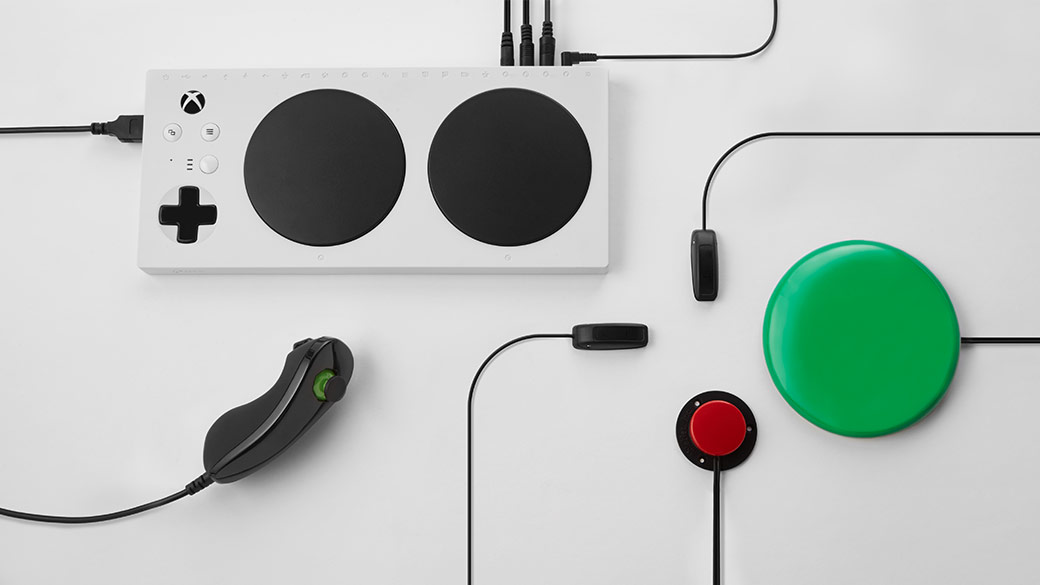
Videogames in contrast have certain advantages here. With a kind of uniformed input system to engage in a large number of games (the console controller), a solution such as Microsoft’s Adaptive Controller for Xbox takes a step forward for accessibility. Made in tandem with the charity Special Effect the controller is flexible in how many inputs it can have so it can account for a wide range of disabilities. Problems do still remain in that some of the accessories are not available for sale in certain regions. And the controller doesn’t work on all systems, but it’s a really important step forward in accessibility.
What Can Be Done?
Having one of the largest companies in the videogame industry commit to accessibility is something lacking on the tabletop. So what can the wargaming side of tabletop games do to help make the hobby more accessible?
Most importantly is to have an advocacy group or charity like Special Effect, Able Gamers or Extra Life that work with disabled gamers or kids in need and figure out their needs in relation to the hobby. It’s easy as an abled bodied person to look at the Meeple Like Us model for board games and theorise what might be necessary but I couldn’t possibly understand the day to day experience of trying to assemble and paint a model with limited control of my movements. These advocacy groups can work with the biggest companies in the hobby to develop assistive materials and equipment that could help so many.
Even having the condition can make it intimidating to approach the hobby. This reddit thread is a heartening well of encouragement for someone with colour blindness but it can be difficult to find other resources of information for getting into the hobby if you have a disability. So having a website or resource that people can visit to get information or encouragement for starting the hobby could be helpful. Having this resource centre might be helpful to gather a list of third party companies who provide assistive materials for hobby painting.
Renoir and Positivity
For someone whose whole life was dedicated to painting, Renoir must have suffered terribly dealing with rheumatoid arthritis. But it doesn’t show like you might expect it to in his work. His paintings become brighter and the use of colour more pronounced. Renoir benefited from friends and family who would help him get to the positions he would need to paint from. They would strap the brushes to his hands with soft cloth to prevent sores from developing. He moved to warmer climates that would be easier on his condition.
Renoir certainly benefited from having been successful earlier in his career to be able to afford travelling to hot spas and warmer climates, but the pain and inhibited movement would stay with him for the rest of his life. And despite this his contemporaries were amazed at his positive attitude towards the condition and his resolve to continue painting. Henri Matisse commented that:
“as his body dwindled, the soul in him seemed to grow stronger continually and express itself with more radiant ease.”
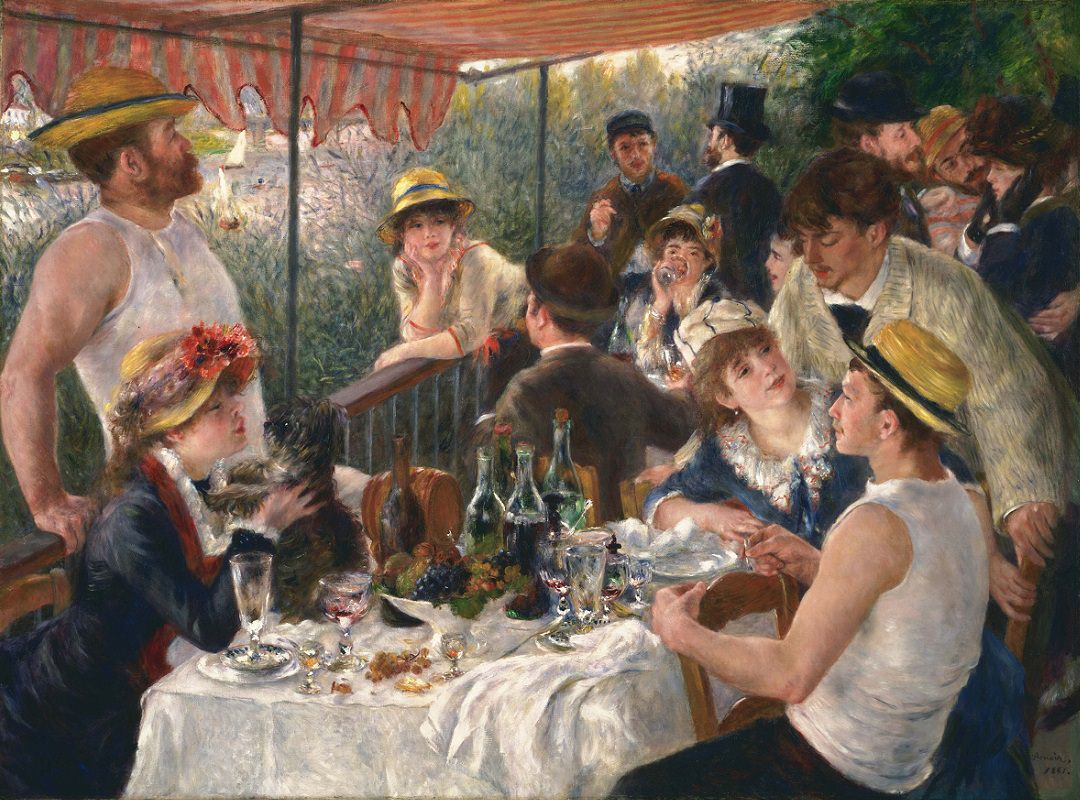
Le déjeuner des canotiers - 1881
Depression can have an impact on the pain suffered by those with rheumatoid arthritis. That Renoir embraced a positive outlook on life despite this condition is remarkable. But we cannot expect everyone living with a disability to put a smile on when there are designed barriers to hobbies they might like to try. Whether we are helping those with an existing disability or looking out for the problems that old age can bring we should try and embody the social model of disability a little more to make our hobby approachable and accessible for everyone.
It’s important to listen to and amplify the stories of those who encounter barriers into the hobby. If you have a story to tell or know someone who would like to get into wargaming but can’t, then let us know down in the comments or get in touch with me at [email protected]
Supported by (Turn Off)

Supported by (Turn Off)
Supported by (Turn Off)





![StarCraft Tabletop Miniatures Game Pre-Orders Live Now [Updated]](https://images.beastsofwar.com/2026/03/starcraft-tmg-news-cover-600-338.jpg)

Ryan, a well written and reasoned article that I for one appreciate. With a teenage son with cerebral palsy I know all of the elements that you discuss but it can be a greater problem than you state. My son has impairments in all areas to at least a moderate level; add them all together and it becomes quite profound. There have been times when he has wanted to be involved in painting but the physical holding of brushes as you stated gets in the way, that’s before he would even attempt to actually apply paint with any accuracy. Sadly he was young when he first tried, the disgruntlement of failure put paid to any desire to try again.
These days the difficulties lie in the ability to actually understand the game. Zombie Dice or Uno have been the level of games that he can really independently play; it is possible to play as partners but you try reasoning with a teenage boy……. The one are that I think could start making use of his skills is in RPGs, sadly my experience of these has been very limited and any that I have looked at are too complicated at even the basic level to give him the ability to immerse himself and make solo decisions whilst managing his own character. Does anybody have any suggestions?
Overall, thank you for bringing up this subject. Accessibility should be easy in our hobby but the scale of the industry isn’t ideal. How many hobby shops with play tables have them up a set of stairs……..
I’d suggest simplifying the rules of RPGs, Tales from the Loop make a fantastic use of keeping the rules easy and fast to learn. Roll a number of dice indicated by your stat level, if you get a six, you succeed.
It could be applied easily to D&D or other RPGs in that if you make it simple and more about a story it becomes a lot easier to access to new players and ones who may have a disabilty.
You mention that he likes to play Uno. Even a deck of cards could be used to formulate a success or fail in your stories.
Thank you Lance, I’ll definitely be looking at Tales from the Loop.
There are some really, really simple RPGs out there, if you separate the rules from the setting. I gather that My Little Pony has a very accessible rules set, which is tied thematically to the setting, but could probably be repurposed to a setting your son may find more enjoyable.
There are quite a few one page RPGs, and some which don’t have any mechanics at all: they’re just about the story. Sadly, I don’t know too much about them but if you were to try googling very short RPGs / indy RPGs I’m sure you’ll find some with very simple rules.
What a well expressed article on a discussion we should continually be having. You really hit me on a couple of levels here. First, as an “original gamer” I am of an age where arthritis in my hands is becoming more than an annoyance so have, for some time, related to both Renoir and Matisse (who also found ways to create despite crippling ill health). I am regularly adapting my work space, work time, as well as tools in order to compensate for the increasing limitations.
In addition to being an artist I teach middle school art with many of my students being differently abled, or Special Needs as some say and you made me really think anew about the hobby I love. We use a lot of games in the Special Education department to keep kids engaged, teach problem solving, explain complex ideas, as well as just for fun. Often we modify existing games based on skill level and interests. Now you have me thinking about how the hobby could better include my students. I thank you for that.
Another excellent and thought-provoking OTT / BoW article – thank you @ludicryan
I have the feeling that the OTT / BoW team, whilst being still as much fun as ever, has become also more “grown-up” over the last year. There is so much more variety and depth to the topics presented and discussed. Keep up the great work!
I just met someone this week that had gotten recently to the miniatures side of the hobby and had figured out, that because of their condition, cannot really paint miniatures with a brush. Afterwards, I got to thinking that they might be able to use spray cans or even an airbrush, but being a newcomer to the hobby probably they probably weren’t aware that techniques such as zenithal highlighting exists. As they were quite open about the thing, I’ll make sure to mention these techniques and maybe show some examples the next time we play.
I remember @warzan talking about trying a spray-painting technique for the Mantic The Walking Dead – All out War miniatures called “cell-shading”.
The idea was to simulate the dramatic strong contrast of the black and white Illustrations in the graphic novels. I think it was a black primer with a white zenith highlight spray and perhaps a dark wash.
I recall that @johnlyons compared two test models using the “cell-shading” technique: one with spray cans, one with airbrush.
Thank you Ryan! This was the kick in my but to get me back to the hobby I love. I had a bad heart attack last year and, with other health issues, was told that paints, solvents, resin and the rest were no longer something I could be around. I stop all gaming for several months while feeling sorry for myself. I still have the ability but need to be more mindful of time spent, breathing equipment, and environment I ‘can’ still hobby but need to change how. I can still play RPGs and board games and don’t have to leave gaming entirely. Others have it far worse than me and I need to get off my ass and start living again.
I’m back in the game. Thanks Ryan
Very happy to hear that. Quality of life should be an important concern for us all!
A great article and one that me thinking. Rehab facilities here in the States anyways use many simple tools to improve coordination and motor skills. After watching my father prep for and recover from a surgery it is obvious that reaching out with the hobby to the therapists and they will find the best ways to make it work for their patients. They would know more about brushes or other tools that may be better than ones we find in the local gaming shops, it really wouldn’t be cost effective for most flgs to carry this specialist stuff but knowing where to turn would be good.
Personally I have always suffered with my painting when it comes to color theory as I have a bit of color blindness. Painting WWII armies isn’t an issue but taking on a Saga army would be more of a problem. My main choice for paints is Vallejo, they are good paints and most importantly to my issue they are numbered and named. This has made going to the rack and choosing between to similar, to me, colors and then writing down numbers etc in a journal so projects can be continued over time.
Again great article.
Don’t forget that language (and associated skills like reading) is another barrier.
It isn’t on the same level as a physical disability, but it most definitely adds to it when trying to play games or find information on anything related to gaming. Sometimes it can be ‘solved’ by learning a second language, but that isn’t always an option.
Things like the amount of text during the game itself can make the difference between playable with a bit of help and not at all. It’s one of the reasons why I love games that feature icons, because I know such things are of value to anyone.
And that is another thing that needs mentioning … accessibility is great for everyone. Including people who don’t suffer from any mental or physical disabilities, because it makes games easier to learn and play.
So while some may complain about how 40k and Age of Sigmar have been ‘dumbed down’, they are forgetting that the streamlining of rules has made them more accessible with (potentially) more gamers.
Anyways.
I think OTT could definitely offer a great service if with the help of the commounity we could slowly add any such info to the game section.
Things like colourblind options and the use of icons and jargon will make for good search parameters for people looking for their ‘ideal’ game.
Totally agree, there are many different types and categories of disability that we should be mindful of. My research for this article led me to looking into dyslexia and how it can affect people. There are certain fonts that are better than others that can help, but there is one purpose-built for helping people with dyslexia to comprehend the shape of letters and words easier called Dyslexie. So making a PDF of the rulebook in this font available online could help many people.
I think also in terms of cognitive disabilities, there’s great scope for companion apps that can scan certain cards and provide a short video explaining what the card can do in simpler over the course of a minute or so and where it might be best applied and used.
I was aware of colour blindness when making the cover image for this article and found a really good app that can help people understand what people with different types of colour blindness see. It’s called CVSimulator.
And I definitely agree that accessibility is great for everyone. Michael Heron talks about the curb effect. The curb was introduced in the 60s in Berekely to help wheelchair users get on and off the pavement. But people with strollers found it helpful, the elderly, bicyclists etc.
I’ve seen videogames add ‘colour blind’ settings. Some even include the much rarer variants.
Boardgames don’t have such easy options, but either way it needs to be taken care of at a design level.
One trick I’ve seen mentioned is to use a combination of shape and colour for icons. That way colour blind people can identify the icons even without colour. I think Ticket to Ride and Alhambra use this.
I have been on a couple of kickstarter games that took color blindness to heart and didn’t use subtle shades of colors and went with colors and symbols. Most didn’t even think about it until it was mentioned and they quickly changed. It is minor but that small care had me supporting and thanking them.
One thing rules and game designers could do for those with reading disabilities such as dyslexia would be to keep the text clear.
Over the years I have had many issues with rules such as Games workshop where the writing is over coloured backgrounds and even pictures. This seems to be a design feature to make the rules more exiting and Marketable but does not take account of those gamer’s who have reading issues where clear text would make accessibility much easier.
My partner was a SENCO for a number of years; while dyslexia got a lot of attention (at the time, back in the days when education was actually funded properly!) she became quite an expert in Irlens Syndrome. While often mis-diagnosed as dyslexia, even kids with a dyslexia diagnosis benefitted from different coloured papers/glasses lenses. Not just font shape, but text colour (and background) can make a massive difference to a lot of people (try reading green text on a purple background, you sort of get the idea of how someone with Irlens might struggle with high-contrast lettering, like black text on white background).
Really interesting article. Something to consider are some ‘quick wins’ that don’t necessarily require much adaptation specific to gaming, but just awareness and adoption by the community. Making buildings where we play games accessible, for example. Educating members of a group abouut the needs of someone with special requirements so that they’re more able to be welcoming rather than shy of someone with special needs. Things that aren’t specific to gaming, but which tend not to happen until and unless someone specificaly thinks about it and makes an effort to change.
A great article. And really inspring.
You inspired me to make this – https://www.beastsofwar.com/project/1338234/
Went in early to the office to get ahead of some work. Sitting here by myself reading your project blog almost in tears. You’re a legend and that’s amazing what you just did.
*clears the evidence of human emotion away*
I get like that at the end of DIY SOS when no-one else is in the house 😉
@ludicryan @johnlyons – I made a painting holder. It seems to be your kind of thing. I’m just tidying up the laser files to post online, but I’ve got three of these knocking about now (one final one and a couple of earlier prototypes). If you fancy trying it out, drop me a DM with details of where to send one!
I have been trying to think about how to word this without sounding like I am dismissive of disabled people for several days now. So I will start with what is probably the most controversial aspect of my point and work backwards. I think that’s more reasonable than ending on a controversial note.
At the heart of this is the simple statement that not everyone can do or will be good at all things because we are physically limited in such a way that we can’t.
Ok now that’s out the way I will try and explain what I mean by it. I think that it’s certainly possible to make some things more accessible for some people but in doing so you have to make sure you don’t make it inaccessible to other people. There’s definitely an aspect of he who tries to please everyone will please no-one. No matter how hard you try you have to accept before you start that you can’t make something accessible to everyone and you must accept that before you start. So to use three real world examples of accessibility in play and how they’re not always a good idea or well implemented
I work in an office. It has an access ramp and lifts for wheelchair access. That’s an example where it suits everyone and doesn’t really hamper anyone. As an able bodied person I also have the ability to walk up a ramp or use a lift.
In our office we now have automatic doors. When you swipe your access card the doors open automatically, but slowly, to assist mobility impaired people (not just wheelchairs). As an able bodied person I can still use the door but I have to wait for it to open, which is a lot slower than opening a door manually. They also have a safety feature so if you touch it while it is opening it detects a potential collision and slows down even more. I can use the doors but only at a level of “performance” of less able bodied person. This is an example of what I call lowest common denominator.
The final one is a cash machine across the road from my office. I work in an out of the way place and it’s one of only two cash machines within striking distance at lunch time (and the other is incredibly unreliable). But the machine has been lowered for disabled access such that the keyboard and screen is around crotch/waist height. As a man of over 6′ tall this presents something of an issue; From a standing position I can reach the keys but I can’t see the screen very well because it’s set back into the wall, so I have to crouch and stoop. On sunny days I can’t use the machine at all because the glare from the sun would require me to pretty much kneel on the floor. The wet, dirty floor of the filling station forecourt. So for large amounts of time that cash machine is incredibly difficult to use and in some cases almost unusable. And this is where we really have stop and think about accessibility.
If you’re making something accessible to a small group of people at the expense of a larger group then you’re probably doing something wrong. It would be nice to say that this is only a one off example but it’s not. The way of the world today is that the people shouting the loudest get heard and if two people are shouting at once the ones with a victim card get heard. I can already hear people sighing at how trivial the cash machine example is however I have only made the same complaint that disabled people make, that they struggle to use cash machines because of their height, and yet because I am able bodied my complaint will not be given credence simply because I am able bodied. Now I realise that as an isolated case the cash machine example is hardly the end of the world. But in that specific context I am not really left with many alternatives and so on occasion, I have to do without cash if I don’t have any on me at time. That’s can be a problem if you want to buy something to eat.
So if we expand that to gaming what can we do to make it more accessible? Well, there’s possibly things we can do but they will also be driven very much by market forces. As an example if a manufacturer decided to make all of their paint brushes twice as thick to help people with fine motor skill difficulties then they wouldn’t sell many brushes because the majority of their market needs (not wants) the smaller brush to paint with at the best of their abilities. Conversely making a separate range would likely be too costly and sell relatively few brushes.
Could we lower the height of a gaming Table for wheelchair access? Yes, but does that then make it uncomfortable for able bodied players? Also yes. And so again you’re left with a balancing act. If a table is of a height that wheelchair bound players can play at it but with difficulty should you change it so that it is comfortable for them but not for able-bodied players, who are always going to be the majority? Even if the table is completely inaccessible to wheelchair bound players I am unconvinced that changing the height to suit them is the best idea if it causes players to just go an play elsewhere in an environment that is comfortable for them.
There’s a very delicate balance to be struck between making things accessible for everyone and driving the majority away. I think we keep forgetting about the majority, who are so often silent, and then we are reminded of them at our cost.
I’m not trying to suggest that I think disabled people should just bugger off. Far from it. Where possible I would always try and make anyone welcome at my table for whatever game I was playing. However I think at the same time we all have to accept, from time to time, that there are some things we cannot do and also some people we cannot help. We should help when we but not feel disheartened when we can’t.
I think it’s also quite important to separate making a single game accessible from making the entire concept of gaming accessible because they’re very different.
If you’re trying to make gaming in general more accessible then a wider variety of games, with varying complexities of rules, types of skills required etc is the way to go. However even games tailored for specific needs still rely almost entirely on drawing interest from able bodied people in order to succeed simply because there needs to be a market and ultimately we want everyone to play together, we definitely don’t want to segregate people into different gaming groups based on categories such as disability. And of course the specific needs of disabled people are incredibly wide and varied and even within the same categories people still exist within a spectrum in terms of the severity of a disability, meaning it’s not possible or practical to come up with solutions at an industry level beyond continuing to make a wide variety of games suitable for a wide variety of abilities. So I think the onus is way down at an almost individual level and not at an industry level. If you do have disabled people in your family or circle of friends who you want to include in your gaming sessions it’s on you to find games that everyone can play, everyone is interested in and do so in an environment that is manageable by all players. That’s because the solutions to overcoming the barriers faced by people with disabilities are as unique as the people themselves.
Making a single game accessible is actually very difficult. The game is what it is. If it requires a specific skill that you simply don’t have because of a disability then it’s actually quite hard to do something about that. If you simply struggle to engage because the environment in which it is played is difficult that might be something that can be altered (although see my earlier points about ensuring that it remains accessible for everyone).