









Cult Of Games XLBS: Try This Minis Wargame Homage To Chess; What Would You Change?
February 7, 2021 by warzan



For some website features, you will need a FREE account and for some others, you will need to join the Cult of Games.
Or if you have already joined the Cult of Games Log in now
What difference will having a FREE account make?
Setting up a Free account with OnTableTop unlocks a load of additional features and content (see below). You can then get involved with our Tabletop Gaming community, we are very helpful and keen to hear what you have to say. So Join Us Now!
Free Account Includes
- Creating your own project blogs.
- Rating and reviewing games using our innovative system.
- Commenting and ability to upvote.
- Posting in the forums.
- Unlocking of Achivments and collectin hobby xp
- Ability to add places like clubs and stores to our gaming database.
- Follow games, recommend games, use wishlist and mark what games you own.
- You will be able to add friends to your account.
What's the Cult of Games?
Once you have made a free account you can support the community by joing the Cult of Games. Joining the Cult allows you to use even more parts of the site and access to extra content. Check out some of the extra features below.
Cult of Games Membership Includes
- Reduced ads, for a better browsing experience (feature can be turned on or off in your profile).
- Access to The Cult of Games XLBS Sunday Show.
- Extra hobby videos about painting, terrain building etc.
- Exclusive interviews with the best game designers etc.
- Behind the scenes studio VLogs.
- Access to our live stream archives.
- Early access to our event tickets.
- Access to the CoG Greenroom.
- Access to the CoG Chamber of Commerce.
- Access the CoG Bazarr Trading Forum.
- Create and Edit Records for Games, Companies and Professionals.
Supported by (Turn Off)

Supported by (Turn Off)
Supported by (Turn Off)


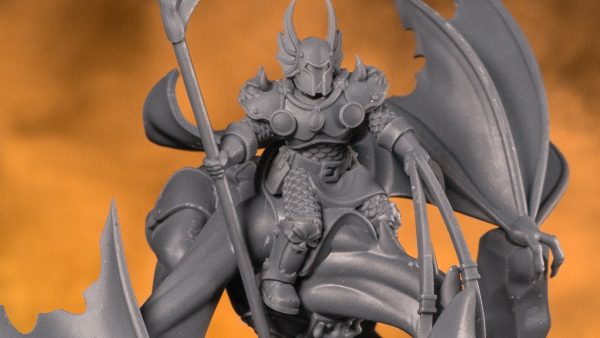
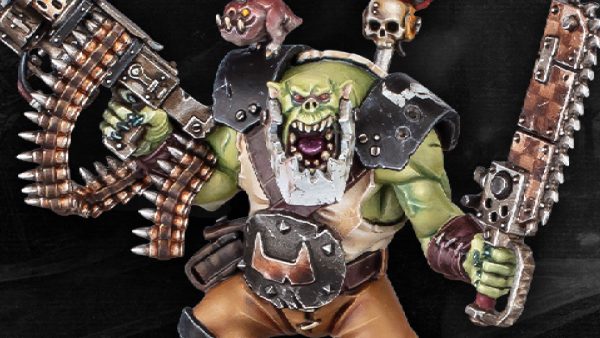
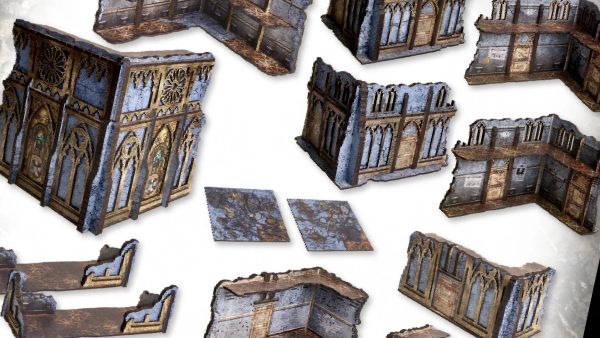
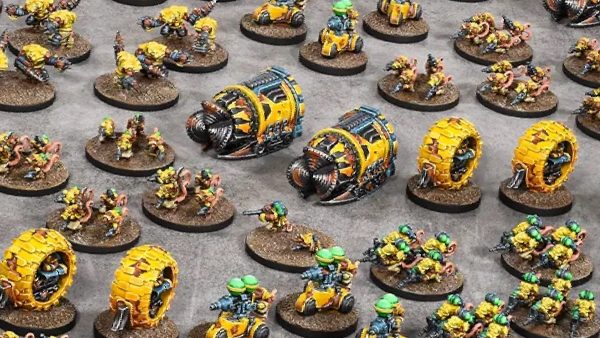
Happy Sunday!
Lloyd, lovely paint jobs but paint faster!
Always keen to try a new mechanic in gaming. Diceless wargames though? I’ll try anything once
The thing I don’t like about a game without dice is that it fails to show the randomness of battle. As I said last week dice in Wargames reflect the fickle hand of fate.
For example at the battle of Pharsalus Caesar ordered an uphill charge by infantry against a numerically superior opponent. Without a random element like dice, Caesar’s victory would never happen in a tabletop battle. If that battle was based purely on terrain, numbers and expectation, it would always end in Pompey’s favour.
Wargames like KoW can give you a simulation of how a rear charge can potentially do more damage in a charge. What the dice do is remove the guarantee of a kill with that rear charge. When you charge the queen in the rear, you assume you’ll damage her, but sometimes she spins around and damages you!
I think it depends on how much of a factor the ‘random’ bit was in the attack.
if it is the only thing that makes it work it really should fail more often than it should work.
Maybe in a diceless game a ‘joker’ token can represent the ‘luck factor’ ?
Give each player a limited supply of those and you can still charge your infantry up hill to defeat a superior foe … but only if you haven’t exhausted your supply of ‘luck’.
Card-based “random” mechanics work really well in tabletop games. Far better than dice, I reckon.
Mathematically cards shouldn’t differ greatly from dice, depending on the types of dice. There’s 54 cards in a deck with jokers, so D50 (D100 halved) isn’t that significantly different, or if all suites are equal there are 14 results. D15 (D3+D12 gives a range of 2-15). In that case you might as well go D20 to make it easier by using 1 die.
Dice always have the same probability, unless you introduce modifiers through rules (= ‘+1’ or ‘-1’ to your roll)
With cards you sort of get that for free, unless you shuffle the deck after each and every draw. It is random (the chances of a shuffled deck ever being identical are astronomically small), but it is more controlled and less spikey.
Mathematically cards are massively different from dice because *they have memory*.
When you talk about your “luck running out” it’s an abstract, almost spiritual concept – Lady Luck has taken her eye off you.
With cards your luck literally runs out – if you’ve pulled all your tens and face cards out of the deck, you have no more “luck” left; you’ve only got “bad luck” to look forward to.
This can give opponents hope to hang on in there against a “lucky” opponent.
With dice, the chance of rolling a six after a run of four sixes in a row remains one-in-six. With cards, every card you draw affects the odds of your drawing a similar (or higher, or lower) value on subsequent draws.
In short, cards are nothing at all like dice!
It depends largely on how the cards are used. If a card is used and discarded into a discard pile then yes your likelihood of getting that card again until you go through the whole deck is zero. However if the card is drawn, used and returned to the deck at the bottom then your’luck’ simply repeats. If it is drawn, used and shuffled back into the deck then your. ‘Luck’ remains 1/54.
I kinda like the idea of cards as long as you have a hand. that way you have more input into the out come and is still somewhat random
This is another great use of cards in gaming – it adds an element of resource management into what would otherwise just be a random dice roll. In short – for me – cards add more fun and strategy to a game than “dumb” dice rolls.
I think it’s fair to say that a mechanic which requires you to draw a card, return it to the deck then shuffle it back in is pretty broken 😉
*Most* games require you to shuffle a discard pile once they’ve all been exhausted- but even if not, and your “luck repeats” it alters the mathematic probability of drawing a certain number after each draw – that’s still very different to a dice roll.
The main point was: card-based “random” mechanics work really well in tabletop games. Far better than dice – and this is precisely *because* mathematically, drawing cards differs greatly from dice and *are* significantly different to a simple D50 dice roll (assuming you’re not drawing and shuffling after every draw, which would just be madness!).
That broken mechanic is absolutely no different to rolling dice. It’s not broken, its just real random luck. The issue I have with cards is that if the cards aren’t shuffled, you know exactly when your luck will change. If that was a real life thing, no-one would ever lose. No general ever turned to their troops and said “stand firm lads, our luck gets better the card after this one!”
The probability of getting a 6 on D6 is 1 in 6. As strange as it sounds your chances of rolling 6 every roll after that remains 1 in 6 each and every roll.There is never 100% chance you will definitely get the result you want ie Real Life
Your chance of getting a card are 1 in 52, then 1 in 51, 1 in 50, etc. Eventually you are guarunteed a result you want. Maybe not when you want it, but if you flip 100% of the cards, you eventually have 100% chance of getting the card you want.When does that happen in real life?
I feel like we’re dicussing two different things here.
A mechanic to replicate the rolling of dice by using cards feels like a “broken card mechanic” (after all, why use cards and all the extra effort of shuffling after every draw, in order to replicate what could be more easily acheived rolling a dice?). Yes, you can simulate dice rolling by drawing cards, but to do so would be a failure of a card-drawing mechanic.
The original claim “mathematically cards shouldn’t differ greatly from dice, depending on the types of dice” overlooks the way that drawing cards is used in gaming – i.e. they’re *not* shuffled after every draw, and therefore *mathemetically* cards *should* differ greatly from dice.
The idea of a “guaranteed” result (after drawing many cards) holds true if you’re an amazing card counter and have just one card left – even those of us capable of basic card counting (tracking how many “high” cards and “low” cards have passed) couldn’t give an exact percentage chance of success, but would have a general feel for “how things are going” (i.e. is the deck stacked with more high value cards, or mostly low value cards?). For me this isn’t a bad thing – and makes the game (note, the game, not the random number generator) better; if you know you’ve had a run of luck, don’t expect it to last!
I believe this is a better *game mechanic* as it mitigates (somewhat) against a “lucky player” hitting a load of high dice rolls early on in the game. Using dice, they’re just as likely to hit lucky results with every roll. As such, players can play a good game, but still be defeated by your opponent’s dice. With cards, the chance of getting lucky diminishes every time you draw a high value card.
Now, this isn’t how real life works.
But tabletop games aren’t real life simulators either – they are *games*.
And the original point (that elicited my response “cards are better than dice”) was about how cards can be used to represent “luck” and how it’s exhausted thoughout a game – something that can’t be simulated with just simple dice rolls, but comes naturally to drawing cards. And this is true because drawing cards (with the exception of always drawing a card and shuffling it back into the deck) is *mathematically* different to rolling dice.
You *can* simulate dice rolls with drawing cards.
But if you do, you’re ruining a perfectly good game mechanic, which is to draw cards to simulate the amount of “luck” each player has. Yes, in real life, some people might have good luck all the time (roll 6s) and some people always roll a one – but sometimes real life sucks and we’re playing a game here, where both players should be having fun and for a *game mechanic*, cards (for me) beat dice every time.
(for what it’s worth, in most electronic gambling devices – fruit machines, roulette tables at casinos etc. – to *prove* that every number has an equal chance of being drawn, a “card system” is used to demonstrate that every number *will be drawn at some point* – the machine chooses random times to “shuffle the deck” to create a random pattern. In the 90s I worked for a company and we had to disassemble the machine code for pub machines to prove that a pseudo-random-number generator wasn’t “weighted” to show the machine was “fair”.
Imagine rolling a dice a thousand times. You might never roll a two (unlikely but technically possible). But create a pseudo-random list of numbers 1-6 that doesn’t include a 2 and, while it may be “true to life”, it’s also unfair. For a machine to be fair, we had to demonstrate that every number *appeared equally in the sequence* – by changing the point at which you read from the list, you can create a random sequence of seemingly random results, where some numbers are drawn more than others, but the whole system remains fair.
On a side note, in doing so, we also discovered that about 80% of all fruit machines that used the hi-lo mechanic were actually unlawful in the UK, as they almost all included some form of “if successful after x turns, always choose the opposite to their hi/lo choice”).
Cards make games “more fair” because both players have to deal with drawing the same list of numbers – just in a different order and at different times during the game.
2nd. good enough for now
Happy Birthday!
Oops(Freudian slip) I mean…
Happy Sunday!
Inn the subject of dice not being realistic from last week., I found this in an interview with Gen Schwartzkopf, about the 1sr Iraq war…
Q: What were you thinking in those final hours, putting aside the professional soldier now… what were you thinking to yourself?
Schwarzkopf: More than anything else in those final hours I was asking myself “What did I forget? What have I missed? What more can I do?”
And then the time finally comes when you realise there’s I described it as throwing the dice in the air at a crap table, you know, once you have thrown the dice in the air you can’t call them back, at that point all you can do is wait until they land on the table to see what the numbers come up. And that is a very awkward time because you can just sit there on your hands and wait, there’s nothing more you can do
Happy Sunday all!
On the bendy spear front, a chap on fb was 3d printing the spear head and using brass rod or even plastic rod as the shaft, looked very easy to do (if you have a 3d printer of course).
It’s the XLBS Show……..Happy Weekend CoGs!
Thanks for the free rules. I’ll give them a read and a play thru…..time permitting.
Well done to the button winners!
Happy Sunday! I actually quite like the chess rules. I think you’re right in that the next step needs to be playtesting. I also think that a lot of stuff Lloyd is talking about can be dealt with in the narrative side. The trebuchet can be a terrain piece. There’s nothing stopping you using any models as any of the designated units. So you can bring something exciting and/or surprising out of the bag and go “pow” to really spice up the story without breaking the game rules wise. Lloyd’s dog unit might fit his narrative better but it would play like troops or cavalry or whatever he chooses. I think I’d start there. Play test as-is, look to use imagination and narrative to spice up and add variety, and then tweak accordingly. You don’t want to risk throwing the baby out of the bath water. The simplicity, and analogy to chess are the unique properties of this.
Also, my wife isn’t a gamer but she does like the look of the Lord of the Rings models (being a fan of the movies). This could be a good way to get a game on with her (and give me an excuse to buy the models ?)
Happy Sunday All hope this finds you all safe warm and well. I’d give Warrens game a spin, more games the better and Lloyds pin shields look cracking. Great set of golden buttons again this week.
“Players Choose a side. If you cannot agree Oldest Player Plays White! – If your both Oldest, f*****g grow up you should know better! (I cannot believe we had to waste a rule on this!)”
LOL … best rule ever.
??? I’m seven seconds in and already traumatised!
Yay let the lunacy begin.
Warzans Chess?
Lloyd is as bad as my other half…packages get quarantined…packaged food from the supermarket is cleaned with wipes…if you’ve been to the supermarket you need to get a shower afterwards, don’t ask why I did mention that I’m not walking around the supermarket naked…
She’s a scrub nurse and is slightly obsessed with germs normally…
I’ve become use to it…it did use to drive me nuts a year ago…but now it’s become routine lol
We’re still putting deliveries in quarantine and rigorously washing hands after handling anything that’s been delivered to the house/brought in from elsewhere. I’ve not been to a supermarket in over a year! But showering after shopping….? Then again, it’s funny what you get used to! Most people think my wife is over-the-top with the quarantine and wiping thing, to me it just seems normal.
Lol https://www.youtube.com/watch?v=TME0xubdHQc
@warzan Just make the better troops foot knights and reduce the movement to 6… simple
Also add a shooting command and reduce the movement to 4 for archers.
And if he really wants dogs he can have a troop that has a movement of 8…but can be distracted by cats…
Happy Sunday everyone! Warren’s chess Wargame reminds me a bit of ‘Feudal’ a 1969 game by bookshelf games that was a chess Wargame. It had a hidden deployment mechanism that added to the variety.
Happy Sunday fellow Baboonatics! Some great advice for ‘Drilling your guys out’and keeping an eye out for ‘Crackage!’
They have mithril armour Lloyd ?
A good General can work with what they have not what they want?
NICE ONE Guy’s
I suggest you go straight to about 1hr 21 mins
Sunday! *falls back to sleep*
56:00 “A knight goes into a pawn in the rear” XD Naughty gameplay *g*
Happy Sunday!
Love the idea of the chess based rules. For Lloyd’s sake there are options for the rules you have issue with I think, I agree that it’s not great to have both ranged and melee in the same troops. I’d prefer to pay a bit more to deploy the archers as an alternate troop without the damage buffs attacking flank and rear, but can attack 12″/18″ in the front.
The knights are great IMO as cavalry was as much a scouting role as it was a heavy hitter as I understand, so it being the only one to pass through is really good. As for the dogs just have your king as the dog handler and the dogs as your knights.
I think it might not be as straight forward as which chess piece does the model look like, a bit more what jobs do you think they’ll do.
I’m with the Big Man on chess-as-a-wargame – I love the idea of it. I also agreed with @warzan a while back on the reason for tabletop gaming – the aesthetics, the cinematic feel, the realistic terrain and the visuals are paramount (no littering up the table with dice and chits and counters for me – don’t spoil *how it looks* for any reason!). Likewise, I’m totally onboard with making an interesting game with cool looking minis as tokens – trying to add too much realism creates a simulator (nobody wants a tabletop simulator do they?) Games require abstraction – abstraction leads to “limits” or “restrictions”.
I’m very much of the opinion that “limited” games make the best games (after all, without strict rules and restrictions, you’re not playing “a game” – you’re just playing make-believe with action-figure proxies!)
In the same way, I find programming on “restricted” platforms (like microcontrollers) far more enjoyable, creative and “artistic” than hammering out a AAA style game for the latest super-computers. Limits force creativity.
I loved Lloyd’s attempts to frustrate the rules: “I want you to change the rules to suit my army, so I can map my little dudes to your game”
Also Lloyd “I need archers”
Also Lloyd “I want the minis to match their abilities”
Also Lloyd “my minis don’t have bows”
Brilliant!
Happy Sunday, Warrens Chess Rules.
Quick question what is movement penalty for changing direction/ facing or are units only able to move in one direction per activation point. ( I may have answered my own question here)
Funnily enough game that came to mind was Ancient Navel warfare with Triremes etc.
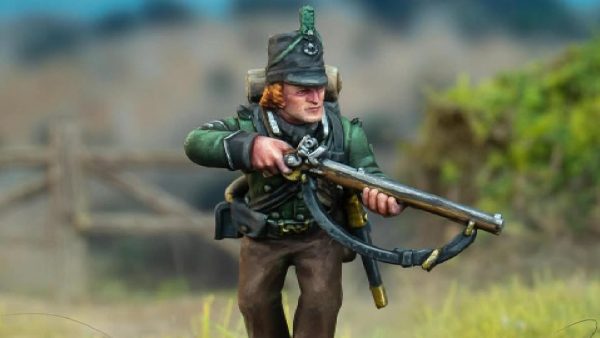
Nice shield weathering there Lloyd!
I am interested in the idea of a non-random wargame, and I think Warren’s had some promise. Although without having even played it I feel it might benefit from adhering less strictly to chess.
I am not interested in Chess the Wargame, I want something more bespoke in its approach as needed.
Also I would prefer something that starts out with at least a guide to basing sizes. I find the “it’s your game do what you like” approach to be a turn off. If I’m picking up a ruleset I want to be able to get it on the table quickly otherwise I might as well write the game myself! Sure, I am open to house ruling as needed, but having to negotiate something that basic with my opponent beforehand not so much.
Happy Sunday!
Another fun show. Thanks, guys, for helping my day start off with smiles and laughs.
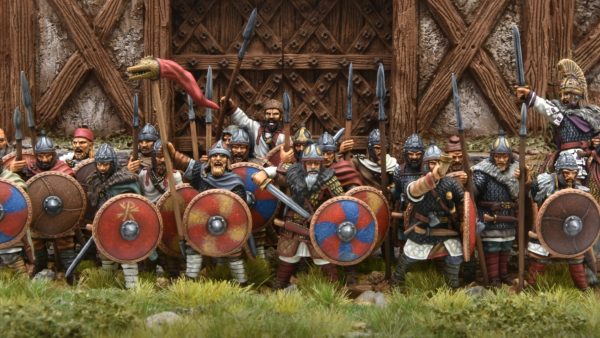
Someone please step in and take away aurorainbag’s paint stripper before she hurts someone. Those Gauls are wonderfully table ready and I always feel that a finished paint job is a good one, if not always my favorite.
@warzan A simple read of the dial would give the lowdown at a glance. From having a generic base anybody could build/paint what they wanted to on top. The set of bases for the minis you’d need to pull off your game would be best done like HeroClicks to eliminate bookkeeping for how many points of health are on what figure. The drawback is the need for squares so it’d likely need to be bigger than 20/25mm for the eyesight of some players.
Great show! I’m really inspired by WarzChess. I will be trying ranged attacks at a cost of 3 for Troops only. Attack is carried out as if you moved X2 inches but you stay put. This will give my RuneWars starter box minis new life,
Tack shields for the win. they looked amazeballz
Good show, great going Warren… Hate the code-busters part of the show, but love your work on a new rule set. Lloyd always blows me out of the water, such great work.
I have a question for the team. Who from the team actually organises and plays games with people? Obviously, take Corvid out of the equation and I don’t mean one now and again, I mean is a regular player.
The older I get and my friends around me the less I see them play games and they end up doing all the work and build up only to move onto another project near the end. Is this because they don’t really want to play anymore and consciously/subconsciously stop themselves finishing. Are they just holding onto a hobby routine they have had for a number of years or because they cherish the memory of years gone by and this is a way of staying connected to their even when they don’t end up playing?
I’ve been like this for years and years. Then created a play-over-the-internet electronic system just over a year ago and during covid have been playing more tabletop games in the last 12 months than I have done in the previous thirty years! Play-testing new game rules has been great fun. I think actually playing games is just a habit we grow out of – I’m trying to find a way of bringing this idea to market to get more people actually playing (even if it’s just against the computer) rather than we’re all sitting, painting our little tiny fighting men without actually every doing any of the fighting!
in the before times I played weekly a minimum of once a week and hopefully will return to that after The Event
Regarding ‘The Winter King’ (assuming its the Bernard Cornwell novel), for anyone that. Struggles to get reading time in, I highly recommend the audiobook version narrated by Johnathan Keeble; his narration really brings the characters to life.
Speaking of audiobooks – have you guys at OTT considered trying to nab an Audible sponsorship for the book club? 😉
Surely ‘Draw’ isn’t a Druid flapping his dick about to lure enemies in, its a female Druid flashing her tits at them? ?
For ‘Brace’, given the name, how about instead of healing a unit, if that unit gets attacked that turn then it takes less damage? Similarly, with ‘Counter Attack’, instead of healing, if the unit is attacked, then it inflicts damage on the attacking unit(s)?
I can see where Lloyd is coming from with the bows and think Ben is misunderstanding the issue; Lloyd isn’t saying he’d be mass firing with his whole army every turn, what he’s saying is why would he field any, say, spearmen, when he can field all archers who will be just as effective in combat and have the ability to fire if required. Yes it’ll cost more activation points, but if he only fires with, say two a turn, that’s the same as Ben fielding two units of archers and the rest spears, except Lloyd has the flexibility of firing with any two he wants while Ben can only fire with the same two each turn, which means Lloyd has more flexibility and can adapt as the flow of battle dictates (eg if all viable targets for Ben’s archers are out of range, he has to spend points to move them, preventing them from firing, while Lloyd can move those two and still fire with his other units which might be in range). What you need is something like ranged units do less damage in melee and take more damage.
@lloyd Really loving your work on those Rus. What is your recipe for the metal armour? I’m loving the way it doesnt look too shiny. (Typing this whilst looking at drabant Vikings….)
Hey @bluehealer
1) I paint the metal grey
2) Wash it with an Army Painter dark tone or Citadel Nuln Oil that sort of thing
3) Highlight the parts I want to shine with something like a Chainmail/Bolt gun silver.
4) Highlight a bit more but just a few bits here and there on the tips/edges with the brightest silver I’ve got.
5) Some times I will paint a streak across swords / spear heads for an extra sheen but you can skip this and just highlight the blade edges etc.
Like you say it’s not too shiny, it’s sort of a have way step in between full mellitic and non-metallic metal.
I really like the game system Warren presented – you could play it as is (with some tweaks after playtesting), but it is also a neat core concept which can easily be expanded without getting bloated if you want to. The major expansion work would go into the Combat Matrix – you could add new troop types with adjusted damage output against a specific other unit in the game to represent weapons, like halberds, for example.
I’ll very likely tinker with it and do some test plays, because I like the topic of game design and have modified and written a few games of my own for private use in the past.
Great stuff!
As for randomness in a game – I don’t mind it, provided it has an impact on the decisions you make during a game, not too much on the outcome. At the very end, a game’s outcome should be dependent on the decisions you make during a game in response to the stuff you can’t control, or only to some extend – like what your opponent does. This of course requires a game which actually allows or requires you to make decisions not just before the game, but especially DURING the game – loads of them.
There are games with dice who manage to do this and which are great games in my opinion – like Star Wars Imperial Assault. It uses dice AND command cards, but both – while being random to some extend – do not generate a final result which immediately impacts the game, but require you to make decisions which then generate a result. That’s neat design, and it’s pretty streamlined. That, and how you plan your activations, the movement and placement of your figure – you have to make decisions constantly and these are which win or lose you games, not the rolls of the dice. A friend of mine usually calls Imperial Assault “chess with dice”. 😀
Actually that Queens gambit bit is the only time she does that chess ceiling bit without drugs. So there!