











Gaming In The Vietnam War – 50th Anniversary Of The Tet Offensive: Part Four
February 12, 2018 by oriskany


Once again, fellow wargamers and history buffs, it’s time to continue our article series commemorating the 50th Anniversary of the “Tet Offensive” in the Vietnam War. As we’ve seen, this offensive was a massive series of surprise communist assaults launched across South Vietnam, timed for the Vietnamese “Tet” New Year holiday.
Read The Gaming In Vietnam Series Here
So far we’ve reviewed the overall communist plan for Tet in Part One, looked at the opening guerrilla-style assaults near Saigon in Part Two, and reviewed the more conventional attacks further north near the Demilitarized Zone (DMZ) in Part Three.
Now we’ll see the Americans and their allies start their inevitable counterassault, pushing back against everything the communists had seized in the surprise opening of their offensive. With the Americans on the attack against an often-hidden foe, this is where our Vietnam games become a little more typical of the “expected” Vietnam model.
The Battle For Hue
A Different Kind Of Jungle
As reviewed in previous articles, the Tet Offensive struck hundreds of targets across South Vietnam starting on January 30th, 1968. The idea was to create a crisis of confidence in the South Vietnamese government and ignite a popular uprising. The new communist government in Saigon would demand an immediate US withdrawal.
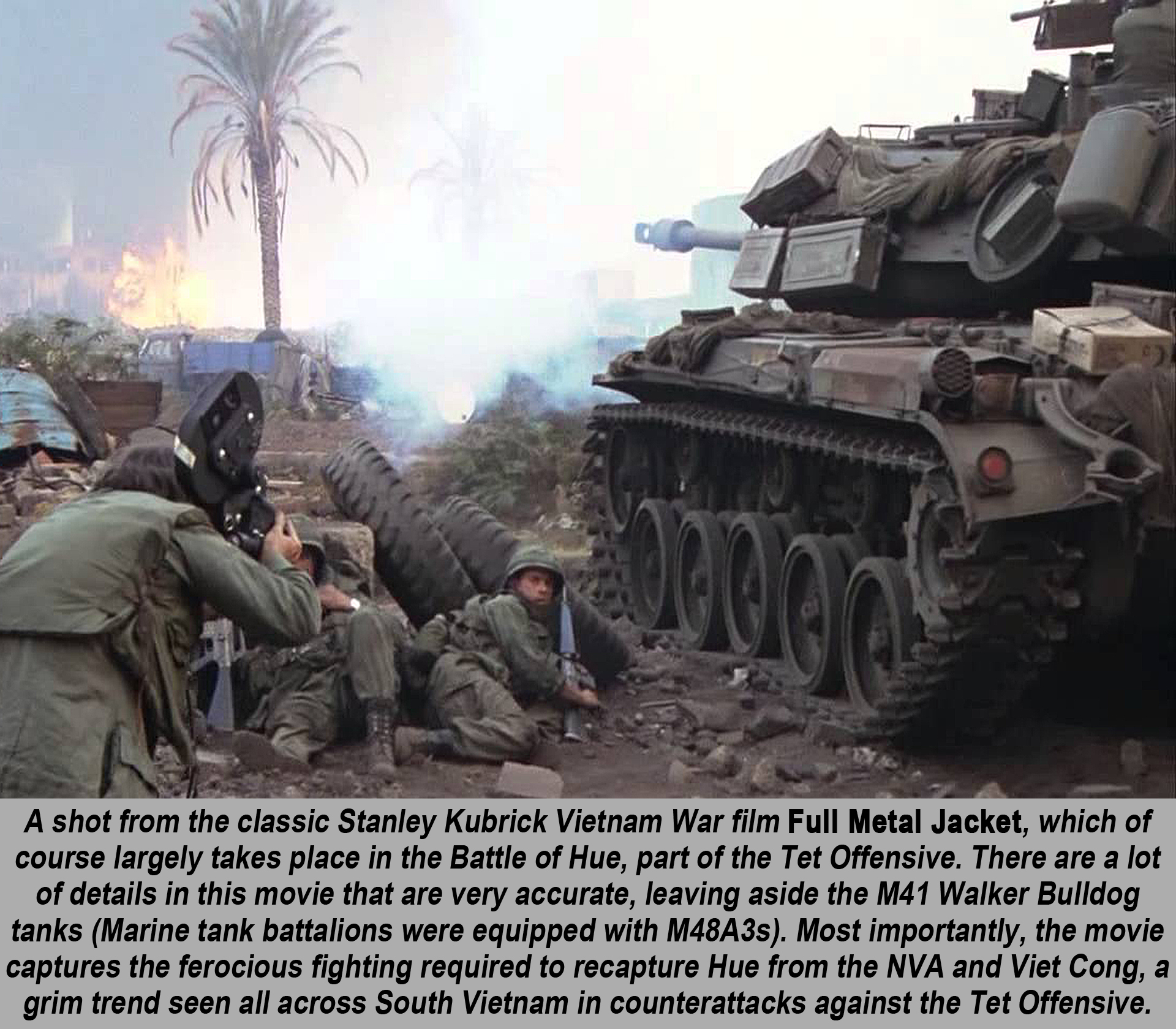
It was for this reason that the brunt of the first wave attacks at Tet didn’t actually hit big US forces out in the countryside (Khe Sanh and other DMZ combat bases being notable exceptions). Instead, the communists hit the civilian cities, exploiting the poor readiness of the South Vietnamese army with maximum surprise.
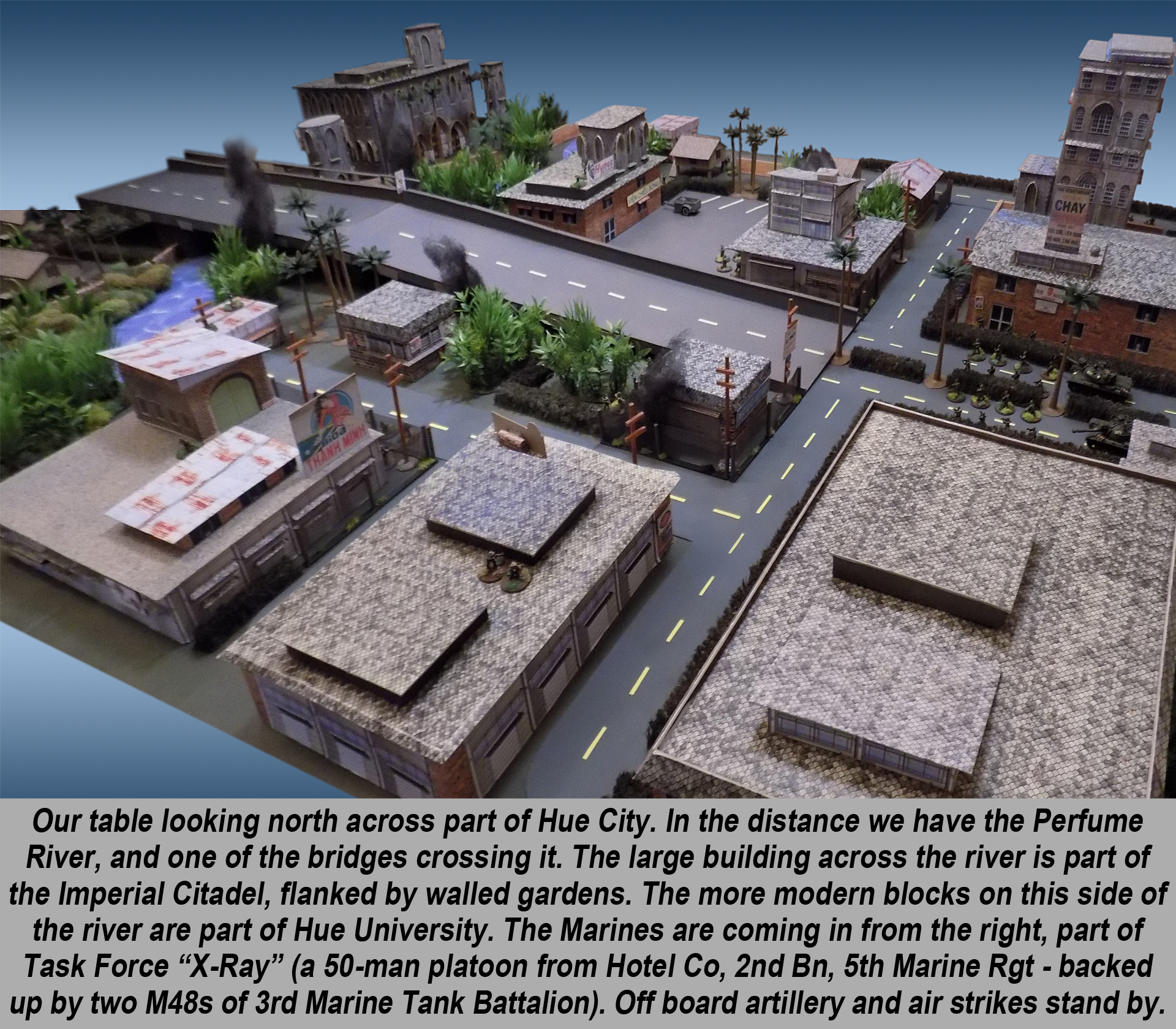
One of the biggest single attacks in the Tet Offensive was aimed at the old imperial capital of Vietnam: the city of Hue. Here, the People’s Army of Vietnam (usually known as the North Vietnamese Army or NVA) and the National Liberation Front (NLF or Viet Cong) combined forces to take almost the entire city in an overwhelming blitz.
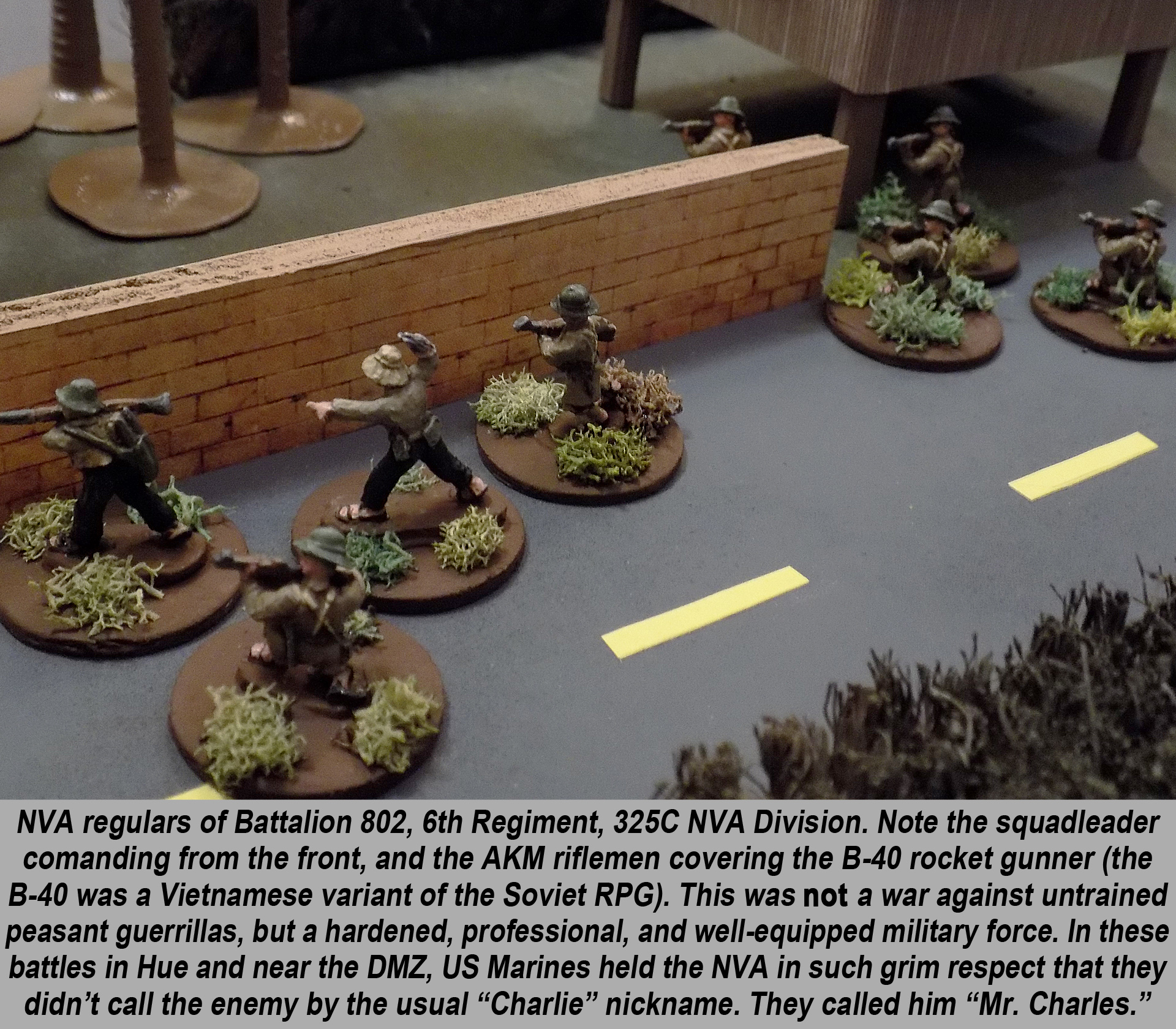
In all, the NVA and Viet Cong committed a combined 12,000 troops, including two full NVA regiments (6th Regiment of the 325C Division, 4th Independent Regiment) and at least two local Viet Cong battalions (12th and 402nd). They took the city almost immediately, but to re-take it would involve the largest single engagement of the Tet Offensive.
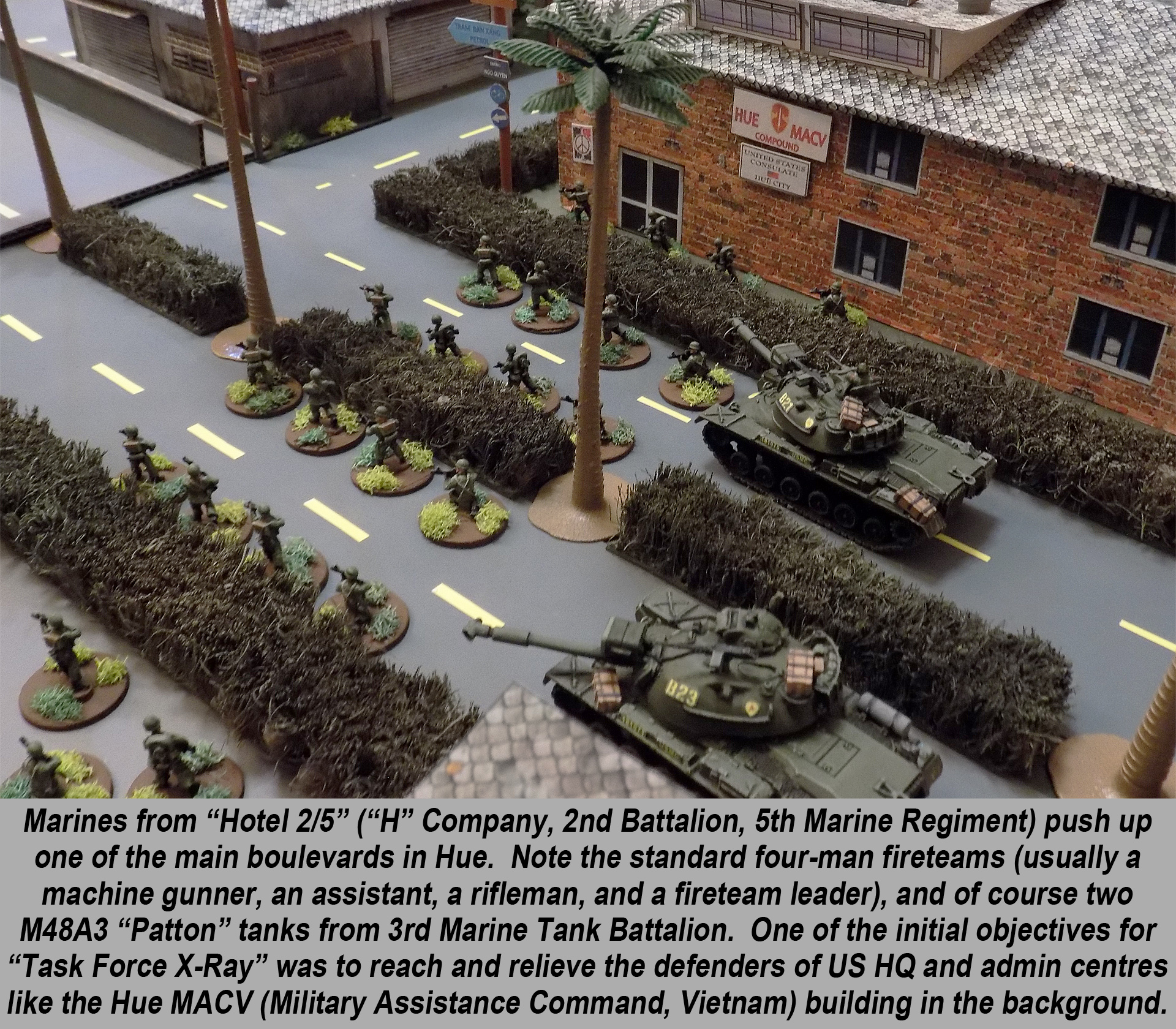
Right from the outset, the Americans and South Vietnamese in Hue were on the back foot. The entire city was only garrisoned by two HQ units (ARVN 1st Division and the American MACV – Military Assistance Command, Vietnam). Surrounded and outnumbered dozens-to-one, these HQ units desperately needed help.
US Marine Corps units of the 2nd Battalion/5th Marine Regiment were among the first to get into the city, along with the elite South Vietnamese “Black Panther” battalion. The US Army also tried to get units of the elite 1st Air Cavalry Division engaged, but the Tet Offensive had caught the troops cut off from their supplies and artillery support.
Steadily, more and more ARVN, USMC, and US Army troops pried their way into the city and joined the battle. The fighting was positively savage, with firefights chewing through tight streets, courtyards, and apartment blocks. One could almost call it the “Stalingrad” of Vietnam.
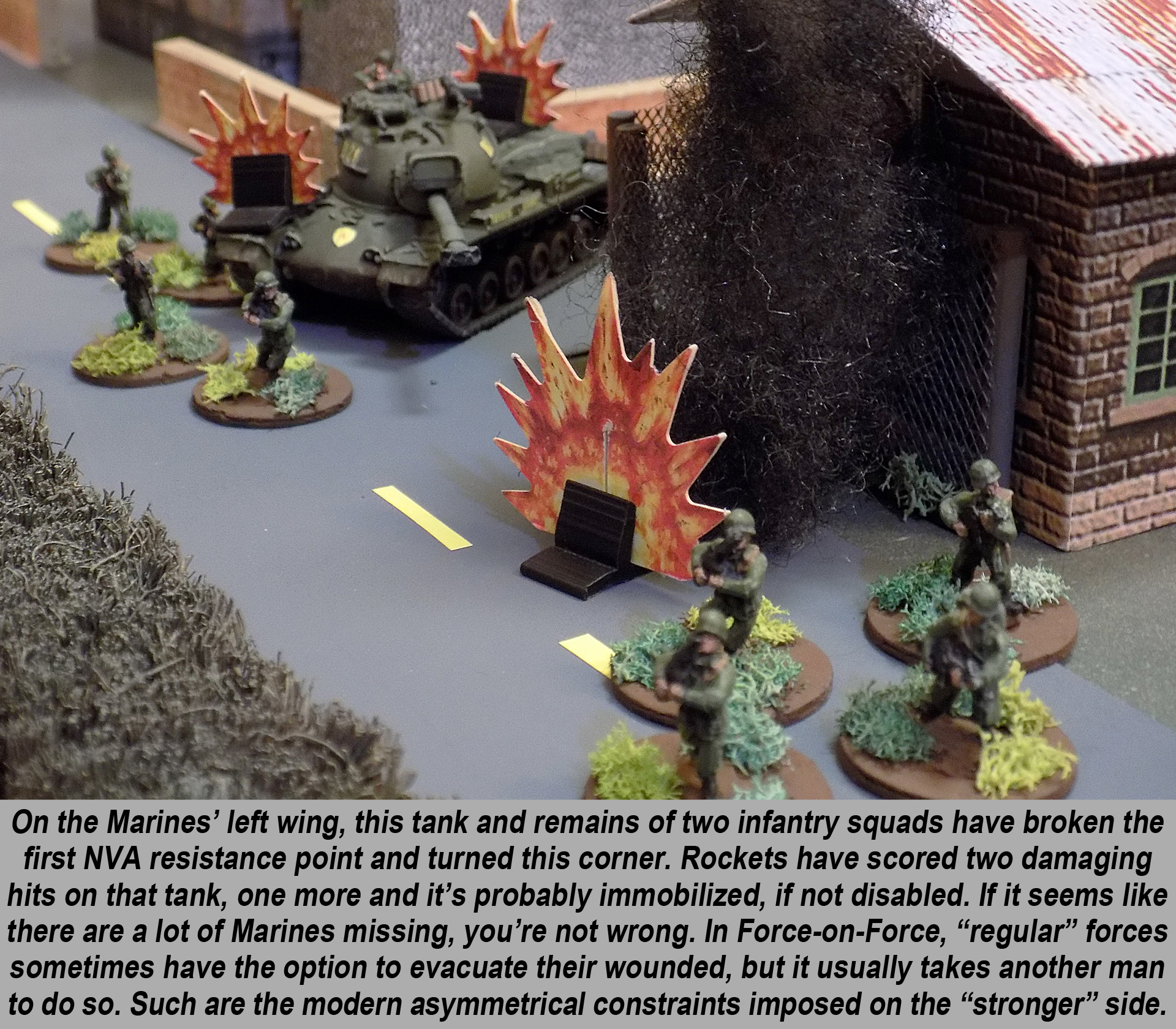
By the end of the first week of February, the communists had realized that the Tet Offensive had largely failed and so started ordering their surviving units to fall back into the countryside. One of the few exceptions was Hue, its symbol as the cultural centre of historic Vietnam was too great. Hue would be held, or else.
At first, South Vietnamese authorities demanded that no air strikes or heavy artillery be used in clearing the dense districts of Hue City, collateral damage on cultural landmarks would be too great. As casualties mounted, however, American artillery, air strikes, and even naval gunfire from US Navy warships rained down on Hue.
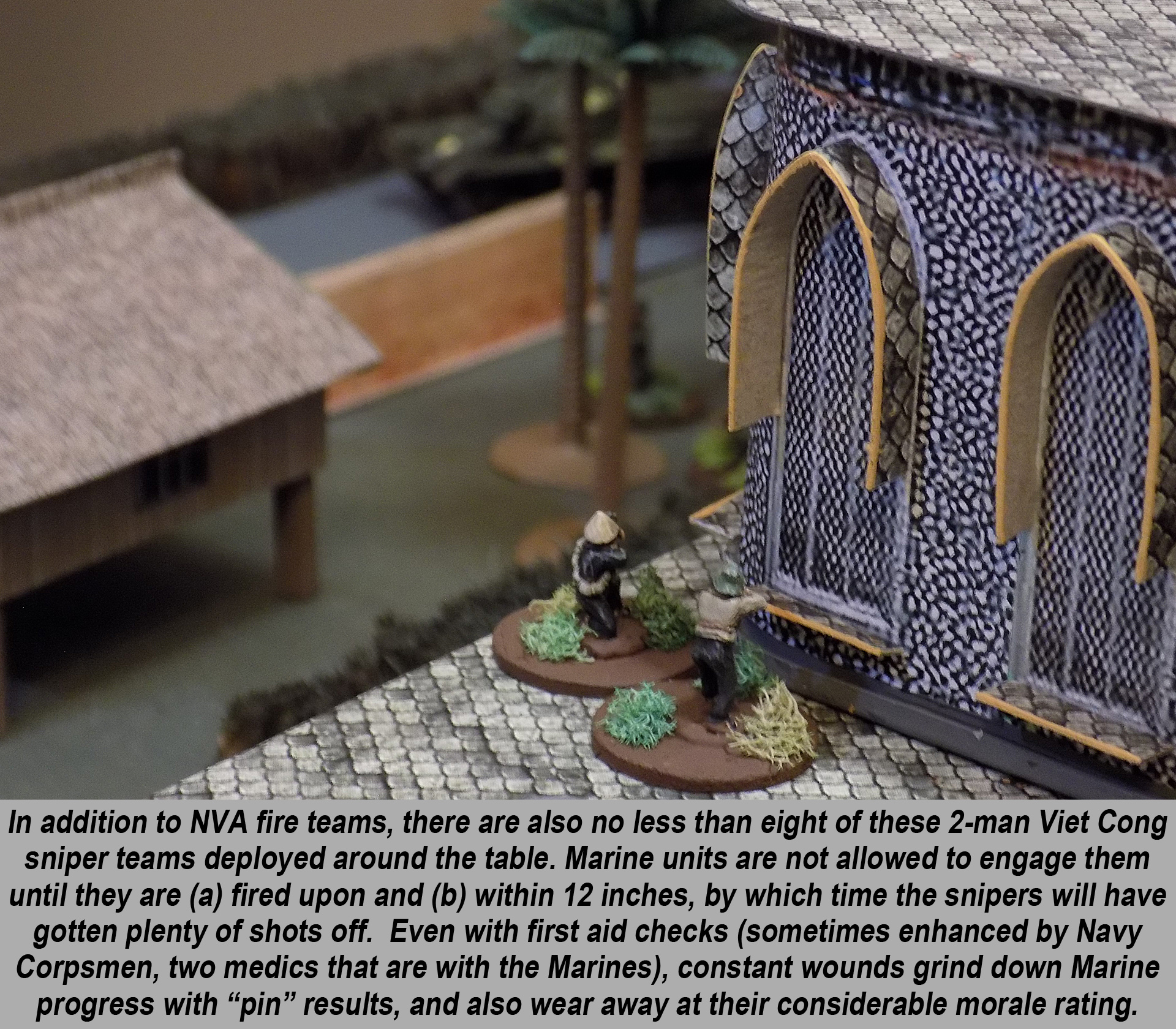
Huge sections of the city were laid waste, and civilian casualties were steep (in addition to several thousand who’d already been executed when the communists took the city on January 31st). The NVA pulled back to the “Citadel,” the old Imperial Palace on the north side of the Perfume River, blowing up the bridges behind them.
This didn’t stop the Marines. Supply, reinforcement, and gunfire support were soon pouring off landing craft in the Perfume River, as fortified NVA positions in the Citadel were bombarded and assaulted.
The Tet Offensive had caught the 1st AirCav Division in midst of a redeployment, and when the NVA cut the Route 1 highway into Hue, the division’s assets were caught on opposite sides of the city. But as they regained their balance, the 1st AirCav (especially 12th Regiment) proved an invaluable asset in cutting off and grinding down the NVA in Hue.
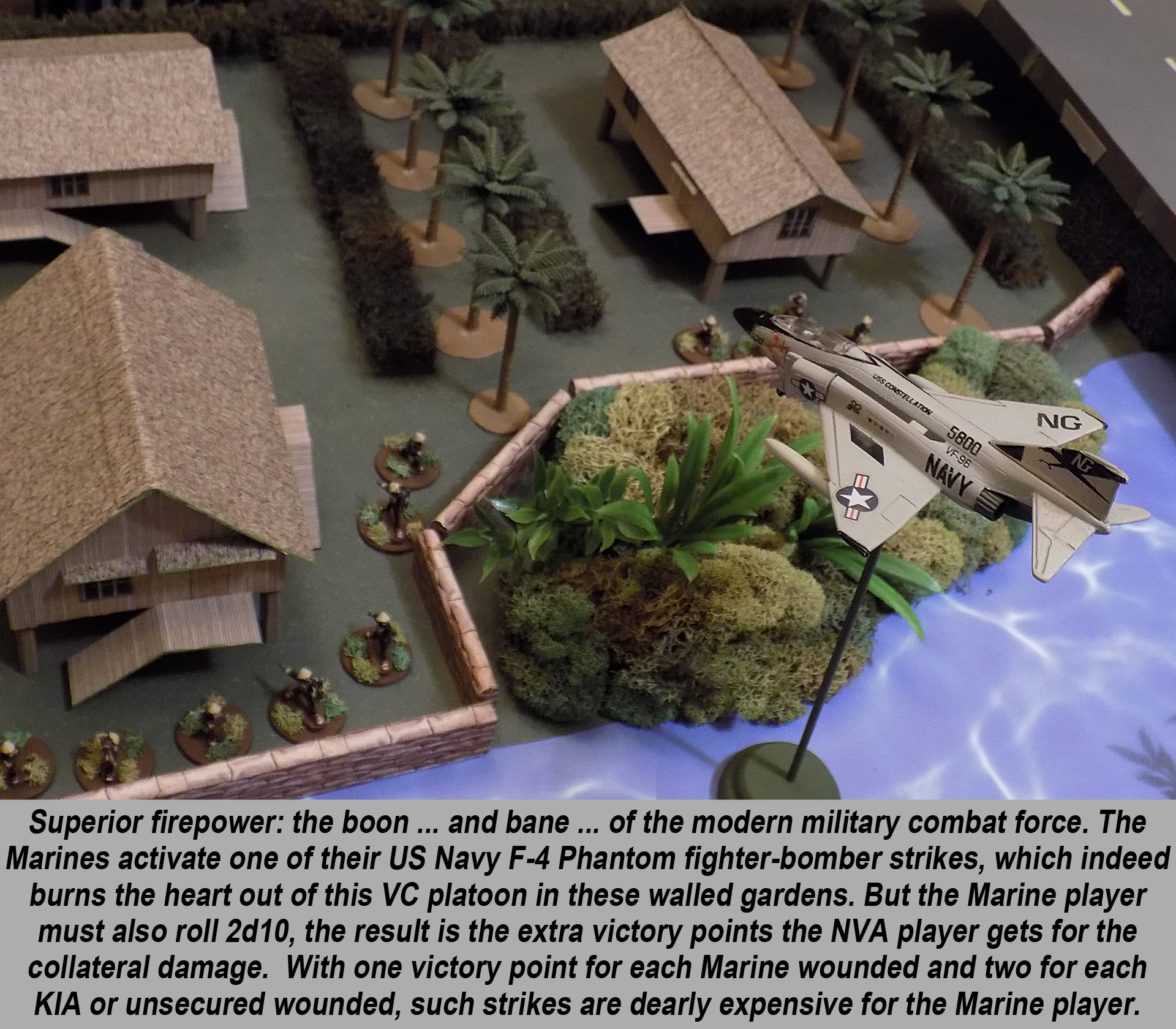
In the end, fighting in Hue would not end until early March 1968. Technically the battle was an allied victory, but 142 Marines had been killed and 857 seriously wounded. Over 400 ARVN troops had been lost, along with at least 5,000 NVA and Viet Cong. Over 5,000 civilians had also been killed either in the fighting or communist executions.
ANZACs Move Into Action
1st Australian Task Force
Although northern battles like Hue City and Khe Sanh would see weeks of ferocious fighting (Operation Scotland being the defence of Khe Sanh, Operation Pegasus the counterattack and relief effort) massive counterassaults were in fact in progress all across South Vietnam, aimed at rolling back communist gains in the Tet Offensive.
As we’ve mentioned several times, the US and South Vietnamese were just the majority of the Free World forces engaged in the Vietnam War, including the Tet Offensive. Another contingent was the 1st Australian Task Force, originally made up of three Australian battalions before being reinforced with New Zealanders and tanks.
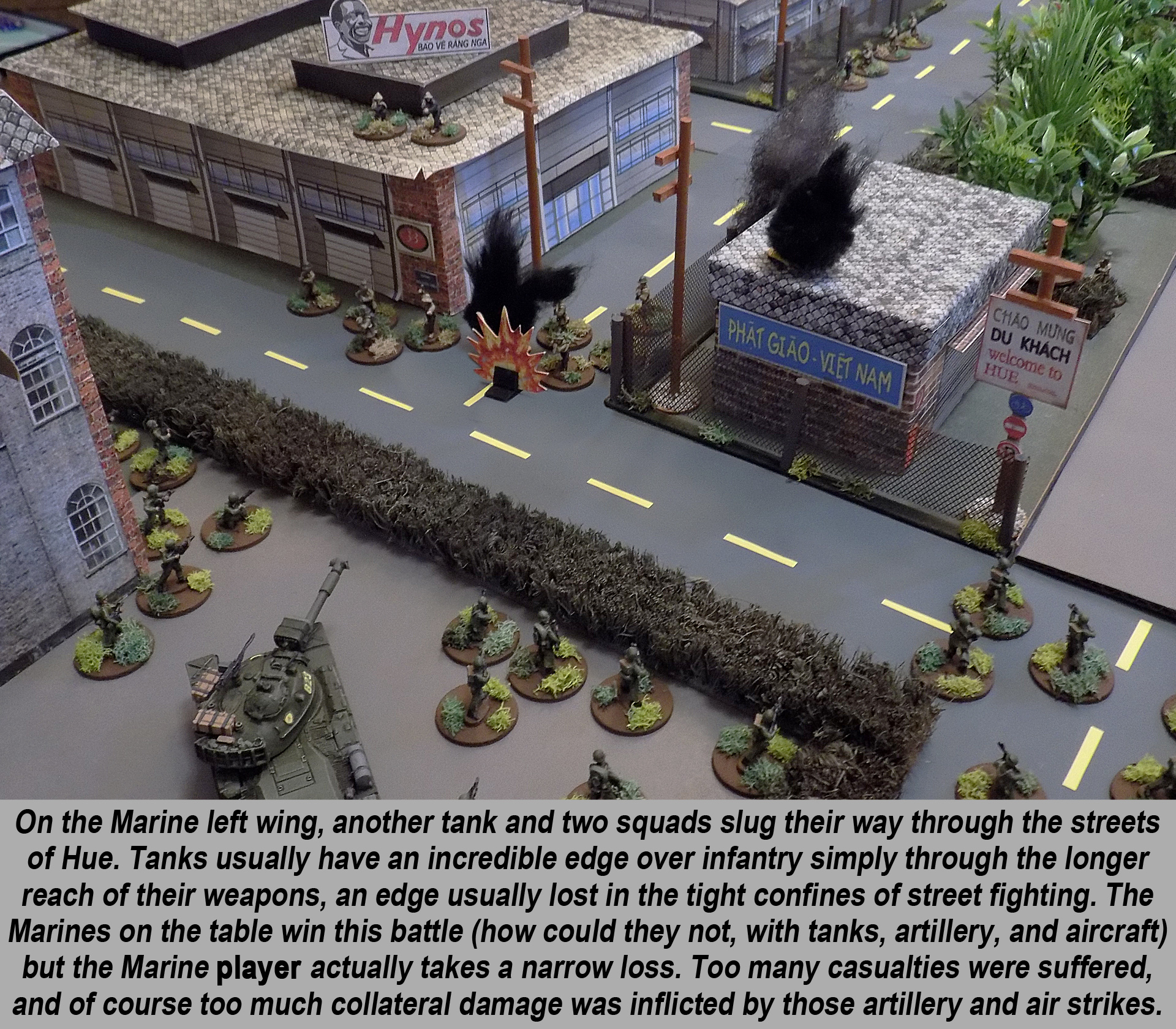
The 1st ATF was stationed in the Phuoc Tuy province, east of Saigon, part of ARVN’s III Corps tactical zone (nominally 1st ATF was under command of US II Field Force). The Tet Offensive caught them in the midst of Operation Coburg, a series of search-and-destroy missions, triggered by warning signs that a major communist attack was coming.
Although intelligence had warned that some kind of communist offensive was imminent, the scale, direction, and timing of Tet caught everyone off balance. The 1st ATF’s operations were too late to prevent the NLF/Viet Cong’s attacks into Saigon, but they were perfectly positioned to cut off communist retreat from Long Binh and Bien Hoa.
You may recall frompart two of this series where we saw the 274th and 275th Regiments of the 5th NLF Division hit the American bases at Long Binh and Bien Hoa. Well, that battle had now been won and the remnants of these Viet Cong forces were trying to withdraw. Too bad the ANZACs were already waiting for them at the back door.
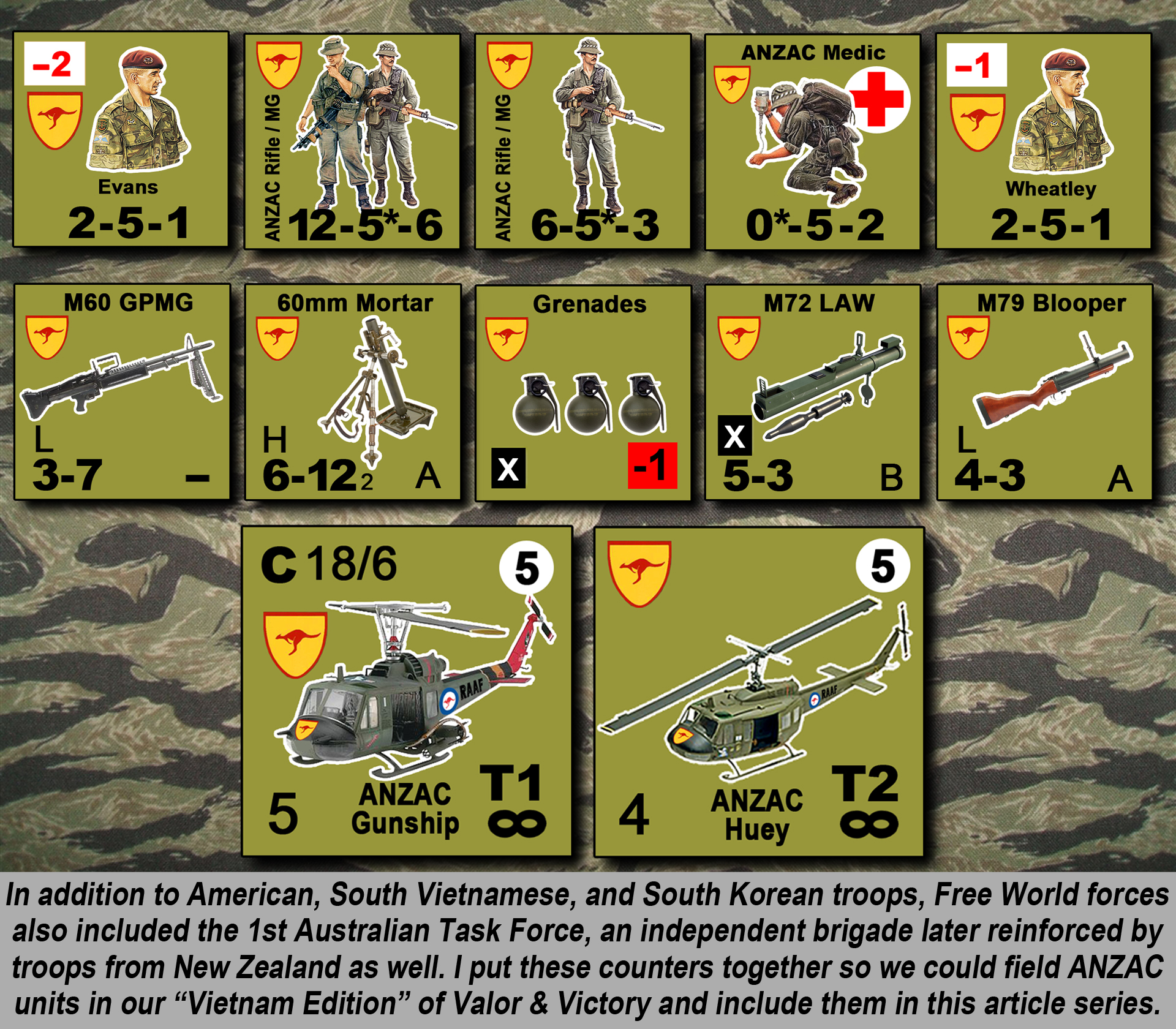
These forces included 2nd and 7th Battalions / Royal Australian Regiment (2 RAR and 7 RAR), backed up by Centurion tanks of the A Squadron, 3rd Cavalry Regiment. They were supported by two batteries of 4th Royal Australian Artillery and two companies (“Victor” and “Whiskey”) of the New Zealand Regiment (attached to 2 RAR).
Since Tet had started, these forces had been re-deployed by air to the Dong Nai province (closer to Long Binh and Bien Hoa), and had been pushing hard to occupy key ground at places like Trang Bom. From here, they could interdict elements of the 5th NLF Division as they tried to disengage from the Americans.
Charlie Company, 7 RAR was engaged in particularly heavy fighting, running into deeply dug-in positions north of Trang Bom on 5th February 1968. This is the battle we’ve tried to recreate somewhat in our “Vietnam Edition” of Barry Doyle’s Valor & Victory system.

Other units of the 1st ATF were engaged all across the Phouc Tuy and Dong Nai provinces. Fire support bases (FSBs) were deliberately set up along enemy routes of retreat from Saigon, Long Binh, and Bien Hoa, and came under desperately ferocious attack as the NLF fought to escape the trap.
Not many of them made it. Once the 1st ATF had established these blocking positions, the Viet Cong found it impossible to dislodge them and scraped past them only at a horrific cost. The fierce combat lasted until the end of February 1968, by which time the 1st ATF had made a major contribution to breaking the Tet Offensive.
For their involvement in this action, the Royal Australian Regiment and the 3rd Cavalry would be awarded the “Bien Hoa” unit citation for their regimental colours.
Rolling Back The Tet Offensive
While the battles of the Tet Offensive all started with explosive, near-simultaneous surprise, they ended in slow, struggling whimpers. Gradually, painfully, and bloodily, pockets of Viet Cong and NVA resistance were either driven out of their Tet Offensive objectives or annihilated where they stood.
In addition to the longer battles discussed at Hue City and Khe Sanh, other “fires” continued to smoulder as the Tet Offensive was steadily smothered out. Another of these lingering trouble spots was at Cholon, a predominantly Chinese suburb in the south part of Saigon.
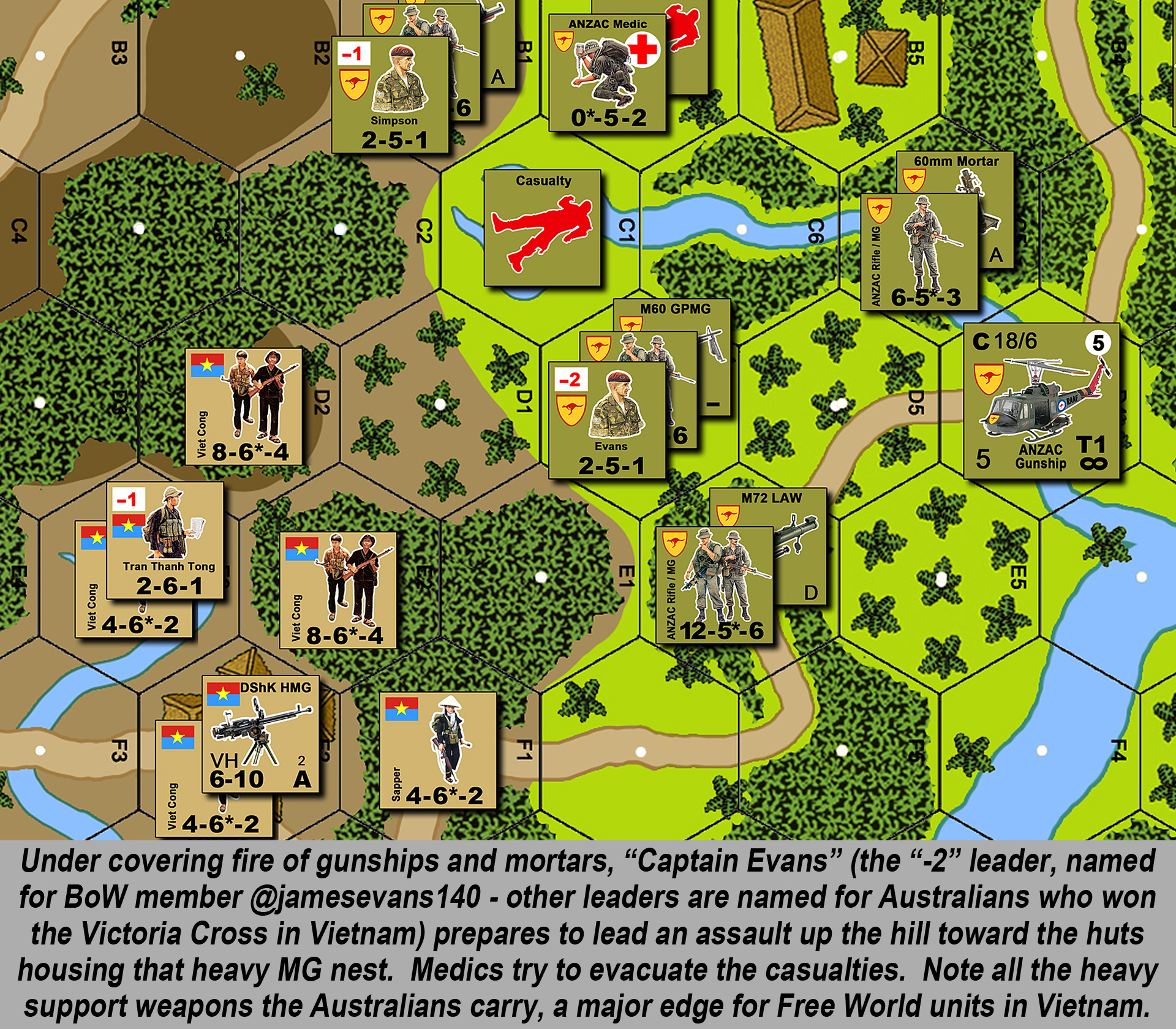
The Battle of Saigon had turned very quickly. Although the first shock of the fighting was almost entirely absorbed by South Vietnamese forces (with the very small yet painfully visible exception of the attack on the US Embassy), US forces were quickly mobilized to stabilize the situation.
APCs and tanks spearheaded this counterattack, and by the end of the first day, five US battalions were engaged. But as urban battles often do, the fight then ground to a crawl. As we’ve seen at Hue, this was an intense street battle, fought via skirmishes, snipers, firefights in tight alleys and dense city blocks.
Determined to save their capital city, ARVN (Army of the Republic of Vietnam) pulled no punches in the fight through Saigon, especially once the Viet Cong was backed up into the Cholon District. Massive airstrikes were conducted by South Vietnamese and US fighter-bombers and helicopter gunships, even against urban targets.
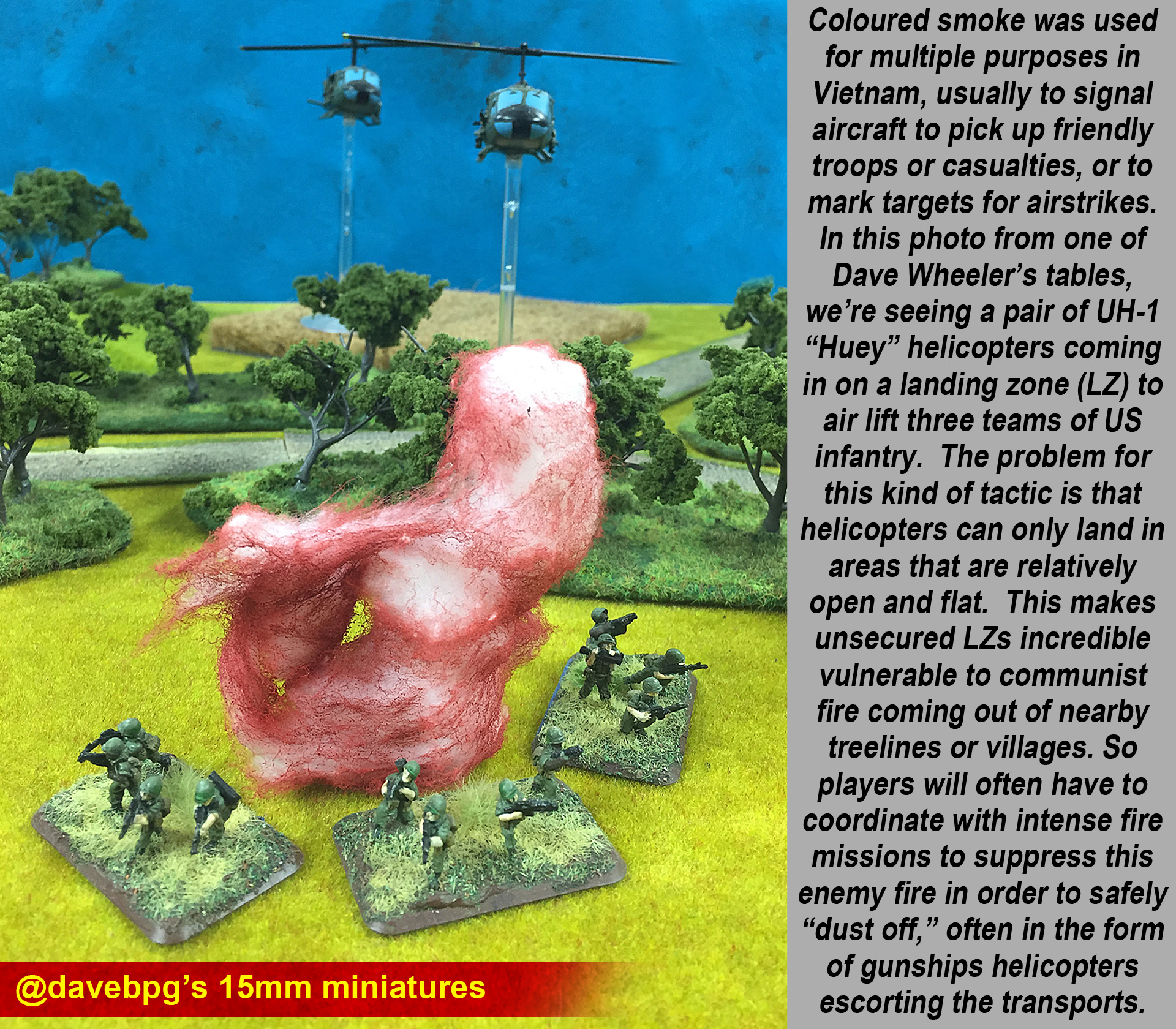
American airstrikes were also hard at work across towns and villages surrounding Saigon, first as the Viet Cong tried reinforcing its initial sapper battalions, then as they tried to pull out. While the airstrikes at Khe Sanh were actually bigger, that was also in the comparative wilderness. The urban devastation of these Saigon airstrikes was appalling.
One nearby town, Ben Tre, was basically annihilated by concentrated US airstrikes, and an American officer was quoted: “We had to destroy it … to save it.” To an increasingly-impatient American public, freshly shocked by the violence of the Tet Offensive, such contradictions highlighted the absurdity of American involvement in the conflict.
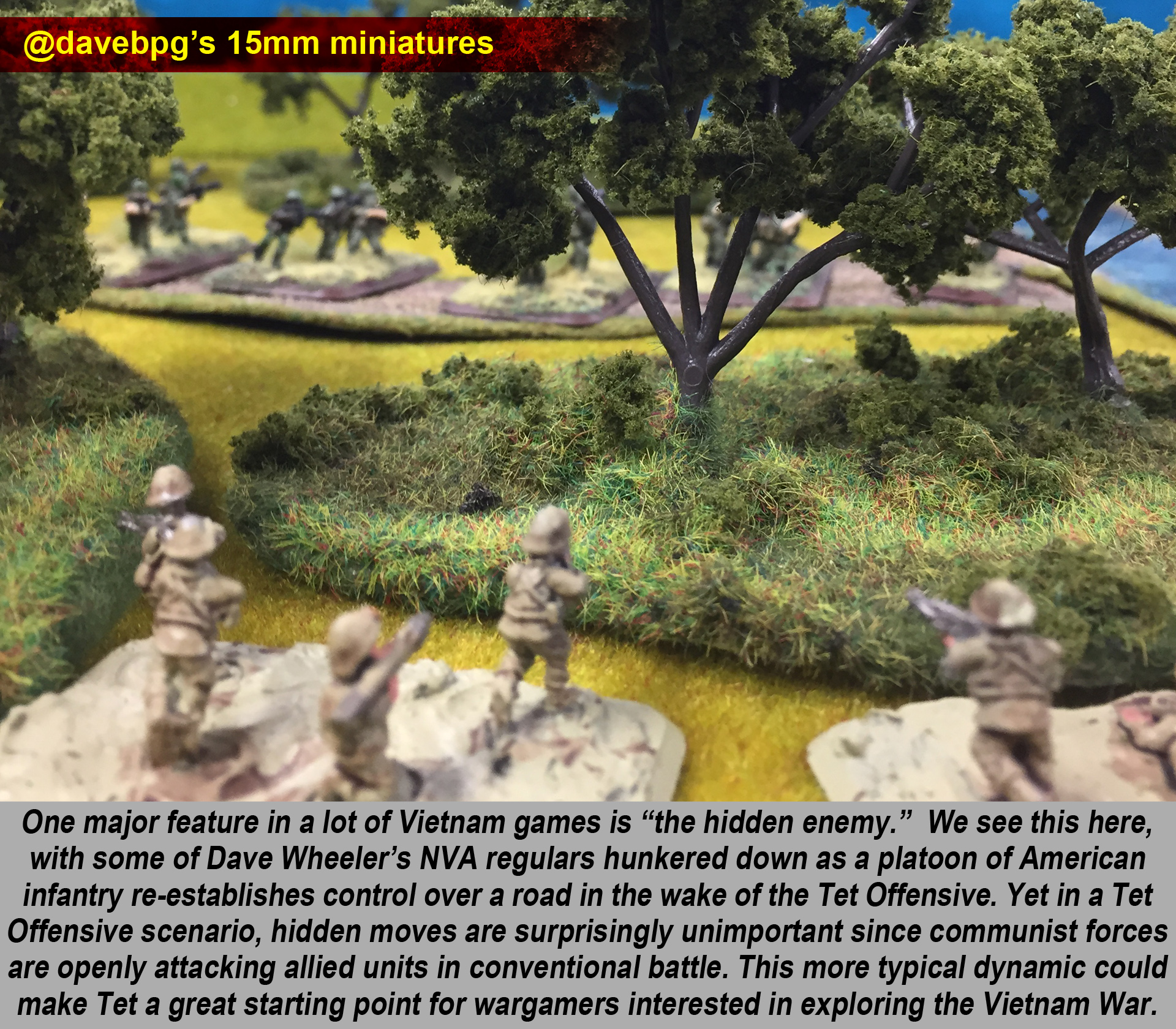
Please come back next week as we wrap up this article series on the Tet Offensive, reviewing its impact not only on the Vietnam War but on modern war overall in the age of televised media. We’ll also hear from Dave Wheeler (@davebpg), looking at how Vietnam plays out specifically in the Flames of War system.
Meanwhile, post your comments, questions, and input below!
I know there are plenty of Vietnam players out there. So stop hiding in the bush, don’t make me send the AirCav out after you!
"The fighting was positively savage, with firefights chewing through tight streets, courtyards, and apartment blocks..."
Supported by (Turn Off)

Supported by (Turn Off)
"...an American officer was quoted: “We had to destroy it…to save it”"
Supported by (Turn Off)




Thank you very much for this series of articles. Is there any way you can share the books you used for the series, or have any reading recommendations? Cheers!
Thanks very much, @tzanerman – As far as sources go, I have chewed through Ambush Alley by Eric Hammel more the USMC “day in the life” perspective, and Platoon Leader by James R. McDonnough – although admittedly that last one only after I saw the movie by the same name back in the 80s. Kind of a terrible movie, but the book is much better. 😀
The “Vietnam – It’s Time to Start Your Tour of Duty” support thread has these same suggestions plus a lot more by other community members, books I haven’t read or even heard of, admittedly.
I also subscribe to Strategy and Tactics magazine (including their new Modern War periodical), which over the last 12 years has put out some great articles on Vietnam articles, especially on Dien Bien Phu, Hue, Khe Sanh, and a very good one on Lang Vei that was particularly useful. Three of these articles were used as sources just for the maps.
I’ve also managed to find a few Marine Corps publications on Hue and Khe Sanh on line. One of these I have linked below (I’m limited in the number of links I can put in a single post):
http://www.marines.mil/portals/59/publications/the%20battle%20for%20khe%20sanh%20pcn%2019000411000_1.pdf
I normally shrink from using TV documentaries as a source – but the diamond in the rough here is “Battlefield Vietnam” – a 12-part series with a remarkably balanced and clinical perspective, without a lot of the anecdotal “I still remember the day I shipped out” personal stories that clutter a lot of television stories. The series is available on YouTube, its 12 hours of content, but if you’re really interested, certain episodes might be worth a watch! 😀
Congrats. Again another well done, part of this article series.
Thanks very much, @andre77 ! We should come back and do an “End in Vietnam 1972-75” series one of these days so we can get that massive NVA army of yours, especially all that armor, on the table! 😀
That would be a sight 😀
Great read – as always – @oriskany .
Thanks very much. @bothi ! My poor little two USMC M48A3s would look so sad against the @andre77 ‘s massed T54/55s, T34s, ZSU-57-2s, and PT-76s! 😮 !!
A great look at Hue City and nice to see information on units of other allies armies. Well done!
Thanks very much, @pslemon ! 😀 Found a great .pdf that was very helpful re: the research for this battle.
http://www.marines.mil/Portals/59/Publications/US%20Marines%20In%20Vietnam%20The%20Defining%20Year%201968%20%20PCN%2019000313800_4.pdf
Thanks for another great article. My father was stationed in Alaska and worked as a B52 crew member during the early war in Vietnam. He talks a lot about the media and how he remembers them getting lots of things wrong. I look forward to your commentary on the same topic.
Thanks, @liono – it’s a tough call re: the media. A big piece of the Battles of Saigon, Hue, Khe Sanh, and other big Tet Offensive engagements went out live or nearly live (televised later that same day), completely uncensored. It’s a tricky conversation where the line is between “censorship” and “OpSec” (Operational Security) – or really how much of a war really should be exposed to the everyday public.
As Secretary of State at the time Dean Rusk said (paraphrasing a little here) – what if there have been TV crews broadcasting live on Omaha Beach, of Anzio or Guadalcanal? Would America really have been able to fight and win that war, especially if the other side were not also showing their public EVERYTHING?
Since Gulf War One, the military, DoD, and State Department does control what the media sees and broadcasts in a live war zone, to an extent. Again, exactly where that line should be drawn is a very complex and very interesting discussion.
I think that with Vietnam the USA definitely learned the lesson that control of what the media gets to see, hear and think about the war is very important. As such Rusk may have had a point, because I do think the public would have asked to have their boys brought back home (alive). Either that or they’d have to go on to fight the ‘evil reds’ …
OTOH … if people were more aware of the true cost of war then they wouldn’t be so quick to call for one.
It sucks that the ones that call for war or start one, rarely have to suffer the horror that actual combat is.
Like Sean Bean says in Troy:
“War is young men dying, and old men talking.” 🙁
That sounds like they lifted it from the memoirs of a soldier from a different time, but the sentiment is the same.
Like Wifred Owen writes in the one that I never forgot since I read it :
…
If you could hear, at every jolt, the blood
Come gargling from the froth-corrupted lungs,
Obscene as cancer, bitter as the cud
Of vile, incurable sores on innocent tongues,
My friend, you would not tell with such high zest
To children ardent for some desperate glory,
The old Lie; Dulce et Decorum est
Pro patria mori.
// —
Or the irony from Colonel Kurtz in Apocalypse Now:
“We train our young men to drop fire on people.
But we won’t let them paint ‘f***’ on their airplanes …
… because it’s obscene?“
Excellent work as usual 😉
Thanks very much, @neves1789 . 😀 Had to do the Corps proud, after all. 😀 (And the ANZACs, of course)!
A great read @oriskany interesting to see the Australian’s being as strong in the tet raids thinking they were more involved during the operation hump (65) time’s.
Thanks, @zorg – Indeed, Australians were in Vietnam on a battalion+ level as early as 1966, and didn’t complete their withdrawal until 1971. Air units were in action as of 1964, and advisors were in-country as early as 1962 (Source: A Brief History of the Australian Forces in Vietnam – http://www.vietvet.org/aussie1.htm )
For the Tet Offensive, they were already “in the field” from their bases in the Phuoc Tuy province. This is partially because they were technically under the command of US “2nd Field Force” – commanded by Lt. General F. Weyand at Long Binh. Weyand was one of the few American leaders who really saw what was coming with Tet, so his forces in and around Saigon were a little more prepared, including Australians of the 1st ATF.
Now the 1st ATF units, so far as I can tell, were a little too far out of position to actually interdict any of 5th NLF (Viet Cong’s) initial Tet attacks. However, once these attacks hit targets (most notably – Long Binh and Bien Hoa, as seen in Part 02), the 1st ATF was able to move units into position to block Viet Cong withdrawals from these battles.
So the Viet Cong snuck in the back door, made some noise, the Americans stormed in the front door to kick them out, and when the Viet Cong ran for the back door, sadly for them they found the Aussies waiting for them.
Some of this fighting was very desperate, as beaten Viet Cong units frantically fought for survival, trying to escape the Americans to the front and the Australians in the back. The game we had in Valor and Victory (Trang Bom) shows where one Australian unit had to take the high ground it would use as one of these key blocking positions.
I thought the Australian’s went in to help the French before the US but cant see any evidence?
I have never heard of that, but that certainly doesn’t mean it didn’t happen.
Want to see an Vietnam War historian squirm? Ask him point blank when American involvement in Vietnam started. Watch him dance in his seat. 😀
lol, it may have been just advisers?
I honestly don’t know, @zorg. Definitely possible. I always have issues when trying to prove that something “didn’t” happen or such-and-such “wasn’t there.” Statistically speaking, it’s always harder to prove a negative than a positive.
You hooked me when you mentioned the bush, although I would recommend always burying oneself in the bush when the opportunity presents itself.
Indeed, @raglan – that’s Rule #1 in “Oriskany’s Laws of War.” 😀
Make love, not war, that’s Raglan’s 1st rule these days.
Those new minis in the Vietnam support thread look awesome! 😀
As far as “make love, not war” goes …
I’m afraid I’m too old for the latter, not quite too old for the former … so you and I are probably on the same page. 😀
Great installment @oriskany. Thanks for the name sake counter.
I found out something interesting and scary about Dien Bien Phu while looking at the political side. The French had formally requested the use of tactical nuclear weapons when the writing on the wall said which way this battle was going, thankfully the U.N. Security Council hit that one on the head. If it was approved I hate to imagine how fast Tac Nukes would be on the conventional weapons list.
For me Tet was the beginning of the end on what could be achieved in Vietnam. Being what we would call a police action today the options for the way ahead was limited to begin with. If we went into North Vietnam would that action cause another Korea scenario? To many issues tied our hands. It just like creating a situation where a small child can attack an adult with near impunity.
I admit there is a fine line between the rights of the media and operational security. I totally believe that someone’s right to know is completely trumped by someone’s right to survive and live. The media seems to justify it the other way round. So for me I don’t believe live telecast should be allowed. However I believe the media should be in a position to gather the facts as they happen but may only televise the facts after a delay that will not abuse someone’s right to live.
A few years ago concerning the terrorist attack in India part of their plan had people monitoring the TV and radio stations for live Intel and were feeding the live information back to the terrorist on the ground. This allowed them to ambush the special forces, as they knew their numbers and what weapons they could identify. This lead to the assault team’s leader being killed. He was a senior member and the loss of his knowledge and experience was a harsh blow to their special forces. This is the last thing that should of happen, allowing the enemy’s Intel to be as up to date as your our. Military principals are clear on blinding the enemy. So in this case a news delay of two hours could have made all the difference. How we would argue it out here is now place your wife, kids or parents in that hotel and now tell me about media rights and the rights of people to know.
This is also highlighted by Tet and the near live telecast of the siege of the US embassy and a number of presenters stating quite firmly that the US had lost the war and this just was not the real situation. This was the moment that the heart of the average us citizen for this war died. This was the moment Hanoi new the waiting game would work, politically speaking.
I truly believe in this day and age that my right to know must come second to putting things right and as long as I get the details afterwards I don’t see this as censorship. In WW1 we had to wait over a week to hear how our boys were doing at Gallipoli. Just because we can get live updates today does not mean we should. We should be far more interested in allowing our boys the fair go of them getting the job done.
It was good to see more of the actions in the bush for wargames. I know a number of wargamers that are not keen on city fighting and prefer to keep their games out of them. As the NVA and VC is on the attack it makes the games in the bush a bit closer to the kind of games they are used to playing.
I also left a reply for you in the third article post you comment on Centuries in March reply.
You bought across the intensity of the reply to the offensive quite well and you games demonstrates just how close many of the actions really were.
Thanks, @jamesevans140 –
Thanks for the namesake counter
No worries at all, sir. 😀 I should note (for everyone) that in the Australian counters I made for Valor & Victory “Vietnam Edition” – note the top commander (-2 in upper left, that “-2” is a bonus) is named “Evans” for JamesEvans140 – the “-1” commanders are named for Australians who won the Victoria Cross in Vietnam.
The French had formally requested the use of tactical nuclear weapons when the writing on the wall said which way this battle was going.
Yes, this was Operation Vulture. We touch on is very briefly in Part 01 and I think in some of the comments. Thankfully, President Eisenhower rejected the idea out of hand, neither he or his predecessor President Truman thought very much of the French reclaiming their southeast Asia colonies in the first place, much less were willing to go to nuclear war for them. 🙁
For me Tet was the beginning of the end on what could be achieved in Vietnam.
I would agree with that. This was going to be a war whose result was driven by perceptions rather than the actual situation on the battlefield. The US and their allies were keeping their head above water by selling the general idea that the war was being slowly, painfully, expensively, but steadily … won. Tet showed how wrong they were, that the NLF and NVA were nowhere near “their last legs.”
Ironically, the NLF really WAS on its last legs in many regards. This is part of what prompted the idea for Tet in the first place, at least from the standpoint of General Than and the Viet Cong party offices of COSVN. After Tet, the NLF / Viet Cong really WAS all but annihilated. Of course the NVA had plenty of wind left, but two basic misconceptions were sold that . . .
a) the NLF / VC and NVA / PAVN were one united front.
b) both the NLF / VC and NVA / PAVN were ready to fight for another decade at least.
Once American intelligence, government, and the public bought these (I still don’t think they were actively SOLD these ideas intentionally as part of some master plan out of Hanoi), the American mission in Vietnam was really in trouble.
Correction, it had always been “doomed” from the start. Now it was just obvious. Ironically, this truth was made obvious only through the acceptance of what were basically flawed perceptions.
If we went into North Vietnam would that action cause another Korea scenario?
It wasn’t obvious at the time but it’s definitely obvious now – NO. I think American intelligence and the State Department gravely underestimated the antipathy that existed between Beijing and Hanoi. This would be particularly true as the war bled into the 1970s, and the “Detente” period between Nixon and Brezhnev.
But “MacArthur at the Yalu” was definitely a specter that haunted LBJ through the mid-60s.
That’s a horrifying account of the special forces ambush in India, I had never heard of that. I do remember the US Navy SEAL team that came shore in Somalia in 1992-93, ultra black ops, ultra covert, ultra tactical, only to find a CNN camera team awaiting them on the beach. Luckily no one was killed over that one. Somali rebels must have been watching Married with Children that night. 🙁
Thanks again for the great post!
Great Work. I have always found city fighting much “scarier” than jungle fighting. Which is of course ridiculous as I have never actually done either. However it always struck me a much more difficult feat to win a fight in a city. Now, add in the constraint of not being able to damage that city, and you have reached a new level of WTF.
Looking forward to next week.
Thanks, @gladesrunner – urban combat indeed soaks up infantry units to ridiculous levels of troops density, and that many people with guns trying to kill each other, forced into engagement ranges that short, with little or no warning where the other side is until it’s practically too late . . .
The increasing proportion of battles, campaigns, and warfare that are / is carried in dense urban environments is another worrying trend on modern warfare. In previously “horrific” wars like the American Civil War and World War I, urban combat used to be the exception. In World War II, Korea, and Vietnam it became more common. It’s now becoming the norm, where open field battle is becoming the exception instead.
What an interesting and great part IV of this incredibly splendid series.
The idea with the collateral damage and victory points gained for the PAVN/NLF side is quite realistic and kind of captures effects of moral on victory well. Do you also have victory points ideas for recovery and care of wounded US soldiers other than those mentioned in the Flames of War rule set (the old one: I haven´t got the new “´Nam” book yet)?
How many fireteams were in a standard company, f. i. the H company you mentioned in one of the captions of the pictures?
I have a notion of many US soldiers maimed and mutilated in the Vietnam war and wounds that defy description (like in the film “Johnny goes to war”). Did the ANZAC suffer many casualties, too? Would you, in general, apply the same victory conditions for the ANZACs like for the US forces?
Reading Mr jamesevans140 post suddenly brought to my mind that horrible photo of the Saigon mayor shooting a person in front of running cameras. Was that during the Tet offensive? It was not a live broadcast, wasn´t it?
Thank you again. Knowledge is not wisdom , but it is still important.
P.S.: That issue with the nuclear weapons at Dien Bien Phu scared the human excrement out of me.
P.P.S.: President Roosevelt delivered war materials to the British and the French during WW II under the strict condition that they give up their empires. True?
Great questions as always, @jemmy ~
Honestly, davebpg is the expert on FoW Vietnam, so I’m deferring to him (and players like Bothi and Andre77 and Jamest123) regarding how casualties work in FoW Vietnam. In Valor & Victory it varies by scenario, but we’re usually looking at 3 VP for a “secured” US/Allied casualty, 6 VP (double cost) for unsecured (unevacuated by the end of scenario turns or, God forbid, overrun by VC/NVA).
In Force on Force, “regular” armies really need to evacuate / care for casualties because they remain a burden on teams in which they occur. Units with too many wounded quickly become pinned, and this makes then vulnerable to close assault and wholesale capture. So even without victory points (in FoF a figure can be Lightly Wounded, Severely Wounded, or Killed), it behooves a regular army (as opposed to irregular guerrillas / insurgents, etc) to handle casualties properly.
How many fireteams in a company? That depends on the army in question. Most armies organize into squads of nine men or so, two fireteams of four and a squadleader. The Marines, however, add a third fireteam to each squad, giving a squad strength of 13.
Then it depends on how many squads in a platoon and how many platoons in a company. Most USMC rifle companies (such as H/2/5) would have 3 fireteams in a squad x four squads in a platoon x three platoons in a company = 36 four-man fireteams in a company = 144 rifles and MGs, plus squadleaders, RTOs (radiomen), platoon leaders, platoon sergeants (usually an E7 Gunnery Sergeant or “Gunny”), company commanders, company staff, an XO (executive officer, like a 2IC in the British Army), Company First Sergeant, etc). In all, about 170 men.
But again, the USMC organized along generally larger OOBs than many armies.
Casualties: US dead were 58,200. Wounded were about 300,000+775423, with 150,000 being vaguely classified as “seriously.” Australia sustained 521 dead and 3,129 wounded, with New Zealand adding 37 dead and 187 wounded. Yes, I would use similar victory points and casualty management mechanics for any Free World forces in Vietnam, with the possible exception of “Montegnard” mountain tribesmen. Although I don’t know enough about them to say for sure.
The photo to which you refer was addressed in the Part 02 thread. It was the Saigon police chief executing a Viet Cong – and yes, it was during Tet. According to some sources, the Viet Cong being shot had just killed the wife and six children of one of the Police Chief’s officers.
BOW: aztecjaguar gave the full background:
http://www.bbc.com/news/world-us-canada-42864421
Nukes at Dien Bien Phu – Scary indeed. Also scary is the idea that Westmoreland was proposing the possibility of using chemical weapons (mustard gas, not tear gas) or possibly tactical nukes to break the NVA siege at Khe Sanh.
President Roosevelt delivered war materials to the British and the French during WW II under the strict condition that they give up their empires. True?
I have never heard this. I know that Roosevelt and the Americans in general take a very, very dim view of this kind of old-school European colonialism. But I’ve never heard of any official agreement or statement or policy or the like. This was the general attitude, sure. The American public wanted nothing to do with World War 2 before Pearl Harbor – there was no way we were spending trillions of dollars and hundreds of thousands of dead just so the British and French could get all their toys back in their little sandboxes. Sadly, however, the Truman administration kind of buckled to the French in Indochina in 1946, allowing them to reclaim these colonies in exchange for French support with the founding of NATO and the UN (of course the French would later wind up leaving NATO anyway, only to rejoin in 2006, I think).
@oriskany :
why were the US troops not allowed to shoot at snipers at distances greater than 12″ ?
Was it to simulate the fact that they are hidden and not make it too easy to shoot at them with heavy weapons ?
Full Metal Jacket movie does show how nasty a single sniper can be.
You can definitely see how effective a few snipers can be in delaying the enemy advance.
Great question, @limburger , and I actually screwed this up. It’s supposed to be 10″ in FoF, not 12″. Basically, the range for enemy detection on a unit with the “stealth” ability (i.e., these snipers) = inches equivalent to the the detecting unit’s troop quality. The marines were TQ d10 (they roll d10s for most of their actions – hardened elite veterans), so the range on these spots and counter-fires should have been 10″, not 12″.
Yes, even somewhat half-ass snipers like these TQ d8 snipers (they are NLF Viet Cong, after all, while the squads in the street were full-blooded NVA) can cause a helluva lot of problems for a marine squad trying to push through ruined buildings. The scene to which you refer in Full Metal Jacket is a visceral example, but does have a FEW small flaws (why does Eight Ball stand out in the middle of that courtyard at the beginning, waving the rest of the squad forward, etc)?
But it gets the point across for sure.
**ouch* only 10″ range within those rules?
And them being snipers means they don’t even need to kill to be effective.
I’m sure the army would have loved to have the opportunity to simply flatten the entire city block when allowed.
Although such tactics make life even harder as it inevitably creates even more cover and places to hide as you mentioned in the Stalingrad series.
I suppose the flaws are there because they thought it would make the scene less boring … despite the fact that in real life he would have been shot as no sane sniper would ignore what so obviously is yet another officer/leader type target.
@oriskany these have been a great series of articles very informative. They have inspired at long last to paint up my Air Cav units for FOW!!
Thanks for your great reply @oriskany.
You named the rest after VC holders which places me in the company of great men who’s shoulders are far greater than mine. So if you see me you would notice that I am very pleased if not a little embarrass (in a good way).
Did you know that regardless of rank the NCO or officer they must salute the Victoria Cross first regardless of the rank of the holder.
It was 504 service men who were killed in Vietnam. The rest were non combatant, such as official media and the like. Nurses are considered as being in service. Many sources state the total as 521. Out here we honour the service people above the others. They were the ones that severed their county and placed themselves in harm’s way and for many of them not by choice. So much greater their sacrifice. However Vietnam made casualties of most who served there. Very few came back whole and would spent decades living on the brink of the abyss as they tried to come to terms with, Vietnam the war, Vietnam the politics, Vietnam culture.
The media recording the Mayer shooter the guy in the head is another example of just how twisted on so many levels is war truly was. What was not widely reported was that this man’s life long best friend was recently killed and he had just witnessed the man he shot brutally killed his best friend’s wife. It is very obvious now the the media had its own anti war plans and much like this Mayer was semi reported to further these plans. Examine much of the reporting at Tet and after you will see that what is being presented by the world media is not balanced.
The terrorist attack in India is covered by one of the black ops series so I will try and find a link for you. The program shows just how sophisticated the use of media for Intel has become.
One hearing the request for tactical nukes by the French the British member of the security council immediately voted no. A little known service to mankind made by the British. While on the subject of nukes there was also the request by Nixon to nuke the shared Vietnamese board creating a mile wide corridor that would irradiated anyone trying to make a crossing. It has been a credit to man that we were wise enough to put in place men with calm minds and many failsafes to the actual use of these weapons. Could you imagine what would happen if Hitler made these decisions.
Good morning, @jamesevans140 –
Did you know that regardless of rank the NCO or officer they must salute the Victoria Cross first regardless of the rank of the holder.
Actually I did not know that. We have the same rule here for the Medal of Honor, I did not know the same applied to Victoria Cross holders.
Although I confess at first I was very confused by your post. “You were in the company of VC holders?” I called you a South Vietnamese communist guerrilla? Arggh, I’ve been writing these articles too long. =(
Yeah, my sources say 521, but these are cursory on-line checks (“Australian casualties in the Vietnam War, 1962–72” – Australian War Memorial – https://www.awm.gov.au/ ) – but if there are other criteria, I defer to you.
Regarding the photo, yes. The background and context for this photo of the Chief of Saigon Police (Brigadier General Nguyen Ngoc Loan) shooting VC Nguyen Van Lem was brought up by BoW: aztecjaguar back in Part 02’s thread, and again above in Part 04’s thread. I know, we’re at 450+ total comments here including side forums and Weekender interviews. It’s tough to keep track of it all.
http://www.bbc.com/news/world-us-canada-42864421
Interesting perspective on the French request for nuclear weapons deployment at Dien Bien Phu. I knew that President Eisenhower rejected Operation Vulture (no UN involvement in that decision) – but Operation Vulture and the request for nuclear deployment may have been two separate (if related) issues. Operation Vulture may be been the plan for US air support at DBP (rejected by Eisenhower), with the specific addendum of nukes rejected at the UN? I’m just trying to figure out a way we can both be right, because it sounds like we both know what we’re talking about.
If so, the request for nukes might not have even made it to Eisenhower. Suffice it to say that “Strategic NCA” (national command authority – the protocol that governs “how the button gets pushed”) rests with the President of the United States or designated authority per our Constitution’s line of succession, the UN isn’t involved. Article V of the NATO Charter, maybe, if this would be considered a NATO matter. Indochina would suggest it was not a NATO matter, but France was a NATO member state at the time. So I really don’t know.
As far as Nixon goes – well, he wouldn’t “request” to deploy nuclear weapons along the DMZ. He’d pick up the phone and do it. There seems to be a little more gray to this, I’ll put more in another post. 😀
Try to keep things tidy I will reply to your reply from past 3 here so you don’t have to bounce around too much, @oriskany.
Totally agree with what is or not Tet for this article series. You must be concise and avoid scope creep. This is doubly important with this war or you will get caught in the dark swamp this war was. Further the angle of the article must defer to the encouragement of wargaming the period of this offensive you have chosen.
Concerning the dessert war. I have had the entire Osprey series on tactics for some time and have a standing order for new releases from a local book store. What has been released in Kindle format I have most of them.
My library includes much official doctrine books and videos or post war write ups.
We will most likely not play it out in chronological order as we will be using the FoW V4 1942 rules. At the moment there is a lack of models and units for historical OoBs. Such as we are missing 2 pounder AT guns and infantry support tanks. Much of the Italian units are only now just being released. So as the models come available we will be able to do certain battles. Our research means additional rules to be add. Such as the latch to the commander’s hatch was notorious for failing it a Crusader tank comes to a abrupt holt. This resulted in the tank’s commander bring concussed or KOed. In FoW terms it a Crusader tank falls a crossing on a walk or ditch a second die is rolled and on a 1 the tank is also bailed out. We are looking at pinning a 6 pounder Crusader as they are already under crewed. We have enough documentation on supply levels to considered its effects. This is not one of our studies, it is being done for @timp764 to earn his wings, so to speak. Then he will have enough experience to play against anyone in our far more experienced group, but he will still have a lot to learn. He will be able to understand why he lost and will not be a mindless slaughter. It is an issue or group has. Our regular players has many years of experience against someone just learning FoW. To support new guys we put them through a kind of apprenticeship to build them up. We don’t want to kill their interest in historic wargaming and being wiped front the table every time they play is a quick way to kill it. On the other side most of our players don’t like a kill this easy.
At this stage of our gaming we prefer to have the advantages and disadvantages of the historic commander. We still are happy to play a pick up game if someone wants it that don’t have these restrictions. I think one of the reasons for the longevity of our group is that we run with ‘if you want it you got it’ supporting the interest of all members of the group. So if anyone wanted to explore Vietnam one or more of up will support it. 🙂
@jamesevans140 –
Try to keep things tidy I will reply to your reply from past 3 here …
Definitely appreciate it. 😀
Concerning the desert war, I have had the entire Osprey series on tactics for some time
I figured you would. 😀 I know tactics and doctrine are big areas of study for you. I just thought I’m mention it.
We will most likely not play it out in chronological order as we will be using the FoW V4 1942 rules.
I really do like the FoW v4 rules, at least in comparison to v3 and previous editions. I know I may break with some FoW players on that, but I feel many of the reasons that FoW has NOT been my favorite WW2 game have now been addressed – as is those rules have just been pulled straight out the game.
Our research means additional rules to be add (Crusader):
I liked the way they handled the “overworked” rule for the Crusader III as opposed to the II (removing one of the turret crewmen to make room for the 6-pounder). One thing I disagree with is how they make the Lee/Grant’s 75mm the primary AT gun, and the 37mm “pop” gun the secondary with the +1 difficulty to hit. Reverse this, and the Grants won’t be so overpowered (and you more accurately reflect the difficuty of engaging moving targets with a sponson-mounted, low-elevation gun). They really were terrible tanks, I think the game is a little too forgiving on them, laving little “improvement” room for the subsequent Shermans arriving for Alam Halfa / Second Alamein.
We don’t want to kill their interest in historic wargaming and being wiped front the table every time they play is a quick way to kill it.
This is very true, and something I struggle with when teaching PL/AIW. Yes, you can’t crush your “students” every time. However, if you “let” them win, they start to feel patronized. It’s a tough balance.
So if anyone wanted to explore Vietnam one or more of up will support it.
Sounds great! We have a thread up and running for it! 😀
Here is a link to a documentary I was talking about concerning the terrorist attack in India.
https://m.youtube.com/watch?v=5dYrCC0D7e0
It is chilling how they were expecting live coverage and intended on exploiting it.
Awesome link, @jamesevans140 – I will check it out on my lunch hour (while compiling more graphics for the Vietnam Support Thread) 😀
Okay, I’ve found a little more on this “nuclear options in Vietnam” angle.
First, Operation Vulture in 1954. Turns out this OpPlan DID include nuclear weapons from the start.
The US JCS drew up a plan to break the French garrison out of the Viet Minh siege at Dien Bien Phu , including about 30 USAF bombers based in the Philippines to drop carpets of conventional munitions, and three would carry smaller-scale tactical nuclear weapons (I doubt they called them “tactical” at the time, but we’re talking 10-30kt nominal yield).
This plan was rejected by President Eisenhower.
I have never heard anything about the British or the UN being involved in this decision. They couldn’t be, they have nothing to do with US Presidential authority on the release of strategic weapons. Also, this document wasn’t shown even to President Johnson until 1965 (by Secretary of Defense R. McNamara), whereas a UN floor debate is pretty public.
Now, I maintain that it’s possible that the French were asking everyone they could think of for help at DBP. It’s possible that they asked the US for help, which would prompt the State Department to ask the DoD for some recommendations, which in turn yield feasibility studies / OpPlans like Vulture, which Eisenhower rejects. Meanwhile, the French are also at the UN asking for coalitional help like we saw in Korea. Would this include nukes? And here we see the British / UN rejections mentioned earlier (??) I know far less about this latter case than the former.
Fast forward to 1969 – Declassified documents indicate the Oval Office directed the DoD / JCS to draw up plausibility studies on a range of intimidation measures, designed to compel North Vietnamese (and Soviet) compliance at the Paris Peace Talks table. According to Researchers William Burr and Jeffery Kimball, Nixon asked “U.S. military commanders to figure out how to scare North Vietnam and its Soviet allies into peace on America’s terms” – up to and including nuclear options.
** (Burr is a senior analyst at the National Security Archive at George Washington University, Kimball is Professor Emeritus at Miami University of Ohio – they apparently have just released a book on this, which admittedly I haven’t read).
Some copied text:
“Based on the documents, it doesn’t look like Washington ever seriously considered dropping the bomb on North Vietnam, but Nixon did want Hanoi and the Kremlin to think he would. The Pentagon had known for years that military victory in Vietnam was a difficult proposition, at best. Political considerations such as Moscow’s support for Hanoi, Vietnam’s proximity to communist China and ostensible Lao and Cambodian neutrality made a military victory without massive geopolitical fallout [of a nuclear deployment] a distant dream. Knowing they couldn’t win on the ground, American commanders in the Pacific, intelligence agencies and their counterparts in Saigon hoped to break Hanoi’s will. If the Pentagon could make Ho Chi Minh too scared to fight — say, by threatening to nuke North Vietnam — then the flow of supplies to the south might stop. After the supplies stopped, friendly forces would easily mop up the remaining Viet Cong and end the fighting.”
Similar “mushroom cloud intimidation” political and diplomatic tactics had been used to help close the Korean War – even though everyone Eisenhower is on record as saying, quote: “There was a gentleman’s agreement between us and our allies after the very early days of the war … that we would not cross the Yalu or even strike the bridges on the Yalu, nor would we use nuclear weapons.” Still nukes are obliquely threatened at the negotiation table, and somehow it works.
So it looks like Nixon was bluffing. It’s more or less common knowledge in American that the “Madman Nixon” was something of a crafted persona used for diplomatic leverage, Nixon and Kissinger playing “bad cop, good cop” with leaders like Brezhnev and Mao (which of course does lead to some great successes in the early 70s like opening relations with the PRC and the SALT talks).
We shouldn’t forget that nukes were briefly discussed even within the strict boundaries of the Tet Offensive, or at least the Battle of Khe Sanh. Westmoreland brought it up in memos and communiques – sort of “don’t take the option off the table” when it came to saving Khe Sanh.
I feel we should all take a considerable amount of caution when characterizing these kinds of plans and possibilities. As I’m sure you know, governments and their military commanders have contingency plans for absolutely everything … some are harrowingly likely, others are “WTF feasibility studies” someone got stuck drawing up over a weekend and is now collecting dust in someone’s drawer. We all know about War Plan Red and Canada during World War II. 😀 I’m sure in the basement of the Pentagon somewhere there’s a plan for how many nukes it would take to sink Australia into the Pacific if we should have to (e.g., after a successful Chinese invasion). Where to hit, the size of the warheads, Australian defenses, military bases, eradication of Australian counterstrike capabilities, etc. Yes, such a plan would be real, but it doesn’t mean we’re “intending” to nuke Australia.
… or ARE we … (*mw-ha-ha-ha) 😀 😀 😀 😀 😀
BTW, I know you probably know most of this material, but when certain topics come up I have to address them in light of everyone reading them.
Why paint me yellow that’s not what I mean take me away from the VCs and place me with THE VCs. 😉
After reading that I see it was a bit too ambiguous. I most definitely mean the guys with chunks of bronze cannon hanging on their chests.
More Victoria Cross trivia for you. Britain, NZ and AU all have the same VC so any from these countries are required to salute any VC. With one slight exception in that in the 80s Australia produced it’s own the AVC and as far as I can tell looks the same, but I believe it was recanted a bit after 2001. When a VC is worn or displayed in public the VC has a minimum of 2 army security guards but not the guy wearing it.
I will defer to your knowledge on Nixon as I have been poisoned by anti American international media.
On the question of sinking Australia with nukes, the answer is not many as you think. While Australia is one of the driest country’s on earth we sit upon the largest subterranean ocean in the world. Just break the edges and watch us sink. Decades ago on the family farm we sank a drill into it and it has sustained us and our neighbours through many heart breaking droughts.
Very aware of the need for public reading in these articles.
Must nations do have plans for dealing with their friends and enemies alike.
We even have one out here for dealing with the U.S. however our government keeps rejecting it.
Day 1: Declare war on the U.S.
Day 2: Unconditionally surrender
Day 3: Demand occupation.
Sounds crazy but look what it did for Germany and Japan financially. This plan has got to be a winner, but we can’t understand why our government keeps rejecting it. 😉
I believe operation culture and the U.N. resolution are two separate issues. If they got the US to agree they believed as U.N. members the still needed ratification from the UN security council to go ahead. Also French diplomacy would require it as if there were an international backlash they are in a position to say “you said we could”.
Any use of US nuclear weapons on behalf of another country would have got messy real quick.
A few years later when Russia and China things were not going Russia’s way. After all China was the last place in the world to use a classic attritional strategy against, even for Russia. It looked like Russia was thinking about going nuclear. Kennedy made it quite clear that any nuclear power using it nuclear weapons against a non nuclear power then the US would launch her nuclear weapons on the behalf of the non nuclear power. Wow 5 nuclear in the same sentence.
Realistic if France got the use of US nuclear weapons it would be an extreme threat to the Soviets that they would have to react to most strongly. Think of the implications. Would it have set a process allowing any NATO member to use US nuclear weapons against any Soviet satellite’s?
I believe if France were given any US nuclear weapons than Russia would have been forced to offer their nuclear weapons to China to use in support of the Vietnamese cause. Because the US would be using these weapons semi indirect then Russia would do the same to avoid a direct head to head with the US.
I pay more attention to things like the terrorist attack on India as they are almost in my backyard along with any rubbles from China. So keep those plans to sink Australia handy.
@jamesevans140 – I like your “invasion” plan. Throw in some nights with Sophie Monk, Imogen Bailey, Adelaide Kane, Phoebe Tonkin, Nicky Whelan, and Teresa Palmer, and I’ll call my people over at the Joint Chiefs of Staff and see what I can do. 😀
What can I say done deal and we will throw in their sisters!
Nice. 😀
Great reply to the one I started on the other article.
Although I had the book I greatly appreciate your taking the time to suggest a book for me, given how busy you are.
I am on a little break at the moment. Tomorrow I should get the paints and building materials for DAK, 8th Army and for painting up and building of desert scenery. These are authentic modelling paints rather than the FOW paints that miss a slight pink tone to many of them. Then my airbrush will be unpacked from the move and out to good use.
I like the compassion of FoW in our group to your PL/AIW. I would imagine we face identical issues. The first few games have no victory conditions, just interesting slogging matches that may sure they get exposure to all the rules. Then we acted like General Staff advising then of possible dangers and advising of extra possibilities their plan may have. So it is a little bit like playing against yourself in some ways but the advice is slowly removed at their pace. They are free at any time to step back if they choose. They are encouraged to watch us play and ask as many questions they like. Otherwise the experience level is just to great for a beginner to join. Just before version 4 was released a tournament player with 3 years experience joined us for a few games but left when he could not get any wins.
We started building our arms under FoW V1 but started playing V2 as soon as it was released. That was a very long time ago.
We would back you concerning V4 the rules are far more straight forward. We just don’t get the two versions. FoW4 1942 rules and the FoW4 Early and Late War rules. This second version retains all the details of V3 with the 1942 rules incorporated. Things like fortifications and armored trains had their own full chapters yet under the new rules they take up a page with the details preserved. So this ruleset has all the details of V3 with the speed and easy flow of V4 1942. Why the two rules???
When playing against timp764 the Grants at first will be straight up V4. For the rest we have already pulled the thing apart. First up it is a duel purpose design that uses the flawed Char B concept. You have an anti tank gun and a supporting artillery piece. So one weapon primary mission is to go after the armour while the other hours after anti tank guns, infantry and lay defence smoke. So in any given firing phase you declare which is primary before rolling. You have 6 crew so it is not overworked so no -1 on the second weapon. We treat the 75 as a deck turret so it has a 90 firing arch. This means you have to be more tactical with them and they do show their flaws without artificial negatives. We understand they were trying to make its rules as simple as possible for game flew. We believe they went too simple. To be concealed more than half its height must be covered, so a standard brick wall is no cover.
You may like our take on the Grant a bit better.
When we do a battle we study it looking for contributing factors and add rules in a similar way that you add to the victory conditions or scenario rules in PL/AIW. In the openness of the Cauldron that Grant had issues. In rolling terrain like hills or dunes or settlements these issues can be easily compensated. The Grants biggest issue was that they did not appreciate when to deploy the Grant and when not to. That 75mm can be very effective as off table artillery. On this matter as long as you bring the artillery models they stay off board unless the battle places them on it. Dual purpose guns like the 25lbers can be deployed in the anti tank gun roll. We insist on the models to keep things far for the guys that buy the tank models. You can buy as many Tigers as you like, but I can use a US artillery based solution that will beat you on most days. However to be fair I should buy the guns so the other guys does not feel like he has been cheated by a cheesy army.
So just like your PL/AIW we have fined turned our FoW to us. I believe this is one of the essences of wargaming in that you buy the rules and make them your own rather than always using them as they came out of the box. 🙂
@jamesevans140 – interesting to read what you post regarding the two sets of rules, I honestly didn’t know that. Granted, all my experience with v4 FoW was at the boot camp, where we were decidedly playing with the 1942 rules. I had no idea the other periods were actually separate rules systems?
@aras and I have been playtesting our way through my “Vietnam Edition” of Valor & Victory. Our process sounds a lot like you describe. We decide, almost on a whim, who will play what side. We’ll toss some companies or battalions together and have at it. Who cares if it’s balanced, who cares who wins? Rules are changed and tweaked mid-game if we think it will provide a better “Vietnam model.”
One time, Alex let a stack of his squads and fireteams, including medics and unsecured casualties, get pinned down too close to a platoon of my NVA. I charged him. He knew instantly the mistake he’d made, yet REVELLED in how the game was making him pay for it. Desperate defensive fire couldn’t help him as my 25 NVA swarmed over his 8 US Army, 2 medics, and casualties. All were lost, tipping the game in a decisive US defeat. He loved every second of it, because we knew we had something, and the game was really working.
It happens to me, too. Like I named the Australian leaders for yourself and VC winners, I named by US Marine leaders for Marines I served with and my US Army leaders for the characters in Platoon. Well, I was playing the US Army in a mission with our first use of my new helicopter counters / rules, and damned if a lucky RPG didn’t take SSgt Barnes’ chopper out of the sky. Crew and passengers survived pinned, and then it became a game of “Blackhawk Down.” The more I tried to send in to save them, the more got pinned down by hidden booby traps and Viet Cong gunfire.
Meanwhile, the captain and a single fireteam on the other side of the village almost wiped out an Viet Cong platoon that tried to assault them! Instant “Valorous” status (there are rules for the in V&V)! Needless to say, they’d successfully defended their LZ, so the captain sends his medic back to the chopper, liftoff, swing AROUND the Viet Cong village (complete with more RPGs and a friggin’ DShK 12.7mm HMG) to try and get to the first crash site to dust off those wounded. Nope, knocked down by that DShK . . .
Very frustrating from a player perspective, but better than sex from a game designer’s perspective, because your game is WORKING – delivering that Vietnam frustration and chaos, challenge and unique dynamic of problems.
Another time Alex was trying to assault a hill occupied by my NVA, where I had a DShK set up in a hooch . . . also occupied with a civilian counter. At the beginning of each turn, my rules have civilians roll a dice, and on a 4+ they move 2 hexes in a random d6 direction. Well, Alex CANNOT FIRE on this hooch with those civilians in there. My gun is certainly spotted and in range, I’ve been firing up his US Army teams with it all afternoon. He has LOS on it, LAWs rockets, M79s Bloopers, even three sections of off-board 81mm mortars, but that damned civilian counter keeps rolling 1, 2, or 3 on the movement dice. The frustration he felt was visible, as was the relief and joy when those civilians finally bolted and he … all at once … got to call in God’s own thunder on that hooch and turn my DShK and crew into a friggin’ grease spot. 🙁
Huge firepower … WHEN you have the luxury of releasing it.
Anyway, sorry to gush. I design a lot of games, and not all of them work out. True, this is more of an expansion, but it just feels so good to really score a “design win” once in a while.
Meanwhile, Alex has had some real-life events on his plate recently, so sadly we’re on a bit of gaming hiatus. So I’m using the break to FINALLY paint the . . . as fate would have it . . . FoW v4 DAK miniatures I got at the Boot Camp 11 months ago. 😀 Mark III Gs and Js, and some Mark IV Gs, but I’ve already got a DAK force so I’m putting these in Summer 43 colors.
I am sure that BoW could get you a copy of the early and late war edition of V4 from Battlefront or even as the historical editor they might sent you a copy. Trust me they are a richer and fuller set of rules yet straight forward with the simplicity of V4 1942 and still covered in 102 pages.
It’s product code is FW008.
There is also the Special rules and warriors book that you can download for free, if you wish to use the V3 army list books and warriors. You can use the new V4 army books and warriors as is.
Not a bad idea, @jamesevans140 – it’s just that our group doesn’t really do FoW at the moment (I’ve got @aras mostly hooked on Battlegroup … looking forward to the Torch release … and sometimes @gladesrunner tries Force-on-Force). Ironically, I have two copies of the FoW v4 42-43 book, one normal copy and then a signed copy by all the Battlefront staff, won for my “Second Alamein” win at the Boot Camp 24-foot mega-table. 😀
And I have two copies of the Special Rules and Warriors booklet. I got one at the Boot Camp, and apparently I wound up with someone else’s copy, too. I started a thread telling everyone I had it and if anyone was missing theirs, I’d send it too them, but never got a reply. 😐
Even if you don’t play it @oriskany, I believe you should get hold of a copy as history editor so that you are basically across the this other version for when people talk about it. At the least you will have a look at reference guide. You will find that in detail it easily matches Battlegroup but approaches war at a different level. I am not trying to convert you here. But you will be in a better place to comment from.
With flames of war you buy the rules once and you get a free book with every new release there after. But as I have been saying or upgrade was the FoW4 Early and Late a war edition while the commercial release was FoW4 1942-1943 that has a really huge amount of detail removed from it. Admittedly that are putting a small amount of detail but with each new army book and army specific Command cards. Even with these the game feels hollow.
A lot of the fortification rules are not there, neither are engineering and special equipment and demolitions. From the early and late war edition I can easily put on a SAS our LRDG raid and blew stuff up. My 150th Rifles can approach the mine fields supported by Matilda Barons our have all the funnies on D-Day. The full experience is their. I suppose that over the few years this will be out back in, but why wait. The V4 1942-1943 are very stripped down version or what some would say dumbed down version.
Thanks @jamesevans140 . An alternative solution would be you could write the an article series that focuses on FoW, or join my growing militia of contributors and collaborators. 😀 For instance, @davebpg is putting some FoW focus on Vietnam in Part 05. We may also have some FoW: Great War material coming up later in the year (no promises on that one, we’re definitely doing the series but not 100% on the systems to be used yet).
The “dumbing down” I feel is actually one of the biggest improvements. In my opinion and in comparison to other systems, too many of the rules and rule options in v3 were “the game playing you,” not “you playing the game” (I’m using this tactic, not because I’m actually using this tactic with my units, but because rule 4,719A on page 645 of Book 19 says I can). I feel Battlefront made the right call in simply stripping most of these out. Other improvements include the way artillery impacts tanks, less faction-dependent abilities and segments of the turn sequence (the space-time continuum behaves differently depending on what color uniform you’re wearing), the effects of crossing checks (failed or otherwise, especially with turreted AFVs). We cover a lot of these topics in the interview Justin, John, and I got to do with Phil Yates during v4 Bootcamp.
https://www.youtube.com/watch?v=_rTEVhEXykE
I forgot to ask how did you find Team Yankee @oriskany?
A tougher call on that one. In a word, I definitely liked it, but of course I have very little to compare it to. I called it back in 2015 and I think history has borne me out on this … Team Yankee was the “test balloon” for a general new FoW rules model to be tweaked and rolled out with v4 12-18 months later. I think you see a lot of the same DNA between the two systems.
Meanwhile, the only games to which I can really compare Team Yankee are really not fair to Team Yankee. The original Team Yankee game published by GDW in 1988 is better, but it’s a totally different genre of game (not even miniatures) and a totally unfair comparison. Better yet is the GDW “Assault” series – like Assault, Bundeswehr, Boots n’ Saddles, and Chieftain (BAOR). But again, this is an unfair apples and oranges comparison. The closest might be the old platoon-based GMT Microarmour 6mm Cold War games? IronFist Publishing’s Cold War Battlegroup game isn’t out yet, so I can’t go with that …
I also have to be careful as most of of my Team Yankee gaming was done at the Boot Camp, locked up for a weekend with 24 of the baddest-ass wargamers on the planet. 😀 Battlefront CEO John-Paul Brisigotti was there looking at my minis and my World War 2.5 game, Anders from Battlefront was there, you’re in BoW Studios and they’re asking me to film unboxings with Justin …
Yeah, you’re on “wargaming cloud nine” – and of course any game is going to feel awesome in that kind of environment. 😀
But in summary – Team Yankee is great, so long as you’re ready to overlook the usual issues with range vs. scale, hit allocation (God, I hate that), and “Mexican Jumping Bean” syndrome with bail-outs, bail-ins, and instantaneous unit commander teleportation.
Also, I feel the point costs with the T-72s are too high. The tanks really ARE that terrible, I’m not disputing the bad values and performance in the game. But at 4 points vs M1s 7 … I dunno.
Of course, many of these issues are not Team Yankee’s “fault.” If you really wanted to point-cost the T-72 correctly, no one would build Soviet lists because you’d need x5 the number of tanks just to break even (and points cost aside, these minis cost the same in good ole’ fashioned $$$). If you wanted to build “proper” rules for scale and ranges, we’d all be playing on golf courses. And why are T-72s even in the game instead of T-64s and T-80s?
But of course, we plowed through all this back during the Team Yankee series – when Battlefront made the awesome Red Thunder release (with T64s, that YES, have better values than the T-72s)!
Like v4 FoW, a massive step forward and cause for optimism in the system’s future.
Thanks for your reply @oriskany.
As far as writing anything that would have to wait until my productive time to free up. Just replying to your articles can be hard enough. I am still recovering from the move.
When I stated the 504 deaths, I was not challenging your research. Just the AWM. After the latest Director of the AWM he has taken it in a touchy, feely, new age direction chasing a relevance for all. He has even had poppish anthem created for our Unknown Soldier that refers to him as a she. He has had official numbers changed to be more inclusive of civilians.
I do not understand you comment of game playing you. I associate this with game being updated in a way that forces you to update your army to remain competitive.
The National Doctrine rules are really no different to the Nationality special rules in a Battlegroup supplement. Rather than repeating the most common special rules in each Army book they are recorded in the National Doctrine of the main rules instead. There maybe rules that have a negative impact. As they say, if you don’t like tying knots and sleeping in tents, then don’t join the boy scouts. You choose an army that you can live with the good or bad of its doctrine. If I consider your remark from a purely doctrinal point of view, then I can’t agree with your remark. As I have said I don’t understand your remark of game playing you.
With rules where do you draw the line. The rules for make it assault are they not playing you?
A number of our 40K players don’t like FoW. Encapsulating their comments. FoW is a framework (meaning they must use tactics). It lacks tactics build into the rules (meaning where are the rules I can state to win me the game). The special characters are weak and appear to do nothing (meaning where are the costly characters that can destroy half his army for me).
The FoW V4 1942-1943 rules are 114 pages in length. The FoW V4 1939-41 and 1944-45 are 102 pages in length yet it includes all the V4 1942-1943 rules and adds all the details of FoW V3 in the V4 easy format and in less pages. So far we have not come across anything missing from V3. These details are easier and in some cases improved in clearer writing. This is what confuses me as to why the two versions. The details of V3 are optional. So we have a version that has less details as Battlegroup and one that has just as much detail or more. I certainly hope that when V5 comes along we only have one set of rules.
Thanks @jamesevans140 –
Indeed, you’ve probably written 10 articles’ worth just in replies! 😀
I perceived no challenge to my research re: the 504 Australian KIA. If anything, I was just admitting that I barely did any research on that particular point. In fact, I initially pulled the info from Wikipedia of all places. I know Wikipedia doesn’t have the best reputation for its reliability, and it deservedly so. But for “quick fact points” what I’ll sometimes do is go there, then follow the hyperlinks to the citations in their sources. If those sources pass the “sniff test” – then I’ll publish. So for quick surface fact-checking, I don’t so much use Wikipedia as a source, as use it as a search tool to get more solid sources, if that makes any sense.
“The Game Playing You” – rules like Infiltrate, Spearhead, and especially the Jumbo rule I really don’t agree with. You don’t have to actually DO these things (like form an effective spearhead with your available units, infiltrate enemy positions using cover, distance, arc geometry, and fields of fire, or put your Jumbos out in front to protect more vulnerable Shermans). The game does it for you, assuming you’ve bought the right book and memorized the right rules to quote in a tournament.
Nothing against it personally, it’s just not my “first choice” style of wargame and I was glad to see it pulled out of v4 (at least the 42-43 book, I have not seen the others). FoW can be a great system when played with the right gamers (God knows I had fun at the v4 Boot Camp) it’s just not 100% my cup of tea, is all.
So would you recommend it as a secondary game say from our main FoW game. People seem to enjoy it. At the moment there is a lot of chat about post Korea combats. So if it keeps up sooner than later someone will say why don’t we wargame it.
I still have old rules we used back in the day. First is Engage & Destroy by Chaosium, 1980. We used this for wargaming Vietnam in 20/25mm. But it is written for 20/25mm, 15mm, which is handy now, and Micro.
The other is TACFORCE by GDW/GHQ. This set of rules are for micro armour and it too is written for post Korea. You get from M46 up to the MX-1Abrams.
Both seem way more detailed. Tanks buttoned up have a 60 degree sight of view, the crew are safe from small arms. The further the target is the much harder they are to spot. Unbuttoned can see almost all round and targets easier to spot, but crew is not safe. Lost crewmen has impact.
Each type of tank has different types of rounds and considers round in breach. Do you fire it off or take it out.
Oddly for games of this period they both use unit cards like those in Team Yankee. Both were designed with a lot of involvement and play testing by the US army.
What I don’t like about them is that they are both out of print. I don’t like introducing them to the group if they can’t get copies of them.
So this is why I am looking Team Yankee. If any one wishes more details I can introduce them to these blasts from the past.
For beer and pretzel nights we finally have found a game and backed the U-Boot kick starter. 🙂
Aha, thank you. When you say GDW / GHQ, yes, I realized I was wrong above when I said GMT Microarmor. Of course I meant GHQ Microarmor.
I know what you mean and agree 100% about older games. Personally I feel they stopped making good wargames in the late 1980s. Exceptions would be Battlegroup, Force on Force (itself now out of print, sadly), and Valor & Victory, although even this is kind of a “beer & pretzel” love letter to Avalon Hill’s 1980s ASL.
Yeah, GDW did not play around when it came to detail. God, they made the best wargames ever. Took the unparalleled majesty of the PanzerBlitz family, gave it a 15-year makeover, and brought it into 1985 WW3 combat. In Assault you also had up to eight types of tank ammunition, which sounds insane but was surprisingly manageable since there were really only two guns on the table, Soviet 125mm smoothbores and German / American 120mm smoothbores (British 120mm rifles came out with the Chieftain expansion).
Team Yankee (2015 Battlefront) is definitely fun, fast, engaging, and looks amazing on the table. 😀
In think the best ‘modern game’s I’ve seen recently is Fistful of Tows 3
I’ll have to check it out, @torros – But for my money it’s still GDW Assault series, or, to move out of 1980s Europe, the Panzergrenadier series (I’ve tinkered with it in the 1967 Six-Day War, prep for last year’s 50-year anniversary series).
Thanks @torros. What is it like? Closer to the old detailed games or more like modern games were the game system basically embeds the detail. Like Team Yankee where it assumes you have the correct round loaded and always have enough of the right rounds.
It’s more of a command decision/spearhead type of rule set. So each infantry stand is a platoon
Thanks @torros, who makes A Fist Full of Tows 3?
Hmmm I think it’s fistful of tows. I’ve sent you a pm
Good God Awlmaaaah-tie, @torros – this .pdf is massive! I do like in the design notes on p. 179 where they say there were looking in some ways for a system not unlike First Battle. This is the GDW series that originally started with a “Team Yankee” game published in 1988 I think. I see where they also mention Assault, but wanted a different type of system. I can see that. In Assault you roll to spot, then to hit, then to penetrate . . . great for a small tactical game like Battlegroup, but not for a big regiment / brigade game like Assault.
I also like the system they seem to bake in where you can “convert” or “build” your own vehicles and choppers, etc.
But this game would be a project to learn, I won’t kid you. Have you actually tried it? How does it run?
Shit, I never said thanks, @torros – this really looks like a great book and a very detailed system! 😀
@oriskany You get blown away with the detail in TACFORCE and then there is the advanced rule book that us just as thick as the so called basic rule book. Such as the effects of communication breakdown causing loss of command and re establishing both. Which is separate to the sections on communication and command control.
In the campaign section there is maintenance of vehicles of the breakdown effects if this does not happen.
With a M60A1 you have the .30 cal coax with 90 bursts, the .50 cal cupola with 20 bursts. For the 105 you have APDS, HEAT, HEP WP, HE, APERS, ILLUMINATION and SMOKE. With number of round carried. You then have 6 range bands with 4 target profiles. Whether buttoned up or not. This is a simple older tank. So GDW don’t hold back on the detail here. 🙂
Oh absolutely not, @jamesevans140 – one of my friends used to joke that “GDW” stood for “Goddamned Work” when it came to their game systems. I didn’t mind then because a lot of them come from the old 1970s AH wargames, so I’m familiar with the “DNA.” Coming into a GDW system “cold turkey,” though, yeah, might be daunting.
Assault has a very similar system that you’re describing, except no tracking the MG ammo. Then again, each counter (and you’d have dozens or over a hundred) tracked a section or platoon. So you’re playing on the regiment / brigade level.
Any player who’d track MG ammo on that level I think needs to have his head examined. 😀 😀 😀
I remember with GDW games is used to be buy the game then wait a couple of months for the erratta to be released which was the same size as the rulebook. 🙂
Too true @torros. I had forgotten that part of it. We used to wait for the second printing to avoid most of that.
I have had my head read and it doesn’t help. 😉
The same could be said for all of us, @jamesevans140 . 😀
@oriskany I haven’t played it but I do know people who have and they say it’s not over complicated once you get he basics down. I had intended to start it for WW2 as it would be less complicated than moderns
I sent this link to James but a nice Australian Chao has developed it to be played on hexes
It’s on the right hand side of the screen
http://tinytanks3mm.blogspot.co.uk
He must live near me. Same city and we use the same supplier.