







![1918 Spring Offensive Wargame | Full Rules Overview with John & Gerry (WW1 Tabletop Game) [7 Days Early Access]](https://images.beastsofwar.com/2026/03/unboxing-warfulcrum-games-1918-spring-offensive-review-coverimage1-225-127.jpeg)


Centennial Gaming In The Great War – The Campaigns Of 1918: Part One
April 23, 2018 by oriskany


There’s one thing we’ll never run out of in wargaming. That, my friends, is history. For 3000 years mankind has worked tirelessly to ensure that historical wargamers are never short on material. However, to publish on a given topic on Beasts of War, one must have the armies to do it. A lack of miniatures is often the great “limiting factor.”
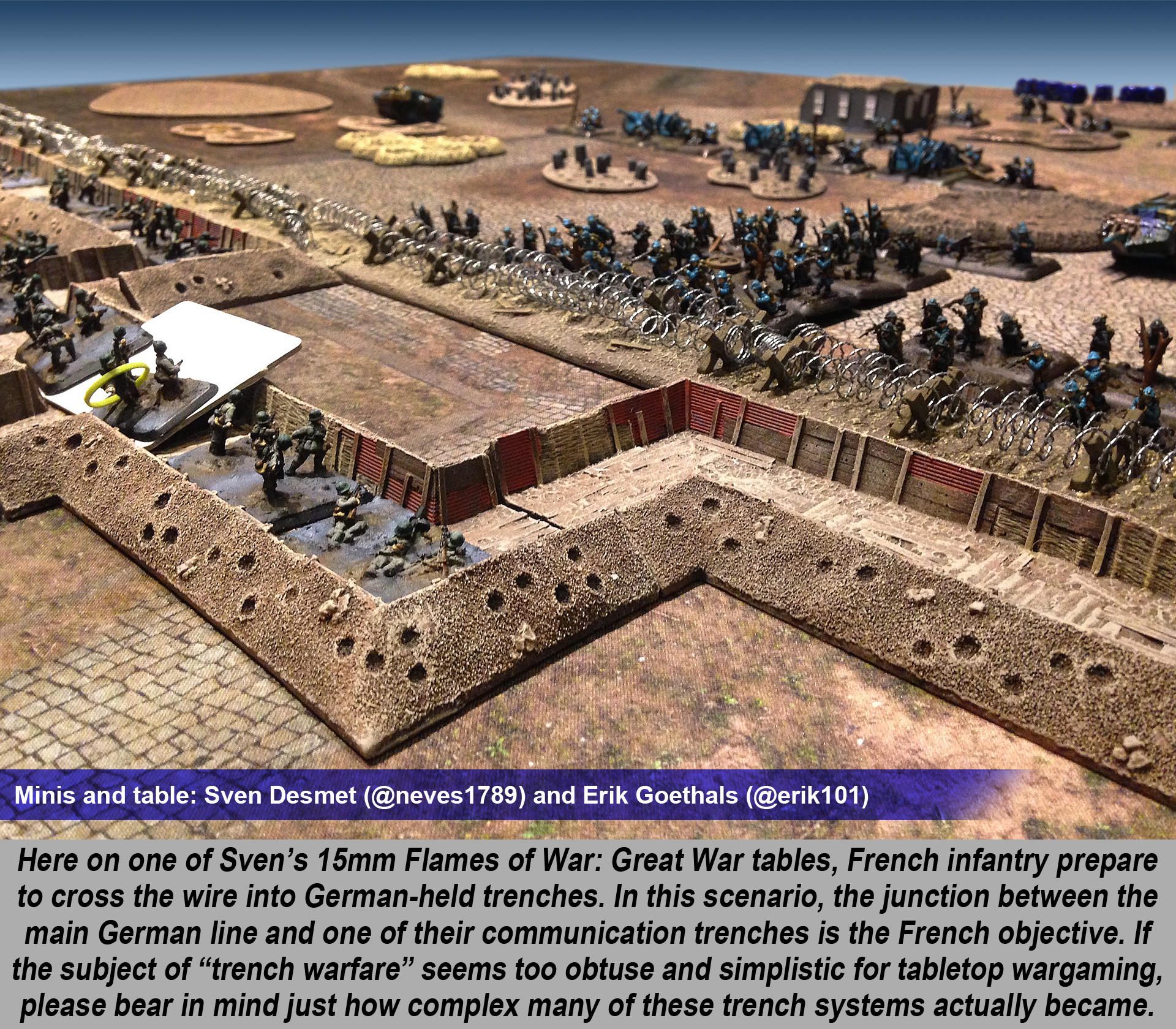
So you can imagine my excitement when I was contacted by Sven Desmet (BoW: neves1789) with an offer not only to provide dozens of great photos of his Great War armies in action on his 15mm tabletop, but also to help write a big, big part of what I hope will be a definitive series of articles here on Beasts of War as well.
Sven lives in Belgium, practically on some of the great battlefields of this iconic “War To End All Wars.” For years he’s been building up his 1914-18 armies in Flames of War: Great War, and playing an epic series of battles. So both on and off the table, he definitely has a lot to offer for a World War I project like this.
If There Was Ever A Time...
You know, I honestly think Warren would “fire” me as Historical Editor if we let 2018 pass and not roll out some top-notch material for the Great War. This year is obviously the centennial anniversary of the final climactic battles and campaigns of the Great War in 1918, so if there was ever a time to talk about World War I wargaming, it’s now.

In many ways, 1918 is the most interesting year of the Great War, as it’s where we see so much foreshadowing of the shape of wars to come. New armies, technologies, tactics, so much had come in during previous years. Yet only in 1918 were many new factors really making themselves felt, just in time to influence the war’s final outcome.
In this article, Sven and I will introduce the project and take an overview of wargaming in the Great War in 1918. Part Two will look at the “St. Michael Offensive” in March 1918, Imperial Germany’s crushing push to turn almost four years of misery into final victory in the West.
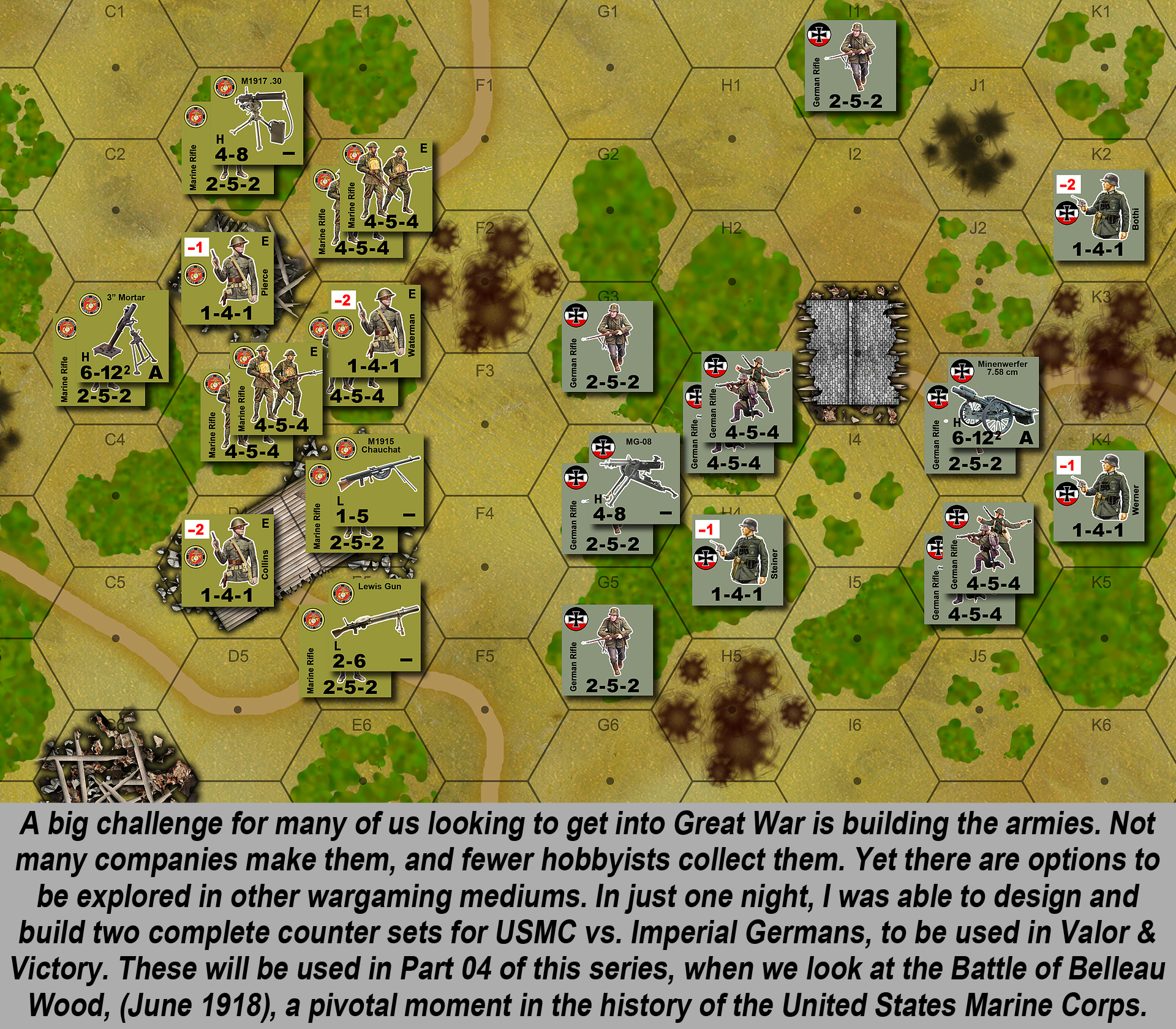
Part Three will look at the subsequent battles of Lys and Flanders (Fourth and Fifth Battles of Ypres) in April and May 1918. Part Four showcases one of the most iconic battles of the United States Marine Corps - Belleau Wood in June 1918. Part Five will review, and wrap up the centennial of the Great War’s last tragic summer.
Of course, we hope to come back to the Great War later in 2018, for a look at autumn battles like St. Quentin Canal, Second Battle of Cambrai, and Argonne Forest. These are battles that lead right up to the Armistice of 11th November 1918 (the mournful 11th hour or the 11th day of the 11th month).
But for now let’s see what Sven has to say about gaming in the Great War, specifically the battles of spring and summer 1918, echoing through 100 years of history as we speak.
The War Up To 1918
Sven Fills In The Background
When World War I started, the German strategic goals in 1914 were simple; the “von Schlieffen Plan” stated that they should march through neutral Belgium, crush the French in six weeks, and then redeploy to the east to take on Imperial Russia with all their strength. As we now know, a lot interfered with that plan.
Belgium didn’t stay neutral and put up a fight, Britain joined the war and landed troops on the continent, the French counterattacked successfully on the Marne and by October the race to the sea was over and everyone had dug in. The front, a network of trenches and field fortifications, reached from the North Sea to the Swiss border.
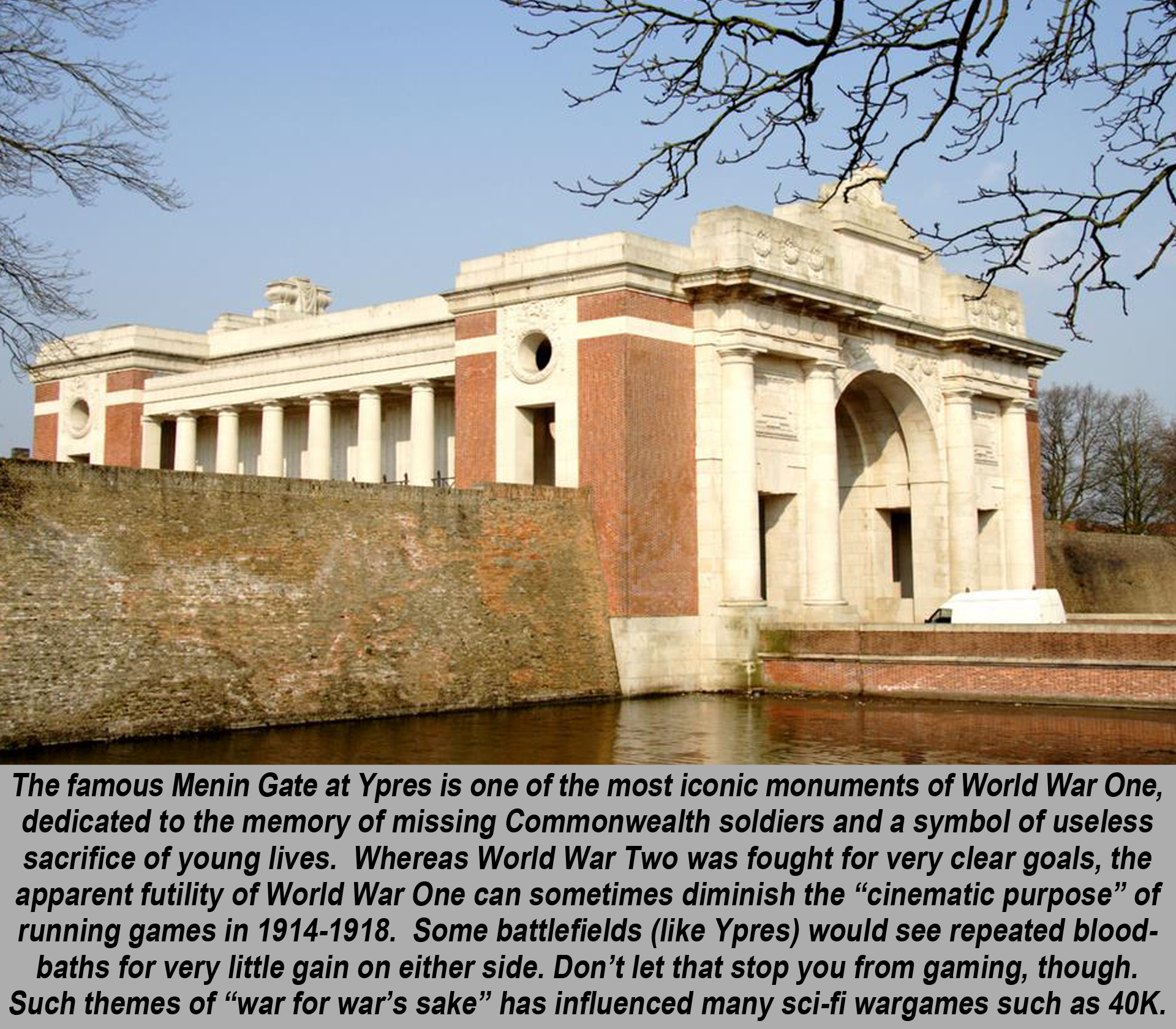
The following three years saw battles that tried to break the stalemate of trench warfare on the Western Front. Battles like the Somme, Verdun and Passchendaele are still remembered to this day from a perspective of useless sacrifice in trying to break through the enemy lines.
However, when you put these engagements into the context of the still-developing operational and tactical doctrines of the time, which we’ll attempt in this article series, they start to make a bit more sense.
On Stalemate…
Trenches and fortifications have been used in warfare throughout history. Think of Julius Caesar building a double wall around Alesia, the second Ottoman siege of Vienna, or the Russian redoubts at Borodino. With the onset of the industrial age, the firepower of the infantry had seriously increased through breech-loading rifles and artillery. This necessitated an increased use of trenches on the battlefield, not just during sieges.
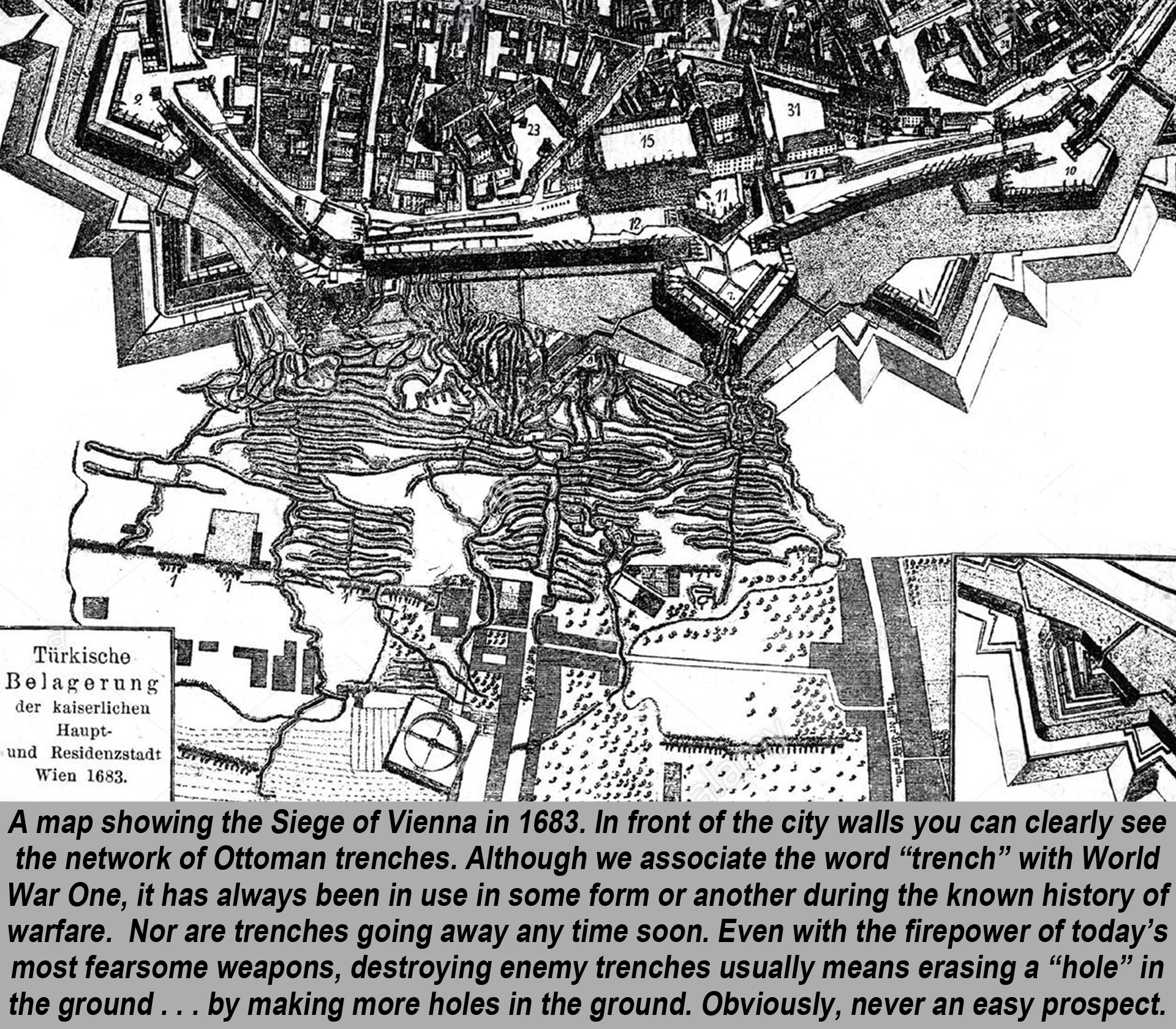
The American Civil War showed on numerous occasions that troops with some form of fortification, like a stone wall or a depression in a road, had a clear advantage over formed infantry in the open. It also showed how sieges still were long and drawn out engagements with a lot of attrition despite modern medicine. These lessons were however not picked up in Europe.
There the Germans had demonstrated that superior planning and fast movement could win the day during a short campaign like in the Austro-Prussian and Franco-Prussian Wars. The British didn’t give much thought to trenches because most of their engagements were based on asymmetrical colonial warfare and the French had a doctrine that was completely focused on offensive operations.
...but not everywhere!

As much as the American Civil War showed signs that trench warfare could develop when industrialized countries got into protracted conflict with each other, this wasn't necessarily always going to happen. During the First World War, multiple fronts stayed mobile to some extent for a shorter or longer period of time, despite what popular belief might sometime suggest.
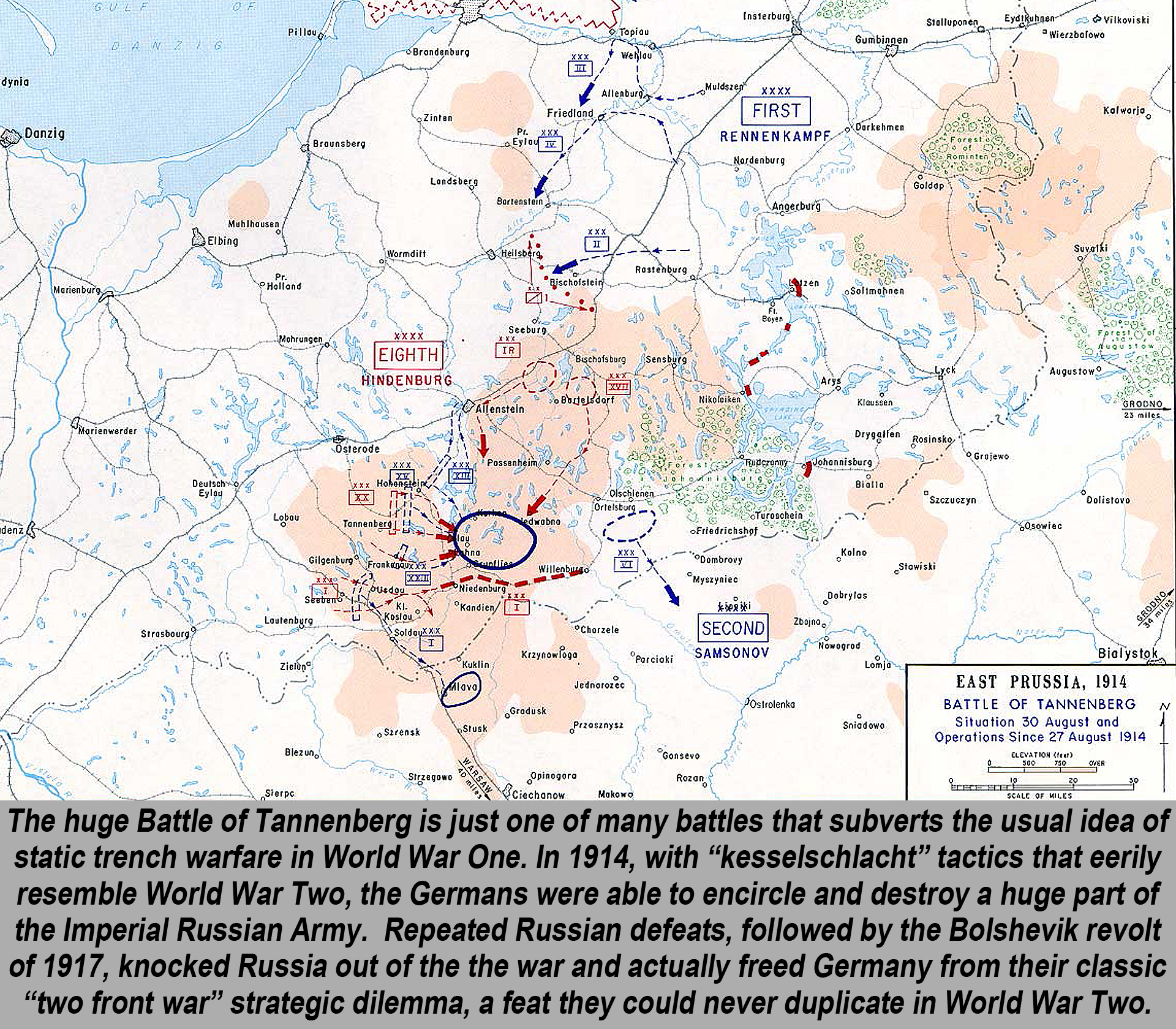
In the Battle of Tannenberg of 1914, the Second Russian Army of the Northwestern Front got surrounded by the German Eight Army under Paul von Hindenburg. The Germans cleverly used the railway to move troops around and encircle the Russian army which was marching into East-Prussia.
Quickly thereafter followed the First Battle of the Masurian Lakes where the Russian First Army got an almost equal treatment, the Germans again using speed and surprise to their advantage.
Another relatively mobile campaign took place in the Middle-East, where the British invaded the Ottoman Empire through modern-day Kuwait. After an unsuccessful march on Baghdad, British general Townshend and the 6th Poona Division of the British Indian Army retreated and were surrounded by Ottoman colonel Nureddin Pasha’s forces near the town of Kut.
This resulted in a months-long siege that only ended in 1916. It had taken almost two years for a stalemate to set in on the Middle-Eastern front. After the fall of Kut, mobile operations would continue, most famously with the offensive of General Maude and the operations of T.E. Lawrence (“Lawrence of Arabia”).
Lions Led By Donkeys
"Lions led by donkeys”, is a typical statement that is associated with the Western Front and WWI in general. Although the origin of the quote is debatable, the sentiment is one that is felt and shared up to this day. It evokes the image of young men going ‘over the wire’ only to be mown down by a predetermined hail of bullets and the ‘chateau generals’ already sending in the next wave in a futile exercise of military might.
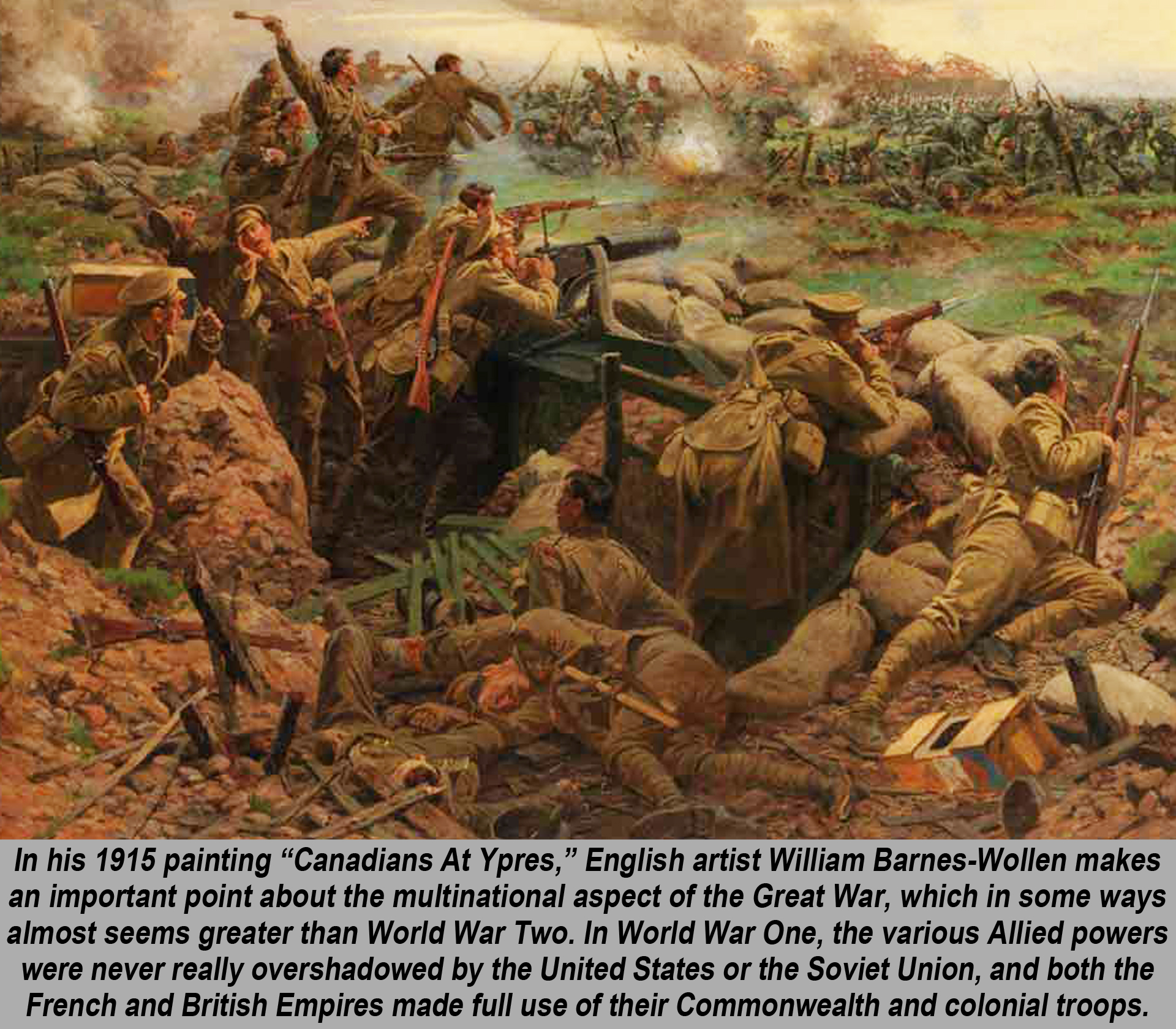
This view of the Western Front certainly holds up in certain cases. The continued push during the Battle of Passchendaele or the numerous Battles of Caporetto are decisions that are still debated. So too are the multiple battles around Verdun and German Chief of Staff Falkenhayn’s “bleed France white” quote, with that quote in itself being debatable.
However, to start understanding these sometimes controversial decisions better, you have to look at the information and options available to those in command at the time. The years of stalemate saw a constant development of new tactics and technology which led some commanders to believe that ‘this time’ they might just break through the lines and return to mobile operations.
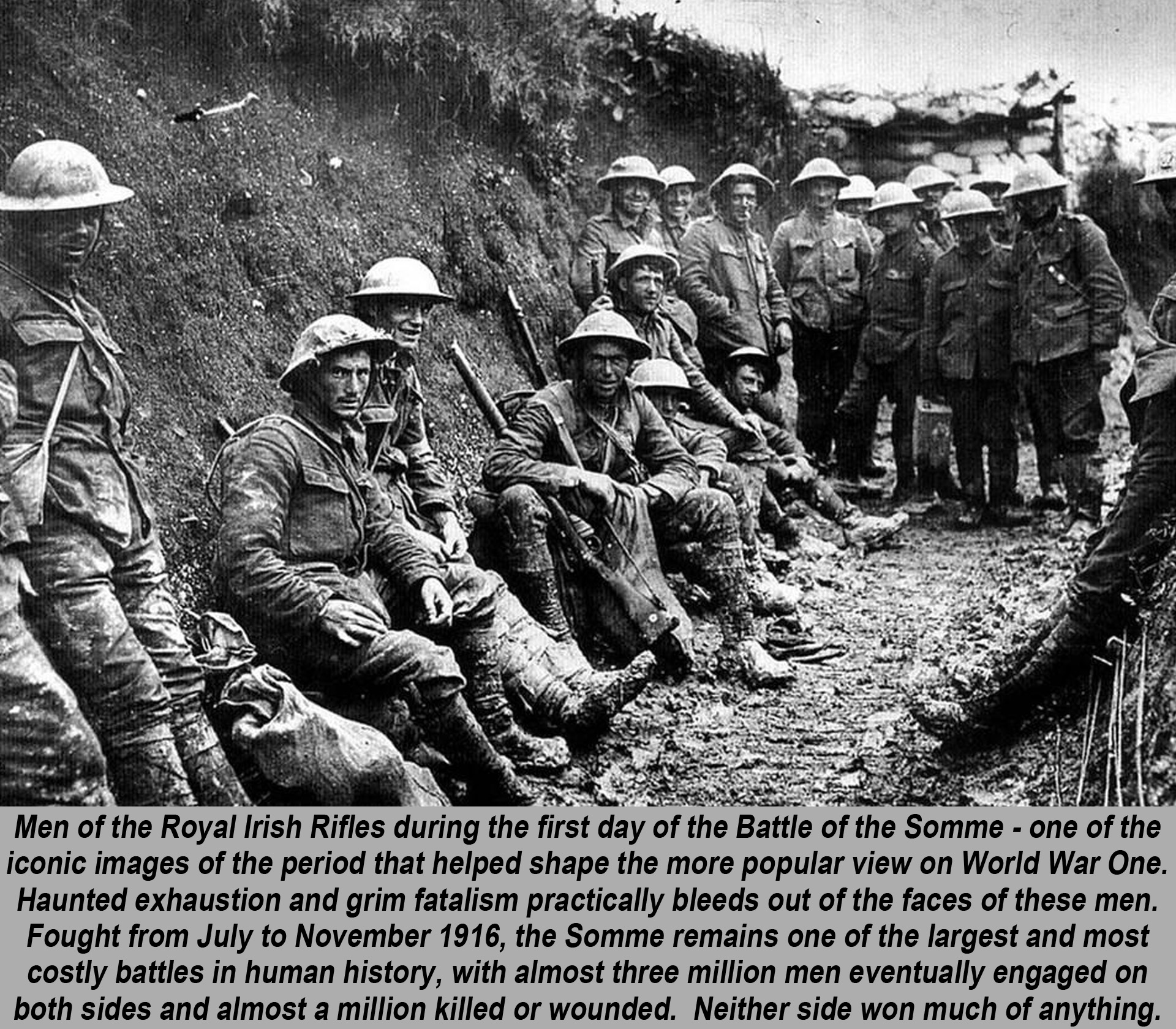
When the use of one of these novelties would not secure the breakthrough as anticipated, it would be put into the ‘pool’ of usable tactics and equipment that might work next time when combined with something new. The battles through the years 1915 to the beginning of 1918 all show some sign of this search for innovation that could secure breakthrough of the stalemate.
Needless to say, not all of this was as streamlined as can be presented in a text like this one. Good history is written in varying shades of grey, not black and white. It tells the story of people whom we all know can be stubborn, clever, quick, foolish, etc. People that were in command (and in the trenches) during WWI were no different. In the following articles, we’ll start exploring more in detail how they dealt with the military challenges of 1918.
On The Table Top
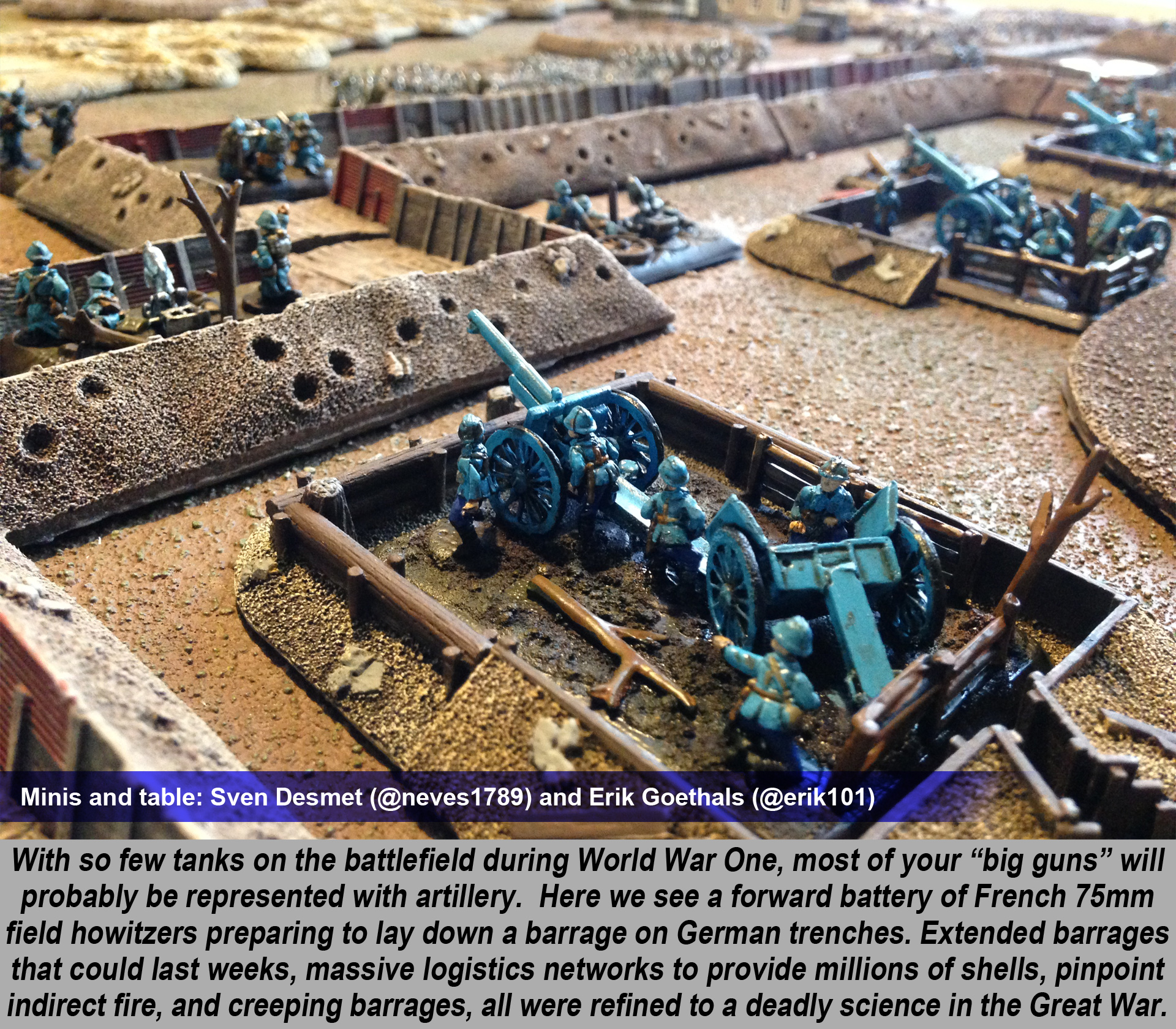
As much as we can discuss history, we are at heart all gamers. This is no different when it comes to World War I. Although Flames of War is most well known for its main World War II setting, the game also contains a Great War expansion with a focus on the 1918 battles. The stats of the various equipment and a number of special rules give the game a proper World War I feel.
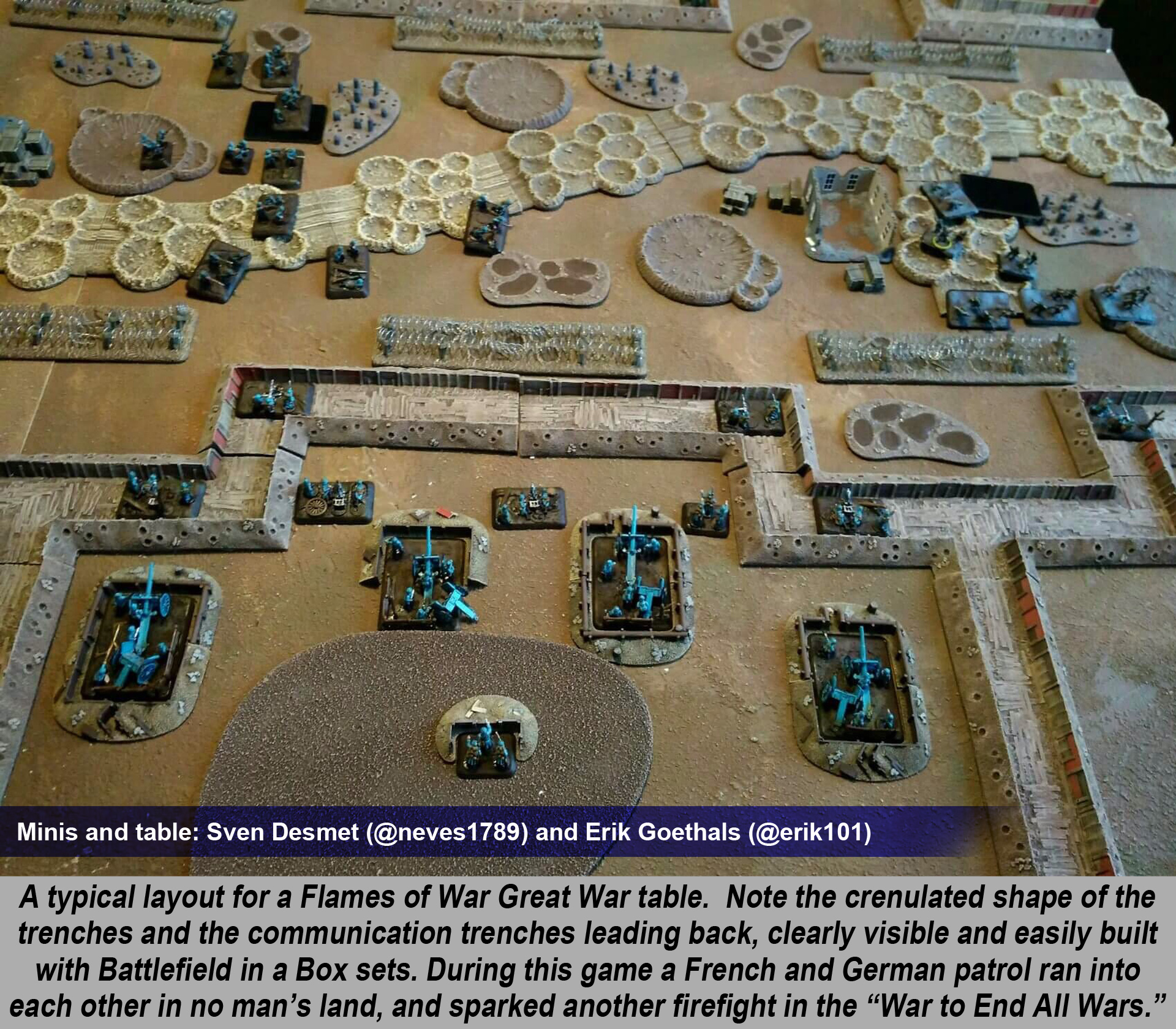
A couple of quick examples are the preliminary bombardment rule (pinning all defending platoons), cratered ground (giving infantry a lot of cover and protection) and overwhelming force (the attacker can recycle his regular infantry platoons). Tanks also benefit from extra rules to bring them in line with how they performed historically.
Oriskany Wraps it Up
To summarize, the spring of 1918 presented one overarching problem to military commanders and soldiers alike, as well as wargamers of the period. How could the stalemate of the trenches, which had been locked more or less in place since the winter of 1914, finally be broken?
So far everything had failed: tactics like massed infantry assaults and million-shell artillery barrages, technology like tanks and poison gas. “War winning” strategies like a southerly invasion at Gallipoli, the collapse of Imperial Russia, and the entry of the US into the war, hadn’t worked. Now, in March 1918, the Germans would make one more try…
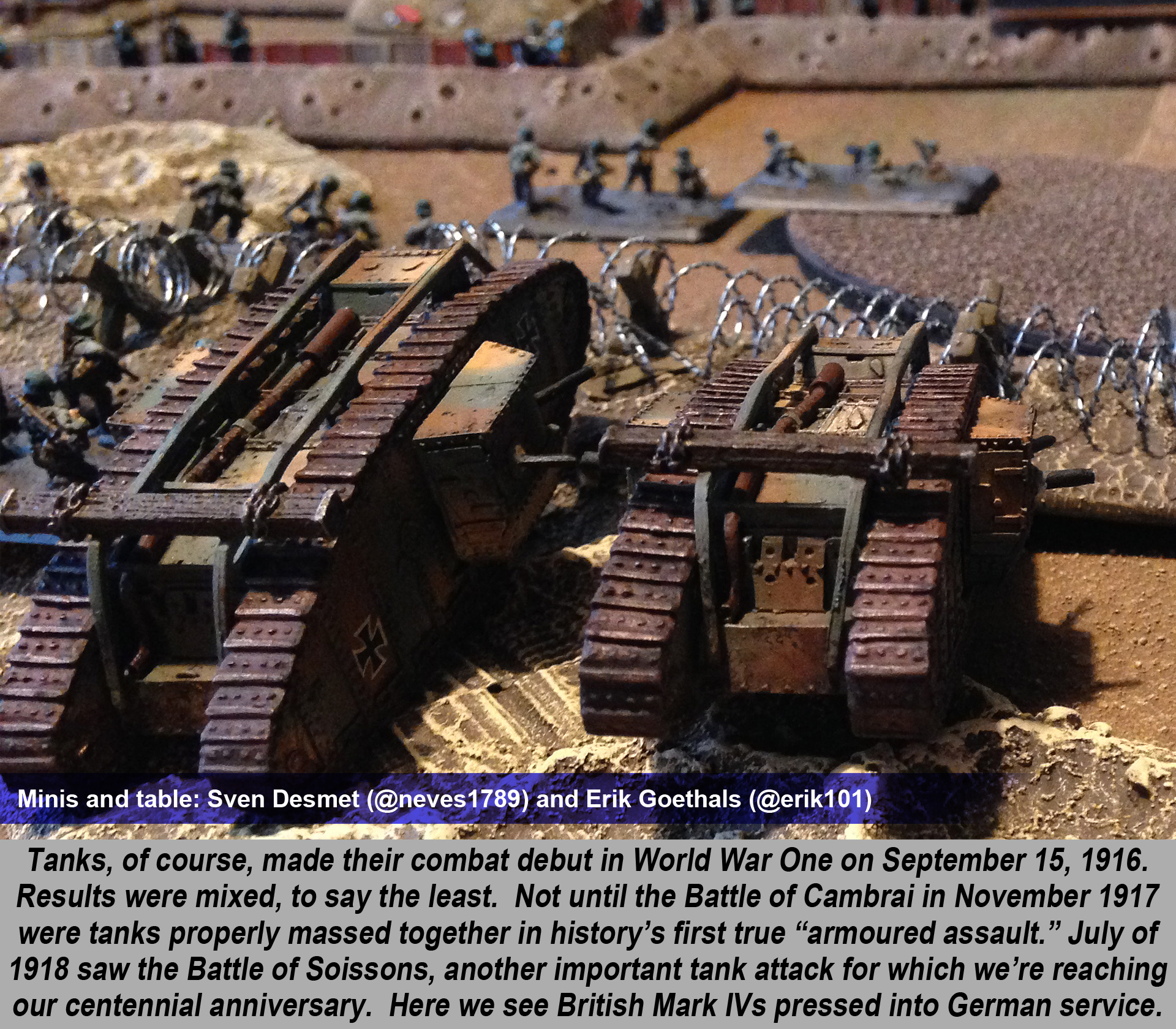
Of course, we’re just getting started here with gaming in the Great War: 1918. Please make sure to come back next week, when we really “sink our boots in the mud” and look at the St. Michael Offensive, as well as table top tactics, weapons, rules, and features specific to the challenges confronted during these Great War battles.
In the meantime, post your comments below! Have you tried World War I in a wargame setting, either Battlefront or PSC or some other system? What are your tips for overcoming the tremendous obstacles endemic to this period? Tanks, aircraft, stormtroopers, more accurate artillery...
...how would you break the deadlock of the trenches?
"This year is obviously the centennial anniversary of the final climactic battles and campaigns of the Great War in 1918, so if there was ever a time to talk about World War I wargaming, it’s now..."
Supported by (Turn Off)

Supported by (Turn Off)
"Although Flames of War is most well known for its main World War II setting, the game also contains a Great War expansion with a focus on the 1918 battles..."
Supported by (Turn Off)




![StarCraft Tabletop Miniatures Game Pre-Orders Live Now [Updated]](https://images.beastsofwar.com/2026/03/starcraft-tmg-news-cover-600-338.jpg)

![Mounted US Cavalry On Kickstarter For Dead Man’s Hand! [Updated]](https://images.beastsofwar.com/2026/03/us-cavalry-main-600-338.jpg)
I’m really looking forward to this series. It’s not a period I’ve gamed, or indeed paid much attention to, but my grandfather fought in it. First deployed to Palestine and later to the Somme as horse artillery.
Clearly you’ll be focused on the ground battles, will you be covering any of the naval engagements?
Also as far as breaking the trench sieges go, I think the tunnel rats mining them is an interesting tale, and a small skirmish style game that replayed that underground war could be both unique, while also tying into a larger campaign.
Wonderful opening to the series. I’m used to WWI portrayals that match the “Lions led by Donkeys” model, so I’m really interested in a different aspect and view of the events.
@oriskany I particularly like the concept that 3000 years of war occurred to let Grognards have something to do.
@neves1789 the tables look AMAZING!
Thanks very much, @gladesrunner ! Wow, Lions led by donkeys reference! Well done! 😀 😀 😀
Just a quick note on that phrase it is was used to describe the British Infantry during the War. It a phrase that was blown out of all proportion by Alan Clarks work in the 1960’s The Donkeys which as far as most Historians now see as a incompetent work of History. Now this myth is being eroded somewhat by modern History’s because as you point out in your article it was a different kind of war that the military leaders so used to fighting, so was a steep learning curve and they did not get it right.
To quote Blackadder they were used to fighting “Pygmys armed to the teeth with kiwi fruit and guava halves”
Absolutely Rob! These articles are just too damn small to go into such detail 😀 I did feel it portrayed the more popular view on WW1 as not everyone is as well read into the subject. Hopefully the rest of the article series nuances that view enough for more novice historians to get a deeper understanding and look past the stereotypes.
Totally agree. In history, famous or influential people will people will say something about a specific situation, but the phrase “sticks” and becomes oversimplified in later years. Part of this oversimplification means that the phrase applies to everything, or at least a lot more than was initially intended, so it becomes “generalized” and applied in too many cases.
Thanks! 😀
The main point I hope I can bring across is that trench warfare didn’t just get invented in 1914 and that many of the attempts to break the stalemate were experiments and could sometimes not foresee the massive casualties.
The tables really are a combination of both @erik101 ‘s and my mini’s and terrain. Most of the terrain is the excellent battlefield in a box stuff, which I can highly recommend!
@erik101 ‘s contribution to the minis and tables is indeed epic. There’s a lot more of these photos coming, I can assure the readers! 😀
Great start to the series! Really keen to see how much you can manage to cram into just five articles – must have been difficult determining what to include and what to set aside.
And @neves1789 just wanted to say those are some impressively detailed minis and scenery pieces, and great job on the photography too 🙂
Thanks very much, @evilstu! Indeed, you can’t do a whole war in one series, or even all of 1918. You just have to set defined parameters up front. So @neves1789 and I are writing about the spring-summer battles of 1918, the ones through which we are right now progressing through the centennial anniversaries. So we’re talking about St. Michael Offensive, Georgette Offensive, Blücher offensive, Gneisenau … roughly March-June 1918.
We hope to return later in the year for a second series for the closing WW1 battles of August-October and anniversary of the November 1918 Armistice.
Thanks! Selecting what to mention and what not was very hard indeed! I hope most readers will appreciate the point that it’s just impossible to mention every angle and aspect of the war. 🙂
The Germans were done by myself, just some quick airbrushing and selected washes really ^^ Erik did a load of French just in time to get some games in and take pictures. I’m glad the pictures turned out ok because we had both planned to bring a professional camera but due to circumstance ended up with only our cellphones 😀
I think the photos came out great, in fact some had to be shrunk down to fit into the size the team likes for webframe. 😀
My grandmother´s Dad was killed in the fighting for Verdun in 1916. She told me what comrades had reported, so I had a connection to WW I from very early on. And that´s why I was always interested in the tragedy of WW I and recreating related battles. I happen to own a book titled “Battles of the World War, Verdun II” that deals with the Verdun battle. Plenty of ideas for scenarios there. Maps included and stuff. Reports from survivors. Interesting, though slowly and steadily falling apart. The book, not the survivors.
Janusz Piekalkiewicz wrote a almanach on WW I covering every theatre of the war over all the years and dealing with land battles, sea battles and so forth. I devoured that book. Recommend it.
That counterattack on the Marne is what French pupils still learn in history lessons as the “Miracle of the Marne”. A gap between two army groups the size of 40 km made German commanders and supreme command order their men to retreat, correct? The French pushed forward where the gap had been and occupied most or the terrain without fighting until they reached the by then prepared fixed German positions.
I do think that Germany was never really capable of breaking the stalemate of trench warfare from late 1914-1917, due to lack of industrial capacities and having to fight on so many fronts. (I remember a picture of German prisoners in Tokyo, Christmas 1914. They had been captured after fall of Tsingtau.) So what I´m getting at is, to break the stalemate for the Germans is to avoid it in the first place, and that in 1914. One army sent to the East meant to weaken the right wing of the German forces in the west. That army would have closed the gap on the Marne, the advance on Paris would have been continued and France beaten before British and Belgian troops could turn the tide in favour of the allies. This goes at least for the Western front.
For the allies a breakthrough, if i had been in command, would have been achieved by making a fake attack in Belgium and then launching a real one in the Vosges, down the other side of the front, with all my might and then push forward into the south of Germany, direction Stuttgart and Munich. The commanders involved had something of this in mind and therefore battles like those in “Tete de Linge”, “Hartmannsweilerkopf” show they pondered around this. They should have tried to make a full go at this, especially because the Vorges are not easy terrain and a fully-fledged attack by the French would have taken the German by (a nasty) surprise.
For the Russians I´d say I wouldn´t separate my armies in the East so that they can´t be beaten separately. 8th Germen army, Hindenburg and all that, nice and clean, but a battle against the whole Military force would have resulted in a crushing defeat for Germans and after that a swift advance of the Russians deep into East Prussia and further on to Berlin. At the same time they could´ve threatend the Austro-Hungarian flank, making them retreat and exposing Ukraine, Galicia and such like.
The Brits with their massive navy could or should have done something unexpected and instead of assaulting the Ottomans at Gallipoli try an assault of the Germans in the back of their front. Sent land troops ashore, maybe in Holland or even in the utter west of Germany, thereby also limitating the German navy to Wilhelmshaven for good and forcing the troops in Flanders to retreat to fence off the attack in the rear. Simultaneously they´d advanve in Flanders hopefully surround the German forces and destroy or capture them all and furthermore making them fight on their own soil.
What I would be interested in is how to set up games on a very small scale, like skirmishing or something like that, with only a few figures per side. F. i., the French had “maison fortifié”, that means, roughly, fortified cabin. Those were always on very crucial points of the battlefields. (Many reports about this in my Verdun book.) So a cabin with a few bits of trench and craters, defended by few men and being attacked by a small commando. Good?
What ruleset could be used?
If I like Bolt Action, what stats should I choose for the soldiers?
In Remarques “All Quiet on the Western Front” they talk about having the elastic front (1918). What was this and how could we game this.
Oh, I truly recovered from my illness. That´s been a long post.
Thank you Sven and obhe @oriskany . Looking forward to next week´s part of the series.
Thanks for your comment @jemmy !
Family history on WW1 is always very interesting, I don’t believe there’s a European family that hasn’t been touched by the conflict in one way of the other.
The Marne is one of the main factors that I use when teaching WW1 in high school. What is probably less known abroad is that the Schlieffen Plan was also heavily slowed down by the Belgian forts in Liège and Namur holding on much longer than anticipated.
The 1914 campaign does offer many ‘what if’s’, though I do believe it would have ended in stalemate one way or the other. The industrial and supply bases of the major players just weren’t ready yet to keep the offensive momentum up.
Personally I do believe that the Brits were way more focused on the Mediterranean/Middle East even from 1914 on. There was no real land to grab in Europe, but the Ottoman Empire was just waiting to collapse and leave large pieces of land waiting to be colonized. I’d even dare say that WW1 was the first real oil war.
Skirmish games can certainly be interesting in WW1, there’s a lot to explore there! Bolt Action seems like a solid option on squad to platoon level. For elastic front doctrine to be used in a game, you’ll probably want to look at a higher scale wargame, maybe something hex and counter
Yes, for the siege of Liége the Germans had to wait for the giant mortar from Austro-Hungarian production to flatten the forts. They called it the gamma-mortar, if I remember correctly. Thanks for the reminder.
So, trench warfare and stalemate has something to do with a quote from the Matrix movies: It was inevitable. Poor great-grandad.
Oh, yes, the sick man from the Bosporus. The oriental question, the Balcan question. We dealt with that in our history lessons in School.
Wow, @jemmy – great post! Sorry it took so long to get back to you, but these long posts deserve more than a “thanks! Glad you liked the article!” 😀
I know what it’s like to have books that are steadily fraying to bits. Old friends.
Miracle at the Marne – that’s in 1914. Now, we will cover another battle along the Aisne – Marne axis as part of the Blucher Offensive, May and June 1918. Look for that in Part 04.
Overall, I would agree that German had too many fronts to fight on. What makes the Spring of 1918 such a pivotal moment is that this was the ONE TIME they didn’t have a big front in the east, and the Americans were still trying to get an effective army mobilized. For this brief window, the Germans had ONE large front and a very temporary numerical edge of the Allies.
While I probably can’t help much for Bolt Action, I can say that when I re-wrote new units for Valor & Victory in World War I, the conversion was actually pretty simple. Granted, this is LATE World War I I’m talking about. But the only real differences rules wise for me was the step back to bolt action rifles rather than the semiautomatic rifles more common later in World War II. And of course practically no submachine guns (German MP 18s were very rare, and I wouldn’t say things like the Lewis Gun or M1915 Chauchat would count as an “SMG”.) And again, this is LATE Great War. Much more on small arms weapons later in Parts 03 and 04.
Glad you liked the series so far! Four more parts to go!
@oriskany nice start to the series again, never gamed the land but done quiet a lot of naval games for war as brought and painted up most of the Grand and High Seas fleets for a re-fight of Jutland during the late 80’s. The campaign in question is where my Grandfather lost his eye( he had a leg wound with a little hole going in and big one where it came out), he’d been in war from around 1915, as he was training officers for territorial army in the old barrack up the road from where I live now. (now a Nightclub, they nearly had the Walsall Beer festival there last year). Grandad told me a fair few stories of the war, but was bit like Rifleman Harris, dates and places were a wee bit vague. do remember the photos of him recovering in a London Hospital with a big bandage over his eye.
@jemmy , Sea Lord Fisher was convinced that landing the British Army on the German Coast was the better idea than bogging it down in Flanders.
I think the quote was ‘The British Army should be a shell fired from a Naval Gun’.
Ships were built such as the Courageous class of Light Battle Cruisers for such a plan.
Churchill got panned for the Galipoli campaign , but they buggered his orginal plan, which had involved landing troops as the old pre-dreadnougt ran the straight, with the troops making sure that the shoe batteries were completley destroyed, but it got watered down to just the ships then , they decided to send in troops only later when it was too late.
Holy hell, @bobcockayne – built and painted most of the Grand and High Seas Fleets for Jutlant? That like 250 ships! What scale was that in, that must have looked amazing. And what size floor (yes, I’m assuming this was a FLOOR, not a TABLE) were you guys playing on?
Yeah, British battlecruisers . . . the design controversies and comparison vs. German battlecruisers could be an article in itself.
Not much at home when it comes to naval warfare, but I’m very eager to learn more. Especially recreating it on the tabletop, very curious what models you use 🙂
Great idea for a series and great timing too. The Great War also produced some great poets and writers, too.
That;s right, you were telling me about one of them, he wrote the forward to Keith Douglas’ “Alamein to Zem Zem.” Arghh … I can’t think of his name now, I’ll look it up when I get home. 😀
Absolutely and painters too! I’ve you’re not familiar with Otto Dix’ work, go check it out.
Well I suppose I will stick my Oar in (Pun totally intended based one what I a going to say) For me Gaming in WW1 is all about the Boats (and Ships). There obviously was the Biggy of Jutland but there are so many interesting Naval actions. At Salute the Naval Wargmes Society did a 6mm version of the Zeebrugge Raid of which today 23rd April is the 100th Anniversary. Aside from that there are a lot of River Actions and some totally crazy stuff in the Colonies in African like the legendary exploits of Geoffrey Spicer-Simson who was in Command at the Battle of Lake Tanganyika, which involved gun boats and a mad Englishman in a skirt 🙂
correction I forgot Spicer-Simpson was from Tasmania but ws in the Royal Navy so whilst not technically English had all the English Eccentricities 🙂
Awesome, @commodorerob – other people were mentioning this raid in the comments above, and the suggestion was made that we even include in Part 05 (yes, one part of this article series is actually still being written / illustrated). Does anyone have any WW1 naval wargame photos we can use so we can include the raid in Part 05 of the series?
@oriskany I have some… well I have quite a few pictures
Awesome! 😀
We’d be very interested to take a look at them! I think it’s one of the more interesting and less known events during the war.
And let me just put it out there, maybe @oriskany and @commodorerob could write a little something on naval warfare? 😉
I will like to point out that Australians and New Zealanders will be commemorating Anzac Day on Wednesday April 25th.
https://www.awm.gov.au/commemoration/anzac-day/traditions
https://nzhistory.govt.nz/war/anzac-day/introduction
Thanks very much, @thunderchildobs , and perfect timing! Indeed, these “heavy” centennial anniversaries and commemorations are the reason we wanted to publish these articles during this time frame. 😀
@commodorerob, high1
Many years ago met an Aussie Lifeboatman living in Looe Cornwall in his old family house,
His great-granddad had been the Captain of New Zealand at Jultand and he still had the ships logs.
@bobcockayne what…. Captain Lionel Halsey of HMS New Zealand that wore a Maori Grass Skirt during the Battle?
Yup!
Hey, the Maoris are badasses. Who can forget 28th New Zealand Regt. at Tebaga Gap in March 1943 … oh damn it, there I go sliding into WW2 again. 😐
But you get the idea! 😀
Long story short, I don’t make fun of their skirts!
Wow, that’s amazing!
Interesting thoughts, the warfare in hindsight was foolish with 60 plus years of info on tactics and the innovations of modern weapons. The most important aspect of course isn’t the American involvement but the wins in southern Europe that led to capitulation. The mistakes of the diplomats shows how the war wouldn’t really end but just be delayed for a few years.
The other interesting aspect of WWI is that it follows 100 years of relative peace in Europe. The Congress of Vienna following the fall of Napoleon and how during this same time the Second American War for Independence (war of 1812) Come to a conclusion with players deciding to go out into the world and not go into direct conflict. These treaties brought basic peace and prosperity while following WWI a bad treaty lead to more conflict. WWI shows the Marshall plan for what it really was, a way to solidify and hold the line while allowing a statis quo to begin to take hold.
Can’t wait for more from the both of you.
@ghent99 – great comment. Interesting points on the relative peace in Europe in the 19th Century – of course there are exceptions – but I think I see what you mean. Leaving aside the wars of German unification, Austro-Prussian War, and Crimean War (would that even be a “European” war) . . . and of course the Franco-Prussian War …
Wait a sec … not so peaceful after all.
But seriously, I agree with what I think you’re trying to say. For centuries the big rivalries in western Europe were England vs. Spain and then England vs. France, both of which had been largely put to bed by the early 1800s. It wasn’t until Britain got some new enemies – first Russia in the Crimea and them the Germans after Bismarck, that the new fuse was lit for what we’d see in WW1.
My only question comes with your comments on the Marshall Plan and WW1. Marshall Plan was after WW2, or were you drawing an analog that I somehow missed?
I can certainly follow the 100 years of peace point of view. The conflicts that were fought were all relatively short or away from Western-Europe and those that were there didn’t cause massive destruction on the scale that the Napoleonic or earlier wars did.
Marshall Plan was imo one of the best (cold) war winning strategies and most probably did prevent a new conflict in Europe.
Great read. Haven’t got time to go into depth at the minute but will tomorrow
Thanks very much @torros ! 😀
time to breakout the Guns of August for one more game.
Definitely a classic. 😀
Great stuff. In 2014 I ran a great war battle based on Mons. This year We plan to recreate Amiens. Its interesting how different the two games will be. The first was still a battle of movement and holding and we had cavalry. This time it’s all tanks and trenches. I have collected a 28mm force and we are using the old Warhammer historical Great War rules.
Sounds awesome, @denzien ! 😀 So, by Amiens, we’re talking at the end of the St. Michael Offensive? Villers-Bretonneaux? April 1918? This is my suspicion, if you have tanks on both sides. If so, @neves1789 and I hit that topic pretty heavy in Part 02. Then again, you might be talking about another battle. So many of these locations have battle after battle after battle . . . they start to sound like bad movie franchises. 🙁
Just asking, will you have any photos or battle reports? I only ask because, as readers will probably know, we usually get a support thread going partway through the article series so other community members can add their own input (photos, documents, etc). 😀
We will be playing the game in a couple of weeks and should be taking some photos. I guess its apart of the second Battle of the Marne when the British used 600 Tanks so the 8th of August and the Black day of the German Army.The Entente forces advanced 12 miles and took 50.000 prisoners. Probable thanks to the very modern tactics used.
Gotcha. We’re looking at the Aisne / Marne German offensive May 27 (Blucher) – that leads to Chateau Thierry and Belleau Wood (extending into the end of June 1918).
That’s sounds amazing! How does the WH historical play exactly? Is it a reworked 40k ruleset or something completely different?
It is a reworked version of 40k but with our armour saves ha. It does a good job of recreating operations on the western front with full campaigns in the Over the Top expansion. Lots of rules for artillery bombardments and trench raids.
“Lots of rules for artillery bombardments and trench raids.” – see @denizen , that’s precisely the kind of elements I think a Great War game needs in a trench-heavy environment. 😀
Great start on a subject that could certainly do with more representation on the table top and in board games. Great pictures and excellent miniatures and terrain, looking forward to seeing more of your counter sets and maps.
Thanks very much, @gremlin – Yeah, we tried to hit the Great War last year with our “Heroes of Limanowa” Kickstarter series, but it’s always tough to produce articles about a conflict for which you don’t have the miniature armies. 😀
Of course, I can create hex maps, counters, and whole wargames until Doomsday! We have some epic h&c wargames coming for Belleau Wood in Part 04.
Thanks! All we can do is thank Battlefront for their Halloween sale two years ago 😀 Without it, Erik and myself would never have gotten our armies.
Personally the whole German attack on the West failed in the opening days of the War for a number less than reasons . Firstly there was Von Moltkes decision of taking troops from the hook through Belgium to bolster the German 5th and 6th Armies on the Frontiers and then in the middle of the attack into Belgium deciding to move some more of the reserve decisions to the Battles of the Frontiers in a moment of rashness as he thought about making that the main thrust of the attack. The biggest blame I feel though goes to Crown Prince William and Rupert commanders of the divisions mentioned above who disobeyed orders and advanced against the French troops and their fatally flawed Plan 17 instead of withdrawing and forcing the French into a trap decided they wanted glory and advance pushing the French troops back onto Paris where they managed to regroup and led to Joffre being able to use them in the attack on the Marne.
The Germans also underestimated the Russians who mobilised a lot quicker than Von Moltke estimated and were threatening to over run East Prussia so again troops had to be withdrawn from West to East again weakening the advance on Paris
Lions led by donkeys
I have never felt this was true and WW1 like every war produced some excellent Generals and some very poor ones. What I think is generally true is that all the commanders took time to get to grips with the type of war they were faced with. Yes there were a lot of wasted lives by pointless attacks like at Loos in 1915 but by the time the Battle of the Somme happened the development of tactics were getting better. Again the first days of the Somme were a debacle but it has to be remembered that most of the troops on the Allied side had never been in combat so a fairly simple plan had to be put in place and maybe could had been a greater success if it hadn’t been for shoddy artillery munitions production. The most impressive part of allnthis it that 2 weeks after July 1st the British were deploying at night in the middle of n man’s land to attack and the beginnings of the timed creeping barrage were appearing so I would say that the Generals were learning and adapting to the situation they were faced with. What would change it completely was the improvement in communications from the front to rear areas and allow the movement of reserves to be better allocated which can be seen improving month on month from late 1917 onwards
OK I’ve waffled enough. I’ll just quickly mention my favourite game systems. In no particular order I would recommend Great War Spearhead, Square bashing and If the Lord Spares Us
Phew!
The 1914 campaign does indeed have many issues, including those that you’ve mentioned. There’s the whole bottleneck situation around Maastricht and then later the Siege of Antwerp diverting troops from the race to the sea,…
The whole lions donkeys idea is indeed a poor one, that’s why I wanted to bring it up and try to break this common conception. I’m glad you’re mentioning the Somme as a ‘school’ for developing new tactics, it’s how I see it as well (despite the horrendous human suffering…).
Thanks for recommending these rulesets, I’ll definitely check them out!
Sorry for any spelling mistakes and strange sentences. I blame auto correct
Great opening article, so thanks to both of you for the excellent work.
WW1 is not something I’ve gamed or even considered gaming. I think this is down to my perception of the war itself. Namely a mindless war with little gain but great loss. I also think that recreating the battles of going over the top and getting cut down by machine gun fire leaves me tactically cold. I’m sure that I’m wrong with this view point and my ignorance is going to be exposed in the coming articles, so I’m going to look forward to reading them!
Thanks for the post, @redvers !
A lot of gamers, myself included, have long had the perception that World War One would be “tough to game” because of the geometry and dynamics involved in trench warfare.
While these misgivings are not unfounded, I would offer three caveats:
1) Trench warfare only dominated the Western Front ROUGHLY during the years 1915, 16, and 17. 1914 and 1918 see some pretty serious movement and lack of trenches.
2) Trench warfare doesn’t dominate the other fronts of the Great War as it does on the Western Front. In broader areas like the East / Russia or the Middle East, the troop density never gets thick enough to allow trenches to really calcify the front line in a fixed place.
3) Trench warfare CAN be interesting on the table top, if done “right.” The “wrong” way to do it is to set up two trenches and just have one side attack the other over no-mans land. Better to set up just one side’s trench SYSTEM in detail, with all its depth and complexity, and give one side a foothold in the trenches (the assault across no man’s land has already taken place, these are the survivors). Creeping barrages can come in, UNALTERABLE by the attacking player (no radios to call back to the batteries) – so even friendly fire can be a real hazard if yo’re not very careful in that bewildering maze of trenches.
Thanks for your comment!
As @oriskany mentions, WW1 gaming offers a lot of possibilities, even way beyond what we’ve introduced. A push across no man’s land is even interesting if you have overwhelming force and artillery support!
Good rebuttals from both of you. I suspect strongly that I do just need to think more laterally on how to game the period rather than, as you state, setting up two trenches and charging across no mans land. With this in mind, I’m looking forward to the remaining articles to prove just how one dimensional my thinking is!
@redvers – I hope what we’re saying doesn’t sound like “rebuttals,” I for one certainly don’t mean to be “rejecting” anything you say, and I’m pretty sure @neves1789 feels the same. We’re just offering options.
Napoleonics or Civil War can look like just two lines of muskets blasting away at each other …
WW1 can look like a mindless trench grind …
WW2 can look like just an industrial crunch of numbers …
Vietnam can look like just wandering through the jungle waiting to be sniped …
As with all wars, the “devil’s in the details” … and that’s what we hope to present (or at least scratch the surface). 😀
Whats past is new again. I’m breaking out my Great War tanks, troops and terrain. Motivated! All I need from you now is more, more, more!
Awesome start thanks.
Thanks very much, @irondragon6 – we do our best! 😀 There is definitely plenty more to come!
We’ve got you covered the next couple of weeks 😉 Now get gaming 😀
I have had the opportunity to play a game using the Flames of War WW1 rules. I was pleasantly surprised at the level of playability it provided. It is a period that I find very fascinating. However I paused in actually buying in due to a perceived notion that the games would be the same due to massive human wave attacks. I am looking forward to the rest of this series to potentially break that perception.
Thanks very much, @longshotte – Indeed, from what I saw of Flames of War: Great War, especially the Villers-Bretonneaux “Battle Series” supplement, it looks like they were focusing on the battles of 1918 when there was a partial return to mobile warfare, more “WW2-ish” weapons, even one recorded tank vs. tank engagement (a grand total of four tanks involved, the hundredth anniversary of this BEING TODAY!) . . .
To keep any potential wargame from devolving into the “trench and human wave” problem you mention, I think the rules set has to invest proper depth into factors like arcs of fire for emplaced weapons (like machine guns), folded terrain (the kind we don’t normally see on miniature tabletops) a portfolio of artillery options (reflecting all its capability AND difficulties, especially in the pre-RT era), chemical warfare, etc.
And of course some stormtroopers. 😀
The FoW GW rules certainly provide more than human wave scenario’s. In fact there’s only one scenario really written like that, with the other three being way more mobile. Many of the ‘regular’ FoW scenario’s are also playable in GW. My opponent Erik and myself are playing our games linked to each other and selecting the scenario’s based on the outcome of the previous game. We’ve both been over the wire as attacker, last time he broke through so now we’ll do a more mobile scenario. It keeps the whole theme fresh and engaging to play!
Fantastic series bravo both @oriskany and @neves1789
I agree with what you said above about Operational Mobility. So many WWI Battles (The Somme is the best example) were fought mainly to take pressure off another sector. The two sides basically realised in 1915-16 that they couldn’t take ground without either radical new weapons (Entente) or radical new tactics (Axis) and so it was a kind of endurance test trying to hold the line while working on your solution.
Absolutely agree that 1914 and 1918 are the most easy years to wargame although 1914 does suffer a bit from a lack of support weapons and variety in units. I’m 90% finished painting some Late War French and about to pick up some Germans for GW’s “Great War” and TFL “Mud and Blood” but I might have to make some sabot bases for Flames of War as well.
WWI is a very interesting War and I can’t recommend the YouTube Channel “The Great War” enough if anyone’s interested in diving in to the conflict or just getting a snapshot of the war’s big moments. They follow WWI Week by Week and do special breakdowns, character profiles and on location videos.
Alright enough from me I’m off to go paint some minis and check out the support thread.
Thanks very much, @elessar 2590 –
Wow, I hear what you’re saying about battles being fought to take pressure off another sector. After the St. Michael offensive ( @neves1789 and I cover this is in more detail in Part 02), Ludendorff starts launching other offensives all over the place (Georgette, Blücher, Gneisenau), to draw first British, then French reserves away from the Amiens sector, where St. Michael was originally trying to break through.
The new weapons were indeed tried time and again in 1915, 16, and 17. Trouble is, technology was already ahead of tactics, that was the whole problem in the first place. Whenever technology and industry are ahead of tactics, defense becomes ascendant of the battlefield and you get a static bloodbath. But when tactics are ahead of technology, or at least one (or both) sides really know how to use the technology they already have and how to circumvent the destructive capabilities of the enemy’s technology, attack and mobility become ascendant. You’re not guaranteed a low body count, but at least the war is MOVING which means campaigns end sooner rather than later, which I guess brings about lower casualty rates in the end after all. 😀
Long story short, new weapons weren’t the answer. New TACTICS and solid, tested, and absorbed operational DOCTRINE with the new weapons were what was needed. AS I’m sure you know, this is why we see the tragic results of French tank attacks at Chemin de Dames, followed by successes at places like Cambrai.
Sven goes into the German side of this a lot more in Part 02 – but the Germans came up with better ways to use good ole-fashioned artillery and infantry to really create some major local successes at the outset of St, Michael – we see the British 5th Army all but annihilated in place and the 3rd Army torn to shreds and holding on by its fingernails at places like Amiens and Villers-Bretonneaux.
The support thread isn’t going yet… I usually wait until at least Part 02 is published … but that doesn’t mean someone else can’t start a thread and get us gioung early … 😉
Thanks!
The great thing about historical gaming is, as you mention, you’re not bound to one ruleset. We went with FoW as that’s pretty big in the local community and was an easy way in for us, but I’ll definitely be check out some others as have been mentioned in the comments here.
The Great War channel is indeed amazing and did provide me with some new insights on top of what had already read.
A great start to the articles guys should learn a few about WWI as haven’t read a much as WWII Battle’s one strange thing about the first was the dueling Battles the gunner’s had to gain control of the area.
The first planned integrated sir support was the Battle of Cambrai though at the second battle of Aisne the British used the first ground attack aircraft which was a converted FE 2b
Though the Germans produced the first purpose built one which was the Junkers J1
https://en.m.wikipedia.org/wiki/Junkers_J.I
So were there any indications on how effective the British air support was at Cambrai or 2nd Aisne? I’ve read that the first air attack mission in history was some Italian pilot over Abyssinia somewhere (modern Ethiopia) in one of their colonial wars in 1912 I think, tossing dynamite out of his flying bicycle. 😀 Certainly nothing “planned” or “integrated.”
Interesting link to the J1. Grandfather of the Stuka! Although, with “first all metal construction” and “resilient to ground fire” maybe the grandfather to the Il-2 Stumovik, itself the grandfather of the A-10 Thunderbolt II (despite the namesake drawing a line back to P-47 Thunderbolt).
I have s couple of other books I shall have a delve in them later
Found a great .pdf on World War I aircraft – one of the old 4″ x 6″ Pocket Books from 1958. I can send it along if you’d like. Just BW, obviously, but lots of actual data.
Being from one of the European countries that did not have a dog in that fight, I can say that my grandfather did sail in the danish merchant marine, one point he did leave a crew in Hull, on the next journey the ship was lost to a torpedo attack.
Some danes did profit on the war, “Gulash Barons” selling meat of unknown origin, water and most likely sawdust in cans to both sides of the war. The 1St Olympic games after the war was one of Denmarks best with the welfeed danes, doing well against the warring nations.
Wargameing World War I, in my book it is one of the eras that lend it self to the higher echelons of command, even the highest level of wargameing – National Command, resource management, and armies
On the other side you could do a “Dungeon Crawl” set in a trench – as a many against 1 or as a Co-Op game, running the attackers
Interesting points, @rasmus – Waaaay back in my very first article series, we made the postulation that WW2 Pacific might be better if done at higher command levels. Actually, tactical WW1 and WW2 Pacific is certainly possible and enjoyable, it just requires a very different approach than WW2 Europe, desert, or Russia. Just rolling out a new supplement book and some new units doesn’t cut it, it you need a new rules set designed for the new war (as Battlefront and PSC have done with their “Great War” designs, along with other companies).
I think Great War Spearhead is the way to go here where each stand is a company
Sounds good to me. “Command tactical” is my preferred “level” of wargames, and it would bracket the actual effective ranges of artillery batteries that way.
http://www.greatwarspearhead.com/
Not saying the only way, but if you close your eyes and go with your guts, those where what occurred first to me, your results may differ 😉
I guess I got suckered in to too many games of Diplomacy over the years, to not go very high level – I am looking forward to seeing what you come up with in any scale of command going forward in the series
Don’t get me wrong, @rasmus I agree with you. If you take a WW2 engine and just try to run WW1 with it, sinking it fully into the trenches, you’re liable to come up with a very valid, but probably boring, result. 😀
I took the rules for Valor & Victory, back-dated to WW1, and has some very successful playtests with @aras . But to be honest, we’re sticking with 1918 battles largely after the trench deadlock had been broken, or at least badly shaken.
Ooof, Diplomacy? You should get a Purple Heart for surviving that game. “Ruining Friendships Since 1959!”
With the comments above on top of the opening article clearly shows this is going to be a great series @neves1789 and @oriskany.
How truly wonderful that most of the cliches of WW1 have been debunked from the start. This war as a whole was a war of mobility on land and naval battles running over several hundred miles or more. Down near the South African boarder we even get a Hybrid war between the Germans and English.
As far as the whole ‘lions led by donkeys’ thing goes it obviously does not apply nor do I believe it’s meaning is that literal. You are never going to find who originally said it in WW1 as I have twice encountered it in writings of the late 19th century. The Victorians were very big with back handed insults and complements as well as silly sayings like ‘ If my grandmother had wheels she would be a wagon.’ Roughly meaning conjecture is pointless. So I believe what was meant by it has been lost in time. As it is too easy to rebuff in the literal sense there must be a Victorian meaning we are missing.
All the elements for blitzkrieg will be in place in this war before the end of 1918 just that no-one will string them together. It is tantalising just how close they will come to modern operational warfare let alone blitzkrieg. War by its habit goes off on different tangents and takes a while to return. Even more recently we had the nuclear battlefield theory, body count over strategic ownership of the theatre. Even with AirLand we managed to bring forth blitzkrieg’s greatest weakness, it’s lack of endurance. So now there is great debate on when we must roll over from AirLand to conventional warfare that does have the endurance. The only issue here is that no-one has asked what is conventional warfare in the modern frame of reference. Just like in all wars these generals were just at the wrong place at the wrong time and had to make the most of it. Far, far more generals were killed on the front line in this war than any other war. So there is a lot of preconceptions we need to unload about this war.
At the beginning of the year I did a bit of WW1 gaming. Like most areas of wargaming to start with I just used my WW2 models to get a feel for it. I normally do this as I would hate to spend a $1000 just to find out I don’t like it or no-one else it that interested.
To reinforce what @oriskany has pointed out. The battle of the Bulge has little to do with Tiger tanks and if you base your game on Tiger tanks you have not played the battle of the Bulge. WW1 Western Front games are not so much about trenches. Just like any other battle there should be objectives the trenches are just an obstacle like AT minefields in a WW2 game. In 1918 the tactics were about bite and hold of small pieces of real estate rather than busting through to Berlin in a day.
Perhaps what I find interesting with the WW1 battlefield is that strategic points have a short life span. Battles can be instigate for ownership of a village who’s church gives you an unmatched view of the field. What value does this village have when it is nothing more than a brick colored stain in the soil? What value does a wood offer once it is nothing more than match sticks. In our WW2 games we just don’t see this level of destruction of our scenery. To get this kind of feel we could place objectives but roll to see if they are still there in one way or another. It is one of the more unique challenges of this war.
Sorry it took me so long to get back to you with this reply, @jamesevans140 – my bosses and coworkers at work are REALLY putting me to the test this time. I might soon have more free time than I know what to do with. 🙁
Yeah, we always try to do at least a little “myth busting” here in these articles. I think two of the very common ones stem from the dominance that trench warfare has in World War One vis-à-vis our popular memory and culture. The results are misconceptions that World War One basically “invented” trench warfare ( @neves1789 takes care of that one) and that trench warfare dominated the conflict.
Well, it dominated a certain front of the conflict, and for an extended period of time. But not the whole war, and not even that one front for the whole duration. Being as this series aims at the spring and summer battles of 1918, we get to circumnavigate that obstacle to a certain degree.
“If my grandmother had wheels she would be a wagon.” One of my favorite lines from Scotty in Star Trek! When thre rest of the crew is marveling at USS Excelsior in Start Trek III.
I normally do this (use ww2 minis to experiment with ww1 rules) as I would hate to spend a $1000 just to find out I don’t like it or no-one else it that interested.
Amen. I worked up some ww1-themed counters for era-specific squads, support weapons, etc and some WW1 maps for Valor & Victory, but totally hard to rely on Sven’s minis (and @erik101 ) for table photos! 😀
Good to hear from you again!
To be honest @oriskany this past January was the first time I actually played a tabletop game on the Western front. My first realisation was that at this level of gaming it is not about the trenches, it still remains about objectives.
I prefer the Russian Front or any of the desert fronts. As a weapon of mobile warfare the tank is just awful at this stage. In the fronts that I like playing we have cavalry and the all important armored cars. The Armored car is seen as a bit of a joke and its totally over shadowed by the tank, especially by historians. Yet the armored car is a generation of development ahead of the tank. In the fronts that I prefer to play the armored car is already writing the book on mechanized warfare well before the battles of 1918 on the Western front.
I will not try to drag down the importance of the Western Front as WW1 could only be truly decided here and all other fronts are periphery to it. However these fronts should not be so completely over shadowed that they are mentioned only in passing. With the current histories that is were we are almost at. I also acknowledge that as this is the centenary year of the final battles of WW1 the Western Front should get centre stage. So the other fronts remain over shadowed as in their centenary years there was little public interest in them as there is for the closure of that war. Here I refer to the general public and not just the wargaming community.
In one of your previous articles on the Western Desert you touched on the Battle of Bir Hakeim. In 1916 it was the target of a raid and battle to recover survivors of HMS Tara from local Arabs. It was 5 days out from Sollum. All of which was done by armored cars. If you wish to look this up use the old English spelling using ‘ch’ rather than the modern spelling that use a ‘k’. Libya was an Italian frontier and therefore an ally, but we forgot to tell the Arabs that, who were being supplied by Turkey, that included HMGs, using German Uboats. A ten day round trip including a battle with armored cars of the day. If this was a tank force they would never had arrived. While the Western Front its familiar to us and so is a good place to start wargaming I would strongly recommend looking at the other fronts as there is far more interesting subjects to wargame in them.
I am afraid only Scottish descendants and Trekkers are familiar with that saying these days, but it was a good point in case not to take the lion and donkey thing too literal when there is so much evidence to the contrary.
The Middle East us an interesting campaign from the disaster in Mesopotamia to the end of the War. It has the only enemy city captured by the Allies in WW1. Lots of movement and quite a bit of myth and legend in Lawrence as well as places like Beersheba etc. My Great Great Uncle (Is that a thing?) was stationed there in the Motor Transport Division and took lots of photos of which I have some ,the rest being with other members of the extended family which I will try and post on the associated thread later
Awesome, @torros ! I usually start that thread sometime in the middle of the series. So if Part 02 publishes Monday, I’ll give it a day or two “in the sun” so to speak before opening the support thread, perhaps Wednesday or Thursday. Hope to see you there with some of those authentic images! 😀
I’ve just realised that most of them are on my desktop laptop on which the hard drive died some months ago. I do have a few on the laptop and I will try and scan or photograph some more
Awesome, @torros – and THANKS everyone for helping this article break 100 comments! 😀
I hope there is such a thing as a Great, Great Uncle as I am one. The truly depressing thing is that if I live to an average age for my family and they breed in a similar fashion then they will put another two greats on me. 🙁
Great idea about the photos. With my very extended family I either visited them or got them to visit me with their photos. I scanned in the photos at medium and maximum resolution. I did this for printing now and in the far future. Everyone kept their photos but everyone has a scanned copy of all photos. At least I have tried to preserve family history for the generations yet to come if only even one set of photos survive the years.
I have found some great maps tracking the battles of individual Australian regiments during these spring-summer battles of 1918.
Thanks, @jamesevans140 – I’m afraid I can’t let this reply get too long as I’m actually spending all day getting Part 05 finally wrapped up and submitted. I’ve been working with @neves1789 (drafts and photos), or course erik101’s minis and images, and we might even have a little naval input from @commodorerob .
I agree the tank is not a weapon of mobile warfare at this stage. Sven makes the point in Part 02 very well where the Germans don’t rely on new technology like the aircraft, poison gas, or the tank to score their big advances in 1918 – but new tactics and applied doctrine with technology they already have and proven – such as artillery methods and the enhanced use of stormtroopers.
This may be overgeneralizing a little, but when technology gets ahead of tactics, this is where defense becomes ascendant on the battlefield and you have stalemated bloodbaths like the Crimean War, the American Civil War, and especially World War I.
Its only when tactics, training, methodologies, and doctrine get back ahead of (or at least catch up with) technology that we see wars become quicker affairs of maneuver, with the role of attack again in the ascendant.
Also, the development of enabling technology, rather than “brute force” technology. The weapons of World War One were, fundamentally speaking the same as early in World War II. But Tanks, Aircraft, and breech-loading artillery are now enabled with the new technology of wireless communications / radio. Only NOW do these weapons really become useful to their full potential. The Germans had the doctrine for this in 39, 40, and 41. The Allies didn’t.
Another more recent example is the Gulf War. Both sides basically had Cold War armies. But the coalition had the new enabling technology of GPS and the Internet (i.e., Schwartzkopf’s “Jedi Knights” as he called them). This is a huge part of what made that war one between an Industrial Age army … and an Information Age army, and the one-sided results that go with that.
The “brute force” tech was there in World War I. Just not the lesser-known, less-glorified, less obvious, “no big boom” technology that actually enables it … or the doctrine and tactics that leverages it.
A third example would be naval gunnery. The 14″ and 15″ guns of Jutland were fine, in fact many of those exact same ships fought again in World War II. But at Jutland they’re using Nelson-era signal flags. In World War II they’re using RT communications, radar-controlled range fingers, some of the first true “computers” (computational machines driven by binary-based logic), etc.
I did not know about the Bir Hacheim in WW1. Bir Hacheim in WW2, of course, is legend, especially for the French. Also worthy of note is the smaller but almost identical battle simultaneously happening just a few miles away at Bir el Harmat – with 450 or so Zionist volunteers from British Palestine (actually really just two parts of the same Battle of Gazala, grinding down the inside of Rommel’s hook around the Commonwealth left). Unlike the French, these Zionist volunteers did not escape and were captured after prolonged and epic defense. Rommel had an order from the OKW and Hitler to liquidate the prisoners as Jewish terrorists, an order Rommel – to his credit – flatly ignored.
I could not agree more @oriskany. I tend to associate attritional warfare to what you describe above with some very good examples. When what you describe happens it tends to degrade to attritional warfare. There is only one other condition that creates attritional warfare and that is a stalemate reached by both sides use identical doctrine and training and use identical equipment as seen in the Iraq-Iran war back in the 80’s. This I believe to be truly exceptional when two satellite states off a super power go to war with each other. Normally the super power would stop this in some way. Such as they way the US put an end to the Anglo-French attempt to annex Egypt back in the 50’s or simply refuse to continue arms supplies to both satellite states.
To @torros great list of WW1 dessert battles I would also add the Muslim uprising in Southern Egypt. Over in the far east you have a joint Anglo-Japanese force that invade and take a German port near Port Arthur.
I must admit that I have trouble setting the battle of Gazala as a battle like 2nd Alamein. It is more a series of short but sharp semi related battles rather than a series of attacks like we had at Alamein. The frontline hardly existed and was more like Vietnam era battles in this manner, minus the jungle.
It was in a recent review of Bir Hakeim that I discovered a terrain feature that is missing from a gaming tables as it was not recorded on ordnance maps. I prefer to use the Arab word of Kiers as the English name is dreadful – hammocky hillocks. They are a type of tiny dunes that are man to truck sized. What identifies them is a species of grass that grows along their crests giving them a razor back appearance. This grass has very fine but very deep roots effectively holding the sand tight. Normally grass grows to the valleys. Kiers normally occupy lake sized areas. I have come across a few battle reports concerning them but pretty much say the same about them. Once infantry and light guns get into them they are extremely difficult to remove. Kiers can be entered by foot or tracked vehicle but wheel based vehicles get hung up on their crests. It seems that Kiers form a natural trench works of sorts. At Bir Hakeim the old Ottoman fort was mostly surrounded by Kiers. This goes to explain in part why the French were able to hold out against a force that should have simply overran them on the first day.
This is a side of Rommel that should be emphasized as he had very similar orders to do the same to captured Free French. He strongly insisted that they were captured soldiers not terrorists. Rommel was not shot for refusing these orders which makes the excuses of those who did enact these orders very thin indeed who claimed they would be shot if they refused.
Good to hear part 5 is almost finalised and hopefully this will take the pressure off over the next month. But knowing you…
Great reply, @jamesevans140 – when talking about smaller or less-well funded armies going at it with a superpower’s equipment and weapons … I’m reminded of some of the India-Pakistan wars of the 60s and 70s where both sides were using M47 and M48 Pattons. There’s a battlefield over there somewhere called “The Valley of the Pattons.”
Now there’s a war where both sides were using similar equipment and doctrine but was wrapped up very quickly with a neat, rapid, decisive conclusion … oh, wait … 🙁
Was the Anglo-French involvement in Egypt to annex Egypt, or just a response to Nasser’s nationalization of the Suez Canal (and the hilarious, prearranged “script” of provocation, escalation, and recrimination that that led to the British and French involvement in Operation Musketeer and the Israeli invasion of the Sinai in Oct-Nov 1956)?
Oh no, this time I am serious about taking some time off. There’s no “knowing me” this time. 😀 In the past I would have agreed but this time I’m seriously approaching burn-out. Part 05 is now DONE and DUSTED and submitted to BoW for publication, of course I’ll reply to comments in the threads and set up the support forum thread later this week, but other than that I am off the grid for the month of May.
I”ll be back in June, preparing articles for 75th Anniversary for a little event that took place in Russia in July, 1943. You know, just a little skirmish, wasn’t a big deal or anything. 😉
The weirdest part of Beersheba is that its the 4th Light Horse that are given the credit for taking the town when in actuality ( and there doesn’t seem to be any documentation to prove otherwise) they didnt even cross the wadi into Beersheba The 12th LH who did cross the Wadi and did get into the centre of the town seem to have been wiped from history
@torros – earlier in the thread you say: “The Middle East is an interesting campaign from the disaster in Mesopotamia to the end of the War. It has the only enemy city captured by the Allies in WW1.”
Would Damascus 1 October 1918 count? Or was this the city to which you were referring?
I was referring to Jerusalem
Gotcha. Then I might add Damascus to the list – uinless we’re defining “enemy capitals?
https://www.history.com/this-day-in-history/lawrence-of-arabia-captures-damascus
@torros your pressing me on the 12th LHR, but a quick read of the battle’s entry in The Encyclopedia of Australia’s Battles by Chris Clark (a mini bible for us) shows an easy confusion. The attack on Beerheda was carried out by the Desert Mounted corps, two mounted divisions with LGen Chauval commanding.
The lead was assigned to Brig. Grant’s 4th LH Brigade. He lead the brigade with the 4th LH regiment on the right and the 12th LH regiment on the left. It mentions that the 2 squadrons of the 12th LHR took the took the town but victory is accredited to the 4th LH Brigade. It is not the first time I have encountered historians recording a LH formation number but not it’s size. We tend to be recorded as Australian light horse even thought there were a number of New Zealand light horse formations in the Desert Mounted Corps. I hope this helps.
Thanks James I did notice the 4th KH brigade and I was trying to find the exact details in ‘A brief record of the advance of the Egyptian expeditionary force under the command of General Sir Edmund H. H. Allenby … July 1917 to October 1918’ but doesn’t go into a huge amount of detail
That’s another issue in reading WW1 actions. You either get volumes or scant summaries. Often they go into detail of Corp and divisional actions but the gloss over the details of the smaller units that did the work and then credit the higher eshalon for it. I suppose this is the fun and games of historical research.
4th LH brigade even
My Kindle auto correct hates me too. 😉
Amazing reply @oriskany. I am aware of the Indo-Pakistani wars and their low budget wars that created things like older western tanks being fitted with more powerful Soviet guns and the like. However I did not know about the Valley of the Pattons.
The big issue about post war Soviet doctrine is that the Soviets adhere to that war is a science and not an art or craft. This takes you as far as you can get from mission based tactics. Their doctrine tells them exactly how to deploy a type of unit and where to place it in the line, when to shoot and when to advance. My favorite is that all units carry seeds and their doctrine tells them when to plant them for vegetables and their daily water ration. So when both sides, like in the Iraq-Iran war, strictly follow an unmodified doctrine on both sides, you get instant stalemate.
What I find amazing about Imperial German doctrine in WW1 is how quickly it is updated and quickly changes to what is happening. We go to Hutier tactics combined with mission type tactics in a combined arms attack for their big offensive before the US arrives. No sooner than this fails they roll over to new limited elastic defence doctrine. In the earlier part of the war they bitterly hung onto terrain feature. Now they withdraw but causing great casualties to the enemy. If the feature is required they counter attack with a reserve unit before the exhausted and weaken allied force could be reinforced and the attacking Germans switch back to the Hutier doctrine for the attack. We don’t really see this in WW2 with this kind of speed.
Officially the Anglo-French action was for the stabilisation of the region for free movement of commerce that will in turn add to the economies to the countries in the region. Documents that have been declassified since then show it to be nothing more than a trumped up down and dirty grab for the Suez Canal. He now owned the canal and they wanted it back with total disregard for the stability of the region. This is why the US took the rare action against two first world countries.
Dam what you called a little battle, I thought it was a peak hour rush to free tank car parks.
I have read so many accounts that day that the terrain seemed far too small for the action that was happening. On the Lutherans other hand this what happens on most 6×4 wargame tables. I love playing FoW V3 500 point games or about 75 points in V4 as these small games on a 6×4 are much closer to unit frontage. This allows for movement and suddenly units have flanks. Unless your Russian. It normally takes Yarrick the first two turns just to get his Russians on the table as he enjoys swamping me with all the cheapest options all spread out to maximum command distances.
This thread is slowing showing that WW1 has so much wargaming potential that is far from boring once you shake off all the cliches. I think this is going to be a very interesting article series that does justice to the subject matter.
@jamesevans140 – “This thread is slowing showing that WW1 has so much wargaming potential that is far from boring once you shake off all the cliches. I think this is going to be a very interesting article series that does justice to the subject matter.”
Absolutely! I’m switching over to Part 02’s thread (we get into a little more detail in that article) and later this week I hope to get the usual support thread up and running! 😀