











World War I Miniature Gaming – A War Too Far For The Tabletop?
July 25, 2016 by crew


“We cherish, too, the poppy red
That grows on fields where valor led;
It seems to signal to the skies
That blood of heroes never dies,
But lends a lustre to the red
Of the flower that blooms above the dead
In Flanders Fields.”
We Shall Keep the Faith, Moina Michael, November 1918
This extract from We Shall Keep the Faith highlights the eternal gratitude of the poet Moina Michael and is exponentially reverberated by the descendants of those that fought in World War I and subsequent wars. The blood of heroes NEVER dies.

Every November we remember those that chose to take the line of selflessness and camaraderie and fight for a greater purpose; to defend and protect those that they love.
It was Moina Michael who came up with the idea to use the poppy as a symbol of remembrance.
For me, this feeling ripples through into the different echelons of historical war gaming, whether it is creating a scenario between friends and pitting units of miniature soldiers against each other or taking famous battles from the pages of history and recreating it on the tabletop, to see how it could play out differently if each player was a commander-in-chief.
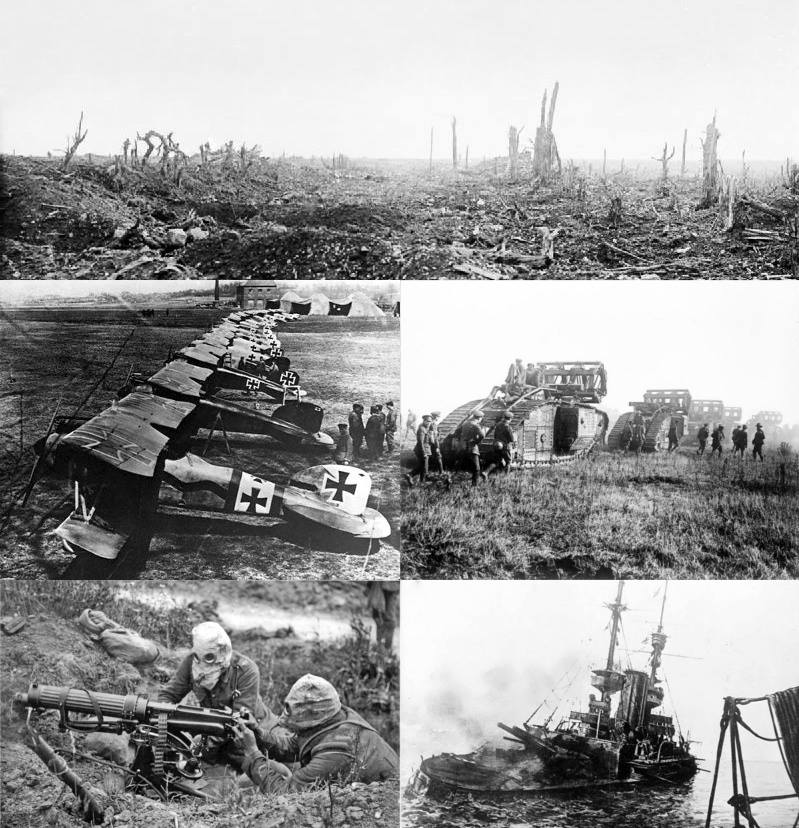
July the 1st 2016 was the one-hundred year anniversary of the start of the Battle of the Somme, an incalculable behemoth and arguably the first thing people think when the words “World War I” is used.
With the factors of historical reconstruction and the anniversary of one of the most famous military operations in recent history, why hasn’t there been a World War I/Battle of the Somme box released by a gaming company?
I want to preface my thoughts on this issue with the caveat that I am in no way an expert on military history and I will be using the events of history in the framework of our culture and the passion for our hobby of tabletop gaming.
A War From One Bullet
In the simplest of terms, the assassination of Archduke Franz Ferdinand in Sarajevo was the first toppling domino to spark a chain of movement from countries all across Europe.
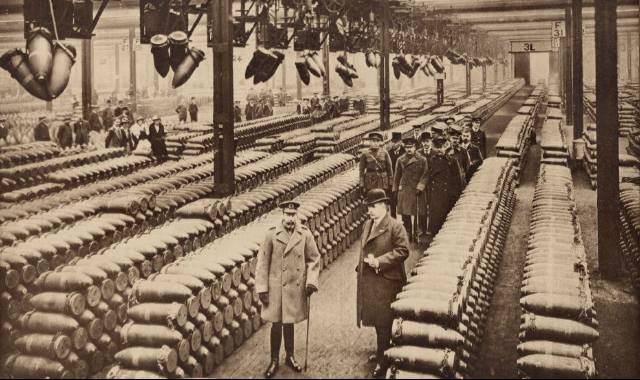
Between the assassination and the declaration of war from Austria-Hungary to Serbia (the homeland of the assassin Gavrilo Princip), there was one month of government ordered mobilisation, ministers deciding on action against other states, and representatives from European countries attempting to stem the tide of war with international conferences and negotiations.
With the knowledge that the act of an assassin, belonging to a secret society within the Serbian army, was a leading reason for starting the First World War, does this translate to gamers within our community to want to game in World War I scenarios?

The events conspiring to the repeat of a second World War only two decades later, took years to unfold. Heads of states changing and decisions being made, several identifiable key moments all stacking on top of each other, all acts in those intervening years contributing towards an absolute weight of factors, an absolute mass of reasons as to why the second World War started.
It is therefore, a stark, somewhat mournful and crystallising moment to witness the violent actions of one person to another. To be able to point and say “this person fired the first shot” and to be able to put a face to the instigator could be an off putting factor.
An Incalculable Mess For The Tabletop?
As I have stated, when one person says “World War I” to others, images of trench warfare, the battle of the Somme and military lines of demarcation are the first thing conjured in peoples minds; it certainly is for me anyway.
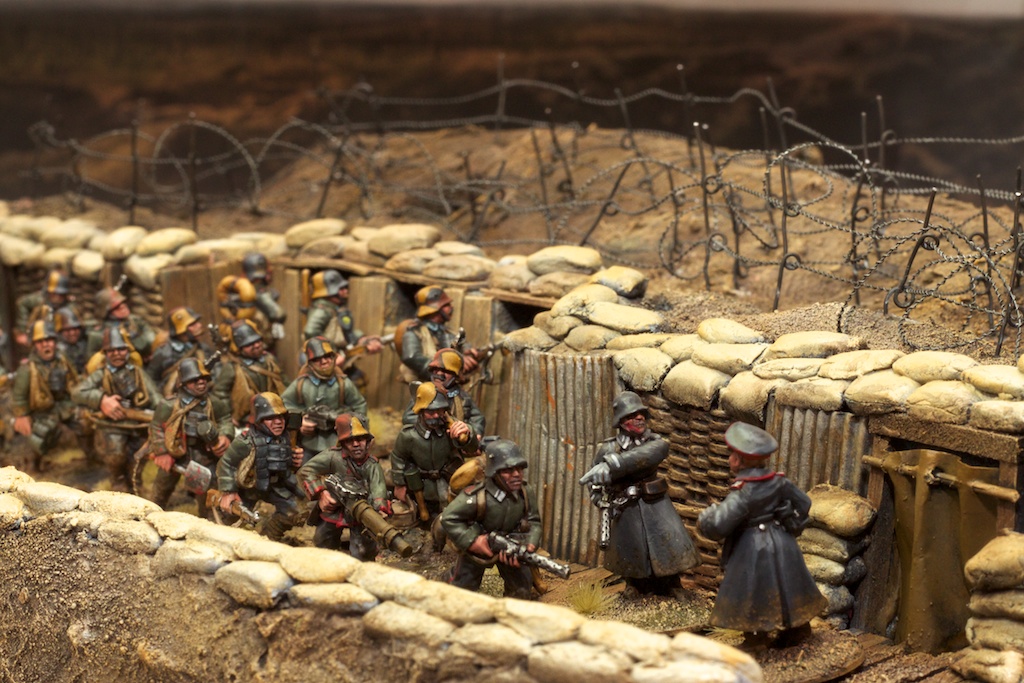
Is trench warfare, some of the more notable and mass-identifiable moments from World War I, from the perspective of the tabletop game, too boring?
Would it be much like the entire series of Blackadder Goes Forth? A large proportion of time dedicated to being hunkered down in your own trench and taking pot shots, your opponent(s) in theirs acting similarly, until one of you decides to go over the top and is gunned down in a hailstorm of rifle fire. Shake hands. Pack models away.

Trench warfare doesn’t make for an aesthetically engaging tabletop either - create two lines, add copious amounts of mud and wire. World War II battling has a dynamism to it due to the nature of the War itself, there is an engagement and an ability to create some great looking tables to play on.
Could this be a reason that has averted gamers to not creating World War I games? Are the images of the methods in which World War I was carried out a reason not to try and recreate battles of World War I?
The Wider Populous
Our gaming community as a whole borrows from popular media and has done ever more so in recent years; Dark Souls , The Terminator , Mars Attacks! Alien Vs Predator miniatures game, The Ghostbusters - there is an ever growing list.
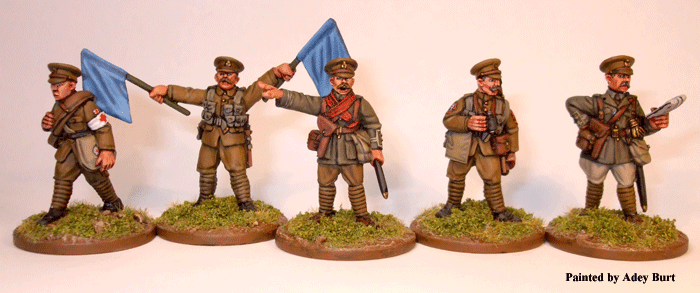
World War II has received a lot more coverage in the production of high budget film making than World War I.
Saving Private Ryan. The Dam Busters. Letters From Iwo Jima. Downfall. The Great Escape. We even have a World War II football film where Pele and Bobby Moore are POW’s that is lined up every Christmas with The Great Escape.
Turn your attention to films made about World War I. War Horse is certainly the most notable and well received films set during the period. Gallipoli is also one of the more famous films in this catalogue. Films like The Red Baron and Flyboys received a mixed response, and while a film about Ernest Hemingway’s experiences in the war sounds like a great premise the focus is mainly a romantic film with the War as a backdrop.
There is also a British made film simply called The Trench. No, I hadn’t heard of it either.
To be able to pick up, for example, a US starter box from Warlord Miniatures, build, paint and play a game and imagine you are commanding a unit comprised of The Band of Brothers TV show for example; Damian Lewis, Donnie Wahlberg, Neal McDonough, Michael Fassbender, James McAvoy, is particularly exciting in my opinion.
Recreating that with the cast of The Trench and you have Paul Nicholls of Eastenders fame, James D’Arcy from Cloud Atlas, Cillian Murphy and Daniel Craig before his days of Bond. You’d also get Danny Dyer. He’d be the first figure to go over the top for me...every time.
The two just don’t stack against each other evenly in the culture of gaming borrowing from popular media. Perhaps if World War I had received as much attention, it would be a more interesting comparison, but the breadth of World War II material we have just dwarfs World War I.
An Overshadowed War
Ultimately is World War I, simply put, overshadowed by its more recent counterpart?
With all of the preceding factors I have discussed, as well as developments in military technology and developments in being able to document global events, does tabletop gaming in the period of World War II lend towards a more exciting experience?
How To Change That
For my personal taste when getting involved in historical war gaming, regardless of whether it is a stripped down version or an incredibly detailed retelling of actual events, there has to be a large separation of time between the present and the period of history that I am attempting to recreate on the tabletop.

Furthermore, because of the weight of popular media that retells events of World War II, I feel no desire to recreate it on the tabletop. It is why I have a World War I army to use with Bolt Action rules. My imagination is uninformed, no external media sources. It is unshackled.
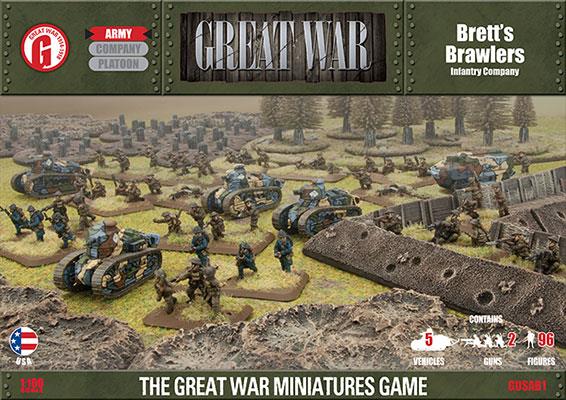
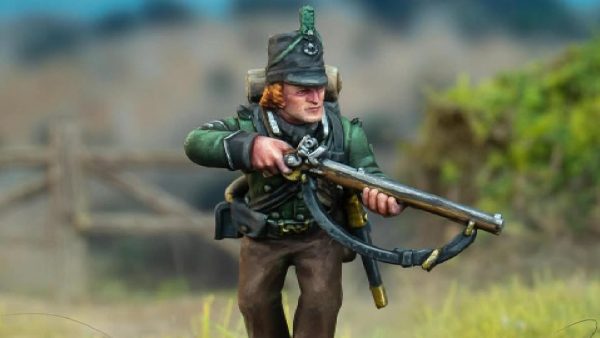
I would wholeheartedly recommend looking into the avenues of how you at home or at your FLGS can recreate World War I events. The 100th year anniversary of the Somme runs from the 1st of July until the 18th November.
Below are a few links to and names of World War I Miniatures games, if you know of some yourselves, leave them in the comments section below...
- Unofficial Modifications for World War I Bolt Action Games
- Skirmish Wargaming by Donald Featherstone (contains WW1 Scenarios)
- Poor Bloody Infantry: Somme Minden Games - Designed to be solo gamed, but could be all-against-one
- Flames of War Great War: World War One Battles - 15mm World War I version of Flames of War
- Challenge and Reply! - Rules for WWI Naval Combat
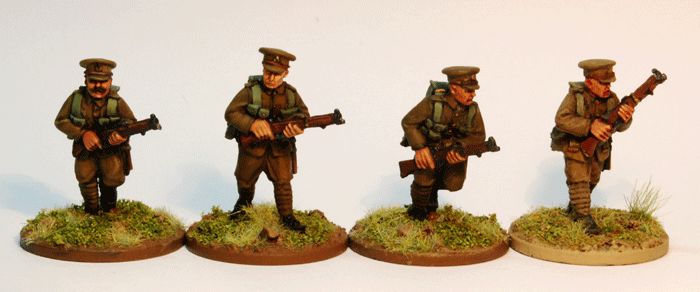
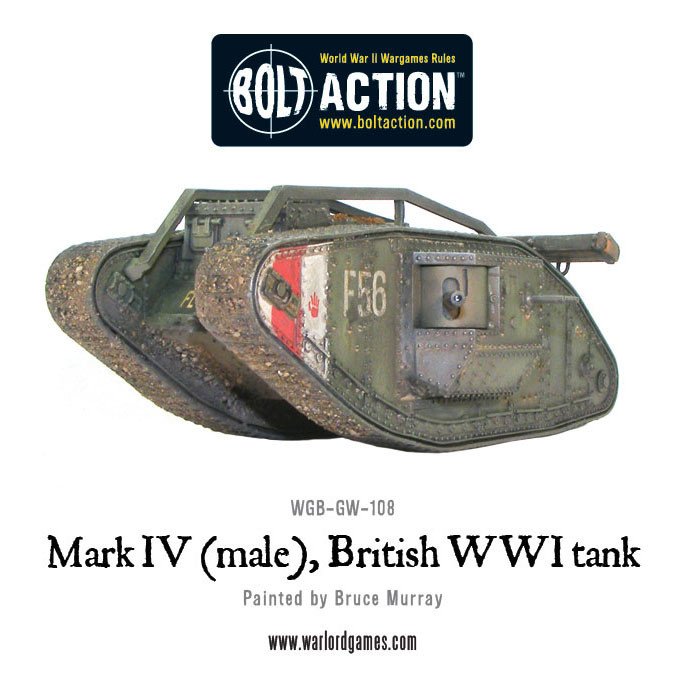
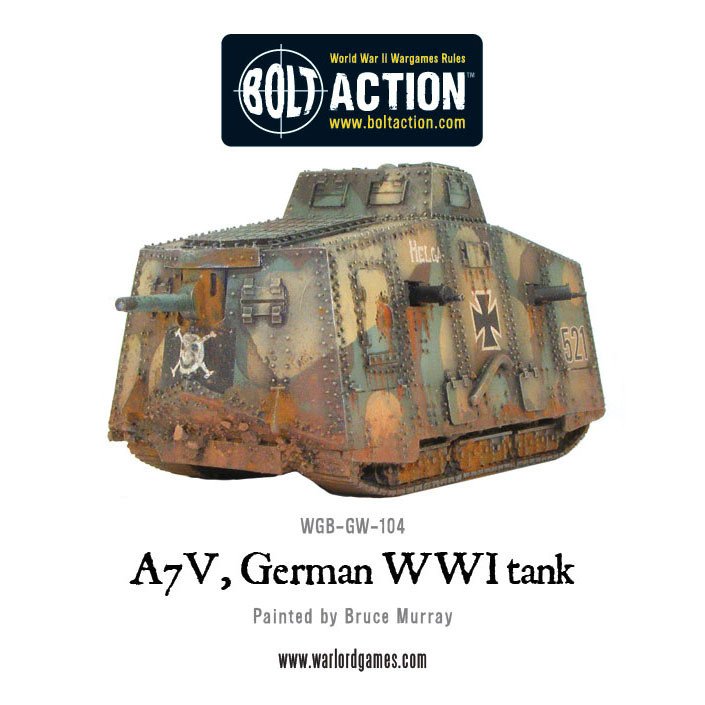
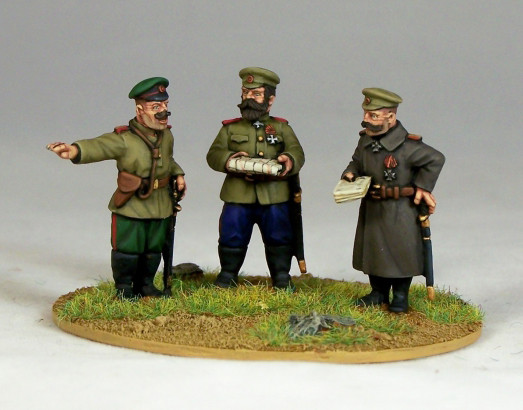
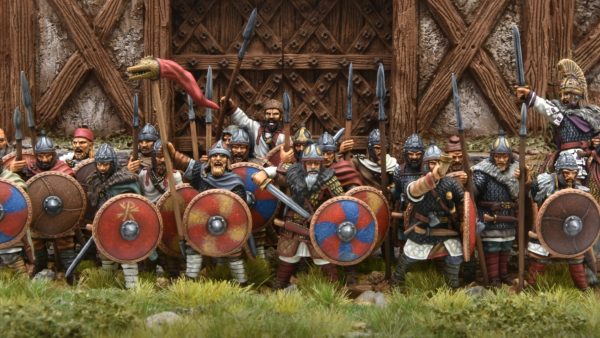
WWI Miniature images taken from Footsore Miniatures, Battlefront Miniatures, Warlord Games and the Unfinished Armies Blog.
Jack Brown - Twitter (TJ Brown)
If you have an article that you’d like to write for Beasts Of War then you con get in contact with us at [email protected] to find out more!
"...why hasn’t there been a World War I/Battle of the Somme box released by a gaming company?"
Supported by (Turn Off)

Supported by (Turn Off)
"Ultimately is World War I, simply put, overshadowed by its more recent counterpart?"
Supported by (Turn Off)

Being a history teacher in Ypres, I believe in can pitch in 😀
The remembrance of WW1 has always had a more funerary style. People now look at the conflict from a standpoint of how pointless the war was, not how glorious the victory. Little was gained politically after WW1 and, with the benefit of hindsight, we know that the conflict directly led to the outbreak of WW2. The dead of WW1 are mourned because they remind us of how terrible war is. Places like Tyne Cot cemetary are a great example of how we should feel humbled by the sacrifice of the dead. War in the context of WW1 is thus generally viewed as negative, war is an unnecessary byproduct of politics.
WW2 on the other hand was the democratic (and communist) victory over nazism and fascism. We collectively defeated a regime that we labeled ‘evil’ and view that today as a great triumph of democracy. Through that triumph we affirmed ourselves and our political system (up to this day). The allied casualties were also a lot less compared to WW1, WW2 didn’t leave such a big impact on small communities as it did during WW1. Thus the feeling of loss is diminished and we can have a more positive look at WW2. War in the context of WW2 is thus viewed as a necessary evil to triumph over the enemies of democracy (and communism in Soviet Russia).
When it comes to wargaming I believe WW2 is more interesting for most of the reasons mentioned in your article. Next to that the nazi’s just make good ‘baddies’, whereas the Germans during WW1 were just regular soldiers. Obviously this view is also modified by modern media.
Gaming WW1 doesn’t necessarily has to be a grinding trench warfare. The videogame Verdun does a great job at providing interesting westfront maps without being tedious or frustrating. The upcoming Battlefield 1 looks like a scifi view of the war (though probably fun to play).
For wargaming WW1, I’d like to add a few suggestions (though I haven’t played myself):
– The Great War board game by PSC
– The Great War wargame by Baccus 6mm (and accompanying early war miniatures, when there was still a lot of manouvre warfare)
And lastly ( :p ) check out the movie The Last Battalion, it gives a somewhat realistic view of the war.
Methinks you’re hitting the nail on the head there @neves1789
I think it might be interesting to focus on playing very Early War games. I was watching a series on the BBC which was all about World War I and the Early War looks like it might be more akin to the ‘old fashioned’ way of fighting with a few drips and drabs of new technology.
Could make for a similarly skirmish game experience.
Or – as some of the images above suggest you could do a Trench Raiding Skirmish Game maybe?
BoW Ben
Early War or skirmish are certainly feasible wargaming options for WW1.
The Verdun video game has some great maps like Fort Douamont where most of the action is in and around a fortress on a hilltop with plenty of cover and interesting approaches. It’s still trench warfare with the armies grinding eachother down but without being too symmetrical. Another more early war map is in a lush plains area with some minor hills. Most of the ‘trenches’ are just natural ditches and half the map is obscured by trees, corn field and tall grass so you have to change positions to win the map.
What I’m trying to say is that if I would play WW1, I’d go for company or higher level early war (maybe in 6mm) for manouvre warfare and skirmish level for mid to late trench warfare (probably in 28mm, there’s some great figures out there). That Bolt Action mod looks interesting for the latter 🙂
im with @brennon there, @neves1789 summed up my feelings exactly, whilst the history of WW1 is one im very passionate about and find far more interesting than WW2 personally, it is also an era of history i have no interest in (traditional table top) gaming with, i have often thought about it, but cant conceive of a way to play where it has as much to do with events and decisions off the battle field than on that would also be fun to play, rather than an exquisite diorama with a mechanic that would have to be tedious by design to encapsulate being bogged down and stuck in stalemate. The one exception to that maybe a sort of dungeoncrawing skirmisher like game where you are involved in tunnel warfare, trying to lay a mine under the oppositions front line…
As a board game maybe, but as a table top not for me.
I recreated the battle of Mons for the 100 year anniversary in 2014 using the greatwar rules from Warhammer historical. No trenches at the beginning of the war so it’s easier to have a flowing game. The end of the war is also easier to do out of the trenches with tanks and shows how dramatically things changed during the course of the war.
i think a ww1 bolt action game has alot of potential and would definitely pay it as well
Here’s a link to a list of the various theatres of operations during WW1
http://www.greatwar.co.uk/places/ww1-theatres-of-war.htm
Lawrence of (Orientalist) Arabia and Doctor Zhivago are good films with a WW1 setting and both feature my namesake Omar Shariff 🙂
Passchendaele is a Canadian ww1 film, Joyeux Noel is about the winter armistice, there are a lot of Turkish films about Mustafa Kemal Pasha (Ataturk).
As an minor aside, what about Blue Max or Wings of Glory?
The beginnings of air warfare have always been of interest to me. One of the fun games I played at Salute 2015 was a game based on shutting down a giant Zeppelin.
Although not a miniatures game, there is an interesting co-operative card game based on French soldiers stuck in the trenches called “The Grizzled”.
http://www.boardgamegeek.com/boardgame/171668/grizzled
The Grizzled is great. Both I and the author have played it; a great game that really does bring out that theme of constant pressure and foreboding permeating throughout World War I.
Very challenging and it looks great too.
Good article
One TV series that I watched way back in the 80s was Anzacs, staring Paul Hogan.
This series for me showed the comradeship between men in a difficult time. It’s well worth getting hold of as it focuses on Gallipoli and the Western Front.
I remember this.
Me too, I thought it was pretty good.
Played many WW1 games over the years and tend to lean towards the bigger battles. Offensives like the Somme, Ieper and Isozno are all feasible as WW1 games if you play them at a stand = a platoon or company .
Due to the size of battles most gamers I know would use 6 or 10mm instead of 28mm which is fine for skirmish games but unfeasible for tables of about 6×4 representing 3 or 4 miles or above
Companies for these figures would be
Pendraken
Kallistra
Irregular
Heroics and Ros
Scotia
to name but a few
Rules wise and in no particular order would be for larger scale battles
Bloody Big Battles
Great War Spearhead
Raging Heroes
Squarebashing
For smaller scaller
Mud and the Blood
Contemptible Little Armies
Test of battle ( command decision) WW1 supplement
If the Lord Spares Us
Plus lots of free rules on Free Wargames rules
If you fancy having a go at the period dont let the so called static nature of the trench warfare put you off it can lead to some fascinating conflicts
Oh and if all that grabs your fancy then have a look into the Balkan Wars that preceded the Great War, it has a fascinating history all of its own
Here is a link to my clubs Salute 2014 qame for the battle of the Marne using Kallistra Figures and there Raging Empire rules.
https://www.youtube.com/watch?v=6mV1aDWjpHg
as you see no trenches and Cavalry
this link is for the first Battle of Ypres in October 1914 put on at Salute in 2015
https://www.youtube.com/watch?v=22bSvudFhJ4
as you see early trenches not as complex as the ones we did for the Somme this year
as seen here
http://movealongnownothingtoseehere.blogspot.co.uk/2016_04_01_archive.html
the large craters are 2 of the mines detonated by the British just before the attack
But it’s not all about the Western Front.
It was called a world war as it covered the globe…
Don’t like trenches?
How about Armoured Car raids in Mesopotamia? Large open manoeuvre battles on the Eastern Front? German Askari in Africa? Japanese attacks on the fort at Tsingtao? Perhaps fighting in Alpine passes with Rommel?
WW1 has alot of variety to offer, you just have to look outside the typical image of trench warfare. But even on the Western Front 1914 and 1918 offer open warfare.
a couple of years back there were a number of WW1 games on display at many different shows that we went to. My regular playing partner Steve and I had many games of WW1 and collected an army each in 28mm. We also collected a whole raft of rules sets. The one game that we enjoyed most was probably a trench raid a small number of men from the opposing army try to raid a trench take prisoners and get them back to their own lines in one piece.
Still got loads of stuff to finish for my army, thanks to this article, I may actually get around to that side of my lead mountain.
I have never had an issue actually playing any period or theatre of conflict, both my Grandfathers fought in WW1, my dads dad was there from the start with the BEF and my mothers father was a sniper. I do not think that the trench war is particular uninspiring to play and get an enjoyable afternoon or even a full days play from.
Might I recommend the BBC mini-series “Our World War” ?
http://www.imdb.com/title/tt3419604/
3 episodes.
Each detailing a key aspect of the war :
(1) The First Day : not a single trench and a reminder how low tech the communication between units was
(2) Pals : a reminder about how little difference there was between going awol and getting lucky enough to find your unit again …
(3) War machine : it’s got Tanks!!!!
Did I mention it had tanks ?
Another BBC series recommendation, currently on now (part 2 today) called The somme 1916 – From Both Sides of the Wire.
The best series if you want to learn about WW1 is the BBC’s Great War series done in the 1960’s. Still head and shoulders above anything else produced and so highly rated ITV copied the idea and came up with the World at War for WW2
Great to see all of these comments 🙂
Neves, blown away by the explanation in the comment, huge round of applause from myself, and while I agree with all of your points regarding WW1 being seen and remembered in a funerary method and that very little came out of it; I was and still surprised that, for example, we didn’t see a WW1 Bolt Action set for the anniversary. Yes, the Bolt Action WW1 mod is super interesting and I have built myself a BEF model force for it, with Highlander models as my veterans 🙂
Stoney – love The Grizzled, great game to just carry around and play in pubs 🙂
ChrisG – great to hear that this would inspire you to pick up the force again and paint some up 🙂 – Im almost at 1000pts for my WW1 Bolt Action. I need to get some cavalry myself 😀
Torros – those interviews in the ’60s are sublime, always gets to me when I watch them.
For me there’s two issues why I wouldn’t consider gaming in WWI. The first is the nature of the war and the tactics. It stands at a turning point in history where on the one hand you see, for the first time, war on an industrial scale and the mechanisation of the military. On the other hand you have almost Napoleonic tactics of pound the hell out of each other with artillery then charge with bayonets. It lacks the fluidity of WWII and modern combat but it also lacks the formations and manouevres of Napoleonic Warfare. Even at a strategic level it wasn’t much more interesting, being mostly a war of attrition to see who could outlast the other. I’m sure that there were some tactics and strategies but I feel perhaps they are too subtle (never thought I’d say that about WWI) to be represented on the table top.
I think when it comes to movies about WW1 there tends to be some bias involved
There are some good Turkish films about the war out there if you can find them
Other good films are the French film A very long engagement whilst not really a war film it does give a good feeling for the period
Another good one is Ypres which was filmed in 1926 over the same ground as was fought on in 1917 and used Canadian veterans to stage the battle
Don’t forget the great Australian war film Gallipoli. Starring a very young Mel Gibson. http://www.imdb.com/title/tt0082432/
There was also The Light Horsemen. http://www.imdb.com/title/tt0093416/
And as someone else posted above, there’s a great Aussie TV mini-series called ANZACs. http://www.imdb.com/title/tt0088479/
I missed the reference to the Gallipoli film in the article text.
Your talking from a Western front point of view as that’s what’s mostly talked about. But, as @piers mentioned their is more to WW1 than trenches as the war was global and I think the naval campaign doesn’t get to much of a look in outside of Jutland.
Going back to your point though, you would have thought that France, Belgium, Germany and Great Britain would have learned the sessions of the machine guns after the colonial Wars throughout the later 19th century.
Sorry @torros I was answering @onlyonepinman
For me one the interesting parts if WW1 is how fast technology and tactics developed in the 4 years it lasted. You go from basically. Tactics that were used in 1870 in the Franco Prussian War to highly mobile combined arms warfare
In fact most tactics and development of technology that is used in WW2 was first thought of in WW1
WWI Naval engagement probably wouldn’t be too bad. And yes, i am talking about the western front but look at all the pictures in the article – they’re all of the Westerm Front. I think it’s also worth pointing out that it is the Western Front that very much characterises WWI
Not true mate. You need to look into the period a bit more before making a statement like that. As has already been said the Russian front was very different, Africa was also very different and my personal interest Galipoli from the naval campaign to the landings also an interesting subject. Also the ealy part of the war in the western front is very interesting and has a lot of movement.
Here in the west we mainly on focus on the trenches of the western front and so that is mainly all you see reported on in our news. This is why I was miffed at this years Salute theme as to me it should have been about the Somme where both sides lost a lot of men, it should have also paid respect to Jutland. After just coming back from Historican I seen many WW1 naval games.
I know that Africa and the Eastern front were very different, but that isn’t what I said is it? What I said was that it was the western front that very much characterised the war. Why? Because that’s where warfare changed irreversibly; the western front was the first example of Total War on an industrial scale where all the powerful, wealthy and industrial central European powers channelled all of their labours and resources into a war effort with utterly terrifying results. Up until that point, the world had not seen anything like the devastation that was unleashed on the western front. WWI is characterised by the western front not because of who fought there but because of how it was fought. It was very much a turning point in warfare
The conflict between the Germans and the Russians was a fairly mobile affair. As @piers said, it’s not all about the western front.
That said some of the stories of soldiers venturing out into no mans land under cover of darkness are incredibly tense. Despite it’s reputation for large mobilisations of men perhaps a small scale game trying to navigate a killing ground to achieve an objective could work better. It wpuld certainly be tense.
Pick up a copy of this
http://www.williamboyd.co.uk/africa-tip-and-run
if you would like some inspiration for something different. The war here went on long after armistace
Played a westernfront trench raiding game years ago in 28mm. homebrew rules nip over no-mans land catch a Jerry and bring him back. If you made too much noise you were just as likely to get shot by your own side.
Watch “The Wipers Times”
I can strongly recommend the Great War boardgame by PSC. Using the command and colors system it is a board game as close to a miniature game you can think of and the rules by Richard Borg manages to really capture the feel of WW1 in its scenarios.
http://www.hystericalgames.co.uk/
I think ww1 can be played as a skirmish game or slightly larger with 28mm models, and as well as a bolt action-style rules, have picked up a forthcoming set of rules called Panzerfauste.
It’s a skirmish game that is early war based, but with British Orcs, French Gnomes, Russian Dark elves and German dwarves. Models are great and they are also planning to bring out some amazing tanks as well (though happy for you to use mechanical ones instead).
Worth checking out for the models (which have been previewed on BoW before)
Just seen this… as has been touched on the Naval engagements of WW1 are far more interesting than the land warfare. In fact my view is that WW1 has far more interesting Naval battles than WW2.
Yes Jutland is the most well known but it can be broken into several actions. However there are a wide range of engagements that took place all over the world.
the siege of Tingtaso could be a good starting point for a what if Campaign in the Far East
http://www.bbc.co.uk/news/world-asia-china-29801553
@all, I think the article raises an interesting question.
@neves1789 and @brennon, There are some valid arguments there, but I do not believe nerves hits the nail on the head. Firstly, regarding the early war, it is somewhat wrong to say there were old school battles with a bit of tech dipped in here and there. The technology was an important aspect straight from the beginning. Starting even with the logistics of moving millions of soldiers. When before mobilisation meant a figurative”shaking of the fist” after which some diplomatic solution could be found, the logistics of railroad mass mobilisation cut out this window of opportunity for negotiation. If one country starts to mobilise everyone has to and nobody can back down out of fear to be at the front too late.
The early war battles were the first ones where a new era high tech army met another and all sides were adopting to this. So first the Germans send tens of thousands of men against the Belgian forts just to be mowed down by a few machine guns. Then the German shelled the places with artillery that they has to lay a concrete foundation for first and the gunners had to fire from 900yrs away with their mouths open to avoid injury to themselves. When one of these shells hit, the fort in question became a pile of rubble. So in a way, the slaughter was meaningless and had an entirely new and unprecedented number of casualties.
You can find an absolutely astonishing podcast on the subject by Hardcore History (the “road to Armageddon”series).
The problem with WWI is that the casualties were so countlessly many even in the early war, that it would be no fun at all. The question would be, who brought the latest piece of tech, which would be the delete button until the other side caught up.
In WWII we also saw a lot of slaughter, especially of civilians, but of cause nobody wants to include the ugly aspects of WWII in a wargame (“round up Jews in a ghetto” or the “kill some civilians in retribution for a partisan attack”) which were also part of military actions in WWII.
Gamers usually look only at the battle field, but in WWI all the cruelty was there on the field, while in WWII it was mostly in between battles.
One last point, I respectfully disagree with the notion that the WWII was not do hard on communities. This view is very Western centric as the campaigns in Russia saw the systematic destruction of communities (plus raising the question of Jewish communities everywhere in Europe).
In the end I feel WW wargaming is not for me (with the possible exception of WWIII – Team Yankee). Being German, this might me my specific sensitivities. However, when I do play a WWII wargame or boardgame, I usually take the Germans. If the battle is successful: I WIN. If not: The Nazis lose (aka I WIN). It is great.
All very valid points and some great options ! I would recommend PSC Great War a easy and quick way to get some tabletop action !
Next year’s Wonder Woman movie is going to make World War I sexy again.
https://www.youtube.com/watch?v=Tgk_63b-Mrw&feature=youtu.be
=)
I dont think sexy is a very good term…..
Jack mentioned Skirmish Wargaming by Donald Featherstone.
I don’t have this book, but I do have Battles with Model Tanks by Don Featherstone and Keith Robinson. It includes 3 battles for armour in WW1, including a scenario set in 1914 when the Royal Naval Air Service (yes, really!) dominated the land around the coast with their squadron of armoured cars. I’ve always meant to give it a go, but back when I got the book in the 80’s no-one was making models of the armoured cars. They are now 🙂
For media on film inspiration about this subject I would draw your attention to WW1 has been covered with some very decent efforts by the Australians.
Not just Gallopoli but an excellent series called ANZACs and a film with a young Guy Pearce I believe and Alf from Home and Away (Don’t let that put you off) though maybe eck on the cast list there which cluminates with a Calvary charge made against a Turkish force by Australian Mounted Brigade.
There’s also All the Kings Men with David Jason, and Lawrence if Arabia.
There’s also been some very good BBC/Historical drama/documentaries which are worth tracking down.
On the larger discussion I think one of the problems is theres no easy latch onto set of rules, WW2 FOW, Bolt Action, Chain of Command, and, and…..
But WW1 doesn’t have that set of goto rules, or well defined list of goto rules, and aside from FOW WW1 has any other company given it a real go in recent years?
I think that most of the rules that you have mentioned have been written to push a miniatures line rather than to develop a set of rules that represent the conflict in question.For most other historical periods no one has ever really bothered or felt it necessary
My go to set as I mentioned before would be Great War Spearhead 2 by Artie Conliffe and Robert Dunlop or If the Lord Spares Us by TFL
Personally , this is the reason I stay away from wargaming in real historical periods , the reality is horrific , I play 40K , Infinity , Gruntz , Dragon Rampant and Horizon Wars , as those dont involve ‘real men’ dying , my Great Grandfather was in WW1 , I assume most of us had relatives there too , and WW2 , the reality of those wars is something we can never forget , should never , and I don’t wish to recreate them.
BUT I totally support your right to play them , but please never forget we cannot ever ever experience the horror of any war , especially this conflict.
Part of being in this hobby is being able to tell reality from fantasy.
I watch a ton of violent movies and shows and I have a blast doing so. But in “reality” I don’t wish any harm on anyone.
It’s the same when talking about actual war (Reality) and war gaming (Fantasy).
I know how to tell the difference and appreciate the fun in fantasy and the sobering cruelty in reality.
Most of my wargaming is also of a fantastical nature (warmachine/hordes, carnevale, fanticide, etc.), but I do like the tactical exercise that recreating the broad-strokes of real world battles can provide.
But yeah, my Grandpa was a Sherman driver under Patton in WWII and went through the Battle of the Bulge and he very seldom if ever talked about it. My Grandad didn’t bring up Korea either. I can definitely understand why and I never pressed.