





Raise high ze black flags my children! – The Prussian Army of 1813-1815



Recommendations: 886
About the Project
Building a 28mm Prussian Napoleonic army that can be used across a number of campaigns from 1813 upto the hurdred days and Waterloo.
Related Game: Black Powder
Related Company: Warlord Games
Related Genre: Historical
Related Contest: Spring Clean Hobby Challenge 2023
This Project is Active
A Wargamers Guide to Prussian Landwehr Cavalry
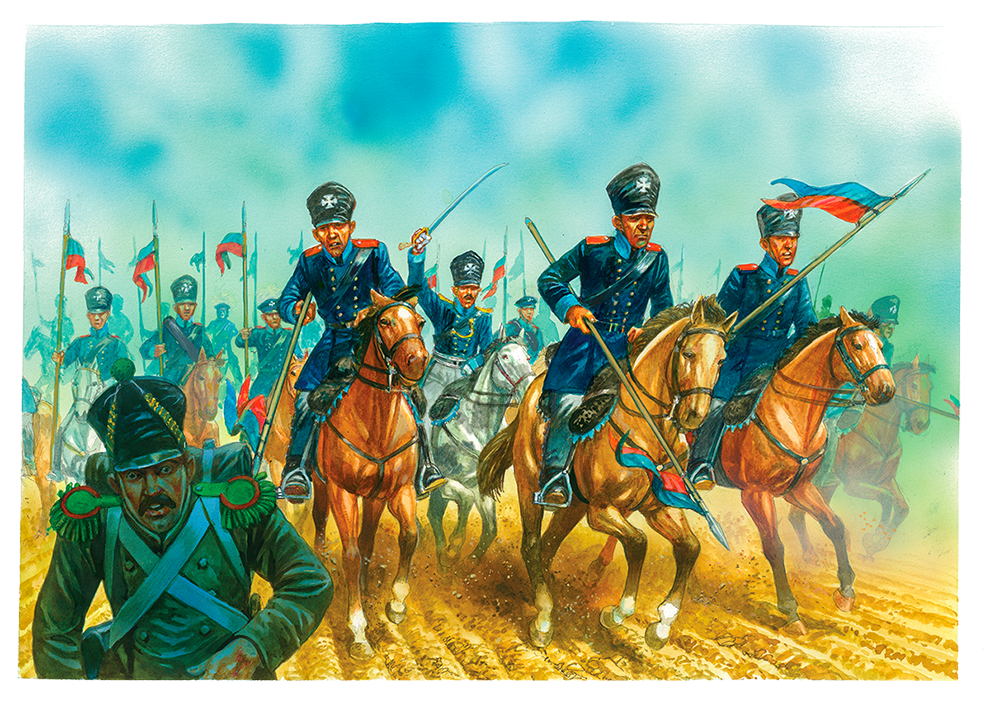 2nd Squadrom Elbe Landwehr Cavalry Regiment (Warlord Games)
First off a disclaimer, the intention of this guide is to provide wargamers a point of reference when it comes to using Prussian Landwehr Cavalry in their games. While I’ve tried to research and be as accurate as possible the intention here is to provide enough information to guide and inform choices on the tabletop.
Formed in March 1813 the Landwehr Cavalry was a large mounted militia force raised in a similar way to the Landwehr Infantry and consisted of 30 regiments, raising to 34 in 1815.
A Regiment would consist of 4 squadrons of 72-100 men (the exact number varies depending on the source but generally falls into this ballpark) and the command staff. These squadrons would then be further split in 4 platoons.
Regiments were raised in each province of Prussia, the number of regiments varying in each, the most numerous being those from Kurmark, Silesia and East Prussia, probably the most recognisable to a wargamer from their red and yellow facings being common on artwork.
- East Prussia – 5 regiments
- West Prussia – 3
- Pomerania – 3
- Neumark – 2
- Kurmark – 7
- Silesia – 8
- Westphalia – 1
- Elbe – 1
- Rhineland – none (3 regiments after November 1815)
They saw action throughout the 1813-1814 campaigns with some excellent engagements, which you can read more about in the sources, generally brave and reckless to abbadon they were undisciplined, poorly trained and equipped but enjoyed several successes.
During a charge, they were brave to the point of forgetting all obedience and order; during a retreat, on the contrary, after a charge that had been repulsed, only natural obstacles were, as a rule, able to stop them.
The battle of Leipzig gives a good example of how the Landwehr were deployed, with most infantry brigades seeing 1 or 2 squadrons attached and a Landwehr cavalry briage making up part of each crops cavalry reserve.
Allied order of battle at Leipzig
During the hundred days campaigns the Landwehr Cavalry made up 40% of the Prussians cavalry.
Uniforms and Equipment
Cavalrymen wore a dark blue Litewka (Long Coat) and were armed with a Lance and curved Sabre.
Belts and leatherwork would be black, buttons either white/yellow and collars and cuffs in provincial colours. Headwear was a covered shako with the white cross.
From a painting perspective these are very similar to the Landwehr infantry, the main distinctions being the addition of the lance pennon which varied across provinces and regiments and of course the horses.
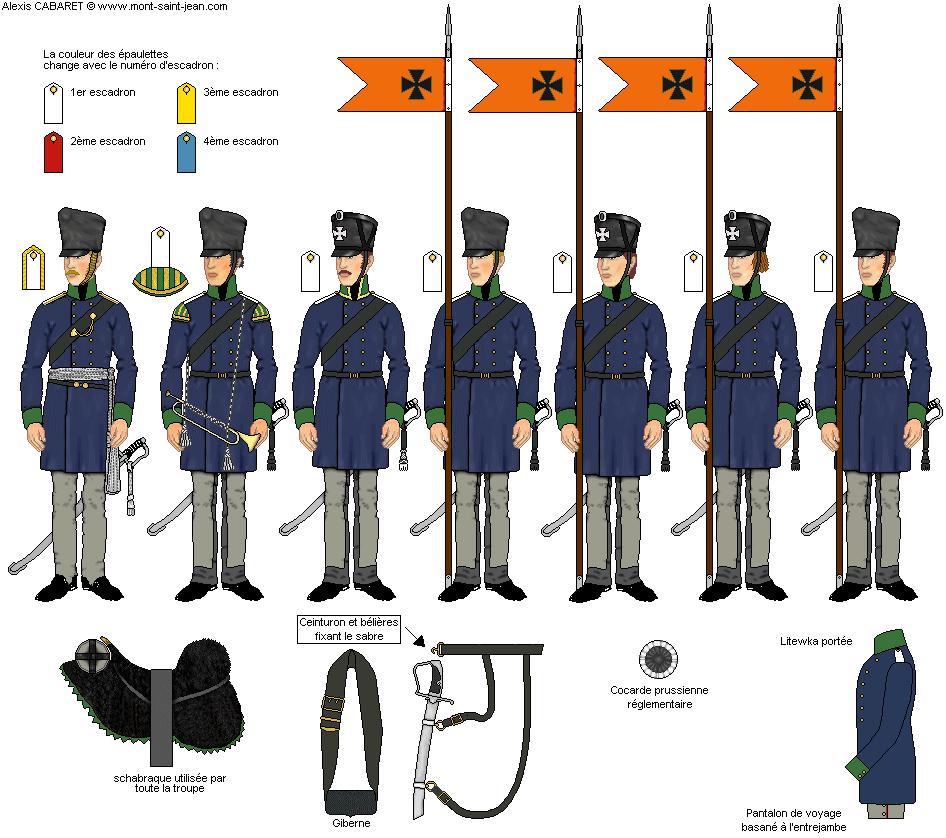
The following table gives an overview of provincial colour diferences.
|
Province
|
# of Rgts
|
Collar/Cuffs
|
Buttons
|
Lance Pennons
|
|
East Prussia
|
5
|
Poppy Red
|
White
|
red/white
|
|
Kurmark/Neumark
|
2/7
|
Poppy Red
|
Yellow
|
white/black
|
|
West Prussia
|
3
|
Black *
|
White
|
yellow/crimson
|
|
Pomerania
|
2
|
White
|
Yellow
|
white/black
|
|
Silesia
|
8
|
Yellow
|
White
|
white/yellow
|
|
Westphalia
|
1
|
Green
|
White
|
orange?
|
|
Elbe
|
1
|
Light Blue
|
Yellow
|
blue/red
|
|
Rhineland
|
0/3
|
Madder Red
|
Yellow
|
white/crimson
|
The following plate gives an example of the uniform worn by the 4th Regiment of Kurmark Landwehr Cavalry. Note the white and black lance pennon. Epaulettes varied based on the squadron within the regiment, in this case white being the 1st squadron, the unit I’ve previously painted had red epaulettes and would represent the second squadron.
The following plates give examples of how the uniform varies based off regiment, these are all taken from the excellent resource http://centjours.mont-saint-jean.com/unitesPR.php
 1st Squardron 4th Regiment of Kurmark Landwehr Cavalry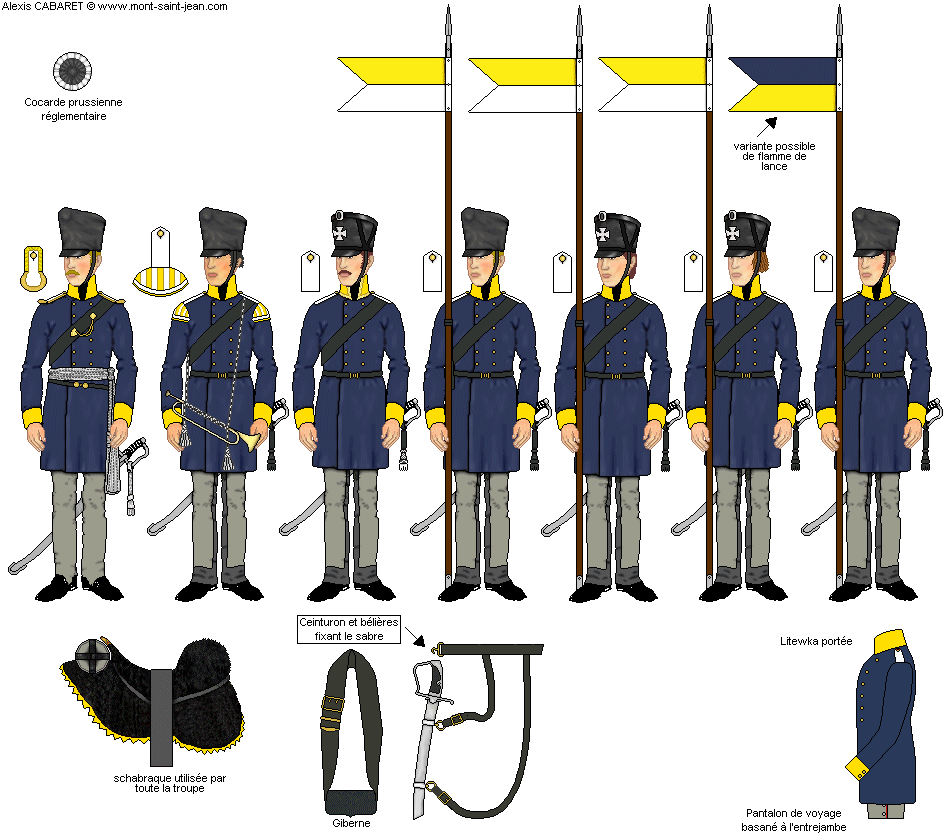


In Games
In Black Powder Landwehr Cavalry are covered in Albion Triumphant Volume 2 – The Hundred Days Campaign.
Two options are available for fielding based off The Prussian Army, 1815 List:
0-1 Small Landwehr Cavalry Regiments can be taken as Brigade Support for Each Prussian Infantry Brigade.
This represents the role the Landwehr Cavalry played well, with the often being split into smaller formations and attached to Infantry to provide support, reconnaissance and scouting duties.
As a landwehr Cavalry Brigade (1 per two infantry brigades)
This formation allows you to field a brigade of Landwehr Cavalry consisting of 2 to 5 Regiments plus the option for Horse artillery support. This allows you to field a large mass of cavalry which represents the Cavalry Reserve of a Corps.
Sources
The following are a collection of sources I used in creating this guide, these may also be useful in your own research.
- Osprey MAA 192 – Prussian Reserve Militia & Irregular Troops 1806-15
- Prussian Landwehr Cavalry, 1813
https://blundersonthedanube.blogspot.com/2013/05/prussian-landwehr-cavalry-1813.html - Landwehr Cavalry [Landwehr Kavallerie] and the National Cavalry Regiments.
http://napoleonistyka.atspace.com/Prussian_cavalry_Napoleon.htm#_Landwehr - Les troupes prussiennes
http://centjours.mont-saint-jean.com/unitesPR.php
Prussian Landwehr Cavalry
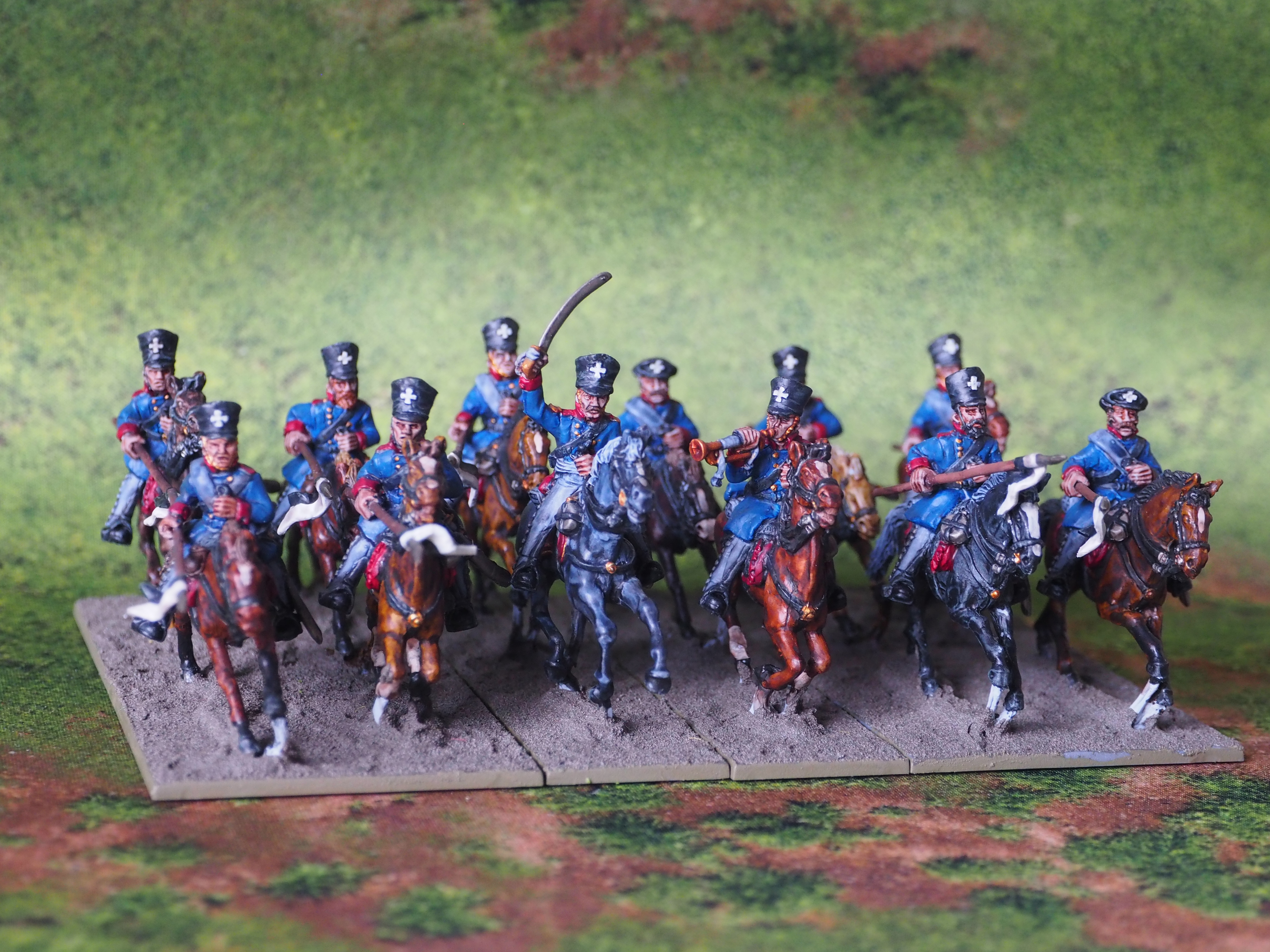
Completed at last Prussian Landwehr Cavalry by Warlord Games. A paint in the ** to assemble but an joy to paint.
As I’ve enjoyed doing my research these would represent one of the regiments of the Province of Kurmark/Neumark and be the second squadron (i think).
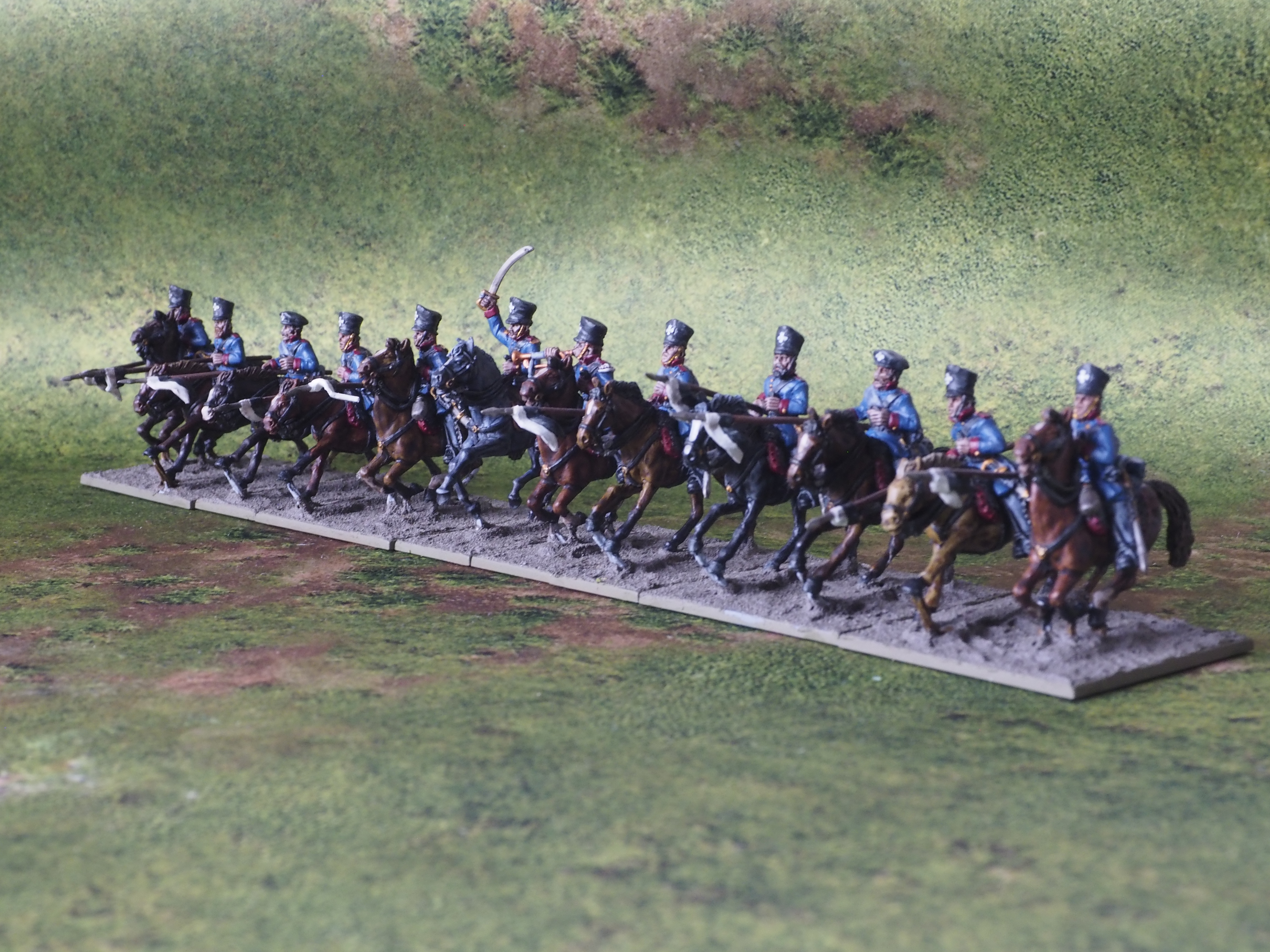
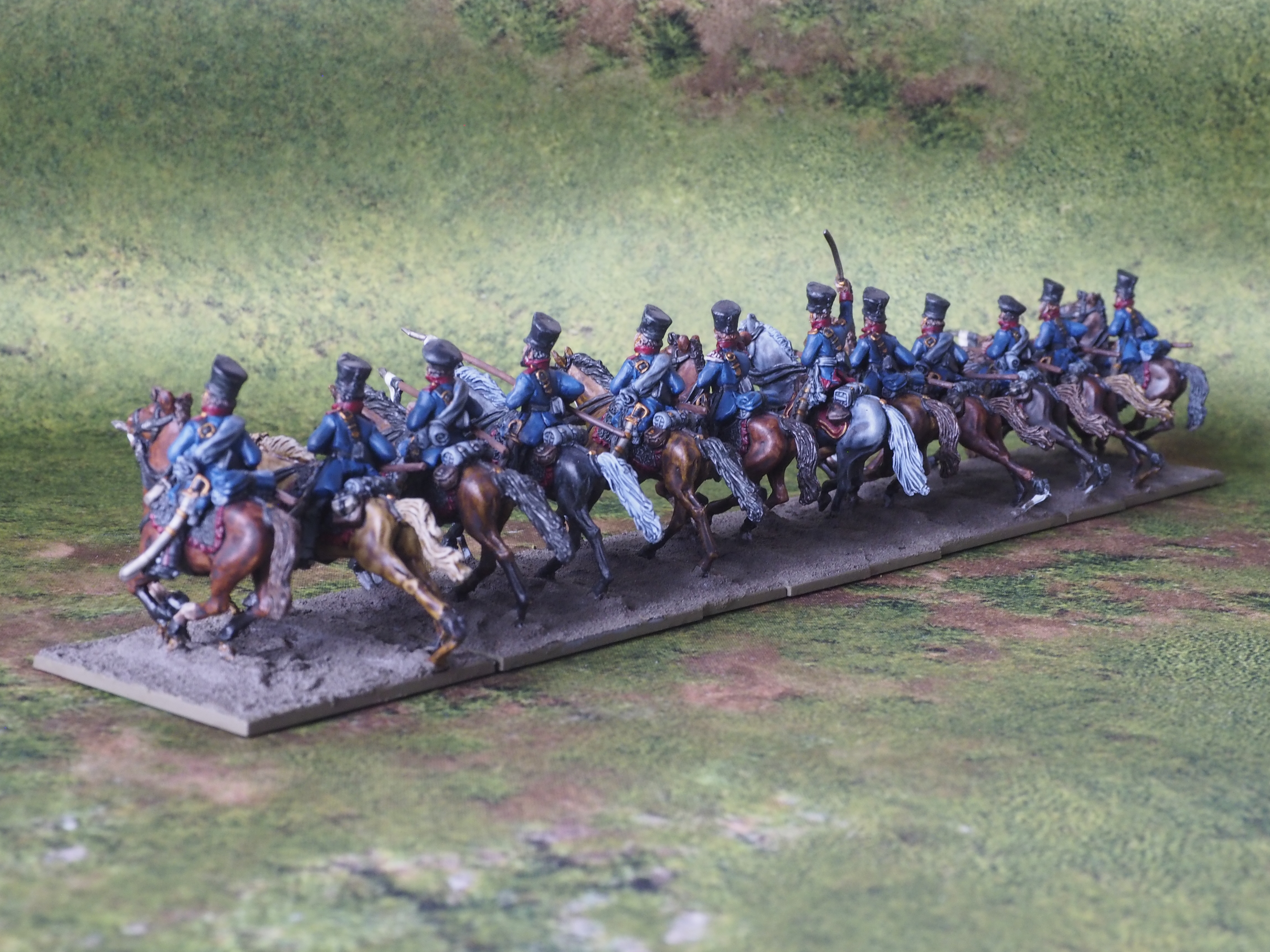
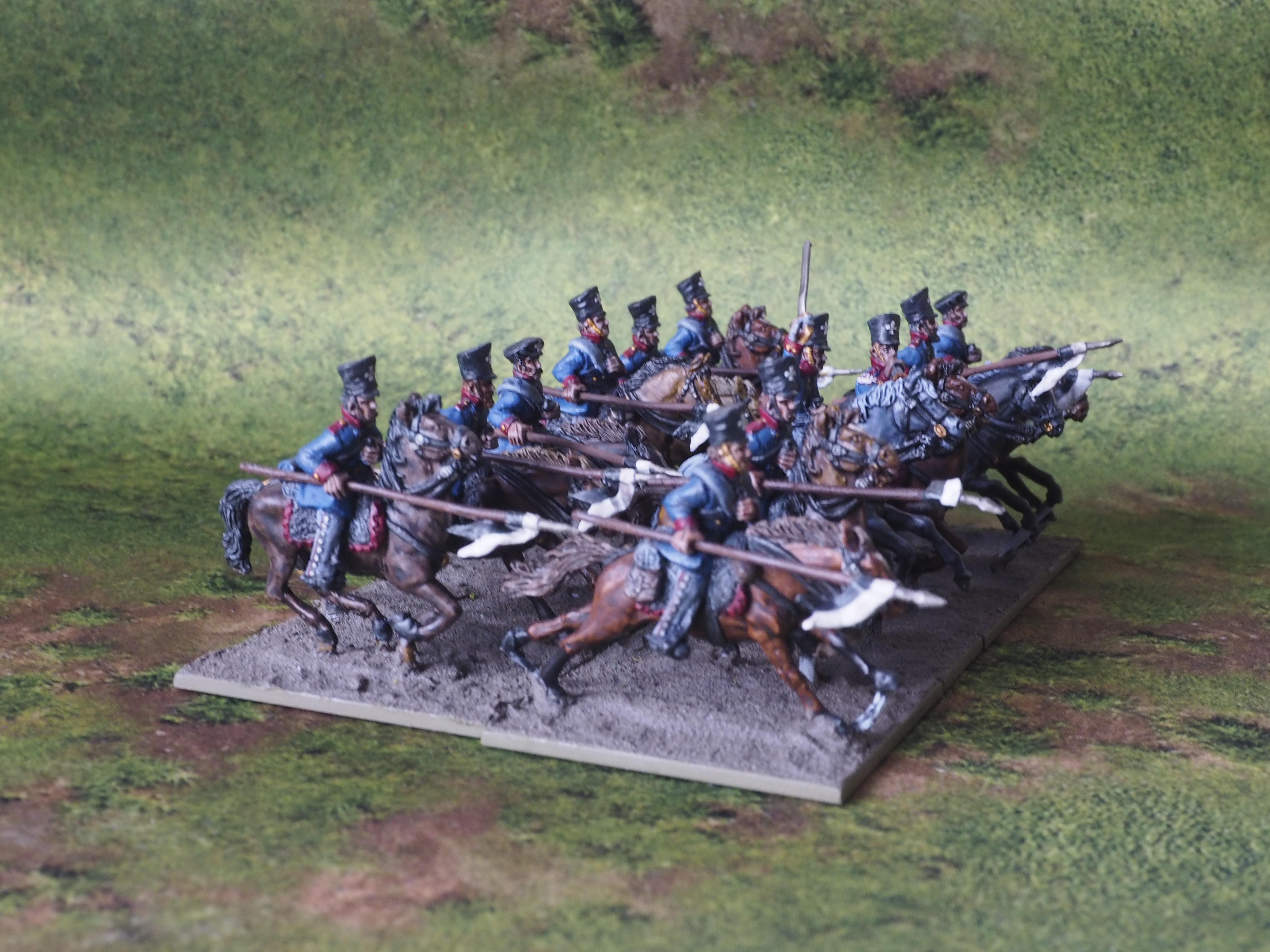
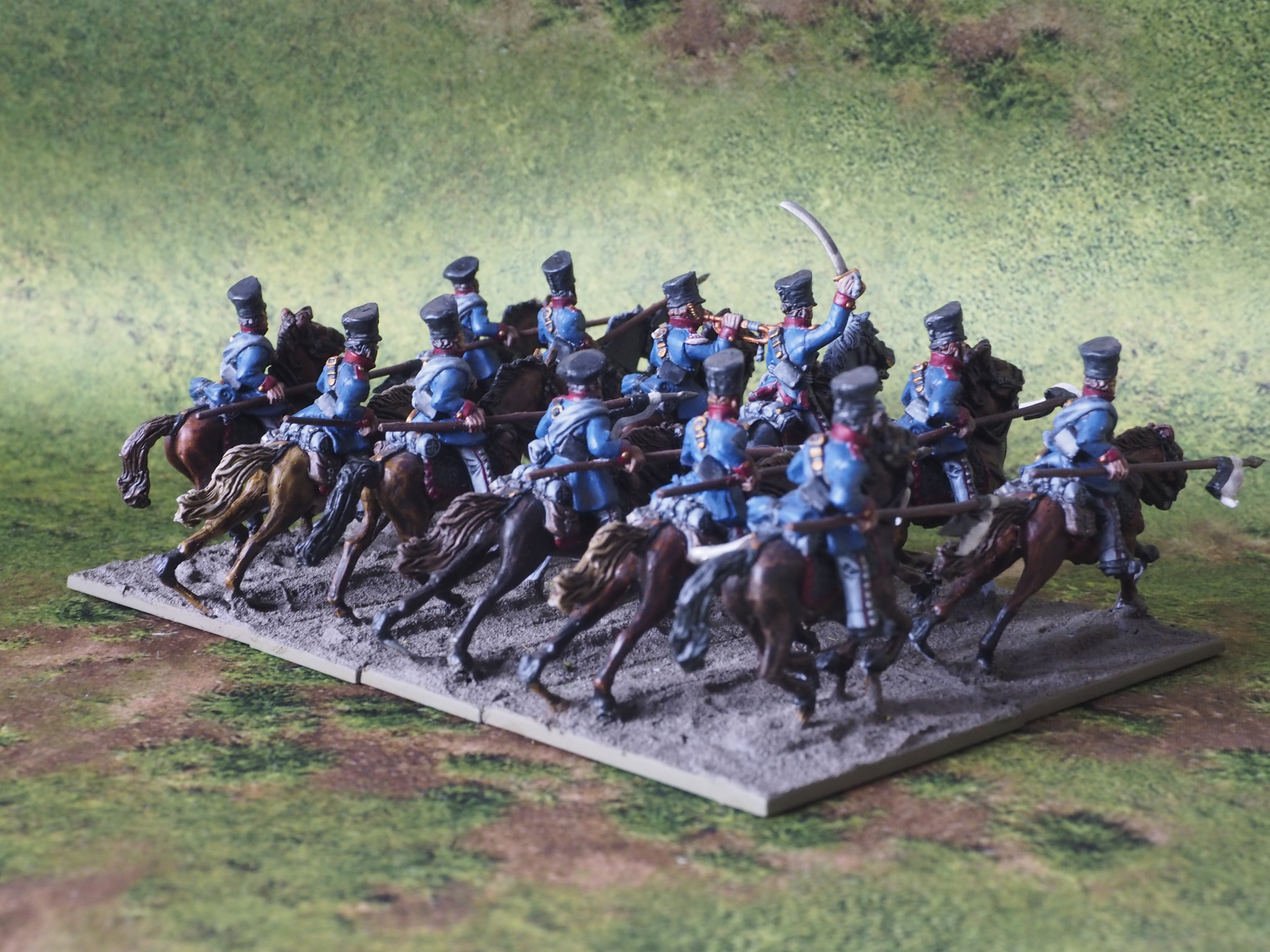
If you want to button count then the red is closer to madder red than poppy red so would actually be closers to a regiment from Rhineland province, however the Lance Pennons are the white and black of Kurmark/Neumark. The button would be yellow in either case.
Also the prussian blue uniform is probably too bright but who cares, these are toy soldiers afterall. Still yet to decide on basing.
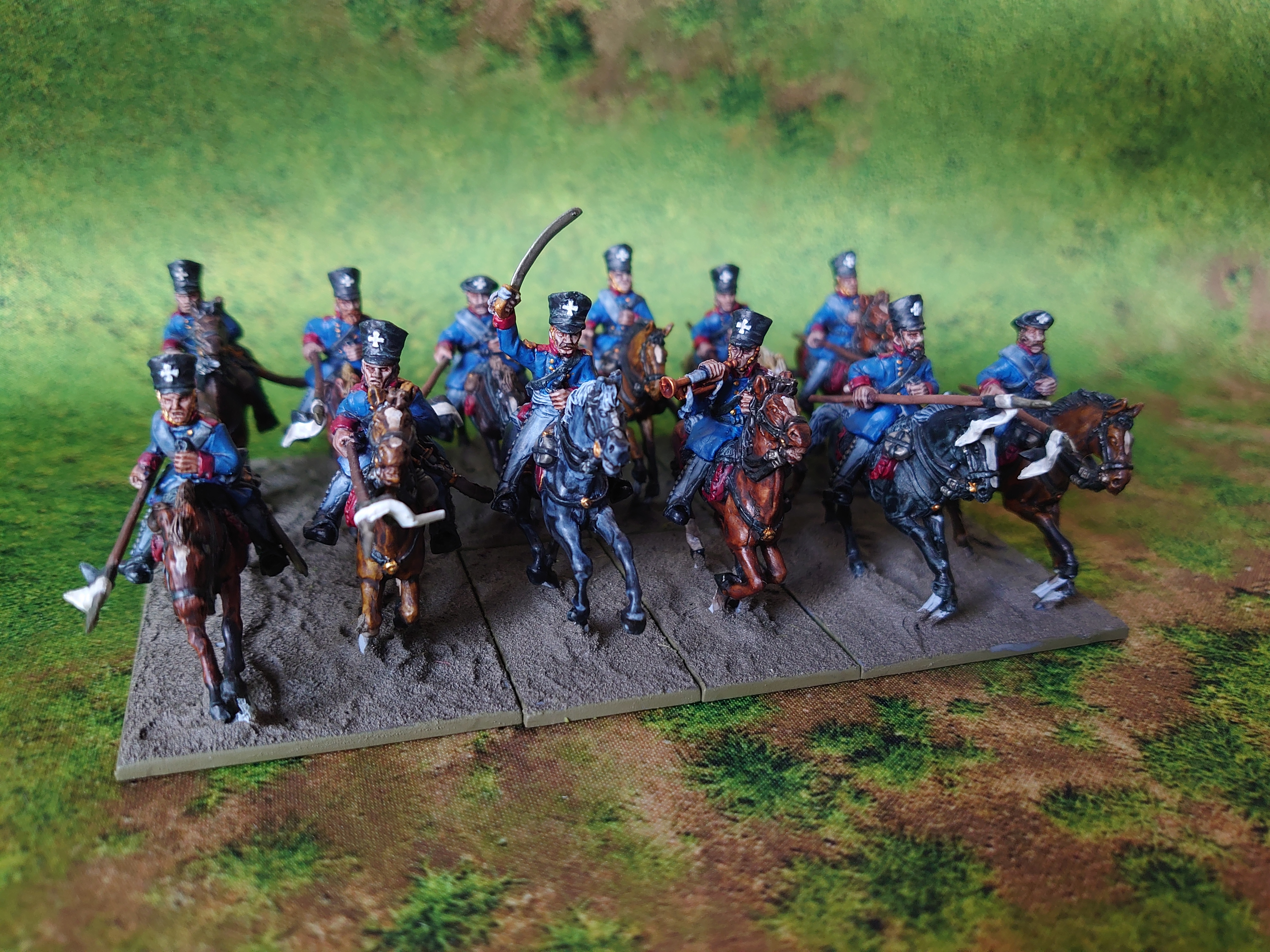
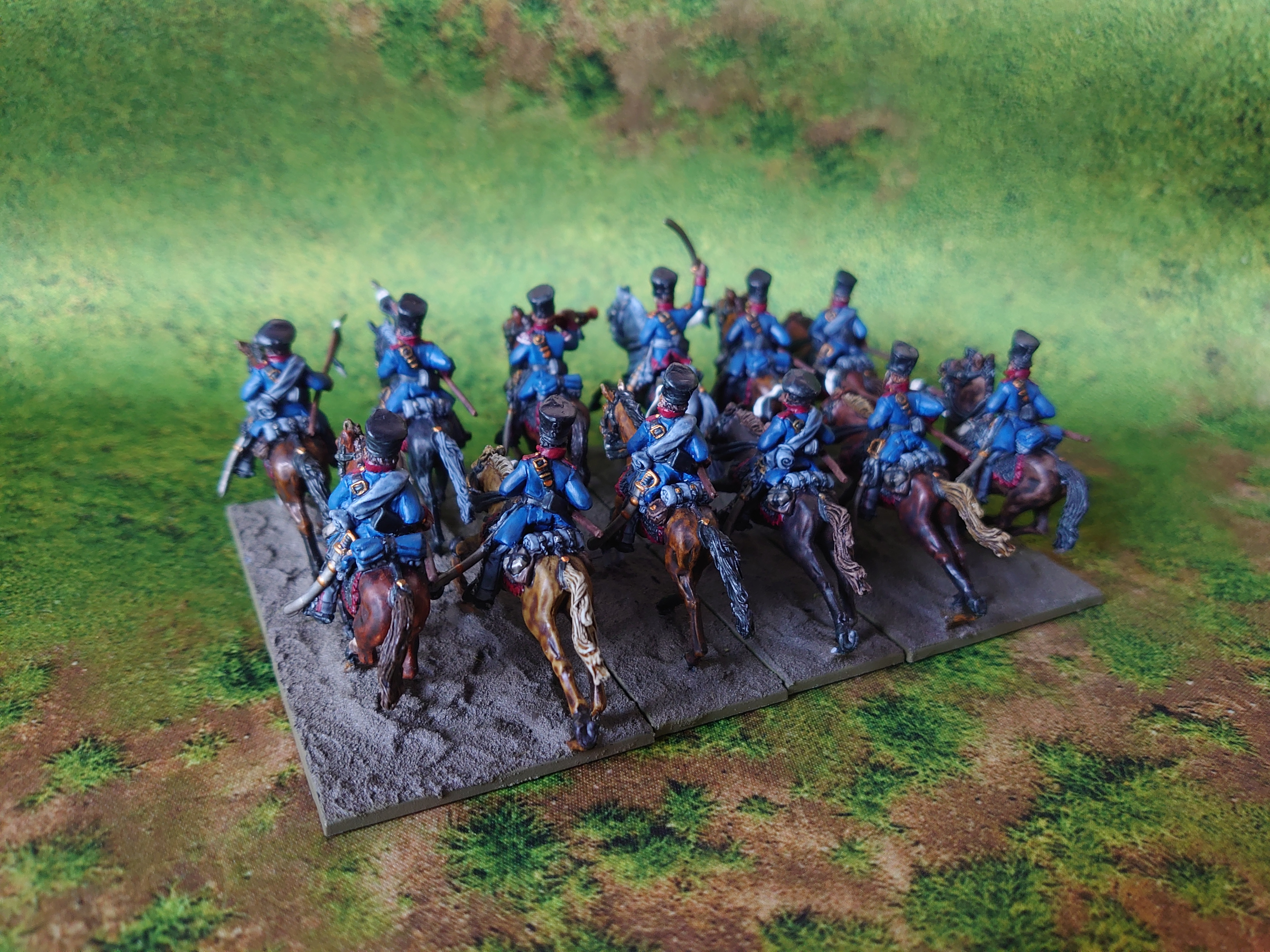
Im still undecided on warlord “resin”, its annoying to work with as its plasticly without being plastic. Sculpting wise these are actually pretty reasonable I think, the detail is quite good and they work great with contrast paints. The Assembly was a pain as the getting the riders onto the horses was nearly impossiable as they dont fit in the saddles, add to that you need to align the lance and the bases wont be flat until you glue them to something it becomes a pretty momumental challenge. One benefit of the resin is the lances are nearly impossible to break (I know this from dropping them from my desk and landing tip first) as are the horses ankles.
Overally I’m actually Quite happy with these,
More Research material has arrived

I decided to pick up a few of of Peter Bunde’s Brigade plates from Calpe Minatures. I somewhat randomly picked the 1st, 6th and combined 11th 12th Prussian Reserve regiment plates.
I’d found the Osprey Books a bit limiting when it comes to good quality imagery, there majority is black and white, the few colour plates are not the best print quality and given their range of content they only cover limited uniforms.
These are a bit pricey in all fairness but I really enjoy having a physical reference. The illustrations are very similar to those you find included with Perry Miniatures and are a great resource.
I found these particularly interesting as they cover in more depth a regiment and its battalions, In the case of the Prussian reserve regiments there was a huge variation in uniforms and these plates capture it well.
There’s also a very detailed page on the reverse with that units history and battles etc. which is equally useful as a guide when considering tying units into historical formations and actions.
Further Reading and Research has arrived
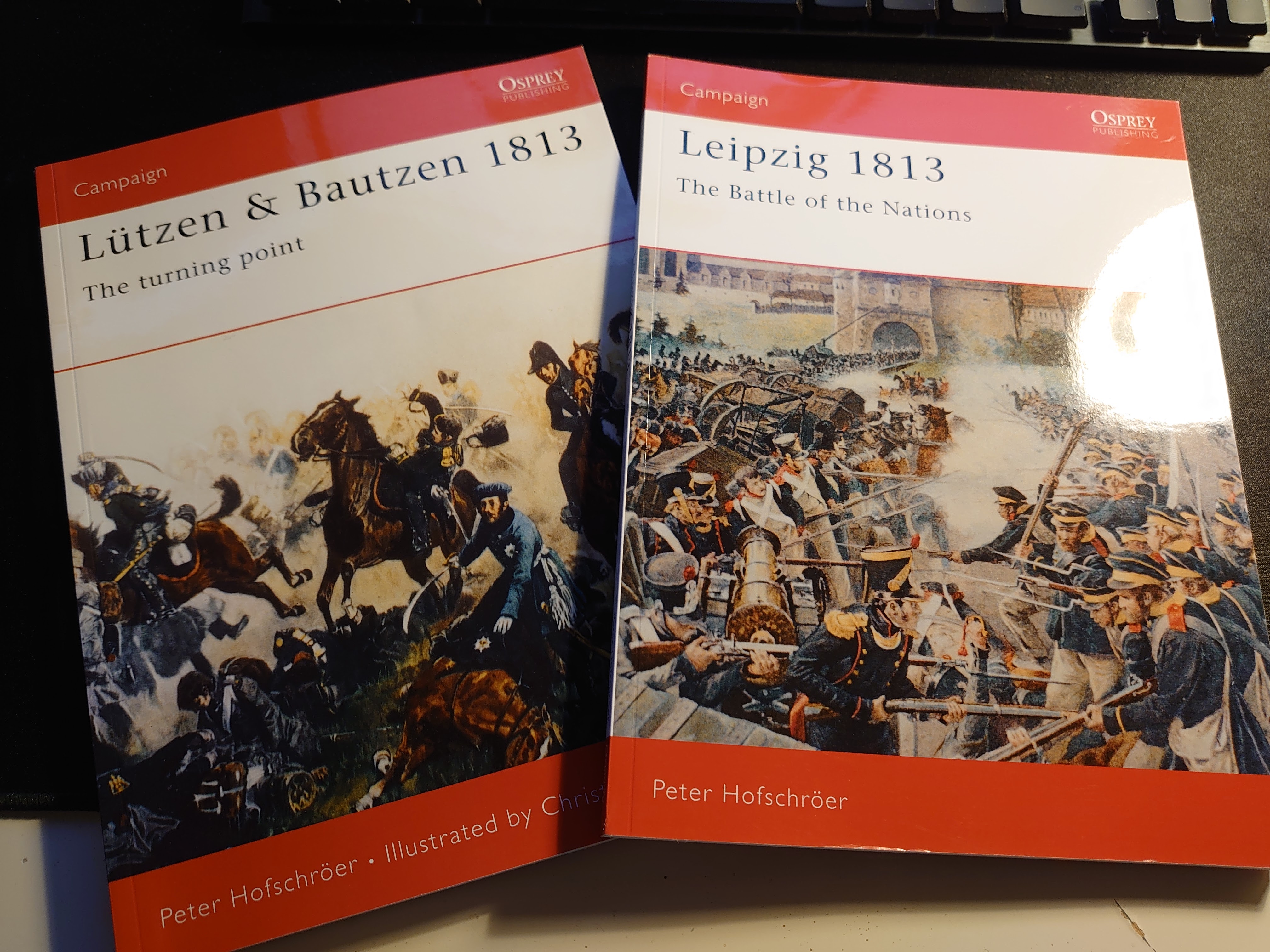
Following Napoleons retreat from Moscow in 1812 he was significantly weakened (but not out) in his power in europe. This saw Prussia, once a begrudging allly of France turn into an enemy along side an equally weakend Russia, while Napoleon rebuilt his forces. Several battles being fought with Napoleons freshly raised armies as part of the 1813 German Campaigns resulting in Austria which had been sitting on the sidelines finally joining the coalition forces.
Prussian Guns
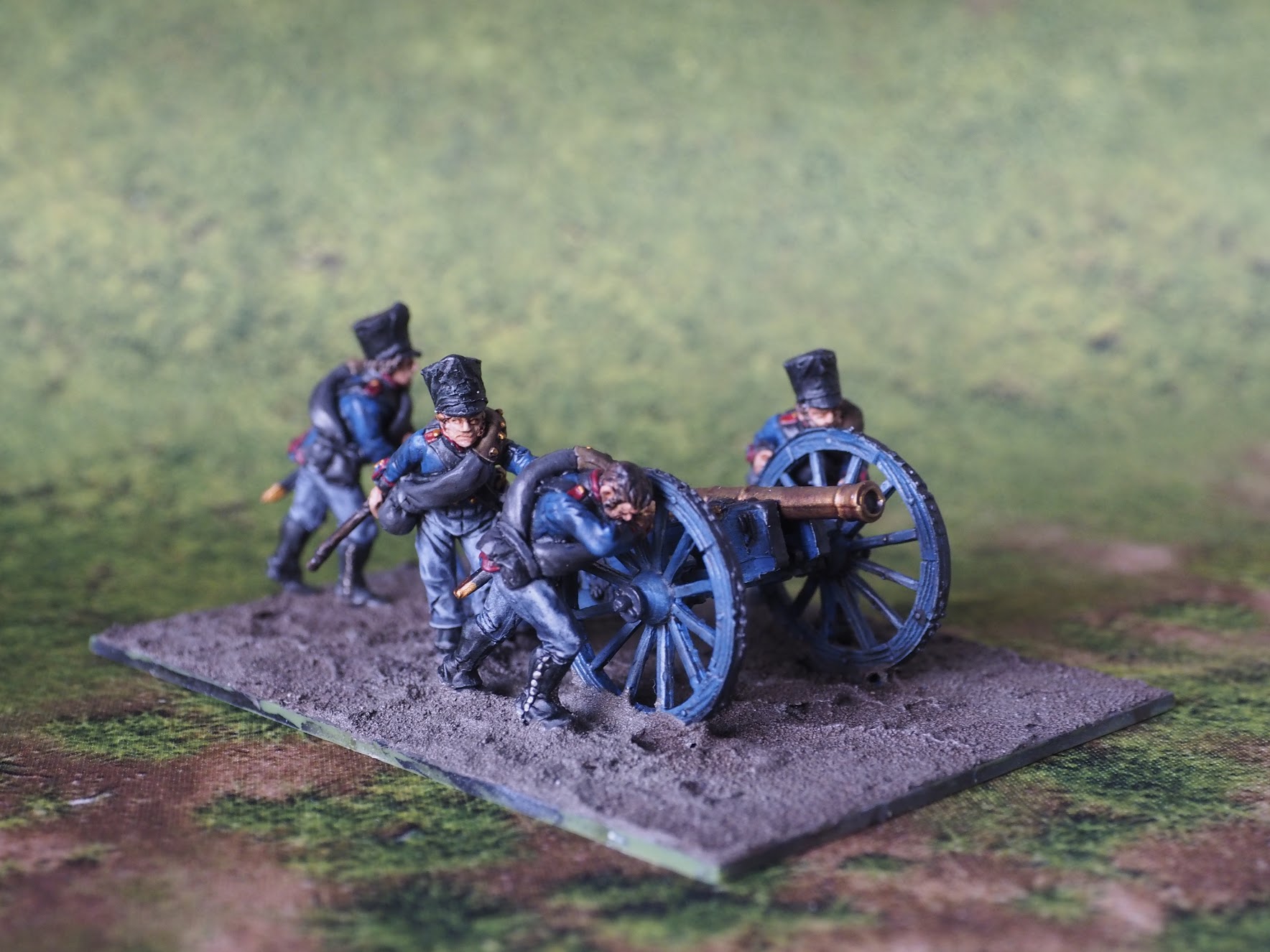
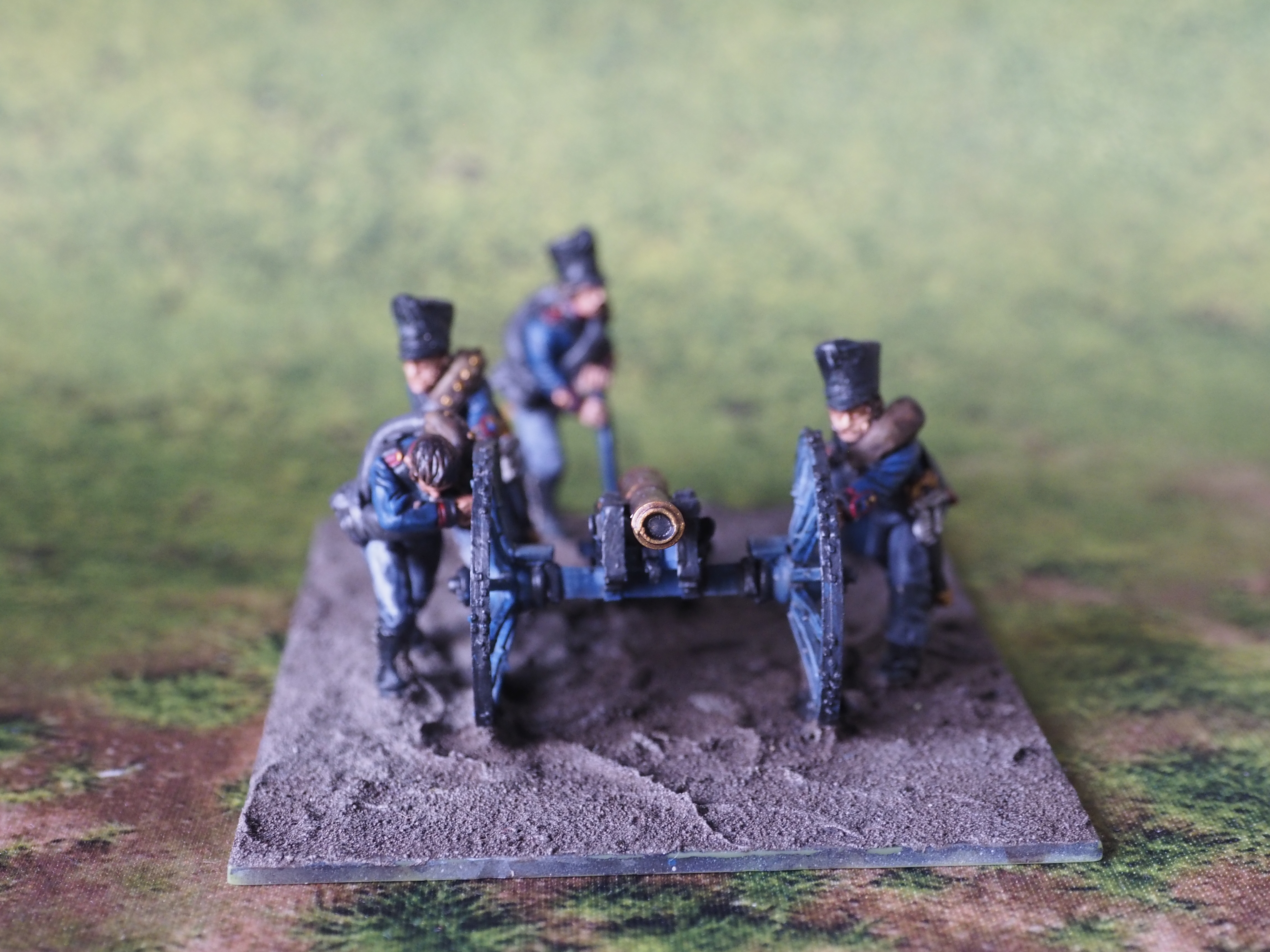
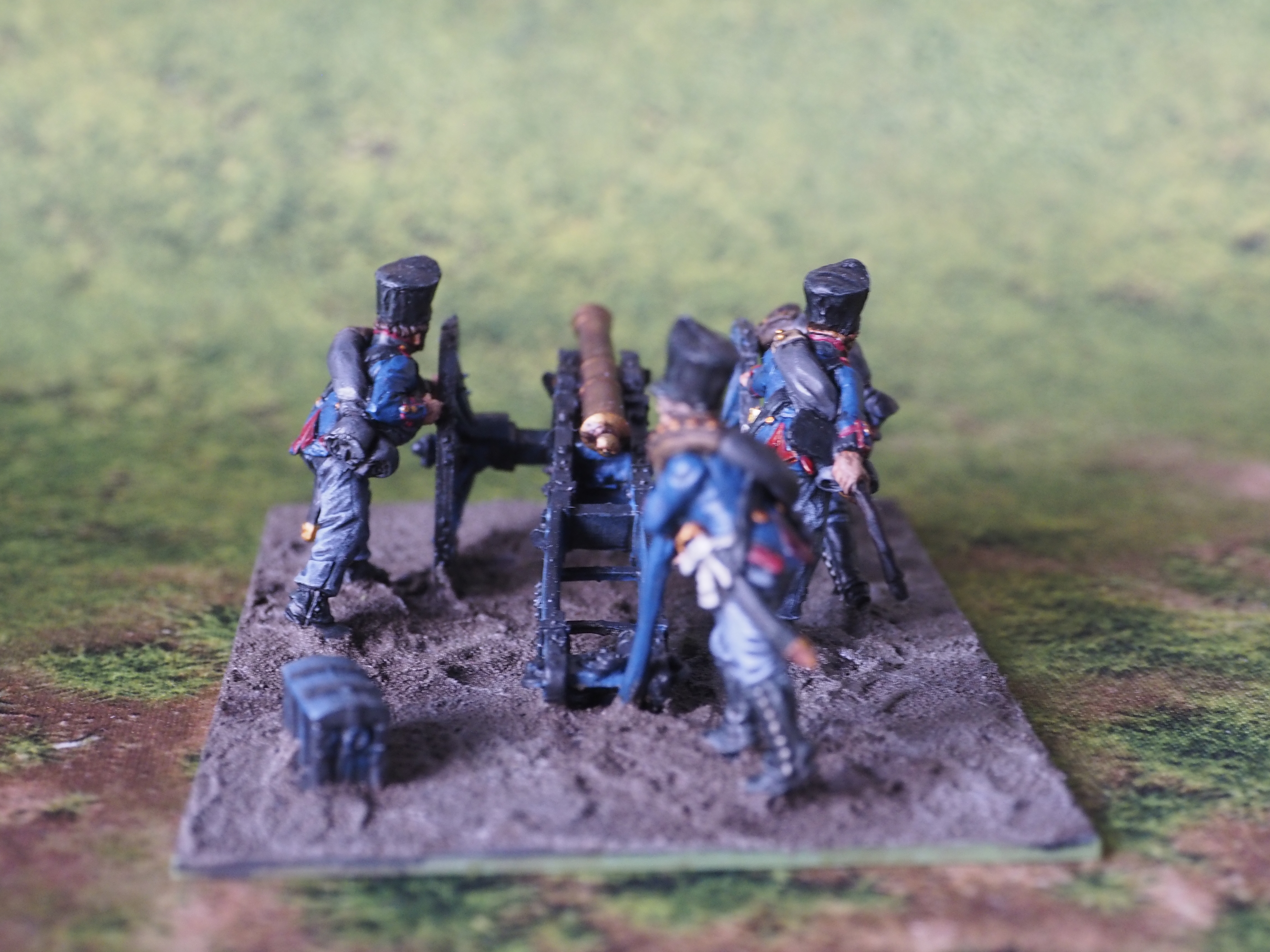
I’ve finished the first artillery piece for my Prussian Napoleonic Army for Warlord Games Black Powder, Prussian Foot Artillery running up 6pdr by Perry Miniatures. I’m really happy with the results and managed to mix in a load of different painting techniques.

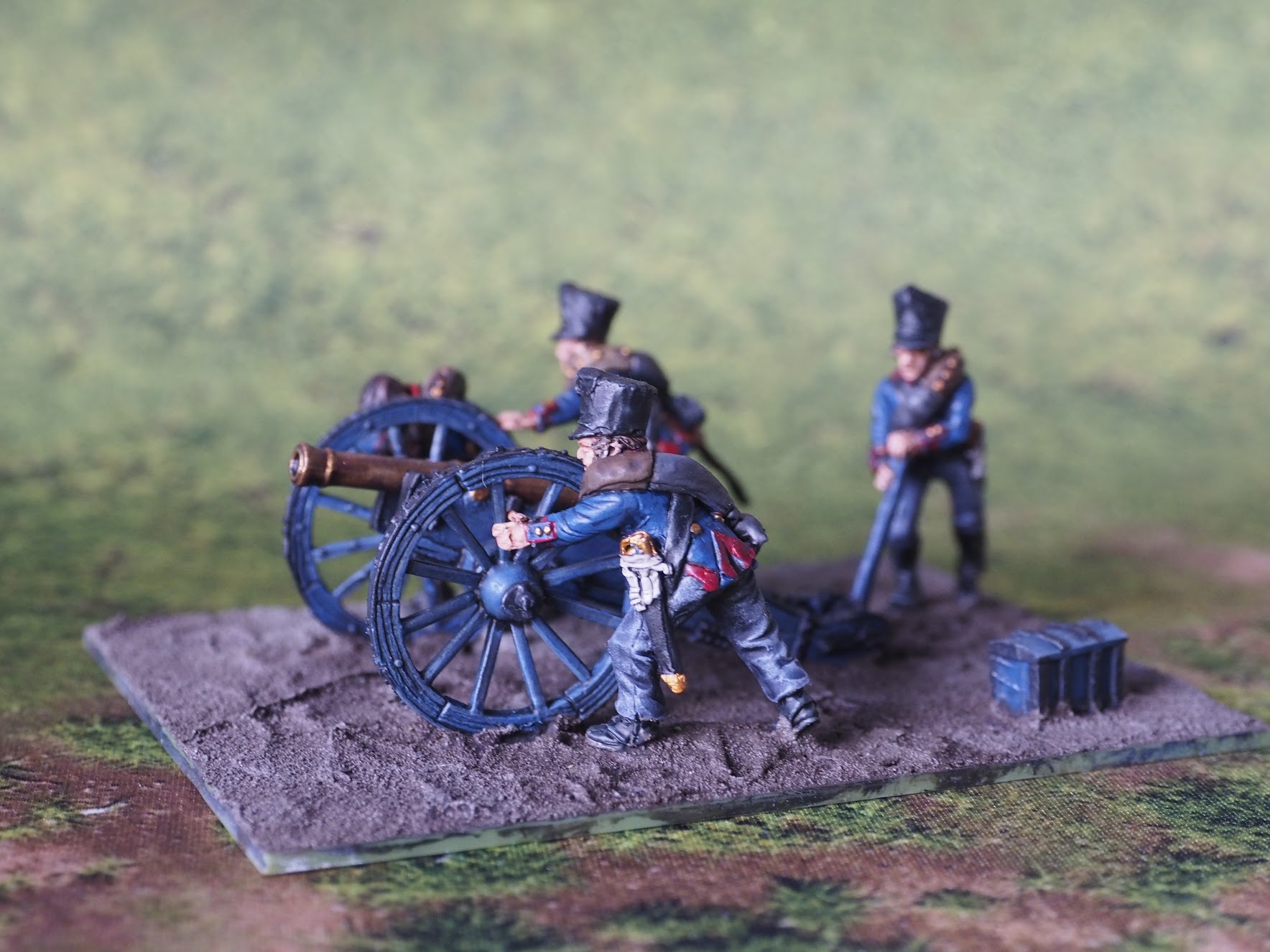
For assembly I Fixed the Cannon to the base, while painting the crew invidually.
First a zenith prime using Black and Grey Primer from Vallejo.
The Cannon was then airbrused using Vallejo Prussian Blue before a drybrush of Vallejo Dark Blue Grey, Citadel Corvus Black was then used for the metal work followed by a all round wash in Citadel Nuln Oil, For the gun I used Citadel Retributor Armour followed by a wash of Citadel Agrax Earthshade, a highlight of Vallejo Old Gold before a final light wash of Citadel Agrax Earthshade watered down.
The gun crew received the same prime and the sculpts by the Perry’s are absolutely fantastic and a joy to work with.
Again a mix of techniques starting with the main jacket experimenting with colour triads, a base of Vallejo Dark Sea Blue, followed by Vallejo Dark Prussian Blue and finall Vallejo Prussian Blue.
Citadel Contrast Black Template for the boots, Shakos and Belts, the trousers Citadel Contrast Space Wolves Grey which works fantastic with the sculpting and the zenith priming.
The greatcoat was a Basecoat of Vallejo London Grey followed by a wash of Citadel Nuln Oil in addition to Scale 75 Gobi Brown followed by a wash of Citadel Agrax Earthshade.
The flesh was again a mixture of techniques, Scale 75 Basic flesh, as wash of Citadel Rikeland Fleshshade, followed by highlights of Citadel Cadian Fleshtone and Citadel Kislev Flesh.
Based Using Vallejo Earth Texture, a brown wash followed by a drybrush of Vallejo German Camo Beige.
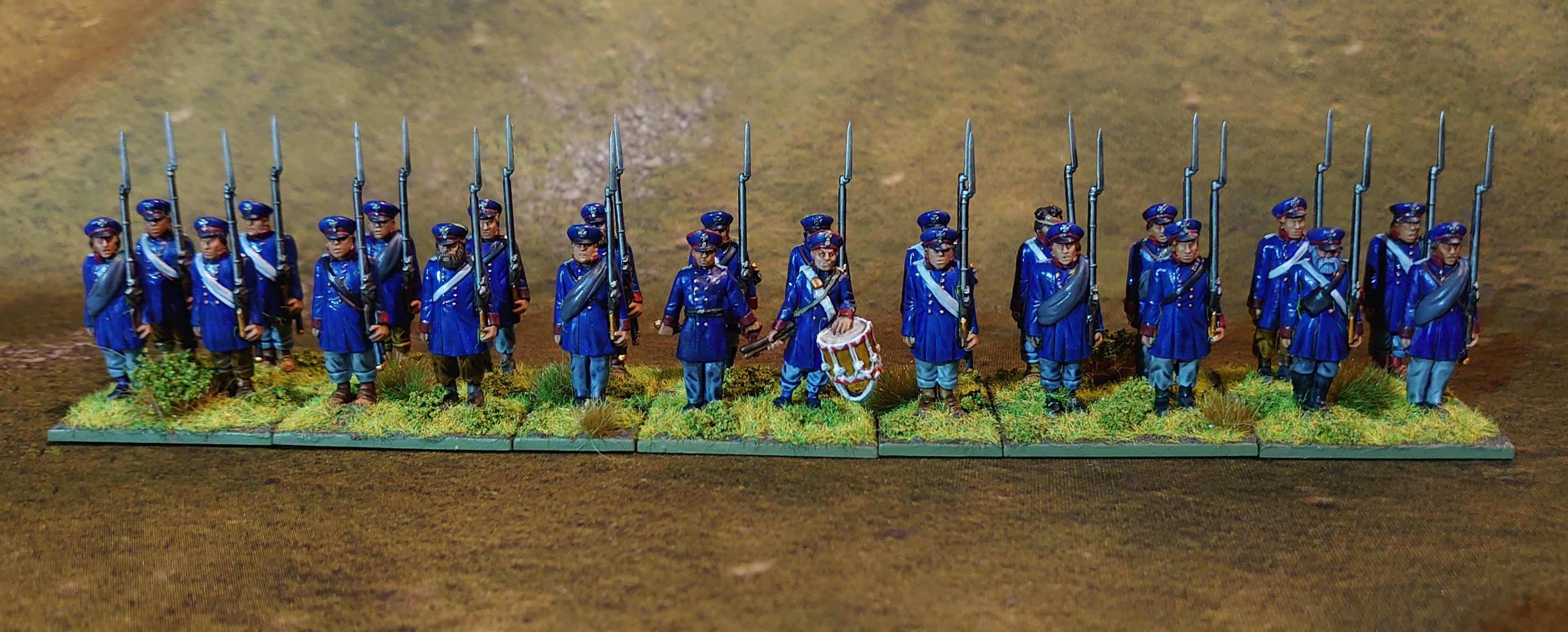
Wargames Atlantic Prussian Reserve (1813-1815)
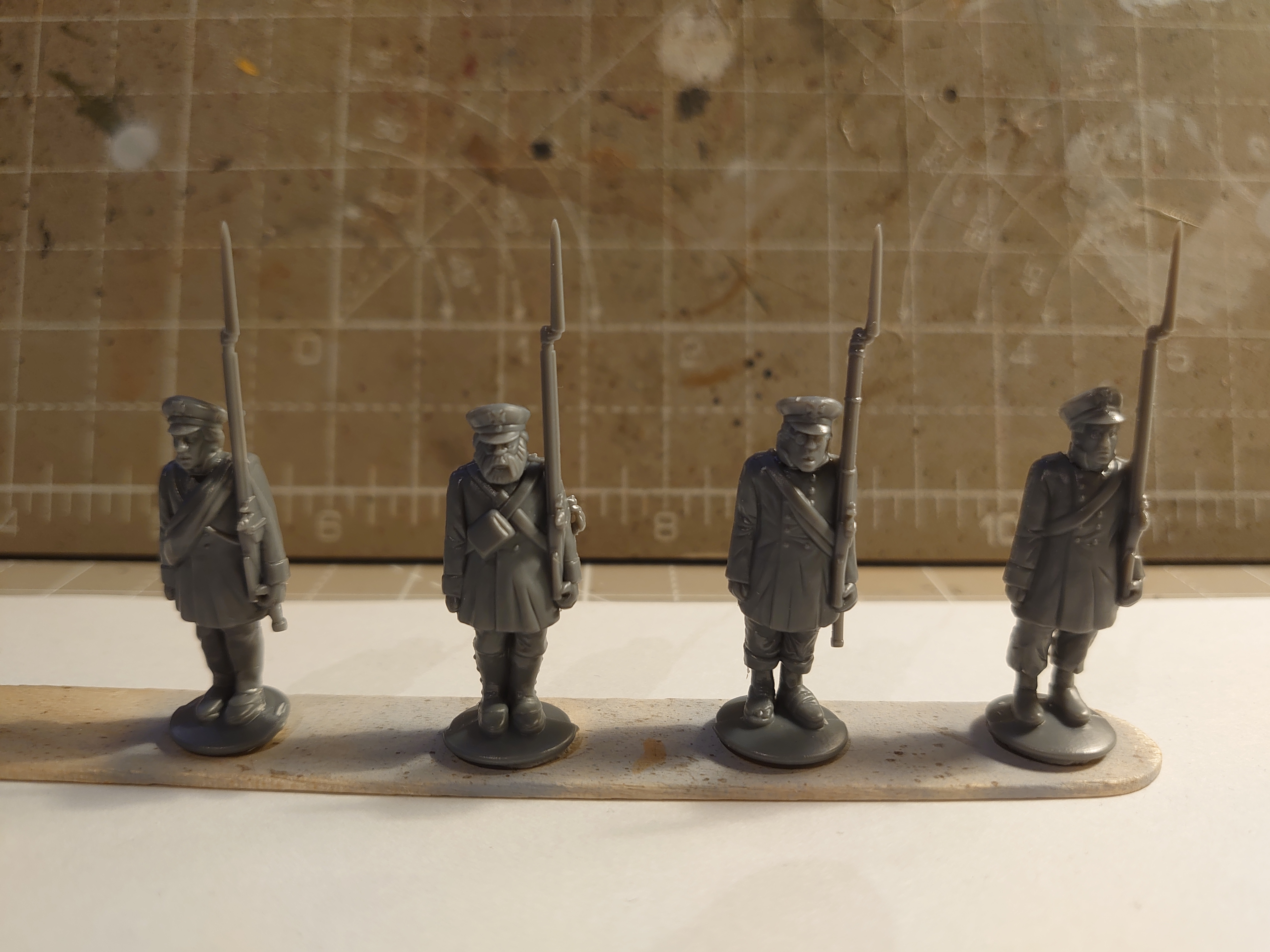
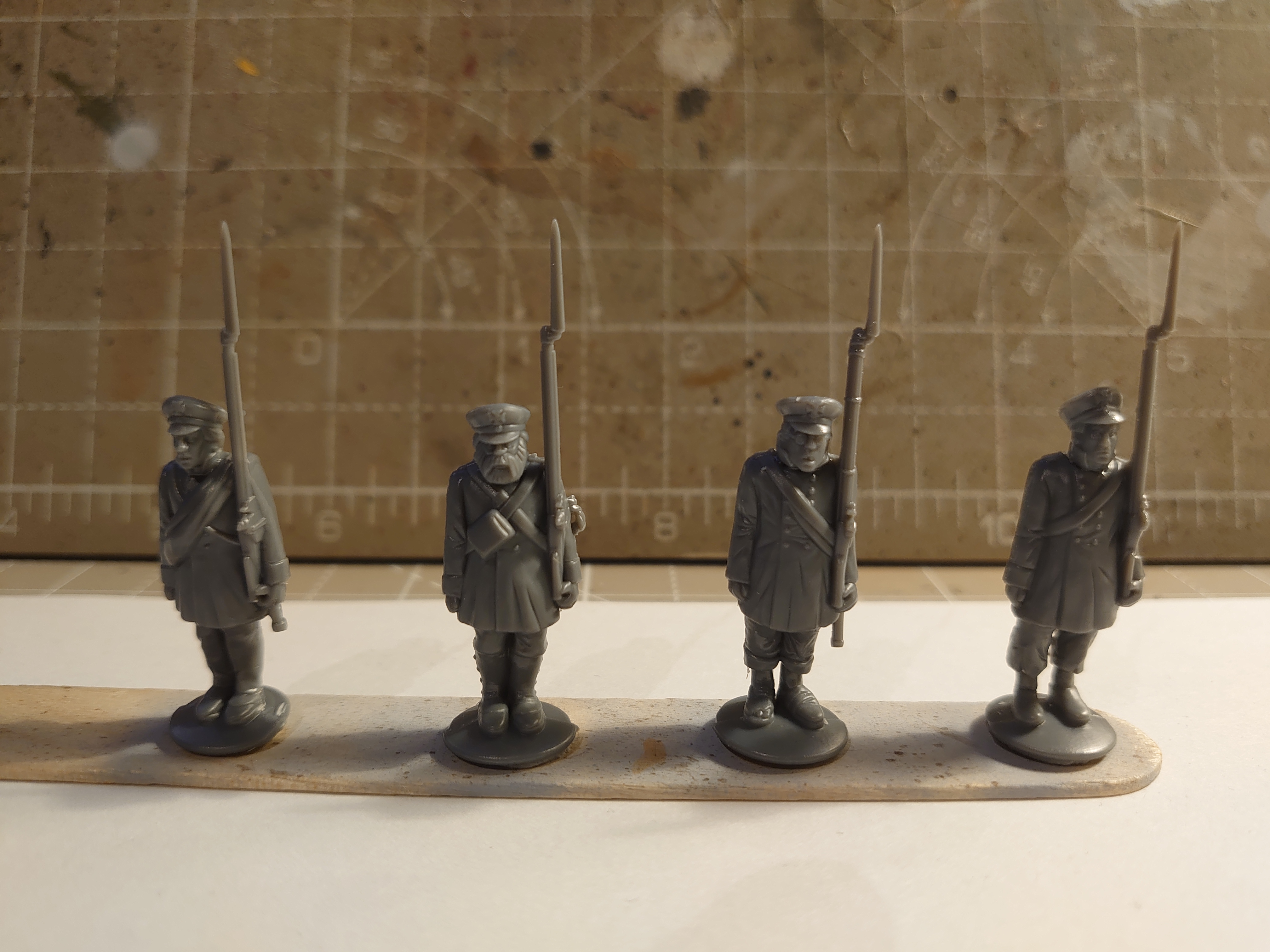
A fantastic value kit from Wargames Atlantic, with some excellent sculpts. Each figure is 2/3 pieces, being the main body, head and a rolled greatcoat on some figures. You get a full range of head options, 6 shakos and 6 caps, so you can either have all of one or a mixture.
Minimal mould lines with some quick clean-up make these a joy to work with, detail is very well defined and they are a pleasure to paint up. My only critism would be that the eyes are pretty sunken and set back in the face.
Each box contains 60 Prussian Reservists, if your playing Black Powder and have battalions of the “standardish” size of 24 you have a few options on how you can create your units.
My recommendation would be to split the box into 3 groups of 20 and add a plastic Prussian command from the Perry’s, (£2 for 4 figrues). That gives you 3 Batallions worth for £31 (RRP and excluding postage costs) and uses every figure.
Rules wise Prussian Reserves are not covered in Black Powder, however Albion Trimuphant (vol 2) covers the Prussian army in 1815 for the 100 days campaign. By this point the reserve regiments had been converted into line regiments as such using these as regular Line would make the most sense, alternative you could class them as Landwehr.
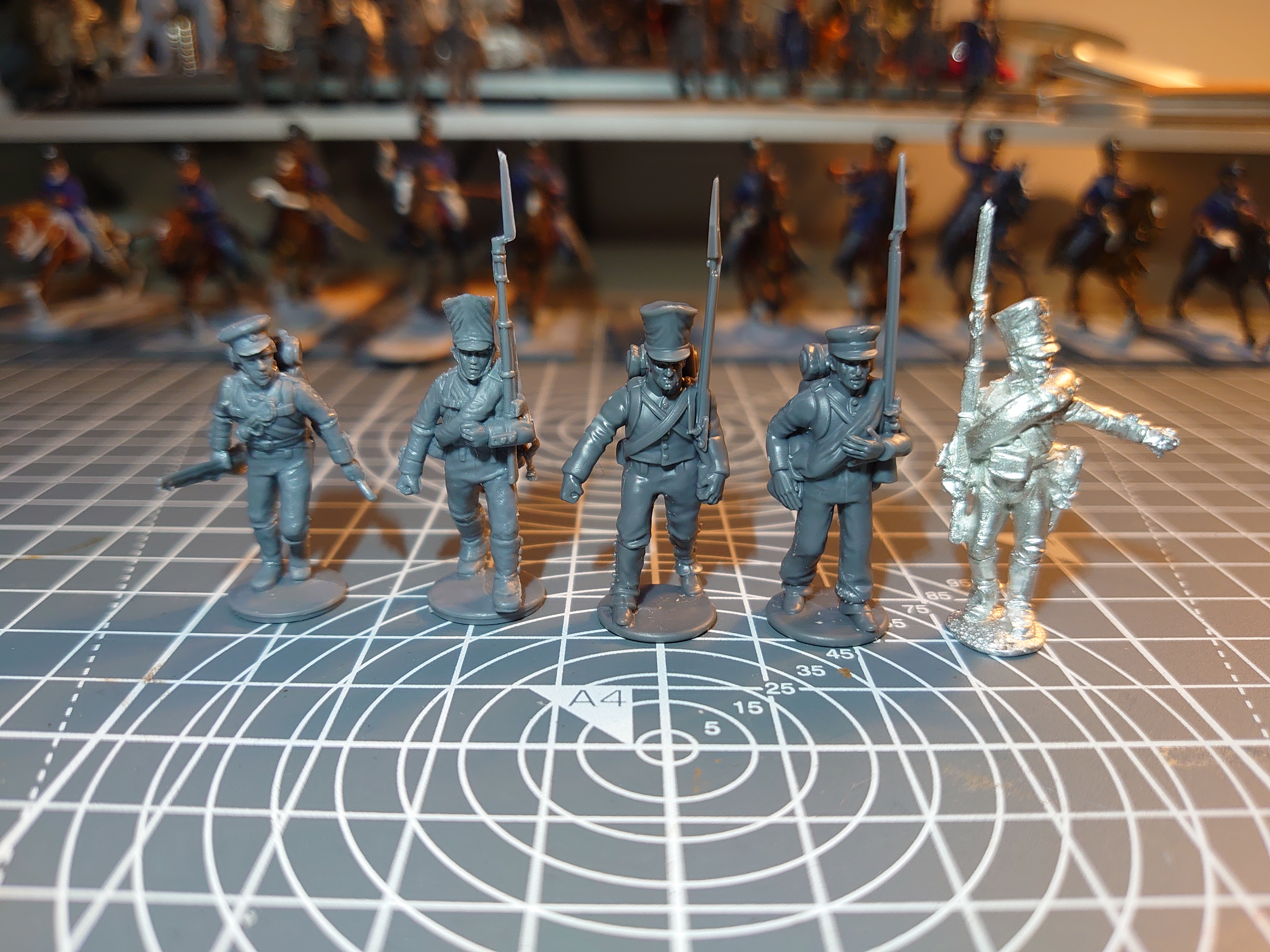 Comparison with Perry Minatures Platics (2 left) and Perry Metal (1 Right)
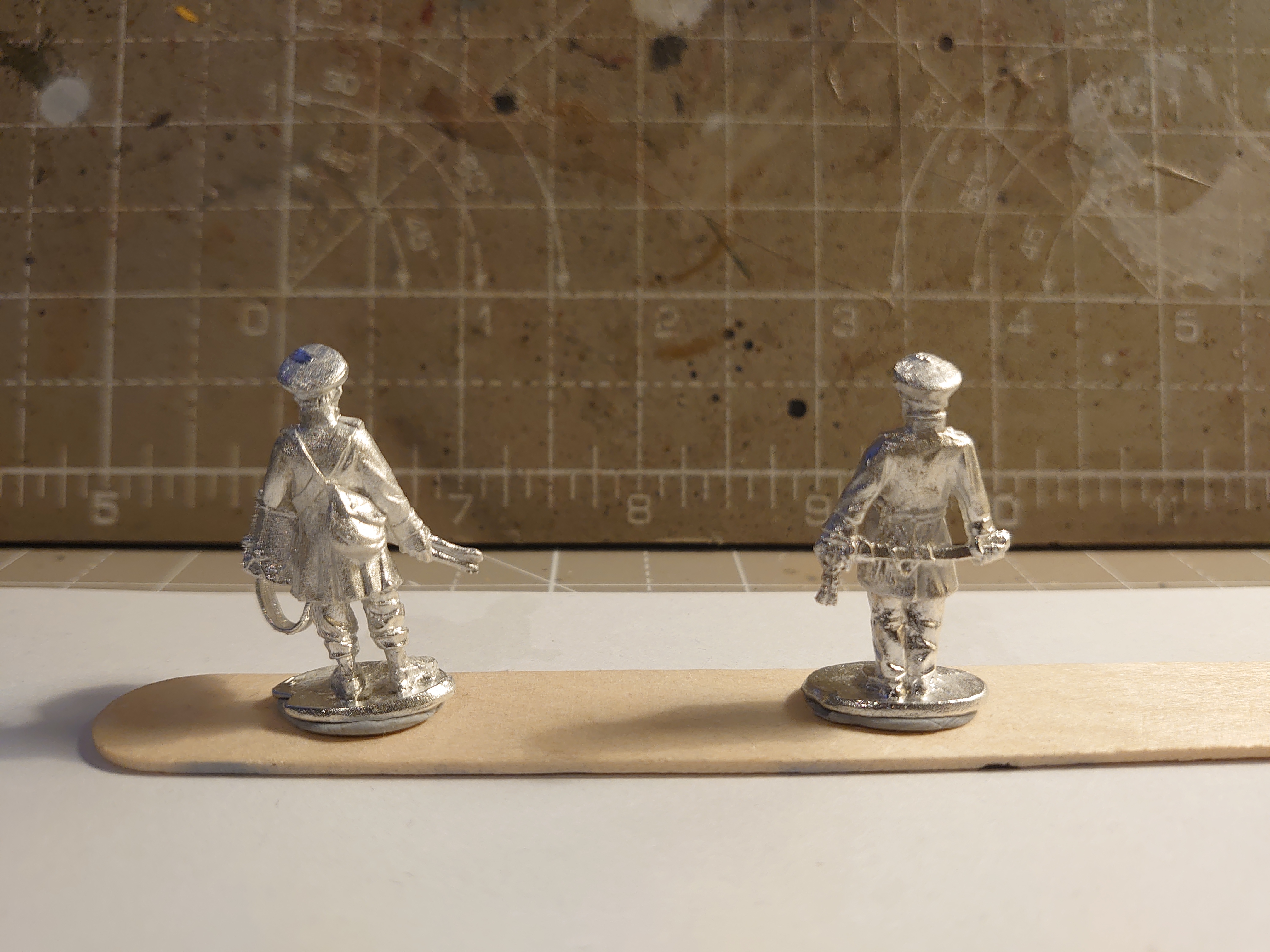
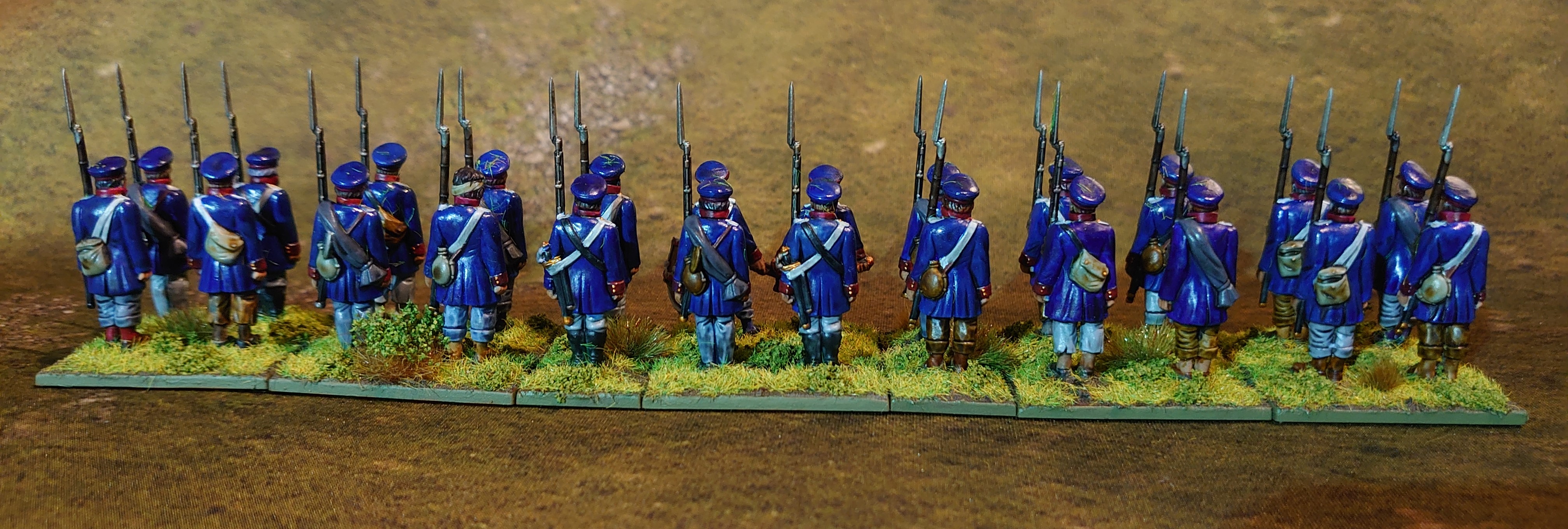
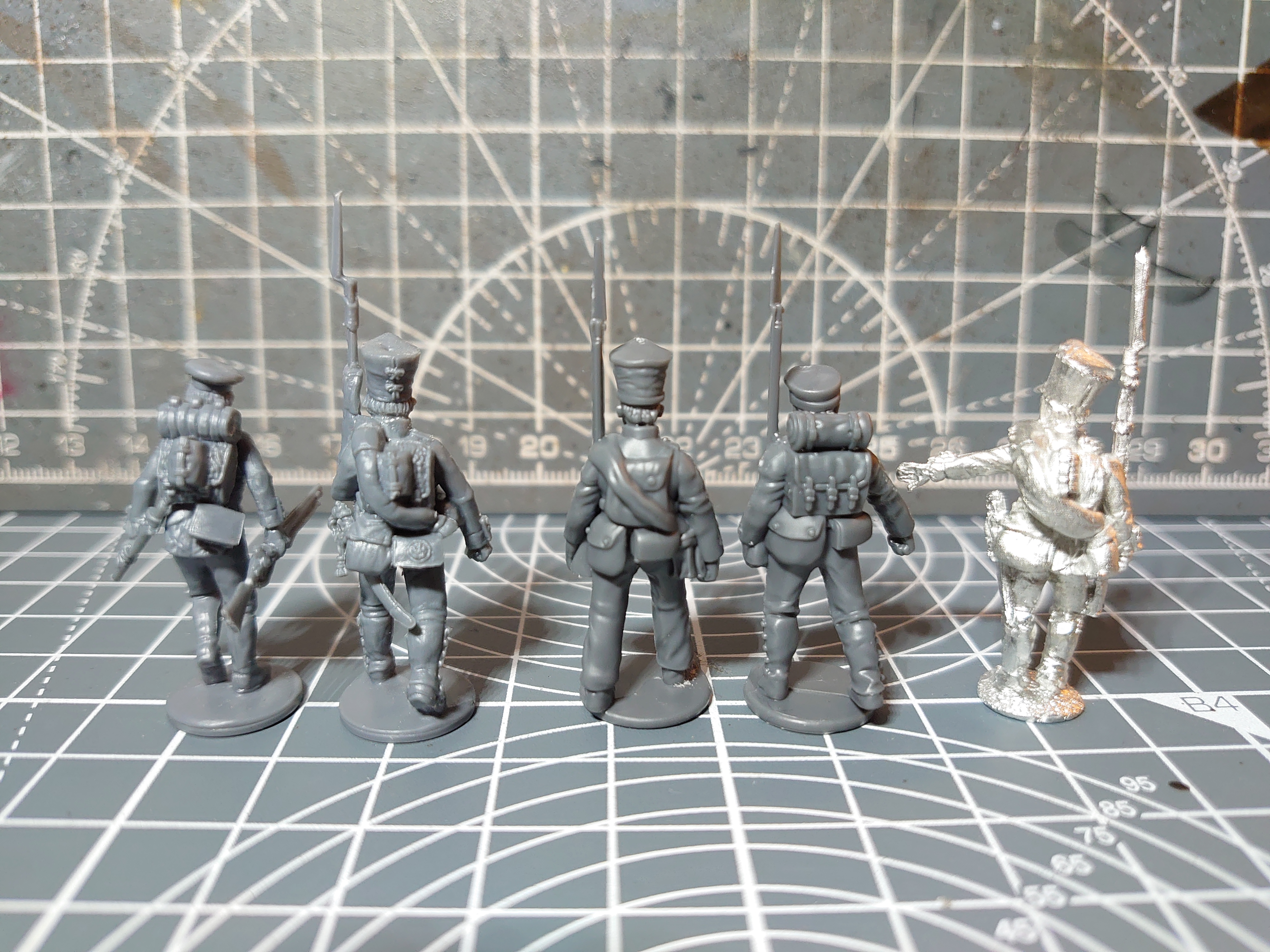 Same Comparison from the rear
As you can see these fits in almost perfectly with the Perry’s Prussian range, the sculpting style is different being digital but fit in scale and size well and dont look out of place.
I’ve got some more command figures on order from Front Rank and Calpe for some additional scale comparisons.
All round a fantastic kit from Wargames Atlantic, this leaves me hoping they will be doing more of these “Army Builder” Napoleonics.
A Review of Warlord Games Prussian Landwehr Regiment
Prussian Landwehr regiment 1813-1815
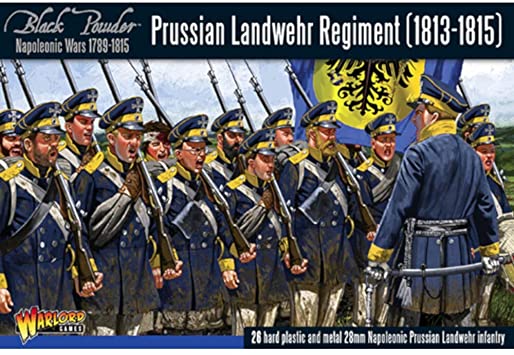 Box Art
I picked up a pack of the Warlord Prussian Landwehr for £13 after some bargain hunting.
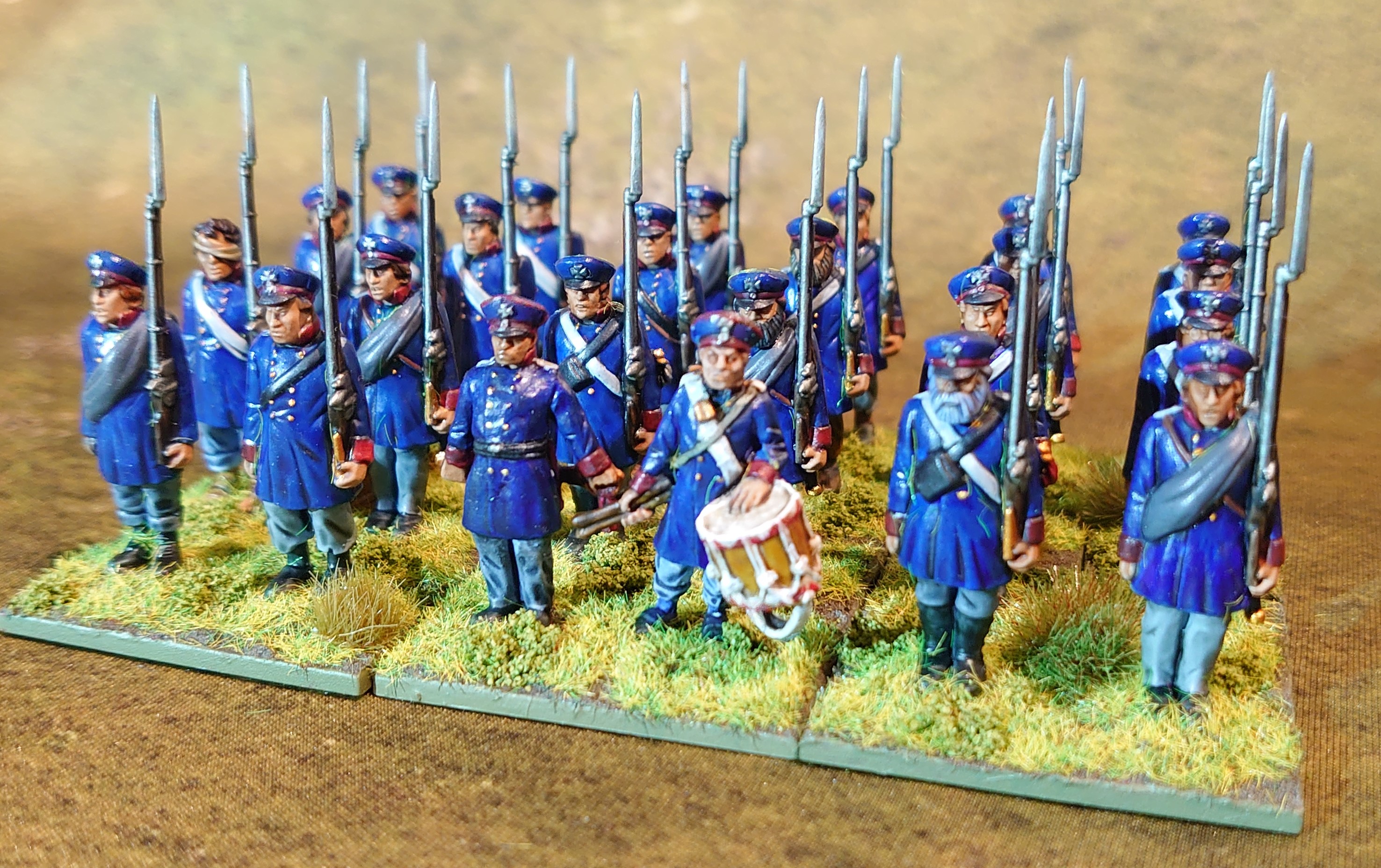
Overall, not a great set but for the price I can’t complain that much and they are certainly quick to assemble and paint, You interestingly get 26 figures, 24 plastics and 2 metal command, which is a bit of a odd number given most Warlord kits are 24 strong battalions.
The kits not up to some of the more modern sculpting standards and the figures feel quite hunched on the shoulders. The faces are perhaps the worst part, the spectacle wearing head is shockingly bad, and there’s also bandaged up head, overall you end up having to use these quite often. Surprisingly, this kit was released in 2017! The detail is reasonable but not fantastic for plastic.
The biggest let down is the metals, there’s very little definition in the detail, particularly the officers face, there also quite a bit shorter though they fit in reasonably well with the thickness of their bases, I believe this might be from their initial Prussian Range. They paint up reasonably well but either the sculpting wasn’t quick upto modern metals or the moulds seen its better days.
Competition wise these are the only plastic kit out, if your after Landwehr your going with this kit or metals. Therefore value for money these are excellent, as their is no direct competion on cost.
You do get a reasonably detailed leaflet included, with a fair amount of background on the Landwehr units including the colours worn (more in a future post) and a good range of potential flags to be used (again more in a future post).
I would give this a reasonable 7/10
Assembled Figures