







![Perfect Historical Wargame Objectives! Victrix Treasures & More Reviewed [7 Days Early Access]](https://images.beastsofwar.com/2026/02/unboxing-victrix-treasures_-chests-_-market-stalls-coverimage-225-127.jpg)



A Dive into Pillage



Recommendations: 1
About the Project
This is my dive into the new game from Victrix Miniatures. I plan to build warbands for the end of Romano Britain and the invasions by the Saxons, Picts and Irish. I'm also planning to delve into the Post 1066 and the Normans conquering Britain. I'm planning to look at the desperate campaign by the Saxons to try and cling to power in the aftermath of 1066.
Related Game: Pillage: Ransack The Middle Ages
Related Company: Victrix Limited
Related Genre: Historical
This Project is Active
Raiding in the Late Roman Period
In the Late 3rd Century environmental conditions around the Rhine, which gave rise to flooding and easier access to the sea allowed the Saxon and Frankish tribes to develop sea borne travel. It was at this time that the Roman Military started to abandon the are due to flooding. Which allowed the Saxon tribes more freedom to move and carry out raids.
With access to the open seas the Franks and Saxons began raiding into Roman Territories, in Britain the Fens became vulnerable to attacks, due to the coastline being easy to reach and in parts reached 30 miles inland compared to the modern coastline. As a result Estuaries and ports suffered problems, as these became easy targets for raiders.
The Saxons and Franks became raiders and pirates with the first recorded incidents between 260-278AD. The first major raid was in 260 AD in the aftermath of the capture of Valeria by the Persians. The Franks took the opportunity to raid Gaul, Sweeping through the country causing a lot of damage. The response by the central Roman Government was poor and this allowed a Roman army general called Postumus the ability to seize control of Britain, Gaul and Spain, whereby he created the Gallic Empire which lasted for 14 years.
During this period the Gothic tribes were also active in the Eastern half of the empire raiding over land and by sea around the Black and Aegean sea, where they sacked major cities such as Athens and Nicaea.
By the end of the late 3rd century there were raiders active right across the Roman Empire, from Scandinavia, Germania, Northern Britain in the form of the Picts, the Gothic, Huns and Alans in the East.
Vikings – Raiders of a Nordic kind
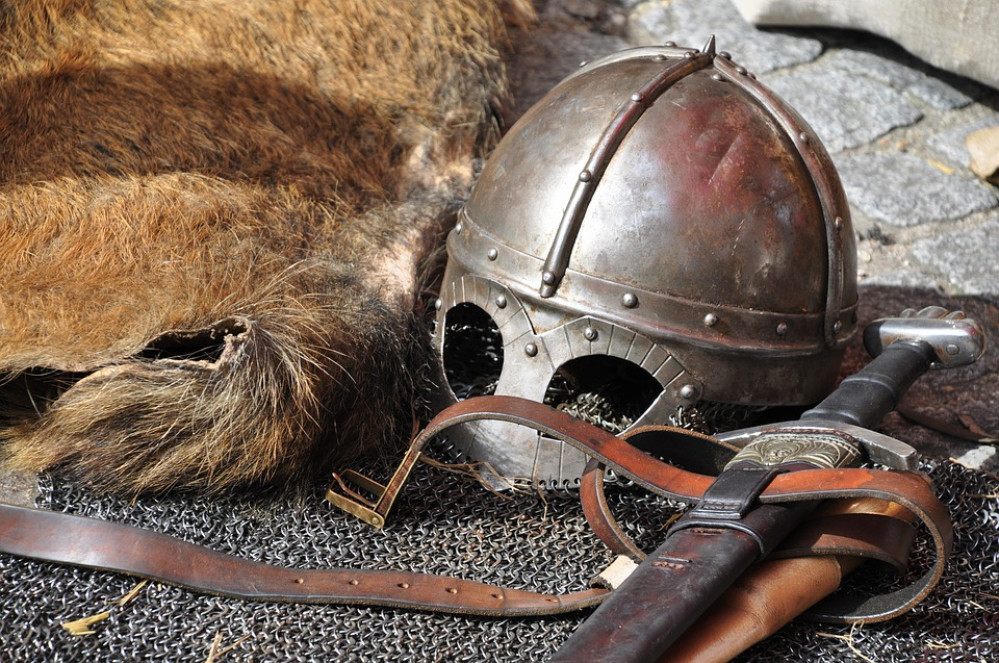
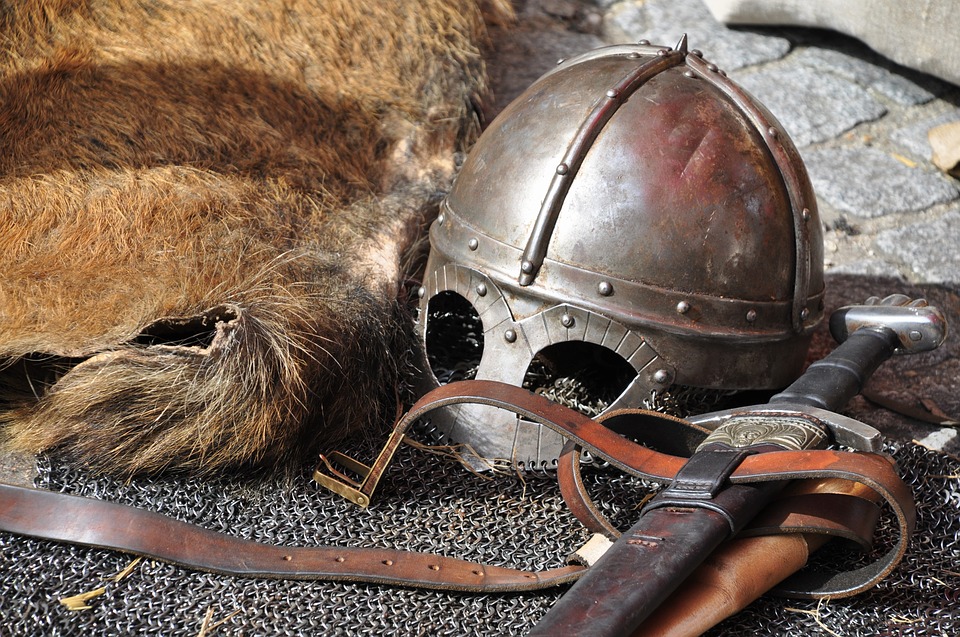
So what do we know about the Vikings, well the image of the horned helmet is a myth, its based on a bronze celtic helmet found in the Thames. There is no current archaeological evidence to support the image of a horned Viking helmet. Yes, they did raid the coast, but they were also proficient farmers, craftsmen and women as well a great explorers and sailors.
The Vikings heyday was between the 8th and 11th century, during this period the colonised large areas of Europe, the UK, Iceland, Greenland and were the first European settlers in what is now known as North America, or as the Vikings referred to it as Vinland.
In Old Norse, the word is spelt víkingr. The word appears on several rune stones found in Scandinavia. In the Icelanders’ sagas, Viking refers to an overseas expedition (Old Norse fara í Viking “to go on an expedition”), and víkingr, to a seaman or warrior taking part in such an expedition. (Wikipedia)
One of the first sites I came across of interest was The Viking Answer Lady, and the page in particular concerning Norse name construction. Though this wouldn’t be terribly useful for a wargame purpose, it would be great for those who are planning to role play Nordic characters.
The Vikings were renowned warriors and were considered quite fearsome in battle, so my next port of call was Regia Anglorum, a Dark Age re-enactment society in the UK. This site has a number of useful articles which include a detailed account of a Saxon/Viking Village called Wichamstow.
Viking culture is rich in myths and tales of the gods, and a couple of good sites which looks at this aspect of Norse life ad cultures are The Norse Gods and Hurstwic.
The Vikings were considered great explorers crossing the oceans to become the first settlers in North America, and settling in Iceland and Greenland. The Norse who came to Newfoundland were not fierce raiders in search of pillage and plunder. The Norse appearance here was the last step in a relatively peaceful expansion of livestock farmers across the North Atlantic, taking in parts of the British Isles, Iceland, Greenland, and finally Vinland.
Barbarian Conspiracy
In the late Roman period Britain had become the bread basket of the Northern Empire, providing vast amounts of grain to the army stationed along the Rhine and in Gaul. It had become a valuable region of the empire, and so was a target for raiders seeking loot.
In AD 367 Roman Britain was under attack from the Picts in the north, Irish and Saxons, many people at the time believed there may have been a conspiracy, including Ammianus Marcellinus, a contemporary historian, who called it Barbaica Conspiratio or Barbarian Conspiracy.
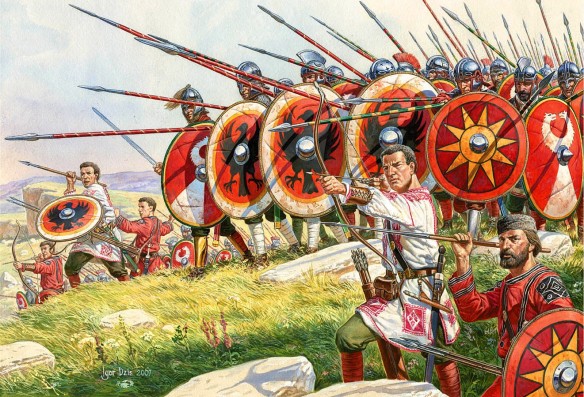
The question today is, what there a conspiracy or were the multiple attacks just a coincidence. For over a year the Empire had been fighting on several boarders against the Alamanni, Sarmatians, Austaraini and the Goths. It is just possible that the Empire was seen as vulnerable, and it was coincidence that they all attacked at a similar time. Empire was over stretched and the barbarians were able to take advantage of this.
In 337, thirty years prior, Constantine died, and the empire was divided between his three sons, Constantine II (Britain, Spain and Gaul), Constans (Italy, Balkans and Africa) and Constantius was given the East. There were now three emperors, who were all highly ambitious. In 340 AD Constantine II invaded Italy, civil war erupted and during the conflict Constantine was killed. Which allowed Constans to absorb Britain, Spain and Gaul.
There were now a Western and Eastern Emperor, but in the west things were still tense and unsettled. By 350 Constans had been usurped by Magnentius who retained control of the west until 353 AD, when he was over thrown by Constantius II.
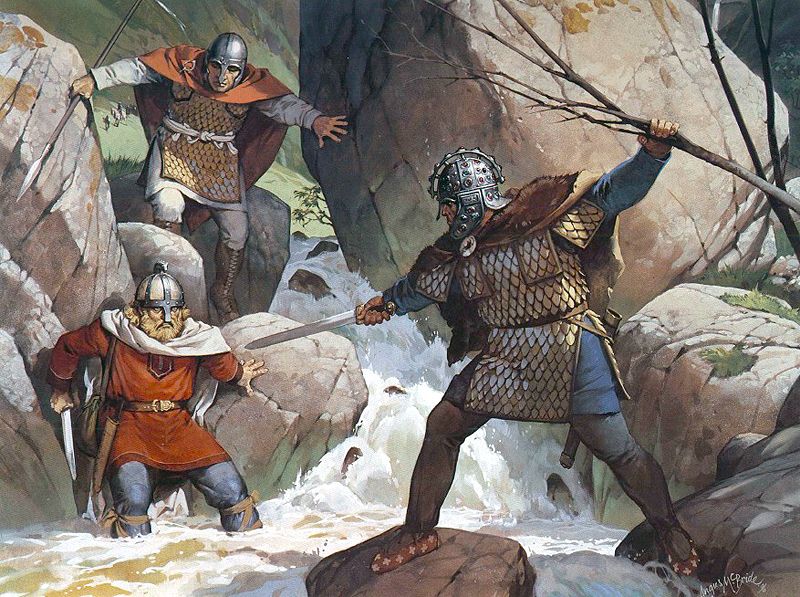
The Empire, especially in the west had been in turmoil since the death of Constantine, civil war and usurpation had added to the chaos. So its understandable that some of the barbarian tribes decided to take advantage of the situation. The first sign of this would be in 360 AD when the Picts and Scots broke a peace treaty, laying waste to the countryside near the Northern Frontier in Britain. The alarm was raised, and the Emperor responded by sending Lupiciaus, master of cavalry, who was a stout and fierce soldier, with a great deal of experience to deal with the troubles in Britain. During this time the Alamanni were causing trouble in Gaul and elsewhere.
By 364 AD the empire was under assault by numerous barbarian peoples. The Alamanni were ravaging Gaul and Raetia, the Sarmatians and Quadi were attacking Pamania. Back in Britain Picts, Scots, Saxons and Attacoti were bringing misery and conflict. Africa was under attack from Austariani (Moors) and the Goths were plundering parts of Thrace and Moesia. On top of all this Persia was stirring in the east. The Roman army would have been stretched beyond breaking point, unable to meet all of the threats. Troops would have been pulled from regions to cope with the most severe threats, which would have left those regions vulnerable.
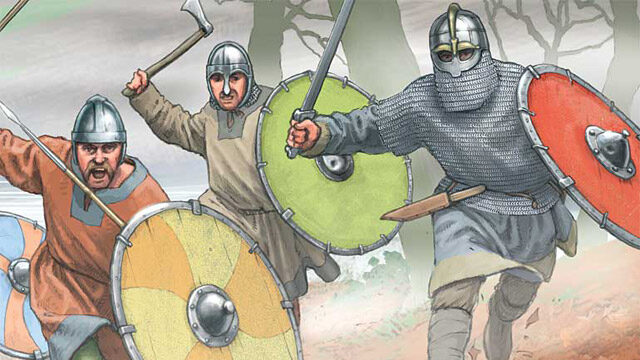
AD 367 is described as the year of the Barbarian Conspiracy. In Britain there was a concerted invasion by land and sea. Four peoples attacked Britain that year from different directions, attacking different regions of Britain. For the conspiracy to have worked, would have meant that it would have to been agreed upon in the years preceding AD 367.
There is no real evidence to support a barbarian conspiracy. For this conspiracy to have worked, then you would also have to add the attacks in other parts of the empire as well, because these attacks helped to pull troops away who could been sent to aid Britain. In the late fourth century this really wouldn’t have been logistically possible for all of these tribes to have worked together, and make a conspiracy work.
Though there was serious troubles during this period in Britain. Hadrian’s Wall had to be repaired in places due to the troubles. Parts of Kent were plundered, though these were probably more opportunistic rather than part of some conspiracy.
There was a degree of social unrest during this time amongst the populous, and the attacks by the Northern tribes occurred because of this situation, attacking and taking advantage of the fact that the Roman army was preoccupied. Local Roman military was over stretched and weak, the Picts took advantage, roving at large and causing devastation, but this was more raiding rather than a concentrated invasion by a well organised army.
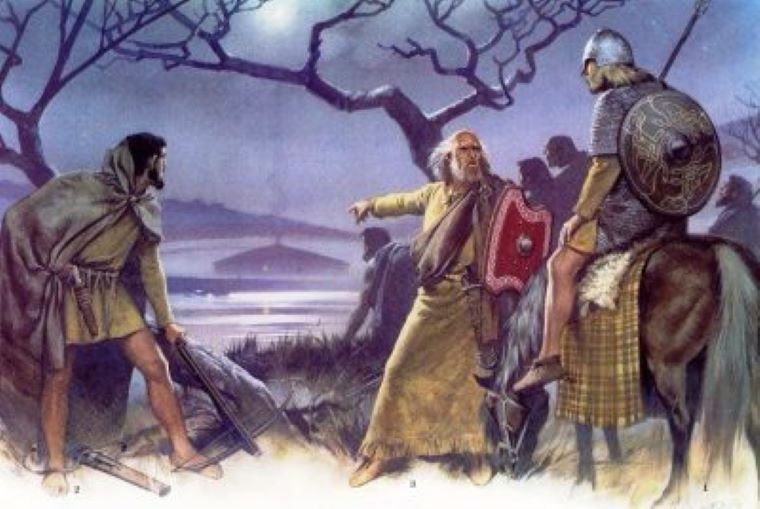
The Romans eventually sent Theodosius the elder with a group of regiments to restore order in Britain.