








![Pure Sci-Fi Nostalgia! War Rocket Review | Hydra Miniatures [7 Days Early Access]](https://images.beastsofwar.com/2026/02/unboxing-hydra-miniatures-war-rocket-coverimage-225-127.jpg)






Colour Theory… Part 3
December 24, 2011 by elromanozo


Video Sponsors: Heavy Gear - Infinity
Romain continues his epic tutorial on colour theory.

See the whole series...
Supported by (Turn Off)

Supported by (Turn Off)
Supported by (Turn Off)




![Zenit Miniatures’ Samurai Warlords Now Live On Kickstarter [Updated]](https://images.beastsofwar.com/2026/02/samurai-warlords-launch-main-600-338.jpg)
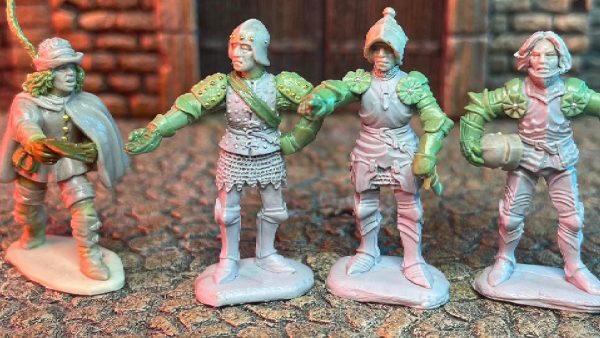
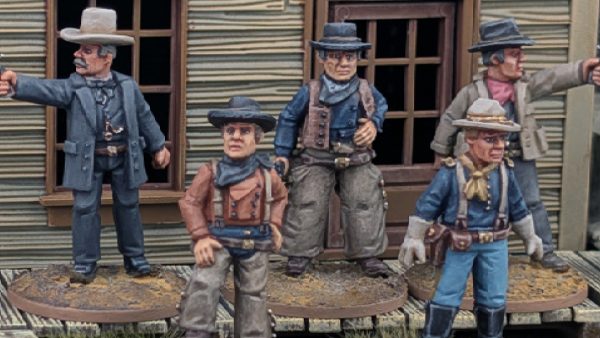
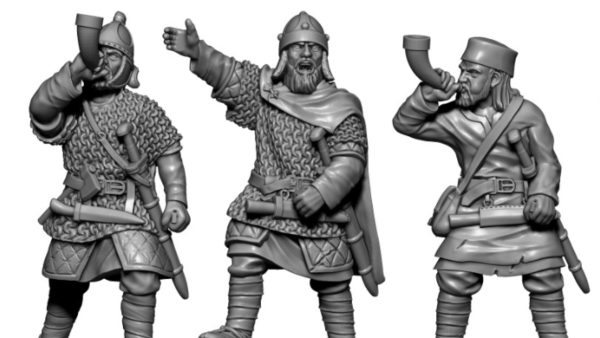
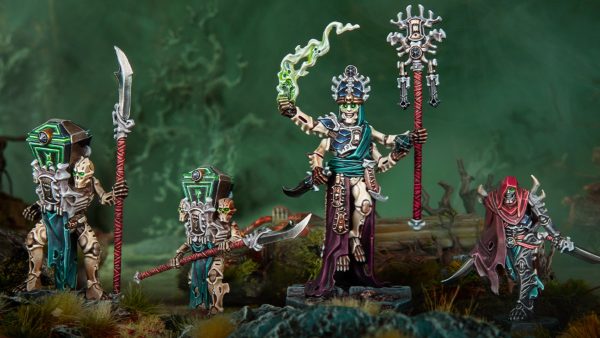


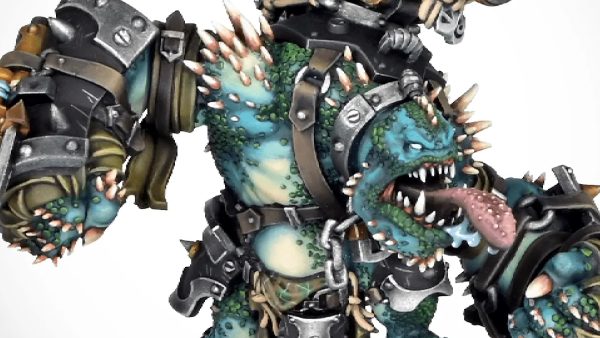
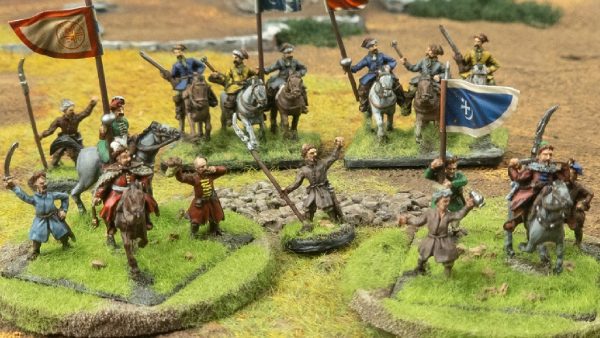
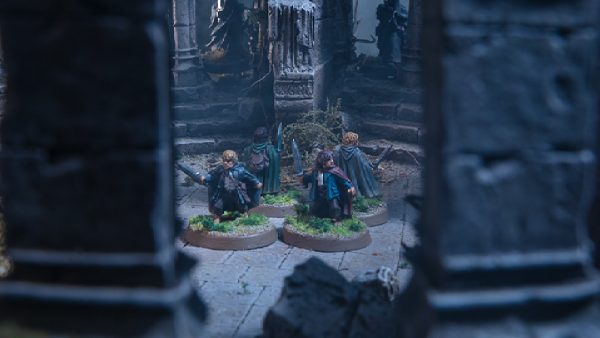
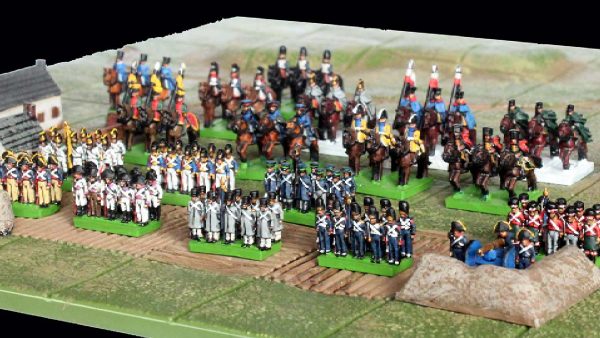


So the greatest contrast is complimentary. Interesting terminology. Do they do that just to confuse us? I guess they are not mutually exclusive terms, but they seem like they should be. 🙂
Personally I think the requirement for uniformity of color is due in some part to the limitation of scale, and also to the inherent appeal and functional benefit of visual cohesion as it applies to a large collection of miniatures / models, which is lost without an enforced uniformity.
With regard to vivid colors in nature, I can recall a mountain meadow loaded with a full spectrum of color – from the flowers – that I found quite appealing. I think the chaos of color in certain settings is perfectly appealing, if there is no environmentally imposed organizational benefit to the visual information. If the benefit of uniformity is neutral, our counter to the architecture and information processing of the image, then I don’t think there is a natural preference. I think the underlying structure of the visual information imposes its own relationship to the appeal of harmony against complexity / contrast.
It’s interesting that the rules of Heraldry reflect many of these theories, in particular the Tincture rules from the Pectra Sancta of the 1630’s which defined which colors could be used against each other. This article has some great information on it: http://www.internationalheraldry.com/
Painting from the pot!!!! Nevermind???? Sacrilege!!! Heresy!!! Damnation!!! Quick, 10 Hail Monet’s to absolve your painterly soul!
The inverted color scales are sort of confusing and helpful at the same time (the painted vs the graphic)!
How would the 3 color triangle work if you were using white, (or black) as a color instead of a value?
I think you mean “complEmentary”… But it is indeed confusing, in English.
It’s all right if you have more than three colors on a miniature, or on anything, as long as the majority of colors are following the “rules”, so to speak… You may very well paint a wizard with a blue robe, brown boots, tan flesh and beige parchment (brown, tan and beige can technically be the same hue, just at different values and qualities), shooting a fireball (red-orange), with red gems (still red), gold and silver metallics (don’t count, or look like orange). If you want to add some green in the shadows, or some teal to the robes, no one’s stopping you… If it stays discreet, it’s not a breach of the “rules”.
In any case, a miniature isn’t a whole countryside. And even then, a field in spring is usually only green on blue… The flowers have bright and vivid colors the better to attract the attention of insects.
Painting from the pot… Yes. Mea culpa, mea maxima culpa.
As for white, it doesn’t exist pure on a miniature. It always depends how you shade it. Same thing with black and how you highlight it. If you shade it with a certain color (usually beige/brown or blue/grey, but people have been known to use khaki or green), then it’s easy to complement… If you’re just using neutral grey or black to shade your white (or neutral grey to highlight your black), then one of the points of your triangle is simply the center of the circle.
That said, you’ve got to have a good reason to use such a neutral color as a major or minor color on your miniature… Many people prefer tinted blacks and whites, as they’re usually more realistic. But if you’re doing a whole miniature in black and white, the results can be striking !
We’ll see more about quality and value in further videos.
BoW Romain
Thanks Romain. We are all taught about colours as kids but that doesn’t mean we remember how to use them- so thanks, these three vids have been very useful. One question: I sometimes have brown as one of my three colours but I don’t seem to know how to contrast it. It seems that some browns fall on the red-yellow side of the wheel while other darker browns have a little bit of green or blue to them? So, what is the deal with brown?
Aha ! Excellent question.
I will explain brown in further videos, hopefully to your satisfaction.
Suffice to say that brown is a mix of all three primary colors, in different (not equal) proportions, with a majority of orange.
It’s sometimes tough to determine “exactly” what enters the composition of a brown, but it’s usually enough to see if it’s more yellow or more red, and plan shading accordingly…
I sometimes shade browns with blue, especially if the browns are “organic” (fleshtones, etc.), but a dark green does the trick as well.
The complementary color isn’t the only way to shade, however, as you’ll see in other videos.
Happy painting,
BoW Romain
This video was a bit better for me. I am revisiting colour theory as I have a tendency to use red and black on my armies and I want to use other colours. A useful idea to grasp some of the ideas of contrasting and complementary colours is making a colour chart. Try putting colours together that follow the ‘rules’ and then try ones that break them.
That’s the spirit !
BoW Romain
I think I’ve been using this 3 colour rule as well as complement theory for some time now without me even knowing. I tend to stick with a limited palette but I go with what I think looks nice with the dominant colour.
I might have to practice colour theory every so often. The reason because I prefer to know I’m in control and making choices for a reason rather than just guess my way threw painting.
I also had a question. A teacher once showed me adding yellow to black makes an olive type colour. What will that fall under in the colour wheel?
Black paint is usually a very dark blue or a very dark green, and sometimes a very dark grey… In all these cases, it means you’re essentially adding blue/green or blue/red/yellow to pure yellow. It naturally tends towards crappy olive…
I’m not sure what your exact question is… However, in further videos, we’ll see bout shading, brightness and saturation, and you might have your explanation !
BoW Romain
To be honest I don’t even know what I was asking you. I just know if I want crappy olive I just add yellow to black 🙂
I used that for mud and dead under growth on basses before. Also something he showed me for painting (I don’t know why it looks good but it does) dark skin tones like people from africa is to use green for slight shading. It works on canvas but I have yet to try this on models.
Yes indeed… But not just for dark skinned people ! Blue and green work quite well when shading pink carnations.
I filmed a tutorial about dark skin… Stay tuned !
BoW Romain
I have a feeling it all comes down to telling a story. Why green? Because what might be reflecting light onto the object might be green. Im starting to see that there is more to painting at pro level than just having a seamless blend.
In this case it’s not just about telling a story, it’s about being realistic.
Shadows ARE perceived to be of the complementary color, often times. Painters from the Renaissance onwards used that technique for faces, mixing in green with the pink flesh of their portrait’s faces.
You must really understand that I’m not covering any sort of backlighting, here.
BoW Romain