







![NO Weekender Or Cult Of Games XLBS This Weekend [Updated]](https://images.beastsofwar.com/2026/03/No_Weekender_and_XLBS_this_Weekend-225-127.jpg)





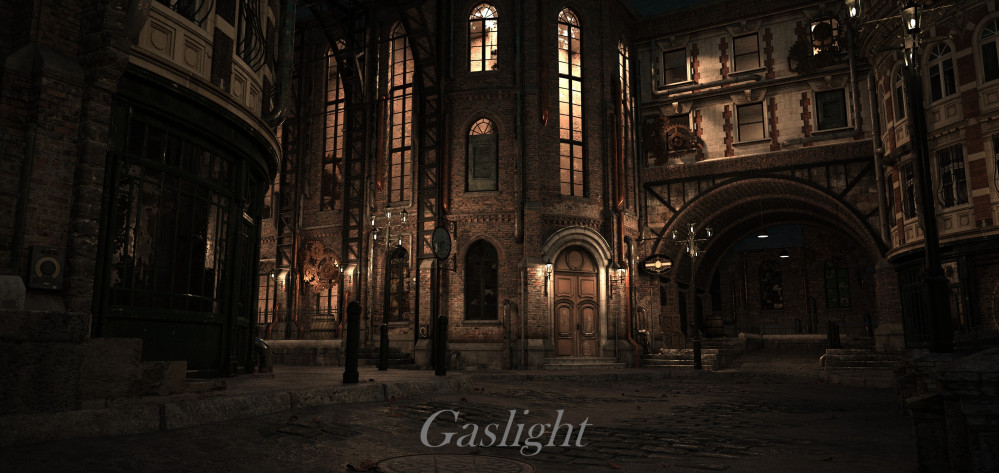
Gaslight




Recommendations: 467
About the Project
The Prussians have been carrying out lightning-swift strikes all along the western edges of the British Martian Protectorate and have sent Queen Victoria’s forces reeling back towards the capital, New Brighton. The Grand Martian Canal has slowed the advance of the Kaiser's forces, but it is only a matter of time before the Capitol is besieged. Back on Earth, things are no better. Prussian troops have established a firm foothold in the southwest of England and are slowly advancing towards major cities. Meanwhile, small parties have been sent to Egypt in search of one of the Lost Keys of Power. It has been way too long since we visited ‘A Tale of Two Worlds’ and it is about time I pulled my finger out and built some more up-to-date terrain for it. Victorian/Steampunk-style buildings could be useful on both Earth and Mars, so I think I will start there and if I get a chance maybe move on to either some Martian terrain or Egyptian terrain. Basically, this really could go in any direction.
Related Genre: Steampunk
Related Contest: TerrainFest 2023
This Project is Completed
Kick-off Time
Well, it’s officially the 1st of October here in Perth so that means I can start kicking off with some terrain. I have a lot of ideas buzzing around in my mind and a lot I would like to get done so with that in mind it’s time to get busy.
With this little project, the aim is to incorporate a mixed set of mediums, 3D prints both purchased STLs and ones of my own making, traditional scratch building and possibly even converting of existing kits.
However, the main focus will be speed for this, and I will aim to share my method of speed painting buildings. Now I don’t claim to be an expert at this, but I have settled on a rather quick process that is incredibly easy to achieve in almost no time at all.
New Brighton
New Brighton is the capital city in the ‘A Tale of Two Worlds‘ Victorian Science Fiction Campaign that we started up some time ago now. The campaign is set on both Earth and Mars during the height of the Victorian Empire. War rages across both planets as both Humans and Martians are drawn into the fight. Earth forces have long established settlements on the red planet and have drawn inspiration from their home world during their construction. Flying ships called Aeronefs, or Nefs for short rule the skies and also provide important transport networks to supply smaller outposts.
The buildings I plan to do for this will be able to be used for both settings and also some of them would also be usable in more conventional historical games.
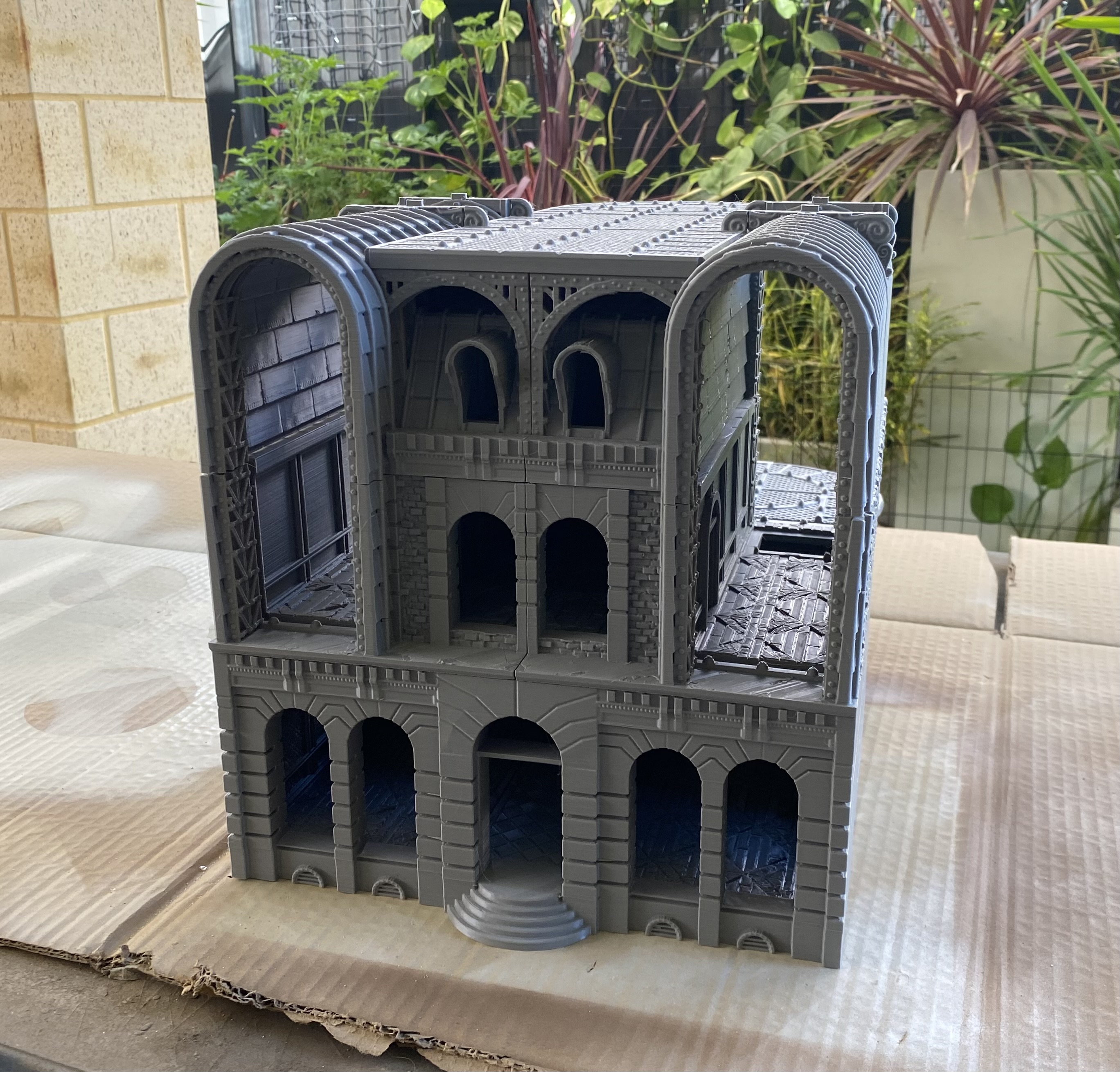
As Nefs are the main form of transport in this alternative setting it seems only appropriate that we start this with an Aeronef Station. Thankfully I have this rather large 3D printed building that has been gathering dust. Just the thing to demonstrate my painting technique.
Quick Painting
Quick painting.
The first thing is to undercoat the model. I use spray paint for this.
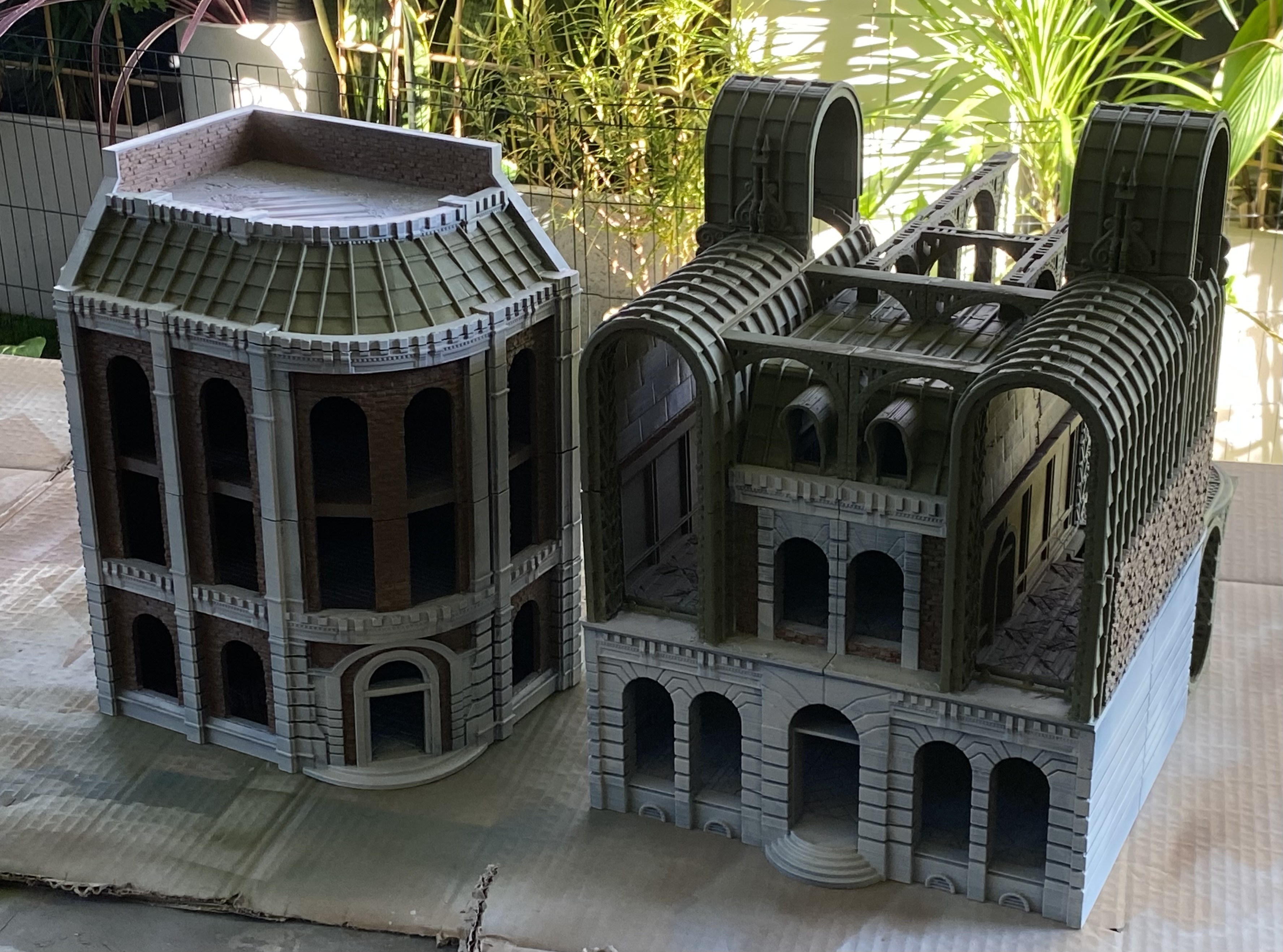
My first bit of advice is to use colours that are also available in pots of paint. This way it is really easy to cover up overspray. I gave the entire model a spray coat of Army Painter Leather Brown. I use this colour a lot and it’s my go-to for the base coat of brickwork.
Once that is dry enough to handle the model I then go through and use spray paint to pick out the other areas. In this case Death Guard Green by Citadel for the roof and steelwork and Mechanicus Adeptus Grey for the areas that will become off-white. I then go over the grey areas with Wraith Bone Spray, also by citadel.
All the colours used so far are also available in individual paint pots.
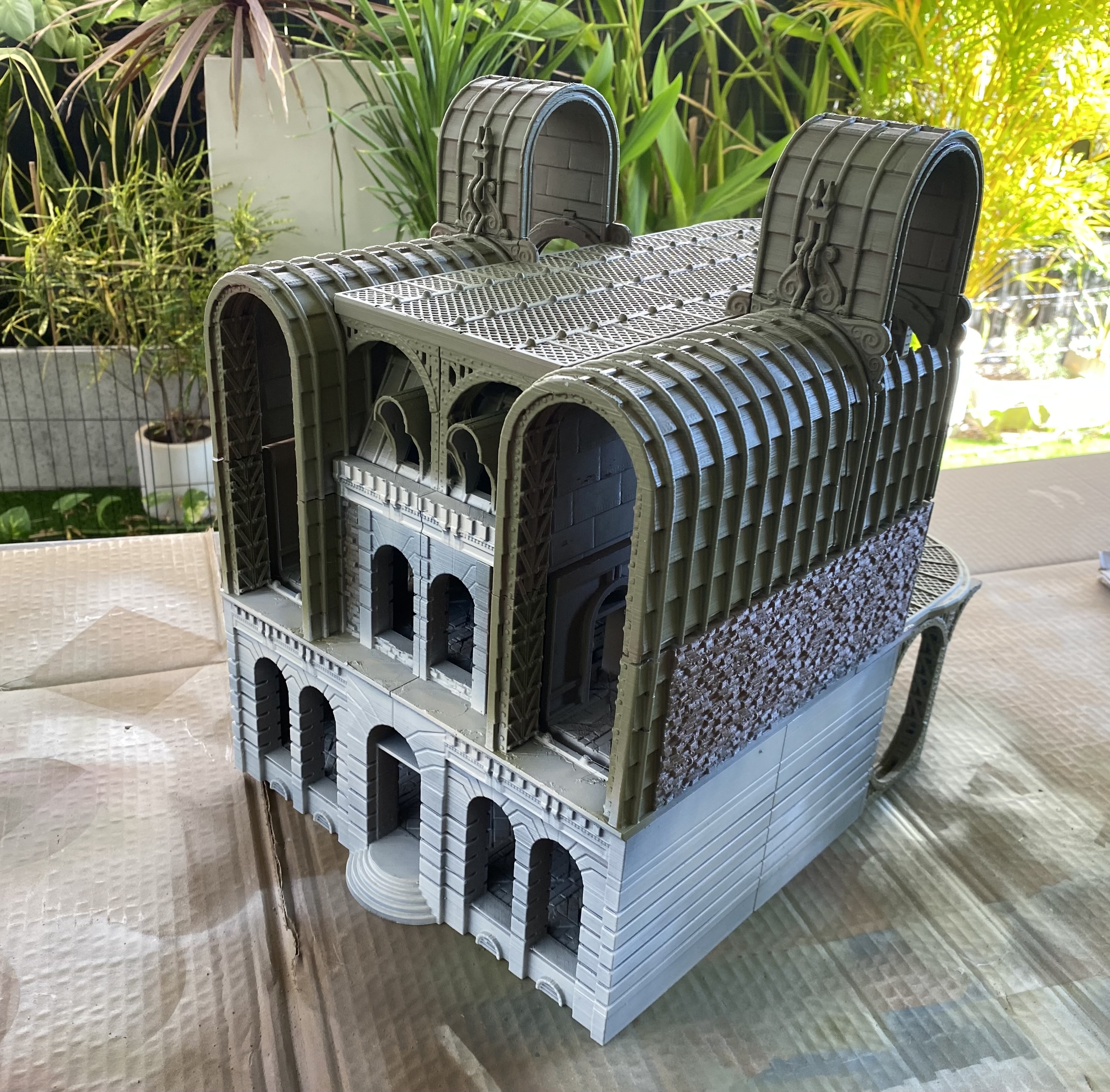
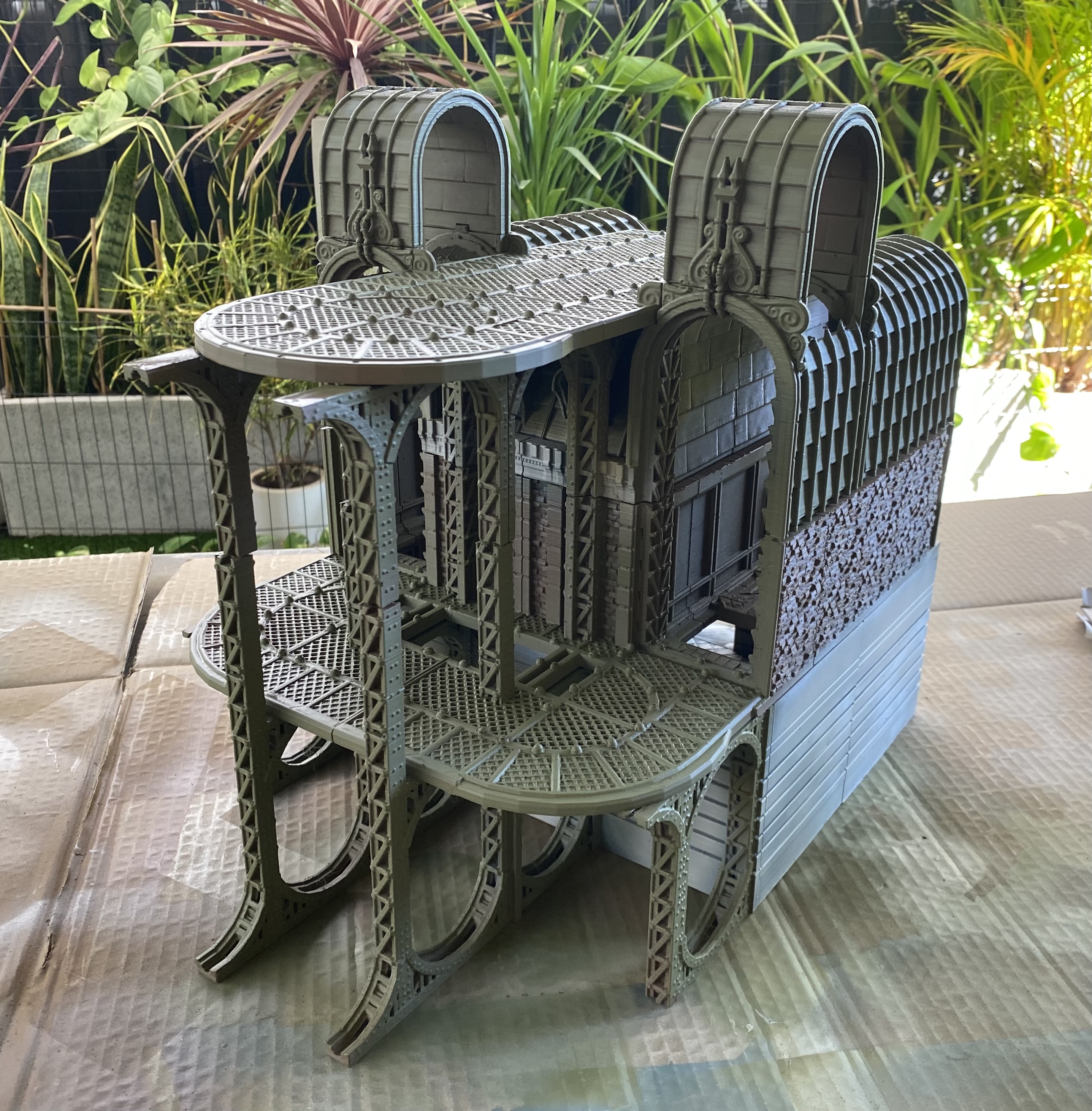
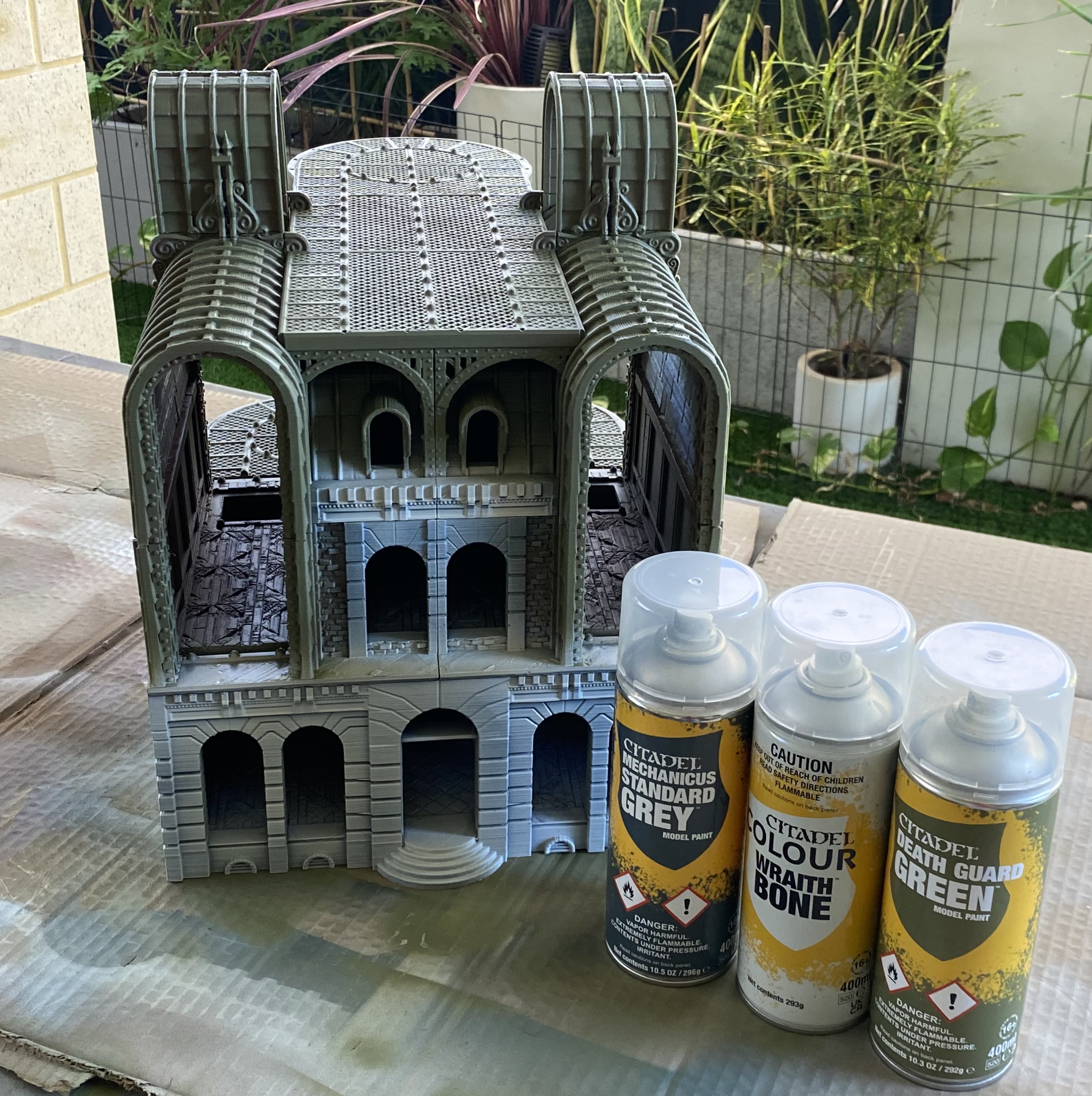
It doesn’t take long for the primer coats to dry here, and I like to work on a few buildings at a time.
The second building is going to be a bank or something similar.
Clean up all the overspray using a big cheap brush and the relevant colours. Leather Brown, Death Guard Green or Wraith Bone. The brush that I use is a really cheap flat hobby paintbrush that I picked up from the local hardware store. Doing two buildings at the same time allows the paint enough time to dry before moving on to the next colour.
I decided that the roofs would look better in tarnished copper. so gave them a quick wet-brush with metallic copper paint. Any metallic copper will do. Once that is dry, I gave the roofs and steelwork a coating army painter quickshade. I used this as it was a cheaper option than using Agrax Earthshade and over here the stuff dries pretty fast.
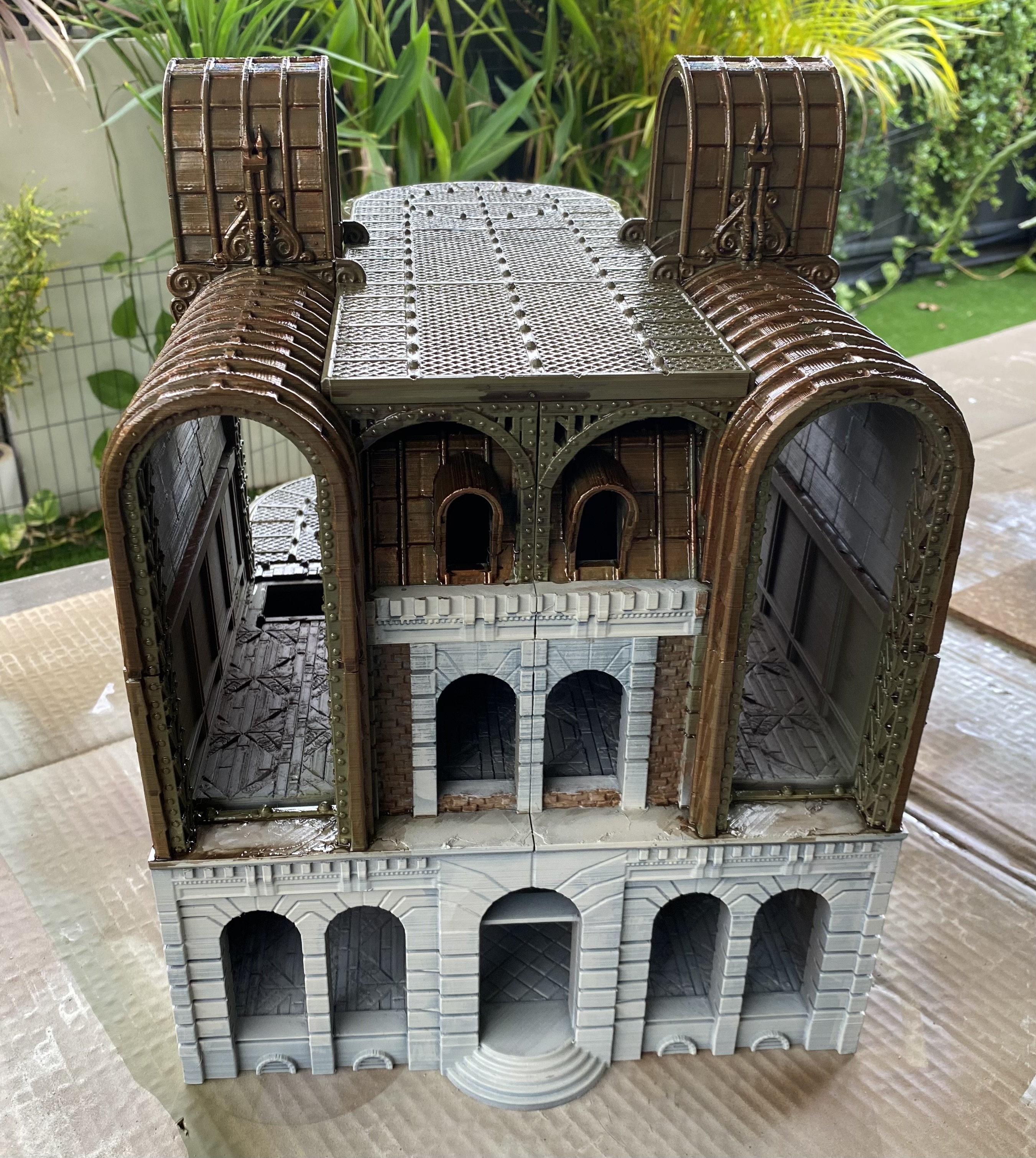
In hindsight, I could have done this before touching up the overspray on the wraithbone but at the time my initial idea was to do green roofs. Oh well, sometimes it’s good to just go with things on the fly.
Now just time to let these dry.
Once dry.
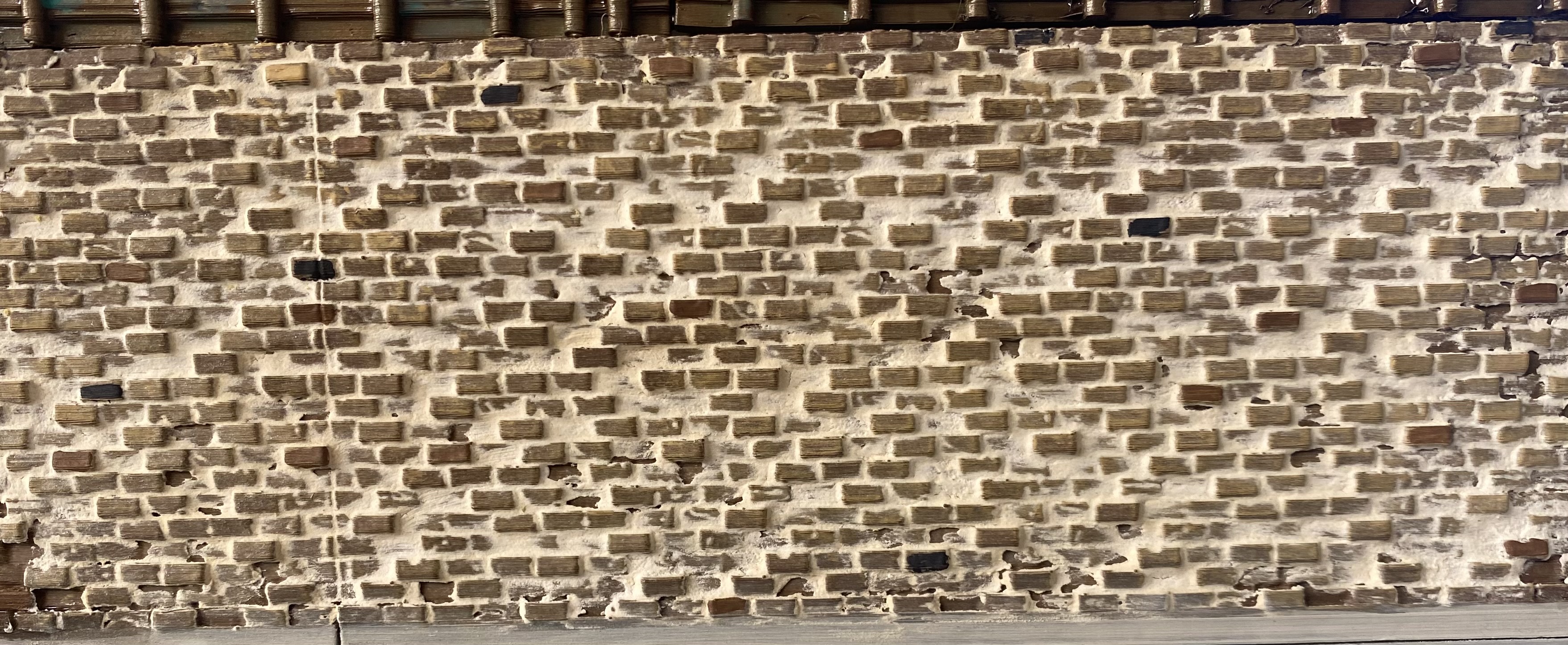
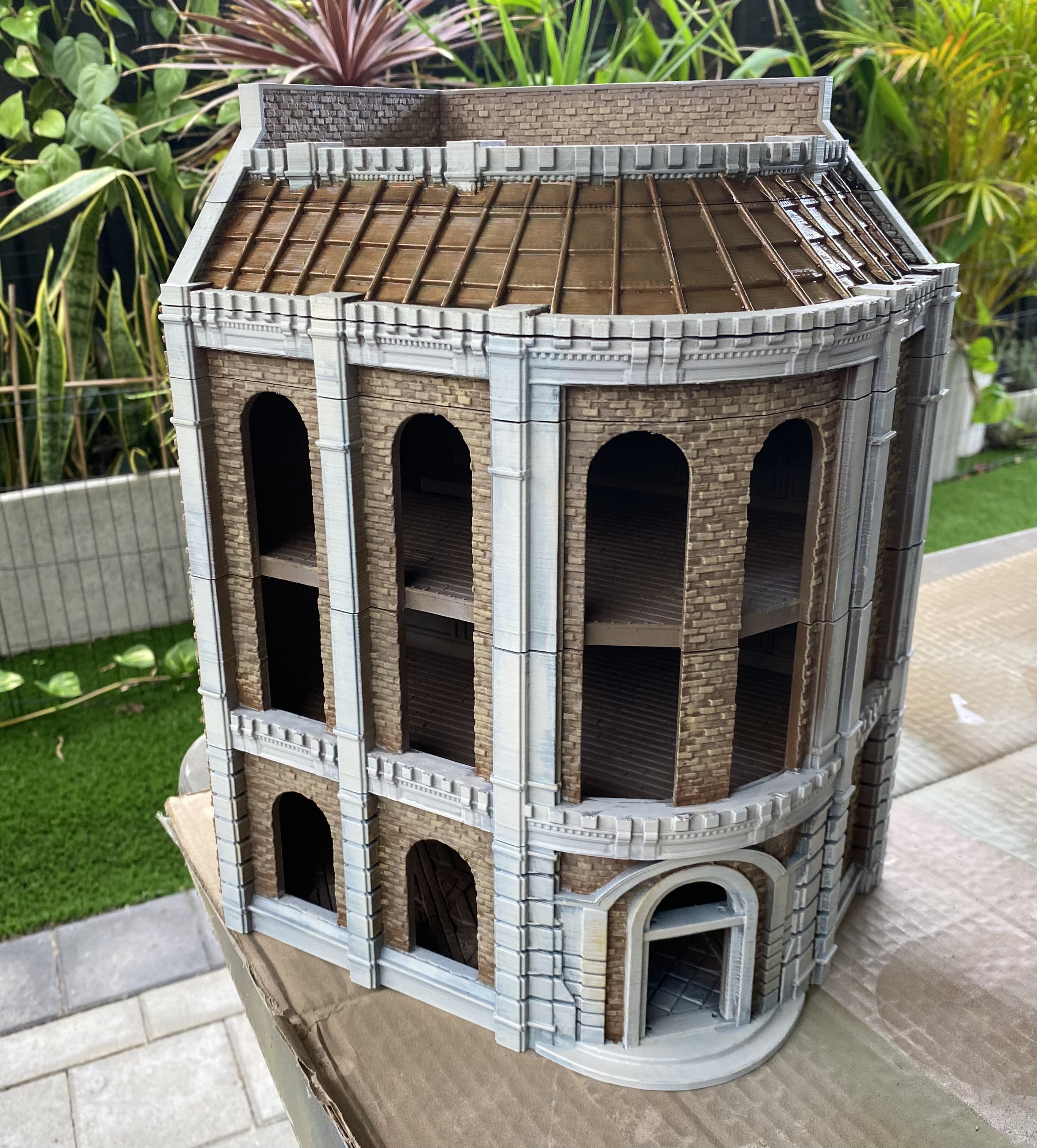 Once the Quickshade or Agrax Earthshade is dry take a light sand colour and dry-brush the brickwork. Any light sand or bone-type colour will do. If I am doing a lot of walls, I go to the local hardware store and get them to colour match colours for me. For these though I just used miniature paint. Iraqi Sand by Vallejo to be precise.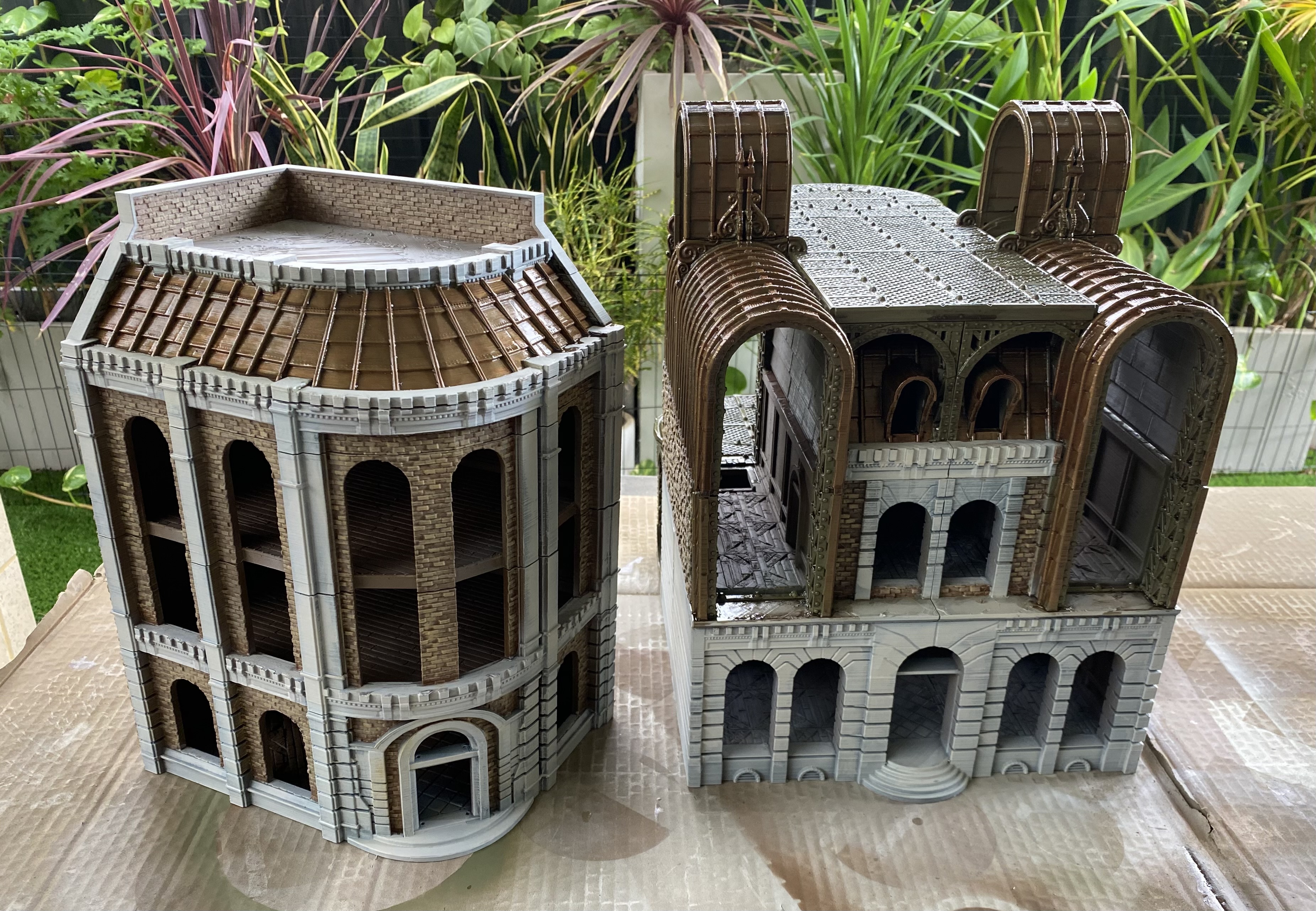
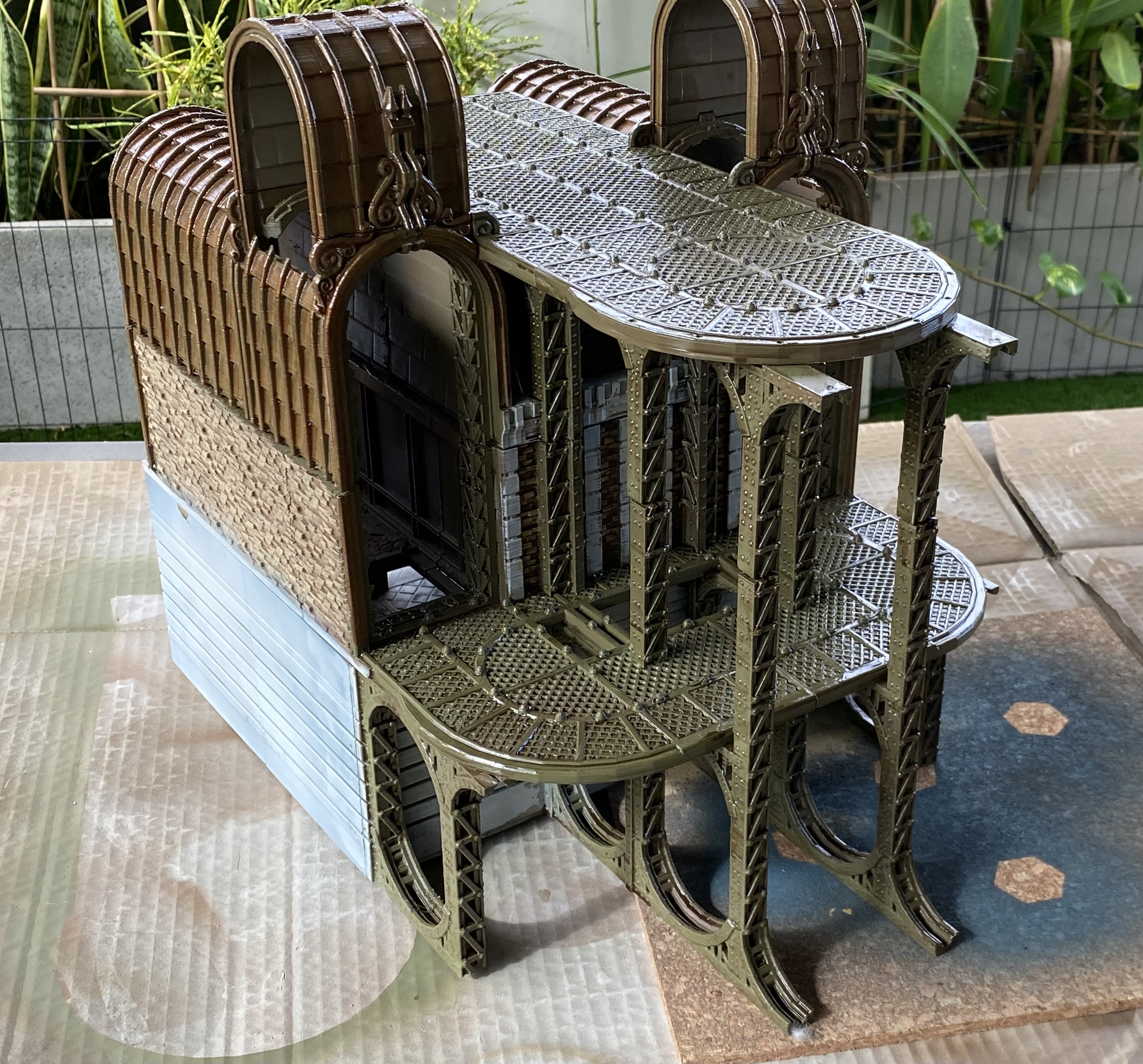
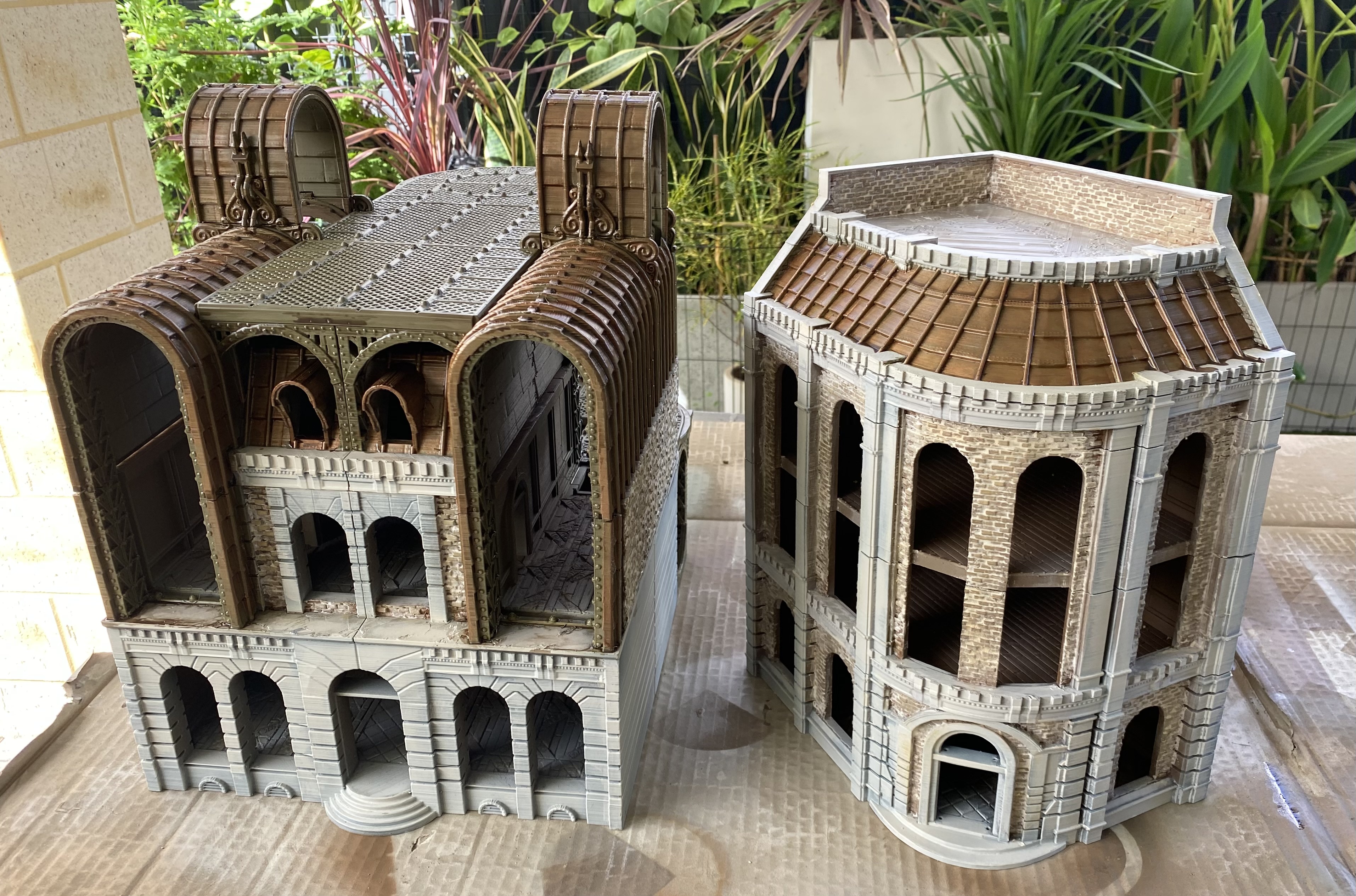
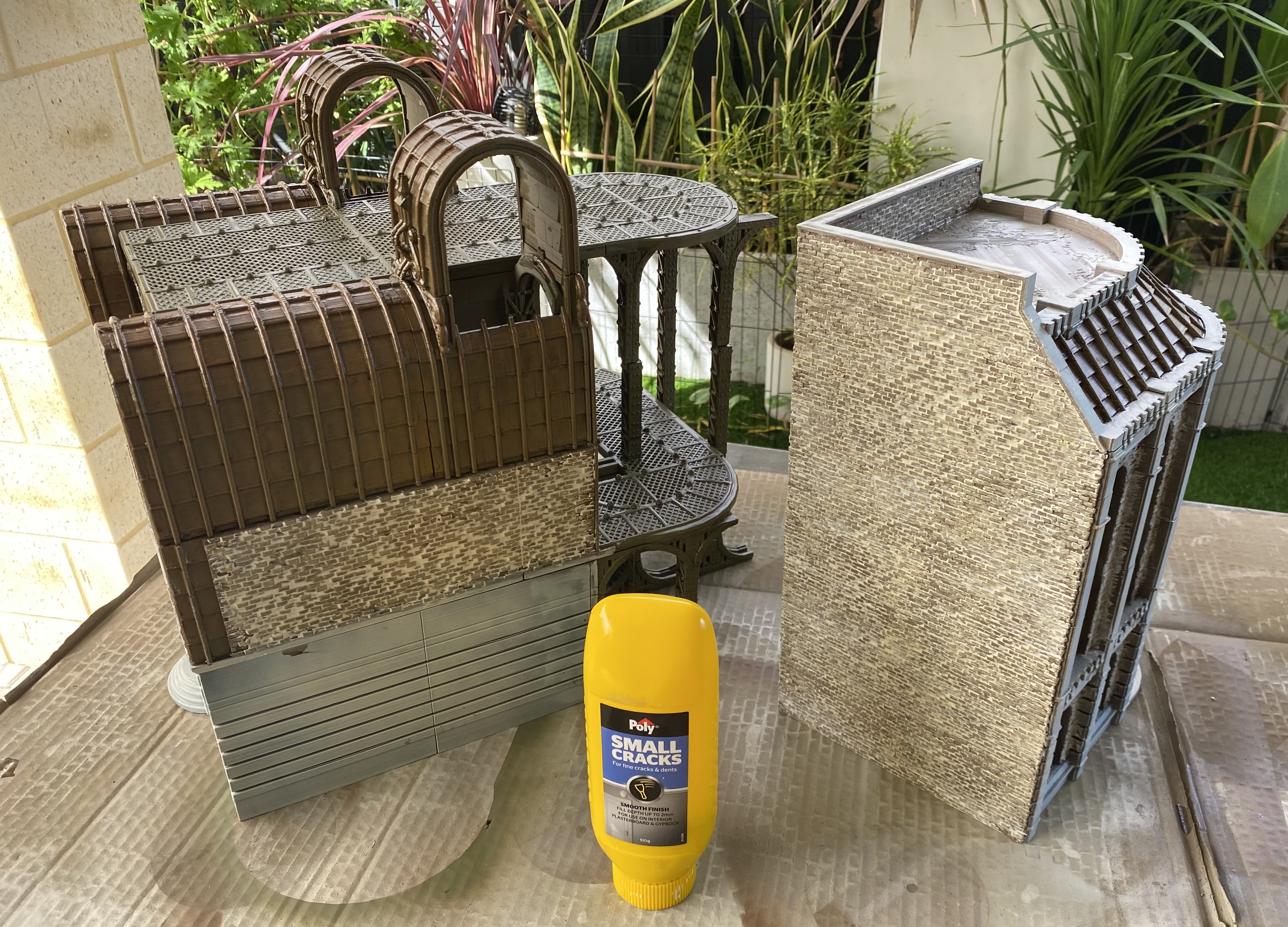 The next stage was smearing regular filler mix over the brickwork and then before its dry, wiping it with a wet clothe. This will leave some filler in the gaps between bricks and also remove some of the paint from some of the stones. It gives a nice irregular finish. Once that was dry, I just tidied up the bits were the Quickshade had gone over areas where I didn't want.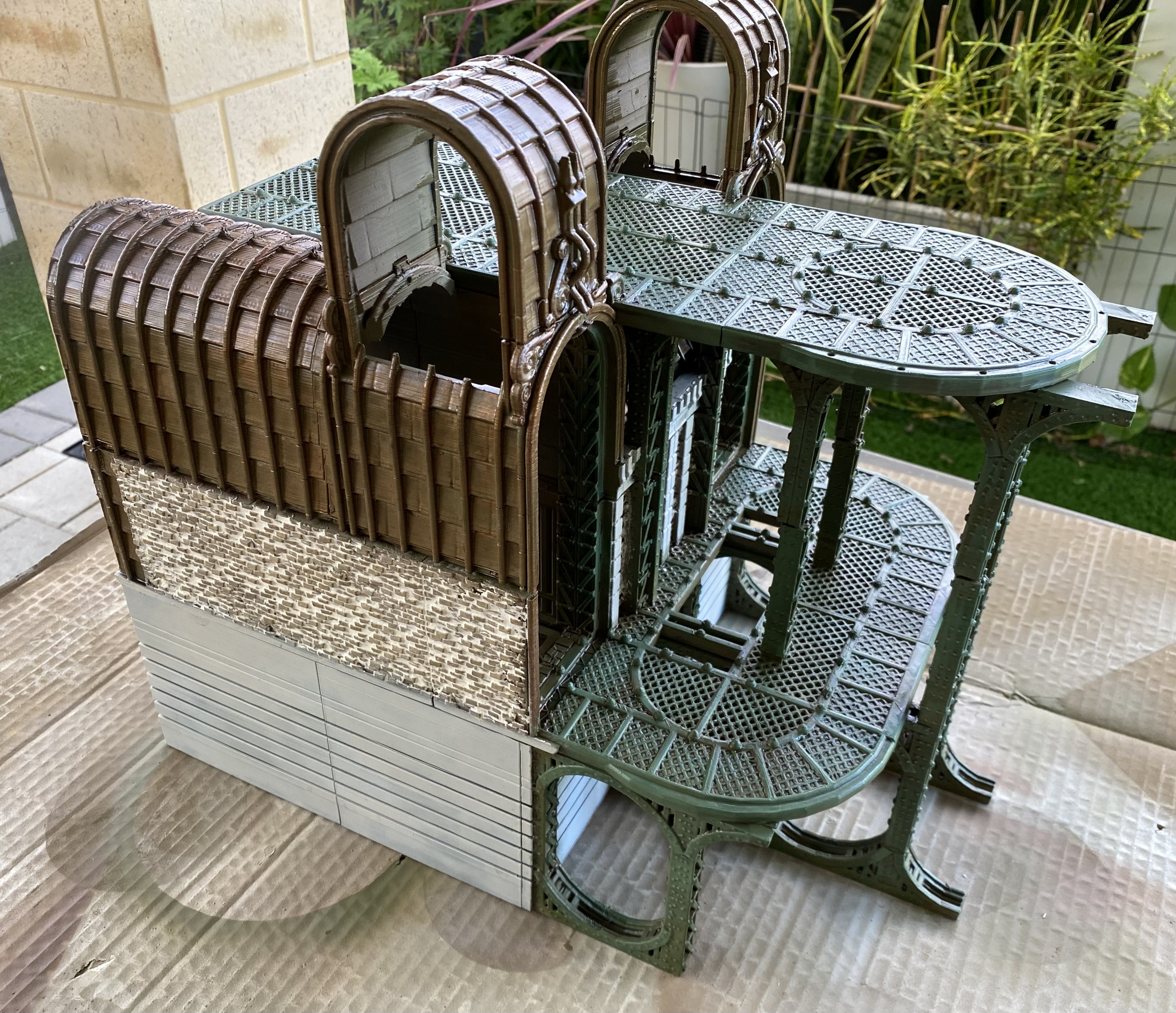
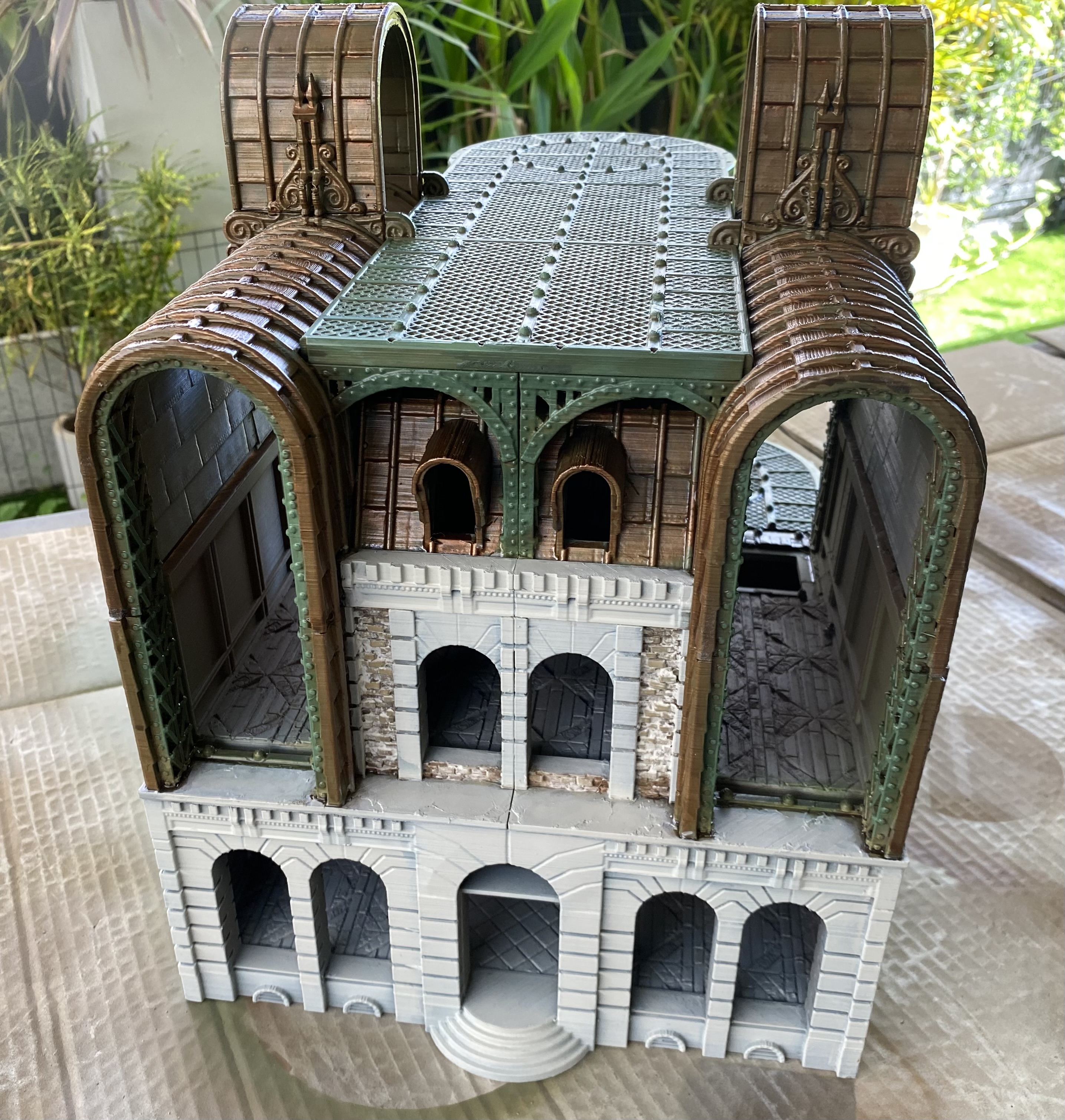
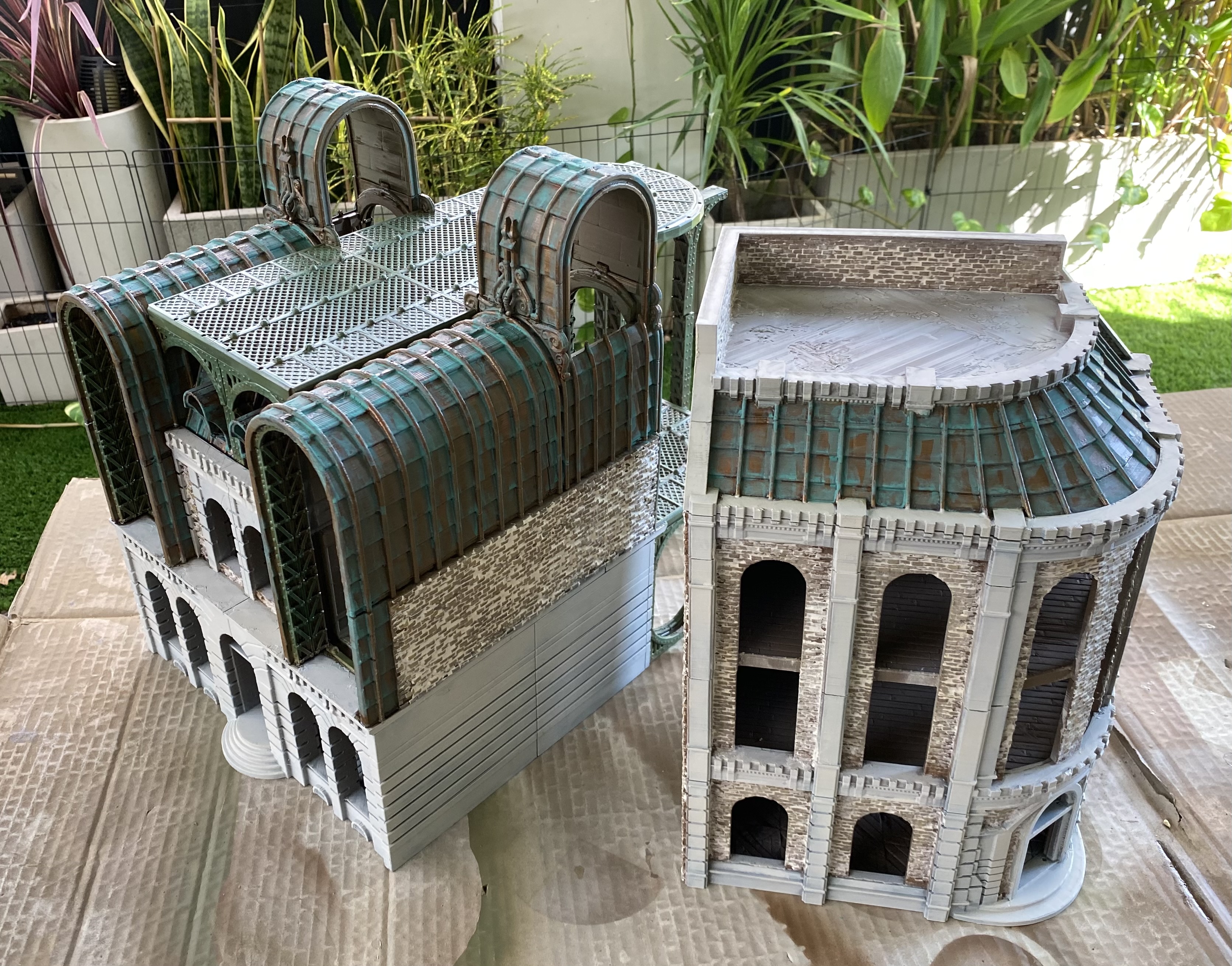 Next was painting some Citadel Nihilakh Oxide on the rooves. I was quite liberal with this because I planned to lightly drybrush copper back on to blend it in a bit.
 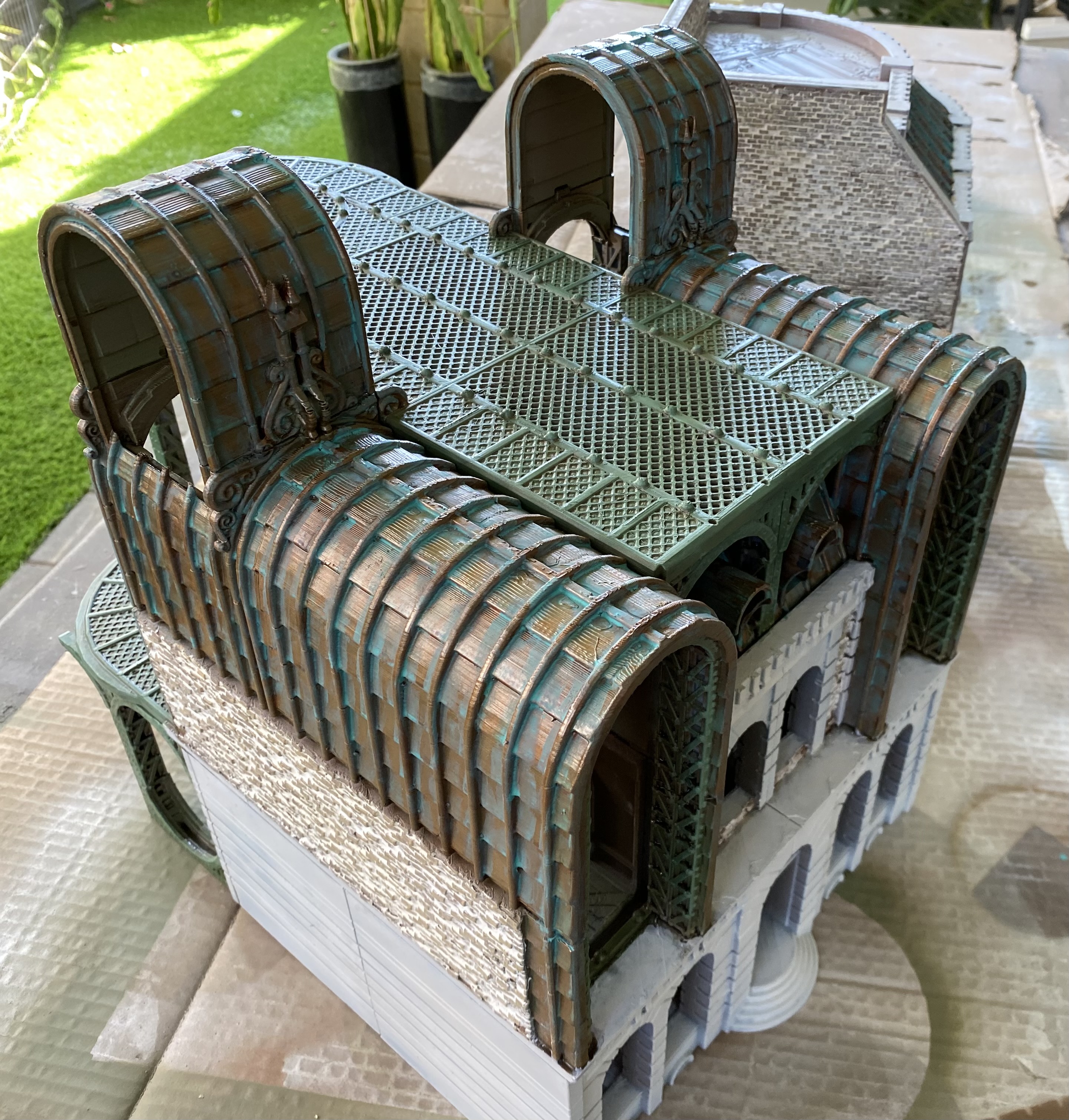 The steelwork was drybrushed in shades of Green. I used Forrest Green from Wargames Foundry.
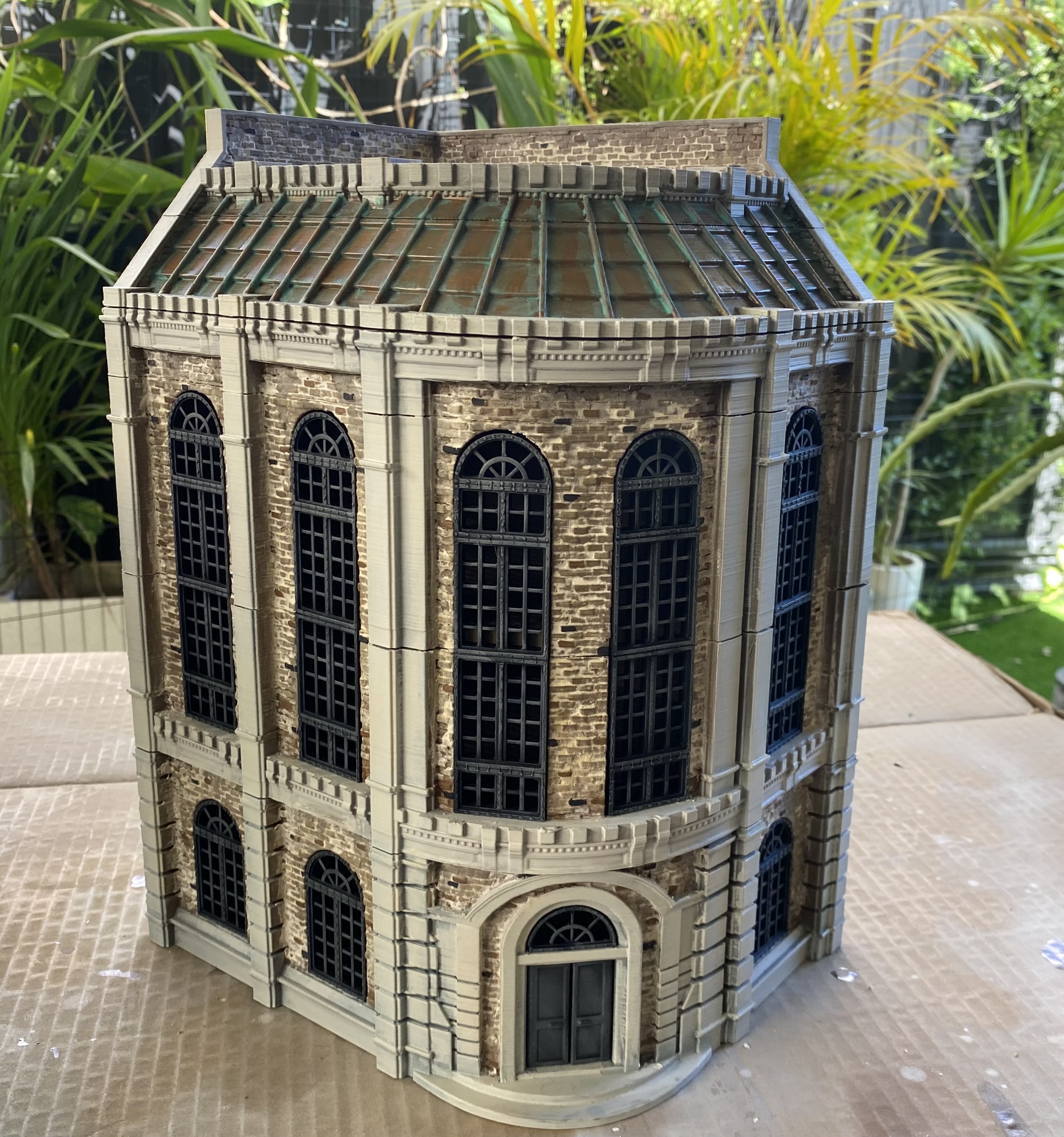
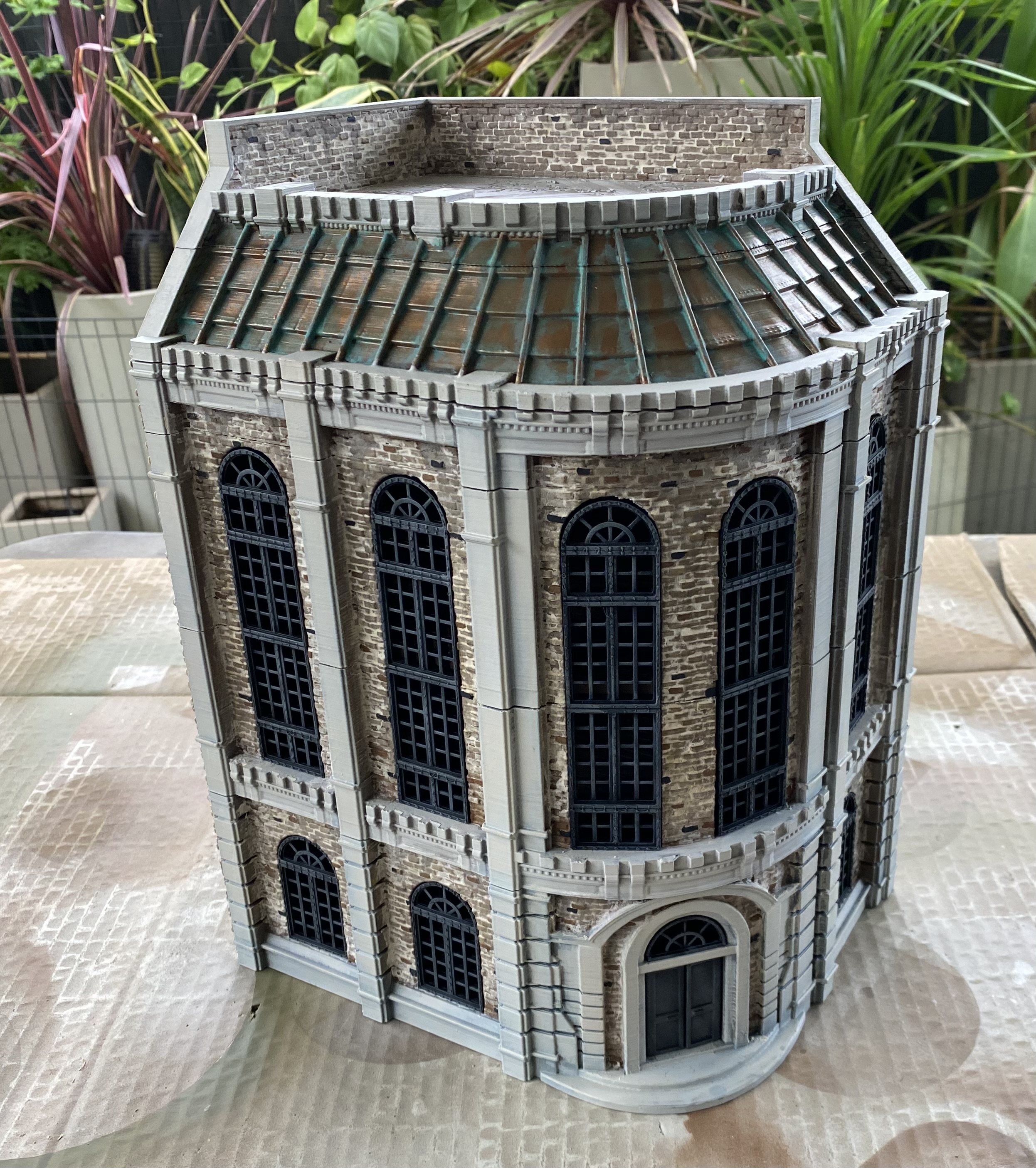 For this building the windows and doors were spray painted black and then drybrushed with German Grey for vallejo. I felt that the darker windows would look good against the otherwise relatively light-coloured building. I also picked out a few random bricks with Army Painter Leather Brown and Vallejo German Grey. I do this just to make it look like I spend more time on the brickwork then I actually do, plus it adds a few little extra details.
 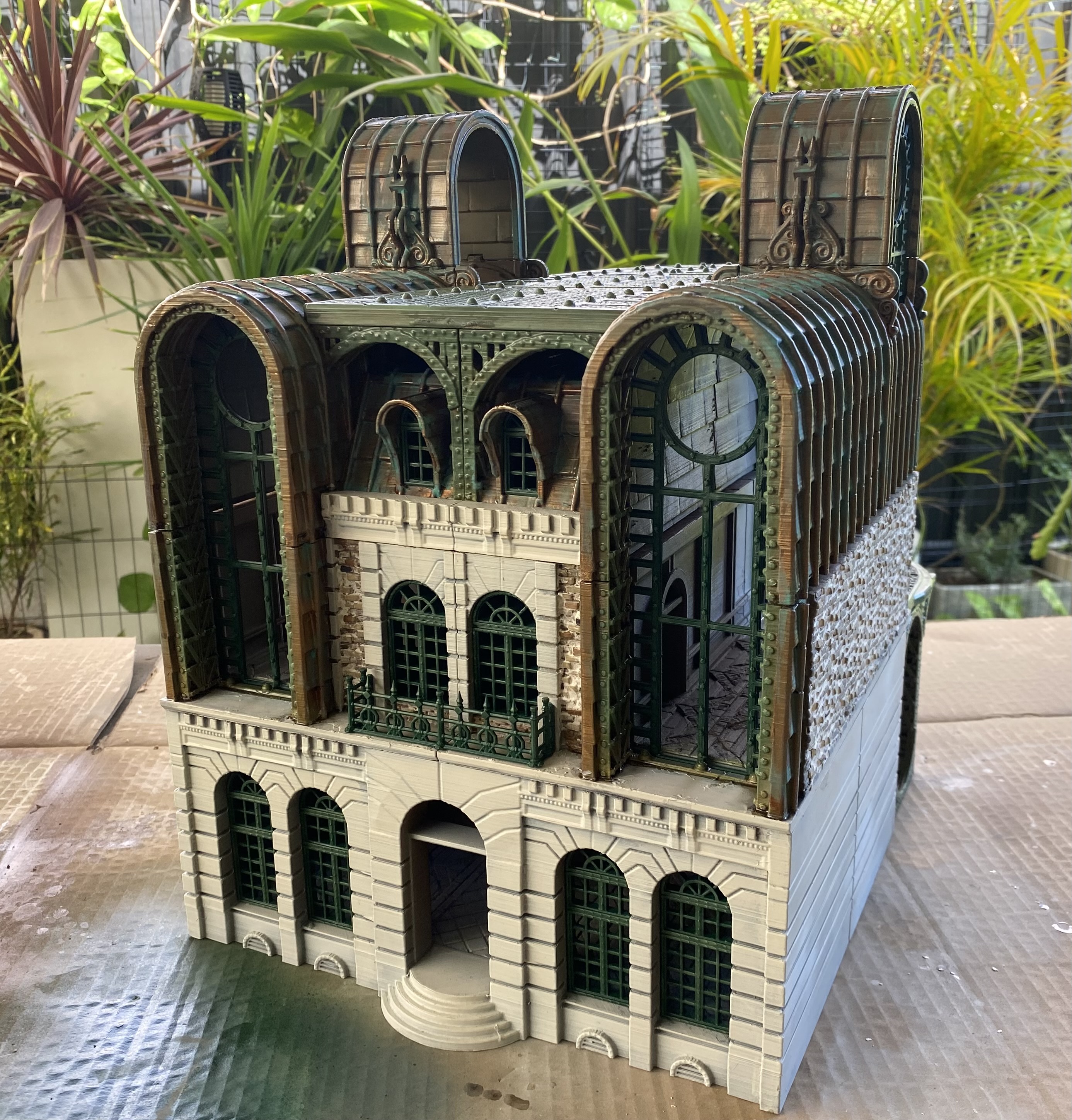 For the Nef Station I went with green windows and railings at the front. For some reason the green metal windows just felt like train station to me. I'm not sure why.
 Weathering the brickwork was the next step and is incredibly easy to do. I used vallejo light grey wash and basically drew lines down the building on the brickwork. You can make it as subtle or as pronounced as you like by just adding more layers. (The brush I used had snapped whilst frantically paint plebians for my Circus Maximus project last month.)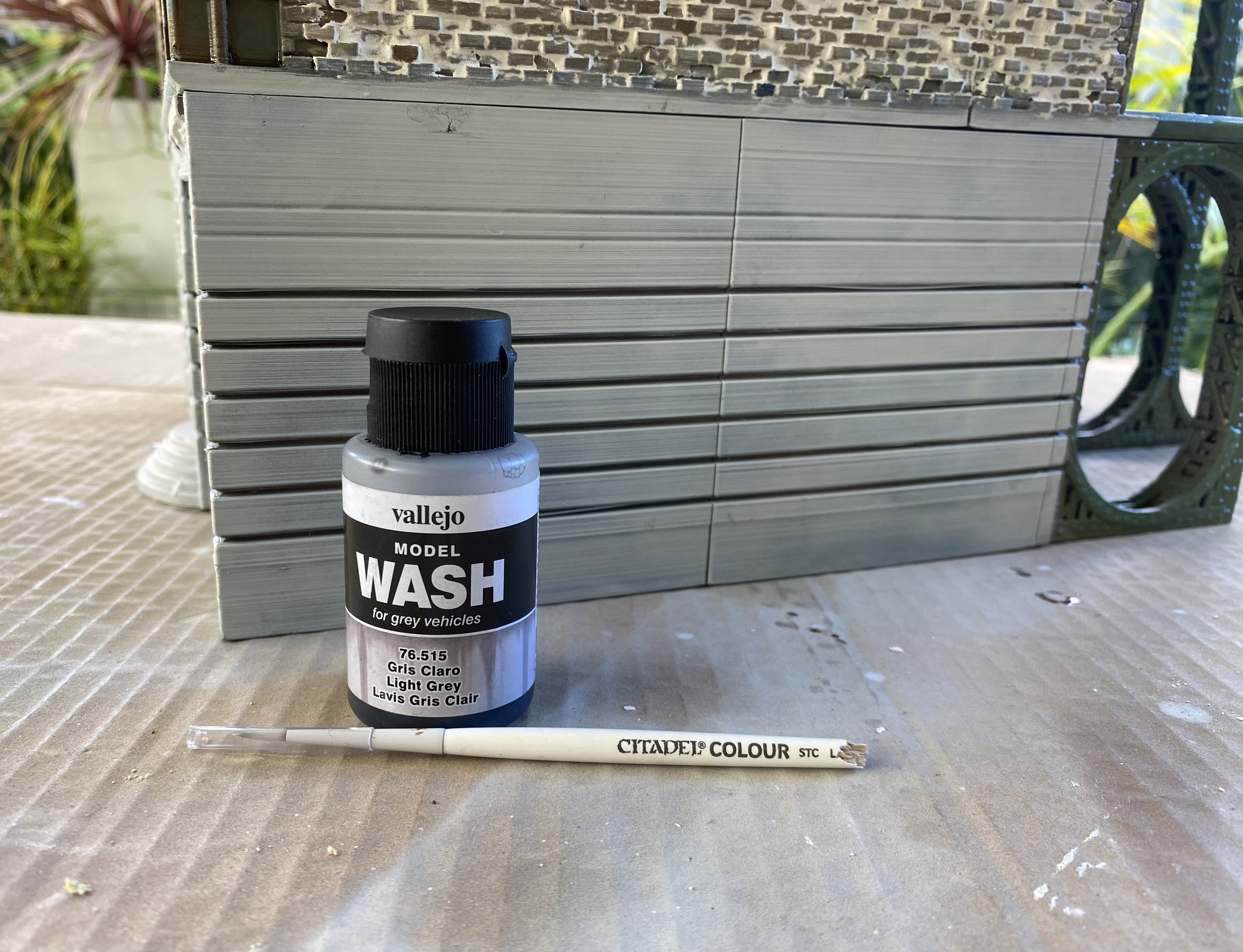
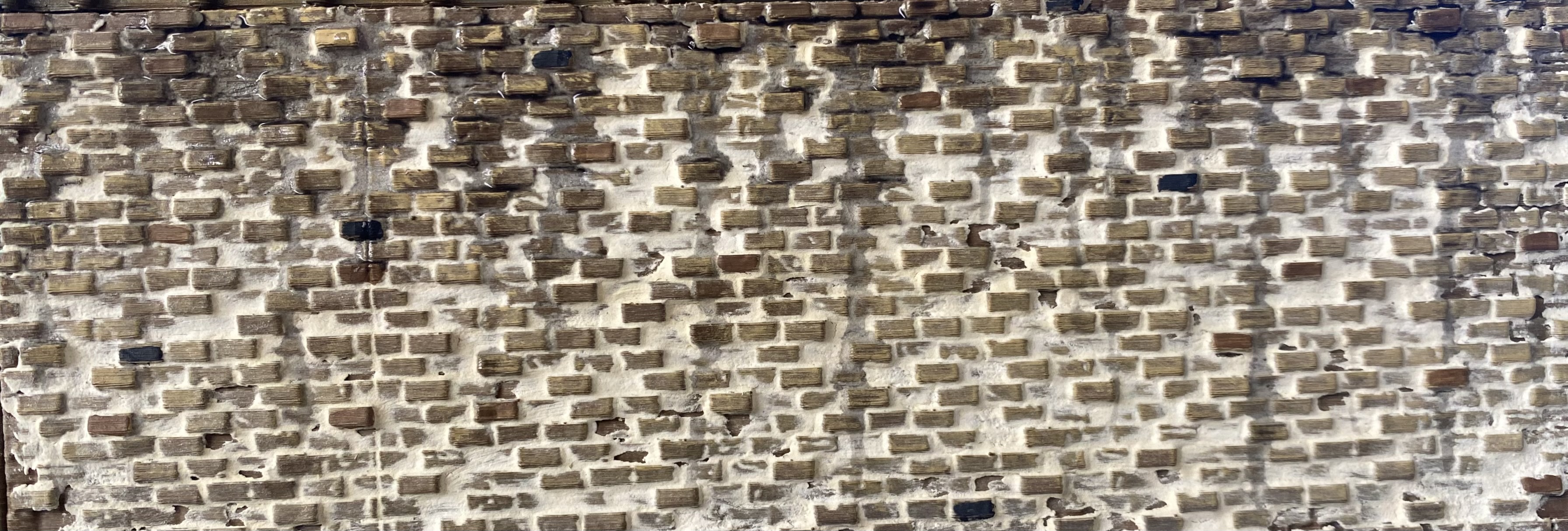
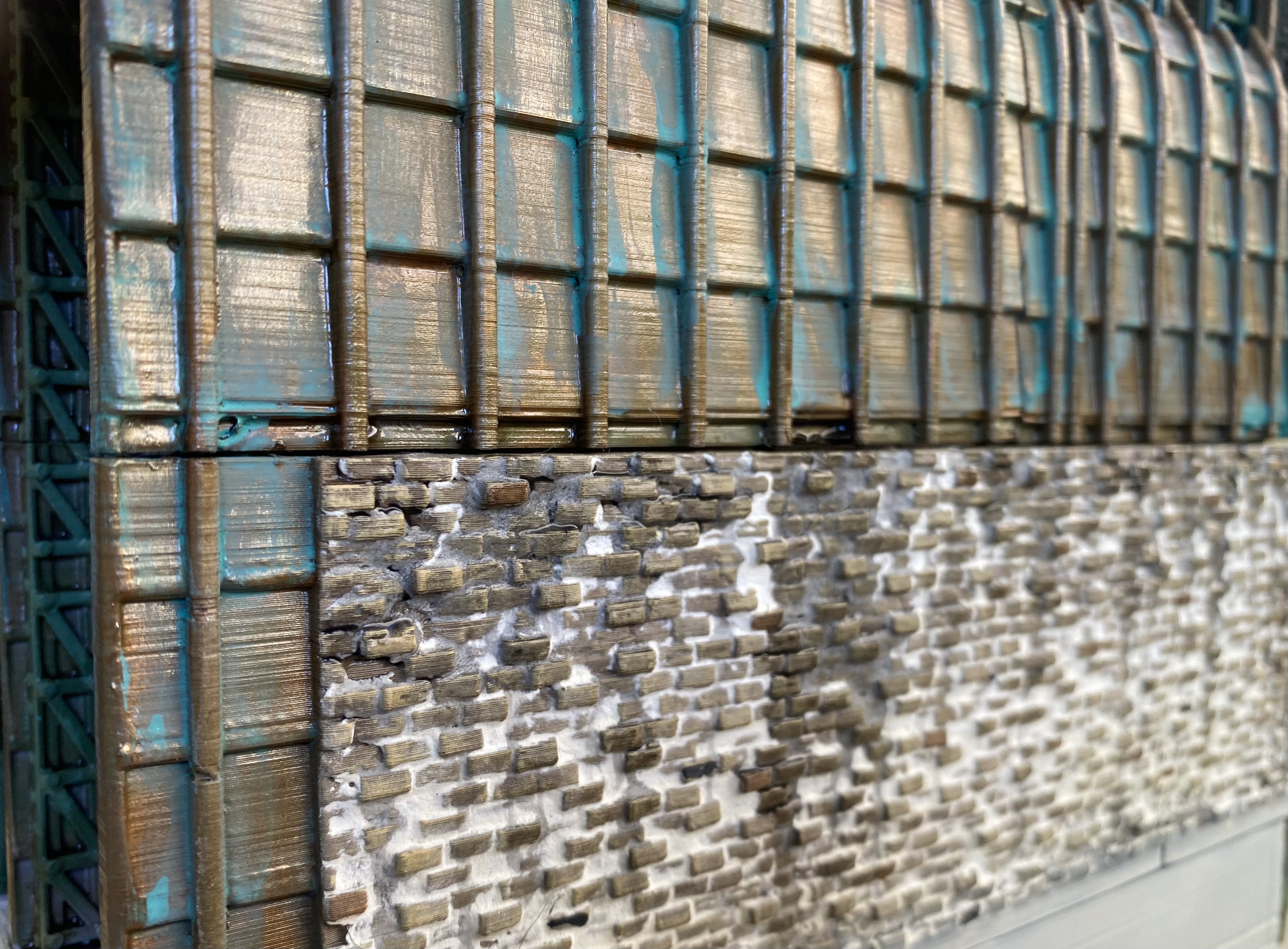
The next stages will be to figure out some stained-glass effects for the Nef Stations large windows and to paint up the lift shaft cages that go inside it.
Anyway, that is basically my quick method for painting buildings. There are plenty more to do but I won’t bore you with breaking down the steps for each building unless there is something drastically different that I do.
Size comparison
These first couple of buildings are quite large and I don’t want to make all the buildings quite so big as I want to have that nice variety of height on the skyline. I can’t do that with all the buildings as some will be in terraces so maybe I will have to have a variety of other smaller details to make them look interesting.
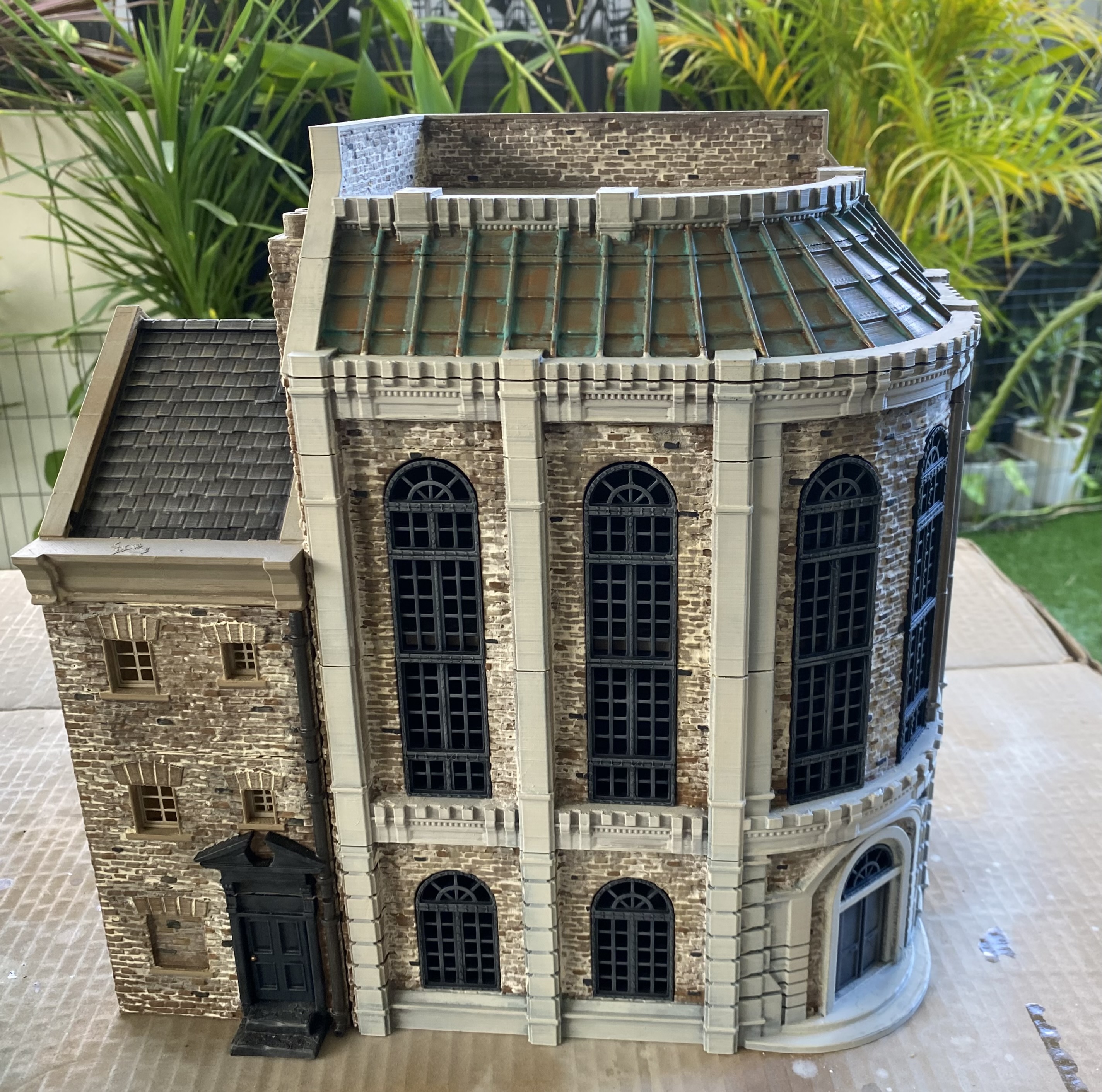 Painted in the same manner as the other buildings but with a slate-coloured roof and a more subtle colour for the roof trim.
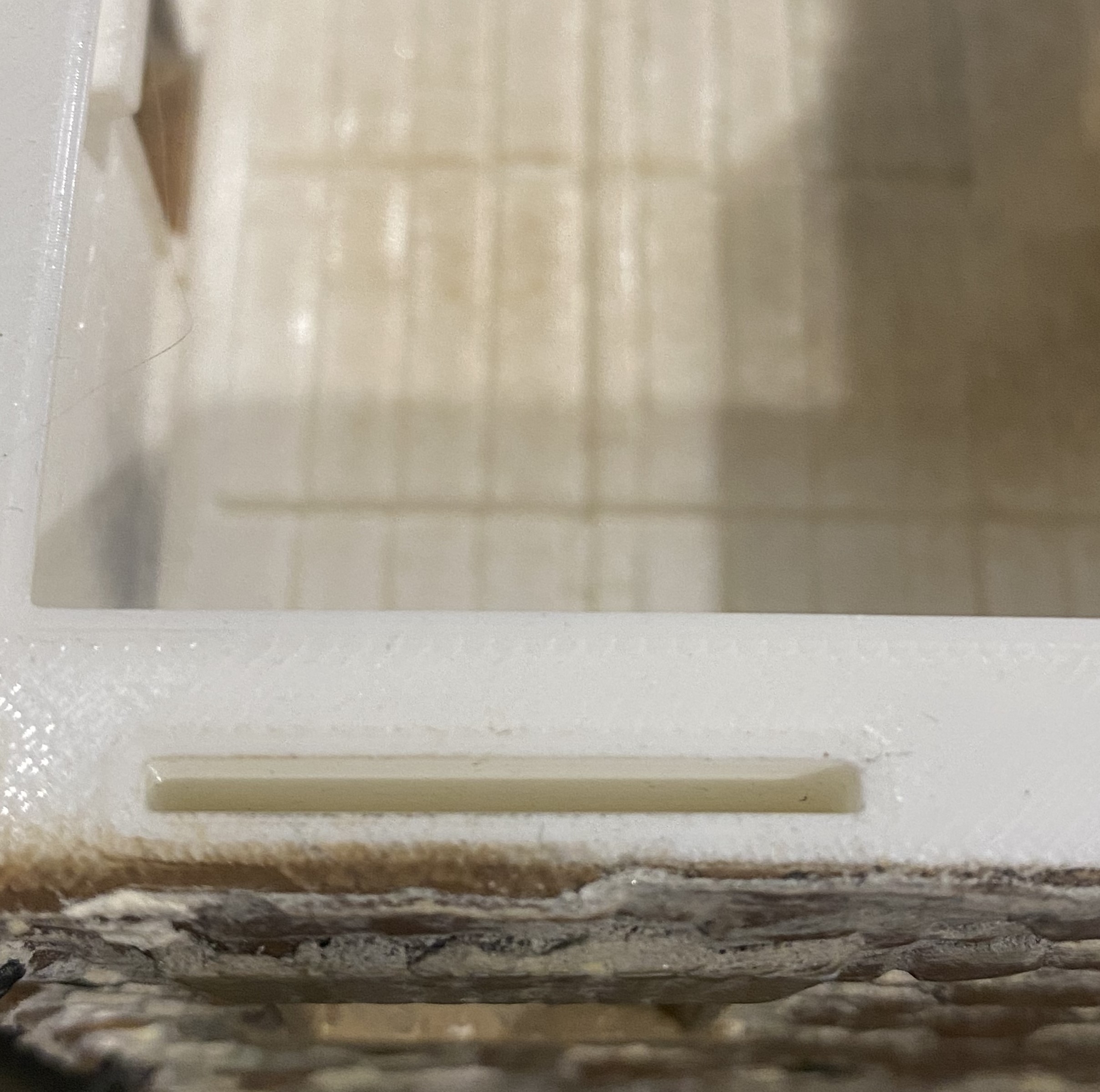
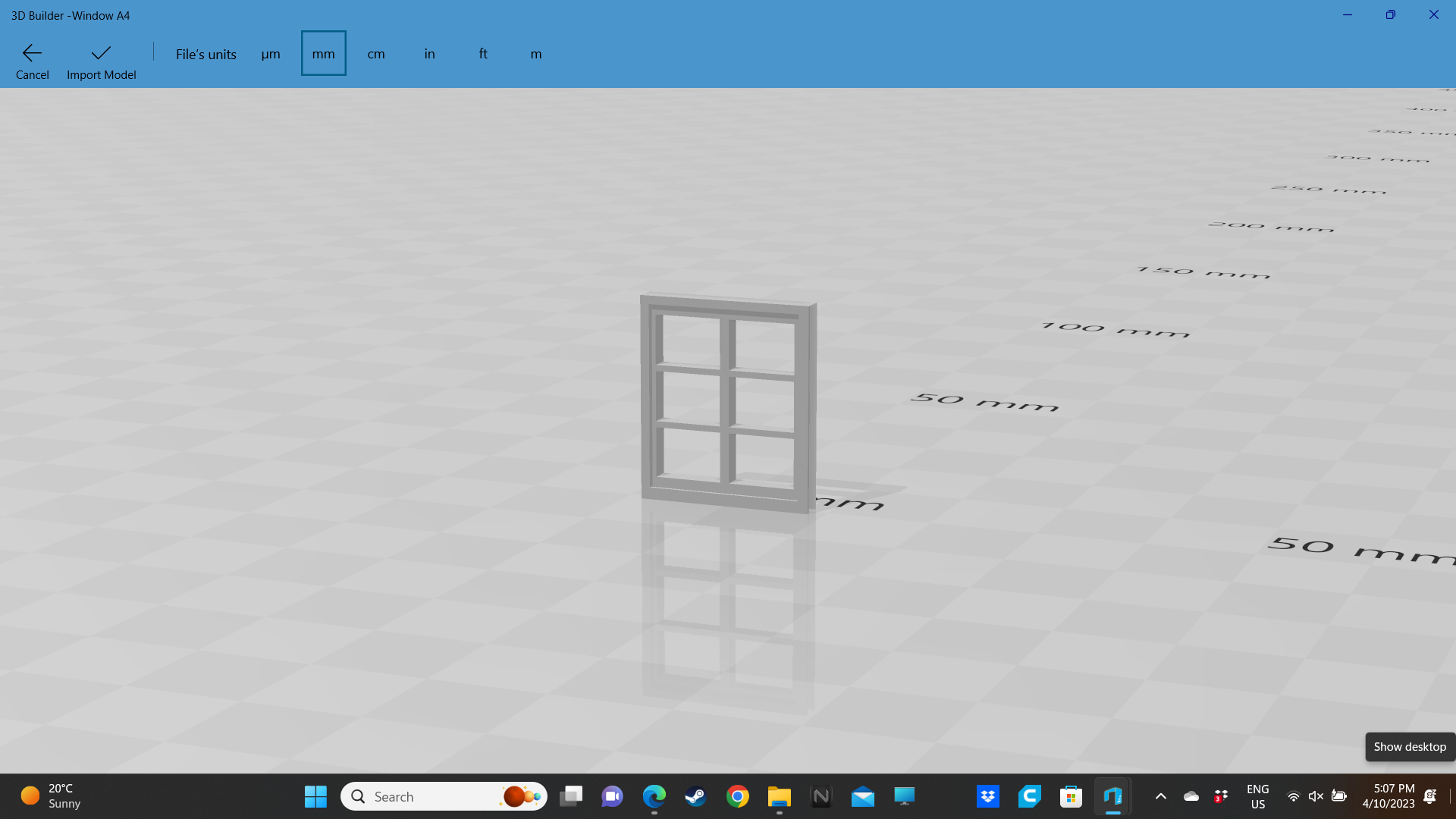
I had to create the windows myself in 3D Builder because the files didn’t come with any.
What the files come with are slots to slide in a piece of transparent film, like the sort used in overhead projectors. I just didn’t like the look of that on its own because large glass panels just looked too modern.
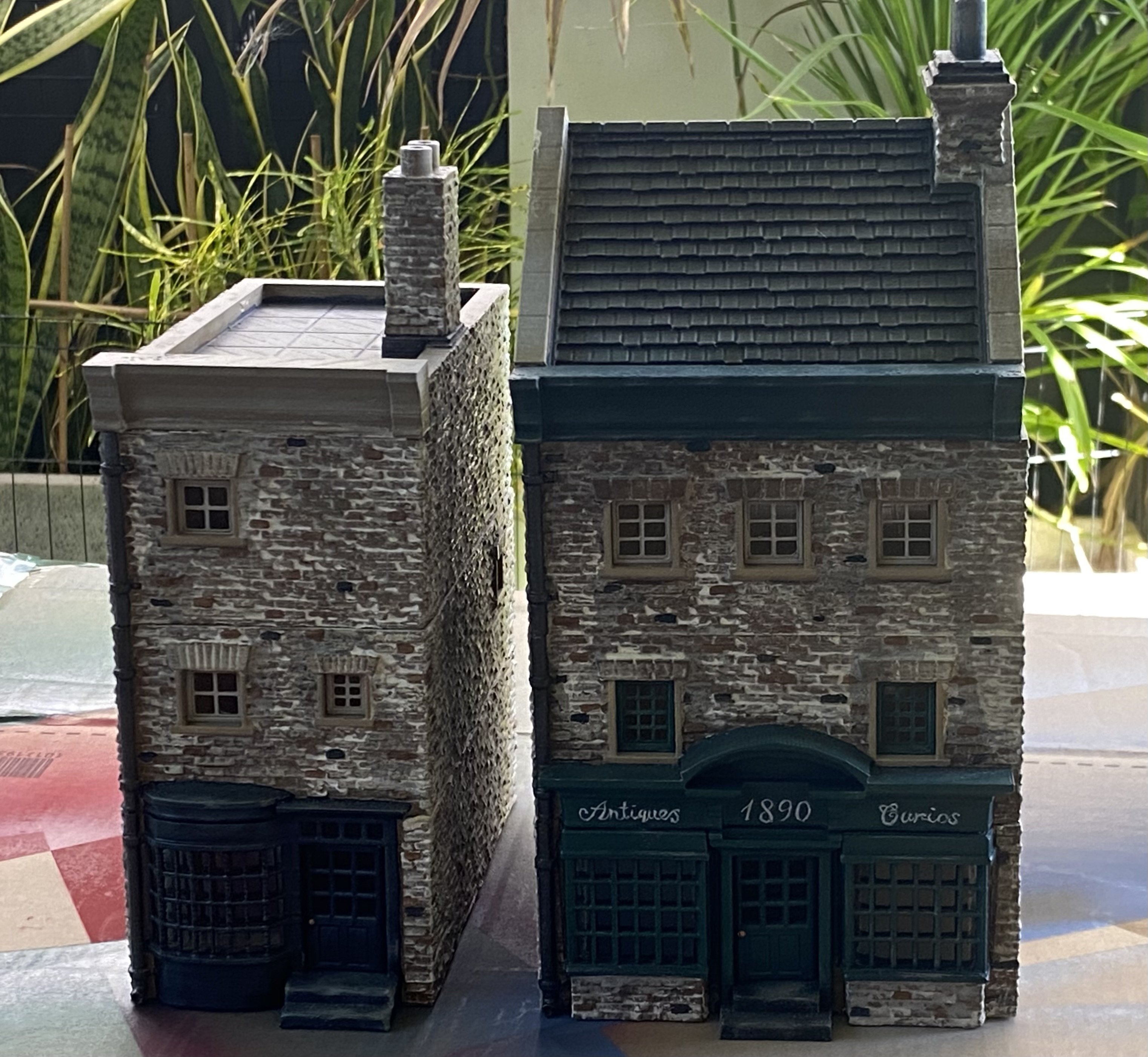
Antiques and Curios
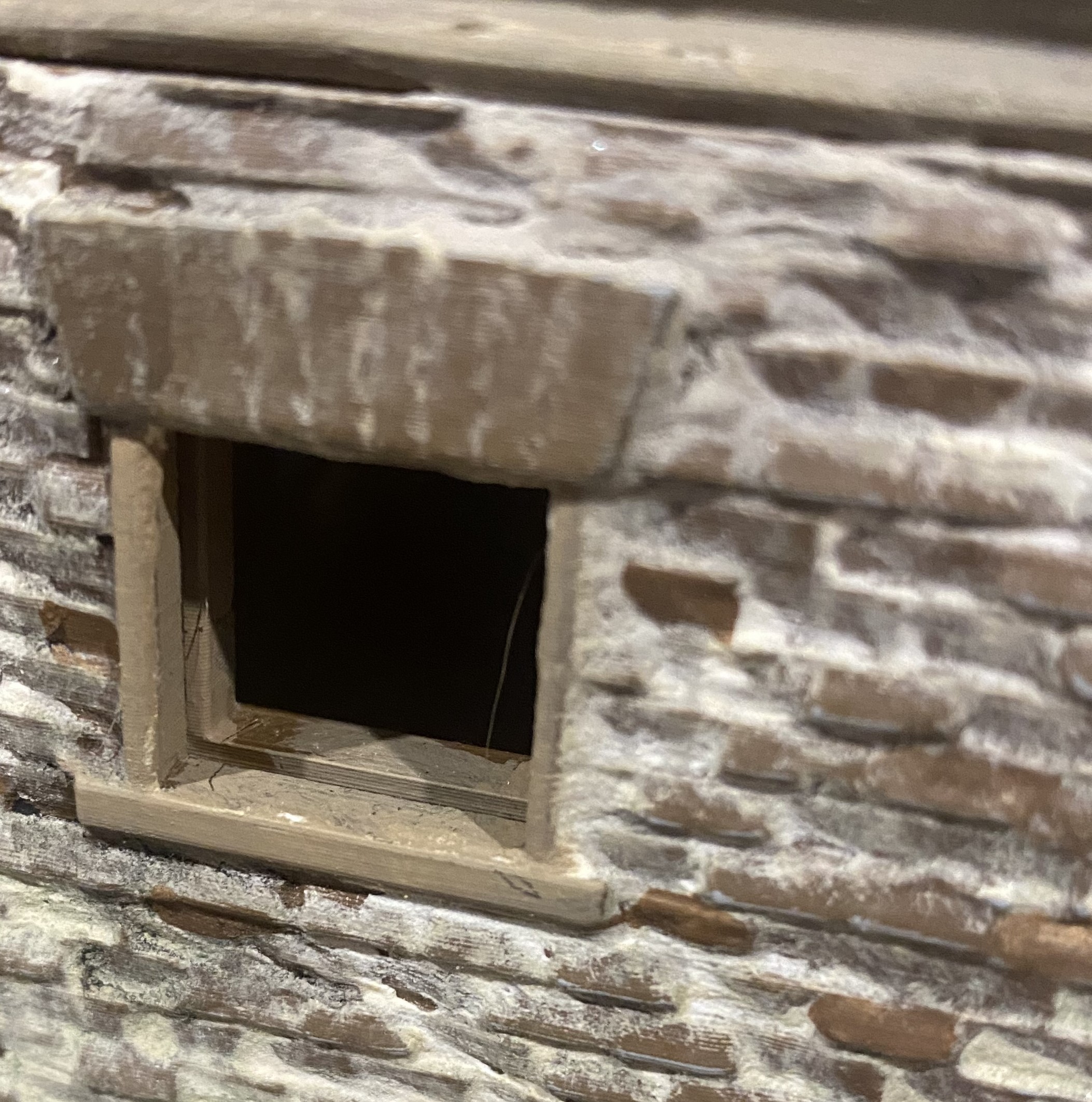
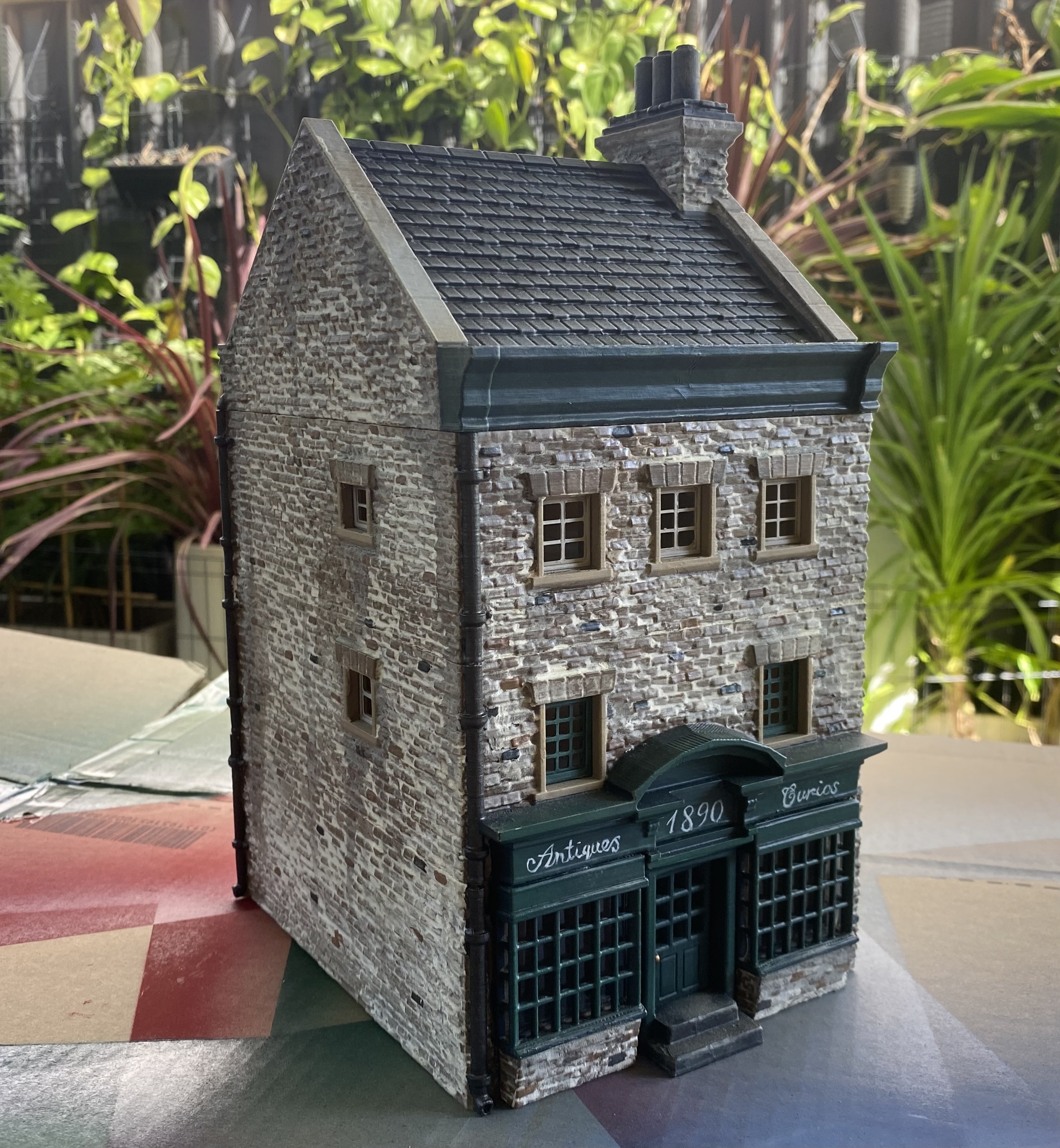
Shops are a must for any self-respecting Victorian-era city, and what better place to start than an Antiques and Curios shop?
Dated 1890 for good reason.
Howard Phillips Lovecraft (H.P. Lovecraft) was born on the 20th of August 1890 and thanks to him we now have the amazing Cthulhu Mythos. I won’t go into too much detail about the person himself as that can open up a whole can of worms, what with his views on different aspects of life, but his weird creation of the Mythos has quite likely had a massive impact on a lot of games we have all come to love.
Painted in the same quick style as the other buildings. Nothing too fancy or special.
Once I have a decent number of buildings done, I can go back over them to add more characterful details here and there.
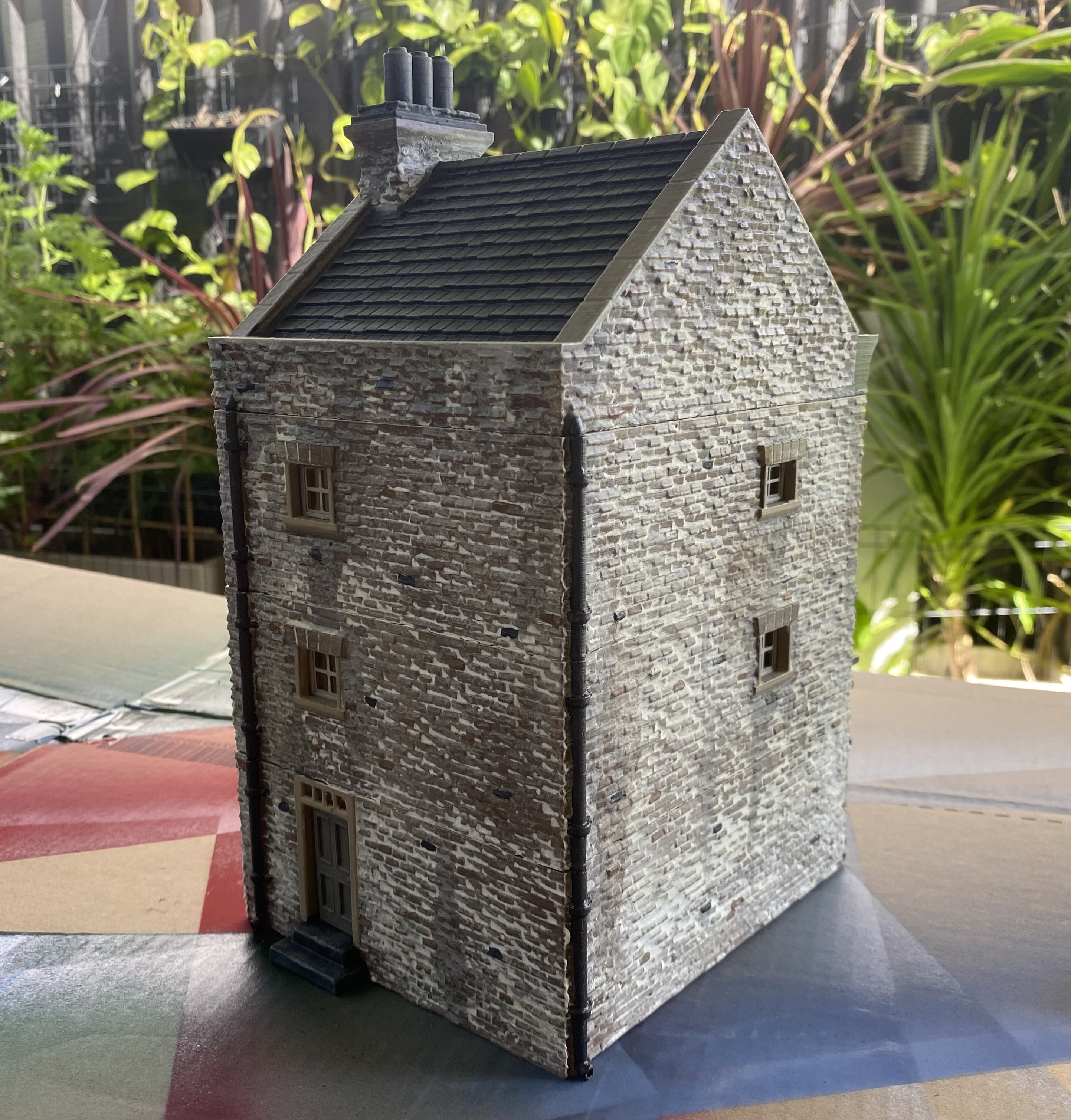
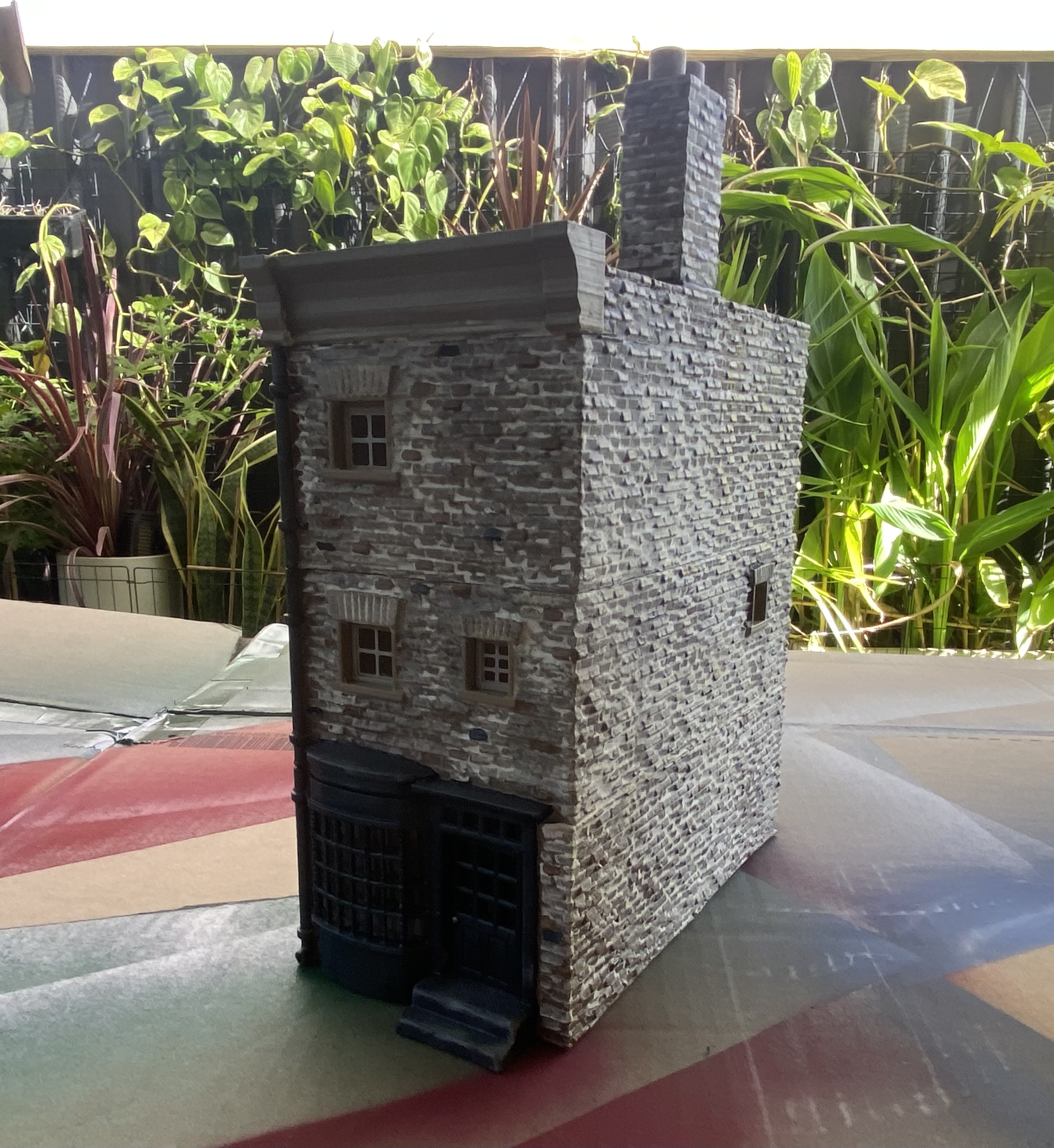
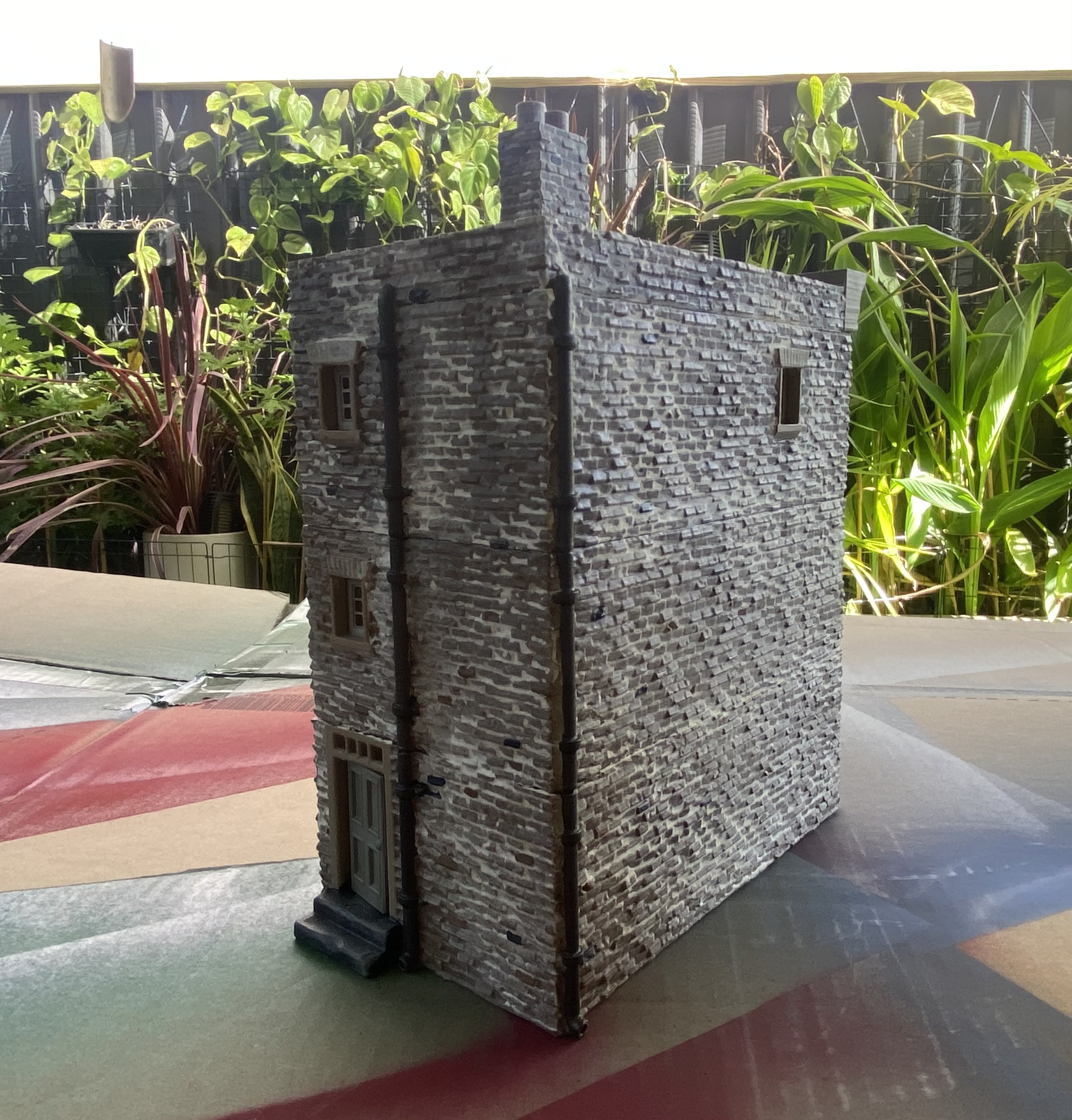
Next up is a generic shop. I will add signage to it later.
I wanted to get this building done because there are various bits from these buildings so far that I intend to put into 3D builder and alter and cannibalise to create other bits and pieces for my city. Before I do that however I wanted you to at least see the fully printed out and painted buildings to get an idea of where my mind was going when I was looking at them.
Making walls
I want to make some free-standing or perimeter walls that I can move around and want them to fit the same aesthetic as the rest of the walls.
to do this I will use parts from existing STL’s and cannibalize the bits I think I could use.
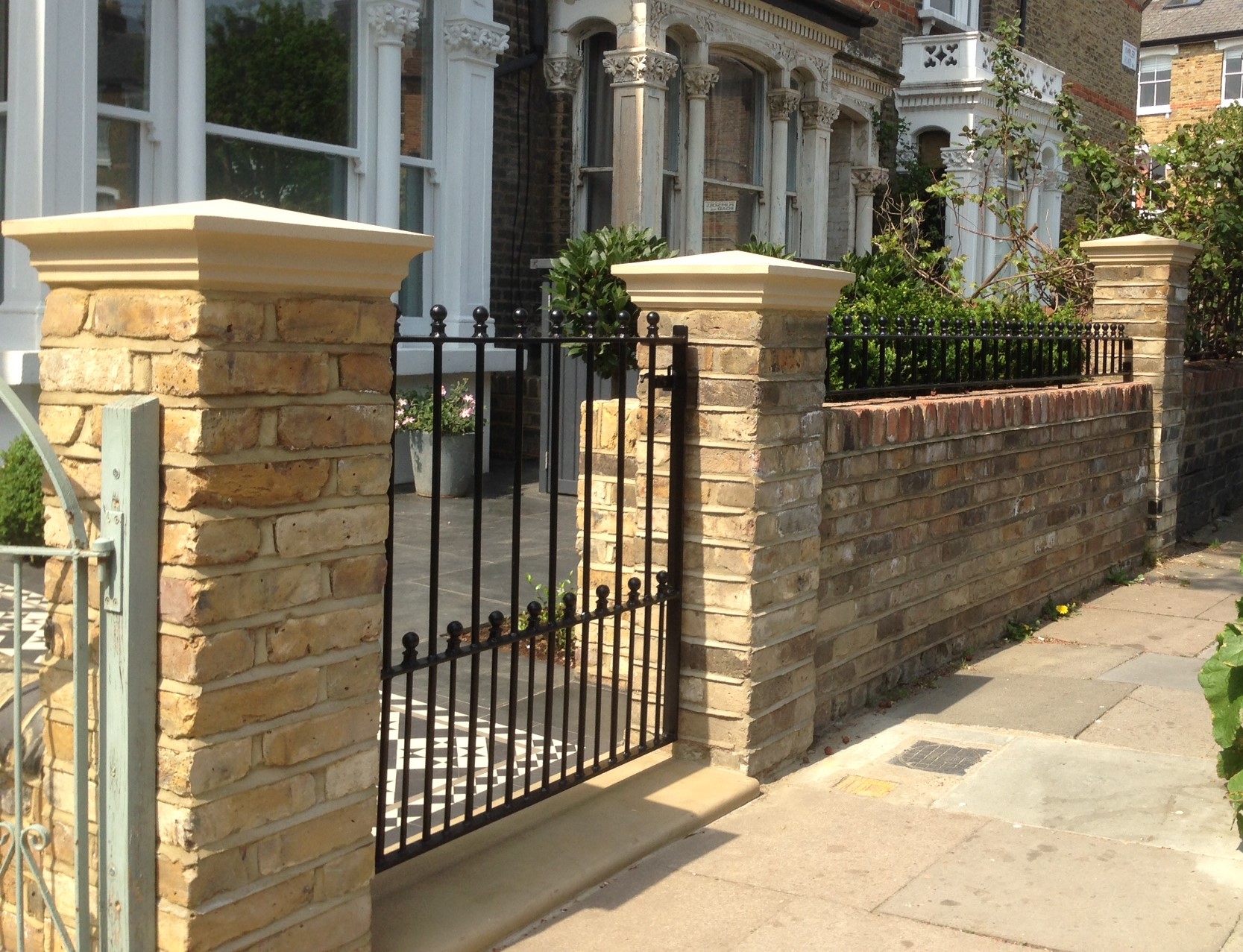 The kind of thing I'm going for.
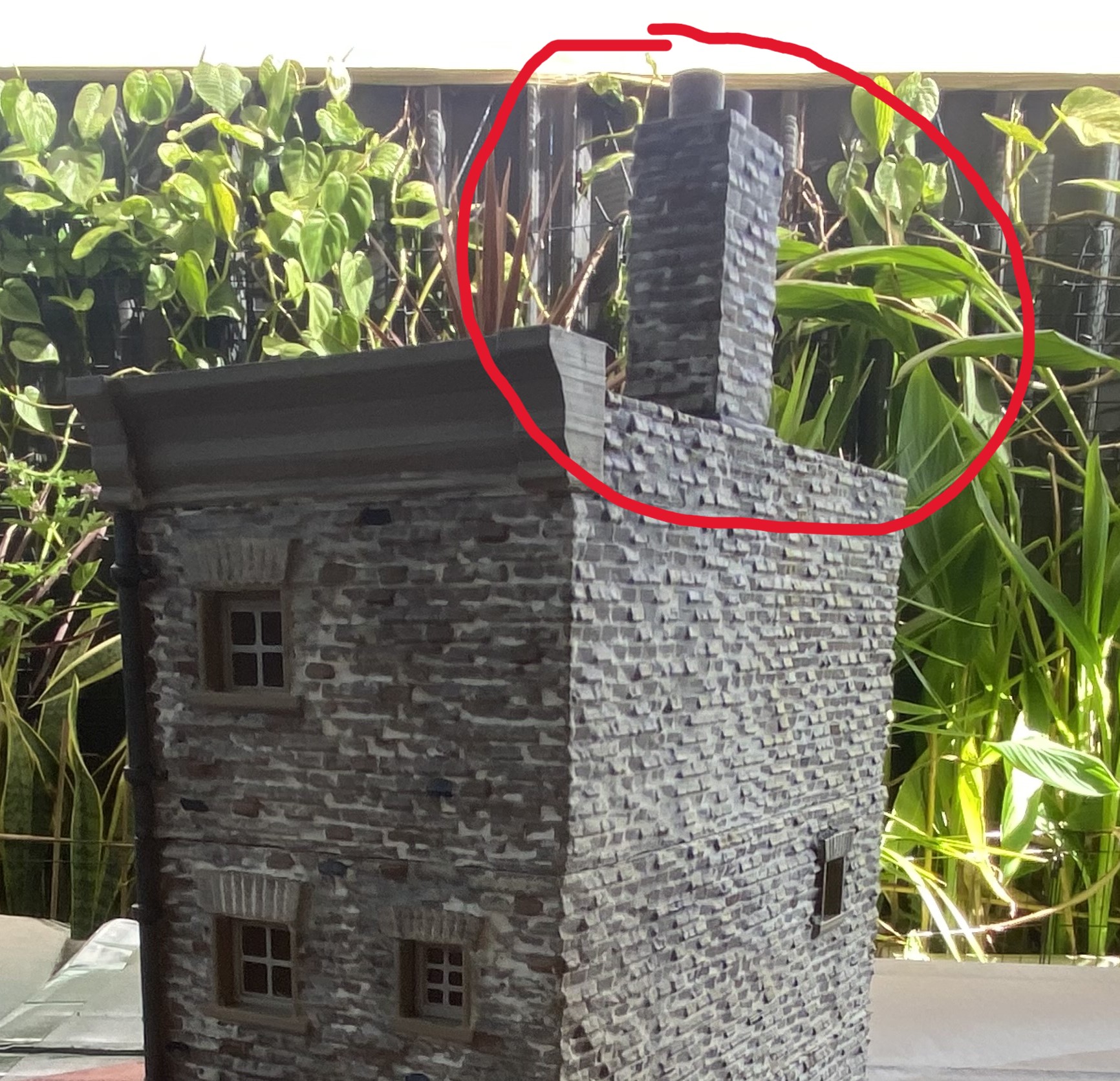 This chimney can be a good starting point for the columns on the walls.
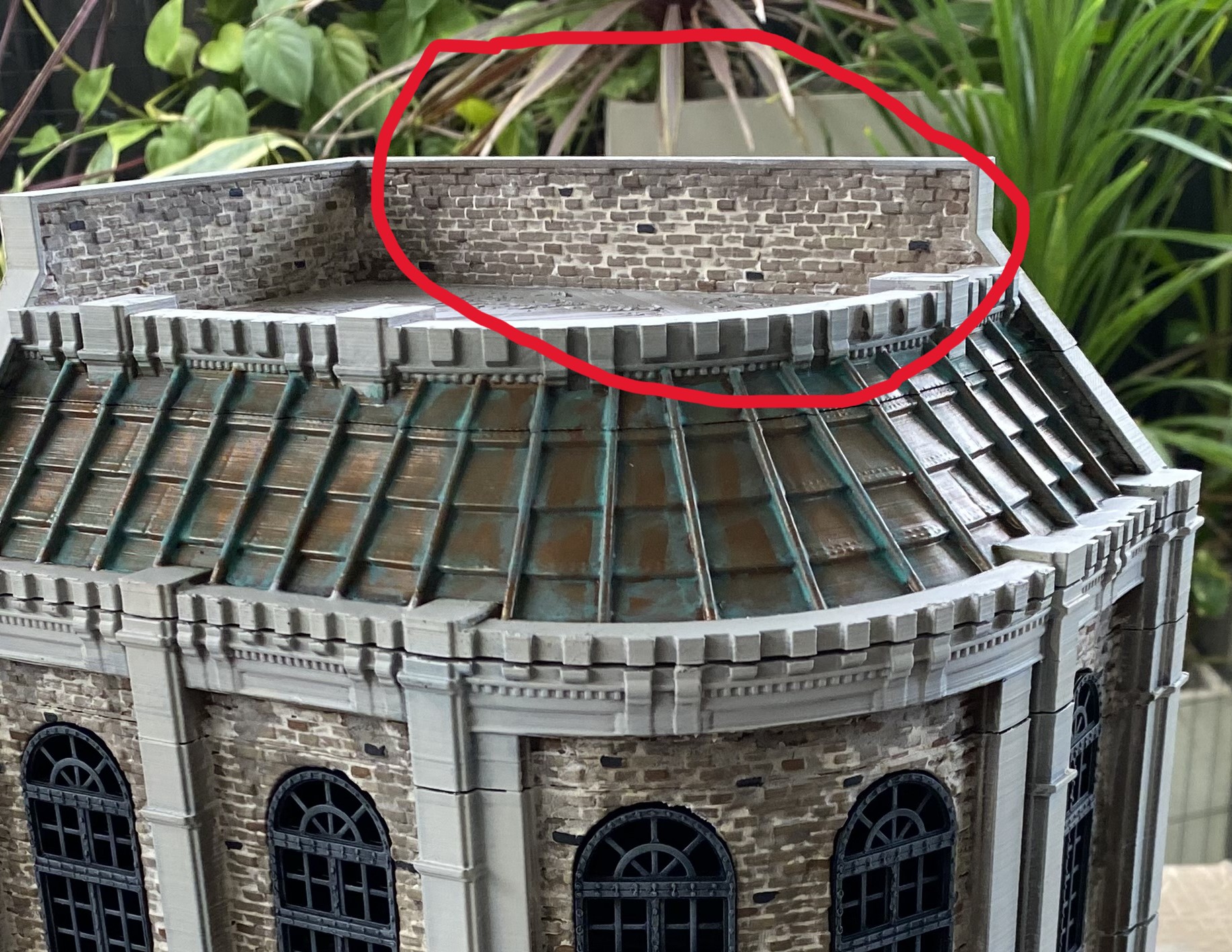 This part of the roof would be excellent for the actual wall.
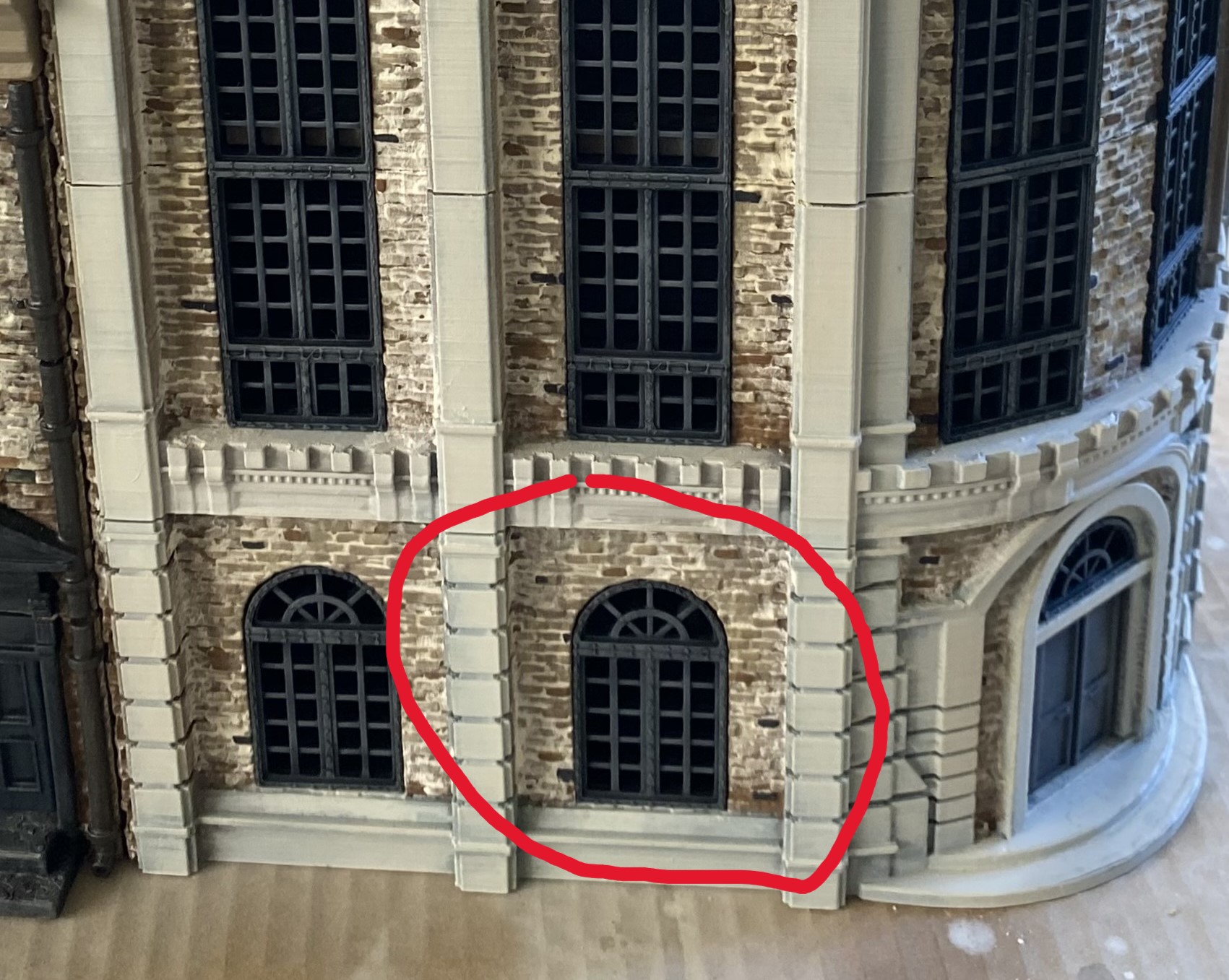 This section could come in hand for arched gateways.
Now I have identified the bits I think I can use it’s just a matter of opening the STL in 3D Builder and using the ‘split’ function to cut away all the bits I don’t need.
The next step is the ‘settle’ the remaining piece on the ground and resize its width and depth. The height you can adjust by using the ‘split’ function to remove brick layers. Add a cube or whatever shape you want as a topper and place it on top of the pillar.
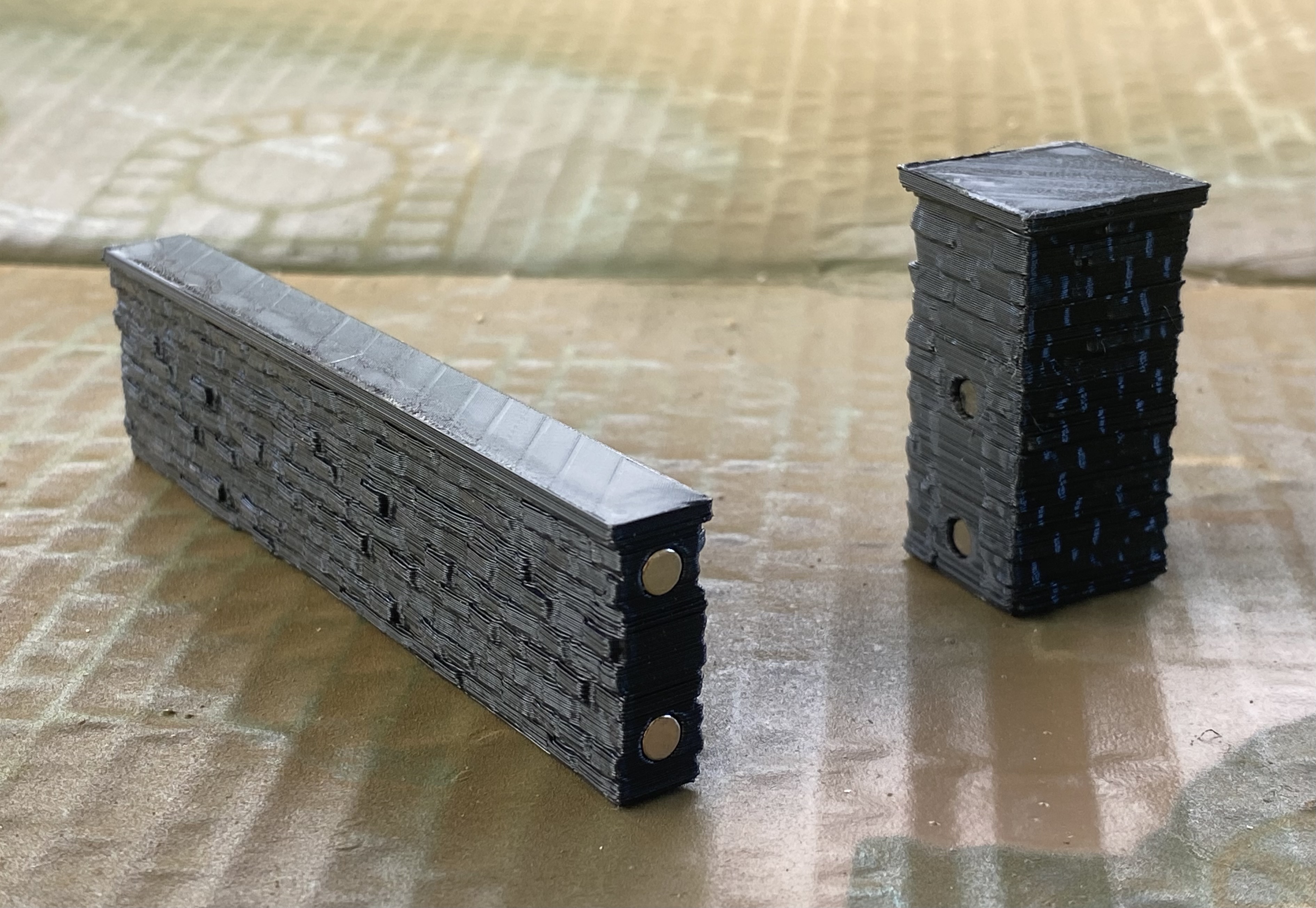
As I intended to magnetise the walls, I made some little pegs a little longer than the size of the magnets I intended to use I positioned where the magnets would be and then used the ‘Subtract’ function to remove them. This then leaves a perfect hole for the magnets and means they will always be in the same place on each pillar I print.
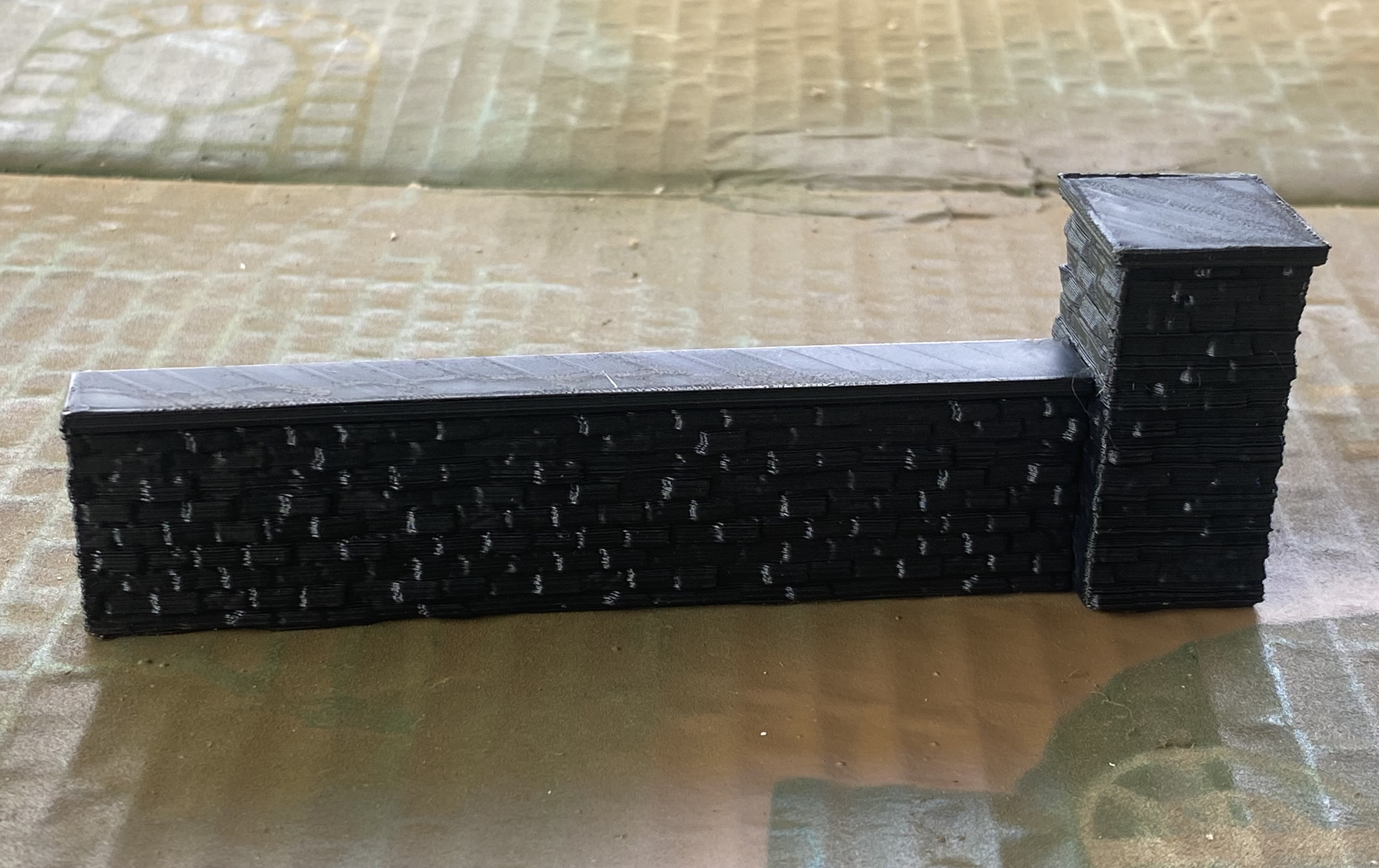
Finally, I inserted the wall I was going to use into the pillar and also ‘Subtract’ that, so it leaves a nice indent for the wall to fit snugly in.
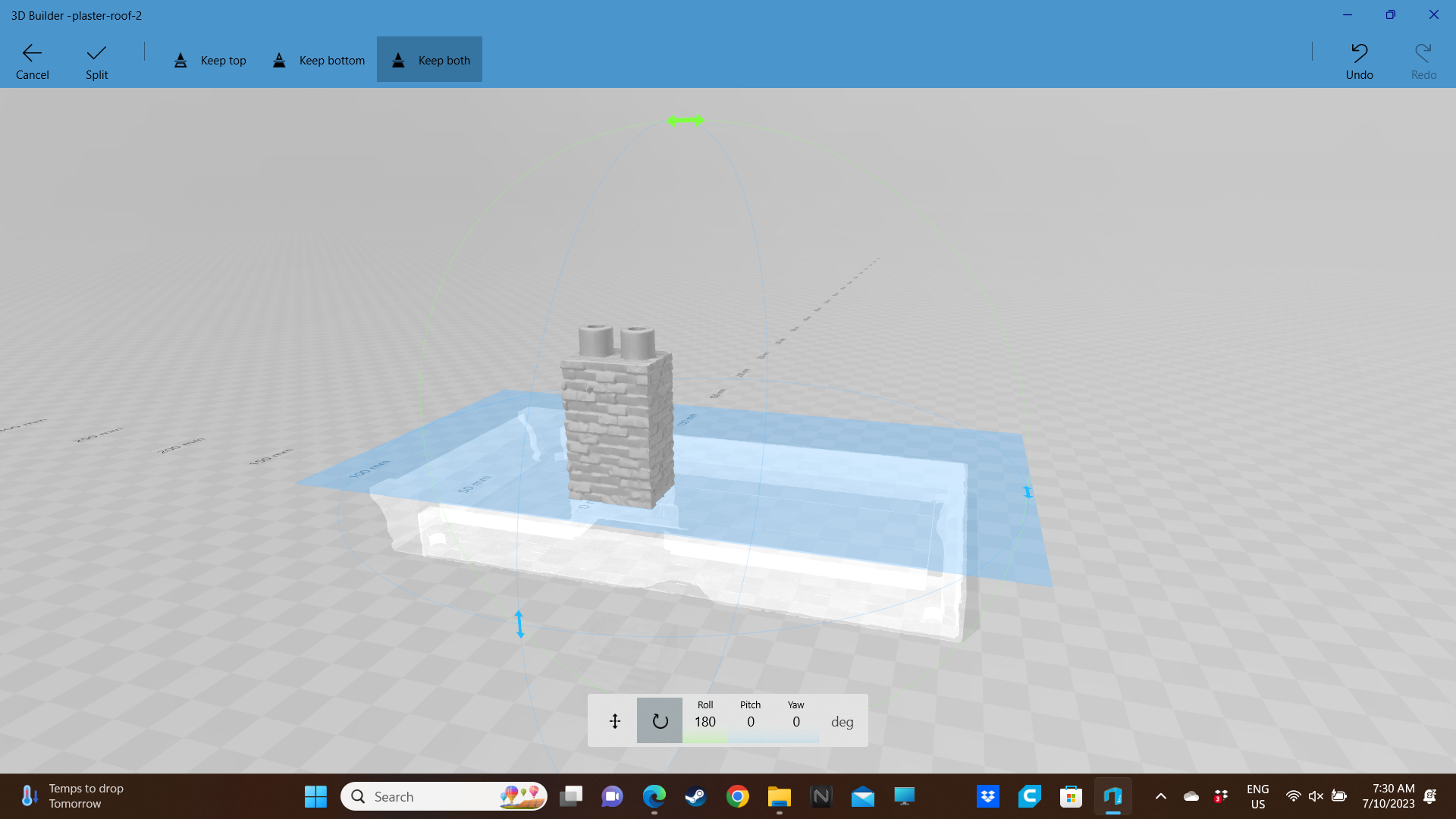
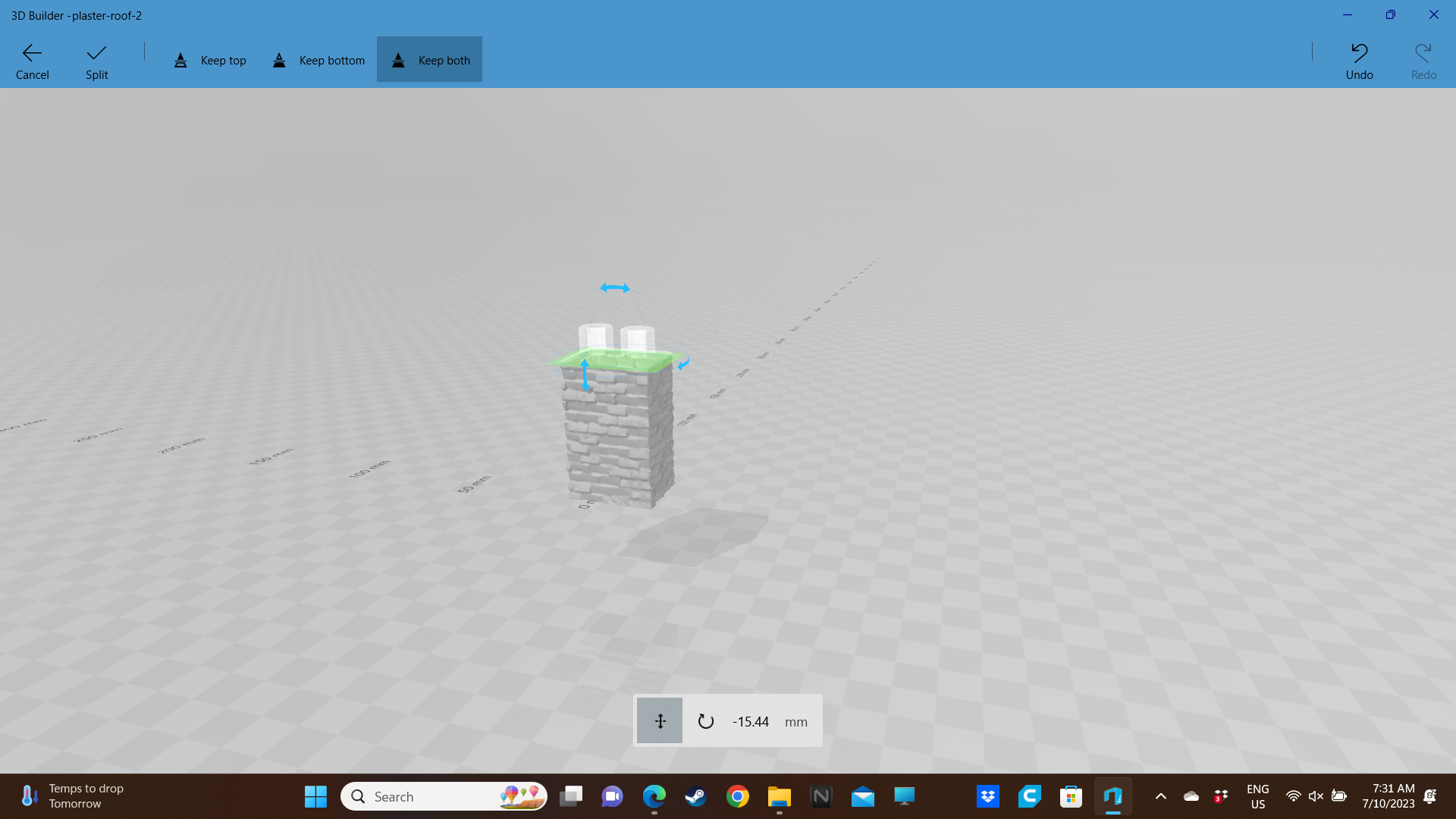
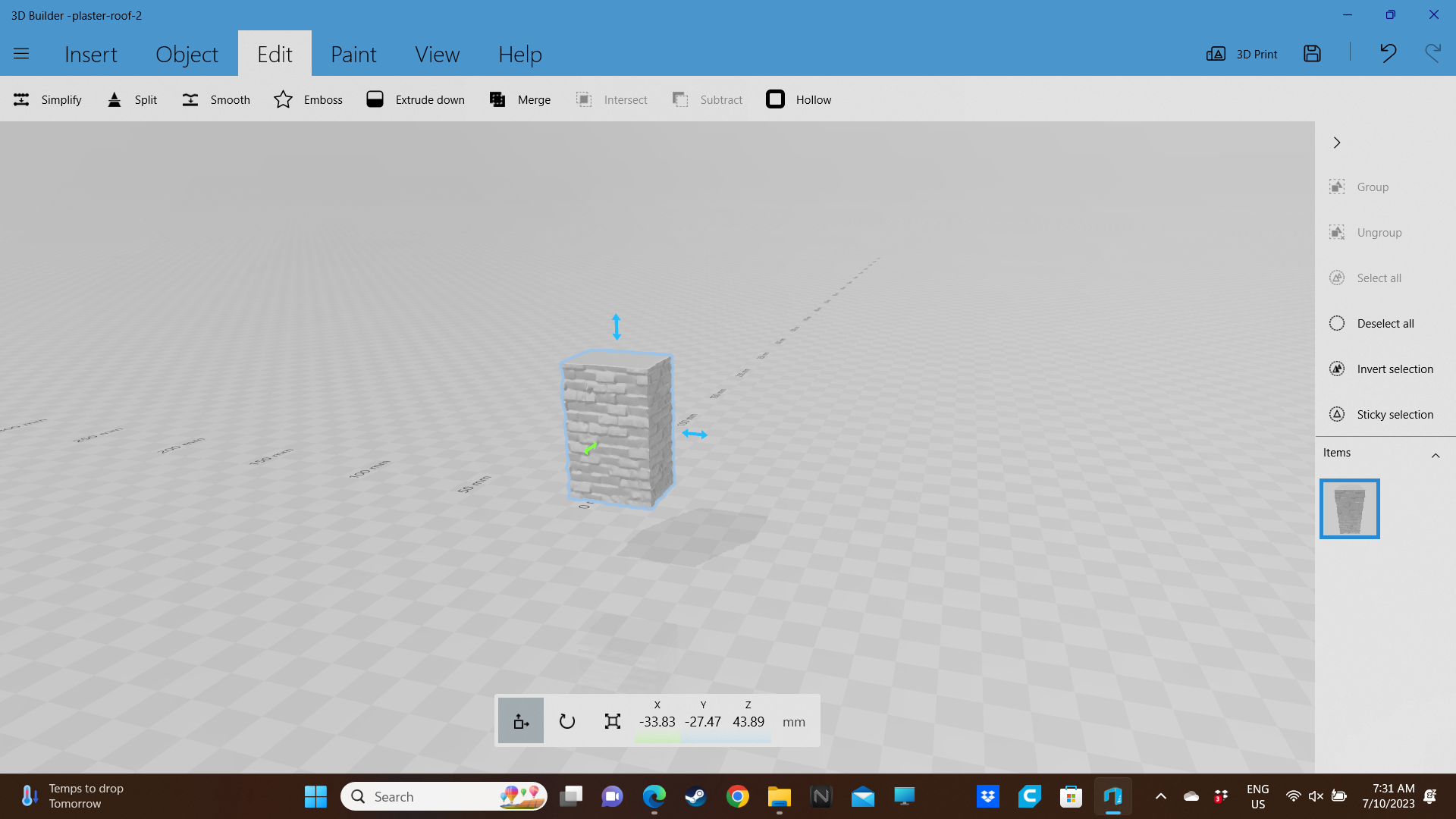
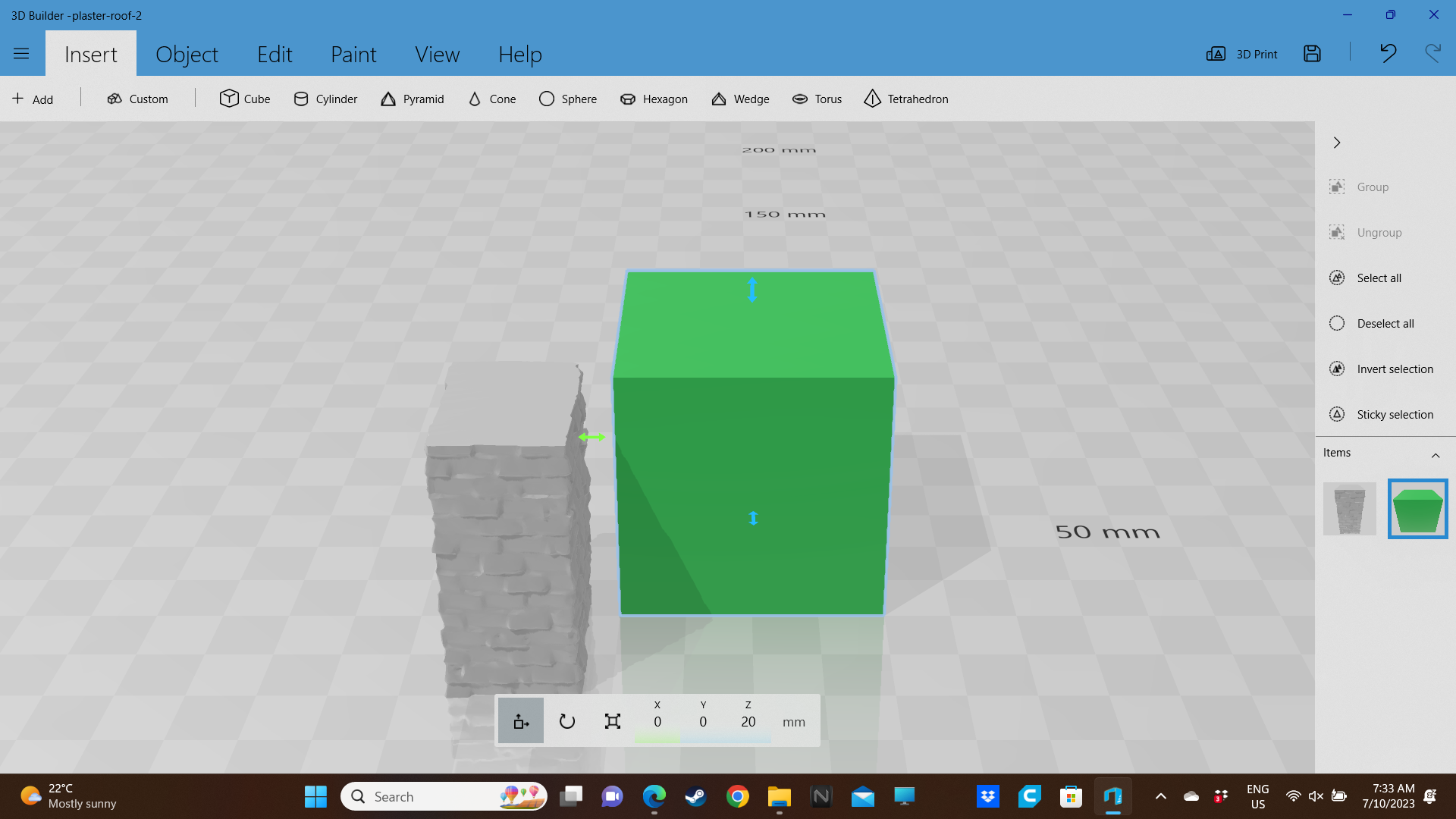
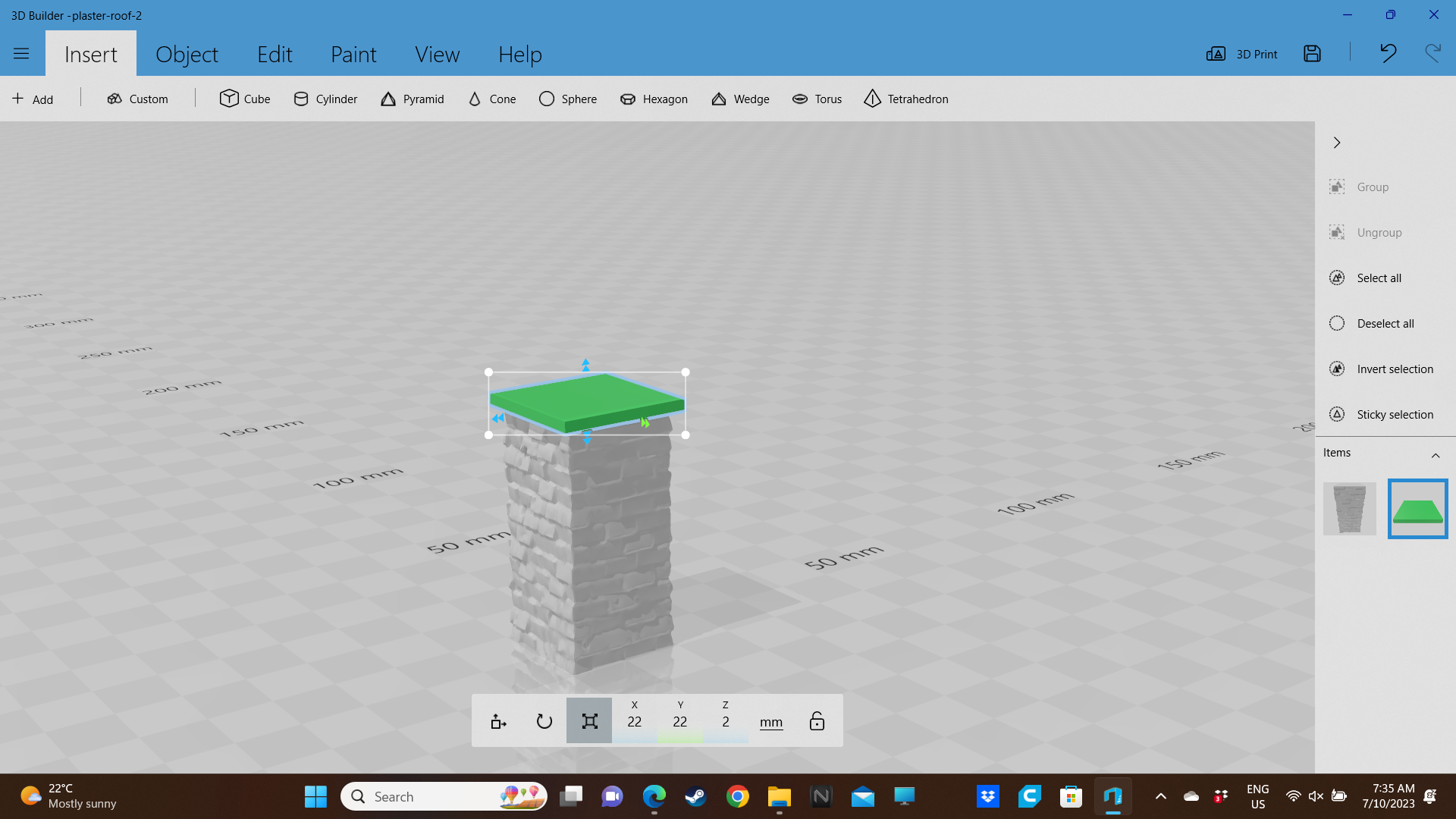
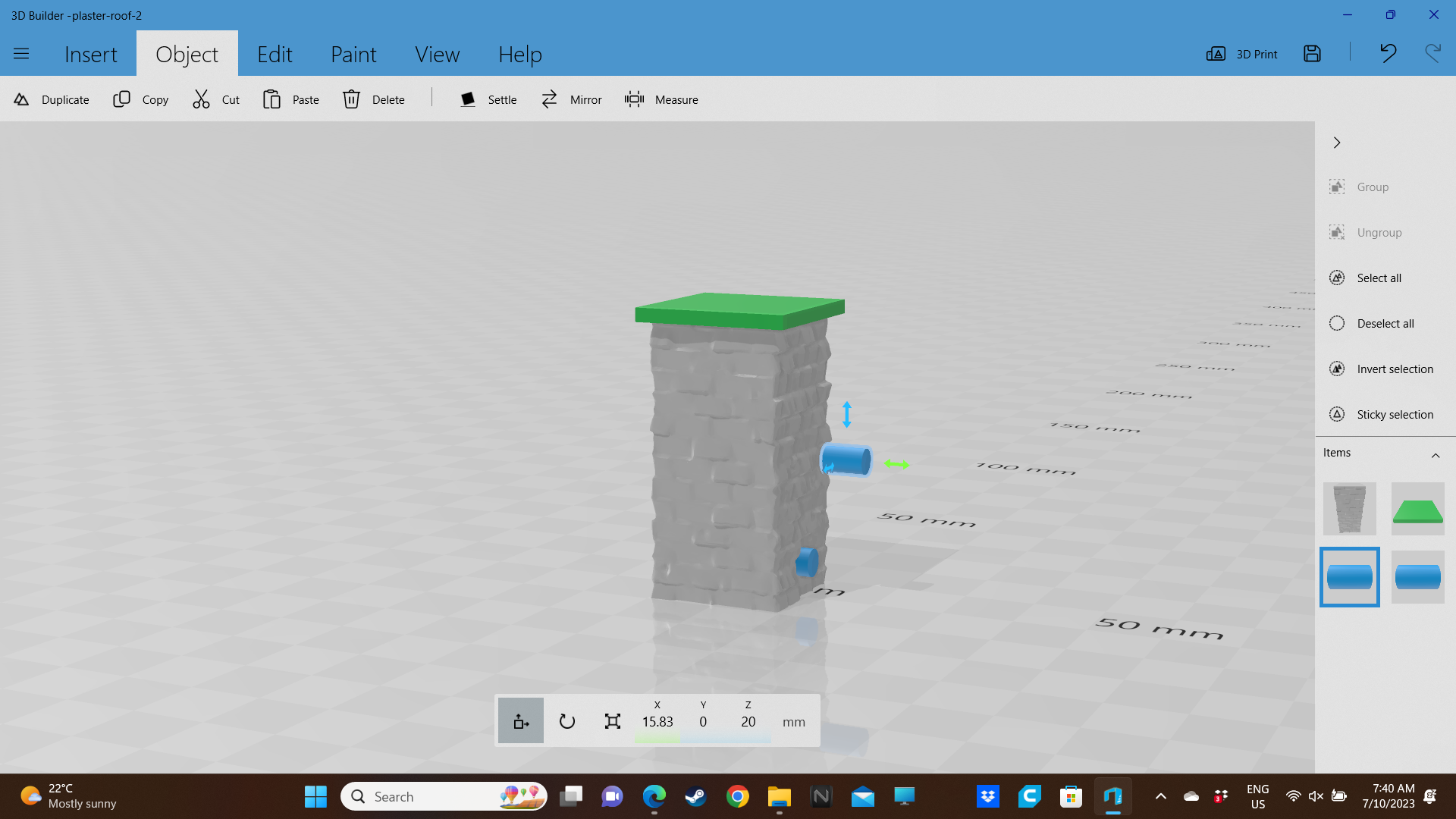
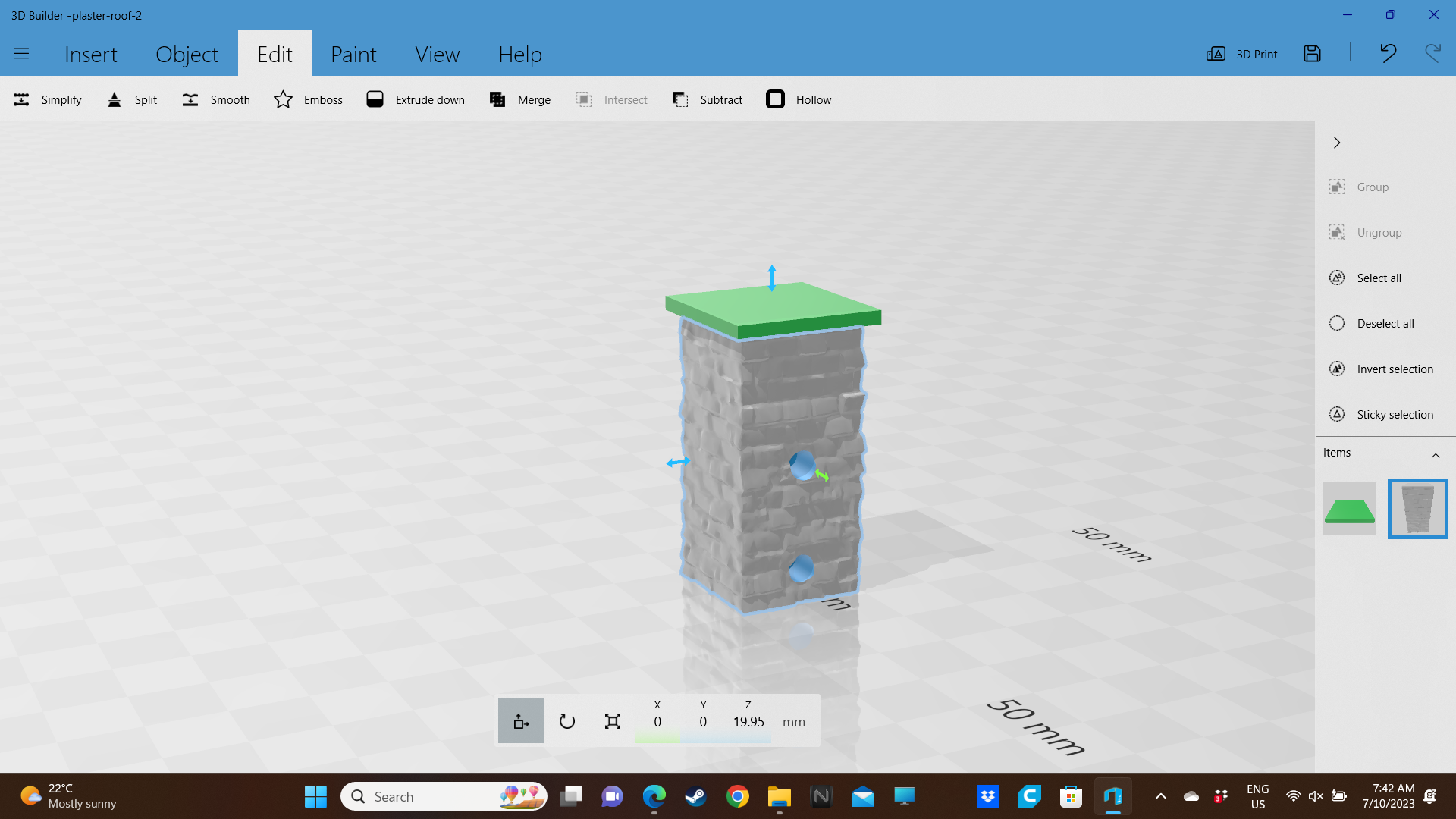
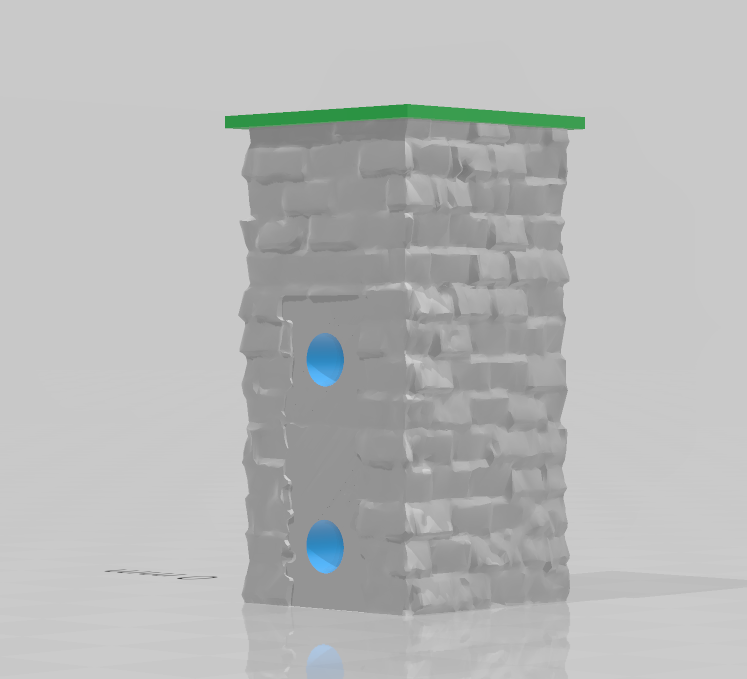
Obviously, this is just a quick run-through of something really basic but should give an idea of what you can do.
I may add an additional magnet hole in the middle of the top to allow different toppers to be swapped in and out.
For the actual ‘walls’ sections I may do some with flat tops and some with little grooves to add railings.
Either way, I will save the files so that I can quickly and easily replicate the pieces whilst also having the option to go in and alter bits to make some pieces unique.
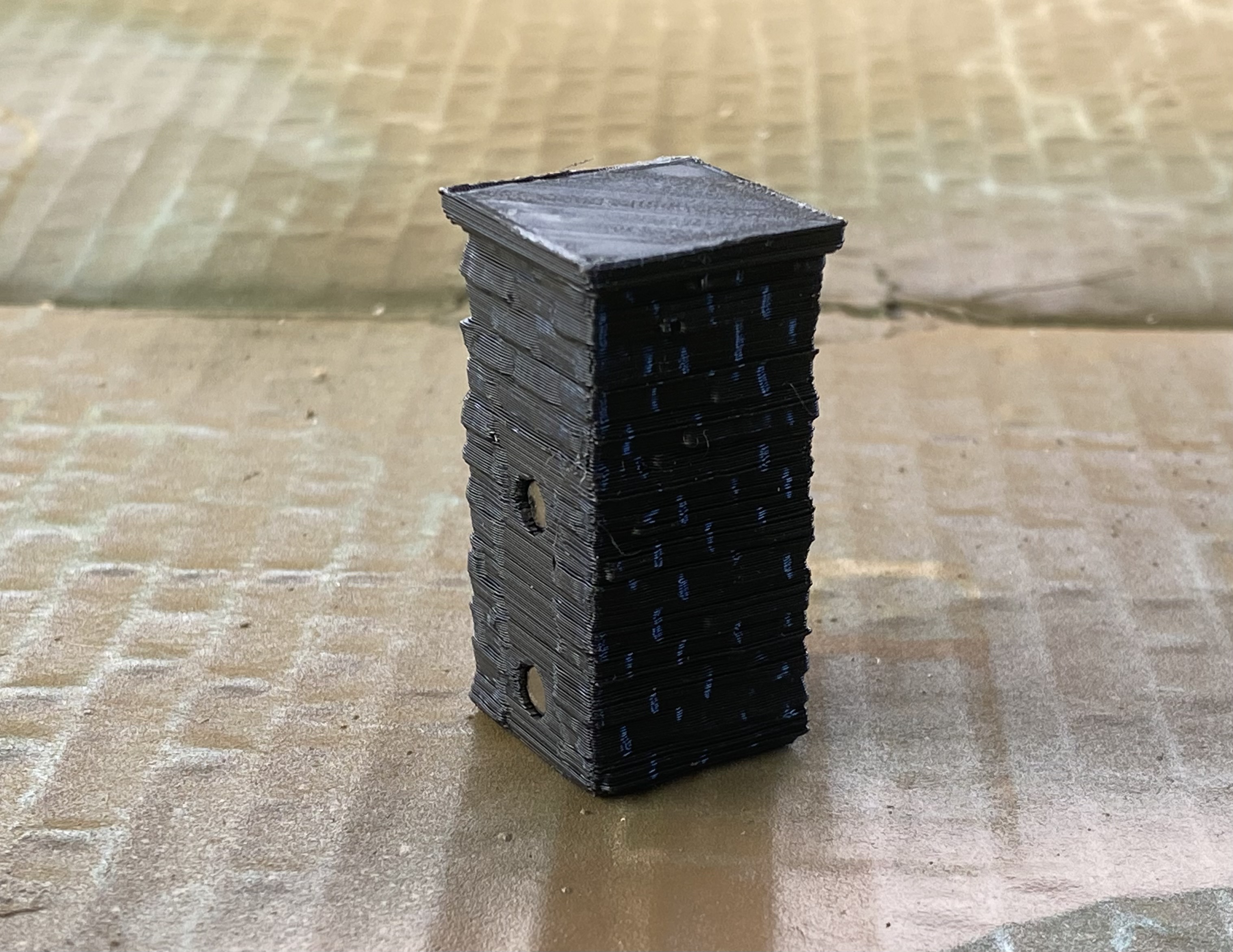
Next up is to run a few quick test prints to see if it all works.
Hello, ello, ello
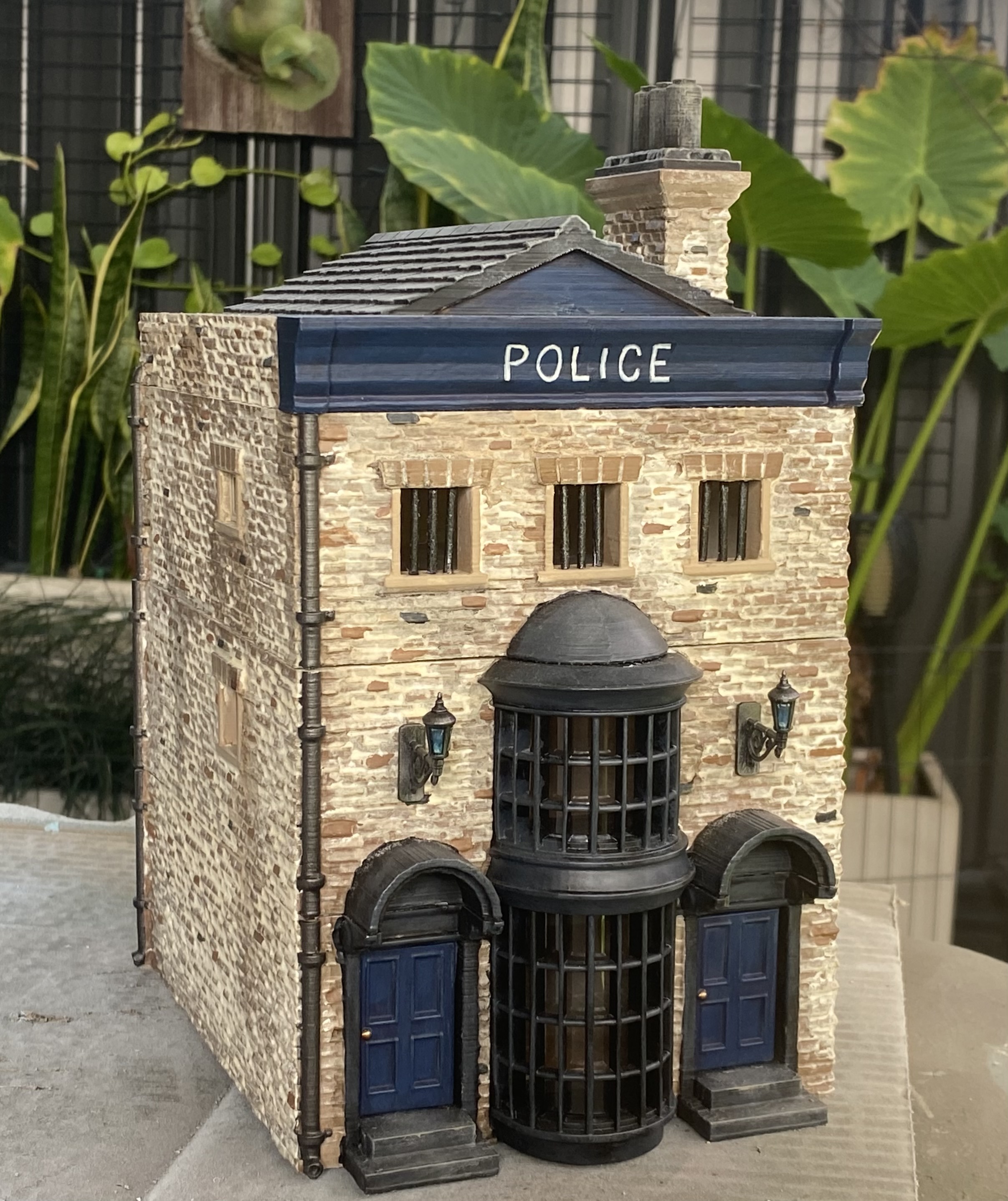
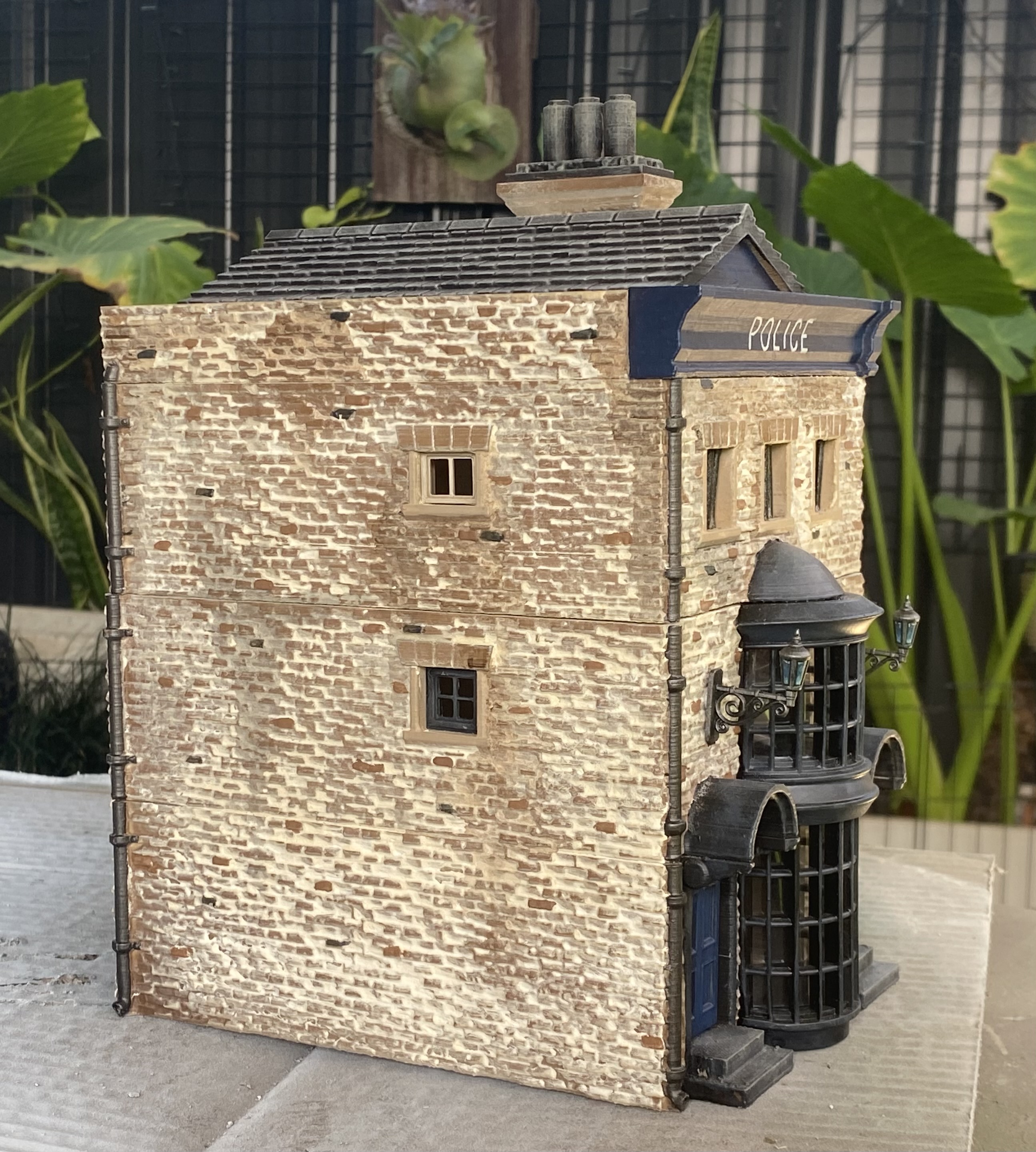
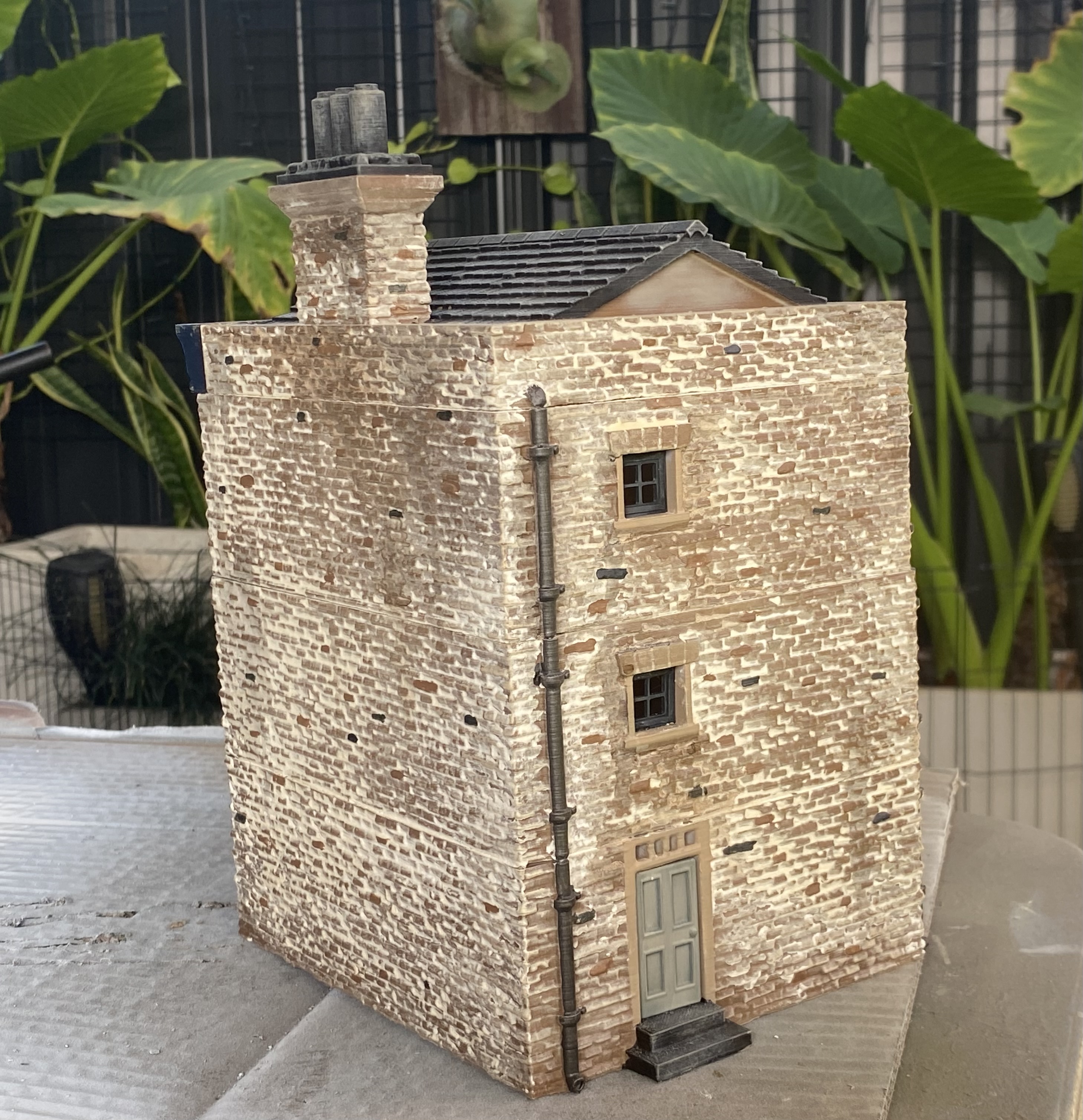
Simple Police Station was painted pretty much following the same recipe as the other buildings, but with blue accent colours and window bars made from cocktail sticks.
Easy street
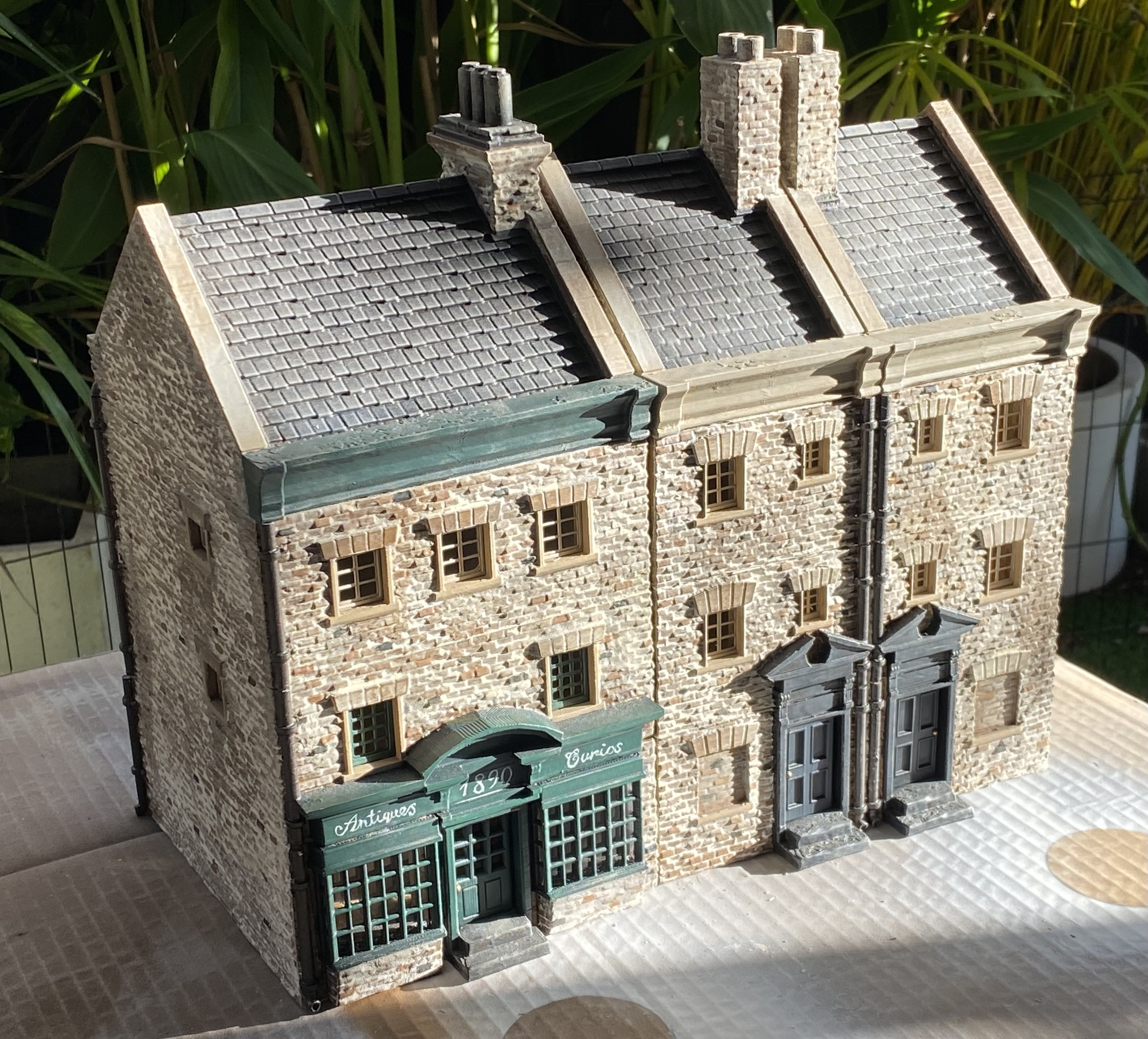
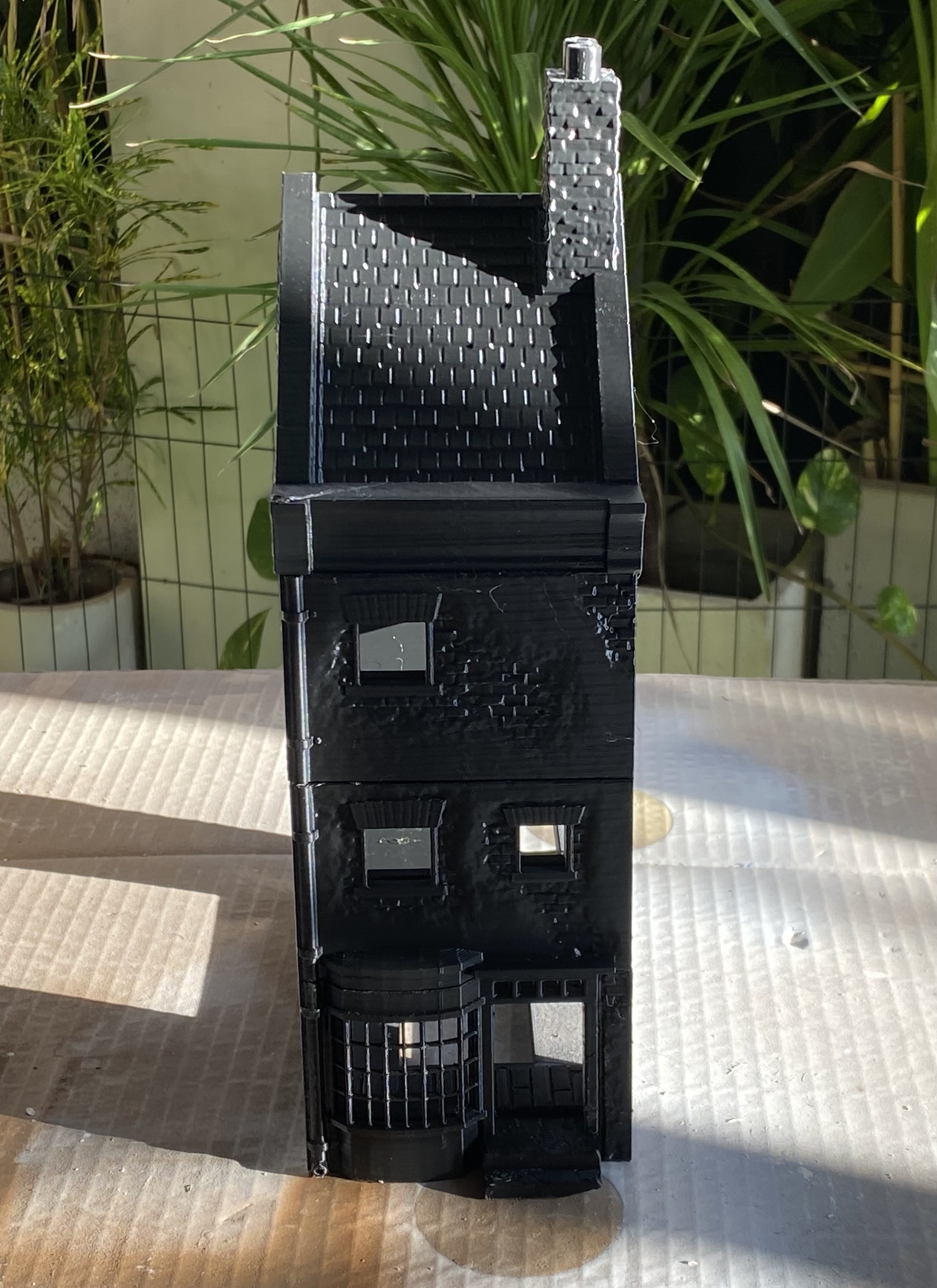
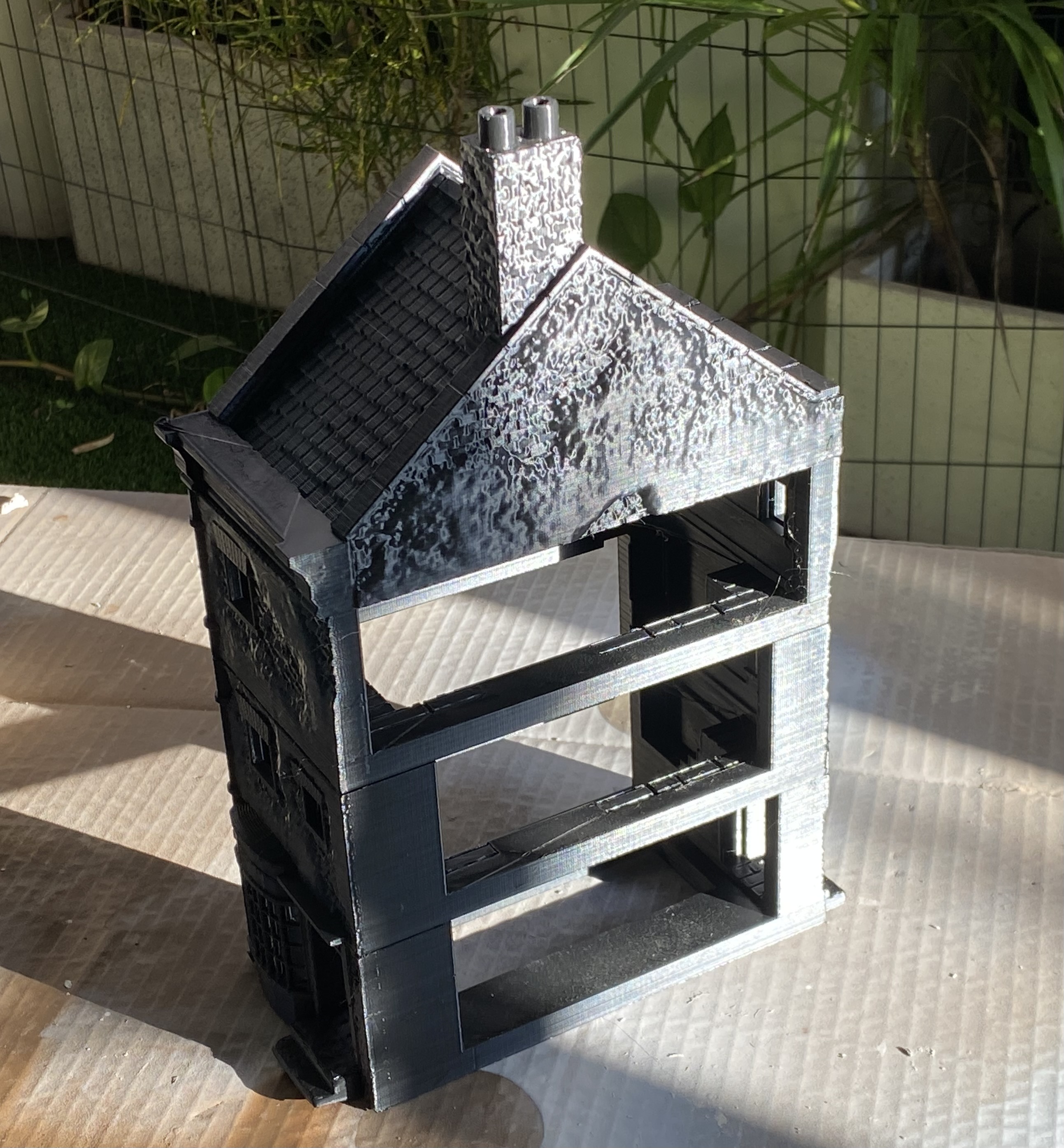
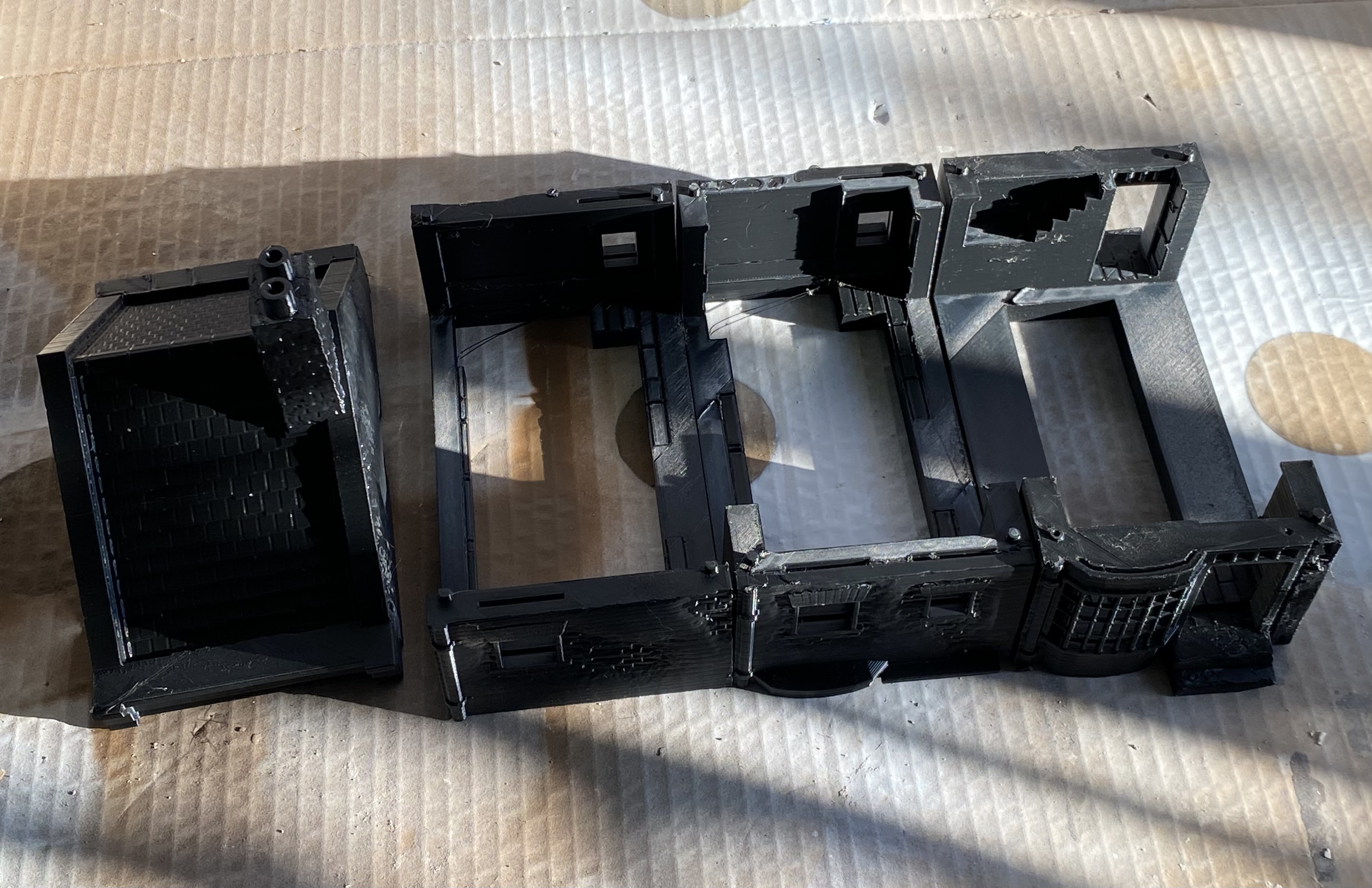
When building terraces in a hurry it is sometimes beneficial to take STL files and cut away all the bits that won’t be seen as this can massively reduce both printing time and consumables.
With houses that are going to have a plastered appearance, the missing walls can always be replaced by foamcore. You will hardly notice the difference with a thin coat of filler over the joins. Although this is entirely optional.








![StarCraft Tabletop Miniatures Game Pre-Orders Live Now [Updated]](https://images.beastsofwar.com/2026/03/starcraft-tmg-news-cover-600-338.jpg)