






![NO Weekender Or Cult Of Games XLBS This Weekend [Updated]](https://images.beastsofwar.com/2026/03/No_Weekender_and_XLBS_this_Weekend-225-127.jpg)




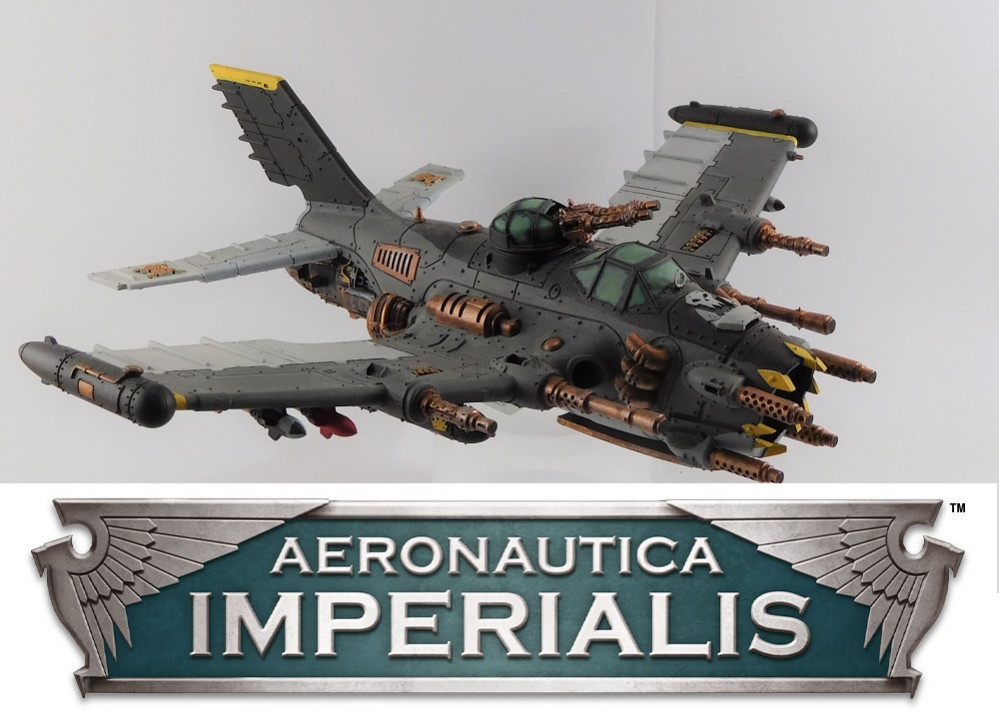
Ork Aeronautica




Recommendations: 199
About the Project
Painting Ork fliers for Aeronautica Imperialis.
Related Game: Aeronautica Imperialis
Related Company: Games Workshop
Related Genre: Science Fiction
This Project is Active
Painting Details
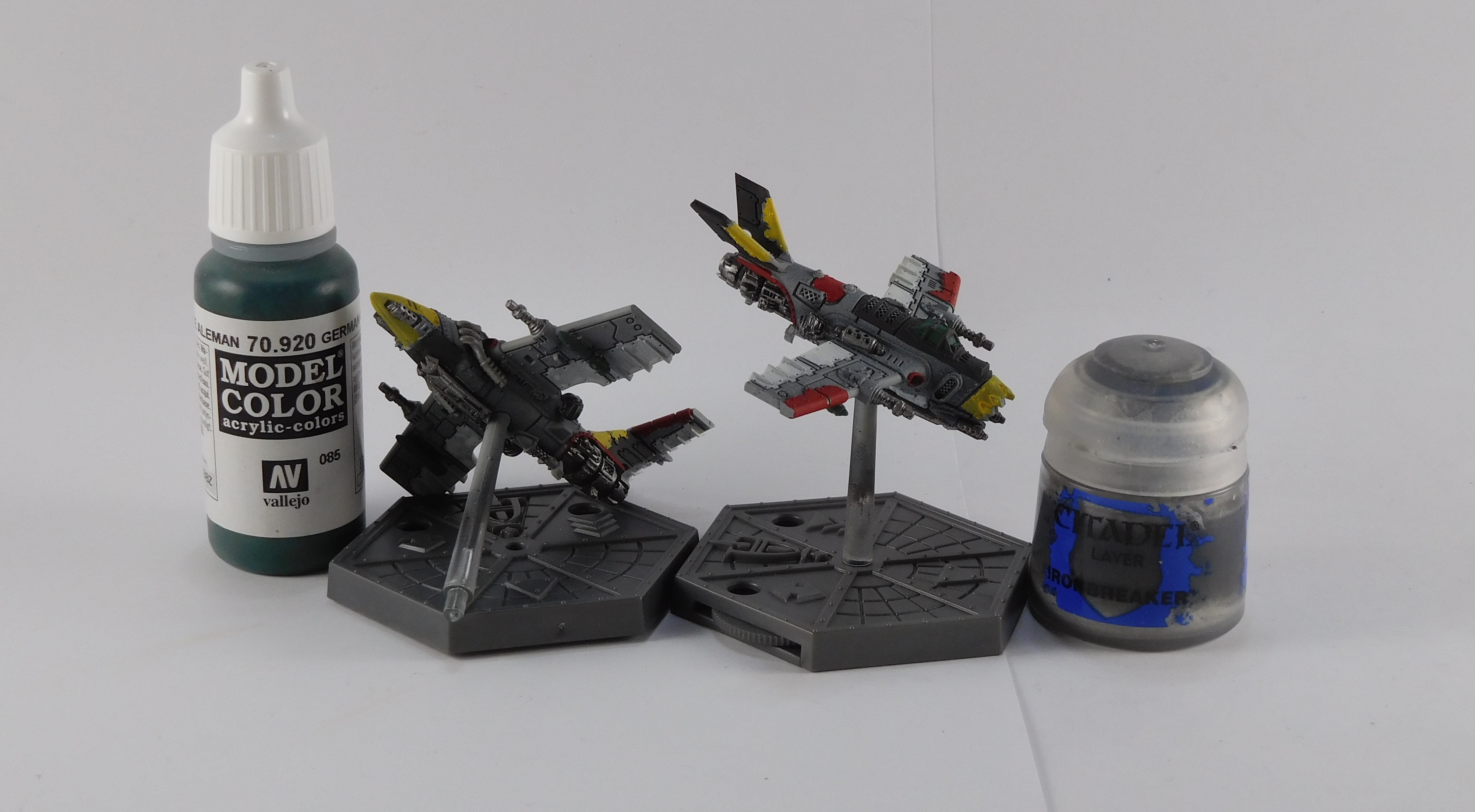
Starting to paint the fiddley bits. The rockets under the wings where painted green, or Vallejo German Uniform. The metal bits got a coat of Citadel Ironbreaker. The metal bits include the engine nozzles, gun barrels, and exhaust vents.
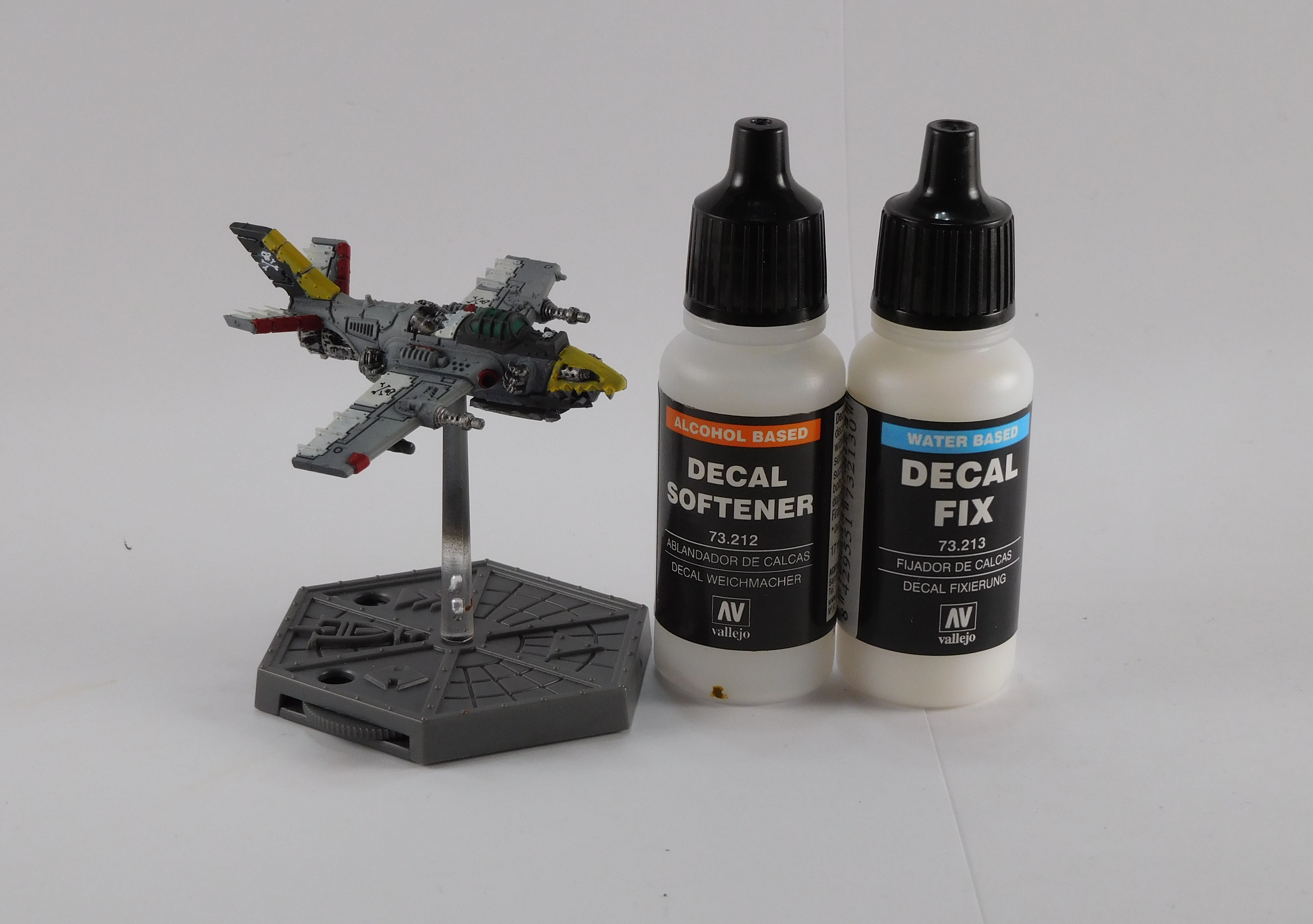
Decals from the kit where applied. As per the source material, white skull and crossbones decals where applied to the vertical tail fin. Various decals from the kit where applied like the flame pattern and the checkered strips. Some of the decals where cut to fit.
I should have applied a coat of gloss varnish before applying the decals, but I was in a bit of a rush.
A bit of water down Vallejo decal fix was applied to the surface prior to applying the decal. After the decal was applied, the decals were coated with water down decal softener to make sure the decal conformed to the surface.
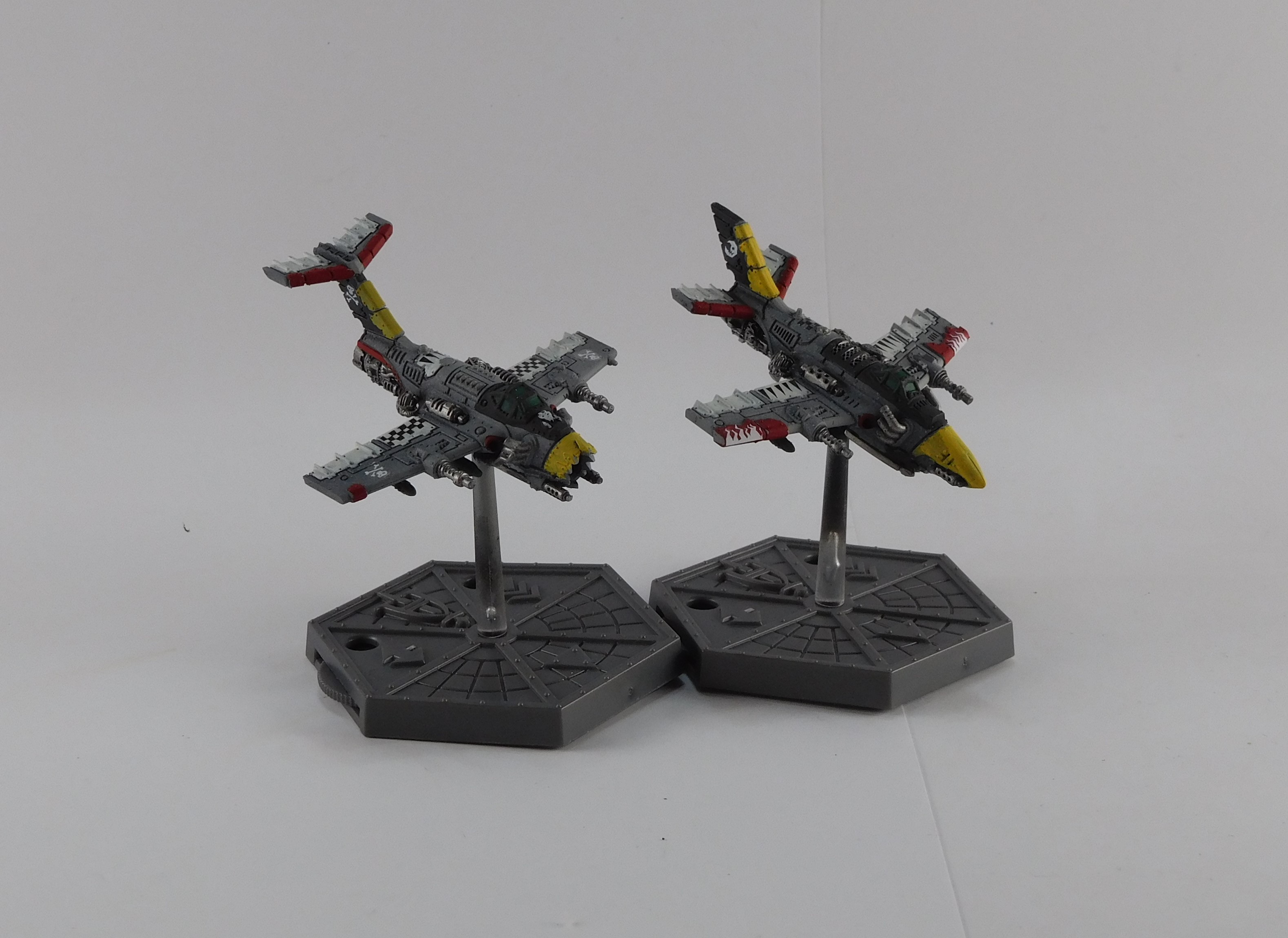
The decal were allowed to dry over night before proceeding to the next step. A Waterdown black wash was applied to the models. The black wash was to help show the panel lines. Then the models were set aside to dry again.
Now was the time for finishing details and touchup of paint.
The windows received an extra layer of highlight by applying Citadel Warpstone Glow. The yellow panels where given a touch up. Some of the gray and white bits where touched up.
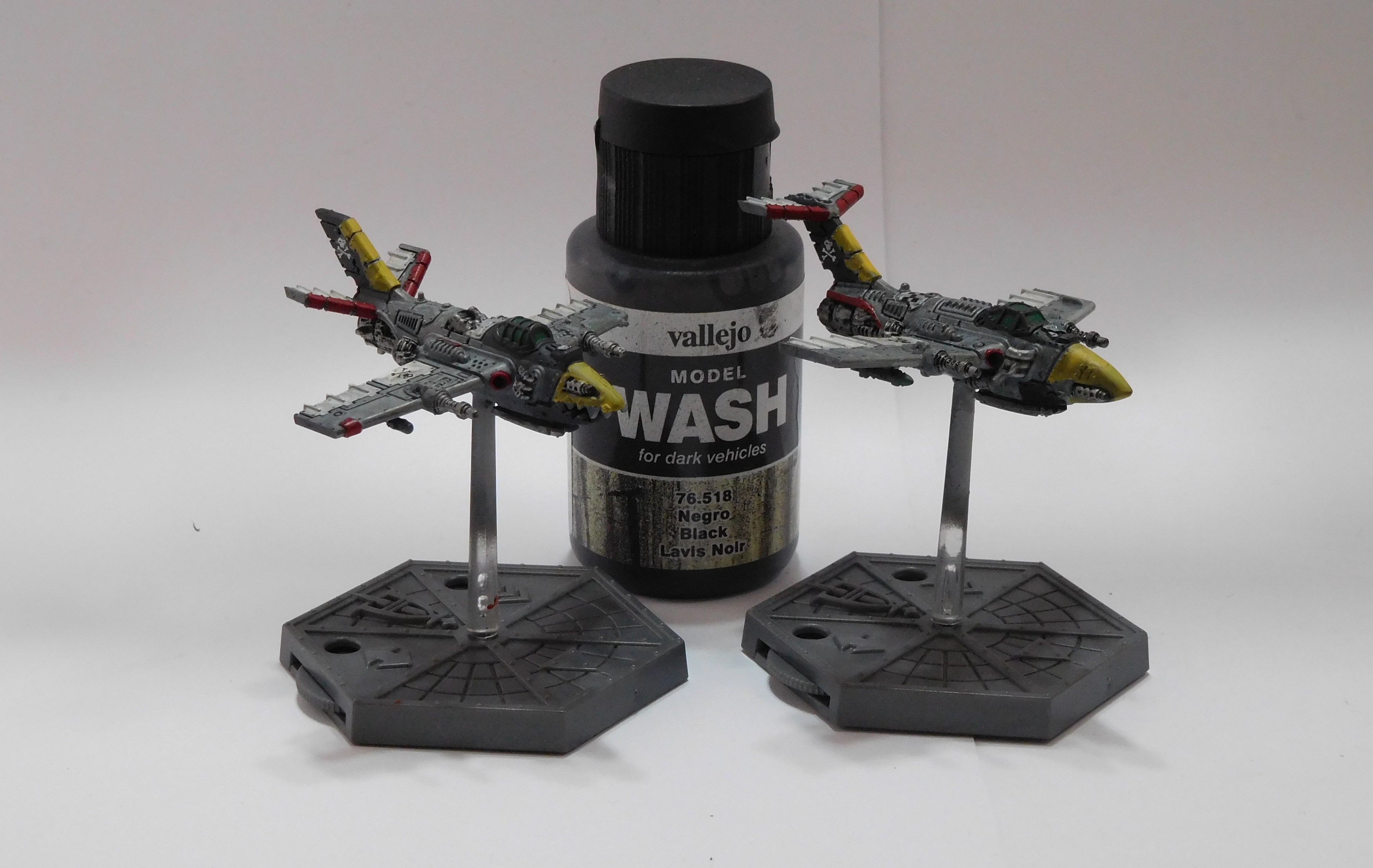
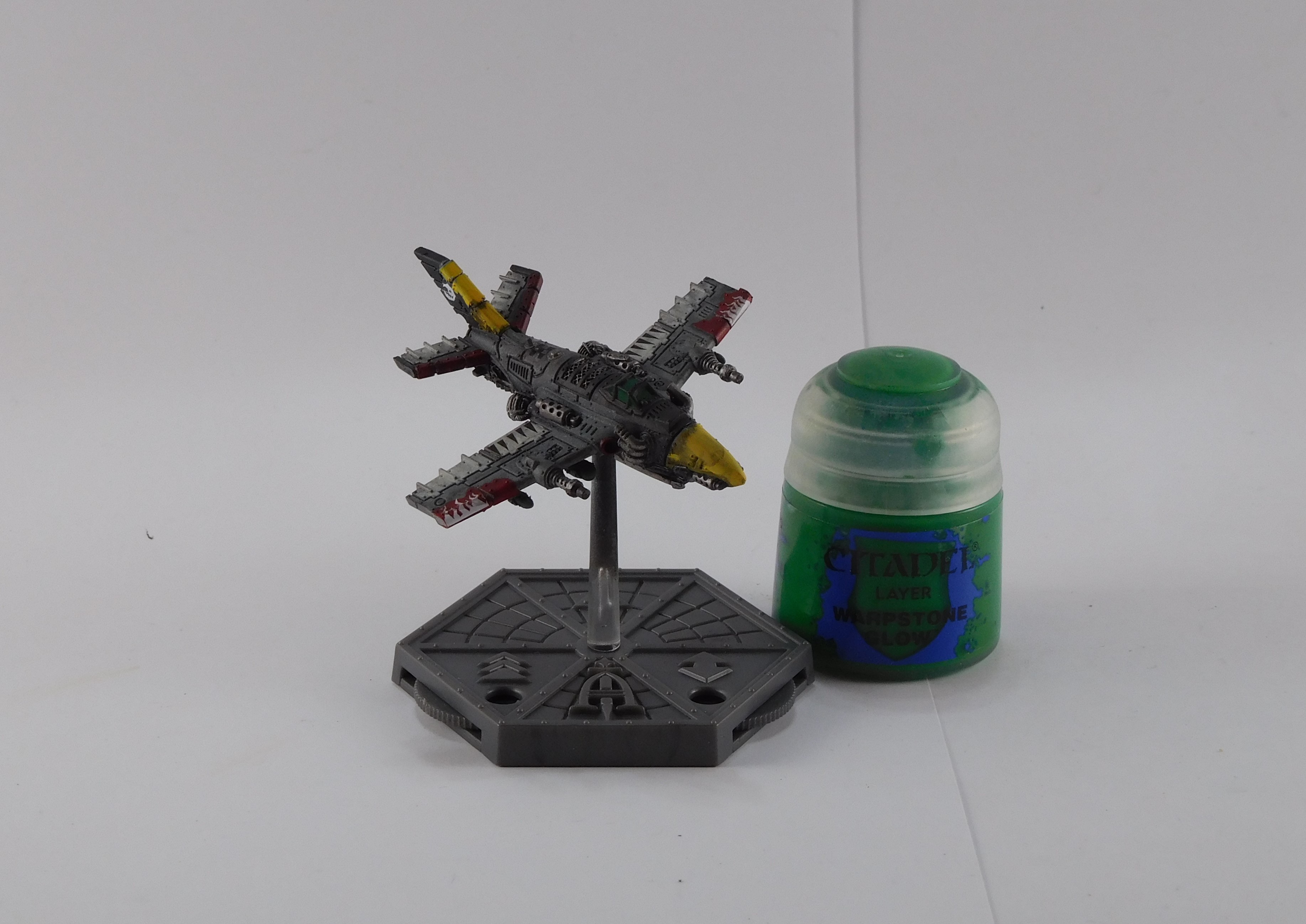

The final bit was to paint the little tooth like plates found round the aircraft nose. This was the bit of Citadel Pallid Wych Flesh, which is a off white.

Basing and Blocking
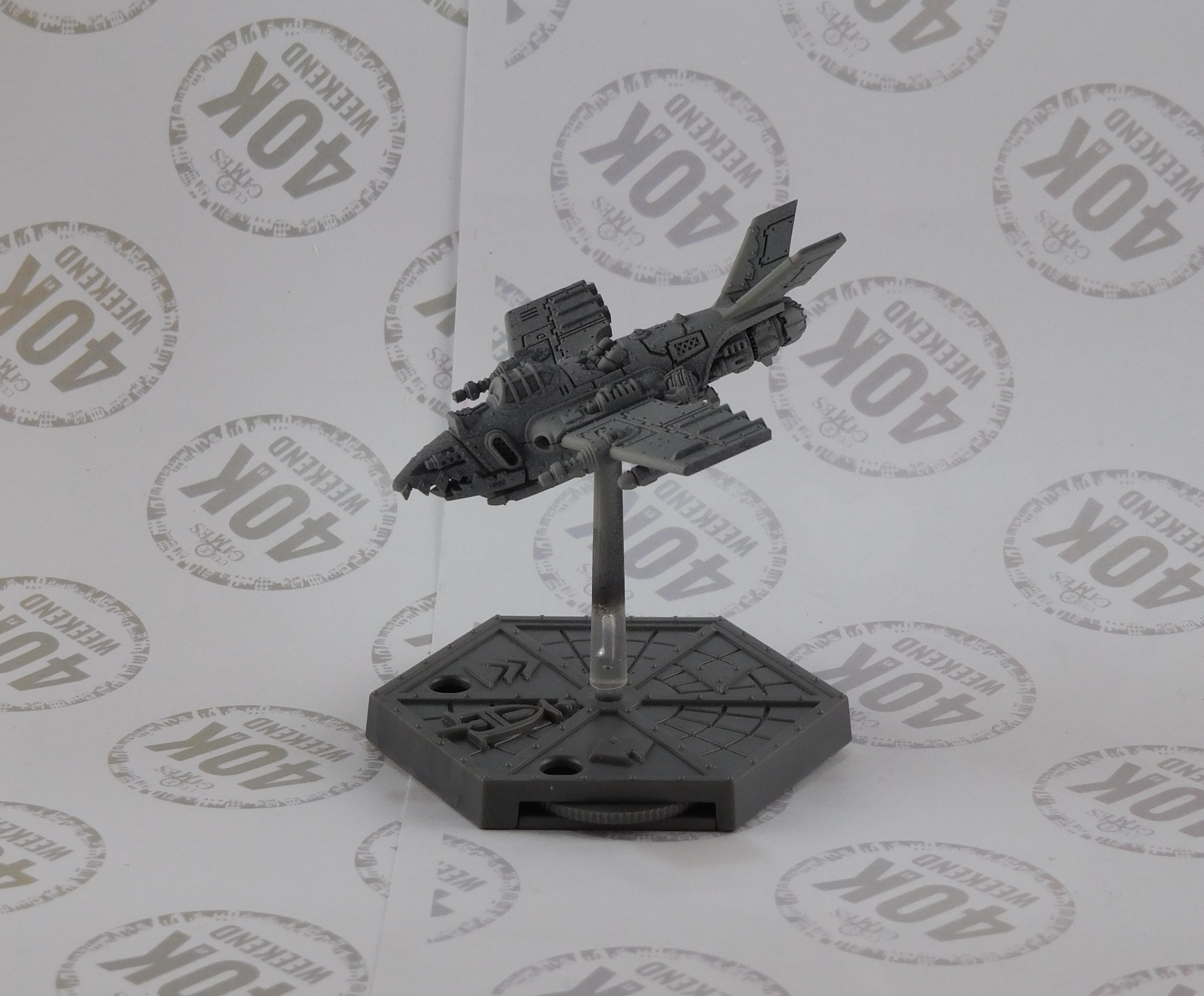
Step one, the models where painted black using Stynylrez acrylic primer (no photo’s this time).
The models were then based with a Vallejo Light Gull Grey paint, as seen below.

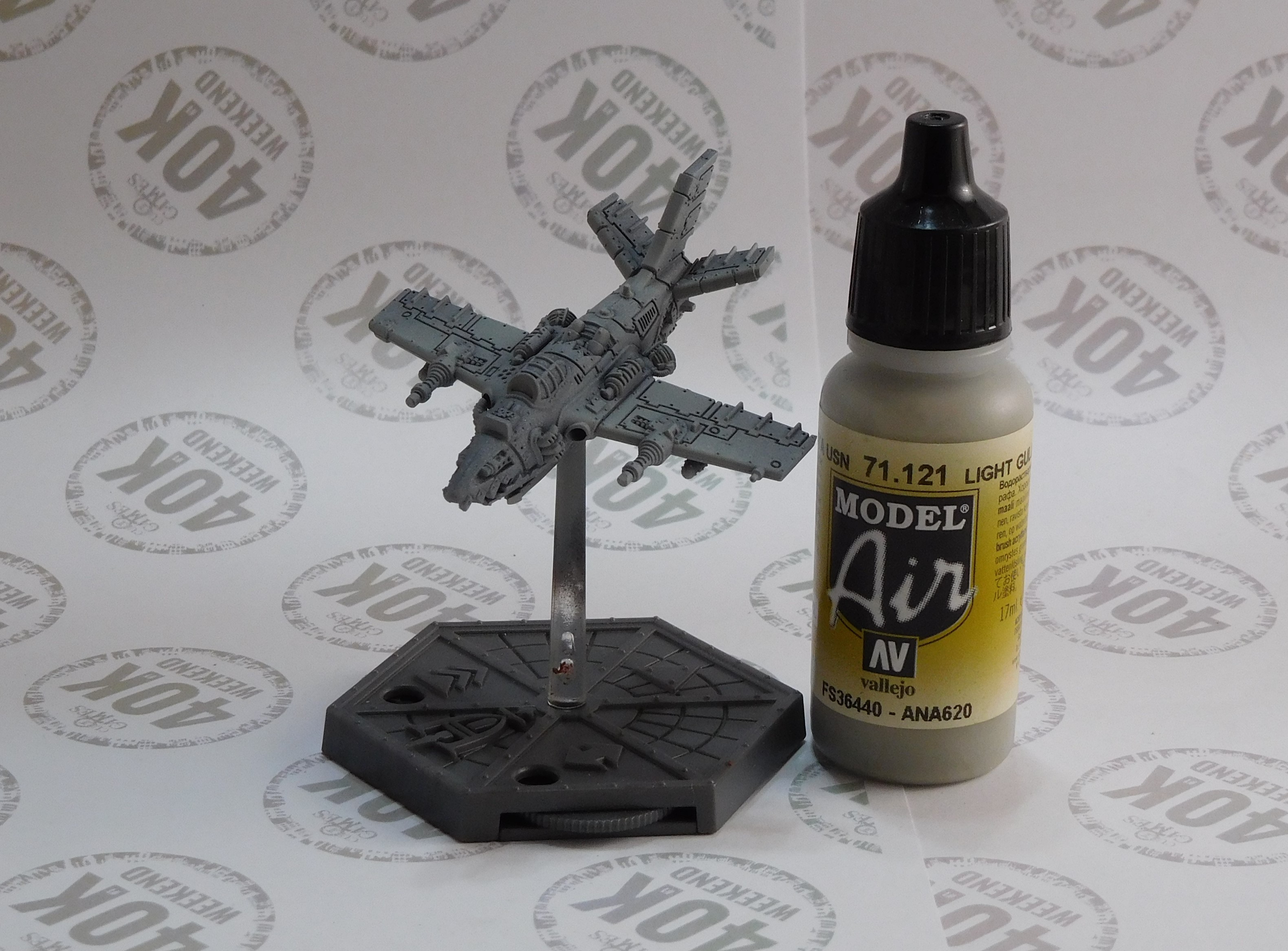
Next step was block in some of the main colours. As per the source material, the tails was painted black with some yellow trim. The nose has yellow. Any part to be painted metal was based black. The area around the canopy was painted black.
The control surfaces on the wings were painted a mix of light grey and white. Some of the panels on the aircraft were painted red (red ones go faster).
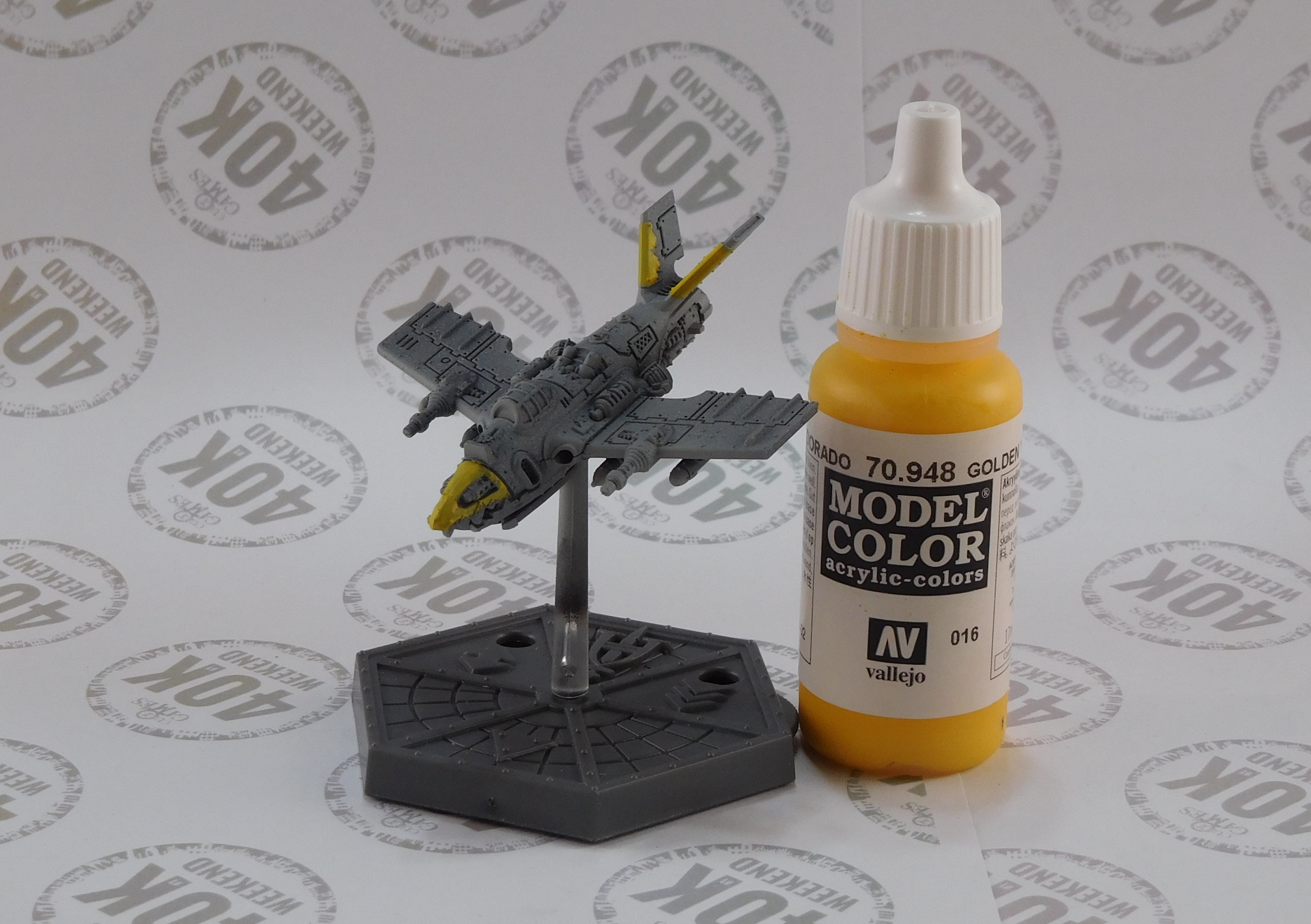
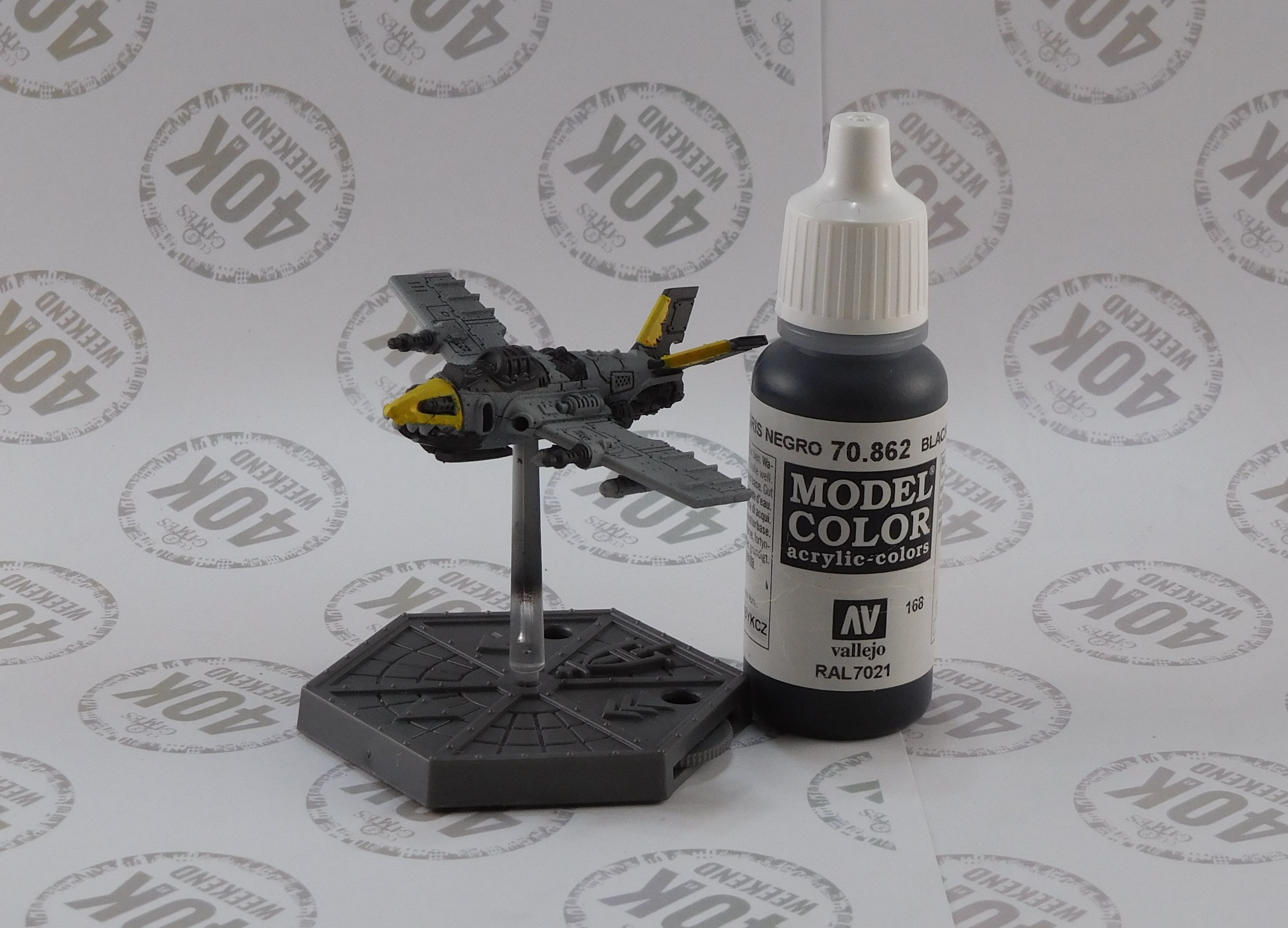
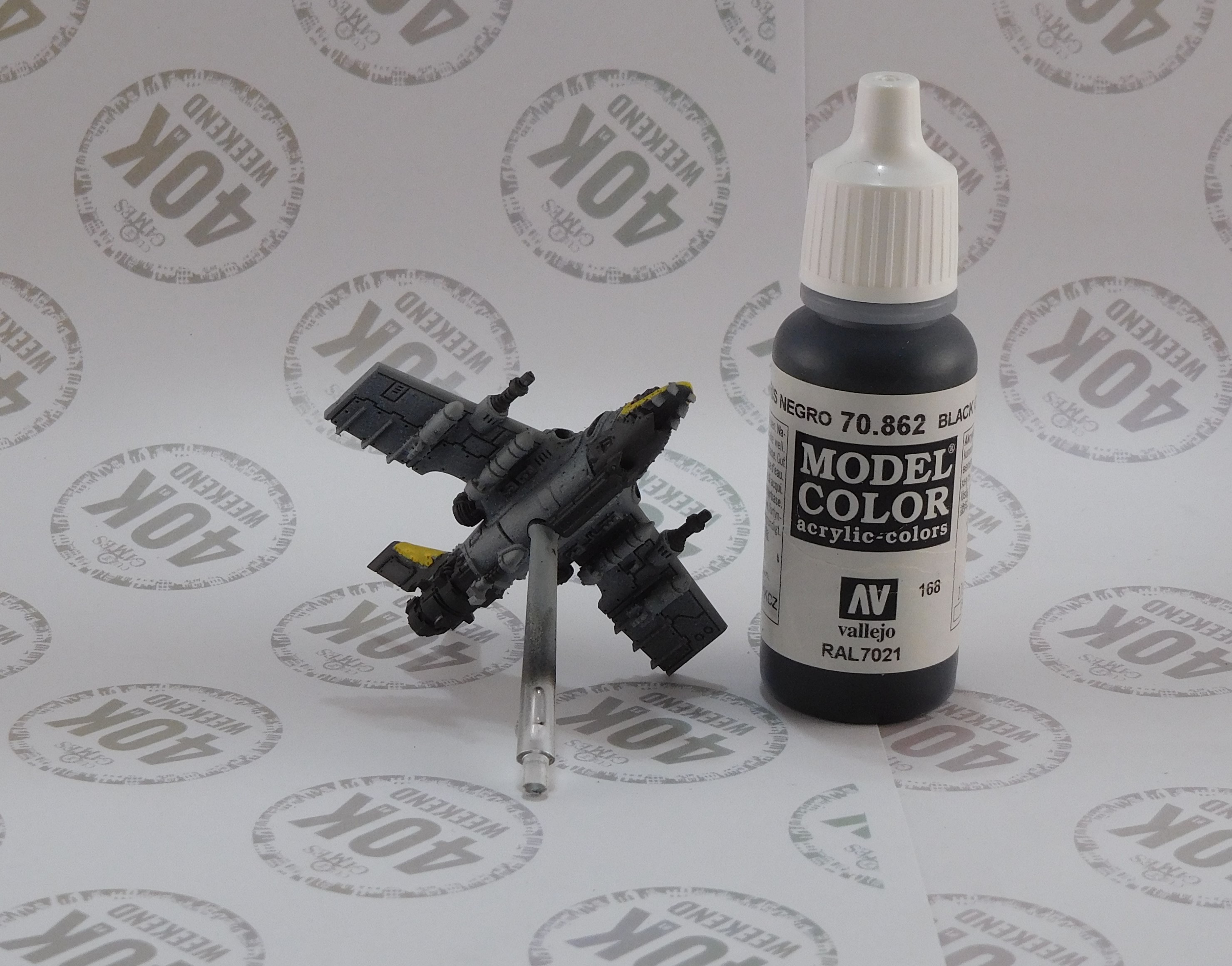
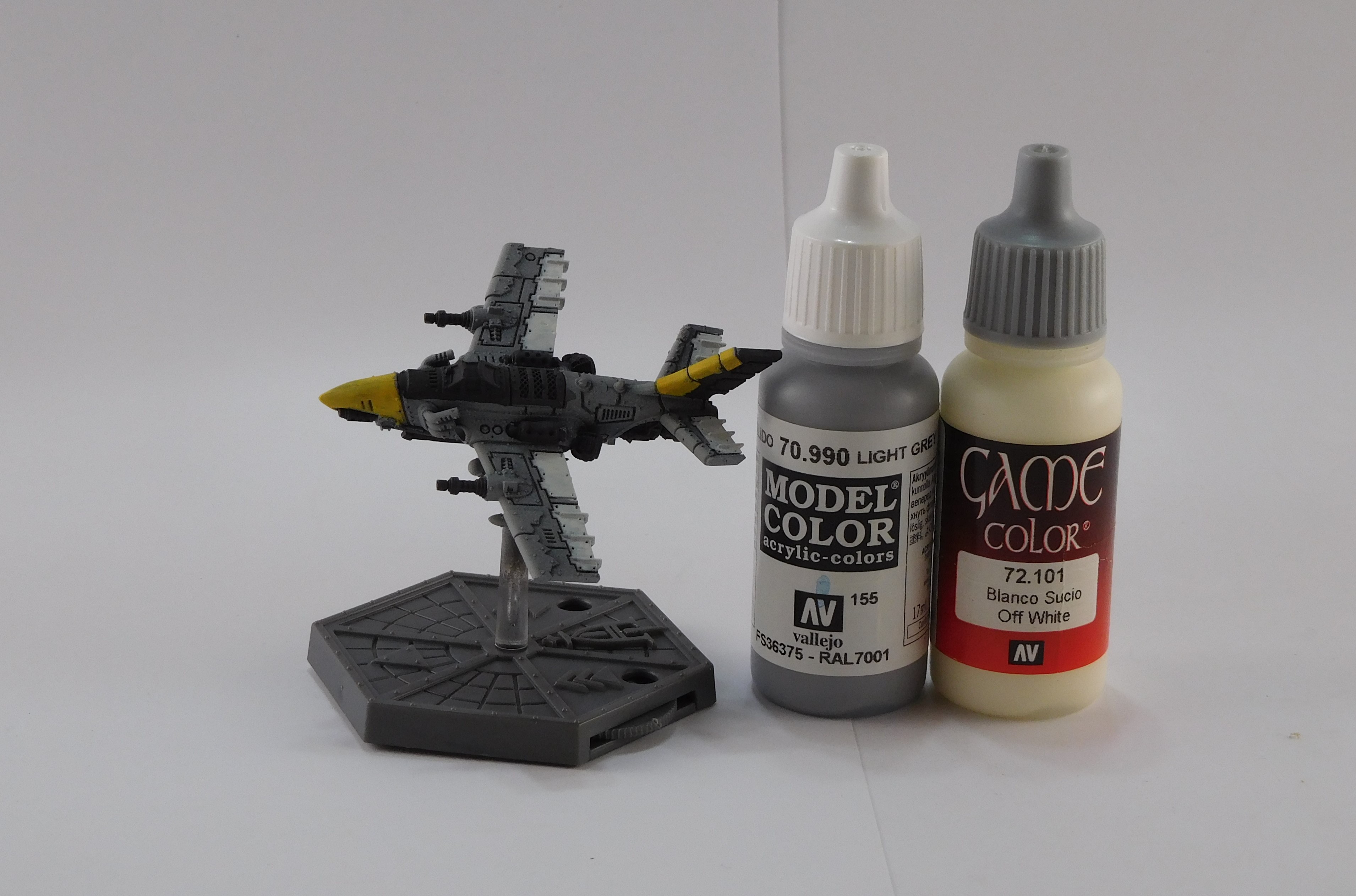
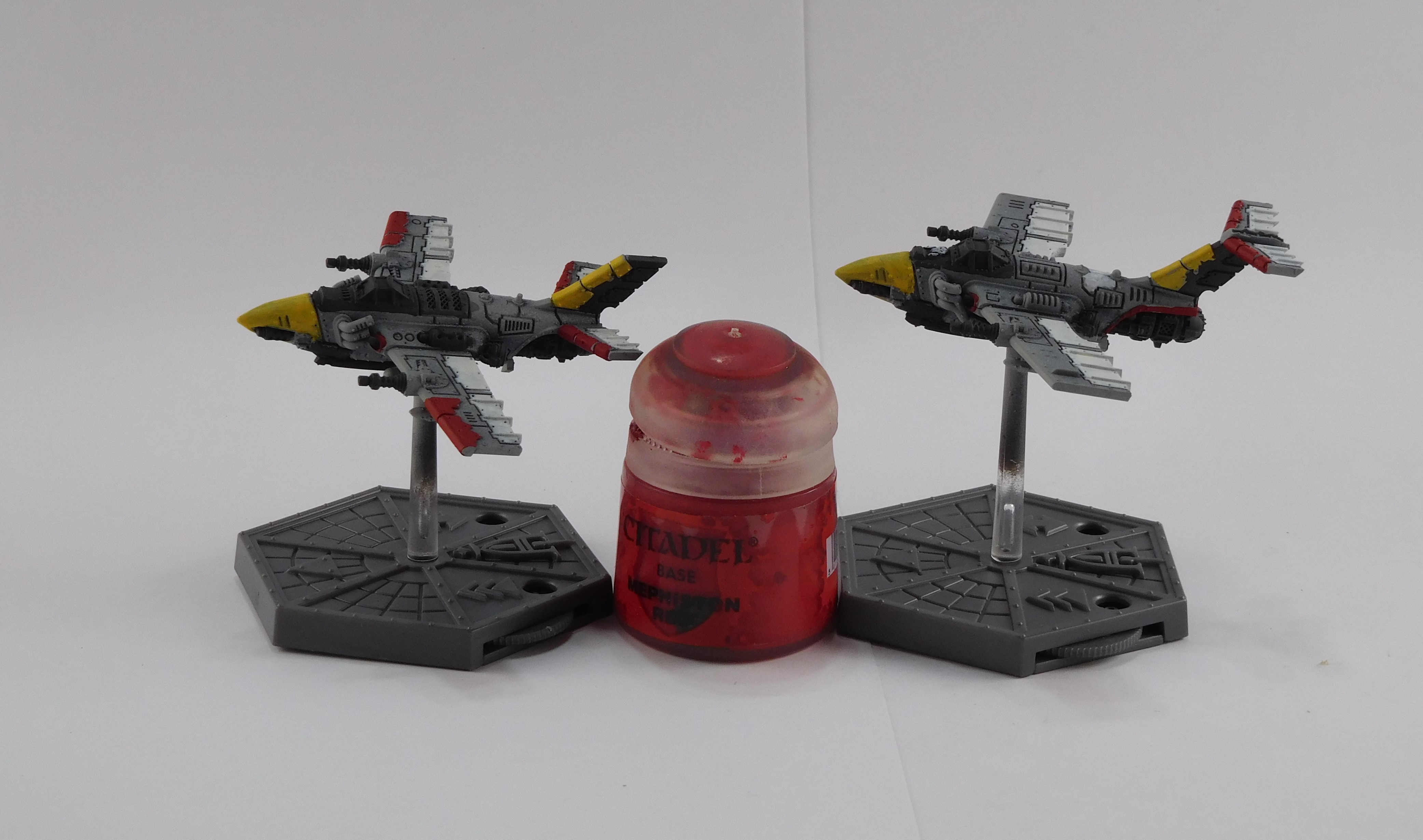
The canopy was based with a dark green and then some deep green was used to add highlights to the windows.
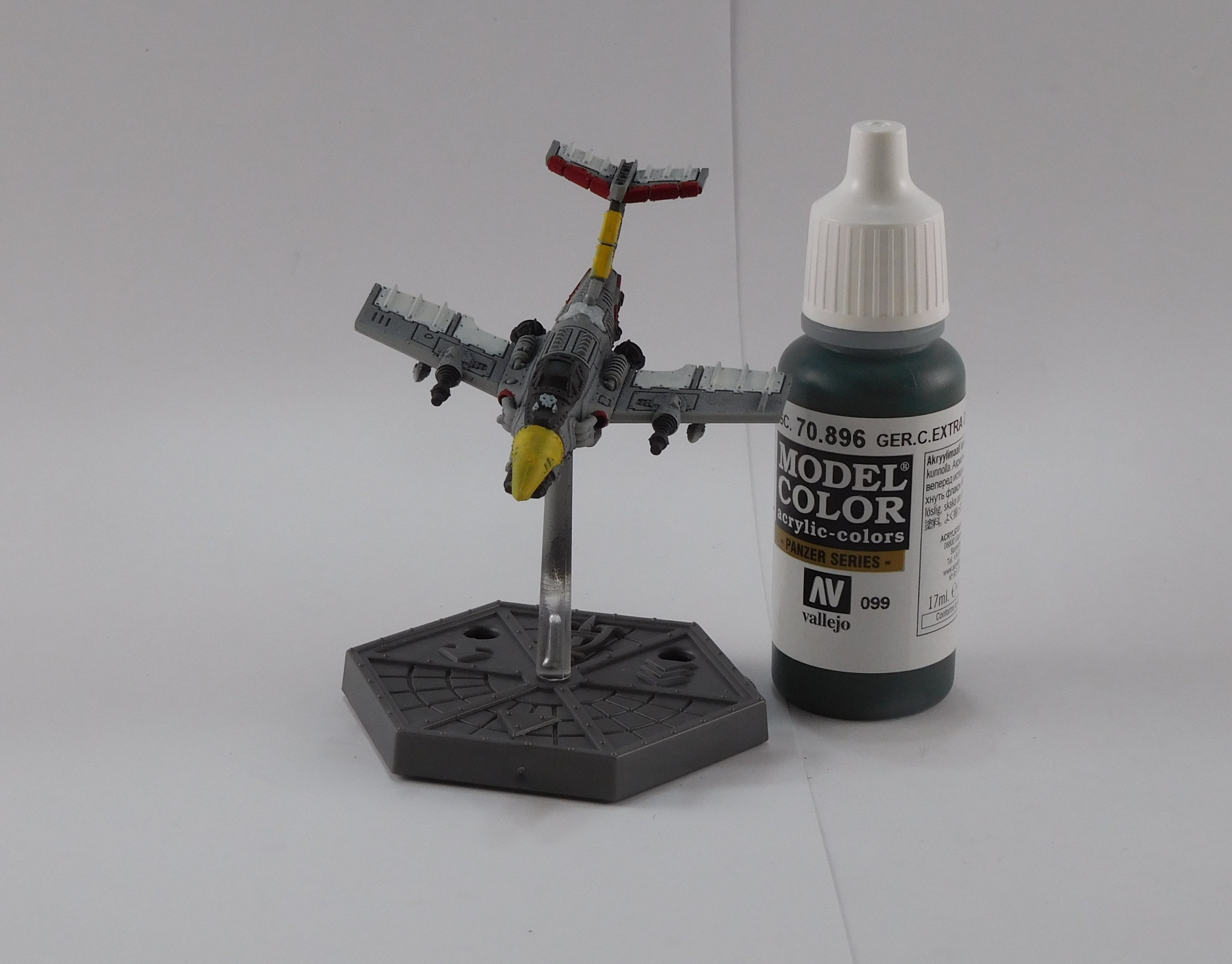

Ork Aeronauts the Idea
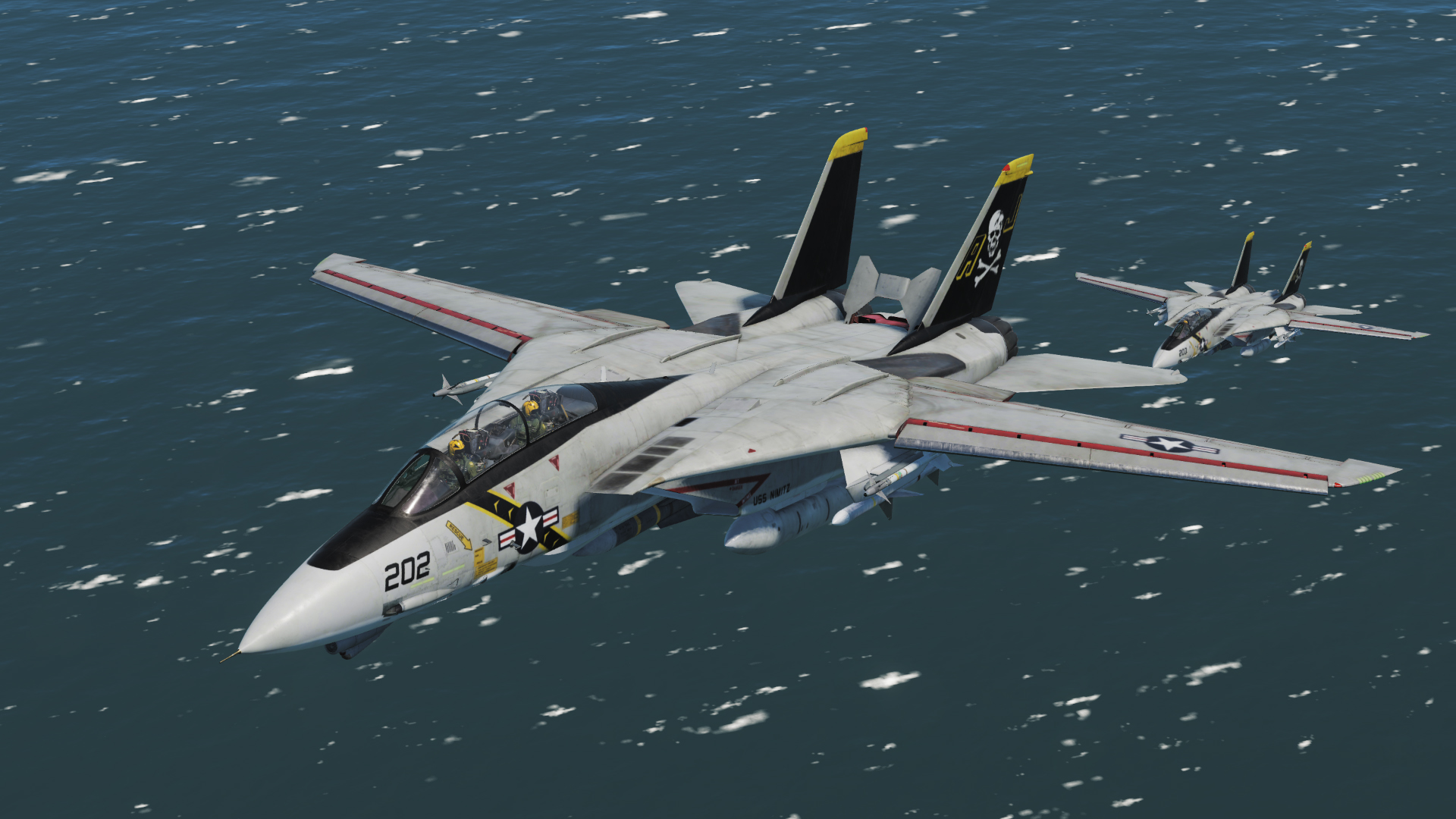
The US airforce had an aircraft squadron who’s insignia was the jolly roger or skull and crossbones. This started with a squardon back in World War 2. In the 1980 and 1990, the insigina was used by the VF-84 squadron. They flew the F-14 Tomcat.
Over the years the squadron paint scheme has changed colours. Sometime in the mid- 1980s, they switch to a low profile paint scheme; that is the aircraft where painted a uniform light grey and no other visible colours. Apparently that was not popular with the air crews and so they switch back to the more iconic look.
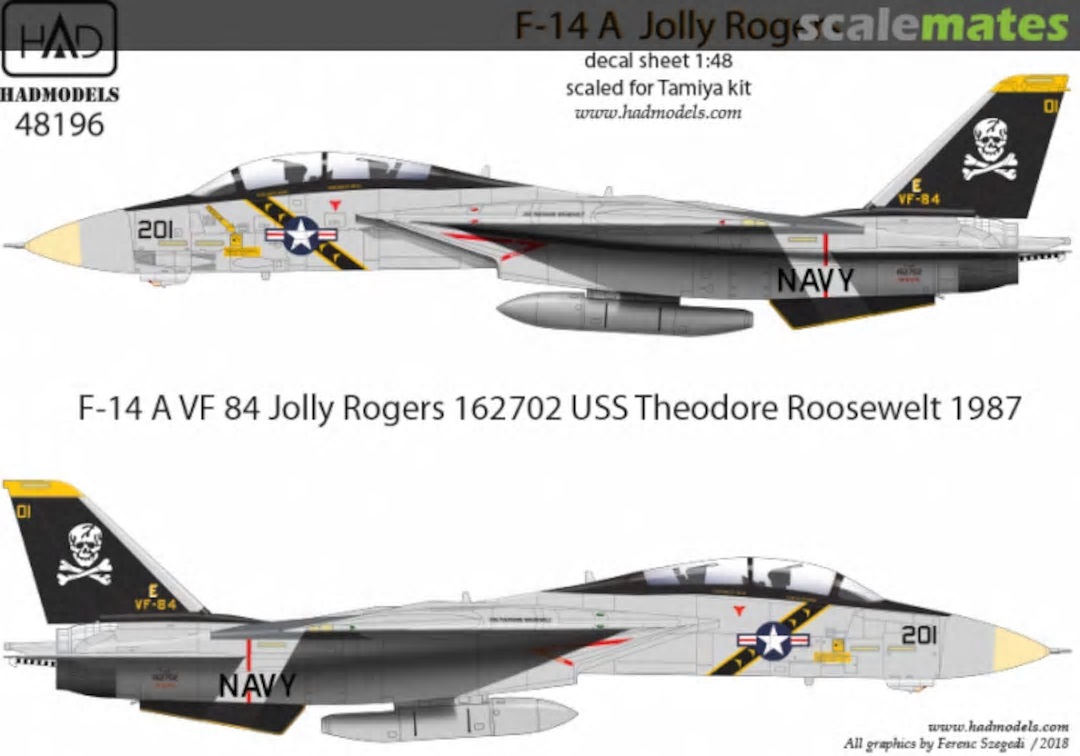
The classic paint scheme is a grey aircraft, control surfaces painted a lighter grey, black rudder with a yellow stripe, black around the cockpit. The late 1980’s saw the nose cone get a light yellow coating, and a red strip along the wing.
I had painted a 28mm Dakajet with similar colours, but that was before I did some research. Working from memory is not advised. The plan was to do a paint some Aeronautica Imperialis Dakajets using a similar paint scheme not to different to the 28mm model and the VF-84 squardon.
Points of interest that may be copied from the VF-84 squadron: the black rudders with yellow stripe, some white insignia on the rudder, black around the cockpit, white control surfaces on the wings, yellow nose, and some where a bit of red.
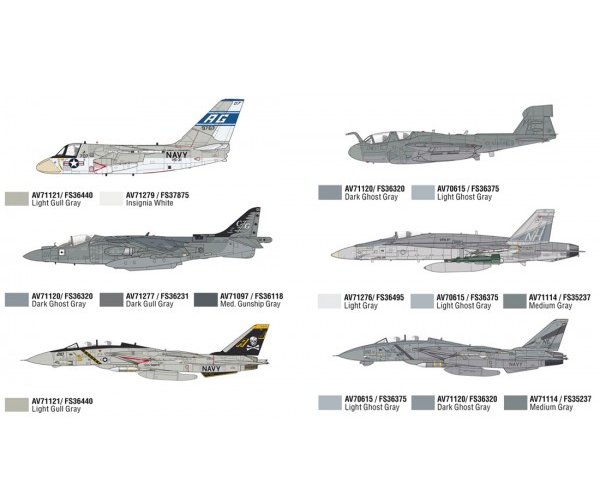
Below are some reference pictures and a reference to the Vallejo paints.