











Last Hope Frontier


Recommendations: 229
About the Project
'Last Hope Frontier' (Working Title) is a small scale skirmish cowboy posse game in creation by Thomas Jack Brown. Set in the town of Last Hope, factions of the town's residents and outlying outlaws vie for control of the town. The game uses a standard size deck of 54 playing cards as its mechanic for measuring distances and conducting shooting and combat.
Related Genre: Western
This Project is Active
First games test this weekend!
I am testing Last Hope Frontier for the first time on the tabletop at the weekend!
Attempting to distil my ramblings and notes down into a flow-chart, easy accessible and readable format for my two friends to test the game has been an interesting feat.
I find the language of gaming interesting.
Words for the purpose of fiction are created (40K player of Necron here – some of the names of characters look like a scrabble board has been dropped on the floor!)
Words are used to inform or describe actions that are able to be taken by players, with words that might not be the original usage/meaning of that word.
Words from other related industries are ported across as an easy fit to describe a situation/action.
And in all my time playing, for the purpose of entertainment and enjoyment, there’s an implicit expression from the written rules to the players reading it and an acceptance of ‘okay, this means that’. Its the same with symbology and colours as well.
I hope that my ordered ramblings will be able to be understood, as that is the first goal I have of the weekend testing – will the players gain an understanding of what my intentions are?
Variable game length idea
Game scenarios to last five turns, however, a variable game length using the flip of a card could be utilised.
At the end of turn five, one player flips a card off the top of the deck, if it shows between 2 – 5, the game is over, otherwise, go into a sixth turn.
At the end of turn six, the other player who didn’t flip a card off the top of the deck for game end flips a card off the top of their deck. If the card is between a 2 – 10, the game is over, otherwise go to a seventh turn.
The game will end after seven turns.
Scenario - Bounty Hunt - Dead not alive! (initial thoughts)
For this scenario IGNORE the normal routing rule (either leader and deputy taken out of action OR three out of five models taken out of action).
Each player names another model in their opponents gang. That chosen model is the bounty prize for their own gang.
Each player is within their right to take other models in the gang out of action to make the act of taking the bounty-chosen model easier, but the moment the bounty model of either side is taken out of action, the game is over and the victorious player is declared. There is also a pushing-your-luck element to this – do you as a player risk your own gang members being taken out of action in the whirling combat/shoot out, or do you go direct and focus on getting the bounty?
In addition, the more senior the chosen opponents model, the larger the post-game reward. If a player names a crew-member model, minimal reward, deputy is mid-level reward, leader is is high-level reward.
Overarching story gist
The setting for the game would be the town of Last Hope in 1857, a town that was built at the end of the Californian Gold Rush (1853) near the Californian/Nevadan border, near the flow of the North Fork of the American River.
The town was established as a place for a wave of settlers and miners to stake their claim on a seam of gold and make a life for themselves, but bust soon followed boom, and in only a few years, the gold seam had run dry.
Now, in 1857, in a cloud of ruin and uncertainty, the town of Last Hope looks to the future and its citizens and those with more nefarious intent, can look to steer the fate of the town.
Folks can still stake claim on the river bank and find gold through panning, but with the gold all but dug up, time spent doing so and the potential profits are disproportionate. The real money is to be made in honourable commerce, bootlegging, bounty hunting or as a gun for hire.
Townsfolk (nearly) completed!
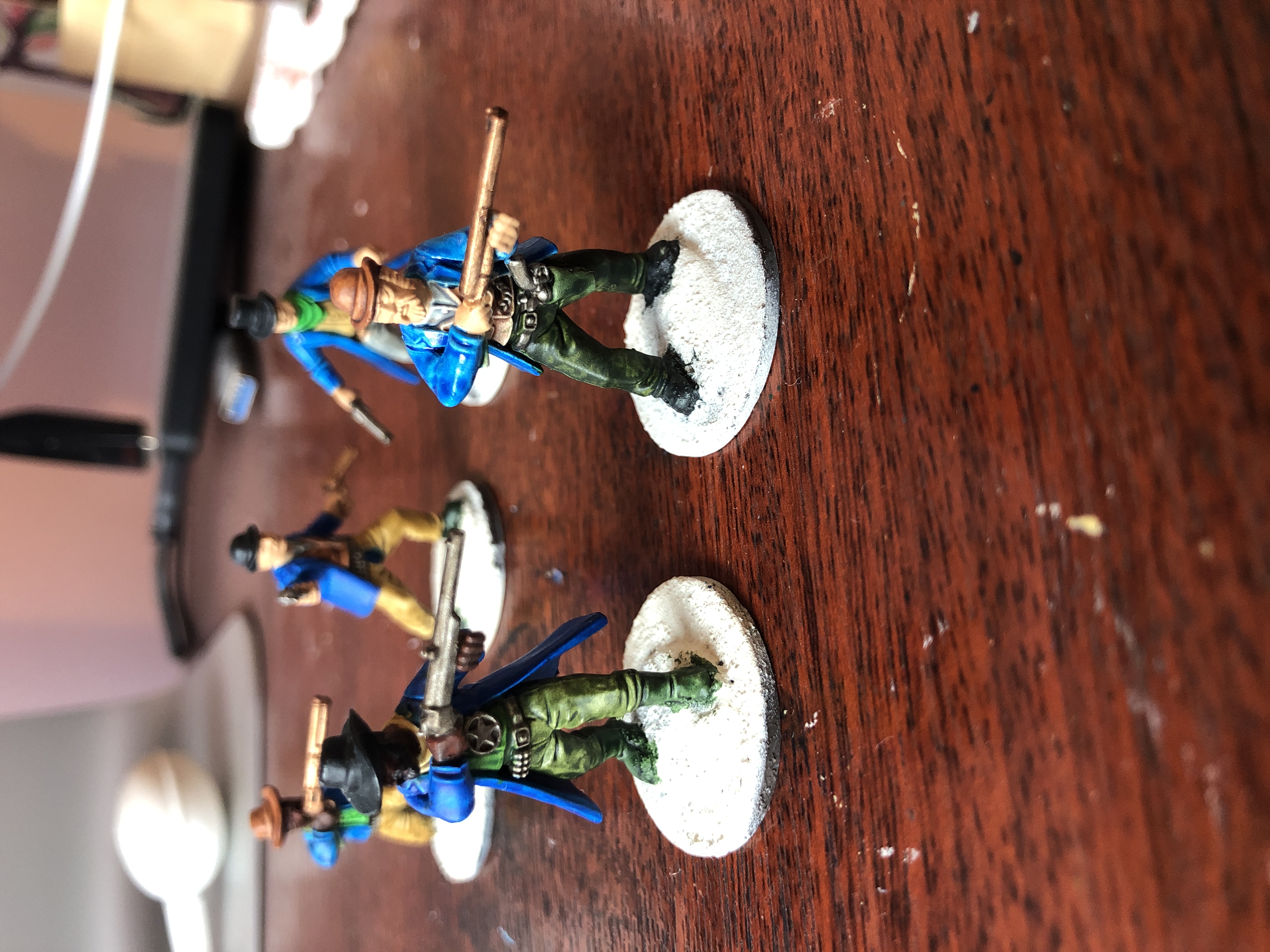
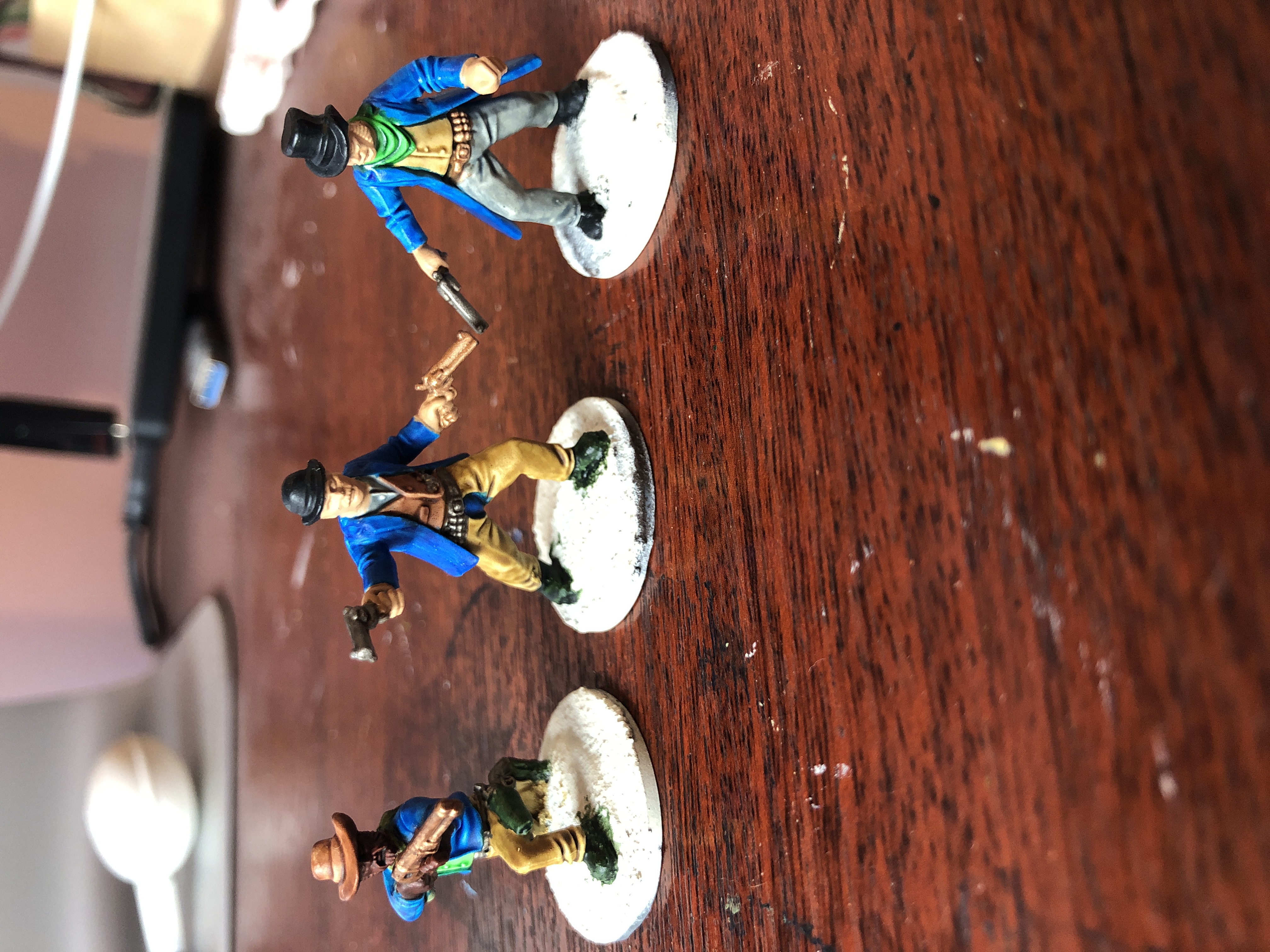
I have (nearly) completed the townsfolk band from the Gunslingers box set, just need to do the sand basing, but wanted to get the photos up.
I wanted to keep these guys with some uniformity, in the same way that a sheriff’s band may have uniformity, as I imagine the townsfolk gang would be some kind of informal citizens militia, made up of the more able men of the town of Last Hope, so its why they’ve all got the blue jackets.
I wasn’t expecting talassar blue contrast to come out so vivid, but them’s the breaks, and that’s fine. I had a lot of fun painting with overwhelmingly contrast paints again, so much so that a 40K project I want to do is pushing me towards all contrast.
Painted models at last!
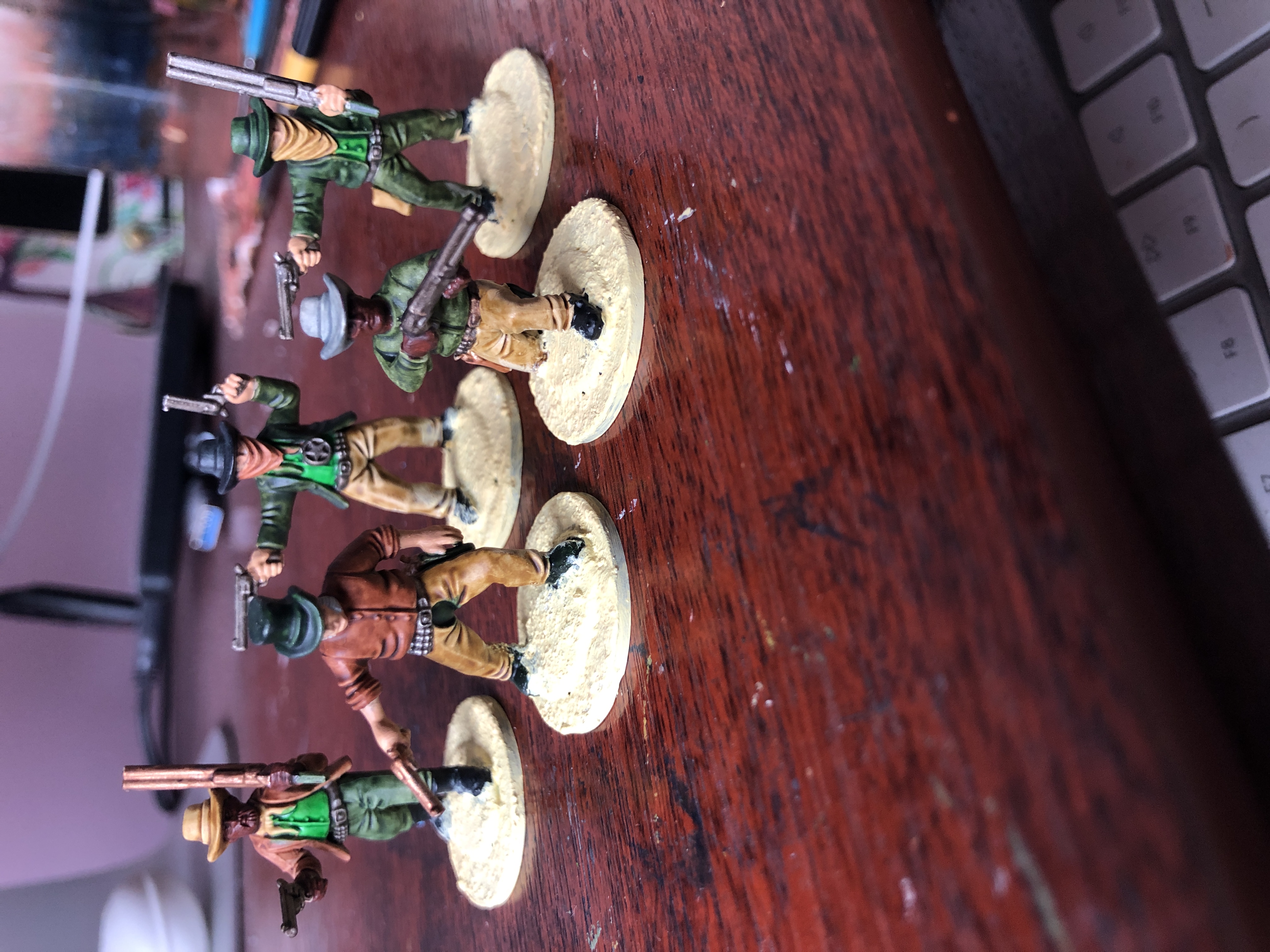
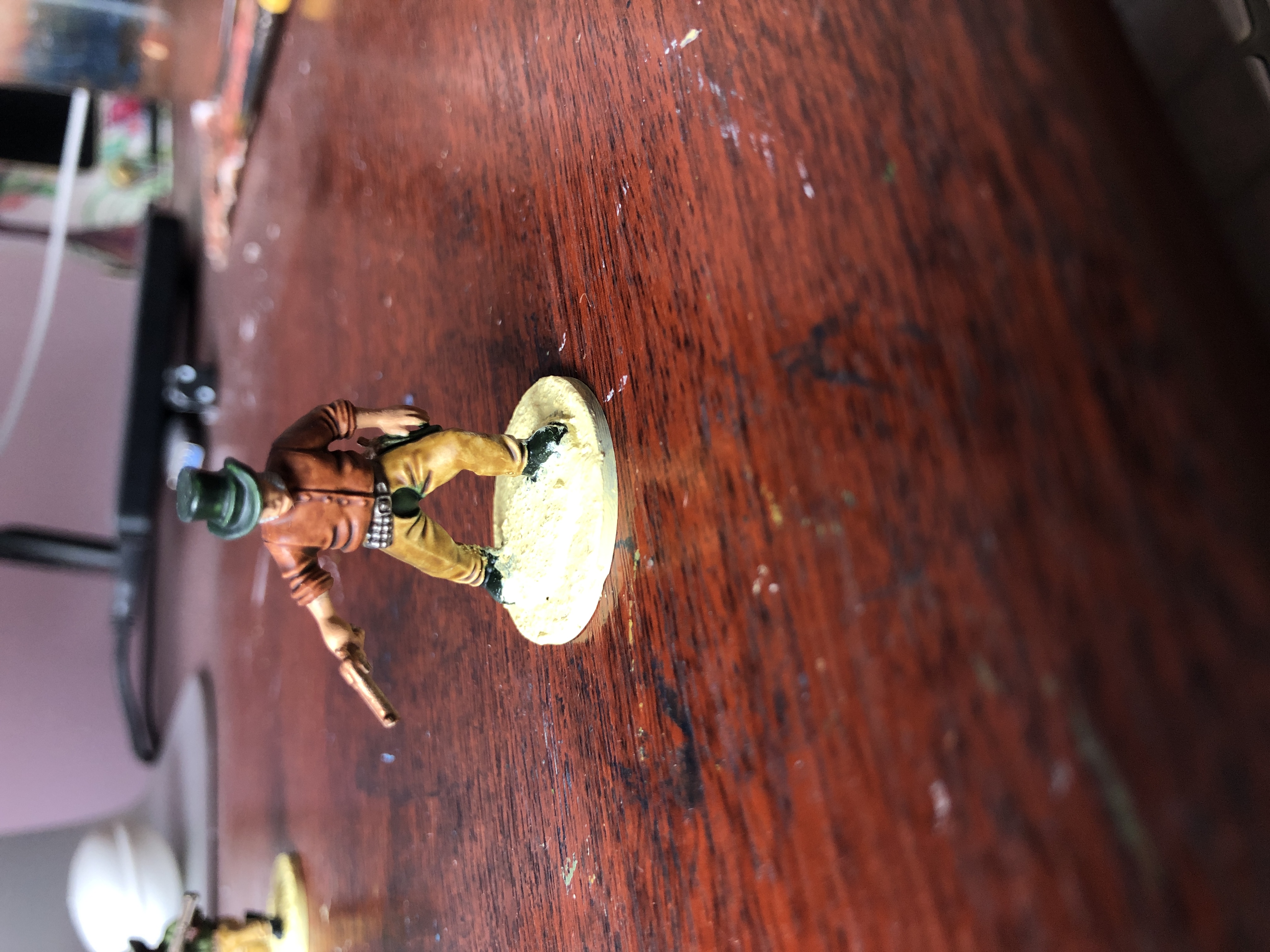
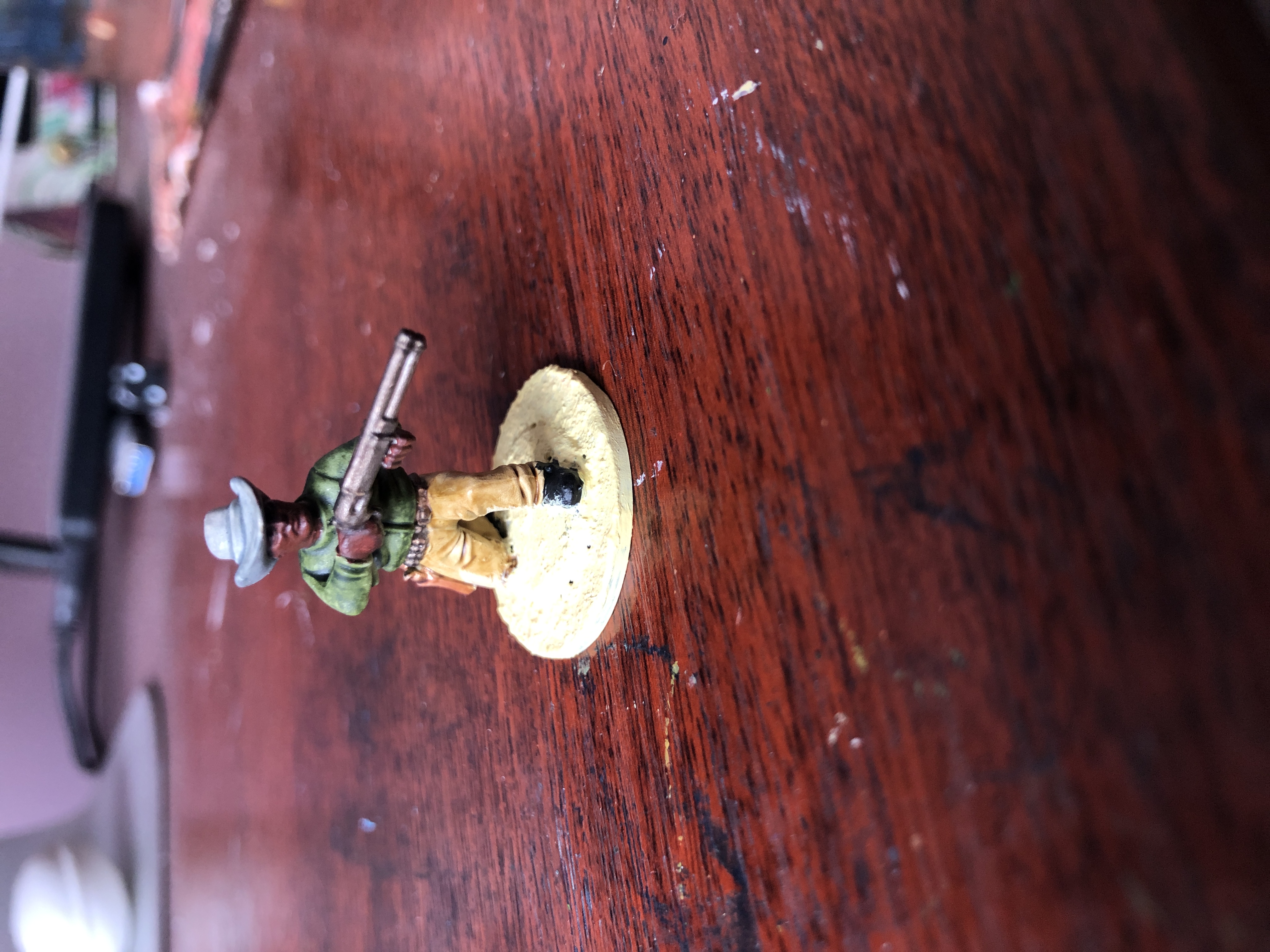
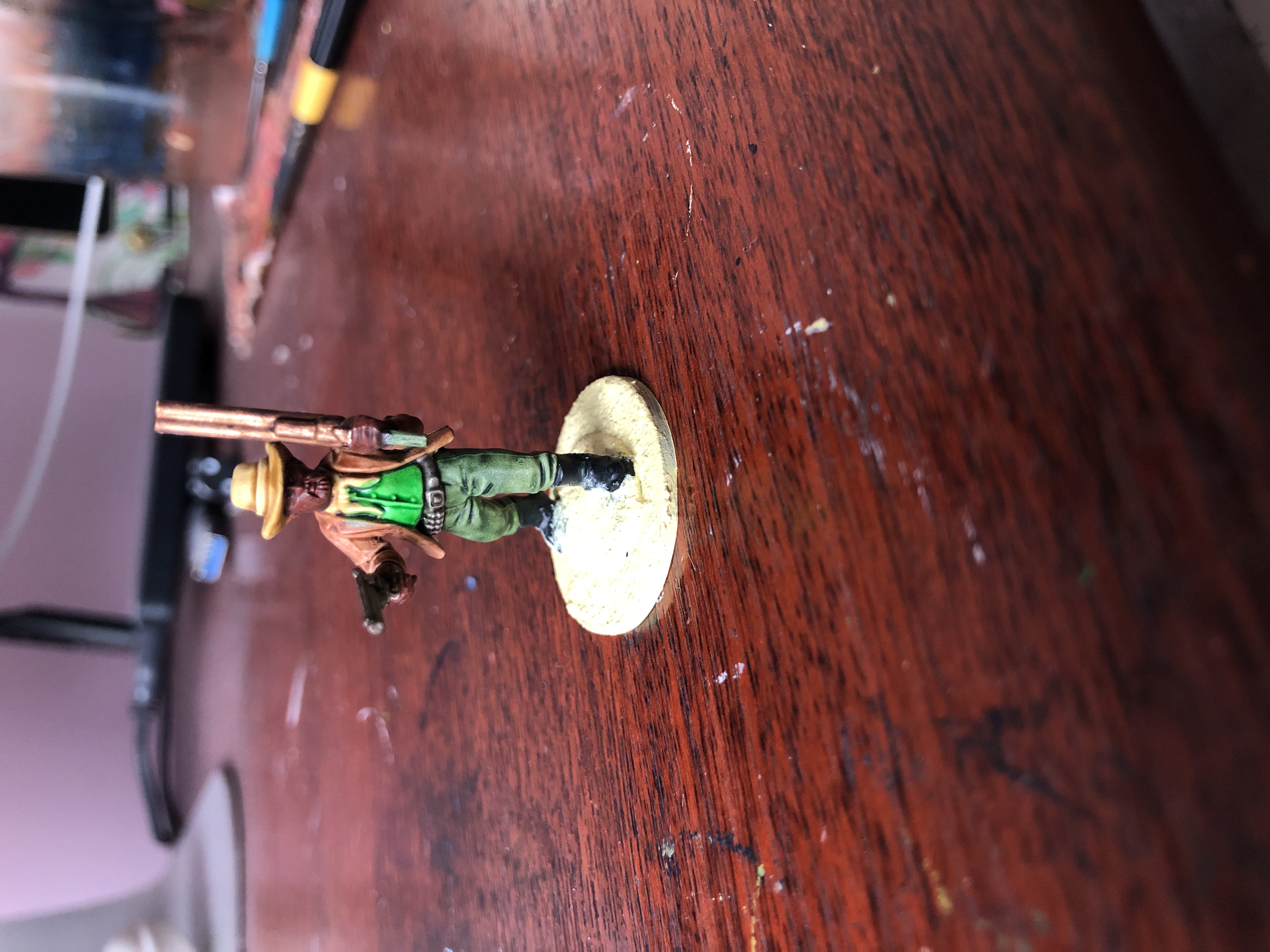
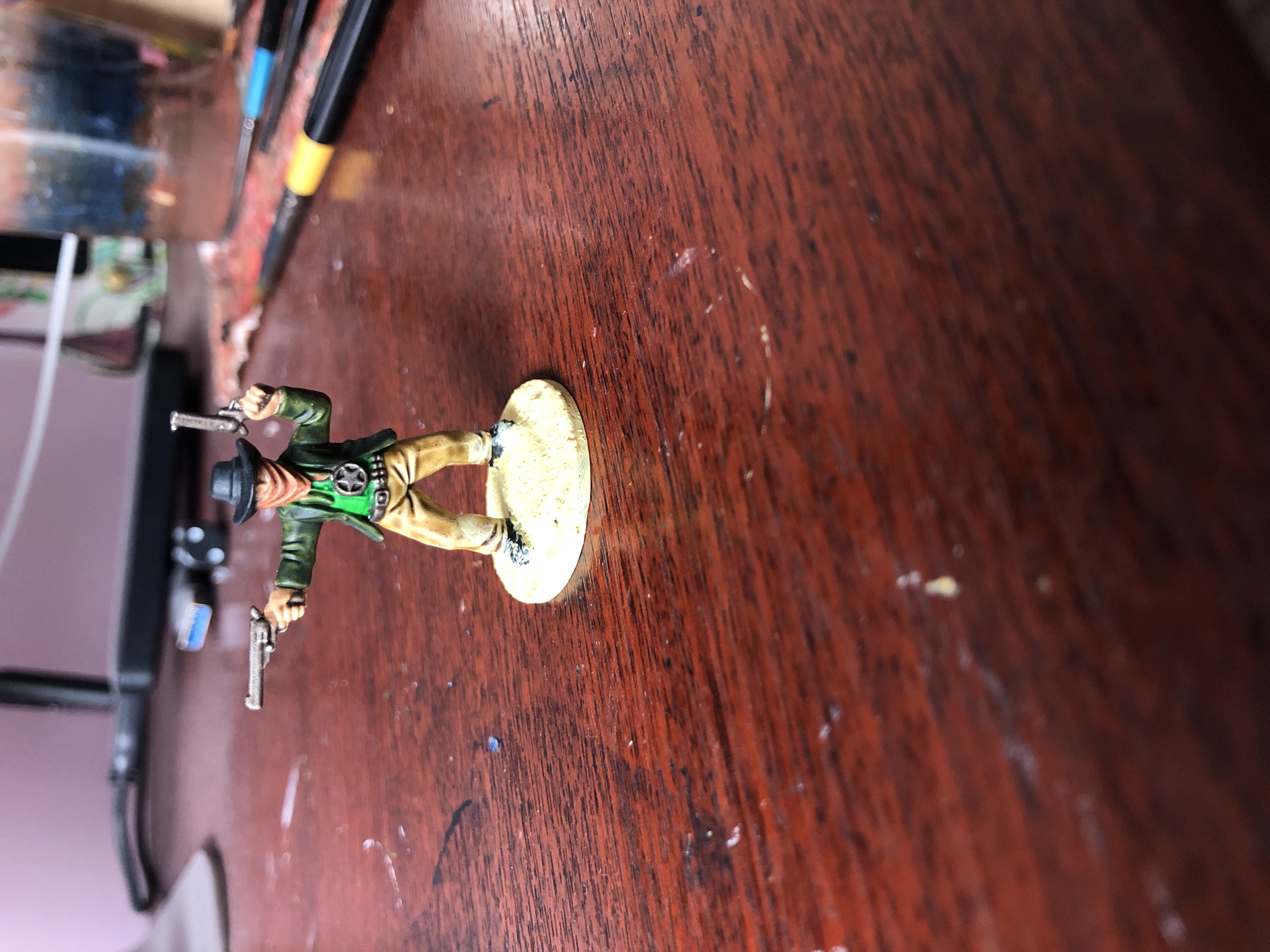
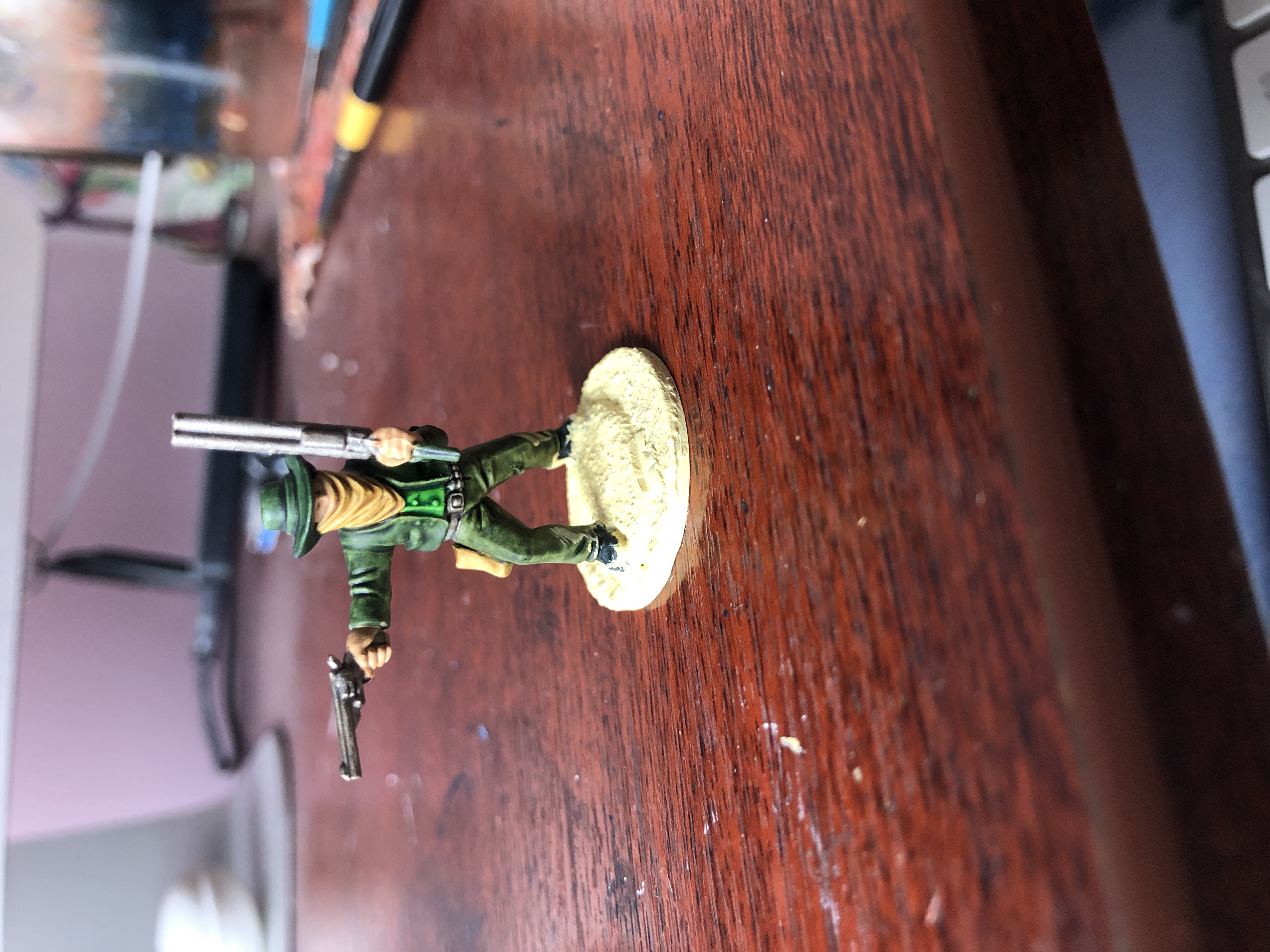
I have been super busy in the regular job of late so I haven’t had much time to develop rules further, but for the sake of play testing the games rules and mechanics, I purchased a box of Great Escape Games cowboys.
I have to say, they’re a really fun kit to put together and really well priced for what they are and the amount in the box.
A friend has built some and painted his up as Outlawmen and Sheriffs, so I have painted the first set of bootleggers. I have completed the leader of the Townsfolk clan, but will post them up once completed.
Mock ups for gang cards
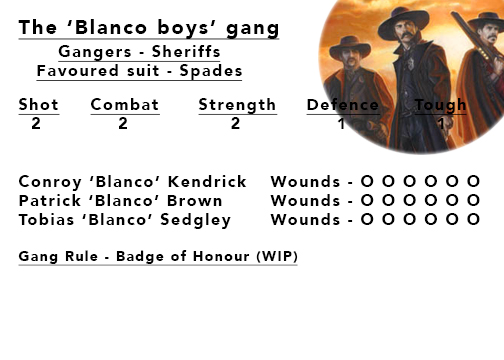
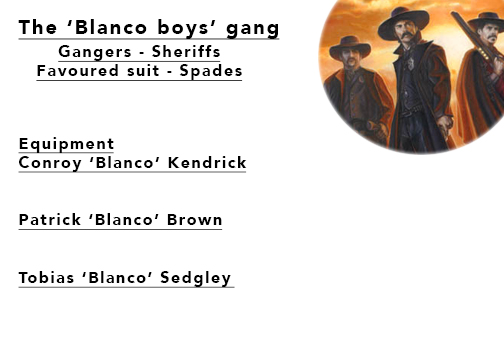
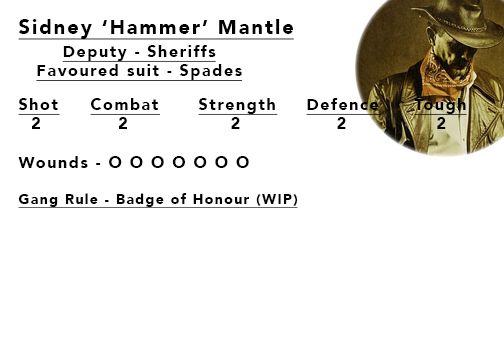
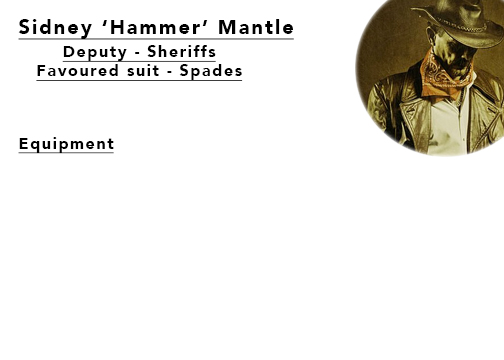
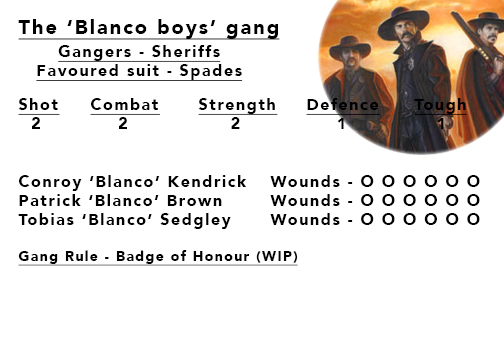
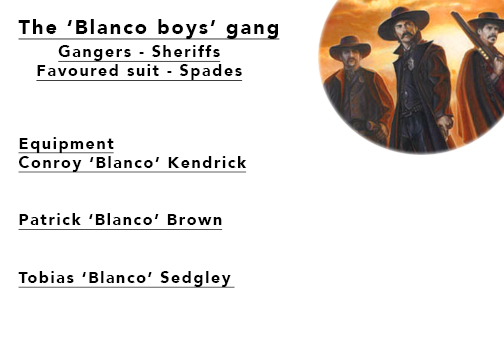
Tracking your posse members would be done using 2.5” x 3.5” double sided cards, same size as the playing cards used for movement, as the idea would be that you could purchase a themed deck of cards that could come with the ganger cards in the box, or low-cost print them out yourself.
Ive tried to keep it as compact/minimal read as possible, so that tracking of information in of itself isn’t considered ‘a game’.
The idea at gang creation is that you would purchase a sheriff as one member, a deputy as one member and then the purchase of the three additional posse members as a gangers group would be one group. Of course, this doesn’t take into consideration of if/when a ganger member may get a skill upgrade, so I may have to divide the ganger members onto separate cards as part of game testing.
The playing card profiles would be placed inside a sturdy dry-wipe plastic card protector so that (using an eraser pen) you can track/change the wounds taken/wounds healed during a game, add/remove the equipment a model has on their person.
I also think it would be handy to create something like an A5 ‘Posse journal’ crib sheet, so that you can write down the spending at the initial gangs creation and then make a note of any upgrades or injuries the gang may face during campaign play, as well as the posse’s $ liquidity from campaign to campaign.
It might seem backwards because the question might be ‘well why not just have it all on an A5/A4 crib sheet like other games?’. It is a personal pet peeve after many years of playing campaign skirmish/miniatures games when you have a crib sheet with a gang of models, that paper becomes faded/stained/torn over time. The faded-ness of the sheet does tell a narrative in its own right, but I think its important to separate out the long-running information that can be incrementally added to and the in-game tracking that is often malleable during play, such as the healing/taking of wounds
Scenario maps
My first non-rules post.
I have mocked up some scenario maps in terms of setting up for games.



When setting up for a scenario, you would use playing cards from the deck to create the posse territories for setup ,and lay them out on the 2 x 2 battle.
Setup Map 1 is for a scenario of ‘Western Prairie Dog’ (British bulldog) where opponents have to get across the board and into enemy territory.
Setup Map 2 is for a scenario where supplies have been dropped into the map and the models can run off the board for post-game profit
Setup Map 3 is for pure bloodbath shoot out scenario.