













Beat ‘Em Up Brings 80s Arcade Miniature Action To Tabletops
August 28, 2025 by avernos


Get ready to button mash your way through hordes of bad guys—Beat Em Up, the upcoming miniatures game from Traders Galaxy, is almost here and it’s bringing all the pixel-powered, arcade-perfect nostalgia of the 1980s with it.
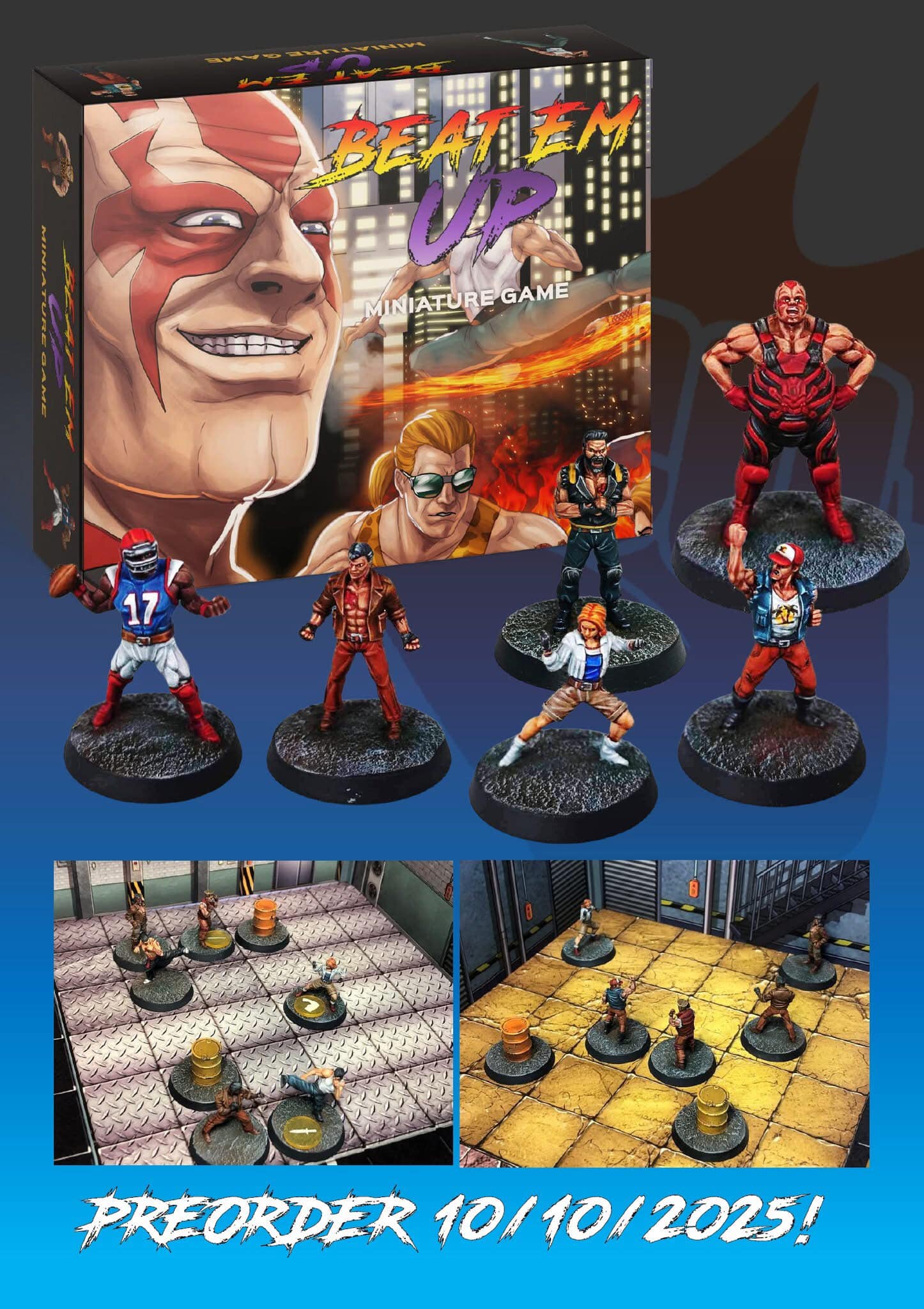
Beat Em Up // Traders Galaxy
Designed as a 1-5 player cooperative experience, this game captures the spirit of classic side-scrolling brawlers where teamwork, timing, and a few well-timed combos are key to survival. From executing special moves and throwing scenery, to battling through waves of goons, thugs, bosses, and even hidden enemies, Beat Em Up is shaping up to be a love letter to retro gaming—with a tabletop twist.
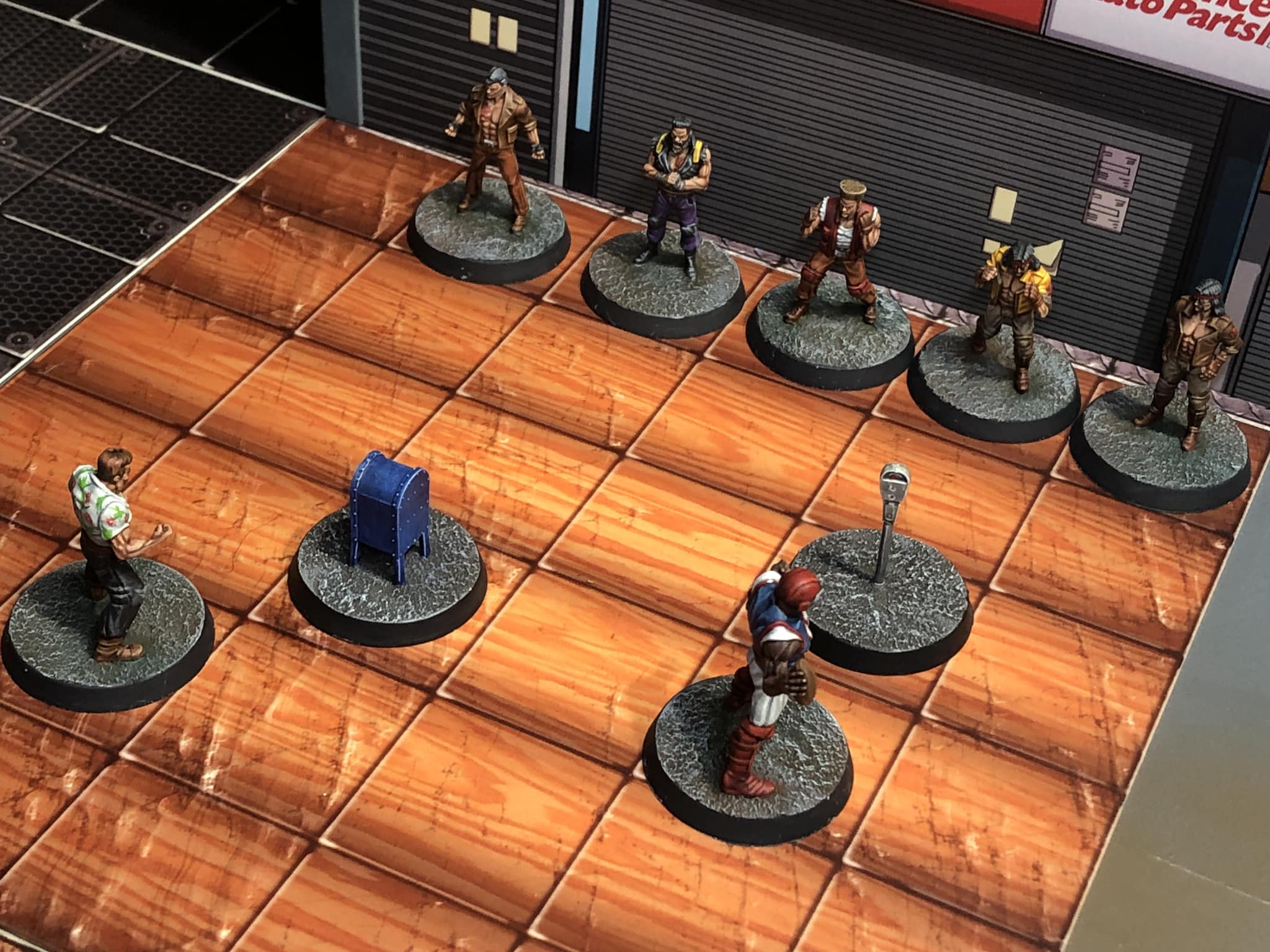
Game Zones – Where the Action Unfolds
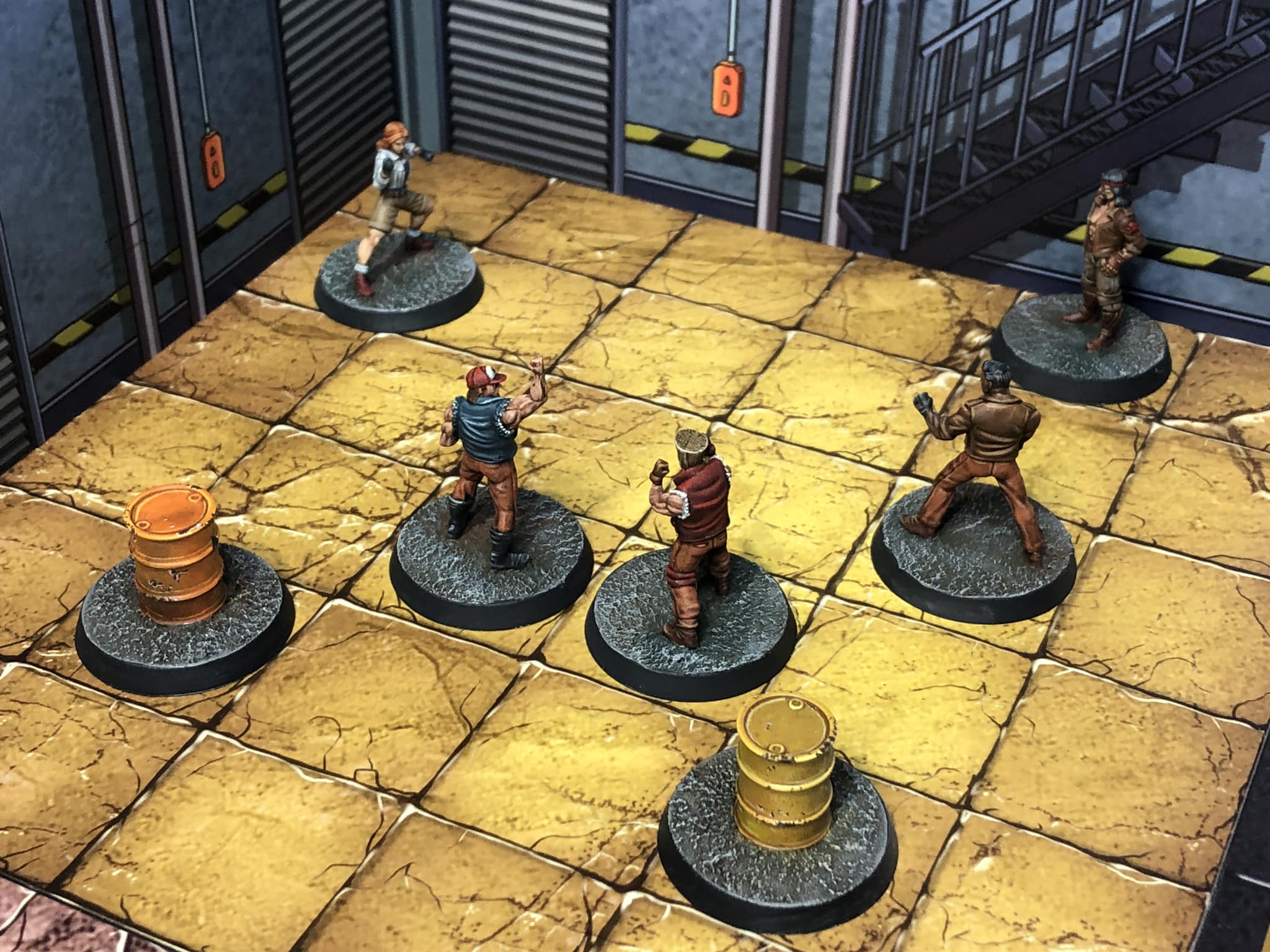
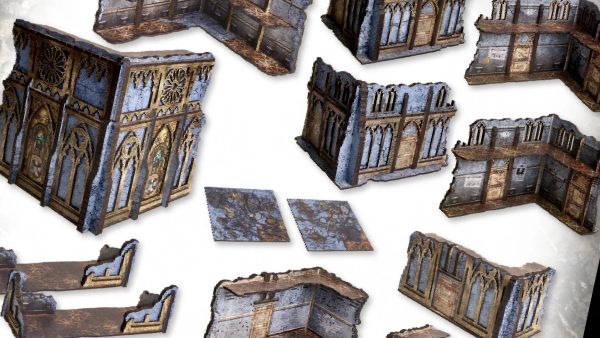
In Beat Em Up, the action plays out across a series of modular tiles known as Zones. Each Zone is a 6x6 grid where all movement and ranged actions are measured in spaces, creating a precise and tactical play area. As players move from Zone to Zone, the game dynamically evolves with new threats and mechanics.
Crossing into a new Zone acts as a trigger point, resetting key elements such as Heroic Tokens and activating fresh enemy spawns via drawn spawn cards. Once a new Zone becomes the Active Zone, players must clear it of enemies before progressing further. However, just like classic video games, danger lurks in all directions—if a Hero gets knocked back into a previously cleared Zone, a new spawn is drawn from the discard pile, turning the space into a deadly double-Zone, now 12x6 in size. Get knocked back again, and you’re facing a brutal triple-Zone—a fight few Heroes survive.
Spawn Cards – Fueling the Fight
In Beat Em Up, enemy encounters are driven by a clever Spawn Card system, scaling the action based on the number of players. While the game supports 2 to 5 players, one player takes on the role of GamesMaster, setting up the board and controlling the villainous forces.
Spawn Cards are typically divided into three piles: the New pile, the Used pile, and the Boss pile. As Heroes enter a new Zone, a Spawn Card is drawn from the New pile to populate the area with enemies. That card is then moved to the Used pile, where it can come back into play under certain conditions. To add further tension, secret bosses might be hidden within the regular spawn deck or tucked under terrain, creating sudden spikes in difficulty and surprise encounters.
Power Ups and Weapons – Smash, Grab, and Survive
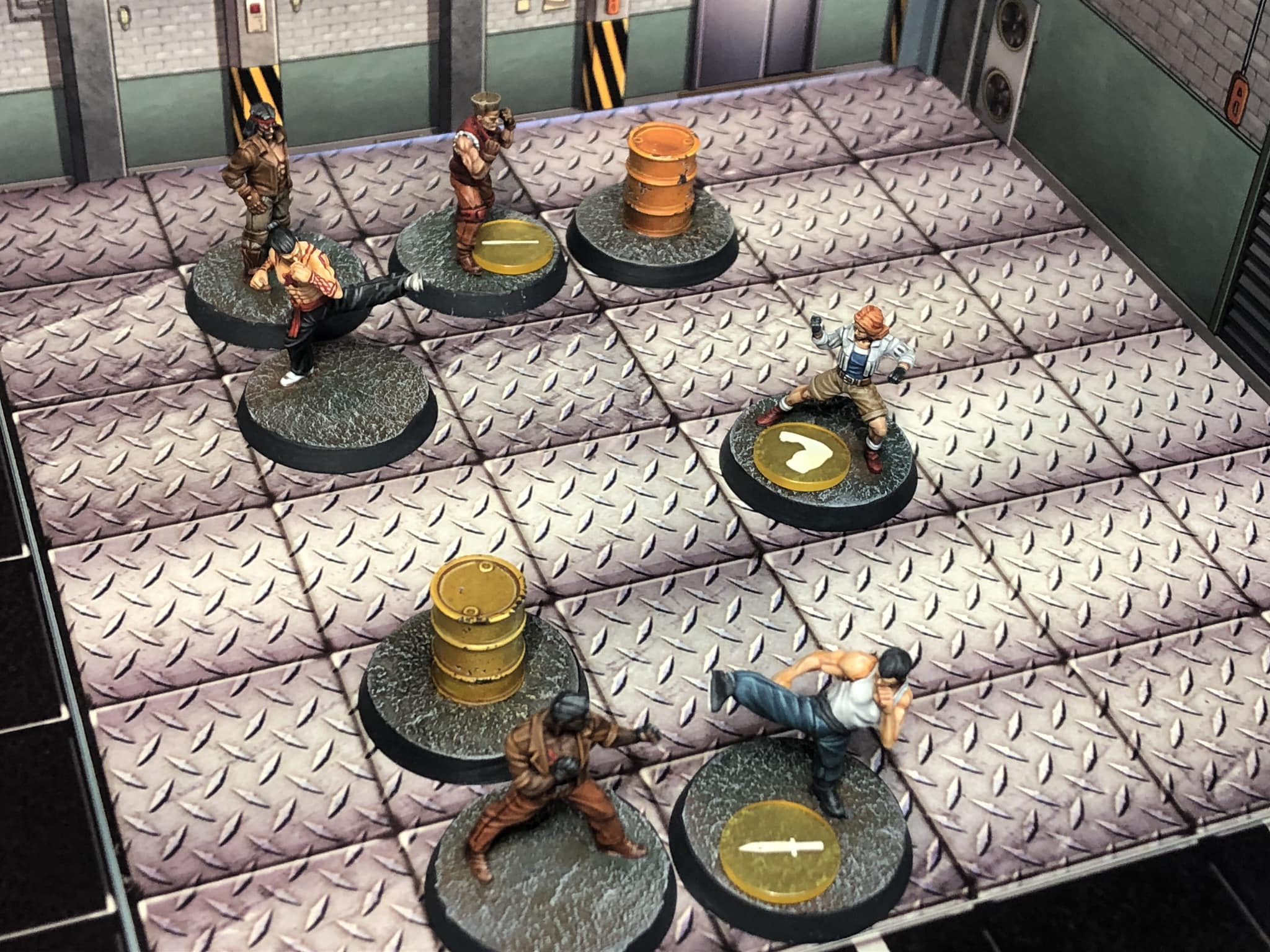
Power Ups and Weapons are more than just bonuses—they're essential to survival in Beat Em Up. Scattered throughout the Zones, they can turn the tide of a fight, save a teammate in trouble, or boost your offensive capabilities when things get tough.
Most Power-Ups are hidden under terrain pieces, which are placed by the GamesMaster during setup. There are two ways to get your hands on them: you can either smash the terrain with a Close Attack, or you can lift it and collect the Power Up immediately. Smashing terrain is simple—but you’ll need to wait until your next activation to move over and pick it up, which leaves it vulnerable to enemies stealing it first. Lifting terrain is faster—but riskier. Holding it over your head leaves your character exposed and unable to block or attack properly, making you a target. If enemies are in range, though, it’s incredibly satisfying to throw that terrain piece right at them!
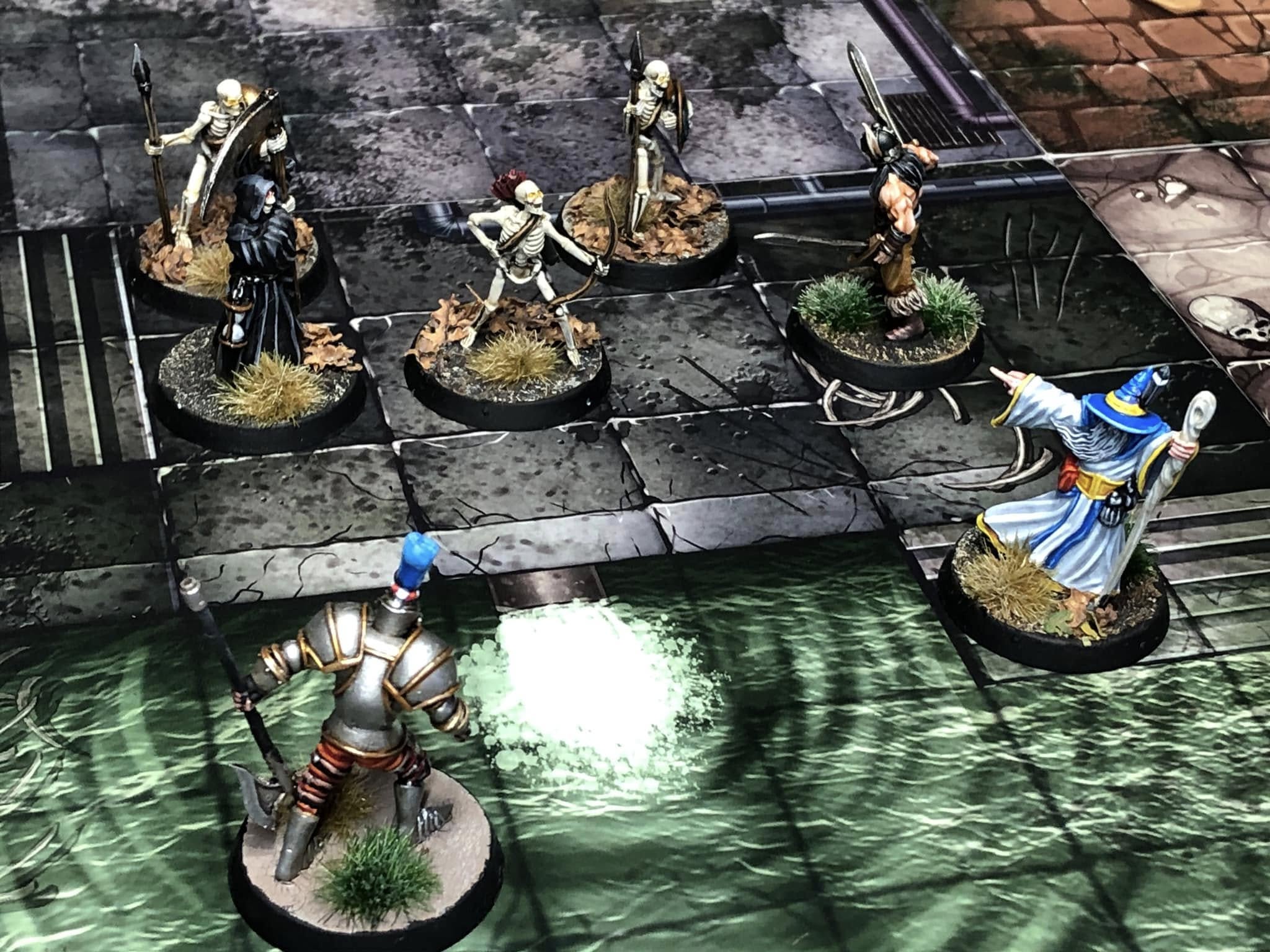
The pre-order in October will have everything you need to play, and if you backed the Kickstarter for the miniatures previously for use in the ROTD skirmish game then you can pick up the tiles and other gameplay parts without having to double up on the figures, although extra mooks are always handy! A cheeky look at the future is that the tiles are reversible with a fantasy back on them so fans of Golden Axe should keep an eye out for the future as Anthony clearly has plans!
Will you be diving in?
Supported by (Turn Off)

Supported by (Turn Off)
Supported by (Turn Off)













Ha! What a cool idea; the fantasy tiles are the icing on the cake! Final Fight, Captain Commando, Golden Axe, and Knights of the Round ate many of my quarters back in the day!
the skirmishy version that he made the minis for originally was fun but hard to set up without bespoke tiles, I’m really looking forward to getting my hands on the cards and tiles to run this. The minis are gorgeous