





![NO Weekender Or Cult Of Games XLBS This Weekend [Updated]](https://images.beastsofwar.com/2026/03/No_Weekender_and_XLBS_this_Weekend-225-127.jpg)


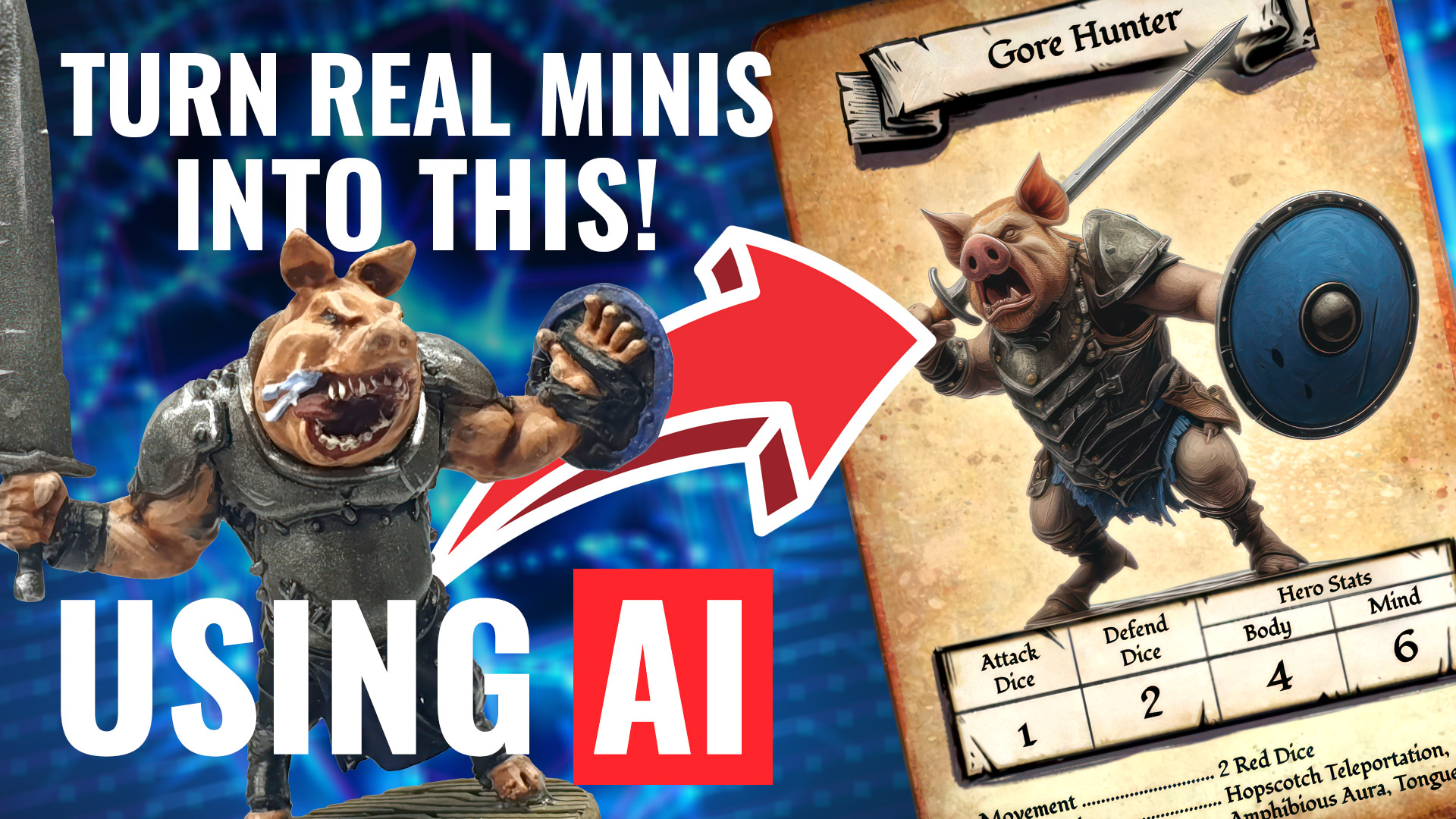
Using AI To Make Real Miniatures Into HeroQuest Monster Cards! | #Dungeonalia
January 30, 2024 by warzan

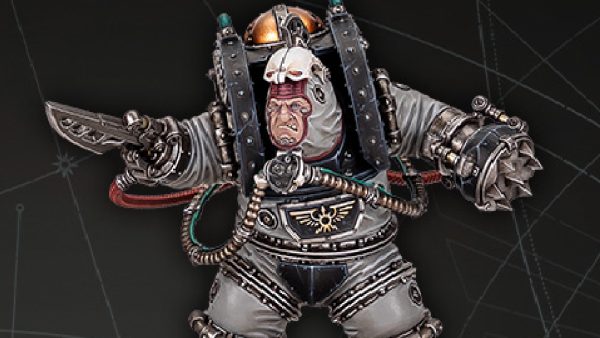
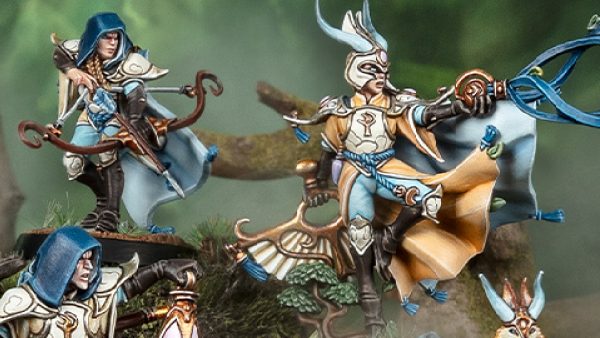
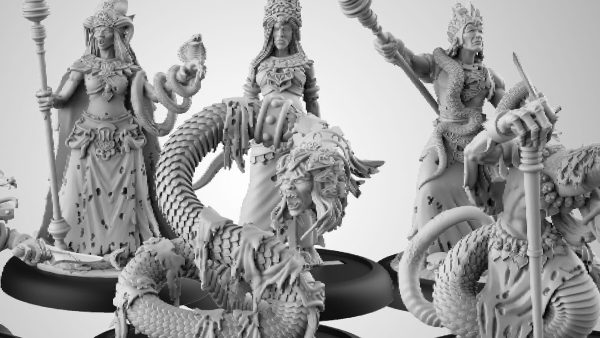
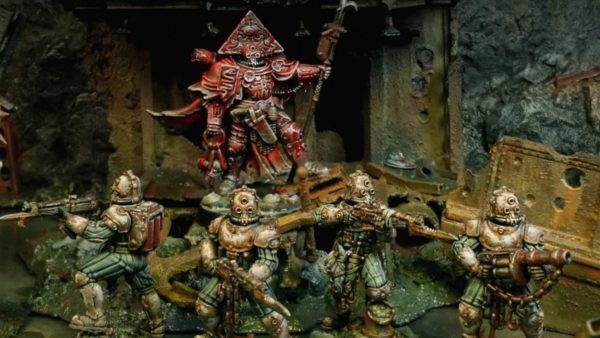
Warren has been diving back into HeroQuest but wanted to add unique monsters from his collection into the mix for his avid adventurers to battle against. With that in mind, Warren shows off how to use AI (Midjourney) to make HeroQuest Monsters, build cards for them and eventually drop them into your games.
xTool - Proud Sponsors Of Dungeonalia
Join In With Dungeonalia & Find Out More
Check Out More Dungeonalia Projects From Our Community
Using the AI known as Midjourney, Warren goes through the various stages that are needed to process the images and turn them into HeroQuest cards which can then be printed off to use in-game.
Get Involved With Dungeonalia And You Could Win!
xTool D1 Pro 10W Desktop Laser Engraver Cutting Machine
xTool Enclosure
Are you going to try a process like this to perhaps bring new monsters into your dungeon-delving adventures?
Drop your thoughts below!
Supported by (Turn Off)

Supported by (Turn Off)
Supported by (Turn Off)



So the ai art gizmo is a subscription service!
Not interested in anything like that if I can’t do a one off payment and I certainly would not pay $10 a month for it… and that appeared to be the cheap version.
You can just use the $10 worth of credits and turn off the sub. Re sub when you want $10 more.
I keep the sub going at the low level because most months I will get a tenner’s worth out of it. And I appreciate the technology and R&D that’s behind it so I chip in for that 🙂
I find the use of AI art disturbing. Maybe it’s the thought of Skynet.
And I know that a lot of artists object to AI because of how it learns… sampling the art of organic creators to learn.
AI can be used for creative writing too and has been used by students to write essays.
If the creativity of humanity can be reduced to an algorithm we have lost.
Here you go, use this for FREE: https://www.bing.com/images/create
Nothing in life is free… if it looks too good to be true… it isn’t! 🙂
I’m personally finding the use of and championing AI “art” here a bit of a turn-off. It sits counter to the idea of championing indie designers and creators (such as Indie of the week) if the work of artists and illustrators (and these generative AI models are all trained on copyrighted materials) isn’t similarly championed or viewed as worth protecting.
It’s a worrying trend.
Lloyd has been a designer in the creative industries since he was 16 years old. He has led our designs here for 15 odd years. He’s using it as a tool to be more productive and expressive.
I have worked in the creative and digital media industry since I was 18 years old, and worked with creative teams for 30 years. I use it to explore expression and ideas and concepts, and yes entertain my family.
Its not art, its deliverables. The output serves a purpose of helping to express ideas and concepts in visual ways.
Now I ask, do our credentials at least give us a seat at the table to talk about the use of this technology?
I think the use of AI in Art and other creative skills quite an interesting one. Peoples reaction to it seems almost akin to the treatment of witches in the middle ages. To basically want to burn down the concept of thing we dont really understand.
The use of AI is not magic. If anything it holds up a mirror to the way we work. IT breaks this idea we created something really unique and it fact what we create is a some of the parts of our knowledge and experience. That we take and use art, text from sources without understanding that is the process we go through.
Yet when it is a computer replicating that process that is taboo, that is wrong ?
It’s not AI in itself, and I don’t think anyone is claiming it’s magic we don’t understand. It’s simply that the current set of generative AI tools have all been trained by digesting huge amounts of copyrighted art made by artists. That so many of these tools can spit out art “in the style of…”demonstrates that they’ve been trained on those artists works (and no, it’s not covered under “fair use”). Recent studies have shown that these AI tools can generate content that is alarmingly close to copyrighted works – showing up the underlying sources.
AI and LLMs have their place. Even generative AI for producing imagery probably has its place – but there’s a huge moral void currently in that these AI tools only function because they’ve used art from artists without any form of compensation.
Can I ask, is your issue just the training data? If for example the training element was done completely differently, i.e. the model was put on wheels or one of those bi pedal robots and let loose into the world to explore ‘stimulus’ (because that’s what its doing is stimulating and reinforcing pathways between nodes similar to the neural pathways in our brains) if the end result was the same or better (and believe me it would be better) would you have an issue then?
Basically I’m trying to understand what the core of this argument is, is it the training data (because that will be a fleeting moment in this field as other methods of providing stimulus are deployed) or is it the final ability of the AI to produce stuff in the likeness of?
There is no way around the fact that as a human operator I can use any tool in a way that’s evil or wrong. Humans suck.
I think it’s twofold. Yes, there’s a fundamental problem that (at present) the business model of these companies can only stand because they haven’t compensated any of the artists whose work has been directly used to train the models. Bits of these artists work will be baked into the outputs for years to come. If these companies had had to the ethical thing and compensate the artists for the use of their work, I doubt any of them would have got off the ground.
I think your point about training an AI on the real world, or even models that read books and then use that to “imagine” the world are closer to artistic inspiration. As it stands, and as studies are showing – generative AI art isn’t “inspired” by the things it’s seen, it’s closer to a Frankenstein-esque mash-up.
As you progress with what you do – using your own miniatures to train the AI then perhaps the amount of other artist work will fade. Adobe have started taking an interesting stance on that their software won’t be using any copyrighted/scraped materials. That (for all that Adobe have really shady subscription practices) feels like a better way.
Similarly, for all that WotC have made some shocking mis-steps over the last year, they’ve come out firmly on the side of human artists over AI art. And we see that increasingly on Kickstarters where they have a statement on their stance against AI art.
I think my worry at the moment is that I’ve seen more AI art being used here at OnTableTop (to fill articles, Dungeonalia illustrations) and I’m wondering how that squares with things like Indie of the Week and boosting “the little guys and girls”. I understand completely that you won’t have the budget to commission art for multiple articles or promos, but as I say, I’m just worried as it feels like OTT is losing a little a bit of its charm, and not walking the talk.
That’s not at all to diminish what you’re doing here to create some fun monster cards to make memorable gaming experiences for your family. That comes entirely from your heart and from a place of great care – it’s more the method used to achieve the outcome. If that makes sense?
“walking the talk” I have been talking about the use of and indeed advocating for AI to a degree for about 2 years now.
I admit I stand on the other end of this argument from you and we have some fundamental differences in some of the the really important core elements. You and others are very quick to use words like theft or (its not fair use etc) and you state it as absolute fact. However these conversations would be alot easier and indeed more productive if we took a more cautious approach and tried to understand what this technology at its core is actually doing. Rather than just looking at the output and knee jerking.
Let me give you an example.
Way back at the start of all of this I showed some of what mid journey was doing on XLBS, the images it was generating were strange and unrefined but it was for me (and Lloyd – two admitted technologists) it was an incredible insight into the potential of transformer models when their underlying neural net grew to a bit of a tipping point.
Fast forward to today and the results in a short time have leaped exponentially. Now if this were a case of theft or copying, then that would have been achieved with the existing data set, heck we have had scanners and programs for analysis and copying for decades – it’s really easy for machines to copy with the existing tech.
But no this wasn’t achieved by going deeper into the existing data set and learning more about the artists, this was achieved through larger and wider and more diverse data sets.
The sum of human knowledge is where AI is unlocking this power from. You and others may be of the opinion that knowledge should not be free and accessible, I don’t believe that. Strongly.
I feel that knowledge and information should be accessible (and available for transformative uses – which is at the very core of copyright). I feel scientific papers shouldn’t be locked away etc.
My belief is that down the road this will have positive impacts for all of us.
For now, based on my understanding of Transformer and LLMs etc (which although is not exhaustive gives me some insight while still knowing there is a lot I don’t know) I’m currently comfortable with what the models are doing, because the key is in the versatility – if it were straight up algorithmic copying the results would be predictable and repeatable – they are not. This is in many respects how the machine part of us kind of works.
But the key here is I’m not trying to cast things in black and white, I’m open to discussion, on the ins and outs of it 🙂
I think it’s a little unfair to say I feel knowledge should be locked away and unaccessible. I never said that.
I’m certainly not the only person who is questioning the ethical stance on the use of generative AI trained on other peoples work – is it theft? I don’t think I went that far either. I did say (and I think it’s a defensible position) that the artists whose work has been used in these products (and they are products, as soon as people are paying to use them they have moved from research to ‘product’) should receive some kind of recompense. What that looks like is a question for the industry to solve, and I can’t comment on that.
Like you, I’ve been working in tech for over 25 years, and for many years have been a designer, user interface designer and UX evangelist. Indeed my current company makes extensive use of AI and LLMs to pattern match and categorise from aerial and LIDAR imagery. So I do know a fair bit about the incredible uses that AI can be put to to automate processes and develop new ways of looking at the world.
I’m certainly not looking to pick a fight here, nor have I ever said that you don’t deserve a seat at the table – on XLBS your experiments with AI generated imagery have always been interesting from a perspective of your own personal experimentation. I simply have worries over the increased usage into the site. But hey! It’s your platform and you can take it in the direction you wish.
Ohh dont worry there is no fight to be picked! Like I said Im happy to chat about this subject. I’m a little less happy to be ‘judged’ on my/our use of it, but accept there will always be a bit of that 🙂
Your use of phrases like:
“Bits of these artists work will be baked into the outputs for years to come”
“and no, it’s not covered under “fair use”
“they’ve used art from artists without any form of compensation”
Leads me to think we are not on the same page as how the technology actually works (obviously we can see how its used and its output) but how that it achieved and what’s under the hood is fundamental to this conversation.
AI stores connections between nodes. Not a single pixel of an original image or passage from any book is directly stored.
Things are recreated from the strength of the connections in the neural net. Our grey matter works in such a similar way its difficult to see how we can differentiate as to why its ok for grey matter but not ok for silicone if you get what I mean?
The fair use argument has not been tested so there is no way either of us can categorically state what is or is not fair use in this.
Compensate who and for what. The training data sets are unimaginably large and contain an enormous variety of stimulus information.
The individual impact of any human being on that data set is miniscule in the overall scale of what’s used for training.
Yet if I ask it to give me something in the style of any particular person, it will be only be that an expression in the style that it can create from its neural net.
Ask MJ to output a logo or brand in the style of Lloyd Johnston – you will get nowhere – yet without doubt a lot of Lloyds work from the last 30 years of design will be in the training data. But it won’t be able to replicate it as its not storing it, its building a neural map of how things are done.
If over time the more its asked and fed info about Lloyd and his style it will be able to do it – but that will be us humans using the technology to specifically achieve that, its not the underlying technology providing that capability by default.
There will always be things that are so popular that the neural net will be able to re cite it – hey I could re cite a passage from the bible if I was put on the spot. AI can do that as well but with anything it can express – so yes art. It could recite the mona lisa – but I 100% guarantee you it will not be an exact copy it will be whatever representation the neural net can create – to us it will look magically close – but mathematically it will not.
You are correct that my use of “Bits of these artists work will be baked into the outputs for years to come” is a simplistic take, referring to these artists work being present to influence the outputs for a long time.
“and no, it’s not covered under “fair use” – correct I put my interpretation ahead of the outcome of any legal test (though many cases are going through, or due to go through the courts.
“they’ve used art from artists without any form of compensation” – the legal test will provide an answer there, but I can talk a little about the industry I’m in. We train the AI for the work we do on masses of high-res imagery and other datasets. We either create the data ourselves, or we licence it from other suppliers. We pay them for the underlying data that is then used to train the model. Everyone is happy, and we are compensating the creators of the data for their work. The fact we pay a licence is then included in the pricing model for when we then sell the products derived from our AI generated work. This is what I refer to when I say that the products such as Midjourney which ask their customers to pay, have only been able to create a product by not paying the suppliers or creators of the underlying data. That is my principal issue with the current generative AI landscape. It reminds a lot of when Uber came along to disrupt the taxi market – it achieved its goal but largely because it intentionally ignored licensing, permits and employment laws in order to quickly move into the market.
I completely understand that it’s not nice to be judged (hey! As a trans woman I get judged every day, so I know how that feels). I guess I do come at this from an emotional angle as I see how worried artist friends on my Socials are about this, and how they’ve already experienced direct examples of their work (or rather style) being appropriated. So to me it is hard to leave the emotion at the door.
Definitely food for thought from what you’ve responded with, but more conversations to be had. Perhaps I’ll buy you a whiskey if we ever bump into each other and we can talk it out 🙂
I would love that! Would be a pleasure to chat over a whiskey lol 🙂
Without getting into the debate on the uses of AI art I personally am very grateful to @warzan for taking the time to show this. What he has been doing is taking pictures of things that he has bought and painted in his own style and generating an image based on his colour choices on a piece of property he owns to increase the submergence of his children into this hobby we all enjoy, and that is, in my opinion a very noble thing to do.
I have done similar by using photos of my kids to make walking dead cards, now with this knowledge I can make their own character cards fit in better with the rest of the cards that are official.
So, thanks Warren. Really appreciate you taking the time out of your day to share this.
Thanks for this demo Warren absolutely brilliant mate, templates you say well by all means sir.
I just want to say that it was good to see some of the old-style content I joined this site for: members of the team flexing their creativity and trying to inspire the rest of us. It was thoroughly entertaining to see @warzan using the tools available to craft what he can see in his imagination.
Sure, the tools themselves are contentious. I’m not here to vent my opinion on the matter, but I do acknowledge it.
What I’d like learn from @warzan is what does he do when he has the cards? Do you print them, with what tools? And do you get the classic HeroQuest finish we know and love? I’d love to do the same for original WHQ.
Amazing, thanks for this! Really useful!