








![NO Weekender Or Cult Of Games XLBS This Weekend [Updated]](https://images.beastsofwar.com/2026/03/No_Weekender_and_XLBS_this_Weekend-225-127.jpg)





Egyptian Mythology Display – Spring Clean 2024



Recommendations: 510
About the Project
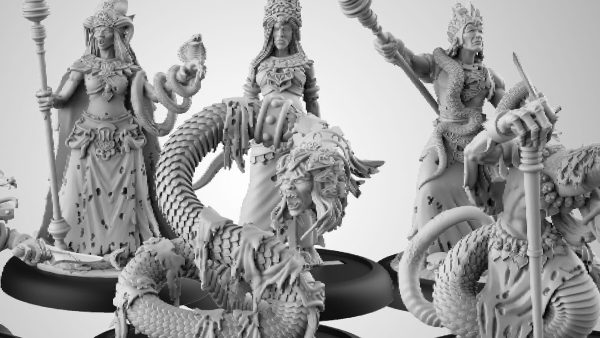
With pandemic lethargy setting in (I'm still not comfortable attending gaming clubs) I was looking for a different style of project. A also wanted to use my resin printer more. Marrying the two I decided to print off all the Raging Heroes' Gods and Heroes of Egypt models and produce a diorama/display with them.
Related Company: Raging Heroes
Related Genre: Fantasy
Related Contest: Spring Clean Hobby Challenge 2024
This Project is Completed
Human sized models painted
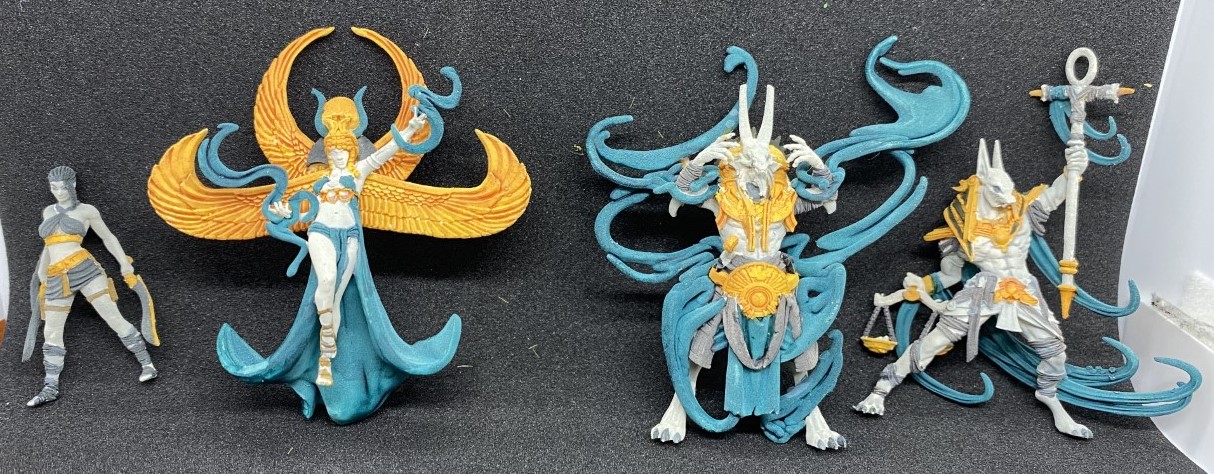
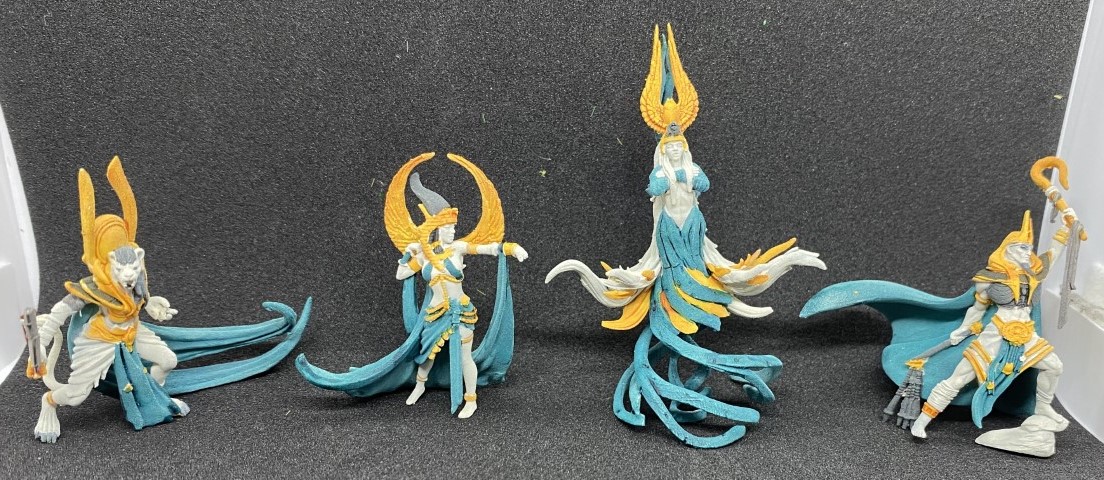
That’s all the human sized models painted up. Once I’ve painted the larger models I’ll varnish them all up then apply all the golf leaf in one go.
In addition to the paints already mentioned I have used basilicanum grey and snakebite leather.
Review of The Story of Egypt by Joann Fletcher: Chapters 1 to 4
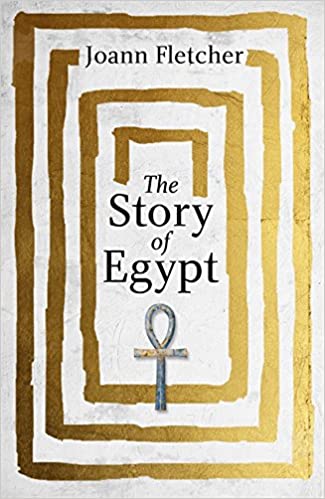
In a similar way to how I researched the Celts for my Celt project (https://www.beastsofwar.com/project/1490359/) I felt the urge to read up on ancient Egypt. I remember studying the basics back in school, but school history is often a very simplistic view and rarely focuses on the aspects that are most relevant to a wargamer. I visited a book shop and out of the four or five books available I chose to buy “The Story of Egypt” by Joann Fletcher.
As with my review of the various Celtic history books I’ll summarise the book by sharing one or two of the more interesting facts per chapter.
Chapter 1: In the beginning
The Egyptian creation myth varied a lot from region to region. A key theme is the duality of opposites and their balance, which recurs throughout Egyptian mythology and society. E.g. life and death, dark and light.
Chapter 2: Sahara Savannah c. 55,000-5500 BC
Before Egypt became a nation the Sahara region saw enough annual rainfall that it was savannah, not desert. The area was populated by people who were predominantly nomadic with grazing cattle, but also had some fixed communities. As the climate changed the rains moved south and the Sahara turned to desert. The people were forced to migrate East to the Nile valley and its water supply.
We know from the human remains found from this period that they lived in relative peace. They were keen on jewellery made from shells and stones, and of applying cosmetics.
Chapter 3: Seeking the Waters c. 5500-3500 BC
The Nile valley region evolves into many city states. Each had their own religion and culture. Over time these amalgamate (through diplomacy, politics, or warfare) into Upper Egypt in the South, and Lower Egypt in the North.
Violence was more common, with many graves and tombs excavated showing signs of a violent death. Also notable is the fact that maces were regarded as ceremonial/ritual weapons.
Chapter 4: The North-South Divide c. 3500-3100 BC
In this period the leaders of each city state was known as an animal or similar symbol: e.g. the Lion, the Elephant, the Dog and the Seashell. Over time these were conquered by the Scorpion (no I’m not making this up). At first Egyptologists thought these characters were mythical, but in 1983 the remains of Lower Egypt’s old capital city, Buto, was found. Within it was a chamber of goods from all over Egypt, each marked with the sign of the Scorpion, indicating they were tribute being sent to the Scorpion from subjugated city states.
Larger models painted
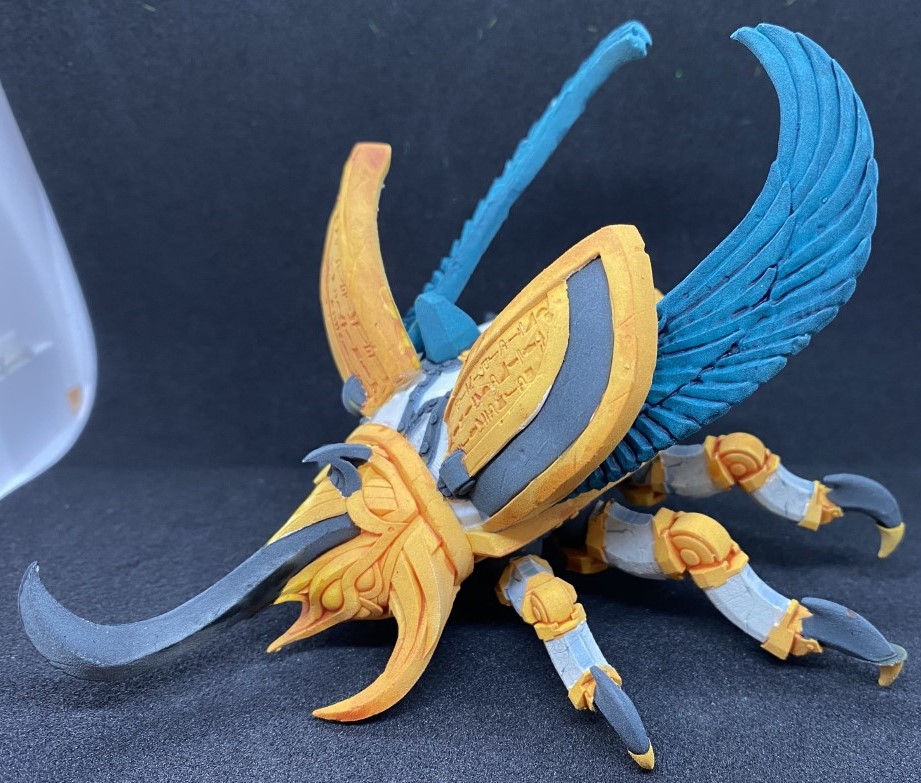
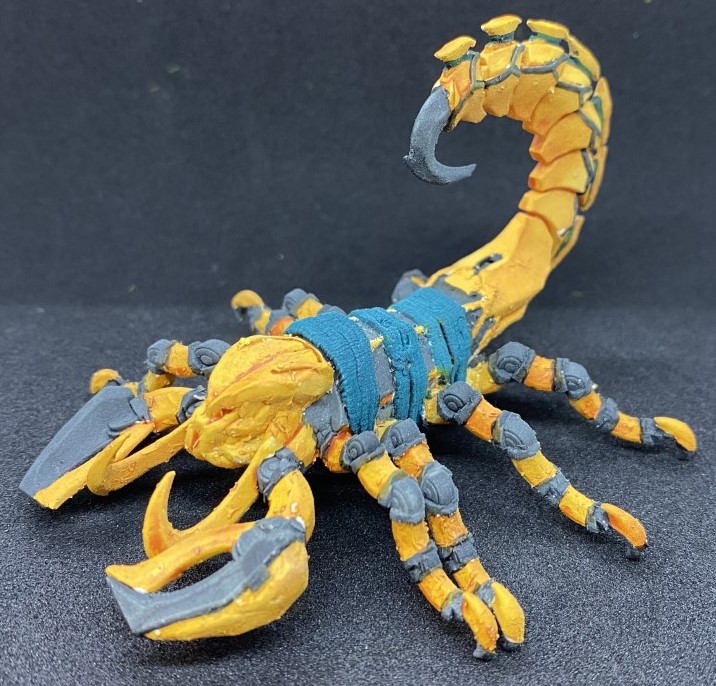

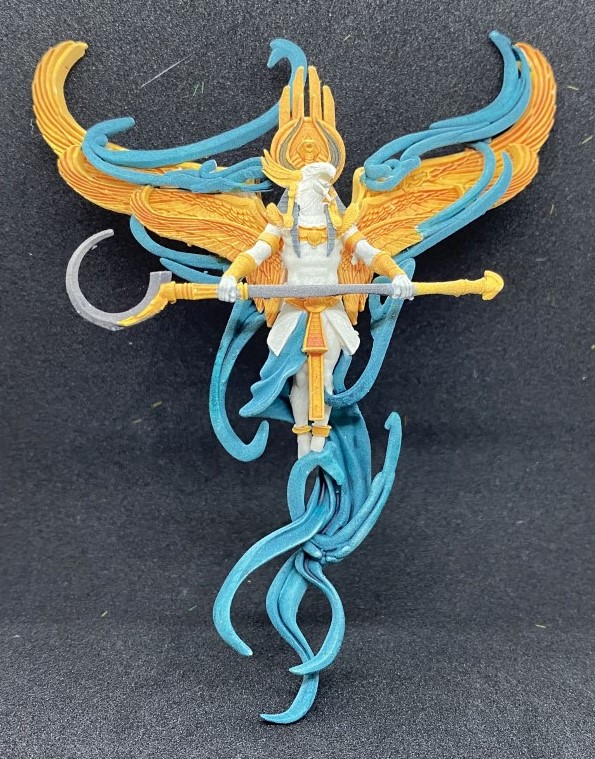
The base colours for the larger models are done. Next I’ll be moving on to the really big models.
Big and really big model painted


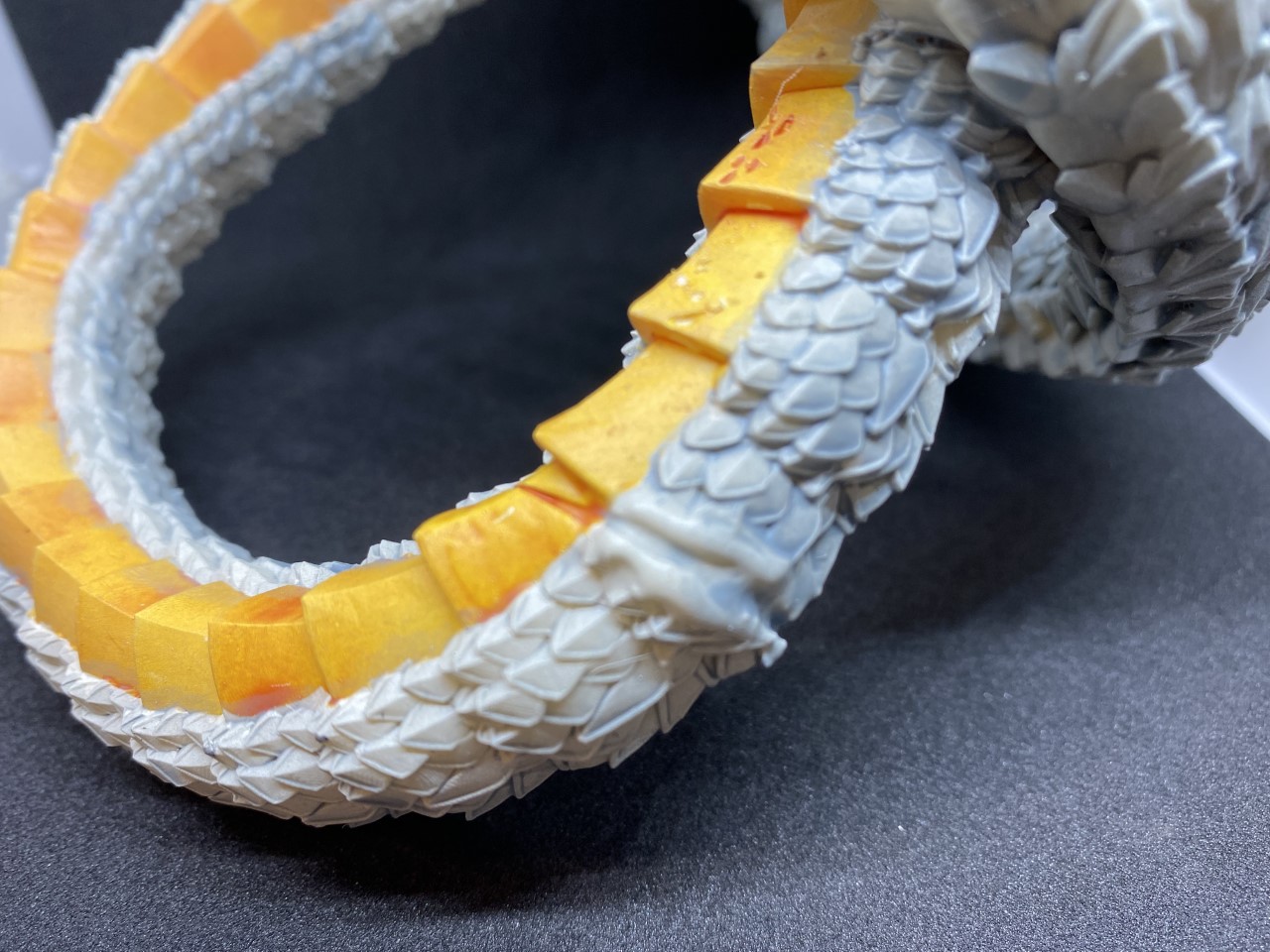
That’s the last of the models done. Also they’re all varnished ready for gold leaf now.
You can see the snake model only just fits in the photo booth.
The joints on the snake model didn’t line up perfectly. I put it down to print defects that weren’t obvious before assembly. As I originally wanted to use the models unpainted I couldn’t use a putty to fix the gaps. Instead I used an old paintbrush to paint the printing resin into the gap a thin layer at a time and cured it with a UV torch. It worked ok but destroyed the local detail. Overall I think it looks better than a big gap. With practice the technique could have better results.
Review of The Story of Egypt by Joann Fletcher: Chapters 5 to 20
I’d planned to update my review of the book more regularly but in the end I read it all taking notes as I went. I found the history interesting throughout, but the latter chapters were particularly interesting as Egypt begins to interact with Greece and then Rome. Of course one of the reasons for this is that both the Greeks and Romans kept written records that provide incites into the events of the time. In earlier chapters (which cover earlier periods of history) details are harder to come by.
Chapter 5: Lords and Ladies of the two lands: c.3100-2890 BC
Ritual executions (so people could be mummified along with their monarch) were performed by ritual cut or smashing their head in with a ceremonial mace.
Chapter 6: Shifting focus: c.2890-2686 BC
This was the period of the second dynasty where there appears to have been a religious schism and a new ruler in the south. Eventually the south won.
Chapter 7: The rise of the pyramid age: c.2667-2613 BC
The third dynasty and start of pyramid construction. They also built a single pyramid in each administrative region next to the tax house as a sign of authority.
Chapter 8: Sons and daughters of the sun: c.2613-2494 BC
Egypt is waging wars as far west as Libya and as far south as Sudan.
Chapter 9: The rule of Ra: c.2494-2375 BC
The Egyptians go to war with a city in Palestine called Sati. Sati has an army of knife wielding women that are regarded as being particularly brutal.
Chapter 11: Anarchy in the two lands: c.2181-1985 BC
Helmets are yet to be invented so warriors protect their head with braided hair. Warfare uses bows, slings, and cow hide shields.
Chapter 14: Divided and conquered: c.1650-1550 BC
By now Egypt is using composite bows, bronze body armour, helmets, smaller lighter shields, the khopesh, chariots and horses.
Chapter 15: Dawn of the golden age: c.1550-1425 BC
Egypt is using bronze which gives them a technical advantage. Their swords retain their edges better. Their enemies are still predominantly still using pure copper weapons.
Chapter 19: Decline, rise and fall: c.1069-332 BC
The Egyptian empire is at its greatest heights. A Pharaoh is mummified in “cutting edge breastplate” which consists of layers of linen reinforced in resin. Sounds like it would be much like fibreglass to me.
Chapter 20: The final flourish: c.332-30 BC
Having being liberated from the Persian Empire by Alexander the Great, Egypt is now heavily influenced by Greek culture and the city of Alexandria is founded which is a great cultural centre with both a great library and temple of the muses (i.e. a museum). In one temple they had a 2m tall levitating statue, held up by load stones (magnets) in the roof.
Surrender
I’ve had enough – I’m abandoning the gold leaf aspect of this project.
I’m still going to build the diorama, its just that the gold will either be yellow contrast, or perhaps I’ll go over it with a gold metallic paint.
I finally got the time to attempt the gold leaf today and it wasn’t working like the test model I did a few months ago. The gold leaf was sticking to areas where I was certain glue had not been applied, while refusing to adhere to the glued areas.
There is obviously a knack to applying the glue in the correct consistency and leaving it for the right amount of time to get good adhesion, and I don’t want to keep experimenting to find it out. Also I believe applying gold leaf to 32mm minis is perhaps one of the hardest applications of gold leaf I could be trying to learn the skill with.
I’ve got all the stuff now so I’ll use it here and there and build up my skills. Perhaps in time I’ll become good at using it on my models.
Starting the terrain
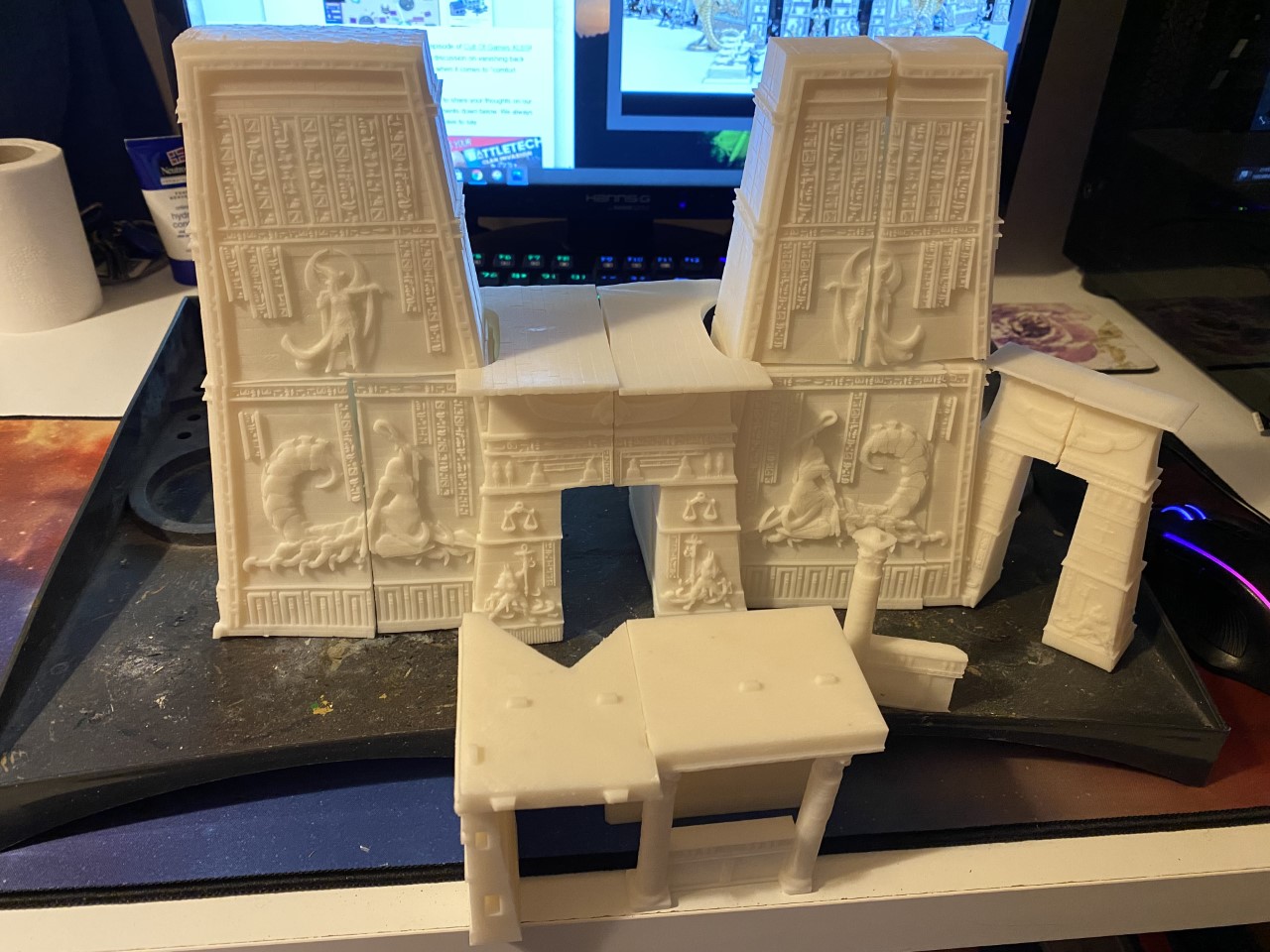
While watching the XLBS today I started assembling the terrain. I currently have it split into three parts, the left and right wings and the central section.
I started by dry fitting the right wing. It was a little bit of a puzzle as I can’t find any instructions online, but in the end wasn’t too bad. I quickly noticed that I’m going to have trouble with parts fitting together though. If you look closely at the picture you will see that almost every join doesn’t fit right. I put this down to print defects that aren’t obvious when you print a single part, but when you put two together it becomes apparent a surface is warped. I also have peg and hole joints that don’t fit or line up properly and column pairs where the heights don’t match. These problems look like they’re going to ruin a lot of the excellent hieroglyph detail which is a real shame.
Still… I’m going to stay positive and just chalk this up to another thing learned during this project. When 3D printing large terrain pieces like this (which to be fair is very rare) you have to be really careful with part distortion.
The right wing is about 18″ long so the entire display is going to be 4 to 5 foot long. I’m going to need a really big shelf to put it on.
Spring Clean 2024
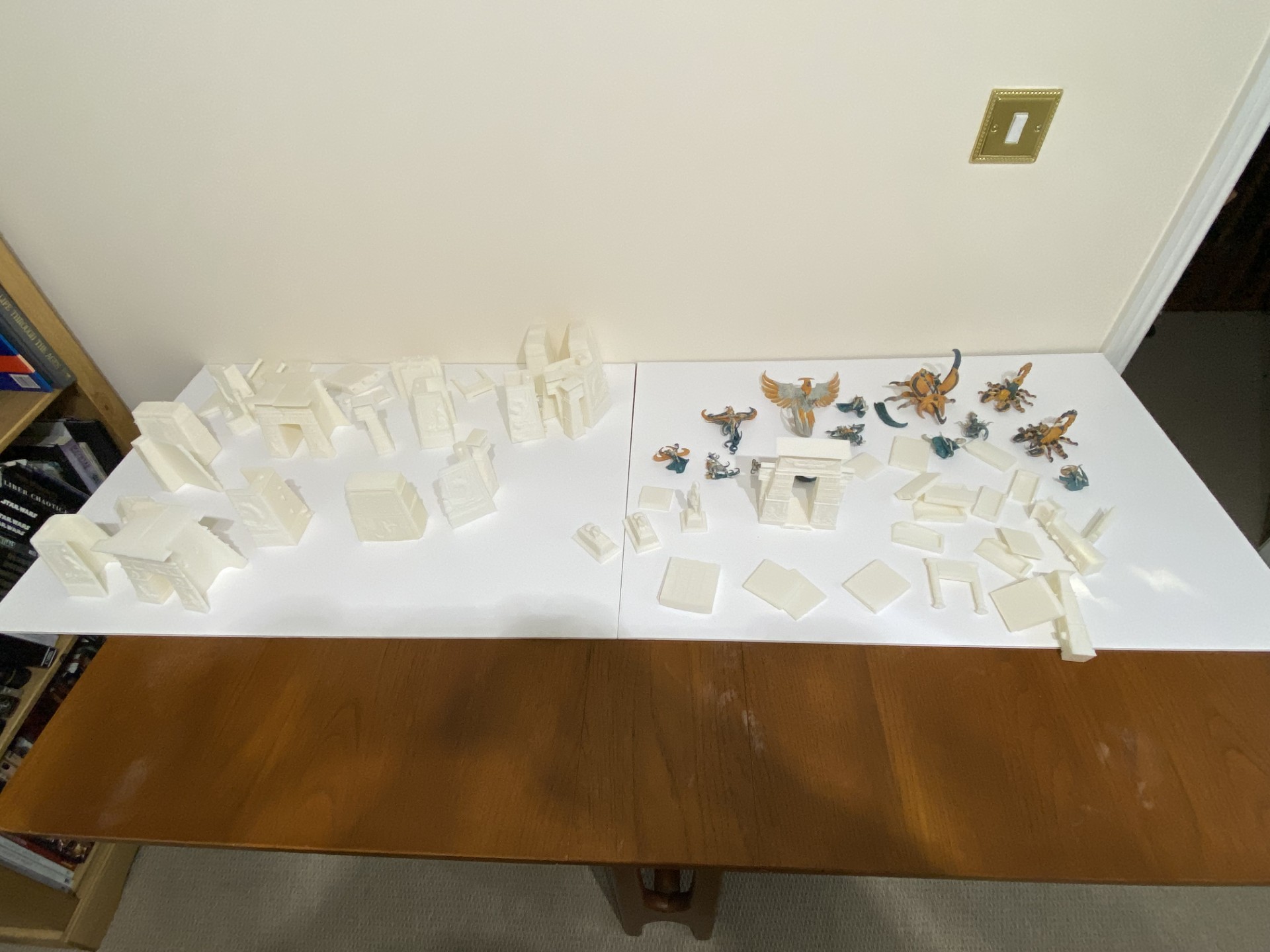
This project has been sat on hold for almost three years, so it’s time to resurrect it.
As you can see in the image above, I’ve got all the terrain prints and the models are painted. Only one has been damaged and that should just be a matter of gluing on the wing again.
Problems:
- How does the terrain go together again?
- How much space does this occupy?
- Where did the giant snake model go? It’s too big for a box so would expect it to be in my display cabinets – but it’s not there.
Next steps:
- Answer above questions.
- Order some form of display box to put it in.
- Assemble terrain, fill in gaps.
- Establish easy paint scheme for terrain.
- Glue models in place.