




















Shining some light into Darkest Africa


Recommendations: 288
About the Project
After getting a Runner up prize in Spring Clean 2025 I'll be continuing occasional returns to the long neglected but much invested in Darkest Africa collection. Specifically I'm going to build armies for Death in the Dark Continent. I started with Bornu-Kanembu who controlled an area broadly equivalent to modern Chad during the period of colonial expansion. They were the most eastern of the Fulani style emirates and interacted with many of the other forces I am now going on to build; Azande, Turkana, Sudanese and Congo Arab slavers and Congo tribal forces amongst others.
Related Company: Wargames Foundry
Related Genre: Historical
Related Contest: Spring Clean Hobby Challenge 2025
This Project is Active
Basing scheme
I looked at some landscape pictures of Chad and The Central African Republic and it looks pretty arid. The colour of the ground ranges from a light sand colour to the red earth often found in Africa. I’m going to stick with a colour scheme for bare earth that I know works and gives a convincing barren soil appearance. It is a two part paint job using Vallejo paints.
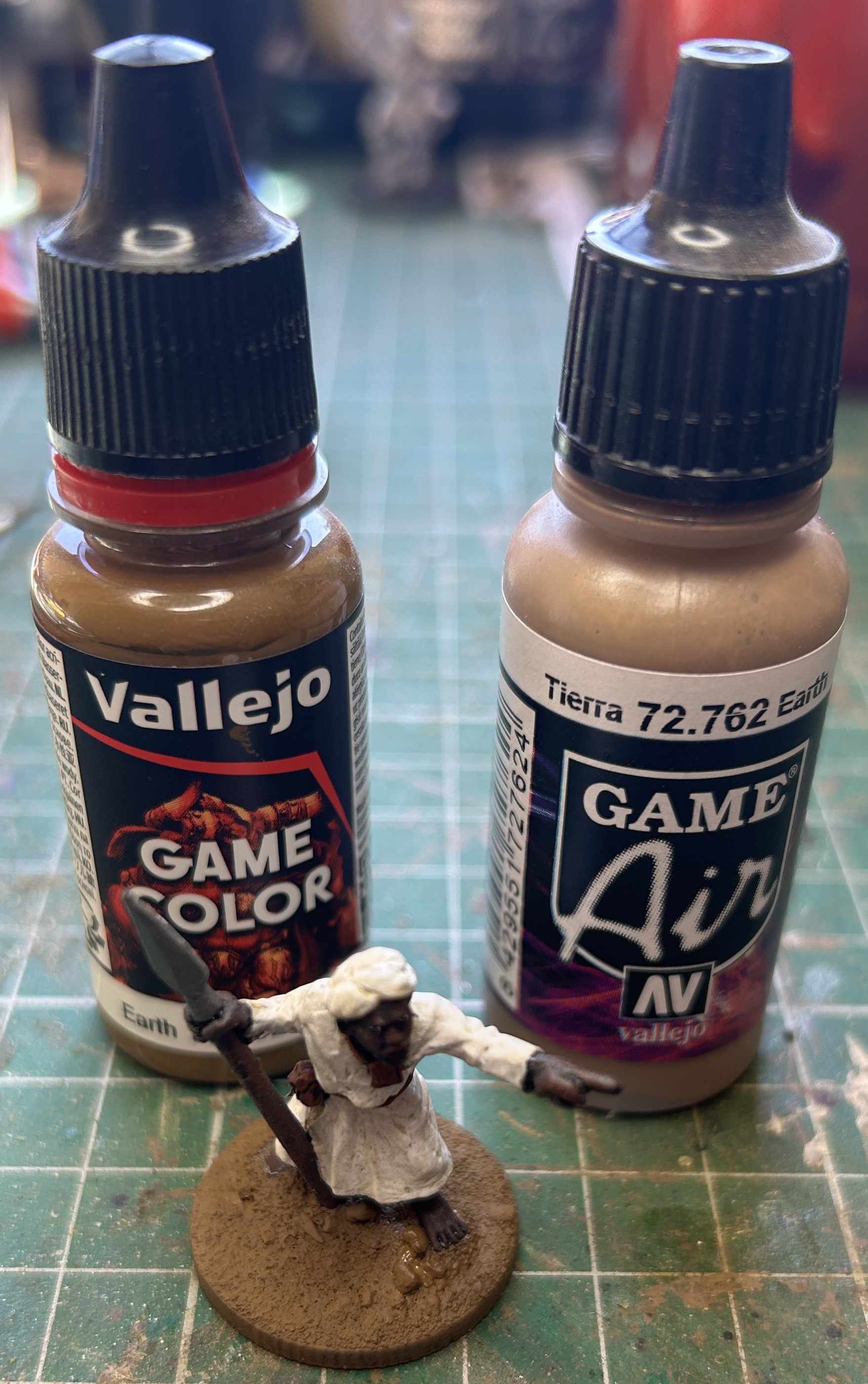
This is stage 1. A 50/50 mix of the two Vallejo Earth colours from the Game Color and Game Air ranges. Strangely they are slightly different shades and I don’t mix them too much – just drop one on top of the other on a palette. That way a slight variation occurs on the bases although it is hard to see in the final finish as they are remarkably similar when dry.
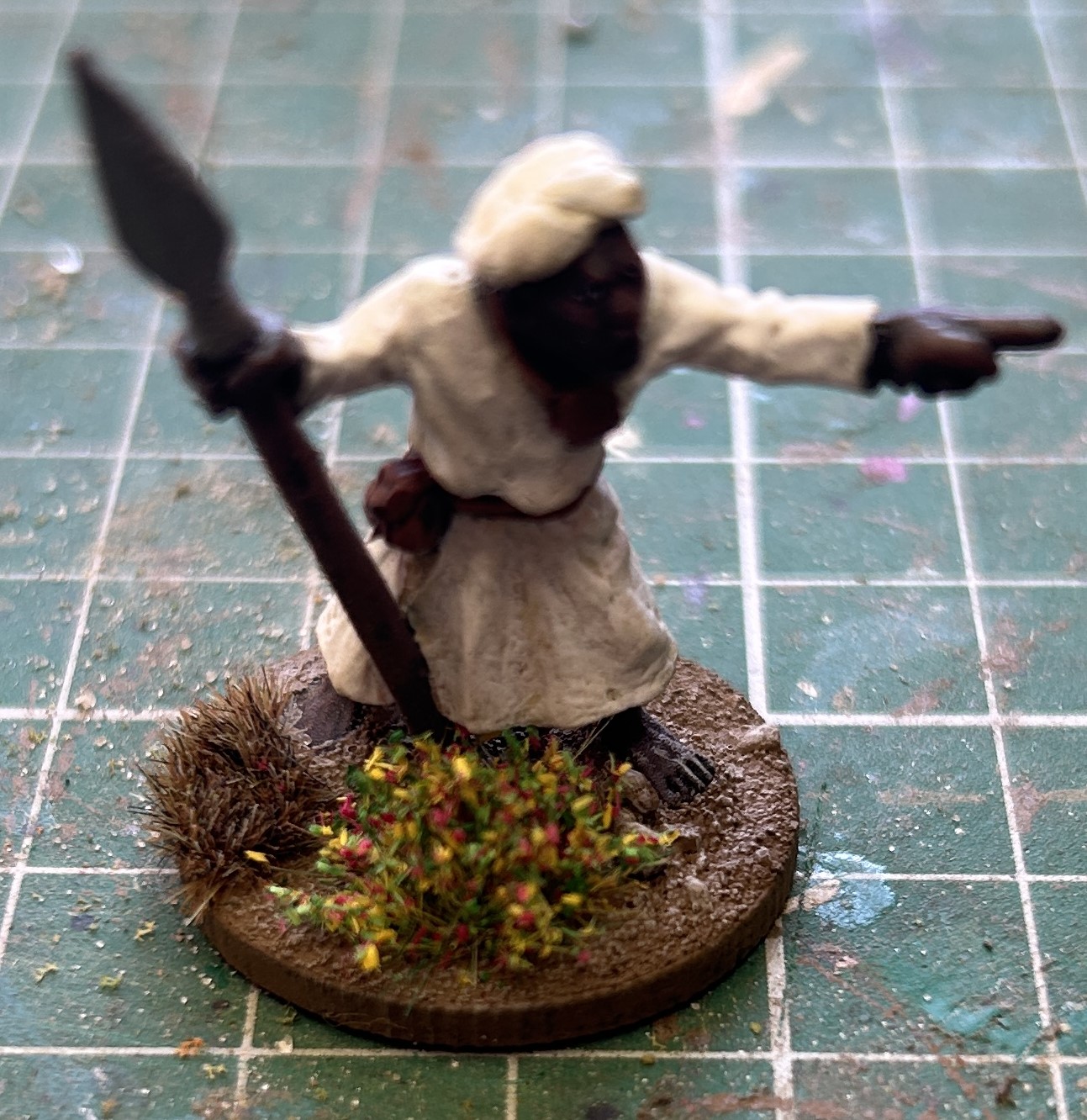
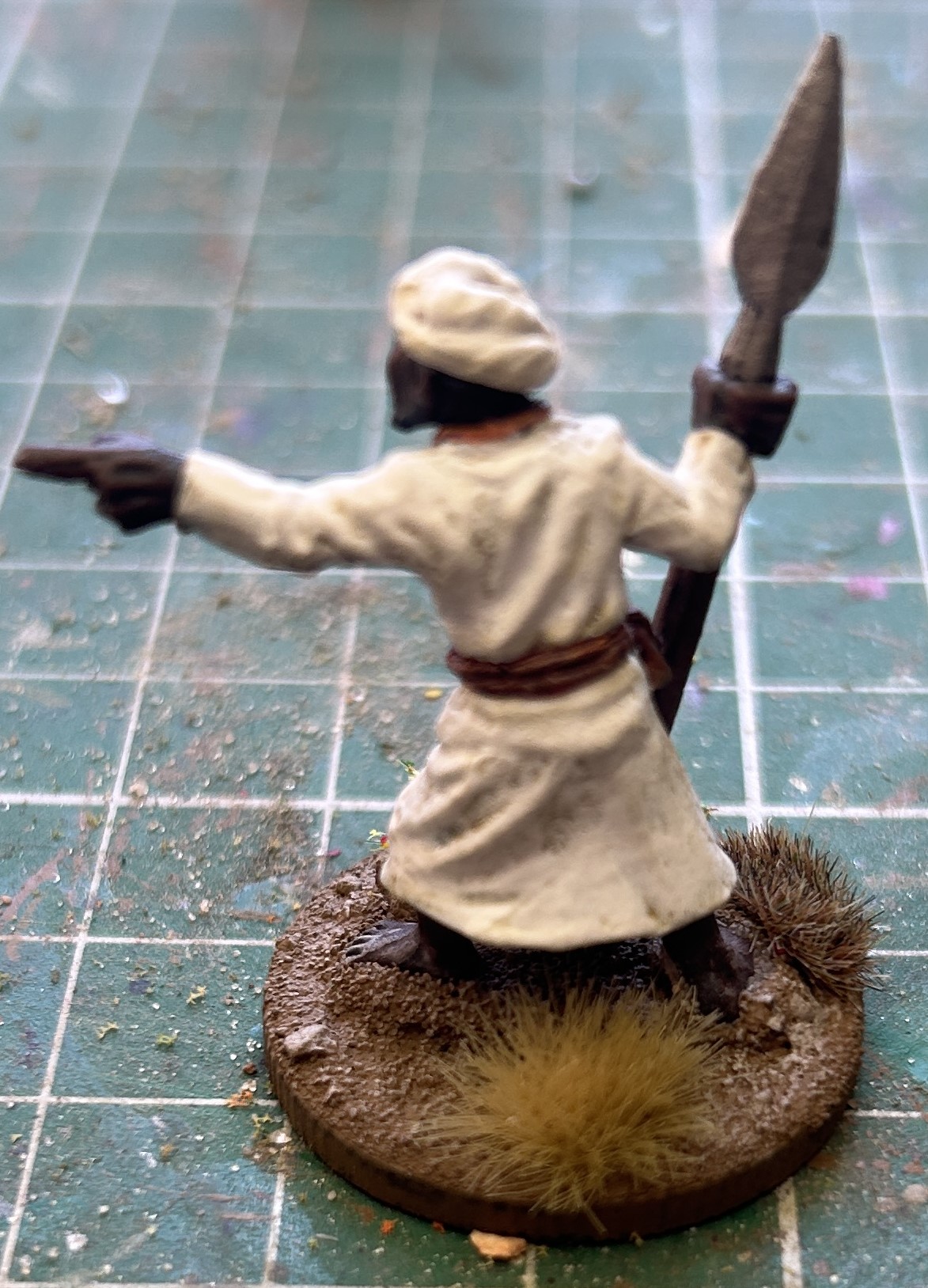
The miniature is the only fully painted model I’ve used. He is a Foundry Tribal Chief. I love his broad bladed spear, very Soudanese. The leather box on his necklace would have contained verses from the Koran that were intended to be a charm of protection. The old ways die hard apparently. He has been rebased for this project. Let’s finish him off…
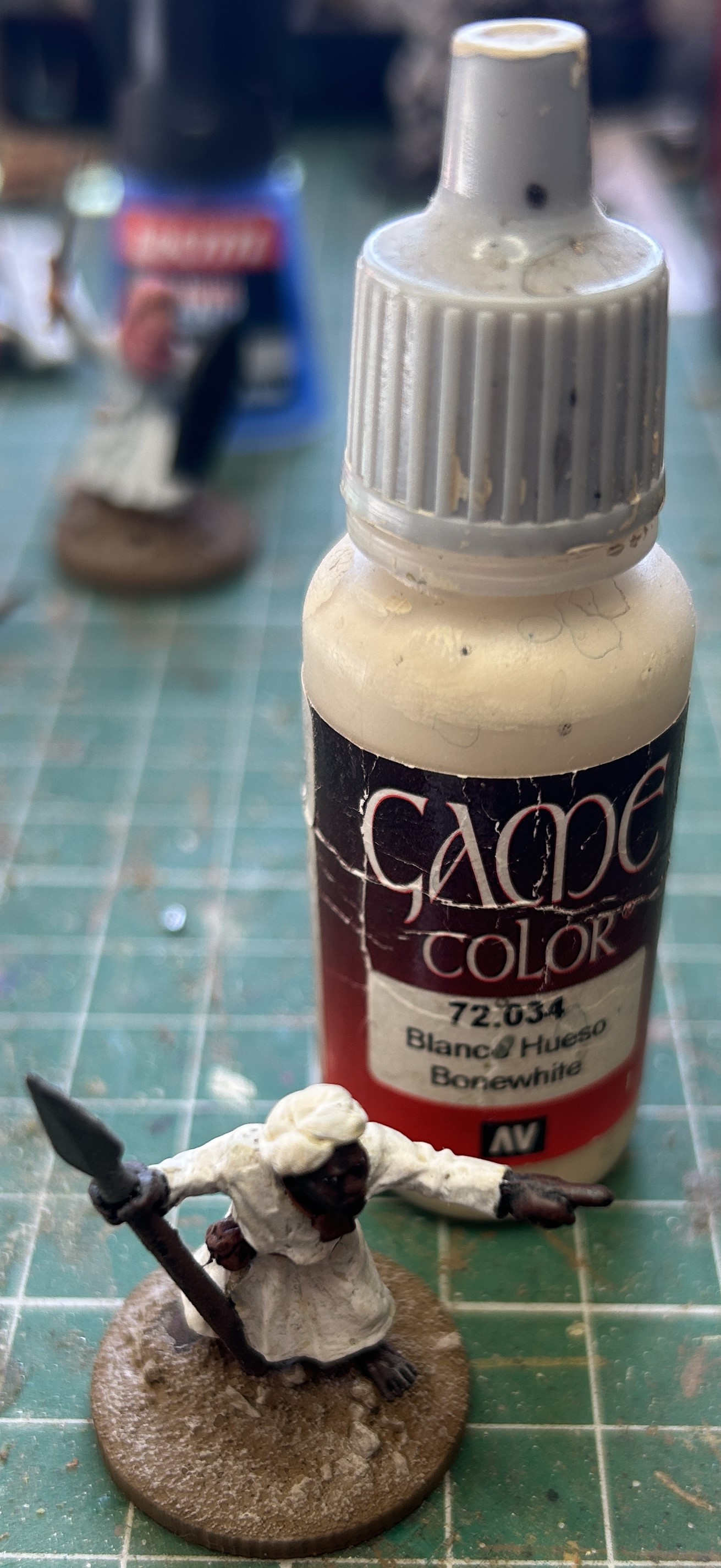
The next stage is to dry brush with a bone colour. This looks quite bright when applied but dries a bit darker and looks more natural whilst still providing a good strong contrast.
And now some tufts.
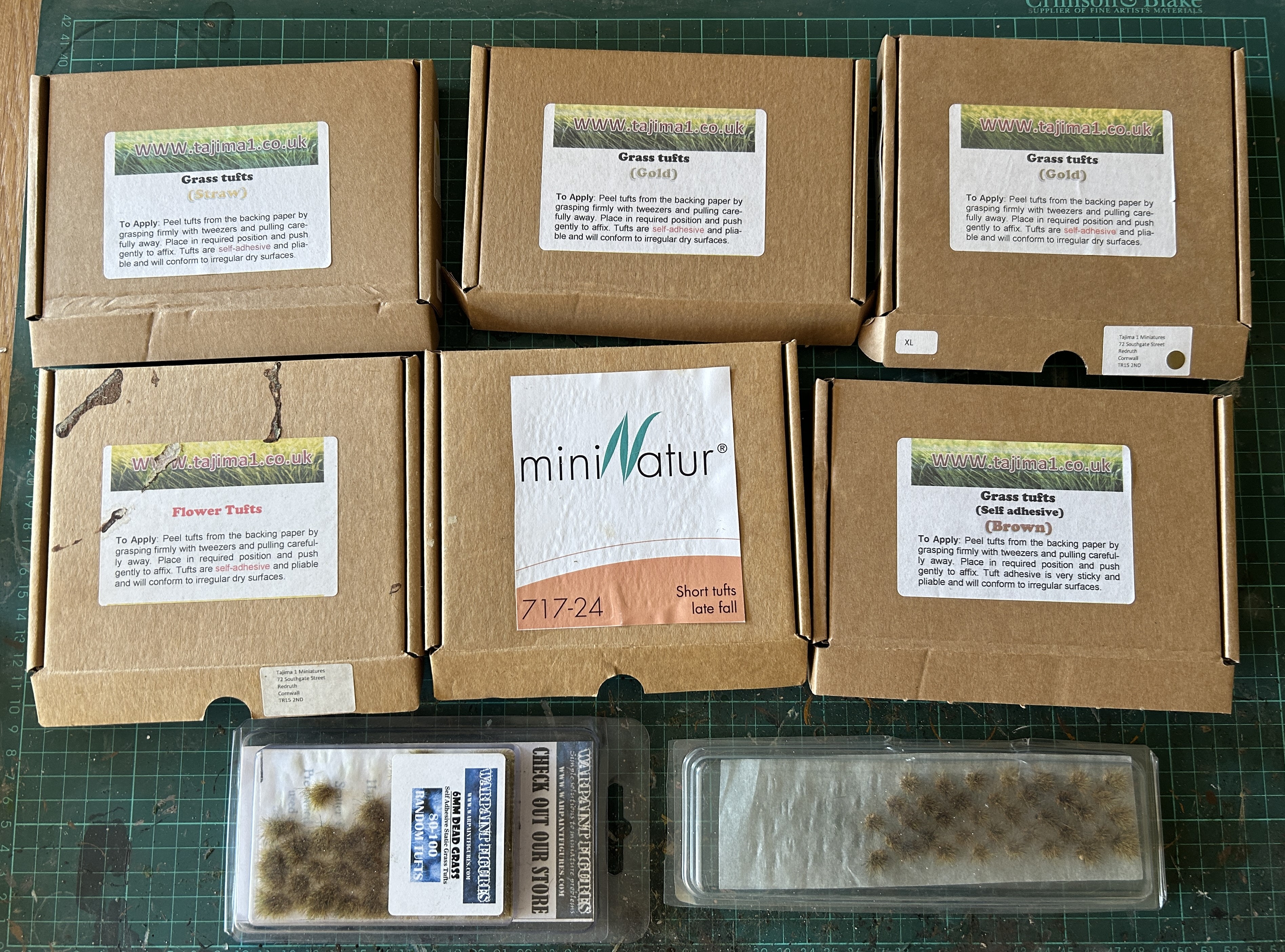
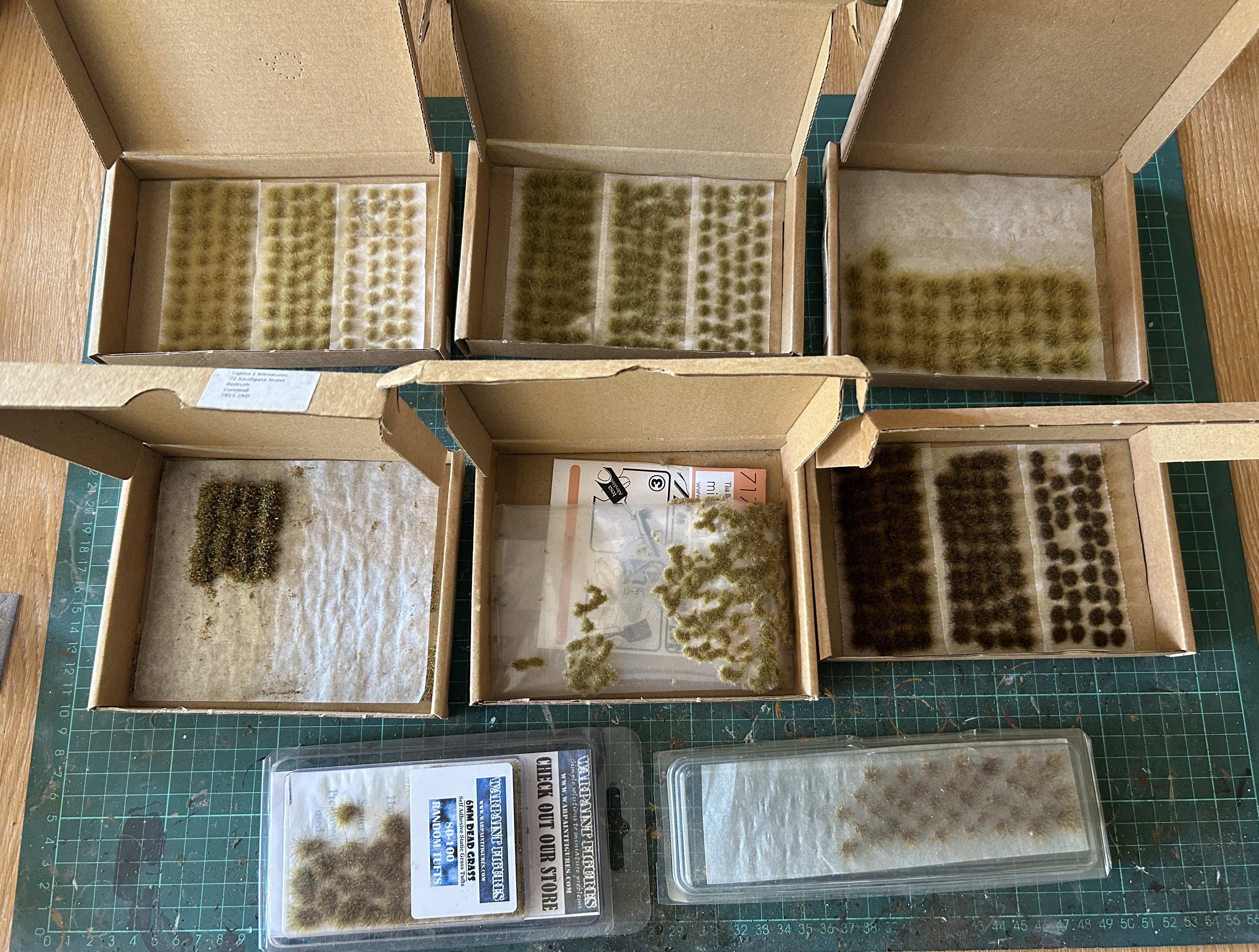
I’m a fan of GamerGrass and they do a lovely Dry Steppe set. To have to use them for an entire army would be a bit too expensive so I’ve compiled a set of complementary sets, mostly from Tajima1 who is a local supplier. Colours range from dark brown to dry green and then a golden straw colour, including some extra long dry grass tufts that will feature prominently on the skirmish unit bases.
There is a box of mixed flower tufts too. I always mark commander bases with a flower tuft so we can see them more easily in the heat of tabletop action.
Three will be the maximum used on most bases. Here’s our officer finished, including splendid floral clump.
Greenstuff for Kanembu
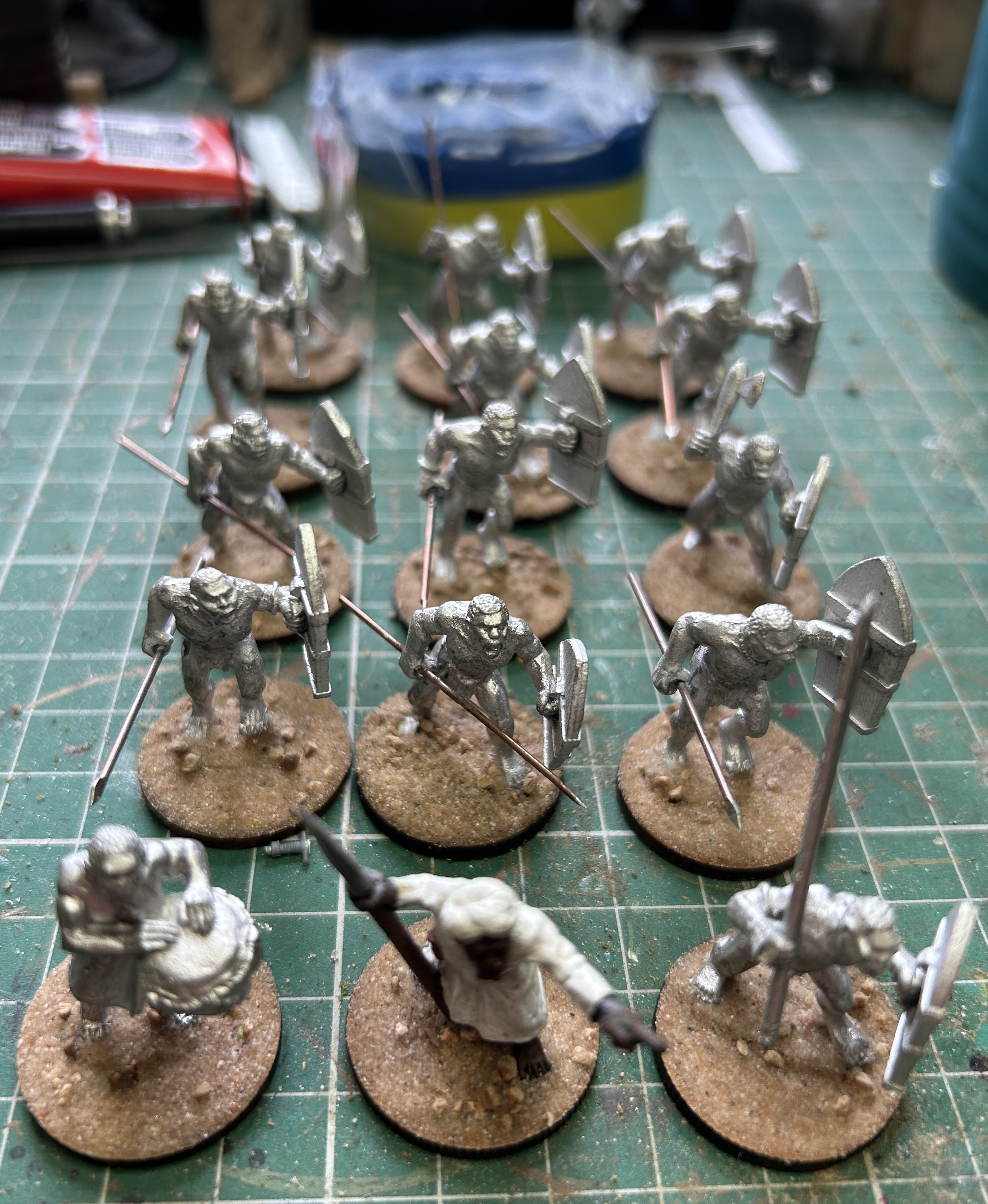
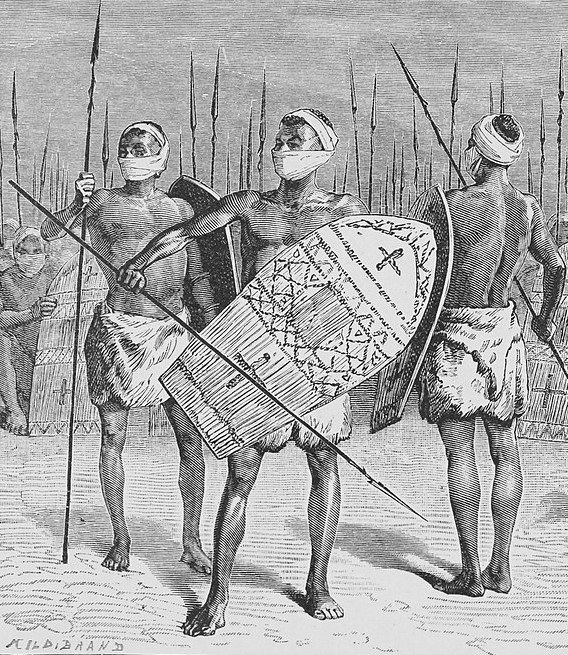
This is the first unit of Kanembu warriors. These are Foundry African Tribesmen. These are the ones without any specific styling so are ideal for conversion. I’m planning on adding the headdress which is a sort of cloth wrap. There aren’t many details about what this was or what colour it was. The only contemporary comment I could find about it suggested that it was sometimes used as a form of currency.
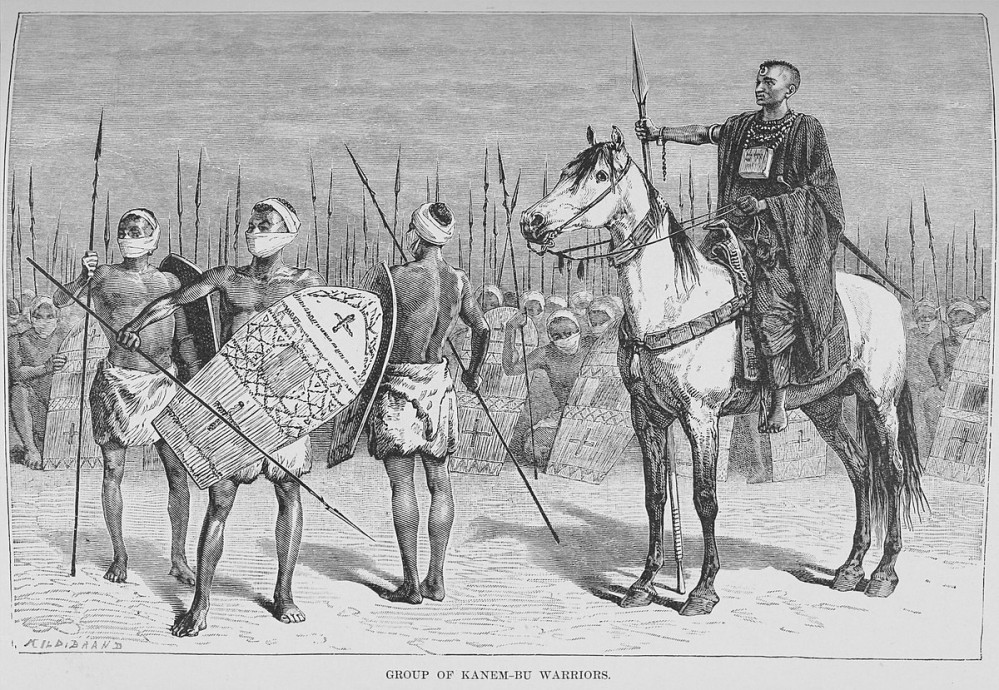
The picture I’m following is the same one as is used as the main image for the project. I’ll show a comparison with it at the end. I’m not going to do the animal skin wrap at the waist. Not every image of Kanembu warriors shows this, some others show loincloths so we’ll stick with what’s already on the miniatures.
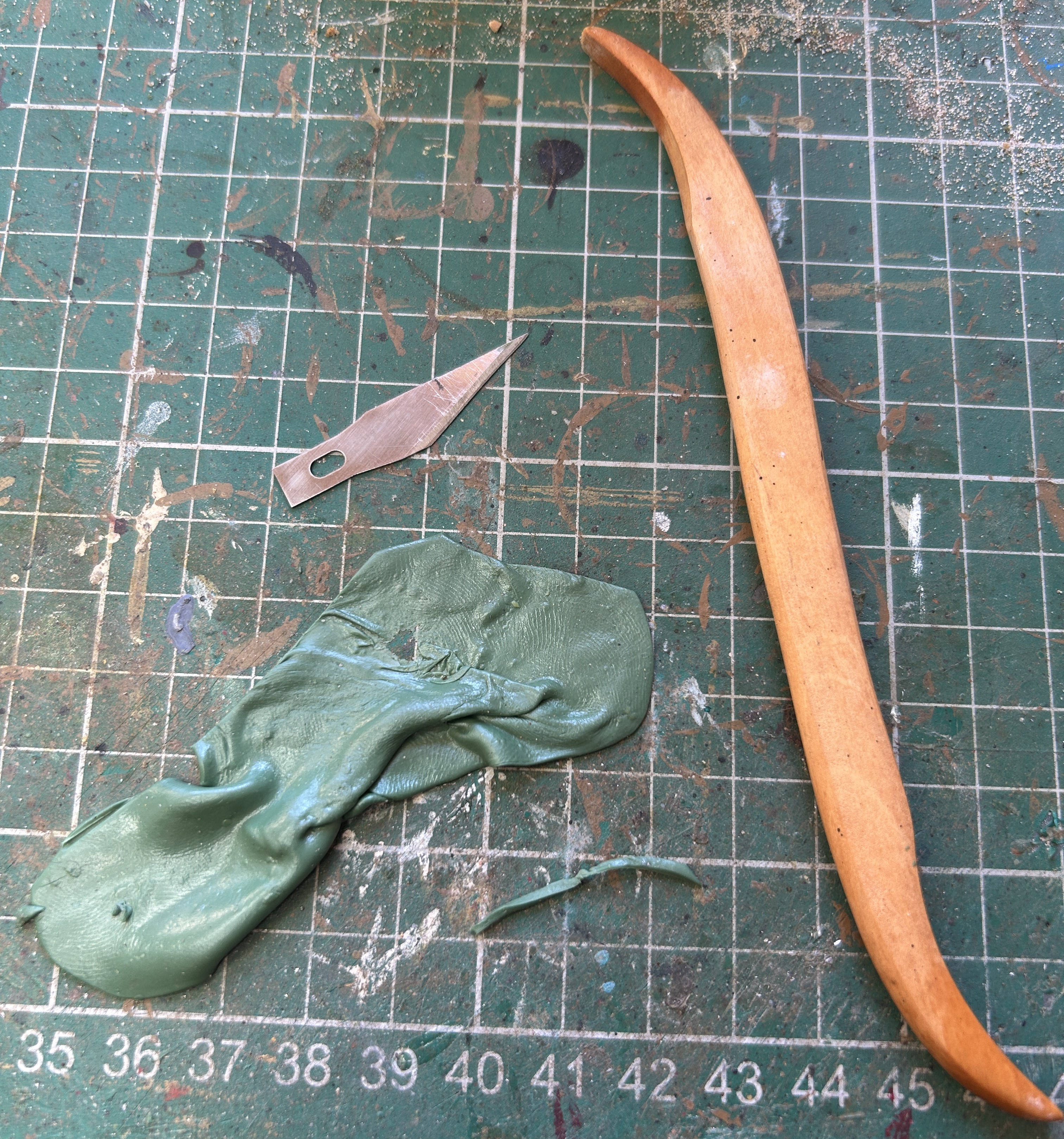
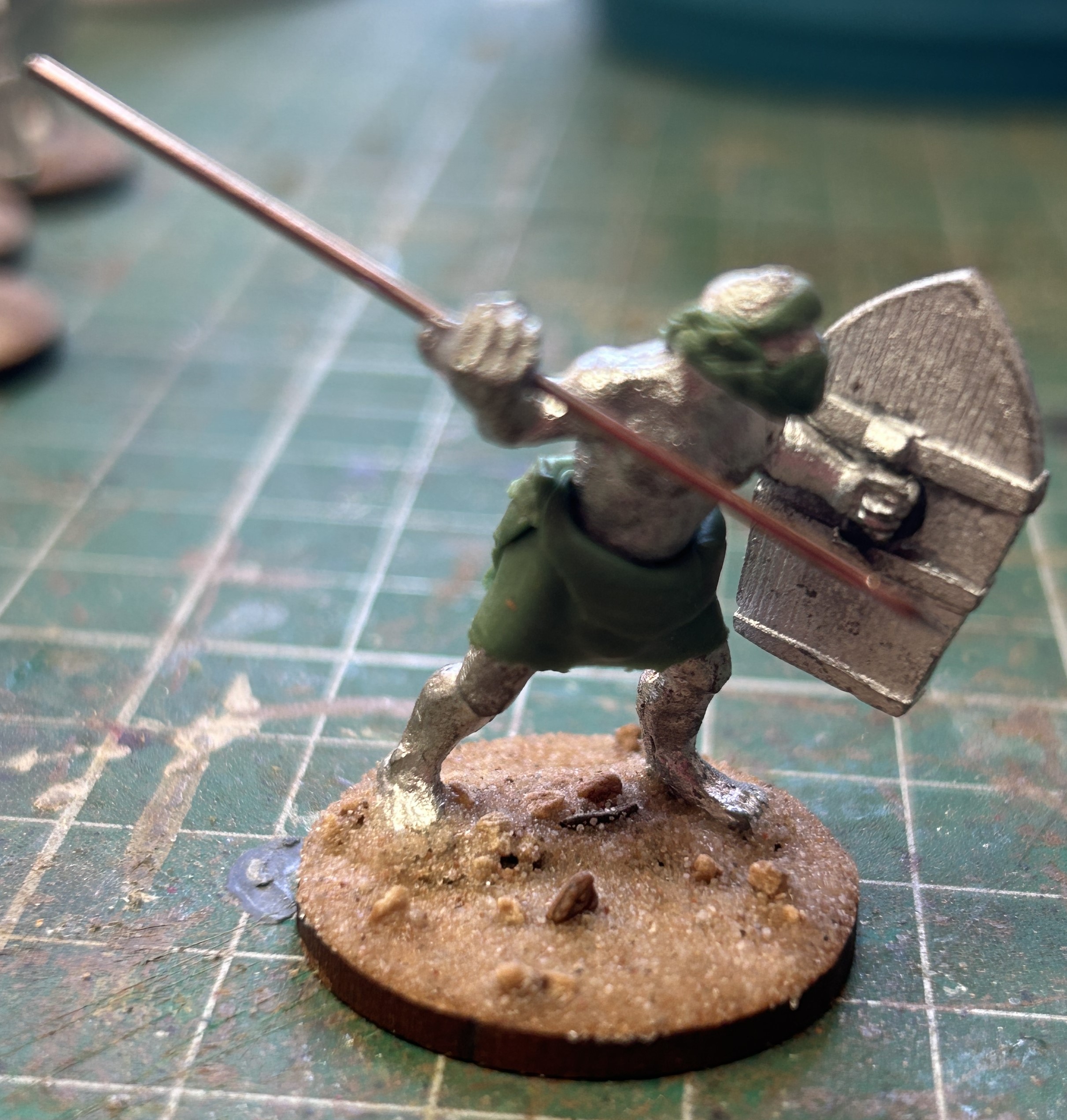
Here’s the greenstuff, rolled, cut into thin strips and then added to the miniature in two strips. One over the mouth and ears and the other wrapped around the head from forehead around to the base of the neck and back.
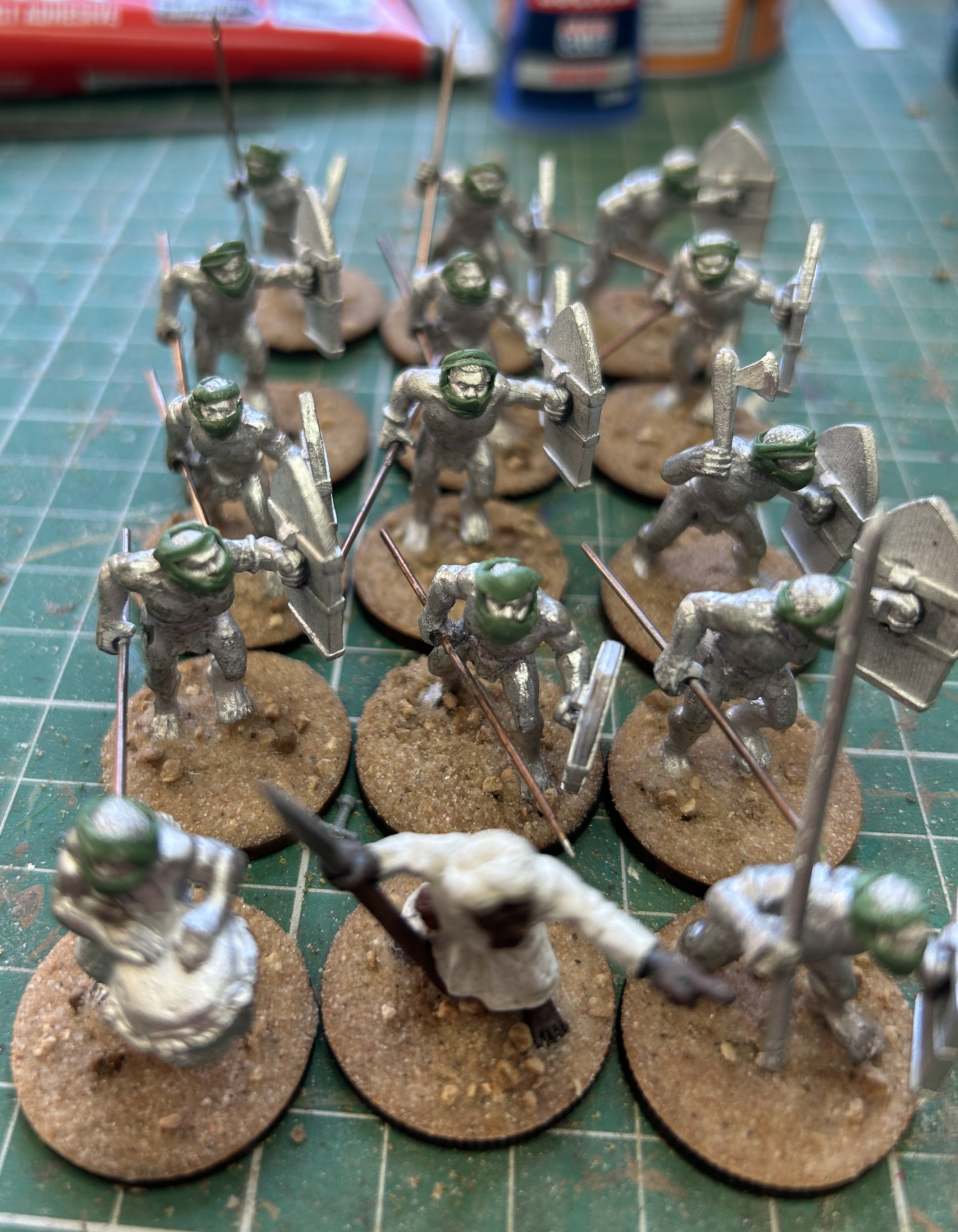
And here’s what happened to the first unit. The leader is painted already so no change there but the rest have been done:
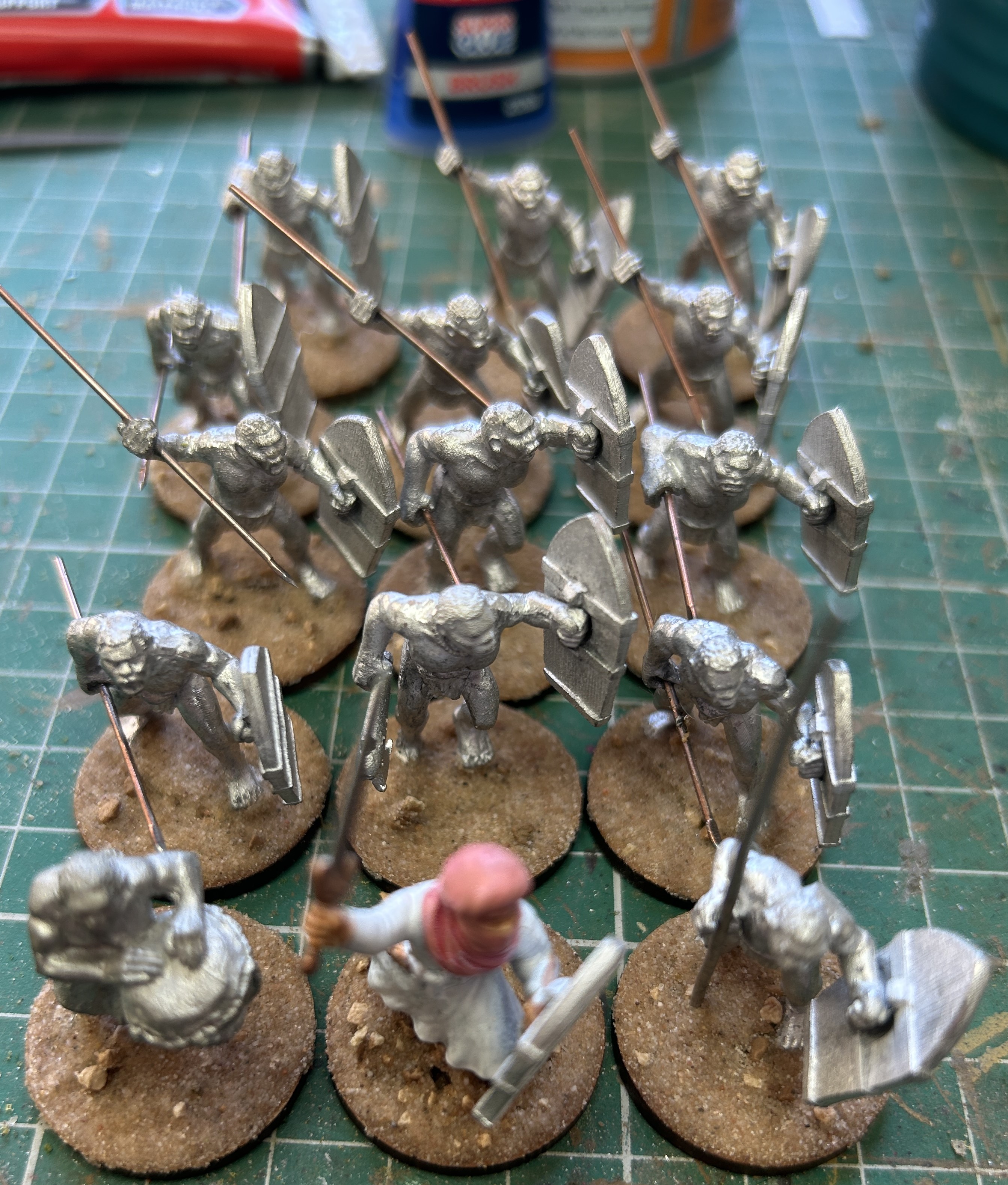
Then the second unit. This one is led by a Gripping Beast plastic Arab miniature.
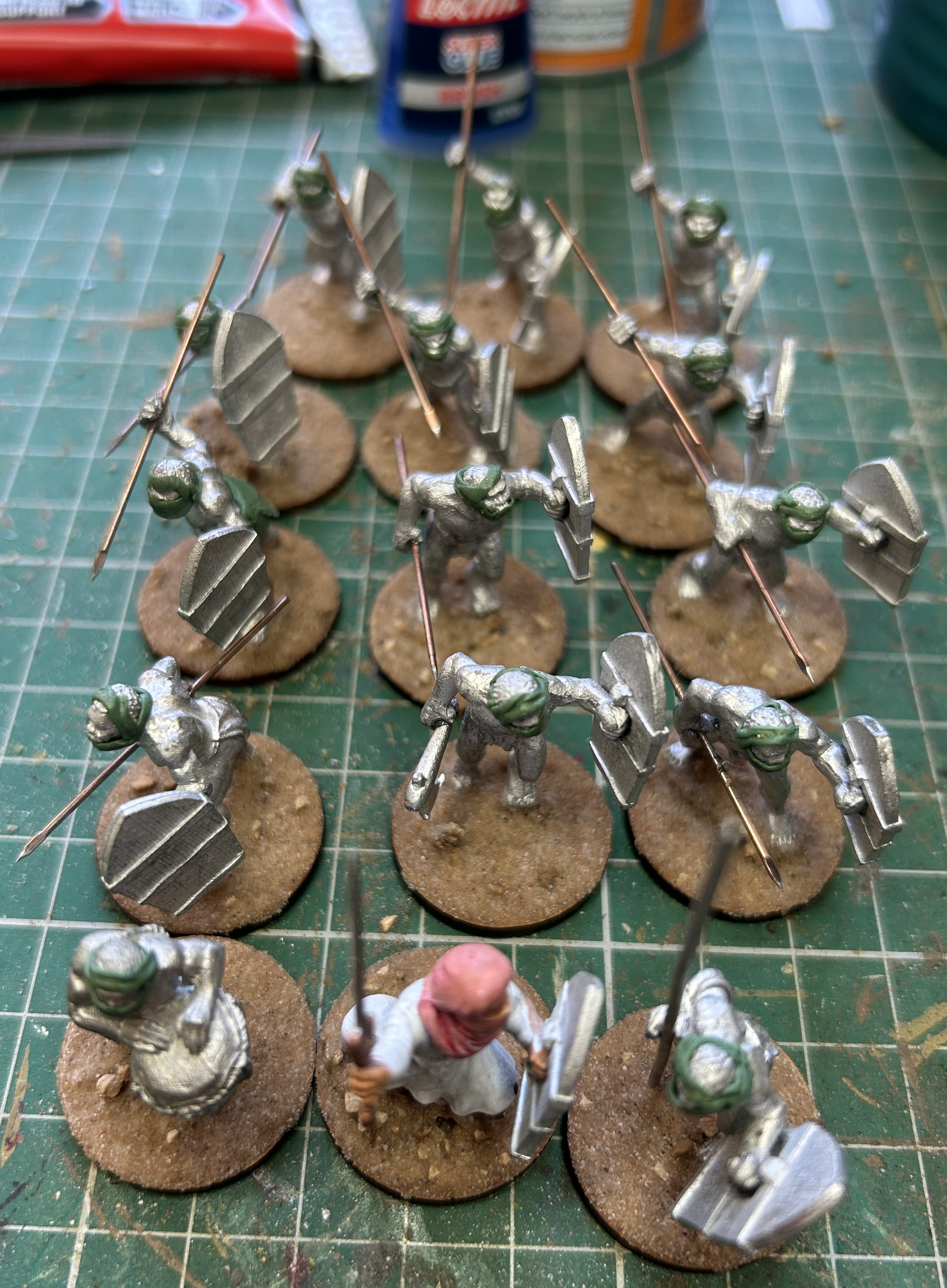
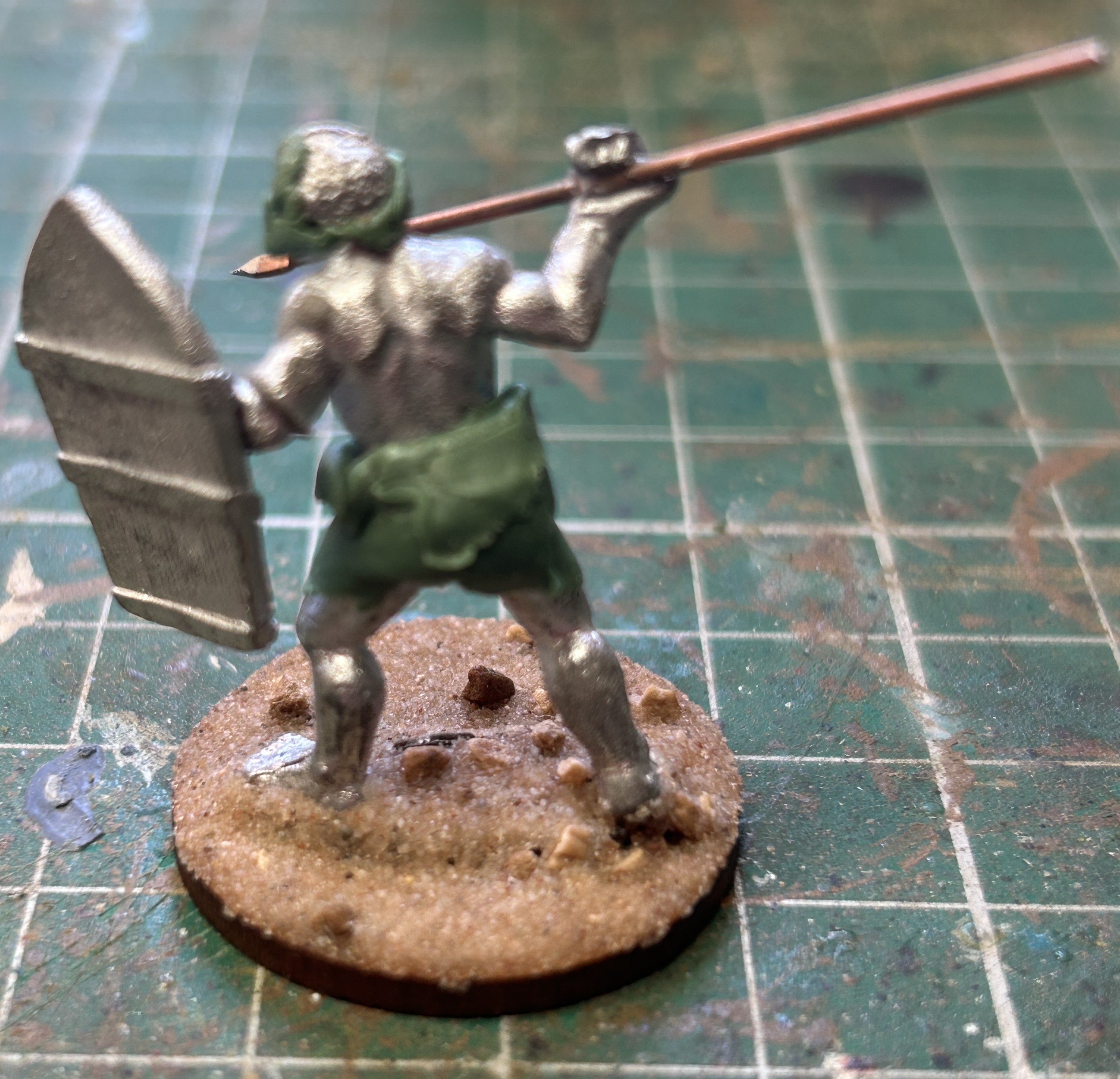
This is what I was going for and one mini shown in detail. I did the animal skin on this one as I had spare Greenstuff:
Savannah Knights undercoated
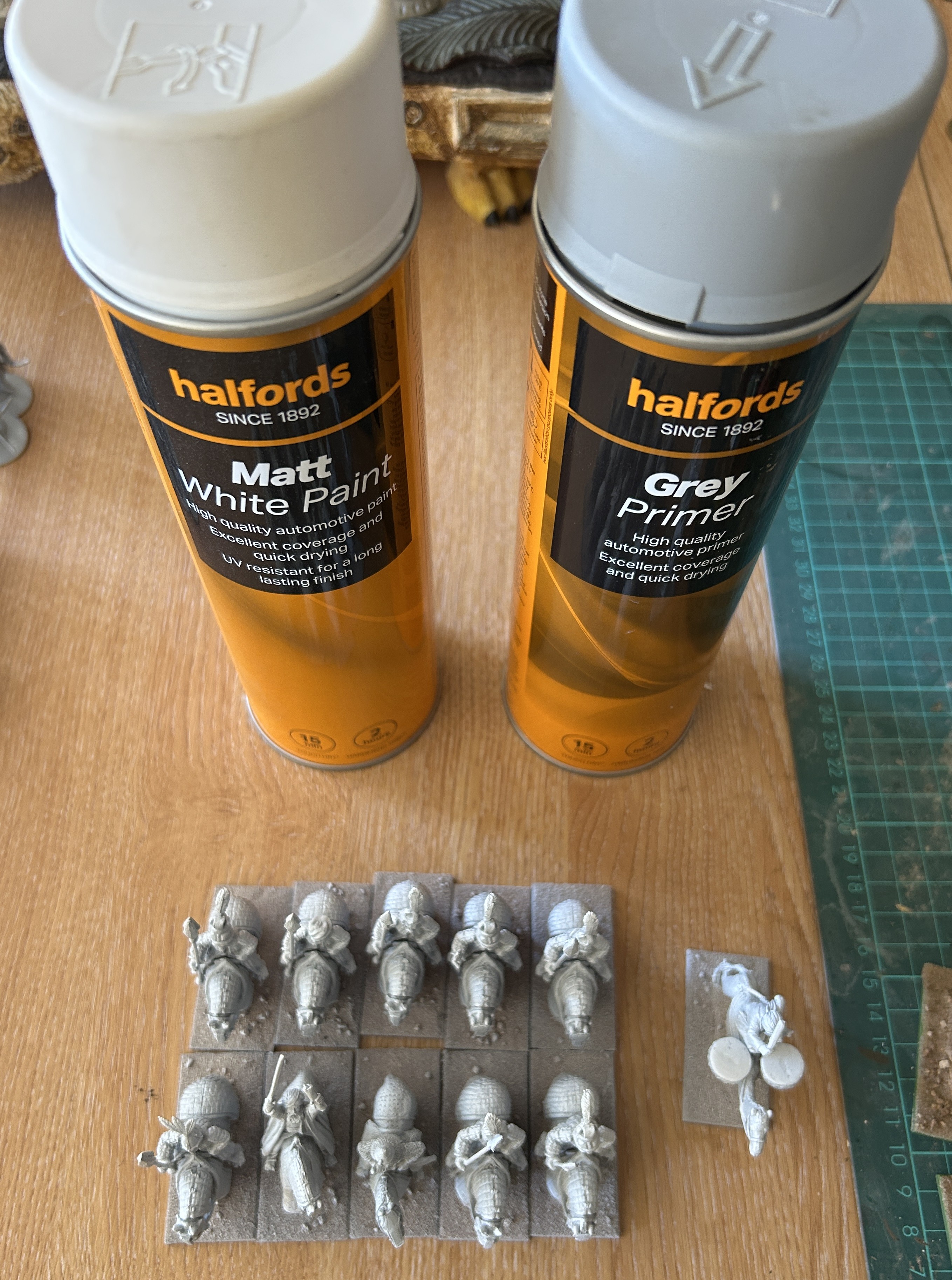
I’m still looking at colour schemes for this unit. Thanks to @horati0nosebl0wer for his helpful suggestions. In the meantime I’ve gone with a zenithed undercoat. There are two stages.
- Firstly Halford’s grey primer on the sides – sprayed with the figure lying on its side – so two passes one on each side with a short drying time in between.
- Second stand the figure up and spray Halford’s white primer from directly above the miniature. I like the highlight to be quite bright so I give the model a few passes from slightly different angles but all primarily from above.
I’ll be using AP Speedpaints 2.0 so this bright zenith will help to make the colours pop with the grey undertone providing some additional depth and contrast to the colours used.
Shuwa Arab Warriors Unit 2
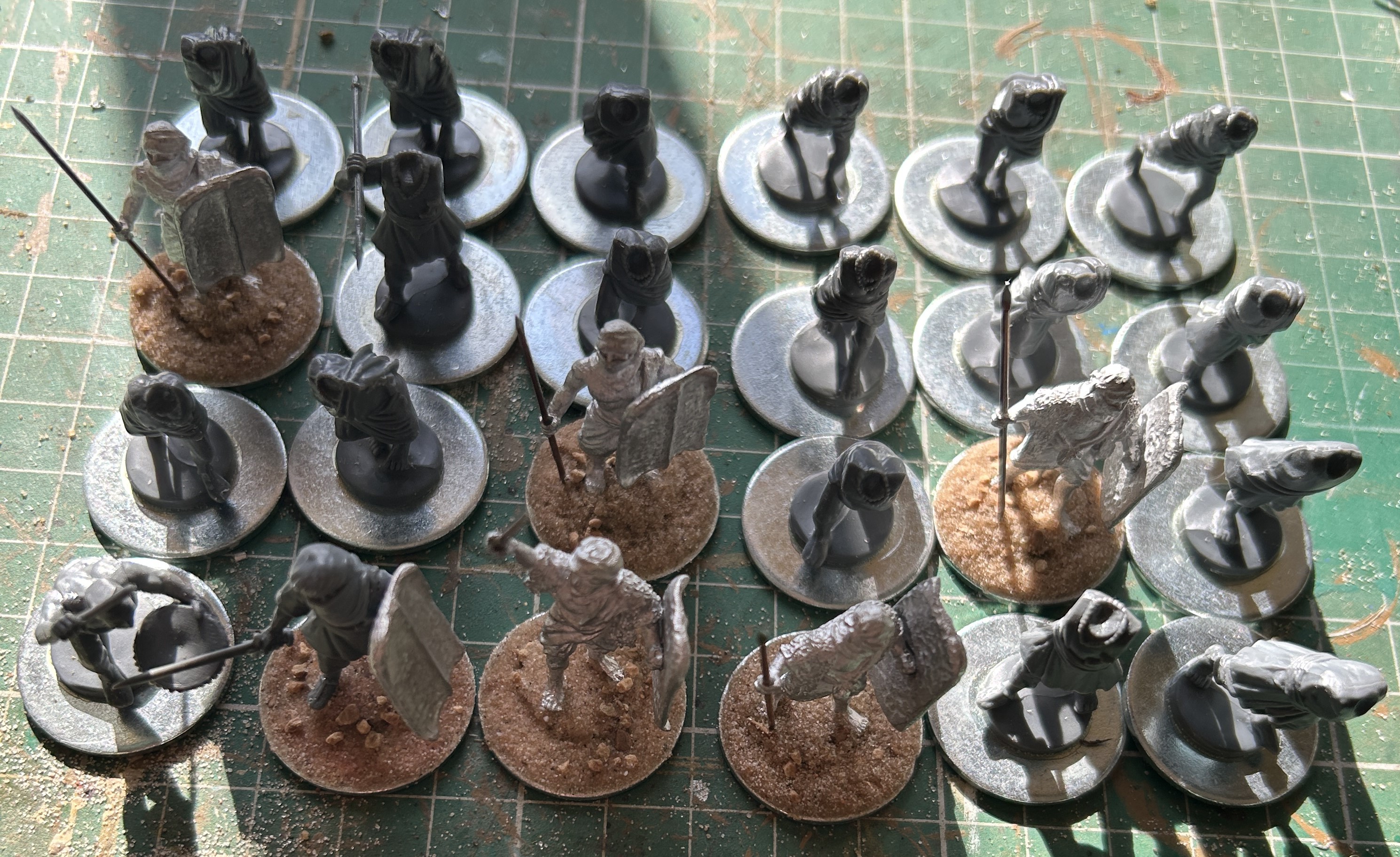
This is the second unit of Shuwa Arabs. Again mostly Perry Sudanese Tribesmen with the remaining five Agema Nubae metals. Same process as the first unit and a similar mix of heads to give a more Bedouin look. With this unit I ran out of arms from the Perry set. That is because I’m not using the rifles they include and the sprues have a lot on them so there aren’t masses of alternative arms given. No worries, I have spares from the Perry Zulus. These have a recess in the shoulder which needs a slight file to help give a better surface for gluing to the flat shoulder on the bodies. I use Tamiya Super Thin on plastics as the melted bond is stronger.
Here’s the final result for today:
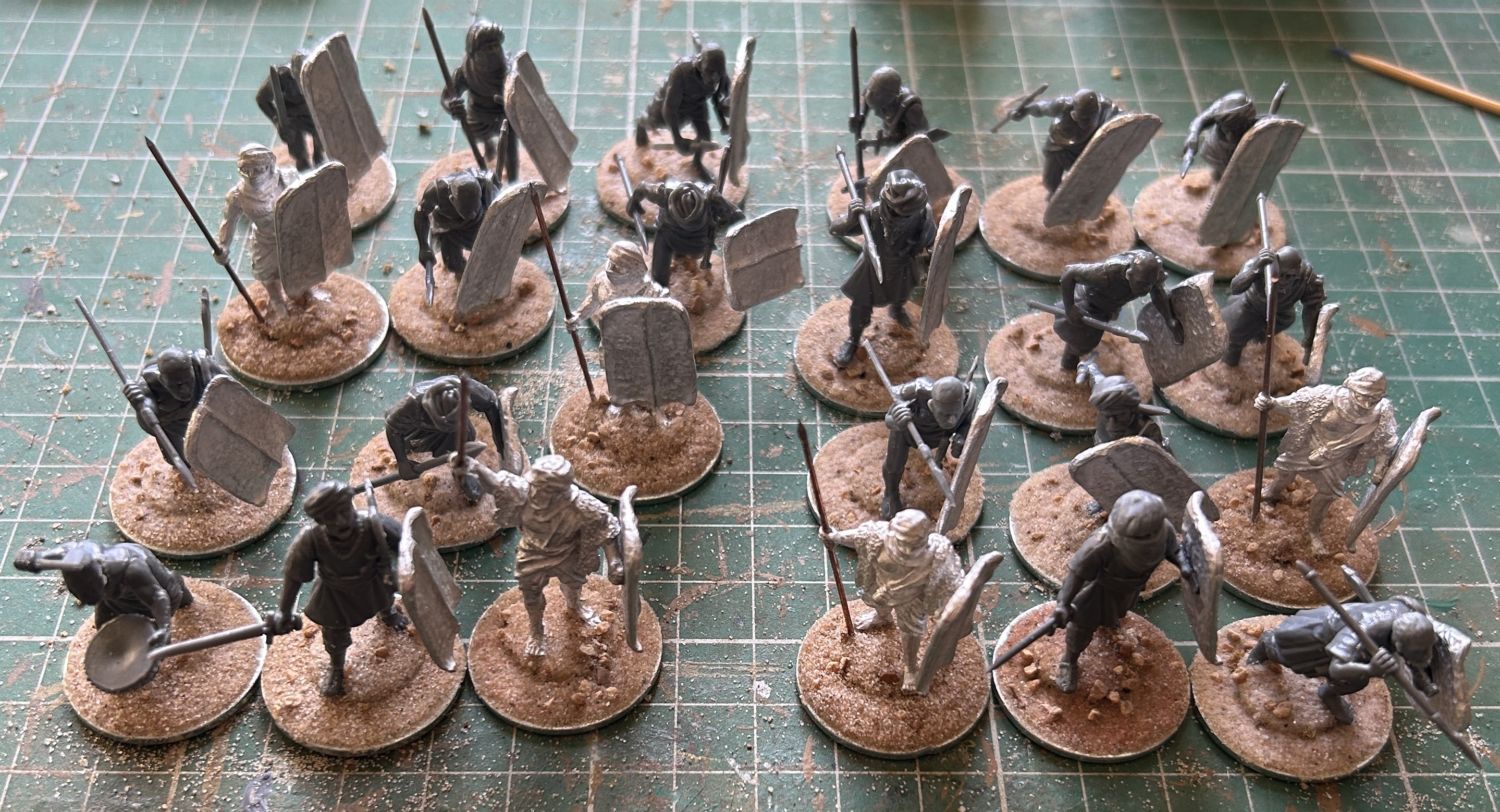
Shuwa Arab Warriors Unit 1
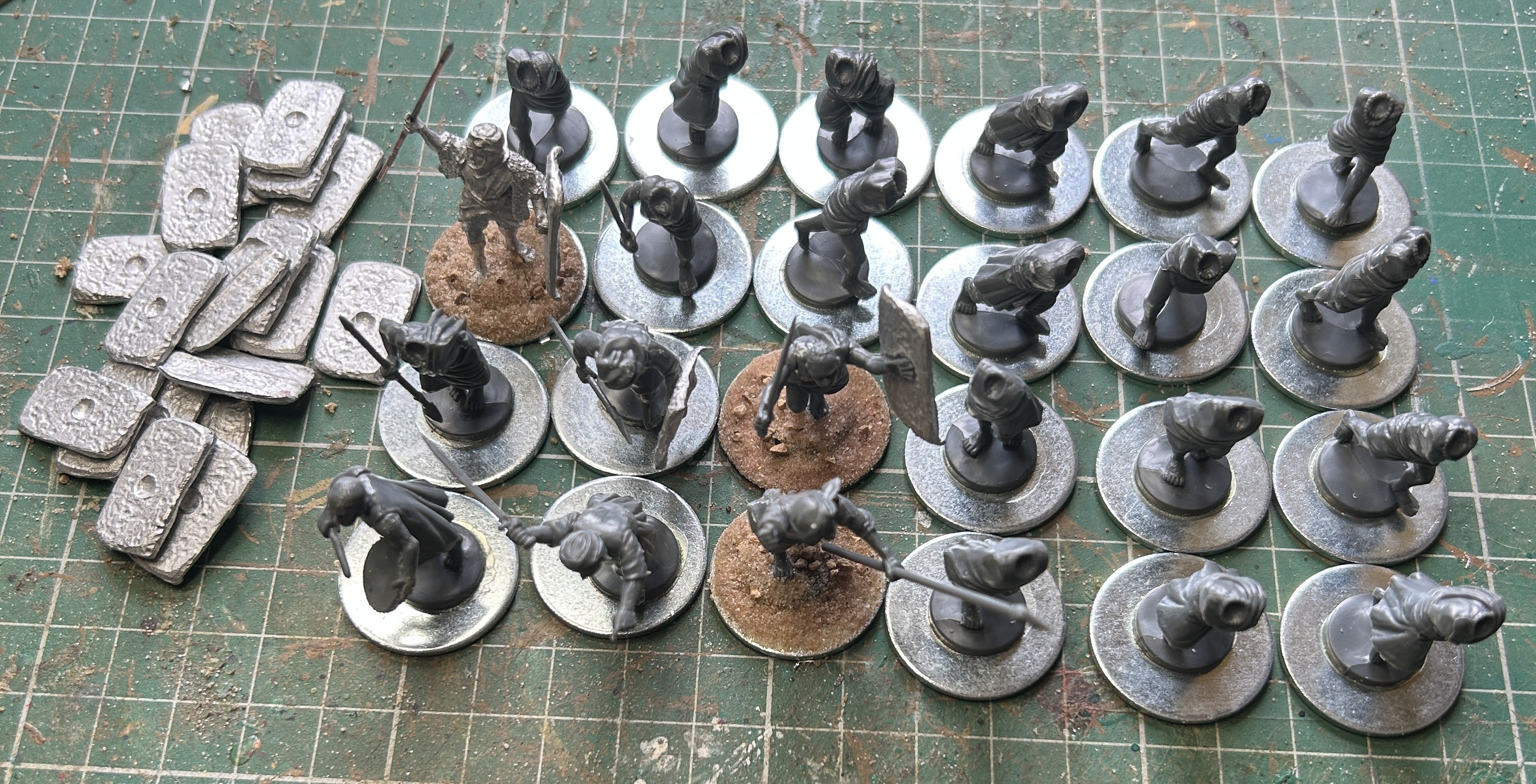
Here’s the first unit of Shuwa Arab infantry. The Shuwa, also known as Baggara Arabs are nomadic people who were often found fighting for and against the various regional settled powers in the area of eastern Soudan (modern Chad, Sudan and South Sudan). For example, they were a significant element in the Mahdi’s forces in Darfur. In this army they provide auxiliary support for the Kanembu.
The miniatures are based on the Perry Sudanese Tribesmen set. 40 miniatures for £25 is great value. There are other miniatures in use, a small number of Agema Nubae, one of whom is in this unit. The Perry set covers a lot of options including the eastern Beja tribes who had the distinctive hair style and carried the round rhino hide shields. To help to portray mine as more western Shuwa I’ve included some turbaned heads taken from the Gripping Beast Arab infantry and Wargames Atlantic Afghan infantry sets. I needed extra heads as I also didn’t use any Perry heads with a fez as I’ll need these for another force. Most importantly I’ve gone for a more local shield style which came from Gripping Beast’s Desert Frontier shield range. Sadly the GB Desert Frontier miniatures are no longer available but the shields are still for sale.
As you can see these miniatures are based on M10 washers (25mm round). This will give enough weight to counter to imbalance of a plastic model with a metal shield.
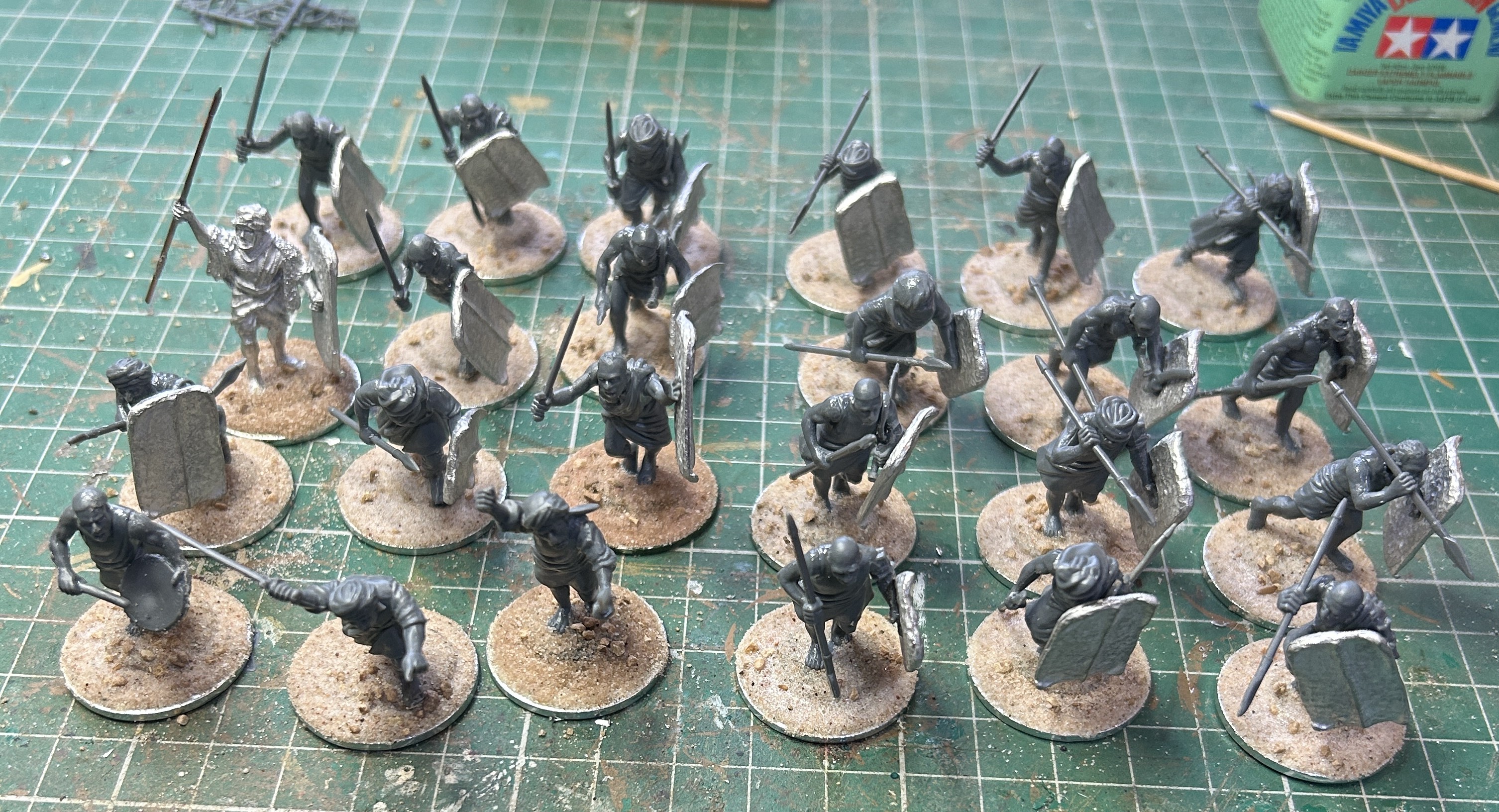
Here they are fully built and with the bases covered in the scatter. I’ve kept plenty of kaskara swords either in use or being carried slung over the left shoulder, in the distinctive Soudanese style. A few warriors are also holding throwing sticks in their shield hands. The Perry plastics are well molded and there isn’t much flash. The Perry bodies have a recess at the neck to take the slight protrusion on the heads. The Gripping Beast and Wargames Atlantic minis both have a flat neck. To help them fit a bit better I filed around the edge of the flat neck section on the heads so that a slightly raised neck was created, this then fitted into the recess on the Perry body. The command base will have a leader, standard bearer and a drummer ( shown front left).
Light Cavalry Unit 2
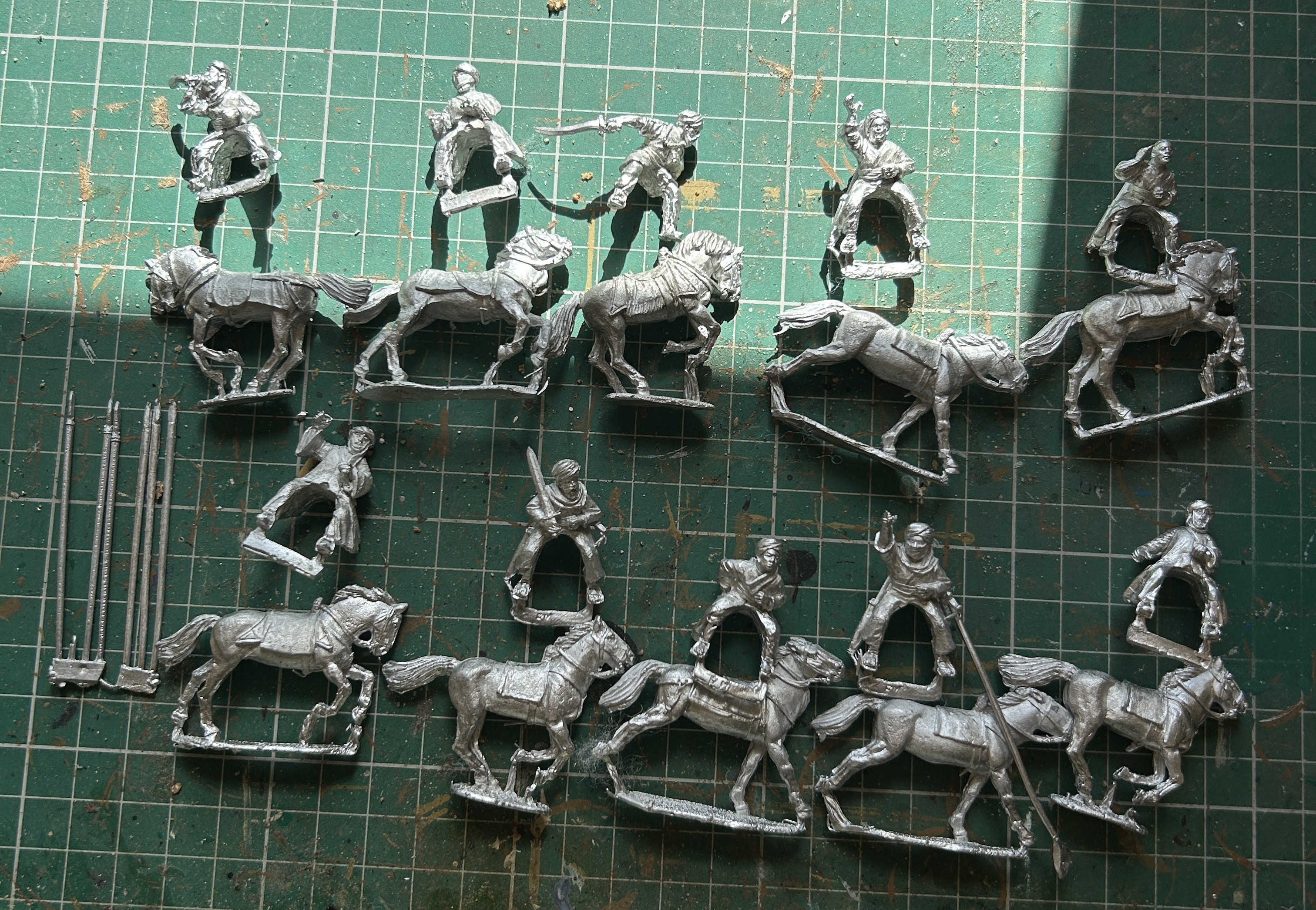
This second unit of light cavalry comprises Perry Miniatures Baggara cavalry from the Sudan range and Bedouin Cavalry from the Crusades range. Cleanup was straightforward although the flash between the horses hind legs was irritating on a few. No need for additions or conversions so with basing scatter added we finish today with this:
Light Cavalry Unit 1
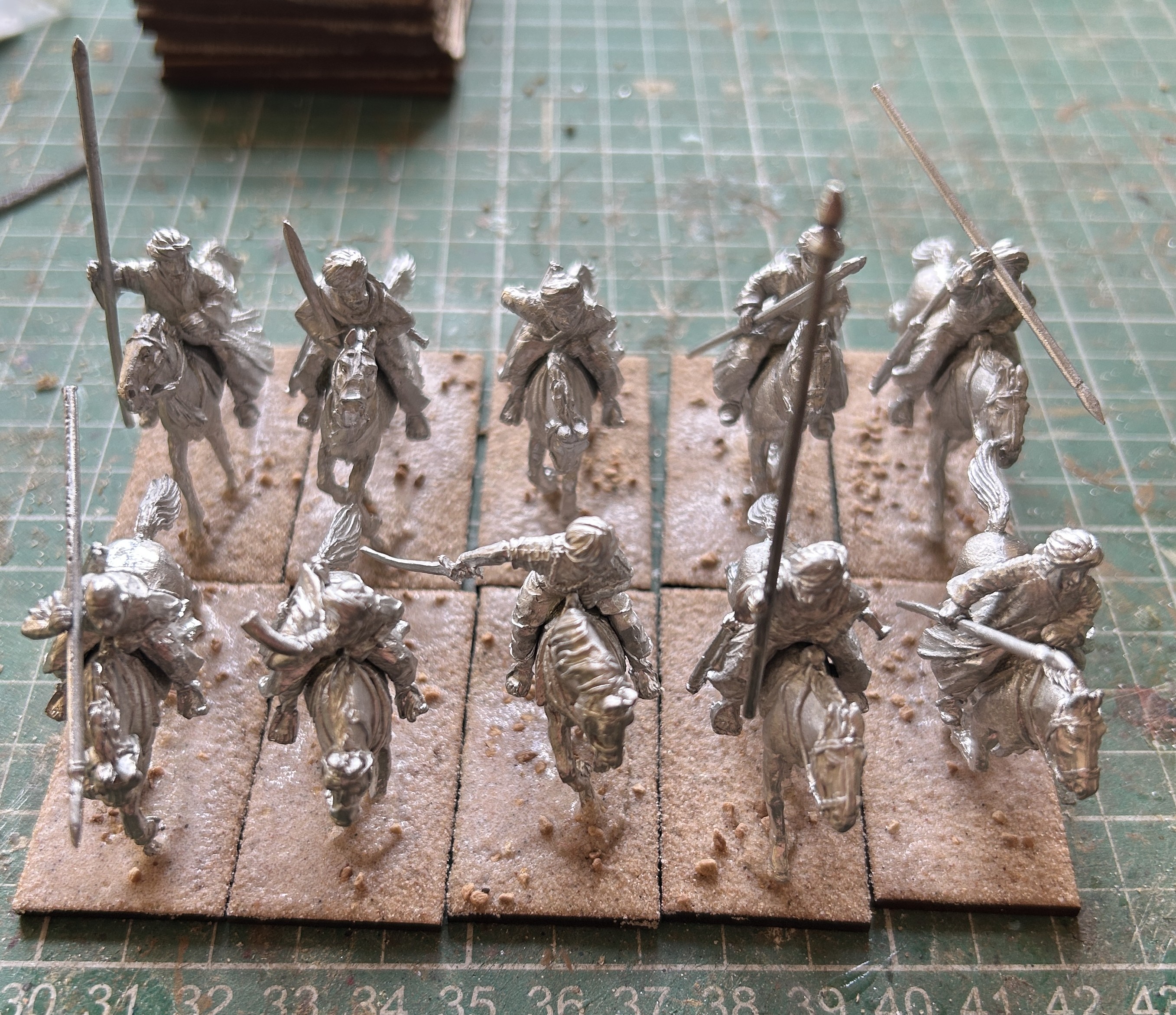
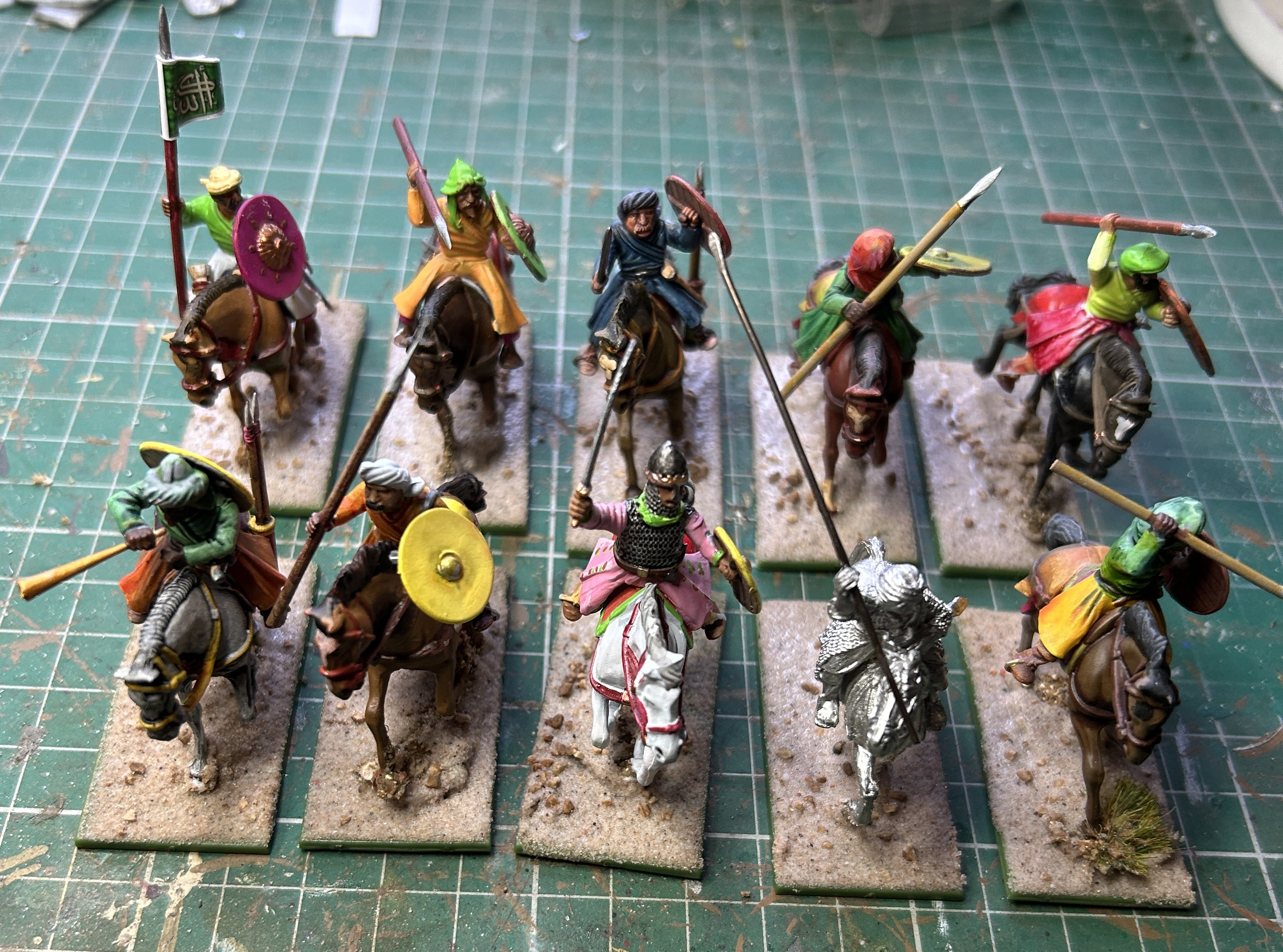
The first light cavalry unit. These miniatures are Gripping Beast Arab Cavalry with the addition of the final one of the Perry Sudan Mounted Command. Despite being figures for the medieval period they will be fine for the Bedouin cavalry whose fashion and equipment didn’t change much in the intervening 800 years although detailed source material is scant.
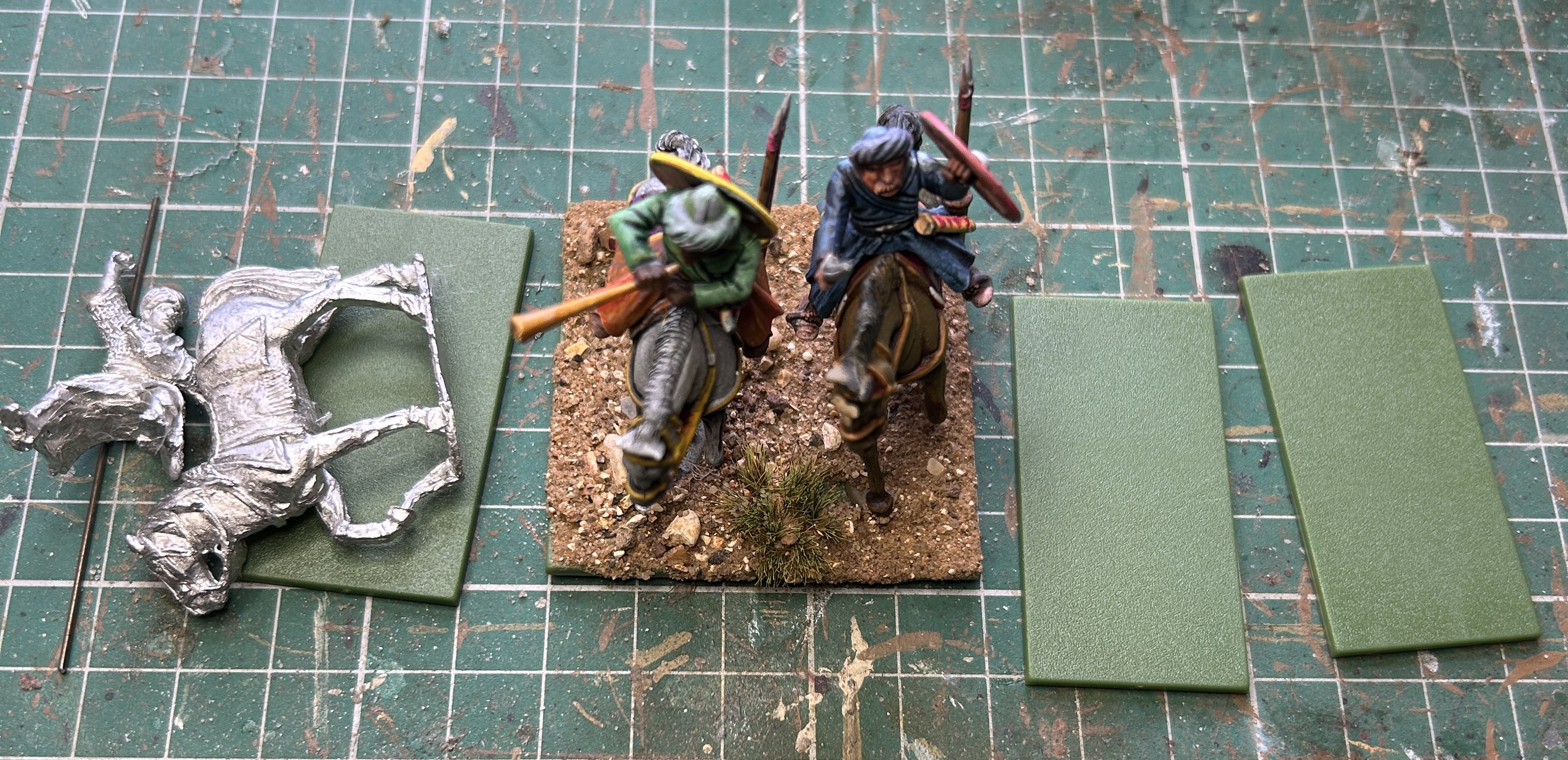
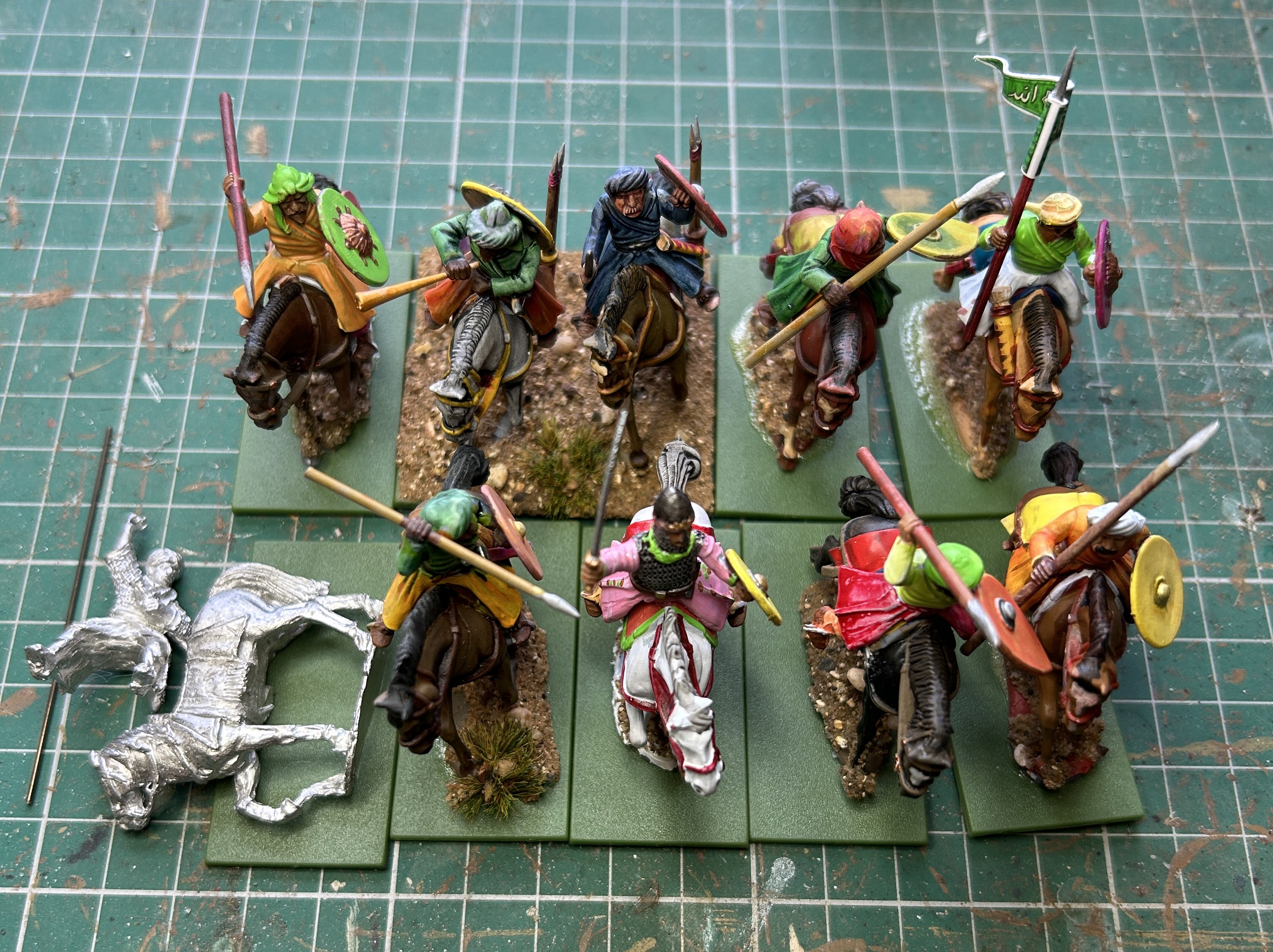
The main issue is with the bases, with one to attach and one double base to replace with singles. I’ll also add some kaskara swords to the models without scabbards in place. I’m happy with the mix of weapons as I figure there would be trade with North Africa where straight blades and scimitars are more common.
Here we have a couple of the new kaskara swords added. They come from the Perry plastic kit:
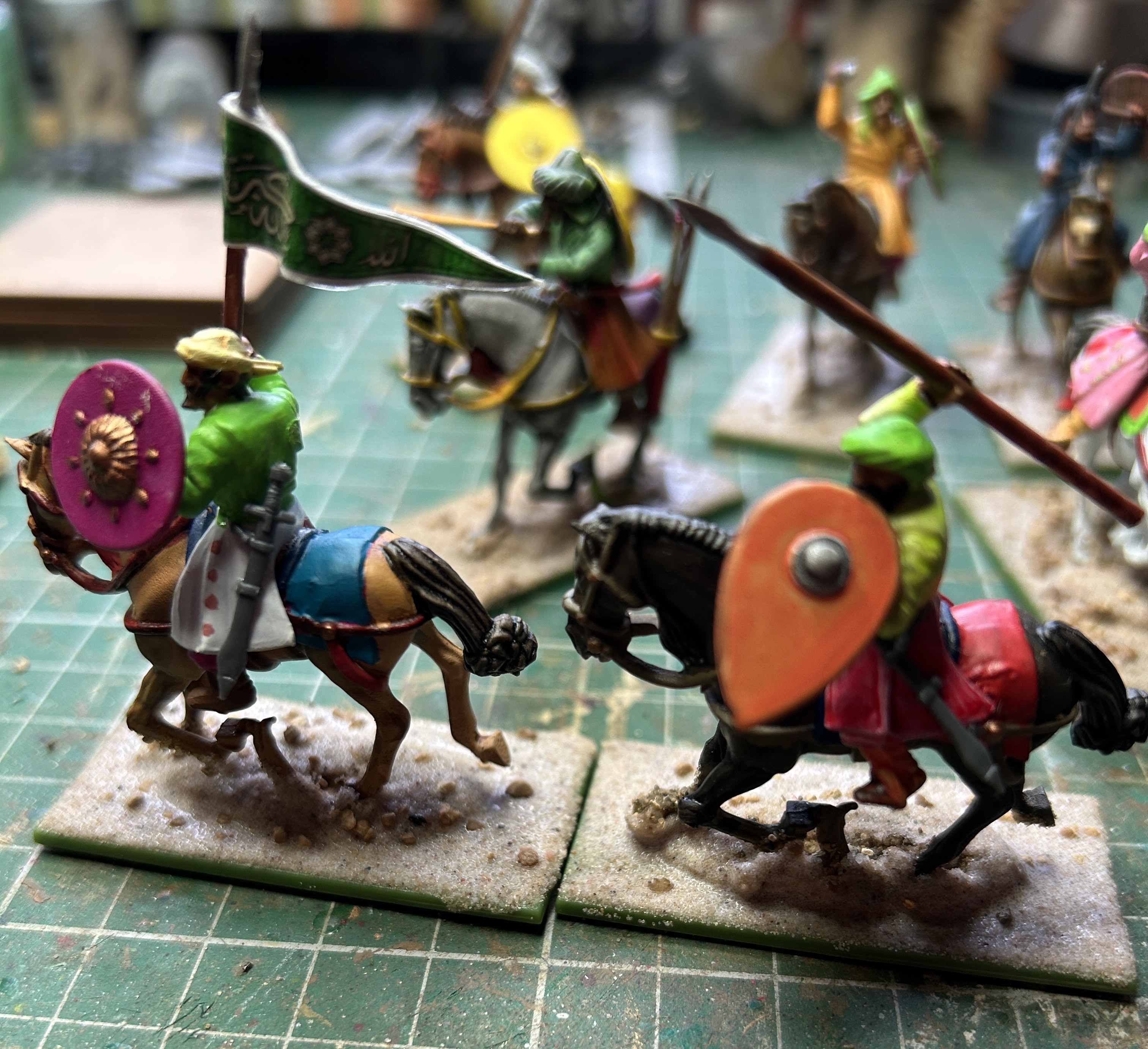
Basing done. The metal standard bearer has had a brass rod attached as his standard pole. I’ve not decided if these will get repainted. I’m not a fan of the original paint scheme but I can probably work with it rather than have to start from scratch.
I also finished the unit bases for the knights. The sabot layer and base have to be glued together as suppliers no longer do this themselves. A bit time consuming. I wish there were an option to continue to buy them stuck together, I’d happily pay more.
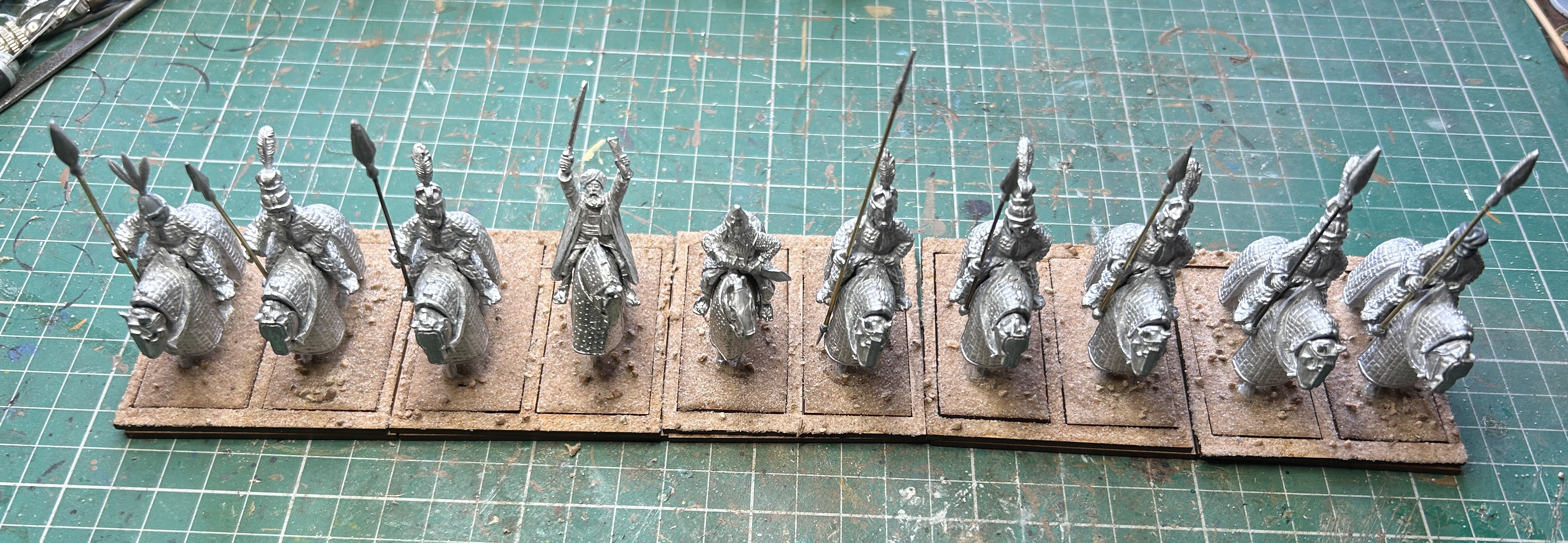
Knights build complete and basing basics
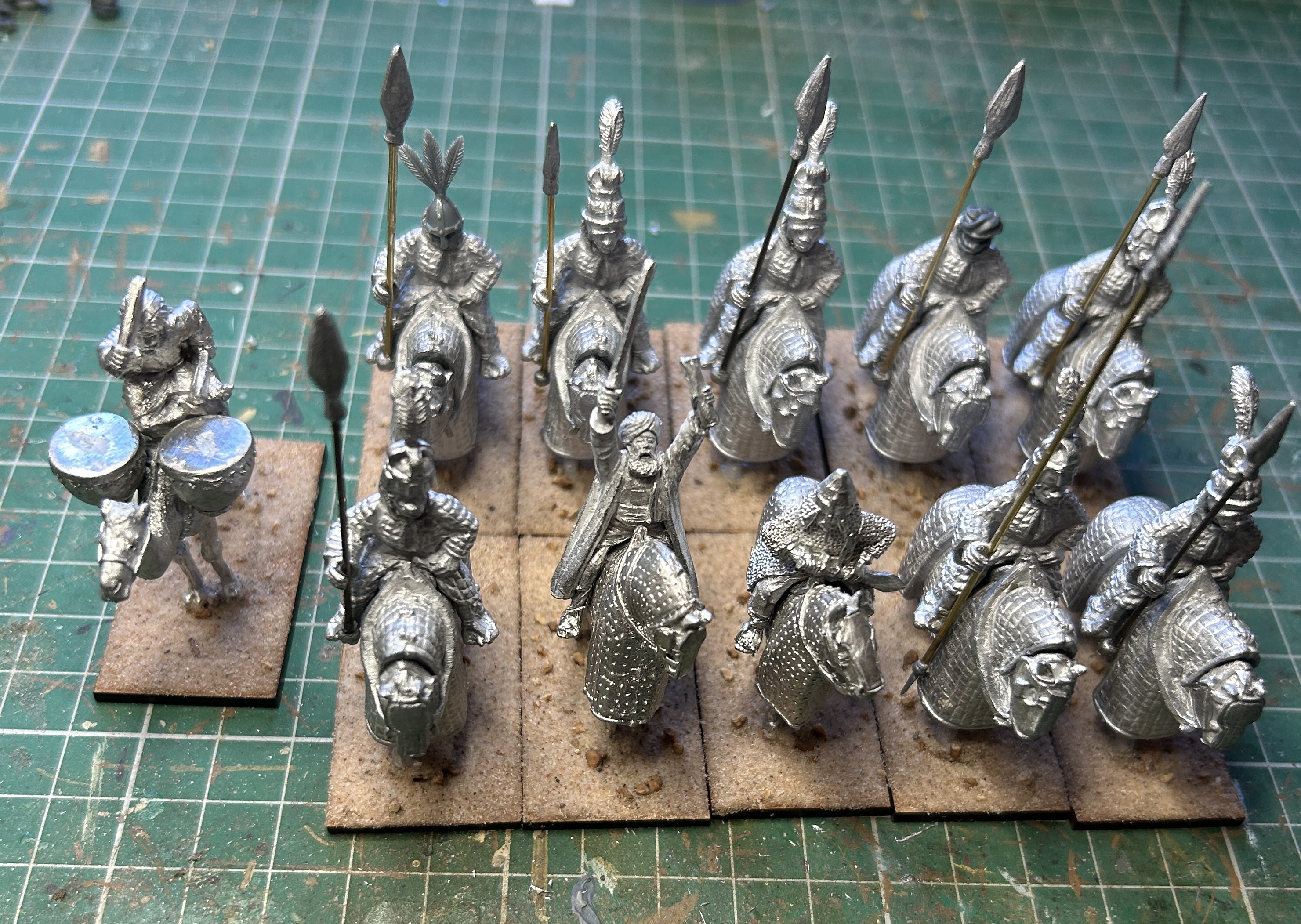
Knights build completed today. The cleanup on the North Star minis is minimal and the Perry sculpts are even cleaner. There are a couple of head swaps, because I just can’t help myself. The helmet head is from Gripping Beast Arab infantry and his feather crest is from Agema Republican Romans set. The turbaned head is from Wargames Atlantic’s Afghan infantry.
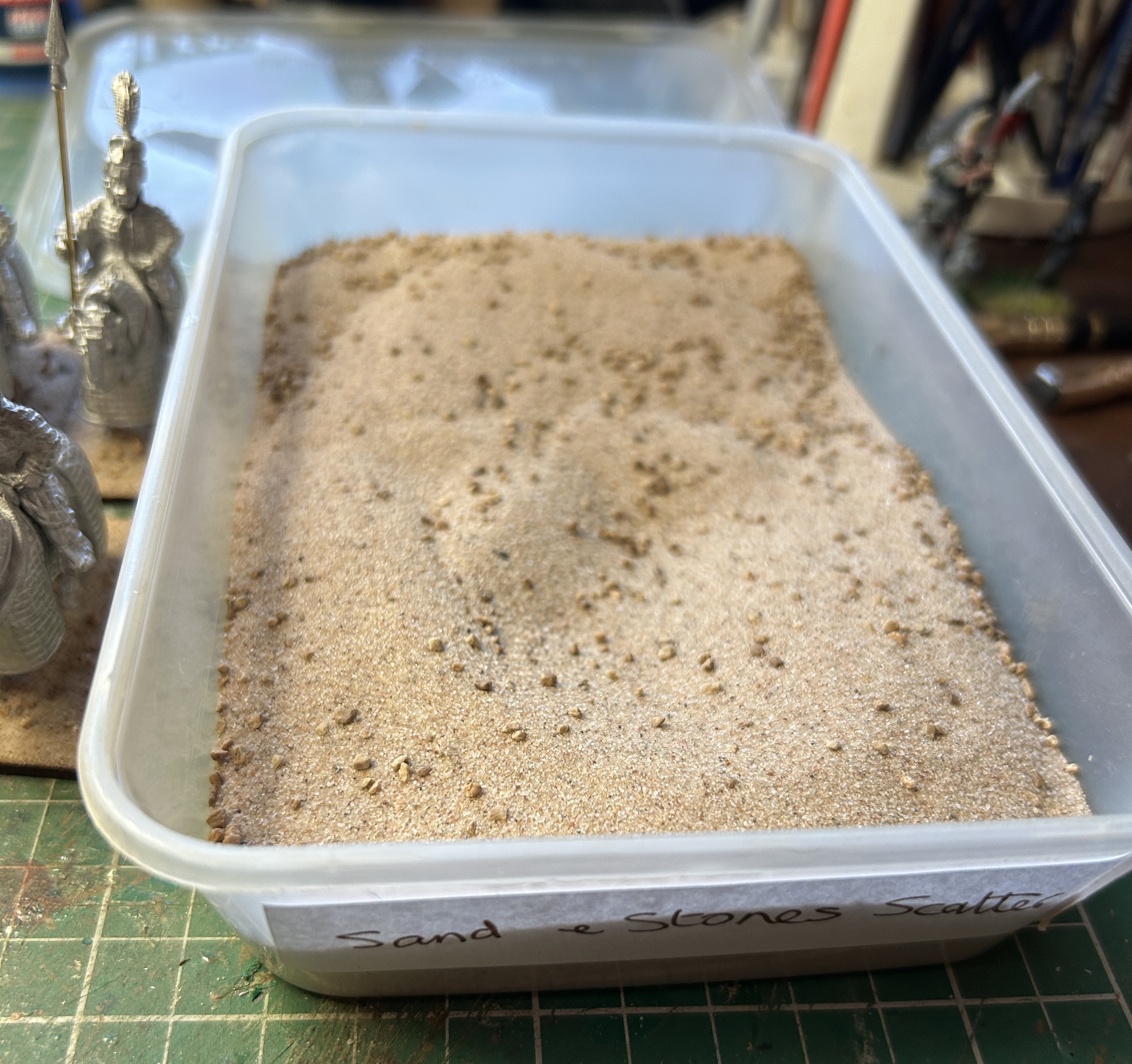
The scatter basing is being done prior to undercoating as this makes it more robust in gameplay and helps enhance the final finish by adding some depth. Here is my basic mix; kiln dried sand and tiny stones from GW.