

































The Battle Of Midway 75th Anniversary: Turning Point In The Pacific [Part Five]
June 19, 2017 by oriskany


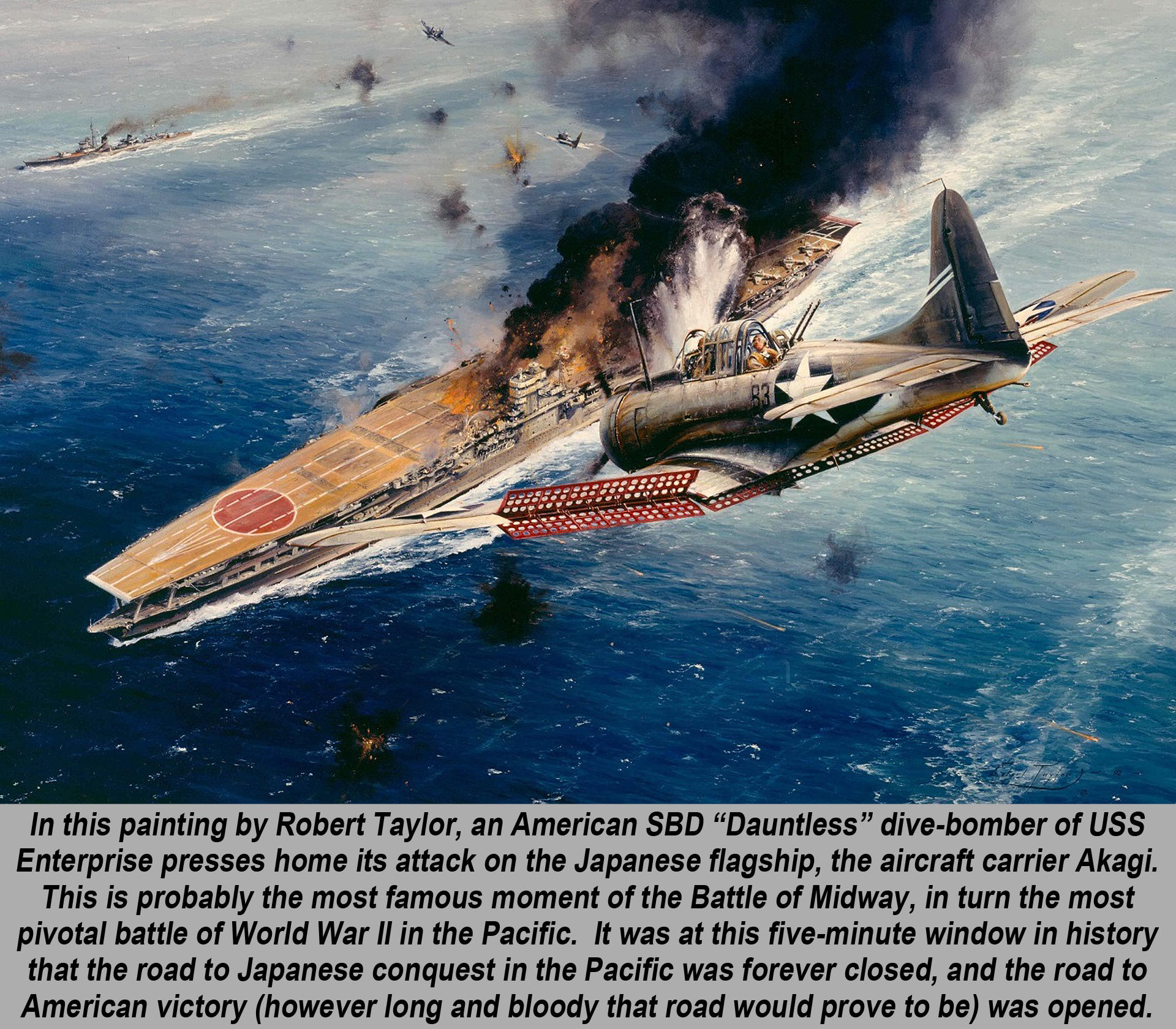
Good afternoon, Beasts of War, and welcome to the grand finale of our 75th Anniversary commemorative series on the Battle of Midway. Fought in the first week of June 1942, this is one of history’s very few true “turning points,” completely changing the Pacific War between the United States and the Japanese Empire.
If you’re just joining us, we’ve had quite a run so far. Many thanks to everyone who’s supported the article series so far, and especially Hendrik Jan Seijmonsbergen (@ecclesiastes) without whose research, knowledge, wargame system, and miniatures…this article series would have been literally impossible.
- Part One - Project Introduction & Japanese Planning
- Part Two - Initial Approaches & First Strikes
- Part Three - The “Miracle of Midway”
- Part Four - The Japanese Strike Back
...let's get stuck in!
A Desperate Hope
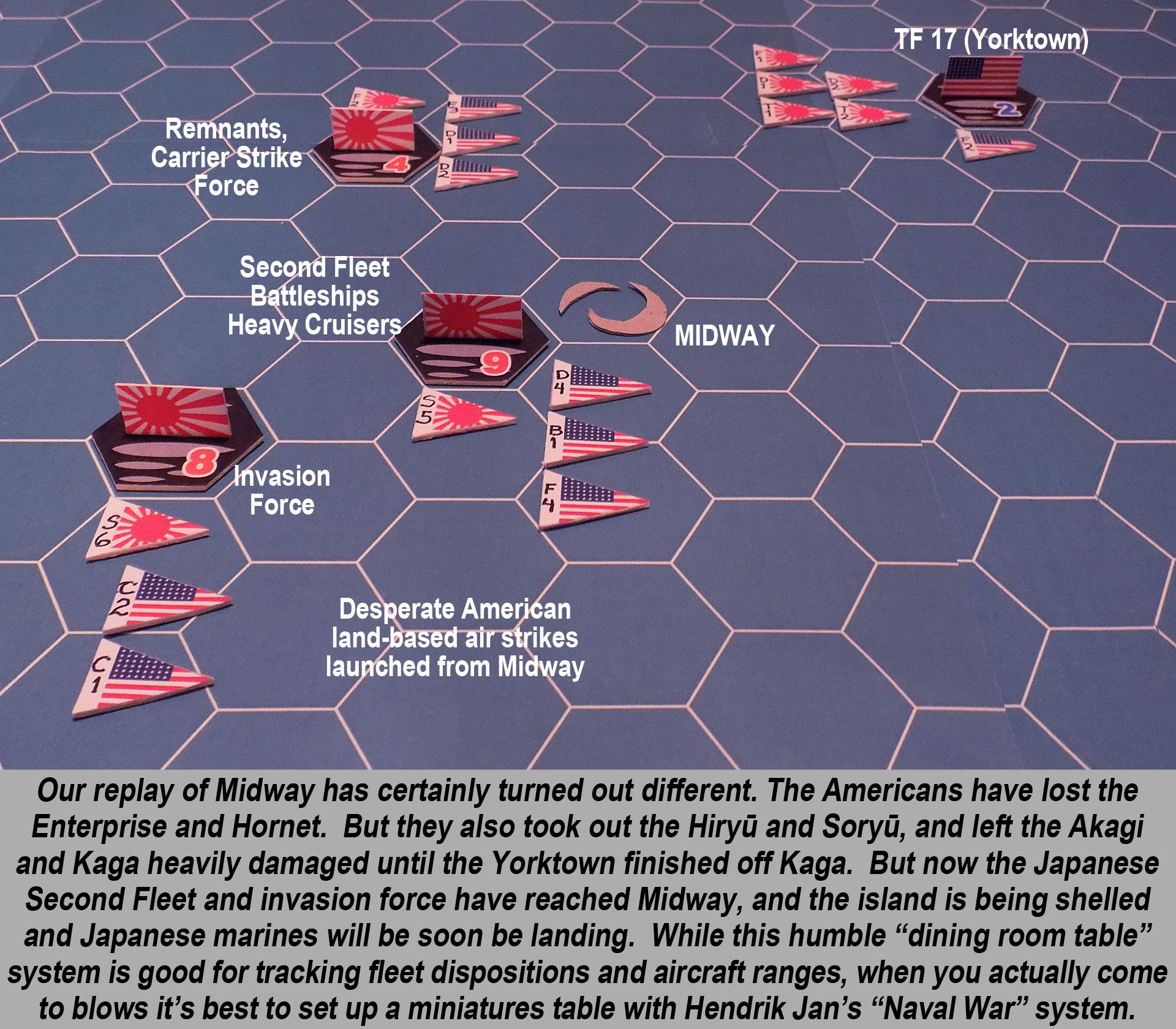
As the sun set on June 4th, 1942 it was apparent to everyone that World War II in the Pacific had changed forever. The Japanese “Kidō Butai,” the most powerful naval strike force the world had ever seen at that time, had been smashed into flaming wreckage in a single day.
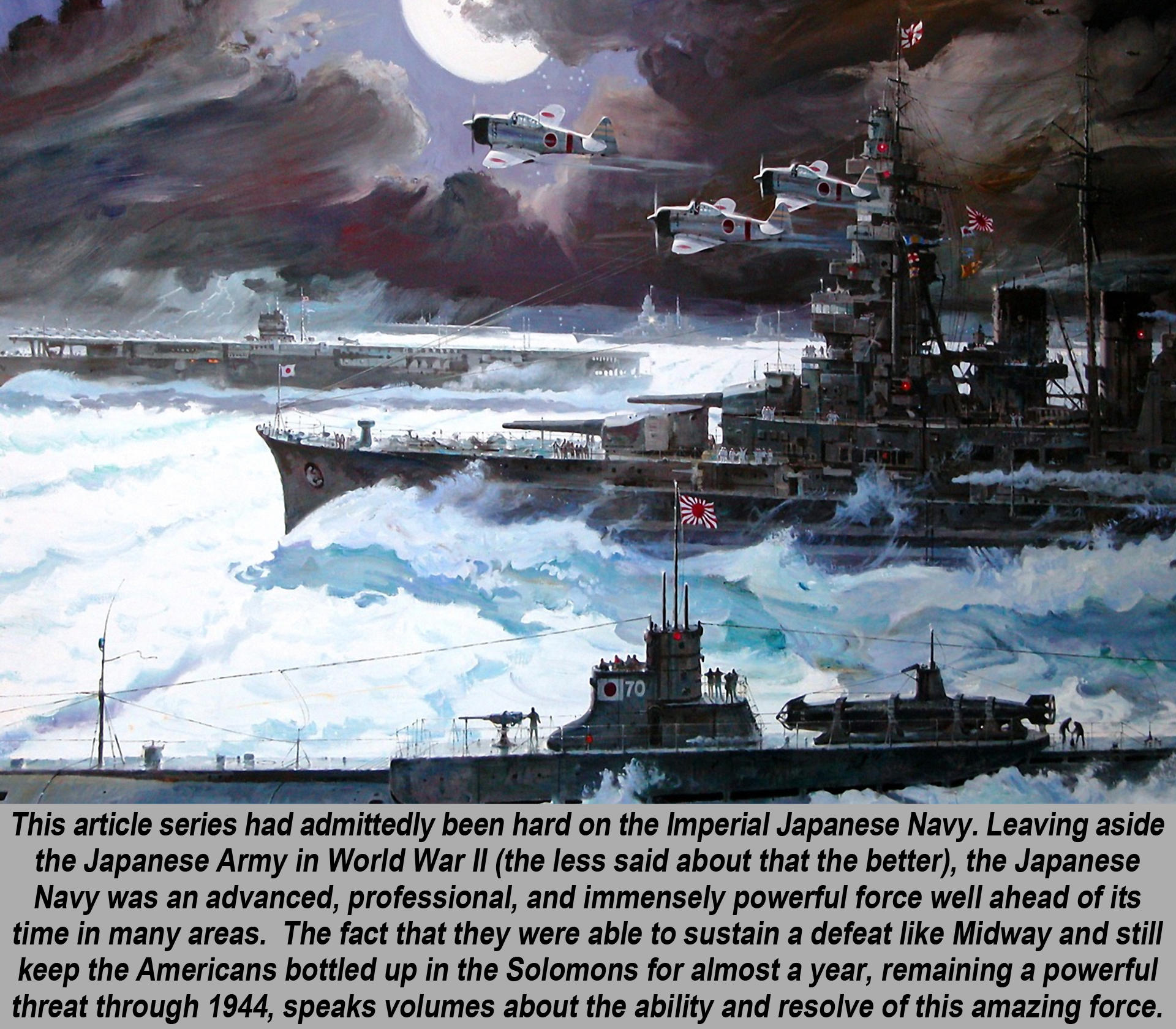
Yet even with all four of his available fleet carriers destroyed (Akagi, Kaga, Sōryu, and Hiryū), Japanese Admiral Isoruku Yamamoto wasn’t quite ready to throw in the towel. He may have lost the world’s most powerful carrier fleet, but he also had the world’s most powerful battleship fleet. This battle might not be over quite yet.
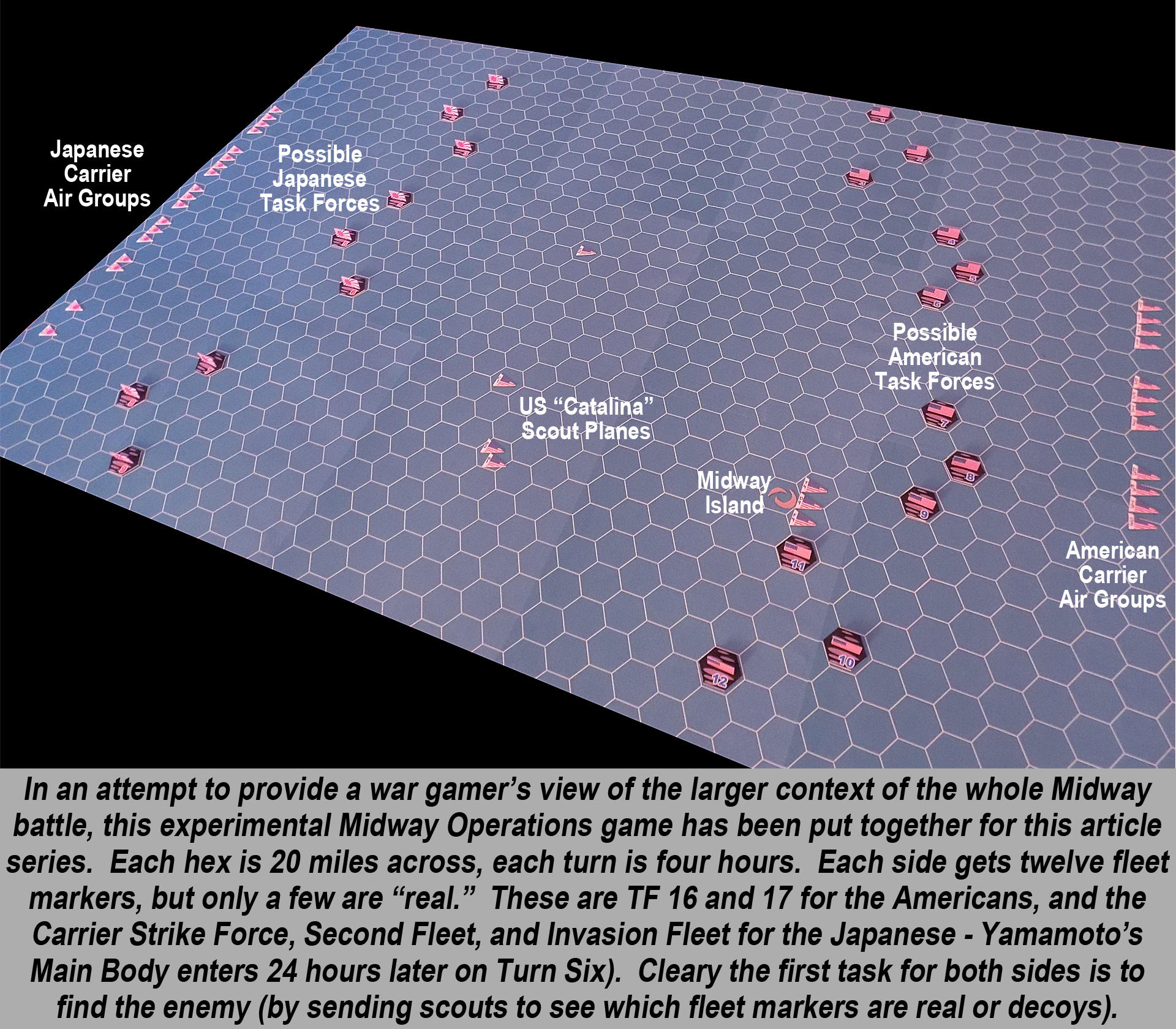
The problem, of course, was getting his two massive battleship task forces (the “Main Body” under his own command, and the Second Fleet under Vice-Admiral Kondo) close enough to engage the American carriers in a gunnery battle.
At first, this seemed remotely possible for several reasons. One, the sun had just gone down and in 1942, aircraft carriers couldn’t launch or operate their planes at night. Yamamoto’s huge battleships (including Yamato, lead ship of the largest battleship class ever built) could approach under cover of darkness.
Second, the Japanese momentarily thought they had sunk or crippled the Yorktown in their first strike, and sunk or crippled ANOTHER carrier with their second strike on the Yorktown. Thus, knowing the Americans had three carriers to start with, they thought they faced only one remaining American carrier.
Of course, both these illusions were quickly dashed. The Yorktown had been hit twice, leaving Enterprise and Hornet fully operational. Also, these carriers had retired eastward during the night of June 4th-5th, removing any hope that Japanese battleships could catch them before the sun came up on June 5th.
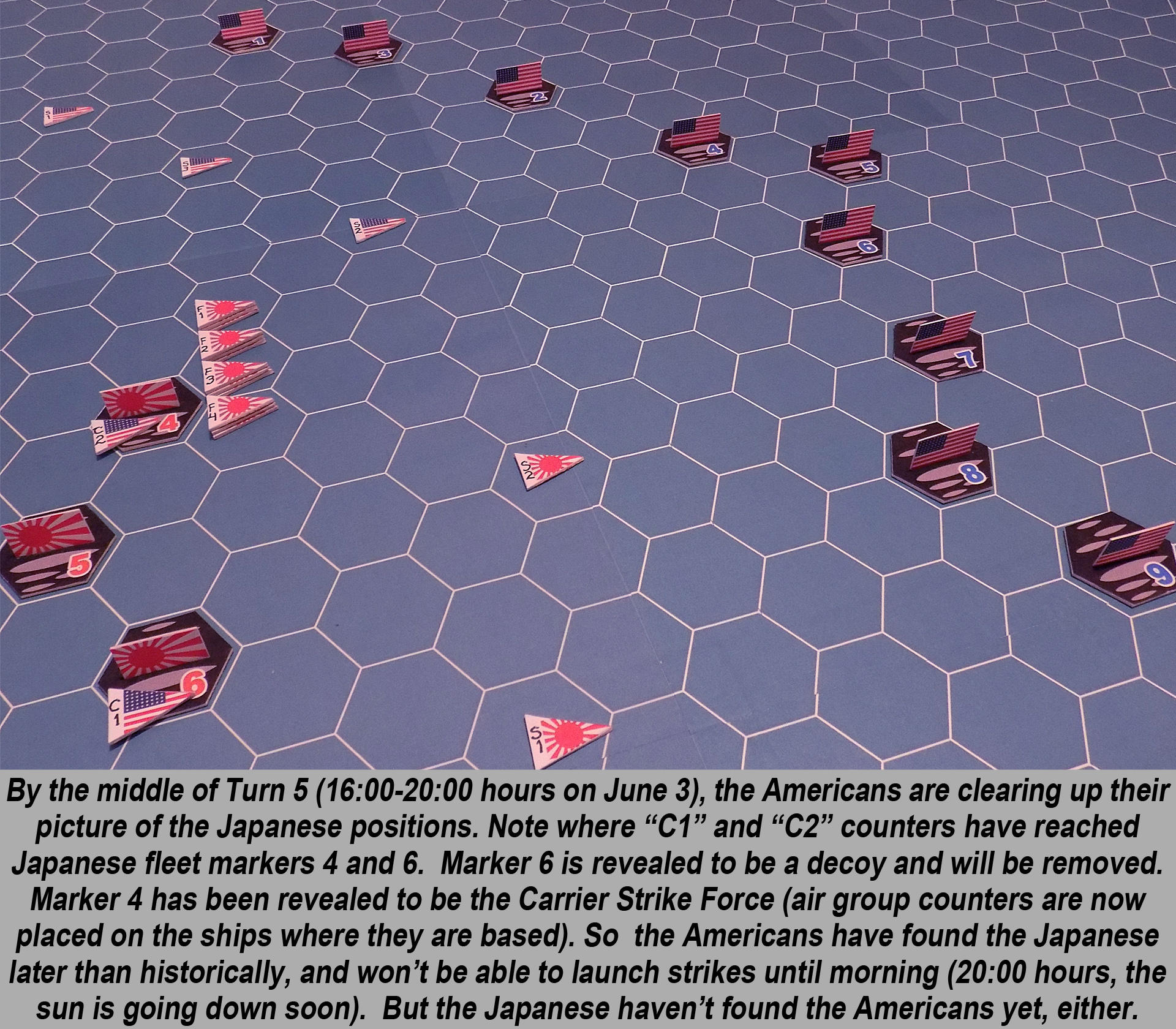
Once the sun came up, these battleships would be murderously vulnerable to renewed American airstrikes from Enterprise, Hornet, and Midway Island. Frankly, it doesn’t matter how powerful a battleship is, once aircraft get to it, she’s dead. Just look at what eventually happened to Yamato in 1945, or her sister ship Musashi in 1944.
Yamamoto also had to consider his support fleet, tankers and supply ships, not to mention twelve unarmed, unarmoured transports crammed with 5,000 Japanese marines. Yamamoto was no fool. He finally accepted that he’d lost this crucial battle, and ordered his fleets to disengage.
Parting Blows
Even now, however, the Battle of Midway wasn’t quite over. Unsure whether the Japanese still intended to fight or invade Midway Island, Rear-Admiral Spruance (commanding the remaining American carrier Task Force 16) sought to regain contact with the Japanese fleet throughout June 5th.
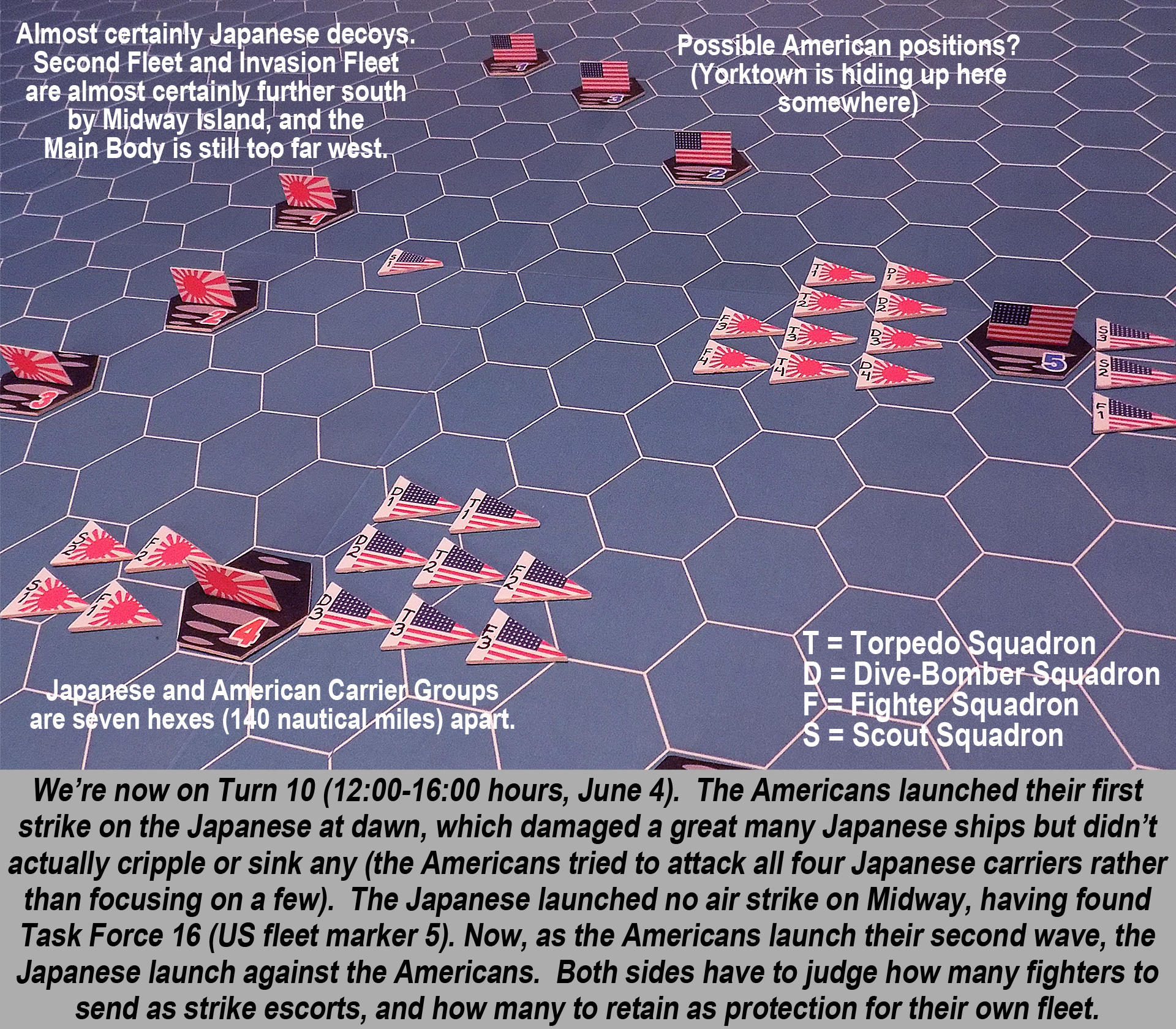
Although these attempts were largely unsuccessful, during the night of June 5th-6th, an American submarine (USS Tambor) did find a detachment of four Japanese heavy cruisers sent to bombard Midway. The submarine was spotted and in the midst of manoeuvres to evade, two of the cruisers (Mogami and Mikuma) collided.
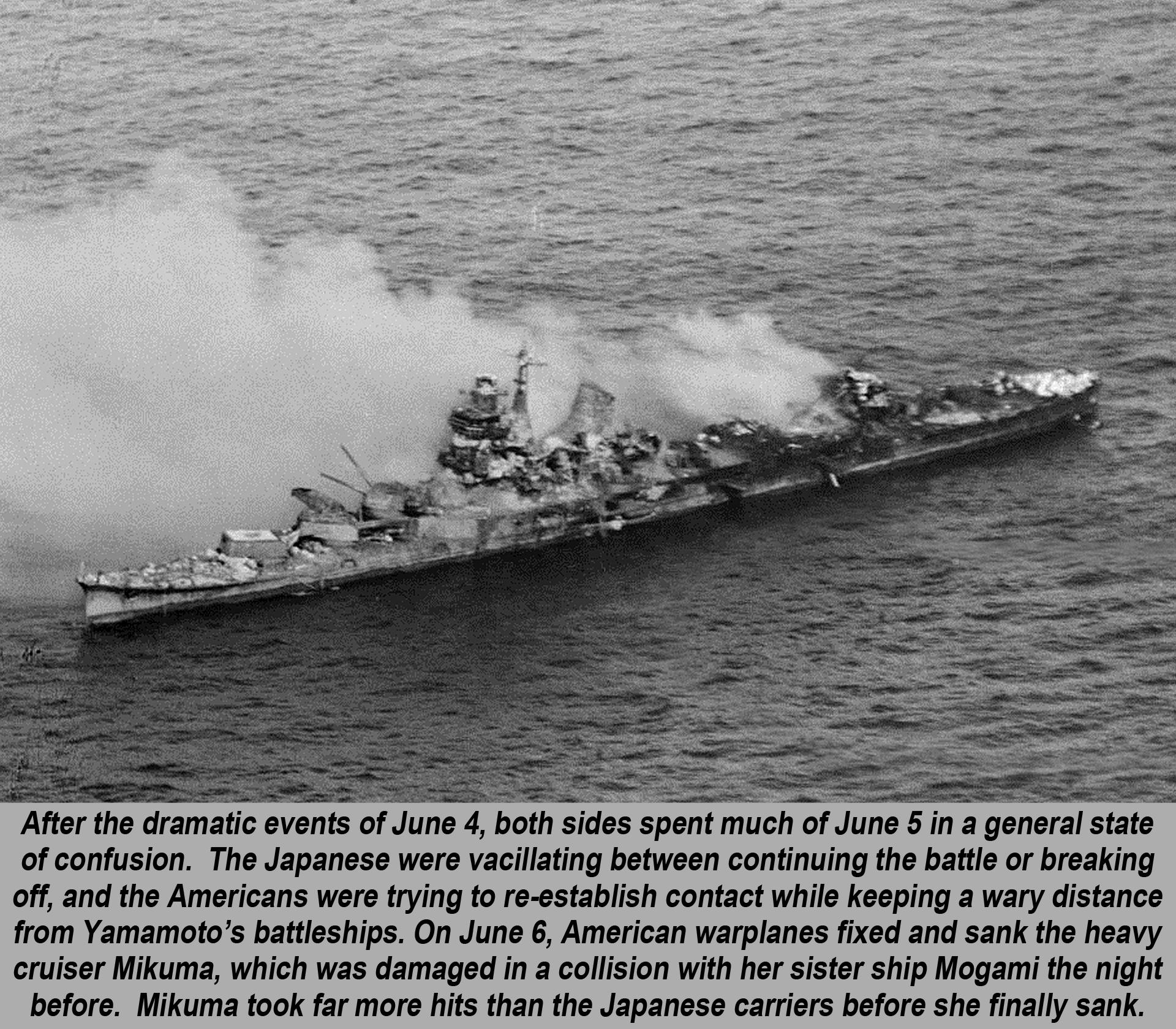
Dive bombers of the US Navy and Marine Corps caught up with the heavy cruiser Mikuma when the sun came up on June 6th. Mogami received more damage, as did the destroyers Arashio and Asashio. Mikuma was hit repeatedly (far more times than any of the Japanese carriers) until she finally sank with the loss of 650 men.
Yorktown's Curtain Call
The Americans, however, weren’t the only ones getting their last shots in.
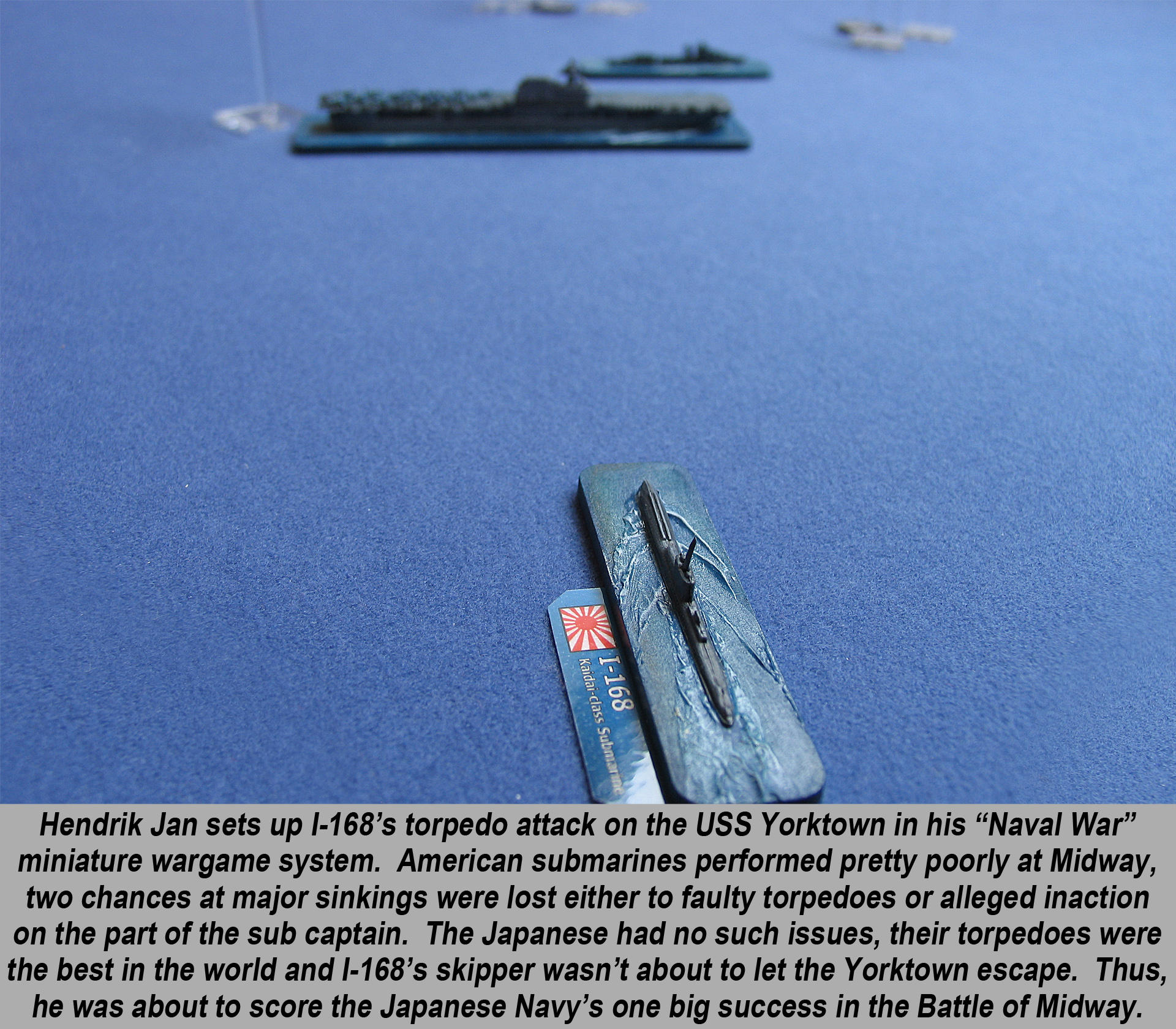
The heavily-damaged American aircraft carrier USS Yorktown, having survived two crippling strike waves of Japanese dive-bombers and torpedo planes on June 4th, was now being towed slowly back to Pearl Harbor. Even now it looked as if the gallant ship might be saved. That is until Japanese submarine I-168 found her on the afternoon of June 6th.
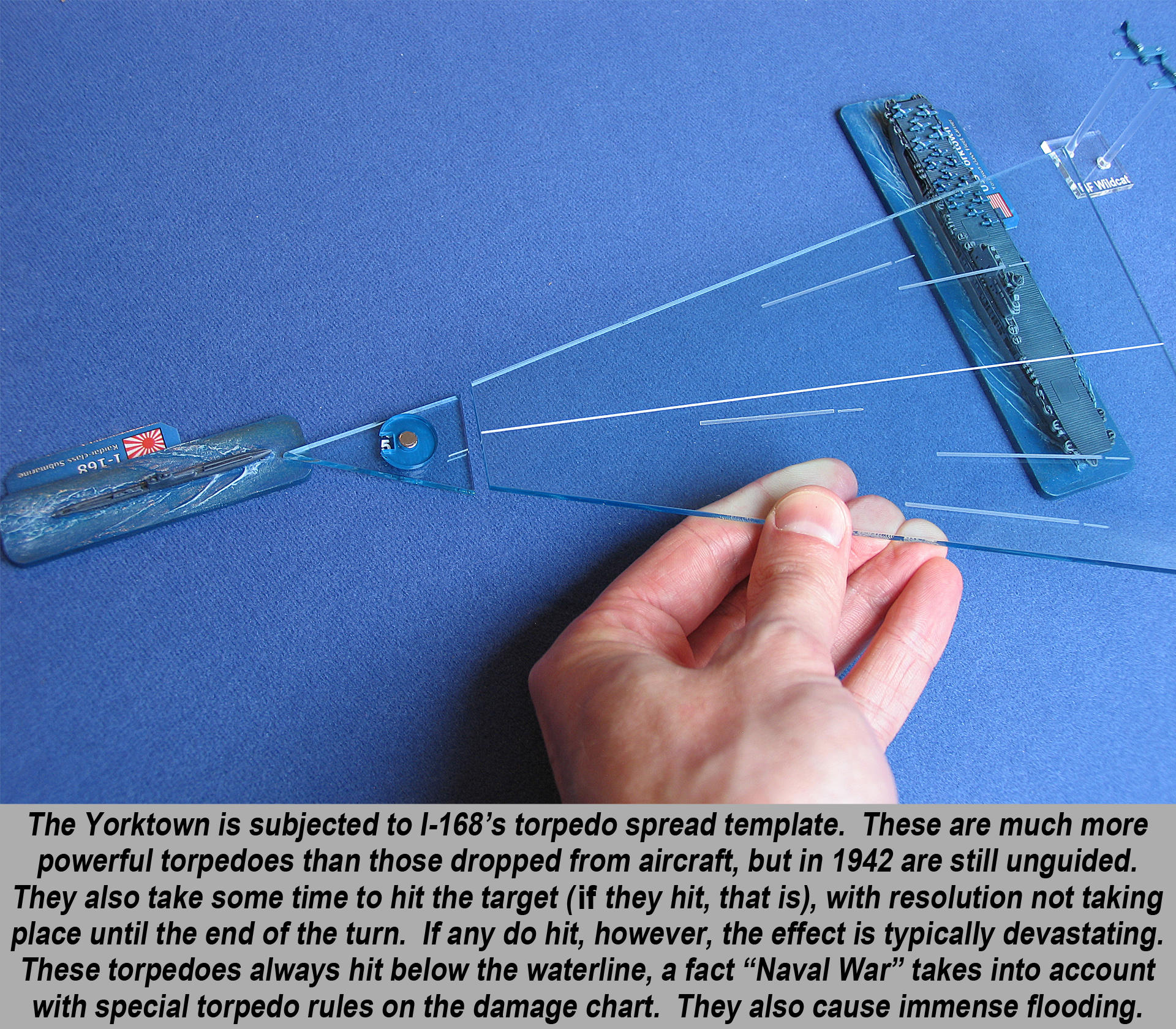
I-168 fired a spread of torpedoes at the Yorktown, two of which struck the limping carrier. A third torpedo hit the destroyer USS Hammann, which was right alongside providing additional electrical power to Yorktown. The torpedo set off the destroyer’s depth charges, blowing the ship in half and sinking her with eighty of her crew.
As for the Yorktown, she c, at last, last take no more. Her condition was assessed to be hopeless, and her few remaining damage control crewmembers were evacuated. The ship finally sank in the early hours of June 7th, 1942.
Midway's Importance
It’s genuinely difficult to overstate the impact of the Battle of Midway. Put most simply, the dominance of the Japanese Navy in the Pacific was forever shattered. There would be very hard battles to come, including a string of bloody naval engagements in the Solomon Islands. But from here on out the US Navy would be calling the shots.
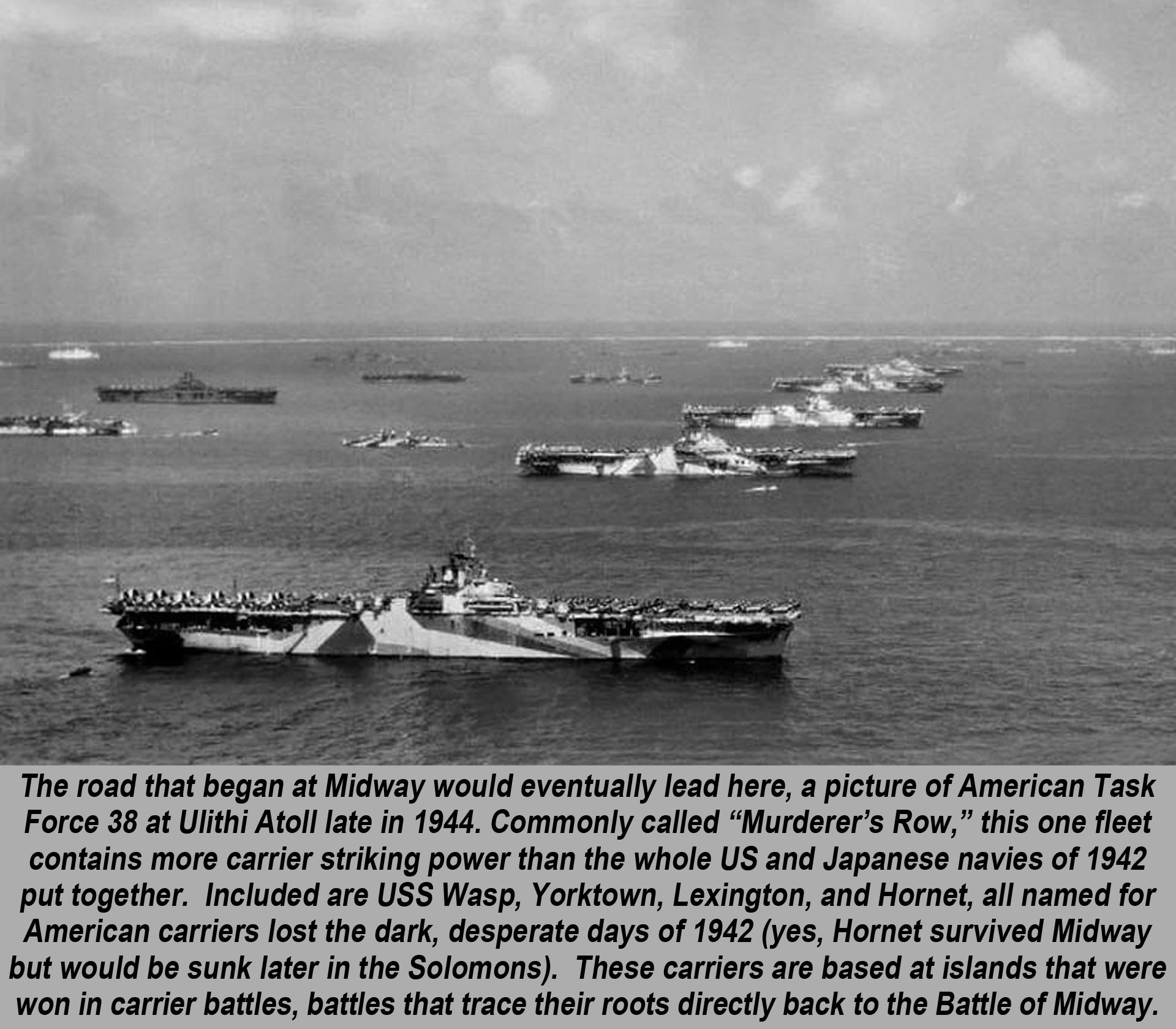
Some would argue that the United States would have won naval dominance in the Pacific anyway, and point to the production of massive Essex-class aircraft carriers (one named USS Yorktown, another named USS Oriskany) that would soon outnumber the Japanese carrier fleet by an order of ten or fifteen to one.
While this would eventually be true, without Midway it’s clear that American invasions into the Solomon, Gilbert, and Marshall Islands would have had to wait until these new carriers came online, well into 1943. The Pacific War thus might have lasted into 1946, 47, or even beyond.
In summary, the war in the Pacific was a naval war. Even its ground battles were fought on islands, determined largely by who controlled the waters around and skies above such islands. Aircraft carriers were the primary factor in these battles, and Midway determined which navy was going to be the dominant carrier power.
Why? And, What If?
With so many advantages, it’s sometimes hard to ascertain how the Japanese managed to lose the Battle of Midway, and so badly. The fact of the matter is that they worked hard to throw away all their advantages (especially their numbers), while the Americans strived to make the most of their advantages (like intel).
The Japanese plan, like all their naval plans of World War II, was too complex. It scattered their fleet from New Guinea to Alaska, which would allow the Americans to focus their forces on the single point that really mattered. Thus, the Japanese advantage in numbers was largely nullified.
The Americans, meanwhile, had the priceless advantage of operational forewarning. They’d broken the Japanese naval codes and knew the whole plan in advance. Their ships also had radar, giving them tactical forewarning. And of course, American ships had far, far better damage control.
Now we come to the inevitable “what if?” What if the Americans had really been surprised at Midway, fallen into the Japanese trap, and lost the battle? What if the Japanese had managed to take Midway, and the American carrier fleet had largely been destroyed in its futile defence?
The next stages of the Japanese plan included invasions of Fiji, Samoa, New Caledonia, and possibly even Australia. With no meaningful navy to stop them until the middle of 1943 at the earliest, it’s hard to see how these invasions would have failed.
Again, America would’ve pushed back in, spearheaded by the new Essex-class carriers. But they would’ve started much later, and would have had to retake places like Midway or even some of the Hawaiian Islands. Even the A-bomb might not have shortened such a war, because you need the islands from which to launch those bombers.
We hope you’ve enjoyed this series on the Battle of Midway, and picked up some ideas, inspiration, or enjoyment from our attempts to wargame some of its elements. Whether you want to sit in the pilot’s cockpit, stand on the captain’s bridge, at plot movements at the admiral’s map table, this is a battle brimming with wargaming potential.
As always, I’d like to thank the Beasts of War team for allowing me to publish on their site, especially @brennon and @lancorz who always work hard to present my material in the best light. And of course, special thanks go to the community for all the comments and support these articles have received. It’s meant a lot to me.
Most of all, however, I’d like to thank Hendrik Jan Seijmonsbergen (@ecclesiastes) for helping with orders of battle, tonnes of table top photos with amazingly-rendered and pinpoint-accurate warship miniatures. If you have any interest in naval wargaming (of any era, including Sci-Fi), check out his “Naval War” game here: www.naval-war.com.
Like we said at the beginning of this series, the phrase “turning point” gets tossed around rather carelessly in the annals of military history. It’s grossly overused, as most “turning points” (Gettysburg, Stalingrad, Waterloo, Second El Alamein) are nothing of the sort.
The case can even be made that Midway wasn’t a singular turning point, combined with previous battles like Coral Sea and subsequent battles like Guadalcanal to form a more gradual curve of reversed fortune. But with the main striking element of the world’s most powerful navy effectively destroyed in five electrifying minutes …
…Midway is as close to a true “turning point” as we’re likely to see.
If you would like to write an article for Beasts of War then please contact us at [email protected] for more information!
"He may have lost the world’s most powerful carrier fleet, but he also had the world’s most powerful battleship fleet. This battle might not be over quite yet..."
Supported by (Turn Off)

Supported by (Turn Off)
"…Midway is as close to a true “turning point” as we’re likely to see."
Supported by (Turn Off)









Superb as ever, what next. Would love to see your take on the Hurtgen Forest battle having recently finished reading a book on it
Oof, Hürtgen Forest. You’re not playing around, are you? I’ve never seen anyone do a miniatures game in there. I’ve seen some hex-and-counter stuff, but even there it can be mostly and infantry / artillery / field works battle. The good news is, I do have all the maps, terrain, and miniatures for it. I’d just have to do some research and find engagements within the campaign that would make for solid wargames.
Thanks very much for your support, I’m very glad you liked the series. 😀
I really enjoyed that series, great work. thank you @oriskany!
Thanks very much, @donlou ! Although to be honest, I wouldn’t have been able to do it without @ecclesiastes and his great miniature photos and “Naval War” game system. 😀
I really enjoyed reading this – you have a great style @oriskany
Thanks very much, @itchardpirate ! 😀 Glad you liked the series.
great finally @oriskany
one of the Japanese biggest faults was unarmoured flight decks on the carriers greatly increasing the internal damage.
Thanks @zorg ! 😀
Sadly for us, the Americans also wooden flight decks too. I think it was the British who first introduced steel flight decks, which is what made some of their carriers so highly valued when they re-joined the Pacific War in 1945. This was when the Royal Navy Pacific Fleet (designated Task Force 57 when used as part of the American Pacific Fleet organization and command structure) was deployed to the Battle of Okinawa in April-June 1945.
The BPF was actually pretty big, with six fleet carriers. These were much smaller than American fleet carriers, carried fewer aircraft (most of which were American anyway except for “Seafire” variants of the Spitfire).
But like I said, they equipped with steel flight decks (or at least most of them were), which made them much safer to use during Okinawa’s infamous kamikaze attacks.
Carriers were HMS Formidable, Illustrious, Implacable, Indefatigable, Indomitable, Victorious.
I think the Japanese also worked with steel flight decks, with IJN Taiho and IJN Shinano. @ecclesiastes might know better.
Of course, the Americans would install steel plating under the flight decks of their Essex and Midway-class carriers after the war, including USS Oriskany (CV-34). 😀
Indeed @oriskany
The British had a completely different carrier philosophy. Since their carriers would never be to far from enemy territory in the Med they figured they would not be able to intercept every incoming opponent with their CAP as the US assumed. So they actually counted on taking a few bomb hit here and there, that’s why they moved the armored deck to the flightdeck. It was quite effective and the US copied it beginning with the Midway-class.
I really love the following quote from a US officer aboard the British carriers: “When a kamikaze hits a U.S. carrier it means 6 months of repair at Pearl [Harbor]. When a kamikaze hits a Limey carrier it’s just a case of “Sweepers, man your brooms.” It really nails how effective these decks were.
Also in doctrine, the British used the fleet carriers as per their pre-war role, being scouting and support of the battlefleet. The task forces purely based on a group of carriers was a Japanese invention and only came into practice when Japan entered the war. The US was quick to copy this approach when more carriers became available after the Solomons Campaign. Still, the US and Japan favored the unarmored flight deck because it was quick to repair and because it allowed for bigger hangars and thus more planes.
Thanks, @ecclesiastes . 😀
Since their carriers would never be to far from enemy territory in the Med they figured they would not be able to intercept every incoming opponent
I think we can also read into this when it comes to how many fighters the British had on these BPF carriers, as opposed to strike aircraft. These seems to be a lot more fighters in proportion. Also, with just some very fast research, it seems the British had mostly “Seafire” fighters (their own) but Lend Lease American Corsairs and especially Avenger torpedo planes. So it seems that task force defense was much more on their minds.
Americans had defense in mind, but approached it differently. Improvements to radar, proximity fused AA shells, and picket destroyers to give even more radar warning meant that Japanese strike groups had almost no chance of reaching the heart of an American task force without being heavily engaged. Of course, thatw as until the Japanese started going after the hapless pickets.
The task forces purely based on a group of carriers was a Japanese invention and only came into practice when Japan entered the war. The US was quick to copy this approach when more carriers became available after the Solomons Campaign.
While I would agree the Japanese put the idea into practice first, as far as the Americans go I might point to the American carrier task forces that were bombing the Marshall and Gilbert Islands in very early 1942 (even before the Doolittle Raid), and of course Coral Sea and Midway.
Then again, that might be because we didn’t HAVE any battleships at the time. 🙁 They were still smoldering at Pearl Harbor and even if they weren’t, they were too slow for service with carrier groups, hence the “fast battleships” already under construction (North Carolina, South Dakota, and Iowa classes). But of course these weren’t ready for service yet in early-mid 1942.
@oriskany said:
“While I would agree the Japanese put the idea into practice first, as far as the Americans go I might point to the American carrier task forces that were bombing the Marshall and Gilbert Islands in very early 1942 (even before the Doolittle Raid), and of course Coral Sea and Midway.”
But still the American practice was usually one carrier per task force, sometimes two (TF 16 at Midway)
Marshall Gilbert raids, Enterprise TF 8, Yorktown TF 17
Doolittle Raid, Hornet in TF 18, Enterprise in TF 16
Coral Sea, Yorktown in TF 17, Lexington TF 11
Each task force had its own screen and operated at a distance from the other. In practice two seperate groups that could not support eachother.
The Japanese put 2(Coral Sea) to 4 (Midway, Darwin) to 6! (Pearl) carriers in one group, mutually supporting eachother with CAP’s and coordinating strikes together. That was something completely different than the US approach, allowing them much greater striking capability, at the cost of having ‘all your eggs in one basket’ which cost them dearly at Midway.
Awesome, thanks! 😀 I never knew if this was a question of doctrine or just the US only had very few carriers and had to spread them out to accomplish too many tasks.
yup the scout never fair’s well in any situation.
True enough, @zorg . 😀 Always remember Patton’s order to recon troops:
“Drive down that road until you get blown up.”
Also found this snippet:
“After the war, most of the Essex-class ships were modified with a hurricane bow and in the case of Oriskany the wooden flight deck surface was replaced with aluminium for improved resistance against the blast of jet engines, making them appear to have armoured flight decks, but in fact their armour remained at hangar level.”
Cool deal. Thanks for the heads up! 😀
I think it still the same now with the smaller carriers and to make matters worse trump may have cancelled the new VETOL fighter for our ships?
Well, @zorg – the difference between larger and smaller carriers nowadays is whether they are true fleet carriers (only the US has these at the moment) and some variation of helicopter ship, amphibious warfare ship, V/STOL ship, etc.
With VERRRRY few exceptions, these aren’t “aircraft carriers” in the truest sense, i.e., top-generation fixed-win supersonic aircraft.
If you include ships that carry V/STOL craft that the range gets much wider, of course. Great for strikes, supporting landings, etc. I just don’t think most analysts count them as real fleet carriers since they wouldn’t be able to stand up to a fleet carrier (US Navy) or almost any land-based air force in a fight for air supremacy over a given theater.
We might see a few with upcoming Indian an Chinese ships under construction and/or refurbishment. Even these are STOL-aircraft ship, but I know the Indian one will be able to launch MiG-29s, which would certainly make it a “true carrier” in my book. Okay, a very small and old one (bought from the Russians and being refitted), but still.
As far as cancelled aircraft go, I assume you’re talking about the F-35 Lightning II? These were going to be the jets on the upcoming Royal Navy Queen Elizabeth II (R08), etc?
To be honest I would support the move to cancel that aircraft. We in the US don’t need it, not with USS Gerald Ford, USS John F. Kennedy, and USS Enterprise coming out by 2025, and 10 Nimitz Class carriers still in the fleet. And as far as building jets and tanks and God-knows what else just to give them to other people’s military, we really have to stop that. Our nation is trillions in debt and we’ve honestly been footing a ghastly huge part NATO’s bill for 75 years. Enough is enough.
that’s very true but when has budgets n common sense been used in any countries military spending. @oriskany
True enough @zorg . 😀
A very naval Monday, bit of reading to end it after the Blood and Plunder Videos
Thanks, @rasmus ! 😀
Great finale!
Thanks, @gladesrunner .
Right up there with your other articles @oriskany. You bring much insight to this epic battle. It is right up there with the Spanish Amarda for outcomes.
Like most other military vehicles the carrier is a set of compromises. Yes you can have an armored flight deck but at the cost of speed, fuel consumption and the ability to more squadrons are the costs for it.
Greatly enjoyed this series. My high point is that it got another of my group to join BoW. Now that is a true success.
I will give my thoughts in more detail later tonight.
Thank you and @ecclesiastes for bringing this battle to our attention.
😀 😀 😀
Thanks very much for all your support, @jamesevans140 . Very glad you liked the series and got a new member to join BoW!
I really want to take this opportunity to thank @oriskany for his great articles and his support! I also want to thank both him and Beasts of War in general for the exposure and the opportunity to reach the BoW crowd with my ruleset. I really enjoyed the cooperation and I hope we can do more stuff together in the future 😀 Also my thanks to all those people who have responded to the articles, I’ve managed to pick up a few gems here that I can use to further improve the set.
Thanks!
I really enjoyed the cooperation and I hope we can do more stuff together in the future
Well, I certainly know where I’m going for any more naval collaborations in the future. 😀 Thanks very much, @ecclesiastes , for all your help with this series. Without minis and a rule set, this project would have been “dead in the water” without your help. 😀
Very end to a very good article series. I really enjoyed this. Before this I basically knew the benchmarks of the battle, but not the details. I learned a lot from these article and they inspired me to do more research for myself. History is just amazing (in a good and in a bad way).
Thanks very much, @bothi . We’re trying to broaden the “history” on Beasts of War from just the usual subjects like west Europe during World War II. So we’ve been working on other areas like World War I, Six-Day War, and other areas of World War II like naval operations. Glad to see we’re getting a good response so far! 😀
My biggest issue with the Battle of Midway is their meandering grand strategy come strategy thing.
Firstly the Japanese are only strong enough to engage either the Chinese or the US but not both. The troops are already in China and so should their focus be. Pearl Harbor was to give them 6 months to run amok. This would give them all the time they needed to accomplish all their intended land grabs and establish their outer ring.
So instead of following their plan they get target fixation on the US carriers and waste precious resources hunting them down. While they were doing this they had to slow their expansion. These hunt down the carrier fleets were tying up the fleet tenders that could have been put to far better use in their expansion. Midway would have made a nice base for supporting submarine and air scouting operations and a counter to Hawaii.
They could not seem to let these carriers go. Yet the carriers were going nowhere for the time being. They could have completed their expansion aims and then push the US back to the mainland with their full naval might. But then what. That’s right they can’t go any further because they are still engaged in China and have not the resources to invade US.
Now if they can’t invade the US they can’t knock them out of the war. This will allow the US time to build a bigger better navy so they can come back to the Pacific in overwhelming force. Hence my problem with their strategy, there is no real thinking in it once they transfixed on the carriers.
Their issue in Midway is they allowed the US to deal with their carriers in turn. In a similar fashion to Napoleon was allowed to deal with the allies each in turn before they could amass in force and use their greater number against him.
Now I am not going to get over critical here over the tactical handling of the fleets at Midway. I have to keep reminding myself that while lessons have been learned, the book on carrier warfare in not quite ready for print yet and the Japanese still had a lot to learn about carrier warfare and Midway shows this.
Thanks, @jamesevans140 .
Firstly the Japanese are only strong enough to engage either the Chinese or the US but not both.
Unfortunately for the Japanese (and fortunately for the rest of us), they were in something of a tough spot here. They were engaged with China, had scored initial successes but the Dragon didn’t fall. Now the Japanese needed more resources to continue the war. That would mean an invasion of SouthEast Asia and the Dutch East Indies. No worries there with the Netherlands and France already occupied by Germany and the British spread so thin. The issue there is the Americans in the Philippines. The Japanese have to engage the Americans because the Americans will block / cut off any Japanese push down through the South China Sea.
The Americans also forced the Japanese hand with the oil and iron embargos.
So instead of following their plan they get target fixation on the US carriers and waste precious resources hunting them down.
In Japan’s defense, the American carriers were a prime target for the Pearl Harbor strike. The Japanese spies in Oahu did not tip them off that the carriers were not in port, or if they did, it was too late.
Also, the Japanese actually kind of did try to forget about American carriers at first, as shown by their advances down Malaya to Singapore, the Indian Ocean raid, etc. The Doolittle Raid fixed that in a hurry.
Japan’s invasion of the mainland US? We’re just clowning around with that, right? Never mind its complete impossibility, but this was never part of any Japanese strategic view. Outposts in Alaska and perhaps even outlying islands off of Mexico (even this is absurd) but I’ve seen references to it. The overall Japanese “Greater East Asia CoProsperity Sphere” was to eject the British, French, and Dutch to set up a new Japanese “aegis” in Asia and the Pacific, isolate the Australians, and make sure the Americans could never threaten the new order. Startlingly racial in its concept, actually.
As long as we’re talking about strategic views, the Axis in general is just screwed from the beginning. Not only are they up against vastly superior resources (British maritime resources, US industry, manpower of the Soviet Union and China, etc . . .) but unlike the Allies, they never coordinated in any kind of meaningful way. The US / UK / USSR may have hated and distrusted each other, but at least they had conferences and hammered out global war strategies (painful and flawed as they may have been). Japanese strategic mistakes? Attack the Soviets instead of Pearl Harbor. That gives the Germans Moscow, perhaps precipitating the collapse (if only temporary) of the Soviet Union and perhaps handing the Germans (and Axis) the war.
Many thanks to you and Hendrik for a thoroughly enjoyable and thought provoking article. I always knew that most military planning is based on good intelligence, making the best use of the resources at your disposal and a good dose of Lady Luck but never was there one battle where this is so clearly illustrated. There is an old British Army saying that “no plan survives first contact” i.e. Once the bullets start flying it all goes awry. I bet that’s exactly what Yamamoto was thinking as it all stared to unravel before him. I don’t think the Japanese would ever have been victorious in the Pacific theatre but if it had gone to plan the war would have been far more costly. There would have been far more Okinawa type battles than there were and that just doesn’t bear contemplating. Many thanks again to you both.
I was just rereading and I wanted to say I LOVE the tone. I feel like it is the final act of a movie and it has that great narration voice over…
“The Japanese “Kidō Butai,” the most powerful naval strike force the world had ever seen at that time, had been smashed into flaming wreckage in a single day.”
Thanks, @gladesrunner . 😀 Admittedly, there’s a little bit of poetic license there, the kind of over-dramatic “purple prose” that usually has me throwing my dinner at the TV screen while watching cheesy documentaries. Sure, four carriers had been sunk, but two other remained (Zuikaku and Shokaku), not to mention various light carriers and the rest of the Japanese fleet. Almost a year of intense naval fighting remained in the Solomons, with the Japanese and Americans exchanging victories in a series of battles (sure, smaller battles, but many more of them).
But after Midway, the writing was on the wall.
Ergo my issue. If you cannot invade the mainland what’s the point? Because they attacked Pearl Harbor the US can now use military force in and around the Philippines. If they had not diplomatically the US hand its hands tied. It could not be seen as the aggressor nor would the population of the US allow its government to start a war with Japan. This close to the Japanese home island the US navy is out gunned. It would be no different to back in the 80’s trying to keep Israel out of Lebanon. The U.N. forces are there and Israel drives straight through. Once the US did start to get in the way then it would have been the Philippines hit first then Hawaii. The overwhelming force would be just as devastating as the historic event, the rest of the US Navy would still be tied up in the Atlantic.
Much of the real estate was handed to the Japanese by Germany telling the occupied countries to release their territories to Japan. So once the Dutch East Indies are in their hands they are free of US pressure. So to me it was their arrogance and temper that lead them to pre focus on Pearl Harbor because of US meddling.
Here to while both Germany and Japan were declared allies but fought as belligerents. Yet Finland was a declared belligerent but fought as an ally of Germany.
The logic of their geopolitical strategy is highly flawed to the point of being counter logical.
Answering you here rather than on the other thread. Yes the British were heavily involved with the development of the Japanese Navy. The Japanese officers and ratings were British trained and they adopted British doctrine. All their first generation modern war ships were either purchased from Britain or were British designs built under licence. Massive influence from the British. However decades on cultural differences had crept in, such as damage control being an beneath the warrior. If so I don’t understand why they did not use civilians in this lowly role.
It also appears that the cost of this world class navy had cost a bit too much. So very expensive research, such as radar, were dropped in favour of less expensive improved ship designs. Excluding the development of the Yamato design, which must have been a money pit.
Thanks, @jamesevans140 –
If you cannot invade the mainland what’s the point?
Oh, I dunno. in all fairness there are lots of wars that have been decided without the loser’s mainland being invaded.
Because they attacked Pearl Harbor the US can now use military force in and around the Philippines.
Except the Japanese took the Philippines from the US in a campaign at virtually the same time as Pearl Harbor, almost to the hour, leaving to the Battle of Bataan, the siege of Corregidor, the Bataan Death March, etc. The point of the Pearl Harbor strike was to smash the US Pacific Fleet before it could interfere with the invasion and occupation of the Philippines, thus securing Japan’s access to the resources she needed in southeast Asia.
I would agree that without an overt strike somewhere, the US is not going to war in the Pacific. They had taken diplomatic and economic steps against the Japanese for their aggression, belligerence, and atrocities in China, harsh steps that threatened to cripple the Japanese war economy and probably helped goad the Japanese into their fatal decision at Pearl Harbor. But a war with Japan was not what Roosevelt wanted. He (and Churchill) wanted us in the war against Germany.
Much of the real estate was handed to the Japanese by Germany telling the occupied countries to release their territories to Japan. So once the Dutch East Indies are in their hands they are free of US pressure
While that might have been true of the French Indochina (run by a Vichy administration after 1940), the Dutch East Indies were still under the control of an anti-German Dutch government in exile, Thus Japan would have to invade against a defending force of Dutch warships and local troops. Granted, it might not have been much of a campaign, but the British, Australians, and Americans would have stepped in, which means the Japanese have to hit them first, and we’re back at Pearl Harbor.
The logic of their geopolitical strategy is highly flawed to the point of being counter logical.
I would agree, and to a certain extent the same could be said of Germany and Italy.
I would draw the analogy (admittedly a broadly-drawn one) to Japan’s predicament and lack of good strategic options to those of Germany and Italy in this way.
As Japan is to China, so Germany is to the Soviet Union and Italy is to Africa.
In each case, the aggressor thought a sharp, swift strike would collapse this large but weakly-organized and badly-defended areas to reap rich rewards and the basis for a rich economic empire that would last for decades.
China was undergoing all kinds of civil strife at the time, and Japan thought an invasion would bring the whole rickety empire crashing down. Germany thought that in Russia “all you have to do is kick in the door and the whole rotten structure will come crashing down.” Italy thought France and Britain were already defeated by Germany and a quick land-grab for colonies in Africa would re-establish a latter-day Roman Empire.
In each case, the “structure” did not come crashing down, however, and now the aggressor had a wolf by the ears. This leads to ever-expanding wars to gain more resources to win the first war. But for these news wars, you need more resources. Which means you need new wars . . . etc etc.
It’s a self-defeating cycle based on one original mistake.
I’d put Japan’s singular strategic mistake not even at Pearl Harbor, but in invading China, or more specifically, underestimating China’s ability to unify and sustain a long war in the face of Japanese aggression. Both Germany and Japan had earlier successes in the 1930s not by wholesale invasions, but “annexations” like Austria, The Sudetenland, and Manchuria. Perhaps if Japan wanted another slice of a disunited China, another slice like they took in Manchuria in 1931 or Shanghai in 1932 would have served them better.
Yes the British were heavily involved with the development of the Japanese Navy.
Oh, absolutely. If memory serves, some of their ships as far back as Tsushima were either bought from Britain or outright copied from British designs. Later, the “Tosa” class battleship (one of which, the Kaga, would be converted mid-construction as a carrier) even had Brown-Curtis turbines. The Kongo-class battlecruisers were a direct idea taken from the British battlecruisers of WW1, although these Japanese warships would be rebuilt later into full battleships after the battlecruiser concept was shown to be more or less a dead end.
Thanks
For doing this great article I think the Japanese underestimated the US capabilities
ie braking there navy codes and the like
Cheers tim
Thanks very much for the comment, @timp764 . 😀
Argggh … I can’t remember the source at the moment, but when the Americans captured the Marianas Islands later in the war (June-July 1944), where Vice-Admiral Chuichi Nagumo had been transferred after he lost his carriers at Midway, a bunch of his papers were found / old letters / orders / correspondence, something of the like (maybe it was after the war), but it was clear that reading through this old Japanese message traffic from June 1942 that they had no idea the US was reading their mail.
There’s only one thing worse than going into a battle without the element of surprise.
Going into a battle without the element of surprise, but THINKING you do.
Hi,
Yes I agree with you
😀
Thank you for another well written, entertaining and interesting article series. I’ve read the whole lot even if I’ve not had time to comment on all of them. And also great work with the photos, my favourite is still the shot of the American planes appearing over the cloud tops to attack the Japanese fleet in the 2nd article.
Naval wargaming is not an area that I’ve previously considered. I’ve viewed the modern (post WW1) period as very much a battle between long ranged guns and aircraft rather than the battle of maneuvering of earlier periods. Add in the usually featureless ocean it is fought over and for me, it loses its appeal. But then I’m happy to play X Wing which is fought over a flat, featureless gaming table so clearly it’s a matter of the subject and setting rather than the actual game. The age of sail does however sound more my thing when having to work with the wind and dancing with your opponent to get into the right place for that all important broadside is paramount.
As for the history of Midway, the sacrifices made on both sides are humbling and sobering. It was a battle that had to be fought and, as you state, changed the war in the Pacific forever in the favour of America and her allies there. It also demonstrated that naval power would no longer be about guns, but about mobile air power, so it had a much bigger impact beyond 1945.
Great stuff, thanks to all involved!
Thanks very much, @redvers – and very glad you enjoyed the article series. 😀 I would agree that “tactical” carrier battles are a little tough to do in miniature (not impossible, of course). But larger-scale Pacific “operations” battles, where you’re looking over hundreds of miles of ocean, with landing troops, submarines, construction of airfields and bases, coordination with land-based air power, and yes . . . no small amount of good old-fashioned surface gunnery actions (Pacific WW2 did have this all the way through, just at night usually when the aircraft carriers had to give up their “dominion” over the waves) – it’s a different kind of wargaming, but can be really fascinating once you get used to it.
Of course the best is if you can spread out a big “admiral’s table” like this, but then zoom in and use a “Naval War” type system for the actual combat when fleets or air groups come to grips with each other. 😀
Thanks for the comment, have a great weekend! 😀
Thanks for your reply @oriskany.
I came across something today I had not considered.
While the embargo on oil from the U.S. was a dagger at the throat of Japan, once the Japanese swing south, they too had a dagger at the throat of the U.S., rubber!
The Japanese drive to the south captured the world’s source of natural rubber. The U.S. in 1942 used over a million tons of rubber a year. If they could not find a replacement within 12 months they would have to sue for peace. By 1943 they had come up with synthetic rubber but only managed to produce 3,000 tons of it and by 1945 they were producing 750,000 tons of it. This is well below their 1942 requirements. So as amazing as wartime production was, it was actually being impeded. What would production had been like if it were not impeded.
Thinking it over this may be the missing piece of the puzzle concerning their logic. They knew that with Pearl Harbor they had roughly 6 months. They knew they would be taking the rubber plantations. This would have the U.S. at the negotiating table in 12 months. What they were not expecting was the U.S. developing synthetic rubber in under 12 months. We don’t think much about synthetic rubber today but it was one of those huge steps forward that gets lost in the history of WW2. Hardly any machine does not require it.
Total agree that China was Japan’s Russia. They needed resources badly yet by going into they create a money pit that they must pour vast resources into that they really can’t afford, especially after dragging the U.S. into it.
It would appear that rotten edifices do not fall down when you kick the front door in. Perhaps they should try the back door to see if that works.
I often compare the governing body of Japan to Imperial Germany in WW1. In both cases the military take control of the decision making. The main difference was that Germany accepted the game was up and sued for peace, while Japan could not.
Thanks, @jamesevans140 – I never heard that about America’s rubber shortage. I might have to do more research into that, given all the rubber we were buying from plantations in South America.
I know we were desperately short of other materials, like silk, tin, aluminum, and especially copper. Coin enthusiasts here still collect the famous WW2 “steel pennies” we were minting, because the country couldn’t even spare the traditional copper used in our pennies. And of course there are the famous stories of American paratroopers saving their space chutes so they could send them home for the silk (there’s the Band of Brothers character who’s fiancee wanted to make a wedding dress from it and couldn’t get the silk at home). 😀
I know we were running out of money, and were borrowed and war-bonded to the friggin’ hilt by 1945. The movie “Flags of our Fathers” makes that point pretty well. So maybe we were having trouble buying or paying for the natural rubber from Latin America?
Another thing that comes to mind is that even synthetic rubber comes from oil or oil byproducts, if I’m not mistaken, and oil was certainly a prime commodity, too.
I guess this is what happens when you wind up building / paying for the military of basically every Allied nation in a global war, except the USSR, and we were subsidizing them pretty heavily as well.
It’s like I always say about the Allies in WW2. The British put in the time, the Soviets put in the blood, and the Americans picked up the check. 🙁
But like with the Soviets and their “limitless” manpower . . . nothing of the sort . . . So were America’s financial resources, while deeper than all other Allied nations put together, were certainly NOT bottomless.
I don’t know much about the South American rubber plantations. I have what’d a multi part documentary on Henry Ford the first. One of his greatest fails was trying to setup a rubber plantation in South America that failed totally. Coming off the farm he believed he did not need expert opinion. He used the Asian species who’s rubber has different qualities to the South American form. They had little resistance to local pests and diseases. The final mistake he made was growing them too far apart. These rubber trees relied on being close together, I can’t remember why. As for the differences I don’t know if they mattered or not. Once the British lost theirs I would imagine that they would have been an additional drain on US resources.
I always amazed that at the tactical it’s about guns, ammunition, and the like. At the Grand Strategical these matter not. Even Kingtiger vs Sherman does not matter as it comes down to rubber, ball bearings, fuel and lubrication, and the like. These are materials you associate with the civilian economy.
As for US financing they were very generous but they were still loans with interest at a very fair rate. The issue I see and don’t understand is that the U.S. did not chase up and force the defaults to pay. Extremely generous. This is why the U.S. supported Finland so well and quickly in the Winter War as Finland was one of the few that completely paid her WW1 loans back to the U.S. and was on time. Too many countries used the great depression as an excuse not to pay. Post WW2 It seems a case of not pushing for payment as they may turn red.
In the end I suppose it comes done to this being the cost price of the peace the U.S. wanted and whether she got her money’s worth. Some would say yes for the lives saved, while others would argue no as it was a waste of money. Either way I think it’s hard work to be a decent modern Rome. Rome of old would care little for the barbarians.
With Finland the US loans were made during the Winter War and hence a violated neutral. Roosevelt also declared the Russo-Finnish war to be separate and distinct from the main war. He had many communications with Helsinki all the way through WW2. Usually advising them if certain lines and if crossed then Finland would be at war with the US as an axis power. Churchill on the other hand declared war upon Finland shortly after the Russians became allies and even tried to level war crimes against the Finns and called for a Nuremburg style court to be setup in Finland. So Churchill and Roosevelt were not on the same page hear, let alone talking about it. Moscow did not allow Finland to partake in the Marshall plan.
As far as NATO is concern I am just as confused. Australia was recently given a snack on the wrist for not contributing enough to it. We are not located in the North Atlantic. We have contributed plenty to clean up Afghanistan and Iraq. When our allies called we answered with our very best. We are in the middle of a very major modernisation program for our armed forces. We invested heavily in the development of the F-35. Yet we got a recent snack on the wrist from the U.S. government for not contributing enough to local security in the region (read this as China). We are at our financial limit at the moment and we are not going to sell the farm to do it. We are just a f@cking small island nation with a population of just over 27 million. There are cities with a higher population. California alone has an economy several times larger than ours.
Through this I can understand where you are coming from.
From wars like the world wars there are no real winners. It is just one guy gets less beat up than the other and he gets to call himself victor. There are many costs to war and they are all at premium rates. These rates are just not worth it in the end, especially the closer you are to any one of them. We just have to bear them if we want the world to be a certain way. In choosing to bear them means generations that had no part in it are forced to continue to pay for it. This is perhaps the greatest injustice of winning a world war.
So I am not surprised at all when other governments not only expect but demands even more, it just gets up your nose. It is you who had no say in the matter that is expected to pick up the tab with your taxes. It would appear that while we are not responsible for the sins of the father, we appear to be responsible for their dept. I suppose it comes down to having to bear these costs and looking at a world that would have been if these costs were not spent. It is never a sweet pill to swallow, particularly when you believe those you helped snub you for it.
You say better to spend money than lives. This is true but you spent lives as well and I do mourn for those families in the US that have been permanently injured as my family was. Paying in blood only returns heat breaking sorrow to the families that had to pay it. In this respect and in open honesty that our family is still hurting your comments about the money do sting a bit. I still respect your position and comments in this as you are feeling a similar sting in what it is costing you and your country. That war, that bloody war is still costing us for some time to come.
The current demands from NATO and the growing concern with China are in their own way rubbing salt into wounds that are still healing.
On another note I completely agree that from the tactical to grand strategy there are many layers. Now as wargaming goes not all these layers is everyone’s cup if tea and not should it. I am a student of war at all layers and I like to test what I have learned in my wargaming. The good thing about @timp764 is he is showing interest in the strategic layer and I have offered him to play the Russian Campaign which is a strategy level game with the division being the smallest unit and its map covers from Berlin to Moscow. It has been a while since I have had anyone interested, so I am looking forward to it. His eyes to blitzkrieg was opened by your 6 Day War series and has started to ask questions about the bigger picture. I have you to thank for that. 🙂
😀 Cool deal. Didn’t know about the Winter War loans.
The loans to Finland are a story in themselves but that can be left for another time. One of my books give a whole chapter to them.