














Portable Desert



How to box ?
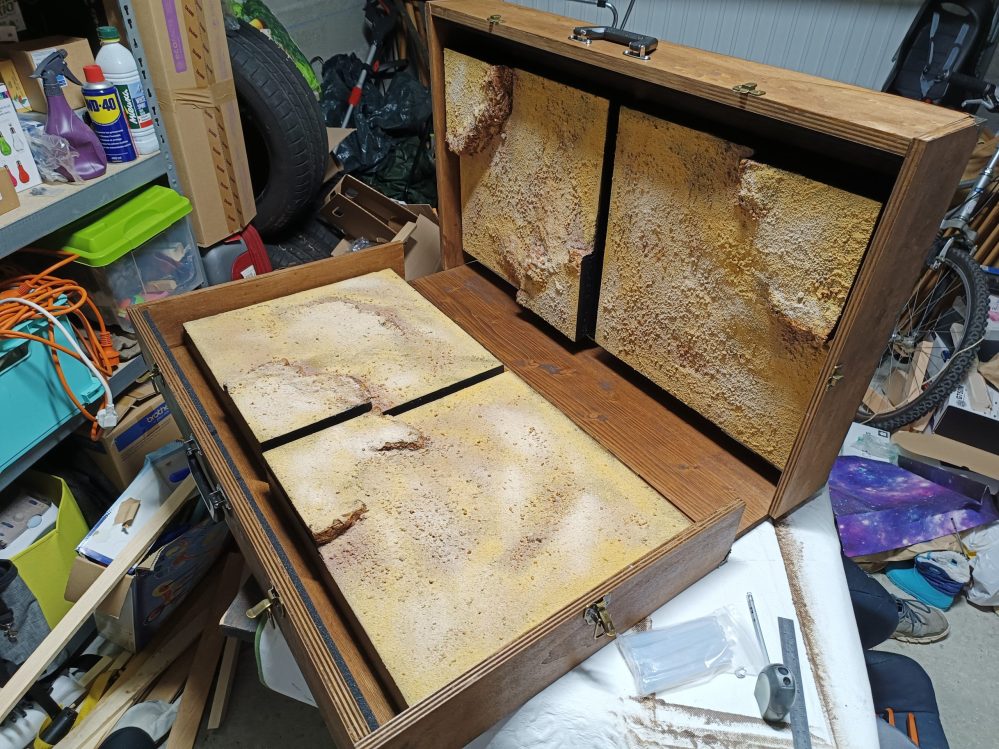
After taking numerous measurements and running 3D simulations to determine how the box would open and whether the measurements were correct, and despite doubts about the final shape of the box, it was time to get started. I started working on two boards long enough to hold two tiles each, connected by a central board to create a flat surface that could be used as a game table if needed. I left a little space to add decorations, models, vehicles, and any other elements useful for the game.
Next came the question of how to attach the tiles to the boards… I had in mind to use magnets, which would allow the tiles to be attached in any direction, but in the end, the models I found were either too powerful, too fragile, or too expensive. So I turned to simple fasteners, as can be seen in the following image.
During this period of research, the boards I had previously purchased decided to warp, so it took a lot of effort and a week per board to straighten them out…
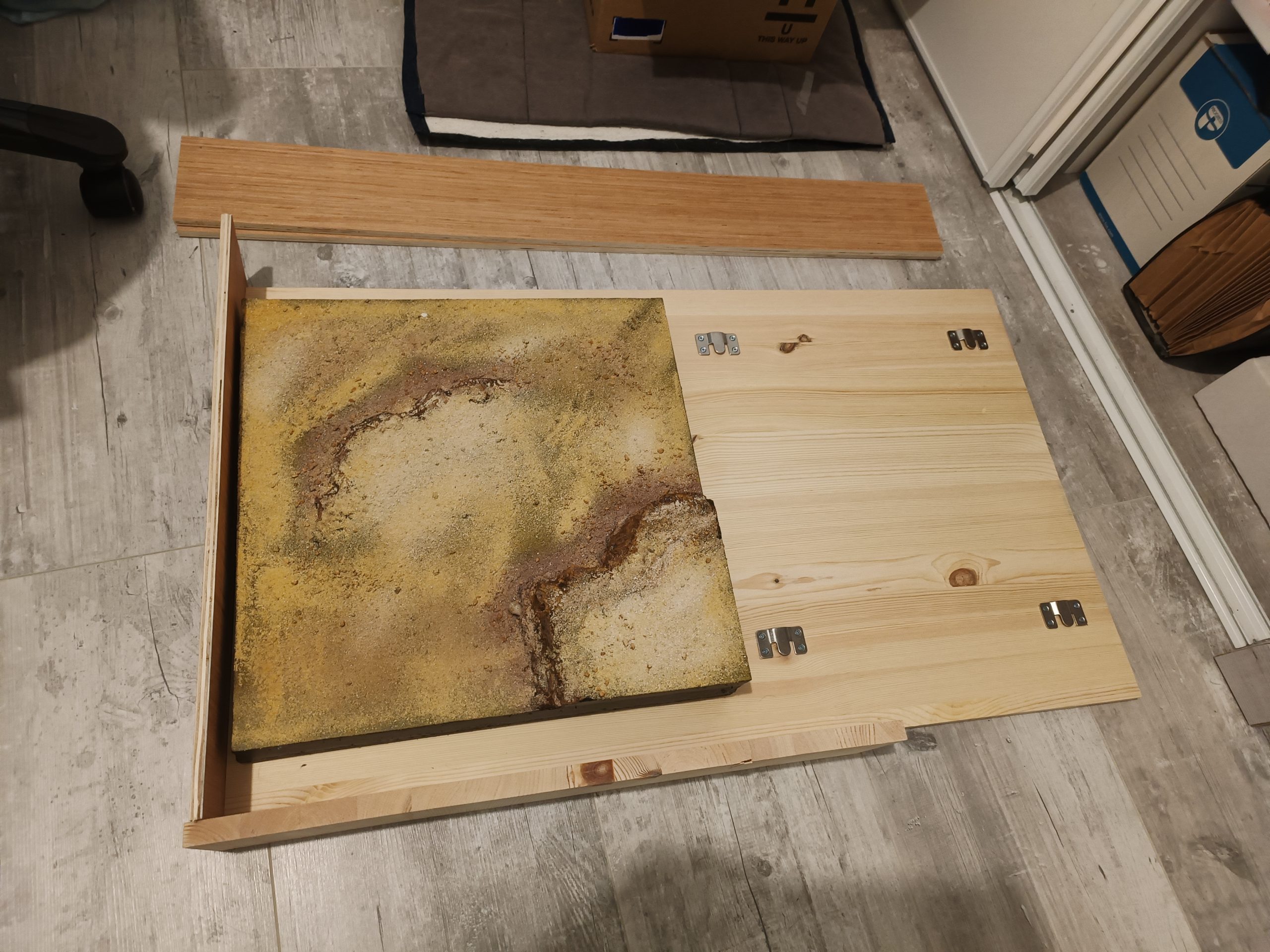
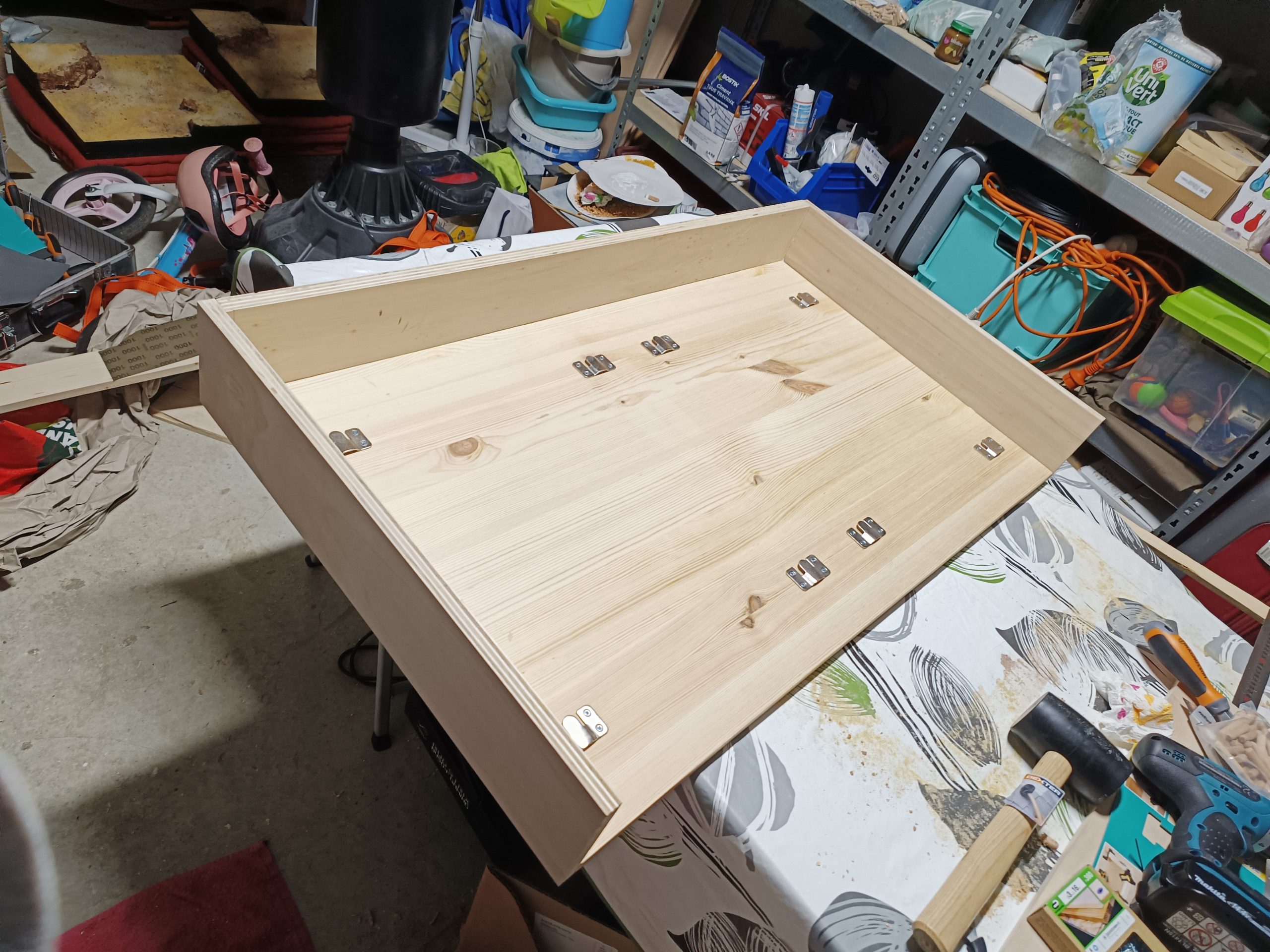
The hooks were attached to the edges of the case to provide as much space as possible for measurements. Ultimately, this means that the tiles have to be stored and laid in a certain rotation, but I made sure to minimize overlap between the hills.
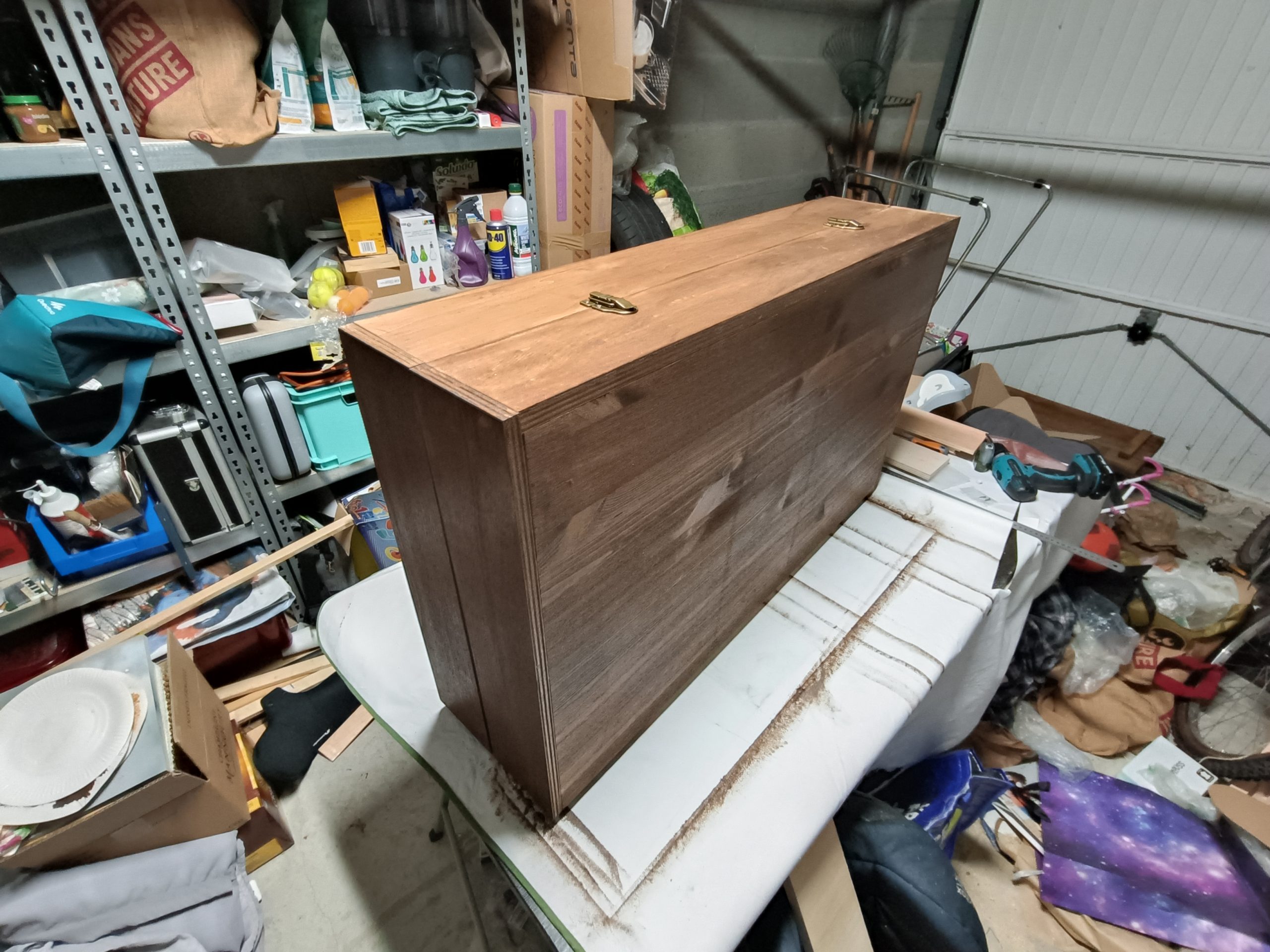
The sides of the blocks were then fixed invisibly, using simple dowels. The top, which supports the handles—and therefore the entire weight of the suitcase—is made of 18mm thick plywood. The sides, which are less demanding in terms of strength, are 15mm thick.
Once the two blocks assembled, the three elements of the box (the two blocks and the central board) were then stained and fixed together using two piano hinges and four suitcase fasteners.