


































Husaria – Building a Polish army for the 1620s




Recommendations: 2003
About the Project
This project describes my efforts to build a 1620s Polish and Lithuanian Commonwealth army, including the famous Polish ‘Winged’ Hussars. I will cover the historical research, choosing the miniatures, build and painting the miniatures, and finally hopefully playing with the army. (N.B. Since starting this project I have added a couple of further projects to the system. One contains opponents for the Poles, the Swedish army. I had been adding entries about these here but it was a perhaps bit confusing. See here for the Swedish project: https://www.beastsofwar.com/project/1798825/ . I also started a project for the set up a of demo game planned for Salute 50, using the Poles and Swedes, here: https://www.beastsofwar.com/project/1798842/ .)
Related Game: Pike & Shotte
Related Company: Warlord Games
Related Genre: Historical
This Project is Active
Scratching that itch
Raising my own miniature units of Polish Hussars has been a wargaming ‘itch’ that has taken a long time for me to scratch. When I recently started my 28mm Thirty Years War (TYW) forces to refight Lutzen (1632) I was just thinking of the conflicts that played out in Western Europe. However, researching Gustav Adolph’s Swedish army kept prompting me that he had ‘cut his teeth’ fighting the Poles before he came to Germany in 1630. With Lutzen ‘refought’ I immediately started forming plans for a Polish army, including the glorious Hussars, that I could use as new enemies for my Swedish forces.
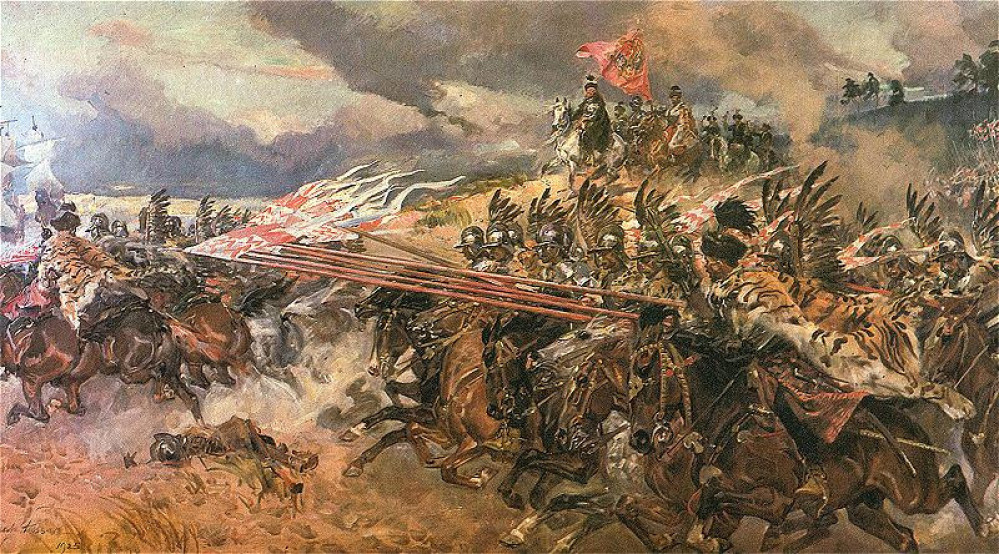
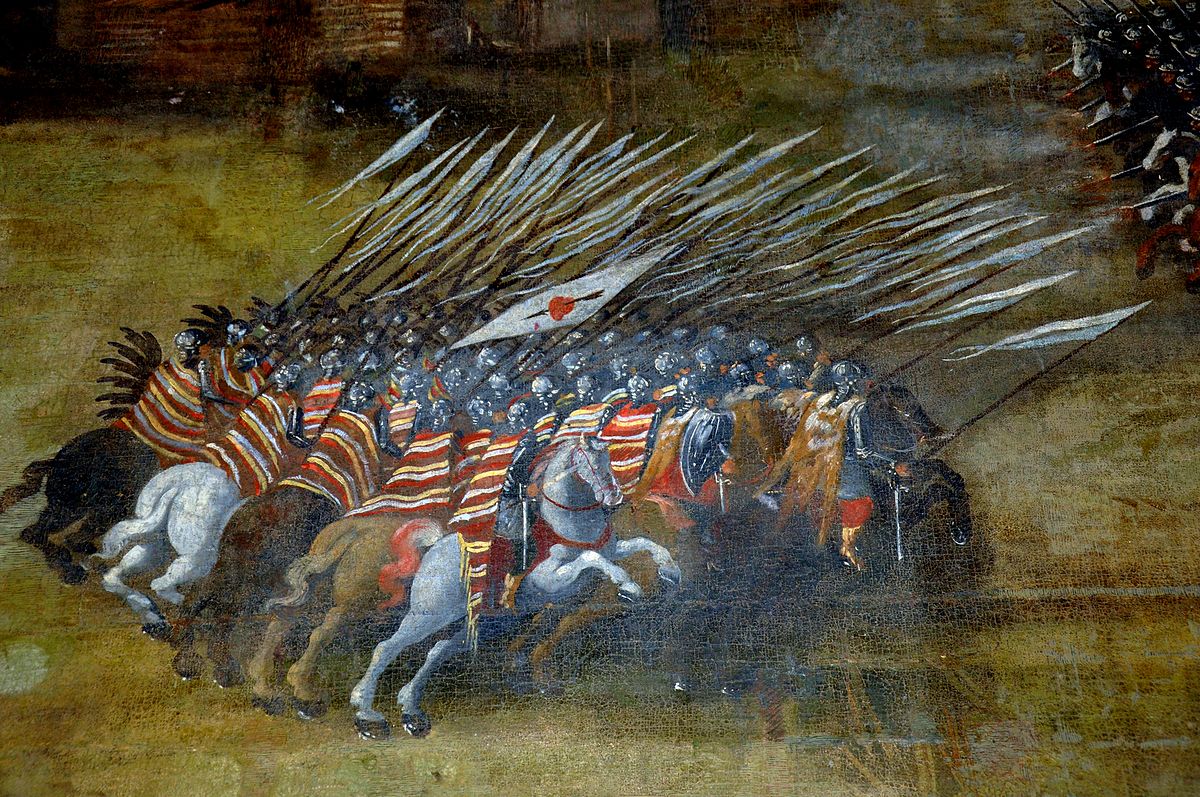 Hussar formation at the Battle of Klushino (1610), painting by Szymon Boguszowicz, 1620
The Polish Hussars were originally light cavalry, evolving in the 16th century from similarly equipped light horsemen in Hungary. As time went by their equipment got heavier and they replaced the heavily armoured Polish ‘knights’ as the main strike force of Polish armies. The Hussars became the most important component of Polish armies, and the preeminent cavalry of Eastern Europe. The Hussars’ equipment and horses were expensive, and their ranks were filled with Polish and Lithuanian nobles, and their retainers.
“Of these horsmen, some are called Hussari, who are armed with long speares, a shield, a Carbine or short gunn, and two short swords, one by the horsmans syde, the other fastned vnder the left syde of his sadle.” Fynes Moryson describes the Polish cavalry in the 1590s.
 Entry of the wedding procession of Sigismund III Vasa into Cracow (detail) 1605
The Beginning
“First advanced the hussar squadron of the marshal himself, well armoured, and so imposing that any king might be proud of such troops. Only nobles of the mountains served in this squadron, chosen men of equal size; their armor was of bright squares inlaid with bronze, gorgets with the image of the Most Holy Lady of Chenstohova, round helmets with steel rims, crests on the top, and at the side wings of eagles and vultures, on their shoulders tiger and leopard skins, but on the officers wolf skins, according to custom.” From ‘The Deluge’ by Henryk Seinkiewicz
Polish ‘Winged’ Hussars must be the most stunning of troop types for Renaissance wargamers. Armoured and lance armed, elite cavalry, they formed the core of Polish and Lithuanian Commonwealth armies for over two centuries. With brightly coloured and flowing lance pennants, and with their iconic eagle feathered ‘wings’, these were the poster pin-up cavalry for me as a teenager. When I started wargaming, in the 1970s and 80s, renaissance wargame rules used Winged Hussars on their covers, and even Games Workshop payed homage to them with their Warhammer Kislev Winged Lancers.
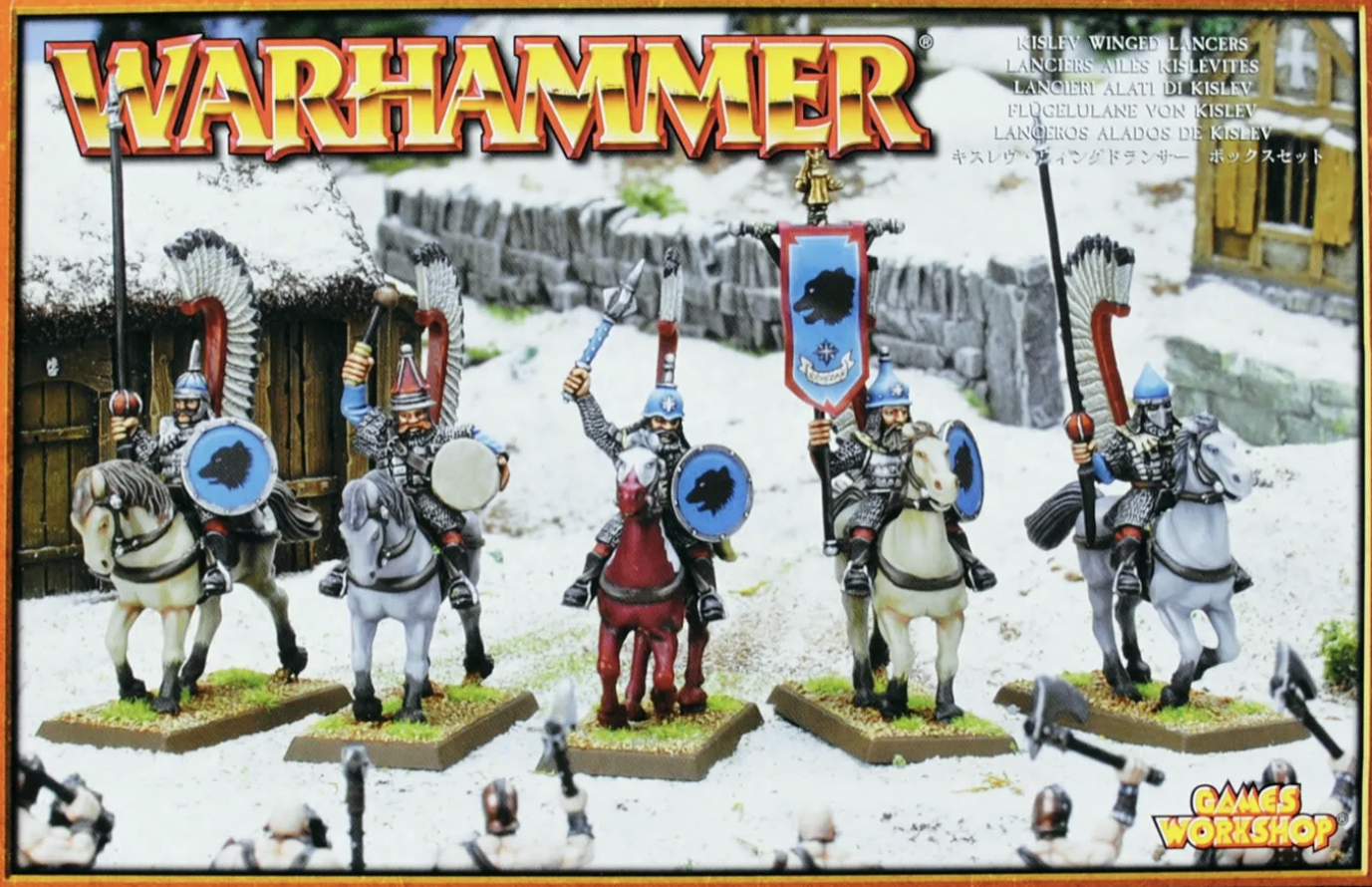 Games Workshop’s “Kislev Winged Lancers” a fantasy tribute to the Polish Hussars.