



























![O-12 Infinity Fast Response! Firebat Attack Wing Unboxing & Review [7 Days Early Access]](https://images.beastsofwar.com/2026/01/unboxing-corvus-belli-infinity-firebat-attack-wing-coverimage-225-127.jpg)





How to be an Armoured Farmer, building Hobart’s Funnies in Glorious 15mm (and maybe 28mm if they arrive in time!)



Recommendations: 2233
About the Project
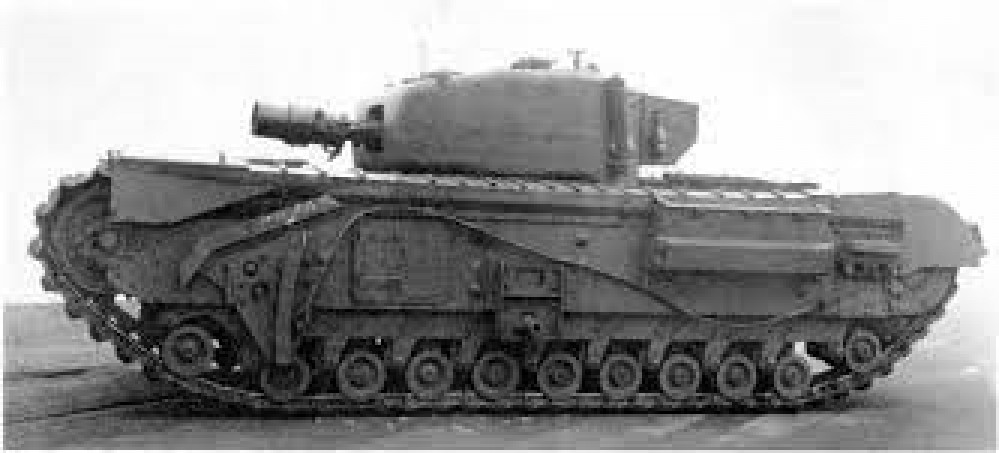
Right then, having avoided any sort of Spring cleaning challenge in the past, I have decided to use this year's one to get something done that I have been gathering bits for over the past few years and finally finish and assemble all of my Hobart's Funnies. To get technical these are Armoured Vehicle Royal Engineers (AVRE) tanks, using the Churchill chassis as a base. I will also throw in some Sherman Crabs (Flail tanks). I have gathered a few books for reference so that I can paint and mark them up for one of the Armoured Assault Squadrons Royal Engineer (either 77, or 79) that landed ashore at Sword Beach and were the very first to see action on that beach; Plus the Sherman Crabs of A Squadron 22nd Dragoons. Whilst I want to be able to use the finished tanks in games depicting the D Day Landings (in Flames of War and Chain of Command at 15mm) I also want then to be versatile enough to be able to be used in later engagements that the 79th Armoured Division took part in (which is pretty much everything!). I hope you will find this of interest if you ever want to branch out into what the modern day Royal Engineers affectionately call being an armoured farmer.
Related Game: Flames of War: The World War II Miniatures Game
Related Company: Battlefront Miniatures
Related Genre: Historical
Related Contest: Spring Clean Hobby Challenge (Old)
This Project is Active
AVRE Log Carpet Layer build
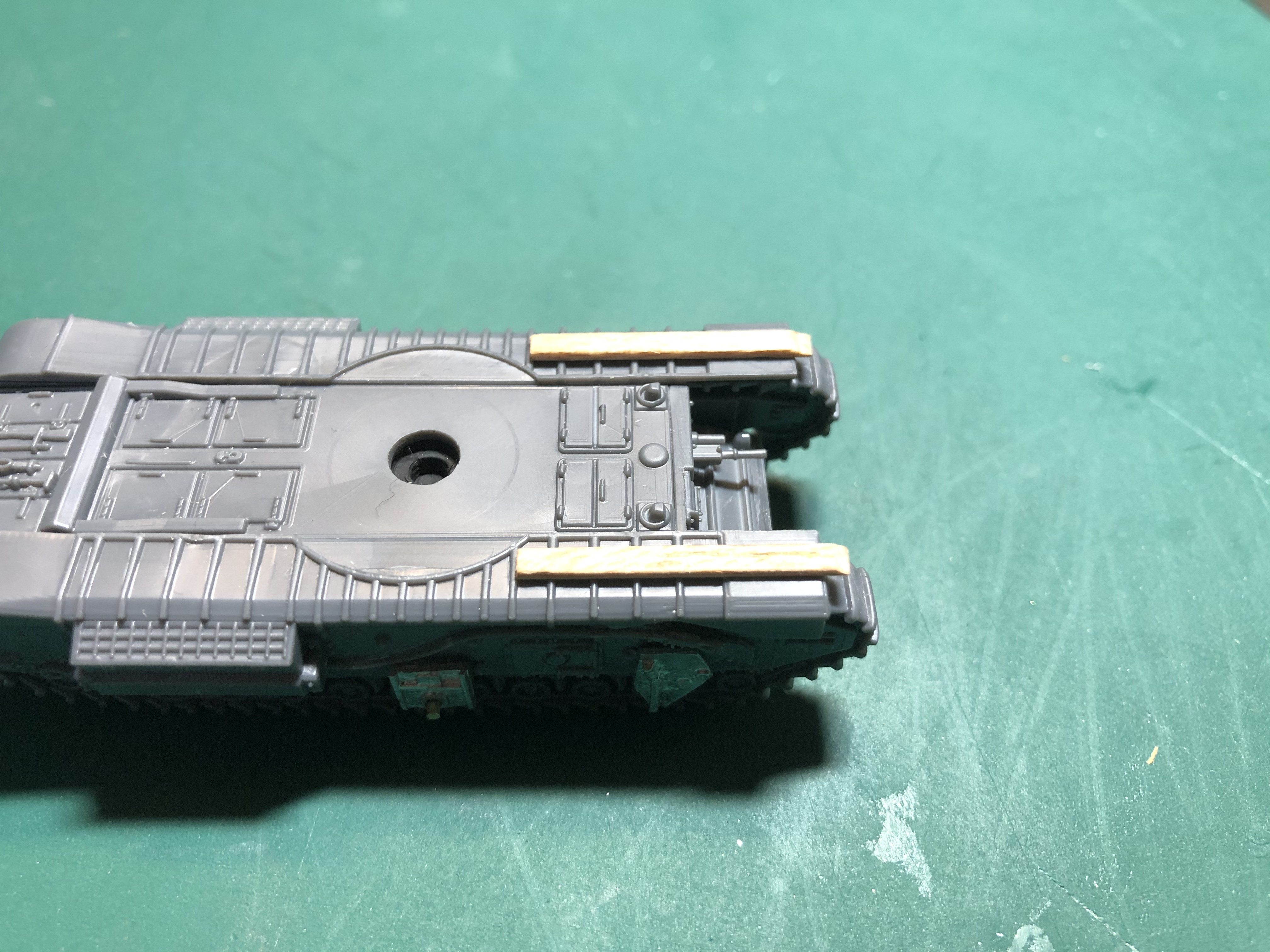 First of all I made the timber beds from balsa wood
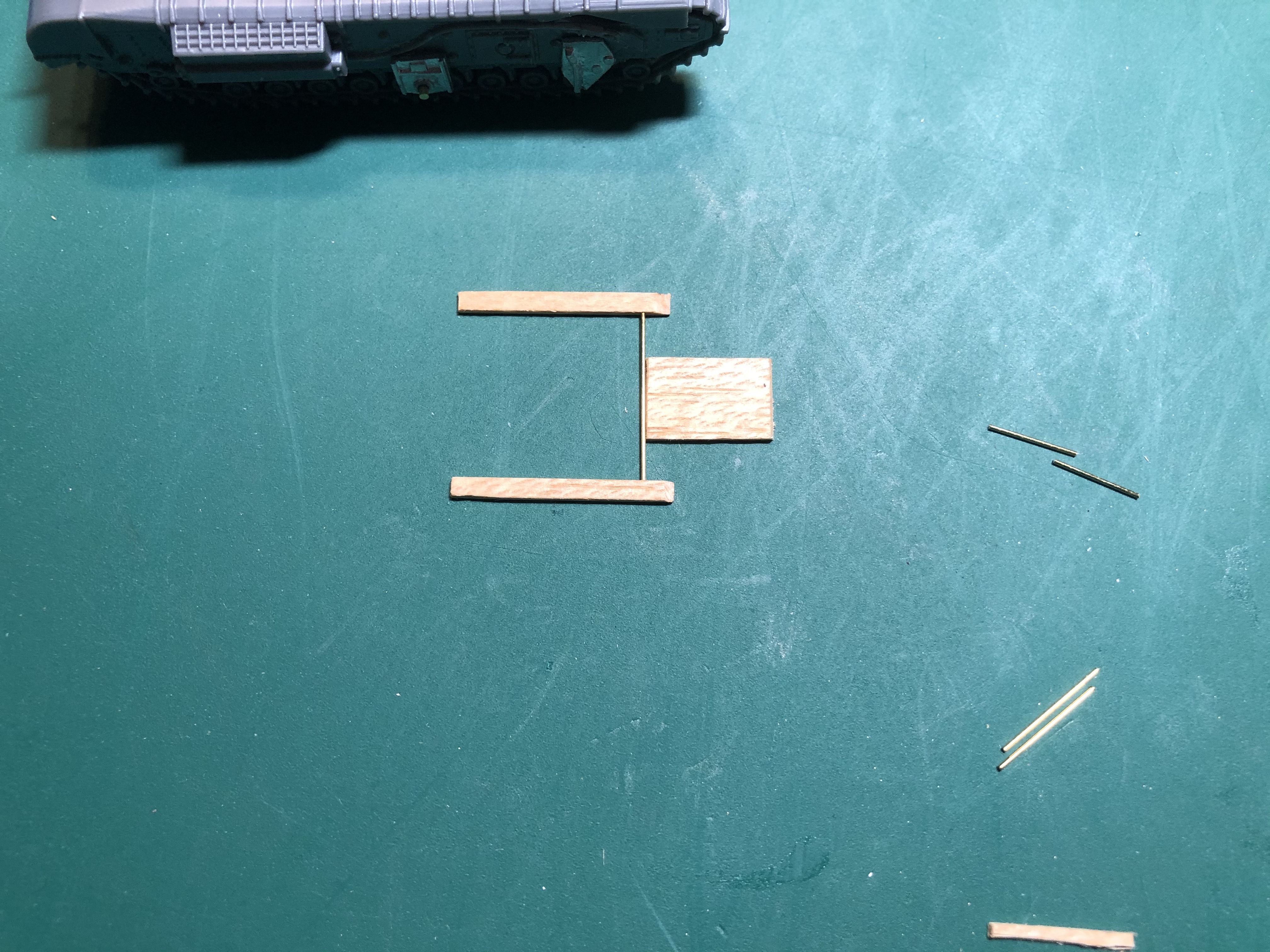 having positioned the bed on the tank, I measured the gap and added 2mm so that the 0.5mm brass rod I cut would sit in the bed where I predrilled holes (just in front of the tank glacis plate). I then made a balsa template to get the next two rods in the correct position. this was a bit of a mistake, as I should have left a gap so that I didn't glue the rods to the template!!
 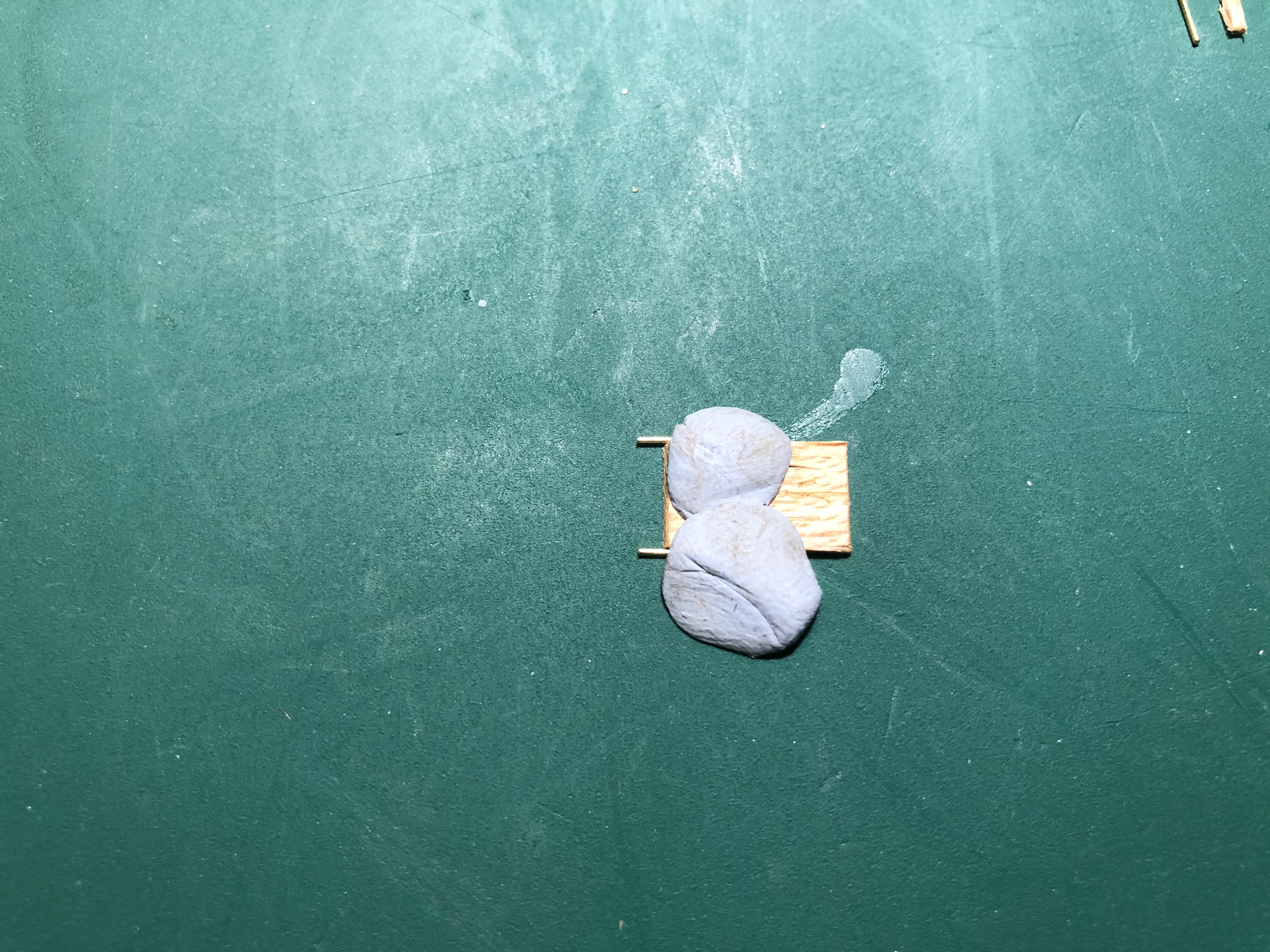 Having stuck the rods to the template, I then blue tacked them in place so that I could glue them properly.
A little conversion of a conversion
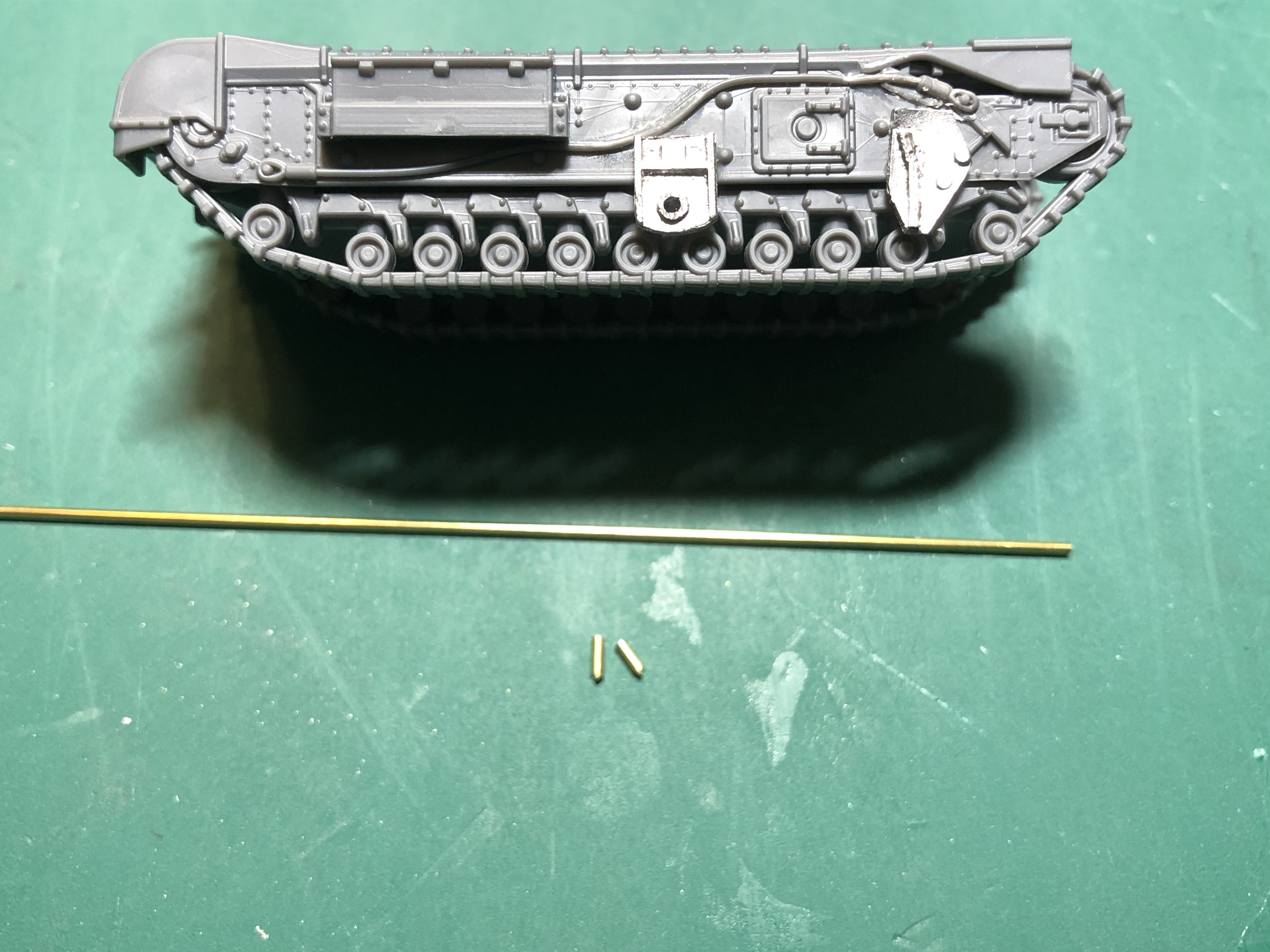 I had previously predrilled the hardpoint conversions, as I had noticed that they did not have the bosses that the various conversions mounted on. Using 1mm dia brass rod I glued them in place to make them look right but also so that the Bobbin conversion had something to mount on.
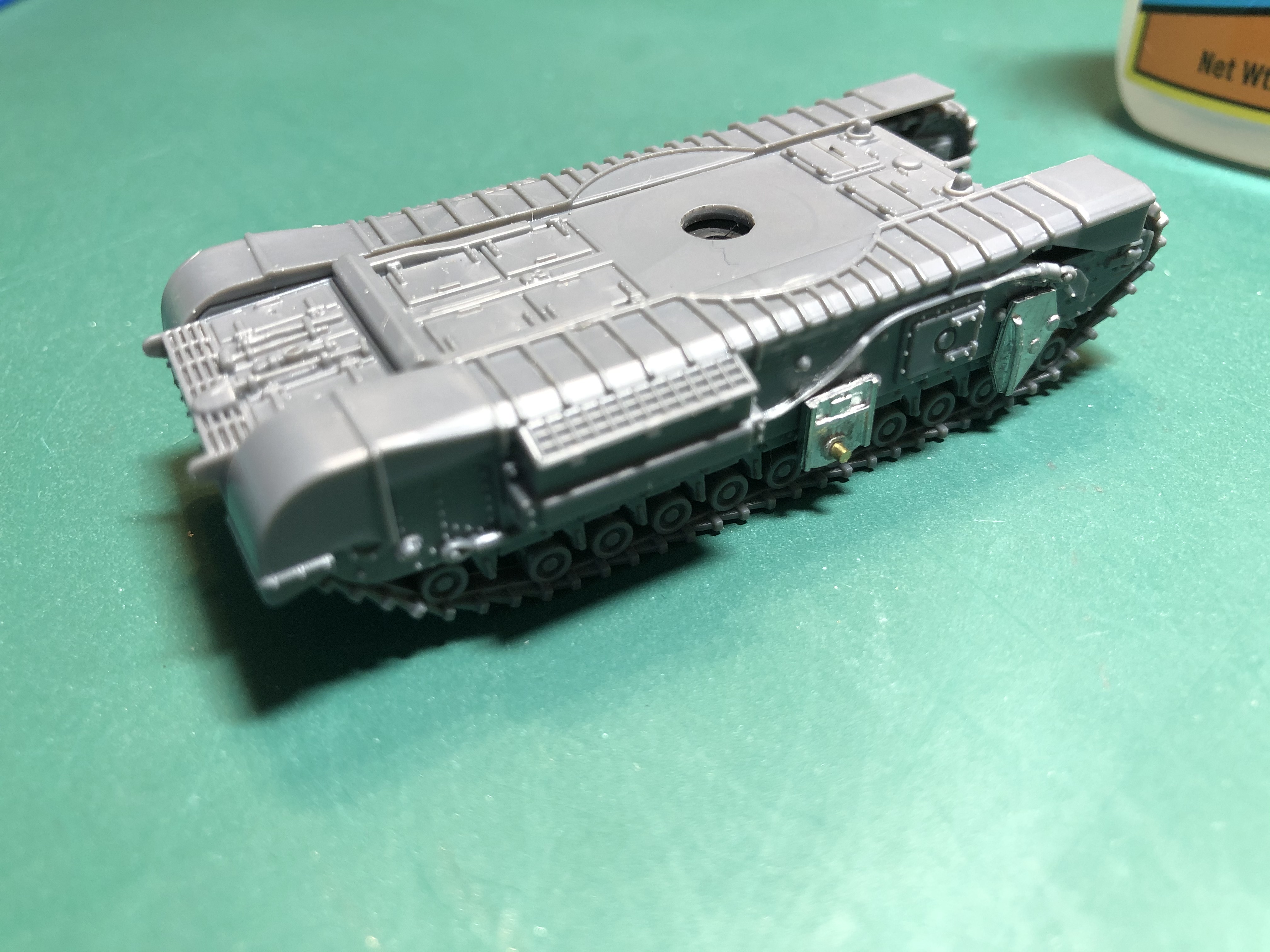 The finished conversion
bits & pieces
So this weekend I planned to get the log carpet layer converted but I ended up doing another! I started off by gathering all the materials I needed and then went back over the reference photos to be able to scale the parts from known points on the photos that I could also check measure on the tank.
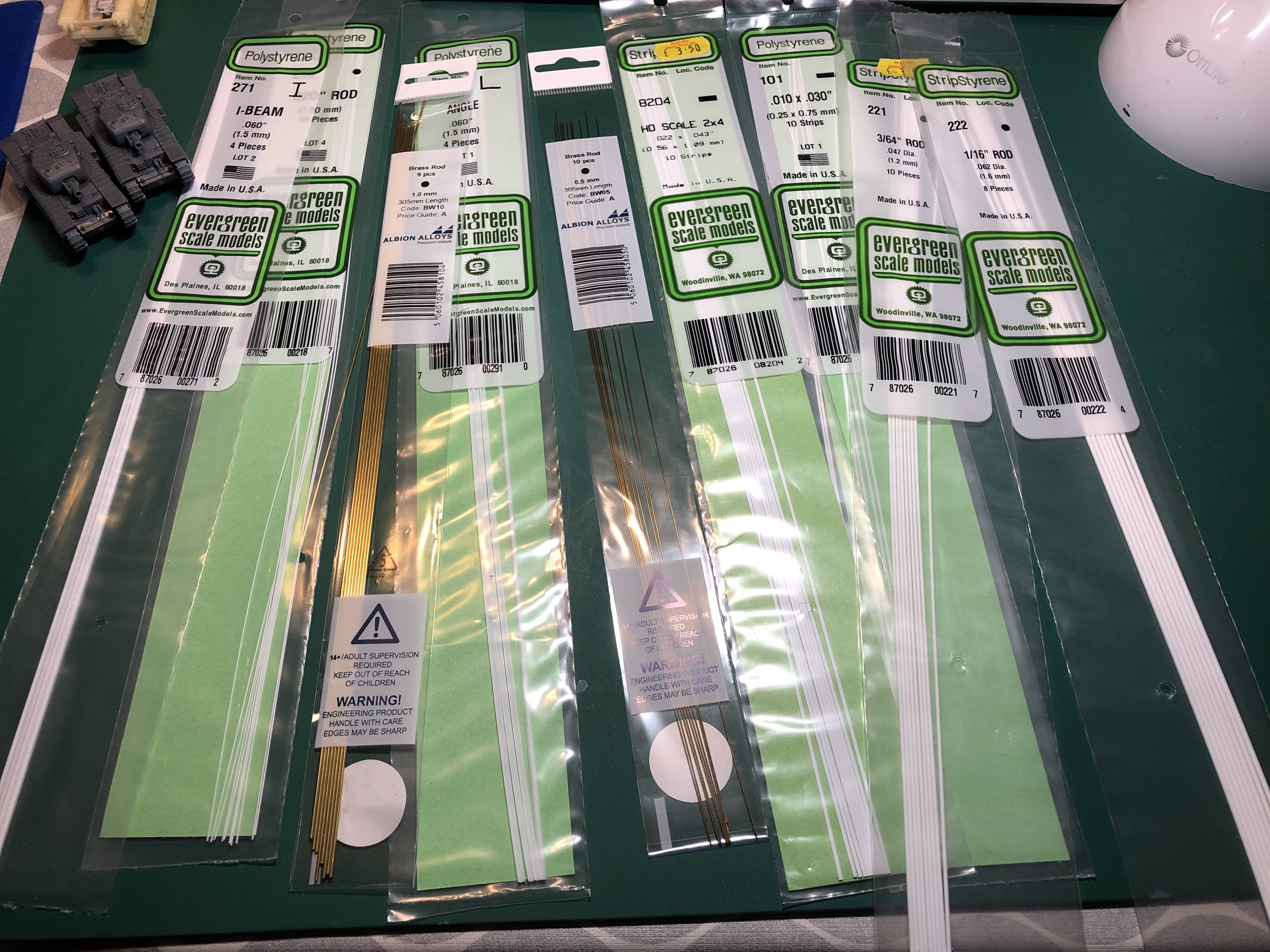
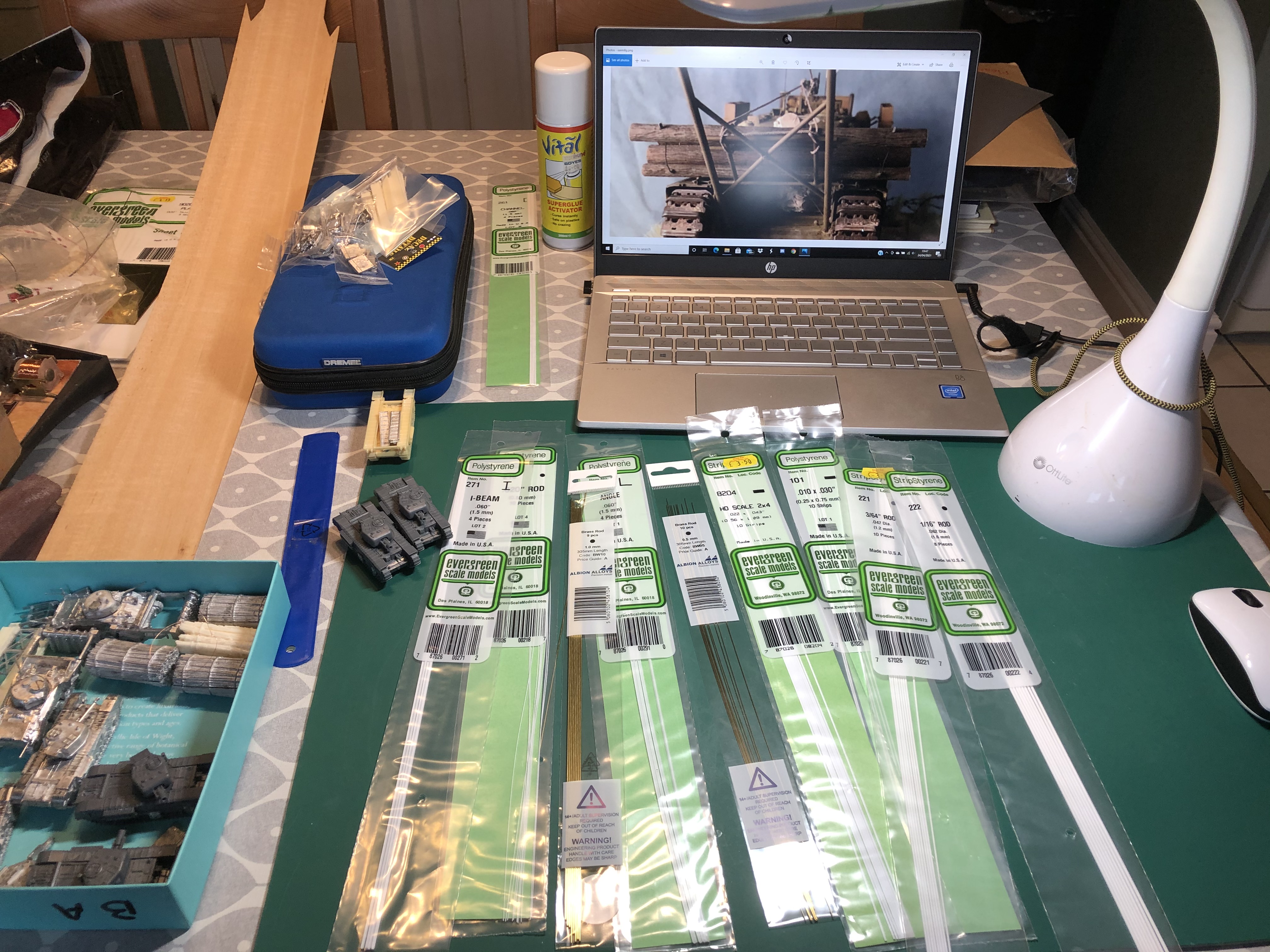
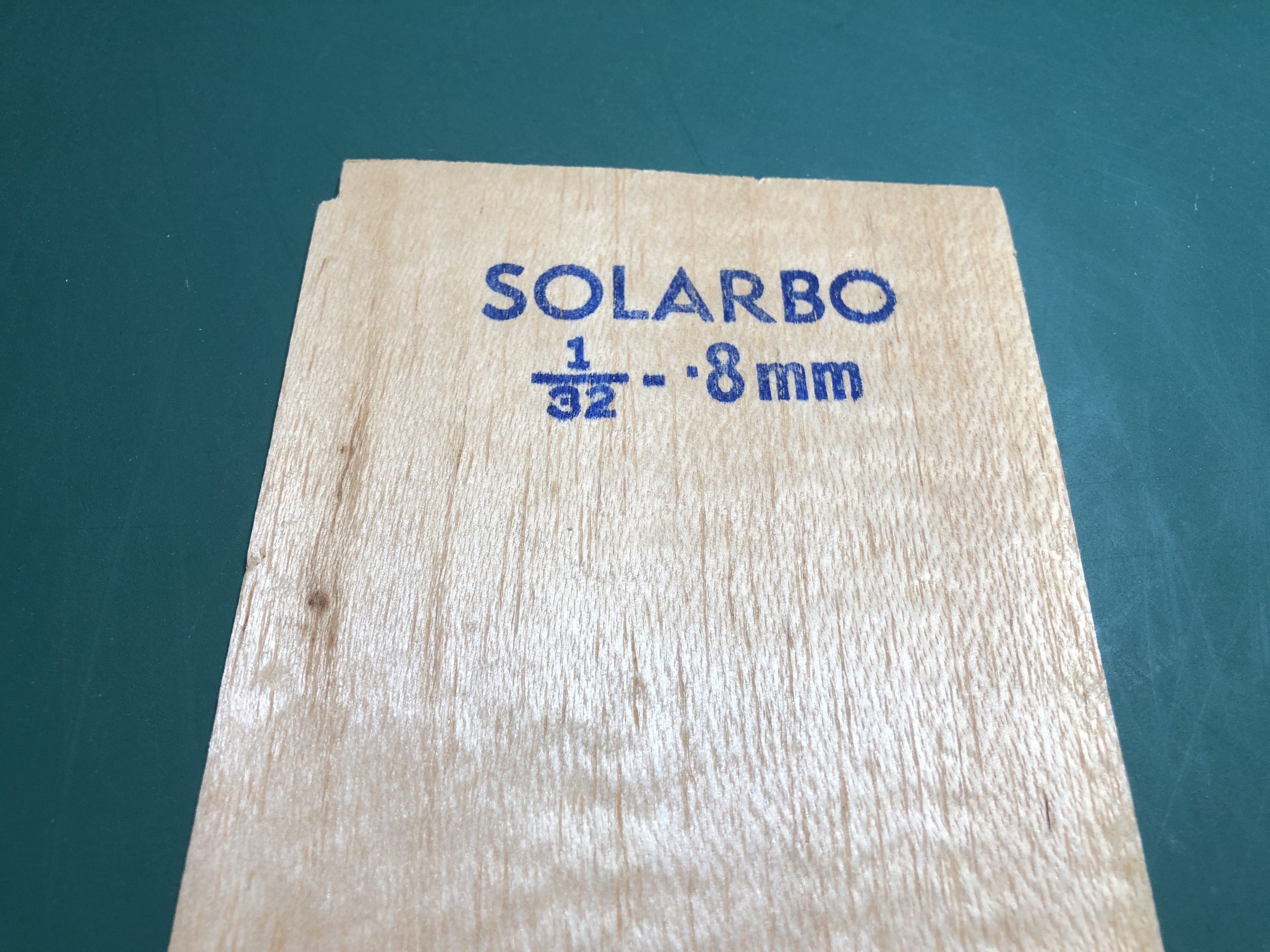
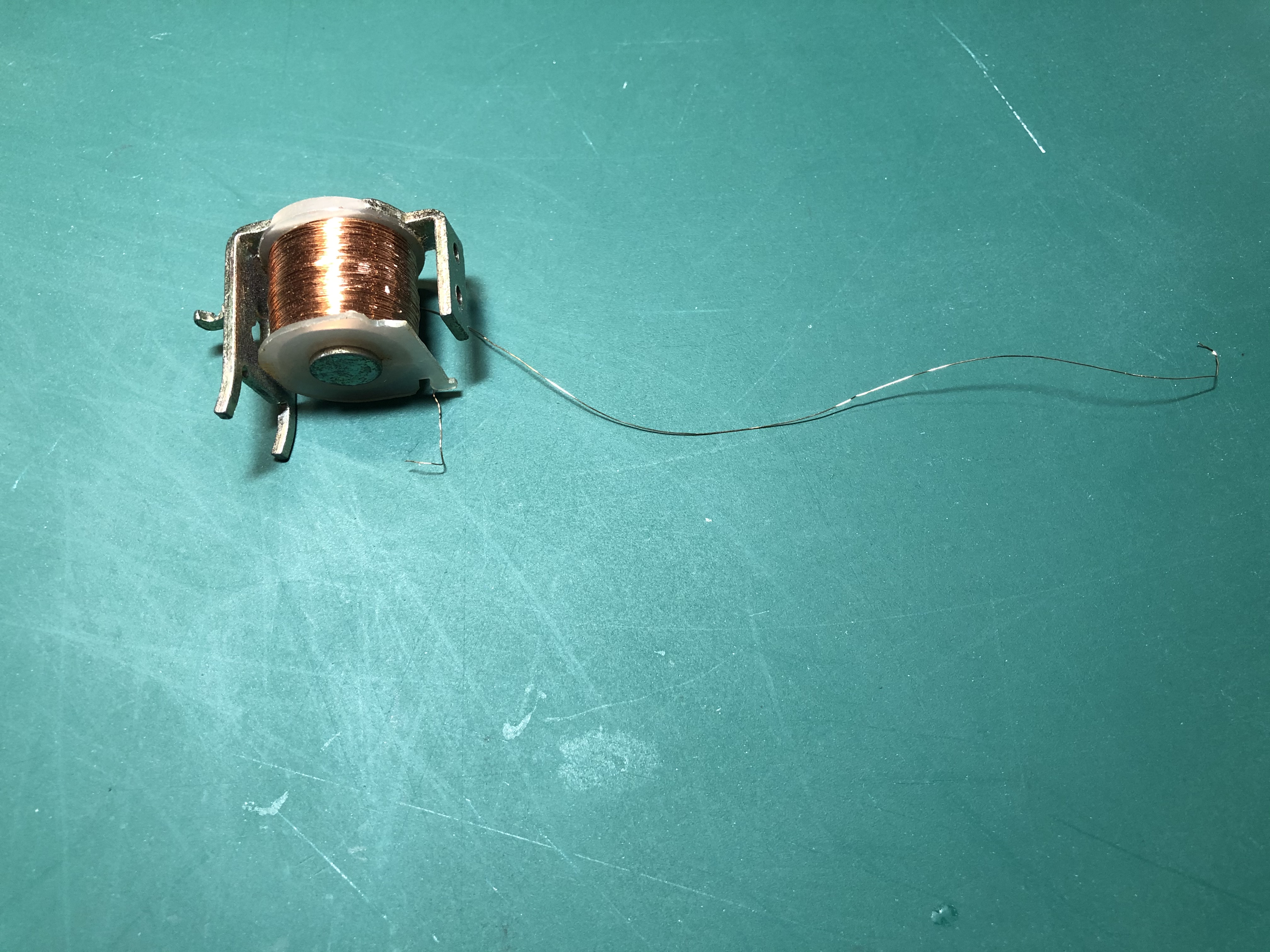 One of the most useful things I have scavenged is from an old car rectifier. the spool of wire is quite strong, has no insulation and is what I usually use for making cables and strings for bows.
AVRE Log Carpet Layer Reference photos Cont'd
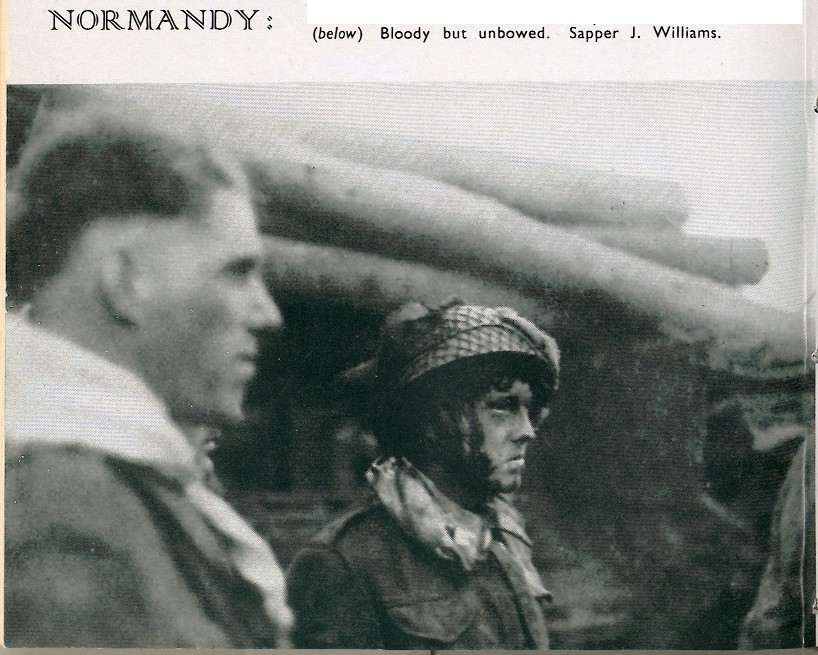 This image shows the battered crew of this AVRE and that it appears that they did not get an opportunity to use their log carpet before their tank was put out of action. Each Assault Squadron had four troops and each was assigned a lane to create in the obstacles, with the aim of completing a cleared lane from the beach to the first lateral metalled track (a road to non-military types) whereupon the lane would become a beach exit.
This is a suitable point to note that in 77 Asslt Sqn RE the four gapping teams sent in on LCT’s to Queen White Beach, performed so bravely and were as follows:
Green gap, 1 Troop: Successful – Three Crabs and three AVRE’s deployed (log carpet, bobbin & SBG). One AVRE hit by A-tk gun, broke a track and drowned (believed to be SBG), crew forced to dismount and clear obstacles & mines by hand. Bobbin took two hits coming off LCT, hit two mines whilst moving inshore, with the second disabling the tank. A crewman, L/Cpl Fairlie was killed by a mine whilst trying to put up the wind sock (the tank commander went to recover his body but found nothing of him, so returned to organise the crew into a fighting patrol). The lead AVRE reached the lateral road and supported the crabs as they cleared mines down each side of the road. Green gap was started at 0730hrs and was gapped at 0810hrs, absolutely remarkable in the circumstances.
Yellow Gap, 2 Troop: Successful – Two Crabs and four AVREs (General Purpose (GP), log carpet, bobbin & SBG). Landed slightly further down than 1 Troop. Laid Boase Bangalore but it was detonated by enemy fire, so not as effective. Crabs flailed a route through the dunes and another towards an enemy gun position. one blew up it’s tracks on a mine but a route was cleared around it. The bridge was dropped on top of a gun pit to silence the A-tk Gun in it. The bobbin was damaged by fire and was jettisoned. once lane was established, they linked up with 1 Troop to attack the houses at Lion-Sur-Mer. Yellow gap was started at 0731hrs and was gapped at 0830hrs (fully open at 0900hrs).
Blue Gap, 3 Troop: Successful – Three Crabs and three AVRE’s deployed (log carpet, bobbin & SBG) plus Sqn reserve of 2 crabs, 2 GP AVREs and 1 D7 Armd bulldozer. LCT initially floundered on a submerged DD tank but discharged the team in far deeper water than expected. The troop cleared the beach to the left of where 4 Troop were due to land. Flails cleared lane to lateral road, log carpet was laid as planned and bridge dropped at exit on to lateral road. Bobbin was hit by a mine and A-tk fire and was drowned. The D7 also struck a mine. Two of the Crab commanders (Sgt Turner and Cpl Aird) were unfortunately killed by sniper fire shortly after completing their initial tasks. They faced an immense rate of fire due to the failure of 4 troop to land and also had to deep drop off their LCT due to the DD tank issue. Blue gap was started at 0740hrs and was gapped at 0820hrs.
Red Gap, 4 Troop: Failed – LCT 947 carried Two Crabs and four AVREs (Plough, log carpet, bobbin & SBG). Along with the gapping team was the commander of 5th Asslt Regt RE Lt Col Arthur DB Cocks. They landed at 0735hrs and the leading flail disembarked. The second flail was coming out of the doorway when it was hit and disabled by an A-tk round, jamming the doorway. As the occupants tried to clear the wreck further A-tk rounds hit the LCT, an explosion occurred (believed to be the Boase Bangalore torpedoes being set off by enemy fire). It was during this explosion that Lt Col Cocks was killed. The damaged LCT, unable to offload its cargo is ordered back to England. They would not return to Normandy until the end of June.
Total losses for 77 Asslt Sqn were one of the heaviest, I feel this is down to a combination of things, 1 Tp had an exposed right flank being the furthest unit in that direction and 3 Tp suffered from the same on the other side compounded by the fact that 4 Tp could not land. The damage caused to the vehicles on LCT 947 could have only been caused by a 75mm or 88mm German position and from other naval reports, it seems that the enemy waited until the LCTs were within 200m of shore before opening up, so clearly better trained, or more experienced troops in this part of the beach.
Killed – 7
Wounded – 13
Missing – 2
They also lost 2 AVREs, with 2 damaged, plus one Sherman crab damaged.
Footnote: it should be noted that, whilst tracked lanes had been established very quickly, it took until 1130hrs to open up the first wheeled vehicle exit and this meant a large traffic jam built up on the beach. This only started to abate by 1700hrs, by which time four exits had been established on Queen White Beach.
AVRE Log Carpet Layer Reference photos
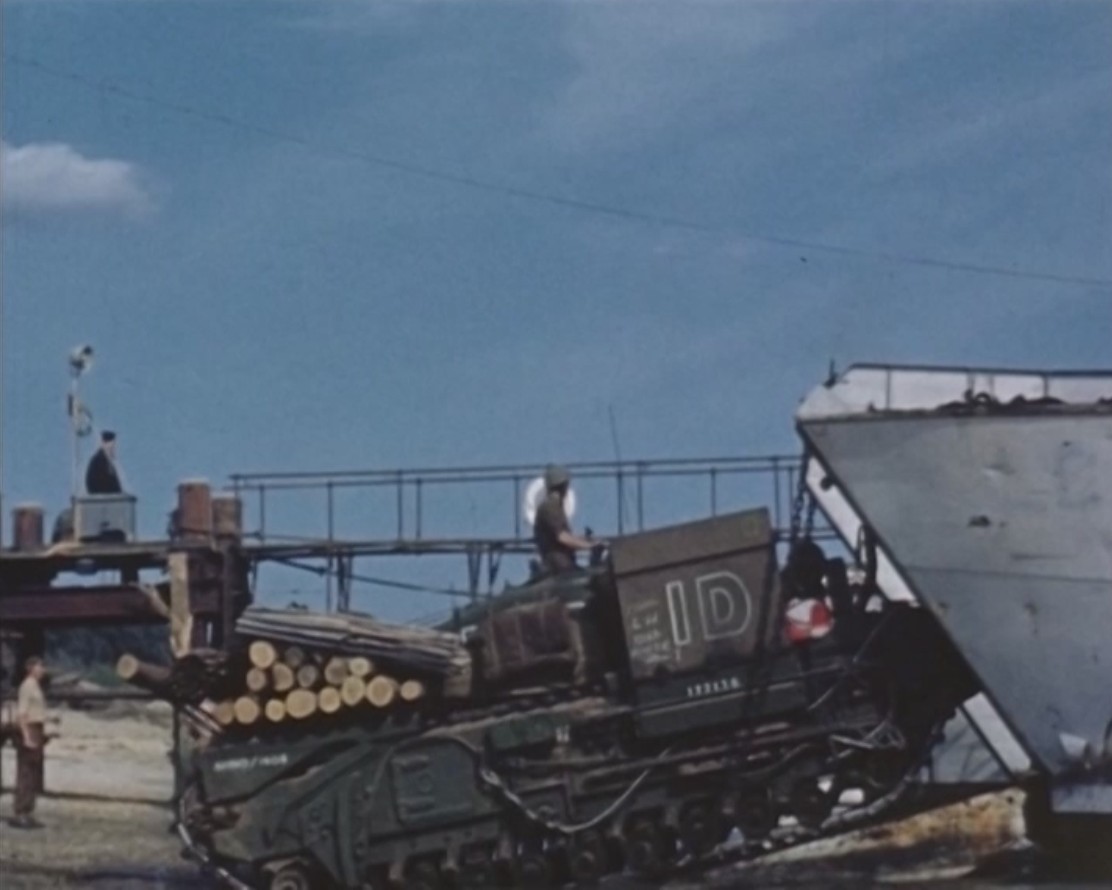 An AVRE of 80 Asslt Sqn RE being loaded up on the 2nd June, the Log carpet is clearly visible and also you can see variation in the original design, as there are far less logs than intended.
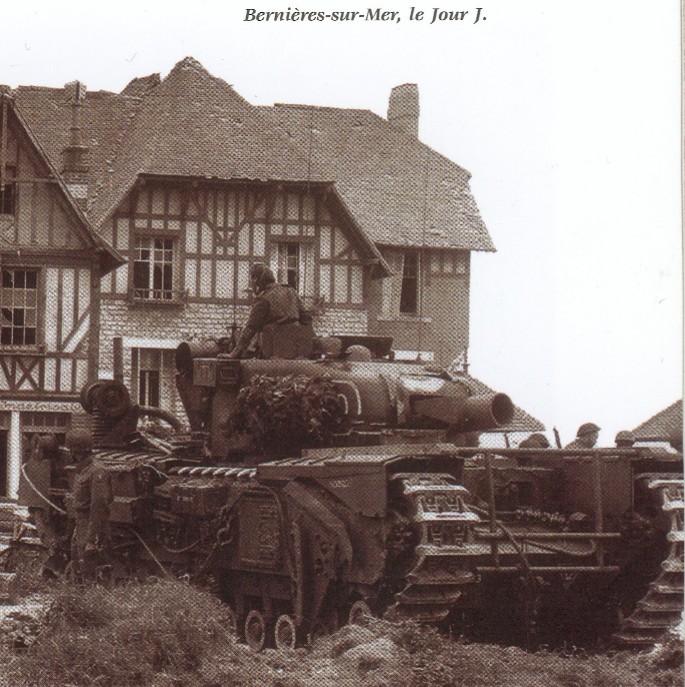 I believe this may be the same AVRE on D Day (Juno Beach supporting 3rd Canadian Inf Div) parked up on the outskirts of St Aubin-Sur-Mer. You can make out the timber bed on the track cowls and also the drop arm made of tubing, swung down in front between the two sets of tracks. It is also interesting to note that the positions of the cross bars is such that, when down, it does not impede the use of the bow machinegun.
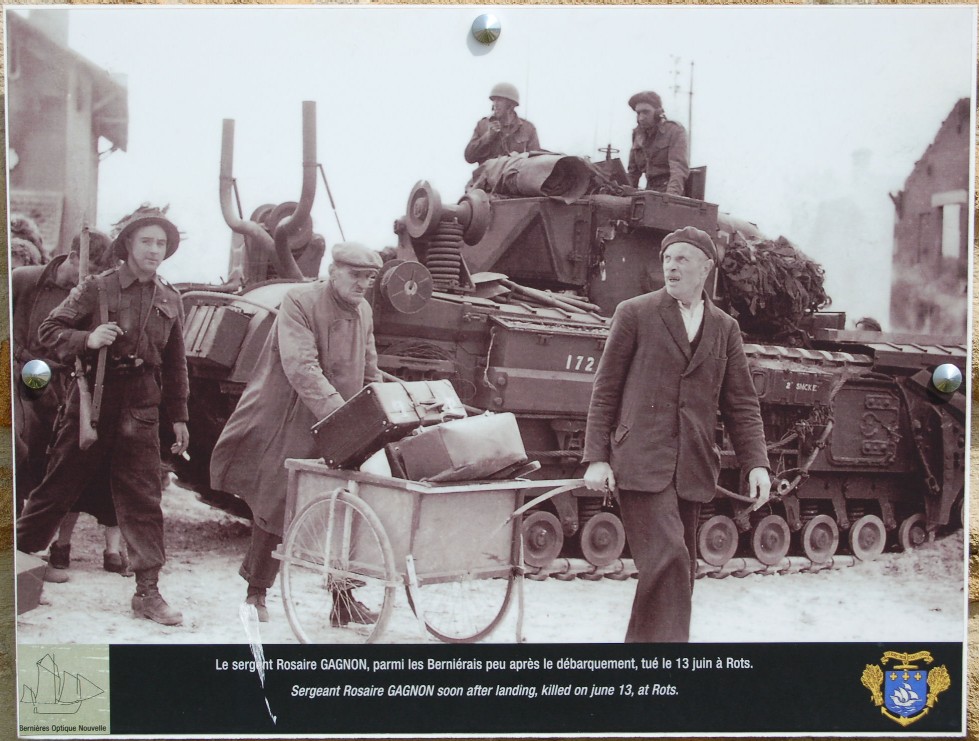 Another view of the same AVRE, this time from the rear. Clearly visible again is one of the timber supports for the logs to sit on, plus now you can see a metal housing for the end of the timber to sit in. What is also very useful is all of the other add-ons that the crew have stuck on the vehicle, Comms reel, ammo boxes (if they are true Sappers these will be filled with food and beer, not ammo!), also spare bottom rollers for the tracks, a load of shovels most likely for digging up defused mines. They would also have had a couple of red & white wind socks for signalling where the cleared lane started for incoming craft to the beach. The last thing to note is that the wading ducts have been dropped but the raised exhausts remain.
AVRE Log Carpet Layer
So armed with this new information I started looking at all of the reference photos I had gathered and cross checked them with the information in the document and also that obtained by others hunting down the same thing. (Deeper and Deeper into the rabbit hole!).
What I found was amazing, items that to the lay person wouldn’t have stood out, now looked really obvious and confirmed that log carpet AVREs definitely landed on all three commonwealth beaches.
It also showed that the engineers created two sub-variants of the layer. One had a timber bed for the logs to sit on and the other used two, or three steel pipes.
The basic principle was that one log would be suspended on a drop arm with a release mechanism running back to the turret. This log was then linked to the rest of the logs (up to 20 in total) by two wires drilled through each one and fixed at the end. Once the drop arm was released, the first log would fall off in front of the tank and as it travelled over it the rest would be pulled off in succession. The aim being to drop the first log just short of any identified blue clay patches on the beach, with the rest covering it so that vehicles could cross easily without fear of bogging down. The logs themselves were about 14ft long and at least 6″ in diameter. Once deployed, the AVRE was able to bring it’s Petard mortar straight into action to supress enemy positions. What follows is a series of photos showing log carpet variants taken either shortly before, or during D Day. I have omitted a couple of photos taken on Sword Beach as the AVRE in question was being used to shelter injured and dying soldiers by a field dressing station and the bodies of fallen soldiers are clearly visible. This is something that should always be considered when looking into historical information, it should always be used advisedly and whilst showing full respect for whichever combatants are captured within the picture frame.
Episode Five - Conversions
So there are a number of funnies that the array of model producers out there in shiny land don’t make. which means you either have to accept it, or go and convert something into what you need.
In my case I am trying to reproduce one of the gapping teams from 77 Asslt Sqn RE and to do that I need to create a Churchill AVRE variant known as the Log Carpet Layer. Now first off, this is not to be confused with the Fascine carrying variant, no this beast is something just as simple but definitely different.
Now this leads me on to one of the reasons I love my hobby, I get the chance to read lots of book and reference sources trying to hunt down what I am looking for and in turn discover some of the amazing (and sometimes very frank) stories of those involved in the fighting.
So after a little digging I came across a thread on a modelling site where someone was looking for the same information as me. They found the following sketch of what appeared to be the log carpet variant.
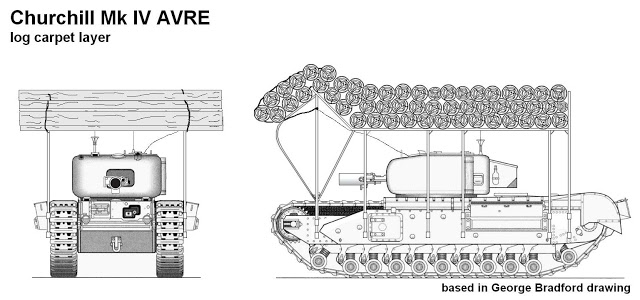 Churchill log carpet layer
However, two things didn’t feel right, firstly there was no photographic evidence of this type of AVRE from either the run up to D Day, on the day, or shortly afterwards and that frame is not something you are going to easily miss.
After a bit more digging, it transpired (as do a lot of sketches of AVRE variants) that this was a drawing board sketch and that it didn’t actually come into use until the very end of the war (and I still haven’t found any tangible evidence that it did). What I did find reference to was an Engineering design on a log carpet layer and thanks to the hard work of other modelling enthusiasts they had tracked down what would come to be the real deal.
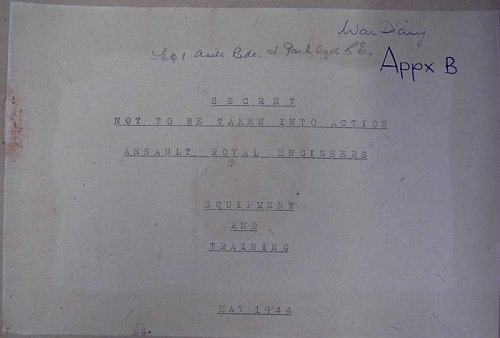
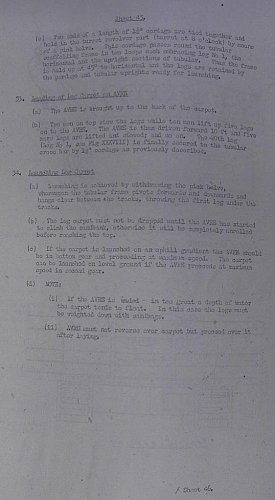
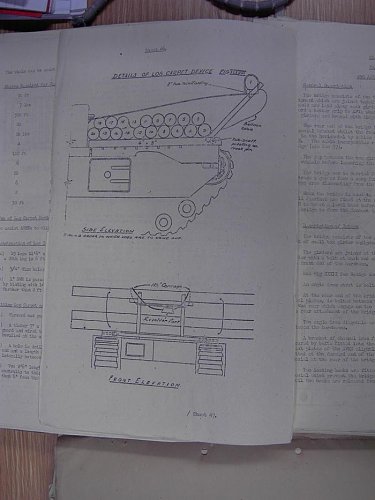
IT'S TIME.......TO DIVE INTO......
 The Rabbit Hole of Historeeeeeeeeeeee!