































![Very Cool! Make Your Own Star Wars: Legion Imperial Agent & Officer | Review [7 Days Early Access]](https://images.beastsofwar.com/2025/12/Star-Wars-Imperial-Agent-_-Officer-coverimage-V3-225-127.jpg)


No Cheese! C’est Impardonnable



Recommendations: 260
About the Project
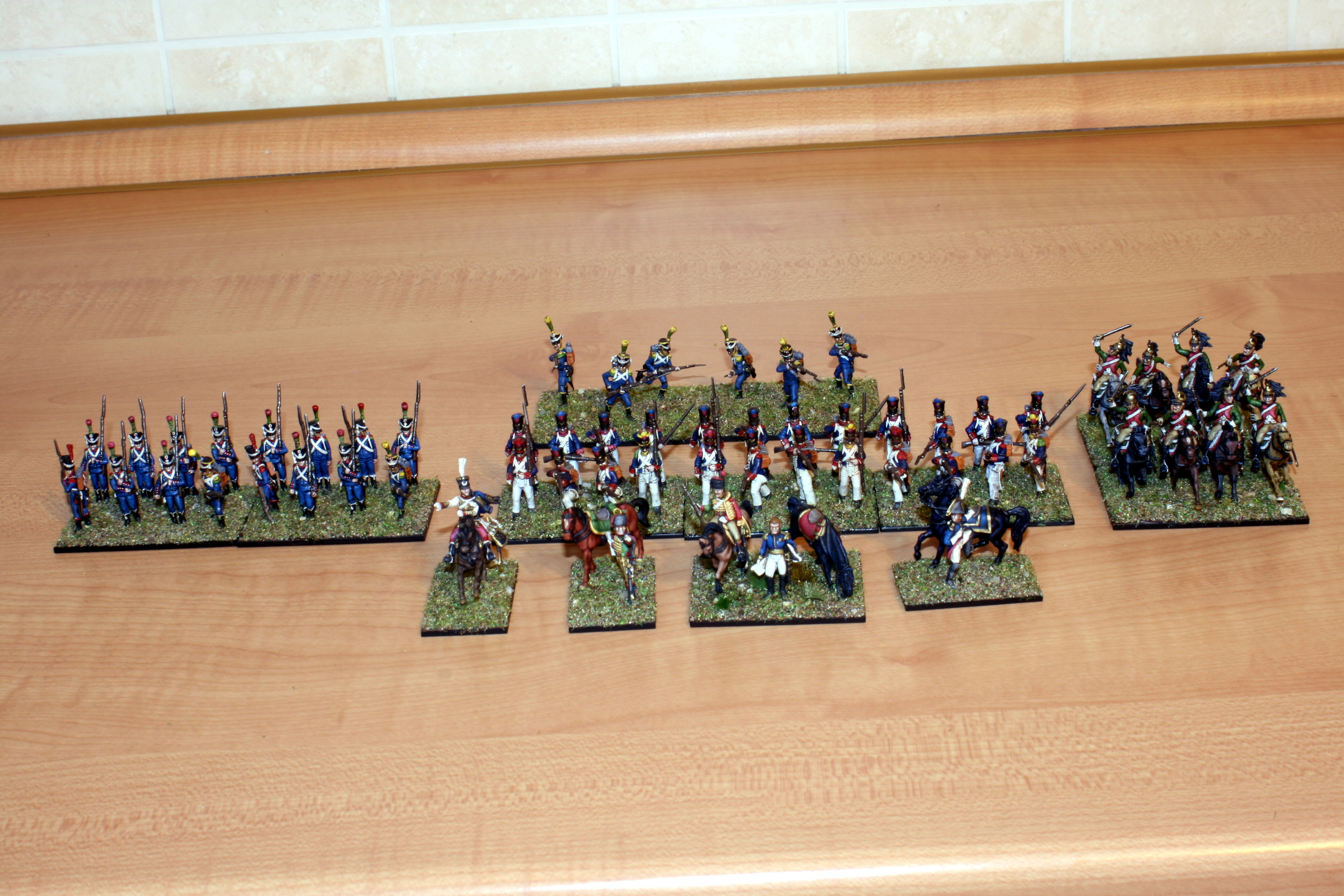
This is my 1/72 French Napoleonic army for DBN (De Della Napoleonicis) from KISR Publications. The project took me about 14 months to paint up and can be used with other wargame systems. I will gradually post pictures of all the unit types throughout the week as I get the time to take pictures and upload them.
Related Genre: Historical
This Project is Completed
An Army Finished.
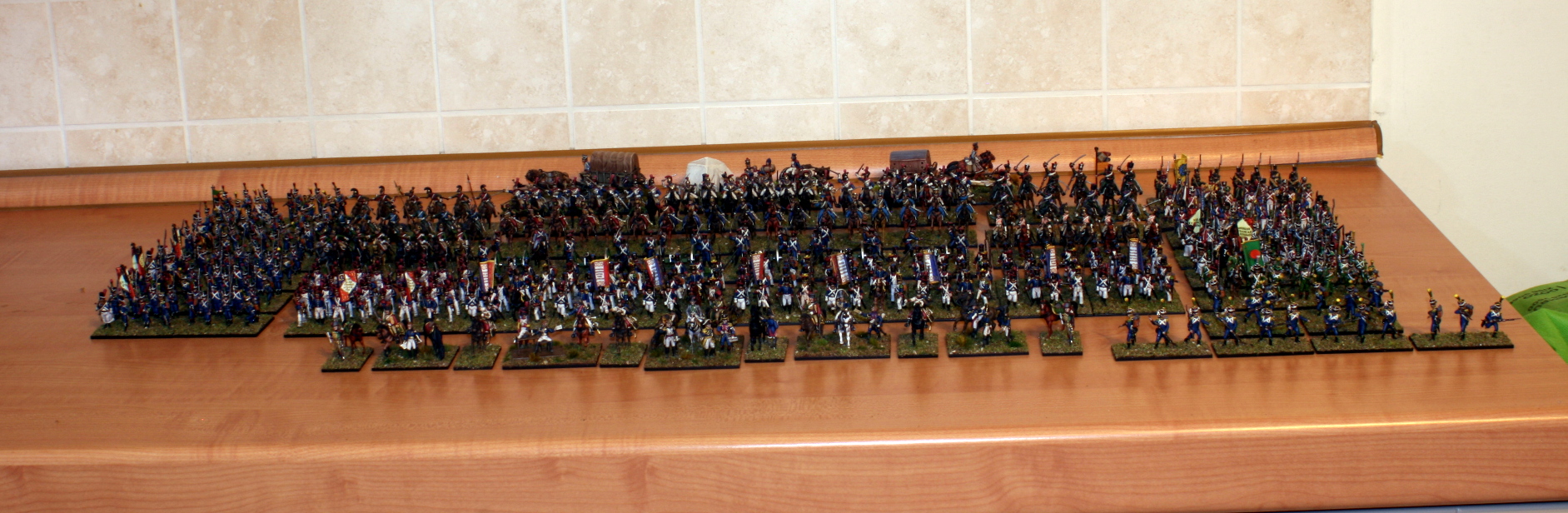
I have been working on this army for a bit over 14 months. I have had the figures for much longer, but I finally decided to paint them up. I did so because I wanted to play DBN more. I initially wanted to build a 10mm or 15mm army, but at the time 1/72 was the most viable option – but just two days after I finished painting, Warlord Games come out with their Napoloenic Epic range! Talk about bad timing – but hey c’est la vie!
DBN is not my favourite Napoleonic wargame, but I have a very soft spot for it. It is easy to play, sets up quickly, cheap to buy into miniature model-wise and can be played within an hour and a half – if you know what you are doing.
It is one of the best time/space economic game systems in the Napoleonic range and worthy of consideration. It has its flaws and drawbacks, but I will discuss that on a different post.
Below I have some photos of the command stands I painted up for DBN, as well as other for other games.
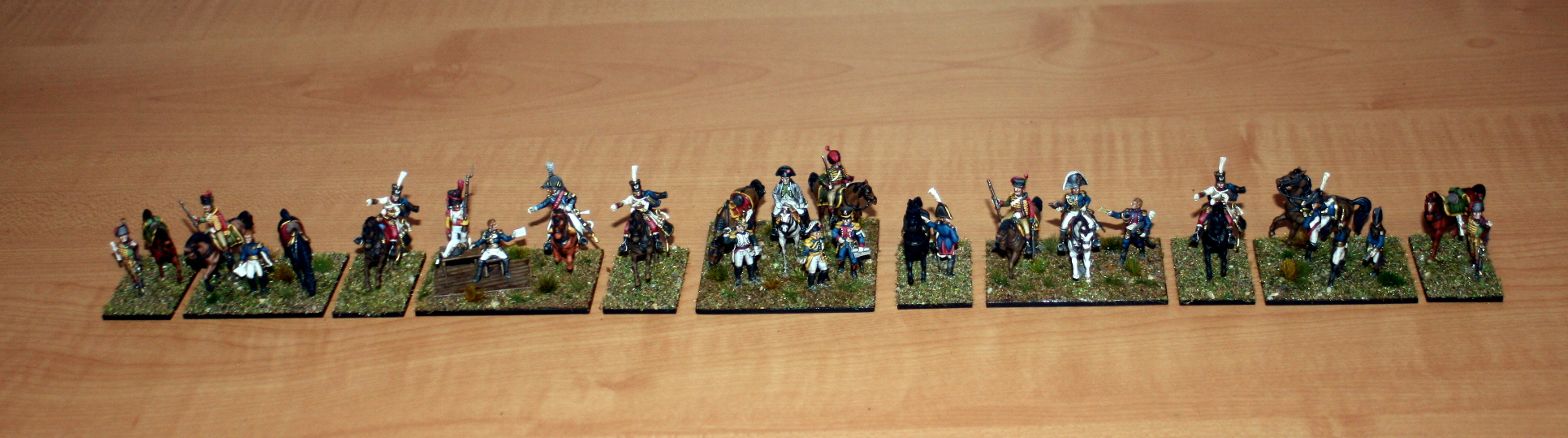 All the commanders in their pomp and circumstance.
 The Big Small Guy in person.
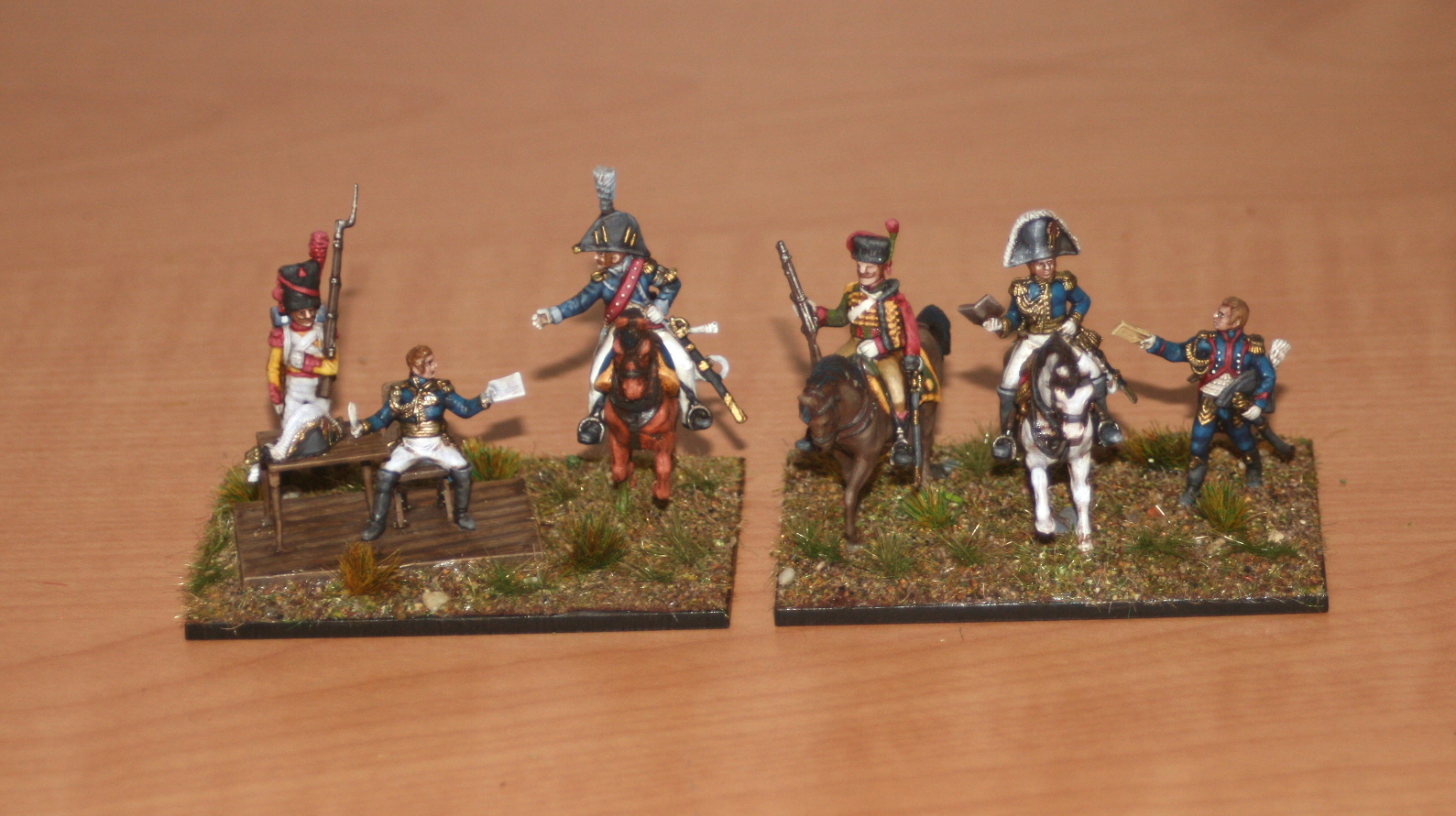 Other second-in-command bases! The sitting general is Berthier.
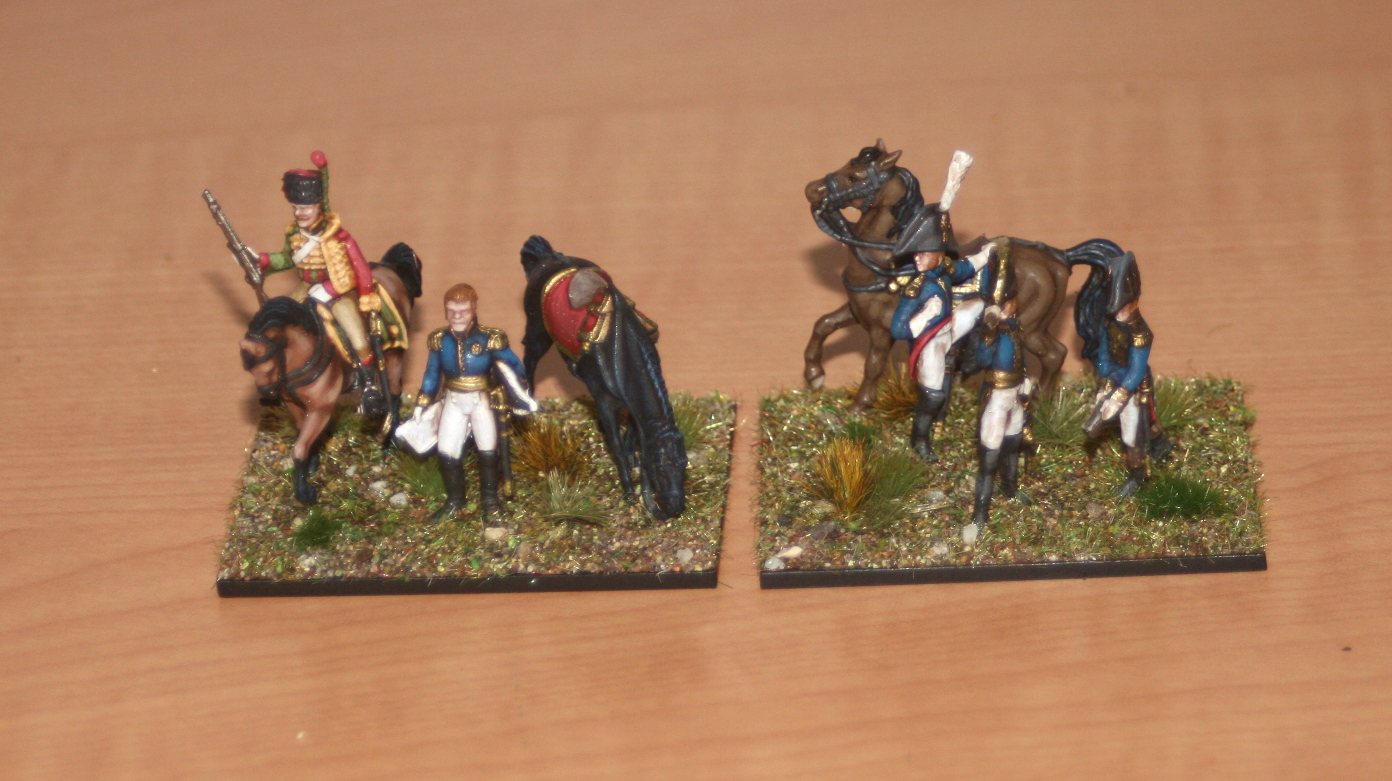 Two more general stands I can use for other game systems.
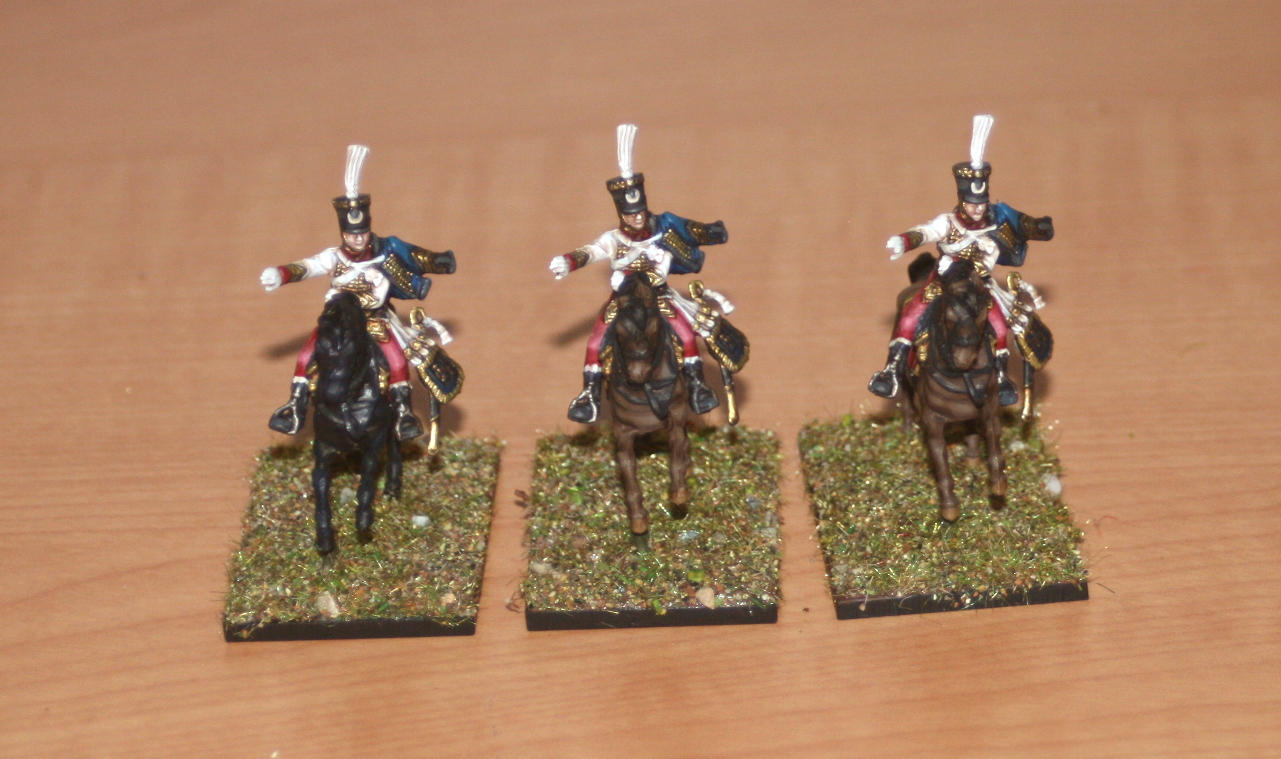 These are som of the ADCs. DBN uses only one but General D'armee uses several.
Next up are the Fusiliers, the heart of any French army. I will try post them Friday evening.
Regards,
NR
The Core of the Army and My Approach to Painting this Army
Any Napoleonic army would be an empty husk without its Fusiliers. The fusiliers in my army belong to Italieri with a few exceptions. As you will see, some uniforms are pre-1812 Bardin Regulation change and some (like the fusiliers) are post-1812. So I decided to go for an 1812 army were both types of uniforms were present, To be honest though, I don’t really care that much.
If you look carefully you will notice that only half the fusiliers have flags. This is intentional. I did this in order to be able to play other game systems where I could use two bases for a battalion; were one would have the flag and the other not.
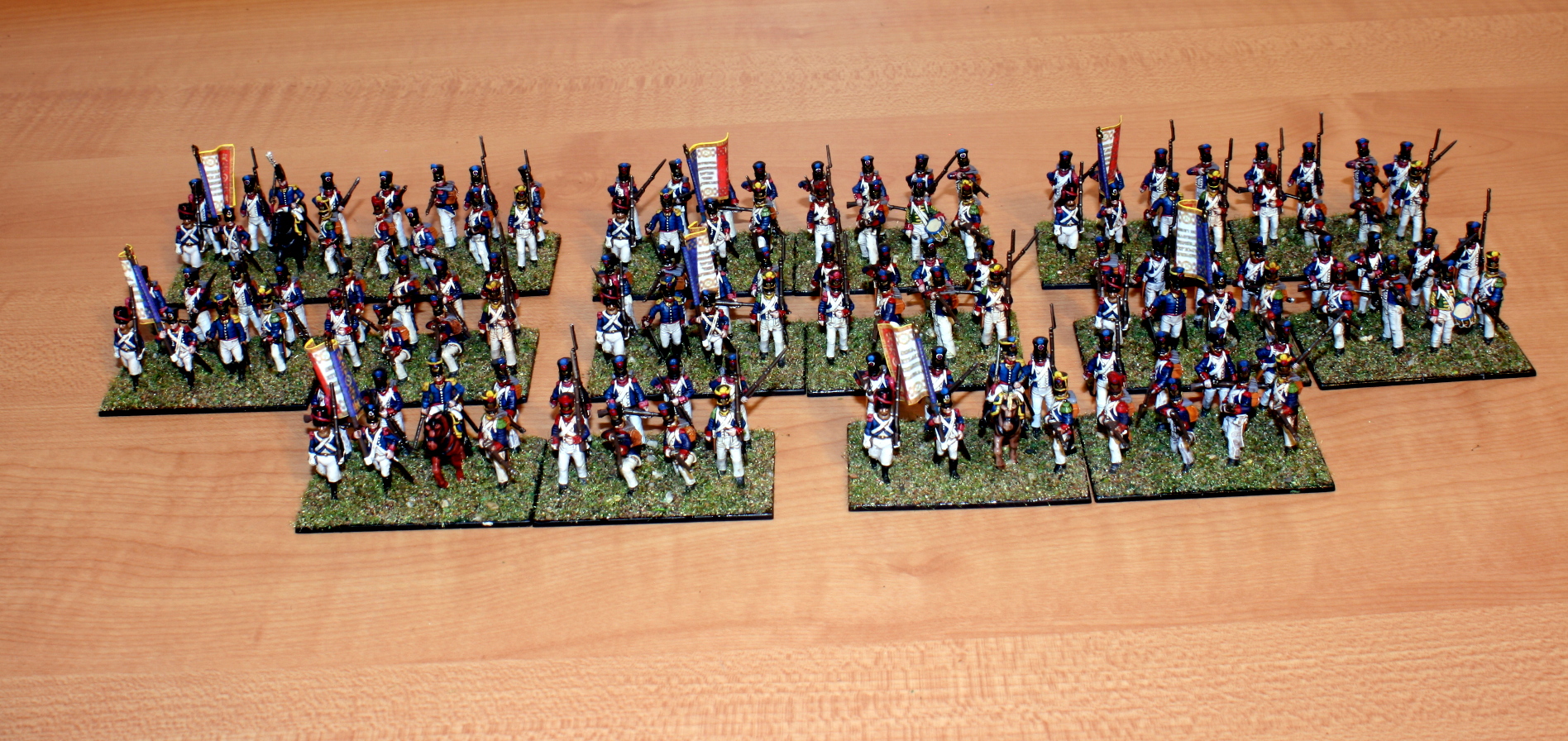 I have 16 bases of fusiliers or 8 battalions.
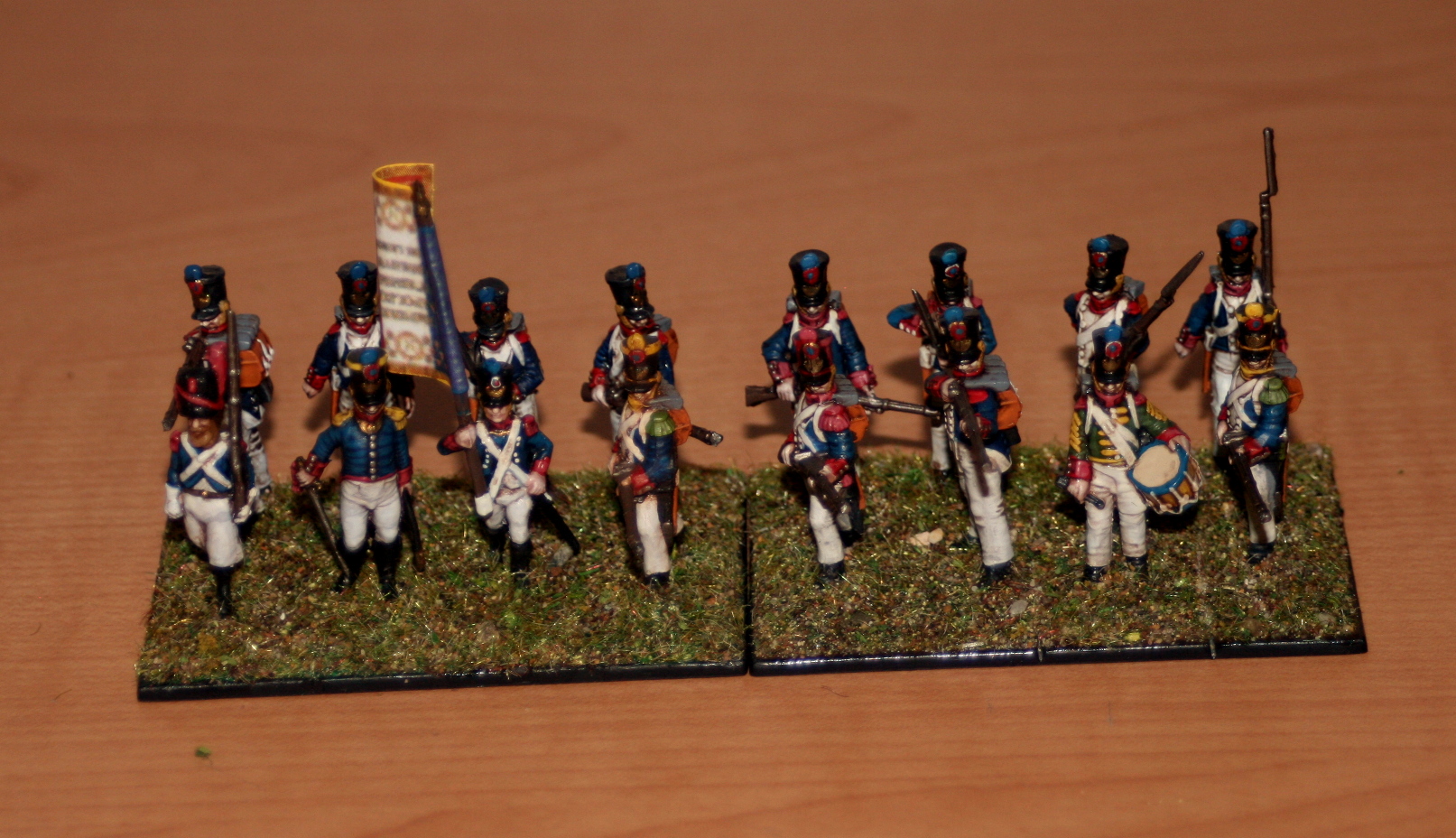 Two bases with 16 figures is used as a battalion for other game systems.
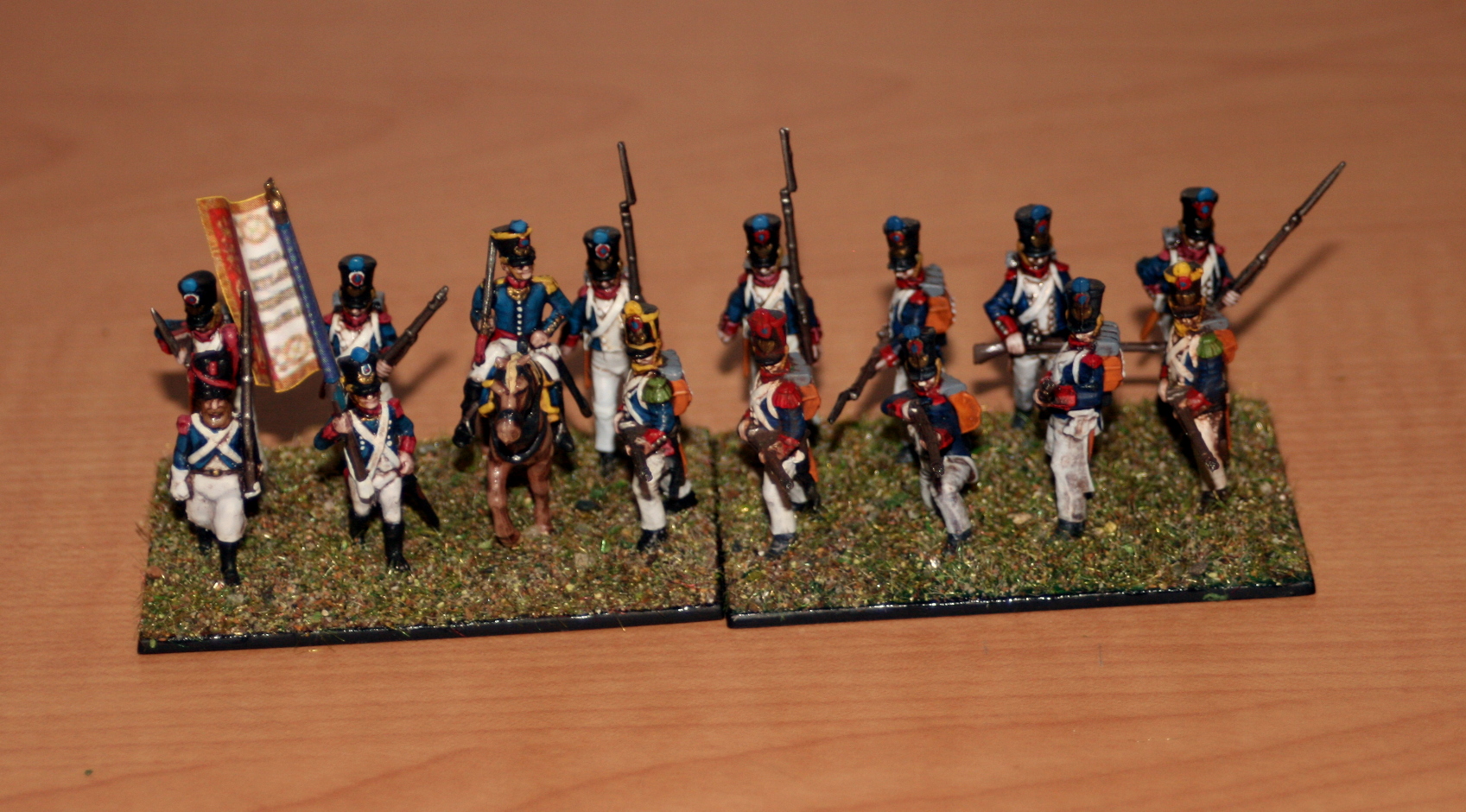 In some bases I swapped a mounted officer for two figures just for variety.
My Painting Approach and Philosopy.
When I began this army I decided on a few things or points I would follow – partly to remain sane and to manage a project over such a long period:-
- This was to be purely a gaming project. It was never meant to be a showcase army. Therefore it is meant to look good from a distance and not on close inspection.
- I was going to paint the troops with base colours and only one highlight and a wash for the lowlights and with emphasis on neatness. The generals will be a bit more elaborate with two or three highlights.
- I would try to set time aside and finish at least one base per week.
- The basing would be a simple flock mix.
- I was not going to fuss over the accuracy of excess details like uniform tubing or exact colouring of the clothing. If they look like fusiliers, then they are fusiliers.
I think this approach to army painting these cheap models served me well enough and the army is more than tabletop worthy. If you disagree please let know, I always enjoy listening to diverging opinions to my own (without judgement or prejudice!)
That’s all for today. Tomorrow I will post up one of my favourite troops – the Dragoons – Napoleon’s medium cavalry .
Regards,
NR
The Medium Cavalry
Unlike the Dragoons of Britain, the French Dragoons were a bit of a jack-of-all-trades. Sometimes called the poor man’s cavalry, they acted like heavy cavalry, but could also perform light cavalry duties. When without horse and saddle they acted like line infantry and also as dismounted cavalry when skirmishing.
In game terms they vary from rule set to rule set. In DBN they are classified as superior cavalry or inferior heavy cavalry. Some rulesets classify them simply as medium cavalry.
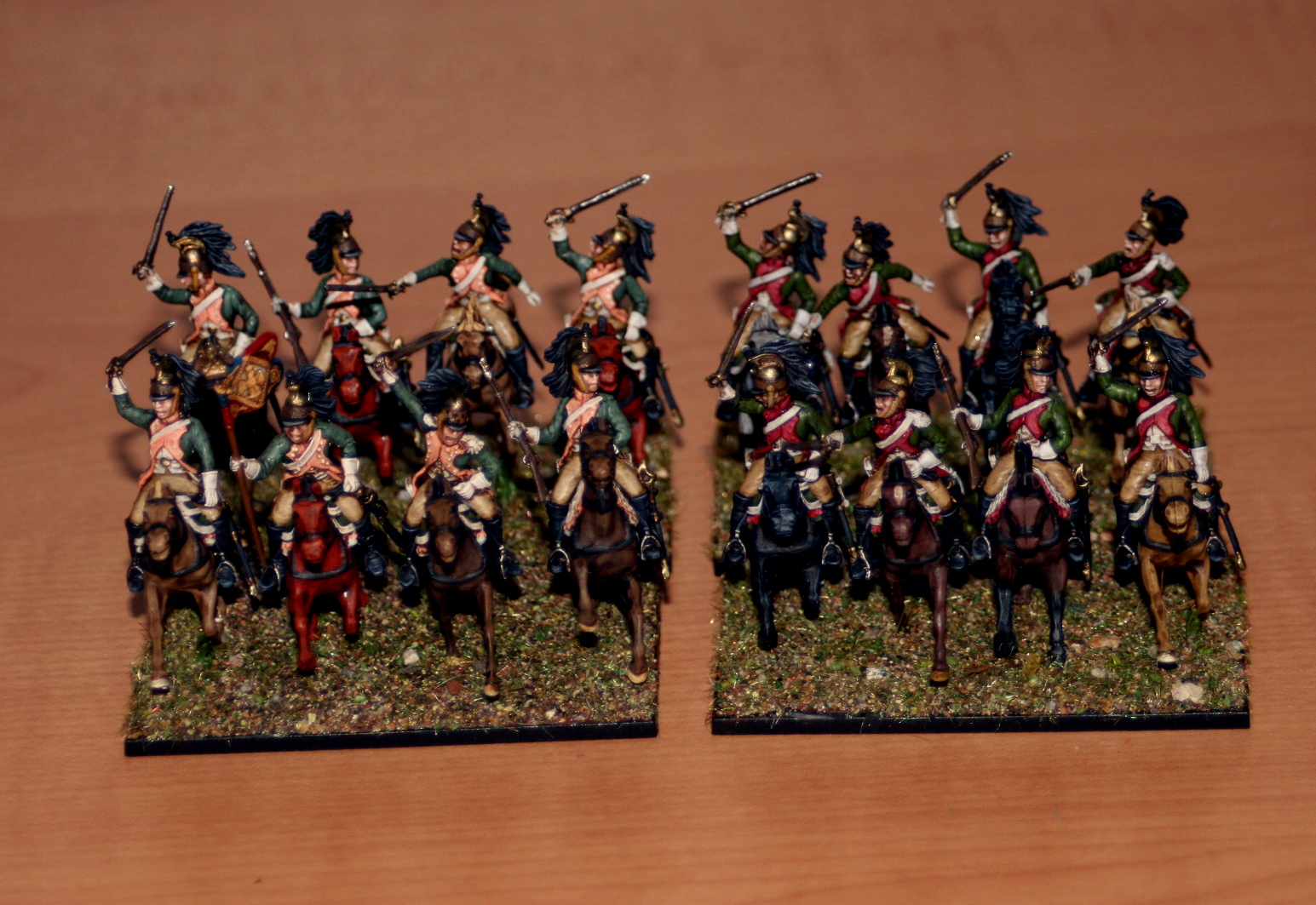
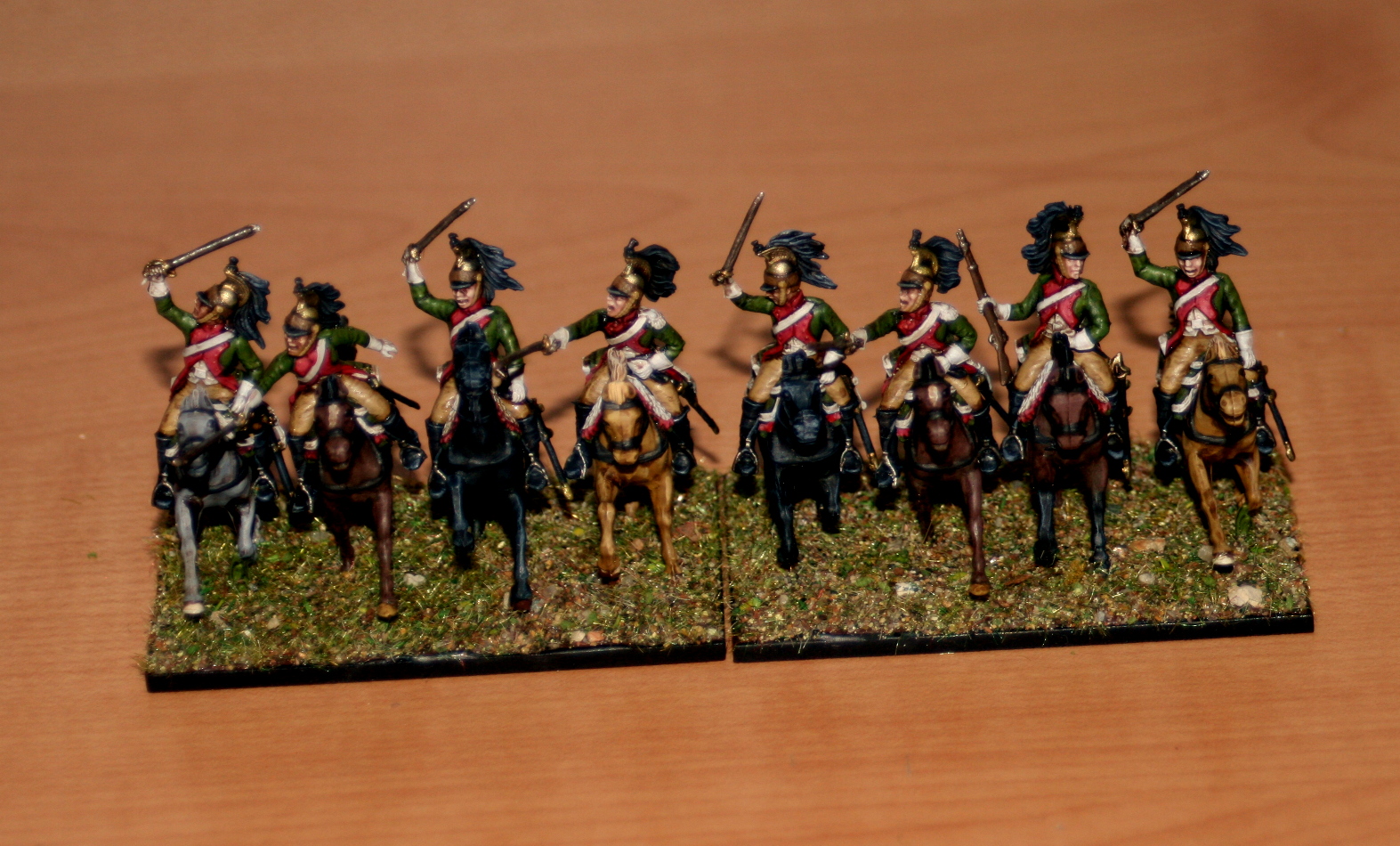
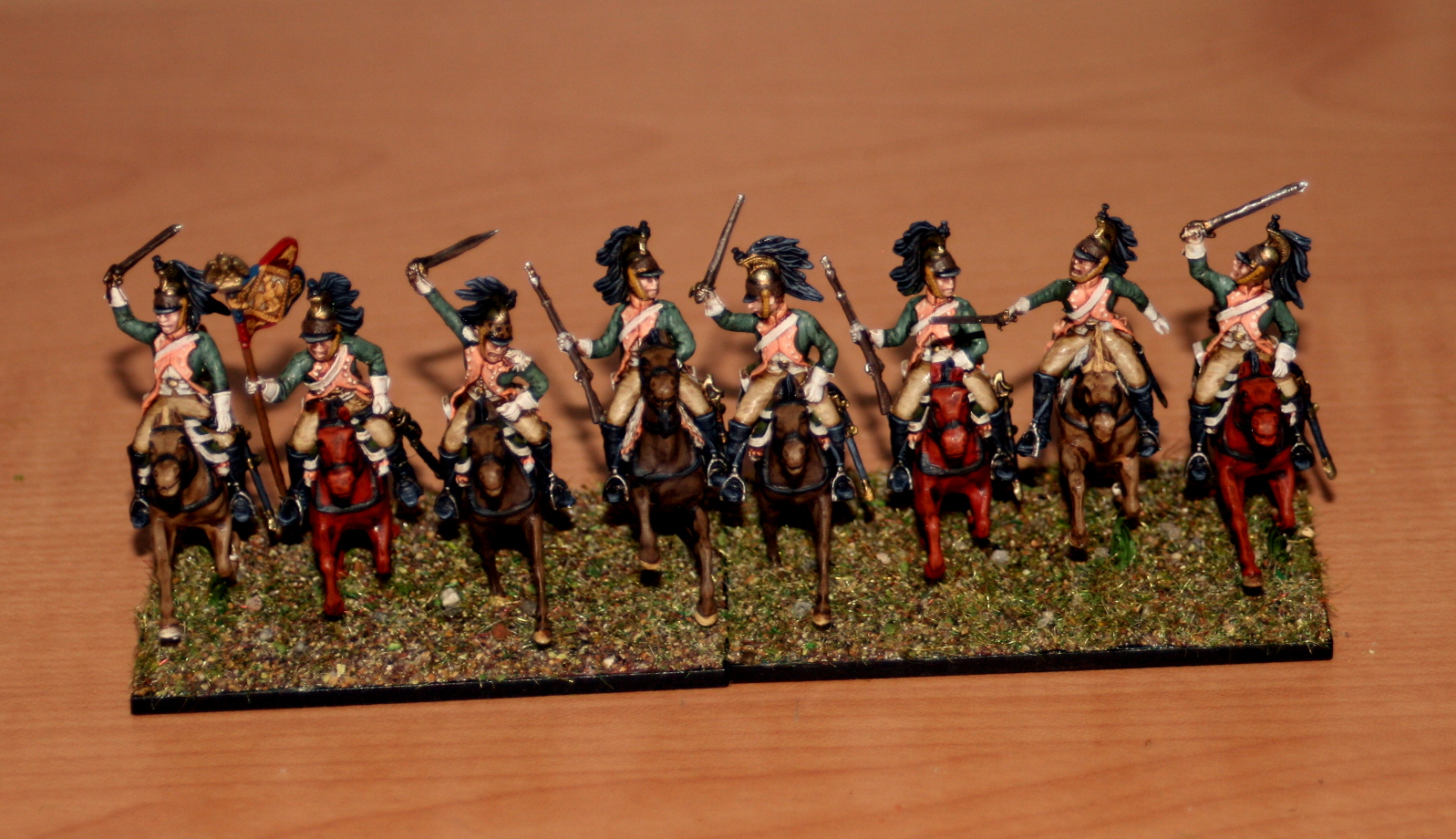
The French Dragoons are one of my favourite troops of the period, sharing the position with the Polish Vistula infantry and Lancers. I will be painting up more Dragoons for the third phase of this project when I start the French Imperial Guard. These dragoons are called Empress’ Dragoons and there are slight differences in their uniform which I will have to modify since there is no set available in plastic.
I will try to upload the cannonry in the next post. It all depends on time, but until then take care.
Regards,
NR
The Artillery
Artillery was a very important part in Napoleonic warfare, even more so when you take into account that Napoleon himself was an artillery man at heart – graduating as an artillery officer from the military academy at Brienne-le-Château.
It also plays an important role in wargames of the period and no less in DBN. The artillery are divided into two types – the heavy foot artillery and the lighter and mobile horse artillery.
 Artillery in array.
The observant period gamer will notice that I did not paint the lining around the vest of the artillerymen. This was an oversight on my part. I actually intended to paint them but it just slipped my mind. I only noticed after gluing them on and basing everything.
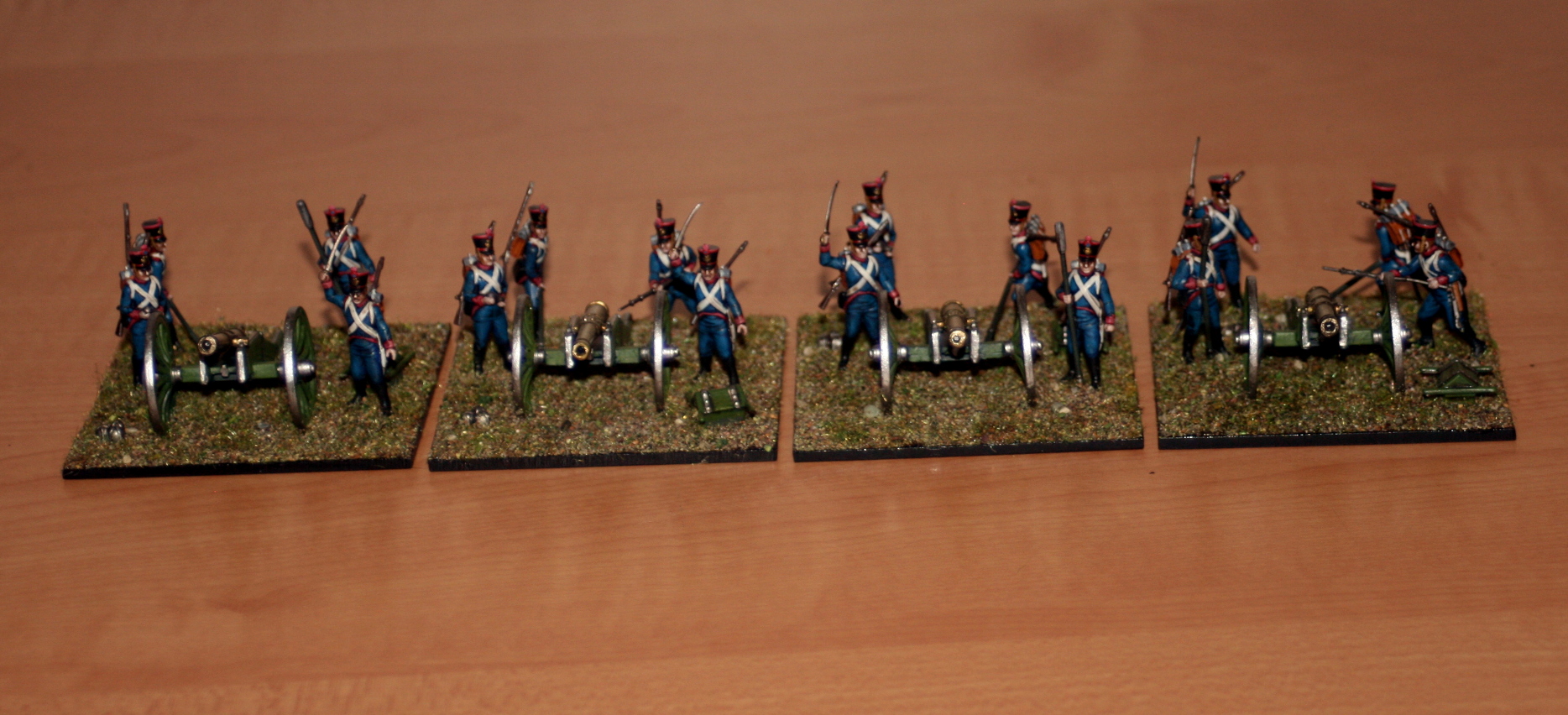 The foot artillery have a calibre between 9 to 12 pounders.
The models are a mixture of Zvevda and Italeri sets. The infantry are Zvevda for sure, the equerry is Italeri but I cannot remember the manufacturer of the cannons.
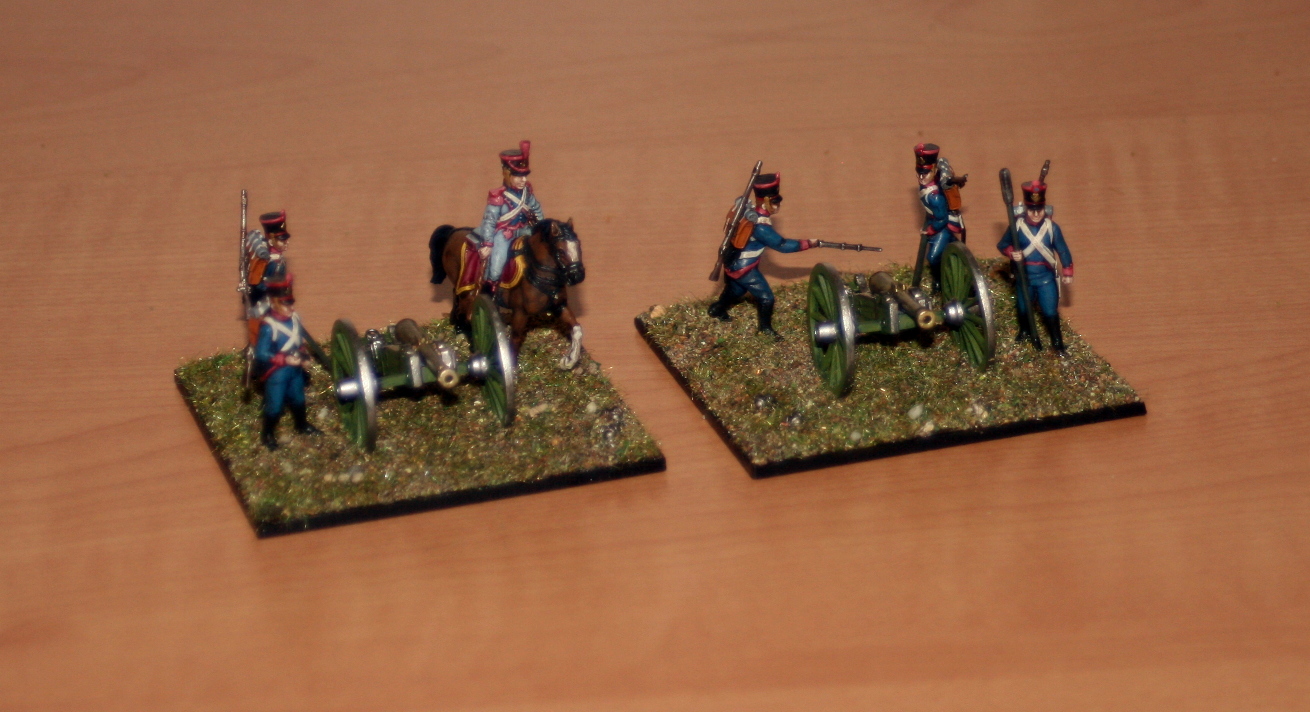 Horse artillery have 3 men per base instead of 4 and a smaller calibre cannon.
It is not over for today. I will try to post again tonight, but I am not sure what I will go for.
So until then take care and game on.
NR
Converting To Other Systems
DBN is not a totally proprietary system. You can use your models in other systems quite easily with just a few conventions that both players must keep.
Although DBN is part of the DBX family, it does not use exactly the same basing system where infantry are concerned. Instead of 4/3/2 figures per base, DBN uses 8/6/3 figures per base for close infantry, open infantry and skirmishers. The frontage is always the same, usually 40mm or 60mm.
This gives a good basis for using your bases in other systems. It might be more representational with 16 figures per battalion, but that is the price that has to be paid.
Below are a few games I use this basing system for. Note that I have only listed the games I have played and know something about.
For Army Level Games
Army level games like DBN, Et Sans Resultat (ESR) and Blucher are perfect for this basing system. Each base is basically considered a brigade and every model a battalion.
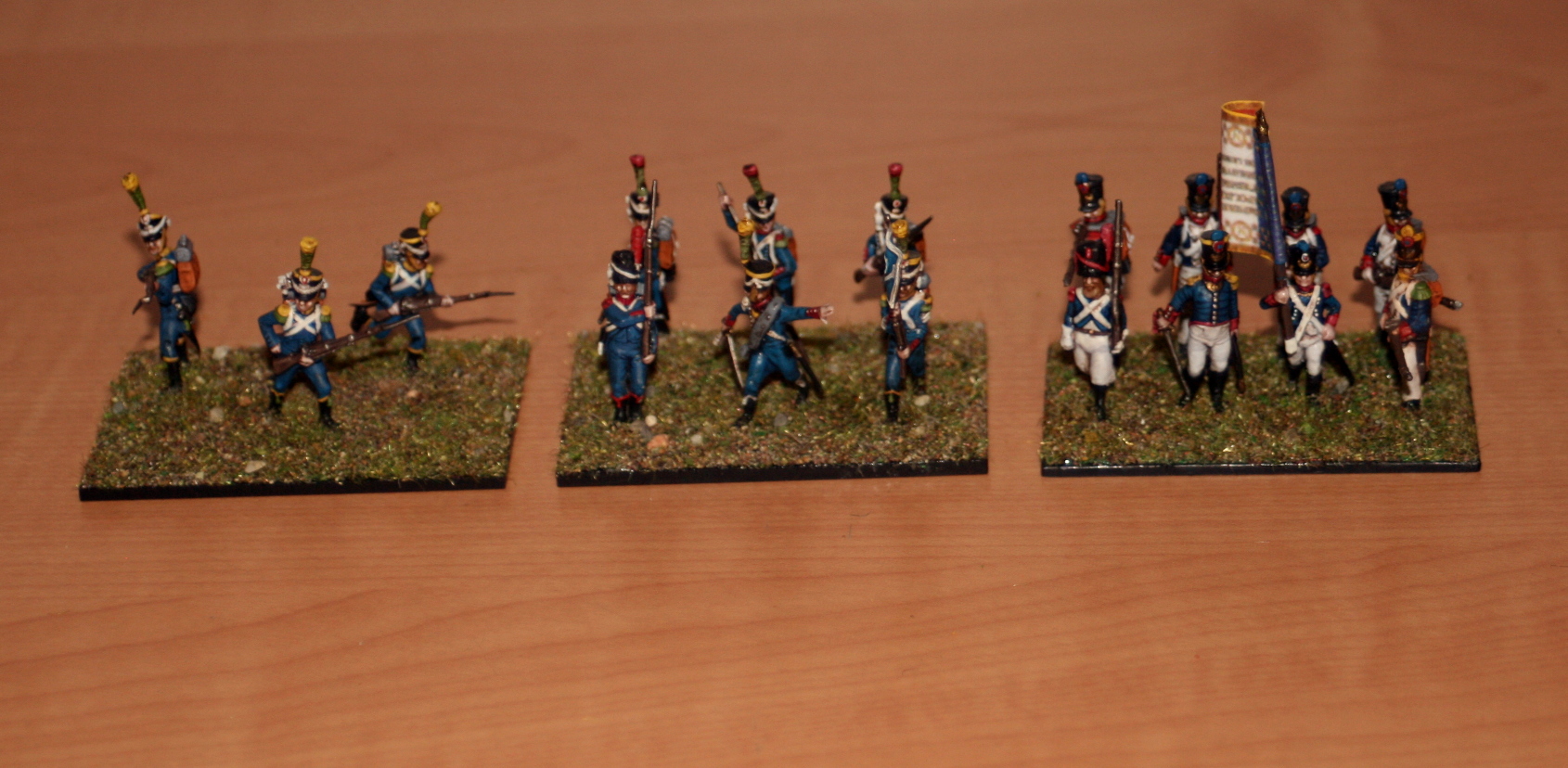 The first base are skirmishes, the second are open light and the last are close infantry.
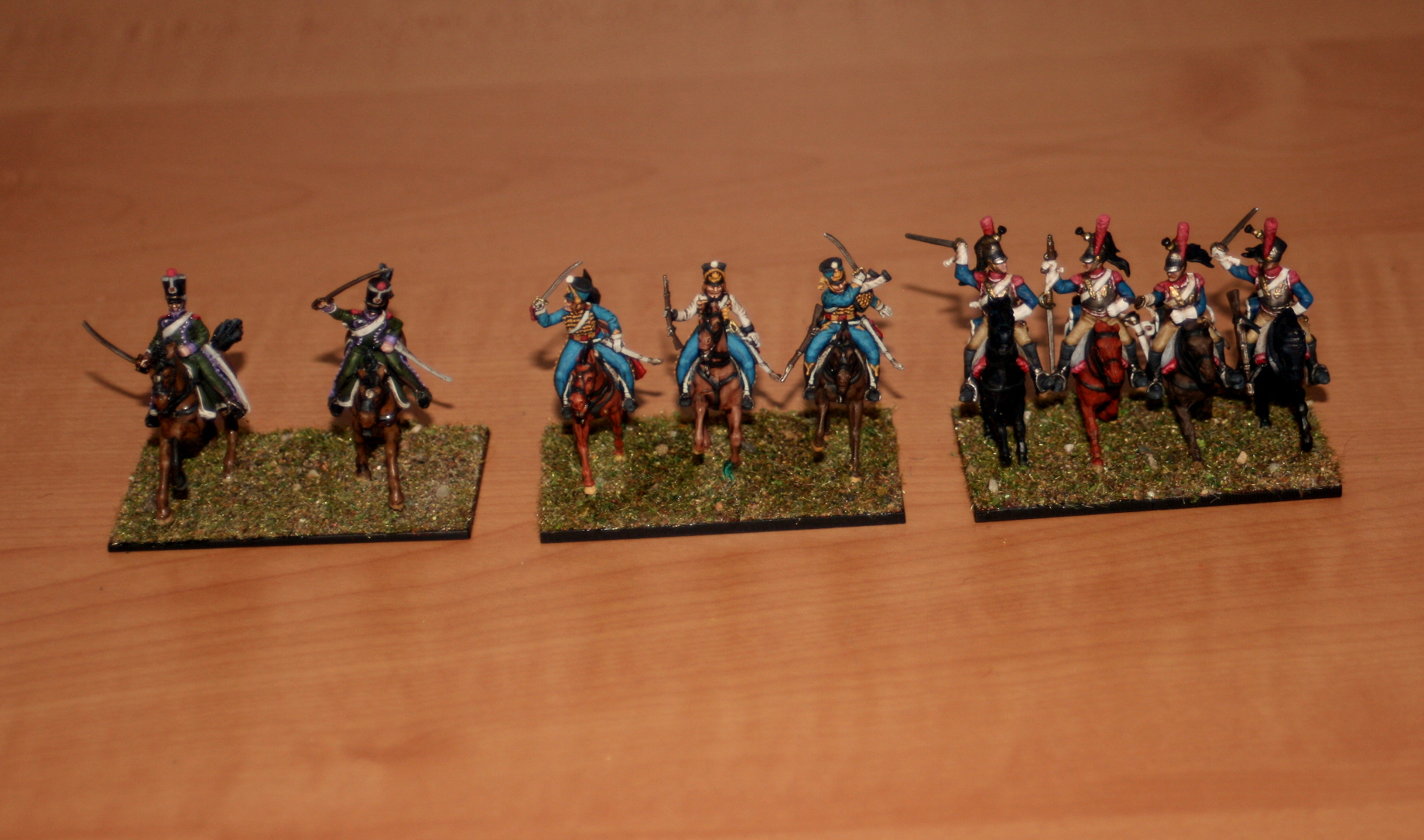 The first are skirmishing cavalry, the second are light cavalry and last heavy cavalry.
For Brigade Level Games
These type of games are probably the most played and they consist of games like Black Powder, General D’Armee and General de Brigade, and Over The Hills. The latest game I have played is Absolute Emperor and it is a strange one! It is an army level game that plays much like a brigade level game – it is not everyone’s cup of tea, but can be used with this basing system easily.
In order to use this basing system you must use two bases together (you can use more and if you have the figures more is definitely better). With two bases you can imitate all the basic formations in these games – namely Line, March Column, Attack Column and Square.
In the pictures below I have some examples. Note that the red wooden marker denotes the front and centre of each formation for easier reference.
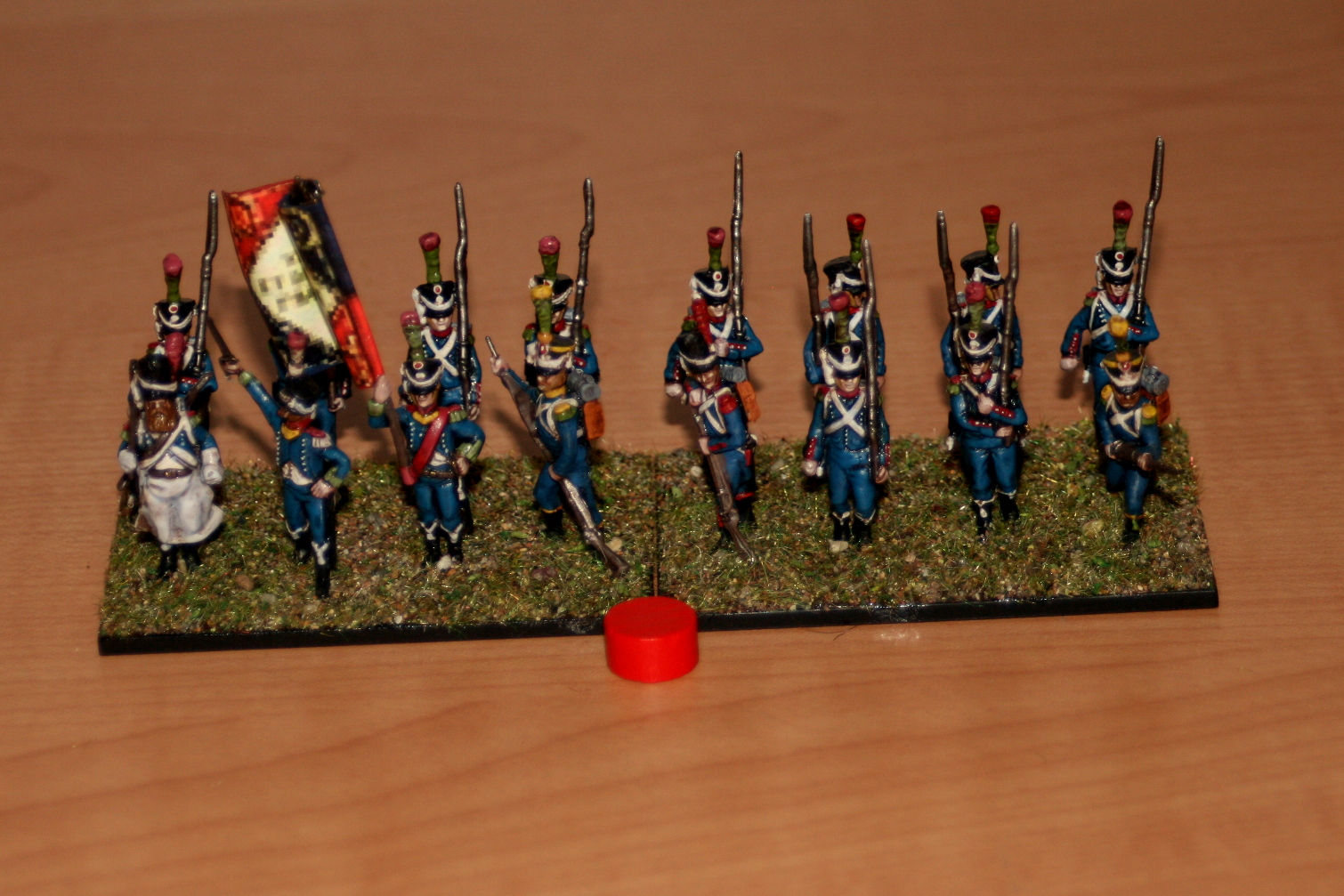 The Line formation - essential for British armies.
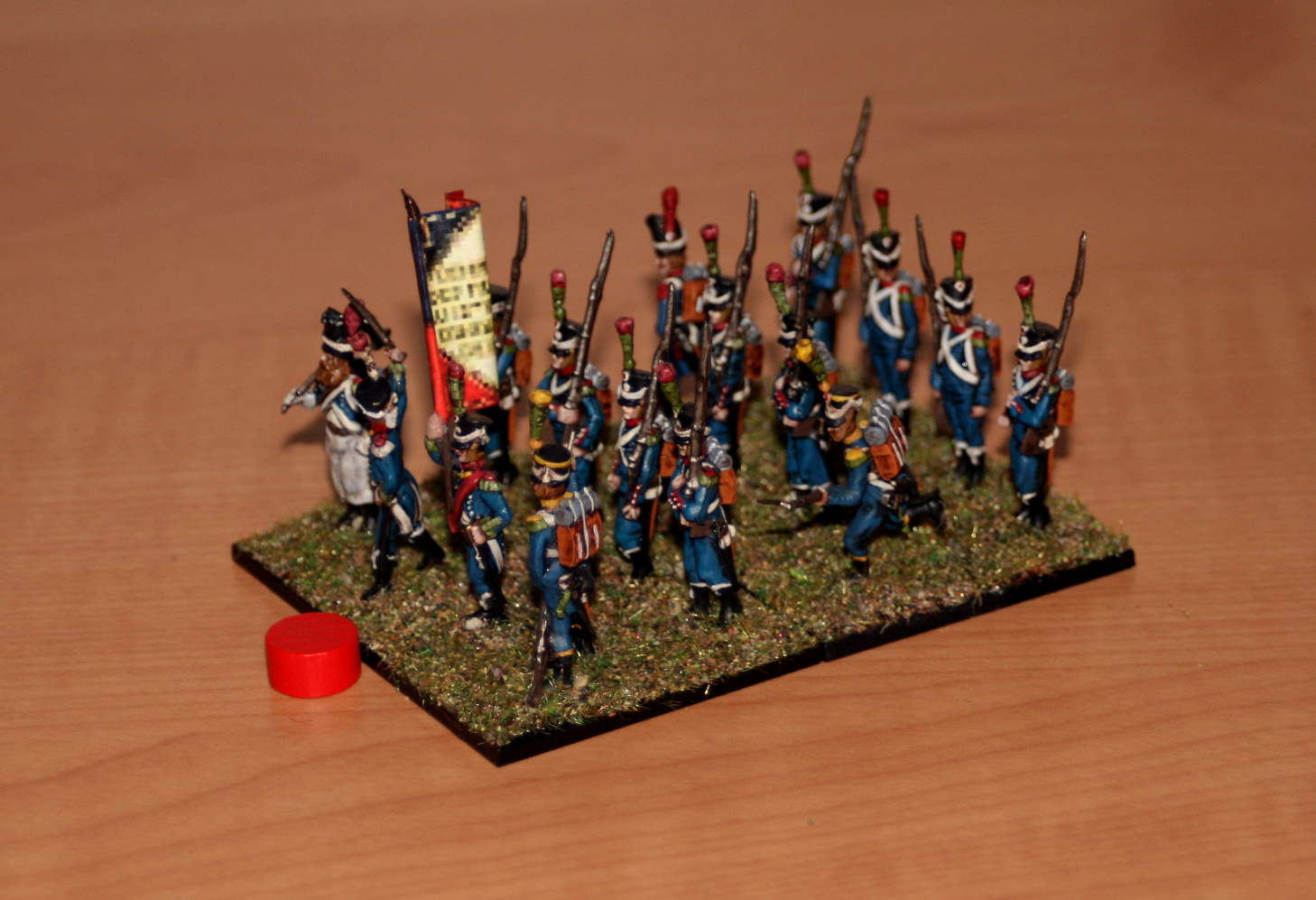 An attack column formed with 2 bases behind each other.
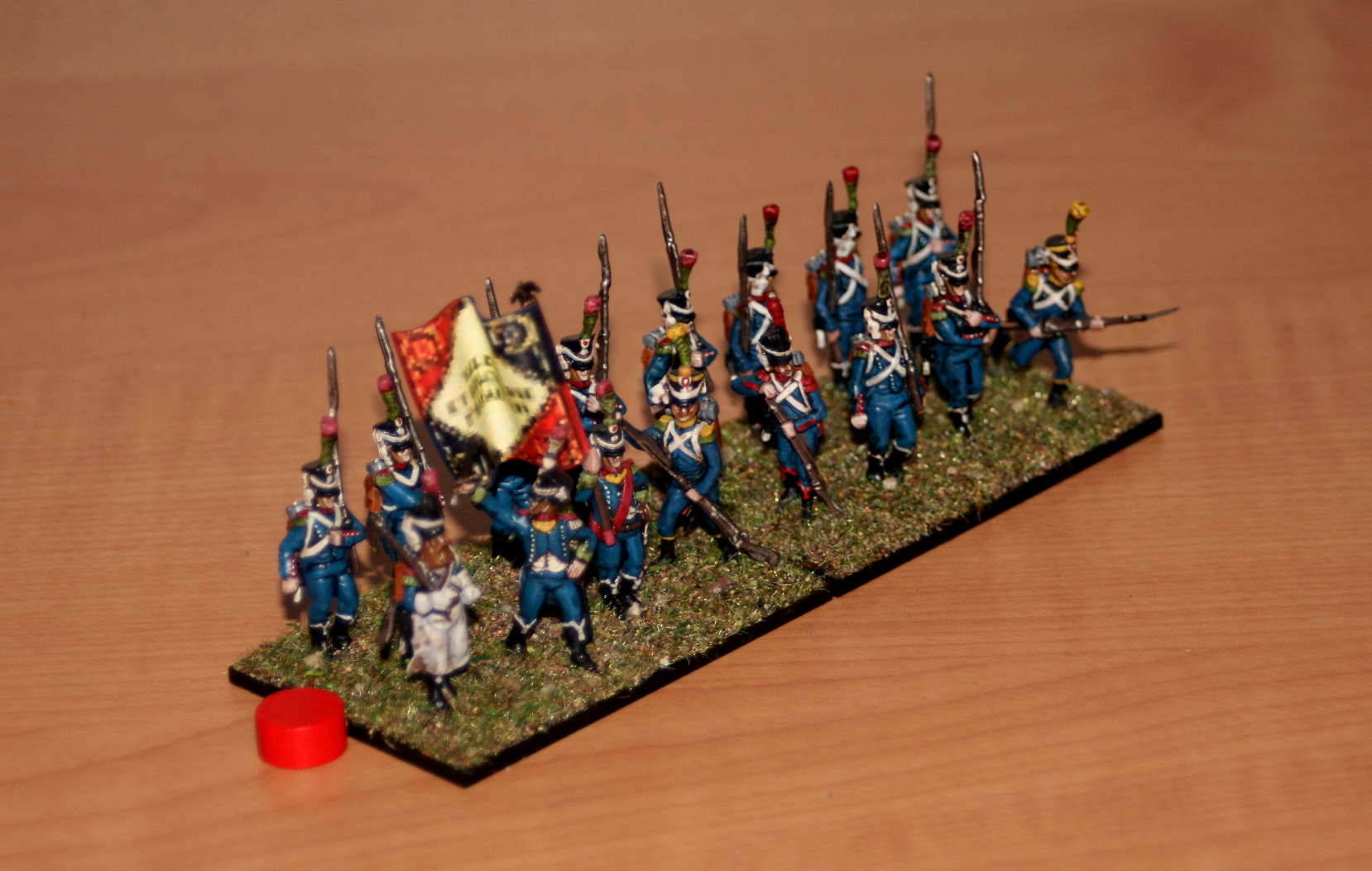 A practical way of showing a marching colum.
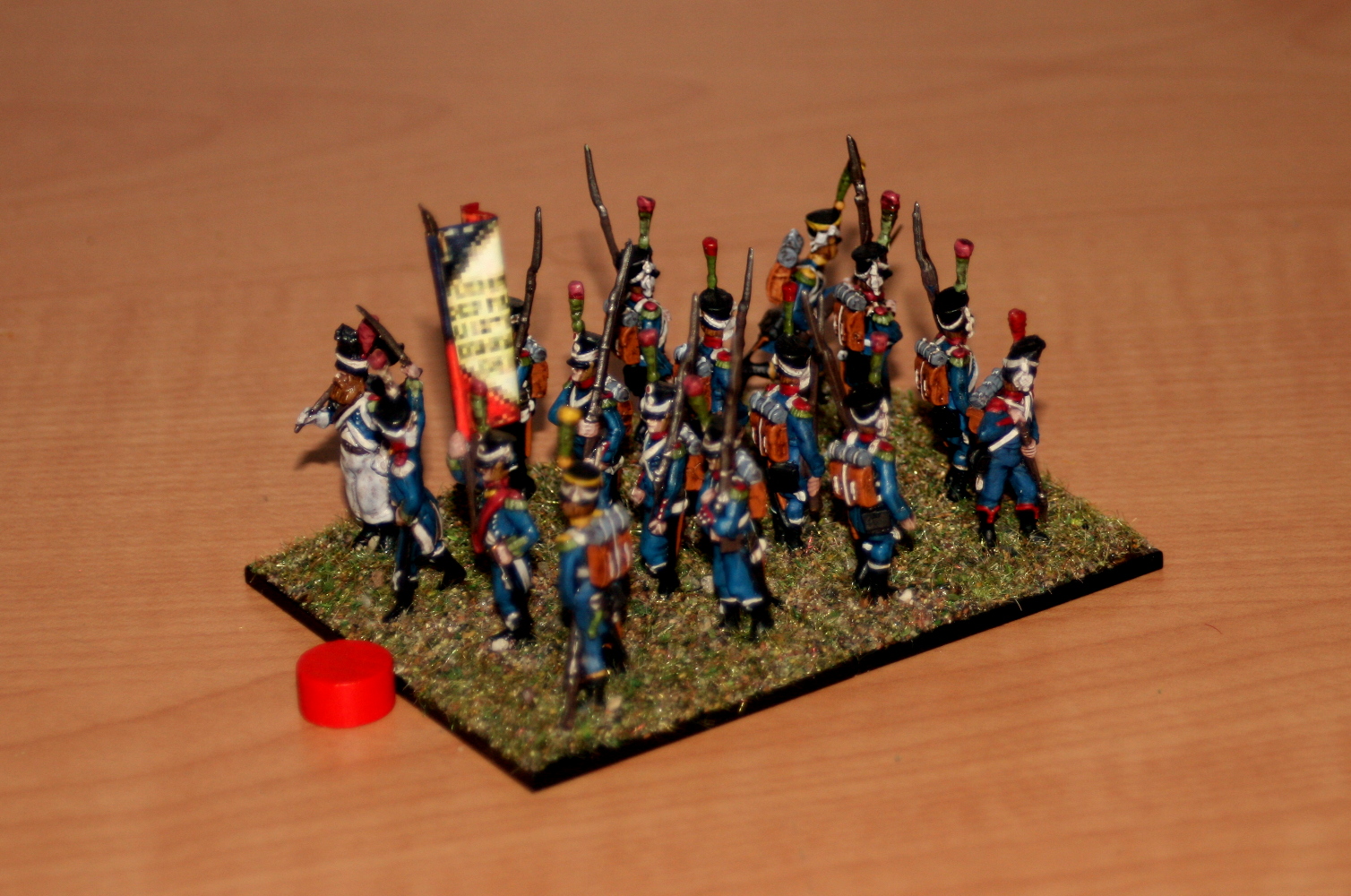 A square is similiar to a marching column but with the 2nd base facing the other way.
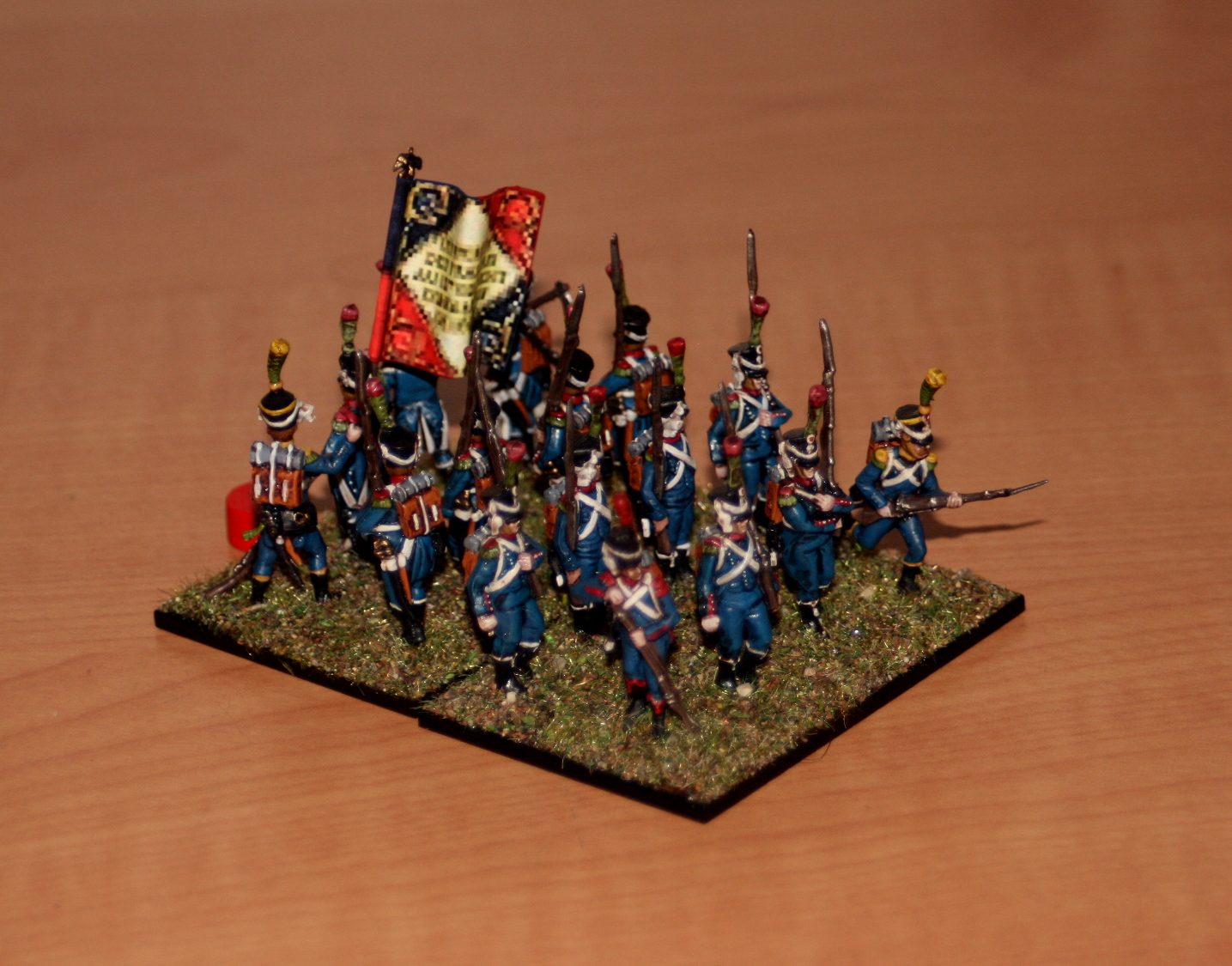 The square from behind.
Please note that there are sets with figures posed for square formations. Instead of using the system above, you can build a square and just replace the two bases with the square, just keep the sides all the same length as the frontage. Unfortunately, I do not have a built-up example of this for the French, but I plan on doing this for the British for sure.
For Large Skirmish Games
The only large skirmish game I currently play is Sharp Practice, and I find that this basing system works just as well for it.
In Sharp Practice every model is a single man. A formation is formed from units of 8 models each for close infantry and cavalry, and 6 models for skirmishes. All you need to do is keep a wound marker behind each base since you cannot remove models physically – something like a small die is perfect.
This is how we learned to play the game, although I prefer to use 28mm models for Sharp Practice – I must admit.
 A typical force for Sharp Practice
So that is it! As you can see, building an army for DBN does not exclude you from playing other games. The basing system is flexible enough to accommodate three levels of combat. The only thing that stops you is your personal preference – something I completely understand and condone.
Next up are the light infantry. Until then stay safe and play on.
NR
The Light Infantry
The light infantry in my army are all from the Hat and Zvevda ranges. The uniform is from 1809 up to 1812. These are some of Hat’s best miniatures in my opinion, I recommend them to anyone building a French Napoleonic army in 172 scale.
In DBN, light infantry units can operate as close infantry or in open formation. Therefore I based them in two ways. The first was to base them as fusiliers, as seen below.
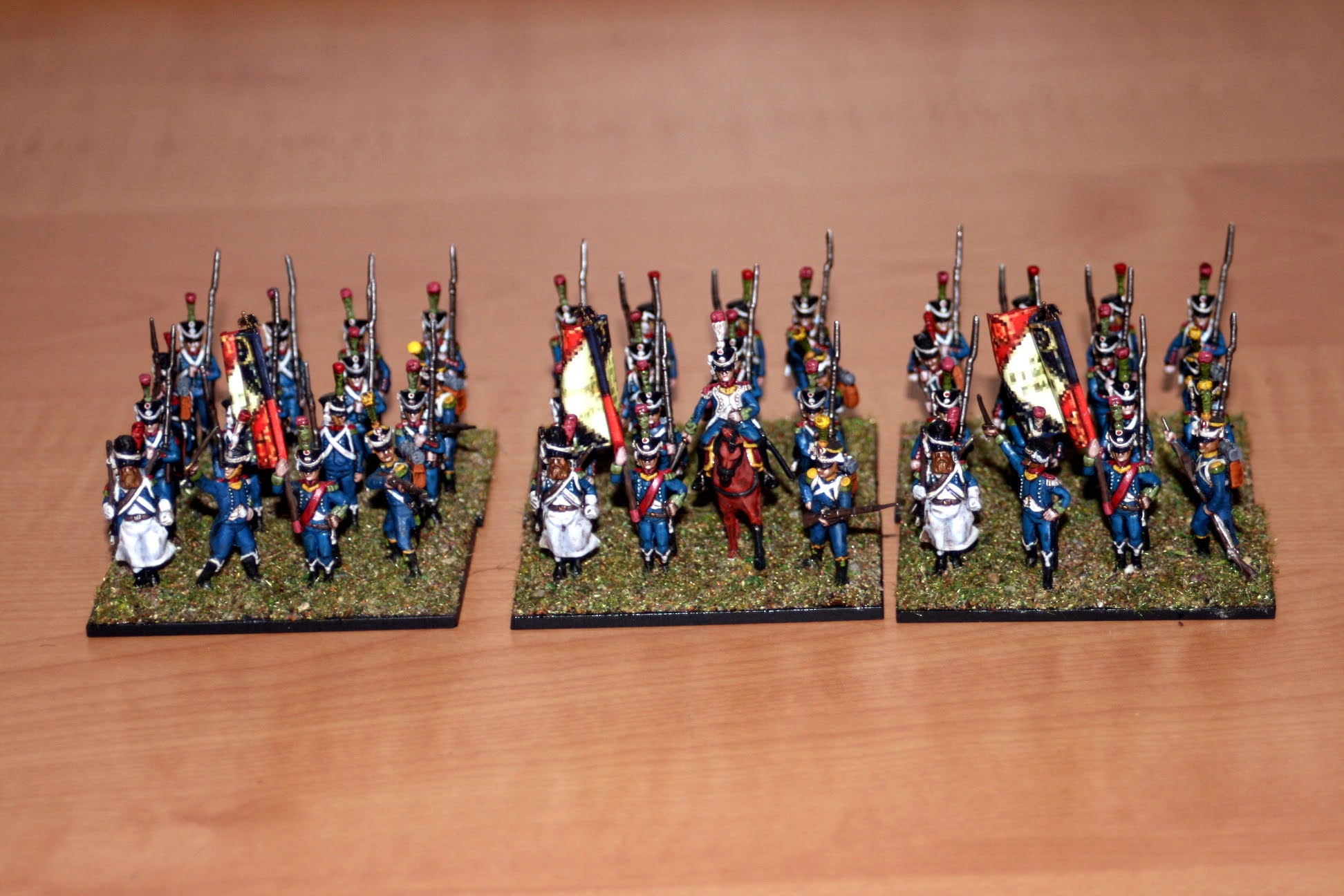
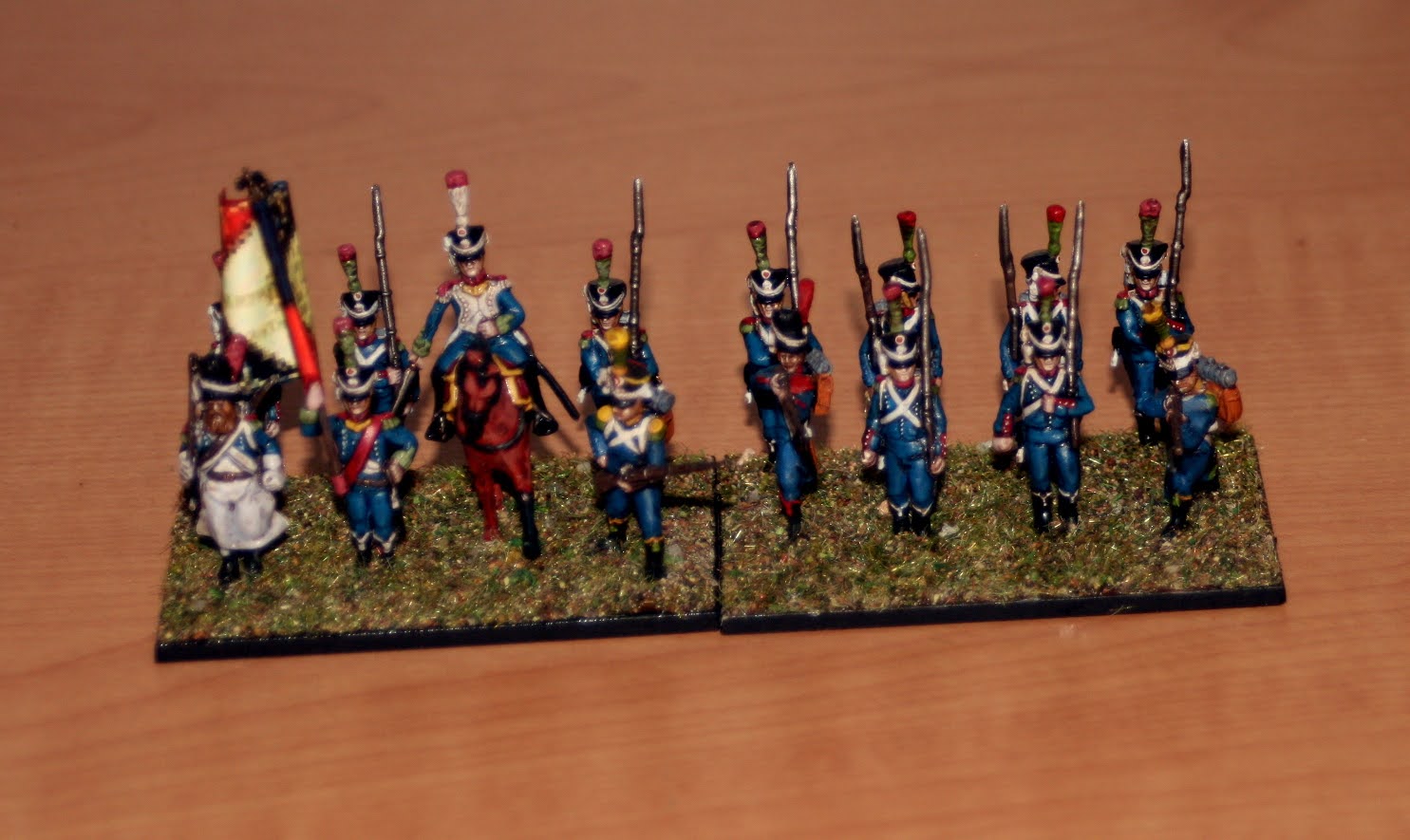
The second lot were based with only 6 figures per base instead of 8. This shows the light infantry dispersing and operating in an open formation. The bases also have a slightly longer depth as well (but the same frontage).
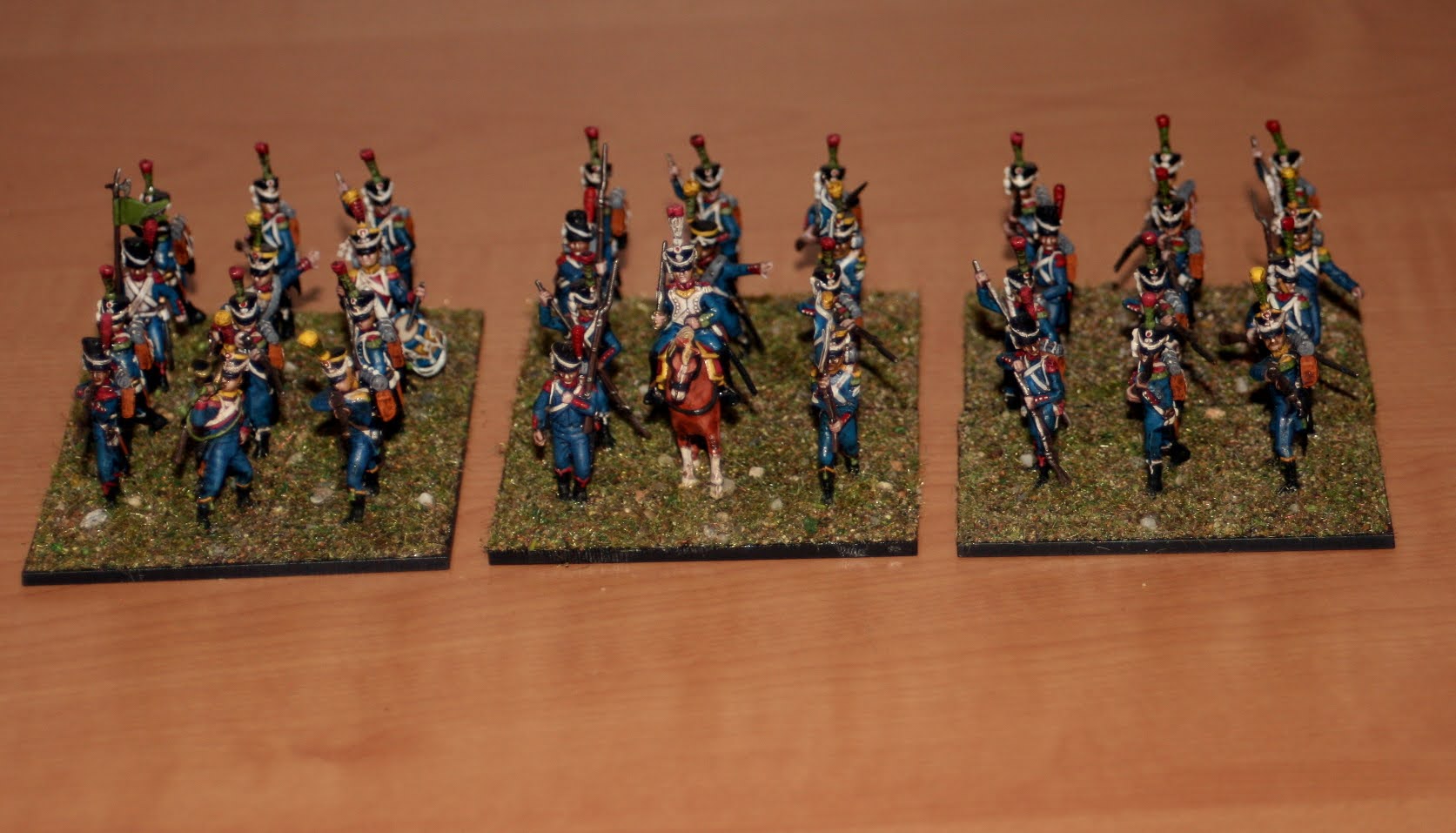
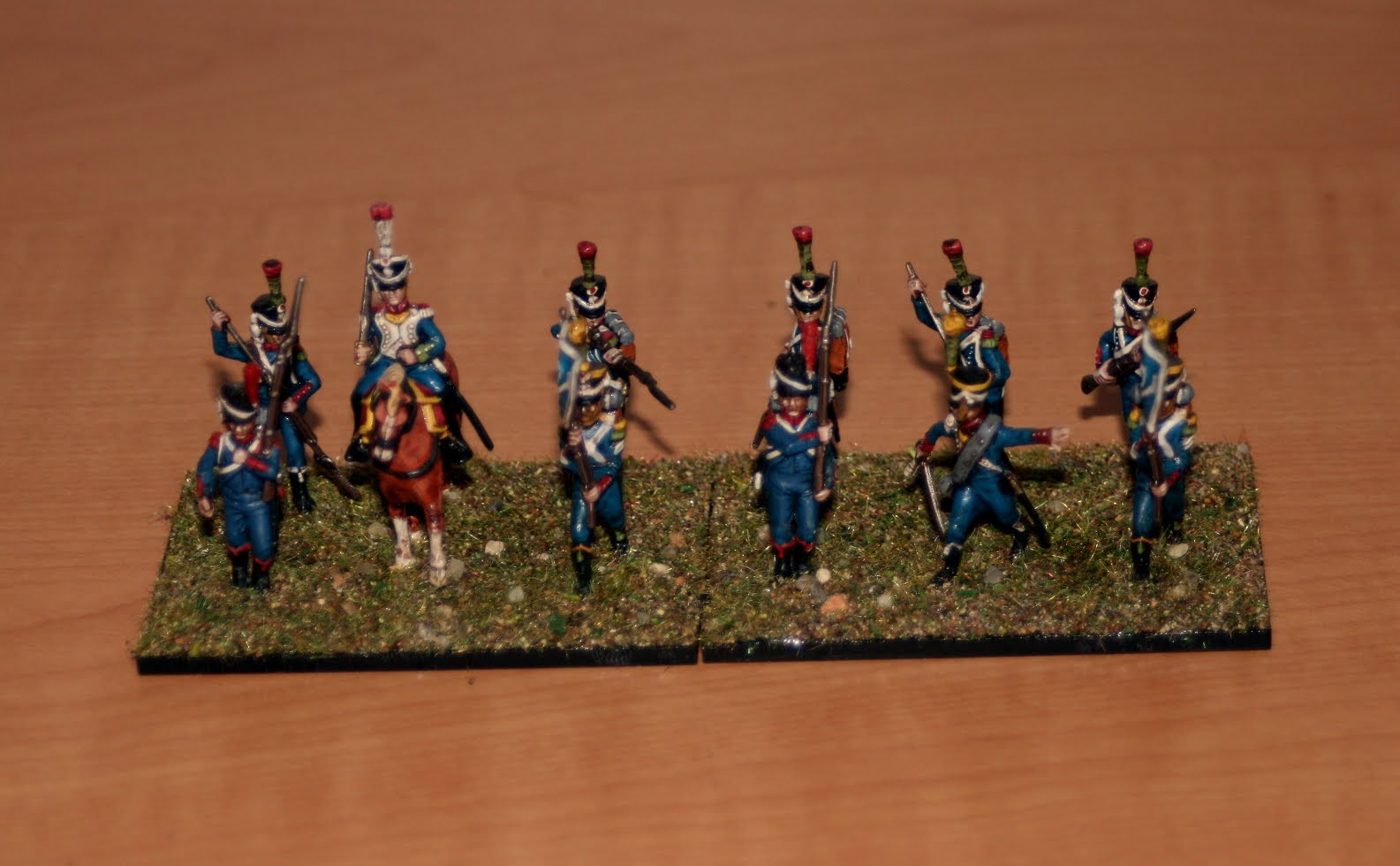
I also have units of voltiguers in skirmish formation. The first type with 3 figures per base is used in DBN (note the longer depth of the base). The second group I painted up for other brigade level games I play that require voltiguers to operate and detach from their formations. They also have 3 figures per base, but can also work with 2 figures per base.
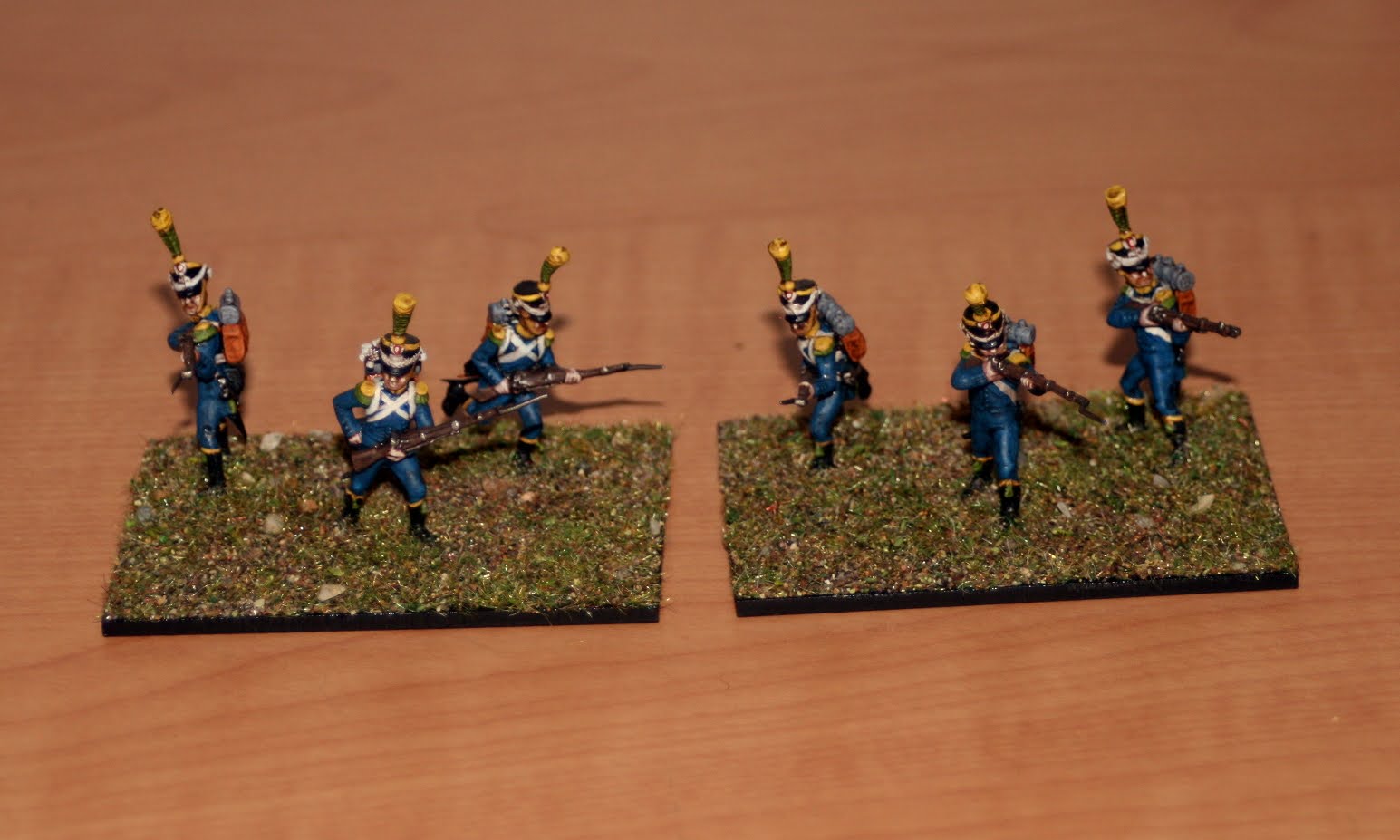 Used for DBN.
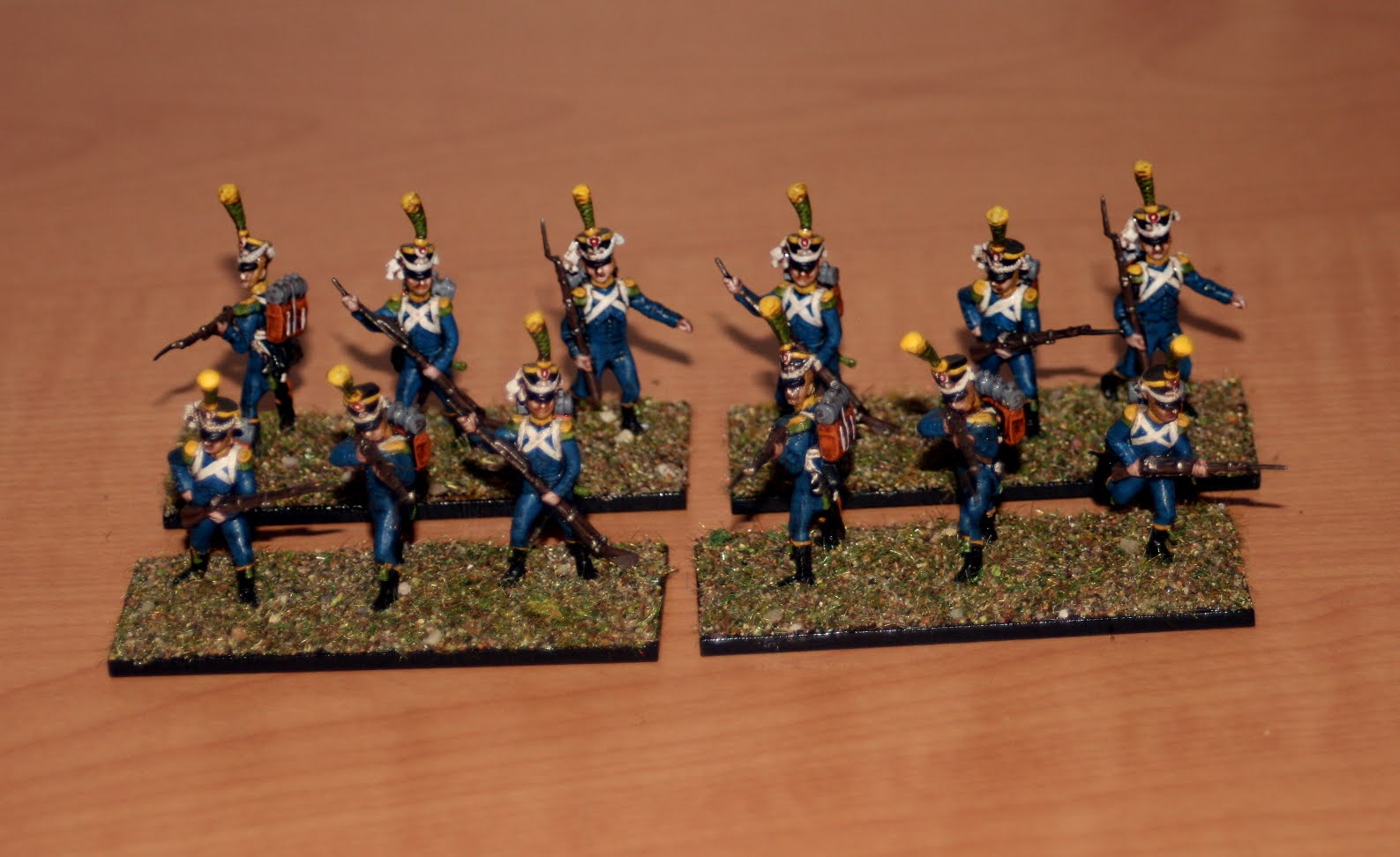 Used for other games.
That is all for my light troops, now it is time to add some colour with the allies. That, though, is for the next post.
Regards,
NR
Adding Colour To The French
In my opinion, no French army would be complete without the allied forces that accompanied and fought beside it.
They also add colour and spectacle to the army, unlike the boring (yet formidable) 1813-1815 Prussians.
For the first phase of this project I decided to paint up 12 bases of allies – 2 of each. This allowed me to form up 6 colourful battalions – each one from a different nation or region. I also chose them in a way as to make them as different in colour as possible from the French infantry.
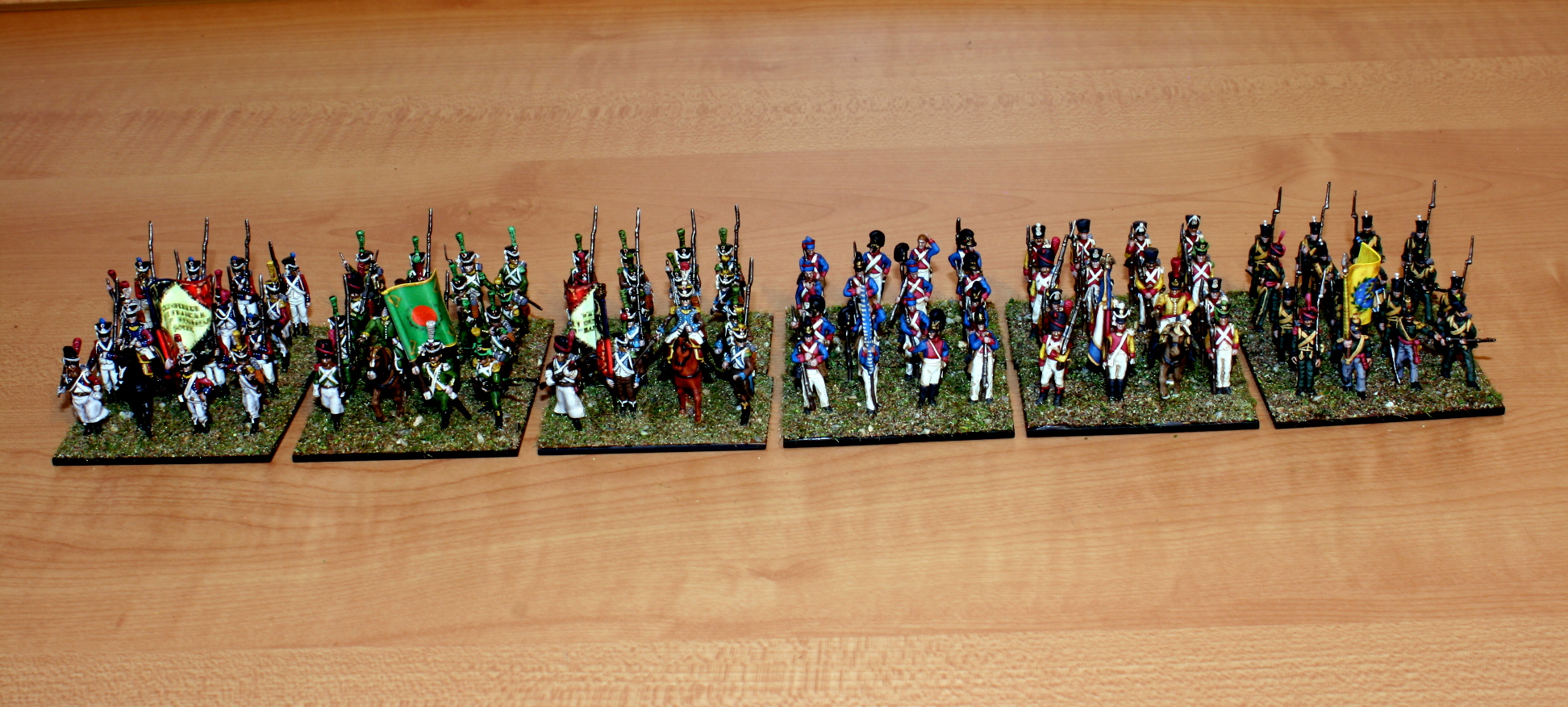 Lined up and ready to show the Russians a thing or two.
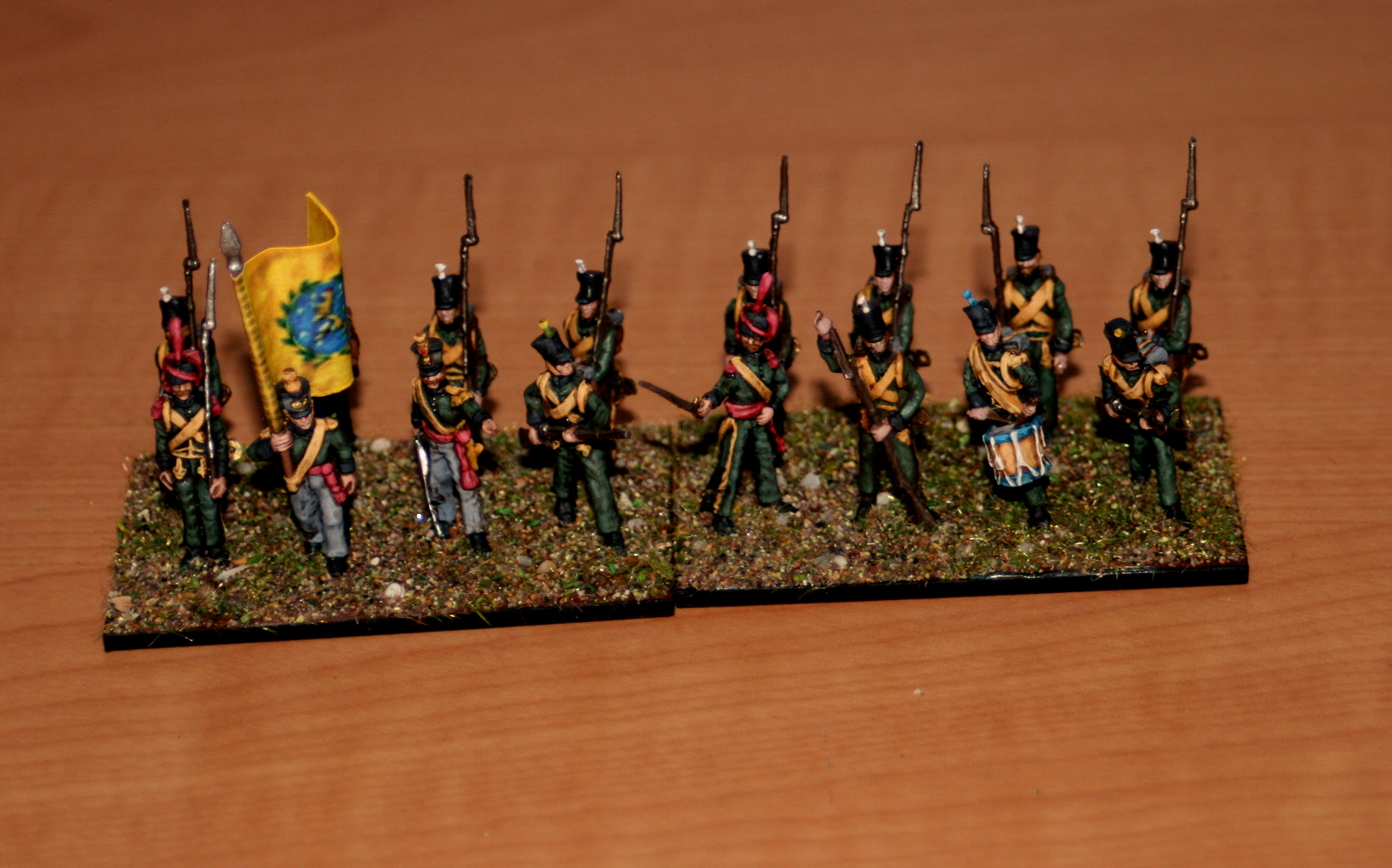 The Nassau - the biege coloured belts makes them standout.
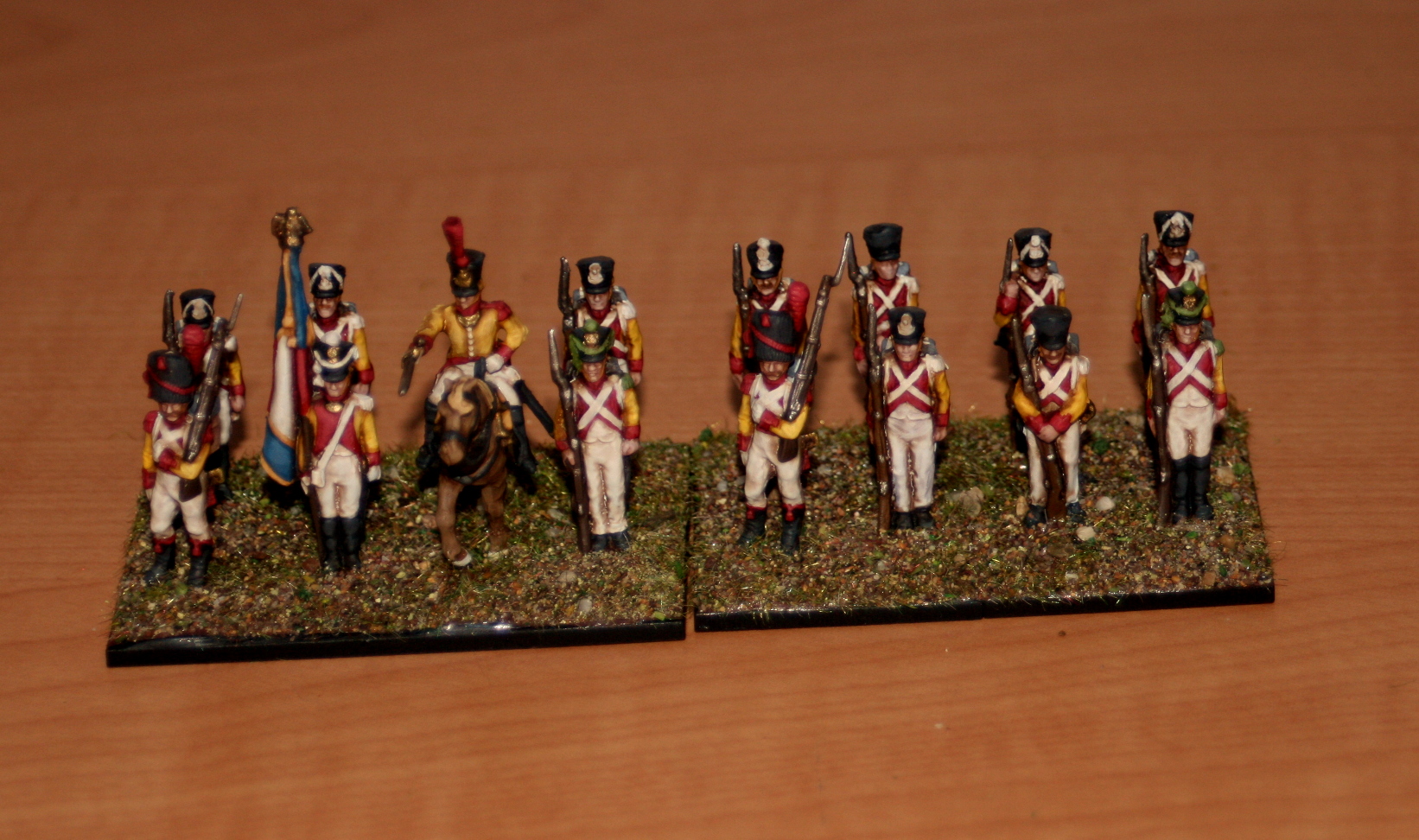 The Neuchatel Battalion - somethimes called the canaries due to the yellow jackets.
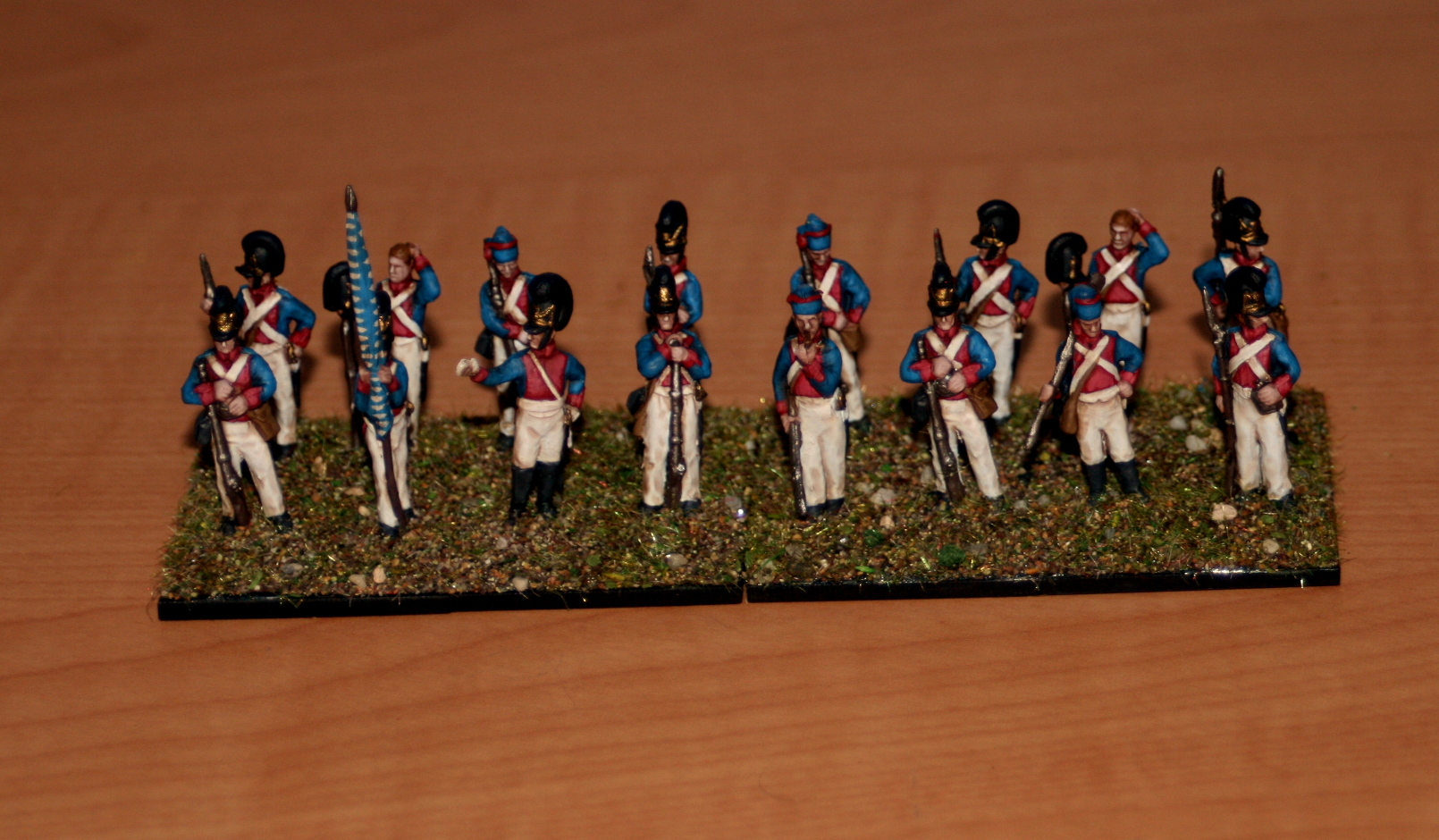 My favourite - The Bavarians and their crazy good looking helmets.
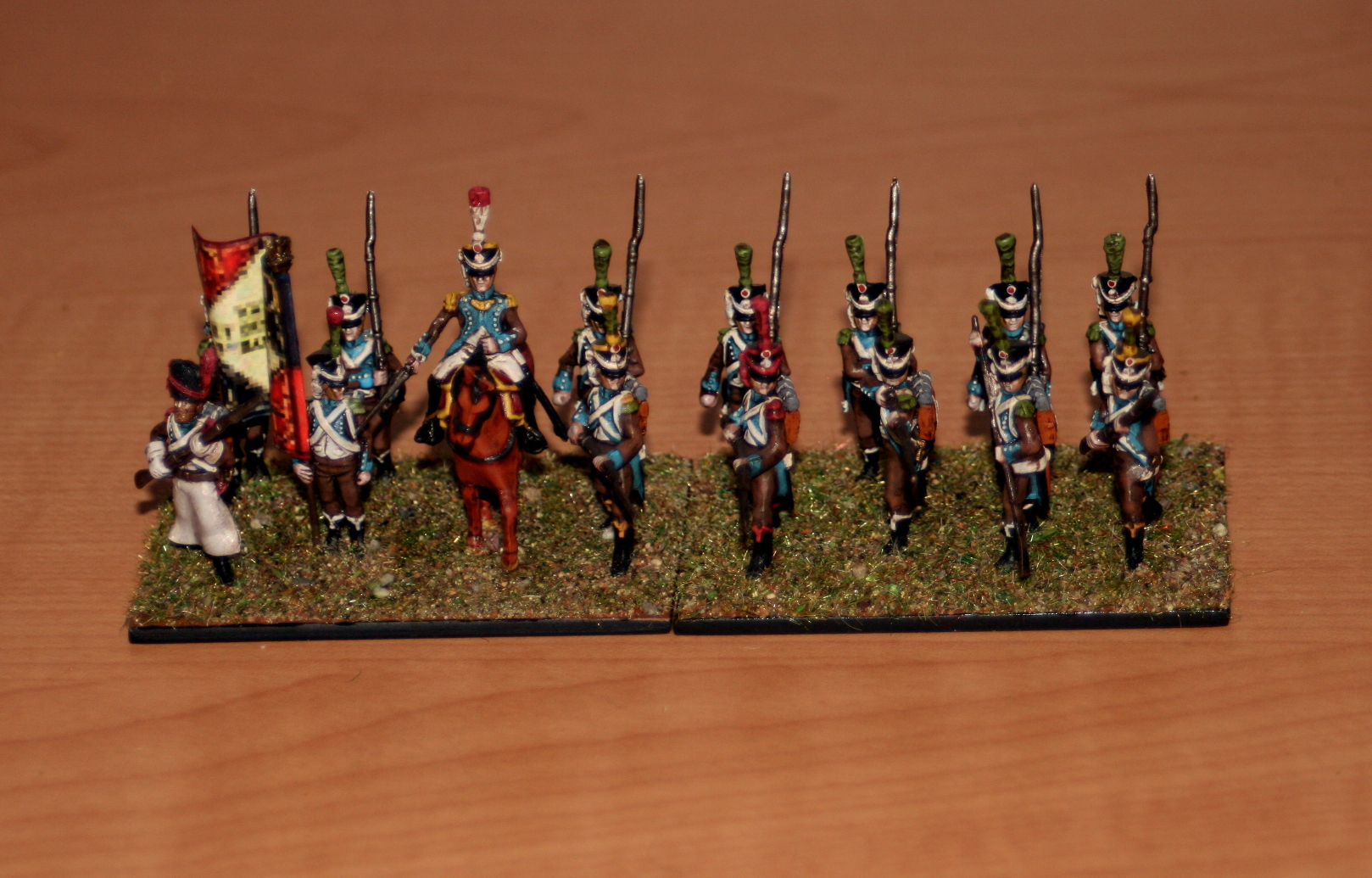 The Legion du Midi or the Piedmontese Legion.
 The Irish - anything to annoy the British! You just gotta lov'em.
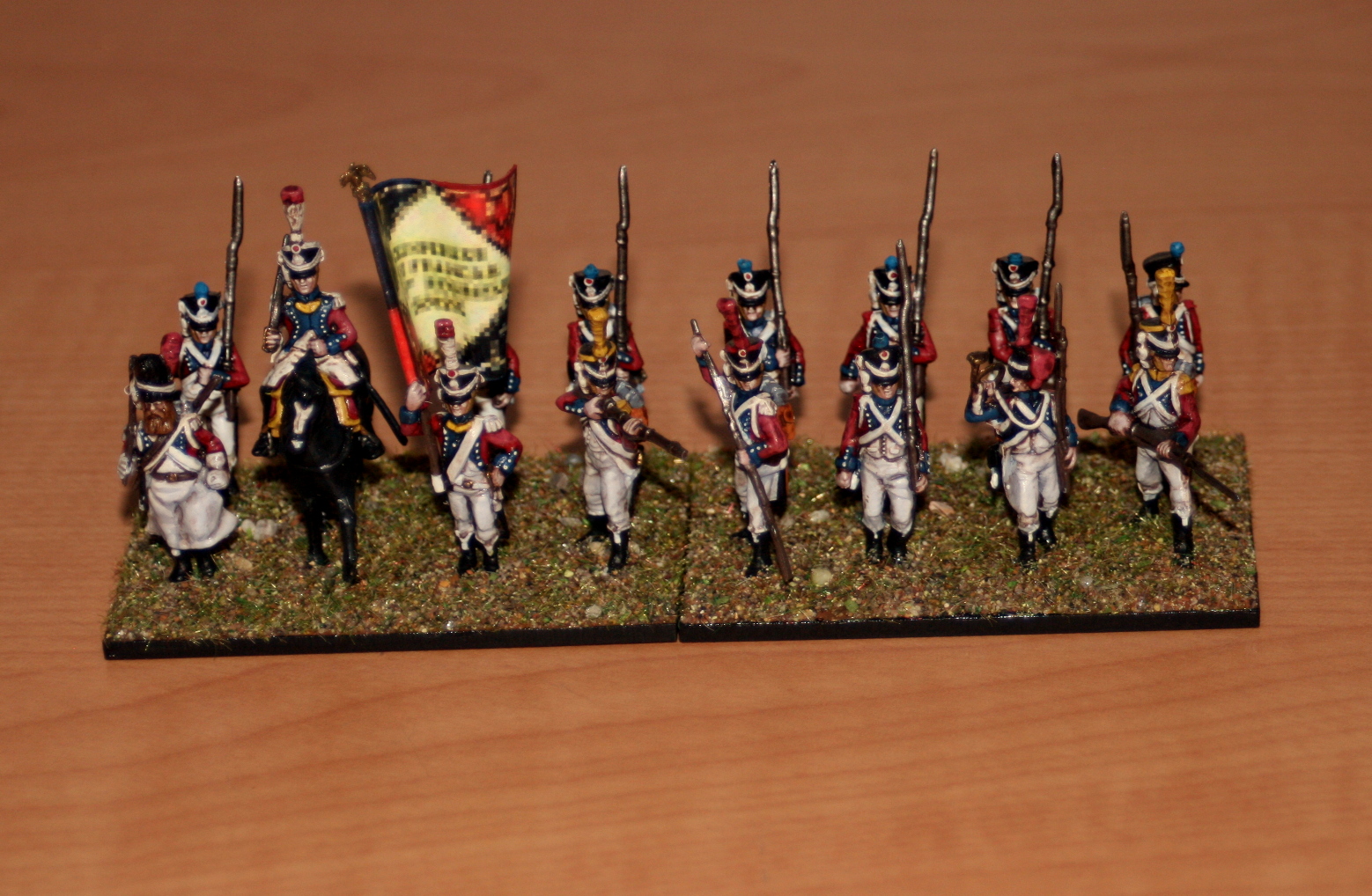 The Swiss - I can't remember if they are the 2nd or 3rd.
The great thing about the allies is that you can use them in a battle (according to the rules of most games) as, and instead of French fusiliers – or militia later on.
I will be expanding on the allies during the third phase of this project when I start to tackle the Imperial Guard. I will add 4 more battalions to the Bavarians, 3 to the Nassau (so I can use them as allies for the British if I ever play the 100day campaign), and I will add several battalions of Italians, Wurtenburgers, and more Swiss.
Well that is all for today. Tomorrow morning I will try to post up the heavy cavalry.
Until then stay safe and game on.
NR